
forms of energy Crossword Puzzles
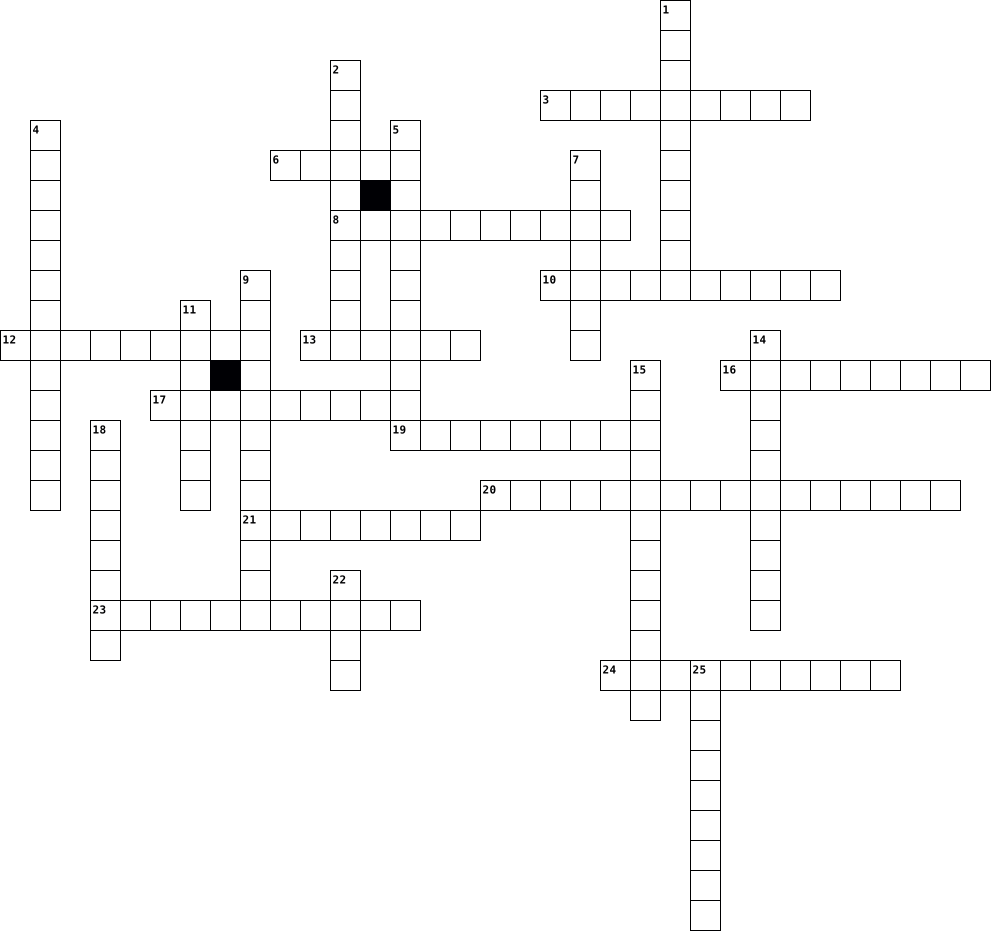
Eco Philosophy Crossword 2025-10-01

Across
- Resources that cannot be replaced once used
- Movement against consumerist culture
- Moral concern for future generations (
- Founder of deep ecology, Arne _______
- A modern form of environmental activism
- Deep respect for all forms of life
- The philosophy that humans are masters of nature
- Indigenous worldview often emphasizes this connection
- Living in harmony with nature
- Thinking in terms of systems, not parts
- Nature’s self-regulating system
- Study of moral principles applied to the environment
- Energy from sun or wind
- Ethical movement concerned with animal rights
- Duty to care for the environment
- Energy from moving water
- Preservation of nature for its own sake
Down
- Philosophy that values ecological balance
- A philosopher who wrote Silent Spring
- Pollution that warms the earth
- Ecosophy emphasizes deep _____
- Global environmental treaty on climate
- Minimal impact lifestyle choice
- Focus on the inherent worth of ecosystems
- A guiding principle: “do no harm”
- Using resources without depleting them
- Pollution that makes oceans acidic
- A system where organisms interact with their surroundings
- The opposite of anthropocentrism
- Principle of leaving minimal trace
- Circular system of reusing waste
31 Clues: Energy from sun or wind • Energy from moving water • Living in harmony with nature • Pollution that warms the earth • Ecosophy emphasizes deep _____ • Minimal impact lifestyle choice • Nature’s self-regulating system • The opposite of anthropocentrism • Circular system of reusing waste • Duty to care for the environment • A guiding principle: “do no harm” • ...
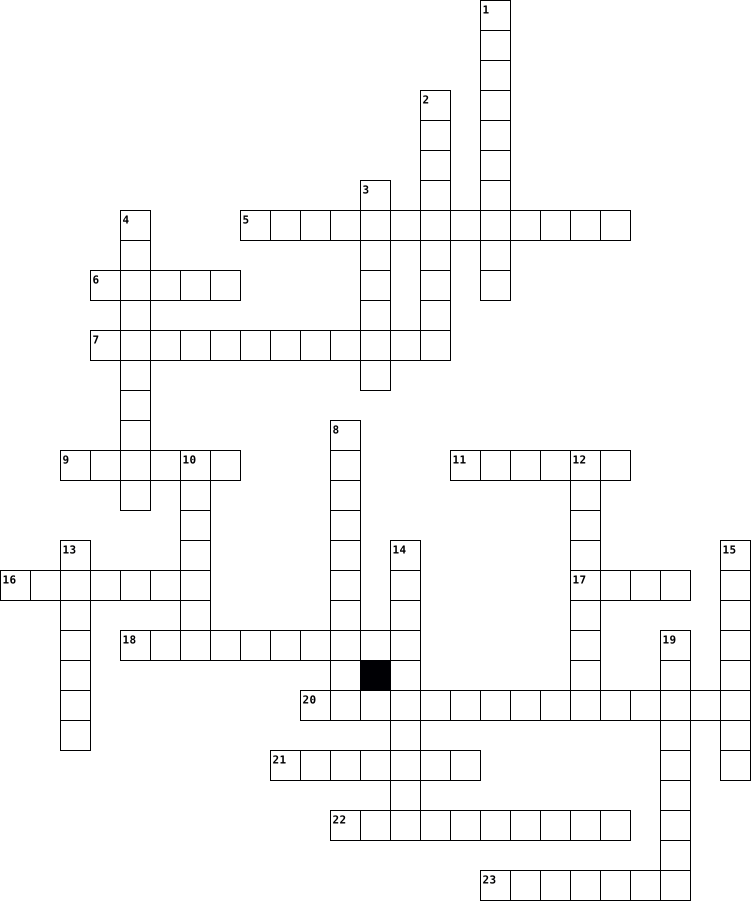
Chapter 5 vocabulary 2020-02-06

Across
- system, A system in which no matter is allowed to enter or leave
- A solid in which the atoms arranged in a pattern that repeats again and again
- A reaction in which one element replaces another in a compound or when two elements in different compounds trade places
- A chemical reaction in which two or more simple substances combine to form a new more complex substances
- A chemical reaction that breaks down compounds into simpler products
- A solid that forms a solution during a chemical reaction
- conservation mass, the principle that the total amount of matter is neither created nor destroyed during any chemical or physical change
- reaction, A reaction that releases energy usually in the form of heat
- equation, A short easy way shows a chemical reaction using symbols.
Down
- change, A change in which one or more substances combine or break apart to new substance.
- change, A change that alters the form or appearance of material but does not make the material into another substance
- A Substance that enters into a chemical reaction
- A number in front of a chemical formula in an equation that indicates how many molecules or atoms of each reactant and product are involved in a reaction
- reaction, A reaction that absorbs energy
- The amount of one material in a certain volume of another material
- A substance formed as a result of a chemical reaction
- energy, The minimum amount of energy needed to start a chemical reaction
- system, A system in which can enter from or escape to the surroundings
18 Clues: reaction, A reaction that absorbs energy • A Substance that enters into a chemical reaction • A substance formed as a result of a chemical reaction • A solid that forms a solution during a chemical reaction • system, A system in which no matter is allowed to enter or leave • The amount of one material in a certain volume of another material • ...
AP Bio Unit 3 Vocabulary 2022-12-09

Across
- the study of the transformation of energy in living organisms.
- A series of chemical reactions that occurs as part of the dark reactions of photosynthesis
- an organic compound made by replacing the hydrogen of an acid by an alkyl or other organic group. Many naturally occurring fats and essential oils are esters of fatty acids.
- require energy input to take simple, low energy reactants and build complex, high energy products.
- the minimum quantity of energy which the reacting species must possess in order to undergo a specified reaction.
- a multi-subunit pigment-protein complex found in thylakoid membranes of oxygenic photosynthetic organisms, including cyanobacteria, algae, and plants
- each of the partial partitions in a mitochondrion formed by infolding of the inner membrane.
- the sequence of reactions by which most living cells generate energy during the process of aerobic respiration. It takes place in the mitochondria, consuming oxygen, producing carbon dioxide and water as waste products, and converting ADP to energy-rich ATP.
- A chemical reaction having a common intermediate in which energy is transfered from one side of the reaction to the other.
- nicotinamide adenine dinucleotide (NAD) + hydrogen (H)
- the enzyme that incorporates CO2 into plants during photosynthesis
- the breaking down of sugar molecules into simpler compounds to produce substances
- plays a vital role in normal hemostasis and thrombosis
- a thermodynamic quantity representing the unavailability of a system's thermal energy for conversion into mechanical work, often interpreted as the degree of disorder or randomness in the system.
- energy which a body possesses by virtue of being in motion.
- a class of oxygen-containing carotenoid pigments
- a thermodynamic quantity equal to the enthalpy (of a system or process) minus the product of the entropy and the absolute temperature.
- any of a number of compounds consisting of heme bonded to a protein. Cytochromes function as electron transfer agents in many metabolic pathways, especially cellular respiration.
- the process by which inorganic carbon from the atmosphere is assimilated into living organisms and converted into organic compounds.
- the source of energy for use and storage at the cellular level
- a region on an enzyme that binds to a protein or other substance during a reaction.
- set up in a mitochondria membrane, where the proton concentration is higher outside the inner membrane than inside the membrane.
- a model for enzyme–substrate interaction to describe that the substrate is capable of inducing the proper alignment of the active site of the enzyme, causing the latter to subsequently perform its catalytic function.
- a thermodynamic quantity equivalent to the total heat content of a system. It is equal to the internal energy of the system plus the product of pressure and volume.
- the synthesis of organic compounds by bacteria or other living organisms using energy derived from reactions involving inorganic chemicals, typically in the absence of sunlight.
- any coloured material found in a plant or animal cell
- a redox-active coenzyme associated with various proteins, which is involved with several enzymatic reactions in metabolism
- a 2-oxo monocarboxylic acid anion that is the conjugate base of pyruvic acid,
- a metabolic process by which glucose or other six-carbon sugars (also, disaccharides of six-carbon sugars, e.g. sucrose or lactose) are converted into cellular energy and the metabolite lactate, which is lactic acid in solution.
- a series of four protein complexes that couple redox reactions, creating an electrochemical gradient that leads to the creation of ATP in a complete system named oxidative phosphorylation.
- The cavity or channel within a tube or tubular organ such as a blood vessel or the intestine.
- reducing agent produced by the light reactions of photosynthesis
- inhibition of an enzyme controlling an early stage of a series of biochemical reactions by the end product when it reaches a critical concentration.
- a substance that increases the rate of a chemical reaction without itself undergoing any permanent chemical change.
- the division of something into sections or categories.
- nicotinamide adenine dinucleotide phosphate hydrogen
- a type of behavior where a number of seemingly independent components of a system act collectively, in unison or near-unison.
- a protein that catalyzes the formation of the energy storage molecule adenosine triphosphate (ATP) using adenosine diphosphate (ADP)
- a reaction in which electrons are added to a compound;
Down
- a class of more than 750 naturally occurring pigments synthesized by plants, algae, and photosynthetic bacteria
- organic compounds required by many enzymes for catalytic activity
- the site of the light-dependent reactions of photosynthesis with the photosynthetic pigments embedded directly in the membrane
- an integral membrane protein complex that uses light energy to catalyze the transfer of electrons across the thylakoid membrane from plastocyanin to ferredoxin
- a chemical reaction in which energy is being used in the overall reaction, making the reaction non-spontaneous and thermodynamiacally unfavorable.
- a type of chemical reaction in which molecules are split into smaller by absorbing light.
- the chemical processes that occur within a living organism in order to maintain life.
- The cells and tissues that support and give structure to organs, glands, or other tissues in the body.
- an organic substance that is involved in photosynthesis, notably as the principal CO 2 acceptor in plants
- a graph that shows the absorbance of different wavelengths of light by a particular pigment
- The movement of ions across a selectively permeable membrane, down their electrochemical gradient.
- the branch of physical science that deals with the relations between heat and other forms of energy (such as mechanical, electrical, or chemical energy), and, by extension, of the relationships between all forms of energy.
- any member of the most important class of pigments involved in photosynthesis,
- the mitochondrion internal spaces enclosed by the inner membrane.
- the type of respiration through which cells can break down sugars to generate energy in the absence of oxygen.
- The movement of ions across a selectively permeable membrane, down their electrochemical gradient
- involves the investment of two ATP molecules and results in the formation of two molecules of glyceraldehyde phosphate..
- the removal or elimination of carboxyl from a molecule.
- The complete range of all types of radiation that has both electric and magnetic fields and travels in waves.
- the breakdown of complex molecules in living organisms to form simpler ones, together with the release of energy; destructive metabolism.
- the tendency of an atom participating in a covalent bond to attract the bonding electrons
- the synthesis of complex molecules in living organisms from simpler ones together with the storage of energy; constructive metabolism.
- the product of the Calvin cycle
- A process in which glucose (sugar) is partially broken down by cells in enzyme reactions that do not need oxygen
- High energy electron carrier used to transport electrons generated in Glycolysis and Krebs Cycle to the Electron Transport Chain.
- a cluster of proteins that transfer electrons through a membrane to create a gradient of protons
- a reaction that releases free energy in the process of the reaction.
- a central metabolic coenzyme/cosubstrate involved in cellular energy metabolism and energy production
- a type of chemical reaction that involves a transfer of electrons between two species
- A molecule that can accept and donate electrons from and to various enzymes.
- A chemical reaction that takes place when a substance comes into contact with oxygen or another oxidizing substance.
- the energy possessed by a body by virtue of its position relative to others, stresses within itself, electric charge, and other factors.
- Sites different from the active site of an enzyme where a molecule can bind and change the shape of the active site
- a substance (other than the substrate) whose presence is essential for the activity of an enzyme.
- stage in cellular respiration that “links” two other stages
- a quantum of radiant energy with a visible wavelength.
75 Clues: the product of the Calvin cycle • a class of oxygen-containing carotenoid pigments • nicotinamide adenine dinucleotide phosphate hydrogen • any coloured material found in a plant or animal cell • nicotinamide adenine dinucleotide (NAD) + hydrogen (H) • plays a vital role in normal hemostasis and thrombosis • a quantum of radiant energy with a visible wavelength. • ...
Forms of Poetry 2013-04-16

Across
- This form of poetry originated in Japan. It contains three lines.
- It tells a story
- A fourteen- line poem that follows a specified rhyme scheme.
- A formal poem that reflects on a solemn theme.
- A long narrative that begins with an appeal to a muse.
Down
- It is a type of narrative with a song- like quality.
- The words are arranged into a shape that suggests the topic of the poem.
- Uses a single, unified strain of exalted verse.
- A very musical poem. It expresses thoughts and feelings of the speaker.
9 Clues: It tells a story • A formal poem that reflects on a solemn theme. • Uses a single, unified strain of exalted verse. • It is a type of narrative with a song- like quality. • A long narrative that begins with an appeal to a muse. • A fourteen- line poem that follows a specified rhyme scheme. • This form of poetry originated in Japan. It contains three lines. • ...
Forms of Government 2021-10-04

Across
- form of government where religious beliefs influence law making
- one leader has complete control over society, makes all political decision
- A type of monarchy in which a king or queen consults organized government to make decisions
Down
- title given to a person with total control over a society
- a small group of people have all of the political power
- type of democracy where citizens elect leaders to represent them in government
- the absence of formal leadership and government
- form of democracy where citizens are directly involved in the lawmaking process
- form of monarchy when a queen or king have complete control
9 Clues: the absence of formal leadership and government • a small group of people have all of the political power • title given to a person with total control over a society • form of monarchy when a queen or king have complete control • form of government where religious beliefs influence law making • ...
Forms of government 2021-10-12

Across
- God or religion as ultimate authority
- a form of government where one leader has all the power
- a government where people vote
- NO government NO rules
Down
- citizens elect representatives
- citizens vote on every law
- a government ruled by a king or queen
- your favorite teacher (just his last name)
- a government ruled by a few powerful people
9 Clues: NO government NO rules • citizens vote on every law • citizens elect representatives • a government where people vote • God or religion as ultimate authority • a government ruled by a king or queen • your favorite teacher (just his last name) • a government ruled by a few powerful people • a form of government where one leader has all the power
Forms of Government 2024-01-10

Across
- Democracy Citizens elect leaders to represent their rights and interests in government
- One person has all the power
- Citizens hold the political power
Down
- A small group of people has all the power
- Nobody is in control or everyone is
- One leader has absolute control over citizens'lives
- A system that recognizes God as the ultimate authority
- a king or queen rules the country
- Democracy there are no representatives. Citizens are involved in the day-to-day work of government.
9 Clues: One person has all the power • a king or queen rules the country • Citizens hold the political power • Nobody is in control or everyone is • A small group of people has all the power • One leader has absolute control over citizens'lives • A system that recognizes God as the ultimate authority • ...
Forms of Government 2020-03-05

Across
- A form of government in which the ruler is an absolute dictator (not restricted by a constitution or laws or opposition etc.)
- A government ruled by a few powerful people
- A government ruled by a king or queen
- the exercise of absolute power, especially in a cruel and oppressive way.
Down
- A political system in which the supreme power lies in a body of citizens who can elect people to represent them
- society ruled by the wealthy
- A political system in which a small group of individuals exercises power over the state without being constitutionally responsible to the public.
- A government controlled by religious leaders
- A theory or system of social organization based on the holding of all property in common, actual ownership being ascribed to the community as a whole or to the state.
9 Clues: society ruled by the wealthy • A government ruled by a king or queen • A government ruled by a few powerful people • A government controlled by religious leaders • the exercise of absolute power, especially in a cruel and oppressive way. • A political system in which the supreme power lies in a body of citizens who can elect people to represent them • ...
Forms of Government 2020-12-10

Across
- Lower house of the parliament for the UK
- government that has a president/presidency
- lower house of the federal assembly of Russia
Down
- government where the ruler has absolute power
- Rights/freedoms that an individual has over their own body
- government which is the highest legislature
- Upper house of the parliament for the UK
- head of the government for the UK
- A senior state of legal official
9 Clues: A senior state of legal official • head of the government for the UK • Lower house of the parliament for the UK • Upper house of the parliament for the UK • government that has a president/presidency • government which is the highest legislature • government where the ruler has absolute power • lower house of the federal assembly of Russia • ...
Forms Of Transportation 2023-01-12

Across
- the oriental express, as an example
- name of the group that sang "How Much Is The Fish"
- also known as chopper
Down
- Jeff Bezoz's version of _ (see clue 4)
- two-wheeled death trap
- slightly less dangerous two wheeled death trap
- travel on the ocean with this form of transportation
- a four-wheeled everyday vehicle
- metal bird
9 Clues: metal bird • also known as chopper • two-wheeled death trap • a four-wheeled everyday vehicle • the oriental express, as an example • Jeff Bezoz's version of _ (see clue 4) • slightly less dangerous two wheeled death trap • name of the group that sang "How Much Is The Fish" • travel on the ocean with this form of transportation
Forms Of Transportation 2023-01-12

Across
- the oriental express, as an example
- name of the group that sang "How Much Is The Fish"
- also known as chopper
Down
- Jeff Bezoz's version of _ (see clue 4)
- two-wheeled death trap
- slightly less dangerous two wheeled death trap
- travel on the ocean with this form of transportation
- a four-wheeled everyday vehicle
- metal bird
9 Clues: metal bird • also known as chopper • two-wheeled death trap • a four-wheeled everyday vehicle • the oriental express, as an example • Jeff Bezoz's version of _ (see clue 4) • slightly less dangerous two wheeled death trap • name of the group that sang "How Much Is The Fish" • travel on the ocean with this form of transportation
Forms of Businesses 2026-02-25

Across
- focuses on planning, organizing, and leading people
- starting a business by taking risks to create profit and value
- a legal form of business with two or more owners
- how people, businesses, countries make choices with limited resources (supply&demand)
- money left after costs.
Down
- deals with money management
- a legal entity with authority to act and have liability separate from its owners
- selling and promoting products and services
- probability of losing money
9 Clues: money left after costs. • deals with money management • probability of losing money • selling and promoting products and services • a legal form of business with two or more owners • focuses on planning, organizing, and leading people • starting a business by taking risks to create profit and value • ...
Sustainable cities 2021-02-19

Across
- fuel natural sources of energy such as petroleum, coal or natural gas that form within the earth from ancient animal and plant remains
- having too many people for the amount of food, materials, and space available in a given area, city or country
- power produced by running or falling water, which may be used to produce electricity
- the change in state from a solid to a liquid
- an overflowing of water in a normally dry area
- energy from a source that cannot be used up or run out, such as energy from wind or water
- buses, trains and other forms of transport that are available to the public, charge set fares and run on fixed routes
- energy from a source that can run out or that takes a long time for the earth to produce, such as oil and coal
Down
- changes in weather patterns and the overall temperature of the earth
- the total amount of grenhouse gases released into the atmosphere by a person, organization, event or product
- the ability for something to be maintained or to keep going
- a covering of ice over a large area, especially on the polar region of a planet
- gases, such a carbon dioxide, methane and nitrous oxide, that trap heat in the atmosphere and make the earth warmer
- to make something new from something that has been used before
- energy derived from the sun in the form of solar radiation
15 Clues: the change in state from a solid to a liquid • an overflowing of water in a normally dry area • energy derived from the sun in the form of solar radiation • the ability for something to be maintained or to keep going • to make something new from something that has been used before • changes in weather patterns and the overall temperature of the earth • ...
Ch. 5 Key Terms 2021-10-12

Across
- radiation consisting of waves propagated through regularly varying electric and magnetic fields and traveling at the speed of light
- a particular level, or amount, of energy possessed by an atom or ion above the energy it possesses in its least energetic state; also used to refer to the states of energy an electron can have in an atom
- electromagnetic radiation with wavelengths between 0.01 nanometer and 20 nanometers; intermediate between those of ultraviolet radiation and gamma rays
- the amount of energy passing through a unit area (for example, 1 square meter) per second; the units of flux are watts per square meter
- electromagnetic radiation with wavelengths of roughly 400–700 nanometers; visible to the human eye
- a formula from which the rate at which a blackbody radiates energy can be computed; the total rate of energy emission from a unit area of a blackbody is proportional to the fourth power of its absolute temperature: F = σT4
- electromagnetic radiation of wavelength 103–106 nanometers; longer than the longest (red) wavelengths that can be perceived by the eye, but shorter than radio wavelengths
- electromagnetic radiation of wavelengths 10 to 400 nanometers; shorter than the shortest visible wavelengths
- formula that relates the temperature of a blackbody to the wavelength at which it emits the greatest intensity of radiation
- electromagnetic radiation of wavelengths from 1 millimeter to 1 meter; longer than infrared but shorter than radio waves
- (for light) the amount of energy (light) flowing through a given area in a given time decreases in proportion to the square of the distance from the source of energy or light
- an instrument for obtaining a spectrum; in astronomy, usually attached to a telescope to record the spectrum of a star, galaxy, or other astronomical object
- an atom that has become electrically charged by the addition or loss of one or more electrons
Down
- the number of waves that cross a given point per unit time (in radiation)
- photons (of electromagnetic radiation) of energy with wavelengths no longer than 0.01 nanometer; the most energetic form of electromagnetic radiation
- the whole array or family of electromagnetic waves, from radio to gamma rays
- the distance from crest to crest or trough to trough in a wave
- the apparent change in wavelength or frequency of the radiation from a source due to its relative motion away from or toward the observer
- motion toward or away from the observer; the component of relative velocity that lies in the line of sight
- a series or pattern of bright lines superimposed on a continuous spectrum
- any of two or more forms of the same element whose atoms have the same number of protons but different numbers of neutrons
- the process of giving an atom or an ion an amount of energy greater than it has in its lowest energy (ground) state
- a discrete unit (or “packet”) of electromagnetic energy
- the lowest energy state of an atom
- a spectrum of light composed of radiation of a continuous range of wavelengths or colors, rather than only certain discrete wavelengths
- the massive part of an atom, composed mostly of protons and neutrons, and about which the electrons revolve
- a series or pattern of dark lines superimposed on a continuous spectrum
- an idealized object that absorbs all electromagnetic energy that falls onto it
- all electromagnetic waves longer than microwaves, including radar waves and AM radio waves
- separation of different wavelengths of white light through refraction of different amounts
- the process by which an atom gains or loses electrons
31 Clues: the lowest energy state of an atom • the process by which an atom gains or loses electrons • a discrete unit (or “packet”) of electromagnetic energy • the distance from crest to crest or trough to trough in a wave • a series or pattern of dark lines superimposed on a continuous spectrum • the number of waves that cross a given point per unit time (in radiation) • ...
Chapter 13 States of Matter 2025-02-13

Across
- solid with an ordered internal structure
- SI unit of pressure
- two or molecular forms of the same element
- pressure due to density of earth's atmosphere
- temperature at which a liquid turns to solid
- vaporization at the surface of a liquid
- a solid turns into a gas
Down
- energy due to motion
- force exerted by a gas
- set of conditions at which all three phases occur
- device used to measure pressure
- a solid that lacks an ordered internal structure
- an empty space
- temperature at which a solid turns to liquid
- conversion of a liquid to a gas
- liquid turning to gas due to temperature
16 Clues: an empty space • SI unit of pressure • energy due to motion • force exerted by a gas • a solid turns into a gas • device used to measure pressure • conversion of a liquid to a gas • vaporization at the surface of a liquid • solid with an ordered internal structure • liquid turning to gas due to temperature • two or molecular forms of the same element • ...
Environmental Science Vocab 2024-09-25

Across
- Anything falling in the water cycle
- The ability to do work
- How trade and technology made the world a more connected and interdependent place
- A biochemical process through which nitrogen is converted into several chemical form
- Any organism that produces energy
- The ability to continuously maintain a process
- Anything that eats other organsims to survive
- A group of people living in the same place and have a charachtristic in comon
Down
- The introduction o harmful material
- The processes through which the three main rocks form into one anther
- When a liquid forms to gas
- A process in which deep water rises to the surface
- The Branch of biology that deals with organisms and their relations
- A method of procedure that scientists use to observe measure and experiment a hypothesis
- Key used to identify plants and animals
15 Clues: The ability to do work • When a liquid forms to gas • Any organism that produces energy • The introduction o harmful material • Anything falling in the water cycle • Key used to identify plants and animals • Anything that eats other organsims to survive • The ability to continuously maintain a process • A process in which deep water rises to the surface • ...
Benjamin Saldana 2012-07-12

Across
- Innovates spacecrafts
- Invents new cooking technology. ( high-powered ovens, etc)
- Processes the plastic sole for athletic shoes
- Innovates highway systems
- Responsible for development of a product
- Innovates new technologies (computer programs, computers, etc)
- Develops nuclear energy
- Responsible for chemicals in home products (paper, polymer in clothes, etc)
- Innovates and responsible for oil reserves
Down
- Innovates cars,planes, and other forms of transportation
- Innovates locomotives (trains)
- Innovates jet engines
- Innovate T.V's and computer technology
- Innovates batteries for automobiles
- Innovates gas pipelines so they can prevent leaks.
15 Clues: Innovates spacecrafts • Innovates jet engines • Develops nuclear energy • Innovates highway systems • Innovates locomotives (trains) • Innovates batteries for automobiles • Innovate T.V's and computer technology • Responsible for development of a product • Innovates and responsible for oil reserves • Processes the plastic sole for athletic shoes • ...
science 2022-11-01

Across
- specialized so that all jobs in the body get done
- releases the stored energy from food eaten
- middles of the cell
- chromosomes separate (pull apart)
- breaking down food into smaller pieces
- movement of water
- different tissues working together to do a specific job
- removal of waste matter
- food making process in plants
- movement of substances
- makes reproductive cells
Down
- waste products
- can only be eukaryotic
- highest level of organization
- raw materials
- centrioles appear at poles (sides)
- groups of organs
- nuclear membrane forms around each new nucleus
- makes body cells for growth
- can be prokaryotic or eukaryotic
- cytoplasm splits into 2 equal halves
- cells makes a copy of DNA
- similar to cells organized to do a specific job
23 Clues: raw materials • waste products • groups of organs • movement of water • middles of the cell • can only be eukaryotic • movement of substances • removal of waste matter • makes reproductive cells • cells makes a copy of DNA • makes body cells for growth • highest level of organization • food making process in plants • can be prokaryotic or eukaryotic • chromosomes separate (pull apart) • ...
ENVIRONMENT 2024-11-02

Across
- - A community of living organisms and their environment.
- - The natural environment where a plant or animal lives.
- - The variety of plant and animal life in the world or a specific habitat.
- - An element that forms the basis of fossil fuels and greenhouse gases.
- - Contamination of air, water, or soil by harmful substances.
- - The general weather conditions of a place over time.
- - The process of turning waste materials into new products.
- - A gas that protects Earth from harmful ultraviolet radiation.
- - The gradual wearing away of soil by wind or water.
Down
- - The cutting down of large areas of forests.
- - Using resources in a way that they last for future generations.
- fuels - Non-renewable energy sources like coal, oil, and natural gas.
- - Gases and particles released into the air, often from cars or factories.
- - A type of energy source that can be replaced naturally, like solar power.
- - The protection and preservation of the natural environment.
- - Decayed organic matter used to enrich soil.
16 Clues: - The cutting down of large areas of forests. • - Decayed organic matter used to enrich soil. • - The gradual wearing away of soil by wind or water. • - The general weather conditions of a place over time. • - A community of living organisms and their environment. • - The natural environment where a plant or animal lives. • ...
Chemical Reactions Review 2022-04-29

Across
- having been thought about carefully
- happens suddenly, unexpectedly, or prematurely.
- retrieve or recover
- in a chemical reaction mass is neither created nor destroyed
- a limitation or restriction.
- a thing or person that is the result of an action or process
- internal energy present in a system in a state of thermodynamic equilibrium by virtue of its temperature.
- reaction or process accompanied by the release of heat.
- when one chemical substance is transformed into one or more different substances
Down
- a process that involves rearrangement of the molecular or ionic structure of a substance
- a principle or standard by which something may be judged or decided.
- a system that has flows of information, energy, and/or matter between the system and its environment, and which adapts to the exchange
- reaction or process accompanied by or requiring the absorption of heat
- a region that is isolated from its surroundings by a boundary that admits no transfer of matter or energy across it.
- a substance that takes part in and undergoes change during a reaction.
- become or cause to become incorporated into a liquid so as to form a solution.
- a first, typical, or preliminary model of something, especially a machine, from which other forms are developed or copied.
17 Clues: retrieve or recover • a limitation or restriction. • having been thought about carefully • happens suddenly, unexpectedly, or prematurely. • reaction or process accompanied by the release of heat. • in a chemical reaction mass is neither created nor destroyed • a thing or person that is the result of an action or process • ...
Science Vocab 2023-05-03

Across
- A general principle or set of principles that explains facts or events of the natural world
- A new substance is made
- To change from one substance, form, use, or unit to another
- A unit of power equal to the work done at the rate of one joule per second
- Being at or below the temperature at which water freezes (32 degrees Fahrenheit)
- Plant life or cover (as of an area)
- An animal that eats only other animals
- A basic and important change
- What you expect
- an individual animal, plant, or single-celled life form.
- Any of the alternative forms of a gene that may occur
- To light or set on fire
- What you get
Down
- Might take a different form but no new substance is made.
- Able to be seen only through a microscope : very small
- Feed on both animal and vegetable substances
- Energy in the form of heat
- A body part or behavior that helps an organism survive in their surroundings.
- An estimate or prediction of a future happening or condition
- Spin or Turn
- Go Around
- The smallest unit of an element that has all the properties of that element.
22 Clues: Go Around • Spin or Turn • What you get • What you expect • A new substance is made • To light or set on fire • Energy in the form of heat • A basic and important change • Plant life or cover (as of an area) • An animal that eats only other animals • Feed on both animal and vegetable substances • Any of the alternative forms of a gene that may occur • ...
The Martian Crossword 2022-09-26

Across
- strong cloth-backed waterproof adhesive tape
- The Martian book protagonist
- a control compartment of a spacecraft
- traveling between planets
- the fourth planet from the Sun and the second-smallest planet in the Solar System
- the National Aeronautics and Space Administration
- a void of nothingness, as in parts of outer space
- Mars Ascent Vehicle
- a starchy plant tuber which is one of the most important food crops, cooked and eaten as a vegetable
- third planet from the Sun and the fifth largest planet in the solar system in terms of size and mass
- the third human mission to Mars
- a day experienced on Mars, as opposed to on earth
Down
- the scientific study of forms and transfers of energy
- the crew transport spacecraft of the Ares Program, built to transport astronauts from Earth to Mars orbit and back
- the release of energy caused by particulate decay
- the Chinese National Space Administration
- Mars Descent Vehicle
- the scientific study of plants and their structures
- a vehicle for exploring the surface of a planet or moon
- NASA's portable, collapsible Martian "colony," where Watney lives and works
20 Clues: Mars Ascent Vehicle • Mars Descent Vehicle • traveling between planets • The Martian book protagonist • the third human mission to Mars • a control compartment of a spacecraft • the Chinese National Space Administration • strong cloth-backed waterproof adhesive tape • the release of energy caused by particulate decay • the National Aeronautics and Space Administration • ...
Science-Chapter 12(Lessons 3 and 4) 2021-05-09

Across
- a path that allows current to flow through
- taken in
- a piece of glass that refracts light
- the property that causes electricity
- blocks light from passing through them
- dark space that forms when light is blocked
Down
- a build up of electrical charge
- scatters the light that passes through
- to bend
- bounces off
- a form of energy that allows you to see objects
- objects allow light to pass straight through
12 Clues: to bend • taken in • bounces off • a build up of electrical charge • a piece of glass that refracts light • the property that causes electricity • scatters the light that passes through • blocks light from passing through them • a path that allows current to flow through • dark space that forms when light is blocked • objects allow light to pass straight through • ...
Unit 3 Vocabulary 2023-10-02

Across
- hates water, insoluble in water
- acids macromolecule that is genetic material
- reaction that removes water to form a bond
- building block of macromolecules
Down
- loves water, soluble in water
- macromolecule used for energy
- type of protein that speeds up chemical reactions
- macromolecule that is water resistant and forms cell membranes
- reaction that adds water to break a bond
- large molecule
- many monomers bonded together forming macromolecule
- macromolecule made up of amino acids
12 Clues: large molecule • loves water, soluble in water • macromolecule used for energy • hates water, insoluble in water • building block of macromolecules • macromolecule made up of amino acids • reaction that adds water to break a bond • reaction that removes water to form a bond • acids macromolecule that is genetic material • type of protein that speeds up chemical reactions • ...
SUSTAINABILATY 2024-04-22

Across
- The weather.
- A city of life in nature.
- to forms of life that need each other to survive
- rethink trowing things away.
Down
- The Title.
- It breaks down.
- to fix somthing.
- Powers things
8 Clues: The Title. • The weather. • Powers things • It breaks down. • to fix somthing. • A city of life in nature. • rethink trowing things away. • to forms of life that need each other to survive
Features and Characteristics of life 2017-09-20

Across
- a living thing
- taking in of food
- all chemical reactions occurring within cells of an organism
- organism uses material from environment and converts it to something it can use
- releasing chemical energy from complex reactions
- substances entering / leaving cell
- reproduction involves 2 parents offspring not identical to parent
Down
- breakdown of food into similar forms
- involves activities that control and coordinate an organism
- sexual reproduction producing offspring with only one parent
- chemical substances in food that an organism needs
- increase in size of an organism
- removal of waste substances from an organism
- condition of maintaining constant internal environment
- producing new offspring
- study of life
- combine substances chemically to form complex substances
17 Clues: study of life • a living thing • taking in of food • producing new offspring • increase in size of an organism • substances entering / leaving cell • breakdown of food into similar forms • removal of waste substances from an organism • releasing chemical energy from complex reactions • chemical substances in food that an organism needs • ...
Science Chapter 1 Key Terms 2022-08-25

Across
- studying in one area of a subject
- change does not produce new substances
- solid to a liquid
- liquid to a gas at the surface of the object
- from a solid directly to a gas
- has no definite shape or volume
- has mass and takes up space
- interaction of atoms and molecules
Down
- from a gas to a liquid
- change produces new substances
- used to describe an object
- made up of electrically charged particles
- interaction of energy, matter, space and time
- has a definite volume but no definite shape
- liquid to a solid
- has a definite shape and volume
- of matter four forms of matter
17 Clues: liquid to a solid • solid to a liquid • from a gas to a liquid • used to describe an object • has mass and takes up space • change produces new substances • from a solid directly to a gas • of matter four forms of matter • has a definite shape and volume • has no definite shape or volume • studying in one area of a subject • interaction of atoms and molecules • ...
Science Chapter 1 Key Terms 2022-08-25

Across
- studying in one area of a subject
- change does not produce new substances
- solid to a liquid
- liquid to a gas at the surface of the object
- from a solid directly to a gas
- has no definite shape or volume
- has mass and takes up space
- interaction of atoms and molecules
Down
- from a gas to a liquid
- change produces new substances
- used to describe an object
- made up of electrically charged particles
- interaction of energy, matter, space and time
- has a definite volume but no definite shape
- liquid to a solid
- has a definite shape and volume
- of matter four forms of matter
17 Clues: liquid to a solid • solid to a liquid • from a gas to a liquid • used to describe an object • has mass and takes up space • change produces new substances • from a solid directly to a gas • of matter four forms of matter • has a definite shape and volume • has no definite shape or volume • studying in one area of a subject • interaction of atoms and molecules • ...
Solubility Crossword 2025-02-05

Across
- Measure of solution's ability to conduct electricity
- Made up of solvent and solute
- The substance that dissolves the solute
- Ionic compounds splitting into different substances
- Energy used to isolate electron from molecule/atom
- Solution that contains less than the maximum amount of solute capable of being dissolved
- Ratio of moles of solute/litres of solution
- Condition in which the solvent cannot dissolve anymore solute
Down
- Forms solid in solution
- Negative charged ion
- How well substances dissolve in water
- Charged molecules
- The substance that dissolves in solvent
- A substance that dissociates in water, releasing ions
- Describes smallest units that makes us organisms or elements
- Ability to dissolve in water
- Positive charged ion
17 Clues: Charged molecules • Negative charged ion • Positive charged ion • Forms solid in solution • Ability to dissolve in water • Made up of solvent and solute • How well substances dissolve in water • The substance that dissolves the solute • The substance that dissolves in solvent • Ratio of moles of solute/litres of solution • Energy used to isolate electron from molecule/atom • ...
Plant & Animal Cell 2021-10-04

Across
- jellylike substance that contains dissolved molecular building blocks- such as proteins, nucleic acids, minerals, and ions
- supply energy to the cell by converting food molecules into usable energy
- helps in protein folding and packages and creates proteins; covered with ribosomes
- divides small materials from the rest of the cytoplasm and transports these materials from place to place within a cell
- makes lipids and breaks down drugs and alcohol; without ribosomes
- filled with watery fluid that strengthens the cell; takes up most of the space in the cell
- rigid layer that gives protection, support, and shape to the cell
Down
- made up of short-tubules arranged in a circle. Before an animal cell divides, the centrosome doubles; small regions of cytoplasm that produces micro-tubules, help in animal cell division
- defends a cell from bacteria and viruses; breaks down damaged or worn-out cell parts
- tiny organelles that link amino acids together to form proteins
- controls most of the functions of a eukaryotic cell
- fluid-filled sack used for storage of materials needed by a cell; such as water, ion, and food molecules
- processes, sorts, and delivers proteins
- assists in cell division; provides strength to the cell; provides shape to the cell
- site for synthesis, storage, and transportation of melanin
- forms a boundary between the cell and the outside environment and controls the passage of materials into and out the cell
- organelles that carry out photosynthesis; they convert solar energy into energy-rich molecules
17 Clues: processes, sorts, and delivers proteins • controls most of the functions of a eukaryotic cell • site for synthesis, storage, and transportation of melanin • tiny organelles that link amino acids together to form proteins • makes lipids and breaks down drugs and alcohol; without ribosomes • rigid layer that gives protection, support, and shape to the cell • ...
karlee's crossword 2016-05-20

Across
- mixture of humus, clay, and other minerals that forms the crumbly top most layer of
- The grinding away of rock by other rock partials
- A large mass of moving ice and snow on land
- a material that is full of tiny, connected air spaces that water can seep through
- dark-colored organic material in soil
- Process in which sediment is laid down in new locations
- A land form made of sediment that is deposited where a river flows into an ocean or lake
- The energy an object has due to its motion
- earth materials deposited by erosion
- water that flows over the ground surface rather than soaking into the ground
Down
- a meander cut off from a river
- wide valley through which a river flows
- The process in which water, ice, wind, or gravity moves weathered rock and soil
- The chemical and physical processes that break down at earths surface
- The preserved remains or traces of living things
- a large stream
- A loop like bend in the course of a river
- whats the name of my dog that growls like a bear
- The solid layer of rock beneath the soil
- the ability to do work
20 Clues: a large stream • the ability to do work • a meander cut off from a river • earth materials deposited by erosion • dark-colored organic material in soil • wide valley through which a river flows • The solid layer of rock beneath the soil • A loop like bend in the course of a river • The energy an object has due to its motion • A large mass of moving ice and snow on land • ...
Cell Terms Puzzle 2021-12-02

Across
- found in plant cells that captures energy from the sun and converts it into chemical energy
- strong, supporting layer around the cell membrane in plant cells
- same number of molecules on each side
- head of plasma membrane - water loving
- fluid porting of the cell outside the nucleus
- more molecules on outside (move in cell)
- more molecules on inside (move out of cell)
- modifies, sorts, and packages proteins and other materials from the ER and releases them outside the cell
- stores materials such as proteins, water, salts, and carbs
- breaks down lipids, carbs, and proteins into small molecules that can be used by the cell
- another name for cell membrane
Down
- property of biological membranes that allows some substances to pass across while others cannot
- powerhouse of the cell
- consists of RNA and protein throughout the cytoplasm
- what is osmosis all about?
- transportation of molecules from high to low concentration
- helps shape and keep structure of cell
- tail of plasma membrane - water fearing
- flexible double-layered sheet that makes up the cell membrane and forms a barrier between the cell and its surroundings
- main control center inside nucleus
20 Clues: powerhouse of the cell • what is osmosis all about? • another name for cell membrane • main control center inside nucleus • same number of molecules on each side • head of plasma membrane - water loving • helps shape and keep structure of cell • tail of plasma membrane - water fearing • more molecules on outside (move in cell) • more molecules on inside (move out of cell) • ...
Cells and Classification 2021-08-04

Across
- A structural layer surrounding the plant cell
- The part of the microscope that you look through
- A gas that is necessary to maintain life
- A membrane bound set of organs
- The basic components of every living thing
- The main type of sugar in the blood and is the major source of energy for the body's cells
- A chemical reaction that plants use to make there own food
- A fluid vital for all forms of life
- Vital for the body to function
- Found in plant cells, photosynthesis takes place in this organelle
Down
- The powerhouse of the cell
- Found in all cells and separates the interior of the cell from the outside environment
- The part of the microscope where the specimen goes
- A thick solution that fills each cell and is enclosed by the cell membrane
- A chemical compound composed of carbon and oxygen
- A chemical reaction that happens in all living cells
- A sub-cellular structure that has multiple specific jobs to perform in the cell
- Contains genetic material and other instructions
- Used to look at microscopic things
- Light coming from the sun
20 Clues: Light coming from the sun • The powerhouse of the cell • A membrane bound set of organs • Vital for the body to function • Used to look at microscopic things • A fluid vital for all forms of life • A gas that is necessary to maintain life • The basic components of every living thing • A structural layer surrounding the plant cell • ...
Ecology Part 2 2024-02-27

Across
- main type of sugar produced by plants
- total amount of greenhouse gases produced by human actions
- a process when plants use sunlight to synthesize food from carbon dioxide and water
- any solution that has a high solute concentration and a low water concentration
- gas that humans exhale
- long term change in the global temperatures
- gases in the earth atmosphere that traps heat
Down
- no net movement of water will take place
- cycle carbon atoms traveling from the earth to the atmosphere and back to the earth in a cycle
- cycle process that nitrogen converts into other forms
- process of cellular respiration that needs oxygen gas
- respiration process of cellular respiration that does not need oxygen to take place
- the source of energy for use of storage at the cellular level
- movement of particles from an area of higher concentration
- process that cells use to derive energy
- membrane found in all cells
- gas plants produce
- process that causes the earth to become hotter
- movement of water molecules in a solution according to the concentration
- cycle a process by which water circulates between the earth oceans, atmosphere, and land
20 Clues: gas plants produce • gas that humans exhale • membrane found in all cells • main type of sugar produced by plants • process that cells use to derive energy • no net movement of water will take place • long term change in the global temperatures • gases in the earth atmosphere that traps heat • process that causes the earth to become hotter • ...
EOY Science Project Crossword 2023-05-30

Across
- - The amount of work done over a time period
- - A disturbance or variation that transfers energy
- - A material that does not conduct heat or electricity easily
- - The Separation in a sound wave
- - The heat that is felt when coming from the sun or a fire
- - A magnet created by an electric current.
- - A push or pull that can change the motion of an object
- - The directional speed of an object in motion
- - The bending of light as it passes from one medium to another
Down
- - The region of a sound wave where the particles are densely packed together
- - When heat is transferred through contact
- - The force that pulls everything to the center of the earth
- - The movement when heat goes from the bottom the top of either a gas or liquid
- - Comes in 7 different but only one is visible
- - Makes up all matter
- - An object that can transfer heat easily
- - All around us and has 6 different forms
- - The bouncing back of light waves from a surface
- - A combination of different qualities
- - The action or process of an object changing its direction
20 Clues: - Makes up all matter • - The Separation in a sound wave • - A combination of different qualities • - An object that can transfer heat easily • - All around us and has 6 different forms • - When heat is transferred through contact • - A magnet created by an electric current. • - The amount of work done over a time period • - Comes in 7 different but only one is visible • ...
The Water Cycle 2023-09-14

Across
- Water stored underground
- Energy Energy produced or radiated by the sun
- Large mass of ice that forms on land and moves slowly over time
- Water falling from the clouds to the earth
- The way water vapor changes back to a liquid
Down
- The way water changes from a solid to a gas without becoming a liquid first
- The way plants give off waste from a surface in the form of water vapor
- Long-term change in the average weather patterns a place experiences
- Water soaking into the ground
- Average height of the ocean's surface
- The way water changes from a liquid to a gas
- Process of water flowing over the ground
12 Clues: Water stored underground • Water soaking into the ground • Average height of the ocean's surface • Process of water flowing over the ground • Water falling from the clouds to the earth • The way water changes from a liquid to a gas • The way water vapor changes back to a liquid • Energy Energy produced or radiated by the sun • ...
( Markus B) Rock Cycle Crossword 2013-12-09

Across
- Rock Sedimentary Rock that forms when rock fragments are squeezed together under high pressure.
- A ___ Rock is a type of rock that forms from an existing rock that is changed by heat.
- Rock Igneous rock that forms from lava on Earth's surface.
- texture An igneous rock texture in which large crystals are scattered on a background of much smaller crystals.
- A ___ Rock is a type of rock that forms when particles from other rocks or the remains of plants and animals.
- The process by which sediments are pressed together under their own weight.
- The ___ is a particle of mineral or other rock that gives a rock a texture.
- An ___ Rock is a type of rock that forms from the cooling of molten rock at or below the surface.
- Rock Igneous Rock that forms when magma hardens beneath Earths surface.
- Rock Sedimentary Rock that forms when minerals crystallize from a solution.
- Cycle A series of processes on the surface and inside the earth slowly slowly change rocks from one kind to another.
Down
- Small, solid pieces of material that comes from rock or organisms.
- The process by which dissolved minerals crystallize and glue particles of sediment together into one mass.
- The process by which sediment settles out of the water or wind that is carrying it.
- Term used to describe metamorphic rock whose grains are arranged in parallel layers or bands.
- Rock Sedimentary rock that forms where remains of organisms are deposited in thick layers.
- The ___ is the look and of a rock's surface.
- The destructive process in which water or wind loosens and carry away fragments of rock.
18 Clues: The ___ is the look and of a rock's surface. • Rock Igneous rock that forms from lava on Earth's surface. • Small, solid pieces of material that comes from rock or organisms. • Rock Igneous Rock that forms when magma hardens beneath Earths surface. • The process by which sediments are pressed together under their own weight. • ...
Psychological Disorders 2023-03-28

Across
- Fear of open public spaces
- Break in reality
- Intense fear of fat and food
- Believing you're physically sick from something psychologically wrong
- Difficulty paying attention and sitting still
- Binge-Purge cycle
- Delusions that people are out to get you
- Low serotonin in brain
- Characterized by high energy and risky behavior
- Having little care for the people around yous feelings
Down
- Loss of memory with no physiological basis
- Dissociative state with loss of personality and self
- Believing you're the center of the world
- Episodes of mania and depression
- Delusions that you have high forms of power and authority
- Intense Fear
- Many personalities
- Nightmares and flashbacks after a traumatic event
- Depression that comes with certain seasons
- Hypersensitivity to sensory stimuli
20 Clues: Intense Fear • Break in reality • Binge-Purge cycle • Many personalities • Low serotonin in brain • Fear of open public spaces • Intense fear of fat and food • Episodes of mania and depression • Hypersensitivity to sensory stimuli • Believing you're the center of the world • Delusions that people are out to get you • Loss of memory with no physiological basis • ...
2nd 9-Week Exam Review 2022-12-09

Across
- a trace of an ancient organism that has been preserved in rock.
- the management of soil to prevent its destruction.
- a type of weathering in which rock is physically broken into smaller pieces.
- process in which sediment is laid down in a new location.
- a substance that provides energy as the result of chemical change.
- when farmers disturb the soil and its plant cover as little as possible.
- fossils of widely distributed organisms that lived during only one short period.
- this occurs when iron combines with oxygen in the presence of water.
- soil that is made up of about equal parts of clay, sand, and silt.
- a fossil that is a copy of an organism's shape, formed when minerals seep into a mold.
- a fossil in which minerals replace all or part of an organism.
- the area of the Great Plains where wind erosion caused soil loss during the 1930's.
- fuel made form living things.
- horizon B is made of this and consists mostly of clay and other particles.
- is the use of air flow through wind turbines to mechanically power generators for electric power.
- a fossil formed when an organism buried in sediment dissolves, leaving a hollow area.
- loose weathered material on Earth's surface in which plants can grow.
- provides evidence about the history of life and past environments on Earth.
- the process that breaks down rock through chemical changes.
- a resource that cannot be replaced once used.
- a scientist who studies fossils to learn about organisms that lived long ago.
Down
- is the use of nuclear reactions that release nuclear energy to generate heat, which most frequently is then used in steam turbines to produce electricity in a nuclear power plant.
- a layer of soil that differs in color and texture from the layers above or below it.
- organisms that break the remains of dead organisms into smaller pieces and digest them with chemicals
- the process that breaks down rock and other substances at Earth's surface.
- the process that splits rock when water seeps into cracks, then freezes and expands.
- when farmers plow their fields along the curves of a slope.
- when a farmers plant different crops in a field each year.
- electricity produced using the energy of flowing water.
- heat from Earth's interior.
- horizon A is made of this crumbly, dark brown soil that is a mixture of humus, clay, and other minerals.
- a type of fossil that provides evidence of the activities of ancient organisms.
- solid layer of rock beneath the soil.
- the removal of rock particles by wind, water, ice or gravity.
- an energy rich substance such as coal, oil, or natural gas.
- the grinding away of rock by rock particles carried by water, ice, or gravity.
- dark-colored organic substance that forms as plant and animal remains decay.
- energy from the sun.
- a resource that can be replaced when needed.
- this part of the plant helps prevent erosion
40 Clues: energy from the sun. • heat from Earth's interior. • fuel made form living things. • solid layer of rock beneath the soil. • a resource that can be replaced when needed. • this part of the plant helps prevent erosion • a resource that cannot be replaced once used. • the management of soil to prevent its destruction. • ...
Bones and muscles in the skull 2025-04-07

Across
- a pair of bones that form the upper side of the face
- nasalis responsible for compressing the nostril
- pulls the corners of the mouth upward
- nasalis responsible for compressing the aperture
- labii cuperioris contributes to the mouth and upper lip movement
- septic nasi assist in widening the nasal opening
- dentition number of teeth found in the mandible
- a small flat bone in the face
- Forms the forehead and the roof for the eye sockets
- nasal one of the three paired nasal conchae in the nose
- pair of bones that form the upper jaw
- anguli oris responsible for pulling the corner of the mouth downward
- projects from the lateral wall of the nasal cavity
- oculi found in the upper and lower eyelids
- forms that back and base of the skull
Down
- plays a role in smiling
- supercilii located at the medial end of the eyebrow
- plays a role in tear drainage
- located in the center of the nasal cavity which forms part of the nasal septum
- naris anterior encircles the nostril
- muscle raises the eyebrows
- forms part of the side and top of the head
- forms part of the nasal septum and medial orbit wall
- forms the lower part of the skull
- located in the chin and lower lip
- houses the structures of the ears
- a pyramidal-shaped muscle of facial expression part
- narium minor located in the nose region
- the bones that form the head
29 Clues: plays a role in smiling • muscle raises the eyebrows • the bones that form the head • plays a role in tear drainage • a small flat bone in the face • forms the lower part of the skull • located in the chin and lower lip • houses the structures of the ears • pulls the corners of the mouth upward • pair of bones that form the upper jaw • forms that back and base of the skull • ...
UNIT 3 - CONT 2023-07-28

Across
- a device that is used to record that something is present or that there are changes in something
- :decaying plant material that is added to soil to improve its quality
- a person or animal that lives in a particular place
- containing too many people or things
Down
- thinking that bad things are more likely to happen or emphasizing the bad part of a situation
- hoping or believing that good things will happen in the future
- able to continue over a period of time
- energy energy that uses the power of the sun to produce electricity
- Renewable forms of energy can be produced as quickly as they are used
- to cause something to exist:
10 Clues: to cause something to exist: • containing too many people or things • able to continue over a period of time • a person or animal that lives in a particular place • hoping or believing that good things will happen in the future • energy energy that uses the power of the sun to produce electricity • ...
BIOL Exam 2 Ch 8, 9, & 10 2025-03-18

Across
- _____ pathways synthesize complex molecules consuming energy
- the fourth stage of cellular respiration where NADH delivers electrons to the electron transport chain in the inner membrane of the mitochondria where ATP synthesis is powered by chemiosmosis
- when the organic molecule (sugar) is oxidized and O2 is reduced in a step-wise manner
- ____ inhibitors bind to another part of an enzyme and cause the enzyme to change shape, making the enzyme less effective
- the process where glycolysis and other reactions regenerate NAD+ and produce ATP without the use of oxygen
- a type of chemical reaction that transfers electrons between reactants (aka oxidation-reduction)
- ____ fermentation is a type of fermentation where pyruvate is used to form lactate and NAD+ that both microbes and larger organizms can undergo
- _____ processes have a -G, a net release of energy, increase entropy, involve breaking down a complex molecule, & are exergonic
- total energy (H)
- ____ reactions have higher energy products than reactants
- energy _____ is the use of energy released from an exerginic process to drive an endergonic process
- ____ fermentation is a type of fermentation where the products of glycolysis are used to create ethanol and NAD+ that only microorganisms can undergo
- an exergonic process where energy is released from ATP when the terminal phosphate bond is hydrolyzed
- when a substance loses electrons and there is a release of energy
- a catalytic protein that speeds up a reaction by lowering the activation energy needed to start a chemical reaction
- the sites of photosynthesis in plants within cells in the leaves
- when a substance gains electrons and there is a gain of energy
- a high energy electron carrier
- the electron receptor in a redox reaction
- a nonprotein enzyme helper such as a vitamin
- the type of cell within the leaves of a plant where photosynthesis occurs
Down
- an organism that can sustain itself without eating anything derived from other organisms
- the partial degradation of sugars that occurs without O2
- the part of a chloroplast that contains the photosynthetic photo-systems
- the energy ____ phase is the first phase of glycolysis where glucose is split into two 3 carbon sugars and 2 molecules of G3P are created
- the electron donor in a redox reaction
- when an H+ proton gradient in the mitochondrial inner membrane is used to drive cellular work
- the location within the chloroplast where the Calvin cycle occurs and sugar is stored
- the second stage of cellular respiration when pyruvate enters the mitochondrial matrix, CO2 is released, and acetyl CoA and NADH are formed
- ____ reactions have higher energy reactants than products
- a sugar, nitrogenous base, and 3 phosphate groups
- _____ processes have a +G, a net input of energy, decrease entropy, & are endergonic
- the process in thylakoids that uses light energy and electrons from splitting H2O to drive the synthesis of ATP and NADPH
- the energy ____ phase is the second phase of glycolysis where substrate-level phosphorylation occurs creating NADH, ATP, and pyruvate
- the complete degradation of organic molecules consuming O2 and yielding the maximum amount of ATP
- disorder or chaos (S)
- the first stage of cellular respiration where glucose is oxidized to pyruvate, creating 2 ATP, 2 NADH, and 2 pyruvate
- the pores of a leaf where CO2 and O2 enter and exit
- degradation of organic molecules consuming compounds other than O2
- _____ pathways break down complex molecules to release energy
- the process whereby a plant generates O2 and organic molecules used in cellular respiration which creates ATP that is used to power cellular work
- an organism that must obtain its organic material from other organisms
- the process in stroma that forms 1 sugar (G3P) from CO2 using ATP and NADPH after 3 cycles
- the portion of energy that can do work when T and P are uniform (G)
- ____ inhibitors bind to the active site of an enzyme and compete with the substrate
- the third stage of cellular respiration beginning with acetyl CoA where 2 CO2 are released and NADH, ATP, and FADH2 are created
46 Clues: total energy (H) • disorder or chaos (S) • a high energy electron carrier • the electron donor in a redox reaction • the electron receptor in a redox reaction • a nonprotein enzyme helper such as a vitamin • a sugar, nitrogenous base, and 3 phosphate groups • the pores of a leaf where CO2 and O2 enter and exit • the partial degradation of sugars that occurs without O2 • ...
THE BEST ROCK CROSSWORD PUZZLEEEE 2024-12-16

Across
- a rock santa gives to naughty children
- hot fluid below the Earth's crust
- uppermost layer of something
- what something feels like
- Sedimentary forms from when water evaporates
- forms when magma or lava cools
- the nature of something's ingredients
- Sedimentary forms from the remains of fossils
- Sedimentary forms when sediments are buried, compacted, and cemented together by calcite or quartz
Down
- different levels to a rock that are different from eachother
- a pretty type of rock
- forms when pressure, temperature, or chemical processes change existing rock
- forms when minerals that form from solutions or sediment from older rocks get pressed and cemented together
- matter that settles to the bottom of a liquid
- hot molten erupted from a volcano
15 Clues: a pretty type of rock • what something feels like • uppermost layer of something • forms when magma or lava cools • hot fluid below the Earth's crust • hot molten erupted from a volcano • the nature of something's ingredients • a rock santa gives to naughty children • Sedimentary forms from when water evaporates • matter that settles to the bottom of a liquid • ...
FYBSc S.CHE.1.02 CIA 1 2015-16 2015-07-06

Across
- "One out of the four quantum numbers has to be different"... was stated by ______ (5)
- Planetary model of atom (10)
- Orbitals having the same energy level are _________ (10)
- "l" is the symbol of _______ quantum number (9)
- Splitting of spectral lines in presence of a magnetic field is called _______ effect (6)
- Region in space where there is high probability of finding an electron (7)
Down
- First group in the periodic table (6,6)
- The s and p blocks of the periodic table comprise the _______ ______ elements (4,5)
- Dual nature was extended to all forms of matter by _________ (9)
- Maximum number of electrons in the valence shell of any atom (5)
- As value of "n" increases, energy _______ (9)
- "Building up" principle (6)
12 Clues: "Building up" principle (6) • Planetary model of atom (10) • First group in the periodic table (6,6) • As value of "n" increases, energy _______ (9) • "l" is the symbol of _______ quantum number (9) • Orbitals having the same energy level are _________ (10) • Dual nature was extended to all forms of matter by _________ (9) • ...
Energy 2021-05-06
Across
- A machine by which mechanical energy is changed into electrical energy.
- gained from collecting the sun's light.
- The transfer of heat by warmer portions rising and the colder portions sinking.
- Flammable gas, consisting largely of methane and other hydrocarbons, occurring naturally underground (often in association with petroleum) and used as fuel.
- Reduction in the number or quantity of something.
- Power from using physical or chemical resources, especially to provide light and heat or to work machines.
- The amount of energy a thing (as a weight raised to a height or a coiled spring) has because of its position or because of the arrangement of its parts.
- A source of energy that is not depleted by use, but can be used over and over again.
- The process of giving off radiant energy in the form of waves or particles.
- Thermal energy generated and stored in the Earth using magma and water.
- The movement of energy from one place to another.
- Energy generated in ways that do not deplete natural resources or harm the environment.
- An electric charge that lets work be accomplished.
Down
- Energy from moving water.
- The return of light or sound waves from a surface.
- The energy released during nuclear fission or fusion, especially when used to generate electricity.
- A device for changing an electric current into one of different voltage.
- Organic matter used as a fuel.
- The principal that energy cannot be created or destroyed, but can be altered from one form to another. Also, saving a resource for the future.
- associated with motion.
- A fuel (as coal, oil, or natural gas) that is formed in the earth from plant or animal remains.
- Any natural resource that cannot be replenished by natural means at the same rates that it is consumed.
- Energy stored in the bonds of chemical compounds (atoms and molecules). It is released in a chemical reaction, often producing heat.
- Energy harvested from wind turning turbines.
- A material through which charge can flow easily.
25 Clues: associated with motion. • Energy from moving water. • Organic matter used as a fuel. • gained from collecting the sun's light. • Energy harvested from wind turning turbines. • A material through which charge can flow easily. • Reduction in the number or quantity of something. • The movement of energy from one place to another. • ...
Energy 2021-10-25
Across
- This energy is as a result of its position above the ground.
- Energy is measured in this unit.
- The law of ____________ of energy states that energy cannot be created or destroyed.
- The particles of a substance move faster and faster when they are?
- An energy flow diagram is a __________ way to show energy transfer.
- The movement of charges inside electrical wires are called electric:
- During convection, warm molecules _______.
- The energy system that uses forces.
- What are the waves called that transfer heat through radiation.
- Energy is the _________ to do work.
- The transfer of heat through solid objects.
- The energy system that deals with the transfer of heat.
Down
- The transfer of heat through liquids and gases.
- The transfer of heat in a vacuum.
- Objects that move have this type of energy.
- The energy system that deals with vital life processes.
- The energy system that uses circuits.
- This energy comes as a result of stretching or compressing.
- Dark colours are best at ____________ radiation.
- The second stage of energy transfer.
- Light colours are best at ___________ radiation.
- This energy is stored in substances such as food and fuel.
- This energy is stored in a system or object.
23 Clues: Energy is measured in this unit. • The transfer of heat in a vacuum. • The energy system that uses forces. • Energy is the _________ to do work. • The second stage of energy transfer. • The energy system that uses circuits. • During convection, warm molecules _______. • Objects that move have this type of energy. • The transfer of heat through solid objects. • ...
Energy 2022-03-25
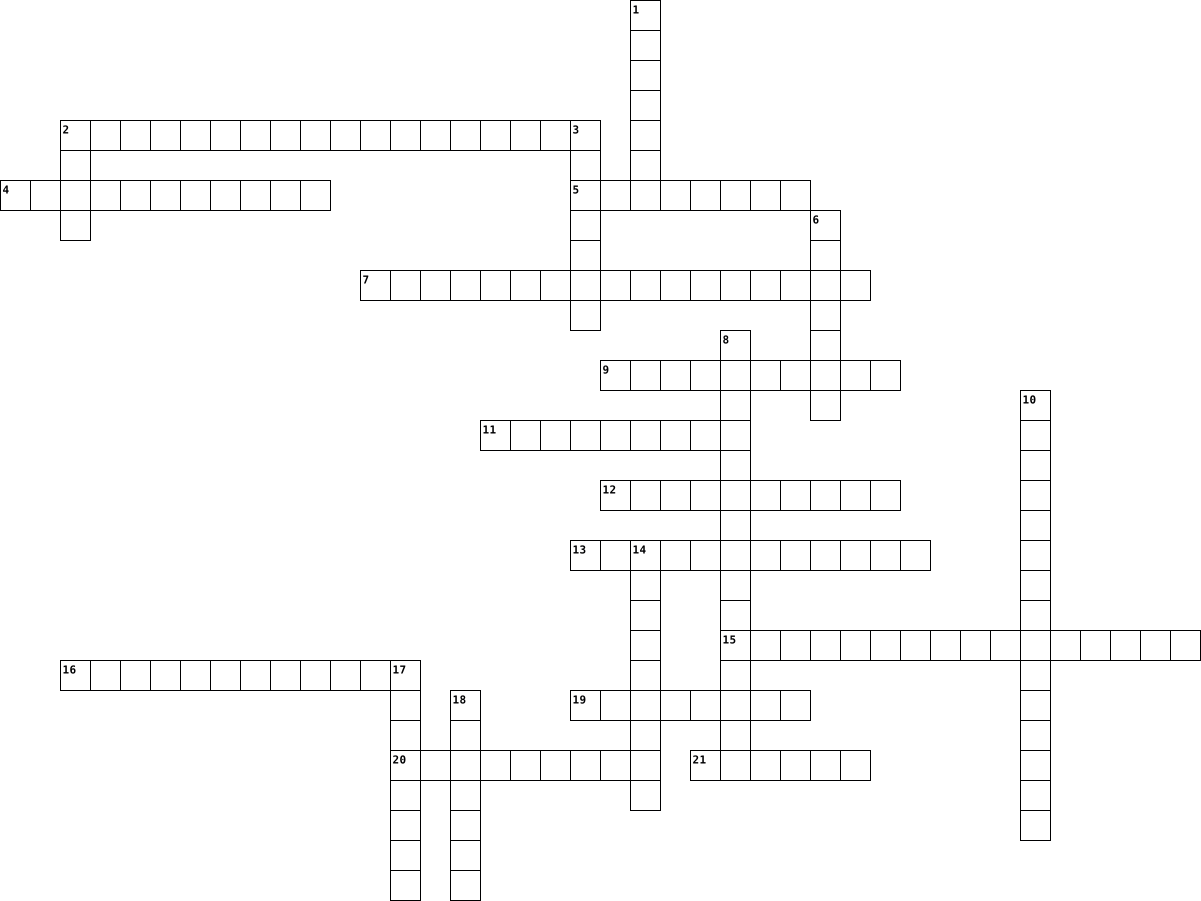
Across
- natural underground pressure pushes oil to the surface
- an unstable atom (fuel for a nuclear reactor)
- energy stored in chemical bonds between atoms and molecules
- used when coal deposits are deep underground
- commonly used process for converting stored chemical energy
- energy of an object due to its position or shape
- energy required to move/change an objects position
- used when coal deposits are near the surface
- initial pressure diminishes so water of gas is pumped through to push out the oil
- These are resources which can never be replaced, or are replaced too slowly
- another name for hydraulic fracturing
- is considered the worst man-made ecological disaster
- the ability to do work
Down
- the cleanest burning fossil fuel
- formed from the compression of dead plant material
- energy stored in forces holding atomic nuclei together
- the energy of motion
- where a large nucleus is broken, two small isotopes of hydrogen fuse to form helium
- energy emitted in the form of waves
- generally readily available, and are replaced quickly or continually.
- energy associated with the movement/flow of electrons
- energy of the movement of molecules
22 Clues: the energy of motion • the ability to do work • the cleanest burning fossil fuel • energy emitted in the form of waves • energy of the movement of molecules • another name for hydraulic fracturing • used when coal deposits are deep underground • used when coal deposits are near the surface • an unstable atom (fuel for a nuclear reactor) • ...
Energy 2021-11-11
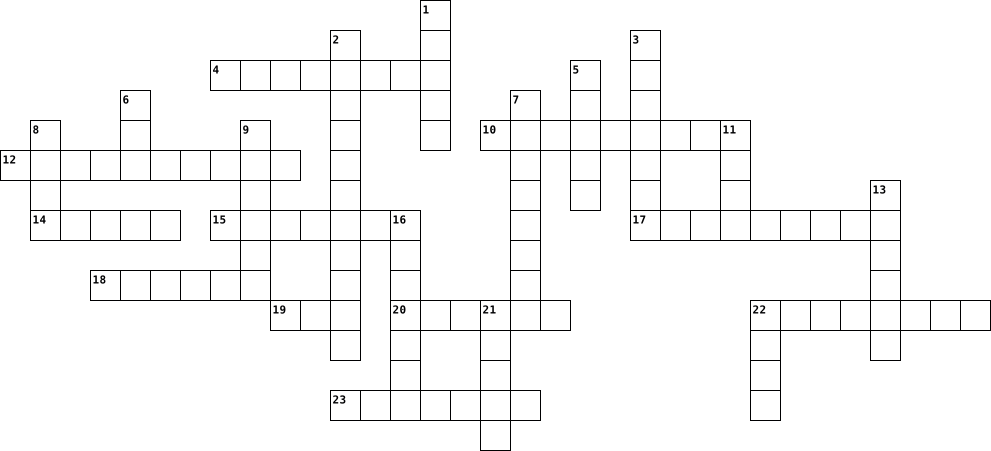
Across
- GASOLINE
- PETROLEUM
- NATURALGAS
- PLANE
- URANIUM
- RENEWABLE
- DIESEL
- HOT
- HEATER
- CRUDEOIL
- FUELOIL
Down
- STEAM
- ELECTRICITY
- NUCLEAR
- EARTH
- CAR
- KEROSENE
- LAMP
- BARREL
- MINE
- GEYSER
- METHANE
- TRAIN
- COAL
24 Clues: CAR • HOT • LAMP • MINE • COAL • STEAM • EARTH • PLANE • TRAIN • BARREL • GEYSER • DIESEL • HEATER • NUCLEAR • URANIUM • METHANE • FUELOIL • GASOLINE • KEROSENE • CRUDEOIL • PETROLEUM • RENEWABLE • NATURALGAS • ELECTRICITY
Energy 2022-02-16
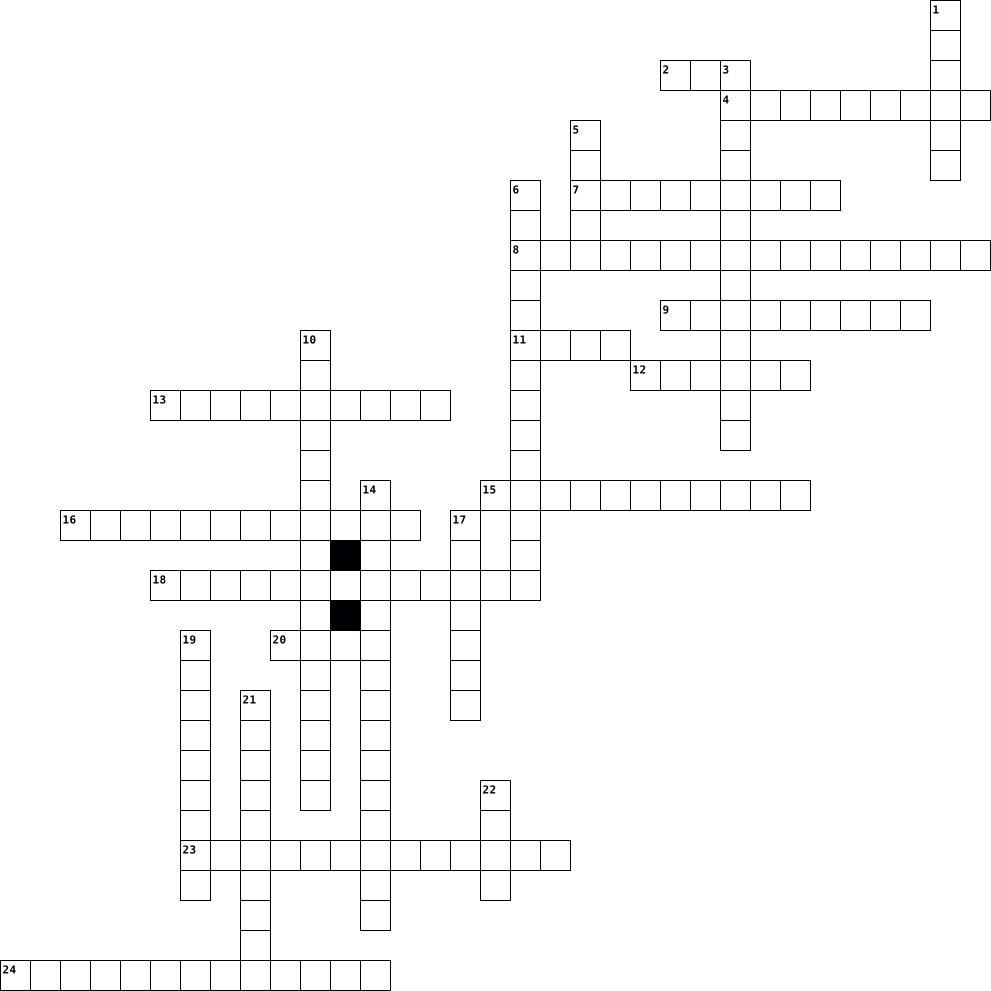
Across
- Energy that is stored through height
- thomas edison invented it
- travels through the air
- KE of moving electric charges
- something that conducts electricity
- the absence of heat
- The ability to do work
- travels through gas and liquid
- KE average
- invented the light bulb
- Heat energy
- the energy transferred between two objects
- the energy in the nucleus
- The energy of motion
Down
- Unit of work or energy
- Stretch energy
- Measured in joules
- Energy stored in the bonds of molecules
- The sum of KE and PE
- Stored energy
- a path for electricity to flow through
- a giant spark of electricity
- direct touch
- When a force makes an object move
24 Clues: KE average • Heat energy • direct touch • Stored energy • Stretch energy • Measured in joules • the absence of heat • The sum of KE and PE • The energy of motion • Unit of work or energy • The ability to do work • travels through the air • invented the light bulb • thomas edison invented it • the energy in the nucleus • a giant spark of electricity • KE of moving electric charges • ...
energy 2022-01-09
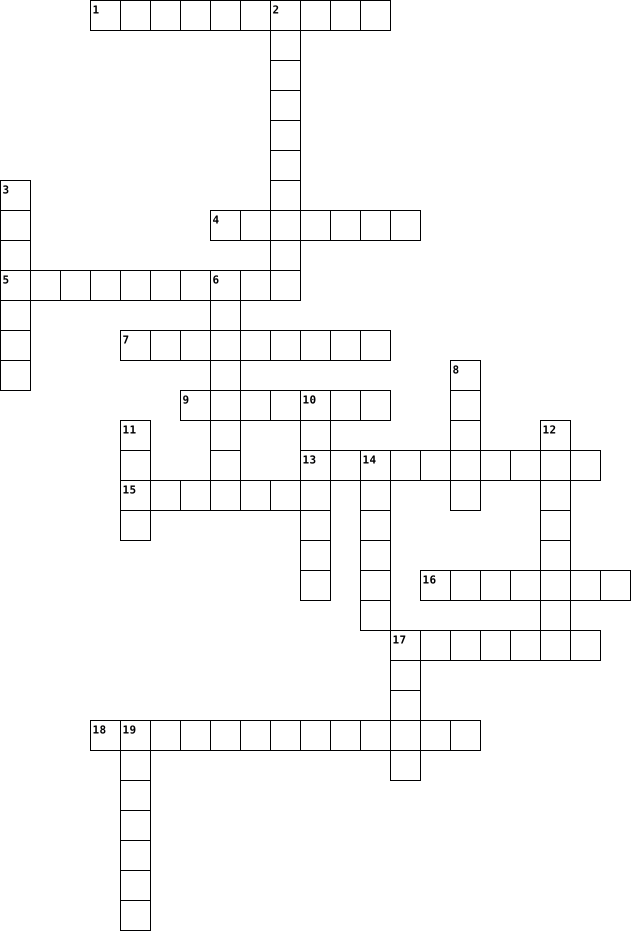
Across
- can be used to heat homes directly or to generate electricity.
- refers to the mechanical work that needs to be done against the forces that are holding an object together.
- An object’s movement creates energy
- Energy that is stored
- Energy of movement (motion)
- Movement of electrons
- Stored in the nucleus of an atom; released when nucleus splits or combines
- is the energy that is stored in elastic materials or objects (a rubber band, a spring, etc.)
- defined as the excess energy of the molecules at the surface of a material compared to the molecules within the material, and refers to the work (energy) required to build an area of a particular surface.
- Energy of position or height
Down
- is a form of kinetic energy (angular kinetic energy) due to the fact that the object rotates, and the rotational energy is part of its total kinetic energy.
- is the conversion of solid fuel made from plant materials into electricity.
- Stored in bonds of atoms and molecules
- is a form of renewable energy that uses the power of moving water to generate electricity.
- The vibration and movement of molecules
- the process by which the wind is used to generate mechanical power or electricity.
- is an energy form of moving charge carriers (electrons)
- Cannot be created or destroyed and can also transform from one form to another.
- Vibration of waves through material
- Electromagnetic waves
20 Clues: Energy that is stored • Movement of electrons • Electromagnetic waves • Energy of movement (motion) • Energy of position or height • An object’s movement creates energy • Vibration of waves through material • Stored in bonds of atoms and molecules • The vibration and movement of molecules • is an energy form of moving charge carriers (electrons) • ...
energy 2022-01-09
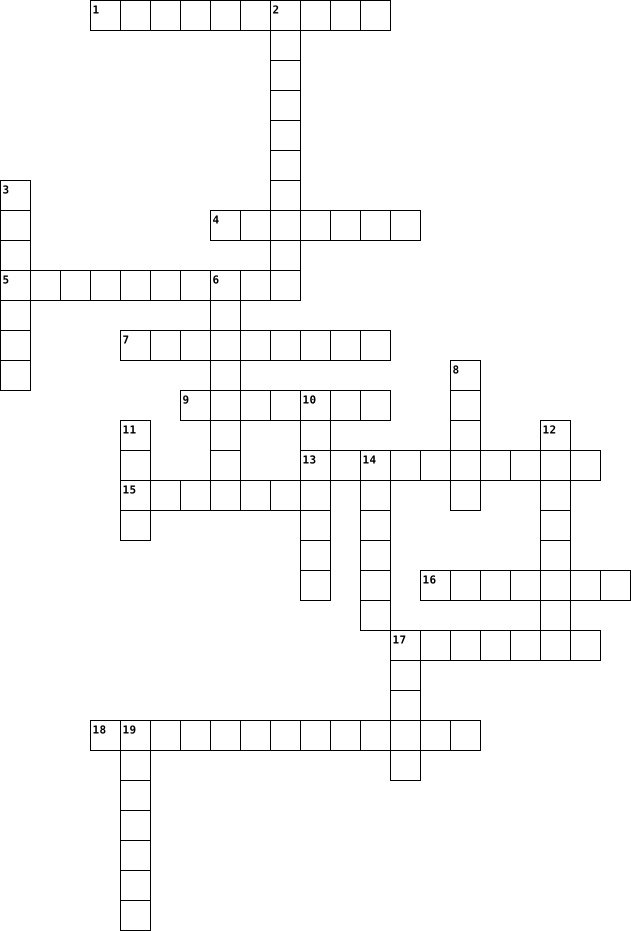
Across
- can be used to heat homes directly or to generate electricity.
- refers to the mechanical work that needs to be done against the forces that are holding an object together.
- An object’s movement creates energy
- Energy that is stored
- Energy of movement (motion)
- Movement of electrons
- Stored in the nucleus of an atom; released when nucleus splits or combines
- is the energy that is stored in elastic materials or objects (a rubber band, a spring, etc.)
- defined as the excess energy of the molecules at the surface of a material compared to the molecules within the material, and refers to the work (energy) required to build an area of a particular surface.
- Energy of position or height
Down
- is a form of kinetic energy (angular kinetic energy) due to the fact that the object rotates, and the rotational energy is part of its total kinetic energy.
- is the conversion of solid fuel made from plant materials into electricity.
- Stored in bonds of atoms and molecules
- is a form of renewable energy that uses the power of moving water to generate electricity.
- The vibration and movement of molecules
- the process by which the wind is used to generate mechanical power or electricity.
- is an energy form of moving charge carriers (electrons)
- Cannot be created or destroyed and can also transform from one form to another.
- Vibration of waves through material
- Electromagnetic waves
20 Clues: Energy that is stored • Movement of electrons • Electromagnetic waves • Energy of movement (motion) • Energy of position or height • An object’s movement creates energy • Vibration of waves through material • Stored in bonds of atoms and molecules • The vibration and movement of molecules • is an energy form of moving charge carriers (electrons) • ...
energy 2022-01-09
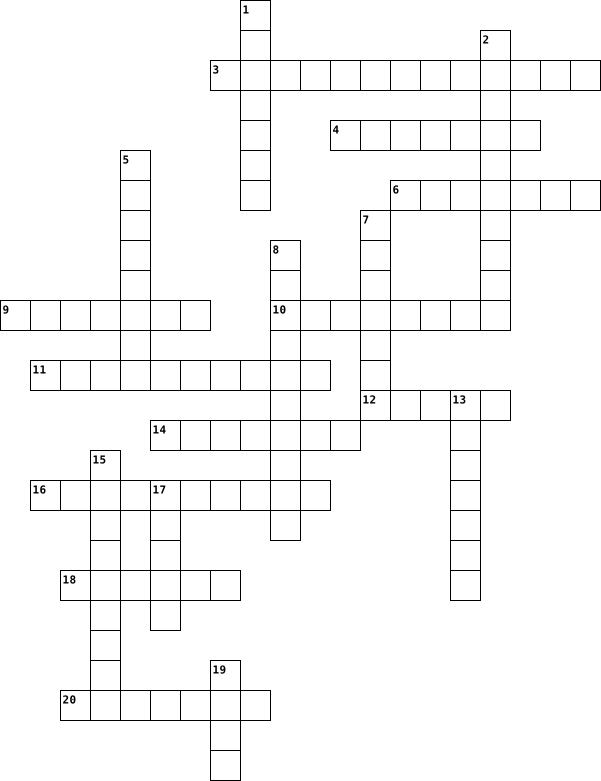
Across
- Energy of position or height
- The vibration and movement of molecules
- Electromagnetic waves
- Energy of movement (motion)
- Stored in bonds of atoms and molecules
- Movement of electrons
- Vibration of waves through material
- refers to the mechanical work that needs to be done against the forces that are holding an object together.
- can be used to heat homes directly or to generate electricity.
- Cannot be created or destroyed and can also transform from one form to another.
- is the energy that is stored in elastic materials or objects (a rubber band, a spring, etc.)
Down
- defined as the excess energy of the molecules at the surface of a material compared to the molecules within the material, and refers to the work (energy) required to build an area of a particular surface.
- is a form of kinetic energy (angular kinetic energy) due to the fact that the object rotates, and the rotational energy is part of its total kinetic energy.
- is an energy form of moving charge carriers (electrons)
- is the conversion of solid fuel made from plant materials into electricity.
- An object’s movement creates energy
- Stored in the nucleus of an atom; released when nucleus splits or combines
- Energy that is stored
- is a form of renewable energy that uses the power of moving water to generate electricity.
- the process by which the wind is used to generate mechanical power or electricity.
20 Clues: Electromagnetic waves • Movement of electrons • Energy that is stored • Energy of movement (motion) • Energy of position or height • An object’s movement creates energy • Vibration of waves through material • Stored in bonds of atoms and molecules • The vibration and movement of molecules • is an energy form of moving charge carriers (electrons) • ...
energy 2018-02-26
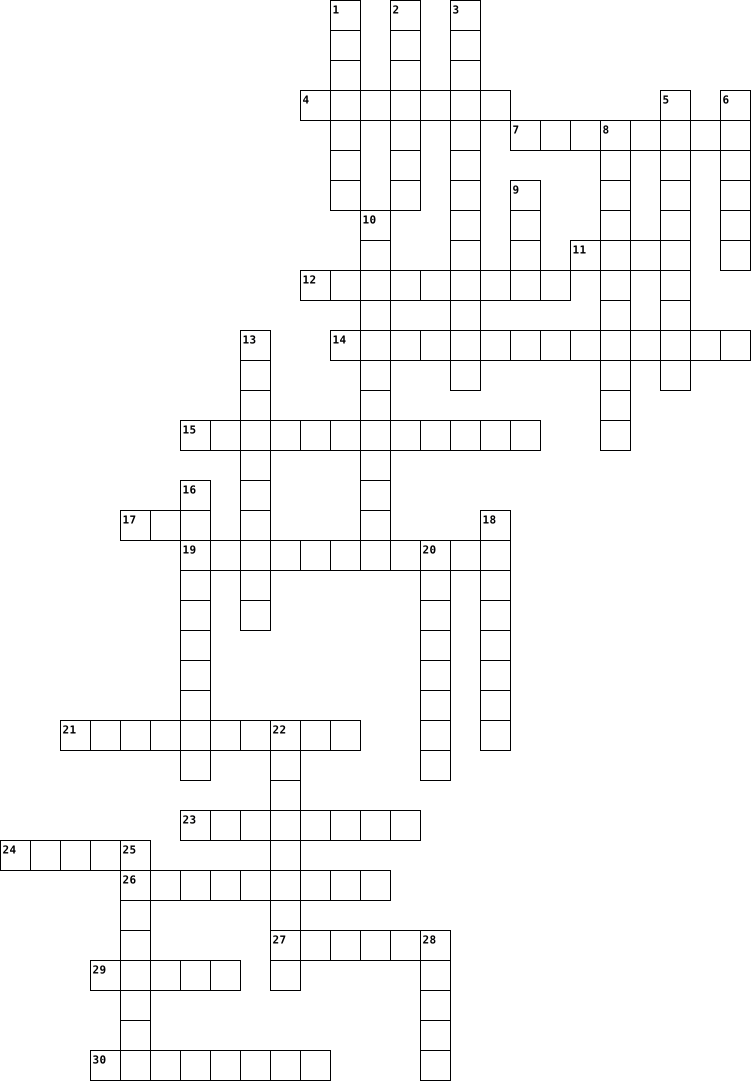
Across
- biomass increased global
- the dam for hydropower builds up
- water and solar energy is also
- can be replaced in a short amount of time
- compounds made from oil
- chemical compounds that contain hydro and carbon atoms
- solar energy won't work if the ___does not shine
- Light and heat given off by the sun
- turbine is powered by rushing water
- lots of wind turbines together
- coal is used seventy on percent%of electricity's
- solar energy is
- to save energy you can turn of the
- water produces no green house
- When the rod gets so hot it starts to melt
Down
- wind is used
- cut down trees for fuel
- oil is mainly used for
- comes from the earth's core
- Dams stop fish from going up
- nuclear fusion is very
- substance that provides energy
- reducing energy use
- hard to find spaces for them
- a layer that keeps either hot or cold air in
- they have oxygen and ________ to make hydrogen fuel cells
- crude oil is heated and put into other products
- are very tall and loud
- Biomass is not
- can't get energy when it's night time
30 Clues: wind is used • Biomass is not • solar energy is • reducing energy use • oil is mainly used for • nuclear fusion is very • are very tall and loud • cut down trees for fuel • compounds made from oil • biomass increased global • comes from the earth's core • Dams stop fish from going up • hard to find spaces for them • water produces no green house • substance that provides energy • ...
Energy 2017-09-18
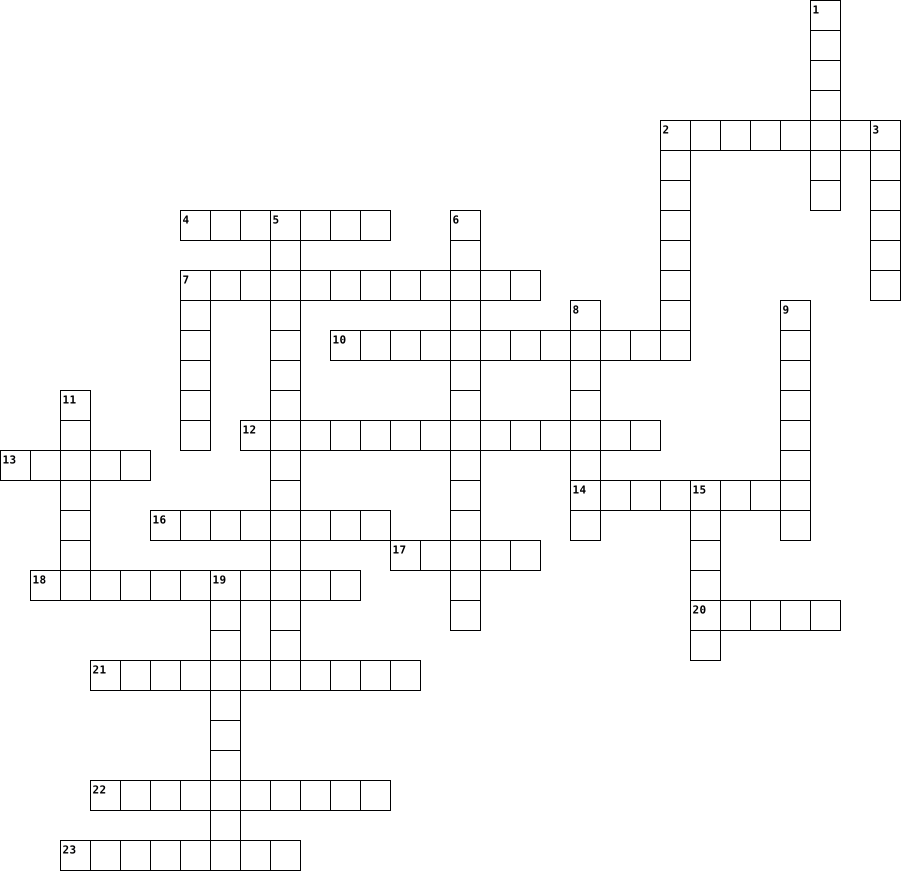
Across
- an alcohol that is also used as a fuel
- this gas burns and it has a molar mass of 16 g
- this part of a reaction is always an endothermic process
- a non-polar gas
- type of bond between molecules
- we describe a molecular as this if the dipoles cancel out
- this molecule has a molar mass of 28g
- a type of bonding between metals
- type of bonding between metal and non-metals
- a molecule is this shape if it has 4 bonding pairs around a central atom
- in a lewis diagram the outer atoms have this number of electrons in their outer shells
- type of reaction that absorbs heat
- this part of a reaction is always exothermic
- these have more energy in them in an endothermic reaction
Down
- a polar molecule that has a molar mass of 17g
- a small group of non-metals
- the shape of a molecule that only has two bonding pairs
- a polar linear molecule with a molar mass of 36.5g
- the shape of a molecule that has three bonding pairs only
- a hydrocarbon with 4 carbons which is used in camping stoves
- a type of bonding between non-metals
- the most electronegative element
- means something can dissolve
- an electronegative element
- type of reaction that gives out heat
25 Clues: a non-polar gas • an electronegative element • a small group of non-metals • means something can dissolve • type of bond between molecules • the most electronegative element • a type of bonding between metals • type of reaction that absorbs heat • a type of bonding between non-metals • type of reaction that gives out heat • this molecule has a molar mass of 28g • ...
ENERGY! 2017-05-20
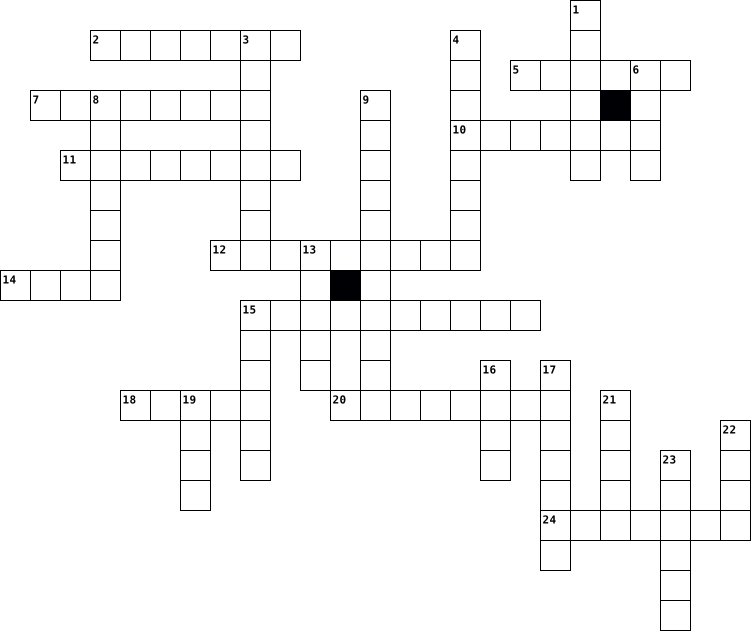
Across
- Does water ___ electricity?
- The radiometer can ___ sunlight.
- Let's try to ___ our use of energy.
- ___ means heat.
- carry
- The new heaters ___ between solar and biomass power.
- Thermal means ___.
- ___ energy is the most common.
- Without ___ we would not have light.
- ___ The plastic around a wire can ___ the wire.
- Electrical ___ flows through wires in the walls.
Down
- I ___ you want to learn more.
- ___ energy is in batteries and food.
- Rain can be an ___ in generating solar power.
- We cannot always ___ on fossil fuels.
- the path from a battery to a light bulb
- She gave a good ___ of biomass.
- There is a solar power ___ in the park this weekend.
- ___ is needed to do work.
- unit of electrical power
- Aluminum foil can ___ the sun's energy.
- ___ is to move or change something.
- from the sun
- a unit of electrical force
- The scientist has a ___ about how to save energy.
25 Clues: carry • from the sun • ___ means heat. • Thermal means ___. • unit of electrical power • ___ is needed to do work. • a unit of electrical force • Does water ___ electricity? • I ___ you want to learn more. • ___ energy is the most common. • She gave a good ___ of biomass. • The radiometer can ___ sunlight. • Let's try to ___ our use of energy. • ___ is to move or change something. • ...
Energy 2018-10-28
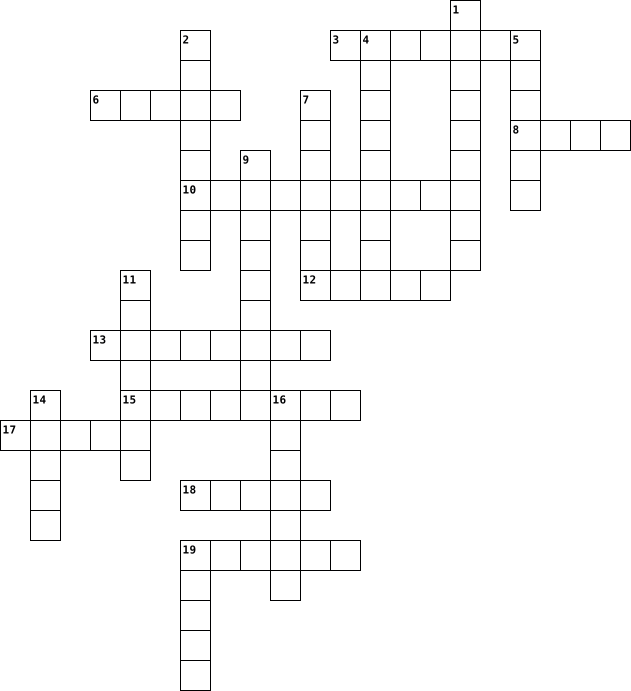
Across
- A measure of energy that is used for measuring the amount of energy in food.
- The form in which sound energy moves from one place to another.
- Heated air that is lighter than the surrounding air.
- The movement of thermal energy through liquids and gases.
- The peak of a sound wave where the greatest air pressure occurs.
- A form of energy that results from the attraction of objects that are made of iron.
- Energy stored in a hot object.
- A form of energy that travels as waves from the sun to Earth.
- The basic unit of energy that scientists use.
- Energy stored in a squashed spring.
Down
- The pitch of a sound depends ? of the sound wave.
- Energy stored in a fuel.
- The loudness of a sound depends on the ? of the sound wave.
- The ability to cause a change in matter.
- Energy of a moving object.
- A type of material that tries to prevent the flow of thermal energy.
- A form of energy that results from the attraction between 2 objects.
- A measure of the highness or lowness of a sound.
- Energy stored in the nucleus of an atom.
- A form of energy that travels as waves through the air and some solids and liquids.
20 Clues: Energy stored in a fuel. • Energy of a moving object. • Energy stored in a hot object. • Energy stored in a squashed spring. • The ability to cause a change in matter. • Energy stored in the nucleus of an atom. • The basic unit of energy that scientists use. • A measure of the highness or lowness of a sound. • The pitch of a sound depends ? of the sound wave. • ...
Energy 2016-09-28
Across
- transfer of TE from one object to another with different temperatures
- heat transfer by direct contact
- heat depends on chemical makeup of substance
- wood, plastic, air
- PE due to object's position above Earth's surface
- energy associated with electric charges
- PE stored in fuel
- silver, gold, aluminum
- energy stored in nucleus of atom
- energy determined by mass, temperature, and phase
Down
- energy of motion
- PE in object that is stretched or compressed
- cause constant conversion of KE to PE and PE to KE
- stored energy based on shape or position
- cells that convert sunlight directly to electricity
- energy in wood, peat, and other plant materials
- total amount of KE and PE in a system
- ability to cause change or do work
- energy formed by sunlight
- used to measure changes in thermal energy
- heat transfer in ocean currents
21 Clues: energy of motion • PE stored in fuel • wood, plastic, air • silver, gold, aluminum • energy formed by sunlight • heat transfer by direct contact • heat transfer in ocean currents • energy stored in nucleus of atom • ability to cause change or do work • total amount of KE and PE in a system • energy associated with electric charges • stored energy based on shape or position • ...
Energy 2019-02-25
Across
- ability to do work
- gravitational potential energy is equal to ____ x height
- occurs when nucleus splits
- energy stored in chemical bonds
- radiant energy
- energy due to position or shape
- kinetic energy is equal to mass x _____ squared
- energy of motion
- form of energy associated with the motion, position, and shape of an object
Down
- change from one form of energy to another
- energy of electric charges
- occurs when nuclei fuse together
- potential energy related to object's height
- potential energy associated with objects that can be compressed or stretched
- transfer of energy
- energy stored in nucleus of atom
- rate at which energy is transferred
- According to the law of _____ of energy, energy is not created or destroyed
- what energy and work are measured in
- heat
20 Clues: heat • radiant energy • energy of motion • ability to do work • transfer of energy • energy of electric charges • occurs when nucleus splits • energy stored in chemical bonds • energy due to position or shape • occurs when nuclei fuse together • energy stored in nucleus of atom • rate at which energy is transferred • what energy and work are measured in • ...
Energy 2019-10-23
Across
- dynamos and thermocouples produce _______ energy
- which type of energy takes 8 minutes to reach the Earth from the Sun?
- solar energy is non renewable
- elastic, gravitational and chemical are examples of _______ energy
- what type of energy does an iron change electrical energy to?
- what types of energy do bulbs emit?
- these make light energy change to electrical energy
Down
- when drawing a scale on a line graph the numbers must increase in _______ amounts
- what is the other name for movement energy
- E stands for ...
- 1000 J = 1 _______ J
- this should be used when describing energy changes of an appliance or object?
- wind is a renewable energy source
- what type of energy do fuels contain?
- what are coal, oil and gas known as?
- even though there many years of supply left this fuel will not last forever
- which type of graph would be drawn when measured distances are being compared to measured times?
- title, aim, hypothesis, method, results, _______, evaluation
- energy is measured in ...
- ____ will run out before nuclear fuel
20 Clues: E stands for ... • 1000 J = 1 _______ J • energy is measured in ... • solar energy is non renewable • wind is a renewable energy source • what types of energy do bulbs emit? • what are coal, oil and gas known as? • what type of energy do fuels contain? • ____ will run out before nuclear fuel • what is the other name for movement energy • ...
ENERGY 2020-01-16
Across
- involves catching the power of the wind and using it to do work
- a common metallic element found in rocks all over the world
- energy from a source that is not depleted when used, such as wind or solar power.
- When an object changes position relative to another object.
- colorless, odorless fossil fuel found with petroleum and natural gas
- energy comes from sources that will run out or will not be replenished
- the energy that comes from batteries and wall sockets
- heat produced in the earth core by slow decay of naturally occurring radio active particles
- A Black solid hydrocarbon (fossil fuel)
- energy that an object has because of its motion or its position
- potential energy that an object has because of how tight an object is compared to its normal (relaxed) position
Down
- the force of moving water caused by gravity
- a colorless, odorless gas formed by tiny plants and animals
- Any organic material that can be used for its energy content- wood, garbage, yard waste ect.
- that is stored within the nucleus of atoms
- using less energy to perform the same task
- stored energy
- a liquid hydrocarbon, fossil fuel form the remains of tiny sea plants and animals
- Energy stored in the bonds of chemical compounds
- radiant energy from the sun that travels to earth in electromagnetic waves or rays
20 Clues: stored energy • A Black solid hydrocarbon (fossil fuel) • that is stored within the nucleus of atoms • using less energy to perform the same task • the force of moving water caused by gravity • Energy stored in the bonds of chemical compounds • the energy that comes from batteries and wall sockets • a colorless, odorless gas formed by tiny plants and animals • ...
Energy 2013-05-16
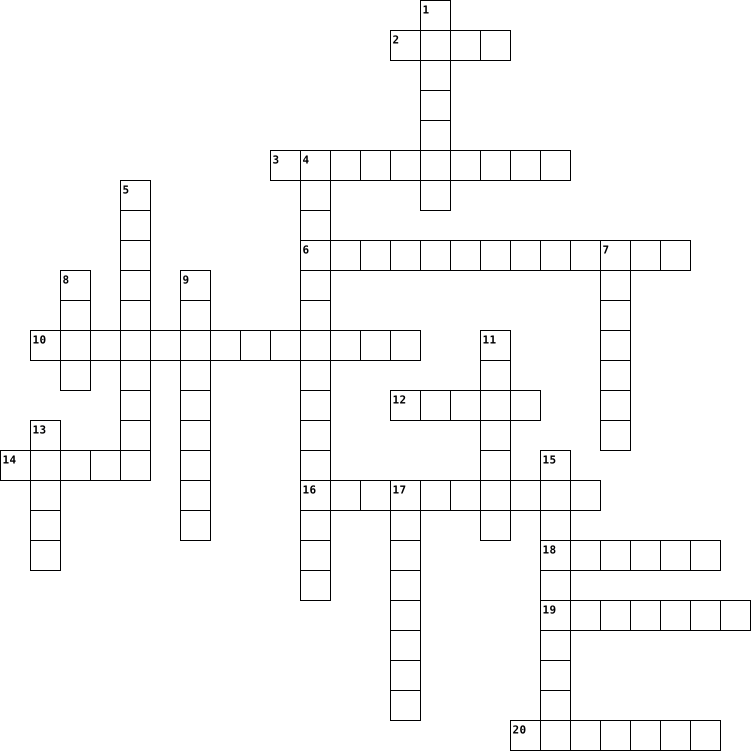
Across
- The way energy is transferred through a medium.
- Energy associated with motion and position.
- A mechanical wave that moves back and forth with compressions and rarefractions.
- Energy possessed by an object according to its position in the gravitational field.
- Energy transported by sound waves.
- Using work to move an object.
- Energy that deals with Charged Electrons in Atoms.
- The ability to do work.
- Energy which is stored when an object is stretch.
- Energy related to the transfer of heat.
Down
- Radiated by the Sun in the form of electromagnetic waves, which can be converted into electrical energy through solar cells.
- Energy transported through electromagnetic waves.
- A mechanical wave that moves up and down with crest and troughs.
- Energy contained within an atomic nucleus.
- The change of energy from one to another.
- Energy not being used or doing work.
- Energy that is in use/doing work.
- To supply with energy or force.
- The distance between crests-crest, Trough to trough, Compression to compression, or rarefraction to rarefraction.
- Energy derived from various chemical reactions.
20 Clues: The ability to do work. • Using work to move an object. • To supply with energy or force. • Energy that is in use/doing work. • Energy transported by sound waves. • Energy not being used or doing work. • Energy related to the transfer of heat. • The change of energy from one to another. • Energy contained within an atomic nucleus. • ...
energy 2013-08-04
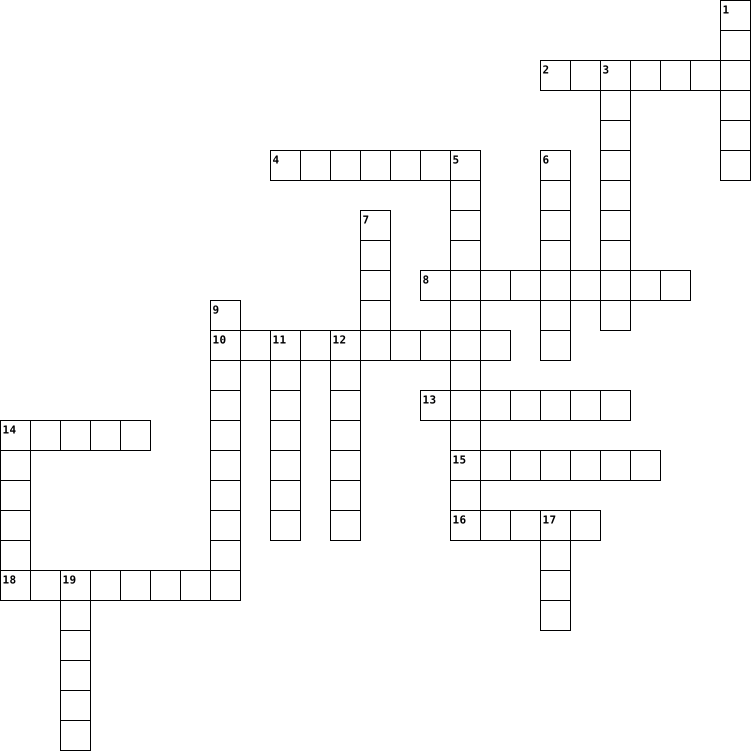
Across
- energy quantifies the disruption of intermolecular bonds that occur when a surface is created.
- a type of sound energy is when the audience starts .... to the actors
- energy water energy is called...
- my iPhone contains .... energy.
- a magnet is a type of ....... energy.
- energy the sound of the car is.
- a ... bomb has the power to destroy a big part of a country.
- bulb is a thing we use to have light in our room,house etc.
- energy is the potential of a chemical substance
Down
- is the ability do do work.
- energy is the energy that can be renewed.
- energy is the potential energy associated with the gravitational field.
- energy is the energy of electromagnetic waves.
- a solar panel Works with...
- Energy is the energy of motion that does the work.
- what is the type of energy for a rubber band?.
- when my body starts heating what is that type of energy?.
- electricity is an imbalance of electric charges within or on the surface of a material.
- we want that when we are cold.
- a good example for elastic energy is a think we use to check our mistakes.
20 Clues: is the ability do do work. • a solar panel Works with... • we want that when we are cold. • my iPhone contains .... energy. • energy water energy is called... • energy the sound of the car is. • a magnet is a type of ....... energy. • energy is the energy that can be renewed. • energy is the energy of electromagnetic waves. • what is the type of energy for a rubber band?. • ...
Energy 2013-08-04
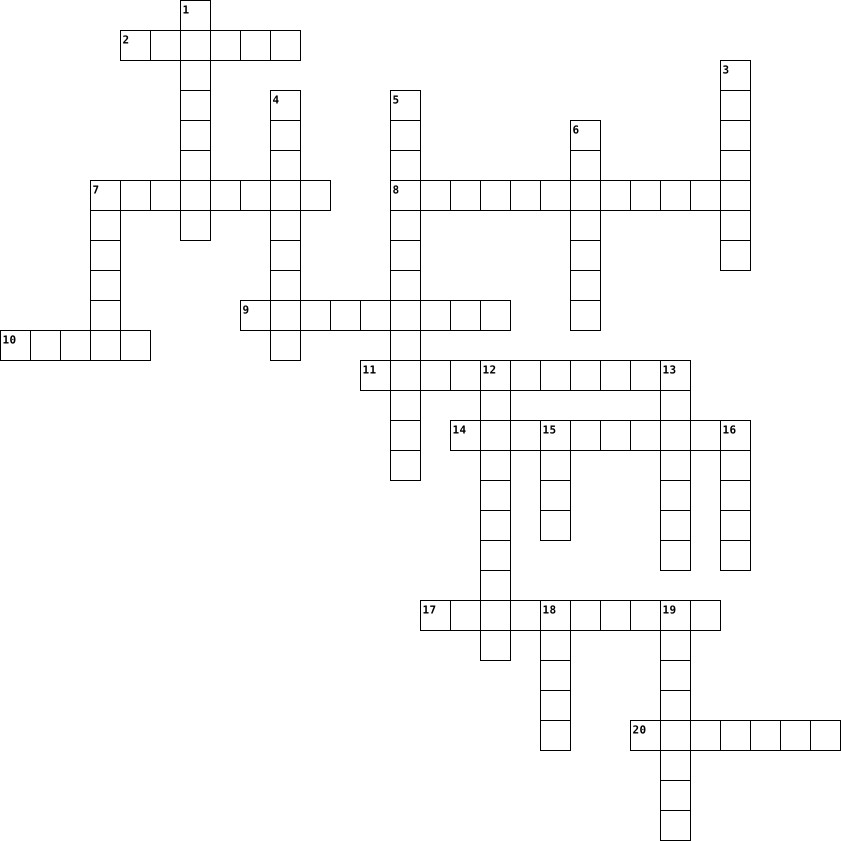
Across
- The capacity for doing work
- This type of energy causes different kinds of metals to attract or repel each other.
- The light that humans can see, it starts with V
- A type of energy stores in the position of an object or human.
- This type of energy is associated with the vibration or disturbance of matter which makes...
- The way heat is transferred from one place to another.
- The sum of energy in a mechanical system.
- The place you find the higher temperature
- A type of energy which involves motion.
Down
- The place where the higher temperature goes to starts with S like the number 10.
- This type of energy is potential energy stored as a result of deformation of an elastic object.
- When the transfer of energy happens and there is no conductive medium, its called…
- Its a type of energy associated with gravity
- Its a type of energy that comes from heat
- Its a force that acts upon an object to get it moving.
- This type of energy makes your lamp and television turn on.
- This type of energy is stores in the nucleus of an atom.
- This is energy that has move from a hot temperature to a cold temperature
- What appears when you turn on a focus
- This type of energy can be found in solar panels.
- This type of energy is stores in chemical compounds
21 Clues: The capacity for doing work • What appears when you turn on a focus • A type of energy which involves motion. • Its a type of energy that comes from heat • The sum of energy in a mechanical system. • The place you find the higher temperature • Its a type of energy associated with gravity • The light that humans can see, it starts with V • ...
Energy 2014-02-24
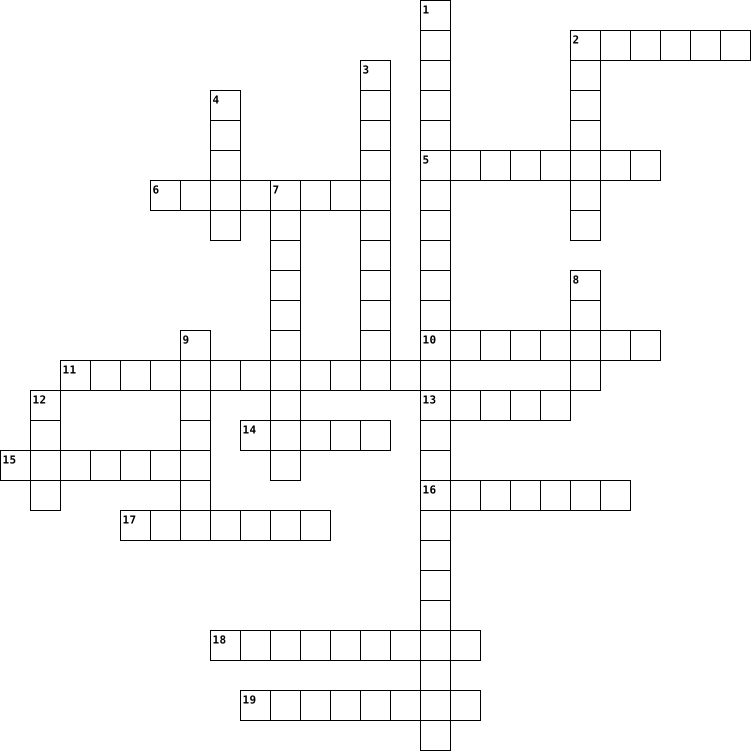
Across
- measured in Joules
- potential energy produced by a field of energy
- potential energy from the reaction of substances
- electrons moving through a circuit or wire
- massXgravityXheight
- energy that can be reused easily
- a type of kinetic energy formed by mechanical waves
- light is a type of this
- kinetic energy produced by microscopic mechanical energy
- potential energy from the binding or breaking of a nucleus
- stored energy
- energy that can't be easily reused
Down
- Equation of Kinetic energy
- potential energy stored in a material that is distorted
- another word for wave
- work divided by time
- potential energy of an electron binding to a nucleus
- when a force acts on a body and there is displacement in that direction
- the movement of a body
- what does thermal mean
20 Clues: stored energy • measured in Joules • massXgravityXheight • work divided by time • another word for wave • the movement of a body • what does thermal mean • light is a type of this • Equation of Kinetic energy • energy that can be reused easily • energy that can't be easily reused • electrons moving through a circuit or wire • potential energy produced by a field of energy • ...
ENERGY 2014-02-25
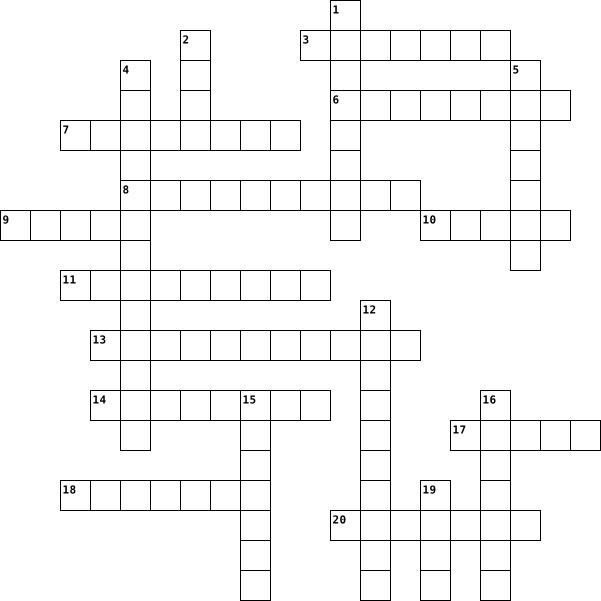
Across
- Mechanical energy stored in the configuration of materials
- ability of a chemical substance to undergo a transformation or transform another chemical substance
- Man on the hundred dollar bill, associated with electric energy
- Minimum energy required to remove an electron from an atom
- 9.__ Acceleration of gravity, in gravity's equation
- energy associated with the vibration or disturbance of matter
- Opposite type of energy of kinetic
- Source of elastic energy
- Effect or field of magnetic energy
- Nuclear is a type, measured in watts, rate of work, Kanye West song
- energy of nucleus which can be released by fusion, fission or radioactive decay
- Energy of an object in motion
Down
- energy absorbed or delivered by an electrical circuit
- How an object gains or loses energy, I've been ___in like a dog
- Pull of gravity on an object
- energy of electromagnetic waves
- Example of chemical energy, type of reaction that begins with C
- Energy in a system responsible for temperature
- A ball _____ down a hill has kinetic energy
- Source of thermal energy
20 Clues: Source of elastic energy • Source of thermal energy • Pull of gravity on an object • Energy of an object in motion • energy of electromagnetic waves • Opposite type of energy of kinetic • Effect or field of magnetic energy • A ball _____ down a hill has kinetic energy • Energy in a system responsible for temperature • 9.__ Acceleration of gravity, in gravity's equation • ...
Energy 2015-04-02
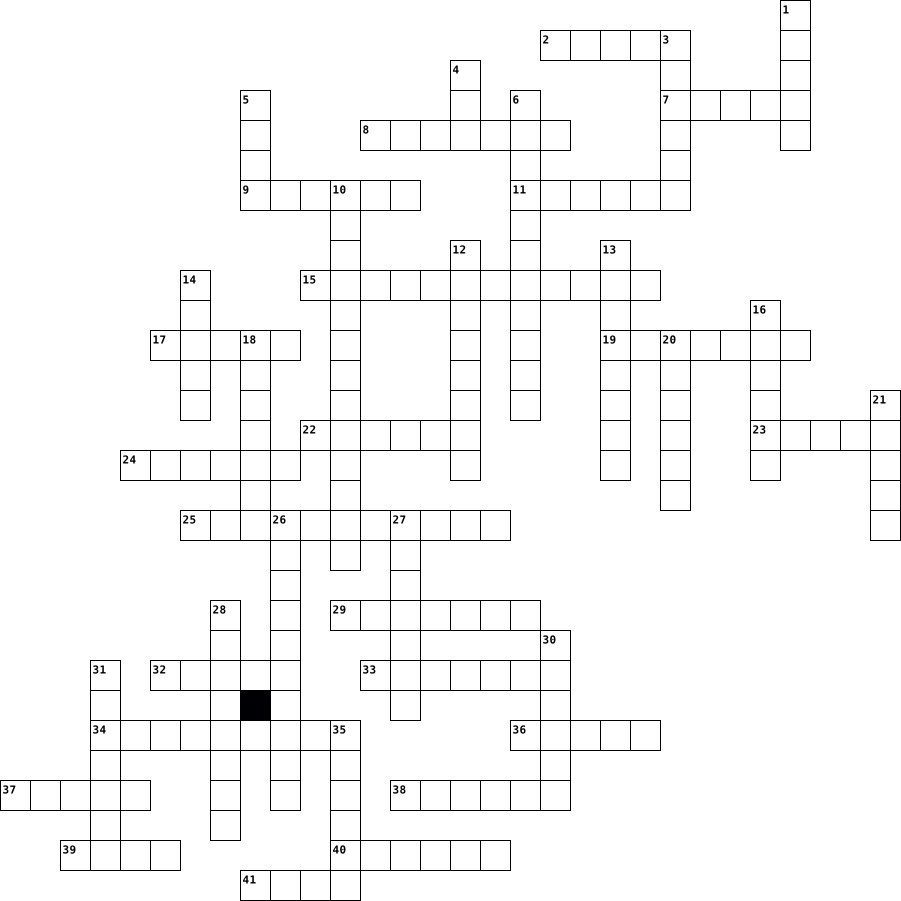
Across
- push or pull on an object
- rate at which work is done
- standard unit of temperature measurement in most countries
- SI unit of thermodynamic temperature
- has a definite size or volume and will not have any particular shape of its own
- law stating that a quantity or a property remain constant as the system changes
- a substance that continuously flows under an applied sheer stress
- of, relating to, or caused by heat
- a substance diffused or suspended in air
- a positively charged particle consisting of two neutrons and two protons
- combining 2 or more things together into one
- an instrument for measuring temperature
- the act of cleaving or splitting apart
- involving or relating to photons or very high energy
- energy of a moving object
- the work per unit charge necessary to move a charged body in an electric field
- prefix meaning above
- measurement of work done by a force
- quantity that has a direction
- an electron or positron emitted from a atomic nucleus
- one ___ equals one kilogram-metre per second squared
- represents the transfer or transformation of energy
Down
- prefix meaning below
- an increase in the volume of a substance usually due to an addition of heat
- ideal ___ can be characterized by absolute pressure, volume, and absolute temperature
- activities involving both a force and a displacement
- a phase transition directly from a solid to a gaseous state vice versa
- rapid change of water to steam
- ratio of force applied per area covered
- a decrease in volume due to removal of heat
- ___-state physics is the study of rigid matter
- unit of pressure or stress
- different forms of the same element, with the nuclei having different numbers of neutron
- ability to do work
- a nuclear reactor
- phenomenon of melting under pressure and freezing again when the pressure is reduced
- energy stored in an object when it is formed out of its normal shape
- property or tendency of a moving object to continue moving
- quantity that has no direction
- product of the force acting on a body and the time interval during which the force is exerted
- present or potential but not evident or active
41 Clues: a nuclear reactor • ability to do work • prefix meaning below • prefix meaning above • push or pull on an object • energy of a moving object • rate at which work is done • unit of pressure or stress • quantity that has a direction • rapid change of water to steam • quantity that has no direction • of, relating to, or caused by heat • measurement of work done by a force • ...
Energy 2015-04-02
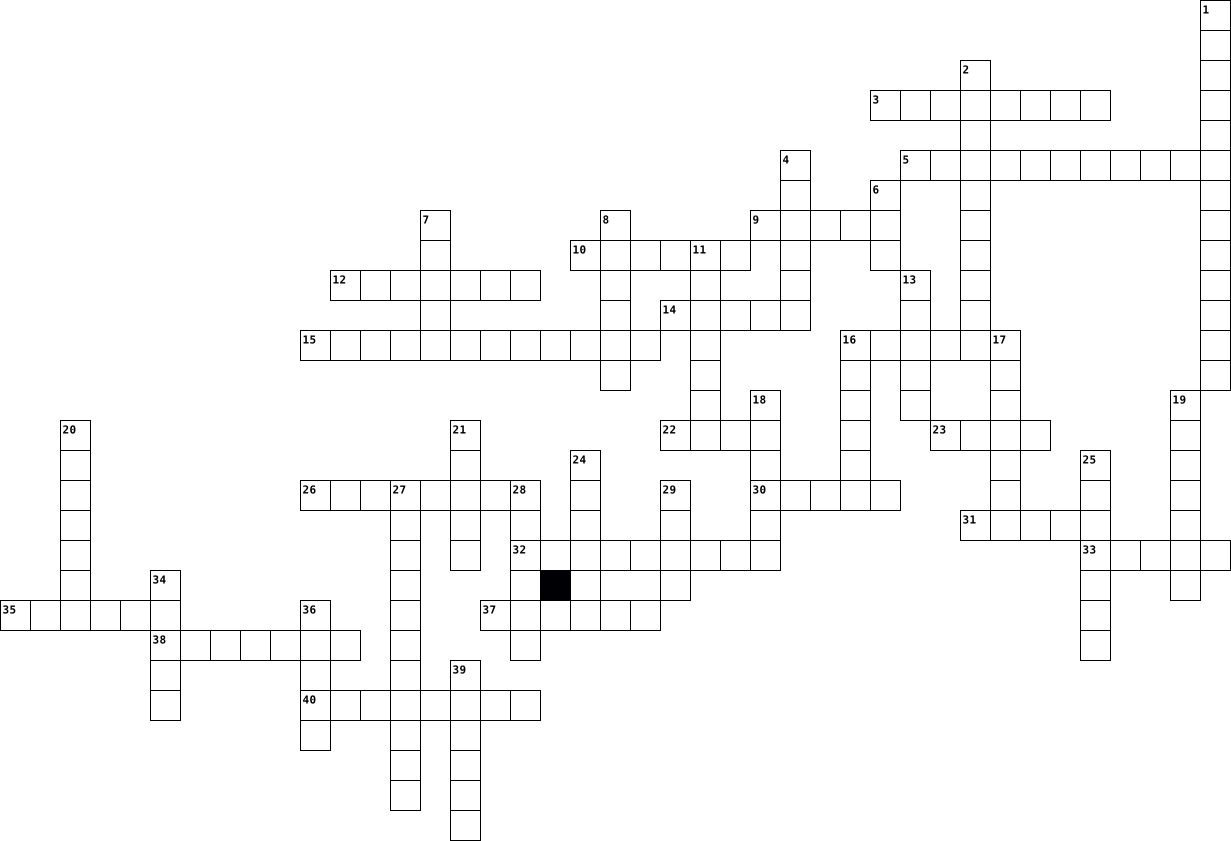
Across
- property or tendency of a moving object to continue moving
- an instrument for measuring temperature
- involving or relating to photons or very high energy
- SI unit of thermodynamic temperature
- product of the force acting on a body and the time interval during which the force is exerted
- rate at which work is done
- law stating that a quantity or a property remain constant as the system changes
- present or potential but not evident or active
- an electron or positron emitted from a atomic nucleus
- activities involving both a force and a displacement
- ratio of force applied per area covered
- a nuclear reactor
- a positively charged particle consisting of two neutrons and two protons
- the work per unit charge necessary to move a charged body in an electric field
- ___-state physics is the study of rigid matter
- combining 2 or more things together into one
- ability to do work
- the act of cleaving or splitting apart
- a decrease in volume due to removal of heat
Down
- rapid change of water to steam
- phenomenon of melting under pressure and freezing again when the pressure is reduced
- quantity that has no direction
- ideal ___ can be characterized by absolute pressure, volume, and absolute temperature
- measurement of work done by a force
- one ___ equals one kilogram-metre per second squared
- different forms of the same element, with the nuclei having different numbers of neutron
- prefix meaning above
- has a definite size or volume and will not have any particular shape of its own
- of, relating to, or caused by heat
- unit of pressure or stress
- energy of a moving object
- standard unit of temperature measurement in most countries
- a substance that continuously flows under an applied sheer stress
- quantity that has a direction
- energy stored in an object when it is formed out of its normal shape
- a phase transition directly from a solid to a gaseous state vice versa
- an increase in the volume of a substance usually due to an addition of heat
- represents the transfer or transformation of energy
- prefix meaning below
- push or pull on an object
- a substance diffused or suspended in air
41 Clues: a nuclear reactor • ability to do work • prefix meaning above • prefix meaning below • energy of a moving object • push or pull on an object • rate at which work is done • unit of pressure or stress • quantity that has a direction • rapid change of water to steam • quantity that has no direction • of, relating to, or caused by heat • measurement of work done by a force • ...
Energy 2015-04-06
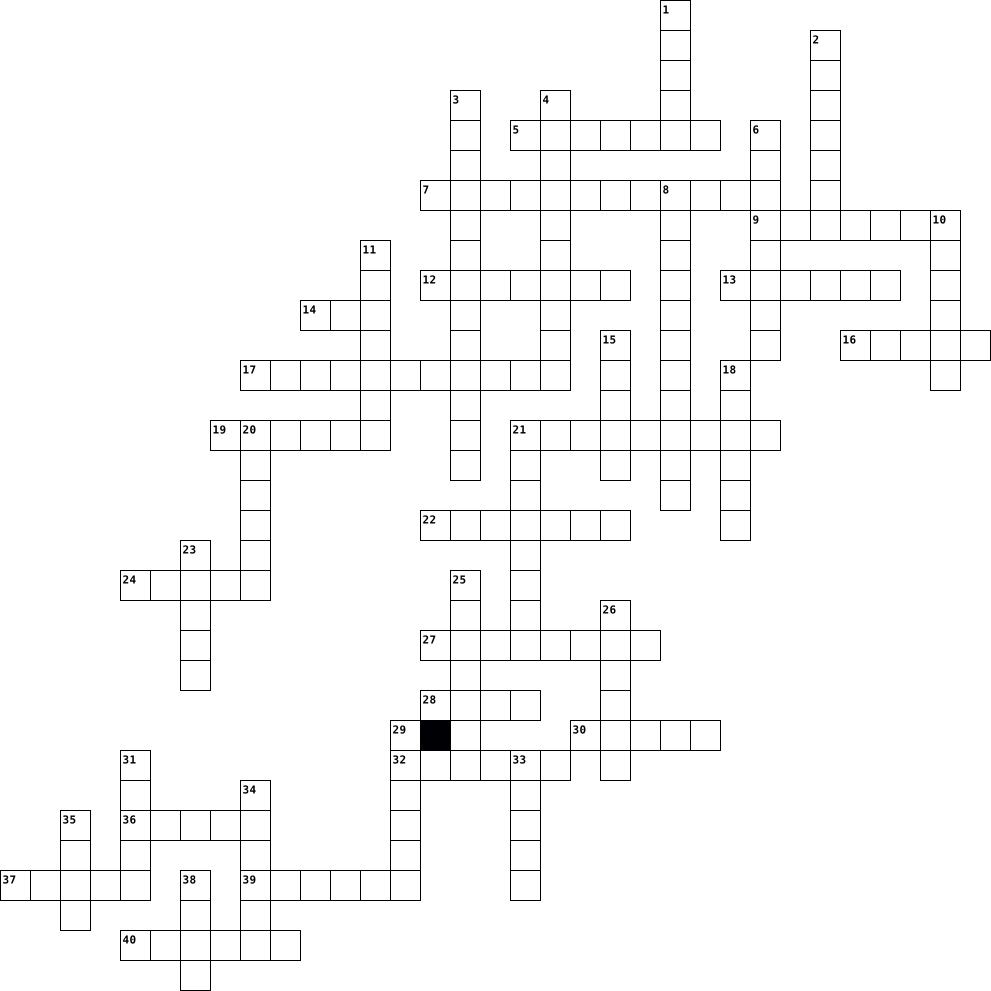
Across
- a scale of temperature in which water freezes at 0° and boils at 100°
- the action of conserving something, in particular
- of or relating to heat
- relating to, or resulting from motion
- the SI unit of pressure
- an airlike fluid substance which expands freely to fill any space available
- has no fixed shape and yields easily to external pressure
- when matter transforms straight from gas to solid or solid to gas
- the SI unit of force
- the quantity determining the energy of mass in a gravitational field or of charge in an electric field
- able to resume its normal shape spontaneously after contraction, dilatation, or distortion
- firm and stable in shape
- the quantity of motion of a moving body, measured as a product of its mass and velocity
- transfer of energy
- the SI unit of work or energy
- work do to ability
- ? = m x a
- means on the far side of or beyond
- a substance diffused or suspended in the air\
- existing but not yet developed or manifest
Down
- a nuclear reactor of a Canadian design in which the fuel is unenriched uranium oxide clad in zircaloy and the coolant and moderator is heavy water
- an impelling force or motion
- the process that occurs when a chemical or element is converted from a liquid or a solid to a gas
- is the phenomenon of melting under pressure and freezing again when the pressure is reduced
- decrease in size, number, or range
- an instrument for measuring and indicating temperature
- flowing freely but of constant volume
- the action of dividing or splitting something into two or more parts
- the derived unit is watts
- a quantity having no direction only magnitude
- become or make larger or more extensive
- the continuous physical force exerted on or against an object by something in contact with it
- stands for thermal expansion coefficient of a compound in physical chemistry
- two or more forms of the same element that contain equal numbers of protons but different numbers of neutrons in their nuclei, and hence differ in relative atomic mass
- joining two or more things together to form a single entity
- a quantity having direction as well as magnitude
- means below or further on
- a unit of magnetic field strength, equal to 10−5 gauss
- the SI base unit of thermodynamic temperature
- is the SI unit for power
- β is the symbol for it
41 Clues: ? = m x a • transfer of energy • work do to ability • the SI unit of force • of or relating to heat • β is the symbol for it • the SI unit of pressure • firm and stable in shape • is the SI unit for power • the derived unit is watts • means below or further on • an impelling force or motion • the SI unit of work or energy • decrease in size, number, or range • ...
ENERGY 2015-11-24
Across
- a form of energy; objects with high amounts of this energy are hotter than other objects
- a source of non-renewable energy made from animals that died millions of years ago; it is used to make petrol and diesel and other liquid fuels
- a form of energy used to power appliances
- a diagram used to show the distribution of useful and waste output energy of an appliance, when compared to the energy input
- the ultimate source of energy in our Solar System
- the process in which a producer transfers light energy from the Sun to chemical energy in the form of glucose
- the energy output that is either not useful or cannot be used
- a source of non-renewable energy made from animals that died millions of years ago; it is vital to the functioning of Bunsen burners
- a source of non-renewable energy made from plants that died and were fossilised over millions of years
- a form of potential energy found in things that stretch
Down
- the form of energy found in fuels
- the form of energy present when something moves
- a form of energy that helps us see
- a form of energy found in any objects above ground
- the general term for a source of chemical energy, made from organisms that died hundreds of millions of years ago
- the ability to do work
- an adjective used to describe energy resources that cannot be replaced once they are used
- the unit of measurement for energy
- an installation where electrical energy is generated through a series of energy transfers
- a form of energy that is found in anything that makes a noise
- the form of energy released during a reaction involving radioactive substances
21 Clues: the ability to do work • the form of energy found in fuels • a form of energy that helps us see • the unit of measurement for energy • a form of energy used to power appliances • the form of energy present when something moves • the ultimate source of energy in our Solar System • a form of energy found in any objects above ground • ...
Energy 2014-03-06
Across
- Energy where the vibration of particles travels through solids, liquids, and gases.
- The use of exothermic nuclear processes to create useful heat and electricity.
- Energy that speeds up the particles of matter.
- Mechanical energy that can be put into motion because of its position.
- Strength or energy as an attribute of physical action or movement.
- Energy that is in motion or can be put into motion.
- Measurement for energy.
- Mechanical energy that is in motion.
- potential mechanical energy stored in the configuration of a material or physical system.
- Energy from the sun.
- Negative energy
Down
- Energy that flows through a circuit.
- If there is any tension in the surface of something such as stretched rubber it can be defined as.
- mgh is the formula for what type of energy?
- Stored energy; Energy that can be "burned" to do work.
- Energy where waves travel through empty space.
- Conversion from potential energy to kinetic energy.
- Amplifies the potential energy
- Positive energy
- Measurement for power.
20 Clues: Positive energy • Negative energy • Energy from the sun. • Measurement for power. • Measurement for energy. • Amplifies the potential energy • Energy that flows through a circuit. • Mechanical energy that is in motion. • mgh is the formula for what type of energy? • Energy that speeds up the particles of matter. • Energy where waves travel through empty space. • ...
Energy 2023-10-18
Across
- that travel through air or other medium
- object that allows light waves to pass through
- measured as distance between two adjacent crests
- rise in temperature causes atoms and molecules to move faster
- light waves bounce off something else
- transverse wave consisting of electric and magnetic fields
- light waves bend
Down
- heat transfer in a fluid
- increasing size of object when heat causes molecules to move farther apart
- heat transfer through a vacuum
- wave in which particles of the medium vibrate at right angles
- object that allows a few light waves to pass through
- An object that does not allow light waves to pass through
- Portion of electromagnetic spectrum visible by humans
- Pitch
- heat transfer by molecules touching
- movement of energy from warmer substance to colder one
- disturbance or vibration of medium
- Materials through which a wave travels
- perceived frequency of sound
- Volume of a wave, measured in decibels
21 Clues: Pitch • light waves bend • heat transfer in a fluid • perceived frequency of sound • heat transfer through a vacuum • disturbance or vibration of medium • heat transfer by molecules touching • light waves bounce off something else • Materials through which a wave travels • Volume of a wave, measured in decibels • that travel through air or other medium • ...
Energy 2023-11-20
Across
- a unit of measurement for time
- a wave where the material moves at right angles to the energy
- the distance between two similar points on a wave (4,6)
- the energy store associated with temperature change
- a method of energy transfer that include the electromagnetic spectrum
- the energy store associated with stretching and squashing (7,9)
- the bottom of a wave
- a unit of measurement for force
- a method of energy transfer that involves surfaces rubbing against each otehr
- a unit of measurement for energy
- a measure of energy transferred over a distance (4,4)
- a method of energy transfer that involves a force
- the crest or top of a wave
Down
- the energy store associated with food, fuel and batteries (8,9)
- the energy store associated with movement
- a unit of measurement for distance
- the energy store associated with changes of height(13,9)
- the force due to gravity
- the number of times a wave passes each second
- the rate of energy transfer
- a wave where the material moves parallel to the the energy
21 Clues: the bottom of a wave • the force due to gravity • the crest or top of a wave • the rate of energy transfer • a unit of measurement for time • a unit of measurement for force • a unit of measurement for energy • a unit of measurement for distance • the energy store associated with movement • the number of times a wave passes each second • ...
Energy 2024-01-05
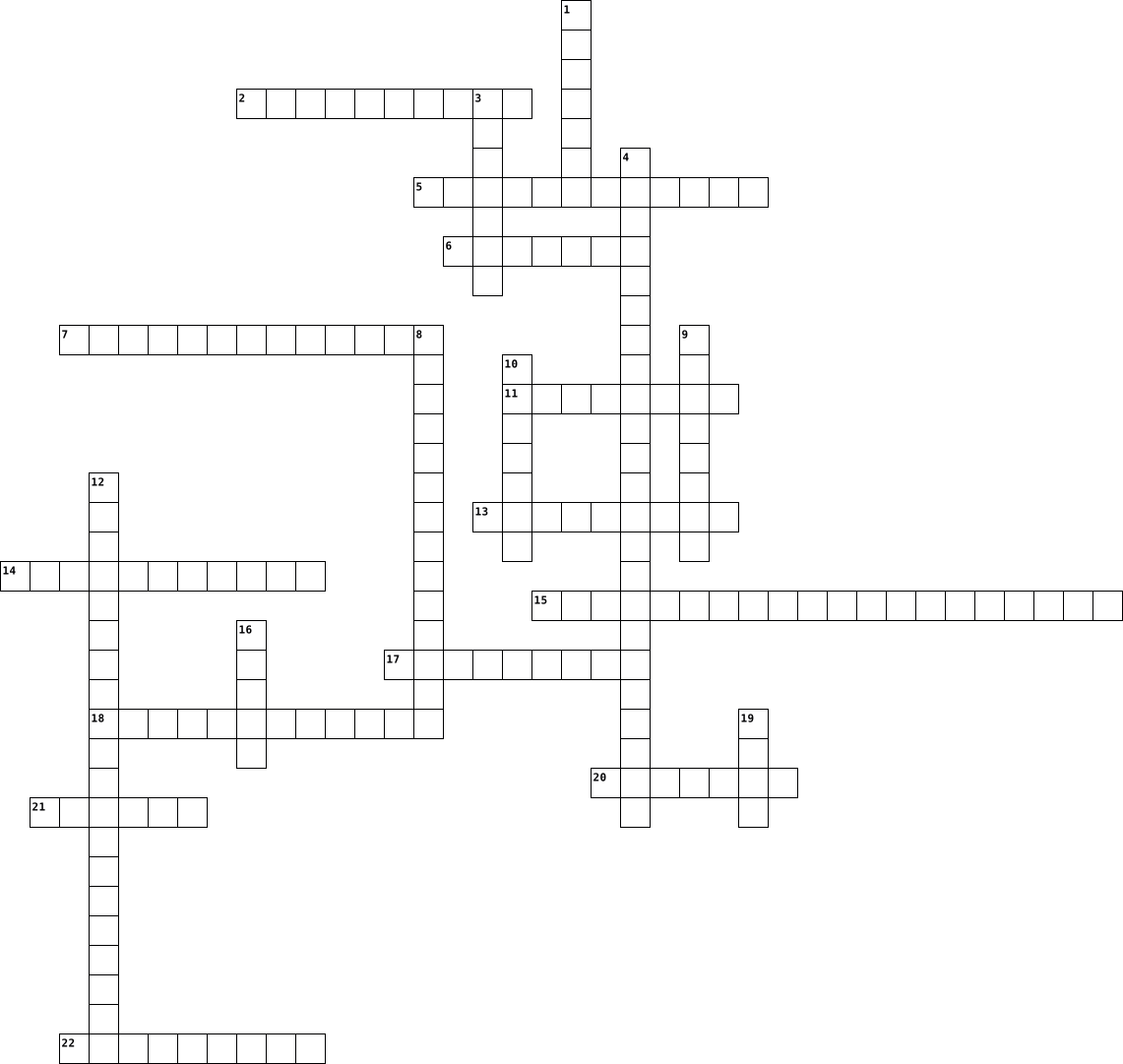
Across
- What is an electromagnetic wave with a wavelength in the rang 0.001-0.3m called?
- What is light that you can see?
- What is the category of energy of energy that is moving?
- What is the kind of energy that includes gravity?
- What kind of energy is visible to the eyes?
- What is existing in possibility called?
- What is located beyond the visible spectrum at its violet end?
- What is the principle of physics defining in which energy can or can't be destroyed?
- What is an electromagnetic wave of frequency between about 10(4) and 10(11) or 10(10) Hz called?
- What kind of energy source can't be replenished in a short period of time?
- What kind of energy is relating to the nucleus?
- What is the act of two things melting together called?
- What is capable of being renewed called?
Down
- What kind of energy is relating to heat?
- What type of energy is of, or relating to electricity?
- What is the range of wavelengths or frequencies in which electromagnetic radiation extends?
- What is a wave vibrating in the direction of propagation called?
- What is any substance that has a defined composition called?
- What is splitting into two parts called?
- What is a repeated motion of a particle when displaced from its resting position called?
- What can you hear?
- What is a form of electromagnetic radiation called?
22 Clues: What can you hear? • What is light that you can see? • What is existing in possibility called? • What kind of energy is relating to heat? • What is splitting into two parts called? • What is capable of being renewed called? • What kind of energy is visible to the eyes? • What kind of energy is relating to the nucleus? • What is the kind of energy that includes gravity? • ...
Energy 2023-12-13
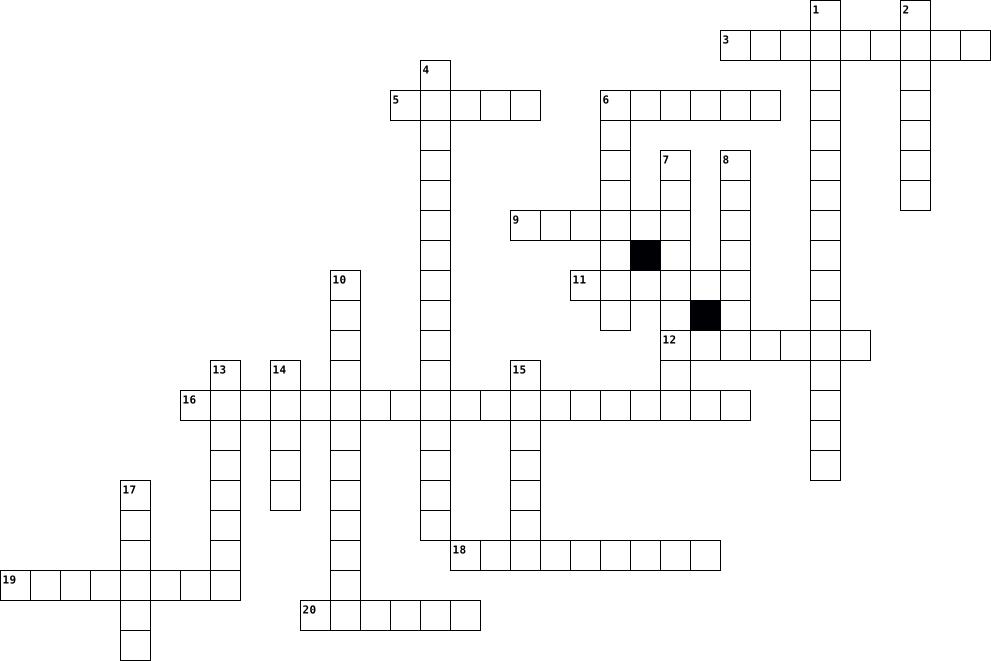
Across
- a reservoir is an example of this
- surrounded by a coil
- teachers lack this at the end of the day
- is repelled by a positive charge
- source of energy for a circuit
- used movement energy to spin
- opposite charges attract
- an energy source that is unlimited
- biomass is an example of this
- a circuit in a single path
Down
- the sum of two types of energy
- wind, water, and tide are examples of this
- gets excited when struck by light energy
- is attracted to a positive charge
- surrounds a coil with a magnet
- occurs when the nucleus of an atom changes
- an energy source that is limited
- a circuit with multiple paths
- visible and ultraviolet light are examples of this
- Chernobyl used this for power
- occurs on the sun and stars
21 Clues: surrounded by a coil • opposite charges attract • a circuit in a single path • occurs on the sun and stars • used movement energy to spin • a circuit with multiple paths • Chernobyl used this for power • biomass is an example of this • the sum of two types of energy • surrounds a coil with a magnet • source of energy for a circuit • is repelled by a positive charge • ...
Energy 2023-02-23
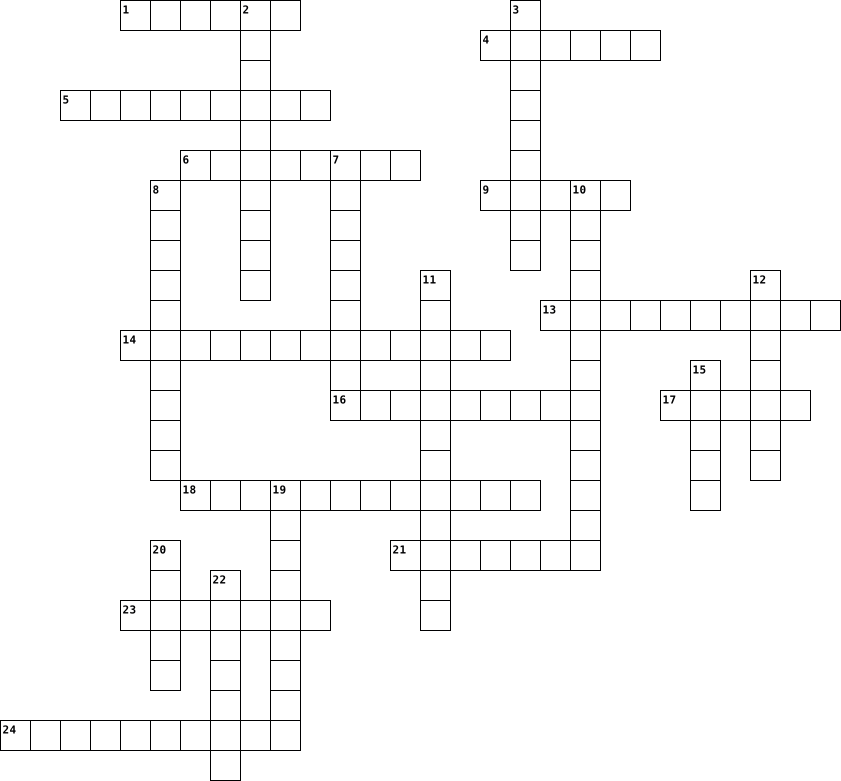
Across
- ability to do work
- Fuels like Coal, oil, and natural gas
- Substance that doesn’t transfer thermal energy well
- energy energy stored in bonds of atoms
- visible part of the EM spectrum
- Thermal energy transferred by circulating fluids
- potential energy due to position
- Resources that are virtually limitless
- Renewable energy from the sun
- ReSources that can’t be replenished at the rate of human consumption
- energy of moving matter
- energy stored in the nuclei of atoms
- Thermal energy passes by atoms in contact
Down
- Energy derived from the heat from earths core
- stored energy
- Substance that transfer thermal energy well
- energy flowing electrons
- energy produced by the energy possessed by falling water
- Law of ______ of energy energy can’t be destroyed
- organic matter used as a fuel
- energy carried by vibration of master
- Energy transferred through the emptiness of space
- si unit of energy
- potential energy in springs and bands
24 Clues: stored energy • si unit of energy • ability to do work • energy of moving matter • energy flowing electrons • organic matter used as a fuel • Renewable energy from the sun • visible part of the EM spectrum • potential energy due to position • energy stored in the nuclei of atoms • Fuels like Coal, oil, and natural gas • energy carried by vibration of master • ...
Energy 2023-02-21
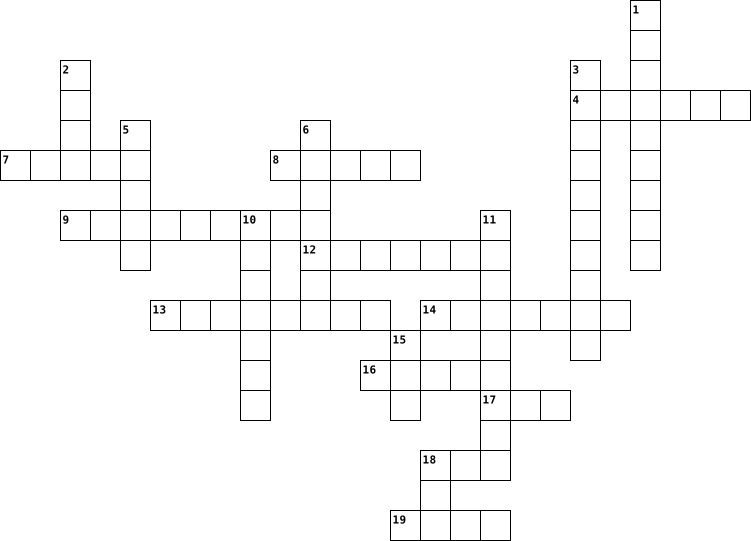
Across
- provides the ability to do work and move things
- prefix meaning water
- aka electromagnetic energy
- resource that is always available
- heat energy
- energy of chemical reactions
- energy from the inside of an atom
- energy from the sun
- old animal juice
- natural _____
- rocks from ancient plants
Down
- energy associated with position
- air moving
- energy of moving objects
- energy of vibrating air
- energy associated with motion
- energy from plants
- these make up electrical energy
- ______-renewable
- ______thermal
20 Clues: air moving • heat energy • natural _____ • ______thermal • ______-renewable • old animal juice • energy from plants • energy from the sun • prefix meaning water • energy of vibrating air • energy of moving objects • rocks from ancient plants • aka electromagnetic energy • energy of chemical reactions • energy associated with motion • energy associated with position • ...
energy 2024-04-25
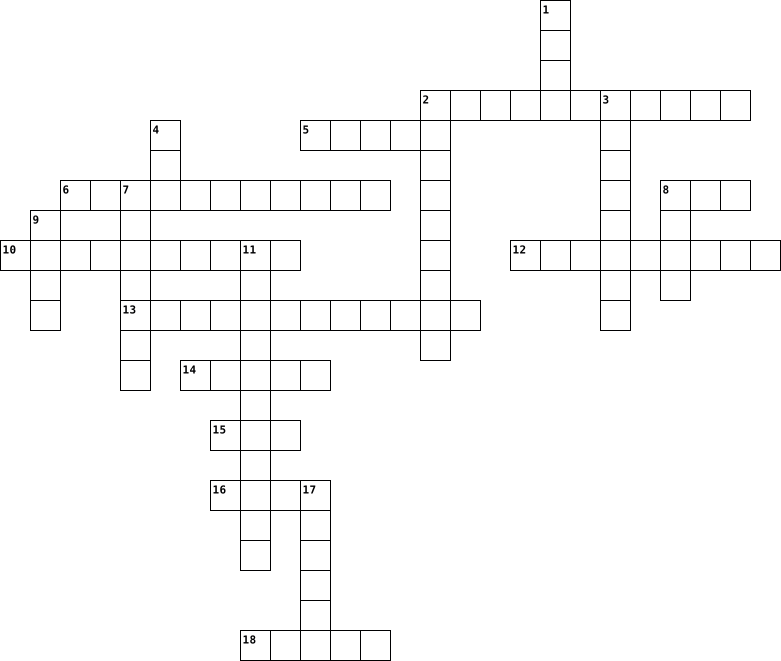
Across
- strechy
- sends electricity
- from the earth
- humans create this when they breath
- can fall over very easily
- powers campers with gas
- can run out
- comes from the sky
- from the ground
- turbines
- powered by sun
Down
- goes in a fire pit
- can not run out
- comes from crops
- powers cars
- this hops
- heats homes
- powers humans
- lights houses
- powers tractors simis and big vehichles
20 Clues: strechy • turbines • this hops • powers cars • heats homes • can run out • powers humans • lights houses • from the earth • powered by sun • can not run out • from the ground • comes from crops • sends electricity • goes in a fire pit • comes from the sky • powers campers with gas • can fall over very easily • humans create this when they breath • powers tractors simis and big vehichles
Energy 2024-05-29

Across
- Energy that powers our TVs and fridges
- An example of Kinetic energy in the air
- Energy stored in an object because of it's height
- Energy in motion
- An appliance with electric energy as well as electromagnetic
- Energy cannot be created nor ______
- Energy provided by the sun
- The law of ____ says the energy transforms.
- Energy caused by the vibrations of objects
- Energy that is stored
- The energy stored in a stretch rubber band
Down
- Energy that lets you see light
- Transferring energy into an object so that there is some displacement
- Energy relating to atoms
- Energy stored in batteries and food
- The ability to do work
- A device that makes you louder that converts electrical energy to sound energy
- Thermal energy travels through a ____
- Energy from moving charged electrons
- The S.I unit for energy
20 Clues: Energy in motion • Energy that is stored • The ability to do work • The S.I unit for energy • Energy relating to atoms • Energy provided by the sun • Energy that lets you see light • Energy stored in batteries and food • Energy cannot be created nor ______ • Energy from moving charged electrons • Thermal energy travels through a ____ • Energy that powers our TVs and fridges • ...
Energy 2024-05-30

Across
- Energy from the sun
- Energy can only be..
- Switch to energy efficient bulbs
- The number of steps often showed in basic transformations
- Instruments produce what form of energy
- Saving energy
- Energy can be created or
- Force from a magnet
- A book on a shelf..
Down
- Energy in the nucleus
- Hot chocolate
- The S.I Unit of Energy
- A change from one form to another
- Ability to do work
- Kinetic energy
- When an object is able to return to its original shape
- Radiant light and heat from the sun
- Activity involving effort..
- A battery is what type of energy
- Electrical energy requires a..
20 Clues: Hot chocolate • Saving energy • Kinetic energy • Ability to do work • Energy from the sun • Force from a magnet • A book on a shelf.. • Energy can only be.. • Energy in the nucleus • The S.I Unit of Energy • Energy can be created or • Activity involving effort.. • Electrical energy requires a.. • Switch to energy efficient bulbs • A battery is what type of energy • ...
Energy 2024-05-31

Across
- energy energy due the motion of particles in the body
- the ability to do work
- energy visible to the human eye and is used to read
- the law of conservation states that energy cannot be destroyed nor__
- the law where energy cannot be destroyed or created
- energy stored when something is bent, twisted or stretched
- energy energy resulting from charged particles being in an electrical field
- energy energy that the body has due to the motion
- energy mangoes hanging from a tree
Down
- energy waves of radios, micro waves etc
- what is the S.I unit for energy
- movement of energy from 1 place to the next
- energy binding particles in the nucleus of an tom
- energy attraction of of objects made in metal
- energy transferred by vibrating particles
- energy energy stored in movement of objects
- the law of conservation of energy states that energy cannot be or created
- energy it is stored in chemical bonds
- energy comes from the sun
- the application of farce along a displacement
20 Clues: the ability to do work • energy comes from the sun • what is the S.I unit for energy • energy mangoes hanging from a tree • energy it is stored in chemical bonds • energy waves of radios, micro waves etc • movement of energy from 1 place to the next • energy transferred by vibrating particles • the application of farce along a displacement • ...
Energy 2024-05-30

Across
- Substance eaten for energy
- Ability to do work
- The flow of electrical power
- Energy an object has due to motion
- Object is stretched or bent
- Type of energy generated by the sun
- Energy from moving electrons
- Stores and gives out electrical power
- Boosts sight and makes things visible
- State of matter with no fixed shape or volume
Down
- Uses electromagnetic waves to heat food
- Stored energy
- Energy from vibrating sound waves
- The rate at which work is done
- Energy binding particles in the nucleus of an atom
- Product of force and distance moved
- Star at the center of the solar system.
- Related to heat or temperature
- Used for transportation
- A condition of being hot
20 Clues: Stored energy • Ability to do work • Used for transportation • A condition of being hot • Substance eaten for energy • Object is stretched or bent • The flow of electrical power • Energy from moving electrons • The rate at which work is done • Related to heat or temperature • Energy from vibrating sound waves • Energy an object has due to motion • Product of force and distance moved • ...
ENERGY 2024-05-27

Across
- Energy of radio waves
- Energy is not created or destroyed
- Heat energy
- Energy in stretched objects
- Turn off these to save energy
- Efficient light bulbs
- Renewable energy source
- Energy stored in the nucleus
- Ability to do work
- Changing one energy form to another
- Energy in chemical bonds
Down
- Potential energy due to height
- SI unit of energy
- Energy of motion
- Sustainable power source
- Light energy type
- Substance powering engines/generators
- Energy in sound waves
- Energy in magnets
- Reducing energy use
20 Clues: Heat energy • Energy of motion • SI unit of energy • Light energy type • Energy in magnets • Ability to do work • Reducing energy use • Energy of radio waves • Energy in sound waves • Efficient light bulbs • Renewable energy source • Sustainable power source • Energy in chemical bonds • Energy in stretched objects • Energy stored in the nucleus • Turn off these to save energy • ...
energy 2024-05-29

Across
- the movement of energy from one location to another is called
- the energy stored in a body when it is at rest
- energy in moving charged electrons
- when an object is at a certain height or vertical position
- energy in electronic appliances
- charged particles in an electric field
- the energy stored in the bonds of
- the ability of a body to do work
- energy that can make people see
- sound energy is the energy transferred by vibrating
- energy in the nucleus of an atom
Down
- energy in a body due to motion
- energy in a system that is responsible for temperature
- energy in different types of waves
- energy can be into one another
- energy cant be made or
- electromagnetic gravitational energy
- energy in an object due to motion
- the conservation of energy
- energy in an object when it is twisted or stretched
20 Clues: energy cant be made or • the conservation of energy • energy in a body due to motion • energy in electronic appliances • energy that can make people see • the ability of a body to do work • energy in the nucleus of an atom • the energy stored in the bonds of • energy in an object due to motion • energy in different types of waves • energy in moving charged electrons • ...
Energy 2022-04-29
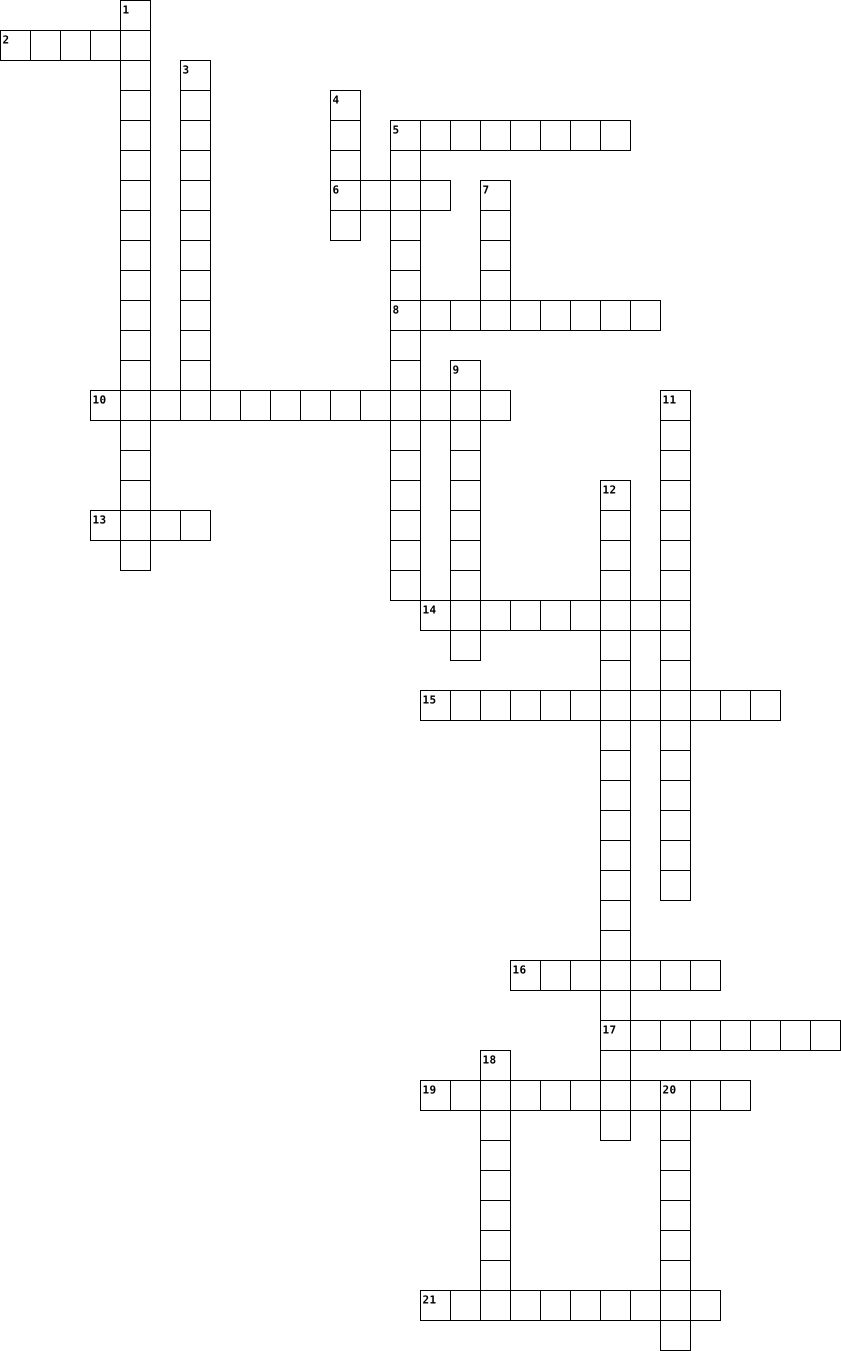
Across
- the unit of energy
- energy due to the movement of electrons in a circuit
- energy due to a movement of particles at an atomic level
- a type of material that conducts heat well
- the change of energy from one state to another
- something that is done when energy is transformed
- energy which is stored in objects
- numerical data that is gathered by tools
- energy due to movement
- the movement of energy from one place to another
- descriptive data that is gathered by our senses
- heat transfer between to objects in direct contact
Down
- the process of transforming chemical potential into a form that our bodies can use
- the act of using waste from one process in another process
- energy carried by an electromagnetic wave
- energy stored in stretched materials
- energy carried by a sound wave
- heat transfer via the movement of heated gases or liquids
- energy stored in the bonds between atoms
- energy stored in an object that is above the ground
- heat transfer via the emission of electromagnetic waves
- a type of material that conducts heat
22 Clues: the unit of energy • energy due to movement • energy carried by a sound wave • energy which is stored in objects • energy stored in stretched materials • a type of material that conducts heat • energy stored in the bonds between atoms • numerical data that is gathered by tools • energy carried by an electromagnetic wave • a type of material that conducts heat well • ...
Energy 2022-09-19
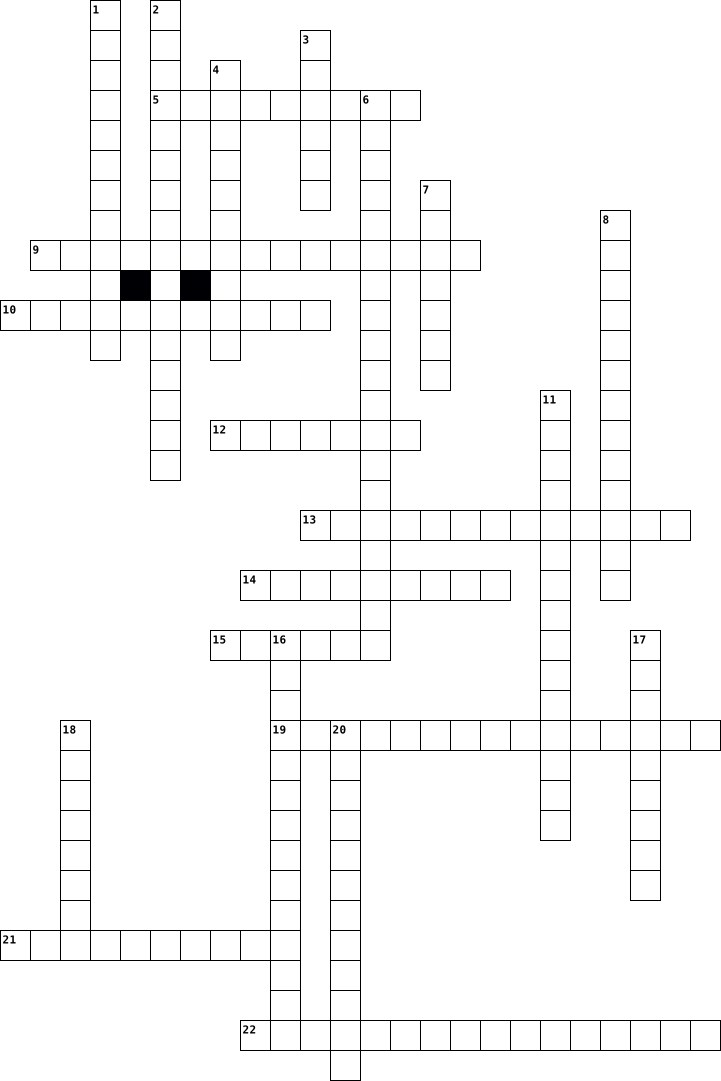
Across
- A diesel substitute produced by extracting and chemically altering oil from plants
- the amount of carbon dioxide and other carbon compounds emitted due to the consumption of fossil fuels by a particular person, group, etc.
- energy that comes from the sun
- fuel from organic sources
- the energy an object has due to its motion
- A machine that converts mechanical energy into electrical energy
- The ability to do work or cause change
- A resource that can be replaced when needed.
- flammable gas, consisting largely of methane and other hydrocarbons, occurring naturally underground (often in association with petroleum) and used as fuel.
- warming that results when solar radiation is trapped by the atmosphere
Down
- of or related to hot water
- oil burning, replaced steam engine, used in transportation
- an internal-combustion engine that burns heavy oil
- a natural fuel such as coal or gas, formed in the geological past from the remains of living organisms.
- A form of energy that travels through space as waves
- to change from one form to another
- Heat energy
- stored energy that results from the position or shape of an object
- Movement of energy from one place or object to another
- liquid fossil fuel; oil
- a unit of power equal to 1000 watts
- electric or motive power generated by a nuclear reactor.
22 Clues: Heat energy • liquid fossil fuel; oil • fuel from organic sources • of or related to hot water • energy that comes from the sun • to change from one form to another • a unit of power equal to 1000 watts • The ability to do work or cause change • the energy an object has due to its motion • A resource that can be replaced when needed. • ...
Energy 2023-10-02
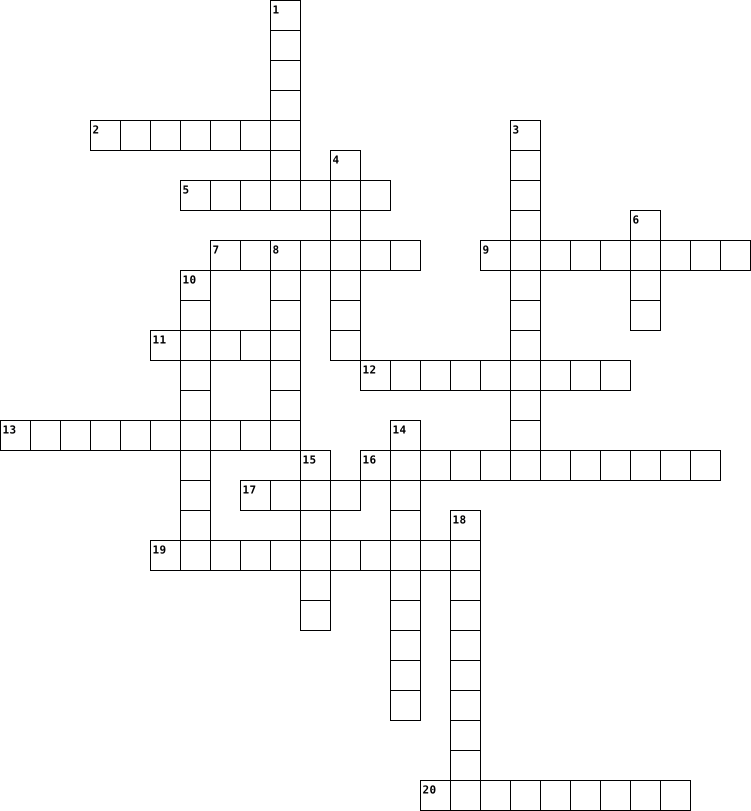
Across
- Energy from atomic nuclei.
- Energy of motion.
- Energy associated with the temperature of an object.
- Source of energy that is replenished naturally and can be used indefinitely.
- Energy from the sun.
- Stored energy based on an object's position or condition.
- Measure of how effectively input energy is converted into useful output energy.
- Source of energy that is finite and cannot be replaced on a human timescale.
- Energy from moving air.
- Form of energy produced by the flow of electric charge.
- Process of converting energy from one form to another.
Down
- Unit of energy commonly used to measure food energy.
- Wise use and protection of natural resources, including energy.
- Organic material that can be used as a source of energy.
- Unit of power, representing energy consumption or production over time.
- Measure of the disorder or randomness in a system.
- Energy from the Earth's heat.
- Natural fuel formed from the remains of living organisms.
- Capacity to do work or produce heat.
- Energy from flowing water.
20 Clues: Energy of motion. • Energy from the sun. • Energy from moving air. • Energy from atomic nuclei. • Energy from flowing water. • Energy from the Earth's heat. • Capacity to do work or produce heat. • Measure of the disorder or randomness in a system. • Unit of energy commonly used to measure food energy. • Energy associated with the temperature of an object. • ...
Energy 2023-09-28
Across
- the ability to do work and cause a change
- the splitting of an atoms nucleus into two smaller nuclei
- a dark, liquid fossil fuel made up of mostly hydrocarbons
- leftover radioactive material
- rock filled with a mixture of hydrocarbons
- chemical compounds that are derived from oil and used to make products
- typically the practice of digging shafts deep into the ground to find and remove a mineral
- the practice of reducing energy use to meet those goals
- the process in which fuel burns because it combines rapidly with oxygen
- the energy that an object has due to its motion
- nearly always available or replaced in a relatively short time
Down
- generates electricity by controlled fission reactions
- an expression of how much of the energy actually does useful work
- small nuclei of lightweight elements are forced together to form a heavier nucleus
- the energy that holds these particles together in the nucleus
- energy made available by the flow of an electric charge
- an ice like solid that consists of molecules of methane within a crystal network of water molecules
- when sulfide minerals in exposed rock surfaces react with oxygen and rainwater to produce sulfuric acid
- the extraction of a mineral by removing a strip of the layers of soil and rock on top of a mineral deposit
- energy an object has because of its position or shape
- energy cannot be replaced
- when fuel rods produce so much heat that they melt
22 Clues: energy cannot be replaced • leftover radioactive material • the ability to do work and cause a change • rock filled with a mixture of hydrocarbons • the energy that an object has due to its motion • when fuel rods produce so much heat that they melt • generates electricity by controlled fission reactions • energy an object has because of its position or shape • ...
ENERGY 2024-09-17

Across
- Energy of movement
- Energy cannot be created or destroyed, only change into another form of energy
- an interaction between two objects
- the requirments the solution must fit to bo successful. Criteria is plural for criterion
- the rate at which work is done
- The limitations on how to make a design.
- A chemical reaction in which a substance reacts with an oxidant to produce heat or light and a new product
- the total heat content of a system
- the mathematical relationship between voltage, current, and resistance, showing that current is directly proportional to voltage and inversly proportional to resistance
- A substance(s) present before a chemical reaction occurs
- a form of kinetic energy that refers to the motion of particles in matter
- The difference between electric currents and magnetic fields
- The mathematical relationship showing that the force of electrostatic repulsion or attraction between two objects depends of their charges and the distance between them
- A substance(s) formed as a result of a cheimical reaction
- The ability to cause change
- A form of potential energy released during radioactive processes that affect the nuclei of atoms
- the total lenght traveled by an object
- stored energy
- subatiomic particles of light energy that are much smaller than electrons
- the mathematical relationship showing that the enthalpy change of a chemical reaction is the same whether the reaction happens with a single step or many steps
Down
- designing and building things to solve problems
- the process where a molecule or atom loses electrons
- A form of kinetic energy that comes from raidation or electormagnetic waves.
- The interaction between electric currents and magnetic fields
- a form of kinetic energy resulting from the movement of eletrons
- A form of potential energy stored in the bonds of compounds
- A form of knietic energy that is the energy of motion
- The changing from one type or form of energy to another
- an object that becomes magnetic when an electric current flows through it
- A type of machine powered by electrical energy (or thermal energy) that allows for a vehicle or part to move
- the force required to move an object a certain distance
- The force between two charged objects
- the potential energy between two points in a circut, causing electrons(electric charge) to move frome one point to another
- A point where the electric current is closed, allowing it to flow into teh commutator
34 Clues: stored energy • Energy of movement • The ability to cause change • the rate at which work is done • an interaction between two objects • the total heat content of a system • The force between two charged objects • the total lenght traveled by an object • The limitations on how to make a design. • designing and building things to solve problems • ...
Energy 2025-04-01

Across
- energy of moving objects (car moving)
- energy from the sun
- can be replaced as it is or cannot be used up
- used up much faster than it can be replaced
- the ability to make things move or change
- any material from living things that can be used as an energy source
- store electrical energy produced by solar cells
- energy of moving water
- energy that travels as waves through matter or through empty space
- energy of moving charges (lamps, toasters)
- solar cell can change light energy into electricity
Down
- a change form one form to another
- reflects and forces sunlight onto a fluid pipe, thermal energy is used to create steam, which turns the turbine wind energy
- energy stored in the bonds that hold atoms together
- energy stored in the nucleus of an atom
- the energy of moving particles (hot cocoa has many)
- energy of moving air( wind turbines)
- an energy resource that formed over millions of years from decayed remains of plants and animals
- careful use of resources
- heat energy from inside the earth that can be used to heat buildings and produce electricity
20 Clues: energy from the sun • energy of moving water • careful use of resources • a change form one form to another • energy of moving air( wind turbines) • energy of moving objects (car moving) • energy stored in the nucleus of an atom • the ability to make things move or change • energy of moving charges (lamps, toasters) • used up much faster than it can be replaced • ...
Energy 2025-04-14

Across
- energy can never be destroyed or created
- the amount of work done in a certain time
- Material that allows heat to flow easily
- Stored energy, three types
- The transfer of energy from one object to another
- the ability to cause change
- heat that comes from fire, sun, ect
- comes from a variety of sources used for communication
- Light that comes from the sun and lightbulbs
Down
- a measure of average kinetic energy of particles on an object.
- The sum of kinetic and potential energy of the particles in an object
- form of energy that is reflected or emitted in the form of electrical and magnetic waves
- materials that do not allow heat to flow easily
- energy stored in objects being compressed or stretched
- energy stored in chemical bonds of compounds
- the transfer of energy that occurs when a force makes an object move
- Energy in Motion
- energy stored in objects that are above Earth's surface
- Comes from releasing energy from the nucleus of an atom
- comes from outlets and power plants
20 Clues: Energy in Motion • Stored energy, three types • the ability to cause change • comes from outlets and power plants • heat that comes from fire, sun, ect • energy can never be destroyed or created • Material that allows heat to flow easily • the amount of work done in a certain time • energy stored in chemical bonds of compounds • Light that comes from the sun and lightbulbs • ...
Energy 2025-04-22

Across
- снабжать
- сопротивление
- назначение
- разница
- проводник
- обрыв
- неисправность
- предполагать
- короткое замыкание
- повреждение
- результат
- через, сквозь
Down
- точка
- цепь
- напряжение
- связывать, соединять
- ноль
- сокращать
- электрический ток
- закон
- источник
- сравнивать
- равно
- Ом
24 Clues: Ом • цепь • ноль • точка • обрыв • закон • равно • разница • снабжать • источник • сокращать • проводник • результат • напряжение • назначение • сравнивать • повреждение • предполагать • сопротивление • неисправность • через, сквозь • электрический ток • короткое замыкание • связывать, соединять
energy 2025-01-11

Across
- type of bond, shares electrons unequally
- type of bond, shares electrons equally
- bond, transfer of electrons, give or take
- electrons occupying the outer shell of an atom
- tendency of an atom to bond with others
- unit of energy, represented by J
- energy from radioactive materials
- energy from air currents, via wind turbines
- energy produced by the sun, harvested via solar panels
Down
- type of reaction that emits heat, feels warm
- negatively charged subatomic particle
- positively charged subatomic particle
- energy sourced directly from the earth
- result of force acting upon something, producing motion
- type of reaction that absorbs heat, feels cold
- energy required for a valence electron to jump from one ion to another
- active energy, currently used
- the ability to do work
- neutrally charged subatomic particle
- possible energy, "saved for later"
20 Clues: the ability to do work • active energy, currently used • unit of energy, represented by J • energy from radioactive materials • possible energy, "saved for later" • neutrally charged subatomic particle • negatively charged subatomic particle • positively charged subatomic particle • energy sourced directly from the earth • type of bond, shares electrons equally • ...
energy 2025-08-11

Across
- Intake of energy (like light) by a material, often converting it to heat
- Heat transfer via movement of fluids (liquids or gases)
- Emitting or reflecting light—bright or shining
- transformation: “Process of changing energy from one form to another
- energy Energy due to motion
- Bouncing of a wave (like light) back into the medium it came from
- fuel: Natural fuel like coal or oil, formed from ancient organic matter
- Measure of how much input energy becomes useful output energy
- energy Stored energy based on an object’s position or condition
- Combustible sedimentary rock used as a fossil fuel
- Material that resists the flow of heat or electricity
- Energy emitted as waves or particles through space or material
- Device storing chemical energy and converting it to electrical energy
Down
- energy Energy from naturally replenishing sources like sunlight or wind
- Energy carried through waves
- Capacity to do work or cause change
- Passing of energy—such as light or sound—through something
- Material that returns to its original shape after being stretched or compressed
- Heat transfer through direct contact due to a temperature difference
- Rate at which work is done or energy is transferred
- Biofuel made from plant materials, often added to gasoline
- Emitting light due to being heated
- energy Energy from sources that don’t replenish quickly, such as coal or oil
- Act of changing energy from one form to another
- Force attracting objects toward each other
- energy: Radiant power harnessed from the sun
- Electromagnetic radiation visible to the human eye
27 Clues: energy Energy due to motion • Energy carried through waves • Emitting light due to being heated • Capacity to do work or cause change • Force attracting objects toward each other • energy: Radiant power harnessed from the sun • Emitting or reflecting light—bright or shining • Act of changing energy from one form to another • ...
Energy 2025-09-15

Across
- A form of energy resulting from the flow of charged particles, like electrons, through a conductor.
- A form of energy that travels in the form of electromagnetic waves.
- The energy an object possesses due to its motion.
- What is the process of changing energy from one form into another, adhering to the law of conservation of energy?
- The ability to do work or cause change.
- Light energy travels as?
- The process where an electric voltage (electromotive force or emf) and thus an electric current is produced in an electrical conductor by a changing magnetic field.
- A set of interacting or interdependent components that form an integrated whole.
- The energy transferred by sound waves, which are vibrations that propagate through a medium.
- A process where substances called reactants are transformed into one or more new substances
- The energy stored in an elastic object when it's deformed.
Down
- The total energy of an object due to its motion and position.
- Energy cannot be created or destroyed, only converted from one form to another or transferred between objects. In a closed, or isolated, system, the total amount of energy remains constant.
- The transfer of energy via electromagnetic waves, which can occur through a vacuum or a medium like a gas or liquid. Unlike conduction and convection, radiation does not require physical contact or a moving fluid to occur, making it unique in its ability to transfer heat across empty space.
- The energy stored in an object due to its position or configuration.
- The movement or transmission of energy from one object, system, or location to another
- The International System of Units (SI)unit of work or energy
- A mode of heat transfer that occurs through the direct contact of particles in a material
- Also known as heat energy,isthe energy within a system due to the motion of its constituent particles
- A method of heat transfer in a fluid (liquid or gas) where heat energy is transported by the bulk movement or circulation of the fluid itself.
20 Clues: Light energy travels as? • The ability to do work or cause change. • The energy an object possesses due to its motion. • The energy stored in an elastic object when it's deformed. • The International System of Units (SI)unit of work or energy • The total energy of an object due to its motion and position. • ...
energy 2025-10-27

Across
- – Heat energy from beneath Earth’s surface.
- – Reducing energy use or waste.
- – Device that produces electricity.
- – Unit used to measure energy.
- – Visible energy that travels in waves.
- – Energy from moving electrons.
- – Energy carried by vibrations through a medium.
- – Energy stored in bonds between atoms.
- – Power produced from flowing water.
- – Organic material used as fuel.
Down
- – Unit used to measure power.
- – Device that stores and supplies electrical energy.
- – Doing more with less energy.
- – Stored energy due to position or condition.
- – Energy from the sun, often captured by panels.
- – Energy of motion.
- – Machine that converts fluid motion into energy.
- – Energy released from atomic reactions.
- – Energy related to heat.
- – Energy generated by moving air.
20 Clues: – Energy of motion. • – Energy related to heat. • – Unit used to measure power. • – Doing more with less energy. • – Unit used to measure energy. • – Reducing energy use or waste. • – Energy from moving electrons. • – Organic material used as fuel. • – Energy generated by moving air. • – Device that produces electricity. • – Power produced from flowing water. • ...
Energy 2025-12-11

Across
- Parts of an object moving in opposite directions.
- Materials we use to produce energy.
- The equal and opposite force in an interaction.
- Temporary change in shape (like a rubber band stretching).
- A force applied by a person or object.
- A force that twists an object.
- Resources that can be replaced in a human lifetime.
- A force caused by stretched elastics or springs.
- A force that squeezes or compacts an object.
- The world around us—land, air, water, organisms.
- How easy a resource is to reach and collect.
- The opposite of temporary change; the object stays bent.
- Resources that cannot be replaced quickly.
Down
- Getting land back to its original state after extraction.
- A force that resists motion when two surfaces rub.
- The initial direction of a push or pull in an interaction.
- When a resource can be used in its natural form.
- Considering nature, cost, and society when choosing a resource.
- Energy made by processing many resources.
- When a resource is changed before being used.
- A pulling force through a rope or string.
- Forces that act inside an object.
22 Clues: A force that twists an object. • Forces that act inside an object. • Materials we use to produce energy. • A force applied by a person or object. • Energy made by processing many resources. • A pulling force through a rope or string. • Resources that cannot be replaced quickly. • A force that squeezes or compacts an object. • How easy a resource is to reach and collect. • ...
Energy 2026-03-03

Across
- The ability to do work or cause change
- The amount of matter in an object which affects its potential energy
- A common example used to show changes between potential and kinetic energy
- When energy moves from one object or place to another
- Stored energy that can be released to do work
- The total energy of motion and position in an object
- When energy changes from one form to another
- Potential energy stored when an object is stretched or compressed
- The unit used to measure energy
Down
- Potential energy stored in food fuels and batteries
- Done when a force causes an object to move
- The energy an object has because it is moving
- Increasing the length of an elastic object stores potential energy
- A force that pulls objects toward the centre of the Earth
- Another word for movement
- Increasing this increases gravitational potential energy
- A word that describes potential energy
- When an object drops its potential energy decreases and kinetic energy increases
- How fast something is moving which affects its kinetic energy
- A word that describes kinetic energy
20 Clues: Another word for movement • The unit used to measure energy • A word that describes kinetic energy • The ability to do work or cause change • A word that describes potential energy • Done when a force causes an object to move • When energy changes from one form to another • The energy an object has because it is moving • Stored energy that can be released to do work • ...
Physical Science Ch 22 Light & Optics Crossword 2025-04-29

Across
- A material through which visible light cannot pass.
- The point on an optical axis at which all reflected or refracted light rays from incident rays that are parallel to the optical axis converge.
- A material through which light passes but the light is scattered and does not transmit a clear image.
- A model of light in which the endpoint represents the light’s source and the light travels in one direction.
- An object that is visible because it reflects light from an external source.
- An object that is producing visible light.
- A curved mirror with the reflective side on the outside of the curve.
- Light produced by objects that glow as a result of high temperature.
- An image that forms at the point where converging rays of light intersect.
- One of three colors (red, blue, green) of visible light that the human eye can sense.
- A light ray approaching a surface; an incoming ray.
- A curved mirror with the reflective side on the inside of the curve.
- An image produced by diverging rays.
Down
- A material through which light passes without scattering, transmitting a clear image.
- A color of light that is produced when primary colors are mixed.
- When a chemical reaction gives off energy in the form of light.
- The process where a material glows for a longer period of time after absorbing energy.
- Occurs when a material gives off visible light after absorbing electromagnetic energy.
- The law that states that when a light ray reflects off a surface, the angle of the incident ray equals the angle of the reflected ray.
- A color that forms because of pigments absorbing some wavelengths of light that strike an object.
- A flat mirror.
- A color that is produced by combining the wavelengths of different colors.
- Light produced by some living things.
- Reflection that occurs when a smooth surface reflects light rays in mostly the same direction. (regular reflection)
- Reflection off a rough or uneven surface that reflects light rays in all directions.
- The distance from the center of a lens or mirror to its focal point.
- The ray that bounces off a surface.
27 Clues: A flat mirror. • The ray that bounces off a surface. • An image produced by diverging rays. • Light produced by some living things. • An object that is producing visible light. • A material through which visible light cannot pass. • A light ray approaching a surface; an incoming ray. • When a chemical reaction gives off energy in the form of light. • ...
ENVIRONMENTAL SCIENCE 2023-09-07

Across
- - IT IS A COMMON CHEMICAL SUBSTANCE ON PLANET EARTH
- IT IS A FORCE THAT HOLDS MOLECULES TOGETHER
- A SUGGESTED EXPLANATION BASED ON EVIDENCE THAT CAN BE TESTED BY OBSERVATION.
- - SMALLEST PARTICLE OF AN ELEMENT
- the state of being POOR.
- DONE WHEN FORCE IS APPLIED TO AN OBJECT OVER A DISTANCE
- IT IS A SUBSTANCE THAT CONSISTS OF TWO ELEMENTS
- - IT IS MATTER THAT HAS A DEFINITE COMPOSITION
- IT IS TASTES BITTER
- IT IS ANYTHING THAT TAKES UP SPACE AND HAS MASS
- WHERE LIFE OPERATES.
- DEVELOPING NEW KNOWLEGDE BASED UPON OLD KNOWLEDGE
- A SUBSTANCE THAT FORMS AS A RESULT OF A CHEMICAL REACTION
- - IT IS TASTES SOUR
- - ABILITY TO DO WORK
- IT IS THE STUDY OF THE INTERACTIONS BETWEEN LIFE AND ITS PHYSICAL ENVIRONMENT
- IS THE RATE AT WHICH ENERGY IS USED
Down
- IT IS DETECTING PHENOMENON BY THE SENSES
- COMPRISES ALL TYPES OF WATER RESOURCES
- A SUBSTANCE THAT FORMS AS A RESULT OF A CHEMICAL REACTION
- IT IS THE PROTECTIVE GASES
- - IT IS A PURE SUBSTANCE
- - IT IS THE ENERGY IN THE NUCLEUS OF AN ATOM
- IT IS THE OUTER MANTLE OF THE SOLID EARTH
- A TEST THAT IS USED TO RULE OUT A HYPOTHESIS OR VALIDATE SOMETHING ALREADY KNOWN.
- IT IS THE SUM OF ALL THE BIOCHEMICAL REACTIONS IN AN ORGANISM
- IT IS THE MAIN ELEMENT IN ORGANIC COMPOUND
- THE PROCESS OF SCIENTIFIC INVESTIGATION
- "PHILOSOPHY OF THE NATURAL WORLD"
- A WIDELY ACCEPTED HYPOTHESIS THAT STANDS THE TEST OF TIME
30 Clues: IT IS TASTES BITTER • - IT IS TASTES SOUR • WHERE LIFE OPERATES. • - ABILITY TO DO WORK • the state of being POOR. • - IT IS A PURE SUBSTANCE • IT IS THE PROTECTIVE GASES • - SMALLEST PARTICLE OF AN ELEMENT • "PHILOSOPHY OF THE NATURAL WORLD" • IS THE RATE AT WHICH ENERGY IS USED • COMPRISES ALL TYPES OF WATER RESOURCES • THE PROCESS OF SCIENTIFIC INVESTIGATION • ...
Science 9 2018-03-18

Across
- Law-Newton's second law of motion can be formally stated as follows: The acceleration of an object as produced by a net force is directly proportional to the magnitude of the net force, in the same direction as the net force, and inversely proportional to the mass of the object.
- power is the rate of doing work, the amount of energy transferred per unit time. Having no direction, it is a scalar quantity.
- most common definition of weight found in introductory physics textbooks defines weight as the force exerted on a body by gravity. This is often expressed in the formula W = mg, where W is the weight, m the mass of the object, and g gravitational acceleration.
- branch of mechanics concerned with the motion of bodies under the action of forces.
- Energy-The energy the Earth receives from the sun, primarily as visible light and other forms of electromagnetic radiation.
- constant of proportionality serves as a multiplier.
- the force of attraction between all masses in the universe; especially the attraction of the earth's mass for bodies near its surface
- or operating, or designed to do so, only at a low speed; not quick or fast.
- Velocity-The vector quantity velocity is the change in speed with respect to time. The kinematic equations describe the motion of object in terms of constant velocity or a constant acceleration. ... The initial velocity is the velocity at the starting point while the final velocity is the velocity at the final point of time.
- SI unit of force. It is equal to the force that would give a mass of one kilogram an acceleration of one meter per second per second, and is equivalent to 100,000 dynes.
- branch of science concerned with the nature and properties of matter and energy. The subject matter of physics, distinguished from that of chemistry and biology, includes mechanics, heat, light and other radiation, sound, electricity, magnetism, and the structure of atoms.
- Velocity-The average speed of an object is defined as the distance traveled divided by the time elapsed. Velocity is a vector quantity, and average velocity can be defined as the displacement divided by the time.
- SI unit of force. It is equal to the force that would give a mass of one kilogram an acceleration of one meter per second per second, and is equivalent to 100,000 dynes.
- Energy-the kinetic energy of an object is the energy that it possesses due to its motion.
- Energy-Heat is a form of energy that can be transferred from one object to another or even created at the expense of the loss of other forms of energy. To review, temperature is a measure of the ability of a substance, or more generally of any physical system, to transfer heat energy to another physical system.
- in physics, is the rate of change of velocity of an object with respect to time.
- in physics, the capacity for doing work. It may exist in potential, kinetic, thermal, electrical, chemical, nuclear, or other various forms.
- Machine-A simple machine is a mechanical device that changes the direction or magnitude of a force. In general, they can be defined as the simplest mechanisms that use mechanical advantage (also called leverage) to multiply force. ... Lever. Wheel and axle. Pulley.
- being a scalar quantity, is the rate at which an object covers distance.
- in physics, measure of energy transfer that occurs when an object is moved over a distance by an external force at least part of which is applied in the direction of the displacement.
- in physics is defined by its measurement: time is what a clock reads.
- is a scalar quantity that refers to "how much ground an object has covered" during its motion.
- is a physics term; it refers to the quantity of motion that an object has. A sports team that is on the move has the momentum. If an object is in motion (on the move) then it has momentum. Momentum can be defined as "mass in motion." ... Momentum depends upon the variables mass and velocity.
- Energy-The energy released by the nucleus of an atom as the result of nuclear fission, nuclear fusion, or radioactive decay.
- or operating, or designed to do so, only at a low speed; not quick or fast.
- Velocity- The initial velocity,vi is the velocity of the object before acceleration causes a change.
Down
- unit of length that is one of the seven base SI units and is defined as the length of the path traveled by light in a vacuum during a time interval of 1/299792458 of a second
- branch of physics that deals with the motion of material objects. The term mechanics generally refers to the motion of large objects, whereas the study of motion at the level of the atom or smaller is the domain of quantum mechanics.
- size, length, or amount of something, as established by measuring.
- joule is equal to the energy used to accelerate a body with a mass of one kilogram using one newton of force over a distance of one meter. One joule is also equivalent to one watt-second.
- in physics, a quantity that has both magnitude and direction. It is typically represented by an arrow whose direction is the same as that of the quantity and whose length is proportional to the quantity's magnitude.
- Energy- potential energy is the energy that is stored in an object due to its position relative to some zero position. An object possesses gravitational potential energy if it is positioned at a height above (or below) the zero height.
- above version of Newton's Second Law can be rearranged to define the impulse, J, delivered by a constant force, F. Impulse is a vector quantity defined as the product of the force acting on a body and the time interval during which the force is exerted. ... The unit of impulse is the same as the unit of momentum, kg.
- physics, a force is any interaction that, when unopposed, will change the motion of an object. A force can cause an object with mass to change its velocity (which includes to begin moving from a state of rest), i.e., to accelerate.
- involve forces (there is a change in velocity). ... Specifically, collisions can either be elastic, meaning they conserve both momentum and kinetic energy, or inelastic, meaning they conserve momentum but not kinetic energy.
- Motion- periodic motion of the particles of an elastic body or medium in alternately opposite directions from the position of equilibrium when that equilibrium has been disturbed (as when a stretched cord produces musical tones or molecules in the air transmit sounds to the ear)
- Motion translational motion. Angular Position (θ): This is the angular location of the reference line which rotates with the object relative to a fixed axis.-
- is a physical vector quantity; both magnitude and direction are needed to define it.
- refers to Einstein's theory that time and space are not absolute. ... In physics, relativity is about how even time and space aren't absolute, objective facts.
- is defined as force per unit area. It is usually more convenient to use pressure rather than force to describe the influences upon fluid behavior. The standard unit for pressure is the Pascal, which is a Newton per square meter.
- is a scalar quantity that refers to "how much ground an object has covered" during its motion. Displacement is a vector quantity that refers to "how far out of place an object is"; it is the object's overall change in position.
- Energy-Thermal energy is the internal energy of an object due to the kinetic energy of its atoms and/or molecules. The atoms and/or molecules of a hotter object have greater kinetic energy than those of a colder one, in the form of vibrational, rotational, or, in the case of a gas, translational motion.
- watt is the unit of measure for calculating the power of a circuit. A single watt (W) is equivalent to one joule (J) per second (S), where a joule is a measurement of the energy.
- Motion-A rotation is a circular movement of an object around a center (or point) of rotation . A three-dimensional object always rotates around an imaginary line called a rotation axis. If the axis passes through the body's center of mass, the body is said to rotate upon itself, or spin.
- Law-These two forces are called action and reaction forces and are the subject of Newton's third law of motion. Formally stated, Newton's third law is: For every action, there is an equal and opposite reaction. The statement means that in every interaction, there is a pair of forces acting on the two interacting objects.
- Friction is a catchall word that refers to any force that resists relative tangential motion (or intended motion). "Relative tangential motion" is a fancy way to say "slipping" or "sliding". Its direction is opposite the relative velocity (or intended velocity).
- kinetic energy of an object is the energy that it possesses due to its motion.
- law-Newton's first law of motion is often stated as. An object at rest stays at rest and an object in motion stays in motion with the same speed and in the same direction unless acted upon by an unbalanced force.
48 Clues: constant of proportionality serves as a multiplier. • size, length, or amount of something, as established by measuring. • in physics is defined by its measurement: time is what a clock reads. • being a scalar quantity, is the rate at which an object covers distance. • or operating, or designed to do so, only at a low speed; not quick or fast. • ...