
greek mythology Crossword Puzzles
Ice Cream 2025-05-16

Across
- Luxury luggage brand
- ___ de coco, chewy cubed jelly
- Counterpart of yeah
- Indgredient commonly paired with matcha desserts
- Average
- Important
- An act of crushing one's neck
Down
- Me yell
- Pink pony club
- Repeated phrase spoken in unison
- Most expensive coloured gemstone
- Small cut
- Mischievous small creatures in Malay mythology
- Elevated
- Japanese chewy dessert
- A small cube with numbers
16 Clues: Me yell • Average • Elevated • Small cut • Important • Pink pony club • Counterpart of yeah • Luxury luggage brand • Japanese chewy dessert • A small cube with numbers • An act of crushing one's neck • ___ de coco, chewy cubed jelly • Repeated phrase spoken in unison • Most expensive coloured gemstone • Mischievous small creatures in Malay mythology • ...
The Song of Achilles 2020-11-11

Across
- The development of events outside a person's control, in Greek mithology, it is measured, and cut by the three Moiras
- A person who is admired for having done something very brave or having achieved something great
- Great sadness felt because someone has died
- A person or thing that joins and deceives a group or organization in order to attack it from the inside (related to the Trojan war), two words joined with a "-"
- A statement that says what is going to happen in the future, based on belief rather than on existing facts
Down
- A small problem or weakness in a person or system that can result in failure (related to the hero of the Trojan war), two words joined with a "-"
- A being who is partly human and partly a god
- A popular belief or stories of near-nature societies that are probably not true
8 Clues: Great sadness felt because someone has died • A being who is partly human and partly a god • A popular belief or stories of near-nature societies that are probably not true • A person who is admired for having done something very brave or having achieved something great • ...
Chapter 8 & 16 2021-05-22

Across
- Compound that contains water molecules in its crystalline structure.
- Mono- is the greek prefix that means ___.
- Greek prefix for 9.
- Substance that changes the rate of a reaction without undergoing permanent changes themselves.
- This is the greek prefix for the number seven.
- Substances that change colors when the pH of a solution changes.
- A graph that shows how pH changes when an acid or base is added to a solution.
- Represents the number of electrons that an atom in a compound must gain or lose to return to its neutral state.
Down
- This involves the loss of a proton.
- Any substance that ionizes to conduct electricity in a solution.
- Greek prefix means 5.
- Sour taste is associated with this.
- Base usually feels _____.
- Stock system uses ______ numerals to name ionic compounds containing a metal with multiple oxidation states.
- Members of a conjugate pair differ only by a single ___.
- Most reactive metal.
- Acid reflux, or heartburn, is usually experienced as pain or tissue damage in this.
- ____ acid is a compound that contains hydrogen, oxygen, and another nonmetal.
18 Clues: Greek prefix for 9. • Most reactive metal. • Greek prefix means 5. • Base usually feels _____. • This involves the loss of a proton. • Sour taste is associated with this. • Mono- is the greek prefix that means ___. • This is the greek prefix for the number seven. • Members of a conjugate pair differ only by a single ___. • ...
Greeco-Persian War 2017-02-21

Across
- Wine drinking cup
- Persian general
- Major greek city-state
- First battle blows o Greeco-Persian War
- Short to long range weapon
- Long-range weapon
Down
- Athenian general
- Battle of Greek city vs. Sparta
- People at war with the greeks
- Citizen-soldiers of Greek
- Aided Artaphernes in fighting
- Hand-to-hand weapon
12 Clues: Persian general • Athenian general • Wine drinking cup • Long-range weapon • Hand-to-hand weapon • Major greek city-state • Citizen-soldiers of Greek • Short to long range weapon • People at war with the greeks • Aided Artaphernes in fighting • Battle of Greek city vs. Sparta • First battle blows o Greeco-Persian War
Books 2024-10-21

Across
- Who is the Greek goddess of wisdom?
- Who is the Roman counterpart of Zeus?
- What is Cat short for?
- Who is the Roman god of death?
- What did Gawain hit Sir Hautubris with?
- Where is the Land of the Midnight Sun?
- What was Gawain's knightly title?
- What is Luce short for?
- What is Luce's father's name?
Down
- Who is Gareth's knightly brother?
- What is Terence's specialty to cook?
- Where is the Partheon?
- Who is Terence's father?
- Who is the Greek god of the sea?
- Who is the Norse mythological king of the gods?
- Who is the Roman counterpart to Poseideon?
- What is the sika's name?
- Who is the Greek counterpart of Mars?
18 Clues: Where is the Partheon? • What is Cat short for? • What is Luce short for? • Who is Terence's father? • What is the sika's name? • What is Luce's father's name? • Who is the Roman god of death? • Who is the Greek god of the sea? • Who is Gareth's knightly brother? • What was Gawain's knightly title? • Who is the Greek goddess of wisdom? • What is Terence's specialty to cook? • ...
Classical Greece 2025-11-17

Across
- this "great" leader conquered the Persian Empire
- tutor of Alexander the Great
- epic naval battle that defeated Persia
- the historian of the Peloponnesian War
- the age of copying the Greeks...Greek influence spread abroad
- temple to Athena
- philosopher mathematician that gave the world a theorem
- first major battle of the First Persian War (26.2)
- "the unexamined life is not worth living"
- wrote the Republic...student of Socrates
Down
- the father of history
- Greek warship
- sculptor / architect of the Parthenon
- the alliance of Athens in the Peloponnesian War
- philosopher / "doctor" that gave the world a medical oath
- the leader of Athens in the Peloponnesian War
- the battle where the 300 Spartans "won immortality in defeat"
- Greek fighting formation
18 Clues: Greek warship • temple to Athena • the father of history • Greek fighting formation • tutor of Alexander the Great • sculptor / architect of the Parthenon • epic naval battle that defeated Persia • the historian of the Peloponnesian War • wrote the Republic...student of Socrates • "the unexamined life is not worth living" • the leader of Athens in the Peloponnesian War • ...
Greek roots 2017-11-02

Across
- Greek root word meaning earth
- Greek root word meaning write
- Greek root word meaning far away
- Greek root word meaning star
- Greek root word meaning beside
Down
- Greek root word meaning water
- Greek root word meaning together
- Greek root word meaning fire
8 Clues: Greek root word meaning fire • Greek root word meaning star • Greek root word meaning water • Greek root word meaning earth • Greek root word meaning write • Greek root word meaning beside • Greek root word meaning together • Greek root word meaning far away
Warm-up Crossword Puzzle 2023-02-28

Across
- Country that's home to eight of the fifty largest cities in the world
- Greek root for "at a distance"
- Kind of tree that crushes Ulrich and Georg
- Siddhartha's great teacher
- Greek root for "around"
- What we call the first sentence in an analytical essay
- Greek root for "circle, wheel"
- Central idea or message of a literary text
- Last word of "The Interlopers"
- The "lion" in "The Lion King"
Down
- The opposite of figurative
- Legal owner of contested woodland in "The Interlopers"
- Giving human characteristics to non-human thing
- Comparison using "like" or "as"
- The claim in a literary analysis essay
- Last name of "Born a Crime" author
- Coin toss call
- Acronym for title, author, genre
18 Clues: Coin toss call • Greek root for "around" • The opposite of figurative • Siddhartha's great teacher • The "lion" in "The Lion King" • Greek root for "at a distance" • Greek root for "circle, wheel" • Last word of "The Interlopers" • Comparison using "like" or "as" • Acronym for title, author, genre • Last name of "Born a Crime" author • The claim in a literary analysis essay • ...
The Iliad 2023-11-21

Across
- Fought and wounded Ares and Aphrodite (with a spear) with the help of Athena
- King of Troy
- son of King Priam and Queen Hecuba; commander of the Trojan forces
- One of Zeus's sons. Sarpedon's fate seems intertwined with the gods' quibbles, calling attention to the unclear nature of the gods' relationship to Fate.
- (Greek mythology) the king who lead the Greeks against Troy in the Trojan War
- Ajax An Achaean commander, Great Ajax (sometimes called "Telamonian Ajax" or simply "Ajax") is the second mightiest Achaean warrior after Achilles. His extraordinary size and strength help him to wound Hector twice by hitting him with boulders. He often fights alongside Little Ajax, and the pair is frequently referred to as the "Aeantes."
- (main character) Son of Laertes and Anticleia, husband of Penelope and father of Telemachus. A cunning, shrewd and eloquent hero. Came up with the idea of the Trojan horse which led the Greeks to victory against Troy. "Man of many wiles".
Down
- King of Pylos and a former warrior in the Trojan War. Like Odysseus, Nestor is known as a clever speaker. Telemachus visits him in Book 3 to ask about his father, but Nestor knows little of Odysseus's whereabouts.
- Queen of Troy, wife of Priam, and mother of Hector and Paris.
- Achilles' best friend, killed by Hector
- Prince of Troy
- greatest greek warrior who fights for honor, kills Hector, and is killed by being shot in the heal
- King of Sparta, brother of Agamemnon, and husband of Helen, he helped lead the Greeks in the Trojan War. He offers Telemachus assistance in his quest to find Odysseus when Telemachus visits him in Book 4.
- A Trojan archer. Pandarus's shot at Menelaus in Book 4 breaks the temporary truce between the two sides.
- trojan hero who became "father of romans"
- Ajax An Achaean commander, Little Ajax is the son of Oileus (to be distinguished from Great Ajax, the son of Telamon). He often fights alongside Great Ajax, whose stature and strength complement Little Ajax's small size and swift speed. The two together are sometimes called the "Aeantes."
16 Clues: King of Troy • Prince of Troy • Achilles' best friend, killed by Hector • trojan hero who became "father of romans" • Queen of Troy, wife of Priam, and mother of Hector and Paris. • son of King Priam and Queen Hecuba; commander of the Trojan forces • Fought and wounded Ares and Aphrodite (with a spear) with the help of Athena • ...
Ancient Greece Crossword 2021-10-01

Across
- Athens created this type of government; "rule by the people"
- One of the most famous of Greek architecture
- King of the Greek gods
- The war between Athens and Sparta
- The belief in many gods
- Enemy of all Greeks
- Which Greek leader created the largest empire in the world up to that time?
Down
- A person who has the right to participate in government
- City-State named after the goddess of wisdom; valued education and the arts
- Strong army, winner of the Peloponnesian War
- Short stories that teach the reader lessons about life or give advice on how to live
- Sporting event created by the Greeks
- Writer of "Iliad" and "Odyssey"
- Greek philosopher; Tutor of Alexander the Great
14 Clues: Enemy of all Greeks • King of the Greek gods • The belief in many gods • Writer of "Iliad" and "Odyssey" • The war between Athens and Sparta • Sporting event created by the Greeks • One of the most famous of Greek architecture • Strong army, winner of the Peloponnesian War • Greek philosopher; Tutor of Alexander the Great • ...
Ciara Greek Figure crossword puzzle 2024-11-20

Across
- a place where individuals like Socrates were held as punishment
- the Heliaia was where citizens served to decide legal cases
- Famous ancient temple in Athens dedicated to Athena
- Changes made to improve the ancient Greek Government and society.
- The love of wisdom, studied by Greek thinkers like Socrates and Plato.
- kleos
- rulers who seized power unconstitutionally in ancient Greek city-states.
Down
- The structure of leadership and rule in ancient Greek city-states.
- Odysseus used these to navigate his long journey home in Homer's epic.
- ancient city in W coast Asia
- what people believe about someone's character or achievements
- A chief magistrate in ancient Athens who held significant political power
- Socrates used this challenge assumptions and seek deeper understanding
- close friend or associate
- The opponents of the Greeks in the famous battles of Marathon and Thermopylae.
15 Clues: kleos • close friend or associate • ancient city in W coast Asia • Famous ancient temple in Athens dedicated to Athena • the Heliaia was where citizens served to decide legal cases • what people believe about someone's character or achievements • a place where individuals like Socrates were held as punishment • ...
Week 8 2012-10-25

Across
- fire (Greek)
- arm
- beside, along with
- water (Latin)
- head
- tooth
- between, among, amid
- good
Down
- water (Greek)
- hand
- Roman god of fire
- fire (Latin)
- foot
13 Clues: arm • hand • head • foot • good • tooth • fire (Greek) • fire (Latin) • water (Greek) • water (Latin) • Roman god of fire • beside, along with • between, among, amid
Greek 2022-03-10

Across
- Another physical feature
- Bordered by _____.
- To the West
- Made Greeks invade other places
- To the South
- Known for being very powerful
Down
- From the Southeast
- A limited recourse for Greeks
- One of the physical features
- To the East
- Location of Greece
11 Clues: To the East • To the West • To the South • From the Southeast • Location of Greece • Bordered by _____. • Another physical feature • One of the physical features • A limited recourse for Greeks • Known for being very powerful • Made Greeks invade other places
Greek Antropology 2020-05-27

Across
- ____________ to exist is an injustice that is paid with death according to time.
- The ________________is the sensitive knowledge.
- Philosophers seek a ________________that can be unveiled.
- Who is considered the beginner of anthropology in philosophical discipline?
- Reality
- To consider what is known from the presences of ___________________.
- A name to designate that object: the_____________.
- It is a mark to theoretical thinking?
- Two lines are opened in taught and it's called _______________________.
Down
- Who is the thinker of Harmony?
- The Pythagorean Universe is as____________ as Kosmos.
- Is known as the knowledge of man?
- Behavior that we call properly human is impossible without ________________.
- Greek philosophy is to _____________ the end.
- Philosophers formulated the nation of _________________ thanks to abstractive habit.
- Intelligence illuminated through abstractive____________.
- The man is the only ___________________ that distinguishes reality from appearance.
- The ability to grasp the real is ______________. Nous Understand
- The testimonies of this activity belong to philosophers’ of________________.
19 Clues: Reality • Who is the thinker of Harmony? • Is known as the knowledge of man? • It is a mark to theoretical thinking? • Greek philosophy is to _____________ the end. • The ________________is the sensitive knowledge. • A name to designate that object: the_____________. • The Pythagorean Universe is as____________ as Kosmos. • ...
Greek NT 2012-11-12

Across
- commandment
- Flesh
- Sin
- Third
- church
- eye sight
- salve
- Crowd
- John
- beloved
Down
- Father
- Authority
- Teacher
- Faithful
- Disciple
- dead Body
- Evil
- Lake
- Eternity
19 Clues: Sin • Evil • Lake • John • Flesh • Third • salve • Crowd • Father • church • Teacher • beloved • Faithful • Disciple • Eternity • Authority • dead Body • eye sight • commandment
Ancient Greek 2023-03-29

Across
- Spartans and Athens enemies
- Third war between Persia and Greece
- city-state that valued strength and loyalty
- The king of Persia
- rule by a king or monarch
- Second of many wars between Persia and Greece
- first war between Persia and Greece
- Greek god of war
- revolt What marked the start of four wars
- is Rule by the people
- a few people sharing power
Down
- Rule by aristocrats
- 300 ______ soldiers fought against Persia
- oligarchy of strong warriors
- There were four types of this in Greece
- A Spartan king that starts with "L"
- is one person taking power by force
- the capital of Greece is run by a democracy
- What greeks won in their war
- son of Darius
20 Clues: son of Darius • Greek god of war • The king of Persia • Rule by aristocrats • is Rule by the people • rule by a king or monarch • a few people sharing power • Spartans and Athens enemies • oligarchy of strong warriors • What greeks won in their war • Third war between Persia and Greece • A Spartan king that starts with "L" • is one person taking power by force • ...
greek 2 2016-09-26

Across
- love
- one
- hatred of argument
- lover of books
- small
- acting weird
- small germ
- fear of heights
- great world
Down
- one color
- speaking several languages
- hate
- fear of water
- many
- very small film
- large
- hatred of males
- fear
- ruled by one person
19 Clues: one • love • hate • many • fear • small • large • one color • small germ • great world • acting weird • fear of water • lover of books • very small film • hatred of males • fear of heights • hatred of argument • ruled by one person • speaking several languages
Greek World 2024-02-07

Across
- Who led the second Persian invasion in 480, and what were the outcomes of the Battles of Thermopylae and Salamis?
- Which member revolted in 470-469
- In 451, what agreement was reached
- Who was recalled from exile in 450
- What democratic reform happened in 459
- What diplomatic event occurred in 449?
- What revolts occurred in 446
- What marked the beginning of the conflict between the Greeks and the Persians?
- What significant developments occurred in Athens in 482?
- What conflict occurred in 448-447
- In 460, Athens formed an alliance with whom?
Down
- What happened in 453 that continued the process of turning the Delian League into an empire?
- Who led the first invasion of Greece in 490
- In 457-456, what territories did Athens conquer?
- Who was ostracized from Athens in 472
- What did Athens do in 454
- Who was ostracized in 462, and what political shift occurred in Athens?
- What league was formed in 477, centered on Delos and led by Athens?
- What peace agreement was reached?
- What did the Spartans offer to Thasos in 464
20 Clues: What did Athens do in 454 • What revolts occurred in 446 • Which member revolted in 470-469 • What peace agreement was reached? • What conflict occurred in 448-447 • In 451, what agreement was reached • Who was recalled from exile in 450 • Who was ostracized from Athens in 472 • What democratic reform happened in 459 • What diplomatic event occurred in 449? • ...
Greek gods 2024-03-21

Across
- God of war
- goddess of harvest
- king of underworld
- goddess of wisdom and war
- goddess of love
- God of sea
- Greek hero
- goddess of soul
- God of love
- queen of gods
Down
- Greek hero
- goddess of hunt
- goddess of underworld
- God of sun light
- God of wine
- monther earth
- God of wild
- goddess of the rain bow
- kind of gods
- god of fire
20 Clues: Greek hero • God of war • God of sea • Greek hero • God of wine • God of wild • god of fire • God of love • kind of gods • monther earth • queen of gods • goddess of hunt • goddess of love • goddess of soul • God of sun light • goddess of harvest • king of underworld • goddess of underworld • goddess of the rain bow • goddess of wisdom and war
Greek Gods 2025-01-30

Across
- God of Music and the Sun
- Goddess of the earth
- God of love
- Goddess of beauty, love, and war
- Goddess of the hunt
- Goddess of the hearth and home
- God of Messaging
- Goddess of women and marriage
- Mother of Persephone
- God of horses and the ocean
Down
- First woman
- Goddess of Grain and Agriculture
- Goddess of knowledge
- God of war
- God of the Underworld
- God of thunder
- Goddess of motherhood and fertility
- God of forging and war
- God of wine and festivity
19 Clues: God of war • First woman • God of love • God of thunder • God of Messaging • Goddess of the hunt • Goddess of knowledge • Goddess of the earth • Mother of Persephone • God of the Underworld • God of forging and war • God of Music and the Sun • God of wine and festivity • God of horses and the ocean • Goddess of women and marriage • Goddess of the hearth and home • ...
Ancient Greece 2020-03-09

Across
- He was a Greek ruler know as "______ the Great" (page: 89)
- The most famous Greek temple. (page: 106)
- Greek cities were built near the ________. (page: 88)
- He invented the Archimedes' Screw (page: 95)
Down
- The Greek "father of medicine"(page: 96)
- This Greek scientist pioneered zoology (page: 95)
- The most important Greek sporting contest (page: 97)
- The Greeks introduced _____ and theatre to the world (page: 92)
- A type of government where citizens have a say in how the country is run (page: 94)
- The Greeks planted crops such as grapes and ________.
10 Clues: The Greek "father of medicine"(page: 96) • The most famous Greek temple. (page: 106) • He invented the Archimedes' Screw (page: 95) • This Greek scientist pioneered zoology (page: 95) • The most important Greek sporting contest (page: 97) • The Greeks planted crops such as grapes and ________. • Greek cities were built near the ________. (page: 88) • ...
Greek and Roman Gods 2013-01-21

Across
- Zeus's wife
- Roman Goddess or grain
- Greek Goddess of grain
- Roman blacksmith God
- Leader of the Gods
Down
- Greek name for lord of the underworld
- Greek name for God of the ocean
- Greek messenger God
- Goddess or Hearth and home
- God of love
10 Clues: Zeus's wife • God of love • Leader of the Gods • Greek messenger God • Roman blacksmith God • Roman Goddess or grain • Greek Goddess of grain • Goddess or Hearth and home • Greek name for God of the ocean • Greek name for lord of the underworld
Mythology Vocabulary 2020-09-04

Across
- A person who tells a story.
- French word for “why”.
- To change form, shape, structure, or substance.
- The struggle that grows out of opposing forces between character and events. Conflict helps to create suspense in a story.
- The outcome of a story.
Down
- A fictional story that explains why something is the way it is.
- A supernatural being who has special powers over nature and humans.
- The beginning; the source.
- Anything that is extremely unusual; an extraordinary occurrence.
- A manner of speaking or writing that shows an attributed feeling on the part of the writer.
- The plan of action in a story, play, or novel.
11 Clues: French word for “why”. • The outcome of a story. • The beginning; the source. • A person who tells a story. • The plan of action in a story, play, or novel. • To change form, shape, structure, or substance. • A fictional story that explains why something is the way it is. • Anything that is extremely unusual; an extraordinary occurrence. • ...
Norse Mythology 2024-03-12

Across
- Thors Hammer
- Land of the giants
- Odins Raven Represents memory
- Odins raven Represents Thought
- God of mischief
- Center of the nine relams
Down
- God of wisdom
- Fen dweller
- The World Serpent
- Land of the dead
- Warrior's Heaven
11 Clues: Fen dweller • Thors Hammer • God of wisdom • God of mischief • Land of the dead • Warrior's Heaven • The World Serpent • Land of the giants • Center of the nine relams • Odins Raven Represents memory • Odins raven Represents Thought
Mythology Vocabulary 2025-01-02

Across
- a wise and trusted guide or advisor
- a character in a story who is typically brave, morally good, and often faces challenges
- beyond the normal physical world; relating to magic or extraordinary events
- the development of events beyond a person's control
- above or beyond; superior in some way
Down
- the starting point or beginning of an experience or event
- a difficult experience or test of strength, endurance, or character
- the original model or pattern of something
- a long or arduous journey undertaken to achieve a goal
- a prediction of the future
- a deep or seemingly bottomless chasm, often symbolizing a vast and overwhelming emptiness or danger
11 Clues: a prediction of the future • a wise and trusted guide or advisor • above or beyond; superior in some way • the original model or pattern of something • the development of events beyond a person's control • a long or arduous journey undertaken to achieve a goal • the starting point or beginning of an experience or event • ...
20 Crosswords 2023-03-14

Across
- - What term describes an optical illusion caused by atmospheric conditions?
- - In Greek mythology, what is the name of the goddess of retribution and revenge?
- - What term describes a structure on a roof that allows smoke or gases to escape from a fireplace or furnace?
- - What term describes a fortress or stronghold, often used for military defense?
- - What term describes a deep and seemingly bottomless chasm or void?
- - What term describes something mysterious or difficult to understand?
- - What is the name of the primate that is the closest living relative to humans?
- - What term describes the final battle between good and evil in the Bible?
- - What term describes a sign or warning of something to come?
- - What term describes the partial or total obscuring of one celestial body by another?
- - What term is used to express excitement or triumph upon discovering or solving something?
Down
- - What term describes a special anniversary or celebration, often with a religious or historical significance?
- - What term describes the highest point or peak of something?
- - What term describes the interaction of multiple elements that produces a combined effect greater than the sum of their separate effects?
- - What term describes a swirling mass of water or air, often with a center of low pressure?
- - What term describes an optical illusion caused by atmospheric conditions?
- - What term describes a long and eventful journey or adventure?
- - What term describes a collection of wild animals, often kept for display?
- - What term describes a statement or situation that contradicts itself or defies logic?
- - What term describes someone who thinks and acts independently, often in defiance of convention?
20 Clues: - What term describes the highest point or peak of something? • - What term describes a sign or warning of something to come? • - What term describes a long and eventful journey or adventure? • - What term describes a deep and seemingly bottomless chasm or void? • - What term describes something mysterious or difficult to understand? • ...
Theater Terminology 2025-11-13

Across
- an invisible barrier between the actors and the audience (2 words)
- type of theater combining the words 'agitation' and 'propaganda'
- written instruction given to an actor saying what should be done and in what manner (2 words)
- Serbian youth movement
- when a character has a speech sharing their thoughts, usually when alone
- the most commonly used stage in theater performances
- a part of a play when an explanation of the story is told directly to the audience
Down
- also called 'documentary,' a form of theater using direct quotes from interviews and historical documents
- a type of character in medieval, renaissance, and ancient theaters that a performer always plays
- The Greek god who inspired the first Greek playwrights
- Greek word origin of the word "theater"
- structure at the back of a stage in Greek theater; origin of the word 'scenery'
- spectators stood on the floor to watch a play
- a semi-circular space in front of the stage in ancient Greek theater
14 Clues: Serbian youth movement • Greek word origin of the word "theater" • spectators stood on the floor to watch a play • the most commonly used stage in theater performances • The Greek god who inspired the first Greek playwrights • type of theater combining the words 'agitation' and 'propaganda' • an invisible barrier between the actors and the audience (2 words) • ...
Greece Terms Crossword 2023-03-30

Across
- The most important religious holiday in Greece.
- A traditional Greek holiday food with olive oil and honey.
- This is a baked eggplant and labm dish with cream sauce.
- A large mountain in Greece.
- Pieces of meat, poultry and vegetables threaded into skewers.
- ____ is an important industry in coastal areas.
- What kind of trees grow well because of their deep roots?
Down
- A traditional Greek dessert made with phyllo dough, nuts and a honey syrup.
- Cafes that serve as public places are called ____.
- Most of Greece's population live in ___ areas.
- The most common language spoken in Greece is ____.
- Greece is in the continent of ___.
- A Greek dish with layered of pasta, lamb and cheese covered in a sauce.
- Greece has ___ winters.
- Goats and ____ graze in the mountains and provide meat, milk, and cheese,
15 Clues: Greece has ___ winters. • A large mountain in Greece. • Greece is in the continent of ___. • Most of Greece's population live in ___ areas. • The most important religious holiday in Greece. • ____ is an important industry in coastal areas. • Cafes that serve as public places are called ____. • The most common language spoken in Greece is ____. • ...
Ancient Greece 2019-06-06

Across
- a short tale that teaches a lesson
- chief god
- Greek slave
- King of Macedonia in 359 B.C.
- early Greek stories
- wrote more than 200 books
- human
Down
- very important temple to Greek people
- Conquered by Alexander in 332 B.C.
- general and writer
- god of the sun and poetry
- author of the Iliad
12 Clues: human • chief god • Greek slave • general and writer • early Greek stories • author of the Iliad • wrote more than 200 books • god of the sun and poetry • King of Macedonia in 359 B.C. • a short tale that teaches a lesson • Conquered by Alexander in 332 B.C. • very important temple to Greek people
Do you still remember me? 2022-10-19

Across
- It is an attitude of a writer or speaker toward a subject or an audience.
- The writer uses known words or examples to explain an unknown term.
- It evokes certain feelings in the readers through the author’s words and
- The name Confucius, a Latinized combination of the surname Kong 孔 with an honorific suffix, that means?
- She is one of the Gorgon's Head.
- She was the great love of Orpheus.
- Are used in the place of nouns (‘naming’ words), so that we don’t repeat them too often.
Down
- Other term for resolution? where in it is the end of your story where you can tie up the final loose ends and bring your story to its happy or tragic ending.
- It is the attribution of a personal nature or human characteristics to something nonhuman, or the representation of an abstract quality in human form.
- Conflict between characters and the results of scientific discovery.
- He was the mother of Orpheus.
- Orpheus is a great musician, and he likes playing this musical instrument.
- He was a king of Argos. He was the grandfather of the famous Greek demi-god Perseus.
- It is a perspective from which the story is being told.
- It explains natural phenomenon, some also present a lesson on how to live, or serve as a warning to follow the rules of the society in general.
15 Clues: He was the mother of Orpheus. • She is one of the Gorgon's Head. • She was the great love of Orpheus. • It is a perspective from which the story is being told. • The writer uses known words or examples to explain an unknown term. • Conflict between characters and the results of scientific discovery. • ...
Code #4: Ancient Greece Crossword 2018-02-18

Across
- Greek word meaning "city-state"
- king of the Greek Gods
- Greek goddess of wisdom
- Persian Wars Battle involving 300 Spartans
- The Greek city-states fought a series of wars against _________________
Down
- Sparta's system of government "of the few"
- The Great ruler who took over an empire spanning from Greece to India
- Man known for Theory of Right Triangles
- Athen's system of government "of the many"
- Ancient Greek Philosopher/"The Republic"
10 Clues: king of the Greek Gods • Greek goddess of wisdom • Greek word meaning "city-state" • Man known for Theory of Right Triangles • Ancient Greek Philosopher/"The Republic" • Sparta's system of government "of the few" • Athen's system of government "of the many" • Persian Wars Battle involving 300 Spartans • The Great ruler who took over an empire spanning from Greece to India • ...
World Powers 2021-05-20

Across
- amalgum of iron and clay
- "ten cities"
- greek goddess
- assyrian king
- one time capital of Egypt
- a pharaoh
- roman historian
- Babylonian trinity
- once a dominant kingdom
- lair of lions
- the city of wonders
Down
- greek historian
- a babylonian king
- a residence of Cyrus
- an emperor when Jesus was 15
- egypt is famous for this
- fragmented empire
- a large stone
- black granite pillar
19 Clues: a pharaoh • "ten cities" • greek goddess • assyrian king • a large stone • lair of lions • greek historian • roman historian • a babylonian king • fragmented empire • Babylonian trinity • the city of wonders • a residence of Cyrus • black granite pillar • once a dominant kingdom • egypt is famous for this • amalgum of iron and clay • one time capital of Egypt • an emperor when Jesus was 15
BASIC INFORMATIONS ABOUT GREECE 2017-12-04

Across
- helps plants to grow up.
- saint who gives us presents
- Helen in Greeks
- greek volcanic island
- he constructed lABYRINTH in ancient Crete
- mains of transportation
- famous song of John Lenon
Down
- Olympus was the place of ancient greek dods
- the most famous greek monument of the world
- the capital of Greece
- Poland and Germany are situaeted there.
- it ruined lots of forests last summer in Greece
- hometown of ancient olympic games
- 2018 dedicated to european cultural herritage
14 Clues: Helen in Greeks • the capital of Greece • greek volcanic island • mains of transportation • helps plants to grow up. • famous song of John Lenon • saint who gives us presents • hometown of ancient olympic games • Poland and Germany are situaeted there. • he constructed lABYRINTH in ancient Crete • Olympus was the place of ancient greek dods • ...
aincent greece 2023-05-31

Across
- who was the goddess delphi
- what delphi is its name from
- the highest mountain in mainland greece
- the mother of titans
- a town in ancient greece
Down
- the name of the delphi greek god
- the dragon that guarded the area and was killed by apollo
- ___________ channels prophecies from the ancient greek god
- worshiped multiples deities
- what does delphi mean in greek
- a boys name in greek origin
11 Clues: the mother of titans • a town in ancient greece • who was the goddess delphi • worshiped multiples deities • a boys name in greek origin • what delphi is its name from • what does delphi mean in greek • the name of the delphi greek god • the highest mountain in mainland greece • the dragon that guarded the area and was killed by apollo • ...
Puzzle 4 2024-03-25

Across
- A name with Greek origins meaning "crown."
- The early stages or origins of something
- Symbol of Death, Represents the Physician's battle against death
- The tool that helps you hear your heart sing
- The spirit of friendship and community among a group of people
- The guidance provided by a more experienced person in helping to develop someone else's potential
- The first letter of the Greek alphabet
- The branch of physical science that deals with the relations between heat and other forms of energy
Down
- of Medicine, represents the ideals of medicine; truth, accuracy, devotion to mankind,leadership, and selflessness
- The fifth letter of the Greek alphabet
- The scientific study of the human mind and behavior
- The branch of science concerned with the nature and properties of matter and energy
- An Austrian neurologist known as the founding father of psychoanalysis
- Relating to the lungs
- "Truth I Pursue"
- The fourth letter of the Greek alphabet
- The name of several historical figures, including queens and authors.
- a psychologist known for his social learning theory and the concept of self-efficacy
18 Clues: "Truth I Pursue" • Relating to the lungs • The fifth letter of the Greek alphabet • The first letter of the Greek alphabet • The fourth letter of the Greek alphabet • The early stages or origins of something • A name with Greek origins meaning "crown." • The tool that helps you hear your heart sing • The scientific study of the human mind and behavior • ...
Music Appreciation Review 2025-10-17

Across
- High Female Voice
- High Male Voice
- A sloping seating arrangement in our GrJHS courtyard
- Sloped or slanted
- Another name for rake
- L/SL
- Greek ampitheatres had raked ____
- Low Female Voice
- Ancient society that used raked seating
- R/SR
Down
- DS
- Medieval theatres had raked ____
- OFF
- C/CS
- reflection of sound waves
- US
- Low Male Voice
- Another name for slope
- Increased volume
19 Clues: DS • US • OFF • C/CS • L/SL • R/SR • Low Male Voice • High Male Voice • Increased volume • Low Female Voice • High Female Voice • Sloped or slanted • Another name for rake • Another name for slope • reflection of sound waves • Medieval theatres had raked ____ • Greek ampitheatres had raked ____ • Ancient society that used raked seating • A sloping seating arrangement in our GrJHS courtyard
The Odyssey 2024-05-24

Across
- what was in the bag Aeolus gave Odysseus to get him home
- the name of the country Odysseus is from; where Ithaca is
- the ancient Greek word for showing hospitality to strangers
- the ancient Greek word for world-wide fame and honor
- the 6-headed sea monster
- the special prayer the poet says at the beginning of the poem
- the kind of bird Athena turned herself into
- the thing Odysseus had on his leg that the old maid recognized
- the sea women whose songs cause men to drown
Down
- "that man skilled in all ways of contending"
- "earth-shaker" god
- Mentor in disguise
- the name for an ancient Greek man's household
- the name for the whole group of men who take over Odysseus' palace and try to seduce Penelope
- the witch/goddess Odysseus stays willingly with for one year
- what part of Antinoos' body Odysseus shot an arrow into
- the ancient Greek word that means using all your skills to solve problems
- the name of Odysseus' dog
18 Clues: "earth-shaker" god • Mentor in disguise • the 6-headed sea monster • the name of Odysseus' dog • the kind of bird Athena turned herself into • "that man skilled in all ways of contending" • the sea women whose songs cause men to drown • the name for an ancient Greek man's household • the ancient Greek word for world-wide fame and honor • ...
Greek 2015-04-26

Across
- to destroy fully
- the supreme Divinity
- perpetual, eternal
- to shine or make manifest
- lonesome, desert, wilderness
- snake
Down
- son
- to have faith
- orderly arrangement, world
- to love
- to condem or punish
11 Clues: son • snake • to love • to have faith • to destroy fully • perpetual, eternal • to condem or punish • the supreme Divinity • to shine or make manifest • orderly arrangement, world • lonesome, desert, wilderness
greek 2024-02-16

Across
- lightning
- water and oceans
- underworld
- stronk Greek god
- the home of gods
- War
Down
- titan of the sun
- forages weapons
- home of the god of the dead
- ate his children
- chasses the god of lightning
11 Clues: War • lightning • underworld • forages weapons • titan of the sun • water and oceans • ate his children • stronk Greek god • the home of gods • home of the god of the dead • chasses the god of lightning
greek 2024-05-15

Across
- syrup.
- Grapevine leaves stuffed with rice or meat.
- Paper-thin pastry dough used for appetisers, entrees and desserts.
- salad a fresh dish filled with many different veg like tomatoes, cucumber, green peppers and onions, sprinkled with
- Yoghurt Popular in Greek cooking,usually a thick, rich yoghurt made of sheep or goats
- under the sea
- Europe, where in the world is Greece situated?
Down
- Greek word for casserole, or baked in the oven.
- a sweet pastry filled with nuts and
- and then dressed with olive oil.
- coffee
- a nice tangy dairy that is normally put in pasta or salads.
12 Clues: syrup. • coffee • under the sea • and then dressed with olive oil. • a sweet pastry filled with nuts and • Grapevine leaves stuffed with rice or meat. • Europe, where in the world is Greece situated? • Greek word for casserole, or baked in the oven. • a nice tangy dairy that is normally put in pasta or salads. • ...
Transliterating Greek 2018-10-15

Across
- AΜBΡΟΣΙA
- ΔΙΠΛΩΜA
- ΜΕΤΡΟΠΟΛΙΣ
- NATAXA
- ΠΡΟΜΗΘΕΥΣ
- AΓAΜΕΜΝΟΝ
- EΛIZABEΘ
- EBE
Down
- ΙΔΕA
- ΔΡAΜA
- ΟΡΧΕΣΤΡA
- YIΓΓΓE (be careful – in ancient Greek, ΓΓ is pronounced NG!)
- ΠAΡAΛΥΣΙΣ
- ΙΣΟΣΚΕΛΗΣ
- OYIΛΛIAM (be careful – it’s phonetic! The first two letters make one sound)
- ΠΕΡΣΕΦΟΝΗ
- AΣΘΜA
- ΚΥΚΛΟΨ
- ΟΔΥΣΣΕΥΣ
19 Clues: EBE • ΙΔΕA • ΔΡAΜA • AΣΘΜA • ΚΥΚΛΟΨ • NATAXA • ΔΙΠΛΩΜA • ΟΡΧΕΣΤΡA • AΜBΡΟΣΙA • ΟΔΥΣΣΕΥΣ • EΛIZABEΘ • ΠAΡAΛΥΣΙΣ • ΙΣΟΣΚΕΛΗΣ • ΠΕΡΣΕΦΟΝΗ • ΠΡΟΜΗΘΕΥΣ • AΓAΜΕΜΝΟΝ • ΜΕΤΡΟΠΟΛΙΣ • YIΓΓΓE (be careful – in ancient Greek, ΓΓ is pronounced NG!) • OYIΛΛIAM (be careful – it’s phonetic! The first two letters make one sound)
Greek Theater 2016-04-20

Across
- "Seeing place" where the audience sat
- Circular dancing place where actors and chorus performed
- "machine", a boom that allowed actors playing gods to be lowered to and raised from the stage.
- A song or hymn of praise and thanksgiving
- Entrance song of the chorus
- An open structure with tiers and seats around an open space.
- the part of an ancient Greek choral ode sung by the chorus when moving from right to left across the stage
- portion immediately in front of the skene was used as an acting area
- final stanza of the ode, sung while standing still
- a scene of the drama between two choral songs; the portion of the play in which characters engage in dialogue with each other or with the chorus
- the closing scene of a comedy or tragedy
Down
- the leader of the chorus who often interacts with the characters in the scene
- Altar of Dionysus that sits in the center of Orchestra
- the part of an ancient Greek choral ode sung by the chorus as a reply to the strophe while moving from left to right across the stage
- the paths by which actors entered and exited
- the introduction scene to the drama
- small hut like building behind the stage used as a dressing room and later as a backdrop for painted settings
- choral song (ode) performed in the orchestra between episodes
- 12 or 15 actors that represent the general public. They speak/sing in unison and comment on the action of the characters.
19 Clues: Entrance song of the chorus • the introduction scene to the drama • "Seeing place" where the audience sat • the closing scene of a comedy or tragedy • A song or hymn of praise and thanksgiving • the paths by which actors entered and exited • final stanza of the ode, sung while standing still • Altar of Dionysus that sits in the center of Orchestra • ...
Greek Gods 2023-03-13

Across
- Roman Name was Neptune
- One way they worshiped their gods was to build ________
- God who is the blacksmith of the Gods
- Had a golden carriage pulled by doves
- Brought out the moon each night
- Another way to pay tribute to the gods was by having a _______
- Was the Father of Zues
- The name of the real Mountain in Greece
- God of the Sky and Thunder
Down
- God of music and medicine
- Another word for Greek Gods
- Sister of Zues
- Goddess of wisdom and war
- God whose sacred animal was a donkey
- Special Power was invisibility
- Roman Name was Mars
- Sacred Animal was a peacock
- Role was messenger of the gods
- Roman Name is Cupid
19 Clues: Sister of Zues • Roman Name was Mars • Roman Name is Cupid • Roman Name was Neptune • Was the Father of Zues • God of music and medicine • Goddess of wisdom and war • God of the Sky and Thunder • Another word for Greek Gods • Sacred Animal was a peacock • Special Power was invisibility • Role was messenger of the gods • Brought out the moon each night • ...
Greek Origins 2023-05-29

Across
- ε
- α
- π
- ο
- ξ
- η
- λ
- γ
Down
- δ
- β
- ψ
- φ
- ω
- χ
- ν
- ζ
- κ
- θ
- μ
19 Clues: δ • β • ε • α • ψ • π • φ • ο • ω • χ • ν • ζ • ξ • κ • η • θ • λ • μ • γ
Greek Roots 2023-10-30

Across
- The scientific study of the mind and behavior.
- A substance that kills or inhibits the growth of bacteria.
- A close and often long-term interaction between two different biological species.
- An account of a person's life written by someone else.
- The fundamental unit of length in the metric system.
- Treatment of injury, disease, or disorder through physical methods, such as massage and exercise.
- Capable of being broken down by natural processes into simpler, harmless compounds.
- One thousandth of a meter, a very small unit of length.
Down
- Relating to the body as opposed to the mind; tangible or concrete.
- A branch of medicine that deals with mental disorders.
- A medical doctor who practices medicine.
- A device that measures atmospheric pressure, often used to predict weather changes.
- One thousand meters, a unit of length in the metric system.
- One hundredth of a meter, a unit of length in the metric system.
- One-tenth of a meter, a unit of length in the metric system.
- The scientific study of living organisms.
- A straight line passing from one side of a circle to the other, or the width of a circular object.
- An instrument used for measuring temperature.
- The total length of the boundary around a geometric figure.
19 Clues: A medical doctor who practices medicine. • The scientific study of living organisms. • An instrument used for measuring temperature. • The scientific study of the mind and behavior. • The fundamental unit of length in the metric system. • A branch of medicine that deals with mental disorders. • An account of a person's life written by someone else. • ...
Greek Myth 2025-08-06

Across
- messenger
- chastity, children, and hunting
- magic
- mother and marriage
- beauty
- underworld
- wild and shepherds
- health and prophecy
- death
- victory
Down
- fertility
- king and thunder
- love
- virginity and home
- wisdom
- fear
- dread
- war
- darkness
19 Clues: war • love • fear • magic • dread • death • wisdom • beauty • victory • darkness • fertility • messenger • underworld • king and thunder • virginity and home • wild and shepherds • mother and marriage • health and prophecy • chastity, children, and hunting
Greek Myths 2022-10-17

Across
- who was the goddess of earth
- who was the god of war
- who were the 100 handed monsters
- Who’s symbol was a dove
- Who was the goddess of the harvest
- Who was made from sea foam
- who were the one eyed monsters
- who was the god of fire and forge
- who was married to persephone
- who was Artemis twin
- Who were the aggressive warriors
Down
- who was the god of love
- who was kidnapped by Hades
- who was the three headed guard dog of the underworld
- who was cupid
- whose symbol is a pomegranate
- who was the god of the sky
- who was born out of zeus’s head
- Who took Hestia's throne
- who was the goddess of the moon
- Who was the god of the sea
21 Clues: who was cupid • who was Artemis twin • who was the god of war • who was the god of love • Who’s symbol was a dove • Who took Hestia's throne • who was kidnapped by Hades • who was the god of the sky • Who was made from sea foam • Who was the god of the sea • who was the goddess of earth • whose symbol is a pomegranate • who was married to persephone • who were the one eyed monsters • ...
Greek Philosopher 2022-10-10

Across
- poison that killed Socrates
- live a restricted life
- someone who defends for their community
- someone who teaches
- this philosopher taught Plato
- people of Greece
- someone who leads
- this philosopher was fascinated by physics
Down
- This man is known as the father of the modern calendar
- ruler of a independent state
- an extensive group of states or countries under a single supreme authority
- a famous city with the Colosseum
- famously wrote the story, 'Allegory of the Cave'
- a cause
- someone who learns from a teacher or mentor
- a person engaged or learned in philosophy
- They produce everything from the necessities to the luxuries
- where the three famous philosophers are from
- to question someone or something
19 Clues: a cause • people of Greece • someone who leads • someone who teaches • live a restricted life • poison that killed Socrates • ruler of a independent state • this philosopher taught Plato • a famous city with the Colosseum • to question someone or something • someone who defends for their community • a person engaged or learned in philosophy • ...
Greek God 2026-02-24

Across
- what is Athenas roman name
- who is the king of Mycenae
- how did Hercules eliminate the Stymphalian birds
- who is messenger of the gods
- who id the most beautiful woman in the world
- Zeus wife's name queen of gods
- who held up the sky
- what is Hercules nephews name
- what wooden sculpture fooled the trojans
Down
- who what born from Zeus forehead
- roman archer-god son of love goddess
- who is the god of all god and goddess
- what is Aphrodite's roman name
- what is the roman name for Zeus wife
- what did Hercules kill at not even 2 years old
- what as Hercules wife's name
- who is the goddess of wisdom and war
- who is the god of poetry, music, medicine, and light
- what river did Achilles mom dip him in
- Hercules killed his wife and ?
20 Clues: who held up the sky • what is Athenas roman name • who is the king of Mycenae • what as Hercules wife's name • who is messenger of the gods • what is Hercules nephews name • what is Aphrodite's roman name • Zeus wife's name queen of gods • Hercules killed his wife and ? • who what born from Zeus forehead • roman archer-god son of love goddess • what is the roman name for Zeus wife • ...
Greek deities 2026-05-15

Across
- god of the winds
- messenger of the gods, god of mischief, thievery, and travel
- goddess of mother earth and nature
- god of sunlight, art, and prophecy
- king of the underworld
- queen of the underworld, goddess of the spring
- queen of Olympus, goddess of marriage and childbirth
- goddess of family, fire, and the home
- goddess of wisdom, knowledge, and war
- storms, king of Olympus
Down
- god of wine, chaos, and theater
- goddess of witchcraft, crossroads, and protectors of dogs
- goddess of the moon
- goddess of beauty, love, and passion
- god of the sea, horses, and king of Atlantis
- god of forgery
- goddess of the hunt and the wilderness
- goddess of the night and the stars
- god of war and bloodshed
19 Clues: god of forgery • god of the winds • goddess of the moon • king of the underworld • storms, king of Olympus • god of war and bloodshed • god of wine, chaos, and theater • goddess of mother earth and nature • god of sunlight, art, and prophecy • goddess of the night and the stars • goddess of beauty, love, and passion • goddess of family, fire, and the home • ...
Greek Gods 2016-12-30

Across
- woud, herdersleven wildernis en de muziek
- regenboog
- Zoon van Hera en Zeus, smeedwerk, vuur en ambachten
- zoon van Zeus en Leto, zon, orakel, geneeskunde, voorspellingskunst, schutten en muziek
- zoon van Kronos, broer van Poseidon en Zeus, hoorn des overvloeds, rijkdom en god van de onderwereld
- zuster van Zeus, landbouw, oogst en graan
- zoon van Zeus, handel, reizigers, dieven, boodschapper van de goden
- tweelingzuster van Apollo, dochter van Zeus en Leto, maan, jacht, maagden, wilde dieren en kuisheid, maar ook vruchtbaarheid
- Druiven, wijn en feesten
- dochter van Kronos, zuster en vrouw van Zeus, beschermt het gezin, vrouw en huwelijk
Down
- dochter van Zeus, beschermster van kunstenaars, handwerkslieden en Athene, oorlog, wijsheid, oorlogsgodin, beschermengel van Griekse helden
- zoon van Kronos, broer van Zeus en Hades, zeeën oftewel water, aardbevingen en paarden
- dochter van Uranus of van Zeus, godin van liefde, vruchtbaarheid, schoonheid en beschermster van flora en fauna oudste godin
- godin van het dodenrijk en het voorjaar, vrouw van Hades en dochter van Demeter
- zoon van Kronos, oppergod: koning van goden, heerst over de hemel, lucht, het weer en de bliksem
- huis en haard, familie
- god van de liefde, zoon van Aphrodite soms aangegeven als minnaar van Aphrodite
- zoon van Hera en Zeus, oorlog, krijgslust
- schenkster van de goden, later vrouw van Heracles, jeugd
19 Clues: regenboog • huis en haard, familie • Druiven, wijn en feesten • woud, herdersleven wildernis en de muziek • zuster van Zeus, landbouw, oogst en graan • zoon van Hera en Zeus, oorlog, krijgslust • Zoon van Hera en Zeus, smeedwerk, vuur en ambachten • schenkster van de goden, later vrouw van Heracles, jeugd • ...
GREEK ROOTS 2015-03-10

Across
- one asks for it from a famous person
- a device to establish and maintain a desired temperature
- the branch of physical geography dealing with the ocean
- a writer of someone's biography
- the retention of body heat
- an apparatus used for transmitting messages
- a person who specializes in geographical research
- a person who specializes in geologic research and study
Down
- a portion of written or printed matter dealing with a particular idea
- the art of taking and printing pictures
- the width of a circular or cylindrical object
- a device used to measure speed
- a history of a person's life written or told by that person
- a device used to take temperatures
- any instrument that measures atmospheric pressure
- the science of life or living matter
- The branch of mathematics that treats measurement
- a computer-generated image
- the science that deals with the physical history of the earth
19 Clues: the retention of body heat • a computer-generated image • a device used to measure speed • a writer of someone's biography • a device used to take temperatures • one asks for it from a famous person • the science of life or living matter • the art of taking and printing pictures • an apparatus used for transmitting messages • the width of a circular or cylindrical object • ...
Greek Roots 2021-06-01

Across
- self
- opposite/against
- view
- draw/write
- light
- measure
- far/distant
- water
- heat
Down
- space
- study of
- water
- life
- sailor
- time
- feel
- sound
- earth
- machine
- people
20 Clues: self • life • view • time • feel • heat • space • water • light • sound • earth • water • sailor • people • measure • machine • study of • draw/write • far/distant • opposite/against
Greek Gods 2022-09-12

Across
- He had the helmet of invisability
- She was the goddess of beauty and sexual desire
- was the goddess of prophesy at Delphi
- This is the god of great beauty
- He had the trident
- The most intelligent and clever titan
- This is the god who ruled the deepest, darkest region of the underworld
- She was the goddess of the earth
- The first moral woman
- Became the guardian of the home and taught morals how to build houses
Down
- This is the God of sun
- He was the god of the river that surrounded the earth
- Became the god of sky
- goddess of arts and crafts
- She brought forth the three black-clothed furies
- the god of prophecy
- She was the goddess of marriage and childbirth as well as queen
- He had thunder and lightning
- goddess of grain
- She was the goddess of the moon
- She gave birth to Zeus, in the cave of Mount Dicte, on Crete
21 Clues: goddess of grain • He had the trident • the god of prophecy • Became the god of sky • The first moral woman • This is the God of sun • goddess of arts and crafts • He had thunder and lightning • This is the god of great beauty • She was the goddess of the moon • She was the goddess of the earth • He had the helmet of invisability • was the goddess of prophesy at Delphi • ...
Greek Philosopher 2022-10-10

Across
- poison that killed Socrates
- live a restricted life
- someone who defends for their community
- someone who teaches
- this philosopher taught Plato
- people of Greece
- someone who leads
- this philosopher was fascinated by physics
Down
- This man is known as the father of the modern calendar
- ruler of a independent state
- an extensive group of states or countries under a single supreme authority
- a famous city with the Colosseum
- famously wrote the story, 'Allegory of the Cave'
- a cause
- someone who learns from a teacher or mentor
- a person engaged or learned in philosophy
- They produce everything from the necessities to the luxuries
- where the three famous philosophers are from
- to question someone or something
19 Clues: a cause • people of Greece • someone who leads • someone who teaches • live a restricted life • poison that killed Socrates • ruler of a independent state • this philosopher taught Plato • a famous city with the Colosseum • to question someone or something • someone who defends for their community • a person engaged or learned in philosophy • ...
Transliterating Greek 2019-03-25

Across
- ΙAΚΚΙ
- ΜΕΤΡΟΠΟΛΙΣ
- ΚΥΚΛΟΨ
- ΙΔΕA
- ΟΛΙBΙA
- ΠΡΟΜΗΘΕΥΣ
- ΙΣΟΣΚΕΛΗΣ
- AΣΘΜA
- ΠAΡAΛΥΣΙΣ
- ΟΔΥΣΣΕΥΣ
Down
- ΠΕΡΣΕΦΟΝΗ
- AΜBΡΟΣΙA
- ΛΙΛΥ
- ΙΣABΕΛ
- ΔΙΠΛΩΜA
- ΟΡΧΕΣΤΡA
- AΓAΜΕΜΝΟΝ
- ΛΥΚΥ
- ΔΡAΜA
19 Clues: ΛΙΛΥ • ΙΔΕA • ΛΥΚΥ • ΙAΚΚΙ • AΣΘΜA • ΔΡAΜA • ΚΥΚΛΟΨ • ΙΣABΕΛ • ΟΛΙBΙA • ΔΙΠΛΩΜA • AΜBΡΟΣΙA • ΟΡΧΕΣΤΡA • ΟΔΥΣΣΕΥΣ • ΠΕΡΣΕΦΟΝΗ • ΠΡΟΜΗΘΕΥΣ • ΙΣΟΣΚΕΛΗΣ • AΓAΜΕΜΝΟΝ • ΠAΡAΛΥΣΙΣ • ΜΕΤΡΟΠΟΛΙΣ
Greek Gods 2019-11-12

Across
- Queen of the gods
- Goddess of Earth.
- Goddess of fertility, love and beauty.
- Goddess of the heart.
- The only ugly god. God of fire
- Messenger god.
- God of vine.
Down
- God of war.
- Goddess of wisdom and war strategy.
- God of whealth and king of the Underworld.
- God of the sun and the art.
- King of the Titans.
- Goddess queen of the Underworld.
- Goddess of hunting and wildlife.
- Goddess of harvest.
- God of the sea and protector of all waters.
- God of the sky.
- Queen of Titans.
- King of gods.
19 Clues: God of war. • God of vine. • King of gods. • Messenger god. • God of the sky. • Queen of Titans. • Queen of the gods • Goddess of Earth. • King of the Titans. • Goddess of harvest. • Goddess of the heart. • God of the sun and the art. • The only ugly god. God of fire • Goddess queen of the Underworld. • Goddess of hunting and wildlife. • Goddess of wisdom and war strategy. • ...
Greek roots 2023-02-16

Across
- to 'write' with light is to take a...
- meaning is life
- meaning is people
- meaning is love
- meaning is measure
- meaning is self
- someone who straightens teeth
- meaning is birth
- a fear of spiders
- a system of government where the people vote
Down
- meaning is book
- when someone is thirsty they must...
- meaning is all
- meaning is order
- meaning is time
- meaning is human
- meaning is sun
- a family with extreme power (in Japan)
- meaning is star
19 Clues: meaning is all • meaning is sun • meaning is book • meaning is time • meaning is life • meaning is love • meaning is self • meaning is star • meaning is order • meaning is human • meaning is birth • meaning is people • a fear of spiders • meaning is measure • someone who straightens teeth • when someone is thirsty they must... • to 'write' with light is to take a... • ...
Greek Gods 2023-04-28

Across
- A fictional story about gods and heroes
- Born from seafoam, married to Hephaestus
- God of the sun, has a twin sister
- God of wine and parties, known as "Twice-Born"
- Goddess of the harvest
- Goddess of spring, married to her uncle
- Father Sky
- King of the gods, husband to Hera
- Goddess of wisdom, was born from Zeus' head
- God of war, symbols include the dog and sword
Down
- Father of the Olympians, Titan
- Goddess of the hearth, one of the virgin goddesses
- Known as the "Lame God", makes weapons
- Monstrous children of Uranus who create weapons
- Also known as Mother earth
- Got the helmet of invisibility, brother of Zeus
- Most beloved god in Greece, symbol is the horse
- One of the virgin goddesses, silver is her color
- Goddess of marriage, queen of the gods
19 Clues: Father Sky • Goddess of the harvest • Also known as Mother earth • Father of the Olympians, Titan • God of the sun, has a twin sister • King of the gods, husband to Hera • Known as the "Lame God", makes weapons • Goddess of marriage, queen of the gods • A fictional story about gods and heroes • Goddess of spring, married to her uncle • Born from seafoam, married to Hephaestus • ...
Greek gods 2023-04-28

Across
- Who is the Goddess of chance
- Who Is The God Of The Sun
- Who is the god of roads
- Who is the god of fire
- Who is the god of doorways
- Who is the god of War
- Who is the god of sleep
- Who is the goddess of marriage
- Who is the god of pleasure
- Who is the goddess of revenge
- Who Is the god of the sea
Down
- Who is the goddess of magic
- Who is the goddess of the rainbow
- Who is the god of war
- Who is the king of the gods
- Who is the goddess of the harvest
- Who is the goddess of the moon
- Who is the goddess of Love
- Who is the god of the underworld
- Who is the god of winged goddess of victory
20 Clues: Who is the god of war • Who is the god of War • Who is the god of fire • Who is the god of roads • Who is the god of sleep • Who Is The God Of The Sun • Who Is the god of the sea • Who is the god of doorways • Who is the goddess of Love • Who is the god of pleasure • Who is the goddess of magic • Who is the king of the gods • Who is the Goddess of chance • Who is the goddess of revenge • ...
Greek crossword 2026-03-04

Across
- what is Odysseus roman name
- Zeus son Hercules. Zeus son
- Achilles special troops
- Zeus roman name
- what started the trojan war
- who was the righter of the trojan war
- were is your Achilles
- who shot the arow that killed Achilles
- were did Achilles get hit
- who is Odysseus enemy
- faithful dog
Down
- who wanted Odysseus to stop and listen
- Hercules wife
- what did Zeus hit the ship with
- who is the most beautiful woman
- who won the apple of discord
- what is Hermes roman name
- who is Odysseus wife
- roman name of Zeus wife mares. Hercules 8 labor
- what was Penelope threading
20 Clues: faithful dog • Hercules wife • Zeus roman name • who is Odysseus wife • were is your Achilles • who is Odysseus enemy • Achilles special troops • what is Hermes roman name • were did Achilles get hit • what is Odysseus roman name • what started the trojan war • what was Penelope threading • Zeus son Hercules. Zeus son • who won the apple of discord • what did Zeus hit the ship with • ...
BASIC INFORMATIONS ABOUT GREECE 2017-12-04

Across
- it ruined lots of forests last summer in Greece
- famous song of John Lenon
- saint who gives us presents
- Helen in Greeks
- helps plants to grow up.
- greek volcanic island
Down
- mains of transportation
- hometown of ancient olympic games
- Poland and Germany are situaeted there.
- the most famous greek monument of the world
- Olympus was the place of ancient greek dods
- the capital of Greece
- he constructed lABYRINTH in ancient Crete
- 2018 dedicated to european cultural herritage
14 Clues: Helen in Greeks • the capital of Greece • greek volcanic island • mains of transportation • helps plants to grow up. • famous song of John Lenon • saint who gives us presents • hometown of ancient olympic games • Poland and Germany are situaeted there. • he constructed lABYRINTH in ancient Crete • the most famous greek monument of the world • ...
cultural myths 2024-05-04

Across
- - Weeping woman from Latin American folklore said to roam rivers searching for her lost children
- - Legendary horse-like creature with a single horn
- - Mythological creature with snakes for hair, turning onlookers to stone
- - Mythical ape-like creature said to inhabit the Himalayas
- - Fox spirit from Japanese folklore known for shape-shifting abilities
- - Cryptid reportedly seen in Point Pleasant, West Virginia, before disasters
- - Mythical creature said to attack livestock, primarily reported in Latin America
- - Trickster spider from West African folklore known for outsmarting others
- - Mythical sea monster often depicted as a giant octopus or squid
- - Irish folklore spirit believed to herald death with her wailing
- - Supernatural creatures in Islamic mythology, often depicted as magical spirits
- - Japanese mythological creature often depicted with bird-like features
Down
- - Slavic folklore witch who lives in a hut that stands on chicken legs
- - Scottish lake said to be inhabited by a legendary creature
- - Mythical creature said to inhabit the Pine Barrens of New Jersey
- - North American folklore creature, also known as Sasquatch
- - Feathered serpent deity in Aztec mythology
- - Water-dwelling creature from Japanese folklore known for its mischievous behavior
- - Mythical creature in North American indigenous cultures associated with thunder and lightning
- - Mythical creature from Algonquian folklore associated with cannibalism
20 Clues: - Feathered serpent deity in Aztec mythology • - Legendary horse-like creature with a single horn • - Mythical ape-like creature said to inhabit the Himalayas • - North American folklore creature, also known as Sasquatch • - Scottish lake said to be inhabited by a legendary creature • - Mythical sea monster often depicted as a giant octopus or squid • ...
Ancient Civilizations 2026-05-18

Across
- Empire – The lands controlled by Rome under emperors.
- Age – The Middle Stone Age between the Paleolithic and Neolithic periods.
- – A philosophy based on respect, education, and responsibility.
- – Belief in one God.
- Gautama – The founder of Buddhism, also called Buddha.
- – The process of preserving dead bodies.
- – A Greek city-state known for its military strength.
- – A sacred agreement between God and the Jewish people.
- – An object made by humans from the past.
- – Life after death.
- Caesar – Roman leader who helped end the Republic.
- Age – The Old Stone Age when people lived as hunters and gatherers.
- – A complex society with cities, government, religion, and culture.
- – Seasonal winds that bring heavy rains.
- – Babylonian king known for creating a written law code.
- – A person who survives by hunting animals and gathering plants.
- – A government where citizens participate in decision-making.
- – The departure of the Israelites from Egypt.
- – A large temple pyramid built by the Sumerians.
- River Valley – The area where one of the earliest Indian civilizations developed.
- – The land between the Tigris and Euphrates Rivers.
- – A method of supplying water to crops.
- of Heaven – The belief that rulers receive authority from heaven.
- Age – A period when Greek culture spread across many lands.
- Crescent – A fertile area of land in the Middle East where early civilizations developed.
- – The religion of the Jewish people.
- – A fortified hilltop in Greek cities.
- – A person’s duty or moral responsibility.
- – A system of writing using wedge-shaped marks on clay tablets.
- – Rome’s governing council.
- – Belief in many gods.
- – A stone coffin used in Ancient Egypt.
- – Traditional stories about gods and heroes.
- Bones – Bones used to predict the future in Ancient China.
- – A large stone tomb built for pharaohs.
- – A thinker who studies ideas and knowledge.
- – A Greek city-state.
- – The people who created the first known civilization in Mesopotamia.
Down
- – A philosophy that emphasizes strict laws and punishment.
- – A series of rulers from the same family.
- – A paper-like material made from reeds.
- – Farming and growing crops.
- – Wealthy upper-class Romans.
- – A ruling family that passes power from generation to generation.
- David – An important king of Ancient Israel.
- – Taming animals for human use.
- – A city and the surrounding land controlled by its own government.
- – A structure built to carry water.
- of Hammurabi – One of the earliest written law codes.
- – A philosophy that stresses living in harmony with nature.
- Road – Trade routes connecting China to Europe and the Middle East.
- – Athletic games first held in Ancient Greece.
- – A scientist who studies human history through artifacts and ruins.
- He River – The Yellow River of China.
- River – The river that supported Egyptian civilization.
- Wall of China – A wall built to protect China from invaders.
- – A top elected official in the Roman Republic.
- – A major city of the Indus Valley civilization.
- – A religion founded by Siddhartha Gautama.
- – A person who moves from place to place instead of living permanently in one area.
- – One of the world’s oldest religions that began in India.
- System – A social class system in Ancient India.
- Age – The New Stone Age when people began farming and settling in villages.
- – The Chinese philosopher who founded Confucianism.
- – Common citizens of Rome.
- the Great – A Macedonian leader who built a large empire.
- – The scattering of Jews outside their homeland.
- – A government where citizens elect leaders.
- – The belief that actions affect future lives.
- – The ruler of Ancient Egypt.
- Stone – An artifact that helped scholars read hieroglyphics.
- – The belief that the soul is reborn after death.
- – The holy city of Judaism.
- – Egyptian picture writing.
- Romana – A long period of peace in the Roman Empire.
- – Hebrew leader who led the Israelites out of Egypt.
- – The patriarch of the Hebrew people.
- – A unit of Roman soldiers.
- – A Greek city-state known for democracy.
- – The sacred text of Judaism.
80 Clues: – Life after death. • – Belief in one God. • – A Greek city-state. • – Belief in many gods. • – Common citizens of Rome. • – Rome’s governing council. • – The holy city of Judaism. • – Egyptian picture writing. • – A unit of Roman soldiers. • – Farming and growing crops. • – Wealthy upper-class Romans. • – The ruler of Ancient Egypt. • – The sacred text of Judaism. • ...
Vocabulary Review Wednesday 10A 2018-11-13

Across
- The most common sound in the English language.
- The radius and the ______ are the two bones in the human forearm.
- Book designer Chip Kidd said that while e-readers have convenience, they don't provide the _____ experience of a paper book.
- The study of the brain and nervous system.
- In the video about the Gangnam-dancing robot, this word was used twice to describe the robot - we talked about insects on their backs being ___________.
- The Latin word for body. The _____ callosum is a part of your brain.
- Stage fright is linked to the brain's ancient "fight or _____" response.
- Laszlo ________ believed that people's talents were developed, not innate.
- In the song "I'll Never Fall In Love Again" the songwriter warns that "you'll get enough germs to catch _________."
- A conductor of electricity; in our video, it was attached to the skin.
- Someone who changes his or her mind and agrees with you is said to have _____ round to your way of thinking.
Down
- Release of electricity.
- In Greek mythology Pygmalion was a ________ who fell in love with his creation.
- Kristofer Bronner and his brother changed the world by creating a company that made candy without the harmful ________.
- Two riddles had the same logic, yet one was more difficult to solve because it was _______ in nature.
- In "Ice Age" Beethoven's Ninth Symphony is used to signify a ________ event.
- A person under the control of another has lost his or her _______ will.
- In "My Best Friend's Wedding" the friend is asked to be the Maid of ________.
- Number of solutions to neurological disorders.
19 Clues: Release of electricity. • The study of the brain and nervous system. • The most common sound in the English language. • Number of solutions to neurological disorders. • The radius and the ______ are the two bones in the human forearm. • The Latin word for body. The _____ callosum is a part of your brain. • ...
Beowulf Crossword 2017-10-28

Across
- Hurts Grendel's hears, which causes him to attack at the mead hall
- written by individual authors drawing on the style and conventions of the folk epic
- good
- larger than life character
- helped Beowulf defeat the Dragon
- reflects the values of the characters culture and usually figure the prominently in the history or mythology of this people
- disgusting
- making twisting or turning motions
- stories about heroes that were recited or sung as entertainment and passed down from generations
- comfort
- Hrothgar's army
- purify
- certain literary or format characteristics
- compensations for a wrong
Down
- hero of the story
- evil
- Beowulf's father
- in the middle of things
- big and solid
- central hero of an epic
- actions that demonstrate the hero's courage, strength, or virtue and make up most of the actions in the narrative
- when the hero receives help from a god/goddess
- a long narrative poem ;usually told orally
- history or mythology of a nation or culture often provide the themes and backdrops for the epic narrative
- a long, dangerous journey undertaken by the epic hero
- devilish female creature
- Beowul;s army
- Beowulf's lord/cousin
- what the warriors built for Beowulf to honor him
29 Clues: evil • good • purify • comfort • disgusting • big and solid • Beowul;s army • Hrothgar's army • Beowulf's father • hero of the story • Beowulf's lord/cousin • in the middle of things • central hero of an epic • devilish female creature • compensations for a wrong • larger than life character • helped Beowulf defeat the Dragon • making twisting or turning motions • ...
OF GHOSTS AND SPOOKY THINGS 2025-03-11

Across
- An underground tomb for the dead
- Mysterious, supernatural practices
- A sign believed to predict the future
- The "______ hour", believed to be when supernatural beings are most active
- A harmful spell or charm
- An Irish ghost whose scream foretells death
- A belief in supernatural causes without scientific proof
- To appear or become visible, often used for ghostly appearances
- A spirit cursed with eternal hunger in Chinese mythology (6,5)
- Disturbing and grim, often linked to death
- A ghostly figure that suddenly appears
- A meeting to communicate with the dead
- A ghostly image, often seen before or after death
- A pile of stones marking ancient graves
Down
- A ghostly double of a living person
- A "hopping" vampire ghost from Chinese mythology
- The practice of predicting the future using supernatural means
- A ghost or spirt that returns from the dead
- The late-night work shift associated with quietness (9, 5)
- The act of a ghost repeated appearing in one place
- Someone who communicates with or raises the dead
- A noisy ghost that moves objects
- A ghost of a woman who died during childbirth in Malaysian or Indonesian folklore
- To make holy or sacred, often linked to spirits
- A ghost in Thai folklore with a floating head and glowing intestines
25 Clues: A harmful spell or charm • An underground tomb for the dead • A noisy ghost that moves objects • Mysterious, supernatural practices • A ghostly double of a living person • A sign believed to predict the future • A ghostly figure that suddenly appears • A meeting to communicate with the dead • A pile of stones marking ancient graves • ...
Middle Eastern Mythology 2026-05-06

Across
- Brother of Osiris and the one who killed him
- A fertility god who was synchronized with Ra
- The chief diety of Hittite, also an agricultural god who controlled weather
- An ancient triad involving three Egyptian gods in Thebes
- God of Mummification who would weigh your heart
- Goddess of Magic who resurrected Osiris
- The Babylonian creation myth
- The Egyptian god of the moon and time. A protector and healer
- Son of Osiris who got revenge
Down
- The mother goddess, known as The Nurturer
- The heroic Persian prince
- Sun God of Egypt, Highest of all their gods
- Hittite god of fertility and agriculture
- Known as the first ever hero
- Chief Babylonian god. Slayed primordial chaos
- Egyptian god of resurrection and the afterlife
- Mazda The benevolent Zoroastrian god of Persia
17 Clues: The heroic Persian prince • Known as the first ever hero • The Babylonian creation myth • Son of Osiris who got revenge • Goddess of Magic who resurrected Osiris • Hittite god of fertility and agriculture • The mother goddess, known as The Nurturer • Sun God of Egypt, Highest of all their gods • Brother of Osiris and the one who killed him • ...
Ancient Greece JMG 2022-04-25

Across
- The king of sparta
- Greek got of the sea
- Greek god of the underworld
- Greek got of war
Down
- He took brisies from achilles
- Elite fighters led by achilles
- Greek god of wisdom
- The son of priam
- Greek god of the sky
9 Clues: The son of priam • Greek got of war • The king of sparta • Greek god of wisdom • Greek got of the sea • Greek god of the sky • Greek god of the underworld • He took brisies from achilles • Elite fighters led by achilles
Jack and Annie 16 Hour of the Olympics Ch 5 2023-03-17

Across
- Winning.
- Building devoted to worship a god.
- Tall, vertical pole supporting part of a building.
- Person who lives in or a thing that comes from Greece.
- Cart pulled by horses in Ancient Rome.
- Greek philosopher
- Goddess of victory.
- A kind of weapon that is thrown like a spear.
- Most important Greek god.
Down
- Building where athletes train.
- Tree that was sacred in Ancient Rome.
- Plant that grows very tall with wooden trunk and branches.
- Strong, powerful
- Clay building material made hard by baking.
- A kind of ring-shaped hat worn by people of high rank.
- Side of a room or building.
- Something considered very important, respected or worshipped.
17 Clues: Winning. • Strong, powerful • Greek philosopher • Goddess of victory. • Most important Greek god. • Side of a room or building. • Building where athletes train. • Building devoted to worship a god. • Tree that was sacred in Ancient Rome. • Cart pulled by horses in Ancient Rome. • Clay building material made hard by baking. • A kind of weapon that is thrown like a spear. • ...
The Odyssey 2024-01-30

Across
- the island of Odysseus' birth and his homeland
- the author of The Odyssey
- god in the machine, or the intervention of the gods
- the way stories and history were passed down in cultures before writing
- the epic that chronicles the Trojan War
- Odysseus's son
- an extended simile
- the protagonist of an epic
Down
- a formal request for inspiration
- a descriptor that identifies a physical or character trait or lineage
- the Greek word for physical strength
- a long, narrative poem that celebrates the great deeds of a hero
- homecoming
- the Greek word for overwhelming pride
- beginning in the middle of the story
- the Greek word for intelligence, cunning
- Odysseus's wife
17 Clues: homecoming • Odysseus's son • Odysseus's wife • an extended simile • the author of The Odyssey • the protagonist of an epic • a formal request for inspiration • the Greek word for physical strength • beginning in the middle of the story • the Greek word for overwhelming pride • the epic that chronicles the Trojan War • the Greek word for intelligence, cunning • ...
Unit 5 Vocab 2023-03-06

Across
- In early Greek city-states, a fortified gathering place at the top of a hill that was sometimes the site of temples and public buildings.
- refers to the art, literature, culture, and enduring ideas that emerged from the eastern Mediterranean basin in the centuries before the common era, that developed in myriad forms through the Middle Ages, and that ultimately took modern shape after the Renaissance
- A wall of shields created by foot soldiers marching shoulder to shoulder in a rectangular formation.
- the early Greek city-state, consisting of a city or town and its surrounding countryside
- “the rule of many”, government by the people, either directly or through their elected representatives.
- A system of government in which the people participate directly in government decision making through mass settings.
- “the rule of the few”, a form of government in which a select group of people exercises control.
- In ancient Greece, a sacred shrine where a god or goddess was said to reveal the future through a priest or priestess.
- In early Greek city-states, an open area that served as a gathering place and as a market
- Traditional story, especially concerning the early history of a people or explaining some natural or social phenomenon, and typically involving supernatural beings or events.
Down
- the largest and most influential of the Greek city-states. It had many fine buildings and was named after Athena, the goddess of wisdom and warfare. The Athenians invented democracy
- A king of the ancient Greek kingdom of Macedon.He spent most of his ruling years conducting a lengthy military campaign throughout Western Asia and Egypt
- An organized system of thought, from the Greek for “love of wisdom”.
- Something that comes from someone in the past or that happened in the past.
- a city-state located in the southeastern Peloponnese region of ancient Greece, known for being a warrior society. Sparta grew to rival the size of the city-states Athens and Thebes by subjugating its neighboring region of Messenia.
- Authoritative, traditional; relating to the literature, art, architecture, and ideals of the ancient Greek and Roman world.
- moral principles; generally recognized rules of conduct
- A long poem that tells the deeds of a great hero
- A cruel and controlling ruler with all the power.
19 Clues: A long poem that tells the deeds of a great hero • A cruel and controlling ruler with all the power. • moral principles; generally recognized rules of conduct • An organized system of thought, from the Greek for “love of wisdom”. • Something that comes from someone in the past or that happened in the past. • ...
Ancient Greece 2012-09-19

Across
- Second letter of the ancient Greek alphabet
- The messenger god
- The man who wrote the Illiad, the tale of Odysseus
- The pass at which the 300 Spartans made a stand against the Persians
- Leader of the Persian forces during the Second Persian War
- City known for a high degree of freedom and cultural expression
Down
- King of the gods
- The Greek name for a type of foot soldier that became the main tool of the armies of Greece
- The battle in which Darius led the Persians against the Athenians and lost
- The formation Greek soldiers used in battle
- The Greeks invented the ....... Games
- Goddess of wisdon
- City known as a strong warrior society
- The Greek navy had a boat called the .......
- The age at which a Spartan boy began his training
15 Clues: King of the gods • The messenger god • Goddess of wisdon • The Greeks invented the ....... Games • City known as a strong warrior society • Second letter of the ancient Greek alphabet • The formation Greek soldiers used in battle • The Greek navy had a boat called the ....... • The age at which a Spartan boy began his training • ...
Greek/Latin Greek Roots 2024-02-12

Across
- act
- amb
- legal
- ego
- form
- gram
Down
- ab
- cred
- fug
- fract
- graph
- flect
- dem
- crypt
- cycl
15 Clues: ab • fug • act • amb • dem • ego • cred • cycl • form • gram • fract • graph • legal • flect • crypt
Greek Myths 2020-09-22

Across
- The god of the dead
- The goddess of love
- The god of the sea
- He was tasked with 12 labors
- the god of war and violence
- Lord of the sky and ruler of the gods
- Poseidon's son
- The messenger god
- The satyr god of the wild
Down
- He was forced to hold up the sky
- The brother of Artemis
- He ferries the dead across the river Styx
- The god of engineering and craft
- The goddess of the hunt
- The goddess of Marriage and the wife of Zeus
- The goddess of the harvest
- The goddess of the moon and sister to Helios
- The goddess of wisdom
- The nine goddess of inspiration
19 Clues: Poseidon's son • The messenger god • The god of the sea • The god of the dead • The goddess of love • The goddess of wisdom • The brother of Artemis • The goddess of the hunt • The satyr god of the wild • The goddess of the harvest • the god of war and violence • He was tasked with 12 labors • The nine goddess of inspiration • He was forced to hold up the sky • ...
Greek myths 2021-11-28

Across
- Goddess of wisdom.
- God of hunting.
- God of thieves and cunning.
- Hard to kill with his only weakness in his heel.
- Queen of the Gods.
- Greek poet.
- Winged goddess of victory.
- God of the Heavens.
- God of fire and metal working.
Down
- Goddess Goddess love and beauty.
- God of the Sea.
- God of prophecy, music and archery.
- God of the Underworld.
- God of War.
- God of agriculture.
- God of wine and festivity.
- Ordered to perform 12 labours.
- Famed hero who killed Medusa.
- Mischievous god of love companion to Aphrodite.
19 Clues: God of War. • Greek poet. • God of the Sea. • God of hunting. • Goddess of wisdom. • Queen of the Gods. • God of agriculture. • God of the Heavens. • God of the Underworld. • God of wine and festivity. • Winged goddess of victory. • God of thieves and cunning. • Famed hero who killed Medusa. • Ordered to perform 12 labours. • God of fire and metal working. • Goddess Goddess love and beauty. • ...
Greek Weekly 2017-06-02
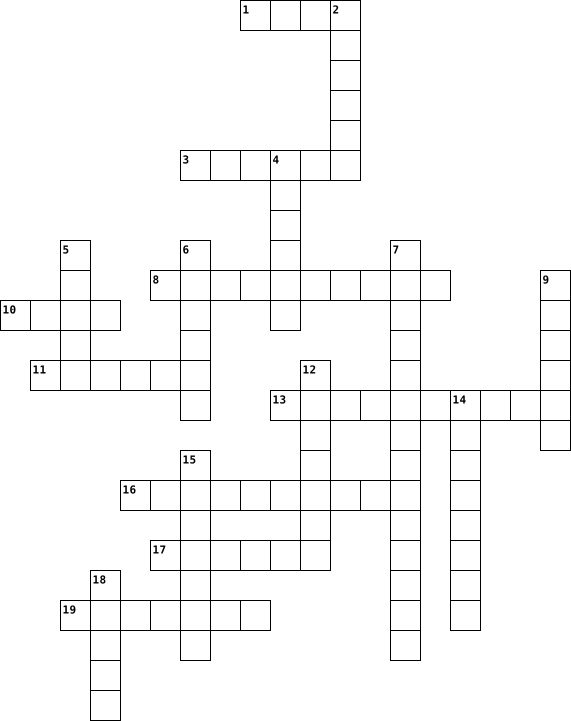
Across
- greatest god ever
- were captured by evil father
- home of the gods
- god of nature
- symbol of poseidon
- the creater of man kind
- creater
- evil father
- the first king of the titans
Down
- sharp thing
- god of music, medicine, and sun
- sharp throwing thing
- god of warrior
- Ones monster
- snake hair
- god of wilderness
- super strong person
- brave person
- snake with 9 heads
19 Clues: creater • snake hair • sharp thing • evil father • Ones monster • brave person • god of nature • god of warrior • home of the gods • greatest god ever • god of wilderness • symbol of poseidon • snake with 9 heads • super strong person • sharp throwing thing • the creater of man kind • were captured by evil father • the first king of the titans • god of music, medicine, and sun
Greek Theater 2014-12-17

Across
- Entrance song of the chorus
- A song or hymn of praise and thanksgiving
- portion immediately in front of the skene was used as an acting area
- final stanza of the ode, sung while standing still
- the part of an ancient Greek choral ode sung by the chorus as a reply to the strophe while moving from left to right across the stage
- Altar of Dionysus that sits in the center of Orchestra
- choral song (ode) performed in the orchestra between episodes
- the paths by which actors entered and exited
Down
- the leader of the chorus who often interacts with the characters in the scene
- the introduction scene to the drama
- the part of an ancient Greek choral ode sung by the chorus when moving from right to left across the stage
- small hut like building behind the stage used as a dressing room and later as a backdrop for painted settings
- An open structure with tiers and seats around an open space.
- "machine", a boom that allowed actors playing gods to be lowered to and raised from the stage.
- "Seeing place" where the audience sat
- Circular dancing place where actors and chorus performed
- the closing scene of a comedy or tragedy
- 12 or 15 actors that represent the general public. They speak/sing in unison and comment on the action of the characters.
- a scene of the drama between two choral songs; the portion of the play in which characters engage in dialogue with each other or with the chorus
19 Clues: Entrance song of the chorus • the introduction scene to the drama • "Seeing place" where the audience sat • the closing scene of a comedy or tragedy • A song or hymn of praise and thanksgiving • the paths by which actors entered and exited • final stanza of the ode, sung while standing still • Altar of Dionysus that sits in the center of Orchestra • ...
Greek Roots 2015-01-20

Across
- universe
- sound
- mind
- motion
- drawn
- angle
- crazy
- half
- circle
- water
Down
- life
- see
- too much
- people
- time
- earth
- type of government
- small
- member of a type of government
19 Clues: see • life • mind • time • half • sound • drawn • earth • angle • crazy • small • water • people • motion • circle • universe • too much • type of government • member of a type of government
Greek Gods 2014-06-27

Across
- What is Artemis tree called?
- Where does Zeus live?
- What is Apollo God of?
- Who's the huntsman of the Gods?
- Who's twin is Artemis?
- Who was flung off Mount Olympus by Zeus?
- Who's the ruler of all the Gods?
- Who's the Goddess of love?
- What can Poseidon's trident do?
- Who's the God of war?
Down
- Who married a sea nymph called Amphitrite?
- Who's the fastest of the Gods?
- What is Hera treated like?
- What was Hephaestus the God of?
- Who's name means 'The Essence', the true nature of things?
- How many Olympians where there?
- Who was Zeus' favourite child?
- Which Greek God was the God of the underworld?
- Who was known for their jealousy?
19 Clues: Where does Zeus live? • Who's the God of war? • What is Apollo God of? • Who's twin is Artemis? • What is Hera treated like? • Who's the Goddess of love? • What is Artemis tree called? • Who's the fastest of the Gods? • Who was Zeus' favourite child? • What was Hephaestus the God of? • Who's the huntsman of the Gods? • How many Olympians where there? • What can Poseidon's trident do? • ...
Greek Crossword 2014-09-14

Across
- Sky
- Fire
- Light
- Sleep
- Memory
- Queen
- Messenger
- Earth
- King
Down
- Music
- Dream
- Bearer
- Wine
- Forethought
- Owl
- Underworld
- Harvest
- Sea
- Sun
19 Clues: Sky • Owl • Sea • Sun • Wine • Fire • King • Music • Dream • Light • Sleep • Queen • Earth • Bearer • Memory • Harvest • Messenger • Underworld • Forethought
Greek Myths 2014-03-16

Across
- one-eyed ogre
- king of the Greek gods
- god of the underworld
- home mountain of Greek gods
- goddess of the hunt
- goddess of love
- goddess of Athens
- half lion half eagle
Down
- winged horse
- home country of many myths
- evil singing mermaid
- god of the sea
- type of story with gods
- human with bull's head
- half man half horse
- fire bird
- part lion part bird with woman's head
- evil gorgon that turned people to stone
- half man half goat
19 Clues: fire bird • winged horse • one-eyed ogre • god of the sea • goddess of love • goddess of Athens • half man half goat • goddess of the hunt • half man half horse • evil singing mermaid • half lion half eagle • god of the underworld • king of the Greek gods • human with bull's head • type of story with gods • home country of many myths • home mountain of Greek gods • ...
Greek Gods 2023-03-24

Across
- The hearth
- War
- Nature
- Fire
- The ocean
- Rainbows
- The dead
- Spring
- Wine
- Messengers
Down
- Magic
- The harvest
- Hunting
- Love
- Lightning
- Sleep
- War
- Archery
- Victory
- Marriage
20 Clues: War • War • Love • Fire • Wine • Magic • Sleep • Nature • Spring • Hunting • Archery • Victory • Rainbows • The dead • Marriage • The ocean • Lightning • The hearth • Messengers • The harvest
Greek Civilization 2024-03-07

Across
- Philosophical method of questioning to gain truth
- A set of promises about new patient care that new doctors make when they start practicing medicine
- A story written in the form of a play
- Words or actions that are part of a religious ceremony
- A branch of math about measurement and the relationships of points and lines on a three-dimensional space
- Greek teachers of philosophy, reasoning, and public speaking
- The philosophy of Epicurus, stating that the purpose of life is to look for peace and happiness
- A story meant to teach a lesson
- Part of an army in which the soldiers ride on horses
- A play or film that tells a humorous story
- The philosophy of the Stoics who believed that people should not try to feel joy or sadness
- A play for film in which characters fail to overcome serious problems
Down
- The outer border of a circle
- The custom of passing along stories by speech
- The time period following the death of Alexander during which Greek culture was spread through the known world
- A traditional story that explains the practices or beliefs of a people
- The art of public speaking and debate
- A branch of math centered around measurements and relations of points on a surface
- A sacred shrine where a priest or priestess spoke for a god or goddess
19 Clues: The outer border of a circle • A story meant to teach a lesson • A story written in the form of a play • The art of public speaking and debate • A play or film that tells a humorous story • The custom of passing along stories by speech • Philosophical method of questioning to gain truth • Part of an army in which the soldiers ride on horses • ...
Greek God's 2023-09-27

Across
- Good place in the underworld
- Guard of the Gates of Erebus
- Bad place in the underworld
- Name means afterthought
- God of the Sea
- Neutral place in the underworld
- God of the Underworld
- Mother of Zeus
Down
- God of the Heavens
- Mountain where the Gods Live
- Being of the Sky
- Ferryman on the River Styx
- What Zeus tricked his father with
- Creator of Humanity
- Father of Zeus
- Being of the Earth
- The race including Prometheus and Epimetheus
- Opened the Jar of Evil
- Last thing left in the Jar after all the bad emotions
19 Clues: Father of Zeus • God of the Sea • Mother of Zeus • Being of the Sky • God of the Heavens • Being of the Earth • Creator of Humanity • God of the Underworld • Opened the Jar of Evil • Name means afterthought • Ferryman on the River Styx • Bad place in the underworld • Mountain where the Gods Live • Good place in the underworld • Guard of the Gates of Erebus • Neutral place in the underworld • ...
Greek stuff 2025-03-16

Across
- What children born without fathers were called
- The Greek god of theatre
- Symbol of domestic life
- A son's tutor
- What Heracles had to capture for his 12th labour
- Plays performed by Half-human and Half-goat people
- Jason's father
- "Greatest of all heroes"
Down
- The male domineer of the house
- The only people who could inherit
- Where the audience sat in a theatre
- A gain of knowledge in a play
- The women's living quarters in a house
- The festival in honour of Dionysus
- Deianera's son who speaks in The Women of Trachis
- How children acted in plays
- Heracle's second wife
- Expected to avenge their family
- Who marriages were arranged by
19 Clues: A son's tutor • Jason's father • Heracle's second wife • Symbol of domestic life • The Greek god of theatre • "Greatest of all heroes" • How children acted in plays • A gain of knowledge in a play • The male domineer of the house • Who marriages were arranged by • Expected to avenge their family • The only people who could inherit • The festival in honour of Dionysus • ...
Greek gods 2024-03-15

Across
- The god of wine, theatre and fertility
- god of the underworld
- goddess of the harvest
- Poseidon's weapon
- lord of the universe
- Son of Mother Earth who made humans
- The name of Mother Earth
- goddess of war, wisdom, arts and crafts
- The river that leads to the underworld
- god of the sea
Down
- home of the gods
- goddess of hearth and home
- underground kingdom
- The one who rows the ferryboat across the river in the underworld
- Zeus' mom
- The three-headed dog that guards the underworld
- The first children of Mother Earth
- The sky/Father of the universe
- queen of the gods
19 Clues: Zeus' mom • god of the sea • home of the gods • Poseidon's weapon • queen of the gods • underground kingdom • lord of the universe • god of the underworld • goddess of the harvest • The name of Mother Earth • goddess of hearth and home • The sky/Father of the universe • The first children of Mother Earth • Son of Mother Earth who made humans • The god of wine, theatre and fertility • ...
evil sciencetist muhahahahahah jay 2024-09-19

Across
- smallest unit of matter
- Greek root word for measure
- frozen co2
- molecules separate from each other
- solid to gas
- different atoms combining
- Greek root word for heat
Down
- on the outside of a cold can
- o2
- liquid to solid
- heat measure
- vibrates
- slides past each other
- solid to liquid
- has no attraction
- h2o
- energy
17 Clues: o2 • h2o • energy • vibrates • frozen co2 • heat measure • solid to gas • liquid to solid • solid to liquid • has no attraction • slides past each other • smallest unit of matter • Greek root word for heat • different atoms combining • Greek root word for measure • on the outside of a cold can • molecules separate from each other
Cleopatra 2025-12-09

Across
- Another word for very bright starting with B
- Reddish brown dye for temporary body art
- Queen sits on it
- Royal dignity
- Ruler
- Famous for mythology
Down
- Born in Roma
- King tut's burial place
- Kind/Queens power
- The African queen
- Head of a group
- Female Monarch
- Where Pharaohs are mainly located at
- Female Royalty
- Commands their land
15 Clues: Ruler • Born in Roma • Royal dignity • Female Monarch • Female Royalty • Head of a group • Queen sits on it • Kind/Queens power • The African queen • Commands their land • Famous for mythology • King tut's burial place • Where Pharaohs are mainly located at • Reddish brown dye for temporary body art • Another word for very bright starting with B
Tic-Tac-Toe chapter 8 Lillie 2025-02-06

Across
- war against titans and deities
- short stories
- goddess of love
- God of the sun
- God of the sea
- king of the gods
Down
- god of war
- queen of the gods
- a body of stories about gods and heroes
- the messenger god
- Famous lyric poet
- God of celebration
- Wrote famous fables
- goddess of wisdom
- God of the underworld
15 Clues: god of war • short stories • God of the sun • God of the sea • goddess of love • king of the gods • queen of the gods • the messenger god • Famous lyric poet • goddess of wisdom • God of celebration • Wrote famous fables • God of the underworld • war against titans and deities • a body of stories about gods and heroes
Middle World Book 2024-03-27

Across
- Thrilling journey
- Risk, peril
- Old, historical
- Relics, historical objects
- Prediction of the future
Down
- Dense forest
- Hidden information
- Travel, expedition
- Civilization of Central America
- Stories of gods and heroes
10 Clues: Risk, peril • Dense forest • Old, historical • Thrilling journey • Hidden information • Travel, expedition • Prediction of the future • Stories of gods and heroes • Relics, historical objects • Civilization of Central America
March Word Parts 2025-02-24

Across
- wrong behavior
- person who leads
- philosophical belief about the inherent value of human beings
- vehicle with 2 wheels
- belief that information should be shared
- cyclic process of reusing materials
- study of life
- one-eyed
Down
- person who helps
- person who teaches
- study of human history
- wrong action
- wrong spelling
- selfish belief in oneself
- study of myths
15 Clues: one-eyed • wrong action • study of life • wrong behavior • wrong spelling • study of myths • person who helps • person who leads • person who teaches • vehicle with 2 wheels • study of human history • selfish belief in oneself • cyclic process of reusing materials • belief that information should be shared • philosophical belief about the inherent value of human beings
Ancient Greece 2025-12-14

Across
- An open-air building where Greeks watched plays
- The mountain, home of the Greek gods
- The city-state known for its army and training
- The city-state famous for democracy, philosophy
- A form of government where citizens vote
- Fighting formation used by Greek soldiers
Down
- The goddess of wisdom and war
- A building used to honor a god or goddess
- The god of the sea, earthquakes, and horses
- A large wooden horse used to trick
- The Greek god who ruled the gods and lighting
- The marketplace and meeting place in Greek cities
12 Clues: The goddess of wisdom and war • A large wooden horse used to trick • The mountain, home of the Greek gods • A form of government where citizens vote • A building used to honor a god or goddess • Fighting formation used by Greek soldiers • The god of the sea, earthquakes, and horses • The Greek god who ruled the gods and lighting • ...
The Iliad 2021-10-05

Across
- Commander of the Greek Forces
- greatest Greek warrior
- killed Patroclus
- best friend of Achilles
- king of Ithaca
Down
- king of Gods; claims neutrality
- sent a plague to the Achaeans
- fights alongside the Greek forces
- old, the wise Greek leader
- his abduction of Helen sparked the Trojan War
10 Clues: king of Ithaca • killed Patroclus • greatest Greek warrior • best friend of Achilles • old, the wise Greek leader • Commander of the Greek Forces • sent a plague to the Achaeans • king of Gods; claims neutrality • fights alongside the Greek forces • his abduction of Helen sparked the Trojan War
Athens Video 2025-10-27

Across
- — Early Greek civilization known for its warrior kings and fortified palaces; fought in the Trojan War according to legend.
- — An Athenian general and statesman who led the navy to victory against Persia at the Battle of Salamis.
- — A long and destructive conflict (431–404 BC) between Athens and Sparta that led to the downfall of Athens.
- — A major naval battle in 480 BC where the Greek fleet defeated the much larger Persian navy, turning the tide of the Persian Wars.
- — The vast and powerful empire to the east of Greece that attempted to conquer the Greek city-states during the Persian Wars.
- — A system of government in which citizens have the power to make decisions through voting; first developed in Athens.
- — The tyrant ruler of the island of Samos known for his ambitious building projects and engineering achievements.
Down
- — The legendary blind Greek poet credited with composing The Iliad and The Odyssey.
- — A marble temple on the Athenian Acropolis dedicated to Athena, built under Pericles as a symbol of Athenian power and culture.
- An independent community consisting of a city and its surrounding territory; the basic political unit of ancient Greece (e.g., Athens, Sparta).
- — An alliance of Greek city-states led by Athens formed to defend against Persia and later used to build the Athenian Empire.
- — The spread of Greek culture, language, and ideas across the Mediterranean and Near East after Alexander the Great’s conquests.
- — A single ruler who seized power by force, often ruling with absolute authority.
- — A fast, maneuverable Greek warship powered by three rows of oars and equipped with a bronze ram for attacking enemy vessels.
- — A prominent Athenian leader who expanded democracy, rebuilt Athens after the Persian Wars, and commissioned the Parthenon.
15 Clues: — A single ruler who seized power by force, often ruling with absolute authority. • — The legendary blind Greek poet credited with composing The Iliad and The Odyssey. • — An Athenian general and statesman who led the navy to victory against Persia at the Battle of Salamis. • ...
Social Studies Study Guide - Better Version 2 2022-12-16

Across
- Effort to drive the Muslim Moors out of Iberia
- Process of investigating and prosecuting people for not being Christians (two words, no spaces)
- a country in Southeastern Europe bordering Turkey
- The Pope that made the call for Christians to begin the Crusades
- The part of Rome's government which is ruled by the common people
- The missionary who spread Christianity to Ireland (two words, no spaces)
- English King who became known for his bravery during the Crusades (three words, no spaces)
- The second biggest religion in the world based of Muhammad's teachings
- Greek writer known for his epic poems, The Iliad, and the Odyssey
- The polytheistic religion of Ancient Greece featuring many Greek Gods and Goddesses (two words, no spaces)
- A person who went to another place to preach to the locals about their religion
- King who greatly expanded the Frankish Empire while spreading Christianity, was crowned the Roman Emperor by the Pope
- The capital of Italy, used to be the center of the greatest empire in the world
- The part of Rome's government which is ruled by voted-in judges by the Senate
- Twin Brothers who have that has been said that they found Rome (three words, no spaces)
- The leader of the church
- A series of campaigns by Christians to take back control of the Holy Land from the Muslims
- The sharing of power between local governments and a strong central government
- A method of teaching based on asking questions to reveal the truth (two words, no spaces)
- The leader of the Reformation, nailed his 95 thesis to a church door that criticized the practices of the Roman Catholic Church (two words, no spaces)
- the owner of a manor
- A Greek philosopher who taught Alexander the Great
- Greek city state that's more focused on education and art
- People who worked on the land owned by lords, but didn't own it themselves
- Greek writer known for his fables that teach life lessons
- Athletic Competition held every four years originating in Ancient Greece
- Macedonian leader who conquered most of the known world by the age of 33 (three words, no spaces)
- The area in which Christians were trying to retake in the Crusades (two words, no spaces)
- slave who led a slave uprising against the Roman Empire
- Julius Caesar's adopted son who helped avenge his death, eventually became the first Roman Emperor (two words, no spaces)
- A Greek philosopher who invented the Socratic Method
- One of Julius Caesar's friends who avenged his death (two words, no spaces)
- A way of thinking and learning that stresses the importance of human abilities and actions
- Where the Greek Gods are said to live (two words, no spaces)
- First battle of the Persian Wars
- The common people of Rome
- Those who protested the practices of the Roman Catholic Church
- After Western Rome was conquered, Eastern Rome was named this (two words, no spaces)
- It is said that his descendants first conquered Italy and found Rome
Down
- System where lords exchange land for military strength
- French peasant girl who inspired France to victory in the Hundred Year's War (three words, no spaces)
- Series of wars fought between Carthage and Rome, eventually won by Rome (two words, no spaces)
- Communities of monks who lived apart from society and focused on their faith
- A reform movement against the Roman Catholic Church that formed the Protestant Church
- The leader of the conspirators to kill Julius Caesar
- The Name for Rome's public place where important meetings are held
- The belief in ancient religions, i.e. Norse, Roman and Greek Mythology
- A belief that the Father, Son, and the Holy Spirit were not equal, was declared a heresy after the Council of Nicaea
- Popular Roman general who made himself dictator for life, he was assassinated (two words no spaces)
- To be formally kicked out of the church
- The Greek city state that was obsessed with military strength and power
- The name of the large estates owned by lords
- The first Christian emperor of Rome, converted after seeing a vision before a battle
- type of government where people elect leaders to govern them
- Plague that killed 1/3 of everyone in Europe in the 1300's (two words, no spaces)
- Structure that carried water into the city of Rome
- English document that listed the rights the king could not ignore or take away, later it inspired the Declaration of Independence (two words, no spaces)
- War between England and France over who should be King of France (three words, no spaces)
- The wars fought against Greece and the Persian Empire (two words, no spaces)
- The religion that was started by Jesus Christ and his disciples in the 1st century A.D.
- The person who traveled between Europe and China via the Silk Road who met with Kublai Khan and became a government official before returning home (two words, no spaces)
- Julius Ceaser's friend who helped plot his assassination
- war fought between Sparta and Athens, eventually won by Sparta (two words, no spaces)
- The part of Rome's government which is ruled by the upper-class elite
- Ideas that opposed the teachings of the Church
- Means Roman Peace in Latin, refers to a time of peace and prosperity (two words, no spaces)
- Warriors who fought on horseback and traded their service for land
- Military leader from Carthage, crossed the Alps with an army of elephants
- The Barbarians that conquered the western part of the Roman Empire
- City renamed after Constantine, was named the capitol of Rome under Constantine
- Means Rebirth, refers to the period that followed the Middle Ages
- The Nobles of Rome
- A Greek philosopher who wrote The Republic
- A religious order created to serve the pope and the Roman Catholic Church. This was created to teach people about Catholic ideas and to turn people against Protestantism
- Christians who studied Christianity in solitude, helped the needy
- The first monotheistic religion that influenced the creation of Christianity and Islam, practicers of this religion were persecuted in the Middle Ages
76 Clues: The Nobles of Rome • the owner of a manor • The leader of the church • The common people of Rome • First battle of the Persian Wars • To be formally kicked out of the church • A Greek philosopher who wrote The Republic • The name of the large estates owned by lords • Effort to drive the Muslim Moors out of Iberia • Ideas that opposed the teachings of the Church • ...
BASIC INFORMATIONS ABOUT GREECE 2017-12-04

Across
- helps plants to grow up.
- saint who gives us presents
- Helen in Greeks
- greek volcanic island
- he constructed lABYRINTH in ancient Crete
- mains of transportation
- famous song of John Lenon
Down
- Olympus was the place of ancient greek dods
- the most famous greek monument of the world
- the capital of Greece
- Poland and Germany are situaeted there.
- it ruined lots of forests last summer in Greece
- hometown of ancient olympic games
- 2018 dedicated to european cultural herritage
14 Clues: Helen in Greeks • the capital of Greece • greek volcanic island • mains of transportation • helps plants to grow up. • famous song of John Lenon • saint who gives us presents • hometown of ancient olympic games • Poland and Germany are situaeted there. • he constructed lABYRINTH in ancient Crete • Olympus was the place of ancient greek dods • ...
Unit 7: Mob/Mot, Tract, Tend/Tens/Tent & Review Roots 2024-11-06

Across
- Greek root meaning time
- to reduce the value or importance of something
- a reason for doing something
- Greek root meaning sound or to hear
- amount that something is stretched; an uneasy feeling
- large farm vehicle
- Latin root meaning water
- cause to argue or disagree
Down
- to straighten or stretch out
- able to move
- carefully think about; focus
- Greek root meaning write, draw, or record
- being eager to act or work
- to make small or shorter
14 Clues: able to move • large farm vehicle • Greek root meaning time • to make small or shorter • Latin root meaning water • being eager to act or work • cause to argue or disagree • to straighten or stretch out • carefully think about; focus • a reason for doing something • Greek root meaning sound or to hear • Greek root meaning write, draw, or record • ...
Greek Quick Review 2025-04-04

Across
- Capital of Greece
- the Section of a Greek city that sits above the Polis
- An Aristocracy is a "blank" class of rulers
- The large body of water surrounding Greece
- Type of government in Sparta
- Government run by strong ruler
- Early Greek Civilization
- Formation of heavily armed foot soldiers
Down
- Name of Greek Peninsula
- The man who wrote the Odyssey
- Democracy where citizens participate directly in government
- Doing things a new way
- Type of military housing
- Plants farmed in Greece
14 Clues: Capital of Greece • Doing things a new way • Name of Greek Peninsula • Plants farmed in Greece • Type of military housing • Early Greek Civilization • Type of government in Sparta • The man who wrote the Odyssey • Government run by strong ruler • Formation of heavily armed foot soldiers • The large body of water surrounding Greece • An Aristocracy is a "blank" class of rulers • ...
Native American Crossword 2022-05-14

Across
- A Native American diety of the Blackfoot tribe; the creator
- The largest Native American tribe in the United States
- A sacred dish in the Northwest revere salmon, cooked on cedar logs over coals
- A benevolent culture hero of Wiyot mythology
Down
- A famous Lemhi Shoshone explorer, her face is on a golden dollar coin
- A harmful witch in Navajo culture who can possess or disguise themself as any animal
- A fertility god in Seneca mythology
- They're known for their woven rugs and blankets
- An Ojibwe wild grain, meaning "good berry"
- A famous Hunkpapa Lakota leader who led his people against the United Stated government policies
10 Clues: A fertility god in Seneca mythology • An Ojibwe wild grain, meaning "good berry" • A benevolent culture hero of Wiyot mythology • They're known for their woven rugs and blankets • The largest Native American tribe in the United States • A Native American diety of the Blackfoot tribe; the creator • A famous Lemhi Shoshone explorer, her face is on a golden dollar coin • ...