
heart Crossword Puzzles
The Heart 2023-03-06

Across
- Takes blood towards the heart
- Flaps that prevent backward flow of blood.
- Take blood away from the heart
- An involuntary muscle found in the heart
- The largest artery
- A medical device that helps people heart beat faster
- The 2 upper chamberers of the heart.
- Flaps that enables blood to flow through the heart.
Down
- The 2 lower chambers of the heart.
- The largest vein.
- Smallest type of blood vessel.
11 Clues: The largest vein. • The largest artery • Takes blood towards the heart • Take blood away from the heart • Smallest type of blood vessel. • The 2 lower chambers of the heart. • The 2 upper chamberers of the heart. • An involuntary muscle found in the heart • Flaps that prevent backward flow of blood. • Flaps that enables blood to flow through the heart. • ...
The Heart 2023-03-06

Across
- A thick walled blood vessel with oxygenated blood
- Smaller upper heart chamber
- blood cells Carry oxygen around the body.
- Smallest kind of blood vessels
- Gas we breathe in
Down
- Word used about lungs
- They separate heart chambers
- Carry deoxygenated blood to lungs
- Large heart chamber
- Where red blood cells absorb oxygen
- Biggest artery in the body
11 Clues: Gas we breathe in • Large heart chamber • Word used about lungs • Biggest artery in the body • Smaller upper heart chamber • They separate heart chambers • Smallest kind of blood vessels • Carry deoxygenated blood to lungs • Where red blood cells absorb oxygen • blood cells Carry oxygen around the body. • A thick walled blood vessel with oxygenated blood
The Heart 2023-02-06

Across
- Also the roots, but with a weird name without a V
- The sides of the heart
- In a tree, it would be a big branch
- Big room
- You can eat the duck version of these
- The whole tree
Down
- In a tree, it would be the second generation of branches
- The center piece of the tree, that makes it work
- Beans
- When with an E, it's an exercise
- The roots of the tree
11 Clues: Beans • Big room • The whole tree • The roots of the tree • The sides of the heart • When with an E, it's an exercise • In a tree, it would be a big branch • You can eat the duck version of these • The center piece of the tree, that makes it work • Also the roots, but with a weird name without a V • In a tree, it would be the second generation of branches
Heart system 2023-03-14

Across
- Mitral, tricuspid, pulmonary and aortic valves
- A hollow part or cavity in an organ
- Large vein that carries blood to the heart from other areas of the body
- A blood vessel that carries blood from the heart to tissues and organs in the body.
- A small device that's placed (implanted) in the chest to help control the heartbeat
Down
- Any of the tubes forming part of the blood circulation system of the body, carrying in most cases oxygen-depleted blood toward the heart
- Form the connection between the vessels that carry blood away from the heart (arteries) and the vessels that return blood to the heart (veins)
- A partition separating two chambers, such as that between the nostrils or the chambers of the heart
- This is a Heart chamber that receives blood into the heart and moves it into a ventricle or chamber for pumping blood away from the heart
- This is the main artery that carries blood away from the heart to the rest of your body.
- muscle This muscle makes up the thick middle layer of your heart.
11 Clues: A hollow part or cavity in an organ • Mitral, tricuspid, pulmonary and aortic valves • muscle This muscle makes up the thick middle layer of your heart. • Large vein that carries blood to the heart from other areas of the body • A blood vessel that carries blood from the heart to tissues and organs in the body. • ...
human heart 2023-04-10

Across
- Heartbeats
- The most important organ in the body
- What pumps the heart?
- How many valves are in the heart?
- The largest vessel?
- Where is the blue blood flowing?
- what is the heart made of?
- What color is the blood?
Down
- Vessels-threads
- Rhythm disturbance
- Doors of the heart
11 Clues: Heartbeats • Vessels-threads • Rhythm disturbance • Doors of the heart • The largest vessel? • What pumps the heart? • What color is the blood? • what is the heart made of? • Where is the blue blood flowing? • How many valves are in the heart? • The most important organ in the body
The Heart 2020-09-28

Across
- protect your heart
- carry blood that is full of oxygen away from the heart
- your heart ________ to push blood around your body
- your heart has to work ______ to keep blood moving
- your heart has 4 spaces called
Down
- your heart _____ blood around your body
- take the blood to your heart
- your heart's main job is to deliver this to all the cells in your body
- are the small thin tubes that carry and deliver blood
- the heart is part of this system
- these control the flow of blood in your heart
11 Clues: protect your heart • take the blood to your heart • your heart has 4 spaces called • the heart is part of this system • your heart _____ blood around your body • these control the flow of blood in your heart • your heart ________ to push blood around your body • your heart has to work ______ to keep blood moving • are the small thin tubes that carry and deliver blood • ...
Heart Failure 2021-08-19

Across
- type of diuretics used in HF
- ARB (starts with "L")
- if you're over 65 and have ESRD, you won't qualify for a cardiac ___
- test to r/o HF in acute setting
- most common illicit substance precipitating HF
- old name for HFpEF is ___ heart failure
- biggest modifiable risk for HF
Down
- ACEI (starts with "L")
- most common cardiotoxic "drug," causes dilated HF
- chronic HFrEF is caused by ventricular...
- study ordered for pt with significant murmur
11 Clues: ARB (starts with "L") • ACEI (starts with "L") • type of diuretics used in HF • biggest modifiable risk for HF • test to r/o HF in acute setting • old name for HFpEF is ___ heart failure • chronic HFrEF is caused by ventricular... • study ordered for pt with significant murmur • most common illicit substance precipitating HF • ...
Heart Failure 2022-11-27

Across
- High sodium intake will lead to _____ blood pressure.
- In heart failure, the ________ of the heart are weak and overworked.
- Aim for at least five servings of __________ each day.
- Saturated fat and ____ fat are bad for patients with heart failure.
- Monitoring ______ intake and output is important for patients with heart failure.
Down
- Sudden_______ gain can indicate fluid retention.
- Consuming unsaturated fat helps to lower _______ levels.
- ______ failure results from structural or functional cardiac disorders that impair ventricles’ ability to fill or eject.
- High amounts of ______ are important in a heart healthy diet.
- This kind of fat can be consumed moderately while following a heart healthy diet.
- ______ should be strictly limited to reduce fluid retention.
11 Clues: Sudden_______ gain can indicate fluid retention. • High sodium intake will lead to _____ blood pressure. • Aim for at least five servings of __________ each day. • Consuming unsaturated fat helps to lower _______ levels. • ______ should be strictly limited to reduce fluid retention. • High amounts of ______ are important in a heart healthy diet. • ...
The Heart 2023-12-07

Across
- A disease that affects heart or blood vessels.
- High blood pressure, called “silent killer.”
- Chest pain that results when the heart does not get enough oxygen.
- A disease from the accumulation of plaque on artery walls.
- A disease that can not be transmitted by another person, vector or environment.
- Two upper chambers of the heart
- State of worry or tension caused by situation, a risk factor that you can control.
Down
- Hardened arteries with reduced elasticity.
- A waxy fat-like substance found in body cells.
- Irregular heartbeats, when the heart beats too fast, too slow, or skips a beat.
- The older you are the higher you are at risk of heart disease.
11 Clues: Two upper chambers of the heart • Hardened arteries with reduced elasticity. • High blood pressure, called “silent killer.” • A disease that affects heart or blood vessels. • A waxy fat-like substance found in body cells. • A disease from the accumulation of plaque on artery walls. • The older you are the higher you are at risk of heart disease. • ...
The Heart 2024-02-17

Across
- left upper chamber of the heart
- prevents backflow of blood in the left ventricle
- carry oxygenated blood from the lungs to the heart
- carries deoxygenated blood from the upper parts of the body to the heart
- carries deoxygenated blood from the lower parts of the body to the heart
- right upper chamber of the heart
- right lower chamber of the heart
Down
- carry deoxygenated blood away from the heart to the longs
- left lower chamber of the heart
- prevents backflow of blood in the right ventricle
- largest artery in the body
11 Clues: largest artery in the body • left upper chamber of the heart • left lower chamber of the heart • right upper chamber of the heart • right lower chamber of the heart • prevents backflow of blood in the left ventricle • prevents backflow of blood in the right ventricle • carry oxygenated blood from the lungs to the heart • ...
heart crossword 2026-03-06

Across
- any of the tubes forming part of the blood circulation system of the body, carrying in most cases oxygen-depleted blood toward the heart.
- what controls were blood can and can't flow into
- any of the muscular-walled tubes forming part of the circulation system by which blood (mainly that which has been oxygenated) is conveyed from the heart to all parts of the body.
- another term for myocardium.
- the main artery of the body, supplying oxygenated blood to the circulatory system. In humans it passes over the heart from the left ventricle and runs down in front of the backbone.
- something that tells the heart when to beat
- the upper chamber of the heart
- a partition separating two chambers, such as that between the nostrils or the chambers of the heart.
Down
- the lower chamber of the heart
- a large vein carrying deoxygenated blood into the heart.
- the fine branching blood vessels that form a network between the arterioles and venules.
11 Clues: another term for myocardium. • the lower chamber of the heart • the upper chamber of the heart • something that tells the heart when to beat • what controls were blood can and can't flow into • a large vein carrying deoxygenated blood into the heart. • the fine branching blood vessels that form a network between the arterioles and venules. • ...
The Heart 2026-03-05

Across
- Makes up the thick middle layer of the heart
- Carries blood from the body back to the heart
- Parts of the heart that open and close to let blood flow in the right direction
- One of the two large chambers located towards the bottom of the heart
- One of the two upper chambers in the heart that receives blood from the circulatory system
- Group of cardiac muscle cells that are responsible for generating and regulating the heartbeat
- Tissue that separates the left and right sides of the heart
Down
- Small blood vessels that deliver nutrients and oxygen to cells throughout the body
- Large vein that carries blood to the heart from the rest of the body
- A pipeline that carries blood away from the heart
- The largest pipeline that carries blood away from the heart
11 Clues: Makes up the thick middle layer of the heart • Carries blood from the body back to the heart • A pipeline that carries blood away from the heart • The largest pipeline that carries blood away from the heart • Tissue that separates the left and right sides of the heart • Large vein that carries blood to the heart from the rest of the body • ...
The Heart 2026-03-09

Across
- The electrical pulse that keeps the heart beating at a normal rate
- The doors that keep blood flowing smoothly around the heart in one direction
- carries deoxygenated blood back directly to the heart
- Large chambers located at the bottom of the heart
- Divides the two ventricles
Down
- The main tissue making up the heart
- Where the nutrients in the blood go to the cells
- Carries blood back to the heart
- The main artery of the body, basically a highway for all blood
- The upper blood pockets of the heart
- Carries blood away from the heart
11 Clues: Divides the two ventricles • Carries blood back to the heart • Carries blood away from the heart • The main tissue making up the heart • The upper blood pockets of the heart • Where the nutrients in the blood go to the cells • Large chambers located at the bottom of the heart • carries deoxygenated blood back directly to the heart • ...
Heart Crossword 2025-03-10

Across
- A large vein that carries blood from the heart to other parts of the body
- a small device used to treat some arrhythmias
- prevents the backward flow of blood
- an exchange center where things your cells need move toward them
Down
- chamber that pumps blood out of the heart and into the circulatory system
- carries blood away from the heart
- a wall separating the right and left sides of the heart
- the largest blood vessel in the body
- one of the two upper chambers of the heart that receives blood from the body and lungs
- the thick middle layer of the heart
- carries blood to the heart
11 Clues: carries blood to the heart • carries blood away from the heart • the thick middle layer of the heart • prevents the backward flow of blood • the largest blood vessel in the body • a small device used to treat some arrhythmias • a wall separating the right and left sides of the heart • an exchange center where things your cells need move toward them • ...
Heart Crossword 2025-03-11

Across
- connect your arteries to your veins
- carries blood to certain parts of the body
- is the largest blood vessel in your whole body
- Returns blood to your heart
- separates the left and right side of the chambers
Down
- The pumping action
- pump blood throughout the body
- receives and guides blood into the ventricles
- creates your heart beat
- prevents blood from flowing backwards
- distribute blood throughout your body
11 Clues: The pumping action • creates your heart beat • Returns blood to your heart • pump blood throughout the body • connect your arteries to your veins • prevents blood from flowing backwards • distribute blood throughout your body • carries blood to certain parts of the body • receives and guides blood into the ventricles • is the largest blood vessel in your whole body • ...
heart crossword 2025-03-14

Across
- makes up the thick middle layer of the heart
- The two upper chambers of the heart they help blood pass through the heart
- A large vein that carries blood to the heart from other areas of the body
- Muscular chamber that pumps blood out of the heart and into the circulatory system
Down
- creates your heartbeat
- A wall separating the right and left sides of the heart
- Prevents the backward flow of blood
- Blood vessels located throughout your body that collect oxygen-poor blood and return it to your heart
- Delicate blood vessels that deliver nutrients and oxygen to cells throughout your body
- the main vessel through which oxygen-rich blood travels from the heart to the rest of the body
- A blood vessel that carries blood from the heart to tissues and organs in the body
11 Clues: creates your heartbeat • Prevents the backward flow of blood • makes up the thick middle layer of the heart • A wall separating the right and left sides of the heart • A large vein that carries blood to the heart from other areas of the body • The two upper chambers of the heart they help blood pass through the heart • ...
The Heart 2025-06-03

Across
- The pointed, lower tip of the heart
- _________ muscles primarily attached to the atrioventricular valves
- The heart chamber that receives deoxygenated blood
- A heart valve that prevents backflow of blood into the left ventricle
Down
- The outer surface of the heart
- The heart has _______ chambers
- The blood vessel that carries oxygenated blood back to the heart
- _________ arteriosus is a remnant of the ductus arteriosus
- The main artery carrying blood away from the heart
- The ___ node is the pace maker of the heart
- The two chambers of the heart that receive blood
11 Clues: The outer surface of the heart • The heart has _______ chambers • The pointed, lower tip of the heart • The ___ node is the pace maker of the heart • The two chambers of the heart that receive blood • The main artery carrying blood away from the heart • The heart chamber that receives deoxygenated blood • _________ arteriosus is a remnant of the ductus arteriosus • ...
Cardiovascular System 2026-03-26

Across
- Carry blood away from the heart
- Name for the type of muscle of the heart
- Biggest artery in the body
- Carry blood towards the heart
- Top chambers of the heart
Down
- Bottom chambers of the heart
- Valve on the right side of the heart
- Brings deoxygenated blood back to the heart
- Prevents backflow
- Valve on the left side of the heart
- Wall of the heart
11 Clues: Prevents backflow • Wall of the heart • Top chambers of the heart • Biggest artery in the body • Bottom chambers of the heart • Carry blood towards the heart • Carry blood away from the heart • Valve on the left side of the heart • Valve on the right side of the heart • Name for the type of muscle of the heart • Brings deoxygenated blood back to the heart
Cardiovascular and Lymphatic System 2020-10-27

Across
- incision into a vein
- puncture of the heart to remove fluid
- incision into a valve
- disease of the arteries
- x-ray of the arteries
- disease of the heart muscle
- malignancy of white blood cells
- relating to the heart
Down
- within the vein
- enlargement of the spleen
- lack of lymphocytes in the blood
- pertaining to the aorta
- tumour of the lymphatic gland
- relating to the atrium
- inflammation of the heart lining/endocardium
- formation of red blood cells
- surgical repair of a blood vessel
- x-ray of the arteries
18 Clues: within the vein • incision into a vein • incision into a valve • x-ray of the arteries • x-ray of the arteries • relating to the heart • relating to the atrium • pertaining to the aorta • disease of the arteries • enlargement of the spleen • disease of the heart muscle • formation of red blood cells • tumour of the lymphatic gland • malignancy of white blood cells • ...
Body Systems 2023-09-15

Across
- mechanical breakdown of food in the mouth
- air sacs in the lungs
- the movement of particles from high concentration to low
- small receiving chambers of the heart
- sinoatrial node
- breaks down carbohydrates in the mouth
- a hormone that increases heart rate
- stomach fluid that breaks down proteins
Down
- contractions of the gut
- large pumping chambers of the heart
- very thin walled blood vessels
- the breakdown of food in the alimentary canal
- upper food tube
- the large intestine
- wind pipe
- voice box
- of the heart
17 Clues: wind pipe • voice box • of the heart • upper food tube • sinoatrial node • the large intestine • air sacs in the lungs • contractions of the gut • very thin walled blood vessels • large pumping chambers of the heart • a hormone that increases heart rate • small receiving chambers of the heart • breaks down carbohydrates in the mouth • stomach fluid that breaks down proteins • ...
Medical Impairments 2022-01-13

Across
- inflamed liver
- excessive number of platelets in the blood
- presence of excess sugar in the urine
- faster than normal heart rate
- underactive thyroid
- bone disease that thins and weakens the bones
- elevated uric acid level
- slower than normal heart rate
Down
- name for kidney stones
- enlarged heart
- a disease involving high blood sugar
- disease of the heart muscle
- presence of gallstones
- increase in the number of red blood cells in the body
- the presence of blood in urine
- enlarged liver
- loss of cognitive functioning
17 Clues: inflamed liver • enlarged heart • enlarged liver • underactive thyroid • name for kidney stones • presence of gallstones • elevated uric acid level • disease of the heart muscle • faster than normal heart rate • loss of cognitive functioning • slower than normal heart rate • the presence of blood in urine • a disease involving high blood sugar • presence of excess sugar in the urine • ...
Presidential/African American/Heart History Puzzle 2019-01-31

Across
- Which President died in the month of February?
- Which President is Number 22 and 24?
- Which African American physician achieved 3 historic 1st enrolling in a segregated medical school in the south, becoming a resident at Baylor, and elected as the president of the National Medical Association?
- How many US Presidents suffer(ed) from heart disease related health challenges?
- What annual month observance in Canada, Ireland, the Netherlands, the United Kingdom, and the United States. It began as a way for remembering important people and events in the history of the African diaspora?
- This month highlights heart disease awareness, honors US Presidents, celebrates the legacy of African American contributions and culture, and is all about LOVE.
- This disease kills more than 600,000 people.
- Which African American physician developed the HEART Program (Helping Everyone Assess Risk Today) to screen churches and community groups for heart disease and stroke risk?
- This American lawyer, serving as Associate Justice of the Supreme Court of the United States also died of congestive heart failure.
- What day was originally established in 1885 in recognition of President George Washington, and became a popular holiday after it was moved as part of 1971’s Uniform Monday Holiday Act, as a means of creating more three-day weekends for the nation’s workers?
Down
- What is the total number of terms all 45 US Presidents have collectively served?
- What is the most common form of Heart Disease?
- This term commonly used to describe the mass dispersion of peoples from Africa during the Transatlantic Slave Trades, from the 1500s to the 1800s.
- Which African American physician was one of the first to perform successful open-heart surgery, operating on the pericardium to repair a stab wound to the chest?
- Name the US President who died in February
- This African American woman was Stanford University’s Dean over Diversity and Leadership for Stanford’s School of Medicine, and professor of Cardiovascular Medicine.
- He suffered an heart attack in his home in Stamford Connecticut at the age of 53 after achieving 137 home runs, 734 RBI(s) and a batting average of .311
- Which President's Executive order established the Uniform Monday Holiday Act in 1971 federalizing President’s Day?
- How many US Presidents were born in February?
- This champion of women's health, poet, dancer, author, died at 86 from complications of heart disease.
20 Clues: Which President is Number 22 and 24? • Name the US President who died in February • This disease kills more than 600,000 people. • How many US Presidents were born in February? • Which President died in the month of February? • What is the most common form of Heart Disease? • How many US Presidents suffer(ed) from heart disease related health challenges? • ...
Cardiovascular System Crossword Puzzle 2021-03-26

Across
- / Blood vessel with very thin walls to exchange oxygen, nutrients, and carbon dioxide
- Machine / Tool used to diagnose problems with the cardiovascular system; measures the electrical activity of the heart
- / Root word often used when talking about the cardiovascular system; meaning blood
- / Disease that can affect the cardiovascular system; the pericardial sack around the heart becomes inflamed due to this disease
- Heart Failure / Disease that can affect the cardiovascular system; the heart is not pumping blood through the left ventricle efficiently, causing reduced blood flow
- / Prefix often used when talking about the cardiovascular system; meaning fast
- / abbreviation often used when talking about the cardiovascular system; meaning blood
- / abbreviation often used when talking about the cardiovascular system; meaning echocardiogram
- / Disease that can affect the cardiovascular system; causes increased tension in the blood vessels; most often referred to as high blood pressure
- / Tool used to diagnose problems with the cardiovascular system; used to measure pressure; often referred to as a blood pressure cuff
- Artery Disease / Disease that can affect the cardiovascular system; causes narrowing in the arteries around the heart
- / Pumps blood throughout the body
Down
- / Suffix often used when talking about the cardiovascular system; meaning chest
- / Root word often used when talking about the cardiovascular system; meaning vessel
- / Tool used to diagnose problems with the cardiovascular system; used to listen to sounds of the heart or other sounds
- / abbreviation often used when talking about the cardiovascular system; meaning cardiovascular
- / Blood vessel with thick walls; carries blood away from the heart
- / Tool used to diagnose problems with the cardiovascular system; used to inject x-ray dye around the heart during a cardiac catherization
- / Suffix often used when talking about the cardiovascular system; meaning process of recording
- / Distributes oxygen and nutrients throughout the body and transports waste away.
- / Blood vessel with thin walls, carries blood toward the heart
- / abbreviation often used when talking about the cardiovascular system; meaning chest pain
- Monitor / Tool used to diagnose problems with the cardiovascular system; it is a portable ECG machine that the patient wears over the course of a few days
- / abbreviation often used when talking about the cardiovascular system; meaning premature ventricular contraction
24 Clues: / Pumps blood throughout the body • / Blood vessel with thin walls, carries blood toward the heart • / Blood vessel with thick walls; carries blood away from the heart • / Prefix often used when talking about the cardiovascular system; meaning fast • / Suffix often used when talking about the cardiovascular system; meaning chest • ...
Vimbiso - The Cardiovascular System 2023-11-12

Across
- Relaxation phase of the heartbeat.
- Root word meaning clot.
- Root word meaning chest
- Abbreviation for a condition whereby the heart is unable to pump the required amount of blood (congestive heart failure)
- Is the middle muscular layer of the heart.
- Largest artery in the body
- Root word meaning blue.
- Root word meaning vessel
- Abbreviation for diseases of the arteries surrounding the heart (Coronary artery disease)
- Small vein
Down
- Surgical puncture of a vein in order to withdraw blood, or to introduce a fluid.
- Not enough oxygen in tissues.
- Smallest blood vessel
- Gas waste released by body cells, transported via veins to the heart, and then to the lungs for exhalation.
- One of the two lower chambers of the heart
15 Clues: Small vein • Smallest blood vessel • Root word meaning clot. • Root word meaning chest • Root word meaning blue. • Root word meaning vessel • Largest artery in the body • Not enough oxygen in tissues. • Relaxation phase of the heartbeat. • Is the middle muscular layer of the heart. • One of the two lower chambers of the heart • ...
Test 2024-05-27

Across
- The condition of having high blood pressure
- An activity that involves running, jumping, and other movements
- The organ responsible for pumping blood
- A type of low-impact cardiovascular exercise performed in water
- A common form of aerobic exercise
- A machine used for walking or running indoor
- The term for blood vessels that carry blood away from the heart
- The system that includes the heart and blood vessels
Down
- A piece of equipment often used for cardiovascular exercise
- The number of times your heart beats per minute
- The type of exercise that improves cardiovascular endurance
- The gas exchanged during breathing
- A unit of measurement for heart rate
- Rate The rate at which your heart beats
- The ability to sustain prolonged physical activity
- The liquid pumped by the heart
16 Clues: The liquid pumped by the heart • A common form of aerobic exercise • The gas exchanged during breathing • A unit of measurement for heart rate • The organ responsible for pumping blood • Rate The rate at which your heart beats • The condition of having high blood pressure • A machine used for walking or running indoor • The number of times your heart beats per minute • ...
Wellness Crossword 2023-02-06

Across
- top champers of the heart ("entrance" to the heart)
- Vessels that carry blood away from the heart
- ___type of bone found in arms & legs
- bottom chambers of the heart ("Push out")
- A type of muscle that is found in intestines/organs
- measures Systolic & Distalic pressure of the heart
- A type of joint that alows the most movement
- Vessels that carry blood back to the heart
- ____blood cells that make up 55% of blood
Down
- ____blood cells that fight off Bactria/sickness found in blood
- Activity for a short amount of time at a high intensity
- Used to describe the virtibrae as a bone
- Activity for a long amount of time at low intensity
- makes up muscles
- Muscles ___ & ___
15 Clues: makes up muscles • Muscles ___ & ___ • ___type of bone found in arms & legs • Used to describe the virtibrae as a bone • bottom chambers of the heart ("Push out") • ____blood cells that make up 55% of blood • Vessels that carry blood back to the heart • Vessels that carry blood away from the heart • A type of joint that alows the most movement • ...
Human Biology 2025-05-20

Across
- atrium Receives deoxygenated blood from the body via the vena cava.
- Blood with little or no oxygen.
- Help in blood clotting.
- cava Large vein carrying deoxygenated blood into the heart.
- Tiny blood vessels where diffusion of gases and nutrients occurs.
- Movement of substances (like gases) across capillary walls.
Down
- The largest artery; carries oxygenated blood from the heart to the body.
- Carries blood away from the heart.
- blood cells Fight infection.
- Divides the left and right sides of the heart.
- The liquid part of blood that carries cells and substances.
- artery Carries deoxygenated blood from the heart to the lungs.
- Carries blood toward the heart.
- blood cells Carry oxygen using haemoglobin.
- vessel General term for arteries, veins, and capillaries.
15 Clues: Help in blood clotting. • blood cells Fight infection. • Blood with little or no oxygen. • Carries blood toward the heart. • Carries blood away from the heart. • blood cells Carry oxygen using haemoglobin. • Divides the left and right sides of the heart. • vessel General term for arteries, veins, and capillaries. • ...
Circulatory System 2025-10-30

Across
- Blood cells that keep people healthy.
- Vessels that carry blood away from the heart.
- The largest artery in the body.
- The smallest blood vessels.
- Blood delivers this to cells.
- Muscle at the center of the circulatory system.
- _______ dioxide.
Down
- The purpose of these is to clot blood when a person is cut.
- Eating _______ food is good for the circulatory system.
- Everytime your heart pumps blood through the body, you have a _______.
- The heart has four of these to close off blood flow.
- Muscle that runs down the center of the heart.
- Tiny sacs that provide oxygen in the lungs.
- Blood _____ run through every part of the body.
- There are four of these in the heart.
15 Clues: _______ dioxide. • The smallest blood vessels. • Blood delivers this to cells. • The largest artery in the body. • Blood cells that keep people healthy. • There are four of these in the heart. • Tiny sacs that provide oxygen in the lungs. • Vessels that carry blood away from the heart. • Muscle that runs down the center of the heart. • ...
Circulatory System 2021-01-28

Across
- another name for this system
- part of blood that forms a net to stop bleeding
- the liquid part of the blood
- the process of making energy in a cell (cellular _____)
- "doorways" in the heart & veins that keep blood flowing one way
- organs that work with the heart to supply oxygen
- blood vessel that carries deoxygenated blood back to the heart
- the liquid part of our blood
- blood vessel that carries oxygenated blood AWAY from the heart
Down
- blood cell that fights germs/disease
- the pump of the system
- part of the blood that carries oxygen
- blood vessel that delivers to each body cell; connects arteries to veins
- the 4 "rooms" in the heart
- cell pieces that form a net to stop blood loss from a cut
- blood is the "FedEx" of your body, doing this
- gas carried by RBCs to the body cells
- largest artery in the body
18 Clues: the pump of the system • the 4 "rooms" in the heart • largest artery in the body • another name for this system • the liquid part of the blood • the liquid part of our blood • blood cell that fights germs/disease • part of the blood that carries oxygen • gas carried by RBCs to the body cells • blood is the "FedEx" of your body, doing this • ...
crossword 2018-11-14

Across
- Easy transportation of water, nutrients and cells around body
- Clot blood at the part of an injury
- Squeezed by the muscular tissue to send blood around body or to the lung
- pressure Pressure your blood puts on the arteries
- On top of heart each side which collects the blood
- Carries substances such as gases, nutrients to individual cells
- When blood return to heart it has less oxygen(very dark red)
- attack Cells die and unable to pump blood
- mass index BMI
Down
- Inside of a vessel
- stenosis When heart has to work hard to push blood through
- Blood vessels carry blood away from heart
- system Removes wastes from cells
- Type of chest pain, caused by reduced blood flow
- rate Number of heart beatings in a minutes/seconds
- blood cell Carry oxygen in the blood
16 Clues: mass index BMI • Inside of a vessel • system Removes wastes from cells • Clot blood at the part of an injury • blood cell Carry oxygen in the blood • Blood vessels carry blood away from heart • attack Cells die and unable to pump blood • Type of chest pain, caused by reduced blood flow • pressure Pressure your blood puts on the arteries • ...
Human Circulatory System 2024-02-13

Across
- Blood vessels that carry blood back to the heart
- Hollow, muscular organ that pumps blood throughout the body
- Consists of the heart, blood vessels, and blood
- The largest artery in the body
- The alternating expansion and relaxation of the artery walls
- Iron-containing protein that binds chemically to oxygen molecules
- Either lower chamber of the heart
Down
- a flap of tissue that prevents blood from flowing backward
- smallest level of blood vessel
- location where oxygen enters the blood
- Either upper chamber of the heart
- The process by which particles move from an area of high concentration to an area of lower concentration
- These fight disease and infection
- The liquid part of the blood
- Blood vessels that carry blood away from the heart
- play an important role in forming blood clots
16 Clues: The liquid part of the blood • smallest level of blood vessel • The largest artery in the body • Either upper chamber of the heart • These fight disease and infection • Either lower chamber of the heart • location where oxygen enters the blood • play an important role in forming blood clots • Consists of the heart, blood vessels, and blood • ...
Cardiovascular system 2022-04-02

Across
- This study is a recording of the flow of electrical impulses that travel through the heart.
- During this phase of the heartbeat, the heart contracts and pumps blood.
- The ___________ cycle includes the events on a heartbeat.
- These blood vessels carry blood away from the heart.
Down
- Heart condition where the heart beats slower than normal.
- The ____________ node starts each heartbeat. Its also known as the pacemaker.
- The sounds in the heart are caused by the opening and closing of its __________.
- One of the main factors that lead to high blood pressure.
- During this phase of the heartbeat, the heart relaxes and fills with blood.
- These blood vessels that bring blood to the heart.
- Heart condition that causes a rapid heart rate.
- The orderly passage of electrical current sequentially through the heart muscle, changing it, cell by cell.
12 Clues: Heart condition that causes a rapid heart rate. • These blood vessels that bring blood to the heart. • These blood vessels carry blood away from the heart. • Heart condition where the heart beats slower than normal. • One of the main factors that lead to high blood pressure. • The ___________ cycle includes the events on a heartbeat. • ...
Cardio & Blood systems 2021-10-07

Across
- and hardening of the walls of the coronary arteries.
- of blood platelets from megakaryocytes typically in the bone marrow
- record of blood vessels
- separation of white blood cells from the rest of the blood
- used to treat narrowing of the coronary arteries of the heart found in coronary artery disease.
- known as a heart attack. It is also called a myocardial infarction
- of all blood cells
- condition of bluish coloration of the skin
- heartbeat
Down
- This is an operation that removes organized clotted blood from the pulmonary arteries
- of bleeding or the flow of blood
- surgical incision of an artery
- of the heart
- serious condition in which the heart doesn't pump blood as efficiently as it should
- procedure to improve poor blood flow to the heart
- heart rhythm
- repair of a blood vessel
- is a condition where the long term force of blood against the artery walls is too high
- is damage or disease in the hearts major blood vessels. It is usually caused by buildup of plaque
19 Clues: heartbeat • of the heart • heart rhythm • of all blood cells • record of blood vessels • repair of a blood vessel • surgical incision of an artery • of bleeding or the flow of blood • condition of bluish coloration of the skin • procedure to improve poor blood flow to the heart • and hardening of the walls of the coronary arteries. • ...
Hamilton-Rhoden Chapter 8 Cardio MT 2026-01-22

Across
- What is the degenerative disease of the arterial walls that cause them to become thickened and brittle
- A procedure the records radiographic image inside the blood vessel
- A procedure that reopens narrowed blood vessels to restore blood flow
- The abbreviation of Hypertension is ___
- When you have abnormally slow heart rate, usually fewer than 60 beats per minute
- Surgical repair of a valve
- The defibrillation technique using low-energy shocks to reset the heart's rhythm back to normal
- What happens when blood pressure is persistently lower than 90/60 mm Hg
- Enlargement of the heart means
- Arteriostenosis means narrowing of the ____
- The abbreviation of peripheral artery disease is ___
Down
- The lifesaving emergency treatment to restart the heart
- A procedure that records the spread of electrical excitation to parts of the heart
- The narrowing of a vessel,especially the aorta
- What can reduce or block blood flow in the heart
- When there are excessive amounts of lipids in the blood
- The abbreviation of automatic implantable cardioverter-defibrillator is ___
- When there is irregularity in the rhythm of the heart
- The abnormal dilation of a vessel, usually an artery
19 Clues: Surgical repair of a valve • Enlargement of the heart means • The abbreviation of Hypertension is ___ • Arteriostenosis means narrowing of the ____ • The narrowing of a vessel,especially the aorta • What can reduce or block blood flow in the heart • The abnormal dilation of a vessel, usually an artery • The abbreviation of peripheral artery disease is ___ • ...
The Body Systems 2019-12-05

Across
- Food travels down the _______
- Away from the heart
- Cleans the blood
- The bottom of the heart
- Has Villi
- similar tissues
- Windpipe
Down
- To the heart
- Fight Disease
- Carry oxygen to the body
- Filters the blood in the kidney
- Similar cells
- top of the heart
- Delivery and pick up,intersection
- The parts that absorb the nutrients into the bloodstream
15 Clues: Windpipe • Has Villi • To the heart • Fight Disease • Similar cells • similar tissues • top of the heart • Cleans the blood • Away from the heart • The bottom of the heart • Carry oxygen to the body • Food travels down the _______ • Filters the blood in the kidney • Delivery and pick up,intersection • The parts that absorb the nutrients into the bloodstream
February Crossword - Strong Hearts, Strong Women 2026-01-26

Across
- Women are more likely than men to have heart symptoms that feel ____
- Time of life and shift of hormones when women's heart risk rises sharply
- Where veggies, protein, and carbs all get a seat at the table
- The good cholesterol
- Protein responsible for oxygen transport in the blood
- Condition cause by high blood pressure
- Doctor who listens to more than just feelings
Down
- Type of fat associated with increased heart disease risk
- Sleep disorder linked to higher heart disease risk
- Medical device that checks heart rhythm
- Silent signal women often experience before chest pain shows up
- Cholesterol carrier linked to plaque buildup
- Where good habits meet a strong heart
- Heart disease is the leading cause of death for women, not _____
14 Clues: The good cholesterol • Where good habits meet a strong heart • Condition cause by high blood pressure • Medical device that checks heart rhythm • Cholesterol carrier linked to plaque buildup • Doctor who listens to more than just feelings • Sleep disorder linked to higher heart disease risk • Protein responsible for oxygen transport in the blood • ...
Jenna Rauf- Patho Assignment 4 2013-03-24

Across
- Which vein carries well oxygenated blood from the placenta?
- ________ cells multiply at cranial end during first 3 wks of heart tube development.
- ________ of Fallot is a cyanotic defect.
- With transposition of the great arteries, the ______ connects to the right ventricle.
- Heart rate (increases/decreases) with age.
Down
- Most common atrial septal defect is at the ostium _______.
- _______ stenosis is an obstruction to RV outflow.
- The ductus venosus, foramen ovale, and the ductus ______ are the 3 shunts of the fetal heart.
- Most common ventricular septal defect is at the ________ septum.
- Which type of hypertension is most common?
- A secondary finding common with a bicuspid aortic valve is ________ of the aorta.
- The three regulatory systems are heart, vessel tone, and ...
- An atrioventricular canal defect is a(n) _______ cushion defect.
- _____ left heart syndrome is when the left heart is underdeveloped.
- The inner cell layer of the heart tube is the cardiac _______.
15 Clues: ________ of Fallot is a cyanotic defect. • Which type of hypertension is most common? • Heart rate (increases/decreases) with age. • _______ stenosis is an obstruction to RV outflow. • Most common atrial septal defect is at the ostium _______. • Which vein carries well oxygenated blood from the placenta? • The three regulatory systems are heart, vessel tone, and ... • ...
Circulatory System 2025-03-30

Across
- This part of the heart sends blood to other parts of the body.
- The blood vessels, heart and blood make up what?
- ________ and carbon dioxide are carried away by blood from the cells.
- The blood cells that make the blood have its color?
- The vessels that carry the blood back to the heart?
- The liquid part of blood that carries digested food and important materials to the cells.
- This connects the arteries to the veins?
- ________ and nutrients are what blood brings to cells.
Down
- To squeeze together.
- Their function is to help fight germs and bacteria.
- The upper two chambers of the heart?
- The blood cell we have the most of?
- The vessels that carry blood away from the heart?
- The blood cell that is smallest?
- In the heart, these open and close to allow blood to flow.
- The amount of time for our heart to beat is less than a____?
- The liquid part of blood?
17 Clues: To squeeze together. • The liquid part of blood? • The blood cell that is smallest? • The blood cell we have the most of? • The upper two chambers of the heart? • This connects the arteries to the veins? • The blood vessels, heart and blood make up what? • The vessels that carry blood away from the heart? • Their function is to help fight germs and bacteria. • ...
Science Crossword puzzle 2023-10-31

Across
- where food is held
- liquid from blood
- helps with breathing
- absorbs water
- uses oxygen and carbon dioxide
- lower part of heart
- blood from heart
- fight disease
Down
- stores urine
- absorbs nutrients
- upper part of heart
- covers the inner parts of the small intestine
- blood to heart
- connect vein and artery
14 Clues: stores urine • absorbs water • fight disease • blood to heart • blood from heart • absorbs nutrients • liquid from blood • where food is held • upper part of heart • lower part of heart • helps with breathing • connect vein and artery • uses oxygen and carbon dioxide • covers the inner parts of the small intestine
Circulatory System 2021-08-06

Across
- A type of circulation system where blood passes twice through the heart per circulation.
- system.
- A type of circulatory system where the movement of fluid is not wholly confined to tubes.
- Blood that is poor in oxygen.
- Upper chambers of the heart where blood enters.
- The liquid part of the blood that contains water, ions, proteins, nutrients, waste and gases.
- A type of blood vessel that transport blood at low pressure towards the heart from tissues and organs.
- A type of circulation system where blood passes once through the heart per circulation.
- A type of blood vessel that transports blood at high pressure away from the heart to organs and tissues.
- Helps maintain the direction of the blood and prevents backflow.
Down
- A type of circulation that carries blood to/from the lungs.
- Blood that is rich in oxygen.
- A liquid tissue that is transported around the circulatory system, consisting of plasma and cells.
- Lower chambers of the heart where blood exits.
- A type of blood vessel that allows the exchange of materials with tissues.
- The organ that pumps blood through the
- A type of circulation that carries blood to/from the organs and tissues.
- A type of circulatory system where the movement of fluid is completely confined to tubes.
18 Clues: system. • Blood that is rich in oxygen. • Blood that is poor in oxygen. • The organ that pumps blood through the • Lower chambers of the heart where blood exits. • Upper chambers of the heart where blood enters. • A type of circulation that carries blood to/from the lungs. • Helps maintain the direction of the blood and prevents backflow. • ...
Circulatory System 2021-08-06

Across
- A type of circulation system where blood passes twice through the heart per circulation.
- system.
- A type of circulatory system where the movement of fluid is not wholly confined to tubes.
- Blood that is poor in oxygen.
- Upper chambers of the heart where blood enters.
- The liquid part of the blood that contains water, ions, proteins, nutrients, waste and gases.
- A type of blood vessel that transport blood at low pressure towards the heart from tissues and organs.
- A type of circulation system where blood passes once through the heart per circulation.
- A type of blood vessel that transports blood at high pressure away from the heart to organs and tissues.
- Helps maintain the direction of the blood and prevents backflow.
Down
- A type of circulation that carries blood to/from the lungs.
- Blood that is rich in oxygen.
- A liquid tissue that is transported around the circulatory system, consisting of plasma and cells.
- Lower chambers of the heart where blood exits.
- A type of blood vessel that allows the exchange of materials with tissues.
- The organ that pumps blood through the
- A type of circulation that carries blood to/from the organs and tissues.
- A type of circulatory system where the movement of fluid is completely confined to tubes.
18 Clues: system. • Blood that is rich in oxygen. • Blood that is poor in oxygen. • The organ that pumps blood through the • Lower chambers of the heart where blood exits. • Upper chambers of the heart where blood enters. • A type of circulation that carries blood to/from the lungs. • Helps maintain the direction of the blood and prevents backflow. • ...
The Heart and Lungs 2025-04-04

Across
- (6) Carries blood away from the heart.
- (5) Heartbeat you can feel in your wrist.
- (7) – Tiny air sacs where gas exchange happens.
- (4) – This side sends blood around the body.
- (9) – Lower heart chamber; pumps blood out.
- (5) – Organs you use to breathe.
- (5) Red liquid that carries oxygen and nutrients.
- (9) Tiny blood vessels connecting arteries and veins.
Down
- (6) Upper heart chamber; there are two.
- (5) Organ that pumps blood around your body.
- (6) – Gas (dioxide) breathed out as waste.
- Gas carried in blood that cells need.
- (6) – Breathing in air.
- (4) Carries blood to the heart.
- (5) – This side sends blood to the lungs.
- (7) – Windpipe that carries air to the lungs.
- (7) – Tubes that split off into the lungs.
- (6) – Breathing out air.
18 Clues: (6) – Breathing in air. • (6) – Breathing out air. • (4) Carries blood to the heart. • (5) – Organs you use to breathe. • Gas carried in blood that cells need. • (6) Carries blood away from the heart. • (6) Upper heart chamber; there are two. • (5) – This side sends blood to the lungs. • (5) Heartbeat you can feel in your wrist. • ...
Royce Ch 8 Cardiac MT 2026-01-22

Across
- Inflammation of a deep or superficial vein of the arms or legs
- pulse
- What is it called when a person gets a sensation of a irregular heartbeat, described as pounding, racing, skipping a beat or flutter?
- The abnormal condition in which a blood clot develops in a vessel and obstructs it at the site of its formation is called _______
- within the vessel
- Low blood pressure is called ________
- Disease or weakening of heart muscle that diminishes cardiac function
Down
- surgical repair of the valve
- vein thrombosis DVT
- heart failure
- HTN
- rapid heart condition
- The ________ node is located in the upper portion of the right atrium and possesses its own intrinsic rhythm
- widened blood vessel
- heart
- Right ______ is at the top right of the heart
- electrocardiogram
- Excessive amounts of lipids in the blood
18 Clues: HTN • pulse • heart • heart failure • within the vessel • electrocardiogram • vein thrombosis DVT • widened blood vessel • rapid heart condition • surgical repair of the valve • Low blood pressure is called ________ • Excessive amounts of lipids in the blood • Right ______ is at the top right of the heart • Inflammation of a deep or superficial vein of the arms or legs • ...
Crossword: Part 2 2015-01-19

Across
- Thin sheet of muscle. When contracted draws air into the lungs.
- Tough fibrous sac surrounding the heart for protection.
- Function: flex/bend the lower arm. Located inside of the upper arm.
- Function: compress and hold the internal organs in place.
- Vein that brings blood from the head to the heart.
- Whitish tube extending from each kidney running to the urinary bladder.
- Close to the dorsal wall of the abdomen surrounded by fat.
- Trachea divides into a left and right ______
- Small nodular gland often found buried in fat near each kidney.
- Air tube with conspicuous rings. Gently moves contents around the thorax until it can be found.
Down
- Function: extend the lower arm. Muscle with three heads.
- Set of muscles that will extend the leg.
- Stores the urine.
- Function: extend the lower foot. "calf muscle"
- Can be seen exiting the right ventricle and passing under the aorta.
- Artery that takes blood from the heart to the organs and body.
- Spongy, on either side of the heart.
- Vein that brings blood from the body to the heart.
- Main organ that sits between the lungs.
19 Clues: Stores the urine. • Spongy, on either side of the heart. • Main organ that sits between the lungs. • Set of muscles that will extend the leg. • Trachea divides into a left and right ______ • Function: extend the lower foot. "calf muscle" • Vein that brings blood from the head to the heart. • Vein that brings blood from the body to the heart. • ...
What will you see in E1?? 2021-11-29

Across
- index for coagulation
- Heart disease with FO
- old anticoagulant
- medical specialty
- famous rheumatology Disease
- surgery for TVD
- IV medication for SLE
- TMH female cardiac AC
- Heart disease with slow HR
Down
- 24-hour ECG
- smallest type of PPM
- Medication infusion for AF
- another IV medication for SLE
- medical specialty
- v-scan
- LWMH
- temperary PPM
- NOAC
- Ix for heart structure,EF…
19 Clues: LWMH • NOAC • v-scan • 24-hour ECG • temperary PPM • surgery for TVD • medical specialty • old anticoagulant • medical specialty • smallest type of PPM • index for coagulation • Heart disease with FO • IV medication for SLE • TMH female cardiac AC • Medication infusion for AF • Ix for heart structure,EF… • Heart disease with slow HR • famous rheumatology Disease • another IV medication for SLE
Cardiovascular System Crossword Puzzle 2022-10-14

Across
- Blood cells that carry oxygen to every cell in your body.
- A blood vessel that carries blood away from the heart.
- Side of heart that recieves oxygen-rich blood.
- Blood that travels through your body in tubes.
- Blood cells that fight pathogens such as bacteria and viruses.
- Side of heart that recieves oxygen-poor blood.
- A blood vessel that carries blood back to the heart.
Down
- What each lower chamber of the heart is called.
- Tiny blood vessel that allows exchange between body cells and blood.
- A fluid that transports supplies for cells, removes waste so cells can maintain homeostasis, and carries chemical messages.
- system An organ system that carries nutrients, gases, and hormones to body cells and waste products away from body cells.
- hat each upper chamber of the heart is called.
- Number of chambers that a heart has.
- Tiny pieces of larger cells that clump together when you bleed to prevent yourself from bleeding out.
- The organ that sends blood around the body and is one of the main parts of the cardiovascular system.
15 Clues: Number of chambers that a heart has. • Side of heart that recieves oxygen-rich blood. • Blood that travels through your body in tubes. • hat each upper chamber of the heart is called. • Side of heart that recieves oxygen-poor blood. • What each lower chamber of the heart is called. • A blood vessel that carries blood back to the heart. • ...
Papendal Thursday Quiz 2023-10-12

Across
- How does a RA's PV loop look like in textbooks?
- What system is most commonly targeted for drugs in heart failure?
- RV diastolic stiffness disturbs RA function and results in RA ........... and ........
- What do we all need right now? ;)
- RV diastolic stiffness disturbs RA function and results in RA ........ and ..........
- In patients with heart failure with a very, very bad filling, there is ............... filling.
- What is the name of the circulation in a univentricular heart?
Down
- In the fontan procedure (to correct the univentricular heart) the vena cava inferior is connected to .......
- What anatomical structure of the heart was underdeveloped in Dayenne's(patient) heart?
- The type of heart failure with the lowest ejection fraction is........
- The contractility of the RV ...... in PAH?
- How do we measure LV deformation in echocardiography?
- The type of heart failure where ef is not decreased is .........
- To improve wound drainage and reduce blood loss and bleeding-related complications after sternotomy a method was studied. The name of this method is continuous postoperative pericardial.......
- Patients with PAH develop RVF ...... they're diagnosed with PAH.
15 Clues: What do we all need right now? ;) • The contractility of the RV ...... in PAH? • How does a RA's PV loop look like in textbooks? • How do we measure LV deformation in echocardiography? • What is the name of the circulation in a univentricular heart? • The type of heart failure where ef is not decreased is ......... • ...
Christiaan Barnard Crossword Puzzle 2025-09-04

Across
- Barnard's brother, also a surgeon, who assisted in the first transplant.
- What Barnard developed in 1974 where the donor heart is added as an auxiliary pump.
- The South African hospital where the first heart transplant was performed.
- The American surgeon who had been experimenting with cardiac transplantation in dogs since the 1950s.
- The first heart transplant patient lived for 18 days before succumbing to this lung infection.
- The surname of the first heart donor, a young woman tragically killed in a car accident.
- The drug that significantly improved transplant outcomes in the 1980s by reducing organ rejection.
- The city in which Barnard performed the world's first human-to-human heart transplant.
Down
- The controversial anti-aging cream Barnard later endorsed.
- Barnard spent time studying cardiothoracic surgery here, a U.S. state.
- The autoimmune disease affecting Barnard's hands that forced his retirement from surgery.
- The country where Barnard was born and performed the first heart transplant.
- The first successful heart transplant patient's surname.
- A type of machine used to pump and oxygenate blood, developed before Barnard's transplant.
- The month of the first human-to-human heart transplant.
15 Clues: The month of the first human-to-human heart transplant. • The first successful heart transplant patient's surname. • The controversial anti-aging cream Barnard later endorsed. • Barnard spent time studying cardiothoracic surgery here, a U.S. state. • Barnard's brother, also a surgeon, who assisted in the first transplant. • ...
Circulatory System (Entertainment Section) 2018-04-08

Across
- Receives oxygenated blood from the pulmonary veins
- Prevents deoxygenated blood from flowing back into the right atrium
- Muscular tissue that separates the left and right sides of the heart
- Muscle that forms the heart wall
- Instrument that measures blood pressure
- Receives deoxygenated blood
- Brings oxygenated blood to the left atrium
- Pumps deoxygenated blood into the pulmonary circulatory system
- A strand like molecule that joins with others to form a blood clot
Down
- Protein based molecule that contains iron and combines with oxygen in a red blood cell.\
- Contraction stage of the cardiac cycle that leaves blood from the heart chambers
- Pumps oxygenated blood into the systemic circulation
- Prevents the back flow of oxygenated blood into the left atrium
- Brings deoxygenated blood from the systemic circulatory system to the heart
- High blood pressure
- Relaxation stage of the cardiac cycle that allows blood to flow into the heart chambers
- Largest artery in the body and accepts blood from the left ventricle during systole.
- Thin-walled chamber of the heart that receives blood
- Brings deoxygenated blood from the right ventricle to the lungs
- Oxygen transport throughout the body resulting from a decrease in blood hemoglobin or red blood cell number
20 Clues: High blood pressure • Receives deoxygenated blood • Muscle that forms the heart wall • Instrument that measures blood pressure • Brings oxygenated blood to the left atrium • Receives oxygenated blood from the pulmonary veins • Pumps oxygenated blood into the systemic circulation • Thin-walled chamber of the heart that receives blood • ...
Respiratory and Cardiovascular 2014-05-29

Across
- condition of a slow heart
- combining form for chest
- a sign of lung cancer that means coughing up blood
- your windpipe
- procedure that removes plaque from inner lining of artery
- device that provides respiratory assistance for patients unable to breathe
- drugs used to increase airflow by dilating constricted airways in the lungs
- progressive disease of the arteries usually caused by fatty plaque build up
- rapid breathing
- high-pitched sound that may indicate a serious airway obstruction
- sac holding the heart
Down
- combining form for artery
- abbreviation for any disorder of the coronary arteries that affects blood delivery to myocardium
- forming an opening in the trachea
- plural form for bronchus
- these heart chambers pump blood to the body
- enlargement of the heart
- one of the combining forms for heart
- process of recording the electrical activity of the heart
- narrowing of the aorta
- drugs that break up clots
- one of the combining forms for lung
- collapsed condition of the lung
- visual examination of the bronchi
- surgical puncture of the chest
- abbreviated O2
- tiny sacs located at the end of the alveolar ducts
- area of tissue that undergoes necrosis following cessation of blood supply
- breathing at night repeatedly stops and starts: sleep _____
29 Clues: your windpipe • abbreviated O2 • rapid breathing • sac holding the heart • narrowing of the aorta • plural form for bronchus • combining form for chest • enlargement of the heart • combining form for artery • condition of a slow heart • drugs that break up clots • surgical puncture of the chest • collapsed condition of the lung • forming an opening in the trachea • ...
Cardiovascular System Crossword - Fatima Khan 2021-04-01

Across
- surgical puncture to remove fluid
- The monitor records heart activity to show a possible pattern for the symptoms the patient may be having
- A condition in which the heart is not efficiently pumping from the left ventricle, causing reduced blood flow.
- A condition in which an artery has a weakened wall, causing it to swell, like a balloon
- above/over or excessive
- acute myocardial infarction
- condition process or method
- process of cutting
- double-layered sac
- atherosclerotic cardiovascular disease
- The patient’s oxygen levels and EKG are monitored during the test
- a semilunar valve and is between the right ventricle and the pulmonary artery
Down
- A.K.A high blood pressure
- This is used to measure certain items in the blood that may indicate heart muscle damage
- A test that uses ultrasound to look at the heart and its vessels.
- Any vessel can be looked at with this procedure
- The wall between the right and left atria
- The wall between the right and left ventricles
- a condition in which the pericardialsac around the heart is inflamed
- complete stopping of the heart.
- the thin inner layer that lines each chamber
- medical abbreviation for basic metabolic panel
- surgical removal/excision
- medical abbreviation for blood
24 Clues: process of cutting • double-layered sac • above/over or excessive • A.K.A high blood pressure • surgical removal/excision • acute myocardial infarction • condition process or method • medical abbreviation for blood • complete stopping of the heart. • surgical puncture to remove fluid • atherosclerotic cardiovascular disease • The wall between the right and left atria • ...
The Heart and Blood In Your Body by Ryan Nagelhout 2023-02-14

Across
- most blood cells are made inside this
- there are this many blood types
- the adult heart can weigh up to _____ ounces
- veins have these, which open and shut
- an iron rich substance
- the organ inside your chest that is always pumping
- a regular pattern of movement
- waste is taken here
- white blood cells attack these
- this appears when a blood vessel breaks and leaks blood out under the skin
- a body tissue that produces movement
- part of the circulatory system
Down
- the arteries, veins, and capillaries are the main _____
- the life fluid of the human body
- a gas that human cells make as waste
- blood carries carbon dioxide here
- a pale fluid that that bathes tissues
- these carry lymph
- blood makes up this much percent of your total body weight
- blood cells make up this percent of the total volume of blood.
- the human heart is divided into right and left _____
- more than 4 _____ of blood pass through the heart every minute.
- substances that provide the body with what it needs to live and grow
- the main artery that carries blood away from the heart
- enclosed spaces in the heart
- the liquid part of blood
26 Clues: these carry lymph • waste is taken here • an iron rich substance • the liquid part of blood • enclosed spaces in the heart • a regular pattern of movement • white blood cells attack these • part of the circulatory system • there are this many blood types • the life fluid of the human body • blood carries carbon dioxide here • a gas that human cells make as waste • ...
Erika B 2024-11-20

Across
- mass of the solid liquid or gas that travel through the bloods tream causing
- test the patient's oxygen level and EKG and monitored
- swollen and dilated venis often these veins are found in the legs and cause pain
- a medical treatmeat that uses quick low energy stock to restore a regularte (neart rhth)
- pertaining to tone
- double layer stacu that surrounas the
- catting
- inflammation of the myocardium (muscular layer of the heart of the )from my/o muscle cardio =heart
- to view
- a device that delivers and electriic shack to the heart to restore a normal rhythm
- have thir walls and curry blood toward the heart
- procedure uses to diagnoses stenosis or aneurysms and contrast dye
Down
- used to measure certain items in the that may indicated heart muscle change
- a blood clot that forms on the wall of a blood vesseal and stays attache to the site in which develople
- 3 flap (cups) valve
- semilunar valve and is betwen left
- condition in which the pericardial sac around the hearth is inflamed it can be cause by virtuanes
- the machine recorded the electrical activity of the neart
- small branca of venia
- sends electrical signal to regulate heart beans
- pressure
- ruptue
- small
23 Clues: small • ruptue • catting • to view • pressure • pertaining to tone • 3 flap (cups) valve • small branca of venia • semilunar valve and is betwen left • double layer stacu that surrounas the • sends electrical signal to regulate heart beans • have thir walls and curry blood toward the heart • test the patient's oxygen level and EKG and monitored • ...
Circulatory disorders 2025-04-06

Across
- A term when a patient has shortness of breath while sitting or laying down.
- impairment of cognitive function
- the irreversible result of MI
- infarction MI is abbreviation of this disorder
- a formal term for “sweating”.
- An antonym to brachycardia. Occurs when the heart rate at rest is over 100 BPM for an extended period of time.
- a formal name for “shortness of breath”
- a formal term of someone’s skin turning pale
- Sudden, irregular changes of heart rate.
- without a symptom
Down
- We call it when a patient has a feeling that everything is spinning around them
- synonym of fainting
- … of the chest pain
- “??? pain” - a common heart related pain
- Caused by the thickening of the arteries that supply oxygen to the heart
- a condition, where skin turns bluish due to the swelling of the mucous membrane caused commonly by the increase of deoxygenated blood.
- An antonym to tachycardia. Occurs when the heart rate at rest (not asleep) is below 60 BPM for an extended period of time.
- “??? arrest.” - Also known as a “heart attack”.
- “I just can’t fall asleep… And I always stay alert till dawn”, what does the patient suffer from?
- “ankle…???” - A formal term for “ankle swelling”, usually caused by sitting for too long
20 Clues: without a symptom • synonym of fainting • … of the chest pain • the irreversible result of MI • a formal term for “sweating”. • impairment of cognitive function • a formal name for “shortness of breath” • “??? pain” - a common heart related pain • Sudden, irregular changes of heart rate. • a formal term of someone’s skin turning pale • ...
Circulatory System 2022-03-01

Across
- the heart is made up of how many chambers
- the yellowish watery part of our blood is what
- is one way to help treat high blood pressure
- helps our blood clot at the sight of the wound
- the most important muscle in the body
- is one cause of high blood pressure
- during pulmonary circulation, blood travels from the heart, through the lungs and back to the _______
- pulmonary refers to what?
- blood pressure is defined as the __________ of blood pushing against the walls of the blood vessels
Down
- The group of organs that carry needed materials to cells and remove waste products
- red blood cells carry this from the lungs to the body
- de-oxygenated blood is depicted as what color
- vessels that carry blood away from the heart to various parts of the body
- de-oxygenated blood is found on what side of the heart?
- vessels that carry blood from all parts of the body back to the heart
- there are ______ types of circulation
- what color blood cells help fight infections
- tiny vessels that connect arteries and veins
- the circulatory system is made up of our heart, blood vessels and what?
19 Clues: pulmonary refers to what? • is one cause of high blood pressure • there are ______ types of circulation • the most important muscle in the body • the heart is made up of how many chambers • is one way to help treat high blood pressure • what color blood cells help fight infections • tiny vessels that connect arteries and veins • ...
Blood flow 2023-04-27

Across
- the pulse located on your neck
- the pulse on the inside of your arm
- the pulse on the top of your foot
- the pulse on your temples
- carry blood towards the heart
- structure that closes temporarily a passage or orifice or permits movement of fluid in one direction
- movement of blood through the vessels
- carry blood away from the heart
- the pulse on your calf
- greek for "contracting," top number during blood pressure
Down
- the pulse on the inside of your wrist towards your thumb
- greek for "dilation," bottom number during blood pressure
- the hydrostatic force that blood exerts against the wall of a vessel
- the pulse on the back of your knee
- chambers of the heart that receives blood from the veins and froces it into ventricles
- chamber of the heart which receives blood from a corresponding atrium and from which blood is forced into the arteries
- the volume of blood ejected from the left side of the heart in one minute
- the volume of blood pumped from a ventricle of the heart in one beat
18 Clues: the pulse on your calf • the pulse on your temples • carry blood towards the heart • the pulse located on your neck • carry blood away from the heart • the pulse on the top of your foot • the pulse on the back of your knee • the pulse on the inside of your arm • movement of blood through the vessels • the pulse on the inside of your wrist towards your thumb • ...
Tavernier Unit 5 activity 2 2023-11-09

Across
- Non deadly dye to check the blood vessels
- Exhales oxygen
- Heart
- Checks the heart rate.
- Smokers get them
- They use it to look at baby development
- Transport blood
- Under
- Three
- vessel
- Checks blood pressure.
Down
- Connect to the lungs.
- scarring of the lungs
- Many
- BP is to fast
- Pain
- Needs an inhaler
- Deliver oxygenated blood
- A tiny tube
- Pumps blood
- Beyond
- chronic obstructive pulmonary
- Aorta
- Lung
- Artery
25 Clues: Many • Pain • Lung • Heart • Under • Three • Aorta • Beyond • vessel • Artery • A tiny tube • Pumps blood • BP is to fast • Exhales oxygen • Transport blood • Needs an inhaler • Smokers get them • Connect to the lungs. • scarring of the lungs • Checks the heart rate. • Checks blood pressure. • Deliver oxygenated blood • chronic obstructive pulmonary • They use it to look at baby development • ...
Blood and Circulatory System 2018-05-09

Across
- Cardiac cycle is controlled by this
- Red pigment found in red blood cells
- Blood cell responsible for blood clotting
- Left side of the heart carries _____ blood
- Blood vessel with a thin wall, large lumen and valves
- Type of white blood cell that digest bacteria
Down
- Vessels which transport blood to and from the heart muscle
- _____ valve found on the left side of the heart
- Divides the heart into two separate pumps
- Type of white blood cell that makes antibodies
- Liquid part of the blood
- Alternate contraction and relaxation of an artery through which blood passes
- Carries the blood away from the heart
- Blood vessel only one cell thick
- Promotes healthy blood vessels and strengthens the heart
15 Clues: Liquid part of the blood • Blood vessel only one cell thick • Cardiac cycle is controlled by this • Red pigment found in red blood cells • Carries the blood away from the heart • Divides the heart into two separate pumps • Blood cell responsible for blood clotting • Left side of the heart carries _____ blood • Type of white blood cell that digest bacteria • ...
Arrhythmia syndrome.The syndrome of conduction disorders of the heart 2025-03-17

Across
- Slow heart rate below 60 bpm
- The process of restoring a normal heart rhythm using electric shock
- An extra heartbeat that disrupts the regular rhythm
- A heart rhythm disorder that originates in the ventricles
- A genetic disorder that affects the heart's electrical
- A condition where the heart beats too fast, too slow, or irregularly
- Rapid heart rate above 100 bpm
Down
- The phase of the heartbeat when the heart muscle contracts
- A sudden loss of heart function, often due to arrhythmia
- The phase of the heartbeat when the heart relaxes
- The heart’s electrical conduction system disorder
- A device used to regulate heart rhythm
12 Clues: Slow heart rate below 60 bpm • Rapid heart rate above 100 bpm • A device used to regulate heart rhythm • The phase of the heartbeat when the heart relaxes • The heart’s electrical conduction system disorder • An extra heartbeat that disrupts the regular rhythm • A genetic disorder that affects the heart's electrical • ...
Cardiovascular System Vocabulary 2025-02-25

Across
- Irregular or abnormal rhythm, usually referring to the heart rhythm
- The process of providing or combining or treating with oxygen
- Gas exchange occurs at lung capillary beds
- Pertaining to the heart and blood vessels
- Fluid that circulates through the vessels in the body to carry substances to all body parts
- Connect arterioles with venules, the smallest veins
- Blood that has a low level of carbon dioxide
- Largest arteryin the body it carries blood away from the heart
- Tubes through which blood is pumped around the body
- Blood vessel that carriers blood back to the heart
Down
- Carry blood away from the heart
- The main blood vessel that supple oxygen and nutrient to the heart muscle
- The heart is a muscular hollow organ often called the "pump" of the body
- Pertaining the whole body
- The iron containing protein of the red blood cells serves to carry oxygen from the lungs to the tissues
15 Clues: Pertaining the whole body • Carry blood away from the heart • Pertaining to the heart and blood vessels • Gas exchange occurs at lung capillary beds • Blood that has a low level of carbon dioxide • Connect arterioles with venules, the smallest veins • Tubes through which blood is pumped around the body • Blood vessel that carriers blood back to the heart • ...
Cardiovascular System 2025-02-03

Across
- potentially fatal collagen disease causing inflammation of small visceral arteries; symptoms depend on the organ affected
- emboli on or in which pathogens (usually bacteria) are growing
- a peptide hormone that constricts blood vessels, causes the retention of sodium and water, and produces thirst and a salt appetite
- A protein of muscle that together with tropomyosin forms a regulatory protein complex controlling the interaction of actin and myosin and that when combined with calcium ions permits muscular contraction
- hormone secreted by the kidney; it raises blood pressure by influencing vasoconstriction (narrowing of blood vessels)
- an excessive localized enlargement of an artery caused by a weakening of the artery wall.
- the occlusion of one or more coronary arteries caused by plaque buildup (heart attack)
- results when the infarcted myocardial wall becomes thinned and bulges out during contraction
- ...a form of stroke caused by intracerebral hemorrhage in hypertensive persons, usually related to a sudden rupture of damaged brain arteries
- mural ...a clot attached to the wall of the vessels of the innermost layer of the heart's chambers
- a condition in which an artery wall thickens as a result of the buildup of fatty materials
- effusion of blood into the pericardial space
- Infection and inflammation of the lymphatic vessels
- acute compression of the heart caused by fluid accumulation in the pericardial cavity
- temporal artery granulomatous vasculitis, can cause ipsilateral blindness (ophthalmic artery)
- a peripheral arterial occlusive disease in which intermittent attacks are triggered by cold or stress
Down
- inflammation of the pericardium
- mini heart attacks- fluid in lungs
- a congenital malformation of the heart involving four distinct defects
- Fatty tumors in the intima of the heart vessels
- Diffuse thickening of the basement membrane in small arterioles is one of the most consistent findings in diabetes.
- a tear that occurs in the infarcted region of the heart following a myocardial infarction.
- in the heart at birth
- the clogging of the vessels that nourish the heart muscle; the leading cause of death in many developed countries
- right ventricular hypertrophy and heart failure due to pulmonary hypertension
- "salt-retaining hormone" which promotes the retention of Na+ by the kidneys. na+ retention promotes water retention, which promotes a higher blood volume and pressure
- inflammation of a vein associated with a clot formation
- large hole between two ventricles lets venous blood pass from the right to the left ventricle and out to the aorta without oxygenation
- the term used to describe all diseases of the heart muscle
- inflammation of the inner lining of the heart
- excessive amounts of lipids in the blood
- in the septum that divides the two atria of the heart
- a hormone secreted by the adrenal glands, especially in conditions of stress, increasing rates of blood circulation, breathing, and carbohydrate metabolism and preparing muscles for exertion.
- Abnormal heart rhythm
- inflammation of blood vessels
- inflammation of the myocardium
- a condition or disease caused by a temporary deficiency in blood flow to an organ or tissue
37 Clues: in the heart at birth • Abnormal heart rhythm • inflammation of blood vessels • inflammation of the myocardium • inflammation of the pericardium • mini heart attacks- fluid in lungs • excessive amounts of lipids in the blood • effusion of blood into the pericardial space • inflammation of the inner lining of the heart • Fatty tumors in the intima of the heart vessels • ...
Spelling List ~ Week 28 2016-03-20
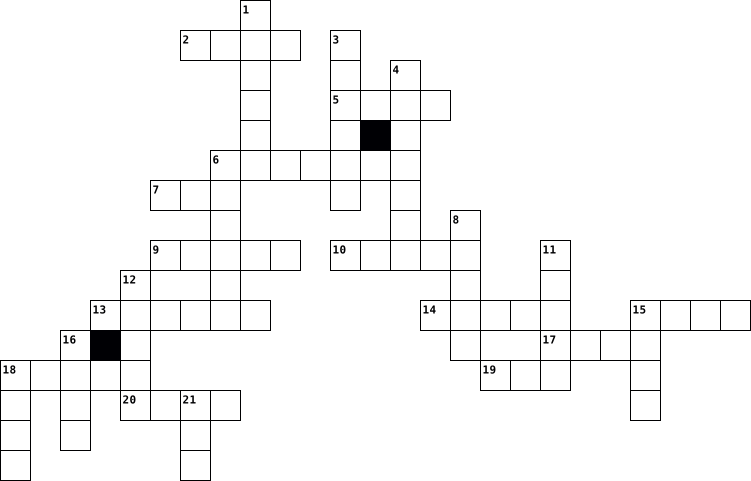
Across
- jail
- ship
- request
- ice
- bring
- watch
- sudden
- floor
- shed
- rain
- heart
- dry
- easy
Down
- simple
- system
- distant
- retire
- shall
- carry
- quite
- snow
- fact
- hour
- sit
24 Clues: ice • dry • sit • jail • ship • shed • snow • fact • rain • hour • easy • shall • bring • watch • carry • quite • floor • heart • simple • system • retire • sudden • distant • request
Body parts 2 2019-02-26

Across
- fist
- Heart
- underarm
- fingernail
- Neck
- fingertip
- Breast
- elbow
- arm Upper arm
- waist
- palm
Down
- chest
- fingerprint
- shoulder
- Hand
- throat
- forearm
- knuckle
- finger
- back
- arm
- tummy
- wrist
23 Clues: arm • fist • Hand • Neck • back • palm • chest • Heart • tummy • elbow • wrist • waist • throat • finger • Breast • forearm • knuckle • shoulder • underarm • fingertip • fingernail • fingerprint • arm Upper arm
Health Chapter 1 Vocabulary, Transportation 2017-03-06

Across
- watery fluid in blood with no cells
- lower chamber of the heart
- having to do with the lungs
- blood vessel that moves blood from the heart
- act of moving around
- Muscle the size of your fist between the lungs; the heart
- membranous tube carrying blood to the heart
Down
- flap which prevents blood backflow in the heart; doorlike flap
- tiny blood vessel, neither an artery nor vein
- an upper chamber on the side of the heart
- The two large veins which enter your heart
- Enlarged veins near the surface of the skin
- the main vessel of the body's arteries
13 Clues: act of moving around • lower chamber of the heart • having to do with the lungs • watery fluid in blood with no cells • the main vessel of the body's arteries • an upper chamber on the side of the heart • The two large veins which enter your heart • Enlarged veins near the surface of the skin • membranous tube carrying blood to the heart • ...
Cardiovascular System 2021-11-02

Across
- small veins
- death of the myocardial tissue
- smallest blood vessel
- is death of the tissue
- double layered sac-like membrane surrounding the heart
- venae cavae that pulls blood from the upper portion of the body
Down
- carries blood toward the heart
- inner lining of the heart
- largest artery in the body
- contraction phase of the heart
- relaxation phase of the heart
- valve between the right atrium and right ventricle
- carries blood away from the heart
13 Clues: small veins • smallest blood vessel • is death of the tissue • inner lining of the heart • largest artery in the body • relaxation phase of the heart • carries blood toward the heart • contraction phase of the heart • death of the myocardial tissue • carries blood away from the heart • valve between the right atrium and right ventricle • ...
Cardiovascular System 1 2023-06-22

Across
- valve between the two right sides of the heart
- the beat of the heart as felt through the walls of arteries
- smaller branches of arteries; thinner than arteries and carry blood to the tiniest of blood vessels, the capillaries
- valve between the left ventricle and the aorta
- valve between the right ventricle and the pulmonary artery
- the two upper chambers of the heart
- vena cava carries blood from the lower part of the body
- valve between the two left sides of the heart
- vena cava drains blood from the upper portion of the body
- circulation the pathway of blood from the heart to the tissue capillaries and back to the heart
Down
- only veins to carry oxygenated blood
- only artery in the body to carry blood deficient in oxygen\
- delicate, microscopic vessels that are only one endothelial cell in thickness and carry nutrient-rich, oxygenated blood from the arteries and arterioles to the body cells
- the two lower chambers of the heart
- large blood vessels that carry blood away from the heart
15 Clues: the two lower chambers of the heart • the two upper chambers of the heart • only veins to carry oxygenated blood • valve between the two left sides of the heart • valve between the two right sides of the heart • valve between the left ventricle and the aorta • vena cava carries blood from the lower part of the body • ...
Cardiovascular System 2022-10-14

Across
- What each lower chamber of the heart is called.
- A fluid that transports supplies for cells, removes waste so cells can maintain homeostasis, and carries chemical messages.
- system An organ system that carries nutrients, gases, and hormones to body cells and waste products away from body cells.
- A blood vessel that carries blood away from the heart.
- Tiny blood vessel that allows exchange between body cells and blood.
- Number of chambers that a heart has.
- Blood that travels through your body in tubes.
Down
- Blood cells that fight pathogens such as bacteria and viruses.
- hat each upper chamber of the heart is called.
- Side of heart that recieves oxygen-rich blood.
- A blood vessel that carries blood back to the heart.
- The organ that sends blood around the body and is one of the main parts of the cardiovascular system.
- Tiny pieces of larger cells that clump together when you bleed to prevent yourself from bleeding out.
- Side of heart that recieves oxygen-poor blood.
- Blood cells that carry oxygen to every cell in your body.
15 Clues: Number of chambers that a heart has. • hat each upper chamber of the heart is called. • Side of heart that recieves oxygen-rich blood. • Side of heart that recieves oxygen-poor blood. • Blood that travels through your body in tubes. • What each lower chamber of the heart is called. • A blood vessel that carries blood back to the heart. • ...
Health Ch. 2 sections 1-3 vocab review 2019-10-03

Across
- type of muscle found only in the heart
- blood vessel that carries blood away from the heart
- type of muscle tissue found in the intestines
- long bone in the upper arm
- process by which food is broken down
- high blood pressure
- attaches bone to bone
- most digestion occurs here
- liquid waste produced by the kidneys
- disease in which the blood doesn't clot
- largest muscle in the body
- organ that produces bile
- infection of thelungs
- number of times your heart beats per minute
- digestion starts here
Down
- lower chambers of the heart
- loss of bone tissue
- system of the body responsible for transportation
- large bone in the upper thigh
- liquid part of the blood
- a muscle bruise
- largest artery in the body
- bad breath
- exhalation
- blood vessels that have valves
- membrane around the heart
- wavelike muscle contractions that move food
- bones of the fingers and toes
- attaches muscle to bone
- muscle used to breathe
- hormone produced by the pancreas to digest sugar
- oxygen carrying protein in red blood cells
- tiny air sacs in the lungs
- upper chambers of the heart
- main organs of the respiratory system
- shortage of red blood cells
36 Clues: bad breath • exhalation • a muscle bruise • loss of bone tissue • high blood pressure • attaches bone to bone • infection of thelungs • digestion starts here • muscle used to breathe • attaches muscle to bone • liquid part of the blood • organ that produces bile • membrane around the heart • largest artery in the body • long bone in the upper arm • most digestion occurs here • ...
Atherosclerosis/Arteriosclerosis 2013-01-02

Across
- a warning sign of a heart attack that can make you feel faint
- hardening of the arteries
- force that one must overcome in strength training
- high lipid concentration in blood
- lose 5 lbs in one month
- exercise can help increase this type of cholesterol
- a term encompassing the heart and blood vessels
- exercise helps decrease this
- third part of CPR
- second part of CPR
- what bmi stands for
- production of new blood vessels that can be due to exercise
- the end of an exercise session
Down
- impairment #1
- decrease bmi from 29.8-24.4
- fatty deposits lining the inside of an artery
- blood pressure readings measure this
- type of blood vessel affected by coronary heart disease
- "requiring air"
- moderate intensity allows you to maintain this while you're exercising
- chest pain
- the beginning of an exercise session that prepares your body for increasing effort
- impairment #2
- first word in the clinical term for "heart attack"
- a group of symptoms that indicate you are likely having a heart attack or stroke
- second word in the clinical term for "heart attack"
- blood pressure reading measure this
- "without air"
- first part of CPR
- exercise can help lower this type of cholesterol
30 Clues: chest pain • impairment #1 • impairment #2 • "without air" • "requiring air" • third part of CPR • first part of CPR • second part of CPR • what bmi stands for • lose 5 lbs in one month • hardening of the arteries • decrease bmi from 29.8-24.4 • exercise helps decrease this • the end of an exercise session • high lipid concentration in blood • blood pressure reading measure this • ...
The Cardiovascular System 2025-04-14

Across
- premature contraction
- a microscopic vessel through which materials are exchanged between the blood and the tissues is a(n)
- structure that keeps fluid moving forward
- the largest artery is the
- drug used to dissolve blood clots
- a sinus rhythm originates in the _____ node
- the large artery in the neck that supplies blood to the brain is the
- drug that increases urinary output
- the heart muscle is the
- backward flow
- central opening of a vessel
- removal of plaque
Down
- the lymphoid organ in the chest is the
- the term varicoid pertains to a(n) ______ vein
- the right lymphatic duct and the thoracic duct drain into vessels called the _____ veins
- vessel that empties into the right atrium
- at its termination in the abdomen, the aorta divides into the right and left
- fibrous sac around the heart
- a phlebotomist (fleh-bot-o-mist) is one who drains blood from a(n)
- each upper receiving chamber of the heart is a(n)
- blood returning to the heart from the systemic circuit enters the chamber called the _____ atrium
- the large vein that drains the lower body and empties into the heart is the _____ vena cava
- the lower pointed region of the heart
23 Clues: backward flow • removal of plaque • premature contraction • the heart muscle is the • the largest artery is the • central opening of a vessel • fibrous sac around the heart • drug used to dissolve blood clots • drug that increases urinary output • the lower pointed region of the heart • the lymphoid organ in the chest is the • vessel that empties into the right atrium • ...
THE HEART AND THE CIRCULATORY SYSTEM 2025-05-26

Across
- ONE OF THE VALVES OF THE HEART
- FAT DEPOSITS BLOCKS THE CORONARY ARTERIES
- THE THIN WALLS OF A BLOOD VESSELS
- VEINS AHVE A NARROW_______
- THE ONLY ARTERY THAT CARRIES OXYGENATED BLOOD
- A VALVE THAT IS ON THE PRVENTS BACKFLOW OF BLOOD BETWEEN THE LEFT ATRIUM AND THE LEFT VENTRICLE
- BLOOD VESSELS THAT CARRIES BLOOD AWAY FROM THE HEART
- PART OF THE HUMAN CIRCULATORY SYSTEM AND IS RESPONSIBLE FOR GASEOUS EXCHANGE
- A SITE FOR RED BLOOD SYNTHESIS
- THSES ARE TABLESTS THAT ARE USED AS IRON SUPPLEMENTS
- PRESSURE THIS IS PRESSURE THAT IS GENERATED WHEN THE HEART IS BEATING
Down
- WHEN THE ARTERIAL WALLS RAPTURE CAUSING A HEART ATTACK
- THIS BLOOD VESSELS CARRIES OXYGENATED BLOOD FROM THE HEART TO THE REST OF THE BODY
- BLOOD VESSELS THAT ARE RESPONSIBLE FOE EXCHANGE OF MATERIALS
- A RED PROTEIN THAT BINDS TO OXYGEN
- A MEDICAL CONDITION THAT RESULTS IN STIFENING OF THE ARTERIAL WALLS
- THE UNITS OF BLOOD PRESSURE
- THESE HAPPENS WHEN THE HEART IS AT REST
- THE MAIN VEIN IN THE HUMAN BODY
- A CONDITION THAT HAPPENS WHENRED BLOOD CELLS ARENT ABLE TO CARRY ENOUCH OXYGEN
- A CONDITION THAT HAPPENS WHEN THE ARTERIE SUPPLYING THE BRAIN WITH OXYGEN GESTS BLOCKED
21 Clues: VEINS AHVE A NARROW_______ • THE UNITS OF BLOOD PRESSURE • ONE OF THE VALVES OF THE HEART • A SITE FOR RED BLOOD SYNTHESIS • THE MAIN VEIN IN THE HUMAN BODY • A RED PROTEIN THAT BINDS TO OXYGEN • THE THIN WALLS OF A BLOOD VESSELS • THESE HAPPENS WHEN THE HEART IS AT REST • FAT DEPOSITS BLOCKS THE CORONARY ARTERIES • THE ONLY ARTERY THAT CARRIES OXYGENATED BLOOD • ...
Congestive Heart Failure/ Complications of Heart Disease 2024-02-23

Across
- condition in which electrical activity is present on an electrocardiogram, but there is not a physiologically adequate pulse or blood pressure
- diminished urine output; less than 0.5 mL/kg/h over at least 6 hours, or less than 400 mL in 24 hours
- an accumulation of serous fluid in the peritoneal cavity
- pathologic accumulation of fluid in the interstitial spaces and alveoli of the lungs causing severe respiratory distress
- systolic blood pressure that is more than 10 mm Hg lower during inhalation than during exhalation; difference is normally less than 10 mm Hg
- procedure that involves aspiration of fluid from the pericardial sac
- inability of the left ventricle to fill or eject sufficient blood into the systemic circulation (synonym: left ventricular failure)
- percentage of blood volume in the ventricles at the end of diastole that is ejected during systole; a measurement of contractility
- a clinical syndrome resulting from structural or functional cardiac disorders that impair the ability of a ventricle to fill or eject blood
- inability of the heart to pump sufficiently because of an alteration in the ability of the heart to contract; term used to describe a type of heart failure (synonym: Heart Failure with reduced Ejection Fraction [HFrEF])
Down
- the inability of the left ventricle of the heart to fill and pump sufficiently; term used to define a type of heart failure (synonym: Heart Failure with preserved Ejection Fraction [HFpEF])
- shortness of breath when lying flat
- dyspnea shortness of breath that occurs suddenly during sleep
- a treatment for heart failure in which a device paces both ventricles to synchronize contractions
- a fluid overload condition (congestion) associated with heart failure
- inability of the right ventricle to fill or eject sufficient blood into the pulmonary circulation (synonym: right ventricular failure)
- urine output of less than 50 mL/24 h
- surgically created opening of the pericardium
18 Clues: shortness of breath when lying flat • urine output of less than 50 mL/24 h • surgically created opening of the pericardium • an accumulation of serous fluid in the peritoneal cavity • dyspnea shortness of breath that occurs suddenly during sleep • procedure that involves aspiration of fluid from the pericardial sac • ...
ygoggo 2022-08-22

Across
- blood vessels that carry blood back to the heart
- A blood protein; transports oxygen
- upper chamber
- carry oxygen
- the introduction of blood from others
- largest vein in the body
- valve between the right atrium and the right ventricle
- valve between the left atrium and the left ventricle.
- AKA cardiovascular system
- recipient AB
Down
- blood that carries an abundant amount of oxygen
- blood cells destroys disease-causing microorganisms
- tiny, disk-shaped bodies in the blood, important in blood clot formation
- donor O
- Largest artery in the body
- Lower chambers of the heart
- Microscopic vessel
- circulation that supplies blood
- Muscle of the heart
- carry blood away from the heart
20 Clues: donor O • carry oxygen • recipient AB • upper chamber • Microscopic vessel • Muscle of the heart • largest vein in the body • AKA cardiovascular system • Largest artery in the body • Lower chambers of the heart • circulation that supplies blood • carry blood away from the heart • A blood protein; transports oxygen • the introduction of blood from others • ...
Unit 3.3 Vocab crossword 2021-02-16

Across
- The circulation of blood from the heart to the lungs for oxygenation and back to the heart.
- Extremely narrow, microscopic blood vessel. The presence of blood in capillaries produces the pink color of skin.
- A chemical substance formed in some organ of the body, secreted directly into the blood, and carried to another organ or tissue, where it produces a specific effect.
- The windpipe; in mammals, it extends from the throat to the bronchi.
- A pair of ductless glands, each located on or adjacent to a kidney, which secretes adrenaline and cortin.
- The main vessel that carries blood to all bodily organs except the lungs.
- Either of two spongy, saclike respiratory organs in most vertebrates, occupying the chest cavity together with the heart or functioning to remove carbon dioxide from the blood and provide it with oxygen.
- A blood vessel that functions in carrying blood from the heart.
- The number of times the heart beats in a minute.
- The act of bringing air into the lungs through the contraction of the diaphragm.
Down
- One of many subdivisions of the bronchial tubes within a lung; a small branch of the bronchus.
- The large veins that carry blood into the right atrium of the heart.
- (bronchi) A major airway of the respiratory system.
- One of the two pumping chambers of the heart.
- The expansion and contraction of an artery associated with each heartbeat.
- The organ of the body that circulates the blood by its rhythmical contractions.
- The oxidation of organic compounds that occurs within cells, producing energy for cellular processes.
- The layer or sheet of muscle and connective tissue that forms the wall between the thoracic and abdominal cavities of mammals and aids in the process of breathing.
- The upper portion of the trachea.
19 Clues: The upper portion of the trachea. • One of the two pumping chambers of the heart. • The number of times the heart beats in a minute. • (bronchi) A major airway of the respiratory system. • A blood vessel that functions in carrying blood from the heart. • The large veins that carry blood into the right atrium of the heart. • ...
Unit 1 - The circulatory system 2024-09-11

Across
- An organism that provides a living environment for a parasite.
- The clear, salty liquid produced by the eyes that helps to keep them moist and can also express emotions.
- Microscopic single-celled organisms that can be found in various environments and can cause infections or help in digestion.
- A blood vessel that carries blood away from the heart.
- A muscle that helps in breathing by expanding and contracting the chest cavity.
- The upper chamber of the heart that receives blood coming into the heart.
- A microscopic infectious agent that requires a living host to reproduce and can cause diseases such as the flu or COVID-19.
- The lower chamber of the heart that pumps blood out to the lungs or the rest of the body.
- The action of the heart, moving blood throughout the body.
Down
- The organ that pumps blood through the circulatory system.
- A type of fungus used in baking and brewing that can also cause infections in humans.
- The fluid that circulates through the heart, arteries, veins, and capillaries, delivering oxygen and nutrients to tissues.
- A bone that protects the chest cavity and organs within.
- An organism that lives on or inside another organism (the host) and benefits at the host's expense.
- An organ where digestion of food begins with the help of stomach acids and enzymes.
- The smallest type of blood vessel where gas exchange occurs between blood and tissues.
- A sticky substance produced by the body to protect and lubricate tissues, especially in the respiratory and digestive systems.
- The tube that connects the throat to the lungs, allowing air to pass through.
- A blood vessel that carries blood towards the heart.
19 Clues: A blood vessel that carries blood towards the heart. • A blood vessel that carries blood away from the heart. • A bone that protects the chest cavity and organs within. • The organ that pumps blood through the circulatory system. • The action of the heart, moving blood throughout the body. • An organism that provides a living environment for a parasite. • ...
Heart Health and Awareness Puzzle 2020-01-29

Across
- This type of body pain can be a heart attack warning sign.
- ________ arrest is the number one cause of death in the United States.
- Can lead to a healthy heart.
- Fruits and vegetables have lots of these.
- No ______ can help maintain a healthy heart.
- Foods in this type of fiber help reduce cholesterol.
- Try drinking at least 8 glasses of this a day.
- This process pushes blood through the body to pick up waste and deliver oxygen.
- _________ are 6 times more likely to suffer heart attacks.
Down
- Large fish have high levels of this which can be harmful if eaten in large amounts.
- This disease can develop because of poor lifestyle habits when young.
- Aim for 2 1/2 hours of moderate-intensity __________activity per week.
- Too much _________ in your blood increases your risk for heart disease.
- Limit these fats.
- The higher your BMI the higher your risk for heart disease. maintain a healthy _______.
- Avoid these fats.
- All fish contain ________-3 fats.
- Use of this product can lead to CVD.
- Limit this to less than 1,500 mg a day if you have high blood pressure.
19 Clues: Limit these fats. • Avoid these fats. • Can lead to a healthy heart. • All fish contain ________-3 fats. • Use of this product can lead to CVD. • Fruits and vegetables have lots of these. • No ______ can help maintain a healthy heart. • Try drinking at least 8 glasses of this a day. • Foods in this type of fiber help reduce cholesterol. • ...
Hamilton-Rhoden Chapter 8 Cardio MT 2026-01-22

Across
- What is the degenerative disease of the arterial walls that cause them to become thickened and brittle
- A procedure the records radiographic image inside the blood vessel
- A procedure that reopens narrowed blood vessels to restore blood flow
- The abbreviation of Hypertension is ___
- When you have abnormally slow heart rate, usually fewer than 60 beats per minute
- Surgical repair of a valve
- The defibrillation technique using low-energy shocks to reset the heart's rhythm back to normal
- What happens when blood pressure is persistently lower than 90/60 mm Hg
- Enlargement of the heart means
- Arteriostenosis means narrowing of the ____
- The abbreviation of peripheral artery disease is ___
Down
- The lifesaving emergency treatment to restart the heart
- A procedure that records the spread of electrical excitation to parts of the heart
- The narrowing of a vessel,especially the aorta
- What can reduce or block blood flow in the heart
- When there are excessive amounts of lipids in the blood
- The abbreviation of automatic implantable cardioverter-defibrillator is ___
- When there is irregularity in the rhythm of the heart
- The abnormal dilation of a vessel, usually an artery
19 Clues: Surgical repair of a valve • Enlargement of the heart means • The abbreviation of Hypertension is ___ • Arteriostenosis means narrowing of the ____ • The narrowing of a vessel,especially the aorta • What can reduce or block blood flow in the heart • The abnormal dilation of a vessel, usually an artery • The abbreviation of peripheral artery disease is ___ • ...
Science Crossword puzzle 2023-10-31

Across
- where food is held
- liquid from blood
- helps with breathing
- absorbs water
- uses oxygen and carbon dioxide
- lower part of heart
- blood from heart
- fight disease
Down
- stores urine
- absorbs nutrients
- upper part of heart
- covers the inner parts of the small intestine
- blood to heart
- connect vein and artery
14 Clues: stores urine • absorbs water • fight disease • blood to heart • blood from heart • absorbs nutrients • liquid from blood • where food is held • upper part of heart • lower part of heart • helps with breathing • connect vein and artery • uses oxygen and carbon dioxide • covers the inner parts of the small intestine
Heart Health Crossword 2018-03-02

Across
- Where blood pools in the heart.
- Physical activity to improve health and fitness.
- When plaque forms on the inside of a blood vessel.
- Carries deoxygenated blood.
- Having the proper food and vitamins necessary for health and growth.
- attack When blood flow to the heart is blocked and a part of the heart dies. (2 words)
- Liquid carrying nutrients and oxygen through the body.
Down
- When blood flow through your brain stops.
- Fruits containing this are usually sour or bitter, examples include grapefruits and kiwi.
- Can be known as high blood pressures, a blood pressure value of 140/90 and up.
- Carries oxygenated blood.
- Where oxygen enters the body and goes into blood.
- The measured amount of force blood puts on the walls of the artery.
- Found in dark red or green foods, reduce build up of plaque in arteries.
- A fatty substance.
- Where the blood is pushed out of the heart by muscles squeezing this area.
- To give.
17 Clues: To give. • A fatty substance. • Carries oxygenated blood. • Carries deoxygenated blood. • Where blood pools in the heart. • When blood flow through your brain stops. • Physical activity to improve health and fitness. • Where oxygen enters the body and goes into blood. • When plaque forms on the inside of a blood vessel. • ...
Circulatory System Crossword Puzzle 2022-05-05

Across
- take blood to the heart
- carries blood from upper body to you're heart
- take blood away from the heart
- Transfers blood from lungs to heart
- main artery that pumps blood to your body
- prevents backwards blood flow
Down
- gives blood cells oxygen
- the largest heart
- carries blood from the heart to the lungs
- carries blood from lower body to you're heart
- red stuff in your body
- has three hearts
12 Clues: has three hearts • the largest heart • red stuff in your body • take blood to the heart • gives blood cells oxygen • prevents backwards blood flow • take blood away from the heart • Transfers blood from lungs to heart • carries blood from the heart to the lungs • main artery that pumps blood to your body • carries blood from upper body to you're heart • ...
The Heart And Its Functions 2023-09-12

Across
- This part of the heart forces oxygenated blood to flow to the rest of the body
- The area of the heart that receives oxygenated blood
- Your blood pressure can be affected negatively if you live a lifestyle similar to this obese cartoon character made by Seth McFarlane
- A branch of an artery that leads to capillaries.
- Not getting enough physical activity can result in high blood pressure, while stress can result in ___ blood pressure
- When oxygen-carrying blood cells become damaged from high cholesterol, high blood pressure, diabetes and genetics. The symptoms of which include headaches, dizziness, confusion, weakness and vision problems.
- Double-walled blood vessels that transport oxygenated blood to your body.
- For adolescents, blood pressure should be ___/______. Blood cells
- (<1% of blood) Infection/Disease fighting White Blood cells are large because they have a _______
- The pressure in your arteries when your heart beats
- When a heart valve is diseased or damaged, they can be replaced with a _______________.
- Blood vessels that transport deoxygenated blood to the heart.
- The fluid that makes up 55% of blood our blood content is called ______
- When a weakened vein/artery begins to balloon, causing a "thunderclap" headache, nausea, stiff neck, wonky vision, sensitivity to light, etc.
- This artery supplies blood to the heart.
- Receives low-oxygen blood and pumps it into the right ventricle.
Down
- The valve that regulates the flow of blood leaving the heart is the ________________ valve.
- Leading an unhealthy lifestyle can create a buildup of plaque in the heart's arteries. If this plaque ruptures, it could lead to a ___________. The symptoms of which include chest pain, pain in the upper body, lightheadedness, fatigue and nausea.
- A cane-shaped vessel that delivers oxygenated blood to the body
- The Pathway to your lungs and back is called the _________ pathway.
- When a blood cell carrying oxygen to the brain becomes blocked or bursts. The symptoms of which are slurred speech, droopy face, sudden confusion/lack of coordination and weakness in one side of the body.
- Red blood cells, which make up 44% of our blood, use their ___________ to carry oxygen throughout the body
- ___-oxygenated blood returns to the heart through the superior and inferior Vena Cava
- (<1% of blood) What binds Platelets together to help create blood clots and scabs are their ______
- Transports oxygenated blood to the left atria
- A part of the heart that regulates its beating.
- A large vein that returns deoxygenated to the heart
- Locate your _____ by lightly pressing your index and middle fingers slightly to the inside center of the bend of your elbow. Secure the cuff. Inflate and deflate the cuff. Record your blood pressure..
- Small blood vessels that carry blood to and from the heart.
- Cartilage that separates the heart into two separate sections.
- The pressure in your arteries when your heart rests between beats
- To check your _________, place two fingers between the bone and the tendon over your radial artery — which is located on the thumb side of your wrist.
32 Clues: This artery supplies blood to the heart. • Transports oxygenated blood to the left atria • A part of the heart that regulates its beating. • A branch of an artery that leads to capillaries. • A large vein that returns deoxygenated to the heart • The pressure in your arteries when your heart beats • The area of the heart that receives oxygenated blood • ...
The Circulatory System 2022-01-11

Across
- The two upper chambers, which receive blood.
- The veins carry oxygen-poor _____ back to the heart to start the circulation process over.
- ________________ carries blood from the head, neck, arms, and chest.
- The ________ circulation provides the functional blood supply to all body tissue.
- The two lower chambers, which discharge blood.
- Pumps blood from the heart to the lungs to get ______.
Down
- The largest blood vessel that transports oxygen rich blood from your heart to the rest of your body.
- The heart is a muscular organ with ____ chambers.
- Pulmonary _____ collect the oxygenated blood and carry it from the lungs back to the heart.
- Part of the chest where the heart is located.
- _____ bring in air from the atmosphere and pass oxygen into the bloodstream.
- Pumps blood around your body as it beats.
- Systemic circulation carries oxygenated blood from the left ventricle, through the arteries, to the capillaries in the tissues of the body.
- Disease that occurs from a blood clot, a serious condition that needs emergency medical attention. (abbr.)
- Pulmonary ________ carry blood from the right side of the heart to the lungs.
15 Clues: Pumps blood around your body as it beats. • The two upper chambers, which receive blood. • Part of the chest where the heart is located. • The two lower chambers, which discharge blood. • The heart is a muscular organ with ____ chambers. • Pumps blood from the heart to the lungs to get ______. • ________________ carries blood from the head, neck, arms, and chest. • ...
Circulatory System 102.7 Cosmetology Fundamentals 2020-12-10

Across
- External __,supplies lower face
- Common __ arteries,supply blood to head
- Filter foreign particles
- Lower chambers of heart,left & right
- __ carotid artery,supplies to brain
- Circulation moves blood from heart & back
- Another term for red blood cells
- Lymph is a ____liquid byproduct of plasma
- Supplies to knee, thigh and calf
- Supplies to sides of nose
- Inferior ___ supplies to lower lip
- __ artery supplies to back of head
- Thumb side of hand and arm, artery
- Supplies blood to sides of head
- Upper chambers of the heart,left & right
Down
- Thrombocytes,create this blood action
- Supplies to upper surface of foot
- Phase that oxygenates blood in lungs
- Artery supplies to chin & lower lip
- Lymph-vascular,develops via white cells
- Carries impure blood
- Little finger side of arm, artery
- Blood volume,average adult, 8 to 10
- Leukocytes,white blood cells fight this
- Carries blood from capillaries to heart
- How lymph nodes indicate infection
- Carry pure blood from heart,thick vessel
- Lymph-vascular system circulates this
- Average ____ heart rate,60-100 beats min.
- System responsible for blood circulation
- Fluid part of the blood
- Used in treatments to affect circulatory system
- Sticky,salty fluid nourishes body
- Membrane that encases the heart
34 Clues: Carries impure blood • Fluid part of the blood • Filter foreign particles • Supplies to sides of nose • External __,supplies lower face • Membrane that encases the heart • Supplies blood to sides of head • Another term for red blood cells • Supplies to knee, thigh and calf • Supplies to upper surface of foot • Little finger side of arm, artery • Sticky,salty fluid nourishes body • ...
BE226 Physiology Lec3 2020-07-03

Across
- Another name for vessels carrying oxygenated blood.
- They permit gas and nutrient exchange.
- Another name for the right AV valve.
- Very abundant in cardiac muscle cells.
- Covers the inner surface of the heart.
- They branch off from the aorta.
- Procedure used to visualize heart vessel blockages.
- Cylindrical tube used to prop open damaged arteries.
- Mother always said greens were good for the heart.
- Sounds like scratches in a stethoscope.
- Cardiac troponin is one when it comes to detecting MI risk.
- Obesity, smoking, gender, diet...
- Division of the CNS that produces norepinephrine.
- Another name for a blood clot.
- Accelerates RBC production and cyclist's bogus wins.
- It blocks beta-1 receptors on cardiac muscle cells.
Down
- Pumps blood into the left ventricle.
- Released by the kidneys to elevate BP.
- Collagenous sac that houses the heart.
- A positive ionotropic agent.
- Chest pains
- Cardiac muscle cells are separated by a (blank) disc.
- Partial or complete blockage of the coronary circulation.
- Mineral acquired from bones to enable heartbeats.
- Miracle drug for treating MI.
- Caused by oxygen starvation of heart muscle.
- Supplies blood to the SA and AV nodes.
- Bndles of cardiac muscle cells.
- Acetylcholine (blank) the heart rate.
29 Clues: Chest pains • A positive ionotropic agent. • Miracle drug for treating MI. • Another name for a blood clot. • They branch off from the aorta. • Bndles of cardiac muscle cells. • Obesity, smoking, gender, diet... • Pumps blood into the left ventricle. • Another name for the right AV valve. • Acetylcholine (blank) the heart rate. • Released by the kidneys to elevate BP. • ...
Cardiovascular System Crossword - Fatima Khan 2021-04-01

Across
- surgical puncture to remove fluid
- The monitor records heart activity to show a possible pattern for the symptoms the patient may be having
- A condition in which the heart is not efficiently pumping from the left ventricle, causing reduced blood flow.
- A condition in which an artery has a weakened wall, causing it to swell, like a balloon
- above/over or excessive
- acute myocardial infarction
- condition process or method
- process of cutting
- double-layered sac
- atherosclerotic cardiovascular disease
- The patient’s oxygen levels and EKG are monitored during the test
- a semilunar valve and is between the right ventricle and the pulmonary artery
Down
- A.K.A high blood pressure
- This is used to measure certain items in the blood that may indicate heart muscle damage
- A test that uses ultrasound to look at the heart and its vessels.
- Any vessel can be looked at with this procedure
- The wall between the right and left atria
- The wall between the right and left ventricles
- a condition in which the pericardialsac around the heart is inflamed
- complete stopping of the heart.
- the thin inner layer that lines each chamber
- basic metabolic panel
- surgical removal/excision
- medical abbreviation for blood
24 Clues: process of cutting • double-layered sac • basic metabolic panel • above/over or excessive • A.K.A high blood pressure • surgical removal/excision • acute myocardial infarction • condition process or method • medical abbreviation for blood • complete stopping of the heart. • surgical puncture to remove fluid • atherosclerotic cardiovascular disease • ...
Body Systems 2013-10-27

Across
- Small round sacs with large surface area. Important for respiration
- The body system that absorbs nutrients from food
- Long tube protected by cartilage. Also known as your airway
- Main organ of the respiratory system
- Blood exits the heart through the left ______ before being pumped to the body
- Main muscle involved in breathing
- Also known as the voice box or Adams Apple
- The body system responsible for pumping blood around the body
- Thick muscular wall that divides the left and right sides of the heart
- Main artery in the body
- Main organ of the circulatory system
Down
- Blood enters the heart here. Right _____
- What we breath out. Carbon ______
- Absorbed into the blood stream during respiration
- Ensures blood cannot flow backwards
- Number of chambers in the heart
- Any blood vessel heading towards the heart is known as a _____
- Main artery to the lungs. ________ artery
- Stores bile before it is released into the intestine. (4,7)
- Where most digestion occurs. ______ intestine
- Site for water absorption. Large _________
- Organ with no known use in the human body
- Connects the mouth to the stomach
- Where the nasal and oral passages meet. Also known as the throat
- The smallest type of blood vessels
- The _______ system is responsible for absorbing and eliminating vital gases
26 Clues: Main artery in the body • Number of chambers in the heart • What we breath out. Carbon ______ • Connects the mouth to the stomach • Main muscle involved in breathing • The smallest type of blood vessels • Ensures blood cannot flow backwards • Main organ of the respiratory system • Main organ of the circulatory system • Blood enters the heart here. Right _____ • ...
The Respiratory and Circulatory Systems 2013-12-17

Across
- Mostly water, this functions as the medium through which blood cells and platelets are transported through the body
- Blood Cells These are concave disks with a squashed in center
- Vessels Blood travels through these tubes
- Two large lightweight respiratory organs of the body
- Blood vessels that have really small walls that nutrients and waste can go through
- System Brings oxygen to the body and removes carbon dioxide
- How many times your heart beats in a period of time
- A cardiac muscle made up of four chambers
- Large band of muscle that controls the size of chest cavity
- The two branchges of the windpipe
- The bottom two chambers of the heart
- They carry blood back to the heart
Down
- Grape-like clusters of air sacs within the lungs
- The upper two chambers of the heart
- System Carries oxygen and nutrients to the cells
- Factors Any thing that can make an increase for a chance of disease
- Release substances that start the process of blood clotting
- Blood Cells These patrol tissues where they get rid of damaged or dead cells
- They help blood flow in one direction
- The tube that connects the throat to the bronchial tubes
- They carry blood away from the heart
21 Clues: The two branchges of the windpipe • They carry blood back to the heart • The upper two chambers of the heart • They carry blood away from the heart • The bottom two chambers of the heart • They help blood flow in one direction • Vessels Blood travels through these tubes • A cardiac muscle made up of four chambers • Grape-like clusters of air sacs within the lungs • ...
Circulatory system 2016-05-30

Across
- blood in the arteries is ___ because it is rich in oxygen
- a blood clot
- a disease where you get excessive tiredness
- inflammation in the wall of a vein
- the largest artery in the body
- a disease where the person experiences lots of blood clots
- the heart blood and vessels
- the place where nutrients enters the blood
- a disease where there is swelling in the wall of the artery
- the circulatory system transports this witch helps contain a regular temperature.
- from source do cells get there food
- a waste gas that travels through veins from the body to the lungs via the heart
- What part of the blood carries minerals, vitamins, sugar, and other foods to the body's cells?
- coronary _______ disease
- a gas that is transported in arteries from lungs to the rest of the body via the heart
Down
- what is like a soldier?
- a vessel the moves the blood to the heart
- the heart ______ blood
- a disease where the arteries harden
- hardening of the arteries
- the place where oxygen enters the blood and carbon dioxide leaves
- a small vessel that connects veins and arteries
- the pump in the circulatory system
- the circulatory system _________ nutrients, gases, liquid and heat around the body.
- the inflammation of the liver
25 Clues: a blood clot • the heart ______ blood • what is like a soldier? • coronary _______ disease • hardening of the arteries • the heart blood and vessels • the inflammation of the liver • the largest artery in the body • inflammation in the wall of a vein • the pump in the circulatory system • a disease where the arteries harden • from source do cells get there food • ...
Cardiovascular System 2021-11-24

Across
- aka thrombocyte
- finish the words...epi-(outter portion), myo-(the muscle portion), endo-(inner portion)
- the widest part of the heart
- the valve that blood from the L ventricle leaves through
- the part of the pericardium that lines the outer surface of the heart
- these vessels flow away from the heart
- when setting up a ECG you clamp these on the pt
- smoke over fire, and snow on trees are ways to remember placement of what?
- this WBC has a specific member called a "killer T" cell
- relaxation of the heart
Down
- when there aren't clotting factors in the blood the plasma is called
- area in the thorax the heart is located in
- the secondary stage of hemostasis once a platelet plug is formed
- single layered vessels that are easily permeable to gases
- blood from the L atrium flows into the L ventricle from this valve
- in Lead II the T wave is a visual representation of ventricular...
- where initiatory impulse starts in heart
- the pulmonic valve is this type of valve
- this type of white blood cell has noticeable free floating "chunks" in the cytoplasm
- in Lead II the QRS complex is a visual representation of ventricular....
- SV + HR = cardiac...?
21 Clues: aka thrombocyte • SV + HR = cardiac...? • relaxation of the heart • the widest part of the heart • these vessels flow away from the heart • where initiatory impulse starts in heart • the pulmonic valve is this type of valve • area in the thorax the heart is located in • when setting up a ECG you clamp these on the pt • this WBC has a specific member called a "killer T" cell • ...
Body Systems #1 2024-01-08

Across
- another name for skull
- Disease in which the bones become thin and brittle
- 206 of these in the human body
- the middle layer of the skin
- when the blood supply to a part of the brain is blocked or reduced
- Red liquid that carries oxygen and nutrients throughout the body
- Blood flow to part of the heart is blocked
- Another name for your kneecap
- the outermost layer of the skin
- The bones are connected by these
- the place where two bones meet
- disease that narrows or blocks the bronchi
- Flexible tissue on the ends of some bones, providing cushioning
Down
- caused by viruses or bacteria
- high blood pressure
- spinal deformity in which the spine develops in an S shape
- Taking care of the body through movement or physical activity
- Organ in the body that beats and pumps blood throughout the body
- Disease involving damage to the alveoli of the lungs
- our main protection against outside germs and bacteria
- allows us to breathe by taking in oxygen and releasing carbon dioxide
- hardened dead cells, varying in color and texture
- carries blood towards the heart
- cage of bones surrounding the heart and lungs
- carries blood away from the heart
25 Clues: high blood pressure • another name for skull • the middle layer of the skin • caused by viruses or bacteria • Another name for your kneecap • 206 of these in the human body • the place where two bones meet • carries blood towards the heart • the outermost layer of the skin • The bones are connected by these • carries blood away from the heart • ...
Test 3 2025-02-23

Across
- The protein blood comes into contact with that initiates the wound response
- The ion involved with the upstroke in SA node action potential
- The heart is a _______ pump
- This blood vessel is heavily influenced by smooth muscle
- _______ circulation flows from the heart to the lungs then back to the heart
- The term related to pumping and emptying
- The term related to relaxing and filling
- Pressure in blood vessels is monitored by this kind of receptor
- This blood vessel offers the least amount of resistance due to lack of smooth muscle and large vessel diameter
Down
- The organ responsible for erythropoietin production
- The component of blood critical to coagulation
- This blood vessel is the site for nutrient exchange
- The type of junction involved in AP spread regarding cardiac muscle cells
- Regarding cardiac conduction, _____ is the pacemaker for the heart's rhythm
- The tricuspid valve is located on which side of the heart?
- The number of chambers in the heart
- A vessel's ______ is the most important factor when determining flow
- _____ circulation flows from the heart through the rest of the body
18 Clues: The heart is a _______ pump • The number of chambers in the heart • The term related to pumping and emptying • The term related to relaxing and filling • The component of blood critical to coagulation • The organ responsible for erythropoietin production • This blood vessel is the site for nutrient exchange • This blood vessel is heavily influenced by smooth muscle • ...
The Circulatory System 2020-10-16

Across
- the vena cava carrying deoxygenated blood from the lower and middle part of the body
- pumps blood through your body using the circulatory system
- the heart has 4 of these
- the upper chambers of the heart
- blood enters the heart through it
Down
- the lower chambers of the heart
- blood returns from the lungs to the heart through these
- carries blood from the body into the lungs
- the heart is not technically an organ, it is a
- blood leaves the heart through it
- the vena cava carrying deoxygenated blood from the upper part of the body
- little "doors" that allow blood to flow throughout the heart
12 Clues: the heart has 4 of these • the lower chambers of the heart • the upper chambers of the heart • blood leaves the heart through it • blood enters the heart through it • carries blood from the body into the lungs • the heart is not technically an organ, it is a • blood returns from the lungs to the heart through these • ...
Cardio System 2023-02-02

Across
- cell that carries oxygen throughout the body
- Osmosis Jones
- circulation between your heart and lungs
- Carries blood towards the heart.
- Carries blood away from the heart.
- help with blood clotting
- fluid part of your blood
Down
- the protein that gives rbcs their red color and binds to oxygen
- This side of the heart pumps oxygen poor blood.
- Tiny blood vessels that exchange nutrients, gases, and waste with body cells.
- The organ that pumps blood through the body.
- circulation between your heart and the rest of your body
- This side of the heart pumps oxygen rich blood.
13 Clues: Osmosis Jones • help with blood clotting • fluid part of your blood • Carries blood towards the heart. • Carries blood away from the heart. • circulation between your heart and lungs • cell that carries oxygen throughout the body • The organ that pumps blood through the body. • This side of the heart pumps oxygen poor blood. • This side of the heart pumps oxygen rich blood. • ...
The Circulatory System 2018-05-08

Across
- _____________circulation: the flow of blood through the heart to the lungs and back to the heart
- Blood __________: the force of blood on the walls of blood vessels
- Tiny blood vessels that connect the arteries and veins and allow nutrients to diffuse across them
- Blood vessels that carry blood away from the heart
- Two lower chambers of the heart
- ___________circulation: blood flow that goes to the heart to supply it with nutrients and oxygen and removes waste
Down
- The stable state of an organism and of its internal environment.
- Two upper chambers of the heart
- __________muscle: muscle found in the heart
- ____________blood pressure: the least amount of pressure on the walls of the arteries
- ___________system: the system that circulates blood through the body, consisting of the heart, the blood and blood vessels.
- ___________circulation: the flow of oxygen rich blood to organs and body tissues then returning oxygen poor blood back to the heart and lungs
- Blood vessels that carry blood toward the heart
13 Clues: Two upper chambers of the heart • Two lower chambers of the heart • __________muscle: muscle found in the heart • Blood vessels that carry blood toward the heart • Blood vessels that carry blood away from the heart • The stable state of an organism and of its internal environment. • Blood __________: the force of blood on the walls of blood vessels • ...
Body Systems 2012-06-15

Across
- A vessel that carries blood high in oxygen away from the heart
- It's a part of the urinary tract system that stores urine until urination.
- You need these to be able to breath probably
- tiny vessels
- carry oxygen and carbon dioxide through body
- A large air tube that begins at the end of the trachea and branches into the lungs. The supporting walls of the bronchus are made up in part of cartilage.
- a large vein (a blood vessel carrying blood to the heart) that carries oxygen-poor blood to the right atrium from the lower half of the body.
- It cleans your blood. It produces an important digestive liquid called bile. It stores energy in the form of a sugar called glycogen.
- It's a sack shaped as a jellybean that is used as part of the digestive system.
- keeps you from getting infections
- The lower right chamber of the heart that receives deoxygenated blood from the right atrium and pumps it under low pressure into the lungs via the pulmonary artery.
- divides heart into two sides
Down
- blood to entire body
- A tube-like portion of the respiratory tract that connects the larynx with the bronchial parts of the lungs. Also known as windpipe
- This is a part of the gastrointestinal tract following the stomach and followed by the large intestine
- blood flow of body
- The left lower chamber of the heart that receives blood from the left atrium and pumps it out under high pressure through the aorta to the body.
- These are a pair of organs that are found on either side of the spine, just below the rib cage in the back.
- the biggest and longest artery (a blood vessel carrying blood away from the heart)in the body. It carries oxygen- rich blood from the left ventricle of the heart to the body.
- the left upper chamber of the heart. it receives oxygen-rich blood from the lungs via the pulmonary vein.
20 Clues: tiny vessels • blood flow of body • blood to entire body • divides heart into two sides • keeps you from getting infections • You need these to be able to breath probably • carry oxygen and carbon dioxide through body • A vessel that carries blood high in oxygen away from the heart • It's a part of the urinary tract system that stores urine until urination. • ...
Body Systems 2012-06-15

Across
- It cleans your blood. It produces an important digestive liquid called bile. It stores energy in the form of a sugar called glycogen.
- A vessel that carries blood high in oxygen away from the heart
- A tube-like portion of the respiratory tract that connects the larynx with the bronchial parts of the lungs. Also known as windpipe
- It's a part of the urinary tract system that stores urine until urination.
- a large vein (a blood vessel carrying blood to the heart) that carries oxygen-poor blood to the right atrium from the lower half of the body.
- This is a part of the gastrointestinal tract following the stomach and followed by the large intestine
- You need these to be able to breath probably
- the left upper chamber of the heart. it receives oxygen-rich blood from the lungs via the pulmonary vein.
- divides heart into two sides
Down
- tiny vessels
- pumps blood to entire body
- carry oxygen and carbon dioxide through body
- keeps you from getting infections
- A large air tube that begins at the end of the trachea and branches into the lungs. The supporting walls of the bronchus are made up in part of cartilage.
- blood flow of body
- The lower right chamber of the heart that receives deoxygenated blood from the right atrium and pumps it under low pressure into the lungs via the pulmonary artery.
- the biggest and longest artery (a blood vessel carrying blood away from the heart)in the body. It carries oxygen- rich blood from the left ventricle of the heart to the body.
- These are a pair of organs that are found on either side of the spine, just below the rib cage in the back.
- The left lower chamber of the heart that receives blood from the left atrium and pumps it out under high pressure through the aorta to the body.
- It's a sack shaped as a jellybean that is used as part of the digestive system.
20 Clues: tiny vessels • blood flow of body • pumps blood to entire body • divides heart into two sides • keeps you from getting infections • carry oxygen and carbon dioxide through body • You need these to be able to breath probably • A vessel that carries blood high in oxygen away from the heart • It's a part of the urinary tract system that stores urine until urination. • ...
Body Sytems 2012-06-15

Across
- These are a pair of organs that are found on either side of the spine, just below the rib cage in the back.
- divides heart into two sides
- A large air tube that begins at the end of the trachea and branches into the lungs. The supporting walls of the bronchus are made up in part of cartilage.
- It's a part of the urinary tract system that stores urine until urination.
- You need these to be able to breath probably
- A vessel that carries blood high in oxygen away from the heart
- blood flow of body
- The left lower chamber of the heart that receives blood from the left atrium and pumps it out under high pressure through the aorta to the body.
- the biggest and longest artery (a blood vessel carrying blood away from the heart)in the body. It carries oxygen- rich blood from the left ventricle of the heart to the body.
- tiny vessels
- It's a sack shaped as a jellybean that is used as part of the digestive system.
Down
- a large vein (a blood vessel carrying blood to the heart) that carries oxygen-poor blood to the right atrium from the lower half of the body.
- This is a part of the gastrointestinal tract following the stomach and followed by the large intestine
- pumps blood to entire body
- carry oxygen and carbon dioxide through body
- keeps you from getting infections
- The lower right chamber of the heart that receives deoxygenated blood from the right atrium and pumps it under low pressure into the lungs via the pulmonary artery.
- the left upper chamber of the heart. it receives oxygen-rich blood from the lungs via the pulmonary vein.
- A tube-like portion of the respiratory tract that connects the larynx with the bronchial parts of the lungs. Also known as windpipe
- It cleans your blood. It produces an important digestive liquid called bile. It stores energy in the form of a sugar called glycogen.
20 Clues: tiny vessels • blood flow of body • pumps blood to entire body • divides heart into two sides • keeps you from getting infections • carry oxygen and carbon dioxide through body • You need these to be able to breath probably • A vessel that carries blood high in oxygen away from the heart • It's a part of the urinary tract system that stores urine until urination. • ...
Circulatory System 2022-05-26

Across
- the network of capillaries (microvessels) and a large network of tubes located throughout your body that transport lymph away from tissues
- random motion of molecules by which there is a net flow of matter from a region of high concentration to a region of low concentration.
- a blood protein produced in response to and counteracting a specific antigen
- The cavity or channel within a tube or tubular organ such as a blood vessel or the intestine
- any of the tubes forming part of the blood circulation system of the body,
- produce antibodies
- a muscular organ about the size of a fist, located just behind and slightly left of the breastbone
- a molecule that contains the biological instructions that make each species unique
- the main artery that carries blood away from your heart to the rest of your body
- it's made up of 90% water and 10% solutes
- the main chamber of your heart
- carry a large volume of blood from the heart to the kidneys
- the triangular wall of cardiac tissue that separates the left and right ventricles
Down
- helps to fight bacteria
- carry blood from the right side of the heart to the lungs
- a toxin or other foreign substance which induces an immune response in the body
- two separate circuits and blood passes through the heart twice
- provides the functional blood supply to all body tissue
- the largest vein in the body
- a tissue inside some of your bones, such as your hip and thigh bones
- small, colorless cell fragments in our blood that form clots and stop or prevent bleeding
- a blood cell with large percentage of oxygen and low in carbon dioxide
- a small blood vessel from 5 to 10 micrometres
- functions to close temporarily a passage or orifice
- heart chamber that receives blood into the heart and drives it into a ventricle, or chamber, for pumping blood away from the heart
- makes up organs and other body parts
26 Clues: produce antibodies • helps to fight bacteria • the largest vein in the body • the main chamber of your heart • makes up organs and other body parts • it's made up of 90% water and 10% solutes • a small blood vessel from 5 to 10 micrometres • functions to close temporarily a passage or orifice • provides the functional blood supply to all body tissue • ...
Hobbit Words 2023-2024 Week 2 2022-11-01

Across
- activities that usually move your body against a force to activate your muscles
- one of four chambers in the heart, the main pumping chamber that pumps blood full of oxygen into the rest of the body
- the number of times your heart beats per minute when you are resting
- device for viewing very tiny objects
- lens at the top of a microscope
- one of four chambers in the heart, receives blood from the pulmonary system and empties it into the left ventricle
- activities that use impact upon your body to strengthen your bones
- the number of times your heart beats per minute when you are exercising
- unit of measure for volume in the metric system
- used to describe intensity of wind
- observations that do not involve numbers
- unit of measure for length in the metric system
- blood without oxygen
- it into the right ventricle
- used to describe intensity of a tornado
Down
- movement of the 18th century when philosophers looked to "human reason" instead of God to better understand mankind
- one of four chambers in the heart, pumps de-oxygenated blood into the lungs
- activities that twist and bend your body to help improve your range of motion
- telescope which uses a series of lenses and mirrors to magnify an image
- the blood vessel that supplies blood to the lower arm, often monitored at the wrist to check heart rate or at the elbow to check blood pressure
- one of four chambers in the heart, receives de-oxygenated blood into the heart and
- activities that make your heart and lungs work together to cycle oxygenated blood throughout your body
- observations that involve numerical data
- unit of measure for mass in the metric system
- activites that help your body move safely through the other forms of exercise and everyday life
- used to describe intensity of a hurricane
- the number of calories your body can use while exercising and while at rest
- the lens closest to the object being observed on a microscope
- used to measure hardness of rocks and minerals
29 Clues: blood without oxygen • it into the right ventricle • lens at the top of a microscope • used to describe intensity of wind • device for viewing very tiny objects • used to describe intensity of a tornado • observations that involve numerical data • observations that do not involve numbers • used to describe intensity of a hurricane • ...
CV & Respiratory Anatomy 2022-11-10

Across
- the natural pacemaker of the heart and receives signals from the brain
- these structures stop blood flowing back through the heart
- the body
- The name of the membrane that surrounds the lungs and "sticks" it to the diaphragm
- the part of the CV system that carries blood between the heart and the lungs
- cava vein that carries blood to the heart from other areas of the body
- the part of the CV system that carries blood throughout the body
- Each haemoglobin molecule can carry "___" molecules of oxygen
- This is carried by Haemoglobin in the blood
Down
- this blood vessel typically has the lowest pressure and requires muscular contractions to move the blood through them
- This type of muscle is only found in the heart
- The air-sacs where gaseous exchange occurs
- The opposite of expiration
- The smallest blood vessel in the human body
- The process of gases moving between tissues
- main artery that carries blood away from the heart
- these blood vessels distribute O2 rich blood
17 Clues: the body • The opposite of expiration • The air-sacs where gaseous exchange occurs • The smallest blood vessel in the human body • The process of gases moving between tissues • This is carried by Haemoglobin in the blood • these blood vessels distribute O2 rich blood • This type of muscle is only found in the heart • main artery that carries blood away from the heart • ...