
heart Crossword Puzzles
Body Systems Crossword: Respiratory, Circulatory & Digestive Systems 2018-04-01

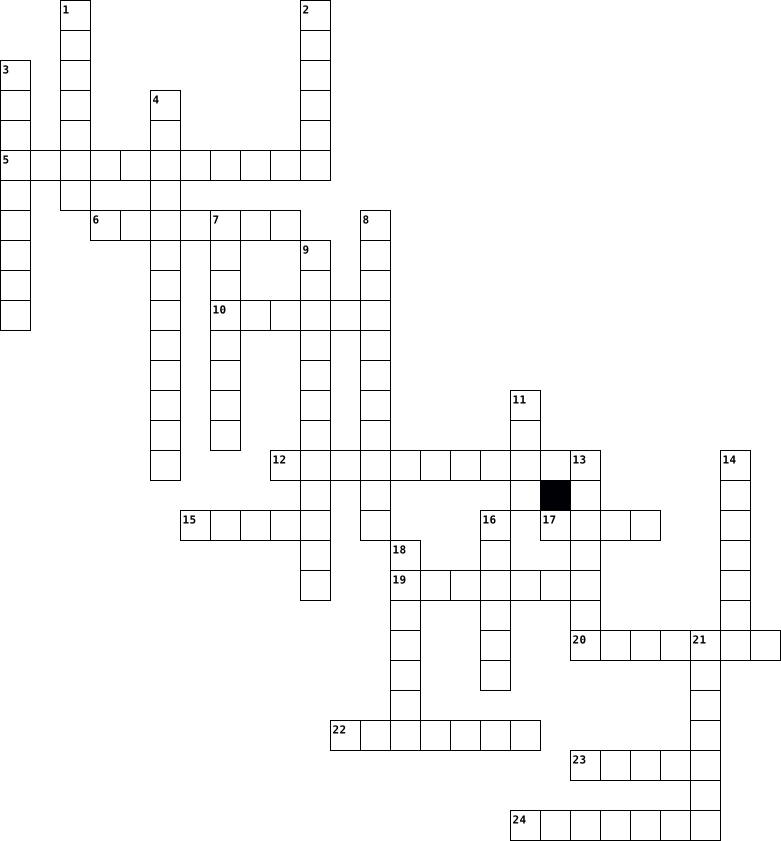
Across
- Little fragments of cells help the blood to clot and seals the wound in the blood vessel if it is damaged.
- These are the upper chamber of the heart
- A pigment make red blood cells red (bright red when it has diffused with oxygen and blueish-red when it doesn't).
- The smallest blood vessels in the body also have the thinnest wall.
- A disease cost by lacking in vitamin C.
- These are blood vessels which have valves and carries blood towards the heart.
- Cells in the blood that carries oxygen and nutrients.
- A life process and also a chemical reaction, which releases energy from the glucose performed by the cells this uses glucose and oxygen to generate carbon dioxide and water (also energy).
- Blood vessels caries blood away from the heart.
- This gets food from the mouth down to the stomach.
- When you breath in, this carries air from outside your body down to the bronchi to get in to your air sacs inside your lungs.
Down
- This is where most food in the body get digested.
- An organ in the respiratory system use for breathing.
- This word usually goes with artery means the artery is carrying blood from the heart to the lungs or with the vein means the vein is carrying blood from the lungs back to the heart.
- These are often larger than red blood cells. These cells kill bacteria and viruses that cause disease by generating antibodies or by digest it.
- This enzyme helps digest carbohydrate in the mouth.
- This carries air from the trachea to the air sacs.
- These are the lower chamber of the heart.
- This word usually goes with artery means the artery is carrying blood from the heart to the body or with the vein means the vein is carrying blood from the body back to the heart.
- Yellow leaf-like structure that creates enzymes for digestion of protein, carbohydrate and fat in small intestine.
- The main thing use to digest food.
21 Clues: The main thing use to digest food. • A disease cost by lacking in vitamin C. • These are the upper chamber of the heart • These are the lower chamber of the heart. • Blood vessels caries blood away from the heart. • This is where most food in the body get digested. • This carries air from the trachea to the air sacs. • This gets food from the mouth down to the stomach. • ...
Body Systems Test #3 2025-03-17

Across
- your heart has four of these
- a connection made by learning something new
- "doorways" between chambers
- the system that allows for blood to transport oxygen and carbon dioxide
- this lobe is responsible for hearing and memory retrieval
- the system meant to keep you safe from germs
- this lobe is responsible for touch, taste, and temp.
- blood vessels that carry blood toward the heart
- this lobe is responsible for vision
- nerve cells
- this part of the brain is responsible for basic life functions
- the rhythm of how your heart contracts
- type of germ that causes illness like COVID or the flu
- you body's "pump"
- the system that allows for messages to be sent between the brain and body
- the "pathways" that messages travel in the body
- white blood cells that remember the germs
Down
- type of germ that causes infection
- flush potential germs out of the eyes
- type of germ that causes illness like nausea or diarrhea
- small part inside the brain responsible for emotions (think "lid-flipping")
- this lobe is responsible for critical thinking
- the body's "over-reaction" to something harmless
- shaped like a frisbee, they carry things in the blood
- the main thing your circulatory system is responsible for transporting
- wall of muscle dividing the two sides of the heart
- white blood cells that fight the germs
- this part of the brain is responsible for balance and coordination
- a bundle of nerves that branch out to the various parts of the body
- break down potential germs in the mouth as you eat
- one of the two upper chambers of the heart
- process of blood flowing through the body
- the "control center" of your body
- blood vessels that carry blood away from the heart
- type of germ that causes illness like athlete's foot
- one of the two lower chambers of the heart
- your body's first defense against germs before they get into the body
37 Clues: nerve cells • you body's "pump" • "doorways" between chambers • your heart has four of these • the "control center" of your body • type of germ that causes infection • this lobe is responsible for vision • flush potential germs out of the eyes • white blood cells that fight the germs • the rhythm of how your heart contracts • process of blood flowing through the body • ...
CV Assessment & Diagnostics Review 2025-08-31

Across
- one of the semilunar valves
- ultrasound of heart to assess chamber sizes, wall motion, valve structure/function, pericardial effusions, and EF
- refractory period when some stimulus could trigger early depolarization of ventricles
- sign of chronic lack of O2 on upper extremities
- (SBP + DBP + DBP)/3 = _____
- left ventricle produces this at 5th ICS, mid-clavicular line
- one of the semilunar valves
- good cholesterol, goal > 50 mg/dL women or > 40 mg/dL men
- ventricle that's responsible for systemic circulation
- major neurotransmitter of sympathetic nervous system
- refractory period when no stimulus is taken by ventricles
- left heart failure backs up into here
- major form of stored energy in adipose tissue, goal < 150 mg/dL
- type of fluid that acts as lubrication for heart's movement
- part of cardiac cycle when coronary arteries are perfused
- cardiac characteristic describing conduction speed through AV junction
- type of cath done via venous system to assess pulmonary pressures
- right heart failure backs up into here
Down
- best part of stethoscope to listen to high-pitch sounds
- heart layer that's responsible for contraction
- done during left heart cath to evaluate coronary artery patency
- auscultation point located at 3rd ICS, left sternal border
- found in aortic arch & carotid sinus, helps with short-term BP stability
- sound of turbulent blood flow
- SBP-DBP = _____; reflects stroke volume & arterial compliance
- cardiac characteristic describing force of contracton
- bad cholesterol, goal < 100 mg/dL or < 70 mg/dL with risk factors
- the AV valve that sits between left atria and ventricle
- major risk during/after cardiac cath
- cardiac enzyme released with damage to myocardium, gold standard
- the AV valve that sits between right atria and ventricle
- cardiac cycle when ventricular contraction happens
- type of measurements done when HR & BP obtained in supine, sitting, and standing positions
- skin description lacking O2
- heart rate (HR) x stroke volume (SV) = _____
- cardiac characteristic describing heart rate
- sign of right heart failure
- ventricle that's responsible for pulmonary circulation
- stable marker to HF, released from ventricles when stretched from fluid overload
39 Clues: one of the semilunar valves • (SBP + DBP + DBP)/3 = _____ • one of the semilunar valves • skin description lacking O2 • sign of right heart failure • sound of turbulent blood flow • major risk during/after cardiac cath • left heart failure backs up into here • right heart failure backs up into here • heart rate (HR) x stroke volume (SV) = _____ • ...
Cardiovascular System 2024-02-16

Across
- The wall dividing the left and right sides of the heart.
- Which blood vessel is only one cell thick?
- The number of times the heart beats in one minute.
- Carries deoxygenated blood back from the body to the right atrium.
- The ......... circuit carries oxygenated blood to the heart.
- The ......... circuit carries blood to the lungs and then back to the heart.
- The heart is this type of muscle
Down
- Which blood vessel carries blood away from the heart?
- The amount of blood pumped out of the heart per minute.
- An artery that carried oxygenated blood to the body from the left ventricle.
- ... is when the blood vessels open up to increase blood flow.
- Which blood vessel carries blood to the heart?
12 Clues: The heart is this type of muscle • Which blood vessel is only one cell thick? • Which blood vessel carries blood to the heart? • The number of times the heart beats in one minute. • Which blood vessel carries blood away from the heart? • The amount of blood pumped out of the heart per minute. • The wall dividing the left and right sides of the heart. • ...
faroh crossword 2015-02-13

Across
- is the upper chamber
- is the section of the heart
- are the largest type of blood cells
- pump blood around the body
- happens all the time in almost every cells in your body
- use in exchange gas
- is a waste substances that made in the liver
- is produced by respiration in the body's cells
- carry blood back to the heart
Down
- are improtant for blood clotting
- cann't happen with out enough oxygen
- are also called erythrocytes
- is the lower chamber
- is mostly water with other dissolved substances
- carry blood away from the heart
- transport oxygen
- is the process that we take gas into our body
17 Clues: transport oxygen • use in exchange gas • is the upper chamber • is the lower chamber • pump blood around the body • is the section of the heart • are also called erythrocytes • carry blood back to the heart • carry blood away from the heart • are improtant for blood clotting • are the largest type of blood cells • cann't happen with out enough oxygen • ...
Pulse 2019-02-25

Across
- most accurate site to obtain a pulse
- most common site to obtain a pulse
- very weak, fast pulse
- abnormally fast heart beat
- pulse felt in the inner elbow area
- tip of the heart; bottom of the left ventricle
- pounding or racing heartbeat
- how many times the heart beats in a minute
Down
- abnormally slow heart beat
- felt in the neck area
- rhythmic throbbing of the arteries as blood is propelled through them
- behind the knee
- abnormal rhythm
- top of the foot
- a strong, regular, repeated pattern of movement or sound
- heartbeat felt in the groin area
- strength of the blood flow; refers to volume
17 Clues: behind the knee • abnormal rhythm • top of the foot • felt in the neck area • very weak, fast pulse • abnormally slow heart beat • abnormally fast heart beat • pounding or racing heartbeat • heartbeat felt in the groin area • most common site to obtain a pulse • pulse felt in the inner elbow area • most accurate site to obtain a pulse • how many times the heart beats in a minute • ...
Inside the Body 2014-04-28

Across
- Your __________ help you to move.
- __________ take blood back to your heart.
- __________ take blood away from your heart.
- Your __________ hold your body up.
- Your __________ is how food travels down your neck.
- Your __________ is full when you need to urinate (pee).
- Your __________ moves blood around your body.
- Your __________ helps you to speak and eat.
- Your __________ is your back bone.
- Your __________ has your ribcage, heart, and lungs.
Down
- Your __________ help you to breathe.
- Your __________ is the bone in your head.
- Your __________ is made of bones.
- Your __________ take the good things from food.
- Your __________ is for thinking.
- Your __________ protects your lungs.
- Your __________ helps you digest food and controls sugar in your blood.
- Your __________ breaks food down.
- Your __________ remove bad things from your blood and make urine.
- Your __________ cleans the body, helps you digest food, and stores energy.
20 Clues: Your __________ is for thinking. • Your __________ help you to move. • Your __________ is made of bones. • Your __________ breaks food down. • Your __________ hold your body up. • Your __________ is your back bone. • Your __________ help you to breathe. • Your __________ protects your lungs. • Your __________ is the bone in your head. • ...
Cardiovascular Emergencies Part I 2014-01-12

Across
- medication prescribed for chronic CHF or certain atrial dysrhythmias
- valves located in the ventricles
- medications used with chronic fluid overload
- sound that makes lub noise (considered normal)
- inside layer of heart that forms valves
- atria and ventricles relax
- dominant pacemaker
- when muscle is stretched it contracts with greater force
- large accumulation of fluid to decrease CO
- artery that carries deoxygenated blood
Down
- muscular middle layer of heart
- straining against a closed glottis
- period in which muscle cannot be re polarized
- percentage of blood that leaves heart on each contraction
- blood pushed out against systemic arteries
- atria and ventricles contract
- arteries supply oxygenated blood to heart
- initial stretching of the ventricle prior to contraction
- amount of blood pumped by either ventricle
- muscle fibers contract
- protective layer on vessel to withstand high pressure
21 Clues: dominant pacemaker • muscle fibers contract • atria and ventricles relax • atria and ventricles contract • muscular middle layer of heart • valves located in the ventricles • straining against a closed glottis • artery that carries deoxygenated blood • inside layer of heart that forms valves • arteries supply oxygenated blood to heart • ...
Atherosclerosis/Arteriosclerosis 2013-01-01

Across
- bad cholesteral
- vessel carrying oxygenated blood throughout the body
- exercise involving equipment with two wheels
- warning sign of heart attack
- high lipid levels in blood
- average
- measurement involving height and weight
- key measurement for cardiovascular health
- hardening of the arteries
- force that a person has to overcome
- artery or vein
- chest pain
- first part of blood pressure
- good cholesterol
- power or level
Down
- fat in blood
- vessel carrying deoxygenated blood back to the heart
- heart attack
- heavier than what is considered healthy
- plaque formation in arteries
- high blood pressure
- indicators of heart attack or stroke
- travelling blood clot
- most practical exercise
- pulse
- blood clot that has not dislodged from origin site
- artery disease abbr CAD
- second part of blood pressure
- lower intensity than sprinting
29 Clues: pulse • average • chest pain • fat in blood • heart attack • artery or vein • power or level • bad cholesteral • good cholesterol • high blood pressure • travelling blood clot • most practical exercise • artery disease abbr CAD • hardening of the arteries • high lipid levels in blood • plaque formation in arteries • warning sign of heart attack • first part of blood pressure • ...
Ty crossword puzzel 2013-01-15

Across
- Vague or unclear due to having more than one possible meaning or interpretation.
- Worried, anxious (Mitty & Wind).
- An image is a word that appeals to or stimulates one or more senses. Images can be visual, auditory, tactile, olfactory, or gustatory.
- Unnecessary repetition of word or idea.
- Forgetfulness, lacking awareness (Winner).
- Disrespectful, rude, impertinent (Red Chief, Shard, Bird)
- Extreme joy (Spoon & Wind)
- Boldness, nerve (Heart & Wind)
- Common, ordinary (Breakfast).
- (adjective) - Dreary, bleak (Durango).
- Extreme confusion or disorganization (Mitty).
- Continual, continuous, without end (Winner)
Down
- Wild excitement, chaos (Mitty).
- Overused or commonplace.
- Sly, sneaky, secretive (Heart)
- Arguing (Mitty)..
- Wisdom (Heart)
- Scorn, ridicule (Shard & Mice)
- Irritated, annoyed (Heart & Wind)
- Gloomy, sad, serious (Durango).
- A trite (overused) expression.
- An inscription, generally on a tomb, that serves a memorial to the deceased. (Spoon)
- To scatter or disperse, to make disappear (Breakfast).
23 Clues: Wisdom (Heart) • Arguing (Mitty).. • Overused or commonplace. • Extreme joy (Spoon & Wind) • Common, ordinary (Breakfast). • Sly, sneaky, secretive (Heart) • Scorn, ridicule (Shard & Mice) • Boldness, nerve (Heart & Wind) • A trite (overused) expression. • Wild excitement, chaos (Mitty). • Gloomy, sad, serious (Durango). • Worried, anxious (Mitty & Wind). • ...
ACUTE CORONARY SYNDROME 2023-04-16

Across
- - an abnormal sound heard in the heart
- - a class of drugs used to lower cholesterol levels in the blood.
- - shortness of breath that occurs when lying flat
- - abnormal sounds heard on lung auscultation
- - plant leaves used for smoking or chewing
- - high blood pressure
- - decreased blood flow in a part of the body
- - abnormal lipid levels in the blood
- - Non-ST-elevation acute coronary syndrome
- - Electrocardiogram
- - ST-elevation myocardial infarction
- - involving the entire wall of an organ or blood vessel
Down
- - abnormally fast heart rate
- - beneath the inner layer of the heart
- - excessive sweating
- - proteins released into the bloodstream when heart muscle has been damaged
- - high blood sugar levels
- - Acute coronary syndrome
- - a region of dead tissue
- - Morphine, Oxygen, Nitrates, Aspirin
- - Non-ST-elevation myocardial infarction
- - abnormally low blood pressure
- - swelling
23 Clues: - swelling • - Electrocardiogram • - excessive sweating • - high blood pressure • - high blood sugar levels • - Acute coronary syndrome • - a region of dead tissue • - abnormally fast heart rate • - abnormally low blood pressure • - abnormal lipid levels in the blood • - ST-elevation myocardial infarction • - Morphine, Oxygen, Nitrates, Aspirin • ...
number 2 2021-07-22
Across
- will affect the rate of photosynthesis
- full of acid
- acid will give you a stitch
- drugs that can kill bacteria
- substance in food for energy
- poisoning caused by bacteria and bad hygiene
- where gas exchange happens in the lungs
- substance needed for respiration
- disease caused by a virus
- you can feel this in your arteries in your neck or arm
- carry blood away from the heart
Down
- one of the top parts of the heart
- arteries have this in their walls
- one of the bottom parts of the heart
- produced as a waste gas in respiration
- foot disease caused by fungus
- how to stop a viral disease
- where respiration happens in cells
- carry blood back to the heart
- can wreck your lungs
- you can count these to measure photosynthesis
- released during respiration
- disease transmitted by mosquitoes
- gas needed for respiration
24 Clues: full of acid • can wreck your lungs • disease caused by a virus • gas needed for respiration • how to stop a viral disease • acid will give you a stitch • released during respiration • drugs that can kill bacteria • substance in food for energy • foot disease caused by fungus • carry blood back to the heart • carry blood away from the heart • substance needed for respiration • ...
Unit 3 review 2022-11-07

Across
- disease caused by corona virus infection
- made up of your brain and spinal cord
- top number on blood pressure scale
- action of listening to the heart
- disorder that causes seizures
- grape-like clusters of air sacs
- between right vent and pulmonary artery
- progressive breathlessness and cough
- A condition where sinuses are inflamed
- outermost layer of heart wall
- between left atrium and ventricle
- high blood pressure
Down
- inflammation of larynx from infection
- between right atrium and right ventricle
- infection caused that affects lungs
- separates thorax from the abdomen
- innermost layer of heart wall
- between left ventricle and the aorta
- middle layer of heart wall
- narrowing of airways
- how many ribs does a human have
- a two-layered sac with fluid
- bottom number on blood pressure scale
- shortness of breath from destruction of
- houses the lungs
25 Clues: houses the lungs • high blood pressure • narrowing of airways • middle layer of heart wall • a two-layered sac with fluid • disorder that causes seizures • innermost layer of heart wall • outermost layer of heart wall • grape-like clusters of air sacs • how many ribs does a human have • action of listening to the heart • separates thorax from the abdomen • ...
Intro to sports careers emergency care 2023-01-09

Across
- fastest source of energy
- electrolytes
- 30 compressions
- Range of motion of a joint
- always above and below a joint that is FX
- certified athletic trainer
- The speed of the heartbeat contractions per minute
- type of exercise where feet are on something
- Cold treatment
- part of bone where blood vessels are located
- Acronym for treating acute injuries
- located at the end of a long bone
- tubes that carry blood away from the heart
Down
- shocks a persons heart back to beating
- broken bone
- joint pops out and back into place
- muscle contraction that changes length
- pressure point to slow bleeding in the arm
- blood pumping to the heart
- muscle contracts without changing length
- diminished amount of blood flow causes this
- bleeding
- Blood pressure cuff
- Reduces the space for swelling to accumulate
24 Clues: bleeding • broken bone • electrolytes • Cold treatment • 30 compressions • Blood pressure cuff • fastest source of energy • blood pumping to the heart • Range of motion of a joint • certified athletic trainer • located at the end of a long bone • joint pops out and back into place • Acronym for treating acute injuries • shocks a persons heart back to beating • ...
science 2023-12-05

Across
- the "voicebox"
- this is where you food goes
- sends singals to the brain
- pumps blood
- carries blood to the heart
- this system helps you move around
- your heart is the boss of this system
- this system has something to do with bones
- after the trachea, o2 goes through these so it can enter the lungs
- This system helps digest your food
- you are made out of it
Down
- a passage way
- o2 goes through it and enters the lungs
- it flow through you arteries
- food goes through this intestine first
- you inhale o2 and exhale co2 in this system
- controls all the body systems
- it is the boss of your body
- the last organ in the digestive system]
- you need a cast when you break one
- it helps you breathe
- carries blood away from the heart
22 Clues: pumps blood • a passage way • the "voicebox" • it helps you breathe • you are made out of it • sends singals to the brain • carries blood to the heart • this is where you food goes • it is the boss of your body • it flow through you arteries • controls all the body systems • this system helps you move around • carries blood away from the heart • you need a cast when you break one • ...
BIO 100 Chapter Five 2023-09-03

Across
- blood or lymph vessel
- immature
- a mixture or blending
- a physician who specializes in diagnosing and treating abnormalities, diseases, and disorders of the heart
- surrounding
- plasma fluid after blood cells and the clotting proteins have been removed
- blood
- the middle and thickest of the heart's three layers
- pertaining to
- white
- process of recording
- cells
- abnormal hardening
- bleeding
- arteries
- singular noun ending
- blood vessels
- stopping or controlling
- vein
Down
- electric
- form a low-pressure collecting system to return oxygen-poor blood to the heart
- the two upper chambers of the heart
- abnormal condition or disease
- veins
- small ones
- clot
- large
- tumor
- plaque or fatty substance
- to hold back
- heart
- red
- specialist
- protein
- upon
- pertaining to
- contraction
- blood
38 Clues: red • clot • upon • vein • veins • large • tumor • blood • heart • white • cells • blood • protein • electric • immature • bleeding • arteries • small ones • specialist • surrounding • contraction • to hold back • pertaining to • pertaining to • blood vessels • abnormal hardening • process of recording • singular noun ending • blood or lymph vessel • a mixture or blending • stopping or controlling • plaque or fatty substance • ...
FROGZ 2024-06-03

Across
- Stores solid waste, eggs, and, sperm
- Used to bring things that the frogs eat to the stomach.
- Largest digestive gland or organ in the body of the frog
- First site of chemical digestion
- Catches prey
- Organ near the stomach that produces, stores, and eliminates blood cells
- Blood vessels that carry blood away from the heart
- Hearing
- Thin membrane that holds the coils of the small intestine
Down
- Masses of fat in the body cavities of frogs needed for hibernating and matching
- Blood vessels that carry blood back to the heart
- Delivers oxygen to the body
- The first part of the small intestine immediately beyond the stomach
- Carries eggs in female frogs
- Nictitating Membrane
- Stores urine
- Lower chamber of the heart
- Filters blood, and make urine; part of the excretory system
- The two upper chambers of the heart
- The animal we're studying
20 Clues: Hearing • Stores urine • Catches prey • Nictitating Membrane • The animal we're studying • Lower chamber of the heart • Delivers oxygen to the body • Carries eggs in female frogs • First site of chemical digestion • The two upper chambers of the heart • Stores solid waste, eggs, and, sperm • Blood vessels that carry blood back to the heart • ...
Circulatory and Cardiovascular System 2024-03-07

Across
- takes blood from lungs to left atrium
- chest pain
- main cause of coronary artery disease
- takes electrical conduction from sinoatrial node to bundle of His
- stimulate the ventricles to contract
- from this chamber, blood goes to the right ventricle
- condition with inefficient myocardial performance
- major blood vessel from aorta to the head
- completed when someone's heart has stopped
- largest chamber of the heart
Down
- takes blood from right atrium
- three cusps, between right atrium and right ventricle
- largest blood vessel in the body
- two cusps, between left atrium and left ventricle
- smallest blood vessels connecting arterioles and venules
- first chamber of the heart blood pools into
- condition of decreased or complete loss of blood to the myocardium
- pacemaker of the heart
- main component flowing through the circulatory system
- chamber connecting the right atrium and aorta
20 Clues: chest pain • pacemaker of the heart • largest chamber of the heart • takes blood from right atrium • largest blood vessel in the body • stimulate the ventricles to contract • takes blood from lungs to left atrium • main cause of coronary artery disease • major blood vessel from aorta to the head • completed when someone's heart has stopped • ...
Chapter 9 Crossword Quiz 2026-02-27

Across
- one-cell thick, small lumen, lowpressure
- blood vessel that supply blood to the heart.
- A protein in red blood cells that binds with oxygen.
- chamber that containing blood with the lowest concentration of oxygen from vena cava
- F
- B
- A wall of muscle that separates the left and right sides of the heart.
- heart chamber that is responsible to pump blood.
- blood cell that responsible to blood clotting
- severe chest pain that indicates CHD.
- blood vessel that responsible to send blood to the liver.
- structure that prevents backflow of blood from artery to ventricle
- D
Down
- Blood cell involved in defence against pathogen.
- A circulatory system in which blood passes through the heart once in one complete cycle.
- chamber that receives blood from pulmonary vein
- A
- E
- structure that prevents blood going from ventricle to atrium
- C
20 Clues: A • E • F • B • C • D • severe chest pain that indicates CHD. • one-cell thick, small lumen, lowpressure • blood vessel that supply blood to the heart. • blood cell that responsible to blood clotting • chamber that receives blood from pulmonary vein • Blood cell involved in defence against pathogen. • heart chamber that is responsible to pump blood. • ...
SCIENCE CLUB 2026-03-25

Across
- – the male reproductive part of a flower.
- – the colorful part of a flower that attracts insects.
- – plants that produce flowers.
- – anything that has mass and occupies space.
- – tiny air sacs in the lungs where gases are exchanged.
- – blood vessels that carry blood away from the heart.
- – animals with a backbone.
- – the tube that carries air to the lungs.
- – the part of a flower that develops into a fruit.
- – animals that feed on both plants and animals.
- – organs used for breathing in human beings.
Down
- – animals without a backbone.
- – animals that feed on plants only.
- – the lower chambers of the heart.
- – the upper chambers of the heart.
- – animals that feed on flesh only.
- – the female reproductive part of a flower.
- – the muscle below the lungs that helps in breathing.
- – the organ that pumps blood around the body.
- – the gas taken in during breathing.
20 Clues: – animals with a backbone. • – animals without a backbone. • – plants that produce flowers. • – the lower chambers of the heart. • – the upper chambers of the heart. • – animals that feed on flesh only. • – animals that feed on plants only. • – the gas taken in during breathing. • – the male reproductive part of a flower. • – the tube that carries air to the lungs. • ...
CARDIOVASCULAR SYSTEM CROSSWORD 2024-11-09

Across
- swollen and dilated veins
- hypertension
- to stop/control or place
- Blood vessels that carry oxygenated blood away from the heart to the body
- ultrasound to view blood going through blood vessels to determine if narrowed
- plug or blockage
- nausea and vomiting
- pericardial sac around the heart is inflamed
- ultrasound to view heartvessels.
Down
- instrument for viewing
- X-ray to check blood vessels
- high blood pressure
- artery has a weakened wall
- dyspnea on exertion
- Tiny blood vessels that exchanges oxygen and nutriets
- under or insufficient
- immune system attacks healthy cells and tissues by mistake
- instrument to measure pressure
- Blood vessels that return oxygen-poor blood to the heart.
- sodium
- Main organ that pumps blood and oxygen to the body
- above/over or excessive
- nothing by mouth
- Largest artery in body
- narrowing
25 Clues: sodium • narrowing • hypertension • nothing by mouth • plug or blockage • high blood pressure • dyspnea on exertion • nausea and vomiting • under or insufficient • instrument for viewing • Largest artery in body • above/over or excessive • to stop/control or place • swollen and dilated veins • artery has a weakened wall • X-ray to check blood vessels • instrument to measure pressure • ...
Body Systems 2019-03-14

Across
- takes blood away from heart
- "knee cap"
- bone in center of chest
- largest part of brain
- muscles on chest
- body system including the brain
- body system including the stomach
- body system including the heart
- the heart pumps this
Down
- bone protecting the brain
- muscle on shoulder
- food stays here for 4 hours
- muscle on front of leg
- body system including the muscles
- muscles on stomach
- body system including the bones
- largest and strongest bone
- "shin bone"
18 Clues: "knee cap" • "shin bone" • muscles on chest • muscle on shoulder • muscles on stomach • the heart pumps this • largest part of brain • muscle on front of leg • bone in center of chest • bone protecting the brain • largest and strongest bone • food stays here for 4 hours • takes blood away from heart • body system including the brain • body system including the bones • ...
Circulatory System 2024-02-21

Across
- help clot wounds to prevent from blood leaking
- the pump in our body that moves the blood around
- carries blood to the heart
- the liquid mixture in our blood
- removed from the body through the lungs
- carries blood away from the heart
Down
- the bottom chambers of the heart
- smallest blood vessels
- the blood cells that protect the body from germs
- the top chambers of the heart
- the number of chambers in the heart
- carried to the cells in our body in the blood
12 Clues: smallest blood vessels • carries blood to the heart • the top chambers of the heart • the liquid mixture in our blood • the bottom chambers of the heart • carries blood away from the heart • the number of chambers in the heart • removed from the body through the lungs • carried to the cells in our body in the blood • help clot wounds to prevent from blood leaking • ...
ECG 2021-02-22

Across
- ventricular repolarization
- Placement for V1 is the right_____intercostal space (ICS)
- pacemaker of the heart; located in the right atrium
- muscular lining of the heart
- aVL,aVR,and aVF are ________limb leads
- The sudden surge of charged particles across a membrane or muscle cell
- always has a p wave associated with qrs complex
- ventricle depolarization
- Abnormal heart rhythm
- The_______leg sensor acts as the ground lead for limb leads
- Atrial depolarization
- Placement for V5 is the left fifth ICS________axillary line
- Placement for V2 is the_____ fourth ICS
- Normal adult heart rate is______to 100bpm
- Graphical recording of the cardiac cycle produced by an electrocardiograph
- Placement for V4R is the right _______ICS midclavicular line
- Placement for V8 is the left 5th ICS mid-_________ line
Down
- part of the cardiac conduction system between the atria and ventricles
- Placement for V4 is the left______ICS midclavicular line
- sinus rhythm greater than 100
- unwanted jitter or interference on the EKG tracing
- Placement for V____ is the left 5th ICS paraspinal line
- sinus rhythm less than 60
- Placement of the red limb lead wire is the left_____
- The__________monitor is an outpatient cardiac test done over time
- Placement for V6 is the left fifth ICS_________axillary line
- Placement of the white lead wire is the _____arm
- a bundle of muscle fibers passing from the AV node forward to the septum between ventricles
- Placement for V3 is the left_______ICS between V2 and V4
- Medical term for fainting
- two lower chambers of the heart
- specialized fibers that conduct electrical impulses from the AV node to the ventricular myocardium
- two upper chambers of the heart
33 Clues: Abnormal heart rhythm • Atrial depolarization • ventricle depolarization • sinus rhythm less than 60 • Medical term for fainting • ventricular repolarization • muscular lining of the heart • sinus rhythm greater than 100 • two lower chambers of the heart • two upper chambers of the heart • aVL,aVR,and aVF are ________limb leads • Placement for V2 is the_____ fourth ICS • ...
Sy'Rai Lee's Vital Signs Crossword 2024-02-05

Across
- contains a bell and diaphragm
- rales have crackling and blank sounds
- Regularity of pulse/spacing of beats
- bluish discoloration of the skin caused by decreased oxygen and an increase in CO2 in the bloodstream
- sleep, depressants, heart disease, coma, physical training do what to pulse volume
- behind the knee
- exercise, stimulants, excitement, fever, dehydration, shock, and nerves do what to the volume of the pulse
- constant pressure in walls of arteries when the left ventricle of the heart is at rest or between contractions.
- pressures greater than 140mmhg systolic and 90mmhg
- heartbeat under 60 bpm
- hypertension is defined as blank blood pressure
- measured in strength, force, quality, or intensity of pulse
Down
- a factor that affects vital signs
- abnormal breathing pattern followed by periods of dyspnea
- pressures less than 90 systolic and 60 diastolic
- occurs in the walls of arteries when the left ventricle of the heart is contracting and pushing blood into arteries
- process of taking in o2 and expelling CO2 from the lungs and respiratory tract
- a pulse blank is characterized by the heart not pumping enough blood to make a pulse or it beats too fast to fill with blood
- apical pulse is taken where at the heart?
- what has a temperature reading of 98
- throbbing of the arteries caused by contractions of the heart
- pulse is usually taken over what artery
- has a normal range of 96.6-98.6
23 Clues: behind the knee • heartbeat under 60 bpm • contains a bell and diaphragm • has a normal range of 96.6-98.6 • a factor that affects vital signs • Regularity of pulse/spacing of beats • what has a temperature reading of 98 • rales have crackling and blank sounds • pulse is usually taken over what artery • apical pulse is taken where at the heart? • ...
Organ System 01 2024-05-27

Across
- Main windpipe leading to the lungs
- The liquid component of blood
- Organ that stores bile
- The tube that connects the throat to the stomach
- Structures that increase surface area for absorption in the small intestine
- Small blood vessels where gas exchange occurs
- The windpipe, connecting the larynx to the bronchi
- Organ responsible for filtering blood and producing urine
- Tiny air sacs in the lungs where gas exchange occurs
- Organ that produces bile
- Organs involved in removing carbon dioxide from the blood
- Substance produced by the liver to help digest fats
- Upper chamber of the heart that receives blood
- Upper part of the throat behind the mouth and nasal cavity
Down
- Main artery that carries blood away from the heart
- Muscle contractions that move food through the digestive tract
- Enzyme that breaks down carbohydrates
- Protein in red blood cells that carries oxygen
- Part of the digestive system where most chemical digestion occurs
- Organ that produces insulin and digestive enzymes
- Primary muscle used in breathing
- Muscular organ that pumps blood throughout the body
- Small flap that covers the trachea during swallowing
- Right ______ is the chamber of the heart that pumps blood to the lungs
- Organ that regulates the concentration of water and salts in the blood
- Part of the digestive system that absorbs water
- CAVA Main vein that carries deoxygenated blood to the heart
- Tube that carries urine from the kidney to the bladder
- Blood vessels that carry blood back to the heart
- Filtering units within the kidneys
30 Clues: Organ that stores bile • Organ that produces bile • The liquid component of blood • Primary muscle used in breathing • Main windpipe leading to the lungs • Filtering units within the kidneys • Enzyme that breaks down carbohydrates • Small blood vessels where gas exchange occurs • Protein in red blood cells that carries oxygen • Upper chamber of the heart that receives blood • ...
Cardio-Respiratory System 2025-04-23

Across
- – The main muscle involved in breathing, contracts to draw air into the lungs.
- – The widening of blood vessels to increase blood flow.
- – The number of times the heart beats per minute.
- – Muscles between the ribs that assist in the expansion and contraction of the thoracic cavity.
- – Specialized sensor that detects changes in blood CO₂, pH, and O₂ levels.
- – The process of moving air into and out of the lungs.
- – The blood pressure measured when the heart is relaxed between beats.
- – The gas exchanged in the alveoli and transported to the muscles via red blood cells.
- – Related to the lungs; describes circulation between the heart and lungs.
- – Tiny air sacs in the lungs where gas exchange occurs.
Down
- – The node that acts as the pacemaker of the heart by initiating electrical impulses.
- – The smallest blood vessels where exchange of gases, nutrients, and wastes takes place.
- – The maximum volume of air the lungs can hold (vital capacity + residual volume).
- – Part of the brainstem that controls the basic rhythm of breathing.
- – A blood vessel that carries blood away from the heart under high pressure.
- – A protein in red blood cells that binds to and transports oxygen.
- – Refers to the intercostal muscles that contract during inhalation to expand the chest.
- – The amount of air inhaled or exhaled in a normal breath.
- – The passive movement of gases from areas of high to low partial pressure.
- – A blood vessel that carries blood toward the heart under low pressure.
20 Clues: – The number of times the heart beats per minute. • – The process of moving air into and out of the lungs. • – The widening of blood vessels to increase blood flow. • – Tiny air sacs in the lungs where gas exchange occurs. • – The amount of air inhaled or exhaled in a normal breath. • – A protein in red blood cells that binds to and transports oxygen. • ...
Blood typing, factors, and cardiac anatomy 2021-08-01

Across
- collects blood draining from myocardium
- The left ventricle pumps what kind of blood
- The apex of the heart points ___ toward the left hip
- buffy coat contains
- RBC lack a
- Increasing EDV by increasing fill time or by an increase in ____ return
- left ventricle ejects blood into the
- cardiac muscle contains more of this organelle com. to SK musc.
- Protiens present on ones blood type
- Broken off thrombi
- AP by pacemaker cells utilize Ca at a ___ pace for depolarization
- there are 13 of these
- valve not closing causing backflow of blood
- trabeculae carneae are found on the ____walls of ventricular chambers
- apical impulse is caused by what part of the heart touching the chest wall
- clotting factor that is most often the problem in hemophiliacs
- Too many RBC destroyed results in what kind of anemia
- Formed elements in blood are found in plasma and
- the top of the heart
- Oxygen is found in heamtocrit and
- AP by pacemaker repol by opening slow ___ voltage gated channel
- double layer sac enclosing the heart
- most dangerous when lodged in the heart, lungs, or brain
- Vitamin B9
Down
- regulates formation of platelets
- fill with blood in response to heart stretch
- the pulmonary trunk and what brings deoxgenated blood to heart
- Bpositive blood can be given to what blood type
- which muscles project into ventricular cavity to support Av valves
- Supply of ATP through ____ pathway
- This layer is also known as the epicardium
- Muscles found in auricles and the right atrium
- The right atrium recieves what kind of blood
- A negative or positive when talking about blood type refers to
- breaksdown fibrin in clots
- Valve to narrow impacting blood ejection
- to from coagulation
- blood type known to be universal donor
- part of the heart that can be infiltrated with fat esp. in older people
- deep to the fibrous is the ___ pericardium that forms a closed sac
- unwanted clot in intact vessel
- Opositive blood given to an Onegative patient causes a ___ issue
42 Clues: RBC lack a • Vitamin B9 • Broken off thrombi • buffy coat contains • to from coagulation • the top of the heart • there are 13 of these • breaksdown fibrin in clots • unwanted clot in intact vessel • regulates formation of platelets • Oxygen is found in heamtocrit and • Supply of ATP through ____ pathway • Protiens present on ones blood type • left ventricle ejects blood into the • ...
VOCABULARIO CIENCIAS CLINICAS Y BÁSICAS 2025-08-20

Across
- Heart muscle
- potential Electrical signal in neurons
- Organ replacement procedure
- Radiation treatment
- surgery Surgery to improve heart blood flow
- Magnetic resonance imaging
- Abnormal heart sound
- Tissue sample for examination
- Lower jaw bone
- cavity Cavity containing reproductive organs
- Pain relieving drugs
- scan X-ray based imaging
- count Test measuring blood cells
- cavity Chest cavity
- Cancer drug treatment
- Pancreatic hormone-producing cells
- complaint Main reason for visit
- transmission Neuron communication
- exchange Oxygen and carbon dioxide transfer
- transfusion Transfer of blood to patient
- response Body defense against pathogens
- Blood in urine
- body Inflammatory process in the body
- Smaller lung airways
- Observing body for abnormalities
- Feeling body parts for examination
- function Test assessing liver health
- column Spine
- Lower leg bone
- Shin bone
- Lung air sacs
- respiration Energy production in cells
- Upper arm bone
- Forearm bone on thumb side
- Bacteria-fighting drugs
- Shortness of breath
- Thigh bone
- Kidney functional units
- cavity Stomach and digestive cavity
- secretion Hormone release into blood
Down
- Bluish skin due to lack of oxygen
- Shoulder blade
- Muscle separating chest and abdomen
- Finger bones
- Skull protecting the brain
- Blood cell formation
- Maintenance of stable internal conditions
- drug Drug-based treatment
- Major lung airways
- Collar bone
- Damaged tissue area
- Tapping body to assess structures
- Brain and spinal cord membranes
- factors Conditions increasing disease risk
- Listening to body sounds
- Liver cells
- Heart ultrasound
- Upper heart chambers
- oblongata Brainstem controlling vital functions
- Hand bones
- arteries Heart blood vessels
- Swelling due to fluid buildup
- Temporary fainting
- Yellow skin and eyes
- Lower heart chambers
- Blood waste removal procedure
- Removal of dead tissue from wound
- Wrist bones
- history Past patient conditions
- Capillary network in nephron
- Awareness of heartbeats
- history Family medical background
- Heart electrical activity recording
- Brain part for movement coordination
- Forearm bone on little finger side
75 Clues: Shin bone • Hand bones • Thigh bone • Collar bone • Liver cells • Wrist bones • Heart muscle • Finger bones • Lung air sacs • Shoulder blade • Lower jaw bone • Blood in urine • Lower leg bone • Upper arm bone • Heart ultrasound • Major lung airways • Temporary fainting • Damaged tissue area • Radiation treatment • Shortness of breath • Blood cell formation • Abnormal heart sound • Pain relieving drugs • ...
CPR TERMS 2025-09-09

Across
- (Cardiopulmonary Resuscitation) – A life-saving procedure used when someone's heart stops beating.
- Check – The process of checking for a pulse to confirm if the heart is still beating.
- Breathing – Abnormal, ineffective breathing often seen during cardiac arrest.
- Fibrillation – A chaotic, irregular heart rhythm that can cause cardiac arrest and may be corrected with defibrillation.
- Cardiac Life Support (ACLS) – A set of clinical interventions used for patients in cardiac arrest or severe arrhythmias, usually performed by healthcare professionals.
- Ratio – The recommended ratio of chest compressions to rescue breaths (e.g., 30:2).
- – Abnormally slow heart rate, which may require CPR if it leads to cardiac arrest.
- Arrest – A sudden stop of the heart's pumping action, requiring CPR to restore circulation.
- Maneuver – A first aid procedure used to treat upper airway obstructions (choking).
- Breathing Mask – A device used to deliver breaths to a person during CPR while protecting both the rescuer and the victim.
- Breathing – The act of monitoring a person's breathing after CPR has been administered, especially in cases of partial recovery.
- Rescuer – A non-medical person who performs CPR or other emergency procedures.
Down
- Depth – The depth of chest compressions; usually about 2 inches (5 cm) in adults.
- – A state in which a person does not respond to external stimuli, often indicating a need for CPR.
- – A blockage in the airway that can require CPR if the person becomes unconscious.
- CPR – CPR provided by someone who is present at the scene, but is not a medical professional.
- Breathing – Giving breaths to someone who isn't breathing on their own.
- – A technique for giving rescue breaths, typically used when no mask is available.
- – The passage through which air flows into the lungs; ensuring it's clear is crucial during CPR.
- (Automated External Defibrillator) – A portable device used to shock the heart back into a normal rhythm.
- – The process of delivering an electric shock to the heart to restore a normal rhythm.
- – Abnormally fast heart rate; can sometimes be corrected with defibrillation.
- – Refers to both the heart (cardio) and the lungs (pulmonary); CPR addresses both.
- Position – A side-lying position used to keep the airway open in an unresponsive person who is breathing.
- Compressions – The act of pressing down on the chest to maintain blood circulation during CPR.
25 Clues: Breathing – Giving breaths to someone who isn't breathing on their own. • Breathing – Abnormal, ineffective breathing often seen during cardiac arrest. • – Abnormally fast heart rate; can sometimes be corrected with defibrillation. • Rescuer – A non-medical person who performs CPR or other emergency procedures. • ...
Cardiovascular Crossword 67 2025-12-13

Across
- a muscular wall that separates the heart into a right side and a left side; prevents blood from moving between the right and left sides of the heart
- between the left atrium and left ventricle; allows blood to flow into the aorta and prevent blood from flowing back into the left atrium
- thickest layer of tissue that forms the heart; muscular middle layer
- flows through the circulatory system; often called tissue as it contains many kinds of cells
- double-layered membrane, or sac, that covers the outside of the heart
- receives oxygenated blood from the lungs
- brief period of rest of the cardiac cycle
- receives blood from the right atrium and pumps the blood into the pulmonary artery, which carries the blood to the lungs for O_2
- receives blood as it returns from the body cells
- smooth layer of cells that lines inside of the heart and is continuous with the inside of blood vessels
- receives blood from the left atrium and pumps the blood into the aorta for transport to the body cells
- blood vessels that carries blood back to the heart
Down
- 90 percent water, with many dissolved, or suspended, substance; makes up blood
- between the right ventricleand the pulmonary artery; a blood vessel that carries blood to the lungs
- between the right atrium and the right ventricle; allows blood to flow to the lungs and prevents blood from flowing back into the right atrium
- the "transportation" system of the body; transports O_2 and nutrients to body cells and transports CO_2 and metabolic materials away from body cells
- platelets; important for the clotting process
- white blood cells
- connect arterioles with venules; smallest blood vessels
- allows blood to flow into the aorta and prevents blood from flowing back into the left ventricle
- a period of ventricular contraction
- red blood cells
- abnormal heart rhythms and can be mild to life-threatening
- a complex protein that carries O_2 and CO_2; gives blood its red color
- carry blood away from the heart
25 Clues: red blood cells • white blood cells • carry blood away from the heart • a period of ventricular contraction • receives oxygenated blood from the lungs • brief period of rest of the cardiac cycle • platelets; important for the clotting process • receives blood as it returns from the body cells • blood vessels that carries blood back to the heart • ...
HCA201B Spelling Week 1 2019-09-16

Across
- Infection of lung tissue that often results in fluid build-up.
- Blood vessels that carry blood away from the heart.
- A blood clot that forms in a blood vessel.
- A chronic lung disorder that obstructs the airway.
- High blood pressure.
- Respiratory tract infection caused by a virus.
- Tiny, thin-walled vessels which allow nutrients, oxygen, and waste to be exchanged between the blood and the cells”
- Chest pain due to a lack of blood supply to the heart muscle.
- Blood vessels that carry blood back to the heart.
Down
- Condition occurring when the heart cannot pump blood normally causing a build-up of fluid in the tissue.
- Stroke.
- Respiratory disease characterized by narrowed air passages and episodes of difficulty breathing occur
- The substance in red blood cells that carries oxygen and gives blood its color.
- Inflammation of a vein.
- A metabolic disorder that results in the inability to tolerate gluten protein.
- A persistent bacterial infection usually affecting the lungs, but can involve multiple organ systems.
- The process of supplying the cells with oxygen and removing carbon dioxide from them.The process of supplying the cells with oxygen and removing carbon dioxide from them.Respiratory disease characterized by narrowed air passages and episodes of difficulty breathing occur
- Death of heart tissue caused by lack of oxygen to the heart.
- Expelling stomach gases through the mouth.
19 Clues: Stroke. • High blood pressure. • Inflammation of a vein. • A blood clot that forms in a blood vessel. • Expelling stomach gases through the mouth. • Respiratory tract infection caused by a virus. • Blood vessels that carry blood back to the heart. • A chronic lung disorder that obstructs the airway. • Blood vessels that carry blood away from the heart. • ...
Circulatory System 2023-03-07

Across
- Upper chambers
- I branch out from arteries
- Carries blood to areas below heart
- The fluid which flows in 9
- Lower chambers
- Carriers of blood
- The formula of this element is Fe
Down
- I branch out from veins
- Carries blood from heart to body cells
- Where auricles and venules meet
- Carries blood from body cells to heart
- The pigment in RBC's
- Carries blood to areas above heart
- Clots Blood
14 Clues: Clots Blood • Upper chambers • Lower chambers • Carriers of blood • The pigment in RBC's • I branch out from veins • I branch out from arteries • The fluid which flows in 9 • Where auricles and venules meet • The formula of this element is Fe • Carries blood to areas above heart • Carries blood to areas below heart • Carries blood from heart to body cells • ...
The heart and blood system 2017-02-23

Across
- basic rod-like unit of a muscle cell also known as muscle fibril
- lack of oxygen in the heart muscle
- contractile protein in heart muscle tissue
- cells joined in a complex network
- contractions generated from muscle itself
- cycle of contractions (systole)and relaxations (diastole)
- blood vessels that bring oxygenated blood to heart muscles
- circulation of blood to and from lungs
- indicates the pressure in arteries when the heart rests between beats. It is the second number recorded, normal figures are 80 or less.
- hormone that regulates heartbeat
Down
- "pacemaker of the heart"; cluster of cells spontaneously initiating action potentials without simulation by other nerves.
- the special junction where end of one cell contacts the another in the complex network of interconnected cells
- the signal from the SA node reaches this place
- tough outer layer of connective tissues surrounding arteries
- maximum arterial pressure during contraction of the left ventricle of the heart.It is the first number recorded when the blood pressure is measured,normal figures are 90-140.
- fatty tissue developed in the artery wall adjacent to the epithelium
- contractile protein in heart muscle tissue
- permits blood to flow only one way from left atrium to left ventricle
- specialized heart muscle through which the signal from the sinostrial node spreads
19 Clues: hormone that regulates heartbeat • cells joined in a complex network • lack of oxygen in the heart muscle • circulation of blood to and from lungs • contractions generated from muscle itself • contractile protein in heart muscle tissue • contractile protein in heart muscle tissue • the signal from the SA node reaches this place • ...
Cardiovascular System: Blood Vessels & Circulation 2025-06-02

Across
- Swelling caused by excess fluid trapped in body tissues.
- Sounds heard while measuring blood force with a stethoscope and cuff.
- The force exerted by blood against vessel walls.
- A vessel that returns blood to the heart.
- Involuntary and self-regulating, often referring to control of internal functions like heart rate and digestion.
- A major vessel that supplies blood to the brain, neck, and face.
- The middle layer of a blood vessel composed mostly of smooth muscle, allowing for constriction and dilation.
- A major vessel that carries blood from the head back toward the heart.
- The higher measurement of blood force during heart contraction.
- Structures that prevent the backflow of blood, especially in veins.
Down
- Containing a low level of oxygen.
- A vessel that carries blood away from the heart.
- Containing a high level of oxygen.
- The outer layer of a blood vessel that provides structural support and protection.
- A wave pattern on an electrocardiogram representing ventricular contraction.
- The innermost layer of a blood vessel that provides a smooth surface for blood flow.
- A tiny vessel where the exchange of gases, nutrients, and waste occurs between blood and tissues.
- The lower measurement of blood force when the heart is at rest between beats.
18 Clues: Containing a low level of oxygen. • Containing a high level of oxygen. • A vessel that returns blood to the heart. • A vessel that carries blood away from the heart. • The force exerted by blood against vessel walls. • Swelling caused by excess fluid trapped in body tissues. • The higher measurement of blood force during heart contraction. • ...
Cardiac 2020-02-03

Across
- Regulatory proteins in cardiac cells that are integral to muscle contraction; used as significant biomarkers of heart damage when found in the bloodstream in high amounts
- An acute obstruction of circulation of the heart muscle occurring during the period when circulation to a region of the heart is obstructed and necrosis is occurring (3 words)
- Abnormal deposit in the inner lining of an artery wall that contains primarily cholesterol, lipids, cellular debris, and, eventually, calcium and fibrous tissue
- A disease that is characterized by the accumulation of plaques and inflammatory cells and the formation of thrombi in the arteries
- The leading cause of death in the United States caused by plaque buildup in the wall of the arteries that supply blood to the heart (3 words)
- A monolayer of endothelial cells, constitutes the inner cellular lining of the blood vessels
- Any variation from the normal rhythm of the heartbeat
- Formation of new blood vessels to serve injured tissue or to facilitate tumor growth
- A graphic recording of the electrical activity produced by the heart
- A condition marked by severe pain in the chest, often also spreading to the shoulders, arms, and neck, caused by an inadequate blood supply to the heart.
Down
- A clinical syndrome due to heart disease, characterized by breathlessness and abnormal sodium and water retention, often resulting in edema; also called heart failure (3 words)
- A biological compound whose measurement is useful in the diagnosis/detection of cardiac disease; used to (1) detect cardiac disorders, (2) detect risk of developing cardiac disorders, (3) monitor the disorder, or (4) predict the response of a disorder to a treatment (2 words)
- A sudden cardiac disorder that varies from angina (chest pain on exertion with reversible tissue injury), to unstable angina (with minor myocardial injury), and to myocardial infarction (with extensive tissue necrosis, which is irreversible) (3 words)
- Cell death with the release of intracellular chemicals that damage the living tissue surrounding the cells
- Any of a group of diseases characterized by thickening and loss of elasticity of arterial walls
- Something that increases a person's chances of developing a disease (2 words)
- The two lower chambers of the heart, responsible, respectively, for pumping blood into the lungs via the pulmonary artery and into the systemic circulation via the aorta
- Small proteins that carry chemical messages between cells
- Any type of myocardial infarction in which the ST segment is elevated in one lead or several leads of the ECG (acronym)
- The middle and thickest layer of the heart wall, composed of cardiac muscle
- Lack of oxygen in tissues; caused by decreased blood flow to the cells
21 Clues: Any variation from the normal rhythm of the heartbeat • Small proteins that carry chemical messages between cells • A graphic recording of the electrical activity produced by the heart • Lack of oxygen in tissues; caused by decreased blood flow to the cells • The middle and thickest layer of the heart wall, composed of cardiac muscle • ...
Cardiac Crossword 2025-11-13

Across
- This potentially lethal symptom may occur if a PE strains the heart.
- This pain is caused by ischemia to the myocardium.
- The heart’s inability to pump enough blood to meet the body’s needs.
- This lower extremity finding helps differentiate cellulitis.
- Classic triad of DVT risk includes endothelial injury, venous stasis, & hypercoagulability.
- This vital sign may drop after administration of Nitro.
- A major risk factor for CAD, often called "the silent killer."
- Pain caused by temporary reduction in blood flow to the myocardium.
- Medication used to reduce fluid overload.
- Lab test that helps confirm heart failure.
- Chest pain that occurs at rest and is not able to be relieved with rest or medication.
- Type of heart failure that causes systemic backup including peripheral edema.
- Acronym that explains the do's and don'ts for a patient with a suspected DVT.
- Diagnostic test that provokes symptoms to assess for angina.
- Major complication of untreated DVT.
- Dietary restriction often prescribed for CHF patients.
- This cardiac marker can be elevated during and up to 7 days after a heart attack.
- In PE this is a frequent symptom.
- Symptom of ACS frequently reported by patients, especially women.
- Anticoagulant medication that requires INR monitoring.
- This medication is commonly administered intravenously to patients with a suspected DVT, PE, or MI.
- Test that uses ultrasound to assess heart structure & function.
- The waxy substance that builds up inside arteries.
Down
- Narrowing of the coronary arteries due to plaque buildup.
- This acronym explains the first line treatment to stabilize a patient with ACS.
- This puts patients at an increased risk for a venous thromboembolism (VTE).
- Test used to confirm DVT diagnosis using sound waves.
- Emergency medication that helps to dilate coronary arteries.
- These medications help manage hypertension, heart rate, and also reduce the workload of the heart.
- angina Chest pain brought on with exertion or stress and able to relieve with rest and/or medication.
- Test to help identify peripheral artery disease.
- Intervention we encourage in CVI and discourage in PAD
- Pain experienced in PAD that can be relieved with rest.
- Quitting this lifestyle habit that helps prevent CAD and PAD?
- Term for heart muscle death due to lack of oxygen.
- The vast majority of Pulmonary embolism occur because of this.
- Type of heart failure that causes pulmonary congestion.
- Type of ACS with no ST elevation on EKG.
- Common medication used to prevent platelet aggregation in CAD.
- Surgical procedure that restores blood flow around blocked arteries.
- This diagnostic test looks for electrical conduction changes in the heart, aka EKG.
41 Clues: In PE this is a frequent symptom. • Major complication of untreated DVT. • Type of ACS with no ST elevation on EKG. • Medication used to reduce fluid overload. • Lab test that helps confirm heart failure. • Test to help identify peripheral artery disease. • This pain is caused by ischemia to the myocardium. • Term for heart muscle death due to lack of oxygen. • ...
Heart Cross Word. 2017-03-29

Across
- The muscular wall of the heart.
- These pump blood into vessels to leave the heart.
- Movement between the heart and lungs is called.
- Receiving chambers of the heart that receive blood.
- Side responsible for systemic.
- The epithelium covering the inner surfaces of the heart including the valves.
Down
- Crosses to the rightside of the heart, delivers oxygenated blood to the right myocardial wall.
- What do pulmonary veins carry.
- Valve which allows blood to flow from the atria to the ventricles.
- What is the function of the pulmonary arteries.
- Side responsible for pulmonary circulation.
- Surrounds the heart and helps prevent over filling.
12 Clues: What do pulmonary veins carry. • Side responsible for systemic. • The muscular wall of the heart. • Side responsible for pulmonary circulation. • What is the function of the pulmonary arteries. • Movement between the heart and lungs is called. • These pump blood into vessels to leave the heart. • Surrounds the heart and helps prevent over filling. • ...
Cardiology 2025-01-29

Across
- electrical treatment for unstable arrhythmias
- the presence of ST segment changes on an EKG
- when the heart rate is above 100
- how fast the heart beats per minute
- a symptoms patients may experience when diagnosed with atrial fibrillation
- the top chambers of the heart
Down
- an uncommon symptom among patients having a heart attack
- a medication used to open the coronary arteries
- when the heart rate is below 60
- electrical intervention performed to maintain a patient's heart rate
- the bottom chambers of the heart
- the lack of ST segment changes on an EKG, even though a patient is experiencing chest pain
12 Clues: the top chambers of the heart • when the heart rate is below 60 • the bottom chambers of the heart • when the heart rate is above 100 • how fast the heart beats per minute • the presence of ST segment changes on an EKG • electrical treatment for unstable arrhythmias • a medication used to open the coronary arteries • ...
The Circulatory System 2024-11-06

Across
- Flat discs that do not contain nuclei.
- A thin membrane lines the inside of the heart
- The exchange of substances happen between the blood in the capillaries and cells.
- Larger than erythrocytes and do not have a fixed shape.
- Removal of carbon dioxide
Down
- Largest Artery in the Body
- The heart is divided into a left and right half by a strong muscular wall
- Carry blood away from the heart
- All the changes that occur in the heart during one heartbeat.
- Carry blood to the heart
- These are small biconcave discs that do not contain nuclei
- Oxygen-Carrying Molecule in Blood
- Upper Heart Chamber
13 Clues: Upper Heart Chamber • Carry blood to the heart • Removal of carbon dioxide • Largest Artery in the Body • Carry blood away from the heart • Oxygen-Carrying Molecule in Blood • Flat discs that do not contain nuclei. • A thin membrane lines the inside of the heart • Larger than erythrocytes and do not have a fixed shape. • ...
Parts of the Heart 2025-03-10

Across
- A small, implanted device that regulates your heart's rhythm
- These are the upper chambers of the heart that blood flows into from outside of the heart
- A blood vessel that carries blood to the heart
- Muscular wall that separates the heart into the left and right sides
- This is your main vein, it brings oxygen-deleted blood back to the heart
- Lower chambers of the heart, pump blood away from heart
Down
- A blood vessel that carries blood away from the heart
- This lines the walls of the heart and pumps the blood through it
- Small blood vessels throughout the body that supply oxygen and nutrients to the cells
- Little doors separating the different chambers of the heart that prevent the blood from gong backwards
- A big artery that connects the heart to the rest of the circular system
11 Clues: A blood vessel that carries blood to the heart • A blood vessel that carries blood away from the heart • Lower chambers of the heart, pump blood away from heart • A small, implanted device that regulates your heart's rhythm • This lines the walls of the heart and pumps the blood through it • Muscular wall that separates the heart into the left and right sides • ...
Heart Cross Word. 2017-03-29

Across
- Side responsible for pulmonary circulation.
- Receiving chambers of the heart that receive blood.
- The epithelium covering the inner surfaces of the heart including the valves.
- These pump blood into vessels to leave the heart.
- Crosses to the rightside of the heart, delivers oxygenated blood to the right myocardial wall.
- What is the function of the pulmonary arteries.
Down
- Surrounds the heart and helps prevent over filling.
- Movement between the heart and lungs is called.
- Side responsible for systemic.
- Valve which allows blood to flow from the atria to the ventricles.
- What do pulmonary veins carry.
- The muscular wall of the heart.
12 Clues: Side responsible for systemic. • What do pulmonary veins carry. • The muscular wall of the heart. • Side responsible for pulmonary circulation. • Movement between the heart and lungs is called. • What is the function of the pulmonary arteries. • These pump blood into vessels to leave the heart. • Surrounds the heart and helps prevent over filling. • ...
Bioscience - Module 3 2022-06-22

Across
- The second heart sound, and is shorter and sharper. The onset of ventricular systole, or relaxation.
- The --- system has 5 parts. In order is the: Sinoatrial node, Atrioventricular node, Atrioventricular bundle, Left and right bundles, and Purkinje Fibres.
- This equates to 55% of total blood volume, and is the liquid part of blood.
- These cells equate to 45% of blood volume and are red due to hemoglobin. Transports oxygen to and Carbon dioxide away from the cells. Have no nucleus or organelles.
- The --- ventricle does the systemic circuit. It is thicker and round.
- The pulse site by the elbow joint.
- A thick wall rich in fibers and smooth muscle that transports blood away from the heart. Highest blood pressure.
- Opposition to the flow of blood through vessels.
- Blood --- is the thickness or stickiness of blood. The greater the thickness, the increased resistance and difficulty of blood flow.
- The --- circuit are the blood vessels that carry blood to and from the lungs.
- The first heart sound. Is longer and louder. The onset of ventricular diastole, or contraction.
- The --- circuit are the blood vessels that carry blood to and from body tissue.
Down
- The force exerted on a vessel wall by the blood as it is pumped by the heart. Ventricular contraction is the systolic and relaxation is the diastolic pressure. Measured in mm/hg.
- The heart has four valves: Pulmonary, Aortic, --- and Tricuspid.
- The coronary --- is where all the veins of the heart drain. This opens directly to the right atrium for blood supply.
- The smallest arteries whose diameter controls blood flow. Dictates blood flow in capillaries.
- The volume of blood flowing through the blood vessels or organs in a given time. Measured using ml/min.
- The smallest veins. Blood flowing out of the capillaries then enter this.
- The --- ventricle does the pulmonary circuit and is the thinner ventricle out of the two.
- This is the blood supply to the heart muscle and supplies oxygen to the muscle cells.
- The smallest blood vessels where gas exchange takes place. Single-cell thick wall. Low blood pressure.
- The ventricular --- is also known as the filling. Blood enters both atria and open Tri and Bi valves, entering the ventricles and closing the semilunar valve.
- The ventricular --- makes the ventricles contract so blood exits the heart and atria relaxs. Tri and Bi valves close and semilunar valve opens and the cycle restarts.
- The most common site for pulse taking. On the wrist.
- The fourth heart valve. Pulmonary, Aortic, Bicuspid and ---.
- A thin wall that has valves present. Transports blood to the heart. Low blood pressure.
26 Clues: The pulse site by the elbow joint. • Opposition to the flow of blood through vessels. • The most common site for pulse taking. On the wrist. • The fourth heart valve. Pulmonary, Aortic, Bicuspid and ---. • The heart has four valves: Pulmonary, Aortic, --- and Tricuspid. • The --- ventricle does the systemic circuit. It is thicker and round. • ...
1.3 Head-Heart System 2023-08-31

Across
- What is the driving force behind our heart system? Our deepest loves and ____________
- Our “head system” refers to our use use of logic and our O_____________ the world around us
- By “Head-Heart System,” we mean the human mind and human affections working together in a C_________ way.
- Having a messed-up worldview can _____________ our ability to interpret facts.
- In Jeremiah 17, God says that the human heart is desperately _____________
- You say what you say and do what you do because you love what you love. In other words, your ___________ is central to who you are as a person, and whatever fills it has a tendency to flow out of your mouth.
- For those who trust in Jesus’s sacrifice, God will begin changing their ____________ loves and desires, as he shapes us to look more and more like Christ.
- In Jeremiah 17:9 and many other parts of the Bible, God communicates that as a result of our sin/rebellion against God, we naturally love and want what is ___________.
- In Jeremiah 17, God says that more than anything else, the human heart is _____________.
- In Matthew 22:36-37, God communicates that we need to use both our heart AND our mind in order to relate to God ______________.
Down
- Proverbs 1:7 communicates that if we want to know anything worth knowing, the starting point is the belief in and right _______________ to God.
- Proverbs 1:7 says that the _________ of the Lord is the beginning of knowledge.
- If our beliefs about God and our attitude towards God are messed up, we can be sure that this will ___________ the rest of our beliefs, thoughts, and ideas.
- Jeremiah 17:9 alludes to a well-known fact: human beings are masters at ______________
- Way back when the first humans sinned, God promised a remedy for our messed-up hearts: a ____________, who would give new hearts to those who repent and believe.
- The “head system” represents our ______.
- If our worldview is shaped most significantly by our heart system (affections), it is really, really important for us to ask ourselves, “Deep down, what do I really love and _______ the most” and compare it to the truth--what God says in his Word.
- In Romans 1-2, Paul explains that _____ has affected both our mind and our heart in horrible ways.
- Our “heart system” is built on our ultimate values (on what we think is ultimately valuable and worthwhile to ____________.
- The “heart system” represents our __________.
- Our “head system” includes the way we _____________ evidence and the claims that other people make.
21 Clues: The “head system” represents our ______. • The “heart system” represents our __________. • In Jeremiah 17, God says that the human heart is desperately _____________ • Having a messed-up worldview can _____________ our ability to interpret facts. • Proverbs 1:7 says that the _________ of the Lord is the beginning of knowledge. • ...
The Circulatory System 2013-10-02

Across
- This side of the heart receives blood from the body and pumps it to the lungs
- the process of donating a specific blood component, such as red cells, plasma or platelets is called this
- The size of a red blood cell
- This is the largest artery in the body
- These kinds of white blood cells roll along blood vessel walls in search of bacteria to eat
- These connect arteries to veins
- White blood cells fight these
- This kind of blood cell makes up only 1% of your blood
- This body part is about equal in size to your heart
- This is the only vein that carries oxygenated blood in the body
- This is what is carried away from body tissues by the blood
- This pumps your blood
- This blood type is the universal recipient of red blood cells
- These cells are responsible for carrying oxygen and carbon dioxide
- These animals have over 800 blood types
- Where red blood cells, white blood cells and platelets are made
- These carry blood back toward your heart
- This is how long a red blood cell lives for
- Red blood cells do not contain one of these, making it impossible to to repair themselves once damaged
- Makes blood red
- Another word for platelet
- This liquid portion of the blood makes up about 55% of the blood’s volume
- Earthworms, leeches, and insects have blood that is this color
- Blood vessels that carry oxygen rich blood away from the heart
- This is the number of liters of blood in the body
- Your heart is one of these
Down
- This is the movement of blood through the heart and around the body
- This is made up of red blood cells, white blood cells, platelets, and liquid plasma
- The percentage of the human body weight that blood makes up
- This is the sound of the valves in the heart as they push blood from one chamber to another
- Another word for high blood pressure
- The color of lobster and crabs' blood
- The heart has this many ventricles, and also this many atria
- This is the only artery which carries deoxygenated blood
- A cancer of the blood system in which excess immature, white blood cells are produced
- This device separates plasma from the cells in blood
- This is a wall of tissue that separates the right and left sides of the heart
- This side of the heart receives blood from the lungs and pumps it out to the body
- A white blood cells life span
- These are blood cells that help stop bleeding
- There are this many chambers in the heart
- The study of blood is called this
- There are approximately 60,000 miles of these in the human body
- Most common type of blood cell
- Another word for a red blood cell
- White blood cells are also known as these
- The number of weeks that red blood cells can be stored for
- This blood type is the universal donor of red blood cells
- These are fibers that weave around platelets at a cut or injury to plug up the flow of blood and form a scab
- This is the shape of red blood cells
- The amount of blood that a newborn baby has in their body
51 Clues: Makes blood red • This pumps your blood • Another word for platelet • Your heart is one of these • The size of a red blood cell • White blood cells fight these • A white blood cells life span • Most common type of blood cell • These connect arteries to veins • The study of blood is called this • Another word for a red blood cell • Another word for high blood pressure • ...
You are what you eat (YAWYE) revision keyword starter 2025-03-13

Across
- The muscle that helps draw air into the lungs (9)
- Gas needed for respiration (6)
- This artery(unusually has DEoxygenated blood)
- The windpipe that carries air to the lungs (7)
- This vein(unusually has OXYGENATED blood)
- The lower chamber of the heart (9)
- Blood vessels that carry blood back to the heart (5)
- The liquid part of blood (6)
- The protein in red blood cells that carries oxygen (11)
Down
- Tiny blood vessels where substances are exchanged with cells (10)
- Blood vessels that carry blood away from the heart (8)
- The process of releasing energy from glucose in cells (11)
- Tiny air sacs in the lungs where gas exchange occurs (7)
- Organs where gas exchange occurs (5)
- The upper chamber of the heart (6)
- The element found in carbon dioxide (6)
- The organ that pumps blood around the body (5)
17 Clues: The liquid part of blood (6) • Gas needed for respiration (6) • The upper chamber of the heart (6) • The lower chamber of the heart (9) • Organs where gas exchange occurs (5) • The element found in carbon dioxide (6) • This vein(unusually has OXYGENATED blood) • This artery(unusually has DEoxygenated blood) • The windpipe that carries air to the lungs (7) • ...
The Cardiovascular System and Blood 2012-11-19

Across
- a tiny blood vessel that allows an exchange between blood and cells in other tissue
- is abnormally high blood pressure
- is a connective tissue made up of plasma, red blood cells, platelets and white blood cells
- the fluid part of the blood
- a blood vessel that carries blood away from the heart to the body`s organs
- take oxygen to every cell in your body
Down
- the flow of blood from the heart to all parts of the body
- clump together in the damaged area
- your heart, blood and blood vessels make up it
- the flow of blood from the heart to the lungs
- universal donor
- an organ made mostly of cardiac muscle tissue
- disease fighters
- a vessel that carries blood to the heart
14 Clues: universal donor • disease fighters • the fluid part of the blood • is abnormally high blood pressure • clump together in the damaged area • take oxygen to every cell in your body • a vessel that carries blood to the heart • the flow of blood from the heart to the lungs • an organ made mostly of cardiac muscle tissue • your heart, blood and blood vessels make up it • ...
Cardiovascular System Crossword 2022-05-26

Across
- 1, Heart muscle relaxes and fills with blood.
- What is a hollow, muscular organ the pumps bloods throughout the body?
- What carries blood away from the heart?
- blood, Second loop
- What separates the atria and ventricles?
- pressure, As age increase what also increases?
- What are two upper chambers that receive blood?
- 0 blood, A type 0 blood person can safely receive blood from what blood type?
- When the right and left side are separated from the septum.
- blood, First loop
Down
- Having high blood pressure can be_____ because it can cause heart disease and heart failure.
- 2, Heart muscle contracts and pumps blood.
- How many blood vessels does blood travel through?
- Blood from the arteries comes to the ______ to exchange substances with cells.
- What carries blood to the heart?
15 Clues: blood, First loop • blood, Second loop • What carries blood to the heart? • What carries blood away from the heart? • What separates the atria and ventricles? • 2, Heart muscle contracts and pumps blood. • 1, Heart muscle relaxes and fills with blood. • pressure, As age increase what also increases? • What are two upper chambers that receive blood? • ...
Acute Heart Failure 2023-04-02

Across
- Acute heart failure can cause symptoms to come on?
- Cause of Acute heart failure?
- Acute de compensated heart failure happens when we already have?
- Treatment for acute heart failure?
- De novo acute heart failure can be caused by condition such as?
Down
- Instrumental diagnosis for acute heart failure?
- Risk factor for acute heart failure?
- Lab diagnosis for acute heart failure?
- Rare case of acute heart failure can also be caused by condition?
- Acute heart failure is sudden life threatening condition of heart in which blood unable to deliver enough?
10 Clues: Cause of Acute heart failure? • Treatment for acute heart failure? • Risk factor for acute heart failure? • Lab diagnosis for acute heart failure? • Instrumental diagnosis for acute heart failure? • Acute heart failure can cause symptoms to come on? • De novo acute heart failure can be caused by condition such as? • ...
Heart Health Month 2024-01-31

Across
- Best exercise for heart health
- Limit these to reduce your risk of coronary artery disease
- Best carb for heart health
- Having high blank increases your risk of a heart attack
Down
- Number of times a heart beats a day
- Top nutrient for heart health
- The size of a heart
- Major risk factor of heart disease
- Heart doctor
- Animal that does not have a heart
10 Clues: Heart doctor • The size of a heart • Best carb for heart health • Top nutrient for heart health • Best exercise for heart health • Animal that does not have a heart • Major risk factor of heart disease • Number of times a heart beats a day • Having high blank increases your risk of a heart attack • Limit these to reduce your risk of coronary artery disease
Atherosclerosis/Arteriosclerosis 2013-01-01

Across
- lower intensity than sprinting
- vessel carrying deoxygenated blood back to the heart
- force that a person has to overcome
- artery disease abbr CAD
- indicators of heart attack or stroke
- heart attack
- fat in blood
- plaque formation in arteries
- exercise involving equipment with two wheels
- average
- high lipid levels in blood
- bad cholesteral
- measurement involving height and weight
- first part of blood pressure
- second part of blood pressure
Down
- pulse
- high blood pressure
- power or level
- heavier than what is considered healthy
- warning sign of heart attack
- blood clot that has not dislodged from origin site
- hardening of the arteries
- good cholesterol
- travelling blood clot
- key measurement for cardiovascular health
- artery or vein
- vessel carrying oxygenated blood throughout the body
- most practical exercise
- chest pain
29 Clues: pulse • average • chest pain • heart attack • fat in blood • power or level • artery or vein • bad cholesteral • good cholesterol • high blood pressure • travelling blood clot • artery disease abbr CAD • most practical exercise • hardening of the arteries • high lipid levels in blood • warning sign of heart attack • plaque formation in arteries • first part of blood pressure • ...
JAMS Chapter 10 2014-04-09

Across
- reduced hemoglobin in the RBCs
- most commonly felt over the radial artery
- abnormal heart beat
- embolus pl.
- inflammation of a vein
- splenomegaly - ____ of the spleen
- close tightly or block
- excision of the spleen
- bone ____ biopsy
- originating in the heart
- largest artery in the body
- "clot busting"
- smallest arteries
- dust, pollen, or animal dander
- phleb/o
- lymph ____
- WBC
- stores blood, destroys worn out RBCs
- supporting device to preserve dilation during healing
Down
- surgical repair of a blood vessel
- surgical fixation of the spleen
- hypertensive heart disease
- echocardiogram abbrv.
- fats
- also called phlebotomy
- ____ cavae
- deficiency of blood flow
- complete ____ count(CBC)
- ____ arrest
- brady
- atrial ____ ablation
- a heart muscle enzyme
- blood test, measures volume & number of RBCs
- single-photon emission computed tomography
- radiographic image of a vein
- suffix for formation
36 Clues: WBC • fats • brady • phleb/o • ____ cavae • lymph ____ • embolus pl. • ____ arrest • "clot busting" • bone ____ biopsy • smallest arteries • abnormal heart beat • atrial ____ ablation • suffix for formation • echocardiogram abbrv. • a heart muscle enzyme • also called phlebotomy • inflammation of a vein • close tightly or block • excision of the spleen • deficiency of blood flow • complete ____ count(CBC) • ...
Respiration 2015-05-13

Across
- pumps blood around the body
- Protects the Lungs and heart
- the gas we inhale to live
- The process of inhaling and exhaling.
- The gas we exhale
- Blocks the blood vessel and arteries
- The gas which is inert to us
- connect arteries and veins
- Provides a large area for gas exchange
- Take blood away from the heart
- Damages the lungs and gives you cancer
Down
- Oxygen travels attached to a special chemical called..
- 2 holes from where we inhale and exhale
- the cell that carry blood around the body
- The movement of the gasses in the alveoli
- pipe The pipe where the gases come in and out.
- The process of inhaling and exhaling
- The hole from where we inhale and exhale
- System of the blood going around the body
- Takes blood back to the heart
- This liquid Carrys the red blood cell around the body
21 Clues: The gas we exhale • the gas we inhale to live • connect arteries and veins • pumps blood around the body • Protects the Lungs and heart • The gas which is inert to us • Takes blood back to the heart • Take blood away from the heart • The process of inhaling and exhaling • Blocks the blood vessel and arteries • The process of inhaling and exhaling. • ...
lillie pearcy- body systems 2020-11-10

Across
- bones hard bone that provides structure
- breakdown food
- created by females ouaries before birth sperm created by testes from puberty until death
- large blood vessels
- controls function that are voluntary such as heart beat
- regulates blood pressure aids with digestion
- this organ takes food from the mouth to the stomach
- tubes that carry urine from each kidney to the bladder
- carries air from
- tmmune system fights disease
- vocal cords are stretened across laryhx makes sounds
- blood vessels that carry deoxygenated blood back to the heart
- bones porous bone that contains vessels and marrow
Down
- involuntary found only in the heart
- membrane that covers and protetects the
- muscular sac that stores urine
- hollow muscular organ that pumps blood
- stimulates pituitary and makes T cells
- attached to bones by tendons
- absorbs nutrient
- master gland controls hormones
- bone development
22 Clues: breakdown food • absorbs nutrient • carries air from • bone development • large blood vessels • attached to bones by tendons • tmmune system fights disease • muscular sac that stores urine • master gland controls hormones • involuntary found only in the heart • hollow muscular organ that pumps blood • stimulates pituitary and makes T cells • bones hard bone that provides structure • ...
Ishan biology puzzle 2020-11-04

Across
- leader of the macrophages
- the largest gland in our endocrine system
- collar bone
- the hardest part of our heart
- the part in brain that keeps our temperature
- the gland attached to kidney
- a beast affecting the intestines
- part of heart
- the 2nd largest bone
- 1st tail bone
- the bone between femur and tibia-fibula
Down
- the bone of our hip
- a disease affecting the intestines
- the disease for the less of riboflavin
- arm bone
- the bone guarding our brain
- the pipe from which the blood goes out off heart
- it joins one muscle to another
- the same bone in hand and feet
- it is the only organ that can float on water
- the layer between the abdominal cavity and thoracic cavity
- the muscle of our heart
- second group of palm bone
- the bone beside Radius
- the largest and longest
25 Clues: arm bone • collar bone • part of heart • 1st tail bone • the bone of our hip • the 2nd largest bone • the bone beside Radius • the muscle of our heart • the largest and longest • leader of the macrophages • second group of palm bone • the bone guarding our brain • the gland attached to kidney • the hardest part of our heart • it joins one muscle to another • the same bone in hand and feet • ...
Fun Frog Anatomy!! 2024-06-03

Across
- transparent cover that protects the eye
- first part of the small intestine
- blood vessels that carry blood away from the heart
- moves digested food out of the body
- carries eggs in female frogs
- teeth that catch prey
- stores bile
- stores solid waste, eggs, and sperm
- All waste is collected
- first site of digestion in a frog
Down
- filters blood and makes urine
- organ that produces, stores, and eliminates blood cells
- masses of fat needed to hibernate and match
- Two upper chambers of the heart
- Lower chamber of the heart
- largest digestive gland in the frog
- membrane that holds coils of the small intestine
- stores urine
- Responsible for the uptake of sugar in the digestion system
- blood vessels that carry blood to the heart
- opening to exchange air gasses
- delivers oxygen to the body
22 Clues: stores bile • stores urine • teeth that catch prey • All waste is collected • Lower chamber of the heart • delivers oxygen to the body • carries eggs in female frogs • filters blood and makes urine • opening to exchange air gasses • Two upper chambers of the heart • first part of the small intestine • first site of digestion in a frog • moves digested food out of the body • ...
Anatomy Crossword Puzzle 2024-01-04

Across
- The lung with 3 lobes
- A hit film from 1977 in which a boat sinks
- Largest part of the brain
- Commonly known as body fat
- Many axons bundled together
- Most important digestive enzyme
- A group of cells with a similar structure working together
- Helps prevent and stop bleeding
- The lung with 2 lobes
- Clumps of lymphatic tissue that line the pharynx
Down
- The hearts entryways for blood
- Also known as the throat
- Paste after the food has been broken down
- Protects tissue and carries absorption
- The first heart tone
- Carries blood away from the heart
- Dense bundle of nerves in the vertebral column
- Gastroesophageal reflux disease
- Located below the cerebrum and it's responsible for balance
- Located in the thorax between the lungs and it is roughly the size of your fist
- The second heart tone
21 Clues: The first heart tone • The lung with 3 lobes • The second heart tone • The lung with 2 lobes • Also known as the throat • Largest part of the brain • Commonly known as body fat • Many axons bundled together • The hearts entryways for blood • Gastroesophageal reflux disease • Most important digestive enzyme • Helps prevent and stop bleeding • Carries blood away from the heart • ...
chapter 9 2022-03-06

Across
- compression of a part causing narrowing
- stationary blood clot
- sac-like bulge of artery
- normal blood pressure
- profuse sweating
- membrane forming outer layer of heart
- small vessels that receive blood from arteries
- chest
- surgical repair of a heart valve
- opening in septum separating atria
- drug that reduces serum fat and cholesterol
- pulse
- tiny vessels that join arterioles + venules
- inflammation of pericardium
- partition between right and left atria
Down
- heart muscle
- instrument used to listen for sounds in body
- condition of narrowing of a part
- plugging; obstruction or a closing off
- resting state of myocardial cell
- atrium
- drug that lowers blood pressure
- fluid-filled cavity between pericardial layers
- device that delivers electrical stimulus in defibrillation
- low blood pressure
- outer layer
- ventricle
- vessel
- inflammation of vein
- clot
- slow heart rate (<60 bpm)
31 Clues: clot • chest • pulse • atrium • vessel • ventricle • outer layer • heart muscle • profuse sweating • low blood pressure • inflammation of vein • stationary blood clot • normal blood pressure • sac-like bulge of artery • slow heart rate (<60 bpm) • inflammation of pericardium • drug that lowers blood pressure • condition of narrowing of a part • resting state of myocardial cell • ...
Human Body 2022-09-29

Across
- gets rid of wastes
- system that carrys oxygen
- a group of systems working together
- larges organ in the nervous system
- carrys blood towards the heart
- larges organ of the body
- protects the brain
- carrys blood away from the heart
- group of cells working together
- balances,unchanging
- bones that protect the lungs and heart
- gives you structer
- the part of the nervous system that you smell with
- basic structure of life
Down
- the system that has hair,nails,and skin
- a group of tissues working together
- to produce offspring
- the kneecap
- larges organ in the circulatory system
- the system that breaks down food
- gives you movement
- a group of organs working together
- the system that pumps blood
- push or pull
- collect body fluids
- it produces hormones
- main organ of the respiratory system
27 Clues: the kneecap • push or pull • gets rid of wastes • gives you movement • protects the brain • gives you structer • collect body fluids • balances,unchanging • to produce offspring • it produces hormones • basic structure of life • larges organ of the body • system that carrys oxygen • the system that pumps blood • carrys blood towards the heart • group of cells working together • ...
GRADE 9 - SCIENCE - Q1-UNIT1-MODULE1 - RESPIRATORY AND CIRCULATORY SYSTEMS 2025-11-19

Across
- – Carries blood back to the heart
- – Protein carrying oxygen in red blood cells
- – Body parts working together
- – Two branches leading from trachea to the lungs
- – System working with circulatory for nutrient absorption
- – Windpipe; passageway for air to the lungs
- – Smaller branches inside lungs
- DIOXIDE – Waste gas exhaled
- – Main organ of respiratory system
- – Liquid part of blood
- – Pumps blood throughout the body
- – Gas inhaled and delivered to cells
- – Tiny air sacs where gas exchange occurs
Down
- – Substances absorbed by circulatory system
- – Carries blood away from the heart
- – Lower chamber of the heart
- – Breathing process
- – System assisting breathing via movement
- – Body’s stable internal environment
- – Main breathing muscle
- – Heartbeat felt in arteries
- – Movement of blood through the body
- – Smallest blood vessels for gas/nutrient exchange
- – Throat region before esophagus/trachea
- – Voice box
- – Largest artery in the body
26 Clues: – Voice box • – Breathing process • – Liquid part of blood • – Main breathing muscle • DIOXIDE – Waste gas exhaled • – Lower chamber of the heart • – Heartbeat felt in arteries • – Largest artery in the body • – Body parts working together • – Smaller branches inside lungs • – Carries blood back to the heart • – Pumps blood throughout the body • – Main organ of respiratory system • ...
happy birthday 2026-03-27

Across
- do you have raisins? How about a _?
- I'm _ about you
- I'm crazy _ you
- you are a hot- _
- you must be a _ because i find you very a-peeling
- you’ve stolen a _ my heart
- you're one tough _
- I think we're _ to be
- I’d love to see you _
- you are _ special
- you make my heart skip a _
- you're one in a _
- you mean a _ to me
- I think we’d make a cute _
Down
- are you a _? Because I find you a-dough-rable
- you take up so _ in my heart
- you are the _ of my eye
- i love you so _
- I think you’re _-cute
- you hold the _ to my heart
- this may be _ , but I think you’re grate
- I _-miss you
- I'm so _-ful for you
- I'm _ about you
- we're _ together
- _ grow old together
- you're the _ of my life
- thanks for _ up with me
28 Clues: I _-miss you • I'm _ about you • I'm crazy _ you • i love you so _ • I'm _ about you • you are a hot- _ • we're _ together • you are _ special • you're one in a _ • you're one tough _ • you mean a _ to me • _ grow old together • I'm so _-ful for you • I think you’re _-cute • I think we're _ to be • I’d love to see you _ • you are the _ of my eye • you're the _ of my life • thanks for _ up with me • ...
Metoprolol 2026-02-24

Across
- Lowers risk of future cardiac events
- Cardioselective beta1 receptor blocker
- Used to treat chronically elevated blood pressure
- Reverses severe slow heart rate toxicity (Antidote)
- Contraindicated in abnormally slow pulse
- Sudden stopping may trigger chest pain or infarction
- Respiratory condition requiring caution
- Possible at high doses from beta2 effect
- May occur when standing due to BP drop
Down
- Check before giving each dose
- Can cause symptomatic low blood pressure
- Combination increases risk for heart block (Drug-drug interaction)
- Often given with ACE inhibitor or ARB therapy
- Reduced energy commonly reported by patients
- Concurrent use intensifies cardiac suppression (Drug-drug interaction)
- Improves oxygen supply-demand balance of the heart
- May hide warning signs of hypoglycemia
- Dose reduction required over 1 to 2 weeks
- Withhold medication if heart rate is too ___
19 Clues: Check before giving each dose • Lowers risk of future cardiac events • Cardioselective beta1 receptor blocker • May hide warning signs of hypoglycemia • May occur when standing due to BP drop • Respiratory condition requiring caution • Can cause symptomatic low blood pressure • Contraindicated in abnormally slow pulse • Possible at high doses from beta2 effect • ...
CVS 1 Crossword 2026-03-03

Across
- — Outermost layer of the heart wall
- — One-way valve between right ventricle and pulmonary artery
- — Fibrous cords that prevent AV valve inversion
- — Second heart sound
- — Muscles that stabilise AV valves
- — Phase of relaxation and filling
- — Valve between left atrium and left ventricle
- — Valve between right atrium and right ventricle
- — Heart sound caused by AV valve closure
- — Upper chamber that receives blood
Down
- — Lower chamber that pumps blood to the body
- — Irregular muscular ridges inside ventricles
- — Structure that connects septum to anterior papillary muscle in RV
- — Large artery leaving the left ventricle
- — Vessel carrying deoxygenated blood from RV to lungs
- — Remnant of fetal opening in atrial septum
- — Smooth outflow tract of the right ventricle
- — Thick muscular middle layer of the heart
- — Phase of the cardiac cycle when ventricles contract
19 Clues: — Second heart sound • — Phase of relaxation and filling • — Muscles that stabilise AV valves • — Outermost layer of the heart wall • — Upper chamber that receives blood • — Heart sound caused by AV valve closure • — Large artery leaving the left ventricle • — Thick muscular middle layer of the heart • — Remnant of fetal opening in atrial septum • ...
Chapter 16, 17, 18 2022-10-05

Across
- airborne bacterial infection in kids
- a harsh sound on inspiration with FBAOs
- inflammation of the bronchioles
- a temporary change in mental status
- the inability to understand speech
- rapid breathing that blows of CO2
- above a body part
- shortness of breath
- widening of a tubular structure
- high-pitched whistling breath sounds
- to shock a fibrillating heart
- the inside diameter of a hollow tube
- the back surface of the body
- a rapid heart rate more than 100 bpm
- a viral inflammatory dz of upper airway
- buildup of excess acid in the blood
- one of two lower chambers of the heart
- a bacterial infection of the epiglottis
- acute spasm of the smaller air passages
- weakness on one side of the body
- a slow heart rate that is < 60 bpm
- the process of exchanging O2 and CO2
- exchange of air w/outside environment
- a lack of oxygen in tissues
- death of a body tissue
- a fainting spell
Down
- an irregular or abnormal heart rhythm
- a contagious dz that attacks the lungs
- acute or chronic inflammation of lungs
- slurred speech
- dangerous condition w/low levels of O2
- a blockage usually of a blood vessel
- the complete absence of heart activity
- an abnormally high blood glucose level
- the period of ALOC following a seizure
- infectious disease of the lung
- an abnormally low blood glucose level
- below a body part
- the heart muscle
- outbreak that occurs on a global scale
- a sensation that is before a seizure
- coarse breath sounds with chronic mucus
- the front surface of the body
- collapse of the alveolar space in lungs
- a substance that causes allergic rxn
- metered dose inhaler
- the main artery
- one of two upper chambers of the heart
- continuous positive airway pressure
- a device that holds liquid medicine
- the buildup of excess base in the blood
- a blood clot in arteries or veins
52 Clues: slurred speech • the main artery • the heart muscle • a fainting spell • above a body part • below a body part • shortness of breath • metered dose inhaler • death of a body tissue • a lack of oxygen in tissues • the back surface of the body • to shock a fibrillating heart • the front surface of the body • infectious disease of the lung • inflammation of the bronchioles • ...
Chapter 6 Crossword 2018-12-19

Across
- CPR, helps circulate blood that contains oxygen to the vital organs until an AED is ready to use or advanced medical personnel arrives
- a fatty substance made by the liver
- factors, conditions or behaviors that increase the chance that a person will develop a disease
- disease, an abnormal condition that affects the heart and blood vessels
- Cardiac Life Support, provided by the EMS personnel, gives the person with cardiac arrest the best chance for survival
- a condition in which deposits of plaque, including cholesterol, build up on the inner walls of the arteries, causing them to harden and narrow
- advanced medical care, care given by trained medical personnel
- for adults; 30 chest compressions in about 18 seconds
- tachycardia, a life-threatening rhythm in which there is very rapid contraction of the ventricles, and the heart does not pump blood at all
- position, for adult; two hands at center of chest
Down
- a condition in which the heart has stopped generating electrical activity
- an electric shock that disrupts the electrical activity of the heart long enough to allow the heart to spontaneously develop an effective rhythm on its own
- compressions, for adults; at least 2 inches
- a potentially life-threatening condition that occurs when the tissue protecting the windpipe becomes inflamed
- pectoris, pain in the chest that comes and goes at different times
- breaths, for adults; lasts about 1 second per breath
- arteries, blood vessels that supply the heart muscle with oxygen-rich blood
- Responders, if two responders trained in CPR are at the scene, you should both identify yourselves as CPR-trained responders
- a physical injury
- resuscitation, a technique that combines chest compressions and rescue breaths to circulate blood containing oxygen to the brain and other vital organs
- commonly prescribed as a small tablet that dissolves under the tongue
- attack, a sudden illness involving the death of heart muscle tissue when it does not receive oxygen-rich blood
- defibrillation, an electrical shock may help to restore an effective heart rhythm
- Chain of Survival, includes four links to follow for the greatest chance of survival from cardiac arrest
- for adults; 30 chest compressions and 2 rescue breaths
25 Clues: a physical injury • a fatty substance made by the liver • compressions, for adults; at least 2 inches • position, for adult; two hands at center of chest • breaths, for adults; lasts about 1 second per breath • for adults; 30 chest compressions in about 18 seconds • for adults; 30 chest compressions and 2 rescue breaths • ...
Chapter 9 2021-07-09

Across
- subjective experience of pounding, skipping, or racing heartbeat
- a stationary blood clot
- a localized area of necrosis (dead tissue cells) caused by ischemia resulting from occlusion of a blood vessel; to stuff into
- joining of two blood vessels to allow flow from one to the other
- drug that dilates coronary arteries, restoring oxygen to the tissues to relieve the pain of angina pectoris
- a widening; bulging of the wall of an artery caused by a congenital defect or acquired weakness
- plugging; an obstruction or a closing off
- to contract; period during the cardiac cycle (complete heart beat) when the heart is in contraction and blood is ejected through the aorta and the pulmonary artery
- excision of atheromatous plaque from within an artery utilizing a device housed in a flexible catheter that selectively cuts away or pulverizes tissue buildup
- a drug that increases the force of myocardial contractions in the heart commonly used to treat congestive heart failure (CHF)
- fibers in the ventricles that transmit impulses to the right and left ventricles, causing them to contract
- drug that reduces serum fat and cholesterol
- limping; pain in a limb (especially the calf) while walking that subsides after rest; caused by inadequate blood supply
- a clot (e.g., air, fat, or a foreign object) carried in the bloodstream that obstructs the flow of blood when it lodges (embolus = a stopper)
- drugs used to dissolve thrombi (blood clots); used in acute management of myocardial infarction (MI) and ischemic stroke; commonly called "clot busters"
- decreased blood flow to tissue caused by obstruction or constriction of a blood vessel; to hold back blood
- surgical removal of the lining of an artery to clear a blockage caused by a clot or atherosclerotic plaque build up
- surgical repair of a heart valve
Down
- tiny vessels that join arterioles and venules
- compression of a part that causes narrowing (stenosis)
- restoration of a fast of irregular heart rate to a normal rhythm, either by pharmaceuticals means or by delivery of electrical energy
- profuse sweating (perspiration)
- drug that counteracts cardiac arrhythmia
- to expand; period during the cardiac cycle (complete heart beat) when blood enters the relaxed ventricles from the atria
- normal blood pressure
- a form of arteriosclerosis characterized by the buildup of fatty substances that harden within the walls of arteries
- recharging of the myocardial cell from a contracted state back to a resting state (re = again; polarization = resting)
- termination of ventricular fibrillation by delivering an electrical stimulus to the heart; most commonly, this is done by applying the electrodes of the defibrillator externally to the chest wall, but it can also be performed internally, such as during open heart surgery or via an implanted device
- an abnormal growth of tissue around a valve, generally resulting from infection; to grow
- a device used to treat slow heart rates (bradycardia) by electrically stimulating the heart to contract; most often, it is implanted with lead wires and battery circuitry under the skin, but it can also be placed on a temporary basis externally with lead wires inserted into the heart via a vein
- use of a flexible fiberoptic angioscope that is guided through a specific blood vessels to visually assess a lesion and to select the mode of therapy
31 Clues: normal blood pressure • a stationary blood clot • profuse sweating (perspiration) • surgical repair of a heart valve • drug that counteracts cardiac arrhythmia • plugging; an obstruction or a closing off • drug that reduces serum fat and cholesterol • tiny vessels that join arterioles and venules • compression of a part that causes narrowing (stenosis) • ...
chapter 26 2023-04-10

Across
- atrium that receives oxygenated-depleted blood from the superior and inferior vena
- presence of plaque within arteries
- blood cell fragments that help reduce blood loss from damage vessel walls by promoting hemostasis
- ventricle that contracts to transport oxygen-depleted blood into the pulmonary trunk
- occurs when the lumen becomes smaller or narrows
- inner layer continuous with the endothelia lining of the heart chambers and blood vessels
- sudden disruption of blood flow to the heart muscles or myocardium caused by an occluded blood vessel
- Red fluid circulating through the heard and its vessels, and transporting products to and from the body cells
- amount of pressure exerted by blood on vessel walls as the left ventricle of the heart contracts and relaxes
- contain trabeculae carinae within their walls to help them pump blood more efficiently
- outer later of the heart contains fatty connective tissue and blood vessels
- hollow, muscular organ about the size of a clenched fist
- chest pain from a temporary reduction of blood flow to the heart, usually from narrowed coronary arteries
- transport oxygen and carbon dioxide to and from body cells
- occurs when the lumen enlarges or widens
- functional unit of the cardiovascular system because this is where exchanges of gases, nutrients and wastes occur between blood and body cells
- periodic episodes of vasospasms in the fingers and toes
- valve had three susps and is located between the right atrium and the right ventricle
- cycle that is a sequence of events from the beginning of one heartbeat to the beginning of the next heartbeat
- number of cardiac cycles occurring in 1 minute
Down
- rate blood flows back to the heart
- straw colored liquid in which blood cells are suspended
- transports oxygens, nutrients, hormones and oxygen to the body cells and transports wastes away
- disorder of intermitted or sustained elevate blood pressure
- valves that is located between the left ventricle and the aorta
- arterial expansion
- presence of atherosclerotic plaque within coronary arteries
- refers to the inability of the heart to pump blood to meet the body’s demands
- vessels transporting blood away from the heart
- veins that are dilated
- iron based protein that binds with oxygen and carbon dioxide so they can be transported in blood
- valves that are located between the atria and the ventricles and have pointed flaps called cusps
- the body’s mobile army and serve as part of the body’s defense mechanisms by destroying or inactivating pathogens and foreign agents
- replenishes the bloods oxygen supply and eliminates gaseous wastes
- valves that are located between the ventricles and the aorta or the pulmonary truck
- inflammation of the veins
- middle layer that contains cardiac muscles and makes up the bulk of the heart wall
- presence of atherosclerotic plaque within arteries outside of the heart
- reduction in the quantity of either RBCs or their hemoglobin
- return blood to the heart
- valve that has two susps and is located between the left atrium and the left ventricle
- ventricle that contracts to transport oxygen rich blood to the rest of the body
- valve that is located between the right ventricle and the pulmonary trunk
- valve that is shaped like a mitre or bishops hat
- inflammation of deep vein with thrombus or blood clot formation
- atrium that receives oxygen-rich blood from the pulmonary veins
46 Clues: arterial expansion • veins that are dilated • inflammation of the veins • return blood to the heart • rate blood flows back to the heart • presence of plaque within arteries • occurs when the lumen enlarges or widens • vessels transporting blood away from the heart • number of cardiac cycles occurring in 1 minute • occurs when the lumen becomes smaller or narrows • ...
Gas Exchange & Oxygenation 2025-02-13

Across
- The pressure or opposition of the tissues in the airway to the flow of air.
- The blood remaining in the left ventricle at the end of diastole causing it to stretch.
- Placement of the arms against the legs or examination table while seated.
- The relaxation phase of the cardiac cycle where the heart muscle is relaxed and the chambers of the heart fill with blood.
- Heart rate above the expected reference range.
- A buildup of fluid in the pleural space.
- The volume of blood ejected by the heart ventricles in one miunute; calculated by multiplying the stroke volume and pulse rate of the heart.
- The movement of blood from the heart to the lungs from the capillaries for gas exchange and back.
- A vibration felt in the chest wall during palpation or auscultation found when speaking.
- A protective layer or membrane covering the lungs.
- Obstruction of the airway that sounds like rattling.
- Collapse of airways and small sections of the lung as a result of shallow breathing. The collapsing of the lung during expansion.
- A condition in which there is an absence of inspiratory airflow for a minimum of 10 seconds.
- The force required to eject blood from the left ventricle.
- A muscle that separates the chest cavity from the abdominal cavity and innervated by nerves.
- Volume of air remaining in the alveoli after expiration.
- An increase in the rate and depth of breathing that leads to excessive loss of carbon dioxide from the blood.
- Narrowing of the airway heard on inhalation that sounds like music or whistling.
- Volume of blood ejected by the left ventricle during one contraction.
Down
- Volume of air remaining in the lung after maximal inspiration.
- The amount of resistance or force that occurs when the heart ejects blood from the left ventricle.
- Narrowing of a heart valve.
- A heart rate that is less than the expected reference range.
- Caused by fluid filling the air sacs that sound like music or a whistling noise heard on exhalation.
- Leaking heart valves that do not close (CDC).
- Low amount of oxygen in the blood.
- The space or cavity between the visceral and parietal layers of the lung.
- Shallow breathing with a lower than expected respiratory rate.
- A lubricant made in the lungs to keep the alveoli from collapsing during exhalation.
- Expansion of the airway in the bronchus.
- The point to which a lung can expand in response to increased pressure within the alveoli (interalveolar).
- Maximum volume of air that is expelled after maximal inspiration.
- Volume of air breathed in after a typical inspiration.
- Below the expected level of oxygen in body tissue.
- The flow of air inside or outside of the alveoli.
- Air in the pleural space causing the lung to completely or partially collapse.
- A high-pitched noise creating a whistling sound due to air going through narrowed airways.
- The pacemaker of the heart.
- Volume of air remaining in the lung after maximal inspiration.
- Volume of air inspired and expired with each breath.
- The amount of breaths per minute.
- The flow of blood by the cardiopulmonary system into the alveolar capillaries where deoxygenated blood is exchanged for oxygenated blood in the heart and delivered to the rest of the body.
- The contraction phase of the cardiac cycle when the mitral and tricuspid valves close and blood is ejected into the aorta and pulmonary arteries.
43 Clues: Narrowing of a heart valve. • The pacemaker of the heart. • The amount of breaths per minute. • Low amount of oxygen in the blood. • Expansion of the airway in the bronchus. • A buildup of fluid in the pleural space. • Leaking heart valves that do not close (CDC). • Heart rate above the expected reference range. • The flow of air inside or outside of the alveoli. • ...
The Circulatory System 2020-04-16

Across
- A thick-walled vessel that carries oxygenated blood throughout the body
- The muscular layer of the heart wall
- The study of the structure of blood and the tissues that form blood
- The iron containing pigment in red blood cells that carries oxygen
- A thin layer that lines the interior of the heart
- Another term for “platelet”
- The clear, straw colored, liquid portion of blood
- A thin-walled vessel that returns deoxygenated blood to the heart
Down
- A microscopic vessel that creates a network between arteries and veins
- A thin layer that lines the surface of the heart
- The production and formation of blood cells
- White blood cell
- Lack of blood
- The fibrous sac that encloses the heart
- Red blood cell
- Transparent, whitish-yellow liquid that contains white blood cells
16 Clues: Lack of blood • Red blood cell • White blood cell • Another term for “platelet” • The muscular layer of the heart wall • The fibrous sac that encloses the heart • The production and formation of blood cells • A thin layer that lines the surface of the heart • A thin layer that lines the interior of the heart • The clear, straw colored, liquid portion of blood • ...
Block 2 Science 2020-09-15

Across
- valve is on the right side of the heart
- nervous system which contains the brain
- is the air passageway that goes into the lungs
- triangle shaped organ in bottom of abdomen that stores urine
- hold the spinal cord
- carry deoxygenated blood to the heart
- red blood cells transport this to make energy
- each kidney has a million of these for filtration
Down
- is the control center of the body
- has a right side and a left side pump
- when oxygen is inhaled and carbon dioxide exhaled
- is a muscle below the lungs and necessary for breathing
- carries the oxygenated blood from the heart to the rest of the body
- the largest internal organ
- where most of the nutrients and water are absorbed
- valve is on the left side of the heart
16 Clues: hold the spinal cord • the largest internal organ • is the control center of the body • has a right side and a left side pump • carry deoxygenated blood to the heart • valve is on the left side of the heart • valve is on the right side of the heart • nervous system which contains the brain • red blood cells transport this to make energy • ...
Heart and Lungs 2024-10-17

Across
- The process by which oxygen is taken into the body and carbon dioxide is expelled
- Smallest blood vessels where gas exchange occurs
- The phase of the heartbeat when the heart muscle contracts and pumps blood
- The vessel that carries deoxygenated blood from the heart to the lungs
- Tiny air sacs in the lungs where oxygen and carbon dioxide are exchanged
- Atrium The chamber of the heart that receives oxygenated blood from the lungs
Down
- Ventricle The part of the heart that pumps oxygenated blood into the aorta
- Valve The valve located between the right atrium and the right ventricle
- Main organ responsible for pumping blood throughout the body
- The phase of the heartbeat when the heart muscle relaxes and fills with blood
- Muscle that separates the chest cavity from the abdomen, aiding in breathing
- The colourless fluid that carries white blood cells and removes toxins from the blood
- Blood vessels that carry blood back to the heart
- The windpipe, which carries air to the lungs
- The large artery that carries blood from the heart to the rest of the body
15 Clues: The windpipe, which carries air to the lungs • Blood vessels that carry blood back to the heart • Smallest blood vessels where gas exchange occurs • Main organ responsible for pumping blood throughout the body • The vessel that carries deoxygenated blood from the heart to the lungs • Valve The valve located between the right atrium and the right ventricle • ...
Cardiovascular drugs 2020-04-13

Across
- it is the class.
- it is used alone or in combination with other drugs to bring down BP.
- it is the medication.
- Slow Patient Movement.
- used to decrease hypertension & edema.
- other term for slow heart rate.
- promotes sodium retention and potassium excretion.
- this is produce when taking diuretics.
- it inhibits the formation of Angiotensin II.
- also referred as Vasodilators or Nitrates.
- Only with ACE.
- it increases the refractory period.
- Block the Beta 1 and Beta 2 receptor sites.
- any deviation from the normal rate or pattern of the heart beat.
Down
- 1st drugs widely used to control HPN.
- it is an increase in the blood pressure.
- When giving 1st dose.
- swelling of the face & tongue.
- DRUGS used to treat angina pectoris.
- relaxes vascular smooth muscles.
- block receptors in the lungs.
- Famous Vasodilator.
- This drug blocks the alphaadrenergic receptors.
- this is normal for patient taking CCB.
- Less Force (Relaxes the heart).
- Beta 1 block receptors in the heart.
- block angiotensin 2 from angiotensin 1 receptors in tissues.
- other term for fast heart rate.
- does not waste by digoxin.
29 Clues: Only with ACE. • it is the class. • Famous Vasodilator. • When giving 1st dose. • it is the medication. • Slow Patient Movement. • does not waste by digoxin. • block receptors in the lungs. • swelling of the face & tongue. • other term for slow heart rate. • Less Force (Relaxes the heart). • other term for fast heart rate. • relaxes vascular smooth muscles. • ...
A Thousand Year 2020-04-30

Across
- Complete the lyric! How canI love when I'm afraid to ...
- Complete the lyric! And all ... Ibelieved, I would find you
- Synonym of "unafraid"
- Complete the lyric! ... and promises
- Complete the lyric! ... has brought your heart to me
- "Kecantikan" in English
- Synonym of afraid
- Theme of the song
- Complete the lyric! But watching you ... alone
- Antonym of "closer"
- "Keraguan" in English
- "Tiba-tiba" in English
- "Jantung" in English
- Antonym of doubt ...
- What the genre of the song?
- Verb past of come
Down
- Complete the lyric! But watching you stand ...
- The song describes a ...
- Complete the lyric! Heart beats ...
- Complete the lyric! Heart ... fast
- Complete the lyric! One step ...
- Complete the lyric! Every ..., every hour has come to this
- Complete the lyric! Time has ... your heart to me
- Complete the lyric! I have ... everyday, waiting for you
- A declaration or assurance that one will do a particular thing
- Who is the singer?
- verb base of found
- What the first word in 9th row?
- "Langkah" in English
- Complete the lyric! I love you for a ... year
30 Clues: Synonym of afraid • Theme of the song • Verb past of come • Who is the singer? • verb base of found • Antonym of "closer" • "Jantung" in English • "Langkah" in English • Antonym of doubt ... • Synonym of "unafraid" • "Keraguan" in English • "Tiba-tiba" in English • "Kecantikan" in English • The song describes a ... • What the genre of the song? • What the first word in 9th row? • ...
health crossword puzzle 2022-10-26

Across
- when in doubt, get
- the passage by which air reaches a person's lungs.
- when your heart beats out of rhythm these can form
- which wound is a loss of a limb
- the high end rate of a beating heart is
- any life threatening or dangerous situation
- a small instrument like a pair of pincers for plucking out things from your skin and picking up small objects.
- which wound is from scraping or friction
- you must --- the wound well before it gets infected
- what can break when giving cpr
Down
- how many chambers in your heart
- cardiopulmonary resucitation
- which wound is clean, straight cut from a sharp object
- which wound is caused by stabbing of a sharp object
- the human heart is about the size of a
- a strip of material used to bind a wound or to protect an injured part of the body.
- chest pressure, upper back pain, or excessive sweating are signs of
- the low end rate of a beating heart is
- an unfortunate incident that happens unexpectedly and unintentionally, typically resulting in damage or injury.
- untreated wounds can get
- a collection of supplies and equipment used to give immediate medical treatment
21 Clues: when in doubt, get • untreated wounds can get • cardiopulmonary resucitation • what can break when giving cpr • how many chambers in your heart • which wound is a loss of a limb • the human heart is about the size of a • the low end rate of a beating heart is • the high end rate of a beating heart is • which wound is from scraping or friction • ...
7 Science Circulatory/Respiratory Systems 2024-03-12

Across
- material that can build up on blood vessel walls that narrows and hardens them
- vessels that carry oxygen rich blood away from the heart
- parts of the blood that help form plugs to reduce blood flow at a broken vessel
- fluid that carries gases, nutrients and wastes throughout the body
- muscle below the lungs that controls inhalation and exhalation
- the pump that sends blood around the body
- lymph ______ remove pathogens and dead cells from lymph and contain white blood cells
- these blood cells fight pathogens such as bacteria and viruses
- __________ system collects fluid leaked from blood and helps fight disease
- abnormally high blood pressure
- vessels that carry blood back to the heart
Down
- the tiniest blood vessels
- tiny air sacs in lungs where gas exchange occurs
- the number of chambers in a human heart
- condition where the bronchi are inflamed causing constriction
- a medical reading doctors use to check for problems in the heart
- occurs when a blood vessel in the brain is blocked or bursts
- breathing
- these blood cells carry oxygen to every cell in the body
- the vocal cords in your throat
- the largest organ in the lymphatic system
21 Clues: breathing • the tiniest blood vessels • the vocal cords in your throat • abnormally high blood pressure • the number of chambers in a human heart • the pump that sends blood around the body • the largest organ in the lymphatic system • vessels that carry blood back to the heart • tiny air sacs in lungs where gas exchange occurs • ...
CPR 2024-10-01

Across
- Device that can help save lives by delivering a shock
- A common cause of cardiac arrest is an arrhythmia called
- the fifth step in CPR
- the third step in CPR
- A _ is when the heart stops pumping blood around the body.
- brain damage is certain after
- In most cases, the first symptom of a cardiac arrest is loss of
- the fourth step in CPR
- an abnormal heart rhythm
- A _ involves an interruption in the blood supply to the heart.
- can affect how a person experiences pain
- when giving cpr you need to allow for complete
Down
- _ with an AED must happen within seconds to minutes of a person having a cardiac arrest
- happens without symptoms or with very mild symptoms
- If someone has already had a cardiac arrest, they may be making _ sounds
- some people's symptoms are mild and gradual, developing over
- the first step in CPR
- method for opening the airway
- the second step in CPR
- In the US someone has a heart attack every _
- is the most common cause of heart attack
- First step when coming across a person that is laying on the ground
- the compression depth on an adult
23 Clues: the fifth step in CPR • the first step in CPR • the third step in CPR • the second step in CPR • the fourth step in CPR • an abnormal heart rhythm • method for opening the airway • brain damage is certain after • the compression depth on an adult • is the most common cause of heart attack • can affect how a person experiences pain • In the US someone has a heart attack every _ • ...
Circulatory Chaos: A Review of Blood, Clots and Cardiovascular Control 2025-04-29

Across
- Nutrient required for synthesis of clotting factors.
- Final mesh-like protein product that stabilizes clots.
- Active process of increased blood flow into tissues.
- Type of endothelium found in the kidneys.
- State of uninjured endothelium that prevents clot formation.
- Mediator released by platelets to amplify clotting.
- Small cell fragments that initiate clotting.
- Effect of beta-receptor stimulation by epinephrine.
- Calculated as heart rate multiplied by stroke volume.
- System that maintains fluid balance and returns it to blood.
- Effect of alpha-receptor stimulation by norepinephrine.
- State of poor tissue perfusion.
- Vessel that usually carries oxygenated blood away from the heart.
- Organ where most coagulation factors are synthesized.
- Type of endothelium found in the liver and spleen.
Down
- Vessel that usually carries deoxygenated blood toward the heart.
- Protein that crosslinks platelets at injury sites.
- Type of endothelium found in the blood-brain barrier.
- Decreased blood volume.
- The liquid component of blood that carries cells and proteins.
- Exception: carries deoxygenated blood from heart to lungs.
- Vessels that hold most of the blood in circulation.
- The process of stopping bleeding.
- Exception: carries oxygenated blood from lungs to heart.
- Passive accumulation of blood due to impaired outflow.
25 Clues: Decreased blood volume. • State of poor tissue perfusion. • The process of stopping bleeding. • Type of endothelium found in the kidneys. • Small cell fragments that initiate clotting. • Protein that crosslinks platelets at injury sites. • Type of endothelium found in the liver and spleen. • Mediator released by platelets to amplify clotting. • ...
Sandy - Cardio Meds & Labs 2025-10-04

Across
- Antiplatelet used early in MI to reduce clot formation
- Antiplatelet often given after stent placement to prevent thrombosis
- Antiarrhythmic used for atrial and ventricular dysrhythmias
- Gold standard cardiac enzyme, elevated within hours of MI
- Thrombolytic used to dissolve clots in STEMI
- Rapid IV push drug that stops the heart briefly to reset rhythm in SVT
- First-line drug for cardiac arrest and anaphylaxis
- Slows heart rate, increases contractility; toxicity can cause halo vision
Down
- Loop diuretic used in heart failure to reduce fluid overload
- Oral anticoagulant monitored with INR, therapeutic 2–3x normal
- IV medication used for ventricular arrhythmias
- Calcium channel blocker used for SVT; may cause constipation
- Sublingual medication used for acute angina, may cause headache
- Anticoagulant monitored with aPTT, prevents new clots from forming
- Beta blocker used in hypertension and MI to reduce cardiac workload
- Used to treat symptomatic bradycardia by increasing heart rate
- Lab released from stretched ventricles, elevated in heart failure
- Calcium channel blocker used for rate control in atrial fibrillation and SVT
- Brand name for norepinephrine, potent vasoconstrictor used in shock
- Opioid used in MI for pain relief and to reduce preload/afterload
20 Clues: Thrombolytic used to dissolve clots in STEMI • IV medication used for ventricular arrhythmias • First-line drug for cardiac arrest and anaphylaxis • Antiplatelet used early in MI to reduce clot formation • Gold standard cardiac enzyme, elevated within hours of MI • Antiarrhythmic used for atrial and ventricular dysrhythmias • ...
The heary Crossword 2023-04-28

Across
- A ______________________ heart is about the size of one clenched fist.
- An ________________________ heart can cause chest pain, shortness of breath, and heart attacks.
- cage, The ____________________ protects our heart.
- __________________ are blood vessels that bring blood from the body back into the heart.
- The heart is located in your ___________________.
Down
- The heart is made up of _________ chambers.
- A ________________ heart is essential for your physical health.
- An __________________ heart is about the size of two clenched fists.
- _____________________ carry oxygenated blood away from the heart to the body.
- The ___________ pumps blood around your body as it beats.
10 Clues: The heart is made up of _________ chambers. • The heart is located in your ___________________. • cage, The ____________________ protects our heart. • The ___________ pumps blood around your body as it beats. • A ________________ heart is essential for your physical health. • An __________________ heart is about the size of two clenched fists. • ...
ATDP Cardiovascular System 2022-07-21

Across
- the main organ of the cardiovascular system
- (plural) heart chambers that actually pump blood
- (plural) heart chambers where blood is collected from major vessels
- describes any abnormal heart sounds
- type of blood vessel that carries blood towards the heart
- major artery carrying oxygenated blood from heart to body
Down
- type of blood vessel that carries blood away from the heart
- major vein carrying deoxygenated blood from body to heart
- normal heart sound
- total chambers of the heart
10 Clues: normal heart sound • total chambers of the heart • describes any abnormal heart sounds • the main organ of the cardiovascular system • (plural) heart chambers that actually pump blood • major vein carrying deoxygenated blood from body to heart • type of blood vessel that carries blood towards the heart • major artery carrying oxygenated blood from heart to body • ...
CIRCULATORY DISORDERS 2020-10-13

Across
- occurs when a blood vessel that carries oxygen and nutrients to the brain is either blocked by a clot or bursts
- usually an inherited bleeding disorder in which the blood does not clot properly
- plaque builds up inside your arteries
- a cancer of the body's blood-forming tissues, including the bone marrow and the lymphatic system
- Attack occurs when an artery supplying your heart with blood and oxygen becomes blocked
- Pectoris it occurs when the heart muscle doesn't get as much blood as it needs
- Aortic Aneurysm enlarged are in the lower part of the major vessel that supplies blood to the body
- inflammation of a vein
- Veins swollen, twisted veins that you can see just under the skin
- a condition in which the blood vessels have raised pressure
Down
- disease in which plaque builds up inside your arteries
- Vascular Disease narrowed arteries reduce blood flow to your limbs
- Heart Failure occurs when your heart muscle doesn't pump blood as well as it should
- Cell Anemia it affects hemoglobin
- prevents blood from flowing normally through the circulatory system
- Infraction is permanent damage to the heart muscle
- plaque builds up inside your arteries
- condition in which your blood has a lower-than-normal amount of red blood cells or hemoglobin.
- a problem with the rate or rhythm of the heartbeat
- Failure condition in which the heart muscle is unable to pump enough blood to meet the body's need for blood and oxygen
20 Clues: inflammation of a vein • Cell Anemia it affects hemoglobin • plaque builds up inside your arteries • plaque builds up inside your arteries • Infraction is permanent damage to the heart muscle • a problem with the rate or rhythm of the heartbeat • disease in which plaque builds up inside your arteries • a condition in which the blood vessels have raised pressure • ...
Respiratory and Circulatory Systems Crossword 2025-01-13

Across
- The muscular wall that divides the heart into the right and left chambers.
- Structures that open and close to prevent blood from flowing backward in the heart.
- Smaller branches of the bronchi within the lungs.
- The structure that houses the vocal cords and facilitates voice production.
- The windpipe.
- Another entry and exit point for air. Does not filter the air.
- A flap of tissue that seals off the windpipe during swallowing, preventing food from entering the lungs.
- The largest artery that carries oxygen-rich blood from the heart to the rest of the body.
- The nose internal area; warms, moistens, and filters air.
- The muscular organ that pumps blood through the blood vessels of the circulatory system.
Down
- Located in the throat. Serves as a passageway for both air and food.
- Blood vessel that carries mostly oxygen-poor blood towards the heart.
- Large air passages that branch from the trachea into the lungs.
- Small blood vessels where gases are exchanged between the blood and the lungs.
- Pair of organs in the chest that are responsible for air exchange.
- The main muscle used in the process of breathing.
- Tiny sacs where oxygen and carbon dioxide are exchanged with the blood.
- Blood vessel that transports mainly oxygen-rich blood away from the heart.
18 Clues: The windpipe. • Smaller branches of the bronchi within the lungs. • The main muscle used in the process of breathing. • The nose internal area; warms, moistens, and filters air. • Another entry and exit point for air. Does not filter the air. • Large air passages that branch from the trachea into the lungs. • ...
Heart Disease 2022-03-12

Across
- a condition in which the pressure of the blood on the walls of the blood vessels stays at a level that is higher than normal
- a serious condition that occurs when the blood supply to the heart slows or stops
- a surgery that reroutes a blood vessel or artery
- the thickening or hardening of the arteries
- an electronic device placed inside the chest that helps the heart beat regularly
Down
- a surgical procedure that inserts a tiny balloon into an artery to clear blockage
- a condition in which an artery of the brain breaks or becomes blocked
- the buildup of fatty substances on the inner lining of arteries
- complete replacement of a damaged heart with a healthy one
- an irregular heartbeat
10 Clues: an irregular heartbeat • the thickening or hardening of the arteries • a surgery that reroutes a blood vessel or artery • complete replacement of a damaged heart with a healthy one • the buildup of fatty substances on the inner lining of arteries • a condition in which an artery of the brain breaks or becomes blocked • ...
Heart Crossword 2013-11-04

Across
- Which part of the right side of the heart is the vena cava attached to?
- A plaque is made from fibrous tissue and what else?
- What divides the 2 sides of the heart?
- Vessel that takes blood from the heart?
- Which valve is in the left ventricle?
Down
- What is connected to the heart by the pulmonary vein?
- What is coronary heard disease also known as?
- Name the side of the heart that carries deoxygenated blood?
- What is a plaque also known as?
- How many chambers does the heart have?
10 Clues: What is a plaque also known as? • Which valve is in the left ventricle? • How many chambers does the heart have? • What divides the 2 sides of the heart? • Vessel that takes blood from the heart? • What is coronary heard disease also known as? • A plaque is made from fibrous tissue and what else? • What is connected to the heart by the pulmonary vein? • ...
Heart Labeling 2015-04-16

Across
- separates left and right side
- top right chamber
- connected to right lung
- bottom right chamber
Down
- bottom left chamber
- top left chamber
- between left ventricle and aorta
- betwen right ventricle and pulmonary artery
- doorway to left ventricle from left atrium
- doorway to right ventricle for right atrium
10 Clues: top left chamber • top right chamber • bottom left chamber • bottom right chamber • connected to right lung • separates left and right side • between left ventricle and aorta • doorway to left ventricle from left atrium • betwen right ventricle and pulmonary artery • doorway to right ventricle for right atrium
Heart failure 2023-01-27

Across
- _______ of the coronary arteries is the primary cause of heart failure.
- Swelling caused by excess fluid.
- Natriuretic _______is diagnostic test for heart failure.
- A cracking sound made in breathing of patients with heart failure.
- Difficulty in breathing
- Patients with congestive heart failure need to consume less to reduce fluid retention and the symptoms of peripheral and pulmonary congestion.
Down
- Difficulty in breathing in supine position
- Heart failure is a complex clinical syndrome with symptoms and signs resulting from structural or functional impairment of ventricular _____ or ejection of blood.
- Pharmacologic therapy to remove excess extracellular fluid.
- _______ fraction measures how well ventricle pumps blood out with each contraction.
10 Clues: Difficulty in breathing • Swelling caused by excess fluid. • Difficulty in breathing in supine position • Natriuretic _______is diagnostic test for heart failure. • Pharmacologic therapy to remove excess extracellular fluid. • A cracking sound made in breathing of patients with heart failure. • _______ of the coronary arteries is the primary cause of heart failure. • ...
Heart Health 2023-01-17

Across
- Blood carries this to the heart
- Staying this everyday with fun exercises
- When fat, cholesterol, and other things build up in your blood stream
- Fat is not good for your heart
- Staying at a healthy weight, avoiding excess sodium
Down
- Eat lots of fruit and this
- When in doubt, choose grains which are great sources of heart healthy fiber
- Fat is good for your heart
- When you eat, choose foods that are full
- According to the American Heart Association, these are bad
10 Clues: Eat lots of fruit and this • Fat is good for your heart • Fat is not good for your heart • Blood carries this to the heart • Staying this everyday with fun exercises • When you eat, choose foods that are full • Staying at a healthy weight, avoiding excess sodium • According to the American Heart Association, these are bad • ...
Heart structure 2020-02-20

Across
- carries deoxygenated blood from the right ventricle to the lungs.
- carries oxygenated blood from the lungs to the left atrium
- is the upper chamber where blood enters the ventricles.
- it makes sure the heart is pumping and that it is circulating blood.
- it carries deoxygenated blood from the body to the right atrium.
Down
- valves controls the heart rate.
- carries the blood from the heart to the whole body and it is the most important artery
- Acts as a holding chamber for blood that is retuning from the lungs.
- they are receiving chambers for blood to flow though the heart.
- prevents the blood from going back wards.
10 Clues: valves controls the heart rate. • prevents the blood from going back wards. • is the upper chamber where blood enters the ventricles. • carries oxygenated blood from the lungs to the left atrium • they are receiving chambers for blood to flow though the heart. • it carries deoxygenated blood from the body to the right atrium. • ...
Heart Anatomy 2022-09-05

Across
- Top chambers of the heart
- I’m a semilunar valve
- These arteries supply blood to the heart
- Bottom chambers of the heart
Down
- I supply blood to the right atrium
- I pump deoxygenated blood to the lungs
- Number of valves in the heart
- The left ventricle empties into this vessel
- I’m an atrioventricular valve
- I’m the valve that separates the left atrium and left ventricle
10 Clues: I’m a semilunar valve • Top chambers of the heart • Bottom chambers of the heart • Number of valves in the heart • I’m an atrioventricular valve • I supply blood to the right atrium • I pump deoxygenated blood to the lungs • These arteries supply blood to the heart • The left ventricle empties into this vessel • I’m the valve that separates the left atrium and left ventricle
The Heart 2018-03-07

Across
- Passage that closes to let fluid out
- Tubular vessels branching out that carry blood
- Trunk that carries blood from the heart through the
- Involving, held by, or resulting from surface tension
- Dividing wall or membrane
Down
- Muscle The principal involuntary muscle tissue of the
- Chamber that lets out blood to the arteries
- Cava Large veins that returns blood to the right atrium
- Any of the tubular muscular and elastic-walled vessels
- Chamber in the heart that receives blood
10 Clues: Dividing wall or membrane • Passage that closes to let fluid out • Chamber in the heart that receives blood • Chamber that lets out blood to the arteries • Tubular vessels branching out that carry blood • Trunk that carries blood from the heart through the • Involving, held by, or resulting from surface tension • Any of the tubular muscular and elastic-walled vessels • ...
The Heart 2023-12-13

Across
- A disease caused by the accumulation of plaque on artery walls
- Hardened arteries with reduced elasticity.
- High blood pressure.
- A disease that can not be transmitted by another person
Down
- Heart, blood and blood vessels are at risk for a number of serious diseases.
- Irregular heartbeat
- A risk factor you can not control, someone’s identity (male or female)
- A risk factor you can control, a state of worry or angst.
- A waxy fat like substance
- Chest pain caused by reduced blood flow of the heart
10 Clues: Irregular heartbeat • High blood pressure. • A waxy fat like substance • Hardened arteries with reduced elasticity. • Chest pain caused by reduced blood flow of the heart • A disease that can not be transmitted by another person • A risk factor you can control, a state of worry or angst. • A disease caused by the accumulation of plaque on artery walls • ...
Heart Failure 2024-01-24

Across
- Annual vaccination that helps protect HF patients during the months of November to February
- Drug class that eliminates clinical evidence of fluid retention
- LVEF </= 40%
- Disease state that occurs when the heart is not able to supply sufficient oxygen-rich blood to the body due to the impaired ability of the ventricle to either fill or eject blood
Down
- Agent that should be added to patients with type 2 diabetes and CVD or at a high risk of CVD
- Patients with LVEF </= 40% should be started on this drug class to control BP (hint: masks hypoglyemia)
- Agent that cannot be administered concomitantly or within 36 hours of last ACE inhibitor dose
- LVEF >/= 50%
- This imaging is used to estimate left ventricular ejection fraction (LVEF)
- Patients should avoid excessive ______ intake
10 Clues: LVEF >/= 50% • LVEF </= 40% • Patients should avoid excessive ______ intake • Drug class that eliminates clinical evidence of fluid retention • This imaging is used to estimate left ventricular ejection fraction (LVEF) • Annual vaccination that helps protect HF patients during the months of November to February • ...
heart diseases 2024-11-14

Across
- vessel
- smaller arteries
- state of condition
- process of freeing or destroying
- circulation of the path of blood that travels to the heart
- enlarged
- two flap valve
Down
- small branch of veins
- muscle
- between the left ventricle and left aorta
10 Clues: muscle • vessel • enlarged • two flap valve • smaller arteries • state of condition • small branch of veins • process of freeing or destroying • between the left ventricle and left aorta • circulation of the path of blood that travels to the heart
Heart Structure 2025-05-12

Across
- : Wall that separates the left and right sides of the heart
- VALVE : Valve with two flaps between the left atrium and left ventricle
- : Lower pumping chamber of the heart
- VALVE : Valve between heart and arteries, shaped like half-moons
- ATRIUM : Upper chamber on the right side of the heart
- : Largest artery that carries blood to the body
Down
- VALVE : Valve with three flaps on the right side of the heart
- ARTERY : Carries blood from the heart to the lungs
- ATRIUM : Upper chamber on the left side of the heart
- VEIN : Brings oxygen-rich blood from lungs to the heart
- CAVA : Brings blood from the body into the heart
11 Clues: : Lower pumping chamber of the heart • : Largest artery that carries blood to the body • CAVA : Brings blood from the body into the heart • ARTERY : Carries blood from the heart to the lungs • ATRIUM : Upper chamber on the left side of the heart • ATRIUM : Upper chamber on the right side of the heart • VEIN : Brings oxygen-rich blood from lungs to the heart • ...
Heart Crossword 2026-02-02

Across
- large artery from left ventricle .
- Blood vessel carrying oxygenated blood from lungs
- Upper chambers of the heart
- Lifestyle factor increasing heart disease risk .
Down
- Force of blood against vessel walls
- Lower heart chamber pumping to body
- Iron-containing protein in red blood cells
- Deoxygenated blood vessel to heart
- Liquid part of blood
- The amount of solid blood components
10 Clues: Liquid part of blood • Upper chambers of the heart • large artery from left ventricle . • Deoxygenated blood vessel to heart • Force of blood against vessel walls • Lower heart chamber pumping to body • The amount of solid blood components • Iron-containing protein in red blood cells • Lifestyle factor increasing heart disease risk . • ...
TellTell Heart 2026-05-05

Across
- How many nights does the Narrator wait until he killed the old man
- who came to the Narrators door
- How many locations are there?
- who is the Narrator of tell tale heart
- who is the Author of this story
Down
- what animal is the old man's eye compared to?
- what body part is the main heart
- The heart is under what?
- What sound does the Narrator hear
- who killed the old man
10 Clues: who killed the old man • The heart is under what? • How many locations are there? • who came to the Narrators door • who is the Author of this story • what body part is the main heart • What sound does the Narrator hear • who is the Narrator of tell tale heart • what animal is the old man's eye compared to? • How many nights does the Narrator wait until he killed the old man
Unit 5 Crossword puzzle 2025-12-10

Across
- Cardi/o
- something inserted
- fatty substance Ather/o
- plast
- Aort/o
- inflammation of a vein
- slows coagulation and prevents new clots from forming
- Thromb/o
- white blood cells
Down
- all disease of the heart muscle
- of a weakened portion of an arterial wall Anephlebitis: inflammation surgical repair
- heart rate Bradycardia
- Ven/o
- or lymph vessel Angi/o
- Phleb/o
- Tachy
- Arteri/o
- Brady
- -emia
19 Clues: plast • Ven/o • Tachy • Brady • -emia • Aort/o • Cardi/o • Phleb/o • Arteri/o • Thromb/o • white blood cells • something inserted • inflammation of a vein • heart rate Bradycardia • fatty substance Ather/o • or lymph vessel Angi/o • all disease of the heart muscle • slows coagulation and prevents new clots from forming • ...
January Newsletter Clues 2012-01-28

Across
- Ivory
- Simpson College
- February 14
- Lady Beetles
- Recipe
- Hugs and
- Pickles and
- Birthday Feb 21
Down
- Sydney
- African Elephants
- Month of February
- Heart Muscle
- Dad's Job
- Heart Health Tip
- Elephant eats
- Evans-Hill
- Superfood
- Ladybugs
- Broccoli
19 Clues: Ivory • Sydney • Recipe • Hugs and • Ladybugs • Broccoli • Dad's Job • Superfood • Evans-Hill • February 14 • Pickles and • Heart Muscle • Lady Beetles • Elephant eats • Simpson College • Birthday Feb 21 • Heart Health Tip • African Elephants • Month of February
Circulatory System 2023-02-26

Across
- The main artery of the heart
- This is the name given to the upper chamber of the heart
- This is the name given to the lower chamber of the heart
- If the blood is rick in this waste gas, then the blood is bluish in colour
- This type of blood cells are few in number and they protect the body from germs
- This blood vessel allows blood to flow away from the heart
- This blood vessel brings blood toward the heart
Down
- Blood contains this yellowish liquid that contains proteins, nutrients and hormones
- This is the red pigment found in blood that carries oxygen through the blood
- This very small blood vessel is one cell thick
- This controls the direction of the flow of blood through the heart
- The central important organ of the circulatory system
- The blood carries this important gas to the whole body, which is needed for organs to function
- The blood gets the oxygen from these organs
14 Clues: The main artery of the heart • The blood gets the oxygen from these organs • This very small blood vessel is one cell thick • This blood vessel brings blood toward the heart • The central important organ of the circulatory system • This is the name given to the upper chamber of the heart • This is the name given to the lower chamber of the heart • ...
Cardiovascular System Vocabulary 2025-02-24

Across
- Vessels Tubes through which blood is pumped around the body
- The iron containing protein of the red blood cells, serves to carry oxygen from the lungs to the tissues
- Gas exchange occurs at lung capillary beds
- Tiny blood vessels that connects arteries and venues and allows for exchange of nutrient and gases between the blood and body of cells
- Hallow organ that pumps blood through the body
- Largest artery in the body carries blood away from the heart
- Pertaining to the heart and blood vessels
Down
- Pertaining the whole body
- The process of providing or combining or treating with oxygen
- Fluid that circulates through the vessels in the body to carry substances to all body parts
- Blood that has a low level of oxygen and high level of carbon dioxide
- The main blood vessel that supplies oxygen and nutrient to the heart muscle
- Blood vessel that carries blood back to the heart
- Irregular or abnormal rythm,sucelly referring to the heart rhyth
- Blood vessel that carries blood away from the heart
15 Clues: Pertaining the whole body • Pertaining to the heart and blood vessels • Gas exchange occurs at lung capillary beds • Hallow organ that pumps blood through the body • Blood vessel that carries blood back to the heart • Blood vessel that carries blood away from the heart • Vessels Tubes through which blood is pumped around the body • ...