
heart Crossword Puzzles
Valentine's Day 2026-02-10

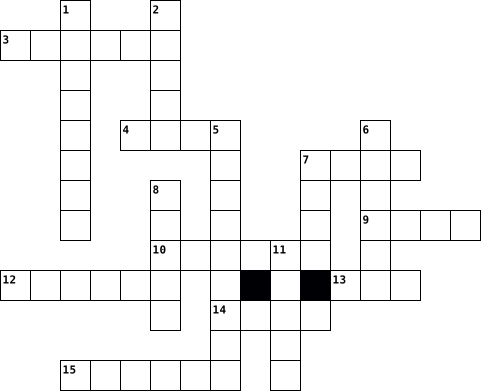
Across
- Term for one’s romantic partner
- Symbol of commitment
- Red symbol often shaped like a heart
- Sweet treat exchanged on Valentine’s Day
- Intimate dinner for two
- A romantic message, often handwritten
- Romantic feeling that makes your heart race
- Romantic flower often given on February 14
Down
- Classic symbol of love
- To adore deeply
- Promise made between lovers
- Endearing nickname like “honey” or “babe”
- French word for “my love”
- Cupid's signature weapon
- Day celebrated on February 14
- Winged Roman god of love
16 Clues: To adore deeply • Symbol of commitment • Classic symbol of love • Intimate dinner for two • Cupid's signature weapon • Winged Roman god of love • French word for “my love” • Promise made between lovers • Day celebrated on February 14 • Term for one’s romantic partner • Red symbol often shaped like a heart • A romantic message, often handwritten • ...
marco's medical terminology crossword 2020-08-31

Across
- intense pain
- rupture in the bladder
- enlarged heart
- the study of disease
- paralysis of the muscles within or surrounding the eye.
Down
- brain tumor
- self inflicted opening
- kidney repair
- inflammation in the stomach
- skin specialist
- brake in the heart wall
- muscle contraction
- record the heart
13 Clues: brain tumor • intense pain • kidney repair • enlarged heart • skin specialist • record the heart • muscle contraction • the study of disease • self inflicted opening • rupture in the bladder • brake in the heart wall • inflammation in the stomach • paralysis of the muscles within or surrounding the eye.
autumns crossword????? 2023-10-31

Across
- smallest blood vessel
- fights diseases
- exchange oxygen and carbon dioxide for blood
- liquid part of blood
- takes blood from the heart
- breaks down food
- imporant part in forming scabs
Down
- carries oxygen
- filter that blood goes through
- top chamber of heart
- where digested food is absorbed
- blood to the heart
- main organ lung
- most nutrients absorption takes place
14 Clues: carries oxygen • main organ lung • fights diseases • breaks down food • blood to the heart • top chamber of heart • liquid part of blood • smallest blood vessel • takes blood from the heart • filter that blood goes through • imporant part in forming scabs • where digested food is absorbed • most nutrients absorption takes place • exchange oxygen and carbon dioxide for blood
PARTS OF OUR BODY 2024-04-10

Across
- SENDS AND RECIEVES SIGNALS
- STUDIES HEART
- ABSORBS WATER
- STORES URINE
- HAVE THIN WALLS AND APPEAR BLUE
Down
- PRIMARY ORGANS OF RESPIRATORY SYSTEM
- BREATHE IN
- LOWER CHAMBERS OF HEART
- PARTIAL DIGESTION OF FOOD
- FILTER BLOOD TO REMOVE WASTE FROM BODY
- SECRETES JUICES TO DIGEST FATS
- PUMPS BLOOD TO WHOLE BODY
- PROTECTED BY SKULL
- CARRY OXYGEN-RICH BLOOD
14 Clues: BREATHE IN • STORES URINE • STUDIES HEART • ABSORBS WATER • PROTECTED BY SKULL • LOWER CHAMBERS OF HEART • CARRY OXYGEN-RICH BLOOD • PARTIAL DIGESTION OF FOOD • PUMPS BLOOD TO WHOLE BODY • SENDS AND RECIEVES SIGNALS • SECRETES JUICES TO DIGEST FATS • HAVE THIN WALLS AND APPEAR BLUE • PRIMARY ORGANS OF RESPIRATORY SYSTEM • FILTER BLOOD TO REMOVE WASTE FROM BODY
IB SEHS 2.1 & 2.2 2022-08-25

Across
- medulla _________ of the brain; the location of the cardiac control system
- ________ Volume of air still contained in the lungs after a maximal exhalation
- <1% of blood volume. Assist in the process of repair following an injury
- ____________ Circulation is the portion of the cardiovascular system that carries oxygen-depleted blood away from the heart and to the lungs and then returns it, oxygenated, back to the heart.
- __________ system stimulates the heart to beat faster.
- ________ Ventilation inflow and outflow of air between the atmosphere and the lungs (basically breathing)
- ___________ system returns the heart to its resting rate.
- Maximum volume of air that can be exhaled after a maximum inhalation (two words)
Down
- White blood cells <1% of blood volume, primarily involved in immune function and protecting the body from infection. They do this by ingesting foreign microbes in a process called phagocytosis.
- Make up 40-45% of the blood volume known as hematocrit. Contain an oxygen-carrying pigment called hemoglobin, which gives blood its red color.
- ________ Volume of air breathed in and out in any one breath
- __________Nervous System Responsible for control of involuntary or visceral bodily functions. This system comprises the sympathetic system and the parasympathetic system.
- ___________ Reserve Volume volume of air in excess of tidal volume that can be exhaled forcefully
- Capacity volume of air in the lungs after a maximum inhalation; the sum of the Vital capacity and residual volume (two words)
- _________node which receives signals from the sympathetic and parasympathetic nervous systems to regulate heart rate.
- ____________ Circulation is the portion of the cardiovascular system that carries the oxygenated blood away from the heart and delivers it to the body. It also carries the deoxygenated blood after use back to the heart to be re-oxygenated.
- ___________ Reserve Volume additional inspired air over and above tidal volume
- __________ hormones; Adrenaline and noradrenaline released by adrenal glands
18 Clues: __________ system stimulates the heart to beat faster. • ___________ system returns the heart to its resting rate. • ________ Volume of air breathed in and out in any one breath • <1% of blood volume. Assist in the process of repair following an injury • medulla _________ of the brain; the location of the cardiac control system • ...
A Selection of Once Upon A Time Episode Titles 2021-01-31

Across
- A land without ...
- The ...
- ... north
- What happened to ...
- The ... boy
- The thing you ... most
- Heart of ...
- An apple red as ...
Down
- The ... is a lonely hunter
- Seven:... am
- Hat ...
- Fruit of the ... tree
- Skin ...
- Red-...
- That still ... voice
- ... falls
- Desperate ...
- The price of ...
18 Clues: Hat ... • The ... • Red-... • Skin ... • ... north • ... falls • The ... boy • Seven:... am • Heart of ... • Desperate ... • The price of ... • A land without ... • An apple red as ... • What happened to ... • That still ... voice • Fruit of the ... tree • The thing you ... most • The ... is a lonely hunter
autumns crossword????? 2023-10-31

Across
- smallest blood vessel
- fights diseases
- exchange oxygen and carbon dioxide for blood
- liquid part of blood
- takes blood from the heart
- breaks down food
- imporant part in forming scabs
Down
- carries oxygen
- filter that blood goes through
- top chamber of heart
- where digested food is absorbed
- blood to the heart
- main organ lung
- most nutrients absorption takes place
14 Clues: carries oxygen • main organ lung • fights diseases • breaks down food • blood to the heart • top chamber of heart • liquid part of blood • smallest blood vessel • takes blood from the heart • filter that blood goes through • imporant part in forming scabs • where digested food is absorbed • most nutrients absorption takes place • exchange oxygen and carbon dioxide for blood
Body Systems 2020-10-21

Across
- which side of the heart does blood come in?
- the primary organ of the respiratory system
- The biggest muscle in your body.
- which lung tends to be smaller
- what’s the smallest bone in your body?
- which gender tends to have a faster heart rate?
- the hardest working muscle.
- How many nerve cells does your body have?
- how long does it take for a red blood cell to circulate through your body?
Down
- a curved, thin muscle sheet under the lungs.
- Who can rehabilitate people with nervous system damage?
- your body is made of over how many bones?
- what’s the longest bone in your body?
- What are your muscles made of?
- how many parts are neurons made of
- which side of the heart does blood leave?
- How many types of bones do you have?
- How many types of muscles are there?
- enclosed bundles of long fibers called axons.
- We don’t have to think about breathing because of what?
20 Clues: the hardest working muscle. • What are your muscles made of? • which lung tends to be smaller • The biggest muscle in your body. • how many parts are neurons made of • How many types of bones do you have? • How many types of muscles are there? • what’s the longest bone in your body? • what’s the smallest bone in your body? • your body is made of over how many bones? • ...
Cardiovascular Crossword 2013-08-12

Across
- vessel carrying deoxygenated blood towards the veins
- of red blood cells
- valve between the left atrium and ventricle
- lumpy veins that result from fluid retention
- layer in arteries that helps them to stretch
- malfunctioning of heart pumping action
- loss of blood flow to heart
- of heart and loss of efficacy
- electrical rhythm setter.
- part of the vena cava returning blood from head
Down
- artery in the body
- vein to carry oxygenated blood
- substance that can form plaques on arteries
- fever can damage this (6,5)
- blood vessel that can carry both de/oxygenated blood
- cause high blood pressure and reduced blood flow
- occurs when the heart is denied oxygen through a blockage in a coronary vein
- sugar liquid with proteins and white blood cells
- ischaemic (caused by clot) haemorrhagic (caused by a bleed)
19 Clues: artery in the body • of red blood cells • electrical rhythm setter. • fever can damage this (6,5) • loss of blood flow to heart • of heart and loss of efficacy • vein to carry oxygenated blood • malfunctioning of heart pumping action • substance that can form plaques on arteries • valve between the left atrium and ventricle • lumpy veins that result from fluid retention • ...
Cardiac Assessment, Labs & Diagnostic Tests 2022-01-18

Across
- Electrolyte responsible for fluid balance
- Sound made when the pulmonic and aortic valves close
- Cardiac Marker that is released into the blood stream quickly and disappears within 24 hours
- When the pericardial space fluids with blood
- This valve separates the left atrium and left ventricle
- From the pulmonary artery, blood flows next into the
- Outermost layer of the heart
- The bottom of the heart
- When patients have difficulty breathing while laying flat
- Electrolyte responsible for contraction of cardiac muscle
Down
- From the lungs, blood next travels through the
- Term used in healthcare for risk factors that can be changed
- The good cholesterol
- Receives blood from the lower extremities and abdomen
- Pulse site where you can never check sites bilaterally
- heart sound heard when blood backflows through a valve
- bluish discoloration of the extremities and lips
- Sound heard when fluid builds up in the lungs as a result of pulmonary congestion
- This side of the heart is a high pressure system
19 Clues: The good cholesterol • The bottom of the heart • Outermost layer of the heart • Electrolyte responsible for fluid balance • When the pericardial space fluids with blood • From the lungs, blood next travels through the • bluish discoloration of the extremities and lips • This side of the heart is a high pressure system • Sound made when the pulmonic and aortic valves close • ...
Cardiovascular System 2022-01-07

Across
- two largest veins in the body
- vein that carries oxygenated blood from the lungs to the heart
- fluid tissue responsible for transporting oxygen and nutrients in the body
- machine that can measure the heart's electrical wave movements
- major arteries that carry blood upward to the head
- this node is one of the nodes that controls electrical impulses of the conduction system
- smallest blood vessels in the body
- fibers that relay electrical impulses to the ventricles causing them to contract
Down
- this circulation does not involve the flow of blood between the heart and lungs
- node responsible for establishing the rhythm and rate of the heartbeat
- blood vessels that have valves
- name of this valve means bishop's hat
- middle, thickest layer of the heart
- also known as the pericardial sac
- the name of the upper chambers of the heart
- this complex shows the contraction of the ventricles
- within an artery
- largest blood vessel in the body
- means relating to the veins
19 Clues: within an artery • means relating to the veins • two largest veins in the body • blood vessels that have valves • largest blood vessel in the body • also known as the pericardial sac • smallest blood vessels in the body • middle, thickest layer of the heart • name of this valve means bishop's hat • the name of the upper chambers of the heart • ...
Unit 2 Clinical Applications 2020-10-11

Across
- this degree AV heart block results in no action potentials from the SA node and is life threatening.
- when an arterial wall thins and balloons out. Most commonly occurs at the base of the brain or in the aorta.
- this type of lymphoma is characterized by the presence of reed-sternberg cells.
- acronym for a dysrhythmia that results from stress, stimulants, or sleep deprivation.
- inflammation of the pericardium that causes the pericardial cavity to fill with fluid causing a friction rub to be heard with a stethoscope.
- poorly localized left sided chest, arm, back, and jaw pain. Treated with Nitroglycerin
- when tumors spread through the lymph system
- when there is inadequate perfusion of a tissue it is called circulatory-
- acronym for a blood clot in the leg. Initial signs are fever, tenderness/redness in the area, pain, localized edema, and tachycardia.
Down
- A hypertrophy of the myocardium or enlargement of heart size due to stress applied to the heart which presents symptoms such as swollen limbs, dizziness, arrythmias, and SOB.
- this type of heart disease is a primary cause of valvular stenosis
- this type of hypotension results from a drop in blood pressure when changing positions
- an extreme case of lymphatic filariasis caused by a parasitic worm
- abnormal heart sound
- this disease infects and destroys helpter T cells.
- This type of edema is a result of the left side of the heart pumping less blood than the right side. Some signs/symptoms include: pale skin, dyspnea, coughing up blood.
- This is a medical emergency caused by pericarditis resulting in the heart being unable to pump blood.
17 Clues: abnormal heart sound • when tumors spread through the lymph system • this disease infects and destroys helpter T cells. • this type of heart disease is a primary cause of valvular stenosis • an extreme case of lymphatic filariasis caused by a parasitic worm • when there is inadequate perfusion of a tissue it is called circulatory- • ...
Electrophysiology 2024-08-25

Across
- The two lower chambers of the heart.
- A line or pattern on an ECG that shows the heart’s electrical activity.
- A device or natural body part that controls the rhythm of the heart.
- The sound or movement caused by the contraction of the heart.
Down
- A small area in the heart where electrical impulses start or are relayed.
- Thin, thread-like structures that help carry electrical signals in the heart.
- A test that records the electrical activity of the heart.
- The two upper chambers of the heart.
- An electrical signal that travels through the heart to make it beat.
- The action of the heart muscle tightening to pump blood.
10 Clues: The two lower chambers of the heart. • The two upper chambers of the heart. • The action of the heart muscle tightening to pump blood. • A test that records the electrical activity of the heart. • The sound or movement caused by the contraction of the heart. • An electrical signal that travels through the heart to make it beat. • ...
MEDTERM 2024-05-21

Across
- Kidney stone
- Bending
- Inflammation around heart
- gull bladder issues
- region on face
- total replacement
- turns out
- Blood pressure
- Arm straight out at shoulders then brought down
Down
- Hardening of arteries
- painful breathing
- wrist
- region near appendix
- Record hearts rhythm
- spitting up blood
- enlargement of bronchial
- Heart attack
- region near lung
- air presses on lung
- lung collapsed
20 Clues: wrist • Bending • turns out • Kidney stone • Heart attack • region on face • lung collapsed • Blood pressure • region near lung • painful breathing • spitting up blood • total replacement • gull bladder issues • air presses on lung • region near appendix • Record hearts rhythm • Hardening of arteries • enlargement of bronchial • Inflammation around heart • Arm straight out at shoulders then brought down
heart lable crossword 2022-11-10

Across
- opens to pass blood into the the arteries
- How many valves are in the heart
- is the thin sac that sits in the heart called
- are the shipping stations of the heart
- color are the arteries
- are the hearts walls made of
- ventricle,Where is the pulmonary Valve between
Down
- What color are the veins
- artium,Where is the mitral valve between
- is the interior membrane of the heart called
- does the oxygenated blood flow through
- are the receiving stations of the heart
12 Clues: color are the arteries • What color are the veins • are the hearts walls made of • How many valves are in the heart • does the oxygenated blood flow through • are the shipping stations of the heart • are the receiving stations of the heart • artium,Where is the mitral valve between • opens to pass blood into the the arteries • is the interior membrane of the heart called • ...
Circulatory System 2021-02-18

Across
- Heart is located in the _____
- The heart is enclosed in a double-layered sac called
- What is the shape of Erythrocytes.
- ____ do not contain haemoglobin.
- _____ have thicker walls than the receiving chambers.
- _____ is a thick muscular wall present between auricles and ventricles.
Down
- What works tirelessly to keep the heart working throughout the life
- What are colorless, without nuclei.
- _____ are the fine blood vessels connecting arteries with veins
- _____ fluid protects heart from jerks while contraction.
- What is the weight of heart
- Auricles are also called as
12 Clues: What is the weight of heart • Auricles are also called as • Heart is located in the _____ • ____ do not contain haemoglobin. • What is the shape of Erythrocytes. • What are colorless, without nuclei. • The heart is enclosed in a double-layered sac called • _____ have thicker walls than the receiving chambers. • _____ fluid protects heart from jerks while contraction. • ...
CRT 140 - Presentations of HF 2018-10-07

Across
- right sided symptoms include distended neck veins and an accumulation of fluid in the __ tract leading to weight gain, distended abdomen (ascites), nausea and a loss of appetite.
- factors associated with a poor prognosis in HF include low LVEF, decreased peak VO2, <300m in 6 min walk test, SVT or VT, high BNP, previous MI or a ____ ____ complex
- the NYHA measures __________ status. the ACC/AHA classficiation system is a staging system intended to complement the NYHA _________ status system
- PND (paroxysmal ____________ dyspnoea) occurs when patient lies down to go to sleep at night. sudden onset of difficulty breathing. left sided HF symptom.
- another symptom of left sided HF is decreased ______ perfusion, leading to decreased urine production, activation of the RAAS > increased fluid retention.
- in right sided heart failure, there is systemic congestion and insufficient blood flow to _____
- stage B patients have _________ heart disease but no signs or symptoms of HF
- what class are these patients (ACC/AHA classification system)? structural heart disease without signs or symptoms of HF
- left sided HF symptoms caused by poor systemic perfusion include fatigue, drowziness and _______ ________.
- signs and symptoms of ____ sided HF come from fluid build up in lungs and inadequate perfusion of tissues
- the nyha functional classes are limited as they are __________, fluctuate frequently according to symptoms, and do not reflect changes in patients ventricular function.
- orthopnea is caused by gravity, fluid build up while patient lies flat, to solve, ____ patient up with head elevated. left sided HF symptom.
- which NYHA class of HF does this describe? marked limitation of physical activity. comfortable at rest but less than normal physical activity causes symptoms
- what class are these patients (ACC/AHA classification system)? patients who are high risk for HF, but have no structural heart disease or symptoms of HF
- which NYHA class of HF does this describe? slight limitation of physical activity. comfortable at rest, but fatigue, palpitation or dyspnoea during ordinary activity
- pulmonary oedema is a medical emergency and is due to excessive fluid build up in tissue and ___ spaces in lungs. can cause difficulty breathing, anxiety and 'drowning' feeling
Down
- when a patient has both left and right sided HF, their symptoms may be a combination of both. makes it more _________ to determine diagnosis and treatment
- __________ are often prescribed for left heart failure to eliminate excess fluid (caused by activation of the RAAS) and reduce strain on heart.
- __________ with diet, medications etc is the most common cause of HF to switch from compensated to decompensated.
- sufficient cardiac output is maintained, asymptomatic, or only symptoms during exercise, treatment is to control disease progression. this all describes ___________ heart failure
- dizziness or _________ often results from atrial or ventricular arrythmias. these can be due to ectopics caused by stretching of the heart wall in HF
- decompensation of HF often requires _____________ to treat and alleviate symptoms.
- insufficient CO, systemic congestion, pulmonary congestion and inadequate perfesion of vital organs, symptoms including dyspnoea, fatigue, oedema, chest pain. these all describe __________ heart failure
- what class are these patients (ACC/AHA classification system)? refractory HF who have failed medications, require specialised interventions and hospitalised frequently. marked symptoms at rest despite maximum medical therapy.
- as heart cells stretch in HF, they produce more ___, ___ can therefore be an indicator for if HF treatment is working
- difficulty breathing while lying flat
- frequent need to urinate at night, caused by redistribution of fluid to kidneys while lying down. left sided HF symptom.
- comorbid conditions may be present in HF including CAD, which can lead to angina. or VT, ___, or AF (caused by stretching of the heart wall) which can lead to palpitations, dizziness and syncope
- stage A patients are _____ _____ of HF, without signs or symptoms, without structural heart disease.
- which NYHA class of HF does this describe? unable to carry out any physical activity without discomfort. symptoms at rest.
- left sided hf cause symptoms associated with fluid in lungs such as _____ or dyspnoea
- what class are these patients (ACC/AHA classification system)? known structural heart disease, with prior or current HF symptoms
- which NYHA class of HF does this describe? no limitation of physical activity, no symptoms due to physical activity
33 Clues: difficulty breathing while lying flat • stage B patients have _________ heart disease but no signs or symptoms of HF • decompensation of HF often requires _____________ to treat and alleviate symptoms. • left sided hf cause symptoms associated with fluid in lungs such as _____ or dyspnoea • ...
Song names 2023-03-27

Across
- for the first-
- I love you-
- Bad-
- Sure-
- Summer-
- Heart to-
- -cream
- Everybody loves the-
- Ok-
Down
- New person same old-
- Yebbas-
- Ever-
- Lost-
- Dark-
- -Dre
15 Clues: Ok- • Bad- • -Dre • Ever- • Sure- • Lost- • Dark- • -cream • Yebbas- • Summer- • Heart to- • I love you- • for the first- • New person same old- • Everybody loves the-
Equine circulatory system 2025-10-30

Across
- nerve branches that speed up heart rate
- relaxation
- largest artery in the body
- contraction
- weight of the heart in comparison to the horses overall weight
Down
- small fragments of cells
- pump blood away from the heart
- nerve branches that slow heart rate
- how veins stop blood flowing down
- how many chambers in the heart
- type of circulatory system where blood gets passed through body twice
11 Clues: relaxation • contraction • small fragments of cells • largest artery in the body • pump blood away from the heart • how many chambers in the heart • how veins stop blood flowing down • nerve branches that slow heart rate • nerve branches that speed up heart rate • weight of the heart in comparison to the horses overall weight • ...
heart cross word puzzle 2026-03-09

Across
- takes blood to the heart
- holds the blood and then pumps it to the ventricle
- deliver nutrients to the body
- brings blood to the heart
- makes the blood not mix
- pumps blood throughout the body
- makes the blood not go backward
Down
- controls the heartbeat
- pumps blood out of the heart
- makes the heart beat sound
- takes blood away from the heart
11 Clues: controls the heartbeat • makes the blood not mix • takes blood to the heart • brings blood to the heart • makes the heart beat sound • pumps blood out of the heart • deliver nutrients to the body • pumps blood throughout the body • makes the blood not go backward • takes blood away from the heart • holds the blood and then pumps it to the ventricle
Frog Anatomy Crossword 2024-06-03

Across
- Gallbladderine
- grabs prey
- waste collection
- stores stuff
- carry blood to heart
- upper chambers of heart
- hearing
- first stop for chemical stuff
- filters stuff
Down
- moves food
- stores acids
- carry eggs in females part of reductive system
- eliminates blood cells
- transparent cover
- Amphibians
- delivers oxygen
- air opening
- tunnel
- blood vessels
- Large digestive gland
- masses of fat
21 Clues: tunnel • hearing • moves food • grabs prey • Amphibians • air opening • stores acids • stores stuff • blood vessels • masses of fat • filters stuff • Gallbladderine • delivers oxygen • waste collection • transparent cover • carry blood to heart • Large digestive gland • eliminates blood cells • upper chambers of heart • first stop for chemical stuff • carry eggs in females part of reductive system
Medical Terminology - Set 3 2025-02-11

Across
- tonsillectomy and adeniodectomy
- head
- inside
- genitourinary
- heart
- state of
- congestive heart failure
- outside
- -iasis disease
- gynecology
- airway
- cancer
- lumbar puncture
Down
- - tuberculosis
- picture, record
- gastrointestinal
- fracture
- upper,above
- origin, source
- chronic obstructive pulmonary disease
- well,easy
- cerebral vascular accident (stroke)
- painful,difficult
- inflammation
- cheek
25 Clues: head • heart • cheek • inside • airway • cancer • outside • fracture • state of • well,easy • gynecology • upper,above • inflammation • genitourinary • - tuberculosis • origin, source • -iasis disease • picture, record • lumbar puncture • gastrointestinal • painful,difficult • congestive heart failure • tonsillectomy and adeniodectomy • cerebral vascular accident (stroke) • chronic obstructive pulmonary disease
medical terminology 2025-09-03

Across
- upper, above
- gynecology
- well, easy
- genitourinary
- airway
- tonsillectomy and adeniodectomy
- head
- inflammation
- -iasis disease
- chronic obstructive pulmonary disease
- - tuberculosis
- congestive heart failure
- heart
Down
- lumbar puncture
- origin, source
- cheek
- gastrointestinal
- state of
- picture, record
- inside
- outside
- painful, difficult
- cancer
- fracture
- cerebral vascular accident (stroke)
25 Clues: head • cheek • heart • inside • airway • cancer • outside • state of • fracture • gynecology • well, easy • upper, above • inflammation • genitourinary • origin, source • -iasis disease • - tuberculosis • lumbar puncture • picture, record • gastrointestinal • painful, difficult • congestive heart failure • tonsillectomy and adeniodectomy • cerebral vascular accident (stroke) • chronic obstructive pulmonary disease
27 2025-08-22

Across
- Body catalyst
- Chest bone
- Knife wielder
- Disease invasion
- Symptom group
- Heart beat
- Body damage
- Heart muscle
- Anti inflammatory
- Post death exam
- Thigh bone
- Bone framework
Down
- Bone doctor field
- Air powered
- Injection tool
- Body material
- Medical center
- Death exam
- Body chemical
- Leg bone
- Blood transfer
- Emergency worker
- Bone interior
- Calming drug
- Eye covering
25 Clues: Leg bone • Death exam • Chest bone • Heart beat • Thigh bone • Air powered • Body damage • Calming drug • Heart muscle • Eye covering • Body catalyst • Body material • Body chemical • Knife wielder • Symptom group • Bone interior • Injection tool • Medical center • Blood transfer • Bone framework • Post death exam • Disease invasion • Emergency worker • Bone doctor field • Anti inflammatory
Funtions of the Vascular System 2021-09-21

Across
- consists of the heart, arteries, veins, and capillaries.
- Carry blood toward the heart
- A short loop from the heart to the lungs and back again
- Carry blood away from the heart
- What sends blood throughout our bodies, carrying oxygen to every cell.
Down
- Heart, lungs, arteries/ veins, coronary and portal vessels make up what
- Carries blood from the heart to all the other parts of the body
- What absorbs oxygen and releases carbon dioxide
- Force of circulating blood on the walls of arteries
- A big artery that comes from the heart
10 Clues: Carry blood toward the heart • Carry blood away from the heart • A big artery that comes from the heart • What absorbs oxygen and releases carbon dioxide • Force of circulating blood on the walls of arteries • A short loop from the heart to the lungs and back again • consists of the heart, arteries, veins, and capillaries. • ...
AHA 1/21 Game - Heart Anatomy 2026-01-20

Across
- What structure prevents backflow of the blood?
- What chamber of the heart receives deoxygenated blood?
- What muscle type makes the heart contract?
- What blood vessels carry blood away from the heart?
- What is the best club in RHHS?
Down
- What part of the heart separates the right and left sides?
- What chamber of the heart pumps oxygenated blood throughout the body?
- How many chambers does the human heart have?
- What blood vessels carry blood towards the heart?
- Which blood vessel carries oxygenated blood from the heart to the rest of the body?
10 Clues: What is the best club in RHHS? • What muscle type makes the heart contract? • How many chambers does the human heart have? • What structure prevents backflow of the blood? • What blood vessels carry blood towards the heart? • What blood vessels carry blood away from the heart? • What chamber of the heart receives deoxygenated blood? • ...
Circulatory system 2021-03-05

Across
- Allow blood to flow in one direction in the heart and control the flow of blood.
- a body fluid in humans and other animals that delivers necessary substances such as nutrients and oxygen to the cells
- What the heart needs
- where veins and arteries meet
- take blood away from the heart
- when the heart beats to slow
Down
- what the arteries carry in the blood
- bring blood to the heart
- how much blood a human body has
- the system that transports blood throughout the body
- pumps blood
11 Clues: pumps blood • What the heart needs • bring blood to the heart • when the heart beats to slow • where veins and arteries meet • take blood away from the heart • how much blood a human body has • what the arteries carry in the blood • the system that transports blood throughout the body • Allow blood to flow in one direction in the heart and control the flow of blood. • ...
Disease/Disorder Terms Not Built From W.P.s Chapter 10 2013-04-01

Across
- (CHF)inhability of the heart to pump sufficient blood
- distended or tortus veins found in lower extremities
- (HHD) disease of the heart caused by high blood pressure
- pain/discomfort in calf muscles
- obstruction of an artery of the heart
- (MI)death of a portion of the heart muscle
Down
- (DVT)condition of clots in a deep vein
- (CHD)heart abnormality present at birth
- (CAD) condition that reduces bloodflow through coronary arteries
- (PAD) disease in the arteries of arms an legs
- damage to the heart muscle caused by rheumatic fever
11 Clues: pain/discomfort in calf muscles • obstruction of an artery of the heart • (DVT)condition of clots in a deep vein • (CHD)heart abnormality present at birth • (MI)death of a portion of the heart muscle • (PAD) disease in the arteries of arms an legs • distended or tortus veins found in lower extremities • damage to the heart muscle caused by rheumatic fever • ...
Chapter 7 Cardiovascular Fitness 2023-11-03

Across
- Caused by pressure of the blood on the artery wall, it corresponds to your heartbeat.
- blood vessels located throughout your body that collect oxygen-poor blood and return it to your heart.
- your heart rate should be 120 bpm within 5 minutes after the workout and be less than 100 bpm after 10 minutes.
- muscular chamber that pumps blood out of the heart and into the circulatory system.
- your heart rate should not exceed this.
- with oxygen, involves activities that can be performed for at least 15 minutes without gasping to catch your breath.
- your pulse just after you wake-up in the morning before getting out of the bed.
Down
- the measure of blood force against the walls of the arteries.
- pair of spongy, pinkish-gray organs in your chest that you use to breathe in oxygen.
- without oxygen, involves activities performed at a pace which uses oxygen faster than the body can replenish.
- the main organ of your cardiovascular system.
- the arterial passageway becomes smaller with this condition.
- blood vessels that bring oxygen-rich blood from your heart to all of your body's cells.
- desired level of intensity for most people.
- the largest blood vessel in the body
- delicate blood vessels that exist throughout your body.
16 Clues: the largest blood vessel in the body • your heart rate should not exceed this. • desired level of intensity for most people. • the main organ of your cardiovascular system. • delicate blood vessels that exist throughout your body. • the arterial passageway becomes smaller with this condition. • the measure of blood force against the walls of the arteries. • ...
Historical approaches to brain research 2024-02-29

Across
- brain is the source of all thoughts feelings and behaviours
- enabling sensations, thoughts,self-awareness
- belief human mind and body are together a singular complete entity
- physical fleshy structure
- "the heart as the organ of thinking,of perception and feeling" "brain could cool the passion of the heart"
- heart was the source of all thoughts feelings and behaviours, the brain has no purpose at all
- the brain vs heart debate asks what is the source of our thoughts, feelings and behaviours, our brain or heart?
- a part of the endocrine system
- "men ought to know that from the brain and from the brain only arise our pleasure, joys, laughter and jests, as well as our sorrows,pains,grieves and tears"
Down
- the more developed a faculty the larger the part of the brain would be
- non-physical, spiritual enitity (the soul)
- the coomplex philosophical question as to weather our mind is sererate and distiguished from our body weeather they intergrate entity
- the brain was the source of all thoughts,feelings and behaviours
- the belief that the human mind and body are separate distinguished from one another
- early philosphers and ancient egyptians
- the study of the shape and size of the human skull to determine personality and mental functioning
16 Clues: physical fleshy structure • a part of the endocrine system • early philosphers and ancient egyptians • non-physical, spiritual enitity (the soul) • enabling sensations, thoughts,self-awareness • brain is the source of all thoughts feelings and behaviours • the brain was the source of all thoughts,feelings and behaviours • ...
Cardiovascular Crossword 2023-06-17

Across
- muscular middle layer of heart
- largest vein
- contraction part of heartbeat
- largest artery
- beat of a heart, felt through wall of arteries
- one of the hearts upper chambers
- abnormal swishing sound
- one of the hearts lower chambers
Down
- measures blood pressure
- nervous tissue in right atrium; begins heartbeat
- relaxation part of the heartbeat
- smallest type of blood vessel
- small vein
- double-layer membrane surrounding heart
- wall dividing cavity between right and left atria
- small artery
16 Clues: small vein • largest vein • small artery • largest artery • measures blood pressure • abnormal swishing sound • smallest type of blood vessel • contraction part of heartbeat • muscular middle layer of heart • relaxation part of the heartbeat • one of the hearts upper chambers • one of the hearts lower chambers • double-layer membrane surrounding heart • ...
HEART DISEASE & STROKE CROSSWORD CHALLENGE 2020-10-06

Across
- Keeping a healthy diet by eating whole grains, fruits, vegetables, low-fat ____________ products, poultry, fish, and nuts lowers the risk of developing heart disease or a stroke.
- Being physically ____________ makes an individual more at risk of developing heart disease or a stroke.
- Smoking and ____________use is the leading cause of disability-adjusted life-years in the United States.
- Cardiovascular Disease is the number one killer and the most ____________ disease.
- Heart valve problems and heart arrhythmias can cause blood ____________.
- ____________ is the waxy substance in bloodstream that is necessary for your body’s function.
Down
- How much does heart disease cost in one day?
- What is the acronym that helps determine if an individual is having indicators for a stroke?
- Both stroke and heart disease can be considered ____________ , so why not take action now?
- ____________ is a condition that causes blood sugar to rise to dangerous levels; and if it is untreated, this condition can lead to serious medical problems, including heart disease and stroke.
- Coronary artery disease is when there is ____________ build up in blood vessels.
- After having ____________, patients are much more likely to experience heart conditions even if they didn't previous have heart disease
12 Clues: How much does heart disease cost in one day? • Heart valve problems and heart arrhythmias can cause blood ____________. • Coronary artery disease is when there is ____________ build up in blood vessels. • Cardiovascular Disease is the number one killer and the most ____________ disease. • ...
Heart and circulatory system 2024-06-26

Across
- one of four heart valves and is the final one encountered by oxygenated blood as it leaves the heart
- large tubes that connect to your trachea (windpipe) and direct the air you breathe to your right and left lungs
- the “gatekeeper” between the atria and the ventricles
- muscular chamber that pumps blood out of the heart and into the circulatory system
- transport deoxygenated blood from the right side of the heart to the lungs for oxygenation
- a specialized body fluid. It has four main components: plasma, red blood cells, white blood cells, and platelets
Down
- has two atriums and vetnricles
- delivers nutrients and oxygen to all cells in the body
- any of the tubes forming part of the blood circulation system of the body, carrying in most cases oxygen-depleted blood towards the heart
- chamber or either of the chambers of the heart that receives blood from the veins and forces it into the ventricle or ventricles see heart illustration.
- the pair of spongy, pinkish-gray organs in your chest
- It carries oxygen-rich blood away from the heart to vessels that reach the rest of the body.
12 Clues: has two atriums and vetnricles • the “gatekeeper” between the atria and the ventricles • the pair of spongy, pinkish-gray organs in your chest • delivers nutrients and oxygen to all cells in the body • muscular chamber that pumps blood out of the heart and into the circulatory system • ...
Heart Disease Facts 2024-09-02

Across
- A condition in which the heart is unable to pump enough blood to meet the body's needs
- High levels of sugar in the blood stream lead to this condition that also increases the risk of heart disease
- High levels of the bad form of this cause build up in the arteries
- A healthy diet, regular exercise and avoiding tobacco and excess alcohol use are all a form of this for heart disease
- Heart disease increases the risk of this which occurs when blood flow to the brain is interrupted
Down
- This contributes to heart disease but is something you cannot control or change
- Vampires hate this but it might be able to help your cholesterol
- Coronary artery disease is the most common cause of heart disease can is caused by build up of this
- It is devastating that heart disease the leading cause of death across this area
- It tastes good but reducing this can help you control blood pressure
- This occurs when blood flow to the heart is blocked
- Don't let this get the best of you because it can also contribute to heart disease. Instead relax, meditate and pray
12 Clues: This occurs when blood flow to the heart is blocked • Vampires hate this but it might be able to help your cholesterol • High levels of the bad form of this cause build up in the arteries • It tastes good but reducing this can help you control blood pressure • This contributes to heart disease but is something you cannot control or change • ...
Body Systems Test Review - Montserrat Marroqiun 2021-10-25

Across
- The last chamber blood is in before it leaves the heart
- Moving in a circle at a joint
- Made of two hip bones
- Where the blood first enters the heart
- Separate the chambers of the heart and prevents backflow
- Second phase of breathing
- Strucutre where blood cells are created
- Spaces in the body that contain vital organs.
- The same type of cells joined together to form this structure.
- Larger bone of the lower arm
- Sections in the body that are divided into sections used to describe locations.
- Upper arm of the bone
Down
- Microscopic organism that is the basic unit of life.
- The type of respiration involving the tissue and blood.
- Four seperate sections of the heart that all contribute to help the heart pump blood.
- The type of respiration involves the bloodstream and the lungs.
- The fourteen bones on each hand
- two or more tissues that join together to form one structure.
- The opposite of extension
- Different body parts and organs joined to perform a particular function.
- The first valve deoxygentaed blood goes through.
- The air first enters this structure.
- Severe tightening of the muscle.
- Structure that prevents food and liquids from entering the respiratory tract.
- When a muscle is not used for a long time and wastes away.
25 Clues: Made of two hip bones • Upper arm of the bone • The opposite of extension • Second phase of breathing • Larger bone of the lower arm • Moving in a circle at a joint • The fourteen bones on each hand • Severe tightening of the muscle. • The air first enters this structure. • Where the blood first enters the heart • Strucutre where blood cells are created • ...
Body Systems 2012-11-25

Across
- This vessel carries blood away from the heart
- The back of your throat
- The trachea divides into 2 of these
- This opens or shuts to control that pathway of food and air
- These are broken cells that assist in blocking cuts
- The heart is divided into 4 of these
- These are the bottom chambers of the heart
- This vessel is where substances can move in and out of your blood
- Water and mineral waste released through your skin
- This vessel carries blood to the heart
- When oxygen is swapped for carbon dioxide and vice versa
- This substance is the waste product produced by the kidneys
- These stop the backwards flow of blood
- These are the top 2 chambers of the heart
Down
- This organ metabolises substances to make them less dangerous
- The process of removing wastes
- The organ involved in filtering wastes from your blood
- The muscle under your lungs that controls your breathing
- The process of oxygen turning glucose into useable energy
- This blood cell provides protection and immunity
- This substance is vital in maintaining temperature and diluting and removing wastes
- The cartilagenous pipe that goes from your mouth to your lungs
- This blood cell carries oxygen around the body
- The tiny filter within your kidney
- Tiny air sacs in your lungs
25 Clues: The back of your throat • Tiny air sacs in your lungs • The process of removing wastes • The tiny filter within your kidney • The trachea divides into 2 of these • The heart is divided into 4 of these • This vessel carries blood to the heart • These stop the backwards flow of blood • These are the top 2 chambers of the heart • These are the bottom chambers of the heart • ...
Circulatory, Respiratory, and Nervous Systems 2015-06-02

Across
- Disease that causes alveoli to disintegrate
- Sets the tempo of the heart beat
- Voltage across the plasma membrane of a resting neuron
- Clusters of air sacs
- Nerve cell specialized for carrying signals from one part of the body to another
- Consists of 4 polypeptide chains heme and iron
- Force of blood exerts against the walls of the blood vessels
- Smaller branches or bronchi
- Function is to prevent backflow of blood
- Fluid is pumped through open-ended vessels and flows among cells
- 10-14 inhalations per minute
- Communication line made from bundles of neuron fibers wrapped in connective tissue
- Abbreviation of central nervous system
- Sheet of respiratory muscle
- Arteries, arterioles, capillaries, venules, veins
- Anything that causes a nerve signal to start
Down
- Several organs that facilitate gas exchange
- What PNS is short for
- Windpipe
- Heart chamber that receives blood
- Lead to each lung
- Heart chamber that pumps blood away from heart
- Rhythmic contraction and relaxation of the heart
- Voice box
- Relays signals to another neuron or effector
- Bundle of nerve fibers inside the spinal column
- Erythrocytes
- Long, single fiber, conducts signal toward another neuron or effector
- Master control center
- Blood type ___ can donate blood to anyone but can only receive blood from one specific blood type
30 Clues: Windpipe • Voice box • Erythrocytes • Lead to each lung • Clusters of air sacs • What PNS is short for • Master control center • Smaller branches or bronchi • Sheet of respiratory muscle • 10-14 inhalations per minute • Sets the tempo of the heart beat • Heart chamber that receives blood • Abbreviation of central nervous system • Function is to prevent backflow of blood • ...
Third Grade Science Test #6 2026-03-20

Across
- the body has two
- blood vessels that take blood to your heart
- keep dust and other objects out of your eyes
- the control center of your body
- the part of the eye that focuses the picture you see
- another name for the heart, ? muscle
- the network of nerves that includes your brain, nerves, and spinal cord is this system
- muscles that move when you want them to
- has four chambers
- the place where two bones join together
- the largest organ of the body
- the layer of skin you see
- your heart and blood vessels that circulate blood throughout your body parts is this system
Down
- the parts of the body that change food you eat into a form your body can use is this system
- the blood cells that help fight infection and disease
- the system of bones that makes blood cells and stores minerals
- any movement of your body happens through this system
- the nerve that carries the message of hearing to the brain
- the part of the tooth that we can see
- the windpipe, lungs, and diaphragm that help you breathe is this system
- ways your skin protects your body: warns body of danger,? , keeps body at an even temperature
- the blood vessels that take blood away from your heart
- a group of cells working together
- tiny holes on the skin
24 Clues: the body has two • has four chambers • tiny holes on the skin • the layer of skin you see • the largest organ of the body • the control center of your body • a group of cells working together • another name for the heart, ? muscle • the part of the tooth that we can see • muscles that move when you want them to • the place where two bones join together • ...
Chapters 7 to 8 2026-04-23

Across
- the narrowing of an arteriole.
- tissue lining the inner surface of a structure such as blood vessel.
- qualifies the curve showing the percentage saturation of haemoglobin with oxygen, plotted against the partial pressure of oxygen.
- Term referring to tubes or vessels
- vessel that carries low-pressure blood back to the heart.
- a pore in the epidermis of a leaf.
- small artery
- plant tissue responsible for transport of water and minerals
- basic plant tissue used as packing tissue
- qualifies the shift decribing the decrease of affinityof haemoglobin for oxygen when carbon dioxide is present
Down
- a plant adapted to survicve in dry conditions.
- qualify the cirrculation that carries blood from the heart to all of the body except the gas exchange surface, and then back to the heart.
- the main material in wood
- layer of cells surrounding the vascular tissue of plants
- the non-living system of interconnected cell walls extending throughout a plant.
- the liquid componenet of blood.
- a site in a plant which received food from another part of the plant.
- qualify the valves in the veins.
- the stage of the cardiac cycle when the muscle in the walls of the heart relaxees.
- layer of tissue separating the left from the right sides of the heart.
- plant tissue responsible for the transport of assimilates
21 Clues: small artery • the main material in wood • the narrowing of an arteriole. • the liquid componenet of blood. • qualify the valves in the veins. • Term referring to tubes or vessels • a pore in the epidermis of a leaf. • basic plant tissue used as packing tissue • a plant adapted to survicve in dry conditions. • layer of cells surrounding the vascular tissue of plants • ...
Cardiovascular puzzle 2026-03-07

Across
- Opening between the atria that allows mixing of blood in TAPVC
- Bluish skin discoloration caused by low oxygen levels
- Imaging test commonly used to diagnose congenital heart defects
- Process of adding oxygen to blood in the lungs
- Condition present at birth affecting heart structure
- Blood flow between the heart and lungs
- Abnormal sound heard during cardiac auscultation
Down
- Difficulty breathing often seen in infants with cardiac defects
- Blood vessels that normally carry oxygenated blood from lungs to the left atrium
- Complication where pulmonary venous flow becomes blocked
- Primary treatment required to correct TAPVC
- Most common age group where TAPVC is diagnosed
- Heart chamber receiving abnormal pulmonary venous return
- Congenital heart defect where pulmonary veins connect to the right atrium instead of the left atrium
14 Clues: Blood flow between the heart and lungs • Primary treatment required to correct TAPVC • Most common age group where TAPVC is diagnosed • Process of adding oxygen to blood in the lungs • Abnormal sound heard during cardiac auscultation • Condition present at birth affecting heart structure • Bluish skin discoloration caused by low oxygen levels • ...
Cardiovascular System Vocabulary 2025-02-24

Across
- blood vessel that carries blood away from the heart
- irregular or abnormal rhythm,usually referring to the heart rythm
- pertaining to the heart
- blood vessel that carries blood back to the heart
- tiny blood vessel that connects arterioles and venules and allows
- oxygenated blood is high in oxygen and low in carbon dioxide
- the iron-containing protein of the red blood cells;serves to carry oxygen from the lungs to the red tissue
- gas excessive cabiliates of all body
Down
- gas excessive occurs at body
- largest artery in the body
- blood that is low in oxygen and high in carbon dioxide
- vessel they are 3 main types:arteries,capillaries, and veins
- fluid that circulates through the vessels in the body to carry substances to all body parts
- arteries the first branch of the aorta
- a muscular,hollow organ often called the "pump"
15 Clues: pertaining to the heart • largest artery in the body • gas excessive occurs at body • gas excessive cabiliates of all body • arteries the first branch of the aorta • a muscular,hollow organ often called the "pump" • blood vessel that carries blood back to the heart • blood vessel that carries blood away from the heart • ...
Valentine's day 2025-02-14

Across
- Gift (regalo)
- Couple (pareja)
- Chocolate (chocolate)
- Love (amor)
- Roses (rosas)
- Romance (romance)
- Hug (abrazo)
- Card (tarjeta)
Down
- Sweetheart (amor, cariño)
- Affection (afecto)
- Friendship (amistad)
- Admire (admirar)
- Heart (corazón)
- Kiss (beso)
- Date (cita)
- Cupid (Cupido)
16 Clues: Kiss (beso) • Love (amor) • Date (cita) • Hug (abrazo) • Gift (regalo) • Roses (rosas) • Cupid (Cupido) • Card (tarjeta) • Couple (pareja) • Heart (corazón) • Admire (admirar) • Romance (romance) • Affection (afecto) • Friendship (amistad) • Chocolate (chocolate) • Sweetheart (amor, cariño)
autumns crossword????? 2023-10-31

Across
- smallest blood vessel
- fights diseases
- exchange oxygen and carbon dioxide for blood
- liquid part of blood
- takes blood from the heart
- breaks down food
- imporant part in forming scabs
Down
- carries oxygen
- filter that blood goes through
- top chamber of heart
- where digested food is absorbed
- blood to the heart
- main organ lung
- most nutrients absorption takes place
14 Clues: carries oxygen • main organ lung • fights diseases • breaks down food • blood to the heart • top chamber of heart • liquid part of blood • smallest blood vessel • takes blood from the heart • filter that blood goes through • imporant part in forming scabs • where digested food is absorbed • most nutrients absorption takes place • exchange oxygen and carbon dioxide for blood
autumns crossword????? 2023-10-31

Across
- smallest blood vessel
- fights diseases
- exchange oxygen and carbon dioxide for blood
- liquid part of blood
- takes blood from the heart
- breaks down food
- imporant part in forming scabs
Down
- carries oxygen
- filter that blood goes through
- top chamber of heart
- where digested food is absorbed
- blood to the heart
- main organ lung
- most nutrients absorption takes place
14 Clues: carries oxygen • main organ lung • fights diseases • breaks down food • blood to the heart • top chamber of heart • liquid part of blood • smallest blood vessel • takes blood from the heart • filter that blood goes through • imporant part in forming scabs • where digested food is absorbed • most nutrients absorption takes place • exchange oxygen and carbon dioxide for blood
Digestion& Circulatory system 2022-04-19

Across
- Carries deoxygenated blood away from the heart, towards the lungs
- Supply the heart with oxygenated blood
- Site of water reabsorption
- The type of circulatory system where blood is pumped around the body an is always contained within a network of blood vessels
- Carries oxygenated blood out of the heart and to the rest of the body
- It produces bile
- The space through which food passes
Down
- The organ where protein digestion begins
- A blood vessel that carries blood back towards heart
- A blood vessel that carries blood away from the heart
- It contains teeth which break food into smaller pieces and increase its surface area to volume ratio
- The smallest type of blood vessel, whose function is to facilitate exchange of substances between the blood and the tissue
- Carries deoxygenated blood away from the kidneys, towards the heart
- Is a process in which relatively large, insoluble biological molecules in food ( are hydrolysed into smaller, soluble molecules that can be absorbed across the cell membranes into the bloodstream and delivered to cells in the body
- The salivary glands and glands in the pancreas produce digestive juices
- A hollow tube with muscular walls through which food passes from the mouth to the stomach
16 Clues: It produces bile • Site of water reabsorption • The space through which food passes • Supply the heart with oxygenated blood • The organ where protein digestion begins • A blood vessel that carries blood back towards heart • A blood vessel that carries blood away from the heart • Carries deoxygenated blood away from the heart, towards the lungs • ...
Circulatory System 2017-03-03

Across
- space in the heart that leads blood to and from heart and lungs.
- any of the kinds of cells normally found circulating in the blood
- each of the two upper cavities of the heart from which blood is passed to the ventricles
- relatany of the kinds of cells normally found circulating in the blooding to the lungs
- a small colorless disk-shaped cell fragment without a nucleus, found in large numbers in blood and involved in clotting
- a hollow part or cavity in an organ, in particular
- each of the pair of organs situated within the rib cage, consisting of elastic sacs with branching passages into which air is drawn, so that oxygen can pass into the blood and carbon dioxide be removed
- any of the tubes forming part of the blood circulation system of the body, carrying in most cases oxygen-depleted blood toward the heart
- less technical term for leukocyte
Down
- relating to or denoting the arteries that surround and supply the heart
- movement to and fro or around something, especially that of fluid in a closed system
- the red liquid that circulates in the arteries and veins of humans and other vertebrate animals, carrying oxygen to and carbon dioxide from the tissues of the body
- a hollow muscular organ that pumps the blood through the circulatory system by rhythmic contraction and dilation
- less technical term for erythrocyte
- any of the muscular-walled tubes forming part of the circulation system by which blood (mainly that which has been oxygenated) is conveyed from the heart to all parts of the body.
- the colorless fluid part of blood, lymph, or milk, in which corpuscles or fat globules are suspended.
- a duct or canal holding or conveying blood or other fluid
17 Clues: less technical term for leukocyte • less technical term for erythrocyte • a hollow part or cavity in an organ, in particular • a duct or canal holding or conveying blood or other fluid • space in the heart that leads blood to and from heart and lungs. • any of the kinds of cells normally found circulating in the blood • ...
Circulatory System 2022-02-15

Across
- allow blood to flow only in one direction in the heart
- when the valve doesn’t open enough to let blood flow through
- plaque builds up on the inside of arteries
- is when the heart valves don't close properly, and blood can leak through
Down
- Heart beats to fast
- connects arteries and veins
- Heart beats to slow
- carry blood and nutrient away from the heart
- a muscular organ that pumps blood through arteries
- an abnormal rhythm of the heart
10 Clues: Heart beats to fast • Heart beats to slow • connects arteries and veins • an abnormal rhythm of the heart • plaque builds up on the inside of arteries • carry blood and nutrient away from the heart • a muscular organ that pumps blood through arteries • allow blood to flow only in one direction in the heart • when the valve doesn’t open enough to let blood flow through • ...
Myocardial Infarction 2026-02-27

Across
- Some individuals experience _____ heart attacks which is when they experience little to no chest pain.
- also known as a heart attack
- Resting heart rate faster than 100 beats per minute
- organ that pumps blood through the body
- carry blood to the heart
Down
- high blood pressure
- A myocardial infarction can happen by a forming on a ruptured, cholesterol-filled plaque in a coronary artery.
- common words for myocardial infarction are
- _____ include severe heart/chest pain
- away from heart
10 Clues: away from heart • high blood pressure • carry blood to the heart • also known as a heart attack • _____ include severe heart/chest pain • organ that pumps blood through the body • common words for myocardial infarction are • Resting heart rate faster than 100 beats per minute • ...
Beriadah Bersama Datuk 2021-01-20

Across
- park
- calmness
- wheels
- many (quantity)
- greet
- calm
- children (general)
- about
- push
- careful
- give
- heart (not organ)
- enjoy
Down
- with or -ly
- together with
- bring
- parents’ children
- Recreational
- healthy
- scenery
- beautiul (scenery)
- can/get
- buy
- make something healthy
- heart (organ)
- Recreation/Exercise
- pull
- many (adj)
28 Clues: buy • park • calm • push • give • pull • bring • greet • about • enjoy • wheels • healthy • scenery • can/get • careful • calmness • many (adj) • with or -ly • Recreational • together with • heart (organ) • many (quantity) • parents’ children • heart (not organ) • beautiul (scenery) • children (general) • Recreation/Exercise • make something healthy
The Circulatory System 2023-01-28

Across
- The heart ______ and pushes blood through the arteries
- The contracting and relaxing of the heart
- The heart pumps ___________ around the body.
- There are 3 types of ________: veins, arteries and capillaries
Down
- Carries blood to the heart
- The _____ has 3 parts; blood, blood vessels and the heart
- Connect arteries and veins
- Carries blood away from the heart
- The heart ____ and fills with blood coming from the veins
- The blood carries nutrients and _____ that our body needs
10 Clues: Carries blood to the heart • Connect arteries and veins • Carries blood away from the heart • The contracting and relaxing of the heart • The heart pumps ___________ around the body. • The heart ______ and pushes blood through the arteries • The _____ has 3 parts; blood, blood vessels and the heart • The heart ____ and fills with blood coming from the veins • ...
Circulatory system vocab 2023-04-25

Across
- Part of the blood where nutrients are dissolved
- Carries blood toward the heart
- You have almost 5 liters of this in your body
- The main organ of the circulatory system
- Muscular thick-walled lower chambers which pump blood from the heart.
- Thin-walled upper heart chambers which receive blood and pump blood to the ventricles
- Allow blood to only flow in one direction
Down
- Connects arteries and veins
- Muscular central wall dividing the heart into two halves.
- This is what gets distributed to the body
- Carries blood away from the heart
11 Clues: Connects arteries and veins • Carries blood toward the heart • Carries blood away from the heart • The main organ of the circulatory system • This is what gets distributed to the body • Allow blood to only flow in one direction • You have almost 5 liters of this in your body • Part of the blood where nutrients are dissolved • ...
Cardiac Emergencies 2023-12-06

Across
- heart no longer has enough power to force enough blood through the circulatory system
- slow heart rate
- a disorder that causes fat plaque to build up in the walls of blood vessels
- fluid sinking to the lowest part of the body caused by congestive heart failure
- drug that lowers blood pressure
Down
- the hearts need for oxygen exceeds its supply
- fast heart rate
- when the vein that runs down the right side of the neck is swollen
- decreased blood flow to the heart
- Rapid increase of blood pressure
- Death of heart tissue cells
11 Clues: fast heart rate • slow heart rate • Death of heart tissue cells • drug that lowers blood pressure • Rapid increase of blood pressure • decreased blood flow to the heart • the hearts need for oxygen exceeds its supply • when the vein that runs down the right side of the neck is swollen • a disorder that causes fat plaque to build up in the walls of blood vessels • ...
ZPHS - NOSSAM.... HUMAN HEART 2023-09-01

Across
- Blood without blood cells.
- A Valve present in between the right chambers
- Which supplies the blood to heart wall muscles
- Thin walled blood vessels with valves
- Upper chambers of heart
- Lower chambers of heart
- Protective outer covering of heart
Down
- Biggest blood vessel in the human body
- Which collect the blood from head & neck
- Medium of transportation in humans
- Thick walled & valve less blood vessel
- A microscopic, hair like blood vessel
- It is also called as Mitral valve
13 Clues: Upper chambers of heart • Lower chambers of heart • Blood without blood cells. • It is also called as Mitral valve • Medium of transportation in humans • Protective outer covering of heart • Thin walled blood vessels with valves • A microscopic, hair like blood vessel • Biggest blood vessel in the human body • Thick walled & valve less blood vessel • ...
Vital Organs of the Body (USC JEP) 2023-10-29

Across
- this organ helps us breathe
- the ______ pumps blood throughout the body
- we have ___ kidneys
- the ______ lung has three (3) lobes
- humans have how many vital organs?
- the lungs help us exchange ____ and carbon dioxide
- this organ functions as the body's control center
Down
- the ______ filters blood and forms urine
- the heart is located in the _______
- the brain holds thoughts, feelings, and _______
- the heart carries ______ away from cells
- the left lung has how many lobes?
- the _______ secretes bile
- the heart has how many chambers?
14 Clues: we have ___ kidneys • the _______ secretes bile • this organ helps us breathe • the heart has how many chambers? • the left lung has how many lobes? • humans have how many vital organs? • the heart is located in the _______ • the ______ lung has three (3) lobes • the ______ filters blood and forms urine • the heart carries ______ away from cells • ...
Recap 2023-10-12

Across
- secretes Angiotensinogen
- is a class of telmisartan
- Converts Angiotensinogen into Angiotensin 1
- belongs to calcium channel blocker
- blood pressure control system in body
- is blood pressure > 120/80 mmHg
Down
- is required by heart & smooth muscle for contraction
- is name for lower chambers of the heart
- number of chambers in the human heart
- peripheral resistance depends on this.
- this blood vessel carries oxygen rich blood away from the heart
- releases Renin
- converts Angiotensin 1 into Angiotensin ii
13 Clues: releases Renin • secretes Angiotensinogen • is a class of telmisartan • is blood pressure > 120/80 mmHg • belongs to calcium channel blocker • number of chambers in the human heart • blood pressure control system in body • peripheral resistance depends on this. • is name for lower chambers of the heart • converts Angiotensin 1 into Angiotensin ii • ...
Circulatory system3 2024-05-28

Across
- protecting body from germs
- clotting of blood
- liquid part of the blood
- valve present between left auricle and left ventricle
- lower chambers of the heart
- blood vessel that carries blood back to heart
Down
- very thin blood vessels
- transporting nutrients and oxygen
- rhythmical throbbing of arteries
- upper chambers of the heart
- valve present between right auricle and right ventricle
- fluid connective tissue that flows in blood vessels
- blood vessel that carries blood away from the heart
13 Clues: clotting of blood • very thin blood vessels • liquid part of the blood • protecting body from germs • upper chambers of the heart • lower chambers of the heart • rhythmical throbbing of arteries • transporting nutrients and oxygen • blood vessel that carries blood back to heart • fluid connective tissue that flows in blood vessels • ...
jackson2 2024-04-08

Across
- connects exchanges
- cools body
- fight infection
- towards the heart
- destroys bacteria
- carrieO2
- weak or dead
- skin hair nails
Down
- disease
- cause scabs
- gland moisten skin and hair
- redness swelling and heat
- clothing
- outer layer
- spot pathogen
- destroys pathogen
- away from the heart
- inner layer
18 Clues: disease • clothing • carrieO2 • cools body • cause scabs • outer layer • inner layer • weak or dead • spot pathogen • fight infection • skin hair nails • destroys pathogen • towards the heart • destroys bacteria • connects exchanges • away from the heart • redness swelling and heat • gland moisten skin and hair
Shapes 2023-01-23
Across
- Round
- Star
- boys
- for girls
- fruit
- sun
- sun
- grey
- Four
Down
- Three
- This shaped like a heart
- Six
- pure
- sky sea
- tree
- leaves
16 Clues: Six • sun • sun • Star • pure • boys • tree • grey • Four • Three • Round • fruit • leaves • sky sea • for girls • This shaped like a heart
The Circulatory System 2022-03-03

Across
- phase when the heart muscle relaxes
- a weakening of the heart muscle due to enlargement or thickening which reduces the heart's ability to pump blood effectively
- phase where the heart is at work
- a blood clot in a blood vessel
- medication that relaxes the walls of the coronary arteries
- plastic, air-filled sleeve that is placed around the leg and inflates and deflates regularly to help improve circulation, reduce fluid buildup and prevent blood clots
- a condition in which the body does not receive enough oxygen
- the blockage of a blood vessel by a blood clot or a foreign substance
- a complete obstruction of a blood vessel
- a serious often fatal condition in which there is a loss of heart function, breathing and consciousness
- chest pain that occurs while a person is at rest and not exerting himself
- a condition in which the legs, feet, arms or hands do not have enough blood circulation
- a condition in which a blood clot forms in a large vein in the body, most often the leg
- a condition in which the coronary arteries become damaged and narrow over time, causing chest pain and other systems
Down
- a condition in which the heart muscle is damaged and fails to pump effectively
- irregular heartbeat
- chest pain, pressure or discomfort
- a condition in which there is an accumulation of fluid in the lungs, usually due to heart failure
- stockings that are used to prevent swelling and blood clots and to promote circulation
- a blockage in the pulmonary artery, usually by a blood clot
- inflammation of the veins, usually in the lower extremities
- a lack of blood supply to an area
- shortness of breath when lying down that is relieved by sitting up
- a condition in which the heart muscle does not receive enough blood and lacks oxygen, can cause angina pectoris
- a condition in which the amount of red blood cells or hemoglobin in the body is less than normal.
- chest pain that occurs when a person is active or under severe stress
26 Clues: irregular heartbeat • a blood clot in a blood vessel • phase where the heart is at work • a lack of blood supply to an area • chest pain, pressure or discomfort • phase when the heart muscle relaxes • a complete obstruction of a blood vessel • medication that relaxes the walls of the coronary arteries • a blockage in the pulmonary artery, usually by a blood clot • ...
Cardiovascular 2024-05-21

Across
- Ventricles contract after the atrium due to this; approximately 100 msec
- Has rapid rise in membrane potential due to fast Na+ channels; 99% of cardiac cells
- Side of heart with the SA and AV node
- The heart wall’s innermost part; has endothelial tissue
- The heart wall’s outermost part; has pericardial fluid
- Pacemaker activity goes from the right atrium to the left atrium through this pathway
- Describes when the heart closes its chambers to keep blood amounts constant; can happen during ventricular contraction or relaxation
- This node is at the bottom of the right atrium; has 50 action potentials per minute
- This type of blood circulation travels to/from the lungs
Down
- This type of tissue forms a ring around the valves
- 1% of cardiac muscle cells have this type of activity; allows for the heart’s autorhythmicity
- Measures the voltage difference between 2 spots on the body surface; detects the heart’s electrical activity reaching the body’s surface
- This type of blood circulation travels to/from the organs
- This valve allows blood to flow from the right atrium to the right ventricle
- Sound produced from valve not opening completely and blood is at high velocity
- This valve allows blood to flow from the left atrium to the left ventricle
- These channels let Na+ in and results in the initial rise of the pacemaker membrane potential; before threshold is reached
- These fibers extend throughout the ventricular myocardium; has 30 action potentials per minute
- The heart wall’s middle part; has gap junctions and desmosomes
- This node is near the superior vena cava; has 70 action potentials per minute
- Pacemaker activity goes from the SA node to the AV node through this pathway
- This allows blood from either the head or the organs to go into the right atrium
- This valve allows blood to flow from the left ventricle to the aorta
- Side of heart with more muscle
- This part of the action potential in a contractile cell allows for the heart to not fatigue/steady contractions
25 Clues: Side of heart with more muscle • Side of heart with the SA and AV node • This type of tissue forms a ring around the valves • The heart wall’s outermost part; has pericardial fluid • The heart wall’s innermost part; has endothelial tissue • This type of blood circulation travels to/from the lungs • This type of blood circulation travels to/from the organs • ...
Heart, Lung, Blood 2 2022-02-26

Across
- Intermittent chest pain triggered by exercise
- Covering lungs
- High blood pressure
- medication used in secondary prevention
- Covering of heart
- Score used to calculate patients risk of CVD
- There are 12 pairs of these
Down
- Below the breast bone
- Anticoagulant, vitamin K antagonist
- Dilation of artery, vein or heart
- Major blood vessel
- electrical tracing of heart
- Breast bone
- Inflammation of lining lungs causing pain
- Group medication used to lower cholesterol
15 Clues: Breast bone • Covering lungs • Covering of heart • Major blood vessel • High blood pressure • Below the breast bone • electrical tracing of heart • There are 12 pairs of these • Dilation of artery, vein or heart • Anticoagulant, vitamin K antagonist • medication used in secondary prevention • Inflammation of lining lungs causing pain • Group medication used to lower cholesterol • ...
Humans Body 2024-12-18

Across
- Where food is digested
- The body’s natural filter
- Muscle used for tasting and speaking
- Where two bones meet
- Carries blood from the heart
- Organ responsible for breathing
- Carries blood to the heart
- Transmits electrical impulses
Down
- The largest organ of the body
- Organ that pumps blood
- Filters waste from the blood
- A part of the skeleton
- Controls the body and mind
- Allows body movement
- Organ that enables sight
15 Clues: Where two bones meet • Allows body movement • Where food is digested • Organ that pumps blood • A part of the skeleton • Organ that enables sight • The body’s natural filter • Controls the body and mind • Carries blood to the heart • Filters waste from the blood • Carries blood from the heart • The largest organ of the body • Transmits electrical impulses • ...
Valentine's Day Crossword 2023-01-11

Across
- In XOXOXO the O represents?
- He brings love.
- A gift on Valentine's Day.
- Will you be my _______?
- Sugar is _____?
- Heart shaped candy with messages on them.
- Cupid uses this to help people fall in love.
- Kids often exchange these at school.
Down
- Valentine's Day Treat.
- A symbol for love
- A color that represents Valentines Day.
- The Month of Valentine's Day.
- One dozen _____?
- Hugs and _____?
- The color of a heart
15 Clues: He brings love. • Hugs and _____? • Sugar is _____? • One dozen _____? • A symbol for love • The color of a heart • Valentine's Day Treat. • Will you be my _______? • A gift on Valentine's Day. • In XOXOXO the O represents? • The Month of Valentine's Day. • Kids often exchange these at school. • A color that represents Valentines Day. • Heart shaped candy with messages on them. • ...
Quarter Review - Apostolic Faith, Calgary 2014-05-25

Across
- mind
- money
- relationships
- future
- ears
Down
- time
- family
- hands
- heart
- eyes
- will
- tongue
- feet
13 Clues: time • mind • eyes • will • feet • ears • hands • heart • money • family • tongue • future • relationships
67 2023-12-18

Across
- bead
- burst
- rainstorm
- burst
- cows
- riddle
- jewel
Down
- heart
- bears
- train
- corn
- stew
- punishment
- jewel
- lead
15 Clues: bead • corn • stew • cows • lead • heart • burst • bears • train • burst • jewel • jewel • riddle • rainstorm • punishment
AOR 2019-05-07

Across
- asia
- loverboy
- heart
- eagles
- forigner
- patbenatar
- journey
Down
- nazareth
- survivor
- reospeedwagon
- styx
- boston
- toto
13 Clues: asia • styx • toto • heart • eagles • boston • journey • nazareth • survivor • loverboy • forigner • patbenatar • reospeedwagon
The Cardiovascular And Respiratory Systems 2017-08-23

Across
- ______ protect from the backflow of blood
- The gas reactant in respiration
- Taking air in
- The balloon-like muscle under your lungs
- The human body contains ____ litres of blood
- The ___________ system is made up of the heart, blood vessels and blood
- Commonly referred to as the windpipe
- Cells created by bone marrow
- Where cellular respiration takes place in the cell
- Narrower arteries that branch off from the arteries & carry oxygenated blood to the capillaries
- Tubes from trachea to lungs
- Blood cells that help fight disease
- Veins carry ____________ blood
- The largest artery in the human body
Down
- Air comes into the body via the _____ cavity
- The largest vein in the human body
- The primary organs of of the respiratory system
- The flap that prevents food from going down the trachea
- Two thin layers of tissue that protect and cushion the lungs
- Breathing air out
- The gas product in respiration
- Type of blood vessels that carry oxygenated blood away from the heart
- Smallest and thinnest of the blood vessels
- The number of chambers in the heart
- Heart valve that separates the right atrium from the right ventricle
- Arteries carry __________ blood
- The throat
- The voice box
- Large blood vessels that return deoxygenated blood from the body to the heart
- Where gas exchange occurs
30 Clues: The throat • Taking air in • The voice box • Breathing air out • Where gas exchange occurs • Tubes from trachea to lungs • Cells created by bone marrow • The gas product in respiration • Veins carry ____________ blood • The gas reactant in respiration • Arteries carry __________ blood • The largest vein in the human body • The number of chambers in the heart • ...
Science Words Crossword 2016-05-02

Across
- one of the system of branching vessels or tubes conveying blood from various parts of the body to the heart.
- artery / carries deoxygenated blood from the heart to the lungs
- more than one cell
- reflection of light that does not produce an image
- a plastid containing chlorophyll
- a blood vessel that conveys blood from the heart to any part of the body
- a dividing wall, membrane, or the like, in a plant or animal structure
- a group of similar cells that work together to carry out a specific function
Down
- one cell
- a group of individual parts that work together as a whole to accomplish a task
- is a digestive fluid, formed in the stomach ( also called stomach acid)
- the liquid part of blood or lymph, as distinguished from the suspended elements
- pertaining to or occurring in or as if in a tube of fine bore
- minute hairlike organelles, identical in structure to flagella
- the two upper chambers on each side of the heart that receive blood from the veins and in turn force it into the ventricles
- organelle in the cytoplasm of cells that functions in energy production
- theory/ one of the key ideias of biology
- a small platelike body
- the main trunk of the arterial system, conveying blood from the left ventricle of the heart to all of the body except the lungs
- vena cava/
20 Clues: one cell • vena cava/ • more than one cell • a small platelike body • a plastid containing chlorophyll • theory/ one of the key ideias of biology • reflection of light that does not produce an image • pertaining to or occurring in or as if in a tube of fine bore • minute hairlike organelles, identical in structure to flagella • ...
Respiration & Circulation Review 2024-03-26

Across
- tubelike structure in the body through which blood flows
- the process of moving blood throughout parts of the body
- blood cells tiny structures in blood that carry oxygen to body tissues
- upper chamber in the heart from which blood moves to the ventricle
- the exchange of gases between the body and air
- oxygen in the air is a gas
- the degree of wellness of the body
- beat caused by the heart contracting, or squeezing, and pushing the blood throughout the body
- inhaling and exhaling
- major blood vessel through which oxygen-rich blood leaves the heart
Down
- the combination of foods a person eats
- system the organ system that moves blood throughout the body
- exercise: activity that requires physical effort, done to improve health
- system this system moves all gases in the air into and out of the body but most importantly oxygen gas and carbon dioxide gas
- the detectable surge in pressure as blood moves through an artery
- the clear fluid part of blood
- activity that requires physical effort, done to improve health
- dioxide a gas that we exhale, or get rid of as air leaves the lungs
- the muscular organ that pumps blood through the circulatory system
- blood cells blood cells that contain structures that fight infections
- main chamber in the heart that pumps blood to the arteries
- a body fluid that moves materials throughout the body
22 Clues: inhaling and exhaling • oxygen in the air is a gas • the clear fluid part of blood • the degree of wellness of the body • the combination of foods a person eats • the exchange of gases between the body and air • a body fluid that moves materials throughout the body • tubelike structure in the body through which blood flows • ...
Unit 5 lab 2022-10-23

Across
- echocardiogram
- written record
- A blood vessel that carries blood from the heart to
- The smallest type of blood vessel.
- self
- surgical removal
- The outermost connective tissue covering of any organ,
- a computer to make a series of detailed pictures of
- cardiopulmonary resuscitation
- implantable cardioverter defibrillator
- occurs when something blocks blood supply to part of
- brain or when a blood vessel in the brain bursts.
- of the body.
- look at tissues and organs inside the
- against
- the use of or insertion of a catheter
- and organs in the body.
Down
- and organs in the body.
- the narrowing or blockage of the vessels that carry
- conditions affecting the aorta,
- or other structure.
- chest pain
- to the heart
- A procedure that uses high-energy sound waves
- plaque buildup in the wall of the arteries that supply
- a noninvasive medical examination or procedure that
- a problem with the rate or rhythm of your heartbeat.
- aorta
- A blood vessel that carries blood to the heart from
- deep vein thrombosis
- A procedure that uses radio waves, a powerful magnet,
- A line graph that shows changes in the electrical
- Organ that pumps blood through your body.
- of the heart over time.
- inside the body.
- X-ray equipment to produce cross-sectional
- from the heart to the legs.
37 Clues: self • aorta • against • chest pain • to the heart • of the body. • echocardiogram • written record • surgical removal • inside the body. • or other structure. • deep vein thrombosis • and organs in the body. • of the heart over time. • and organs in the body. • from the heart to the legs. • cardiopulmonary resuscitation • conditions affecting the aorta, • The smallest type of blood vessel. • ...
Chapter 3 - Joe 2025-01-15

Across
- Moving things from one place to another
- Similar cells grouped together
- The system of the body containing the heart and blood vessels
- The smallest living units of the body
- This organ pumps the blood through the blood vessels
- The ability to do work
- Scientist who studies the body
Down
- A vessel of the heart
- Something you throw away
- Similar tissues grouped together
- Groups of organs performing similar tasks
- Another vessel of the heart
- The fluid that carries nutrients through throughout the body
13 Clues: A vessel of the heart • The ability to do work • Something you throw away • Another vessel of the heart • Similar cells grouped together • Scientist who studies the body • Similar tissues grouped together • The smallest living units of the body • Moving things from one place to another • Groups of organs performing similar tasks • ...
circulatory 2024-02-17

Across
- connect arteries and veins
- heart beats to slow
- main organ in circulatory system
- attack happens when blood flow is blocked by blood clot
- blood vessel that carries blood to heart from lungs
- happens when plaque builds up in arteries
- carry blood to the heart
Down
- system that transports nutrients, oxygen and more throuhgout body
- carry blood away from the heart
- abnormal beating of heart
- allow blood flow
11 Clues: allow blood flow • heart beats to slow • carry blood to the heart • abnormal beating of heart • connect arteries and veins • carry blood away from the heart • main organ in circulatory system • happens when plaque builds up in arteries • blood vessel that carries blood to heart from lungs • attack happens when blood flow is blocked by blood clot • ...
Circulatory System 2015-12-08

Across
- small artery branches that are only one cell thick
- help blood clot
- main organ of the circulatory system
- gets blood from the right atrium
- thick powerful muscle that pumps blood through the aorta
- receives blood from the lungs
- blood travels away from the heart through these
Down
- carry blood to the heart
- the push of blood against the walls of the blood vessels
- liquid part of blood
- receives blood from the rest of the body
- protect the body from infection
- gives blood its bright red color
- number of chambers in the heart
14 Clues: help blood clot • liquid part of blood • carry blood to the heart • receives blood from the lungs • protect the body from infection • number of chambers in the heart • gets blood from the right atrium • gives blood its bright red color • main organ of the circulatory system • receives blood from the rest of the body • blood travels away from the heart through these • ...
Circulatory System 2013-05-01

Across
- carry blood back to heart
- carry blood AWAY from heart.
- the flow of blood between the heart and lungs
- produced by white blood cells to help fight infection
- a muscular organ that pumps blood
- largest artery of the body
- is the liquid part of the blood
Down
- responsible for carrying oxygen and carbon dioxide
- Helps the body fight off Germs
- site of blood cell production and storage
- responsible for transporting materials throughout the entire body.
- Help stop bleeding
- microscopic blood vessels that connect arteries and veins.
- attracts and holds onto oxygen molecules
14 Clues: Help stop bleeding • carry blood back to heart • largest artery of the body • carry blood AWAY from heart. • Helps the body fight off Germs • is the liquid part of the blood • a muscular organ that pumps blood • attracts and holds onto oxygen molecules • site of blood cell production and storage • the flow of blood between the heart and lungs • ...
Final Review 2025-06-05

Across
- Nervous tissue mass the base of the brain
- Name of the longest muscle in the body.
- Main hip flexor muscle
- Temporary stoppage of breathing
- The _____ system consists of the brain and spinal cord
- The heart is comprised of cardiac _____ tissue.
- There are 31 pairs of _____ nerves.
- The lower chambers of the heart
Down
- Name of a nerve cell
- The heart receives its blood supply from the ____ artery.
- The top number that represents blood pressure when the heart contracts
- Main muscle responsible for arm abduction
- Main organ in the Upper Left Quadrant
- The site of the gas exchange process
14 Clues: Name of a nerve cell • Main hip flexor muscle • Temporary stoppage of breathing • The lower chambers of the heart • There are 31 pairs of _____ nerves. • The site of the gas exchange process • Main organ in the Upper Left Quadrant • Name of the longest muscle in the body. • Nervous tissue mass the base of the brain • Main muscle responsible for arm abduction • ...
Blood Flow Through the Heart 2025-11-14

Across
- Brings oxygen-rich blood back to the heart
- First chamber blood enters from the body
- Carries blood from lower body to the heart
- between left atrium and left ventricle
- Pumps oxygen-rich blood to the body
- Carries blood from heart to lungs
- Largest artery, carries blood to entire body
- Where blood picks up oxygen
- Valve leading from right ventricle to pulmonary artery
Down
- Carries blood from upper body to the heart
- Valve leading from left ventricle to the aorta
- between right atrium and right ventricle
- Pumps blood to the lungs
- Chamber that receives blood from lungs
14 Clues: Pumps blood to the lungs • Where blood picks up oxygen • Carries blood from heart to lungs • Pumps oxygen-rich blood to the body • between left atrium and left ventricle • Chamber that receives blood from lungs • First chamber blood enters from the body • between right atrium and right ventricle • Carries blood from upper body to the heart • ...
PE Puzzle Heart and Volley Tennis Rules 2022-01-27

Across
- The name of the term if a player hits the ball and then hits it again.
- In the heart diagram the color ______ represents deoxygenated blood.
- When the ball is served the receiving team must allow the ball to ________ before hitting it.
- During the serve if the ball hits the _____ and goes over to your opponents side it is considered a redo.
- To start a game of Volley Tennis the team with the ball will ________.
- Your heart is the size and shape of your ________.
- The number of bounces allowed between hits is ______.
- In the heart diagram the color ______ represents oxygenated blood.
- In the heart the ______ ventricle pumps blood to the lungs.
- Your max heart rate is the number 220 - ______.
Down
- The ____________ sideline is the boundary lines on the right and left sides of the court.
- The maximum number of points before the game is considered over.
- Volley Tennis is a game that combines volley ball on a tennis _________.
- After receiving a serve a team is allowed up to ______ hits to return the ball.
- In the heart the ______ ventricle pumps blood throughout the body.
- The name of the line that is located in the middle of the court and it is the line that is allowed for a serve.
16 Clues: Your max heart rate is the number 220 - ______. • Your heart is the size and shape of your ________. • The number of bounces allowed between hits is ______. • In the heart the ______ ventricle pumps blood to the lungs. • The maximum number of points before the game is considered over. • In the heart the ______ ventricle pumps blood throughout the body. • ...
Starla's 10.7 Cardiovascular Puzzle 2023-06-18

Across
- mucus
- innermost lining of the blood vessels
- largest type of blood vessel
- muscular middle layer of the heart
- smallest type of blood vessel
- pacemaker of the heart
- pericarium
- small vein
Down
- small artery
- relaxation phase of the heartbeat
- lower chambers of the heart
- contraction phase of the heartbeat
- partition or wall dividing a cavity
- valve between the left atrium and the left ventricle
- yellowish plaque, fatty substance
15 Clues: mucus • pericarium • small vein • small artery • pacemaker of the heart • lower chambers of the heart • largest type of blood vessel • smallest type of blood vessel • relaxation phase of the heartbeat • yellowish plaque, fatty substance • contraction phase of the heartbeat • muscular middle layer of the heart • partition or wall dividing a cavity • innermost lining of the blood vessels • ...
Human body 2023-01-10

Across
- tube connects mouth to stomach
- cover surface of small intestine
- lower chamber of the heart
- lung tissue
- upper chamber of the heart
- airway in the lungs that connects bronchi
- nutrients absorbed
- windpipe allows air to pass the lungs
- vessel carries blood away from heart
Down
- connects arteries and veins
- cell that fights diseases
- filters waste from blood
- controls water balance
- water absorbed
- filter that blood goes through
15 Clues: lung tissue • water absorbed • nutrients absorbed • controls water balance • filters waste from blood • cell that fights diseases • lower chamber of the heart • upper chamber of the heart • connects arteries and veins • tube connects mouth to stomach • filter that blood goes through • cover surface of small intestine • vessel carries blood away from heart • ...
Bf 2023-12-02

Across
- gorgeous
- boyfriend
- cute
- husband
- love
- beautiful
Down
- sexy
- obsessed
- heart
- dad
- hot
- life
- ,fiancé
13 Clues: dad • hot • sexy • cute • love • life • heart • husband • ,fiancé • gorgeous • obsessed • boyfriend • beautiful
Cardiovascular System 2019-03-17

Across
- Pressure This occurs when the Semilunar valves close.
- Circulation System of blood vessels that carry blood to and from the lungs for gas exchange.
- Divides the right and left side of the heart.
- This is where oxygen is passed into cells and waste into the blood.
- Points to the left and rests on the diaphragm.
- Circulation System that carries oxygen-rich blood
- Prevents blood from flowing back into the left atrium after it entered the aorta.
- Atrium Receives oxygen-poor blood from the superior and inferior Vena Cava.
- Fluid filled sac.
- These have thicker walls to withstand pressure when the heart contracts to push blood throughout the body.
- Valve Prevents backflow of blood into the right atrium.
- Vena Cava Returns oxygen-poor blood to the right atrium from the lower regions
- Brings oxygen-rich blood from the left ventricle to the body.
- Points Another name for pulse points.
- Ventricle Pumps blood received from the right atrium to the lungs
Down
- Node This Node is called the pacemaker.
- Rate This can be measured in beats per minute.
- Outer layer of the wall of the heart.
- Bundle Another name for this is the Bundle of his.
- The great vessels of the body emerge from here.
- Branches These are located in the interventricular septum.
- Lines heart chambers and helps blood flow smoothly.
- These contain one-way valves that keep blood flowing toward the heart.
- Conduction System Nodal System
- Middle layer that contracts.
- Valves These prevent backflow of blood in the heart.
- Cycle The events of one heartbeat when both the atria and ventricles contract and relax.
- Prevents blood from flowing back into the left ventricle after it has entered the aorta.
- Vena Cava Returns oxygen-poor blood to the right atrium from the upper regions.
- Pressure-Pressure Blood exerting against the inner walls of the blood vessels and that force keeps the blood circulating continuously.
- Atrium Receives oxygenated blood from the pulmonary veins.
- Fibers Fibers located in the muscle of ventricle walls.
- Pressure Pressure when the ventricles contract and push out blood.
33 Clues: Fluid filled sac. • Middle layer that contracts. • Conduction System Nodal System • Outer layer of the wall of the heart. • Points Another name for pulse points. • Node This Node is called the pacemaker. • Divides the right and left side of the heart. • Points to the left and rests on the diaphragm. • Rate This can be measured in beats per minute. • ...
Physical Education Vocab 2025-08-27

Across
- Endurance, the ability of the heart and lungs to supply oxygen to the body
- Weights, weights that are not attached to a machine or driven by a cable
- the ability to combine movements of various body parts at the same time
- Stretch, increasing speed of movement and reach involving moving parts of your body
- Exercise, an activity that someone can participate in for the duration of his/her life
- Heart Rate, the rate you want your heart to beat while doing exercise
- the duration of the exercise
- how often you exercise
- Up, exercises performed at the beginning of a workout to prepare the body for activity
- the time it takes you to move a certain distance
- Training, a combo of aerobic & resistance training target fat loss, build muscle, & heart-lung fitness
- Exercise, activity that improves oxygen consumption by the body, moderate intensity for long time
- Heart Rate, the number of time your heart beats per minute while at rest
- Time, the time between recognizing a stimulus and your body moving in response
Down
- the ability to combine strength and speed
- Skills, motor skills in which the feet move the body from one place to another
- Fat, the % of your body mass that isn’t composed of lean muscle, water, bones, or vital organs
- Stretch, a stretch that goes to the point of tension and is held without moving or bouncing
- Training, training that involves high intensity exercise alternated with low intensity exercise
- the ability to change direction of movement quickly while staying in control of your body
- the ability to maintain body equilibrium in different movements
- Strength, the ability of the muscles to generate force in a short period of time
- the ability to move joints and muscles through their full range of motion
- the degree of difficulty of the exercise
- Exercise, activity that produces energy without oxygen, high level of intensity for a short time
- Endurance, the ability to sustain muscle contraction over a period of time without fatigue
- Composition, the percentage of body fat relative to muscle, bone, and other body tissue
- Training, using different activities into a workout routine to avoid overuse injuries and boredom
- Down, low intensity activity transition from exercise to resting by gradually reducing the heart rate
29 Clues: how often you exercise • the duration of the exercise • the degree of difficulty of the exercise • the ability to combine strength and speed • the time it takes you to move a certain distance • the ability to maintain body equilibrium in different movements • Heart Rate, the rate you want your heart to beat while doing exercise • ...
Vital Signs and Assessment 2021-11-02

Across
- a yellow discoloration of skin
- the top number of a blood pressure heart contracting
- signs that indicate life
- bottom number of blood pressure heart relaxing
- conditions that can't be measured like pain and what the patient tells you
- bluish color of skin lack of oxygen
Down
- a condition that you can measure like heartrate
- the first or initial vital signs that are taken
- the circulation of blood throughout the body
- listening to breath and heart sounds
- ________ refill
- device used to hear heart and lung sounds
- clammy and sweaty skin
- to use fingers or hands to feel
14 Clues: ________ refill • clammy and sweaty skin • signs that indicate life • a yellow discoloration of skin • to use fingers or hands to feel • bluish color of skin lack of oxygen • listening to breath and heart sounds • device used to hear heart and lung sounds • the circulation of blood throughout the body • bottom number of blood pressure heart relaxing • ...
Vital Signs 2022-02-23

Across
- When the heart contracts, pumping blood from the heart.
- ______ carries oxygen.
- This is the variable that we measure in an investigation.
- Used to get someone's temperature
- 60-100 bpm is a normal reading.
- This pumps blood around the body
- This is the variable that we change in an investigation.
- How many breath you take in one minute.
Down
- What BPM stands for.
- 120/80 is a normal reading.
- When the heart relaxes, filling up with blood.
- The normal 98.6
- When your blood pressure is to high.
- Temperature, Respiratory rate, Blood pressure, and Pulse are all consider this.
14 Clues: The normal 98.6 • What BPM stands for. • ______ carries oxygen. • 120/80 is a normal reading. • 60-100 bpm is a normal reading. • This pumps blood around the body • Used to get someone's temperature • When your blood pressure is to high. • How many breath you take in one minute. • When the heart relaxes, filling up with blood. • ...
Integrated Studies 2022-11-20

Across
- The largest part of the brain
- They make up the skeleton system
- Organ that gives the body shape
- They protect the heart and lungs
- Internal organ found in the head
- The bone that protects the brain
- Where the heart is located
- The lungs supply the body with_____
- Organ that pumps blood around the body
Down
- The part of the brain that keeps us balanced
- Sound the heart makes while pumping blood
- Doctor that looks after children
- Doctor who takes care of the brain
- Place on the body where the smallest bones are found
14 Clues: Where the heart is located • The largest part of the brain • Organ that gives the body shape • Doctor that looks after children • They make up the skeleton system • They protect the heart and lungs • Internal organ found in the head • The bone that protects the brain • Doctor who takes care of the brain • The lungs supply the body with_____ • ...
Human Body Review 2022-05-05

Across
- Makes juice that goes into the stomach
- Carries signals across body to help us move/think
- Very bottom chamber of the heart
- Absorbs nutrients from food.
- Dissolves and breaks down food.
Down
- The pipe that carries food to stomach
- Holds our stool and absorbs water.
- Carries oxygenated blood away from the heart.
- Control center of the body, helps us move breath...
- Pipe that sends messages from brain to nerves
- Has deoxygenated blood go towards the hard.
- Top chamber of heart
- Squeezes blood and oxygen around the body.
- First step of digestion
14 Clues: Top chamber of heart • First step of digestion • Absorbs nutrients from food. • Dissolves and breaks down food. • Very bottom chamber of the heart • Holds our stool and absorbs water. • The pipe that carries food to stomach • Makes juice that goes into the stomach • Squeezes blood and oxygen around the body. • Has deoxygenated blood go towards the hard. • ...
Cardiovascular System 2025-01-21

Across
- thickest and strongest layer of the heart
- two-layered, serous membrane that covers the outermost layer of the heart
- thin layer of connective tissue that lines the interior of the heart
- keeps blood moving forward to prevent backflow
- abnormal accumulation of fluid in the thoracic cavity between the visceral and parietal pleurae
- location of the heart in the thorax
Down
- carries blood away from the heart
- SA node of the heart, regulates the heartbeat
- inherent ability to contract in a rhythmic pattern
- Delivery of oxygen and nutrient-rich arterial blood to cardiac muscle tissue and return of oxygen-poor blood from this active tissue to the venous system.
- carries blood towards the heart
11 Clues: carries blood towards the heart • carries blood away from the heart • location of the heart in the thorax • thickest and strongest layer of the heart • SA node of the heart, regulates the heartbeat • keeps blood moving forward to prevent backflow • inherent ability to contract in a rhythmic pattern • thin layer of connective tissue that lines the interior of the heart • ...
Circulatory System 2022-02-15

Across
- allow blood to flow only in one direction in the heart
- when the valve doesn’t open enough to let blood flow through
- plaque builds up on the inside of arteries
- is when the heart valves don't close properly, and blood can leak through
Down
- Heart beats to fast
- connects arteries and veins
- Heart beats to slow
- carry blood and nutrient away from the heart
- a muscular organ that pumps blood through arteries
- an abnormal rhythm of the heart
10 Clues: Heart beats to fast • Heart beats to slow • connects arteries and veins • an abnormal rhythm of the heart • plaque builds up on the inside of arteries • carry blood and nutrient away from the heart • a muscular organ that pumps blood through arteries • allow blood to flow only in one direction in the heart • when the valve doesn’t open enough to let blood flow through • ...
The Circulatory System 2024-11-26

Across
- is an abnormal rhythm of the heart.
- Brings nutrients and more stuff to the heart.
- When the heart beats too fast
- when plaque builds up on the inside of arteries.
- clot main reason for heart attacks
- A blood pumping muscle in the human body.
Down
- When the heart beats too slow
- open and close for one direction of blood flow.
- sends 02 and or c02 and nutrients away from the heart
- Connects the arteries and veins.
10 Clues: When the heart beats too slow • When the heart beats too fast • Connects the arteries and veins. • is an abnormal rhythm of the heart. • clot main reason for heart attacks • A blood pumping muscle in the human body. • Brings nutrients and more stuff to the heart. • open and close for one direction of blood flow. • when plaque builds up on the inside of arteries. • ...
autumns crossword????? 2023-10-31

Across
- smallest blood vessel
- fights diseases
- exchange oxygen and carbon dioxide for blood
- liquid part of blood
- takes blood from the heart
- breaks down food
- imporant part in forming scabs
Down
- carries oxygen
- filter that blood goes through
- top chamber of heart
- where digested food is absorbed
- blood to the heart
- main organ lung
- most nutrients absorption takes place
14 Clues: carries oxygen • main organ lung • fights diseases • breaks down food • blood to the heart • top chamber of heart • liquid part of blood • smallest blood vessel • takes blood from the heart • filter that blood goes through • imporant part in forming scabs • where digested food is absorbed • most nutrients absorption takes place • exchange oxygen and carbon dioxide for blood
autumns crossword????? 2023-10-31

Across
- smallest blood vessel
- fights diseases
- exchange oxygen and carbon dioxide for blood
- liquid part of blood
- takes blood from the heart
- breaks down food
- imporant part in forming scabs
Down
- carries oxygen
- filter that blood goes through
- top chamber of heart
- where digested food is absorbed
- blood to the heart
- main organ lung
- most nutrients absorption takes place
14 Clues: carries oxygen • main organ lung • fights diseases • breaks down food • blood to the heart • top chamber of heart • liquid part of blood • smallest blood vessel • takes blood from the heart • filter that blood goes through • imporant part in forming scabs • where digested food is absorbed • most nutrients absorption takes place • exchange oxygen and carbon dioxide for blood
autumns crossword????? 2023-10-31

Across
- smallest blood vessel
- fights diseases
- exchange oxygen and carbon dioxide for blood
- liquid part of blood
- takes blood from the heart
- breaks down food
- imporant part in forming scabs
Down
- carries oxygen
- filter that blood goes through
- top chamber of heart
- where digested food is absorbed
- blood to the heart
- main organ lung
- most nutrients absorption takes place
14 Clues: carries oxygen • main organ lung • fights diseases • breaks down food • blood to the heart • top chamber of heart • liquid part of blood • smallest blood vessel • takes blood from the heart • filter that blood goes through • imporant part in forming scabs • where digested food is absorbed • most nutrients absorption takes place • exchange oxygen and carbon dioxide for blood
autumns crossword????? 2023-10-31

Across
- smallest blood vessel
- fights diseases
- exchange oxygen and carbon dioxide for blood
- liquid part of blood
- takes blood from the heart
- breaks down food
- imporant part in forming scabs
Down
- carries oxygen
- filter that blood goes through
- top chamber of heart
- where digested food is absorbed
- blood to the heart
- main organ lung
- most nutrients absorption takes place
14 Clues: carries oxygen • main organ lung • fights diseases • breaks down food • blood to the heart • top chamber of heart • liquid part of blood • smallest blood vessel • takes blood from the heart • filter that blood goes through • imporant part in forming scabs • where digested food is absorbed • most nutrients absorption takes place • exchange oxygen and carbon dioxide for blood
Circulatory System 2023-11-29

Across
- Carries oxygen
- How many times your heart beats per minute
- Fights injuries and infections
- Carries blood away from the heart
- Minerals and Vitamins in the blood
Down
- Exercise for your heart for a long time
- Carries heart inside the heart
- Pumps blood through entire body
- Keeps the blood flowing the right way
- A red substance in the entire body
10 Clues: Carries oxygen • Carries heart inside the heart • Fights injuries and infections • Pumps blood through entire body • Carries blood away from the heart • A red substance in the entire body • Minerals and Vitamins in the blood • Keeps the blood flowing the right way • Exercise for your heart for a long time • How many times your heart beats per minute
circulatory system 2025-03-13

Across
- main artery
- shape of the heart
- size of the heart
- allow the blood to only flow in one direction
- provides oxygen to the circulatory system
- is a muscular organ that pumps blood throughout the body
Down
- carry blood away from the heart oxygen rich
- connect arteries and veins together
- carry blood back to the heart
- main cause of a heart attack
10 Clues: main artery • size of the heart • shape of the heart • main cause of a heart attack • carry blood back to the heart • connect arteries and veins together • provides oxygen to the circulatory system • carry blood away from the heart oxygen rich • allow the blood to only flow in one direction • is a muscular organ that pumps blood throughout the body
Cardiovasculary system, Jakob and Markus 2022-10-10

Across
- the smallest type of veins
- divert from the heart
- this means "concerning the lung"
- biggest vessel leading to the heart (write together)
- red blood cells
- we have four, closes and opens depending on the phase
Down
- first and biggest diverting vessel
- lead back to the heart
- we have two, the "chamber" of the heart
- place where cellular respiration happens
- the smallest type of diverting "pipes"
- general term for the "pipes" that contain blood
- comes before the chamber
13 Clues: red blood cells • divert from the heart • lead back to the heart • comes before the chamber • the smallest type of veins • this means "concerning the lung" • first and biggest diverting vessel • the smallest type of diverting "pipes" • we have two, the "chamber" of the heart • place where cellular respiration happens • general term for the "pipes" that contain blood • ...
Medical terminology about heart 2020-12-09

Across
- a recording of vessel
- enlargement of the heart
- inflammation around the heart
- rapid heart rate
- blood clotting disease
Down
- inflammation inside the heart
- plastic surgery of vessel
- heart muscle disease
- medicine that against blood clotting
- excessive flow of blood
10 Clues: rapid heart rate • heart muscle disease • a recording of vessel • blood clotting disease • excessive flow of blood • enlargement of the heart • plastic surgery of vessel • inflammation inside the heart • inflammation around the heart • medicine that against blood clotting
Matua 2018-02-25

Across
- carry deoxygenated blood towards the heart.
- carry oxygen in our blood. Approx 45% of our blood
- thick muscular walls to handle the blood pressure from the heart
- left and right chambers that receive blood into the heart
- help to fight infection in our body
- means lungs
- the chemical reaction where O2=>CO2 forming energy
Down
- the tubes in our body that our blood travels through
- Left and right chamber that sends blood out of the heart.
- the intake of Oxygen and release of Carbon dioxide
- a vessel that has both oxygenated and deoxygenated blood in it.
- main artery from the heart to the body
- carries nutrients and sugar in our blood
13 Clues: means lungs • help to fight infection in our body • main artery from the heart to the body • carries nutrients and sugar in our blood • carry deoxygenated blood towards the heart. • carry oxygen in our blood. Approx 45% of our blood • the intake of Oxygen and release of Carbon dioxide • the chemical reaction where O2=>CO2 forming energy • ...
Respiratory And Cardiovascular Health 2023-11-08

Across
- At the end of the smallest rubes in the lungs are millions of sacs called..
- A dome shaped muscle that lies below the lungs, flattens.
- Is a disorder in which respiratory passageways become inflamed.
- Irregular Heartbeat
- Consistent Blood pressure of 140/90 or greater means you have..?
- Upper chamber of heart
- Large, thin-walled blood vessels that carry blood to the heart
Down
- Branch off of the smallest arteries, Smallest blood vessels in body
- Rate at which your heart muscles contract
- Blood vessels that carry blood away from heart
- Infection that causes the mucus membrane lining the bronchi to become inflamed.
- Lower chamber of Heart
- Substance that builds up in artery walls.
13 Clues: Irregular Heartbeat • Lower chamber of Heart • Upper chamber of heart • Rate at which your heart muscles contract • Substance that builds up in artery walls. • Blood vessels that carry blood away from heart • A dome shaped muscle that lies below the lungs, flattens. • Large, thin-walled blood vessels that carry blood to the heart • ...
The Circulatory System 2024-05-27

Across
- Another word for high blood pressure.
- A blood vessel that carries blood away from the heart.
- Produces T-cells.
- The upper chambers of the heart.
- A disease caused by parasite that causes extreme swelling of arms or legs.
- An organ that pumps blood to the whole body.
Down
- A mixture of water, nutrients, and other substances in our blood.
- The lower chambers of the heart.
- A blood vessel that returns blood to the heart.
- A soft tissue masses at the back of the throat and tongue.
- Cell fragments that help blood to clot.
- A cancer in the lymph nodes.
- Blood flow to the brain is blocked or bursts.
13 Clues: Produces T-cells. • A cancer in the lymph nodes. • The lower chambers of the heart. • The upper chambers of the heart. • Another word for high blood pressure. • Cell fragments that help blood to clot. • An organ that pumps blood to the whole body. • Blood flow to the brain is blocked or bursts. • A blood vessel that returns blood to the heart. • ...