
history Crossword Puzzles
World History 2024-11-17

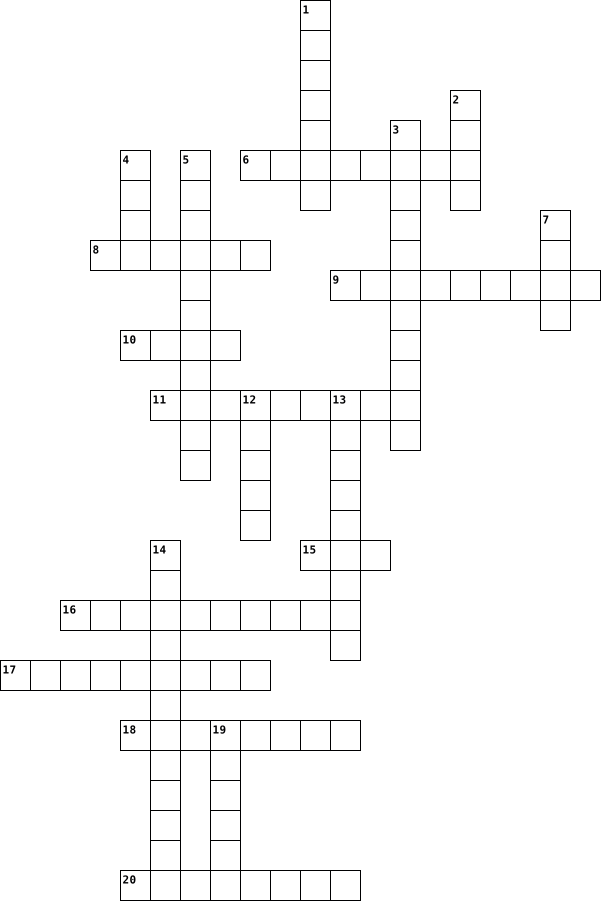
Across
- Jailed South African president.
- Where were the ancient hanging gardens?
- First person to summit Everest.
- First king of Israel.
- Roman Emperor who became Christian in 312.
- Where was the first modern Olympics held?
- Name of Captain Cook's ship.
- Which volcano destroyed Pompeii?
- Brothers who flew the first plane.
- The great tragedy of 1912.
Down
- Who wrote the 95 Theses?
- Who painted the Sistine Chapel ceiling?
- First human on the moon.
- Which civilization built Machu Picchu?
- Greek philosopher who shouted "Eureka!"
- Defeated at the Battle of Waterloo.
- Who was the first US president?
- England's opponent in the 100 Years' War.
- What country used to be called Persia?
- Famous battle that took place in 1066.
20 Clues: First king of Israel. • Who wrote the 95 Theses? • First human on the moon. • The great tragedy of 1912. • Name of Captain Cook's ship. • Jailed South African president. • First person to summit Everest. • Who was the first US president? • Which volcano destroyed Pompeii? • Brothers who flew the first plane. • Defeated at the Battle of Waterloo. • ...
Military History 2024-11-18

Across
- Persian heavy infantry and named for their supposed inability to be killed.
- Battle formation used by the Greek which locked their shields together with spears pointing forward
- Greek fortune teller that inhaled ethylene gas to tell the future but in riddles
- Alexander's beloved horse which he acquired at age 12 but died on the banks of the Indus river during a battle
- Greek battleship featuring 170 oars, 200 crew, and a bronze battering ram
- Persian admiral that killed her allies during a battle to ensure her rule over an island kingdom
- The _____ Gate of Babylon was painted blue with golden figures in the walls
- Pivotal weapon of the Bronze Age that was expensive to build and maintain
- Greek heavy infantry named for their massive shield they carried
- Largest chariot battle in history between the Egyptians and Hittites
- Last major battle of the Greco-Persia War involving 125,000 Persians and 80,000 Greeks
- Greek general hired to train Alexander's army
- Alexander the Great tutor and Greek genius of many subjects
- Cavalry units used by Alexander as shock troops and enjoyed special rank and privilege
- Famous last stand of Sparta's King Leonidas and his 300 warriors
Down
- A former persian slave that led the Athenians against a Persian invasion
- Major rival of the Egyptians during the Bronze Age
- Persian Emperor that conquered Egypt
- A Greek crossbow which was simple to make and practically anyone could use it
- A group of marauders that raided Bronze Age kingdoms and were never stopped but simply faded away
- Main river in Egypt responsible for agricultural prosperity
- Persian Emperor that conquered Babylon
- Homer's tale of the Trojan War
- Naval battle in which the Greeks used shifting winds to trap the Persian fleet
- Persian Emperor that invaded Greece but failed
- The Bronze Age ______ was the end of the Mediterranean trade for 500 years and ended three empires
- Egyptians used a mixture of eggs and ____ to produce a glue used in making bows
- Battle between Athens and Persia after which the Athenians ran 26 miles back to Athens to defend against a naval attack
- Alloy of tin and copper which makes excellent weapons and tools
29 Clues: Homer's tale of the Trojan War • Persian Emperor that conquered Egypt • Persian Emperor that conquered Babylon • Greek general hired to train Alexander's army • Persian Emperor that invaded Greece but failed • Major rival of the Egyptians during the Bronze Age • Main river in Egypt responsible for agricultural prosperity • ...
US History 2024-11-18

Across
- Leader inspiring the movement
- Word symbolizing equality and unity
- Movement aiming for change
- First european nation to recognize america as independent
- Region or territory under control
- Key theme of sacrifice and loyalty
- A central motivation in the story
- A public declaration of the aims and goals by a party
- Risk associated with defiance
- Messenger between allies
- Location where key decisions are made in Gr. Britain
- Type of strategy used by protagonist
Down
- Synonym to dignity
- Code name for the protagonist’s plan
- A way to encrypt messages
- Social system in place in England and into the colonies that defined social status
- Early opposition group
- A word for a closer ally
- Symbol used by the organization/A cloth waved at the end of a stick
- Secret meeting place for planning
- What the Americans feel like the British disrespected because of the taxes and the fact they were considered “second-class” citizens
- Protagonist’s main rival
- Type of government targeted by the movement/The system of government used by the British
- You might’ve won the ____ but you haven’t won the war
- Short, general term used for items that were stolen from the British to aid the rebels
25 Clues: Synonym to dignity • Early opposition group • A word for a closer ally • Protagonist’s main rival • Messenger between allies • A way to encrypt messages • Movement aiming for change • Leader inspiring the movement • Risk associated with defiance • Region or territory under control • Secret meeting place for planning • A central motivation in the story • ...
Our History 2024-09-10

Across
- Where you go to abandon me
- Just HANGING around
- Amel’s favorite surah
- The one thing Amel won’t do with you ever
- In conclusion everyone should convert to
- cold plunge
- Acronym for our favorite XX chromosomes
- best spicy comfort food
- You got matching colors
- Age we met
- The most lovely things from Trader Joe’s
Down
- First movie we saw together
- Where we sit together but can’t talk, but listen and learn
- Enas’s favorite surah
- Where we planned to go for our senior trip
- What we say when we are driving and we jump
- You were the first person I messaged because of this
- Acronym for ‘I see…’
- Place that sounds like a doorbell or karate
- what we do first thing the summer starts
- Al nature sayakoon very
- I remember when I lost my mind
22 Clues: Age we met • cold plunge • Just HANGING around • Acronym for ‘I see…’ • Enas’s favorite surah • Amel’s favorite surah • best spicy comfort food • You got matching colors • Al nature sayakoon very • Where you go to abandon me • First movie we saw together • I remember when I lost my mind • Acronym for our favorite XX chromosomes • In conclusion everyone should convert to • ...
Medical History 2024-09-11

Across
- performed first successful heart transplant
- medical products and practices that are not part of standard care
- intelligence the theory and development of computer systems able to perform tasks that normally require human intelligence such as visual perception, speech recognition, decision-making, and translation between languages
- prevents or stops the spread of infections in healthcare
- father of medicine
- discovered the human body had a pulse, acknowledged the difference between arteries and veins, wrote at least 2 medical books
- the study and treatment of mental illness
- statement of obligations and proper conduct for doctors
- successfully separated conjoined twins
- The surgical removal of some of a patient’s blood for therapeutic purposes
- created an oral polio vaccine
- the most common form of plague in humans during the middle ages
- reducing the level or rate of increase in healthcare costs
- the scientific study of the mind and its functions
- public health conditions related to clean drinking water and adequate treatment and disposal of human excreta and sewage
- The action of dissecting a body or plant to student its internal parts
Down
- the remote diagnosis and treatment of patients by means of telecommunication technology
- an infectious bacterial disease characterized by the growth of nodules (tubercles) in the tissues, especially the lungs
- started with the fall of the roman empire
- an optical instrument used for viewing very small objects
- the procedure of perforating a persons skull with a trepan
- the partial sterilization of product to make it safe for consumption
- discovered penicillin
- a microscopic organism
- a method used to preserve a corpse from decay
- branch of technology that deals with the manipulation of atoms and molecules
- the concept of treating the whole person by focusing on physical, social, mental, and spiritual wellness
27 Clues: father of medicine • discovered penicillin • a microscopic organism • created an oral polio vaccine • successfully separated conjoined twins • started with the fall of the roman empire • the study and treatment of mental illness • performed first successful heart transplant • a method used to preserve a corpse from decay • the scientific study of the mind and its functions • ...
World History 2024-11-20

Across
- Taking shared lands and making them privately owned
- Policy of the U.S. in regard to Chinese imperialism
- John Locke believed in natural rights of life, liberty, and _____
- What social classes were called in Revolutionary France
- The "Jewel in the British Crown"
- Name of Mr. Aprile's tortoise
- The ruler of France after the Revolution
- Philosopher who supported three branches of government
- Dangerous places people worked during the Industrial Revolution
- This amendment protects our freedom of speech
Down
- This was invented by James Watt during the Industrial Revolution
- Where the Industrial Revolution started
- Crowded housing during the Industrial Revolution
- How old Mr. Aprile is
- This amendment protects our right to bear arms
- Vacation palace of the King/Queen of France; women marched on this place
- Country taken over by King Leopold II
- Philosopher who believed humans were naturally evil
- Ancient city that started democracy
- Ancient city with the first republic
20 Clues: How old Mr. Aprile is • Name of Mr. Aprile's tortoise • The "Jewel in the British Crown" • Ancient city that started democracy • Ancient city with the first republic • Country taken over by King Leopold II • Where the Industrial Revolution started • The ruler of France after the Revolution • This amendment protects our freedom of speech • ...
History Crossword 2024-11-21

Across
- a protest over taxation without representation
- taxes imposed by one country on goods imported from another country
- closed U.S. ports to all exports and restricted imports from Britain
- British legislation aimed at ending the smuggling trade in sugar and molasses
- personal qualities associated with the effective functioning of the civil and political order
- a change or addition to the terms of a contract or document
- someone who doesn't have a political party
- three out of every five slaves were counted when determining a state's total population for legislative representation and taxation
- He was the seventh House speaker as well as the ninth secretary of state.
- played an influential role in drafting the Declaration of Independence
Down
- no one shall be "deprived of life, liberty or property without due process of law."
- the expression of loyalty or support for a particular region of one's country, rather than to the country as a whole
- inventor of the cotton gin
- someone who believes in the type of political system in which states or territories share control with a central government
- is an economic and political system where trade and industry are controlled by private owners for profit
- presidential board of advisors
- a diplomatic incident between French and United States diplomats
- father of the navy
- to refuse to buy, use, or participate in something as a way of protesting
- members of a religious reform movement known as Puritanism
20 Clues: father of the navy • inventor of the cotton gin • presidential board of advisors • someone who doesn't have a political party • a protest over taxation without representation • members of a religious reform movement known as Puritanism • a change or addition to the terms of a contract or document • a diplomatic incident between French and United States diplomats • ...
History Crossword 2024-11-21

Across
- Plan Proposal based on popularity
- Believed in a strong state governments
- Winter encampment 1777
- Turning point of American Revolution
- Process to become a US citizen
- Pamphlet written by Thomas Paine
- Branch that includes the president
- First president of US
- Being trialed for same thing twice
- Social Contract signed 1620
Down
- Punishment for Boston Tea Party
- Protest led by Sons of Liberty
- Land bought from France 1803
- Father of the Constitution
- Also known as Society of Friends
- Created process to become a state
- Change to the Constitution
- First casualty of American Revolution
- First permanent English settlement
- Politicians must follow laws
20 Clues: First president of US • Winter encampment 1777 • Father of the Constitution • Change to the Constitution • Social Contract signed 1620 • Land bought from France 1803 • Politicians must follow laws • Protest led by Sons of Liberty • Process to become a US citizen • Punishment for Boston Tea Party • Also known as Society of Friends • Pamphlet written by Thomas Paine • ...
American History 2024-11-21

Across
- A tax on imported goods that raises the prices so people will buy domestic goods
- The action of taxing of authorities levying a tax
- People that argued for a stronger federal government
- The battle that led to the capture of two British generals
- Life, Liberty, and the pursuit of happiness
- John Adam's wife that asked him to remember women in the constitution
- Introduction to the Constitution
- The battle that was a turning point of the Revolutionary War.
- Chief justice of the U.S. supreme court
- of Neutrality Allows U.S. citizens to trade with all belligerents in the war between France and Great Britain
- Hamilton Advocated the creation of a National Bank
Down
- Political party led by Thomas Jefferson
- Wrote "common sense"
- Armed private ship licensed to attack merchant ships
- Purchase of the Louisiana territory from France
- First president
- of Confederation A weak constitution that 1st governed America
- Madison "Father of the constitution"
- Formal approval to the effectiveness of a constitution, constitutional amendment, or treaty
- A military expedition that explored the Louisiana purchase and the Pacific Northwest
20 Clues: First president • Wrote "common sense" • Introduction to the Constitution • Madison "Father of the constitution" • Political party led by Thomas Jefferson • Chief justice of the U.S. supreme court • Life, Liberty, and the pursuit of happiness • Purchase of the Louisiana territory from France • The action of taxing of authorities levying a tax • ...
U.S. History 2024-11-21

Across
- This person is known for championing the Oppressed from 1722-1743.
- Committed to "purifying" the Church of England.
- This place was one of Americas first planned cities.
- The __________ was a Spanish labour system that rewarded conquerors with the labour of conquered non-christian peoples.
- Sought to increase the prosperity and power of a nation through restrictive trade practices.
- First permanent English colony in New England.
- English Philosopher and political theorist.
- This place is known for being the first permanent English settlement in North America.
- This document gives colonies the legal rights to live.
- This was written by a group of 13th century barons to protect their rights and property against a tyrannical king.
- Known for plantations and use of slaves to work on them.
Down
- This person is most known for challenging male authority.
- The English people who settled Plymouth in the 1620s.
- The American _____________ was a period of great intellectual and social change that took place in the thirteen colonies during the 18th century.
- Known for English religious and social reformer and founder of the Province of Pennsylvania.
- Helped the struggling English settlers in Virginia survive in the early 1600s.
- This person founded Providence Plantations.
- Simple definition: The act of taking control of an area or a country that is not your own, using force, and sending people from your own country to live up there.
- A large farmed area where crops were grown for profit.
- Part of the movements for the abolition of slavery to promote equal rights for women and peace.
20 Clues: This person founded Providence Plantations. • English Philosopher and political theorist. • First permanent English colony in New England. • Committed to "purifying" the Church of England. • This place was one of Americas first planned cities. • The English people who settled Plymouth in the 1620s. • A large farmed area where crops were grown for profit. • ...
History Puzzle 2024-11-22

Across
- Legislation but the U.S Congress in December closed U.S port
- Americas fourth president
- power of government that is held by the people
- rights to the people
- Commander of the Continental Army
- fair through the normal judicial system
- proposed a strong central government made up of three branches
- was intended to benefit small states
- forth us president
- right to remain silent
Down
- incident between France and the United that resulted in a limited undeclared war
- a minor change or addition designed to improve a text
- rights to the goverment
- founding father of the United states
- a purchase of imperial rights to the western half
- framer of the Continental Congress
- second U.S president
- Renowned for his authorship of the Virginia Declaration of Rights
- original amendments
- the federal principle or system of a government
20 Clues: forth us president • original amendments • second U.S president • rights to the people • right to remain silent • rights to the goverment • Americas fourth president • Commander of the Continental Army • framer of the Continental Congress • founding father of the United states • was intended to benefit small states • fair through the normal judicial system • ...
Decipher History 2024-11-05

Across
- an explostion of creativity in art,writing, and thought
- created the telescope
- polish astronomer who studied italy
- english philosopher who wrote Advancement of learning
- supported Copernicus’ heliocentric theory.
- bible has authority
- scholar who described the circulation of blood for the first time.
- the sun it the center of the universe
- “I think, therefore I am”
Down
- book was the first accurate and detailed book on human anatomy
- C.C. authority only they can help save them
- a dutch inventor who perfected the microscope became the first human to see cells and microganisms.
- explained the effect of temperature and pressure on gases.
- influential scientist of the revolution
- intellectual movement focused on human achievements
- a financial supporter of artists
- the force that kept planets in orbit
- a way to show three dimensions on canvas
- developed a new and more effective ointment for preventing infection.
- first woman artist to gain world recognition
20 Clues: bible has authority • created the telescope • “I think, therefore I am” • a financial supporter of artists • polish astronomer who studied italy • the force that kept planets in orbit • the sun it the center of the universe • influential scientist of the revolution • a way to show three dimensions on canvas • supported Copernicus’ heliocentric theory. • ...
History Review 2025-03-26

Across
- Which Enlightenment thinker believed in the separation of church and state?
- Who was the Leader of the Committee of Public Safety?
- Which Enlightenment thinker believed that humans are naturally good but corrupted by society?
- What was the name of the battle that ended Napoleon's Hundred Days reign?
- There is a revolution in the country and the people overthrow the government. Which government would be in place after?
- True or false there were a total of 6 Coalitions against Napoleon.
- Who was the primary author of the Declaration of Independence?
- The National Assembly was organized by which group?
- Ancient philosopher that supported the Geocentric Model.
- What did the Townshend Acts impose taxes on
Down
- What was the main reason William Pitt was able to turn the tide of the Seven Years war in favor of the British?
- The belief that the Earth is the center of the universe and all celestial bodies orbit around it.
- In a democratic government, who makes the decisions?
- Which Enlightenment thinker believed that humans act in self-interest, which can benefit society?
- What type of Place was the Bastille?
- Who believed that government should protect natural rights and can be overthrown if it fails to do so?
- What did the British capture in 1760 that ended French control in Canada?
- Which country did Napoleon treat with respect and favor in the Treaty of Tilsit?
- Which estate in French society was largely exempt from paying taxes?
- What country was always at war with France in every Coalition?
20 Clues: What type of Place was the Bastille? • What did the Townshend Acts impose taxes on • The National Assembly was organized by which group? • In a democratic government, who makes the decisions? • Who was the Leader of the Committee of Public Safety? • Ancient philosopher that supported the Geocentric Model. • ...
Mexico's History 2025-04-30

Across
- The conquistador responsible for conquering the Aztec Empire
- In 1840, Central America separated into five countries; the two territories that did not gain independence were _____ and Panama
- In 1900, Panama gained independence from ____.
- In the 1600s, the Caribbean became the center of what industry?
- When the Native American population began dying, the Europeans began bringing in what group to work on plantations?
- A period of violent, sweeping change
- First area in the Caribbean to gain independence
- The Aztec capital city built on a lake
- In 1959, who overthrew the Cuban government and established a communist dictatorship?
- The three advantages the Spanish had over the Aztec: ____, European diseases, and Aztec enemies
- Military strongmen who ruled the region's countries
Down
- The transfer of plants, animals, and people between Europe, Asia, and Africa on one side and the Americas on the other
- A food that is eaten regularly
- Led a rebellion against Spanish rule in Mexico in 1810
- A large farm
- Led the charge for Haitian independence
- This ancient civilization was known for their great cities, complex writing, and accurate calendar
- Extra; more than is needed
- A Spanish explorer of the early Americas
- A policy based on control of one country by another
- Farm product grown for sale
21 Clues: A large farm • Extra; more than is needed • Farm product grown for sale • A food that is eaten regularly • A period of violent, sweeping change • The Aztec capital city built on a lake • Led the charge for Haitian independence • A Spanish explorer of the early Americas • In 1900, Panama gained independence from ____. • First area in the Caribbean to gain independence • ...
U.S. History 2025-05-01

Across
- Shays' Rebellion and the Whiskey Rebellion involved these type of people
- first successful British colony
- this immigrant group settled in California and built railroads
- time period after the Civil War
- The Mayflower Compact established this type of government
- the Pilgrims landed here
- this amendment said all African American males have the right to vote
- this immigrant group immigrated due to a potato crop failure
- this colonial region was known for its fertile soil and cash crop agriculture
- this group did not want to ratify the Constitution without the Bill of Rights
- this religious group moved to Utah to escape religious persecution
- This cash crop saved Jamestown
- the 10th amendment applies to this principle
Down
- mistreatment due to political or religious beliefs
- this colonial region was known as the "bread basket"
- this group was in favor of ratifying the Constitution
- Lord Baltimore settled this colony as a safe haven for Catholics
- to cancel a law
- this economic system is when the mother country makes a profit off of the colonies
- a cause of the Nullification Crisis
- this compromise put a "band-aid" on sectionalism
- this territory doubled the size of the United States
- first president of the United States
- House of Burgesses established this type of government
- These acts were passed in response to the Boston Tea Party
- this immigrant group settled in the Midwest and became mainly farmers
- the United States went to war with Mexico over this territory
27 Clues: to cancel a law • the Pilgrims landed here • This cash crop saved Jamestown • first successful British colony • time period after the Civil War • a cause of the Nullification Crisis • first president of the United States • the 10th amendment applies to this principle • this compromise put a "band-aid" on sectionalism • mistreatment due to political or religious beliefs • ...
US History 2025-05-02

Across
- The ____________ Proclamation freed all enslaved people in the CSA.
- This amendment guarantees freedom of speech
- The _____ engine was invented by Robert Fulton in 1807.
- Thomas Jefferson made the _________ Purchase, which doubled the size of the United States
- James _______ was the architect of the Constitution.
- This person was a daughter of the chief of the Powhatan Confederacy and later married John Smith, of the first Jamestown settlers.
- The name of the new country formed by the South when they seceded.
- She was a famous Indian guide who helped Lewis and Clark.
- The first president was George __________.
- This is called the forcible seizure of american sailors into the Royal Navy was called.
- The ________ Compromise was an agreement to balance free and slave states
Down
- _______ Attucks was the first African American casualty of the Boston Massacre.
- This amendment prohibits cruel and unusual punishment.
- Also known as the French and Indian War, the _____ Years' War was arguably the first world war. This war also made George Washington famous.
- The ______ Doctrine stated that Europe could no longer interfere in the Americas.
- Andrew _______ hated the National Bank and got rid of it, leading to the Panic of 1837.
- John _____ defended the British at the Boston Massacre trial
- The ______ gin was invented by Eli Whitney.
- The third amendment prevents the __________ of soldiers.
- _______ Tubman helped hundreds of enslaved people escape slavery via the underground railroad and also served as a spy for the Union during the Civil War
20 Clues: The first president was George __________. • This amendment guarantees freedom of speech • The ______ gin was invented by Eli Whitney. • James _______ was the architect of the Constitution. • This amendment prohibits cruel and unusual punishment. • The _____ engine was invented by Robert Fulton in 1807. • The third amendment prevents the __________ of soldiers. • ...
History 14 2025-05-06

Across
- He strengthened the military alliance of NATO.
- First black President of the US.
- Supreme Court Justice who stressed the importance of moral character.
- Helped bring about a peace treaty between Egypt and Israel.
- An Islamic terrorist group responsible for the attack on 9/11/01
- One of the greatest opera singers of her time...
- He was the only President to resign from office.
- President Johnson's plan for social reform was called the...
- First man to walk on the moon.
- He believed Communism should be stopped before it could attack and enslave a country.
Down
- Operation Desert Storm in Iraq was under his Presidency.
- First black major league baseball player.
- The legislation that guarantees voting, housing, and job rights for ethnic minorities is the 1964...
- The system of producing and distributing goods.
- Lady who refused to give up her seat on a bus in Montgomery, Alabama, an act which led to a change in segregation laws.
- Black minister active in civil rights movement.
- President during the Cuban Missile Crisis.
- First woman appointed to the Supreme Court by Ronald Reagan.
- Doctor who developed a vaccine for polio.
- One of the decisions handed down by the liberal Supreme Court of the 1970s was..., which legalized abortion.
- First American to fly in space.
- Two countries where the U.S. military attacked terrorists in the "War on Terror."
- This President's welfare program was called the New Frontier.
- First American to orbit the earth.
- This President convinced the Soviet Union leader Gorbachev to tear down the Berlin Wall and begin Perestroika.
- The attempt to return America to the traditional values of church, family, and free enterprise was called the...
26 Clues: First man to walk on the moon. • First American to fly in space. • First black President of the US. • First American to orbit the earth. • First black major league baseball player. • Doctor who developed a vaccine for polio. • President during the Cuban Missile Crisis. • He strengthened the military alliance of NATO. • The system of producing and distributing goods. • ...
history vocab 2025-04-15

Across
- an alliance made to defend one another
- policy of resisting further expansion
- agency of the U.S. government
- a couple who were accused of being communists
- an alliance made between Soviet union and other eastern European nations
- line that divides korea
- international organization formed after ww2
- commander of allied forces
- a separation of east and west berlin
- increase in population after the war
Down
- very deadly weapon created during ww2
- politician who led the Soviet union
- program of aid for europe
- this started the space race
- a zone between north and south korea
- Truman's policy of providing aid
- search for communists
- general who was head of nationalist party
- airlift that supplied food to west berlin
- conflict between north and south korea
- leader of communist party in china
- a political barrier
- an investigating committee of un-american propoganda
- fear of communists
24 Clues: fear of communists • a political barrier • search for communists • line that divides korea • program of aid for europe • commander of allied forces • this started the space race • agency of the U.S. government • Truman's policy of providing aid • leader of communist party in china • politician who led the Soviet union • a zone between north and south korea • ...
History Crossword 2025-04-03

Across
- A contest where knights fought on horses
- The river that runs through Rome
- Vinci A famous Renaissance artist who painted the Mona Lisa
- A leader of Rome, like Julius Caesar
- A famous playwright from the Renaissance
- A knight’s protective outfit
- A German who invented the printing press
- The person who ruled a kingdom
- The most famous Roman amphitheater
- A wealthy family that supported Renaissance artists
- A huge castle gate that lifted up
Down
- A deadly disease that spread in the 1300s
- An open space in Rome where people met
- The city that ruled a vast empire
- The city where the Renaissance started
- A Roman road-building material
- A medieval worker who farmed land
- The study of stars and planets, improved during the Renaissance
- A Roman bath was used for this
- The building where monks lived
20 Clues: A knight’s protective outfit • A Roman road-building material • A Roman bath was used for this • The person who ruled a kingdom • The building where monks lived • The river that runs through Rome • The city that ruled a vast empire • A medieval worker who farmed land • A huge castle gate that lifted up • The most famous Roman amphitheater • A leader of Rome, like Julius Caesar • ...
US History 2025-04-22

Across
- Founder of constitutional law and chief justice.
- Thought the bank was unconstitutional.
- Printed publication, and associated with making decisions.
- Written by the 1st American president.
- Peace treaty that ended the war of 1812.
- Most influential founding father.
- Debt crisis state government increased effort to collect taxes.
- Desire for unity after the war of 1812
- Articles and essays written by Alexander Hamilton.
- Louisiana purchase.
- Created two Legislative bodies in congress.
- The great compromise, The three fifth compromise etc.
- Final battle of the northwest indian war.
- 3rd US president.
- North and South America will not tolerate any more colonization.
- Four acts passed by the federalist.
- Basic principles of and laws of the nation and the agreement signing of it.
- Known as the Florida purchase treaty.
Down
- 4th US president and created the amendments.
- First major battle of the war of 1812.
- On all American vessels sailing for foreign ports.
- No support from state governments.
- Secret meeting of the federalist delegates from connecticut.
- Capital of the United states.
- Agreement by the US and Great Britain that helped avert war between them.
- Beans, squash, peas, okra etc.
- Creation of a supreme national government.
- Served as an associate justice.
- First written constitution of the United states.
- Economic system in which the decisions regarding investment.
- Create material by hand.
31 Clues: 3rd US president. • Louisiana purchase. • Create material by hand. • Capital of the United states. • Beans, squash, peas, okra etc. • Served as an associate justice. • Most influential founding father. • No support from state governments. • Four acts passed by the federalist. • Known as the Florida purchase treaty. • First major battle of the war of 1812. • ...
History Review 2025-05-14

Across
- the River that Rome is located on
- "rebirth"
- The First Emperor of Rome
- Greek word for City State
- a Classical Civilization whose geography consisted of a large mountainous peninsula and islands in the Aegean Sea.
- Greek City State that was focused on the Military
- The first of the three strongest kingdoms of Africa, also known as the Land of Gold
- Ages After fall of Western Roman Empire – Western Europe entered a period of disorder and chaos
- before common era
- "There are _________ Features of Civilization"
- a chain of islands
- A political system based on the promise of land, loyalty, and military protection.
- human made objects like tools or art.
- a person who travels from place to place for food and shelter
- belief in multiple gods
- Carthaginian who tried to invade Rome with a fleet of Elephants
- Empire started by Genghis Khan
- Age a time period when a civilization is at their peak power and influence
- Largest of the west African Empires
- Oldest of the three Monotheistic religions
Down
- Early civilizations tended to settle near this geographic feature for protection and access to resources
- early form of writing created by the Mesopotamians
- Mountain range that is the backbone of Italy
- a belief system that believes in reincarnation and following the Eight Fold Path
- land surrounded by water on three sides
- Belief system that believes in the Holy Trinity
- invention that carries water from the mountains to the cities
- Tables Roman laws market-place so everyone would know them
- country/empire that served as a cultural bridge between China and Japan
- the term for the warrior class of the Japanese
- is the study of humans and the way they live (their culture) in both the past and present
- a source taken directly from a person or group of people
- a belief system that focuses on karma and dharma
- "_______ and gold and profit"
- more food equals more...
- prejudice in favor of one group thing or person
- the blend of eastern cultures and Greek culture that occurred after Alexander the Great conquered vast amounts of land was called
- A family that rules a country or an empire for a long period of time.
- their Holy Book is the Quran
39 Clues: "rebirth" • before common era • a chain of islands • belief in multiple gods • more food equals more... • The First Emperor of Rome • Greek word for City State • their Holy Book is the Quran • "_______ and gold and profit" • Empire started by Genghis Khan • the River that Rome is located on • Largest of the west African Empires • human made objects like tools or art. • ...
Indian History 2025-05-14

Across
- 8. Indus Valley city known for Great Bath
- 2. The capital of Mauryan Empire under Ashoka
- 6. The Iron Man of India
- 11. Famous emperor who converted to Buddhism after Kalinga war
- 4. Famous salt march led by Gandhi in 1930
- 9. Mahatma Gandhi's birthplace
- 5. Month when India got independence
- 3. The revolt of 1857 started in this city
- 7. The movement launched in 1942 by Gandhi
- 8. Ancient university in Bihar
Down
- 7. The last Viceroy of British India
- 3. The Queen of Jhansi who fought the British
- 5. The first Indian to win Nobel Prize
- 4. First President of independent India
- 9. Founder of Sikhism
- 6. Battle fought in 1526 that began the Mughal Empire
- 10. Leader of the Azad Hind Fauj
- 10. Language in which Ashokan edicts were mostly written
- 2. Who was the first Prime Minister of independent India?
- 1. The Father of the Nation
20 Clues: 9. Founder of Sikhism • 6. The Iron Man of India • 1. The Father of the Nation • 9. Mahatma Gandhi's birthplace • 8. Ancient university in Bihar • 10. Leader of the Azad Hind Fauj • 7. The last Viceroy of British India • 5. Month when India got independence • 5. The first Indian to win Nobel Prize • 4. First President of independent India • ...
History Crossword 2024-02-29

Across
- to formally discuss an issue
- a formal, written request made to an official person or organization
- a course of action taken by a government
- to supply or make available
- a pamphlet published in 1776 by Thomas Paine that persuaded many American colonists to support independence
- a system of government in which the power to govern belongs to the people
- the chance that something will happen
- rights common to everyone, as opposed to those given by law
- the government or controlling power
- a nation that joins another nation in some common effort, such as fighting a war
- a violent attempt to resist or overthrow the government or another authority
- Revolution the struggle of the colonies in North America to gain their independence from Great Britain
- basic
Down
- a small army made up of ordinary citizens who are trained to fight in an emergency
- to express ideas or feelings in a way that is moving and well-spoken
- to put in place by authority, such a law, tax, or punishment
- to refuse to buy one or more goods from a certain source. An organized refusal by many people is also called a boycott.
- an overall plan, such as for winning a war
- to take back, or to cancel, a law
- very important or necessary
- freedom from control by another government or country
- the American army during the American Revolution
22 Clues: basic • to supply or make available • very important or necessary • to formally discuss an issue • to take back, or to cancel, a law • the government or controlling power • the chance that something will happen • a course of action taken by a government • an overall plan, such as for winning a war • the American army during the American Revolution • ...
Chinese History 2024-03-14
Across
- What language do the Chinese speak?
- What is the name of the only female emperor?
- What is a long stone wall built in China to keep out invaders?
- What dynasty built the great wall?
- Which one of Chinas inventions explodes?
- What is the first Chinese dynasty?
- What is the name of the black and white halves of a circle used for cultural practices?
- What year was the silk road made?
- What emperor was buried with thousands of clay soldiers?
- What ranged weapon did China invent?
Down
- What is the capital of China (modern day)?
- What was the final Chinese dynasty (that we learnt about)?
- What was Chinas first weapon?
- What dynasty lasted the longest?
- when was China called China (use numbers for century date)?
- What was the most sought-after thing from China?
- What thin, white object was made in 105 AD/CE?
- What well known Chinese food was made in 200 BC/BCE
- What flammable, close-range weapon did China invent?
- What is buried in the wall of China?
20 Clues: What was Chinas first weapon? • What dynasty lasted the longest? • What year was the silk road made? • What dynasty built the great wall? • What is the first Chinese dynasty? • What language do the Chinese speak? • What is buried in the wall of China? • What ranged weapon did China invent? • Which one of Chinas inventions explodes? • ...
Corvette History 2024-04-02

Across
- first corvette concept car went into production as this full size wagon instead
- American symbol illegally included in the first Corvette logo
- the T in T-top stands for this
- California city where the C8 debuted in 2019
- succeeded Arkus-Duntov as Corvette's chief engineer
- red hash marks on the left front fender denote this package
- 1963 offered the first of this body style
- Special commemorative package honoring Corvette’s success at this race
- city where Corvettes were first manufactured
- Number of Corvette Indy 500 Pace cars
- this feature was offered in 1982 as a Collector’s Edition model
- GM program provides corvettes to those who boldly represent this government agency
- factory-installed racing package was offered for the first time in 1969
- body style that marks Corvette’s 25th year of production
- Surname of the person who designed the first corvette concept car
Down
- automotive brand whose sportscar's wheelbase and other dimensions inspired those on the first Corvette
- the bow-tie logo was inspired by this popular home decor element
- 1953 GM car show where the Corvette first appeared
- Corvette was inspired by the name of this class of water vessel
- Surname of the actor who built a "radical" corvette in the movie Corvette Summer
- month the National Corvette Museum opened in 1994
- Zora Arkus-Duntov is known as the what of Corvettes
- City in which the Corvette was the Pace Car for an annual iconic race
- the second generation corvette introduced this model
- safety feature was introduced in 1958
- Original code word for the first Corvette
26 Clues: the T in T-top stands for this • Number of Corvette Indy 500 Pace cars • safety feature was introduced in 1958 • 1963 offered the first of this body style • Original code word for the first Corvette • California city where the C8 debuted in 2019 • city where Corvettes were first manufactured • month the National Corvette Museum opened in 1994 • ...
History crossword 2024-03-03

Across
- first of the stone age
- paintings cover inside walls and top of the cave
- hunted,gathered,fished foods
- selectively growing plants or breeding animals so they were more useful to us
- study of human societies and culture
- study of past human history
- body was discovered in the Alps, ice preserved his tissue
- the new/more advanced stone age
- stone monuments built for worshiping
- society that all are considered equal
- 7,000BCE,largest neolithic,turkey
- name means "handy man"
- skull fragments found in 1959,skull was from 1.75 million years ago
Down
- division of a society based on social and economic status
- strait between Pacific and Arctic oceans
- movement of people from one place to another
- history before written records
- crafts people that would trade with other cultures/groups
- describes how cultures spread and merge around the world
- name means "wise man"
- had about 1/3 of a modern humans brain
- name means "upright man"
- task to different people in order to improve efficiency
- something that was used or made from the past
- change from gathering and hunting to farming
- australopithecine, walked up right, found in 1974
- human like being that walked up-right
- life of a nomad
28 Clues: life of a nomad • name means "wise man" • first of the stone age • name means "handy man" • name means "upright man" • study of past human history • hunted,gathered,fished foods • history before written records • the new/more advanced stone age • 7,000BCE,largest neolithic,turkey • study of human societies and culture • stone monuments built for worshiping • ...
Japanese History 2024-02-28

Across
- Private companies that were funded by the government
- The war between Japan and China which brought many benefits to Japan after their victory.
- The main island of Japan
- World famous volcano located near Tokyo
- Official religion of Japan set by the Meiji government
- Who was the emperor of Japan during the modernization?
- The war between China and Britain involving the spreading of opium
- Non-westernern countries adapting the ways of Western superpowers.
- The General of the US, who started Japan's iWesternion with Western superpowers
- World famous dish of Japan consisting of Rice covered with a slice of raw fish
Down
- The last shogun
- The military class of the Japanese caste system
- The war between Russia and Japan
- Increasing the country's power by conquering others or diplomacy
- The Prime Minister Opan who was truly the most powerful man during the Meiji era
- The country in which Japan tried to imitate their army and government
- A code or a way that Samurai followed throughout their lives
- The treaties made between Japan and the Western superpowers
- Which group of samurais revolted against the quickly westernizing imperialist government?
- The use of superior naval capabilities to intimidate lesser powers.
20 Clues: The last shogun • The main island of Japan • The war between Russia and Japan • World famous volcano located near Tokyo • The military class of the Japanese caste system • Private companies that were funded by the government • Official religion of Japan set by the Meiji government • Who was the emperor of Japan during the modernization? • ...
Bible History 2024-03-13

Across
- Tried to curse
- Usurper
- Place of preternatural gifts
- Answer to Hannah's prayer
- Wrestle with God
- Name like Jesus
- Will and intellect in harmony
- Promised Lan
- Stoned and Burned
- Son of Jesse
- Bitter
- Tent peg woman
- Had god "Dagon" and Goliath
- River
- Jacob's 2nd favorite
- Woman judge
- Sin Sin that is chosen, not inherited
- False humility - son is Abimelech
- Sister by the reeds
- Oasis in the desert
- "God saves"
- Invented the cave
- Languages confused
- Hired Balaam
- Met Moses at a well
- Strong, tall, and insecure
- Time of testing
- "god" judged by 10th plague
- Not every word is ____ true
- Place of struck rock
- Symbol of soul
- Feast after 50 days
- Grasp or receive
- Put Joseph in prison
- Righteous King
- Eldest of the 12
- Demons in ancient times
- One who dwells
- Father-ruler
- Descends at anointing
- Means "House of God"
- Never die
- Exchange of persons
Down
- Genesis poetry
- Every word is ____ true
- ...and Gomorrah
- Preternatural gift of the intellect
- King's tribe
- Friend of David
- Offered to take Benjamin's place as slave
- Favorite wife
- Hairy man
- Kill all
- First High Priest
- Strong
- ...and worship
- Mowed down by Joshua
- What is this?
- Fought off Potiphar's wife
- Birds in the desert
- Priests
- Saving lamb
- Symbol of body
- Place of slavery
- Wife through deception
- God gave to Adam and Eve over creation
- How kings were made
- Son of Hagar
- Freedom for the sake of
- Life and death
- Home of David
- Priest, between God and man
- Rash vow
- Moveable mountain
- Never suffer
- Language of Jews
- Jericho woman
- Good spy with Joshua
- God sees it
- "Laughter"
80 Clues: River • Bitter • Strong • Usurper • Priests • Kill all • Rash vow • Hairy man • Never die • "Laughter" • Woman judge • "God saves" • Saving lamb • God sees it • King's tribe • Promised Lan • Son of Jesse • Hired Balaam • Son of Hagar • Never suffer • Father-ruler • Favorite wife • What is this? • Home of David • Jericho woman • Genesis poetry • Tried to curse • Tent peg woman • ...and worship • Symbol of body • Life and death • ...
History Crossword 2024-04-18

Across
- to come into existence or become more noticeable
- unexplored wilderness at the edge of the country
- to refuse to recognize a federal law. This action by a state is called nullification.
- to increase in quantity or size over time
- an economic system based on the private ownership of farms and businesses
- art made by ordinary people (as opposed to trained artists) using traditional methods
- a government order that forbids trade with another country
- a closing off of an area to keep people or supplies from going in or out
- statement of a formal decision agreed on by a group
- to mean or represent
- to put out effort to make something happen
Down
- noticeably different
- the crime of encouraging rebellion against the government
- to stop doing something
- the money that a person, company, or nation has, and how it is managed
- a policy of avoiding political or military agreements with other countries
- to have hesitation or an unwillingness to do something
- a policy of not choosing sides in a dispute or war between other countries
- to free
- to follow, as in a goal or purpose
20 Clues: to free • noticeably different • to mean or represent • to stop doing something • to follow, as in a goal or purpose • to increase in quantity or size over time • to put out effort to make something happen • to come into existence or become more noticeable • unexplored wilderness at the edge of the country • statement of a formal decision agreed on by a group • ...
History Midterm 2022-02-02

Across
- Act that prevented Chinese laborers from entering the country. However, if they had already established residenship, they could still enter.
- (includes middle initial) Founder of Standard Oil Company, used horizontal consolidation. Philanthropist who helped found a foundation under his name and the University of Chicago.
- Unofficial agreement with Roosevelt and the Japanese government. Allowed Asian students to enter same schools as white students in California. However, Japan could got issue passports to laborors.
- He believed that African Americans should accept discrimination and work on elevating themselves through hard work and wealth, gaining the respect of White society (this created a "conservative" wing of African Americans)
- Political system. Under this, elected officials appointed friends and supporters to government jobs, regardless of qualifications.
- Name of riot.abor-related protest in Chicago calling for an 8 hour workday which ended in deadly violence between strikers and police. led to public disapproval of unions such as the Knights of Labor
- Battle that fought for the gold in the Black Hills.
- He wrote about the conditions in tenements and inspired NYC to be the first city in US to have housing requirements.
- Allowed US citizens to buy land in West for low prices
- President during the Credit Mobilier Scandal and the Whisky Ring.
- First supported spoils system but after being elected he didn't. Passed Pendleton Act
- A process that made it easier and cheaper to produce steel
- She gave rise to a new style of investigative journalism. She wrote about Standard Oil Company corruption.
- These laws required accurate labeling of ingredients, strict sanitary conditions, and a rating system for meats. Because of The Jungle.
- He wrote about conditions in the meatpacking industry. Government passed food regulation acts because of him.
- Massacre in Colorado that was responsible for the Cheyenne moving back to reservations
- A political machine that used various illegal methods to plunder the New York city Treasury. Headed by "Boss" Tweed
- Site of a major garment factory fire. This event helped to unite labor unions and politicians to get the government involved in workplace regulation
- Name of act that divided reservation land into 160 acre individual plots.
- (founder of the NAACP) believed that trying to gain respect of white society and accepting discrimination was harmful and that instead they should develop a team of college-educated African Americans to lead to movement against racial justice (the "radical" wing)
- Buying up all the steps needed to produce product. Drove smaller companies out of business because they couldn't compete with lower prices that this produced.
- Act which required promotions to be given on achievement. They had to pass a civil service exam to prove they were qualified for role.
- Name of case. In 1896, the Supreme Court ruled that segregation laws were not unconstitutional under "separate but equal" ideology and said that the equal protection clause only applied to political and civil rights, not social rights.
Down
- Name of grant that set aside money for agricultural colleges in the west.
- Colonel who was responsible for Sand Creek Massacre in 1864
- Founded a Steel Company (named after hiimself) in 1892 using the Bessemer process. By 1901, his company dominated the American steel industry. He donated most of his fortune to providing education across the country. He was a large proponent of Social Darwinism and also was criticized for poor labor practices in his factories
- Attempted to reform spoils system by passing a law that prevented government officials from managing political parties.
- Responsible for developing a new way of making steel (partly, somebody else also did it but independently).
- Idea that government should play as small a role as possible in economic affairs.
- A term to describe powerful industrialists who established large business in late 1800s. Implies that they stole from the poor (plural).
- unofficial city organization designed to keep a particular party or group in power and usually headed by a single powerful "boss"
- Opposed muckrakers at first but passed the Pure Food and Drug act. Created a new labor department, new constitutional amends, protected the environment, regulated railroads, was antitrust.
- She wrote about lynching. Lynching ended up being a major problem that the NAACP tried to solve.
- Laws that enforced segregation and discrimination, limiting African American's rights to vote and work, as well as segregating public schools, transportation, swimming pools, and other facilities
- law passed in reaction to the Standard Oil Company Trust banning any trust that restrained interstate trade or commerce. Was ineffective against trusts for nearly 15 years because pro business courts generally didn't rule against the trusts. Was brought back into use in the Progressive Era
- A term to describe powerful industrialists who established large business in late 1800s. Implies that they served their nation in a good way.
- Name of railroad that spread from the east coast to the west.
- Name of a strike The inventor of a luxury sleeping railway car, created a "company town" for his workers to live in. He cut wages but refused to lower rents in the "company town", Eugene Debs had American Railway Union refuse to use those cars in support of the strike, disrupting railroad traffic. Ended in a court order forbidding this union activity, setting a trend for court orders against unions.
- Soldiers went to stop the Ghost Dance, murdered Sitting Bull, last major episode of violence in Indian Wars
- A railroad owner who built a railway connecting Chicago and New York. He popularized the use of steel rails in his railroad, which made railroads safer and more economical.
- A highly successful banker who bought out Carnegie Steel. With Carnegie's holdings and some others, he launched U.S Steel and made it the first billion dollar corporation.
- Group that fought against issues like lynching and segregation and continues to fight for racial justice
- Name of school in Pennsylvania where forced assmilation happened.
- Name of strike. steelworker strike near Pittsburgh against wage cuts at the Carnegie Steel Company. Ten workers were killed in a riot by the Pinkertons, a private police force known for breaking strikes. The union called off the strike
- She founded the Hull house in Chicago, which was a social settlment that benefited the poor.
45 Clues: Battle that fought for the gold in the Black Hills. • Allowed US citizens to buy land in West for low prices • A process that made it easier and cheaper to produce steel • Colonel who was responsible for Sand Creek Massacre in 1864 • Name of railroad that spread from the east coast to the west. • President during the Credit Mobilier Scandal and the Whisky Ring. • ...
History project 2022-03-22

Across
- leader of common school movement
- group that wanted abolition
- economic status between wealthy and poor
- Part of the underground railroad
- what women wanted
- fighting slavery
- document about social injustice to women
- trying to ban alcohol
- public meeting about women's rights
- opposed immigration
Down
- christian renewal movement
- belief that people could ascend past the mortal world
- transcendentalist
- leader in women education
- Teaching people with disabilities
- group of people that helped slaves escape
- Prisoner reform leader
- poorly designed apartments
- trying to create a perfect society
- children should be taught in a common place
20 Clues: fighting slavery • transcendentalist • what women wanted • opposed immigration • trying to ban alcohol • Prisoner reform leader • leader in women education • christian renewal movement • poorly designed apartments • group that wanted abolition • leader of common school movement • Part of the underground railroad • Teaching people with disabilities • trying to create a perfect society • ...
History Crossword 2022-03-24

Across
- the study of the nature of God and religious belief
- a person who is the legal property of another and is forced to obey them
- a number of periods of religious revival in American Christian history
- the state of being equal
- a mid nineteenth century artistic movement characterised by subjects painted from everyday life in a naturalistic manner
- a movement in the arts and literature that originated in the late 18th century, emphasizing inspiration, subjectivity, and the primacy of the individual
- the right to vote in political elections
- a person who favors the end of slavery
- a formal and organized choice by vote of a person for a political office or other position
- the process of receiving or giving systematic instruction
Down
- a network of secret routes and safe houses
- a change or development
- a philosophical movement that developed in the late 1820s and 1830s in New England
- abstinence from alcoholic drink
- a person employed by an individual or in an office to assist with correspondence, keep records, make appointments, and carry out similar tasks
- a person who makes changes to something in order to improve it
- a system of government by the whole population or all the eligible members of a state, typically through elected representatives
- an institution offering shelter and support to people who are mentally ill.
- relating to or supporting the policy of protecting the interests of native-born or established inhabitants against those of immigrants
- modeled on or aiming for a state in which everything is perfect; idealistic
20 Clues: a change or development • the state of being equal • abstinence from alcoholic drink • a person who favors the end of slavery • the right to vote in political elections • a network of secret routes and safe houses • the study of the nature of God and religious belief • the process of receiving or giving systematic instruction • ...
History Crossword 2022-03-24

Across
- China murders ... missionaries.
- Seeds where the Opium came from.
- What country invaded China by ports?
- Silk represented weath and ...
- ... porcent of China's population where addicted to Opium.
- Karl Mark and Frederick Engels where the founders of the ...
- What philosophy used the term "hands-off"
- City between India and China where underground tunnels where located.
- What did England trade with China?
- Name of the acid with what Emperor Quialong burned 21 million tons of Opium.
- What Philosophy did not support capitalism.
Down
- How many ports where open to foreign trade thanks to the treaty of nanking.
- England kidnapped chinesse people to self them as.
- Who created a model society in NY?
- Name of the Emperor that made illigal Opium.
- What did England started to trade with China because they became broke?
- Their goal was ``greatest happiness to greatest amount.
- New country that supported England in the 2nd Opium war.
- Teatry that made the legalization of Opium import.
- What is the name of the port in where trades where made in China?
20 Clues: Silk represented weath and ... • China murders ... missionaries. • Seeds where the Opium came from. • Who created a model society in NY? • What did England trade with China? • What country invaded China by ports? • What philosophy used the term "hands-off" • What Philosophy did not support capitalism. • Name of the Emperor that made illigal Opium. • ...
American History 2025-06-04

Across
- A 1770 event where British soldiers killed five colonists during a protest. It was used as propaganda to stir anti-British feelings.
- The 1803 U.S. purchase of land from France that doubled the size of the country and gave control of the Mississippi River.
- A 1794 protest by farmers in Pennsylvania against a tax on whiskey. The government quickly crushed it, showing its new power under the Constitution.
- A 1786–87 uprising of poor farmers in Massachusetts who were angry about debt and taxes. It showed the weakness of the Articles of Confederation and pushed leaders to call for a stronger government.
- The belief that the U.S. had the right and duty to expand westward across the North American continent.
- A secret network of people and safe places that helped enslaved people escape to freedom, especially in the North and Canada.
- The movement to give women the right to vote.
- The mass migration to California after gold was discovered in 1848, leading to rapid population growth and statehood.
- A machine invented by Eli Whitney that quickly removed seeds from cotton, greatly increasing cotton production—and the demand for slave labor.
- English Protestants who wanted to “purify” the Church of England by removing Catholic practices. Many migrated to New England for religious freedom.
- An agreement signed by the Pilgrims in 1620 to form a self-governing community based on majority rule.
- President Lincoln’s 1863 order that freed enslaved people in Confederate territory.
- A 1676 uprising in Virginia led by Nathaniel Bacon. Poor settlers, including former indentured servants, rebelled against the governor for failing to protect them from Native American attacks and favoring wealthy elites.
- A Native American uprising in 1763, led by Chief Pontiac, against British rule in former French territories after the Seven Years' War.
- A set of laws meant to ease tensions between North and South, including admitting California as a free state and creating a strict Fugitive Slave Act.
Down
- The practice of giving government jobs to political supporters and friends, started under Andrew Jackson.
- The forced transportation of millions of Africans across the Atlantic Ocean to be sold into slavery in the Americas, especially to work on plantations.
- A law that let settlers in those territories decide on slavery; it effectively repealed the Missouri Compromise.
- A document adopted on July 4, 1776, in which the American colonies officially declared their independence from Britain and listed their reasons.
- A man-made waterway connecting the Great Lakes to the Atlantic Ocean through New York, which boosted trade and helped New York City grow.
- A religious revival in the 1730s–1740s that encouraged emotional preaching, personal faith, and challenged traditional church authority.
- Amendment to the United States Constitution abolished slavery in the United States.
- The forced march of thousands of Cherokee and other Native Americans from their homelands to territory west of the Mississippi, where many died from disease and hunger.
- The site of John Brown’s failed 1859 raid on a federal arsenal in hopes of sparking a slave uprising.
- A law passed in 1820 that allowed Missouri to enter as a slave state and Maine as a free state while banning slavery north of the 36°30′ line in the Louisiana Territory.
- The first ten amendments to the Constitution, added to protect freedoms like speech, religion, and due process.
- A process in England where landowners fenced off common land for private use, forcing many small farmers off the land and increasing poverty, leading some to seek opportunity in America.
- A system of government where citizens elect representatives to make decisions and laws. It rejects monarchy and is based on the idea of the people's authority.
- A policy declaring that the U.S. would oppose European interference in the Americas and wouldn't get involved in European affairs.
- The 1783 agreement that officially ended the American Revolution. Britain recognized U.S. independence and gave the U.S. land west to the Mississippi River.
30 Clues: The movement to give women the right to vote. • Amendment to the United States Constitution abolished slavery in the United States. • President Lincoln’s 1863 order that freed enslaved people in Confederate territory. • The site of John Brown’s failed 1859 raid on a federal arsenal in hopes of sparking a slave uprising. • ...
ancient history 2025-07-17

Across
- Freed the slaves
- Racial segregation
- Empire building
- Napoleon’s defeat
- 1215 royal limit
- Key to hieroglyphs
- Picasso’s Spanish town
- WWII codebreaking site
- Religious wars
- Cold War divide
- German parliament
- Cultural rebirth
Down
- Cold War policy
- WWI peace deal
- Mechanized shift
- Harbor rebellion
- Pre-Revolution clash
- Ancient script
- US expansion
- Atomic bomb target
20 Clues: US expansion • WWI peace deal • Ancient script • Religious wars • Cold War policy • Empire building • Cold War divide • Freed the slaves • Mechanized shift • Harbor rebellion • 1215 royal limit • Cultural rebirth • Napoleon’s defeat • German parliament • Racial segregation • Key to hieroglyphs • Atomic bomb target • Pre-Revolution clash • Picasso’s Spanish town • WWII codebreaking site
History Crossword 2025-08-16

Across
- _______ Rebellion (30 Million died in this rebellion, led by Xiuquan)
- Indian soldiers in the service of the East India Co
- _______-_______ Movement (Movement in China to modernize and develop weapons and factories)
- _______ War (War in between China and Britain over a drug)
- _______ March (A 240 mile march to the sea where Gandhi waded into the ocean, picked up a lump of sea salt and proclaimed, “With this, I am shaking the foundations of the British empire.”)
- nicknamed “Mahatma”, united india
- ______ League (feared Hindu domination in India and called for a separate Muslim state)
- Leader of Taiping Rebellion
- _______ Disobedience ( refusal to follow laws one deems unfair)
- The Canal built by Ferdinand de Lesseps
- _____ Rebellion (Rebellion carried out by Indian soldiers mostly due to religious insensitivity)
Down
- An independent Muslim state that was formed following India's freedom
- Treaty of _______ (Britain received a huge indemnity and the island of Hong Kong)
- _______Rebellion (Thought their bodies could repel bullets and that they would drive out all foreigners, Rebellion crushed by Westerners and Japanese)
- _______ Door Policy (allow trade to open to everyone on an equal basis)
- Deliberate attempt to destroy an entire religious or ethnic group
- French entrepreneur, organized a company to build the Suez Canal
- The right for the british to live under their own laws and be tried in British courts
- Period of Starvation
- _______ Resistance (A nonviolent opposition to authority)
- Accused of supporting Russian plans against the Ottoman Empire (also distrusted by Muslim Turks)
- Improved tax collection, reorganized landholding, improved farming methods, and expanded cotton production in Egypt
22 Clues: Period of Starvation • Leader of Taiping Rebellion • nicknamed “Mahatma”, united india • The Canal built by Ferdinand de Lesseps • Indian soldiers in the service of the East India Co • _______ Resistance (A nonviolent opposition to authority) • _______ War (War in between China and Britain over a drug) • _______ Disobedience ( refusal to follow laws one deems unfair) • ...
U.S. History 2022-10-21

Across
- Owner of the largest petroleum company in the world, standard oil
- A U.S Federal law that was designed to regulate the railroad industry
- A theory from Charles Darwin proposing that the life of humans is "survival of the fittest"
- A prominent Union Organizer and activist
- A American socialist, Political activist, Trade, and one of the founding members of the Industrial Workers of the World
- A Sham construction company charted to build the union pacific railroad by financing it with unmarketable bonds
- A U.S. Supreme court case in which the court upheld the power of the state/gov. to regulate private industries that affect "the common good"
- The first person to drill into the Earth for oil
- Workers apart of the Union
- Led the Expansion of American steel industry, and became the richest American in history
- Made the first lightbulb
Down
- Invented the typewriter in 1867
- ___ Help companies expand and ___ is when a business takes over stages the making process
- Created the first telephone
- The first continuous railroad across the united states
- The first inexpensive industrial process for mass production of steel
- Founder of The American Federation of Labor
- National Federation of labor unions founded in 1866 by an alliance of craft unions
- Designed and manufactured the Pullman Sleeping Car
- Anti trust Law prescribes the rule of free competition among those engaged in commerce
20 Clues: Made the first lightbulb • Workers apart of the Union • Created the first telephone • Invented the typewriter in 1867 • A prominent Union Organizer and activist • Founder of The American Federation of Labor • The first person to drill into the Earth for oil • Designed and manufactured the Pullman Sleeping Car • The first continuous railroad across the united states • ...
American History 2022-08-19

Across
- Payment by the losing country in a war to the winner for the damages caused by the war
- Goods whose importation, deportation, or possession is illegal
- The spreading of ideas about an institution or individual for the purpose of swaying public opinion
- Extreme, different from custom
- A disease that spreads worldwide
- Reflecting strong feelings towards a group, party or side of an issue
- Formal approval
- An official document signed by a judge authorizing an arrest or search of one's property
- Spying, especially to gain government secrets
- Armed fighters who carry out surprise attacks
- To wear away
- A policy of aggressive military preparedness
- A ruler who holds absolute power
- A policy of using financial power to reap international influence
- A political system headed by a dictator that calls for extreme nationalism and often racism and no tolerance of opposition
- To select a person at random for mandatory military service
- A shortfilm dealing with current events
- Arms, weaponry, and ammunition
- A national policy to trade with foreign countrys
- A place where people are sent to be executed
- A place where people are detained or confined
Down
- The cost of purchasing goods and services essential for survival
- An act that provokes or incites reaction
- one who rules with absolute power
- Loyalty or devotion to ones nation
- giving in to the unjust demands of a belligerent leader in order to avoid war
- Items needed during wartime
- Area of a country where foreign nation enjoys special rights and powers
- A temporary agreement to end fighting
- To expel an individual from the country
30 Clues: To wear away • Formal approval • Items needed during wartime • Extreme, different from custom • Arms, weaponry, and ammunition • A disease that spreads worldwide • A ruler who holds absolute power • one who rules with absolute power • Loyalty or devotion to ones nation • A temporary agreement to end fighting • A shortfilm dealing with current events • ...
history assignment 2022-11-21

Across
- a writer and poet who was passionately committed to the cause of Cuban independence.
- group members besieged foreign embassies in Beijing, killing more than 200 foreigners and taking others prisoner
- the idea that the United States and latin America should work together came to be
- is the economic and political domination of a strong nation over other weaker nations
- was popular in Britain and the United States
- ascended the hawaiian throne
- stipulated the conditions for U.S. intervention in Cuban affairs and permitted the United States to lease or buy lands for the purpose of establishing naval bases and coaling stations in Cuba
- action of making a person or thing American in character or nationality
- American politician, statesman, soldier, conservationist, naturalist, historian, and writer who served as the 26th president of the United States from 1901 to 1909
- in which all countries should be allowed to trade with China.
- an area where a foreign nation controlled economic development such as railroad construction, mining, and other key industries.
- which gave the United States the exclusive right to build and control any proposed canal through Central America
Down
- an officer in the U.S. Navy who taught at the Naval War College, best expressed this argument
- or an attitude of aggressive nationalism, was very strong, especially among younger members of the party
- owned the New York World
- independent and self-reliant.
- owned the New York Journal
- This kind of sensationalist reporting, in which writers often exaggerated or even made up stories to attract readers, became known as
- the imperial power allowed the local rulers to stay in control and protected them against rebellions and invasion
- human society also evolved through competition and natural selection
- desire to promote the welfare of others
- area providing educational, recreational, and other social services to the community.
- pushed for the construction of a new navy
- on a voyage around the world to showcase the nation’s military might
- to take a naval expedition to Japan to negotiate a trade treaty.
25 Clues: owned the New York World • owned the New York Journal • ascended the hawaiian throne • independent and self-reliant. • desire to promote the welfare of others • pushed for the construction of a new navy • was popular in Britain and the United States • in which all countries should be allowed to trade with China. • ...
Puzzling History 2022-11-21

Across
- an area where a foreign nation controlled economic development such as railroad construction, mining, andother key industries
- To prevent European nations from sending troops to the Caribbean or Central America
- a Hungarian-American politician and newspaper publisher of the St. Louis
- kind of sensationalist reporting, in which writers often exaggerated or even made up stories to attract readers
- an attitude of aggressive nationalism
- is the economic and political domination of a strong nation over other weaker nations.
- on a voyage around the world to showcase the nation’s military might
- something of value
- ascended the Hawaiian throne
- Cuba could not make any treaty with another nation that would weaken its independence or allow another foreign power to gain territory in Cuba
- to come between
- They believed that after reaching the Pacific Ocean it was the nation’s destiny to expand overseas and spread its civilization to other people
- a writer and poet who was passionately committed to the cause of Cuban independence
- One of Roosevelt’s most dramatic actions in the Caribbean
- and Albert J. Beveridge, pushed for the construction of a new navy.
Down
- The idea that the United States and Latin America should work together
- Youngest president
- Land of Freedom
- Nearly/Almost
- stress or force
- an officer in the U.S. navy who taught at the Naval War College
- which gave the United states the exclusive right to build and control any proposed canal through Central America
- the imperial power of the local rulers to stay in control and protected them against rebellions and invasion
- group members besieged foreign embassies in Beijing, killing more than 200 foreigners and taking others prisoner
24 Clues: Nearly/Almost • Land of Freedom • stress or force • to come between • Youngest president • something of value • ascended the Hawaiian throne • an attitude of aggressive nationalism • One of Roosevelt’s most dramatic actions in the Caribbean • an officer in the U.S. navy who taught at the Naval War College • and Albert J. Beveridge, pushed for the construction of a new navy. • ...
History Breanna 2022-10-28

Across
- - the highest tribunal in the U.S.
- - guilty or not guilty
- - principle ways by which cases reach the supreme court
- one who petitions a court to review the decision of a lower court
- - the right of the court to declare a law, or action based upon that law
- Jury - composed of six to twelve jurors from the federal district, actually hears the case in court
- remind justices that differences of opinion do not preclude harmony of purpose
- power to decide whether it will hear a case or not
- - 1803 court case
Down
- - a power given to the Supreme Court by judiciary act of 1789
- who appeals a case
- petition for the court to hear a case
- where the justices meet
- - the right for the court to review the ruling of a lowe court
- any member of the court can reverse his position at any time before
- - Chief Justice who wrote to the Supreme Court
- - lawyers written argument
- - material prevented as proof in a trial
- - past decisions involving similar cases
- - a jury that can agree on a verdict
20 Clues: - 1803 court case • who appeals a case • - guilty or not guilty • where the justices meet • - lawyers written argument • - the highest tribunal in the U.S. • - a jury that can agree on a verdict • petition for the court to hear a case • - material prevented as proof in a trial • - past decisions involving similar cases • - Chief Justice who wrote to the Supreme Court • ...
MT History 2022-11-15

Across
- pens for holding animals before shipping
- an image painted on rock
- rain and snow
- the source of a river
- a person who searches for gold
- reducing the use of something
- divide up
- free land from the federal government
- an area of land that came through treaties
Down
- a mass or slow-moving river of ice
- to plant crops in alternating strips
- where grain is stored for shipping
- the legal right to use a piece of land
- a person who is opposed to war
- an image carved into rock
- right to vote
- separating precious metal from rock
- retirement pay
- high-elevation grasslands
- money used as an investment
- preserving something from destruction
21 Clues: divide up • rain and snow • right to vote • retirement pay • the source of a river • an image painted on rock • an image carved into rock • high-elevation grasslands • money used as an investment • reducing the use of something • a person who is opposed to war • a person who searches for gold • a mass or slow-moving river of ice • where grain is stored for shipping • ...
world history 2022-10-26

Across
- a large country house with lands; the principal house of a landed estate.
- a sporting event in which two knights (or two groups of knights) jousted on horseback with blunted weapons, each trying to knock the other off, the winner receiving a prize.
- pre industrial agricultural laborer or a farmer with limited land ownership
- each of a series of medieval military expeditions made by Europeans to recover the Holy Land from the Muslims in the 11th, 12th, and 13th centuries.
- a defensive wall of a castle or walled city, having a broad top with a walkway and typically a stone parapet.
- a bridge, especially one over a castle's moat, that is hinged at one end so that it may be raised to prevent people's crossing or to allow vessels to pass under it.
- someone or something having power, authority, or influence; a master or ruler.
- a member of a religious community of men typically living under vows of poverty, chastity, and obedience.
- the action of buying and selling goods and services.
- the son of a monarch
- the system by which coats of arms and other armorial bearings are devised, described, and regulated.
- a man who served his sovereign or lord as a mounted soldier in armor.
- an estate of land, especially one held on condition of feudal service.
- a deep, wide ditch surrounding a castle, fort, or town, typically filled with water and intended as a defense against attack.
- a sovereign head of state, especially a king, queen, or emperor.
Down
- a country, state, or territory ruled by a king or queen.
- an agricultural laborer bound under the feudal system to work on his lord's estate.
- a member of a religious community of women, especially a cloistered one, living under vows of poverty, chastity, and obedience.
- The daughter of a monarch
- a holder of land by feudal tenure on conditions of homage and allegiance.
- the principal church of a diocese, with which the bishop is officially associated.
- system was the combination of the legal, economic, military, and cultural customs that flourished in medieval Europe between the 9th and 15th centuries
- a professional joker or “fool” at a medieval court, typically wearing a cap with bells on it and carrying a mock scepter.
- a large building, typically of the medieval period, fortified against attack with thick walls, battlements, towers, and in many cases a moat.
- belonging to a hereditary class with high social or political status; aristocratic.
- the body of all people ordained for religious duties, especially in the Christian Church.
- a person or company involved in wholesale trade, especially one dealing with foreign countries or supplying merchandise to a particular trade.
- the male ruler of an independent state, especially one who inherits the position by right of birth.
- a type of fortified tower built within castles during the Middle Ages by European nobility.
- a compulsory contribution to state revenue, levied by the government on workers' income and business profits, or added to the cost of some goods, services, and transactions.
- a male ruler of a small independent state.
- the female ruler of an independent state, especially one who inherits the position by right of birth.
- an object surviving from an earlier time, especially one of historical or sentimental interest.
- the medieval knightly system with its religious, moral, and social code.
34 Clues: the son of a monarch • The daughter of a monarch • a male ruler of a small independent state. • the action of buying and selling goods and services. • a country, state, or territory ruled by a king or queen. • a sovereign head of state, especially a king, queen, or emperor. • a man who served his sovereign or lord as a mounted soldier in armor. • ...
world history 2022-10-26

Across
- a depression surrounding a castle, city wall, or other fortification, usually but not always filled with water
- a woman who vows to dedicate her life to religious service, typically living under vows of poverty, chastity, and obedience in the enclosure of a monastery or convent
- man who separates himself from society and lives either alone (a hermit or anchorite) or in an organized community in order to devote himself full time to religious life
- usually comprised of tracts of agricultural land, a village whose inhabitants worked that land, and a manor house where the lord who owned or controlled the estate lived
- an un-free person, esp one bound to the land
- a female member of a royal family, usually the daughter of a king or queen or the wife of a prince
- a church that contains the cathedral (Latin for 'seat') of a bishop
- medieval stronghold, generally the residence of the king or lord of the territory in which it stands
- the transfer of goods and services from one person or entity to another, often in exchange for money
- the rural poor, rural residents, serfs, agricultural laborers, and the “common” or. “simple” people
- one invested with a fief in return for services to an overlord
- a piece of land that is ruled by a king or a queen
- The wife or widow of a king
- anyone who is involved in business or trade
- the sovereign ruler of a small state in Continental Europe called a duchy
- a surviving memorial of something past
- a supreme ruler, sovereign over a nation or a territory, of higher rank than any other secular ruler except an emperor, to whom a king may be subject
- the science and the art that deal with the use, display, and regulation of hereditary symbols employed to distinguish individuals, armies, institutions, and corporations
- a series of religious wars between Christians and Muslims started primarily to secure control of holy sites considered sacred by both groups
- A defensive mound of earth or a wall with a broad top and usually a stone parapet; a wall-like ridge of earth, stones or debris; an embankment for defensive purpose
- a titled peer of the realm or an aristocrat
Down
- a person who reigns over a kingdom or empire
- a chivalrous competition or mock fight in the Middle Ages and Renaissance (12th to 16th centuries)
- the strongest portion of the fortification of a castle, the place of last resort in case of siege or attack
- a member of the household of a nobleman or a monarch employed to entertain guests during the medieval and Renaissance eras
- a male ruler (ranked below a king, grand prince, and grand duke) or a male member of a monarch's or former monarch's family
- a person who served his lord as a mounted and heavily armed soldier
- system, a system in which people were given land and protection by people of higher rank, and worked and fought for them in return
- to imply something wearisome or challenging
- a general title for a prince or sovereign or for a feudal superior
- a vassal's source of income, held from his lord in exchange for services
- a code of honor that emphasized bravery, loyalty, and generosity for knights at war in the 11th and 12th centuries
- a body of ordained ministers in a Christian church
- a type of movable bridge typically at the entrance to a castle or tower surrounded by a moat
34 Clues: The wife or widow of a king • a surviving memorial of something past • to imply something wearisome or challenging • anyone who is involved in business or trade • a titled peer of the realm or an aristocrat • a person who reigns over a kingdom or empire • an un-free person, esp one bound to the land • a piece of land that is ruled by a king or a queen • ...
world history 2022-10-26

Across
- a depression surrounding a castle, city wall, or other fortification, usually but not always filled with water
- a woman who vows to dedicate her life to religious service, typically living under vows of poverty, chastity, and obedience in the enclosure of a monastery or convent
- man who separates himself from society and lives either alone (a hermit or anchorite) or in an organized community in order to devote himself full time to religious life
- usually comprised of tracts of agricultural land, a village whose inhabitants worked that land, and a manor house where the lord who owned or controlled the estate lived
- an un-free person, esp one bound to the land
- a female member of a royal family, usually the daughter of a king or queen or the wife of a prince
- a church that contains the cathedral (Latin for 'seat') of a bishop
- medieval stronghold, generally the residence of the king or lord of the territory in which it stands
- the transfer of goods and services from one person or entity to another, often in exchange for money
- the rural poor, rural residents, serfs, agricultural laborers, and the “common” or. “simple” people
- one invested with a fief in return for services to an overlord
- a piece of land that is ruled by a king or a queen
- The wife or widow of a king
- anyone who is involved in business or trade
- the sovereign ruler of a small state in Continental Europe called a duchy
- a surviving memorial of something past
- a supreme ruler, sovereign over a nation or a territory, of higher rank than any other secular ruler except an emperor, to whom a king may be subject
- the science and the art that deal with the use, display, and regulation of hereditary symbols employed to distinguish individuals, armies, institutions, and corporations
- a series of religious wars between Christians and Muslims started primarily to secure control of holy sites considered sacred by both groups
- A defensive mound of earth or a wall with a broad top and usually a stone parapet; a wall-like ridge of earth, stones or debris; an embankment for defensive purpose
- a titled peer of the realm or an aristocrat
Down
- a person who reigns over a kingdom or empire
- a chivalrous competition or mock fight in the Middle Ages and Renaissance (12th to 16th centuries)
- the strongest portion of the fortification of a castle, the place of last resort in case of siege or attack
- a member of the household of a nobleman or a monarch employed to entertain guests during the medieval and Renaissance eras
- a male ruler (ranked below a king, grand prince, and grand duke) or a male member of a monarch's or former monarch's family
- a person who served his lord as a mounted and heavily armed soldier
- system, a system in which people were given land and protection by people of higher rank, and worked and fought for them in return
- to imply something wearisome or challenging
- a general title for a prince or sovereign or for a feudal superior
- a vassal's source of income, held from his lord in exchange for services
- a code of honor that emphasized bravery, loyalty, and generosity for knights at war in the 11th and 12th centuries
- a body of ordained ministers in a Christian church
- a type of movable bridge typically at the entrance to a castle or tower surrounded by a moat
34 Clues: The wife or widow of a king • a surviving memorial of something past • to imply something wearisome or challenging • anyone who is involved in business or trade • a titled peer of the realm or an aristocrat • a person who reigns over a kingdom or empire • an un-free person, esp one bound to the land • a piece of land that is ruled by a king or a queen • ...
Medicomp History 2022-11-06

Across
- Medicomp's _______ is to help physicians add quality years to patients’ lives
- Medicomp now offers _________ monitoring for cardiac devices such as pacemakers, ICDs, and ILRs
- one of our core values: undeniable _______
- the company’s flagship product; proprietary software used to analyze holter and event recordings
- one of our core values: intense ________ focus
- the first event monitor capable of both real-time and continuous looping ECG monitoring
- the first mobile cardiac telemetry (MCT) system capable of analyzing rate, rhythm, morphology, and P wave abnormalities
- VP of Product and Strategy
- multinational clinical trial researching atrial fibrillation
- Medicomp's patented AI algorithm capable of analyzing rate, rhythm, and morphology
- Medicomp slogan: Cardiac Monitoring _______; also part of the the new React Dx slogan: Diagnostics _________
- portal used by both physicians and staff for reviewing and electronically signing reports and enrolling patients
- one of our core values: _______ the individual
- President and CEO
- Medicomp's California office is located in this city
- Medicomp separated from this company in 2011 to become an independent company
Down
- Senior VP of Clinical Operations
- ambulatory MCT monitor provided by MediLynx
- first Event Monitor with P-Wave analysis for the detection of atrial arrhythmias
- Senior VP of Operations and Technology
- the first holter in outer space was provided by Medicomp for this Space Station in 1994
- one of our core values: _______ for our purpose
- Senior VP of Growth and Development
- Medicomp is now a division of _________
- first-of-its-kind patch style monitor completely free of wires and cables
- VP of Finance
- corporate office is located in this Florida city
- Medicomp's Maryland office is located in this city
- one of our core values: _________ in all we do
- the first and only Wireless Event Monitor to offer beat-to-beat analysis of the entire ECG, a patented feature previously unavailable to healthcare
- first dual monitoring device; offers Mobile Cardiac Telemetry and Wireless Event cardiac monitoring in one ambulatory monitor
- Medicomp's new name
32 Clues: VP of Finance • President and CEO • Medicomp's new name • VP of Product and Strategy • Senior VP of Clinical Operations • Senior VP of Growth and Development • Senior VP of Operations and Technology • Medicomp is now a division of _________ • one of our core values: undeniable _______ • ambulatory MCT monitor provided by MediLynx • one of our core values: intense ________ focus • ...
Puzzling History 2022-11-18

Across
- bought from foreign markets
- ruled directly by Britain
- a religion of flat
- a group of civilians trained to fight in emergencies
- they generally produced just enough to meet the needs of their family with a little left over to sell
- learning assistants
- capital of New France
- sell abroad
- First President of the United States
- unions
- ruled by proprietors
- crops that could be sold easily in markets and overseas
- the idea that knowledge, reason, and science could improve society
- a variety
- investors
Down
- trade routes formed a triangle
- settlers established colonies
- part of the triangular trade shipping africans to the west indies
- outstanding military planner
- finished good sold to colonists
- a region of hills and forest
- trading illegally
- or bosses to keep slaves working hard
- a powerful Native American group
- the ability to read and write
25 Clues: unions • a variety • investors • sell abroad • trading illegally • a religion of flat • learning assistants • ruled by proprietors • capital of New France • ruled directly by Britain • bought from foreign markets • outstanding military planner • a region of hills and forest • settlers established colonies • the ability to read and write • trade routes formed a triangle • ...
History Vocabulary 2022-02-10

Across
- companies that could hire only union
- The people behind this ideaology believe that the government should not interfere in the economy other than to protect private property rights and maintain peace
- a third party that helps workers and employers reach an agreement
- value of all goods and sevices a country produces year
- a rise in the value of money
- Controlled 90% of gas during the beginning of the gas boom
- "An organization owned by many people but treated by law as though it were a person"
- North America's first continuous railroad line constructed between 1863 and 1869
- it does not produce anything.Instead,it owns the stock of companies that do produce goods
- timber, coal, iron, and copper
- a grant of public land, especially to an instution, organization,or to particular groups of people
- a formal order
Down
- He reorganized several major railroads and became a powerful railroad magnate
- when they would lock out workers from the property to break up exsiting unions
- united all the workers in a particular industry.
- people who risk their capital in organizing and running a business
- sharing something out among a number of recipients.
- when you make multiple small things into a few large things
- the cost of manufacturing is decreased by producing goods quickly in large quantities.
- a legal arrangement that allows one person to manage another person's property
- When a single company achieves control of an entire market
- an important railroad developer who was one of the most unscrupulous “robber barons” of 19th-century American capitalism.
- "a person or organization that puts money into financial plans,property,etc.with the expectation of achieving a profit"
- The person who led the expansion of the American steel industry in the late 19th century and became one of the richest Americans in history
24 Clues: a formal order • a rise in the value of money • timber, coal, iron, and copper • companies that could hire only union • united all the workers in a particular industry. • sharing something out among a number of recipients. • value of all goods and sevices a country produces year • When a single company achieves control of an entire market • ...
American History 2022-02-10

Across
- - continuous railroad line constructed between 1863 and 1869
- - a legal entity that is separate and distinct from its owners.
- - a company that owns part, a majority, or all of another company's stock
- -minimum governmental interference in the economic affairs
- - individual that puts money into an entity
- - a legal and equitable remedy in the form of a special court order
- -a gift of land
- - a place of work where membership in a union is a condition for being hired.
- - where an employer bars its unionized workers from entering the workplace until such time as they accept to work on the employer's terms and conditions.
- - an arrangement whereby a person holds property as its nominal owner for the good of one or more beneficiaries.
- - had few skills and received lower wages.
- - a person who organizes and operates a business, taking on greater than normal financial risks in order to do so.
- - founded the Standard Oil Company
- - to intermix a minority population with a majority one.
- - reduction of the general level of prices in an economy.
Down
- - a trade union organizing method
- - a form of alternative dispute resolution
- - reorganized several major railroads and became a powerful railroad magnate.
- - total market value of the final goods and services produced by a nation's economy
- - American railroad executive, financier, and speculator
- - the domination of a market by a single entity.
- - a proportionate saving in costs gained by an increased level of production.
- - machinists, iron molders, stonecutters, shoemakers, and printers, had special skills and training.
- - a Scottish-American industrialist and philanthropist.
24 Clues: -a gift of land • - a trade union organizing method • - founded the Standard Oil Company • - a form of alternative dispute resolution • - individual that puts money into an entity • - had few skills and received lower wages. • - the domination of a market by a single entity. • - a Scottish-American industrialist and philanthropist. • ...
Theatre History 2022-02-12

Across
- Many theatrical traditions have included this face covering
- the period of British theatre history when women were first allowed on the stage
- A series of short skits, songs, and various acts performed with no structure
- Most famous "Morality Play"
- First female playwright
- In this play, a man watches as everyone in the world around him is slowly transforming into rhinoceroses
- comic servant
- Like modern Soap Operas, a play with clear heroes and villains
- Pioneered methods of acting we still use today!
- Theatre can be traced back to festivals honoring this god of PARTIES!
Down
- The first Medieval plays were performed in this language
- He killed his father, married his mother, and ripped his eyes out
- Commedia Dell'Arte can be compared to this modern TV genre
- A comic servant
- Beckett said that the only thing he could be certain of is that Vladimir and Estragon were wearing THIS kind of hat
- a play in this style angered audiences so much they rioted for 55 nights!
- Designer who brought Italian techniques to England
- Creator of the "scientific" acting style
- One of the most famous Morality Plays
- Aristotle's sixth element of Drama
- The first musical where the songs were written alongside the plot in 1943
- Most enduring Renaissance playwright
- plays in this style could be called "a slice of life"
- Type of dialogue used to describe the setting when there weren't many sets or props
- The purging of emotions through dramatic art
25 Clues: comic servant • A comic servant • First female playwright • Most famous "Morality Play" • Aristotle's sixth element of Drama • Most enduring Renaissance playwright • One of the most famous Morality Plays • Creator of the "scientific" acting style • The purging of emotions through dramatic art • Pioneered methods of acting we still use today! • ...
History Vocabulary 2022-01-07

Across
- no single branch is too powerful
- citizens have political authority
- french writer
- supporters of the new constitution
- first president of the united states
- right to pass all laws
- protection of the individual rights
- people are the only source of power
- power is held at the national level, while others have very little power
- father of the constitution
- the government is not all-powerful
- belief that monarchs were chosen by god
Down
- protects the civil rights and liberties of people
- king/queen controls all aspects of life
- group who feared the new government
- compromise between slave states and free states
- believed in natural rights
- power saved for the states
- government is defined by law and serves the people
- third president of the united states
20 Clues: french writer • right to pass all laws • believed in natural rights • power saved for the states • father of the constitution • no single branch is too powerful • citizens have political authority • supporters of the new constitution • the government is not all-powerful • group who feared the new government • protection of the individual rights • ...
Black History 2022-01-25

Across
- Cooke Wright
- McCune Smith
- Lee Crumpler
- Carson
- jordan
- movement
- tubman
- Obama
- obama
- movement
- Bus Boycott
- Boykin
- Railroad
- vs. Board of education
- rights act of 1964
- jackson
- hamer
Down
- Douglass
- movement
- Drew
- rock nine
- luther king
- x
- T. Washington
- and wellness
- Parks
- riders
- Bath
- vs. Ferguson
- Till
- rights act of 1965
- Hale Williams
- Carter Fuller
- cj walker
- Elders
- history month
- turner
- Jemison
38 Clues: x • Drew • Bath • Till • Parks • Obama • obama • hamer • Carson • jordan • riders • tubman • Boykin • Elders • turner • jackson • Jemison • Douglass • movement • movement • movement • Railroad • rock nine • cj walker • luther king • Bus Boycott • Cooke Wright • McCune Smith • Lee Crumpler • and wellness • vs. Ferguson • T. Washington • Hale Williams • Carter Fuller • history month • rights act of 1965 • rights act of 1964 • vs. Board of education
History 11 2021-10-26

Across
- separating different people for racial reasons.
- Process of making an area more urban
- The presidents closest group of people
- People who bring about anarchy
- Action of a state impeding or attempting to prevent enforcement of law
- A person who practices socialism
- The ____ amendment gave woman the right to vote
- George ______ was the first president
- Era from 1865-77 that followed slaves being freed
- Standard Oil
- A/C Electricity
- The _____ amendment allowed slaves to vote
- Rich person from north who moves south
- Commodore
- Withdraw from commercial places for protest
- President can ____ a bill if they don't like it
- A long and severe recession in the economy or market
- Led by President Roosevelt in battle
Down
- A southerner who collaborated with Northern Republicans.
- official ban on trade or other commercial activity
- Strong pride in a persons country
- belief in the benefits of profitable trading
- The _____ amendment freed slaves
- Strike Against Carnegies steel plant
- When 1 company owns an entire industry
- to quit working due to bad conditions
- _____ Ford was the first person to invent a car
- A investigative journalist
- The ____ invented airplanes
- Poor apartment buildings
- A system of government in which the same territory is controlled by two levels of government
- Protecting your designs and ideas from being stolen.
- When a landlord lets someone use land in exchange for crops
- The _____ amendment gave slaves equal rights
- Steel
- D/C Electricity
- Americas open door policy targeted who
- When we make new land a state
- to sign or give formal consent
39 Clues: Steel • Commodore • Standard Oil • A/C Electricity • D/C Electricity • Poor apartment buildings • A investigative journalist • The ____ invented airplanes • When we make new land a state • People who bring about anarchy • to sign or give formal consent • The _____ amendment freed slaves • A person who practices socialism • Strong pride in a persons country • ...
Texas History 2022-04-21

Across
- a long and severe recession in an economy or market
- Migrating within one country or state.
- the basic facilities and installations that help a government or community run, including roads, schools, phone lines, sewage treatment plants and power generation.
- offered by companies to the customers to provide utility and satisfy their wants.
- the process of increasing the percentage and number of people living in urban settlements.
- the single worldwide computer network that interconnects other computer networks, enabling data and other information to be exchanged.
- space comprising the earth’s atmosphere and the space beyond.
- statistical data relating to the population and particular groups within it.
Down
- the act of competing.
- First person to make a base on Texas Soil
- a period of temporary economic decline during which trade and industrial activities are reduced.
- A financial gain
- the alternating phases of economic growth and decline.
- an economic system in which private businesses operate in competition and largely free of state control.
- a return to a normal state of health, mind, or strength.
- This first person to step foot on Texas Soil
- the process by which an economy is transformed from primarily agricultural to one based on the manufacturing of goods.
- the part of the economy devoted to the production, processing, and distribution of food, including the financial institutions that fund these activities.
- The battle ground that gave insperation to win the war against Mexico.
- First Person to map the Gulf of Mexico
20 Clues: A financial gain • the act of competing. • Migrating within one country or state. • First Person to map the Gulf of Mexico • First person to make a base on Texas Soil • This first person to step foot on Texas Soil • a long and severe recession in an economy or market • the alternating phases of economic growth and decline. • ...
American History 2022-04-28

Across
- certain races and ethnicities have superior traits
- president who offered promise of a new deal
- lightning war
- borrowed money used to purchase stock
- executed by electric chair in 1927
- island in Japan
- Jewish racism
- feelings of superiority because if your nationality
Down
- industrial workers in WWI
- regular periods of contraction in economics
- Woodrow Wilson's attorney general
- being confined as a prisoner
- fear that communism was spreading through america
- night of broken glass
- to give a bully what they want without fighting back
- the idea that wealth should be distributed equally in society
- want to destroy the existing political system
- Jewish houses of worship
- Adolf Hitler wrote this
- tax imposed by the government
20 Clues: lightning war • Jewish racism • island in Japan • night of broken glass • Adolf Hitler wrote this • Jewish houses of worship • industrial workers in WWI • being confined as a prisoner • tax imposed by the government • Woodrow Wilson's attorney general • executed by electric chair in 1927 • borrowed money used to purchase stock • regular periods of contraction in economics • ...
Texas History 2022-04-21

Across
- Process of moving a herd of cattle
- An action that citizens are required to perform
- Last battle of the Civil War when South surrender to North
- Protest against Mexico for free colony
- Process of expanding the west in the U.S
- Place in San Antonio during fight for Texas Indepence
- The first 10 Amendments to the Constitution
- Texas wanted to be moved to the United States
- Branch that writes and makes laws
- Telegram sent to Mexico from Germany
- First European to map the coast of Texas
Down
- Bloodiest Battle in the Civil War
- Letter declaring to release William B.Travis from jail
- Not obeying the laws in a peaceful way
- President that wanted peace with Native Americans
- Presdient who placed capital of Texas in Austin
- Process of increasing population to make city more urban
- Deadliest Hurricane which destroyed many homes
- War with Anglo’s against Mexican Soldiers
- Law made to end the action of fence cutting
20 Clues: Bloodiest Battle in the Civil War • Branch that writes and makes laws • Process of moving a herd of cattle • Telegram sent to Mexico from Germany • Not obeying the laws in a peaceful way • Protest against Mexico for free colony • Process of expanding the west in the U.S • First European to map the coast of Texas • War with Anglo’s against Mexican Soldiers • ...
Texas History 2022-04-21

Across
- people have a say in how a government is ruled
- people behold ultimate power
- first president of texas
- ruled by one leaving the people with no power
- limits government power
- taxes on imported goods
- first european to set foot in texas
- the action of adding something
- to withdraw from a place
- southern states
- used to colonize texas
Down
- first three hundred families to move to texas
- " father of texas " son of moses austin
- first european to map the coast of texas
- the northern states
- forced relocation of native americans
- dictator of mexico who was later captured and exiled at battle of san jacinto
- region with the most rainfall
- power between state and government are not par
- movement to the west
20 Clues: southern states • the northern states • movement to the west • used to colonize texas • limits government power • taxes on imported goods • first president of texas • to withdraw from a place • people behold ultimate power • region with the most rainfall • the action of adding something • first european to set foot in texas • forced relocation of native americans • ...
History crossword. 2022-05-04

Across
- a Algerian politician, soldier, and socialist revolutionary who served as the first President of Algeria
- an Indian politician and a central figure of the Indian National Congress.
- an Egyptian politician and military officer who served as the third president of Egypt
- a Kenyan anti-colonial activist and politician who governed Kenya as its Prime Minister
- a Congolese politician and military officer who was the President of the Democratic Republic of the Congo
- the leader of the Indonesian struggle for independence
- anti-colonial cultural and political movement founded by a group of African and Caribbean students in Paris
- a Burmese politician, diplomat, author, and a 1991 Nobel Peace Prize laureat
- a Pakistani politician who served as the 11th and 13th prime minister of Pakistan.
- signed by President Jimmy Carter, Egyptian President Anwar Sadat, and Israeli Prime Minister Menachem Begin in September 1978
- a Filipino politician, lawyer, dictator, and kleptocrat
Down
- a political party established in 1906.
- A political party in India.
- state of dividing or being divided into parts.
- a Filipina politician who served as the 11th president of the Philippines
- was Chairman of the Palestine Liberation Organization
- a Ghanaian politician, political theorist, and revolutionary.
- an Indonesian army officer and politician, who served as the second and the longest serving president of Indonesia.
- an Israeli politician, teacher, and kibbutznikit who served as the fourth prime minister of Israel
- Nehru an Indian anti-colonial nationalist.
20 Clues: A political party in India. • a political party established in 1906. • Nehru an Indian anti-colonial nationalist. • state of dividing or being divided into parts. • was Chairman of the Palestine Liberation Organization • the leader of the Indonesian struggle for independence • a Filipino politician, lawyer, dictator, and kleptocrat • ...
History Recall 2022-03-27

Across
- name given to the Americas by European explorers
- in a feudal system, a holder of land or position granted by a superior in exchange for allegiance
- land owned by a lord
- guiding group who determine what is good and right
- deliberate sinking of a ship, especially your own
- capital of Italy
- worker who was obligated to work for a local noble
- group of people who had greater privileges and rights than the majority
- alliance of three great cities in the Valley of Mexico
- historians use this to understand and explain the past
- evidence that is about a time period, but created after
- code of conduct that knights followed, including respect towards women
Down
- evidence that was created during the time period being studied
- ruler of an empire
- ruler whose power and authority is never questioned
- member of a people not belonging to Rome
- a view about the past, which may be influenced by social factors like gender, social status, age, education
- ordained member of the Christian Church, such as a priest
- a view which favours one side and which may aim to convince the reader to believe the same
- leading dignitary of the Roman Catholic Church, nominated by the Pope
- prediction of what will happen in the future
21 Clues: capital of Italy • ruler of an empire • land owned by a lord • member of a people not belonging to Rome • prediction of what will happen in the future • name given to the Americas by European explorers • deliberate sinking of a ship, especially your own • guiding group who determine what is good and right • worker who was obligated to work for a local noble • ...
AO History 2023-01-17

Across
- Wildest place AO was played
- Reigning women's champion
- 1st Challenge Cup winner
- 1st AO women's champion
- 1st AO men's champion
- In 1990 he was DQ'd for misconduct
- Original surface of AO
- Practiced on HHI for AO and Wimbledon
- Most times AO held in a year
- Goolagong's Aboriginal family name
- Courier jumped into after win
- Original name of Melbourne Park
- Her first AO slam was against Martina
- Serena's 2007 ranking when she won
- AO is also known as the
- Women's Memorial Cup named for
- Men's Challenge Cup named for
- 1988 AO was start to her calendar grand slam
- Reason why center court flooded
- Aboriginal player
Down
- 1st Memorial Cup winner
- Sampras broke down in match due to coach's
- Reigning men's champion
- The second stadium
- in 2022 finals Nadal defeated
- Mary Pierce held match point and lost in 3 to
- Two early NZ cities that hosted open Christchurch and
- Youngest player (1953) and oldest (1972) to win AO
- Original name of AO
- Most singles championships male
- One of two stadiums
- Only player to win AO on both surfaces
- Moroccan player lost epic match to Roddick
- He won his 6th title in 1967
- Last men's champion to play on grass
- Bad boy of Australian tennis
- This American won his 4th title in 2003
- In 2022 played denied a Visa because
38 Clues: Aboriginal player • The second stadium • Original name of AO • One of two stadiums • 1st AO men's champion • Original surface of AO • 1st Memorial Cup winner • Reigning men's champion • 1st AO women's champion • AO is also known as the • 1st Challenge Cup winner • Reigning women's champion • Wildest place AO was played • Most times AO held in a year • He won his 6th title in 1967 • ...
history project 2023-01-19

Across
- who was the first viceroy
- in crease experienced in an event on process
- political and economic doctrine thet defends freedom equality and individualism
- what did leon specialize in
- what did taxco specialize in
- people thet were engaged in priesthood military commerce and mining
- to resing to a charge, usually due to reasons beyont control
- what did puebla specialize in
- who was the king in new spain during 1759 to 1788
- a metaphoric way to expres submission to the frech goverment
- catholic church used as an important tool to emvageliced the natives
Down
- true or falce the enlightenment criticized the clas system and have influence over the independece of the 13 colonies of england [USA]
- commit a crime
- was the social group with the hightes privilege
- was the group who was engaged in agricultural work suffering exploitaion
- cruel
- period of prosperity of good harvests hight production
- a city or an urban are regaded as the center of a specific activity. main city
- this group resulted from interbreeding
- mercury [chemical element]
20 Clues: cruel • commit a crime • who was the first viceroy • mercury [chemical element] • what did leon specialize in • what did taxco specialize in • what did puebla specialize in • this group resulted from interbreeding • in crease experienced in an event on process • was the social group with the hightes privilege • who was the king in new spain during 1759 to 1788 • ...
History project 2023-01-20

Across
- The Spanish Inquisition was instituted in _____
- ¿What was, in many cases, part of the mixture between two cultures?
- ¿Which was the center of New Spain in all areas?
- Mexico City was the center of the financial, shopping and cultural life of the _____
- ¿who were engaged in priesthood, military, commerce and mining, with no chance of having any government positions?
- In ____ many laborers or workers were indigenous or black slaves who saw an opportunity to work and get paid.
- Guanajuato and Taxco owe their peek to it
- By 1810, the territory of New Spain had a population of over six ____ people
- New Spain’s economic boom could be seen in the growth of towns such as:
- a repressive system fixing the Spanish conquistadors
Down
- The constitution of Cadiz had a great importance since it was the first developed in the kingdom and granted the subjects of the crown the title of ___
- main activity in New Spain during the eighteenth century
- By the end of the 17th ____ New Spain had become the richest possession of the Spanish Crown
- ¿French enlightened thinkers known as?
- ¿Sought to centralize power in the monarch and make a more efficient collection of taxes and tributes?
- classes began to enlarge their haciendas, favoring Internal trade that was not reported to the king
- Which viceroy ordered the first population census in New Spain, which resulted in more reliable data?
- Were planned following the Spanish model
- to resign to a charge, usually due to reasons beyond control
- Talavera pottery, from Puebla region, mixes Mesoamerican techniques with ____ elements
20 Clues: ¿French enlightened thinkers known as? • Were planned following the Spanish model • Guanajuato and Taxco owe their peek to it • The Spanish Inquisition was instituted in _____ • ¿Which was the center of New Spain in all areas? • a repressive system fixing the Spanish conquistadors • main activity in New Spain during the eighteenth century • ...
Astronomy History 2023-01-20

Across
- The Milky Way is one of these and contains billions of stars.
- Basic building block of all matter.
- any substance the has mass or takes up space.
- The most recognized astronomical objects.
- The beginning of the universe.
- Any planet beyond our solar system.
- designed plans for a flying machine.
- Developed the telescope and wrote a book.
- Greek Mythology flew too close to the sun.
- The study of everyting outside Earth's atmosphere.
- not changing or moving
- Discovered galaxies outside of the Milky Way.
Down
- It exist in space but it cannot be seen like planets and stars.
- The force or energy in the universe that keeps it expanding.
- Einstein hypothesized the universe is not static due to forces in the universe pushing back against gravity.
- National Aeronautics and Space Administration
- proton, electrons, and neutrons
- The study of motion, matter and energy.
- Theorized the Sun was the ccenter of the universe.
- It's like the sun being shrunk to the size of Lexington and the gravity is so strong that not even light can escape.
20 Clues: not changing or moving • The beginning of the universe. • proton, electrons, and neutrons • Basic building block of all matter. • Any planet beyond our solar system. • designed plans for a flying machine. • The study of motion, matter and energy. • The most recognized astronomical objects. • Developed the telescope and wrote a book. • ...
History Exam 2023-01-23

Across
- Goddess of Women and Marriage
- God of Thunder and Lightning, Rain, and Winds
- Goddess of Hunt and the Moon
- Goddess of Marriage and Childbirth
- Ghana, Mali, and Songhai
- Cyril and Methodius were monks who created so they could translate a bible for Russians to read
- Goddess of Love and Beauty
- God of War or more properly the Spirit of Battle
- is located on the Niger River - South of the Sahara Desert
- Goddess of Wild Animals and the Hunt
- Axum and Zimbabwe
- Goddess of War
- God of Fire
- Goddess of Love, Beauty, Desire, Fertility, Prosperity, and Victory
- the term was applied to those who made things or provided services
- One of the oldest religions dates back to well before 3000 BCE. 900 million current followers
Down
- Approx 1000-1500 AD
- Goddess of Hearth Fire and patron deity of Bakers
- God of Law and Order
- is located in northern Ethiopia between Nile and Red Sea
- is located on the Niger river - Took over Timbuktu
- God of Light, Prophecy and Music
- Goddess of Wisdom and War
- rebirth of culture and learning
- is located on the Niger River
- God of War and also Agricultural Guardian
- is located between Zambezi and Limpopo Rivers near the Indian Ocean
- the faith had spread rapidly between 622 and 750
- are a type of parietal art, found on the wall or ceilings of caves
- God of Fire and Forge
- Goddess of the Hearth, Home, and Hospitality
- God of Music, Oracles, Archery, Medicine, and the Sun
32 Clues: God of Fire • Goddess of War • Axum and Zimbabwe • Approx 1000-1500 AD • God of Law and Order • God of Fire and Forge • Ghana, Mali, and Songhai • Goddess of Wisdom and War • Goddess of Love and Beauty • Goddess of Hunt and the Moon • Goddess of Women and Marriage • is located on the Niger River • rebirth of culture and learning • God of Light, Prophecy and Music • ...
History Crossword 2023-01-12

Across
- duties - non-slaveholding whites took part in _____ _______.
- Northup - Free black man who was kidnapped and sold into slavery
- - a term meaning “before the war” and used to describe the decades before the American Civil War began in 1861
- middle passage - the internal forced migration of slaves to the South and West in the United States
- South - an elite group of slaveholders gained new wealth from cotton.
- gin - a device, patented by Eli Whitney in 1794, that separated the seeds from raw cotton quickly and easily
- planters - exerted a power influence on the federal government
- - 76.1% of whites in the south in 1860
- - many slaves religion
- South - an aristocratic gentry, generation upon generation of whom had grown up with slavery, held a privileged place.
Down
- River - The essential water highway in the US.
- boom - the upswing in American cotton production during the nineteenth century
- meaning - slave work songs usually had a ______ _______.
- of slaves - banned in the beginning of 1808
- - _____ of the first 11 presidents owned slaves.
- Manifesto - the secret diplomatic memo stating that if Spain refused to sell Cuba to the United States, the United States was justified in taking the island as a national security measure
- violence - Slaveholders used both psychological coercion and ________ ____________ to prevent slaves from disobeying their wishes.
- - the premise that southern white slaveholders acted in the best interests of their slaves
- rabbit - popular animal character in slave stories
- slave trade - the trading of slaves within the borders of the United States
- crop - a crop grown to be sold for profit instead of consumption by the farmer’s family
- Beecher - Wrote the 1852 Uncle Tom’s Cabin
- Orleans - Largest slave market in the US
- - the idea that blacks and whites come from different origins
- majority - a majority of a separate region (that would otherwise be in the minority of the nation) with the power to veto or disallow legislation put forward by a hostile majority
25 Clues: - many slaves religion • - 76.1% of whites in the south in 1860 • Orleans - Largest slave market in the US • Beecher - Wrote the 1852 Uncle Tom’s Cabin • of slaves - banned in the beginning of 1808 • River - The essential water highway in the US. • - _____ of the first 11 presidents owned slaves. • rabbit - popular animal character in slave stories • ...
History Review 2022-12-15

Across
- had bouts of madness
- monsters, boiling water, whirlpools
- Aztec capital
- French prince
- ship sailed around the world
- married Isabella
- famous Mali king
- system how the Incas communicated
- disease
- Aztec king
- Prince Henry the
- Supported the Duke
Down
- landed in the West Indies
- journey slaves took to the new world
- died at the stake
- evil uncle of the princes in the tower
- Ghana was known for
- conquered the Aztecs
- pointed head, cross eyed, filed teeth
- fought the Yorks
- America is named after him
- Wars of the
- the tiger
23 Clues: disease • the tiger • Aztec king • Wars of the • Aztec capital • French prince • married Isabella • fought the Yorks • famous Mali king • Prince Henry the • died at the stake • Supported the Duke • Ghana was known for • had bouts of madness • conquered the Aztecs • landed in the West Indies • America is named after him • ship sailed around the world • system how the Incas communicated • ...
ROCKETRY HISTORY 2022-12-22

Across
- This space shuttle was retired after completing its final mission, STS-133 on March 9, 2011
- The Japanese Mars orbiter that failed to reach Mars due to electric failures
- The american super heavy-lift launch vehicle which launched the first american space station
- Israel’s first astronaut who was killed in Columbia disaster in 2003
- A famous astronaut who was chosen for the Dyna-Soar program from NASA but left the program in the middle
- The first robotic rover from the US to operate on Mars
- Person to launch the first successful liquid-fueled rocket
- The launch vehicle which didn't and fly all crew members died in a fire during a launch pad test
- The code name of the joint project between France,Germany and UK related to the Ariane
- German amateur rocket association prior to World War II
- Lunar lander of Apollo 14 mission
- The first Chinese space station
- First spacecraft to detect the Van Allen radiation belt
- Arthur C. Clarke’s prediction of geostationary satellites was published in the year,
- The communications relay satellite for the successful Chang'e 4 lunar farside mission
- First Australian satellite Wresat was launched in this year
Down
- Callsign of the first crewed flight of Project Mercury
- The first Moon mission to include animals, and the first to return safely to Earth
- First satellite launcher not buit by either the United states or USSR
- Soyuz Launch Complex(ELS) is located in this country
- Russian rocket engine manufacturer to produce RD-180 rocket engine
- family
- The famous quote, “Houston, we've had a problem here.” is related to this space mission
- The most common propellant used in ion propulsion
- The GRAU index of Soyuz-L rocket
- The version of the ROSTOK family which was used to launch the early LUNA spacecraft
26 Clues: family • The first Chinese space station • The GRAU index of Soyuz-L rocket • Lunar lander of Apollo 14 mission • The most common propellant used in ion propulsion • Soyuz Launch Complex(ELS) is located in this country • Callsign of the first crewed flight of Project Mercury • The first robotic rover from the US to operate on Mars • ...
History Review 2022-06-16

Across
- bill for military veterans to attend college and get a home
- Shirtwaist Company that caught fire and killed 146 women due to the doors being locked.
- Music of the Harlem Renaissance
- Theory that if one country falls to communism then others around it will fall as well
- But equal
- The process used to make steel
- Army that marched on Washington DC demanding their money
- A boom when the birthrate exploded in the United States
- Movement in which women gained the right to vote
- Riders of college kids that went to the south to demand equality
Down
- 1st person to fly across the Atlantic Ocean
- missle crisis
- 1st satellite that the Soviet Union put into space
- Poor farming techniques led to this disaster
- Insurance for money in the bank
- v. Ferguson
- location of the African American Renaissance
- Discovered at Sutter's Mill in 1849
- Act that gave settlers 160 acres of land
- State that cattle drives were heading to meet the railroads
- Crow laws that African Americans were expected to follow
- 1st African American to sit on the Supreme Court (last name is Marshall)
- Tuesday, October 29, 1929 when the stock market crashed
- number of years a settler had to build a home or farm the free land
24 Clues: But equal • v. Ferguson • missle crisis • The process used to make steel • Insurance for money in the bank • Music of the Harlem Renaissance • Discovered at Sutter's Mill in 1849 • Act that gave settlers 160 acres of land • 1st person to fly across the Atlantic Ocean • Poor farming techniques led to this disaster • location of the African American Renaissance • ...
History Stuff 2022-08-10

Across
- Where two mighty rivers meet
- The eternal cities old eastern boarder
- Pearl by the sea
- A witness to the battle of Fort McHenry
- Lavender Blue
- Major center for European politics
- Counter to Platonism and Stoicism
- Queen of the Adriatic
- A free city at the beginning of WW2
- Home of the Danes
- Operation Desert Storm
- Brazil's marvelous city
- Created the modern nation state
- blue and red
- Lee's horse
- Created national park service
- Sun King
- The first of its can used in war
- USSR October 30 1961
- operation for capturing three bridges
- Show me state flower
Down
- A 18th century visitor of America
- Dubliners
- Former running mate making a comeback
- "The Great Elector"
- Lee's last battle
- Dutch holiday celebrated with orange
- Norse explorer
- Fort between two waters
- God of fire
- Only senator to be elected posthumously
- disaster of January 28, 1986
- "Deserts Fox"
- female explorer of the upper Missouri and Columbia river basins
- The Brothers Karamazov
- The garden state
- Black Rattlers of WW1
- Raider of the southwest territories
- "Hero of the Two Worlds"
- Tiera del Fuego Archipelago
- brownish crimson color
- god of war
42 Clues: Sun King • Dubliners • god of war • God of fire • Lee's horse • blue and red • Lavender Blue • "Deserts Fox" • Norse explorer • Pearl by the sea • The garden state • Lee's last battle • Home of the Danes • "The Great Elector" • USSR October 30 1961 • Show me state flower • Queen of the Adriatic • Black Rattlers of WW1 • The Brothers Karamazov • Operation Desert Storm • brownish crimson color • ...
Canadian History 2022-06-27

Across
- genocide of jews in europe
- allies invasion of Normandy
- president during missile crisis
- german sub
- Terrorist mastermind of 9/11
- occupied france
- the infamous wall the fell in 1989
- the best-known Canadian terrorist group
- USSR's 1948 Berlin travel restrictions
- June 1919 strike that ended with 2 killed
- 1956 canal crisis
- Canada's greatest military victory of WW1
- british priminister during world war two
- deadly Vietnam war chemical
- deadly disease of 1918
Down
- cold war hot war in asia
- famous 1929 stock market crash
- a nuclear bomb
- leader of nazis
- japanese sneak attack on america
- soviet leader during ww2
- failed cuban invasion
- German word for lighting war
- bloody canadian battle in ww2 italy
- posion gas used in world war one
- hitler's political party
- period of no alcohol
- world leader that sounds like poutine
- country of genocide in the 1990s
- world war treaty
- a atomic bomb fell here
31 Clues: german sub • a nuclear bomb • leader of nazis • occupied france • world war treaty • 1956 canal crisis • period of no alcohol • failed cuban invasion • deadly disease of 1918 • a atomic bomb fell here • cold war hot war in asia • soviet leader during ww2 • hitler's political party • genocide of jews in europe • allies invasion of Normandy • deadly Vietnam war chemical • ...
Healthcare History 2022-08-29

Across
- antonvanleeuwenhoek invented the ----
- discovered by Marie and Pierre curie
- was one of the greatest surgeons of the ancient world
- was invented in the 1800s during the industrial revolution
- Joseph lister- first doctor to use antiseptic during operation
- Earliest people to keep health records
- Edward Jenner created this vaccination
- practiced surgery, dentistry, bloodletting, and cutting hair.
- Clara Barton established the American ----
- Louis Pasteur identified ____ cause disease
- Robert koch the father of ---
- believed that diseases were caused naturally
- Ignaz Semmelweis instituted _______
- Pioneered the use of acupuncture
Down
- development of the scientific method
- invented surgical instruments such as the scalpel, forceps, and surgical needles
- used herbs and natural pain relievers
- Elizabeth Blackwell founded the women's medical college in ---
- illness caused by supernatural spirits and demons
- Extremely important Jewish philosopher and physician.
- Wilhelm Roentgen developed --- technology
- Alexander Fleming discovered
22 Clues: Alexander Fleming discovered • Robert koch the father of --- • Pioneered the use of acupuncture • Ignaz Semmelweis instituted _______ • development of the scientific method • discovered by Marie and Pierre curie • antonvanleeuwenhoek invented the ---- • used herbs and natural pain relievers • Earliest people to keep health records • Edward Jenner created this vaccination • ...
History Review 2022-12-12

Across
- north atlantic treaty organization
- man who created the puppets.
- man who wrote american pie
- what body part got injured on JFK.
- founder of motown records
- russian for traveling companion.
- guy who bought the mcdonalds franchise.
- a president who was assassinated.
- author of catcher in the rye
- amusement park.
Down
- soviet unions answer to nato
- first name of the assassinated president.
- star of i love lucy
- movie star who dies in a car crash
- marries joe dimaggio
- pro golfer
- woman who didn't want to give up her seat.
- new fried chicken restaurant.
- name of the first nuclear us submarine.
- ran by the campaign slogan i like ike
20 Clues: pro golfer • amusement park. • star of i love lucy • marries joe dimaggio • founder of motown records • man who wrote american pie • soviet unions answer to nato • man who created the puppets. • author of catcher in the rye • new fried chicken restaurant. • russian for traveling companion. • a president who was assassinated. • north atlantic treaty organization • ...
Agriculture History 2022-12-01

Across
- The Green Revolution
- Women are Admitted to the FFA
- Mount Dora FFA Chartered
- Cyrus McCormick 1834
- FFA Corduroy Jacket
- Eli Whitney 1793
- Beltsville Small White Turkey
- 1931 US Patent (1790)
- Edmund Quincy 1850
- George Washington Carver 1916
- Joseph Glidden 1874
- 1835
Down
- FFA and NFA Merge
- Smith-Hughes Act
- FFA Began
- Benjamin Holt 1904
- Anna Baldwin 1878
- Thomas Jefferson 1794
- FFA Creed Written E.M Tiffany
- Katahdin, Russet, Belrus Potatoes
- John Deere 1837
21 Clues: 1835 • FFA Began • John Deere 1837 • Smith-Hughes Act • Eli Whitney 1793 • FFA and NFA Merge • Anna Baldwin 1878 • Benjamin Holt 1904 • Edmund Quincy 1850 • FFA Corduroy Jacket • Joseph Glidden 1874 • The Green Revolution • Cyrus McCormick 1834 • Thomas Jefferson 1794 • 1931 US Patent (1790) • Mount Dora FFA Chartered • Women are Admitted to the FFA • FFA Creed Written E.M Tiffany • ...
History Crossword 2022-12-08

Across
- the bottom of the feudal system
- __ Ferrante, author of the Neapolitan novels
- gave the kings all the information
- Empowered by the Shogun to enforce the laws and collect the taxes.
- History, with 'the'
- Fearsome warrior; defender of the Daimyo and Shogun
- Lady of Spain
- Traders, shop-keepers, set up businesses.
- fought for everyone
- The author of several of the books of the New Testament?
- Made clothes, cooking utensils, boats and weapons.
- Author of The Picture of Dorian G
- Bit of history
- was a thing in ancient rome
Down
- “The Audacity of Hope” author
- the person who controlled medieval europe
- Producers of food for feudal society.
- "The True History of the Conquest of New Spain" author
- The discovering of new lands
- the way medieval was ranked
- a building constructed in medieval europe to protect the people and resource inside
- Norman __, author of The Pursuit of the Millennium (1957)
- Head of State.
- Head of the military, financial and political decisions in feudal Japan.
24 Clues: Lady of Spain • Head of State. • Bit of history • History, with 'the' • fought for everyone • the way medieval was ranked • was a thing in ancient rome • The discovering of new lands • “The Audacity of Hope” author • the bottom of the feudal system • Author of The Picture of Dorian G • gave the kings all the information • Producers of food for feudal society. • ...
History People 2022-12-14
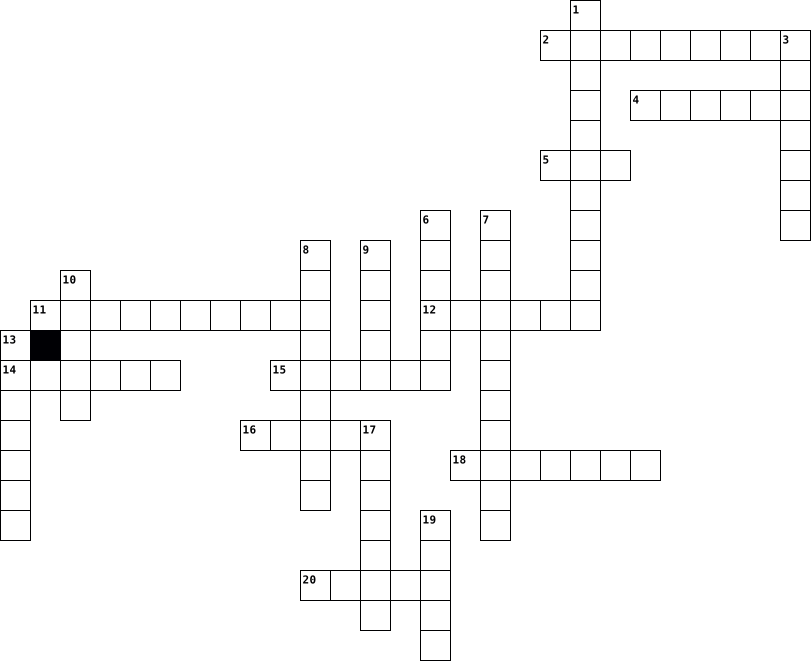
Across
- refused to give up
- led USSR for many years
- he gave up in VA
- killed at flossenberg
- fell asleep a lot, rescued many
- worst guy ever
- had a better plan for peace
- had known Lee well
- we should call him sparky
- guerrilla abolitionist
Down
- was a sucker
- held USA together
- was a wretch (his words!)
- cried when a law passed in 1833
- got too close to the powder keg
- president during U.S. Civil War
- broke his leg jumping off a balcony
- burned Macon, GA
- excellent bookkeeper
- led Bolsheviks briefly
20 Clues: was a sucker • worst guy ever • he gave up in VA • burned Macon, GA • held USA together • refused to give up • had known Lee well • excellent bookkeeper • killed at flossenberg • led Bolsheviks briefly • guerrilla abolitionist • led USSR for many years • was a wretch (his words!) • we should call him sparky • had a better plan for peace • cried when a law passed in 1833 • ...
History Crossword 2022-06-09

Across
- This word means to be confide as a prisoner for political or military reasons.
- This organization brought democratic nations in North America and Europe to defend against potential soviet attacks.
- This word literally means "fear of Muslims", we saw this grow tremendously after 9/11.
- truce, This was an agreement from both sides to ceasefire on Christmas day (they also had a football/soccer match).
- Best known Canadian terrorist group.
- This is the push for everyone to own a lot of stuff to be happy and live a good life.
- Pact, This was an agreement made between Germany, Italy, and Japan as a defences alliance.
- This is the last name of the Lithuanian teen who set himself on fire in protest against the Soviet occupation.
- This city is home to the Al-Aqsa mosque, which is one of the holiest sites in the world.
- War, This war was named this because we actually never the two major powers fighting.
- This is the greater economic, political, and cultural connectedness between different nations and areas of the world.
- This is an acronym for an organization meant to keep international peace and security, and developing friendly relations between countries.
- The compulsory enlistment or call up.
- This is shared defence system between Canada and the USA, designed to alert and combat in the case of nuclear war.
- This is a month that World war 2 both started and ended in (same month but different years).
Down
- This is also formally known as nuclear bomb, which was dropped on Japan.
- This term was used by the Nazis referring to the "racial ideal" (white, blonde, blue eyed, etc).
- This is the mass killing of a specific group/population, we saw this happen with Jewish people.
- In this city the French ship "Mont Blanc" crashed into the "Imo".
- This aerial combat was where fighter pilots would try to shoot down other planes.
- This is also known as "The Great Famine".
- Ridge, This battle is often considered as the battle that defined Canadian independence and military prowess.
- mask, This tool was used to protect a soldier from breathing in toxic gases and chemicals.
- Raid, While this battle was ultimately a fail , it served as a learning experience that the allied forces used in later battles.
- This was were land battles took place in World War 1, they were filthy, filled with rats, mud, water, lice and much more.
- Ferdinand, The assassination of this man sparked World War 1 to start.
- This agreement is signed to temporarily stop war.
- A public general vote to pass a law or make a big decision.
- tax, This was introduced in World War 1 as a temporary measure to help fund the war effort. We still have this to date.
- This is when the government bans the sale and/or consumption of alcohol.
- This is the voluntary abstinence from drinking alcohol.
- This is information, that is inaccurate or misleading, intended to promote or advertise a specific political cause or point of view.
- This is an acronym for when and if war broke out it would mean that both sides and their allies would most likely be wiped out.
33 Clues: Best known Canadian terrorist group. • The compulsory enlistment or call up. • This is also known as "The Great Famine". • This agreement is signed to temporarily stop war. • This is the voluntary abstinence from drinking alcohol. • A public general vote to pass a law or make a big decision. • In this city the French ship "Mont Blanc" crashed into the "Imo". • ...
"Modern" History 2022-06-09

Across
- Loyalists to Lenin
- Facismo leader
- Technically ended a long time ago, but is still ongoing between Kim Jong Un
- German Party formed in 1920 that dissolved shortly after the Second World War
- British Prime minister that led throughout World War Two
- Death Caused WW1
- Ruler of the largest empire in Eastern Asia and threatened China
- Chinese communist leader using the Great Leap Forward
- Divorced, Beheaded, Died: Divorced, Beheaded, Survived
- King of France that died during a conflict
- Separate country for muslims in India
- Led a Socialist party from 1920 to 1945
- The Last Tsar
- Not quite a war, contrary to the name.
- Economic policies of the West
- First communist leader
- Served as US president. Related to a president who led just before Woodrow WIlson
- The most publicized assassination in the US
- Major conflict between 100+ countries in Europe and the Pacific
- Competetor to Hitler in being a nasty piece of work. Communist leader.
- How you’re viewing this
- WW1 power that dissolved into two separate countries afterward
- I love GOOOOOOOOOLD. Cited as the richest man ever
- The colony owner
- Occuring in 1975, created PTSD for soldiers to this day
Down
- Leader in South Africa. First of his group to lead
- Queen of France that died same as her husband
- Not long after the end of WW2, this decended between the “West” and the “East”
- Separate country for muslims in India
- A belief that Europeans need to make colonies more european
- Multiple attacks on a holy land by christians
- a tactic where the wwhole country contributed to the conflict
- World Wide company
- Fromer chancellor of Germany in approx 1900
- A rebellion occuring in 1900, major battle being in Peking
- THe first tank ever built
- Also called the Great War or War to End All Wars
- Turning point of the Pacific war.
- British PM that Declared war on Germany
- A belief that there is a natural hierarchy in human life
- US president during the War to end all Wars
- Considered one of the most peaceful humans to ever exist
- Helped spread religion
- Loyalists to Tsar
- Former US general and US president
- Took much of the blame for WW1. Fell apart afterward
- America’s version of total war that is more effective
- A drug that start a war in China
- Ended the War in the Pacific
- Economic policies of the East
50 Clues: The Last Tsar • Facismo leader • Death Caused WW1 • The colony owner • Loyalists to Tsar • Loyalists to Lenin • World Wide company • First communist leader • Helped spread religion • How you’re viewing this • THe first tank ever built • Ended the War in the Pacific • Economic policies of the West • Economic policies of the East • A drug that start a war in China • ...
Art History 2022-09-01

Across
- Northern European artists came from _______ [HINT: Starts With FL]
- Gutenberg’s book press created in 1436 was a ____-____ press
- Popular ___________ book-type was the Book of Hours
- A great benefactor of Flemish art was the ____ __ ______ [HINT: Three Words, No Spaces]
- Artists from ________ are also called Flemish painters
- The name of the museum where the Merode Altarpiece is The _________
- St ____ is the patron saint of painters
- The first stock exchange was in
- Northern European artists came from ______ [HINT: Starts With FR]
- Local ______ were groups that allowed artists to train and work together
- Jan van Eyck uses ___ as his main painting media
- The ______ Richthofen talks about in her thesis is connected to St. Bridget
- The __________ is the scene was Christ is lowered from the cross
- The Ghent Altarpiece has many scenes included in its
- Northern European artists came from _______
Down
- In the Annunciation scene Mary often reads scripture from the Book of
- were schools where young illuminators trained
- Silk and wool trades also produced
- Mary is told by the Angel ________ that she will be the mother of Jesus
- Oil paint layers add ____________ of colors
- Books were likely produced in _______ workshops
- The ____ of the Unicorn tells a popular 14th century story (HINT: a major tapestry)
- van Eyck, was the father of painting in the north
- The ___________ Richthofen talks about relates to personal devotion
- Northern European artists came from _______ [HINT: Starts With H]
- The _______ was a symbol of Jesus Christ
- Northern artists tend to ____ their names on their artwork
- Cennino _______ was an Italian artist who wrote about oil paints
- Witz set his biblical story in (HINT: Instead of the Holy Land)
- The Man in the Red Turban was a ____-_________ with extraordinary detail
30 Clues: The first stock exchange was in • Silk and wool trades also produced • St ____ is the patron saint of painters • The _______ was a symbol of Jesus Christ • Oil paint layers add ____________ of colors • Northern European artists came from _______ • were schools where young illuminators trained • Books were likely produced in _______ workshops • ...
History homework 2022-09-22

Across
- Moral code of Islam
- Isreal today
- Holiest city for Muslims
- A loyal follower of Jesus
- Individual spirit/soul
- salvation for Hindus
- Religious duties
- Religious duties
- Religious duties
- Actions that affect the next life
- Rebirth of the soul
- Pilgrimage to Mecca
- salvation for Buddists
- People from the middle east
- Muslim place of worship
- Enlightened one
Down
- savior sent by god
- Holy book of Islam
- Followers who spread the word
- Effort in gods service
- Founder of Christianity
- Scattering of Jewish people
- Ethnic group from the fertile crescent
- Fixed social class system
- Messanger from god
- Highest spirtitual leader for Buddists
- Journey from Mecca to Medina
- Led the exodus
- Muslim god
- Founder of Buddism
- An agreement with god
- Trinity 3 main Hinduism gods
32 Clues: Muslim god • Isreal today • Led the exodus • Enlightened one • Religious duties • Religious duties • Religious duties • savior sent by god • Holy book of Islam • Messanger from god • Founder of Buddism • Moral code of Islam • Rebirth of the soul • Pilgrimage to Mecca • salvation for Hindus • An agreement with god • Effort in gods service • Individual spirit/soul • salvation for Buddists • ...
History Crossword 2025-11-06

Across
- The Declaration of Independence famously states that "All Men are Created _____"
- The Third Amendment was a response to this British Act.
- A tax on imported goods.
- The name of the Indigenous woman who assisted Lewis and Clark on their expedition
- The Battle that got France involved in the war.
- Citizens are protected from unreasonable searches and ____ under the Fourth Amendment
- _____ Destiny was the belief that the western lands of North America were owed to the USA.
- The Monroe ______ stated that the US did not want European settlers in America anymore
- The first President of the US
- The ____ papers, written by Jay, Hamilton, and Madison, defended the Constitution.
Down
- The battle at which the Star-Spangled Banner was written
- The name of the Party founded by President Jackson
- President Thomas ______ was the main author of the Declaration of Independence
- Protection from Cruel and Unusual _____ is protected under the Eighth Amendment.
- The first colony in the New World, which mysteriously disappeared.
- The word to describe Congress being comprised of two houses.
- The country that previously owned California and Texas
- President James _______ is often referred to as the "Father of the Constitution"
- The country that Jackson pushed out of Florida
- The Secretary in the President's cabinet that handles foreign affairs/business
- The country who England and the Colonies went to war with before the Revolution.
- This amendment protects religion, speech, press, assembly, and petition.
- The name of the Enslaved Man who joined Lewis and Clark on their expedition
23 Clues: A tax on imported goods. • The first President of the US • The country that Jackson pushed out of Florida • The Battle that got France involved in the war. • The name of the Party founded by President Jackson • The country that previously owned California and Texas • The Third Amendment was a response to this British Act. • ...
Medieval History 2025-11-07

Across
- Medieval poet-musicians who originated in France
- The medieval knightly system
- A person who is in a formal training program, typically in a skilled trade, working under the guidance of a master craftsman
- A medieval military operation involving the surrounding and blockading of a town, castle or fortress by an army in the attempt to capture it
- the principal part of a system of hereditary symbols dating back to early medieval Europe, used primarily to establish identity in battle.
- Covering that protected from arrows
- A self-sufficient agricultural estate owned by a lord
- Duel done for entertainment and to find the best
- Period of history that lasted approximately 1,000 years (started around 500 A.D., ended in mid-1400s)
Down
- Fearsome warrior of the middle ages
- Political system that developed in Europe during the Middle Ages.
- a young servant to a knight and someone who one day hoped to become a knight himself
- A fortified structure built to house and protect nobles
- Lowest tier of the feudal system social class
- A piece of land given to a lord
- French king who ruled from 768 to 814
- protective clothing with the ability to deflect or absorb the impact of projectiles or other weapons that may be used against its wearer
- a person who held land under the feudal system
- an agricultural laborer bound under the feudal system to work on their lord's estate.
- A member of the upper class
20 Clues: A member of the upper class • The medieval knightly system • A piece of land given to a lord • Fearsome warrior of the middle ages • Covering that protected from arrows • French king who ruled from 768 to 814 • Lowest tier of the feudal system social class • a person who held land under the feudal system • Medieval poet-musicians who originated in France • ...
History Culminating 2025-06-11

Across
- Where did macleod deliver a paper on May 3, 1922?
- February 20, 1959
- What first satelite launched by the russians overshadowed the revealing of the jet?
- How did the batteryless radio work from wall plugs? Got the idea from US's experimental recieving tubes
- Who did they test insulin on?
- Which prime minister cancelled the program?
- Who invented the first batteryless radio?
- Where did people find the cure for diabetes?
- Who was the supervisor for the research of insulin?Him and the lead fought a lot
- When did they test insulin on human subjects?
- What war did banting serve in?
- what was the supersonic jet fighter made in 1954 called?
- When did they find the crude formula for insulin
- Who was the assistant assigned to the research of insulin?
- When did they publish a report on insulin in the Canadian Medical Association Journal?
- Who lead the research to find insulin?
Down
- How did the connector connect to the radios for an AC source as houses were only wired for light bulbs
- What sound was created by radios before the AC vacuum tube?
- The first AC tube invention was called the
- What parts of an organ were fed to diabetic patients?
- Whch fighter pilot first flew the jet?
- Rogers worked in?
- Who was the biochemist of insulin
- Sold in August 26, 1925
- When was the jet revealed in front of 12000 people?
- Who designed and built the jet?
- Rogers created the Standard Radio Manufacturing Corporation Ltd. to start producing radios
- What animal was used mainly for the research?
- What was insulin called before
- What was the price of the first batteryless radios when annual income was $1000?
- Radio station founded by rogers. the first radio station to operate out of municipal AC power source
- When was insulin available worldwide?
- What was the temporary solution for diabetes before insulin?
33 Clues: February 20, 1959 • Rogers worked in? • Sold in August 26, 1925 • Who did they test insulin on? • What war did banting serve in? • What was insulin called before • Who designed and built the jet? • Who was the biochemist of insulin • When was insulin available worldwide? • Whch fighter pilot first flew the jet? • Who lead the research to find insulin? • ...
History: Difficult 2025-06-08

Across
- West African slaver Kingdom
- First European settlement in North America
- Antebellum vigilante
- Ancient Sumerian City
- Naval skirmish between Iran and America
- The Five Families
- Christian invasion of the Baltics
- Subject of the trial of the century
- 1970's Vice President
- The Gentleman Pirate
- Tuscan poet
- Last ruling dynasty of Iran
- Namesake of a Latin American nation
- Home of the Knights Hospitaller
- 1940's Appalachian Subgenre of Country music
- Presumed eaten by crabs
Down
- Defeated in the Nullification Crisis
- Soviet female pilots
- Vandal King who vandalized Rome
- Longest reign in Mexican history
- Emperor of America
- Home of Lonesome George
- Grandfather of the Biblical Noah
- 1967 Levantine conflict
- Blinder of the Cyclops
- Purged in the Albigensian Crusade
- Capital of Roman Britain
- Region sacked by William the Conqueror
- Successors of Alexander the Great
- Saharan trade node
- Birthname of a famous Borjigin clansman
31 Clues: Tuscan poet • The Five Families • Emperor of America • Saharan trade node • Soviet female pilots • Antebellum vigilante • The Gentleman Pirate • Ancient Sumerian City • 1970's Vice President • Blinder of the Cyclops • Home of Lonesome George • 1967 Levantine conflict • Presumed eaten by crabs • Capital of Roman Britain • West African slaver Kingdom • Last ruling dynasty of Iran • ...
Evolutionary History 2025-05-27

Across
- a part of an organism (for example, one or more bones)
- living things, such as plants, animals, and bacteria
- the very long time that spans the history of Earth, from the very first cellular life to the present
- a scientist who studies fossils in order to understand the ancient history of life on Earth population a group of the same type of organism living in the same area related sharing a common ancestor population
- a related organism from a previous generation
- a trait that makes it more likely that an individual will survive in a specific environment
- a group of individuals born and living at about the same time
- to receive genes from a parent
- a body structure in two or more species that features the same parts (for example, the same bones)
- evidence of life from the past, such as fossilized bones, footprints, or leaf prints
- the process by which one population evolves into two or more different species
- having died out completely and no longer alive anywhere on Earth
- everything (living and nonliving) that surrounds an organism
Down
- an older population from which two or more newer species descended
- the process by which species adapt to environmental changes over a very long time
- a group of organisms of the same kind (in one or more populations) that do not reproduce with organisms from any other group
- a random change to a gene that sometimes results in a new trait
- a graph that uses bars to show how characteristics or values are distributed within a group
- a more recent species that evolved from an ancestor population
- to classify based on scientific examination
- the process by which the distribution of traits in a population changes over many generations
- an organism's arm, leg, or wing
- when something stays mostly the same over time
- a specific characteristic of an individual organism
24 Clues: to receive genes from a parent • an organism's arm, leg, or wing • to classify based on scientific examination • a related organism from a previous generation • when something stays mostly the same over time • a specific characteristic of an individual organism • living things, such as plants, animals, and bacteria • ...
Canadian history 2025-05-26

Across
- Canada's largest province
- Canadas southern neighbour
- Ocean on Canadas East Coast
- Canadas tallest mountain
- Number of territories in Canada
- Canada's national flower
- Canada's capital
- Number of oceans on Canada's coast
- Canadas national winter sport
- Initials of Canada's smallest province
- B.C.'s premier
- Initials of Canada's oldest retail store
- Premier of Ontario
Down
- Most westerly province
- Canada's National animal
- Leaf on our flag
- Number of time zones in Canada
- Premier of Alberta
- Where the Great Lakes are located
- Canada's national summer sport
- Canadas largest Lake
- Canada's largest island
- Canadian Prime Minister
- Number of provinces in Canada
- Ocean on Canadas West Coast
- Ocean on Canadas north coast
26 Clues: B.C.'s premier • Leaf on our flag • Canada's capital • Premier of Alberta • Premier of Ontario • Canadas largest Lake • Most westerly province • Canada's largest island • Canadian Prime Minister • Canada's National animal • Canadas tallest mountain • Canada's national flower • Canada's largest province • Canadas southern neighbour • Ocean on Canadas East Coast • Ocean on Canadas West Coast • ...
American History 2025-05-27

Across
- U.S. naval base attacked in WWII
- Early 20th century immigration processing center in New York
- Site of the 1941 surprise attack
- Peace agreement that ended Reconstruction
- The 19th Amendment gave women the right to ___
- 1863 proclamation freeing enslaved people
- Site of a famous 1848 gold discovery
- Scandal that led to Nixon’s resignation
- The battle that turned the tide of the Civil War
- 1963 civil rights speech: “I Have a ___”
- Landmark 1965 law eliminating literacy tests
- Court case that ended school segregation
- Civil War president
- This act provided free land to settlers in the West
Down
- Name of the U.S. program to rebuild Europe after WWII
- African American woman who refused to give up her seat
- President during the Great Depression and WWII
- African American leader who advocated self-defense in the 1960s
- 1960s domestic program for civil rights and poverty relief
- Massive 1930s government spending program
- President during the Cuban Missile Crisis
- Nickname for the 1920s era of economic boom and jazz
- Movement to end slavery
- Cold War conflict from 1955 to 1975
- Industrialist who revolutionized automobile production
- First ten amendments to the Constitution
- Women's suffrage leader, Susan B. ___
27 Clues: Civil War president • Movement to end slavery • U.S. naval base attacked in WWII • Site of the 1941 surprise attack • Cold War conflict from 1955 to 1975 • Site of a famous 1848 gold discovery • Women's suffrage leader, Susan B. ___ • Scandal that led to Nixon’s resignation • 1963 civil rights speech: “I Have a ___” • Court case that ended school segregation • ...
Kansas History 2025-06-27

Across
- - Explorer
- - Act
- - Era
- - Railroad
- - Act
- - Party
- - Cities
- - Trail
- - Abolitionist
- - Constitution
- - Union
- - Violence
- - Constitution
- - Creek
- - Migration
- - Traders
- - Wilson
- - Depression
- - Massacre
- - Antislavery
- - Lindsborg
Down
- - Immigrants
- - Missouri
- - Building
- - Germans
- - Freestaters
- - Hunters
- - De-coronado
- - City
- - Ruffians
- - Daltons
- - Namesake
- - First-state
- - Eighteen-sixty-one
- - Repealed
- - Temperance
- - Settlement
- - Raider
- - Cowtown
- - Sacking
- - Trail
- - Cattle
42 Clues: - Act • - Era • - Act • - City • - Party • - Trail • - Union • - Creek • - Trail • - Cities • - Raider • - Cattle • - Wilson • - Germans • - Hunters • - Daltons • - Cowtown • - Sacking • - Traders • - Missouri • - Building • - Explorer • - Railroad • - Ruffians • - Namesake • - Violence • - Repealed • - Massacre • - Migration • - Lindsborg • - Immigrants • - Temperance • - Settlement • - Depression • - Freestaters • - De-coronado • - First-state • ...
U.S History 2025-06-29

Across
- 1962 standoff between the U.S. and Soviet Union over nuclear missiles in Cuba and is often cited as the closest the world has ever come to full-scale nuclear war.
- 1969 achievement as part of NASA’s Apollo 11 mission involving astronauts Neil Armstrong, Buzz Aldrin, and Michael Collins.
- The process of ending racial separation, particularly in public institutions like schools, transportation, and the military. It was the central goal of the Civil Rights Movement.
- The movement that led to the 19th Amendment, granting women the right to vote in 1920. Notable women of the movement were Susan B. Anthony, Lucy Stone, and Frances Ellen Watkins Harper.
- A decade of economic prosperity, cultural change, and social dynamism between World War I and the Great Depression.
- Terrorist attacks in 2001 that led to the War on Terror against two commercial buildings in New York, one government building in Virginia, and four commercial airplanes.
- Four-year conflict 1860s between the Union (North) and Confederate (South) states that was partially about ending slavery.
- Conflict with Great Britain often called the "Second War of Independence." This war inspired its author to create the Star-Spangled Banner, the U.S.’s national anthem today.
- Japanese city on which the first atomic bomb, named “Little Boy,” was dropped in 1945 during the final stages of World War II.
- Document signed in 1776, declaring the colonies' separation from Britain was the Declaration of ______.
- Period of rapid economic and technological growth from the late 1700s to the early 1900s and consisted of two periods. The first was marked by inventions like the cotton gin and textile mills. The second was marked by mass production, steel, oil, and electricity.
- The war that led to American independence from British rule.
- This railroad completed in 1869, connecting the East and West coast railroad networks. The two railroads met in Utah where the “Golden Spike” was driven to mark its completion.
- Forced relocation of Native American nations from their ancestral lands in the southeastern U.S.
Down
- A series of programs, such as social security and public works, and reforms, like banking, initiated by Franklin D. Roosevelt to combat the Great Depression.
- Global conflict (1914-1918) between the Allied Powers and the Central Powers and which the U.S. entered in 1917. This conflict was fought in the trenches.
- Severe worldwide economic downturn in the 1930s caused by the stock market crash in October 1929, bank failures, and tariffs.
- Long and controversial war in Southeast Asia involving the U.S. from the 1960s to 1970s. The war was fought between the communist North Vietnam and the anti-communist South Vietnam, and both sides’ respective global allies.
- Pivotal Civil War battle fought in Pennsylvania spanning three days where Confederate General Robert E. Lee’s troops fought Union General Gorge G. Meade’s troops.
- Japanese attack in 1941 on a U.S. naval base that led to U.S. entry into World War II, joining the Allies against the Axis powers.
- Global conflict (1939-1945) in which the U.S. played a major role. This conflict involved 30+ countries and was fought between the Allied and Axis Powers.
- Several month war in 1898 that led to the U.S. gaining new territories like Guam, Puerto Rico, and the Philippines.
- Historic election of the first African American president of the U.S. in 2008.
- Period after the Civil War focused on rebuilding the South and integrating freed slaves.
- The 1803 acquisition of vast territory from France, doubling the size of the U.S.
- Movement in the 1950s and 60s aiming to end racial discrimination and secure equal rights that ended with the passing of the Civil Rights Act (1964) and the Voting Rights Act (1965).
- U.S. President Lincoln's ______ Proclamation declaring slaves in Confederate states free.
- The foundational law of the United States was drafted by Founding Fathers and was ratified in 1788.
- Four-decade long geopolitical rivalry and ideological conflict between the U.S, along with its allies was known as the Western Bloc, and the Soviet Union, along with its allies known as the Eastern Bloc.
29 Clues: The war that led to American independence from British rule. • Historic election of the first African American president of the U.S. in 2008. • The 1803 acquisition of vast territory from France, doubling the size of the U.S. • Period after the Civil War focused on rebuilding the South and integrating freed slaves. • ...
U.S. History 2025-12-01

Across
- a person who made or sold alcohol illegally
- the nation that mobilized the most soldiers in the Great War
- a form of racism and immigrants would be treated poorly
- a group of only white people in the 1920’s harassing any other race
- became president in 1932
- the nation that had the highest percentage of wounded soldiers during the Great War
- women who challenged their gender norm for freedom
- bars underground or in secret places during the Prohibition
- scare a time period where people lived in fear during WW1
- a time where people would buy stocks hoping they would go up
- major world event that brought an end to the Great Depression
Down
- a gang of leaders and politicians involved in scandals with money
- a ban on alcohol sales and promoting it
- got its name from severe dust storms in the Great Plains
- the nation that had the most soldiers killed during the Great War
- makeshift communities where the Dust Bowl migrants settled
- a time where people re-enacted everything in the Bible
- similar to Shantytowns
- made for families during the Great Depression who were less fortunate
- this was what the U-boat used to sink the neutral merchant
20 Clues: similar to Shantytowns • became president in 1932 • a ban on alcohol sales and promoting it • a person who made or sold alcohol illegally • women who challenged their gender norm for freedom • a time where people re-enacted everything in the Bible • a form of racism and immigrants would be treated poorly • got its name from severe dust storms in the Great Plains • ...
History 4 2025-12-05

Across
- A rock formation named for Sacagawea's son is...
- After the expedition, the president chose Meriwether Lewis to be the ... of the Louisiana Territory.
- The woman who helped guide the men through the Louisiana Territory.
- After Sacagawea died, her children were cared for by ... and his wife.
- The group that explored the Louisiana Territory built Fort ... when they reached the ocean.
- In an election for Illinois legislature, Peter Cartwright ran against...
- Found in the western United States
- For early explorer, the easiest way to travel was to follow ... or streams
- The group chosen to explore the new territory of the United States was called the Corp of ...
- An open, free land where few people have settled.
- The fort built at the end of the Wilderness Trail...
- Spent his life as a circuit-riding preacher to the Midwest.
Down
- Marked a trail from Virginia to the area known as Kentucky.
- The trail that led pioneers from Virginia to Kentucky was called the...
- Then men chosen to explore the Louisiana Territory were Meriwether Lewis and...
- A group of volunteers that assists a regular army in an emergency is a...
- The wilderness that Daniel Boone explored and helped to settle was...
- Meriwether Lewis was a neighbor of President...
- The height, or elevation, above sea level is..
- A person who travels to an unknown land and settles there is a ...
- The group exploring the Louisiana Territory saw the ... Ocean as they reached the West Coast.
- Kentucky was purchased from the ... Nation.
- The circuit-riding preacher who helped bring about the Second Great Awakening.
- Purchased the Louisiana Territory.
24 Clues: Found in the western United States • Purchased the Louisiana Territory. • Kentucky was purchased from the ... Nation. • The height, or elevation, above sea level is.. • Meriwether Lewis was a neighbor of President... • A rock formation named for Sacagawea's son is... • An open, free land where few people have settled. • ...
World history 2025-11-21

Across
- oral historians who passed historical knowledge
- a set of well established trade routes across the sahara
- group of people who travel together
- rose in power with sundiata as ruler
- valuable trade currency; shiny
- sole control over something
- South of the sahel
- practice of farming
- originated in western africa
- one of the fiver pillars of islam
- valued trade back then; used in food
Down
- a ruler
- South of the sahara
- descendants from a common ancestor
- the shona's people capital city
- the process of shaping iron
- the religion of muslims
- young muslism who became a world traveler
- people who go between in the salt-gold trade
- wealthiest Mali ruler
- boats with triangular sails
- a sickly prince
- Soninke clans joining together to form a kingdom
- bookk by ibn battuta
- center of trade and learning
25 Clues: a ruler • a sickly prince • South of the sahel • South of the sahara • practice of farming • bookk by ibn battuta • wealthiest Mali ruler • the religion of muslims • the process of shaping iron • sole control over something • boats with triangular sails • originated in western africa • center of trade and learning • valuable trade currency; shiny • the shona's people capital city • ...
Roman History 2025-11-05

Across
- Island near the Toe of Italy
- Second of 5 Good Emperors
- General & Consul Known for Proscriptions
- River Caesar Crossed in Northern Italy
- Builder of a Wall in Britain
- Real Name of Rome's First Emperor
- Wine from Egypt
- First Roman Emperor
- Last of Flavian Emperors
- First King of Rome
Down
- Augustus' Patron of Poets
- Dreamy General from Augustus' Time
- First Flavian Emperor
- Last Name of Land Reforming Brothers
- Carthaginian War General
- Famous Orator and Lawyer
- Member of 1st Triumvirate
- Real Name of Lesbia
- Sea Battle in 31 BCE
- Rival of Sulla
20 Clues: Rival of Sulla • Wine from Egypt • First King of Rome • Real Name of Lesbia • First Roman Emperor • Sea Battle in 31 BCE • First Flavian Emperor • Carthaginian War General • Famous Orator and Lawyer • Last of Flavian Emperors • Augustus' Patron of Poets • Second of 5 Good Emperors • Member of 1st Triumvirate • Island near the Toe of Italy • Builder of a Wall in Britain • ...
world history 2026-01-14

Across
- Although hieroglyphs were first written on stone and clay, as in Mesopotamia, the Egyptians soon invented a better writing surface—papyrus
- a bit of very good land in-between ET
- one god
- For the kings of the Old Kingdom, the rest-ing place after death was an immense structure called a
- a season of pure rain
- one part of a culture finding its place to another
- Indus Valley civilization is some- times called Harappan
- one ruler but not a dictator
- The Babylonian Empire reached its peak during the reign of
Down
- Geographers often refer to the landmass that includes India, Pakistan, and Bangladesh as the Indian
- Royal and elite Egyptians’ bodies were preserved by
- many gods
- the people who own the fertile crescent
- a person in Egypt that was seen as a god and was one of the leaders
- a state that acts like a country
- a bunch of people in a family who rain over a country one bye one
- This type of government in which rule is based on reli-gious authority is called a
- the old Egyptian writing stile
- he was a king
- branches. To the north, near the sea, Lower Egypt includes the Nile
20 Clues: one god • many gods • he was a king • a season of pure rain • one ruler but not a dictator • the old Egyptian writing stile • a state that acts like a country • a bit of very good land in-between ET • the people who own the fertile crescent • one part of a culture finding its place to another • Royal and elite Egyptians’ bodies were preserved by • ...
history years 2026-01-19

Across
- Hawaii
- Maine
- Maryland
- Rouge Louisiana
- Mississippi
- Idaho
- Moines Iowa
- California
- Alabama
- Georgia
- Kansas
- Indiana
- Rock Arkansas
- Delaware
- Kentucky
Down
- Montana
- Florida
- Alaska
- Nebraska
- Massachusetts
- City Missouri
- Minnesota
- Illinois
- Arizona
- Michigan
- City Nevada
- Connecticut
- Colorado
- New Hampshire
29 Clues: Maine • Idaho • Hawaii • Alaska • Kansas • Montana • Florida • Arizona • Alabama • Georgia • Indiana • Nebraska • Maryland • Illinois • Michigan • Colorado • Delaware • Kentucky • Minnesota • California • Mississippi • City Nevada • Connecticut • Moines Iowa • Massachusetts • City Missouri • Rock Arkansas • New Hampshire • Rouge Louisiana
US History 2026-01-21

Across
- Elizabeth Cady Santon attended _
- abolished slave trade in DC
- Jefferson and Madison's party
- new transport in 1869
- purify the Church of England
- first official British colony
- spiritual movement
- belief of God given right
- First battle in Civil War
- act that offered Western land
- spread out power in the government
- Wrote the declaration of independence
- owning people as property
- 16th president
- proclaimed the end of slavery
Down
- 4th president of the US
- Outcome of Townshend acts
- route for slave trade
- James Monroe's thoughts on external affairs
- servants for a certain period
- created the Trail of Tears
- Americans loyal to Britain
- Second war of Independence
- made cotton more profitable
- Believed in power in the government
25 Clues: 16th president • spiritual movement • route for slave trade • new transport in 1869 • 4th president of the US • Outcome of Townshend acts • belief of God given right • First battle in Civil War • owning people as property • created the Trail of Tears • Americans loyal to Britain • Second war of Independence • abolished slave trade in DC • made cotton more profitable • ...
American history 2025-09-08

Across
- was a 3 part system in which slaves were rbought to the colonies.
- The theory of Mercantilism in the colonies was their goal was to enrich Great Britain.
- a cash drop was grown mostly on plantations and was meant to sell for profit.
- the miltia was men from the colonies who fought for Great Britian
- Great Britians biggest rival in north america was France.
- the navigation acts were meant to punish the colonists for illegal smuggling of goods.
- places races on imports to the colonies
- came to the olonies from Europe to be apprentices with familes and learna trade.
- was a religous revival movement of the 1700s
- invented bi-focals, the Franklin stove and published Poor Richard's Almanac
- was when Britian relaxed its restrictions on the colonies.
- King Jame II created the dominion of New ENgland. This covered the area from southern maine to northen New Jersey
Down
- attacked the French in the Ohio River Valley and this lef to the French and Indian War.
- was the governing body of Great Britian
- was an 18th centruyh intellectual movement that emohasized reason and the scientific method.
- was the toughest part of the triangular trade
- was a large from in the southern colonies
- were the 2nd largest ethnic group in the colonies, and most of them were slaves.
- was a slave uprising in the colonies.
- was named by King James the 2nd to rule over the Dominion of New England.
20 Clues: was a slave uprising in the colonies. • was the governing body of Great Britian • places races on imports to the colonies • was a large from in the southern colonies • was a religous revival movement of the 1700s • was the toughest part of the triangular trade • Great Britians biggest rival in north america was France. • ...
American History 2025-08-25

Across
- month of Independence day
- Ruler of a castle
- First ten amendments is called the Bill of _______
- To choose a leader in an election
- A rule that everyone must follow
- Washington D.C. is the United State's _________
- Presidents home
- Colorful explosions in the sky on Independence Day
- National bird of US
- Basic name for US currency
Down
- Stars and stripes that represent the US
- The first people to live in America (_______ Americans)
- A path for people to walk on, like the Oregon ________
- First president
- The war where the North fought the South
- The US is make up of 50 of these, like California or Texas
- A big gun used in old wars
- Pioneers moved in this direction
- A valuable yellow metal
- Uncle _______ is a cartoon symbol for the US government
20 Clues: First president • Presidents home • Ruler of a castle • National bird of US • A valuable yellow metal • month of Independence day • A big gun used in old wars • Basic name for US currency • A rule that everyone must follow • Pioneers moved in this direction • To choose a leader in an election • Stars and stripes that represent the US • The war where the North fought the South • ...
American History 2025-09-10

Across
- (1764), British law forced colonists to exchange their own printed money for British currency, reducing colonial money circulation.
- Liberty, Secret colonial group formed to resist British taxation and enforcement, led by Samuel Adams.
- Party, 1773 protest where colonists disguised as Native Americans dumped tea into Boston Harbor to oppose British taxes.
- Virginia leader who opposed British taxation, famously saying, “If this be treason, make the most of it.”
- Locally printed colonial money that was devalued by the Currency Act.
- Law requiring colonists to house and supply British troops stationed in the colonies.
- A Native American uprising led by Chief Pontiac against British forts and settlers after the French and Indian War.
- A consolidation of northern colonies under Sir Edmund Andros enforced by King James II.
- A 1739 slave uprising in South Carolina that resulted in stricter slave laws.
- Law allowing the British East India Company to sell tea directly to colonists, undercutting local merchants.
- ending the French and Indian War, granting Britain control of territory east of the Mississippi River.
- Mountain range east of which colonists were forbidden to settle by the Proclamation of 1763.
- British policy of loosely enforcing colonial laws so long as colonies remained economically productive.
- Sites of the first battles of the American Revolutionary War in April 1775, marking the start of armed conflict.
- Civilian colonial militia who prepared to fight at a minute’s notice during the Revolutionary War.
- British leader who helped turn the tide of the French and Indian War in favor of Britain.
- African American dockworker killed in the Boston Massacre; remembered as the first casualty of the Revolution.
- Meeting of colonial delegates to address grievances against British policies and plan resistance.
- The overthrow of King James II in England, leading to William and Mary taking the throne and changes in colonial governance.
Down
- (1766), Law stating that Parliament had authority to make laws and taxes "in all cases whatsoever" over the colonies.
- Tax on molasses and sugar imports that increased customs enforcement and penalties for smuggling.
- Laws requiring colonial goods to be shipped only through English ports to benefit Britain’s economy.
- Officials appointed by the British crown to oversee colonial governments after the Glorious Revolution.
- Tax on printed materials in the colonies, sparking widespread protest under the slogan “no taxation without representation.”
- War, Conflict between Britain and France (with Native American allies) over territory in North America, ending in 1763.
- Punitive British laws shutting down Boston Harbor and restricting Massachusetts self-government after the Boston Tea Party.
- on imported goods like tea, glass, and paint to raise revenue from the colonies.
- deadly confrontation in 1770 where British soldiers fired on colonists, killing five including Crispus Attucks.
- British decree forbidding colonists from settling west of the Appalachian Mountains to avoid conflicts with Native Americans.
29 Clues: Locally printed colonial money that was devalued by the Currency Act. • A 1739 slave uprising in South Carolina that resulted in stricter slave laws. • on imported goods like tea, glass, and paint to raise revenue from the colonies. • Law requiring colonists to house and supply British troops stationed in the colonies. • ...
Art History 2025-12-15

Across
- Art form for Islamic culture due to Iconoclasm.
- Looking like a very simplified human being.
- Period of Greek Art that had good proportions and strong emotions.
- Putting more weight one leg.
- Attempting to do realism, however not quite there.
- Stolen portion of architecture, usually Roman.
- Semi-circular area above door/window.
- Event that rejected the use of symbols to represent religious things.
- Made with mother pearl inlay.
- A period of art which moves away from the High Renaissance.
Down
- Type of hall that has columns perched all throughout the building.
- Prominent theme is Staff God.
- Guardians to the gateways of important areas.
- One of the ninja turtles, painted Sistine Chapel.
- Art medium that was helpful to share multiple copies of an artwork.
- Art style that makes subjects look preferential.
- Sun God in Egyptian culture.
- Mask from Sierra Leone that was used to initiate young women.
- Made by women, representing "Women's wealth", traded and used for special occasions.
- Used in Mosques to call to service.
20 Clues: Putting more weight one leg. • Sun God in Egyptian culture. • Prominent theme is Staff God. • Made with mother pearl inlay. • Used in Mosques to call to service. • Semi-circular area above door/window. • Looking like a very simplified human being. • Guardians to the gateways of important areas. • Stolen portion of architecture, usually Roman. • ...
History final 2025-12-17

Across
- Government ruled by the people
- President during the Civil War
- Refers to the Industrial Revolution
- Deal FDR’s economic recovery programs
- Northern states during the Civil War
- Right to vote
- Movement to end slavery
- Period after the Civil War
- Act of freeing enslaved people
- Policy of extending power through colonies
Down
- President during the Great Depression
- Government ruled by a king or queen
- Supreme law of the United States
- War Global wars of the early 20th century
- Forced labor system
- Major political or social change.
- War U.S. war from 1861–1865
- Severe economic downturn of the 1930s
- Central workplace of industrialization
- Territories controlled by imperial powers
20 Clues: Right to vote • Forced labor system • Movement to end slavery • Period after the Civil War • War U.S. war from 1861–1865 • Government ruled by the people • President during the Civil War • Act of freeing enslaved people • Supreme law of the United States • Major political or social change. • Government ruled by a king or queen • Refers to the Industrial Revolution • ...