
history Crossword Puzzles
Audio history 2026-01-29

Across
- created home computer in 1984
- portable tape player made by sony in 1980
- the first company to sell cd's
- the composer that inspired the length of a cd
- this stands for advanced digital audio tape
- the first company to make plate and gistal reverb
- stands for musical instrument digital interface
- name for the first version of protools
- created first home computer in 1981
Down
- company that invented adat
- the last name of the man that invented horns and tweeter
- the name of time code that syncs audio to video
- video software invented by apple
- both a guitar and the name of the guy that invented overdubbing
- sued napster for copyright infringement
- the first man to display 16 bit digital recording
- the company name that created the mp2
- the highest sample rate in 1996
- the v in dvd
- the first type of cd you could edit
20 Clues: the v in dvd • company that invented adat • created home computer in 1984 • the first company to sell cd's • the highest sample rate in 1996 • video software invented by apple • the first type of cd you could edit • created first home computer in 1981 • the company name that created the mp2 • name for the first version of protools • sued napster for copyright infringement • ...
World History 2025-08-28

Across
- Belief in many gods.
- Sumerian wedge-shaped writing.
- Farming and domestication of plants/animals.
- First Mesopotamian empire.
- Region between the Tigris and Euphrates.
- Early Andean civilization.
- Member of the noble class.
- Mesopotamian city-state civilization.
- Ancient civilization along the Nile.
- Belief that spirits inhabit natural objects.
- Social system dominated by men.
- Cloth and fabric production.
- Early Mesoamerican civilization.
- Ancient civilization along the Yellow River.
Down
- Society with equal rights and status.
- River in Mesopotamia.
- Tombs for Egyptian pharaohs.
- Mesopotamian temple pyramid.
- Anatolian people who used iron.
- River in Mesopotamia.
- Indus Valley city.
- Working with metals.
- Skilled craft worker.
- Empire known for military power.
- Herders of domesticated animals.
- Egyptian writing system.
26 Clues: Indus Valley city. • Belief in many gods. • Working with metals. • River in Mesopotamia. • River in Mesopotamia. • Skilled craft worker. • Egyptian writing system. • First Mesopotamian empire. • Early Andean civilization. • Member of the noble class. • Tombs for Egyptian pharaohs. • Mesopotamian temple pyramid. • Cloth and fabric production. • Sumerian wedge-shaped writing. • ...
Modern History 2025-12-07

Across
- Subcultures with norms or values that contradict dominant culture
- Cultural elements that are tangible
- Small industry that is confined to the home or small workshop
- The Pueblo people who experienced a massacre by Oñate's forces in 1599
- Religion of West African origin practiced by the people of Haiti
- Period of violent suppression during French Revolution
- Payment for work that is typically lower than the value of the work
- French colony that was renamed Haiti following independence
- Revolutionary France's "national razor"
- Parisian prison that was "stormed" by revolutionaries for gunpowder
- Cultures within a larger culture
- French revolutionary who presided over a period of violent suppression
- Taking advantage of someone/something; being paid less than the value created
- Marxist term for capitalist class
- Consequences for conforming to or deviating from a norm
- Cultural elements that are intangible
- Led Haitian Revolution and became Haiti's first leader; Jean-Jacques ___
Down
- Free mixed-race people of French colonies
- First leader of Haitian Revolution; Toussaint ___
- Vow by Third Estate to continue meeting until a constitution was made
- Destruction of tea in protest of British taxes
- Marxist term for class with "nothing to lose but their chains"
- American revolutionary author of Common Sense; Thomas ___
- Good produced for exchange/sale
- The description of 18th-century trade between Africa, Europe, and the Americas
- Government ruled by an emperor, king, or queen
- Occupation of public buildings by soldiers; American Revolution
- Expectations of behavior, feeling, or thought
- Name taken by Third Estate while drafting a constitution
- Cultural beliefs about what is desirable/undesirable, good/bad
- Nickname for five acts that angered the Thirteen Colonies
- The material and nonmaterial characteristics of a group
- What capital must do to survive; "___ or die/perish"
- The revolution that popularized skepticism and study of the world
- Governing body of Thirteen Colonies during Revolution
35 Clues: Good produced for exchange/sale • Cultures within a larger culture • Marxist term for capitalist class • Cultural elements that are tangible • Cultural elements that are intangible • Revolutionary France's "national razor" • Free mixed-race people of French colonies • Expectations of behavior, feeling, or thought • Destruction of tea in protest of British taxes • ...
U.S. History 2025-12-22

Across
- First ten amendments protecting individual liberties
- Supreme law of the United States
- First national government of the United States
- Law that banned trade with foreign nations
- Changes or additions to the Constitution
- The name of the war for independence
- British practice of forcing sailors into naval service
- Government formed by seceding Southern states
- Ship that carried Pilgrims to North America
- Colonists who supported independence from Britain
- Northern states during the Civil War
- Withdrawal of Southern states from the Union
- First permanent English settlement in North America
- Opponents of the Constitution who wanted stronger state power
Down
- Division of power between national and state governments
- Colonists who remained loyal to Britain
- Period when Britain loosely enforced colonial laws
- British lawmaking body that taxed the colonies
- Trade system connecting Europe Africa and the Americas
- Act Law that taxed printed materials in the colonies
- Forced labor system that expanded in the colonies
- Movement to end slavery in the United States
- Economic system used by European empires to control colonies
- Colonial protest involving refusal to buy British goods
- Agreement meant to reduce sectional conflict
- Document that announced independence in 1776
- Supporters of the Constitution and strong national government
- Growing division between North South and West
- Taxes placed on imported goods
- Order that freed enslaved people in Confederate states
30 Clues: Taxes placed on imported goods • Supreme law of the United States • The name of the war for independence • Northern states during the Civil War • Colonists who remained loyal to Britain • Changes or additions to the Constitution • Law that banned trade with foreign nations • Ship that carried Pilgrims to North America • Movement to end slavery in the United States • ...
US History 2025-12-26

Across
- Product of the late nineteenth-century movement to offer a broad array of social services in urban immigrant neighborhoods
- Tariff of 1913 which, in addition to lowering and even eliminating some tariffs
- an American author and socialist, most famous for his utopian novel, Looking Backward
- A federal law intended to turn Native Americans into farmers
- journalism that is based upon sensationalism and crude exaggeration.
- known as the "mother" of social work
- freedom from punishment
- a statement of principles for peace that was to be used for peace negotiations in order to end World War I.
- the theory that individuals, groups, and peoples are subject to the same Darwinian laws of natural selection as plants and animals.
- The first law to restrict monopolistic trusts and business combinations
- Strike against the Pullman Palace Car Company
- In 1870, he founded the standard Oil Company of Ohio, which was his first step in creating his vast oil empire.
Down
- gave women the right to vote in 1920.
- signed in Paris by representatives of King George III
- Shuts down the factory and locks out its employees
- Legalized the federal income tax
- Act of Congress that created and established the Federal Reserve System
- Proposal for railroad regulation enacted in 1906 that extended the authority of the Interstate Commerce Commission
- After her 1981 appointment by President Ronald Reagan, she became the first female Court justice.
- An American industrial leader of the late nineteenth and early twentieth centuries.
- An American businessman of the late nineteenth and early twentieth centuries
- vote to bring charges of serious crimes against a president
- who exposed corruption and abuses in politics, business, meat-packing, child labor, and more, primarily in the first decade of the twentieth century
- upheld the rights of states to pass laws allowing or even requiring racial segregation in public and private
- A California printer, journalist, and influential activist
- an American Republican Congressman and historian from Massachusetts.
26 Clues: freedom from punishment • Legalized the federal income tax • known as the "mother" of social work • gave women the right to vote in 1920. • Strike against the Pullman Palace Car Company • Shuts down the factory and locks out its employees • signed in Paris by representatives of King George III • A California printer, journalist, and influential activist • ...
Pinoy History 2026-01-06

Across
- – Ang bersyon ng "Bigfoot" o "Yeti" sa Negros Occidental.
- – Isang misteryosong nilalang na parang aso na pabaligtad kung lumakad.
- Hills – Higit 1,200 na burol; hanggang ngayon, pinagtatalunan pa rin ang geological formation nito.
- – Ang "Frozen in Time" na lungsod sa Ilocos Sur.
- – Ang grupong lumaban sa mga Hapon (Hukbo ng Bayan Laban sa Hapon).
- – Ang "King of the Road" na gawa mula sa mga tirang sasakyan ng US Army.
- Man – Ang mas matandang labi kaysa sa Tabon Man, natagpuan sa Cagayan.
- Siege – Ang twenty-day conflict noong twentythirteen na ikinagulat ng marami.
- Labo – Isang nakakatakot na kwento ng aswang mula sa Visayas.
- Paloma – Ang misteryosong pagkamatay ng softdrinks beauty queen.
- Madre – Ang "Great Wall" ng Luzon na humaharang sa mga bagyo.
- Commission – Ang grupong nag-imbestiga sa pagpaslang kay Ninoy Aquino.
- Reef – Ang pangalawang pinakamalaking contiguous coral reef sa mundo.
- Treasure – Ang pinaniniwalaang ginto na itinago ng mga Hapon sa bansa.
- Malaya – Ang grupo ng mga magsasakang may "anting-anting" na sumugod sa mga sundalo noong nineteensixtyseven.
- Volcano – Ang tanging bulkan sa mundo na may "Perfect Cone."
- Danao – Ang hugis-pusong lawa sa Leyte.
- Strait – Ang lugar kung nasaan ang mga misteryosong "internal waves."
- – Ang sinaunang paraan ng pagsulat ng mga Pilipino bago ang mga Kastila.
- – Ang mga espiritung sinasamba ng ating mga ninuno.
- Gabi – Ang tradisyong Pinoy na nagsisimula sa madaling araw.
- Tara – Isang gintong imahen na natagpuan sa Agusan River noong nineteenseventeen.
- of Sulu – Ang pag-angkin sa Sabah na hanggang ngayon ay isang mainit na isyu.
- River – Ang sikat na kweba sa Puerto Princesa na may sariling ecosystem.
- Garci – Ang iskandalo sa wiretapping na yumanig sa gobyerno noong 2005.
Down
- – Ang sikat na "anting-anting" o agimat sa mga pelikulang aksyon.
- – Isang UNESCO site na nasa gitna ng Sulu Sea.
- Massacre – Ang pinakamadugong atake sa mga journalist sa kasaysayan.
- Massacre – Ang krimen sa Parañaque na tumagal ng dekada ang paglilitis.
- City – Ang "invisible city" sa Samar na usap-usapan ng mga lokal.
- – Ang Chinese pirate na nagtangkang sakupin ang Maynila at nagtago sa Pangasinan.
- Dacer – Ang PR man na dinukot at pinatay, isang malaking puzzle noong 2000s.
- Sisters – Ang kaso sa Cebu na naging subject pa ng mga documentary (Jacobs/Larñaga).
- Massacre – Ang misteryosong operasyon na naging mitsa ng gulo sa Mindanao.
- – Ang simbahan kung saan itinatag ang unang Republika ng Pilipinas.
- Disco – Ang trahedya noong 1996 na pinagmumulan ng maraming ghost stories.
- – Ang higanteng naninigarilyo sa taas ng puno.
- Lady – Ang sikat na multo sa Balete Drive.
- – Ang sikat na festival sa Negros na puno ng debosyon at misteryo.
- Miranda – Ang pambobomba noong nineteenseventyone na hanggang ngayon ay pinagtatalunan kung sino ang utak.
- Go – Ang sikat na "road rage" case noong early 90s.
- – Ang sikretong samahan na itinatag ni Bonifacio.
- Bells – Ang mga kampanang kinuha ng mga Amerikano noong nineteenone at ibinalik lang noong twentyeitheen.
- Peak – Mount Apo, pero alam mo bang may mga "misteryosong" lawa sa loob nito?
- – Ang iconic na Pinoy chocolate na misteryosong hindi nagbabago ang lasa.
- – Ang "Fallen fortyfour" incident na naging usap-usapan sa buong bansa.
- Pinatubo – Ang pagsabog noong 1991 na nagpalamig sa temperatura ng buong mundo.
- Cojuangco – Ang misteryosong pagkawala ng mga labi ni Casimiro Feliciano.
- Man – Ang urban legend tungkol sa kalahating ahas na tao sa isang mall sa QC.
- – Ang nilalang na nahahati ang katawan; sikat na horror icon ng Pinas.
50 Clues: Danao – Ang hugis-pusong lawa sa Leyte. • Lady – Ang sikat na multo sa Balete Drive. • – Isang UNESCO site na nasa gitna ng Sulu Sea. • – Ang higanteng naninigarilyo sa taas ng puno. • – Ang "Frozen in Time" na lungsod sa Ilocos Sur. • – Ang sikretong samahan na itinatag ni Bonifacio. • Go – Ang sikat na "road rage" case noong early 90s. • ...
Italian History 2025-10-14

Across
- The intellectual movement that influenced ideas before the Risorgimento.
- An independent sovereign city that governs its surrounding territory, like Venice or Florence.
- Empire The continuation of the Roman Empire in the East, which influenced Italy.
- The independent city-state in Rome that is the headquarters of the Roman Catholic Church.
- Road The ancient network of trade routes connecting Asia and Europe.
- Empire The ancient empire centered on Rome that dominated the Mediterranean.
- A group of institutions within the Catholic Church aimed at suppressing heresy.
- The volcano whose eruption destroyed the Roman cities of Pompeii and Herculaneum.
- A series of religious wars that involved Italian city-states like Venice.
- The period of European cultural and artistic rebirth that began in Italy.
- Ricci An Italian Jesuit priest who introduced Western science to the Ming court.
- Khan The Mongol ruler of the Yuan Dynasty who Marco Polo served.
- A professional fighter who entertained the public in ancient Rome.
Down
- Family A powerful and wealthy Florentine family who were great patrons of the arts.
- da Vinci A famous Italian Renaissance artist and inventor known for the Mona Lisa.
- Polo The Venetian merchant and explorer who traveled to the court of Kublai Khan.
- Rome The civilization that started as a city-state and grew into a vast empire.
- A renowned Renaissance sculptor and painter who created the statue of David.
- The 19th-century movement for Italian unification.
- A key military leader in the unification of Italy.
- The political ideology and movement led by Benito Mussolini.
- Caesar A famous Roman general and dictator who was assassinated on the Ides of March.
22 Clues: The 19th-century movement for Italian unification. • A key military leader in the unification of Italy. • The political ideology and movement led by Benito Mussolini. • Khan The Mongol ruler of the Yuan Dynasty who Marco Polo served. • A professional fighter who entertained the public in ancient Rome. • ...
irish history 2025-12-22

Across
- Yearly fair where goats reign. (4)
- 1916 Dublin uprising for an independent Ireland. (6)
- Book of ___, most illuminated manuscript in Irish history. (5)
- Irish saint of bees and ironworkers. (7)
- Oldest pub in Ireland, and perhaps the world. (5)
- Where Gaeilgeoirs come from. (9)
- Scandanavian sea-faring 8th century invaders. (7)
- Relic said to give you the gift of gab. (12, 2 words)
- Irish landmark older than the pyramids. (9)
- This Dublin Zoo native grew up to star in the MGM logo. (4)
Down
- Post-y2k economic boom. (11, 2 words)
- St. Patrick is said to have driven these off the island. (6)
- Promoting Irish traditional sports since 1884. (3, Abbr.)
- Sectarian violence from 1960-1998. (8)
- Bram Stoker's home county (6)
- Halloween's mother. (7)
- Ireland's longest river. (7)
- Ill-fated vessel built in Belfast. (7)
- National symbol of Ireland. (4)
- The Rebel County. (4)
20 Clues: The Rebel County. (4) • Halloween's mother. (7) • Ireland's longest river. (7) • Bram Stoker's home county (6) • National symbol of Ireland. (4) • Where Gaeilgeoirs come from. (9) • Yearly fair where goats reign. (4) • Post-y2k economic boom. (11, 2 words) • Sectarian violence from 1960-1998. (8) • Ill-fated vessel built in Belfast. (7) • ...
History Crossword 2025-10-03

Across
- Makes money
- Savings in costs
- Pressure to make someone accept terms
- Court order refraining someone
- Powerful Banker
- Gifted land
- Total money
- Combining stocks
- Business
- Parties let someone else solve their dispute
- Corporation holding voting stock
Down
- Continuous decrease in money
- Founder of the standard oil company
- social and economic trasition
- Scottish-American industrialist
- Network of railways
- Only allowing union members to work
- Control of trade
- Free will
- Used ruthless tactics
20 Clues: Business • Free will • Makes money • Gifted land • Total money • Powerful Banker • Savings in costs • Control of trade • Combining stocks • Network of railways • Used ruthless tactics • Continuous decrease in money • social and economic trasition • Court order refraining someone • Scottish-American industrialist • Corporation holding voting stock • Founder of the standard oil company • ...
Baseball History 2025-10-03

Across
- mr. cub, "let's play two" (first/last)
- _________ Evans became the oldest to hit 40 HR and 1st with 40 in each league on 10/2/1985
- predecesor to safeco field
- Walter _____ leads all managers of the Dodgers franchise in seasons (23) and wins (2,040)
- his 3,524th K in Philly made this HOF'er the only pitcher to pass Nolan Ryan as the all-time strikeout leader on 6/7/1983 (last name)
- 2011 WS MVP not spelled with a Z (first/last)
- this city is home to the 7th Wonder of the World, but its team now plays in the retractable dome downtown
- with larsen is the only playoff (solo) no-hitter pitcher
- Last name of N.L. Saves leader with the Padres (35 in '77 & 37 in '78) and the Brewers (28 in '81)
- ___________ Stadium home to the Montreal Expos after 1976
- yankees number retired in 1972 for 2 catchers w/ 17 combined WS titles
- The HOFer named Robinson in RF won the AL Triple Crown with this team in 1966 (team/no city)
- hit the 1st come-from-behind WS winning HR in 1993 (first/last)
- his 1920 season hits record was broken by Ichiro in 2004 (first/last)
- __________ Park site of the 1989 World Series earthquake Game 3
- rube _________ - 1st Negro National League president in 1920 aka "the father of black baseball"
- 1-8 in World Series games (team, no city)
- 1-6 record in no-hitters w/3 perfect game losses (full current name)
Down
- hit 59 HRs with the Miami Marlins in 2017 (1st name)
- only HOFer to win a World Series for the same team in 1987 AND 1991 (first/last)
- _________ Bichette owns the first RBI for the Colorodo Rockies franchise in 1993
- his life tragically ended with exactly 3,000 career hits (last name)
- He has 1,898 more plate appearances than 1975 WS opponent Carl Yastrzemski, but Yaz has 530 more RBIs (last name)
- The first of his 573 HR came at Griffith Stadium, his home ballpark in 1954 (first/last)
- field with its 1st official night game on 8/9/1988
- the team that won their 1st World Series in 2019, losing all 3 home games (no city)
- Albert Pujols hit 222 HR for the team in this city
- He is 2nd on the career wins list at 417
- 5x A.L. saves leader and the WP in the 1985 WS Don Denkinger Game 6 (last name)
- Chuck Clein accomplished this feat in the NL in 1933 with the fewest HRs of any AL/NL player (28)
- 2024 HOFer became the first catcher in AL history to win a batting title on 10/1/2006 (last name)
- Luis Gonzalez hit 57 HR for them in 2001 and had the WS winning single off Mariano Rivera (team/no city or state)
- only living 500 HR/3000 Hits/.300 Avg club member (1st name)
- won their first tile in 2023 (full team name)
- Fred McGriff hit one of their record 10 HRs vs. Baltimore on 9/14/1987. Ernie Whitt hit 3. (team/no city)
- won his 300th game at home in Seattle 5/6/82 (first/last)
- this team has perfect games from the likes of Robertson, Buehrle, and Humber (no city)
- __________ Americans - 1st World Series Winner (1903)
38 Clues: predecesor to safeco field • mr. cub, "let's play two" (first/last) • He is 2nd on the career wins list at 417 • 1-8 in World Series games (team, no city) • 2011 WS MVP not spelled with a Z (first/last) • won their first tile in 2023 (full team name) • field with its 1st official night game on 8/9/1988 • Albert Pujols hit 222 HR for the team in this city • ...
MLC History 2025-09-29

Across
- Wooden sculpture forms at MLC
- All-school get together
- Where the cars park and kids play
- Teacher who moved from middle school to littles this year
- Instruments played with mallets
- Uses his (loud) teacher voice
- Annual celebration of light
- Partner of Yin and also SNL Bowen's last name
- The Parent, Teacher, Student group
Down
- 4x5 teacher, also a native hummingbird
- Teaches health
- Where to find Molly
- She always wears her handmade beadwork
- A drip closed this popular amenity down
- Character trait for trying something new and scary
- Park namesake
- Made by chickens, famously dropped from the rooftops
- Fun class you get to choose
- MLC's mascot
- Teaches without shoes
- Outside the auditorium
- Basement creative space
22 Clues: MLC's mascot • Park namesake • Teaches health • Where to find Molly • Teaches without shoes • Outside the auditorium • All-school get together • Basement creative space • Fun class you get to choose • Annual celebration of light • Wooden sculpture forms at MLC • Uses his (loud) teacher voice • Instruments played with mallets • Where the cars park and kids play • ...
US History 2025-10-09

Across
- - Treaty that gave U.S. southwestern territories after Mexican War
- - Type of British "neglect" that ended after 1763
- - Railroad that connected Atlantic to Pacific
- - Bureau that aided formerly enslaved people
- - Steel magnate who used vertical and horizontal integration
- - British legislature that taxed colonists without their representation
- - Regional divisions intensified by slavery debates
- - Monroe's policy warning Europe away from the Americas
- - Philosophical movement emphasizing reason and natural rights
- - Post-Civil War effort to rebuild the South
- - Complete control over an industry
- - Movement to limit or ban alcohol consumption
- - Territory purchased by Jefferson in 1803
- - French military advisor who aided Washington at Valley Forge
- - Reform movement addressing industrialization's problems
- - Virginia's colonial representatives who established early self-government
- - To refuse to obey federal laws, as some states claimed
Down
- - Massachusetts colonists who sought religious freedom but didn't extend tolerance
- - Lincoln's proclamation freeing enslaved people in rebel states
- - Legal separation of races under Jim Crow laws
- - Type of presidential power used by Jefferson for Louisiana Purchase
- - Religious group that founded tolerant Pennsylvania colony
- - Movement of population into cities
- - Large Southern farm worked by enslaved people
- - "___ Destiny" justified expansion to the Pacific
- - The "Great" one created a two-house Congress
- - Movement to end slavery completely
- - Advisory system of experts established by Washington
- - Economic theory that nations grow strong by exporting more than importing
- Here are additional vocabulary words with clues:
- - Constitutional addition, like the Bill of Rights
- - Northwest ___ established how territories became states
- - Journalists who exposed corruption and social problems
- - President who warned Europe to stay out of Western Hemisphere
- - Shays' ___ exposed weaknesses of the Articles of Confederation
- - First constitution that proved too weak for the new nation
36 Clues: - Complete control over an industry • - Movement of population into cities • - Movement to end slavery completely • - Territory purchased by Jefferson in 1803 • - Bureau that aided formerly enslaved people • - Post-Civil War effort to rebuild the South • - Railroad that connected Atlantic to Pacific • - The "Great" one created a two-house Congress • ...
History Thing 2025-10-04

Across
- a parent company
- total value of goods and services produced by country's people
- "rocky field"
- a prominent American financier and investment banker
- a person or organization that puts money into financial plans
- can refer to a person, such as the industrialist
- decrease in the general price level
- a company or group of people authorized to act as a single entit
- a proportionate saving in costs gained by an increased level of production.
- a form of union organizing
Down
- American railroad magnate and financie
- the exclusion of employees by their employer
- a game with money that makes most people mad on game night
- a continuous railroad that spans a continent, connecting oceans or distant parts of a country by rail.
- a grant of public land
- a procedure in which a dispute is submitted
- an authoritative warning or order.
- self owned business person
- when someone is very reliable, people can _____ them
- a policy or attitude of letting things take their own course
- combine (one thing) with another so that they become a whole
- a place of work where membership in a union is a condition for being hired and for continued employment.
22 Clues: "rocky field" • a parent company • a grant of public land • self owned business person • a form of union organizing • an authoritative warning or order. • decrease in the general price level • American railroad magnate and financie • a procedure in which a dispute is submitted • the exclusion of employees by their employer • can refer to a person, such as the industrialist • ...
Fett History 2026-02-06

Across
- 3.75-inch militia action figure brand of the 80s
- Frequently stocked beer brand in stubby bottles
- Last name of Alan’s best “Stinky” friend growing up
- First name of the real father of the sweet but misguided girl across the street
- A great brand for a DIY home brew
- Something that wouldn’t last long in the fridge after Sunday dinner at Baba/Grandpa’s
- Miniature figures Alan collected
- Kim Shaen’s sister’s first name
- Core structure of the basement bar
- Manufacturer of the basement stereo CD carousel
- Family name living three doors north of Bernardin’s
- Clique Jason associated with (metal, long hair, leather)
- Game tied to Harv’s nickname (and invisible bunny reference)
- Football maneuver Alan endured from his math teacher
- Cartoon staple of early Saturday mornings
- Instrument Alan played in band
- Miniature figures Jan collected
- Body modification Alan did without permission
Down
- Number of CDs held in the basement stereo carousel
- Diet system Jan used based on points
- Game requiring steady hands to remove small plastic bones
- Type of barge floated down the Assiniboine
- High school teacher who educated multiple generations of Fetts
- Late-70s movie used to test the wired pause remote for action stills
- Hide-and-seek game played by neighborhood kids
- Type of gloves Jan had to hide from the boys
- Vegetable Alan’s desired doll was not actually made from
- Christmas gift that caused immediate chaos
- Instrument Jason played in band
- Candy that came in book format at Christmas
- Vintage Japanese pinball machine in the basement
- Family game that challenged drawing skills
32 Clues: Instrument Alan played in band • Kim Shaen’s sister’s first name • Instrument Jason played in band • Miniature figures Jan collected • Miniature figures Alan collected • A great brand for a DIY home brew • Core structure of the basement bar • Diet system Jan used based on points • Cartoon staple of early Saturday mornings • Type of barge floated down the Assiniboine • ...
History Project 2026-02-04

Across
- _____ restraints weakened
- provoked a spirit of _______
- Shakespeare’s first name
- someone who paid an artist to work for them
- renewed focus on man’s capacities
- Music was more _______ during the renaissance
- Completed numerous paintings is a short life time
- most honored and influential scholar of the renaissance
- the revival of learning and the renewed interest in art in the western world
- painter who’s name is also a Ninja Turtle
Down
- what family became the most famous patrons
- the renaissance emphasized the __________ person not the group
- One example of music in the renaissance
- the renaissance praised human ___________
- a remedy for sin
- considered the greatest play write
- city the Medici family was from
- humanist; close friend of Erasmus was Sir ______ More
- country of origin of the Renaissance
- Last name of the inventor of the Moveable-Type
20 Clues: a remedy for sin • Shakespeare’s first name • _____ restraints weakened • provoked a spirit of _______ • city the Medici family was from • renewed focus on man’s capacities • considered the greatest play write • country of origin of the Renaissance • One example of music in the renaissance • the renaissance praised human ___________ • painter who’s name is also a Ninja Turtle • ...
Literary History 2026-02-28

Across
- Poet who sang of himself and invited his soul to loiter
- The only fuel required for the literary time machine
- Gabriel Garcia who made it rain yellow flowers for four years
- Movement from 1850 to 1900 that preferred the truth of a dirty dish
- Movement from 1790 to 1850 where the heart was a compass
- The terrifying beauty that makes one feel small
- Tool used to look at the shards of the smashed old world
- George who dissected Middlemarch gossip with surgeon’s precision
- Poet who fought duels and defined the Russian language
- The instrument of history mentioned in the opening line
- Novelist who stitched together a monster from graveyard scraps
- Poet who wandered lonely as a cloud through the Lake District
- The city where the fog clings to Victorian cobbles
- Pablo who found elemental secrets in an onion or socks
Down
- The place dreamers still look for in the back of the closet
- Movement from the 1880s to the 1920s focused on the biological
- Movement that took root in the American woods from 1830 to 1860
- Essayist who built a shack to avoid his taxes
- American novelist who watched men fight against an indifferent sea
- Era from 1900 to 1945 that broke the world into pieces
- Author who captured the flicker of a single moment in England
- Novelist who explored the damp basement of the human soul
- The cold reality of a world without a divine director
- Robert who captured the dark psyche in dramatic monologues
- Poet who lamented the blind casualty of the universe
25 Clues: Essayist who built a shack to avoid his taxes • The terrifying beauty that makes one feel small • The city where the fog clings to Victorian cobbles • The only fuel required for the literary time machine • Poet who lamented the blind casualty of the universe • The cold reality of a world without a divine director • ...
It's History 2026-04-01

Across
- Trade network connecting China to the Mediterranean (3,4,4)
- Tenochtitlan was built on this lake (7)
- Alexander the Great's teacher (9)
- Ancient Greek name for Greece (6)
- Aztec emperor at arrival of the Spanish (9,2)
- Elite unit charged with protecting the Roman Emperor (10,5)
- Roman goddess of love and beauty (5)
- Last imperialist dynasty of China (1644-1912) (4)
- First Roman Emperor (8)
Down
- Romans believed these arachnid creations could be used to stop bleeding (6,4)
- Only the Roman Emperor was allowed to wear this colour (6)
- Greek goddess of love and beauty (9)
- Historical name for Taiwan (7)
- Location of the Forbidden City built by the Ming dynasty(7)
- Instrumental in the downfall of the Aztecs (8)
- Indigenous enemies of the Aztecs (10)
- Native female interpreter for Cortes (9)
- Persian king defeated by the Greeks at the Battle of Marathon (6)
- Chronicler of the Peloponnesian War (10)
- Country governing Taiwan from 1895 to 1945 (5)
20 Clues: First Roman Emperor (8) • Historical name for Taiwan (7) • Alexander the Great's teacher (9) • Ancient Greek name for Greece (6) • Greek goddess of love and beauty (9) • Roman goddess of love and beauty (5) • Indigenous enemies of the Aztecs (10) • Tenochtitlan was built on this lake (7) • Native female interpreter for Cortes (9) • Chronicler of the Peloponnesian War (10) • ...
Philippines History 2026-03-15

Across
- — “Brains of the Revolution”
- — Site of Katipunan cry
- — Chieftain who resisted Magellan
- — Revolutionary newspaper
- — Alternate site of the cry
- — WWII fortress island
- — Southern island group
- — Revolutionary leader from Cavite
- — Participant in Cavite mutiny
- — Central island group
- — Secret revolutionary society
- — Site of the first Philippine Congress
- — Spirit of community cooperation
- — Traditional nipa hut
- — Portuguese explorer killed in Mactan
- — Ancient settlement near Manila
- — Martyred priests in 1872
- — Early center of resistance
- — Site of infamous Death March
- — Battle site in 1521
- — Muslim resistance fighters
- — First Philippine president
- — Capital city
- — Assassinated opposition leader
- — Reformist newspaper
Down
- — Historic walled city
- — Revolutionary general
- — Revolutionary republic in 1897
- — Landing site of MacArthur in WWII
- — Region of revolutionary leaders
- — Site of the 1872 mutiny
- — Reformist movement of the 19th century
- — Traditional women’s attire
- — Site of first Katipunan uprising
- — Constitution of 1899
- — Iconic Filipino transport innovation
- — National hero executed in 1896
- — Rizal’s novel Noli Me Tangere
- — Rizal’s novel El Filibusterismo
- — Ancient wooden boat
- — Term for the revolutionary nation
- — Founder of the Katipunan
- — Traditional Filipino garment
- — Presidential palace
- — Site of People Power Revolution
- — Ancient seafaring vessel
- — Famous mountain pass battle
- — Spanish trade ship
- — Educated Filipino reformists
- — Declared Martial Law in 1972
50 Clues: — Capital city • — Spanish trade ship • — Ancient wooden boat • — Presidential palace • — Battle site in 1521 • — Reformist newspaper • — Historic walled city • — Constitution of 1899 • — WWII fortress island • — Central island group • — Traditional nipa hut • — Revolutionary general • — Site of Katipunan cry • — Southern island group • — Site of the 1872 mutiny • — Revolutionary newspaper • ...
History Crossword 2026-04-29

Across
- A formal complaint
- An English soldier
- the nation the colonies declared independence from
- the act of moving for better living conditions
- Inside of the country
- voting rights
- The people elect their representatives
- This machine actually made more demand for slave labor
- Norths needs vs Souths needs
Down
- a tax on moved goods
- A group of people who believed in a strong national government
- From somewhere else
- Place of final battle in the American Revolution
- The first ten amendments
- First successful English settlement
- Conflict between the Union and Confederacy
- Spanish colonists spread this religion
- An addition to the Constitution
- The sharing of power between states and national government
- A large company that controls most of a market
20 Clues: voting rights • A formal complaint • An English soldier • From somewhere else • a tax on moved goods • Inside of the country • The first ten amendments • Norths needs vs Souths needs • An addition to the Constitution • First successful English settlement • Spanish colonists spread this religion • The people elect their representatives • Conflict between the Union and Confederacy • ...
History- RN 2026-04-29

Across
- Viking means ______.
- What is the name of the first human species?
- The ____ Valley civilization thrived around 2500 BC in what is known as modern day India.
- The author of the first known novel written is _____.
- Hitler killed himself on April 30th _____.
- In 1859, John Brown led an attack on _____.
- The Berlin wall separated Communist East Berlin from the ______ West Berlin.
- Who killed Julius Caesar?
- _____ _______ Won the Vietnam War on April 30th, 1974.
- There were ten soviet ski hikers who were supposed to hike towards Mt. Ortorten, one man got sick and stayed behind while the other nine died, why they died is still a mystery. Who was the tenth member who stayed behind?
- How many men founded the Black Panther Party?
- Ivan the Terrible asked his closest nobles to pledge allegiance to his ____.
- During the American Civil War, the confederates were fighting against the _____.
- The oldest known glue compound is made of red ochre and ______.
- In 1883 what volcano erupted?
- World War 2 officially ended on September second, _____.
- The Alamo was being defended by the ______.
Down
- Who flew the red baron during World War 1?
- What war were trench coats created in?
- Thomas Sankara was the president of what country?
- Cowboys originated from ____.
- How many people survived the sinking of the Titanic?
- Who was the first queen of England?
- Who won the first Opium War?
- What country invited the decimal system and zero?
- During the Boston Tea Party, what ship was boarded first?
- What famous author went to fight in the Spanish Civil War after getting shot in the throat; barely surviving?
- The Byzantine Empire came to an end when the ______ breached Constantinople’s accidental land wall.
- Australia lost in 1932 to what animals?
- How many men founded the Black Panther Party?
- Ancient Greek athletes competed in the Olympics ______.
31 Clues: Viking means ______. • Who killed Julius Caesar? • Who won the first Opium War? • Cowboys originated from ____. • In 1883 what volcano erupted? • Who was the first queen of England? • What war were trench coats created in? • Australia lost in 1932 to what animals? • Who flew the red baron during World War 1? • Hitler killed himself on April 30th _____. • ...
World History 2026-04-22

Across
- A religion originating in India
- A West African kingdom
- Predictable wind system in the Indian Ocean
- People who lived mainly off domesticated grazing animals
- Region south of ancient Egypt
- Large indigenous city in ancient North America
- Two-wheeled carriage pulled by horses used in warfare
- An epidemic of global proportions
- Rome's enemy during Punic Wars
- Alternative name for Eastern Roman Empire
- South American empire
- Greek word referring to city-states of ancient Greece
- Roman emperor who converted to Christianity
- Another word for "complex society"
- Chinese philosophy from Warring States Period
- Islamic dynasty establishedin 750 CE
Down
- Earliest agricultural communities emerged here
- Did they really wear helmets with horns?
- alloy made from copper and tin
- Nomadic pastoralists who forged a great empire
- A type of fabric and name for ancient trade route
- Location of Olmec and Maya civilizations
- Rome's enemy during Punic Wars
- Ancient religion blending Christianity, Zorastrianism, Buddhism
- genetic modification of plants and animals through human intervention
- River in China and place of transition to agriculture
- Successors to Muhammad were known by this name
- East African coast and commercial hub
- Word for Central Asian prairie
- capital of the Aztec Empire
- A river in India and name of a civilization
- This Chinese dynasty was contemporaneous with the Roman Empire
- Name of modern African country and ancient city-state
- stape food crop of indigenous Americans
- Greek ruler who defeated the Persians
35 Clues: South American empire • A West African kingdom • capital of the Aztec Empire • Region south of ancient Egypt • alloy made from copper and tin • Rome's enemy during Punic Wars • Rome's enemy during Punic Wars • Word for Central Asian prairie • A religion originating in India • An epidemic of global proportions • Another word for "complex society" • ...
U.S History 2026-05-05

Across
- Political party formed by opponents of Andrew jackson
- trail native Americans were forced on
- people who were loyal to Britain during the Revolutioanry war
- To protest against a job
- Period after the civil war
- type of metal used a lot in the United states
- fighting between countries
- Americans moved west
- People who fought to free America
Down
- First president of the United states
- Thomas Jefferson was this
- In charge of keeping the country stable
- another name of British soldiers
- To formally leave
- Alexander Hamilton was this
- Second president of the United Sates
- There are 50 of these in the United states
- Citizens pay these
- crop heavily produced in the south during civil war
- keeping humans as property
20 Clues: To formally leave • Citizens pay these • Americans moved west • To protest against a job • Thomas Jefferson was this • Period after the civil war • fighting between countries • keeping humans as property • Alexander Hamilton was this • another name of British soldiers • People who fought to free America • First president of the United states • Second president of the United Sates • ...
American History 2026-05-19

Across
- a president who helped protect forests, parks, and wildlife.
- A scientist who discovered many ways to use peanuts and help farmers.
- The first African American player in Major League Baseball.
- Explorers who traveled across the western United States to learn about new lands.
- A speaker and activist who fought for freedom and equal rights.
- A businessman who made cars easier and cheaper for people to buy.
- A Native American leader who worked to protect his people and land.
- The main writer of the Declaration of Independence and the third president of the United States.
- A leader who worked for women to have the right to vote.
- A civil rights leader who worked for equality using peaceful protest.
- An inventor who helped create the light bulb and many other inventions.
- The 16th president who helped end slavery and kept the country together during the Civil War.
Down
- The first president of the United States and a leader during the American Revolution.
- The first person to walk on the moon.
- Brothers who built and flew the first successful airplane.
- A Native American guide who helped Lewis and Clark on their journey.
- The first American woman to travel into space.
- A mathematician who helped NASA send astronauts into space.
- A brave woman who helped enslaved people escape to freedom on the Underground Railroad.
- The inventor who is known for helping create the telephone.
- A leader who worked for women’s voting rights.
- A civil rights leader who refused to give up her seat on a bus.
- A former enslaved person who became a leader for freedom and equal rights.
- The first African American woman to travel into space.
24 Clues: The first person to walk on the moon. • The first American woman to travel into space. • A leader who worked for women’s voting rights. • The first African American woman to travel into space. • A leader who worked for women to have the right to vote. • Brothers who built and flew the first successful airplane. • ...
Texas History 2026-05-13

Across
- Using ships to block a port so that goods and supplies cannot get in or out.
- The period after the Civil War when the South was rebuilt and brought back into the Union.
- A large area of unfenced land where cattle could graze freely.
- To make something in large amounts using machines in a factory.
- A formal meeting where people gather to make important decisions or rules.
- The power of a governor or president to reject a law passed by the legislature.
- Imaginary lines that run north and south to measure distance east or west of the Prime Meridian.
- A group of businesses that produce similar goods or services, like the oil or cattle industry.
- A cowboy who rode along the borders of a ranch to make sure cattle didn't wander off.
- A permanent mark burned into a cow’s hide with a hot iron to show who owns it.
- The way a state or country manages its money, jobs, and products.
- Half of the Earth (usually Northern, Southern, Eastern, or Western).
- A freedom that is protected by the government, like the right to vote.
- The official state song of Texas.
- An area of land that has similar features, such as the Coastal Plains or the Great Plains.
- What the air is like outside at a specific time (e.g., hot, rainy, windy).
- The plants and trees that grow in a particular area.
- Money that is owed to someone else.
- A portable, cone-shaped tent made of poles and buffalo skins.
- A war between people of the same country, specifically the North and South in the U.S.
- A person sent by the King of Spain to rule a colony in his place.
- The specific amount of time a person is allowed to serve in a government position.
- A design on a map that shows directions.
- The group of Southern states that seceded from the Union during the Civil War.
- A large animal that was the most important resource for the Plains Indians for food and clothing.
- A Spanish word for a cowboy.
- A special celebration for a girl’s 15th birthday in many Hispanic cultures.
- The money a business has left over after paying all of its bills.
- A strong building or group of buildings used by soldiers for defense.
- Money that people pay to the government to fund services like schools and roads.
- A period in the 1930s when wind and drought caused huge dust storms in the Great Plains.
- The natural shapes on the Earth’s surface, like mountains, plains, or plateaus.
- Twisted wire with sharp points used for fences; it brought an end to the "open range."
- A system where people are owned by others and forced to work without pay.
- The name of Texas during the nine years it was its own independent country.
- A military move where an army surrounds a city or fort to cut off supplies and force a surrender.
- A formal agreement between two or more groups to work together.
- The natural home or environment of an animal, plant, or other organism.
- A Spanish explorer and soldier who came to the Americas to find gold and land.
- The forced separation of people based on their race.
- The four main points on a compass: North, South, East, and West.
- An official paper that provides information or proof, such as a letter or a law.
- A railroad engine used to pull a train.
- A person who survives by hunting wild animals and searching for wild plants to eat.
- A period in Earth's history when much of the land was covered by huge sheets of ice.
- A farmer who works on land owned by someone else and gives a share of the crop as rent.
- A very long period of time with little to no rainfall.
- A time in history (1930s) when the economy was very weak and many people were out of work.
- The act of a country growing larger by adding more land.
- A small town or village.
- A crop, like cotton, that is grown to be sold for money rather than used by the farmer.
- An imaginary line around the middle of the Earth that divides it into North and South.
- To cancel or declare that a law is no longer in effect.
- A person chosen to represent a group of people at a meeting.
- A sudden, wild rush of a herd of animals, like cattle or buffalo.
- The part of the government that interprets laws and decides if they are fair.
- The usual weather patterns in a place over a very long period of time.
- A person or business that makes goods or provides services.
- The right to vote in political elections.
- The part of the government that carries out or enforces the laws.
- An elected official who represents their state or district in the Senate.
- A person who buys and uses goods and services.
- The holiday celebrating the day enslaved people in Texas were told they were free.
- A scientist who studies people from the past by digging up and examining objects they left behind.
- A tool on a map that shows how the map distance relates to the real distance on Earth.
- The site of a massive oil discovery near Beaumont in 1901.
- Another name for oil; a liquid found underground that is used for fuel.
- A system that gives each branch of government some power over the others so no one becomes too powerful.
Down
- A settlement in a new land that is still ruled by its home country.
- The act of gathering cattle together to be branded or moved.
- A formal, written request signed by many people and given to a government leader.
- To protect or save something from being wasted, like water or soil.
- The system of people and laws that run a city, state, or country.
- The movement of people from rural areas (farms) to cities.
- A person who worked to end the practice of slavery.
- The document that outlines the laws and structure of the Texas government.
- The practice of farming, including growing crops and raising animals for food.
- A person who studies and writes about the past.
- Land set aside by the government for Native American tribes to live on.
- A large factory where "crude" oil from the ground is turned into gasoline and other products.
- A person who moves from one country to live permanently in another.
- The basic rights and freedoms that every citizen should have.
- To keep something safe or in its original condition.
- The 1836 document that stated Texas was no longer part of Mexico.
- A Spanish fort built to protect missions and settlers.
- A person who comes from a specific ancestor (like a great-grandchild).
- Unfair treatment of a person or group based on things like their race.
- An object made by humans long ago, such as a tool or pottery, that tells us about their lives.
- The starting line (0 degrees) for measuring longitude.
- The name of a map that tells you what the map is showing.
- A time of very fast growth in a business or a town’s population.
- A settlement built by the Spanish to spread their religion and way of life.
- The war between Texas and Mexico from 1835–1836.
- A building material made of sun-dried earth and straw, often used for houses in West Texas.
- Information created by someone who did not experience an event first-hand (like a textbook).
- The shared beliefs, traditions, language, and arts of a group of people.
- A unit of measurement used to find an exact location on a map or globe.
- A community located on the outskirts of a large city.
- A major industry in Texas focused on rasing and selling livestock.
- The process of one country or territory joining another, like when Texas joined the United States.
- A formal, written agreement between two or more countries.
- An original object or document from the time an event happened (like a diary or photo).
- A small, narrow boat used for traveling on water.
- Traditions, skills, and objects that are passed down from one generation to the next.
- Traveling through an unfamiliar area to learn about it or find resources.
- A share of ownership in a company.
- To formally withdraw from or leave a group or country.
- A certificate issued by a government promising to pay back borrowed money with interest.
- A person who is in charge of a court and makes sure the law is followed.
- A person who moves from place to place to find food and has no permanent home.
- The top elected leader of a state’s executive branch.
- The part of a map that explains what the symbols and colors mean.
- The part of government that is responsible for writing and passing laws.
- A diagram that shows events in the order they happened.
- To pull back or move away from an enemy during a battle.
- Imaginary lines that run east and west to measure distance north or south of the Equator.
- A place where two or more railroad lines or roads meet.
- A government where the power stays with the people through voting.
- A group of citizens who sit in a courtroom and decide the outcome of a trial.
- A member of an elite group of lawmen who protected the Texas frontier.
- A person who was given land in Texas by the Mexican government to start a new colony.
- The business of raising and selling cattle for beef and leather.
- The far edge of a settled area where few people live.
- A serious promise to be loyal to a flag, state, or country.
- An area of land characterized by few people and lots of open land.
- The group of Northern states that stayed together during the Civil War.
126 Clues: A small town or village. • A Spanish word for a cowboy. • The official state song of Texas. • A share of ownership in a company. • Money that is owed to someone else. • A railroad engine used to pull a train. • A design on a map that shows directions. • The right to vote in political elections. • A person who buys and uses goods and services. • ...
US History 2026-05-29

Across
- Warned against foreign entanglements.
- I divide but am a great highway.
- Forrest Gump went here.
- Battle that turned the Civil War.
- Affair that led to a quasi war with France.
- First to sign the Declaration.
- In 1814 we took a little trip.
- Active since the War for Independence; Nicknamed the Bloody _________.
- Huge purchase for a great price.
- Telegram to Mexico from Germany.
- Took a trip with Lewis.
- 29th state in the Union.
- Probably got stuck in a bathtub.
- State flower is the wood violet.
- Arnie governed here.
- Treaty that ended the War of 1812.
- Was an actor.
- Known as "Seward's Ice Box".
- Born in Illinois.
Down
- Wanted the turkey for the national bird.
- Only Catholic President.
- Plan to rebuild Europe after WWII.
- First on the moon.
- Had a dream. It was realized.
- The Great Crusade.
- Treaty that backfired.
- First state in the Union.
- Bay of...
- Coach of the Miracle on Ice team.
- General who was a pioneer of tank warfare.
- Marched to the sea.
- Patton went after this señor.
- Two parts, one state.
- Claimed himself to be obnoxious and disliked.
- Nixon's mistake.
- Fought for the environment and civil rights.
36 Clues: Bay of... • Was an actor. • Nixon's mistake. • Born in Illinois. • First on the moon. • The Great Crusade. • Marched to the sea. • Arnie governed here. • Two parts, one state. • Treaty that backfired. • Forrest Gump went here. • Took a trip with Lewis. • Only Catholic President. • 29th state in the Union. • First state in the Union. • Known as "Seward's Ice Box". • Had a dream. It was realized. • ...
History Magazine 2026-06-09

Across
- First president of the USA
- ancient material used like paper
- sight of Napoleon's defeat
- 1215 royal charter of rights
- founder of the Mongol empire
- Battle of ___ (1066)
- where did the Olympic games originate
- Ancient Roman emperor that made his horse a senator
- shortest war ever
- hierarchical social system used in medieval Europe
- who was the first woman to win a Nobel prize?
Down
- 15-16th century European cultural movement
- tudor symbol
- ancient Egyptian writing system
- Central Mexican empire 13-16th centuries
- 8-11th century Scandinavian seafarers
- The ___ plague struck Strasbourg in 1518
- English King known for partying / the 'merry monarch'
- 1986 nuclear disaster
- ancient trade route linking East and west
- the study of how history is written
- What was the name of the first animal to orbit the Earth
- Greek God of war
23 Clues: tudor symbol • Greek God of war • shortest war ever • Battle of ___ (1066) • 1986 nuclear disaster • First president of the USA • sight of Napoleon's defeat • 1215 royal charter of rights • founder of the Mongol empire • ancient Egyptian writing system • ancient material used like paper • the study of how history is written • 8-11th century Scandinavian seafarers • ...
NBA history 2026-06-09

Across
- Greatest three-point shooter in NBA history
- Lakers legend with five championships
- Finals MVP for Miami in 2006
- Simple shot taken close to the basket
- Player nicknamed The Answer
- Bucks superstar from Greece
- Miami team led by Wade and LeBron
- Chicago superstar of the 1990s
- Denver star known for elite passing
- San Antonio franchise with five championships
- Dominant center known as the Big Diesel
- Boston team with the most championships
- Dallas team that won the 2011 Finals
- Oklahoma City franchise
- Former MVP who played for the Thunder and Warriors
- Postseason tournament for the championship
Down
- High-flying play at the rim
- Team that won six titles in the 1990s
- Golden State team that won four titles in eight years
- Detroit team that upset the Lakers in 2004
- Toronto NBA team
- Championship series held every June
- Spurs star nicknamed the Big Fundamental
- NBA all-time leading scorer
- New York NBA franchise
25 Clues: Toronto NBA team • New York NBA franchise • Oklahoma City franchise • High-flying play at the rim • Player nicknamed The Answer • Bucks superstar from Greece • NBA all-time leading scorer • Finals MVP for Miami in 2006 • Chicago superstar of the 1990s • Miami team led by Wade and LeBron • Championship series held every June • Denver star known for elite passing • ...
American History 2026-06-10

Across
- Legislative body formed before independence
- Colonist loyal to Britain
- Movement to end slavery
- Division of power between national and state governments
- Racial separation by law or custom
- War that won American independence
- Roosevelt's recovery program
- The right to vote
- The act of freeing enslaved people
- Severe economic downturn of the 1930s
- Protest involving refusal to buy
- Colonist who supported independence
- Government by the people
- Growth of U.S. territory
- Post–Civil War rebuilding period
Down
- Supreme law of the United States
- Large-scale movement of people
- Freedom from British rule
- Freedom from oppression
- Northern side in the Civil War
- Opposite of segregation
- Early British settlement in America
- Edge of westward settlement
- Major source of colonial complaints
- Southern states during the Civil War
25 Clues: The right to vote • Movement to end slavery • Freedom from oppression • Opposite of segregation • Government by the people • Growth of U.S. territory • Colonist loyal to Britain • Freedom from British rule • Edge of westward settlement • Roosevelt's recovery program • Large-scale movement of people • Northern side in the Civil War • Supreme law of the United States • ...
Ancient History 2026-07-22

Across
- The arrangement of events in the order they happened.
- An object made or used by people in the past.
- A later source that explains or interprets the past.
- The reason a source was created.
- Trying to understand people from the past in the context of their own time.
- A period of 100 years.
- Comparing sources to see where they agree or differ.
- Information used by historians to investigate the past.
- Something that remains similar over time.
- Aboriginal systems of cultural knowledge connected to Country, law and history.
- How well a source helps answer a historical question.
- The abbreviation for “Before Common Era.”
- The process of asking questions and investigating evidence.
- How trustworthy a source is for answering a question.
- Things passed down from the past that are valued today.
Down
- What happened as a result of an event.
- Something that becomes different over time.
- The reason why an event happened.
- The study of soil layers and the objects found within them.
- Clue
- A visual line showing events and dates in order.
- A possible explanation that can be tested using evidence.
- Written or non-written material that provides information about the past.
- A source created or used during the period being studied.
- A period of 1,000 years.
- Spoken evidence about past experiences or cultural knowledge.
- A strong preference that affects how information is presented.
- A person’s point of view.
- The importance of a person, event, place or development in history.
- The idea that interpretations of the past can be debated.
- The abbreviation for “Common Era.”
31 Clues: Clue • A period of 100 years. • A period of 1,000 years. • A person’s point of view. • The reason a source was created. • The reason why an event happened. • The abbreviation for “Common Era.” • What happened as a result of an event. • Something that remains similar over time. • The abbreviation for “Before Common Era.” • Something that becomes different over time. • ...
History & Culture 2026-08-01

Across
- Prehistoric monument in England
- Ancient city carved into rock
- Author of Oliver Twist
- Opera composed by Bizet
- Fighter in Roman arenas
- Van Gogh painting of a night sky
- Ancient citadel overlooking Athens
- Prince of Denmark in a Shakespeare tragedy
- Leonardo da Vinci masterpiece
- Military ruler of feudal Japan
- Scientist who created a famous monster
- Member of Japan's warrior class
Down
- Ruler of an empire
- Picasso painting about the horrors of war
- Armored medieval warrior
- Epic journey attributed to Homer
- Citizen of a famous warrior society
- Ancient Egyptian ruler
- Author of Nineteen Eighty-Four
- Puppet who wished to become real
- Ancient Roman amphitheatre
- Author of Pride and Prejudice
- Norse explorer and raider
- Ballet popular during Christmas
- Author of Macbeth and Hamlet
25 Clues: Ruler of an empire • Ancient Egyptian ruler • Author of Oliver Twist • Opera composed by Bizet • Fighter in Roman arenas • Armored medieval warrior • Norse explorer and raider • Ancient Roman amphitheatre • Author of Macbeth and Hamlet • Ancient city carved into rock • Leonardo da Vinci masterpiece • Author of Pride and Prejudice • Author of Nineteen Eighty-Four • ...
US History 2026-08-24

Across
- The huge five-sided US government building near Washington, D.C.
- The 13 lines on the US flag.
- A person who worked with cattle, especially in the American West.
- A large farm where cattle or other animals are raised.
- The part of the US government that makes federal laws.
- A symbol with stars and stripes.
- The Statue of Liberty is one of America's most famous landmarks.
- The first person to walk on the Moon.
- RUSH A period when many people moved to find gold.
- Land officially set aside for Native American communities.
- The famous Liberty ___ in Philadelphia.
Down
- Another word for freedom.
- The mountain with the faces of four US presidents.
- The first US president.
- Originally belonging to a particular region.
- The NASA program that sent astronauts to the Moon.
- The famous statue in New York represents freedom.
- A person who searches for valuable minerals underground.
- The first national park in the world.
- The building where the US Congress meets.
- A territory controlled by another country.
- A person who moves to a new place to live.
- A person belonging to a place from its earliest history.
- The 50 shapes representing the states on the US flag.
- The national bird of the United States.
25 Clues: The first US president. • Another word for freedom. • The 13 lines on the US flag. • A symbol with stars and stripes. • The first national park in the world. • The first person to walk on the Moon. • The national bird of the United States. • The famous Liberty ___ in Philadelphia. • The building where the US Congress meets. • A territory controlled by another country. • ...
Middle School Staff and Teachers 2021-12-14

Across
- 6th, 7th, and 8th computer teacher
- headmistress
- 6th and 7th spanish teacher
- 6th math and english teacher
- headmaster
- 7th and 8th history teacher
- Rio 7th and 8th science teacher
- 6th history teacher
- sports coordinator
Down
- a coach
- 7th math teacher
- the dean
- 6th science teacher
- 6th and 8th math teacher
- 6th history teacher
- 7th and 8th english teacher
- front desk
- student store and 6th, 7th, and 8th young entrepreneurs teacher
- 7th and 8th spanish teacher
- 6th, 7th, and 8th art and industrial arts teacher
- chief information officer and hot lunch
21 Clues: a coach • the dean • headmaster • front desk • headmistress • 7th math teacher • sports coordinator • 6th science teacher • 6th history teacher • 6th history teacher • 6th and 8th math teacher • 6th and 7th spanish teacher • 7th and 8th english teacher • 7th and 8th history teacher • 7th and 8th spanish teacher • 6th math and english teacher • Rio 7th and 8th science teacher • ...
Lesson 24 # 2 2019-04-03

Across
- / treat without respect
- / cause to appear
- / earth history
- / speaking words to be written
- / earn next level
- / careless doodles
- / force to leave
- / interrupted word
- / original copy before print
- / write down spoken words
- / relating to the earth
- / moving forward; modern
- / refuse to accept
- / art or science of agriculture
- / small amounts
Down
- / single person rule
- / decision
- / force into
- / on who studies the earth's physical history
- / describing something
- / doctor's remedy
- / return to an earlier state
- / say the future
- / say the opposite of
- / natural features of a region
25 Clues: / decision • / force into • / earth history • / small amounts • / force to leave • / say the future • / cause to appear • / earn next level • / doctor's remedy • / careless doodles • / interrupted word • / refuse to accept • / single person rule • / say the opposite of • / describing something • / treat without respect • / relating to the earth • / moving forward; modern • / write down spoken words • ...
Africa Vocabulary 2023-12-12

Across
- imprints of living things from the past
- forced migration of 13 million people
- dry
- would include police, schools, and roads
- last of the great trading empires
- use of power for personal gain
- early history before history was recorded
Down
- health problem in tropical Africa
- Mansa Musa's empire
- world's largest hot desert
- domination of one country over another
- fertile land dries out
- buffer region
- northern salt traders were mostly _____
- grasslands of Africa
- cutting down trees before they can regrow
- arid dry for part of the year
- our species
- oral historian
- social ranking
20 Clues: dry • our species • buffer region • oral historian • social ranking • Mansa Musa's empire • grasslands of Africa • fertile land dries out • world's largest hot desert • arid dry for part of the year • use of power for personal gain • health problem in tropical Africa • last of the great trading empires • forced migration of 13 million people • domination of one country over another • ...
MANNING'S SCHOOL HISTORY 2024-07-05

Across
- Original land left by Thomas Manning
- Original departure age for student
- Led History Pageant
- Kingston, New York, Toronto
- Vita Sine Litteris Morsest. What is this?
- Headmaster 1887-1903
- First students were called.
- Acting Principal 1973
- First Headmaster
- Headmistress
Down
- Name of History Pageant.
- Students enrolled in 1907
- What is the old building erected 1915 known as?
- Destroyed Mannings in 1780
- Bequeathed land
- 2024 Rhodes Scholar
- High Original School name
- Headmaster 1989-1992
- Architectural design of the Old Building
- Distinctions in 11 subjects in the CSEC exams
- Chairman for Board of Governors
21 Clues: Headmistress • Bequeathed land • First Headmaster • Led History Pageant • 2024 Rhodes Scholar • Headmaster 1887-1903 • Headmaster 1989-1992 • Acting Principal 1973 • Name of History Pageant. • Students enrolled in 1907 • High Original School name • Destroyed Mannings in 1780 • Kingston, New York, Toronto • First students were called. • Chairman for Board of Governors • ...
happy valentines day!!! 2025-01-28

Across
- child 2
- reina's top artist
- james's top artist
- the name of reinas perfume
- reina's favorite chocolate
- child 3
- reinas old nickname for james
- our first show
- reina
- james's cat
- reinas other favorite chocolate
- reina's best friend
- james
- favorite color (mix n match)
Down
- james's old nickname for reina
- our first game together
- child 1
- what is our fav musical based on
- reina's cat
- our first date night
- james's best friend
- james's favorite greek god
- the beginning of our direct message history
23 Clues: reina • james • child 2 • child 3 • child 1 • reina's cat • james's cat • our first show • reina's top artist • james's top artist • james's best friend • reina's best friend • our first date night • our first game together • the name of reinas perfume • reina's favorite chocolate • james's favorite greek god • favorite color (mix n match) • reinas old nickname for james • james's old nickname for reina • ...
Crossword 2 2025-10-08

Across
- installs new software package
- runs command as superuser
- clear history
- prints the current working directory
- shows system information
- displays the contents in file
- moves or renames flies
- tells how long the system has been running
- opens the manual for a command
- restarts computer
Down
- create a directroy
- displays real time running processes and system usage
- shows list of previously used commands
- lists files and directories
- displays the system's hostname
- changes current directory
- updates the list of available packages
- removes flies
- copies flies
- creates an empty
20 Clues: copies flies • clear history • removes flies • creates an empty • restarts computer • create a directroy • moves or renames flies • shows system information • runs command as superuser • changes current directory • lists files and directories • installs new software package • displays the contents in file • displays the system's hostname • opens the manual for a command • ...
Chinese Gobble Smackers sports 2024-01-17

Across
- who is the best pitcher in mlb history
- who is the blue and red mlb team from los angeles
- who won the 2016 world series
- what mlb team is navy blue and orange from Houston
- who is the purple and yellow nba team from los angeles
- who is the nfl team with most losses in history
- who are the lakers rival
- who won the 2021 world series
- what Nfl team is from houston
Down
- what team has the most superbowls in nfl history
- who is Americas football team
- who lost super bowl 56
- who are the packers rivals
- who caught the game winning pick in super bowl 49
- what nba team has the longest losing streak ever in a season
- who has won the most nba championships
16 Clues: who lost super bowl 56 • who are the lakers rival • who are the packers rivals • who is Americas football team • who won the 2016 world series • who won the 2021 world series • what Nfl team is from houston • who is the best pitcher in mlb history • who has won the most nba championships • who is the nfl team with most losses in history • ...
Archaeology Review Crossword Puzzle 2020-09-27

Across
- The most accurate dating method used in archaeology; dates only volcanic deposits
- Man made objects from the past
- Dating an artifact by what strata or bed of a mound it is found in (deeper = older)
- History textbooks, websites, and encyclopedias are examples of this method of learning about history
- Any study of the past is called...
- A once living organism that has been turned to stone or preserved in stone
- The term circa (c.) means
- What archaeologists call an ancient garbage dump
Down
- The letter B.C. with a date mean...
- The place where archaeologists find artifacts
- An account of an event from someone who saw the event or participated in the event
- The study of man-made things from the past
- A distinct layer/bed of rock or sediment found within a mound
- This suffix means "the study of" or "the science of"
- A period of 100 years
- This scientist studies billions of years of life on earth by finding fossils
- This scientist studies millions of years of human history by finding artifacts
- A long period of time marked by a single important cultural feature
- Dating an artifact by comparing it to another dated artifact; this method is just an educated guess
- This dating method dates objects that were once living by measuring their radioactivity
- Layers of living piled up on one another forming a rise in the land
- A period of ten years
22 Clues: A period of 100 years • A period of ten years • The term circa (c.) means • Man made objects from the past • Any study of the past is called... • The letter B.C. with a date mean... • The study of man-made things from the past • The place where archaeologists find artifacts • What archaeologists call an ancient garbage dump • ...
SBMS Teachers 2026-03-04

Across
- Artistic
- Teach apps and history
- Dance teacher
- basketball
- is my 1st period
- I can I will I must succeeded
Down
- Queen
- reading teacher
- Is very good at Math
- teaches science
- volleyball
- history man
12 Clues: Queen • Artistic • basketball • volleyball • history man • Dance teacher • reading teacher • teaches science • is my 1st period • Is very good at Math • Teach apps and history • I can I will I must succeeded
SBMS Teachers 2026-03-04

Across
- Artistic
- Teach apps and history
- Dance teacher
- basketball
- is my 1st period
- I can I will I must succeeded
Down
- Queen
- reading teacher
- Is very good at Math
- teaches science
- volleyball
- history man
12 Clues: Queen • Artistic • basketball • volleyball • history man • Dance teacher • reading teacher • teaches science • is my 1st period • Is very good at Math • Teach apps and history • I can I will I must succeeded
teachers 2026-03-05

Across
- honors ela teacher
- theater teacher
- band teacher
- history teacher
- avid teacher
- art teacher
- honors math teacher
Down
- yearbook and avid teacher
- 7th grade math teacher
- ela teacher
- basketball coach and history teacher
- cheer coach
12 Clues: ela teacher • cheer coach • art teacher • band teacher • avid teacher • theater teacher • history teacher • honors ela teacher • honors math teacher • 7th grade math teacher • yearbook and avid teacher • basketball coach and history teacher
Y7 Autumn 2025-12-10

Across
- After the time
- How we write a paragraph in History
- How we analyse sources in history
- The land in Scandinavia was very o.....
- The second group we studied who came to Britain from Germany
- The third group we studied who came to Britain from Scandinavia
- The best teacher at St Peters
Down
- The soil in England was very f.....
- The area of England given to the Vikings to live on
- In time order
- The T.... Man, you studied him last term
- From the time
- The first group we studied who came to Britain from Italy
- The study of the past
14 Clues: In time order • From the time • After the time • The study of the past • The best teacher at St Peters • How we analyse sources in history • The soil in England was very f..... • How we write a paragraph in History • The land in Scandinavia was very o..... • The T.... Man, you studied him last term • The area of England given to the Vikings to live on • ...
Conservation History 2021-02-03

Across
- You and I own the public lands of WI and our nation. This idea is known as the Common _________.
- The first demonstration of the Common Trust in the Supreme court was a landowner that sued saying he "owned" this seafood from the NJ mudflats.
- Settlers to North America were from this continent, bringing diseases that killed Native Americans and sent many natural resources "home"
- Gifford __________ was the 1st Chief of the Forest Service. He served as WI's first forester.
- The EPA is the Environmental __________________________ Agency.
- Emerson wrote this book asking people to look at God's creation not for for food and profit.
- Rachel Carson penned a book, __________Spring that focused on DDT causes weak egg shells.
- Aldo Leopold's book, the ________ County Almanac revolves around Baraboo, WI.
- Known as the Father of Ecology, taught game management at UW-Madison.
- The U.S., Canada and England formed the 1st international treaty dealing with what type of birds?
- By 1886, only 540 of these mammals remained in Yellowstone. This animal was market hunted for their meat, bones, and hides.
- Act named after an Iowan senator outlawing the movement of game across state line for sale.
- The CCC was started during the depression from FDR to put young to work creating State and National Park and fire lookouts in WI. This was called the __________________Conservation Corp.
- Made into top hats in Europe
- Rhode Island was the first state to have a _____ deer hunting season (open for certain days)
- ________ and Clark explored the West in 1804-06 and their publicizing led to many seeking the frontier
- Richard Nixon and Congress passed the ___________Species Act, saving the Bald Eagle, grizzly and peregrine falcon.
Down
- This type of pigeon would blanket the sky in WI because it loved the oak savannah grasslands. Hunting and fear of damage to crops led to extinction. "Martha" died in a Cincinnati Zoo.
- CRP was included in the Farm Bill. It put farm land into wildlife habitat. CRP stands for Conservation ________________ Program.
- Theodore _____________ is known as the conservation president, naming numerous parks, preserves and National Parks.
- The _____________-Robertson Act created an 11% tax on ammo, guns, and hunting accessories to help fund research and purchase habitat.
- This nation brought the domestic horse, cow, sheep, goats and pig that competed with wildlife
- This type of hunting sold feathers, meat, skins and fur on open or unregulated markets
- Born in Scotland, he grew up in Portage, WI and his passions dealt with the Pacific mountains.
- 1973 was a key environmental year in that both the __________ Water and Air Acts were written.
- _______ and Crockett was a hunting club formed by Teddy Roosevelt and George Grinnell to focus on big game populations.
- The first state to issue a deer hunting license.
- An avid person who drew birds, a Society today is named after him.
- The National _______ Service manages all Federal Parks, refuges and monuments.
- The ring-necked _____________ is a success story of a non-native animal being brought from China. Today, the DNR releases 50,0000 of these birds.
- Henry David Thoreau wrote this book after living 2 years by himself.
- ___________'s Cow went extinct during 30 years of hunting them in the N. Pacific near the Bering Strait off of Russia
- WI as an example, offered a $5_____ in 1865 for the killing of wolves
33 Clues: Made into top hats in Europe • The first state to issue a deer hunting license. • The EPA is the Environmental __________________________ Agency. • An avid person who drew birds, a Society today is named after him. • Henry David Thoreau wrote this book after living 2 years by himself. • Known as the Father of Ecology, taught game management at UW-Madison. • ...
History project 2021-02-22

Across
- painted pictures of Mary
- (last name)invented movable type
- one of Shakespeares plays
- father of humanism
- what are sponsors of an artist called
- music was more worldly
- created 3D paintings
- the greatest play writer of all times
- what family was the most famous sponsor of art in the renaissance
Down
- painted the Mona Lisa
- wrote important articles on government
- what city is famous for its art,canals, and buildings
- sixteen chapel
- wrote Don Quixote satire on chivalry
- Middle Ages music
- added movement to paintings
- focus on man’s abilities and capacities
- pointed out the evil and folly of the renaissance in society
- father of Renaissance panting
- what country did the renaissance start
20 Clues: sixteen chapel • Middle Ages music • father of humanism • created 3D paintings • painted the Mona Lisa • music was more worldly • painted pictures of Mary • one of Shakespeares plays • added movement to paintings • father of Renaissance panting • (last name)invented movable type • wrote Don Quixote satire on chivalry • what are sponsors of an artist called • ...
History project 2021-02-22

Across
- one of Shakespeares plays
- wrote important articles on government
- focus on man’s abilities and capacities
- what city is famous for its art,canals, and buildings
- father of humanism
- painted pictures of Mary
- what are sponsors of an artist called
- created 3D paintings
- music was more worldly
- added movement to paintings
Down
- wrote Don Quixote satire on chivalry
- pointed out the evil and folly of the renaissance in society
- what family was the most famous sponsor of art in the renaissance
- what country did the renaissance start
- the greatest play writer of all times
- painted the Mona Lisa
- sixteen chapel
- (last name)invented movable type
- Middle Ages music
- father of Renaissance panting
20 Clues: sixteen chapel • Middle Ages music • father of humanism • created 3D paintings • painted the Mona Lisa • music was more worldly • painted pictures of Mary • one of Shakespeares plays • added movement to paintings • father of Renaissance panting • (last name)invented movable type • wrote Don Quixote satire on chivalry • the greatest play writer of all times • ...
History Reconstruction 2021-03-05

Across
- The president after Lincoln died who blanket pardoned much of the south after the war.
- The name for the movement that made many white southerners wistful of the confederacy.
- the south was separated into these as part of Republican reconstruction.
- Congress was this, so it was unable to stop the president after Lincoln’s reconstruction.
- the Republican Party began to decline in part because of this.
- the death of this person sparked a sentimental streak in the south as they were seen as a symbol of the confederacy.
- people, Grant easily won both of his elections because of this.
- What whites used to justify and they believed gave them the right to subjugate and be always above blacks.
Down
- Both parties in the following elections announced they would do this.
- The future for blacks during Republican reconstruction looked like this.
- What they called the Republican phase of reconstruction.
- this law was passed over a veto to stop the south from trying to remove African American’s citizenship.
- What southern whites who attacked black people and any who supported them and wanted the south to return to its old hierarchy called themselves.
- The plan Abraham Lincoln had for the south before he was killed
- reconstruction ended as this was lost in the north.
- confederate officials, The Republican Party took control of the senate by doing this.
- a popular meeting place for black people to do all kinds of things during reconstruction.
- Frederick Douglas criticized the celebration of a statue honoring this man at its opening.
- Grant lost popularity as this took over his cabinet and officials.
- these trials were done to imprison people attacking blacks on a national level instead of state.
20 Clues: reconstruction ended as this was lost in the north. • What they called the Republican phase of reconstruction. • the Republican Party began to decline in part because of this. • The plan Abraham Lincoln had for the south before he was killed • people, Grant easily won both of his elections because of this. • ...
HISTORY STARTERS 2021-03-08

Across
- – free settlers who lived in villages around Sparta
- - Men were placed in rows closed to their family members and friends. To make sure there
- – prisoners of war, unwanted children, people who had been sold into slavery to pay off
- festivals in their honor gods.
- – owned by the Spartan state. Had no political power or legal rights
- - he sent earthquake as a punishment for killing the helots
- - was the one who created the Spartan system of government
- - The most important festival in Sparta
- - honor their gods and goddesses by building special temples, made sacrifices and
- - was so important for the Ancient Greeks because they did not haveaccess to metals and timber.
Down
- – a place where the Greeks believed that the gods would speak to people
- - In charge of religious matters, the courts and other parts of the government
- thefirst people who settled in Greece
- battering ram at the front
- - the most important festival held in Athens
- citizens of Sparta. Members of the spartiate class owned most of the land and had
- – a type of warfare where one side surrounds an enemy town or city
- power
- support to stay strong in the face of the enemy
- – Greek foot soldier
- – people who lived in Athens but were not born there
- - was light and fast, 36 meters long and very narrow, had two large sails, and had a
22 Clues: power • – Greek foot soldier • battering ram at the front • festivals in their honor gods. • thefirst people who settled in Greece • - The most important festival in Sparta • - the most important festival held in Athens • support to stay strong in the face of the enemy • – free settlers who lived in villages around Sparta • ...
Georgia History 2019-11-26

Across
- This royal governor, known as the 2nd founder of Georgia, established 8 administrative districts along Georgia’s coast.
- This Creek leader was killed by his own people after he sold Creek land to Georgia.
- Georgia’s first gold rush occurred in this city.
- Eli ______ invented the cottin gin.
- This Missouri slave tried to sue the state based on his belief that he was a free man due to his time spent in the free states.
- Group also is known as the “Tories” or the “King’s men”.
- Production and consumption of this beverage originally banned during the Trustee period.
- This Chief Justice of the Supreme Court ruled the Worcester v Georgia case in favor of the Cherokee.
- This 3 letter abbreviation stands for the first state-supported university in the United States.
- As a military protective zone between English colonies and Spanish forces in Florida, GA served as a ______ colony.
Down
- 1st president of the University of GA. Baldwin
- In 1828, this president placed a tariff on imported goods to help Northern industries.
- This party was formed by the people who opposed slavery.
- This leader of the Yamacraw Indians helped Oglethorpe establish Savannah.
- This government land distribution system granted land along Georgia’s east coast to settlers.
- Louisville was named after a king from this country.
- Abraham Lincoln was from this state.
- This city’s port played an integral role in the Atlantic slave trade.
- This disease was a major issue in Louisville.
- This man assassinated President Lincoln.
- During the Civil War, this issue mainly divided the North and South.
21 Clues: Eli ______ invented the cottin gin. • Abraham Lincoln was from this state. • This man assassinated President Lincoln. • This disease was a major issue in Louisville. • 1st president of the University of GA. Baldwin • Georgia’s first gold rush occurred in this city. • Louisville was named after a king from this country. • ...
Caribbean history 2021-01-12

Across
- an act expressing disapproval
- being held captive without rights
- slaves were free this mean were_____-
- to be hidden
- the refusal to comply with something
- this is what you are called if you was black and white
- this is running away from slavery
- this is where most of the enslaves were taken from
- the houseslaves would do this to kill their master secretly
- what was William Wilberforce?
Down
- a journey over the sea with slave ships
- he was a leader of a rebellion in Barbados
- one of the abolition committee
- a group of indigenous people who are free from slavery
- if someone kills their self this is called?
- to be shown openly
- to come together and start a rebellion
- the act of making something better
- a estate where crops are grown
- someone who terminates practices
- ____in 1807
- also known as a beating
22 Clues: ____in 1807 • to be hidden • to be shown openly • also known as a beating • an act expressing disapproval • what was William Wilberforce? • one of the abolition committee • a estate where crops are grown • someone who terminates practices • being held captive without rights • this is running away from slavery • the act of making something better • the refusal to comply with something • ...
History Crossword 2021-01-04

Across
- - A dictatorship is a unitary form of government characterized by a single leader or group of leaders and little or no toleration for political pluralism or independent programs or media.
- - A German journalist who introduced the world to a radical type of socialism, called Marxism.
- - The world’s longest continuous rail line.
- - The name chosen for the Third Estate by its delegates, they would pass laws and reforms in the name of the French people.
- - People who carefully observed both secondary schools and universities.
- - One of Lenin’s revolutionary supporters. He assisted in helping create the Soviet state. After Lenin died, he and Joseph Stalin became bitter rivals for control of the Communist Party.
- - A form of complete socialism in which the means of production -- all land, mines, factories, railroads, and businesses -- would be owned by the people.
- - The new Czar of Russia, and the son of Alexander III. He announced, “The principle of autocracy will be maintained by me as firmly and unswervingly as by my lamented father [Alexander III].” He stubbornly refused to surrender any of his power. His trust in the tradition of Russian autocracy blinded him to the changing conditions of his times.
- - A form of government with a monarch (king/queen) at the head.
- - A professor at the University of Glasgow, Scotland, defended the idea of a free economy, or free markets, in his 1776 book The Wealth of Nations. He believed that economic liberty guaranteed economic progress.
- - March 1927, woman textile workers in Petrograd led city wide strikes. Nearly 200, 000 workers swarmed the streets, and soldiers sided with the rioters.
- - He set out to build a “republic of virtue.” He and his supporters tried to wipe out every trace of France’s past monarchy and nobility.
- - A competition between Russia and Japan, both competed for control of Korea and Manchuria. The two nations signed a series of agreements over the territories, but Russia broke them. Japan retaliated and attacked the Russians at Port Arthur, Manchuria in February 1904.
- - A sudden seizure of power, like Napoleon. Also known as “blow of state.”
- - A system of government in which priests rule in the name of God or a god.
- - was a quiet man who rarely received much public notice. Stalin was cold, hard, and impersonal.From 1922 to 1927, Stalin began his ruthless climb to the head of the government. In 1922, as general secretary of the Communist Party, he worked behind the scenes. He shrewdly moved his followers into strategic government offices. By 1924, he had placed many of his supporters in key positions. By 1928, Stalin was in total command of the Communist Party.
Down
- - Commanded by Leon Trotsky, it was made up of the Bolsheviks.
- - Russia’s first parliament.
- - He always fought for tolerance, reason, freedom of religious belief, and freedom of speech.
- - An economic system in which money is invested in business ventures with the goal of making a profit.
- - Marxists who supported a small number of committed revolutionaries willing to sacrifice everything for radical change.
- - The most radical club where violent speech making was the order of the day. They wanted to remove the king and establish a republic.
- - The rule by the British Crown on the Indian subcontinent from 1858 to 1947.
- - He was committed to individual freedom. He believed that civilization corrupts people’s natural goodness. He also believed that the only good government was one that was freely formed by the people and guided by the “general will” of society-- a direct democracy.
- Party - a political theory derived from Karl Marx, advocating class war and leading to a society in which all property is publicly owned and each person works and is paid according to their abilities and needs
- describes a government that takes total, centralized state control over every aspect of public and private life.
- - The economic policy of letting owners of industry and business set working conditions without interference.
- - A self-described “holy man.” He claimed to have magical healing powers.
- - organized violence against Jews
- - A peaceful protest made up of about 200,000 workers and their families, they carried a petition for better working conditions, more personal freedom, and an elected national legislature. Nicholas II ordered his guards to fire on the crowd resulting in more than 100 wounded, and several hundred killed. This caused a wave of strikes across the country, forcing Nicholas II to create a legislature, called Duma to satisfy his citizens.
- - The major leader of the Bolsheviks, he had an engaging personality and was an excellent organizer. He was also ruthless.
- - local councils consisting of workers, peasants, and soldiers.
32 Clues: - Russia’s first parliament. • - organized violence against Jews • - The world’s longest continuous rail line. • - Commanded by Leon Trotsky, it was made up of the Bolsheviks. • - A form of government with a monarch (king/queen) at the head. • - local councils consisting of workers, peasants, and soldiers. • ...
history stuph 2020-12-03

Across
- branch of government that passes laws
- document that sets out laws, principles, organization, and processes of a government
- gathering of stat representatives on May 25, 1787, to revise the Articles of confederation
- a 1786 revolt in Massachusetts led by farmers in reaction to high taxes
- principle by which the powers of government are divided among separate branches
- plan at the Constitutional Convention, favoured by small states, that called for three braches of government with a single-chamber legislature
- first 10 amendments of the United States constitution
- people who opposed the constitution and a strong national government
- agreement at the constitutional convention
- signed in 1215, a British document that contains the basic ideas: Monarchs themselves have to obey the laws, and citizens have basic rights
- laws setting up a system for settling the northwest territory
- branch of government that decides if the laws are carried out fairly
- supporters of the constitution, who favoured a strong federal, or national, government
- plan at the constitutional convention, favoured by larger states, that called for a strong national government with three branches and a two-chamber legislature
- a 1787 article that set up a government for the northwest territory, guaranteed basic rights to settlers, and outlawed slavery there
Down
- First american constitution, passed in 1777, which created a loose alliance of 13 independent states
- written list of freedoms to protect
- branch of government that carries out laws
- plan at the convention that settled the differences between large and small states
- series of essays written by federalists James Madison, Alexander Hamilton, and John Jayin support of ratifying the constitution
- James Madison, Thomas Jefferson, and other leaders who laid the groundwork for the United States
- the right that no person can be held in prison without first being charged with a specific crime
22 Clues: written list of freedoms to protect • branch of government that passes laws • branch of government that carries out laws • agreement at the constitutional convention • first 10 amendments of the United States constitution • laws setting up a system for settling the northwest territory • people who opposed the constitution and a strong national government • ...
History crossword 2020-12-03

Across
- each party tries to persuade the other to agree with his or her point of view
- a group of people appointed to decide a verdict
- The ability to make laws
- a kind of "rough raft" version of a law
- the ability to do anything without be restrained in anyway
- government programs that provide financial or other aid to individuals or groups
- A large community of people, that usually speak the same language, that live in a particular country.
- an assembly or council usually possessing high deliberative and legislative functions
- a choice between two or more candidates. usually through a ballot
- a formal or sacred promise that regards the persons future actions
- the system that lets people get what they deserve, this usually applies the criminals
- managing an organization or political administration and putting into effect laws and such
- having or relating to a system of government in which several states form a unity
- The head of the government, and enforces laws
Down
- a system of government by the whole population or all the eligible members of a state
- a process of voting
- the fundamental principles of a country
- a state in which supreme power is held by the people and their elected representatives, and which has a president
- an official requirement
- The political "group" that leads the country
- a constitutional right to reject a proposed law or decision
- When someone in the government gets tried for doing some illegal
- a formal agreement between countries
- The Legislative branch of the Government
- A period of time when the president serves the country
25 Clues: a process of voting • an official requirement • The ability to make laws • a formal agreement between countries • the fundamental principles of a country • a kind of "rough raft" version of a law • The Legislative branch of the Government • The political "group" that leads the country • The head of the government, and enforces laws • ...
History crossword 2020-12-03

Across
- two Governments that try to persuade the other Government into there point of view
- the preparation and enactment of laws by a legislative body
- The head of the government, and enforces laws
- a process of voting
- a system of government by the people or all the eligible members of a state
- The Legislative branch of the Government
- The political "group" that leads the country
- a political administration that has the power to or laws
- a choice between two or more candidates, that usually is expressed through a ballot
- a kind of "rough raft" version of a law
- a group of judges, usually 12 of them
- a formal or sacred promise, the usually involves ones action in the future
- A large community of people united by common culture, that usually all live in a particular country
Down
- the system that lets people get what they deserve, this usually applies the criminals
- a council usually possessing high legislative function.
- a system of government in which several states form a group
- an official requirement
- The ability to deny the proposal of a law or anything relating to the law
- a range of government programs that provide aid to people who need it
- the fundamental principles of a country
- a state in which power is held by the people and their elected representatives
- When someone in the government gets tried for doing some illegal
- a formal agreement between countries
- the ability to do whatever you want without any restraints
- A period of time when the president serves the country
25 Clues: a process of voting • an official requirement • a formal agreement between countries • a group of judges, usually 12 of them • the fundamental principles of a country • a kind of "rough raft" version of a law • The Legislative branch of the Government • The political "group" that leads the country • The head of the government, and enforces laws • ...
Texas History 2020-12-08

Across
- canoe used by Karankawa Indians
- an area of land with common characteristics
- type of shelter used by the Jumano
- a white stone found in the Grand Prairie and Black Forest
- known as the father of the lower rio
- to adjust to the condition you are living in
- a land bridge that existed between Asia and North America
- Spanish word for ranches
- a soft coal found in the Post Oak Belt
- Hispanic resident of the state of Texas
- exchange or trading one good or service for another
- traveling to new territories for the purpose of discovery
- led the Texas military in the battle for Texas
Down
- the right to vote
- nicknamed the mother of Texas
- area of land Comanche used for hunting
- to make changes
- a Waco Indian work meaning they all stay together
- an area of land given to individuals by the government
- law making branch of government
- the action of reserving something
- a formal agreement between two countries
- leader of the Mexican army
- Spanish settlement founded to spread Christianity
- Native American tent like shelter
25 Clues: to make changes • the right to vote • Spanish word for ranches • leader of the Mexican army • nicknamed the mother of Texas • canoe used by Karankawa Indians • law making branch of government • the action of reserving something • Native American tent like shelter • type of shelter used by the Jumano • known as the father of the lower rio • area of land Comanche used for hunting • ...
Texas History 2020-12-08

Across
- messenger of The Alamo
- object made by man a long time ago
- survivor of Tha Alamo
- silky yarn made from the hair of angora goats
- crops grown to be sold in the market
- introductory statement that provides a purpose for the document
- outline of freedoms, principles, and government or organization
- Spanish built military fort that gave protection to Spanish soldiers and settlements
- freedom to live without unfair government restrictions
- a natural physical feature of Earth's surface
- remaining in one place
- a soft coal found in Post Oak Belt
- white stone found in the Grand Prairie
Down
- an area of land given to people by the government
- adjust to countries you are living in
- a long deep valley with steep rocky sides
- Houston led the battle of San Jacinto
- traveling to new territories for the purpose of discover
- a group of people that in a country but live in also live another country
- Spanish settlement founded to spread Christianity
- a leader in total control
- Bowie military leader at The Alamo that felt sick
- government sponsored settlement of people to new territories
- area of land with common characteristics
- high area with level ground
- Spanish word for ranches
- make changes to current conditions
- Mexican or Spanish decent living in Texas
- rare pink granite only found in Llano Basin
29 Clues: survivor of Tha Alamo • messenger of The Alamo • remaining in one place • Spanish word for ranches • a leader in total control • high area with level ground • object made by man a long time ago • make changes to current conditions • a soft coal found in Post Oak Belt • crops grown to be sold in the market • adjust to countries you are living in • ...
American History 2020-12-14

Across
- The quality of or state of being self-governing
- allows all countries to trade with China
- Rough riders
- takes the capital of Manila
- easily defeated China
- demanded China lease the land to them
- recognized Koreas independence
- Hay Convinces participating powers to accept compensating powers from china for the rebellion
- sent 200,000 troops to Cuba
- sends troops into Mexico
Down
- says the US would intervene in Latin American affairs when necessary and to prevent European powers from using the powers of Latin America
- , Germany, and Italy blockaded Venezuelan ports
- Extreme nationalism marked by aggressive foreign policy
- and Chinese troops attack foreign embassies
- declares war on Spain, April 24, 1898
- destroy property both Spanish and American
- a revolutionary leader, captures the islands
- wins the US and gets Philippines & Guam
- Type of sensational, biased, and often false reporting for the sake of attracting readers
- refuses Spanish offer
- owned and financed railroads and factories
- Conducts raids in the US, Villa goes into N.M. and kills 17 Americans
- owns Cuba
- McKinley was
- , France, and Britain demand a leaseholds
25 Clues: owns Cuba • Rough riders • McKinley was • refuses Spanish offer • easily defeated China • sends troops into Mexico • takes the capital of Manila • sent 200,000 troops to Cuba • recognized Koreas independence • declares war on Spain, April 24, 1898 • demanded China lease the land to them • wins the US and gets Philippines & Guam • allows all countries to trade with China • ...
American History 2020-12-14

Across
- Hay Convinces participating powers to accept compensating powers from china for the rebellion
- owned and financed railroads and factories
- refuses Spanish offer
- Rough riders
- demanded China lease the land to them
- destroy property both Spanish and American
- easily defeated China
- says the US would intervene in Latin American affairs when necessary and to prevent European powers from using the powers of Latin America
- The quality of or state of being self-governing
- declares war on Spain, April 24, 1898
- recognized Koreas independence
- McKinley was
- , Germany, and Italy blockaded Venezuelan ports
Down
- sent 200,000 troops to Cuba
- Extreme nationalism marked by aggressive foreign policy
- sends troops into Mexico
- a revolutionary leader, captures the islands
- takes the capital of Manila
- wins the US and gets Philippines & Guam
- and Chinese troops attack foreign embassies
- Type of sensational, biased, and often false reporting for the sake of attracting readers
- Conducts raids in the US, Villa goes into N.M. and kills 17 Americans
- , France, and Britain demand a leaseholds
- allows all countries to trade with China
- owns Cuba
25 Clues: owns Cuba • Rough riders • McKinley was • refuses Spanish offer • easily defeated China • sends troops into Mexico • sent 200,000 troops to Cuba • takes the capital of Manila • recognized Koreas independence • declares war on Spain, April 24, 1898 • demanded China lease the land to them • wins the US and gets Philippines & Guam • allows all countries to trade with China • ...
American history 2020-12-15

Across
- section of the country where a
- recognized korea's independence
- It makes one third of the world's sugar.
- The ______ will help to go through north and south america so you can trade faster.
- president roosevelt's big stick is the?
- convinces participating powers to accept compensation from china for the rebellion.
- a policy that allowed each forgein nation in china to trade freely in the other nations spheres of influence
- people's devotion to their country. They were willing to die for their country
- The goal of the roosevelt corollary was to prevent ______ powers from using the debt problems of latin america to justify intervention in the region.
- extreme nationalism marked by aggressive foreign policy.
- this was important because when a country goes into war they need to build a good military
Down
- nathonn enjoys special reight and powers
- ______support the Government
- _______believed that Displaying us power will disclaim fighting
- In the 1902 after _______ defaulted on its debts Britain, Germany and italy blockaded venezuela ports
- 1911 American bankers began making loans to _________'s president to support it shaky government
- type of sensational, biased, and often false reporting for the sake of attraction readers
- of power the equal strength of an alliance or nation
- easily defeated china
- In 1903 the US offered Columbia a large sum of?
- In 1889 a french company abandoned its effort to build the
- was sent to Havana, Cuba to protect American interests.
- the quality of or state of being self- governing
- convinces participating powers to accept compensation from china for the rebellion.
- demanded china lease the land to them
- The crisis was resolved peacefully after the united states pressed both sides to reach an _____.
26 Clues: easily defeated china • ______support the Government • section of the country where a • recognized korea's independence • demanded china lease the land to them • nathonn enjoys special reight and powers • It makes one third of the world's sugar. • president roosevelt's big stick is the? • In 1903 the US offered Columbia a large sum of? • ...
History Crossword 2020-03-26

Across
- Positive factor that lures someone to move
- Business that has total control of an industry
- Attempt by a dominant nation to seek cultural, political, and economic influence over a weaker nation
- Buying all means of production in order to consolidate the industry
- Favoritism towards native-born Americans
- Gave US government the power to raise an income tax
- Ruthless capitalist that becomes wealthy by exploiting natural resources and workers
- Gave women the right to vote
- Prohibited the buying, selling, and manufacturing of alcohol
- Natural selection applied to people in society
- Law that limits how businesses can operate
- Gave the federal government the right to regulate the railroads
- Permanent movement of people into a foreign country
- Made it illegal to form a monopoly that interferes with free trade between states and other countries
- Successful and philanthropic business leader whose means of making money helped the country
- Militarism, alliance systems, imperialism, and nationalism
Down
- Development of industry on a wide scale
- Negative factor that forces someone to move
- Merging businesses that produce similar goods
- Economic and political system based on the private ownership of business and industry
- Using gold or silver to back paper currency
- Group that offers services in exchange for political or financial support
- Mass influx of people moving into cities
- Legal representation of workers and their rights
- Using gold to back paper currency
- Established free trade in China
- Established the direct election of the Senate
- Process that makes mass manufacturing of steel possible
- Upton Sinclair wrote this to expose the meat packing industry
- God given right to expand the US
30 Clues: Gave women the right to vote • Established free trade in China • God given right to expand the US • Using gold to back paper currency • Development of industry on a wide scale • Favoritism towards native-born Americans • Mass influx of people moving into cities • Positive factor that lures someone to move • Law that limits how businesses can operate • ...
History Crossword 2020-03-26

Across
- Positive factor that lures someone to move
- Business that has total control of an
- Attempt by a dominant nation to seek cultural, political, and economic influence over a weaker nation
- Buying all means of production in order to consolidate the industry
- Favoritism towards native-born Americans
- Gave US government the power to raise an income tax
- Ruthless capitalist that becomes wealthy by exploiting natural resources and workers
- Gave women the right to vote
- Prohibited the buying, selling, and manufacturing of alcohol
- Natural selection applied to people in society
- Law that limits how businesses can operate
- Gave the federal government the right to regulate the railroads
- Permanent movement of people into a foreign country
- Made it illegal to form a monopoly that interferes with free trade between states and other countries
- Successful and philanthropic business leader whose means of making money helped the country
- Militarism, alliance systems, imperialism, and nationalism
Down
- Development of industry on a wide scale
- Negative factor that forces someone to move
- Merging businesses that produce similar goods
- Economic and political system based on the private ownership of business and industry
- Using gold or silver to back paper currency
- Group that offers services in exchange for political or financial support
- Mass influx of people moving into cities
- Legal representation of workers and their rights
- Using gold to back paper currency
- Established free trade in China
- Established the direct election of the Senate
- Process that makes mass manufacturing of steel possible
- Upton Sinclair wrote this to expose the meat packing industry
- God given right to expand the US
30 Clues: Gave women the right to vote • Established free trade in China • God given right to expand the US • Using gold to back paper currency • Business that has total control of an • Development of industry on a wide scale • Favoritism towards native-born Americans • Mass influx of people moving into cities • Positive factor that lures someone to move • ...
Earth's History 2020-04-30

Across
- old remains of things
- selecting of traits based on survivability success.
- The process of the Earth changing over time
- rock shape changing because of the weather
- the long period of time occupied by the earth's geologic history.
- one of the three main rock types, the others being sedimentary and metamorphic
- the action of intruding.
- describe the variation in the DNA sequence in each of our genomes
- Exact age
- Tectonics the lithosphere of the earth is divided into a small number of plates
- age estimate
- Rock that has formed through the deposition and solidification of sediment
- a basic law of geochronology
Down
- a fossil that is useful for dating and correlating the strata in which it is found.
- scientist who studies fossils.
- Natural selection
- chronological dating that relates geological strata to time
- defined as any genetic change in a population that is inherited over several generations
- Changing shape by wind and water
- The action of extruding
- a long and distinct period of history with a particular feature or characteristic.
21 Clues: Exact age • age estimate • Natural selection • old remains of things • The action of extruding • the action of intruding. • a basic law of geochronology • scientist who studies fossils. • Changing shape by wind and water • rock shape changing because of the weather • The process of the Earth changing over time • selecting of traits based on survivability success. • ...
Theater history 2020-04-17

Across
- process of being relieved from repressed emotions
- play intened for humor
- "walking back and forth"
- point in play with huge psychological trauma
- historian who studied plays
- Athenian tragedy by sophocles
- moral corruption; wickedness
- snake haired women who terrorize those who kill family
- group of twelve people who decide your fate in a trial
Down
- when a mc recognizes the true being of a character
- greek playwright
- well known and respected
- the first substantial work of literary criticism
- historian who didn't believe in drama or poetry
- when twelve citizens com together to decide your fate
- sad play
- condition of being weak and delicate
- the only surviving greek tragic trilogy
- means "missing the mark"
- existing from birth
20 Clues: sad play • greek playwright • existing from birth • play intened for humor • well known and respected • "walking back and forth" • means "missing the mark" • historian who studied plays • moral corruption; wickedness • Athenian tragedy by sophocles • condition of being weak and delicate • the only surviving greek tragic trilogy • point in play with huge psychological trauma • ...
Our History 2020-04-18

Across
- We ate this type of soup and "cakes."
- There was sand sculptures about this topic on the boardwalk.
- I bought this camera to take video in the water.
- This fish swam in the pyramid where the slide went through.
- Name of the hotel we visited in the same parking lot.
- You called a women in the Bahamas this.
- We listened to this band on vinyl in the record player.
- We ate this soup in Maryland for the first time.
- We celebrated this Jamaican holiday.
- Name of the yellow boat we took around Ocean City.
- We took this vehicle to the boardwalk because there was too much traffic.
- My favorite "ride" in the water park.
- Name of the company I bought your engagement ring from.
- Place where we took our first vacation together.
- You wore a dress with this animal on it to eat.
- We ate food cooked on this Japanese machine.
- We shopped at this store and bought hats and tshirts.
- This was your favorite drink in Jamaica.
- I bought you a necklace with a charm of this animal.
- We played slot machines here in the Atlantis.
- You took pictures in front of this at Chukka and I jumped off.
- This Jamaican phrase was written on your pink hat.
- We ate this appetizer together looking at the water.
- The server accidentally rolled this at you and almost hit you.
- We saw this mammal from the boat in Ocean City.
Down
- We walked this at night in Maryland
- Hotel room number.
- You rode through this with Chris on the boardwalk.
- The servers sang joke versions of this singers songs at dinner.
- We went shopping here and it was much closer than we thought.
- We went to the top of this building in NY.
- We went here on a bus in Jamaica for adventure.
- We ate dinner at this restaurant many times.
- The bartender in Jamaica was named after this bird.
- We played this game against Dave and Chris with clubs.
- We went to this aquarium in Ct.
- This is the first place we visited in NY.
- Name of the hotel where we first met.
- We tried this activity with Dave, Chris and Sherlock.
- We saw this singer live in concert.
- You tried this type of reality and went diving with sharks.
- The name of the zoo we visited by taxi.
- We saw these wild animals on assateague island.
- Drink we got at McDonald's while walking through Nassau.
- We licked this off the walls in the spa.
- We watched these in the sky at the boardwalk and night.
- This man gave us a tour of the hotel in Jamaica.
- The name of your pasta in Jamaica.
- You beat Dave at trivia about this topic.
- We watched this tv show together.
50 Clues: Hotel room number. • We went to this aquarium in Ct. • We watched this tv show together. • The name of your pasta in Jamaica. • We walked this at night in Maryland • We saw this singer live in concert. • We celebrated this Jamaican holiday. • We ate this type of soup and "cakes." • My favorite "ride" in the water park. • Name of the hotel where we first met. • ...
History andGeography 2020-04-26

Across
- Which Mughal Emperor commissioned the construction of the Red Fort in Delhi
- Which railway station in India has the maximum platforms (23)?
- Which town in India is called the "Land of Lychees"
- For which literary work did Rabindranath Tagore win the Nobel Prize?
- Which place in Karnataka was the seat of the massive Vijayanagar empire?
- Which state is the largest producer of rice in the country?
- Which place, near Bhavnagar, had the world's oldest known dockyard?
- In which city would you find the Gol Gumbaz
- What place in the USA would be called the City of the Golden Gate?
- What was the name of Jawaharlal Nehru's famous house in Allahabad?
- Which railway station in India has the longest platform, measuring 1.366 km?
- In which state would you find the highest production of cotton in the country?
- What is the name of the crocodile species found in the Ganga?
- In which jail did Bhagat Singh, Sukhdev and Rajguru achieve martyrdom on 23 March 1931
- Which dam, in Himachal Pradesh, is the largest dam in India?
- In which state would you find the maximum rhinos in India?
- If you are in the Playground of Europe, in which country are you?
- In which city was India's first post office established?
- The Indian Standard Time (IST) is set as per which city in India?
- What is the original first name of Swami Vivekananda?
- If Jaipur is the Pink city, which is the Blue city?
- Which of these cities has got the privilege of being India's first World Heritage city
Down
- Shetpal is a village in India where people literally live with snakes. In which state is it?
- Which river is the largest tributary of the Ganga, in terms of length?
- The famous Kohinoor diamond was produced near which famous fort in India?
- In which city will you find the longest natural beach of India?
- In what prison was Lokmanya Tilak sent when he has sentenced to life imprisonment?
- Which fort, the birthplace of Maharana Pratap, has the second longest continuous wall (80 km) in the world?
- Which American naval base, attacked by Japan in 1941, led to the atom bomb attack on Japan?
- What is the Indian name of the island on which the Elephanta caves are located?
- Which waterfall, on the Zambia-Zimbabwe border, are considered the single largest waterfalls (1.7 km) in the world?
- In which state would you find the the Nohkalikai Falls, the tallest plunge type falls in India?
- Which place in Nepal is the birthplace of Gautam Buddha?
- Hirakud dam, the longest dam in India, is built on which river?
- Which Union Territory is also the capital of two different states?
- By what name is the Brahmaputra known when it originates in Tibet?
- The battle of _____ was fought between Robert Clive and Siraj-ud-Daula
- Which is the longest river of India, considering all states below Rajasthan?
- What was the name of Shivaji's Maharaj's famous sword, also known as Jagdamba?
- In which city would you find the Castella De Aguada Fort, built by the Portuguese?
40 Clues: In which city would you find the Gol Gumbaz • Which town in India is called the "Land of Lychees" • If Jaipur is the Pink city, which is the Blue city? • What is the original first name of Swami Vivekananda? • Which place in Nepal is the birthplace of Gautam Buddha? • In which city was India's first post office established? • ...
Black History 2021-04-23

Across
- Actor and comedian who was the voiceover for the donkey in the animated Shrek
- American folk painter known for his depictions of African American life and of the horrors of war.
- The first African-American player in the modern major leagues.
- Rhythm-and-blues singer, and an actress became an overnight R&B sensation.
- Religious leader; director of NAACP.
- Professional golfer who is among the most successful golfers of all time.
- Became the first African American and one of the first women to publish a book of poetry in the colonies, doing so in 1773. mastered Latin and Greek, going on to write highly acclaimed poetry.
- The rapper who made the hit album Get Rich or Die Tryin; he survived being shot 9 times.
- Comedian and actor who was the voiceover for Marty the zebra in Madagascar
- 44th president of the U.S. The first black U.S. president.
- 1960 Olympic gold medalist boxer who became the world heavyweight champion.
- He was the first black to sit on the high court (Supreme Court).
Down
- At the 1936 Olympic games in Berlin, he astounded the world and upset Hitler's "Aryan" theories by equaling the world mark in the 100-meter race
- Became a teacher at age 16. taught her students woodworking, sewing, cooking, and gardening, as well as academics.
- A social movement that seeks to raise awareness for black female victims of police brutality and anti-black violence in the United States
- Actor with leading roles in the blockbusters Independence Day and Men in Black
- First major black promoter who has controlled heavyweight title off and on since 1978;
- He played professionally with the San Francisco 49ers, the Oakland Raiders, and the Seattle Seahawks.
- I can't breathe
- His work in chemistry revolutionized the meatpacking industry.
- The first African-American women to reach billionaire status.
- Accused of harassing a local white woman and was later killed
- Intelligent fugitive slave who was also an abolitionist.
- A decentralized political and social movement protesting against incidents of police brutality and all racially motivated violence against black people.
24 Clues: I can't breathe • Religious leader; director of NAACP. • Intelligent fugitive slave who was also an abolitionist. • 44th president of the U.S. The first black U.S. president. • The first African-American women to reach billionaire status. • Accused of harassing a local white woman and was later killed • The first African-American player in the modern major leagues. • ...
World History 2021-05-10

Across
- The highest level of human society
- Greek stories about the gods
- a fake horse
- form of government where nobles protect the king,in exchange for land
- head of a man body of a lion
- a line of rules from the same family
- long period of time with a shortage of food
- group of people that included the Vandals and the Visigoths
- skilled workers
- is a stone coffin or a container to hold a coffin.
- the enlightened on
- smooth cloth from China
- device used to show direction
Down
- men who fought for sport
- new capital of Rome
- mixing of metals
- government ruled by a priest or religious laws
- city-state
- love of wisdom
- silver roman coin
- fine white glass
- what Alexander was
- building on the Acropolis
- book that told people when to plant crops
- winds that blow across India
- men who fought wars
- spreading of culture
- people that were owned
- Rome built 2,500 miles of this network
29 Clues: city-state • a fake horse • love of wisdom • skilled workers • mixing of metals • fine white glass • silver roman coin • what Alexander was • the enlightened on • new capital of Rome • men who fought wars • spreading of culture • people that were owned • smooth cloth from China • men who fought for sport • building on the Acropolis • Greek stories about the gods • head of a man body of a lion • ...
World History 2021-05-10

Across
- Greek stories about the gods
- spreading of culture
- device used to show direction
- group of people that included the Vandals and the Visigoths
- a line of rules from the same family
- new capital of Rome
- men who fought wars
- a fake horse
- long period of time with a shortage of food
- smooth cloth from China
- form of government where nobles protect the king,in exchange for land
- building on the Acropolis
- city-state
- the region of ancient Israel
- fine white glass
Down
- men who fought for sport
- government ruled by a priest or religious laws
- the enlightened one
- Rome built 2,500 miles of this network
- book that told people when to plant crops
- what Alexander was
- is a stone coffin or a container to hold a coffin.
- people that were owned
- silver roman coin
- head of a man body of a lion
- skilled workers
- mixing of metals
- winds that blow across India
- The highest level of human society
- love of wisdom
30 Clues: city-state • a fake horse • love of wisdom • skilled workers • mixing of metals • fine white glass • silver roman coin • what Alexander was • the enlightened one • new capital of Rome • men who fought wars • spreading of culture • people that were owned • smooth cloth from China • men who fought for sport • building on the Acropolis • Greek stories about the gods • head of a man body of a lion • ...
History Crossword 2020-06-04

Across
- charted north america's northwestern coast
- Had a dog names Seaman
- was a major center for fur trading
- played a signifacant role to the pacific northwest railway
- the united states destiny to take over north america
- Named Cape Flattery
- the motto of washington
- Founder of the city of seattle
- Helped claim the pacific northwest for the united states
- first governer of washington
- encampment for the lewis and clark expedition
- This was originaly called Harney's depot
Down
- prized fur from this animal
- people who are a mix of europian and first nations
- a fur trading company
- the treaty between nez pierce, yakama, and the us.
- about 1,000 people moved to Oregon
- battle with the yakama tribe
- two nations agreed to the boundry at the 49th parallel
- a battle over boundries in the san juans
- explored the straight between canada and washington
- an agreement with europe over colonizing north america
- Seattle is named after
- governer of the teratory of washington
- helped the lewis and clark expedition
25 Clues: Named Cape Flattery • a fur trading company • Had a dog names Seaman • Seattle is named after • the motto of washington • prized fur from this animal • battle with the yakama tribe • first governer of washington • Founder of the city of seattle • was a major center for fur trading • about 1,000 people moved to Oregon • helped the lewis and clark expedition • ...
History 5 2020-06-12

Across
- the strategic resource, which allowed the industrial revolution to develop. (1 word)
- An emergency group set up by the Convencion in order to save France from the difficult situation. (3 words)
- Estate of the nobility in French society. (2 words)
- Name of the fortress, where Parisians searched for gunpowder. (1 word)
- The tool, by witch Louis was beheaded. (1 word)
- the building, in which members of the third estate swore to change the way France was ruled. (2 words)
- Name of the battle, in which Napoleon was finally defeated. (1 word)
- The name of a French army general, whih took control of the govenrmnt after the revolution. (1 word)
- The first name of the last absolute monarch in France. (1 word)
- The military force, which Lois allowed the third estate to set after he lost controll of Paris. (2 words)
Down
- Name of the wife of Louis XVI (2 words)
- The working people of Paris, who were famous for hating nobles. (2 words)
- The leading member of the committee. (1 word)
- The first country, to which France declare war (1 word)
- Town in france, where Loius was caught escaping from France. (1 word)
- The name of the country, in which the industrial revolution first began. (2 words)
- name of the small village, which belonged to Marie Antoinette. (2 words)
- The idea, that a country belongs to all the people who live there, and not only to the monarch. (1 word)
- The palace of Louis XVI (1 word)
- The agreement, which was signed between Napoleon and the Pope. (1 word)
- island, where Napoleon was exiled, but later escaped. (1 word)
21 Clues: The palace of Louis XVI (1 word) • Name of the wife of Louis XVI (2 words) • The leading member of the committee. (1 word) • The tool, by witch Louis was beheaded. (1 word) • Estate of the nobility in French society. (2 words) • The first country, to which France declare war (1 word) • island, where Napoleon was exiled, but later escaped. (1 word) • ...
History s5 2020-06-17

Across
- Name that is given to the world leader of the Catholic church.(1w)
- Confrontation in March 5 of 1770 when British soldiers opened fire on a group of American colonists killing five men.(2w)
- political and moral philosophy based on liberty and equality.(1w)
- name of the village that was built especially for marie antoinette in the palace of versailles.(2w)
- tool used to cut Louis XVI head. (1w)
- wife of Louis the XVI and archduchess of Austria.(2w)
- the monarchy and took control of the government.(2w)
- most important international conferences in European history after the fall of Napoleon.(2w)
- last absolute monarch of france.(1w)
- time in history when the manufacturing of goods moved from small shops and homes to large factories.(2w)
Down
- name of the small group in 18th century French society representing the noble or aristocratic orders.(2w)
- it was the principal royal residence of France kings from 1682 under Louis XIV, until the start of the French Revolution in 1789.(1w)
- forteress and prison in Paris that was stormed during the french revolution.(1w)
- a king that is not limited or restrained by laws or a constitution.(2w)
- Name given to a member of a radical society or club of revolutionaries that promoted the Reign of Terror during the french revolution.(1w)
- name of the country in which napoleon first suffers defeat.(1w)
- Island where Napoleon was exiled and where he died in 1821.(2w)
- first country to industrialize(2w)
- french military leader and emperor of france who conquered much of Europe in the 19th century. (1w)
- period of time in France when the people
20 Clues: first country to industrialize(2w) • last absolute monarch of france.(1w) • tool used to cut Louis XVI head. (1w) • period of time in France when the people • the monarchy and took control of the government.(2w) • wife of Louis the XVI and archduchess of Austria.(2w) • name of the country in which napoleon first suffers defeat.(1w) • ...
History Crossword 2020-09-30

Across
- acquisition of the territory of Louisiana by the United States from France in 1803.
- King of Great Britain and King of Ireland
- was a 1,912-mile continuous railroad line constructed between 1863 and 1869 that connected the existing eastern U.S. rail network at Council Bluffs, Iowa with the Pacific coast at the Oakland Long Wharf on San Francisco Bay.
- to the United States Constitution was adopted on July 9, 1868, as one of the Reconstruction Amendments.
- This act, passed on July 1, 1862, provided Federal subsidies in land and loans for the construction of a transcontinental railroad across the United States.
- a political and mercantile protest by the Sons of Liberty in Boston
- American statesman, diplomat, lawyer, architect, philosopher, and Founding Father
- a large-scale estate meant for farming that specializes in cash crops.
- was a 2,170-mile east-west, large-wheeled wagon route and emigrant trail in the United States that connected the Missouri River to valleys in Oregon.
- was a conflict fought between the United States and its allies, and the United Kingdom of Great Britain and Ireland and its allies
- American statesman, politician, legal scholar, military commander, lawyer, banker, and economist.
- comprises the first ten amendments to the United States Constitution.
- granted African American men the right to vote by declaring that the "right of citizens of the United States to vote shall not be denied or abridged by the United States or by any state on account of race, color, or previous condition of servitude."
- was a conflict between the United States and Mexico, fought from April 1846 to February 1848. ... It stemmed from the annexation of the Republic of Texas by the U.S. in 1845
- Freedmen and Abandoned Lands, was established in 1865 by Congress to help millions of former black slaves and poor whites in the South in the aftermath of the Civil War.
- a tax on the legal recognition of documents
- authorized the federal government to break up tribal lands by partitioning them into individual plots.
- series of laws passed by the British Parliament that imposed restrictions on colonial trade trade between the imperialist states and the colonial and dependent countries
- the 19th-century doctrine or belief that the expansion of the US throughout the American continents was both justified and inevitable.
- Proclamation 95, was a presidential proclamation and executive order issued by United States President Abraham Lincoln
- was issued by King George III on October 7, 1763,
Down
- began in 1754 and ended with the Treaty of Paris in 1763. The war provided Great Britain enormous territorial gains in North America
- British legislation aimed at ending the smuggling trade in sugar and molasses
- is a form of government operating on principles adopted from a republic and a democracy
- known to the Lakota and other Plains Indians as the Battle of the Greasy Grass and also commonly referred to as Custer's Last Stand
- fought in Appomattox County, Virginia, on the morning of April 9
- United States Constitution abolished slavery and involuntary servitude, except as punishment for a crime.
- American political leader, military general, statesman, and founding father
- was a series of forced relocations of approximately 60,000 Native Americans between 1830 and 1850 by the United States government.
- form of democracy in which people decide on policy initiatives directly.
- was a small but pivotal battle during the American Revolutionary
- The plan was created in response to the Virginia Plan, which called for two houses of Congress, both elected with apportionment according to population.
- was a proposal to the United States Constitutional Convention for the creation of a supreme national government with three branches and a bicameral legislature.
- belief in the benefits of profitable trading; commercialism.
- was an American stage actor who assassinated President Abraham
- was an American social reformer, abolitionist, orator, writer, and statesman. After escaping from slavery in Maryland, he became a national leader of the abolitionist movement
- signed on February 2, 1848, ended the war between the United States and Mexico
- a person who favors the abolition of a practice or institution, especially capital punishment or (formerly) slavery.
- is the process in which a minority group or culture comes to resemble a dominant group or assume the values, behaviors, and beliefs of another group.
- pronouncement adopted by the Second Continental Congress meeting in Philadelphia, Pennsylvania, on July 4, 1776.
- were state and local laws that enforced racial segregation in the Southern United States
- massacre of Cheyenne and Arapaho people by the U.S. Army in the American Indian Wars that occurred on November 29,
- the German Battle, ending on October 19, 1781
- was a landmark decision in which the Supreme Court of the United States held that the US Constitution was not meant to include American citizenship for black people
44 Clues: King of Great Britain and King of Ireland • a tax on the legal recognition of documents • the German Battle, ending on October 19, 1781 • was issued by King George III on October 7, 1763, • belief in the benefits of profitable trading; commercialism. • was an American stage actor who assassinated President Abraham • ...
U.S History 2020-09-29

Across
- what proclamation Freed southern slaves
- what insures individual rights to Americans
- name of big farms with slave workers
- name of boarding school that forcefully assimilated natives to what U.S thought was a more American culture
- name of Act that allowed the U.S to move natives west of Mississippi River
- being loyal to part of the country is called
- Proclamation were British crown says colonies can't move past Appalachian mountains colonist don't like that
- taking something in becoming more like something (culture) is called
- name of Idea that the government is created by the people because the people give consent to be governed
- what treaty ended the Mexican American war
- name of purchase that got America the Louisiana territory from Napoleon
- what Amendment gives voting rights to all male citizens
- how they influence people (posters)
- what amendment that says African Ameircans are citizens
- name of the first affordable invention that allowed mass production of steel
- name of rebellion over taxes that closed down courts Massachusetts couldn't do anything because of the Articles of Confederation
Down
- name of colonist who want independence during revolutionary war
- first permanent English colony
- act were British parliament restricts colonies trade
- new animals and agriculture to new world from old world
- what allowed legal discrimnation against African Americans
- What War got America: Arizona, California, Colorado, Nevada, New Mexico, and Wyoming
- what amendment ablosihed slavery
- name of colonist loyal to Britain during revolutionary war
- name of agriculture that is grown to sell not for the themselves
- name of 1st attempt at formalizing the government
- what declared the colonies separate from British made The United states of America
- name of the military operation were they cut off essential supplies to force there opponent to surrender
- Americans thought the British were encouraging Native American resistance so America started the ______
- Americans thought it was their god given destiny to get the land all the way from the Atlantic to Pacific (name of idea)
- 1 person isn't in charge of the U.S government because of ___
31 Clues: first permanent English colony • what amendment ablosihed slavery • how they influence people (posters) • name of big farms with slave workers • what proclamation Freed southern slaves • what treaty ended the Mexican American war • what insures individual rights to Americans • being loyal to part of the country is called • ...
History Vocab 2020-09-24

Across
- a chain of islands
- never mapped
- the act of planning and directing the movement of a ship, plane, or other vehicles
- Flying mammal
- a group of people who serve as representatives of their government in another country
- a navigational instrument that uses a telescope and scale to determine latitude and longitude
- a type of fine pottery
- Man's best friend
- Has a trunk
- Likes to chase mice
- the sides and bottom of a boat rig to prepare for sailing
- relating to the middle ages in Europe
- a person that buys and sells goods
- an area that gets less rain because it is on the protected side of a mountain
Down
- a situation in which one person, country, or company has complete control of the supply of a good or service
- Large marsupial
- a person who buys and sells goods to earn money
- a plant used to add flavor to food
- to preserve meat, fish, or other food by smoking drying, or salting it
- to discuss the terms of an agreement
- a place where people buy and sell goods
- the reason for taking a specific
- a navigational tool used to determine the position of the sun, a star, or another object in the sky
- a native of the Asian nation of
- related to controlling the movement of a ship
25 Clues: Has a trunk • never mapped • Flying mammal • Large marsupial • Man's best friend • a chain of islands • Likes to chase mice • a type of fine pottery • a native of the Asian nation of • the reason for taking a specific • a plant used to add flavor to food • a person that buys and sells goods • to discuss the terms of an agreement • relating to the middle ages in Europe • ...
Medical History 2020-09-24

Across
- Rene Laennec invented what?
- What helped cure Malaria
- First people to organize health care
- played most important role in ancient medicine
- clara barton founded what?
- Francis Crick discovery
- Louis Pasteur is the father of what?
- First used in surgeries to numb pain
- medical research in the 21st century
- What destroyed the majority of the natives?
- Father of medicine
- Louis Paseur found the vaccine to?
Down
- Disease that ravaged the world during WW1
- First people to have medical records
- Fleming discovered this antibiotic
- rebirth of science and medicine
- plague that destroyed 1/3 of Europe's population
- Joseph Lester discovered this theory
- disease discovered in the 80's
- What is Ben Carson famous for
20 Clues: Father of medicine • Francis Crick discovery • What helped cure Malaria • clara barton founded what? • Rene Laennec invented what? • What is Ben Carson famous for • disease discovered in the 80's • rebirth of science and medicine • Fleming discovered this antibiotic • Louis Paseur found the vaccine to? • First people to have medical records • First people to organize health care • ...
History puzzle 2020-10-08

Across
- 6.the action or an act of abolishing a system practice or institution.
- 22.belief in the benefits of profitable trading commercialism.
- 5.abstience from alcoholic drink.
- 4.a legal theory that a state has the right to nullify or invalidate.
- 8.an individual article or unit especially one that is part of a list collection or set.
- of tears 12.is a series of forced relocations of approximately 60000 native americans between 1830 and 1850 by the usa government.
- 7.the fact or process of being set free from legal social or political restrictions liberation.
- 21.a state in which supreme power is held by the people.
- 1.system the practice of a successful political party giving public office to it's supporters.
- great awakening 14.is a protestant religious revival during the early 19th century in the United States.
- Douglass 16.was an american social reformal abolitionist orator writer and statesman.
- candy stanton 15.was a leader of the women's rights movement in the us during the mid to late 1800s.
- code 20.were laws relating to slavery and enslaved people.
- 2.select delegates to attend a convention.
Down
- 23.the action of enlightenment or the state of being enlightenmened.
- compromise 10.is United States federal legislation that admitted maine to the United States as a free state.
- 25.were civilian colonists who independently organized to form militia companies self trained in weaponry.
- C Calhoun 11.is an american statesman and political theeist from South Carolina who served in many important positions including vice president of United States from 1825 to 1832.
- 13.a member of the british reforming and constitutional party that sought the supremacy of parliament.
- 9.relating to education and scholarship.
- 17.is a state in the midwestern United States with more than six million residents it is the 18th most populous state of the country.
- falls 18.is a hamlet in seneca county new York in the United States.
- act 24.altered preexisting regulations so that any good picked up in foreign prints had to be taken back to England.
- 3.a political or religious organization.
- 19.the stage of human social and cultural development.
25 Clues: 5.abstience from alcoholic drink. • 9.relating to education and scholarship. • 3.a political or religious organization. • 2.select delegates to attend a convention. • 19.the stage of human social and cultural development. • 21.a state in which supreme power is held by the people. • code 20.were laws relating to slavery and enslaved people. • ...
Deaf History 2020-10-12

Across
- The only parameter that is different between the signs “same” and “meet” is
- Known as the "inventor of sign language"
- First president of Gallaudet University
- 5 handshapes, shaking, palm up, eyebrows down.
- The only parameter that is different between the signs “nice” and “school” is
- The linguist who published his findings that ASL was it's own language
- The first deaf teacher in America
- The name of the Institute that wouldn't teach Gallaudet their methods unless he agreed to stay or pay
- The name of the convention that decided oral education was best, and signing should be banned
- The same parameters as “red”, but the handshape is a “P”
- Thomas Gallaudet's deaf neighbor
Down
- The only parameter that is different between the signs “yellow” and “purple” is
- Funded Thomas Gallaudet's trip to Europe
- Established the American School for the Deaf with the help of Laurent Clerc
- Signed a bill to recognize the first Deaf University
- The only parameter that changes between the signs “man” and “woman” is
- Funded Gallaudet University
- An example of this parameter are eyebrows up to ask yes/no questions
- People who are “little d deaf” consider their deafness a __________ diagnosis
- 90% of deaf children are born to __________ parents
- ASL is most closely related to what other language?
- People who consider themselves “Big D Deaf” consider their deafness to be part of their identity, and are part of Deaf __________
- The name of the institute founded by Abbe De L'ppe
23 Clues: Funded Gallaudet University • Thomas Gallaudet's deaf neighbor • The first deaf teacher in America • First president of Gallaudet University • Funded Thomas Gallaudet's trip to Europe • Known as the "inventor of sign language" • 5 handshapes, shaking, palm up, eyebrows down. • The name of the institute founded by Abbe De L'ppe • ...
American History 2021-03-29

Across
- won the 1860 election
- advocate of birth control
- first women in the senate
- newspaper writer, advocate for abolition
- first black senator
- separated by race
- first black govenor
- assassinated lincoln
- imposed by law
- bloodiest day of civil war
- first lady to be appointed in the cabinet
Down
- first shots of civil war were here
- first women nominated for supreme court
- first female to run for vice president
- advocate for prison reformation
- allowed abortions
- first black women in the House
- invented the cotton gin
- president of the confederacy
- imposed by custom
- texas slaves found out they were freed
21 Clues: imposed by law • allowed abortions • imposed by custom • separated by race • first black senator • first black govenor • assassinated lincoln • won the 1860 election • invented the cotton gin • advocate of birth control • first women in the senate • bloodiest day of civil war • president of the confederacy • first black women in the House • advocate for prison reformation • ...
History Crossword 2021-03-26

Across
- Pro slavery attack killed one man in Lawrence
- In compromise of 1880 what state entered the union
- Whig party candidate
- Bleeding ________
- Senator of Kentucky help setted Missouri crisis
- Book written by Harriet Beecher Stowe
- Senator of Michagan who encouraged popular sovereignty
- Restricion of slavery north of 36 30 line
- Who was beaten with a cane
- Anti-slavery party know for supporting Wilmont Proviso
- Law the allowed voters in Nebraksa and Kansas to vote on slavery
- Women who spoke out powerfully against slaver
Down
- Arrested to slavery in maryland even though he was free
- Act made a crime to help fugitive slaves
- Winning Dimocratic candidate of 1852
- Generals William Henry Harrison and _____ ______
- Senater know for speaking out against slavery in Kansas
- Important document discussing slavery not existing in territory
- Who killed the five people in Pottawatomie
- State capitol of Kansas
- Accused fugitives could not ______ for themselves
- Man know for supporting railroad to Pacific ocean
- Fugitive slave from Virginia
- Who was holding the cane
24 Clues: Bleeding ________ • Whig party candidate • State capitol of Kansas • Who was holding the cane • Who was beaten with a cane • Fugitive slave from Virginia • Winning Dimocratic candidate of 1852 • Book written by Harriet Beecher Stowe • Act made a crime to help fugitive slaves • Restricion of slavery north of 36 30 line • Who killed the five people in Pottawatomie • ...
China's History 2021-03-26

Across
- Where do the Uyghur live?
- The result of the Great leap forward
- What Zedong did to the Youth of China
- A diplomatic relationship
- Location of a famous Protest
- The name of the photo that Jeff widener took
- What the red guards had for Zedong
- Xiaoping Rebuild a Relationship
- what did the KMT become?
- who did Xiaoping negotiated with in 1984
Down
- who Started the Opium Wars
- Godfather of Modernized China
- What happened in 1950-1953
- The Country that KMT fled to
- What do the Uyghur identify as?
- invaded Southern China
- what was Xiaoping
- The ethnic group that ruled 1600s China
- Leader of Tibet
- what was created in 1949
20 Clues: Leader of Tibet • what was Xiaoping • invaded Southern China • what was created in 1949 • what did the KMT become? • Where do the Uyghur live? • A diplomatic relationship • who Started the Opium Wars • What happened in 1950-1953 • The Country that KMT fled to • Location of a famous Protest • Godfather of Modernized China • What do the Uyghur identify as? • ...
BIG History 2020-10-22

Across
- White Children of peninsular parents born in Latin America who felt they should have more power. (Lesson #16B)
- A leader who took power in France and wanted to reclaim the sugar plantations. (Lesson #15A)
- A process where a culturally distinct group resists from being added to a state. (Lesson #11)
- Land management systems that exploited native American and enslaved Africans. (Lesson #16A)
- Politically divided, but culturally similar lands, a process that starts with the letter U. (Lesson #11)
- Otto von Bismarck united which nation? (Lesson #12)
- White people who were born in Spain or Portugal and were on top of: The social classes in Spanish colonies. (Lesson #16A)
- A piece of land surrounded by water on almost all sides however is still connected to another piece of land :) (Lesson 16B)
Down
- People who arrived in the late 1400s and controlled Latin America over 300 years. (Lesson #14)
- Someone from a different nation (lesson #11)
- A revolution which happened in 1791-1804. (Lesson #15A)
- A concept which was first associated with the Napoleon's Empire and the French Revolution, also was spread throughout Europe (lesson #11)
- Latin America Includes: Central America, The Caribbean, South America and M_______. (Lesson #14)
- A nation which agreed to trade with Haiti if they pay millions for stealing their slaves. (Lesson #15B)
- A man who was an educated former slave who became a leader in the revolution and originated a military to fight the French, Spanish and British. (Lesson #15A)
- Nationalism caused many E_______ to break apart! (Lesson #12)
- A very well-known rainforest in Latin America. :) (Lesson #14)
- Franz Joseph really tried saving his empire by dividing it into Dual Monarchy with Austria and H________. (Lesson #12)
- Small islands that are made of coral. (Lesson #14)
- Central America is what type of land that has water on both sides and joins 2 larger bodies of water? :) (Lesson #14)
20 Clues: Someone from a different nation (lesson #11) • Small islands that are made of coral. (Lesson #14) • Otto von Bismarck united which nation? (Lesson #12) • A revolution which happened in 1791-1804. (Lesson #15A) • Nationalism caused many E_______ to break apart! (Lesson #12) • A very well-known rainforest in Latin America. :) (Lesson #14) • ...
Corvette History 2020-11-23

Across
- what was illegally included in the first Corvette logo
- the second generation corvette introduced this model
- first corvette concept car went into production as this full size wagon instead
- red hash marks on the left front fender denote this package
- 1953 GM car show where the Corvette first appeared
- safety feature was introduced in 1958
- Corvette was inspired by the name of this class of water vessel
- the bow-tie logo was inspired by this popular home decor element
- automotive brand whose sportscar's wheelbase and other dimensions inspired those on the first Corvette
- Surname of the person who designed the first corvette concept car
- 1963 offered the first of this body style
- city where Corvettes were first manufactured
Down
- California city where the C8 debuted in 2019
- Indy 500 Pace cars
- Zora Arkus-Duntov is known as the what of Corvettes
- City in which the Corvette was the Pace Car for an annual iconic race
- the T in T-top stands for this
- this feature was offered in 1982 as a Collector’s Edition model
- Original code word for the first Corvette
- succeeded Arkus-Duntov as Corvette's chief engineer
- GM program provides corvettes to those who boldly represent this government agency
- body style that marks Corvette’s 25th year of production
- factory-installed racing package was offered for the first time in 1969
- Special commemorative package honoring Corvette’s success at this race
- Surname of the actor who built a "radical" corvette in the movie Corvette Summer
- month the National Corvette Museum opened in 1994
26 Clues: Indy 500 Pace cars • the T in T-top stands for this • safety feature was introduced in 1958 • Original code word for the first Corvette • 1963 offered the first of this body style • California city where the C8 debuted in 2019 • city where Corvettes were first manufactured • month the National Corvette Museum opened in 1994 • ...
JW History 2021-05-17

Across
- What we used to call Circuit Overseers
- One of the first instructors of Gilead
- How elders were selected in the early days
- Longest serving current member of the Governing Body
- Formerly Golden Age
- Danish brother imprisoned for his faith in Russia, he was granted early release but it was cancelled.
- First Branch Office
- One of those imprisoned with Rutherford 1918/1919 (surname)
- Auxiliary pioneering was once known as ______pioneering
- oldest Governing Body member
- Many witnesses were exiled to there
- Bro Russell separated from him because he failed to recognize the Ransom, resulting in the fist issue of Zion’s Watch Tower and Herald of Christ’s Presence
Down
- Month in 2017 when Jehovah's Witnesses were banned in Russia
- The Society's headquarters moved from here to Brooklyn
- He identified the great crowd in a stirring talk
- Third home of Gilead School
- US president petitioned by the Witnesses
- Used 3 times in a charge given at a convention in Cedar Point, Ohio
- Served as Aaron for early Witnesses
- Brother Knorr's Secretary and the 5th president of the Watchtower Bible and Tract Society
- what we used to call pioneers
- System developed by Jehovah's Witnessing for preparing publications for printing in multiple languages
22 Clues: Formerly Golden Age • First Branch Office • Third home of Gilead School • oldest Governing Body member • what we used to call pioneers • Served as Aaron for early Witnesses • Many witnesses were exiled to there • What we used to call Circuit Overseers • One of the first instructors of Gilead • US president petitioned by the Witnesses • How elders were selected in the early days • ...
History Review 2021-05-25

Across
- Rescuer of Indian Children
- The world's longest river
- A desert area made fertile by the presence of water
- The smallest continent
- Where Noah's Arc landed
- The leader of a republic
- The capital of China
- The World's largest Lake
- The highest cast in India
- The most valuable resource in the Middle East today
Down
- The largest continent
- The study of Ancient people by means of recovering preserving, and evaluating the remains from the past
- The false idea that man began as an animal
- Where did God confuse the languages of men?
- "Enlightened One"
- The largest ocean
- A period of serious shortage of food
- A belief based on fear and ignorance
- The smallest and coldest ocean
- The capital of Japan
- The written record of mankind
- India's min religion
- The Warmest Ocean
- The ocean between the Americas and Europe or Africa
24 Clues: "Enlightened One" • The largest ocean • The Warmest Ocean • The capital of Japan • India's min religion • The capital of China • The largest continent • The smallest continent • Where Noah's Arc landed • The leader of a republic • The World's largest Lake • The world's longest river • The highest cast in India • Rescuer of Indian Children • The written record of mankind • ...
world history 2021-05-27

Across
- writings in pyramids
- famous temples in central mexico
- human offering
- used to write on
- mount everest
- 24 karrot
- isaac newton
- indian religion
- greek capital
- relics of the ancient kingdom of askum
- largest empire in pre-columnian
- large army
- island country in east asia
- a city in mali
- helped generate trade and commerce between differnt kingdoms
Down
- famous in egypt
- in ancient greece
- Jesus Christ
- diverse group of indigenous people who lived in parts of present-day mexico
- tuscan
- worship more than one god
- sharing boarder with ivory coast in the west
- eighth largest country in africa
- muhammad as the prophet of allah
- known for its dramatic landscape and its diverse wildlife
- the atribution of a soul to plants
- bow and arrows
- barbaric
- olympian god of the sun
29 Clues: tuscan • barbaric • 24 karrot • large army • Jesus Christ • isaac newton • mount everest • greek capital • human offering • bow and arrows • a city in mali • famous in egypt • indian religion • used to write on • in ancient greece • writings in pyramids • olympian god of the sun • worship more than one god • island country in east asia • largest empire in pre-columnian • famous temples in central mexico • ...
world history 2021-10-30

Across
- japans military system at the time
- english explorer that told people about the initial findings of the new world
- controlled most of indias trade
- when slaves were traded from the old world to the new world
- the believe in profitable trade
- the right to own and buy slaves
- paintings paintings of mixed families
- was the first european to travel around the south border of africa
- european and native descent
- the journey taken to take slaves to the americas
- he was the lat incan emperor
- foced labor of slaves
- conquered the aztecs
Down
- when you export more than you import
- shareholder
- trade between africa north america and europe
- he lead spain
- when the old world was introduced to the new world and trade between inside countries
- controlled north indias spice trade
- an agreement between spain and portugal to split their land.
- he introduced spain to the columbian exchange as well as the old and new worlds
21 Clues: shareholder • he lead spain • conquered the aztecs • foced labor of slaves • european and native descent • he was the lat incan emperor • controlled most of indias trade • the believe in profitable trade • the right to own and buy slaves • japans military system at the time • controlled north indias spice trade • when you export more than you import • ...
World History 2021-11-02

Across
- Ruled Russia from 1762 to 1796
- European monarch that was inspired by enlightenment
- Systematic observation, measurement, experiment, formulation, testing, and modification of hypotheses
- Major change in thought starting in the mid-1500's
- People gave up power to avoid chaos
- Wrote "Spirit of the Laws"
- God isnt involved in peoples lives
- Movement in the 18th century
- Believed society threatened natural rights and freedoms
Down
- Grand ornate style that characterized European painting
- Earth is center of universe
- Proved sun was center of solar system
- Truth could be discovered through logical thinking
- Opposed divine right of kings
- English writer and early feminist
- Idea that earth revolves around the sun
- Believed freedom of speech was best weapon against bad government
- Discovered gravity
- group of social thinkers during enlightenment
- Style based on ideas from ancient Greece and Rome
- Where writers, artists, and philosophers exchange ideas
21 Clues: Discovered gravity • Wrote "Spirit of the Laws" • Earth is center of universe • Movement in the 18th century • Opposed divine right of kings • Ruled Russia from 1762 to 1796 • English writer and early feminist • God isnt involved in peoples lives • People gave up power to avoid chaos • Proved sun was center of solar system • Idea that earth revolves around the sun • ...
History crossword 2021-05-17

Across
- a long-distance transmission of textual messages where the sender uses a system
- A machine that worked under water and was used to sink boats
- advocacy of or support for the political independence of a particular nation or people
- a war between the United states and the soviet union
- in the 1920 they let's woman vote
- the leader of the US
- What country provided most of the battlefield burring the cold war?
- when you disagree with someone
Down
- a society or organization that have a particular object or common factor
- what do you call the people who had no money and worked as farmers?
- what do you call the people in your family from a long time ago
- to take control of a colony
- a policy of extending a country's power and influence through diplomacy or military force.
- people do this from pain on there feet
- a time of torture called sulfur mustard.
- the second biggest war in the world
- the proses of burning something or the proses of an explosion
- a gas known as mace gas
- an old heater for British people
- it was a tool used to make fabric by waving yarn.
20 Clues: the leader of the US • a gas known as mace gas • to take control of a colony • when you disagree with someone • an old heater for British people • in the 1920 they let's woman vote • the second biggest war in the world • people do this from pain on there feet • a time of torture called sulfur mustard. • it was a tool used to make fabric by waving yarn. • ...
Global History 2021-10-21

Across
- The general in the Haitian Revolution time period that made the Haitian army defeat the French army many times until Napoleon stopped trying to conquer Haiti.
- A region that has a diverse amount of cultures and had many revolutions in the 18th and 19th century that created many independent countries.
- Creoles that fought for the Spanish King and always supported him.
- The powerful idea in the 1800s that made nations unify, separate, and made old countries create new ones and ended the Congress of Vienna's peace.
- A piece of land that is surrounded by almost all its sides but is still connected to another piece of land.
- The Peninsular son of the King of Portugal was left in charge of watching Brazil and then his father wanted to make Brazil a colony but he refused and sided with the creoles and this came to be a non-violent independence movement in South America.
- The Haitian leader who was a former slave and freed all his fellow slaved people and created a revolution against France.
- The period of time in which Latin America was overrun by many European countries.
- The system that ranks how much power different people have starting at the bottom with the lowest amount of power to the top with the most.
- The first Latin American colony to be freed and to finish slavery, it also had one of the most efficeint sugar farms.
- White children of Peninsular parents born in Latin America that were very educated and felt pride in being looked at like second class citizens.
- A creole priest that had his army attack both Peninsulars and Creoles but was later defeated and executed.
Down
- The mentality that people didn’t want to be ruled by outsiders and just wanted to rule themselves.
- France leader who conquered almost all of german-speaking states and who made Germany unify because they didn’t want to be under his rule.
- The act of selling France’s territories to the USA which made USA much bigger in size.
- The payment of 150 million francs from Haiti for freeing their slaves from imprisonment.
- The system that Peninsulares used to manage their food and was very harsh on indigenoeus people on working on their crops.
- The economic system that didn’t let colonies to trade with other countries and were only allowed to trade with “mother country.”
- A creole military officer that tried making South America one united nation and had the help of Haiti which he then repaid his favor with finishing slavery.
- A region located in western Asia and is bordered by the Mediterranean Sea.
20 Clues: Creoles that fought for the Spanish King and always supported him. • A region located in western Asia and is bordered by the Mediterranean Sea. • The period of time in which Latin America was overrun by many European countries. • The act of selling France’s territories to the USA which made USA much bigger in size. • ...
History Puzzle 2021-10-21

Across
- Almost like Enlightenment thinkers
- Rights that we get automatically.
- Rejection of an extreme view..
- A person who had all of the power... yet agreeded with ideas that made a change for a good reason.
- "We're free to rule ourselves"
- Someone who has all of the power
- "Nothing will get in our way cause we're ourselves and no one can stop us"
- Macy? Are you legit right now?
- Is it a known thing with science or is it just reasonable?
- "You ain't gonna rule us, we don't want you. 🤨. Get off of that throne. We're gonna overthrow you right now"
Down
- "Ugh, why can't we trade with others? This is a greedy country... rigged for us"
- People's freedom=government power
- Smarties think of an idea to make the world a better place
- Kim Kardashian’s kid name is North West… a nickname for that can be...
- Think of water in a water bottle, having nowhere to spread out/can't move.
- "We should grant everyone freedom. This could make a big change"
- A huge announcement
- OFF WITH THEIR HEAD!!!
- Almost like a business meeting.
- "Let me just correct what I did wrong"
20 Clues: A huge announcement • OFF WITH THEIR HEAD!!! • Rejection of an extreme view.. • "We're free to rule ourselves" • Macy? Are you legit right now? • Almost like a business meeting. • Someone who has all of the power • People's freedom=government power • Rights that we get automatically. • Almost like Enlightenment thinkers • "Let me just correct what I did wrong" • ...
American History 2021-10-14

Across
- prohibition of alcohol
- A ship that blew up in Havana Harbor, killing 266 sailors | President blames Spain and demands war.
- Ended WWI
- Banned Chinese Immigrants from coming to the US from 1883-1943
- Lincoln's goal throughout the Civil War
- President of the Confederate States
- Combat fought in trenches
- Regulated unsafe and adulterated foods and medicines.
- The amendment that ended slavery
- President during WWI
- The bloodiest day of the Civil War
Down
- Gave black men the right to vote
- Railroad that spanned from the east coast, all the way to the west coast.
- Gives women the right to vote
- Associated with electricity.
- The amendment that defined citizenship
- President after TR
- President of the US during the Civil War
- The inventor of the cotton gin
- President during the Spanish-American War
20 Clues: Ended WWI • President after TR • President during WWI • prohibition of alcohol • Combat fought in trenches • Associated with electricity. • Gives women the right to vote • The inventor of the cotton gin • Gave black men the right to vote • The amendment that ended slavery • The bloodiest day of the Civil War • President of the Confederate States • ...
History Vocab 2021-10-06

Across
- an extensive group of states or countries under a single supreme authority, formally especially an emporer or empress
- relating to Ancient Greek or Latin literature, art or culture
- a person holding religious beliefs other than those of the main world religions
- a system of government by the whole population it all eligible members of a state, typically through elected representatives
- make or become United, uniform, or a whole
- a person who embodies in the flesh a deity, spirit, or abstract quality
- a form of government with a monarch at the head
- the art or practice of designing and constructing buildings
- rise in rebellion
- a state in which supreme power is held by the people and their elected representatives, and which has an elected or nominated president rather than a monarch
- a small organized dissenting group within a larger one, especially in politics
Down
- subject to hostility and ill-treatment,especially because of their race or political or religious beliefs
- an official order or proclamation issued by a person in authority
- an aristocrat or nobleman
- a person killed or injured in a war or accident
- an extremely wicked or cruel act, typically one involving physical violence or injury
- a member of an aristocracy
- a place, meeting, or medium where ideas and views on a particular issue can be exchanged
- a ruler with power over a country,typically one who had obtained vonrol by force
- a legally recognized subject or national of a state or commonwealth, either native or naturalized
- a member of a community or tribe not belonging to one of the great civilizations
- cause to change in from, character, or function
- leadership or dominance, especially by one country or social group over others
- the act of resistance or rebellion; a revolt
- an act of violence or open resistance to an established government or ruler
25 Clues: rise in rebellion • an aristocrat or nobleman • a member of an aristocracy • make or become United, uniform, or a whole • the act of resistance or rebellion; a revolt • a person killed or injured in a war or accident • a form of government with a monarch at the head • cause to change in from, character, or function • ...
History Review 2021-10-06
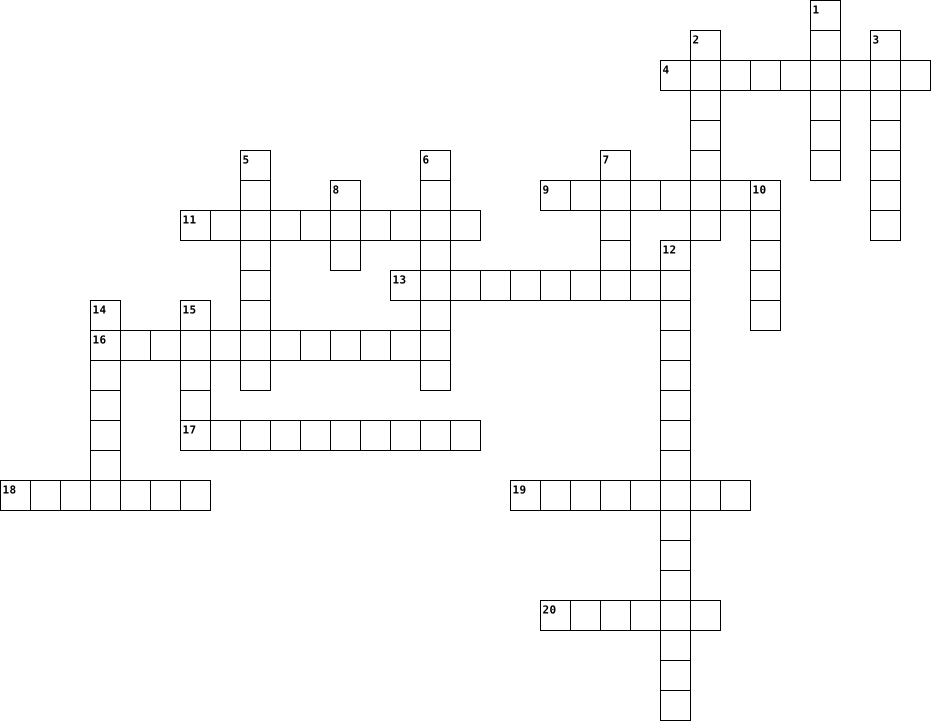
Across
- dictator of Mexico
- A famous American who died at the Alamo was Davy ___.
- The inventor of the cotton gin
- The first people to take Africans from their homes and sell them into slavery
- Texas won its ____ from Mexico in 1836.j
- Texas won this battle after the Alamo
- The Erie Canal stretched across this state.
- Texas was known as the __ __ state.
- Jackson was known as a man of the ___.
Down
- Another famous American at the Alamo was W.B. ____.
- A famous conductor on the Underground Railroad was ____ Tubman.
- The Industrial Revolution started here
- Americans held the Alamo for ___ days.
- This Native American tribe was forced off their land.
- Another famous American at the Alamo was Jim ____.
- Mexico's army had ___ thousand soldiers against two hundred Americans.
- The Indian's journey west is called the "Trail of _____."
- Americans used this phrase in future battles against Mexico.
- Andrew Jackson's nickname was old ____.
- state that fought Mexico at the Alamo
20 Clues: dictator of Mexico • The inventor of the cotton gin • Texas was known as the __ __ state. • state that fought Mexico at the Alamo • Texas won this battle after the Alamo • The Industrial Revolution started here • Americans held the Alamo for ___ days. • Jackson was known as a man of the ___. • Andrew Jackson's nickname was old ____. • Texas won its ____ from Mexico in 1836.j • ...
History Crossword 2021-06-15

Across
- Old Arab or non-European quarter of a North African town
- A hieroglyphic character or symbol
- Study of the world
- Accidentally landed in what is known as America
- Famous river in Africa
- Science of number and space
- A good use for trade
- Meant to help you in a health way
- Arab founder of Islam
- The religion based on Jesus Christ
- Someone who is bought to do someones chores for life
- A small stone building in the court of the Great Mosque at Mecca
- Specific routes that were used to trade
- A single power in control of many states
Down
- Belief in only one god
- Sending a message to your god
- Who Christians believe in
- Similar to hills, but bigger
- Believing in more than one god
- Ancient buildings of Egypt
- Religion founded by Siddartha Gautama
- A picture or pattern produced by arranging together small colored pieces
- Large spoken languages in Central America and Mexico
- A trade route connected by East Asia with the Mediterranean Sea
- Language of the aztecs
- Used to write on
- The language of Arabs
- A shrine in Jerusalem
- Also called the Quran
29 Clues: Used to write on • Study of the world • A good use for trade • Arab founder of Islam • The language of Arabs • A shrine in Jerusalem • Also called the Quran • Belief in only one god • Famous river in Africa • Language of the aztecs • Who Christians believe in • Ancient buildings of Egypt • Science of number and space • Similar to hills, but bigger • Sending a message to your god • ...
American History 2021-07-02

Across
- Headed West
- 17th President of the United States
- Roosevelt's plan to overcome the Depression
- Ended with the 18th Amendment
- Event of 1969
- Dec 7 1941
- June 6, 1944
- Native American people of the Everglades
- Had a blast in 1980
- Connecting East to West
Down
- Native American people from Appalachian Mountains
- The right to vote
- Most common first name for US Presidents
- Anti-slavery reformer
- Sued for his freedom from slavery, 1857
- Fight between the East & West
- An economic slump
- One was called Little Boy
- Took a small step in 1969
- Ratified in 1791, guaranteeing liberties of the people
20 Clues: Dec 7 1941 • Headed West • June 6, 1944 • Event of 1969 • The right to vote • An economic slump • Had a blast in 1980 • Anti-slavery reformer • Connecting East to West • One was called Little Boy • Took a small step in 1969 • Fight between the East & West • Ended with the 18th Amendment • 17th President of the United States • Sued for his freedom from slavery, 1857 • ...
History crossword 2021-09-09

Across
- an act of resistance or rebellion
- person or thing effected event
- persuade
- a change which is result or consequence
- a person who betrays a friend
- the fact or state of being independent
- Constitution or structure
- slaughter of people
- system of government
- the legislative body of a country or state
- overthrow government or social order
Down
- a public or official announcement
- having power to put plans,laws into effect
- resistance to an enemy or opponent
- appropriate to a court or judge
- take or seize
- worlds main continuous expanses of land
- a body of fundamental
- military force that raised from civil population
- rise to action
20 Clues: persuade • take or seize • rise to action • slaughter of people • system of government • a body of fundamental • Constitution or structure • a person who betrays a friend • person or thing effected event • appropriate to a court or judge • a public or official announcement • an act of resistance or rebellion • resistance to an enemy or opponent • overthrow government or social order • ...
U.S. History 2022-03-15

Across
- Compromise was an agreement to balance free and slave states.
- of Ghent Ended war is 1812.
- Purchase This was in 1803 and it doubled the size of the U.S.
- Jefferson Who was the 3rd president of the United States?
- The sinking of the American boat the _____ led to the War of 1812.
- was a famous Indian guide who helped Lewis and Clark.
- Era was made up of the Presidencies of
- Act allowed merchants to trade only with countries other than France and England.
- Part This is the devotion to the culture and interests of one’s country.
- and Clark who discovered the Louisiana Purchase
Down
- roads Stretched from Georgia to Illinois
- What is an agreement to cease fire.
- This was invented by Robert Fulton in 1807.
- Doctrine stated America was for Americans.
- This is the devotion to the culture and interests of one’s country.
- The forcible seizure of American sailors into the Royal Navy was called
- Gin was invented by Eli Whitney.
- A tax on incoming goods.
- Hawks John C. Calhoun and Henry Clay were known as what.
- Mashall In the early 1800s,He was a Supreme Court Justice for over 30 years.
20 Clues: A tax on incoming goods. • of Ghent Ended war is 1812. • What is an agreement to cease fire. • Gin was invented by Eli Whitney. • Era was made up of the Presidencies of • roads Stretched from Georgia to Illinois • This was invented by Robert Fulton in 1807. • Doctrine stated America was for Americans. • ...
History Crossword 2022-03-17

Across
- The Treaty of… ended the second Opium War
- What did England trade with China in exchange of black tea?
- England and China agreed to send two soldiers to… after they murdered a Chinese man
- …Created the assembly line
- Name of the city between India and China’s borders
- Name of one of the commodities that china traded with England
- Name of the red flowers that turned into opium when processed
- … made China pay 21 million USD for reparations after the first Opium War
- Robert Owens stoped… labor
- Dealers contrabandea opium from Calcutta to China by… tunnels
- Laissez-Fair economics led to
- Country that joined UK in the 2nd Opium War to invade China
Down
- The port…was the only port available for trade in China during the first Opium War
- France invaded China because they killed a French…
- Thomas Edison created the first…
- What new philosophy believed in “the greatest happiness for the greatest amount of people”?
- The Treaty mentioned in question (7 down) made china… import of opium
- The Treaty of….. ended the first Opium War
- According to the Treaty on Nanking, China needed to open five more… for foreign trade
- Name of the acid with which they burned 21 million tons of opium in the first Opium War
20 Clues: …Created the assembly line • Robert Owens stoped… labor • Laissez-Fair economics led to • Thomas Edison created the first… • The Treaty of… ended the second Opium War • The Treaty of….. ended the first Opium War • France invaded China because they killed a French… • Name of the city between India and China’s borders • ...
History Project 2022-03-22

Across
- social and economic level between wealthy and middle class
- organization of people who arranged transportation and hiding places for fugitives or escaped slaves
- perfect society
- leader of the common-school movement
- published "the Liberator" and helped found the American Anti-Slavery society
- improved education and lives of people with hearing-impairments
- wrote "Self-Reliance"
- declaration that detailed beliefs about social injustice towards women
- escaped from slavery at the age of 20 an-d became one of the most important African-American leaders of the 1800s
- belief that people could transcend material things in life
- complete end to slavery
Down
- wrote "The Dial"
- first public meeting held in the United States about women's rights
- helped turn the fight for women's rights into a political movement
- movement for all children to be taught in a common place regardless of background
- poorly designed apartment buildings that housed large numbers of people
- escaped slavery and eventually returned to the South, freeing her family and more than 300 other slaves
- started an all-female academy in Hartford, Connecticut
- reform that urged people to stop drinking hard liquor
- wrote "The Scarlet Letter"
- arrested for refusing to pay a tax in protest of the Mexican-American war
- americans who opposed immigration
22 Clues: perfect society • wrote "The Dial" • wrote "Self-Reliance" • complete end to slavery • wrote "The Scarlet Letter" • americans who opposed immigration • leader of the common-school movement • reform that urged people to stop drinking hard liquor • started an all-female academy in Hartford, Connecticut • social and economic level between wealthy and middle class • ...
History Review! 2022-03-29

Across
- type of democracy where people can vote for laws
- system of strict laws in china
- type of democracy where people vote for leaders
- era when farming first began
- type of religion with many gods
- type of religion with one god
- name of social class system in india that you are born into
- society where men have more power than women
- country where hinduism began
- government where people have a say
Down
- term for people who settle in one place
- era when people hunted & gathered to survive
- type of source from the original time
- young obey old
- type of source from someone not there
- city where most monotheistic religions began
- philosophy in china made up of roles
- term for people who move around a lot
- government where one person has power
- when people are ranked in order in a pyramid
- government where wealthy people are in power
21 Clues: young obey old • era when farming first began • country where hinduism began • type of religion with one god • system of strict laws in china • type of religion with many gods • government where people have a say • philosophy in china made up of roles • type of source from the original time • type of source from someone not there • term for people who move around a lot • ...