
history Crossword Puzzles
History Trivia 2023-08-15

Across
- Physicist who created the equation E=mc2
- The 19th Amendment gave __ the right to vote
- The unsinkable ship that sank
- King of Pop
- Playwright who wrote Romeo and Juliet
- French military commander who tried to invade Russia in the winter
- Henry the 8th had _ wives
- President who declared war on drugs
- Painted the Mona Lisa
- War the annexed texas from México
- Artist who created the Blue Period works
- One of the authors of the Communist Manifesto
- Artist known for his Marilyn Monroe paintings
- Book written by Harriet Beecher Stowe
- President of the United states during civil war
- The coin that has George washington is worth __ cents
- Art movement created in the aftermath of WW1
- The nickname given to Mary 1 of England
Down
- Popular Rock band in the 1960’s who had John Lennon
- Last queen of France
- American Actress who sang Happy Birthday Mr. President
- I have a dream speech
- Inventor of the telephone
- Creator of the Allegory of the Cave
- Creator of Spiderman who had cameos in Marvel movies
- Dog that was launched into space
- Band shares the same name as the assassinated Archduke of Austria-Hungary
- First man to walk on the moon
- African-american unit during WW1
- French saint who was burned for hearing the voice of God
30 Clues: King of Pop • Last queen of France • I have a dream speech • Painted the Mona Lisa • Inventor of the telephone • Henry the 8th had _ wives • The unsinkable ship that sank • First man to walk on the moon • Dog that was launched into space • African-american unit during WW1 • War the annexed texas from México • Creator of the Allegory of the Cave • President who declared war on drugs • ...
NC History 2023-08-15

Across
- Ridge Mountain range in western NC (10)
- Largest privately-owned house, near Asheville (8)
- Mountain range stretching through the state (11)
- Where the Wright brothers tested their plane (9)
- NC World War II memorial in Wilmington (13)
- Chapel Hill Oldest public university in the US (14)
- Brothers who flew first in Kitty Hawk (6)
- First English colony in NC (8)
- Largest city and financial hub (9)
- Palace Former state capitol in New Bern (12)
Down
- Indigenous people of the region (8)
- Port city and film production hub (10)
- Famous for its tobacco industry (6)
- State capital named after Sir Walter (7)
- Fear River and coastal region (8)
- Cash crop that fueled early economy (7)
- Nickname for a North Carolinian (8)
- German settlers in Wachovia (9)
- Hawk Site of the Wright brothers' first flight (10)
- War Conflict between North and South (10)
20 Clues: First English colony in NC (8) • German settlers in Wachovia (9) • Fear River and coastal region (8) • Largest city and financial hub (9) • Indigenous people of the region (8) • Famous for its tobacco industry (6) • Nickname for a North Carolinian (8) • Port city and film production hub (10) • Ridge Mountain range in western NC (10) • Cash crop that fueled early economy (7) • ...
Italian History 2023-08-08

Across
- Roman Peace
- European unit of money
- the noble class in Italy
- governor of Gaul
- the new name of Byzantium
- home of the Pope
- number of hills in Rome
- a famous Italian clothing designer
- form of government after the monarchy
- fascist leader of Italy
- foe of the Nazis
Down
- first Holy Roman Emperor
- non-nobles
- period of rebirth of the classics
- the floating city
- a gladiator arena
- mode of transportation for Hannibal
- he killed his brother
- a famous Italian car maker
- the former common language of Italy
20 Clues: non-nobles • Roman Peace • governor of Gaul • home of the Pope • foe of the Nazis • the floating city • a gladiator arena • he killed his brother • European unit of money • number of hills in Rome • fascist leader of Italy • first Holy Roman Emperor • the noble class in Italy • the new name of Byzantium • a famous Italian car maker • period of rebirth of the classics • ...
Pop's History 2023-10-04

Across
- Best characteristic
- Twenty year car
- Last Corporate Employer
- Perfect Food
- Favorite Baseball team
- God Book of Impact
- Favorite hymn
- Favorite animal
- Good to Great
Down
- first helicopter ride
- State,First house owned
- Singing with daughters
- Best Hobby
- Best quality and Spiritual gift
- USA, Asia, Europe, S.Am. N.Am. Mex
- Favorite people
- First employer
- 152 first plane
- Country, commitment to Jesus
- Vietnam
- company Title
21 Clues: Vietnam • Best Hobby • Perfect Food • Favorite hymn • company Title • Good to Great • First employer • Twenty year car • Favorite people • 152 first plane • Favorite animal • God Book of Impact • Best characteristic • first helicopter ride • Singing with daughters • Favorite Baseball team • State,First house owned • Last Corporate Employer • Country, commitment to Jesus • Best quality and Spiritual gift • ...
US History 2023-08-27

Across
- President when the Great Depression hit, had homeless towns named after him
- Withdrawal from commercial relations with a person or organization as a punishment or protest
- A fashionable young women intent on enjoying herself and acting wild
- Widespread of Fear of a potential rise of communism
- Failed attack launched by the CIA during the Kennedy Administration
- Truman’s foreign policy that the U.s. would provide aid to countries under the influence of communism
- The first satellite sent into space by the soviets
- Notional barrier separating East and West Europe
- Provided American citizens an opportunity to assist with the war effort
- Fought Between North and South Korea
- Act of voluntary giving by individuals or groups to promote the common good
- Illegal Distribution of alcohol
- The act of coming to live permanently in a foreign country
- Refused to give her seat to a white man
- Belief of a government that a country should maintain a strong military capability and be prepared to use it aggressively
- Rail line connecting The East and West coasts of the United States
- A diverse array of media that reach a large audience via mass communication
- Theory that a political event in one country will cause similar events in neighboring countries
- Journalists during the Progressive Era who exposed corrupt businesses
Down
- Had an “I had A Dream” Speeth
- Art and Science of maintaining peaceful relationships between nations
- The state of of not supporting or helping either side in a conflict
- The act of separating people, historically on the basis of race and gender
- The process of making an area more urban
- Declared the separate but equal doctrine unconstitutional
- Leader of the Progressive movement
- Largest and Most widespread civil rights and empowerment movement by Mexican descent people in the United States
- President responsible for the Watergate Scandal
- First American Volunteer Group of China Air Force formed to help oppose the Japanese invasion
- Persistent high inflation combined with high unemployment and stagnant demand in a countries economy
- Philanthropist and industrialists, helped build the American Steel Industry
- Leader during the civil rights movement in America
- Youngest President
- Large companies that controlled an industry or a sector
- Surprise military strike by the Imperial Japanese Navy Air Service upon a U.s. Military base
- Era of intense Social and political reform aimed at making progress toward a better society
- Leading a society in which all properties and publicly owned by the government
- Assassinated In Dallas
- Nixons attempt to cover up its involvement in the 1972 break
- The largest seaborne invasion in history
40 Clues: Youngest President • Assassinated In Dallas • Had an “I had A Dream” Speeth • Illegal Distribution of alcohol • Leader of the Progressive movement • Fought Between North and South Korea • Refused to give her seat to a white man • The process of making an area more urban • The largest seaborne invasion in history • President responsible for the Watergate Scandal • ...
Big History 2023-09-03

Across
- it is like Earth places where remarkable things happen.
- it is the birth of new elements out into the cosmos.
- it is a event that when the star lacks the outpouring energy the star
- it can be large and made of gasses, or smaller and rocky, like our Eart.
- it brought together individual hydrogen and helium atoms to form gas clouds.
- it is complex than a star.
- it bounce off the iron core, hurtling outward into space.
- that result in new chemical elements.
- it is a process where stars start to created new elements,
- it answers the questions of our universe, planet, life, humanity.
Down
- it is formed galaxies.
- it is from a formed stars.
- cannot be fused further.
- it eventually became planet.
- play an important role in the daily lives of many people.
- it has billions and billions of long-lasting energy sources.
- Conditions enable life on Earth to exist.
- it is a kind of galaxy that formed superclusters.
- it is from the clouds of atoms left behind.
- begin to light up all over the Universe.
20 Clues: it is formed galaxies. • cannot be fused further. • it is from a formed stars. • it is complex than a star. • it eventually became planet. • that result in new chemical elements. • begin to light up all over the Universe. • Conditions enable life on Earth to exist. • it is from the clouds of atoms left behind. • it is a kind of galaxy that formed superclusters. • ...
Seattle History 2023-10-12

Across
- Central District high school
- Pres. who pardoned SPD Police Lieutenant
- East of Downtown
- ____ Allen, Microsoft co-founder
- SPD ____ unit, 1st in the US
- Ospreys
- Visit Habitat Beach and enjoy ____ Sea
- Formerly Microsoft’s home
- Famous jazz singer Ernestine____
- Harrell and Lee
- Iron ____
- International coffee chain
Down
- Tuesday Pioneer Sq-based Mardi Gras festival
- ____ ____ District, destroyed by great SEA fire
- Indigenous tribe
- ____ Allen-Barnes
- Initiative led by architect Victor
- Friends of _____ Seattle
- ____ Gold Rush
- Stay warm on Pier 62 with this cozy feature
- Early SEA commerce
21 Clues: Ospreys • Iron ____ • ____ Gold Rush • Harrell and Lee • East of Downtown • Indigenous tribe • ____ Allen-Barnes • Early SEA commerce • Friends of _____ Seattle • Formerly Microsoft’s home • International coffee chain • Central District high school • SPD ____ unit, 1st in the US • ____ Allen, Microsoft co-founder • Famous jazz singer Ernestine____ • Initiative led by architect Victor • ...
Amercian History 2023-10-20

Across
- Capital of Virginia
- Abolished slavery
- Who replaced Lincoln when he was assassinated
- Laws that allowed for segregation
- Plessy V.S. Ferguson
- Lead the Confederacy army
- A different name for slavery
- A test African Americans had to take in order to vote
- Everyman selected had to go to war
- Northern Strengths
- Lincolns plan
- When the United states became independent
- Bleeding state
Down
- Won the election by one vote
- Gave African Americans the right to vote
- Equal rights to everyone
- A book about slavery
- Invented cotton Gin
- Confederacy president
- what African Americans had to pay to vote
- First state to secede
- group of people who wanted African Americans to not have their rights
- Bloodiest battle of civil war
- First president assassinated
- Cannot be taken to jail without charges
25 Clues: Lincolns plan • Bleeding state • Abolished slavery • Northern Strengths • Capital of Virginia • Invented cotton Gin • A book about slavery • Plessy V.S. Ferguson • Confederacy president • First state to secede • Equal rights to everyone • Lead the Confederacy army • Won the election by one vote • A different name for slavery • First president assassinated • Bloodiest battle of civil war • ...
american history 2023-10-20

Across
- the key to the mississippi
- name was given to southern white men usually poor
- jackson confederate hero
- name given to northerners who moved to the south
- massachusets fir african american regiment
- plan lincolns plan for reconstruction
- votes needed to remove presidents
- lincolns main goal
- men intially civil war was only fought by
- Whitney had a cotton gin
- proclamation lincoln issued the
- group of white southerners who terrorized african americans
- political party that controlled new southern goverments
Down
- railroad act railroad lines to the pacific
- act of 1867 divided 10 southern states
- Bloodiest single day of war
- E. Lee confederacy led by
- property value dropped
- won the battle of chancellorville
- admendment abolished slavery
- jackson lees top two advisors
- codes laws that restricted african american rights
- pope replaced mcClellan after the battle pf seven days
- Robert E lee called for a
- 14th lincolns assassination
- thomas j jacksons nickname
26 Clues: lincolns main goal • property value dropped • jackson confederate hero • E. Lee confederacy led by • Whitney had a cotton gin • Robert E lee called for a • the key to the mississippi • thomas j jacksons nickname • Bloodiest single day of war • 14th lincolns assassination • admendment abolished slavery • jackson lees top two advisors • proclamation lincoln issued the • ...
World History 2023-10-19

Across
- honored
- holds people
- holy
- Muslim place of worship
- lack of growth
- Theatre
- men have all power
- leader
- wealthy landowner
Down
- Deadly
- has full authority
- old war
- made from pipes
- praising
- Hard workers
- Image breakers
- holy city of mecca
- isolated place
- citizen
- government body
20 Clues: holy • Deadly • leader • old war • honored • citizen • Theatre • praising • holds people • Hard workers • Image breakers • lack of growth • isolated place • made from pipes • government body • wealthy landowner • has full authority • holy city of mecca • men have all power • Muslim place of worship
History review 2023-11-17

Across
- Bicameral Congress
- The Three Bugbears
- Veterans March to courthouse
- Marshall tried pleasing both sides
- Supreme courts job
- Strong Federal government
- Flag still standing
- 2/3 need to agree
- British capture Sailors
- Speaking bad about government
Down
- 1777
- Bought for 15 mil
- 10 Amendments
- Francis Scott Key
- Andrew Jackson was general
- Meeting about laws
- Helped lewis and Clark
- divided northwest states
- Ganging up on Nepoleon
- Bristish impressment
20 Clues: 1777 • 10 Amendments • Bought for 15 mil • Francis Scott Key • 2/3 need to agree • Bicameral Congress • The Three Bugbears • Meeting about laws • Supreme courts job • Flag still standing • Bristish impressment • Helped lewis and Clark • Ganging up on Nepoleon • British capture Sailors • divided northwest states • Strong Federal government • Andrew Jackson was general • Veterans March to courthouse • ...
History Crossword 2023-11-15

Across
- Famous playwriter
- People who financially supported artists
- A council of church leaders gathered to agree on several doctrines
- Shows 3 dimensions on a flat surface
- Church with Elizabeth as the head
- A movement for religious reform
- An intellectual movement that focused on human potential
- Followers of the Knox
- Dante's native language
Down
- The movement of helping Catholics stay loyal to the church
- The idea that God has know who was going to be saved sense the beginning of time
- Religious group led by Luther
- Created the printing press
- A government controlled by religious leaders
- A pardon
- Greek word meaning no place
- Members of the Society of Jesus
- Set aside
- The religion based on Calvin's teachings
- Famous religious settlement
- Name for Christians who didn't belong to the Catholic Church
- A Greek word meaning baptize again
- A revival of art and learning
23 Clues: A pardon • Set aside • Famous playwriter • Followers of the Knox • Dante's native language • Created the printing press • Greek word meaning no place • Famous religious settlement • Religious group led by Luther • A revival of art and learning • Members of the Society of Jesus • A movement for religious reform • Church with Elizabeth as the head • A Greek word meaning baptize again • ...
History Puzzle 2024-02-20

Across
- Was called “Bloody Mary”
- Protestant leader who was a priest
- “Morning Star of the Reformation”
- Where the Renaissance started
- Music in the Renaissance
- First English translation from Greek
- One of the greatest English rulers
- Belief in the sovereignty of God
- An emphasis on human ability
- Someone who sponsors artists
- Excommunicated, imprisoned, and burned
Down
- First English translation
- Era of Rebirth
- Most famous patron family
- 95 Theses
- Had 6 wives
- Advisor to Henry VIII and Edward VI
- Church established by Elizabeth I
- First English Bible to use numbered verses
- Followers of John Wycliffe
20 Clues: 95 Theses • Had 6 wives • Era of Rebirth • Was called “Bloody Mary” • Music in the Renaissance • First English translation • Most famous patron family • Followers of John Wycliffe • An emphasis on human ability • Someone who sponsors artists • Where the Renaissance started • Belief in the sovereignty of God • “Morning Star of the Reformation” • Church established by Elizabeth I • ...
Thanksgiving History 2023-11-03
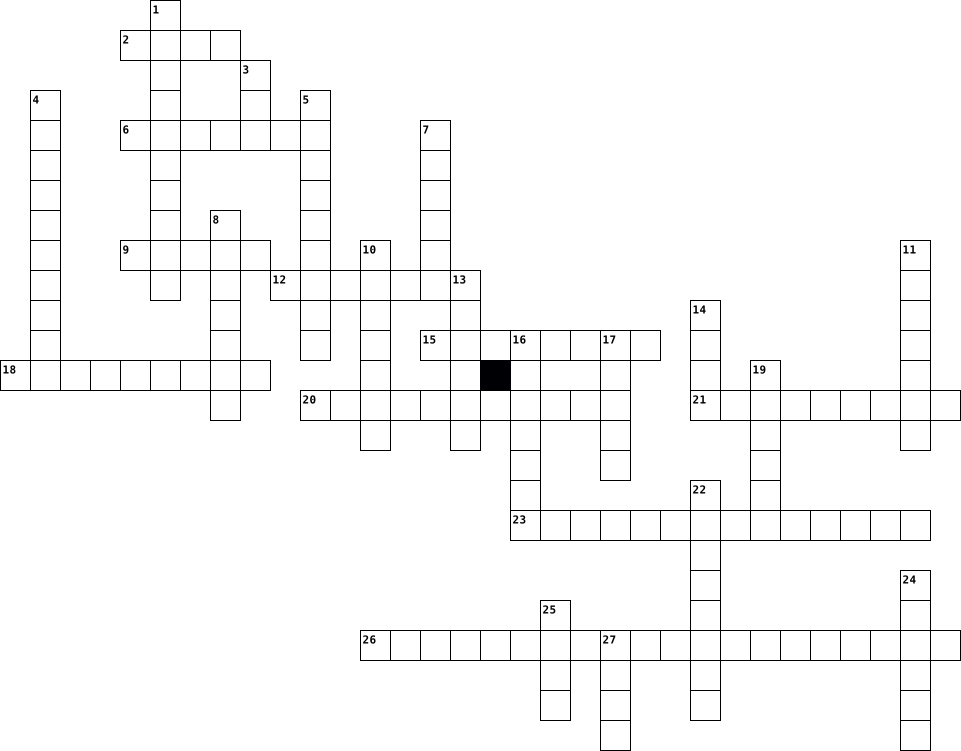
Across
- 1st Manga Character in the Macy’s Day Parade
- Thanksgiving Raccoon
- 1st Video Game Character in the Macy’s Day Parade
- To influence the Government's decisions
- Site of the 1st Thanksgiving
- Didn't recognize Thanksgiving.
- Wrote the Thanksgiving Song
- Moved Thanksgiving
- Celebrate this Heritage after Thanksgiving
- On the second Monday of October
Down
- (In)Famous 5K on Thanksgiving
- City with the most expensive Thanksgiving
- Lobbied for Thanksgiving and wrote "Mary had a Little Lamb"
- Native American tribe present at the 1st Thanksgiving
- how many Americans skip Thanksgiving
- 46
- Made Thanksgiving an annual celebration
- Present at the 1st Macy’s Day Parade
- Holds World Record for most people dressed as Turkeys
- Meat used instead of Turkey at the 1st Thanksgiving
- Had 2 Thanksgiving
- The length of the first Thanksgiving.
- Male Turkeys
- JFK let the Turkey "live"
- George H. W. Bush made Turkey pardoning this
- The first college football match on Thanksgiving was between Princeton and
- True or False: You can experience the first Thanksgiving.
27 Clues: 46 • Male Turkeys • Had 2 Thanksgiving • Moved Thanksgiving • Thanksgiving Raccoon • JFK let the Turkey "live" • Wrote the Thanksgiving Song • Site of the 1st Thanksgiving • (In)Famous 5K on Thanksgiving • Didn't recognize Thanksgiving. • On the second Monday of October • how many Americans skip Thanksgiving • Present at the 1st Macy’s Day Parade • The length of the first Thanksgiving. • ...
American History 2023-11-04

Across
- Republican politician that held the roles of both president and vice president despite never having been elected to either office (4)
- Alternative Democratic candidate in the 1960 presidential election who won 15 electoral votes in the Deep South (4)
- Chief justice of the supreme court 1953-1969 and running mate of Thomas E. Dewey in the 1948 presidential election (6)
- Only president to serve as chief justice of the supreme court after becoming president; appointed by Warren G. Harding (4)
- Independent candidate who carried no states in the 1980 presidential election despite gaining over 10% of the popular vote (8)
- Anti-slavery party that former president Martin Van Buren joined and ran for president with in 1848 (8)
- Latin American nation in which 19th president Rutherford B. Hayes has many streets and buildings named after him as a result of his actions benefitting the country (8)
- The third-largest party in the United States by members as of 2023, founded in late 1971 (11)
- Official name of the third-parties created by Theodore Roosevelt, Robert La Follette and Henry Wallace for their left-wing campaigns in 1912, 1924 and 1948 respectively (11)
- Abraham Lincoln's running mate in the 1860 presidential election (6)
Down
- Presidential candidate of the newly-founded 'Dixiecrat' party in 1948, also president pro tempore of the senate in the early years of George W. Bush's presidency (8)
- The maiden name of the First Lady of the United States from 1961 to 1963 (7)
- Vice president of the United States 1974-1977 and namesake of the progressive wing of the Republican party throughout much of the mid-20th century (11)
- President nicknamed 'Old Hickory' (7)
- Billionaire third-party candidate from Texas in the 1992 and 1996 presidential elections (5)
- The surname of the only grandfather-grandson duo to have served as president (8)
- Vice president of the United States under Franklin D. Roosevelt from 1941 to 1945 (7)
- Initials of the running mate of the Democratic party's candidate in the 1920 presidential election who would go on to become president at a later date (3)
- Third-party candidate in the 1880 and 1892 presidential elections, received 8.5% of the popular vote as the candidate for the People's Party or Populist Party in the latter (6)
- One of two presidents to have never held any political or judiciary office before becoming president, the other one is Donald Trump (6)
- Commanding general of the United States army from 1861 to 1862 and Abraham Lincoln's main opponent in the 1864 presidential election (9)
- The author of 'Poor Richard's Almanack' from 1732 to 1758 (8)
- Left-wing politician who ran for president on five occasions in 1900, 1904, 1908, 1912 and 1920, performing best in the 1912 election in which they won 6% of the popular vote and 901,551 total votes (4)
- President of the United States with a cameo role in the 1992 film 'Home Alone 2' (5)
24 Clues: President nicknamed 'Old Hickory' (7) • The author of 'Poor Richard's Almanack' from 1732 to 1758 (8) • Abraham Lincoln's running mate in the 1860 presidential election (6) • The maiden name of the First Lady of the United States from 1961 to 1963 (7) • The surname of the only grandfather-grandson duo to have served as president (8) • ...
Art History 2024-02-20

Across
- Political type sculpture
- 6
- Schematic Design of the pyramid
- 8
- 2
- Style of vase painting where black forms stood out against a reddish clay background.
- 7
- Island of 30 foot tall structures demonstrating their ancestors techniques.
- 9
- Largest known Roman Architecture
Down
- 3
- pg 15
- 1
- How long the great pyramid of Giza to build.
- 12
- 4
- 10
- Reconstruction of Egyptian civilization.
- City of ashes blown up by mount Vesuvius.
- 270 foot tower in the capital city of Babylon.
- 13
- 5
- 11
23 Clues: 3 • 1 • 4 • 6 • 8 • 2 • 5 • 7 • 9 • 12 • 10 • 13 • 11 • pg 15 • Political type sculpture • Schematic Design of the pyramid • Largest known Roman Architecture • Reconstruction of Egyptian civilization. • City of ashes blown up by mount Vesuvius. • How long the great pyramid of Giza to build. • 270 foot tower in the capital city of Babylon. • ...
Art history 2024-02-24

Across
- A design drawn on a smooth piece of wood then cut out.
- Known for painting generally unsuccessful landscape painting.
- Decorative art which looked like the world itself
- Nicknamed “Sloppy Tom” First to paint human figure as a real human being.
- most famous French painter who did classical realism
- Famous renaissance man who mostly painted qualities of high renaissance
- Counter reformation of the catholic revival in art.
- Reconstruction of Egyptian civilization.
- Pyramid like structure to add form to a painting
- Rembrandts portraits were quieter and deeper in style
- Greek-derived style, found in Asia Minor, Mesopotamia, Egypt; more melodramatic than classical style.
- The pinnacle of Middle Ages artistic achievement
- Sophisticated artists like Modigliani found a freshness and vitality in tribal art, missing, and conventional art.
- Known famously for satirical art.
- Schematic Design of the pyramid
- Large wool and silk hanging paintings.
- Period includes kouros stone figures and vase painting
- Famous for his painting “Birth of Venus”
- Sophia First structure to utilize 4 walls to make a dome.
- Champion of idealizing reality
- moralistic paintings made to punish sinners.
- Famous painting by Diego Velazquez in 1656
- The use of light and shadow to create an illusion of a rounded texture on a flat surface.
- Da Vinci Renaissance man known for famous painting “Mona Lisa”
- Chapel made famous for its vast amount of paintings on its ceiling
- Who’s twentieth century works grew out of the century old practices.
- The balance of a painting and everything working together to create it.
- Intended to publicize the Christian creed
- In a statue, when the weight of the body rests on one leg.
- Early phase of classical sculpture characterized by reserved, remote expressions.
- Island of 30 foot tall structures demonstrating their ancestors techniques.
Down
- Roman Catholic faith firmly established in art.
- Style of vase painting where black forms stood out against a reddish clay background.
- Using strong acid to cut into metal surface
- Political type sculpture
- Rembrandts portraits were high in fashion and biblical plus historical scenes in baroque style.
- City of ashes blown up by mount Vesuvius.
- Best known for French baroque and classic forms of nature.
- Pyramid type structure known from ancient Mesopotamia
- Placement and arrangement of all elements in a painting
- The impermanence of Navaho sand painting destroyed at the end of a rite, influenced abstract expressionists to focus on the process of artistic creation rather than the end product.
- Illusion of depth on a flat surface
- One of the earliest known statues
- Glass tinted with chemicals to add colors
- How long the great pyramid of Giza took to build.
- Best known for his series of paintings of “Modern Moral Subjects”
- First to abandon wood panels, and always covered the surface of his canvas in red.
- Became the primary choice of paint for renaissance
- The way a painting seems to “move” or the focal point it builds to
- Recaptures the idea of contrapposto.
- Renaissance man known for the ceiling of the Sistine Chapel
- Artists in the 1920’s who collected pacific carvings, African masks, and fanciful Eskimo masks.
- Based on African tribal sculpture and masks, which fractured reality into overlapping planes.
- Painting of a 270 foot tower in the capital city of Babylon.
- Earliest free-standing statues of human figures; frontal stance, left foot forward, clenched fists, and grimace known as “archaic smile”
- Where’s prints are made from blinds and a plate.
- Largest known Roman Architecture
- Pottery ornamented with geometric banding and friezes of simplified animals or humans.
- Native American builders construction on burial mounds.
- Peak of Greek art and architecture, idealized figures exemplify order and harmony
- Age in art of transitioning between Middle Ages and Modernity
- palace of pomp
- The master of light
- Brilliant brushwork that captured the visual world with hyper realism.
- The feeling of a painting and what vibe it gives off.
65 Clues: palace of pomp • The master of light • Political type sculpture • Champion of idealizing reality • Schematic Design of the pyramid • Largest known Roman Architecture • One of the earliest known statues • Known famously for satirical art. • Illusion of depth on a flat surface • Recaptures the idea of contrapposto. • Large wool and silk hanging paintings. • ...
Black History 2024-02-05

Across
- Theatre’s Poet of Black America
- First black woman to refuse her seat on the bus
- Six million movin’ on up in the 1900’s
- Political movement started in the 60’s to take away voting rights from minorities and hippies
- TV Show that put on a live production during halftime show that was so popular, the NFL changed its policy and started ONLY hiring A-listers to stop people from changing channels.
- Play about life in Harlem whose title comes from Langston Hughe’s Poem
- “Baby” Esther Jones inspired this iconic cartoon
- First black man to host his own television show
- Abolitionist woman who took a white man to court and WON
- Two years after obtaining freedom, the last slaves are actually informed of their freedom
- TV show that featured the first black/white romantic kiss
- Jackie’s number
Down
- Neighborhood in Oklahoma that was destroyed by the National Guard and racist mobs
- Organization that works on issues that are important to students of color.
- Fruition of Art, Poetry, Theatre, Music and More in upper New York
- The first group of black students to be integrated in Arkansas
- Technique used by real estate agents to maintain segregation
- Type of variety show that specialized in blackface performances. At one point, was the most popular form of entertainment in America
- Where MLK’s march began
- Singer, actress, dancer, pilot & spy
- Unbought and Unbossed politician
- The Comic series inspired by Martin & Malcolm
- 99 Bullets used by Chicago PD for his assassination
- Creators of the free breakfast program for impoverished neighborhoods
- Subtle, possibly unintentional, but still an offensive statement
- What’s up, miss? I’m sorry. Good morning, ma’am.
- Group of stars that led the way for those traveling on the Underground Railroad
- Educational facility specifically designed for higher education for black students
- Seperated plasma from blood, allowing blood transfusions. Rumored to have bled to death due to refusal of treatment from a white hospital
- Popular character created for blackface routines
30 Clues: Jackie’s number • Where MLK’s march began • Theatre’s Poet of Black America • Unbought and Unbossed politician • Singer, actress, dancer, pilot & spy • Six million movin’ on up in the 1900’s • The Comic series inspired by Martin & Malcolm • First black woman to refuse her seat on the bus • First black man to host his own television show • ...
History Vocab 2024-01-29

Across
- A monetary standard in which one ounce of gold equals a set number of dollars.
- A system for buying and selling stocks in corporations.
- Closing of banks during great depression to avoid bank runs.
- Act of buying stocks at great risk with the anticipation that the price will rist.
- A homeless and usually penniless wanderer.
- Projects such as highways, parks, and libraries built with public funds for public use.
- American style of music that developed from ragtime and blues that uses syncopated rhythms and improvisation.
- Buying a stock by paying only a fraction of the stock price and borrowing the rest.
- Demand by a broker that investors pay back loans made for stocks purchased on margin.
- Government practice of spending borrowed money rather than raising taxes.
- Aid in the form of money or supplies for those in need.
Down
- To take possession of a property from a mortgagor becuase of defaults on payments.
- An acute infectious disease affecting the skeletal muscles causing permanent disability.
- A person who believes that there should be no government.
- A long period of rising stock prices.
- Persistent and heavy demands by a bank's depositors to withdraw money.
- Minor officer of the courts.
- Hostility towards immigrants.
- Radio broadcasts made by Roosevelt to the American people to explain his initiatives.
- Something that provides security against misfortune.
20 Clues: Minor officer of the courts. • Hostility towards immigrants. • A long period of rising stock prices. • A homeless and usually penniless wanderer. • Something that provides security against misfortune. • A system for buying and selling stocks in corporations. • Aid in the form of money or supplies for those in need. • ...
World History 2023-12-05

Across
- The unfair favoring of one person or group over others, often in a way not based on merit
- Offering, giving, receiving, or soliciting something of value for the purpose of influencing the action of an official
- The expectation that individuals and organizations will be evaluated and held responsible for their actions
- The openness and accessibility of information, a key factor in preventing corruption
- Problems related to entry into foreign markets, a consideration within the NAFTA framework
- The process of making illegally-gained proceeds (i.e., "dirty money") appear legal (i.e., "clean")
- Favoritism shown to relatives or close friends, often in the distribution of jobs or opportunities
- An index published by Transparency International ranking countries based on perceived levels of corruption
- Legal disagreements between governments and corporations, a contentious feature of NAFTA
- The acquisition of money, political power, or other benefits through unethical means, often involving bribery
- Issues related to pollution and resource management, an aspect that some critics feel NAFTA did not adequately address
- Negative impacts on certain sectors, such as manufacturing, due to increased competition under NAFTA
Down
- Issues related to wages and working conditions, a point of concern within NAFTA
- A situation in which a person or organization is involved in multiple interests, financial or otherwise, one of which could influence the decision-making
- Unequal distribution of trade between countries, a factor influencing NAFTA debates
- Contention over farm-related issues such as subsidies and market access within NAFTA
- Misappropriation or theft of funds placed in one's trust, often related to corruption in businesses or government
- The process of aligning regulations across countries, a source of concern for some under NAFTA
- Increased rivalry among businesses on a global scale, a consequence of the expanded trade facilitated by NAFTA
- Illicit payments made to someone in return for facilitating a transaction or appointment
- Deliberate actions by countries to influence the value of their currency, impacting trade under NAFTA
- The practice of moving jobs and production to lower-cost countries, a controversial aspect of NAFTA
- A person who exposes information or activity that is deemed illegal, unethical, or not correct within an organization
- Situation where a country imports more than it exports, a concern for NAFTA critics
24 Clues: Issues related to wages and working conditions, a point of concern within NAFTA • Unequal distribution of trade between countries, a factor influencing NAFTA debates • Situation where a country imports more than it exports, a concern for NAFTA critics • Contention over farm-related issues such as subsidies and market access within NAFTA • ...
Sports History 2023-12-11

Across
- What does MLB play with
- Was Brady's Righthand man
- what do you do on a bike
- What do you win in the Olympics
- What you yell when you shoot up a shot shot.
- A game where you throw a ball trying to hit another person
- What does the NFL Play with
- Coordinator of the team
- who was drafted to the cavs in 2011
- what brand did Jordan sign with
- What keeps your shoes tight
- Best Quarterback
Down
- what you play basketball or Volleyball in
- What is it called when you stop the defense
- the last time the panthers went to the superbowl
- Another word for fighting
- what does the NBA play with
- What old retired sports players do for fun
- what you play soccer with
- Who won the NBA Finals last year
- who stops scores on a soccer team
- who is Lebron
- What you wear in a game
23 Clues: who is Lebron • Best Quarterback • What does MLB play with • What you wear in a game • Coordinator of the team • what do you do on a bike • Another word for fighting • Was Brady's Righthand man • what you play soccer with • what does the NBA play with • What does the NFL Play with • What keeps your shoes tight • What do you win in the Olympics • what brand did Jordan sign with • ...
U.S History 2023-12-13

Across
- Someone who follows the christian faith
- Was very popular to smoke with
- A long journey
- Many religions believe in this figure; creator of the universe
- Another word for adventure
- Tried to travel to asia but wound up in America
- Someone who sells things
- Has a variety of spices
- Helps navigate you to a location; tells you where you are
- Another word for wood.
- This country supported Columbus's voyage to India
- A tool that points to where north is.
Down
- Measures the sun and Moon.
- Used to measure the altitude of stars and planets
- A type of ship used by Portugal
- Is used to buy things;very expensive
- A portuguese explorer
- A way of travel in the water
- Commander of a ship
- A follower of the islamic religion
20 Clues: A long journey • Commander of a ship • A portuguese explorer • Another word for wood. • Has a variety of spices • Someone who sells things • Measures the sun and Moon. • Another word for adventure • A way of travel in the water • Was very popular to smoke with • A type of ship used by Portugal • A follower of the islamic religion • Is used to buy things;very expensive • ...
History Crossword 2023-12-20

Across
- The leader of Italy in 1942
- symbolic color of Socialism
- President that succeeded Franklin Roosevelt
- First satellite in orbit launched by Russia
- The leader of Britain in WWII
- Sea First battle between aircraft carriers
- Allied invasion of Normandy beaches
- U.S. and Western Europe military alliance
- Wall the boundary the Soviets built in 1961 between East and West Berlin
- The side Russia fought on in WWI
- The ruler of Russia in WWI
Down
- Agreed to a truce to end U.S. involvement in Vietnam
- The process that made he expansion of the steel industry possible in america
- U.S. Declared war on this country in 1917
- What was Russia renamed to in 1922
- The country Germany invaded that began WWII
- Vessel Germans used to prevent American merchant ships from reaching Britain
- The leader of Germany in WWII
- Surrendered to Germany in June 1940
- Telegraph Germany sent to Mexico asking them to declare war on the U.S.
20 Clues: The ruler of Russia in WWI • The leader of Italy in 1942 • symbolic color of Socialism • The leader of Britain in WWII • The leader of Germany in WWII • The side Russia fought on in WWI • What was Russia renamed to in 1922 • Surrendered to Germany in June 1940 • Allied invasion of Normandy beaches • U.S. Declared war on this country in 1917 • ...
Movie History 2023-12-14
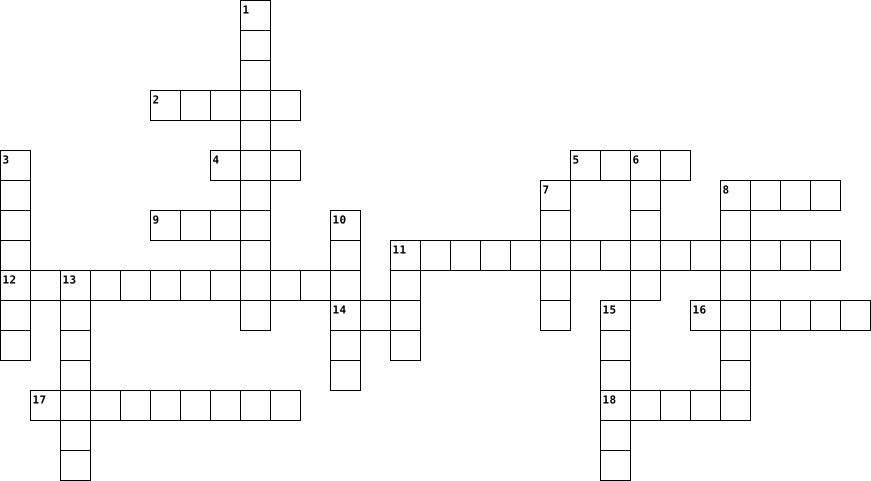
Across
- the cowboy from Toy story
- the pirate captain in one piece who can control metal
- the toy's owner in toy story
- the cute cunning fox from the movie fox and the hound
- the guy who sacrificed himself in the movie titanic
- The race-car who's famous catchphrase is Kachow
- the evasive tomb robber from a series of movies
- the sloth who always gets himself in sticky situations from the movie ice age
- the defensive bloodhound from the movie fox and the hound
- the sneaky alien race from the movie Alien
- The Daughter of Duchess from the FAMOUS movie Aristocats
Down
- the old man balloon salesman from the movie up
- The AMAZING PAINTER from the FAMOUS DISNEY movie ARISTOCRATS
- the heart changing sabertooth from the movie ice age
- the short tempered mammoth from the movie ice age
- The FIERCE FIGHTER CHILD of DUCHESS from the FAMOUS Movie ARISTOCATS
- the young boy scout kid from the movie up
- the female dog from the disney movie lady and the tramp
- The lavish British cat from the FAMOUS Disney movie Aristocats
- The robotic hero from the movie big hero
20 Clues: the cowboy from Toy story • the toy's owner in toy story • The robotic hero from the movie big hero • the young boy scout kid from the movie up • the sneaky alien race from the movie Alien • the old man balloon salesman from the movie up • The race-car who's famous catchphrase is Kachow • the evasive tomb robber from a series of movies • ...
US History 2023-12-12
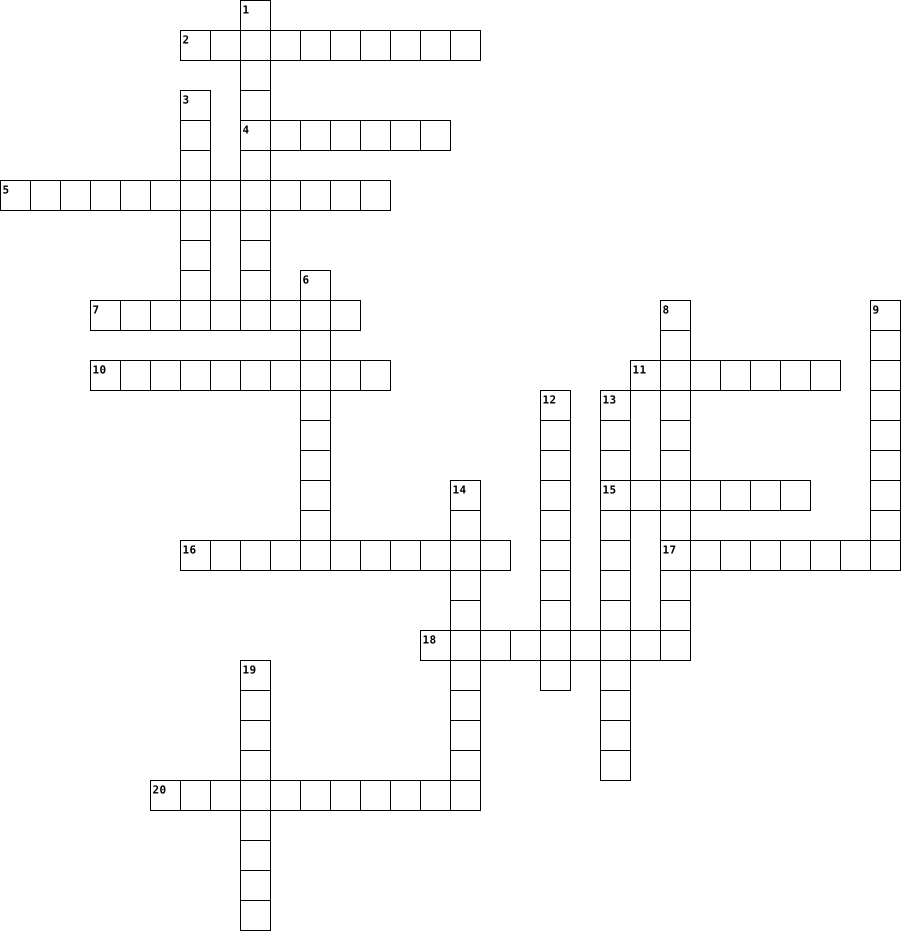
Across
- desegregated, especially racially.
- of or relating to a form of government or a country in which power is divided between one central and several regional governments.
- to murder by sudden or secret attack often for political reasons.
- a type of government as well as an economic system that eliminates socioeconomic class struggles.
- the state of not being equal, especially in status, rights, and opportunities.
- the offense of willfully telling an untruth in a court after having taken an oath or affirmation.
- an area of the production, distribution and trade, as well as consumption of goods and services.
- the action of separating people, historically on the basis of race and/or gender.
- the armed forces of a country.
- a person who comes to a country to live there.
- a process by which a legislative body or other legally constituted tribunal initiates charges against a public official for misconduct.
Down
- persistent high inflation combined with high unemployment and stagnant demand in a country's economy.
- hopefulness and confidence about the future or the successful outcome of something.
- to take in and utilize as nourishment.
- a situation where a person actively searches for employment but is unable to find work.
- a person or organization having power or control in a particular, typically political or administrative, sphere.
- machinery and equipment developed from the application of scientific knowledge.
- the ending of a policy of racial segregation.
- where investors buy and sell shares of companies.
- cease resistance to an enemy or opponent and submit to their authority.
20 Clues: the armed forces of a country. • desegregated, especially racially. • to take in and utilize as nourishment. • the ending of a policy of racial segregation. • a person who comes to a country to live there. • where investors buy and sell shares of companies. • to murder by sudden or secret attack often for political reasons. • ...
French History 2024-01-06

Across
- France is separated from England by it
- France was part of it
- the highest point in the mountain alps range
- Mountain range formed from volcanoes
- are located North of the Alps
- The second biggest country in Europe
- The lowest social class in France
- the longest river in France
- Covered with snow during winter
- a bay West of France
- The right to vote
- The highest social class in French history
Down
- mountains extend along the south boarders with Spain
- Frankish Ruler who united North and South of France
- had to pay most of the taxes
- Youngest president of France
- raided the French kingdom after Charlemagne
- A city where the Greek Empire settled in
- Country of Franks
- extreme scarcity of food
- Middle Age
- Dedicated to god
- Roman Emperor
23 Clues: Middle Age • Roman Emperor • Dedicated to god • Country of Franks • The right to vote • a bay West of France • France was part of it • extreme scarcity of food • the longest river in France • had to pay most of the taxes • Youngest president of France • are located North of the Alps • Covered with snow during winter • The lowest social class in France • Mountain range formed from volcanoes • ...
American history 2024-01-23

Across
- production of large quantities of goods
- belief that god created the word and everything in it
- avoiding involvement in world affairs
- place where alcoholic beverages were sold illegally
- last name of 29th president
- being different from one another
- production system that assigned a task to a person to increase production
- style of music evolving from african american spirituals
- invented the radio
Down
- harding promised this to return
- last name of 30th president
- automobile built by ford from 1908 until 1927
- hostility towards immigrants
- founded the universal negro improvement association
- famous musician
- last name of the brothers that made the first plane
- theory that humans and other forms of life have evolved over tiem
- unconventional not bound by rules of society
- person who believes there should be no government
- created theory of evolution
20 Clues: famous musician • invented the radio • last name of 30th president • last name of 29th president • created theory of evolution • hostility towards immigrants • harding promised this to return • being different from one another • avoiding involvement in world affairs • production of large quantities of goods • unconventional not bound by rules of society • ...
Sports History 2024-01-23

Across
- Track star, 1936 Olympic Champion
- Greatest horse of all time
- 1980 World Series Champions
- Edmonton superstar, called The Great One
- Referred to himself as The Greatest
- Most PGA Major wins
- Joel Embiid's college
Down
- Super Bowl trophy named after him
- Super Bowl MVP following 2017 season
- Nicknamed "The Answer"
- Most NCAA women's basketball titles
- Most home runs in Phillies history
- Won the 1967 NBA title
- America's First Superstar
- World's fastest human being, like lightning
- 1st African American MLB Player
- 2023 NCAA Football Champs
- Alma mater of the G.O.A.T.
- Won back-to-back Stanley Cups in 1970s
- 23 Grand Slam titles in women's tennis
20 Clues: Most PGA Major wins • Joel Embiid's college • Nicknamed "The Answer" • Won the 1967 NBA title • America's First Superstar • 2023 NCAA Football Champs • Greatest horse of all time • Alma mater of the G.O.A.T. • 1980 World Series Champions • 1st African American MLB Player • Super Bowl trophy named after him • Track star, 1936 Olympic Champion • Most home runs in Phillies history • ...
history crossword 2024-01-23

Across
- A country near Spain starting with P.
- Tall grass yielding kernels.
- Tamed for human use.
- Individuals discovering new lands.
- Domesticated mammals for transportation and work.
- Exchange of goods or services.
- Precious metal used as currency.
- Act of traveling for new information.
Down
- Traveling on water using sails.
- Infectious disease causing fever and red rash; preventable through vaccination.
- Plural form of "Native".
- Italian explorer, opened the way for European exploration in the Americas.
- Sweet substance from sugarcane or beets.
- Beliefs and practices related to Jesus Christ.
- Starchy plant tuber.
- Tropical fruit with spiky exterior.
- Southwest European country.
- Another word for corn
- Highly contagious, deadly disease; eradicated through vaccination.
- A continent located in the Northern Hemisphere
20 Clues: Tamed for human use. • Starchy plant tuber. • Another word for corn • Plural form of "Native". • Southwest European country. • Tall grass yielding kernels. • Exchange of goods or services. • Traveling on water using sails. • Precious metal used as currency. • Individuals discovering new lands. • Tropical fruit with spiky exterior. • A country near Spain starting with P. • ...
world history 2023-09-18

Across
- age a period of peace, prosperity, and cultural achievement
- a food or medicine that helps the body get rid of waste
- in Buddhism, ultimate reality; the end of the self and a merging into emptiness
- in Hinduism, the divine law that rules karma; it requires all people to do their duty based on their status in social
- periods of a thousand years (plural of millennium)
- Road a route between the Roman Empire and China, so called because silk was China’s most valuable product
- the language and later writing system of ancient Indian societies
- made up of several ethnic groups
- the rebirth of an individual’s soul in a different form after death
- system a set of rigid categories in ancient India that determined a person’s occupation and economic potential,as well as his or her position in society
- the name given by ancient Indians to a group of people in what was believed to be an ideal social structure of four groups
- said or mentioned before
- in Hinduism, the force generated by a person’s actions that determines how the person will be reborn in the next life
- a method of training developed by the Hindus (though not an exclusively Hindu practice) that is intended to lead to oneness with Brahman
- a person who travels to a shrine or other holy place
- people who leave their home and move somewhere else
Down
- bringing something to mind
- a religious doctrine introduced in northern India in the sixth century B.C.E. by Siddhārtha Gautama, known as the Buddha, or “Enlightened One”
- related to metaphysics; the philosophical exploration of complex yet fundamental concepts, such as being, identity, time, and space
- ceremonial worship
- able to speak in and use several languages
- an upper class whose wealth is based on land and whose power is passed from one generation to another
- mainly,mostly formalized given official status or approval
- boats or ships
- faiths term for one of the two major types of religions in the world; dharmic faiths focus on the concept of dharma, or law, duty, and ethics
- harsh and unpleasant; difficult to pass through or to live in
- a seasonal wind pattern in southern Asia that blows warm, moist air from the southwest during the summer, bringing heavy rains, and cooler, drier air from the northeast during the winter
- a highly valued perfume
- a person sent out to carry a religious message
- people who travel by sea; sailors
- a diplomatic mission sent by one ruler to another ruler
- the major Indian religious system, which may have had its origins in the religious beliefs of the people who settled in India after 1500 B.C.E.
- richly decorated silk fabrics with raised patterns
- fine and sheer that you can through it
34 Clues: boats or ships • ceremonial worship • a highly valued perfume • said or mentioned before • bringing something to mind • made up of several ethnic groups • people who travel by sea; sailors • fine and sheer that you can through it • able to speak in and use several languages • a person sent out to carry a religious message • periods of a thousand years (plural of millennium) • ...
World History 2023-09-15

Across
- an organization
- classes a grouping of similar social factors
- moves from one region to another
- A succession of rulers
- plant foods and domestication of animals
- state
- An ancient temple tower
- gatherers hunts animals and gathers wild plants
- of labor perform different jobs to meet society
- The belief in many gods
- The heads of state
- an advanced and complex society
- System of writing
Down
- the system for producing and obtaining goals and services
- a member of an extinct species
- the taming of wild animals
- New Stone Age
- The use of knowledge to invent new tools or devices
- supplies of goods and labor not needed
- To water crops
20 Clues: state • New Stone Age • To water crops • an organization • System of writing • The heads of state • A succession of rulers • An ancient temple tower • The belief in many gods • the taming of wild animals • a member of an extinct species • an advanced and complex society • moves from one region to another • supplies of goods and labor not needed • plant foods and domestication of animals • ...
History Lab 2023-09-21

Across
- First military confrontation of the Revolouionary War; this battle occures in Massachusetts, on April 19,1775 between colonial minutemen and british soldiers
- The last battle of the Revolutionary War fought in Yorktown, Virginia, where the British Army surrendered
- Colonists who remained loyal to great Britain,during the American Revolution; also knownas Tories
- A riot that occurred on March 5, 1770, in the city of Boston when colonists confronted British troops and the troops fired upon and killed several colonists
- An event where colonists, disguised as Indians, boarded three ships and tossed several hundred chests of tea into the harbor in protest against British taxes on tea
- An agreement for mutual benefit between an individual, group, or community and its government
- a series of laws passed by the British in 1774 enacted to punish colonists for the Bonston Tea Party
- Sole control of the supply of good or service
- British law passed in 1756 that imposed a tax on all printed materials; contributed to the start of the american Revolutionary War
- Commander in cheif of the British army during the American Revolutionaty War
- American revolutionary leader; author of Common Sense
- The act by which the continental Congress declared the colonies to be free and independent of England on July 4, 1776
- This pamphlet, authored by Thomas Paine and published in 1776, inspired colonists to declare and fight for independence
- The philosophical concept expressing the balance sought in the system of government in the United States
- gathering of delegates from twelve of the thirteen original colonies in 1754; at this meeting, the representatives agreed that the colonies should work together to boycott British trade goods
- Signed by the United States and Great Britain in 1783; officially ended the Revolutionary War and acknowledged America’s independence.
Down
- A person, or group of people, who remain neutral in foreign affairs
- Signed by Great Britain and France in 1763; officially ending the French and Indian War
- Author of the Delclaration of Independence; third president of the United States of America
- Military general of the American rebel forces; president of the Constitutional Convention; first president of the United States of America
- Agreement signed on February 6, 1778 between France and the United States, in which each country agreed to help the other defend itself against England
- A time of great philosophical thought and scientific invention in Europe, during the Eighteenth Century
- British law passed after the french and Indian War that required colonists to the east of the Appalachian Mountains
- A war between England and France between 1754 and 1763; also known as the Seven Years War
- Founding Father from Virginia who was famous for saying “Give me liberty or give me death!”; opposed ratification of the United States Constitution
- British general who surrendered at the Battle of Yorktown in 1781
- American colonists who were ready to fight at a minute’s notice; these soldiers fought against the British army at the Battle of Lexington and Concord
- The war between Great Britain and its American colonies occurring between 1775 and 1783, in which the colonies won their independence from british control
- The political theory that individuals have undeniable basic rights given to them by nature of God
- Colonists who called for independence from Great Britain, during the American Revolution
- English philosopher from the Enlightenment period; developed the idea of natural right and the social contract
31 Clues: Sole control of the supply of good or service • American revolutionary leader; author of Common Sense • British general who surrendered at the Battle of Yorktown in 1781 • A person, or group of people, who remain neutral in foreign affairs • Commander in cheif of the British army during the American Revolutionaty War • ...
History Enrichment 2024-03-07

Across
- focus n producing one product
- the lost colony
- Human resource & grows crops
- Civic life of mid-atlantic colony
- settled in Pennsylvania to practice their faith
- civic life of Southern colonies
- worked as craftsmen in towns and on plantations
- large farms in southern colonies
- settled by the Quakers
- natural resource in southern colonies
- goods produced and used to make other goods and services
Down
- Civic life of New England colony
- settled in 1607
- settled by separatists
- settled by the Puritans
- two or more people depending on others
- people working to produce goods or services
- settled by debtors
- a resource that comes directly from nature
- mountain range in New England, Mid-Atlantic, and Southern Colonies
20 Clues: settled in 1607 • the lost colony • settled by debtors • settled by separatists • settled by the Quakers • settled by the Puritans • Human resource & grows crops • focus n producing one product • civic life of Southern colonies • Civic life of New England colony • large farms in southern colonies • Civic life of mid-atlantic colony • natural resource in southern colonies • ...
HISTORY PUZZLE 2024-03-07

Across
- MOVED FROM PLACE TO PLACE BY FOLLOWING AN ANIMAL
- THE STUDY OD THE ORIGIN AND DEVELOPMENT OF HUMAN SOCIETIS AND CULTER
- BEING S THAT WALK UPRIGHT
- THE PERIOD OF TIME BEFORE WRITEN RECORDES
- JUST LIKE MODERN DAY HUMANS
- THE STUDY OF PREHISTORY THROUGH ARTIFACTS
- THEY HAD ALL 3 OF THE MONDERN HUMAN BRAINS
- 10,000 BCE - 5,000 BCE AND TOOLS GOT BETTER
- A LARGE STONE THAY HAS BEEN USED TO CONSTRUCT A MANUMENT
- WEMON WERE FARMERS AND THE MEN WERE HUNTERS IN 7000 BCE
- RAMAINS FOUND IN 1991 BY A HIKER IN ITALY
- BETWEEN THE PACIFIC AND ARTIC OCEANS
Down
- A DIVISON OF SOCIETY BASED ON SOCAIL ECONOMIC STATUS
- 2.5 MIL YEARS AGO TO 10,000 YEARS AGO ALSO KNOW AS THE OLD STONE AGE
- THE ASSIGNMENT OF DIFFERENT PARTS OFA PROCESSES OR TASK IN ORDER
- KNOWN AS THE HANDY MAN
- CHAGED FROM HUNTER/GATHERS TO FARMERS
- THEY CONTROLLED FIVE AND MIGRATED OUT OF AFRICA
- SELECTIVLY GROWING PLANTS AND BREEDING ANIMALS FOR THEM TO BE USEFUL FOR US
- A WORKER THAT MAKES THINGS BY HAND
- THE SPREADING OUT OF CULTER,CULTER TRAITS,AND CULTRUAL PATTERAN
- HUNTING,FISHING,AND GATHERING, WILDPLANTS,BARRIES, AND NUTS
22 Clues: KNOWN AS THE HANDY MAN • BEING S THAT WALK UPRIGHT • JUST LIKE MODERN DAY HUMANS • A WORKER THAT MAKES THINGS BY HAND • BETWEEN THE PACIFIC AND ARTIC OCEANS • CHAGED FROM HUNTER/GATHERS TO FARMERS • THE PERIOD OF TIME BEFORE WRITEN RECORDES • THE STUDY OF PREHISTORY THROUGH ARTIFACTS • RAMAINS FOUND IN 1991 BY A HIKER IN ITALY • THEY HAD ALL 3 OF THE MONDERN HUMAN BRAINS • ...
History crossword 2024-03-03

Across
- first of the stone age
- paintings cover inside walls and top of the cave
- hunted,gathered,fished foods
- selectively growing plants or breeding animals so they were more useful to us
- study of human societies and culture
- study of past human history
- body was discovered in the Alps, ice preserved his tissue
- the new/more advanced stone age
- stone monuments built for worshiping
- society that all are considered equal
- 7,000BCE,largest neolithic,turkey
- name means "handy man"
- skull fragments found in 1959,skull was from 1.75 million years ago
Down
- division of a society based on social and economic status
- strait between Pacific and Arctic oceans
- movement of people from one place to another
- history before written records
- crafts people that would trade with other cultures/groups
- describes how cultures spread and merge around the world
- name means "wise man"
- had about 1/3 of a modern humans brain
- name means "upright man"
- task to different people in order to improve efficiency
- something that was used or made from the past
- change from gathering and hunting to farming
- australopithecine, walked up right, found in 1974
- human like being that walked up-right
- life of a nomad
28 Clues: life of a nomad • name means "wise man" • first of the stone age • name means "handy man" • name means "upright man" • study of past human history • hunted,gathered,fished foods • history before written records • the new/more advanced stone age • 7,000BCE,largest neolithic,turkey • study of human societies and culture • stone monuments built for worshiping • ...
History crossword 2024-03-01

Across
- rights common to everyone, as opposed to those given by law
- freedom from control by another government or country
- to continue to keep
- to place limits or controls on something
- a small army made up of ordinary citizens who are trained to fight in an emergency
- very important or necessary
- the unjust use of government power. A ruler who uses power in this way is called a tyrant.
- to put in place by authority, such a law, tax, or punishment
- the government or controlling power
Down
- basic
- a formal, written request made to an official person or organization
- to formally discuss an issue
- to refuse to buy one or more goods from a certain source. An organized refusal by many people is also called a boycott.
- to take back, or to cancel, a law
- to express ideas or feelings in a way that is moving and well-spoken
- a course of action taken by a government
- a pamphlet published in 1776 by Thomas Paine that persuaded many American colonists to support independence
- a nation that joins another nation in some common effort, such as fighting a war
- a system of government in which the power to govern belongs to the people
- breaking an established rule or law
20 Clues: basic • to continue to keep • very important or necessary • to formally discuss an issue • to take back, or to cancel, a law • breaking an established rule or law • the government or controlling power • a course of action taken by a government • to place limits or controls on something • freedom from control by another government or country • ...
History Crossword 2024-02-29

Across
- to refuse to buy one or more goods from a certain source.
- the government or controlling power
- to continue to keep
- a overall plan,such as for winning a war
- to put in place by authority, such a law,tax, or punishment
- basic
- breaking an established rule or law
- freedom from control by another government or country
- to express ideas or feelings in a way that is moving and well spoken
Down
- very important or necessary
- to place limits or controls on something
- to formally discuss an issue
- a form of action taken by a government
- the unjust use of government power
- to take back, or to cancel, a law
- a nation that joins another nation in some common effort, such as fighting a war
- a small army made up of ordinary citizens who are trained to fight in an emergency
- a formal, written request made to an official person, or organization
- the chance that something will happen
- a violent attempt to resist or overthrow the government or another authority
20 Clues: basic • to continue to keep • very important or necessary • to formally discuss an issue • to take back, or to cancel, a law • the unjust use of government power • the government or controlling power • breaking an established rule or law • the chance that something will happen • a form of action taken by a government • to place limits or controls on something • ...
History CP 2024-02-28

Across
- Indian City-State
- Tolerated people that were conquered
- Aryan written Language
- New stone age
- migrated in search of food and water
- many gods
- Arc shaped fertile land
- means wise man
- paper, pottery trade route
Down
- sumerian temple
- Reach enlightenment
- ruling family
- Respect for your elders
- egyptian pictograms
- old stone age
- nature spirits
- Related family groups
- Between Tigris and Euphrates rivers
- Babylonian King
- Believed in karma
20 Clues: many gods • ruling family • old stone age • New stone age • nature spirits • means wise man • sumerian temple • Babylonian King • Indian City-State • Believed in karma • Reach enlightenment • egyptian pictograms • Related family groups • Aryan written Language • Respect for your elders • Arc shaped fertile land • paper, pottery trade route • Between Tigris and Euphrates rivers • ...
Patriots history 2024-03-11

Across
- The Patriots' long-time director of player personnel and close confidant of Bill Belichick
- The Patriots' longest-tenured player, known for his special teams prowess
- The only player to return a kickoff for a touchdown in a Super Bowl for the Patriots
- The Patriots' Super Bowl LI comeback opponent
- The Patriots' head coach before Bill Belichick
- The Patriots' defensive coordinator who became the head coach of the Detroit Lions
- The Patriots' home field advantage: "The ______ Effect"
- The Patriots' legendary kicker
- The Patriots' Super Bowl LIII opponent
- Tight End for the patriots dynasty
Down
- The Patriots' current offensive coordinator
- The coach of the dynasty
- The Patriots' Super Bowl XXXVI-winning kicker
- The Patriots' 2001 first-round draft pick, known for his ferocious hits
- The Patriots' 2004 third-round draft pick, known for his versatility and toughness
- The Patriots' record for most receptions in a single season, held by Wes Welker
- The Patriots' defensive captain known for his interceptions
- Tom Brady's alma mater
- The Patriots' iconic logo features this animal
- number of rings Tom Brady has
- An animal associated with Tom Brady
21 Clues: Tom Brady's alma mater • The coach of the dynasty • number of rings Tom Brady has • The Patriots' legendary kicker • Tight End for the patriots dynasty • An animal associated with Tom Brady • The Patriots' Super Bowl LIII opponent • The Patriots' current offensive coordinator • The Patriots' Super Bowl XXXVI-winning kicker • The Patriots' Super Bowl LI comeback opponent • ...
US History 2024-03-19

Across
- Alexander Graham Bell used this to get credit for the telephone
- Founder of US Standard Oil
- Where the first shots of the civil war were fired
- This department store was created in New York City
- The 14th amendments is what made all Americans
- Location of one of the Carnegie factory steel strikes
- A majority of Americans worked on these in the 1880s
- Union military general in the west during the civil war
- Thomas Edison’s electric company abbreviation
- Thomas Jefferson’s first Vice President
- This invention made womens live easier
- Inventor of the lightbulb
Down
- This president was assassinated in 1901
- Many immigrants worked in
- This battle took place in September of 1862
- Federal holiday that celebrates the end of slavery
- famous nickname for the 16th president
- Last name of a major donor in the Pittsburgh area
- Name of the assassin of Lincoln
- The first state to leave the Union
- Founder of AT&T
- This city had the largest slave market
- There are only 14 of these stores left in the US
- Location of the costliest battle in the Civil War
- Infamous Confederate general
25 Clues: Founder of AT&T • Many immigrants worked in • Inventor of the lightbulb • Founder of US Standard Oil • Infamous Confederate general • Name of the assassin of Lincoln • The first state to leave the Union • famous nickname for the 16th president • This city had the largest slave market • This invention made womens live easier • This president was assassinated in 1901 • ...
world history 2024-04-01

Across
- thomas view on humans
- Effect on women attacking versailles
- Jupiter had four moons and sun had dark spots
- Napoleonic Code
- continual system
- difficult to do business in france
- peasants reacted to catholic being france government
- earth in center
- congress of Vienna war
- earth in center
- Kelpler elliptical orbit
- Galileo put on trial
- political corruption inequality
- Enlightenment ideas
- Russia's response to Napoleon's invasion
- Thomas beliefs government
- Problems with directory
Down
- tennis court oath
- 18th century movement apply reason/societyS
- battle of waterloo
- Riegn of terror
- Declaration of the Rights man
- scholars relied on what
- French in debt
- Define September massacres
- battle of trafalgar
- John view on humans
- estate system
- perfect circles
- estate paid all taxes
- coup d etat
- Issac Newton
- contract creating a government
- planets around sun
34 Clues: coup d etat • Issac Newton • estate system • French in debt • Riegn of terror • Napoleonic Code • earth in center • perfect circles • earth in center • continual system • tennis court oath • battle of waterloo • planets around sun • battle of trafalgar • John view on humans • Enlightenment ideas • Galileo put on trial • thomas view on humans • estate paid all taxes • congress of Vienna war • ...
US HISTORY 2024-04-01
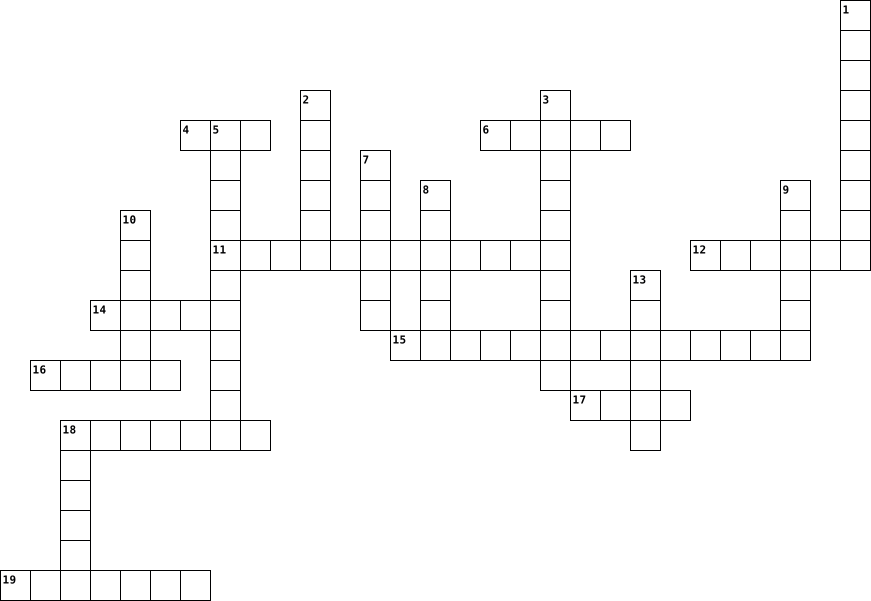
Across
- Break it and you get put in jail
- Something that shows you did something or didnt
- Paper of our nations rights
- To formally accuse
- Something close by or in your town
- Something you are expected to do
- Like a democrat or a republican
- To put a vote on an election
- A person of a nation or country
- When your freed of wrong doing
Down
- People that are in the country illegally
- Something that cant be taken away
- What makes the choices for our nation
- Practice of farming
- Our class subjects
- Jeopardy Illegal act of trying someone twice
- When you admit to doing something
- To send an immigrant back to their homeland
- When people argue or talk about something
- and balances ways to pay for things
20 Clues: Our class subjects • To formally accuse • Practice of farming • Paper of our nations rights • To put a vote on an election • When your freed of wrong doing • Like a democrat or a republican • A person of a nation or country • Break it and you get put in jail • Something you are expected to do • Something that cant be taken away • When you admit to doing something • ...
Spooky History 2023-10-31

Across
- Biggest producer of silk
- A specialist in a specific branch of study is called
- City where purple dye was produced
- Name of biggest empire in Europe during silk roads
- Name of Sultan who conquered Constantinople
- Major madrassa in modern day Uzbekistan
- variety of different cultures and people coexisting together in a community.
- Name of India during Muslim control
- Main animal used on silk road
- Major religion in China during the duration of the silk roads
- Chinese boats used by merchants
- winds that blow predictably in the same direction every season
Down
- Belief/Religion of most of inland Africa
- Instrument used to measure longitude invented in the middle east
- Fruit brought from Indonesia that spread into Africa
- Country where modern day Constantinople is located in
- Biggest Buddhist place of worship in the world
- Richest man in history
- Empire that formed in Modern day Somolia
- This city was the major trade port of the Srivijayan empire
- Commander of the largest Chinese fleet during chinas age of exploration
- Name of capital of the Srivijaya empire
- Capital of Iraq
23 Clues: Capital of Iraq • Richest man in history • Biggest producer of silk • Main animal used on silk road • Chinese boats used by merchants • City where purple dye was produced • Name of India during Muslim control • Major madrassa in modern day Uzbekistan • Name of capital of the Srivijaya empire • Belief/Religion of most of inland Africa • Empire that formed in Modern day Somolia • ...
History Words 2024-02-12

Across
- Written and non-written items that can provide information about the past
- An object made by humans
- A personal viewpoint, or way of looking at and thinking about things
- Stands for ‘before the common era’; which refers to the ancient historical period
- A theory that tries to explain some aspect of the past. It can be tested against the evidence found in historical sources
- The time before Christ’s birth; stands for ‘before Christ’
- A one-sided opinion, which is usually prejudiced
- All things that we value from the past, including events, traditions, places and experiences
- Knowledge and understanding passed on through Aboriginal stories, song cycles, ceremonies, laws, dance and art
- Stands for ‘common era’; which refers to the modern historical period
- The layers of history: Distinct layers of material beneath the ground, built up over time, that provide information for archaeologists and geologists
- The time and place, and how people thought and behaved, in which an event happens.
- The time before recorded history
- A person who studies or collects antiques or antiquities.
- The study of the physical remains of the past- sources
Down
- Information found within a source that proves or disproves something
- A person who investigates the past by digging up objects left by earlier societies and civilisations
- Someone trained to investigate and write about the past
- Preservation refers to the act or process of protecting, maintaining, or keeping something in its existing state or condition
- The process of restoring an artefact to its original state by removing what has been added by time, or adapting it to a new use that protects its cultural significance
- Describes people and culture that originate in an area, rather than coming from another part of the world
- The order in which events happened, from the earliest to the most recent
- Source created in the time being investigated; this might include bones, stone tools, letters, newspapers, art or photographs; can usually be divided into written and archaeological sourcessource
- The time from a civilisation’s invention of writing (3500 BCE) to the end of the western Roman Empire 476 CE
- A building in which artefacts of historical interest are stored and exhibited for their preservation and conservation.
- reconstruction of the past by people living at a later time; this can include books, articles and artworks as well as models, computer software and documentary
- The study of the past from the invention of writing vs everything that happened in the past
- Stands for the Latin ‘AD’, meaning ‘in the year of our Lord’
28 Clues: An object made by humans • The time before recorded history • A one-sided opinion, which is usually prejudiced • The study of the physical remains of the past- sources • Someone trained to investigate and write about the past • A person who studies or collects antiques or antiquities. • The time before Christ’s birth; stands for ‘before Christ’ • ...
History Crossword 2024-02-08

Across
- all of the physical features in a place, including land, water, animals, plants, and climate
- to grant permission for something
- plants or animals that live and breed in a human environment;tame
- for a limited, often short-term, period of time
- a formal document issued by the king that outlined a colony's geographic boundaries and specified how it would be governed
- wealthy
- separated or set apart from other people or things
- a violent action in opposition to a government or law
- to make something sure or certain
Down
- a written agreement signed by two or more parties,which binds those parties to do what is stated in the agreement
- time spent not working
- to change a person's religious beliefs so they accept a different or new religion
- owner
- good at finding ways to solve problems
- ruled by the people. In democracy, people elect representatives to make and carry out laws
- a new settlement or territory established and governed by a country in another land
- to have a direct effect on a person or thing
- a people's way of life, including beliefs, customs,food, dwellings,and clothing
- to change in order to improve
- a way a society organizes the manufacture and exchange of things of value, such as money,food, products, and services
20 Clues: owner • wealthy • time spent not working • to change in order to improve • to grant permission for something • to make something sure or certain • good at finding ways to solve problems • to have a direct effect on a person or thing • for a limited, often short-term, period of time • separated or set apart from other people or things • ...
1950s History 2025-03-10

Across
- when you wear a white shirt and tie to go to work
- to behave according to standards
- the biggest public work program within the U.S.
- the legislative branch of the U.S.
- when people do nothing about issues within society
- a policy that ended federal supervision over Indian tribes
- person who has abilities to create or change laws
- a period of time from 1945 to 1961
- plans to upgrade land in an urban area
- when an organization has different legal rights
Down
- when shop owners will only hire union members (a shop)
- making economic conservation equal to benefit the country
- an agreement between the U.S. and Mexico that they can work agriculture
- when a person runs and owns several business stores
- cooperation that expanded overseas
- another name for the Servicemen's Readjustment Act
- program with proposals to congress
- brought in a huge amount of Mexicans to the U.S. to work agriculture within the southwest
- - to leave something
- no one is forced to join a union
- new workers were forced to join unions (a shop)
21 Clues: - to leave something • to behave according to standards • no one is forced to join a union • the legislative branch of the U.S. • cooperation that expanded overseas • program with proposals to congress • a period of time from 1945 to 1961 • plans to upgrade land in an urban area • the biggest public work program within the U.S. • ...
history crossword 2025-02-17

Across
- Mughals were the successors of ----- from father’s side
- The first Mughal emperor
- Rastrakutas, Gujara prathiharas and pala dnasty fought the ____ struggle
- Temple at thanjavur was built by
- Muhammad Ghazni raided the ------ temple
- A ruler from iran
- Cholas were known for --- sculptures
- Real name of shershah
- The ---- were loyal to the Mughals
- One of the Navratnas of Akbar(musician)
Down
- Leader of jat
- Akbars revenue minister
- System introduced to protect the cultivators
- History of Kashmir was written by
- A Rashtrakuta chief
- Mehrunnisa was given the title
- A famous Maratha ruler
- An important Rajput kingdom
- A tax collected by Marathas
- Observatory was constructed by
20 Clues: Leader of jat • A ruler from iran • A Rashtrakuta chief • Real name of shershah • A famous Maratha ruler • Akbars revenue minister • The first Mughal emperor • An important Rajput kingdom • A tax collected by Marathas • Mehrunnisa was given the title • Observatory was constructed by • Temple at thanjavur was built by • History of Kashmir was written by • ...
History USA 2025-01-06

Across
- – The practice that divided the nation.
- – The land we live in!
- – What the U.S. declared in 1776.
- – Rules for how the U.S. is run.
- – Early settlers who came on the Mayflower.
- – A type of music born in America.
- – A president during the Great Depression.
- – What many sought in California in 1849.
- – First president of the United States.
- – Conflict between countries or groups.
- – A symbol with stars and stripes.
- – Important transportation in the 1800s.
- – War for freedom from Britain.
Down
- – Famous cracked symbol in Philadelphia.
- – A change to the Constitution.
- – Refers to the first people in America.
- – Freedoms guaranteed to all people.
- – People who moved westward.
- – Type of war between the North and South.
- – The first 13 American settlements.
- – Freedom for enslaved people.
- – Leader of the United States.
- – A key idea in U.S. history.
- – The document announcing independence.
- – A state that was once its own country.
- – The largest U.S. state bought from Russia.
- – Someone like Benjamin Franklin.
- – Part of the land Lewis and Clark explored.
- – President during the Civil War.
- – Another word for freedom.
30 Clues: – The land we live in! • – Another word for freedom. • – People who moved westward. • – A key idea in U.S. history. • – Freedom for enslaved people. • – Leader of the United States. • – A change to the Constitution. • – War for freedom from Britain. • – Rules for how the U.S. is run. • – What the U.S. declared in 1776. • – Someone like Benjamin Franklin. • ...
History 3 2025-01-06

Across
- – The bird symbol of America.
- – President during the Great Depression.
- – A time when people struggled to find jobs.
- – Fought for the right to vote in the 1900s.
- – Where WWII began for the U.S.
- – A time when alcohol was banned.
- – Big weapons used in wars.
- – Early people who moved to new lands.
- – A huge natural landmark in the West.
- – Homes built by Native Americans in the Southwest.
- – There are 13 of these on the flag.
- – The second U.S. president.
- – A state famous for the Gold Rush.
- – A giant statue in New York Harbor.
Down
- – A man credited with discovering America.
- – A long war in the 1960s and 1970s.
- – An agreement to stop fighting.
- – Famous inventor and statesman.
- – President known for the Trail of Tears.
- – Of happiness, as written in the Declaration.
- – Ready to fight at a moment’s notice.
- – A path west, like the Oregon Trail.
- – There are 50 of these in the U.S.
- – Choosing leaders in an election.
- – Handles the country’s money.
- – General during WWII who became president.
- – A law that taxed paper goods.
- – There are 50 of these on the flag.
- – Founded the first U.S. bank.
- – Another word for a proposed law.
30 Clues: – Big weapons used in wars. • – The second U.S. president. • – The bird symbol of America. • – Handles the country’s money. • – Founded the first U.S. bank. • – Where WWII began for the U.S. • – A law that taxed paper goods. • – An agreement to stop fighting. • – Famous inventor and statesman. • – A time when alcohol was banned. • – Choosing leaders in an election. • ...
History 5 2025-01-07

Across
- – A town that grew fast during the Gold Rush.
- – The money used in the U.S.
- – A strong building used in battles.
- – What the Declaration of Independence says we are born with.
- – A Native American symbol of friendship.
- – Where the Pilgrims landed in 1620.
- – Direction pioneers traveled.
- – President Roosevelt’s plan during the Great Depression.
- – A Native American tribe in the Southwest.
- – Land set aside for Native Americans.
- – A big invention by Alexander Graham Bell.
- – First battle of the Revolutionary War.
- – State with violent clashes before the Civil War.
Down
- – Where cowboys worked.
- – A symbol of freedom in Philadelphia.
- – The group that makes laws.
- – A territory bought from France in 1803.
- – Day celebrating the end of slavery in Texas.
- – The right to write and share ideas.
- – Man-made waterway, like the Erie Canal.
- – A famous statement of independence.
- – Helped Lewis and Clark explore.
- – Machine invented by Eli Whitney.
- – A military post.
- – One of two states named for Native tribes.
- – A trail or path, like Route 66.
- – A boat powered by steam, popular in the 1800s.
- – The ruler of Britain during the Revolution.
- – People who supported the British in the Revolution.
- – Taxed goods that angered the colonists.
30 Clues: – A military post. • – Where cowboys worked. • – The group that makes laws. • – The money used in the U.S. • – Direction pioneers traveled. • – Helped Lewis and Clark explore. • – A trail or path, like Route 66. • – Machine invented by Eli Whitney. • – A strong building used in battles. • – Where the Pilgrims landed in 1620. • – The right to write and share ideas. • ...
US history 2024-12-19

Across
- they were young women known for their energetic, freedom and embracing lifestyles.
- this is when someone who illegally makes distributions or sell alcohol.
- was the president at the time
- marked the beginning of the Great Depression
- these were counties built by homeless people during the great depression.
- where most of the dust bowl storms were at
- this was an illegal bar that operated during probation.
- this is where families went because of the dust bowl
- having no money
- this is a strict adherence to specific theology.
- these were makeshift communities built by homeless people during the great depression.
Down
- were the production in importation, transportation, and sale of alcohol Beverages were banned in the US.
- the biggest money tragedy at this time
- this was the fear of communist spreading in the United States.
- The policy of favoring native born individuals over immigrants.
- this refers to making guesses.
- they were often resembled a city dump then a place of living.
- this was a group of politicians associated with President Warren Harding.
- a storm that destroyed everything
- this was the series of programs introduced by Franklin Roosevelt to combat the great depression.
20 Clues: having no money • was the president at the time • this refers to making guesses. • a storm that destroyed everything • the biggest money tragedy at this time • where most of the dust bowl storms were at • marked the beginning of the Great Depression • this is a strict adherence to specific theology. • this is where families went because of the dust bowl • ...
History CorssWord 2025-03-13

Across
- The act that forced Native Americans to relocate west of the Mississippi
- This famous U.S. landmark was burned by the British in 1814
- First U.S. President who set many precedents
- Nickname of Jackson due to his tough personality
- The U.S. fought this country in the War of 1812
- Andrew Jackson was the first president from this political party
- The first political party of Washington and Hamilton
- The idea that states could reject federal laws they deemed unconstitutional, leading to the Nullification Crisis
- This act, passed under Jefferson, aimed to stop foreign trade but hurt the U.S. economy
- The practice of forcibly taking American sailors into the British navy
- The Supreme Court ruled that this state could not impose laws on Cherokee lands
- The forced relocation of Native Americans
- The treaty that ended the War of 1812
- The 1828 election introduced this new political party, led by Jackson
- The U.S. purchased Florida from this country in 1819
- This famous trail was used by pioneers to travel west in the early 1800s
- This territory applied for statehood in 1820, sparking a national debate over slavery
- The controversial tariff that led to the Nullification Crisis in 1832
- A major economic crisis that hit the U.S. in 1819
- The wife of John Adams who famously advocated for women’s rights
- The Supreme Court case that established judicial review
- The name of the American warship that earned the nickname “Old Ironsides”
- He became the fifth U.S. President and introduced a famous doctrine
Down
- The act signed by John Adams that made it harder for immigrants to become U.S. citizens
- This financial institution was shut down by Jackson, leading to economic instability
- This early Chief Justice of the Supreme Court helped establish judicial revie
- The famous battle where Tecumseh’s forces were defeated in 1811
- This 1823 doctrine warned European nations not to interfere in the Americas
- The river explored by Lewis and Clark as they mapped the Louisiana Territory
- This agreement in 1819 resulted in Spain ceding Florida to the U.S.
- The U.S. fought this North African group in the early 1800s over piracy and trade disputes
- This 1803 land deal doubled the size of the U.S.
- The first ten amendments to the U.S. Constitution
- The first U.S. President to serve two full terms after Washington
- The first U.S. Secretary of State and author of the Declaration of Independence
- This treaty signed in 1795 resolved trade and boundary disputes with Spain
- A Native American leader who tried to unite tribes against U.S. expansion
- He was the second U.S. President and a leader in the American Revolution
- Washington warned against these in his Farewell Address, fearing they would divide the nation
- This rebellion in 1794 tested Washington's authority over taxes
40 Clues: The treaty that ended the War of 1812 • The forced relocation of Native Americans • First U.S. President who set many precedents • The U.S. fought this country in the War of 1812 • Nickname of Jackson due to his tough personality • This 1803 land deal doubled the size of the U.S. • The first ten amendments to the U.S. Constitution • ...
Global History 2025-10-05

Across
- Called “El Liberator”
- Person of mixed European and Indigenous ancestry
- Short-lived nation created by Bolívar uniting northern South American territories
- Birthplace of Simón Bolívar
- Class of people of European descent born in the Americas
- Spaniards born in Spain who dominated colonial governments
- European intellectual movement that influenced Latin American revolutionaries
- Another word for freedom, central theme of the revolutions
- Mexican priest who began the fight for independence in 1810
- Venezuelan cowboys who fought in the independence wars
- Type of government established in most Latin American nations after independence
Down
- Military strongman who often ruled after independence
- Mexican general who became emperor after independence
- Indigenous leader who led a major revolt in Peru in the 1780s
- 1810 speech that sparked Mexico’s independence movement
- Goal of revolutions across Latin America in the early 19th century
- Last major stronghold of Spanish royalist forces in South America
- European ruler whose wars indirectly inspired revolutions in Latin America
- Local governing bodies that took power after Spanish authority collapsed
- Argentine general who helped liberate Chile and Peru
20 Clues: Called “El Liberator” • Birthplace of Simón Bolívar • Person of mixed European and Indigenous ancestry • Argentine general who helped liberate Chile and Peru • Military strongman who often ruled after independence • Mexican general who became emperor after independence • Venezuelan cowboys who fought in the independence wars • ...
History Crossword 2025-10-08

Across
- Discovered America in 1492
- Famous queen of Egypt
- Mystic Russian monk who cured the Russian leaders son
- Queen who defeated the Spanish Armada
- King with 6 wives
- Discovered gravity under an apple tree
- Explorer who sailed around the world
- Norman leader that won the battle of Hastings
- The wall that divided a German city until 1989
- First man to walk on the Moon
- Empire led by Julius Caesar
- Invented the telephone
Down
- Famous civil rights leader in America
- The first U.S. President
- Leader of Germany during World War II
- Document signed by King John in 1215
- The country where the Renaissance began
- Famous British nurse during the Crimean War
- The war fought between 1914–1918
- City that was destroyed by a volcano in 79 AD
- Invented the light bulb
- The ship that sank in 1912
- Discovered penicillin
- Name of the wife that was beheaded first
24 Clues: King with 6 wives • Famous queen of Egypt • Discovered penicillin • Invented the telephone • Invented the light bulb • The first U.S. President • Discovered America in 1492 • The ship that sank in 1912 • Empire led by Julius Caesar • First man to walk on the Moon • The war fought between 1914–1918 • Document signed by King John in 1215 • Explorer who sailed around the world • ...
US history 2025-10-17

Across
- First name of the woman who refused to give up her seat on a bus in Montgomery in 1955.
- The incredible achievement of landing a man on the moon in 1969 (three words, no space).
- The "Race" between the US and the USSR to achieve superior missile and exploration capabilities.
- A famous neighbourhood in New York City associated with African American culture and history.
- The decades-long conflict between the United States and the Soviet Union (two words, no space).
- The controversial war the US fought in Southeast Asia from the 1950s to 1970s.
- The actor-turned-president who famously told Gorbachev to "Tear down this wall!".
- The US president assassinated in Dallas in 1963.
- The First Lady who later became Secretary of State and a presidential candidate (First name).
- The first major armed conflict of the Cold War era (adjective describing the nationality).
Down
- The Act passed after 9/11 that greatly expanded government surveillance powers.
- The only US president to resign from office due to the Watergate scandal.
- The Caribbean island nation that was the focus of a missile crisis in 1962.
- The military alliance formed by the US and Western allies to counter the Soviet threat (acronym).
- The practice of making accusations of subversion or treason without proper regard for evidence in the 1950s.
- The massive movement for equality and an end to segregation in the 1950s and 60s (two words, no space).
- The month in 2001 when terrorist attacks hit the World Trade Center (only the month).
- The German city where a wall was built in 1961 to divide East and West.
- The decade when the Civil Rights Act and Voting Rights Act were passed (spelled out).
- The first African American president of the United States.
- The political scandal involving a break-in at the Democratic National Committee headquarters.
- The first name of Martin ___ King Jr., a key leader of the Civil Rights Movement.
22 Clues: The US president assassinated in Dallas in 1963. • The first African American president of the United States. • The German city where a wall was built in 1961 to divide East and West. • The only US president to resign from office due to the Watergate scandal. • The Caribbean island nation that was the focus of a missile crisis in 1962. • ...
NZ History 2025-10-23

Across
- The first Māori King, 'Te ____'
- Māori term for the exercise of chieftainship
- The Taranaki settlement famous for using "passive resistance" against Pākehā land seizures
- The court established in 1865 to convert Māori customary land titles into freehold titles
- The natural resource whose discovery in 1861 sparked the second major wave of settlement in New Zealand
- The first Governor of New Zealand
- The exclusive right of the Crown to deal with Māori over land transactions
- Ngāpuhi chief who cut down the British flagpole multiple times ('Hone ____')
- Settlement near Wellington where the New Zealand Company's first settlers arrived
- VOGEL The person responsible for the economic and immigration scheme initiated in the 1870s
Down
- The conflict over land in 1843, initially referred to as a massacre
- Māori term for self-determination
- The supreme authority within a territory
- The land confiscation law passed in 1863 targeting Māori tribes resisting British authority
- The individual whose 1841 execution by death penalty was the first official execution in New Zealand
- A system of government by one person with absolute power
- The policy of acquiring political control over another country and occupying it with settlers
- Māori word for governance or government
- A form of government where the head of state holds authority by virtue of birth
- The British government representative sent in 1833
20 Clues: The first Māori King, 'Te ____' • Māori term for self-determination • The first Governor of New Zealand • Māori word for governance or government • The supreme authority within a territory • Māori term for the exercise of chieftainship • The British government representative sent in 1833 • A system of government by one person with absolute power • ...
Food History 2024-04-10

Across
- Australian unleavened bread
- Food process that that restricts mico organisms multiplying
- Liquid used to pickle food
- On a food package, what is scanned to access the price
- German supermarket
- traditional flora and fauna eaten in Australia
- The opposite of fast food.
- Pink salt is from here.
- Stone fruit available around the festive period
- Imbalance of nutrient intake
- souvlaki is from this culture
- American fast food franchise
- What do dairy Farmers sell?
Down
- A variety of apple
- What gives plant based meat its "juice" colour
- Wine region in South Australia
- Staple food in Australia
- German for sausage
- Brand name of Freddo Frogs
- Complete the following. Fish and
- The definition of sous vide cooking
- Obesity is outstripping this issue
- First nations peoples diet was high in this nutrient
- Japanese food
24 Clues: Japanese food • A variety of apple • German for sausage • German supermarket • Pink salt is from here. • Staple food in Australia • Liquid used to pickle food • The opposite of fast food. • Brand name of Freddo Frogs • Australian unleavened bread • What do dairy Farmers sell? • Imbalance of nutrient intake • American fast food franchise • souvlaki is from this culture • ...
History crossword 2024-09-24

Across
- the first hominid
- time before written records
- discovered a 1.75 million year old skull fragment from an Australopithecus
- means upright man (first to travel out of Africa)
- new stone age
- Human like creatures that walks upright
- actually things from the past that humans used or made
- partial skeleton of an Australopithecus discovered by Donald Johanson
- means wise man (modern humans)
- means handy man
- a strip of land between Alaska and Russia that was revealed after the ice age
- an example of a paleolithic cave- demonstrates lots of prehistoric drawings
- the studies of human societies and cultures and their developments
- new stone age
- rocks placed for religious purposes
Down
- study of human history and prehistory through the excavation of sites
- the movement of people from one place to another
- people who hunted ,fished ,and gathered wild berries, plants, and nuts for food
- the process of taming an animal or a plant
- old stone age
- the assignment of different parts of a task to different people in order to improve efficiency
- the spread of cultural trends
- man's body discovered by hikers in the alps
- people who lived during the stone age and moved place to place following migrating animal herds
- someone who makes something
- A society where men and women are equal
- a division of society based on social and economic status
- an ancient society located in modern day turkey
28 Clues: old stone age • new stone age • new stone age • means handy man • the first hominid • time before written records • someone who makes something • the spread of cultural trends • means wise man (modern humans) • rocks placed for religious purposes • Human like creatures that walks upright • A society where men and women are equal • the process of taming an animal or a plant • ...
History Crossword 2024-09-23

Across
- How many king Henrys were there? (5)
- What is 2024 in Roman numerals? (6)
- Popular name given to the Norsemen who invaded England in the 8th century? (7)
- Unsinkable ship which sank on its maiden voyage. (7)
- The last Tudor monarch. (9)
- Important law document, a copy of which is kept at Lincoln Castle. (5-5)
- Ancient Greek games (8)
- Tudor king who had six wives. (5)
- Where did the Great Fire of London start? (7-4)
- Age which followed the Stone Age. (6)
Down
- Norman duke who defeated King Harold at the Battle of Hastings in 1066? (6)
- Ancient civilisation that built the great pyramid? (9)
- Queen who was the longest reigning monarch until Queen Elizabeth II? (8)
- Outstanding Scunthorpe secondary school which first opened in 1951. (8)
- Roman god of love which is also a name of a planet. (5)
- Florence ______. Nurse known as the 'Lady of the Lamp' who introduced cleaner hospitals during the Crimean War. (11)
- Plot to blow up parliament remembered on the 5th of November. (9)
- Children who were sent from the cities to the countryside in World War II. (8)
- Battle of the _____. The largest land battle of World War I. (5)
- The Roman emperor, whose name is given to the wall between England and Scotland. (7)
20 Clues: Ancient Greek games (8) • The last Tudor monarch. (9) • Tudor king who had six wives. (5) • What is 2024 in Roman numerals? (6) • How many king Henrys were there? (5) • Age which followed the Stone Age. (6) • Where did the Great Fire of London start? (7-4) • Unsinkable ship which sank on its maiden voyage. (7) • Ancient civilisation that built the great pyramid? (9) • ...
ancient history 2024-09-25

Across
- land bridge that separates Russia and the US
- modern human
- start of agriculture
- ancient settlement in modern day Turkey
- an historical object made by a human being
- the first fossil of an australopithecus
- a preserved glacier mummy
- the lifestyle of moving from place to place
- Classes division of a society based on social status
- old stone age
- earliest form of getting food
- second hominid, called handyman
- study of human societies and cultures and their development
- a cave that is home to some of the earliest prehistoric drawings by humans
Down
- a society where everyone is considered equal
- before writing
- skilled worker that involves making things by hand
- selective breeding of plants and animals for human use
- new stone age
- British paleoanthropologist who discovered the first fossilized footprints
- spread of culture to different regions of the world
- movement of people from one location to another
- third hominid, means upright man
- study of human history and prehistory through the analysis of artifacts
- human like creatures that walk upright
- first hominid
- assigning different jobs to everyone equally
- large stone that was used in prehistoric cultures
28 Clues: modern human • new stone age • old stone age • first hominid • before writing • start of agriculture • a preserved glacier mummy • earliest form of getting food • second hominid, called handyman • third hominid, means upright man • human like creatures that walk upright • ancient settlement in modern day Turkey • the first fossil of an australopithecus • ...
History Words 2024-09-26

Across
- A safeguard or protection, especially a safeguard of social institutions or rights.
- The ancient past, especially before the Middle Ages; an object from ancient times.
- A component or part of something; a member of a group represented by someone in a position of power.
- To instruct or urge someone to do something; to prohibit legally.
- A financial penalty or fine imposed at the discretion of the court
- Relating to a person's body, especially as opposed to their spirit; tangible, physical.
- To isolate or hide away something or someone; to take legal possession of assets.
- Urging or encouraging action or conduct; exhortatory.
- Immoral or grossly unfair behavior; wickedness.
- Clear, logical, and convincing (usually referring to an argument).
- Great respect or reverence for someone or something.
- To instill an idea, attitude, or habit through persistent instruction.
- Starved or hungry (chiefly British dialect).
- Extremely distasteful; unacceptable or offensive.
- Extreme greed for wealth or material gain.
Down
- So unique that it cannot be imitated or matched.
- Harsh criticism or public disgrace due to shameful conduct.
- A right or privilege exclusive to a particular individual or class.
- The state of being famous or well known, typically for something bad.
- To add or attach something, often territory, to something larger.
- A salary, fee, or profit from employment or office.
- A loud, confused noise, especially one caused by a large mass of people; confusion or disorder.
- Relating to or involving money.
- Optimistic or positive, especially in a difficult situation.
- a person's face or facial expression, support, admit as acceptable or possible.
- To refrain from doing something or exercising a right.
- A speech or piece of writing that praises someone highly.
- The act of studying or learning something thoroughly.
- To make up or form something; to be the elements or parts of something.
- To cause someone to act in a particular way; to put into motion.
30 Clues: Relating to or involving money. • Extreme greed for wealth or material gain. • Starved or hungry (chiefly British dialect). • Immoral or grossly unfair behavior; wickedness. • So unique that it cannot be imitated or matched. • Extremely distasteful; unacceptable or offensive. • A salary, fee, or profit from employment or office. • ...
History Puzzle 2024-06-10

Across
- generation 1965-1980
- generation 1946-1964
- United States of…
- Supreme power
- Interactions of society
- Civilian population
- understanding of many groups
- Change or development
Down
- The wealth of a country
- Different groups of people of the world
- What you go to school for
- wrong place of something
- Can help you and your rights
- generation 1997-2012
- generation 1928-1945
- To keep something without impact
- generation 1981-1996
- Bus movement
- Overall name of movements like rosa parks/MLK/etc.
- Leader and famous person of many civil right movements
20 Clues: Bus movement • Supreme power • United States of… • Civilian population • generation 1965-1980 • generation 1946-1964 • generation 1997-2012 • generation 1928-1945 • generation 1981-1996 • Change or development • The wealth of a country • Interactions of society • wrong place of something • What you go to school for • Can help you and your rights • understanding of many groups • ...
History RIZZSIGMA 2024-09-03

Across
- A new settlement or territory established and governed by a country in another land.
- A person who moves to a new area to live, often in a colony.
- The practice of owning people as property and forcing them to work.
- A person who attacks and robs ships at sea.
- A large farm where crops like sugar, tobacco, and cotton are grown, often using slave labor.
- A drawing that shows the geography of an area.
- A journey made for a special purpose, often to explore new lands.
- The process of planning and controlling the course of a ship.
- Term used by Europeans for the Americas after Columbus's discovery.
Down
- A community of people living in a new place.
- The leader of a ship or boat.
- The act of finding something new for the first time.
- Person who travels to unknown places to discover new things.
- The exchange of goods and services between people or countries.
- A valuable metal that explorers often searched for in new lands.
- A person who was born in a particular place, often referring to the original inhabitants of an area.
- Term used for Europe, Asia, and Africa before the discovery of the Americas.
- A tool used to determine direction (north, south, east, west).
- A long journey, especially by sea or in space.
- A large boat used for traveling long distances over the sea.
20 Clues: The leader of a ship or boat. • A person who attacks and robs ships at sea. • A community of people living in a new place. • A drawing that shows the geography of an area. • A long journey, especially by sea or in space. • The act of finding something new for the first time. • A person who moves to a new area to live, often in a colony. • ...
American History 2024-09-09

Across
- - Massachusetts town known for its witch trials in 1692.
- - Communication device introduced by Samuel Morse in 1844.
- - Began in 1619 when the first African slaves were sold in America.
- - The ship that brought Pilgrims to the New World in 1620
- - Native American who helped save the Pilgrims in 1621
- - Territory purchased from France by President Jefferson in 1803.
- - Location of the first women's rights convention in 1848.
- Explorer who arrived in the New world in 1492
- Removal- Policy initiated by Andrew Jackson in 1830, leading to the Trail of Tears.
- - The Continental Congress adopted this important document in 1776.
- - Where the British were defeated in 1781, leading to the end of the Revolutionary War. Constitution - Framework for the U.S. government, drafted in 1787
- - Landmark Supreme Court case in 1803 that established judicial review.
- Philip - Native American leader whose war against settlers began in 1675
- of Rights - First ten amendments to the U.S. Constitution, drafted in 1789.
Down
- - Future U.S. president who ignited the French and Indian War in 1754.
- Canal - Important waterway begun in 1817, connecting New York to the Great Lakes.
- First permanent English settlement in America, founded in 1607
- - Plaintiff in the Supreme Court case that denied citizenship to African Americans in 1857.
- - Location of the 1770 Massacre that increased tensions between colonists and Britain. Lexington - Site of the "Shot Heard Round the World" in 1775.
- Bank - Institution Andrew Jackson battled over in 1832.
- - Crisis sparked by John C. Calhoun in 1828 over states' rights.
- - State where gold was discovered in 1848, sparking a rush of settlers.
22 Clues: Explorer who arrived in the New world in 1492 • - Native American who helped save the Pilgrims in 1621 • Bank - Institution Andrew Jackson battled over in 1832. • - Massachusetts town known for its witch trials in 1692. • - The ship that brought Pilgrims to the New World in 1620 • - Communication device introduced by Samuel Morse in 1844. • ...
Computing History 2021-08-23
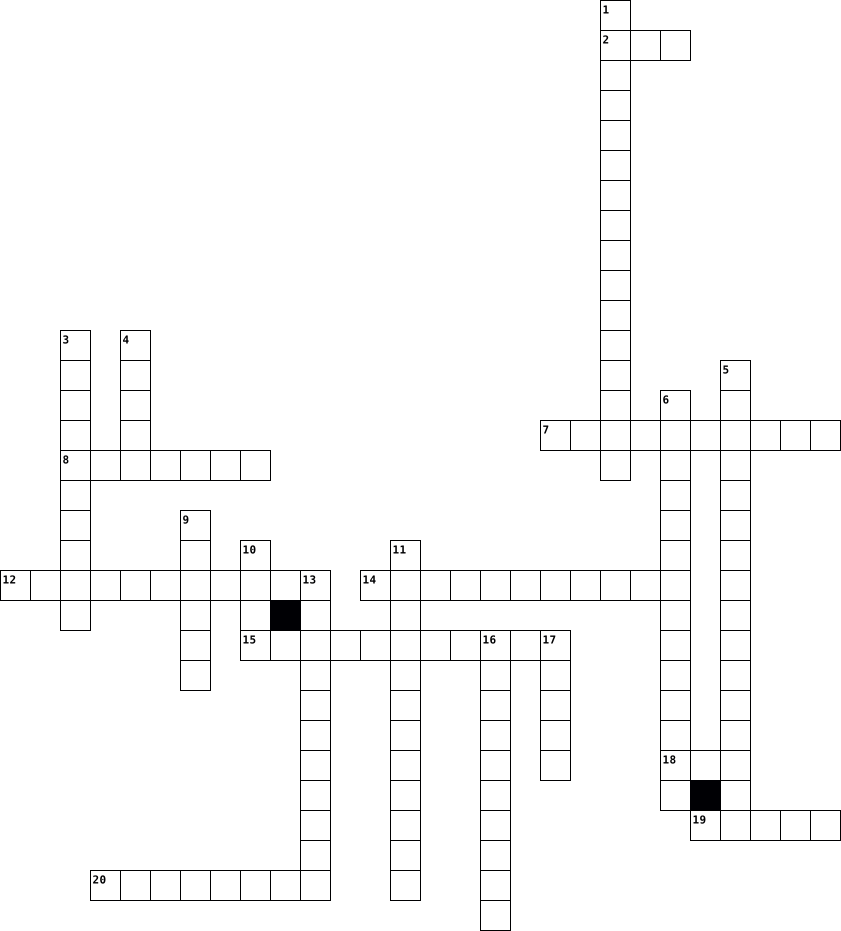
Across
- International Business Machine
- Many early computers used this as the primary method for input
- Element used in computer processors
- ___ was done by plugging hundreds of wires into plugboards
- First-generation computer used these for logic circuitry based a thermionic valve
- First computer programmer
- Graphical User Interface
- First company to design a GUI
- Originally a job title now evolved into a device we use daily
Down
- An automatic computer designed to tabulate polynomial functions
- A semi-conductor device used to amplify or switch electronic signals and electrical power
- world's largest computer chip manufacturer today
- General Purpose computer proposed by Charles Babbage
- Considered to be the "father" of computing
- first fully transistor-powered, commercially available computer
- Computer named after Steve Jobs' daughter meaning Local Integrated Software Architecture
- one of the largest electro-mechanical computers completed in 1944 by IBM
- According to ___ ___, anything that went wrong with a computer is considered a computer bug.
- First microcomputer
- First truly general-purpose electronic computer
20 Clues: First microcomputer • Graphical User Interface • First computer programmer • First company to design a GUI • International Business Machine • Element used in computer processors • Considered to be the "father" of computing • First truly general-purpose electronic computer • world's largest computer chip manufacturer today • ...
US History 2025-06-13

Across
- Luciano, Famous for turning the mob into a national scale crime syndicate
- Steinbeck, The Grapes of Wrath
- Huxley, Brave New World
- Scott Fitzgerald, The Great Gatsby
- Ilyich Lenin, founder of the Soviet Union
- Marquez, One Hundred Years of Solitude
- Camus, The Stranger
- Flair, Voted by 300,000 for Man of the Century and a Wrestler
- Luther King Jr., civil rights leader
- Chaplin, comic genius
Down
- Ford, founder of Ford Motor Co.
- Salinger, The Catcher in the Rye
- Orwell, 1984
- Ali, heavyweight boxing champion
- Disney, creator of animation and multimedia empire
- Heller, Catch-22
- D. Roosevelt, Famous for being a president and a popular man
- Lee, To Kill a Mockingbird
- Nabokov, Lolita
- Gates, co-founder of Microsoft
- Chanel, designer
- Bradbury, Fahrenheit 451
22 Clues: Orwell, 1984 • Nabokov, Lolita • Heller, Catch-22 • Chanel, designer • Camus, The Stranger • Chaplin, comic genius • Huxley, Brave New World • Bradbury, Fahrenheit 451 • Lee, To Kill a Mockingbird • Steinbeck, The Grapes of Wrath • Gates, co-founder of Microsoft • Ford, founder of Ford Motor Co. • Salinger, The Catcher in the Rye • Ali, heavyweight boxing champion • ...
History 2 2025-06-05

Across
- to burn with a hot iron to show ownerships
- the study of light and the eye
- worn and broken down by use
- being able to read and write
- goods bought and brought from another country
- a person who is owned by someone else.
- caravan a procession of camels traveling together in single line
- a slave warehouse, an enclosure where slaves were kept temporarily
- slave songs
- providing another choice
- no longer great, low or inferior.
Down
- of its former self a smaller, weaker or less important form of someone or something
- goods sold to another country
- business
- to take over and control a country or piece of land
- people the local inhabitants or the people who orginaly lived in a country
- piece, lump
- someone who is believed to explain the will of god
- money paid to the government.
- people who have been captured.
- working jointly
- the name of the Muslim
- communication of knowledge by a god
- complete list of things arranged systematically
- crops crops like tobacco, rice, sugar cane and cotton sold for money
25 Clues: business • piece, lump • slave songs • working jointly • the name of the Muslim • providing another choice • worn and broken down by use • being able to read and write • goods sold to another country • money paid to the government. • the study of light and the eye • people who have been captured. • no longer great, low or inferior. • communication of knowledge by a god • ...
American History 2025-05-28

Across
- the 10th amendment talks about reserved powers for who?
- the power comes from the people
- 2 houses
- the federal reserve wants to keep this down
- All the branches are able to keep each other in check
- The first ten_
- which amendment pertains to the right to bear arms
- each branch has it's own powers
- no ones above the law
- what is it called when a power is shared between the state and federal gov.
- court can declare a law unconstitutional
Down
- enforce laws
- write laws
- interpret laws
- the reasone for a search,like knowledge or evidence
- can't be tried for the same case twice
- the federal reserve regulates what supply
- a presidents way of saying no to a law
- legislative branch is the _
- how many justices are there in the supreme court
- the federal reserve supplies paper_
- the constitution is based upon how many principles
- what branch is the cabinet in
- what state had a state constitution change
- defamatory statement in print
- the Ohio constitution change included what part of the original constitution
26 Clues: 2 houses • write laws • enforce laws • interpret laws • The first ten_ • no ones above the law • legislative branch is the _ • what branch is the cabinet in • defamatory statement in print • the power comes from the people • each branch has it's own powers • the federal reserve supplies paper_ • can't be tried for the same case twice • a presidents way of saying no to a law • ...
Queensland's History 2025-05-31

Across
- First Premier of Queensland.
- Number of Indigenous languages in Queensland before white settlement.
- Name of Torres Strait Islander man to legally claim island through the High Court of Australia.
- Queensland's current_____ was adopted in 1876.
- The lack of ______ provided by NSW was one reason Queenslanders had to separate.
- Sir George Bowen was Queensland's first one of these.
- Queen ________ approved Queensland's self-governance.
- Event that started the Queensland Labor Party.
- Captain James Cook's ship.
- Queensland lost its colonial status after Federation.
- First payable gold in Queensland was found here.
- Queensland was the first colony to provide this.
- Major industry in the late 19th century.
Down
- Designer of the Queensland flag.
- Queensland is the ____ most populous state in Australia.
- Type of industry Queensland is noted for.
- Council Queensland's Upper House of Parliament, abolished in 1922.
- One of the first towns to develop after self-governance.
- An important industry in modern Queensland.
- Queensland's autonomy ceased when this event occurred in 1901.
- Dutch explorer who was the first documented European in Queensland.
- Gulf in north-west Queensland.
- Strait Island group which is part of Queensland.
- Traditional religion of the Torres Strait Islander peoples.
24 Clues: Captain James Cook's ship. • First Premier of Queensland. • Gulf in north-west Queensland. • Designer of the Queensland flag. • Major industry in the late 19th century. • Type of industry Queensland is noted for. • An important industry in modern Queensland. • Queensland's current_____ was adopted in 1876. • Event that started the Queensland Labor Party. • ...
chinese history 2025-05-19

Across
- 司马迁的作品别称
- 中国神话中飞到月亮的人物
- 古代楚国的藏书之地:
- 写“钗头凤·世情薄”的南宋词人
- 中国古代政治哲学中关于皇权合法性的学说:
- 《西游记》中西天取经的主角
- 汉朝出使西域、开通丝绸之路的人
- 十八世纪中国盛世晚期的风格与审美
- 中国历史上最后一位皇帝:
- 涵盖甲骨文、篆书等的书写传统
- 以豪放与浪漫著称的唐代诗歌
Down
- 杯酒释兵权的人
- 战国时期李冰父子修建的水利工程
- 西晋灭亡后五胡乱华前的战乱
- 1911年推翻清朝的历史事件
- 中医理论奠基之作:
- 被称为“书圣”的东晋书法作品:
- 曹雪芹《红楼梦》中贾府的园林
- 建立辽朝的契丹首领
- 新朝的建立者与短命改革
20 Clues: 杯酒释兵权的人 • 司马迁的作品别称 • 中医理论奠基之作: • 建立辽朝的契丹首领 • 古代楚国的藏书之地: • 新朝的建立者与短命改革 • 中国神话中飞到月亮的人物 • 中国历史上最后一位皇帝: • 西晋灭亡后五胡乱华前的战乱 • 《西游记》中西天取经的主角 • 以豪放与浪漫著称的唐代诗歌 • 1911年推翻清朝的历史事件 • 曹雪芹《红楼梦》中贾府的园林 • 涵盖甲骨文、篆书等的书写传统 • 战国时期李冰父子修建的水利工程 • 被称为“书圣”的东晋书法作品: • 写“钗头凤·世情薄”的南宋词人 • 汉朝出使西域、开通丝绸之路的人 • 十八世纪中国盛世晚期的风格与审美 • 中国古代政治哲学中关于皇权合法性的学说:
History 5 2025-12-18

Across
- The man who was governor of Tennessee and later Texas was...
- "Snow-Bound" was written in memory of the author's ...
- Louisa May Alcott worked as a ... during the Civil War.
- The Texas soldiers chose ... to be their leader in their fight for freedom from Mexico.
- John Greenleaf Whittier's poems were set to music and used as ...
- "Little Women" was written about the author's ...
- An old Spanish mission used as a fort by the Texans
- Noah Webster wrote the...
- Louisa May Alcott's home was a stop on the ...
- The famous pioneer who died at the Alamo was...
- After gaining their independence, the Republic of... elected Sam Houston as its first president.
- The first American textbook for children was the Blue-Backed...
Down
- The first American ... took almost twenty years to write.
- "Little Women" was written by...
- The Mexican president who fought against the Texans was...
- The first American dictionary was written by...
- One of the books often found in one-room schoolhouses.
- What color was the Blue-Backed Speller?
- A person, real or fictional, who is admired by the people of a particular place for his accomplishments is a...hero.
- Four volumes of Christian poetry expressing love for God were written by...
- The Texans fought against the country of...for their Independence.
- One of the books often found in one-room schoolhouses.
- John Greenleaf Whittier wrote the poem...
- Served in Congress as a representative of Tennessee.
24 Clues: Noah Webster wrote the... • "Little Women" was written by... • What color was the Blue-Backed Speller? • John Greenleaf Whittier wrote the poem... • Louisa May Alcott's home was a stop on the ... • The first American dictionary was written by... • The famous pioneer who died at the Alamo was... • "Little Women" was written about the author's ... • ...
World History 2025-12-18

Across
- American president assassinated in 1963
- The Queen beheaded during the French Revolution
- Only country to ever use an atomic bomb during war: Abbr.
- She started her environmental activism young, hails from Sweden
- This Caesar was stabbed on the Ides of March
- France’s first emperor
- First woman to win a Nobel Prize, physicist and chemist
- She protested by refusing to give up her seat on the bus
- The first recorded crime in Antarctica was a stabbing that occurred at this country's station
- A woman famous for standing up for women's rights against the Taliban
- The most famous conductor on the Underground Railroad
- First black president of South Africa, after Apartheid
- Russia from 1922 to 1991: Abbr.
- The ancient Library of ________ was destroyed in a fire
Down
- ________ School, institutions used to colonize Indigenous children in North America
- The Australians lost a war to this type of large bird in 1932
- One of three principal members of the Axis powers in WWII
- The army that sought to end British rule in Northern Ireland: Abbr.
- ____ of Arc, burned at the stake at the age of nineteen
- Female flying ace
- “The Shot Heard Around the World”, target
- Author of The Communist Manifesto
- Volcano responsible for destroying the Roman city of Pompeii in 79AD
- The first man on the moon
- Famous female primatologist famous for her work with chimpanzees
25 Clues: Female flying ace • France’s first emperor • The first man on the moon • Russia from 1922 to 1991: Abbr. • Author of The Communist Manifesto • American president assassinated in 1963 • “The Shot Heard Around the World”, target • This Caesar was stabbed on the Ides of March • The Queen beheaded during the French Revolution • ...
History & Civilization 2021-05-24

Across
- a person who could write
- the growing of crops
- alphabet, cuneiform, or hieroglyphics: systems of ________
- a person who is not free
- a system for watering crops
- the science of knowing where you are and following routes
- can be farmed
- a place where people build homes and live for long periods of time
- a person without a fixed home
- a small group of humans usually based on kinship ties
- the remains of a destroyed city
- bronze and iron working, jewelry production
- the process of taming wild animals to raise for food
Down
- the study of human remains and artifacts
- trade goods without using money
- things left behind
- a person who makes thing by hand
- around the time of
- invade and control another civilization
- a series of kings or queens from one family
- a great work of architecture such as a pyramid or statue
- something made by humans
- exchange goods for other goods without using money
- the study of designing buildings
- a system of canals, reservoirs, and dikes use to water crops
- a collection of stories about gods, heroes, and nature
- an advanced society
- the passing of stories and knowledge through spoken word: ____ tradition
28 Clues: can be farmed • things left behind • around the time of • an advanced society • the growing of crops • a person who could write • a person who is not free • something made by humans • a system for watering crops • a person without a fixed home • trade goods without using money • the remains of a destroyed city • a person who makes thing by hand • the study of designing buildings • ...
History final 2025-12-17

Across
- Government ruled by a king or queen
- Territories controlled by imperial powers
- President during the Civil War
- Central workplace of industrialization
- FDR’s economic recovery programs
- Period after the Civil War
- Policy of extending power through colonies
- Movement to end slavery
- Refers to the Industrial Revolution
- President during the Great Depression
- Northern states during the Civil War
- Global wars of the early 20th century
- Government ruled by the people
Down
- Severe economic downturn of the 1930s
- U.S. war from 1861–1865
- Supreme law of the United States
- Right to vote
- Act of freeing enslaved people
- Forced labor system
- Major political or social change.
20 Clues: Right to vote • Forced labor system • U.S. war from 1861–1865 • Movement to end slavery • Period after the Civil War • President during the Civil War • Act of freeing enslaved people • Government ruled by the people • Supreme law of the United States • FDR’s economic recovery programs • Major political or social change. • Government ruled by a king or queen • ...
Wisconsin History 2025-12-24

Across
- Site of 1871 fire deadlier than Chicago's
- Early economic activity with French explorers
- Brew city
- French Jesuit explorer who traveled Wisconsin rivers
- Iconic Wisconsin product
- City named after French word for root
- Progressive governor nicknamed "Fighting Bob"
- Home to lake wingra, monona, mendota, and some wardrips
- "America's _____"
- Packers
Down
- Historic military fort near Portage
- Industry centered in Wisconsin Rapids and Appleton
- 1200-mile long National scenic trail running across Wisconsin
- Tribe whose name is shared with a Wisconsin river
- Key shipping hub
- Wisconsin earned this in 1848
- Natural forces that shaped Wisconsin's landscape
- River and famous fishing rod company
- Sauk leader in 1832 war fought partly in Wisconsin
- Industry that fueled Wisconsin's 19th-century economy
- Scenic sandstone gorge turned tourist attraction
- Lead miners earned the nickname of this animal
22 Clues: Packers • Brew city • Key shipping hub • "America's _____" • Iconic Wisconsin product • Wisconsin earned this in 1848 • Historic military fort near Portage • River and famous fishing rod company • City named after French word for root • Site of 1871 fire deadlier than Chicago's • Early economic activity with French explorers • Progressive governor nicknamed "Fighting Bob" • ...
World History 2025-08-04

Across
- A political and economic system of Europe from the 9th to about the 15th century
- The founding father of the Israelites, with a prominent role in Judaism, Christianity and Islam
- A religious way of life that involves renouncing worldly pursuits to fully devote one's self to spiritual work
- A woman who is the superior of a convent of nuns
- Byzantine emperor who held the eastern frontier of his empire against the Persians
- Having One God
- One without faith
- The royal charter of political rights given to rebellious English barons by King John in 1215
- New capital of Rome, modern day Turkey
- The male head of a family or tribe
- was a value placed on every human being and every piece of property in the Salic Code
Down
- An ancient test of guilt or innocence by subjection of the accused to severe pain, survival of which was taken as divine proof of innocence.
- A medieval emperor who once ruled much of Western Europe
- An ecclesiastical censure depriving a person of the rights of church membership
- A split or division between strongly opposed sections or parties, caused by differences in opinion or belief.
- is a religious work of art, most commonly a painting, from Eastern Christianity and in certain Eastern Catholic churches
- of Hastings The decisive battle in which William the Conqueror (duke of Normandy) defeated the Saxons under Harold II (1066) and thus left England open for the Norman Conquest
- a room set apart for writing, esp. one in a monastery where manuscripts were copied
- Bishop of Rome and the leader of the worldwide Catholic Church
- A series of holy wars fought between 1095 and 1291.
20 Clues: Having One God • One without faith • The male head of a family or tribe • New capital of Rome, modern day Turkey • A woman who is the superior of a convent of nuns • A series of holy wars fought between 1095 and 1291. • A medieval emperor who once ruled much of Western Europe • Bishop of Rome and the leader of the worldwide Catholic Church • ...
French History 2025-07-08

Across
- French queen executed during the Revolution.
- Royal house that ruled before the French Revolution.
- Medieval code of conduct for knights.
- 20th-century French president and Resistance leader.
- French military leader who became emperor in 1804.
- Government system established after monarchy fell.
- Famous French prison stormed in 1789.
- Historic year the French Revolution began.
- Long conflict between England and France (1337-1453).
- 1789 document: Declaration of the Rights of ____.
Down
- French hero and saint burned at the stake in 1431.
- Napoleon's final defeat in 1815.
- Palace built by Louis XIV
- Treaty that ended WW1, signed in a French palace.
- French Revolution slogan: "Liberté, Égalité, _____."
- French Enlightenment thinker who wrote "Candide."
- Dynasty founded by Hugh Capet in 987.
- Historic region conquered by Julius Caesar.
- River that flows through Paris.
- Northern French region invaded during D-Day.
20 Clues: Palace built by Louis XIV • River that flows through Paris. • Napoleon's final defeat in 1815. • Dynasty founded by Hugh Capet in 987. • Medieval code of conduct for knights. • Famous French prison stormed in 1789. • Historic year the French Revolution began. • Historic region conquered by Julius Caesar. • French queen executed during the Revolution. • ...
History Crossword 2025-08-13

Across
- It feared Hindu domination in India and called for a separate Muslim state
- A period of starvation
- Called for by the US to allow trade to open to everyone on an equal basis
- He strengthened and modernized Egypt by improving tax collection, reorganizing landholding, improving farming methods, and expanding cotton production
- An independent Muslim state formed in 1947
- Adopted by Gandhi, this behavior was called satyagraha, or "soul force"
- A deliberate attempt to destroy an entire religious or ethnic group
- The refusal to follow laws one deems unfair
- Leader of the Taiping Rebellion, he supported land reform, communal ownership of property, and equality for women and men.
- He was a leader that united all Indians, nicknamed "Mahatama," or great soul
- Launched in the 1860s by the Chinese. They built factories, made modern weapons, and developed railroads, shipyards, mining, and light industry
Down
- Rebellion by the Righteous Harmonious Fists, also known as the "Boxers." The goal was to drive out the "foreign devils" with modern lifestyles
- Britain forced China to sign this, giving Britain a huge indemnity
- The right to live under China's own laws and be tried in Britain's courts
- Gandhi and 78 followers marched 240 miles to sea to protest the monopoly on salt
- A French entrepreneur who organized a company to build the Suez Canal
- They were distrusted by the Muslim Turks and accused of supporting Russian plans against the Ottoman Empire
- Areas of control
- Indian soldiers in their service to serve anywhere
- A war where the British defeated China, caused by the British act of ignoring Chinese threat of executing merchants and drug dealers
- A 100 mile waterway to link the Red Sea to the Mediterranean Sea
- Sepoys brutally massacred British men, women, and children
- A Chinese rebellion led by Hong Xiuquan due to poverty and misery for peasants
23 Clues: Areas of control • A period of starvation • An independent Muslim state formed in 1947 • The refusal to follow laws one deems unfair • Indian soldiers in their service to serve anywhere • Sepoys brutally massacred British men, women, and children • A 100 mile waterway to link the Red Sea to the Mediterranean Sea • ...
American History 2026-03-09

Across
- polygenism
- FreeSoilParty
- pietistic
- temperance
- FreeportDoctrine
- moralsuasion
- RepublicanParty
- SenecaFalls
- SecondGreatAwakening
- abolitionist
- cottongin
- cashcrop
- Compromiseof1850
- secondmiddlespassage
- concurrentmajority
Down
- Ostendmanifesto
- domesticslavetrade
- immediatism
- miscegenation
- colonization
- BleedingKansas
- popularsovereignty
- borderruffians
- paternalism
- Shakers
- HarpersFerry
- FireEaters
- Mormons
- millennialism
- transcendentalism
- AmericanParty
- DredScottvSandford
- cottonboom
- UndergroundRailroad
- antebellum
- teetotalism
- phrenology
37 Clues: Shakers • Mormons • cashcrop • pietistic • cottongin • polygenism • temperance • FireEaters • cottonboom • antebellum • phrenology • immediatism • paternalism • SenecaFalls • teetotalism • colonization • HarpersFerry • moralsuasion • abolitionist • miscegenation • FreeSoilParty • millennialism • AmericanParty • BleedingKansas • borderruffians • Ostendmanifesto • RepublicanParty • FreeportDoctrine • Compromiseof1850 • ...
Qatar History 2026-02-25

Across
- Traditional market
- Empire that fought Sheikh Jassim
- Capital of Qatar
- Ruling family name
- Capital city of Qatar
- Place where students learn
- Leader who founded modern Qatar
- Country that protected Qatar before 1971
- People who lived in the desert
- Northern coastal town
- Main language of Qatar
- Main resource found in 1939
- Red and white national symbol
- Country we are studying
- Found in the sea before oil
- Place to see history
Down
- Much of Qatar is this
- Buying and selling goods
- Boat used by pearl divers
- Place where people meet and talk
- Important natural resource today
- Desert transport animal
- Famous old town and fort
- Common weather in Qatar
- Early job for people in Qatar
- Important for trade and pearls
- Strong building for defence
- Fight at Al Wajbah
- Seafront in Doha
- Main religion of Qatar
30 Clues: Capital of Qatar • Seafront in Doha • Traditional market • Ruling family name • Fight at Al Wajbah • Place to see history • Much of Qatar is this • Capital city of Qatar • Northern coastal town • Main language of Qatar • Main religion of Qatar • Desert transport animal • Common weather in Qatar • Country we are studying • Buying and selling goods • Famous old town and fort • ...
Chinese History 2026-02-28

Across
- Pass Strategic pass where the Great Wall meets the sea
- Coastal raiders known as wokou
- Zicheng Rebel leader who captured Beijing in 1644
- Painting flourished during the Ming
- Canal Major waterway repaired during the Ming
- The last Ming emperor
- Sangui Ming general who opened the gates to the Manchu
- Court official who often held great power
- Japanese pirates who attacked Ming coasts
- City Inner administrative area within Beijing
- Examination Competitive exams for officials
- Money Early currency that declined in value
- Main currency used in late Ming trade
- Yuanzhang The birth name of the Hongwu Emperor
- One of the longest-reigning Ming emperors
- Service Examination system for selecting officials
- The founding emperor of the Ming Dynasty
- Educational institution for scholars
- Whip Tax Reform consolidating taxes into silver payments
- Popular literary form during the Ming
- Uprisings that weakened the dynasty
- Military settlement on frontiers
- Ming emperor influenced by a powerful eunuch
- People who established the Qing Dynasty
- Elegant landscaped retreats of the elite
- Agency that monitored officials
- Ministry overseeing military matters
- Kingdom that sent tribute to the Ming
- Margin Famous Ming-era novel about outlaws
- Relocated from Nanjing to Beijing by Yongle
- Ritual bow performed before the emperor
- Reformist Confucian movement late in the Ming
- Economic issue due to silver shortage
- Wall Fortifications strengthened extensively during the Ming
- Multi-tiered tower common in Ming architecture
- to the West Classic novel written in the Ming era
- Khan Mongol leader who raided Ming borders
- System reorganized during Ming rule
- European missionaries arriving late in the Ming
- and White Iconic porcelain style
- Valuable export commodity
- Ministry managing civil appointments
- Korean dynasty that had tributary relations
- Dynasty that replaced the Ming
- Ministry responsible for taxation
- Scholar-official in imperial China
- City The imperial palace complex in Beijing
- Science improved with Jesuit assistance
- Ministries Main administrative departments of the government
- Woodblock technique used for books
- Crisis where the Ming emperor was captured by Mongols
- Fleet Massive naval expeditions of the early Ming
Down
- Military organization later used by the Qing
- Largest social class in Ming society
- Transport system linking north and south
- Sea ban policy limiting maritime trade
- Color reserved for the emperor
- Massive Yongle literary compilation
- Philosophy central to Ming governance
- Famous blue-and-white ceramic art
- Trader often low in social rank
- Early Ming emperor known for cultural achievements
- Ministry overseeing legal affairs
- He Admiral who led the treasure voyages
- Ming emperor known for Daoist interests
- Important symbol of imperial authority
- The Chinese dynasty that ruled from 1368 to 1644
- Storage for grain reserves
- Missions Foreign envoys bringing gifts
- Disease outbreaks contributing to decline
- Ministry handling ceremonies and foreign affairs
- Portuguese trading settlement in China
- Gentry Educated elite class
- Food shortages in late Ming
- Skilled craft worker
- Encyclopedia One of the largest encyclopedias in history
- Ministry handling construction projects
- Northern nomadic rivals of the Ming
- of the Three Kingdoms Historical novel popular in Ming times
- The emperor who moved the capital to Beijing
- Ricci Italian Jesuit missionary to Ming China
- Blossom Fan Play reflecting late Ming society
- of Heaven Beijing complex where emperors prayed for good harvests
- City famous for gardens and culture
- Dominant intellectual philosophy
- The first Ming capital
- The main Ming capital after 1421
- Symbol of imperial authority
- System Diplomatic trade network centered on China
89 Clues: Skilled craft worker • The last Ming emperor • The first Ming capital • Valuable export commodity • Storage for grain reserves • Gentry Educated elite class • Food shortages in late Ming • Symbol of imperial authority • Color reserved for the emperor • Coastal raiders known as wokou • Dynasty that replaced the Ming • Trader often low in social rank • Agency that monitored officials • ...
History Review 2026-03-06

Across
- Inventor of the cotton gin.
- railroad Network of secret routes to help enslaved people escape to freedom.
- The invention that revolutionized the textile industry in the North.
- Early 1800s purchase that doubled the size of the U.S.
- First ten amendments to the Constitution.
- 1820 compromise that maintained the balance of free and slave states.
- The 7th president, known for the Trail of Tears.
- Policy of expanding the U.S. across the continent.
- Founding father and first Secretary of the Treasury.
- The 1773 protest against British tea taxes.
- The compromise that counted slaves for representation
- The war between the colonies and Britain (1775–1783).
Down
- The fourth president, known for the Louisiana Purchase.
- The agreement that ended the Revolutionary War.
- The first permanent English settlement in America. → JAMESTOWN
- Controversial early U.S. laws restricting speech and immigration.
- Famous battle in 1777 that convinced France to ally with the colonies.
- Famous route used by settlers moving west.
- Southern economy largely dependent on this labor system.
- Author of Common Sense, urging independence from Britain.
20 Clues: Inventor of the cotton gin. • First ten amendments to the Constitution. • Famous route used by settlers moving west. • The 1773 protest against British tea taxes. • The agreement that ended the Revolutionary War. • The 7th president, known for the Trail of Tears. • Policy of expanding the U.S. across the continent. • Founding father and first Secretary of the Treasury. • ...
History Crossword 2026-02-18

Across
- A large company made up of smaller businesses.
- A system in which land is owned by lords and worked by peasants in exchange for protection.
- A Japanese military ruler who held real power during certain historical periods.
- A traditional form of Japanese theater known for dramatic acting and costumes.
- A large, flat, grassy plain with few trees, especially in Central Asia.
- A Chinese philosophy based on the teachings of Confucius that emphasizes respect, order, and proper behavior.
- Important or significant.
- A seasonal wind that brings heavy rain to parts of Asia.
Down
- The main part of a continent or large landmass, not including islands.
- A person related to someone from the past, such as a child or grandchild.
- A custom or belief passed down from generation to generation.
- General agreement among a group of people.
- The growth of cities as more people move from rural areas to urban areas.
- A leader who has a title but little real power.
- A system of government run by many officials and departments.
- A group or chain of islands.
- A spirit or sacred being in the Japanese religion of Shinto.
- A group of families related by blood or loyalty.
- A tool used to find direction (north, south, east, west).
- To gather together in one place.
- A Chinese philosophy that teaches living in harmony with nature and the universe.
21 Clues: Important or significant. • A group or chain of islands. • To gather together in one place. • General agreement among a group of people. • A large company made up of smaller businesses. • A leader who has a title but little real power. • A group of families related by blood or loyalty. • A seasonal wind that brings heavy rain to parts of Asia. • ...
History Review 2024-05-22

Across
- fought a war for independence against Mexico
- first president
- place where the Mormons settled
- final battle of the american revolution
- led the Union army during the Civil War
- people move from rural areas to cities
- president who gave the Gettysburg address
- the gold rush happened in this state
- supported the Constitution
- first permanent English settlement in North America
Down
- claimed land in the new world to profit from fur trading and fishin
- defines the principal organs of government and their jurisdictions and the basic rights of citizens.
- claimed Florida, Texas, and California
- turning point
- first anti slavery group
- people who worked to end slavery
- invention to communicate rapidly over long distances
- our nations third president
- a place for Catholics to live peacefully
- led the Southern Army during the Civil War
20 Clues: turning point • first president • first anti slavery group • supported the Constitution • our nations third president • place where the Mormons settled • people who worked to end slavery • the gold rush happened in this state • claimed Florida, Texas, and California • people move from rural areas to cities • final battle of the american revolution • ...
Texas History 2024-05-24

Across
- The first big oil discovery that triggered the TExas oil boom.
- The battle where Texans won their independence
- This is the most famous document in Texas. Signed on March 2, 1836 at Washington on the Brazos.
- An early form of transportation on Texas Rivers
- Name of the time period of rebuilding, after the Civil War.
- The Spanish explorer that got shipwrecked in Texas and ended up walking barefoot through it after he escaped in the 1500s.
- These were built throughout the center of Texas to keep Native Americans from attacking new Texan settlements
- One of the key causes of the Civil War. Texans used this in its cotton plantations.
- Geography of most of Texas
- The Texas state tree
- First and last name of the famous Texan who won Texas Independence at the Battle of San Jacinto, and later became President of Texas.
- Battle during the Civil War when 47 Texans stopped the Union from invading
- Greatest state in the United States!!
- The famous 3 words at the end of William Travis' letter from the Alamo
- Longest River in Texas
- The famous battle that Texans lost, but that inspired others later to fight harder to win independence.
Down
- Body of water to the southeast of Texas
- What Spain built in Texas to claim the land and teach Natives their religion
- Largest city in Texas
- This vocabulary word means to add. This happened to Texas in 1845, and it triggered a war with Mexico.
- The Native Indian tribe that lived along the Gulf Coast.
- Used to be the largest ranch in Texas
- Texas has two of these large underground lakes: the Edwards and the Ogalala
- Texas is big on producing this crop, especially up in Lubbock
- Where the capital of Texas was moved to.
- Name of the man that named most of the Texas Rivers, and now name of the school with the most awesome 7th graders in the world.
- Second president of Texas that decided to kick the Indians out of Texas and take over the Santa Fe silver Trade
- The businessmen who Spain invited to Texas to bring people to settle in Texas. (Hint: Monooly)
- Name of the Country Texas belonged to during the Civil War
- Country Texas belonged to for 15 years, that it revolted against and won its independence from.
- Name of the Mexican leader that Texans fought during the Revolution.
- The biggest agricultural animal food industry.
32 Clues: The Texas state tree • Largest city in Texas • Longest River in Texas • Geography of most of Texas • Used to be the largest ranch in Texas • Greatest state in the United States!! • Body of water to the southeast of Texas • Where the capital of Texas was moved to. • The battle where Texans won their independence • The biggest agricultural animal food industry. • ...
Roman History 2024-12-09

Across
- this person was the boatman on the river styx
- her face is said to have launched 1000 ships.
- Wings melted when he flew too close to the sun.
- he turned everything he touched to gold
- the titan that holds the world on his shoulders.
- lured people in with their songs.
- this person opened pandoras box
- A poet that was exiled to the Black sea.
- this road ran from Rome to Brundisi.
- Achilles killed him.
- Fought against Rome in the Punic wars.
- first emperor of Rome.
Down
- River that runs through Rome.
- there were seven of these in Ancient Rome.
- Died on the ides of march in 44 BCE
- the greatest warrior of the greeks, known for his heel.
- one of the greatest orators in Rome.
- the Parthenon in Athens is dedicated to her.
- fought against animals in the colosseum.
- Lead a slave revolt in 73 BCE.
- a city covered in ash from MT. Vesuvius.
- Built the labyrinth
- he went in quest of the golden fleece
- Fell in love with Helen.
- her prophecies were true but never believed.
25 Clues: Built the labyrinth • Achilles killed him. • first emperor of Rome. • Fell in love with Helen. • River that runs through Rome. • Lead a slave revolt in 73 BCE. • this person opened pandoras box • lured people in with their songs. • Died on the ides of march in 44 BCE • one of the greatest orators in Rome. • this road ran from Rome to Brundisi. • ...
U.S History 2024-11-21

Across
- Author of Declaration of Independence
- This purchase doubled our land holdings
- Wrote common sense
- This treaty in 1783 formally ended revolution
- Father of the constitution
- People who were loyal to the king
- Signed name big on Constitution for king to see
- This rebellion increased taxation on grain
- This act taxed glass,lead,paper etc
- These rights are given to all humans
- change to constitution
- A private person or ship
Down
- This act taxed all documents
- this battle marked start revolution
- People who went against British
- People who didn't have a strong opinion
- This army fought for the 13 colonies
- Final major battle in revolution
- First person shot in revolution
- Turing point in the revolution
20 Clues: Wrote common sense • change to constitution • A private person or ship • Father of the constitution • This act taxed all documents • Turing point in the revolution • People who went against British • First person shot in revolution • Final major battle in revolution • People who were loyal to the king • this battle marked start revolution • This act taxed glass,lead,paper etc • ...
US History 2024-11-18

Across
- – Leader inspiring the movement
- – Emotion felt by the protagonist’s followers
- – Aldina’s favorite drink
- – Word symbolizing equality and unity
- – Key theme of sacrifice and loyalty
- – Main character's close ally
- – First European nation to recognize America as independent
- – Location where key decisions are made
- – Secret meeting place for planning
- – A moral belief driving the protagonist
- – Type of supplies smuggled to aid the cause
- – Movement aiming for change
Down
- – A public declaration of aims and goals by a party
- – Risk associated with defiance
- – When one hits something, a synonym is to ____
- – Social system in place in England and into the colonies that defined social status
- – Type of strategy used by the protagonist
- – Initial conflict that sparks action
- – Type of government targeted by the movement
- – The protagonist's main rival
- – A symbol used by the organization
- – A tool used for covert communication
- – Region or territory under control
- – Early opposition group
24 Clues: – Early opposition group • – Aldina’s favorite drink • – Movement aiming for change • – Main character's close ally • – The protagonist's main rival • – Leader inspiring the movement • – Risk associated with defiance • – A symbol used by the organization • – Secret meeting place for planning • – Region or territory under control • – Key theme of sacrifice and loyalty • ...
U.S History 2024-05-08

Across
- what proclamation Freed southern slaves
- what insures individual rights to Americans
- name of big farms with slave workers
- name of boarding school that forcefully assimilated natives to what U.S thought was a more American culture
- name of Act that allowed the U.S to move natives west of Mississippi River
- being loyal to part of the country is called
- Proclamation were British crown says colonies can't move past Appalachian mountains colonist don't like that
- taking something in becoming more like something (culture) is called
- name of Idea that the government is created by the people because the people give consent to be governed
- what treaty ended the Mexican American war
- name of purchase that got America the Louisiana territory from Napoleon
- what Amendment gives voting rights to all male citizens
- how they influence people (posters)
- what amendment that says African Ameircans are citizens
- name of the first affordable invention that allowed mass production of steel
- name of rebellion over taxes that closed down courts Massachusetts couldn't do anything because of the Articles of Confederation
Down
- name of colonist who want independence during revolutionary war
- first permanent English colony
- act were British parliament restricts colonies trade
- new animals and agriculture to new world from old world
- what allowed legal discrimnation against African Americans
- What War got America: Arizona, California, Colorado, Nevada, New Mexico, and Wyoming
- what amendment ablosihed slavery
- name of colonist loyal to Britain during revolutionary war
- name of agriculture that is grown to sell not for the themselves
- name of 1st attempt at formalizing the government
- what declared the colonies separate from British made The United states of America
- name of the military operation were they cut off essential supplies to force there opponent to surrender
- Americans thought the British were encouraging Native American resistance so America started the ______
- Americans thought it was their god given destiny to get the land all the way from the Atlantic to Pacific (name of idea)
- 1 person isn't in charge of the U.S government because of ___
31 Clues: first permanent English colony • what amendment ablosihed slavery • how they influence people (posters) • name of big farms with slave workers • what proclamation Freed southern slaves • what treaty ended the Mexican American war • what insures individual rights to Americans • being loyal to part of the country is called • ...
american history 2024-05-02

Across
- what were the pepole called that explores
- the sol were blank in the battle of lexington
- the blank was heard from around the world
- what did the britsh call the free trading that the colinest merchant ships did
- concord held all the blank
- squanto was captured by the
- bostan had the redcoats
- what did the british do to the cloinest
- the silk road was know for
- samul adams and john handcock were caught in
- SOL hid the ammuntition in a
- who were the men ready with in minutes
Down
- the british blank the whole day
- british sent blank to tax the colinest
- the first english parlement
- redcoats wanted to steal blank and ammunition
- colonial plice was also called
- the redcoats wanted to blank the amunition
- blank was a tax for all paper material
- the warrens riders blank the other villiages
20 Clues: bostan had the redcoats • concord held all the blank • the silk road was know for • the first english parlement • squanto was captured by the • SOL hid the ammuntition in a • colonial plice was also called • the british blank the whole day • british sent blank to tax the colinest • blank was a tax for all paper material • who were the men ready with in minutes • ...
Sports history 2024-05-05

Across
- - Legendary racehorse who won the Triple Crown in 1973
- - Brazilian soccer legend considered one of the greatest players of all time
- - First African American to play in Major League Baseball (MLB)
- - Baseball legend known for his home run records
- - Major golf tournament held at Augusta National Golf Club
- - Track and field athlete who won four gold medals at the 1936 Olympics
- - Golf icon known for his success on the PGA Tour
- - International governing body for soccer
- - Prestigious cycling race held annually in France
- - Tennis player known for her advocacy for gender equality in sports
- - International sporting event held every four years
Down
- - NBA team with a storied history of championships
- - Championship series in Major League Baseball (MLB)
- - Legendary boxer known as "The Greatest"
- - Championship game of the National Football League (NFL)
- - Oldest tennis tournament in the world, held in London
- - Historic boxing match between Muhammad Ali and George Foreman in Zaire
- - Basketball icon known for his dominance with the Chicago Bulls
- - Upset victory by the United States ice hockey team over the Soviet Union at the 1980 Winter Olympics
- - New York Mets baseball team that won the World Series in 1969
20 Clues: - Legendary boxer known as "The Greatest" • - International governing body for soccer • - Baseball legend known for his home run records • - Golf icon known for his success on the PGA Tour • - NBA team with a storied history of championships • - Prestigious cycling race held annually in France • - Championship series in Major League Baseball (MLB) • ...
history crossword 2024-05-01

Across
- a region of land; also, a region designated by Congress and organized under a governor
- someone who rules with absolute power, often harshly
- done for a good reason
- the art of conducting negotiations with other countries
- the war with Mexico from 1846 to 1847 that resulted in Mexico ceding to the United States a huge region from Texas to California
- the position of a person, either socially or professionally
- a journey made from 1804 to 1806 by Meriwether Lewis and William Clark to explore the territory gained in the Louisiana Purchase
- an overland route that stretched about 2,000 miles from Independence, Missouri, to the Columbia River in Oregon
Down
- to cause a person or group to suffer
- the 1836 rebellion of Texans against Mexican rule that resulted in Texas becoming an independent nation
- the belief that it was the United States' right and duty to spread across the North American continent
- to encourage activity or growth
- a person who moves from one country to another. Such a movement is called immigration.
- a person’s or a group’s impact on future generations
- a reason for doing something
- a land grant made by the Mexican government, used mostly for raising cattle and crops
- heavenly or godlike
- members of the church of Jesus Christ of Latter-Day Saints, founded by Joseph Smith in 1830
- the people who joined the rush for gold in California in 1849
- to add a territory to a country. Such an addition is called an annexation.
20 Clues: heavenly or godlike • done for a good reason • a reason for doing something • to encourage activity or growth • to cause a person or group to suffer • someone who rules with absolute power, often harshly • a person’s or a group’s impact on future generations • the art of conducting negotiations with other countries • ...
History & Approaches 2024-04-19

Across
- a subfield of psychology that studies physical, cognitive, and social change throughout a lifetime
- the scientific study of the measurement of human abilities, attitudes, and traits
- a subfield of psychology that studies how psychological processes affect and can enhance teaching and learning
- a subfield of psychology that aims to optimize human behavior in the workplace
- a subfield of psychology that studies the roots of behavior and the mind using principles of natural selection
- the view that psychology should be an objective science that studies behavior not mental processes
- a subfield of psychology that studies how unconscious drives and conflict influence behavior and ways to treat psychological disorders
- an early school of psychology that used introspection to explore the elemental structure of the human mind
- a research subfield of psychology that studies how machines and humans interact
- a research subfield of psychology that aims to solve practical problems
- a subfield of psychology that emphasizes a person's need to foster personal growth
Down
- a subfield of psychology that studies the brain health and activity linked to cognition and behavior
- a subfield of psychology that studies how individual characteristics present as patterns of thinking, feeling, and acting
- a debate in psychology that evaluates the relative contributions that genes or experiences have on traits anprinciplers
- a subfield of psychology that studies the links between the physiological processes of the body and behavior
- an early school of psychology that focus on how our mental and behavioral processes occur, adapt, and flourish
- a subfield of psychology that studies how we think, know, remember, and communicate
- the principle that we inherit trait variations to increase the likelihood of reproduction and survival
- a subfield of psychology that studies, assesses, and treats people with psychological disorders
- a subfield of psychology that studies how we think about, influence, and relate to one another
- a subfield of psychology that studies how culture and situations affect behavior and thinking
- a branch of psychology that studies optimal human functioning to enable individuals to thrive
- knowledge originates from experience and science should rely on observation and experimentation
- a subfield of psychology that studies observable behavior and methods of learning
- a subfield of psychology that assists people with problems in maintaining livelihood and achieving well-being
- a branch of medicine dealing with psychological disorders
26 Clues: a branch of medicine dealing with psychological disorders • a research subfield of psychology that aims to solve practical problems • a subfield of psychology that aims to optimize human behavior in the workplace • a research subfield of psychology that studies how machines and humans interact • ...
History Terms 2024-05-13

Across
- mesoamerican civilisations
- river originating in america going to the gulf of mexico, named after a state
- offering people to god
- exchange of goods
- influence
- main road in teotihuacan
- Capital of Mexico
- Ethiopian grain
- largest river in south america
- city planning
- wall paintings
- around at the same time
- peninsula in arabia
Down
- strongest rulers of ancient China
- style of city planning
- country that shares the longest south american border with Argentina
- largest pyramid in teotihuacan
- lower part of a US state
- sacred city
- civilisation south of Egypt
- south american civilisation from 1428
- King who established it as the primary religion
22 Clues: influence • sacred city • city planning • wall paintings • Ethiopian grain • exchange of goods • Capital of Mexico • peninsula in arabia • style of city planning • offering people to god • around at the same time • lower part of a US state • main road in teotihuacan • mesoamerican civilisations • civilisation south of Egypt • largest pyramid in teotihuacan • largest river in south america • ...
History Vocab 2024-05-14

Across
- withdraw from an organization or polity
- the exchange of goods without governmental interference
- the act of settling a group of people in a new place
- all the knowledge and values shared by a society
- a tenant farmer who owes a portion of each harvest for rent
- the orientation of those who favor government by the people
- a reformer who favors putting an end to slavery
- a person who comes to a country in order to settle there
- a system of increasing wealth through colonization and trade
- a member of a former political party in the United States that favored a strong centralized federal government
- a society in an advanced state of social development
- an amount to be paid as a requirement for voting
- a war measure isolating an area of importance to the enemy
Down
- the older of two major political parties in the United States
- a state of political hostility that existed from 1945 until 1990 between countries led by the Soviet Union and countries led by the United States
- the social process whereby cities grow
- establish political control over a place by sending settlers
- the practice of cultivating the land or raising stock
- the act of keeping apart
- a government tax on imports or exports
20 Clues: the act of keeping apart • the social process whereby cities grow • a government tax on imports or exports • withdraw from an organization or polity • a reformer who favors putting an end to slavery • all the knowledge and values shared by a society • an amount to be paid as a requirement for voting • the act of settling a group of people in a new place • ...
American History 2024-12-12

Across
- System abolished by the Civil War.
- Court Highest judicial body in the U.S.
- First permanent English settlement.
- 16th President who abolished slavery.
- Revolutionary battle site in North Carolina.
- President during most of WWII.
- Chief Justice and judicial reformer.
- Fundamental law of the U.S.
- Original territories of the United States.
- War for American independence.
Down
- Declaration marking U.S. freedom.
- First U.S. President and Founding Father.
- Expansion toward the Pacific.
- Fundamental American ideal.
- Site of a 1941 attack by Japan.
- Destiny Belief in U.S. territorial expansion.
- Inventor of the electric light bulb.
- Doctrine U.S. policy against European intervention.
- Famous 1836 battle in Texas.
- War between Union and Confederacy.
20 Clues: Fundamental American ideal. • Fundamental law of the U.S. • Famous 1836 battle in Texas. • Expansion toward the Pacific. • President during most of WWII. • War for American independence. • Site of a 1941 attack by Japan. • Declaration marking U.S. freedom. • System abolished by the Civil War. • War between Union and Confederacy. • First permanent English settlement. • ...
History crossword 2025-02-25

Across
- Who Am i. I was a philosopher and scientist who lived in Córdoba and influenced European thought
- the way Muslim cities were organized
- great work of Islamic literature
- Who am I I is best known today as a poet who crafted many rubáiyáts,
- ability to move in social class
- was a Persian physician who wrote the Canon on Medicine, which focused on past medical practices throughout the known world as well as his own procedures.
- Encouraged the freeing of enslaved people as an act of charity
- famous for their Kilim carpets
- Who Am I. Iwas a Muslim mathematician who developed groundbreaking concepts related to the study of algebra and introduced the term algebra
- an Indian number system introduced to Europe by Muslim merchants
Down
- an ancient trade route that linked the Western world with the Middle East and Asia
- Is the capital of the golden age
- the art of producing beautiful handwriting
- an indented wall which faces toward Mecca in every mosque
- adopted from Byzantine buildings, domes and arches became symbolic of this style
- Who am I. I was a renowned Muslim physician who pioneered the study of many diseases.
- people who lived in the desert and lived by hurting animals
- Who am I. I was a Muslim poet most famous for the Shah Namah, or Book of Kings, which he wrote in Persian using Arabic script.
- Who Am I . I was an Arab thinker who helped establish the principles of many branches of knowledge including history and economics.
- A high position in the Muslim government
20 Clues: famous for their Kilim carpets • ability to move in social class • Is the capital of the golden age • great work of Islamic literature • the way Muslim cities were organized • A high position in the Muslim government • the art of producing beautiful handwriting • an indented wall which faces toward Mecca in every mosque • ...
Music History 2025-04-24

Across
- Chance music is also known as _____________________ music.
- World War l and ll both occured during this music period.
- Themes of the romantic period include death, the supernatural and ____________.
- This musician was so popular during the Romantic period that soaps and cribs were sold with her name on it.
- This is one of the 4 styles of Modernism that focuses on dissonance.
- The first and last name of a well known composer from the Renaissance.
- This German monk lead the reformation of the church during the time of the Renaissance.
- A major invention during the Renaissance.
- _______________________ means decorated melodies with trills and arpeggios.
- This instrument was popular during the Renaissance.
- This composer inspired Adolf Hitler.
- ____________________ is a group of movements played by a small group of instruments.
- The minimal composer who wrote the famous piece 4’33”.
- The _______________________ and the violin were introduced during the Baroque period.
Down
- The "King of Ragtime", known for the songs Maple Leaf Rag and The Entertainer.
- The string quartet includes instruments such as the violin, viola and what?
- This composer was known as the “Red Priest”.
- The ______________________ is an instrument that is played without any physical contact.
- ____________________ music is any music that is not pop, world or jazz music.
- This composer had 20 children and died in 1750.
- Music of the Renaissance was primarily sacred and ___________________________.
- Baroque music is characterized by complicated _____________ and emotional extremes.
- means many melodies heard at the same time.
- Baroque was derived from the word, barocco which means a ________________ of irregular shape.
- This composer was a child prodigy and died at 35.
- Bucolic, bizarre and ___________ are words to describe music during the modern era.
- This instrument generates electronic audio signals ________________________.
- sound, This was invented during the modern period.
- Neo-romantic music looks back on the __________________.
- This event took place during the modern period.
- This music period spanned from the 1400's-1600's and means rebirth.
- Romanticism highlighted the emotional experience of ________________________.
- This composer wrote over 40 operas, including Armida.
- The Baroque period is known for elaborate art, architecture and the take off of what?
- The piano changed during the romantic period by adding more of these.
- One of the instruments included in the string quartet _________________________.
36 Clues: This composer inspired Adolf Hitler. • A major invention during the Renaissance. • means many melodies heard at the same time. • This composer was known as the “Red Priest”. • This composer had 20 children and died in 1750. • This event took place during the modern period. • This composer was a child prodigy and died at 35. • ...
World History 2025-03-27

Across
- Work, especially in factories.
- A thinker studying fundamental questions.
- A building where goods are produced.
- A gathering of people for discussion or action.
- Someone who advocates for radical change.
- An action expressing disapproval or objection.
- An economic system based on private ownership.
- Cruel and oppressive government rule.
- A government system by the people.
- Basic freedoms guaranteed to individuals.
- A rebellion against authority.
- A major change or uprising.
Down
- A form of government with a king or queen.
- Changes made to improve systems.
- An era emphasizing reason and knowledge.
- Supreme authority or power.
- A written document outlining government structure.
- Freedom from oppressive control.
- A prison stormed in the French Revolution.
- The state of being treated the same.
- Money collected by the government from citizens.
21 Clues: Supreme authority or power. • A major change or uprising. • Work, especially in factories. • A rebellion against authority. • Changes made to improve systems. • Freedom from oppressive control. • A government system by the people. • A building where goods are produced. • The state of being treated the same. • Cruel and oppressive government rule. • ...
US HISTORY 2024-12-23

Across
- During the ________________ Revolution, the U.S. experienced rapid industrialization, with innovations in technology, transportation, and manufacturing.
- The final "stake" that completed the in Utah.
- The 9/11 attacks in 2001 led to the War on Terror, including the wars in Afghanistan and ________.
- English settlers who departed The Pilgrims, also known as the Pilgrim Fathers, were the English settlers who travelled to North Americatravelled to North America
- The Declaration of Independence was signed in this city, marking the Thirteen American Colonies' decision to separate from Great Britain, establishing themselves as independent states.
- This state, although called "The Final Frontier, was the 49th out of all 50 states to be admitted to the union on January 3, 1959.
- The Louisiana Purchase was the acquisition of the territory of Louisiana by the United States from the __________ First Republic in 1803. This consisted of most of the land in the Mississippi River's drainage basin west of the river.
- __________________ of Confederation was an agreement among the 13 states of the United States (formerly the Thirteen Colonies) that was to serve as the nation's first frame of government.
- The U.S. was involved in a controversial war to prevent the spread of communism, but the war ended in a defeat for the U.S. and a unified communist ____________. (1955–1975)
- Driven in on May 10, 1869, at Promontory Summit in Utah, marked the completion of the First Transcontinental Railroad in the United States. (2 words)
- The Confederacy (Southern states) seceded from the Union, leading to the _______ _______ (1861–1865) over slavery and states' rights. The Union, led by President Abraham Lincoln, ultimately won.
- A period of economic prosperity, social change, and cultural movements like jazz, the Harlem Renaissance, and the rise of consumerism.
- The ________ Depression began when the stock market crash of 1929 triggered an economic collapse that led to widespread unemployment and poverty.
- US state that was once an independent country, known for its Alamo battle
- The U.S. entered this war after the attack on Pearl Harbor in 194, and as a result, the U.S. emerged as one of the world's two superpowers. (Abbr)
- The Continental Divide generally follows the crest of the __________ Mountain range (within the US).
- HAWK North Carolina city where the first successful airplane flight took place in 1903.
- This Midwest home of bears and Sox" was the second largest US city in 1970.
- This historic meadow located near the River Thames in Surrey, England, famously known for being the site where King John signed the Magna Carta in 1215
- HARBOR U.S. naval base attacked on December 7, 1941.
- The ________ Rights Movement was the period when African Americans and other marginalized groups fought for equality through nonviolent protests, legislation, and legal battles, including the right to vote.
- In 1607, ____________________, Virginia, became the first permanent English settlement. The Pilgrims established Plymouth Colony in 1620.
- From 1892 to 1954, nearly 12 million immigrants arriving at the Port of New York and New Jersey were processed here.
- This period () ended with the withdrawal of federal troops from the South, leading to the rise of Jim Crow laws.
- A charter guaranteeing individual freedoms and rights to the citizens of a country.
- The U.S. entered ______ in 1917, helping the Allies to victory, and emerging as a global power. (Abbr)
- The U.S. and the Soviet Union competed to dominate space exploration, with the U.S. landing the first humans on the ________ in 1969.
- The __________________ Proclamation was a major turning point in 1863, when President Lincoln ordered declared slaves in Confederate-held territory to be free.
Down
- President Franklin D. Roosevelt's programs aimed at providing relief, recovery, and reform to the country.
- The Jacksonian Democracy, Manifest Destiny, Slavery, Sectionalism, and Industrialization took place within the years of 1820–1860, known as the ________________ Period.
- The first president of the United States and the current capitol building location (DC).
- The ____________________ of the United States is the supreme law of the United States, superseding the nation's first constitution, the "weaker" Articles of ().
- President who served during World War II.
- A period of geopolitical tension between the U.S. (and its allies) and the Soviet Union, marked by proxy wars, nuclear arms races, and ideological conflict between capitalism and communism. The Soviet Union collapsed in 1991, and the U.S. emerged as the world's dominant superpower, susequently ending this. (2 words)
- The Declaration of Independence was signed in this city.
- By the 1700s, 13 British ____________ were established along the eastern coast, each with varying economies, cultures, and governments.
- The belief that the U.S. was destined to expand across the continent led to the annexation of territories like Texas and the acquisition of Oregon, California, and other areas through war and treaties.
- 1776
- Llocation of the 1620 Pilgrim settlement.
- MOST (not all) TV and radio stations to the west of this river, which empties into the Gulf of Mexico, have call letters that begin with "K," while most TV and radio stations east of it begin with "W."
- date (incl year) the Declaration of Independence was signed
- The first palce that served as the US Capital
- CARTA This (aka "Great Charter") is one of the most significant documents in the history of constitutional law, establishing the principle that the king was not above the law and that subjects had certain rights. (2 words)
- Tensions between the colonies and Britain over taxation and representation led to the American _______________ (1775–1783), and the U.S. won its independence with the Treaty of Paris in 1783.
- of Independence is a historic document adopted by the Continental Congress on July 4, 1776. It marked the Thirteen American Colonies' decision to separate from Great Britain and establish themselves as independent states.
- __________________ was the period from 1865–1877 when, after a certain war, the U.S. worked to reintegrate the Southern states and address the rights of freed African Americans.
- President who issued the Emancipation Proclamation
- The Civil War general who became president in 1869
- The last state to be admitted to the union on August 21, 1959.
49 Clues: 1776 • President who served during World War II. • Llocation of the 1620 Pilgrim settlement. • The final "stake" that completed the in Utah. • The first palce that served as the US Capital • President who issued the Emancipation Proclamation • The Civil War general who became president in 1869 • HARBOR U.S. naval base attacked on December 7, 1941. • ...