
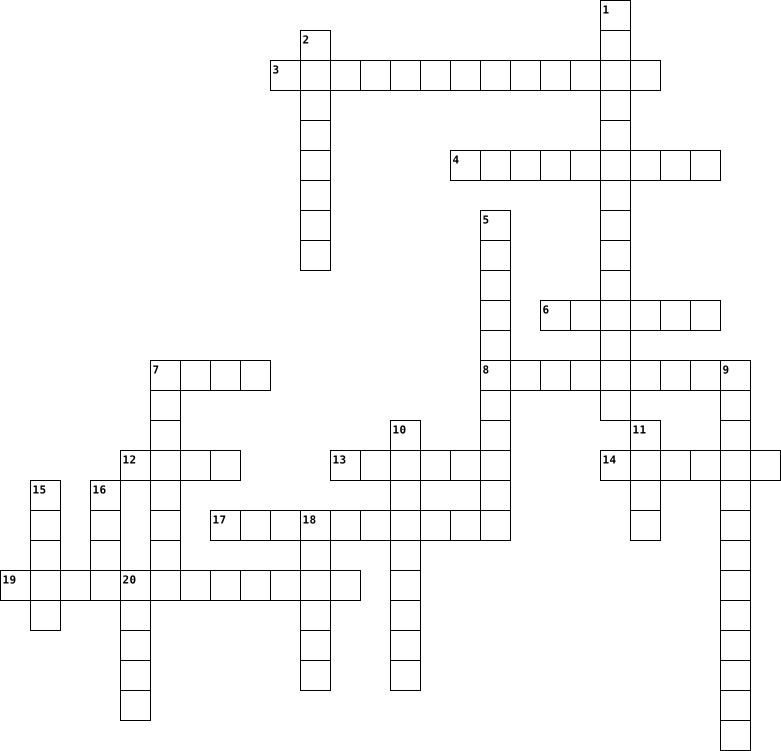
history Crossword Puzzles
History Review 2012-05-23

Across
- What is that pile of stones?
- A great Finnish man.
- A home for nuns.
- It was once the border between Sweden and Russia.
- The 'greatest' building in Turku.
- They controlled the selling of salt in the Baltic.
- A great stone age discovery here.
- Kaarina Maununtytär's job before being a queen.
- This made weapons very strong.
- A good place to find a stone age village today.
- The head of the Catholic Church.
- This country was home to a mummified bronze age girl.
Down
- Living here would mean witnessing Martin Luther's actions.
- A giant Ice Age ice cube.
- Move there! Tax free!
- A nICE man.
- A village that Erik the Red would have loved.
- Not a short boat.
- The hardest workers of the Middle Ages.
- He had some BRIGHT ideas that not everyone liked.
- A very fatty, but important meal in the Stone Age.
- Ancient Finnish graffiti.
- An iron age way of sending a message.
- He is MUCH stronger than pickled herring.
- Stealing made him angry enough to kill.
- A war or mission to spread Christianity.
- The eastern religion.
- Beware of us at sea!
- That is one, hairy elephant!
29 Clues: A nICE man. • A home for nuns. • Not a short boat. • A great Finnish man. • Beware of us at sea! • Move there! Tax free! • The eastern religion. • A giant Ice Age ice cube. • Ancient Finnish graffiti. • What is that pile of stones? • That is one, hairy elephant! • This made weapons very strong. • The head of the Catholic Church. • The 'greatest' building in Turku. • ...
History Crossword 2012-09-30

Across
- an English philosopher and physician
- expansion across america
- a historical Supreme Court case
- Attracted people to California in hopes of finding gold
- European nations can not settle on united states land or it could lead to war
- This gave america its freedom
- A abolitionist, author, editor, and diplomat
- the south states _______d from the union
- wanted a stronger U.S. federal government
- loyalty to a section of a country
- church membership rose sharply during this movement
- a political party whose leader was john Adams
- this revolution increased the use of technology in life
- this branch has the power to veto laws
- branch of the government that makes the laws
Down
- name of the forced movement of Native American people
- war between the United States of America and Mexico
- this led to the expansion of american by buying Missouri land
- lets other government branches share power between each other
- the path that Harriet Tubman took to get slaves to freedom
- this act removed Indians from their homelands in the south
- branch of the government that holds within it the supreme court
- loyalty to a whole country
- women's rights convention held in Seneca falls
- movement anti-slavery movement
- ratified in 1791
26 Clues: ratified in 1791 • expansion across america • loyalty to a whole country • This gave america its freedom • a historical Supreme Court case • loyalty to a section of a country • an English philosopher and physician • this branch has the power to veto laws • movement anti-slavery movement • the south states _______d from the union • ...
Chinese History! 2012-09-26

Across
- The Nationalists in China
- 100 ______ movement
- The traditional ideology of China throughout history
- Dictatorship of the _______
- Ideology followed in the 1970s-80s
- Higher and lower stage __________
- China's official ideology
- Process of Deng's dismantling of communism in agriculture
- International communist organisation
- Colour of Mao's Cultural Revolution guards
- _______ Gorbachev, dismantled communism in Soviet Union
- Where the Long March ended
- Country which China was invaded by
- The name for the meetings of the CCP
Down
- Where the 1927 Massacre was
- The group of people Mao loved
- What Mao called groups of over 5000 people farming
- What Chiang Kaishek called himself: The ___________
- People's _______ of China
- Acronym for the official party of China
- Group that opposed Mao in the CCP Split
- How many were in the Gang?
- ______ Stalin
- What the government refused to give during the Tiananmen Square protests
- Way of describing the equality of a communist society
- Tactics used by communist fighters in 1920s-30s
- Zheng Feng, or the ________ campaigns
- Speak _________ campaigns
- ________ campaigns during the Long March
- May the ____ Movement
- ___ De, the smiling man
31 Clues: ______ Stalin • 100 ______ movement • May the ____ Movement • ___ De, the smiling man • The Nationalists in China • People's _______ of China • China's official ideology • Speak _________ campaigns • How many were in the Gang? • Where the Long March ended • Where the 1927 Massacre was • Dictatorship of the _______ • The group of people Mao loved • Higher and lower stage __________ • ...
history (confederatoin) 2012-11-21

Across
- is around fort gary
- is when you have the same amount of votes
- is when some one joins a diffrent party
- was a way to transport slaves out of one country
- were people that running for the goverment
- were people that reformed the tories
- union under the goverment
- is when you have to shake the rocks off the gold
- highlights of a persons life
- tells you what the colours and symbles mean
Down
- is land that was govend by hudsons bay compeny
- more people on one side then the other
- shows data in a visual form
- is telling about someones life
- was a road built for the gold miners
- people that no longer support the goverment
- when people discovered gold in bc
- is when someone just go in the govermet and they got buted out
- tells you a little more about one topic
- britan would allow goods from other colonies to be sold without taxes
20 Clues: is around fort gary • union under the goverment • shows data in a visual form • highlights of a persons life • is telling about someones life • when people discovered gold in bc • was a road built for the gold miners • were people that reformed the tories • more people on one side then the other • is when some one joins a diffrent party • tells you a little more about one topic • ...
Handy History 2012-12-13

Across
- / the pilgrimage to mecca
- / realized that infections were caused by bacteria
- / the journey to help the town
- / The daily prayer ritual
- / The creator of the Islamic religion
- / the name of the city Muslims made their new home
- / Muhammad was known as _____ or the trustworthy
- / he has been called "the prince of physicians
- / the Meccans started a ____ on Medina but couldn't capture it
- / The city where Muhammad was born
- / Abu-bakr succeeded in the ___ of Arabia
- / a holy place which is dedicated to a god at which they are worshiped
- / the city that was fought over in the crusades
- / Muslims sharing their wealth
- / a tower on a mosque
- / the Muslim who gives the sermon
- / Muhammad emphasized _____ and kindness
- / the angle that appeared to Muhammad while he was praying in a cave
- / the word algebra comes from the title of one of his books
- / some _____ of mecca tried to drive out Muhammad
- / The belief in more than one god
- / a game played using horses
- / The Muslim ruler
- / Muhammad's wife
- / Christians and Jews are called people of the book by _______
- / players enjoyed the intellectual challenge
- / the black shrine where Muhammad smashed the idols
Down
- / Islam quickly spread throughout ______
- / the ruler after Abu-bakr
- / Muhammad's daughter
- / the town that came for Muhammad's help after the death of his protector
- / the declaration of faith
- / Where Muhammad went after praying on the rock
- / the holy book of the religion of Islam
- / the belief in one god
- / the religious center for Muslims
- / The person who protected Muhammad for many years
- / the animal that took Muhammad on his night journey
- / the Muslim who calls to prayer
- / The religion that was shunned by Makkans around 613 C.E.
- diffusion / the spreading of ideas and ways of life
- / the example Muhammad set about how to live
- / the Muslim holiday where they fast for a month
- / The Muslim word for god
- / Muhammad met and prayed with famous ______
- / Muhammad was ______ at six
- / the body of Islamic law
- / the struggle against oppression
- / helped Muslims create adaptations in mathematics
- / the fasting at Ramadan
50 Clues: / Muhammad's wife • / The Muslim ruler • / Muhammad's daughter • / a tower on a mosque • / the belief in one god • / the fasting at Ramadan • / the pilgrimage to mecca • / The daily prayer ritual • / The Muslim word for god • / the body of Islamic law • / the ruler after Abu-bakr • / the declaration of faith • / Muhammad was ______ at six • / a game played using horses • ...
Handy History 2012-12-13

Across
- / the black shrine where Muhammad smashed the idols
- / the name of the city Muslims made their new home
- / players enjoyed the intellectual challenge
- / he has been called "the prince of physicians
- / a tower on a mosque
- / The belief in more than one god
- / the body of Islamic law
- / the journey to help the town
- / The Muslim word for god
- / The person who protected Muhammad for many years
- / some _____ of mecca tried to drive out Muhammad
- / Muhammad was known as _____ or the trustworthy
- / the animal that took Muhammad on his night journey
- / the example Muhammad set about how to live
- / the angle that appeared to Muhammad while he was praying in a cave
- / Muhammad met and prayed with famous ______
- / the Muslim holiday where they fast for a month
- / the belief in one god
- / the ruler after Abu-bakr
- / Muhammad's wife
- / Islam quickly spread throughout ______
- / the Muslim who calls to prayer
- / the Meccans started a ____ on Medina but couldn't capture it
- / The Muslim ruler
- / the struggle against oppression
Down
- / The daily prayer ritual
- / the Muslim who gives the sermon
- / realized that infections were caused by bacteria
- / helped Muslims create adaptations in mathematics
- diffusion / the spreading of ideas and ways of life
- / Muhammad emphasized _____ and kindness
- / The city where Muhammad was born
- / Muslims sharing their wealth
- / the declaration of faith
- / the town that came for Muhammad's help after the death of his protector
- / a holy place which is dedicated to a god at which they are worshiped
- / a game played using horses
- / the word algebra comes from the title of one of his books
- / Abu-bakr succeeded in the ___ of Arabia
- / Christians and Jews are called people of the book by _______
- / the city that was fought over in the crusades
- / the religious center for Muslims
- / the holy book of the religion of Islam
- / Muhammad's daughter
- / Muhammad was ______ at six
- / The creator of the Islamic religion
- / Where Muhammad went after praying on the rock
- / the fasting at Ramadan
- / the pilgrimage to mecca
- / The religion that was shunned by Makkans around 613 C.E.
50 Clues: / Muhammad's wife • / The Muslim ruler • / a tower on a mosque • / Muhammad's daughter • / the belief in one god • / the fasting at Ramadan • / The daily prayer ritual • / the body of Islamic law • / The Muslim word for god • / the pilgrimage to mecca • / the declaration of faith • / the ruler after Abu-bakr • / a game played using horses • / Muhammad was ______ at six • ...
Australian History 2013-04-14

Across
- Describes people who move from place to place to find food
- A map maker
- describes the relationship that exists between members of an extended family
- a "bundle of rights" that may include the right to fish, hunt and conduct ceremonies
- Litterally means a land without owners of 'Land of no-one'
- A settlement for prisinors being punished for there crimes by being removed from the country they had lived
- The name given to the time when Aboriginies belive everything was created
Down
- People who are members of what is usually a group that wonders from time to time to find food
- A settlement controlled by another country
- Land belonging to the Crown(Government)
- The outer boundary of a settled area
- Someone at the forfront of a particular course of action
- Described the native inhabitant of a particular race
- An Indigenous language group
- An item in nature that represents a person, clan or larger group
- The beliefs and behaviour of a person that relate to spiritual matters
- Describes a situaltion where one has aurthority over something
- A reconstruction of the history passed down by word of mouth
- A set area where many Indigenous people were sent to live
- An older Indigenous man or women looked up to for intellegance
20 Clues: A map maker • An Indigenous language group • The outer boundary of a settled area • Land belonging to the Crown(Government) • A settlement controlled by another country • Described the native inhabitant of a particular race • Someone at the forfront of a particular course of action • A set area where many Indigenous people were sent to live • ...
Atomic History 2013-04-12

Across
- Electrons or the "cloud" accounts for most of the _____ of the atom
- Bohr suggested that electrons were in ______ orbits or energy levels around the nucleus
- Greek word meaning "uncuttable"
- The negatively charged particles
- Protons, neutrons and electrons are all
- Chadwick's discovery of neutrons explained why atoms were ________ than the total mas of their protons and electrons
- Who discovered the first subatomic particle
- Cloud Model The Modern Model is also called
- Thomson's model was also known as the
- Shooting positive charged particles at gold foil is like shooting bullets at
Down
- A region of an atom in which electrons of the same energy are likely to be found
- According to Dalton, atoms are invisible and _____________
- Who offered the first modern theory of the atom
- Dalton was the first to come up with _____ for elements
- The Modern Model is based on the types of physics called
- Who discovered neutrons
- What famous experiment did Ernest Rutherford perform
- The original name of electrons that Thomson first called them by
- The positively charged particles
- During the time of Democritus which eminent person dismissed the idea of atoms
- Bohr Who's model resembles the planets orbiting around the sun
- The central core of the atom
- Rutherford concluded that the atom was mostly _____ space with electrons moving around the nucleus
23 Clues: Who discovered neutrons • The central core of the atom • Greek word meaning "uncuttable" • The negatively charged particles • The positively charged particles • Thomson's model was also known as the • Protons, neutrons and electrons are all • Who discovered the first subatomic particle • Cloud Model The Modern Model is also called • ...
History scotch 2013-06-12

Across
- symbool men collectie
- locatie administratieve diensten
- la femme selon...
- denim collectie
- ...with a spicy twist
- tough and...
- op etiket kledingstuk gedrukt
- locatie designers
- Premium denim lijn
- boys collectie
Down
- eau de toilette
- N
- girls collectie
- men collectie
- D
- A
- symbool women collectie
- women collectie
- monsieur...
- stad eerste shop
20 Clues: N • D • A • monsieur... • tough and... • men collectie • boys collectie • eau de toilette • girls collectie • denim collectie • women collectie • stad eerste shop • la femme selon... • locatie designers • Premium denim lijn • symbool men collectie • ...with a spicy twist • symbool women collectie • op etiket kledingstuk gedrukt • locatie administratieve diensten
History Skills 2013-06-09

Across
- The longer a bone is in the earth the more __________________ it absorbs.
- This dating method measures the rate in which C14 has decayed.
- This body of water gave birth to three different ancient civilisations
- A document to show where you went for research material.
- When looking at a source you must ask yourself if you can trust the source or what _________________ you may have with the source.
- A source that comes from the period you are studying is called a _________________ source.
- The questions a historian asks themselves to direct their research.
- What is the Latin word for 'around'?
- The year 1984 is in which century AD?
- What do you call someone who studies history?
- This dating technique compares two items - which is older and which is younger.
- The year 688BC is in which century?
- Stratigraphy studies the different ______________ in rocks.
- The period from the beginning of civilisation to the fall of the Roman Empire
- India and China are examples of ancient civilisations from which part of the world?
Down
- The period before writing was invented.
- A source that is created by someone outside of the time period is called a _______________________ source.
- An example of a secondary source.
- Otherwise known as Tree Ring Dating.
- How many major Ancient Civilisations are there?
- This type of organiser can help you arrange your research.
- A period of 10 years.
- A visual representation of time.
- This civilisation is where Hinduism was born.
- The year 406 AD is in which century?
- A period of a 1000 years.
- This dating technique allows a person to find the actual age of something.
- What does AD stand for?
- A statement created to be tested.
- The largest Ancient Civilisation.
- This civilisation was built on the banks on the River Nile.
- A collection of records, usually written.
- This civilisation gave the world many inventions including paper and gunpowder.
- History teaches people about their...
- Which S&E discipline are we currently studying?
- A period of 100 years.
- This civilisation gave the world democracy.
37 Clues: A period of 10 years. • A period of 100 years. • What does AD stand for? • A period of a 1000 years. • A visual representation of time. • An example of a secondary source. • A statement created to be tested. • The largest Ancient Civilisation. • The year 688BC is in which century? • Otherwise known as Tree Ring Dating. • The year 406 AD is in which century? • ...
Philippine History 2013-02-10

Across
- / he is the recognized leader of Peasantry in Central Luzon, also known as Don Perico
- / in 1903, when Baguio was chosen as a summer capital, the Americans hired 1500 Japanese workers to build this road to that city
- / represented the most intense phase of Imperial Japan's invasion of the Philippines during World War II
- / this is the bombed in Hawaii and the main base of the U.S. pacific fleet
- / a president who asked the U.S. congress to declare war , which the latter did with only one dissenting vote
- / in 1940, this country occupied the Northern part of French Indo-China and the following year the whole French colony
- / the prewar editor of the Philippine Herald, headed the station in broadcasting news to men in Bataan
- / he is the secretary of education and culture issued department order no. 7 on August 13, 1959 mandating Pilipino in referring to the national language
- / he was promoted as lieutenant general on March 21, he also became the Commander of Filipino-American troops
Down
- / under his supervision, , in the compulsory military training of able-bodied Filipino youths was made
- / he command to the Japanese bombers to conduct air attacks in various places of the Philippines
- / other peasant organizations composed of tenants of Jesuite estate at San Pedro, Laguna
- / he managed to pull together the American 31st infantry regiment and the Philippine scout units
- / the infamous began in Mariveles and Cabcaben on April 10, 1942
- / this country was drawn into this war as an ally of America
- / he is the leader of the Japanese who formed the Ohta Development Company
- / he was able to destroy an enemy plane in the aerial combat
- / this place in Philippines was bombed twice on December 8
- / became the frquently repeated word as families gathered their belongings, stored and preserved food
- / this is the national language that the institute recommended to President Aquino
20 Clues: / this place in Philippines was bombed twice on December 8 • / this country was drawn into this war as an ally of America • / he was able to destroy an enemy plane in the aerial combat • / the infamous began in Mariveles and Cabcaben on April 10, 1942 • / this is the bombed in Hawaii and the main base of the U.S. pacific fleet • ...
World History 2013-08-26

Across
- The male head of a family or tribe
- An ancient test of guilt or innocence by subjection of the accused to severe pain, survival of which was taken as divine proof of innocence.
- Bishop of Rome and the leader of the worldwide Catholic Church
- Byzantine emperor who held the eastern frontier of his empire against the Persians
- A medieval emperor who once ruled much of Western Europe
- is a religious work of art, most commonly a painting, from Eastern Christianity and in certain Eastern Catholic churches
- An ecclesiastical censure depriving a person of the rights of church membership
- The founding father of the Israelites, with a prominent role in Judaism, Christianity and Islam
- One without faith
- A woman who is the superior of a convent of nuns
- A split or division between strongly opposed sections or parties, caused by differences in opinion or belief.
Down
- a room set apart for writing, esp. one in a monastery where manuscripts were copied
- A political and economic system of Europe from the 9th to about the 15th century
- of Hastings The decisive battle in which William the Conqueror (duke of Normandy) defeated the Saxons under Harold II (1066) and thus left England open for the Norman Conquest
- New capital of Rome, modern day Turkey
- A religious way of life that involves renouncing worldly pursuits to fully devote one's self to spiritual work
- was a value placed on every human being and every piece of property in the Salic Code
- The royal charter of political rights given to rebellious English barons by King John in 1215
- A series of holy wars fought between 1095 and 1291.
- Having One God
20 Clues: Having One God • One without faith • The male head of a family or tribe • New capital of Rome, modern day Turkey • A woman who is the superior of a convent of nuns • A series of holy wars fought between 1095 and 1291. • A medieval emperor who once ruled much of Western Europe • Bishop of Rome and the leader of the worldwide Catholic Church • ...
US History 2013-12-16
Across
- a body of fundamental principles or established precedents according to which a state or other organization is acknowledged to be governed.
- Courts
- Washington/first president of the United States treasury department
- 4, 1776/ The date of Declaration of Independence was adopted
- Hamilton/ the federalist leader
- of Rights/ the first, 10 amendments of the Constitution
- Jefferson/ One author of the Declaration of Independence
- Tea Party/ In 1773, a protest in which colonist dressed up as Indians, and dumped Boston tea into the harbor
- president (enforces laws)
- congress
Down
- Convention/ a convention that met in Philadelphia in 1787 and drafted the Constitution
- refuses to buy
- they preferred a strong national government
- Review/ the power of the courts to declare an act of congress
- War/ The American war of independence (1775-1783)
- Purchase/ this doubled the size of the United States, expanded farming and trade
- Locke/ influenced the Declaration of Independence, and adopted Natural Rights
- Madison/ he attended the Constitutional Convention
- Federalist/ they preferred limited national government
- and Balances/ each of the three branches of government can limit the powers of the others
- Act/ placed on all the printed materials
21 Clues: Courts • congress • refuses to buy • president (enforces laws) • Hamilton/ the federalist leader • Act/ placed on all the printed materials • they preferred a strong national government • War/ The American war of independence (1775-1783) • Madison/ he attended the Constitutional Convention • Federalist/ they preferred limited national government • ...
French History 2013-09-22

Across
- the animal that John the Baptist usually holds on statues
- the color of mourning the Queen wore in the 1300's
- the soldier that was burned to death in 1431
- the oldest structure in Paris
- the French national anthem
- the man who built the Eiffel Tower
- the first national hero of France
- where the guillotine was in Paris
- Marie Curie discovered this 1911
- the group of people that first planted the grape vine
- the profession of the man who invented champagne
- the family whose symbol was the fleur de lis
Down
- where the final defeat of Napoleon was
- the war leader that was chief of the army by the age of 26
- the style of architecture that has a pointed arch
- the symbol of Louis XII
- the nickname of the French flag
- the musician who collaborated with Moliere
- the birthplace of Napoleon Bonaparte
- where Napoleon's body lies today
- the invention that most advanced life in the middle ages
- where Joan of Arc was burned
- the age of Marie Antoinette when she married Louis XVI
- which came first, Romanesque of Gothic?
24 Clues: the symbol of Louis XII • the French national anthem • where Joan of Arc was burned • the oldest structure in Paris • the nickname of the French flag • where Napoleon's body lies today • Marie Curie discovered this 1911 • the first national hero of France • where the guillotine was in Paris • the man who built the Eiffel Tower • the birthplace of Napoleon Bonaparte • ...
U.S. History 2013-09-17

Across
- Taxes.
- Consolidating many firms into the same business.
- To own complete control of a product or service.
- Allowed companies to reduce costs and charge higher prices to competitors.
- People who invest money in a product or enterprise in order to make a profit.
- Allowed businesses to operate under minimal government regulations.
Down
- A grant by the federal government giving an inventor the exclusive right to develop, use, and sell an invention for a set period of time.
- Used to oversee railroad operations.
- bridges in which the roadway is suspended but steel cables.
- Communities owned by the business and rented out to the employees.
- Steel tycoon.
- When a number of people share the ownership of a business.
- A term used to say that people with wealth are the most fit for it.
- Oil tycoon.
- A process developed for purifying iron.
- Inventor of the light bulb in 1880.
- Outlawed any trust that operated "in restraint of trade or commerce among the several states."
- The ability to produce large quantities of the product quickly and inexpensively.
- Hot, dark, small workhouses.
- When businesses making the same product agree to limit their production and thus keep prices high.
20 Clues: Taxes. • Oil tycoon. • Steel tycoon. • Hot, dark, small workhouses. • Inventor of the light bulb in 1880. • Used to oversee railroad operations. • A process developed for purifying iron. • Consolidating many firms into the same business. • To own complete control of a product or service. • When a number of people share the ownership of a business. • ...
U.S. History 2013-12-15

Across
- the area of high cotton production through the South as far west as Texas
- author of the Declaration of Independence
- refuse to buy
- a tax placed on all printed material.
- The process of turning raw materials into finished products
- 1775-1783
- uniform pieces that can be made in large quantities to replace other identical parts
- to bring together at a single point or place
- If a slave were to runaway then they must be returned to their rightful owner.
- A system of government in which rule is by the people
- a country that is governed by elected representatives and by an elected leader (such as a president) rather than by a king or queen
Down
- inventor of the cotton gin
- 1787 Philadelphia
- when the colonists dressed as Indians and dumped tea into the harbor.
- supported a strong national government
- a city and its surrounding communities
- opposed to the proposed constitution fearing it concentrated too much power in the national government.
- legal system with known rules that are enforced equally against all people.
- businesses that were left free from government regulation and allowed to compete in a free market
- Towns that were completely abandoned after California Gold Rush.
20 Clues: 1775-1783 • refuse to buy • 1787 Philadelphia • inventor of the cotton gin • a tax placed on all printed material. • supported a strong national government • a city and its surrounding communities • author of the Declaration of Independence • to bring together at a single point or place • A system of government in which rule is by the people • ...
History crossword 2013-10-04

Across
- A person who is the legal property of another and is forced to obey them.
- A large vault, typically an underground one, for burying the dead.
- A triangular shape building build by the gods.
- A god that is sometimes pictured with the head of a goose.
- Egyptian pharaoh; reigned c.3100 bc. He founded the first dynasty that ruled Egypt.
- A winged monster of Thebes, having a woman's head and a lion's body.
- The sun God.
- The world's longest river located in Egypt.
- God of the air, who separated the earth and the sky.
- God of the desert.
- 8 year old boy pharaoh.
- A process that naturally preserves the body by the rapid drying in the desert sand.
- Goddess of moisture.
- Goddess of the dead.
- God of the sky and lord at heaven.
- The mother goddess, goddess of fertility and protector of children.
- Last independent ruler of Egypt.
- Ruthless ruler who enslaved people and sold daughter into prostitution.
Down
- An ancient Egyptian tomb rectangular in shape with sloping sides and a flat roof, standing to a height of 17–20 feet.
- God of Earth, vegetation and of death.
- Guide of the afterlife.
- A technique Egyptians would use to preserve dead bodies.
- A long, narrow box, typically of wood, in which a corpse is buried or cremated.
- A ruler in ancient Egypt.
- A stone coffin, typically adorned with a sculpture or inscription and associated with the ancient civilizations of Egypt.
- Egyptian pharaoh of the 18th dynasty; reigned 1379–1362 bc as Amenhotep IV.
- Ruled for 67 years.
- First great female ruler.
- Goddess of the sky.
- The action of buying and selling goods and services.
30 Clues: The sun God. • God of the desert. • Ruled for 67 years. • Goddess of the sky. • Goddess of moisture. • Goddess of the dead. • Guide of the afterlife. • 8 year old boy pharaoh. • A ruler in ancient Egypt. • First great female ruler. • Last independent ruler of Egypt. • God of the sky and lord at heaven. • God of Earth, vegetation and of death. • ...
World History 2013-11-22

Across
- early japanese society was divided into uji, or ____
- smaller medieval african societys were often organized with _____ shared among a number of people instead of a single leader
- a general agreement in which villages often made decisions
- a group of househols who claimed a common ancestor
- Extended from the mountains of present-day Ethopia to the sun-bleached shores of the Red Sea in present-day Eritrea
- invaders often _______ chinese civilization rather than demolishing it
- After the Han dynasty collapsed, China did what
- by 1000 ad both christianity and ____ had spread to many regions of Africa
- Africas geographic features also influenced cultural development by acting as barriers and ______ to ease movement of people, goods, and ideas.
- The scholar-official class formed the ______ stratum of society
- Swelling _____ in the rain forest provided transportation as well as ample food for people living in the region
- The ______ and vegetation of the savanna provided opportunities for both nomadic herders and settled farming communities
- Art strengthend what within the african community
- new chinese dynasty founded in 1368
- Tang emperors lost territories in centra asia to the ______
- woman had a higher status in ____ and early Song times than they did later
Down
- the ____ dynasty declined after the death of Kublai Khan in 1294
- The first tang emperor
- Professional storytellers
- Early Ming rulers proudly sent chinese fleets into distant waters to show the ____ of their government
- By 5500 bc neolithic farmers had learned to _______ the nile valley
- medieval Ethiopia was protected by rugged what
- korea is located on a peninsula that juts south from the asian mainland and points towards where?
- an italian merchant that visited china during the yuan dynasty
- Some early africans had to adopt harsh desert conditions and survived by hunting and what
- The largest dessert in the world
- Ethiopian Christians kept ties with the what
- the ToKugawas created a unified, orderly what?
- a multistoried temple with eaves that curve up at the comer
- Zhao kuangyin founded the _____ dynasty
30 Clues: The first tang emperor • Professional storytellers • The largest dessert in the world • new chinese dynasty founded in 1368 • Zhao kuangyin founded the _____ dynasty • Ethiopian Christians kept ties with the what • medieval Ethiopia was protected by rugged what • the ToKugawas created a unified, orderly what? • After the Han dynasty collapsed, China did what • ...
history vocabulary 2014-10-02

Across
- flowing body of waters over flow there banks
- the number of birth per 1,000 each year
- dangerous
- the things found or produced in an area
- natures largest storm that originates over the atlantic ocean
- rate of cooling as a result of wind or air movement
- extreme dryness or water shortage
- countries with low standard living and little industries
- small bodies of water rises quickly and swallows up the land around them
- loss or destruction of trees
- the shacking and trembling of the earth
- solid liquid or gas wastes that are poisonous
- three different methods used to stop creating wastes
Down
- harmful substances found in the environment
- natures most violent storm
- thunder creates this
- slow warming of the earth
- the creation of products
- the change in climate due to elevation
- natures largest storm that originates over the pacific ocean
- things people use
21 Clues: dangerous • things people use • thunder creates this • the creation of products • slow warming of the earth • natures most violent storm • loss or destruction of trees • extreme dryness or water shortage • the change in climate due to elevation • the number of birth per 1,000 each year • the things found or produced in an area • the shacking and trembling of the earth • ...
Quebec history 2014-03-11

Across
- Very sweet desert in Québec
- Instrument that sounds like bagpipes
- The largest city in Québec
- A star-shaped fort
- The winter carnival's mascot
- Cap Diamant is in this part of town
- Oldest Stone church in North America
- Many streets in Québec are narrow and...
- Where Champlain established a fur trading post
- Capital city of Québec
- Many of these are on old houses in Québec
- What they call Mardi Gras in Québec
Down
- Symbol on Québec's flag
- The site of the battle between Montcalm and Wolfe
- The boardwalk in upper town
- The British General
- A railway you take between the two towns
- Below the cliff along the river
- These falls are higher than Niagara falls
- Historic murals in Québec
20 Clues: A star-shaped fort • The British General • Capital city of Québec • Symbol on Québec's flag • Historic murals in Québec • The largest city in Québec • Very sweet desert in Québec • The boardwalk in upper town • The winter carnival's mascot • Below the cliff along the river • Cap Diamant is in this part of town • What they call Mardi Gras in Québec • ...
History Project 2014-03-12

Across
- one of americas greatest war heroes.
- kind of biased communication designed to influence peoples thoughts and actions.
- war that broke out after ww2.
- the development of armed forces and their use of diplomacy.
- a friend and adviser to president woodrow wilson
- a way to buy things with money you didnt necessarily have.
- a gun used to destroy aircraft.
- when the stocks were disabled for a long time.
- system ships protect merchant ships behind them.
- Battles usually held in trenches.
- Germany taking all the blame for the war.
- wore masks to avoid catching influenza.
- a telegram from the german foreign minister to the german ambassador in mexico.
- devotion to the interests and culture of one's nation.
- consisted of france, britain, and russia.
- Worked in a variety of jobs during the war.
Down
- middle area of trench warefare where most people died.
- a yellow gas that would destroy there enemys.
- Deadliest weapon of the war.
- germany and austria-hungary later called this.
- War damages.
- British liner ship sunk by a german u-boat.
- because of credit and spending of money no one had.
- an easy way to get across trench warfare and mow down barbed wire.
- Large scale of movement of hundreds of thousands of southern blacks to cities in the north.
- a advantage of height in the war.
- a set of points made in a famous speech wilson delivered.
- president of the united states who wanted to become more involved in international affairs.
- created by ford and used to get around.
- a service act that made men to register for random military service.
- a Truce.
31 Clues: a Truce. • War damages. • Deadliest weapon of the war. • war that broke out after ww2. • a gun used to destroy aircraft. • Battles usually held in trenches. • a advantage of height in the war. • one of americas greatest war heroes. • wore masks to avoid catching influenza. • created by ford and used to get around. • Germany taking all the blame for the war. • ...
world history 2014-11-13

Across
- Gov. in which a hereditary ruler exercises central power
- new method of fighting emerged
- rule by a hereditary landholding elite
- government by the people
- city-state
- a formal agreement between two or more nations with power to cooperate and come to another's defense
- housed rooms for the royal families
- people who gained power by force
- the Dorians settled here and built the city-state
Down
- lawmaking body, that debate laws before deciding to approve or reject them
- panel of citizens who have authority to make the final judgment in a trial
- located in Attica, just north of Peloponnesus
- formed government
- areas of dedication to the honors of gods/goddesses
- high city with marble temples dedicated to different gods/goddesses
- narrow water passages connecting the Mediterranean/Black seas
- watercolor paintings done on wet plaster
- lived in 750 B.C, Blind poet who wondered village to village
- free resident share a sense of responsibility
- War took place around 1250 B.C
20 Clues: city-state • formed government • government by the people • new method of fighting emerged • War took place around 1250 B.C • people who gained power by force • housed rooms for the royal families • rule by a hereditary landholding elite • watercolor paintings done on wet plaster • located in Attica, just north of Peloponnesus • free resident share a sense of responsibility • ...
World History 2014-12-12

Across
- Cartel- A document guaranteeing basic political rights in England
- of Versailles- The peace treaty signed by Germany and allied powers after WWI
- A Greek city-state
- a- A body of law governing the lives of Muslims
- A period of European history lasting from about 1300 to 1600
- Investiture- The appointment of religious officials by kings or nobles
- - A series of rulers form a single family
- A Tiered pyramid-shaped structure that formed of Sumerian temple
- The everyday language of people in a region or country
- an Islamic place of worship
- A period of prolonged and intensive questioning or investigation
- of Heaven- in Chinese history, the divine approval thought to be the basis of royal authority
- A supreme political and religious leader in Muslim government
- A religious image used by eastern Christians
- Law - the Body of Laws governing the religious practices of a Christian church
- - A West African empire that conquered mail and controlled trade from 1400's to 1591
Down
- of Wisdom- A center of learning established in Baghdad in the 800's
- A form of government with a monarch at the head
- A dynasty that ruled much of the Muslims empire from A.D 750 to 1258
- Alliance- A military alliance between Germany, Austria-Hungary and Italy
- The growth of cities and the migration of people into them
- A group in ancient Rome of 3 men holding power
- Concerned with worldly rather than spiritual matters
- Plague- The most common form of plague in humans
- a- The branch of Islam whose members acknowledge Ali and his descendants as the rightful successors of Muhammad
- Code- The body of roman civil law collected and organized by order of the byzantine emperor Justinian around A.D. 534
- An estate of land especially one held on condition of federal service
- A citadel or fortified part of ancient Greek city
- a Russian emperor
- War- A conflict in which participating countries devote all their resources to the war effort
30 Clues: a Russian emperor • A Greek city-state • an Islamic place of worship • - A series of rulers form a single family • A religious image used by eastern Christians • A group in ancient Rome of 3 men holding power • A form of government with a monarch at the head • a- A body of law governing the lives of Muslims • Plague- The most common form of plague in humans • ...
Africa History 2014-01-16

Across
- fifteen
- eleven
- one
- fourteen
- twenty
- twelve
- nine
- thirteen
- four
- seventeen
- seven
Down
- two
- eighteen
- nineteen
- eight
- three
- six
- sixteen
- five
- ten
20 Clues: two • one • six • ten • five • nine • four • eight • three • seven • eleven • twenty • twelve • fifteen • sixteen • eighteen • nineteen • fourteen • thirteen • seventeen
History Crossword 2015-06-08

Across
- queen of england
- german artist
- located in Ecuador, Peru, and Chile.
- english poet and playwrite
- a west African trading empire
- of the roman empire
- influenced west African culture
- in western Europe
- of Islam
- taught faith called Islam
Down
- locateed in southern mexico
- italian sculptor and painter
- begins in Florence, Italy
- belgian scientist
- discoveries and inventions
- development of imperial china
- queen of spain
- aristocratic family and cultural leaders of japan
- located on Yucatan Peninsula, mexico and Belize
- warrior class in japan
20 Clues: of Islam • german artist • queen of spain • queen of england • belgian scientist • in western Europe • of the roman empire • warrior class in japan • begins in Florence, Italy • taught faith called Islam • discoveries and inventions • english poet and playwrite • locateed in southern mexico • italian sculptor and painter • development of imperial china • a west African trading empire • ...
History Crossword 2015-06-08

Across
- a west African trading empire
- of the roman empire
- belgian scientist
- in western Europe
- german artist
- locateed in southern mexico
- queen of england
- queen of spain
- italian sculptor and painter
- begins in Florence, Italy
- influenced west African culture
- located on Yucatan Peninsula, mexico and Belize
Down
- discoveries and inventions
- warrior class in japan
- located in Ecuador, Peru, and Chile.
- english poet and playwrite
- of Islam
- development of imperial china
- aristocratic family and cultural leaders of japan
- taught faith called Islam
20 Clues: of Islam • german artist • queen of spain • queen of england • belgian scientist • in western Europe • of the roman empire • warrior class in japan • taught faith called Islam • begins in Florence, Italy • discoveries and inventions • english poet and playwrite • locateed in southern mexico • italian sculptor and painter • a west African trading empire • development of imperial china • ...
U.S. History 2015-03-29

Across
- Machines / organised group that controlled the activities of political parties
- / stronger nation extend their economic, political, or military control over weaker nations
- Stick Diplomacy / Roosevelt policy with intimidated countries without having to harm them
- Bonds / debt securities increased by a gov. to fiance military operation and their expansion in time of war
- Bill Of Rights / laws that provided financial and educational benefits for WWII veterans
- Act / laws enchanted in 1935-1936 to prevent U.S. sales and loans to nation at war
- Of Nations / organization an association of nations established in 1920 to promote international cooperation and peace
- Act / law passed to allow U.S to ship arms and supplies to other nations without immediate payment
- Crow Laws / separation of whites and blacks i public and private places
- Exclusion Act / prohibited all Chinese except student teachers, merchants, tourist, and gov. officials
- Act / offered 160 acres to head of household or any free citizen
- / movement of people seeking to restore trust in farmers and laborers
- Plan / plan used to subdue enemy supplies and reinforcements
Down
- / the development of organised forces and leader diplomacy
- Rights Act Of 1964 / law that banned discrimination
- Service Act / men registered with the gov. in order to be selected randomly
- Plan / an arrangement of payment of purchase over time
- Antitrust Act / legal free trust to trade between states or countries
- and Sedition / imposed harm to anyone interfering with or speaking against U.S.
- Plan / act intended to "Americanize"
20 Clues: Plan / act intended to "Americanize" • Rights Act Of 1964 / law that banned discrimination • Plan / an arrangement of payment of purchase over time • / the development of organised forces and leader diplomacy • Plan / plan used to subdue enemy supplies and reinforcements • Act / offered 160 acres to head of household or any free citizen • ...
American History 2015-10-15

Across
- president that called the founding fathers "a forest of giant oaks."
- founding father that invented electricity
- war the claimed the united states independence
- the founding fathers were not all ______
- the men who helped establish the united states of america
- author of the essay "The Political Depravity of the Founding Fathers"
- Pain was a very _____ person
- where Paine met Franklin
Down
- pains mothers religion
- recomendation that no more slaves be imported into the United States
- 3rd president
- washington was a great farmer but wasnt as good at ______
- Washingtons home state
- where thomas pain was born
- ______ people that signed the constitution.
- time of change in our country
- the president who willing freed his slaves
- Pain lost his wife and children do to what?
- Pain was very interested in learning and doing ______
- most populated slave area, where washington lived.
20 Clues: 3rd president • pains mothers religion • Washingtons home state • where Paine met Franklin • where thomas pain was born • Pain was a very _____ person • time of change in our country • the founding fathers were not all ______ • founding father that invented electricity • the president who willing freed his slaves • ______ people that signed the constitution. • ...
LDS History 2015-12-14

Across
- One of the three witnesses?
- The church was founded with how many members?
- Joseph's brother that was the first missionary?
- What part of the church's organization was established in Kanesville?
- What was the previous name of Nauvoo?
- First missionaries sent outside the states went here?
- Where did the saints go after being forced from Missouri?
- In what city was the first Stake organized?
- What is the name of the river that flows along Nauvoo?
- Jackson County Missouri is also know as ____
- Who survived Carthage jail?
- Governor who issued the Extermination Order?
- Which conerstone was laid at the dedication of the Temple Lot?
Down
- First missionaries sent overseas went here?
- The endowment and relief society were introduce here.
- What sickness overcame Nauvoo in 1839?
- Who survived Carthage jail?
- The D&C was first called this.
- How many months was the prophet kept in Liberty jail?
- Utah is the largest consumer of _____
- What industry popped up in Nauvoo with the influx of immigrants from England?
- Who was the first Relief Society President?
- What is Kanesville called today?
- In which state is Martin's Cove located?
- One of the three witnesses?
- One of the three witnesses?
- How many years were the Saints in Nauvoo?
27 Clues: Who survived Carthage jail? • One of the three witnesses? • One of the three witnesses? • One of the three witnesses? • Who survived Carthage jail? • The D&C was first called this. • What is Kanesville called today? • Utah is the largest consumer of _____ • What was the previous name of Nauvoo? • What sickness overcame Nauvoo in 1839? • In which state is Martin's Cove located? • ...
Texas History 2015-05-28

Across
- 1900 hurricane killed 10,000 people
- one country forcibly taking over another is called
- showed people owned cattle
- a formal agreement between two nations
- fierce tropical storm with winds of 74mph
- this branch carries out laws
- person who wanted to end slavery
- where anglo settlers abandoned their homes
- to withdraw from something, like a country
- Spanish cowboys
- people who work in the oil field
- people who took great risk drilling for oil
- more products are available than in demand
- believe that the US had the duty to expand to the Pacific Ocean
- invention that created demand for oil
- National Aeronautics and Space Administration
- Branch of Government that oversees the courts
- public land that the state owned, where cattle grazed
- to isolate or separate to prevent the spread of disease
- oily liquid found in the earth
- granting land from one country to another
- formal changes to a document
- battle where "Come and Take It" flag was flown
Down
- biggest cash crop after cotton
- legislature that has two houses
- inventor of the cotton gin
- president of US during Civil war
- the river Mexico believed was the border prior to Mexican war
- to prevent the passage of a law
- body of land protecting coast from large body of water
- this branch interprets the laws
- what Texas border was set by the Compromise of 1850
- president of Mexico
- compared to land in the US, land in Texas was
- artificial way to supply land with water
- farmer who works someone elses land and shares crops with them
- where Texas won their independence
- closing of port by positioning ships to keep people and supplies from coming in or out
- City near Spindletop
- area of domestic policy Lamar wanted to improve
- Main cash crop in Texas
41 Clues: Spanish cowboys • president of Mexico • City near Spindletop • Main cash crop in Texas • inventor of the cotton gin • showed people owned cattle • this branch carries out laws • formal changes to a document • biggest cash crop after cotton • oily liquid found in the earth • legislature that has two houses • to prevent the passage of a law • this branch interprets the laws • ...
Computer History 2015-06-01

Across
- easy way to understand programming language
- Macintosh It was introduced by Steve Jobs, in 1984.
- Presper Eckert Invented the first computer commercial
- It allows the use of visual indicators to interact with devices
- devices connected together to share data
- Roberts Created Altair 8800 the term is “personal computer”
- Bhatt Created USB
- It is responsible for all the instructions it gets
- Turning considered founder of computer science and created the machine that annihilated the Engima code WWII
- Computer Club A computer group from the 70s
- Dean Computer engineer of the ISA Bus and the IBM with his team
- code A 2D barcode
- Zuse Invented the first computer algorithm
- program that accepts and responds to requests
- It is the building block of all microchips.
- It was developed by INTEL with the help of Ted Hoff.
- it is data equal to 7 or 8 bits
- Licklider Founded the idea of world wide network
- Bushnell He was the engineer and entrepreneur who invented ATARI
- Chu One of the people who made the first ENIAC
- board invented by Paul Eisler, and made to hold electronic circuits, and other components.
- G. Kemeny He co-developed the BASIC programming language
- drive has one or more platters in the casing.
- Berners-Lee he founded the world wide web, and invented the first website
Down
- Andreessen co founder of ning,and the first web browser
- It supports data transfer from devices
- “Sandy” Douglas Made first graphical computer game
- Eisler Austrian inventor who invented the printed circuit board
- Kilby Built the first integrated circuit
- E. Kurtz he developed the BASIC programming language
- lets a computer to send and receive information
- It was an area network that joins centers
- Circuit building blocks of a computer hardware.
- Hoff inventors of the microprocessor.
- A disc which contains audio or software data
- Baer German/American, he was known as the “Father of Video games”
- Used to locate web pages on the internet
- The process of creating a deleting program that allows the program to understand without a software.
- The smallest display a computer could print
- an 8-bit number system, that resembles combinations of 0 and 1(on and off)
- Storage where you store data online safely
- Used to open web pages
42 Clues: Bhatt Created USB • code A 2D barcode • Used to open web pages • it is data equal to 7 or 8 bits • Hoff inventors of the microprocessor. • It supports data transfer from devices • Kilby Built the first integrated circuit • devices connected together to share data • Used to locate web pages on the internet • It was an area network that joins centers • ...
Canadian History 2015-07-22

Across
- to take control by military control
- a long tool with a sharp end that was used for hunting
- looking at details and looking carefully at something
- the study of fossils
- to go against someone or a government
- looking at the complete picture and not specific details
- to protect from danger
- a pile of rocks that indicates direction
- (two words - no space) - the first economy industry in Canada
- a traditional Eskimo home made of snow blocks
Down
- another word for buffalo
- the hair of some animals
- organisms or creatures that are no longer found living
- ______ Island is the name given for North America
- (two words - no spaces) also called two word verbs
- to move from one place to another
- a group of people who first live in a land
- a protected place that people lived in
- the remains of organisms from a very long time ago
- to send someone away from a country forever
20 Clues: the study of fossils • to protect from danger • another word for buffalo • the hair of some animals • to move from one place to another • to take control by military control • to go against someone or a government • a protected place that people lived in • a pile of rocks that indicates direction • a group of people who first live in a land • ...
History Crossword 2016-12-11

Across
- These people were often called the lovers of wisdom.
- This woman believed in women rights.
- This event was when the peasants started burning public record buildings.
- This document was one of the most influential documents in England signed on 1215.
- This man wrote the famous book Candide.
- This war was caused by weak leadership under King Louis XVI's command.
- This man was the one to create the Jury System in 1154.
- This nation was the one to take over most of Africa and Asia in Europe.
- This man believed in separate government powers.
Down
- This man believed the best form of democracy was direct democracy.
- This man was able to overthrow the monarchs in France.
- This disease is caused by long exposure to coal dust usually children were the ones affected the most.
- This place is where people who weren't able to support themselves go to.
- This event was when the radicals started killing people during the French Revolution.
- This king had 6 wives and wanted nothing but a son.
- This man proposed Natural Rights.
- This man is the son of King Mongkut who rebelled against Siam.
- This man invented the Spinning Mule.
- This means to shine a light on.
- This man was an english novelist and the first social critic.
20 Clues: This means to shine a light on. • This man proposed Natural Rights. • This woman believed in women rights. • This man invented the Spinning Mule. • This man wrote the famous book Candide. • This man believed in separate government powers. • This king had 6 wives and wanted nothing but a son. • These people were often called the lovers of wisdom. • ...
History Crossword 2016-12-10

Across
- This European nation lost a war against Japan
- When a country controls another countries' trade
- A machine that executed its victims by chopping off their heads
- A king that reformed Siam
- Tortured the people of the Belgian Congo
- The heroine of back then
- Inventor of the cotton gin
- The guy who unified Germany
- A part of land that was fenced in and was owned by private owners
- The first Europeans to colonize Africa
Down
- People who protested and destroyed the machines during the Industrial Revolution
- The first of energy to power machines
- A period of time when 20 to 40 thousand people were executed
- Believer in natural rights
- When leaders of different countries split Africa up
- When Europe was split up for balance
- Believer in freedom of speech and religion
- A tribe who fought a war against Britain
- A french emperor that was poisoned
- A document that gave the king limited power and was signed in 1215
20 Clues: The heroine of back then • A king that reformed Siam • Believer in natural rights • Inventor of the cotton gin • The guy who unified Germany • A french emperor that was poisoned • When Europe was split up for balance • The first of energy to power machines • The first Europeans to colonize Africa • Tortured the people of the Belgian Congo • ...
US History 2017-01-10
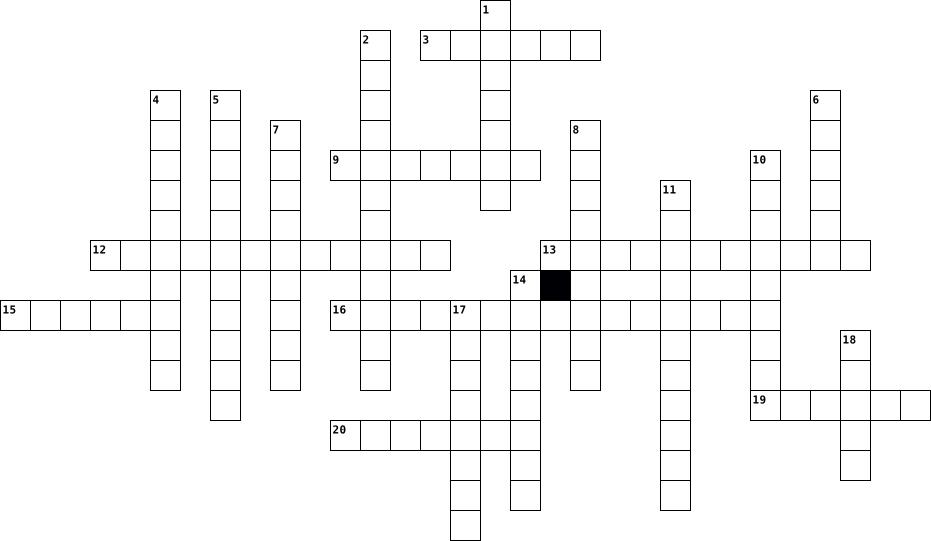
Across
- a list of matters to be taken up
- one who does not side with any party in a war or dispute
- law determining the fundamental political principles of the government
- drawn toward a center or brought under the control of a central authority
- s seat for rider of a horse
- everyone has a different part of his to do
- a government tax on imports or exports
- a government order imposing a trade barrier
Down
- bringing again into activity and prominence
- mining underground mineral resources
- the organization that is the governing authority of a political unit
- someone who settles lawfully on government land
- deliver a sharp blow
- factory where workers do piecework for poor pay
- work paid for according to the quantity produced
- a person who comes to a other country
- nonelective government officials
- a market in which there are many buyers but only one seller
- a legal right guaranteed by the 15th amendment to the US constitution
- an organization of employees formed to bargain with the employer
20 Clues: deliver a sharp blow • s seat for rider of a horse • a list of matters to be taken up • nonelective government officials • mining underground mineral resources • a person who comes to a other country • a government tax on imports or exports • everyone has a different part of his to do • bringing again into activity and prominence • a government order imposing a trade barrier • ...
U.S. History 2016-11-18

Across
- The leader of the American Railway Union.
- where the land race for territories took place.
- Battle where Armstrong Custer underestimated the number of Indians he was facing.
- an attempt by the government to turn Native Americans into the rest of society.
- people who cheated by sneaking in to claim land.
- Leader of the first labor union.
- a group of people who didn't feel the main political parties were doing enough to protect their interests.
- the type of police involved in the Homestead strike.
- Invented the Morse Code.
- This was set up to provide land to Indian families so they could be self sufficient.
- Farmers wanted this as money backing instead of gold.
- America's greatest inventor.
- Idustrialists seen in a good way were called this.
- A philosophy that believes in the survival of the fittest.
- Industrialists seen in a bad way were called this.
Down
- This bridge was proof the U.S. was a world power in hard work and inventiveness.
- Cheap land, gold, and getting rich were all what factors?
- this kept money supplies tight because it had to be backed by gold.
- Leader of the American Federation of Labor Union.
- Tariffs protected these against foreign products.
- this group of people join the populists because they were against the gold standard.
- Department of gov. who was in charge of making sure reservations had enough supplies.
- Fleeing from crime, religious beliefs, and a new start were all what factors?
- They were put in dangerous positions in work because of their size.
- This is where Indians were put after they were rounded up.
- The leader of the Cheyenne Tribe.
- people who waited for the boom to race and claim land.
- People who bought areas of land in hopes to sell it later for profit.
- taxes on imported goods.
- This was signed by Pres. Lincoln in 1862.
30 Clues: taxes on imported goods. • Invented the Morse Code. • America's greatest inventor. • Leader of the first labor union. • The leader of the Cheyenne Tribe. • The leader of the American Railway Union. • This was signed by Pres. Lincoln in 1862. • where the land race for territories took place. • people who cheated by sneaking in to claim land. • ...
History stuff 2016-10-20

Across
- Allowed easy production of pottery
- What people could do with excess food
- A mix between agricultural and hunting gathering
- The main crop of south America
- Nomadic people that search for food
- Used to cut and process grasses
- Living in the same place
- The latin word for citizen
- The near Eastern Neolithic Settlement
- the revolution that brought agriculture
- the largest and the best preserved neolithic site know so far
- Some of the last animals to be domesticated
Down
- The area bewteen the tigris and life
- Prefix that means new
- Every Natufian home had one
- What spread easily in settled society
- The study of human activity from recovered objects
- Prefix for old
- Between 10000-8300 BC
- Old stone age
- Lush and full of life and different species
- Something that was lost in agricultural societies
- The way the houses were organized in Çatal Hüyük
- People living in mesopotamina
24 Clues: Old stone age • Prefix for old • Prefix that means new • Between 10000-8300 BC • Living in the same place • The latin word for citizen • Every Natufian home had one • People living in mesopotamina • The main crop of south America • Used to cut and process grasses • Allowed easy production of pottery • Nomadic people that search for food • The area bewteen the tigris and life • ...
Black History 2016-07-11

Across
- The 15th amendment, the last of the Reconstruction Amendments, gave black men this right
- First African American to receive the Congressional Medal of Honor
- Inventor; held more patents than any other African American inventor (as of 1909); his patents coined the phrase "The Real ________"
- From Richmond, IND; first white couple in Indiana to adopt a black child; set up a community in Guyana that ended up in a massacre (two words)
- "Hattie _________"; first African American performer to receive an Academy Award; first African-American to attend the ceremony as a guest and not a servant (1940)
- Garrett Morgan, who also invented the 3-position traffic light, shocked people when he wore this invention and saved people in a burning building (two words)
- _____ soldier; what soldiers were called in an all-black regiment
- In 2003, the Supreme Court decided Virginia v. Black that this activity was protected free speech
- "_____ _____ Protests"; a passive protest in which the protesters had their heads covered in ketchup and soda
- real name of Madame CJ Walker of Indianapolis
- The last state to repeal laws against interracial marriage (2000)
- Tommie Smith and John Carlos lost their medals in this sporting event when they raised their fists in a "black power salute" (1968)
- First non-white elected to Congress in 1870 (first/last name)
- "____ v. Board of Education", the Supreme Court case that determined "separate but equal" was not constitutional (1954)
- First African American appointed to the Supreme Court
- Known as "The Black Harvard"; founded by Booker T. Washington
- Guiness Book of Records cites Madame CJ Walker as being the first woman, white or black, to achieve becoming one of these under her own achievement
- "___ ___ v. Sandford"; the Supreme Court case that ruled blacks were not and could not be citizens of the U.S.
- Known as the "Master Conductor" on the Underground Railroad, his home was in Fountain City, IND. (two words)
- "____v. Ferguson", the Supreme Court case that ruled "separate but equal" was constitutional (1896)
- This crop was known as "white gold" in the South.
- A recording studio in Richmond, IND; one of the few studios that allows black musicians to record; also recorded records for the KKK
- Arrested in London by Scotland Yard, he pleaded guilty to killing Martin Luther King Jr.
- Bessie Coleman became the first African American woman to receive this type of license
Down
- The number of little girls killed when a KKK bomb exploded in a Birmingham church
- First President to appoint an African American to the Supreme Court
- First major-party black candidate for President (1972); first African American woman elected to Congress (1968)
- The Voting Rights Act eliminated this type of test for voters
- First black female to refuse to give up her seat on the bus
- First aired in 1975, it was the first TV show to show a successful black family
- Col. Guion Bluford becomes the first African American astronaut on this space shuttle in 1983
- Sen. Strom Thurmond set a 24-hour, 18-minute record with one of these to voice his opposition to the Civil Rights Act of 1957
- First black player in major league baseball
- The all-black basketball team formed when professional basketball teams did not permit black players
- An NAACP investigator and a seasoned anti-rape crusader who specialized in investigating assaults on black women. (two words)
- The first national monument to an African American AND the first national monument for someone NOT a president was dedicated to this person (first name/middle initial)
- (first/last name); designer of Jackie Kennedy's wedding dress; known as "The best known unknown"
- This university accepted James Meredith as a student until they found out he was black.
- The TV show that had the first scripted interracial kiss
- James W. Smith was the first African American admitted to this military establishment in 1870
- "Freedom's __________", the first black-owned and operated newspaper in the U.S. (1827)
- Emmett Ashford was the first to hold this sports position (1952)
- W.E.B. DuBois was the first African American to graduate from this university
43 Clues: First black player in major league baseball • real name of Madame CJ Walker of Indianapolis • This crop was known as "white gold" in the South. • First African American appointed to the Supreme Court • The TV show that had the first scripted interracial kiss • First black female to refuse to give up her seat on the bus • ...
Early History 2016-09-13

Across
- source Referenced from primary sources.
- Upright men
- Period This is when agriculture started to develop.
- Relative who lived in the past.
- Southern ape
- The knowledge, beliefs, customs, and values of a group of people.
- The study of the past based on what people left behind.
- A part or imprint of something that was once alive.
- Wise men
- The time before written language.
Down
- Period Also known as the Middle Stone Age.
- To use plants and animals for your own needs.
- Period Also known as the Old Stone Age.
- An object created and used by humans.
- An early ancestor of humans.
- Handy men
- Handheld objects that's been modified to help people accomplish tasks.
- The study of the past.
- A community of people that share common culture.
- source Provides first hand evidence of historical events.
20 Clues: Wise men • Handy men • Upright men • Southern ape • The study of the past. • An early ancestor of humans. • Relative who lived in the past. • The time before written language. • An object created and used by humans. • source Referenced from primary sources. • Period Also known as the Old Stone Age. • Period Also known as the Middle Stone Age. • ...
American History 2016-12-01

Across
- The axis powers vs the Allied forces
- The attack on a us military base that entered the us into ww2
- The right to bear arms
- A form of goverment run for the people and by the people
- Nick named "The Great War"(Not ww2)
- the amendment that give people the freedom of speech
- it established Americas goverment and fundamental laws, it gave basic rights for its citizens
- signed on July 4, 1776
- The technology war between the us and the ussr(Union of soviet socialist republic)
- The first 10 amendments
- The first english settlement in North America
Down
- The capital of the us
- was eventually replaced by the constitution;The goverment had no power
- The 1st president of the us
- The day that the declaration of independence was signed
- The united states largest city, located on the east coast
- A war fought between the north and south
- The name of the purchase that doubled the US in size
- the 16 president of the UnitedStates
- During ww2 the us developed the first_______ that was dropped on a japanese city
20 Clues: The capital of the us • The right to bear arms • signed on July 4, 1776 • The first 10 amendments • The 1st president of the us • Nick named "The Great War"(Not ww2) • The axis powers vs the Allied forces • the 16 president of the UnitedStates • A war fought between the north and south • The first english settlement in North America • ...
History Unit 2016-03-06

Across
- Wrote fables.
- Place where men practiced sports.
- religious center of the city.
- Word that comes from two root words meaning “People + Rule”.
- Book that prophesied the short life of Alexander the Great.
- Where Greece is located.
- Famous blind singing Poet or Bard.
- the alphabet that the Greeks borrowed and added vowels to.
- long raceing track
- The largest gathering place in most Greek City States.
- City the Mycenaean’s left a wood horse outside of.
Down
- the class of people that did all the work in Sparta.
- Body of water that nearly cuts Greece in half.
- Marketplace
- Name that Alexander the Great used for 16 cities. Bard= Singing poet.
- II conquered most of Greece.
- large groups of soldiers armed with shields and spears, trained to move together.
- The eastern Edge of Alexander the Greats Empire reached this country.
- States Independent cities that were self ruling in ancient Greece.
- Pagan God honored by the Olympic Games.
20 Clues: Marketplace • Wrote fables. • long raceing track • Where Greece is located. • religious center of the city. • II conquered most of Greece. • Place where men practiced sports. • Famous blind singing Poet or Bard. • Pagan God honored by the Olympic Games. • Body of water that nearly cuts Greece in half. • City the Mycenaean’s left a wood horse outside of. • ...
Music History 2016-05-18

Across
- discord in music, suggesting a state of tension
- German art songs
- a compositional method in which two voice parts sing the same melody, one a perfect fourth or fifth higher than the other
- a section of a concerto in which all the instruments and voices perform together
- French style of atmospheric music of the late nineteenth century
- a short concluding section of a piece of music that essentially ties together the main thematic threads and ends the piece
- a polyphonic choral composition based on sacred texts
- music with no strict meter or accompaniment, sung by a single voice or unison choir
- a musical style that combines tonal melody with exotic textures and timbres
- music in which composers deliberately leave parts of the composition and performance undetermined and at the discretion of performers
- a vigorous and sometimes lighthearted movement in triple meter with a middle section or trio
- a series of notes comprising the twelve pitches of the chromatic scale
- an accompaniment consisting of a harpsichord sounding the chords and a viola da gamba reinforcing the bass line
Down
- the written notation of a composition
- a musical style that subjectively explores deep inner feelings
- the quality of a system of pitches
- the period of rediscovered classical ideals of the ancient Greeks that inspired a rebirth and revival of human creativity
- a style of music that stresses the element of repetition with changes dictated by a rule or system
- a work in several movements for one or more instruments
- a pictorial or descriptive orchestral work in several movements
- music that portrays the meaning of the words of the text
- without tonality or a tonal center
- method of assigning a syllabic name to each tone of the scale to facilitate memorization
- a marking over or under the text to signal a change
- a type of program music written for textual materials including stories or plays
- a composition for solo voice and piano
- a composition consisting of a recurring theme alternating with contrasting sections
27 Clues: German art songs • the quality of a system of pitches • without tonality or a tonal center • the written notation of a composition • a composition for solo voice and piano • discord in music, suggesting a state of tension • a marking over or under the text to signal a change • a polyphonic choral composition based on sacred texts • ...
History Vocabulary 2016-01-31

Across
- Review Review of US Supreme Court
- A type of government that gives supreme power to the people.
- A farming economy viewpoint
- A tax on special luxury items
- Jurisdiction Court has the power to hear a case many times. But any higher court has the power to review a lower court's decision.
- Against the constitutional
- Owing money to someone else
- Supported views of Alexander Hamilton
- A president's group of advisers
- Establish or originate
- A significant important thing that a person did
- Act of solving a problem
- A tax paid on imports and exports
- Income
- Wealthy rich class people
Down
- People are forced to take up arms and join Armies or Navies
- Debt Debt that the National government to pay off.
- Not be on either side
- Act An act passed under John Adams' presidency which made foreigners harder to become citizens.
- To give in compensation for something else
- A strong belief that the interests of a particular nation-state is very important.
- To explain the meaning of something
- A policy to never interfere
- Party A group of people who have the same ideas for government and form a party to run for office.
- A role model or example for others to follow
- Policy Administrative decisions which are directly related with other countries.
- Policy Administrative decisions which are directly related within a nation's borders.
27 Clues: Income • Not be on either side • Establish or originate • Act of solving a problem • Wealthy rich class people • Against the constitutional • A farming economy viewpoint • A policy to never interfere • Owing money to someone else • A tax on special luxury items • A president's group of advisers • Review Review of US Supreme Court • A tax paid on imports and exports • ...
HISTORY CROSSWORD 2016-06-15

Across
- women couldn't do this without their husbands consent
- abbreviation for the terrorist group in the middle east
- hindu word meaning "good wife"
- first female senator in 1930
- what were alice and lucy fighting for?
- in 1916 women were given the right to _____
- in 1974 the _______ hired its first female worker
- this was created so women could have a child and come back to the same job
- what were the girls charged with when protesting outside of the presidents building
- women campaigned against this
- the government _________ everything from the japanese canadians
- something that upset feminists for how it portrayed women
- the __________ people were fed up with the fact that they made the least amount of money in their province
- women had almost no ________ freedom
- important person in the womens rights movement
- women were taught by society to find fullfillment in only ____________
Down
- "a vote is a ________"
- the FLQ had somewhat ___________ learnings
- this was illegal for women to do
- some people denied womens right to vote because they thought that if they got involved in politics they wouldn't do this anymore
- group consisting of emily murphy, louise mckinney, nellie mcclung, henrietta edwards, irene parlby
- in ww2 thousands of _______ were forced into detention camps in bc
- the FLQ became more vocal and broadcasted its aims through this
- liberals passed this in 1970
- she petitioned for a womens court in Alberta
- the president at the time the girls were fighting for the right to vote
- british trade commissioner kidnapped in 1970
- province where the womens rights movement was particularly strong
- pursuing full equality for women in every sphere of society
- how many months were the girls in jail for
- what percentage of women by the mid fifties dropped out of college to get married?
- what helped kick off second wave feminism
- main city involved in the october crisis
- between 1963 and 1970 the FLQ carried out more than __________armed robberies and more than 200 bombings
34 Clues: "a vote is a ________" • liberals passed this in 1970 • first female senator in 1930 • women campaigned against this • hindu word meaning "good wife" • this was illegal for women to do • women had almost no ________ freedom • what were alice and lucy fighting for? • main city involved in the october crisis • what helped kick off second wave feminism • ...
History Vocabulary 2016-02-18

Across
- a person who wants to change conditions he or she thinks are harmful.
- minister: the head of the majority party in the parliamentary government.
- water: water beneath the earth's surface.
- of living: all the things that people have that make their lives comfortable- food, clothing, shelter, services and so on.
- the result of a poor diet.
- system: aid given by government agencies to those in need.
- healthy clean living conditions.
- what happens when prices go up and money is worth less.
- money or property, especially when used to make more money.
Down
- to stop working until certain demands are met.
- a system of government in which the state controls economy and runs businesses for the benefit of citizens.
- a public display of agriculture and industrial progress.
- a worker, form the Latin word proletarius; lowest class.
- animal: an animal used for pulling loads
- a period of poor business and high unemployment.
- a time large numbers of workers are fired, often with no warning.
- market: when both the seller and the buyer of an item or a service agree on a fair pricewithout anyone else's influence or control.
- the ability to resist or not be seriously affected by a disease.
- the movement from one place to another.
- hunting or fishing on another person's land without the right to do so.
- of labor: different people doing different jobs that in the end all combine to finish a complicated task or activity; also called specialization.
21 Clues: the result of a poor diet. • healthy clean living conditions. • the movement from one place to another. • animal: an animal used for pulling loads • water: water beneath the earth's surface. • to stop working until certain demands are met. • a period of poor business and high unemployment. • what happens when prices go up and money is worth less. • ...
US History 2017-03-02
Across
- political party that South had
- political party that North had
- an American,approached the Spanish with a plan for Texas settlement:
- one of the first female nurses to serve in the Civil war, known as her First Aid
- a town that Free-soilers refused to follow laws and started
- Thanks to this, by 1850, California’s population had reached 93,000
- The pro-slavery legislature established the town of 000000000
- a president of the North, was strongly against slavery
- to incorparate into the domain of a city, country, or state
- opposing to slavery
- First Europeans to visit what would become Texas
Down
- one of the Nebraska Territory divided into: Nebraska and 000000
- of parts of New Mexico, Arizona, and California
- a war between citizens of the North and South
- a movement in the 19th C that focused on the abolishment of slavery
- Delaware, Kentucky, Maryland, Missouri
- favoring slavery
- President Lincoln’s plan that suffocating the South like a snake by cutting off their resources
- an abolitionist Senator from MA
- a type of rule in which military commanders are in control and citizens’ rights and freedoms are suspended
- law determined the residents of Utah could decide whether to allow slavery
21 Clues: favoring slavery • opposing to slavery • political party that South had • political party that North had • an abolitionist Senator from MA • Delaware, Kentucky, Maryland, Missouri • a war between citizens of the North and South • of parts of New Mexico, Arizona, and California • First Europeans to visit what would become Texas • ...
VA History 2017-04-06

Across
- pay as you go, and massive resistance
- Richmond and Jamestown are located on this river
- chief of many tribes and served as a contact between native people and English settlers
- a crop that is grown and sold for a profit
- capital hill
- the natural border between the Tidewater and Piedmont regions
- first African american bank president
- area of elevated land that is flat on top
- plan for peace, 20th century president, and has a school named after him
- old, rounded, mountains
- Alexandria is located on this river
Down
- located in the coastal plain region
- created an economic plan and military
- first African American governor in the nation
- arrowheads, pottery, and other tools that are found that tell about the history of a place
- land at the foot of mountains
- flat land located near the Atlantic Ocean and Chesapeake Bay
- includes the great valley of Virginia
- Fredericksburg is located on this river
- Yorktown is located on this river
- hired many African Americans and women to government offices
- social advocate and tennis player
- large Indian town used by Indian leaders
23 Clues: capital hill • old, rounded, mountains • land at the foot of mountains • Yorktown is located on this river • social advocate and tennis player • located in the coastal plain region • Alexandria is located on this river • pay as you go, and massive resistance • created an economic plan and military • includes the great valley of Virginia • first African american bank president • ...
History Crossword 2017-05-22

Across
- wrote Declaration of Independence
- cause of Marbury v Madison case
- general for the union
- war to get independence from Britain
- first self government
- list grievances about King George
- first president
- law of the land
- workforce for colonies
- discovered electricity
- branches balance each other out
- belief it was God given right to expand west
- transportation system that makes it easier to move around the country
- rights of the people
- war between the union and confederacy
Down
- slave trade route
- the forgotten war
- /eneral for the confederacy
- first Vice President
- here before the colonies settled
- president during the civil war for the union
- war that lasted 7 years
- first colony
- communications used in civil war
- King of Britain
25 Clues: first colony • first president • law of the land • King of Britain • slave trade route • the forgotten war • first Vice President • rights of the people • general for the union • first self government • workforce for colonies • discovered electricity • war that lasted 7 years • /eneral for the confederacy • cause of Marbury v Madison case • branches balance each other out • ...
History Project 2017-05-22

Across
- /law of the land
- communications used in civil war
- first self government
- first president
- list grievances about King George
- colony
- transportation system that makes it easier to move around the country
- general for the union
- here before the colonies settled
- war between the union and confederacy
Down
- discovered electricity
- branches balance each other out
- general for the confederacy
- wrote Declaration of Independence
- the forgotten war
- slave trade route
- war to get away from Britain
- war with Britain that lasted 7 years
- rights of the people
- King of Britain
- first Vice President
- belief it was God given right to expand west
- cause of Marbury v Madison case
- president during the civil war for the union
- workforce for colonies
25 Clues: colony • first president • King of Britain • /law of the land • the forgotten war • slave trade route • rights of the people • first Vice President • first self government • general for the union • discovered electricity • workforce for colonies • general for the confederacy • war to get away from Britain • branches balance each other out • cause of Marbury v Madison case • ...
U.S History 2017-04-02

Across
- system: First established by the Treaty of Fort Laramie (1851) and Fort Atkinson (1853), this system established boundaries for the territory of each tribe that would be overseen by the Bureau of Indian Affairs
- for fraud and bribery
- of Nations: International organization founded in 1919 to promote world peace but greatly weakened by the refusal of the United States to join. It proved ineffectual in stopping aggression by Italy, Japan, and Germany in the 1930s.
- and sedition acts: two laws, enacted in 1917 and 1918, that imposed harsh penalties on anyone interfering with or speaking against US participation in World War I.
- sumner: gave a speech in may 1856 called " the Crime Against Kansas" militant opponent of slavery, beat with a cane by Preston Brooks after the speech, collapsed unconscious and couldn't return to senate for 4 years, symbol throughout the north.
- stick diplomacy: Theodore Roosevelt's imperialist policy promoting the US as a world power. i.e.: treaty that ended the Russo-Japanese War; Open Door Policy with China; Panama Canal; world tour of the Great White Fleet; all of which gave rise to world-power status.
- points: The war aims outlined by President Wilson in 1918, which he believed would promote lasting peace
- amendment: An amendment to the U.S. Constitution, ratified in 1868, defining national citizenship and forbidding the states to restrict the basic rights of citizens or other persons.
- a farmer who worked without his own supplies in exchange for some of the harvest.
- nagger: Northerners who came to the south during the reconstruction era.
- Canal: Theodore Roosevelt's imperialist policy promoting the US as a world power. i.e.: treaty that ended the Russo-Japanese War; Open Door Policy with China; Panama Canal; world tour of the Great White Fleet; all of which gave rise to world-power status.
Down
- amendment: An amendment to the U.S. Constitution, ratified in 1870, prohibiting the restriction of voting rights "on account of race, color, or previous condition of servitude."
- migration: the migration of African Americans in the south to go north or mid west in 1910-1960
- and republicans were not listening to the people.
- People's party
- movement: Certificates sold by the United States government to pay for the war.
- Stevens: A Republican leader and one of the most powerful members of the United States House of Representatives. He was chairman of the House Ways and Means Committee,and a witty, sarcastic speaker and flamboyant party leader who dominated the House from 1861 until his death and wrote much of the financial legislation that paid for the American Civil War.
- service act: This 1917 law provided for the registration of all American men between the ages of 21 and 30 for a military draft.
- starts out west then spreads out
- system: Used in both the First and Second World Wars. Several cargo ships would together sail from Canada to the UK protected by naval escort ships.
- Nebraska act: Sen. Douglas wanted to divide the territory into the Nebraska Territory and the Kansas Territory; to gain support of the South, he decided slavery could be decided by popular sovereignty
- warfare: A form of warfare in which opposing armies fight each other from trenches dug in the battlefield. , Fighting with trenches, mines, and barbed wire. Horrible living conditions, great slaughter, no gains, stalemate, used in WWI.
- machines: organizations whose main goals were the rewards money, influence, prestige of getting and keeping power
23 Clues: People's party • for fraud and bribery • starts out west then spreads out • and republicans were not listening to the people. • nagger: Northerners who came to the south during the reconstruction era. • movement: Certificates sold by the United States government to pay for the war. • a farmer who worked without his own supplies in exchange for some of the harvest. • ...
History crossword 2017-04-25

Across
- invented the radio
- of manufacture he began to use mass production methods
- provided word for many people
- young men worked in our woods and forests
- Charles L's plane he flew from NY to Paris
- buying and selling shares of companies
- Republican us president elected in 1928
- granted us women the right to vote
- flew the Atlantic alone and was never saw again
Down
- transporting people or cargo
- projects for painters writers and musicians
- banks failed, millions without homes, and emergency food station
- when you reach retirement age people are assured money to live
- propelled a car
- invented the airplane
- period where all banks were closed
- took over Hardings job after he died
- invented the wireless telegraph
- president who began the new deal program
- elected us president in 1920
20 Clues: propelled a car • invented the radio • invented the airplane • transporting people or cargo • elected us president in 1920 • provided word for many people • invented the wireless telegraph • period where all banks were closed • granted us women the right to vote • took over Hardings job after he died • buying and selling shares of companies • ...
History Crossword 2017-09-12

Across
- primary source
- 1400 - 1600
- 3000 BCE - CE 476
- studies crypts
- religion, present
- earliest to latest
- person who investigates the past
- 1600 - present
- religious leader
- 476 - 1400
- opininion
Down
- religion, yin yang
- what historians and detectives have in common
- men who craft things
- teacher
- an expert at science
- studies languages
- person who digs ancient remains
- studies human origins
- ancient historian
- before history
- artefact
- male leader of an empire
- period of time
- time when a specific empire ruled
- SOURCE of investigation
26 Clues: teacher • artefact • opininion • 476 - 1400 • 1400 - 1600 • primary source • before history • studies crypts • period of time • 1600 - present • religious leader • studies languages • ancient historian • 3000 BCE - CE 476 • religion, present • religion, yin yang • earliest to latest • men who craft things • an expert at science • studies human origins • SOURCE of investigation • male leader of an empire • ...
U.S. History 2017-10-12

Across
- Work,especially hard physical work
- Electronic or digital products and systems considered as a group
- A violent commotion, disturbance, or tumult
- To set free
- A person who is the legal property of another and is forced to obey them
- Basis, foundation, support
- A tax to be paid on imports or exports.
- The right to vote
- Invented the cotton gin
Down
- A place to work
- A seaport in and the capital of Massachusetts
- At the mouth of the Hudson
- Having little or no money, goods, or means of support
- Developed the first successful steamboat
- Father of the American Industrial Revolution
- City of brotherly love
- A estate or home
- Group of men
- Able to read and write
- The capital of West Virginia
20 Clues: To set free • Group of men • A place to work • A estate or home • The right to vote • City of brotherly love • Able to read and write • Invented the cotton gin • At the mouth of the Hudson • Basis, foundation, support • The capital of West Virginia • Work,especially hard physical work • A tax to be paid on imports or exports. • Developed the first successful steamboat • ...
world history 2017-08-28

Across
- gift that shows gratitude, respect, or admiration.
- a group of state or countries under a single authority
- of Hammurabi: is a well preserved law of ancient
- taming an animal and then keeping them as a pet
- the belief in only one god
- An artist that is extremely good at what they do.
- the dominant social system in medieval Europe
- state: a city that with its surrounding territory from an independent states
- the monotheistic religion of the Jews
Down
- moving from one place to another
- 14 Dating: a way to tell how old something is.
- a system of government
- the belief in more than one god
- an official in a government department
- objects made by a human being
- the law of God recorded in the first five books of the Hebrew scriptures
- a major religious and cultural tradition of South Asia, developed from Vedic religion
- hereditary rulers
- social standing where one rarely moves castes
- travel from place to place, never settle down, never farm.
20 Clues: hereditary rulers • a system of government • the belief in only one god • objects made by a human being • the belief in more than one god • moving from one place to another • the monotheistic religion of the Jews • an official in a government department • social standing where one rarely moves castes • the dominant social system in medieval Europe • ...
History 1050 2017-11-03

Across
- one who fights for his people
- provided Indian families with the supplies needed for living
- a type of heavy sled
- a land with forests covering its narrow ridges and deep valleys
- Indian corn
- a person who moves often and wanders from place to place
- a lamp that provides light, heat, and fire for cooking
- a spear like weapon used in hunting
- a union of two or more groups
- a type of boot worn by Inuit
- made up of Indians who lived int eh same area and spoke the same language
Down
- any type of Inuit house
- Canada’s largest geographical region and covers half of Canada
- a food made of dried meat and fat
- the land bridge Indians may have come to North America by following herds
- one of the two most important events of history besides Creation
- lands of the north where little will grow
- means an Indian tent home
- touching an enemy in war
- helps us learn the order in which events took place
- the Inuit’s main winter food
21 Clues: Indian corn • a type of heavy sled • any type of Inuit house • touching an enemy in war • means an Indian tent home • a type of boot worn by Inuit • the Inuit’s main winter food • one who fights for his people • a union of two or more groups • a food made of dried meat and fat • a spear like weapon used in hunting • lands of the north where little will grow • ...
world history 2017-11-03

Across
- a major religious and cultural tradition of South Asia, developed from Vedic religion.
- a policy of extending a country's power and influence through diplomacy or military force.
- A social class made up of skilled workers, professionals, business people, and wealthy farmers
- founder of communism
- British history was the period of Queen Victoria's reign from 20 June 1837, until her death on 22 January 1901. It was a long period of peace, prosperity, refined sensibilities and national self-confidence for Britain.
- people move to the cities
- was a period of major industrialization that took place during the late 1700s and early 1800s.
- an economic and political system in which a country's trade and industry are controlled by private owners for profit, rather than by the state.
- government has a hands off approach to business based on a belief that business can perform best without government regulation
- Economic system in which the factors of production are owned by the public and operate for the welfare of all
Down
- a political theory derived from Karl Marx, advocating class war and leading to a society in which all property is publicly owned and each person works and is paid according to their abilities and needs.
- controlled the area and renamed it palestine
- canal in NE Egypt, crossing the Isthmus
- patriotic feeling, principles, or efforts.
- the action of sharing something out among a number of recipients.
- the promotion of human welfare
- founder of capitalism
- a war in south Africa between British empire and the bores
- Historic region on the eastern shore of the Mediterranean Sea
- a movement for (originally) the re-establishment and (now) the development and protection of a Jewish nation in what is now Israel. It was established as a political organization in 1897 under Theodor Herzl, and was later led by Chaim Weizmann.
20 Clues: founder of communism • founder of capitalism • people move to the cities • the promotion of human welfare • canal in NE Egypt, crossing the Isthmus • patriotic feeling, principles, or efforts. • controlled the area and renamed it palestine • a war in south Africa between British empire and the bores • Historic region on the eastern shore of the Mediterranean Sea • ...
American History 2017-11-20

Across
- a group of lands or countries under one government
- using resources to make and sell goods to grow nations
- harm people suffer because of who they are
- gathering of food corps
- things people need to live
- one of 7 large bodies of land
- make a home
- areas ruled by another country
- move from one place to another
- publicly disagree
Down
- all the people who live in an area
- a tool for finding direction
- people in government who are elected
- self government
- English colonists who wanted religious freedom
- people who buy and sell goods
- money people must pay to a government
- take possession
- way of life
- area of land
20 Clues: make a home • way of life • area of land • self government • take possession • publicly disagree • gathering of food corps • things people need to live • a tool for finding direction • one of 7 large bodies of land • people who buy and sell goods • areas ruled by another country • move from one place to another • all the people who live in an area • people in government who are elected • ...
American History 2017-11-20

Across
- a group of lands or countries under one government
- using resources to make and sell goods to grow nations
- harm people suffer because of who they are
- gathering of food corps
- things people need to live
- one of 7 large bodies of land
- make a home
- areas ruled by another country
- move from one place to another
- publicly disagree
Down
- all the people who live in an area
- a tool for finding direction
- people in government who are elected
- self government
- English colonists who wanted religious freedom
- people who buy and sell goods
- money people must pay to a government
- take possession
- way of life
- area of land
20 Clues: make a home • way of life • area of land • self government • take possession • publicly disagree • gathering of food corps • things people need to live • a tool for finding direction • one of 7 large bodies of land • people who buy and sell goods • areas ruled by another country • move from one place to another • all the people who live in an area • people in government who are elected • ...
History Concepts 2017-12-05

Across
- first 10 amendments to the constitution stating fundamental rights
- supporters of the constitution and a stronger national government
- powers shared by federal and state governments
- an official change or addition to constitution
- studied political sciences and were the people who put their ideas into the constitution
- government with limited powers strictly defined by law
- to approve
- government people rule through elected representatives
- political theory that government is subject to will of the people
- Locke created basic rights and freedoms to which all humans are entitled
- branch that executes laws
- famous anti-federalist who refused to sign the constitution
- system in which each branch of government limits the others
- sharing of powers between national and state governments
- England's law making body
- power of court to judge whether or not actions of another are unconstitutional
- branch that makes laws
- based on ideas ideas of John Locke. Life, liberty, pursuit of happiness.
- city where constitution was signed
- supreme law of the land
Down
- powers not specifically defined in constitution but intrusted in congress
- legislative, executive, judicial
- powers that belong only to state governments
- court of congress based upon population
- each side gives up a little for the greater good
- based on Montesquieu's ideas. Principle by which powers are divided among multiple government branches so not to much power in one person's hand
- powers that belong only to federal government
- writer of the constitution
- governments power comes from the people
- created idea of separation of powers
- Delegates of Constitutional COnvention who shaped the US constitution
- intro into the constitution stating its goals
- against ratifying constitution. Wanted bill of rights
- a document that the framers took inspiration from
- movement that promoted the idea that knowledge, reason and science would improve society
- court of congress based upon equality
- branch that involves court systems
37 Clues: to approve • branch that makes laws • supreme law of the land • branch that executes laws • England's law making body • writer of the constitution • legislative, executive, judicial • branch that involves court systems • city where constitution was signed • created idea of separation of powers • court of congress based upon equality • court of congress based upon population • ...
Alabama History 2018-02-08

Across
- only pass in high water
- kept slaves in a line
- slide carried cotton down hill
- reader found in almost every schoolhouse
- Rufus King made King's Bend in Alabama
- tavel by steamboat and federal road
- Marshall was a teacher in arts and language
- were good to carry crops
- and the Coosa river railroads were connected to the Coosa river
- and rivers plantations were beside rivers to carry cotton
- section lands people supported 16th section lands
- of slaves treatment was cruel
- and Christianity adopted Christianity but changed some
Down
- King bridge builder
- Pratt built a factory in Prattville
- Wesley Halls gristmill people brought corn to be grinded into corn meal
- first slave ship to come to Alabama
- owners 6% of people owned slaves
- the last slave ship to come to Alabama
- roads had to pay to pass
- Whitney invented the cotton gin
- demanded to be set free
- Education Assosiation to promot education
- 1849 Nicola Marshall came to Alabama
- blacks raised cotton to sell in the market
- traditions telling folktales that were passed down
- st john and Eliza battle both traveled through Alabama
- farmers raised important crops
- fell on Alabama meteors actually fell on Alabama
29 Clues: King bridge builder • kept slaves in a line • only pass in high water • demanded to be set free • roads had to pay to pass • were good to carry crops • of slaves treatment was cruel • slide carried cotton down hill • farmers raised important crops • Whitney invented the cotton gin • owners 6% of people owned slaves • Pratt built a factory in Prattville • ...
US History 2018-06-03
Across
- Amendment (1913) Legalized the federal income tax
- Journalism journalism that is based upon sensationalism and crude exaggeration.
- freedom from punishment
- Reserve Act Act of Congress that created and established the Federal Reserve System
- Cabot Lodge an American Republican Congressman and historian from Massachusetts.
- Writers who exposed corruption and abuses in politics, business, meat-packing, child labor, and more, primarily in the first decade of the twentieth century
- Day O'Connor After her 1981 appointment by President Ronald Reagan, she became the first female Court justice.
- Darwinism the theory that individuals, groups, and peoples are subject to the same Darwinian laws of natural selection as plants and animals.
- Of Paris signed in Paris by representatives of King George III
- Carnegie An American industrial leader of the late nineteenth and early twentieth centuries.
- Strike (1892) Shuts down the factory and locks out its employees
- Fourteen Points a statement of principles for peace that was to be used for peace negotiations in order to end World War I.
- Tariff Tariff of 1913 which, in addition to lowering and even eliminating some tariffs
- Amendment gave women the right to vote in 1920.
Down
- Anti-Trust Act The first law to restrict monopolistic trusts and business combinations
- Act Proposal for railroad regulation enacted in 1906 that extended the authority of the Interstate Commerce Commission
- vote to bring charges of serious crimes against a president
- Strike Strike against the Pullman Palace Car Company
- v Ferguson upheld the rights of states to pass laws allowing or even requiring racial segregation in public and private
- Bellamy an American author and socialist, most famous for his utopian novel, Looking Backward
- Houses Product of the late nineteenth-century movement to offer a broad array of social services in urban immigrant neighborhoods
- Act A federal law intended to turn Native Americans into farmers
- Addams known as the "mother" of social work
- d Rockefeller An American businessman of the late nineteenth and early twentieth centuries
24 Clues: freedom from punishment • Addams known as the "mother" of social work • Amendment gave women the right to vote in 1920. • Amendment (1913) Legalized the federal income tax • Strike Strike against the Pullman Palace Car Company • vote to bring charges of serious crimes against a president • Of Paris signed in Paris by representatives of King George III • ...
World History 2018-09-01

Across
- the rejection of the Bible and disbelief in the Deity of Christ happend in the age of
- government that replaced the Directory is The
- a coalition of several European nations formed against france is called the League of
- white/blank paper (where experience is written)
- idea that man's reason is the sole criterion for truth
- Napoleon's victory against Austrian-Russian army was marked by the Battle of
- government that was established after the end of the reign of terror is The
- Napoleon's failure on the high seas against British navy was marked by the Battle of
- its main purpose is to defeat England by destroying its trade
- a symbol of the French Revolution
- a book of Rousseau that talks about child rearing and education
- the French Revolution uring his reign
- Father of English Enlightenment
Down
- government by men who sit at desk
- first permanent French colony in America
- a government that replaced the Constituent Assembly
- believing that uncivilized societies are morally superior to civilized people
- the War of the Spanish Succession was ended by the Treaty of
- Jean-Jacques Rousseau is the Father of
- a castle used as a prison that symbolizes tha old regime
- Napoleon's final defeat is the Battle of
- the War of 1812 that drew United States into war against England
- island on the Italian coast where Napoleon was exiled after the Battle of Leipzig
- Louis XIV's nickname
- the war of the League of Augsburg was ended by the Treaty of
25 Clues: Louis XIV's nickname • Father of English Enlightenment • government by men who sit at desk • a symbol of the French Revolution • the French Revolution uring his reign • Jean-Jacques Rousseau is the Father of • first permanent French colony in America • Napoleon's final defeat is the Battle of • government that replaced the Directory is The • ...
History Crossword 2018-11-14

Across
- unrest:dissatisfaction displayed by workers, often in the form of strikes
- of using speech to convince or persuade.
- opposite of government ownership
- contractual right to carry on a certain kind of business or activity in an area
- of an organization under a single leader.
- vs SA in Germany: "black shirts" vs "brown shirts"
- of government which is a type of one-party dictatorship.
- a threatened penalty for disobeying a law or rule.
- easily remembered phrase
- secret state police
- idea of that the society is separated into two different groups.
- 48: written after ww1 during the governing of the Weimar Republic
Down
- a system of ideas and ideals
- system where people are awarded by talents/abilities rather then privilege/wealth
- : a type of government
- need for territorial expansion of germany into east.
- a biased form of media (poster)
- opposing literature and ideas
- system where everyone shares work fairly and are paid equally.
- Darwinism: natural selection of those persons best suited to existing living conditions and which a position of laissez-faire is urged.
- pride of one's country
- opposite of private ownership
- works: jobs done for the community and usually involves a lot of labour such as building roads.
23 Clues: secret state police • : a type of government • pride of one's country • easily remembered phrase • a system of ideas and ideals • opposing literature and ideas • opposite of private ownership • a biased form of media (poster) • opposite of government ownership • of using speech to convince or persuade. • of an organization under a single leader. • ...
history one 2018-06-14

Across
- phyrgia
- spirit
- apostles
- pentecost
- antioch
- birthday
- armenia
- twelve
- disciple
- achaia
Down
- church
- priests
- proto-martyr
- peter
- persia
- saul
- room
- pope
- ascension
- empire
20 Clues: saul • room • pope • peter • church • spirit • persia • twelve • empire • achaia • priests • phyrgia • antioch • armenia • apostles • birthday • disciple • pentecost • ascension • proto-martyr
medical history 2022-03-12

Across
- what a diabetic's breath may smell like.
- surgical knife.
- what causes bleeding gums, joint swelling, and death?
- injuries caused by heat.
- what causes light headedness and nosebleeds?
- Practice to treat any ailment in the dark ages.
- hard to control growths.
- term for surgeons.
- what is the term for pathological brain swelling?
- wart-causing virus linked to cervical cancer.
- game changer of modern medicine, "little animals inside of you".
- how do you relieve intracranial pressure?
Down
- what kind of joint is your shoulder and hip?
- the "first sign" of many diseases.
- disease caused by rusty metal.
- treatment for "wandering uterus", common in ancient Greece.
- colloquial for Naegleria fowleri
- injury-caused brain swelling.
- one of the most famous Marys in medicine.
- last name of famous Henrietta.
- symptoms from contaminated water.
- symptoms include hydrophobia, double vision, dizziness.
22 Clues: surgical knife. • term for surgeons. • injuries caused by heat. • hard to control growths. • injury-caused brain swelling. • disease caused by rusty metal. • last name of famous Henrietta. • colloquial for Naegleria fowleri • symptoms from contaminated water. • the "first sign" of many diseases. • what a diabetic's breath may smell like. • one of the most famous Marys in medicine. • ...
Evolutionary History 2022-04-07

Across
- a group of organisms of the same kind (in one or more populations) that do not reproduce with organisms from any other group
- a group of the same type of organism living in the same area
- a group of individuals born and living at about the same time
- a trait that makes it more likely that an individual will survive in a specific environment
- sharing a common ancestor population
- the process by which species adapt to environmental changes over a very long time
- a body structure in two or more species that features the same parts (for example, the same bones)
- living things, such as plants, animals, and bacteria
- a specific characteristic of an individual organism
- evidence of life from the past, such as fossilized bones, footprints, or leaf prints
- an organism's arm, leg, or wing
Down
- an older population from which two or more newer species descended
- when something stays mostly the same over time
- the very long time that spans the history of Earth, from the very first cellular life to the present
- the process by which the distribution of traits in a population changes over many
- a scientist who studies fossils in order to understand the ancient history of life on Earth
- a part of an organism (for example, one or more bones)
- a graph that uses bars to show how characteristics or values are distributed within a group
- a more recent species that evolved from an ancestor population
- a random change to a gene that sometimes results in a new trait
- the process by which one population evolves into two or more different species
- having died out completely and no longer alive anywhere on Earth
- everything (living and nonliving) that surrounds an organism
- a related organism from a previous generation
- to classify based on scientific examination
- to receive genes from a parent
26 Clues: to receive genes from a parent • an organism's arm, leg, or wing • sharing a common ancestor population • to classify based on scientific examination • a related organism from a previous generation • when something stays mostly the same over time • a specific characteristic of an individual organism • living things, such as plants, animals, and bacteria • ...
History thingy 2022-04-08

Across
- Bonaparte france's leader
- declaired the colony and independent republic
- americans trade
- warships
- did not change any existing borders
- secretary of treasury
- americans victory
- helped lewis and clark
- came from south and west
- withdraw
- belonged to spain
- prohibits trade
- rights to sail the sea and not take sides
Down
- tecumseh powerful alley
- secretary of state
- three principl
- let people do as they choose
- Lieutenant
- sturdy vehicles
- serve in the navy
- loalty to their country
- taxes on foreign imported goods
- armed pirate ships
- running mate of jefferson
- protection of money
25 Clues: warships • withdraw • Lieutenant • three principl • americans trade • sturdy vehicles • prohibits trade • serve in the navy • americans victory • belonged to spain • secretary of state • armed pirate ships • protection of money • secretary of treasury • helped lewis and clark • tecumseh powerful alley • loalty to their country • came from south and west • running mate of jefferson • ...
History Advisory 2022-04-11

Across
- The tallest mountain in Africa. It is located in Tanzania
- the great _________ is threatening to split Africa in half
- This sea is connected to Africa in the north
- The country to the south of Egypt (it's the most northern country on your East Africa homework)
- In africa, this is the name for a grassland
- a modern day country to the east of the continent. Known as the 'Horn of Africa
- the most famous grassland in Africa
- a piece of land surrounded by mountains
- the weather happening in an area over a long period of time
- when wind and water takes away the nutrients in the soil
Down
- the largest lake in Africa
- a large area described by it's climate, plant likfe, wildlife, and soil.
- this body of water is connected from the mediterranean to lake victoria
- Islam have 5 __________ that represents the important duties of a muslim
- 60% of the world's source of this fruit comes from the Ivory Coast and Ghana.
- an important holiday in Islam that just started in April
- a community of living things
- this means king
- He was known as the richest king in Africa
- this kingdom was very wealthy
- The country the Nile runs through to get to the mediterranean sea
- the __________ ocean is to the west of Africa
22 Clues: this means king • the largest lake in Africa • a community of living things • this kingdom was very wealthy • the most famous grassland in Africa • a piece of land surrounded by mountains • He was known as the richest king in Africa • In africa, this is the name for a grassland • This sea is connected to Africa in the north • the __________ ocean is to the west of Africa • ...
History & Geography 2021-11-30

Across
- The study of human culture* and how it develops over time
- Large areas that share similar climate or landforms. Can also share culture and religion
- An act of changing physical body or position
- The practice of someone copying another stealing ideas or work and acting like its their own
- The time period from the invention of writing in Mesopotamia until the fall of the Western Roman Empire
- Objects named by humans
- The study of fossils
- Study of physical features like mountains, etc
- 100 years
Down
- The time period before the invention of writing
- Measure degrees north or south
- Plant and animal remains / things that have been preserved earlier in time
- measure degrees East or West
- The study of artifacts* to learn about past human life
- 1400 CE to present
- A large division of time in history with distinct characteristics
- The fall of the Roman Empire
- 10 years
- It's the physical and human characteristics of a location
- 1000 years
20 Clues: 10 years • 100 years • 1000 years • 1400 CE to present • The study of fossils • Objects named by humans • measure degrees East or West • The fall of the Roman Empire • Measure degrees north or south • An act of changing physical body or position • Study of physical features like mountains, etc • The time period before the invention of writing • ...
History & Geography 2021-11-30

Across
- The study of human culture* and how it develops over time
- Large areas that share similar climate or landforms. Can also share culture and religion
- An act of changing physical body or position
- The practice of someone copying another stealing ideas or work and acting like its their own
- The time period from the invention of writing in Mesopotamia until the fall of the Western Roman Empire
- Objects named by humans
- The study of fossils
- Study of physical features like mountains, etc
- 100 years
Down
- The time period before the invention of writing
- Measure degrees north or south
- Plant and animal remains / things that have been preserved earlier in time
- measure degrees East or West
- The study of artifacts* to learn about past human life
- 1400 CE to present
- A large division of time in history with distinct characteristics
- The fall of the Roman Empire
- 10 years
- It's the physical and human characteristics of a location
- 1000 years
20 Clues: 10 years • 100 years • 1000 years • 1400 CE to present • The study of fossils • Objects named by humans • measure degrees East or West • The fall of the Roman Empire • Measure degrees north or south • An act of changing physical body or position • Study of physical features like mountains, etc • The time period before the invention of writing • ...
History & Geography 2021-11-30

Across
- The study of human culture* and how it develops over time
- Large areas that share similar climate or landforms. Can also share culture and religion
- An act of changing physical body or position
- The practice of someone copying another stealing ideas or work and acting like its their own
- The time period from the invention of writing in Mesopotamia until the fall of the Western Roman Empire
- Objects named by humans
- The study of fossils
- Study of physical features like mountains, etc
- 100 years
Down
- The time period before the invention of writing
- Measure degrees north or south
- Plant and animal remains / things that have been preserved earlier in time
- measure degrees East or West
- The study of artifacts* to learn about past human life
- 1400 CE to present
- A large division of time in history with distinct characteristics
- The fall of the Roman Empire
- 10 years
- It's the physical and human characteristics of a location
- 1000 years
20 Clues: 10 years • 100 years • 1000 years • 1400 CE to present • The study of fossils • Objects named by humans • measure degrees East or West • The fall of the Roman Empire • Measure degrees north or south • An act of changing physical body or position • Study of physical features like mountains, etc • The time period before the invention of writing • ...
HISTORY VOLCABULARY 2021-12-14

Across
- brutal, lawless person
- tale of love, adventure, etc.
- wealth
- death
- combine; include
- open land
- of an empire, emperor, or empress
- a fight
- fond of study
- wanderer
- basic
- trade on a large scale
Down
- trouble or attack constantly
- rush wildly about
- covered with a thick growth
- to further the growth of
- crude, simple, etc.
- lists of things to be dealt with
- government, politics, etc.
- regular customer
- to be in competition with
- command
- plunder
- plunder
24 Clues: death • basic • wealth • command • plunder • a fight • plunder • wanderer • open land • fond of study • combine; include • regular customer • rush wildly about • crude, simple, etc. • brutal, lawless person • trade on a large scale • to further the growth of • to be in competition with • government, politics, etc. • covered with a thick growth • trouble or attack constantly • tale of love, adventure, etc. • ...
history vocab 2021-12-06

Across
- A kind of tax in the Middle Ages and it meant that the 10 precent of the crops had to be given to the landlord.
- the situation where a monarchical position is held by two or more people
- ancient Greek city-statethe in Greece
- a process of forming an opinion
- a large and important organization, such as a university or bank.
- a state that is controlled and protected by another.
- a process of forming an opinion.
- the state of condition of being superior to all others in authority, power, or status
- a line of hereditary rulers of a country
- a poor smallholder or agricultural labourer of low social status
- A privileged class holding hereditary titles
Down
- a factory.
- a situation in which neither group involved in an argument can win or get an advantage and no action can be taken
- human migration involves the movement of people from one place to another with intention off settling
- Belief in a single God.
- the right to vote in political elections
- a man who learned how to trade and work from his master
- very large quantity of something, plentiful
- a collection of information stored on a computer or on a set of cards, in alphabetical order
- the act of forgiving someone, Christians can earn this from God
- (of characteristics or diseases) passed from the genes of a parent to a child of (of titles and positions in society) passed from parent to a child as a right
- the opposit of offensive
22 Clues: a factory. • Belief in a single God. • the opposit of offensive • a process of forming an opinion • a process of forming an opinion. • ancient Greek city-statethe in Greece • the right to vote in political elections • a line of hereditary rulers of a country • very large quantity of something, plentiful • A privileged class holding hereditary titles • ...
History Words 2021-12-06

Across
- The law that makes the first child the inheriter of his father
- the exclusive possession or control of the supply of or trade in a commodity or service.
- zone military or political parlance as a neutral tract of land between opposing or hostile forces
- the group of people who officially control a country
- principality the situation where a monarchical position is held by two or more people
- to to make someone very poor
- creation of something that has never been seen before
- achieving maximum productivity with minimum wasted effort or expense
- layer Group of people living with the same rights and priviliges.
- A group of people appointed for a specific function by a larger group and typically consisting of members of that group
- the activity of working on a farm or organizing the work there
Down
- to To prepare and use (land) for crops or gardening
- a piece of land almost surrounded by water or projecting out into a body of water.
- a person who moves with a group of others to live in a new country or area
- members of the judge
- a period when a country or organization does not have a leader
- Improve the quality of something by adding something else.
- another word for Parliament
- a land controlled by the bishop
- Seize(someone)by legal authority and take them into custody
20 Clues: members of the judge • another word for Parliament • to to make someone very poor • a land controlled by the bishop • to To prepare and use (land) for crops or gardening • the group of people who officially control a country • creation of something that has never been seen before • Improve the quality of something by adding something else. • ...
US History 2021-12-14
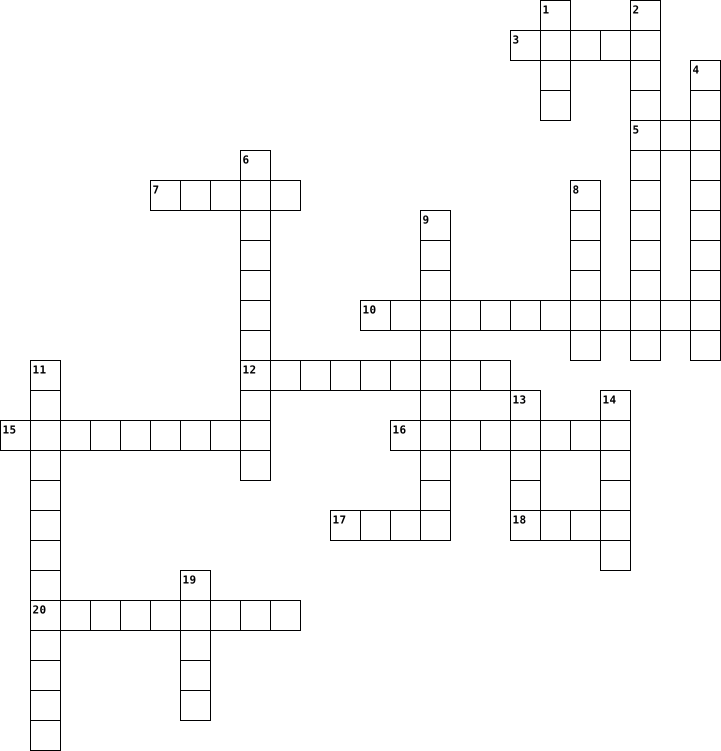
Across
- taxed imports of goods
- what helped the BEIC by shipping surplus tea to colonies
- the revolution Treaty of pairs did what?
- limit settlement west of Appalachian mts
- cut tea taxes in britian
- B and F extended rivalry to America
- turning point in american revolution
- amount of people that died in the Boston Massacre
- Revere Who warned the minutemen that the British were coming
- and Concord where was the first battle of the American revolution
Down
- 4th 1776 what date was the declaration of independence signed traditionally
- what country did the Acolonist'solonists rebel aga July
- Act which acts forced colonists to house British soldiers
- declared parliments right to make laws
- Jefferson Who wrote the declaration of independence
- passed act by parliament closed bostons port
- relationship between GB and America
- required colonists to pay direct tax on paper use
- of Yorktown what battle did general Cornwallis surrender
- monarch that ruled over england
20 Clues: taxed imports of goods • cut tea taxes in britian • monarch that ruled over england • relationship between GB and America • B and F extended rivalry to America • turning point in american revolution • declared parliments right to make laws • limit settlement west of Appalachian mts • the revolution Treaty of pairs did what? • passed act by parliament closed bostons port • ...
Global History 2021-11-22

Across
- the B in SCUBA, we do this to names, dates, and places
- Enlightenment thinker who believed people are naturally bad
- Japanese empire/shogunate
- the C in SCUBA, what we do with unfamiliar words
- Emperor who ruled at the end of the French Revolution
- you need two pieces of X to support your claim
- Practice of being shut off from the outside world
- the reason an event occurs
- Enlightenment thinker who believed people are naturally good
- Explains what symbols on a map means
- coming together
- the country Toussaint L'Overture lead a revolution in
- the U in SCUBA, what we do to the most important details
- the main idea, we write these to help us understand what we read
Down
- Leader of the Committee of Public Safety
- Device used to behead people during the French Revolution
- to become steady
- the A in SCUBA, one example includes writing a gist
- Otto von Bismarck was a leader in unifying this country
- ___ the Great, Russian absolute leader
- the S in SCUBA, looking for titles, pictures, graphics, or data
- another word for Enlightenment thinkers
- Garibaldi was a leader in unifying this country
- powerful Islamic empire that spanned three continents
- name of the social class that peasants in France belonged to
- a debatable statement
26 Clues: coming together • to become steady • a debatable statement • Japanese empire/shogunate • the reason an event occurs • Explains what symbols on a map means • ___ the Great, Russian absolute leader • another word for Enlightenment thinkers • Leader of the Committee of Public Safety • you need two pieces of X to support your claim • Garibaldi was a leader in unifying this country • ...
World History 2021-12-03

Across
- an act of slaughtering an animal or person or surrendering a possession as an offering to God or to a divine or supernatural figure.
- discovered the Hawaiian Islands
- egment of the global slave trade that transported between 10 million and 12 million enslaved Africans across the Atlantic Ocean to the Americas from the 16th to the 19th century.
- a member of the Quechuan peoples of Peru maintaining an empire until the Spanish conquest
- the first to sail from Europe to India by rounding Africa's Cape of Good Hope
- the procuring, transporting, and selling of human beings as slave
- member of the indigenous people dominant in Mexico before the Spanish conquest of the 16th century
- the exchange of diseases, ideas, food. crops, and populations between the New World and the Old World
- commanded the largest and most advanced fleet the world had ever seen
- an instrument containing a magnetized pointer which shows the direction of magnetic north and bearings from it.
- western hemisphere, especially the Americas, after the European “age of discovery” beginning in the early 16th century.
- Portuguese navigator whose discovery in 1488 of the Cape of Good Hope showed Europeans there was a feasible route to India around the storm-driven
Down
- explorer for Portugal, and later Spain, who discovered the Strait of Magellan while leading the first expedition to successfully circumnavigate the globe. He died en route and Juan Sebastián del Cano completed it
- developed the science of astronomy, calendar systems, and hieroglyphic writing.
- a small, fast Spanish or Portuguese sailing ship of the 15th–17th centuries
- an estate on which crops such as coffee, sugar, and tobacco are cultivated by resident labor.
- Known as the “Father of New France
- tip of Africa.
- ¨Mother culture¨ of meso America known for giant head statues
- helped capture the North African city of Ceuta, sponsored voyages of exploration with the aim of building colonies in the North Atlantic and West Africa
- sea journey undertaken by slave ships from West Africa to the West Indies.
- invented by the Aztec civilization. Sometimes referred to as "floating gardens¨
- Known for discovering America but actually landed in Cuba
- on past events in Africa, Asia, and Europe
24 Clues: tip of Africa. • discovered the Hawaiian Islands • Known as the “Father of New France • on past events in Africa, Asia, and Europe • Known for discovering America but actually landed in Cuba • ¨Mother culture¨ of meso America known for giant head statues • the procuring, transporting, and selling of human beings as slave • ...
World History 2021-12-03

Across
- an act of slaughtering an animal or person or surrendering a possession as an offering to God or to a divine or supernatural figure.
- discovered the Hawaiian Islands
- egment of the global slave trade that transported between 10 million and 12 million enslaved Africans across the Atlantic Ocean to the Americas from the 16th to the 19th century.
- a member of the Quechuan peoples of Peru maintaining an empire until the Spanish conquest
- the first to sail from Europe to India by rounding Africa's Cape of Good Hope
- the procuring, transporting, and selling of human beings as slave
- member of the indigenous people dominant in Mexico before the Spanish conquest of the 16th century
- the exchange of diseases, ideas, food. crops, and populations between the New World and the Old World
- commanded the largest and most advanced fleet the world had ever seen
- an instrument containing a magnetized pointer which shows the direction of magnetic north and bearings from it.
- western hemisphere, especially the Americas, after the European “age of discovery” beginning in the early 16th century.
- Portuguese navigator whose discovery in 1488 of the Cape of Good Hope showed Europeans there was a feasible route to India around the storm-driven
Down
- explorer for Portugal, and later Spain, who discovered the Strait of Magellan while leading the first expedition to successfully circumnavigate the globe. He died en route and Juan Sebastián del Cano completed it
- developed the science of astronomy, calendar systems, and hieroglyphic writing.
- a small, fast Spanish or Portuguese sailing ship of the 15th–17th centuries
- an estate on which crops such as coffee, sugar, and tobacco are cultivated by resident labor.
- Known as the “Father of New France
- tip of Africa.
- ¨Mother culture¨ of meso America known for giant head statues
- helped capture the North African city of Ceuta, sponsored voyages of exploration with the aim of building colonies in the North Atlantic and West Africa
- sea journey undertaken by slave ships from West Africa to the West Indies.
- invented by the Aztec civilization. Sometimes referred to as "floating gardens¨
- Known for discovering America but actually landed in Cuba
- on past events in Africa, Asia, and Europe
24 Clues: tip of Africa. • discovered the Hawaiian Islands • Known as the “Father of New France • on past events in Africa, Asia, and Europe • Known for discovering America but actually landed in Cuba • ¨Mother culture¨ of meso America known for giant head statues • the procuring, transporting, and selling of human beings as slave • ...
Texas History 2021-12-16

Across
- What the Spanish built to colonize Texas
- Mexican leader during the Texas Revolution
- In 1845 Texas was __________ into the U.S.
- First president of the Republic of Texas
- Gonzales flag
- Second president of the Republic
- Country that gained their independence from spain in 1821
- Built to protect the missions
- Remember the _________
- The state you live in
- Region to the far west of Texas
- Fought at the Alamo: was in command
- Native American tribes that stayed in one area
Down
- Region that has the most water
- Explored Texas: cows head
- Fought at the Alamo: has a knife named after him
- Mapped the coastline in 1519
- The father of Texas
- Native American tribes that moved around
- War that won Texas its independence
20 Clues: Gonzales flag • The father of Texas • The state you live in • Remember the _________ • Explored Texas: cows head • Mapped the coastline in 1519 • Built to protect the missions • Region that has the most water • Region to the far west of Texas • Second president of the Republic • War that won Texas its independence • Fought at the Alamo: was in command • ...
History Crossword 2022-02-18

Across
- incorrect statement about results of 1812 war
- French Rebellion
- Branch that judges federal cases
- Branch that executes proposed laws
- Putting one on trial more than once
- citizens of america
- Not included in the first amendment
- Home of Americans
- Country caused changes to foreign policy
Down
- Result of Monroe Doctrine
- speedy trial included in which amendment
- Party wanting a weaker national government
- Protest because of whiskey taxes
- Symbol on the Great Seal representing peace
- Branch that proposes or makes laws
- Decribes george Washingtons foreign policy
- First president
- Embargo spelled backwards
- Party wanting a strong national government
- Symbol on the Great Seal representing war
20 Clues: First president • French Rebellion • Home of Americans • citizens of america • Result of Monroe Doctrine • Embargo spelled backwards • Protest because of whiskey taxes • Branch that judges federal cases • Branch that proposes or makes laws • Branch that executes proposed laws • Putting one on trial more than once • Not included in the first amendment • ...
History Crossword 2022-02-28

Across
- a scare of the wide spread communism
- give an adequate warning before sinking merchant and passenger ships
- group of ships
- Key French military commander during WW1
- Naval submarines used by germans
- illegal goods that are ship in or out
- a debt obligation issued by the U.S. Department of the treasury
- A virtual army of volunteers
- Mexican revolutionary and guerrilla leader
- Commander of the American Expeditionary Forces
- temporary measure of the war
- Relocation of 6 million of african americans
Down
- Most famous wall street traders
- A message from the German foreign society
- Russian revolutionary
- Secret Society of the early of the 20th century
- Wilson’s “Fourteen Points” – American
- use to promote a point of view
- Identification of own country and support of its interest
- France, Britain,and Russia
- the troops of general John pershing
- Britain, Italy, France, U.S
- arrested in 1915 and died in U.S.Custody
- States Convection of Charles Schenck and Elizabeth Baer
- Prohibited obtaining information, recording pictures, or copying description of any information
25 Clues: group of ships • Russian revolutionary • France, Britain,and Russia • Britain, Italy, France, U.S • A virtual army of volunteers • temporary measure of the war • use to promote a point of view • Most famous wall street traders • Naval submarines used by germans • the troops of general John pershing • a scare of the wide spread communism • Wilson’s “Fourteen Points” – American • ...
history crossword 2022-02-28

Across
- communication that is used to influence an audience
- goods that have been imported or exported illegally
- an agreement made by opposing sides in a war to stop fighting for a certain time
- the amount of money you need to sustain a certain lifestyle in a given place
- a group of ships or vehicles traveling together
- movement that holds that the nation should be congruent with the state
- special importance
- to a satisfactory or acceptable extent.
- gardens planted at private residences
- a big monkey
- gradually destroy
- found or distributed over a large area or number of people.
- a group or system of interconnected people or things
- expel from a country
Down
- compulsory enlistment for state service
- move from one part of something to another
- the making of amends for a wrong one has done
- naval submarines operated by Germany
- be (a part) of a whole
- settle or find a solution
- the practice of spying or of using spies
- stoppage of work by a substantial proportion of workers in a number of industries
- the state of being stable.
- is an important concept that refers to each person's ability to make choices and manage their own life
- compulsory recruitment for military service
25 Clues: a big monkey • gradually destroy • special importance • expel from a country • be (a part) of a whole • settle or find a solution • the state of being stable. • naval submarines operated by Germany • gardens planted at private residences • compulsory enlistment for state service • to a satisfactory or acceptable extent. • the practice of spying or of using spies • ...
History Cards 2022-02-04
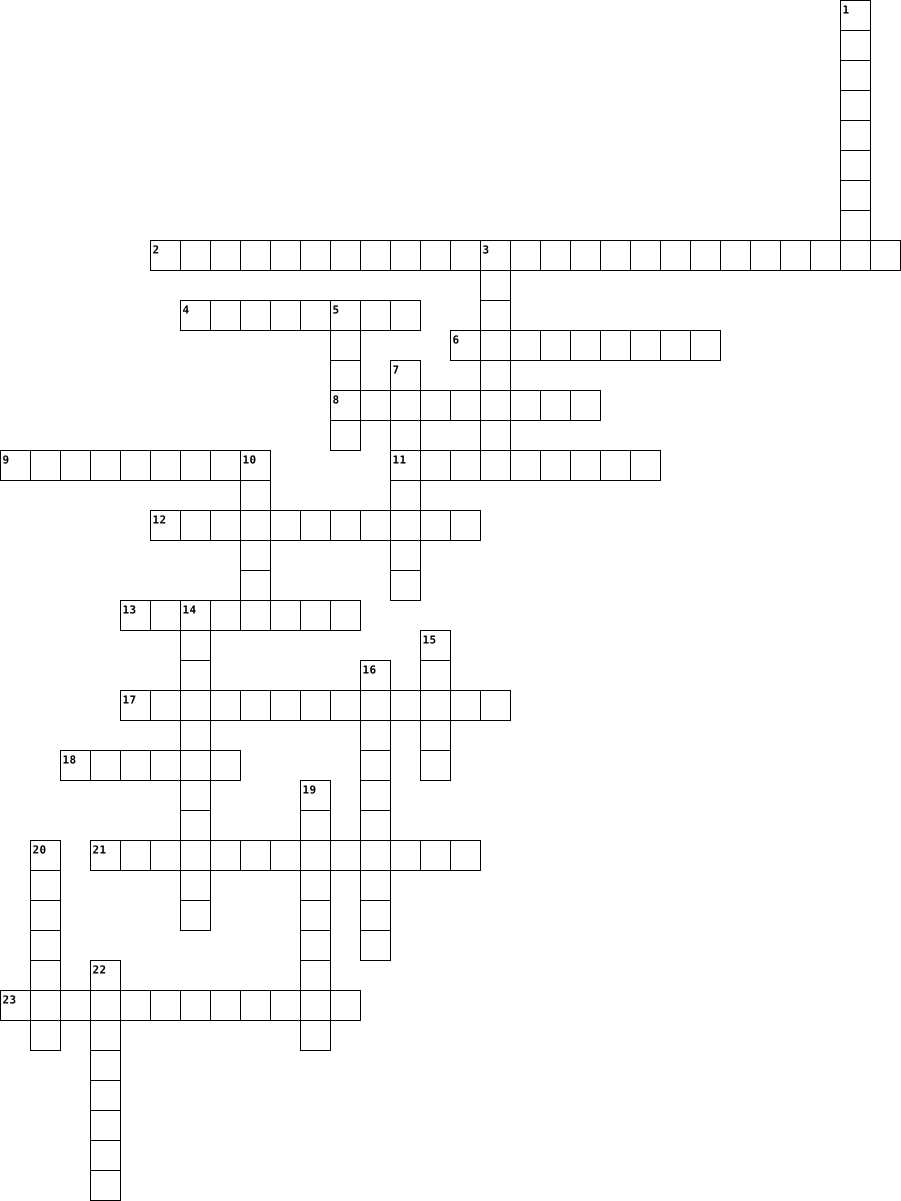
Across
- _________, and Ascension)
- (_________ of God) people that God called to send messages
- (Greece colonized, _________ begins)
- (Greece _________, democracy begins)
- (the second history card we studied)
- study of myths (Greek _________)
- (_________, Resurrection, and Ascension)
- The Phonecians' greatest contribution to civilization
- (Pericles and the Peloponnesian War)
- (Nehemiah and the _________ return)
- (_________ advances in Rome)
- (The Phonecian _________)
Down
- The _________ civilization, thank goodness for their alphabet
- (_________ and the Jewish return)
- (Constantine and the _________ of Milan)
- (worldwide sporting event that happens every four years)
- (Council of _________)
- lover of wisdom
- (_________ of Julius Caesar)
- (Rome burns, Nero _________ Christians)
- (Crucifixion, Resurrection, and _________)
- (_________ of Nicaea)
- (_________ of Christ)
23 Clues: lover of wisdom • (_________ of Nicaea) • (_________ of Christ) • (Council of _________) • _________, and Ascension) • (The Phonecian _________) • (_________ of Julius Caesar) • (_________ advances in Rome) • study of myths (Greek _________) • (_________ and the Jewish return) • (Nehemiah and the _________ return) • (Greece colonized, _________ begins) • ...
History Crossword 2022-01-04

Across
- hostility towards immigrants from native people
- providing money to support social goals
- a group of radical people who are against the Civil Rights movement
- multifamily apartments
- an organization ordered by the law to carry on an activity
- a very tall building
- a large group of people, specifically a culture
- different treatment towards a group of people
- an agreement met in the middle between two parties
- total control of a type of industry by one person or one company
- a combination of firms or corporations formed by a legal agreement
- a list of people given to companies to determine who not to employ
- isolation of a race
- one who becomes established in a country they are not originally from
Down
- the idea that no matter the person, they can always remain successful through effort
- a philosophy based on Charles Darwin's idea of evolution
- laws passed in the south just after the Civil War
- the scientific theory that humans and other forms of life have evolved over time
- to compose
- a court order that requires one to do or not do a certain thing
- the only people allowed in unions
- a man who pushed for horizontal integration
- the acquiring of money through dishonest ways
- a man who specialized in helping companies trade stock
- a formal change to a public official with bad conduct
- industrial workers of the world
26 Clues: to compose • isolation of a race • a very tall building • multifamily apartments • industrial workers of the world • the only people allowed in unions • providing money to support social goals • a man who pushed for horizontal integration • the acquiring of money through dishonest ways • different treatment towards a group of people • ...
History Midterm 2022-01-04

Across
- (factories)
- dust storms caused by drought and overfarming
- (cities)
- How did the U.S. get more soldiers for the army in WWI?
- The United States declared war on Spain after the __ exploded
- Deal plan which used public works programs and massive government spending to fix depression
- war where America and Cuba fought Spain over Cuban independence
- person who started Hull House to help the poor
- US got the land for this by supporting a Panamanian rebellion Progressives people who used social justice to bring about reform and improve life
- __ Points U.S. plan for “peace without victory”
- first weak form of government in the US
- farmer protest that showed the weakness of the Articles of Confederation
- Shantytowns were called Hoovervilles
Down
- compromise between the Federalists and the Anti-federalists
- president at the start of the depression
- the day the stock market crashed in October 1929 was the start of the Great Depression
- when stronger nations take control over weaker ones
- The Philippines got involved in the Spanish American war because they wanted ___
- __ Note said Mexico should attack the U.S.
- __ Amendment gave women right to vote
- idea that some races or cultures are better than others
- __ Shirtwaist Factory is most known for catching on fire which led to workplace safety laws
- Most people say the wartime economy of ___was the biggest reason the Great Depression ended.
- the right to vote
- WWI started when Archduke Francis Ferdinand was __
- One reason for American Imperialism was to build military ___
- The U.S. join the war because these sank passenger ships
- U.S. involvement at start of WWI
- nickname of writers who wrote about society’s problems
- Espionage and Sedition Acts Limited ___ during WWI
- elected in 1932 to replace Hoover and fix the Great Depression
- book about conditions at meat factories
- 1920s are known as the___ 20s
- world organization started after WWI
- these caused a chain reaction that dragged most of Europe into war
- __ Front area of trenches where the Allies fought the GermansThe WoodrowWilson President of the U.S. during WWI
36 Clues: (cities) • (factories) • the right to vote • 1920s are known as the___ 20s • U.S. involvement at start of WWI • world organization started after WWI • Shantytowns were called Hoovervilles • __ Amendment gave women right to vote • book about conditions at meat factories • first weak form of government in the US • president at the start of the depression • ...
History crossword 2022-01-11

Across
- independent cities in Ancient Greece
- city of great extension and a lot of cityzen
- an island in Italy
- a place to buy things
- greece territory in Italy
- descent from a particular ancestor
- rich families that own land ans have political power.
- a type of stick to row
- independent cities
- a kind of stick for rowing with three rows
Down
- expert sailors who specialaist in sea trade
- a ship equipped with weapons
- sea between Europe and Asia
- it is a Ancient City in Africa
- one of the first civilisation
- people that live in a country that is not from there origin.
- group of people in a territory far from there country of origin with the intention of populating.
- slaves who had obtained their freedom.
- coin of Ancient Greece
- people who come from another country.
- ancient civilisation in Ancient Greece
- group of persons of the same geografic origin.
- a government system were the power was in the hands of a privileged citizen
- were the lowest social class
24 Clues: an island in Italy • independent cities • a place to buy things • coin of Ancient Greece • a type of stick to row • greece territory in Italy • sea between Europe and Asia • a ship equipped with weapons • were the lowest social class • one of the first civilisation • it is a Ancient City in Africa • descent from a particular ancestor • independent cities in Ancient Greece • ...
History Crossword 2022-01-21

Across
- What weapon did knights use?
- What freed slaves?
- What is made out of wood that lords live in?
- What does Alaina go to competitions for?
- How many siblings does Alaina have?
- What is Alaina's favorite sport?
- What is another name for the plague?
- What is Alaina's cat's name?
- What is something you could vomit with the plague?
- Who was the first president?
Down
- What did knights fight in?
- What color is Alaina's hair?
- Who called the first crusade?
- What is Alaina's favorite print?
- Who fought for their lord and village?
- What is a person below you?
- What is Alaina most afraid of?
- What is Alaina's favorite flower?
- Who is the president right now?
- What is a brutal ball game that you can not use your hands?
20 Clues: What freed slaves? • What did knights fight in? • What is a person below you? • What weapon did knights use? • What color is Alaina's hair? • What is Alaina's cat's name? • Who was the first president? • Who called the first crusade? • What is Alaina most afraid of? • Who is the president right now? • What is Alaina's favorite print? • What is Alaina's favorite sport? • ...
history review 2022-01-21

Across
- famous for San Juan Hill prior to becoming president
- president during the Panamal Canal building
- famous time when jazz became popular
- Renaissance location
- created affordable automobiles
- 1st cattle trail
- time when alcohol was not allowed
- name given to timeframe of 20's
- amendment that gave women the right to vote
- when the Panama canal was completed
Down
- allowed large amounts of rocks to be moved for the canal completion
- famous Jazz musician
- what women were called in the 1920's
- linked Pacific to Atlantic
- this was the cause of people pulling cashout of the bank
- type of cow in Texas
- famous baseball player
- hardest part of the Panama canal
- first to cross Atlantic Ocean
- famous female pilot
- how people bought stuff without money
- ultimate goal for African-American baseball players
- the year WW1 began
- when WW1 ended
24 Clues: when WW1 ended • 1st cattle trail • the year WW1 began • famous female pilot • famous Jazz musician • type of cow in Texas • Renaissance location • famous baseball player • linked Pacific to Atlantic • first to cross Atlantic Ocean • created affordable automobiles • name given to timeframe of 20's • hardest part of the Panama canal • time when alcohol was not allowed • ...
Texas History 2022-04-21

Across
- Process of moving a herd of cattle
- An action that citizens are required to perform
- Last battle of the Civil War when South surrender to North
- Protest against Mexico for free colony
- Process of expanding the west in the U.S
- Place in San Antonio during fight for Texas Indepence
- The first 10 Amendments to the Constitution
- Texas wanted to be moved to the United States
- Branch that writes and makes laws
- Telegram sent to Mexico from Germany
- First European to map the coast of Texas
Down
- Bloodiest Battle in the Civil War
- Letter declaring to release William B.Travis from jail
- Not obeying the laws in a peaceful way
- President that wanted peace with Native Americans
- Presdient who placed capital of Texas in Austin
- Process of increasing population to make city more urban
- Deadliest Hurricane which destroyed many homes
- War with Anglo’s against Mexican Soldiers
- Law made to end the action of fence cutting
20 Clues: Bloodiest Battle in the Civil War • Branch that writes and makes laws • Process of moving a herd of cattle • Telegram sent to Mexico from Germany • Not obeying the laws in a peaceful way • Protest against Mexico for free colony • Process of expanding the west in the U.S • First European to map the coast of Texas • War with Anglo’s against Mexican Soldiers • ...
Theatre History 2022-05-10

Across
- wrote satires who mocked the gods and the leaders of Athens
- small hut/building behind acting area where actors changed costumes
- the most important part of a Greek costume
- the first actor
- arge, open, circular middle section where chorus danced and chanted
- Machine used to lower the “god” down to
- refined plot structure
- Greek philosopher and teacher
- the father of tragedy
- the gender of all actors in a play
- "death cart"
Down
- god of wine and theatre
- dramas in which the main character suffers a disastrous end
- Greek playwright who focused on human relationships
- type of story that uses humor, irony, exaggeration, or ridicule to expose and criticize people's stupidity or vices, particularly in the context of contemporary politics and other topical issues
- group of chanters
- book written by Aristotle describing what makes theatre good
- large, outdoor performing space, with seating built into the hillside
- light, humorous dramas with a happy ending
- 3 plays related by theme, myth, characters
20 Clues: "death cart" • the first actor • group of chanters • the father of tragedy • refined plot structure • god of wine and theatre • Greek philosopher and teacher • the gender of all actors in a play • Machine used to lower the “god” down to • the most important part of a Greek costume • light, humorous dramas with a happy ending • 3 plays related by theme, myth, characters • ...
Black History 2022-02-02

Across
- g woodson
- care act
- cannot drive out darkness
- we can
- obama
- rice
- i am
- history has shown us courage can be
Down
- scott king
- Luther King
- in a bundle are unbreakable
- we are the we seek
- rosa
- i am the dream and hope of the slave. i
- is not an excuse
- michelle
- folk remedies
- if there is no struggle there is no
- and wellness
- is powerful and it prevails
20 Clues: rosa • rice • i am • obama • we can • care act • michelle • g woodson • scott king • Luther King • and wellness • folk remedies • is not an excuse • we are the we seek • cannot drive out darkness • in a bundle are unbreakable • is powerful and it prevails • if there is no struggle there is no • history has shown us courage can be • i am the dream and hope of the slave. i
World History 2022-02-09

Across
- Raphael painted it
- wrote “Romeo and Juliet”
- one of Shakespeare’s plays
- sponsors of artists
- the focus on man’s abilities
- painter
- the city where the renaissance started
- wrote “the don Quixote”
- invented the moveable type
- a chant
- the “Don Quixote” book was about__
Down
- Da Vinci
- wrote about government
- revival of learning and the interest in art
- famous sponsor family
- Giotto was from this country
- where Shakespeare was from
- type of music in the middle ages
- painted the ceiling of the Sistine Chapel
- “Father of Renaissance”
- the reformation was a ___ time
- most honored and influential scholar
22 Clues: painter • a chant • Da Vinci • Raphael painted it • sponsors of artists • famous sponsor family • wrote about government • “Father of Renaissance” • wrote “the don Quixote” • wrote “Romeo and Juliet” • one of Shakespeare’s plays • where Shakespeare was from • invented the moveable type • Giotto was from this country • the focus on man’s abilities • the reformation was a ___ time • ...
World History 2022-02-09

Across
- painter
- sponsors of artists
- the focus on man’s abilities
- revival of learning and the interest in art
- famous sponsor family
- wrote “Romeo and Juliet”
- wrote “the don Quixote”
- a chant
- type of music in the middle ages
- one of Shakespeare’s plays
- Giotto was from this country
Down
- most honored and influential scholar
- painted the ceiling of the Sistine Chapel
- Da Vinci
- the city where the renaissance started
- Raphael painted it
- invented the moveable type
- wrote about government
- the reformation was a ___ time
- the “Don Quixote” book was about__
- where Shakespeare was from
- “Father of Renaissance”
22 Clues: painter • a chant • Da Vinci • Raphael painted it • sponsors of artists • famous sponsor family • wrote about government • wrote “the don Quixote” • “Father of Renaissance” • wrote “Romeo and Juliet” • invented the moveable type • where Shakespeare was from • one of Shakespeare’s plays • the focus on man’s abilities • Giotto was from this country • the reformation was a ___ time • ...
Us history 2022-02-15
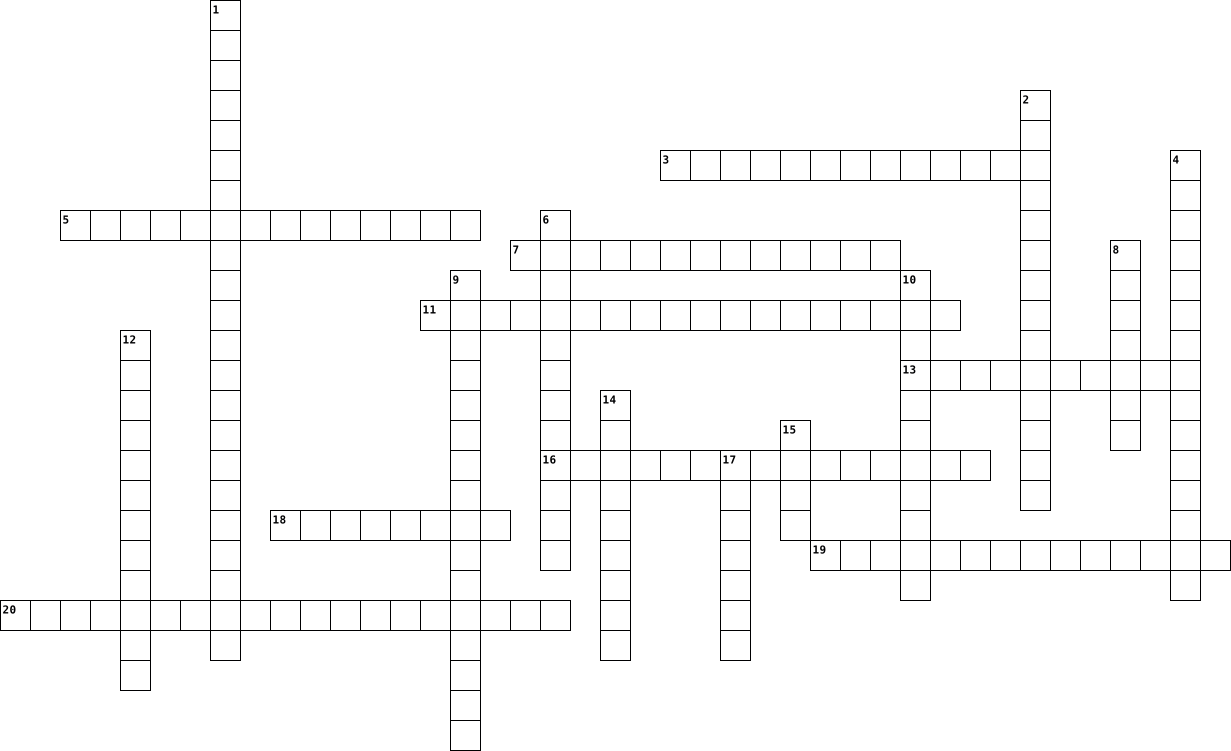
Across
- based on states rights for laws
- the branch of government that interprets the laws
- used as a torture method by patriots to out loyalists
- a government in which the powers are split into groups
- power is divided between state and national government
- the branch of government that enforces the laws
- colonists who support the crown in the revolution
- those who opposed the constitution
- rule by the people
Down
- solved the problem on how enslaved people would be represented in congress
- colonist general who was mistreated after winning a battle and switched sides becoming a traitor
- solved the problem of representation in congress
- notorious antifederalist
- Those who supported the colonists in the revolution
- unanimous vote to become 1st president, virginia war general
- patriot who helped get the french on the colonists side
- based on national government
- a change to the constitution
- to reject
- to formally accuse of misconduct
20 Clues: to reject • rule by the people • notorious antifederalist • based on national government • a change to the constitution • based on states rights for laws • to formally accuse of misconduct • those who opposed the constitution • the branch of government that enforces the laws • solved the problem of representation in congress • the branch of government that interprets the laws • ...
AKA History 2022-02-08

Across
- Sister, a fellow member of one's sorority
- International President
- Our region
- Suggested name and colors (person)
- Regional Director
- Founding campus
- Refers to Founders and Incorporators
- President
- First International President and Lead Incorporator
- Symbol
- Our flower
Down
- January 15th, 1908
- Founder
- Motto
- Chapter located in Columbus, MS
- Location on campus where sorority was founded
- Mission
- Represents femininity
- Governing body, meets biennially
- Represents vitality
20 Clues: Motto • Symbol • Founder • Mission • President • Our region • Our flower • Founding campus • Regional Director • January 15th, 1908 • Represents vitality • Represents femininity • International President • Chapter located in Columbus, MS • Governing body, meets biennially • Suggested name and colors (person) • Refers to Founders and Incorporators • Sister, a fellow member of one's sorority • ...
Art History 2022-04-14

Across
- three dimensional and encloses volume
- entrance ways
- low rectangular tombs
- an arch like opening
- brightness of a color
- study of evidence from the past
- a prayer tower
- pleasing to look at
- main room
- an objects usefulness
- one of the most versatile drawing tools
- one of the oldest painting media
- horizontal elements
Down
- figures facing straight ahead
- the temple
- representation of a person
- dark or light quality of a color
- simplification of subject matter
- swirling designs
- well made
- enclosed area of a line
- a place to view art
- the simplification of form
- name of the color
- the supreme subject
- can be two or three dimensional
- medium that dominated the art world
27 Clues: well made • main room • the temple • entrance ways • a prayer tower • swirling designs • name of the color • a place to view art • pleasing to look at • the supreme subject • horizontal elements • an arch like opening • low rectangular tombs • brightness of a color • an objects usefulness • enclosed area of a line • representation of a person • the simplification of form • ...
History Crossword 2022-04-20

Across
- where men and women were sent to be executed
- when was italy founded
- a farm, especially in a communist countries, formed from many small inclinings connected into a single unit
- something obtained especially for a price in money or its equivalent
- when did another conflict begin
- to be in control of, to have full power
- to make illegal by an authority
- is a national policy of actively trading with foreign countries to foster peace and prosperity
- to take for granted or as true.
Down
- what year did lenin die
- a camp where peons are detained or confined
- who appeared to be continuing with negotiation with the u.s.
- giving in to unjust in order to avoid all out conflict
- to be in state or position of command or control
- items needed for fighting a war
- to estimate lower than the number
- by what year did great britain run out of funds
- to make changes to an original work.
- to take unfair advantage of
- was an aggressive nationalist movement that considered the nation more important
20 Clues: when was italy founded • what year did lenin die • to take unfair advantage of • items needed for fighting a war • when did another conflict begin • to make illegal by an authority • to take for granted or as true. • to estimate lower than the number • to make changes to an original work. • to be in control of, to have full power • a camp where peons are detained or confined • ...
History Crossword 2022-04-20

Across
- where men and women were sent to be executed
- when was italy founded
- a farm, especially in a communist countries, formed from many small inclinings connected into a single unit
- something obtained especially for a price in money or its equivalent
- when did another conflict begin
- to be in control of, to have full power
- to make illegal by an authority
- is a national policy of actively trading with foreign countries to foster peace and prosperity
- to take for granted or as true.
Down
- what year did lenin die
- a camp where peons are detained or confined
- who appeared to be continuing with negotiation with the u.s.
- giving in to unjust in order to avoid all out conflict
- to be in state or position of command or control
- items needed for fighting a war
- to estimate lower than the number
- by what year did great britain run out of funds
- to make changes to an original work.
- to take unfair advantage of
- was an aggressive nationalist movement that considered the nation more important
20 Clues: when was italy founded • what year did lenin die • to take unfair advantage of • items needed for fighting a war • when did another conflict begin • to make illegal by an authority • to take for granted or as true. • to estimate lower than the number • to make changes to an original work. • to be in control of, to have full power • a camp where peons are detained or confined • ...
US History 2022-05-11
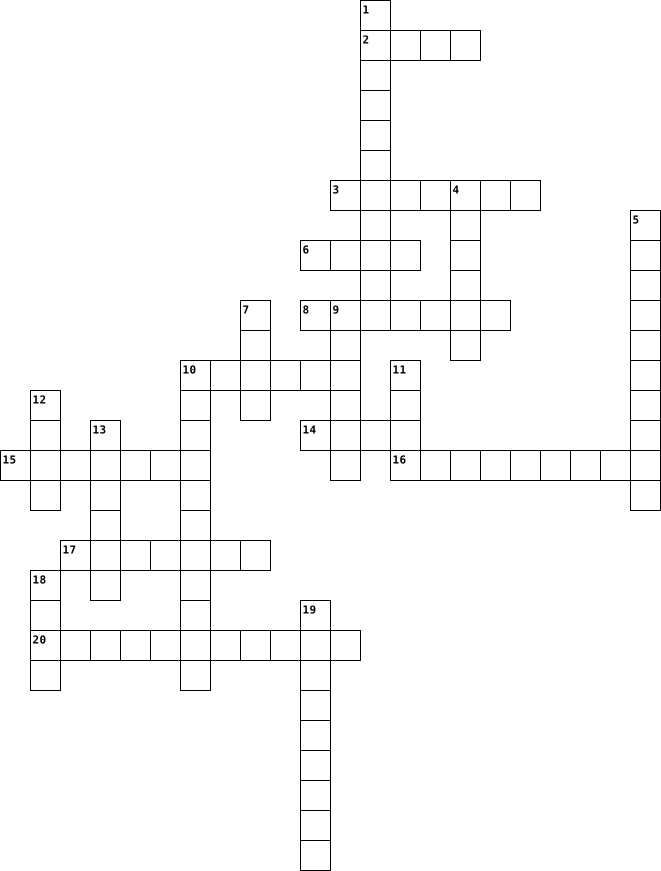
Across
- the Arab oil company that stopped giving US oil in 1973
- the side that President Reagan supported in Nicaragua in the 1980s Iran-Contra Affair
- the Middle Eastern country in which US hostages were taken from the US Embassy
- War America lost this war and failed to contain Communism
- the President who organized the Camp David Accords
- the domain of a website connected to an educational institution
- the name of your US History teacher
- the land of this nation shrunk when Israel was created in 1948
- Nixon's policy to ease tensions with the Soviet Union in the Cold War
- the Soviet Union invaded this country in the Middle East in 1979
Down
- to compare how sources agree or disagree
- the President involved in the Iran-Contra Affair
- the name of the Muslim Revolutionary Group that the US supplied with weapons in Afghanistan
- this man became President after Nixon resigned in 1974
- the country in the Middle East the US ALWAYS supports
- America's policy to stop the spread of Communism
- d'etat the French word meaning to overthrow a government
- the domain of a website connected to the government
- Union the country America opposes in the Cold War
- the title of the leader in Iran
- the name of the scandal that forced Nixon to resign from the Presidency
21 Clues: the title of the leader in Iran • the name of your US History teacher • to compare how sources agree or disagree • the President involved in the Iran-Contra Affair • America's policy to stop the spread of Communism • Union the country America opposes in the Cold War • the President who organized the Camp David Accords • ...
history & religion 2023-07-11

Across
- 불교
- 평화
- 문명
- 의식 예식
- 유대교
- 싸움 전투
- 독립
- 자선 자애
- 혁명
- 기도하다
Down
- 이슬람교
- 믿음 신념
- 공격
- 식민지
- 신실한 성실한
- 기독교
- 침입하다
- 정신적인 영적인
- 종교의
- 무기
- 세기 100년
21 Clues: 불교 • 공격 • 평화 • 문명 • 무기 • 독립 • 혁명 • 식민지 • 기독교 • 유대교 • 종교의 • 이슬람교 • 침입하다 • 기도하다 • 믿음 신념 • 의식 예식 • 싸움 전투 • 자선 자애 • 신실한 성실한 • 세기 100년 • 정신적인 영적인