
matter Crossword Puzzles
Science 2025-12-05

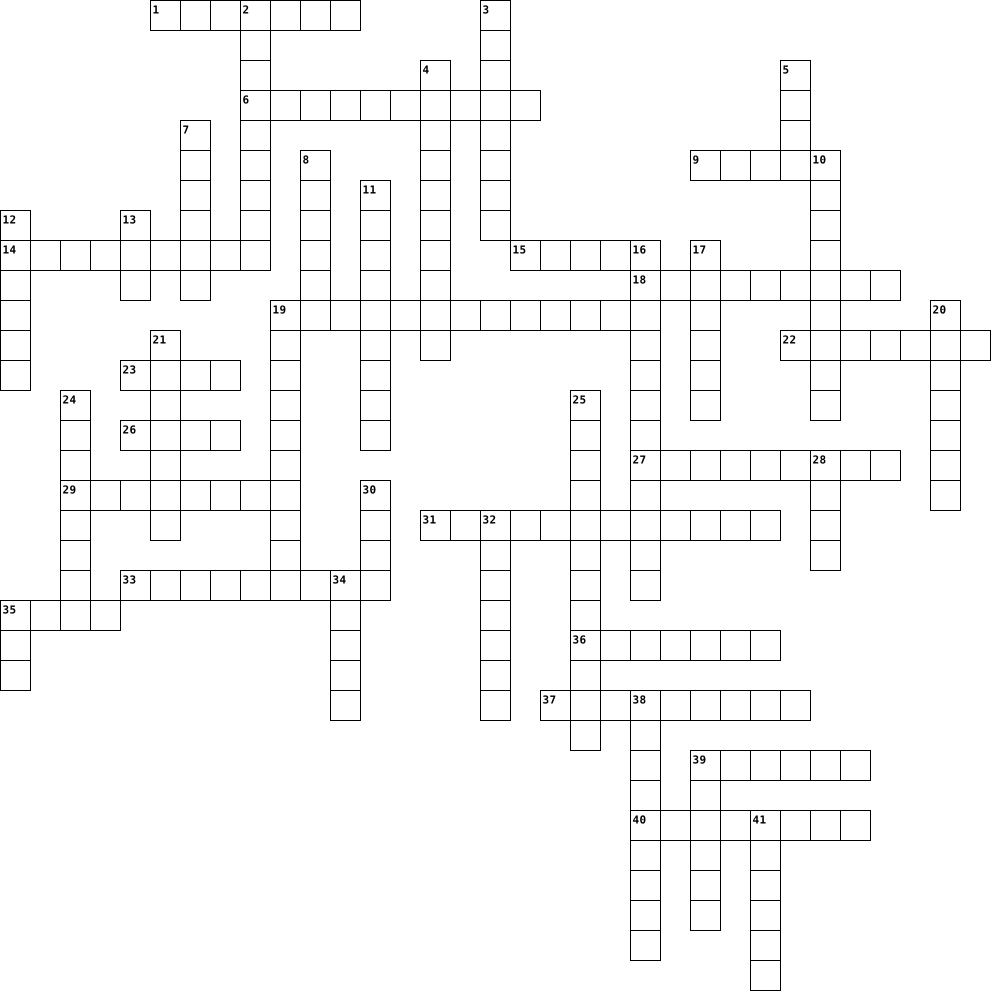
Across
- — The ability to do work.
- — The amount of matter in an object.
- — The amount of space an object occupies.
- — Anything that has mass and takes up space.
- — The measure of how hot or cold something is.
- — A change in velocity over time.
- — Heat transfer through direct contact.
- — Heat transfer through fluids (liquid or gas).
- — Matter with no definite shape but definite volume.
Down
- — A state of matter with no definite shape or volume.
- — The force that pulls objects toward the Earth.
- — The smallest unit of matter.
- — The amount of mass in a given volume.
- — A push or pull on an object.
- — A force that opposes motion between surfaces.
- — Speed with direction.
- — Heat transfer through waves, not touching anything.
- — The tendency of an object to resist a change in motion.
- — A state of matter with definite shape and volume.
- CHANGE — A change that forms a new substance.
20 Clues: — Speed with direction. • — The ability to do work. • — The smallest unit of matter. • — A push or pull on an object. • — A change in velocity over time. • — The amount of matter in an object. • — The amount of mass in a given volume. • — Heat transfer through direct contact. • — The amount of space an object occupies. • — Anything that has mass and takes up space. • ...
Science 8 Review Crossword 2024-10-04

Across
- Able to be dissolved
- What we are made up of
- A mixture which is uniform throughout
- The fourth state of matter
- When a heterogeneous fluid has large particles inside that refuse to dissolve
- A mixture which is not uniform throughout
- A mixture of small particles of one substance distributed evenly throughout another substance
- Workplace Hazardous Materials Information System
- A combination of two or more substances
- The minor component in a solution, dissolved in the solvent
- For something to become incorporated into a liquid
- The change from gas to liquid
Down
- A substance that has a fixed chemical composition throughout
- The amount of dissolved solvent in a liquid
- Contains an amount of a substance greater than that required for saturation
- What matter is made up of
- The change from gas to solid
- The second state of matter
- The first state of matter
- The third state of matter
20 Clues: Able to be dissolved • What we are made up of • What matter is made up of • The first state of matter • The third state of matter • The fourth state of matter • The second state of matter • The change from gas to solid • The change from gas to liquid • A mixture which is uniform throughout • A combination of two or more substances • A mixture which is not uniform throughout • ...
Phase Changes 2025-04-01

Across
- temperature where all 3 phases of a state exist at the same time
- point at the end of a phase change curve
- state of matter with a fixed volume and shape
- the particles in a solid have a _______ arrangement
- state of matter composed of protons and electrons
- transformation from solid to gas
- transformation from gas to plasma
- transformation from solid to liquid
- transformation from liquid to solid
- x-axis of a phase change graph
Down
- plasma is the _________ energy state of matter
- transformation from liquid to gas
- state of matter with a fixed volume but indefinite shape
- transformation from gas to liquid
- transformation from plasma to gas
- the particles in a liquid do _______ have a fixed arrangement
- transformation from gas to solid
- state of matter with an indefinite shape and volume
- solids are the _________ energy state of matter
- y-axis of a phase change graph
20 Clues: y-axis of a phase change graph • x-axis of a phase change graph • transformation from gas to solid • transformation from solid to gas • transformation from liquid to gas • transformation from gas to liquid • transformation from plasma to gas • transformation from gas to plasma • transformation from solid to liquid • transformation from liquid to solid • ...
Review sem 1 Chem 2021-12-07

Across
- international system of units
- burning a log what kind of change
- positively charged particle in atom nucleus
- SI unit for length
- SI unit to measure time
- brakinag a pencil what kind of change
- science starts with a
- describes matter
- use of your five senses
- an educated guess
- a particle that defines a chemicalelement
Down
- process used when solving problems
- substance that cannot be broken down any more
- step used to try our hypothesis and see if correct
- 2 or more atoms that form the smallest particle of a compound
- describe matter based ability to react and change to new matter
- amount of matter an object is made of
- SI unit for mass
- a negatively charged particle that orbits the atom
- SI unit for volume
- anything with mass and volume
- number of protons in an atom
- describe matter using 5 senses
23 Clues: SI unit for mass • describes matter • an educated guess • SI unit for length • SI unit for volume • science starts with a • SI unit to measure time • use of your five senses • number of protons in an atom • international system of units • anything with mass and volume • describe matter using 5 senses • burning a log what kind of change • process used when solving problems • ...
Matter Brett Lanning 2015-03-12

Across
- the amount of space matter takes up
- gas turns to a liquid
- no definite shape or volume but conducts electricity
- how much/amount of matter
- adding energy to change matter
- mixture that one or more substance dissolves and not separated easily
- two or more substance combined that keep their own properties
- two or more elements combined to make something new
- group of atoms bonded together
- liquid turns to a liquid to a gas
Down
- liquid changes to a solid
- liquid changes to steam
- atoms close together, has definite shape
- substance that cannot be broken down into smaller substances
- solid, liquid, gas
- changing of physical properties of matter such as color or shape
- solid changes to a liquid
- smallest part of matter
- take shapes of a container, move together
- no definite shape, atoms far apart
- anything that takes up space
21 Clues: solid, liquid, gas • gas turns to a liquid • liquid changes to steam • smallest part of matter • liquid changes to a solid • how much/amount of matter • solid changes to a liquid • anything that takes up space • adding energy to change matter • group of atoms bonded together • liquid turns to a liquid to a gas • no definite shape, atoms far apart • the amount of space matter takes up • ...
Matter Tracen Troyer 2015-03-12

Across
- substance that can’t be broken down into smaller substances
- a group of atoms bonded together
- state of matter with the fastest moving molecules
- change one physical feature
- how much of matter takes up
- the temp at which a solid substance melts
- the temp at which a liquid boils
- the temp at which a liquid freezes
- mixture that one or more substances dissolve
- two or more elements combined to make a new substance
Down
- anything that takes up space
- two or more substances combined that keep own properties
- change state of matter
- slower than gas and takes the shape of its container and has all molecules connected
- the amount of space matter takes up
- the basic unit of a chemical element
- solid liquid gas and plasma
- this state of matter has really fast moving molecules but is slower than plasma
- the process of a substance in a liquid state changing to a gas or the process of evaporating
- the process of condensating
- this state of matter keeps it’s own shape and has really slow moving molecules and is packed together
21 Clues: change state of matter • solid liquid gas and plasma • change one physical feature • how much of matter takes up • the process of condensating • anything that takes up space • a group of atoms bonded together • the temp at which a liquid boils • the temp at which a liquid freezes • the amount of space matter takes up • the basic unit of a chemical element • ...
This Crossword Puzzle Matters 2024-11-21

Across
- A building block of matter
- (BONUS WORD!) THE BEST SCIENCE TEACHER EVER!!!
- A phase where it takes the shape of its container
- The amount of matter in an object
- A change in matter that does involve revising atoms
- A scientific way of finding volume
- Two different types of matter building blocks smooshed together
- A change in matter that doesn't involve revising atoms
Down
- A substance that can easily be separated
- A substance that can't easily be seperated
- How much space an object takes up
- How much space an object or substance takes up in relation to the amount of matter in that object or substance
- A phase where atoms only vibrate
- A building block of the UNIVERSE (Not matter), usually found on a certain table
- A phase where atoms move freely
- Has mass and takes up space
- How heavy an object is
17 Clues: How heavy an object is • A building block of matter • Has mass and takes up space • A phase where atoms move freely • A phase where atoms only vibrate • How much space an object takes up • The amount of matter in an object • A scientific way of finding volume • A substance that can easily be separated • A substance that can't easily be seperated • ...
VOCAB 2013-09-18

Across
- A measure of how much space an object takes up
- Going from solid to gas
- The downward pull of gravity on an object
- Going from gas to liquid
- Anything that takes up space and has a mass
- Going from liquid to gas
- A change in any physical property of a substance, but not in the substance its self
- How substances can form new substances
- Matter that has a no definite shape and a definite volume
- A measure of the amount of matter present in a given volume of a substance
- Total amount of energy from movement of particles in matter
- Going from liquid to solid
Down
- Going from solid to liquid
- The energy of motion
- A measure of how much matter is in an object
- Matter that has a definite shape and definite volume
- Energy stored in the chemical composition of matter
- Changing of one substance into another substance
- Matter that has no definite shape and no definite volume
- The energy that moves objects
- Characteristics of a substance that can be observed without changing the identity of the substance
- Stored energy that an object has due to its position or chemical composition
- Ability to do work or cause change
23 Clues: The energy of motion • Going from solid to gas • Going from gas to liquid • Going from liquid to gas • Going from solid to liquid • Going from liquid to solid • The energy that moves objects • Ability to do work or cause change • How substances can form new substances • The downward pull of gravity on an object • Anything that takes up space and has a mass • ...
science 2024-10-04

Across
- how much solute in a solution
- the part of a solution that dissolves
- one or more solutes dissolved in a liquid
- the state of matter that ice is
- when water vapor becomes a liquid
- a lot of small particles distributed evenly throughout a mixture
- anything that takes up space and has weight
- the state of matter that has no definite volume or shape
- to become incorporated into a solution
- in the sun beam there were lots of tiny dust _______
- a mix of two or more pure substances
- the most common state of matter in the universe
- the state of matter that chicken broth is
Down
- a single kind of matter that can not be separated into other kinds of matter
- a mixture where a solid does not dissolve in a liquid
- the mixture is uniform
- the mixture is not uniform
- containing more solute than a saturated solution
- a part of a substance that dissolves the solute
- a part of a solution that dissolves
- work place safety symbols
- sediment deposited from wind or flowing water
22 Clues: the mixture is uniform • work place safety symbols • the mixture is not uniform • how much solute in a solution • the state of matter that ice is • when water vapor becomes a liquid • a part of a solution that dissolves • a mix of two or more pure substances • the part of a solution that dissolves • to become incorporated into a solution • ...
Properties of matter 2025-06-11

Across
- A pure substance made of two or more elements chemically combined
- State of matter with definite shape and volume
- Temperature at which a solid becomes a liquid
- Ability of a substance to conduct heat or electricity
- Anything that has mass and takes up space
- A measure of gravity’s pull on mass
- A change that doesn’t alter the substance’s identity
- State of matter with definite volume but no definite shape
- High-energy state of matter with charged particles
- State of matter with no definite shape or volume
- A physical blend of two or more substances
Down
- Law stating matter is neither created nor destroyed
- Temperature at which a liquid becomes a gas
- Ability of a substance to be hammered into shapes
- A fluid’s resistance to flow
- Ability of a substance to dissolve in another
- A pure substance made of only one kind of atom
- Mass divided by volume
- The amount of space something occupies
- The amount of matter in an object
- A change that creates a new substance
21 Clues: Mass divided by volume • A fluid’s resistance to flow • The amount of matter in an object • A measure of gravity’s pull on mass • A change that creates a new substance • The amount of space something occupies • Anything that has mass and takes up space • A physical blend of two or more substances • Temperature at which a liquid becomes a gas • ...
102.11 - Matter 2020-10-28

Across
- acids that are compounds consisting of carbon, oxygen, hydrogen and nitrogen
- Matter with definite weight but indefinite Volume and shape
- A colorless, odorless gas
- The scientific study of matter
- Matter with definite volume but no definite Shape
- A change in a substance that creates a new Substance chemically
- Basic substance that can not be broken down
- Anything that occupies space
- Bonds that are individually weak and can easily be broken by heat or water
Down
- The elements found in hair
- Matter that is not alive and has never been Alive
- Matter that is now living or was alive at one Time
- A change in physical characteristics
- Atoms have __________ main parts
- Two or more atoms joined together by a chemical bond
- End bonds
- The smallest complete unit of element
- Matter with definite weight, volume and shape
18 Clues: End bonds • A colorless, odorless gas • The elements found in hair • Anything that occupies space • The scientific study of matter • Atoms have __________ main parts • A change in physical characteristics • The smallest complete unit of element • Basic substance that can not be broken down • Matter with definite weight, volume and shape • ...
Classifying Matter 2023-09-09

Across
- - anything that takes up space and has mass.
- - the amount of matter in an object.
- - how easily a substance dissolves in water.
- Density - how much matter is in a given space.
- - when an object moves downwards in water.
- - when an object stays on the surface of water.
- - a material that does not allow electricity or heat to flow through it easily
- - something that can be measured or quantified.
- Energy - the energy of heat.
- - the amount of space that matter takes up.
- Properties - characteristics that can be observed or measured without changing the substance.
Down
- - something that can be tested or experimented with.
- - to mix a substance completely into a liquid
- - something that can be seen or perceived.
- - the property of attracting certain metals.
- State - the state of matter: solid, liquid, or gas.
- - a material that allows electricity or heat to flow through it easily
- - a liquid mixture where one substance is dissolved into another substance
- Energy - the energy of electricity.
19 Clues: Energy - the energy of heat. • Energy - the energy of electricity. • - the amount of matter in an object. • - something that can be seen or perceived. • - when an object moves downwards in water. • - the amount of space that matter takes up. • - anything that takes up space and has mass. • - how easily a substance dissolves in water. • ...
matter review 2024-02-09

Across
- how much space something takes up
- state of matter where the particles are tight together
- how light bounces off something (shiny)
- a _____ change is a change that produces new matter with new properties
- when a metal react with air and cause rust or tarnish
- a type of mixture where on substance dissolves in another
- particles are very far apart and you cannot see this state
Down
- a chemical property that means something can burn
- when one substance dissolves in another (salt and water)
- when you remove energy from a liquid the substance may ____
- an object has this if heat and electricity move through it easily
- anything that has mass and volume
- _______ properties are observable and measurable
- a physical _____ is a change that begins and ends with the same type of matter
- the amount of matter in an object
- state of matter with a definite volume but no definite shape
- when you add ______ to a solid it will sometimes melt
- ______ of mass states that matter cannot be created or destroyed
18 Clues: how much space something takes up • anything that has mass and volume • the amount of matter in an object • how light bounces off something (shiny) • _______ properties are observable and measurable • a chemical property that means something can burn • when you add ______ to a solid it will sometimes melt • when a metal react with air and cause rust or tarnish • ...
Matter Review 2024-10-21

Across
- A tool that measures temperature based on the expansion and contraction of a liquid
- Scientists use this scale to measure temperature
- Liquid water is more ______ than solid water
- This is the measure of how much space an object takes up, it may change during a phase change
- The phase change when matter goes from a liquid to gas
- A insulator that protects aquatic life
- At 100 degrees celsius, water ______
- The typical response material have to cooling
- The state of matter that takes the shape of its container and has a specific volume
- A ___ does not have a definite shape and will fill the container it's in
Down
- Anything that has mass and takes up space
- Has the unusual property of having greater volume in liquid form than in solid form
- The ______ of matter always remains constant during phase changes
- When you have a shower, the steam fogs up the mirror and turns into water droplets. This is called:
- At 0 degrees celsius water starts to ______
- During this process particles begin to move fasted, the space between particles increases
- The typical responses materials have to heated
- During this process particles begin to move slower, the space between particles decreases
18 Clues: At 100 degrees celsius, water ______ • A insulator that protects aquatic life • Anything that has mass and takes up space • At 0 degrees celsius water starts to ______ • Liquid water is more ______ than solid water • The typical response material have to cooling • The typical responses materials have to heated • Scientists use this scale to measure temperature • ...
Matter Ashlee W. 2015-03-11

Across
- one of the states of matter that takes on the shape of the container it’s in, and it has some energy
- one kind of atom that can’t be broken down into something simpler
- one of the states of matter that has little energy
- a change that changes how it looks, but doesn’t make a new substance
- a vapor changing into a liquid as it cools
- the amount of space matter takes up
- when a substance changes phases from a liquid to a gas
- when a substance changes phases from a solid to a liquid
- two or more different elements mixed together to make a new substance
- change a change that forms a new substance with different properties
- anything that has mass or takes up space
Down
- one of the states of matter that has a lot of energy
- a liquid changing to a gas as it gets hot
- the amount of matter in the given amount of space
- when a substance changes phases from liquid goes to a solid
- of matter when matter is in a stage where it’s a solid, liquid, gas, or plasma
- when a substance has dissolved in another think of the lemonade
- one of the states of matter that has a changeable shape and volume, and it has more energy
- two or more parts or elements that are combined
- made of combined atoms
- the smallest particle of an element, and these are the little things in molecules
21 Clues: made of combined atoms • the amount of space matter takes up • anything that has mass or takes up space • a liquid changing to a gas as it gets hot • a vapor changing into a liquid as it cools • two or more parts or elements that are combined • the amount of matter in the given amount of space • one of the states of matter that has little energy • ...
Chapter 11 Vocabulary Test: Properties /Changes in Matter 2024-01-24

Across
- The properties of a substance become different
- A characteristic of matter that can be observed and measured without changing the matter
- Chemical reactions that release energy
- Ability to burn or ignite
- A measure of mass per unit of volume, of how closely the particles in an object are packed together
- Something that increases the rate of a chemical reaction
- The behavior of a substance when it undergoes a chemical change or reaction
- Substances used in chemical reactions that are changed into something else
- The amount of matter in an object
- When a solid spreads and mixes evenly into a liquid
Down
- These describe chemical reactions
- The temperature at which boiling occurs in a liquid
- The measure of power
- States that wnenever a chemical change occurs, the total mass of substance in a chemical reacton remains the same throughout the change
- The ability of matter to undergo chemical reactions with other kinds of matter
- The amount of space that matter occupies
- The temperature at which a solid becomes a liquid
- When two or more kinds of matter interact
- The change of state when a solid changes directly into a gas
- The volume of fluid that is pushed aside by an object
- The type of change when matter forms new substances with differenct physical and chemical properties from the original matter
- The weakening of metals caused by chemical action
- New substances produced during a chemical change
- Chemical reactions that absorb energy
24 Clues: The measure of power • Ability to burn or ignite • These describe chemical reactions • The amount of matter in an object • Chemical reactions that absorb energy • Chemical reactions that release energy • The amount of space that matter occupies • When two or more kinds of matter interact • The properties of a substance become different • ...
Matter & Substances 2021-09-24

Across
- substances can't change back to how they were before
- the dissolved substance
- a chemical change
- a tool to measure temperature
- a substance that can be dissolved
- a substance dissolved in a liquid
- all matter is made of these
- can separate insoluble solids from a liquid
Down
- the filtered liquid
- how hot or cold
- evaporating and wthen condensing a liquid to separate it
- letting an insoluble substance settle to the bottom
- pouring off a liquid
- changing from liquid to solid
- used to separate magnetic from non-magnetic substances
- the liquid that dissolves a solid
- the insoluble substance got from filtering
- can separate solids of different sizes
18 Clues: how hot or cold • a chemical change • the filtered liquid • pouring off a liquid • the dissolved substance • all matter is made of these • changing from liquid to solid • a tool to measure temperature • the liquid that dissolves a solid • a substance that can be dissolved • a substance dissolved in a liquid • can separate solids of different sizes • ...
matter vocab 2024-05-23

Across
- the amount of space the objects take up
- a characteristic of a substance that can be observed or measured without changing the identity
- absorbing heat- hot
- the ability to do work
- a group of atoms bonded together
- a substance that changes in a chemical reaction
- a substance that cannot be broken down into similar substance by chemical means
- typically large body of matter with no defined shape
- to attract water molecules together
- a link between atoms in molecules or compounds
- the chemical substance Which are formed from 2 or more chemical substances
Down
- a substance made by mixing other substances together
- a rearrangement of atoms or molecules
- releasing heat-cold
- a change of materials into another, new chemicals are formed
- the study of matter
- a condition of being hot
- a thing that is composed of two or more separate elements
18 Clues: absorbing heat- hot • releasing heat-cold • the study of matter • the ability to do work • a condition of being hot • a group of atoms bonded together • to attract water molecules together • a rearrangement of atoms or molecules • the amount of space the objects take up • a link between atoms in molecules or compounds • a substance that changes in a chemical reaction • ...
Matter vocabulary 2022-09-07

Across
- solid, liquid, gas or plasma
- used to hold liquids
- The change of state from a liquid to a gas
- A change in matter that produces one or more new substances
- a particle that has a positive charge
- basic unit of a chemical element
- degree of compactness
- A change in a substance that does not involve a change in the identity of the substance
- solid to gas
Down
- a particle that has a negative charge
- used to measure volume of liquid
- gas to liquid
- an atoms central core
- The change of state from a gas to a liquid
- a change from one state (solid or liquid or gas) to another
- two or more atoms held together
- amount of space occupied by an object
- a particle that has no charge
18 Clues: solid to gas • gas to liquid • used to hold liquids • an atoms central core • degree of compactness • solid, liquid, gas or plasma • a particle that has no charge • two or more atoms held together • used to measure volume of liquid • basic unit of a chemical element • a particle that has a negative charge • a particle that has a positive charge • ...
Chemical Matter 2026-05-18

Across
- They are trying to find these at camp
- dioxide Gas produced in chemical reaction
- Amy dropped this on the ground on purpose
- Daria found a place with a cell phone ______
- Amy checked the bottoms of these
- The fossils were returned to the science ______
- Julian wanted his dad to be ______ of him
- Tess said making pancakes is an example of chemical ____
Down
- Amy noticed prints in the plaster ______
- Julian's brother played ________ in college
- Julian hid fossils in this under a bush
- Julian's survival ____________
- Who was inside the SUV?
- The sheriff was delayed because he had something else to ______
- This was inside of Felix's backpack
- Julian thought Dr. Forester would send him ______
- soda The ingredient that reacts with buttermilk in pancakes
- The campers are staying at Fossil __________
18 Clues: Who was inside the SUV? • Julian's survival ____________ • Amy checked the bottoms of these • This was inside of Felix's backpack • They are trying to find these at camp • Julian hid fossils in this under a bush • Amy noticed prints in the plaster ______ • Amy dropped this on the ground on purpose • Julian wanted his dad to be ______ of him • ...
Heat And Temperature 2021-06-09

Across
- The energy of movement.
- A material that does not conduct heat well. Example-styrofoam.
- Heat transfer by direct contact of particles.
- Energy from the sun is referred to _______ Energy.
- The phase of matter with little space and movement of particles.
- A system that uses a mechanical system to collect, store, and transport heat through a building or home.
- Thermal energy measures the _______ energy of a substance.
- A change from solid directly to gas.
- When a liquid changes to a solid.
- The temperature at which matter changes from solid to liquid.
- The energy of light. The only way heat can transfer through empty space.
Down
- When matter takes up more space or greater volume when heated
- A phase a matter where particles can flow yet still have a definite volume.
- When matter changes from liquid to gas.
- When matter that is cooled takes up less volume.
- When hot particles rise and cold particles fall, flowing in a circular loop.
- A material that easily transfers heat energy.
- The old theory where we believed heat was an invisible fluid.
- Energy that flows from hot to cold.
- When matter changes from gas to liquid
- The state of matter where the particles move fastest and have the greatest space.
- The average kinetic energy of particles
22 Clues: The energy of movement. • When a liquid changes to a solid. • Energy that flows from hot to cold. • A change from solid directly to gas. • When matter changes from gas to liquid • When matter changes from liquid to gas. • The average kinetic energy of particles • A material that easily transfers heat energy. • Heat transfer by direct contact of particles. • ...
Matter Review 2017-10-08

Across
- The curved surface of a liquid in a container.
- The process of when a liquid turns into a solid.
- Another word for freezing.
- The particles in this state are close together but have some space in between them (meh face)
- This type of change is not reversible.
- The process of when a gas turns into a liquid.
- Is like a skin over the surface of a liquid.
- Something squeezed to make smaller.
- The process of when a solid turns into a liquid.
Down
- Everything is made up of this
- The process of when a solid turns into a gas.
- This type of change is reversible.
- The process of when a gas turns into a solid.
- To move aside or to push away is called this.
- The particles in this state are very close together (frowning face).
- The amount of space an object takes up.
- The process of when a liquid turns into a gas.
- The particles in this state are spread out and are freely moving (happy face).
18 Clues: Another word for freezing. • Everything is made up of this • This type of change is reversible. • Something squeezed to make smaller. • This type of change is not reversible. • The amount of space an object takes up. • Is like a skin over the surface of a liquid. • The process of when a solid turns into a gas. • The process of when a gas turns into a solid. • ...
Matter & Energy 2022-04-05

Across
- new substance after change
- object remains the same through change
- material that absorbs heat
- data with words
- material that blocks heat
- definitive shape
- measurement of temperature used in the USA
- data with numbers
- unit of measurement for extreme temperatures
Down
- loose molecules that can be poured
- heat transferred through gas/liquid
- device used to measure temperature
- thermal energy in all matter
- measurement of temperature used in Europe
- heat transfer through waves
- heat transfer through touch
- molecules are greatly spaced apart
- anything that has mass and takes up space
18 Clues: data with words • definitive shape • data with numbers • material that blocks heat • new substance after change • material that absorbs heat • heat transfer through waves • heat transfer through touch • thermal energy in all matter • loose molecules that can be poured • device used to measure temperature • molecules are greatly spaced apart • heat transferred through gas/liquid • ...
Classifying Matter 2022-05-11

Across
- A particle with a positive charge found in the nucleus of atoms.
- The tiny electrons, and more massive neutrons and protons that make up atoms.
- A minute, or tiny, portion of matter
- A table that lists the earth’s 118 elements in a specific order.
- A pure substance that can’t be broken down into simpler substances.
- A property of particles. Particles with opposite charges attract each other, while particles with the same charges repel.
- A mixture, such as lemonade, made of substances that are blended together and will not separate over time.
- Atoms from two or more different elements that are attached together in specific proportions.
Down
- Two or more atoms that are attached together.
- The smallest part of an element that has all the properties of that element.
- A particle with no charge found in the nucleus of atoms.
- Any physical substance or material that takes up space and has mass. If you can put it in a jar, it’s matter.
- The amount of material contained in an object, such as gold. An object's mass is always the same, even in outer space.
- A mixture, such as cereal and milk, made of substances that are mixed but not dissolved together.
- The center of the atom, which contains neutrons and protons.
- A substance that consists of two substances mixed together.
- Matter that always has the same composition
- A negatively charged particle that orbits the center of the atom.
18 Clues: A minute, or tiny, portion of matter • Matter that always has the same composition • Two or more atoms that are attached together. • A particle with no charge found in the nucleus of atoms. • A substance that consists of two substances mixed together. • The center of the atom, which contains neutrons and protons. • ...
matter vocab 2024-05-16

Across
- a substance that's formed when 2 or more elements combine
- a chemical reaction that gives off heat energy
- when molecules have the ability to stick
- the smallest unit of an element that has the properties of it
- a change in matter that isn't chemically
- a chemical reaction that absorbs heat
- a measure of the average kinetic energy
- the forces that hold atoms together
- something that makes up space and has mass
- a combination of 2 or more substances that can be easily separated
- the study of the make up of all things
Down
- the amount of space that something takes up
- a pure substance that cannot be broken down any more
- ex) texture color odor melting point etc..
- a process that changes substances into a new one
- the amount of matter in an object
- a characteristic of a substance that is measurable during a chemical reaction
- the substances present before a chemical reaction occurs
18 Clues: the amount of matter in an object • the forces that hold atoms together • a chemical reaction that absorbs heat • the study of the make up of all things • a measure of the average kinetic energy • when molecules have the ability to stick • a change in matter that isn't chemically • ex) texture color odor melting point etc.. • something that makes up space and has mass • ...
Matter Review 2024-09-25

Across
- scale a temp scale that divides the range from the freezing point of water to the boiling point of water into 100 increments and labels absolute zero as its zero point. it is the absolute scale one kelvin is the same size unit as one degree celcius
- a charged particle; an atom or molecule that has gained or lost electrons, producing an imbalance between the number of protons and electrons in the particle
- energy the sum of the kinetic energies of the molecules or ions in matter
- subscript a number written at the lower right of a chemical symbol, indicating the number of atoms or groups of atoms in a chemical formula
- a gas-like substance, formed at very high temperatures, that consists of high-energy ions. it is the most abundant form of matter in the universe
- a combination of two or more pure substances that can be separated by physical means
- a physical change from a solid directly to a gas
- pertaining to a chemical process that absorbs heat energy and produces a positive change in enthalpy
- a physical change from the solid state to the liquid state
- property a property of matter that describes how one substance reacts in the presence of other substances or conditions
Down
- a physical change from the gs state to the liquid state
- law of thermodynamics the physical law stating that energy can neither be created nor destroyed but can be converted from one form into another
- mixture of two or more substances in separate phases, such as a suspension
- a measure of the average kinetic energy of particles in matter; hotness or coldness of an object
- the measure of the dispersal of energy in a system; the net decrease of usable energy in a system for a given temp and quantity of matter
- formula chemical symbols arranged to represent molecules or formula units that make up compounds. Formulas show both the identity and number of atoms from each element
- a neutral particle with a centrally located nucleus, consisting of protons and neutrons, with electrons around it; the smallest particle that makes up an element and that is capable of chemical interactions
- molecular theory a theory stating that the particles of matter are in constant motion, affecting the properties of matter
- a state of matter in which the particles have forces; has a fixed volume and is relatively incompressible
- change a change that alters the physical properties of a substance such as state, shape, and size but does not change its identity
20 Clues: a physical change from a solid directly to a gas • a physical change from the gs state to the liquid state • a physical change from the solid state to the liquid state • mixture of two or more substances in separate phases, such as a suspension • energy the sum of the kinetic energies of the molecules or ions in matter • ...
Chemistry 2013-09-12

Across
- Rn
- any part of a sample with uniform composition and properties
- alloys well with steel
- a homogenous mixture
- used for breathing, very flammable
- study of substances not containing carbon
- deals with mechanisms, rate, and energy transfer when matter undergoes a change
- process that separates a solid from a liquid
- As
- 50
- oldest artificial sweetener. made by someone looking for more uses of coal tar
- found in bananas
- process used to separate components using differences in boiling points
- smaller portion in a solution
- measure of space occupied by a sample of matter
- Co
- 6.02 times 10 to the 23rd power
- pH higher than 7
- mixture that is uniform in composition
- form of matter that has no definite shape, volume, and mass
- area of chemistry that focuses on processes inside organisms
- a physical blend of two or more substances
- 92
- a major export of Arkansas
- the gaseous state of a substance that is normally solid or liquid at room temperature
- Ag
Down
- 36
- matter that has a uniform and definite composition
- Sb
- rusts easily
- larger portion in a solution
- focuses on composition of matter
- depends on amount of matter
- Es
- 59
- makes table salt with chlorine
- mixture that is not uniform in composition
- lightest element
- study of compounds containing carbon
- basis for computer industry
- form of matter that has a fixed volume and mass
- amount of matter in an object
- burns with a white hot flame
- has definite shape, volume, and mass
- 95
- depends on type of matter
- white and chalky
- has mass and takes up space
- C
- Au
- pH lower than 7
51 Clues: C • 36 • Rn • Sb • Es • 59 • As • 50 • Co • 95 • 92 • Au • Ag • rusts easily • pH lower than 7 • lightest element • found in bananas • pH higher than 7 • white and chalky • a homogenous mixture • alloys well with steel • depends on type of matter • a major export of Arkansas • depends on amount of matter • basis for computer industry • has mass and takes up space • larger portion in a solution • burns with a white hot flame • ...
Unit 2 Science 2023-12-04

Across
- the amount of matter in an object
- changing from a gas to a liquid
- A characteristic of matter that is observed without changing it into something new (Ex: color, size, shape, odor, etc).
- matter with a definite shape AND definite volume
- anything that takes up space and has mass
- Anything made by humans to solve a problem
- A physical combination of 2 or more things.
- matter that does not have definite shape OR volume
- A characteristic of matter that describes its ability to change into something new (Ex: flammability, rusting, etc).
- Someone who solves problems and improves technology
Down
- changing from a solid to a liquid
- A type of mixture where one substance is dissolved in another.
- changing from a liquid to a gas
- an irreversible change where the type of matter changes into something completely new (Ex: a bike rusting in the rain).
- the amount of space an object takes up
- matter with a definite volume but no definite shape (takes the shape of its container)
- nothing new is formed; it is a change in state, size, or shape of the matter (Ex: a banana being cut).
- changing from a liquid to a solid
18 Clues: changing from a liquid to a gas • changing from a gas to a liquid • changing from a solid to a liquid • the amount of matter in an object • changing from a liquid to a solid • the amount of space an object takes up • anything that takes up space and has mass • Anything made by humans to solve a problem • A physical combination of 2 or more things. • ...
Structure and Properties of Matter 2024-01-07

Across
- a force that can attract objects that have magnetic materials
- matter where particles are kind of close and can slide past one another
- what causes a solid to turn into a liquid, a liquid into a gas, or vice-versa
- the ability of an object to float
- when a liquid changes into a gas
- The law of conservation of matter says you cannot create nor destroy matter, only __________ it.
- 100 degrees celsius, or 212 degrees Fahrenheit, is the _______ point of water.
- when an object moves because of another object, because it takes up its space
- The __________ of matter for water are ice, water, and steam.
Down
- property of a liquid that makes it flow fast or slow
- anything that takes up space and has mass
- the amount of space an object (or any type of matter) takes up
- matter where particles are far apart and can flow freely past each other
- When a solid is able to change shape, it is ___________.
- when a gas cools and changes into a liquid
- matter where particles are close together and cannot move past each other
- tiny parts of matter
- the amount of mater that makes up an object
18 Clues: tiny parts of matter • when a liquid changes into a gas • the ability of an object to float • anything that takes up space and has mass • when a gas cools and changes into a liquid • the amount of mater that makes up an object • property of a liquid that makes it flow fast or slow • When a solid is able to change shape, it is ___________. • ...
Science Fun 2025-07-10

Across
- We hear this when something vibrates
- Powers lights and gadgets
- Helps us see, travels in waves
- Mountain that erupts with lava
- A test to learn something new
- Object that attracts iron
- Substance that can react or change
- State of matter like air
- Tool to look at tiny things
Down
- Earth is one of these
- Prehistoric animal scientists study
- State of matter like water
- Machine that can do tasks
- Smallest building block of matter
- Anything that takes up space
- Tool to look at stars
- Someone who creates new things
- Needed to move or change things
- Force that pulls things down
- State of matter like ice
20 Clues: Earth is one of these • Tool to look at stars • State of matter like air • State of matter like ice • Powers lights and gadgets • Machine that can do tasks • Object that attracts iron • State of matter like water • Tool to look at tiny things • Anything that takes up space • Force that pulls things down • A test to learn something new • Helps us see, travels in waves • ...
Carter's Puzzizle 2026-04-29

Across
- Low temperature
- State of matter that fills space
- State of matter with fixed shape
- When something becomes different
- H20 liquid we drink
- Substance with pH above 7
- Process where New substance is formed
- White solid used in food
- State of matter that flows
Down
- Center of an atom
- Mass per unit volume
- Substance with pH below 7
- Outer electrons used in bonding
- Pure substance made of one type of atom
- Energy that makes things warmer
- Row on the periodic table
- Basic unit of matter
- Amount of matter in an object
- Combine two things together
- Sweet substance
- Mixture of gases we breathe
21 Clues: Low temperature • Sweet substance • Center of an atom • H20 liquid we drink • Mass per unit volume • Basic unit of matter • White solid used in food • Substance with pH below 7 • Row on the periodic table • Substance with pH above 7 • State of matter that flows • Combine two things together • Mixture of gases we breathe • Amount of matter in an object • Outer electrons used in bonding • ...
Energy/ Phase Change terms 2020-04-25

Across
- matter characterized by having no shape nor defined volume
- Phase from liquid to gas state
- form of matter in which electrons mover freely among the nuclei
- any substance that dissolves another
- change matter changes from one state to another
- process which absorbs thermal heat energy
- state of matter characterized by having a definite volume but not a definite shape
- change of matter from solid to liquid
- process of gas into a liquid
- form of energy
Down
- positively charged electron
- process from solid to gas without going through the liquid phase
- stuff that gets dissolved
- capacity of doing work
- process from liquid to gas
- process from liquid to a solid
- negatively charged electron
- matter characterized by a stable shape and volume
- process that releases energy in the form of heat
- SI units of work or energy
20 Clues: form of energy • capacity of doing work • stuff that gets dissolved • process from liquid to gas • positively charged electron • negatively charged electron • SI units of work or energy • process of gas into a liquid • Phase from liquid to gas state • process from liquid to a solid • any substance that dissolves another • change of matter from solid to liquid • ...
Isabel & Olivia Chemistry Crossword Puzzle 2022-03-24

Across
- gas to solid
- the study of matter
- 4th state of matter
- this class subject
- smallest unit of matter that forms a chemical element
- ex: smoke
- one or more visible boundaries
- two or more different atoms/elements that are chemically combined
- anything that has mass and volume
- the ability to do work or cause change in matter
- two or more atoms chemically combined that dont have to be different
- an atom or molecule with electrical charge
Down
- liquid to gas
- solid to gas
- solid to liquid
- amount of atoms in matter
- ex: water
- gas to liquid
- liquid to solid
- no visible boundaries
- periodic table of _
- small particle with a negative charge of electricity flow of charge
- two or more substances combined, but not combined chemically
- ex: rock
- the amount of space an object ocupies
25 Clues: ex: rock • ex: water • ex: smoke • gas to solid • solid to gas • liquid to gas • gas to liquid • solid to liquid • liquid to solid • this class subject • the study of matter • 4th state of matter • periodic table of _ • no visible boundaries • amount of atoms in matter • one or more visible boundaries • anything that has mass and volume • the amount of space an object ocupies • ...
Science 2025-12-05

Across
- — Heat transfer through fluids (liquid or gas).
- — Speed with direction.
- — A force that opposes motion between surfaces.
- — The amount of mass in a given volume.
- — A change that forms a new substance.
- — The measure of how hot or cold something is.
- — The force that pulls objects toward the Earth.
- — A push or pull on an object.
- — Heat transfer through waves, not touching anything.
Down
- — A change in velocity over time.
- — Heat transfer through direct contact.
- — Matter with no definite shape but definite volume.
- — The amount of space an object occupies.
- — A state of matter with definite shape and volume.
- — The ability to do work.
- — The tendency of an object to resist a change in motion.
- — A state of matter with no definite shape or volume.
- — Anything that has mass and takes up space.
- — The smallest unit of matter.
- — The amount of matter in an object.
20 Clues: — Speed with direction. • — The ability to do work. • — The smallest unit of matter. • — A push or pull on an object. • — A change in velocity over time. • — The amount of matter in an object. • — A change that forms a new substance. • — Heat transfer through direct contact. • — The amount of mass in a given volume. • — The amount of space an object occupies. • ...
States of Matter Questions 2026-01-06

Across
- Temperature and pressure where all 3 states of matter exist
- Measure of a liquid’s resistance to flowing
- Transition from one state of matter to another
- Matter with fixed shape and volume
- Matter with no fixed shape or volume
- Attractions between molecules holding matter together
- Movement of particles from high to low concentration
- Condition where liquid and gas are indistinguishable
- Solid changing directly into a gas
Down
- Liquid changing to gas at the surface
- Chart showing states under temperature and pressure
- Process where a liquid becomes a gas
- Matter with fixed volume but changing shape
- Solid without a regular crystal structure
- Change from solid to liquid by heating
- Gas particles escaping through a tiny opening
- Process where a liquid turns into a solid
- Gas changing into a liquid
- Gas changing directly into a solid
- Temperature where liquid changes to a gas throughout
20 Clues: Gas changing into a liquid • Matter with fixed shape and volume • Gas changing directly into a solid • Solid changing directly into a gas • Process where a liquid becomes a gas • Matter with no fixed shape or volume • Liquid changing to gas at the surface • Change from solid to liquid by heating • Solid without a regular crystal structure • ...
How Does an Odor Get from the Source to My Nose? 2021-08-30

Across
- Simplified views of reality that attempt to explain real-world phenomena
- a smell that is a piece of matter that takes up space
- Anything that has mass and takes up space
- A representation of an object or event
- a mixture of gases that we breathe
- The change of state from a gas to a liquid
- A measure of the amount of matter contained in or constituting a physical object.
- Solid to gas
- The data that is used to support a claim.
- A form of matter that has a definite shape and volume
- The change in state from a solid to a liquid
- A truth, a rule, or a law
Down
- Freezing or ____________ is the change of state from a liquid to a solid.
- An area where the molecules in matter are forced closer together
- A measure of the amount of space an object takes up.
- A _______ change is a transition of matter from one state to another.
- the act of increasing (something) in size or volume
- The change of state from a liquid to a gas
- Evidence; information gathered from observations.
- A state of matter with no definite shape or volume
- The action or process of observing something or someone carefully or in order to gain information.
- The _______ of matter are the physical forms of matter, which include solid, liquid, and gas.
- A fact or event which can be observed and/or documented.
23 Clues: Solid to gas • A truth, a rule, or a law • a mixture of gases that we breathe • A representation of an object or event • Anything that has mass and takes up space • The data that is used to support a claim. • The change of state from a liquid to a gas • The change of state from a gas to a liquid • The change in state from a solid to a liquid • ...
Chapter 7: Particle Theory of Matter 2024-05-15

Across
- a change of state from liquid to gas
- a change of state from gas to liquid
- the measure of the average kinetic energy in the particles in a substance
- matter that has a definitive shape and volume
- a change of state from solid to gas
- mixtures that when looked at closely do not have the same appearance throughout
- substance is made up of only one type of matter
- when you mix one substance in another to form a solution, you _______ one substance in the other
- a change from one physical state of matter to another
Down
- a type of mixture that is made up of many different substances, each with different appearances and properties
- a change of state from liquid to solid
- a change of state that occurs when heat is removed
- a pure substance that appears uniform throughout
- a theory that describes matter ~ there are 6 statements
- very small portions of matter
- matter that does not have a definitive shape or volume
- the energy of movement
- change of state from a solid to a liquid
- the energy that transfers from a substance at a higher temperature to one at a lower temperature
- a change of state from liquid to solid
- a combination of two or more different substances
- anything that has mass and takes up space
- matter that does not have definitive shape but does have a definitive volume
- the amount of matter in an object
24 Clues: the energy of movement • very small portions of matter • the amount of matter in an object • a change of state from solid to gas • a change of state from liquid to gas • a change of state from gas to liquid • a change of state from liquid to solid • a change of state from liquid to solid • change of state from a solid to a liquid • anything that has mass and takes up space • ...
Chemistry Chapter 1 2023-08-24

Across
- A state of matter at extremely high temperatures where electrons are removed (e.g. sun)
- Substance from which something is made, the origin or source
- Elements combined by physical processes and either homogeneous(air, stainless steel) or heterogeneous(granite, blood, lemonade).
- Different kind.
- The knowledge obtained by observing the natural world.
- A state of matter with a definite volume and shape.
- A pure substance that cannot be subdivided without losing its properties or essence.
- Initial substances before a chemical change
- Same kind.
- A branch of science concerned with the composition, structure, and properties of matter, the processes that matter undergo,es and the energy changes associated with those processes.
- A state of matter with neither adefinite volume or shape.
- A change to a substance that does not transform its chemical identity (e.g. cutting, melting, boiling)
Down
- A property which depends upon the amount of matter(e.g. volume and mass)
- Elements combined by chemical processes (water, salt).
- A property which does not depend upon th amount of matter(e.g.. boiling point, density)
- A state of matter with a definite volume.
- A substance that can be subdivided into two or more elements.
- Reactants yield products (similar to an equation equal sign).
- Secondary substances before a chemical change.
- The smallest unit of an element that maintains the chemical identity of the element.
- A change to a substance that transforms its chemical identity(e.g. burning, fission, baking)
21 Clues: Same kind. • Different kind. • A state of matter with a definite volume. • Initial substances before a chemical change • Secondary substances before a chemical change. • A state of matter with a definite volume and shape. • Elements combined by chemical processes (water, salt). • The knowledge obtained by observing the natural world. • ...
Chapter 2 2022-10-11

Across
- a substance that contains two or more elements chemically combined in a fixed proportion
- a quality or condition of a substance that can be observed or measured without changing the substance's composition
- some properties of a material change, but the composition does not
- a property that depends on the type of matter in a sample, not the amount of matter
- a vertical column on the periodic table
- a physical blend of two or more components
- a change that produces matter with a different composition than the original matter
- the simplest form of matter that has a unique set of properties
- a form of matter that has a variable shape, but a fixed volume
- a mixture in which the composition is not uniform throughout
Down
- matter that has a uniform and definite composition
- any part of a sample with uniform composition and properties
- a property that depends on the amount of matter in a sample
- describes the gaseous state of a substance that is generally a liquid or solid at room temperature
- another word for homogeneous mixture
- a one- or two- letter representation of an element
- an arrangement of elements in which the elements are separated into groups based on a set of repeating properties
- a form of matter that has a definite shape and volume
- a liquid is boiled to produce a vapor that is then condensed into a liquid
- a measure of the space occupied by the object
- the process that separates a solid from the liquid in a heterogeneous mixture
- a form of matter that takes both the shape and volume of its container
- a horizontal row on the periodic table
- a measure of the amount of matter the object contains
- a mixture in which the composition is uniform throughout
25 Clues: another word for homogeneous mixture • a horizontal row on the periodic table • a vertical column on the periodic table • a physical blend of two or more components • a measure of the space occupied by the object • matter that has a uniform and definite composition • a one- or two- letter representation of an element • ...
Chemistry Crossword Puzzle 2014-09-03

Across
- Derived from living matter
- Flowing freely from a constant volume
- Amount of substance that an object occupies
- Specific kind of matter with uniform properties
- Non-consisting form living matter
- Relating to or using logical thinking
- Substance made by mixing other substances
- Diverse in character or content
- Distinct period or stage in a process of Change
- Mechanical or Physical operation
- Giving force or emphasis to a statement
Down
- Not liquid or Fluid
- Mixture is a minor component
- Has mass and comes from different forms
- Action of purifying a liquid
- Science dealing with chemistry of living matter
- An airlike substance that flows freely to fill in spaces
- Large body of matter with no typical shape
- Substance diffused or suspended in air
- Substance that is uniform throughout
- Converting or effecting a large area
- Relating to the body as opposed to the mind
22 Clues: Not liquid or Fluid • Derived from living matter • Mixture is a minor component • Action of purifying a liquid • Diverse in character or content • Mechanical or Physical operation • Non-consisting form living matter • Substance that is uniform throughout • Converting or effecting a large area • Flowing freely from a constant volume • Relating to or using logical thinking • ...
Unit 1 Vocabulary Review 2022-08-11

Across
- Attraction between particles pulls together.
- A solid suddenly appears in a solution.
- Does not change substance into anything new.
- Have a definite shape and a definite volume.
- Anything that has mass and takes up space.
- Substances join to form new substances.
- Matter is not created or destroyed.
- Have a definite volume, but no definite shape.
Down
- How compact a substance is in a given volume.
- Have no definite volume and no definite shape.
- Heat or light is given off in a reaction.
- Amount of space taken up by a quantity of matter.
- Changes from liquid to gas.
- Also known as a state of matter.
- Changes from solid to gas.
- Changes from gas to liquid.
- Faster motion causes particles to move apart.
- Changes from solid to liquid.
- The basic unit from which all matter is made.
- Changes from liquid to solid.
- The amount of matter in an object.
21 Clues: Changes from solid to gas. • Changes from liquid to gas. • Changes from gas to liquid. • Changes from solid to liquid. • Changes from liquid to solid. • Also known as a state of matter. • The amount of matter in an object. • Matter is not created or destroyed. • A solid suddenly appears in a solution. • Substances join to form new substances. • ...
Science 2025-12-05

Across
- — Heat transfer through fluids (liquid or gas).
- — Speed with direction.
- — A force that opposes motion between surfaces.
- — The amount of mass in a given volume.
- — A change that forms a new substance.
- — The measure of how hot or cold something is.
- — The force that pulls objects toward the Earth.
- — A push or pull on an object.
- — Heat transfer through waves, not touching anything.
Down
- — A change in velocity over time.
- — Heat transfer through direct contact.
- — Matter with no definite shape but definite volume.
- — The amount of space an object occupies.
- — A state of matter with definite shape and volume.
- — The ability to do work.
- — The tendency of an object to resist a change in motion.
- — A state of matter with no definite shape or volume.
- — Anything that has mass and takes up space.
- — The smallest unit of matter.
- — The amount of matter in an object.
20 Clues: — Speed with direction. • — The ability to do work. • — The smallest unit of matter. • — A push or pull on an object. • — A change in velocity over time. • — The amount of matter in an object. • — A change that forms a new substance. • — Heat transfer through direct contact. • — The amount of mass in a given volume. • — The amount of space an object occupies. • ...
Chemistry 2013-09-12
Across
- 36
- focuses on composition of matter
- any part of a sample with uniform composition and properties
- a major export of Arkansas
- has definite shape, volume, and mass
- study of substances not containing carbon
- mixture that is not uniform in composition
- basis for computer industry
- pH higher than 7
- pH lower than 7
- 95
- a homogenous mixture
- area of chemistry that focuses on processes inside organisms
- depends on type of matter
- Au
- a physical blend of two or more substances
- matter that has a uniform and definite composition
- smaller portion in a solution
- lightest element
Down
- found in bananas
- alloys well with steel
- process that separates a solid from a liquid
- amount of matter in an object
- form of matter that has a fixed volume and mass
- measure of space occupied by a sample of matter
- depends on amount of matter
- burns with a white hot flame
- has mass and takes up space
- 50
- process used to separate components using differences in boiling points
- Co
- mixture that is uniform in composition
- larger portion in a solution
- white and chalky
- deals with mechanisms, rate, and energy transfer when matter undergoes a change
- 59
- rusts easily
- 6.02 times 10 to the 23rd power
- study of compounds containing carbon
- the gaseous state of a substance that is normally solid or liquid at room temperature
- form of matter that has no definite shape, volume, and mass
- oldest artificial sweetener. made by someone looking for more uses of coal tar
- makes table salt with chlorine
- used for breathing, very flammable
44 Clues: 36 • 50 • Co • 59 • 95 • Au • rusts easily • pH lower than 7 • found in bananas • white and chalky • pH higher than 7 • lightest element • a homogenous mixture • alloys well with steel • depends on type of matter • a major export of Arkansas • depends on amount of matter • has mass and takes up space • basis for computer industry • burns with a white hot flame • larger portion in a solution • ...
Classification of Matter Crossword 2016-01-08

Across
- letter or series of letters that represent an element on the periodic table
- part of a system separated from other parts by physical boundaries
- two or more atoms that are chemically combined
- molecule containing 2 or more chemically combined elements
- phase of matter that is an ionized gas; high temperature
- type of solid with no internal geometric pattern (such as gel)
- column of nonreactive elements on periodic table
- number that indicates how many atoms of that element are in a molecule
- H2O is the _____ of water (2 words)
- an atom or group of atoms with a positive or negative charge
- particular type of matter with definite fixed composition
- ion with a negative charge
- category of elements that have properties similar to metals and nonmetals
- homogeneous mixture (such as salt water)
- anything that has mass and occupies space
- substance that cannot be broken down by chemical means
- ion with a positive charge
Down
- phase of matter with definite volume, no definite shape
- category of elements that aren't conductive and brittle
- body of matter under consideration
- the only diatomic element that is a liquid at room temperature
- matter that is consistent throughout (such as water)
- phase of matter with with indefinite volume and shape
- matter that is not consistent throughout (such as apple pie)
- phase of matter with definite shape and volume
- diamonds, graphite and petroleum are some forms of this element
- smallest possible particle of an element
- matter containing 2 or more substances
- elements that pair together in nature (seven in total)
- category of elements that are highly conductive and malleable
30 Clues: ion with a negative charge • ion with a positive charge • body of matter under consideration • H2O is the _____ of water (2 words) • matter containing 2 or more substances • smallest possible particle of an element • homogeneous mixture (such as salt water) • anything that has mass and occupies space • two or more atoms that are chemically combined • ...
States of Matter 2023-11-02

Across
- the amount of matter in an object
- how tightly packed the particles are in an object (mass/volume)
- made up of two or more atoms joined together chemically
- change change in which the form or shape of a substance changes, but still has the same chemical make up
- The amount of space an object takes up
- A state of matter in which the substance has a definite volume and shape
- A combination of two or more substances that keep their identities
- A measure of the force of gravity on an object
- substance formed by atoms from two or more elements
- A physical property of a solid used to describe its surface.
- A state of matter with no definite shape or volume
Down
- theory a scientific explanation of the structure of atoms and how they interact with other atoms
- of mass the total mass of the matter before and after the change remains the same
- measure of the energy of motion of the particles in matter
- mixture that has the same composition throughout
- type of matter made of just one kind of atom
- of matter the forms matter can take, such as solid, liquid, and gas
- the smallest unit of an element that maintains the properties of that element
- A state of matter that has no definite shape but has a definite volume.
- Anything that has mass and takes up space
- the process in which new substances are formed during a chemical change
- change change in one or more substances, caused by a reaction, that forms new and different substances
22 Clues: the amount of matter in an object • The amount of space an object takes up • Anything that has mass and takes up space • type of matter made of just one kind of atom • A measure of the force of gravity on an object • mixture that has the same composition throughout • A state of matter with no definite shape or volume • ...
science vocabulary 2017-03-07

Across
- animals that eat other organisms
- animals that eat other animals
- the amount of space taken up by matter
- a state of matter that has a fixed shape and volume
- a change in the appearance of matter without actually changing the matter iself
- anything that has mass and takes up space
- one of the three main forms of matter
- a state of matter that does not have a fixed shape or volume
- a state of matter that has a fixed volume, but its shape changes to match the shape of its container
Down
- organisms that make their own food
- the amount of matter an object has
- the amount of mass an object has in a known volume
- all the populations of organisms and the nonliving things in an environment, and the interaction among them
- all the organisms of the same species that live in the same area at the same time
- a change in matter that can't be undone, such as burning
- the measure of the amount of gravity acting on an object's mass
- populations of different species that live in the same area at the same time
17 Clues: animals that eat other animals • animals that eat other organisms • organisms that make their own food • the amount of matter an object has • one of the three main forms of matter • the amount of space taken up by matter • anything that has mass and takes up space • the amount of mass an object has in a known volume • a state of matter that has a fixed shape and volume • ...
Physical & Chemical Properties of Matter 2026-03-14

Across
- A reaction that releases heat
- The form of matter such as solid liquid or gas
- A state of matter with definite volume but no definite shape
- The ability of a substance to burn in oxygen
- The shininess of a material
- A property that can be observed without changing a substance
- A solid that forms when two liquids react
- A reaction that absorbs heat
- The amount of space an object takes up
- A property that describes how a substance reacts to form a new substance
- A state of matter with no definite shape or volume
Down
- A characteristic used to describe matter
- How heavy something is for its size
- A change where a new substance forms
- Resistance to scratching or denting
- The amount of matter in an object
- The visual appearance of a substance
- A measure of the average kinetic energy of particles
- Anything that has mass and takes up space
- A state of matter with definite shape and volume
- Another name for a chemical change
21 Clues: The shininess of a material • A reaction that absorbs heat • A reaction that releases heat • The amount of matter in an object • Another name for a chemical change • How heavy something is for its size • Resistance to scratching or denting • A change where a new substance forms • The visual appearance of a substance • The amount of space an object takes up • ...
Chemistry By: Maddi VanAssche 2013-11-11

Across
- The electrons on the outside shell.
- A Protons charge.
- The element with 6 electrons.
- The smallest part of an element.
- The element with the symbol Hg.
- A change from gas to liquid.
- The number or electrons allowed on the 1st shell.
- Anything that has mass and takes up space.
- The study of matter and its reactions.
- The chemical bond where a nonmetal and a nonmetal share electrons to gain a stable octet.
- 75% of the Periodic Table of Elements is made up of _______.
- A phase of matter that has a definite shape and volume.
Down
- A change from liquid to gas.
- When a solid gains enough heat to change into a liquid.
- The first person to ever use the word "atom".
- Argon is a ________ gas.
- An Electrons charge.
- The chemical bond where a metal and a nonmetal transfer electrons, the metal generally loses its electrons.
- The phase of matter that has no definite shape and no definite matter.
- The phase of matter that has no definite shape but has a definite matter.
20 Clues: A Protons charge. • An Electrons charge. • Argon is a ________ gas. • A change from liquid to gas. • A change from gas to liquid. • The element with 6 electrons. • The element with the symbol Hg. • The smallest part of an element. • The electrons on the outside shell. • The study of matter and its reactions. • Anything that has mass and takes up space. • ...
Properties of Matter Vocabulary 2022-08-29

Across
- amount of matter in an object
- shine
- how close a measurement comes to the true value of the quantity being measured.
- mass / volume
- property and change that does create a new substance
- property and change that can be observed without changing matter into something new
- ability to conduct or transmit heat and electricity
- chemical changes due to oxygen
- how close a series of measurements are to one another
- state or power of being reactive
- property of attraction or repulsion between matter with opposite poles
Down
- ability of matter to dissolve
- force of gravity on matter
- the quality of transparency
- the space matter takes up
- burning
- ability to be pulled into wires
- ability to be hammered into sheets
- resistance to flowing
- science that deals with the composition, structure, and properties of substances and with the transformations that they undergo
20 Clues: shine • burning • mass / volume • resistance to flowing • the space matter takes up • force of gravity on matter • the quality of transparency • amount of matter in an object • ability of matter to dissolve • chemical changes due to oxygen • ability to be pulled into wires • state or power of being reactive • ability to be hammered into sheets • ...
What is matter? 2015-11-24

Across
- Object > 1.0g/ml
- Use your 5 senses
- Units of mass
- Measure liquid using a graduated ____________.
- Amount of matter in an object
- The phase of matter that has no fixed shape and flows downhill
- Metal that is liquid at room temperature under standard conditions
- The mass something has for its volume
- Units of volume
- Which is more dense copper or gold?
Down
- What do you measure mass with?
- Most dominant gas in our atmosphere
- Compound that is important to life and its solid floats in its liquid
- Amount of space matter takes up
- The phase of matter that has no shape and will fill any container
- Famous scientist who came up with the displacement method
- Compare an unknown value from a known value
- Object < 1.0g/ml
- Anything with mass and volume
- The phase of matter with a fixed shape
20 Clues: Units of mass • Units of volume • Object > 1.0g/ml • Object < 1.0g/ml • Use your 5 senses • Amount of matter in an object • Anything with mass and volume • What do you measure mass with? • Amount of space matter takes up • Most dominant gas in our atmosphere • Which is more dense copper or gold? • The mass something has for its volume • The phase of matter with a fixed shape • ...
States of Matter 2025-04-14

Across
- ice to water
- the state of matter depends on this
- makes it rain
- the reason you sweat
- matter changing from liquid to gas does this
- type of change when moving from phase to phase
- this does not change when changing states
- vaporization at a certain temperature
- only solids have this
- gases don't have this
- difference between the melting point and freezing point
- particles expand to fill the space
- form when you are making soup
Down
- a change of state
- particles move past each other but stay close together
- gas to solid
- different word for 'states' of matter
- what happens to matter as it gets colder
- solid to gas
- matter changing from gas to liquid does this
- lava to rock
- particles can vibrate but they're stuck together
- what happens to matter as it gets hotter
23 Clues: ice to water • gas to solid • solid to gas • lava to rock • makes it rain • a change of state • the reason you sweat • only solids have this • gases don't have this • form when you are making soup • particles expand to fill the space • the state of matter depends on this • different word for 'states' of matter • vaporization at a certain temperature • ...
Science crossword 2013-11-21

Across
- the total energy of all the particles in an object
- an example of a homogenous mixture; forms when substances dissolve
- relates the mass of a material in a given volume
- the energy an object has because of its position
- shows the elements in the compound and ratio of atoms
- a characteristic of a pure substance that can be observed without changing it into another substance
- measure of the average energy of random motion of particles of matter
- a measure of the force of gravity on an object
- measurement of the amount off matter in objects
- scientists use this to measure the properties of matter
- a force of attraction between two atoms
- a mixture were you can’t see the different parts because it’s so evenly mixed
- the basic particle for with elements are made
- a single kind of matter that is pure
- the ability to do work or cause change
- a characteristic of a pure substance that describes its ability to change into different substances
- the energy of electrically charged particles moving from one place to another
- made of two or more substances—elements, compounds, or both
Down
- a pure substance that cannot be broken down into other substances by chemical or physical means
- the study of properties of matter and how matter changes
- a change in matter that produces one or more new substances
- the fact that matter is not created or destroyed in any chemical or physical change
- a change in which energy is taken in
- a mixture in which you can see the different parts
- a change when energy is released
- a form of energy that travels through space as waves
- the internal energy stored in the chemical bonds between atoms and is a form of potential energy
- any change that alters the form or appearance of matter but does not make any substance in the matter into a different substance
- anything that as has mass and takes up space
- groups of two or more atom held together by chemical bonds
- the amount of space that matter occupies
- two metal strips placed in a solution during electrolysis
- the energy of matter in motion
- a pure substance made of two or more elements chemically combined in a set ratio
34 Clues: the energy of matter in motion • a change when energy is released • a change in which energy is taken in • a single kind of matter that is pure • the ability to do work or cause change • a force of attraction between two atoms • the amount of space that matter occupies • anything that as has mass and takes up space • the basic particle for with elements are made • ...
CHEMISTRY 2014-10-28

Across
- elements that are excellent conductors of electricity
- a chart of elements
- a mixture that is difficult to separate
- a state of matter where atoms atoms are far apart and move fast
- a state of matter in which molecules are close but slide by each other
- a state of matter in which the molecules are packed tightly together
- matter that does not react
- the chemical formula for salt
- the process where a solid becomes a vapor
- an atom that has gained or lost neutrons
- an example of a metallic chemical reaction
- matter that responds when in contact with other matter
- gold
- where protons and neutrons are located
Down
- the smallest known whole particle
- a substances ability to bend or reshape
- the number of protons and neutrons in an atom's nucleus
- what visual evidence proves that gas is created when mixing vinegar and baking soda
- the number of protons in an atom's nucleus
- a measurement of how slippery matter is
- what an atom must lose or gain to become charged
- a process that causes molecules to move away from each other
- an electrically charged atom
- a state of matter where atoms are charged, far apart, and moving rapidly
- a process that causes molecules to pack together
25 Clues: gold • a chart of elements • matter that does not react • an electrically charged atom • the chemical formula for salt • the smallest known whole particle • where protons and neutrons are located • a substances ability to bend or reshape • a measurement of how slippery matter is • a mixture that is difficult to separate • an atom that has gained or lost neutrons • ...
Matter Final Caden M. 2015-03-11

Across
- state of matter that has changeable shape and definite volume
- is when water turns to a water vapor
- substance made by combining two or more materials that causes no chemical change
- when a gas turns to a liquid
- state of matter that is energy charged gas
- state of matter with definite shape and volume
- anything that has mass and takes up space
- a change which changes the appearance but doesn’t create a new substance
- smallest particle of an element that still has properties of an element
- when a solid turns to a liquid
- the amount of matter in a given space
- state of matter that has changeable shape and volume
Down
- the amount of space matter takes up
- when a liquid turns to a gas
- smallest particle of a substance that is made from combined atoms that have the properties of that substance
- composed of one atom that cannot be broken down into smaller substances
- when a liquid turns to a solid
- type of mixture that is made up of two or more different substances
- the temperature when a substance turns into another substance
- substance undergoes a change that forms a new substance with different properties
- type of matter made from a combination of elements
21 Clues: when a liquid turns to a gas • when a gas turns to a liquid • when a liquid turns to a solid • when a solid turns to a liquid • the amount of space matter takes up • is when water turns to a water vapor • the amount of matter in a given space • anything that has mass and takes up space • state of matter that is energy charged gas • ...
Chapter 4 Voacbulary 2021-10-05

Across
- the energy of moving matter
- the process in which a solid changes to a liquid
- the ability to cause changes in matter
- matter that has a fixed volume and a fixed shape
- the process in which a liquid changes to a gas without boiling
- solid, liquid, gas, and plasma
- the process in which a gas changes directly to a solid without going through the liquid state
- the process in which a liquid changes to a solid
- the process in which a gas changes to a liquid
Down
- matter that has a fixed volume but not a fixed shape
- states that as temperature increases volume increases
- the amount of force pushing against a given area
- the average kinetic energy of the particles of matter
- the theory that all matter consists of constantly moving particles
- a state of matter that resembles a gas but has certain properties that a gas does not have
- states that as volume increases pressure decreases
- states that as temperature increases pressure increases
- the process in which a solid changes directly to a gas
- matter that has neither a fixed volume nor a fixed shape
- the process in which a liquid boils and changes to a gas
20 Clues: the energy of moving matter • solid, liquid, gas, and plasma • the ability to cause changes in matter • the process in which a gas changes to a liquid • the amount of force pushing against a given area • the process in which a solid changes to a liquid • matter that has a fixed volume and a fixed shape • the process in which a liquid changes to a solid • ...
Density 2026-05-13

Across
- / Unit used to measure the volume of solids.
- / A mathematical rule used to calculate an answer.
- / The process of finding the size, amount, or quantity of something.
- / State of matter that spreads out to fill space.
- / Metric unit commonly used to measure mass.
- / Pressing matter into a smaller space.
- / The amount of mass in a certain volume of matter.
- / State of matter that flows and takes the shape of its container.
- / Larger metric unit used to measure mass.
- / A thing that can be seen or touched.
- / To stay on the surface of a liquid instead of sinking.
- / Measure of how hot or cold something is.
- / The amount of liquid pushed aside by an object.
Down
- / Group of atoms joined together.
- / Metric unit used to measure liquid volume.
- / The force of gravity acting on an object.
- / Anything that has mass and takes up space.
- / Small metric unit for measuring liquid volume.
- / To move downward in a liquid because of greater density.
- / State of matter with a definite shape and volume.
- / Tiny piece of matter.
- / The amount of space an object takes up.
- / Force applied over an area.
- / The upward force that helps objects float.
- / The amount of matter in an object.
25 Clues: / Tiny piece of matter. • / Force applied over an area. • / Group of atoms joined together. • / The amount of matter in an object. • / A thing that can be seen or touched. • / Pressing matter into a smaller space. • / The amount of space an object takes up. • / Larger metric unit used to measure mass. • / Measure of how hot or cold something is. • ...
VOCAB 2013-09-18

Across
- A measure of how much space an object takes up
- Going from solid to gas
- The downward pull of gravity on an object
- Going from gas to liquid
- Anything that takes up space and has a mass
- Going from liquid to gas
- A change in any physical property of a substance, but not in the substance its self
- How substances can form new substances
- Matter that has a no definite shape and a definite volume
- A measure of the amount of matter present in a given volume of a substance
- Total amount of energy from movement of particles in matter
- Going from liquid to solid
Down
- Going from solid to liquid
- The energy of motion
- A measure of how much matter is in an object
- Matter that has a definite shape and definite volume
- Energy stored in the chemical composition of matter
- Changing of one substance into another substance
- Matter that has no definite shape and no definite volume
- The energy that moves objects
- Characteristics of a substance that can be observed without changing the identity of the substance
- Stored energy that an object has due to its position or chemical composition
- Ability to do work or cause change
23 Clues: The energy of motion • Going from solid to gas • Going from gas to liquid • Going from liquid to gas • Going from solid to liquid • Going from liquid to solid • The energy that moves objects • Ability to do work or cause change • How substances can form new substances • The downward pull of gravity on an object • Anything that takes up space and has a mass • ...
VOCAB 2013-09-18

Across
- A measure of how much space an object takes up
- Matter that has no definite shape and no definite volume
- Stored energy that an object has due to its position or chemical composition
- Total amount of energy from movement of particles in matter
- Going from gas to liquid
- A measure of how much matter is in an object
- Changing of one substance into another substance
- Going from liquid to gas
- Ability to do work or cause change
- Going from solid to gas
- Characteristics of a substance that can be observed without changing the identity of the substance
- The energy that moves objects
- Anything that takes up space and has a mass
Down
- A change in any physical property of a substance, but not in the substance its self
- A measure of the amount of matter present in a given volume of a substance
- The energy of motion
- Going from solid to liquid
- How substances can form new substances
- The downward pull of gravity on an object
- Going from liquid to solid
- Matter that has a definite shape and definite volume
- Energy stored in the chemical composition of matter
- Matter that has a no definite shape and a definite volume
23 Clues: The energy of motion • Going from solid to gas • Going from gas to liquid • Going from liquid to gas • Going from solid to liquid • Going from liquid to solid • The energy that moves objects • Ability to do work or cause change • How substances can form new substances • The downward pull of gravity on an object • Anything that takes up space and has a mass • ...
States of Matter Review 2016-03-16

Across
- the amount of space something takes up
- the affect gravity has on an object's mass
- the ______ number tells you how many protons are in an atom
- how easily liquid water evaporates into water vapor is an example of this type of property
- if a solid with a mass of 11 grams melts, the liquid that results will have a mass of ____ grams
- the 4th state of matter- an electrically charged gas
- the law of ____________ of matter says matter can never be created or destroyed
- the periodic table is a list of these
- a state of matter with a definite shape and a definite volume
- by heating up a substance, you are adding this to it
Down
- the name of solid water
- the amount of mass in a given volume
- everything in the universe that takes up space
- the bike you left out in the rain and got rusty is an example of this type of property
- a sub-atomic particle with no charge
- the negative subatomic particle
- in this state of matter, atoms can flow freely past each other
- the positive subatomic particle
- the amount of matter in an object
- all atoms constantly do this
- a state of matter that does not have a fixed volume or a fixed shape
21 Clues: the name of solid water • all atoms constantly do this • the negative subatomic particle • the positive subatomic particle • the amount of matter in an object • the amount of mass in a given volume • a sub-atomic particle with no charge • the periodic table is a list of these • the amount of space something takes up • the affect gravity has on an object's mass • ...
Chapter 4 Vocabulary 2021-10-05

Across
- the process in which a gas changes directly to a solid without going through the liquid state
- states that as volume increases pressure decreases
- the process in which a liquid boils and changes to a gas
- the theory that all matter consists of constantly moving particles
- the process in which a gas changes to a liquid
- states that as temputare rises so does volume
- matter that has a fixed volume and a fixed shape
- solid, liquid, gas, and plasma
- matter that has neither a fixed nor a fixed shape
- the ability to cause changes in matter
- the process in which a solid changes directly to a gas
Down
- the process in which a liquid changes to a gas without boiling
- the average kinetic energy of the particles of matter
- the energy of moving matter
- matter that has a fixed volume but not a fixed shape
- states that as temputarr rises so does pressure
- the amount of force pushing against a given area
- a state of matter that resembles a gas but has certain properties that a gas does not have
- the process in which a liquid changes to a solid
- the process in which a solid changes to a liquid
20 Clues: the energy of moving matter • solid, liquid, gas, and plasma • the ability to cause changes in matter • states that as temputare rises so does volume • the process in which a gas changes to a liquid • states that as temputarr rises so does pressure • the amount of force pushing against a given area • matter that has a fixed volume and a fixed shape • ...
8th grade Semester Exam Review 2019-12-11

Across
- small, positively charged particle found in nucleus of atom
- attraction between oppositely charged ions
- a change in which new substances are formed is ____ change.
- change in state from solid to gas
- a reaction that absorbs energy
- measure of how much matter is in an object
- state of matter with definite volume but no definite shape
- a reaction that releases energy
- anything that has mass and takes up space
- bond when atoms share electrons
- electrons is the outer energy level are called ___ electrons
- state of matter with no definite shape or volume
Down
- state of matter with definite shape and volume
- a small particle found in the nucleus of atom with no charge
- a change that alters the form or appearance of matter is ___ change
- measure of the force of gravity acting on an object
- mass/volume
- atom with an electric charge
- the number of protons in an atom
- study of the properties of matter and how matter changes
- a pure substance that cannot be broken down into another substance by chemical or physical means
- tiny, negatively charge particle in an atom
- substance made of two or more elements chemically combined
- ability to do work or cause change
- basic particle from which all elements are made
25 Clues: mass/volume • atom with an electric charge • a reaction that absorbs energy • a reaction that releases energy • bond when atoms share electrons • the number of protons in an atom • change in state from solid to gas • ability to do work or cause change • anything that has mass and takes up space • attraction between oppositely charged ions • ...
Phases of Matter 2025-05-08

Across
- Energy Total kinetic energy of particles in a substance
- Measure of average kinetic energy
- Shape Property of solids
- Liquid changing into a gas
- Energy Energy of motion
- Solid changing into a liquid
- Liquid to gas phase change
- Solids without a repeating pattern
- A state of matter that flows and takes the shape of its container
- Rapid vaporization of a liquid
- Solids with a repeating pattern
- A state of matter with no fixed shape or volume
- Mass divided by volume
- Liquid changing into a solid
- Solid changing directly into a gas
- Gas changing into a liquid
Down
- Anything that has mass and volume
- Smallest unit of a compound
- A state of matter with a definite shape and volume
- Gas changing directly into a solid
- Change A transition between states of matter
- The ability to do work or cause change
- Process of creating ions in plasma
- A high-energy state of matter found in stars
- The amount of matter in an object
- The amount of space an object occupies
- Tension Force that acts on the particles at the surface of a liquid
- A liquid's resistance to flow
- Force applied per unit area
- Basic unit of matter
30 Clues: Basic unit of matter • Mass divided by volume • Energy Energy of motion • Shape Property of solids • Liquid changing into a gas • Liquid to gas phase change • Gas changing into a liquid • Smallest unit of a compound • Force applied per unit area • Solid changing into a liquid • Liquid changing into a solid • A liquid's resistance to flow • Rapid vaporization of a liquid • ...
States of matter Rooj Adhikari 2022-09-12

Across
- When matter changes states from a gas to liquid form
- Change: When energy is released, and loses heat.
- When matter changes states from a liquid to gas form.
- Change: Object still has the same composition, and is just represented in a different form
- Expansion: An increase or decrease in the size of a substance when the temperature is changed.
- Point: The exact temperature that liquid matter changes states into a solid matter
- The resistance of a fluid to flowing
- When matter changes states from a liquid to solid form
- When matter changes states from a liquid to gas form
- The ability of a fluid, liquid, or gas to exact an upward force on an object immersed in it
Down
- Point: The exact temperature that liquid matter changes states to a gas form
- of State: The change of a substance from one physical state to another
- Change: A change in chemical properties or composition of a substance, resulting in the formation of at least one new substance.
- Change: When energy is taken in, and gains heat
- Matter that has enough energy to overcome not just the attractive forces between its particles, but also the attractive forces within its atoms
- When matter changes states from a solid to liquid form
- The force exerted per unit area
- When matter changes states from a solid to gas form
18 Clues: The force exerted per unit area • The resistance of a fluid to flowing • Change: When energy is taken in, and gains heat • Change: When energy is released, and loses heat. • When matter changes states from a solid to gas form • When matter changes states from a gas to liquid form • When matter changes states from a liquid to gas form • ...
States of matter Rooj Adhikari 2022-09-12

Across
- Matter that has enough energy to overcome not just the attractive forces between its particles, but also the attractive forces within its atoms
- Change: When energy is taken in, and gains heat
- Change: A change in chemical properties or composition of a substance, resulting in the formation of at least one new substance.
- of State: The change of a substance from one physical state to another
- When matter changes states from a liquid to gas form
- The ability of a fluid, liquid, or gas to exact an upward force on an object immersed in it
- Point: The exact temperature that liquid matter changes states to a gas form
- The force exerted per unit area
- When matter changes states from a solid to gas form
- Point: The exact temperature that liquid matter changes states into a solid matter
Down
- When matter changes states from a liquid to gas form.
- Change: Object still has the same composition, and is just represented in a different form
- When matter changes states from a solid to liquid form
- Expansion: An increase or decrease in the size of a substance when the temperature is changed.
- When matter changes states from a liquid to solid form
- The resistance of a fluid to flowing
- Change: When energy is released, and loses heat.
- When matter changes states from a gas to liquid form
18 Clues: The force exerted per unit area • The resistance of a fluid to flowing • Change: When energy is taken in, and gains heat • Change: When energy is released, and loses heat. • When matter changes states from a solid to gas form • When matter changes states from a gas to liquid form • When matter changes states from a liquid to gas form • ...
States of matter Rooj Adhikari 2022-09-12

Across
- Matter that has enough energy to overcome not just the attractive forces between its particles, but also the attractive forces within its atoms
- Change: When energy is taken in, and gains heat
- Change: A change in chemical properties or composition of a substance, resulting in the formation of at least one new substance.
- of State: The change of a substance from one physical state to another
- When matter changes states from a liquid to gas form
- The ability of a fluid, liquid, or gas to exact an upward force on an object immersed in it
- Point: The exact temperature that liquid matter changes states to a gas form
- The force exerted per unit area
- When matter changes states from a solid to gas form
- Point: The exact temperature that liquid matter changes states into a solid matter
Down
- When matter changes states from a liquid to gas form.
- Change: Object still has the same composition, and is just represented in a different form
- When matter changes states from a solid to liquid form
- Expansion: An increase or decrease in the size of a substance when the temperature is changed.
- When matter changes states from a liquid to solid form
- The resistance of a fluid to flowing
- Change: When energy is released, and loses heat.
- When matter changes states from a gas to liquid form
18 Clues: The force exerted per unit area • The resistance of a fluid to flowing • Change: When energy is taken in, and gains heat • Change: When energy is released, and loses heat. • When matter changes states from a solid to gas form • When matter changes states from a gas to liquid form • When matter changes states from a liquid to gas form • ...
States of matter 2024-09-04

Across
- When matter changes states from a liquid to solid form
- When matter changes states from a liquid to gas form.
- When matter changes states from a solid to liquid form
- When matter changes states from a gas to liquid form
- The ability of a fluid, liquid, or gas to exact an upward force on an object immersed in it
- Change: When energy is released, and loses heat.
- Expansion: An increase or decrease in the size of a substance when the temperature is changed.
- Change: Object still has the same composition, and is just represented in a different form
- Matter that has enough energy to overcome not just the attractive forces between its particles, but also the attractive forces within its atoms
- The resistance of a fluid to flowing
Down
- Point: The exact temperature that liquid matter changes states into a solid matter
- Point: The exact temperature that liquid matter changes states to a gas form
- When matter changes states from a liquid to gas form
- The force exerted per unit area
- Change: When energy is taken in, and gains heat
- Change: A change in chemical properties or composition of a substance, resulting in the formation of at least one new substance.
- of State: The change of a substance from one physical state to another
- When matter changes states from a solid to gas form
18 Clues: The force exerted per unit area • The resistance of a fluid to flowing • Change: When energy is taken in, and gains heat • Change: When energy is released, and loses heat. • When matter changes states from a solid to gas form • When matter changes states from a liquid to gas form • When matter changes states from a gas to liquid form • ...
Endothermic Change: When energy is taken in, and gains heChange of State: The change of a substance from one physical state to another Physical Change: Object still has the same composition, and is just represented in a different form Chemical Change: A c 2024-09-04

Across
- The force exerted per unit area
- The resistance of a fluid to flowing
- Change A change in chemical properties or composition of a substance, resulting in the formation of at least one new substance.
- Point The exact temperature that liquid matter changes states to a gas form
- When matter changes states from a gas to liquid form
- Expansion An increase or decrease in the size of a substance when the temperature is changed.
- When matter changes states from a liquid to gas form
Down
- of State The change of a substance from one physical state to another
- Change When energy is taken in, and gains heat
- The ability of a fluid, liquid, or gas to exact an upward force on an object immersed in it
- Change Object still has the same composition, and is just represented in a different form
- When matter changes states from a solid to gas form
- Matter that has enough energy to overcome not just the attractive forces between its particles, but also the attractive forces within its atoms
- When matter changes states from a solid to liquid form
- When matter changes states from a liquid to
- When matter changes states from a liquid to gas form.
- The exact temperature that liquid matter changes states into a solid matter
- Chane When energy is released, and loses heat.
18 Clues: The force exerted per unit area • The resistance of a fluid to flowing • When matter changes states from a liquid to • Change When energy is taken in, and gains heat • Chane When energy is released, and loses heat. • When matter changes states from a solid to gas form • When matter changes states from a gas to liquid form • ...
Science 2024-09-05

Across
- When matter changes states from a liquid to solid form
- When matter changes states from a liquid to gas form.
- When matter changes states from a solid to liquid form
- When matter changes states from a gas to liquid form
- The ability of a fluid, liquid, or gas to exact an upward force on an object immersed in it
- Change: When energy is released, and loses heat.
- Expansion: An increase or decrease in the size of a substance when the temperature is changed.
- Change: Object still has the same composition, and is just represented in a different form
- Matter that has enough energy to overcome not just the attractive forces between its particles, but also the attractive forces within its atoms
- The resistance of a fluid to flowing
Down
- Point: The exact temperature that liquid matter changes states into a solid matter
- Point: The exact temperature that liquid matter changes states to a gas form
- When matter changes states from a liquid to gas form
- The force exerted per unit area
- Change: When energy is taken in, and gains heat
- Change: A change in chemical properties or composition of a substance, resulting in the formation of at least one new substance.
- of State: The change of a substance from one physical state to another
- When matter changes states from a solid to gas form
18 Clues: The force exerted per unit area • The resistance of a fluid to flowing • Change: When energy is taken in, and gains heat • Change: When energy is released, and loses heat. • When matter changes states from a solid to gas form • When matter changes states from a liquid to gas form • When matter changes states from a gas to liquid form • ...
Sci vocab 2024-10-10

Across
- a state of matter
- a measurement of mass
- a map of element
- made of 2 or more atoms
- measurement of heat
- the amount of matter an object takes up
- a force
- the science of chemicals
- a kind of matter with specific properties
Down
- any detail is a ___
- gas to liquid
- a metric measurement
- anything that exists
- Describes how an object during a reaction
- a state of matter
- a chemical substance
- anything with mass
- the smallest building block of matter
- anything with volume and mass
- a state of matter
20 Clues: a force • gas to liquid • a map of element • a state of matter • a state of matter • a state of matter • anything with mass • any detail is a ___ • measurement of heat • a metric measurement • anything that exists • a chemical substance • a measurement of mass • made of 2 or more atoms • the science of chemicals • anything with volume and mass • the smallest building block of matter • ...
Introduction to Chemistry 2025-02-03

Across
- A test to learn about science.
- The amount of matter in an object.
- Anything that has mass and takes up space.
- When substances change to form new substances.
- The amount of space something takes up.
- The smallest unit of matter.
- A state of matter with a definite shape and volume.
- Change A change that creates a new substance (e.g., burning wood).
- A type of mixture where one substance dissolves in another.
- A state of matter that takes the shape of its container but has a definite volume.
Down
- How much mass is in a given volume.
- Change A change in appearance, but not in substance (e.g., melting ice).
- A combination of substances that can be separated.
- The ability to do work or cause change.
- The study of matter and how it changes.
- Two or more atoms bonded together.
- A pure substance made of only one kind of atom.
- Table A chart that organizes elements by their properties.
- A substance made of two or more different elements.
- A state of matter that has no definite shape or volume.
20 Clues: The smallest unit of matter. • A test to learn about science. • The amount of matter in an object. • Two or more atoms bonded together. • How much mass is in a given volume. • The ability to do work or cause change. • The study of matter and how it changes. • The amount of space something takes up. • Anything that has mass and takes up space. • ...
Properties of Matter Puzzle #1 2024-08-22

Across
- the state at which matter can exist as: solid, liquid, gas
- state of matter with no definite shape or volume: fills any container.
- state of matter with a definite shape and volume
- heat energy; caused change in states of matter
- change in state from a solid to a liquid.
- change in state from a liquid to a gas.
Down
- anything that has mass and takes up space.
- amount of matter in an object, measured with a balance.
- a very small unit that makes up matter.
- arrange things into categories according to shared qualities.
- state of matter with a definite volume, but NO definite shape: it takes the shape of its container.
- change in state from a liquid to a solid
- how hot or cold something is
- to pull together
- change in state from a gas to a liquid
- how much space matter takes up; it is measured with a graduated cylinder.
16 Clues: to pull together • how hot or cold something is • change in state from a gas to a liquid • a very small unit that makes up matter. • change in state from a liquid to a gas. • change in state from a liquid to a solid • change in state from a solid to a liquid. • anything that has mass and takes up space. • heat energy; caused change in states of matter • ...
CHEMISTRY 2014-10-28
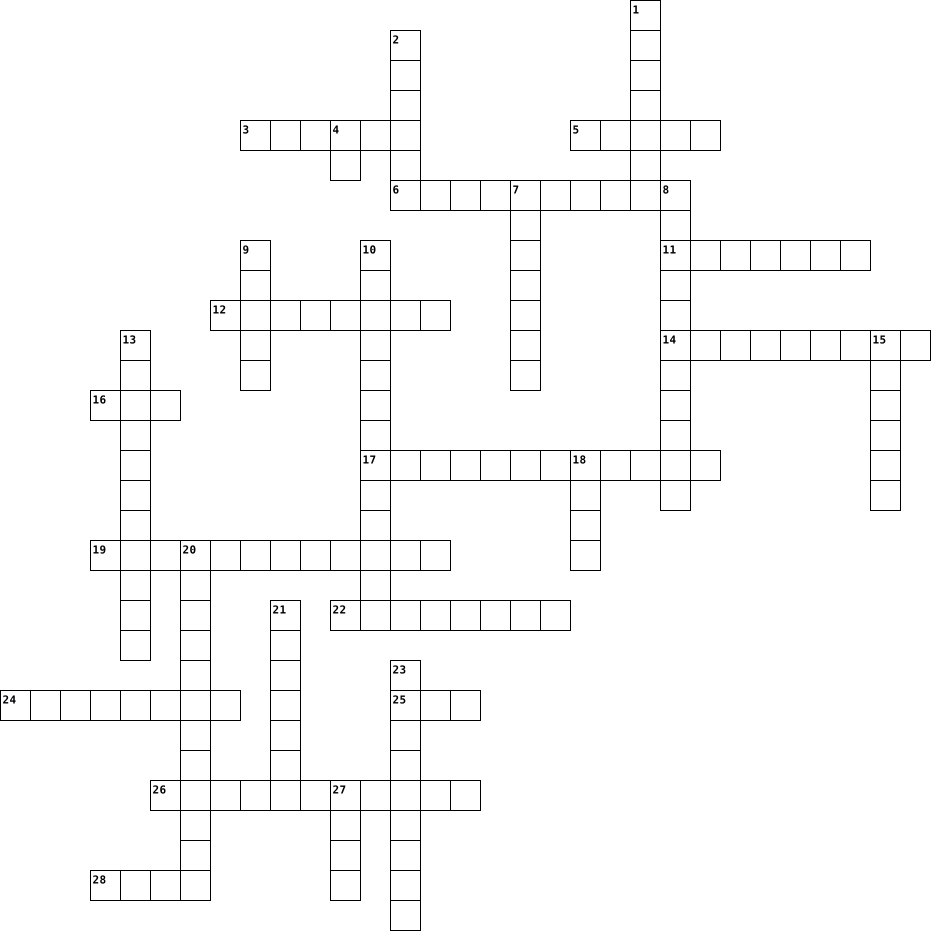
Across
- elements that are excellent conductors of electricity
- matter that does not react
- the number of protons and neutrons in an atom's nucleus
- what visual evidence proves that gas is created when mixing vinegar and baking soda
- what an atom must lose or gain to become charged
- a substances ability to bend or reshape
- a state of matter where atoms atoms are far apart and move fast
- the process where vapor becomes liquid
- the number of protons in an atom's nucleus
- matter that responds when in contact with other matter
- a process that causes molecules to pack together
- an electrically charged atom
- a mixture that is difficult to separate
- an example of a metallic chemical reaction
Down
- where protons and neutrons are located
- a state of matter where atoms are charged, far apart, and moving rapidly
- gold
- an atom that has gained or lost neutrons
- the process where a solid becomes a vapor
- a state of matter in which the molecules are packed tightly together
- a chart of elements
- the process where liquids become vapor
- a state of matter in which molecules are close but slide by each other
- the smallest known whole particle
- a physical property of when matter starts to change
- a process that causes molecules to move away from each other
- a measurement of how slippery matter is
- the chemical formula for salt
28 Clues: gold • a chart of elements • matter that does not react • an electrically charged atom • the chemical formula for salt • the smallest known whole particle • where protons and neutrons are located • the process where liquids become vapor • the process where vapor becomes liquid • a substances ability to bend or reshape • a measurement of how slippery matter is • ...
Chemistry 2016-08-12
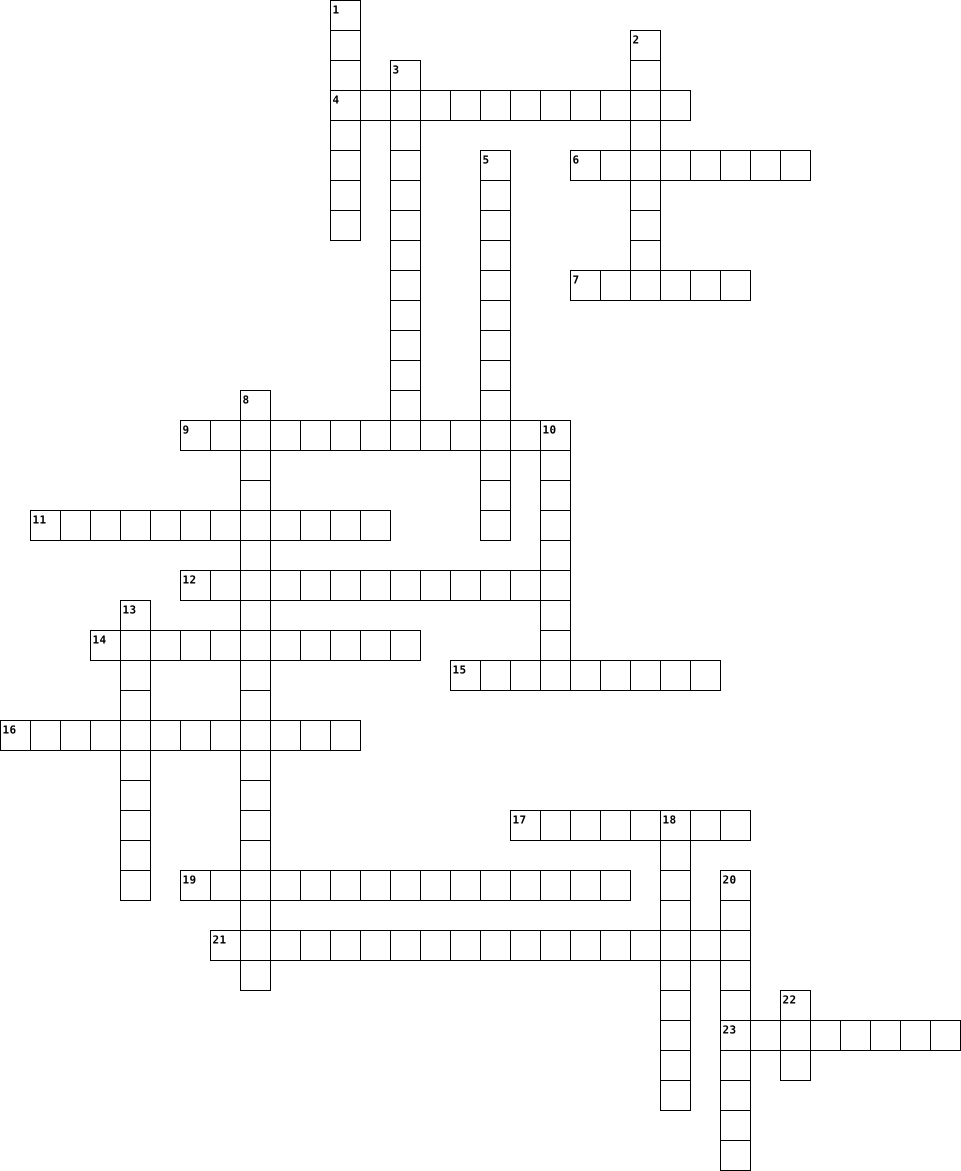
Across
- that has definite shape and volume
- Reaction/a process in which one or more substance are changed into others
- of State/physical process where matter moves from one state to another
- study of composition, structure and properties of matter and the changes matter undergoes
- substance that has definite composition or is used or produced in a chemical process
- on the periodic table
- on the periodic table
- property/ a property that does not change when you take away some of the sample
- of elements with similar characteristics
- Change/changes affecting the form of a chemical substance but not its chemical composition
- that has mass and takes up space
- change during a reaction
- basic unit of a chemical element
Down
- measure of how much matter is in an object
- substance compositing of atoms which all have the same number of protons
- that has neither definite shape or definite volume (free electrical charges causes this to be electrically conductive)
- that has definite volume but takes the shape of its container
- are intermediate of nonmetal and metal
- Property/a property that changes when the size of the sample changes
- conductors of heat and electricity (malleable, ductile and shiny)
- substance formed when two or more chemical elements are chemically bonded together
- that has neither definite shape or definite volume
- metal/poor conductors of heat and electricity (not malleable or ductile)
23 Clues: on the periodic table • on the periodic table • change during a reaction • that has mass and takes up space • basic unit of a chemical element • that has definite shape and volume • are intermediate of nonmetal and metal • of elements with similar characteristics • measure of how much matter is in an object • that has neither definite shape or definite volume • ...
Chemistry terms 2025-08-25

Across
- – State of matter with definite volume but indefinite shape.
- – Smallest unit of an element that retains its chemical properties.
- – Substance that easily vaporizes at normal temperatures.
- – Pouring liquid off from solid or heavier liquid without disturbing sediment.
- – Solid with a repeating, ordered structure.
- – Theory stating that matter is made of indivisible atoms.
- – Substance made of only one type of atom.
- – Mixture with uniform composition throughout.
- – The study of matter, its properties, and reactions.
- – Mass cannot be created or destroyed in a chemical reaction.
- – Well-substantiated explanation of some aspect of the natural world.
- – Two or more atoms bonded together.
- – Form of matter with uniform and definite composition.
- – State of matter with definite shape and volume.
- – Combination of two or more substances not chemically combined.
Down
- – Matter made of only one type of particle.
- – Separating solids from liquids using a filter.
- – Solid without a long-range ordered structure.
- – Anything that has mass and occupies space.
- – Statement describing a consistently observed natural phenomenon.
- – A procedure to test a hypothesis.
- – Separating substances based on differences in boiling points.
- – A testable explanation for a scientific observation.
- – Substance made of two or more elements chemically combined.
- – Mixture in which the composition is not uniform.
- – Physical form of matter: solid, liquid, or gas.
- – The types and amounts of elements in a substance.
- – State of matter with neither definite shape nor volume.
28 Clues: – A procedure to test a hypothesis. • – Two or more atoms bonded together. • – Substance made of only one type of atom. • – Matter made of only one type of particle. • – Anything that has mass and occupies space. • – Solid with a repeating, ordered structure. • – Mixture with uniform composition throughout. • – Solid without a long-range ordered structure. • ...
Heat Transfer Crossword 2026-01-06

Across
- force that produces heat when surfaces rub together
- decrease in size when temperature decreases
- the transfer of thermal energy from a warmer object to a cooler object
- matter with particles that slide past each other
- equilibrium when objects reach the same temperature
- increase in size when temperature increases
- heat transfer by the movement of fluids like liquids or gases
- transfer movement of energy from one place or object to another
- energy the total energy of moving particles in a substance
- a material that allows heat to move easily
Down
- heat transfer by direct contact between particles
- matter with tightly packed particles that vibrate in place
- energy energy of motion of particles
- model a way to explain matter based on particle motion
- heat transfer through waves without needing matter
- a material that slows the transfer of heat
- of matter the physical form of matter such as solid liquid or gas
- matter with particles that move freely and spread out
- the amount of mass in a given volume
- a measure of the average kinetic energy of particles
20 Clues: energy energy of motion of particles • the amount of mass in a given volume • a material that slows the transfer of heat • a material that allows heat to move easily • decrease in size when temperature decreases • increase in size when temperature increases • matter with particles that slide past each other • heat transfer by direct contact between particles • ...
States of Matter Vocabulary Assignment 2024-09-04

Across
- When matter changes states from a liquid to solid form
- When matter changes states from a liquid to gas form.
- When matter changes states from a solid to liquid form
- When matter changes states from a gas to liquid form
- The ability of a fluid, liquid, or gas to exact an upward force on an object immersed in it
- Change: When energy is released, and loses heat.
- Expansion: An increase or decrease in the size of a substance when the temperature is changed.
- Change: Object still has the same composition, and is just represented in a different form
- Matter that has enough energy to overcome not just the attractive forces between its particles, but also the attractive forces within its atoms
- The resistance of a fluid to flowing
Down
- Point: The exact temperature that liquid matter changes states into a solid matter
- Point: The exact temperature that liquid matter changes states to a gas form
- When matter changes states from a liquid to gas form
- The force exerted per unit area
- Change: When energy is taken in, and gains heat
- Change: A change in chemical properties or composition of a substance, resulting in the formation of at least one new substance.
- of State: The change of a substance from one physical state to another
- When matter changes states from a solid to gas form
18 Clues: The force exerted per unit area • The resistance of a fluid to flowing • Change: When energy is taken in, and gains heat • Change: When energy is released, and loses heat. • When matter changes states from a solid to gas form • When matter changes states from a liquid to gas form • When matter changes states from a gas to liquid form • ...
Vocab 2024-09-06

Across
- When energy is taken in, and gains heat
- An increase or decrease in the size of a substance when the temperature is changed.
- When energy is released, and loses heat.
- The resistance of a fluid to flowing
- When matter changes states from a liquid to solid form
- When matter changes states from a liquid to gas form.
- The exact temperature that liquid matter changes states into a solid matter
Down
- The change of a substance from one physical state to another
- When matter changes states from a liquid to gas form
- When matter changes states from a gas to liquid form
- When matter changes states from a solid to liquid form
- The force exerted per unit area
- A change in chemical properties or composition of a substance, resulting in the formation of at least one new substance.
- Matter that has enough energy to overcome not just the attractive forces between its particles, but also the attractive forces within its atoms
- Object still has the same composition and is just represented in a different form
- The ability of a fluid, liquid, or gas to exact an upward force on an object immersed in it
- When matter changes states from a solid to gas form
- The exact temperature that liquid matter changes states to a gas form
18 Clues: The force exerted per unit area • The resistance of a fluid to flowing • When energy is taken in, and gains heat • When energy is released, and loses heat. • When matter changes states from a solid to gas form • When matter changes states from a liquid to gas form • When matter changes states from a gas to liquid form • ...
States of matter Rooj Adhikari 2022-09-12

Across
- When matter changes states from a gas to liquid form
- Change: Object still has the same composition, and is just represented in a different form
- Point: The exact temperature that liquid matter changes states into a solid matter
- When matter changes states from a liquid to solid form
- When matter changes states from a liquid to gas form.
- When matter changes states from a solid to gas form
- Expansion: An increase or decrease in the size of a substance when the temperature is changed.
Down
- The ability of a fluid, liquid, or gas to exact an upward force on an object immersed in it
- When matter changes states from a liquid to gas form
- Change: When energy is taken in, and gains heat
- The force exerted per unit area
- The resistance of a fluid to flowing
- Change: When energy is released, and loses heat.
- Matter that has enough energy to overcome not just the attractive forces between its particles, but also the attractive forces within its atoms
- Point: The exact temperature that liquid matter changes states to a gas form
- of State: The change of a substance from one physical state to another
- Change: A change in chemical properties or composition of a substance, resulting in the formation of at least one new substance.
- When matter changes states from a solid to liquid form
18 Clues: The force exerted per unit area • The resistance of a fluid to flowing • Change: When energy is taken in, and gains heat • Change: When energy is released, and loses heat. • When matter changes states from a solid to gas form • When matter changes states from a liquid to gas form • When matter changes states from a gas to liquid form • ...
Alexander Paneto Vocab States of Matter 2022-09-12

Across
- When matter changes states from a liquid to solid form
- When matter changes states from a liquid to gas form.
- When matter changes states from a solid to liquid form
- When matter changes states from a gas to liquid form
- The ability of a fluid, liquid, or gas to exact an upward force on an object immersed in it
- Change: When energy is released, and loses heat.
- Expansion: An increase or decrease in the size of a substance when the temperature is changed.
- Change: Object still has the same composition, and is just represented in a different form
- Matter that has enough energy to overcome not just the attractive forces between its particles, but also the attractive forces within its atoms
- The resistance of a fluid to flowing
Down
- Point: The exact temperature that liquid matter changes states into a solid matter
- Point: The exact temperature that liquid matter changes states to a gas form
- When matter changes states from a liquid to gas form
- The force exerted per unit area
- Change: When energy is taken in, and gains heat
- Change: A change in chemical properties or composition of a substance, resulting in the formation of at least one new substance.
- of State: The change of a substance from one physical state to another
- When matter changes states from a solid to gas form
18 Clues: The force exerted per unit area • The resistance of a fluid to flowing • Change: When energy is taken in, and gains heat • Change: When energy is released, and loses heat. • When matter changes states from a solid to gas form • When matter changes states from a liquid to gas form • When matter changes states from a gas to liquid form • ...
State of Matter Vocab Crossword Puzzle 2023-09-06

Across
- When matter changes states from a liquid to solid form
- When matter changes states from a liquid to gas form.
- When matter changes states from a solid to liquid form
- When matter changes states from a gas to liquid form
- The ability of a fluid, liquid, or gas to exact an upward force on an object immersed in it
- Change: When energy is released, and loses heat.
- Expansion: An increase or decrease in the size of a substance when the temperature is changed.
- Change: Object still has the same composition, and is just represented in a different form
- Matter that has enough energy to overcome not just the attractive forces between its particles, but also the attractive forces within its atoms
- The resistance of a fluid to flowing
Down
- Point: The exact temperature that liquid matter changes states into a solid matter
- Point: The exact temperature that liquid matter changes states to a gas form
- When matter changes states from a liquid to gas form
- The force exerted per unit area
- Change: When energy is taken in, and gains heat
- Change: A change in chemical properties or composition of a substance, resulting in the formation of at least one new substance.
- of State: The change of a substance from one physical state to another
- When matter changes states from a solid to gas form
18 Clues: The force exerted per unit area • The resistance of a fluid to flowing • Change: When energy is taken in, and gains heat • Change: When energy is released, and loses heat. • When matter changes states from a solid to gas form • When matter changes states from a liquid to gas form • When matter changes states from a gas to liquid form • ...
State Of Matter Crossword 2023-09-22

Across
- When matter changes states from a liquid to solid form
- When matter changes states from a liquid to gas form.
- When matter changes states from a solid to liquid form
- When matter changes states from a gas to liquid form
- The ability of a fluid, liquid, or gas to exact an upward force on an object immersed in it
- Change: When energy is released, and loses heat.
- Expansion: An increase or decrease in the size of a substance when the temperature is changed.
- Change: Object still has the same composition, and is just represented in a different form
- Matter that has enough energy to overcome not just the attractive forces between its particles, but also the attractive forces within its atoms
- The resistance of a fluid to flowing
Down
- Point: The exact temperature that liquid matter changes states into a solid matter
- Point: The exact temperature that liquid matter changes states to a gas form
- When matter changes states from a liquid to gas form
- The force exerted per unit area
- Change: When energy is taken in, and gains heat
- Change: A change in chemical properties or composition of a substance, resulting in the formation of at least one new substance.
- of State: The change of a substance from one physical state to another
- When matter changes states from a solid to gas form
18 Clues: The force exerted per unit area • The resistance of a fluid to flowing • Change: When energy is taken in, and gains heat • Change: When energy is released, and loses heat. • When matter changes states from a solid to gas form • When matter changes states from a liquid to gas form • When matter changes states from a gas to liquid form • ...
SCIENCE 2016-11-27

Across
- Study of animals.
- Solid to Liquid
- State of matter where atoms are very far apart.
- When a substance combines with another to form a new substance.
- The branch of science concerned with the chemical processes that occur within living things.
- Studies the properties, structure, and composition of matter and the changes it undergoes.
- Substance formed by chemical union of two or more elements.
- A physical combination of two or more substances where the substances retain their original identity.
- 5th phase of matter formed by bosons cooled to near absolute zero temperature.
- 4th phase of matter wherein molecules move at tremendous speeds.
- The study of matter and its motion through space and time.
- Solid to Gas
- A branch of matter that studies Carbon and its compounds.
- The pursuit of knowledge, a systematically organized body of knowledge.
Down
- Study of plants.
- A substance found in nature or created in a lab and cannot be separated into smaller substances.
- State of matter where atoms are not as tightly bound. Takes the shape of its container.
- Study of celestial objects (Stars, Sun, Planets, Moons).
- Changes in shape size or property but not in composition.
- Anything that occupies space and has mass.
- A group of elements that are in-between metals and non-metals, semi-conductors.
- A group of elements that are brittle, dull, non conductive.
- Changes in composition.
- Liquid to Solid
- A group of gaseous elements.
- Uniform composition and appearance throughout.
- State of matter where atoms are tightly bound to each other.
- Study of life and living organisms.
- A branch of matter that studies other elements besides carbon.
- A group of elements that are ductile, malleable, and great conductors.
30 Clues: Solid to Gas • Solid to Liquid • Liquid to Solid • Study of plants. • Study of animals. • Changes in composition. • A group of gaseous elements. • Study of life and living organisms. • Anything that occupies space and has mass. • Uniform composition and appearance throughout. • State of matter where atoms are very far apart. • ...
NS003 Crossword Puzzle 2024-03-12

Across
- They assume the volume and shape of their container.
- They have definite mass, volume and shape.
- The ability of matter to withstand hammering into thin sheets without breaking.
- Made up of only one kind of atom.
- Type of matter with no definite properties.
- They do not have a definite shape. They take the shape of the container.
- The property to reflect light.
- The study of the properties of matter and how matter changes.
- The ability of a substance to allow the flow the energy or electricity.
- The measurement of the gravitational force of attraction of the earth acting on the object.
- The smallest particle in a chemical element or compound that has the chemical properties of that element or compound.
- Matter can be drawn into fine wires without breaking.
- The property of a substance that gives it a characteristic scent or smell.
Down
- The amount of matter contained in an object.
- It is a substance consisting of the atoms of two or more elements that are chemically combined in a fixed proportion.
- A component in a material system that is distinguished by chemical composition and/or physical state.
- The ratio between mass and volume or mass per unit volume.
- The distance of separation between any two points at the extreme ends of the object.
- It is anything that occupies space and has mass.
- The ratio between mass and volume or mass per unit volume.
- The ability of matter to resist being scratched.
- The measure of the amount of space occupied by an object.
- An attribute, quality, or characteristic of something.
- The basic unit of matter.
- It is relating to motion.
- The most observable characteristics of matter.
26 Clues: The basic unit of matter. • It is relating to motion. • The property to reflect light. • Made up of only one kind of atom. • They have definite mass, volume and shape. • Type of matter with no definite properties. • The amount of matter contained in an object. • The most observable characteristics of matter. • It is anything that occupies space and has mass. • ...
L to J Quarter 2 2022-11-22

Across
- change in the physical state of matter from the gas phase to the solid phase without passing through the liquid phase
- vaporization of a liquid that occurs only on the surface of the liquid
- a change in state of matter (ex: solid to liquid, liquid to gas, etc.)
- a change in the form (size or shape) of an object
- a pure substance that cannot be broken down by chemical or physical means
- smallest particle of an element.
- change in the physical state of matter from the liquid phase to the gas phase
- two or more atoms that are chemically bonded.
- a physical change in which particles of a substance are separated by water particles
Down
- a change in matter in which a new substance is formed
- the measurement of how much mass of a substance is contained in a given volume
- change in state from solid to liquid
- an arrangement tool of the known elements organized by properties
- change in physical state of matter from the gas phase to the liquid phase
- anything that has mass and takes up space
- change in state from solid to gas without liquid phase.
- Force that holds atoms together.
- state of matter that keeps its shape and volume.
- the amount of matter or “stuff” that is found inside an object
- the amount of space an object takes up
- state of matter that keeps its volume, but takes the shape of its container
- change in state from liquid to solid
- state of matter that takes the shape and volume of the container it’s in.
23 Clues: Force that holds atoms together. • smallest particle of an element. • change in state from solid to liquid • change in state from liquid to solid • the amount of space an object takes up • anything that has mass and takes up space • two or more atoms that are chemically bonded. • state of matter that keeps its shape and volume. • ...
Matter Crossword 2020-05-01

Across
- At 100 degrees Celcius, water
- This is a very light gas found in some balloons.
- Matter that has a definite shape and volume is in this state.
- When atoms are in this state of matter, they fly around freely.
- This is the type of gas that plants need to make food.
- This is liquid rock that pours out of a volcano.
- Solid white flakes of water that fall from the sky are known as
- Solid matter does not change
- This is the type of gas that animals' bodies need to stay alive.
- Liquid matter takes the shape of its
Down
- If you place a solid in a liquid, it will either sink or
- Raindrops are this state of matter.
- The tiny particles that matter is made of are
- On a warm day, the liquid water in a puddle will ___and turn into a gas.
- The amount of matter something contains is its
- When a solid is heated up and turns into a liquid, it
- Water, in solid form is
- The amount of space that matter takes up is its
18 Clues: Water, in solid form is • Solid matter does not change • At 100 degrees Celcius, water • Raindrops are this state of matter. • Liquid matter takes the shape of its • The tiny particles that matter is made of are • The amount of matter something contains is its • The amount of space that matter takes up is its • This is a very light gas found in some balloons. • ...
Matter '17 2018-01-08

Across
- boiling point of water
- will______ more dense than water and will submerge
- The property of attraction to a magnet
- Measurable characteristics that describe the physical state of something, including mass, magnetism, temperature, density, shape, volume, and conductivity.
- Measurement of the ability of a solid to dissolve in a liquid
- freezing point of water
- the amount of matter in something; measured in grams
- will _____ because less dense than water
- Anything that has mass and takes up space.
- point where liquid turn to solid
Down
- Whether something sinks or floats in a substance (water).
- Point where liquid turns into a gas
- point where solid turns to liquid
- How much space something takes up
- Material that allows heat or electrical energy to easily flow through it.
- matter a solid, liquid, or gas
- to separate/group by observable properties
- Material through which heat or electricity does not easily flow.
18 Clues: boiling point of water • freezing point of water • matter a solid, liquid, or gas • point where liquid turn to solid • point where solid turns to liquid • How much space something takes up • Point where liquid turns into a gas • The property of attraction to a magnet • will _____ because less dense than water • to separate/group by observable properties • ...
Classifying Matter 2023-09-25

Across
- the measurement of something from end to end
- how much space something occupies
- the process of grouping things according to shared characteristics
- a characteristic, quality, or attribute of something
- property of matter where pressure is measured compared to atmospheric pressure
- property of matter having to do with if the surface appears shiny, dull, or somewhere in between
- a substance that cannot be physically broken down into anything simpler
- diverse in content; being of different kinds
Down
- looking uniform or similar
- property of matter having to do with mass per unit of volume
- property of matter that describes the transparency level
- two or more elements or compounds mixed together physically
- anything takes up space or has mass
- property of matter having to do with how light is reflected or absorbed
- each of 118 known types of atoms that are the building blocks of matter
- property of matter having to do with the ability to resume original shape after being stretched or compressed
- two or more elements that are chemically combined
- how much of something there is
18 Clues: looking uniform or similar • how much of something there is • how much space something occupies • anything takes up space or has mass • the measurement of something from end to end • diverse in content; being of different kinds • two or more elements that are chemically combined • a characteristic, quality, or attribute of something • ...
Matter Vocabulary 2023-09-07

Across
- anything that takes up space and has mass.
- states that matter is not created or destroyed only changes forms.
- elements that are ususally gases or brittle solids and poor conductors of electricity and heat.
- positively charged particle located inthe nucleus of an atom and that is counted to identify the atomic number.
- matter with a fixed composition whose identity can be changed by chemical processes but not ordinary means.
- a substance produced when elements combine and whose properties are different from each of the elements in it.
- average mass of an atom of an element
- natural or synthetic material that cannot be broken down into simpler materials; has unique properties.
Down
- two or more atoms of the same elements that have different numbers of neutrons in their nuclei.
- combination of compounds and elements that has not formed a new substance and whose proportions can be changed without changing the mixture's identity.
- number of protons in the nucleus of each atom of a given element; it is the topnumber in the periodic table
- positively charged, central part of an atom.
- a small particle tha tmakes up most kinds of matter and consists of smaller parts called protons, neutrons, and electrons.
- an uncharged particle located in the nucleus of an atom.
- invisible, negatively charged particle located in a cloudlike formation that surrounds the nucleus.
- element that has characteristics of both metals and nonmetals and is a solid at room temperature.
- sum of the number of protons and neutrons in the nucleus of an atom.
- element that is malleable, ductile, and a good conductor of electricity, and generally has metallic luster.
18 Clues: average mass of an atom of an element • anything that takes up space and has mass. • positively charged, central part of an atom. • an uncharged particle located in the nucleus of an atom. • states that matter is not created or destroyed only changes forms. • sum of the number of protons and neutrons in the nucleus of an atom. • ...
Matter Crossword 2025-06-16

Across
- A way to separate liquids with different boiling points
- Something that can be dissolved
- A way to separate different coloured pigments
- When a liquid turns into a solid
- A substance with all the particles tightly packed together
- When a gas turns into a solid
- A substance with all the particles spread far apart
- A way to separate solids from a liquid
- A substance which has been dissolved
- A way to separate liquids with different densities
Down
- When a solid turns into a gas
- A mixture of the solute and the solvent
- When a gas turns into a liquid
- A solution that cannot have more substances dissolved in it
- When a liquid is heated so that it turns into a gas
- A substance with all the particles loosely packed together, so it can flow
- When a substance turns into a liquid
- A liquid used to dissolve other substances
18 Clues: When a solid turns into a gas • When a gas turns into a solid • When a gas turns into a liquid • Something that can be dissolved • When a liquid turns into a solid • When a substance turns into a liquid • A substance which has been dissolved • A way to separate solids from a liquid • A mixture of the solute and the solvent • A liquid used to dissolve other substances • ...
Separating Matter 2025-01-23

Across
- the liquid the solute is dissolved in e.g. water
- when particles of different substances mix together
- particles have some spaces between them, can flow
- used to separate mixtures of liquids based on boiling points
- when rain falls during the water cycle
- particles have lots of space between them and can move freely
- changing from a liquid to a gas
- something that can dissolve
- changing from a solid to a liquid
- used to separate small volumes of liquids
- substances together but not chemically joined together
Down
- produced at the end after dissolving a solute in a solvent
- something that cannot dissolve
- used to separate mixtures of a solid and liquid, when the solid is not dissolved
- how heavy something is compared to its size
- the substance being dissolved e.g. salt
- changing from a liquid to a solid
- particles are packed very closely together and cannot move
18 Clues: something that can dissolve • something that cannot dissolve • changing from a liquid to a gas • changing from a liquid to a solid • changing from a solid to a liquid • when rain falls during the water cycle • the substance being dissolved e.g. salt • used to separate small volumes of liquids • how heavy something is compared to its size • ...
matter vocab 2024-10-14

Across
- how tightly packed the particles in an object are
- property: can observe it through your senses
- basic building blocks of matter
- the study of the properties of matter and how it changes
- a single kind of matter that has a specific set of properties
- amount of space an object takes up
- the Sl unit for mass
- Amount of matter in an object
- table a chart consisting of elements
- property a characteristic of a pure substance that describes its ability to change into different substances
Down
- an average of how hot or cold something is
- particles spread apart
- amount of force exerted on an object
- energy removed from a gas to change into a liquid
- a measure of the force of gravity on an object
- particles are tightly packed
- anything that has mass and takes up space
- particles flow past each other
18 Clues: the Sl unit for mass • particles spread apart • particles are tightly packed • Amount of matter in an object • particles flow past each other • basic building blocks of matter • amount of space an object takes up • amount of force exerted on an object • table a chart consisting of elements • anything that has mass and takes up space • ...
Matter Vocabulary 2024-09-30

Across
- A substance's ability to change into a new substance with new properties
- The ability for a material to catch fire and burn
- Describes the amount of matter in an object
- A tall, narrow container used to measure liquids
- Used to find the mass of an object
- Wide mouthed, used to hold or heat a substance
- Measures the ability of a material to transmit heat or electricity
- The temperature at which a given liquid boils and turns to vapor
- The degree to which a substance is toxic or poisonous
Down
- A substance's ability to dissolve into another substance
- Substances can be observed and measured without changing the identity of the substance
- Anything that has mass and takes up space
- Particles packed closely together, do not move freely
- The temperature at which a given solid will melt
- Particles expand to fill container, or have no set shape, move freely
- Particles take shape of container, can move freely
- The amount of space an object occupies
- When oxygen combines with an element causing a change
18 Clues: Used to find the mass of an object • The amount of space an object occupies • Anything that has mass and takes up space • Describes the amount of matter in an object • Wide mouthed, used to hold or heat a substance • The temperature at which a given solid will melt • A tall, narrow container used to measure liquids • The ability for a material to catch fire and burn • ...
Matter Properties 2024-11-05

Across
- going from a liquid to a solid
- particles are packed tightly together
- going from a solid to a liquid
- the ability to pound something into thin sheets
- going from a liquid to a gas
- going from a gas to a liquid
- the ability of a substance to burn
- cutting wood is an example of a _______ change
Down
- particles are loosely packed together
- ability to be drawn into thin wires
- taking in energy
- going from a solid to a gas
- when two or more substances react together
- releasing energy
- the ability of a substance to dissolve
- burning wood is an example of a _______ change
- __________conductivity - the ability to transfer heat
- particles break free from each other
18 Clues: taking in energy • releasing energy • going from a solid to a gas • going from a liquid to a gas • going from a gas to a liquid • going from a liquid to a solid • going from a solid to a liquid • the ability of a substance to burn • ability to be drawn into thin wires • particles break free from each other • particles are loosely packed together • ...
SCIENCE 2016-11-27

Across
- State of matter where atoms are not as tightly bound. Takes the shape of its container.
- Study of celestial objects (Stars, Sun, Planets, Moons).
- Study of plants.
- A substance found in nature or created in a lab and cannot be separated into smaller substances.
- Study of animals.
- Solid to Gas
- The pursuit of knowledge, a systematically organized body of knowledge.
- Changes in composition.
- Anything that occupies space and has mass.
- When a substance combines with another to form a new substance.
- Studies the properties, structure, and composition of matter and the changes it undergoes.
- Uniform composition and appearance throughout.
- The branch of science concerned with the chemical processes that occur within living things.
- Changes in shape size or property but not in composition.
- 4th phase of matter wherein molecules move at tremendous speeds.
Down
- A physical combination of two or more substances where the substances retain their original identity.
- A group of gaseous elements.
- A group of elements that are brittle, dull, non conductive.
- Substance formed by chemical union of two or more elements.
- State of matter where atoms are very far apart.
- Solid to Liquid
- 5th phase of matter formed by bosons cooled to near absolute zero temperature.
- State of matter where atoms are tightly bound to each other.
- Liquid to Solid
- A branch of matter that studies other elements besides carbon.
- A group of elements that are in-between metals and non-metals, semi-conductors.
- A branch of matter that studies Carbon and its compounds.
- A group of elements that are ductile, malleable, and great conductors.
- Study of life and living organisms.
- The study of matter and its motion through space and time.
30 Clues: Solid to Gas • Solid to Liquid • Liquid to Solid • Study of plants. • Study of animals. • Changes in composition. • A group of gaseous elements. • Study of life and living organisms. • Anything that occupies space and has mass. • Uniform composition and appearance throughout. • State of matter where atoms are very far apart. • ...
Chemistry 2013-09-12
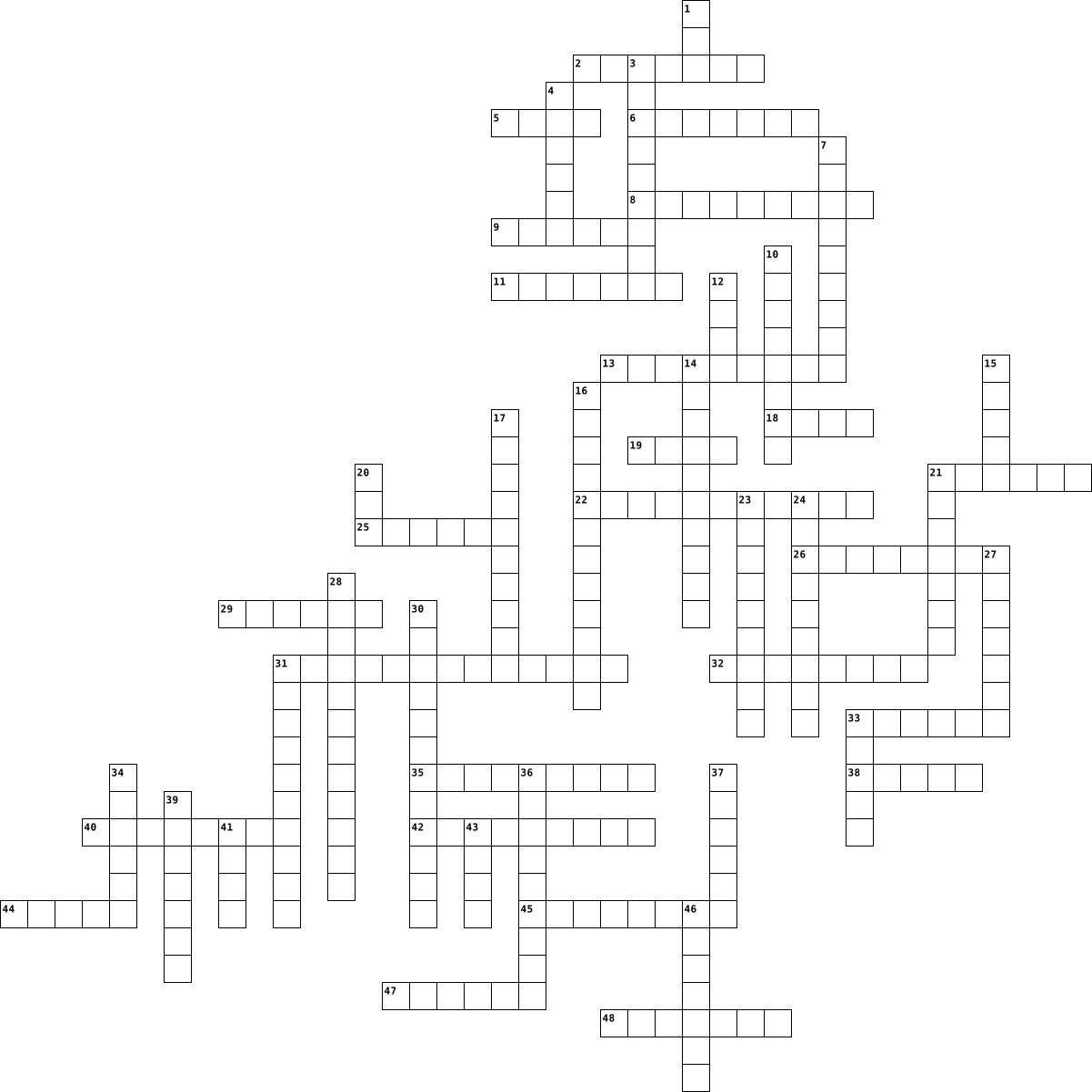
Across
- As
- rusts easily
- white and chalky
- 95
- has mass and takes up space
- larger portion in a solution
- found in bananas
- pH lower than 7
- 6.02 times 10 to the 23rd power
- makes table salt with chlorine
- Es
- Ag
- alloys well with steel
- form of matter that has a fixed volume and mass
- mixture that is not uniform in composition
- Sb
- measure of space occupied by a sample of matter
- burns with a white hot flame
- any part of a sample with uniform composition and properties
- lightest element
- matter that has a uniform and definite composition
- Rn
- a homogenous mixture
- smaller portion in a solution
- 92
Down
- 50
- oldest artificial sweetener. made by someone looking for more uses of coal tar
- Co
- a major export of Arkansas
- deals with mechanisms, rate, and energy transfer when matter undergoes a change
- amount of matter in an object
- focuses on composition of matter
- has definite shape, volume, and mass
- 59
- process that separates a solid from a liquid
- form of matter that has no definite shape, volume, and mass
- basis for computer industry
- study of substances not containing carbon
- depends on type of matter
- a physical blend of two or more substances
- process used to separate components using differences in boiling points
- area of chemistry that focuses on processes inside organisms
- mixture that is uniform in composition
- the gaseous state of a substance that is normally solid or liquid at room temperature
- used for breathing, very flammable
- depends on amount of matter
- C
- 36
- Au
- pH higher than 7
- study of compounds containing carbon
51 Clues: C • 50 • As • Co • 95 • 59 • Es • Ag • Sb • 36 • Au • Rn • 92 • rusts easily • pH lower than 7 • white and chalky • found in bananas • lightest element • pH higher than 7 • a homogenous mixture • alloys well with steel • depends on type of matter • a major export of Arkansas • has mass and takes up space • basis for computer industry • depends on amount of matter • larger portion in a solution • burns with a white hot flame • ...
Science vocab 2023-09-27

Across
- Mass of matter contained within a particular volume
- Distinct groups of two or more atoms
- Change of state from a gas directly to a solid
- anything that has mass and occupies space
- A physical combination of two or more substances
- Change of state from a gas to a liquid
- Change of state f
- The building blocks of all matter
- State of matter in which the molecules of the substance move wildly about
- Is a pure substance consisting of atoms of two or more different elements that are chemically combined
- Any change in matter that does not change the composition of the substance
Down
- Change of state from a liquid to a solid
- Is a pure substance that consists of atoms with the same atomic number
- Amount of matter in an object
- State of matter in which the molecules of the substance are between a liquid and a gas
- A change that alters the composition of the substance
- Change of state from solid to liquid
- Change of state from a solid directly to a gas
- Space enclosed or occupied by an object
- Relatively slow form a vaporization in which particles on the surface of the liquid state obtain sufficient energy to change to the gaseous state through the random collisions with particlesrom a liquid to a vapor (gas)
- State of matter in which the molecules of the substance move but the movement is free but restricted
- State of matter in which the molecules of the substance do not move/retrained
- The measure of gravity acting on the matter of an object.
23 Clues: Change of state f • Amount of matter in an object • The building blocks of all matter • Distinct groups of two or more atoms • Change of state from solid to liquid • Change of state from a gas to a liquid • Space enclosed or occupied by an object • Change of state from a liquid to a solid • anything that has mass and occupies space • ...
Molecules & Properties 2023-10-06

Across
- Occurs when a substance reacts with oxygen.
- Used to protect the eyes while doing experiments.
- The ability of a type of matter to burn easily.
- Characteristic of matter that can be observed as it changes.
- H2O
- Lab equipment used to measure mass.
- Unit of measurement for mass.
- A group of atoms that are held together by chemical bonds.
- Facts or information proving an opinion.
- Occurs when a substance reacts with another substance, changing into a new substance.
- Easy to break
- Unit of measurement for volume.
- A substance will bend or flatten but not break.
Down
- Lab equipment used to measure volume.
- The mass / unit volume of a substance.
- Carries heat or energy
- Characteristics of matter that can be observed or measured without changing the identity of the matter.
- The difference between the starting position and the final position. Uded to find volume of irregular shaped objects.
- Unit of measurement for length.
- To examine closely the structure of something or information.
- Directions to an experiment of activity.
- The amount of space matter takes up.
- The amount of matter or particles, in a substance.
- The pull of gravity ob matter.
- The smallest whole part of matter.
25 Clues: H2O • Easy to break • Carries heat or energy • Unit of measurement for mass. • The pull of gravity ob matter. • Unit of measurement for length. • Unit of measurement for volume. • The smallest whole part of matter. • Lab equipment used to measure mass. • The amount of space matter takes up. • Lab equipment used to measure volume. • The mass / unit volume of a substance. • ...
Chapter 2 Matter 2022-09-19

Across
- state of matter where particles vibrate in fixed positions
- a change that alters the chemical composition of a substance
- states that all physical matter exists in the form of particles
- change in state directly from a solid to a gas without melting first
- mass per unit volume of an object(derived measure)
- state of matter where particles are close together (can’t move around)
- describes how its chemical identity changes in the presence of another substance or under certain conditions
- building block of all matter
- consisting of two or more atoms covalently bonded together
- substance material made of only line kind of element or compound
- space occupied by an object
- physical combination of two or more substances
- change of state from a gas to liquid
- law that states matter can neither be created nor destroyed but only transferred
- relatively fast form of vaporization
Down
- change of state from a solid to a liquid
- any change in matter that does not alter its chemical or nuclear composition
- force of gravity acting on the matter in an object
- gas-like state of matter formed at high temperatures
- change of state from a liquid to a solid
- a mixture that doesn’t have a uniform appearance
- change of state from a liquid to a gas
- anything about a substance that can be observed or measured without altering its chemical composition
- a mixture that does have a uniform appearance
- relatively slow form of vaporization
- pure substance consisting of atoms of two or more elements that are chemically combined in a fixed ratio
- masses of chemical substances combine in definite ratios
- pure substance consisting of atoms with the same atomic number
- change in state directly from a gas to a solid without condensing first
- has mass and occupies space
- measure of the amount of matter in an object
- state of matter where particles are far apart
32 Clues: space occupied by an object • has mass and occupies space • building block of all matter • relatively slow form of vaporization • change of state from a gas to liquid • relatively fast form of vaporization • change of state from a liquid to a gas • change of state from a solid to a liquid • change of state from a liquid to a solid • ...
Chemical Reactions and Matter 2025-10-21

Across
- this process occurs when atoms and molecules are rearranged and form one or more new substances
- this state of matter that has a fixed shape and volume
- the process occurs when a substance's appearance is altered, but the substance is not changed
- the simplest particle of matter
- this type of system allows matter to enter and exit
- the right side of the arrow in a chemical equation
- this can never be created or destroyed
- this state of matter takes the shape of its container but has a fixed volume
- this type of reaction absorbs heat and causes the surroundings to get colder
- the big number in a chemical equation which tells us how many molecules we are working with
- this state of matter takes the shape and volume of its container
Down
- the small number in a molecular formula which tells us how many atoms are in a molecule
- two or more atoms chemically bonded together form this
- this property describes how a substance interacts with fire
- ____________ of matter; these help us identify something unknown
- atoms and molecules do this in a chemical reaction
- this type of reaction releases heat and causes the surroundings to get hotter
- this unit's anchoring phenomenon
- this term refers to how much matter is in a given space
- this type of system is sealed, so matter cannot leave or enter and mass stays the same
- the gas coming from the bath bomb when dropped in water
21 Clues: the simplest particle of matter • this unit's anchoring phenomenon • this can never be created or destroyed • atoms and molecules do this in a chemical reaction • the right side of the arrow in a chemical equation • this type of system allows matter to enter and exit • two or more atoms chemically bonded together form this • ...
Mixtures & Changes In Matter 2025-09-13

Across
- When a gas such as water vapor, loses heat energy and physically changes its state to a liquid
- A chemical change that results in new matter forming when air and water mix with iron in metal.
- When solid matter is broken down into smaller pieces until you can no longer see it with your eyes after the solid was mixed with a liquid.
- A chemical change that results in new matter forming when fire is applied to a material.
- A tool with holes used to separate mixtures by smaller pieces of matter falling through its holes
- A process where a liquid turns into a gas when the liquid has been warmed up.
- Anything you can observe about an object by using your senses or can be measured.
- A degree of hotness or coldness that can be measured using a thermometer.
- A process that causes a physical change in liquids (a solid changed to a liquid) by adding heat energy.
- Anything that has mass and takes up space. (Matter can be a solid, liquid, or a gas!)
- A tool used to separate mixtures by grasping the solid which will allow you to pick it up and move it out.
- A tool used to separate mixtures that have a solid mixed with either a liquid or a gas that is too small for a sieve to separate them.
Down
- A process that causes a physical change in liquids (a liquid changed to a solid) by taking heat energy away.
- A process that causes a physical change in liquids (a liquid changed to a gas) by adding heat energy.
- two or more kinds of matter are physically mixed together and can be separated by their properties.
- The total amount of area covering the outside of a solid that is exposed or can be touched.
- A chemical change that results in new matter forming when matter that is no longer living reacts to its environment and rots/breaks down.
- A metal object that attracts certain metals.
- Changes in matter that form new or different kinds of matter.
- Changes in matter that does not change what it is made of, so no new or different kinds of matter are formed.
- mixture of two or more substances where solute particles are evenly distributed and dissolved within a solvent, forming a single uniform phase
21 Clues: A metal object that attracts certain metals. • Changes in matter that form new or different kinds of matter. • A degree of hotness or coldness that can be measured using a thermometer. • A process where a liquid turns into a gas when the liquid has been warmed up. • Anything you can observe about an object by using your senses or can be measured. • ...