
matter Crossword Puzzles
Science Wave 2026-03-13

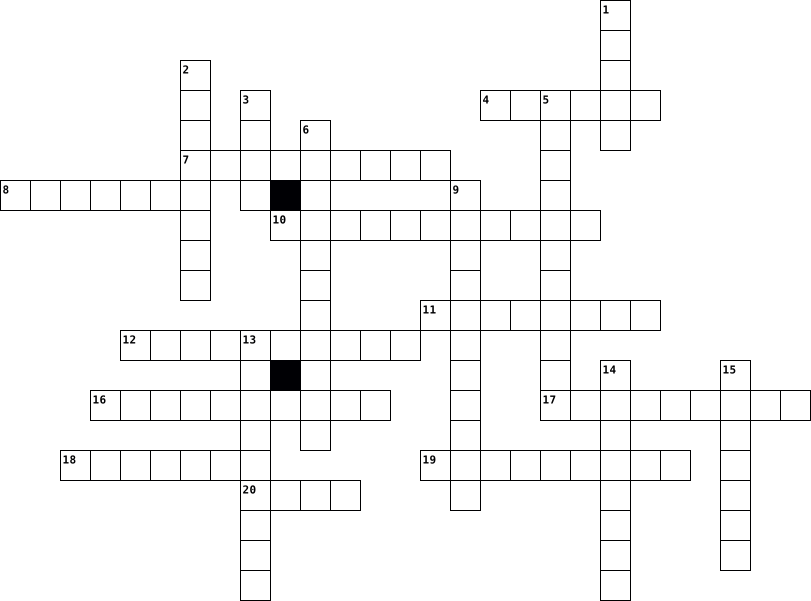
Across
- A rang of frequencies for a given type of radiation
- A wave that you can see
- The push or pull on an object
- The top of a wave
- Matter in witch the wave travels
- The bottom of a wave
- The height of a wave crest or depth of a wave trough as measured from its rest position
- A wave in witch matter in the medium moves at right angles to the direction that the wave travels
- How you measured frequency
Down
- A wave in witch matter in the medium moves back and forth along the direction the wave travels
- The colors in the rainbow are sometimes abbreviated in the form of a persons name
- A repeating movement that transfers energy through matter or space
- The form of electromagnetic energy we can see
- The number of repetitive motions, or oscillations, that occur in a given time
- The distance from crest to crest
- The blending or charging direction of a wave as it changes speed in moving from one material to another
- The bird that swims in the water
- A model of light behavior that represents light travelling as a wave
- A display of colors in the sky in a arc
- The capacity for applying a force
20 Clues: The top of a wave • The bottom of a wave • A wave that you can see • How you measured frequency • The push or pull on an object • The distance from crest to crest • Matter in witch the wave travels • The bird that swims in the water • The capacity for applying a force • A display of colors in the sky in a arc • The form of electromagnetic energy we can see • ...
7th and 8th Grade Science Crossword #1 2025-09-02

Across
- – Substance made of two or more elements chemically combined.
- – Basic unit of life.
- – A trait that helps an organism survive.
- – Chart of all known elements.
- – Matter with definite volume but no definite shape.
- – Change in form but not in substance.
- – Mass per unit of volume.
- – Movement of particles from high to low concentration.
- – Change that produces a new substance.
- – Change in species over time.
- – Structure made of DNA and proteins found in the nucleus.
Down
- – All living and nonliving things in an area.
- – A change in DNA.
- – Study of organisms and their environment.
- – Organelle in plants that performs photosynthesis.
- – Positively charged particle in the nucleus.
- – Gel-like material inside the cell.
- – A section of DNA that codes for a trait.
- – Control center of a cell.
- – Substance made of one kind of atom.
- – Combination of substances not chemically bonded.
- – Molecule that carries genetic information.
- – Matter with definite shape and volume.
- – Organelle that makes energy for the cell.
- – Space an object takes up.
- – Two or more atoms bonded together.
- – Matter with no definite shape or volume.
- – Smallest unit of an element.
- – Movement of water across a membrane.
- – Amount of matter in an object.
30 Clues: – A change in DNA. • – Basic unit of life. • – Mass per unit of volume. • – Control center of a cell. • – Space an object takes up. • – Chart of all known elements. • – Smallest unit of an element. • – Change in species over time. • – Amount of matter in an object. • – Gel-like material inside the cell. • – Two or more atoms bonded together. • – Substance made of one kind of atom. • ...
Waves 2025-11-04

Across
- the distance between 2 crests or 2 troughs
- the lowest point on a transverse wave
- happens when a wave bounces after hitting a barrier.
- a type of wave that needs a medium to travel through
- the bending of waves around a barrier or through an opening
- the highest point on a transverse wave
- Occurs when light waves transfer energy to particles of matter.
- the number of waves that pass by a point each second
- waves in which the particles vibrate back and forth in compressional pulses
Down
- waves in which the particles vibrate in an up and down motion
- wave height
- of energy that travels as an electromagnetic wave. The source of this energy is usually the sun.
- vibration produced in one object that is caused by the vibration produced in another
- any disturbance that transfers energy through matter or space.
- Occurs when light waves pass through an object without interacting.
- when waves overlap
- the change in direction of a wave when it changes speed as it travels from one material(medium) to another
- an interaction of light with matter that causes light to change direction.
- The matter a wave travels through
- a type of wave that does NOT need a medium to travel through
20 Clues: wave height • when waves overlap • The matter a wave travels through • the lowest point on a transverse wave • the highest point on a transverse wave • the distance between 2 crests or 2 troughs • happens when a wave bounces after hitting a barrier. • a type of wave that needs a medium to travel through • the number of waves that pass by a point each second • ...
Super Hard Chemistry Terms 2013-03-03

Across
- attracted to the cathode
- made up of only 1 pure substance
- the center of an atom
- attracted to the anode
- electrons in the atom's outer most layer
- atom that has gained or lost an electron
- a substance that has mass and volume
- total mass of protons, neutrons and electron
- negatively charge sub atomic particles
- attraction between two oppositely charged ions.
- they have different number of neutrons
Down
- 2 or more substance that aren't combined by chemical means
- mass divide volume
- cannot be split by phsical means
- makes up about half of the atomic mass.
- there are 98 naturally occurring ________.
- number of protons.
- ion made up of 2 or more atoms chemically combined
- bond that involves sharing electron.
- depends on the amount of matter
- doesn't depends on the amount of matter
- subatomic particle that has no charge
22 Clues: mass divide volume • number of protons. • the center of an atom • attracted to the anode • attracted to the cathode • depends on the amount of matter • cannot be split by phsical means • made up of only 1 pure substance • bond that involves sharing electron. • a substance that has mass and volume • subatomic particle that has no charge • negatively charge sub atomic particles • ...
Chemistry 2: Atoms Crossword 2014-03-20

Across
- Equals the number of rings surrounding nucleus
- Atoms are always in _____
- Electrons in outermost shell
- Negatively charged subatomic particle
- Neutral or not charged subatomic particle
- Cannot see atoms with the naked eye or a light _____
- Atoms are chemically joined
- Made up of atoms
- Came up with the Law of Conservation of Matter
- Greek philosopher that called atoms, "grains"
- Smallest unit of matter
- Atomic _____ is the same as the number of protons and electrons
Down
- Positively charged subatomic particle
- Atoms are made up of these particles
- The greater the _____, the greater the motion of atoms
- Atoms are mostly _____ space
- Chemically bonded with new properties
- Center of an atom
- Change when no new substance is formed
- Atoms are physically joined
- Change when a new substance is formed
- Atomic _____ is the number of protons plus the number of neutrons
22 Clues: Made up of atoms • Center of an atom • Smallest unit of matter • Atoms are always in _____ • Atoms are chemically joined • Atoms are physically joined • Electrons in outermost shell • Atoms are mostly _____ space • Atoms are made up of these particles • Positively charged subatomic particle • Negatively charged subatomic particle • Chemically bonded with new properties • ...
week one (Diana Maldonado) 2015-06-22

Across
- zeros that come before a number
- several measurements are close together
- have no charge
- depends on another variable
- a way for us to easily convert between units using conversion factors
- zeros at the end of numbers
- close to the right answer
- the space an object occupies
- a change the involves the production of one or more new substances
- have a negative charge
- amount of matter in a substance
Down
- certain numbers plus one estimated digit
- have a positive charge
- observation that deals with qualities
- mass/volume
- a change in matter in matter that does not change the identity of the substance
- doesn't depend on another variable to change
- observation that deals with quantities
- something that can change
- zeros stuck between numbers
- internationally agreed upon standard of measurement based on the meter and the kilogram
- a variable held constant to determine if an effect occurred
22 Clues: mass/volume • have no charge • have a positive charge • have a negative charge • something that can change • close to the right answer • depends on another variable • zeros at the end of numbers • zeros stuck between numbers • the space an object occupies • zeros that come before a number • amount of matter in a substance • observation that deals with qualities • ...
Biology 2020-01-23
Across
- anything that takes up space and has mass
- all living things in a particular area together with the abiotic
- substances that minimize changes in concentration of H and OH
- single-celled organisms that lack organelles
- liquid that is completely homogeneous mixture of substances
- cells with membrane-bound organelles and nuclei
- all the individuals of a species living in an specific area
- process of change that has transformed life on Earth
- dissolving agent of a solution
- collection of all ecosystems
- substance that increases H concentration
Down
- units of inheritance
- attraction between different substances
- smallest most fundamental unit of matter
- average kinetic energy of the molecule in a body of matter
- substance that doesn't have affinity to water
- substance that has an affinity for water
- starting molecules of a chemical reaction
- helps the transport of water against gravity
- groups of similar cells carrying the same function
20 Clues: units of inheritance • collection of all ecosystems • dissolving agent of a solution • attraction between different substances • smallest most fundamental unit of matter • substance that has an affinity for water • substance that increases H concentration • anything that takes up space and has mass • starting molecules of a chemical reaction • ...
scince work 2023-09-21

Across
- two variables are prpetional if one is changed the the other is also changed by a fixed amount
- relationship between pressure and volume
- how hot or cold something is
- a state of matter no definite shape but has definite volume
- the change of a state of from a liquid
- periodic back and forth motion of particles
- A state of matter that has a definite
- solid to a gas without being a liquid
- at a point liquid evaporates
- temperature at which a liquid freezes
- A liquid ressistance following
Down
- gas to a liquid
- a mixture of particals that can be seen or easily seperated
- relationship temperature and volume
- temperature when something changes form
- A state of matter no definite shape or volume
- temperature at water boils
- kenetic and thermal energy
- a result of an inward pull amoung the molecule
- the force pushing on a surface
20 Clues: gas to a liquid • temperature at water boils • kenetic and thermal energy • how hot or cold something is • at a point liquid evaporates • the force pushing on a surface • A liquid ressistance following • relationship temperature and volume • A state of matter that has a definite • solid to a gas without being a liquid • temperature at which a liquid freezes • ...
trough 2023-03-13

Across
- Highest energy waves on the Electromagnetic Spectrum
- Seen in thermal cameras; used in remote controls
- Determined by the amplitude of a sound wave
- When a wave travels through matter
- "Squeezes" in longitudinal waves
- Clear
- "Soak up"
- Bottom of the wave
- When waves bounce off of matter
- How many waves pass by every second
- Lowest energy waves on the Electromagnetic Spectrum
Down
- A device that separates white light into the rainbow
- Matter that absorbs or reflects light
- A bend caused by a change in speed
- Determined by the frequency of a sound wave
- Radiation found just above visible light; found in sunlight
- "Kind of see-through"
- The space between compressions on a longitudinal wave
- Determines the energy of the wave - Also known as height from origin to crest or trough
- Top of the wave
- The distance between crests or troughs
21 Clues: Clear • "Soak up" • Top of the wave • Bottom of the wave • "Kind of see-through" • When waves bounce off of matter • "Squeezes" in longitudinal waves • A bend caused by a change in speed • When a wave travels through matter • How many waves pass by every second • Matter that absorbs or reflects light • The distance between crests or troughs • ...
Module One: Introduction to Matter 2023-05-04

Across
- explanation based on experimental data
- 0.02 Liters equals how many milliliters?
- an action that changes the identity of a substance
- changing states of matter is an example of ...
- the U.S. Customary unit for temperature
- gravitational pull on an object
- plotted along the y-axis
- the lowest energy state of matter
- an educated prediction that describes the relationship between the IV and the DV
Down
- rule of nature that sums up related observations
- S.I stands for ...
- turning from a solid into a gas is called ...
- the highest energy state of matter
- a property that can be changed without changing the identity of the substance
- the second step in the scientific method
- the variable that stays the same
- 400 decimeters is equal to how many meters?
- the S.I. unit for length
- the S.I. unit for weight
- how much mass is in a given capacity
20 Clues: S.I stands for ... • the S.I. unit for length • the S.I. unit for weight • plotted along the y-axis • gravitational pull on an object • the variable that stays the same • the lowest energy state of matter • the highest energy state of matter • how much mass is in a given capacity • explanation based on experimental data • the U.S. Customary unit for temperature • ...
Science vocabulary 2021-12-07

Across
- Has a trunk
- Take up and store energy.
- energy Energy an object has because of its position or its condition.
- electricity The buildup of electrical charges.
- energy Energy that travels in waves through vibrations in matter.
- energy Energy that is stored in matter.
- Flying mammal
- To force away or apart.
- energy Energy caused by the movement of electrical charges.
- Man's best friend
- energy Energy a object has because of motion.
Down
- Large marsupial
- energy A type of energy an object has due to its motion or position.
- To bounce light, sound or heat off a surface.
- Likes to chase mice
- energy Total kinetic energy.
- The magnetic force exerted by oppositely charged objects or to describe the gravitational force that pulls objects toward each other.
- A relative frequency of a sound.
- The ability to biases change in matter.
- energy A farm of energy that you can see.
20 Clues: Has a trunk • Flying mammal • Large marsupial • Man's best friend • Likes to chase mice • To force away or apart. • Take up and store energy. • energy Total kinetic energy. • A relative frequency of a sound. • energy Energy that is stored in matter. • The ability to biases change in matter. • energy A farm of energy that you can see. • To bounce light, sound or heat off a surface. • ...
GHI4 Chemistry 1 2022-04-13

Across
- able to hammer into thin sheets
- A subatomic particle with a negative charge
- Greek philosopher who first theorized the atom
- a testable prediction
- Russian chemist who developed the first Periodic Table
- A subatomic particle with a neutral charge
- ______________ is the study of matter and the changes it undergoes.
- element that conducts heat and electricity poorly
- The _________________ is the building block of matter.
Down
- The _________ Method is a method of experimentation that results in reliable conclusions
- Father of Modern Chemistry
- A subatomic particle with a positive charge
- Elements are arranged in the Periodic Table by ___________ atomic number
- A substance made of only one kind of atom is called an _____________________.
- electrons in the outer most shell
- element that has properties of metals and nonmetals
- ________________is everything that occupies space and has mass.
- shiny
- where protons and neutrons exist
- element that conducts heat and electricity well
20 Clues: shiny • a testable prediction • Father of Modern Chemistry • able to hammer into thin sheets • where protons and neutrons exist • electrons in the outer most shell • A subatomic particle with a neutral charge • A subatomic particle with a positive charge • A subatomic particle with a negative charge • Greek philosopher who first theorized the atom • ...
science 2025-02-06

Across
- anything that takes up mass and space
- positively charged particle
- the largest organelle in most eukaryotic cells
- space or cavity in a cell which stores food, water, waste, etc.
- the tiny building blocks that make up matter
- negatively charged particle
- the part of a cell which contains chromosomes
- extremely tiny piece of matter
Down
- subcellular structure which performs one or more specific tasks
- hollow, microscopic tube which helps maintain a cell's shape
- surrounds some type of cells
- small organelle which helps make proteins
- a group of atoms joined in a specific way
- number of protons in an atom
- organelle which performs photosynthesis in a cell
- molecule which contains genetic code
- oval-shaped organelle which produces energy inside the cell
- total mass of an atom
- no charged particle
- smallest unit of life that can live on its own
20 Clues: no charged particle • total mass of an atom • positively charged particle • negatively charged particle • surrounds some type of cells • number of protons in an atom • extremely tiny piece of matter • molecule which contains genetic code • anything that takes up mass and space • small organelle which helps make proteins • a group of atoms joined in a specific way • ...
Unit 3 - Energy Between Organisms 2025-03-04

Across
- organisms that eats producers only
- eats other organisms for energy
- eats dead organisms and recycles matter
- shows the feeding relationships of all organisms
- ability to do work
- 4th trophic level in a food chain; 3rd level consumer
- 3rd trophic level in a food chain; 2nd level consumer
- organism that eats other organisms
- model that shows transfer of energy in one straight pathway
- gets energy from the sun or other energy sources(heat,chemicals) to make food
- organism that eats producers and consumers
- stuff everything is made of
Down
- organism that makes its own food
- how all living things lose energy
- various steps in a food chain
- diagram showing decrease of energy by trophic level
- biological matter of the organism in a food web
- eats other consumers (meat)
- 2nd trophic level in a food chain; eats producers
- variety of living organisms in an ecosystem
20 Clues: ability to do work • eats other consumers (meat) • stuff everything is made of • various steps in a food chain • eats other organisms for energy • organism that makes its own food • how all living things lose energy • organisms that eats producers only • organism that eats other organisms • eats dead organisms and recycles matter • organism that eats producers and consumers • ...
chemistry cross word 2025-03-25

Across
- rule which atoms will gain or lose electrons to become isoelectronic to a noble gas
- sharing of electrons
- mad up of multiple atoms
- horizontal rows on periodic table
- everything that takes up space
- a transfer of electrons which one gains and one loses electrons
- bonds where the electrons are shared equally
- the number to the top left of the element on the periodic table
- the amount of matter in something
Down
- the number below the element on the periodic table
- the tendency for the atoms of the element to attract electrons
- bonds where the electrons are shared unequally
- group 17 elements
- made up of a single atom
- the study of how matter interacts
- negative ion
- positive ion
- electrons in the outermost energy level
- vertical columns of periodic table
- an atom or group of atoms that has a positive or negative charge
20 Clues: negative ion • positive ion • group 17 elements • sharing of electrons • made up of a single atom • mad up of multiple atoms • everything that takes up space • the study of how matter interacts • horizontal rows on periodic table • the amount of matter in something • vertical columns of periodic table • electrons in the outermost energy level • ...
States Of Matter Matt & Isaac 2025-06-04

Across
- A type of matter founded by Albert Einstein
- Can change back into its original form either by moulding or melting and freezing it again
- Time to liquidify
- Can not be changed back
- Time to turn brown
- Something found on the surface of the sun
- Don´t spill it
- Time to become a Gas
- It blows up balloons
- Something that can change back to its original state
Down
- When water falls from clouds
- Time to turn into a solid
- Lazers and light form this matter and was predicted by Albert Einstein
- Something that makes atoms move around
- Something that has weight
- Matter found within White dwarfs and neutron stars
- When water forms a cloud
- Makes up everything
- Something that can not turn back into its original State
- When water goes up into the sky in tiny droplets
- Always keeps its shape unless melted
- It blankets earth
22 Clues: Don´t spill it • Time to liquidify • It blankets earth • Time to turn brown • Makes up everything • Time to become a Gas • It blows up balloons • Can not be changed back • When water forms a cloud • Time to turn into a solid • Something that has weight • When water falls from clouds • Always keeps its shape unless melted • Something that makes atoms move around • ...
science words 2022-10-14

Across
- a substance that flows freely
- the degree of compactness of a substance
- heat and energy is through direct contact
- the measure of hotness or coldness
- activity involving mental or physical effort
- travels through space at the speed of light
- that heat is transferred by movement of a heated liquid
- the energy contained within a system.
- a speed of something in a given direction
- firm and stable in shape
Down
- a substance of which does not allow the passage of heat or sound
- stored energy
- physical substance in general
- energy that is transferred from one thing to another
- energy of motion
- a set of things that work together
- a minute portion of matter
- move from one place to another
- the strength required for sustained for physical or mental activity
- a substance of matter that will expand
20 Clues: stored energy • energy of motion • firm and stable in shape • a minute portion of matter • a substance that flows freely • physical substance in general • move from one place to another • the measure of hotness or coldness • a set of things that work together • the energy contained within a system. • a substance of matter that will expand • the degree of compactness of a substance • ...
PHYSICS CROSSWORD 2022-12-15

Across
- Resistance due to objects rubbing together.
- Measurement with only magnitude.
- Mass times acceleration.
- You can add vectors in different directions using Pythagorean _____.
- Change in position over time.
- The universal force of attraction acting between all matter.
- An object at a _____ constant velocity is at rest.
- Velocity divided by time.
- _____ friction occurs while an object is still at rest.
- The ability to do work.
Down
- You can find net force by making a free-body _____.
- Distance divided by time.
- Measurement with magnitude and direction.
- A pulling force from a string, rope, or cable.
- The tendency of an object to remain in motion or at rest.
- _____ is the branch of science studying matter and energy.
- _____ friction is factored when an object is in motion.
- Amount of matter in an object.
- _____'s Laws define motion.
- Displacement divided by time.
20 Clues: The ability to do work. • Mass times acceleration. • Distance divided by time. • Velocity divided by time. • _____'s Laws define motion. • Change in position over time. • Displacement divided by time. • Amount of matter in an object. • Measurement with only magnitude. • Measurement with magnitude and direction. • Resistance due to objects rubbing together. • ...
Periodic Table Crossword Puzzle 2023-02-10

Across
- The table that lists the elements and their information
- The negative charge of an atom
- The mass of an atom on the periodic table
- The chemical combination of atoms
- 8 protons, neutrons and electrons, group 16
- 6 protons, neutrons and electrons, group 14
- The combination of two or more elements
- State of matter, seperated with no pattern, takes the shape of container
- The neutral charge of an atom
- State of matter, tightly packed, retains its shape
- 79 protons, neutrons and electrons, group 11
Down
- Elements that are solid in nature
- Grouped of unreactive gases
- Make up everything
- Number of protons in an atom
- The positive charge of an atom
- The combination of two or more unique elements
- 1 proton, neutron and electron, group 1
- The chemical separation of atoms
- State of matter, close together and the takes shape of container
20 Clues: Make up everything • Grouped of unreactive gases • Number of protons in an atom • The neutral charge of an atom • The negative charge of an atom • The positive charge of an atom • The chemical separation of atoms • Elements that are solid in nature • The chemical combination of atoms • 1 proton, neutron and electron, group 1 • The combination of two or more elements • ...
Mechanical Wave Interactions 2025-11-11

Across
- Type of floor that absorbs more sound
- Earthquake waves that travel through the Earth
- Type of floor that reflects sound more
- Type of wave that needs matter to travel
- When a wave bends around a corner or opening
- State of matter where waves travel slowest
- A type of mechanical wave that travels through air
- Higher levels of this make waves move faster
- State of matter where waves travel fastest
Down
- When this increases, wave speed increases too
- When a material soaks up a wave’s energy
- What waves carry from place to place
- Toy used to demonstrate waves moving through solids
- Barrier that sound waves can pass through
- Organ that interprets vibrations as sound
- When a wave bounces back
- Movement back and forth that starts a wave
- Material that a wave moves through
- When a wave passes through a material
- Vibrates in the ear when sound waves hit it
20 Clues: When a wave bounces back • Material that a wave moves through • What waves carry from place to place • Type of floor that absorbs more sound • When a wave passes through a material • Type of floor that reflects sound more • When a material soaks up a wave’s energy • Type of wave that needs matter to travel • Barrier that sound waves can pass through • ...
Survivor 2025-09-14

Across
- a long and distinct period in history
- a short period of time
- when one celestial body blocks another
- the group who decides the winner
- a fourth state of matter found in stars
- a large system of stars held together by gravity
- what keeps you safe from Tribal Council
- a challenge where players spend coins on items
- a group of people working together
Down
- a planet's path around a star
- a group of Word No. bonded together
- a cloud of dust and gas in space
- the key to winning a game
- a device that measures time using sand
- a state of matter with a fixed shape
- the smallest unit of an element
- a state of matter that flows freely
- an olden tool that told the time of day
- a cosmic region where nothing can escape
- there are sixty of these in a minute
20 Clues: a short period of time • the key to winning a game • a planet's path around a star • the smallest unit of an element • a cloud of dust and gas in space • the group who decides the winner • a group of people working together • a group of Word No. bonded together • a state of matter that flows freely • a state of matter with a fixed shape • there are sixty of these in a minute • ...
Thermal Energy 2026-03-31

Across
- – Heat transfer through invisible waves
- Zero – Coldest possible temperature
- – Describes an object with slower-moving particles
- – Describes particles with less thermal energy
- – Measure of the average speed of particles
- Transfer – Movement of thermal energy from warm to cool
- – Describes particles with more thermal energy
- – Machine powered using thermal energy
Down
- – Heat transfer through direct contact
- – Movement of particles that creates thermal energy
- – Tiny pieces of matter that are always moving
- – Heat transfer through moving liquids or gases
- – Groups of atoms that move to create thermal energy
- – Tiny particles that make up matter
- Energy – Energy that comes from the movement of particles
- – Circulating movements in fluids that transfer heat
- – Anything that has mass and takes up space
- – Source of radiant heat energy for Earth
- – The ability to do work or cause change
- – Describes an object with moderately fast-moving particles
20 Clues: Zero – Coldest possible temperature • – Tiny particles that make up matter • – Heat transfer through direct contact • – Machine powered using thermal energy • – Heat transfer through invisible waves • – The ability to do work or cause change • – Source of radiant heat energy for Earth • – Anything that has mass and takes up space • ...
Chemistry Crossword 2015-11-19

Across
- - Primary constituents of matter
- - Medieval forerunner of chemistry
- - Cloudy mixture; not easily separated
- - Stretch into a long wire
- - Organic catalyst
- - Cloudy Mixture; easily separated
- - Subatomic particle with a positive charge
- - Reactive; Non-metallic
- - Basic unit of a chemical element
- - Subatomic particle without a charge
- - Helps a reaction proceed faster
- - Reaction accompanied by the absorption of heat
- - Has mass and occupies space
- - Consisting of many atoms
Down
- - Intermediate properties between Metals and solid Non-metals
- - Oxygen reacts with a substance to form a new substance
- - Vertical Column
- - Composed of two or more elements
- - Directly from solid to gas
- - Undergoes change during a reaction
- - Horizontal row
- - Can be Pounded or rolled into sheets
- - Reaction accompanied by the release of heat
- - Subatomic particle with a negative charge
- - A minute portion of matter
25 Clues: - Horizontal row • - Vertical Column • - Organic catalyst • - Reactive; Non-metallic • - Stretch into a long wire • - Consisting of many atoms • - Directly from solid to gas • - A minute portion of matter • - Has mass and occupies space • - Primary constituents of matter • - Helps a reaction proceed faster • - Medieval forerunner of chemistry • - Composed of two or more elements • ...
Energy and Light crossword 2017-05-23

Across
- No light is let through
- Lets all light through
- Any push or pull on a object
- The Force that works against motion
- A type of electromagnetic radiation
- Energy in motion
- Stored energy
- The transfer of heat by waves
- A Region that is empty of any matter
Down
- The transfer of heat energy through liquids or gases
- Lets some light through
- The transfer of heat through solids
- The sun gives this off
- A flow of energy; as the energy moves from one state to the another, a difference in temperature will occur
- Ability to do work or cause change in matter
- Energy that lets us see
- Emitting light as a result of being heated
- The basic unit of energy and of work
- A force that pulls objects towards the center of the earth
- A measure of how much matter is in an object
20 Clues: Stored energy • Energy in motion • Lets all light through • The sun gives this off • Lets some light through • No light is let through • Energy that lets us see • Any push or pull on a object • The transfer of heat by waves • The transfer of heat through solids • The Force that works against motion • A type of electromagnetic radiation • The basic unit of energy and of work • ...
Science Crossword 2014-05-14

Across
- to send
- highness or lowness of sound
- "The higher ______, the higher pitch"
- amount of space that matter takes up
- disturbance which carries energy, travels away from starting point
- the degree of hotness or coldness
- created by rubbing certain materials together
- May be stated "If....Then...."
- act of one object being pushed away from the other
- resistance to motion created by 2 objects, creates heat
- A forecast what will happen in the future
- movement
- Positive or Negetive
Down
- energy of motion
- may exist in two states
- a region of sound where the molecules are bunched together
- infomation gathered
- the amount of matter in a object
- includes heat, light and or mechanical energy
- all things which have mass and volume
- push or pull
- a muesurement of distance
- continuos flow of electric charge
- A guess about Observations
- summary statement based on the ending results
25 Clues: to send • movement • push or pull • energy of motion • infomation gathered • Positive or Negetive • may exist in two states • a muesurement of distance • A guess about Observations • highness or lowness of sound • May be stated "If....Then...." • the amount of matter in a object • the degree of hotness or coldness • continuos flow of electric charge • amount of space that matter takes up • ...
chapter 1 crossword 2021-10-07

Across
- combination of symbols and numbers
- an element that consists of only one atom
- is a type of mixtures are evenly mixed
- a table with 118 different elements
- induvial substance arent evenly mixed.
- a group of atoms held together
- matter with a composition that is always the same
- two or more elements combined together with 3 or more atoms
- an element that consists of two or more atoms
Down
- only has one
- an outermost electron
- a liquid mixture in which the minor component is uniformly distributed within the major component
- matter that can vary in composition
- something that takes up space
- an atom that lost electrically neutral because it gained or lost valence electrons
- to form a solution by mixing evenly
- a model that represents valence electrons in an atom
- two or more elements mixed together
- something that holds two or more atoms together
- a small particle
20 Clues: only has one • a small particle • an outermost electron • something that takes up space • a group of atoms held together • combination of symbols and numbers • matter that can vary in composition • a table with 118 different elements • to form a solution by mixing evenly • two or more elements mixed together • is a type of mixtures are evenly mixed • ...
Periodic table and atomic structure 2022-09-08

Across
- chemistry does not have carbon, mostly metals
- any change in chemical property
- neutral particle within nucleus
- horizontal row in periodic table, number of electron shells/energy levels
- nonmetal elements combined
- CHON contains carbon,was living,is living or might be part of a living thing in future
- positive particle within nucleus
- vertical column in periodic table,same number of valence electrons
- negative particles found outside of nucleus
- positively charged atom, lost electrons
- anything with mass and takes up space
- color,shape,solid,liquid,gas,texture
Down
- solid, liquid, gas, plasma
- any change in physical property
- negatively charged atom, gained electrons
- reactive,corrosive,toxic,inert,flammable
- the number of protons,how we i.d.an element
- metal and nonmetal elements combined
- the study of matter and energy
- purest form of matter 118 of them now
- useful tool containing the elements
- the heaviness of the elements, proton+neutrons
22 Clues: solid, liquid, gas, plasma • nonmetal elements combined • the study of matter and energy • any change in physical property • any change in chemical property • neutral particle within nucleus • positive particle within nucleus • useful tool containing the elements • metal and nonmetal elements combined • color,shape,solid,liquid,gas,texture • ...
Fluids 2020-12-17

Across
- The release of petroleum into the environment
- A device that controls the flow of a fluid
- A device that moves fluids
- Any substance that flows
- hot air _________
- Human fluid system
- All matter is made up of ___________
- Dawn dish soap is an example of this
- A fluid system that uses liquids
Down
- Unit of measurement for pressure
- gas is __________, whereas liquids are not
- Affects the speed in which particles move
- The state of matter that has a consistent volume, but no fixed shape
- A mixture of fluids with solids
- The process of collecting oil by "spooning" it off the surface of water
- The state of matter that has the weakest attraction between particles
- Makes the wind blow and creates ocean currents
- A film of oil that floats on the surface of water
- A fluid system that uses pressurized gas
- Fluids take the ________ of their container
20 Clues: hot air _________ • Human fluid system • Any substance that flows • A device that moves fluids • A mixture of fluids with solids • Unit of measurement for pressure • A fluid system that uses liquids • All matter is made up of ___________ • Dawn dish soap is an example of this • A fluid system that uses pressurized gas • Affects the speed in which particles move • ...
Science Chapter 5 Vocabulary 2020-02-17

Across
- the substances that undergo chemical changes
- alters the appearance of something, but doesn't change it to another substance
- when compounds come together
- the energy absorbed during a chemical reaction
- increases reaction rate by getting rid of activation energy
- amount of substance in a given volume
- when compounds break up and switch places
- matter can enter or escape
- when compounds break down
- the amount of energy needed to start a chemical reaction
Down
- the new substance from the chemical change
- a way to show a chemical reaction using symbols
- a solid that forms during a chemical reaction
- a law stating matter is not created or destroyed during a chemical reaction
- a number in front of a chemical formula
- creates a new substance
- the energy released during a chemical reaction
- decreases the rate of a chemical reaction
- help reactions occur at body temperature
- matter can't enter or leave
20 Clues: creates a new substance • when compounds break down • matter can enter or escape • matter can't enter or leave • when compounds come together • amount of substance in a given volume • a number in front of a chemical formula • help reactions occur at body temperature • decreases the rate of a chemical reaction • when compounds break up and switch places • ...
chemistry vocab part 1 & 2 2019-11-20

Across
- positive charge, lives in the nucleus
- are the simplest form of a pure substance made up of the same atoms
- equals the number of protons
- are on the left side of the periodic table
- the most effective of organising and grouping the elements
- you cannot see the different substance that makes it up
- you can shape it
- the mass of the atom
- how shiny it is
- made up of only one type of matter
- made up of different atoms
- negative charge, lives in the orbitals
- you can stretch it
Down
- is made up of tiny particles called atoms
- the are on the right side of the periodic table
- workplace hazardous materials information system
- you can see the different substance that makes it up
- no charge, lives in the nucleus
- the smallest particle of matter
- conducts electricity
- when 2 or more atoms join up together
21 Clues: how shiny it is • you can shape it • you can stretch it • the mass of the atom • conducts electricity • made up of different atoms • equals the number of protons • no charge, lives in the nucleus • the smallest particle of matter • made up of only one type of matter • positive charge, lives in the nucleus • when 2 or more atoms join up together • ...
Crossword 2024-04-25

Across
- : Space
- : Conditions
- To influence
- over: Pulling the car to the right
- the river flow Randomly: Randomly, haphazardly
- To recommend
- Consider
- Rush, hustle and bustle.
- on: Wait
- To develop
- Field
- up: To summarize
- Noise
- Aviation
- around: To hang aroun
- Separate
- Suitable, ideal
- List of things to do
- To postpone
- Wandering around idly
- Outside
- To fade away
- To pour
- : Seat
- Tip
Down
- Obligation
- instantly
- To hit
- : Route
- Cool-blooded
- on: To trust
- to pass
- out: To balance
- Very tiring
- Slow jogging
- Reviva
- Reserved
- Speaking
- Private tutor
- Handbag
- : Holiday
- To regulate, to contain
- Participate: Participate in Wizard: Wizard
- to adopt
- diligence
- matter: It doesn't matter, it doesn't matter
- sweat no sweet: There is no success without effort.
- As a result
48 Clues: Tip • Field • Noise • To hit • Reviva • : Seat • : Space • : Route • to pass • Handbag • Outside • To pour • Consider • Reserved • on: Wait • Speaking • Aviation • Separate • to adopt • instantly • : Holiday • diligence • Obligation • To develop • Very tiring • To postpone • As a result • : Conditions • Cool-blooded • on: To trust • To influence • To recommend • Slow jogging • To fade away • Private tutor • out: To balance • Suitable, ideal • ...
student choice project 2024-03-22

Across
- the amount of volume in a container
- what is being dissolved
- elements like oxygen, nitrogen and hydrogen that are stable as atoms bonded together
- how long something is
- evenly distributed substances
- a fluid's resistance to flow
- 2 or more different or same elements
- two or more different elements chemically combined.
- same as a element
- example mass,shape,size, etc
- simplest form of matter from which more complex substances.
- layers
- two or more substances physically combined
- anything that takes up space and has mass
Down
- the result
- the table of elements
- little particles evenlymixed
- helium argon and neon that are stable.
- big particles
- what is dissolving
- all particles in matter are identical
- temperatures at which a liquid becomes a gas
- amount of mass
- temperatures at which a solid becomes a liquid
- measure of compactness or consistency of a material
25 Clues: layers • the result • big particles • amount of mass • same as a element • what is dissolving • the table of elements • how long something is • what is being dissolved • little particles evenlymixed • a fluid's resistance to flow • example mass,shape,size, etc • evenly distributed substances • the amount of volume in a container • 2 or more different or same elements • ...
LiamMax 2024-04-16

Across
- bottom of a wave
- how many times a wave repeats in a specific time interval
- the change of direction in passing from one medium to another commonly referred as bending
- radiation from the sun
- energy transmitted in solitary arrangement
- must travel through a medium
- a repeated motion caused by a disturbance
- the matter that waves travel through
- energy stays within a material
- a scale used to classify things or ideas between opposing ends
- distance from a midpoint
- energy poses through a material
Down
- stuff materials and atoms
- cannot be created nor destroyed it can only be passed one object from another
- waves that you can see
- waves produced in nature
- waves that disturb atoms
- distance from crest to crest or distance from trough to trough or distance crossing three midpoints
- the midpoint of a wave
- top of a wave
20 Clues: top of a wave • bottom of a wave • waves that you can see • radiation from the sun • the midpoint of a wave • waves produced in nature • waves that disturb atoms • distance from a midpoint • stuff materials and atoms • must travel through a medium • energy stays within a material • energy poses through a material • the matter that waves travel through • ...
Science Quiz Review 2024-10-08

Across
- Adding more energy to gas
- More solute than solvent
- The substance being dissolved in a solution
- Gas to liquid
- Small enough to pass through a fine mesh strainer
- Gas to solid
- Looks like 1 set of mixtures
- Contains 2 or more pure substances
- The substance that dissolves another substance in a solution
- A solution with a large amount of solute
- Definite volume but no definite shape
- A homogeneous mixture
Down
- Made of 1 kind of matter
- Particles large enough to be trapped in a fine mesh strainer
- Workplace Hazardous Material Information System
- Has 2 or more materials that are visible
- The action of turning a liquid to a gas
- Particles get spread out evenly amongst a liquid
- They make up matter
- Has weight and takes up space
- Definite shape and volume
- Able to be dissolved
- No definite shape or volume
23 Clues: Gas to solid • Gas to liquid • They make up matter • Able to be dissolved • A homogeneous mixture • Made of 1 kind of matter • More solute than solvent • Adding more energy to gas • Definite shape and volume • No definite shape or volume • Looks like 1 set of mixtures • Has weight and takes up space • Contains 2 or more pure substances • Definite volume but no definite shape • ...
Topic 15 - Rise of the Dinosaurs 2023-02-13

Across
- clade of unique ornithischians with deep powerful skills
- beaked dinosaurs
- bones of the neck
- "bird-hipped" dinosaurs more related to Iguanodon
- turned to bone
- above the vertebrae
- saurischians that consume animal matter
- standing and walking on two legs
- saurischians that consume plant matter
- heterodontosaurid that was fuzzy!
- oldest and most primitive ornithischian
- ridge-headed dinosaurs
- "lizard-hipped" dinosaurs more related to Megalosaurus
Down
- primitive versions of dinosaurs, very small; ex: Prorotodactylus
- taxa of flying reptiles
- preferring to consume plant matter
- Late Triassic ornithischian discovered in South Africa
- natural covering of an organism or organ
- hip socket
- armored dinosaurs
- bone joining the left and right dentaries
- posture where dinosaurs stand on the "balls of the feet"
- largest dinosauromorphs, quadrupedal
- oldest known dinosaur
- evolved stance where hindlimbs are directly underneath the body
25 Clues: hip socket • turned to bone • beaked dinosaurs • bones of the neck • armored dinosaurs • above the vertebrae • oldest known dinosaur • ridge-headed dinosaurs • taxa of flying reptiles • standing and walking on two legs • heterodontosaurid that was fuzzy! • preferring to consume plant matter • largest dinosauromorphs, quadrupedal • saurischians that consume plant matter • ...
spinal cord and spinal nerves 2026-05-26

Across
- motor neurons
- nerves that acts as the body's electrical wiring
- nerve ending that detects a stimulus and provide a response
- protect spinal cord
- brancing network of nerves
- cell body
- muscle that acts in response to a stimulus
- group of cell bodies of sensory neurons in dorsal root
- axons of gray matter
- spinal nerves that control bladder and sexual functions (S1-S2)
- spinal nerves that control upper neck region ( C1-C8)
Down
- spinal nerves that control legs nd feet (L1-L5)
- tree-like structure of nerve cell that serves as a receiver of information
- spinal nerves controlling chest and abdominal muscles (T1-T12)
- buildng blocks of the brain and nervous systems
- involuntary action to a stimulus
- inner gray matter that processes sensory and motor control
- axons of white matter
- microscopic gap between neurons and muscles
- sensory neurons
20 Clues: cell body • motor neurons • sensory neurons • protect spinal cord • axons of gray matter • axons of white matter • brancing network of nerves • involuntary action to a stimulus • muscle that acts in response to a stimulus • microscopic gap between neurons and muscles • spinal nerves that control legs nd feet (L1-L5) • buildng blocks of the brain and nervous systems • ...
Science 2021-01-22

Across
- measurement of matter in an object
- has no definite shape or volume
- the amount of matter in an object
- what makes up everything
- the molecules are spread far apart
Down
- measurement of mass in a body or object
- largest component of human blood
- the amount of space and object takes up
- what holds us down to the earth
- A state of matter that does not take shape of its container
- power/work
11 Clues: power/work • what makes up everything • has no definite shape or volume • what holds us down to the earth • largest component of human blood • the amount of matter in an object • measurement of matter in an object • the molecules are spread far apart • measurement of mass in a body or object • the amount of space and object takes up • ...
Science Crossword 2020-05-21

Across
- A substance that can't be dissolved
- A substance that dissolves
- The amount of matter an object has
- When a solid becomes a gas
- The particles are close together and is in a set shape
- When a liquid becomes a gas
- Particles can be seen under a microscope
- When a solid becomes a liquid
- The particles are together but free to move around
- When a gas becomes a liquid
Down
- A substance something is dissolved in
- When a liquid becomes a solid
- Separates when left alone
- Particles can not be seen at all
- Anything that takes up space
- When a gas turns into a solid
- The amount of space an object takes up
- The amount of matter packed inside a space
- The particles are apart and moving fast
19 Clues: Separates when left alone • A substance that dissolves • When a solid becomes a gas • When a liquid becomes a gas • When a gas becomes a liquid • Anything that takes up space • When a liquid becomes a solid • When a gas turns into a solid • When a solid becomes a liquid • Particles can not be seen at all • The amount of matter an object has • A substance that can't be dissolved • ...
Science Terms 2026-03-18

Across
- The animal that hunts other animals
- A tiny particle made of atoms
- A process where liquid changes into gas
- Breaking down of rocks over time
- An animal that is hunted by another
- The smallest unit of life
- A force that resists motion between surfaces
- A combination of two or more substances
- The amount of matter in an object
- How tightly packed matter is
Down
- The usual weather of a region over time
- The smallest unit of matter
- The change of living things to survive their environment
- A substance made of one type of atom
- All living and nonliving things in an area
- Anything that has life
- A force that attracts iron or steel
- A guess that can be tested in science
- A push or a pull
19 Clues: A push or a pull • Anything that has life • The smallest unit of life • The smallest unit of matter • How tightly packed matter is • A tiny particle made of atoms • Breaking down of rocks over time • The amount of matter in an object • The animal that hunts other animals • A force that attracts iron or steel • An animal that is hunted by another • ...
Science Vocab 2013-09-10

Across
- The state of matter in which a substance has a definite volume and shape and resist forces which try to change these
- A substance in which the atoms of different elements are bonded to one another
- Matter of a particular kind, or chemical makeup
- The measure of the average energy of motion of the particles of a substance
- The state of matter in which a substance has no definite shape or volume
- To become drawn together or reduced in compass; to become smaller or shrink
- The smallest unit of a substance that has all the physical and chemical properties of the substance and that is composed of two or more atoms
- Anything that has mass and takes up space(volume)
Down
- The state of matter in which a substance flows and takes up the shape of its container
- of masss The law that states that the total mass of the reactants before a chemical reaction is the same as the total mass of the products after a chemical reaction
- When most substances are heated their molecules move faster and further apart, causing the substance to increase
- a substance that consists of only one kind of atom and cannot be broken down into simpler parts
- energy The energy of a material due to the random motion of its particles
- motion The random movement of a microscopic particles suspended in a liquid or gas
- The Smallest part of a substance which can exist and still retain the properties of that substance
- A measure of the amount of matter in an object
16 Clues: A measure of the amount of matter in an object • Matter of a particular kind, or chemical makeup • Anything that has mass and takes up space(volume) • The state of matter in which a substance has no definite shape or volume • energy The energy of a material due to the random motion of its particles • ...
Thermal Energy 2022-11-10

Across
- state of matter with the highest kinetic energy
- the energy of movement
- the energy responsible for temperature/heat
- stored energy
- average kinetic energy of particles
Down
- state of matter with the lowest kinetic energy
- thermal energy that flows from hot to cold
- a unit of measurement for temperature
- the particles that make up everything
- anything that has mass and takes up space
- state of matter that's shape is changeable but not its volume
11 Clues: stored energy • the energy of movement • average kinetic energy of particles • a unit of measurement for temperature • the particles that make up everything • anything that has mass and takes up space • thermal energy that flows from hot to cold • the energy responsible for temperature/heat • state of matter with the lowest kinetic energy • ...
Science Vocab 2013-09-10

Across
- The state of matter in which a substance has a definite volume and shape and resist forces which try to change these
- A substance in which the atoms of different elements are bonded to one another
- Matter of a particular kind, or chemical makeup
- The measure of the average energy of motion of the particles of a substance
- The state of matter in which a substance has no definite shape or volume
- To become drawn together or reduced in compass; to become smaller or shrink
- The smallest unit of a substance that has all the physical and chemical properties of the substance and that is composed of two or more atoms
- Anything that has mass and takes up space(volume)
Down
- The state of matter in which a substance flows and takes up the shape of its container
- of masss The law that states that the total mass of the reactants before a chemical reaction is the same as the total mass of the products after a chemical reaction
- When most substances are heated their molecules move faster and further apart, causing the substance to increase
- a substance that consists of only one kind of atom and cannot be broken down into simpler parts
- energy The energy of a material due to the random motion of its particles
- motion The random movement of a microscopic particles suspended in a liquid or gas
- The Smallest part of a substance which can exist and still retain the properties of that substance
- A measure of the amount of matter in an object
16 Clues: A measure of the amount of matter in an object • Matter of a particular kind, or chemical makeup • Anything that has mass and takes up space(volume) • The state of matter in which a substance has no definite shape or volume • energy The energy of a material due to the random motion of its particles • ...
Prahlad's Crossword 2020-11-19

Across
- to compare something to a standard unit
- matter that does not have a definite shape or volume
- a natural material made from one or more minerals
- harmful substances in the environment
- matter with a definite volume but no definite shape
- a force that pull to objects together
Down
- the amount of matter in an object
- a giant ball of hot, glowing matter
- all organisms living in a ecosystem
- matter with a definite shape and volume
10 Clues: the amount of matter in an object • a giant ball of hot, glowing matter • all organisms living in a ecosystem • harmful substances in the environment • a force that pull to objects together • to compare something to a standard unit • matter with a definite shape and volume • a natural material made from one or more minerals • ...
Chemistry Crossword Puzzle 2022-10-25

Across
- Tyne amount of matter in an object
- The amount of space matter takes up
- A form of matter with a definite volume but not shape
- A form matter with a definite shape and volume
- The study of matter an how it changes
- The measure of an objects force of gravity
Down
- Ex: Proteins, Lipids, Carbs & Nucleic Acids
- Solute+Solvent
- A liquids resistance to flow
- A measure of the mass of a material in a given object
10 Clues: Solute+Solvent • A liquids resistance to flow • Tyne amount of matter in an object • The amount of space matter takes up • The study of matter an how it changes • The measure of an objects force of gravity • Ex: Proteins, Lipids, Carbs & Nucleic Acids • A form matter with a definite shape and volume • A form of matter with a definite volume but not shape • ...
Matter quiz 2023-09-07

Across
- property of matter that does not change as amount of matter changes
- anything that has mass and takes up space
- substance elements and compounds are its two subgroups
- 2 or more substances that are uniform
- property that changes the chemical nature
- produces negative results for tyndall effect
- its particles move by vibrating
Down
- 2 or more substances that are not uniform
- property of matter that depends on the amount matter changes
- property that does not change chemical nature
10 Clues: its particles move by vibrating • 2 or more substances that are uniform • 2 or more substances that are not uniform • anything that has mass and takes up space • property that changes the chemical nature • produces negative results for tyndall effect • property that does not change chemical nature • substance elements and compounds are its two subgroups • ...
Science Vocabulary 2022-03-29

Across
- DECREASE OF GAS
- TO INCREASE
- THE SMALLET PIECE OF A SUBSTANCE
- PHASE OF MATTER THAT HAS NO SHAPE
- PHASE OF MATTER THAT HAS DEFINITE SHAPE
Down
- THE INCREASE OF VOLUME
- ENERGY ENEGERY OF MOTION
- OF MATTER CURRENT PHASE OF A SUBSTANCE
- AVERAGE KINETIC ENERGY
- PHASE OF MATTER THAT HAS DEFINITE VOLUME AND SHAPE
10 Clues: TO INCREASE • DECREASE OF GAS • THE INCREASE OF VOLUME • AVERAGE KINETIC ENERGY • ENERGY ENEGERY OF MOTION • THE SMALLET PIECE OF A SUBSTANCE • PHASE OF MATTER THAT HAS NO SHAPE • OF MATTER CURRENT PHASE OF A SUBSTANCE • PHASE OF MATTER THAT HAS DEFINITE SHAPE • PHASE OF MATTER THAT HAS DEFINITE VOLUME AND SHAPE
water 2018-12-03

Across
- when you go to the store you buy a ______ of milk?
- what matter is water in a cup?
- is the smallest constituent unit of matter?
- where you treat your water.
- underground layer that's made of rocks and soli
- what matter is stem?
- very flammable gas.
- when water freezes it becomes?
Down
- plants make_____?
- in the olden days people would get their water from a _____?
- rock ans water are filled with water
- first to clean water?
- stuff we drink?
- about_____ present water in the earth.
- what do you do when you are thirsty?
15 Clues: stuff we drink? • plants make_____? • very flammable gas. • what matter is stem? • first to clean water? • where you treat your water. • what matter is water in a cup? • when water freezes it becomes? • rock ans water are filled with water • what do you do when you are thirsty? • about_____ present water in the earth. • is the smallest constituent unit of matter? • ...
Emily's Science Crossword 2020-05-22

Across
- a measure of how many electrons are moving through a wire
- is used to measure voltage
- what electrical charges flow through
- stands for what
- matter that is made up of only one type of particle
- what electric potential difference is also known as
- what molecules are made up of
Down
- matter has weight and what
- everything is made up of this
- molecules containing more than two atoms
- the combination of chemical symbols
- charges that are generally fixed
- charges that move
- a measure of a charge equal to 6.25 x 10.18
- can be either solid, liquid or ?
- is an example of a noble gas
16 Clues: stands for what • charges that move • matter has weight and what • is used to measure voltage • is an example of a noble gas • everything is made up of this • what molecules are made up of • charges that are generally fixed • can be either solid, liquid or ? • the combination of chemical symbols • what electrical charges flow through • molecules containing more than two atoms • ...
Dorothy's Crossword 2015-10-08

Across
- Amount of space an object takes up
- Anything that has mass and takes up space
- substance made up of 2 elements
- All living things
- Table where elements are listed.
- 2 or more substances combined that is easy to seperate
- Physical Characteristics of an object
- Composition Made from the same substance or combination throughout.
Down
- smallest particle of an element
- All the water on Earth
- form of matter with consistent properties
- Outer part of Earth
- How much matter is in an object
- Layer of gas surrounding Earth
- Pure substance made up of one type of atom
15 Clues: All living things • Outer part of Earth • All the water on Earth • Layer of gas surrounding Earth • smallest particle of an element • How much matter is in an object • substance made up of 2 elements • Table where elements are listed. • Amount of space an object takes up • Physical Characteristics of an object • form of matter with consistent properties • ...
Chap 9 Composition of Matter 2023-01-20

Across
- another name for a homogeneous mixture
- atoms of the same matter
- change of one substance to another
- indicates whether something can undergo a chemical change
- matter is neither created nor destroyed (5 words)
- scattering of light by a mixture (2 words)
- method for destroying a colloid structure
Down
- mixture where visible particles settle
- an element or a compound
- mixture that is uniformly mixed
- mixture that can be easily distinguished
- heterogeneous mixture that never settles
- characteristic you can observe
- change in size, shape, or state of matter
- atoms from 2 or more elements combined
15 Clues: an element or a compound • atoms of the same matter • characteristic you can observe • mixture that is uniformly mixed • change of one substance to another • mixture where visible particles settle • another name for a homogeneous mixture • atoms from 2 or more elements combined • mixture that can be easily distinguished • heterogeneous mixture that never settles • ...
Vocabulary Crossword 2017-05-08

Across
- / smallest building block of matter
- / subatomic particle with negative charge
- / a level of electrons surrounding the nucleus
- / electron found on the last orbital
- / total number of protons and neutrons
- / found in the center of an atom, contains neutrons and protons
- / the number of protons in an atom
- / subatomic particle with no charge
Down
- / how much matter in an object
- / contains the electrons in an atom
- / any element bonded with another element
- / states that matter cannoobjectt be created or destroyed
- / subatomic particle with a positive charge
- / mass of an atom
- / at least two different elements bonded together
15 Clues: / mass of an atom • / how much matter in an object • / the number of protons in an atom • / contains the electrons in an atom • / smallest building block of matter • / subatomic particle with no charge • / electron found on the last orbital • / total number of protons and neutrons • / any element bonded with another element • ...
MASS, VOLUME, DENSITY BASICS 2018-10-02

Across
- measures mass per volume
- the curved line at the surface of a liquid in a cylinder
- based on units of 10
- a liquid solid or gas
- units for mass
- used to measure mass
- the amount of space taken up by matter
- an amount of gravitational force
Down
- used to measure volume of larger amounts of liquid
- unit for volume of a liquid
- the tiny particles that make up all matter
- unit for volume of a solid
- Everything in the Universe except energy
- used to measure length width and height
- used to measure volume of liquid
15 Clues: units for mass • based on units of 10 • used to measure mass • a liquid solid or gas • measures mass per volume • unit for volume of a solid • unit for volume of a liquid • used to measure volume of liquid • an amount of gravitational force • the amount of space taken up by matter • used to measure length width and height • Everything in the Universe except energy • ...
Physical Science Crossword Puzzle 2023-09-14

Across
- Example: clouds
- Smallest chemical unit of an element/Smallest unit of matter
- Example: Neon Signs
- measure of the mass of a substance
- Two or more substances mixed together, but not chemically bonded
- Example: juice
- Amount of matter in a liquid, solid or gas
- Water's solid form
- Substance dissolved in another substance
Down
- Ice's shape
- Example: diamond
- Pure substance that contains two or more elements
- Anything that takes up space and has mass.
- Pure substance that cannot be broken down into a simpler substance/contains only one type of atom
- What a solute is dissolved into
15 Clues: Ice's shape • Example: juice • Example: clouds • Example: diamond • Water's solid form • Example: Neon Signs • What a solute is dissolved into • measure of the mass of a substance • Substance dissolved in another substance • Anything that takes up space and has mass. • Amount of matter in a liquid, solid or gas • Pure substance that contains two or more elements • ...
Year 7 - States of Matter and Mixtures 2021-05-03

Across
- The liquid in a solution that substances dissolve into.
- The substance in a solution that dissolves.
- Change of state from solid to liquid.
- Change of state from gas to liquid.
- Describes a substance that dissolves.
- A strong solution containing a large amount of solute.
- State of matter that has a variable shape, fixed volume and is not compressible.
- Change of state from solid to gas.
- Change of state from liquid to gas.
- State of matter that has a variable shape, variable volume and is compressible.
- State of matter that has a fixed shape, fixed volume and is not compressible.
Down
- Combination of 2 or more substances that are not chemically bonded together.
- Change of state from gas to solid.
- How much solute is dissolved into the solvent (strength of a solution).
- Anything that has mass and volume.
- One substance is spread (not dissolved) evenly throughout another, but will form a sediment over time.
- A weak solution containing a small amount of solute.
- A substance that is not combined with anything else.
- Change of state from liquid to solid.
- One substance is spread (not dissolved) evenly throughout another, but won't form a sediment over time.
- Describes a substance that does not dissolve.
- One substance is evenly dissolved throughout another.
22 Clues: Change of state from gas to solid. • Anything that has mass and volume. • Change of state from solid to gas. • Change of state from gas to liquid. • Change of state from liquid to gas. • Change of state from solid to liquid. • Describes a substance that dissolves. • Change of state from liquid to solid. • The substance in a solution that dissolves. • ...
Science Review-Nathan Berry 2021-06-03

Across
- a substance that has two or more elements in it
- a state of matter in which the particles are close together but randomly arranged
- a narrow beam of light
- a state of matter in which the particles move rapidly and are very spread out
- very small single-celled organisms with no nucleus
- feel and structure of a substance
- a push or pull
- a unit of force
- an instrument used to measure temperature
- a group of atoms joined together
- how much room something takes up
- amount of matter in an object
- a force due to gravity acting on an object
- animals that only eat plants
Down
- the weather conditions of an area
- a collection of observations, measurements and/or facts
- a large body that orbits a star
- material that something is made up of
- to bounce something back from a surface
- made up of very closely packed particles.
- to wear away
- an atomic particle found in the nucleus
- the distance from one wave peak to the next wave peak along the waves
- a mixture of gases
- a star and all the objects orbit it
- a measure of how hot or cold an object is
- one of the smallest parts of a plant or animal tissue
27 Clues: to wear away • a push or pull • a unit of force • a mixture of gases • a narrow beam of light • animals that only eat plants • amount of matter in an object • a large body that orbits a star • a group of atoms joined together • how much room something takes up • the weather conditions of an area • feel and structure of a substance • a star and all the objects orbit it • ...
Chemistry Performance Work 2021-12-25

Across
- relating to the nucleus of an atom.
- is a list of ingredients with which something is made.
- a substance that causes slight inflammation or other discomfort to the body.
- having a pH of less than 7.
- easily set on fire
- is a very small piece of matter with a positive electrical charge that is found in the nucleus of all atoms
- a particular kind of matter with uniform properties
- a thing that is composed of two or more separate elements
- having a pH of more than 7.
Down
- father of chemistry in Islamic Civilization
- combines with oxygen and makes things burn,
- element with atomic number 1
- the process of taking something ordinary and turning it into something extraordinary
- an atom or molecule with a net electric charge due to the loss or gain of one or more electrons.
- is a very small particle of matter that has a negative charge
- a particle of matter that uniquely defines achemical element
- a place for labor or work
- substances that are poisonous
- tending to cause corrosion.
- a usually round part of most cells that is enclosed in a double membrane, controls the activities of the cell
- electric charge of atom
21 Clues: easily set on fire • electric charge of atom • a place for labor or work • having a pH of less than 7. • tending to cause corrosion. • having a pH of more than 7. • element with atomic number 1 • substances that are poisonous • relating to the nucleus of an atom. • father of chemistry in Islamic Civilization • combines with oxygen and makes things burn, • ...
Chemistry Vocab 2021-09-28

Across
- This happens when the identity of a substance changes.
- A high-temperature state of matter in which atoms lose most of their electrons.
- Has neither definite volume nor shape.
- A broad generalization that explains a body of known facts or phenomena.
- Has a definite volume and shape.
- This is a change that does not affect the identity of the substance.
- Has a definite volume but an indefinite shape.
- Closeness to the correct or accepted value.
- Measurements represent ____________. A __________ is something that has magnitude, size, or amount.
- The system of measurement used in science, such as meter, kilogram, second, kelvin, mole, ampere, and candela.
- ______ is the measure of gravitational pull on matter.
- The name for this comes from the Greek word for indivisible.
- These make up the periodic table.
- composed of two or more separate elements held together by chemical bonds.
Down
- A testable statement that serves as the basis for predictions and experiments.
- A scientific approach to solving a problem or answering a question.
- Closeness of values for a set of measurements.
- _______ is the ratio of mass to volume.
- All matter has _______ and takes up space.
- The is a measure of how much space matter takes up.
20 Clues: Has a definite volume and shape. • These make up the periodic table. • Has neither definite volume nor shape. • _______ is the ratio of mass to volume. • All matter has _______ and takes up space. • Closeness to the correct or accepted value. • Closeness of values for a set of measurements. • Has a definite volume but an indefinite shape. • ...
Unit A Crossword Kathrina E. 2017-10-03

Across
- substance that dissolves
- A solution where you can't tell the difference substances
- The amount of matter give in a volume
- a fluid where it only has one type of matter
- A mixture of 2 or more substances
- A solution where you can see the difference substances
- Subtance that does the dissolving
- A cloudy mixture that you can separate
- A solution where the solvent is water
- Lets ships know how much a ship can carry in a certain densities
- The point where you can no longer dissolve solute
- Where you can put more solute into a solvent
Down
- The force that causes objects to float
- Tells you how much solute has dissolved in a fixed volume
- Is the ability for a solute to dissolve in a solvent
- A way to know if a fluid is a pure substances or a solution
- A cloudy mixture where you can't separate
- All Matter have________
- Makes transport easier
- Companies releasing hot water into a body of water
- Water
- Mixture of 2 liquids that can not be mixed
- What is the universal solvent
- The amount of space that a substance or object occupies
- Any matter that has no fixed shape
- How fluids flow
26 Clues: Water • How fluids flow • Makes transport easier • All Matter have________ • substance that dissolves • What is the universal solvent • A mixture of 2 or more substances • Subtance that does the dissolving • Any matter that has no fixed shape • The amount of matter give in a volume • A solution where the solvent is water • The force that causes objects to float • ...
Chapter 5 Vocabulary - Isabel Reid 2016-12-04

Across
- A state of matter where the particles are far apart and have no definite shape or volume
- A state of matter where the particles can flow past each other and have a definite volume but no definite shape
- Gas -> liquid
- A characteristic of a substance that identifies and distinguishes the substance from other substances without changing the composition of the substance
- The thermal energy that is transferred from one body to another
- The space that an object occupies
- Liquid -> solid
- Ability of a substance to be pulled into a wire
- The ability to evaporate readily or give off an odor
- Solid -> gas
- Solid -> liquid
Down
- Liquid -> gas
- Ability to be pounded into a thin sheet (pressed)
- A measure of the average kinetic energy (speed) of the particles in a substance
- A chemical combination of two or more elements in a specific ratio
- Everything that occupies space and has mass
- A force due to the collision of particles
- A pure substance containing only one type of atom
- Solid -> gas
- An impure substance that is a physical combination of two or more substances in varying ratios
- A state of matter where the particles are very close together and have a definite shape and volume
21 Clues: Solid -> gas • Solid -> gas • Liquid -> gas • Gas -> liquid • Liquid -> solid • Solid -> liquid • The space that an object occupies • A force due to the collision of particles • Everything that occupies space and has mass • Ability of a substance to be pulled into a wire • Ability to be pounded into a thin sheet (pressed) • A pure substance containing only one type of atom • ...
Atoms Crossword Puzzle 2020-01-21

Across
- A particle with no charge
- Measure of the amount of matter in a object
- Mass in grams of one mole of a substance
- Electrons in the outermost shell
- The ability to produce a change in the composition of matter
- Reactivity, toxicity, flammability, heat of combusion, etc.
- Mass per unit volume of a substance
- A particle with a negative charge
- Theory that all matter is made up of tiny indivisible particles (atoms)
- The nucleus of an atom splits into two or more smaller nuclei
- A particle with a positive charge
- An arrangement of chemical elements based on the periodic law
Down
- 6.023x10^23
- Number of protons or electrons found in an element of a given chemical element
- The mass of a single atom of chemical element
- Property of matter or energy that can be measured
- Multiple nuclei join together to form a heavier nucleus
- The basic unit of a chemical element
- Outside part of an atom around the atomic nucleus
- A way scientists convert units of measurement
- An atom or group of atoms that carries a positive or negative electric charge
- A fundamental interaction of nature
- Atoms that have the same number of protons and electrons but different number of neutrons
23 Clues: 6.023x10^23 • A particle with no charge • Electrons in the outermost shell • A particle with a negative charge • A particle with a positive charge • Mass per unit volume of a substance • A fundamental interaction of nature • The basic unit of a chemical element • Mass in grams of one mole of a substance • Measure of the amount of matter in a object • ...
Periodic Table 2012-10-09

Across
- A materical that increases the rate of a reaction by lower the activation energy.
- When two or more elements or compounds combine to make a more complex substance.
- The study of matter and how matter changes.
- A reaction in which energy is absorbed.
- Anything that has mass and takes up space.
- A neutral group of atoms joined by covalent bonds.
- The substance you have at the beginning.
- A covalent bond in which electrons are shared unequally.
Down
- A mixture made of two or more elements.
- An atom or group of atoms that has an electric charge.
- A change in matter that produces one or more new substances.
- Is a characteristic of a substance that describes its ability to change into other substances.
- Any change that alters the form or apperance of a substance but dosen't make the substance into another substance.
- A reaction that releases energy in the form of heat.
- Breaks down compounds into simpler products.
- A combination of symbols that shows the ratio of elements in a compound.
- The attraction between two postivly charged ions.
- A covalent bond in which elements are shared eqaully.
- The cells in your body contain biological catalyst.
- When ions form an orderly three dimensional arrangement.
20 Clues: A mixture made of two or more elements. • A reaction in which energy is absorbed. • The substance you have at the beginning. • Anything that has mass and takes up space. • The study of matter and how matter changes. • Breaks down compounds into simpler products. • The attraction between two postivly charged ions. • A neutral group of atoms joined by covalent bonds. • ...
Chapter 2 Crossword 2013-04-24

Across
- A route for the transfer of matter and energy from autotrophs, heterotrophs, and decomposers
- The total weight of living matter at each trophic level
- Link in a food chain that represents a feeding step in the transfer of energy and matter
- Organisms such as plants, that are able to synthesize food using energy also called producers
- Relationship which one species benefits at the suspense of others
- Nonliving parts of the environment
- Permanent association between two or more organisms of different species
- Organisms unable to make their own food. Rely on autotrophs on nutrients and energy also called consumers
- Collection of niches in which organisms lives it life
- Populations in a community and abiotic factors for which they interact
- Roll of a particular species in regards to food, space, and reproduction
Down
- Life supporting parts of Earth
- Shows all possible feeding relationships a network of interconnected food chains
- Living organisms in Earth's many environments
- Interacting populations
- one species benefits the other is not harmed or helped
- Organisms that break down and absorb nutrients from dead or decaying matter
- Individuals of one species that compete with one another and live in the same place at the same time
- The scientific study of interactions between organisms
- Relationship beneficial to both species
20 Clues: Interacting populations • Life supporting parts of Earth • Nonliving parts of the environment • Relationship beneficial to both species • Living organisms in Earth's many environments • Collection of niches in which organisms lives it life • one species benefits the other is not harmed or helped • The scientific study of interactions between organisms • ...
Binding Energy 2014-09-22

Across
- A process in which the nucleus of a heavy atom is split apart.
- Usable power that comes from heat,electricity,etc.
- A very small particle of matter that has a positive charge.
- An instrument used to measuring wavelengths of light.
- A material or object that allows electricity or heat to move through it.
- Is a substance that helps optimize the nuclear reactor.
- A very small particle of matter that has no electrical charge.
- Type of dangerous and powerful energy that is produced by radioactive substances and nuclear reactions.
- A very small particles of matter that has negative charge of electricity and that travels around the nucleus of an atom.
- Producing a powerful and dangerous form of energy.
- A substance that is similar to a gas but can carry electricity.
- Contains genetic material.
Down
- To tie or wrap
- Any one of various forms in which the atoms of chemical element can occur.
- The response to something that happens.
- It is the act of measuring something.
- Relating to the changes in the nucleus of atoms that happen or extremely high temperature.
- Smallest particle.
- A liquid that is used to cool an engine or machine.
- A quality or aggregate of matter usually of size.
20 Clues: To tie or wrap • Smallest particle. • Contains genetic material. • It is the act of measuring something. • The response to something that happens. • A quality or aggregate of matter usually of size. • Usable power that comes from heat,electricity,etc. • Producing a powerful and dangerous form of energy. • A liquid that is used to cool an engine or machine. • ...
Yr 7 Science 2024-05-07

Across
- ...of motion, F=ma
- unit of measure, wrote 3 laws of motion
- for every action there is an equal and opposite reaction
- an inclined plane wrapped around a cylinder
- Distance divided by time. tells you how fast you are going
- acronym used to help us remember the characteristics of living things
- state of matter. same volume different shape when container is changed. high energy, particles are not tightly packed, like 25 students in the classroom
- a measurement without direction
- the amount of space an object takes up
- the measurement of an objects movement from the start to finish
Down
- an object in motion with remain in motion unless acted upon by a force
- a attractive force between objects
- a measurement with direction
- state of matter, change in volume and change in shape when container is changed. higher energy than liquid, like 25 students on the playground
- two inclined planes used to split a surface
- the distance an object has moved from start with direction
- the amount of matter an object is made of
- the measure of how gravity affects an objects' mass
- a push or a pull
- state of matter. same shape, same volume when container is changed. mlow energy, particles are tightly packed, like 25 students in a toilet stall
20 Clues: a push or a pull • ...of motion, F=ma • a measurement with direction • a measurement without direction • a attractive force between objects • the amount of space an object takes up • unit of measure, wrote 3 laws of motion • the amount of matter an object is made of • an inclined plane wrapped around a cylinder • two inclined planes used to split a surface • ...
Year 8 Revision 2024-06-20

Across
- The scientific name for the chemical change that occurs when you light a match is
- The amount of protons in a single Hydrogen atom
- The process of liquid becoming gas
- The process of a solid becoming a gas
- The process of coating a metal with a stronger metal is called
- the sub-atomic particle found outside of the nucleus
- All the elements in a horizontal row of the periodic table.
- The element that causes iron to rust
- Two or more different elements which are bonded
- The substances on the left side of a chemical equation are called the
- A state of matter that can be compressed
- Lighting a match is an example of a ________ change
- The state of matter that takes the shape of its container
Down
- The process of gas becoming liquid
- All the elements in a vertical column of the periodic table
- A sub-atomic particle within the nucleus of an atom with no charge
- A positively charged sub-atomic particle
- The substances on the left side of a chemical equation are called the
- The amount of protons in a single Argon atom
- A state of matter that has the lowest amount of energy
- The smallest particle of matter
- Crushing an aluminium can is an example of a ________ change.
- The state of matter where the atoms can move around one another
23 Clues: The smallest particle of matter • The process of gas becoming liquid • The process of liquid becoming gas • The element that causes iron to rust • The process of a solid becoming a gas • A positively charged sub-atomic particle • A state of matter that can be compressed • The amount of protons in a single Argon atom • The amount of protons in a single Hydrogen atom • ...
Elements & Atoms 2022-11-03

Across
- proton & neutron are found in the center of the atom, a place called the ___.
- Matter is anything that takes up space and has ___.
- All ___ is composed of atoms
- The father of the Periodic Table.
- The vertical columns are called ____ are labeled from 1 to 18.
- The horizontal rows are called ______ and are labeled from 1 to 7.
- To make ___, you must have elements.
- While the atoms may have different ___ and organization, they are all built in the same way.
- The modern atomic thought began with ___ in 1803.
- This part of the atom has no charge.
- The word Atom comes from the ___ word atomos meaning indivisible.
- A Proton has this type of charge.
- An atom has ___ parts
Down
- Devised an experiment to investigate the structure of positive and negative charges in the atom.
- Elements are made of ___.
- Elements are made of ___.
- Atoms are the building ___ of matter, sort of how bricks are the building blocks of houses.
- The ___ table is a list of all of the elements that can build matter. It’s a little like the alphabet of chemistry.
- The ___ orbit the nucleus.
- The periodic table is the most useful ___ to a chemist.
- An Electron has this type of charge.
- Atoms are the smallest particle of an ___.
22 Clues: An atom has ___ parts • Elements are made of ___. • Elements are made of ___. • The ___ orbit the nucleus. • All ___ is composed of atoms • The father of the Periodic Table. • A Proton has this type of charge. • To make ___, you must have elements. • An Electron has this type of charge. • This part of the atom has no charge. • Atoms are the smallest particle of an ___. • ...
Pure Substance & Mixture 2022-08-31

Across
- example of a homogeneous mixture (liquid)
- a substance that can be dissolved
- an example of a homogeneous mixture (solid)
- an element
- a mixture is NOT _______ mixed?
- how many states of matter are there?
- example of a compound
- this method does what gravity would do, but faster
- heterogeneous mixtures are not ______
- this method can separate two liquids or a liquid and a solid
- separates components of liquid mixture by how fast the parts move up the special paper
- this can be referred to as a homogeneous mixture
Down
- a pure substance cannot be separated by ______ means.
- what measurement unit does volume use?
- has definite shape and definite volume
- an element is made out of how many atoms?
- an example of gas
- example of a heterogeneous mixture (food)
- a pure substance made out of 2-3 types of atoms.
- an example of a homogeneous mixture (liquid)
- all matter is made out of this
- an example of a liquid
- example of a heterogeneous mixture (food)
- anything that has mass and takes up space
- distillation separates 2 liquids that have different _____ points
- a liquid that dissolves substances
- measure of the amount of matter an object has
- made up of charged particles of ions and electrons interacting
28 Clues: an element • an example of gas • example of a compound • an example of a liquid • all matter is made out of this • a mixture is NOT _______ mixed? • a substance that can be dissolved • a liquid that dissolves substances • how many states of matter are there? • heterogeneous mixtures are not ______ • what measurement unit does volume use? • has definite shape and definite volume • ...
Pure Substances & Mixture 2022-08-31

Across
- example of a homogeneous mixture (liquid)
- a substance that can be dissolved
- an example of a homogeneous mixture (solid)
- an element
- a mixture is NOT _______ mixed?
- how many states of matter are there?
- example of a compound
- this method does what gravity would do, but faster
- heterogeneous mixtures are not ______
- this method can separate two liquids or a liquid and a solid
- separates components of liquid mixture by how fast the parts move up the special paper
- this can be referred to as a homogeneous mixture
Down
- a pure substance cannot be separated by ______ means.
- what measurement unit does volume use?
- has definite shape and definite volume
- an element is made out of how many atoms?
- an example of gas
- example of a heterogeneous mixture (food)
- a pure substance made out of 2-3 types of atoms.
- an example of a homogeneous mixture (liquid)
- all matter is made out of this
- an example of a liquid
- example of a heterogeneous mixture (food)
- anything that has mass and takes up space
- distillation separates 2 liquids that have different _____ points
- a liquid that dissolves substances
- measure of the amount of matter an object has
- made up of charged particles of ions and electrons interacting
28 Clues: an element • an example of gas • example of a compound • an example of a liquid • all matter is made out of this • a mixture is NOT _______ mixed? • a substance that can be dissolved • a liquid that dissolves substances • how many states of matter are there? • heterogeneous mixtures are not ______ • what measurement unit does volume use? • has definite shape and definite volume • ...
Pure Substances & Mixture 2022-08-31

Across
- all matter is made out of this
- what measurement unit does volume use?
- separates components of liquid mixture by how fast the parts move up the special paper
- what method uses a sieve?
- distillation separates 2 liquids that have different _____ points
- example of a heterogeneous mixture (food)
- heterogeneous mixtures are not ______
- a substance that can be dissolved
- a pure substance made out of 2-3 types of atoms.
- this method can separate two liquids or a liquid and a solid
- a pure substance cannot be separated by ______ means.
- an element is made out of how many atoms?
Down
- made up of charged particles of ions and electrons interacting
- anything that has mass and takes up space
- an example of a liquid
- example of a homogeneous mixture (liquid)
- a mixture is NOT _______ mixed?
- an example of gas
- this method does what gravity would do, but faster
- an example of a homogeneous mixture (liquid)
- an element
- an example of a homogeneous mixture (solid)
- how many states of matter are there?
- a liquid that dissolves substances
- has definite shape and definite volume
- measure of the amount of matter an object has
- example of a compound
27 Clues: an element • an example of gas • example of a compound • an example of a liquid • what method uses a sieve? • all matter is made out of this • a mixture is NOT _______ mixed? • a substance that can be dissolved • a liquid that dissolves substances • how many states of matter are there? • heterogeneous mixtures are not ______ • what measurement unit does volume use? • ...
Pure Substances & Mixtures 2022-08-31

Across
- an example of a homogeneous mixture (liquid)
- example of a compound
- measure of the amount of matter an object has
- what method uses a sieve?
- an example of a homogeneous mixture (solid)
- an element is made out of how many atoms?
- a pure substance cannot be separated by ______ means.
- a pure substance made out of 2-3 types of atoms.
- a liquid that dissolves substances
- all matter is made out of this
- an example of a liquid
- a mixture is NOT _______ mixed?
- separates components of liquid mixture by how fast the parts move up the special paper
- heterogeneous mixtures are not ______
- this method does what gravity would do, but faster
Down
- has definite shape and definite volume
- what measurement unit does volume use?
- anything that has mass and takes up space
- an element
- a substance that can be dissolved
- this method can separate two liquids or a liquid and a solid
- how many states of matter are there?
- example of a homogeneous mixture (liquid)
- made up of charged particles of ions and electrons interacting
- example of a heterogeneous mixture (food)
- an example of gas
- distillation separates 2 liquids that have different _____ points
27 Clues: an element • an example of gas • example of a compound • an example of a liquid • what method uses a sieve? • all matter is made out of this • a mixture is NOT _______ mixed? • a substance that can be dissolved • a liquid that dissolves substances • how many states of matter are there? • heterogeneous mixtures are not ______ • has definite shape and definite volume • ...
Science vocabulary 2024-10-03

Across
- Workplace hazardous material information system
- Particles slide around each other and also vibrate
- Made of only 1 kind of matter
- Contains 2 or more materials that are still visible
- material transmission of a disease Example: Hepetitis B, AIDS, fungi, viruses
- From a gas to a liquid
- Lightning
- Koolaid
- Together the solute and solvent create a ________
- Contains 2 or more pure substances
- __________is called the universal solvent because it can dissolve many materials.
Down
- particles are small enough to pass through tiny filters and are very hard to separate out.
- ___________of a solution tells you the amount of solute is dissolved in a specific amount of solvent .
- Occasionally
- Anything that has weight and takes up space
- The building blocks of matter.
- Particles are always moving The Particle Model of Matter helps to show why particles are attracted to each other
- It is possible to mix in more solute into a saturated solution, this is called _________
- Particles are far apart from each other with a lot of space between them
- Particles are tightly packed together
- mixtures will have particles that settle slowly after mixing, this is called _________
- When you pour sugar into water you will know that the sugar is always __________
- From a gas to a solid
- ______ is the substance hat dissolves.
- _________ is the substance that does the dissolving.
25 Clues: Koolaid • Lightning • Occasionally • From a gas to a solid • From a gas to a liquid • Made of only 1 kind of matter • The building blocks of matter. • Contains 2 or more pure substances • Particles are tightly packed together • ______ is the substance hat dissolves. • Anything that has weight and takes up space • Workplace hazardous material information system • ...
SOL VOCAB CROSSWORD 2024-11-22

Across
- the path an object follows as it goes around another object
- a material in which electricity and heat don't flow well
- a substance composed of 2 or more elements
- a measurement of distance over time
- an objects speed and direction of motion
- a person who uses observation, expirimentation, and theory to learn about a subject
- a push or pull
- the process of making something look better
- smallest unit of a chemical element, has a nucleus
- a state of matter with no definite shape or volume
- something that has mass which can exist in the form of a solid, liquid, gas or plasma
Down
- a group of measurements facts and statistics
- a state of matter that has a definite shape and volume
- the capacity to do work
- a measurement of heat energy in an object
- state of matter that has a definite volume but not definite shape
- part of an atom has no charge
- a material in which electricity and heat flow well
- a series of actions carried out to test a theory, demonstrate a fact or find out what happens
- the measure of amount of mass in an object
- electrical force or pressure
- a closed path through with an electric current flows
22 Clues: a push or pull • the capacity to do work • electrical force or pressure • part of an atom has no charge • a measurement of distance over time • an objects speed and direction of motion • a measurement of heat energy in an object • a substance composed of 2 or more elements • the measure of amount of mass in an object • the process of making something look better • ...
Materials 2025-05-23

Across
- All things are made from this. M-----
- A stream of liquid moving from one place to another. P------
- When you mix materials together and the change is permanent. I-----------
- When you put sugar in tea, this is what happens to it. D--------
- An ice cream when it gets hot will start to do this. M---
- You can pour this state of matter. L------
- Everything is made of these tiny things. A----
- This is when water reaches 100C. B------
- This state of matter fills the container it is in. An example is Oxygen. G--
Down
- When water heats up it starts to do this. E---------
- They come in different shapes and sizes, like bottles, jars and boxes. C--------
- It is when water vapour turns back into water. C-----------
- This is another name for an atom. P--------
- Something you cannot see. I--------
- Molecules in a gas can do this. M---
- When you mix materials, they can return to how they were. R---------
- Something that is sub zero degrees. F-------
- You do this to the ingredients of a cake before putting it into an oven. M-----
- This state of matter has a fixed shape. S----
- There are three different ones: solids, liquids and gases. S-----
20 Clues: Something you cannot see. I-------- • Molecules in a gas can do this. M--- • All things are made from this. M----- • This is when water reaches 100C. B------ • You can pour this state of matter. L------ • This is another name for an atom. P-------- • Something that is sub zero degrees. F------- • This state of matter has a fixed shape. S---- • ...
GLOSSARY 2 2025-08-11

Across
- or process - a step by step method or way of doing something.
- – process where solvent molecules pass through a semipermeable membrane.
- – multi-celled organisms that use photosynthesis to make food and grow.
- – something too tiny or small to see with the naked-eye.
- - basic unit of matter that consists of protons, neutrons, and electrons.
- - a group of two or more atoms.
- – method or process of separating a mixture into its individual components.
- – plant growth from a seed or spore.
- – mass per unit volume of a substance or object.
- – substance or material consisting of very large molecules connected together.
- – microscopic single-celled organisms that live everywhere.
Down
- membrane – structure or layer that allows certain molecules or substances to pass through.
- – substance that adds color to other materials.
- – biological process where plants use sunlight to make food.
- – the amount of space that an object or substance takes up.
- – the study of living things.
- – the study of matter on a small scale of atoms and molecules.
- – a white powdery substance that can be used as a household cleaner.
- – the amount of matter in a substance or object.
- – multi-celled living creatures.
- – any substance or object that takes up space and has mass.
21 Clues: – the study of living things. • - a group of two or more atoms. • – multi-celled living creatures. • – plant growth from a seed or spore. • – substance that adds color to other materials. • – the amount of matter in a substance or object. • – mass per unit volume of a substance or object. • – something too tiny or small to see with the naked-eye. • ...
Grade 7 Chemistry test 2025-10-07

Across
- Has a large amount of solute.
- A combination of two or more substances that are not chemically joined
- Anything that has mass and takes up space.
- Has a small amount of solute.
- Has as much solute as possible; no more can dissolve.
- Can still dissolve more solute.
- The center of an atom, made of protons and neutrons.
- The amount of space an object takes up.
- The smaller part of a solution that dissolves.
- The amount of solute (in grams) per 100 mL of solution.
- A mixture where the parts are evenly mixed and attracted to each other
- The larger part of a solution that dissolves the solute.
Down
- Two or more atoms joined together.
- A basic unit of matter.
- Unable to dissolve in a solvent.
- The smallest indivisible particle of matter.
- A mixture that has visibly different parts or sections
- Able to dissolve in a solvent.
- The amount of “stuff” (matter) in an object.
- Substance A material made of only one type of particle.
- A homogeneous mixture made of a solute and a solvent.
- Tiny particles that whirl around the nucleus.
- Molecule A molecule with a positive side and a negative side (like water).
- A molecule made from two or more different elements that have new properties.
- A pure substance made of only one type of atom.
25 Clues: A basic unit of matter. • Has a large amount of solute. • Has a small amount of solute. • Able to dissolve in a solvent. • Can still dissolve more solute. • Unable to dissolve in a solvent. • Two or more atoms joined together. • The amount of space an object takes up. • Anything that has mass and takes up space. • The smallest indivisible particle of matter. • ...
Atom, Matter, and Energy Crossword Puzzle 2026-03-06

Across
- energy Energy related to the motion of particles
- Natural resources that cannot be replaced quickly.
- Energy that moves from warmer objects to cooler objects
- ores Materials in rocks that contain useful metals.
- Natural resources that can be replaced quickly by nature
- Materials found in Earth that people use.
- The small number written in a chemical formula that shows how many atoms are present.
- fuels Natural fuels such as coal, oil, and natural gas.
- The smallest unit of matter that keeps the properties of an element.
- number The number that tells how many protons are in an atom.
- When particles hit each other
- The measurement of how hot or cold something is.
Down
- When particles shake or move back and forth in place
- The one or two letter abbreviation for an element.
- A pure substance made of only one type of atom.
- Matter that takes the shape of its container but keeps its volume.
- Two or more atoms chemically bonded together
- table A chart that organizes all known elements by their properties.
- Matter that spreads out to fill any container.
- mass The average mass of atoms of an element.
- The push of particles against the walls of a container.
- Matter that has a definite shape and volume.
- A substance made of two or more elements chemically combined.
23 Clues: When particles hit each other • Materials found in Earth that people use. • Two or more atoms chemically bonded together • Matter that has a definite shape and volume. • mass The average mass of atoms of an element. • Matter that spreads out to fill any container. • A pure substance made of only one type of atom. • energy Energy related to the motion of particles • ...
Test One Review 2025-12-15

Across
- metric prefix for one thousandth
- defined as the amount of gravitational pull on an object
- verified theory that has stood the test of time is called a scientific ___
- a tentative explanation or unproven idea
- the substance of the physical world
- the law of cause and effect is also called the principle of ________
- a hypothesis that has passed the test of many experiments and has the support of other scientists
- type of chemistry that determines how much of a substance is present
- repeatability of a measurement
- SI unit for time
- metric unit for capacity
- State of matter that has definite shape and volume
- NOT a major step of the scientific method
- how closely a measurement reflects the actual value
Down
- what temperature do most nations use
- only SI unit still defined by a physical object
- the amount of space matter takes up
- the "language of science"
- all other fields of science depend on proper understanding of ________
- the absolute temperature scale uses units of _____
- science put to use
- any property that can be determined without changing the type of matter is a ____ property
- SI unit for length
- refers to any push or pull
- the ability to do work
- defined as the amount of inertia of an object
26 Clues: SI unit for time • science put to use • SI unit for length • the ability to do work • metric unit for capacity • the "language of science" • refers to any push or pull • repeatability of a measurement • metric prefix for one thousandth • the amount of space matter takes up • the substance of the physical world • what temperature do most nations use • ...
Waves 2026-04-02

Across
- A repeating disturbance that transfers energy through matter or space
- Optical illusions caused by refraction in air layers
- Condition affecting the ability to perceive colors
- Waves that do not require a medium
- Waves that require a medium to travel
- Waves spreading in different directions after hitting irregularities
- Cells in the eye that detect color
- Surface disturbances in water caused by wind or objects
- The time it takes one wavelength to pass a point
- Objects that separate light into a spectrum
- Transfer of wave energy into matter
Down
- The matter through which a wave travels
- The size of a wave disturbance indicating energy
- The bending of waves around obstacles
- Substances that alter or reflect specific colors
- The distance between identical points on a wave
- Materials that scatter light
- The bending of a wave entering a new medium
- Wavelengths of light reflected by an object
- The number of wavelengths passing a point each second
- Materials that selectively transmit certain wavelengths
- The product of frequency and wavelength
- Materials that transmit light clearly
- Vibrations traveling through a medium heard by ears
- Materials that absorb or reflect light
- A space devoid of matter
- The bouncing of a wave off a surface
27 Clues: A space devoid of matter • Materials that scatter light • Waves that do not require a medium • Cells in the eye that detect color • Transfer of wave energy into matter • The bouncing of a wave off a surface • The bending of waves around obstacles • Waves that require a medium to travel • Materials that transmit light clearly • Materials that absorb or reflect light • ...
physical properties 2021-10-13

Across
- two ore more things mixed together
- magnetism magnetism
- density density
- sieve sieve
- solubility solubility
- takes up space and has weight
- dissolve dissolve
- filter filter
Down
- how much matter is inside of something
- magnet magnet
- insulator insulator
- hotplate hotplate
- solutions solutions
- to put into groups
- conductor conductor
- pull of gravity
16 Clues: sieve sieve • magnet magnet • filter filter • density density • pull of gravity • hotplate hotplate • dissolve dissolve • to put into groups • magnetism magnetism • insulator insulator • solutions solutions • conductor conductor • solubility solubility • takes up space and has weight • two ore more things mixed together • how much matter is inside of something
Physical science 2021-04-13

Across
- Keeps its shape
- The measure of matter in something
- Takes the shape of its container
- Changes from liquid to solid
- Changes from liquid to gas
- Changes from solid to gas
- Takes up space and has mass
Down
- A non-Newtonian fluid we made
- Spreads to fill a container
- Changes from solid to liquid
- Changes from gas to solid
- Changes from gas to liquid
- The fourth state of matter
13 Clues: Keeps its shape • Changes from gas to solid • Changes from solid to gas • Changes from gas to liquid • The fourth state of matter • Changes from liquid to gas • Spreads to fill a container • Takes up space and has mass • Changes from solid to liquid • Changes from liquid to solid • A non-Newtonian fluid we made • Takes the shape of its container • The measure of matter in something
States of Matter 2022-08-14

Across
- the measure of space taken up by a solid object
- a state of matter
- opposite of heavy
- matter changes with this
- a solid form of water
- a common form of energy
- glue and milk are examples of this form of matter
Down
- soft, fluffy and rough are examples of this
- energy that is stored
- how many parts an atom has
- energy that is used
- a state of matter
- opposite of hot
- opposite of fragile
14 Clues: opposite of hot • a state of matter • opposite of heavy • a state of matter • energy that is used • opposite of fragile • energy that is stored • a solid form of water • a common form of energy • matter changes with this • how many parts an atom has • soft, fluffy and rough are examples of this • the measure of space taken up by a solid object • ...
Wave Vocabulary 2022-03-08

Across
- denser region of a longitudinal wave
- a measure of the size of the disturbance of a wave, related to the energy that it carries
- the process of two or more waves overlapping and combing to form a new wave
- a repeating disturbance that transfers energy as it travels through matter of space
- a wave in which the matter in the medium moves back and forth along the direction that the wave travels
- the number of wavelengths that pass a fixed point each second; is expressed in hertz (Hz)
- distance between one point on a wave and the nearest point just like it
Down
- the highest point on a transverse wave
- the less-dense region of a longitudinal wave
- the lowest point on a transverse wave
- a wave that can only travel through matter
- wave in which the matter in the medium moves at right angles to the direction of the wave, has crests and troughs
- the bending of a wave caused by a change in its speed as it travels from one medium to another
- the process by which an object is made to vibrate by absorbing energy at its natural frequencies
- matter through which a wave travels
- the bending of waves around an obstacle; can also occur when waves pass through a narrow opening
16 Clues: matter through which a wave travels • denser region of a longitudinal wave • the lowest point on a transverse wave • the highest point on a transverse wave • a wave that can only travel through matter • the less-dense region of a longitudinal wave • distance between one point on a wave and the nearest point just like it • ...
HEAT 2023-03-01

Across
- flow of energy from a warm object to a cooler object
- process through which a substance changes from a liquid to a solid
- the process by which a liquid turns into a gas
- is any substance that has mass and takes up space
- the process by which water vapor in the air is changed into liquid water
- when a substance turns from solid phase to gaseous phase, without an intermediate liquid phase first
- the transition of a substance directly from the gas to the solid state on cooling
Down
- the transfer of thermal energy between particles of matter that are touching
- process by which heat is transferred by movement of a heated fluid such as air or water
- the emission or transmission of energy in the form of waves or particles through space or through a material medium
- degree of hotness or coldness measured by a thermometer with a numerical scale
- main source of light and heat energy
- process in which a solid substance turns into liquid
- particles of matter are far from each other
- phase of matter in which atoms or molecules can move freely while remaining in contact with one another
- a state of matter that retains its shape and density when not confined
16 Clues: main source of light and heat energy • particles of matter are far from each other • the process by which a liquid turns into a gas • is any substance that has mass and takes up space • flow of energy from a warm object to a cooler object • process in which a solid substance turns into liquid • process through which a substance changes from a liquid to a solid • ...
Physical Science: Ch 1-3 2022-09-09

Across
- measures how close a measurement is to the accepted value
- has the same mass as a proton
- a change from the solid state into gas without becoming a liquid
- Since God created our universe, we expect that it will be _______
- a liquid's resistance to flow
- a measurement of mass typically used in chemistry
- this introduced the idea of energy levels in atoms (two words)
- the weighted average of the masses of all isotopes (two words)
- negatively charged particles
- this is calculated by dividing mass by volume
Down
- this type of mixture is uniform throughout
- change from gas to liquid
- the fourth state of matter
- a charged atom
- Example: Carbon-13
- the building block of all matter
- example: color (two words)
- the number of these define an atom as a certain element
- anything that has mass and takes up space
- the standard unit for distance
20 Clues: a charged atom • Example: Carbon-13 • change from gas to liquid • the fourth state of matter • example: color (two words) • negatively charged particles • has the same mass as a proton • a liquid's resistance to flow • the standard unit for distance • the building block of all matter • anything that has mass and takes up space • this type of mixture is uniform throughout • ...
science words 2022-10-17

Across
- a substance that flows freely
- the degree of compactness of a substance
- heat and energy is through direct contact
- the measure of hotness or coldness
- activity involving mental or physical effort
- travels through space at the speed of light
- that heat is transferred by movement of a heated liquid
- the energy contained within a system.
- a speed of something in a given direction
- firm and stable in shape
Down
- a substance of which does not allow the passage of heat or sound
- stored energy
- physical substance in general
- energy that is transferred from one thing to another
- energy of motion
- a set of things that work together
- a minute portion of matter
- move from one place to another
- the strength required for sustained for physical or mental activity
- a substance of matter that will expand
20 Clues: stored energy • energy of motion • firm and stable in shape • a minute portion of matter • a substance that flows freely • physical substance in general • move from one place to another • the measure of hotness or coldness • a set of things that work together • the energy contained within a system. • a substance of matter that will expand • the degree of compactness of a substance • ...
matter and chemical change crossword 2019-01-14

Across
- Most reactive non metals
- Indicates the # of protons or electrons in an electrically neutral atom
- Reacts eith water or air
- Change in colour
- Mixture where tiny particles of one substance is held witin another
- Shiny
- Some or more particles that can be seen and be separted
- A substance formed by 2 or more elements
- Most chemically reactive with air or water
- Soild and Dull
- Have both metallic and non metallic properties
Down
- Ver stable and non reactive
- You can separate the end product
- Classifed into an element or compound
- Coludy mixture, where the particles are suspended and difficlut to separate
- The state of matter depends on temperture
- Not separte visibly, as one is dissolved in another
- Matter that cannot be broken down into any simpler substance
- The total mass of all protons and neutrons in the nucleus
- Anything that has mass and occupies space
20 Clues: Shiny • Soild and Dull • Change in colour • Most reactive non metals • Reacts eith water or air • Ver stable and non reactive • You can separate the end product • Classifed into an element or compound • A substance formed by 2 or more elements • The state of matter depends on temperture • Anything that has mass and occupies space • Most chemically reactive with air or water • ...
Crossword #1 2020-03-19

Across
- putting money in an account
- takes the place of a noun
- deadline month for filing taxes
- legal voting age
- branch of government that makes the laws
- 365 days
- length of term for a Supreme Court Justice
- month of Independence Day
- taking money out of an account
Down
- state of matter with fixed shape and fixed volume
- must contain a subject and a predicate
- warm-blooded vertebrate animal that has fur and gives live birth
- Vice President of U.S.
- positively charged particle in the nucleus of an atom
- capital of Illinois
- Governor of Illinois
- branch of government that enforces the laws
- state of matter with no fixed shape and no fixed volume
- month of Valentine's Day
- U.S. President who wrote the Gettysburg Address
- state of matter with no fixed shape and a fixed volume
21 Clues: 365 days • legal voting age • capital of Illinois • Governor of Illinois • Vice President of U.S. • month of Valentine's Day • takes the place of a noun • month of Independence Day • putting money in an account • taking money out of an account • deadline month for filing taxes • must contain a subject and a predicate • branch of government that makes the laws • ...
Ecology Bend 1 2021-03-25

Across
- non-living parts of the environment
- how energy and nutrients pass as one organisms eats another
- natural home for an animal, plant, or other organism
- organic matter used as fuel
- things that slow the growth of population
- breaks down organic matter from dead organisms
- amount of animals that can be held in an area
- hunts,kills and eats other animals
- shows possession in the food web
- interactions between organisms that end in harm
- when the biotic organisms interact with abiotic organisms.
Down
- living component that can effect environment
- takes in other organisms or organic matter for food
- photosynthesizing organisms
- graphical representation to show biomass at each tropic level
- percent energy transferred per tropic level
- the variety of life in a particular ecosystem
- where organisms get there energy from
- many food chains linked together
- organisms predators kill
20 Clues: organisms predators kill • organic matter used as fuel • photosynthesizing organisms • shows possession in the food web • many food chains linked together • hunts,kills and eats other animals • non-living parts of the environment • where organisms get there energy from • things that slow the growth of population • percent energy transferred per tropic level • ...
Chapter 1 Chem Menu 2021-10-11

Across
- the adjective for a mixture
- the amount of space something takes up
- this has a defined shape and volume
- really hot gas
- difference in a substance after a reaction
- a type of atom defined by the amount of protons
- two or more substances that are dissolved
- properties or changes that involve changes in the chemical formula
- multiple different types of atoms in a molecule
Down
- an interaction between compounds
- the adjective for a solution
- it makes up everything tangible in the universe
- this does not have a volume or mass
- aspect of a substance
- the amount of mass packed into a volume
- two or more substances not dissolved
- properties or changes that involve states of matter or shape
- two or more atoms bonded
- the amount of matter
- this has a defined volume, but not shape
20 Clues: really hot gas • the amount of matter • aspect of a substance • two or more atoms bonded • the adjective for a mixture • the adjective for a solution • an interaction between compounds • this does not have a volume or mass • this has a defined shape and volume • two or more substances not dissolved • the amount of space something takes up • the amount of mass packed into a volume • ...
Science Review 2012-10-15

Across
- A combination of 2 or more items and one dissolves
- Used to measure volume of a liquid
- The ability to float in a liquid
- Is to record what you see when you are performing an experiment
- How tall something is
- Used to measure temperature in degrees
- The amount of matter in an object
- Magnifies small objects
- How long something is
Down
- A combination of 2 or more items that keep their physical properties
- Particles are tightly packed
- Used to check math you do in science
- The force that causes a nail or paper clip to be pulled toward a magnet
- When water is heated and turns into water vapor or steam
- Particles are rapidly moving
- How wide something is
- The amount of space matter takes up
- Anything that takes up space and has mass
- Particles are sliding past each other
- See, hear, taste, smell, touch
20 Clues: How wide something is • How tall something is • How long something is • Magnifies small objects • Particles are tightly packed • Particles are rapidly moving • See, hear, taste, smell, touch • The ability to float in a liquid • The amount of matter in an object • Used to measure volume of a liquid • The amount of space matter takes up • Used to check math you do in science • ...
tkimball-The Science of Chemistry 2016-06-14

Across
- science concerned with the study of living things.
- study of microorganisms.
- identification of components and composition of substances; ex. nutrients in food.
- type of observation that uses numbers.
- takes up space and has mass.
- tried to change metals into gold.
- takes up space.
- study of parasites.
- science of obtaining and working with metals.
Down
- blend of physics and chemistry; ex. reaction rates.
- study of plants.
- concise statement that summarizes results of a broad variety of observations; does not explain why.
- came up with the Phlogiston Theory; said in order for something to burn, it had to contain phlogiston.
- matter and processes of living organisms.
- substances without carbon.
- type of observation that has no numbers involved; describes observations.
- chemistry of carbon compounds.
- the amount of matter in an object; does not deal with gravity.
- study of animals.
- standard for comparison.
20 Clues: takes up space. • study of plants. • study of animals. • study of parasites. • study of microorganisms. • standard for comparison. • substances without carbon. • takes up space and has mass. • chemistry of carbon compounds. • tried to change metals into gold. • type of observation that uses numbers. • matter and processes of living organisms. • ...
vocabulary exam 2018-02-19

Across
- Is the state of the matter that happens when the water evaporates
- Is the state of the matter when the water is freeze
- Is one of the most impottant ways of water loss
- I be_________but tomorrow is my birthday
- Is the mixture when you can see the components
- Tomorrow is very_________but I have exam
- He is the_________spiderman
- I use a________to make a mixture
Down
- we are making a_________party for his birthday
- Is the state of the matter that you can drink it
- This men looks_________
- Is when you put together two substances
- I like to watch________things
- My brother is very___________
- this is________it is very hot
- this bird is________
- Is the mixture when you can't see the components
- i am very__________I win the lotery
- Is the water that you can drink
- Is when you combine two or more substances
20 Clues: this bird is________ • This men looks_________ • He is the_________spiderman • I like to watch________things • My brother is very___________ • this is________it is very hot • Is the water that you can drink • I use a________to make a mixture • i am very__________I win the lotery • Is when you put together two substances • I be_________but tomorrow is my birthday • ...
Science 2023-11-12

Across
- To take something and at it to another thing
- Length x width x Hight
- The end of the water that splashes up on land
- A consistantly spread mixture that has been desolved
- A cointinued area of space that isn't occupied
- Close and slow moving particles
- The big ball of gas that we orbit around
- A fixed ball of gas far away to where we can only see the light of it in space
- Fast and wide spread moving particles
- what everything is made up of
- The amount of matter that is in an object
Down
- More spread out particles at a faster speed
- A not evenly mixed mixture thaat can be seperated easily
- The giant rock that orbits around us
- Something or someone who is getting altored
- A phisical object
- A pattern of changes
- A compound substance
- A large body of matter
- Cause to move or be apart
20 Clues: A phisical object • A pattern of changes • A compound substance • Length x width x Hight • A large body of matter • Cause to move or be apart • what everything is made up of • Close and slow moving particles • The giant rock that orbits around us • Fast and wide spread moving particles • The big ball of gas that we orbit around • The amount of matter that is in an object • ...
Physics 2023-12-12
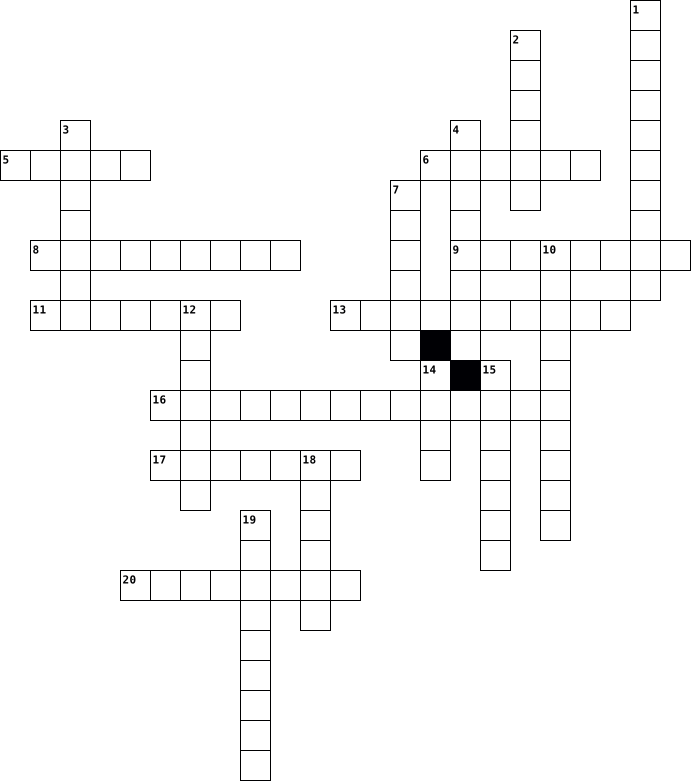
Across
- Vibration of waves through matter
- the measurement of an entity from the highest point to the bottom
- Energy is not created nor _________
- Energy stored in chemical bonds between atoms/molecules
- an invisible force that pulls objects toward each other
- Movement of electrons (electricity)
- this occurs whenever energy is changed from one form to another
- Energy carried by light waves
- the force that resists motion when the surface of one object comes in contact with the surface of another
Down
- energy created near tectonic hot spots
- the ability to do work
- Energy store in the nucleus of an atom
- the distance covered by an object in unit time
- the unit for energy
- Energy of a moving object
- Vibration of particles with matter
- the measure of the amount of matter in a body
- Energy of motion
- created the laws of gravity
- Stored energy
20 Clues: Stored energy • Energy of motion • the unit for energy • the ability to do work • Energy of a moving object • created the laws of gravity • Energy carried by light waves • Vibration of waves through matter • Vibration of particles with matter • Energy is not created nor _________ • Movement of electrons (electricity) • energy created near tectonic hot spots • ...
Science - CHEM Mendo 2025-10-03

Across
- most common number
- average
- this property allow it to change/combine with other materials
- this property is dependent on the amount of substance
- separation technique which forms pure solid particles
- conducted work on enzyme kinetics
- units for mass
- a form of matter that flows and has constant volume
- separation technique that uses a porous barrier
- an educated guess
- codiscovered rhenium
Down
- a mixture that has constant composition
- a form of matter that flows to conform the the shape of its container
- sport Mr. Mendoza received a scholarship for doing
- separation technique using boiling points
- a combination of two or more pure substances
- the study of matter and the changes it undergoes
- mass over volume
- did work allowing women to practice medicine
- invented first solar-powered heating system
- middle number of data set
- type of data that uses words
22 Clues: average • units for mass • mass over volume • an educated guess • most common number • codiscovered rhenium • middle number of data set • type of data that uses words • conducted work on enzyme kinetics • a mixture that has constant composition • separation technique using boiling points • invented first solar-powered heating system • a combination of two or more pure substances • ...
Fluids 2025-12-18

Across
- Measure of how hot or cold something is
- How much mass is in a certain volume
- Major river used for shipping in Canada
- The ability of an object to float
- Mark showing safe loading level on ships
- Substances that can flow (liquids and gases)
- A system where liquids or gases move
- When an object floats up in a fluid
- A push or pull
Down
- Force that pulls objects toward Earth
- Tiny pieces that make up matter
- Floating force equals the weight of displaced fluid
- Amount of matter in an object
- Goods carried by a ship or vehicle
- Amount of space an object takes up
- Upward force from a fluid on an object
- To stay on the surface of a liquid
- in fluids Pushes and pulls acting in liquids and gases
- nfluids When an object moves down in a fluid
- Types of matter
20 Clues: A push or pull • Types of matter • Amount of matter in an object • Tiny pieces that make up matter • The ability of an object to float • Goods carried by a ship or vehicle • Amount of space an object takes up • To stay on the surface of a liquid • When an object floats up in a fluid • How much mass is in a certain volume • A system where liquids or gases move • ...
Croos Chem 2025-07-22

Across
- - turns blue litmus paper to red
- - a change that produces a new substance
- - possesses Tyndal effect
- - type of chemical bond that has the ability to transfer electrons
- - any substance that has mass and occupies space
- - composed of solvent and solute
- - does not have definite shape but has close particles
- - a heterogeneous mixture, molecules will eventually settle out
- - a chemical bond between two metal atoms
- mixture consisting of two phases
Down
- - properties of a substance that does not depend on the amount of matter
- - contains only one kind of atom
- - a chemical bond between two non-metal atoms
- - consisting of oxygen and one other element
- - containing two or more elements combined chemically
- - has no definite shape and volume
- - has a definite shape
- - properties of a substance that depends on the amount of matter
- - a mixture consisting of only one phase
- - change without changing its chemical composition
20 Clues: - has a definite shape • - possesses Tyndal effect • - turns blue litmus paper to red • - contains only one kind of atom • - composed of solvent and solute • mixture consisting of two phases • - has no definite shape and volume • - a change that produces a new substance • - a mixture consisting of only one phase • - a chemical bond between two metal atoms • ...
HW#1 Matter-Puzzle. Gulac, Richmond Jaye T. NCH_1101 1CE-1C 2025-07-29

Across
- Change, Change in state of appearance, not composition
- two or more substance physically combined
- Pure substance made of one type of atom
- Substance made from atoms of different element
- solid turns into liquid
- has definite volume but not shape
- contains carbon which are from living organic sources like plants and animals
- Measure how much matter is in an object
- Smallest Unit of matter
- liquid turns into gas
- a mixture with only one phase
Down
- a mixture that consist with two or more phase
- liquid turns into solid
- Change, A change that forms new substance
- a distinct form of matter ( solid, liquid, gas )
- solid directly turn to gas
- does not contain carbon which is found in minerals and earthy materials
- has definite shape and volume
- gas turns into liquid
- does not have definite shape or volume
20 Clues: gas turns into liquid • liquid turns into gas • liquid turns into solid • solid turns into liquid • Smallest Unit of matter • solid directly turn to gas • has definite shape and volume • a mixture with only one phase • has definite volume but not shape • does not have definite shape or volume • Pure substance made of one type of atom • Measure how much matter is in an object • ...
CHEMISTRY CROSSWORD 2025-07-28

Across
- liquid turns into solid
- a mixture with only one phase
- Change in state of appearance, not composition
- solid turns into liquid
- two or more substance physically combined
- Measure how much matter is in an object
- Pure substance made of one type of atom
- liquid turns into gas
- Substance made from atoms of different element
- has definite volume but not shape
Down
- a mixture that consist with two or more phase
- does not have definite shape or volume
- contains carbon which are from living organic sources like plants and animals
- solid directly turn to gas
- Smallest Unit of matter
- gas turns into liquid
- A change that forms new substance
- has definite shape and volume
- a distinct form of matter ( solid, liquid, gas )
- does not contain carbon which is found in minerals and earthy materials
20 Clues: gas turns into liquid • liquid turns into gas • liquid turns into solid • Smallest Unit of matter • solid turns into liquid • solid directly turn to gas • a mixture with only one phase • has definite shape and volume • A change that forms new substance • has definite volume but not shape • does not have definite shape or volume • Measure how much matter is in an object • ...
Matter and Energy Vocabulary 2026-02-26

Across
- - Able to dissolve in a liquid
- - When two objects hit each other
- - Energy that lets us see
- - Energy of moving objects
- - A material that slows down or stops heat or electricity from passing through
- - Energy made by vibrations we hear
- - Matter that keeps its shape
- - A material that lets heat or electricity pass through easily
- - Heat energy
- - Two or more substances mixed together
Down
- - When light bends as it passes through something
- - When light bounces off a surface
- - Matter that spreads out to fill any space
- - Energy from moving electric charges
- - A mixture where one substance dissolves in another
- - Not able to dissolve in a liquid
- - A force that pulls certain metals toward a magnet
- - The amount of space something takes up
- - The ability to sink or float in water
- - Matter that flows and takes the shape of its container
20 Clues: - Heat energy • - Energy that lets us see • - Energy of moving objects • - Matter that keeps its shape • - Able to dissolve in a liquid • - When two objects hit each other • - When light bounces off a surface • - Not able to dissolve in a liquid • - Energy made by vibrations we hear • - Energy from moving electric charges • - The ability to sink or float in water • ...