
mesopotamia Crossword Puzzles
HISTORIA DE LA TECNOLOGÍA 2023-09-23

Across
- Aleación de cobre y estaño más dura que estos materiales por separados
- Época de grandes avances cuyo nombre significa "periodo de piedra nueva"
- Periodo de transición entre el Paleolítico y el Neolítico
- Artilugio inventado por Thomas Alba Edison que efectuaba una rápida sucesión de imágenes formando secuencias
- Lugar donde aparece por primera vez la escritura
- Técnica de impresión diseñada por Johannes Gutemberg con fin de imprimir los manuscritos medievales sin sacrificar su elaborado diseño ornamental
- Modesto círculo de arcilla perforado en centro surgido alrededor del 3500 a.C. que supuso un gran avance militar y que se sigue usando hoy en día muchos mecanismos
- País en el que aparece por primera vez el compás y la pólvora
- Facilitó un aumento de la producción gracias al uso de la fuerza animal en lugar de la humana para las labores agrícolas
- Surgida en el Paleolítico nos permitió la obtención de productos animales sin tener que cazarlos
- Monumento de la prehistoria el cual es un círculo de megalitos de gran tamaño de más de 40 metros de tamaño
Down
- Técnica que nos brindó alimento y que permitió el aumento de la población y la abundancia de comida.
- Nombre de la edad en la que nacieron grandes celebridades como Da Vinci o Galileo Galilei
- Inventor que nació en el siglo XIX que patentó más de 1000 inventos, entre ellos la bombilla de incandescencia
- Nombre del primer metal usado por el hombre (en casi todas partes)
- Época dentro de la edad moderna en la que se asientan las bases del mundo moderno, en el que el hombre se convierte en el centro del universo
- Nombre del pintor, escultor, ingeniero y arquitecto que pintó la "Gioconda" y la "Última Cena"
- Apellido del científico del siglo XIX que desarrolló el dínamo e inventó el primer motor eléctrico
- Matemático, astrónomo, físico, ingeniero e inventor griego conocido por sus inventos como las armas de asedio, el polipasto o el odómetro entre otros
- País que, junto a España, se situó a la cabeza de la industria naval
20 Clues: Lugar donde aparece por primera vez la escritura • Periodo de transición entre el Paleolítico y el Neolítico • País en el que aparece por primera vez el compás y la pólvora • Nombre del primer metal usado por el hombre (en casi todas partes) • País que, junto a España, se situó a la cabeza de la industria naval • ...
Islam Review X Word 2022-12-03

Across
- a Muslim house of worship
- the dynasty of caliphs who expanded Islamic territory to its greatest extent and ruled from Cordoba, Spain after being overthrown
- the writing system of the Muslims
- founder of Islam and most important prophet.
- Majority of Muslims; believe that caliphs can be any good Muslim leader
- West African trading city that became a center of education famous for its universities
- The Mongol Islamic empire in India that built the Taj Mahal
- The Persian Islamic Empire where Shia Islam was most popular
- A black stone building in Mecca that is shaped like a cube, is the most holy site to Muslims, and the destination for religius pilgrimage (Hajj)
- Minority of Muslims; believe that caliphs should be blood relatives of Muhammad
- a follower of the Islamic faith
- Any of the monotheistic religions (Judaism, Christianity, and Islam) that traces its heritage back to Abraham and worships the God of Abraham
- A huge peninsula in the Middle East consisting of mostly desert
Down
- The Islamic Empire that conquered the Byzantine Empire, changed the name of Constantinople to Istanbul, and converted the Hagia Sophia to a mosque
- The city in Arabia where Islam originated and the Kaaba is located; the most important city to the religion of Islam
- the first West African ruler to practice Islam devoutly
- the example that Muhammad set for Muslims about how to live
- a large, hot desert in North Africa that served as a natural barrier between West Africa and the Mediterranean
- The religious and secular ruler of Islam, regarded as the successor of Muhammad
- The last Islamic Empire of West Africa famous for its universities in its capital Timbuktu
- the holy book of the religion of Islam
- A dynasty of caliphs that ruled during the golden age of Islam from the city of Baghdad
- Capital of the Ottoman Empire; previously named Constantinople.
- Capital of the Abbasid dynasty located in Mesopotamia
- A type of religion in which nature spirits and ancestors are worshipped instead of deities
25 Clues: a Muslim house of worship • a follower of the Islamic faith • the writing system of the Muslims • the holy book of the religion of Islam • founder of Islam and most important prophet. • Capital of the Abbasid dynasty located in Mesopotamia • the first West African ruler to practice Islam devoutly • the example that Muhammad set for Muslims about how to live • ...
Unit 4 Crossword Review 2025-02-05

Across
- Breaking down a country through ethnic conflict
- Freely governing your own territory
- San Marino is an example of this due to its size
- UK is an example of this type of state
- Another name for natural boundaries
- The acronym for the boundary between North and South Korea
- Ireland uses this currency, UK doesn't
- Ethnic Russians divided between Ukraine & Russia
- Little Italy & Chinatown would be examples
- Nickname for UK leaving EU
- Created in 1945 in Cairo
- Relations between states
- Government of Cuba
- Current amount of SC electoral districts
- Acronym referring to 200 nautical miles off coast where countries have full use of resources in water & seafloor
- Forces that unite a country
- A committee within the UN made of 15 states
- Alaska is an example of this, but Hawaii is not
- Biological characteristics of a person
- Newest country in the world
- Happens every Census to balance province districts
- Approximate number of total countries, not just UN membership
- State with one big government
Down
- The Balkan Peninsula is known as this due to devolving multiple times
- US, UK, China, France, & __________ are permanent members of UN
- Taking over land with indigenous people
- Boundaries unrelated to physical environment typically straight lines
- Physical separation of different races in South Africa
- Current colonies are mostly in Caribbean and ____ Islands
- The US would be an example, but the UK wouldn’t.
- In 1985 gerrymandering was determined ______
- Idea of "state" first started here
- England, Wales, Scotland, and Northern Ireland are ________ of the UK
- Government with tiers, not just one big government
- Peacekeeping force for the world
- Forces that divide a country
- Cultural background of a person involving ancestry and homeland
- Kurds, Palestinians, Kosovars, Basque
- Economic supranational organization in Europe
- Ethnic enclave that wants to separate from Canada
- A state made up of one ethnicity
- Acronym for supranational organization created in 1975 in Austria
- Russia reclaiming Crimea
- Building a wall on a border would be a way to identify a boundary
- The B country in BRICS
45 Clues: Government of Cuba • The B country in BRICS • Created in 1945 in Cairo • Relations between states • Russia reclaiming Crimea • Nickname for UK leaving EU • Forces that unite a country • Newest country in the world • Forces that divide a country • State with one big government • Peacekeeping force for the world • A state made up of one ethnicity • Idea of "state" first started here • ...
History Crossword 2025-12-15

Across
- The name of this early civilization means “land between two rivers.”
- The 1954 Geneva Accords used the 17th parallel to divide one country into two. What country?
- Until 1989, what was Myanmar known as?
- The ancient Egyptians used what pictorial writing system to help communicate?
- The period in history between A.D. 395 and A.D. 1500
- What horse-related sport was popular in ancient Rome, Greece and the Byzantine Empire?
- What divine notion promoted the westward expansion of U.S. territory including the Louisiana Purchase?
- What was the capital city of the Inca Empire?
- The lowest class of people in the feudal system are called
- Modern-day Istanbul, Turkey, used to be called what when it was the capital of the Byzantine Empire?
- What was the name of the series of programs and projects President Franklin D. Roosevelt enacted during the Great Depression?
- In 1853, what country opened its borders to foreigners after being closed for more than 200 years?
Down
- In the mid-14th century, what catastrophic event accelerated the decline of the feudal system? (Black Death)
- Who fought in the Hundred Years’ War?
- What was the name of the confederation of five (later six) nations across upper New York state that played a strategic role in the struggle between the French and British for control of North America?
- Before European colonization, which group constituted one of the largest politically integrated tribes in the Americas, known for their complex societal structure?
- About 2,000 years before the Egyptians started using it, the Chinchorro people of Chile came up with which process for preserving their dead?
- What is the Chinese historic site of imperial power known as?
- Who was the last czar of Russia?
- Sharing a name with the character named in 2003 as the American Film Institute's top villain of the previous 100 years, which Carthaginian general is best remembered today for leading an invasion of Italy, having crossed the Alps with war elephants?
- What Italian physicist and engineer gave rise to the modern study of astronomy in the 1500s?
- What is the only country in South East Asia that was not colonized?
22 Clues: Who was the last czar of Russia? • Who fought in the Hundred Years’ War? • Until 1989, what was Myanmar known as? • What was the capital city of the Inca Empire? • The period in history between A.D. 395 and A.D. 1500 • The lowest class of people in the feudal system are called • What is the Chinese historic site of imperial power known as? • ...
WH Vocab #1 2022-09-09

Across
- Tame an animal and keep it as a pet or for farm produce.
- The study of human history through the excavation of prehistoric locations and the analysis of artifacts and other remains.
- A type of person without a permanent shelter and instead moves from place to place looking for fresh food for their livestock.
- Was the wide-scale transition of many human cultures during the Neolithic period from hunting and gathering to agriculture and settlement.
- A crescent-shaped region in the Middle East which is named for its rich soils. (Spans from modern-day Iraq, Syria, Lebanon, Israel, Palestine, and Jordan)
- A pictorial symbol for a word or phrase, they were used as the earliest known form of writing.
- A prehistoric monument on Salisbury Plain in Wiltshire, England. It consists of an outer ring of vertical sarsen standing stones, each around 13 ft. tall.
- The period of time before written records.
- Relating to or denoting the later part of the Stone Age, when ground or polished stone weapons prevailed.
- A rectangular stepped tower, sometimes surmounted by a temple, (ancient Mesopotamian)
Down
- A member of a nomadic people who live chiefly by hunting, fishing, and harvesting wild food.
- The arts and other manifestations of the human intellectual achievement regarded collectively.
- Denoting or relating to the wedge-shaped characters used in the ancient writing systems of Mesopotamia, Persia, and Ugarit, surviving mainly impressed on clay tablets.
- The stage of human social and cultural development and organization that is considered most advanced.
- Arrange (laws or rules) into a systematic code.
- The species to which all modern human beings belong, Latin for "wise human".
- Objects made by human beings that are typically items of cultural or historic interest.
- Relating to or denoting the early phase of the Stone Age, lasting about 2.5 million years.
- A person who copies out documents, especially one employed to do this before printing was invented.
- A worker in a skilled trade, especially one that involves making things by hand.
20 Clues: The period of time before written records. • Arrange (laws or rules) into a systematic code. • Tame an animal and keep it as a pet or for farm produce. • The species to which all modern human beings belong, Latin for "wise human". • A worker in a skilled trade, especially one that involves making things by hand. • ...
Semester Review 2022-12-07

Across
- The Neolithic Revolution was followed by the
- Which of the following is a study of past societies through an analysis of what people have left behind?
- The Hittites were the first Indo-Europeans to
- Which good was commonly traded throughout the region during the Gupta Empire?
- How did Constantine help to spread Christianity in the Roman Empire?
- The lowest level of Ancient Indian society who were given tasks seen as menial and degrading, such as collecting trash and handling dead bodies, were the
- The Diary of Anne Frank is a
- What development of the Song dynasty had a profound impact on the economic growth of Eastern Asia?
- Why did the first civilizations develop in river valleys?
- During the Tang dynasty, what invention provided new ways to communicate?
- Why did the Great Schism contribute to the end of medieval Europe?
- What does the term “vassals” mean?
- Where was the Fertile Crescent located?
- Who serves as the head of the Eastern Orthodox church?
- What was the name of the Aztec capital?
Down
- Early Indian writings that reveal that India was a world of many small kingdoms between 1500 b.c. and 400 b.c. are called the
- In Hammurabi’s code, punishments generally follow the principle of retaliation, or the idea that one must
- In which form of government does a select group of few people exercise control?
- After the collapse of the Mauryan Empire, the people who spread over northern India as far as the central Ganges Valley into modern-day Pakistan, Afghanistan, and Central Asia were the
- What similar factor led to the collapse of Rome and Han China?
- How did the Phoenician culture influence classical Greek civilization?
- What did early civilizations develop to explain the forces of nature and their roles in the world?
- Which collection of laws is one of the earliest examples of a written law code in history?
- In what form of government did ancient rulers believe that they derived their powers from the gods?
- In which legal tradition did the influential idea of the right to a trial by a jury of peers originate?
25 Clues: The Diary of Anne Frank is a • What does the term “vassals” mean? • Where was the Fertile Crescent located? • What was the name of the Aztec capital? • The Neolithic Revolution was followed by the • The Hittites were the first Indo-Europeans to • Who serves as the head of the Eastern Orthodox church? • Why did the first civilizations develop in river valleys? • ...
Unit 1 Review 2021-09-08

Across
- Term for a religion with many gods
- The Romans overthrew their kings and created this type of government
- The civilization between the Tigris and Euphrates rivers
- Greek philosopher that wrote The Republic
- Symbols that represent sounds
- The period of peace in Rome that started with Augustus
- Militaristic Greek polis
- The civilization located on the Nile River
- This person became dictator for life and stated the end of the Roman Republic
- When an independent city controls itself and the surrounding area
- The name of the Eastern Roman Empire after the fall of the West
- The Romans invented this building material
- Greek philosopher that created the Socratic Method
- One of the oldest religions that is based on early Aryan/Indian beliefs
- This structure carried water to Roman cities
- The Roman social class made up of the upper class who could vote and hold office
- The modern day country where Rome is located
Down
- The Roman emperor that made Christianity legal in the Roman Empire
- Cuneiform and hieroglyphics are this type of writing
- The era started by the conquests of Alexander the Great
- A Greek city-state
- First monotheistic religion that Christianity is based on
- The most powerful government body in the Roman Republic
- The Roman social class made up of the common people who could vote but not hold office
- Time period that started in Europe after the fall of the Western Roman Empire
- King of Macedonia that conquered the known world
- Indian religion based on the teachings of Siddhartha Gautama
- Monotheistic religion that started spread throughout the Roman Empire
- Greek philosopher that created the first version of the scientific method
- The people who created the first alphabet
- The first Roman Emperor
- Edict of _________ that made Christianity legal in the Roman Empire
- The first direct democracy was found here
- Created the first written law code
- Feature used by the Romans to make larger, stronger buildings
35 Clues: A Greek city-state • The first Roman Emperor • Militaristic Greek polis • Symbols that represent sounds • Term for a religion with many gods • Created the first written law code • Greek philosopher that wrote The Republic • The people who created the first alphabet • The first direct democracy was found here • The civilization located on the Nile River • ...
TERMS 2023-06-02

Across
- Chinese government official.
- medical treatment, in which needles are inserted to the skin to relieve pains.
- the belief that spirits and forces live within animals, objects, or dreams.
- ruling family.
- the blending of two or more cultures
- the study of people and cultures through their material remains.
- in Hindu belief, all the actions that can affect a person’s fate in the next life.
- a person who studies how people lived in the past.
- an object made by human beings.
- moral standards for behavior.
- a political unit that includes a city and its surrounding lands and villages.
- the study of the origins and development of people and their societies.
- respect for parents.
Down
- in traditional Indian society, an unchangeable social group into which a person is born.
- the preservation of dead bodies by embalming and wrapping them in cloth.
- Period the era of prehistory that lasted from at least 2 million B.C. to about 9000 B.C; also called the Old Stone Age.
- in the ancient Middle East, a system of writing that used wedge-shaped marks.
- triangular area of marshland formed by deposits of silt at the mouth of some rivers.
- relating to a society in
- believing in many gods.
- seasonal winds that regularly blow from a certain direction for part of the year.
- family organization in which several generations share a common dwelling.
- the spread of ideas, customs, and technologies from one person to another.
- in Buddhism belief, union with the universe.
- the spreading of the Jews beyond their historic homeland.
- a holy day for rest and worship.
- system of writing in which pictures called hieroglyphs represent objects, concepts, or sounds.
- a binding agreement; specifically, in the Jewish tradition, the binding agreement God made with Abraham.
- payment a bride’s family makes to the bridegroom.
- in ancient Mesopotamia, a large, stepped platform thought to have been topped by a temple dedicated to a city’s chief go or goddess.
30 Clues: ruling family. • respect for parents. • believing in many gods. • relating to a society in • Chinese government official. • moral standards for behavior. • an object made by human beings. • a holy day for rest and worship. • the blending of two or more cultures • in Buddhism belief, union with the universe. • payment a bride’s family makes to the bridegroom. • ...
World Geo Sem 2 Exam 2013-06-01

Across
- movement in 19th century to support Jewish homeland in Palestine
- originated in India and spread to China
- Tibetan mountain guide
- country with rapid economic growth due to cheap labor, high technology, and exports
- holiest site in Jerusalem; remains of the Second Temple
- Russian term for dinner party
- the removal of salt from ocean water
- most Iranians and some people from Iraq and Afghanistan
- series of rulers from the same family
- petroleum that hasn't been processed
- made of coral reefs
- method of dividing foreign control in China
- based on the teachings of Lao-Tzu; keep harmony with nature
- when a group of farmers working together
- created by volcanoes
- separation
- group of islands
- ethnic group in SW Asia that occupied Kurdistan
- determined by the central government
- black islands
- person with no permanent home
- route between China and the Mediterranean Sea
- complete separation of races
- breaking up of land for more even distribution for farmers
Down
- based on the teachings of Confucius; says to respects one's elders and obey the government
- Armenia, Georgia, and Azerbaijan
- formed in 60s to regain the Arab land in Palestine
- increased Egypt's farmable land and protected it from floods and droughts
- movement in the 60s to improve farming techniques
- top of the rainforest
- use families to govern themselves
- river bed that remains dry except during the rainy seasons
- rich farmland
- underground layer of rock that stores water
- the dominant religion of India
- tent of Central Asia's nomads
- group of islands in the Pacific
- where Abraham prepared to sacrifice his son
- long chain of islands along the Australian coast
- expansion of dry conditions over a wet area next to a desert
- 83% of Muslims including those in Turkey, Iraq, and Afghanistan
- smaller than a continent
- grown for direct sale
- world's highest mountain range
- tiny islands
- region SW Asia between the Tigris and Euphrates rivers
- chain of evergreen forests
47 Clues: separation • tiny islands • rich farmland • black islands • group of islands • made of coral reefs • created by volcanoes • top of the rainforest • grown for direct sale • Tibetan mountain guide • smaller than a continent • chain of evergreen forests • complete separation of races • Russian term for dinner party • tent of Central Asia's nomads • person with no permanent home • ...
Benchmark Vocabulary Review - Middle East 2015-04-29

Across
- The raising of plants and animals
- Belief that holy books should be taken literally, word for word
- Discrimination against Jews
- Block of rock and soil that makes up Earth’s crust
- Beliefs about what is right and wrong
- Persian governor
- A region with good conditions for growing crops that stretches from the Mediterranean coast east through Mesopotamia (modern Iraq) to the Persian Gulf.
- A messenger of God
- Religious wars in which Christian soldiers from Europe aimed to stop the spread of Islam and to retake control of Palestine, also called the Holy Land
- A ruler from a traditional ruling family who is the son, daughter, or younger relative of the last ruler
- Place were most people live in cities
- An underground layer where water collects
- Hot, dry winds that blow across Iran from west to east
- Iranian legislature
- Belief that policies and society should follow Islamic law
- The belief in a single God
- Tunnel that provides water to Persian villages by bringing water from an aquifer
- Culture with a written language in which people have many different kinds of jobs
Down
- Title for high-ranking Shia Muslim leaders in Iran
- Name taken by Mustafa Kemal, the founder of modern Turkey, meaning “Father of the Turks”
- Holy book of Islam
- Persian word for king
- The killing of 1.5 million Armenians in the Ottoman Empire in 1915-1918
- Muslims’ political and religious leader
- Arabic word meaning “struggle”
- A democracy in which parliament chooses the government
- Starting a business
- An Iranian religion that dates back to ancient times
- Narrow body of water that cuts through land, connecting two larger bodies of water
- Situation when large numbers of educated people migrate out of a country
- Religious leader
- Removal of salt from seawater
- Self-governing religious community in the Ottoman Empire
- Islamic house of worship
- A dry area that forms behind a highland that captures rainfall and snow
- A government controlled by one person who has not won a free election
- Concealing, baggy garments worn by many Arab women
37 Clues: Persian governor • Religious leader • Holy book of Islam • A messenger of God • Starting a business • Iranian legislature • Persian word for king • Islamic house of worship • The belief in a single God • Discrimination against Jews • Removal of salt from seawater • Arabic word meaning “struggle” • The raising of plants and animals • Beliefs about what is right and wrong • ...
Kingdom of Kush Crossword Review 2021-12-16

Across
- Routes ran through Kush, which meant that they traded with many different cultures such as other African kingdoms, Rome, Arabia, India, and likely _____!
- The Egyptian word for gold
- Because of all the chaos Egypt became unstable and ____
- King Piye wanted to restore Egypt’s ancient _____
- Pharaohs delegated governors to make sure the tribute was paid ______
- King Piye also announced himself as pharaoh, and titled himself the “Uniter of the ___ Lands.”
- Around 350 A.C.E., Kush fell to invaders from ________
- The greatest of all kandakes was Queen __________
- Once the ___ Kingdom in Egypt crumbled, Egypt was in political chaos
- Egyptian culture and traditions _______, even after a new line of Kushite royalty was established
- A sum or other valuable resources paid by one territory to another for the price of peace, security, protection, or the like
- After the Egyptianization of Kush, Kushites brought back the practice of ______ leadership
- At its pinnacle, the city blossomed as a kingdom of _______ and industry
- After Egypt invaded Kush, Kushites started to speak and write in their native language ________
- Used the ___ Sea, overland routes, and the Nile to transport goods.
- In the 650’s B.C.E., the last _______ pharaoh was forced out of Egypt, back into Nubia
Down
- 300 miles _____ of Napata
- In the 670’s B.C.E., the dominant empire in Mesopotamia, the _________, attacked Egypt
- The area where Kush was located
- One such temple was located in _____ Barkal, and was modeled after Abu Simbel, built by the pharaoh Ramses II
- In the New Kingdom (1600-1100 B.C.E.), _____ conquered Kush
- The Assyrians were known for their _____ warfare
- The capital of Kush after Napata was demolished
- a line of rulers, usually through familial relationships
- ironworkers made tools for easier and faster farming, such as ____ and axes, as well as weapons like arrows, swords, and spears
- ________, or queen mothers, ruled over Meroë
- In the 730’s, Egypt surrendered to King ____ of Kush
- The river that runs through Kush
- After ____ years of conflict, Kush and Rome signed a peace treaty
- Piye and his family reigned for almost one _______ years
30 Clues: 300 miles _____ of Napata • The Egyptian word for gold • The area where Kush was located • The river that runs through Kush • ________, or queen mothers, ruled over Meroë • The capital of Kush after Napata was demolished • The Assyrians were known for their _____ warfare • King Piye wanted to restore Egypt’s ancient _____ • ...
TTS Miqdad Imperialisme Kuno 2023-11-27

Across
- Pendekatan di mana satu negara mengendalikan negara-negara lain untuk keuntungan ekonomi atau politik.
- Pusat peradaban yang mengalami imperialisme dari Persia, Aleksander Agung, dan Romawi.
- Strategi militer di mana pasukan mengepung dan memotong pasokan musuh.
- Upaya penjajahan oleh bangsa-bangsa Eropa di berbagai belahan dunia selama abad ke-15 hingga 19.
- Salah satu negara di kawasan Timur Tengah yang sering terlibat dalam persaingan imperialisme kuno.
- Salah satu faktor penyebab imperialisme adalah dorongan ekonomi untuk mencari...
- Salah satu akibat negatif imperialisme adalah ..... budaya asli di wilayah yang dikuasai.
- Raja Persia yang terkenal dengan konflik melawan bangsa Yunani, terutama dalam Pertempuran Thermopylae.
- Periode dalam sejarah Romawi yang ditandai dengan ekspansi besar-besaran dan kejayaan militer.
- Wilayah yang sering menjadi sasaran imperialisme di Timur Tengah, terutama oleh Kekaisaran Romawi.
- Raja Persia yang memerintah Persia dengan penuh ambisi untuk menaklukkan Mesir, Babilonia, dan Yunani.
- Penguasa Mesir Kuno yang terkenal dengan imperialisme pada periode Perang Salib.
- Negara di Afrika Utara yang menjadi target ekspansi oleh Kekaisaran Romawi.
- Penguasa Yunani yang terkenal dengan filosofi dan ekspansi ke wilayah Asia Kecil.
Down
- Penguasa Romawi yang terkenal dengan kampanye militer di Eropa dan Britania.
- Upaya untuk menaklukkan atau menguasai wilayah lain untuk kepentingan politik atau ekonomi.
- Bangsa yang menjadi korban imperialisme Romawi, terutama dalam perang Punisia.
- Konflik militer antara Romawi dan Kartago yang disebut sebagai Perang....
- Kota Yunani kuno yang menjadi pusat kebudayaan dan pendidikan, tetapi juga ikut terlibat dalam imperialisme.
- Salah satu dampak ekonomi imperialisme adalah eksploitasi ...... alam di wilayah yang dikuasai.
- Negara kuno yang terkenal dengan imperialisme, Julius Caesar berasal dari sini.
- Bangsa yang menjadi pesaing utama Romawi dalam imperialisme di Laut Tengah.
- Kaisar Romawi yang memimpin ekspansi besar-besaran selama pemerintahannya.
- Upaya penaklukan besar-besaran oleh Aleksander Agung yang mencakup sebagian besar wilayah Asia.
- Salah satu dampak imperialisme adalah perubahan dalam ..... dan budaya di wilayah yang dikuasai.
- Salah satu negara di wilayah Eropa yang menjadi sasaran imperialisme oleh Aleksander Agung.
- Wilayah di Asia Kecil yang menjadi pusat persaingan imperialisme.
- Bangsa yang mendirikan Kekaisaran Persia dan menjadi salah satu kekuatan imperialistik awal.
- Bangsa kuno yang terkenal dengan perdagangan dan ekspansi di sepanjang Jalur Sutra.
- Kaisar Romawi yang dikenal dengan pembagian kekaisaran menjadi dua bagian untuk memudahkan pemerintahan.
30 Clues: Wilayah di Asia Kecil yang menjadi pusat persaingan imperialisme. • Strategi militer di mana pasukan mengepung dan memotong pasokan musuh. • Konflik militer antara Romawi dan Kartago yang disebut sebagai Perang.... • Kaisar Romawi yang memimpin ekspansi besar-besaran selama pemerintahannya. • ...
Ch. 12 - Intro to Early Civilizations 2024-02-23

Across
- Provided protection from weather and dangerous animals. (p. 77)
- Time before history was written down. (p.75)
- The exchange of goods and services without using money. (p. 81)
- Hunter-Gatherers learned to make ________ to help them perform basic tasks. (p. 76)
- To become an expert in a particular subject, skill, or trade. (p. 79)
- Prehistoric people lived as ____________. (two words, p. 75)
- Ancient civilization that developed near the Yellow River in eastern Asia. (p. 85)
- The feature of a civilization where people were ranked into classes according to the job they did. (two words, p. 83)
- The feature of a civilization that people developed to help explain the world around them. (p. 83)
- Civilization that developed between the Tigris and Euphrates Rivers in southwestern Asia (Middle East). (p. 85)
- The feature of a civilization that led to early civilizations developing near rivers. (p. 83)
- To tame a wild animal to keep as a pet or farm animal. (p. 78)
Down
- People, societies, or other groups who rely on each other for survival or success. (p. 79)
- Ancient civilization that developed near the Nile River in Northern Africa. (p. 85)
- The highest level of human society. (p. 83)
- Extra; leftover amount after demand has been met. (p. 79)
- The discovery of farming is called _________ because it greatly changed people's lives. (two words, p.78)
- The feature of a civilization that includes the development of writing systems and irrigation. (p. 83)
- The feature of a civilization where people made products, tools, and decorative items to use and to trade at markets near and far. (p. 83)
- The feature of a civilization that addresses issues such as controlling resources, irrigation, and trade. (p. 83)
- Having no permanent home; traveling from place to place, often to hunt or find fresh pasture for livestock. (p.75)
- Ancient civilization that developed near the Indus River on the Indian subcontinent. (p. 85)
- An item used by people from the past. (p. 75)
23 Clues: The highest level of human society. (p. 83) • Time before history was written down. (p.75) • An item used by people from the past. (p. 75) • Extra; leftover amount after demand has been met. (p. 79) • Prehistoric people lived as ____________. (two words, p. 75) • To tame a wild animal to keep as a pet or farm animal. (p. 78) • ...
HISTORIA DE LA TECNOLOGÍA 2023-09-23

Across
- Técnica de impresión diseñada por Johannes Gutemberg con fin de imprimir los manuscritos medievales sin sacrificar su elaborado diseño ornamental
- Inventor que nació en el siglo XIX que patentó más de 1000 inventos, entre ellos la bombilla de incandescencia
- País que, junto a España, se situó a la cabeza de la industria naval
- Época de grandes avances cuyo nombre significa "periodo de piedra nueva"
- Apellido del científico del siglo XIX que desarrolló el dínamo e inventó el primer motor eléctrico
- Técnica que nos brindó alimento y que permitió el aumento de la población y la abundancia de comida.
- Lugar donde aparece por primera vez la escritura
- Nombre de la edad en la que nacieron grandes celebridades como Da Vinci o Galileo Galilei
- Artilugio inventado por Thomas Alba Edison que efectuaba una rápida sucesión de imágenes formando secuencias
- Nombre del primer metal usado por el hombre (en casi todas partes)
Down
- Aleación de cobre y estaño más dura que estos materiales por separados
- Facilitó un aumento de la producción gracias al uso de la fuerza animal en lugar de la humana para las labores agrícolas
- Modesto círculo de arcilla perforado en centro surgido alrededor del 3500 a.C. que supuso un gran avance militar y que se sigue usando hoy en día muchos mecanismos
- Época dentro de la edad moderna en la que se asientan las bases del mundo moderno, en el que el hombre se convierte en el centro del universo
- Nombre del pintor, escultor, ingeniero y arquitecto que pintó la "Gioconda" y la "Última Cena"
- Monumento de la prehistoria el cual es un círculo de megalitos de gran tamaño de más de 40 metros de tamaño
- Periodo de transición entre el Paleolítico y el Neolítico
- País en el que aparece por primera vez el compás y la pólvora
- Surgida en el Paleolítico nos permitió la obtención de productos animales sin tener que cazarlos
- Matemático, astrónomo, físico, ingeniero e inventor griego conocido por sus inventos como las armas de asedio, el polipasto o el odómetro entre otros
20 Clues: Lugar donde aparece por primera vez la escritura • Periodo de transición entre el Paleolítico y el Neolítico • País en el que aparece por primera vez el compás y la pólvora • Nombre del primer metal usado por el hombre (en casi todas partes) • País que, junto a España, se situó a la cabeza de la industria naval • ...
Religion and Culture 2026-03-10

Across
- Son of Zeus. Handsome young god of poetry and music. The most widely worshiped of the Greek gods.
- A public market and meeting place in an ancient Greek city
- A type of serious drama that usually ends in disaster for the main character.
- King of the gods and goddesses
- To force someone to leave their country.
- Someone who uses reason and thinking to understand big questions about life, truth, and morality. They seek wisdom by asking deep questions about the world.
- An ancient Egyptian city, the site of the Great Pyramid.
- The earliest known writing system developed by the Sumerians
- A life after death
- An organized list/set of laws and rules
- The belief in many gods
- an early form of paper made from a reed plant found in the marshy areas of the Nile Delta, the plant used to make paper.
- A seller of goods
- Greece's highest mountain, Home of the Twelve Olympian's
- A set of symbols that represent the sound of a language
- Condition of being owned by, and forced to work for, someone else
Down
- large, stepped pyramid-shaped temple in ancient Mesopotamia used to worship the gods
- The belief in one God
- The lowest level of most social classes
- A time when there is so little food that many people starve
- The process of artificially preserving a body before burial
- In Ancient Greece, a sacred site where a god or goddess was consulted, any priest or priestess who spoke to the gods
- Stone An ancient Egyptian slab inscribed with 3 languages that helped decode Egyptian hieroglyphs
- Pictures and other written symbols that stand for ideas, things, or sounds.
- A regular payment made to a powerful state or country by a weaker one
- A city-state in ancient Greece; the capital of modern Greece
- A huge building with four sloping triangular-shaped sides built as royal tombs in Egypt.
- A scientist who studies the stars and other objects in the skies.
- Famous Greek philosopher that was put to death by authorities
- A dead body preserved in lifelike condition.
30 Clues: A seller of goods • A life after death • The belief in one God • The belief in many gods • King of the gods and goddesses • The lowest level of most social classes • An organized list/set of laws and rules • To force someone to leave their country. • A dead body preserved in lifelike condition. • A set of symbols that represent the sound of a language • ...
Genesis 24-33 2026-02-19

Across
- Gen32:3 Which country was Esau living in?
- Gen33:4 What did Esau do first, after he ran to meet Jacob?
- Gen31:15 What did Rachel and Leah say their father had done to them?
- Gen29:23 Who did Laban give to Jacob, at the wedding?
- Gen31:38 How many years had Jacob served Laban?
- Gen29:31 Why did Rachel not have children?
- Gen24:67 Whose tent became Rebekah's after the wedding?
- Gen33:17 Where did Jacob build a house?
- Gen27:5 What was Esau sent to hunt?
- Gen25:16 How many sons did Ishmael have?
- Gen25:1 Who was Abraham's second wife?
- Gen26:1 What made Isaac move to Gerar and live with the Philistines?
- Gen32:28 What name did the angel give Jacob?
- Gen25:34 What was the pottage, that Esau sold his birthright for, made of?
- Gen29:6 Who was herding Laban's sheep?
- Gen26:12 What was the return on Isaac's planted fields?
Down
- Gen31:47 What did Laban call the pillar of agreement that Jacob named Galeed?
- Gen30:25 What was the name of Jacob's youngest child when he asked Laban to let him take his family home?
- Gen26:18, 20-22 What was a source of contention?
- Gen27:41 How did Esau feel about Jacob's deception?
- Gen33:16 Where was Esau going?
- Gen28:5 Who did Jacob go to visit, when searching for a wife?
- Gen31:7 How many times did Laban change Jacob's wages after the first deception?
- Gen24:10 Where was the city of Nahor located?
- Gen28:9 Who was the grandfather of Esau's wife Mahalath?
- Gen30:32 What type of animal was Jacob's agreed wages for tending Laban's flocks and herds?
- Gen24:15 Who was Rebekah's Father?
- Gen32:18 What did Jacob say the flocks were to be, for Esau?
- Gen27:16 What part of the goat did Jacob wear to fool Isaac?
- Gen30:6 What was the name of the first son Rachel claimed by proxy birth?
- Gen28:19 What did Jacob name the place where he dreamed of the ladder to heaven?
31 Clues: Gen33:16 Where was Esau going? • Gen24:15 Who was Rebekah's Father? • Gen27:5 What was Esau sent to hunt? • Gen25:1 Who was Abraham's second wife? • Gen29:6 Who was herding Laban's sheep? • Gen33:17 Where did Jacob build a house? • Gen25:16 How many sons did Ishmael have? • Gen32:3 Which country was Esau living in? • Gen29:31 Why did Rachel not have children? • ...
AP world terms review 1 2024-12-12

Across
- Dynasty that suceeded the Tang
- Refer to Hindu social structure
- Better known as Genghis khan
- Not Istanbul but
- Respect towards the elders is called
- Script created by the Mongols
- Spain before the Reconquista
- Men are dominant in this society
- A set of states controlled by a single Authority
- Destroyed the Byzantine Empire
- Andean civilization
- Had Buddhism caves; silk road trading city
- Library in Baghdad
- Created by Korea; phonetic system
- Brought to Song China by a Vietnamese kingdom; harvested twice a year
- limited Song Chese women's movement
- Sophia's favorite tradition; also a tax imposed on non-Muslims
- Its capital was Baghdad
- Warring state in Mesoamerica
- Third Ming Emperor
- Admiral of the Chinese Treasure Fleets
- Richest man in history
- Temple with both Hindu and Buddhist structures
- First of four widely accepted turning points in Human history
- Also known as the Eastern Roman Empire
Down
- Caravan palace
- Lasted 116 years, between France and England
- This era includeds Greece and Rome primarily
- Bantu languages and Arabic script merged to make the language of this civilization
- denoted by proto-industrialization
- Includes China; Egypt; Indus river valley; Mesopotamia
- Mona Lisa was painted by art inspired by features of this event
- Refers to the concept of people traveling with herds of animals for their livelihood
- United Western Europe
- This was a concept used by emperors to justify rule
- A trade route that utilized the camel saddle
- Created by pastoral people; Turkics
- Icludes food/traditions/customs etc.
- "Most splendid city in the world" - Marco Polo
- Martime empire in Malaysia and Indonesia
- Related to cities and urbanization
- City in West Africa with many Islamc Schools
- Korea and Vietnam used this for Chinese relations
- took on Eastern Orthodox after the fall of the Byzantines
- People who craft special products for purchase
- Refers to Central America
- System of Canals in China
- Civilization of the Yucatan Peninsula
48 Clues: Caravan palace • Not Istanbul but • Library in Baghdad • Third Ming Emperor • Andean civilization • United Western Europe • Richest man in history • Its capital was Baghdad • Refers to Central America • System of Canals in China • Better known as Genghis khan • Spain before the Reconquista • Warring state in Mesoamerica • Script created by the Mongols • Dynasty that suceeded the Tang • ...
Cultures of Asia Crossword Challenge 2024-10-29

Across
- The name of the large desert just north of China, connecting it with Mongolia
- An ancient Chinese religion and philosophy that believes all of existence is a balance between two forces - Yin and Yang
- The largest mountain in the world
- The large body of water connecting India and Africa together
- An ancient Japanese religion that believes spirits occupy the physical world and require respect to keep the world in balance
- A small peninsula northeast of China that has had contact with China and Japan for thousands of years
- One of the oldest religions, this polytheistic religion worships many gods & believes in reincarnation
- The Indian system of organizing people into different classes based on reincarnation
- An ancient religion from Mesopotamia that heavily influenced the development of future monotheistic religions
- A large island off the eastern coast of China, home to an ancient and often isolated culture
- An ancient, informal highway spanning from Eastern China all the way to Rome, exchanging goods and ideas for a thousand years
Down
- The large mountain range connecting northern India to western China
- The name of the large river that runs across northern India, considered sacred by Hindus
- The school of thought inspired by Confucius that preaches respect of elders and orderly conduct
- An artificial army buried along with the first emperor of China to decorate his extravagant tomb
- One of the largest and oldest continuous cultures in the world, situated east of India and west of Japan
- The belief that when one dies they are reborn again into a new body, but retaining the same soul
- An ancient Indian religion that follows the teaching of the Buddha with the aim of reaching Enlightenment
- The name of the first emperor of China, buried in an extravagant tomb after ten years of ruling a newly unified China
- The large sub-continent that bridges the Middle East and China
- The name of the native people of China, named after China's second dynasty following the reign of its first emperor
21 Clues: The largest mountain in the world • The large body of water connecting India and Africa together • The large sub-continent that bridges the Middle East and China • The large mountain range connecting northern India to western China • The name of the large desert just north of China, connecting it with Mongolia • ...
Ancient Society Crossword 2023-06-05

Across
- A historical region located between the Tigris and Euphrates rivers, known as the "cradle of civilization" and home to ancient civilizations like Sumer, Babylon, and Assyria.
- Members of the military nobility in feudal Japan, characterized by their code of honor (bushido) and skilled expertise in martial arts and warfare.
- A person or place regarded as a source of divine guidance or prophecy in ancient Greece, often consulted for advice or predictions.
- An iconic amphitheater in ancient Rome, used for various public spectacles, including gladiatorial contests and other performances.
- A system of writing used in ancient Egypt, consisting of pictorial symbols that represent sounds, objects, or ideas.
- Pertaining to the civilization of ancient Rome, which had a significant impact on European culture, law, engineering, and governance.
- A fortified hilltop or citadel in ancient Greek cities, typically housing important religious and civic buildings.
Down
- The supreme ruler of an empire or a vast territory, holding absolute power and authority.
- A preserved body, typically of a deceased person, often achieved through embalming techniques, as practiced in ancient Egypt.
- A title given to the rulers of ancient Egypt, considered divine and holding significant political and religious power.
- A prehistoric monument located in England, consisting of a ring of massive standing stones, believed to have been erected around 2500 BC.
- A professional fighter in ancient Rome who engaged in battles against other gladiators or wild animals as a form of entertainment.
- An ancient Roman city near Naples, Italy, which was buried under volcanic ash and preserved remarkably well after the eruption of Mount Vesuvius in 79 AD.
- A citizen of ancient Sparta, known for their strict military discipline and emphasis on physical prowess.
- Referring to the ancient Mayan civilization, known for its advanced writing system, mathematical achievements, and impressive architectural structures.
- Monumental structures built in ancient Egypt as tombs for pharaohs, characterized by their triangular sides and pointed top.
16 Clues: The supreme ruler of an empire or a vast territory, holding absolute power and authority. • A citizen of ancient Sparta, known for their strict military discipline and emphasis on physical prowess. • A fortified hilltop or citadel in ancient Greek cities, typically housing important religious and civic buildings. • ...
GS: Unit 1 Vocabulary 2025-09-04

Across
- An object made by a human being, typically an item of cultural or historical interest.
- the study of human history and prehistory through the excavation of sites and the analysis of artifacts and other physical remains.
- the study of the physical features of the earth and its atmosphere, and of human activity as it affects and is affected by these, including the distribution of populations and resources, land use, and industries.
- belief in or worship of more than one god.
- a pictorial symbol for a word or phrase. Pictographs were used as the earliest known form of writing, examples having been discovered in Egypt and Mesopotamia from before 3000 BC.
- a worker in a skilled trade, especially one that involves making things by hand.
- the process by which a society or place reaches an advanced stage of social and cultural development and organization.
- the study of human societies and cultures and their development or the study of human biological and physiological characteristics and their evolution.
Down
- final stage of cultural evolution or technological development among prehistoric humans. It was characterized by stone tools shaped by polishing or grinding, dependence on domesticated plants or animals
- ancient cultural stage, or level, of human development, characterized by the use of rudimentary chipped stone tools.
- the natural channel/s which has/have been formed by a river and its tributaries.
- the work of building such things as roads, schools, and reservoirs, carried out by the government for the community.
- a member of a people having no permanent abode, and who travel from place to place to find fresh pasture for their livestock.
13 Clues: belief in or worship of more than one god. • the natural channel/s which has/have been formed by a river and its tributaries. • a worker in a skilled trade, especially one that involves making things by hand. • An object made by a human being, typically an item of cultural or historical interest. • ...
Breeds of Livestock- Cattle 2026-03-17

Across
- colorless, volatile and flammable liquid which is produced by the natural fermentation of sugars
- Land Army- British civilian organization created during World War II so women could work in agriculture
- Bowl- area of Oklahoma, New Mexico, Kansas, Colorado and Texas affected by severe soil erosion, caused by drought and relentless windstorms, in the 1930s
- ancient region of southwestern Asia in present-day Iraq, lying between the Tigris and Euphrates rivers
- estate on which crops such as coffee, sugar and tobacco were cultivated by resident labor
- Act of 1862- provided grants of land to states to finance the establishment of colleges specializing in “agriculture and the mechanic arts”
- Inspection Act of 1906- American law which makes it illegal to adulterate or misbrand meat and meat products being sold as food; ensures meat and meat products are slaughtered and processed under strictly regulated sanitary conditions
Down
- - act or means of sealing off a place to prevent foods or people from entering or leaving
- Destiny- 19th-century doctrine or belief stating the expansion of the U.S. throughout the American continents was both justified and inevitable
- information, especially of a biased or misleading nature, used to promote or publicize a particular political cause or point of view
- action of searching out and publicizing scandalous information about famous people in an underhanded way
- Gardens- vegetable garden, especially a home garden, planted to increase food production during a war
- Plow- farm implement consisting of a strong blade at the end of a beam, usually hitched to a draft team or motor vehicle and used for breaking up soil and cutting furrows in preparation for sowing
- States Mexico Canada Agreement- free trade agreement between the United States, Canada and Mexico
- Revolution- large increase in crop production in developing countries achieved by the use of fertilizers, pesticides and high-yield crop varieties
- American Free Trade Agreement- treaty between Canada, Mexico and the United States which eliminated most tariffs between the counties
16 Clues: - act or means of sealing off a place to prevent foods or people from entering or leaving • estate on which crops such as coffee, sugar and tobacco were cultivated by resident labor • colorless, volatile and flammable liquid which is produced by the natural fermentation of sugars • ...
AWH Semester 1 Vocab 2022-12-06

Across
- Belief that the natural world is filled with spirits
- having to do with a single person or thing
- The study of humankind in all aspects, especially development and culture
- Includes the many different elements that make up the way of life of a people
- after a time
- People leave their homeland to live somewhere else
- to order the creation of
- the belief that there is only one God
- the spreading of cultural traits from one region to another
- force
- a text finished around 600 ad
- occurs when people spend most of their time working at a single job or craft
- trading system in which people exchange goods directly without using money
- A complete change in ways of thinking, working, or living
- system that a community uses to produce and distribute goods and services
- an independent state that includes a city and its surrounding territory
- Decide as a result of thinking or reasoning
- belief in more than one god
- change their way of life
- dependable, steady not risky
- art of steering a ship from place to place
- one of the 2 rivers Mesopotamia lies between
- The escape of the Israelites from slavery in egypt
- A small set of letters each of which stands for a single sound
- decide against, turn away
- A closely interconnected group of people or things
- good or service sold within a country that is produced in another country
- Possibility to grow and change in the future
- a binding agreement
- A money that is used as a medium of exchange, usually bills or coins
- a permanent army of professional soldiers
- An idea or way of doing things that is common in a certain culture
- A set of laws that governed life in the Babylonian Empire
- Scientists who study the physical materials of earth itself
- an independent state that works with other states to achieve a shared military or political goal
- Change the growth of plants or behavior of animals in ways that are useful for humans
Down
- Something that can be used as proof
- The idea that Akkad members of a society must obey the law
- a wide flat plain in present day Iraq; lies between 2 great rivers
- meeting place
- people who lived by hunting small animals and gathering plants
- extra/more food
- a system of writing that uses triangular shaped symbols to stand for words, ideas, or sounds
- separation from one’s homeland
- fairness or fair treatment
- one of the 2 rivers Mesopotamia lies between
- soldiers who fought while riding horses
- People who study human life in the past by examining things that people left behind
- temples that were pyramid-shaped brick towers
- a region of the middle east that stretches in a large crescent-shaped curve from the Persian Gulf to the mediterranean sea
- weekly day of rest
- leader who rallied the Israelites to defend their land
- good or service produced within a country and sold outside the country's borders
- a set of comments or a recorded discussion about something
- ideas of right and wrong
- to become inhabitants of
- A carved stone slab or pillar that stands on end
- an order to do something
- the period of time before written records
- hardened remains or imprints of living things that existed long ago
- consists of the first five books of the Hebrew Bible
- payment made to show loyalty to a stronger power, but often the amount of tribute was often set by the ruler
- Gain; favorable result
- acting or living in a way that is ethically right and obeys God's laws
- Surroundings
- a state containing several countries or territories
- collect or attain a large amount of something
- an area ruled by a distant country
- forefathers of the Jewish people
- A person believed to be chosen by God as a messenger to bring truth to the people
- A person who moves from place to place with their herds
- Communities of Jews living outside of their ancient homeland
- to supply water to
- Having many related parts; not simple
- anything made and used by humans
75 Clues: force • after a time • Surroundings • meeting place • extra/more food • weekly day of rest • to supply water to • a binding agreement • Gain; favorable result • to order the creation of • ideas of right and wrong • to become inhabitants of • an order to do something • change their way of life • decide against, turn away • fairness or fair treatment • belief in more than one god • ...
Agriculture History 2025-08-25

Across
- ancient region of southwestern Asia in present-day Iraq, lying between the Tigris and Euphrates rivers
- American law which makes it illegal to adulterate or misbrand meat and meat products being sold as food; ensures meat and meat products are slaughtered and processed under strictly regulated sanitary conditions
- colorless, volatile and flammable liquid which is produced by the natural fermentation of sugars
- treaty between Canada, Mexico and the United States which eliminated most tariffs between the counties
- vegetable garden, especially a home garden, planted to increase food production during a war
- estate on which crops such as coffee, sugar and tobacco were cultivated by resident labor
- provided grants of land to states to finance the establishment of colleges specializing in “agriculture and the mechanic arts”
Down
- large increase in crop production in developing countries achieved by the use of fertilizers, pesticides and high-yield crop varieties
- 19th-century doctrine or belief stating the expansion of the U.S. throughout the American continents was both justified and inevitable
- action of searching out and publicizing scandalous information about famous people in an underhanded way
- free trade agreement between the United States, Canada and Mexico
- British civilian organization created during World War II so women could work in agriculture
- area of Oklahoma, New Mexico, Kansas, Colorado and Texas affected by severe soil erosion, caused by drought and relentless windstorms, in the 1930s
- farm implement consisting of a strong blade at the end of a beam, usually hitched to a draft team or motor vehicle and used for breaking up soil and cutting furrows in preparation for sowing
- act or means of sealing off a place to prevent foods or people from entering or leaving
- information, especially of a biased or misleading nature, used to promote or publicize a particular political cause or point of view
16 Clues: free trade agreement between the United States, Canada and Mexico • act or means of sealing off a place to prevent foods or people from entering or leaving • estate on which crops such as coffee, sugar and tobacco were cultivated by resident labor • British civilian organization created during World War II so women could work in agriculture • ...
Ancient Mesopotamia Lesson 4 2025-08-23

Across
- a form of government with one person (king, queen, or emperor) at the head
- a written set of laws used to govern a people
Down
- fair treatment and use of laws to judge right and wrong
- a group of territories controlled by one government
4 Clues: a written set of laws used to govern a people • a group of territories controlled by one government • fair treatment and use of laws to judge right and wrong • a form of government with one person (king, queen, or emperor) at the head
PBL WordChart 2017-09-27

Across
- a large natural elevation of the earth's surface rising abruptly from the surrounding level; a large steep hill
- Sea a sea bordering in Israel, the West Bank and Jordan is a salt lake whose banks are more than 400m below sea level, the lowest point on dry land
- River The longest and one of the most historically important rivers of Western Asia.
- any of a large class of substances typically unctuous, viscous, combustible, liquid at ordinary temperatures, and soluble in ether or alcohol
- Map It focuses on the geography of the area and will often have shaded relief to show the mountains and valleys
- River a river found in the Middle East that flows roughly north to south through the Sea of Galilee and on to the Dead Sea
- Gulf Arabian Sea, between SW Iran and Arabia
- Sea an arm of the Indian Ocean, extending NW between Africa and Arabia: connected to the Mediterranean by the Suez Canal
- a large natural stream of water flowing in a channel to the sea, a lake, or another such stream
- River The eastern member of the two great rivers that define Mesopotamia
Down
- removes salt from (seawater)
- Gas consisting largely of methane and other hydrocarbons, occurring naturally underground
- almost or entirely surrounded by land; having no coastline or seaport
- Map designed to show governmental boundaries of countries, states, and counties, the location of major cities, and they usually include significant bodies of water
- Distribution is a system for the collection, transmission, treatment, storage and distribution of water from source to consumers
- Peninsula Is a peninsula of Western Asia situated northeast of Africa on the Arabian plate
- a region so arid because of little rainfall that it supports only sparse and widely spaced vegetation or no vegetation at all
- of Hormuz a strait between Iran and the United Arab Emirates, connecting the Persian Gulf and the Gulf of Oman
- Irrigation a type of micro-irrigation that has the potential to save water and nutrients by allowing water to drip slowly to the roots of plants, either from above the soil surface or buried below the surface
19 Clues: removes salt from (seawater) • Gulf Arabian Sea, between SW Iran and Arabia • almost or entirely surrounded by land; having no coastline or seaport • River The eastern member of the two great rivers that define Mesopotamia • ...
Mesopotamia and The Fertile Crescent 2016-12-01

Across
- Large marsupial
- Likes to chase mice
Down
- Has a trunk
- Flying mammal
- Man's best friend
5 Clues: Has a trunk • Flying mammal • Large marsupial • Man's best friend • Likes to chase mice
Mesopotamia the birthplace of civilisation 2024-11-15

Across
- Large marsupial
- Likes to chase mice
Down
- Has a trunk
- Flying mammal
- Man's best friend
5 Clues: Has a trunk • Flying mammal • Large marsupial • Man's best friend • Likes to chase mice
CS_1 - 1 2025-09-05

Across
- A strong military formation used by Greek and Macedonian soldiers. Soldiers stood close together with long spears and shields to protect each other.
- kingdoms that were part of Alexander the Great’s empire and that have Greek culture
- The planning and moving of supplies, food, and soldiers during war. Alexander’s success came partly from careful logistics.
- A region at the edge of Alexander’s empire. He fought battles there and reached as far as the Indus River before turning back.
- A strength that helps someone win against others. Alexander’s advantage was his smart strategies, well-trained army, and speed in battle.
- An ancient region between the Tigris and Euphrates rivers (modern Iraq). It became part of Alexander’s empire after he defeated Persia.
- Alexander’s homeland in northern Greece. It was a kingdom that became powerful under his father and later under him.
Down
- A large and powerful empire that Alexander defeated. It stretched across the Middle East and was one of his biggest rivals.
- Alexander’s father, the king of Macedonia. He built a strong army and prepared the way for Alexander’s conquests.
- A Greek doctor often called the “father of medicine.” His ideas about observing and treating illness influenced learning in Alexander’s world.
- The plans and methods used in battles. Alexander’s clever tactics, like surprise attacks and fast movements, helped him win against larger armies.
- Paths used by merchants to move goods like spices, silk, and metals. Alexander’s empire controlled many of these routes, making it wealthy and connected.
- A famous king from Macedonia who created one of the largest empires in history. He spread Greek culture across many lands.
- A Greek mathematician known as the “father of geometry.” His work on shapes and space was taught in the Hellenistic world.
- A Greek scientist and inventor. He made discoveries in math and engineering that were later spread through the Hellenistic kingdoms.
15 Clues: kingdoms that were part of Alexander the Great’s empire and that have Greek culture • Alexander’s father, the king of Macedonia. He built a strong army and prepared the way for Alexander’s conquests. • Alexander’s homeland in northern Greece. It was a kingdom that became powerful under his father and later under him. • ...
CS_1 - 1 2025-09-08

Across
- A strong military formation used by Greek and Macedonian soldiers. Soldiers stood close together with long spears and shields to protect each other.
- kingdoms that were part of Alexander the Great’s empire and that have Greek culture
- The planning and moving of supplies, food, and soldiers during war. Alexander’s success came partly from careful logistics.
- A region at the edge of Alexander’s empire. He fought battles there and reached as far as the Indus River before turning back.
- A strength that helps someone win against others. Alexander’s advantage was his smart strategies, well-trained army, and speed in battle.
- An ancient region between the Tigris and Euphrates rivers (modern Iraq). It became part of Alexander’s empire after he defeated Persia.
- Alexander’s homeland in northern Greece. It was a kingdom that became powerful under his father and later under him.
Down
- A large and powerful empire that Alexander defeated. It stretched across the Middle East and was one of his biggest rivals.
- Alexander’s father, the king of Macedonia. He built a strong army and prepared the way for Alexander’s conquests.
- A Greek doctor often called the “father of medicine.” His ideas about observing and treating illness influenced learning in Alexander’s world.
- The plans and methods used in battles. Alexander’s clever tactics, like surprise attacks and fast movements, helped him win against larger armies.
- Paths used by merchants to move goods like spices, silk, and metals. Alexander’s empire controlled many of these routes, making it wealthy and connected.
- A famous king from Macedonia who created one of the largest empires in history. He spread Greek culture across many lands.
- A Greek mathematician known as the “father of geometry.” His work on shapes and space was taught in the Hellenistic world.
- A Greek scientist and inventor. He made discoveries in math and engineering that were later spread through the Hellenistic kingdoms.
15 Clues: kingdoms that were part of Alexander the Great’s empire and that have Greek culture • Alexander’s father, the king of Macedonia. He built a strong army and prepared the way for Alexander’s conquests. • Alexander’s homeland in northern Greece. It was a kingdom that became powerful under his father and later under him. • ...
isabel mejia mesopotamia 2015-08-19

Across
- a layer of hot, solid material that is between Earth's crust and core
- a rigid layer that forms the uppermost portion of the mantle and crust
Down
- the soft layer of the mantle on which the lithosphere floats
3 Clues: the soft layer of the mantle on which the lithosphere floats • a layer of hot, solid material that is between Earth's crust and core • a rigid layer that forms the uppermost portion of the mantle and crust
chapter 22 vocab 2024-04-30

Across
- a member of a mainly Islamic people living in parts of eastern Turkey, northern Iraq, western Iran, and eastern Syria
- an organization founded in 1964 with the aim of creating a state for Palestinians; it recognized the state of Israel in 1993 and Israel granted Palestinians autonomy in the Gaza Strip and West Bank. Abbreviation: PLO.
- the land between rivers
- a shrine in Jerusalem at the site from which Muhammad ascended through the seven heavens to the throne of God
- a wall in Jerusalem where Jews, on certain occasions, assemble for prayer and lamentation
Down
- a covered building, but can be any place where Islamic prayers are performed, such as an outdoor courtyard.
- the monotheistic religion of the Jewish people.
- an adherent of the Shia branch of Islam.
- The larger of the two main branches of Islam, which differs from Shia in its understanding of the Sunna, its conception of religious leadership, and its acceptance of the first three caliphs.
- government of a state by immediate divine guidance or by officials who are regarded as divinely guided
- the religion of the Muslims, a monotheistic faith regarded as revealed through Muhammad as the Prophet of Allah
- a city in Saudi Arabia that was the birthplace of Muhammad and is the holiest city of Islam.
- Organization of the Petroleum Exporting Countries
- a movement for (originally) the re-establishment and (now) the development and protection of a Jewish nation in what is now Israel. It was established as a political organization in 1897 under Theodor Herzl, and was later led by Chaim Weizmann.
- Muhammad translates to “praiseworthy” and links directly to the founder of Islam, the Prophet Muhammad. This name can hold reverent weight to followers of Islam, who can share it with family members as a way of commemorating their commitment to their religion
15 Clues: the land between rivers • an adherent of the Shia branch of Islam. • the monotheistic religion of the Jewish people. • Organization of the Petroleum Exporting Countries • a wall in Jerusalem where Jews, on certain occasions, assemble for prayer and lamentation • a city in Saudi Arabia that was the birthplace of Muhammad and is the holiest city of Islam. • ...
Karapatan pagtao 2025-02-28

Across
- – Mga pangunahing karapatan na taglay ng bawat tao mula sa pagsilang, tulad ng karapatang mabuhay, kalayaan, at dignidad.
- – Ang lahat ng karapatan ay pantay-pantay at hindi maaaring paghiwa-hiwalayin (hal. hindi maaaring unahin ang isang karapatan habang pinapabayaan ang iba).
- – Mga karapatang itinakda ng batas na ipinasa ng lehislatura, gaya ng mga batas sa paggawa at kalikasan.
- – Ang mga karapatan ay hindi maaaring ipagkait o kunin nang walang sapat na dahilan.
- – Ang kabuuang paraan ng pamumuhay ng isang grupo ng tao, kabilang ang kanilang paniniwala, tradisyon, at kaugalian, na maaaring makaapekto sa kanilang pag-unawa sa mga karapatan.
- – Mga karapatan na likas sa tao, tulad ng karapatang mabuhay at maging malaya.
- – Magkakaugnay ang mga karapatan; halimbawa, hindi mo ganap na matutupad ang iyong karapatan sa edukasyon kung hindi natutugunan ang iyong karapatan sa pagkain at kalusugan.
- – Dokumentong inihain sa England na nagbigay-diin sa mga karapatan ng mamamayan laban sa pang-aabuso ng monarkiya, tulad ng proteksyon laban sa ilegal na pagkulong at mataas na buwis.
- – Ang mga karapatan ng tao ay para sa lahat, anuman ang lahi, kasarian, relihiyon, o estado sa buhay.
Down
- – Mga karapatang itinakda at pinoprotektahan ng Saligang Batas ng isang bansa.
- Carta – Isang dokumentong pinirmahan sa England na naglilimita sa kapangyarihan ng hari at nagtatag ng ilang karapatang sibil, na naging pundasyon ng makabagong demokrasya.
- – Mga karapatang pandaigdig na kinikilala ng mga internasyonal na kasunduan, tulad ng Universal Declaration of Human Rights (UDHR) ng United Nations.
- – Sinaunang sibilisasyon sa Mesopotamia na may mahalagang kontribusyon sa batas, tulad ng Code of Hammurabi, isa sa mga pinakaunang nakasulat na batas na nagtakda ng konsepto ng katarungan.
- – Sistema ng paniniwala at pagsamba na maaaring makaapekto sa pananaw ng isang tao tungkol sa mga karapatan at moralidad.
- – Ang organisadong grupo ng tao na may kanya-kanyang batas, tradisyon, at sistema ng pamamahala na nagtatakda at nagpoprotekta sa mga karapatan.
15 Clues: – Mga karapatang itinakda at pinoprotektahan ng Saligang Batas ng isang bansa. • – Mga karapatan na likas sa tao, tulad ng karapatang mabuhay at maging malaya. • – Ang mga karapatan ay hindi maaaring ipagkait o kunin nang walang sapat na dahilan. • – Ang mga karapatan ng tao ay para sa lahat, anuman ang lahi, kasarian, relihiyon, o estado sa buhay. • ...
karapatang pagtao 2025-02-28

Across
- – Ang mga karapatan ng tao ay para sa lahat, anuman ang lahi, kasarian, relihiyon, o estado sa buhay.
- – Ang organisadong grupo ng tao na may kanya-kanyang batas, tradisyon, at sistema ng pamamahala na nagtatakda at nagpoprotekta sa mga karapatan.
- – Mga karapatang itinakda ng batas na ipinasa ng lehislatura, gaya ng mga batas sa paggawa at kalikasan.
- – Ang lahat ng karapatan ay pantay-pantay at hindi maaaring paghiwa-hiwalayin (hal. hindi maaaring unahin ang isang karapatan habang pinapabayaan ang iba).
- – Ang mga karapatan ay hindi maaaring ipagkait o kunin nang walang sapat na dahilan.
- Carta – Isang dokumentong pinirmahan sa England na naglilimita sa kapangyarihan ng hari at nagtatag ng ilang karapatang sibil, na naging pundasyon ng makabagong demokrasya.
- – Mga karapatan na likas sa tao, tulad ng karapatang mabuhay at maging malaya.
- – Ang kabuuang paraan ng pamumuhay ng isang grupo ng tao, kabilang ang kanilang paniniwala, tradisyon, at kaugalian, na maaaring makaapekto sa kanilang pag-unawa sa mga karapatan.
- – Sistema ng paniniwala at pagsamba na maaaring makaapekto sa pananaw ng isang tao tungkol sa mga karapatan at moralidad.
- – Sinaunang sibilisasyon sa Mesopotamia na may mahalagang kontribusyon sa batas, tulad ng Code of Hammurabi, isa sa mga pinakaunang nakasulat na batas na nagtakda ng konsepto ng katarungan.
Down
- – Mga karapatang itinakda at pinoprotektahan ng Saligang Batas ng isang bansa.
- – Mga pangunahing karapatan na taglay ng bawat tao mula sa pagsilang, tulad ng karapatang mabuhay, kalayaan, at dignidad.
- – Mga karapatang pandaigdig na kinikilala ng mga internasyonal na kasunduan, tulad ng Universal Declaration of Human Rights (UDHR) ng United Nations.
- – Dokumentong inihain sa England na nagbigay-diin sa mga karapatan ng mamamayan laban sa pang-aabuso ng monarkiya, tulad ng proteksyon laban sa ilegal na pagkulong at mataas na buwis.
- – Magkakaugnay ang mga karapatan; halimbawa, hindi mo ganap na matutupad ang iyong karapatan sa edukasyon kung hindi natutugunan ang iyong karapatan sa pagkain at kalusugan.
15 Clues: – Mga karapatang itinakda at pinoprotektahan ng Saligang Batas ng isang bansa. • – Mga karapatan na likas sa tao, tulad ng karapatang mabuhay at maging malaya. • – Ang mga karapatan ay hindi maaaring ipagkait o kunin nang walang sapat na dahilan. • – Ang mga karapatan ng tao ay para sa lahat, anuman ang lahi, kasarian, relihiyon, o estado sa buhay. • ...
vocab 2024-04-30

Across
- Because Muhammad was the chosen recipient and messenger of the word of God through the divine revelations,
- Judaism is a monotheistic religion, believing in one god. It is not a racial group.
- The term Western Wall commonly refers to a 187-foot (57 m) exposed section of a much longer retaining wall, built by Herod on the western flank of the Temple Mount. Only when used in this sense is it synonymous with the term Wailing Wall. This section faces a large plaza and is set aside for prayer.
- Moreover, many Jews believe the site to be where Abraham prepared to sacrifice his son Isaac.
- The Taliban is a Sunni Islamist nationalist and pro-Pashtun movement founded in the early 1990s that ruled most of Afghanistan from 1996 until October 2001.
- The English word "mosque" denotes a Muslim house of worship.
- The Kurds have a rich folkloric tradition which is increasingly endangered as a result of modernization, urbanization, and cultural repression.
- a city in Saudi Arabia that was the birthplace of Muhammad and is the holiest city of Islam
- Sunnis believe that the Quran is the literal word of God.
Down
- the land "between the rivers" in modern-day Iraq—was home to the ancient Sumerians, Babylonians, and Assyrians.
- multinational organization that was established to coordinate the petroleum policies of its members and to provide member states with technical and economic aid.
- Islam means "surrender" and its central idea is a surrendering to the will of God.
- those Muslims who put their faith in Abu Bakr came to be called Sunni
- a movement for (originally) the re-establishment and (now) the development and protection of a Jewish nation in what is now Israel. It was established as a political organization in 1897 under Theodor Herzl, and was later led by Chaim Weizmann.
- relating to or denoting a system of government in which priests rule in the name of God or a god.
15 Clues: Sunnis believe that the Quran is the literal word of God. • The English word "mosque" denotes a Muslim house of worship. • those Muslims who put their faith in Abu Bakr came to be called Sunni • Islam means "surrender" and its central idea is a surrendering to the will of God. • ...
Karapatan pagtao 2025-02-28

Across
- – Sistema ng paniniwala at pagsamba na maaaring makaapekto sa pananaw ng isang tao tungkol sa mga karapatan at moralidad.
- – Mga pangunahing karapatan na taglay ng bawat tao mula sa pagsilang, tulad ng karapatang mabuhay, kalayaan, at dignidad.
- – Ang kabuuang paraan ng pamumuhay ng isang grupo ng tao, kabilang ang kanilang paniniwala, tradisyon, at kaugalian, na maaaring makaapekto sa kanilang pag-unawa sa mga karapatan.
- – Ang mga karapatan ay hindi maaaring ipagkait o kunin nang walang sapat na dahilan.
- – Ang organisadong grupo ng tao na may kanya-kanyang batas, tradisyon, at sistema ng pamamahala na nagtatakda at nagpoprotekta sa mga karapatan.
- – Ang mga karapatan ng tao ay para sa lahat, anuman ang lahi, kasarian, relihiyon, o estado sa buhay.
- – Magkakaugnay ang mga karapatan; halimbawa, hindi mo ganap na matutupad ang iyong karapatan sa edukasyon kung hindi natutugunan ang iyong karapatan sa pagkain at kalusugan.
- – Mga karapatan na likas sa tao, tulad ng karapatang mabuhay at maging malaya.
- – Mga karapatang pandaigdig na kinikilala ng mga internasyonal na kasunduan, tulad ng Universal Declaration of Human Rights (UDHR) ng United Nations.
Down
- – Dokumentong inihain sa England na nagbigay-diin sa mga karapatan ng mamamayan laban sa pang-aabuso ng monarkiya, tulad ng proteksyon laban sa ilegal na pagkulong at mataas na buwis.
- – Mga karapatang itinakda at pinoprotektahan ng Saligang Batas ng isang bansa.
- – Sinaunang sibilisasyon sa Mesopotamia na may mahalagang kontribusyon sa batas, tulad ng Code of Hammurabi, isa sa mga pinakaunang nakasulat na batas na nagtakda ng konsepto ng katarungan.
- Carta – Isang dokumentong pinirmahan sa England na naglilimita sa kapangyarihan ng hari at nagtatag ng ilang karapatang sibil, na naging pundasyon ng makabagong demokrasya.
- – Ang lahat ng karapatan ay pantay-pantay at hindi maaaring paghiwa-hiwalayin (hal. hindi maaaring unahin ang isang karapatan habang pinapabayaan ang iba).
- – Mga karapatang itinakda ng batas na ipinasa ng lehislatura, gaya ng mga batas sa paggawa at kalikasan.
15 Clues: – Mga karapatang itinakda at pinoprotektahan ng Saligang Batas ng isang bansa. • – Mga karapatan na likas sa tao, tulad ng karapatang mabuhay at maging malaya. • – Ang mga karapatan ay hindi maaaring ipagkait o kunin nang walang sapat na dahilan. • – Ang mga karapatan ng tao ay para sa lahat, anuman ang lahi, kasarian, relihiyon, o estado sa buhay. • ...
CS_1 - 1 2025-09-08

Across
- A strong military formation used by Greek and Macedonian soldiers. Soldiers stood close together with long spears and shields to protect each other.
- kingdoms that were part of Alexander the Great’s empire and that have Greek culture
- The planning and moving of supplies, food, and soldiers during war. Alexander’s success came partly from careful logistics.
- A region at the edge of Alexander’s empire. He fought battles there and reached as far as the Indus River before turning back.
- A strength that helps someone win against others. Alexander’s advantage was his smart strategies, well-trained army, and speed in battle.
- An ancient region between the Tigris and Euphrates rivers (modern Iraq). It became part of Alexander’s empire after he defeated Persia.
- Alexander’s homeland in northern Greece. It was a kingdom that became powerful under his father and later under him.
Down
- A large and powerful empire that Alexander defeated. It stretched across the Middle East and was one of his biggest rivals.
- Alexander’s father, the king of Macedonia. He built a strong army and prepared the way for Alexander’s conquests.
- A Greek doctor often called the “father of medicine.” His ideas about observing and treating illness influenced learning in Alexander’s world.
- The plans and methods used in battles. Alexander’s clever tactics, like surprise attacks and fast movements, helped him win against larger armies.
- Paths used by merchants to move goods like spices, silk, and metals. Alexander’s empire controlled many of these routes, making it wealthy and connected.
- A famous king from Macedonia who created one of the largest empires in history. He spread Greek culture across many lands.
- A Greek mathematician known as the “father of geometry.” His work on shapes and space was taught in the Hellenistic world.
- A Greek scientist and inventor. He made discoveries in math and engineering that were later spread through the Hellenistic kingdoms.
15 Clues: kingdoms that were part of Alexander the Great’s empire and that have Greek culture • Alexander’s father, the king of Macedonia. He built a strong army and prepared the way for Alexander’s conquests. • Alexander’s homeland in northern Greece. It was a kingdom that became powerful under his father and later under him. • ...
Vocab Group One 2023-10-17

Across
- the _________ religion, based on the life and teachings of Jesus and on the _______ holy book, the Bible.
- is the belief in many gods (Mesopotamia, Egypt, Greek Mythology, Roman Mythology, and Ancient Americas)
- a religious teaching by Buddha and his followers, which declares that by destroying greed and hatred, which are the causes of all suffering, man can attain perfect enlightenment.
- The way of life propagated by a Chinese philosopher named K´ung Fu-tzu or Confucius, the Westernized version, believed that a society could become perfect if the people who lived in it beautifuled ¨eautiful conduct.¨ High value given to learning and to devotion to family (including ancestors)
- originated in India and can be viewed as both monotheistic and polytheistic; religious beliefs and cultural practices are characterized by a belief in reincarnation and a supreme being of many forms and natures.
- a collection of traditional stories that express the beliefs or values of a group of people
Down
- A religion based on the messages that Muhammad is believed to have received from God. In Arabic, the word _______ means ¨to submit to God.¨
- a folktale that tries to explain the way the world is or how things came to be; usually involving a god or goddess, hero, and/or human.
- specific fundamental set of beliefs and practices generally agreed upon by a number of persons.
- is the belief in one God (Judaism, Christianity and Islam)
- The religion of the Israelites of the Bible and of the Jews today, based on the teachings of the Torah. _____ Involves the belief in one god, whose Chosen People are the Jews
11 Clues: is the belief in one God (Judaism, Christianity and Islam) • a collection of traditional stories that express the beliefs or values of a group of people • specific fundamental set of beliefs and practices generally agreed upon by a number of persons. • is the belief in many gods (Mesopotamia, Egypt, Greek Mythology, Roman Mythology, and Ancient Americas) • ...
HISTORY VOCAB #2 CROSSWORD 2025-10-06

Across
- A succession of rulers from the same family.
- Religious and ethical directives given by YHWH to Moses (according to the Hebrew Bible), forming a foundation of Jewish law and moral life in many Christian traditions.
- An independent, sovereign entity with a city and its surrounding territory, that functions as a self-governing political unit.
- A religion that believes in one God, Ahura Mazda, and that the good will eventually defeat evil.
- A form of writing, especially as used in ancient Egypt, in which pictures or symbols represent objects, concepts, or sounds.
- An ancient region in Western Asia located between the Tigris and Euphrates rivers.
- A system of administration characterized by a set of rules and procedures, hierarchy, specialization, and an emphasis on merit, used to manage complex organizations.
- The first five books of the Tanakh (Jewish Bible), containing the story of the Jewish people and the covenant with God.
Down
- A period in human history known for the use of iron and steel tools and weapons, following the Stone Age and Bronze Age.
- A large political unit/state, usually formed through conquest, that controls may territories and people under one supreme ruler or governing power.
- The belief in the existence of one God, or in the oneness of God.
- A form of government in which religious leaders control the government, and laws are based on religious texts and teachings.
- The supreme ruler of ancient Egypt, often considered a god on earth and the political and religious leader.
- The belief in or worship of multiple gods, each with distinct roles and attributes.
- A large group of people with a similar heritage or homeland who have since moved out to places all over the world, while maintaining their culture and heritage.
- A system of organizing people or things into ranks or levels of importance, with those on the top having more power.
- An amount of an asset or resource that exceeds what is needed or used.
- An ancient region located along the Nile River in what is now southern Egypt and northern Sudan, known for its resources and interaction with Egypt.
18 Clues: A succession of rulers from the same family. • The belief in the existence of one God, or in the oneness of God. • An amount of an asset or resource that exceeds what is needed or used. • An ancient region in Western Asia located between the Tigris and Euphrates rivers. • The belief in or worship of multiple gods, each with distinct roles and attributes. • ...
Povos mesopotâmicos 2021-06-02

Across
- região denominada pelos gregos devido estar localizada entre os rios Tigre e Eufrates.
Down
- Rei babilônico responsável pela criação de um dos mais antigos códigos de lei da história.
2 Clues: região denominada pelos gregos devido estar localizada entre os rios Tigre e Eufrates. • Rei babilônico responsável pela criação de um dos mais antigos códigos de lei da história.
Learning Contract #2 Crossword Puzzle 2022-10-03

Across
- What is the substance of divine revelation to Israel, the Jewish people: God's revealed teaching or guidance for humankind
- What is a political system consisting of an independent city having sovereignty over contiguous territory and serving as a center and leader of political, economic, and cultural life
- What is a character used in a system of pictorial writing, particularly that form used on ancient Egyptian monuments
- What was the period in human history that started between 1200 B.C. and 600 B.C., depending on the region, and followed the Stone Age and Bronze Age
- What is a historical region of Western Asia situated within the Tigris–Euphrates river system, in the northern part of the Fertile Crescent
- What is the list of religious precepts that, according to passages in Exodus and Deuteronomy, were divinely revealed to Moses by Yahweh and engraved on two stone tablets
- Who was the political and religious leader of the people and held the titles "Lord of the Two Lands" and "High Priest of Every Temple"
- What is a body of nonelected government officials
Down
- What is one of the world's oldest monotheistic religions, having originated in ancient Persia
- What is a ranking of positions of authority, often associated with a chain of command and control
- What is the exercise of political power of a particular religion claiming to be acting primarily on behalf of a divinity and governing according to its principles and requirements
- What does it mean to believe in one god
- What does it mean to believe in many gods
- What are populations, such as members of an ethnic or religious group, that originated from the same place but dispersed to different locations
- What is a family or line of rulers, a succession of sovereigns of a country belonging to a single family or tracing their descent to a common ancestor
- What is a region along the Nile river located in what is today northern Sudan and southern Egypt
- What is an excess of revenues over expenditures during a certain period of time
- What is an aggregate of many separate states or territories under a supreme ruler or oligarchy
18 Clues: What does it mean to believe in one god • What does it mean to believe in many gods • What is a body of nonelected government officials • What is an excess of revenues over expenditures during a certain period of time • What is one of the world's oldest monotheistic religions, having originated in ancient Persia • ...
super difficult crossword puzzle of mesopotamia 2022-11-02

Across
- a city state
- way of travel
- a tool to farm with
- powerful leader
Down
- a way of speech on a tablet
- is on chariot
6 Clues: a city state • way of travel • is on chariot • powerful leader • a tool to farm with • a way of speech on a tablet
super difficult crossword puzzle of mesopotamia 2022-11-02

Across
- a city state
- way of travel
- a tool to farm with
- powerful leader
Down
- a way of speech on a tablet
- is on chariot
6 Clues: a city state • way of travel • is on chariot • powerful leader • a tool to farm with • a way of speech on a tablet
Functions of Scribes in Ancient Mesopotamia 2024-02-16

Across
- There training was ____________ (use &)
Down
- A field they were in that involved books, words, and reading
- First class to be ________
- A field they were in that involved numbers and equations
- Someone who records history and uses other skills with reading and words.
- A field they were in that involved space
6 Clues: First class to be ________ • There training was ____________ (use &) • A field they were in that involved space • A field they were in that involved numbers and equations • A field they were in that involved books, words, and reading • Someone who records history and uses other skills with reading and words.
AP Art History 2021-12-01

Across
- a former temple on the Athenian Acropolis Greece dedicated to the goddess Athena whom the people of Athens considered their patroness.
- The prayer niche is the focal point in the interior of a mosque and located in the qibla wall that faces Mecca.
- the chief Muslim civil and religious ruler regarded as the successor of Muhammad.
- a projecting support of stone or brick built against a wall (often a cathedral).
- in Roman cities in antiquity multipurpose centrally located open area that was surrounded by public buildings and colonnades and that served as a public gathering place.
- City in Saudi Arabia and is reputedly the birthplace of the Islamic prophet Muhammad and considered the holy city of Islam.
- (Italian: “almond”) in religious art almond-shaped aureole of light surrounding the entire figure of a holy person.
- the central part of a church building intended to accommodate most of the congregation
- "the long hand" (or claw) is a memory device that was create, manipulated and protected by the Bambudye a once powerful secret society of the Luba.
Down
- pyramidal stepped temple tower that is an architectural and religious structure characteristic of the major cities of Mesopotamia from 2200 until 500 bce.
- a stone coffin typically adorned with a sculpture or inscription and associated with the ancient civilizations of Egypt Rome and Greece.
- The patricians were originally a group of ruling class families in ancient Rome.
- Babylonian legal text composed c. 1755–1750 BC. It is the longest and best-organised and best-preserved legal text from the ancient Near East.
- fifth pharaoh of the Eighteenth Dynasty of Egypt. She was the second historically confirmed female pharaoh after Sobekneferu.
- a central public space in ancient Greek city-states.
- an underground cemetery consisting of a subterranean gallery with recesses for tombs, as constructed by the ancient Romans.
- an antechamber or porch or distinct area at the western entrance of some early Christian churches separated off by a railing and used by catechumens and penitents etc.
17 Clues: a central public space in ancient Greek city-states. • The patricians were originally a group of ruling class families in ancient Rome. • a projecting support of stone or brick built against a wall (often a cathedral). • the chief Muslim civil and religious ruler regarded as the successor of Muhammad. • ...
AP Art History 2021-12-06

Across
- a former temple on the Athenian Acropolis Greece dedicated to the goddess Athena whom the people of Athens considered their patroness.
- The prayer niche is the focal point in the interior of a mosque and located in the qibla wall that faces Mecca.
- the chief Muslim civil and religious ruler regarded as the successor of Muhammad.
- a projecting support of stone or brick built against a wall (often a cathedral).
- in Roman cities in antiquity multipurpose centrally located open area that was surrounded by public buildings and colonnades and that served as a public gathering place.
- City in Saudi Arabia and is reputedly the birthplace of the Islamic prophet Muhammad and considered the holy city of Islam.
- (Italian: “almond”) in religious art almond-shaped aureole of light surrounding the entire figure of a holy person.
- the central part of a church building intended to accommodate most of the congregation
- "the long hand" (or claw) is a memory device that was create, manipulated and protected by the Bambudye a once powerful secret society of the Luba.
Down
- pyramidal stepped temple tower that is an architectural and religious structure characteristic of the major cities of Mesopotamia from 2200 until 500 bce.
- a stone coffin typically adorned with a sculpture or inscription and associated with the ancient civilizations of Egypt Rome and Greece.
- The patricians were originally a group of ruling class families in ancient Rome.
- Babylonian legal text composed c. 1755–1750 BC. It is the longest and best-organised and best-preserved legal text from the ancient Near East.
- fifth pharaoh of the Eighteenth Dynasty of Egypt. She was the second historically confirmed female pharaoh after Sobekneferu.
- a central public space in ancient Greek city-states.
- an underground cemetery consisting of a subterranean gallery with recesses for tombs, as constructed by the ancient Romans.
- an antechamber or porch or distinct area at the western entrance of some early Christian churches separated off by a railing and used by catechumens and penitents etc.
17 Clues: a central public space in ancient Greek city-states. • The patricians were originally a group of ruling class families in ancient Rome. • a projecting support of stone or brick built against a wall (often a cathedral). • the chief Muslim civil and religious ruler regarded as the successor of Muhammad. • ...
Clone of AP Art History 2022-04-20

Across
- a former temple on the Athenian Acropolis Greece dedicated to the goddess Athena whom the people of Athens considered their patroness.
- The prayer niche is the focal point in the interior of a mosque and located in the qibla wall that faces Mecca.
- the chief Muslim civil and religious ruler regarded as the successor of Muhammad.
- a projecting support of stone or brick built against a wall (often a cathedral).
- in Roman cities in antiquity multipurpose centrally located open area that was surrounded by public buildings and colonnades and that served as a public gathering place.
- City in Saudi Arabia and is reputedly the birthplace of the Islamic prophet Muhammad and considered the holy city of Islam.
- (Italian: “almond”) in religious art almond-shaped aureole of light surrounding the entire figure of a holy person.
- the central part of a church building intended to accommodate most of the congregation
- "the long hand" (or claw) is a memory device that was create, manipulated and protected by the Bambudye a once powerful secret society of the Luba.
Down
- pyramidal stepped temple tower that is an architectural and religious structure characteristic of the major cities of Mesopotamia from 2200 until 500 bce.
- a stone coffin typically adorned with a sculpture or inscription and associated with the ancient civilizations of Egypt Rome and Greece.
- The patricians were originally a group of ruling class families in ancient Rome.
- Babylonian legal text composed c. 1755–1750 BC. It is the longest and best-organised and best-preserved legal text from the ancient Near East.
- fifth pharaoh of the Eighteenth Dynasty of Egypt. She was the second historically confirmed female pharaoh after Sobekneferu.
- a central public space in ancient Greek city-states.
- an underground cemetery consisting of a subterranean gallery with recesses for tombs, as constructed by the ancient Romans.
- an antechamber or porch or distinct area at the western entrance of some early Christian churches separated off by a railing and used by catechumens and penitents etc.
17 Clues: a central public space in ancient Greek city-states. • The patricians were originally a group of ruling class families in ancient Rome. • a projecting support of stone or brick built against a wall (often a cathedral). • the chief Muslim civil and religious ruler regarded as the successor of Muhammad. • ...
Crossword Farm Fun 2024-05-28

Across
- This swine was the largest and is the world record holder for weight coming in at 2,552 lbs.
- This Porcine breed is a domestic pig which originated in, Pennsylvania.
- This Swiss breed is among the most productive breeds of dairy goat?
- This breed will sometimes produce two lambing seasons per year. Among British sheep, it is the only breed capable of breeding throughout the winter.
- In 1889, this Association was formed in the United States by Larmon Bronson Townsend & Larmon George Townsend in Ionia, Michigan, with the aim of preserving this breed.
- James Little cross-bred Merino and Lincoln Longwool sheep to breed this sheep?
- This breed has a red or “medium cherry” color?
- This swine breed which is characterized by erect ears, a black body, and a white band around the mid-section is?
- This swine was first bred in Warren County in Ohio?
- What is the term used when goat stiffens or falls when startled or excited. Caused by a recessive gene. Lasts 10-15 seconds, only effects external muscles
Down
- The most recent genetic analysis confirms the archaeological evidence that the wild ________ of the Zagros Mountains is the likely original ancestor of all or most domestic goats today.
- This sheep breed was established in Spain near the end of the Middle Ages, and was for several centuries kept as a strict Spanish monopoly; exports of the breed were not allowed, and those who tried risked capital punishment.
- The Angora goat has hair that is durable and resilient, high luster and sheen and is sometimes called the “Diamond Fiber.” What is the term used for this breeds hair?
- The history of ____________ goes back to between 11,000 and 9,000 BC, and the domestication of the wild mouflon in ancient Mesopotamia.
- This Caprine breed was first bred in California by Mrs. Eula Fay Frey about 1927.
- This Sheep comes from the border of England and Scotland and was recognized as a hardy sheep as early as 1372.
- This sheep breed, originated in about 1829 from cross-breeding of Southdowns with the Old Hampshire breeds?
- This Porcine was cross-bred between Hampshire's and Yorkshires.
18 Clues: This breed has a red or “medium cherry” color? • This swine was first bred in Warren County in Ohio? • This Porcine was cross-bred between Hampshire's and Yorkshires. • This Swiss breed is among the most productive breeds of dairy goat? • This Porcine breed is a domestic pig which originated in, Pennsylvania. • ...
World History Crossword 2018-05-29

Across
- / An Italian painter during the Renaissance
- / Founder of Christianity
- / A religion in China
- / A scientist during the Renaissance
- / Has the Tigris–Euphrates river system
- / A Muslim place of worship
- / The science of ideas
- / A country that with the belief of strong military
- / June 6, 1994
- / Roman name Jupiter
- / A follower of Islam
- / An agreement between Canada, Mexico, America
- / A Russian man that tried to reform the government
- / A Roman emperor
- / A city in japan that had an atomic bomb dropped on it
- / the art or technique of painting on a moist wall
- / The belief in one God
- / Important to Islam religion
- / Patriotic feeling, principles, or efforts.
- / More then one God
- / A war that took place during 1861
- / A war between North and South Korea
- / Last name Da Vinci
- / To sail or travel all the way around
- / Enlightenment Thinkers
- / Trading port, after Jesuit disputes
- / German Dictator
- / Holy city for Christianity, Islam, Jewish
- / Best fighters ever
Down
- / A Russian Leader
- / A slum area
- / Holy book is The Vedas
- / A government which peoples interests are put first
- / An open rebellion
- / An alliance between America and Europe
- / Islams holliest city
- / Greek god of water
- / The killing of a whole race
- / Nicolaus Copernicus developed a theory
- / Painted the Last Judgement
- / Modern Day Poland
- / Holy book in Hinduism
- / One man or group of people in charge
- / It is already designated where you will go
- / Aries is his Greek name
- / His son's name is Issac
- / Consisted of Germany, Austria Hungary, Ottoman Empire, and Bulgaria
- / Jesus is the founder
- / Eli Whitney created it
- / A system in which priest rule
- / An estate on which crops such as coffee, sugar, and tobacco are cultivated by resident labor.
- / A nuclear weapon used against China
- / A conflict between America & Russia
- / A country with nuclear arms
- / An English poet, wrote Romeo & Juliet
- / City state
- / Hindu pilgrimage
- / Discovered the moons
- / Lack of competition
- / Name is same in Roman and Greek
60 Clues: / City state • / A slum area • / June 6, 1994 • / A Roman emperor • / German Dictator • / A Russian Leader • / Hindu pilgrimage • / An open rebellion • / Modern Day Poland • / More then one God • / Greek god of water • / Roman name Jupiter • / Last name Da Vinci • / Best fighters ever • / A religion in China • / A follower of Islam • / Lack of competition • / Islams holliest city • ...
TTS X1 Sejarah 2023-05-15

Across
- Kerajaan islam pertama di pulau jawa
- Kota jepang yang di bom atom pada tanggal 6 Agustus 1945?
- Pendirian sekolah oleh pemerintah kolonial Belanda merupakan salah satu penerapan politik
- Apakah Hak VOC untuk menebang tanaman rempah-rempah
- organisasi yang dibentuk pemerintah Jepang di Indonesia pada 16 April 1943
- Dimana bangsa Portugis pertama kali mendarat di Indonesia
- Siapakah Pemilik Kongsi dagang Hindia Timur (EIC)?
- Siapakah yang menjahit bendera merah putih saat kemerdekaan
- presiden pertama amerika serikat
- Kitab yang ditulis oleh Mpu Prapanca
- gelar kebangsawanan untuk keturunan bangsawan perempuan yang belum menikah adalah raden...
- Siapakah yang memimpin gerakan 3A
- makam keluarga kerajaan mataram islam
- raja terakhir kerajaan kediri
- Laksamana jepang yang rumahnya digunakan untuk menyusun naskah proklamasi?
- candi borobudur terletak di kota
- prasasti peninggalan kerajaan tarumanegara
- dimana ASEAN didirikan
- Pertahanan terakhir perjuangan kaum Padri berada di tangan
- Apakah nama organisasi pergerakan nasional yang pertama di indonesia
- pemimpin kerajaan inggris sekarang adalah
- Siapakah Jenderal VOC pertama?
- Nama resmi kerajaan singosari
- Siapakah yang menerapkan sistem kerja paksa
- novel yang ditulis oleh multatuli
- Kemana Ir.Soekarno dan Moh.Hatta di asingkan?
- Lokasi kerajaan majapahit
Down
- perang yang terjadi pada tanggal 20 oktober-15 desember 1945 dan dipimpin oleh Jendral Soedirman terjadi di...
- pusat pemerintahan angkatan laut jepang di indonesia
- Sultan kerajaan Gowa-Tallo yang namanya dijadikan nama bandar udara di Makassar
- Apakah nama kerja paksa saat masa penjajahan Belanda
- Nama lain edward douwes dekker
- Tempat Jepang mendarat di pulau jawa
- manusia pertama yang sampai di bulan
- Siapakah Pencetus Romusha?
- Raja terkenal dari kerajaan tarumanegara
- candi hindu terbesar di indonesia
- Kerajaan yang dipimpin oleh Ratu Sima
- Presiden ke 5 indonesia
- Tempat sekutu menyerahkan kekuasaannya kepada jepang
- Disebut apakah Angkatan darat Jepang?
- dimanakah olimpiade musim panas pertama diadakan
- sumpah yang dibacakan oleh gajah mada
- Sistem tanam paksa terjadi pada saat pemerintahan
- Apakah nama kerja paksa saat masa penjajahan Jepang
- di manakah peradaban tertua di dunia
- peninggalan kerajaan kutai adalah prasasti
- wali songo yang merupakan ayah dari sunan bonang dan sunan drajat
- Kerajaan sriwijaya berada pada puncak kejayaan pada masa pemerintahan
- sultan terkenal dari kerajaan ternate yang namanya diabadikan sebagai nama bandara di ternate
50 Clues: dimana ASEAN didirikan • Presiden ke 5 indonesia • Lokasi kerajaan majapahit • Siapakah Pencetus Romusha? • raja terakhir kerajaan kediri • Nama resmi kerajaan singosari • Nama lain edward douwes dekker • Siapakah Jenderal VOC pertama? • presiden pertama amerika serikat • candi borobudur terletak di kota • candi hindu terbesar di indonesia • Siapakah yang memimpin gerakan 3A • ...
sejarah 2024-10-29

Across
- dalam globalisasi, aspek peralihan kehidupan antarnegara berjalan dengan….
- dampak negatif iptek dapat menyebabkan kerusakan?
- apa yang terjadi pada lingkungan jika banyak perusahaan” besar?
- salah satu ciri globalisasi dapat ditinjau dari aspek…
- Kota yang terkenal dengan sebutan kota pahlawan adalah
- Pada konferensi mengenai organisasi internasional diadakan di
- Kemajuan IPTEK membuat kita mampu mendapatkan... Yang lebih luas
- Negara mana yang mendukung kemerdekaan Indonesia yang di wakili oleh ulama syech Muhammad amin Al Husaini adalah negara
- Negara eropa yang pertama kali mengakui kemerdekaan RI sejal awal berdirinya
- perusahaan yang berusaha di banyak negara disebut perusahaan ….
- PBB didirikan pada bulan
- apa penyebab dari globalisasi ekonomi?
- jure Pengakuan yang didapatkan dinegara Mesir pertama kali di Indonesia secara
- apa istilah aksi kejahatan di dunia maya?
- IPTEK di Indonesia pada masa penjajahan dipelopori dan di perkenalkan oleh pemerintah kolonial
- II Jepang kalah pada perang
- Lebanon juga merupakan negara yang pernah mengalami penjajahan oleh negara lain yaitu
- Netherland indies civil administration biasa disingkat
- Irak merupakan sebuah negara di Timur Tengah,atau asia barat daya yang wilayahnya meliputi sebagian besar dari daerah
- penciptaan mesin traktor yang menggantikan tenaga binatang untuk membajak sawah termasuk dari ….. iptek
Down
- apa bahasa inggrisnya globalisasi?
- Perserikatan bangsa² adalah sebutan bagi suatu organisasi internasional yang di prakarsai oleh
- Selain Mesir muncul negara mana yang memberikan dukungan dan pengakuan terhadap kemerdekaan Indonesia
- negara pertama yang mengakui kedaulatan dan kemerdekaan republik Indonesia adalah
- globalisasi di bidang geografi dapat mengancam hilangnya keragaman?
- apa istilah dari ilmu pengetahuan dan teknologi?
- Mayoritas penduduk negara Mesir beragama
- Dampak positif IPTEK contohnya dahulu petani membajak sawah dengan menggunakan alat
- Ibukota Republik Indonesia yang sebelumnya di pindahkan ke
- Pasukan Allied forces Netherlands east indies biasa disingkat
- Penyelesaian konflik Belanda-indonesia dengan mengadakan perjanjian
- salah satu jenis bisnis terlarang dari perkembangan iptek yaitu
- River PBB didirikan diatas tanah yang disumbangkan John D Rockefeller Jr. Yang terletak ditepi
- salah satu kecenderungan pasar adalah ….
- Dampak negatif IPTEK memicu munculnya bisnis² terlarang seperti
- Belanda ingin menguasai negara mana
- apa yang terjadi jika kita tidak mendapatkan informasi?
- melalui apa budaya asing masuk ke indonesia?
- IPTEK telah memberikan kemudahan untuk menambah pengetahuan dan wawasan contoh nya
- Mesir merupakan negara yang terletak di bagian timur laut benua
40 Clues: PBB didirikan pada bulan • II Jepang kalah pada perang • apa bahasa inggrisnya globalisasi? • Belanda ingin menguasai negara mana • apa penyebab dari globalisasi ekonomi? • Mayoritas penduduk negara Mesir beragama • salah satu kecenderungan pasar adalah …. • apa istilah aksi kejahatan di dunia maya? • melalui apa budaya asing masuk ke indonesia? • ...
World History Final Exam Review 2021-05-24

Across
- to preventing a two-front war during WW1.
- Japanese suicide pilots.
- Rebellion against the Church.
- British passenger liner sunk during WW1.
- determine worth based on merit Patricians Aristocratic branch of Rome’s government.
- Alliance of Eastern European Nations.
- Leader of India's Independence movement
- Created the Portuguese School of Navigation.
- Those who “protested” against the Church.
- First great epic ever created.
- Segregated Jewish areas
- Founder of Buddhism.
- Release from selfishness and pain.
- Indian emperor who converted to Buddhism.
- Social Hierarchy created by Aryan Invader to India
- Third Estate name change.
- Highly mobile people.
- God given right to rule
- Also known as the French and Indian War.
- Religious order--Society of Jesus.
- Believing in only a single god.
- “Father” of the Hebrew people.
- Government based on religious authority.
- demarcation Spain and Portugal of world
- promise between God and Abraham
- Chinese Communist leader.
- Great Athenian Statesman.
- Rich, landowning elite
- Texts that help understand the Vedas.
- created a great library at Nineveh.
- Lightning War.
- pardon of sinner from performing penance.
- practices of Bismarck.
Down
- India's independence leader
- Signed a peace treaty with Ramses II.
- Holy War
- agreement Churchill and Roosevelt.
- Holy month of fasting from sunrise to sunset.
- Government makes all economic decisions.
- New stone age
- Church of England
- Rebirth or a soul.
- Peoples unique way of life.
- Government officials represent the people.
- The right to vote.
- successor or deputy in Islamic society.
- land between two rivers
- Seafaring people who created early alphabet.
- pilgrimage following the journey of Mohammed.
- Great House.
- First type of Chinese writing.
- Ruler has unlimited power and used arbitrarily
- A mutual promise between God and the Hebrews
- Western European defensive organization
- Political movement emphasizing loyalty to state
- Hindu holy writings or texts.
- Systematic slaughter of Jews/others by Nazis.
- Having a direct say in government.
- Ancient 10-year war as depicted in the Iliad.
- Credited with building the great wall.
- Athens and Persia met for their first battle.
- Slaves of Sparta.
- government that stressed punishment
- Letting industry set working conditions
- Roman leader who is given absolute power
- King of Macedonia and conquered Persian Empire
66 Clues: Holy War • Great House. • New stone age • Lightning War. • Church of England • Slaves of Sparta. • Rebirth or a soul. • The right to vote. • Founder of Buddhism. • Highly mobile people. • Rich, landowning elite • practices of Bismarck. • land between two rivers • Segregated Jewish areas • God given right to rule • Japanese suicide pilots. • Third Estate name change. • Chinese Communist leader. • ...
S.S. 2022-11-07

Across
- the ruler of ancient Egypt
- a high official
- a rule of conduct or action laid down and enforced by the government
- belonging to a high class that has special social or political status
- the land between two rivers (Tigris and Euphrates)
- a broad flat-bottomed boat
- a massive structure that served as a tomb for the Egyptian Pharaoh and high officials
- a large Asian freshwater fish often raised for food
- major river valley in Asia which flows through what is today Pakistan
- the process of preserving the bodies of the dead
- the stage of human social development and organization that is considered most advanced
- a plant that is made into strips and pressed into material on which one can write
- an unwritten agreement within a community under which the members most suited perform that occupation
- a carved tablet representing a scroll with rolled up ends
- a bank built along a river to prevent flooding
- a four-sided pillar that becomes narrower toward the top and ends in a pyramid
Down
- a class of scholars and copiers who were central to the functioning of government, the army and the priesthood
- a geographical area of fertile land in the Middle East stretching in a broad semicircle from the Nile to the Tigris and Euphrates
- members of a social class of low rank who worked in the fields
- a building for worship
- belief in many gods
- term ancient Egyptians used as the official name of their land
- writing made up of pictorial symbols
- supplying with water by artificial means
- freshwater fish that is yellowish with dark green vertical stripes and is a popular food
- a collection of laws arranged in some orderly way
- artificial waterway for boats or for draining or irrigating land
- covering or filling with water
- a barbed spear used especially in hunting large fish
- an ancient Egyptian image having the body of a lion and the head of a man, ram, or hawk
- the social and cultural differences between males or females
- freshwater fish inhabiting shallow streams, ponds, rivers and lakes
- a country in northeastern Africa
- hand-operated device for lifting water
- shows the levels of each social class in terms of importance
35 Clues: a high official • belief in many gods • a building for worship • the ruler of ancient Egypt • a broad flat-bottomed boat • covering or filling with water • a country in northeastern Africa • writing made up of pictorial symbols • hand-operated device for lifting water • supplying with water by artificial means • a bank built along a river to prevent flooding • ...
Unit 2 Vocab Words 2022-11-10

Across
- a rule of conduct or action laid down and enforced by the government
- the social and cultural differences between males or females
- the land between two rivers (Tigris and Euphrates)
- belonging to a high class that has special social or political status
- a high official
- belief in many gods
- freshwater fish that is yellowish with dark green vertical stripes and is a popular food
- a large Asian freshwater fish often raised for food
- freshwater fish inhabiting shallow streams, ponds, rivers and lakes
- the process of preserving the bodies of the dead
- artificial waterway for boats or for draining or irrigating land
- shows the levels of each social class in terms of importance
- a country in northeastern Africa
- an ancient Egyptian image having the body of a lion and the head of a man, ram, or hawk
- term ancient Egyptians used as the official name of their land
- the stage of human social development and organization that is considered the most advanced
- a building for worship
- major river valley in Asia which flows through what is today Pakistan
Down
- plant that is made into strips and pressed into material on which one can write
- supplying with water by artificial means
- collection of laws arranged in some orderly way
- an unwritten agreement within a community under which the members most suited perform that occupation
- covering or filling with water
- four-sided pillar that becomes narrower toward the top and ends in a pyramid
- area of fertile land in the Middle East stretching in a broad semicircle from the Nile to the Tigris and Euphrates
- a class of scholars and copiers who were central to the functioning of government, the army and the priesthood
- hand-operated device for lifting water
- the ruler of ancient Egypt
- a carved tablet or drawing representing a scroll with rolled-up ends
- a barbed spear used especially in hunting large fish
- writing made up of pictorial symbols
- a broad flat-bottomed boat
- a bank built along a river to prevent flooding
- members of a social class of low rank who worked in the fields
- a massive structure that served as a tomb for the Egyptian Pharaoh and high officials
35 Clues: a high official • belief in many gods • a building for worship • the ruler of ancient Egypt • a broad flat-bottomed boat • covering or filling with water • a country in northeastern Africa • writing made up of pictorial symbols • hand-operated device for lifting water • supplying with water by artificial means • a bank built along a river to prevent flooding • ...
mena crossword 2022-04-21

Across
- Crescent an agricultural region extending from the Levant to Iraq
- Delta a landform created by deposition of sediment that is carried by a river
- the action of purifying a liquid by a process of heating and cooling.
- a gently sloping underground channel or tunnel constructed to lead water from the interior of a hill to a village below
- Soil Deposit a fine-grained fertile soil deposited by water flowing over flood plains or in river beds.
- a person regarded as an inspired teacher or proclaimer of the will of God.
- the monotheistic religion of the Jewish people
- Organization of the Petroleum Exporting Countries
- a rectangular stepped tower, sometimes surmounted by a temple.
- a nomadic Arab of the desert.
- the quality or style characteristic of pastoral writing
- Domestic Product the total value of goods produced and services provided in a country during one year.
- Peninsula strategically important for its oil resources
Down
- a chemical obtained from petroleum and natural gas.
- the process of removing salt from seawater.
- the modern Persian language, a member of the Iranian branch of the Indo-European family written in Arabic script
- Industry a business that does work for a customer, and occasionally provides goods, but is not involved in manufacturing.
- Diversity refers to the presence of people from a variety of cultural and ethnic backgrounds or identities
- Gulf a shallow arm of the Arabian Sea between SW Iran and Arabia
- the religion based on the person and teachings of Jesus of Nazareth
- the religion of the Muslims
- relating to earthquakes or other vibrations of the earth and its crust.
- a Muslim place of worship.
- denoting or relating to the wedge-shaped characters used in the ancient writing systems of Mesopotamia, Persia, and Ugarit, surviving mainly impressed on clay tablets.
- Grains A cereal is any grass cultivated for the edible components of its grain
- Mountains a mountain range in northern Africa between the Mediterranean and the Sahara Desert
- a fertile spot in a desert, where water is found.
- a body of permeable rock which can contain or transmit groundwater.
- a valley, ravine, or channel that is dry except in the rainy season.
29 Clues: a Muslim place of worship. • the religion of the Muslims • a nomadic Arab of the desert. • the process of removing salt from seawater. • the monotheistic religion of the Jewish people • Organization of the Petroleum Exporting Countries • a fertile spot in a desert, where water is found. • a chemical obtained from petroleum and natural gas. • ...
Mid Unit 1 Review 2025-08-31

Across
- – What word describes repeated cultural or religious practices such as ceremonies or burials in early human societies?
- – A textbook describing life in Ancient Egypt is an example of what type of source?
- – When an archaeologist claims that zigzag patterns on pottery show religious belief, what are they creating?
- – What concept explains why historians once believed the pyramids were built by slaves, but new evidence shows they were built by skilled laborers?
- – What process would you use if you wanted to explore why ancient civilizations built monuments instead of just memorizing facts?
- QUESTION – What type of “big driving question” cannot be answered with a simple fact and requires investigation?
- – Which type of investigator would analyze stone tools to learn how early humans hunted?
- – Which theme of geography best explains why Mesopotamia and the Nile River Valley are both studied as “cradles of civilization”?
- – Which theme of geography would you use if you wanted to describe both the climate and architecture of Ancient Greece?
- POLICY – When leaders make decisions that shape laws or rules for a community, what term describes this process?
Down
- QUESTION – What type of question helps break down a bigger question into smaller, guiding investigations?
- – If you wanted to explain how mountains shaped the isolation of Greek city-states, which type of social scientist would you be acting as?
- – If historians have no written records to study, what term describes this period of time?
- – Which theme of geography would you apply to describe Rome as being on the Italian Peninsula, south of the Alps?
- – If you see bison painted on a cave wall and state only what you see, what skill are you practicing?
- – In a DBQ, what do we call the statement you make that answers the compelling question and must be supported with evidence?
- – A diary from a soldier in WWII is an example of what type of source?
- – Which type of social scientist would you be acting as if you studied Hammurabi’s Code to understand Babylonian law?
- – Which theme best explains how the Silk Road spread both silk and Buddhism into new regions?
- – If you study how Mesopotamians built irrigation canals to adapt to their environment, which theme of geography are you applying?
- – What explains why two historians might tell the story of the same war differently depending on their perspective?
21 Clues: – A diary from a soldier in WWII is an example of what type of source? • – A textbook describing life in Ancient Egypt is an example of what type of source? • – Which type of investigator would analyze stone tools to learn how early humans hunted? • – If historians have no written records to study, what term describes this period of time? • ...
Chapter 21,22,23 Crossword 2014-10-01

Across
- Religious leaders control the government
- Nation of people without a land to legally occupy
- A resource that is so important that countries will go to war over it
- A river that provides one of the most precious resources in the entire region water, located down the mountains of Lebanon near Mt. Hermon
- The Arabs and their descendants who lived or still live in Israel
- The skills and talents of their people
- practice of using small popes that slowly drip water just above ground to conserve water used for crops
- A landlocked lake which the jordan river flows in to
- One of the most important rivers that supported many ancient river valley civilizations in an area called the fertile Crescent
- Strip of land on the west side of the Jordan River
- Movement thats goal was to create and support a Jewish homeland in Palestine
- One of the most important rivers that supported many ancient river valley civilizations in an area called the fertile Crescent
- A hilly plateau overlooking the Jordan River and the Sea of Galilee
- Where muslims believed that the prophet muhammad rose into heaven
- a valley, ravine, or channel that is dry except in the rainy season
- When winds evaporate the moisture in the soil and chemical salt remains
- The holiest site in Jerusalem a portion of the second temple
- Region between the Tigris and the Euphrates river which was the location of some of the earliest civilizations in the world
Down
- Formed to regain the land for Palestinian Arabs
- Largely unskilled laborers
- of the two major Islamic religions containing Iranians
- A monotheistic religion based on teaching of its founder the prophet Muhammad
- Muslim group in afghanistan that has imposed rigid rules on society
- A territory along the Mediterranean Sea just northeast of the of the Sinai Peninsula
- Petroleum that has not been processed
- Helps members control worldwide oil prices
- The founder of the religion
- A muslim place of worship
- The most famous dessert in the region, also known as the “Empty Quarter”
- The removal of salt from ocean water
- Converts Crude oil into useful products
- Water that is pumped from underground aquifiers
- A fertile spot in a desert where water is found
- Holiest city in islam
- Ethnic group in southwestern asia that has occupied Kurdistan, located in Turkey, Iraq, and Iran
- One of the two main branches of islam
36 Clues: Holiest city in islam • A muslim place of worship • Largely unskilled laborers • The founder of the religion • The removal of salt from ocean water • Petroleum that has not been processed • One of the two main branches of islam • The skills and talents of their people • Converts Crude oil into useful products • Religious leaders control the government • ...
Chapter 21,22,23, Crossword 2014-10-01

Across
- Movement that’s goal was to create and support a Jewish homeland in Palestine
- A landlocked lake which the Jordan River flows in to
- The founder of the religion
- A territory along the Mediterranean Sea just northeast of the of the Sinai Peninsula
- Muslim group in Afghanistan that has imposed rigid rules on society
- A river that provides one of the most precious resources in the entire region water, located down the mountains of Lebanon near Mt. Hermon
- A resource that is so important that countries will go to war over it
- One of the most important rivers that supported many ancient river valley civilizations in an area called the Fertile Crescent
- When winds evaporate the moisture in the soil and chemical salt remains
- A Muslim place of worship
- Petroleum that has not been processed
- The skills and talents of their people
- practice of using small popes that slowly drip water just above ground to conserve water used for crops
- The removal of salt from ocean water
- A valley, ravine, or channel that is dry except in the rainy season
Down
- Ethnic group in southwestern Asia that has occupied Kurdistan, located in Turkey, Iraq, and Iran
- Formed to regain the land for Palestinian Arabs
- The most famous dessert in the region, also known as the “Empty Quarter”
- The other main branch of Islam with most Iranians
- Where Muslims believed that the prophet Muhammad rose into heaven
- Strip of land on the west side of the Jordan River
- A hilly plateau overlooking the Jordan River and the Sea of Galilee
- The holiest site in Jerusalem a portion of the second temple
- Nation of people without a land to legally occupy
- Holiest city in Islam
- Converts Crude oil into useful products
- Water that is pumped from underground aquifers
- Religious leaders control the government
- Largely unskilled laborers
- Helps members control worldwide oil prices
- One of the two main branches of Islam
- Region between the Tigris and the Euphrates River which was the location of some of the earliest civilizations in the world
- The Arabs and their descendants who lived or still live in Israel
- A monotheistic religion based on teaching of its founder the prophet Muhammad
- One of the most important rivers that supported many ancient river valley civilizations in an area called the Fertile Crescent
- A fertile spot in a desert where water is found
36 Clues: Holiest city in Islam • A Muslim place of worship • Largely unskilled laborers • The founder of the religion • The removal of salt from ocean water • Petroleum that has not been processed • One of the two main branches of Islam • The skills and talents of their people • Converts Crude oil into useful products • Religious leaders control the government • ...
AP CROSSWORD 2021-05-27

Across
- Terminong hango sa salitang Grigeyo.
- Mga bagay na di sumasangayaon sa batas.
- Paggawa ng sekswal kapalit ang pera o materyal na bagay.
- Serbisyo na maaring may kasamang sekswal na gawain.
- Nakakapagbago ng isipan na nagdudulot ng pagkaubaya sa pangangalaga ng katawan.
- Mga gawaing may kapalit na pera.
- Madalas na sangkot ng prostitusyon.
- Pangunahing dahilan kung bakit maraming napupunta sa larangan ng prostitusyon.
- Ang kapalit ng mga sekswal na aktibidad.
- Libro kung saan mayroong itinuturo ukol sa mga gawa ng laman kabilang dito ang ukol sa prostitusyon.
- Nagbebenta ng serbisyong sekswal at itinuturing ang mga gawain bilang trabaho.
- Mga taong nagnanais bumili ng mga bagay na makapagpapasaya sa kanila.
- Isang sektor ng lipunan na tutol sa prostitusyon sa Pilipinas
- Ito ay "problema "ng lipunan.
- Karanasan na pang-aapi na maaring rason kung bakit pumasok sa prostitusyon.
- Mga napilitang pumasok sa larangan ng prostitusyon
- Dito inilahintulad kung gaano kablis at dali ang transaksyon.
- Kabliang sa mga lugar na malapit ang prostitusyon.
- Ang tawag sa mga prostitute sinaunang greece.
Down
- Lugar kung saan sagrado ang prostitusyon.
- Ginagamit ng mga bugaw para sa mga transaksiyon.
- Bansa kung saan asobi - onna ang tawag sa mga babaeng bayaran.
- Mga malalaswang malalaswang palabas, babasahin at larawan.
- Ang prostitusyon ay itinuturing na pinakamatandang uri ng _______.
- Grapho na nagpapakita ng pornograpiya
- Ang binebenta ng mga prostitute kapalit ang pera.
- Iba pang kapalit ng sekswal na gawain.
- Ang gamit ng mga prostitute upang makipagtalik sa internet.
- Pagnanais ng sobra sobra katulad ng malaking kita.
- Birtuwal na pakikipagtalik sa pamamagitan ng internet at webcam kapalit ng salapi.
- Bansa kung saan ligal ang prostitusyon at itinuturing sila bilang mga female performers
- Ang mapapanood sa website kung saan kailangan magbayad ng membership fee upang mapanood.
- Taga alok ng mga prostitute sa mga taong nangangailangan.
- Mga menor edad na biktima ng prostitusyon
- Mga kabataang wala sa tamang edad kaya madaling mahikayat sa maling desisyon.
- Ang kailangang bayaran upang mapanood ang mga liveshows.
- Lugar kung saan marami ang mga bugaw.
- Ang kakulangan sa ______ ay isang rason kung bakit hindi makahanap ng magandang tabaho
- Lugar sa internet kung saan puno ng live shows
- Sekswal na serbisyo na inaalok ng mga prostitute.
40 Clues: Ito ay "problema "ng lipunan. • Mga gawaing may kapalit na pera. • Madalas na sangkot ng prostitusyon. • Terminong hango sa salitang Grigeyo. • Grapho na nagpapakita ng pornograpiya • Lugar kung saan marami ang mga bugaw. • Iba pang kapalit ng sekswal na gawain. • Mga bagay na di sumasangayaon sa batas. • Ang kapalit ng mga sekswal na aktibidad. • ...
AP CROSSWORD 2021-05-27

Across
- Terminong hango sa salitang Grigeyo.
- Mga bagay na di sumasangayaon sa batas.
- Paggawa ng sekswal kapalit ang pera o materyal na bagay.
- Serbisyo na maaring may kasamang sekswal na gawain.
- Nakakapagbago ng isipan na nagdudulot ng pagkaubaya sa pangangalaga ng katawan.
- Mga gawaing may kapalit na pera.
- Madalas na sangkot ng prostitusyon.
- Pangunahing dahilan kung bakit maraming napupunta sa larangan ng prostitusyon.
- Ang kapalit ng mga sekswal na aktibidad.
- Libro kung saan mayroong itinuturo ukol sa mga gawa ng laman kabilang dito ang ukol sa prostitusyon.
- Nagbebenta ng serbisyong sekswal at itinuturing ang mga gawain bilang trabaho.
- Mga taong nagnanais bumili ng mga bagay na makapagpapasaya sa kanila.
- Isang sektor ng lipunan na tutol sa prostitusyon sa Pilipinas
- Ito ay "problema "ng lipunan.
- Karanasan na pang-aapi na maaring rason kung bakit pumasok sa prostitusyon.
- Mga napilitang pumasok sa larangan ng prostitusyon
- Dito inilahintulad kung gaano kablis at dali ang transaksyon.
- Kabliang sa mga lugar na malapit ang prostitusyon.
- Ang tawag sa mga prostitute sinaunang greece.
Down
- Lugar kung saan sagrado ang prostitusyon.
- Ginagamit ng mga bugaw para sa mga transaksiyon.
- Bansa kung saan asobi - onna ang tawag sa mga babaeng bayaran.
- Mga malalaswang malalaswang palabas, babasahin at larawan.
- Ang prostitusyon ay itinuturing na pinakamatandang uri ng _______.
- Grapho na nagpapakita ng pornograpiya
- Ang binebenta ng mga prostitute kapalit ang pera.
- Iba pang kapalit ng sekswal na gawain.
- Ang gamit ng mga prostitute upang makipagtalik sa internet.
- Pagnanais ng sobra sobra katulad ng malaking kita.
- Birtuwal na pakikipagtalik sa pamamagitan ng internet at webcam kapalit ng salapi.
- Bansa kung saan ligal ang prostitusyon at itinuturing sila bilang mga female performers
- Ang mapapanood sa website kung saan kailangan magbayad ng membership fee upang mapanood.
- Taga alok ng mga prostitute sa mga taong nangangailangan.
- Mga menor edad na biktima ng prostitusyon
- Mga kabataang wala sa tamang edad kaya madaling mahikayat sa maling desisyon.
- Ang kailangang bayaran upang mapanood ang mga liveshows.
- Lugar kung saan marami ang mga bugaw.
- Ang kakulangan sa ______ ay isang rason kung bakit hindi makahanap ng magandang tabaho
- Lugar sa internet kung saan puno ng live shows
- Sekswal na serbisyo na inaalok ng mga prostitute.
40 Clues: Ito ay "problema "ng lipunan. • Mga gawaing may kapalit na pera. • Madalas na sangkot ng prostitusyon. • Terminong hango sa salitang Grigeyo. • Grapho na nagpapakita ng pornograpiya • Lugar kung saan marami ang mga bugaw. • Iba pang kapalit ng sekswal na gawain. • Mga bagay na di sumasangayaon sa batas. • Ang kapalit ng mga sekswal na aktibidad. • ...
AP CROSSWORD 2021-05-27

Across
- Ang prostitusyon ay itinuturing na pinakamatandang uri ng _______.
- Libro kung saan mayroong itinuturo ukol sa mga gawa ng laman kabilang dito ang ukol sa prostitusyon.
- Ang kapalit ng mga sekswal na aktibidad.
- Pangunahing dahilan kung bakit maraming napupunta sa larangan ng prostitusyon.
- Paggawa ng sekswal kapalit ang pera o materyal na bagay.
- Taga alok ng mga prostitute sa mga taong nangangailangan.
- Lugar sa internet kung saan puno ng live shows
- Kabliang sa mga lugar na malapit ang prostitusyon.
- Mga napilitang pumasok sa larangan ng prostitusyon
- Ang gamit ng mga prostitute upang makipagtalik sa internet.
- Iba pang kapalit ng sekswal na gawain.
- Ginagamit ng mga bugaw para sa mga transaksiyon.
- Serbisyo na maaring may kasamang sekswal na gawain.
- Grapho na nagpapakita ng pornograpiya
- Lugar kung saan sagrado ang prostitusyon.
- Ang mapapanood sa website kung saan kailangan magbayad ng membership fee upang mapanood.
- Lugar kung saan marami ang mga bugaw.
- Pagnanais ng sobra sobra katulad ng malaking kita.
- Mga taong nagnanais bumili ng mga bagay na makapagpapasaya sa kanila.
- Ang kakulangan sa ______ ay isang rason kung bakit hindi makahanap ng magandang tabaho
- Bansa kung saan ligal ang prostitusyon at itinuturing sila bilang mga female performers
- Bansa kung saan asobi - onna ang tawag sa mga babaeng bayaran.
- Ang binebenta ng mga prostitute kapalit ang pera.
Down
- Terminong hango sa salitang Grigeyo.
- Mga menor edad na biktima ng prostitusyon
- Mga bagay na di sumasangayaon sa batas.
- Dito inilahintulad kung gaano kablis at dali ang transaksyon.
- Mga malalaswang malalaswang palabas, babasahin at larawan.
- Ito ay "problema "ng lipunan.
- Isang sektor ng lipunan na tutol sa prostitusyon sa Pilipinas
- Sekswal na serbisyo na inaalok ng mga prostitute.
- Ang kailangang bayaran upang mapanood ang mga liveshows.
- Mga gawaing may kapalit na pera.
- Birtuwal na pakikipagtalik sa pamamagitan ng internet at webcam kapalit ng salapi.
- Nagbebenta ng serbisyong sekswal at itinuturing ang mga gawain bilang trabaho.
- Mga kabataang wala sa tamang edad kaya madaling mahikayat sa maling desisyon.
- Karanasan na pang-aapi na maaring rason kung bakit pumasok sa prostitusyon.
- Ang tawag sa mga prostitute sinaunang greece.
- Nakakapagbago ng isipan na nagdudulot ng pagkaubaya sa pangangalaga ng katawan.
- Madalas na sangkot ng prostitusyon.
40 Clues: Ito ay "problema "ng lipunan. • Mga gawaing may kapalit na pera. • Madalas na sangkot ng prostitusyon. • Terminong hango sa salitang Grigeyo. • Grapho na nagpapakita ng pornograpiya • Lugar kung saan marami ang mga bugaw. • Iba pang kapalit ng sekswal na gawain. • Mga bagay na di sumasangayaon sa batas. • Ang kapalit ng mga sekswal na aktibidad. • ...
AP CROSSWORD 2021-05-27

Across
- Terminong hango sa salitang Grigeyo.
- Mga bagay na di sumasangayaon sa batas.
- Paggawa ng sekswal kapalit ang pera o materyal na bagay.
- Serbisyo na maaring may kasamang sekswal na gawain.
- Nakakapagbago ng isipan na nagdudulot ng pagkaubaya sa pangangalaga ng katawan.
- Mga gawaing may kapalit na pera.
- Madalas na sangkot ng prostitusyon.
- Pangunahing dahilan kung bakit maraming napupunta sa larangan ng prostitusyon.
- Ang kapalit ng mga sekswal na aktibidad.
- Libro kung saan mayroong itinuturo ukol sa mga gawa ng laman kabilang dito ang ukol sa prostitusyon.
- Nagbebenta ng serbisyong sekswal at itinuturing ang mga gawain bilang trabaho.
- Mga taong nagnanais bumili ng mga bagay na makapagpapasaya sa kanila.
- Isang sektor ng lipunan na tutol sa prostitusyon sa Pilipinas
- Ito ay "problema "ng lipunan.
- Karanasan na pang-aapi na maaring rason kung bakit pumasok sa prostitusyon.
- Mga napilitang pumasok sa larangan ng prostitusyon
- Dito inilahintulad kung gaano kablis at dali ang transaksyon.
- Kabliang sa mga lugar na malapit ang prostitusyon.
- Ang tawag sa mga prostitute sinaunang greece.
Down
- Lugar kung saan sagrado ang prostitusyon.
- Ginagamit ng mga bugaw para sa mga transaksiyon.
- Bansa kung saan asobi - onna ang tawag sa mga babaeng bayaran.
- Mga malalaswang malalaswang palabas, babasahin at larawan.
- Ang prostitusyon ay itinuturing na pinakamatandang uri ng _______.
- Grapho na nagpapakita ng pornograpiya
- Ang binebenta ng mga prostitute kapalit ang pera.
- Iba pang kapalit ng sekswal na gawain.
- Ang gamit ng mga prostitute upang makipagtalik sa internet.
- Pagnanais ng sobra sobra katulad ng malaking kita.
- Birtuwal na pakikipagtalik sa pamamagitan ng internet at webcam kapalit ng salapi.
- Bansa kung saan ligal ang prostitusyon at itinuturing sila bilang mga female performers
- Ang mapapanood sa website kung saan kailangan magbayad ng membership fee upang mapanood.
- Taga alok ng mga prostitute sa mga taong nangangailangan.
- Mga menor edad na biktima ng prostitusyon
- Mga kabataang wala sa tamang edad kaya madaling mahikayat sa maling desisyon.
- Ang kailangang bayaran upang mapanood ang mga liveshows.
- Lugar kung saan marami ang mga bugaw.
- Ang kakulangan sa ______ ay isang rason kung bakit hindi makahanap ng magandang tabaho
- Lugar sa internet kung saan puno ng live shows
- Sekswal na serbisyo na inaalok ng mga prostitute.
40 Clues: Ito ay "problema "ng lipunan. • Mga gawaing may kapalit na pera. • Madalas na sangkot ng prostitusyon. • Terminong hango sa salitang Grigeyo. • Grapho na nagpapakita ng pornograpiya • Lugar kung saan marami ang mga bugaw. • Iba pang kapalit ng sekswal na gawain. • Mga bagay na di sumasangayaon sa batas. • Ang kapalit ng mga sekswal na aktibidad. • ...
Year 12 Christmas Crossword 2023-12-14

Across
- Treaty between Germany and Russia, signed on 3 March 1918
- Small Bulgarian state established at the Congress of Berlin in July 1878
- Great Russian general who launched a brilliantly successful offensive in Galicia in 1916
- Completely new country formed after the Balkan wars from 1912-1913
- Prussian Prime Minister from 1862-1890
- Austrian foreign minister during the July Crisis of 1914
- Communist leader who attempted to seize power in Germany in January 1919
- Treaty signed in 1925 accepting the verdict of the Treaty of Versailles
- Founder of the modern Turkish national state.
- Country dealt with in the treaty of St Germain in 1919
- Controversial policy employed by the British Prime Minister from 1937 to 1940
- Son of a famous British author, killed at the battle of Loos in 1915
- 19 year old Bosnian Serb student who assassinated Franz Ferdinand on 28 June 1914
- Country that joined the Great War in 1916
- Turkish victory over the British in Mesopotamia in 1916
- Russian foreign Minister 1856-1882
- The largest political party in the German Reichstag in 1912
- German general who planned Operation Michael, launched on 21 March 1918
- Treaty that ended the Russo-Turkish war, signed in March 1878
- Greek Prime Minister who represented his country in the Paris Peace Conference
- Bitter battle fought in France from February-December 1916
Down
- German colonel who wrote minutes to an infamous meeting in November 1937
- Italian Prime Minister who represented his country at the Paris Peace Conference
- Famous telegram of 1917 prompting US entry into the war
- Port where the German revolution began on 28 October 1918
- Front in the Great War involving Russia and Ottoman Turkey, opened in 1914
- German Chief of General Staff from 1914-1916
- Treaty that dealt with Bulgaria in 1919
- Great defeat for the Russians in East Prussia in 1914
- First President of the Weimar Republic
- Original name of the German Communist Party that attempted to seize power in January 1919
- Country that signed a non aggression pact with Germany in January 1934
- German foreign minister from 1923-1929
- German port city handed over to League of Nations control after the Great War
- Region of Germany that was remilitarized on 7 March 1936
- Nickname of French Prime Minister Georges Clemenceau
36 Clues: Russian foreign Minister 1856-1882 • Prussian Prime Minister from 1862-1890 • First President of the Weimar Republic • German foreign minister from 1923-1929 • Treaty that dealt with Bulgaria in 1919 • Country that joined the Great War in 1916 • German Chief of General Staff from 1914-1916 • Founder of the modern Turkish national state. • ...
Origins of Law Vocab 1.1 2023-08-23

Across
- set rules and the Great Law of Peace is the oral constitution of the Iroquois Confederacy.
- The earliest and most important legislation of Roman Law, enacted during the struggle for political equality. It represented an effort to obtain a written and public code that could not be alter at will.
- the belief that people were bad by nature and needed to be controlled
- a king of ancient Egypt, considered a god as well as a political leader
- legal system based on custom and court rulings - applied to all of England
- Equal treatment under the law. 2) Innocence until proven guilty. 3) Burden of proof is on the accuser rather than the accused. 4) Unfair laws can be disregarded.
- The body of Roman law collected by order of the Byzantine emperor, Justinian around A.D. 534.
- Body of Islamic law that includes interpretation of the Quran and applies Islamic principles to everyday life
- A set of laws for responsible behavior, which, according to the Bible, were given to Moses by God.
- A moral code created by Ashoka of the Muaryan dynasty in India related to public welfare and foster just government
- A philosophy that adheres to the teachings of the Chinese philosopher Confucius. It shows the way to ensure a stable government and an orderly society in the present world and stresses a moral code of conduct.
Down
- an ancient manuscript text in book form.
- A body of enforceable rules governing relationships among individuals and between individuals and their society.
- A early example of equality under the law. United people of Roman and Gothic decent under the same law code.
- The tabulation of administrative regulations in the Ottoman Empire that supplemented the Sharīʿah (Islamic law)
- In Hindu belief, a person's religious and moral duties
- an official order or proclamation issued by a person in authority
- democratic reformer who outlawed slavery based on debt and canceled the farmers debt. He created four classes of citizenship based on wealth and a council of four hundred.
- A set of laws from ancient Athens replacing oral law A very strict law code with severe punishment if broken.
- Babylonian king who codified the laws of Sumer and Mesopotamia (died 1750 BC)
20 Clues: an ancient manuscript text in book form. • In Hindu belief, a person's religious and moral duties • an official order or proclamation issued by a person in authority • the belief that people were bad by nature and needed to be controlled • a king of ancient Egypt, considered a god as well as a political leader • ...
INA Assessment 2020-08-19

Across
- A polymer-based liquid or powder that becomes solid when heated, placed under pressure, treated with a chemical or via radiation
- A tool or machine with a rotating cutting tip or reciprocating hammer or chisel, used for making holes
- A pictorial symbol for a word or phrase, pictographs were used as the earliest known form of writing, examples having been discovered in egypt and mesopotamia from before 3000 bc
- Close fitting glasses with side shields, for protecting the eyes from glare, dust, water, etc
- Capable of polishing or cleaning a hard surface by rubbing or grinding
- The action of insulating something
- A stable subatomic particle with a charge of negative electricity, found in all atoms and acting as the primary carrier of electricity in solids
- A system such as a pattern of letters, ideas, or associations which assists in remembering something
- Denoting substances (especially synthetic resins) that become plastic on heating and harden on cooling, and are able to repeat these processes
- A rough or unfinished drawing or painting, often made to assist in making a more finished picture
- A device having resistance to the passage of an electric current
- Convert (waste) into reusable material
- A first or preliminary version of a device or vehicle from which other forms are developed
- This is called as ¨Light Emitting Diode¨
Down
- Supplies heat to melt solder so that it can flow into the joint between two workpieces
- Personal protective equipment is protective clothing, helmets, goggles, or other garments or equipment designed to protect the wearer's body from injury or infection
- Someone who writes down notes
- A protective garment worn over the front of one's clothes and tied at the back
- A simple way of using surface area to transfer heat effectively
- The study of people's efficiency in their working environment
- The condition of being protected from or unlikely to cause danger, risk, or injury
- A device used to store an electric charge, consisting of one or more pairs of conductors separated by an insulator
- An established or official way of doing something
- The flow of electric current
- Made from polymers of acrylic acid or acrylates.
25 Clues: The flow of electric current • Someone who writes down notes • The action of insulating something • Convert (waste) into reusable material • This is called as ¨Light Emitting Diode¨ • Made from polymers of acrylic acid or acrylates. • An established or official way of doing something • The study of people's efficiency in their working environment • ...
AP CROSSWORD PUZZLE 2024-05-19

Across
- Haligi sa harap ng barko
- Nagpatawag ng pulong noong unang digmaan
- Shan Mga kasulatan na nakasulat sa mga oracle bones or tortoise shell
- Romana " Kapayapaang Romana"
- Ama ng Humanismo
- Isa sa mga makabulohang outpost ng Imperyong Ghana
- Nangangahulugang bato
- Kilusang intelkwal na naniniwalang dapat pagtuunan ng pansin ang klasikal na sibilisasyon
- Isang sasakyang pandagat
- Nangangahulugang gitnang panahon ng bato
- Ideolohiyang ipinalaganap ni Benito Mussolini
- Grupo ng mga taong magkakasamang maglalakbay upang mangalakal
- Ginagamit upang maitala ang pagbabago ng temperatura
- Nagtangkang sakupin at panahanan ang lupaing Mesopotamia
- "Maitim"
- Isa sa dalawang lugar na pinasabog ng Amerika sa Japan
- May akda ng Dialogue on Adam
- Nangangahulugang pagsama-sama o pagbubuklod
- Isa sa mga haring kinakitaan ng maayos na pamamahala sa kanyang panahon. Siya ang hari ng Neo- Assyrians Empire
- Ideolohiyang nagsusulong ng pagkapantay-pantay ng mga mamaya sa lipunan
- Tumutukoy sa pagsasaayos ng ekonomiyang USSR
- Kilala sa tawag na Central Powers
- Sistemang pangkabuhayan
Down
- Humahati sa globl sa hilaga at timog hemisphere
- Pagmamahal at pagmamalasakit ng mga mamaya sa sariling bans
- Muling pagsilang
- Dito laganap ang dark age o madalim na panahon
- Ang pinakadakilang Green na manggagamot na kinikilala na ama ng medisina
- Pagsakop ng isang makapangyarihang bansa
- Dito tinitingnan ang layo ng lugar
- Prinsipe ng mga Makata
- Maliit at patusok na mga kasangkapang bato
- Himpilang kalakasan sa panahon ng Byrantine
- Pinakadakilang Heneral ng Roma
- Siya ang nag-imbento ng thermometer
- Lugar kung saan maaring magtinda o magtipon- tipon ang mga tao sa Greece
- Isang lungsod sa lambak ng Indus
- Ginagamit upang masukat ang layo ng lokasyon batay sa bituin
- Pagkakapareho at pagkakaiba ng mga tao sa isang bansa ayon sa kultura
- Tawag sa pinuno ng Russia
- Diyos ng Araw
- Mga bansang nagsanib upang kalabanin ang Allies
- Isang mangangalakal na nakarating sa China
- Gumawa ng obrang " The Last Supper"
- Isang genus ng mga unang hominin na umiiral sa Africa noong late Pilocene
- Dito nanirahan ang isang pangkat ng tao kung saan hango sa pangalan ng pamilyang namuno ang "Inca"
- Isang uri ng parusang ipinataw ng mga Hapon sa mga sundalong Amerikano at Pilipino
- Ideolohiyang ipinalaganap ni Adolf Hitler na nagsasaad ng pagiging superyor ng lahing Ayan
48 Clues: "Maitim" • Diyos ng Araw • Muling pagsilang • Ama ng Humanismo • Nangangahulugang bato • Prinsipe ng mga Makata • Sistemang pangkabuhayan • Haligi sa harap ng barko • Isang sasakyang pandagat • Tawag sa pinuno ng Russia • May akda ng Dialogue on Adam • Romana " Kapayapaang Romana" • Pinakadakilang Heneral ng Roma • Isang lungsod sa lambak ng Indus • Kilala sa tawag na Central Powers • ...
R1-R3 高頻 17 18 1 2 2023-08-16

Across
- Having consumed t____c materials, the animal vomitted and was near to death.
- Being on a diet, Sarah has started to r____t the calories she consumes every day.
- No one is perfect, for we all have our own f____ws and traits that are not appealing to others.
- The pills helped to i____e sleep, so it's normal if you feel drowsy after taking the medication.
- After a whole day of studying in the library, I found the brownie very t____ting and delicious.
- It's said that consuming enough protein(蛋白質) can help r____e skin tissue faster.
- M____e biologists are concerned about the effects of plastic materials flowing into coastal waters.
- I have found that certain food might t____r my allergies, so I have to avoid those sort of food.
- Jane c____med everyone at the party and became the spotlight.
- The pandemic has c____led industries such as tourism.
- It's not easy for students to find an a____e place to live in this big city, for the rent costs a lot.
- D____l of medicine and plastic materials will damage the environment, so you have to sent them to certain places for recycling.
Down
- During the ceasefire (停戰), the two countries sign a t____y, aiming to reach consensus.
- After the pandemic,small businesses have started to t____e, which can boost the economy.
- The land near the Mesopotamia river is quite ____, as we can see many farms nearby.
- After taking part in 21k marathon, I felt some s____s after running.
- Having trained himself for months in the gym, the man has b____ked up his muscle.
- The well-designed menu is ____ to (吸引...)people who fancy decliate cuisine.
- The c____e (核心) of the issue lies in the fact that we didn't reach the conclusion.
- As a p____e writer, he has published two books in the past year.
- The gossip i____ed (激起某人好奇心) me, and I started asking the details of the event.
- The protest took place on a large s____e (大規模地), with nearly 1/2 of the citizens participating in the event.
- It is suggested that sick people stay at home in case they i____t their colleagues.
- It's important to stay c____s of (注意) the cars when riding your scooter.
24 Clues: The pandemic has c____led industries such as tourism. • Jane c____med everyone at the party and became the spotlight. • As a p____e writer, he has published two books in the past year. • After taking part in 21k marathon, I felt some s____s after running. • It's important to stay c____s of (注意) the cars when riding your scooter. • ...
Vocab Practice 2025-06-10

Across
- The blending of cultures and ideas as a result of goods and beliefs being exchanged across regions.
- Often called the “cradle of civilization,” this region lies between the Tigris and Euphrates Rivers.
- A religious movement that led to the split of Christianity and the creation of Protestant churches.
- A period of major advances in science and thinking, including discoveries by Galileo and Newton.
- A time of great learning in the Muslim world with advancements in medicine, math, and literature.
- A powerful Muslim empire that took over Constantinople in 1453 and lasted until the early 20th century.
- A European cultural movement that emphasized art, learning, and a return to classical ideas.
- A major religion of India that includes beliefs in karma, reincarnation, and many gods.
- The shift from hunting and gathering to farming and permanent settlements.
- A medieval political and economic system where land was exchanged for loyalty and labor on self-sufficient estates.
Down
- A religion based on the teachings of Jesus and the belief in one God and salvation.
- A series of religious wars between Christians and Muslims over control of the Holy Land.
- A philosophy that emphasized respect for elders, family loyalty, and proper behavior in society.
- A monotheistic religion founded by Muhammad in Arabia, based on the Quran.
- A time when European powers explored and colonized new parts of the world, looking for trade routes and riches.
- A Mesoamerican civilization known for building Tenochtitlán and practicing human sacrifice.
- One of the oldest monotheistic religions, based on a covenant between God and Abraham.
- This topic includes deserts, savannas, and rivers and helps explain historical trade and migration patterns on the continent.
- An ancient empire known for its tolerance, road system, and leaders like Cyrus and Darius.
- A religion founded in India by Siddhartha Gautama that focuses on ending suffering and reaching enlightenment.
- A nomadic group from Central Asia who created the largest land empire in history under Genghis Khan.
- The first Chinese dynasty to unify the country under Emperor Shi Huangdi; known for harsh rule and the Great Wall.
- A Chinese philosophy that believed people were naturally bad and needed strict laws to maintain order.
23 Clues: A monotheistic religion founded by Muhammad in Arabia, based on the Quran. • The shift from hunting and gathering to farming and permanent settlements. • A religion based on the teachings of Jesus and the belief in one God and salvation. • One of the oldest monotheistic religions, based on a covenant between God and Abraham. • ...
Ottomans / Ming / Mughals 2026-01-07

Across
- emperors from this dynasty expanded their empire korea, burma, and vietnam
- europe and china began communicating on a regular basis during the _____ century
- sikhs believe that through your devotion to god, anyone can reach _____
- the ottomans controlled the _____ routes in the middle east
- founder of the mughal empire
- religion that believes in one god and the equality of humans, formed in northern india
- mongol ruler who would destory the city of delhi and murder those living there
- ruler that expanded the ottoman empire into mesopotamia
- ming china would export silk and porcelain to europe while importing silver and food through the _____ exchange
- independent kingdoms established by muslims in northern india
- the _____ city was constructed by the ming in beijing and would be home to all later chinese emperors
- the majority of people were _____ in chinese society during the ming reign
- the ming dynasty would eventually fall as a result of _____ and high taxes among other things
- the _____ empire would be formed by muslim turks around 1300
- religion practiced by the mughals in china
Down
- the ottomans quickly grew their army and empire by using high powered weapons such as _____
- name given to ottoman rulers who governed with absolute power
- zheng he was an _____ who would travel through sponsored naval expeditions to india and arabia
- to spread the news of China's wealth, the Ming emperor sponsored many _____ expeditions
- a spiritual guide/teacher
- the collapse of the ming dynasty is largely due to the invasion of the _____
- number of thousands of people who were needed to construct the taj mahal
- major trading center between the east and the west
- akbar wanted to unit his people through _____ tolerance
- european _____ occurred as a result of european countries wanting to avoid ottoman monopolies
- civil service exams and traditional _____ teachings were brought back during the Ming dynasty
- capital cities that fell to the turks in 1453
- number of provinces akbar divided his empire into
- ruler who would unite northern india by conquering nearby muslim and hindu states
- last name of the ruler of who have the famous "taj mahal" built as a tomb for his wife
- in the 11th and 12th centuries, many _____ were killed as aresult of turkish muslims invading india
31 Clues: a spiritual guide/teacher • founder of the mughal empire • religion practiced by the mughals in china • capital cities that fell to the turks in 1453 • number of provinces akbar divided his empire into • major trading center between the east and the west • akbar wanted to unit his people through _____ tolerance • ruler that expanded the ottoman empire into mesopotamia • ...
Global II - Vocabulary Test 2016-06-02

Across
- Political system similar to Communism where the means of production are controlled by the government and shared amongst the working population
- Belief that an absolute monarch's power is derived directly from God giving him/her immunity from criticism essentially
- Trade system equivalent to the Columbian exchange where new goods, ideas, slaves, and disease passed between Africa, the Americas, and Europe
- Unequal class system where the peasants paid the majority of taxes eventually leading to the French Revolution
- Oldest set of written laws established in Mesopotamia
- Inventor during the Scientific Revolution created the telescope, proved the Earth orbited the sun, and was brought under house arrest by the Catholic Church
- Laws and policy are voted on by the people directly
- Law code derived from old Roman laws that became the basis for the Byzantine Empire and inspired much of Europe's law systems
- The policy of building a nations wealth usually through importing raw materials from their colonies and exporting manufactured goods for profit
- Philosophical movement during the Renaissance stressing human potential and achievement in lieu of sacrifice for salvation in the afterlife
Down
- Movement from rural areas to cities typically associated with the Industrial Revolution
- Enlightenment thinker in the 18th century believing all people had natural rights upon birth that include "Life, liberty, and property"
- Social, political, and economic system dominating Medieval Europe involving people giving up freedom for land and protection
- Areas of guaranteed trading privilege forced on a location by a more dominant power
- Absolute monarch known as the "Sun King" who lived a lavish life with total control of France and its citizens
- Form of imperialism where stronger nations overtake other cultures usually for economic and political benefits like raw materials and cheap labor sources
- Monk who challenged the corruption of Catholic Church with his "95 Theses" and began the Protestant religion
- Absolute monarch who made Russia more like Europe known as Westernization and began expand Russian borders
- Economic philosophy of Adam Smith stating that economies operate according to supply and demand and run best without government interference
- Cornerstone of limited monarchy in England as the king was forced to recognize some basic civil rights of the people
20 Clues: Laws and policy are voted on by the people directly • Oldest set of written laws established in Mesopotamia • Areas of guaranteed trading privilege forced on a location by a more dominant power • Movement from rural areas to cities typically associated with the Industrial Revolution • ...
Unit 4 Crossword 2023-01-31

Across
- 200 nautical miles off coast where countries have full use of resources in water & seafloor
- Forces that divide a country
- Nickname for UK leaving EU
- Forcing minority families to buy homes at high prices after white families moved
- Ruler in despotism
- 1975 in Austria
- Peacekeeping force for the world
- Ireland uses this currency, UK doesn't
- Created in 1945 in Cairo
- US, UK, China, France, & __________ are permanent members
- San Marino is an example of this
- Forces that unite a country
- The Balkan Peninsula is known as this due to devolving multiple times
- Little Italy & Chinatown would be examples
- Breaking down a country through ethnic conflict
- Government of Cuba
- England, Wales, Scotland, and Northern Ireland are ________ of the UK
- Alaska is an example of this, but Hawaii is not
- Newest country in the world
- Freely governing your own territory
- Ethnic Russians divided between Ukraine & Russia
- Building a wall on a border would be a way to identify the boundary
- Relations between states
- Russia reclaiming Crimea
- Current colonies are mostly in Caribbean and ____ Islands
- Another name for natural boundaries
- Giving a terrorist protection
Down
- The acronym for the boundary between North and South Korea
- Economic supranational organization in Europe
- UK is an example of this type of state
- A made up of one ethnicity
- A committee within the UN made of 15 states
- Kurds, Palestinians, Kosovars, Basque
- Government with tiers, not just one big government
- Biological characteristics of a person
- In 1985 gerrymandering was determined ______
- Happens every Census to balance province districts
- Taking over land with indigenous people
- The US would be an example, but the UK wouldn’t.
- Physical separation of different races in South Africa
- Ethnic enclave that wants to separate from Canada
- Current amount of SC electoral districts
- Idea of "state" first started here
- The B country in BRICS
- Approximate number of total countries, not just UN membership
- State with one big government
- Enacted after 9/11
- Boundaries unrelated to physical environment typically straight lines
- Cultural background of a person involving
- ancestry and homeland
50 Clues: 1975 in Austria • Ruler in despotism • Government of Cuba • Enacted after 9/11 • ancestry and homeland • The B country in BRICS • Created in 1945 in Cairo • Relations between states • Russia reclaiming Crimea • Nickname for UK leaving EU • A made up of one ethnicity • Forces that unite a country • Newest country in the world • Forces that divide a country • State with one big government • ...
AP CROSSWORD 2021-05-27

Across
- Sekswal na serbisyo na inaalok ng mga prostitute.
- Birtuwal na pakikipagtalik sa pamamagitan ng internet at webcam kapalit ng salapi.
- Mga taong nagnanais bumili ng mga bagay na makapagpapasaya sa kanila.
- Terminong hango sa salitang Grigeyo.
- Mga gawaing may kapalit na pera.
- Kabliang sa mga lugar na malapit ang prostitusyon.
- Ang kailangang bayaran upang mapanood ang mga liveshows.
- Ginagamit ng mga bugaw para sa mga transaksiyon.
- Bansa kung saan ligal ang prostitusyon at itinuturing sila bilang mga female performers
- Mga kabataang wala sa tamang edad kaya madaling mahikayat sa maling desisyon.
- Lugar kung saan sagrado ang prostitusyon.
- Dito inilahintulad kung gaano kablis at dali ang transaksyon.
- Lugar sa internet kung saan puno ng live shows
- Ang binebenta ng mga prostitute kapalit ang pera.
- Mga bagay na di sumasangayaon sa batas.
- Grapho na nagpapakita ng pornograpiya
- Ang kakulangan sa ______ ay isang rason kung bakit hindi makahanap ng magandang tabaho
- Lugar kung saan marami ang mga bugaw.
- Pangunahing dahilan kung bakit maraming napupunta sa larangan ng prostitusyon.
- Karanasan na pang-aapi na maaring rason kung bakit pumasok sa prostitusyon.
Down
- Ang mapapanood sa website kung saan kailangan magbayad ng membership fee upang mapanood.
- Mga menor edad na biktima ng prostitusyon
- Madalas na sangkot ng prostitusyon.
- Taga alok ng mga prostitute sa mga taong nangangailangan.
- Ito ay "problema "ng lipunan.
- Nagbebenta ng serbisyong sekswal at itinuturing ang mga gawain bilang trabaho.
- Mga napilitang pumasok sa larangan ng prostitusyon
- Ang gamit ng mga prostitute upang makipagtalik sa internet.
- Ang prostitusyon ay itinuturing na pinakamatandang uri ng _______.
- Ang tawag sa mga prostitute sinaunang greece.
- Paggawa ng sekswal kapalit ang pera o materyal na bagay.
- Pagnanais ng sobra sobra katulad ng malaking kita.
- Ang kapalit ng mga sekswal na aktibidad.
- Mga malalaswang malalaswang palabas, babasahin at larawan.
- Serbisyo na maaring may kasamang sekswal na gawain.
- Isang sektor ng lipunan na tutol sa prostitusyon sa Pilipinas
- Bansa kung saan asobi - onna ang tawag sa mga babaeng bayaran.
- Libro kung saan mayroong itinuturo ukol sa mga gawa ng laman kabilang dito ang ukol sa prostitusyon.
- Nakakapagbago ng isipan na nagdudulot ng pagkaubaya sa pangangalaga ng katawan.
- Iba pang kapalit ng sekswal na gawain.
40 Clues: Ito ay "problema "ng lipunan. • Mga gawaing may kapalit na pera. • Madalas na sangkot ng prostitusyon. • Terminong hango sa salitang Grigeyo. • Grapho na nagpapakita ng pornograpiya • Lugar kung saan marami ang mga bugaw. • Iba pang kapalit ng sekswal na gawain. • Mga bagay na di sumasangayaon sa batas. • Ang kapalit ng mga sekswal na aktibidad. • ...
Vocab 2021-08-24

Across
- The title of the Egyptian King
- A political unit made up of a city and its surrounding land
- Priestly carvings – Egyptian form of pictorial writing.
- The land between the rivers
- A wedge shaped writing that was pressed into clay…Sumerian writing.
- A stepped tower or temple, similar to a pyramid
- Before Christ
- The religion of the Jews, based on the Old Testament and the Talmud and having as its central point a belief in the one God as transcendent creator of all things and the source of all righteousness.
- A basin that has a river running through it that can sustain ancient or modern people.
- Pertaining to Sumer, its people or their language
- To fuse or melt (ore) in order to separate the metal contained
- An arc of fertile land in the Middle East, extending around the Rivers Tigris and Euphrates in a semicircle from Israel to the Persian Gulf, where the Sumerian, Babylonian, Assyrian, Phoenician, and Hebrew civilizations flourished.
- Anno Domini – “In the year of the Lord.”
- The spreading of culture from one society to another.
- The first of the great Biblical patriarchs and founder of the ancient Hebrew nation: considered by Muslims an ancestor of the Arab peoples.
Down
- Several rulers from one single family
- common era
- A production process in which a worker or group of workers is assigned a specialized task in order to increase efficiency
- A complex culture where large numbers of people share common elements like religion and social structures
- A government by divine authority
- The ancient Babylonian laws that were set in stone so that all could be protected and understand the law…They are the oldest laws known to man.
- Old stone Age
- before common era
- The Hebrew prophet who led the Israelites out of Egypt and delivered the Law (10 Commandments) during their years of wandering in the wilderness.
- A political unit where large numbers of people and areas of land are controlled by one ruler
- New stone Age
- The bringing of water to fields through man-made canals.
- A society dominated by men.
- A huge masonry construction that has a square base and, as in the case of the ancient Egyptian royal tombs, four sloping triangular sides
29 Clues: common era • Old stone Age • Before Christ • New stone Age • before common era • The land between the rivers • A society dominated by men. • The title of the Egyptian King • A government by divine authority • Several rulers from one single family • Anno Domini – “In the year of the Lord.” • A stepped tower or temple, similar to a pyramid • ...
Mena Vocab Crossword 2022-04-21

Across
- a chemical obtained from petroleum and natural gas.
- a business that does work for a customer, and occasionally provides goods, but is not involved in manufacturing.
- the total value of goods produced and services provided in a country during one year.
- the modern Persian language, a member of the Iranian branch of the Indo-European family written in Arabic script.
- shallow marginal sea of the Indian Ocean that lies between the Arabian Peninsula and southwestern Iran
- a nomadic Arab of the desert.
- the process of removing salt from seawater.
- a valley, ravine, or channel that is dry except in the rainy season.
- the monotheistic religion of the Jewish people.
- a group of 13 of the world's major oil-exporting nations
- the religion of the Muslims
- a mountain range in northern Africa between the Mediterranean and the Sahara Desert.
- the action of purifying a liquid by a process of heating and cooling.
- the religion based on the person and teachings of Jesus of Nazareth, or its beliefs and practices.
Down
- the region where the first settled agricultural communities of the Middle East and Mediterranean basin
- the presence of people from a variety of cultural and ethnic backgrounds or identities.
- a fertile spot in a desert, where water is found.
- a person regarded as an inspired teacher or proclaimer of the will of God.
- a peninsula between the Red Sea and the Persian Gulf; strategically important for its oil resources.
- a rectangular stepped tower, sometimes surmounted by a temple.
- wetlands that form as rivers empty their water and sediment into another body of water, such as an ocean, lake, or another river
- denoting or relating to the wedge-shaped characters used in the ancient writing systems of Mesopotamia, Persia, and Ugarit, surviving mainly impressed on clay tablets.
- a Muslim place of worship.
- the quality or style characteristic of pastoral writing
- A grass yielding grain for food
- relating to earthquakes or other vibrations of the earth and its crust.
- a body of permeable rock which can contain or transmit groundwater.
- a gently sloping underground channel or tunnel constructed to lead water from the interior of a hill to a village below.
- deposit, Material deposited by rivers. It consists of silt, sand, clay, and gravel, as well as much organic matter.
29 Clues: a Muslim place of worship. • the religion of the Muslims • a nomadic Arab of the desert. • A grass yielding grain for food • the process of removing salt from seawater. • the monotheistic religion of the Jewish people. • a fertile spot in a desert, where water is found. • a chemical obtained from petroleum and natural gas. • ...
SEJARAH AKUNTANSI DI INDONESIA DAN DUNIA 2023-07-30

Across
- Berkembang nya akuntansi di Indonesia di awali dari masuknya sistem ...
- Praktik akuntansi muncul sejak awal Kerajaan ...
- Pada akhir abad ke-XV, pusat perdagangan bergeser ke Spanyol, Portugis, dan Belanda karena pengaruh kekaisaran ... mulai memudar.
- Setelah Belanda menduduki Indonesia, kemudian membentuk sebuah organisasi dagang yang bernama...
- standar akuntansi yang berlaku di Indonesia hingga saat ini adalah...
- Orang Orang mesir kuno menggunakan metode pencatatan untuk membantu dalam melakukan...
- Luca Pacioli awalnya mencatat dua kegiatan yang dilakukan bangsawan yaitu, pencatatan perjalanan perdagangan per satu kali jalan dan pencatatan penarikan pajak atau ...
- Pada 1907, Indonesia mulai mengenal sistem pemeriksaan ... untuk menyusun dan mengontrol pembukuan perusahaan.
- Pada awalnya, kemunculan akuntansi masih belum di beri nama itu, melainkan disebut dengan sistem Pembukuan...
- kemunculan akuntansi di indonesia ditandai dengan sistem pengenalan yang sudah di pakai oleh masyarakat...
- Penyebutan istilah Akuntansi pertama kali di perkenalkan oleh negara...
- Negara yang dianggap mengenalkan konsep sistem akuntansi …
- Di India, Chanakaya menulis sebuah manuskrip yang mirip dengan manajemen keuangan yakni buku yang berjudul...
- Perkembangan dalam menulis, menghitung, dan pembuatan uang, pertama kali berkembang di wilayah...
- Pemerintah Indonesia mulai memperkenalkan akuntansi sebagai salah satu ilmu di bidang?
Down
- dari tahun 1642, Masyarakat indonesia sudah mengenal sistem akuntansi keuangan sejak lama karena belajar dari para...
- Pada tahun 1978, (IAI) mendirikan seksi akuntan...
- Catatan akuntansi paling tua yang saat ini masih tersimpan berasal dari peradaban...
- Akuntansi baru berkembang secara pesat di Indonesia saat dihapuskannya undang-undang...
- Pada masa kolonial, Akuntansi di Indonesia memakai metode akuntansi dari negara...
- Negara yang pertama kali memperkenalkan akuntansi adalah...
- Salah satu kota di Italia yang menemukan sistem dengan istilah Doble Entry adalah...
- Bukti fisik pembukuan akuntansi baru ditemukan pada tahun 1747 dalam pencatatan keuangan perusahaan yang bernama Amphioen Societeit yang berada di?
- Sistem akuntansi yanng paling banyak di gunakan adalah...
- Seorang yang dikenal sebagai bapak akuntansi dunia
- Pada dasarnya Akuntansi merupakan seni dari berbagai transaksi...
- sistem akuntansi di Indonesia sempat tidak berkembang pada saat penjajahan...
- Tujuan pengukuran aktiva yang berfokus pada kegunaan, relavansi, akuntansi merupakan tujuan...
- Pada zaman kolonial belanda, perushaan indonesia menggunakan sitem...
- teknik akuntansi yang menggunakan sejenis koin dengan bentuk tertentu yang disimpan dan ditandai, kemudian dimasukkan ke dalam...
30 Clues: Praktik akuntansi muncul sejak awal Kerajaan ... • Pada tahun 1978, (IAI) mendirikan seksi akuntan... • Seorang yang dikenal sebagai bapak akuntansi dunia • Sistem akuntansi yanng paling banyak di gunakan adalah... • Negara yang dianggap mengenalkan konsep sistem akuntansi … • Negara yang pertama kali memperkenalkan akuntansi adalah... • ...
New Year's Eve Crossword 2023-11-29
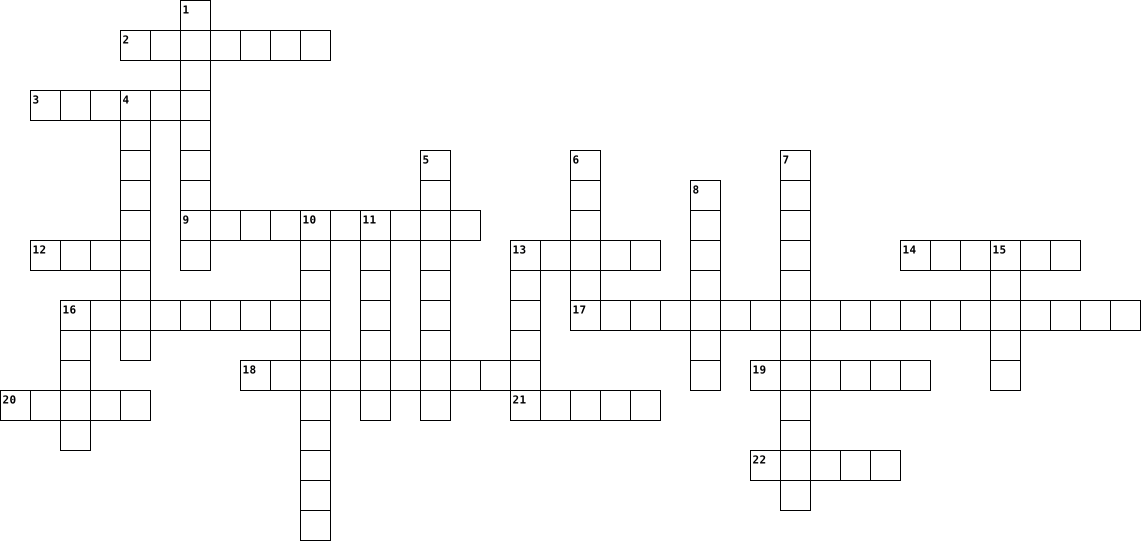
Across
- Two animals are considered bad luck to eat at New Years' because they can walk backwards. Name the other.
- In the Chinese calendar, 2024 is the year of which animal?
- The number representing the New Year, the number of questions in this quiz, and the title of a 2001-2014 American Thriller-Action series staring main character Jack Bower (2 words - 6,4).
- The earliest known New Years' Eve celebration was held in Mesopotamia. How many (thousand) years ago was this?
- Which Asian country rings the bells of it's Buddhist temples 108 times to ring in the New Year?
- What is the diameter of the Times' Square New Years' Eve ball (feet)?
- 360 million glasses of which drink are served in the USA each New Years' Eve?
- What is the title of the song sang in the first HSM movie, when Troy and Gabriella meet at a New Years' Eve party? (4 words - 5,2,9,3)
- Ads for which product were banned in America, January 1st 1971?
- In what ancient country were eggs given as a gift on New Year?
- The Roman God from which January gets it's name
- Which country gained independence on January 1st, 1803?
- In what month did the ancient Romans celebrate the New Year?
Down
- Sticking to the NYE theme, Taylor Swifts' latest album is rather aptly named (plural):
- What is the name of the calendar that first marked January 1st as the New Year in 1582?
- What food do the Dutch believe will bring good luck when eaten on New Years' Eve?
- On New Years' Eve in Spain, 12 of which food is eaten before the clock strikes midnight?
- Which Roman Emperor was the first to declare January 1st a holiday?
- Two animals are considered bad luck to eat at New Years' because they can walk backwards. Name one.
- What is the translation of Auld Lang Syne? (3 words - 5,4,2)
- Pasadena, California celebrates NYE with a Rose Parade. What material is used to build the floats?
- Rosh Hashana marks the beginning of the New Year for which religion?
- The Calendar the Chinese New Year is based around
- In which country did the New Years' Eve firework tradition begin?
24 Clues: The Roman God from which January gets it's name • The Calendar the Chinese New Year is based around • Which country gained independence on January 1st, 1803? • In the Chinese calendar, 2024 is the year of which animal? • What is the translation of Auld Lang Syne? (3 words - 5,4,2) • In what month did the ancient Romans celebrate the New Year? • ...
TEKA TEKI SILANG IPS 2023-08-23

Across
- Negara yang berada di Afrika bagian tengah
- Punggungan bukit yang terbesar di Finlandia
- Suku bangsa Dinara tinggal di
- Danau unik di Australia
- Danau terdalam di dunia
- Progam UNESCO menjadi acuan negara negara didunia untuk meningkatkan kualitas SDM melalui
- Jenis pohon di Amerika Serikat
- Flora khas di Australia
- Wilayah Amerika Selatan dikenal sebagai
- Sebagian besar batuan di Inggris
- Percobaan peluncuran rudal dan nuklir dilakukan di lokasi peluncuran
- Air terjun yang terkenal di Amerika Serikat
- Garis pantai terpanjang di dunia setelah Kanada
- Batas negara Afrika Selatan sebelah utara
- Sungai yang membelah wilayah jerman
- Kerja sama antaranegara dapat meringankan
- Perdagangan antarnegara disebabkan oleh perbedaan
- Benua Afrika adalah benua terpadat ke ... setelah Benua Asia
- Area antara sungai parana dan Uruguay
- Sebagian besar kenampakan alam di Afrika Selatan
- Batas benua Asia sebelah Selatan
- Lembah Sungai Kuning terletak di
- Salah satu pulau utama Jepang
- Benua yang mempunyai populasi penduduk terbesar ketiga
Down
- Hewan yang dapat ditemukan di kawasan Alaska
- Negara terbesar di Afrika
- Sungai di benua Afrika yang membentuk air terjun Victoria
- Sebagian besar negara dibenua Afrika mengembangkan sektor
- Batas sebelah barat Mesir
- Sungai terpanjang didunia
- Salah satu dari delapan negara bagian benua Australia
- Pengelompokkan penduduk berdasarkan kriteria tertentu seperti usia dan jenis kelamin disebut
- Salah satu kelompok rumpun bahasa di benua Afrika
- Jenis tumbuhan Afro-Alpine yang berada di benua Afrika
- Investasi dilakukan untuk memperoleh
- Batas sebelah barat Argentina
- Suku bangsa yang memiliki ciri-ciri bermata cokelat dan berambut pirang
- Ras Negroid meliputi Negro Sudan dan Negro
- Kawasan Asia tenggara memiliki ras
- Danau terbesar di Jepang
- Negara yang menjadi tujuan penduduk dari banyak negara untuk menempuh pendidikan
- Lembaga ekonomi dan politik yang beranggotakan negara-negara Eropa
- Negara di Asia selatan yang memiliki pertumbuhan penduduk yang diperkirakan melampaui Tiongkok
- Tempat terdingin di bumi dengan suhu mencapai -85° dan -90° Celcius pada musim dingin dan 30° lebih tinggi pada musim panas
- Hubungan timbal balik antara wilayah satu dengan wilayah lain
- Iklim Afrika Selatan
- Bendungan di bagian selatan sungai nil
- Batu kerikil terbesar di dunia
- Salah satu kawasan kota yang disinggahi penduduk Benua Australia
- Iklim Kanada dipengaruhi letak
50 Clues: Iklim Afrika Selatan • Danau unik di Australia • Danau terdalam di dunia • Flora khas di Australia • Danau terbesar di Jepang • Negara terbesar di Afrika • Batas sebelah barat Mesir • Sungai terpanjang didunia • Suku bangsa Dinara tinggal di • Batas sebelah barat Argentina • Salah satu pulau utama Jepang • Jenis pohon di Amerika Serikat • Batu kerikil terbesar di dunia • ...
CLASSIC BOARD GAMES 2024-10-28

Across
- Draw clues for teammates to guess
- Chinese game with tiles and patterns
- Flip discs to dominate the board
- WII strategy game with alliances
- Negotiate and strategize in Europe before WWI
- Card game with a pegged board for scoring
- Classic card game of matching numbers and colors
- Simulating life choices and careers
- Build cities and roads using tiles
- Ancient game of moving stones between pits
- Moving pieces based on dice rolls
- Jumping over pieces on a square board
- Play cards and place chips in rows on the board
- Buying properties and collecting rent
- Collect train routes across a map
- Capture the enemy flag with hidden pieces
- Detectives chase a criminal through London
- Card game of asking for matching pairs
- Conquer territories with armies and dice
- Move marbles to the opposite side
- Solve a mystery in a mansion
- Roll five dice and aim for high scores
- Build civilizations in ancient Mesopotamia
Down
- A version of Risk with evolving gameplay
- Build power plants and connect cities
- Place colorful shapes on a grid, no overlap
- A physical game of balance and color spots
- Strategic game with kings and queens
- Move your pieces, pop the dice in the center
- Race to get all your pieces home
- Forming words on a grid using letter tiles
- Trade resources and build settlements
- Build an elaborate trap to catch a mouse
- Climb up or slide down, based on spins
- Guess words based on clues from your spymaster
- Cooperate to stop ancient, evil forces
- Guess the hidden code in a logic game
- Ancient game of capturing territory with stones
- Get your team to guess the word without saying forbidden clues
- Pull wooden blocks without toppling the tower
- Colorful board for young players, no reading required
- Work as a team to stop global outbreaks
- Answer questions to win pie pieces
- Align four pieces in a row
- Find words in a grid of lettered dice
- Sinking your opponent’s fleet of ships
- Matching tiles with the same number of dots
- Japanese version of chess
- Classic game of moving pieces back home
- Grow crops and raise animals in medieval Europe
50 Clues: Japanese version of chess • Align four pieces in a row • Solve a mystery in a mansion • Race to get all your pieces home • Flip discs to dominate the board • WII strategy game with alliances • Draw clues for teammates to guess • Moving pieces based on dice rolls • Collect train routes across a map • Move marbles to the opposite side • Build cities and roads using tiles • ...
World History Unit 1 Vocab 2024-09-18

Across
- A site of human habitation that was occupied between approximately 7400-5200BCE
- Sargon of Akkad was considered a god by his subjects, along with his son Naram-Sin.
- a prehistoric period that followed the Stone Age and preceded the Iron Age, when certain weapons and tools came to be made of bronze rather than stone.
- a set of letters or symbols in a fixed order, used to represent the basic sounds of a language; in particular, the set of letters from A to Z.
- Darius I, commonly known as Darius the Great, was a Persian ruler who served as the third King of Kings of the Achaemenid Empire, reigning from 522 BCE until his death in 486 BCE
- a political system consisting of an independent city having sovereignty over contiguous territory and serving as a centre and leader of political, economic, and cultural life.
- relating to or characterized by belief in or worship of more than one god.
- (especially in ancient Egypt) a body of a human being or animal that has been ceremonially preserved by removal of the internal organs, treatment with natron and resin, and wrapping in bandages.
- The land between the tigris and euphrates rivers
- The process of taming an animal and keeping it as a pet or on a farm
Down
- a line of hereditary rulers of a country.
- a member of a nomadic people who live chiefly by hunting and fishing, and harvesting wild food.
- an ancient Mesopotamian temple tower consisting of a lofty pyramidal structure built in successive stages with outside staircases and a shrine at the top
- Lower Egypt is in the north and contains the Nile Delta, while Upper Egypt contains areas to the South.
- The process of concentrating on and becoming expert in a particular subject or skill
- the period of prehistory from approximately 3.3 million years ago to around 12,000 years ago
- the world's longest river (4150 miles); flows northward through eastern Africa into the Mediterranean;
- a monumental structure with a square or triangular base and sloping sides that meet in a point at the top, especially one built of stone as a royal tomb in ancient Egypt.
- Solomon is known for being the king of Israel who built the first Temple in Jerusalem.
- living the life of a nomad wandering
20 Clues: living the life of a nomad wandering • a line of hereditary rulers of a country. • The land between the tigris and euphrates rivers • The process of taming an animal and keeping it as a pet or on a farm • relating to or characterized by belief in or worship of more than one god. • A site of human habitation that was occupied between approximately 7400-5200BCE • ...
Persian & Peloponnesian Wars 2026-03-02

Across
- King who conquered Mesopotamia
- a monotheistic religion based on Ahura Mazda that taught Kings were put in charge to guarantee social order and justice
- located today in southwestern Iran
- southern peninsula of Greece where Sparta was located
- this way of life is what Pericles argued was worth protecting
- Kingdom to the north of Greece that would take advantage of Greece's weakness following constant warfare costing the Greek city-states their independence
- hero of the Battle of Marathon
- the _______ League was a defensive league formed and led by Athens
- this sea separates Persia from Greece
- a "defender of the Kingdom" which we would call a governor
- the hero of the Battle of Thermopylae
- this sea is to the west of Greece
- King who invaded Greece a second time in 480 BC with over 200,000 troops
- the victor of the Peloponnesian Wars even though both sides would be left weakened by it
- this Road connected areas from Susa to Sardis and would later connect to the Silk Road of China
- the hero of the Battle of Salamis
Down
- capitol of the Achaemenid Persian Empire founded by Darius I around 518 BC
- first major battle of the Persian Wars won by Athens (also where we get the name of a 26 mile run)
- a Persian victory over the Spartans that saw Athens burnt to the ground
- this city-state took advantage of Sparta's weakness following the Peloponnesian Wars and took it over only to collapse a decade later
- the Benedict Arnold of Ancient Greece (most notorious traitor for telling the Persians how to defeat the Spartans)
- also called Asia Minor
- a combined Greek force defeated the Persian forces effectively ending the Perisan Wars which would weaken the Empire of Persia significantly
- A naval victory of Athens over the Persians that saw the Persian fleet almost entirely destroyed
- Greek historian who provided us with primary accounts of the Peloponnesian Wars
- philias sophia in Greek meaning "love of wisdom" (these are people who search for it)
- a unit of time measuring 10 years
- Athenian leader who led Athens into a Golden Age of prosperity and achievement
- King whom in 490 BC sent a force to attack Greece with 600 ships
29 Clues: also called Asia Minor • King who conquered Mesopotamia • hero of the Battle of Marathon • a unit of time measuring 10 years • this sea is to the west of Greece • the hero of the Battle of Salamis • located today in southwestern Iran • this sea separates Persia from Greece • the hero of the Battle of Thermopylae • southern peninsula of Greece where Sparta was located • ...
Unit 2 Review Crossword 2025-11-03

Across
- a characteristic of civilization that includes the beliefs and behaviors of a society or group of people
- general agreement
- a task or problem that tests a person’s abilities
- soldiers who ride on horses
- a strong disagreement
- kill for political reasons
- an ecoregion in Eurasia with dry grasslands and no forests
- the way a region or country uses resources to produce and sell or trade goods and services to meet people’s needs and wants
- a hard, dark, volcanic rock
- a wall of earth built to prevent a river from flooding its banks
- the right or lawfulness of a ruler’s claim to be head of the government
- surrounded by land without access to the sea
- an early city that was like a small, independent country with its own laws and government
- the process of preserving a dead body so that it does not decay
- a resource that can be used to make something else
- someone who is trained in a particular career
- a line separating two countries or other political regions
- the ability to self-govern
- having a great deal of variety
- fine particles of rock
- the group of gods worshipped in a religion
- a person who makes money by selling goods
- an ancient Mesopotamian temple tower with outside staircases and a shrine at the top
- a military blockade and attack on a city to force it to surrender
- a means of supplying land with water
- very large structures built by a society; often built to honor the power of the society's rulers or gods
- to join together
- a society marked by developed arts, sciences, government, and social structure
- to show something in a place where people can see it
- an area in southern Mesopotamia where cities first appeared
- writing that uses wedge-shaped characters
- a military tactic in which an archer rides away from an enemy, but shoots back over his or her shoulder
- a system of underground channels used to irrigate arid and semiarid locations
- a skilled way of doing something
- speaking that is designed to persuade people
- a craftsperson
- to build; usually some kind of structure, such as a house
- receiving little or no precipitation; dry
- one of the two largest rivers in Southwest Asia that flow from the mountains in Turkey to the Persian Gulf
Down
- the governing domain of an empire
- a large territory in which several groups of people are ruled by a single leader or government
- to keep something in good condition by making necessary repairs
- a collection of written laws and rules
- the blending of practices from more than one religion
- to bring something new into being
- a way of life that offers much more than what is necessary
- a society that is clearly divided between an elite at the top and, often, skilled workers in the middle and laborers and enslaved people at the bottom
- a person without a legitimate claim to rule, who becomes ruler by force
- a disagreement or fight caused by opposing points of view
- a domain that has been conquered by the central state and made part of its empire
- divisions of society that are kept strictly separate and treated differently
- a secret plan to commit a crime
- to bring together
- passed along from parent to child
- the way a civilization is organized
- a language shared by people who have different native languages
- arranged in a difficult way
- a substance that lies between or above other things
- allowing the practice of religions or cultures other than one’s own
- a god or being believed to have created the world or universe
- a city that is the center of government
- ruler of the “countries” of ancient Persia, who answered to the king
- one of the two largest rivers in Southwest Asia that flow from the mountains in Turkey to the Persian Gulf
- the use of tools and other inventions for practical purposes
- a planned approach
- a member of society who is able to communicate between society and the spiritual and natural worlds
- in ancient times, the geographic area located between the Tigris and Euphrates rivers
- a symbol that stands for an object
- an interconnected system of channels or lines
- wealth sent from one country or ruler to another as a sign that the other is superior
- the people who perform the work of government
- the passing of knowledge, ideas, and culture through spoken words or songs
- short notes recorded for future use
- an early form of writing based on symbols
- a singer or performer, usually one who recited poetry to music for the nobility
- a person who writes
- someone who forces entry into a place where they are unwanted
- receiving only 10 to 20 inches of precipitation per year; mostly dry
78 Clues: a craftsperson • to join together • general agreement • to bring together • a planned approach • a person who writes • a strong disagreement • fine particles of rock • kill for political reasons • the ability to self-govern • soldiers who ride on horses • a hard, dark, volcanic rock • arranged in a difficult way • having a great deal of variety • a secret plan to commit a crime • ...
Ancient peoples Novák Marcell 2023-12-21

Across
- A people who, in the ancient Valley civilization, excelled in urban planning and made significant contributions to one of the earliest major civilizations in South Asia.
- A people who, from Carthage, were maritime experts and key players in the famous Punic Wars against Rome.
- A people who, originating from ancient tribes, were the Germanic peoples, historically influential in Northern and Western Europe, contributing to the formation of early medieval European cultures.
- A people who, renowned for military excellence, were the Macedonians, led by figures like Alexander the Great, who established one of history's largest empires through conquests across Asia, the Middle East, and parts of Europe.
- A people who, originating from ancient lands, were known for their vast Achaemenid Empire, cultural achievements, administrative innovations, and significant influence in the ancient world.
Down
- A people who, in the ancient Eastern Mediterranean, excelled in maritime activities, trade, and played a key role in developing the alphabet.
- A people in ancient East along the Nile, they forged an advanced civilization with fertile floodplains, advanced agriculture, and unique hieroglyphic writing.
- A people who, originating in ancient Italy, were known for their influential civilization, military prowess, engineering feats, and the establishment of one of history's largest empires, shaping Western culture.
- A people who, originating in the ancient Eastern Mediterranean, profoundly influenced Western culture through contributions to philosophy, art, and the establishment of democracy.
- A people who, from ancient Mesopotamia, were the Sumerians, celebrated for advanced civilization, monumental architecture, cuneiform writing, and pioneering contributions to early mathematics, astronomy, and urban development.
10 Clues: A people who, from Carthage, were maritime experts and key players in the famous Punic Wars against Rome. • A people who, in the ancient Eastern Mediterranean, excelled in maritime activities, trade, and played a key role in developing the alphabet. • ...
Group 1 VOCAB. 2021-10-12

Across
- The way of life propagated by a Chinesephilosopher named K'ungFu-tzu or Confucius, the Westernized version, believed that a society could becomeperfect, if the people who lived in it exhibited "beautiful conduct." High value given tolearning and to devotion to family (including ancestors).
- a religious teaching by Buddha and his followers,which declares that bydestroying greed and hatred, which are the causes of all suffering, man can attainperfect enlightenment.
- originated in India and can be viewed asboth monotheistic and polytheistic;religious beliefs and cultural practices are characterized by a belief in reincarnation and asupreme being of many forms and natures.
- a religion based on the messages that Muhammadis believed to have receivedfrom God. In Arabic, the word Islam means “to submit to God.”
- is the belief in many gods (Mesopotamia,Egypt, Greek Mythology, RomanMythology, and Ancient Americas)
- a folktale that tries to explain the way the world is or how things came to be;usually involving a god or goddess, hero, and/or human.
- specific fundamental set of beliefs and practices generally agreed upon by a number of persons.
Down
- The religion of the Israelites of the Bible andof the Jews of t oday, based on theteachings of the Torah. Judaism involves the beliefin one God, whoseChosen People ar ethe Jews. Abraham is c onsidered the founder of Judaism,although Moses, whodelivered the laws of God to the Israelites, is also an important figure. It is the world’soldest monotheistic religion.
- the Christian religion, based on thelife and teachings of Jesus and on theChristian holy book, the Bible.
- is the belief in one God (Judaism, Christianity and Islam)
- a collection of traditional stories that express the beliefs or values of agroup of people.
11 Clues: is the belief in one God (Judaism, Christianity and Islam) • a collection of traditional stories that express the beliefs or values of agroup of people. • specific fundamental set of beliefs and practices generally agreed upon by a number of persons. • is the belief in many gods (Mesopotamia,Egypt, Greek Mythology, RomanMythology, and Ancient Americas) • ...
RELIGION 2021-10-18

Across
- The way of life propagated by a Chinese philosopher named K'ung Fu-tzu or Confucius, the Westernized version, believed that a society could become perfect, if the people who lived in it exhibited "beautiful conduct." High value given to learning and to devotion to family (including ancestors).
- Christian religion, based on the life and teachings of Jesus and on the Christian holy book, the Bible.
- a religion based on the messages that Muhammad is believed to have received from God. In Arabic, the word Islam means “to submit to God.”
- The religion of the Israelites of the Bible and of the Jews of today, based on the teachings of the Torah. Judaism involves the belief in one God, whose Chosen People are the Jews. Abraham is considered the founder of Judaism,although Moses, who delivered the laws of God to the Israelites, is also an important figure. It is the world’s oldest monotheistic religion.
Down
- is the belief in one God (Judaism, Christianity and Islam)
- is the belief in many gods (Mesopotamia,Egypt, Greek Mythology, Roman Mythology, and Ancient Americas).
- a religious teaching by Buddha and his followers, which declares that by destroying greed and hatred, which are the causes of all suffering, man can attain perfect enlightenment.
- specific fundamental set of beliefs and practices generally agreed upon by a number of persons.
- a folktale that tries to explain the way the world is or how things came to be; usually involving a god or goddess, hero, and/or human.
- originated in India and can be viewed as both monotheistic and polytheistic;religious beliefs and cultural practices are characterized by a belief in reincarnation and a supreme being of many forms and natures.
- a collection of traditional stories that express the beliefs or values of a group of people.
11 Clues: is the belief in one God (Judaism, Christianity and Islam) • a collection of traditional stories that express the beliefs or values of a group of people. • specific fundamental set of beliefs and practices generally agreed upon by a number of persons. • is the belief in many gods (Mesopotamia,Egypt, Greek Mythology, Roman Mythology, and Ancient Americas). • ...
Religion Vocab Group 1 2023-10-26

Across
- a religious teaching by Buddha and his followers, which declares that by destroying greed and hatred, which are the causes of all suffering, man can attain perfect enlightenment.
- specific fundamental set of beliefs and practices generally agreed upon by a number of persons.
- a collection of traditional stories that express the beliefs or values of a group of people.
- the Christian religion, based on the life and teachings of Jesus and on the Christian holy book, the Bible.
- is the belief in many gods (Mesopotamia, Egypt, Greek Mythology, Roman Mythology, and Ancient Americas).
- originated in India and can be viewed as both monotheistic and polytheistic; religious beliefs and cultural practices are characterized by a belief in reincarnation and a supreme being of many forms and natures.
Down
- The way of life propagated by a Chinese philosopher named K'ung Fu-tzu or Confucius, the Westernized version, believed that a society could become perfect, if the people who lived in it exhibited "beautiful conduct." High value given to learning and to devotion to family (including ancestors).
- The religion of the Israelites of the Bible and of the Jews of today, based on the teachings of the Torah. Judaism involves the belief in one God, whose Chosen People are the Jews. Abraham is considered the founder of Judaism, although Moses, who delivered the laws of God to the Israelites, is also an important figure. It is the world’s oldest monotheistic religion.
- the belief in one God (Judaism, Christianity and Islam)
- a religion based on the messages that Muhammad is believed to have received from God. In Arabic, the word Islam means “to submit to God.”
- a folktale that tries to explain the way the world is or how things came to be; usually involving a god or goddess, hero, and/or human.
11 Clues: the belief in one God (Judaism, Christianity and Islam) • a collection of traditional stories that express the beliefs or values of a group of people. • specific fundamental set of beliefs and practices generally agreed upon by a number of persons. • is the belief in many gods (Mesopotamia, Egypt, Greek Mythology, Roman Mythology, and Ancient Americas). • ...
Religion Unit Vocabulary 1 2023-10-17

Across
- the Christian religion, based on the life and teachings of Jesus and on the Christian holy book, the Bible.
- the belief in many gods (Mesopotamia, Egypt, Greek Mythology, Roman Mythology, and Ancient Americas).
- a religious teaching by Buddha and his followers, which declares that by destroying greed and hatred, which are the causes of all suffering, man can attain perfect enlightenment.
- The way of life propagated by a Chinese philosopher named K'ung Fu-tzu or Confucius, the Westernized version, believed that a society could become perfect, if the people who lived in it exhibited "beautiful conduct." High value given to learning and to devotion to family (including ancestors).
- originated in India and can be viewed as both monotheistic and polytheistic; religious beliefs and cultural practices are characterized by a belief in reincarnation and a supreme being of many forms and natures.
- a collection of traditional stories that express the beliefs or values of a group of people.
Down
- a religion based on the messages that Muhammad is believed to have received from God. In Arabic, the word Islam means “to submit to God.”
- a folktale that tries to explain the way the world is or how things came to be; usually involving a god or goddess, hero, and/or human.
- specific fundamental set of beliefs and practices generally agreed upon by a number of people
- the belief in one God (Judaism, Christianity and Islam)
- The religion of the Israelites of the Bible and of the Jews of today, based on the teachings of the Torah. Judaism involves the belief in one God, whose Chosen People are the Jews. Abraham is considered the founder of Judaism, although Moses, who delivered the laws of God to the Israelites, is also an important figure. It is the world’s oldest monotheistic religion.
11 Clues: the belief in one God (Judaism, Christianity and Islam) • a collection of traditional stories that express the beliefs or values of a group of people. • specific fundamental set of beliefs and practices generally agreed upon by a number of people • the belief in many gods (Mesopotamia, Egypt, Greek Mythology, Roman Mythology, and Ancient Americas). • ...
Religion Vocab Tic-Tac-Toe 2022-10-11

Across
- The way of life propagated by a Chinese philosopher named K'ung Fu-tzu or Confucius, the Westernized version, believed that a society could become perfect, if the people who lived in it exhibited "beautiful conduct." High value given to learning and to devotion to family (including ancestors).
- a religious teaching by Buddha and his followers, which declares that by destroying greed and hatred, which are the causes of all suffering, man can attain perfect enlightenment.
- originated in India and can be viewed as both monotheistic and polytheistic; religious beliefs and cultural practices are characterized by a belief in reincarnation and a supreme being of many forms and natures.
- a religion based on the messages that Muhammad is believed to have received from God. In Arabic, the word Islam means “to submit to God.”
- is the belief in many gods (Mesopotamia, Egypt, Greek Mythology, Roman Mythology, and Ancient Americas).
- a folktale that tries to explain the way the world is or how things came to be; usually involving a god or goddess, hero, and/or human.
- specific fundamental set of beliefs and practices generally agreed upon by a number of persons.
Down
- The religion of the Israelites of the Bible and of the Jews of today, based on the teachings of the Torah. Judaism involves the belief in one God, whose Chosen People are the Jews. Abraham is considered the founder of Judaism, although Moses, who delivered the laws of God to the Israelites, is also an important figure. It is the world’s oldest monotheistic religion.
- the Christian religion, based on the life and teachings of Jesus and on the Christian holy book, the Bible.
- is the belief in one God (Judaism, Christianity and Islam)
- a collection of traditional stories that express the beliefs or values of a group of people.
11 Clues: is the belief in one God (Judaism, Christianity and Islam) • a collection of traditional stories that express the beliefs or values of a group of people. • specific fundamental set of beliefs and practices generally agreed upon by a number of persons. • is the belief in many gods (Mesopotamia, Egypt, Greek Mythology, Roman Mythology, and Ancient Americas). • ...
religion 2022-10-19

Across
- specific fundamental set of beliefs and practices generally agreed upon by a number of persons.
- is the belief in many gods (Mesopotamia, Egypt, Greek Mythology, Roman Mythology, and Ancient Americas).
- The way of life propagated by a Chinese philosopher named K'ung Fu-tzu or Confucius, the Westernized version, believed that a society could become perfect, if the people who lived in it exhibited "beautiful conduct." High value given to learning and to devotion to family (including ancestors).
- a religious teaching by Buddha and his followers, which declares that by destroying greed and hatred, which are the causes of all suffering, man can attain perfect enlightenment.
- a collection of traditional stories that express the beliefs or values of a group of people.
Down
- the Christian religion, based on the life and teachings of Jesus and on the Christian holy book, the Bible.
- a religion based on the messages that Muhammad is believed to have received from God. In Arabic, the word Islam means “to submit to God.”
- The religion of the Israelites of the Bible and of the Jews of today, based on the teachings of the Torah. Judaism involves the belief in one God, whose Chosen People are the Jews. Abraham is considered the founder of Judaism, although Moses, who delivered the laws of God to the Israelites, is also an important figure. It is the world’s oldest monotheistic religion.
- is the belief in one God (Judaism, Christianity and Islam)
- originated in India and can be viewed as both monotheistic and polytheistic; religious beliefs and cultural practices are characterized by a belief in reincarnation and a supreme being of many forms and natures.
- a folktale that tries to explain the way the world is or how things came to be; usually involving a god or goddess, hero, and/or human.
11 Clues: is the belief in one God (Judaism, Christianity and Islam) • a collection of traditional stories that express the beliefs or values of a group of people. • specific fundamental set of beliefs and practices generally agreed upon by a number of persons. • is the belief in many gods (Mesopotamia, Egypt, Greek Mythology, Roman Mythology, and Ancient Americas). • ...
Religion Vocabulary 2025-10-21

Across
- -a religious teaching by Buddha and his followers, which declares that by destroying greed and hatred, which are the causes of all suffering, man can attain perfect enlightenment.
- specific fundamental set of beliefs and practices generally agreed upon by a number of persons.
- Christian religion, based on the life and teachings of Jesus and on the Christian holy book, the Bible.
- The way of life propagated by a Chinese philosopher named K'ung Fu-tzu or Confucius, the Westernized version, believed that a society could become perfect, if the people who lived in it exhibited "beautiful conduct." High value given to learning and to devotion to family (including ancestors).
- a collection of traditional stories that express the beliefs or values of a group of people.
- originated in India and can be viewed as both monotheistic and polytheistic; religious beliefs and cultural practices are characterized by a belief in reincarnation and a supreme being of many forms and natures.
- a religion based on the messages that Muhammad is believed to have received from God. In Arabic, the word Islam means “to submit to God.”
Down
- a folktale that tries to explain the way the world is or how things came to be; usually involving a god or goddess, hero, and/or human.
- is the belief in one God (Judaism, Christianity and Islam)
- The religion of the Israelites of the Bible and of the Jews of today, based on the teachings of the Torah. Judaism involves the belief in one God, whose Chosen People are the Jews. Abraham is considered the founder of Judaism, although Moses, who delivered the laws of God to the Israelites, is also an important figure. It is the world’s oldest monotheistic religion.
- is the belief in many gods (Mesopotamia, Egypt, Greek Mythology, Roman Mythology, and Ancient Americas).
11 Clues: is the belief in one God (Judaism, Christianity and Islam) • a collection of traditional stories that express the beliefs or values of a group of people. • specific fundamental set of beliefs and practices generally agreed upon by a number of persons. • Christian religion, based on the life and teachings of Jesus and on the Christian holy book, the Bible. • ...
Religion 2025-10-22

Across
- originated in India and can be viewed as both monotheistic and polytheistic; its religious beliefs and cultural practices are characterized by a belief in reincarnation and a supreme being of many forms and natures.
- the Christian religion, based on the life and teachings of Jesus and on the Christian holy book, the Bible.
- a religion based on the messages that Muhammad is believed to have received from God. In Arabic, the word Islam means “to submit to God.”
- specific fundamental set of beliefs and practices generally agreed upon by a number of persons.
- The religion of the Israelites of the Bible and of the Jews of today, based on the teachings of the Torah. Judaism involves the belief in one God, whose Chosen People are the Jews. Abraham is considered the founder of Judaism, although Moses, who delivered the laws of God to the Israelites, is also an important figure. It is the world’s oldest monotheistic religion.
- is the belief in many gods (Mesopotamia, Egypt, Greek Mythology, Roman Mythology, and Ancient Americas).
Down
- -a religious teaching by Buddha and his followers, which declares that by destroying greed and hatred, which are the causes of all suffering, man can attain perfect enlightenment.
- is the belief in one God (Judaism, Christianity and Islam)
- a collection of traditional stories that express the beliefs or values of a group of people.
- a folktale that tries to explain the way the world is or how things came to be; usually involving a god or goddess, hero, and/or human.
- The way of life propagated by a Chinese philosopher named K'ung Fu-tzu or Confucius, the Westernized version, believed that a society could become perfect, if the people who lived in it exhibited "beautiful conduct." High value given to learning and to devotion to family (including ancestors).
11 Clues: is the belief in one God (Judaism, Christianity and Islam) • a collection of traditional stories that express the beliefs or values of a group of people. • specific fundamental set of beliefs and practices generally agreed upon by a number of persons. • is the belief in many gods (Mesopotamia, Egypt, Greek Mythology, Roman Mythology, and Ancient Americas). • ...
Neolithic to Medievil Art History 2020-12-04

Across
- work.
- A painting medium made by blending egg yolks with water, pigments, and occasionally other materials, such as glue.
- A hand-written book or document.
- Delicate, lace like
- The flat slab at the top of a capital, directly under the entablature.
- A traditional way of representing forms.
- In ancient Egypt, a stylized dung beetle associated with the sun and the god Amun.
- The application of paper-thin gold leaf or gold pigment to an object made from another medium (for example, a sculpture or painting). Usually used as a decorative fin
- The part of a church reserved for the clergy, monks, or nuns, either between the transept crossing and the apse or extending farther into the nave; separated from the rest of the church by screens or walls and fitted with stalls (seats).
- A building used for communal Islamic worship.
- The citadel of an ancient Greek city, located at its highest point and housing temples, a treasury, and sometimes a royal palace. The most famous is the Acropolis in Athens.
- An ornamental, angular Arabic script.
- The vestibule or entrance porch of a church.
Down
- A monumental building used as a tomb. Named after the tomb of King Mausolos erected at Halikarnassos around 350 BCE.
- A low-fired, opaque ceramic ware, employing humble clays that are naturally heat-resistant and remain porous after firing unless glazed. Earthenware occurs in a range of earth-toned colors, from white and tan to gray and black, with tan predominating.
- The final, topmost stone in a corbeled arch or vault, which joins the sides and completes the structure
- A small chapel.
- A large cemetery or burial area; literally a “city of the dead.”
- An early form of writing with wedge-shaped marks impressed into wet clay with a stylus, primarily used by ancient Mesopotamians.
- The central space of a church, two or three stories high and usually flanked by aisles.
- A half dome.
- In ancient Mesopotamia, a tall stepped tower of earthen materials, often supporting a shrine.
- o A circular area enclosed by stones or wood posts set up by Neolithic peoples. It is usually bounded by a ditch and raised embankment.
23 Clues: work. • A half dome. • A small chapel. • Delicate, lace like • A hand-written book or document. • An ornamental, angular Arabic script. • A traditional way of representing forms. • The vestibule or entrance porch of a church. • A building used for communal Islamic worship. • A large cemetery or burial area; literally a “city of the dead.” • ...
AP CROSSWORD 2021-05-27

Across
- Terminong hango sa salitang Grigeyo.
- Mga bagay na di sumasangayaon sa batas.
- Paggawa ng sekswal kapalit ang pera o materyal na bagay.
- Serbisyo na maaring may kasamang sekswal na gawain.
- Nakakapagbago ng isipan na nagdudulot ng pagkaubaya sa pangangalaga ng katawan.
- Mga gawaing may kapalit na pera.
- Madalas na sangkot ng prostitusyon.
- Pangunahing dahilan kung bakit maraming napupunta sa larangan ng prostitusyon.
- Ang kapalit ng mga sekswal na aktibidad.
- Libro kung saan mayroong itinuturo ukol sa mga gawa ng laman kabilang dito ang ukol sa prostitusyon.
- Nagbebenta ng serbisyong sekswal at itinuturing ang mga gawain bilang trabaho.
- Mga taong nagnanais bumili ng mga bagay na makapagpapasaya sa kanila.
- Isang sektor ng lipunan na tutol sa prostitusyon sa Pilipinas
- Ito ay "problema "ng lipunan.
- Karanasan na pang-aapi na maaring rason kung bakit pumasok sa prostitusyon.
- Mga napilitang pumasok sa larangan ng prostitusyon
- Dito inilahintulad kung gaano kablis at dali ang transaksyon.
- Kabliang sa mga lugar na malapit ang prostitusyon.
- Ang tawag sa mga prostitute sinaunang greece.
Down
- Lugar kung saan sagrado ang prostitusyon.
- Ginagamit ng mga bugaw para sa mga transaksiyon.
- Bansa kung saan asobi - onna ang tawag sa mga babaeng bayaran.
- Mga malalaswang malalaswang palabas, babasahin at larawan.
- Ang prostitusyon ay itinuturing na pinakamatandang uri ng _______.
- Grapho na nagpapakita ng pornograpiya
- Ang binebenta ng mga prostitute kapalit ang pera.
- Iba pang kapalit ng sekswal na gawain.
- Ang gamit ng mga prostitute upang makipagtalik sa internet.
- Pagnanais ng sobra sobra katulad ng malaking kita.
- Birtuwal na pakikipagtalik sa pamamagitan ng internet at webcam kapalit ng salapi.
- Bansa kung saan ligal ang prostitusyon at itinuturing sila bilang mga female performers
- Ang mapapanood sa website kung saan kailangan magbayad ng membership fee upang mapanood.
- Taga alok ng mga prostitute sa mga taong nangangailangan.
- Mga menor edad na biktima ng prostitusyon
- Mga kabataang wala sa tamang edad kaya madaling mahikayat sa maling desisyon.
- Ang kailangang bayaran upang mapanood ang mga liveshows.
- Lugar kung saan marami ang mga bugaw.
- Ang kakulangan sa ______ ay isang rason kung bakit hindi makahanap ng magandang tabaho
- Lugar sa internet kung saan puno ng live shows
- Sekswal na serbisyo na inaalok ng mga prostitute.
40 Clues: Ito ay "problema "ng lipunan. • Mga gawaing may kapalit na pera. • Madalas na sangkot ng prostitusyon. • Terminong hango sa salitang Grigeyo. • Grapho na nagpapakita ng pornograpiya • Lugar kung saan marami ang mga bugaw. • Iba pang kapalit ng sekswal na gawain. • Mga bagay na di sumasangayaon sa batas. • Ang kapalit ng mga sekswal na aktibidad. • ...
AP CROSSWORD 2021-05-27

Across
- Ang kapalit ng mga sekswal na aktibidad.
- Taga alok ng mga prostitute sa mga taong nangangailangan.
- Mga menor edad na biktima ng prostitusyon
- Ang kailangang bayaran upang mapanood ang mga liveshows.
- Libro kung saan mayroong itinuturo ukol sa mga gawa ng laman kabilang dito ang ukol sa prostitusyon.
- Ang tawag sa mga prostitute sinaunang greece.
- Nagbebenta ng serbisyong sekswal at itinuturing ang mga gawain bilang trabaho.
- Sekswal na serbisyo na inaalok ng mga prostitute.
- Mga taong nagnanais bumili ng mga bagay na makapagpapasaya sa kanila.
- Nakakapagbago ng isipan na nagdudulot ng pagkaubaya sa pangangalaga ng katawan.
- Karanasan na pang-aapi na maaring rason kung bakit pumasok sa prostitusyon.
- Mga malalaswang malalaswang palabas, babasahin at larawan.
- Lugar kung saan sagrado ang prostitusyon.
- Grapho na nagpapakita ng pornograpiya
- Pangunahing dahilan kung bakit maraming napupunta sa larangan ng prostitusyon.
- Terminong hango sa salitang Grigeyo.
- Lugar kung saan marami ang mga bugaw.
Down
- Ang gamit ng mga prostitute upang makipagtalik sa internet.
- Ang binebenta ng mga prostitute kapalit ang pera.
- Lugar sa internet kung saan puno ng live shows
- Mga bagay na di sumasangayaon sa batas.
- Mga gawaing may kapalit na pera.
- Ito ay "problema "ng lipunan.
- Isang sektor ng lipunan na tutol sa prostitusyon sa Pilipinas
- Kabliang sa mga lugar na malapit ang prostitusyon.
- Mga kabataang wala sa tamang edad kaya madaling mahikayat sa maling desisyon.
- Ang kakulangan sa ______ ay isang rason kung bakit hindi makahanap ng magandang tabaho
- Ginagamit ng mga bugaw para sa mga transaksiyon.
- Ang mapapanood sa website kung saan kailangan magbayad ng membership fee upang mapanood.
- Mga napilitang pumasok sa larangan ng prostitusyon
- Birtuwal na pakikipagtalik sa pamamagitan ng internet at webcam kapalit ng salapi.
- Iba pang kapalit ng sekswal na gawain.
- Bansa kung saan asobi - onna ang tawag sa mga babaeng bayaran.
- Pagnanais ng sobra sobra katulad ng malaking kita.
- Paggawa ng sekswal kapalit ang pera o materyal na bagay.
- Bansa kung saan ligal ang prostitusyon at itinuturing sila bilang mga female performers
- Serbisyo na maaring may kasamang sekswal na gawain.
- Dito inilahintulad kung gaano kablis at dali ang transaksyon.
- Ang prostitusyon ay itinuturing na pinakamatandang uri ng _______.
- Madalas na sangkot ng prostitusyon.
40 Clues: Ito ay "problema "ng lipunan. • Mga gawaing may kapalit na pera. • Madalas na sangkot ng prostitusyon. • Terminong hango sa salitang Grigeyo. • Grapho na nagpapakita ng pornograpiya • Lugar kung saan marami ang mga bugaw. • Iba pang kapalit ng sekswal na gawain. • Mga bagay na di sumasangayaon sa batas. • Ang kapalit ng mga sekswal na aktibidad. • ...
Kingdom of Kush Crossword Review 2021-12-06

Across
- The Egyptian word for gold
- Once the ___ Kingdom in Egypt crumbled, Egypt was in political chaos
- In the 730’s, Egypt surrendered to King ____ of Kush
- At its pinnacle, the city blossomed as a kingdom of _______ and industry
- After Egypt invaded Kush, Kushites started to speak and write in their native language ________
- After ____ years of conflict, Kush and Rome signed a peace treaty
- Because of all the chaos Egypt became unstable and ____
- 300 miles _____ of Napata
- The area where Kush was located
- King Piye wanted to restore Egypt’s ancient _____
- Used the ___ Sea, overland routes, and the Nile to transport goods.
- Around 350 A.C.E., Kush fell to invaders from ________
- The greatest of all kandakes was Queen __________
- Egyptian culture and traditions _______, even after a new line of Kushite royalty was established
- The Assyrians were known for their _____ warfare
- King Piye also announced himself as pharaoh, and titled himself the “Uniter of the ___ Lands.”
- After the Egyptianization of Kush, Kushites brought back the practice of ______ leadership
- to another for the price of peace, security, protection, or the like
Down
- In the 650’s B.C.E., the last _______ pharaoh was forced out of Egypt, back into Nubia
- One such temple was located in _____ Barkal, and was modeled after Abu Simbel, built by the pharaoh Ramses II
- The capital of Kush after Napata was
- Pharaohs delegated governors to make sure the tribute was paid ______
- Routes ran through Kush, which meant that they traded with many different cultures such as other African kingdoms, Rome, Arabia, India, and likely _____!
- In the 670’s B.C.E., the dominant empire in Mesopotamia, the _________, attacked Egypt
- In the New Kingdom (1600-1100 B.C.E.), _____ conquered Kush
- ________, or queen mothers, ruled over Meroë
- Began to worship the Kush lion-god rather than Amon __ (Egypt’s supreme god)
- ironworkers made tools for easier and faster farming, such as ____ and axes, as well as weapons like arrows, swords, and spears
- Piye and his family reigned for almost one _______ years
- The river that runs through Kush
- A sum or other valuable resources paid by one
- a line of rulers, usually through familial relationships
32 Clues: 300 miles _____ of Napata • The Egyptian word for gold • The area where Kush was located • The river that runs through Kush • The capital of Kush after Napata was • ________, or queen mothers, ruled over Meroë • A sum or other valuable resources paid by one • The Assyrians were known for their _____ warfare • King Piye wanted to restore Egypt’s ancient _____ • ...
CROSSWORD PUZZLE ARPAN MOD 15 2021-06-03

Across
- tumutukoy sa taong nagbebenta ng katawan kapalit ng salapi
- dito nagtatrabaho ang mga prostitute
- galing ang salitang pornograpiya
- katawagan sa iraq na nagpasimula rin ng sibilisasyon ukol sa prostitusyon
- Italy na kasama sa pagpapasimula sa prostitusyon
- isang lugar para sa mga lalaking naghahanap rin ng kapwa lalaki
- ang prostitusyon ay ______ sa pilipinas
- ang binibigay o binebenta kapalit ng salapi
- madalas na dahilan ng prostitusyon ay ang _________
- isa pang dahilan ng prostitusyon kung saan nakatanggap ng pananakit
- isang bansa na kilala hindi lang dahil sa malinis sakanila kundi isa rin sa mga sibilisasyong nagpasimula ng prostitusyon
- pagbibigay ng panandaliang kaligayahan sa isang tao
- katawagan sa mga bagay na hindi madaling kunin ngunit makapagpapasaya sa isang tao
- dito makikita ang mga dapat na gawin at hindi dapat na gawain
- katawagan sa mga taong mahilig gumastos
- unang dahilan ng prostitusyon
- ito na club ngunit mayroon pa ring pagkakaiba
- kasarian na may atraksyon sa lalaki
- lugar na malapit sa mga clubs na may kaugnayan sa prostitusyon
- na may atraksyon sa babae
Down
- sa europa na kasama sa sibilisasyong nagpasimula ng prostitusyon
- ibang katawagan sa bata
- na malapit sa mga pubhouses o nightclubs
- adiksyon sa _____ ay nakapagpapabago ng takbo ng isipan
- sa mga taong nagsasawa ng prostitusyon
- isang 'gender' kung saan nagpalit ng ari ang isnag tao upang matukoy na isa nang ganap na babae o lalaki
- ang prostitusyon ay isang uri ng ________________
- dito napapanood ang mga live show o iba pang mga bidyo na may gawang sekswal
- pinakamatandang uri ng propesyon sa buong mundo
- katawagan kung saan ang pakikipagtalik sa isang prostitute ay sa pamamagitan ng internet at webcam kapalit ng halaga.
- ibang katawagan sa mga babaeng bayaran sa Japan
- katawagan sa isang lalaki na may atraksyon sa kapwa lalaki
- kinakantahan sinasayawan at serbisyong sekswal ang ibinibigay ng mga ito
- ibang katawagan sa may edad na
- katawagan sa mga prostitute sa greece
- kung saan legal ang prostitusyon
- isang kumpanya na nag aalok ng sekswal na gawain
- katawagan sa menor de edad
- katawagan sa mga babaeng bayaran sa Japan
39 Clues: ibang katawagan sa bata • na may atraksyon sa babae • katawagan sa menor de edad • unang dahilan ng prostitusyon • ibang katawagan sa may edad na • galing ang salitang pornograpiya • kung saan legal ang prostitusyon • kasarian na may atraksyon sa lalaki • dito nagtatrabaho ang mga prostitute • katawagan sa mga prostitute sa greece • sa mga taong nagsasawa ng prostitusyon • ...
Test KD - Kerajinan Tekstil 2022-10-13

Across
- Ragam hias batik pesisir.
- Jenis pewarna sintetis batik.
- Proses pembatikan dengan memukul kain tidak kaku dan mudah menyerap malam dan warna.
- Batik yang dikerjakan dengan menggunakan canting dalam membentuk gambar awal pada permukaan kain.
- Nama alat tenun bukan mesin (ATBM).
- Alat tenun berupa kayu yang diberi paku untuk benang lungsi.
- Jahit dengan teknik menghias permukaan kain dengan cara menempelkan guntingan kain pada kain yang berbeda warna dengan dasar kain.
- Tusuk hias yang digunakan untuk teknik sulam pada finishing jahit aplikasi.
- Prinsip kerajinan berupa kegiatan menyulam, membatik, menenun, dll.
- Hasil akhir sulaman yang berlubang-lubang.
- Hiasan yang dibuat dipermukaan kain atau bahan-bahan lain dengan jarum jahit dan benang.
- Bahan membatik yang harus dicairkan terlebih dahulu dengan cara dipanaskan di atas kompor.
- Fungsi kerjaninan pada kain ulos untuk upacara adat.
- Fungsi pada aksesoris untuk keperluan tari adat.
- Nilai kerajinan yang dapat menambah nilai jual suatu produk kerajinan.
Down
- Nama lain kegiatan menenun.
- Berfungsi semacam pena, yang diisi lilin malam cair sebagai tinta untuk membatik.
- Sebuah kegiatan menyambungkan dua buah kain dengan menggunakan benang dan jarum.
- Kerajinan tekstil yang terdapat di makrame hiasan dinding. (Fungsi)
- Motif batik yang berasal dari Jawa Tengah dengan makna simbolik berupa lambang cinta kasih yang tulus.
- Jenis sulam yang memiliki fungsi sebagai renda baju atau taplak dan lainnya.
- Teknik kerajinan pada baju gamis berbahan kaos.
- Jenis pewarna batik berbentuk bubuk yang perlu dilarutkan terlebih dahulu.
- Teknik kerajinan pada kebaya yang dihiasi payet.
- Kerajinan tekstil di Indonesia yang telah diakui dunia.
- Nama lain sulam.
- Prinsip berupa unsur dekorasi yang dibuat dengan dilukis, diukir, dan dicetak, dll.
- Teknik yang diperuntukkan dalam pembuatan batik dengan bentuk pengulangan motif dan tidak memerlukan pola diatas kertas.
- Nilai yang dapat dilihat dari aspek bentuk, warna ragam hias, dan komposisi kerajinan.
- Proses pembatikan dengan memberi isian dengan malam pada latar belakang pola.
- wilayah penghasil permadani yang mendunia.
- Ragam hias batik keraton.
- Pengkategorian batik yang berkembang dimasa lalu, hanya ditemui di daerah pedalaman.
- batik yang tumbuh, berkembang, dan mengacu pada nilai-nilai spiritual kebudayaan Jawa. Pesisir Batik yang berkembang di masyarakat di luar keraton, sebagai akibat dari pengaruh budaya daerah di luar Pulau Jawa.
34 Clues: Nama lain sulam. • Ragam hias batik pesisir. • Ragam hias batik keraton. • Nama lain kegiatan menenun. • Jenis pewarna sintetis batik. • Nama alat tenun bukan mesin (ATBM). • Hasil akhir sulaman yang berlubang-lubang. • wilayah penghasil permadani yang mendunia. • Teknik kerajinan pada baju gamis berbahan kaos. • Teknik kerajinan pada kebaya yang dihiasi payet. • ...
Seputar Indonesia-Asia-Eropa 2023-02-20

Across
- rumah dari 8 warisan budaya Dunia
- selatan pasar terbesar untuk operasi plastik di dunia
- peninggalan hewan purba yang hanya ada di Indonesia
- alat musik khas papua yang memiliki pegangan di sisinya
- rumah khas Palembang yang terdapat di uang 10.000
- kopi yang dihasilkan bersama kotoran hewan musang
- makanan khas banjarmasin yang mirip siput
- hewan terbesar di Asia
- Kota pertama terpadat di Eropa sekitar 15 juta jiwa
- of Poets julukan untuk negara Chili berkaitan dalam bidang sastra
- gorengan khas Malang dari ampas tahu
- gigi profesi tertua di dunia
- kingdom julukan untuk negara Korea Utara
- mamalia besar terlangka di dunia yang ditemukan di Deretan Annam
- negara terkecil keempat di Eropa yang tidak memiliki bandara
- negara pertama dengan wilayah terbesar di Dunia
- hewan yang hanya ada di Sumatera dan Kalimantan
- budaya makan tradisional menggunakan daun pisang
- negara terkecil di dunia yang berada di negara Italia
- olimpiade termahal sepanjang sejarah dunia tahun 2008
- Liberty patung yang dirancang oleh Frederic Bartholdi di Amerika Serikat
- Vespucci penemu benua Amerika Utara yang dikenal sebagai dunia baru
Down
- biasanya menggunakan media roh atau ilmu hitam
- peradaban tertua di benua Asia
- Rumah bagi pabrik torpedo pertama di dunia
- kota kecil India yang memiliki budaya melemparkan anak-anak dari atas menara untuk memberi mereka keberuntungan
- candi terbesar di Dunia
- sebutan untuk negara lumbung padi
- Falls air terjun tertinggi di dunia
- kota terpadat di dunia terletak di benua Asia
- negara mengalami 6 musim, yaitu panas, gugur, dingin, semi, kemarau, dan hujan
- memiliki bangunan tertinggi di dunia yang bernama Ping An Finance Centre
- memiliki harapan hidup tertinggi di dunia
- Satu-satunya kota yang terletak di dua benua antara benua Asia dan Eropa
- jenis pekerjaan paksa di zaman Jepang
- Marino republik kecil Eropa di lereng Gunung Titano dikelilingi semua sisi oleh republik Italia
- lagu khas sumatera utara yang berarti “anak perempuan”
- Cemetery situs warisan dunia UNESCO yang unik di Rumania
- kota berpenduduk tertua di Eropa
- Eiffel kerangka baja patung yang dibuat oleh Alexandre Gustave E.
- tarian asal papua yang menceritakan kisah perempuan cantik dari desa
- negara termuda di Eropa
- Hujan seseorang yang dipercaya memiliki kekuatan menghentikan atau menunda turunnya hujan
- sungai terpanjang di Asia terletak di China
- Kuning julukan untuk benua Asia
45 Clues: hewan terbesar di Asia • candi terbesar di Dunia • negara termuda di Eropa • gigi profesi tertua di dunia • peradaban tertua di benua Asia • Kuning julukan untuk benua Asia • kota berpenduduk tertua di Eropa • rumah dari 8 warisan budaya Dunia • sebutan untuk negara lumbung padi • Falls air terjun tertinggi di dunia • gorengan khas Malang dari ampas tahu • ...
World History Crossoword - Vocab #1 2024-08-29

Across
- This was a form of righting used in the Middle East from 3100 B.C. to 2nd Century AD. It was mainly made up of pictures/symbols.
- This era is defined by humans making stone tools.
- A type of culture that is heavily reliant on the hunting of animals, along with the gathering of natural resources.
- This item is made by humans, in any place or time, but is usually of historical importance and interest.
- This era is the period of time in human history before the invention of writing, meaning that nothing could be documented before then.
- This period of time began around 10,000 BC, when humans began settling down into larger settlements.
Down
- This era occured after the Paleolithic. Humans started settlements, became more agriculturally dependent, and became more interested in the arts.
- This people were trained in the writing or copying of important documents.
- A picture that conveys certain words or ideas, such as the Eygptian hieroglyphs.
- An area in the Middle East that was more fertile than the rest of the region, due to it being surrounded by the Mediterrean basin, the Persian Sea, and the Red Sea.
- Any society/settlement that has a large population, a shared language, a government, a surplus in resources, and a division of labor.
- People would do this to wild animals in order to better suit them for human needs/consumption.
- This is the branch of science in which objects/materials from the past are studied in order to learn more about ancient history.
- This monument, being located in England, is composed of multiple stacked stones that form a circle. The creators of this monument is still debated.
- This term simply means to arrange a set of laws and rules into a code.
- These people were skilled in certain crafts(like masonry and carpenters).
- Large rectangular pyramids that were built in Mesopotamia as a stairway to the gods.
- Every single modern human species is defined as this term. It is latin for "wise man."
- The social practices, beliefs, and behaviors of certain groups.
- These people moved around often in order to find resources(similar to hunter-gatherers)before the Neolithic Revolution
20 Clues: This era is defined by humans making stone tools. • The social practices, beliefs, and behaviors of certain groups. • This term simply means to arrange a set of laws and rules into a code. • These people were skilled in certain crafts(like masonry and carpenters). • This people were trained in the writing or copying of important documents. • ...
HWS2425 Unit 2 Review 2024-10-24

Across
- the Prophet Muhammad's example of how to live
- This invention made the Ottomans very successful militarily
- Saddam Hussein invaded this country in 1990 to gain access to more oil
- this religion was founded by Jesus Christ
- a Muslim place of worship
- Greek for "land between two rivers" referring to a region in the northern Fertile Crescent
- the founder of Judaism
- the belief in multiple gods
- this is the oldest of the three monotheistic religions we studied
- The name for the system where Ottoman rulers allowed different religious groups to act as their own nations
- Arabic word for "deputy/ruler"
- the Qur'an is written in this holy language
- the name for the system in the Ottoman Empire where Christian boys were enlisted in the military and converted to Islam
- a Christian place of worship
- Muslims invented this type of math - many of you are taking this as your math class right now!
- Muslims made great advancements in this scientific study of the sky
- This group of people were "warriors for Islam" and were the first group to make up the Ottoman Empire
- the holy book for Christians
Down
- the holy book for Muslims
- a Jewish place of worship
- this religion was founded by Prophet Muhammad
- World for ruler of the Ottoman Empire
- the belief in one god
- the Arabic word for "God"
- The group of elite warriors that were loyal only to the sultan in the Ottoman Empire
- Instead of drawing realistic depictions of animals, Muslims "draw" using this technique
- the holy book for Jewish people
- a nation that controls many different groups or states
- Arabic word for "pilgrimage"
- the region of the world where all of the monotheistic religions we studied started
- the name for the practice where oil rich countries can withhold oil to get what they want from other countries
- a group/lineage of rulers all from the same family
- Mehmed II conquered Constantinople and renamed it to this
- the number of continents the Ottoman Empire touched
- Muslims pray towards this important holy city
- he made the first known code of law
- Islamic law based on the Qur'an + the example of how Prophet Muhammad lived
37 Clues: the belief in one god • the founder of Judaism • the holy book for Muslims • a Jewish place of worship • the Arabic word for "God" • a Muslim place of worship • the belief in multiple gods • Arabic word for "pilgrimage" • a Christian place of worship • the holy book for Christians • Arabic word for "deputy/ruler" • the holy book for Jewish people • he made the first known code of law • ...
sejarah minat 2024-10-29

Across
- globalisasi di bidang geografi dapat mengancam hilangnya keragaman?
- Selain Mesir muncul negara mana yang memberikan dukungan dan pengakuan terhadap kemerdekaan Indonesia
- Perserikatan bangsa² adalah sebutan bagi suatu organisasi internasional yang di prakarsai oleh
- jure Pengakuan yang didapatkan dinegara Mesir pertama kali di Indonesia secara
- Mesir merupakan negara yang terletak di bagian timur laut benua
- salah satu ciri globalisasi dapat ditinjau dari aspek…
- Negara eropa yang pertama kali mengakui kemerdekaan RI sejal awal berdirinya
- PBB didirikan pada bulan
- apa penyebab dari globalisasi ekonomi?
- II Jepang kalah pada perang
- market salah satu jenis bisnis terlarang dari perkembangan iptek yaitu
- dalam globalisasi, aspek peralihan kehidupan antarnegara berjalan dengan….
- apa yang terjadi pada lingkungan jika banyak perusahaan” besar?
- apa bahasa inggrisnya globalisasi?
- Pada konferensi mengenai organisasi internasional diadakan di
- perusahaan yang berusaha di banyak negara disebut perusahaan ….
- penciptaan mesin traktor yang menggantikan tenaga binatang untuk membajak sawah termasuk dari ….. iptek
Down
- Penyelesaian konflik Belanda-indonesia dengan mengadakan perjanjian
- Ibukota Republik Indonesia yang sebelumnya di pindahkan ke
- apa istilah aksi kejahatan di dunia maya?
- River PBB didirikan diatas tanah yang disumbangkan John D Rockefeller Jr. Yang terletak ditepi
- melalui apa budaya asing masuk ke indonesia?
- Irak merupakan sebuah negara di Timur Tengah,atau asia barat daya yang wilayahnya meliputi sebagian besar dari daerah
- Dampak negatif IPTEK memicu munculnya bisnis² terlarang seperti
- dampak negatif iptek dapat menyebabkan kerusakan?
- Kota yang terkenal dengan sebutan kota pahlawan adalah
- Dampak positif IPTEK contohnya dahulu petani membajak sawah dengan menggunakan alat
- Pasukan Allied forces Netherlands east indies biasa disingkat
- Kemajuan IPTEK membuat kita mampu mendapatkan... Yang lebih luas
- Negara mana yang mendukung kemerdekaan Indonesia yang di wakili oleh ulama syech Muhammad amin Al Husaini adalah negara
- apa istilah dari ilmu pengetahuan dan teknologi?
- negara pertama yang mengakui kedaulatan dan kemerdekaan republik Indonesia adalah
- Belanda ingin menguasai negara mana
- salah satu kecenderungan pasar adalah ….
- Lebanon juga merupakan negara yang pernah mengalami penjajahan oleh negara lain yaitu
- IPTEK di Indonesia pada masa penjajahan dipelopori dan di perkenalkan oleh pemerintah kolonial
- Mayoritas penduduk negara Mesir beragama
- Netherland indies civil administration biasa disingkat
- IPTEK telah memberikan kemudahan untuk menambah pengetahuan dan wawasan contoh nya
- apa yang terjadi jika kita tidak mendapatkan informasi?
40 Clues: PBB didirikan pada bulan • II Jepang kalah pada perang • apa bahasa inggrisnya globalisasi? • Belanda ingin menguasai negara mana • apa penyebab dari globalisasi ekonomi? • salah satu kecenderungan pasar adalah …. • Mayoritas penduduk negara Mesir beragama • apa istilah aksi kejahatan di dunia maya? • melalui apa budaya asing masuk ke indonesia? • ...
(World Geo) Unit 3: Language & Religion 2024-09-23

Across
- extinct Canaanite-Semitic language originally spoken in modern Lebanon (1100 BC)
- adapting to a different culture, typically a dominant one
- set of letters / symbols in a fixed order, represents the basic set of speech sounds
- pieces of ox bone / turtle shells, used for divination–ancient China
- shape, design, or representation of a character
- language family native to the majority of Europe, Iranian plateau, N. India
- printing press machine that inks text / images from movable type to paper, etc...
- the social hierarchy in Hinduism
- only surviving descendant of the Paleo-European languages / NE Spain-SW France
- grammatically simplified communication method
- (language) directly descended from original Latin (French, Italian, Romanian, Spanish, Portuguese)
- brick or stone area in front of a fireplace
- different, not of the same type
- spread of a people from their original home (sometimes clustering in a new place)
- distinctive way of pronouncing a language, associated w/particular country, area, class
- (religions) the 3 main faiths descending from Abraham
- policy of protecting interests of native-born inhabitants against those of immigrants
- one of oldest organized faiths in world, Persia (2000BC) founded by Zarathustra)
- common language between speakers whose native languages are different
- person who studies languages
- Bantu language, central eastern Africa
- character used in a system of pictorial writing, particularly ancient Egyptian
Down
- particular form of a language which is peculiar to a specific region or social group
- sameness, of similar kind
- sacred written language of Hinduism (1,500BC)
- social & cultural characteristics, backgrounds, or experiences shared by a group of people
- differences between different languages & the ways that people communicate
- main religion in India
- writing system used to write several languages of Ancient Near East: Mesopotamia (3,100 BC)
- religious journey to a holy place
- strict adherence to the basic principles of any subject or discipline
- 2+ gods (most ancient religions)
- cultural no-no's
- 1 god only (Abrahamic faiths)
- cultural modification by adapting to or borrowing traits from another culture
- belief that objects, places, & creatures all possess a distinct spiritual essence
- geographic boundary of a certain linguistic feature
- language that forms as the blend of two or more languages
- Spanish + English
39 Clues: cultural no-no's • Spanish + English • main religion in India • sameness, of similar kind • person who studies languages • 1 god only (Abrahamic faiths) • different, not of the same type • 2+ gods (most ancient religions) • the social hierarchy in Hinduism • religious journey to a holy place • Bantu language, central eastern Africa • brick or stone area in front of a fireplace • ...