
moon phases Crossword Puzzles
Lunar Phases 2025-12-09

Across
- all the phases that are getting bigger
- phase that occurs halfway between the new and full moon
- means pertaining to the Moon
- phase we are not able to see any lit part of the Moon at all
- phases of the moon that are getting smaller
- the phase that occurs just before and just after a new moon
Down
- phase that occurs between the full moon and new moon
- phase that is larger than a first or third quarter, but small then a full moon
- means pertaining to the Sun
- phase we are able to see the entire near side of the Moon lit
- phases of the moon that are getting bigger
- Earth's natural satellite
- what we call the lit part of the Moon observers can see
- all the phases that are getting smaller
14 Clues: Earth's natural satellite • means pertaining to the Sun • means pertaining to the Moon • all the phases that are getting bigger • all the phases that are getting smaller • phases of the moon that are getting bigger • phases of the moon that are getting smaller • phase that occurs between the full moon and new moon • phase that occurs halfway between the new and full moon • ...
MOTIONS/PHASES OF THE MOON 2020-04-16

Across
- The number of phases the moon has
- It takes 27.3 days for the moon to do this on its own axis
- The same side of what faces the Earth
- The phases of the moon you see depends how much of this
- The Sun and the Earth causes this to the moon
- The different shapes of the moon
Down
- The moon revolves around this
- The action or process of moving or being moved
- The moon does this around the earth
- The moon rotates on this
- The partial or total blocking of one object in space by another
11 Clues: The moon rotates on this • The moon revolves around this • The different shapes of the moon • The number of phases the moon has • The moon does this around the earth • The same side of what faces the Earth • The Sun and the Earth causes this to the moon • The action or process of moving or being moved • The phases of the moon you see depends how much of this • ...
The Moon: Theories, Phases and More Crossword 2025-09-05

Across
- caused by the gravitational pull of the Moon on Earth's oceans
- shape of the Moon that can also be referred to as a first or last quarter Moon
- theory suggests the Earth and Moon formed at the same time from the same cloud of dust and gas
- different forms the Moon takes in its appearance from Earth
- theory suggests the Moon formed elsewhere and was later captured by Earth's gravity
- the Mars-sized object that collided with early Earth to form the Moon and part of the Giant Impact Theory
- shape the Moon creates when more than half of it is visible
Down
- theory suggests the Moon spun off from Earth due to rapid early rotation
- type of phases that show more of the Moon's illuminated surface each night
- occurs when the Earth or Moon casts a shadow on the other
- caused the Moon to move in an orbit around Earth
- shape the Moon creates when only a thin slice of it is visible
- Earth's natural satelitte
- type of phases that show less of the Moon's illuminated surface each night
14 Clues: Earth's natural satelitte • caused the Moon to move in an orbit around Earth • occurs when the Earth or Moon casts a shadow on the other • different forms the Moon takes in its appearance from Earth • shape the Moon creates when more than half of it is visible • caused by the gravitational pull of the Moon on Earth's oceans • ...
The Sun, Moon and Earth 2025-11-13

Across
- Allows for monthly moon phases.
- Caused by the gravitational pull of the sun & moon.
- Earth has a northern & a southern.
- banana-shaped moon.
- The regular rise and fall of sea levels.
- Incoming Solar Radiation from the sun.
- The moon passes into Earth's shadow.
- All planets ________ around the sun.
- The time is takes for the moon to go through all 8 phases.
- Direction hurricanes spin in northern hemisphere.
- Highest high tides and lowest low tides.
- 12 hours of night and 12 hours of light.
- Water has the highest.
- Moon is completely illuminated.
- The moon blocks the sun's rays.
- The moon is in the same direction of the sun.
Down
- Lower high tides but higher low tides.
- Evidence for Earth's tilt & revolution.
- Half of a half moon.
- Another word for "hunchbacked" that describes more than half but not full moon phase.
- The tilt of an objects orbit.
- A cause for the seasons.
- The time it takes for the moon to orbit the Earth.
- The angle in which sun's energy strikes Earth's surface.
- Earth's ________ is tilted 23.5 degrees.
- A repeating pattern.
- Beginning of summer and winter.
27 Clues: banana-shaped moon. • Half of a half moon. • A repeating pattern. • Water has the highest. • A cause for the seasons. • The tilt of an objects orbit. • Allows for monthly moon phases. • Beginning of summer and winter. • Moon is completely illuminated. • The moon blocks the sun's rays. • Earth has a northern & a southern. • The moon passes into Earth's shadow. • ...
Extra Credit Crossword 2022-12-02

Across
- A real downer!!! hahaha science pun
- What phase is it when the moon is between the earth and the sun? (Sun, Moon, Earth).
- The planet that creates the shadows to make phases.
- What phase is it when the moon is behind the earth (Sun, Earth, Moon).
- _________is going around an object.
Down
- __________ is going around an object.
- The phases of the moon
- The bright star that provides light to create the phases.
- The satellite that the phases are projected onto.
- They are a surfer's best friend.
10 Clues: The phases of the moon • They are a surfer's best friend. • A real downer!!! hahaha science pun • _________is going around an object. • __________ is going around an object. • The satellite that the phases are projected onto. • The planet that creates the shadows to make phases. • The bright star that provides light to create the phases. • ...
Earth's Movements 2023-12-07

Across
- A line through the earth that we rotate on
- When the moon got smaller
- The time when high tide and low tide are closest
- The movement of an object around another object
- When tide is at the lowest
- phases of the visible part of the moon
- The moon when a small part is visible
- When tide is at the highest
Down
- is Half of a Sphere or half of the Earth
- It pulls 2 objects together
- The time when high tide and low tide are the farthest
- The different phases the moon goes through
- The moon when a large part is showing
- The 4 natural divisions of the year
- The rising and falling of the sea caused by the moon
- When the moon gets bigger
- The spinning of the Earth
- A sloping angle the earth is on
18 Clues: When the moon got smaller • When the moon gets bigger • The spinning of the Earth • When tide is at the lowest • It pulls 2 objects together • When tide is at the highest • A sloping angle the earth is on • The 4 natural divisions of the year • The moon when a large part is showing • The moon when a small part is visible • phases of the visible part of the moon • ...
Milky Way Galaxy 2022-01-02

Across
- Name of our galaxy
- The largest planet.
- The smallest terrestrial planet.
- The planet mostly covered in water.
- Shape of our galaxy.
- How our moon changes.
- The inner planets
- Planet is known for rings of rocks and ice.
- Path a planet takes around the sun
- Gas giant planets
Down
- Between inner and outer planets.
- Second planet from the sun.
- Last jovial planet before the Kuiper belt.
- Give off their own light.
- The number of phases the moon goes through.
- The earth rotates on this
- Creates day and night
- The closest star to earth.
- Reflects the suns light.
- This planet's rusty iron surface looks red.
20 Clues: The inner planets • Gas giant planets • Name of our galaxy • The largest planet. • Shape of our galaxy. • How our moon changes. • Creates day and night • Reflects the suns light. • Give off their own light. • The earth rotates on this • The closest star to earth. • Second planet from the sun. • Between inner and outer planets. • The smallest terrestrial planet. • ...
The Lunar Cycle 2022-08-11

Across
- The third and seventh phase of the lunar cycle.
- A _____ eclipse can only occur during a full moon.
- The _____ orbits around the sun.
- A _____ eclipse can only occur during the first stage of the lunar cycle.
- The fourth and sixth phase of the lunar cycle.
- The largest and brightest object in the night sky.
- This moon phase occurs when the moon is in between the Earth and the sun.
- The moon completes a full orbit after a 29 and a half day _____.
- The Earth revolves on its _____ at an angle of 23.4 degrees.
- New moon and full moon occur when the earth, moon, and sun are all _____.
Down
- As phases change between the full and new moon, the moon is said to be _____.
- The second and eighth phase of the lunar cycle.
- Sun ____ produce light.
- This object shines light on half of the moon at all times.
- The moon _____ around the Earth.
- During the period between new moon and the full moon, the moon is said to be _____.
- During a lunar cycle, the moon goes through eight _____.
- This moon phase occurs when the earth is in between the moon and the sun.
18 Clues: Sun ____ produce light. • The _____ orbits around the sun. • The moon _____ around the Earth. • The fourth and sixth phase of the lunar cycle. • The third and seventh phase of the lunar cycle. • The second and eighth phase of the lunar cycle. • A _____ eclipse can only occur during a full moon. • The largest and brightest object in the night sky. • ...
Earth, Moon, Sun System 2025-02-13

Across
- the imaginary line that divides Earth into the Northern and Southern Hemispheres
- the lighter part of a shadow where light is partially blocked.
- tide, the largest tidal range that occurs when the Sun, Earth, and the Moon form a straight line.
- the large, dark, flat areas on the Moon.
- the lit part of the Moon or a planet that can be seen from Earth.
- range, the difference in water height between a high tide and a low tide.
- when Earth's rotation axis is tilted directly toward or away from the Sun.
- tide, the periodic rise and fall of the ocean’s surface caused by the gravitational force between Earth and the Moon, and Earth and the Sun.
- eclipse, an occurrence during which the Moon moves into Earth's shadow.
- phases, phases of the Moon during which more of the Moon’s near side is lit each night.
- tide, when the ocean's surface reaches its lowest point.
- tide, the predictable rise and fall of the ocean's surface each day.
- the orbit of one object around another object.
- the amount of energy that passes through a square meter of space in one second.
Down
- the central, darker part of a shadow where light is totally blocked.
- when Earth's rotation axis is tilted neither toward nor away from the Sun.
- the spin of an object around its axis.
- the line around which an object rotates.
- the path an object follows as it moves around another object.
- tide, the lowest tidal range that occurs when the Sun, Earth, and the Moon form a right angle.
- an attractive force that exists between all objects that have mass.
- eclipse, an occurrence during which the Moon's shadow appears on Earth's surface.
- phases, phases of the Moon during which less of the Moon’s near side is lit each night.
- tide, when the ocean's surface reaches its highest point.
24 Clues: the spin of an object around its axis. • the large, dark, flat areas on the Moon. • the line around which an object rotates. • the orbit of one object around another object. • tide, when the ocean's surface reaches its lowest point. • tide, when the ocean's surface reaches its highest point. • the path an object follows as it moves around another object. • ...
Earth's Movements 2023-12-07

Across
- A line through the earth that we rotate on
- When the moon got smaller
- The time when high tide and low tide are closest
- The movement of an object around another object
- When tide is at the lowest
- phases of the visible part of the moon
- The moon when a small part is visible
- When tide is at the highest
Down
- is Half of a Sphere or half of the Earth
- It pulls 2 objects together
- The time when high tide and low tide are the farthest
- The different phases the moon goes through
- The moon when a large part is showing
- The 4 natural divisions of the year
- The rising and falling of the sea caused by the moon
- When the moon gets bigger
- The spinning of the Earth
- A sloping angle the earth is on
18 Clues: When the moon got smaller • When the moon gets bigger • The spinning of the Earth • When tide is at the lowest • It pulls 2 objects together • When tide is at the highest • A sloping angle the earth is on • The 4 natural divisions of the year • The moon when a large part is showing • The moon when a small part is visible • phases of the visible part of the moon • ...
MOTIONS/PHASES OF THE MOON 2020-04-22

Across
- The number of phases the moon has
- It takes 27.3 days for the moon to do this on its own axis
- The same side of what faces the Earth
- The phases of the moon you see depends how much of this
- The Sun and the Earth causes this to the moon
- The different shapes of the moon
Down
- The moon revolves around this
- The action or process of moving or being moved
- The moon does this around the earth
- The moon rotates on this
- The partial or total blocking of one object in space by another
11 Clues: The moon rotates on this • The moon revolves around this • The different shapes of the moon • The number of phases the moon has • The moon does this around the earth • The same side of what faces the Earth • The Sun and the Earth causes this to the moon • The action or process of moving or being moved • The phases of the moon you see depends how much of this • ...
Earth, Sun, and Moon Vocabulary 2022-02-09

Across
- phases of the moon where the lighted portion is increasing
- fully shaded inner region of a shadow
- when the moon's orbit crosses into Earth's shadow
- a turn or spin
- the tides that occur after the new or full moon phases
- the tides that occur after the 1st or 3rd quarter moon phases
- occurs during fall and spring when Earth has a nearly equal amount of day and night hours
Down
- when the moon moves in a line directly between the Earth and Sun
- lighter partially shaded outer region of a shadow
- phases of the moon where the lighted portion is decreasing
- occurs during summer and winter when Earth has the longest and shortest amount of daylight hours
- movement of one object around another
12 Clues: a turn or spin • fully shaded inner region of a shadow • movement of one object around another • lighter partially shaded outer region of a shadow • when the moon's orbit crosses into Earth's shadow • the tides that occur after the new or full moon phases • phases of the moon where the lighted portion is decreasing • ...
Astronomy 2023-11-20

Across
- moon phases are getting smaller/after full moon
- moon phases are getting bigger/before full moon
- the moon has a 5 degree _______.
- the moon looks bigger or smaller while going through these
- the waves are being pulled by the moon's gravity creating________.
Down
- the changing of weather/there are four of these
- we live on one/they revolve around the sun in the solar system
- what we see at night/has different phases
- the force that pulls all objects to the earth or
- oval shape/the orbit of the moon
- in the center of the solar system
11 Clues: oval shape/the orbit of the moon • the moon has a 5 degree _______. • in the center of the solar system • what we see at night/has different phases • the changing of weather/there are four of these • moon phases are getting smaller/after full moon • moon phases are getting bigger/before full moon • the force that pulls all objects to the earth or • ...
Space Vocab 2021-10-07

Across
- When the day and night are equal.
- Oh god that's bright, don't stare at it
- You are here.
- When the phases decrease.
- Our moon!
Down
- Emo ph- I mean like Full Moon, New Moon, ect.
- When the phases increase.
- The moon!
- The blocking of a celestial body.
- The imaginary line in the middle of the earth, separates hemispheres.
10 Clues: The moon! • Our moon! • You are here. • When the phases increase. • When the phases decrease. • When the day and night are equal. • The blocking of a celestial body. • Oh god that's bright, don't stare at it • Emo ph- I mean like Full Moon, New Moon, ect. • The imaginary line in the middle of the earth, separates hemispheres.
Earth, the Moon, and the Stars Crossword Puzzle 2024-03-01

Across
- A force of attraction that pulls objects without them touching. Earth’s gravity pulls objects near its surface toward Earth’s center
- A curved path that an object makes around another object.
- A unit of measurement used to describe distances between stars in space. One light-year is the distance that light travels in one year.
- The streak of light that a chunk of rock falling from space toward Earth produces
- Getting smaller. The lit part of the moon is waning for about two weeks after a full moon.
- brightness A measurement describing how bright a star looks from Earth.
- To spin. Earth rotates around its axis.
- The imaginary line that Earth rotates around. Earth’s axis goes through the middle of Earth from the North Pole to the South Pole.
- new moonThe moon when it cannot be seen. The moon is a new moon at the beginning of its cycle of phases.
- A telescope that uses lenses to collect and focus light.
- A telescope that works in space, beyond Earth’s atmosphere.
- A section of the sky that has a recognizable star pattern. Some star patterns, such as the Big Dipper, are part of larger constellations.
Down
- Growing slowly. The lit part of the moon is w axing for about two weeks after a new moon.
- A part of the world where the same standard time is used. There are 24 time zones in the world, one for each hour in the day.
- An area of darkness that forms when light from any source is blocked. Shadows caused by the sun change in regular patterns.
- A telescope that uses a curved mirror to collect and focus light.
- A scientist who studies objects and energy in space.
- The different shapes of the lit part of the moon seen from Earth. The pattern of changing moon phases is caused by the moon revolving around Earth.
- A telescope that uses an antenna to collect radio waves.
- A complete spin. Earth makes one rotation every 24 hours.
- The moon when it appears as a full circle. The moon is a full moon halfway through its cycle of phases.
- A tool that uses the shadow cast by an object in sunlight to keep track of time during the day.
- A clear object that refracts light. Some lenses refract light so that light rays focus. Other lenses refract light so that light rays spread apart.
23 Clues: To spin. Earth rotates around its axis. • A scientist who studies objects and energy in space. • A telescope that uses an antenna to collect radio waves. • A telescope that uses lenses to collect and focus light. • A curved path that an object makes around another object. • A complete spin. Earth makes one rotation every 24 hours. • ...
Quarter Three Crossword 2025-03-05

Across
- number of seasons around the world today
- type of tides which have the biggest range
- moon controls this
- the amount of force created by the air
- Hawaiian season used for harvesting
- Hawaiian season used for planting
- shortest day
- reason for the seasons
- the earth's movement around the sun
- moon phases when the moon appears to be getting smaller
- force that attracts objects towards each other
- type of tides which have the lowest range
Down
- air pressure that brings rain
- rain, snow, sleet etc.
- orbits the earth
- the weather that happens in an area over long periods of time
- air pressure that brings sunny weather
- longest day
- the earth spinning on its axis
- temperature and condition of the atmosphere over a small time frame
- moon phases when the moon appears to be getting bigger
- an object does not change unless it is acted on
- same length of day and night
23 Clues: longest day • shortest day • orbits the earth • moon controls this • rain, snow, sleet etc. • reason for the seasons • same length of day and night • air pressure that brings rain • the earth spinning on its axis • Hawaiian season used for planting • Hawaiian season used for harvesting • the earth's movement around the sun • air pressure that brings sunny weather • ...
The Moon 2024-04-10

Across
- The moon has a thin __________, which allows asteroids and meteors to hit its surface
- these are formed when asteroids and meteors to hit the moon's surface
- The moon is 1/4 of the way around the earth during this phase
- Phases where whole moon is visible
Down
- The moon is ________ than the earth.
- The moon goes through _______ throughout each month.
- It takes 29.5 _______ for the moon to go through all of its phases.
- Phases where you can not see any of the moon
- More than half of the left side of the moon can be seen during this phase
- The moon also doesn’t radiate light; it ________ it
10 Clues: Phases where whole moon is visible • The moon is ________ than the earth. • Phases where you can not see any of the moon • The moon also doesn’t radiate light; it ________ it • The moon goes through _______ throughout each month. • The moon is 1/4 of the way around the earth during this phase • It takes 29.5 _______ for the moon to go through all of its phases. • ...
Intro Astro Lecture #3 2024-09-26

Across
- Phase of the Moon where the surface of the moon facing Earth is not Illuminated
- Apparent motion of the Sun against the stars
- What year BCE the zodiac was developed
- A pattern of stars that is not a constellation
- Longest and Shortest days of the year
- The unincluded 13th zodiacal constellation
- A belief that the movement of the planets, stars and the moon have meaning and influence on people’s lives.
- Phases of the moon where it appears to disappear
- The amount of constellation in the celestial sphere
- Day named after the Roman god Sol
- Apparent reversed motion of a planet among the constellations
- Season where the Earth is closest to the Sun
- The reason the Earth has its seasons
Down
- A region of the sky
- Days where the Sun rises and sets precisely due East and due West
- The point where the moon is closest to the Earth
- A collection of beliefs or practices mistakenly regarded as being based on scientific method
- An observational science that studies celestial objects and phenomena
- A coordinate system that centers around the observer
- Misconception about what causes the phases of the moon
- The point where the moon is farthest from Earth
- Phase of the Moon where the surface of the moon facing Earth is fully Illuminated
- Season where the Earth is farthest from the Sun
- The pursuit and application of knowledge of the natural and social world based on evidence
- Phases of the moon where it appears to reappear
- A coordinate system that centers on the Earth
- Amount in degrees each zodiac takes up in the ecliptic
27 Clues: A region of the sky • Day named after the Roman god Sol • The reason the Earth has its seasons • Longest and Shortest days of the year • What year BCE the zodiac was developed • The unincluded 13th zodiacal constellation • Apparent motion of the Sun against the stars • Season where the Earth is closest to the Sun • A coordinate system that centers on the Earth • ...
Moon Phases 2020-11-17

Across
- What is the period called when we are seeing more and more of the Moon each night?
- What the Moon does around the Earth
- What the Moon rotates on
- What is the period called when we are seeing less and less of the Moon each night?
- What do we call them as the Moon orbits and rotates around the Earth?
- What do we call a phase of the Moon when less than half of the Moon is lit up?
- What is the Moon's movement called as it spins in space?
- What causes tides?
Down
- How many phases does the Moon have?
- What do we call a phase of the Moon when more than half of the Moon is lit up?
- What is the phase of the Moon when the Moon sits between the Sun and the Earth?
- What is it called when more than half of the Moon is illuminated?
- What do we call a phase of the Moon when more than half of the Moon is lit up?
- What is the phase of the Moon when 100% of the Moon is lit up?
- Where does the Moon get its light?
15 Clues: What causes tides? • What the Moon rotates on • Where does the Moon get its light? • How many phases does the Moon have? • What the Moon does around the Earth • What is the Moon's movement called as it spins in space? • What is the phase of the Moon when 100% of the Moon is lit up? • What is it called when more than half of the Moon is illuminated? • ...
Moon Phases 2021-09-19

Across
- Name the moon phase in Picture 8
- the right side is lit up and you see more each night
- Name the moon phase in Picture 5
- Name the moon phase in Picture 1
- Name the moon phase in Picture 2
- The word that means that 1%-49% of the side of the moon facing us is lit up.
- Name the moon phase in Picture 4
Down
- Name the moon phase in Picture 6
- Name the moon phase in Picture 7
- Name the moon phase in Picture 3
- the left side is lit up and you see less each night
- The word that means that 51%-99% of the side of the moon facing us is lit up.
- The word that means that 50% of the side of the moon facing us is lit up.
13 Clues: Name the moon phase in Picture 6 • Name the moon phase in Picture 8 • Name the moon phase in Picture 7 • Name the moon phase in Picture 3 • Name the moon phase in Picture 5 • Name the moon phase in Picture 1 • Name the moon phase in Picture 2 • Name the moon phase in Picture 4 • the left side is lit up and you see less each night • ...
Moon 2022-12-12

Across
- moon passes between Earth and the Sun
- A 3D representation of something
- phases, The phases of the moon
- An object spinning around another.
Down
- The phases of the moon.
- How big or small something is
- Shining light on something.
- All planets in our solar system spin around this star
- when the Moon moves into the Earth's shadow
- Spinning object
10 Clues: Spinning object • The phases of the moon. • Shining light on something. • How big or small something is • phases, The phases of the moon • A 3D representation of something • An object spinning around another. • moon passes between Earth and the Sun • when the Moon moves into the Earth's shadow • All planets in our solar system spin around this star
Moon Phases 2022-01-31

Across
- More than half of the Moon is visible
- How much of the moon is lit by the sun?
- The shape of the visible part of the Moon
- When one half of the Moon is visible
- Gradually increasing in size
- The moon is not visible during this phase
Down
- Less than half of the Moon is visible
- How many moon phases are there?
- The right side of the Moon is visible during a ______ quarter
- The left side of the Moon is visible during a ______ quarter
- When the entire illuminated half of the Moon is visible from Earth
- The moon reflects light from the ______
- Gradually decreasing in size
13 Clues: Gradually increasing in size • Gradually decreasing in size • How many moon phases are there? • When one half of the Moon is visible • Less than half of the Moon is visible • More than half of the Moon is visible • How much of the moon is lit by the sun? • The moon reflects light from the ______ • The shape of the visible part of the Moon • ...
moon phases 2026-05-07

Across
- moon orbits it
- half
- decreasing
- course
- bike
- brightest phase
- eclipse
Down
- sliver
- increasing
- lunar
- darkest phase
- more than half
- eclipse
- orbits the earth
14 Clues: half • bike • lunar • sliver • course • eclipse • eclipse • increasing • decreasing • darkest phase • moon orbits it • more than half • brightest phase • orbits the earth
Space Science II 8th Grade WP 2026-05-05

Across
- "shrinking" - phases when the moon appears to get smaller
- amount of time it takes the Earth to revolve around the sun
- point of the year at which days are longest in one hemisphere and shortest in another
- changing appearances of the moon as seen from Earth
- time of year when day and night are of equal length
- amount of time it takes for the Earth to make one rotation
- large round pit caused by the impact of a meteoroid
- Earth's only natural satellite
- daily rise and fall of the oceans caused mainly by the gravitational pull of the moon
Down
- amount of time it takes the moon to complete all eight phases
- medium sized star at the center of our solar system
- experienced when the Earth is facing away from the sun
- shape of Earth's orbit as it travels around the Sun
- period of the year characterized by particular conditions of weather and temperature
- "growing" - phases when the moon appears to get larger
15 Clues: Earth's only natural satellite • medium sized star at the center of our solar system • shape of Earth's orbit as it travels around the Sun • changing appearances of the moon as seen from Earth • time of year when day and night are of equal length • large round pit caused by the impact of a meteoroid • experienced when the Earth is facing away from the sun • ...
Seasons 2023-11-28

Across
- A cluster of stars
- Takes about 23 hours and 56 minutes
- As the moon disappears
- Phases of the moon where we can see more of the moon
- The tilt of Earth’s axis
- As the moon reappears
Down
- Takes about 365.25 days
- Phases when we can only see smaller portions of the moon
- Shape of Earth’s orbit around the sun
- The central northern star
- Direction of Earth’s axis
- Occurs because of Earth’s tilt
- Center line around earth that gets mostly direct sunlight
13 Clues: A cluster of stars • As the moon reappears • As the moon disappears • Takes about 365.25 days • The tilt of Earth’s axis • The central northern star • Direction of Earth’s axis • Occurs because of Earth’s tilt • Takes about 23 hours and 56 minutes • Shape of Earth’s orbit around the sun • Phases of the moon where we can see more of the moon • ...
Shadows/Moon Phases/Eclipses/Tides 2018-03-07

Across
- Season with the longest shadow
- Tide that occurs when the difference between high and low tide is least also known as a "weak tide"
- The eclipse we see as the moon passes through the Earth's shadow.
- This moon phase is often referred to as a half moon
- The day having an equal amount of day and night
- Describes phases following a new moon, as more of the moon's lighted side becomes visible
- Longest or shortest day of the year
- To spin
- Imaginary vertical line through the center of Earth around which Earth spins
Down
- Caused by the gravitational pull of the sun and moon
- To go around something
- The moon phase between a full moon and a quarter moon
- Tide that occurs when the difference between high and low tide is greatest also known as a "strong tide"
- the moon phase between a new moon and a quarter moon
- Time of day with the shortest shadows
- Season with the shortest shadows
- The eclipse we see as the moon casts a shadow on certain parts of Earth
- Describes phases that occur after a full moon, as the visible lighted side of the moon grows smaller
18 Clues: To spin • To go around something • Season with the longest shadow • Season with the shortest shadows • Longest or shortest day of the year • Time of day with the shortest shadows • The day having an equal amount of day and night • This moon phase is often referred to as a half moon • Caused by the gravitational pull of the sun and moon • ...
Ellipses , Eclipses, and Tides Crossword 2023-11-08

Across
- The periodic rise and fall of the ocean's water level caused by the gravitational interaction between the Earth, Moon, and Sun.
- Refers to the point in the orbit of a celestial body, such as the Moon or a satellite, where it is farthest from the Earth.
- moon phases where you can see more than half of the bright side
- Developed three laws to explain planetary motion.
- _____tides happen when the gravitational forces of the Moon and the Sun align, resulting in more extreme high and low tides.
- Eccentricity values range from zero to ____.
- Refers to the point in the orbit of a celestial body, such as the Moon or a satellite, where it is closest to the Earth.
- moon phases are when the amount of lighted side we see decreases each night
- Refers to the difference in height between high tide and low tide during a tidal cycle. It is a measure of the vertical difference in water level between the highest and lowest points reached by the tide.
- Moons phases where you can see less than half of the bright side
- The force of attraction between any two objects and responsible for movement in space.
Down
- Darkest part of the moon’s shadow, cone shaped
- Larger part of the moon’s shadow that is not as dark
- _____ tides happen when the gravitational forces of the Moon and the Sun are at right angles, resulting in less extreme high and low tides.Perigee refers to the point in the orbit of a celestial body, such as the Moon or a satellite, where it is closest to the Earth.
- Gravitational pull is determined by mass and _____.
- a perfect circle has an eccentricity of _____.
- Celestial object that is located at one foci of the elliptical orbit of Mars?
- The shape of the orbits of most of the planets in the solar system would best be described as
- _______values describes how flat an ellipse is.
- moon phases are when the amount of lighted side we see increases each night
20 Clues: Eccentricity values range from zero to ____. • Darkest part of the moon’s shadow, cone shaped • a perfect circle has an eccentricity of _____. • _______values describes how flat an ellipse is. • Developed three laws to explain planetary motion. • Gravitational pull is determined by mass and _____. • Larger part of the moon’s shadow that is not as dark • ...
q1 reflection 2025-10-30

Across
- Holds together our solar system, galaxy and universe
- is the process of being eroded by wind, water, and sun
- earth is between the sun and moon
- top half of the earth
- growing phases of the moon
- dead organisms contained in rock or strata for millions of years
- when an object rotates on its axis
- moon passes between the sun and earth
- when an object revolves around another object
- rock layers
Down
- outer planets
- inner planets
- shrinking phases of the moon
- one object orbits or revolve around an other object
- bottom half of the earth
- strata put on top of eachother
16 Clues: rock layers • outer planets • inner planets • top half of the earth • bottom half of the earth • growing phases of the moon • shrinking phases of the moon • strata put on top of eachother • earth is between the sun and moon • when an object rotates on its axis • moon passes between the sun and earth • when an object revolves around another object • ...
Moon Phases 2022-01-31

Across
- The shape of the visible part of the Moon
- How many moon phases are there?
- More than half of the Moon is visible.
- When the entire illuminated half of the Moon is visible from Earth.
- The left side of the Moon is visible during a ______ quarter.
- The moon reflects light from the ______.
- To gradually increase in size.
Down
- How much of the moon is lit by the sun?
- The moon is not visible during this phase.
- When one half of the Moon is visible.
- Less than half of the Moon is visible.
- To gradually decrease in size.
- The right side of the Moon is visible during a ______ quarter.
13 Clues: To gradually decrease in size. • To gradually increase in size. • How many moon phases are there? • When one half of the Moon is visible. • Less than half of the Moon is visible. • More than half of the Moon is visible. • How much of the moon is lit by the sun? • The moon reflects light from the ______. • The shape of the visible part of the Moon • ...
Moon Phases 2026-04-05

Across
- eclipse when the Moon is completely dark
- a rocky sphere that travels around a planet
- system the sun, the planets that orbit the sun, and other objects that orbit the sun
- the shape of the illuminated part of the Moon as it appears from Earth
- the star that is the main source of light at the center of our solar system
- the nearly circular path a smaller object (like the Moon) travels around a larger object (like Earth)
- the amount of time it takes for a planet to complete one orbit around a star or stars
Down
- the amount of time it takes for the moon to complete one orbit around the Earth
- to shine light on an object and make it visible
- an object, diagram, or computer program that helps us understand something by making it simpler or easier to see
- the border between light and dark on the Moon
- something we observe to be similar over and over again
- the relative size of things
13 Clues: the relative size of things • eclipse when the Moon is completely dark • a rocky sphere that travels around a planet • the border between light and dark on the Moon • to shine light on an object and make it visible • something we observe to be similar over and over again • the shape of the illuminated part of the Moon as it appears from Earth • ...
Tides 2023-01-13

Across
- one of the waxing moon phases during a
- the rising and falling action of the ocean.
- Closer or related to the ocean
- The tide with the highest difference between tides, has full and new mooon phases.
- the type of force the moon exerts on the earths tides
- The tide with the lowest difference between tides, has 1st and 3rd quarter moon phases.
- during spring tide. This phase comes after a waxing gibbous
Down
- furthest from the coastline,only a bit of water gets here.
- the portion of the coastline that goes through tidal changes.
- one of the waning moon phases during a neap tide.
- Related to the dry land, farther from the ocean
- The beginning of a new lunar cycle.
12 Clues: Closer or related to the ocean • The beginning of a new lunar cycle. • one of the waxing moon phases during a • the rising and falling action of the ocean. • Related to the dry land, farther from the ocean • one of the waning moon phases during a neap tide. • the type of force the moon exerts on the earths tides • ...
Our Moon! 2017-01-10

Across
- Flat plains caused by ancient lava flow (darker surface)
- The Moon's illuminated side is facing the Earth. The Moon appears to be completely illuminated by direct sunlight.
- The Moon appears to be partly, but less than one-half illuminated by direct sunlight. The fraction of the Moon's surface that is illuminated is shrinking.
- The phases of the moon depend on the positions of the Moon, Earth and _________."
- One revolution around Earth, every 29.5 days
- Rough, mountainous region (lighter surface)
- Phase of the Moon that is swollen on one side
- The Moon appears to be partly, but less than one-half illuminated by direct sunlight. The fraction of the Moon's surface that is illuminated is growing.
- When the phases are cycling from New to Full and the illuminated fraction of the Moon is growing, the Moon is _______________.
- A round pit caused by meteoroid
Down
- The Moon's illuminated side is facing away from the Earth. The moon is not visible (except during a solar eclipse)
- The Moon appears to be more than one-half, but not fully illuminated by direct sunlight. The fraction of the Moon's surface that is illuminated is growing.
- The Moon revolves around Earth in a ________________ direction."
- The Moon appears to be more than one-half, but not fully illuminated by direct sunlight. The fraction of the Moon's surface that is illuminated is shrinking
- One half of the Moon appears to be illuminated by direct sunlight. The fraction of the Moon's surface that is illuminated is shrinking.
- Our Moon has gravity, not no _____________________.
- One half of the Moon appears to be illuminated by direct sunlight. The fraction of the Moon's surface that is illuminated is growing.
- When the phases are cycling from Full to New and the illuminated fraction of the Moon is shrinking, the Moon is ______________.
18 Clues: A round pit caused by meteoroid • Rough, mountainous region (lighter surface) • One revolution around Earth, every 29.5 days • Phase of the Moon that is swollen on one side • Our Moon has gravity, not no _____________________. • Flat plains caused by ancient lava flow (darker surface) • The Moon revolves around Earth in a ________________ direction." • ...
Astronomy Crossword Lab 2023-11-20

Across
- When something is revolving around another thing.
- is Something that a planet sometimes has that revolves around the planet.
- When something is pulling or pushing on another thing.
- Something that is in a solar system and sometimes has its own moon.
- When in the moon phases, the moon is gaining light during the night.
- Our sun
- SEM
Down
- When in the moon phases, the moon loses light during the night.
- Phases When the moon is going through different stages.
- SME
- When something is not perfectly vertical or horizontal but it is diagonal.
11 Clues: SME • SEM • Our sun • When something is revolving around another thing. • When something is pulling or pushing on another thing. • Phases When the moon is going through different stages. • When in the moon phases, the moon loses light during the night. • Something that is in a solar system and sometimes has its own moon. • ...
Lunar Cycle Vocab 2023-05-16

Across
- - Make something visible or bright by shining light on it.
- - A certain phase of the moon, when it's bulging outward but isn't quite full.
- - A circle of events that repeats in a regular pattern.
- - The shape of the visible moon during about the first week after a new moon or the last week before the next new moon.
- - Halfway between the new moon and full moon.
- - The sun's rays as a source of energy from which power for domestic or industrial use may be generated.
- - Very long-period waves that move through the ocean in response to the forces exerted by the moon and sun.
- - To decrease in size
- - The Star that our planet orbits.
Down
- - The seventh phase in the cycle of phases
- - The great size or extent of something.
- - Latin word for Moon.
- - The large round object that circles the Earth and that shines at night by reflecting light from the Sun.
- - The different shapes of the Moon that we see at different times of the month.
- - Resembling the moon.
- - The moon's phase when its dark side is toward the earth.
- - To increase in size
- - The planet we all live in (3rd plant of the Solar System) and also the moon orbits our planet.
- - Whole Moon visible.
- - Occurs when one heavenly body such as a moon or planet moves into the shadow of another heavenly body.
20 Clues: - To increase in size • - Whole Moon visible. • - To decrease in size • - Latin word for Moon. • - Resembling the moon. • - The Star that our planet orbits. • - The great size or extent of something. • - The seventh phase in the cycle of phases • - Halfway between the new moon and full moon. • - A circle of events that repeats in a regular pattern. • ...
Earth's tides 2023-02-14

Across
- has different phases
- when the moon pulls earth's water
- dealing with dry land
- the planet we live on
- pattern of ocean water raising and falling
- having to deal with the ocean
Down
- has first and third qurter moon phases
- the coastline that goes through periods of coverage and exposure due to changing tides
- the star that gives us heat and light
- has new moon and full moon phases
10 Clues: has different phases • dealing with dry land • the planet we live on • having to deal with the ocean • when the moon pulls earth's water • has new moon and full moon phases • the star that gives us heat and light • has first and third qurter moon phases • pattern of ocean water raising and falling • ...
Moon Termanology 2021-03-17

Across
- cycle the pattern the Moon phases follow
- the phases after the Full Moon
- object moving around another object
- the different ways the Moon looks
Down
- the spin of an object (axis)
- rise and fall of the sea caused by gravity
- the force of attraction between objects
- lighting up or light
- the phases before the Full Moon
9 Clues: lighting up or light • the spin of an object (axis) • the phases after the Full Moon • the phases before the Full Moon • the different ways the Moon looks • object moving around another object • the force of attraction between objects • cycle the pattern the Moon phases follow • rise and fall of the sea caused by gravity
Lunar Cycle Vocab 2023-05-16

Across
- - Make something visible or bright by shining light on it.
- - The different shapes of the Moon that we see at different times of the month.
- - The great size or extent of something.
- - The moon's phase when its dark side is toward the earth.
- - To increase in size
- - The shape of the visible moon during about the first week after a new moon or the last week before the next new moon.
- - Halfway between the new moon and full moon.
Down
- - A circle of events that repeats in a regular pattern.
- - Latin word for Moon.
- - Occurs when one heavenly body such as a moon or planet moves into the shadow of another heavenly body.
- - Resembling the moon.
- - Very long-period waves that move through the ocean in response to the forces exerted by the moon and sun.
- - The seventh phase in the cycle of phases
- - To decrease in size
- - A certain phase of the moon, when it's bulging outward but isn't quite full.
- - The large round object that circles the Earth and that shines at night by reflecting light from the Sun.
- - The planet we all live in (3rd plant of the Solar System) and also the moon orbits our planet.
- - The Star that our planet orbits.
- - Whole Moon visible.
- - The sun's rays as a source of energy from which power for domestic or industrial use may be generated.
20 Clues: - To decrease in size • - To increase in size • - Whole Moon visible. • - Latin word for Moon. • - Resembling the moon. • - The Star that our planet orbits. • - The great size or extent of something. • - The seventh phase in the cycle of phases • - Halfway between the new moon and full moon. • - A circle of events that repeats in a regular pattern. • ...
Moon 2024-01-02

Across
- the moon takes 29.5 days to complete one cycle of _______
- term used to describe the progression of moon phases where we see less of the lit side
- an object that orbits a planet or something else than is not a star
- term used to describe moon phases where less than 50% of the moon appears lit
- we see the entire lit side of the moon during this phase
Down
- term used to describe the progression of moon phases where we see more of the lit side
- term used to describe moon phases where more than 50% of the moon appears lit
- the moon takes 27.3 days to complete one _____ around the Earth
- we cannot see the lit side of the moon during this phase
9 Clues: we cannot see the lit side of the moon during this phase • we see the entire lit side of the moon during this phase • the moon takes 29.5 days to complete one cycle of _______ • the moon takes 27.3 days to complete one _____ around the Earth • an object that orbits a planet or something else than is not a star • ...
The Moons of the Solar System 2018-04-12

Across
- : When a moon’s phases are getting smaller
- : Stages of the visible part of the moon
- : The moon casts this
- : The natural satellite of a planet
- : One of Pluto’s five “moons”
Down
- : A large hole on a planet or moon caused by a meteor
- : Having the visible part of the moon greater than half
- : One of Jupiter’s 69 moons
- : When a moon’s phases are getting bigger
- : The path of a something going around something else
10 Clues: : The moon casts this • : One of Jupiter’s 69 moons • : One of Pluto’s five “moons” • : The natural satellite of a planet • : Stages of the visible part of the moon • : When a moon’s phases are getting bigger • : When a moon’s phases are getting smaller • : A large hole on a planet or moon caused by a meteor • : The path of a something going around something else • ...
Unit 3 - Astronomy 2023-11-20

Across
- a celestial body
- different air molecules mixed together to form atmosphere
- when earth is between sun and moon
- When day and night is equal
- Different weather patterns all through the year.(we have 4 of these).
- When the pattern is SME
- a ball of fire and is very far away
- the path of the moon
- When a celestial body completes one rotation around the center
- a word that also means south and northern hemisperes
- Shrinking
- Growing
Down
- phases the 8 phases of the moon
- unusually strong tides
- angled in a way (The moon is 5 degrees ______.)
- moves around itself
- a small body that surrounds a planet
- Layeers of air before you reach space.
- the longest or shortest days of the year
- Sea level depending on gravity of celestial bodys
- when two atoms fuse together
- tides tides that are unusually weak
- its way around the centerpiece
- the force of pulling things toward the center
24 Clues: Growing • Shrinking • a celestial body • moves around itself • the path of the moon • unusually strong tides • When the pattern is SME • When day and night is equal • when two atoms fuse together • its way around the centerpiece • phases the 8 phases of the moon • when earth is between sun and moon • a ball of fire and is very far away • a small body that surrounds a planet • ...
Space Science Crossword puzzle 2013-11-13

Across
- Lightest part of Earth's shadow.
- Outermost layer of the Moon.
- Occurs when the Moon appears close to the sun in the sky.
- At any time, ______ shines on half of the Moon's surface
- Dark covered rock that formed from lava.
- Lower areas of the Moon's surface filled with lava and then cooled.
- The half of the Moon that constantly faces Earth is called the ____ side.
- it takes about a month for the moon to _____ Earth and go through all the phases.
Down
- When the near side of the moon is more than half lit but not fully lit.
- It takes about a _____ for the moon to orbit Earth and go through all the phases.
- The breaking of the material from impacts of craters.
- The pull of ______ keeps the moon in orbit around Earth.
- In the ocean The average water level rises slowly for about 6 _____.
- _____ occur because the Moon's gravity changes the shape of Earth's oceans.
- Occurs when a shadow makes the sun or the moon seem to grow dark.
- A solar eclipse occurs when the Moon passes directly between Earth and the ___.
- The darkest part of Earth's shadow.
- The dark area on the Moon is called a lunar ____.
- The Moon become dark during a ____ eclipse because it passes through Earth's shadow.
- The half of the moon that constantly faces away from Earth is called the ___ side.
20 Clues: Outermost layer of the Moon. • Lightest part of Earth's shadow. • The darkest part of Earth's shadow. • Dark covered rock that formed from lava. • The dark area on the Moon is called a lunar ____. • The breaking of the material from impacts of craters. • The pull of ______ keeps the moon in orbit around Earth. • At any time, ______ shines on half of the Moon's surface • ...
MS-ESS1-1 PATTERNS IN THE SKY 2023-09-20

Across
- the outermost part of a shadow in eclipses
- number of moon phases
- something that orbits a planet
- curved shape with two pointed ends
- Earths rotation causes this
- half of the moon lit 2 phases of these
- imaginary line on which something rotates
- slowly getting smaller
- Earth does this once every 24 hours
Down
- darker innermost part of a shadow in an eclipse
- change in the sunlit are of one celestial body such as the moon, as seen from another celestial body, such as Earth.
- when Earth casts a shadow on the moon or the moon casts a shadow on Earth.
- occuring in cycles that are repeated
- having to do the sun
- another word for orbit
- group of stars in a specific pattern
- slowly growing larger (light from the right)
- amount of time it takes to complete one revolution around the sun
18 Clues: having to do the sun • number of moon phases • another word for orbit • slowly getting smaller • Earths rotation causes this • something that orbits a planet • curved shape with two pointed ends • Earth does this once every 24 hours • occuring in cycles that are repeated • group of stars in a specific pattern • half of the moon lit 2 phases of these • ...
Moon Phases 2021-11-18

Across
- Beginning phase of the moon phases cycle
- When the lit side of the moon is growing from the right side of the moon
- The motion of the moon that causes moon phases to occur
- Amount of time between a new moon and a full moon
- how much of the moon is lit up by the sun at all times?
Down
- Name of the shape of the lit portion of the moon when a sliver of light can be seen on either side (Like the dreamworks logo.
- What band made the album "The Dark Side of the Moon"?
- if a person in the northern hemisphere goes outside and sees a full moon, what will someone in the southern hemisphere see that same night?
- Length of the moon phases cycle
- When the lit side of the moon is shrinking- the light shrinks on the left side of the moon
- the amount of time between a new moon and a first quarter moon is a ____
- the time it takes the moon to rotate and the time it takes the moon to revolve around the earth are _____
12 Clues: Length of the moon phases cycle • Beginning phase of the moon phases cycle • Amount of time between a new moon and a full moon • What band made the album "The Dark Side of the Moon"? • The motion of the moon that causes moon phases to occur • how much of the moon is lit up by the sun at all times? • ...
Moon Phases Project 2020-12-17

Across
- Phases between a half moon and a full moon.
- The moon when it is less than half a circle.
- Happens on December 14
- New Moon
Down
- Hump Backed
- 8 phases
- Half and half is lit.
- Means getting smaller.
- Wax Gibbous Moon
- Also known as the last quarter.
10 Clues: 8 phases • New Moon • Hump Backed • Wax Gibbous Moon • Half and half is lit. • Means getting smaller. • Happens on December 14 • Also known as the last quarter. • Phases between a half moon and a full moon. • The moon when it is less than half a circle.
Moon's of the Solar System 2018-04-12

Across
- : When a moon’s phases are getting smaller
- : One of Jupiter’s 69 moons
- : The moon casts this
- : One of Pluto’s five “moons”
Down
- : The natural satellite of a planet
- : A large hole on a planet or moon caused by a meteor
- : Having the visible part of the moon greater than half
- : The path of a something going around something else
- : Stages of the visible part of the moon
- : When a moon’s phases are getting bigger
10 Clues: : The moon casts this • : One of Jupiter’s 69 moons • : One of Pluto’s five “moons” • : The natural satellite of a planet • : Stages of the visible part of the moon • : When a moon’s phases are getting bigger • : When a moon’s phases are getting smaller • : A large hole on a planet or moon caused by a meteor • : The path of a something going around something else • ...
Stuff about our world 2025-06-25

Across
- moon, moon phase after first quarter
- famous for its extensive ring system
- when the leaf’s fall of the trees
- appears at nighttime
- Tides, higher high tide and lower low tides
- the coldest season
- the “red planet”
- when the moon… around the earth
- tides, lower high tides and higher low tides
Down
- man, saying for a moon phase
- a very hot star
- fusion- joining of light nuclei to form a heavier one
- the hottest season
- quarter moon, moon phase after full moon phase
- phases- the moon changes to different…
- the largest planet
- quarter moon, moon phase after new moon phase
- moon, start and finish moon phase
- living planet
- when the birds start swoop
20 Clues: living planet • a very hot star • the “red planet” • the hottest season • the largest planet • the coldest season • appears at nighttime • when the birds start swoop • man, saying for a moon phase • when the moon… around the earth • when the leaf’s fall of the trees • moon, start and finish moon phase • moon, moon phase after first quarter • famous for its extensive ring system • ...
Moon Phases Vocab 2023-01-06

Across
- describes phases following a new moon, as more of the moon's lighted side becomes visible
- a tide just after a NEW or FULL moon, when there is the greatest difference between high and low water levels
- imaginary line that runs from North Pole to South Pole
- the moon is 3/4 of its way around the Earth. You can see the left half of the side facing Earth lit up
- the larger, lighter part of a shadow where light is partially blocked during an eclipse
- the partial or total blocking of one object in space by another
- moon phases when the entire side facing Earth is illuminated
- moon phase in which more than half of the moon appears to be illuminated
- time required for Earth to revolve around the sun
- to spin on an axis
Down
- an eclipse in which the moon appears darkened as it passes into the Earth's shadow
- the moon is quarter of the way around the Earth. You can see the right half of the side facing Earth lit up
- dates during the Earth's revolution around the sun when the North pole/South pole are tilted directly at the sun. Longest/shortest days of the year depending on which hemisphere is tilting towards/away
- to move around another object
- time required for Earth to rotate once on its axis
- moon phase that occurs when the moon is between Earth and the Sun; the moon cannot be seen because its lighted half is facing the Sun and its dark side faces Earth
- becoming less bright, intense, or strong
- the periodic rise and fall of the level of water in the ocean
- a tide just after the FIRST or LAST QUARTER moons, when there is the least difference between high and low water levels
- dates during the Earth's revolution around the sun when day/night are approximately equal (12 hours each). Start of spring/fall
- the curved sickle shape of the waxing or waning moon
- The smaller, darkest part of a shadow during an eclipse
22 Clues: to spin on an axis • to move around another object • becoming less bright, intense, or strong • time required for Earth to revolve around the sun • time required for Earth to rotate once on its axis • the curved sickle shape of the waxing or waning moon • imaginary line that runs from North Pole to South Pole • The smaller, darkest part of a shadow during an eclipse • ...
Sun, Earth, and moon 2026-03-10

Across
- when the moons shadow appears on earths surface, blocking out the sun
- 4 periods of a year where there are changes in how the suns energy hits the earth
- earths path
- occurs during first and third quarter moon phases
- spin
- part of earth that is tilted away from the sun
- solid rocky body,revolves around the earth
- more of the moons visible surface is lit each night
- between winter and summer
Down
- part of the earth that is tilted toward the sun
- between summer and winter
- occurs during new moon and full moon phases
- when the moon moves into the earths shadow
- line around the middle of the earth
- 1 year/365 days
- the earth revolves around the sun
- less of the moons visible surface is lit each night
17 Clues: spin • earths path • 1 year/365 days • between summer and winter • between winter and summer • the earth revolves around the sun • line around the middle of the earth • when the moon moves into the earths shadow • solid rocky body,revolves around the earth • occurs during new moon and full moon phases • part of earth that is tilted away from the sun • ...
#215 Space Science Project 2021-01-06

Across
- causes day and night
- causes the moon to appear to change shape
- has eight phases
- the moon appears to be a huge white circle in the sky
- keeps us on the ground
- here they get direct sunlight all year round
- only happens during a full moon
- keeps all of the planets of our solar system in orbit of the sun
- has long days
- half of the earth
- last moon phase
- how bright a star actually is
- how long it takes for light to travel from the sun to the earth
- has short days
Down
- days are the same length everywhere
- how bright a star appears to be
- decides how long or short shadows are for short amounts of time
- when shadows are shortest
- decides how long or short shadows are in general
- makes the tides
- biggest star discovered
- makes winter cold and dark
- number of moon phases
- point in the opposite direction of the light force creating them
- measure time with shadows
- medium sized star
- causes the seasons
- keeps the moon in orbit
28 Clues: has long days • has short days • makes the tides • last moon phase • has eight phases • half of the earth • medium sized star • causes the seasons • causes day and night • number of moon phases • keeps us on the ground • biggest star discovered • keeps the moon in orbit • when shadows are shortest • measure time with shadows • makes winter cold and dark • how bright a star actually is • ...
Earth in Space 2022-01-24

Across
- Darkest part of an eclipse's shadow
- Moon appears completely lit
- Phase with a small sliver of the moon lit
- When the moon's shadow falls on earth
- Amount of the moon always lit by the sun
- One spin of the earth; 24 hours
- The name for phases of the moon when the lit portion is decreasing
- Not the darkest part of an eclipse's shadow
- Theory explaining that the moon was created after a collision between Earth and a Mars-like planet
- Season caused by the earth tilting away from the sun
- Either the longest or shortest day of the year
Down
- Phase with a large portion of the moon lit, but not a full moon
- Season caused by the earth tilting toward the sun
- When the earth's shadow falls on the moon
- Type of eclipse where the moon is too far from the sun to cast a large shadow on Earth
- When the amount of sunlight is equal to the amount of darkness
- Imaginary line passing through the North and South Pole
- One orbit around the sun; 365.25 days
- Caused by the 23.5 degree tilt of the earth
- The name for the phases of the moon then the lit portion is increasing
- Type of eclipse where the penumbra falls on an object
- Moon appears dark
22 Clues: Moon appears dark • Moon appears completely lit • One spin of the earth; 24 hours • Darkest part of an eclipse's shadow • One orbit around the sun; 365.25 days • When the moon's shadow falls on earth • Amount of the moon always lit by the sun • When the earth's shadow falls on the moon • Phase with a small sliver of the moon lit • Caused by the 23.5 degree tilt of the earth • ...
Astronomy 2016-03-28

Across
- The path that a body follows as it travels around another body in space.
- Moon phase in which the waxing half of the moon is visible from Earth.
- When the moon is between the earth and the sun, and casting a shadow on the Earth.
- phase in which the whole lighted side of the moon can be seen on Earth
- There are 2 different kinds. occurs when a complete or partial hiding of the sun caused by the moon's passing between the sun and the earth.
- to move in a sloping position
- the dividing line between the shape of the moon
- Occurs when earth changes its position around the sun (winter, spring, summer, and fall)
- Phase of the moon during which the side of the moon facing the Earth is unlit by the sun.
- Tides that occur during a 1st and 3rd quarter moon phase and cause higher low tides and lower high tides.
- Natural or artificial body that rotates arodun a planet.
- Phases of the moon during which the moon's sunlit area is decreasing.
- Imaginary straight line running through the Earth from pole to pole.
Down
- Movement of the Earth around its axis. The spin of a body on its axis.
- When the Earth is between the moon, and the sun and casting a shadow on the moon.
- The motion of a body that travels around another body in space; one complete trip along an orbit.
- the different stages of the moon are called...
- Moon phase in which the waning half of the moon is visible from Earth.
- occurs two times in the year, the sun either reaches its highest or lowest point in the sky at noon
- Waxing or waning, more than half of the moon is visible.
- Waxing or waning, less than half of the moon is visible.
- Tides that occur during a full and new moon and cause higher high tides and lower low tides.
- The moment when the sun passes directly above the equator from south to north. Marks the beginning of spring in the Northern Hemisphere.
- Phases of the moon during which the moon's sunlit area is increasing.
24 Clues: to move in a sloping position • the different stages of the moon are called... • the dividing line between the shape of the moon • Waxing or waning, more than half of the moon is visible. • Waxing or waning, less than half of the moon is visible. • Natural or artificial body that rotates arodun a planet. • ...
ES 1.2 Lunar Phases 2022-09-13

Across
- of or related to the moon
- crater near the Moon's south pole
- a 3rd quarter moon is visible from midnight to ______
- T or F: the Moon rotates on its own similar to how the Earth rotates on its axis
- number of phases of the moon
- spacecraft that is in an elliptical orbit over both the Moon's poles
- a ______ moon is only visible during the day
- when the moon is lighted on the left side it is in the _________ phases
Down
- T or F: as the Moon revolves around the Earth, we will get to see all of its sides.
- 27.3 days is one ________ of the moon
- when the moon is "waxing" the lighted part will be visible on the _______
- humped, protruding
- ______ of the moon is never visible from earth
- opposite of waning
- a 1st quarter moon is visible from ______ to midnight
15 Clues: humped, protruding • opposite of waning • of or related to the moon • number of phases of the moon • crater near the Moon's south pole • 27.3 days is one ________ of the moon • a ______ moon is only visible during the day • ______ of the moon is never visible from earth • a 3rd quarter moon is visible from midnight to ______ • ...
Astronomy 2016-03-28

Across
- Phases of the moon during which the moon's sunlit area is decreasing.
- Movement of the Earth around its axis. The spin of a body on its axis.
- Moon phase in which the waning half of the moon is visible from Earth.
- Phase of the moon during which the side of the moon facing the Earth is unlit by the sun.
- Natural or artificial body that rotates arodun a planet.
- Tides that occur during a full and new moon and cause higher high tides and lower low tides.
- to move in a sloping position
- When the moon is between the earth and the sun, and casting a shadow on the Earth.
- Occurs when earth changes its position around the sun (winter, spring, summer, and fall)
- the dividing line between the shape of the moon
- occurs two times in the year, the sun either reaches its highest or lowest point in the sky at noon
- phase in which the whole lighted side of the moon can be seen on Earth
Down
- Phases of the moon during which the moon's sunlit area is increasing.
- Waxing or waning, more than half of the moon is visible.
- The moment when the sun passes directly above the equator from south to north. Marks the beginning of spring in the Northern Hemisphere.
- There are 2 different kinds. occurs when a complete or partial hiding of the sun caused by the moon's passing between the sun and the earth.
- Moon phase in which the waxing half of the moon is visible from Earth.
- When the Earth is between the moon, and the sun and casting a shadow on the moon.
- Imaginary straight line running through the Earth from pole to pole.
- Tides that occur during a 1st and 3rd quarter moon phase and cause higher low tides and lower high tides.
- The motion of a body that travels around another body in space; one complete trip along an orbit.
- the different stages of the moon are called...
- Waxing or waning, less than half of the moon is visible.
- The path that a body follows as it travels around another body in space.
24 Clues: to move in a sloping position • the different stages of the moon are called... • the dividing line between the shape of the moon • Waxing or waning, more than half of the moon is visible. • Natural or artificial body that rotates arodun a planet. • Waxing or waning, less than half of the moon is visible. • ...
Astronomy 2016-03-28

Across
- Occurs when earth changes its position around the sun (winter, spring, summer, and fall)
- Moon phase in which the waxing half of the moon is visible from Earth.
- Tides that occur during a full and new moon and cause higher high tides and lower low tides.
- the dividing line between the shape of the moon
- Phases of the moon during which the moon's sunlit area is decreasing.
- When the moon is between the earth and the sun, and casting a shadow on the Earth.
- occurs two times in the year, the sun either reaches its highest or lowest point in the sky at noon
- Phase of the moon during which the side of the moon facing the Earth is unlit by the sun.
- Tides that occur during a 1st and 3rd quarter moon phase and cause higher low tides and lower high tides.
Down
- Movement of the Earth around its axis. The spin of a body on its axis.
- The moment when the sun passes directly above the equator from south to north. Marks the beginning of spring in the Northern Hemisphere.
- Imaginary straight line running through the Earth from pole to pole.
- When the Earth is between the moon, and the sun and casting a shadow on the moon.
- The path that a body follows as it travels around another body in space.
- Waxing or waning, more than half of the moon is visible.
- The motion of a body that travels around another body in space; one complete trip along an orbit.
- to move in a sloping position
- Natural or artificial body that rotates arodun a planet.
- Moon phase in which the waning half of the moon is visible from Earth.
- the different stages of the moon are called...
- phase in which the whole lighted side of the moon can be seen on Earth
- Phases of the moon during which the moon's sunlit area is increasing.
- Waxing or waning, less than half of the moon is visible.
- There are 2 different kinds. occurs when a complete or partial hiding of the sun caused by the moon's passing between the sun and the earth.
24 Clues: to move in a sloping position • the different stages of the moon are called... • the dividing line between the shape of the moon • Waxing or waning, more than half of the moon is visible. • Natural or artificial body that rotates arodun a planet. • Waxing or waning, less than half of the moon is visible. • ...
Moon Phases 2022-12-09

Across
- Made up of planets
- Iraqi sphere that travels around the planet
- When the moon gets less light
- When the moons is half lit
- To shine light on an object, and make it visible
Down
- When the earths shadow covers the moon
- When the moon is all lit
- When the moon blocks the sun
- The star that is the main source of light in the center of the solar system
- The nearly circular path, a smaller object travels around a larger object
- The shape of the illuminated part of the moon, as it appears from earth
- When the moon gets more light
12 Clues: Made up of planets • When the moon is all lit • When the moons is half lit • When the moon blocks the sun • When the moon gets less light • When the moon gets more light • When the earths shadow covers the moon • Iraqi sphere that travels around the planet • To shine light on an object, and make it visible • ...
Moon Phases 2023-02-06

Across
- A tide when there is the greatest difference between high and low water
- When the waning moon is half illuminated
- The attraction between masses
- When all of the nearest side of the moon is in shadow
- The first half of the moons cycle
Down
- The curved sickle shape of a less-than-half illuminated moon
- The second half of the moons cycle
- A tide when there is least difference between high and low water
- When the waxing moon is half illuminated
- The twice daily rising and lowering of the sea
- When all of the nearest side of the moon is illuminated
- The shape between a half circle and and a full circle
12 Clues: The attraction between masses • The first half of the moons cycle • The second half of the moons cycle • When the waxing moon is half illuminated • When the waning moon is half illuminated • The twice daily rising and lowering of the sea • When all of the nearest side of the moon is in shadow • The shape between a half circle and and a full circle • ...
Moon Phases 2023-07-02

Across
- A very large hole on the moon’s surface
- When all of the moon is black in the night sky
- A person trained to travel in a spacecraft.
- Everything that exists in space.
- An object made of bright, glowing matter
Down
- A very large body of rock that orbits the sun
- A large rock that orbits the Earth.
- When the moon blocks the sun
- When an object circles around another.
- Streaks of light in the sky
- When all of the moon is visible
- the planet which humans live on
12 Clues: Streaks of light in the sky • When the moon blocks the sun • When all of the moon is visible • the planet which humans live on • Everything that exists in space. • A large rock that orbits the Earth. • When an object circles around another. • A very large hole on the moon’s surface • An object made of bright, glowing matter • A person trained to travel in a spacecraft. • ...
Moon phase 2021-06-07

Across
- The moon is fully white
- the moon is dark no moon
- when the moon covers the sun
- what planet we live on
Down
- the moon phases are going left
- what gives us light on earth
- what appears at night time
- when the moon is darkened when it go behind the earth
- the moon phases are going right
- the moon is half way
10 Clues: the moon is half way • what planet we live on • The moon is fully white • the moon is dark no moon • what appears at night time • what gives us light on earth • when the moon covers the sun • the moon phases are going left • the moon phases are going right • when the moon is darkened when it go behind the earth
SPace 2022-11-04
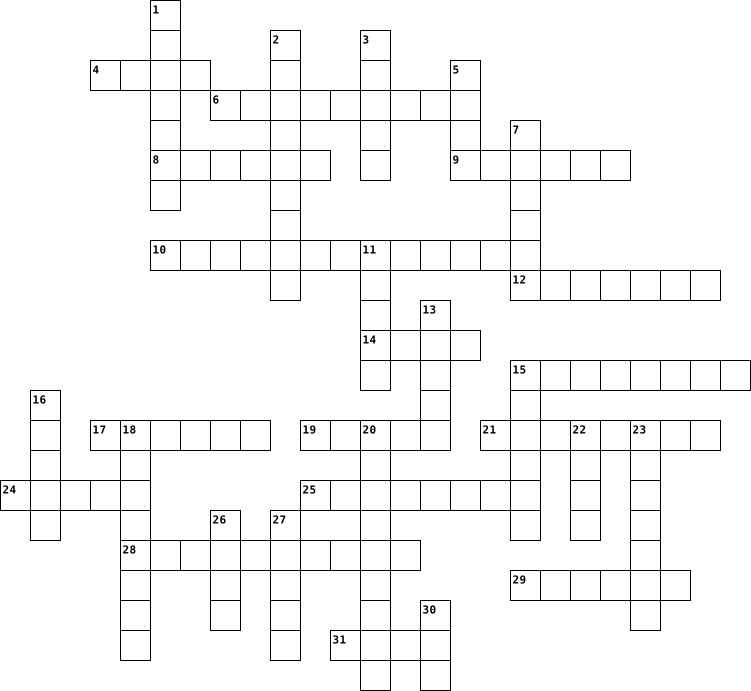
Across
- moon - the phase of the moon when Earth is between the moon and sun
- - A natural or artificial body that revolves around a planet
- - short period of climate change in an area caused by the tilt of Earth's axis as Earth revolves around the sun. (winter, summer, autumn, spring)
- - An object that orbits a star, is large enough to have become rounded by its own gravity, and has cleared the area of its orbit.
- - A group of stars that form a pattern in the sky
- - the moon's shape when more than half is illuminated
- - imaginary line that passes through the Earth's center from the North to the South
- - In summer and winter and the Earth has the longest day/shortest night or the shortest day/longest night
- - describes phases that occur after a full moon, as the visible lighted side of the Moon grows smaller
- - A ball of frozen dust and rock that orbits the sun and has a tail that glows
- - the moon's shape when less than half of it is illuminated
- - Earths path as it revolves around the sun
- - spinning on an axis
- - moving around another object in space
- - A streak of light in the sky produced by the burning of a meteoroid in Earth's atmosphere.
- - the rise and fall of Earth's water
Down
- - The shape of Earth's orbit
- - A meteoroid that has hit earth's surface.
- eclipse - when the moon comes between Earth and the sun
- tide - when the Sun, Earth and Moon make a right angle and the high tides are lower than usual and the low tides are a little higher than usual.
- - describes phases following a new moon, as more of the Moon's
- cycle - A sequence of phases of the moon as it revolves around the Earth once every 29.5 days.
- quarter - this phase of the moon occurs about 7 days after a new moon
- tide - when the Sun, Earth, and Moon are lined up and high tides are higher and low tides are lower.
- planet, planetoid - a celestial body resembling a small planet but lacking certain technical criteria that are required for it to be classed as such.
- - any of numerous small celestial bodies composed of rock and metal that move around the sun (mainly between the orbits of Mars and Jupiter)
- - a small body moving in the solar system that would become a meteor if it entered the earth's atmosphere.
- - A ball of hot gas, primarily hydrogen and helium, that undergoes nuclear fusion.
- - when the sun's direct light is closest to the equator, in spring and fall and the Earth has equal day and night
- phases - The changing appearances of the Moon as seen from Earth
- eclipse - when the shadow of Earth falls on the moon
- moon - the phase of the moon when the moon is between Earth and sun, when the moon looks like darkness. has no light reflected
32 Clues: - spinning on an axis • - The shape of Earth's orbit • - the rise and fall of Earth's water • - moving around another object in space • - A meteoroid that has hit earth's surface. • - Earths path as it revolves around the sun • - A group of stars that form a pattern in the sky • eclipse - when the shadow of Earth falls on the moon • ...
SPace 2021-04-19
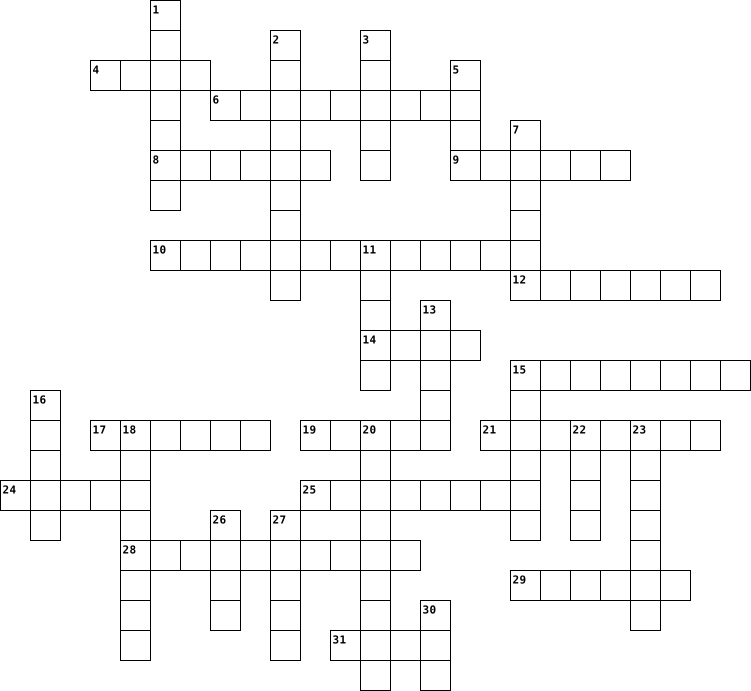
Across
- moon - the phase of the moon when Earth is between the moon and sun
- - A natural or artificial body that revolves around a planet
- - short period of climate change in an area caused by the tilt of Earth's axis as Earth revolves around the sun. (winter, summer, autumn, spring)
- - An object that orbits a star, is large enough to have become rounded by its own gravity, and has cleared the area of its orbit.
- - A group of stars that form a pattern in the sky
- - the moon's shape when more than half is illuminated
- - imaginary line that passes through the Earth's center from the North to the South
- - In summer and winter and the Earth has the longest day/shortest night or the shortest day/longest night
- - describes phases that occur after a full moon, as the visible lighted side of the Moon grows smaller
- - A ball of frozen dust and rock that orbits the sun and has a tail that glows
- - the moon's shape when less than half of it is illuminated
- - Earths path as it revolves around the sun
- - spinning on an axis
- - moving around another object in space
- - A streak of light in the sky produced by the burning of a meteoroid in Earth's atmosphere.
- - the rise and fall of Earth's water
Down
- - The shape of Earth's orbit
- - A meteoroid that has hit earth's surface.
- eclipse - when the moon comes between Earth and the sun
- tide - when the Sun, Earth and Moon make a right angle and the high tides are lower than usual and the low tides are a little higher than usual.
- - describes phases following a new moon, as more of the Moon's
- cycle - A sequence of phases of the moon as it revolves around the Earth once every 29.5 days.
- quarter - this phase of the moon occurs about 7 days after a new moon
- tide - when the Sun, Earth, and Moon are lined up and high tides are higher and low tides are lower.
- planet, planetoid - a celestial body resembling a small planet but lacking certain technical criteria that are required for it to be classed as such.
- - any of numerous small celestial bodies composed of rock and metal that move around the sun (mainly between the orbits of Mars and Jupiter)
- - a small body moving in the solar system that would become a meteor if it entered the earth's atmosphere.
- - A ball of hot gas, primarily hydrogen and helium, that undergoes nuclear fusion.
- - when the sun's direct light is closest to the equator, in spring and fall and the Earth has equal day and night
- phases - The changing appearances of the Moon as seen from Earth
- eclipse - when the shadow of Earth falls on the moon
- moon - the phase of the moon when the moon is between Earth and sun, when the moon looks like darkness. has no light reflected
32 Clues: - spinning on an axis • - The shape of Earth's orbit • - the rise and fall of Earth's water • - moving around another object in space • - A meteoroid that has hit earth's surface. • - Earths path as it revolves around the sun • - A group of stars that form a pattern in the sky • eclipse - when the shadow of Earth falls on the moon • ...
Moon Phases 2025-03-27

Across
- The Moon revolves _____ clock-wise
- In this phase none of the Moon is lit
- This phase happens when the Moon is at a right angle to the Earth and Sun
- In this phase all of the Moon is lit
- This is how many Moon phases there are
- In this phase most of the Moon is lit
- Half of the Moon on the left side it lit
Down
- The light is on the right and growing
- All you can see is a sliver of the Moon
- The light is on the left and shrinking
- Half of the Moon on the right side is lit
- It reflects sunlight during the night
12 Clues: The Moon revolves _____ clock-wise • In this phase all of the Moon is lit • The light is on the right and growing • In this phase none of the Moon is lit • It reflects sunlight during the night • In this phase most of the Moon is lit • The light is on the left and shrinking • This is how many Moon phases there are • All you can see is a sliver of the Moon • ...
Moon Phases 2025-09-29

Across
- Moons that appear to be growing larger or getting bigger are called __________.
- Moons that look similar to a croissant roll are called ___________.
- When our view from Earth can see the entire side of the Moon due to sunlight reflecting off it, this is called a _____ Moon.
- There are ________ phases of the Moon visible from Earth.
- A _______________ is the time it takes the Moon to pass through a complete cycle of its phases.
- The moon seems to phase in or out due to the ____________ of the moon on its axis.
- One side of the Moon or parts of the Moon are visible to us on Earth because of the light from the _________ reflecting off.
Down
- Half Moons are also called _________ Moons.
- The moon seems to phase in or out due to the _____________of the moon around the Earth.
- Moons that look similar to a ball that is partially deflated are called ____________.
- When our view from Earth cannot see any reflected sunlight coming from the Moon, this is called a __________ Moon.
- Moons that appear to be shrinking or getting smaller are called __________.
12 Clues: Half Moons are also called _________ Moons. • There are ________ phases of the Moon visible from Earth. • Moons that look similar to a croissant roll are called ___________. • Moons that appear to be shrinking or getting smaller are called __________. • Moons that appear to be growing larger or getting bigger are called __________. • ...
MOONS, SEASONS, TIDES, AND ECLIPSE CROSSWORD 2013-04-25

Across
- THE MOON IS TILTED ON THIS
- TIDE THE WATER IS LOWERING
- IT GETS HOT OUT THERE
- IT GETS COLD OUT THERE
- TIDE THE WATER IS RISING
- WHAT CAUSES THE SEASONS
- MORE THAN 1/2
- THE TILT OF THE EARTH
Down
- ASTROMINCAL UNIT
- ECLIPSE THIS IS A RARE ECLIPSE
- LESS THAN 1/2
- MOON THE SKY IS 100% LIT
- LOSING
- THE MOON CAUSES THIS
- ECLIPSE THE MOON TURNS MEDUIM DARK
- SIDE OF THE MOON YOU NEVER SEE
- PHASES TRANSITIONS MOONS GO THROUGH
- BLACKNESS WHERE THE PLANETS ARE
- GAINING
- THE SOLAR SYSTEM DOES THIS
20 Clues: LOSING • GAINING • LESS THAN 1/2 • MORE THAN 1/2 • ASTROMINCAL UNIT • THE MOON CAUSES THIS • IT GETS HOT OUT THERE • THE TILT OF THE EARTH • IT GETS COLD OUT THERE • WHAT CAUSES THE SEASONS • THE MOON IS TILTED ON THIS • THE SOLAR SYSTEM DOES THIS • MOON THE SKY IS 100% LIT • TIDE THE WATER IS RISING • ECLIPSE THIS IS A RARE ECLIPSE • SIDE OF THE MOON YOU NEVER SEE • ...
Solar System and Space Gr 8 2025-03-05

Across
- the sliver of moon that we see on the left side
- the solstice when Earth's axis points directly toward the sun
- planets follow an orbit to ______ around the sun
- the greater the total ____ of 2 objects, the greater the gravitational pull is
- the sun rises in the _________
- the sun is blocked by the moon
- when earth, sun, and moon spin on their own axes, they are _______
- this is the solar system's only star
- includes the sun and all objects that travel around it
Down
- a small body of rock and metal that orbits the sun
- made up of dust, frozen water and frozen gases and orbit stars
- the earth points away from the sun in this season
- pieces of asteroids and moons that burn up when entering earth's atmosphere
- the phase of the moon when we see a sliver on the right side
- the moon changes appearance over the month and these changes are called _____
- the moon is blocked from the sun by the Earth
- the force that pulls objects toward each other
- this is the galaxy we live in
- these bodies orbit planets
- there are ________ phases of the moon
20 Clues: these bodies orbit planets • this is the galaxy we live in • the sun rises in the _________ • the sun is blocked by the moon • this is the solar system's only star • there are ________ phases of the moon • the moon is blocked from the sun by the Earth • the force that pulls objects toward each other • the sliver of moon that we see on the left side • ...
Earth's Motion and Earth's Moon 2026-04-06

Across
- Moon phase in image D.
- What is the season the northern hemisphere is experiencing in image E?
- It takes the Earth about ______ to make one complete revolution.
- We see the different phases of the moon because of the amount of light that is ______ in each position.
- The Earth's tilt and its revolution around the sun causes us to have ______.
- Moon phase in image A.
- Moon phase in image B.
- The moon phase in which the entire side of the moon facing the earth is illuminated.
- What moon phase cannot be seen because it is entirely in the shade (dark)?
Down
- This motion causes years; Earth moving around the sun.
- Moon phase in image C.
- What is the season the northern hemisphere is experiencing in image F?
- It takes Earth about ______ to make one complete rotation.
- This motion causes day and night; Earth spinning on its axis
- Where on Earth does the Earth get the most direct sunlight,which makes it the warmest area?
- Moon phases are caused by the _______ of the Earth, Sun, and Moon.
- Seasons are caused by the Earth's _____ and its revolution around the sun.
- What season comes right after winter?
- What season comes right after summer?
19 Clues: Moon phase in image C. • Moon phase in image D. • Moon phase in image A. • Moon phase in image B. • What season comes right after winter? • What season comes right after summer? • This motion causes years; Earth moving around the sun. • It takes Earth about ______ to make one complete rotation. • This motion causes day and night; Earth spinning on its axis • ...
The Moon 2024-10-02

Across
- What formed first, Earth or the Moon?
- Name for the moon at the beginning of the Moon phases
- What do we call the different versions of the Moon?
- Number of people who have walked on the Moon
- Earth's natural satellite
- Name of the first Space mission to take humans off the Earth
- What lights up the Moon
Down
- What do you use to see things in Space up close?
- Word we use to describe the Moon when it is getting bigger
- A point of light in the night sky
- An event when we see Earth's shadow or the Moon's shadow
- Name for the moon when it is at its fullest
- Word we use to describe the Moon when it is getting smaller
13 Clues: What lights up the Moon • Earth's natural satellite • A point of light in the night sky • What formed first, Earth or the Moon? • Name for the moon when it is at its fullest • Number of people who have walked on the Moon • What do you use to see things in Space up close? • What do we call the different versions of the Moon? • ...
Sun,Earth ,Moon 2021-08-27

Across
- holes in the moon where things have hit the moon
- tides occurs at a full moon and new moon
- phase-phases of the moon during which less of the moon's near side is lit each night
- axis- the line on which an object rotates
- the path an object follows as it moves around another object
- portion of the moon or a planet reflecting light as seen from the earth
- tides occurs at a first quarter and at a third quarter
- quarter Moon the right half of the moon is shown
- quarter Moon all the left half is shown
- when earth's rotation axis is tilted directly toward or away from the sun
- phase-phases of the moon during which more of the moon's near side is lit each night
- orbit of one object around another object
Down
- large dark flat areas on the moon
- the lighter part of a shadow where light is partially blocked
- central, darker part of a shadow where the light is totally blocked
- Earth's rotation axis neither toward nor away from the sun
- eclipse an occurrence during witch the moon moves into earth's shadow
- eclipse an occurrence during which the moon's shadow appears on the earth's surface
- mountains on the moon that have been eroded and were created from thins hitting the moon
- the periodic rise and fall of the ocean's surface caused by the gravitational force between earth and the moon and earth and the sun.
- the bright streaks on the moon's surface
- Moon all you see is the completely lit part of the moon
- spin of an object around its axis
- Moon all you see is the part that is not lit on the moon
24 Clues: large dark flat areas on the moon • spin of an object around its axis • quarter Moon all the left half is shown • tides occurs at a full moon and new moon • the bright streaks on the moon's surface • axis- the line on which an object rotates • orbit of one object around another object • holes in the moon where things have hit the moon • ...
The moon 2023-11-21

Across
- The Moon and Earth create a _____________ pull on each other.
- When the moon moves, the buldges get _______
- When the tides move, they create waves in front of them - just like the _______-_______.
- This moon helps farmers to work at night. Usually comes in september
- The moon takes approximately ______ days to finish all phases
Down
- There are ______ moon phases
- Earths natural _________
- A lunar eclipse is made when the earth ______ the sun
- The moon orbits the _____
- This moon occurs around 2-4 times a year.
- ________ object in the sky besides the sun
- The ______ of the moon is 1,737km
12 Clues: Earths natural _________ • The moon orbits the _____ • There are ______ moon phases • The ______ of the moon is 1,737km • This moon occurs around 2-4 times a year. • ________ object in the sky besides the sun • When the moon moves, the buldges get _______ • A lunar eclipse is made when the earth ______ the sun • ...
Moon facts! ( ͡° ͜ʖ ͡°) (Spaces are _) 2025-12-17

Across
- When the earth covers the moon
- Shrinking
- What is the moon made of?
- What phase is this? 🌕
- What phase is this? 🌘
- When the moon covers the sun
- What the moon is called during a lunar eclipse
- Total types of eclipses
- When the moon is not visible
Down
- How does the moon light up?
- About how long is a full moon orbit?
- When the moon is fully visible
- What phase is this? 🌔
- What was the mission that got to the moon?
- When we first went to the moon
- What phase is this? 🌓
- Growing
- A nickname for a total solar eclipse
- Is the moon made of cheese?
- Number of moon phases
20 Clues: Growing • Shrinking • What phase is this? 🌔 • What phase is this? 🌕 • What phase is this? 🌘 • What phase is this? 🌓 • Number of moon phases • Total types of eclipses • What is the moon made of? • How does the moon light up? • Is the moon made of cheese? • When the moon covers the sun • When the moon is not visible • When the moon is fully visible • When the earth covers the moon • ...
Moon Phases 2022-03-08

Across
- darkest moon
- how does the moon get bright
- 3/4 of the phases
- Different phases
Down
- lightest moon
- beginning of the phases
- beginning of the waning series
- 1/4 of the phases
8 Clues: darkest moon • lightest moon • Different phases • 1/4 of the phases • 3/4 of the phases • beginning of the phases • how does the moon get bright • beginning of the waning series
The tides! 2023-11-04

Across
- moon phases during neap tide
- sun,earth,& moon in a straight line
- what pulls the ocean and makes tides
- regular rise and fall of the ocean
- stronger tide
- how many low tides per day
- how many high tides per day
- what causes tides
- moon phases during spring tide
Down
- orientation of earth, moon & sun in neap tides
- this is the mechanism in tides
- why do tides change every month
- how many spring tides per month
- weaker tide
- how many neap tides per month
15 Clues: weaker tide • stronger tide • what causes tides • how many low tides per day • how many high tides per day • moon phases during neap tide • how many neap tides per month • this is the mechanism in tides • moon phases during spring tide • why do tides change every month • how many spring tides per month • regular rise and fall of the ocean • sun,earth,& moon in a straight line • ...
Science Terms Crossword 2015-04-24

Across
- the ___ of conservation of energy states...
- _______ tides happen when the moon in at a 90 degree angle with Earth
- a _______ eclipse happens when earth blocks the sun from the moon
- i happen when the moon or Earth is blocking the sun
- phases happen to me every three days
- i can be either parallel or series
- _______ tides happen when the moon is in a straight line with Earth
- i am a moon phase where you can see my entire lit side
- i am a type of energy that does move
Down
- whenever a energy conversion ends, i always end in this
- there are ___ of me involving the moon
- a_______ eclipse happens when the moon is blocking the sun from Earth
- i am a type of energy that does not move
- i am created by Earth's tilt
- water bulges when i happen
15 Clues: water bulges when i happen • i am created by Earth's tilt • i can be either parallel or series • phases happen to me every three days • i am a type of energy that does move • there are ___ of me involving the moon • i am a type of energy that does not move • the ___ of conservation of energy states... • i happen when the moon or Earth is blocking the sun • ...
Moon Phases 2021-04-07

Across
- When the light is on the right then the moon has to be?
- The light from the Moon is a _____ from the Sun
- How many days will it be between a full and new Moon?
- When half of the moon is lit on the left it is a?
- The cycle of the phases of the Moon runs on a cycle that is 1 ______ long
- When more than half of the Moon is lit it is called
- What does the moon do around the earth?
Down
- When the light is on the left the moon has to be?
- When the moon disappears it has to be a?
- When half of the moon light is in the right it is a?
- The dark side of the Moon is really just the ____ side of the Moon
- When the Moon is 100% lit it is called
12 Clues: When the Moon is 100% lit it is called • What does the moon do around the earth? • When the moon disappears it has to be a? • The light from the Moon is a _____ from the Sun • When the light is on the left the moon has to be? • When half of the moon is lit on the left it is a? • When more than half of the Moon is lit it is called • ...
Moon Phases 2022-03-08

Across
- darkest moon
- how does the moon get bright
- 3/4 of the phases
- Different phases
Down
- lightest moon
- beginning of the phases
- beginning of the waning series
- 1/4 of the phases
8 Clues: darkest moon • lightest moon • Different phases • 1/4 of the phases • 3/4 of the phases • beginning of the phases • how does the moon get bright • beginning of the waning series
Unit 2 Review: Earth and the Solar System 2024-01-24

Across
- A ______eclipse occurs when Earth moves between the sun and the moon
- When the moon moves between the sun and Earth
- The earth does this on its axis as it orbits around the sun
- When left side of Moon is lit
- Lunar and solar eclipses don't occur every ____ because the moon's orbit is tilted 5 degrees
- The first phase of the moon cycle and moon is unlit
- When one object in the solar system moves into the shadow of another object.
- The _______ orbit is created by the force of gravity acting on inertia of Earth
- When right side of Moon is lit
- The _______ tilt is wh we have seasons as we orbit the sun
Down
- The last phase of the moon cycle and moon is fully lit
- What we call the changes in the moon during its cycle
- Periods of time characterized by specific weather patterns and by the length of day and night.
- sun’s outer atmosphere
- The tendency of an object at rest to remain at rest and an object in motion to remain in motion unless acted on by an outside force.
- The earth orbiting the sun and the moon orbiting the earth creates this.
- Moon phase is getting smaller
- There are this many phases of the moon
- Moon phase is getting bigger
- The moon appears this color because light from the sun must first pass through a long and dense layer of the Earth’s atmosphere before it reaches the moon
- Is an imaginary line that goes from the North Pole to the South Pole.
21 Clues: sun’s outer atmosphere • Moon phase is getting bigger • When left side of Moon is lit • Moon phase is getting smaller • When right side of Moon is lit • There are this many phases of the moon • When the moon moves between the sun and Earth • The first phase of the moon cycle and moon is unlit • What we call the changes in the moon during its cycle • ...
Moon Phases 2024-10-10

Across
- The term used for a decreasing moon phase.
- When the entire moon is covered in darkness.
- Anytime the moon is more than half full.
- A Third Quarter moon causes this type of tide.
- The term used for an increasing moon phase.
- The total amount of western lunar phases.
Down
- This tide occurs when the Earth, Sun, and Moon are perfectly aligned.
- Anytime the moon is less than half full.
- The name of the Hawaiian Goddess who lives on the moon.
- When the entire moon is covered in light.
- What you call the first half full moon.
- Reflected light from the sun.
12 Clues: Reflected light from the sun. • What you call the first half full moon. • Anytime the moon is less than half full. • Anytime the moon is more than half full. • When the entire moon is covered in light. • The total amount of western lunar phases. • The term used for a decreasing moon phase. • The term used for an increasing moon phase. • ...
Unit One Vocabulary 2022-08-26

Across
- the rising and falling of the sea due to the attraction of the moon and sun on the earth
- special day that happens twice a year; hours of day and night are nearly equal
- the collection of 8 planets and their moons in orbit around the sun
- line of latitude 23 1/2 degrees south of the equator
- an invisible force that pulls objects toward each other
- measures the distance north or south of the equator
- a system of millions or billions of stars together with gas and dust held together by gravitational attraction
- line of latitude 23 1/2 degrees north of the equator
Down
- phase of the moon when it is more than half full but still not a full moon
- the lighter shadowed area surrounding the darkest part of a shadow
- an imaginary line around which an object rotates or spins
- the envelope of gases surrounding the earth or other planets
- special day where the sun appears to reach either the highest or lowest point in the sky for the year
- phases of the moon when the lighted portion is on the right
- when an object in space turns or spins in one place around an axis
- an imaginary line drawn around the earth, dividing it into northern and southern hemispheres
- when an object in space goes around another object in space
- phases of the moon when the lighted portion is on the left
- the darkest part of the shadow
- phases of the moon when it looks like the letter "c" or a backwards "c"
20 Clues: the darkest part of the shadow • measures the distance north or south of the equator • line of latitude 23 1/2 degrees south of the equator • line of latitude 23 1/2 degrees north of the equator • an invisible force that pulls objects toward each other • an imaginary line around which an object rotates or spins • ...
6th Topic 11 Sun, Moon, Earth 2024-04-08

Across
- the moon’s gravity is ___ that of Earth (fraction)
- the oldest, most highly cratered regions on the Moon, light in color
- developed the earth centered model of the universe- was followed for a long time
- the tendency of an object to resist a change in motion
- this is the calendar we use today
- Earth experiences 4 ___ due to the tilt of Earth on its axis
- the strength of gravity depends on the ___ of the 2 objects and the ___ between them
- when the moon is in the 1st or 3rd quarter phases, then about one ___ of the moon is “lit”
- when it is a spring or autumnal ____, then Earth is the least tilted toward the sun it will ever be for the year
- when the moon is in the “gaining light “ phases it is in the __ phases
- the summer ___ is the longest day in the Northern hemisphere
- the different amounts of light you can see from Earth shining on the moon are called the ___ of the moon
- the study of the universe
- this model had the sun at the center of our universe
- supported the sun centered model and arranged the known planets in a map around the sun
- to see a full total eclipse, you must be in this part of the shadow
- you will see only a partial solar eclipse if you are in this portion of the moon’s shadow
- if a chunk of rock from space hits earth’s ground, it is called this
- what rocks falling through our atmosphere are called
- earth’s revolution around the sun takes approximately 365 ____
- these are used to find constellations
- when the moon is “losing” light it is in the __ phases
- a pattern of stars imagined by people to represent a picture/story
- day and night are caused by Earth’s ____
- this calendar had 12 months with 30 days and an extra 5 days at the end of the year to honor their Gods
- this model has Earth at the center of our universe
- during the summer solstice in the Northern hemisphere we experience the ___ daylight hours
- a mixture of ice and dust on an elongated orbit around the sun, it emits a trail of heated gases as it nears the sun
- most constellations were named in this language
- the moon has drastic changes in temperature due to the fact that it has no ____
Down
- this equinox is the beginning of spring in the Northern Hemisphere
- you will see a ___ eclipse when Earth is between the sun and the moon
- the highest peaks on the moon are called this
- the fake science of believing in predictions of zodiac symbols
- these on the moon were formed by meteor impacts
- one complete revolution around the sun is approximately one ____
- the brightest object in the night sky after the moon
- the shape of the orbit of Earth’s revolution around the sun
- the narrow band or plane in which planets in our solar system move
- used a telescope and discovered 4 of Jupiter’s moons
- an object that orbits a sun
- these on the moon were created by ancient lava flow
- A chunk of rock in space is called this
- the tides are the ___ when the moon, sun and earth are at right angles to each other
- when a meteoroid enters Earth’s atmosphere it is now called this
- larger, round pits formed by impacts of meteroids
- the tides are the ___ when Earth, the moon, and the sun are all in a straight line
- lowest tides are called this
- Earth’s rotation takes approximately 24 ___
- when the moon is in the waxing or waning ___ phases, then ¾ of the moon is “lit”
- when the moon is in the waxing or waning ___ phases, then only a small sliver, or about ¼ of the moon is “lit”
- the name given to objects that orbit a planet
- arranging time into day, months, and years
- this force of attraction helps keep Earth in it’s orbit around the sun
- all objects are attracted to each other by the force of ____
- the north star
- the ___ solstice is the shortest day in the Northern Hemisphere
- scientists ___ and ___ found the orbits of the planets are ellipses
- the highest tides are called this
- I told you this term used in science means “false”
- the ___ of an object will not change no matter where it is, but the ____ may, because IT is determined by the gravitational pull
61 Clues: the north star • the study of the universe • an object that orbits a sun • lowest tides are called this • this is the calendar we use today • the highest tides are called this • these are used to find constellations • A chunk of rock in space is called this • day and night are caused by Earth’s ____ • arranging time into day, months, and years • ...
6th- Topic 11 2026-05-12

Across
- the different amounts of light you can see from Earth shining on the moon are called the ___ of the moon
- the summer ___ is the longest day in the Northern hemisphere
- if a chunk of rock from space hits earth’s ground, it is called this
- these on the moon were formed by meteor impacts
- the oldest, most highly cratered regions on the Moon, light in color
- to see a full total eclipse, you must be in this part of the shadow
- the moon has drastic changes in temperature due to the fact that it has no ____
- Earth’s rotation takes approximately 24 ___
- larger, round pits formed by impacts of meteroids
- most constellations were named in this language
- when the moon is in the 1st or 3rd quarter phases, then about one ___ of the moon is “lit”
- all objects are attracted to each other by the force of ____
- I told you this term used in science means “false”
- used a telescope and discovered 4 of Jupiter’s moons
- the tides are the ___ when the moon, sun and earth are at right angles to each other
- the study of the universe
- one complete revolution around the sun is approximately one ____
- the ___ of an object will not change no matter where it is, but the ____ may, because IT is determined by the gravitational pull
- the name given to objects that orbit a planet
- scientists ___ and ___ found the orbits of the planets are ellipses
- this calendar had 12 months with 30 days and an extra 5 days at the end of the year to honor their Gods
- during the summer solstice in the Northern hemisphere we experience the ___ daylight hours
- you will see a ___ eclipse when Earth is between the sun and the moon
- the narrow band or plane in which planets in our solar system move
- this equinox is the beginning of spring in the Northern Hemisphere
- this is the calendar we use today
- supported the sun centered model and arranged the known planets in a map around the sun
- the highest peaks on the moon are called this
- the tides are the ___ when Earth, the moon, and the sun are all in a straight line
- the ___ solstice is the shortest day in the Northern Hemisphere
- the tendency of an object to resist a change in motion
- when the moon is in the waxing or waning ___ phases, then ¾ of the moon is “lit”
Down
- the fake science of believing in predictions of zodiac symbols
- a pattern of stars imagined by people to represent a picture/story
- Earth experiences 4 ___ due to the tilt of Earth on its axis
- you will see only a partial solar eclipse if you are in this portion of the moon’s shadow
- when it is a spring or autumnal ____, then Earth is the least tilted toward the sun it will ever be for the year
- the strength of gravity depends on the ___ of the 2 objects and the ___ between them
- an object that orbits a sun
- when the moon is in the “gaining light “ phases it is in the __ phases
- when the moon is “losing” light it is in the __ phases
- these are used to find constellations
- the highest tides are called this
- this force of attraction helps keep Earth in it’s orbit around the sun
- what rocks falling through our atmosphere are called
- these on the moon were created by ancient lava flow
- this model had the sun at the center of our universe
- when the moon is in the waxing or waning ___ phases, then only a small sliver, or about ¼ of the moon is “lit”
- the north star
- A chunk of rock in space is called this
- the brightest object in the night sky after the moon
- this model has Earth at the center of our universe
- earth’s revolution around the sun takes approximately 365 ____
- when a meteoroid enters Earth’s atmosphere it is now called this
- lowest tides are called this
- the shape of the orbit of Earth’s revolution around the sun
- the moon’s gravity is ___ that of Earth (fraction)
- arranging time into day, months, and years
- developed the earth centered model of the universe- was followed for a long time
- day and night are caused by Earth’s ____
- a mixture of ice and dust on an elongated orbit around the sun, it emits a trail of heated gases as it nears the sun
61 Clues: the north star • the study of the universe • an object that orbits a sun • lowest tides are called this • the highest tides are called this • this is the calendar we use today • these are used to find constellations • A chunk of rock in space is called this • day and night are caused by Earth’s ____ • arranging time into day, months, and years • ...
Moon Phases & Tides 2021-10-15

Across
- The changing appearance of the moon as seen from Earth.
- The moon appears to get larger
- The lighter part of a shadow where light is partially blocked.
- The darkest part of the moon's shadow.
- Only the left half of the moon is lit up.
- The moon phase when the entire side facing Earth is dark.
- The lowest point on shore that the ocean reaches.
- Only the right half of the moon is lit up.
Down
- The shape of the moon when it is greater than a quarter moon, but not full.
- The time at which the tide reaches its highest level.
- Occurs when the moon passes between the Sun and Earth and casts a shadow over part of the Earth.
- The blocking of sunlight to the moon that occurs when the earth is between the sun and the moon.
- The moon phases when the entire side facing Earth is lit up.
- A tide just after a new or full moon, when there is the greatest difference between high and low tide.
- The moon is appearing to get smaller
- Only a small slice of the moon is visible.
- A tide just after the first or third quarters of the moon when there is the least difference between high and low tide.
17 Clues: The moon appears to get larger • The moon is appearing to get smaller • The darkest part of the moon's shadow. • Only the left half of the moon is lit up. • Only a small slice of the moon is visible. • Only the right half of the moon is lit up. • The lowest point on shore that the ocean reaches. • The time at which the tide reaches its highest level. • ...
Lunar Cycle Crossword Puzzle 2022-02-28

Across
- The 1st Quarter moon is lit on the
- when light bounces back
- As the moon's shape appears to get smaller, we say that the moon is _.
- What happens when there is a spring tide What is the periodic rise and fall of the water level in the oceans?
- Spring tides and neap tides occur in patterns governed by the
- When the visible (lit) portion of the moon is increasing, the moon is
- If you look up at the sky and see a red moon you are witnessing a...
- A lunar eclipse occurs at this moon phase
Down
- If you are looking up at the sky and see a glow behind the moon you are looking at a....
- When the moon is at full moon or new moon, what type of tide will we experience?
- The time required for the Moon to complete one cycle of phases is about one...
- How many times per month does a spring tide occur?
- quarter What moon phase will occur about 7 days after a new moon?
- Phases of the moon in which the moon appears to be getting larger are referred to as _.
- The moon ____________ around the Earth
- What type of tide would this arrangement of earth-moon-sun create?
- How much of the moon is always lit?
- About how many days does it take the moon to go through a complete cycle?
18 Clues: when light bounces back • The 1st Quarter moon is lit on the • How much of the moon is always lit? • The moon ____________ around the Earth • A lunar eclipse occurs at this moon phase • How many times per month does a spring tide occur? • Spring tides and neap tides occur in patterns governed by the • quarter What moon phase will occur about 7 days after a new moon? • ...
quarter one review 2024-11-26

Across
- this happens when an animal dies
- the moon blocks out the sun
- the second and fourth moon phases
- this season is very hot and is usually when farmers farm
- this happens when animal is buried under ground
- this thing is made when gravity is very powerful and can usually be found in the center of galaxy
- they revolve around each another
- Jupiter uranus Saturn neptune
- the 6 and 8 moon phases
Down
- this happens every 356 days
- the earth blocks out the sun for the moon and the moon turns blood red
- this thing is the reason why the grand canyon exists
- this shapes everything and every one
- this season is very cold and hard to survive in
- this forms over millions years to form one layer
- mercury earth venus mars
16 Clues: the 6 and 8 moon phases • mercury earth venus mars • this happens every 356 days • the moon blocks out the sun • Jupiter uranus Saturn neptune • this happens when an animal dies • they revolve around each another • the second and fourth moon phases • this shapes everything and every one • this season is very cold and hard to survive in • ...
Our Solar System 2021-01-11

Across
- There are _____ moon phases.
- What is the Groton middle school mascot?
- There are ______ planets in our solar system.
- ______ is not considered a planet.
- Some countries near the equator have mild ___ and are mostly just hot all year round.
- Day and night are caused by the earth's _____.
- You can tell time by looking at your ______.
- What is the name of our galaxy?
- A__ is 23 hours and 56 minutes.
Down
- What season is your shadow longest?
- The moon phases cycle from full moon to full moon is around a _____
- The sun is a ____ but looks bigger because it is closer to earth.
- The _______ depend on the angle of the side of the earth facing the sun.
- The sun's inner core is 27 _______ degrees Fahrenheit.
- _______is different on different planets.
- When the southern hemisphere is having winter the northern hemisphere is having ______.
- What keeps the earth from flying into space?
- What planet, star or moon is around 8 light minutes from the earth?
- Which planet has 57 moons?
19 Clues: Which planet has 57 moons? • There are _____ moon phases. • What is the name of our galaxy? • A__ is 23 hours and 56 minutes. • ______ is not considered a planet. • What season is your shadow longest? • What is the Groton middle school mascot? • _______is different on different planets. • What keeps the earth from flying into space? • ...
Unit 13 Phases and Eclipses crossword puzzle 2023-05-17

Across
- The less dark shadow during an eclipse
- The side of the moon the does not face earth
- An eclipse when the moon blocks the sun making a shadow on the earth
- How much phases the moon has
- The earth has many ____?
Down
- An eclipse when earth is blocking the moon from the sun
- The side of the moon that always faces earth
- The first phase of the moon
- The darkest shadow during an eclipse
- The last phase of the moon
- The solar _____ and the lunar _____?
11 Clues: The earth has many ____? • The last phase of the moon • The first phase of the moon • How much phases the moon has • The darkest shadow during an eclipse • The solar _____ and the lunar _____? • The less dark shadow during an eclipse • The side of the moon that always faces earth • The side of the moon the does not face earth • ...
Earth's Movement Vocab 2023-12-15

Across
- an invisible line in which an object rotates, or spins
- any moon that appears more than half-lighted but less than full
- a half of the earth
- any of the varying appearances of the Moon as seen from Earth
- the lunar phases after the Full moon
- a period of moderate tides when the sun and moon are at right angles to each other
- the circular motion of an object around its center
- the first lunar phases after the New Moon
Down
- a physical force of attraction between objects
- Spring, Summer, Fall, and Winter
- The small portion of the Moon visible in the sky
- the state of the tide when at its lowest level
- the large rise and fall of the tide at or soon after the new or the full moon
- the state of the tide when at its highest level
- the representation of the moon's journey around the Earth
- The motion of an object around a point
- long-period waves that move through the ocean in response to the forces exerted by the moon and sun
17 Clues: a half of the earth • Spring, Summer, Fall, and Winter • the lunar phases after the Full moon • The motion of an object around a point • the first lunar phases after the New Moon • a physical force of attraction between objects • the state of the tide when at its lowest level • the state of the tide when at its highest level • ...
Sun, Earth & Moon 2023-09-26

Across
- shape of the moon when less than a quarter is illuminated
- growing or getting larger; following a New Moon, the moon appears to be growing and will be illuminated on the right side.
- The cyclical changes of light due to the tilt and revolution of earth around the sun
- force of attraction between all masses in the universe, especially the attraction of the Earth's mass for bodies near its surface
Down
- moon phase that occurs when the earth is between the sun and the moon; the entire lit side is seen from earth
- the movement of objects around another object ; earth’s revolution around the sun and moon’s revolution around the earth result in cyclical patterns Moon phases
- moon phase that occurs when the moon passes between Earth and the Sun; no illumination is seen from earth
- the rising and falling of the oceans due to the gravitational attraction of the Moon and Sun; usually occurs twice each day
- imaginary line about which an object rotates
- shrinking or getting smaller; following a Full Moon, the moon appears to shrink and will be illuminated on the left.
- the action of an object spinning around the axis of another object; Earth spins around its axis, causing day and night
- tide occurs at the first and third (last) quarter Moon phases; the Sun is at a right angle to the Moon
- when half of the moon appears to be illuminated; waxing- light from the right; waning - light on the left
- tide occurs at the full and new Moon phases; Earth, Moon, and Sun are in alignment pulling the water in the same direction
- shape of the moon when more than a quarter is illuminated
15 Clues: imaginary line about which an object rotates • shape of the moon when less than a quarter is illuminated • shape of the moon when more than a quarter is illuminated • The cyclical changes of light due to the tilt and revolution of earth around the sun • tide occurs at the first and third (last) quarter Moon phases; the Sun is at a right angle to the Moon • ...
science cross word 2024-03-22

Across
- the plural from is maria
- the darkest parts of the eclipse
- the motion of one object around another,
- the cycle begins with a new moon.
- only a little bit of the moon is visible for us to see.
- patterns of temperatures that change through the course of a year.
- The Earth has traveled a quarter of the way around the sun.
- earth's average distance from the sun.
- when the shadow makes the sun or the moon seems to grow darker .
- Earth reaches another equinox,half of each hemisphere is lit
- A moon but only half of it.
Down
- All of the phases of the moons.
- the position is the opposite of the December solstice.
- first quarter and the quarter after .
- the ends of the axis are the north and south poles.
- A area where sunlight is at the maximum in one hemisphere.
- the first lunar moon phases.
- when sunlight shines equally on the two hemispheres.
- light coming from the sun.
- sunlight shines equally on the northern and southern hemispheres.
20 Clues: the plural from is maria • light coming from the sun. • A moon but only half of it. • the first lunar moon phases. • All of the phases of the moons. • the darkest parts of the eclipse • the cycle begins with a new moon. • first quarter and the quarter after . • earth's average distance from the sun. • the motion of one object around another, • ...
Moon Vocab 2024-01-11

Across
- data about characteristics
- the four week period during which the moon orbits Earth one time and goes through its phases
- a spin
- phases when the moon is more than half light up
- a dark area without light
- to light up
Down
- when the moon looks like it is getting bigger
- an orbit around an object
- when the moon looks like it is getting smaller
- a repeating path around something
- summer, winter, fall, and sring, caused by Earths tilt
- data about numbers
- a line through a planet
13 Clues: a spin • to light up • data about numbers • a line through a planet • an orbit around an object • a dark area without light • data about characteristics • a repeating path around something • when the moon looks like it is getting bigger • when the moon looks like it is getting smaller • phases when the moon is more than half light up • ...
moon 2025-05-10

Across
- / A growing sliver of moonlight.
- / The Moon's path around Earth.
- / Half of the Moon is lit and shrinking.
- / More than half lit, almost full.
- / Entire face of the Moon is visible.
- / The Moon spinning on its axis.
- / What the Moon does with sunlight.
- / Phase when the Moon is not visible.
- / A shrinking sliver of the Moon.
- / When the Moon blocks the Sun or vice versa.
Down
- / A hole on the Moon’s surface.
- / Tool to look at the Moon.
- / Half of the Moon is visible and growing.
- / Light from the Sun.
- / The Moon is shrinking after full.
- / A repeating pattern of phases.
- / Relating to the Moon.
- / To light up.
- / Caused when light is blocked.
- / Force pulling the Moon toward Earth.
20 Clues: / To light up. • / Light from the Sun. • / Relating to the Moon. • / Tool to look at the Moon. • / A hole on the Moon’s surface. • / The Moon's path around Earth. • / Caused when light is blocked. • / A growing sliver of moonlight. • / A repeating pattern of phases. • / The Moon spinning on its axis. • / A shrinking sliver of the Moon. • / More than half lit, almost full. • ...
Moon Vocabulary 2022-02-09

Across
- the pull on an object from an object
- spinning on an axis
- the first moon phase
- only seen at night
- going around something
- darkest moon phase
Down
- the first half of the moon phases
- the waves caused by the moon's gravity
- the last half of the moon phases
- the change in appearance of the moon
10 Clues: only seen at night • darkest moon phase • spinning on an axis • the first moon phase • going around something • the last half of the moon phases • the first half of the moon phases • the pull on an object from an object • the change in appearance of the moon • the waves caused by the moon's gravity
Martin Moon Phases 2025-10-11

Across
- the direction that the moon orbits the earth
- when we cannot see the moon because the side that is lit is facing away from us
- It takes the earth 365 days to do this
- it takes the moon 29 days do do all of them
- when the side of the moon we see is completely lit
- an object in motion stays in motion, and an object at rest stays at rest unless acted upon by an outside force
- the force that pulls all things towards the center of an object
- when the left half of the moon is lit up from our perspective
Down
- when the moon is less than half full
- the light is on the left, and the moon "appears" to be getting smaller
- this object has the largest affect on our ocean's tides
- when the moon is more than half full
- The shape that the sun earth and moon make during one of the quarter moon phases
- when the moon "appears" to be getting bigger and the light is on the right
- the more of this an object has, the stronger its gravitational pull
- it takes the Earth 24 hours to do this
- often called a half moon, the right side is lit up from our perspective on Earth
- It takes the moon 27.3 days to do this
- the celestial object the Earth orbits
19 Clues: when the moon is less than half full • when the moon is more than half full • the celestial object the Earth orbits • It takes the earth 365 days to do this • it takes the Earth 24 hours to do this • It takes the moon 27.3 days to do this • it takes the moon 29 days do do all of them • the direction that the moon orbits the earth • ...
Moon Cycles 2023-12-11

Across
- Half of light; light is seen on the left
- Less then half light showing from the right
- About 3/4 of light is showing from the right
- Half of light is showing from the right
- The phases the moon goes through every 28 days
- Action of gaining light (for moon phases)
Down
- Light is decreasing from the right (after full moon)
- A quarter of light seen on the left side
- Action of losing light (for moon phases)
- When no light is visible from our view
- All light is seen from our point of view
11 Clues: When no light is visible from our view • Half of light is showing from the right • A quarter of light seen on the left side • Half of light; light is seen on the left • Action of losing light (for moon phases) • All light is seen from our point of view • Action of gaining light (for moon phases) • Less then half light showing from the right • ...
Lunar Cycle crossword 2023-02-26

Across
- The shape of the moon.
- ______ means less light.
- We always see the same side of the ____, we never see the backside.
- There are 8 _____ of the moon.
- The moon _______ around Earth.
- _____ is affected by the moon.
- One-quarter illumination on the left side.
- 3rd and 7th phase
- The moon makes _____ with its gravitational pull.
- _____ comes from the Latin word "luna" which means "moon".
Down
- The waning appearance of the moon.
- Waxing is the phase in which it makes the moon look ______.
- The lunar cycle is counter _________.
- One-quarter illumination on the right side.
- ______ means more light.
- Sunlight reflects off the nearside we call it a ____ moon.
- ___ moon.
- Each moon phase lasts about 3.5 ____.
- The planet the moon revolves around.
- The light source for the Moon and Earth.
20 Clues: ___ moon. • 3rd and 7th phase • The shape of the moon. • ______ means less light. • ______ means more light. • There are 8 _____ of the moon. • The moon _______ around Earth. • _____ is affected by the moon. • The waning appearance of the moon. • The planet the moon revolves around. • The lunar cycle is counter _________. • Each moon phase lasts about 3.5 ____. • ...
Solar System Crossword 2025-05-13

Across
- the first type of crescent in the moon phase cycle
- the center of the sun
- the force of attraction between two objects
- the outermost layer of the sun's atmosphere
- huge, reddish loops of gas that link sunspots
- the total number of moon phases
- the reason why Earth orbits the sun (has to do with gravity)
- atoms combine to form heavier atoms which happens in the sun's core
Down
- the closest planet to the sun
- the reason why the moon orbits Earth (has to do with gravity)
- the outer four planets (large, made of gas)
- one of five dwarf planets in the solar system
- the orbiting of Earth around the sun
- the type of eclipse where Earth blocks light from the moon at night
- the spinning of earth on its axis
- areas of cooler gas on the sun's surface that appear as dark spots
- the shape of the 4th and 6th moon phases (2nd word)
- the first four planets (small, dense, rocky)
- the planet that is covered in liquid water
- the type of eclipse where the moon blocks light from Earth during the day
20 Clues: the center of the sun • the closest planet to the sun • the total number of moon phases • the spinning of earth on its axis • the orbiting of Earth around the sun • the planet that is covered in liquid water • the outer four planets (large, made of gas) • the force of attraction between two objects • the outermost layer of the sun's atmosphere • ...
Unit 6 PA 2021-03-01

Across
- The first major moon after new moon
- what are the two major types of tides
- A season that happens every September 20
- The cycle that happens everyday and goes on every 24hrs
- This phases of the moon is always closer to the sun
Down
- the first major moon after full moon
- A season that happens every March 20
- A season that happens every December 20
- The cycle of the moons is called
- This phases is the farthest from the sun
- Happens to the ocean when the moon is moving around the earth
- A season that happens every June 20.
12 Clues: The cycle of the moons is called • The first major moon after new moon • the first major moon after full moon • A season that happens every March 20 • A season that happens every June 20. • what are the two major types of tides • A season that happens every December 20 • This phases is the farthest from the sun • A season that happens every September 20 • ...
Earth's Movement Crossword 2023-11-25

Across
- When the moon is becoming "smaller" or less illuminated
- The line that goes through the North and South Pole
- The four natural divisions of a year based on distance from the sun and temperature
- When the tide is at its highest
- A pattern that takes about 4 weeks to complete
- The slant of the Earth's axis
- The rising and falling of the sea
- Half, most, or full illumination
- Biggest differences in tides and during second and fourth quarter moon phases
- The movement of one object around a center or another object
- An appearance of the moon based on how much it is illuminated
- When the tide is at its lowest
Down
- The pull caused by the gravity of an object
- When the moon is becoming "larger" or more illuminated
- None, little, or half illumination
- Half of a sphere
- The spinning of Earth that causes day and night
- Least differences in tides and during first and third quarter moon phases
18 Clues: Half of a sphere • The slant of the Earth's axis • When the tide is at its lowest • When the tide is at its highest • Half, most, or full illumination • The rising and falling of the sea • None, little, or half illumination • The pull caused by the gravity of an object • A pattern that takes about 4 weeks to complete • The spinning of Earth that causes day and night • ...
Earth's Movement Crossword 2023-11-25

Across
- When the moon is becoming "smaller" or less illuminated
- The line that goes through the North and South Pole
- The four natural divisions of a year based on distance from the sun and temperature
- When the tide is at its highest
- A pattern that takes about 4 weeks to complete
- The slant of the Earth's axis
- The rising and falling of the sea
- Half, most, or full illumination
- Biggest differences in tides and during second and fourth quarter moon phases
- The movement of one object around a center or another object
- An appearance of the moon based on how much it is illuminated
- When the tide is at its lowest
Down
- The pull caused by the gravity of an object
- When the moon is becoming "larger" or more illuminated
- None, little, or half illumination
- Half of a sphere
- The spinning of Earth that causes day and night
- Least differences in tides and during first and third quarter moon phases
18 Clues: Half of a sphere • The slant of the Earth's axis • When the tide is at its lowest • When the tide is at its highest • Half, most, or full illumination • The rising and falling of the sea • None, little, or half illumination • The pull caused by the gravity of an object • A pattern that takes about 4 weeks to complete • The spinning of Earth that causes day and night • ...
Ecilpes 2025-11-16

Across
- The path objects travel in space
- Eclipse Earth blocks the Sun’s light from the Moon
- When Sun, Moon and Earth line up
- Eclipse Moon blocks the Sun
- Star at the centre of our Solar System
- Different shapes of the Moon we see
- Caused when light is blocked
- Moon Moon phase when lunar eclipses can happen
- Planet where we live, can block sunlight
Down
- Movement around another object (like the Moon around Earth)
- Eclipse Sun or Moon is fully covered
- Eclipse Sun or Moon is partly covered
- Force that keeps Moon in orbit
- Darkest part of the shadow
- Eclipse Ring of sunlight around the Moon
- Moon Moon phase when solar eclipses can happen
- Lighter outer shadow
- Where eclipses occur
- Earth’s natural satellite
19 Clues: Lighter outer shadow • Where eclipses occur • Earth’s natural satellite • Darkest part of the shadow • Caused when light is blocked • Force that keeps Moon in orbit • Eclipse Moon blocks the Sun • The path objects travel in space • When Sun, Moon and Earth line up • Different shapes of the Moon we see • Star at the centre of our Solar System • ...
Origin of Modern Astronomy Vocabulary Practice 2022-05-10

Across
- When the moon is farthest from the earth.
- When the moon is closest to the earth.
- The science that studies the universe.
- A change in the amount of moon that appears lit.
- Elongated streaks that radiate outward for hundreds of kilometers and are still visible.
- The motion of a body such as a planet or moon along its orbit around some point in space.
- A model showing earth and the other planets orbiting the sun.
- The turning or spinning of a body on its axis.
- The most obvious features of the lunar surface.
- The slight cone shaped movement of where earth's axis points.
- Occurs during full moon phases.
- Occurs during new moon phases.
Down
- An oval shaped path.
- This rather odd apparent motion actually results from the combination of the motion of earth and the planets own motion around the sun.
- When earth is the farthest from the sun.
- Earth was a sphere that stayed motionless at the center of the universe.
- When earth is closest to the sun.
- The path of an object as it goes around another object.
- Features on the moon that look alot like river valleys.
- The average distance between earth and the sun.
20 Clues: An oval shaped path. • Occurs during new moon phases. • Occurs during full moon phases. • When earth is closest to the sun. • When the moon is closest to the earth. • The science that studies the universe. • When earth is the farthest from the sun. • When the moon is farthest from the earth. • The turning or spinning of a body on its axis. • ...
Greater Crater Crossword 2020-05-13

Across
- to decrease in size when referencing phases of the moon
- phase of the moon that is a symbol for Islam
- name of the U.S. missions to the Moon
- latin word for moon
- frozen water; discovered at Moon's poles
- name of our planet
- one cause of Moon's craters
Down
- the gases that surround a planet
- halo of light seen during a total solar eclipse
- dent in the Moon's surface
- changes in the shape of the sunlit area of the Moon
- the science that studies heavenly bodies
12 Clues: name of our planet • latin word for moon • dent in the Moon's surface • one cause of Moon's craters • the gases that surround a planet • name of the U.S. missions to the Moon • the science that studies heavenly bodies • frozen water; discovered at Moon's poles • phase of the moon that is a symbol for Islam • halo of light seen during a total solar eclipse • ...