
moon phases Crossword Puzzles
Unit 12 Crossword 2022-08-01

Across
- Program by NASA to utilize the first reusable spacecraft
- The first ever space station that burned in 1979
- This Space Telescope is the successor to Hubble and is a million miles away
- This was the first ever human into space
- This NASA mission got men to the moon
- This was the first ever satellite launched into space
- Satellite series Used for transmitting signals for TV stations such as ESPN and CNN
- Program by NASA that includes inflatable compartments
- Company with idea of reusing rockets that can land to allow for travel to moon and Mars for establishment of colonies
- Satellite Series used to take pictures of the Earth for such in tools such as Google Maps
- This satellite carried the first ever animal into space
Down
- This President (Last Name) started the race to the moon
- Program by NASA with hopes of building permanent station on the moon
- Satellite Series by SpaceX to provide internet capabilities across the globe
- The first major telescope in space that orbits Earth
- This President (Last Name) started the shuttle program
- This NASA mission was designed to get men into space
- This was the first American satellite into space
- Satellite Series that monitors weather conditions of North America
- This NASA mission was designed to have a two-man crew and work on docking of two spacecraft
- Joint program by the US and USSR
- Satellite Series that monitors global weather conditions
22 Clues: Joint program by the US and USSR • This NASA mission got men to the moon • This was the first ever human into space • The first ever space station that burned in 1979 • This was the first American satellite into space • The first major telescope in space that orbits Earth • This NASA mission was designed to get men into space • ...
Third Grade Science Test #3 2025-11-28

Across
- Red Planet
- star always almost right above the North Pole
- planet tipped on its side
- our solar system is part of this galaxy
- the star that is closest to Earth; the moon reflects the light of it
- a small piece of space rock traveling in space
- a continual path around the sun
- the sun and all the heavenly bodies that orbit it; the sun is the center
- the only planet that is habitable
- when all of the moon is visible
- the largest planet; has the Great Red Spot
- the tilt of the earth gives us these
- the earth continuously spins or rotates on this
- a hole on the surface of the moon or other planet
- sun, Mercury, Venus, Earth, Mars, Jupiter, Saturn, Uranus, Neptune is the what of the plants?
- these show the Earth is what for life: plant life, water cycle, weather, temperature, right atmosphere?
Down
- largest planet with rings
- something natural or man-made that orbits Earth
- the reason planets orbit the sun
- planet that takes the longest to orbit the sun
- things God created to stay the same
- a natural satellite of Earth
- the four planets farthest from the sun
- group of stars that make a picture
- the moon's gravity affects these
- when North America is tilted toward the sun
- word that means "suitable for life"
- scientists in space can live and work here
- smallest planet
- brightest planet; Earth's twin
30 Clues: Red Planet • smallest planet • largest planet with rings • planet tipped on its side • a natural satellite of Earth • brightest planet; Earth's twin • a continual path around the sun • when all of the moon is visible • the reason planets orbit the sun • the moon's gravity affects these • the only planet that is habitable • group of stars that make a picture • ...
Satellites and space 2015-03-10

Across
- A satellite that has not been made by humans
- Millions of stars grouped together
- A large object orbiting a star, like the Earth.
- A satellite used to take pictures of the Earth - for instance to help forecast the weather.
- All the galaxies and the space between them
- The family of waves that includes light, infrared, microwaves and radio waves
- An orbit where a satellite is over the equator and takes exactly 24 hours to circle the Earth, so it always stays over the same part of the Earth.
- A star with planets and other objects orbiting it
- A space probe that goes into orbit around a planet or moon.
- The unit of force
- A space probe that lands on a planet or moon.
Down
- A huge ball of gas that gives out heat and light energy
- A satellite made by humans
- An unmanned spacecraft that has cameras and other equipment to find out about other planets.
- The path that a planet takes around a star, or the path that a moon or satellite takes around a planet.
- A satellite used to transmit TV programmes or telephone calls
- Anything that orbits a planet or a moon
- Oval shaped. The shape of a planet's orbit around the Sun.
- Another name for heat energy that travels by radiation. It can travel through transparent things and a vacuum (empty space)
- The force of attraction between any two objects
20 Clues: The unit of force • A satellite made by humans • Millions of stars grouped together • Anything that orbits a planet or a moon • All the galaxies and the space between them • A satellite that has not been made by humans • A space probe that lands on a planet or moon. • A large object orbiting a star, like the Earth. • The force of attraction between any two objects • ...
Space Crossword 2024-02-29

Across
- huge, glowing balls of gases.
- large natural objects that orbit, or travel around, stars.
- a repeating path that one object in space takes around another.
- space rocks and chunks of space metal that land on Earth
- everything that exists—all matter and all energy—throughout space and time.
- a group of stars in the night sky that make up a recognizable picture or pattern.
- A push or pull on an object when it interacts with another.
- any piece of comet, meteoroid, or asteroid that travels into Earth's atmosphere.
- more or less everything outside the Earth's Atmosphere.
- small, rocky bodies that orbit, or travel around, the sun.
Down
- a jacket of gases that surrounds our planet.
- A huge collection of gas, dust and billions of stars and their solar systems held together by gravity.
- large objects made of dust and ice that orbit the Sun.
- Those who study planets, the moon and the stars
- an object that moves around a larger object.
- happens when one object in space, like a planet or moon, passes through the shadow of another object in space.
- an instrument that allows people to see distant objects.
- a large natural object that orbits, or travels around, Earth.
- a special kind of scientist that takes a spaceship to outer space to study things like asteroids, the earth's atmosphere and the moon.
- The force that pulls objects towards the ground.
20 Clues: huge, glowing balls of gases. • a jacket of gases that surrounds our planet. • an object that moves around a larger object. • Those who study planets, the moon and the stars • The force that pulls objects towards the ground. • large objects made of dust and ice that orbit the Sun. • more or less everything outside the Earth's Atmosphere. • ...
Astronomy Crossword 2023-05-17

Across
- A phenomenon we see from Earth when one celestial body casts it shadow over another.
- A celestial body that is in orbit around the Sun.
- Known as a red planet
- A period of 24 hours time when SUN is up.
- Result of the Moon's gravitational pull on Earth's water.
- Planet with a lot of water and people on it.
- eclipse An eclipse that occurs when the moon enters the cone of shadow from the earth.
- Parts that are allocated in the annual cycle.
- One of the four seasons, between winter and summer
- One of the four seasons, between summer and winter
- Massive self-luminous celestial bodies, consisting of gas and plasma.
- One of the four seasons, between autumn and spring
Down
- eclipse Occurs when the moon passes between the Earth and the Sun.
- One of the stars in our galaxy and the only star in the solar system.
- Fifth in distance from the Sun, a gas giant.
- An imaginary line passing through the Earth pole.
- One of the four seasons, between spring and autumn
- A relatively small celestial body in the solar system that orbits around the sun.
- A period of 24 hours time when MOON is up.
- A gravitationally bound system of stars, star clusters.
- Relatively empty areas of the universe that lie outside the boundaries of the atmospheres of celestial bodies.
- Earth's only natural satellite.
22 Clues: Known as a red planet • Earth's only natural satellite. • A period of 24 hours time when SUN is up. • A period of 24 hours time when MOON is up. • Fifth in distance from the Sun, a gas giant. • Planet with a lot of water and people on it. • Parts that are allocated in the annual cycle. • A celestial body that is in orbit around the Sun. • ...
Tafsir of Sura al-An’am 6.75–79 2024-12-07

Across
- Thus did we show Ibrahim the ............... of the heavens and the earth that he be one of those who have faith with certainty
- Ibrahim embraced ................
- Azar used to worship ...........
- In the end Ibrahim rejected ..............
- The second thing Ibrahim claimed "This is my lord" after a star was the ................
- the stars, the planets, the sun and the moon are the ................ objects the eyes can see
- Ibrahim asked Allah for .............. for his father for the rest of his father's life.
- Ibrahim's father will be changed into a male .............. on the day of judgement.
- I worship the ............... of the sun, the moon etc
- Verily I have turned my .......... towards Him
Down
- Allah Who has created the ............. and the earth
- Ibrahim's people thought that are too ............... to worship Allah directly
- When the night overcame him he saw a ............ He said, "This is my lord"
- I am not of the ..................
- "O my people! I am indeed free from all that you join as ............. in worship with Allah."
- Ibrahim (as) continued to ask for .................
- When he saw the ......... rising up, he said: This is my Lord.
- Azar said to his son: "Do you reject my gods, O Ibrahim, If you stop not this, I will indeed ............. you"
- the stars, the planets, the sun and the moon are not ............... of being a god because they have a fixed cycle which cannot be changed. They have no power.
- The name of Ibrahim (as)'s father
20 Clues: Azar used to worship ........... • Ibrahim embraced ................ • The name of Ibrahim (as)'s father • I am not of the .................. • In the end Ibrahim rejected .............. • Verily I have turned my .......... towards Him • Ibrahim (as) continued to ask for ................. • Allah Who has created the ............. and the earth • ...
Science Review Crossword Due: 3/12 2026-03-09

Across
- The phase when the entire Moon appears bright.
- To use an item again instead of throwing it away.
- Vapor Water in the form of an invisible gas in the air.
- Using natural resources wisely so they last longer.
- Resource A natural resource that can be replaced in a short amount of time.
- The phase when the Moon cannot be seen from Earth.
- A prediction about what the weather will be like.
- Water changing from liquid to water vapor because of heat from the Sun.
- The usual weather of a place over a long period of time.
- Water that falls from clouds to Earth as rain, snow, sleet, or hail.
Down
- Water gathering in rivers, lakes, oceans, or on the ground.
- To use less of something.
- The coldest season with the shortest days.
- The warmest season with the longest days.
- A scientist who studies weather.
- Resource A natural resource that takes millions of years to form and cannot be replaced quickly.
- The spinning of Earth on its axis.
- The time when your side of Earth faces the Sun.
- The condition of the air outside at a certain time and place.
- The time when your side of Earth faces away from the Sun.
- The four times of year caused by Earth’s tilt and movement around the Sun.
- Water vapor cooling and turning into tiny liquid drops that form clouds.
- To process used materials so they can be used again.
23 Clues: To use less of something. • A scientist who studies weather. • The spinning of Earth on its axis. • The warmest season with the longest days. • The coldest season with the shortest days. • The phase when the entire Moon appears bright. • The time when your side of Earth faces the Sun. • To use an item again instead of throwing it away. • ...
Vocabulary Lesson 5 2024-01-22

Across
- chunk of rock that is orbiting the sun between Mars and Jupiter.
- (aero): Air
- The two days of the year where the sun is closest, and farthest away from Earth.
- A room made of glass so that light can shine in. (Greenhouses)
- Moon
- a crescent-shaped mark or object.
- occurring or situated between stars or planets.
- one who explores outer space.
- Science that deals with the study of objects in space and the universe.
- relating to stars or constellations, A great, exceptional, outstanding job at something.
Down
- To introduce, or put air into a material
- existing, happening, or taking place in the air
- Sun
- having to do with, relating, or caused by the Moon.
- Star
- A grouping of stars that creates a picture.
- relating to or caused by the sun
- a mentally ill or crazy person (once thought to be caused by the moon)
- Star
- relating to exercise that is designed to improve the body.
20 Clues: Sun • Star • Moon • Star • (aero): Air • one who explores outer space. • relating to or caused by the sun • a crescent-shaped mark or object. • To introduce, or put air into a material • A grouping of stars that creates a picture. • existing, happening, or taking place in the air • occurring or situated between stars or planets. • having to do with, relating, or caused by the Moon. • ...
Scale of the Universe 2024-10-03

Across
- helps start a fire (-1.5)
- molecule made from photosynthesis (-9.1)
- what is the most abundant element in the universe (-10.1)
- also known as Luna (6.3)
- largest animal on Earth (two words)(1.1)
- name of the North Star (10.6)
- name of the red dwarf star 12 light-years away from Earth (two words)(8.7)
- type of light with wavelength of 1 millimeter to 1 meter (-1.9)
- a type of protist (-3.7)
Down
- transports oxygen throughout the body (three words) (-5.4)
- where glucose is reacted with oxygen to form energy (-6.0)
- name of nebula that looks like a ring (two words)(16.1)
- name of dwarf planet that has a moon named Dysnomia (6.1)
- this manmade structure is 330 meters tall (two words)(2.5)
- the largest moon of Mars (4.2)
- name of the red supergiant star (12.1)
- this valley took about 17 million years to form from a river
- has approximately 130 quadrillion blocks in it (7.8)
- ice pellets that fall from the sky (-2.3)
19 Clues: also known as Luna (6.3) • a type of protist (-3.7) • helps start a fire (-1.5) • name of the North Star (10.6) • the largest moon of Mars (4.2) • name of the red supergiant star (12.1) • molecule made from photosynthesis (-9.1) • largest animal on Earth (two words)(1.1) • ice pellets that fall from the sky (-2.3) • has approximately 130 quadrillion blocks in it (7.8) • ...
G2 L6 2022-05-30

Across
- there are ________ on Moon due to hitting of space rocks.
- When we see half Moon it is called.
- the circular path Moon follows around the Eaarth is called_______.
- The Earth is sphere because of _______.
- when we see only little of the moon side most of the dark side it is called_______.
Down
- The Earth, the Sun and the Moon are all ______.
- when the light side of the Moon is getting smaller.
- When the light side of the Moon is getting bigger.
8 Clues: When we see half Moon it is called. • The Earth is sphere because of _______. • The Earth, the Sun and the Moon are all ______. • When the light side of the Moon is getting bigger. • when the light side of the Moon is getting smaller. • there are ________ on Moon due to hitting of space rocks. • the circular path Moon follows around the Eaarth is called_______. • ...
Chapter 10 Chemistry Terms 2014-04-22

Across
- of reaction The Heat of Reaction is the change in the enthalpy of a chemical reaction that occurs at a constant pressure
- Vaporization of a liquid below its boiling point
- A space entirely devoid of matter
- The direct vaporization of a sold by heating without passing through the liquid state
- Different forms of the same element in the same physical state
- process Describes processes that release heat energy
- process Describes processes that absorb heat energy
- A piece of a homogeneous solid substance having a natural geometrically regular form with symmetrically arranged plane faces.
- point The temperature at which the vapor pressure of a liquid is equal to the applied pressure; also the condensation point
- diagram Diagram that shows equilibrium temperature-pressure relationships for different phases of a substance.
Down
- capacity The amount of heat required to raise the temperature of a body (of any mass) one degree Celsius
- chemistry The study of heat in chemistry
- A unit of energy in the SI system
- theory The body of theory that explains the physical properties of matter in terms of the motions of its constituent particles.
- solid A non crystalline solid with no well-defined ordered structure.
- In physics and chemistry, the conversion of a solid or a liquid into a gas
- point The temperature and pressure at which the solid, liquid, and vapor phases of a pure substance can coexist in equilibrium
- heat capacity The amount of heat required to raise the temperature of one gram of substance one degree Celsius
- The heat content of a specific amount of substance
- point The temperature at which liquid and solid coexist in equilibrium; also the freezing point.
- of conservation of energy Energy cannot be created or destroyed; it may be changed from one form to another
- pressure The pressure exerted by a gas
22 Clues: A unit of energy in the SI system • A space entirely devoid of matter • pressure The pressure exerted by a gas • chemistry The study of heat in chemistry • Vaporization of a liquid below its boiling point • The heat content of a specific amount of substance • process Describes processes that absorb heat energy • process Describes processes that release heat energy • ...
STAAR Crossword 2023-04-17

Across
- When mRNA is used to make a protein
- The base that pairs with Guanine
- Genetic code for an organism and the specified code produced from it
- The phases that create a protein in a cell
- 4th part of mitosis
- When the trait contains a dominant and recessive trait, different
- The punnet square that combines 1 trait and the one that combines 2 traits
- The order of these makes DNA unique from other organisms
- When the trait is either both dominant or both recessive, same
- The part of protein synthesis where mRNA is created
- The base that pairs with Adenine
- 3rd part of mitosis
Down
- What builds and makes up DNA
- The base that pairs with Cytosine
- The 1st part of mitosis
- The structure of DNA is a ___________
- The base that pairs with Thymine
- When 2 things match or pair together they are ______________
- The phase of the cell cycle where the cytoplasm divides
- Part of the backbone in a nucleotide
- Whether good or bad it is a change in the DNA of an organism
- Is only expressed when it is there twice, not expressed if there is a dominant trait, lower case letter
- The phase of the cell cycle where the cell divides
- A capital letter, only needs to have one of these to express the trait
- The other part of the backbone in a nucleotide
- The 2 parts of interphase where the cell grows
- The 2nd part of mitosis
- is comprised of growth phases and synthesis and also takes up most of the cell cycle
28 Clues: 4th part of mitosis • 3rd part of mitosis • The 1st part of mitosis • The 2nd part of mitosis • What builds and makes up DNA • The base that pairs with Guanine • The base that pairs with Thymine • The base that pairs with Adenine • The base that pairs with Cytosine • When mRNA is used to make a protein • Part of the backbone in a nucleotide • The structure of DNA is a ___________ • ...
chapter 8 cross word puzzle 2025-03-05

Across
- The process of integrating qualitative and quantitative data
- Qualitative data is collected first to explore a topic, followed by quantitative testing
- The degree to which qualitative and quantitative methods influence each other
- A type of convergent design where both data types are given equal priority
- The overall structure guiding a study's mixed-methods approach
- One data type is embedded within another to support the main study
- The emphasis placed on either qualitative or quantitative data in a study
- Data is collected in a stepwise manner, one method following another
- A step-by-step process where qualitative data helps explain quantitative results
- A study involving multiple phases that mix methods over time
- A mixed-methods design used to promote social change
- A research approach combining qualitative and quantitative techniques
- A research design combining multiple projects within a single mixed-methods study
Down
- When and how data collection for qualitative and quantitative methods occur
- Data collection occurs simultaneously for different methods
- The process of merging qualitative and quantitative data for analysis
- High integration between qualitative and quantitative approaches throughout the study
- Quantitative data is collected first, followed by qualitative data to explain results
- Quantitative and qualitative data are collected at the same time and merged
- A structured approach where qualitative results inform quantitative research
- Studies that blend qualitative and quantitative methods within the same research framework
- Minimal overlap between qualitative and quantitative methods
- A research approach involving multiple mixed-methods studies over time
- Different phases of mixed methods research occur at multiple time points
- The stage where qualitative and quantitative data are combined
25 Clues: A mixed-methods design used to promote social change • Data collection occurs simultaneously for different methods • The process of integrating qualitative and quantitative data • Minimal overlap between qualitative and quantitative methods • A study involving multiple phases that mix methods over time • ...
TCSC 2025-03-01

Across
- maximizing capabilities, minimizing uncertainties
- is an on-going systematic process of implementing effective organizational change
- the main goal must be set, and ab action plan developed
- the ability to develop working relationship
- most of the time it is obvious to people something is different or wrong, but they convince themselves everything is fine denying the signs of times
- experience of change is here described as a journey
- secure change results secure appetite and capability for change
- how many phases of change?
- Father of organizational development
- degree of objectively necessary changes to the company
- communicate change concept establish appetite and capability for change
- unpleasant situation and some of the employees affected make an unconscious choice and return to the denial room
- change has to clarify and define
- employees find new hope and inspiration
- it has three key aspects of change
- it is a special leadership task
- how many stages has the original model?
Down
- change process is implemented in a participative way
- influences the organizational operations, decisions and employee behavior and attitude
- it is a key success factor in organizations and one of the most important functions of management
- attitudes of people or organizational areas involved in or affected by the change
- the possibility of an individual person, organizational area or the company itself
- how many rooms of change?
- before an organization, it must accept that change is necessary
- communicate meaning and vision
- it covers four action fields
- one classic definition of organizational development is by him
- happen outside the organization
- plays an important role in effective organizational change
- represent the phases in the change processes represented by rooms in a house
30 Clues: how many rooms of change? • how many phases of change? • it covers four action fields • communicate meaning and vision • happen outside the organization • it is a special leadership task • change has to clarify and define • it has three key aspects of change • Father of organizational development • employees find new hope and inspiration • ...
Solar System 2023-07-08

Across
- The third-largest moon of Jupiter and one of the Galilean moons (8 letters)
- The second-largest moon in our solar system, known for its icy surface (6 letters)
- One of Pluto's moons, with the closest orbit (6 letters)
- The largest moon of Uranus named after a character from William Shakespeare's play "The Tempest" (5 letters)
- The only celestial body beyond Earth to be visited by humans (4 letters)
Down
- The sixth planet from the Sun, recognized for its prominent ring system (6 letters)
- The second planet from the Sun, often called Earth's "sister planet" (5 letters)
- The largest asteroid in the asteroid belt, named after the Roman goddess of agriculture (5 letters)
- The nearest planet to the Sun, known for its extreme temperatures (7 letters)
- The largest planet in our solar system, known for its colorful bands (7 letters)
- The innermost moon of the Red Planet (6 letters)
- The eighth and farthest known planet from the Sun, often referred to as an "ice giant" (7 letters)
12 Clues: The innermost moon of the Red Planet (6 letters) • One of Pluto's moons, with the closest orbit (6 letters) • The only celestial body beyond Earth to be visited by humans (4 letters) • The third-largest moon of Jupiter and one of the Galilean moons (8 letters) • The nearest planet to the Sun, known for its extreme temperatures (7 letters) • ...
Solar System 2015-01-23
Across
- the planet with a hot surface and most like Earth in size
- planet closest to the sun
- dust particles, frozen water, methane, ammonia
- property of water most important for living organisms
- the model of the solar system with the sun in the middle
- Roman god of the sea
- the planet with the highest temperature
- huge cloud of gas and dust from which stars are formed
- one of the elements that make up the sun
- the moon is closest to this planet
- the asteroid belt occurs between these two planets
- the planet that contains oceans and ice caps
Down
- the reason the earth has tides
- planet likely to be visited by humans in future
- the sun appears to move across the sky due to earth's ____
- light blue planet named for the Roman god of the sea
- the phase of the moon during which a lunar eclipse occurs
- the phase of the moon when it cannot be seen
- what makes Earth unique compared to other planets
- a light year is a measurement of _______
- what Earth's rotations cause
21 Clues: Roman god of the sea • planet closest to the sun • what Earth's rotations cause • the reason the earth has tides • the moon is closest to this planet • the planet with the highest temperature • one of the elements that make up the sun • a light year is a measurement of _______ • the phase of the moon when it cannot be seen • the planet that contains oceans and ice caps • ...
Grade 5 Revision - Soil, Weather and climate 2025-02-09

Across
- the regular rising and falling of the ocean’s surface
- made up of transparent material that let the light and heat to get into the
- fertilizers chemical substances that provide essential nutrients to
- the breaking down of rocks into smaller pieces.
- obtained by decaying of plant leaves, vegetable
- period of time.
- the condition of the atmosphere in a particular place for a
- years.
- warming the increase in the earth's average tempeature
- etc
Down
- nutrients to the plants.
- climate The average climate around the world
- the uppermost layer of the Earth's surface.
- loss of life and property is called a natural disaster
- obtained from waste of animals such as cow dung.
- gases the gases which trap heat in the atmosphere
- the average weather pattern in a place over
- effect The process by which heat is trapped in the atmosphere
- disaster a sudden event caused by natural factors that leads to
- by the effects of Moon and the Sun on the ocean
- tides large high tides that occur during new moon and full moon
- contains the remains of dead plants and animals.
22 Clues: etc • years. • period of time. • nutrients to the plants. • the uppermost layer of the Earth's surface. • the average weather pattern in a place over • climate The average climate around the world • the breaking down of rocks into smaller pieces. • obtained by decaying of plant leaves, vegetable • by the effects of Moon and the Sun on the ocean • ...
Resource Challenge Crossword 2015-01-29

Across
- The turning of the Earth on its imaginary axis
- Power generated by the movement of air
- Fuel produced from renewable resources
- Energy generated by the sun
- Energy generated by moving water
- The periodic rise and fall of oceans under the gravitational pull of the moon
- The different shapes of the moon as we see it from Earth during the time that the moon revolves around the Earth
- The curved path around an object, such as the path a planet follows around the sun
- The sun, eight planets, and the other objects that orbit the sun in a predictable manner
- The ability for doing work
- The total or partial covering up of one celestial body by another
Down
- A resource that nature produces that can be replaced in a short period of time
- Resources that nature cannot replace quickly enough to meet people's needs
- The natural force of attraction between any two objects, such as the Earth and Sun, which gets stronger the bigger the object
- Energy generated by heat from the interior of the Earth
- The action by a celestial body of going round a fixed course
- A form of energy that is transferred by a difference in temperature
- A bowl shaped depression with a raised rim, formed by the impact of a meteorite
- One of the four periods of the year
- A natural satellite that orbits the Earth that shines by the Sun's reflected light
20 Clues: The ability for doing work • Energy generated by the sun • Energy generated by moving water • One of the four periods of the year • Power generated by the movement of air • Fuel produced from renewable resources • The turning of the Earth on its imaginary axis • Energy generated by heat from the interior of the Earth • ...
Crossword Ancient Egypt 2014-05-12

Across
- Goddess of truth, justice, law and order. Appeared with wings on both arms
- The famous funeral god
- Ma'at's _______ of truth
- One of the old moon gods, but also a god of time
- Another one of the moon gods, his name means moon
- Egyptian hare goddess, started off as a snake god and had a beauty makeover over time
- A building made of tombs built to store Pharaohs and powerful nobles
- Another old moon god of time, but appeared as a shadowy figure working behind the scenes
- Mother of Horus and protective goddess
- Goddess protector of young, she used her bow and arrows and axe for protection
- God of pregnant, new borns, and the family
- Sky-goddess, her body arched over sky with a dress decorated with stars
Down
- Toilet god
- Goddess of Love, depicted as a women riding naked on the back of a lion
- Sun god, one of the most important gods of Egypt
- God of fortune and prosperity
- Son to Isis and Osiris also god of sky
- Also god of the pregnant but protected women during pregnancy and childbirth
- God of death
- Father of Horus, Husband-Brother to Isis, God of death ruler of underworld
- God of creative pottery
- God of craftsmen, appeared wrapped tightly ina white cloak holding a staff
- Macho earth god, twin sister is the god Nut
- God of chaos, represented everything that threatened harmony
24 Clues: Toilet god • God of death • The famous funeral god • God of creative pottery • Ma'at's _______ of truth • God of fortune and prosperity • Son to Isis and Osiris also god of sky • Mother of Horus and protective goddess • God of pregnant, new borns, and the family • Macho earth god, twin sister is the god Nut • Sun god, one of the most important gods of Egypt • ...
Space Exploration Vocabs 2014-04-09

Across
- the lens through where you view a magnified object using a telescope
- determines the fineness of detail a telescope can produce of an object in view
- a model of the universe that places earth in the center with the sun, moon, and plants revolving around it
- group of stars that makes pattern that appear like objects
- all objects seen in the sky
- a telescope that has a mirror for its objective
- locates a celestial body relative to a fixed earth
- celestial bodies in our solar system
- a telescope that has a lens for the objective
- a model of the universe that places earth at the center with the sun, moon, and planets revolving around it
- the angle measured above the horizon in degrees
- a figure that looks like a squashed circle
Down
- set of any axes used to describe the position or the motions of things
- Newton's law state that all objects attract all other objects; and provides an explanation for the planets elliptical orbits
- the angle measured clock-wise from north
- the lens through where you view a magnified object using a telescope
- a model of the universe that places the sun at the center with earth, moon, and planets revolving around it
- the large lens at the front of a telescope
- a model of the universe that places the sun at the center with earth, moon, and planets revolving aroung it
- device used to measure the altitude of an object
- device used to measure an objects azimuth
21 Clues: all objects seen in the sky • celestial bodies in our solar system • the angle measured clock-wise from north • device used to measure an objects azimuth • the large lens at the front of a telescope • a figure that looks like a squashed circle • a telescope that has a lens for the objective • a telescope that has a mirror for its objective • ...
Space Exploration Vocabs 2014-04-09

Across
- a model of the universe that places the sun at the center with earth, moon, and planets revolving aroung it
- the lens through where you view a magnified object using a telescope
- group of stars that makes pattern that appear like objects
- the lens through where you view a magnified object using a telescope
- Newton's law state that all objects attract all other objects; and provides an explanation for the planets elliptical orbits
- the angle measured clock-wise from north
- the large lens at the front of a telescope
- all objects seen in the sky
- set of any axes used to describe the position or the motions of things
- device used to measure the altitude of an object
- a model of the universe that places earth in the center with the sun, moon, and plants revolving around it
- a telescope that has a mirror for its objective
- a figure that looks like a squashed circle
Down
- a model of the universe that places the sun at the center with earth, moon, and planets revolving around it
- locates a celestial body relative to a fixed earth
- device used to measure an objects azimuth
- determines the fineness of detail a telescope can produce of an object in view
- the angle measured above the horizon in degrees
- celestial bodies in our solar system
- a model of the universe that places earth at the center with the sun, moon, and planets revolving around it
- a telescope that has a lens for the objective
21 Clues: all objects seen in the sky • celestial bodies in our solar system • the angle measured clock-wise from north • device used to measure an objects azimuth • the large lens at the front of a telescope • a figure that looks like a squashed circle • a telescope that has a lens for the objective • the angle measured above the horizon in degrees • ...
Demon Slayer 2025-10-03

Across
- — The wild boar boy who thinks “strategy” is a type of food is ....
- — The tiny but terrifying Hashira who smiles while threatening demons is ....
- — The Upper Moon who acts like a happy influencer but is actually a psychopath is ....
- — The doughnut Hashira is ....
- — The Upper Moon who hates weak people but loses to flashbacks is ....
- — The adorable demon who switches between cute and terrifying in 0.1 seconds is ....
- — The Serpent Hashira who trusts his snake more than people is ....
- — The Upper Moon with more eyes than your Wi-Fi router is ....
Down
- — The Upper Moon who argues with his sister like kids on a road trip is ....
- — The Stone Hashira who cries more than Zenitsu but punches like a truck is ....
- — The Michael Jackson lookalike who sends demons like spam emails is ....
- — The Love Hashira who breaks bones while blushing is ....
- — The silent, socially awkward Hashira who forgets to introduce himself is ....
- — The Mist Hashira who lives in his own little cloud of confusion is ....
- — The flashiest Hashira who treats every battle like a music festival is ....
- — The fastest boy alive, but only when unconscious, is ....
- — The Wind Hashira who gets angry faster than Zenitsu sees danger is ....
- — The boy with the strongest forehead in anime history is ....
- — The quiet girl who lets a coin decide her feelings is ....
- — The demon who treats killing slayers like a fashion show is ....
20 Clues: — The doughnut Hashira is .... • — The Love Hashira who breaks bones while blushing is .... • — The fastest boy alive, but only when unconscious, is .... • — The quiet girl who lets a coin decide her feelings is .... • — The boy with the strongest forehead in anime history is .... • — The Upper Moon with more eyes than your Wi-Fi router is .... • ...
Demon Slayer 2025-10-03

Across
- — The wild boar boy who thinks “strategy” is a type of food is ....
- — The tiny but terrifying Hashira who smiles while threatening demons is ....
- — The Upper Moon who acts like a happy influencer but is actually a psychopath is ....
- — The doughnut Hashira is ....
- — The Upper Moon who hates weak people but loses to flashbacks is ....
- — The adorable demon who switches between cute and terrifying in 0.1 seconds is ....
- — The Serpent Hashira who trusts his snake more than people is ....
- — The Upper Moon with more eyes than your Wi-Fi router is ....
Down
- — The Upper Moon who argues with his sister like kids on a road trip is ....
- — The Stone Hashira who cries more than Zenitsu but punches like a truck is ....
- — The Michael Jackson lookalike who sends demons like spam emails is ....
- — The Love Hashira who breaks bones while blushing is ....
- — The silent, socially awkward Hashira who forgets to introduce himself is ....
- — The Mist Hashira who lives in his own little cloud of confusion is ....
- — The flashiest Hashira who treats every battle like a music festival is ....
- — The fastest boy alive, but only when unconscious, is ....
- — The Wind Hashira who gets angry faster than Zenitsu sees danger is ....
- — The boy with the strongest forehead in anime history is ....
- — The quiet girl who lets a coin decide her feelings is ....
- — The demon who treats killing slayers like a fashion show is ....
20 Clues: — The doughnut Hashira is .... • — The Love Hashira who breaks bones while blushing is .... • — The fastest boy alive, but only when unconscious, is .... • — The quiet girl who lets a coin decide her feelings is .... • — The boy with the strongest forehead in anime history is .... • — The Upper Moon with more eyes than your Wi-Fi router is .... • ...
Coastal Geology Crossword 2026-01-14

Across
- These types of special tides form when the Moon and Sun are in perpendicular alignment
- Waves move in _______ motion
- Waves crash over the top of themselves because their velocity _______
- Similar to a tsunami, these are huge wind-driven waves associated with hurricanes and tropical storms
- The gravitation pull of the Moon will form two tidal _____ to form on opposite sides of the Earth
- Small breaker walls set up in intervals along a beach. Help slow down longshore drift erosion
- This happens when waves slow down, after moving from deeper to shallower waters
- These types of waves are 'in phase' and build higher amplitude waves
- These headline features form once waves have completely bored a hole through a headland
- These types of special tides form when the Moon and Sun align
- These quiet water coves are protected by a barrier island
- These protruding features form as refraction bends waves to weather opposite sides of the coastline
Down
- These coastline currents run parallel to the shoreline
- Wave depth = 1/2 __________
- These types of waves are 'out of phase' and cancel each other out
- Tides are typically driven by the gravitation pull of the _______
- Waves are driven/formed most commonly by the _____
- Estuaries are where river mouths mix with tidal waters, causing ______ waters
- This is left behind once a sea arch collapses
- This feature is produced by longshore drift depositing beach sand off the shore
20 Clues: Wave depth = 1/2 __________ • Waves move in _______ motion • This is left behind once a sea arch collapses • Waves are driven/formed most commonly by the _____ • These coastline currents run parallel to the shoreline • These quiet water coves are protected by a barrier island • These types of special tides form when the Moon and Sun align • ...
The Space Race: One Giant Leap for Mankind 2023-07-26

Across
- First man in space
- Control center location
- Object orbiting around the Earth
- Space traveler
- NASA's moon mission program
- First artificial satellite
- Circular path around the Earth
Down
- Spacecraft's human compartment
- Propulsion vehicle for space travel
- 'One small step' man
- Lunar landing site
- Device for observing space
- US space agency
- Celestial body humans landed on
14 Clues: Space traveler • US space agency • First man in space • Lunar landing site • 'One small step' man • Control center location • Device for observing space • First artificial satellite • NASA's moon mission program • Spacecraft's human compartment • Circular path around the Earth • Celestial body humans landed on • Object orbiting around the Earth • Propulsion vehicle for space travel
March 4 2024-03-06

Across
- mom
- one grows on tree
- multiple on trees
- single animal (howls at the moon)
- one __ of bread
- multiple sharp objects
- one bird that quacks
- one sharp object
Down
- multiple moms
- multiple ___of bread
- one little bug in head
- multiple head full of ___
- pack of animals (howl at the moon)
- multiple birds that quack
14 Clues: mom • multiple moms • one __ of bread • one sharp object • one grows on tree • multiple on trees • multiple ___of bread • one bird that quacks • one little bug in head • multiple sharp objects • multiple head full of ___ • multiple birds that quack • single animal (howls at the moon) • pack of animals (howl at the moon)
Earth & Space 2026-03-11

Across
- - An imaginary line that a planet, moon, or sun spins or rotates on.
- - The movement of a planet, moon, or sun on its axis.
- -The amount of time it takes something to orbit something else once.
- - The point in the orbit of a planet, asteroid, or comet at which it is furthest from the sun.
- - The regular movement of planets, moons, or comets in space around other objects. Things are “in orbit” due to gravity. More massive things have more gravity.
- - A unit in space equal to 94 million miles. The average distance from the Earth to the Sun.
- - The point in the orbit of the Moon at which it is farthest from the Earth.
Down
- - The unique orbit our Moon has around the Earth. It takes as long for the Moon to rotate on its axis once as it does to orbit the Earth. The result is that it appears the Moon never rotates!
- - The point in the orbit of the Moon at which it is closest to the Earth. This is when we see Supermoons!
- - The time it takes for a body to rotate once.
- - The point in the orbit of a planet, asteroid, or comet at which it is closest to the sun.
11 Clues: - The time it takes for a body to rotate once. • - The movement of a planet, moon, or sun on its axis. • - An imaginary line that a planet, moon, or sun spins or rotates on. • -The amount of time it takes something to orbit something else once. • - The point in the orbit of the Moon at which it is farthest from the Earth. • ...
The Magic Garden - Solar System 2021-09-17

Across
- Largest moon of Jupiter
- Earth's satellite
- Planet farthest from Sun
- Ringed planet
- Red planet
Down
- Dwarf planet
- Largest planet
- Seventh planet from Sun
- Star of solar system
- Planet closest to Earth
- Blue planet
- Smallest planet
12 Clues: Red planet • Blue planet • Dwarf planet • Ringed planet • Largest planet • Smallest planet • Earth's satellite • Star of solar system • Seventh planet from Sun • Planet closest to Earth • Largest moon of Jupiter • Planet farthest from Sun
Brenton & Jade 2024-10-22

Across
- Our Wedding Month
- Month We Found Out We Would Be Parents
- Wife's name
- Always must be
- Name of Our New Car
- Our Last Name
- Our First Dance Song
- Baby Moon Activity
Down
- Our Daughter's Name
- Location of Our Wedding
- Our Nick Name
- Location of Honey Moon
- The Best Wedding Surprise
- Husband's name
14 Clues: Wife's name • Our Nick Name • Our Last Name • Husband's name • Always must be • Our Wedding Month • Baby Moon Activity • Our Daughter's Name • Name of Our New Car • Our First Dance Song • Location of Honey Moon • Location of Our Wedding • The Best Wedding Surprise • Month We Found Out We Would Be Parents
Despicable Me 2022-05-10

Across
- Gru's youngest daughter
- Gru's archnemesis
- The missing minion
- What Gru stole in the first movie
- Gru's dog
- Gru's brother
- What gru used to shrink the moon
Down
- Vector's dad
- Gru's oldest daughter
- Gru's first name
- The minion who takes all the photos
- A minion's favorite food
- Gru's wife
- Gru's middle daughter
14 Clues: Gru's dog • Gru's wife • Vector's dad • Gru's brother • Gru's first name • Gru's archnemesis • The missing minion • Gru's oldest daughter • Gru's middle daughter • Gru's youngest daughter • A minion's favorite food • What gru used to shrink the moon • What Gru stole in the first movie • The minion who takes all the photos
Music,movie and gk 2021-12-27

Across
- Harry styles charecter name in Dunkirk
- the only natural satllite of earth
- Directioner fandom
- love on tour
- Real name of tony stark
- Tony stark daughter
- Last album of onedirection
- Biggest mountain
Down
- Break up songs
- Peggy carter niece
- our galaxy
- The mission to moon was assigned to
- Taylorswift best friend
- the sum of 3 sides of a triangle
- Caption america
15 Clues: our galaxy • love on tour • Break up songs • Caption america • Biggest mountain • Peggy carter niece • Directioner fandom • Tony stark daughter • Taylorswift best friend • Real name of tony stark • Last album of onedirection • the sum of 3 sides of a triangle • the only natural satllite of earth • The mission to moon was assigned to • Harry styles charecter name in Dunkirk
Crossword - October 2013 2013-10-16

Across
- Vacuum used by Luigi in Luigi's Mansion: Dark Moon (__________ 5000)
- Machine used by Luigi in the original Luigi's Mansion
- First type of ghost encountered by Luigi in Luigi's Mansion: Dark Moon
- Scientist who helps Luigi throughout the Luigi's Mansion series (Professor __________)
- Boo sub-species encountered in New Super Mario Bros. (_______ Boo)
Down
- Boo's partner in Mario Party 7
- Multiplayer-only mansion from Luigi's Mansion: Dark Moon
- Forest traversed by Mario and Co. in Chapter 3 of Paper Mario (_______ Forest)
- Main antagonist of Luigi's Mansion and Luigi's Mansion: Dark Moon
- Area Three boss in Luigi's Mansion
- One of Mario's partners in Paper Mario
- Duplighost from Paper Mario: The Thousand-Year Door that lives in Twilight Town's Creepy Steeple
12 Clues: Boo's partner in Mario Party 7 • Area Three boss in Luigi's Mansion • One of Mario's partners in Paper Mario • Machine used by Luigi in the original Luigi's Mansion • Multiplayer-only mansion from Luigi's Mansion: Dark Moon • Main antagonist of Luigi's Mansion and Luigi's Mansion: Dark Moon • Boo sub-species encountered in New Super Mario Bros. (_______ Boo) • ...
Brenton & Jade 2024-10-22

Across
- Our Nick Name
- Month We Found Out We Would Be Parents
- Wife's name
- Our Daughter's Name
- Our Last Name
- The Best Wedding Surprise
- Our First Dance Song
Down
- Our Wedding Month
- Location of Honey Moon
- Location of Our Wedding
- Husband's name
- Name of Our New Car
- Always must be
- Baby Moon Activity
14 Clues: Wife's name • Our Nick Name • Our Last Name • Husband's name • Always must be • Our Wedding Month • Baby Moon Activity • Our Daughter's Name • Name of Our New Car • Our First Dance Song • Location of Honey Moon • Location of Our Wedding • The Best Wedding Surprise • Month We Found Out We Would Be Parents
Magical Match-up 2025-05-27

Across
- owl
- used to cast spells
- you cast a ?
- black cat
- what does a witch ride?
- what does the witch wear on her head?
- not a crow
Down
- in the night sky
- who howls at the moon
- shines in the night sky
- flying creature of the night.
- magic
- used for spells
- what do spiders create?
14 Clues: owl • magic • black cat • not a crow • you cast a ? • used for spells • in the night sky • used to cast spells • who howls at the moon • shines in the night sky • what does a witch ride? • what do spiders create? • flying creature of the night. • what does the witch wear on her head?
Halloween 2024-09-17

Across
- Where a vampire sleeps
- Incey Wincey is one of these
- Witch's transportation
- October 31
- Trick-or-treaters collect this
- Playground for ghosts
- Mr. O'Lantern
Down
- Sisters in Hocus Pocus
- Might be full, half, or new
- To cause a scare
- Evil or mischievous creature
- Comes out during a full moon
- A skeleton is just a bunch of these
- Disguise
- What a spider spins
- He hates garlic
16 Clues: Disguise • October 31 • Mr. O'Lantern • He hates garlic • To cause a scare • What a spider spins • Playground for ghosts • Sisters in Hocus Pocus • Where a vampire sleeps • Witch's transportation • Might be full, half, or new • Evil or mischievous creature • Comes out during a full moon • Incey Wincey is one of these • Trick-or-treaters collect this • A skeleton is just a bunch of these
teacher appreciation day 2026-01-10

Across
- long yellow fruit
- moon curved moon shape
- throwing tool that comes back
- tool for cutting
- thin sharp tool
- small animal in soil
- long animal with no legs
Down
- shell of a clam
- brush for painting
- tool for cutting wood
- small narrow boat
- small metal pin
- sweet round bread
- hook for catching fish
14 Clues: shell of a clam • small metal pin • thin sharp tool • tool for cutting • long yellow fruit • small narrow boat • sweet round bread • brush for painting • small animal in soil • tool for cutting wood • moon curved moon shape • hook for catching fish • long animal with no legs • throwing tool that comes back
Space Trivia Crossword 2022-08-12

Across
- Name the spacecraft that carried the first men to the moon.
- How many men have walked on the moon?
- In what month did we land on the moon?
- Which is the brightest planet in the night sky?
- Which constellation contains the stars Castor and Pollux?
- Who was the first person to travel into space?
Down
- What is the name of the theory that explains that the universe developed because a small dense object expanded and exploded?
- what planet was reclassified as a dwarf planet in 2006?
- What is the name of the first satellite ever launched?
- Who was the first man on the moon?
- What is the name of the planet closest to the sun?
- Which constellation a hunter and weapons?
12 Clues: Who was the first man on the moon? • How many men have walked on the moon? • In what month did we land on the moon? • Which constellation a hunter and weapons? • Who was the first person to travel into space? • Which is the brightest planet in the night sky? • What is the name of the planet closest to the sun? • What is the name of the first satellite ever launched? • ...
Bruh 2023-02-01

Across
- driven mad by the moon
- love
- cry out
- touch
- Boggle root umbrella hair (acronym)
- orderly group of people
Down
- moon
- one who studies avocadoes
- out of love, not employment
- able to be touched
- outcry
- group
- friendly neighbourhood dude
13 Clues: moon • love • touch • group • outcry • cry out • able to be touched • driven mad by the moon • orderly group of people • one who studies avocadoes • out of love, not employment • friendly neighbourhood dude • Boggle root umbrella hair (acronym)
Space Vocab 2022-12-13

Across
- opposite of solar
- to circle an object
- in space
- a meteor on the ground
- pieces of the earth fused togther
Down
- clean power
- occours when sun and moon are perpendicular
- the FBI of space
- obscrusing of light in a celestial object
- occours when moon and sun are paralell
10 Clues: in space • clean power • the FBI of space • opposite of solar • to circle an object • a meteor on the ground • pieces of the earth fused togther • occours when moon and sun are paralell • obscrusing of light in a celestial object • occours when sun and moon are perpendicular
Tides 2022-02-07

Across
- spring tide
- bulges caused by gravity from the moon and sun, and inertia.
- interaction of the earth, moon, and sun
- what causes tides?
- tide neutral tides
Down
- quarter nep tide
- what has stronger gravitational pull?
- large range of tides
- greatest tidal range
- times how many tides per day?
10 Clues: spring tide • quarter nep tide • what causes tides? • tide neutral tides • large range of tides • greatest tidal range • times how many tides per day? • what has stronger gravitational pull? • interaction of the earth, moon, and sun • bulges caused by gravity from the moon and sun, and inertia.
Tides 2022-02-07

Across
- spring tide
- bulges caused by gravity from the moon and sun, and inertia.
- interaction of the earth, moon, and sun
- what causes tides?
- tide neutral tides
Down
- quarter nep tide
- what has stronger gravitational pull?
- large range of tides
- greatest tidal range
- times how many tides per day?
10 Clues: spring tide • quarter nep tide • what causes tides? • tide neutral tides • large range of tides • greatest tidal range • times how many tides per day? • what has stronger gravitational pull? • interaction of the earth, moon, and sun • bulges caused by gravity from the moon and sun, and inertia.
FAMOUS MOONS AND PLANETS 2024-03-18

Across
- orbits the earth
- planet with breathable air
- only star in the solar system
- planet closest to the sun
- named after the Roman god of the dead
- nicknamed the red planet
Down
- another moon of Pluto
- another gas giant
- moon of Pluto
- the biggest planet in the solar system
10 Clues: moon of Pluto • orbits the earth • another gas giant • another moon of Pluto • nicknamed the red planet • planet closest to the sun • planet with breathable air • only star in the solar system • named after the Roman god of the dead • the biggest planet in the solar system
Cross Word Puzzle 2024-10-14

Across
- Last name of Blue Moon's brewer
- Orange peel type in Blue Moon.
- First baseball field for Blue Moon.
- Country where it’s called "Belgian Moon."
- Blue Moon’s lighter version.
Down
- Belgian-style beer inspiration for Blue Moon.
- City of Blue Moon’s origin
- Company that distributes Blue Moon.
- Brewery where Blue Moon was created.
9 Clues: City of Blue Moon’s origin • Blue Moon’s lighter version. • Orange peel type in Blue Moon. • Last name of Blue Moon's brewer • First baseball field for Blue Moon. • Company that distributes Blue Moon. • Brewery where Blue Moon was created. • Country where it’s called "Belgian Moon." • Belgian-style beer inspiration for Blue Moon.
Development Methods and common phases 2025-07-22

Across
- A traditional linear software development model with sequential phases.
- An iterative model combining design and prototyping in stages for risk management.
- Rapid Application Development; an iterative model focused on rapid development and user feedback.
- The phase where the actual code is written and the system is built.
- A prototyping model where the system is built and delivered in small parts.
- The phase where the system is checked for errors and validated against requirements.
- The phase where the system is deployed to users.
- The phase where system architecture and components are planned.
- A prototyping model that evolves over time with continuous refinement.
- The initial phase where project scope and goals are defined.
- An iterative model emphasizing flexibility, collaboration, and customer feedback.
Down
- A prototyping model that quickly builds a prototype to understand requirements and is then discarded.
- The phase where user needs and system requirements are gathered.
- A type of implementation where old and new systems run simultaneously.
- The phase where the system is updated and supported post-deployment.
- A type of implementation where the system is introduced gradually.
- The phase where user manuals and system documentation are created.
- A type of implementation where the entire system is launched at once.
- The phase assessing whether the project is viable technically and financially.
19 Clues: The phase where the system is deployed to users. • The initial phase where project scope and goals are defined. • The phase where system architecture and components are planned. • The phase where user needs and system requirements are gathered. • A type of implementation where the system is introduced gradually. • ...
My Little Puzzle: Friendship is Crosswords 2025-09-18

Across
- Cutie mark: butterflies
- Cutie mark: diamonds
- Magic-using pony type
- Winged pony type
- Cutie mark: eight-pointed sun
- Small town
- Cutie mark: cluster of stars
Down
- Cutie mark: crescent moon
- Cutie mark: moon and wand
- Cutie mark: multicolored lightning
- Dragon assistant
- Equine Kingdom
- Cutie mark: red apples
- Chaos spirit made up of different animal parts
- Local city and home to Shining Armor
- Cutie mark: balloons
16 Clues: Small town • Equine Kingdom • Dragon assistant • Winged pony type • Cutie mark: diamonds • Cutie mark: balloons • Magic-using pony type • Cutie mark: red apples • Cutie mark: butterflies • Cutie mark: crescent moon • Cutie mark: moon and wand • Cutie mark: cluster of stars • Cutie mark: eight-pointed sun • Cutie mark: multicolored lightning • Local city and home to Shining Armor • ...
Moon Project 2012-12-06

Across
- when you can see the moon completely
- the shape of the moon when it looks like a toenail
- when the moon is she liked a crescent
- you can see it when its night and it lights the sky
- used of the moon or a planet
Down
- you can see yourself in a mirror
- when the sun or moon seems to disappear
- to decrease in side
8 Clues: to decrease in side • used of the moon or a planet • you can see yourself in a mirror • when you can see the moon completely • when the moon is she liked a crescent • when the sun or moon seems to disappear • the shape of the moon when it looks like a toenail • you can see it when its night and it lights the sky
Tides 2022-02-07

Across
- spring tide
- bulges caused by gravity from the moon and sun, and inertia.
- interaction of the earth, moon, and sun
- what causes tides?
- tide neutral tides
Down
- quarter nep tide
- what has stronger gravitational pull?
- large range of tides
- greatest tidal range
- times how many tides per day?
10 Clues: spring tide • quarter nep tide • what causes tides? • tide neutral tides • large range of tides • greatest tidal range • times how many tides per day? • what has stronger gravitational pull? • interaction of the earth, moon, and sun • bulges caused by gravity from the moon and sun, and inertia.
Tides 2022-02-07

Across
- spring tide
- bulges caused by gravity from the moon and sun, and inertia.
- interaction of the earth, moon, and sun
- what causes tides?
- tide neutral tides
Down
- quarter nep tide
- what has stronger gravitational pull?
- large range of tides
- greatest tidal range
- times how many tides per day?
10 Clues: spring tide • quarter nep tide • what causes tides? • tide neutral tides • large range of tides • greatest tidal range • times how many tides per day? • what has stronger gravitational pull? • interaction of the earth, moon, and sun • bulges caused by gravity from the moon and sun, and inertia.
Chap 13 cross word 2026-01-28

Across
- Higher than average tides
- When the moon is directly between the sun and earth
- Light can’t escape
- Earths only natural satellite
Down
- Lower than average tides
- Earth is directly between the sun and moon
- Absence of a support force
- Surrounds a magnet
- field Surrounds massive objects
- A star
10 Clues: A star • Surrounds a magnet • Light can’t escape • Lower than average tides • Higher than average tides • Absence of a support force • Earths only natural satellite • field Surrounds massive objects • Earth is directly between the sun and moon • When the moon is directly between the sun and earth
Solar Eclipse 2024-04-08
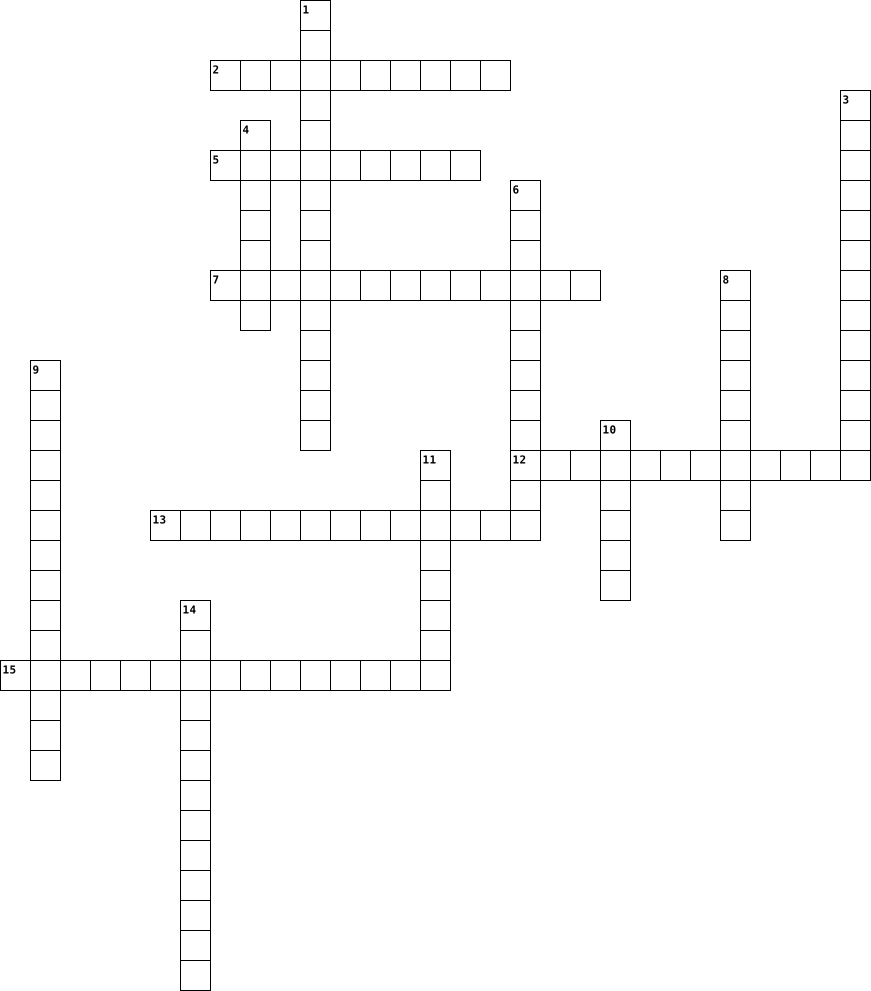
Across
- The fraction of the Sun's diameter covered by the Moon during a solar eclipse, representing the degree of coverage observed from a specific location.
- The phase of a solar eclipse when the Moon completely covers the Sun, resulting in a complete or total blockage of sunlight.
- Bright points of light visible along the edge of the Moon's disk during a total solar eclipse, caused by sunlight streaming through the Moon's valleys.
- A brief phenomenon during a total solar eclipse when a single bright spot resembling a diamond ring appears at one edge of the Moon's disk just before or after totality.
- The path across Earth's surface where observers can witness the total phase of a solar eclipse, often characterized by its width and duration.
- A solar eclipse where only a portion of the Sun is obscured by the Moon, resulting in a partial dimming of sunlight.
Down
- A type of solar eclipse where the Moon is too far from Earth to completely cover the Sun, leaving a ring of sunlight visible around the Moon's edges.
- The initial stage of a solar eclipse when the Moon begins to move across the Sun's disk, resulting in the appearance of a "bite" being taken out of the Sun.
- The outer atmosphere of the Sun, visible as a faint, white, halo-like structure during totality of a solar eclipse.
- Wavy, moving bands of alternating light and dark that can be seen on the ground or surrounding objects just before or after totality during a solar eclipse.
- The lighter outer part of the Moon's shadow during a solar eclipse, where only part of the Sun is blocked, resulting in partial shading.
- The final stage of a solar eclipse when the Moon moves away from the Sun's disk, ending the eclipse phase and returning sunlight to its full intensity.
- The darkest part of the Moon's shadow during a solar eclipse, where the Sun is completely blocked.
- Specialized eyewear designed to protect the eyes from harmful solar radiation during solar eclipses, allowing safe observation of the event.
- A celestial event occurring when the Moon passes between the Sun and Earth, blocking all or part of the Sun's light.
15 Clues: The darkest part of the Moon's shadow during a solar eclipse, where the Sun is completely blocked. • The outer atmosphere of the Sun, visible as a faint, white, halo-like structure during totality of a solar eclipse. • A celestial event occurring when the Moon passes between the Sun and Earth, blocking all or part of the Sun's light. • ...
Tides 2022-02-07

Across
- spring tide
- bulges caused by gravity from the moon and sun, and inertia.
- interaction of the earth, moon, and sun
- what causes tides?
- tide neutral tides
Down
- quarter nep tide
- what has stronger gravitational pull?
- large range of tides
- greatest tidal range
- times how many tides per day?
10 Clues: spring tide • quarter nep tide • what causes tides? • tide neutral tides • large range of tides • greatest tidal range • times how many tides per day? • what has stronger gravitational pull? • interaction of the earth, moon, and sun • bulges caused by gravity from the moon and sun, and inertia.
Tides 2022-02-07

Across
- spring tide
- bulges caused by gravity from the moon and sun, and inertia.
- interaction of the earth, moon, and sun
- what causes tides?
- tide neutral tides
Down
- quarter nep tide
- what has stronger gravitational pull?
- large range of tides
- greatest tidal range
- times how many tides per day?
10 Clues: spring tide • quarter nep tide • what causes tides? • tide neutral tides • large range of tides • greatest tidal range • times how many tides per day? • what has stronger gravitational pull? • interaction of the earth, moon, and sun • bulges caused by gravity from the moon and sun, and inertia.
Tides 2022-02-07

Across
- spring tide
- bulges caused by gravity from the moon and sun, and inertia.
- interaction of the earth, moon, and sun
- what causes tides?
- tide neutral tides
Down
- quarter nep tide
- what has stronger gravitational pull?
- large range of tides
- greatest tidal range
- times how many tides per day?
10 Clues: spring tide • quarter nep tide • what causes tides? • tide neutral tides • large range of tides • greatest tidal range • times how many tides per day? • what has stronger gravitational pull? • interaction of the earth, moon, and sun • bulges caused by gravity from the moon and sun, and inertia.
Pluto 2021-05-24

Across
- Also known as outer space
- What pluto was once was until 2006
- plutos smallest planet
- What kind of planet is Pluto?
- Plutos biggest planet
Down
- Where is Pluto located?
- Plutos second smallest moon
- What is the name of planet?
- Plutos farthest moon
- Third largest moon orbiting pluto
10 Clues: Plutos farthest moon • Plutos biggest planet • plutos smallest planet • Where is Pluto located? • Also known as outer space • Plutos second smallest moon • What is the name of planet? • What kind of planet is Pluto? • Third largest moon orbiting pluto • What pluto was once was until 2006
astronomy 2023-11-21

Across
- decreasing of the moon
- the ocean has ___
- the earth makes a ____ every year
- the southern and northern are opposite
Down
- increase of the moon
- keeps us on the ground
- they glow in the night sky
- the earth goes through a ______
- the moon goes through
- the earth ____ on it axis
10 Clues: the ocean has ___ • increase of the moon • the moon goes through • decreasing of the moon • keeps us on the ground • the earth ____ on it axis • they glow in the night sky • the earth goes through a ______ • the earth makes a ____ every year • the southern and northern are opposite
Rules 2013-04-15

Across
- Next door neighbor
- What kind of therapy that David needs
- What Jason has
- 8 year old boy with Autism
- The present that Catherine gave Jason
- What was the rule about that Jason made Catherine break
- David's favorite place to go
- The frind Kristy favors the least
- What Catherine fixes for David that winds
Down
- The author of "Rules"
- One of Catherine's favorite phases
- Catherine makes for Jason
- Where David borrows his words
- The boy who is mean to David
- Catherine walks with on the beach
- Finish this rule: No toys in the ....
16 Clues: What Jason has • Next door neighbor • The author of "Rules" • Catherine makes for Jason • 8 year old boy with Autism • The boy who is mean to David • David's favorite place to go • Where David borrows his words • Catherine walks with on the beach • The frind Kristy favors the least • One of Catherine's favorite phases • What kind of therapy that David needs • ...
Tides 2022-02-07

Across
- spring tide
- bulges caused by gravity from the moon and sun, and inertia.
- interaction of the earth, moon, and sun
- what causes tides?
- tide neutral tides
Down
- quarter nep tide
- what has stronger gravitational pull?
- large range of tides
- greatest tidal range
- times how many tides per day?
10 Clues: spring tide • quarter nep tide • what causes tides? • tide neutral tides • large range of tides • greatest tidal range • times how many tides per day? • what has stronger gravitational pull? • interaction of the earth, moon, and sun • bulges caused by gravity from the moon and sun, and inertia.
Circulatory System 2021-01-04

Across
- blood vessels that deliver O2
- dividing wall between the left and right side of the heart
- largest artery in the body
- disk shaped cells
Down
- proteins that help blood clots
- an organ that pumps blood
- two large veins that return blood
- one of the phases of the cardiac cycle
- body fluid
- upper chamber of the heart
10 Clues: body fluid • disk shaped cells • an organ that pumps blood • largest artery in the body • upper chamber of the heart • blood vessels that deliver O2 • proteins that help blood clots • two large veins that return blood • one of the phases of the cardiac cycle • dividing wall between the left and right side of the heart
Solar and Lunar Eclipse - Definitions 2021-12-02

Across
- Only people in the umbra experience a ___ solar eclipse
- you see me in the day
- occurs when one object moves into the shadow of another
- you live here
- when the moon blocks the light from the sun
- dark shadow
Down
- in a straight line
- Eclipse when the earth blocks the light from the sun
- In the penumbra, people only see a ___ eclipse
- you see me in the night
- light shadow
- moon appears to small to block out the whole
12 Clues: dark shadow • light shadow • you live here • in a straight line • you see me in the day • you see me in the night • when the moon blocks the light from the sun • moon appears to small to block out the whole • In the penumbra, people only see a ___ eclipse • Eclipse when the earth blocks the light from the sun • Only people in the umbra experience a ___ solar eclipse • ...
science-moons,planets 2026-02-03

Across
- the thing that all the planets go around
- when the moon is the smallest that it gets
- the planet sixth closest to the sun
- the planet second closest to the sun
- the furthest planet from the sun
- the planet fifth closest to the sun
Down
- when the moon is the biggest that it gets
- the planet fourth closest to the sun
- the earths moon
- the planet third closest to the sun
- the planet seventh closest to the sun
- the planet closest to the sun
12 Clues: the earths moon • the planet closest to the sun • the furthest planet from the sun • the planet sixth closest to the sun • the planet third closest to the sun • the planet fifth closest to the sun • the planet fourth closest to the sun • the planet second closest to the sun • the planet seventh closest to the sun • the thing that all the planets go around • ...
7L The Solar System and Beyond 2013-09-29

Across
- This type of eclipse involves the Moon blocking out the Sun.
- The largest planet of the Solar System. Features a large red spot. Named after the Roman god of the sky and thunder.
- The time it takes a planet to rotate once on its own axis.
- At this time of the year Britain is tilted towards the Sun.
- The closest planet to the Sun. Named after the Roman god of wealth.
- A natural satellite that orbits the Earth. It controls the tides of the sea.
- This type of eclipse involves the Earth casting a shadow over the Moon.
- At this time of the year Britain is tilted away from the Sun.
Down
- The general name for any object that orbits a planet.
- There are eight of these in the Solar System. They orbit the Sun and reflect the Sun's light.
- The second largest planet of the Solar System. Surrounded by beautiful ice crystal rings.
- Small dwarf planet discovered in 1930. Used to be considered as one of the main planets of the Solar System, but not any more.
- The time taken for the Moon to orbit the Earth.
- The path that a planet (or a moon) takes as it goes around a star (or a planet).
14 Clues: The time taken for the Moon to orbit the Earth. • The general name for any object that orbits a planet. • The time it takes a planet to rotate once on its own axis. • At this time of the year Britain is tilted towards the Sun. • This type of eclipse involves the Moon blocking out the Sun. • At this time of the year Britain is tilted away from the Sun. • ...
The Space Race 2025-04-09

Across
- intercontinental ballistic missile
- First American in space
- First man in space
- First woman in space
- could take off like a rocket and land like a plane
- US president who said we would put a man on the moon
- the space program to put a man on the moon
Down
- This space telescope was launched in 1990
- First manmade satellite in space
- First America to step on the moon
- First American to orbit the earth
- national aeronautics and space administration
12 Clues: First man in space • First woman in space • First American in space • First manmade satellite in space • First America to step on the moon • First American to orbit the earth • intercontinental ballistic missile • This space telescope was launched in 1990 • the space program to put a man on the moon • national aeronautics and space administration • ...
Tides 2022-02-07

Across
- spring tide
- bulges caused by gravity from the moon and sun, and inertia.
- interaction of the earth, moon, and sun
- what causes tides?
- tide neutral tides
Down
- quarter nep tide
- what has stronger gravitational pull?
- large range of tides
- greatest tidal range
- times how many tides per day?
10 Clues: spring tide • quarter nep tide • what causes tides? • tide neutral tides • large range of tides • greatest tidal range • times how many tides per day? • what has stronger gravitational pull? • interaction of the earth, moon, and sun • bulges caused by gravity from the moon and sun, and inertia.
Tides 2022-02-07

Across
- spring tide
- bulges caused by gravity from the moon and sun, and inertia.
- interaction of the earth, moon, and sun
- what causes tides?
- tide neutral tides
Down
- quarter nep tide
- what has stronger gravitational pull?
- large range of tides
- greatest tidal range
- times how many tides per day?
10 Clues: spring tide • quarter nep tide • what causes tides? • tide neutral tides • large range of tides • greatest tidal range • times how many tides per day? • what has stronger gravitational pull? • interaction of the earth, moon, and sun • bulges caused by gravity from the moon and sun, and inertia.
space 2022-09-21

Across
- longest human space craft programme
- the upcoming moon mission
- first artificial satellite
- first american space station
Down
- mission to study interstellar space
- columbia is the name of a
- the rocket that took people to the moon
- most recent space telescope
- the name of the moon missions
- elon musks space programme
10 Clues: columbia is the name of a • the upcoming moon mission • first artificial satellite • elon musks space programme • most recent space telescope • first american space station • the name of the moon missions • mission to study interstellar space • longest human space craft programme • the rocket that took people to the moon
Choice Board 2024-01-22

Across
- A force that the earth pull
- Occurs during a new moon or a full moon
- A object that orbits a planet(also can cause a gravitational pull)
- A rocky terrestrial planet that we humans live on
- A liquid that can turn into different states such as solid,liquid,and gas
Down
- Occurs during a 1st quarter moon or a 3rd quarter moon
- A tide at its highest state
- A 4.5 billion year old star at the center of the solar system
- A tide at its lowest state
9 Clues: A tide at its lowest state • A force that the earth pull • A tide at its highest state • Occurs during a new moon or a full moon • A rocky terrestrial planet that we humans live on • Occurs during a 1st quarter moon or a 3rd quarter moon • A 4.5 billion year old star at the center of the solar system • A object that orbits a planet(also can cause a gravitational pull) • ...
Choice Board 2024-01-22

Across
- A force that the earth pull
- Occurs during a new moon or a full moon
- A object that orbits a planet(also can cause a gravitational pull)
- A rocky terrestrial planet that we humans live on
- A liquid that can turn into different states such as solid,liquid,and gas
Down
- Occurs during a 1st quarter moon or a 3rd quarter moon
- A tide at its highest state
- A 4.5 billion year old star at the center of the solar system
- A tide at its lowest state
9 Clues: A tide at its lowest state • A force that the earth pull • A tide at its highest state • Occurs during a new moon or a full moon • A rocky terrestrial planet that we humans live on • Occurs during a 1st quarter moon or a 3rd quarter moon • A 4.5 billion year old star at the center of the solar system • A object that orbits a planet(also can cause a gravitational pull) • ...
Solar and Lunar Eclipses in Space 2024-03-28

Across
- When Earth moves into the shadow of the moon.
- When the moon entirely blocks out the sun.
- The order of planets in a solar eclipse.
- The moon phase required for a lunar eclipse.
- The part of the shadow surrounding the darkest part of the shadow.
Down
- When the moon moves into the shadow of Earth.
- The order of planets in a lunar eclipse.
- The required moon phase for a solar eclipse.
- The darkest part of the shadows cast during an eclipse.
9 Clues: The order of planets in a lunar eclipse. • The order of planets in a solar eclipse. • When the moon entirely blocks out the sun. • The required moon phase for a solar eclipse. • The moon phase required for a lunar eclipse. • When the moon moves into the shadow of Earth. • When Earth moves into the shadow of the moon. • ...
The Phases of Matter Crossword 2013-10-09

Across
- what is the name of the very small particle that makes up all matter?
- what is the correct term for the ring of water that is left behind from a cold drink?
- ____ ____ is the term for when atoms get so cold, that the particles stop moving all together.
- ____ in the form of heat is needed to change from 1 phase to another.
- what is the process of a liquid becoming vaporized?
- ____ is when energy in the form of heat is given to atoms and the object can turn into liquid.
- ____ is in 78% of our air.
- ____ is a region located at the center of the atom.
- one phase of matter that is hard to compress, holds a shape, has a certain size, and might be hard.
Down
- ____ is how much there is of an object.
- ____ is the amount of space an object occupies.
- ____ of an element or compound is a phase transition from liquid phase to gas phase.
- ____ can freeze, boil, and evaporate.
- ____ is when energy is taken away from atoms, and the particles move slower.
- the universe is made entirely of ____.
- what is the transition of a substance directly from the solid to the gas phase without passing through an intermediate liquid phase.
- one phase of matter that is easy to compress and its atoms hold the most energy out of the 3 phases.
- what is another term for physical condition or stage of matter?
- one state of matter that exists between the solid phase and gas phase.
19 Clues: ____ is in 78% of our air. • ____ can freeze, boil, and evaporate. • the universe is made entirely of ____. • ____ is how much there is of an object. • ____ is the amount of space an object occupies. • what is the process of a liquid becoming vaporized? • ____ is a region located at the center of the atom. • ...
Choice Board 2024-01-22

Across
- A force that the earth pulls
- Occurs during a new moon or a full moon
- A object that orbits a planet(also can cause a gravitational pull)
- A rocky terrestrial planet that we humans live on
- A liquid that can turn into different states such as solid,liquid,and gas
Down
- Occurs during a 1st quarter moon or a 3rd quarter moon
- A tide at its highest state
- A 4.5 billion year old star at the center of the solar system
- A tide at its lowest state
9 Clues: A tide at its lowest state • A tide at its highest state • A force that the earth pulls • Occurs during a new moon or a full moon • A rocky terrestrial planet that we humans live on • Occurs during a 1st quarter moon or a 3rd quarter moon • A 4.5 billion year old star at the center of the solar system • A object that orbits a planet(also can cause a gravitational pull) • ...
Tides Vocabulary 2022-10-21

Across
- when the moon is fully visible at night.
- when the moon is not visible at night.
- the 3rd planet in the solar system
- a natural satellite of the Earth
- to deal with dry land.
Down
- a force sending something to the center of an object.
- zone where it is water and land
- the center of the solar system.
- what the tides are made of
- a word that means ocean or ocean life.
- what large bodies of saltwater are called
- waters rising high and low.
12 Clues: to deal with dry land. • what the tides are made of • waters rising high and low. • zone where it is water and land • the center of the solar system. • a natural satellite of the Earth • the 3rd planet in the solar system • when the moon is not visible at night. • a word that means ocean or ocean life. • when the moon is fully visible at night. • ...
Universe Terms 2021-11-10

Across
- a collection of stars dust and gas
- where the sun is the farthest
- when the moon appears closer
- a dense concentration of mass
- strike of light of the small solid matter
Down
- amount of moon that is bright by the sun
- a star ending its life in a big explosion
- solid body of rock orbiting the earth
- second full moon in a month
- massive ball of energy
- the amount of light travels in a year
- full of ice and rock debris orbits the sun
12 Clues: massive ball of energy • second full moon in a month • when the moon appears closer • where the sun is the farthest • a dense concentration of mass • a collection of stars dust and gas • solid body of rock orbiting the earth • the amount of light travels in a year • amount of moon that is bright by the sun • a star ending its life in a big explosion • ...
7L The Solar System and Beyond 2013-09-29

Across
- Small dwarf planet discovered in 1930. Used to be considered as one of the main planets of the Solar System, but not any more.
- The second largest planet of the Solar System. Surrounded by beautiful ice crystal rings.
- A natural satellite that orbits the Earth. It controls the tides of the sea.
- The general name for any object that orbits a planet.
- The time it takes a planet to rotate once on its own axis.
- The largest planet of the Solar System. Features a large red spot. Named after the Roman god of the sky and thunder.
- At this time of the year Britain is tilted away from the Sun.
Down
- This type of eclipse involves the Earth casting a shadow over the Moon.
- The time taken for the Moon to orbit the Earth.
- There are eight of these in the Solar System. They orbit the Sun and reflect the Sun's light.
- The path that a planet (or a moon) takes as it goes around the Sun (or a planet).
- The closest planet to the Sun. Named after the Roman god of wealth.
- This type of eclipse involves the Moon blocking out the Sun.
- At this time of the year Britain is tilted towards the Sun.
14 Clues: The time taken for the Moon to orbit the Earth. • The general name for any object that orbits a planet. • The time it takes a planet to rotate once on its own axis. • At this time of the year Britain is tilted towards the Sun. • This type of eclipse involves the Moon blocking out the Sun. • At this time of the year Britain is tilted away from the Sun. • ...
The Solar System 2021-06-01

Across
- There are eight ___ in the solar system.
- The moon is ___ than the Earth.
- Mercury is the ___planet to the Sun.
- The sun is the ___thing in the solar system.
Down
- The Moon is lighter than the Earth. The Earth is ___ than the Moon.
- The Earth is ____ than the moon.
- Neil Armstrong was the first man to land on the ___.
- The first planet is the ___ because it is nearest to the sun.
- The ___is the biggest object in the solar system.
9 Clues: The moon is ___ than the Earth. • The Earth is ____ than the moon. • Mercury is the ___planet to the Sun. • There are eight ___ in the solar system. • The sun is the ___thing in the solar system. • The ___is the biggest object in the solar system. • Neil Armstrong was the first man to land on the ___. • The first planet is the ___ because it is nearest to the sun. • ...
Choice Board 2024-01-22

Across
- A force that the earth pull
- Occurs during a new moon or a full moon
- A object that orbits a planet(also can cause a gravitational pull)
- A rocky terrestrial planet that we humans live on
- A liquid that can turn into different states such as solid,liquid,and gas
Down
- Occurs during a 1st quarter moon or a 3rd quarter moon
- A tide at its highest state
- A 4.5 billion year old star at the center of the solar system
- A tide at its lowest state
9 Clues: A tide at its lowest state • A force that the earth pull • A tide at its highest state • Occurs during a new moon or a full moon • A rocky terrestrial planet that we humans live on • Occurs during a 1st quarter moon or a 3rd quarter moon • A 4.5 billion year old star at the center of the solar system • A object that orbits a planet(also can cause a gravitational pull) • ...
Choice Board 2024-01-22

Across
- A force that the earth pull
- Occurs during a new moon or a full moon
- A object that orbits a planet(also can cause a gravitational pull)
- A rocky terrestrial planet that we humans live on
- A liquid that can turn into different states such as solid,liquid,and gas
Down
- Occurs during a 1st quarter moon or a 3rd quarter moon
- A tide at its highest state
- A 4.5 billion year old star at the center of the solar system
- A tide at its lowest state
9 Clues: A tide at its lowest state • A force that the earth pull • A tide at its highest state • Occurs during a new moon or a full moon • A rocky terrestrial planet that we humans live on • Occurs during a 1st quarter moon or a 3rd quarter moon • A 4.5 billion year old star at the center of the solar system • A object that orbits a planet(also can cause a gravitational pull) • ...
Complete the word puzzle 2026-01-31

Across
- A man-made object that revolves around the Earth.
- The path followed by a satellite around the Earth.
- The period when the bright part of the Moon decreases.
- The calendar followed internationally based on the Sun.
- The phase of the Moon when its entire bright face is visible.
Down
- The period during which the bright part of the Moon increases.
- A calendar based on the movement of the Moon.
- An extra month added to adjust lunar and solar calendars.
- The natural satellite of the Earth.
9 Clues: The natural satellite of the Earth. • A calendar based on the movement of the Moon. • The path followed by a satellite around the Earth. • A man-made object that revolves around the Earth. • The period during which the bright part of the Moon increases. • The period when the bright part of the Moon decreases. • ...
Source of light 2024-08-28

Across
- during moon festival
- during camp
- live in the deep ocean
- reflect the sun
- prevent car accident
- a giant ball of hot gas
Down
- explode in the sky
- need batteries
- made of wax
- help sailors
- help to cook
- need oil and matches
- in the middle of solar system
13 Clues: during camp • made of wax • help sailors • help to cook • need batteries • reflect the sun • explode in the sky • during moon festival • prevent car accident • need oil and matches • live in the deep ocean • a giant ball of hot gas • in the middle of solar system
Cross Word 2022-05-01

Across
- controversial and bias posters
- humans and their ancestors
- first dog in orbit
- strong and influencial nations
- the name of the Russian satellites
- space tech for communication
- first hominid in space
- mission to get a man on the moon
- first man in space
- first man on moon
- state owned ideology
Down
- war with violence or fighting
- crisis caused by USSR missiles
- ban of testing nuclear weapons
- the capitalist nation in the cold war
- USSR
- the release of satellites
17 Clues: USSR • first man on moon • first dog in orbit • first man in space • state owned ideology • first hominid in space • the release of satellites • humans and their ancestors • space tech for communication • war with violence or fighting • controversial and bias posters • crisis caused by USSR missiles • ban of testing nuclear weapons • strong and influencial nations • ...
Satellite 2023-12-13

Across
- Creatures outside planet Earth
- A big rock trapped in Earth's gravity
- A celestial body moving in the sky
- The moon of a planet with rings
- Fammous failed rocket launch
- Space Development Company
- The gas planet
- The red planet
- A planet with a ring
- Transportation from Earth to Space
- An international satellite
Down
- Japanese space development company
- Used for meteorology
- Used to explore plants
- Used to receive electromagnetic waves
- Our home
- Group of stars with a given name
17 Clues: Our home • The gas planet • The red planet • Used for meteorology • A planet with a ring • Used to explore plants • Space Development Company • An international satellite • Fammous failed rocket launch • Creatures outside planet Earth • The moon of a planet with rings • Group of stars with a given name • Japanese space development company • A celestial body moving in the sky • ...
WATER WORKS 2023-12-13

Across
- 3 phases
- Stage of precipitation
Down
- can not hold anymore
- Rain,Snow,hail
- filled water vapor
- steam
6 Clues: steam • 3 phases • Rain,Snow,hail • filled water vapor • can not hold anymore • Stage of precipitation
Child Languages Acquisition 2020-05-11

Across
- function that expresses needs.
- function relating to opinions.
- Another name for multi word phase?
- Another name for the pre verbal phase?
- Type of word that dominate the one word phase.
- Children Lack -- complexity in earlier phases.
- function for telling information
- function relating to knowledge of environment.
Down
- surname of the Australian who developed theories
- Preverbally infants use soundless communication and
- Another name for the single word utterance?
- go away!
- relationship based function.
- This is the first phase that uses syntax.
- function for telling stories.
- In one word phase children use one word for many.
16 Clues: go away! • relationship based function. • function for telling stories. • function that expresses needs. • function relating to opinions. • function for telling information • Another name for multi word phase? • Another name for the pre verbal phase? • This is the first phase that uses syntax. • Another name for the single word utterance? • ...
Soone, Moon und Sterne 2022-05-25

Across
- Wie heisst der Freund von Line?
- wohin gehen junge Leute im Sommer gerne?
- Gustavs beste Freundin
- Gustavs wohnort
- was ist Iris von Beruf?
- Was brauchen Erick und Iris?
- Wo verbringt Gustavs Familie die Ferien?
Down
- fähigkeit von Anina
- Pubertät für Eltern
- Was hat Erick Gustav zum Geburtstag
- Ein Hobby von Erick
- Wie heisst die Mutter von Moon?
- was haben teenagers am Gesicht?
- eine von Gustavs Schwestern
- Was für eine Hose trägt Moon?
- Gustavs lieblingskleidung
- der Hund von Gustav
17 Clues: Gustavs wohnort • fähigkeit von Anina • Pubertät für Eltern • Ein Hobby von Erick • der Hund von Gustav • Gustavs beste Freundin • was ist Iris von Beruf? • Gustavs lieblingskleidung • eine von Gustavs Schwestern • Was brauchen Erick und Iris? • Was für eine Hose trägt Moon? • Wie heisst der Freund von Line? • Wie heisst die Mutter von Moon? • was haben teenagers am Gesicht? • ...
Soone, Moon und Sterne 2022-05-25

Across
- der Hund von Gustav
- wohin gehen junge Leute im Sommer gerne?
- Gustavs wohnort
- Pubertät für Eltern
- Wie heisst der Freund von Line?
- Wo verbringt Gustavs Familie die Ferien?
- Gustavs beste Freundin
- was ist Iris von Beruf?
Down
- Was brauchen Erick und Iris?
- Gustavs lieblingskleidung
- was haben teenagers am Gesicht?
- fähigkeit von Anina
- Was hat Erick Gustav zum Geburtstag
- eine von Gustavs Schwestern
- Was für eine Hose trägt Moon?
- Wie heisst die Mutter von Moon?
- Ein Hobby von Erick
17 Clues: Gustavs wohnort • der Hund von Gustav • fähigkeit von Anina • Pubertät für Eltern • Ein Hobby von Erick • Gustavs beste Freundin • was ist Iris von Beruf? • Gustavs lieblingskleidung • eine von Gustavs Schwestern • Was brauchen Erick und Iris? • Was für eine Hose trägt Moon? • was haben teenagers am Gesicht? • Wie heisst der Freund von Line? • Wie heisst die Mutter von Moon? • ...
Solar system hard 2020-05-22

Across
- it is the closest dwarf to the sun
- it could be a possible dwarf planet
- it is bigger than mercury
- it is oval in shape
- it is the second reddest object in the solar system
- has 53 moons not named yet
Down
- it is bigger than mercury and a moon of Jupiter
- it is an asteroid
- it has a diameter of 1070 km
- it is a moon of Pluto
- it has potato shaped moons
- it has a moon called Vanth
12 Clues: it is an asteroid • it is oval in shape • it is a moon of Pluto • it is bigger than mercury • it has potato shaped moons • it has a moon called Vanth • has 53 moons not named yet • it has a diameter of 1070 km • it is the closest dwarf to the sun • it could be a possible dwarf planet • it is bigger than mercury and a moon of Jupiter • ...
Choice Board 2024-01-22

Across
- A force that the earth pull
- Occurs during a new moon or a full moon
- A object that orbits a planet(also can cause a gravitational pull)
- A rocky terrestrial planet that we humans live on
- A liquid that can turn into different states such as solid,liquid,and gas
Down
- Occurs during a 1st quarter moon or a 3rd quarter moon
- A tide at its highest state
- A 4.5 billion year old star at the center of the solar system
- A tide at its lowest state
9 Clues: A tide at its lowest state • A force that the earth pull • A tide at its highest state • Occurs during a new moon or a full moon • A rocky terrestrial planet that we humans live on • Occurs during a 1st quarter moon or a 3rd quarter moon • A 4.5 billion year old star at the center of the solar system • A object that orbits a planet(also can cause a gravitational pull) • ...
Outer Space Crossword 2022-07-21

Across
- xaalgy
- what do we use to travel to the moon?
- Our planet
- a person who travels in space
- solar_____
- astenpl
- unidentified flying object
- nomo
Down
- someone from outer space
- tocem
- There are millions of these things in the sky at night
- reiodast
- is very hot
13 Clues: nomo • tocem • xaalgy • astenpl • reiodast • Our planet • solar_____ • is very hot • someone from outer space • unidentified flying object • a person who travels in space • what do we use to travel to the moon? • There are millions of these things in the sky at night
Universe 2026-04-01

Across
- Acures because of the Earth's tilt and positioning of the sun
- Colosal stars (Hottest and Brightest)
- Plots stars based on luminosity, heat, and size
- Include stars, planets, dust, and gas
- Causes tides and follows the lunar cycle
- Earth's movements around the sun
Down
- When the sun, moon, and earth are in a strait line
- Are one of the most crucial tools scientists use
- Are the smallest stars (Coolest and Dimest)
- The galaxy we live in
- Are areas that similar stars cluster together
- A large cloud of dust and gas where stars are born
- A yellow main sequence star (Middle Ground)
- When the sun and moon form a 90 degre angle
- The spinning of Earth on its axis
15 Clues: The galaxy we live in • Earth's movements around the sun • The spinning of Earth on its axis • Colosal stars (Hottest and Brightest) • Include stars, planets, dust, and gas • Causes tides and follows the lunar cycle • Are the smallest stars (Coolest and Dimest) • A yellow main sequence star (Middle Ground) • When the sun and moon form a 90 degre angle • ...
Lunar Cycle 2022-05-25

Across
- Looks like the moon is half-lit.
- The force that tries to pull two objects together.
- Looks like the moon is shaped like a football.
- When the moon is completely illuminated
- When the light looks like a sliver of the moon.
- The light is on the left and getting smaller.
Down
- The light is on the right and is getting bigger.
- When one object is moving around another.
- When an object is spinning on its axis.
- The first phase in the lunar cycle.
10 Clues: Looks like the moon is half-lit. • The first phase in the lunar cycle. • When an object is spinning on its axis. • When the moon is completely illuminated • When one object is moving around another. • The light is on the left and getting smaller. • Looks like the moon is shaped like a football. • When the light looks like a sliver of the moon. • ...
Lunar Vocabulary 2021-04-14

Across
- The change in the appearance of the moon as it makes one full revolution around the earth.
- light is getting more visible
- 100% visibility of the moon
- The spinning of an object, like the Earth, on its axis.
- Caused by the pull of gravity from the moon.
Down
- A force that tries to pull two objects towards each other.
- 0% visibility of the moon
- The movement of an object, like the earth, around another object.
- light is getting less visible
- phase that comes after waxing crescent
10 Clues: 0% visibility of the moon • 100% visibility of the moon • light is getting more visible • light is getting less visible • phase that comes after waxing crescent • Caused by the pull of gravity from the moon. • The spinning of an object, like the Earth, on its axis. • A force that tries to pull two objects towards each other. • ...
tides 2021-11-03

Across
- how many hours until the tide changes from low tide to high tide
- If it is full moon is it spring tide or neap tide
- a force that pulls two objects towards each other
- no tidal bulge
Down
- large tidal bulge
- how many tides happen in 1 day
- larger than the moon but less gravitational pull
- the moon orbits around this and it spins on its axis
- smaller than the sun but more gravitational pull
- the rise and fall of the oceans water
10 Clues: no tidal bulge • large tidal bulge • how many tides happen in 1 day • the rise and fall of the oceans water • larger than the moon but less gravitational pull • smaller than the sun but more gravitational pull • If it is full moon is it spring tide or neap tide • a force that pulls two objects towards each other • the moon orbits around this and it spins on its axis • ...
End Of Year Project - Review Activity 2023-05-10

Across
- The phase when the moon is fully illuminated
- The amount of sunlight we get
- The first phase in the lunar cycle
- The movement of Earth around the Sun
- Happens when the Moon, Sun, and Earth form a 90 degree angle
Down
- The revolution of the Moon around Earth
- Happens when the Moon, Sun, and Earth nearly form a line
- The spinning of Earth on its axis
- Produces heat and light on the Earth, making humans able to live on Earth
- Equal day and night
10 Clues: Equal day and night • The amount of sunlight we get • The spinning of Earth on its axis • The first phase in the lunar cycle • The movement of Earth around the Sun • The revolution of the Moon around Earth • The phase when the moon is fully illuminated • Happens when the Moon, Sun, and Earth nearly form a line • Happens when the Moon, Sun, and Earth form a 90 degree angle • ...
astronomy 2 2024-05-16

Across
- Volcanically active moon of Jupiter.
- The star at the center of our Solar System.
- Largest moon of Neptune, known for its retrograde orbit.
- One of the two small moons of Mars.
- One of Jupiter's moons, believed to have a subsurface ocean.
Down
- Largest moon of Saturn, known for its thick atmosphere.
- Brightest star in the night sky, located in the constellation Canis Major.
- Largest moon in the Solar System, orbiting Jupiter.
- One of Jupiter's Galilean moons, heavily cratered.
- Smaller of Mars' two moons.
10 Clues: Smaller of Mars' two moons. • One of the two small moons of Mars. • Volcanically active moon of Jupiter. • The star at the center of our Solar System. • One of Jupiter's Galilean moons, heavily cratered. • Largest moon in the Solar System, orbiting Jupiter. • Largest moon of Saturn, known for its thick atmosphere. • ...
Lunar Cycle 2024-05-14

Across
- Caused in the ocean by the pull of gravity from the moon
- Change in the appearance of the moon as it makes one full revolution around the Earth
- The light is getting bigger.
- Spinning of an object
Down
- Force that tries to pull two objects towards each other.
- Movement of an object
- Phase is when the Earth is between the Moon and the Sun
- Comes after the Waxing Crescent
- The light is getting smaller.
- Phase is when the Moon is between the Earth and the Sun
10 Clues: Movement of an object • Spinning of an object • The light is getting bigger. • The light is getting smaller. • Comes after the Waxing Crescent • Phase is when the Earth is between the Moon and the Sun • Phase is when the Moon is between the Earth and the Sun • Force that tries to pull two objects towards each other. • ...
Soone, Moon und Sterne 2022-05-25

Across
- der Hund von Gustav
- wohin gehen junge Leute im Sommer gerne?
- Gustavs wohnort
- Pubertät für Eltern
- Wie heisst der Freund von Line?
- Wo verbringt Gustavs Familie die Ferien?
- Gustavs beste Freundin
- was ist Iris von Beruf?
Down
- Was brauchen Erick und Iris?
- Gustavs lieblingskleidung
- was haben teenagers am Gesicht?
- fähigkeit von Anina
- Was hat Erick Gustav zum Geburtstag
- eine von Gustavs Schwestern
- Was für eine Hose trägt Moon?
- Wie heisst die Mutter von Moon?
- Ein Hobby von Erick
17 Clues: Gustavs wohnort • der Hund von Gustav • fähigkeit von Anina • Pubertät für Eltern • Ein Hobby von Erick • Gustavs beste Freundin • was ist Iris von Beruf? • Gustavs lieblingskleidung • eine von Gustavs Schwestern • Was brauchen Erick und Iris? • Was für eine Hose trägt Moon? • was haben teenagers am Gesicht? • Wie heisst der Freund von Line? • Wie heisst die Mutter von Moon? • ...
Soone, Moon und Sterne 2022-05-25

Across
- der Hund von Gustav
- wohin gehen junge Leute im Sommer gerne?
- Gustavs wohnort
- Pubertät für Eltern
- Wie heisst der Freund von Line?
- Wo verbringt Gustavs Familie die Ferien?
- Gustavs beste Freundin
- was ist Iris von Beruf?
Down
- Was brauchen Erick und Iris?
- Gustavs lieblingskleidung
- was haben teenagers am Gesicht?
- fähigkeit von Anina
- Was hat Erick Gustav zum Geburtstag
- eine von Gustavs Schwestern
- Was für eine Hose trägt Moon?
- Wie heisst die Mutter von Moon?
- Ein Hobby von Erick
17 Clues: Gustavs wohnort • der Hund von Gustav • fähigkeit von Anina • Pubertät für Eltern • Ein Hobby von Erick • Gustavs beste Freundin • was ist Iris von Beruf? • Gustavs lieblingskleidung • eine von Gustavs Schwestern • Was brauchen Erick und Iris? • Was für eine Hose trägt Moon? • was haben teenagers am Gesicht? • Wie heisst der Freund von Line? • Wie heisst die Mutter von Moon? • ...
JP-B Shiny Day 19 review 2024-02-27

Across
- the planet closest to the sun
- the ringed planet
- our planet
- the seventh planet
- the second planet
- not a planet anymore
- the fourth planet
- a rock floating through space
- the eighth planet
Down
- when a meteor hits the Earth
- biggest thing in our night sky
- biggest explosion in the universe
- the biggest planet
- our star
- the name of our galaxy
- when the moon moves between the sun and the Earth
- a space rock that enters our atmosphere
17 Clues: our star • our planet • the ringed planet • the second planet • the fourth planet • the eighth planet • the biggest planet • the seventh planet • not a planet anymore • the name of our galaxy • when a meteor hits the Earth • the planet closest to the sun • a rock floating through space • biggest thing in our night sky • biggest explosion in the universe • ...
yuhhhh 2023-08-04

Across
- YOUR moon sign lol
- My favorite food (basic)
- My first cat's name (level: medium)
- My dream vacation spot
- My favorite color
- Our anniversary month <3
- My zodiac sign
- Spicy-cat
- My hometown
Down
- Something I hate
- My puppo's name :)
- My moon sign (ehhhh this will be harder for you)
- My favorite season teehee
- Moo-cat
- My top word of all time (at least with you)
- What my degree is in
- My favorite podcast
17 Clues: Moo-cat • Spicy-cat • My hometown • My zodiac sign • Something I hate • My favorite color • My puppo's name :) • YOUR moon sign lol • My favorite podcast • What my degree is in • My dream vacation spot • My favorite food (basic) • Our anniversary month <3 • My favorite season teehee • My first cat's name (level: medium) • My top word of all time (at least with you) • ...
Halloween Crossword 2025-08-29

Across
- A witch mixes this in a cauldron
- A witch flies on this
- Wolves do this to the moon
- Likes to drink blood
- wrapped up monster
- What skeletons are made of
- Short spooky shout
Down
- Night-time flier
- Sweet treats
- Big and orange; we carve it
- Threads spun across corners
- Says “boo!”
- Witch’s pet
- Magic-maker with a pointy hat
- Sticky home for spiders
- You can see it in the night sky
- Wise bird
17 Clues: Wise bird • Says “boo!” • Witch’s pet • Sweet treats • Night-time flier • wrapped up monster • Short spooky shout • Likes to drink blood • A witch flies on this • Sticky home for spiders • Wolves do this to the moon • What skeletons are made of • Big and orange; we carve it • Threads spun across corners • Magic-maker with a pointy hat • You can see it in the night sky • ...
Earth and the Universe 2013-05-20

Across
- This is very attractive.
- Ours is called the Milkyway.
- Biggest Planet
- The group of planets and the star Earth is part of.
- This kind of eclipse occurs when the moon is in between the Earth and the Sun.
- Closest planet to the Sun
Down
- Distances in space are measured in these
- Some planets are made of rock while others of this.
- A theory which explains the start of the Universe.
- The time it takes for one planet to complete one orbit.
- This kind of eclipse occurs when the Earth is situated in between the Sun and the moon.
- No longer a planet.
- An instrument used to observe the sky.
- This star gives us light.
- A natural satellite.
15 Clues: Biggest Planet • No longer a planet. • A natural satellite. • This is very attractive. • This star gives us light. • Closest planet to the Sun • Ours is called the Milkyway. • An instrument used to observe the sky. • Distances in space are measured in these • A theory which explains the start of the Universe. • Some planets are made of rock while others of this. • ...