
periodic%20table Crossword Puzzles
Periodic Elements 2017-02-26

Across
- Bh
- H
- Ba
- Ga
- Ne
- Hs
- Te
- Ni
- Y
- F
- Er
- Md
- V
- Fl
- Cn
- Hf
- Cu
- K
- Ac
- Mn
- Rn
- Pa
- Sm
- Lr
- Rg
- Fm
- Tc
- Nd
- Mg
- N
- Rf
- Dy
- As
- Si
- Mo
- Nh
- Cs
- Be
- Pt
- Pu
- C
- W
- Ho
- Ts
- Ra
- Li
- Pd
- He
- Eu
- In
- At
- Au
- Sr
- Kr
- Mc
- Og
- Se
- Am
- Cr
- Lu
- Db
- Fr
Down
- Bi
- Np
- Nb
- Ce
- I
- Gd
- Cl
- Lv
- Yb
- Pm
- Cm
- S
- Ds
- Es
- P
- B
- Ag
- Mt
- Ir
- Hg
- U
- Na
- Fe
- Co
- Pr
- Ar
- Ru
- Cf
- Xe
- Ca
- Rh
- No
- Cd
- Zr
- Zn
- Sg
- Br
- Tb
- Al
- Ta
- Tl
- O
- Tm
- Sb
- Ge
- Bk
- Os
- Po
- Re
- La
- Rb
- Ti
- Sc
- Th
- Pb
- Sn
118 Clues: H • I • Y • F • S • V • P • B • K • U • N • C • W • O • Bh • Bi • Np • Nb • Ce • Ba • Ga • Gd • Ne • Cl • Lv • Hs • Te • Yb • Pm • Cm • Ni • Er • Md • Ds • Es • Ag • Fl • Mt • Cn • Hf • Ir • Hg • Cu • Ac • Na • Fe • Co • Mn • Pr • Rn • Pa • Sm • Ar • Ru • Lr • Cf • Rg • Fm • Tc • Xe • Nd • Mg • Ca • Rh • No • Cd • Zr • Rf • Dy • As • Zn • Sg • Br • Si • Mo • Nh • Tb • Al • Cs • Be • Pt • Ta • Pu • Tl • Tm • Sb • Ge • Bk • Os • Ho • Ts • Po • Re • Ra • Li • Pd • La • Rb • He • Eu • In • At • Ti • Au • Sr • Kr • Sc • Th • Mc • Og • Se • Am • Cr • Lu • Pb • Sn • Db • Fr
Periodic Table 2017-12-08

Across
- the lightest 1B element
- metalloid with a charge of -4
- the heaviest element that has stable isotopes
- one weird science teacher
- 6B element found in light bulbs
- metal in the 2nd period that has a charge of +1 always
- 6B element in the 5th row/period
- name of largest atomic radius of the elements B, Al, Ga, In
- has a charge of +1 or -1, gaseous
- in the 5th period and has a charge of +2, +4 or +?
- metalloid that is extremely poisonous, charged +4 or +6
- halogen found in table salt
Down
- gases in group 8A that are not reactive
- poisonous metalloid in 4th period
- natural state of these elements, H, N, O, F, Cl, Br, I, At
- metallic liquid at room temperature
- alkali metal notably found in bananas
- the largest element that can be found in nature
- manmade, poisonous metal used in nuclear bombs that has a charge of +3 or +?
- has a charge of +4 or +2 in the 6th period
- alkaline earth metal necessary for strong bones and teeth
- abundant in the atmosphere, -3 charge
- liquid nonmetal at room temperature
- transition metal of greatest value in the 1B group
- group containing the most active metals
25 Clues: the lightest 1B element • one weird science teacher • halogen found in table salt • metalloid with a charge of -4 • 6B element found in light bulbs • 6B element in the 5th row/period • poisonous metalloid in 4th period • has a charge of +1 or -1, gaseous • metallic liquid at room temperature • liquid nonmetal at room temperature • alkali metal notably found in bananas • ...
periodic vocabulary 2017-12-11

Across
- contains protons and neutrons
- horizontal rown in a periodic table
- a substance formed as the result of a chemical reaction
- where electrons are when they go around the nucleus of an atom
- the substances that create a product
- good conductor of heat and electricity
- semi-conductors
- the principle that matter cannot be created or destroyed
- a table of the chemical elements arranged in order of atomic number
- total number of protons and neutrons in a nucleus
Down
- a number that goes before the chemical formula
- negative charge particle in an atom
- bad conductors
- tells us the number of atoms of each element in a compound
- outer shell electron that is assoiciated with an atom
- nuetral charged particle in an atom
- the number of protons in the nucleus of an atom, which determines the chemical properties of an element and its place in the periodic table.
- vertical columns in a periodic bubble
- positive charged particle in an atom
- a basic unit of a chemical element
20 Clues: bad conductors • semi-conductors • contains protons and neutrons • a basic unit of a chemical element • negative charge particle in an atom • horizontal rown in a periodic table • nuetral charged particle in an atom • the substances that create a product • positive charged particle in an atom • vertical columns in a periodic bubble • good conductor of heat and electricity • ...
Periodic Table 2017-12-14

Across
- You breathe this element
- This element is made by boiling urine
- This is what you get when you are awarded second place
- This element is the only halogen in group 5
- This element is named after the planet Pluto
- This element's atomic number is 80
- This element is found in salt
- This element is found in milk
Down
- This is the heaviest element in group 3
- This element's atomic symbol in C
- This element has 40 protons
- Pennies are made of this element
- Too much exposure to this element can cause berylliosis
- This element makes bright colors
- This element is the lightest element on the periodic table
- This element is what cans are made of
- This element is a metal that is soft enough to cut with a knife
- This element is in group 6 and period 10
- This element’s atomic symbol is Au
- This element is the heaviest element on the periodic table
20 Clues: You breathe this element • This element has 40 protons • This element is found in salt • This element is found in milk • Pennies are made of this element • This element makes bright colors • This element's atomic symbol in C • This element’s atomic symbol is Au • This element's atomic number is 80 • This element is made by boiling urine • This element is what cans are made of • ...
Periodic Table 2017-12-14

Across
- This element is found in salt
- This element's atomic symbol in C
- This element is in group 6 and period 10
- This is the heaviest element in group 3
- This element is the lightest element on the periodic table
- This element is found in milk
- Too much exposure to this element can cause berylliosis
- This element has 40 protons
- This element is the only halogen in group 5
- This element is a metal that is soft enough to cut with a knife
- You breathe this element
Down
- This element’s atomic symbol is Au
- This element makes bright colors
- This element is made by boiling urine
- This element is the heaviest element on the periodic table
- This element is named after the planet Pluto
- This element's atomic number is 80
- Pennies are made of this element
- This element is what cans are made of
- This is what you get when you are awarded second place
20 Clues: You breathe this element • This element has 40 protons • This element is found in salt • This element is found in milk • This element makes bright colors • Pennies are made of this element • This element's atomic symbol in C • This element’s atomic symbol is Au • This element's atomic number is 80 • This element is made by boiling urine • This element is what cans are made of • ...
Periodic puzzle 2018-01-12

Across
- Fe
- Hg
- Co
- Kr
- H
- Xe
- C
- Bi
- Pu
- Rn
Down
- He
- Cl
- B
- O
- Na
- K
- Zn
- Ba
- N
- Cu
20 Clues: B • O • K • H • C • N • He • Fe • Hg • Cl • Co • Kr • Na • Zn • Xe • Ba • Cu • Bi • Pu • Rn
Periodic Table 2018-04-05

Across
- Very Shiny
- Blue Metal
- The First Element
- Makes Your Voice Sound Funny
- In your blood
- Good for your bones
- Found In Nukes
- A Coin
- Lafayette-ium
- A High School-ium
- Superhero Planet
- Very Bright
- USA-ium
- Ex-Planet-nium
- Nearly There-um
Down
- A Planet
- You Breathe It In
- Google-ium
- BOOM!
- Police
- Very Strong
- Search-dium
- The Creator
- Used To Wash Pools
- 1\2-nium
- Another planet-ium
- In Air (Not Oxygen)
- Computer-netium
- Radiation
- Place Of Drinking-ium
30 Clues: BOOM! • Police • A Coin • USA-ium • A Planet • 1\2-nium • Radiation • Very Shiny • Blue Metal • Google-ium • Very Strong • Search-dium • The Creator • Very Bright • In your blood • Lafayette-ium • Found In Nukes • Ex-Planet-nium • Computer-netium • Nearly There-um • Superhero Planet • You Breathe It In • The First Element • A High School-ium • Used To Wash Pools • Another planet-ium • Good for your bones • In Air (Not Oxygen) • ...
Periodic Table 2016-11-09

Across
- A coin that is five cents
- Only metallic element that is liquid
- Dairy is a good source of this element
- Has the highest melting point of any metal
- Used in some photographic flashes for high speed photography
- Sounds like famous scientist who said, "Imagination is more important than knowledge"
- Used in the manufacture of safety matches
- Used to make control rods that are put into nuclear reactors
- Atomic number is 72
Down
- The medal you get when you place second in a tournament
- A very bright color
- The medal you get when you win a tournament
- Makes our voices have a high pitch
- Song sung by Sia and David Guetta
- Makes drinking water safe and cleans pools
- When it reacts with hydrogen it makes ammonia
- What all plants breathe
- Used in gunpowder, matches, fireworks, and treats skin diseases
- What all animals breathe
- Atomic number is 105
- Salt
21 Clues: Salt • A very bright color • Atomic number is 72 • Atomic number is 105 • What all plants breathe • What all animals breathe • A coin that is five cents • Song sung by Sia and David Guetta • Makes our voices have a high pitch • Only metallic element that is liquid • Dairy is a good source of this element • Used in the manufacture of safety matches • ...
Periodic table 2022-04-05

Across
- where electrons are found
- semiconductors
- when you share only one electrons
- group 17
- a type of gas in group 18
- a mix of metals
- the number of electron in each shell
- the metal electrons can move freely
- the for element
- a reactive metal
- used for cooking
- made up of electrons protons and neutrons
- when you share only double electron
- sharing electrons
- where elements are found
Down
- a type of metalliod
- conducts electricity
- when you loose electron
- metal have these
- fond in the nucleus
- found in the nucleus
- can stick on each other
- a shiny and can make money
- bond the bonding of metal
- amount of protons
- two atoms to make a molecule
- when electricity is being shared
27 Clues: group 17 • semiconductors • a mix of metals • the for element • metal have these • a reactive metal • used for cooking • amount of protons • sharing electrons • a type of metalliod • fond in the nucleus • conducts electricity • found in the nucleus • when you loose electron • can stick on each other • where elements are found • where electrons are found • a type of gas in group 18 • ...
Periodic Table 2022-01-14

Across
- This element rhymes with "sink"
- This element is another word for a very bright version of a color that burns your eyes
- When "ony" is added to the end of this element's symbol, it spells a word that means intense pain
- This element's atomic # is 23
- This element sounds like "scandalous"
- This element is also the title of a song
- This element's symbol spells "sin" if an "i" is put in between the 2 letters of its symbol
- A fake version of this element is found in your pencil
- This element has an atomic mass of 101
- This element is one that Marie Curie discovered
- This element has the word "german" in it
Down
- This element is a liquid in the 4th row of the periodic table
- This element is what pennies are made of
- This element's one-letter symbol is 5 letters before the first letter of this element's actual name in the alphabet
- This element is found on the 5th row of the periodic table and starts with a "c"
- ______ foil
- This element's symbol is the abbreviation for mountain
- This element is necessary to human survival
- The first part of this element's name is "liver"
- This element sounds a lot like "Tennessee"
20 Clues: ______ foil • This element's atomic # is 23 • This element rhymes with "sink" • This element sounds like "scandalous" • This element has an atomic mass of 101 • This element is what pennies are made of • This element is also the title of a song • This element has the word "german" in it • This element sounds a lot like "Tennessee" • ...
Periodic Table 2022-01-19

Across
- _____ is at the top right of each element
- Periods have the same number of occupied ______
- Group 2
- Noble gases have a _____ which makes them stable
- Most Reactive Nonmetal
- HONClBrIF are special because they are ____
- elements 93 and higher are ____ meaning they are manmade
- ____ is also equal to the atomic mass
- Group 17
- hydrogen and ____ only need 2 electrons to be stable
Down
- Atomic mass is a _____ of masses
- only mercury and ____ are liquid at stp
- Groups share _____
- ____ have multiple oxidation states and colored ions
- ____ has properties of metals and nonmetals
- mass number is equal to ____ + neutrons
- Group 1
- Group 18
- ____ is what the periodic table is sorted by
- Most Reactive Metal
20 Clues: Group 2 • Group 1 • Group 18 • Group 17 • Groups share _____ • Most Reactive Metal • Most Reactive Nonmetal • Atomic mass is a _____ of masses • ____ is also equal to the atomic mass • only mercury and ____ are liquid at stp • mass number is equal to ____ + neutrons • _____ is at the top right of each element • ____ has properties of metals and nonmetals • ...
Periodic Motion 2022-04-25

Across
- unit for period
- the pattern of disturbance caused by the movement of energy traveling through a medium
- the spreading of waves around obstacles
- system amplifies sound waves whose frequency matches one of its own natural frequencies of vibration
- the maximiun displacement of a particle of the medium from the rest
- the time it takes for an object to complete one cycle
- The number of cycles in one second
- the shortest distance between two points
- the point on the medium that exhibits the maximum amount of negative displacement from the rest position
- One repetition of the motion
Down
- The displacement of the particles of the medium is parallel to the direction of the wave
- a wave that is not capable of transmitting its energy
- The displacement of the particles of the medium is perpendicular to the direction of the wave
- a longitudinal wave propagated by the elastic compression of the medium
- the change in direction of a wave passing from one medium to another caused by its change in speed.
- measure sound intensity
- unit for frequency
- the horizontal line in the middle of the wave.
- the point on the medium that exhibits the maximum amount of positive displacement from the rest position
- A disturbance that propagates through a material medium or space
20 Clues: unit for period • unit for frequency • measure sound intensity • One repetition of the motion • The number of cycles in one second • the spreading of waves around obstacles • the shortest distance between two points • the horizontal line in the middle of the wave. • a wave that is not capable of transmitting its energy • the time it takes for an object to complete one cycle • ...
Periodic Table 2022-05-18

Across
- the elements that are usually poor conductors of heat and electricity
- a substance that cannot be broken down into a simpler substance by ordinary chemical means.
- a chart that organizes information about all of the known elements according to their atomic number.
- an atom that has gained or lost one or more electrons.
- a negatively charged particle found in the energy level of an atom
- Group 1 metals on the periodic table that contain 1 valence electron and lose their valence electrons the most easily, making them the most reactive metals
- the property of transmitting heat, electricity, or sound
- the total number of protons and neutrons in the nucleus of an atom
- a vertical column of elements in the periodic table
- the center of an atom; made up of protons and neutrons
- a horizontal row of elements in the periodic table
Down
- the number of protons in the nucleus of an atom
- the electrons in the outermost shell, or energy level, of an atom
- the smallest particle that has the properties of an element
- describes how likely an element is to form bonds with other elements.
- a positively charged particle in the nucleus of an atom
- the elements that are good conductors of heat and electricity
- The charge of an atoms nucleus resulting from it's number of protons
- an element that has properties of both a metal and nonmetal
- a neutral particle in the nucleus of an atom
20 Clues: a neutral particle in the nucleus of an atom • the number of protons in the nucleus of an atom • a horizontal row of elements in the periodic table • a vertical column of elements in the periodic table • an atom that has gained or lost one or more electrons. • the center of an atom; made up of protons and neutrons • ...
Periodic Table 2023-09-27

Across
- Sb
- Se
- Ce
- Te
- As
- Rb
- Pd
- Br
- Mo
- I
- La
- Rh
Down
- Ga
- Sn
- Cs
- Ag
- Sr
- Nb
- Cu
- Zr
- Ru
- In
- Tc
- Ba
- Xe
- Kr
- Cd
- Ge
- Ni
- Y
- Zn
31 Clues: I • Y • Ga • Sb • Sn • Cs • Ag • Se • Ce • Te • As • Sr • Nb • Cu • Zr • Ru • Rb • In • Tc • Ba • Pd • Xe • Br • Kr • Cd • Ge • Mo • Ni • La • Zn • Rh
Periodic Table 2023-09-27

Across
- Li
- Co
- Cr
- N
- Ti
- P
- Ca
- Ne
- He
- B
- S
- Mg
- O
Down
- V
- Be
- Si
- H
- Fe
- K
- Sc
- C
- Mn
- Cl
- Na
- Al
- F
- Ar
27 Clues: V • H • K • N • P • C • B • S • F • O • Be • Si • Li • Co • Cr • Fe • Ti • Sc • Ca • Mn • Ne • Cl • He • Na • Al • Mg • Ar
Periodic Table 2023-09-27

Across
- Ta
- Pr
- Au
- Sm
- W
- Re
- Er
- Pm
- Tl
- Dy
- Lu
- Tb
Down
- Eu
- Gd
- Pb
- Nd
- Pt
- Hg
- Os
- Yb
- Tm
- Hf
- Ho
- Ir
24 Clues: W • Eu • Gd • Pb • Ta • Nd • Pt • Pr • Hg • Au • Os • Yb • Sm • Tm • Hf • Re • Er • Pm • Ho • Tl • Dy • Lu • Ir • Tb
Periodic Table 2023-11-14

Across
- Alkali Metals react with this
- Metals are in this state at room temp (except HG)
- Alkali Metal in bananas
- Metalloid in computer chips
- Top Alkali Metal
- Left side elements (except hydrogen)
- Group 16, Period 2
- Alkaline Earth Metal in bikes and planes
- Atomic Number 11
- Can stretch into wire
- Can bend
- Elements whose nucleus breaks down over time
- Most common magnetic metal
- Metal in Earth's crust
- Metal mixed with rock
Down
- Alkali Metal in salt
- Third Noble Gas
- ________ Elements (groups 3-12)
- Body's use for iron
- Top row of Inner Transition Elements
- First Post-transition element alphabetically
- Iron,Cobalt and Nickel
- Bottom row of Inner Transition Elements
- Shiny!!
- Alkaline Earth Metal in milk
- _________ Metals (silver,copper,gold)
- Chemical Symbol FE
27 Clues: Shiny!! • Can bend • Third Noble Gas • Top Alkali Metal • Atomic Number 11 • Group 16, Period 2 • Chemical Symbol FE • Body's use for iron • Alkali Metal in salt • Can stretch into wire • Metal mixed with rock • Iron,Cobalt and Nickel • Metal in Earth's crust • Alkali Metal in bananas • Most common magnetic metal • Metalloid in computer chips • Alkaline Earth Metal in milk • ...
PERIODIC TAB 2023-12-26

Across
- The atomic number of an element is the same as the number of protons in that particular nucleus of an, what?
- The property of an element that determines the number of other atoms with which an atom of the element can combine.
- the lightest element
- the lightest metal
- The interatomic linkage that results from the sharing of an electron pair between two atoms.
- What is the maximum number of electrons that can accommodate in a k shell?
- The total number of electrons that an atom either gains or loses in order to form a chemical bond with another atom.
- While moving down in a group, the metallic character?
Down
- Russian chemist who developed the periodic classification of the elements.
- The arrangement of electrons in orbitals around an atomic nucleus.
- Any of the six chemical elements that make up Group 1 (Ia)
- In the period arranged of elements in the modern periodic table, what is increasing from length to right?
- an element with zero valency
- The change in energy experienced when an electron is added to a neutral atom in the gaseous phase to form a negative ion.
- The addition of mass of protons and neutrons.
- What classification of elements are found on the right side toward the upper right corner?
- Is the amount of energy required to remove an electron from the valence shell of an isolated gaseous atom.
- horizontal row of periodic table
- Group 18 is known as?
- Elements that exist mainly found in the upper right corner and on the right side of the periodic table.
20 Clues: the lightest metal • the lightest element • Group 18 is known as? • an element with zero valency • horizontal row of periodic table • The addition of mass of protons and neutrons. • While moving down in a group, the metallic character? • Any of the six chemical elements that make up Group 1 (Ia) • The arrangement of electrons in orbitals around an atomic nucleus. • ...
periodic table 2023-12-01

Across
- Who created the first periodic table
- this element is in the alkali metals group
- this element is in the noble gases group
- nonmetals become ______ ions; called anions
- most reactive nonmetals
- react violently with most nonmetals
- when metals and nonmetals chemically bong together, ions are formed from a ______ of electrons
- metals become ______ ions; called cations
- nonmetals are very _____
- the graph the elements are organized on
- better conductor than nonmetals but not as good as metals
- this element is in the halogens group
- nonmetals _____ electrons
Down
- type of metals that oxidize in air
- alkali metals react with _____ to make strong bases
- also known as "rare earth metals"
- this element is in the halogens group
- have characteristic colors when excited
- metals are good ______ of heat and electricity
- this element is in the alkaline earth metals group
- the periodic table is organized into ____ and periods
- type of metals that are the best conductors of heat and electricity
- metals _____ electrons
- extremely soft metals
- the number of the charge depends on how many _____ electrons are lost or recieved
25 Clues: extremely soft metals • metals _____ electrons • most reactive nonmetals • nonmetals are very _____ • nonmetals _____ electrons • also known as "rare earth metals" • type of metals that oxidize in air • react violently with most nonmetals • Who created the first periodic table • this element is in the halogens group • this element is in the halogens group • ...
periodic Table 2023-12-07

Across
- vertical
- period 3 group 13
- have a characteristic sound when struck
- metalloids
- can be bent or hammered flat
- on the right side of table
- period 5 group 11
- period 4 group 11
- negative charge
- positive charge
Down
- protons + neutrons
- center or left side of periodic table
- no charge
- are strong and resist bending and breaking
- reflect light when polished
- staircase
- period 6 group 11
- can be drawn into a wire
- breaks easily
- horizontal
20 Clues: vertical • no charge • staircase • metalloids • horizontal • breaks easily • negative charge • positive charge • period 3 group 13 • period 6 group 11 • period 5 group 11 • period 4 group 11 • protons + neutrons • can be drawn into a wire • on the right side of table • reflect light when polished • can be bent or hammered flat • center or left side of periodic table • ...
Periodic Table 2023-12-01

Across
- Property of Lanthanides
- Metals become positive ions called _____
- Extremely soft
- Property of metalloids
- Property of Transition Metals
- How many valence electrons are there in the element NA
- Low density
- Reacts violently with most nonmetals
- Arranged elements in order of increasing atomic number
- Most reactive nonmetals
- Oderless
- Property of Alkaline Earth Metals
- Nonmetals______electrons
- Property of metals
- Property of nonmetals
Down
- Atoms with a charge
- Property of Halogens
- Property of Alkali Metals
- Not found alone in nature
- First person who developed a periodic table.
- Most reactive nonmetals
- Electrons in the highest energy level
- Property of Actinides
- Rare earth Metals
- Shape can be easy or hard to change
- Man made elements
- Malleable and ductile
- Property of Noble Gases
- Metals ______electrons
- He was a Russian chemist
30 Clues: Oderless • Low density • Extremely soft • Rare earth Metals • Man made elements • Property of metals • Atoms with a charge • Property of Halogens • Property of Actinides • Malleable and ductile • Property of nonmetals • Property of metalloids • Metals ______electrons • Property of Lanthanides • Most reactive nonmetals • Property of Noble Gases • Most reactive nonmetals • Nonmetals______electrons • ...
Periodic Table 2023-12-03

Across
- ___ Alkaline earth metal that has an atomic number of 4
- In 1864, ____ wrote a textbook that included an abbreviated version of a periodic table that contained 28 elements.
- nonmetals are ____ and break easily
- ___ a lanthanide that has an atomic number of 58
- valence electrons are the ___ electrons
- Metals are good _____ of heat and electricity
- also known as the "rare earth metals"
- ____ contain properties of both metals and nonmetals
- shiny, high melting point
- Valence electrons are the electrons in the ___ energy level
- ____ metals are ductile and malleable and come from ores in the earth's crust.
- a valence electrons are the electrons in the ___ energy level
- poor conductors of heat and electricity
- ___ halogen with an atomic number of 35
Down
- John Newlands was the first person who developed a periodic table by increasing _______
- ions are formed from a transfer of ___
- ___ noble gas that has an atomic number of 2
- Lewis Dot ___ provide a way to visualize an atom's structure and potential to bond
- ___ and alkali metal that has an atomic number of 3
- All of the elements in group 1,3 and 13-18 have a ___ ion charge pattern
- Metals ___(lose) electrons when becoming an ion
- nonmetals ___(gain) electrons when becoming an ion
- ____ are the most reactive nonmetals
- ____ metals are soft, silvery grey and are the most reactive metal
- Ions are atoms with a ___
- all are radioactive, grouped into a row instead of a column
- In 1869, _______'s table was published, containing all 60 of the known elements and predicting the existence of 3 missing elements
- ___ gases are colorless, odorless, tasteless and have characteristic colors when excited
- ____ earth metals are relatively soft and oxidize in air.
29 Clues: shiny, high melting point • Ions are atoms with a ___ • nonmetals are ____ and break easily • ____ are the most reactive nonmetals • also known as the "rare earth metals" • ions are formed from a transfer of ___ • valence electrons are the ___ electrons • poor conductors of heat and electricity • ___ halogen with an atomic number of 35 • ...
Periodic Table 2024-01-07

Across
- used for electrical conductivity and in various alloys
- used in steelmaking and as a dietary supplement
- a reactive metal found in table salt
- a rare earth metal used in catalysts and camera lenses
- a highly reactive halogen used for disinfection
- a halogen element with various industrial uses
- making up a large portion of Earth's atmosphere
- the basis of organic chemistry, forming the backbone of many molecules
- known for its malleability and use in alloys like bronze
- known for its toxicity and used in various compounds
- the most reactive of all elements
- a lightweight metal with diverse industrial applications
- the first element on the periodic table
- known for its distinctive smell, important in various chemical processes
- a radioactive element used as fuel in nuclear reactors
- used in electronics and dietary supplements
- a precious metal used in jewelry and catalytic converters
- the second element, a noble gas with atomic number 2
- used in magnets and rechargeable batteries
- used in medicine and fireworks
- essential for bone and teeth structure
- a transition metal used in aerospace components
- often used in alloys and pharmaceuticals
- an alkali metal important for nerve function and muscle control
- known for its strength and used in high-temperature applications
Down
- an inert gas used in welding and light bulbs
- heavy metal with various applications but known for its toxicity
- essential for life, found in DNA and cell membranes
- a metal with a low melting point, used in semiconductors
- a semiconductor used in electronics
- used in medicine and as a disinfectant
- known for its lustrous appearance and use in jewelry and currency
- a noble gas known for its use in neon lights
- an alkaline earth metal used in alloys and medicine
- lightweight and strong, used in aerospace and electronics
- highly valued for its rarity and use in jewelry and electronics
- a transition metal crucial for many biological processes
- used in batteries and pigments but considered toxic
- used in alloys and as a semiconductor
- known for its corrosion resistance, used in plating and alloys
- used in numerous industrial applications and dietary supplements
- known for its high melting point and used in light bulb filaments
- known for its strength-to-weight ratio and corrosion resistance
- a radioactive noble gas found in some homes
- a transition metal used in alloys like stainless steel
- a liquid metal at room temperature, historically used in thermometers
- known for its strength and used in steel alloys
- used in flame retardants and as a semiconductor
- a radioactive element historically used in luminous paints
- a vital element for respiration and combustion
50 Clues: used in medicine and fireworks • the most reactive of all elements • a semiconductor used in electronics • a reactive metal found in table salt • used in alloys and as a semiconductor • used in medicine and as a disinfectant • essential for bone and teeth structure • the first element on the periodic table • often used in alloys and pharmaceuticals • ...
periodic table 2024-02-29

Across
- electrons on the outermost energy level of an atom
- the possible locations around a nucleus where electrons may be found
- the average mass of all the isotopes of an element
- uses dots to represent valence electrons around an elements atomic symbol
- a chemical bond formed when atoms share two pairs of electons
- a table that shows the elements, their atomic number, symbol, and average atomic mass; elements with similar chemical properties are grouped together
- a pure substance made of only one kind of atom
- a chemical bond formed when atoms share electons
- the smallest part of an element that still has the same properties as the element
- a chemical bond formed when atoms share 3 pairs of electrons
- positively charged particles located in the nucleus of an atom
Down
- created in an atom when it has more protons than electrons
- the central part of the atom where protons and neutrons are located
- a chemical bond formed when atoms atoms share one one pair of electrons
- the smallest particle of a compound that retains all the properties of the compound and it is composed of one or more atoms
- negatively charged particles located outside the nucleus of an atom
- the number of protons in the nucleus of an atom
- created in an atom when it has more electrons than protons
- particles of no charge located in the nucleus of an atom
- atoms of the same element that have different numbers of neutrons
- a chemical bond resulting from the attraction between oppositely charged ions
- a charged atom due to loss or gain of negative electrons
22 Clues: a pure substance made of only one kind of atom • the number of protons in the nucleus of an atom • a chemical bond formed when atoms share electons • electrons on the outermost energy level of an atom • the average mass of all the isotopes of an element • particles of no charge located in the nucleus of an atom • ...
periodic table 2024-02-28

Across
- a puresubstance made of only one kind of atom
- in an atom when it has more electrons then protons
- particles with no charge(nutral)located in the nucleus of an atom
- a chemical bond formed when atoms share one pair of electrons
- the smallest particle of a compound that retains all the properties of the compound and is composed of one or more atoms
- negitivly charged particles located outside the nucleus of an atom
- uses dots to repersent valence electrons around an element's atomic symbol
- the average mass of all the isotopes of an element
- electrons on the outermost energy level of an atom
Down
- a table that shows the elements,the atomic number,symbol,and average atomic mass;elements with similar chemical propertiesare grouped to gether
- a chemical bond formed when atoms share two paresof electrons
- the central part of an atom where protons and nutrons are located
- a chemical bound resulting from the attraction between oppositely charged ions
- achemical bond formed when atoms share electrons
- a charge atom due to the lost or gain negitive electrons
- a chemical bond formed when atoms share three pairs of electrons
- atoms of the same slements that have diffrent numbers of nutrons
- the possible locations around a nucleus where electrons may be found
- in an atom when it has more protons then electrons
- positivly charged particles located in the nucleus of an atom
- the number of protons in the nuclus electrons
- the smallest part of an element that still has the same properties as the element(i.e melting and boiling point)
22 Clues: a puresubstance made of only one kind of atom • the number of protons in the nuclus electrons • achemical bond formed when atoms share electrons • in an atom when it has more electrons then protons • in an atom when it has more protons then electrons • the average mass of all the isotopes of an element • electrons on the outermost energy level of an atom • ...
Periodic table 2024-02-28

Across
- H
- Ca
- Zn
- Co
- F
- Al
- Ne
- Pt
- O
- He
- Ni
- Ra
- B
Down
- Pb
- k
- In
- Se
- Be
- N
- Na
- Sn
- Ar
- C
- Hg
- Ab
- Au
- Rn
- Fe
28 Clues: k • H • N • F • C • O • B • Pb • In • Ca • Se • Be • Zn • Na • Sn • Ar • Co • Al • Hg • Ab • Ne • Au • Pt • Rn • He • Ni • Fe • Ra
Periodic Table 2024-03-13

Across
- Ta
- Hs
- I
- Mc
- Sr
- Co
- K
- Cn
- N
- Es
- Pt
- P
- Gd
- He
- Ba
- Sm
- Ar
- Li
- Ir
- Yb
- Zn
- H
- S
- Ti
- Rn
- Ts
- F
- Y
- U
- Sn
- Si
- Po
- Sc
- Bk
- Cf
- Hf
- Au
- Bh
- Ra
- Nb
- Bi
- Rb
- Lv
- Be
- Sg
- At
- Fr
- Na
- Ge
- Mn
- C
- La
- Fl
- Fm
- Md
- Ds
Down
- Pa
- Ga
- Nh
- Os
- As
- Mg
- Br
- Np
- Pm
- Lr
- In
- Xe
- Ho
- Zr
- Rh
- Ni
- Sb
- Db
- Fe
- Rg
- B
- Se
- Ce
- Pr
- Ru
- Hg
- Mt
- Rf
- Kr
- Tl
- Cs
- Og
- Cr
- No
- Lu
- Re
- Eu
- Nd
- Cm
- V
- Am
- Cl
- Tb
- Cu
- Dy
- Tm
- Te
- Ag
- Th
- Mo
- Pu
- W
- Ne
- Cd
- Pb
- Pd
- Al
- Tc
- Ac
- Ca
- Er
- O
118 Clues: I • K • N • P • B • H • S • F • Y • U • V • W • C • O • Pa • Ga • Ta • Nh • Os • Hs • As • Mg • Mc • Br • Np • Pm • Lr • Sr • In • Xe • Co • Ho • Zr • Cn • Rh • Ni • Es • Pt • Sb • Gd • Db • Fe • He • Rg • Ba • Se • Ce • Pr • Ru • Sm • Hg • Ar • Li • Mt • Rf • Ir • Kr • Yb • Tl • Cs • Og • Zn • Cr • No • Lu • Re • Ti • Rn • Ts • Eu • Nd • Sn • Si • Cm • Po • Am • Sc • Bk • Cf • Hf • Cl • Au • Bh • Tb • Cu • Ra • Dy • Tm • Nb • Bi • Te • Ag • Th • Rb • Lv • Mo • Pu • Ne • Be • Cd • Sg • Pb • Pd • At • Al • Tc • Fr • Ac • Ca • Na • Ge • Mn • Er • La • Fl • Fm • Md • Ds
Periodic Table 2025-03-12

Across
- Arrangement of elements in columns, based on a set of properties that repeat from row to row
- an ion with a positive charge
- Groups 1, 2, 13-18
- Created the first periodic table. Arranged elements by increasing atomic mass
- Elements that are good conductors of electric currents and heat
- the law that states that the repeating chemical and physical properties of elements change periodically with the atomic numbers of the elements
- The name for each column on the periodic table
- an ion with a negative charge
- Elements that form a bridge between the elements on the left and right sides of the table
Down
- The amount of energy required to remove an electron from an atom
- Electrons that are in the highest occupies energy level of an atom
- This group has an electron configuration that ends with ns^2
- the ability of an atom to attract electrons when the atom is in a compound
- This group has an electron configuration that ends with ns^2 np^5 and they are the most reactive nonmetals
- Group 18 nonmetals with eight valence electrons (Helium has only two valence electrons) that are very stable, colorless, odorless, and extremely unreactive
- Elements that are poor conductors of heat and electric current
- Elements with properties that fall between those of metals and nonmetals
- size of an atom
- The name for each row in the table of elements
- Group 1 Metals with a single valence electron and are extremely reactive
20 Clues: size of an atom • Groups 1, 2, 13-18 • an ion with a positive charge • an ion with a negative charge • The name for each row in the table of elements • The name for each column on the periodic table • This group has an electron configuration that ends with ns^2 • Elements that are poor conductors of heat and electric current • ...
Periodic table 2025-02-11

Across
- P
- S
- K
- Mg
- Al
- Cl
- - Ne
- Si
Down
- He
- Be
- H
- - B
- Ar
- Na
- Li
- C
- N
- F
- Ca
- 0
20 Clues: P • H • S • K • C • N • F • 0 • He • Be • Ar • Na • Li • Mg • Al • Cl • Ca • Si • - B • - Ne
Periodic table 2025-02-23

Across
- - Atomic number 20
- - Atomic number 79
- - Atomic number 7
- - Atomic number 94
- - Atomic number 4
- - Atomic number 1
- - Atomic number 26
- - Atomic number 15
- - Atomic number 47
Down
- - Atomic number 28
- - Atomic number 30
- - Atomic number 8
- - Atomic number 29
- - Atomic number 12
- - Atomic number 19
- - Atomic number 2
- - Atomic number 6
- - Atomic number 16
- - Atomic number 3
- - Atomic number 22
- - Atomic number 92
- - Atomic number 11
22 Clues: - Atomic number 8 • - Atomic number 2 • - Atomic number 7 • - Atomic number 6 • - Atomic number 3 • - Atomic number 4 • - Atomic number 1 • - Atomic number 28 • - Atomic number 30 • - Atomic number 20 • - Atomic number 29 • - Atomic number 12 • - Atomic number 19 • - Atomic number 79 • - Atomic number 16 • - Atomic number 22 • - Atomic number 94 • - Atomic number 92 • - Atomic number 26 • ...
Periodic table 2025-02-23

Across
- 16 protons
- 3 protons
- 20 protons
- 6 protons
- 12 protons
- 5 protons
- 9 protons
- 11 protons
- 15 protons
- 17 protons
- 7 protons
Down
- 13 protons
- 14 protons
- 8 protons
- 4 protons
- 18 protons
- 2 protons
- 19 protons
- 1 proton
- 10 protons
20 Clues: 1 proton • 3 protons • 8 protons • 4 protons • 6 protons • 5 protons • 2 protons • 9 protons • 7 protons • 13 protons • 16 protons • 14 protons • 20 protons • 18 protons • 12 protons • 11 protons • 19 protons • 15 protons • 17 protons • 10 protons
periodic table 2025-02-23

Across
- Oxygen
- Magnesium
- Vanadium
- Chromium
- Cerium
- Copper
- Californium
- Hydrogen
Down
- Germanium
- Silver
- Bromine
- Rubidium
- Calcium
- Titanium
- Carbon-Monoxide
- Zinc
- Cobalt
- Carbon
- Iron
- Nickle
20 Clues: Zinc • Iron • Oxygen • Silver • Cobalt • Cerium • Carbon • Copper • Nickle • Bromine • Calcium • Rubidium • Titanium • Vanadium • Chromium • Hydrogen • Germanium • Magnesium • Californium • Carbon-Monoxide
Periodic Table 2025-02-23

Across
- You can find me in the carbon family in the fifth period.
- My atomic number is 47 and I am used to make photographic film
- I have 2 electrons in the first shell, 8 in the second shell, and 6 in the third shell.
- My atomic mass is 35.453
- I am a transition metal with 30 electrons useful in making paint.
- I am the head of the carbon family known as the "basis of life".
- I have 20 neutrons and am found in your teeth and bones.
- My atomic number is 79.
- I am not really an alkali metal, but since I have only 1 electron, I behave like them.
- I am a noble gas with 2 electrons.
- I have 26 protons. iron
- I am a silvery-white metal used to make salt.
- I am a member of the halide family with an atomic number of 53.
- I am a gas with a mass number of 19.
- I am a transition metal with 25 electrons.
Down
- I am the first element in the fourth period used in making fertilizer.
- I am the 2nd most abundant element in the Earth's crust and have 14 neutrons.
- I am a metal that is liquid at room temperature.
- I am a gas with 8 protons and 8 neutrons.
- I am a metal with 28 electrons
- I am the only element in the halide family that is a liquid.
- I am a member of the alkaline earth metals used to make fireworks and medicines.
- I am a member of the boron family and am the most abundant metal in the Earth's crust.
- I am a member of the nitrogen family with 16 neutrons.
- I makeup 78% of the air and am found in the 15th group.
- I am a member of the carbon family often mistaken for the end of your pencil.
26 Clues: My atomic number is 79. • I have 26 protons. iron • My atomic mass is 35.453 • I am a metal with 28 electrons • I am a noble gas with 2 electrons. • I am a gas with a mass number of 19. • I am a gas with 8 protons and 8 neutrons. • I am a transition metal with 25 electrons. • I am a silvery-white metal used to make salt. • I am a metal that is liquid at room temperature. • ...
Periodic Table 2025-02-23

Across
- Electron I’m an electron located on the outermost shell
- I’m a subatomic particle with a positive charge
- I’m the second most abundant metal on Earth
- I’m naturally antibacterial
- My atomic weight is 183.84
- My atomic number is 78
- I’m the 8th most abundant metal in earths crust
- my atomic number is 10
- My atomic number is 11
- I’m a metal that is liquid at room temperature
- I’m twice as strong as Aluminum
Down
- I’m the most reactive and the most electronegative of all the elements
- I’m named after mythical, death dealing goblins
- I’m the most reactive and the most electronegative of all the elements
- I’m the lightest metal
- I melt at 420 degrees Celsius
- My atomic number is 5
- my atomic number is 24
- I’m the most stable element
- My atomic number is 19
- Animals and plants require me for respiration
21 Clues: My atomic number is 5 • I’m the lightest metal • my atomic number is 24 • My atomic number is 78 • My atomic number is 19 • my atomic number is 10 • My atomic number is 11 • My atomic weight is 183.84 • I’m naturally antibacterial • I’m the most stable element • I melt at 420 degrees Celsius • I’m twice as strong as Aluminum • I’m the second most abundant metal on Earth • ...
Periodic Table 2025-02-23

Across
- atoms of the same element with different number of neutrons
- I am the largest alkali metal
- I am the smallest alkaline earth metal
- I have 2 protons
- I have an atomic number of 16.
- Good conductor of electricity
- I am element number 92
- I have an atomic mass of 16.
- My chemical symbol is W.
- I have 56 electrons.
- Characteristics of both metals and nonmetals
Down
- charge of a proton
- I have the largest atomic radius in row 4
- a metal that is liquid at room temperature
- My chemical symbol is Fl
- An unreactive group of elements.
- I have 47 protons
- I am the smallest halogen
- Most reactive group of metals.
- charge of an electron
20 Clues: I have 2 protons • I have 47 protons • charge of a proton • I have 56 electrons. • charge of an electron • I am element number 92 • My chemical symbol is Fl • My chemical symbol is W. • I am the smallest halogen • I have an atomic mass of 16. • I am the largest alkali metal • Good conductor of electricity • I have an atomic number of 16. • Most reactive group of metals. • ...
periodic table 2025-02-23

Across
- I have 16 neutrons and am in group 2
- have an atomic number of 72
- I am found in 1,1
- I have 68 protons
- the name of the elements
- I have an atomic number of 117
- my chemical symbol is au
- I have 114 neutrons and am in group 7
- I have 89 protons
- I am found in 18,1
- I am found in 12,5
- my chemical symbol is li
- I have 58 neutrons and am in group 5
Down
- I am found in 17,3
- the rows on the periodic table
- weight the weight of the element
- my chemical symbol is k
- I have 111 electrons
- my chemical symbol is as
- I have 114 protons
- I am found in 18.7
- I have 20 neutrons and am in group 4
- number the number of the elements
- the columns on the periodic table
24 Clues: I am found in 1,1 • I have 68 protons • I have 89 protons • I am found in 17,3 • I have 114 protons • I am found in 18.7 • I am found in 18,1 • I am found in 12,5 • I have 111 electrons • my chemical symbol is k • the name of the elements • my chemical symbol is as • my chemical symbol is au • my chemical symbol is li • have an atomic number of 72 • the rows on the periodic table • ...
Periodic Table 2025-02-23

Across
- Li
- Co
- Cr
- N
- Ti
- P
- Ca
- Ne
- He
- B
- S
- Mg
- O
Down
- V
- Be
- Si
- H
- Fe
- K
- Sc
- C
- Mn
- Cl
- Na
- Al
- F
- Ar
27 Clues: V • H • K • N • P • C • B • S • F • O • Be • Si • Li • Co • Cr • Fe • Ti • Sc • Ca • Mn • Ne • Cl • He • Na • Al • Mg • Ar
Periodic Table 2025-02-23

Across
- Ta
- Pr
- Au
- Sm
- W
- Re
- Er
- Pm
- Tl
- Dy
- Lu
- Tb
Down
- Eu
- Gd
- Pb
- Nd
- Pt
- Hg
- Os
- Yb
- Tm
- Hf
- Ho
- Ir
24 Clues: W • Eu • Gd • Pb • Ta • Nd • Pt • Pr • Hg • Au • Os • Yb • Sm • Tm • Hf • Re • Er • Pm • Ho • Tl • Dy • Lu • Ir • Tb
periodic Table 2025-02-23

Across
- vertical
- period 3 group 13
- have a characteristic sound when struck
- metalloids
- can be bent or hammered flat
- on the right side of table
- period 5 group 11
- period 4 group 11
- negative charge
- positive charge
Down
- protons + neutrons
- center or left side of periodic table
- no charge
- are strong and resist bending and breaking
- reflect light when polished
- staircase
- period 6 group 11
- can be drawn into a wire
- breaks easily
- horizontal
20 Clues: vertical • no charge • staircase • metalloids • horizontal • breaks easily • negative charge • positive charge • period 3 group 13 • period 6 group 11 • period 5 group 11 • period 4 group 11 • protons + neutrons • can be drawn into a wire • on the right side of table • reflect light when polished • can be bent or hammered flat • center or left side of periodic table • ...
periodic table 2025-02-23

Across
- My atomic symbol is P
- Columns on a periodic table
- My atomic symbol is Sl
- you can find me at [18,5]
- The only sinthetically prepared element in group 4
- My atomic symbol is At
- Rows on a priodic table
- i have 32 neutrons and live in period 4
- You can find me at [13,2]
- You can find me at [12,6]
- You can find me at [7,5]
- My atomic symbol is Fr
Down
- My atomic number is 10
- my atomic number is 9
- i am a liquid with 45 neutrons
- There are only two of this state on the periodic table
- i have 31 electrons
- This kind of gas is onlyfound in group 18
- My atomic symbol is Si
- i live in group one and have 0 neutrons
- i have 95 protons
- my atomic number is 88
- i have 2 neutrons and live in group 18
- A gas in group 15
24 Clues: A gas in group 15 • i have 95 protons • My atomic symbol is P • i have 31 electrons • My atomic number is 10 • my atomic number is 9 • My atomic symbol is Sl • My atomic symbol is Si • My atomic symbol is At • My atomic symbol is Fr • Rows on a priodic table • my atomic number is 88 • You can find me at [7,5] • you can find me at [18,5] • You can find me at [13,2] • ...
Periodic Table 2025-02-23

Across
- My Chemical symbol is Ru
- You can find me in a pool
- 3,5
- you breathe me
- My atomic number is 7
- I have 8 neutrons and live in group 14
- I have 10 neutrons and I live in group 17
- I have 15 neutrons and live in group 15
- I have 30 protons
- 4,7
- 1,6
- 12,7
Down
- I have 2 protons
- My Chemical symbol is Mt
- My Chemical symbol is Ni
- My Chemical symbol is Ti
- You can find me in a banana
- I have 10 Neutrons and live in group 18
- My Chemical symbol is Ta
- 18,7
- 2,4
- I have 41 protons
- I am liquid metal
- I have 79 electrons
24 Clues: 3,5 • 2,4 • 4,7 • 1,6 • 18,7 • 12,7 • you breathe me • I have 2 protons • I have 41 protons • I have 30 protons • I am liquid metal • I have 79 electrons • My atomic number is 7 • My Chemical symbol is Ru • My Chemical symbol is Mt • My Chemical symbol is Ni • My Chemical symbol is Ti • My Chemical symbol is Ta • You can find me in a pool • You can find me in a banana • ...
Periodic Table 2025-02-23

Across
- My Chemical symbol is Ru
- You can find me in a pool
- 3,5
- you breathe me
- My atomic number is 7
- I have 8 neutrons and live in group 14
- I have 10 neutrons and I live in group 17
- I have 15 neutrons and live in group 15
- I have 30 protons
- 4,7
- 1,6
- 12,7
Down
- I have 2 protons
- My Chemical symbol is Mt
- My Chemical symbol is Ni
- My Chemical symbol is Ti
- You can find me in a banana
- I have 10 Neutrons and live in group 18
- My Chemical symbol is Ta
- 18,7
- 2,4
- I have 41 protons
- I am liquid metal
- I have 79 electrons
24 Clues: 3,5 • 2,4 • 4,7 • 1,6 • 18,7 • 12,7 • you breathe me • I have 2 protons • I have 41 protons • I have 30 protons • I am liquid metal • I have 79 electrons • My atomic number is 7 • My Chemical symbol is Ru • My Chemical symbol is Mt • My Chemical symbol is Ni • My Chemical symbol is Ti • My Chemical symbol is Ta • You can find me in a pool • You can find me in a banana • ...
Periodic Table 2025-02-23

Across
- Has 76 protons
- Chemical formula is H20
- Has 2 naturally occurring isotopes
- Vertical row of elements
- The positively charged center of the atom
- The___number is the sum of the protons and neutrons
- Nonmetal, lightest and Simplest element
- Also known as NaCI
- Has 108 protons
- Used as a disinfectant
- Symbol is O
Down
- The ____ number determines the type of element
- Atoms of the same element,different#of neutrons
- Used for machinery and tools
- Electron __ is an area around the nucleus of an atom where electrons are most likely to be found
- Has an atomic number of 35
- Used in batteries
- It's symbol is K
- Particles in the nucleus with a positive charge
- Horizontal row of elements
20 Clues: Symbol is O • Has 76 protons • Has 108 protons • It's symbol is K • Used in batteries • Also known as NaCI • Used as a disinfectant • Chemical formula is H20 • Vertical row of elements • Has an atomic number of 35 • Horizontal row of elements • Used for machinery and tools • Has 2 naturally occurring isotopes • Nonmetal, lightest and Simplest element • ...
Periodic Table 2025-02-23

Across
- weight the weight of the element
- my atomic number is 31
- I have 56 electrons
- my chemical symbol is K
- I have 20 neutrons and I'm in group 4
- I have 114 protons
- my chemical symbol is U
- number the number of the element
- I have 4 protons
- I have 114 neutrons and I'm in group 7
- the rows on the periodic table
Down
- I am found in group 14, period 5
- I have an atomic number of 69
- I have an atomic number of 72
- the columns on the periodic table
- my chemical symbol is V
- I am found in group 13, period 2
- I am found in group 9, period 6
- my chemical symbol is Mn
- I am found in group 16, period 6
- my chemical symbol is Ti
- I have 5 neutrons and I'm in group 5
- I am found in group 1, period 1
- I have 16 neutrons and I'm in group 2
24 Clues: I have 4 protons • I have 114 protons • I have 56 electrons • my atomic number is 31 • my chemical symbol is V • my chemical symbol is K • my chemical symbol is U • my chemical symbol is Mn • my chemical symbol is Ti • I have an atomic number of 69 • I have an atomic number of 72 • the rows on the periodic table • I am found in group 9, period 6 • I am found in group 1, period 1 • ...
Periodic Table 2025-02-23

Across
- Pb 82
- Cn 112
- Sn 50
- Li 3
- Fr 87
- Sr 38
- Hg 80
- At 85
- In 49
- K 19
- Ba 56
- Si 14
- Cd 48
- B 5
- Po 84
Down
- Ca 20
- Tl 81
- Ga 31
- As 33
- Bi 83
- Be 4
- Mg 12
- Al 13
- Ge 32
- Rb 37
- Zn 30
- Ra 88
- Sb 51
- Cs 55
- Te 52
- Na 11
31 Clues: B 5 • Be 4 • Li 3 • K 19 • Ca 20 • Tl 81 • Ga 31 • Pb 82 • As 33 • Bi 83 • Sn 50 • Mg 12 • Fr 87 • Al 13 • Sr 38 • Hg 80 • Ge 32 • Rb 37 • Zn 30 • At 85 • In 49 • Ra 88 • Ba 56 • Sb 51 • Si 14 • Cs 55 • Cd 48 • Te 52 • Na 11 • Po 84 • Cn 112
Periodic Crossword 2025-10-19

Across
- Element Ni
- Element Zn
- Element B
- Element P
- Element La
- Element Ir
- Element Rn
- Element Cr
- Element Re
- Element Pd
- Element H
- Element U
- Element F
- Element Y
- Element Ca
- Element Se
- Element Ag
- Element Li
- Element Si
- Element Al
- Element C
- Element Cs
- Element K
- Element N
- Element Ge
- Element Bi
- Element Kr
- Element Br
- Element Cd
- Element Ru
- Element Mg
- Element Sc
- Element Ga
- Element Au
- Element He
- Element Ti
- Element Hf
- Element Er
- Element I
- Element Be
Down
- Element At
- Element Rh
- Element Zr
- Element Pb
- Element Cu
- Element V
- Element Sb
- Element Ar
- Element PoE
- Element Sr
- Element Na
- Element Tc
- Element O
- Element Ac
- Element Fr
- Element Fe
- Element As
- Element Ta
- Element Lu
- Element Hg
- Element In
- Element Co
- Element Mo
- Element Tl
- Element Ra
- Element Nb
- Element Sn
- Element Pt
- Element Ne
- Element W
- Element Cl
- Element Rb
- Element Te
- Element Mn
- Element Ba
- Element Os
- Element S
- Element Xe,
78 Clues: Element B • Element P • Element V • Element H • Element U • Element O • Element F • Element Y • Element C • Element K • Element N • Element W • Element S • Element I • Element At • Element Rh • Element Zr • Element Pb • Element Ni • Element Cu • Element Zn • Element Sb • Element Ar • Element La • Element Ir • Element Sr • Element Rn • Element Na • Element Cr • Element Tc • Element Re • Element Pd • Element Ac • Element Fr • Element Fe • Element Ca • ...
PERIODIC TABLE 2025-09-30

Across
- Atomic number 92; radioactive element used in nuclear reactors.
- Symbol Zn; protects steel from rusting.
- Atomic number 29; conducts electricity in wires.
- Atomic number 3; lightest metal, used in phone batteries.
- Atomic number 5; a metalloid used in glass and detergents.
- Symbol Ar; noble gas filling most incandescent light bulbs.
- Symbol F; most reactive halogen.
- Symbol Ne; a noble gas that glows brightly in advertising signs.
- Atomic number 20; needed for healthy bones and teeth.
- Symbol Pt; rare precious metal used in jewelry.
- Atomic number 16; yellow element found near volcanoes.
- Symbol Fe; core component of steel and blood hemoglobin.
Down
- Atomic mass 26.982; lightweight metal used for packaging.
- Atomic mass 200.59; only liquid metal at room temperature.
- Symbol C; forms coal, graphite, and diamond.
- Atomic mass 15.999; essential gas for respiration.
- Atomic number 24; used to make stainless steel shiny.
- Atomic number 2; fills balloons and airships.
- Atomic mass 196.97; shiny metal for jewelry.
- Atomic mass 24.305; burns with a brilliant white flame.
- Atomic mass 58.693; used in coins and rechargeable batteries.
- Symbol Ti; strong, lightweight metal used in aircraft.
- Atomic mass 22.990; part of table salt.
- Atomic mass 30.974; essential for DNA and fertilizers.
- Atomic number 14; widely used in computer chips and solar cells.
25 Clues: Symbol F; most reactive halogen. • Symbol Zn; protects steel from rusting. • Atomic mass 22.990; part of table salt. • Symbol C; forms coal, graphite, and diamond. • Atomic mass 196.97; shiny metal for jewelry. • Atomic number 2; fills balloons and airships. • Symbol Pt; rare precious metal used in jewelry. • Atomic number 29; conducts electricity in wires. • ...
periodic puzzle 2025-10-22

Across
- / fluorine, uranium, nitrogen, nitrogen, yttrium
- / neon, oxygen, nitrogen
- / chromium, uranium, nitrogen, carbon, hydrogen
- sulfur, hydrogen, oxygen, einsteinium
- / lanthanum, boron, uranium, boron, uranium
- / iridium, oxygen, nitrogen
- / carbon, radium, carbon, potassium
- / carbon, argon, sulfur
- / actinium, titanium, oxygen, nitrogen
- / cobalt, radon
Down
- / iron, iodine, nitrogen
- / germanium, nickel, uranium, sulfur
- / plutonium, nitrogen, carbon, hydrogen
- / nobelium, tellurium, sulfur
- / carbon, uranium, tellurium
- / uranium, nitrogen, iodine, carbon, oxygen, radon
- / carbon, oxygen, oxygen, potassium
- / lithium, carbon, potassium
- / argon, sulfur, oxygen, nitrogen
- / cobalt, cobalt
20 Clues: / cobalt, radon • / cobalt, cobalt • / carbon, argon, sulfur • / iron, iodine, nitrogen • / neon, oxygen, nitrogen • / iridium, oxygen, nitrogen • / carbon, uranium, tellurium • / lithium, carbon, potassium • / nobelium, tellurium, sulfur • / argon, sulfur, oxygen, nitrogen • / carbon, oxygen, oxygen, potassium • / carbon, radium, carbon, potassium • ...
PERIODIC TABLE 2026-01-15

Across
- Zn
- B
- Br
- F
- Ag
- Cl
- ,Mn
- Ca
- Si
- N
- Li
- O
- Al
- Mg
- He
Down
- C
- Cu
- P
- Na
- ,Cr
- Ne
- S
- Ar
- V
- I
- Co
- ,Ni
- Pb
- Be
- K
- ,Fe
- H
32 Clues: C • B • P • F • S • V • I • N • K • O • H • Zn • Cu • Br • Na • Ne • Ag • Cl • Ar • Ca • Co • Si • Li • Pb • Be • Al • Mg • He • ,Cr • ,Mn • ,Ni • ,Fe
Periodic Table 2025-06-24

Across
- A shiny yellow metal used in jewelry.
- Helps plants grow and is found in fertilizers.
- Found in all living things; used in pencils as graphite.
- A light metal used in phone and camera batteries.
- A shiny white metal used in coins and decorations.
- A gas that makes balloons float.
- A light metal used to make cans and foil.
- The lightest element, often found in water and stars.
- A soft metal found in table salt.
- Used in sand and computer chips.
- A silver liquid metal found in old thermometers.
- Makes up most of the air we breathe.
Down
- A reddish-brown metal used in wires and coins.
- A strong metal used to make buildings and tools.
- A mineral that keeps our bones and teeth strong.
- A light metal that helps muscles work and is used in fireworks.
- A gas that glows in bright lights and signs.
- A greenish gas used to keep pools clean.
- The gas we breathe that helps us stay alive.
- A metal that helps your body and is used to coat steel.
20 Clues: A gas that makes balloons float. • Used in sand and computer chips. • A soft metal found in table salt. • Makes up most of the air we breathe. • A shiny yellow metal used in jewelry. • A greenish gas used to keep pools clean. • A light metal used to make cans and foil. • A gas that glows in bright lights and signs. • The gas we breathe that helps us stay alive. • ...
Periodic Table 2017-05-23

Across
- Cu
- Fe
- K
- Mg
- group 2 name
- N
- F
- Ne
- Ag
- Si
- Zn
- H
- Al
- group 18 name
- I
Down
- Be
- Ca
- P
- Au
- group 1 name
- Li
- Ar
- C
- He
- Na
- Ni
- O
- B
- S
- Cl
- Br
- group 17 name
32 Clues: P • K • C • N • O • F • B • S • H • I • Be • Ca • Cu • Fe • Au • Li • Mg • Ar • He • Na • Ni • Ne • Ag • Si • Cl • Br • Zn • Al • group 1 name • group 2 name • group 17 name • group 18 name
periodic table 2026-02-27

Across
- Si
- He
- Ar
- Cl
- Sr
- Ba
- Al
- Sn
- P
- Br
- Ga
- I
Down
- S
- Na
- Ne
- Li
- SE
- N
- H
- O
- F
21 Clues: S • N • H • P • O • F • I • Si • He • Na • Ar • Ne • Cl • Li • Sr • SE • Ba • Al • Sn • Br • Ga
Periodic Table 2026-02-03

Across
- Bulb gas
- Steel metal
- Milk mineral
- Bright flare
- Pool chemical
- Diamond source
- Foil metal
- Toothpaste mineral
- Balloon filler
- Match tip
Down
- Sun gas
- Banana nutrient
- Sign light
- Breathing gas
- Air gas
- Battery tech
- Tech chip
- Wire metal
- Yellow brimstone
- Salt metal
20 Clues: Sun gas • Air gas • Bulb gas • Tech chip • Match tip • Sign light • Wire metal • Salt metal • Foil metal • Steel metal • Milk mineral • Battery tech • Bright flare • Breathing gas • Pool chemical • Diamond source • Balloon filler • Banana nutrient • Yellow brimstone • Toothpaste mineral
Periodic Table 2026-01-22

Across
- Atomic mass of 30.97376
- atomic number 5
- What cans are made out of
- Used in party balloons
- First element on periodic table
- Atomic number 9
- Used in glow sticks
- Found in batteries
- Used to make food taste good
- Has an atomic mass of 9.01218
Down
- Used to form diamonds
- Atomic number 19
- Found in pools
- Element number 18
- makes up 78% of the earths atmosphere
- element used to make matches
- Couldn't live without it
- Found in bones
- Consumable in a pill form
- Found in rocks and sand
20 Clues: Found in pools • Found in bones • atomic number 5 • Atomic number 9 • Atomic number 19 • Element number 18 • Found in batteries • Used in glow sticks • Used to form diamonds • Used in party balloons • Atomic mass of 30.97376 • Found in rocks and sand • Couldn't live without it • What cans are made out of • Consumable in a pill form • element used to make matches • Used to make food taste good • ...
Periodic Table 2024-04-30

Across
- Has 76 protons
- Chemical formula is H20
- Has 2 naturally occurring isotopes
- Vertical row of elements
- The positively charged center of the atom
- The___number is the sum of the protons and neutrons
- Nonmetal, lightest and Simplest element
- Also known as NaCI
- Has 108 protons
- Used as a disinfectant
- Symbol is O
Down
- The ____ number determines the type of element
- Atoms of the same element,different#of neutrons
- Used for machinery and tools
- Electron __ is an area around the nucleus of an atom where electrons are most likely to be found
- Has an atomic number of 35
- Used in batteries
- It's symbol is K
- Particles in the nucleus with a positive charge
- Horizontal row of elements
20 Clues: Symbol is O • Has 76 protons • Has 108 protons • It's symbol is K • Used in batteries • Also known as NaCI • Used as a disinfectant • Chemical formula is H20 • Vertical row of elements • Has an atomic number of 35 • Horizontal row of elements • Used for machinery and tools • Has 2 naturally occurring isotopes • Nonmetal, lightest and Simplest element • ...
Periodic Table 2024-04-30

Across
- Has 76 protons
- Chemical formula is H20
- Has 2 naturally occurring isotopes
- Vertical row of elements
- The positively charged center of the atom
- The___number is the sum of the protons and neutrons
- Nonmetal, lightest and Simplest element
- Also known as NaCI
- Has 108 protons
- Used as a disinfectant
- Symbol is O
Down
- The ____ number determines the type of element
- Atoms of the same element,different#of neutrons
- Used for machinery and tools
- Electron __ is an area around the nucleus of an atom where electrons are most likely to be found
- Has an atomic number of 35
- Used in batteries
- It's symbol is K
- Particles in the nucleus with a positive charge
- Horizontal row of elements
20 Clues: Symbol is O • Has 76 protons • Has 108 protons • It's symbol is K • Used in batteries • Also known as NaCI • Used as a disinfectant • Chemical formula is H20 • Vertical row of elements • Has an atomic number of 35 • Horizontal row of elements • Used for machinery and tools • Has 2 naturally occurring isotopes • Nonmetal, lightest and Simplest element • ...
periodic table 2024-05-01

Across
- -type of bond when nonmetals bond together
- -element found in high levels in bananas
- -type of bond when metals bond together
- -second most abundant metal in earth's crust
- -type of bond when metals bond with nonmetals
- -element that is poisonous and accumulates in the body because it is stored in fats
- -only nonmetal element that is liquid at room temperature
- -down the periodic table all have the same number of electrons in their outer orbital
- -elements along the stairstep line
Down
- -element is added to pool water as a disinfectant
- -used in medicine to diagnose digestive disorders
- -type of elements found to the left of the stairstep line
- -Russian scientist who organized the first periodic table of elements based on atomic weight
- -atoms with a negative charge
- -element used in balloons and blimps
- -type of elements found to the right of the stairstep line
- -element used in batteries
- -across the periodic table,all have the same number of electron orbitals
- -coinage metal used in wiring
- -metals form these positively charged ions
20 Clues: -element used in batteries • -coinage metal used in wiring • -elements along the stairstep line • -atoms with a negative charge • -element used in balloons and blimps • -element found in high levels in bananas • -type of bond when metals bond together • -metals form these positively charged ions • ...
PERIODIC TABLE <# 2024-05-14

Across
- Ne
- K
- S
- B
- Ar
- N
- Be
- Zn
- He
- Cl
Down
- Si
- Al
- Mg
- P
- F
- H
- Na
- O
- Ca
- C
- Li
- Cu
22 Clues: K • P • S • F • H • B • O • N • C • Si • Al • Mg • Ne • Na • Ar • Ca • Be • Zn • He • Li • Cu • Cl
Periodic Table 2024-11-24

Across
- This represents the number of valance electrons in the form of valence electrons in the form of dots for an element
- Nonmetals that are the most reactive and have high electronegativity
- Actinium is a classification of this group
- These types of substances contain both properties contained in Metals and Nonmetals. They can be shiny or dull, and easy or hard to change their shape
- Found out that the atomic number is what organizes the periodic table.
- Transition Metals have multiple _________ states and are malleable
- Developed the first periodic table by increasing atomic mass, but did not get credit due to "incompleteness"
- Polonium is a classification of this element
- A classification of this element is Iodine
- Anions are atoms that have a ___________ charge
- A classification of this group is the element Lithium
- "Rare Earth Metals." This group has elements that are shiny/silvery white and oxidize when exposed to air
- This group has relatively soft elements, not found alone in nature, and is less reactive than alkali metals
- Tellurium is a classification of this element
Down
- This group has an ionic charge of +2
- These are the outermost electrons and in the highest energy level.
- an ion is an atom with a _______
- This group reacts with water and is less reactive compared to alkali metals
- Ions that are positively charged
- Metals have many characteristics. Some characteristics are the fact that they’re shiny, _________, and are most likely to corrode.
- Titanium is a classification of this Group
- Nonmetals are usually ____ and have a low density and melting point.
- Alkali Metals have a _______ ____ color and are very soft substances
- Helium is a classification of this group
- This group reacts with water to create strong bases
- A classification of this group is Fluorine
- Noble gases are elements that are considered colorless, tasteless, and ________.
- Cerium is a classification of this element
- Actinides are grouped into a row on the periodic table and all the elements in this row are considered ___________.
- Russian Chemist who Created an extended version of Newlands' table and is generally given credit
30 Clues: an ion is an atom with a _______ • Ions that are positively charged • This group has an ionic charge of +2 • Helium is a classification of this group • Actinium is a classification of this group • Titanium is a classification of this Group • A classification of this element is Iodine • A classification of this group is Fluorine • Cerium is a classification of this element • ...
Periodic Table 2025-05-01

Across
- An atom with a charge.
- Number number of protons an atom has.
- How many families are on the periodic table?
- Element that goes by Ds.
- The rows in the periodic table.
- What does NaCl stand for?
- Number of man made elements.
- Most rare element.
- Special element because it is on the left side of the stair step line.
- What does the element K stand for?
Down
- The smallest particle of an element that retains the element properties.
- Right of stair step line.
- Along stair step line.
- The columns that share chemical properties.
- Number Sum of the protons and neutrons.
- Atoms of the same element that have different numbers or neutrons.
- Creator of the table.
- Heaviest element.
- Common model used to represent an atom.
- Only metal liquid at room temperature.
20 Clues: Heaviest element. • Most rare element. • Creator of the table. • An atom with a charge. • Along stair step line. • Element that goes by Ds. • Right of stair step line. • What does NaCl stand for? • Number of man made elements. • The rows in the periodic table. • What does the element K stand for? • Number number of protons an atom has. • Only metal liquid at room temperature. • ...
Periodic Table 2025-05-01

Across
- The rows in the periodic table.
- An atom with a charge.
- Number Sum of the protons and neutrons.
- Creator of the table.
- What does the element K stand for?
- Heaviest element.
- What does NaCl stand for?
- Most rare element.
- The columns that share chemical properties.
- The smallest particle of an element that retains the element properties.
- Only metal liquid at room temperature.
Down
- Special element because it is on the left side of the stair step line.
- Atoms of the same element that have different numbers or neutrons.
- Right of stair step line.
- Along stair step line.
- Common model used to represent an atom.
- Number number of protons an atom has.
- Number of man made elements.
- How many families are on the periodic table?
- Element that goes by Ds.
20 Clues: Heaviest element. • Most rare element. • Creator of the table. • An atom with a charge. • Along stair step line. • Element that goes by Ds. • Right of stair step line. • What does NaCl stand for? • Number of man made elements. • The rows in the periodic table. • What does the element K stand for? • Number number of protons an atom has. • Only metal liquid at room temperature. • ...
Periodic Table 2024-10-17

Across
- I have 4 electron shells and 5 valence electrons. What element am I?
- I have 3 electron shells and 6 valence electrons. What element am I?
- I have 5 electron shells and 1 valence electron. What element am I?
- I have 2 electron shells and 1 valence electron. What element am I?
- My name is niobium. How many neutrons do I have?
- I am in group 1 - they call me an ______ metal
- My symbol is Ag. How many protons do I have?
- My symbol is Si. How many neutrons do I have?
- My symbol is K. How many electrons do I have?
Down
- I have 2 electron shells and 4 valence electrons. What element am I?
- My symbol is W. What is my name?
- I have 3 electron shells and 3 valence electrons. What element am I?
- My symbol is Os. What is my name?
- My name is iron. How many neutrons do I have?
- I have 4 electron shells and 2 valence electrons. My atomic number is 20. What element am I?
- I have 5 electron shells and 7 valence electrons. My atomic number is 35. What element am I?
- I have 3 electron shells and 7 valence electrons. My atomic number is 17. What element am I?
- My name is strontium. How many neutrons do I have?
- I am in group 0 - they call me a ______ gas
- I have 2 electron shells and 8 valence electrons. What element am I?
- My symbol is He. How many protons do I have?
21 Clues: My symbol is W. What is my name? • My symbol is Os. What is my name? • I am in group 0 - they call me a ______ gas • My symbol is Ag. How many protons do I have? • My symbol is He. How many protons do I have? • My name is iron. How many neutrons do I have? • My symbol is Si. How many neutrons do I have? • My symbol is K. How many electrons do I have? • ...
Periodic table 2024-07-18

Across
- - Atomic number 20
- - Atomic number 79
- - Atomic number 7
- - Atomic number 94
- - Atomic number 4
- - Atomic number 1
- - Atomic number 26
- - Atomic number 15
- - Atomic number 47
Down
- - Atomic number 28
- - Atomic number 30
- - Atomic number 8
- - Atomic number 29
- - Atomic number 12
- - Atomic number 19
- - Atomic number 2
- - Atomic number 6
- - Atomic number 16
- - Atomic number 3
- - Atomic number 22
- - Atomic number 92
- - Atomic number 11
22 Clues: - Atomic number 8 • - Atomic number 2 • - Atomic number 7 • - Atomic number 6 • - Atomic number 3 • - Atomic number 4 • - Atomic number 1 • - Atomic number 28 • - Atomic number 30 • - Atomic number 20 • - Atomic number 29 • - Atomic number 12 • - Atomic number 19 • - Atomic number 79 • - Atomic number 16 • - Atomic number 22 • - Atomic number 94 • - Atomic number 92 • - Atomic number 26 • ...
Periodic Table 2024-09-10

Across
- = My symbol is Ne
- The number of protons in the nucleus
- = My atomic mass is 28
- = The basis of the elements
- = A horizontal row of the periodic table
- = My atomic number is 45
- = A subatomic particle with a neutral charge
- = Roughly equal to the sum of the individual particle masses of an atom
- = A subatomic particle with a negative charge
- = A family of elements consisting of 15 elements
- = My symbol is Ag
- = Elements that have properties between metals and nonmetals
Down
- = Any atom or group of atoms that bears one or more positive or negative electrical charges
- = A substance whose atoms all have the same number of protons
- = A table of the chemical elements
- = One or 2 letter symbol that represents the element
- = The vertical columns on the periodic table
- = My symbol is Zn
- = My atomic mass is 1
- = My atomic number is 26
- = What the element is called
- = My atomic number is 6
- = A series of metallic elements on the periodic table
- = A subatomic particle with a positive charge
- = Members of a family of an element that all have the same number of protons but different numbers of neutrons
- = My atomic mass is 16
- = My symbol is Ti
- = My atomic mass is 70
- = Elements that are good conductors of heat
- = Contains elements with the same number of electrons
30 Clues: = My symbol is Ne • = My symbol is Zn • = My symbol is Ti • = My symbol is Ag • = My atomic mass is 1 • = My atomic mass is 28 • = My atomic mass is 16 • = My atomic mass is 70 • = My atomic number is 6 • = My atomic number is 26 • = My atomic number is 45 • = The basis of the elements • = What the element is called • = A table of the chemical elements • ...
Periodic Table 2025-11-18

Across
- The element found in table salt
- A metal often used to make cans
- A negatively charged particle
- The number of protons in an atom is called the atomic
- The element with the symbol Cl, used in pools
- A soft, gray metal with the symbol Pb
- A metal that is liquid at room temperature; symbol Hg
- The element with the symbol Fe
- The element with the symbol Cu
Down
- The number of electrons equals the number of
- The element with the symbol Au
- A fundamental nonmetal found in bananas; symbol K
- The lightest element on the periodic table
- The center of an atom
- The element we breathe in to stay alive
- The smallest unit of matter
- The gas that makes up most of Earth’s atmosphere
- The gas that makes balloons float
- What humans are mostly made of
- The element with the symbol Ag
- A gas that protects us from the Sun’s UV rays
21 Clues: The center of an atom • The smallest unit of matter • A negatively charged particle • The element with the symbol Au • What humans are mostly made of • The element with the symbol Ag • The element with the symbol Fe • The element with the symbol Cu • The element found in table salt • A metal often used to make cans • The gas that makes balloons float • ...
Periodic Table 2025-11-21

Across
- These metals are radioactive
- Lanthanides can be classified by their abundance in Earth's _____
- Alkaline earth metals are found as _______
- These are colorless,odorless and tasteless
- Atoms with a charge
- Halogens are located in group ___
- _______ are non metals
- First person to design the periodic table but was not able to get it published
- Metalloids are located on the ______ in the periodic table
- Moseley arranged the periodic table by increasing
- Valence electrons are the _______ electrons
- These metals are shiny and silvery white
- Transition metals are found in groups 3-__
- These metals are ductile and malleable
- These are solid at room temperature
Down
- Metals become positive ions called
- Reactivity tells us how likely a _______ is to interact with a second substance
- First person to publish the periodic table
- Non metals can be classified in three main groups such as
- Theses are dull,brittle and have low density
- Metals are highly _______ and corrosion
- Lewis Dot Structure provides a way to visualize an atom's ______ and potential to bond
- Noble gases are distinguished by their full valence ______ shell
- These type of metals are gray white luster when cut
- ________ are good conductors of heat and electricity
- Ions are formed from a ______ of electrons
- _______ is the tendency of a substance to undergo a chemical reaction
- This type of metal is extremely soft
- Alkali metals are located in group ___
- Non metals become negative ions called
30 Clues: Atoms with a charge • _______ are non metals • These metals are radioactive • Halogens are located in group ___ • Metals become positive ions called • These are solid at room temperature • This type of metal is extremely soft • These metals are ductile and malleable • Alkali metals are located in group ___ • Non metals become negative ions called • ...
periodic table 2025-11-24

Across
- the most reactive metal group
- A Lanthanide
- What is a positive charged ion called
- shiny and good conductors are properties of what element
- the group found alone in nature
- Metals get more reactive when you go ______ the group
- the group that is colorless, odorless, and tasteless
- A alkali metal
- the most reactive non-metal group
- The number of valence electrons for boron
- Transition metal in column ten
- Halogen
- the number of dots on the Lewis dot structure represent valence ______
- non-metal in period 3
- What is a negative charged ion called
- A noble gas
- arranged elements in order of atomic number
Down
- the group has compounds with different colors
- dull and poor conductors are properties of what element
- the group that are all radioactive
- The number of charge depends on how many ______ electrons are lost or received
- contains both metals and nonmetals is a property of what element
- alkaline earth metal
- Lanthanides react ______ with most non metals
- the group that has a high melting and boiling point
- First person to develop periodic table but was not published
- Made first published periodic table
- A Actinide
- Metal in period 4
- Metalloid in period 2
- When metals and nonmetals chemically bond together ______ are formed
31 Clues: Halogen • A Actinide • A noble gas • A Lanthanide • A alkali metal • Metal in period 4 • alkaline earth metal • non-metal in period 3 • Metalloid in period 2 • the most reactive metal group • Transition metal in column ten • the group found alone in nature • the most reactive non-metal group • the group that are all radioactive • Made first published periodic table • ...
periodic table 2025-11-21

Across
- what do the dots on the lewis dot structure represent
- what is americium
- Colorless, orderless, tastless
- Mosley organized his periodic table by increasing__
- Mendeleev organized his periodic table by increasing___
- Mendeleev created the__
- The most reactive nonmetals
- ductile and malleable
- all are radioacive
- metal in period 6
- what is cerium
- Alkaline earth metal in period 4
- Nonmetal in period 1
- what is fluorine
- transition metal in period 6
- do metals lose or gain electrons when becoming an ion
- lewis dot structures provide a way to visualize an atoms___
- alkali metals
- what is helium
- alkaline earth metals
Down
- oxidizes in air
- Extremely soft type of metal
- the number of the charge depends on how many____
- Nonmetal in period 2
- Alkali metal in period 2
- Poor conductors of heat and electricity
- react violently with most nonmetals
- Contains properties of metals and nonmetals
- Good conductors of heat and electricity
- what happens when nonmetals chemically bond together
- do nonmetals lose or gain electrons when becoming an ion
31 Clues: alkali metals • what is cerium • what is helium • oxidizes in air • what is fluorine • what is americium • metal in period 6 • all are radioacive • Nonmetal in period 2 • Nonmetal in period 1 • ductile and malleable • alkaline earth metals • Mendeleev created the__ • Alkali metal in period 2 • The most reactive nonmetals • Extremely soft type of metal • transition metal in period 6 • ...
periodic table 2025-09-16

Across
- What element was the name of a popular 2010's song?
- What element cause a bright flash when burnt?
- What is the most Electro-Negative Element?
- What element is also the name of a Planet?
- Which elements symbol is Fe?
- What element do we need to survive?
- What element was later deemed toxic after being used in paint?
- What element is used most on Birthdays?
- What element turns green when Oxidized?
- What element smells like rotten eggs?
Down
- What element is found in bananas?
- What is the lightest metal?
- What element protect you from Harmful Radiation?
- What element makes cool lights?
- What element has an atomic weight of 107.868?
- What element do we eat a lot of?
- What Element has 1 proton?
- What element rhymes with neon?
- What element sounds very similar one of the elements above but is slightly different?
- What element is Au?
- What element is in milk?
21 Clues: What element is Au? • What element is in milk? • What Element has 1 proton? • What is the lightest metal? • Which elements symbol is Fe? • What element rhymes with neon? • What element makes cool lights? • What element do we eat a lot of? • What element is found in bananas? • What element do we need to survive? • What element smells like rotten eggs? • ...
periodic table 2025-11-21

Across
- what is the name of electrons on the outermost shell of an atom
- if metal is affected by chemical action then it will start to ---
- this lanthanide has the atomic number of sixty seven
- what is the name of the structure used to count valence electrons
- this element is the most reactive alkali metal
- these are known as rare earth metals
- this type of element is inert
- during an ionic charge metals --- electrons
- this element gets a positive three charge when affected by an ionic charge
- this type of element has a gray luster when cut
- this alkali metal is used in rechargable batteries
- who made the modern version of the periodic table
- this transition metal is used in nuclear reactors
- who attempted to make the periodic table but it was ruled incomplete
Down
- this type of metal are good conductors
- all of these elements are radioactive
- Nonmetals aren't very durable they are ---
- what group of element does not change into ions
- during an ionic charge nonmetals --- electrons
- this type of element has silvery grey metals
- fluorine is this type of element
- this actinide is a naturally occurring radioactive element
- who was credited as the first to invent the periodic table
- this halogen produces a toxic vapor at room temperature
- in a vacuum tube this noble gas glows reddish-orange
- this type of element holds the most reactive non metals
- This type of element are between the others in terms of properties
- this alkali earth metal is used in the body for nerve reactions
- this element is known to resist oxidation and does not give a lot of reaction to water
- potassium is this type of element
- this metaloid is used in night vision
- this element gets a negative one charge when affected by an ion charge
32 Clues: this type of element is inert • fluorine is this type of element • potassium is this type of element • these are known as rare earth metals • all of these elements are radioactive • this metaloid is used in night vision • this type of metal are good conductors • Nonmetals aren't very durable they are --- • during an ionic charge metals --- electrons • ...
Chemistry 2018-10-29
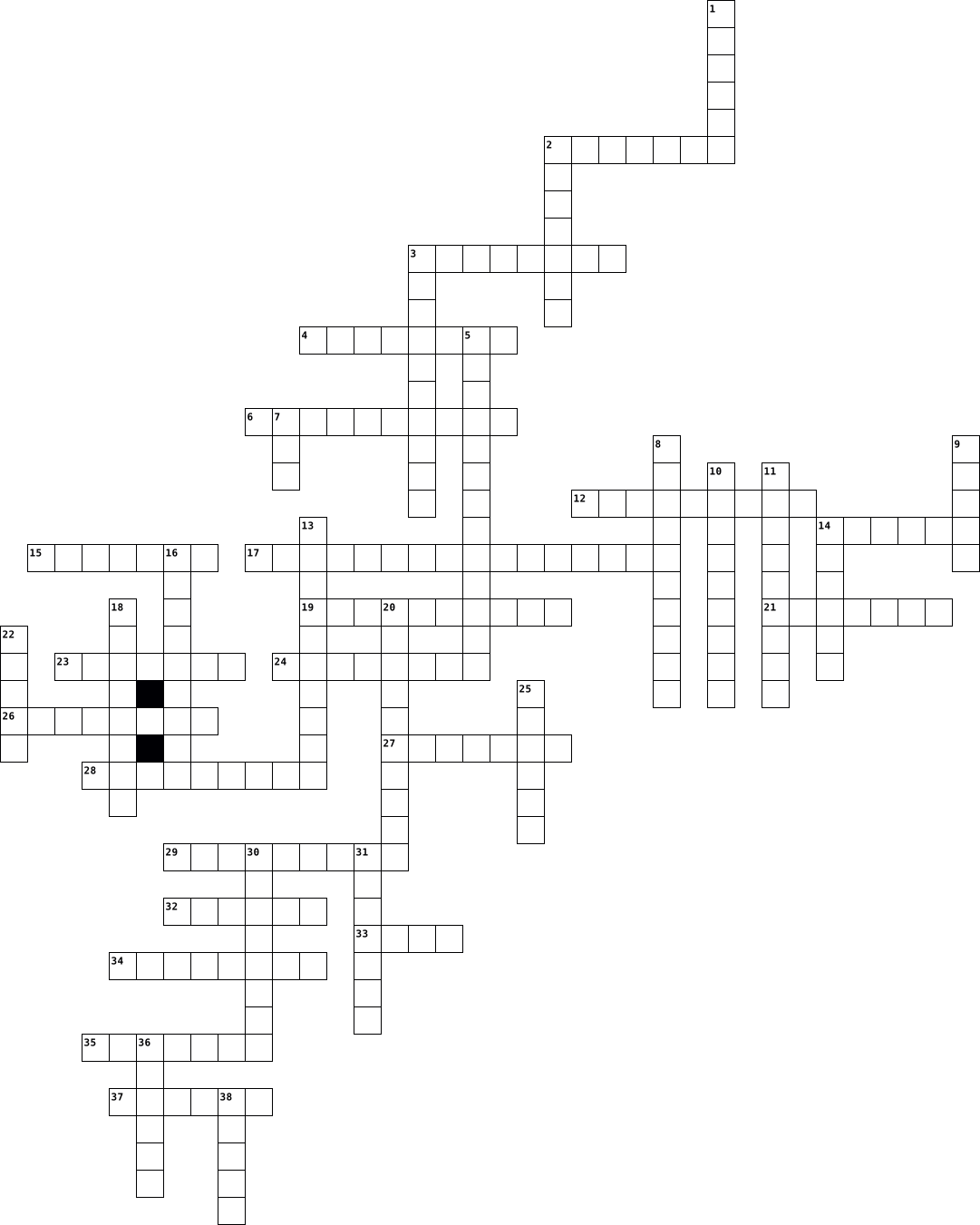
Across
- what are a good conductors of heat and electricity
- Isotope is an _______ version of that atom
- the ________ & neutrons are found in the center of the area
- pure substances composed of two or more different elements that are chemically joined are called
- electrons have _________ charge
- metals: what kind of metals are the most reactive metals
- electrons: the electrons int the outermost shell of any element are called
- the number of vaance electrons
- energy rings contain what
- the heaviest metal on the periodic table
- a horizontal row on a period table
- where are protons and neutrons found
- adding a neutron makes an _________ of that atom
- most of the elements on the periodic table occur as ______ at room tempertaure.
- what kind of elements are more stable when joined in a pair
- ________ consist of only kind of atom
- rings: electrons live in something called shells or _________________
- model: what shows all of the particles in the atom
- the lightest metal on the periodic table
- what do neutrons have none of
- lightest non-metal
Down
- what state of matter does iron appear at room temprature
- anything that takes up space and has mass
- the most reactive non-metals are the __________
- what is it called when there ia a number beside the element's symbol?
- hundred fourteen: how many elements are known at the present time
- metals: another name for group 5
- dot structure: only shows the elements symbol and it's outer most electron shell
- how many electrons can the 3rd energy ring hold up too.
- atomic mass is the number of protons and ______
- there are seven elements that form _______ consisting of two atoms
- matter is made up of....
- atoms: compounds always contain the same ratio of __________
- table: is a list of all the elements that can build matter
- The periodic table is a little like the alphabet of.......
- bond: what kind of a bond occurs between a non metal and a metal
- many of the non metals and hydrogen
- only _______ and bromine can be found as liquid on the periodic table
- element's ________ is an abbreviation for the element
- number: is the number of protons and neutrons
- gases: what kind of gases are stable and do not react with anything
41 Clues: lightest non-metal • matter is made up of.... • energy rings contain what • what do neutrons have none of • the number of vaance electrons • electrons have _________ charge • metals: another name for group 5 • a horizontal row on a period table • many of the non metals and hydrogen • where are protons and neutrons found • ________ consist of only kind of atom • ...
Standard Bonding and Periodic Crossword 2022-11-04

Across
- The attraction between positive and negative ions in a compound is called an ______ bond. Pg. 186
- When electrons are shared unequally in a covalent bond, it is called _______.
- The system of naming compounds is called _______. Pg. 216
- Rows on the periodic table are called ______
- The attraction between metal ions and their surrounding sea of electrons is called a ____ bond. Pg. 191
- The atomic ______ is how big an atom is, the distance from the nucleus to the outer edge.
- The molecule SO4 is called _________ with a -2 charge
- If the difference in electronegativities between two atoms is between 0.5 and 1.5, their bond will be ______
- Columns on the periodic table are called _______
- The elements, Br, I, N, Cl, H, O and F only occur in pairs. They are referred to as _______ molecules. Pg. 174
- The molecule ClO2 is called _____ with a -1 charge
- A column on the periodic table
- The first column on the periodic table is the ____ metals.
- The _____ energy is the energy it takes to remove an electron from an element
- If the difference in electronegativities between two atoms is 0.5 or less, then their bond will be _______
- The _____ rule states atoms are most stable when they have eight valence e-. p.178
- The measure of how strongly an element pulls on electrons in a bond. Pg. 159
- Two words. A representation of the atoms in a compound, with dots representing valence e- in either bonds or unshared e-. Pg. 181
Down
- A group of covalently bonded atoms that share a charge are called a _________ ion. Pg. 190
- When a positive atom on one molecule sticks to a negative atom on another molecule _______ interaction
- The outermost layer of e- is called the ________ e-. P. 154
- When the sloshing of electrons causes weak positives and negatives, the attractions are called __two__words__ forces.
- Developed the first periodic table, predicting two elements
- When two atoms share valence e- to give both a full shell, that is called a _____ bond. P.175
- A ____ compound is made of two elements. Pg. 216
- The last column on the periodic table is the ______.
- The molecule PO4 is called ______ with a -3 charge
- A group of atoms held together by covalent bonds Pg. 174
- Two words. An unshared pair of electrons is also called a _____ ______ P.181
- A negative ion, usually a nonmental, Pg. 157
- When electrons are shared equally in a covalent bond, it is called _______.
- A positive ion, usually a metal. Pg. 157
32 Clues: A column on the periodic table • A positive ion, usually a metal. Pg. 157 • Rows on the periodic table are called ______ • A negative ion, usually a nonmental, Pg. 157 • Columns on the periodic table are called _______ • A ____ compound is made of two elements. Pg. 216 • The molecule ClO2 is called _____ with a -1 charge • ...
The Periodic Table 2025-11-17

Across
- Clue: Horizontal row of the periodic table
- Clue: Elements
- Clue: Way of arranging the elements
- Clue: Little energy transition from solid to liquid
- Clue: Substances that exhibit some properties of metals and nonmetals.
- Clue: Straightforward definitions like "a number of people or things"
- clue: Hammered into thin sheets
- Clue: Mineral reflects light
Down
- Clue: Unit of measurement
- clue: Easily broken
- Clue: Arranged by increasing atomic number
- Clue: Generally a poor conductor of heat and electricity
- Clue: Element's properties, uses, symbol, or atomic number.
- Clue: Elements
- Clue: Phosphorus is a main component in the body
15 Clues: Clue: Elements • Clue: Elements • clue: Easily broken • Clue: Unit of measurement • Clue: Mineral reflects light • clue: Hammered into thin sheets • Clue: Way of arranging the elements • Clue: Horizontal row of the periodic table • Clue: Arranged by increasing atomic number • Clue: Phosphorus is a main component in the body • Clue: Little energy transition from solid to liquid • ...
Periodic Table Crossword 2023-01-17

Across
- _________ is the horizontal rows on the periodic table
- _________created the modern day periodic table
- _________ is the only metal liquid at room temperature
- _________ gasses are in group 0
- _________ is one of the most valuable and precious metals
Down
- _________ metals are the most reactive group of metals
- _________ is the vertical column on the periodic table
- _________ is the 12th element on the periodic table
- _________ is fe on the periodic table
9 Clues: _________ gasses are in group 0 • _________ is fe on the periodic table • _________created the modern day periodic table • _________ is the 12th element on the periodic table • _________ metals are the most reactive group of metals • _________ is the vertical column on the periodic table • _________ is the horizontal rows on the periodic table • ...
Atoms, elements and compounds 2022-04-19

Across
- the negatively charged particle
- this group gets more reactive as you go down its group
- the neutral part of an atom
- a positively charged particle
Down
- this is the name of group 2 on the periodic table
- the side that the metals are on the periodic table
- this is the name of group 8 on the periodic table
- this group gets less reactive as you go down its group
- the side that the non-metals are on the periodic table
- the smallest part of an element that can exist
- a substance that only contains one type of atom
- a substance made from more than one type of atom joined together
12 Clues: the neutral part of an atom • a positively charged particle • the negatively charged particle • the smallest part of an element that can exist • a substance that only contains one type of atom • this is the name of group 2 on the periodic table • this is the name of group 8 on the periodic table • the side that the metals are on the periodic table • ...
menu project 2023-03-30

Across
- the second or third letter in an elements representation on the periodic table
- object has changed into new substance
- an element on the periodic table represented as Si
- any singular element with a nucleus, protons, and nuetrons
- object has only changed in appearance
- a type of chart used to show all the known elements on earth
- number of atoms of one element in a compound
Down
- number of total compound
- a single atom of a pure substance found on the periodic table
- the formula for a compound made of elements, subscripts, and coefficients
- 2 or more elements chemically combined
- the type of letter that represents a element on the periodic table
12 Clues: number of total compound • object has changed into new substance • object has only changed in appearance • 2 or more elements chemically combined • number of atoms of one element in a compound • an element on the periodic table represented as Si • any singular element with a nucleus, protons, and nuetrons • a type of chart used to show all the known elements on earth • ...
8th grade chemistry vocabulary 2023-02-01

Across
- a negatively charged particle
- metals group 1 on the periodic table; very reactive
- the number of protons in the nucleus of an atom
- group 2 on the periodic table; reactive
- a positively charged particle
- the central core of an atom
- group 17 on the periodic table; very reactive
- the mass of an atom of an element
Down
- a chart of the elements showing repeating patterns of the elements
- a small particle in the atom's nucleus with no electrical charge
- group 18 on the periodic table; do not bond
11 Clues: the central core of an atom • a negatively charged particle • a positively charged particle • the mass of an atom of an element • group 2 on the periodic table; reactive • group 18 on the periodic table; do not bond • group 17 on the periodic table; very reactive • the number of protons in the nucleus of an atom • metals group 1 on the periodic table; very reactive • ...
Silmary Vicente vocabulary puzzle 2020-11-05

Across
- charges of the elements
- Particles like 6.023x10²³
- rows in the periodic table
- the noble gases' eight outer shells
- positive ions
- number of protons
- Negative charge
- the mass of the mole
- These can be metals and nonmetals
- These are elements that aren't metals
Down
- Expressing decimal numbers
- columns on the periodic table
- They are the 17 group
- electrons in the outer shells
- These are the metalloids
- They are the 18 group
- The mass of the element
- Positive charge
18 Clues: positive ions • Negative charge • Positive charge • number of protons • the mass of the mole • They are the 17 group • They are the 18 group • charges of the elements • The mass of the element • These are the metalloids • Particles like 6.023x10²³ • Expressing decimal numbers • rows in the periodic table • columns on the periodic table • electrons in the outer shells • ...
Periodic Table 2021-10-20

Across
- A famous periodic graph for elements
- positively charged particle in the nucleus of the atom.
- symbol, 1 or 2 letter abbreviation for an
- the first element
- There are 118 of these
- Helium is this type of element
Down
- A kind of matter with special properties
- Made of reactants
- number of protons with the nucleus in the
- The table that features hydrogen and
- center of the atom
- Ingredients for a product (scientifically)
- the term for columns on the periodic table, also known as "families"
- negatively charged particle that goes around the center of an atom
14 Clues: Made of reactants • the first element • center of the atom • There are 118 of these • Helium is this type of element • The table that features hydrogen and • A famous periodic graph for elements • A kind of matter with special properties • number of protons with the nucleus in the • symbol, 1 or 2 letter abbreviation for an • Ingredients for a product (scientifically) • ...
Atoms and Molecules Crossword 2026-01-31

Across
- The sum of the protons and neutrons is the atomic ___
- Dmitri Mendeleev created the periodic table of ___
- Substance formed as a result of a chemical change
- The vertical columns on the periodic table
- The study of matter
- The abbreviation for the names of elements are called the chemical ___
- The total number of protons in the nucleus is the same as the atomic ___
- Substances containing only one kind of atom
- Protons have what kind of charge?
- Neutrons have what kind of charge?
- The horizontal rows on the periodic table
Down
- Electrons have what kind of charge?
- Atoms joined together
- The center of an atom
- The smallest piece of an element
- The process that joins together different types of atoms is called a chemical ___
- These travel around the outside of the nucleus
- An atom that has gained or lost electrons
18 Clues: The study of matter • Atoms joined together • The center of an atom • The smallest piece of an element • Protons have what kind of charge? • Neutrons have what kind of charge? • Electrons have what kind of charge? • An atom that has gained or lost electrons • The horizontal rows on the periodic table • The vertical columns on the periodic table • ...
science 2022-09-08

Across
- the substances on the periodic table
- a subatomic particle with a negative charge
- a close similarity or affinity
- shiny
- the smallest unit of an element
- an element that lacks metallic properties
- an atom molecule with a net electric charge
Down
- he state or power of being reactive or the degree to which a thing is reactive
- able to be permanently changed
- a solid material that is typically hard and shiny
- a subatomic particle with a neutral charge
- a column of elements in the periodic table
- a subatomic particle with a positive charge
- able to be drawn out of wire
- the horizontal rows of a periodic table
15 Clues: shiny • able to be drawn out of wire • able to be permanently changed • a close similarity or affinity • the smallest unit of an element • the substances on the periodic table • the horizontal rows of a periodic table • an element that lacks metallic properties • a subatomic particle with a neutral charge • a column of elements in the periodic table • ...
Science - Chapter 5 2025-05-15

Across
- - This element is number eight on the periodic table
- - Listed above the name on each square of the periodic table
- - The periodic table is organized in groups called _______
- - Grouped with neutrons inside the electron
- - The periodic table is divided into 3 _______
Down
- - _______ metals are the largest group
- - _____ number is listed on the top left of each element's square
- - The periodic table displays ______
- - Number of electrons on the outermost layer
9 Clues: - The periodic table displays ______ • - _______ metals are the largest group • - Grouped with neutrons inside the electron • - Number of electrons on the outermost layer • - The periodic table is divided into 3 _______ • - This element is number eight on the periodic table • - The periodic table is organized in groups called _______ • ...
Periodic Table 2021-12-17

Across
- a brilliant shade of blue
- stainless steel
- One tier below the black amex
- stones, sand, soil, and now boobs
- tastes like liquid chalk
- more than just a planet
- the most malleable metal
- vegas lights
- prevents radiation poisoning
- milk
- foiled again
- Salt
Down
- batteries
- antibacterial metal toxic to invertebrates
- toothpaste
- K
- nuclear power
- "If I only had a heart"
- why you shouldn't lick the wall
- swimming
- poison that tastes like bitter almonds
- Marie Curie
- bullets
- 5 cent
- Balloons
- smells like rotten eggs
- werewolf protection
27 Clues: K • milk • Salt • 5 cent • bullets • swimming • Balloons • batteries • toothpaste • Marie Curie • vegas lights • foiled again • nuclear power • stainless steel • werewolf protection • "If I only had a heart" • more than just a planet • smells like rotten eggs • tastes like liquid chalk • the most malleable metal • a brilliant shade of blue • prevents radiation poisoning • One tier below the black amex • ...
Periodic Table 2022-01-11

Across
- name of element Mendeleev predicted properties for
- all elements in this family are radioactive
- they are also called the rare earth elements
- these metals react violently in water
- name of family with 4 valence electrons
- dull, poor conductors, low melting points
- noble gas used to fill blimps
- the number of groups on the periodic table
- elements on earth were made in ?
- father of the periodic table
- element responsible for bad odors in garlic & eggs
- heaviest noble gas
- they have 8 valence electrons and are inert
- number of periods on the periodic table
- most common element in the earth's crust
- alkali metal in table salt
- approximately 80% of elements are classified as a ?
- a vertical column
Down
- a horizontal row
- the group of metals contain the most members
- Mg and Ca are part of this family
- most nonmetals are this state of matter
- most common element in the universe
- halogen used for disinfectant & chemical warfare
- first table element in order of increasing atomic?
- nuclear process that gives stars their energy
- the most reactive nonmetals; toxic elements
- another name for a group
- all elements heavier than this element are synthetic
- the period corresponds to the number of these in an element
- important metalloid for computers & cell phones
- the outermost electrons are called ? electrons
- element present in a star's core that indicates the end of their life
- the current periodic table is arranged by increasing atomic ?
- semiconductors are classified as a ?
- a liquid nonmetal
- most common element in the atmosphere
37 Clues: a horizontal row • a liquid nonmetal • a vertical column • heaviest noble gas • another name for a group • alkali metal in table salt • father of the periodic table • noble gas used to fill blimps • elements on earth were made in ? • Mg and Ca are part of this family • most common element in the universe • semiconductors are classified as a ? • these metals react violently in water • ...
periodic table 2020-06-02

Across
- Number 1 on the periodic table
- Number 31
- Number 6
- Number 28
- Number 50
- Number 10
- Number 79
- Number 22
- Number 53
- Number 47
Down
- What we breath in
- Number 80
- Number 78
- Number 73
- Number 82
- Number 36
- Number 7
- Number 2
- Number 30
- Number 13
20 Clues: Number 6 • Number 7 • Number 2 • Number 80 • Number 78 • Number 73 • Number 31 • Number 82 • Number 28 • Number 36 • Number 50 • Number 10 • Number 79 • Number 30 • Number 22 • Number 13 • Number 53 • Number 47 • What we breath in • Number 1 on the periodic table
Periodic Table 2020-08-04

Across
- symbol for element 88
- horizontal row of periodic table
- symbol for element 95
- element 68
- symbol for element 13
- abbreviation for 1/1000 of a gram
- aniline purple, for example
- white, red, or black phosphorus, for example
- group number for nickel and platinum
- element 80
- precious metal in group 11
- symbol for element 10
- element that supports combustion
- symbol for element 102
- element 14
- element with symbol Mo
- symbol for element 3
- smallest particle of an element
- a shiny, yellowish alloy
- ruby or sapphire, for example
- element 4
- any element on the left side of the periodic table
- symbol for element 70
- element 73
Down
- emission of energy
- sodium reacts vigorously when in this condition
- symbol for element 14
- given nomenclature
- vertical column of periodic table
- symbol for silver
- mixture of metals
- positively charged particle of an element such as nickel, tin or iron(2 words)
- symbol for strontium
- symbol for element 22
- element in group 16
- symbol for element 80
- symbol for copper
- element with symbol na
- any element in group 18
- symbol for element 76
- two allotropes differ in _____
- element with symbol Fe
- element 27
- measure of the amount of matter
- place where experiments are conducted
- element 72
- unit in which the mass of an atom is expressed
- element with symbol Pb
- group number for cesium
49 Clues: element 4 • element 68 • element 80 • element 14 • element 27 • element 72 • element 73 • symbol for silver • mixture of metals • symbol for copper • emission of energy • given nomenclature • element in group 16 • symbol for strontium • symbol for element 3 • symbol for element 88 • symbol for element 14 • symbol for element 95 • symbol for element 13 • symbol for element 22 • symbol for element 80 • ...
Periodic Table 2021-10-26

Across
- The first element discovered in modern times
- I am found in organic chemistry
- I have 53 protons
- I am the element that is often found in batteries
- I am found in swimming pools
- The first metal element discovered in ancient times
- Elements in the same group have the same number of ____ electrons
- I have a molar mass of 209 amu
- Has the largest atomic radius
- Atomic radius ____ as you go up the periodic table
- I am a noble gas in period 5
Down
- As an ion, Sulfur has a charge of positive ___
- Has the chemical symbol-Fe
- I am a transition metal found in group 3, period 4
- I am found in fruits and vegetables
- My chemical symbol is W
- To fulfill the octet rule, aluminum will ____ electrons
- I am found in shells and bones
- Alkali metals are found in group ____
- Electronegativity ____ as you go up the periodic table
- I am found in salt and am in group 1
- I am the element that makes balloons fly.
- I am a metalloid in period 3
- As an ion, it has a charge of +1 and is in period 6
- Elements in the same period have the same number of _____
25 Clues: I have 53 protons • My chemical symbol is W • Has the chemical symbol-Fe • I am found in swimming pools • I am a metalloid in period 3 • I am a noble gas in period 5 • Has the largest atomic radius • I am found in shells and bones • I have a molar mass of 209 amu • I am found in organic chemistry • I am found in fruits and vegetables • I am found in salt and am in group 1 • ...
Periodic Table 2021-11-01

Across
- Group 1. Includes metals that react explosively with water
- small positively charged particle in the nucleus of an atom.
- Group 2. Reactive, but less than alkali metals.
- the number of protons in the nucleus.
- an element that is classified based on its physical properties such as hardness, shininess, malleability, and ductility. The metals on the left side of the Periodic Table are very reactive and the metals on the right side of the Periodic Table are not very reactive.
- a material that can be pounded into shapes.
- have some of the characteristics of metals and some of the characteristics of nonmetals. The most useful property of metalloids is their ability to conduct electricity. On the Periodic Table they are the zigzag which is the border between the metals and nonmetals.
- One of the bottom rows. Begins with the element Lanthanum. Includes superheavy metals with high atomic mass
- The columns (up and down) on the Periodic Table and are also known as families. Typically, the group is given a family name based on the first element in the column.
Down
- created to measure the particles of atoms and is used to determine the number of protons in the nucleus of an atom.
- Group 17. Salt forming elements. Names all end with -ine.
- metals The elements in groups 3-12; they form a bridge between the reactive metals and the non-reactive metals. The transition metals are so similar that their differences are difficult to detect.
- small uncharged particle in the nucleus of an atom.
- a substance made of two or more elements, at least one of which is a metal, that has the properties of metal.
- Elements that lack most of the properties of metals. Nonmetals tend to be dull, brittle, and are not malleable or ductile. Nonmetals are located to the right of the zigzag line on the Periodic Table.
- the electrons in the outermost level of an atom; they are used to form chemical bonds between elements.
- One of the bottom rows. Begins with the element Actinium. Includes many artificially synthesized elements.
- The elements in group 18; these elements do not ordinarily form compounds with other elements thus they are chemically stable and unreactive.
- A tiny negatively charged, high energy particle that moves in the space outside the nucleus of an atom.
- Each horizontal row across the Periodic Table.
- 1,2, or 3 letter abbreviation used to identify the element. Comes from Greek or Latin and does not always resemble the name of the element (Fe for Iron).
- a material that can be pulled out or drawn into a long wire
- gloss, brightness, a shine or sheen especially from reflected light.
23 Clues: the number of protons in the nucleus. • a material that can be pounded into shapes. • Each horizontal row across the Periodic Table. • Group 2. Reactive, but less than alkali metals. • small uncharged particle in the nucleus of an atom. • Group 17. Salt forming elements. Names all end with -ine. • Group 1. Includes metals that react explosively with water • ...
Periodic table 2021-10-25

Across
- - As 33
- - B 5
- - Sb 51
- - Cu 29
- - relating to an atom/s
- - Ar 18
- - I 53
- - O 8
- - U 92
- - involving or resulting from a reaction between two or more substances
- - Cl 17
- - a particle of matter that uniquely defines a chemical element
- - any substance that cannot be decomposed into simpler substances by ordinary chemical processes
Down
- - Br 35
- - a positive charge
- - a table of the chemical elements arranged in order of atomic number
- - the number of protons in the nucleus of an atom
- - Fe 26
- - the mass of an atom of a chemical element expressed in atomic mass units
- - a negative charge
- - a neutral charge
- - Li 3
- - Hg 80
- - He 2
24 Clues: - B 5 • - O 8 • - I 53 • - Li 3 • - U 92 • - He 2 • - Br 35 • - As 33 • - Sb 51 • - Fe 26 • - Cu 29 • - Ar 18 • - Hg 80 • - Cl 17 • - a neutral charge • - a positive charge • - a negative charge • - relating to an atom/s • - the number of protons in the nucleus of an atom • - a particle of matter that uniquely defines a chemical element • - a table of the chemical elements arranged in order of atomic number • ...
Periodic Table 2021-11-23

Across
- First element on the table
- Group 2 Period 2
- Chemical symbol Cu
- Atomic mass 19.00
- Chemical symbol of Ag
- Chemical symbol of K
- Chemical symbol of Sn
- Atomic mass of 12.01
- Group 17 Period 3
- Chemical symbol of Na
- Atomic mass of 26.98
- Found under sulfur
- Has 28 electrons
- Atomic mass of 83.80
- Atomic mass of 14.01
- Chemical symbol of W
- First element in group 18
Down
- Found before germanium
- Atomic mass of 151.97
- Chemical symbol of Pb
- Atomic mass of 28.09
- Has 35 electrons
- Chemical symbol Hg
- Atomic number of 87
- Atomic mass of 30.97
- Has 20 electrons
- Named after the planet Neptune
- Chemical symbol Fe
- Atomic mass of 24.31
- Group 12 Period 4
30 Clues: Has 35 electrons • Group 2 Period 2 • Has 20 electrons • Has 28 electrons • Atomic mass 19.00 • Group 17 Period 3 • Group 12 Period 4 • Chemical symbol Hg • Chemical symbol Cu • Found under sulfur • Chemical symbol Fe • Atomic number of 87 • Atomic mass of 28.09 • Chemical symbol of K • Atomic mass of 30.97 • Atomic mass of 12.01 • Atomic mass of 26.98 • Atomic mass of 24.31 • Atomic mass of 83.80 • ...
PERIODIC TRENDS 2022-02-16

Across
- nonmetals
- left side of stairs
- 4s2
- outside electrons
- gains electrons
- halogen molecules
- solution
- atoms size
- to remove electron
- group 18
- arranged by mass
Down
- group 2
- solid to gas
- desires electrons
- gas to liquid
- increase by atomic #
- brittle and lustrous
- group 17
- loses electrons
- uniform mixture
20 Clues: 4s2 • group 2 • group 17 • solution • group 18 • nonmetals • atoms size • solid to gas • gas to liquid • gains electrons • loses electrons • uniform mixture • arranged by mass • desires electrons • outside electrons • halogen molecules • to remove electron • left side of stairs • increase by atomic # • brittle and lustrous
Periodic Table 2013-11-09

Across
- Noble gas with 22 neutrons
- Period 3, Family 1
- Symbol for Element Atomic Number 13
- Family 1, except hydrogen
- Halogen with 2e- 8e- 7e-
- ___ has 2e- 8e- 8e- 1e-
- some elements are liquid or gas
- He organized the period table
- Group/Family 8, Period 1
- Shiny, solid & very reactive
- 6 protons and 6 neutrons
- Family #6, Period #3
Down
- I am a noble gas in Period 2
- Horizontal Rows
- Outermost orbit has ______ electrons
- Boron and Silicon, etc.
- has 17 protons and 18 neutrons
- In nucleus, same # as Atomic #
- Negative Charge found in orbit
- Metalloid with 28.1 AMU
- 12 neutrons and 24.3 AMU
- 31.0 AMU & 2e- 8e- 5e-
- All elements have 7 valence e-
- Neutral Charge found in nucleus
- Vertical columns are called _____
- Element between Be & C
- The first element in Alkali Metals
27 Clues: Horizontal Rows • Period 3, Family 1 • Family #6, Period #3 • 31.0 AMU & 2e- 8e- 5e- • Element between Be & C • Boron and Silicon, etc. • Metalloid with 28.1 AMU • ___ has 2e- 8e- 8e- 1e- • Halogen with 2e- 8e- 7e- • 12 neutrons and 24.3 AMU • Group/Family 8, Period 1 • 6 protons and 6 neutrons • Family 1, except hydrogen • Noble gas with 22 neutrons • I am a noble gas in Period 2 • ...
Periodic table 2013-12-10

Across
- all living things have it
- ga
- ra
- is in batteries
- makes cars
- makes wire
- makes coins
- some times in soap
- ne
Down
- is in meat
- is in a lot of food
- is in your your paint
- is in thermometers
- your tv is made out it
- tooth pasted
- makes cans
- we breath it
- is in laser pumping lamps
- is in light bulbs
- makes crown
20 Clues: ga • ra • ne • is in meat • makes cans • makes cars • makes wire • makes coins • makes crown • tooth pasted • we breath it • is in batteries • is in light bulbs • is in thermometers • some times in soap • is in a lot of food • is in your your paint • your tv is made out it • all living things have it • is in laser pumping lamps
Periodic Table 2012-11-28

Across
- is a metal mostly used for making small electronics.
- Something our bones contain.
- count 8 letters into Alphabet. (capital) Then count 5 letters (lower case).
- Shi Huangdi is surrounded by it.
- used in the production of steel (Flash light & Battery) on periodic table.
- It is a precious metal used in jewelry (not gold).
- Extremely rare, one of the last elements to be discovered, (Camera).
- Without the ssium at the end, you add a to to the 4th and 5th letter to get potato.
- you wear it when you want to be seen at night.
- Think of a Coca Cola can what is it made of?
- Tooth paste has this in it.
- Many metal things can be made out of it, brown color.
- Spoons and metal utensils are usually made from this.
- You can get poisoned by it and its in a bullet.
- used in a nuclear power plant.
Down
- It's in a Battery and in group 1.
- This is what x-rays contain
- You put this in a pool to keep it clean.
- Its what we breath.
- used in the production of colored television.
- essential in the human nutrition, my sister's name. (ask)
- In group 6 steely-gray, lustrous, hard metal.
- There was a movie that just came out “The Man with the fist.
- A gray metal that is sometimes used for roofs.
- 173 – 100 = (on the periodic table).
- Symbol is “S”
- It is found in a magnet.
- In America it's the name of a 5cents coin.
- Something that most foods contain, and is another word for salt.
- It's a color and a precious metal.
30 Clues: Symbol is “S” • Its what we breath. • It is found in a magnet. • This is what x-rays contain • Tooth paste has this in it. • Something our bones contain. • used in a nuclear power plant. • Shi Huangdi is surrounded by it. • It's in a Battery and in group 1. • It's a color and a precious metal. • You put this in a pool to keep it clean. • In America it's the name of a 5cents coin. • ...
Periodic Table 2012-11-26

Across
- name of group 17
- what you usually use to make glass
- makes your voice sound squeeky
- very shiny and ductile
- have properties of metals and nonmetals
- a system showing that a music record has been sold alot
- name of song by David Guetta and Sia
- name of groups 3 to 12
- element e need to breathe
- very brittle and unmalleable
- radioactive element often used in nuclear power stations
- represents an element
- what you call someone stupid that starts with a "b"
- second place medal in the olympics
- only liquid metal room temperature
Down
- a metal used in wires
- column on the periodic table
- found in pool
- half a dime
- the symbol for this element is Hs
- usually found in milk & cheese
- name of group 1
- used in shop signs
- most reactive nonmetal
- name of group 16
- number of protons and neutrons in an atom
- a word that means purple in Greek (old language)
- name of group 18
- used to make diamonds
- subatomic particle with a negative charge
- use to make jewlery
31 Clues: half a dime • found in pool • name of group 1 • name of group 17 • name of group 16 • name of group 18 • used in shop signs • use to make jewlery • a metal used in wires • used to make diamonds • represents an element • very shiny and ductile • most reactive nonmetal • name of groups 3 to 12 • element e need to breathe • column on the periodic table • very brittle and unmalleable • ...
Periodic Table 2013-01-09

Across
- When I am freshly exposed to air, I exhibits a metallic lustre.
- I am a precious metal that is extremely valuable.
- I am the only metalloid in the Boron family.
- I am the most common element in the atmosphere.
- I am located in group 2 and I have a high boiling point.
- I am essential for life on Earth.
- I have an atomic mass of 47.90.
- When I react with aluminum, a purple gas is produced.
- I am used to make fireworks.
- Jupiter's moon Io owes its colors to various forms of me.
Down
- I am extremely flammable and and I am used to create balloon structures.
- I have the atomic number of 20.
- I am part of the Alkali family and I am never found in nature.
- I am located in the Carbon family and I have a low melting point.
- I am the most common element in the universe.
- My atomic mass is 83.80.
- Steel wool burns when exposed to me.
- I am found in most meteorites and a coin in America is named after me.
- People used to put me on top of hats.
- I am a noble gas that is used in neon signs to create the color orange-red.
20 Clues: My atomic mass is 83.80. • I am used to make fireworks. • I have the atomic number of 20. • I have an atomic mass of 47.90. • I am essential for life on Earth. • Steel wool burns when exposed to me. • People used to put me on top of hats. • I am the only metalloid in the Boron family. • I am the most common element in the universe. • ...
Periodic table 2013-04-14

Across
- Another name for group VII
- This element is the least reactive in group VII
- The vertical column in the periodic table
- The most reactive non-metal
- This element has an electronic configuration of 2,8 3
- Charge of 0
- This element is the least reactive in group I
- Charge of +1
- The elements found in group VII, period IV
- This element is found in period VI and has 2 valence electrons
- This element is used in plastic surgery
- This element is found in balloons
Down
- This element is found in period III and has 5 valence electrons
- This element has an electronic configuration of 2, 8, 8, 8, 8, 2
- This element is a yellow/green gas
- The least reactive element
- This element has an electronic configuration of 2, 8, 8, 1
- The most reactive element in the periodic table
- Mass of 0
- The horizontal column in the periodic table
- The number of electrons found in the first electron shell
- Name given to elements with the same number of protons but different number of neutrons
22 Clues: Mass of 0 • Charge of 0 • Charge of +1 • Another name for group VII • The least reactive element • The most reactive non-metal • This element is found in balloons • This element is a yellow/green gas • This element is used in plastic surgery • The vertical column in the periodic table • The elements found in group VII, period IV • The horizontal column in the periodic table • ...
Periodic Puzzle 2013-01-31

Across
- Small, positively charged particles that are found in the nucleus of an atom.
- A small particle in the nucleus of an atom, with no electrical charge.
- The nonmetals in group 17 that includes fluorine, chlorine, bromine, and iodine.
- An element that has some characteristics of both metals and nonmetals.
- A particle given off during radioactive decay that consists of two protons and two neutrons.
- A characteristic of a pure substance that can be observed without changing it into another substance.
- A one or two letter representation of an element.
- The process in which radioactive elements break down, releasing fast-moving particles and energy.
- The ease and speed in which an element combines or reacts with other elements and compounds.
- A fast-moving electron that is given off as nuclear radiation.
Down
- An element that lacks most of the properties of a metal.
- A characteristic of a substance that describes it's ability to change into different substances.
- The average mass of all the isotopes of an element.
- Electromagnetic waves with the shortest wavelengths and highest frequencies.
- The spontaneous emission of radiation by an unstable atomic nucleus.
- A substance that cannot be broken down into any other substances by chemical or physical means.
- A tiny, negatively charged particle that moves around the outside of the nucleus of an atom.
- The basic particle in which all elements are made.
- An element in group 18 of the periodic table.
- A horizontal row of elements in the periodic table.
20 Clues: An element in group 18 of the periodic table. • A one or two letter representation of an element. • The basic particle in which all elements are made. • The average mass of all the isotopes of an element. • A horizontal row of elements in the periodic table. • An element that lacks most of the properties of a metal. • ...
Periodic Puzzle 2013-01-31

Across
- A small particle in the nucleus of an atom, with no electrical charge.
- An element in group 18 of the periodic table.
- A particle given off during radioactive decay that consists of two protons and two neutrons.
- An element that has some characteristics of both metals and nonmetals.
- The process in which radioactive elements break down, releasing fast-moving particles and energy.
- A characteristic of a pure substance that can be observed without changing it into another substance.
- Electromagnetic waves with the shortest wavelengths and highest frequencies.
- The spontaneous emission of radiation by an unstable atomic nucleus.
- A one or two letter representation of an element.
- Small, positively charged particles that are found in the nucleus of an atom.
- The ease and speed in which an element combines or reacts with other elements and compounds.
Down
- A horizontal row of elements in the periodic table.
- A characteristic of a substance that describes it's ability to change into different substances.
- A substance that cannot be broken down into any other substances by chemical or physical means.
- An element that lacks most of the properties of a metal.
- The nonmetals in group 17 that includes fluorine, chlorine, bromine, and iodine.
- A tiny, negatively charged particle that moves around the outside of the nucleus of an atom.
- The basic particle in which all elements are made.
- A fast-moving electron that is given off as nuclear radiation.
- The average mass of all the isotopes of an element.
20 Clues: An element in group 18 of the periodic table. • A one or two letter representation of an element. • The basic particle in which all elements are made. • A horizontal row of elements in the periodic table. • The average mass of all the isotopes of an element. • An element that lacks most of the properties of a metal. • ...
Periodic Table 2014-10-26

Across
- Humans cannot live without this gas.
- Too much sodium causes food to taste like this.
- Helium is used to make this float.
- This yellow fruit is a good source of Potassium.
- In 1849 there was a rush on this shinny, heavy metal in California.
- If this element had one more atomic number it would be copper.
- This element can reflect heat and is is most kitches
- You can use this gas to put your name up in lights.
- An element that is so light it floats.
- This transition metal is used to help set broken bones.
Down
- This solid was used to prevent infections from cuts and scratches.
- The 18th row of the periodic table makes up most this family
- Apple and Google have their headquarters in a valley named after this solid
- This element is the cousin of graphite.
- An element that is found in milk and can make you stronger.
- This gas is used for good dental hygiene.
- Copper is used to make this coin.
- A chemical that is used in swimming pools to get rid of germs.
- Steel is made from this element and Carbon.
- If you want to know the temperature outside you need this element.
20 Clues: Copper is used to make this coin. • Helium is used to make this float. • Humans cannot live without this gas. • An element that is so light it floats. • This element is the cousin of graphite. • This gas is used for good dental hygiene. • Steel is made from this element and Carbon. • Too much sodium causes food to taste like this. • ...