
periodic%20table Crossword Puzzles
Standard 3 Crossword 2016-08-23

Across
- a type of solid that does not have an orderly arrangement of its particles
- element with 6 valence electrons and 6 electron energy levels
- most of the mass of an atom is found in the ___________
- a long chain of molecules combined into a larger molecule
- the number of valence electrons will predict how ________ an element is
- a chemical symbol on the periodic table is a(n) __________ for the element's name
- unit of measurement used for the mass of subatomic particles
- type of bond that holds water molecules together
- atoms are always electrically ____________
- information on the periodic table that tells you how many protons can be found in one atom of an element
- particle found in a cloud outside the nucleus
- element with only 6 protons in its nucleus
- particle formed when two or more atoms chemically bond together
- name of a combination of two or more substances physically combined
- the most massive element with only one valence electron
- element on the periodic table with the lowest mass
- an ion always has a(n) __________ number of protons and neutrons
Down
- the particles found in the nucleus of an atom are neutrons and __________
- type of bond formed between metals and non-metals
- characteristics of a substance
- if a train were a polymer, each train car would be a __________
- rubber is an example of a _________ polymer
- a material that is made of a single type of particle
- another word for a column on the periodic table
- subatomic particle without an electrical charge
- the first 92 elements are ________ occurring
- outermost electrons on an atom
- the number on the periodic table that shows how energy levels an atom will have
- substance formed when two or more elements combine
- has the symbol Ar
- a substance with an orderly three-dimensional arrangement of particles
- a pure substance that cannot be broken down by physical or chemical means
- chemical symbol for germanium
- the smallest amount of an element
34 Clues: has the symbol Ar • chemical symbol for germanium • characteristics of a substance • outermost electrons on an atom • the smallest amount of an element • atoms are always electrically ____________ • element with only 6 protons in its nucleus • rubber is an example of a _________ polymer • the first 92 elements are ________ occurring • ...
Periodic Trends Vocab 2024-10-11

Across
- An atom or molecule that has gained or lost one or more electrons, resulting in a positive (cation) or negative (anion) charge.
- Metals lose electrons and form this type of ion
- Property of Noble Gasses, a full valence shell of 8 valence electrons and the reason they do NOT bond
- Elements that are usually poor conductors of heat and electricity, brittle in solid form, and found on the right side of the periodic table
- Type of Electrons in the outermost shell of an atom that determine its chemical behavior and bonding characteristics.
- A combination of two or more substances that retain their individual properties and can be separated by physical means
- The distance from the nucleus of an atom to the outermost shell of electrons
- Which element has a great ionization energy: Chromium or Tin?
- The number of protons in the nucleus of an atom, which defines the element.
- Which element has a greater electronegativity: Cesium or Hydrogen?
- A vertical column in the periodic table that contains elements with similar chemical properties.
Down
- A measure of an atom's ability to attract and hold onto electrons in a chemical bond
- Energy The energy required to remove electrons from gaseous atoms.
- Elements that have properties intermediate between metals and nonmetals; they are located along the staircase line on the periodic table
- Two different forms of the same element with different crystal structure and different properties.
- Nonmetals gain electrons and form this type of ion
- Elements that are typically shiny, good conductors of heat and electricity, malleable, and ductile; found on the left side of the periodic table.
- A pure substance that cannot be broken down into simpler substances by chemical means; represented on the periodic table
- A substance formed when two or more elements chemically bond together in fixed proportions.
- The element that is a metal and a liquid at STP
- The smallest unit of an element that retains the properties of that element.
- Metal with the largest atomic radius
22 Clues: Metal with the largest atomic radius • Metals lose electrons and form this type of ion • The element that is a metal and a liquid at STP • Nonmetals gain electrons and form this type of ion • Which element has a great ionization energy: Chromium or Tin? • Which element has a greater electronegativity: Cesium or Hydrogen? • ...
CHEMISTRY 2025-04-28

Across
- 20
- 19
- 3
- 4
- 9
- 18
- 16
- 10
- 11
Down
- 5
- 6
- 12
- 2
- 13
- 15
- 8
- 1
- 7
- 17
- 14
20 Clues: 5 • 6 • 2 • 3 • 8 • 4 • 1 • 9 • 7 • 12 • 20 • 13 • 19 • 15 • 18 • 16 • 17 • 14 • 10 • 11
Elements & More 2024-05-31

Across
- Atomic Mass 83.79
- Ancient Greek who thought of "Atomos"
- Brought back the ATOMIC THEORY
- Group 10, period 4
- 59 Protons
- Between Metal and Nonmetal
Down
- The Majority of the Periodic table
- 1 Proton
- Atomic Symbol K
- Created the Framework for the Periodic Table
- Period 5, Group 14
- Group 7, Period 4
- Oxygen, Carbon, Fluorine, Iodine
13 Clues: 1 Proton • 59 Protons • Atomic Symbol K • Atomic Mass 83.79 • Group 7, Period 4 • Period 5, Group 14 • Group 10, period 4 • Between Metal and Nonmetal • Brought back the ATOMIC THEORY • Oxygen, Carbon, Fluorine, Iodine • The Majority of the Periodic table • Ancient Greek who thought of "Atomos" • Created the Framework for the Periodic Table
Chemistry Unit One Vocabulary 2026-03-24

Across
- Definite Volume no Definite Shape
- Horizontal Rows of the Periodic Table
- Smallest Component
- A reaction in which one or more substances are converted into different substances
- Substances that react in a chemical change
- Substance
- Substances formed by the chemical change
Down
- Substance's Ability to Undergo Changes
- Definite Volume and Shape
- Pure Substance
- Amount of Matter
- Anything with Mass
- Vertical Columns of the Periodic Table
- Neither Definite Volume or Definite Shape
- Topic
15 Clues: Topic • Substance • Pure Substance • Amount of Matter • Smallest Component • Anything with Mass • Definite Volume and Shape • Definite Volume no Definite Shape • Horizontal Rows of the Periodic Table • Substance's Ability to Undergo Changes • Vertical Columns of the Periodic Table • Substances formed by the chemical change • Neither Definite Volume or Definite Shape • ...
Brayden, benjamin omer 2022-10-24

Across
- what is C on the periodic table
- What is FE on the periodic table
- What is AU on the periodic table
- is chemically combined
- what is Na on the periodic table
Down
- a state of matter that has no fixed shape or volume
- is water which is 100°
- a state of matter that has dose not have a fox shape but a fix volume
- is an object that can’t move unless a human does so
9 Clues: is water which is 100° • is chemically combined • what is C on the periodic table • What is FE on the periodic table • What is AU on the periodic table • what is Na on the periodic table • a state of matter that has no fixed shape or volume • is an object that can’t move unless a human does so • a state of matter that has dose not have a fox shape but a fix volume
Chemical Bonding 2020-09-01

Across
- Newland divided elements into horizontal rows of eight element reach State True or False.
- other name of group 18th elements.
- most stable element in the third row.
- non- metallic character _________across a period.
- Group 17 elements are called.
- on moving from left to right in a periodic table _____ character decreases.
- The basis of modern Periodic table is.
Down
- What happens to the electropositive character of elements on moving from left to right in a periodic table.
- According to Newland’s law of octave ______________is similar to oxygen.
- number of shells in strontium.
- An element ‘x’ belongs to groups 2. Find its valency.
- most reactive element of group seventeenth.
- elements has two shells and both are completely filled.
- tendency to_______ electrons decreases down the group.
- predict whether "K" is metal or non- metal.
- nature of the oxide of element with atomic number 12.
16 Clues: Group 17 elements are called. • number of shells in strontium. • other name of group 18th elements. • most stable element in the third row. • The basis of modern Periodic table is. • most reactive element of group seventeenth. • predict whether "K" is metal or non- metal. • non- metallic character _________across a period. • ...
Daiwikh's Crossword Puzzle 2026-02-27

Across
- A substance that speeds up a reaction while not taking part in it
- The compound formed when nickel reacts with iodine
- the group in the Periodic Table with full outermost electron shells
- The most reactive metal
- The element with it's atomic symbol of K
- The scientific name for the outermost electron shell
- The only metal capable of being a gas at room temp
- The gas that iron reacts to to form rust
Down
- The metal used in light bulbs
- The only non-metal that has several properties of metals
- The name for elements that have properties of both metals and non-metals
- The charge of a proton
- The only gas that belongs in group one in the Periodic Table
- A varient of an element with the same amount of protons but not neutrons
- The amount of groups in The Periodic Table
- The gas that the air is mostly made of
16 Clues: The charge of a proton • The most reactive metal • The metal used in light bulbs • The gas that the air is mostly made of • The element with it's atomic symbol of K • The gas that iron reacts to to form rust • The amount of groups in The Periodic Table • The compound formed when nickel reacts with iodine • The only metal capable of being a gas at room temp • ...
science 2023-04-14

Across
- Smallest unit of matter
- ability to be hammered into thin sheets
- ability to burn or ignite
- A substance that consists of atoms that have the same number of protons
- The first element of the periodic table
- have a negative charge and a mass of zero
- A substance composed of two or more elements
Down
- center of the atom
- the 98 element of the periodic table
- ability to dissolve or be dissolved
- the 54 element of the periodic table
11 Clues: center of the atom • Smallest unit of matter • ability to burn or ignite • ability to dissolve or be dissolved • the 98 element of the periodic table • the 54 element of the periodic table • ability to be hammered into thin sheets • The first element of the periodic table • have a negative charge and a mass of zero • A substance composed of two or more elements • ...
Chemistry Crossword puzzle by Eniayo 2023-04-14

Across
- A vertical row of the periodic table
- cloud where elctrons are located
- The ability for something to break easily
- a thing that is composed of two or more elements
- The center of an atom
- table the table of all the elements
Down
- a small particle with a negative charge
- anything that takes up space and has mass
- number the amount of protons in an element
- the horizontal row of the periodic table
- How shiny something is and how it reflects light
- the study of properties and the basics of matter
12 Clues: The center of an atom • cloud where elctrons are located • table the table of all the elements • A vertical row of the periodic table • a small particle with a negative charge • the horizontal row of the periodic table • anything that takes up space and has mass • The ability for something to break easily • number the amount of protons in an element • ...
Elements and compounds 2023-05-31

Across
- It's letter K in periodic table
- it's composed of one Atom
- C periodic table
Down
- it's composed of more than 2 atom
- Au in periodic table
- Ag in periodic table
- H periodic table
7 Clues: H periodic table • C periodic table • Au in periodic table • Ag in periodic table • it's composed of one Atom • It's letter K in periodic table • it's composed of more than 2 atom
Unit 6 & 7: Pieces, Patterns, and Interactions 2021-04-25

Across
- Cations are ...
- A continuous spectrum has ... gaps between colors
- Neutrons and protons are located in the ...
- The name of the ionic compound for Na and F will be ...
- A line spectrum has ... gaps between colors
- Anions are ...
Down
- Electrons located in the ... region
- On the periodic table ... are located in the second to last group to the right
- Valence electrons are important because they determine how ... an element will be
- On the periodic table a ... goes from side to side
- A flame test is done and the color of the fire is violet, what is the element tested
- An ... is a positive or negatively charged particle
- ... Are a single neutral particle
- On the periodic table a ... goes up and down
14 Clues: Anions are ... • Cations are ... • ... Are a single neutral particle • Electrons located in the ... region • Neutrons and protons are located in the ... • A line spectrum has ... gaps between colors • On the periodic table a ... goes up and down • A continuous spectrum has ... gaps between colors • On the periodic table a ... goes from side to side • ...
unit 6 & 7 2021-04-25

Across
- cations are ...
- a continuous spectrum has ... gaps between colors
- neutrons and protons are located in the ...
- the name of the ionic compound for Na and F will be ...
- a line spectrum has ... gaps between colors
- anions are ...
Down
- electrons located in the ... region
- on the periodic table ... are located in the second to last group to the right
- valence electrons are important because they determine how ... an element will be
- on the periodic table a ... goes from side to side
- a flame test is done and the color of the fire is violet, what is the element tested
- an ... is a positive or negatively charged particle
- ... are a single neutral particle
- on the periodic table a ... goes up and down
14 Clues: anions are ... • cations are ... • ... are a single neutral particle • electrons located in the ... region • neutrons and protons are located in the ... • a line spectrum has ... gaps between colors • on the periodic table a ... goes up and down • a continuous spectrum has ... gaps between colors • on the periodic table a ... goes from side to side • ...
atomic structure 2024-09-08

Across
- Electrons are located in different energy shells around the nucleus.
- The particles in the nucleus with no charge.
- The simplest atom with one proton and one electron.
- Number This number tells you the number of protons in an atom.
- The negatively charged particle in an atom.
- The particle in an atom that has a positive charge.
Down
- The center of an atom.
- Number The number of protons and neutrons in an atom.
- Horizontal rows on the periodic table are called periods.
- A table chart organizing elements by increasing atomic number.
- Elements in the same column on the periodic table are in the same group.
- The particles that make up everything.
- The smallest unit of an element.
- The total charge of an atom.
14 Clues: The center of an atom. • The total charge of an atom. • The smallest unit of an element. • The particles that make up everything. • The negatively charged particle in an atom. • The particles in the nucleus with no charge. • The simplest atom with one proton and one electron. • The particle in an atom that has a positive charge. • ...
Year 9 Science 2023-11-07

Across
- A change in which atoms are rearranged to create a new substance
- Type of circuit where each component is connected on its own branch
- A chemical .... shows how many atoms of each elements are in a compound
- One or two letter code used to identify the elements on the periodic table
- The closed path through which the electrical charge can flow
- The product in this reaction: carbon + oxygen = ....
- Type of circuit where the components are connected in a line
- There are more than a hundred substances shown in the periodic table, which cannot be broken into any smaller parts
- Group 8 of the periodic table- unreactive gases, which include helium and krypton
- The amount of mass in a given volume
- A chemical reaction with oxygen that gives out light and heat
- You would use this piece of equipment when leaving things out to dry or evaporate
- When pouring substances into narrow openings, you would use this piece of equipment
- The least reactive metal on the reactivity series
- When all the connections in a circuit are joined and the flow of charge is not interrupted, the circuit is ....
- Similar to a spoon, this item is used to scoop, scrape and transfer substances
- A change which transfers energy to the surroundings
- Two or more connected cells in an electrical circuit
- Group 1 of the periodic table- reactive metals, which include lithium and rubidium
- The name given to the horizontal rows on the periodic ta The elements on the periodic table are organised depending on this
- The resulting substances in a chemical reaction
- Type of reaction where one metal takes the position of another
- When a chemical reaction occurs, .... is transferred to or from the surroundings
- Group 7 of the periodic table- reactive non-metals, which include fluorine and iodine
- The smallest part of a chemical element
- This is required within an electrical circuit to move the charge and create a current
- Named after the German chemist Robert Bunsen
- A possible source of danger (something you check before conducting an experiment)
- This narrow tube is commonly used in practical work in science. It can hold small amounts of substances
- A reaction which transfers energy from the surroundings
Down
- Method of separating a solution to recover the dissolved substance
- The elements on the periodic table are organised depending on this
- This shallow, transparent dish is often used to grow cell cultures such as bacteria and fungi
- Use this piece of equipment to measure the volume of a liquid
- Equipment used to measure voltage
- The number on the periodic table that represents the number of protons in an atom’s nucleus
- A material that will reduce electrical energy passing through it
- A single battery in an electrical circuit
- Method of separating dissolved and not dissolved substances in a solution
- A device or part of a circuit
- When measuring temperature, you would use a ....
- Unit of measurement for voltage
- A nutrient that is used by the body for growth and repair
- Something that can be used to complete or break a circuit connection
- This specialised paper helps separate substances such as sand and water
- A nutrient that is used by the body as the main source of energy
- When observing a chemical reaction, you might feel the chemicals change in
- The starting substances in a chemical reaction
- The name given to the vertical columns on the periodic table
- A type of flask with a triangular shape
- This piece of electronic equipment measures mass
- Equipment used to measure the flow of electrons in a circuit
- The flow of electric charge in a circuit
- Unit of measurement for current
- A substance made of two or more atoms chemically joined together
- This piece of equipment is a three-legged stand
- A substance that does not take part in chemical reactions
- A material that will allow energy (heat or electrical) to pass through it easily.
- The solution used to test for starch
- Protective equipment worn in a lab
- To stir substances, you would use a ....
- The elements on the right-hand side of the table are all ....
- This safety equipment is used to protect your eyes during practical work
- This piece of equipment comes in different sizes and is used to transport liquid.
64 Clues: A device or part of a circuit • Unit of measurement for voltage • Unit of measurement for current • Equipment used to measure voltage • Protective equipment worn in a lab • The amount of mass in a given volume • The solution used to test for starch • A type of flask with a triangular shape • The smallest part of a chemical element • The flow of electric charge in a circuit • ...
The Atom 2025-10-12

Across
- this is a row on the periodic table
- this is a charged atom
- opposite charges ______ each other
- the smallest unit of an element that still retains its properties
- the sum of the protons and neutrons in an atom
- a region of negative charge in which there is a high probability of finding an electron
- this can also be referred to as a family and are the columns of the periodic table
- atoms of the same element with different masses
- the subatomic particle with almost no mass
Down
- the weighted average of all the different isotopes of an element
- this is a positive subatomic particle
- the periodic table is arranged by this number
- this is a neutral subatomic particle
- like charges _______ each other
14 Clues: this is a charged atom • like charges _______ each other • opposite charges ______ each other • this is a row on the periodic table • this is a neutral subatomic particle • this is a positive subatomic particle • the subatomic particle with almost no mass • the periodic table is arranged by this number • the sum of the protons and neutrons in an atom • ...
Periodic table Crossword 2022-02-21

Across
- created the periodic table
- first element on the periodic table
- the total number of protons an nuetrons
Down
- a display of chemical elements
- the number of protons in the nucleus
- positively charged central core of atom
- horizontal rows in the periodic table
- subatomic particle with a negative charge
- vertical columns labeled 1 through 18
- one of two or more species of atoms
10 Clues: created the periodic table • a display of chemical elements • first element on the periodic table • one of two or more species of atoms • the number of protons in the nucleus • horizontal rows in the periodic table • vertical columns labeled 1 through 18 • positively charged central core of atom • the total number of protons an nuetrons • ...
Atoms and Ions 2022-09-13

Across
- Element with the atomic number 79
- Charge on a metal ion.
- The columns of the periodic table are known as...
- Type of bond formed between a metal and a non-metal.
- Electrons fill these starting from two in the first, then eight in the second and eight in the third.
- Neutrally charged sub-atomic particles.
- Type of bond formed between two metals.
- Element who's electron configuration is the same as a sodium ion.
Down
- Russian chemist who derived the periodic table.
- The rows of the periodic table are known as...
- Sub-atomic particles who's number determines the element.
- These types of elements tend to gain electrons to get a full outer shell.
- Atoms of the same element with different numbers of neutrons.
- These elements have one electron in their outer shell.
- An atom or group of atoms with a positive or negative charge.
- Type of bond formed between two non-metals.
16 Clues: Charge on a metal ion. • Element with the atomic number 79 • Neutrally charged sub-atomic particles. • Type of bond formed between two metals. • Type of bond formed between two non-metals. • The rows of the periodic table are known as... • Russian chemist who derived the periodic table. • The columns of the periodic table are known as... • ...
C1&2 Revision 2021-10-13

Across
- the process whereby dissolved substances are separated by running a solvent along a material such as absorbent paper.
- the name for the columns in the periodic table
- Metals found in Group 1
- atoms that have the same number of protons but different a number of neutrons
- a dense particle found in the nucleus with a neutral charge.
- A substance made as a result of a reaction
- Metals in the middle of the periodic table
- a charged particle produced by gaining or losing electron(s).
- A substance used in a reaction
Down
- The specific distances electrons orbit the nucleus
- Horizontal rows in the periodic table.
- a substance made up of only one type of atom
- a substance where two or more elements are chemically bonded.
- tiny negatively charged particle that orbits the nucleus of an atom
- Group 7 elements
- Very unreactive gases found in Group 0
16 Clues: Group 7 elements • Metals found in Group 1 • A substance used in a reaction • Horizontal rows in the periodic table. • Very unreactive gases found in Group 0 • A substance made as a result of a reaction • Metals in the middle of the periodic table • a substance made up of only one type of atom • the name for the columns in the periodic table • ...
Chemistry Crossword 2022-05-09

Across
- The part of the atom with all of the mass
- This group of metals is the most reactive on the periodic table
- The smallest thing that can still be considered an element
- subatomic particle with no charge located in the nucleus
- Positively charged subatomic particle
- Any two or more atoms bonded together
- What is being dissolved in a solution
- This group is the only nonreactive group
- This type of mixture has visibly different parts and are easy to separate
Down
- Followed by the word Earth, this group of metals is the second most reactive
- This type of mixture all looks the same, but is still able to be separated
- This is group 17 on the periodic table
- Any two or more different atoms bonded together
- Negatively charged subatomic particle
- What is dissolving another a substance in a solution
- The vertical columns on a periodic table that share similar chemical properties
16 Clues: Negatively charged subatomic particle • Positively charged subatomic particle • Any two or more atoms bonded together • What is being dissolved in a solution • This is group 17 on the periodic table • This group is the only nonreactive group • The part of the atom with all of the mass • Any two or more different atoms bonded together • ...
Semester 1 Vocabulary 2025-01-13

Across
- solution made out of metals
- ion with a positive charge
- smallest unit of matter
- elements found in group 17
- separate mixtures based on boiling point
- even throughout
- two or more phases
- horizontal row found in the periodic table
- amount of matter in an object
- ion with a negative charge
Down
- SI unit of mass
- separate mixtures based on particle size
- same element with different mass number
- mass divided by volume
- SI unit of length
- vertical column in the periodic table
- space occupied by matter
- tendency to attract electrons
18 Clues: SI unit of mass • even throughout • SI unit of length • two or more phases • mass divided by volume • smallest unit of matter • space occupied by matter • ion with a positive charge • elements found in group 17 • ion with a negative charge • solution made out of metals • tendency to attract electrons • amount of matter in an object • vertical column in the periodic table • ...
Chemistry Keywords 2016-02-24

Across
- A change of state, beginning with the letter S
- The number of atoms in H2O (Water)
- A change of state, beginning with the letter L
- Dioxide The name of a compound made up of carbon and 2 molecules oxygen (Hint - we breathe this gas out)
- Mixture of different metals e.g. iron and steel
- The name for the symbol Mg
- Most reactive element in group 1 of the periodic table
- The name for the symbol O
- A type of movement energy, for example a fan converts electrical energy into ------- energy
- Something made up of only one type of atom
Down
- Most elements in the periodic table are metal or non metal?
- The name for the symbol Cu
- The name for the symbol H
- The name for the symbol Fe
- The name for the symbol Na
- Something made up of more then one type of atom
- Table The table which contains all the element
- A change of state, beginning with the letter G
- Metal elements found on the right hand side of the table and are not metal
19 Clues: The name for the symbol H • The name for the symbol O • The name for the symbol Cu • The name for the symbol Fe • The name for the symbol Na • The name for the symbol Mg • The number of atoms in H2O (Water) • Something made up of only one type of atom • A change of state, beginning with the letter S • A change of state, beginning with the letter L • ...
hey look a chemistry crossword puzzle 2013-01-08

Across
- the elements in group 18
- a molecule that consists of more than two atoms
- react with elements by losing one electron
- elements that are the best conductors
- another name for the columns on the periodic table
Down
- elements from group 3 through 12
- these elements lack the most properties of metals
- also known as a family these elements are together for there similar charecteristics
- the letter(s) on the periodic table the=at represent each element
- salt forming
- the wearing away of any metal
- the section on the periodic table where elements are solid at room temp
12 Clues: salt forming • the elements in group 18 • the wearing away of any metal • elements from group 3 through 12 • elements that are the best conductors • react with elements by losing one electron • a molecule that consists of more than two atoms • these elements lack the most properties of metals • another name for the columns on the periodic table • ...
Properties of Elements 2023-01-18

Across
- Allowing heat, electricity, or sound to flow through it.
- Silicon and arsenic are these types of elements.
- The ability to be stretched into wires
- breaks easily
- Location of nonmetals on the periodic table
- The ability to be hammered into sheets
- Substances can be a solid, liquid, or a _____.
Down
- A shiny appearance or reflective to light
- the location of the metalloids on the periodic table.
- Substances that are Dull in color and break easily if solid.
- Location of metals on the periodic table
- Substances that have the physical properties of luster, conductivity, and malleability.
12 Clues: breaks easily • The ability to be stretched into wires • The ability to be hammered into sheets • Location of metals on the periodic table • A shiny appearance or reflective to light • Location of nonmetals on the periodic table • Substances can be a solid, liquid, or a _____. • Silicon and arsenic are these types of elements. • ...
Extra credit 2013-12-02

Across
- / Elements that are gases or dull, brittle solids that are poor conductors of heat and electricity.
- / Atom or bonded group of atoms with a positive or negative charge.
- / ________ are atoms of the same element with the same number of protons but different number of neutrons.
- earth metal / Group 2A elements
- / yltgtoreevcneiint
- cloud / The area in which electrons can possibly be found.
- / Elements that are solid at room temperature, good conductors of heat and electricity, and shinny.
- / Highly reactive group 7A element.
Down
- / ______ is the horizontal row of elements in the periodic table
- gas / extremely unreactive group 8A element.
- / _____ is the vertical column of elements in the periodic table.
- / Form of matter that doesn't change composition.
- / Element that has physical and chemical properties of both metals and nonmetals.
- metal / Group 1A elements, except for hydrogen.
- / rule states that electrons will spread out before pairing up.
- / The highest point of a wave.
- law / werpdiilaoc
- / vlghwteean
- number / The number after an element's name, representing the sum of its protons and neutrons.
19 Clues: / vlghwteean • law / werpdiilaoc • / yltgtoreevcneiint • / The highest point of a wave. • earth metal / Group 2A elements • / Highly reactive group 7A element. • gas / extremely unreactive group 8A element. • metal / Group 1A elements, except for hydrogen. • / Form of matter that doesn't change composition. • cloud / The area in which electrons can possibly be found. • ...
Atomic Structure and Periodic Table Vocab Study Guide 2016-10-11

Across
- Vertical column of elements on the periodic table
- Total number of protons and neutrons in the nucleus
- Atom with a charge (has lost or gained electrons)
- One of the first to organize the periodic table
- 8 electrons in the valence shell
- A negatively charged subatomic particle
- Extremely reactive group of elements (one valence)
- A positively charged subatomic particle
- The number of protons in the nucleus of an atom of an element
- Outer-most electrons (determine bonding and element characteristics)
- Amount of energy needed to remove an electron from an atom
Down
- Central core of an atom (houses protons and neutrons)
- Horizontal row of elements on the periodic table
- Group of nonreactive elements (have full valence shells)
- The smallest particle of an element that retains its identity in a chemical reaction
- ½ the distance between nuclei of two atoms
- Atom’s ability to attract electrons
- Atoms of the same element with different atomic masses due to different numbers of neutrons
- Found in the nucleus of an atom. Has no net charge.
19 Clues: 8 electrons in the valence shell • Atom’s ability to attract electrons • A negatively charged subatomic particle • A positively charged subatomic particle • ½ the distance between nuclei of two atoms • One of the first to organize the periodic table • Horizontal row of elements on the periodic table • Vertical column of elements on the periodic table • ...
APT Crossword Puzzle Review 2020-11-17

Across
- Poor conductors of heat and electricity; often dull and brittle
- Located on the left side of the periodic table
- The number of protons, always the same number for the same element
- The small, dense center of an atom that has a positive charge
- The electrons in the outermost energy level that are involved with bonding
- Smallest particle into which an element can be divided and maintain its properties
- The number of protons and neutrons
- A charged particle
- The subatomic particles of an atom with no charge
- The rows of the periodic table
- The bond that would occur between Potassium and Oxygen
Down
- Mendeleev’s arrangement of the elements
- The energy levels around the nucleus that the electrons move around in
- The negatively charged subatomic particles of the atom
- The bond that would occur between Chlorine and Fluorine
- Has properties of both metals and nonmetals
- The bond that would occur between Magnesium and Manganese
- The positively charged subatomic particles of an atom
- The columns of the periodic table
19 Clues: A charged particle • The rows of the periodic table • The columns of the periodic table • The number of protons and neutrons • Mendeleev’s arrangement of the elements • Has properties of both metals and nonmetals • Located on the left side of the periodic table • The subatomic particles of an atom with no charge • The positively charged subatomic particles of an atom • ...
Periodic Table Challenge Crossword 2018-12-27

Across
- the number of protons and electrons in an atom. located on the top of the element's box
- the speed at which an element reacts with other substances
- the metals of group 2
- an arrangement of elements showing the repeating pattern of their properties
- elements that are good conductors of electric current and heat
- an element extremely important in its role in the chemistry of life
- can be used to determine number of neutrons. located at bottom of element's box
- the elements of group 17
- rows of the periodic table, left to right
- the elements of group 18
Down
- the only nonmetal placed among metals on the left of the table
- the elements in groups 3 through 12
- an element that lacks most properties of a metal
- one or two letters that stand for an element
- the metals of group 1
- one of two families set apart from the rest of the table
- one of two families set apart from the rest of the table
- share properties of both metals and nonmetals
- columns of the periodic table, also known as families
- Russian scientist, created the first version of the periodic table
20 Clues: the metals of group 1 • the metals of group 2 • the elements of group 17 • the elements of group 18 • the elements in groups 3 through 12 • rows of the periodic table, left to right • one or two letters that stand for an element • share properties of both metals and nonmetals • an element that lacks most properties of a metal • ...
CW-PT Qz Def 2024-11-12

Across
- # of Protons; determines element’s identity (2 Words)
- Smallest building block of matter
- Column on periodic table
- Layers of electron orbital paths around nucleus (2 Words)
- Calculate mass-atomic #
- Similar Valence electrons results in similar properties in a periodic table column
- Most reactive Metals due to 1 Valence electron (2 Words)
- Non reactive because of a full shell of valence electrons
- Arranged the elements by the atomic mass and their properties.
- Liquid or gas, low melting & boiling point, good insulator; does not conduct well
- Row on periodic table; determines # orbital rings
Down
- Metal that can be hammered into sheets; Ex. Aluminum Foil
- Most reactive Nonmetal due to the lack of 1 Valence electron
- “Inert”; nonreactive due to full layer of valence e- (2 Words)
- Describes the difficulty to scratch or crush a material
- Solid, hard, high melting & boiling point, conducts heat & electricity well, shiny
- Metal that can be pulled into wire; Ex. Copper
- Electrons in outermost shell; determines reactivity & bonding (2 Words)
- “Metalloids”; Weak properties of metal & nonmetals
19 Clues: Calculate mass-atomic # • Column on periodic table • Smallest building block of matter • Metal that can be pulled into wire; Ex. Copper • Row on periodic table; determines # orbital rings • “Metalloids”; Weak properties of metal & nonmetals • # of Protons; determines element’s identity (2 Words) • Describes the difficulty to scratch or crush a material • ...
Chemical Reactions 2012-11-06

Across
- Half Metal
- 2 or more different Elements chemically combined
- How many atoms in an element
- Series at bottom of Periodic Table
- Luster, Conductive,malleable, ductile
Down
- More than 2 Elements chemically combined
- Number of each element
- Na
- Sodium
- Not a metal
- How much the element weigh
- Series at Bottom of Periodic Table
- 2 or more different items combined
- A pure substance found on the Periodic Table
- What elements are made of
15 Clues: Na • Sodium • Half Metal • Not a metal • Number of each element • What elements are made of • How much the element weigh • How many atoms in an element • Series at Bottom of Periodic Table • Series at bottom of Periodic Table • 2 or more different items combined • Luster, Conductive,malleable, ductile • More than 2 Elements chemically combined • ...
Periodic Table 2025-07-23

Across
- Short form of Sodium (2 letters)
- A substance made up of only one kind of atom (7 letters)
- The number of protons in an atom (12 letters)
- Atomic number of Oxygen (2 letters)
- The father of the modern periodic table (8 letters)
- Symbol of element Iron (2 letters)
- Element with atomic number 1 (8 letters)
Down
- Most reactive group of non-metals (8 letters)
- Inert elements belong to this group (5 letters)
- Horizontal rows in the periodic table (7 letters)
- Element used in light bulb filaments (8 letters)
- Non-metal that is a good conductor of electricity (6 letters)
- Vertical columns in the periodic table (6 letters)
- The only metal that is liquid at room temperature (7 letters)
- Metal used in making thermometers (7 letters)
15 Clues: Short form of Sodium (2 letters) • Symbol of element Iron (2 letters) • Atomic number of Oxygen (2 letters) • Element with atomic number 1 (8 letters) • Most reactive group of non-metals (8 letters) • The number of protons in an atom (12 letters) • Metal used in making thermometers (7 letters) • Inert elements belong to this group (5 letters) • ...
Periodic table Crossword Puzzle 2023-03-09

Across
- column in the periodic table?
- elements that aren't found in nature?
- Chemical element in group 14?
- Scientist who discovered the periodic table?
- what element symbol has the abbreviation of Ti?
Down
- elements on the top row?
- Chemical element in group 15?
- what element had the La as their element symbol?
- rows in the periodic table?
- Chemical element in group 13?
10 Clues: elements on the top row? • rows in the periodic table? • Chemical element in group 15? • column in the periodic table? • Chemical element in group 13? • Chemical element in group 14? • elements that aren't found in nature? • Scientist who discovered the periodic table? • what element symbol has the abbreviation of Ti? • what element had the La as their element symbol?
Día De Los Muertos Crossword Puzzle 2023-11-01

Across
- Traditional offering for the dead, made of bread.
- One of the four elements (not periodic) tied to DDLM, visible with the papel picados when they blow back and forth
- Traditional flower used for the celebration of DDLM
- During DDLM, it's very common to see people dressed up or makeup makup that is made to look like a ______
- Tissue paper art traditionally with various DDLM designs and colors
- One of the four elements (not periodic) tied to DDLM, this element represents the souls of the dead, present once the candle is lit
Down
- Mexican music band that plays during DDLM
- Celebration to honor your ancestors
- These butterflies are commonly associated with DDLM and are considered the souls of the dead
- Traditional altar-like grave set up for the dead during DDLM
- One of the four elements (not periodic) tied to DDLM, is represented by the food offered on the ofrendas, traditionally breads.
- DDLM is often accompanied by music and _______
- DDLM is traditionally celebrated in ______
- One of the four elements (not periodic) tied to DDLM, this one is put in pitchers to quench the thirst of the spirits
- A popular Disney movie about DDLM
15 Clues: A popular Disney movie about DDLM • Celebration to honor your ancestors • Mexican music band that plays during DDLM • DDLM is traditionally celebrated in ______ • DDLM is often accompanied by music and _______ • Traditional offering for the dead, made of bread. • Traditional flower used for the celebration of DDLM • ...
Día De Los Muertos Crossword 2023-11-02

Across
- Traditional flower used for the celebration of DDLM
- DDLM is often accompanied by music and _______
- Traditional altar-like grave set up for the dead during DDLM
- DDLM is traditionally celebrated in ______
- Tissue paper art traditionally with various DDLM designs and colors
- One of the four elements (not periodic) tied to DDLM, visible with the papel picados when they blow back and forth
- Traditional offering for the dead, made of bread.
Down
- Celebration to honor your ancestors
- Mexican music band that plays during DDLM
- One of the four elements (not periodic) tied to DDLM, is represented by the food offered on the ofrendas, traditionally breads.
- During DDLM, it's very common to see people dressed up or makeup makup that is made to look like a ______
- A popular Disney movie about DDLM
- These butterflies are commonly associated with DDLM and are considered the souls of the dead
- One of the four elements (not periodic) tied to DDLM, this element represents the souls of the dead, present once the candle is lit
- One of the four elements (not periodic) tied to DDLM, this one is put in pitchers to quench the thirst of the spirits
15 Clues: A popular Disney movie about DDLM • Celebration to honor your ancestors • Mexican music band that plays during DDLM • DDLM is traditionally celebrated in ______ • DDLM is often accompanied by music and _______ • Traditional offering for the dead, made of bread. • Traditional flower used for the celebration of DDLM • ...
Periodic table 2021-06-17

Across
- 7 valence electrons
- Atomic number 17
- majority of the elements in the periodic table are:
- Oxygen belong to
- Barium belongs to
Down
- valence electrons of calcium
- A horizontal row in the periodic table
- Most metallic element
- A vertical column in the periodic table
9 Clues: Atomic number 17 • Oxygen belong to • Barium belongs to • 7 valence electrons • Most metallic element • valence electrons of calcium • A horizontal row in the periodic table • A vertical column in the periodic table • majority of the elements in the periodic table are:
The Atomic Discombobulation 2020-11-05

Across
- examples being Iron, Gold, Aluminum
- positive charge
- negative charge
- The vertical section of the Periodic table
- an atom with an electric charge
- The horizontal section of the periodic table
- an electron in an outer shell of the atom
- This section houses only metalloids
- number of protons
- a full right of valence electrons
Down
- A way to shorten large numbers
- examples being Boron, Silicon, and Arsonic
- examples being Iodine, Kryton, and Sulfer
- kilogram per mole
- 2, 10, 18, 36, 54, 86
- Avagatos Number
- the mass of an atom
- They are in group 17
18 Clues: positive charge • negative charge • Avagatos Number • kilogram per mole • number of protons • the mass of an atom • They are in group 17 • 2, 10, 18, 36, 54, 86 • A way to shorten large numbers • an atom with an electric charge • a full right of valence electrons • examples being Iron, Gold, Aluminum • This section houses only metalloids • examples being Iodine, Kryton, and Sulfer • ...
Chemistry Crossword 2024-12-10

Across
- Negative Subatomic Particle
- Number of protons and Neutrons in an element
- Up and down on the periodic table
- Neutral Subatomic Particle
- Solid to gas without being a liquid
- Water
- Most stable elements
- Milk is an example of this kind of mix
- Positive Subatomic Particle
Down
- Left and right on periodic table
- Iron
- Gas to a solid without being a liquid
- Gas to a liquid
- Number of protons in an element
- Solid,Liquid,and Gas
- Something with mass or volume
- Center of an Atom
- Trail mix is an example of this kind of mix
18 Clues: Iron • Water • Gas to a liquid • Center of an Atom • Solid,Liquid,and Gas • Most stable elements • Neutral Subatomic Particle • Negative Subatomic Particle • Positive Subatomic Particle • Something with mass or volume • Number of protons in an element • Left and right on periodic table • Up and down on the periodic table • Solid to gas without being a liquid • ...
Test Vocab Review #3 2016-03-14

Across
- Special name for Group 2 elements.
- Second largest major section or category of elements on the periodic table.
- Able to be drawn into a wire; property of metals.
- Largest major section or category of elements on the periodic table.
- Easy to break.
- Can be represented using chemical formula.
- An atom’s outermost electrons.
- Smallest major section or category of elements on the periodic table.
- A bond characterized by transfer of valence electrons between atoms in the bond.
- A non-neutral atom.
- Special name for Group 17 elements.
Down
- The force that causes atoms to attract and bond with each other.
- Any group of atoms joined together by bonds.
- Special name for Group 18 elements.
- Metals tend to form these in reactions with nonmetals.
- A bond characterized by sharing of valence electrons between atoms in the bond.
- A compound formed from ionic bonding of cations of a single element with anions of only one other element.
- Able to be pressed or hammered into a shape; property of metals.
- Nonmetals tend to form these in reactions with metals.
19 Clues: Easy to break. • A non-neutral atom. • An atom’s outermost electrons. • Special name for Group 2 elements. • Special name for Group 18 elements. • Special name for Group 17 elements. • Can be represented using chemical formula. • Any group of atoms joined together by bonds. • Able to be drawn into a wire; property of metals. • ...
chemical 2022-04-24

Across
- The physical look of a shape, sometimes doesnt change other times changes with container
- Length, width, height, and volume it takes up
- number The number on the top left of an element on the periodic table
- mass The number on the bottom of an element on the periodic table
- something that shares both a metals and non metals characteristics
- The letter(s) representing an element on the periodic table
- a bond making metallic substance
- metals elements on the far right of the periodic table
- Some non numerical information
- a bond with 2 non metals
Down
- One of many unique combinations of protons, neutrons and electrons
- Changes that do not impact the chemical makeup of an element
- Any numerical information
- Something that will change regardless of what type of change it is
- Changes that do impact the chemical makeup of an element
- A substance class with a high conduction rate is generally seen as shiny
- A substance made when 2 chemicals are added together
- The product that comes from 2 physically mixed chemicals
- of matter A solid liquid or gas
- a bond between atleast one metal element
20 Clues: a bond with 2 non metals • Any numerical information • Some non numerical information • of matter A solid liquid or gas • a bond making metallic substance • a bond between atleast one metal element • Length, width, height, and volume it takes up • A substance made when 2 chemicals are added together • metals elements on the far right of the periodic table • ...
Periodic Table Trends 2024-11-13

Across
- Spherical energy levels around an atom in which electrons reside.
- The energy required to remove an electron from an atom in the gas phase.
- An element with only three shells and three valence electrons
- The most electronegative atom on the periodic table.
- Energy _____ as you move farther from the nucleus.
- The strength with which an atom pulls on electrons in a bond or on a nearby atom.
- An ion with a negative charge.
- A measure of the atom's size.
Down
- A Noble Gas with four electron shells
- Electrons in the outermost energy level of an atom.
- Number of valence electrons carbon has.
- Radius decreases moving right due to increase in number of ______.
- An atom that has gained or lost electrons.
- An element family with atoms that have seven valence electrons
- An ion with a positive charge.
- The atom on the periodic table with the highest ionization energy.
- The radioactive atom with the largest atomic radius on the periodic table.
- Number of valence electrons Noble Gasses have.
- Elements that form 1+ ions
19 Clues: Elements that form 1+ ions • A measure of the atom's size. • An ion with a positive charge. • An ion with a negative charge. • A Noble Gas with four electron shells • Number of valence electrons carbon has. • An atom that has gained or lost electrons. • Number of valence electrons Noble Gasses have. • Energy _____ as you move farther from the nucleus. • ...
I want A 90 2022-05-05

Across
- You drink this every morning
- The big game as of rn (souls)
- The books that are always on the desks
- GIGA-
- My favorite word (gam-)
- You play this type of game
- Periodic table of _
- You went to this school
- Number 1 on the periodic table
Down
- You have this on your face
- "YOU ARE ALL _" (happens at the end of class)
- 7 on the scale
- You did an experiment about these
- Your favorite subject
- You showed me this
- My favorite Game
- You take pictures of this animal
- It hangs on your chest
- "Today we are taking _"
- The bad thing about school
- Nostalgia game
21 Clues: GIGA- • 7 on the scale • Nostalgia game • My favorite Game • You showed me this • Periodic table of _ • Your favorite subject • It hangs on your chest • My favorite word (gam-) • "Today we are taking _" • You went to this school • You have this on your face • You play this type of game • The bad thing about school • You drink this every morning • The big game as of rn (souls) • ...
Reece T Science 2021-12-09

Across
- Atomic#=Protons=Electrons
- Rings of electrons
- Protons, Neutrons, Electrons
- Change in size, shape, or state of matter
- Surrounds and atom
- Unit used to measure atoms
- Smallest part of an element
- Center of an atom
- Tells how many atom are in an element
- Columns on the Periodic Table
Down
- Change in a substances atoms
- An atom with a low amount of valance electrons is very...
- Rows on the Periodic Table
- No Charge
- Negative Charge
- Mass-Atomic#=Neutrons
- Something made up of only 1 type of atom
- An atom with a large amount of valance electrons is...
- Positive Charge
- Tells how many molecules are in a chemical formula
20 Clues: No Charge • Negative Charge • Positive Charge • Center of an atom • Rings of electrons • Surrounds and atom • Mass-Atomic#=Neutrons • Atomic#=Protons=Electrons • Rows on the Periodic Table • Unit used to measure atoms • Smallest part of an element • Change in a substances atoms • Protons, Neutrons, Electrons • Columns on the Periodic Table • Tells how many atom are in an element • ...
Reece T Science 2021-12-09

Across
- Smallest part of an element
- Rings of electrons
- Change in size, shape, or state of matter
- Surrounds and atom
- Mass-Atomic#=Neutrons
- Tells how many molecules are in a chemical formula
- Unit used to measure atoms
- Something made up of only 1 type of atom
- An atom with a low amount of valance electrons is very...
Down
- Protons, Neutrons, Electrons
- Columns on the Periodic Table
- An atom with a large amount of valance electrons is...
- Negative Charge
- Rows on the Periodic Table
- Center of an atom
- Change in a substances atoms
- No Charge
- Atomic#=Protons=Electrons
- Positive Charge
- Tells how many atom are in an element
20 Clues: No Charge • Negative Charge • Positive Charge • Center of an atom • Rings of electrons • Surrounds and atom • Mass-Atomic#=Neutrons • Atomic#=Protons=Electrons • Rows on the Periodic Table • Unit used to measure atoms • Smallest part of an element • Protons, Neutrons, Electrons • Change in a substances atoms • Columns on the Periodic Table • Tells how many atom are in an element • ...
Electoromagnet crossword puzzle 2024-01-18

Across
- pressure electricity
- A stream/river has one
- at the top of the globe
- Used in a car or daily household items
- Subjected to external magnetic fields
- near the top but not at the top
- The thing that charges your computer
- Used to power things
- Used for hanging a picture
- S
- Unit of measure
- N
Down
- This nail is very ________
- Nail and copper wire
- #27 on Periodic Table
- Opposite of an alternator
- #28 on Periodic Table
- runs your house
- Nails are made out of this
- Shows you North, South, West, East
- Statue of Liberty
- Sometimes attract and sometimes retract from eachother
22 Clues: S • N • runs your house • Unit of measure • Statue of Liberty • Nail and copper wire • pressure electricity • Used to power things • #27 on Periodic Table • #28 on Periodic Table • A stream/river has one • at the top of the globe • Opposite of an alternator • This nail is very ________ • Nails are made out of this • Used for hanging a picture • near the top but not at the top • ...
CHEMICAL BONDING 2024-10-14

Across
- NEGATIVELY CHARGE SUBATOMIC PARTICLES
- POSITIVELY CHARGE SUBATOMIC PARTICLES
- MOST ELEMENTS IN THE PERIODIC TABLE
- COMPOSED OF TWO OR MORE ELEMENTS
- ROWS IN THE PERIODIC TABLE
Down
- FOUND IN THE PERIODIC TABLE
- CAN BE POSITIVE OR NEGATIVE
- BASIC UNIT OF A MATTER
- CHARGE ATOMS
9 Clues: CHARGE ATOMS • BASIC UNIT OF A MATTER • ROWS IN THE PERIODIC TABLE • FOUND IN THE PERIODIC TABLE • CAN BE POSITIVE OR NEGATIVE • COMPOSED OF TWO OR MORE ELEMENTS • MOST ELEMENTS IN THE PERIODIC TABLE • NEGATIVELY CHARGE SUBATOMIC PARTICLES • POSITIVELY CHARGE SUBATOMIC PARTICLES
Unit 7: Elements and Compounds 2019-07-30

Across
- A simple unit of an element
- An oxygen and hydrogen atom that's bonde together and found in most bases
- It describes the molecule or substance; eg carbon dioxide
- A column in the periodic table
- You can see all the elements here
- A row across in the periodic table
- A group of atoms that are bonded together; they can be the same or different atoms
- It is an element in group one in the periodic table
Down
- It uses symbols to show how many atoms are in a molecule or compound
- Group 1 elements that dissolve in water
- The chemical name for table salt
- This gas is the product of photosynthesis and is needed for respiration
- This is a noble gas in the last group and makes balloons float
- To join atoms together
- A short way of writing something
- A pure substance with only one type of atom
- A substance with two or more different atoms bonded together
17 Clues: To join atoms together • A simple unit of an element • A column in the periodic table • The chemical name for table salt • A short way of writing something • You can see all the elements here • A row across in the periodic table • Group 1 elements that dissolve in water • A pure substance with only one type of atom • It is an element in group one in the periodic table • ...
ATOMS 2019-11-08

Across
- What is the shorter word for the element Cerium.
- A stable subatomic particle with a charge of negative electricity.
- Shorter version of Atomic Mass Unit.
- The positively charged central core of an atom.
- The basic unit of a chemical element.
- Name of group two on the periodic table.
- A thing that is composed of two or more separate elements; a mixture.
- What does Fe stand for in the periodic table.
- Is Bromine solid,liquid,or gas.
Down
- The region of negative charge surrounding an atomic nucleus that is associated with an atomic orbital.
- The mass of an atom.
- What number of group is Noble Gasses in the periodic table.
- The number of proton for Oxygen.
- The number of protons in the nucleus of an atom.
- A part or aspect of something abstract, especially one that is essential or characteristic.
- IS Gold solid,liquid,or gas.
- A stable subatomic particle occurring in all atomic nuclei, with a positive electric charge.
17 Clues: The mass of an atom. • IS Gold solid,liquid,or gas. • Is Bromine solid,liquid,or gas. • The number of proton for Oxygen. • Shorter version of Atomic Mass Unit. • The basic unit of a chemical element. • Name of group two on the periodic table. • What does Fe stand for in the periodic table. • The positively charged central core of an atom. • ...
Atomic structure 2025-11-28

Across
- Negatively charged subatomic particle
- The place where electrons are found
- Rows of the periodic table are also called ___________
- The name of the scientist whos model we use to display electrons in an atom.
- The organisation of electrons in an atom
- A charged atoms by gaining or losing electrons
- The scientist who said atoms were little spheres that were indivisible.
Down
- The number of protons or electrons in an atom
- The person who discovered that atoms were mostly empty space with a small dense area in the centre
- The area in an atom where protons and neutrons are located
- The experiment done to discover atoms were mainly empty space
- Neutrally charged subatomic particle
- The person who created the periodic table
- positively charged subatomic particle
- Columns of the periodic table are also called ________
- The number of protons and neutrons in an atom
- An atom of the same element that has the same number of protone and electrons but a different number of neutrons
17 Clues: The place where electrons are found • Neutrally charged subatomic particle • Negatively charged subatomic particle • positively charged subatomic particle • The organisation of electrons in an atom • The person who created the periodic table • The number of protons or electrons in an atom • The number of protons and neutrons in an atom • ...
Periodic table crossword 2023-08-25

Across
- on right This is found where___
- tool Makes the periodic table invaluable___
- The man in 1969 who invented the periodic table___
- The atomic number___
- on left This is found where___
- The one to two letter symbol representing an element___
Down
- the s and p blocks are known as the___
- what seven rows are called___
- table Tells all of the elements___
- You can predict a lot about the chemical___
- each row corresponds to a different___
- Most elements are___
12 Clues: The atomic number___ • Most elements are___ • what seven rows are called___ • on left This is found where___ • on right This is found where___ • table Tells all of the elements___ • each row corresponds to a different___ • the s and p blocks are known as the___ • You can predict a lot about the chemical___ • tool Makes the periodic table invaluable___ • ...
Periodic Table 2024-06-24

Across
- A red metal, very good conductor of heat and electricity.
- A type of element that combines with a metallic ion to form a salt.
- A transition metal that is an important component of haemoglobin.
- A group of elements that are usually found in a gas state.
- Metal that is important in its ionic form for our muscular system.
- A transition metal used in aerospace.
- Metals with only one valence electron.
- A metal that is important for the formation of bones.
- An element that combines with a halogen to form salt.
- A very expensive transition metal
Down
- A transition metal that has a radioactive form used in nuclear plants.
- A nonmetal that is important for the formation of bones.
- An element that has similar properties with sodium but is heavier.
- An element that can also form a highly priced gem under specific conditions.
- A cheap metal that can be shaped into thin sheets or foils.
- A metalloid that is used in electronic circuits.
- A transition metal used for jewelry and luxury utensils.
17 Clues: A very expensive transition metal • A transition metal used in aerospace. • Metals with only one valence electron. • A metalloid that is used in electronic circuits. • A metal that is important for the formation of bones. • An element that combines with a halogen to form salt. • A nonmetal that is important for the formation of bones. • ...
periodic table 2022-12-14

Across
- sn
- ru
- po
- ra
- k
- h
- sc
- ac
Down
- ti
- u
- nb
- og
- ba
- fr
- b
- ta
- zn
17 Clues: u • b • k • h • ti • sn • ru • nb • po • og • ba • fr • ra • ta • sc • zn • ac
Periodic Table 2024-09-26

Across
- The first element, a light gas
- The element with atomic number 14, used in computer chips
- A noble gas used in balloons
- Element essential for life; atomic number 6
- A gas that is a diatomic molecule, atomic number 9
- An alkali metal, atomic number 11
- A non-metal with atomic number 16
- A halogen with atomic number 17
Down
- A light metal, atomic number 12
- A metalloid often used in glass
- A non-metal essential for life, atomic number 15
- An alkaline earth metal, atomic number 4
- A gas essential for life, atomic number 7
- A noble gas with atomic number 10
- A post-transition metal with atomic number 13
- An alkali metal with atomic number 3
- The element with atomic number 8, essential for respiration
17 Clues: A noble gas used in balloons • The first element, a light gas • A light metal, atomic number 12 • A metalloid often used in glass • A halogen with atomic number 17 • A noble gas with atomic number 10 • An alkali metal, atomic number 11 • A non-metal with atomic number 16 • An alkali metal with atomic number 3 • An alkaline earth metal, atomic number 4 • ...
Element crossword 2023-05-09

Across
- The name of the 17th group in the periodic table and is extremely reactive.
- The name of the elements in group 2. Ex: Be, Mg and Ca (3 words)
- The metals from group 2-12 that are not very reactive. (2 words)
- The name of the last group in the periodic table, which are not in the slightest reactive (2 words).
- opaque, lustrous elements that are good conductors of heat and electricity
- an element (e.g. arsenic, antimony, or tin) whose properties are intermediate between those of metals and solid nonmetals or semiconductors.
- the state or power of being reactive or the degree to which a thing is reactive.
Down
- electrons that are located in the outermost energy level of an atom (2 words).
- the mass of an atom of a chemical element expressed in AMU. (2 words)
- The Russian Chemist who created the periodic table (two words).
- The name of the elements in group 1 excluding hydrogen, which are extremely reactive (2 words).
- The number of protons and electrons in an atom, determines the element (2 words).
- an element or substance that is not a metal.
- a one- or two-letter designation/name of an element (2 words).
- anything that has mass and volume.
- The horizontal rows of the periodic table.
16 Clues: anything that has mass and volume. • The horizontal rows of the periodic table. • an element or substance that is not a metal. • a one- or two-letter designation/name of an element (2 words). • The Russian Chemist who created the periodic table (two words). • The name of the elements in group 2. Ex: Be, Mg and Ca (3 words) • ...
periodic table 2015-06-17

Across
- in milk
- used in bulbs
- strong metal
- song made about it
- a gray metal
- think clean swimming pool
- orange then turns green when left out
- used to test for starch
Down
- used in party balloons
- tin foil
- 78% of the air around us
- coke, fanta, sprite, 7up
- planet
- think superman
- used in advertising signs
- heaviest metal
- rich
17 Clues: rich • planet • in milk • tin foil • strong metal • a gray metal • used in bulbs • think superman • heaviest metal • song made about it • used in party balloons • used to test for starch • 78% of the air around us • coke, fanta, sprite, 7up • used in advertising signs • think clean swimming pool • orange then turns green when left out
Periodic Table 2021-07-23

Across
- are pure substances
- found in salt
- used to make jewelry
- used to make light bulbs
- found in batteries
- used in balloons
- found in air
- table, where elements are found
Down
- found in shells and bones
- used to make poison
- found in eggs
- found in fruits and vegetables
- used to make coins
- found in emeralds
- used to disinfect swimming pools
- used to make electric wires
- used for advertising signs
17 Clues: found in air • found in eggs • found in salt • used in balloons • found in emeralds • used to make coins • found in batteries • used to make poison • are pure substances • used to make jewelry • used to make light bulbs • found in shells and bones • used for advertising signs • used to make electric wires • found in fruits and vegetables • table, where elements are found • ...
Periodic Table 2023-09-18

Across
- 4
- 8
- 5
- 13
- 6
- 7
- 2
- 16
Down
- 15
- 17
- 14
- 11
- 9
- 12
- 3
- 10
- 1
17 Clues: 4 • 8 • 9 • 5 • 3 • 6 • 7 • 1 • 2 • 15 • 17 • 14 • 11 • 12 • 13 • 10 • 16
PERIODIC TABLE 2024-05-08

Across
- Name the element with the symbol Si.
- Which element is represented by the symbol He?
- The name of the 15th element.
- The symbol for the 17th element is_________.
- What is the name of the seventh element?
- F is the symbol of what element?
- Mg is the representation of what element?
Down
- What element has the symbol Na?
- Aluminum is symbolized by _________.
- Name the element with the symbol C
- The first element on the periodic table is _____________.
- Give the name of the third element.
- The name of the element represented by S.
- Identify the 5th element of the first 20 Elements.
- Chlorine is represented by which symbol?
- What is the symbol for Neon?
- O is symbol of which element?
- Identify the element with the symbol K.
18 Clues: What is the symbol for Neon? • The name of the 15th element. • O is symbol of which element? • What element has the symbol Na? • F is the symbol of what element? • Name the element with the symbol C • Give the name of the third element. • Aluminum is symbolized by _________. • Name the element with the symbol Si. • Identify the element with the symbol K. • ...
Periodic Table 2023-02-26

Across
- __Number: The number of protons in the nucleus of an atom, which is a unique identifier for each element.
- An element that is malleable, ductile, and an electrical and thermal conductor.
- __Metals: A group of elements that includes lithium, sodium, potassium, rubidium, cesium and francium.
- __Number: The total number of protons and neutrons in the nucleus of an atom.
- A positively charged particle found in the nucleus of an atom.
- __Earth Metals: A group of elements that includes beryllium, magnesium, calcium, strontium, barium, and radium.
- A neutral particle found in the nucleus of an atom.
- __Configuration: The arrangement of electrons in the shells and subshells of an atom.
- A negatively charged particle found outside of the nucleus of an atom.
Down
- An element that has properties of both metals and non-metals.
- The smallest particle of an element that still retains the properties of that element.
- __Shell: The outermost electron shell of an atom, which contains the electrons responsible for the chemical properties of the atom.
- A chemical element that is not a metal.
- __gas: A group of elements that include helium, neon, argon, krypton, xenon and radon.
- A group of non-metals that include fluorine, chlorine, iodine, bromine and astatine.
- A vertical column in the periodic table that contains elements with similar properties.
- A horizontal row in the periodic table that contains elements with similar properties.
17 Clues: A chemical element that is not a metal. • A neutral particle found in the nucleus of an atom. • An element that has properties of both metals and non-metals. • A positively charged particle found in the nucleus of an atom. • A negatively charged particle found outside of the nucleus of an atom. • ...
Periodic puzzle 2025-10-07

Across
- heavy metal, once found in petrol
- most reactive alkali metal
- noble gas discovered through Curie's radioactive studies
- element with electronic configuration 2.8.3
- group 2 metal that burns with bright white light
- soft, silvery metal that melts in your hand
- non-metal present in graphite
- non-flammable gas used in aerostatic zeppelins due to its low density
- alloying partner of copper in brass
Down
- gas produced when mixing an alkali metal with water
- element with atomic mass 42
- group 1 metal that produces a pink flame when mixed with water
- halogen in period 6
- transition metal that gives stainless steel its shine
- element with 5 energy shells and 6 outer electrons
- semi-metal in period 3 of the periodic table,widely used as a semiconductor in electronics
- element with full outer shells in period 5
17 Clues: halogen in period 6 • most reactive alkali metal • element with atomic mass 42 • non-metal present in graphite • heavy metal, once found in petrol • alloying partner of copper in brass • element with full outer shells in period 5 • element with electronic configuration 2.8.3 • soft, silvery metal that melts in your hand • group 2 metal that burns with bright white light • ...
Periodic Table 2023-12-19

Across
- A material that prevents heat or electricity from easily passing through
- An element that is shiny, malleable, ductile, and conductive
- An element with characteristics of both metals and nonmetals
- a property used to describe a material that breaks or fractures
- Metal elements found in period 6 of the periodic table
Down
- A substance that can conduct electricity under certain conditions
- Radioactive metal elements found in period 7 of the periodic table
- The most reactive metal elements found in group 17 of the periodic table
- An element that is dull, brittle, and a poor conductor
- A row of the periodic table
10 Clues: A row of the periodic table • An element that is dull, brittle, and a poor conductor • Metal elements found in period 6 of the periodic table • An element that is shiny, malleable, ductile, and conductive • An element with characteristics of both metals and nonmetals • a property used to describe a material that breaks or fractures • ...
Vocabulary Science: Properties & Changes 2024-04-18

Across
- Formula A group of chemical symbols and numbers that represent the element and the number of atoms
- How readily a substance combines chemically with other substances
- Elements along the staircase: Have both metals and nonmetals
- A column on the periodic table; another name for group
- Group 18: Nonreactive family for nonmetals
Down
- Elements that are good conductors of electric current and heat
- A horizontal row of elements in the periodic table
- Russian chemist who developed the periodic table of chemical elements
- Elements that are poor conductors of heat and electric current
- A column on the periodic table
10 Clues: A column on the periodic table • Group 18: Nonreactive family for nonmetals • A horizontal row of elements in the periodic table • A column on the periodic table; another name for group • Elements along the staircase: Have both metals and nonmetals • Elements that are good conductors of electric current and heat • ...
Periodic Table Review 2025-11-21

Across
- Nonmetals are ____ conductors
- Can be shiny or dull
- Metalloids tend to border this
- He created the modern periodic table
Down
- Carbon is this type of element, located on the right of the periodic table
- How many elemenets did the first published periodic contain
- He created the first periodic table
- These will corrode
8 Clues: These will corrode • Can be shiny or dull • Nonmetals are ____ conductors • Metalloids tend to border this • He created the first periodic table • He created the modern periodic table • How many elemenets did the first published periodic contain • Carbon is this type of element, located on the right of the periodic table
JACOB WISHANSKY "MATTER" CROSSWORD PUZZLE 2026-03-09

Across
- Mixture of one or more substance dissolved in a solvent.
- type of elements that are good conductors of electric current and heat
- Substance made of only one kind of atom
- horizontal rows on the periodic table
- table Chart where all elements are organized into periods and groups according to their properties
Down
- type of elements that are brittle when solid, dull, and poor conductors
- Two or more elements chemically combined
- type of elements that have properties of both metal and nonmetals
- Vertical columns on the periodic table;also called family
- Vertical columns on the periodic table;also called group
10 Clues: horizontal rows on the periodic table • Substance made of only one kind of atom • Two or more elements chemically combined • Mixture of one or more substance dissolved in a solvent. • Vertical columns on the periodic table;also called group • Vertical columns on the periodic table;also called family • type of elements that have properties of both metal and nonmetals • ...
chem. words 2021-09-13

Across
- one of two stable isotopes of hydrogen.
- a positively charged ion.
- symbolized as χ, is the tendency for an atom of a given chemical element to attract shared electrons when forming a chemical bond.
- substance composed of many identical molecules composed of atoms from more than one element held together by chemical bonds.
- two or more types of atoms that have the same atomic number and position in the periodic table, and that differ in nucleon numbers due to different numbers of neutrons in their nuclei.
- a negatively charged ion.
- (in the periodic table)- a column of elements in the periodic table of the chemical elements.
- subatomic particle which has a neutral charge, and a mass slightly greater than that of a proton.
- radius- a chemical element is a measure of the size of its atoms.
Down
- subatomic particle with a positive electric charge and a mass slightly less than that of a neutron.
- something that is a pure substance consisting only of atoms that all have the same numbers of protons in their atomic nuclei.
- a stable subatomic particle with a charge of negative electricity, found in all atoms and acting as the primary carrier of electricity in solids.
- in the periodic table is a row of chemical elements.
- energy- the minimum amount of energy required to remove the most loosely bound electron of an isolated neutral gaseous atom or molecule.
- spectroscopy- an analytical technique that is used to measure the mass-to-charge ratio of ions.
- table- a table of elements holding 118 elements.
16 Clues: a positively charged ion. • a negatively charged ion. • one of two stable isotopes of hydrogen. • table- a table of elements holding 118 elements. • in the periodic table is a row of chemical elements. • radius- a chemical element is a measure of the size of its atoms. • (in the periodic table)- a column of elements in the periodic table of the chemical elements. • ...
electron configuration 2014-05-09

Across
- having this in the outer shell makes atoms stable
- this element has the atomic mass of 14.007
- the atomic number of Sodium
- a metal atom loses this to become positively charged
- positive ions attract this type of ion
- the name of the vertical columns on the periodic table
- the maximum number of electrons in the first shell
Down
- C is the symbol for this element
- the type of compounds formed when metals react with non-metals
- the periodic table is made up of metals non-metals and
- the name of the rows on the periodic table
- alkaline metals belong to this group
- the name of the outer shell of atoms
- non-metals do this with electrons to achieve the octet arrangement
- the number of electrons in the outer shell of noble gases
15 Clues: the atomic number of Sodium • C is the symbol for this element • alkaline metals belong to this group • the name of the outer shell of atoms • positive ions attract this type of ion • the name of the rows on the periodic table • this element has the atomic mass of 14.007 • having this in the outer shell makes atoms stable • ...
Preclass of Periodic Table 2023-10-03

Across
- an English people who constructed the atomic theory
- Name of Groups Element of three according to their weights and properties
- What is piece of equipment did Dalton use in his work on atomic weights?
- unusual element cz it does have a neutron and just one proton
- Na is the symbol of element ...
- a scientist that focus only in Chemistry
- Water are consist of hydrogen and ...
Down
- a Russion scientist who arranged the whole of the modern periodic table
- The rows of Periodic table are called ...
- Many of the columns of elements in the periodic table
- a place to work some observation and experiment
- Another name for nitrogen
- ... and argon were the element that discovered after New lands had completed his work.
- the part of atom that can move
- Element number 74
15 Clues: Element number 74 • Another name for nitrogen • the part of atom that can move • Na is the symbol of element ... • Water are consist of hydrogen and ... • a scientist that focus only in Chemistry • The rows of Periodic table are called ... • a place to work some observation and experiment • an English people who constructed the atomic theory • ...
chemistry 2022-12-07

Across
- not shiny
- can be pulled into wire
- smallest part of an element
- properties of both touching in zig zag lines
- found on left side of periodic table
- metals right side of periodic table
- negative charge
- shatters easily
- electricity and heat pass through
Down
- can be bent or hammered
- on the outside and made of electrons
- made of protons and nuetrons
- electricity and heat does not pass through it
- reflects light
- positive charge
15 Clues: not shiny • reflects light • negative charge • positive charge • shatters easily • can be bent or hammered • can be pulled into wire • smallest part of an element • made of protons and nuetrons • electricity and heat pass through • metals right side of periodic table • on the outside and made of electrons • found on left side of periodic table • ...
Chemistry Crossword puzzle by Eniayo 2023-04-14

Across
- A vertical row of the periodic table
- cloud where elctrons are located
- The ability for something to break easily
- a thing that is composed of two or more elements
- The center of an atom
- table the table of all the elements
Down
- a small particle with a negative charge
- anything that takes up space and has mass
- number the amount of protons in an element
- the horizontal row of the periodic table
- How shiny something is and how it reflects light
- the study of properties and the basics of matter
12 Clues: The center of an atom • cloud where elctrons are located • table the table of all the elements • A vertical row of the periodic table • a small particle with a negative charge • the horizontal row of the periodic table • anything that takes up space and has mass • The ability for something to break easily • number the amount of protons in an element • ...
Chemistry Crossword puzzle by Eniayo 2023-04-14

Across
- A vertical row of the periodic table
- cloud where elctrons are located
- The ability for something to break easily
- a thing that is composed of two or more elements
- The center of an atom
- table the table of all the elements
Down
- a small particle with a negative charge
- anything that takes up space and has mass
- number the amount of protons in an element
- the horizontal row of the periodic table
- How shiny something is and how it reflects light
- the study of properties and the basics of matter
12 Clues: The center of an atom • cloud where elctrons are located • table the table of all the elements • A vertical row of the periodic table • a small particle with a negative charge • the horizontal row of the periodic table • anything that takes up space and has mass • The ability for something to break easily • number the amount of protons in an element • ...
Science key terms- metals and nonmetals 2022-10-03

Across
- breaks easily
- it is an obvious metal characteristic ,reflects
- can allow electricity to flow
- group of elements on the right side of the periodic table
- name given to the set of elements that allocated in a horizontal position in the periodic table
Down
- means to be worn out
- does not allow electricity to pass
- most of the elements in the periodic table are in this group it is allocated on the left side of it
- does not shine
- name given to a set of elements that share the same properties and they are in a vertical position in the periodic table
10 Clues: breaks easily • does not shine • means to be worn out • can allow electricity to flow • does not allow electricity to pass • it is an obvious metal characteristic ,reflects • group of elements on the right side of the periodic table • name given to the set of elements that allocated in a horizontal position in the periodic table • ...
Simple Harmonic Motion 2020-01-20

Across
- The forces that tend to restore a system or parts thereof to equilibrium after displacement
- Objects move in a repeating pattern
- The number of cycles per second is called the _______
- The time to complete one full cycle
- a mechanical system that undergoes periodic motion always has a stable ______
- ___'s Law: F=-kx
- The rate of change of the angle with time.
Down
- The simplest type of periodic motion
- A ___ is one complete round trip of simple harmonic motion.
- Many periodic motions are approximately simple harmonic if the maximum displacement from the equilibrium position is _____
10 Clues: ___'s Law: F=-kx • Objects move in a repeating pattern • The time to complete one full cycle • The simplest type of periodic motion • The rate of change of the angle with time. • The number of cycles per second is called the _______ • A ___ is one complete round trip of simple harmonic motion. • ...
Trigonometry Vocab 2023-04-04

Across
- The horizontal length of one cycle in a periodic function.
- The measure of a central angle intercepting an arc that has the same length as a radius of the circle.
- An angle with a vertex at the center of a circle.
- Half the distance between the maximum and minimum values of a function
- The side not along the x-axis of an angle in standard position
- One complete pattern in a periodic function.
- The vertex of an angle is at the origin, and one ray is on the positive x-axis
- Matches the measure θ of an angle in standard position with the y-coordinate of a point on the unit circle.
- Two angles in standard position with the same terminal side.
- Angles formed when rotating in a clockwise direction.
- The side along the x-axis of an angle in standard position.
Down
- Matches the measure θ of an angle in standard position with the x-coordinate of a point on the unit circle.
- Positive angles are formed when rotated in this direction.
- An acute angle formed between the terminal side of the angle and the x-axis.
- Repeats a pattern of y-values at regular intervals.
- A horizontal translation of a periodic function.
- Has a radius of 1 unit, and its center is at the origin.
17 Clues: One complete pattern in a periodic function. • A horizontal translation of a periodic function. • An angle with a vertex at the center of a circle. • Repeats a pattern of y-values at regular intervals. • Angles formed when rotating in a clockwise direction. • Has a radius of 1 unit, and its center is at the origin. • ...
Chemistry 2025-10-16

Across
- Group 8 on the periodic table
- Group 1 on the periodic table
- where the electrons are found in an atom
- A positive particle
Down
- Where the protons and neutrons are found
- Group 7 on the periodic table
- A charged particle
- A negative particle
- A neutral particle
9 Clues: A charged particle • A neutral particle • A negative particle • A positive particle • Group 7 on the periodic table • Group 8 on the periodic table • Group 1 on the periodic table • Where the protons and neutrons are found • where the electrons are found in an atom
Year 8 Chemistry Revision 2024-04-14

Across
- _________ go down the Periodic table
- These elements are normally solid, conduct electricity and are shiny
- Made of only one type of atom
- The _________ table is an ordered arrangement of the chemical elements
- The smallest unit of matter
Down
- Group of two or more atoms bonded together
- These elements are poor conductors of electricity, are brittle and dull
- These elements sit between metals and non-metals on the Periodic Table
- _________ go across the Periodic table
9 Clues: The smallest unit of matter • Made of only one type of atom • _________ go down the Periodic table • _________ go across the Periodic table • Group of two or more atoms bonded together • These elements are normally solid, conduct electricity and are shiny • These elements sit between metals and non-metals on the Periodic Table • ...
Atom Crossword 2022-10-04

Across
- neutral charge
- a substance that cannot be broken down
- a path of electrons orbiting the atom
- H
- something that is hard
Down
- gases on the periodic table
- negative charge
- building blocks
- list of elements
- Positive charge
- an abbreviation for elements
- not a solid or a liquid
12 Clues: H • neutral charge • negative charge • building blocks • Positive charge • list of elements • something that is hard • not a solid or a liquid • gases on the periodic table • an abbreviation for elements • a path of electrons orbiting the atom • a substance that cannot be broken down
The Development of the Periodic Table Quiz 2020-09-20

Across
- Dalton was the first scientist to use what when referring to the elements?
- The horizontal rows on the modern day periodic table are known as?
- Who created the first periodic table?
- The vertical columns on the modern day periodic table are known as?
- Newlands was ridiculed because he did not leave what in his periodic table?
- Newlands' table did not work as he placed elements in the same group that had what?
Down
- Dalton's table was not accepted by scientists because he included what in his list?
- Who created a periodic table in 1864?
- Newlands said that every eighth element had similar properties, what was this known as?
9 Clues: Who created a periodic table in 1864? • Who created the first periodic table? • The horizontal rows on the modern day periodic table are known as? • The vertical columns on the modern day periodic table are known as? • Dalton was the first scientist to use what when referring to the elements? • ...
Chapter 5: Review! 2023-12-12

Across
- Nonmetal in Group 4
- A unit or quantum of light
- 1s^2 2s^2 2p^6 3s^1
- A region in an atom where there is a high probability of finding electrons
- 1S^2 2S^2 2P^4
- Mendeleev Who was the first person to design a way to organize elements?
Down
- What determines the chemical properties of an atom?
- A vertical column on the periodic table
- A horizontal row of elements in the periodic table
- Group 4; Period 12
- Number How is the periodic table organize elements by?
- Is there an exact location for an electron?
12 Clues: 1S^2 2S^2 2P^4 • Group 4; Period 12 • Nonmetal in Group 4 • 1s^2 2s^2 2p^6 3s^1 • A unit or quantum of light • A vertical column on the periodic table • Is there an exact location for an electron? • A horizontal row of elements in the periodic table • What determines the chemical properties of an atom? • Number How is the periodic table organize elements by? • ...
Periodic table Trends 2023-10-24

Across
- all non metals and have seven valence electrons
- contains one metalloid and four metals and contain three valence electrons
- the energy required to remove an electron from an atom
- vertical columns that tell the number of outer shell electrons each element has
- A measure of the ability of an atom in a chemical compound to attract electrons
- Elements found on the left and middle portions of the periodic table and are generally have luster and malleable
- positively charged ions that have lost one or more electrons
- slightly less reactive than alkali metals and they always have two valence electrons
- Half the distance between nuclei in covalently bonded diatomic molecule
Down
- Elements found on the right side of the periodic table and tend to be dull and brittle
- elements in the center of the periodic table and have a variable number of valence electrons
- contains one nonmetal and two metalloids and two metals
- most stable elements in the periodic table and have a full valence electrons
- negatively charged ions that have gained one or more electrons
- Horizontal rows that tell the number of energy levels, orbitals or shells each element in that period have
- elements with the properties of both metals and non metals
- metals that are extremely reactive and are never found in nature in their pure form and they have one valence electron
17 Clues: all non metals and have seven valence electrons • the energy required to remove an electron from an atom • contains one nonmetal and two metalloids and two metals • elements with the properties of both metals and non metals • positively charged ions that have lost one or more electrons • negatively charged ions that have gained one or more electrons • ...
Chemistry Vocab Words 2023-09-29

Across
- A change in which one or more new types of matter form
- the ability for a metal to be formed into a variety of shapes
- a gas turns into a liquid
- often melts at room temperature, does not produce heat or electricity, and is fragile
- process that results in the phase transition of a substance from a solid to a liquid
- A change in which no new substances are formed, change in the shape and size can be reversed easily
- is one of the four fundamental states of matter that have neither volume nor shape
- It represents the element in 1 or 2 letters
- a horizontal row of the periodic table
- depends only on the type of matter in a sample
- state with a definite volume but no fixed shape
- definite shapes and volumes
- A substance that is pure and is one kind of particle
- Atomic number = Number of protons
- A substnace's ability to react with other substances
- A mixture that is not combined, You can take off parts of the mixture
- They look like metals, they conduct heat and electricity
- A class of elements that have shininess, malleability, ductility, and conductivity, most are solid at room temperature
- occur when chemical bonds between atoms are formed or broken
Down
- A system that has elements in order by atomic number
- used by of the five senses, description of an object
- are a group of 15 chemical elements that are silver in color and can tarnish when exposed to oxygen in the air
- A solid that forms during a chemical reaction in a solution
- is the process in which a liquid state changes into a gas
- are chemical elements under the second-to-right column in the periodic table,that forms a salt when it reacts with metal
- They are all in the second column of the periodic table
- A mixture that is blended well that you cannot change it and it’s the same as before
- a column in the periodic table of the chemical elements
- changes when the size of the sample changes
- are a series of metallic elements whose atomic numbers start from 89 and end at 103
- is the amount of space occupied by a sample of matter
- When two or more elements combined
- are small and are made up of a few even smaller particles. It is made up are electrons, protons, and neutrons
- any of the elements found in columnoulumn of the periodic table
- When 2 or more substances merge together without losing their original substance
- phase change of a substance from a liquid state to a solid
- Only contains one atom and on the periodic table
- have atoms with a full outer shell of electrons, do not tend to react with other elements, the last column of the periodic table
- The sum of protons and neutrons in a single atom
- Anything that has mass and occupies space
- a element that is a combination of some metal and some nonmetal elements
41 Clues: a gas turns into a liquid • definite shapes and volumes • Atomic number = Number of protons • When two or more elements combined • a horizontal row of the periodic table • Anything that has mass and occupies space • changes when the size of the sample changes • It represents the element in 1 or 2 letters • depends only on the type of matter in a sample • ...
Science Categories 2023-12-05

Across
- what law is action-reaction
- straight line on a distance time graph
- what law is inertia
- when net force is zero
- not malleable and brittle and not good at conducting.
- speed with a direction
- distance over time
- vertical lines in a periodic table
- the small text on chemical formulas
- what is f/m equal to
- no charge
Down
- the resistance to change
- around the nucleus.
- positively charged
- when the net force is not zero
- one of the highest reactive groups
- horizontal lines in periodic table
- one of the highest reactive groups
- what group are stable elements
- the middle of an atom
20 Clues: no charge • positively charged • distance over time • around the nucleus. • what law is inertia • what is f/m equal to • the middle of an atom • when net force is zero • speed with a direction • the resistance to change • what law is action-reaction • when the net force is not zero • what group are stable elements • one of the highest reactive groups • horizontal lines in periodic table • ...
Science Categories 2023-12-05

Across
- what law is action-reaction
- straight line on a distance time graph
- what law is inertia
- when net force is zero
- not malleable and brittle and not good at conducting.
- speed with a direction
- distance over time
- vertical lines in a periodic table
- the small text on chemical formulas
- what is f/m equal to
- no charge
Down
- the resistance to change
- around the nucleus.
- positively charged
- when the net force is not zero
- one of the highest reactive groups
- horizontal lines in periodic table
- one of the highest reactive groups
- what group are stable elements
- the middle of an atom
20 Clues: no charge • positively charged • distance over time • around the nucleus. • what law is inertia • what is f/m equal to • the middle of an atom • when net force is zero • speed with a direction • the resistance to change • what law is action-reaction • when the net force is not zero • what group are stable elements • one of the highest reactive groups • horizontal lines in periodic table • ...
3B 31 Yip Wan Chem hw 2024-11-06

Across
- light metal, third in the periodic table
- alkali metal, found in table salt
- alkaline earth metal, fourth in the periodic table
- alkaline earth metal, important for bones
- alkali metal, essential for plant growth
- element essential for life, found in proteins
- noble gas used in neon signs
- non-metal, basis for organic life
Down
- found in milk
- element used in fertilizers
- noble gas with atomic number 2
- metal used in cans and foil
- halogen used in toothpaste
- halogen, used for disinfecting
- non-metal found in eggs
- the lightest element
- metalloid used in electronics
- essential for respiration
- noble gas, used in light bulbs
19 Clues: found in milk • the lightest element • non-metal found in eggs • essential for respiration • halogen used in toothpaste • element used in fertilizers • metal used in cans and foil • noble gas used in neon signs • metalloid used in electronics • noble gas with atomic number 2 • halogen, used for disinfecting • noble gas, used in light bulbs • alkali metal, found in table salt • ...
periodic 2023-01-10

Across
- dotoxifying
- r is gone
- makes cans
- chips
- makes your voice squeak
- lights up signs
Down
- crazy poison
- we breathe it
- sounds like the bomb
- rhymes with cryodine
10 Clues: chips • r is gone • makes cans • dotoxifying • crazy poison • we breathe it • lights up signs • sounds like the bomb • rhymes with cryodine • makes your voice squeak
chemistry 2021-12-08

Across
- where electrons are located
- do from left to right on the periodic table
- can be pulled in a wire
- can hold 18 electrons
- can be bet ot hammered into a sheet
- has a neutral charge
Down
- has a positive charge
- electricty passes through
- has a negitive charge
- electricty and heat dont pass through
- 1 type of atom,know as a pure substance
- shiny
- not shiny
- can only hold 2 electrons
- found on the left side of the periodic table
- can only hold 8 electrons
- in the center of a atom
- shatters easily
- smallest part of an element
19 Clues: shiny • not shiny • shatters easily • has a neutral charge • has a positive charge • has a negitive charge • can hold 18 electrons • can be pulled in a wire • in the center of a atom • electricty passes through • can only hold 2 electrons • can only hold 8 electrons • where electrons are located • smallest part of an element • can be bet ot hammered into a sheet • ...
matter vocabulary 2021-05-24

Across
- makes up most elements
- not evenly distributed mixture
- smallest unit of matter
- column of periodic table
Down
- evenly distributed mixture
- what everything is made of
- different elements chemically combined
- Mercury at room temperature
- study of the properties of matter
- a row of the periodic table
- pure substance
- ex:vapor
12 Clues: ex:vapor • pure substance • makes up most elements • smallest unit of matter • column of periodic table • evenly distributed mixture • what everything is made of • Mercury at room temperature • a row of the periodic table • not evenly distributed mixture • study of the properties of matter • different elements chemically combined
Reece T Science 2021-12-09

Across
- Smallest part of an element
- Rings of electrons
- Change in size, shape, or state of matter
- Surrounds and atom
- Mass-Atomic#=Neutrons
- Tells how many molecules are in a chemical formula
- Unit used to measure atoms
- Something made up of only 1 type of atom
- An atom with a low amount of valance electrons is very...
Down
- Protons, Neutrons, Electrons
- Columns on the Periodic Table
- An atom with a large amount of valance electrons is...
- Negative Charge
- Rows on the Periodic Table
- Center of an atom
- Change in a substances atoms
- No Charge
- Atomic#=Protons=Electrons
- Positive Charge
- Tells how many atom are in an element
20 Clues: No Charge • Negative Charge • Positive Charge • Center of an atom • Rings of electrons • Surrounds and atom • Mass-Atomic#=Neutrons • Atomic#=Protons=Electrons • Rows on the Periodic Table • Unit used to measure atoms • Smallest part of an element • Protons, Neutrons, Electrons • Change in a substances atoms • Columns on the Periodic Table • Tells how many atom are in an element • ...
Reece T Science 2021-12-09

Across
- Smallest part of an element
- Rings of electrons
- Change in size, shape, or state of matter
- Surrounds and atom
- Mass-Atomic#=Neutrons
- Tells how many molecules are in a chemical formula
- Unit used to measure atoms
- Something made up of only 1 type of atom
- An atom with a low amount of valence electrons is very...
Down
- Protons, Neutrons, Electrons
- Columns on the Periodic Table
- An atom with a large amount of valence electrons is...
- Negative Charge
- Rows on the Periodic Table
- Center of an atom
- Change in a substance's atoms
- No Charge
- Atomic#=Protons=Electrons
- Positive Charge
- Tells how many atom are in an element
20 Clues: No Charge • Negative Charge • Positive Charge • Center of an atom • Rings of electrons • Surrounds and atom • Mass-Atomic#=Neutrons • Atomic#=Protons=Electrons • Rows on the Periodic Table • Unit used to measure atoms • Smallest part of an element • Protons, Neutrons, Electrons • Columns on the Periodic Table • Change in a substance's atoms • Tells how many atom are in an element • ...
Periodic Table of Elements 2015-04-17

Across
- metal+metal
- positively charged particle
- tiny piece of everything
- in the middle of an atom
- has the same number of protons
- a charged atom
- number of protons of an atom
- a unit of mass that describes the mass of an atom or molecule
- zero charged particle
- negatively charged particle
- around the nucleus
- holds quarks together
- the number of groups in the Periodic Table
Down
- the mass of an atom expressed in atomic mass units
- the sum of the numbers of protons and neutrons in the nucleus of an atom
- created the Periodic Table
- metal+non-metal
- makes up everything in the universe
- an atom
- non-metal+non-metal
20 Clues: an atom • metal+metal • a charged atom • metal+non-metal • around the nucleus • non-metal+non-metal • zero charged particle • holds quarks together • tiny piece of everything • in the middle of an atom • created the Periodic Table • positively charged particle • negatively charged particle • number of protons of an atom • has the same number of protons • makes up everything in the universe • ...
chemistry 2014-06-16
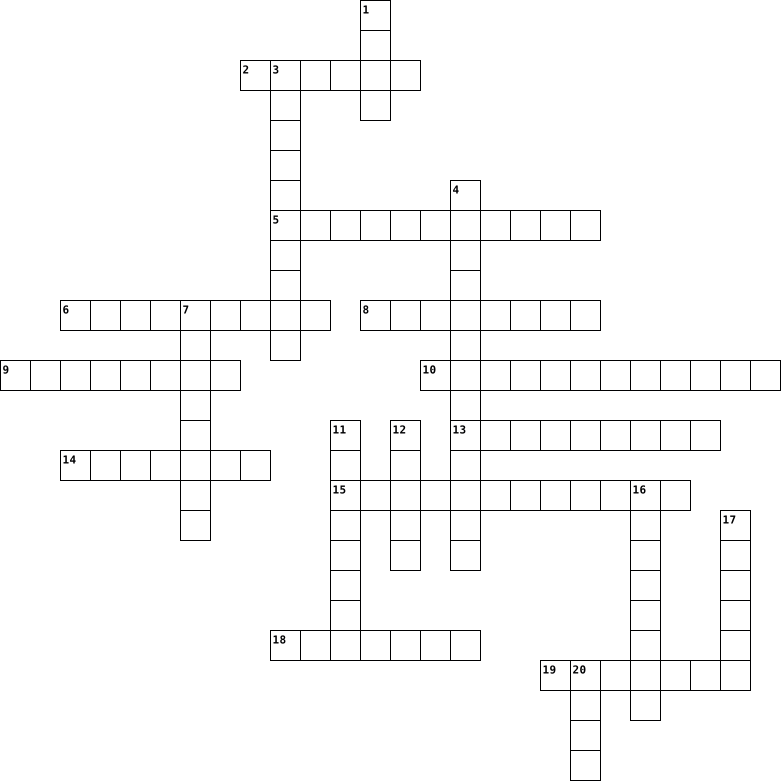
Across
- Horizontal column in periodic table
- involving absorption of energy
- reaction in which reactants combine
- symbol symbol used to represent elements
- containing two or more atoms
- bond in which electrons are shared
- bond in which electrons are gained or lost
- Something in which the solute is dissolved
- number of protons
- positive mass in an atom
- Components physically combined
Down
- contains protons, electrons and neutrons
- involving releasing of energy
- reaction in which reactant separates
- very reactive gases
- molecule containing two atoms
- vertical column in periodic table
- pure substance that cannot be broken down.
- Something dissolved in solvent
- atom in which there is a charge
20 Clues: number of protons • very reactive gases • positive mass in an atom • containing two or more atoms • involving releasing of energy • molecule containing two atoms • involving absorption of energy • Something dissolved in solvent • Components physically combined • atom in which there is a charge • vertical column in periodic table • bond in which electrons are shared • ...
Chem Crossword 2023-11-02

Across
- Bi
- Sn
- A type of change that changes the makeup of the substance
- Zn
- A charged atom
- (CN)-1
- negatively charged elements;non-metals
- Pb
- The elements along the stairs excluding aluminium
- an alloy of copper and zinc
- heat is absorbed
- A type of table that organizes elements
Down
- (MnO₄)-1
- atoms of the same element that have a different number of neutrons
- Very reactive non-metal group with a -1 charge
- pure substance made up of two or more elements
- Ag
- 3D sphereic structure in an atom
- positively charged metal
- The metals in the first column of the periodic table
- Mass per unit volume
21 Clues: Bi • Sn • Ag • Zn • Pb • (CN)-1 • (MnO₄)-1 • A charged atom • heat is absorbed • Mass per unit volume • positively charged metal • an alloy of copper and zinc • 3D sphereic structure in an atom • negatively charged elements;non-metals • A type of table that organizes elements • Very reactive non-metal group with a -1 charge • pure substance made up of two or more elements • ...
3rd Nine Weeks Crossword :D 2023-03-09

Across
- the continents brought together before they drifted
- what does the P mean is PUFLART
- what is the r in PUFLART
- your bestie!
- clue on when there is chemical changes are happening
- 2 elements combined
- what is the A in PUFLART
- density=__/volume
- A neutral charge in the nucleus
- what is the center of the earth
Down
- what is #9 on the periodic table
- where are the protons and neutrons located?
- what is the U in PUFLART
- h2o
- valence__
- what is the L in PUFLART
- number on the periodic table
- what is the F in PUFLART
- what is the T in PUFLART
- the positive charge in the nucleus
20 Clues: h2o • valence__ • your bestie! • density=__/volume • 2 elements combined • what is the U in PUFLART • what is the r in PUFLART • what is the L in PUFLART • what is the F in PUFLART • what is the T in PUFLART • what is the A in PUFLART • number on the periodic table • what does the P mean is PUFLART • A neutral charge in the nucleus • what is the center of the earth • ...
Study Guide Puzzle 2023-01-16

Across
- core of an atom
- a group of electrons
- has a negative charge
- they don’t react
- an atom that gives off radiation
- nonmetal element that consists group 17
- has same atomic number
- has a positive charge
- gains a positive charge
- metallic elements
- conduct heat and electricity
- series of nonmetal elements
Down
- has no charge
- straight row in periodic table
- sodium and potassium
- a gas
- has both metal and gas
- a hard substance
- em it’s radiation
- a charged atom with no mass number
- protons in the symbol on periodic table
- barium and radium
- molecules that float in the air
- measure of atomic mass
24 Clues: a gas • has no charge • core of an atom • they don’t react • a hard substance • em it’s radiation • barium and radium • metallic elements • a group of electrons • sodium and potassium • has a negative charge • has a positive charge • has both metal and gas • has same atomic number • measure of atomic mass • gains a positive charge • series of nonmetal elements • conduct heat and electricity • ...
Nutrition 2025-04-02

Across
- ability to attract electrons in a bond
- region where electrons are found
- element that gains or shares electrons
- vertical column on the periodic table
- atom with same protons but different neutrons
- bond bond between metal and nonmetal
- a negatively charged ion
- an atom with a charge
- horizontal row on the periodic table
- the smallest unit of matter
- connection between atoms
Down
- element that loses electrons easily
- outermost electrons
- negatively charged particle around the nucleus
- a positively charged ion
- neutral particle in the nucleus
- how easily an element reacts
- positively charged particle in the nucleus
- center of an atom
- bond bond where atoms share electrons
20 Clues: center of an atom • outermost electrons • an atom with a charge • a positively charged ion • a negatively charged ion • connection between atoms • the smallest unit of matter • how easily an element reacts • neutral particle in the nucleus • region where electrons are found • element that loses electrons easily • bond bond between metal and nonmetal • ...
Science words 2026-03-16

Across
- turning to ice
- Power Source
- center on chemical, preparatory, or initial roles
- a building block of matter
- how dense something is
- particle with no charge
- Variant of an element
- Energy transfer method
- Transmission," or "Passage
- element These are the elements in the s- and p-blocks of the periodic table
Down
- Charged particle
- Too small to see with a human eye
- the basic parts of things
- element specific metallic elements found in the periodic table's middle section
- Positively charged particle
- an atom with a charge
- Different form of an element
- heat transfer, circulation, or specific ovens
- Chemical output
- Iron and steel
20 Clues: Power Source • turning to ice • Iron and steel • Chemical output • Charged particle • an atom with a charge • Variant of an element • how dense something is • Energy transfer method • particle with no charge • the basic parts of things • a building block of matter • Transmission," or "Passage • Positively charged particle • Different form of an element • Too small to see with a human eye • ...
Wild Cards crossword [With Collections] 2026-04-10
![Wild Cards crossword [With Collections] crossword puzzle](/image/19380004.svg?size=30&stroke_width=1)
Across
- Served Fresh (Food and Drink)
- Skip a Beat (Anatomy)
- Labors (Greek Mythology)
- Flat-faced (Felines)
- One Vision (Feudal Japan)
- A New Age (The Periodic Table)
- Circle of Power (The Occult)
- Revolver (Felines)
- A Cosmic Perspective (STEM Stars)
- Efemural (Anatomy)
- Toxic (Amphibians)
- Handle the Heat (Across the Universe)
Down
- King of Sandwiches (Heroes of Culture)
- Boundaries (Greek Mythology)
- ...tibi scutum sum (The Roman Empire)
- Covalent Bonding (The Periodic Table)
- Flew the Coop (Hoaxes and Cons)
- Far Side (The Solar System)
- Privateering (Age of Piracy)
- Round Two (Ancient Egypt)
- 20/20 (Anatomy)
- Seeing Red (The Solar System)
- Hollow Body (Dinosaurs)
- Blue Fire (Natural Monuments)
24 Clues: 20/20 (Anatomy) • Revolver (Felines) • Efemural (Anatomy) • Toxic (Amphibians) • Flat-faced (Felines) • Skip a Beat (Anatomy) • Hollow Body (Dinosaurs) • Labors (Greek Mythology) • One Vision (Feudal Japan) • Round Two (Ancient Egypt) • Far Side (The Solar System) • Boundaries (Greek Mythology) • Privateering (Age of Piracy) • Circle of Power (The Occult) • Served Fresh (Food and Drink) • ...
Chemistry Crossword 2015-11-17

Across
- A substance formed by corroding
- a specified material conducts electricity
- a solid changes state in a point from solid to liquid
- an element or substance that is not a metal
- Absorption of heat
- Vertical columns in the periodic table
- What's on the Periodic Table
- an atom or molecule with a electric charge due to loss/gain of 1 or more electron
- Basic building blocks of matter
- any property that is measurable
- A neutral particle in the nucleus of an atom
- Release of heat
- the representation of a word
Down
- the point where the liquid boils
- a horizontal row of the periodic table
- degree of consistency measured by the quantity of mass per unit volume
- a stable particle occurring in all atomic nuclei
- a compound regarded as a union of molecules
- A Solid material with good electrical and thermal conductivity.
- the properties are intermediate between metals and non-metals
- A opened material which is losing or gaining from the environment
- a physical substance
- a stable particle with a charge of negative electricity
- Property that is possessed by an object. You paint with many different _____
24 Clues: Release of heat • Absorption of heat • a physical substance • What's on the Periodic Table • the representation of a word • A substance formed by corroding • Basic building blocks of matter • any property that is measurable • the point where the liquid boils • a horizontal row of the periodic table • Vertical columns in the periodic table • ...
chemistry crossword 2017-11-09

Across
- group 17 in the periodic table
- pure substance that cannot be broken down
- releases energy
- a description of how a substance reacts with another substance
- smallest part of an element that is representative of that element
- substance that helps a reaction proceed more quickly
- principle that mass is the same in reactants and products
- change of state from gas to solid
- measure of atomic mass amu
- chemical reaction that occurs when oxygen reacts and gives off energy
- atom that has become electrically charged
- mass of one atom of an element
- amount of mass in a given volume
Down
- group 2 elements in the periodic table
- pure substance formed with at least one metal and one non metal
- anything that has mass and takes up space
- change of state from a liquid to solid
- absorbs energy
- a reaction that takes place when two or more substances form a new substance
- an experiment in which all reactants and products are accounted for
- group 1 elements in the periodic table
- ability to conduct electricity
- chemical combination of two or more elements
- invisible negatively charged particle
- number number of protons and neutrons in an element
25 Clues: absorbs energy • releases energy • measure of atomic mass amu • group 17 in the periodic table • ability to conduct electricity • mass of one atom of an element • amount of mass in a given volume • change of state from gas to solid • invisible negatively charged particle • group 2 elements in the periodic table • change of state from a liquid to solid • ...
Sciene Crossword 2012-11-25

Across
- american coin
- next to chromium on the periodic table
- there is a song about it by Sia and David Guetta
- used for explosives
- symbol is Mn
- name of group 3 until 12
- it is in the nitrogen group, symbol P
- we need it to breath without it we would die
- Fe
- next to nickel in the periodic table
- is used to clean pools
- atomic number is 33
- liquid we use to clean open wounds
Down
- it is in your bones
- atomic number is 1
- is used by dentists to clean your teeth
- used in balloons
- in what group is chlorine
- underneath cobalt on the periodic table
- oxygen is in that group, so is sulfur and selenium
- it is in group 2, and the atomic number is 12
- symbol is Cf
- what is the name of group 1?
- symbol is Ag
- atomic number of lead
- atomic number of gold
- B, Al, Ga, In, and Ti are in that group
- atomic number of osmium
- bright colors or lights
- superman was born on that planet
30 Clues: Fe • symbol is Cf • symbol is Mn • symbol is Ag • american coin • used in balloons • atomic number is 1 • it is in your bones • used for explosives • atomic number is 33 • atomic number of lead • atomic number of gold • is used to clean pools • atomic number of osmium • bright colors or lights • name of group 3 until 12 • in what group is chlorine • what is the name of group 1? • ...
Chemistry Lab 2014-11-07

Across
- cloudy mixture in which tiny particles of one substance are held within another cannot be separated
- Group 17
- liquid at room temperature is also a planets name
- Number of protons in an elements nucleus
- Group 2
- Period 4, Group 17
- columns in the periodic table
- positively charged particle in the nucleus of a atom
- when the charges are balanced in a compound
- used only sinmplestones and bones during this time to make tools and other things they needed
- how heavy one element of an atom is
- are a shiny solid
Down
- rows in the periodic table
- non reversible reactions that creates a precipitate and or odour
- two non-metals being combined in a compound
- homogeneous mixture
- heterogeneous mixture
- change in appearance or state of the substance and is reversible
- pure substance that cannot be broken down into other substances and is on the periodic table
- Group 1
- cloudy mixture in which tiny particles are within a substance and can be separated
- Group 18
- have both metallic and non metallic properties
- Neutral particle in the nucleus of a atom
- can be a solid or a gas
25 Clues: Group 2 • Group 1 • Group 17 • Group 18 • are a shiny solid • Period 4, Group 17 • homogeneous mixture • heterogeneous mixture • can be a solid or a gas • rows in the periodic table • columns in the periodic table • how heavy one element of an atom is • Number of protons in an elements nucleus • Neutral particle in the nucleus of a atom • two non-metals being combined in a compound • ...
Chem - Periodic Law 2020-10-28

Across
- [Xe] 4f14 5d10 6s2 6p3
- Elements on the staircase that have the properties of both metals and non-metals
- measure of the ability of an atom in a chemical compound to attract electrons
- [Rn] 5f3 6d1 7s2
- a column in the Periodic Table
- elements that all other elements want to have the same number of electrons as they do
- a row on the periodic table
- Metals with atomic number 90 to 103
- electrons found in the outer shell of an atom
- Metals with atomic numbers 58 to 71
- Trend observed in a Period or a Group of elements
Down
- Russian Chemist who began idea of Periodic table during the 19th century
- Column 1 family
- One-half the distance between the nuclei of identical atoms (such as Cl2) that are bonded together
- energy change that occurs when an electron is acquired by a neutral atom
- Energy required to remove one electron from a neutral atom of an element
- Family in column 17
- positive ion
- when an atom loses or gains electron to become an anion or a cation
- [Ar} 3d10 4s2 4p2
- negative ion
- a column in the Periodic Table
22 Clues: positive ion • negative ion • Column 1 family • [Rn] 5f3 6d1 7s2 • [Ar} 3d10 4s2 4p2 • Family in column 17 • [Xe] 4f14 5d10 6s2 6p3 • a row on the periodic table • a column in the Periodic Table • a column in the Periodic Table • Metals with atomic number 90 to 103 • Metals with atomic numbers 58 to 71 • electrons found in the outer shell of an atom • ...