
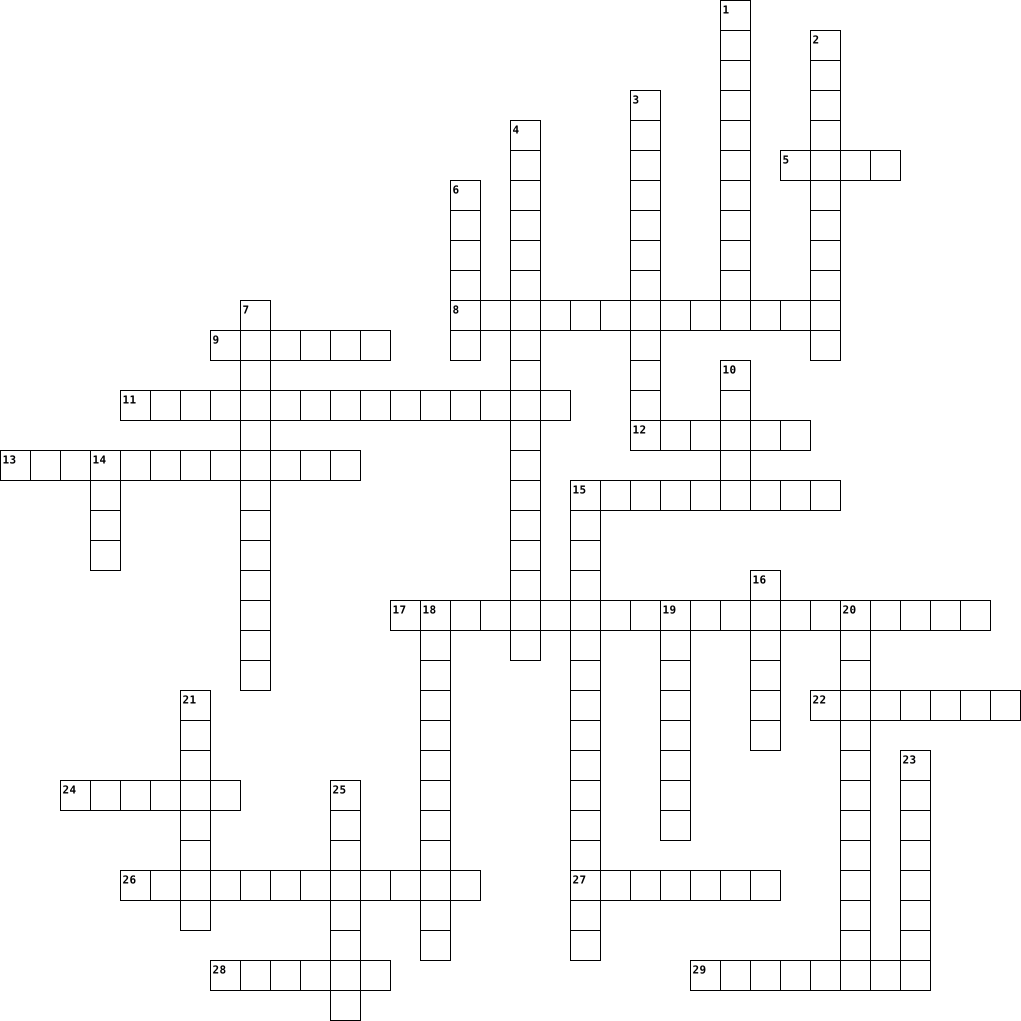
periodic%20table Crossword Puzzles
Periodic table 2021-05-14

Across
- the lightest element
- a metalloid found in computer chips
- a transition metal found in red blood cells
- the horizontal rows In periodic table
- an alkali metal
Down
- another name for group 18
- Another name for group 17
- a inner transition element
- a vertical column in the periodic table
- a transition metal
- the lightest metal
11 Clues: an alkali metal • a transition metal • the lightest metal • the lightest element • another name for group 18 • Another name for group 17 • a inner transition element • a metalloid found in computer chips • the horizontal rows In periodic table • a vertical column in the periodic table • a transition metal found in red blood cells
Science Corssword 2022-02-16

Across
- a type of model of an atom
- a substance having a finite activation energy (band gap) for electron conduction
- members of a family of an element that all have the same number of protons but different numbers of neutrons
- a row of chemical elements
- the number of a chemical element in the periodic system
- any substance that cannot be decomposed into simpler substances by ordinary chemical processes
- a negatively charged subatomic particle
- a type of chemical element which has a preponderance of properties in between
- a column in the periodic table of the chemical elements
Down
- Russian chemist who developed the periodic classification of the elements
- are neutral sub-atomic particles with no electrical charge
- smallest unit into which matter can be divided without the release of electrically charged particles
- stable subatomic particle that has a positive charge
- a chemical bond that involves the sharing of electron pairs between atoms
- any of a class of substances characterized by high electrical and thermal conductivity
- any substance composed of identical molecules consisting of atoms of two or more chemical elements
- any atom or group of atoms that bears one or more positive or negative electrical charges
17 Clues: a type of model of an atom • a row of chemical elements • a negatively charged subatomic particle • stable subatomic particle that has a positive charge • the number of a chemical element in the periodic system • a column in the periodic table of the chemical elements • are neutral sub-atomic particles with no electrical charge • ...
Matter Matters post test starter 2025-06-17

Across
- The element found in all organic compounds (6)
- A type of gas in Group 18 that is unreactive under normal conditions (5)
- A negatively charged particle that orbits the nucleus (8)
- A substance made of two or more elements chemically combined (8)
- Group 7 elements that are non-metals and very reactive (8)
- A combination of substances that are not chemically bonded (7)
- A piece of glassware used for holding small amounts of substances during experiments (8)
- A gas that supports combustion and is released during photosynthesis (6)
Down
- The gas that produces a pop sound when a lit splint is used (8)
- Vertical columns in the periodic table that contain elements with similar properties (5)
- The group 1 elements in the periodic table that are highly reactive (11)
- Horizontal rows in the periodic table indicating energy levels of electrons (6)
- A term describing how easily an element combines with others (9)
- A positively charged subatomic particle found in the nucleus (6)
- Speeds up a chemical reaction without being used up
- A particle made from two or more atoms bonded together
- A subatomic particle with no charge found in the nucleus (7)
17 Clues: The element found in all organic compounds (6) • Speeds up a chemical reaction without being used up • A particle made from two or more atoms bonded together • A negatively charged particle that orbits the nucleus (8) • Group 7 elements that are non-metals and very reactive (8) • A subatomic particle with no charge found in the nucleus (7) • ...
Midterm Review #2 2022-01-04

Across
- what holds you to the planet
- a row in the periodic table
- a positive or negative element/atom
- have a pH greater than 7
- where all elements are found
- an element with more neutrons than normal
- is the number of protons for the element
- used to measure acids and bases
Down
- a column on the periodic table
- pH of 7
- elements who do not react with others
- atoms want to have 8 valence electrons
- protons plus neutrons
- time needed for half of the isotope to decay
- 2 or more different elements bonded together
- have a pH less than 7
16 Clues: pH of 7 • protons plus neutrons • have a pH less than 7 • have a pH greater than 7 • a row in the periodic table • what holds you to the planet • where all elements are found • a column on the periodic table • used to measure acids and bases • a positive or negative element/atom • elements who do not react with others • atoms want to have 8 valence electrons • ...
Atomic Structure 2022-10-21

Across
- neutral subatomic particle
- part of an atom containing neutrons and protons
- positive subatomic particle
- has 40 electrons in a neutral atom
- number which represents the identity of the atom, can be found on the periodic table.
- Sulfur-16 has _______ neutrons
- Smallest unit of matter which has characteristics of an element
- has 7 protons
Down
- Amount of an isotope that exists
- _____ particles make up an atom
- has 6 protons
- Atoms which are the same element but have different masses
- has an atomic mass of 28.086 amu
- Atomic mass on periodic table is an __ of all the isotopes' mass
- protons + neutrons
- negative subatomic particle
16 Clues: has 6 protons • has 7 protons • protons + neutrons • neutral subatomic particle • positive subatomic particle • negative subatomic particle • Sulfur-16 has _______ neutrons • _____ particles make up an atom • Amount of an isotope that exists • has an atomic mass of 28.086 amu • has 40 electrons in a neutral atom • part of an atom containing neutrons and protons • ...
1B Vocab for Science 2025-05-07

Across
- To resist scratching
- earth metal a group of 17 metallic elements found in the periodic table
- Chemical elements which fall in metal
- To be able to conduct electricity
- A substance that contains only one type of atom
- The ability to be stretched
Down
- Easily broken
- table A table of science chemicals and properties
- The way a material reflects light
- easily shaped by force
- When two things with metal are attracted to touch
- A hard silver type of rock
- Property Moving
- Lack of shine
- Chemical elements which don't fall in metal.
- The amount of density and volume in something
16 Clues: Easily broken • Lack of shine • Property Moving • To resist scratching • easily shaped by force • A hard silver type of rock • The ability to be stretched • The way a material reflects light • To be able to conduct electricity • Chemical elements which fall in metal • Chemical elements which don't fall in metal. • The amount of density and volume in something • ...
Chemistry Crossword 2023-01-24

Across
- A neutrally charged particle
- A negatively charged particle
- A positively charged particle
- The table which contains all of the elements
- The unit used to measure atomic weight
- The number of protons in an element
Down
- A negatively charged ion
- A positively charged ion
- An atom or molecule with a net charge
- The atomic weight of an element
- A particle with a nucleus and electrons
- A line on the periodic table
- A grouping of elements on the periodic table
13 Clues: A negatively charged ion • A positively charged ion • A neutrally charged particle • A line on the periodic table • A negatively charged particle • A positively charged particle • The atomic weight of an element • The number of protons in an element • An atom or molecule with a net charge • The unit used to measure atomic weight • A particle with a nucleus and electrons • ...
This Week In Science 2024-11-08

Across
- Chemistry is the study of...
- A characteristic
- Circuits typically flow in a...
- The particle in atoms where molecules connect
- This particle number is found in the atomic number
Down
- Circuit boards carry...
- _________go side to side on the Periodic Table
- Atomic mass minus atomic number will give you the number of...
- The most conductive metal
- Circuit is related to the word...
- To engrave
- Chemical_______signal a change in substance
- ______go up and down on the Periodic Table
13 Clues: To engrave • A characteristic • Circuit boards carry... • The most conductive metal • Chemistry is the study of... • Circuits typically flow in a... • Circuit is related to the word... • ______go up and down on the Periodic Table • Chemical_______signal a change in substance • The particle in atoms where molecules connect • _________go side to side on the Periodic Table • ...
Elements Crosswords 2012-09-10

Across
- The first metaloid in the periodic table
- Diamonds are made out of it
- It has no colour
- A soft silver white metal
- The fourth element on the periodic table
- What is inside rocks and stones
- The lightest element
- The lightest halogen
- If you inhale it you get a high pitched voice
Down
- Gives a reddish orange glow
- It is used to kill bugs
- The most common gas in the worlds atmosphere
- You breath it in every second
- What has the symbol Na
- It is inside fire works
- What is in milk to make your bones stronger
- The most common metal found in the earths crust
- Its a chemical that goes in your spa and pool
- What are bananas full of
- Is used in a hospital for plastic surgery
20 Clues: It has no colour • The lightest element • The lightest halogen • What has the symbol Na • It is used to kill bugs • It is inside fire works • What are bananas full of • A soft silver white metal • Gives a reddish orange glow • Diamonds are made out of it • You breath it in every second • What is inside rocks and stones • The first metaloid in the periodic table • ...
Chemistry Terms 2014-06-25

Across
- Rightmost elements on the periodic table
- The study of matter
- A substance made of only one type of molecule
- Negatively charged subatomic particles
- Neutal subatomic particles
- A substance made of more than one type of molecule
- Group II - ____________ earth metals
- Leftmost elements on the periodic table
- Positively charged subatomic particles
- Group I - ____________ metals
Down
- Group VIII - ____________ gases
- Group VII
- A substance made of more than one type of atom
- The smallest unit of a substance that has the properties of that substance
- Vertical grouping of elements
- A substance made of one type of atom
- Anything that has mass and takes up space
- The number of protons or electrons in a neutral state for an element - _______________ number
- Horizontal grouping of elements
- The building block of matter
20 Clues: Group VII • The study of matter • Neutal subatomic particles • The building block of matter • Vertical grouping of elements • Group I - ____________ metals • Group VIII - ____________ gases • Horizontal grouping of elements • A substance made of one type of atom • Group II - ____________ earth metals • Negatively charged subatomic particles • Positively charged subatomic particles • ...
SUFFER 2022-04-12

Across
- 106th element of the periodic table
- School type Hitler dropped out of
- Capital of the Bahamas
- Number of televised Doctor Who stories focused around the Weeping Angels
- 5th leader of the Soviet Union
- Roman god of doors
- Capital of Mozambique
- Capital of Armenia
- Capital of Tuvalu
Down
- Capital of Moldova
- The number of sports in the original Wii Sports
- The 1966 world cup team member you couldn't remember father
- 35th book of the bible
- Capital of Uruguay
- The second closest star to Earth
- Square in China where nothing happened on the 6th June 1989
- First country to win the football world cup
- Country invaded by the USSR in 1979
- The Minecraft animal that accidentally led to the creation of the creeper
- 34th element of the periodic table
20 Clues: Capital of Tuvalu • Capital of Moldova • Capital of Uruguay • Roman god of doors • Capital of Armenia • Capital of Mozambique • 35th book of the bible • Capital of the Bahamas • 5th leader of the Soviet Union • The second closest star to Earth • School type Hitler dropped out of • 34th element of the periodic table • 106th element of the periodic table • ...
Crossword 2023-12-04

Across
- vertical columns of the periodic table
- how close measurement is to true value
- highest part of a wave
- smallest unit of light
- measure of disorder in a system
- horizontal rows of the periodic table
- amount of physical space occupied
- matter & energy can flow in & out
- atom with a positive or negative charge
- atom with a positive charge
- limitations of a design
- used to meausre air pressure
Down
- heat transfer by movement within fluids
- # of waves passing through a single point in 1 sec
- ability of an atom to undergo a chemical reaction
- the lowest part of a wave
- movement of gas through a small opening
- g/ml OR g/cm^3
- keep the system working by managing inputs/outputs
- have metal and non-metal characteristics
- particles are spread apart
21 Clues: g/ml OR g/cm^3 • highest part of a wave • smallest unit of light • limitations of a design • the lowest part of a wave • particles are spread apart • atom with a positive charge • used to meausre air pressure • measure of disorder in a system • amount of physical space occupied • matter & energy can flow in & out • horizontal rows of the periodic table • ...
Atoms! 2023-11-19

Across
- smallest unit of matter
- bond formed between a metal and a nonmetal
- subatomic particle with a neutral charge
- well-tested rules for the natural world
- explanations for observations of the natural world
- elements that conduct heat and electricity well
- type of energy that results in heat
- subatomic particle with a negative charge
- two or more elements bonded together
Down
- the outer electrons in an atom
- bond formed between two nonmetal elements
- energy of movement
- organized chart of elements
- an educated guess as an answer to an observation
- any substance with mass and that takes up space
- subatomic particle with a positive charge
- elements that are not good conductors
- rows of the periodic table
- made of protons and neutrons, center of an atom
- columns on the periodic table
20 Clues: energy of movement • smallest unit of matter • rows of the periodic table • organized chart of elements • columns on the periodic table • the outer electrons in an atom • type of energy that results in heat • two or more elements bonded together • elements that are not good conductors • well-tested rules for the natural world • subatomic particle with a neutral charge • ...
Periodic Table Crossword 2020-03-27

Across
- It's element symbol is also a prefix that means "two".
- A metalloid commonly found in rat poison.
- Element symbol of Ga.
- Element symbol of Cl.
- Element symbol of Cd.
- A noble gas that shares a name with Superman's home planet.
- 39 protons.
- This is the last element on the periodic table.
- 30 protons.
- This alkali metal is one of two elements in salt.
Down
- Element symbol of K.
- This nonmetal makes up 78% of the earth's atmosphere.
- The alkaline earth metal with the biggest atomic number.
- Shares a name with the planet closest to the sun.
- This is the first element on the periodic table.
- 53 protons.
- This transition metal is also a shade of blue.
- The post-transition metal with the least protons.
- 14 protons.
- 89 protons.
20 Clues: 53 protons. • 39 protons. • 14 protons. • 89 protons. • 30 protons. • Element symbol of K. • Element symbol of Ga. • Element symbol of Cl. • Element symbol of Cd. • A metalloid commonly found in rat poison. • This transition metal is also a shade of blue. • This is the last element on the periodic table. • This is the first element on the periodic table. • ...
Chemistry Vocabulary 2022-12-07

Across
- _______ electrons determine the stability of an element
- The smallest part of an element
- Elements on the left of the periodic table are very _______
- ______ Number tells you the energy levels
- The word for shiny
- An arrangement of chemical elements
- Groups that run up and down in columns
- Inside the nucules and has a neutral charge
- The first energy level can hold ____ electrons
- Conducts electricity
- If its _____ you can bend it
- Doesn't let energy pass through
- Elements on the right of the periodic table are very _______
Down
- _______ change doesn't change the chemical complexion
- Neutrons tells you the _______
- If it's _____ it shatters easily
- Surrounds the nuclues
- Inside the nucules and has a positive charge
- Has a negative charge and basically no mass
- Metals _______ electricity
- _______ change results in a new substance
21 Clues: The word for shiny • Conducts electricity • Surrounds the nuclues • Metals _______ electricity • If its _____ you can bend it • Neutrons tells you the _______ • The smallest part of an element • Doesn't let energy pass through • If it's _____ it shatters easily • An arrangement of chemical elements • Groups that run up and down in columns • ...
Chemistry Vocab Crossword Puzzle 2022-12-07

Across
- What are periods sorted by
- Electrons on the outermost ring of elec.
- Electrons are equal to _ amu
- How to find # of pro. + elec. in atoms
- Unit for measuring weight of particles
- Subatomic particle with a neutral charge
- Table of all chemical elements
- The smallest part of an element
- The columns on the periodic table are _
- A substance that share properties w both
- How many elec. are kept in level 3
Down
- Which way do families go
- Which way do periods go
- Something made of one atom type is a
- Less valence elec. means more _
- Protons and neutrons are equal to _ amu
- A dull substance is most likely _
- A malleable substance is most likely _
- The rows on the periodic tables are _
- Subatomic particle with a positive
20 Clues: Which way do periods go • Which way do families go • What are periods sorted by • Electrons are equal to _ amu • Table of all chemical elements • Less valence elec. means more _ • The smallest part of an element • A dull substance is most likely _ • Subatomic particle with a positive • How many elec. are kept in level 3 • Something made of one atom type is a • ...
Periodic Table Crossword 2025-04-29

Across
- element H20
- particles in the nucleus with a positive charge of 1+
- number the number of protons an atom has
- the positively charged center of the atom
- particles with a negative charge of a 1- that occupy the space around the nucleus
- element H
- element K
- the "columns" on the periodic table
- element C
- atoms of the same element that have different numbers of nuetrons
Down
- the "rows" on the periodic table
- number sum of the portions and the number of neutrons
- the most popular model for an atom
- element NaCl
- atoms are mostly____space
- particles in the nucleus that are electrically neutral
- element Ca
- element Na
- cloud area around the nucleus of an atom where electrons are most likely to be found.
- the smallest particle of an element
20 Clues: element H • element K • element C • element Ca • element Na • element H20 • element NaCl • atoms are mostly____space • the "rows" on the periodic table • the most popular model for an atom • the "columns" on the periodic table • the smallest particle of an element • number the number of protons an atom has • the positively charged center of the atom • ...
Periodic Table Vocab 2023-05-09

Across
- a reddish metal with a face-centered cubic crystalline structure
- the cosmic product of burning helium
- atoms of the same element with different numbers of neutrons
- negative particle in the nucleus
- has a density lower than any metals
- Gases or dull brittle solids
- The vertical columns on the periodic table
- solids or semiconductors
- abbreviation for the name of the element
Down
- a clean alternative to methane
- positive particle in the nucleus
- type of electrolyte
- a nonmetallic element of the group 15
- makes balloons rise
- the smallest particle of an element
- shiny silvery solids and good conductors
- negative atom in the neucleus
- number tells the number of protons and neutrons in the nucleus
- found in many foods and has an atomic mass of 23
- the horizontal rows on the periodic table
20 Clues: type of electrolyte • makes balloons rise • solids or semiconductors • Gases or dull brittle solids • negative atom in the neucleus • a clean alternative to methane • positive particle in the nucleus • negative particle in the nucleus • the smallest particle of an element • has a density lower than any metals • the cosmic product of burning helium • ...
Periodic Table Vocab 2023-05-09

Across
- a reddish metal with a face-centered cubic crystalline structure
- the cosmic product of burning helium
- atoms of the same element with different numbers of neutrons
- negative particle in the nucleus
- has a density lower than any metals
- Gases or dull brittle solids
- The vertical columns on the periodic table
- solids or semiconductors
- abbreviation for the name of the element
Down
- a clean alternative to methane
- positive particle in the nucleus
- type of electrolyte
- a nonmetallic element of the group 15
- makes balloons rise
- the smallest particle of an element
- shiny silvery solids and good conductors
- negative atom in the neucleus
- number tells the number of protons and neutrons in the nucleus
- found in many foods and has an atomic mass of 23
- the horizontal rows on the periodic table
20 Clues: type of electrolyte • makes balloons rise • solids or semiconductors • Gases or dull brittle solids • negative atom in the neucleus • a clean alternative to methane • positive particle in the nucleus • negative particle in the nucleus • the smallest particle of an element • has a density lower than any metals • the cosmic product of burning helium • ...
Periodic Table Vocab 2023-05-09

Across
- a reddish metal with a face-centered cubic crystalline structure
- the cosmic product of burning helium
- atoms of the same element with different numbers of neutrons
- negative particle in the nucleus
- has a density lower than any metals
- Gases or dull brittle solids
- The vertical columns on the periodic table
- solids or semiconductors
- abbreviation for the name of the element
Down
- a clean alternative to methane
- positive particle in the nucleus
- type of electrolyte
- a nonmetallic element of the group 15
- makes balloons rise
- the smallest particle of an element
- shiny silvery solids and good conductors
- negative atom in the neucleus
- number tells the number of protons and neutrons in the nucleus
- found in many foods and has an atomic mass of 23
- the horizontal rows on the periodic table
20 Clues: type of electrolyte • makes balloons rise • solids or semiconductors • Gases or dull brittle solids • negative atom in the neucleus • a clean alternative to methane • positive particle in the nucleus • negative particle in the nucleus • the smallest particle of an element • has a density lower than any metals • the cosmic product of burning helium • ...
Periodic Table Vocab 2023-05-09

Across
- a reddish metal with a face-centered cubic crystalline structure
- the cosmic product of burning helium
- atoms of the same element with different numbers of neutrons
- negative particle in the nucleus
- has a density lower than any metals
- Gases or dull brittle solids
- The vertical columns on the periodic table
- solids or semiconductors
- abbreviation for the name of the element
Down
- a clean alternative to methane
- positive particle in the nucleus
- type of electrolyte
- a nonmetallic element of the group 15
- makes balloons rise
- the smallest particle of an element
- shiny silvery solids and good conductors
- negative atom in the neucleus
- number tells the number of protons and neutrons in the nucleus
- found in many foods and has an atomic mass of 23
- the horizontal rows on the periodic table
20 Clues: type of electrolyte • makes balloons rise • solids or semiconductors • Gases or dull brittle solids • negative atom in the neucleus • a clean alternative to methane • positive particle in the nucleus • negative particle in the nucleus • the smallest particle of an element • has a density lower than any metals • the cosmic product of burning helium • ...
Periodic Table Vocab 2023-05-09

Across
- a reddish metal with a face-centered cubic crystalline structure
- the cosmic product of burning helium
- atoms of the same element with different numbers of neutrons
- negative particle in the nucleus
- has a density lower than any metals
- Gases or dull brittle solids
- The vertical columns on the periodic table
- solids or semiconductors
- abbreviation for the name of the element
Down
- a clean alternative to methane
- positive particle in the nucleus
- type of electrolyte
- a nonmetallic element of the group 15
- makes balloons rise
- the smallest particle of an element
- shiny silvery solids and good conductors
- negative atom in the neucleus
- number tells the number of protons and neutrons in the nucleus
- found in many foods and has an atomic mass of 23
- the horizontal rows on the periodic table
20 Clues: type of electrolyte • makes balloons rise • solids or semiconductors • Gases or dull brittle solids • negative atom in the neucleus • a clean alternative to methane • positive particle in the nucleus • negative particle in the nucleus • the smallest particle of an element • has a density lower than any metals • the cosmic product of burning helium • ...
Periodic Table Vocab 2023-05-09

Across
- a reddish metal with a face-centered cubic crystalline structure
- the cosmic product of burning helium
- atoms of the same element with different numbers of neutrons
- negative particle in the nucleus
- has a density lower than any metals
- Gases or dull brittle solids
- The vertical columns on the periodic table
- solids or semiconductors
- abbreviation for the name of the element
Down
- a clean alternative to methane
- positive particle in the nucleus
- type of electrolyte
- a nonmetallic element of the group 15
- makes balloons rise
- the smallest particle of an element
- shiny silvery solids and good conductors
- negative atom in the neucleus
- number tells the number of protons and neutrons in the nucleus
- found in many foods and has an atomic mass of 23
- the horizontal rows on the periodic table
20 Clues: type of electrolyte • makes balloons rise • solids or semiconductors • Gases or dull brittle solids • negative atom in the neucleus • a clean alternative to methane • positive particle in the nucleus • negative particle in the nucleus • the smallest particle of an element • has a density lower than any metals • the cosmic product of burning helium • ...
Year 9 Atoms Crossword 2024-11-27

Across
- A mixture designed to do something useful.
- Reactive metal - purple flame.
- Metals that make colourful compounds.
- Group containing unreactive gases.
- Model of the atom - a positively charged sphere with electrons randomly scattered.
- Column on the periodic table.
- Substance containing only one type of atom.
- Positively charged subatomic particle.
- Centre of an atom containing protons and neutrons.
- Subatomic particle without a charge.
- Row on the periodic table
Down
- Method of separating mixtures of solutes with different solubilities.
- Mass of an atom. (2)
- Two or more elements or compounds mixed but not joined.
- Group containing the halogens. e.g. chlorine
- Group containing reactive metals e.g. potassium
- Another name for the group 0 elements. (2)
- Two or more elements chemically joined.
- Negatively charged subatomic particle.
- Smallest thing anything can be made from.
20 Clues: Mass of an atom. (2) • Row on the periodic table • Column on the periodic table. • Reactive metal - purple flame. • Group containing unreactive gases. • Subatomic particle without a charge. • Metals that make colourful compounds. • Negatively charged subatomic particle. • Positively charged subatomic particle. • Two or more elements chemically joined. • ...
The Wifi Extender password 2025-08-31

Across
- No. of Pokemon
- My favourite number, and the last two digits of the year i graduated high school
- Technology I HATE
- Finale of Deltarune
- Ytterbium no. on the periodic table
- Crossword Writer's copout-biscuit
- Bisexual... 2!
- Fox's Orange Skeleton
- Patches' Chunkers of choice
- Speaker of "Human... I remember you're genocides..."
- My favourite of the mane 6
- Not obtuse
- Wimpy Kid family
- 0.4 cm
- Onion browser
- "My name ____"
- Mother's choice in Don't Starve
Down
- 2^10
- Molar Mass of Chlorine
- Cyberpunk year
- 2009 Blocky Sandbox
- Edge
- Non-autistic (LAME!)
- the fuckass robot from portal
- The best form of bingo
- Member of group 17 on the periodic table
- Unicorn Pinball
- Make a mistake
- Ex-Sydney CBD transit option
- Spinach ___
- Movies Goldblum
- Ipad model
32 Clues: 2^10 • Edge • 0.4 cm • Not obtuse • Ipad model • Spinach ___ • Onion browser • No. of Pokemon • Cyberpunk year • Bisexual... 2! • Make a mistake • "My name ____" • Unicorn Pinball • Movies Goldblum • Wimpy Kid family • Technology I HATE • 2009 Blocky Sandbox • Finale of Deltarune • Non-autistic (LAME!) • Fox's Orange Skeleton • Molar Mass of Chlorine • The best form of bingo • My favourite of the mane 6 • ...
Physical Science - Atomic Structure 2025-10-09

Across
- Created first periodic table by atomic mass.
- Number Number of protons in an atom.
- Force Pull between nucleus and electrons.
- Atom is a positive sphere with embedded electrons.
- Dense center with protons and neutrons.
- Notation Symbol with mass number (¹²C).
- Negative particle outside the nucleus.
- Electrons move in clouds, not fixed orbits.
- Force (e⁻) Push between electrons.
- Discovered atomic number; reorganized periodic table.
- Electrons orbit nucleus in fixed paths.
Down
- First to name the atom.
- Atoms are solid spheres; can’t be divided.
- Same element, different neutrons.
- Number Total of protons and neutrons.
- Neutral particle in the nucleus.
- Atomic Mass Weighted average of isotopes.
- Atom has dense nucleus with electrons around it.
- Force (p⁺) Push between protons in nucleus.
- Notation Element name and mass number (Carbon-12).
- Symbol Abbreviation for an element.
- Cloud Space around nucleus with electrons.
- Positive particle in the nucleus.
23 Clues: First to name the atom. • Neutral particle in the nucleus. • Same element, different neutrons. • Positive particle in the nucleus. • Force (e⁻) Push between electrons. • Symbol Abbreviation for an element. • Number Number of protons in an atom. • Number Total of protons and neutrons. • Negative particle outside the nucleus. • Dense center with protons and neutrons. • ...
Elements and physics 2021-09-16

Across
- The sun is in this state of matter
- It has a half-life of 22 minutes and is a metal and the letters is FR
- It's letters is Al
- Smallest thing in the world
- It's number on the periodic table is 104
- a combination of atoms
- it's symbol is Zn
- it's symbol is BE
- it's symbol is CuSn and the Greeks had an ______ age
- it is what the sun fuses hydrogen into.
- It is what we inhale
- it's an alloy that has the symbol CU
- The sun is fusing it in it's core
- diamonds and coal are formed out of this
- A metal that has the word titan in it
- Is made from carbon and is a gemstone
- it's symbol is AU
Down
- it's symbol is PT
- it's symbol is S
- It's symbol on the periodic table is CH₄
- The most expensive non-radioactive metal
- It's used in pencils
- it is used in cans and has the symbol SN
- it is the name of the first planet in our solar system
- the most smallest form of life possible
- It connects quarks
- It can never be destroyed nor created
- The force that keeps us on earth
- it's symbol on the periodic chart is K
- it has the symbol O₃
30 Clues: it's symbol is S • it's symbol is PT • it's symbol is Zn • it's symbol is BE • it's symbol is AU • It's letters is Al • It connects quarks • It's used in pencils • It is what we inhale • it has the symbol O₃ • a combination of atoms • Smallest thing in the world • The force that keeps us on earth • The sun is fusing it in it's core • The sun is in this state of matter • ...
Chemistry Crossword 2017-11-16

Across
- invisible negatively charged particle that orbits the nucleus of and atom
- chemical change that occurs when oxygen in the air reacts with a metal
- at table in which elements are organized by their physical and chemical properties
- chemical reaction that absorbs energy
- a pure substance formed when two non metals combine
- a pure substance formed when at least on metal and one non metal combine
- chemical reaction that releases energy
- metal the first column of the periodic table excluding hydrogen,that a really reactive in air and water
- workplace hazardous information material system
- can be stretched into wire
- substance that helps a chemical reaction proceed more quickly
- neutral particle in the nucleus of an atom
Down
- catalyst involved in chemical reactions in living things
- Irreversible change
- shininess of a metal
- the degree to which a specified material conducts electricity
- what everything is made up of
- Mass of Reactants= Mass of Products
- number of protons in the nucleus of one atom of an element
- group 18 in periodic table, they are the most stable and nonreactive elements. metalloid element that has both metallic and non metallic properties
- positively charged particle in the nucleus of an atom
- ability to pound and roll into flat sheets
- the mass of an element measured in amu
- horizontal row of elements in the periodic table
24 Clues: Irreversible change • shininess of a metal • can be stretched into wire • what everything is made up of • Mass of Reactants= Mass of Products • chemical reaction that absorbs energy • chemical reaction that releases energy • the mass of an element measured in amu • ...
unit b 2017-11-13

Across
- a solid that can be stretched in a long wire
- substance that reacts with other substances
- pure substance formed when at least one metal and non metal is combined
- the result of when all substances are accounted for
- describes the physical appearance and composition
- group 1 elements in the periodic table not including hydrogen the most reactive of the metals
- a compound that has been electorally charged
- change of the state or apperance
- dull brittle element that does not conduct electricity
- a experiment where the substances can escape or new substances can enter
Down
- group of 17 metals in the periodic table
- the result of when to or more substances react to make a new substance
- positively charged centre of a atom
- a reaction the takes place when two or more substance react to form a new substance
- ability of a substance to conduct electricity or heat
- vertical column of element in the periodic table
- substance made of only one kind of matter
- process in which molecules move from an area higher to lower concentration
- anything that has a mass and occupies space
- shiny malleable ductile element and non metallic properties
- number of protons in the nucleus of one atom of an element
- vertical column of element in the periodic table
- amount of gas in a given volume of a substance
23 Clues: change of the state or apperance • positively charged centre of a atom • group of 17 metals in the periodic table • substance made of only one kind of matter • substance that reacts with other substances • anything that has a mass and occupies space • a solid that can be stretched in a long wire • a compound that has been electorally charged • ...
CHEMISTRY 2013-07-18
Across
- a miniature solar system
- very stable and not reactive
- a measure of the full of gravity of the earth in a body
- Group or family
- left side of the periodic table
- distance from the nucleus to the last energy level
- smallest estimated value
- good element of a body
- mass of substance per unit volume
- transition element and it is in the middle of the periodic table
- refers to the number of protons equal to number of electrons
- retain only 1 uncertain digit
- rare earth elements
- salt-form
Down
- number plus unit correct of significant figure
- wherein substance can believe as acid or base at the same time
- form strong bases
- refers us to the number of exact digits plus one digit which is estimated
- right side of the periodic table
- organized, systematic arrangement of known elements based on INCREASING atomic number
- building blocks of element
- amount of matter in an object
- responsible if condition is maintained
- expansion due to increase kinetic energy of molecule
- zero all molecular motion are dead
- combining of two or more elements in definite combination or ratio
- constant composition
- a negatively charged subatomic particle
- a pure substance that cannot be broken down into simpler substance by a chemicalreaction
- smallest exact digit or line which is taken directly from device
30 Clues: salt-form • Group or family • form strong bases • rare earth elements • constant composition • good element of a body • a miniature solar system • smallest estimated value • building blocks of element • very stable and not reactive • amount of matter in an object • retain only 1 uncertain digit • left side of the periodic table • right side of the periodic table • ...
Structure of the Atom 2014-11-20

Across
- the average mass of all the isotopes of an element
- a class of elements characterized by physical properties
- an element that lacks most of the properties of a metal
- an atom with the same number of protons and a different number of neutrons from other atoms of the same element
- an element in group 18 of the periodic table
- the number of protons in the nucleus of an atom
- the specific amount of energy an electron has
- a positively charged particle that is part of an atom's nucleus
- elements in the same vertical column of the periodic table
- a chart of the elements showing the repeating pattern of their properties
Down
- a term used to describe materials that can be pulled out into a long wire
- an element in group one of the period table
- the sum of protons and neutrons in the nucleus of an atom
- a one or two letter representation of an element
- a negatively charged particle that is found outside the nucleus of an atom
- a horizontal row of elements in the periodic table
- the central core of the atom
- a small particle in the nucleus of the atom
- the ability of an object to transfer heat or electricity to another object
- the basic particle from which all elements are made
20 Clues: the central core of the atom • an element in group one of the period table • a small particle in the nucleus of the atom • an element in group 18 of the periodic table • the specific amount of energy an electron has • the number of protons in the nucleus of an atom • a one or two letter representation of an element • the average mass of all the isotopes of an element • ...
Periodic Table Challenge 2014-04-30

Across
- number The number of protons in the nucleus of an atom
- A negatively charged subatomic particle found in the energy level of an atom
- The elements that are usually poor conductors of heat and electricity
- law The properties of elements tend to repeat in a regular pattern when elements are arranged in order of increasing atomic number
- Another name for group
- The center of an atom; made up of protons and neutrons
- An ion with a positive charge
- The smallest particle that has the properties of an element
- Positively charged subatomic particle in the nucleus of an atom
- An atom or a group of atoms that has lost or gained one or more electrons and therefore has a net electric charge
- number The total number of protons and neutrons in the nucleus of an atom
Down
- A vertical column of elements in the periodic table
- electron An electron in the outermost energy level of an atom
- The process of adding electrons to or removing electrons from an atom or group of atoms
- level Any of the possible energies an electron may have in an atom
- A horizontal row of elements in the periodic table
- A neutral subatomic particle in the nucleus of an atom
- The elements that are good conductors of heat and electricity
- An ion with a negative charge
- Another name for period
20 Clues: Another name for group • Another name for period • An ion with a positive charge • An ion with a negative charge • A horizontal row of elements in the periodic table • A vertical column of elements in the periodic table • number The number of protons in the nucleus of an atom • A neutral subatomic particle in the nucleus of an atom • ...
Chapter 9 2023-11-08

Across
- What happens to an object when it’s placed in a MORE dense liquid or gas?
- If particles in a substance are heated they will move ___
- A state of matter that has NO definite shape or volume is a _
- To find density, mass is divided by?
- What is required to change a solid to a liquid?
- The word Atom comes from the Greek word “atomos” meaning this.
- New substances produced through a chemical reaction are called?
- Any change that does not produce a new substance is a ______ change.
- A state of matter that has definite shape and volume is a ___
- The Periodic Table is organized by the atomic __
- Solids, Liquids, and Gases are all common states of this.
- The densest part of an atom is this.
- Volume is the amount of _____ an object takes up.
- The horizontal rows on the Periodic Table are called this.
Down
- A group of bonded atoms that act like a single particle.
- All matter is made up of particles called
- Chemical changes produce substances that have new ___
- Weight is the measure of __________ on an object.
- Melting a solid results in this state of matter
- A bitter taste is a property of this.
- A mixture made of parts that separate while standing is called?
- A state of matter that has definite volume, but no definite shape is a _
- The vertical columns on the Periodic Table are called this.
- The amount of matter in an object is called?
24 Clues: To find density, mass is divided by? • The densest part of an atom is this. • A bitter taste is a property of this. • All matter is made up of particles called • The amount of matter in an object is called? • What is required to change a solid to a liquid? • Melting a solid results in this state of matter • The Periodic Table is organized by the atomic __ • ...
chemistry 2023-11-30

Across
- the most reactive metal
- brittle, semi conductive, able to be cut with a knife
- what mendeleev used to organize the periodic table
- alkali metal with lowest atomic number
- an atom with a net negative or positive charge due to gaining or losing one or more electrons
- all are radioactive
- when valence electrons move from one atom to another permanantly
- the most reactive nonmetal
- last name of the scientist that made the periodic table
- illustration to show valence electrons on paper
- known for being malleable, highly conductive
- the top-left most part of the staircase
- alkaline earth metal that is commonly found in cows milk
- the electrons that exist in the outermost shell of the atom
- noble gas with lowest atomic number
Down
- will not bond with other atoms
- metals that are not found alone in nature
- highly reactive element with an atomic number of three
- negatively charged ion
- transition metal with an atomic number of seventy six
- called the high earth metals
- positively charged ion
- person who modernized the periodic table
- largest group in the period table
- metal known for its orange color and high conductivity, known for commonly being used in wires
- naturally gaseous, brittle in solid form
- bonds with chlorine to make salt
- only lanthanide that is completely radioactive
- actinide with the highest atomic mass
- nonmetal with an atomic number of eight
30 Clues: all are radioactive • negatively charged ion • positively charged ion • the most reactive metal • the most reactive nonmetal • called the high earth metals • will not bond with other atoms • bonds with chlorine to make salt • largest group in the period table • noble gas with lowest atomic number • actinide with the highest atomic mass • alkali metal with lowest atomic number • ...
Chemistry Vocabulary 2024-05-06

Across
- 7 on the pH scale
- The substance that is doing the dissolving when making a solution.
- matter made up of two or more substances that are not joined chemically
- a pure substance that forms when two or more elements join chemically in a fixed proportion
- the ability of a material to allow either heat or electricity to flow through it
- Prepared or created artificially man-made, not found in nature
- simple substances that cannot be broken down into simpler substances
- a mixture in which substances are evenly distributed; example: a solution, milk, sugar water
- Horizontal row on the Periodic Table
Down
- Greater than 7 on the pH scale
- the ability of a substance to be hammered or beaten into thin sheets
- a mixture in which substances are not distributed evenly; example: a salad, pepperoni pizza, dirt
- Another name for a homogeneous mixture.
- two or more atoms held together by bonds
- Attraction between opposite poles
- vertical column on the Periodic Table; elements in the column share similar properties; also knows as a Group
- the ability to dissolve in another substance
- Less than 7 on the pH scale
- The substance that is dissolved when making a solution.
- vertical column on the Periodic Table; elements in the column share similar properties; also known as a Family
20 Clues: 7 on the pH scale • Less than 7 on the pH scale • Greater than 7 on the pH scale • Attraction between opposite poles • Horizontal row on the Periodic Table • Another name for a homogeneous mixture. • two or more atoms held together by bonds • the ability to dissolve in another substance • The substance that is dissolved when making a solution. • ...
ffvf 2023-05-15

Across
- substance made up of same type of atoms
- number......corresponds to number of protons of each element in periodic table.
- be used to separate sand from water.
- can be used to separate beans from raisins.
- is used to tabulate all elements that we have on earth
- liguid becomes a solid
- element is symbolized by letter H in the periodic table
- substance made up of two or more different elements
- is when solid is changing to gas
- spreading of particles from highly concentrated area towards a low concentrated area
- positively charged subatomic particle
- is equal to number of protons + number of neutrons
Down
- are molecules that cannot exist on their own such OXYGEN AND HYDROGEN.
- be used to separate dissolved salt from water
- animals that eat meat and plants
- negatively charged particles
- ......dense material will float on more dense material.
- is when solid changes to gas.
- charge of neutrons
- is the smallest building block of matter
- particles in a .......are closely packed together.
- compressible because particles are far from each other.
- a process whereby gas is converted to liquid.
- process whereby an object increase in size due to increase in heat
- everything that we see around us.
- mass per unit volume
26 Clues: charge of neutrons • mass per unit volume • liguid becomes a solid • negatively charged particles • is when solid changes to gas. • animals that eat meat and plants • is when solid is changing to gas • everything that we see around us. • be used to separate sand from water. • positively charged subatomic particle • substance made up of same type of atoms • ...
Atoms and Periodic Table 2025-03-17

Across
- an arrangement of elements
- vertical columns in the periodic table
- a particle with a positive or negative charge
- group of atoms held together by chemical bonds
- poor conductors of heat and electricity
- horizontal rows in the periodic table
- interaction that holds atoms or ions together
- what is the mass number of an isotope of an atom with 2 neutrons and 1 proton
- center of the atom
- number the number of protons in the nucleus
- a force that brings oppositely charged ions together
- area that consists of electrons
- has no charge
- smallest particle an element can be divided into
Down
- electrons found in the outermost level
- what separates the metals from nonmetals on the periodic table
- has a negative charge
- what is the atomic number of a sodium atom that has 11 protons and 12 neutrons
- number the total number of protons and neutrons in an atom
- the total amount of electrons the first energy level can hold
- atoms that share one or more pairs of electrons
- has a positive charge
- the total amount of electrons the second energy level can hold
- elements that have properties of both metals and nonmetals
- bonds between metal atoms when their outermost energy levels overlap
- abbreviation for an element
- elements that are shiny and conduct heat well
27 Clues: has no charge • center of the atom • has a negative charge • has a positive charge • an arrangement of elements • abbreviation for an element • area that consists of electrons • horizontal rows in the periodic table • electrons found in the outermost level • vertical columns in the periodic table • poor conductors of heat and electricity • ...
Solutions, pH, and periodic table review 2025-05-19

Across
- we can use pH ______________ to measure a solution's pH
- element abbreviated K
- moles of solute dissolved per Liter of solution
- fruit whose juice is acidic
- element with a mass of 19 on the periodic table
- a solution that is neutral has this pH
- what dissolves in a solvent
- a solid that will dissolve in water
- element that is in table salt
- element that is often in balloons
- a solution that has a lot of dissolved solute
- a solution that will dissolve no more solute
- has a pH more than 7
- bases taste like this
- an element that is a gas that we need to live
- has a pH of less than 7
Down
- element abbreviated P
- substance that is often basic
- element that is shiny, ductile, and burns brightly
- the scale we use to measure how acidic or basic a solution is
- the substance that dissolves a solute
- an base has a pH that is _________ than 7
- a base has a pH that is ___________ than 7
- number 20 on the periodic table
- element abbreviated Au
- a solution that has a little dissolved solute
- a solution you can dissolve more solute in
- a solid that will NOT DISSOLVE in water
- acids taste like this
- number 18 on the periodic table
30 Clues: has a pH more than 7 • element abbreviated P • element abbreviated K • acids taste like this • bases taste like this • element abbreviated Au • has a pH of less than 7 • fruit whose juice is acidic • what dissolves in a solvent • substance that is often basic • element that is in table salt • number 20 on the periodic table • number 18 on the periodic table • ...
Year 9 Crossword 2025-07-14

Across
- - Vertical columns on the periodic table (6)
- - Dense central part of an atom (7)
- - Scientist who arranged the Periodic Table by atomic mass (10)
- - The law that mass is neither created nor destroyed (12)
- - The type of radiation that has no charge and no mass (5, 4)
- - Lens that is closest to the specimen (8, 4)
- - Type of cell division that produces gametes (7)
- - Smallest particle of an element that retains its properties (4)
- - Horizontal rows on the periodic table (7)
- - The group name for elements that are inert or unreactive (5, 5)
- - Type of bond formed by sharing electrons (8)
- - The average distance from nucleus to electron (6, 5)
- - Positively charged subatomic particle (7)
Down
- - Number of protons in the nucleus (6, 6)
- - Process where a solid turns directly into a gas (11)
- - Liquid that fills the space inside a cell (7)
- - The distance between two peaks of a wave (9)
- - The relative mass of a proton (4)
- - Substances that cannot be broken down chemically (8)
- - Subatomic particles with a negative charge (9)
- - Outer part of an atom where electrons are found (8, 5)
- - Change of state from gas to liquid (12)
- - Type of microscope that uses beams of electrons (8)
- - The process by which body cells divide for growth or repair (7)
24 Clues: - Dense central part of an atom (7) • - The relative mass of a proton (4) • - Number of protons in the nucleus (6, 6) • - Change of state from gas to liquid (12) • - Horizontal rows on the periodic table (7) • - Positively charged subatomic particle (7) • - Vertical columns on the periodic table (6) • - Lens that is closest to the specimen (8, 4) • ...
Science, Physics and Math Crossword 9th Grade 2025-09-30

Across
- - Two or more atoms bonded together.
- - Smallest unit of an element.
- - Substance producing hydroxide ions in solution.
- - Positively charged particle in nucleus.
- - Neutral particle in nucleus.
- - Central part of an atom.
- - Mixture with uniform composition.
- - Negatively charged particle orbiting nucleus.
- - Substance producing hydrogen ions in solution.
- - Principle that matter is not created or destroyed.
- - Atom of same element with different neutrons.
- - Substance speeding up reaction.
- table - Arrangement of elements by atomic number.
- - Substance that dissolves the solute.
- - Electrons in outer shell of atom.
- - Bond formed by transfer of electrons.
- number - Number of protons in an atom.
- - Reaction releasing energy.
- - Atom with a positive or negative charge.
- - Negatively charged ion.
- - Force holding atoms together.
- - Bond formed by sharing electrons.
Down
- - Substance dissolved in a solvent.
- - Mixture with non-uniform composition.
- - Substance formed from two or more elements.
- - Positively charged ion.
- - Reaction absorbing energy.
- - Substance present before reaction.
- - Vertical column in periodic table.
- - Number showing atom count in formula.
- equation - Representation of a chemical reaction.
- - Horizontal row in periodic table.
- - Number before formula showing molecules.
- mass - Sum of protons and neutrons.
- - Substance formed after reaction.
- - Pure substance of one type of atom.
- - Evenly mixed homogeneous mixture.
- - Combination of substances not chemically bonded.
- - Substance changing color with pH.
- - Bond between metal atoms.
40 Clues: - Positively charged ion. • - Negatively charged ion. • - Central part of an atom. • - Bond between metal atoms. • - Reaction absorbing energy. • - Reaction releasing energy. • - Smallest unit of an element. • - Neutral particle in nucleus. • - Force holding atoms together. • - Substance speeding up reaction. • - Substance formed after reaction. • ...
Periodic Table Crossword 2025-11-21

Across
- Valence Electrons are electrons in the highest _______________
- Alkali Metals react with ______ to make strong bases
- Found in the Halogens group
- Has characteristic colors when it gets really excited
- Non-metal in Period 2
- Shiny is used to describe these types of elements
- Consistent ion charge pattern that will be produced from transferring electrons
- Poor conductors of heat and electricity
- Found in the Transition Metal group
- Metalloid in Period 4
- All elements are radioactive
- The shape can be as easy or as hard to change varying on the type of metal or nonmetal
- Lanthanides react _________ with most nonmetals
- Found in the Lanthanides group
- Metal in Period 5
- The only groups that contains solid
- Designed the modern periodic table
Down
- The outermost electrons
- Metals become positive ions called ________
- Nonmetals become negative ions
- Originally from the Earth's crust
- The ______ of the charge depends on how many valence elements are lost or received
- The first person to create the periodic table by increasing atomic mass but was not published due to incompleteness
- In the Noble Gases group
- Most reactive metal of all the groups
- The most rare earth metals
- Found in the Actinies group
- In the Alkaline Earth Metal group
- earth metals Never found alone in nature
- First person to produce a published periodic table
- Found in the Alkali Metal group
31 Clues: Metal in Period 5 • Non-metal in Period 2 • Metalloid in Period 4 • The outermost electrons • In the Noble Gases group • The most rare earth metals • Found in the Halogens group • Found in the Actinies group • All elements are radioactive • Nonmetals become negative ions • Found in the Lanthanides group • Found in the Alkali Metal group • Originally from the Earth's crust • ...
Concept 1 - Structure of the Atom Review 2023-02-23

Across
- two atoms of hydrogen and 1 atom of oxygen
- Electron Cloud Model and alias for a Breaking Bad character
- First to name the atom
- where mass of the atom is located
- Nucleus charge
- Came up with the Solid Sphere model
- positively charged subatomic particle
- the smallest particle of an element that still has the properties of that element
- Model that states Electrons are negative particles that travel in fixed orbits around the positively charged nucleus
- the center of the nucleus
- Developed the first periodic table of elements
- Electron cloud charge
Down
- force between the (+) nucleus and (–) electron cloud
- negatively charged subatomic particle
- force between (–) electrons or (+) protons
- neutrally charged subatomic particle
- Nuclear Model
- Nucleus center made of neutrons and ______
- Periodic Table of
- Space (Cloud) surrounding the nucleus
20 Clues: Nuclear Model • Nucleus charge • Periodic Table of • Electron cloud charge • First to name the atom • the center of the nucleus • where mass of the atom is located • Came up with the Solid Sphere model • neutrally charged subatomic particle • negatively charged subatomic particle • positively charged subatomic particle • Space (Cloud) surrounding the nucleus • ...
Biology: 2.1-2.2 Vocabulary Practice 2024-09-18

Across
- Mixtures where all parts are equally distributed
- The same element bonding together
- The substance being dissolved
- Neutral particles in the nucleus
- The attraction between water molecules
- The space outside the nucleus
- The attraction between water molecules and other substances
- Matter that cannot be broken down into smaller substances
- The smallest unit of life
Down
- The number that shows the number of protons and electrons in an element
- The center of the atom
- The substance doing the dissolving
- Columns on the periodic table
- The total number of protons, neutrons, and electrons in an element
- Positive particles in the nucleus
- Negative particles in the orbits
- Rows on the periodic table
- Two or more elements bonding together
- Anything that has mass and volume
19 Clues: The center of the atom • The smallest unit of life • Rows on the periodic table • The substance being dissolved • Columns on the periodic table • The space outside the nucleus • Neutral particles in the nucleus • Negative particles in the orbits • The same element bonding together • Positive particles in the nucleus • Anything that has mass and volume • ...
Science Crossword 2020-12-01

Across
- introduced atomic theory
- Discovered the first ion
- Columns on the periodic table
- Number of protons and neutrons in the nucleus
- Every solid, liquid, gas, and plasma is composed of this
- Can be used as a dietar supplememnt and has an atomic mass of 40
- Rows on the periodic table
- Does not have the properties of a metal
Down
- Subatomic particle with a positive charge
- Has an atomic number of 11
- helium, neon, argon, krypton, xenon, and radon are...
- electron outer shell of an electron
- Greek philosopher
- a negatively charged ion
- Calculated in amu(s)
- Subatomic particle with a neutral charge
- Fluorine, Bromine Chlorine & Iodine are…
17 Clues: Greek philosopher • Calculated in amu(s) • introduced atomic theory • Discovered the first ion • a negatively charged ion • Has an atomic number of 11 • Rows on the periodic table • Columns on the periodic table • electron outer shell of an electron • Does not have the properties of a metal • Subatomic particle with a neutral charge • Fluorine, Bromine Chlorine & Iodine are… • ...
|> /-\ | |\| 2026-02-12

Across
- The combining of atoms to form molecules.
- First group of the periodic table.
- Vertical row of elements.
- Unreactive nonmetals.
- The repeating pattern in a crystal.
- Electron found in the outermost shell of an atom.
Down
- A bond that is formed when electrons are transferred between atoms.
- A bond that is formed by the attraction between metal ions and electrons.
- A positively/negatively charged molecule.
- A Negatively charged ion.
- Highly reactive metals
- Horizontal row of elements.
- Second group of the periodic table.
- A bond interaction that holds atoms or ions together.
- A bond that is formed when atoms share electrons.
- A positively charged ion.
16 Clues: Unreactive nonmetals. • Highly reactive metals • A Negatively charged ion. • Vertical row of elements. • A positively charged ion. • Horizontal row of elements. • First group of the periodic table. • Second group of the periodic table. • The repeating pattern in a crystal. • A positively/negatively charged molecule. • The combining of atoms to form molecules. • ...
structure and bonding 2025-11-12

Across
- what is group 7 of the periodic table
- the making of things under 100 nanometres
- one layer of graphite
- when a metal and non-metal bond
- chemical formula H2O
- a buck minster ball is ______ so can carry substances
- the substitution of relative mass
Down
- atoms lose and gain these in bonding
- when 2 non metals bond
- which group is the noble gases in the periodic table
- electrons can carry
- acronym for metallic bonding
- the number of electrons lost by alkali metals
- the outcome of ionic bonding
- when 1 carbon atom is bonded to 4 other ones
- when 2 metals bond
16 Clues: when 2 metals bond • electrons can carry • chemical formula H2O • one layer of graphite • when 2 non metals bond • acronym for metallic bonding • the outcome of ionic bonding • when a metal and non-metal bond • the substitution of relative mass • atoms lose and gain these in bonding • what is group 7 of the periodic table • the making of things under 100 nanometres • ...
Atoms, Element & Molecules 2020-10-27

Across
- smallest particle that makes up matter
- positively charged and found in the nucleus
- electrons are found here
- negatively charged part of the atom
- the chemical symbol is 'K'
- has no charge and is found inside the atom
Down
- this has an atomic number of 6
- made up of different types of atoms
- the twentieth element of the periodic table
- made up of more than one atom
- we need this gas to live
- the chemical symbol is 'Na'
- chemical formula is H2O
- 118 and found in the periodic table
- has an electronic configuration of 2,8
15 Clues: chemical formula is H2O • we need this gas to live • electrons are found here • the chemical symbol is 'K' • the chemical symbol is 'Na' • made up of more than one atom • this has an atomic number of 6 • made up of different types of atoms • negatively charged part of the atom • 118 and found in the periodic table • smallest particle that makes up matter • ...
Atom Crossword Puzzle 2021-09-30

Across
- Resists heat or electricity flowing through them
- A molecule with a net electrical charge
- The basic unit of a chemical element
- A pure substance consisting only of atoms
- Can be stretched into thin wires
- Positive charge to an atom
Down
- Negative charge to an atom
- Can be hammered into thin sheets
- A negatively charged ion
- Neutral charge to an atom
- Elements with the same number of protons but different number of neutrons
- Able to have heat or electricity flow through them
- A positively charged ion
- A row on the periodic table
- A column on the periodic table
15 Clues: A negatively charged ion • A positively charged ion • Neutral charge to an atom • Negative charge to an atom • Positive charge to an atom • A row on the periodic table • A column on the periodic table • Can be hammered into thin sheets • Can be stretched into thin wires • The basic unit of a chemical element • A molecule with a net electrical charge • ...
Demetrie's Chemistry Crossword 2021-05-17

Across
- Center of an atom
- Anything with mass and volume
- Subatomic particle with negative charges
- Bond of 2 elements that give electrons
- Bond of 2 elements that share electrons
- Subatomic particle with positive charges
- Substances in a chemical reaction
- An atom that has a change in electrons
Down
- Electrons in the outermost energy level
- Elements on the left of a periodic table
- # of protons in an atom
- Same atoms but different electron #
- Element on the right of a periodic table
- Substance that dissolves in a solution
- Subatomic particle with no charge
15 Clues: Center of an atom • # of protons in an atom • Anything with mass and volume • Subatomic particle with no charge • Substances in a chemical reaction • Same atoms but different electron # • Bond of 2 elements that give electrons • Substance that dissolves in a solution • An atom that has a change in electrons • Electrons in the outermost energy level • ...
Physical Science 2022-05-17

Across
- Something that attracts something
- rows on a periodic table going up and down
- created the three laws of force
- every action has a reaction
- net force is greater than 0
- A push or pull on an object
Down
- area around a magnet that attractsmetal
- getting pulled toward something
- an electric magnet made with electricity
- rows on a periodic table going right to left
- amount of matter in an object
- the amount of mass in an object
- Net force equals 0
- Everything stays the same unless acted on
- More something weights more it takes move
15 Clues: Net force equals 0 • every action has a reaction • net force is greater than 0 • A push or pull on an object • amount of matter in an object • getting pulled toward something • the amount of mass in an object • created the three laws of force • Something that attracts something • area around a magnet that attractsmetal • an electric magnet made with electricity • ...
kya,defne,neha 2020-12-03

Across
- a column in the periodic table
- sodium carbonate
- when same two elements are compared, they have the same amount of protons but different number of neutron
- regular arrangement of particles
- is a positively charged ion
- combining power
- a group of non-metals which are unreactive
Down
- group 7
- substances which don't conduct electricity
- the person who first arranged the periodic table
- electrons shared unevenly
- four hydrogen atoms and one carbon atom
- a full outer shell of an atom
- most reactive non-metal
- the type of bond that forms when atoms share electrons
15 Clues: group 7 • combining power • sodium carbonate • most reactive non-metal • electrons shared unevenly • is a positively charged ion • a full outer shell of an atom • a column in the periodic table • regular arrangement of particles • four hydrogen atoms and one carbon atom • substances which don't conduct electricity • a group of non-metals which are unreactive • ...
Atom Crossword Puzzle 2021-09-30

Across
- Resists heat or electricity flowing through them
- A molecule with a net electrical charge
- The basic unit of a chemical element
- A pure substance consisting only of atoms
- Can be stretched into thin wires
- Positive charge to an atom
Down
- Negative charge to an atom
- Can be hammered into thin sheets
- A negatively charged ion
- Neutral charge to an atom
- Elements with the same number of protons but different number of neutrons
- Able to have heat or electricity flow through them
- A positively charged ion
- A row on the periodic table
- A column on the periodic table
15 Clues: A negatively charged ion • A positively charged ion • Neutral charge to an atom • Negative charge to an atom • Positive charge to an atom • A row on the periodic table • A column on the periodic table • Can be hammered into thin sheets • Can be stretched into thin wires • The basic unit of a chemical element • A molecule with a net electrical charge • ...
word work week 7 2021-11-25

Across
- a group of mammals that are sorted because of their position
- to restrict things with limits
- a mark over a vowel to indicate length of the sound in some languages
- a serious gum infection
- applied with layers of skin
- occurring within a single galaxy
- particular events
- something that is in the mind
- a infinite line forming a boundary around a shape
Down
- to get around a object
- fluids that are in the eye
- a mineral found in a white opaque crystal
- relating to the periodic table
- The boundary of a curved shape
- lying within nasal structures
15 Clues: particular events • to get around a object • a serious gum infection • fluids that are in the eye • applied with layers of skin • lying within nasal structures • something that is in the mind • to restrict things with limits • relating to the periodic table • The boundary of a curved shape • occurring within a single galaxy • a mineral found in a white opaque crystal • ...
Year 9 Chemistry revision 2025-03-30

Across
- Positive subatomic particle
- Columns found on the periodic table
- Tells you the amount of protons and electrons in an atom
- Rows found on the periodic table
- Where the protons and neutrons are located
- Smallest unit of matter
- How the electrons are arranged in an atoms electron shells
Down
- The total weight that includes the number of protons and electrons
- Ion that is negatively charged
- Two or more different atoms bonded together
- Negative subatomic particle
- shell Where the electrons are located
- Two or more atoms bonded together
- Neutral subatomic particle
- Ion that is positively charged
- Atom that has lost of gain electrons
16 Clues: Smallest unit of matter • Neutral subatomic particle • Positive subatomic particle • Negative subatomic particle • Ion that is negatively charged • Ion that is positively charged • Rows found on the periodic table • Two or more atoms bonded together • Columns found on the periodic table • Atom that has lost of gain electrons • shell Where the electrons are located • ...
School Subject Items 2021-04-04

Across
- microphone
- microscope
- airplane
- constitution
- paint brush
- newton's cradle
- buildings
- book
- telescope
Down
- map
- periodic table
- The president
- brain
- money
- calculator
15 Clues: map • book • brain • money • airplane • buildings • telescope • microphone • microscope • calculator • paint brush • constitution • The president • periodic table • newton's cradle
Vocabulary Words Crossword 2023-09-24

Across
- no charge particle; in nucleus
- sharing electrons
- center of atom
- negatively charged particles;orbits nucleus
- the number of protons in the nucleus
- the ease and speed with which an element combines with other substances
- rows in periodic table
- columns in periodic table
Down
- the sum of protons and neutrons
- what is formed during a chemical change
- substances that undergo chemical changes
- positively charged particle; in nucleus
- Electrons the electrons with the highest energy on the last energy level
- hammered or rolled into flat sheets or other shapes
- shiny and reflective
- donate/transfer valence electrons
- material that can be pulled out or drawn into long wires
17 Clues: center of atom • sharing electrons • shiny and reflective • rows in periodic table • columns in periodic table • no charge particle; in nucleus • the sum of protons and neutrons • donate/transfer valence electrons • the number of protons in the nucleus • what is formed during a chemical change • positively charged particle; in nucleus • substances that undergo chemical changes • ...
Semiconductor Basics 1 2018-01-01

Across
- The dual of electron.
- An early elemental semiconductor.
- Charge on p-type material.
- Semiconductor made from different elements.
- What is generated when a hole and electron combines in direct semiconductor material.
- Element from Group III in the periodic table.
- Not pure.
- Reverse bias _______ current.
Down
- An elemental semiconductor and part of the nickname for the valley south of San Francisco Bay area.
- Highest energy band.
- A subatomic particle that is more mobile than its dual.
- Undoped, single-crystal semiconductor.
- A pair of subatomic particles.
- A semiconductor diode, but not pn-junction.
- Region of a pn-junction without mobile carriers.
- Not negative.
- An element from Group V in the periodic table.
17 Clues: Not pure. • Not negative. • Highest energy band. • The dual of electron. • Charge on p-type material. • Reverse bias _______ current. • A pair of subatomic particles. • An early elemental semiconductor. • Undoped, single-crystal semiconductor. • A semiconductor diode, but not pn-junction. • Semiconductor made from different elements. • Element from Group III in the periodic table. • ...
Atoms 2021-11-30

Across
- bond where electrons are shared
- made of protons, neutrons, and electrons
- makes identity of substance
- many atoms bonded together
- bond where electrons are transferred
Down
- alter identity of substance
- column on periodic table
- pure substance
- links in atoms of a substance
- row on periodic table
10 Clues: pure substance • row on periodic table • column on periodic table • many atoms bonded together • alter identity of substance • makes identity of substance • links in atoms of a substance • bond where electrons are shared • bond where electrons are transferred • made of protons, neutrons, and electrons
chemistry 2022-04-13

Across
- a process that involves rearrangement
- chemical bond if the outer shell nucleus
- negative charge
- neutral charge
Down
- amount of energy that a system described
- the system of electron
- positive charge
- the horizontal rows of the periodic
- periodic table same chemical elements
- source of nuclear energy
10 Clues: neutral charge • positive charge • negative charge • the system of electron • source of nuclear energy • the horizontal rows of the periodic • a process that involves rearrangement • periodic table same chemical elements • amount of energy that a system described • chemical bond if the outer shell nucleus
chemistry 2022-04-13

Across
- a process that involves rearrangement
- chemical bond if the outer shell nucleus
- negative charge
- neutral charge
Down
- amount of energy that a system described
- the system of electron
- positive charge
- the horizontal rows of the periodic
- periodic table same chemical elements
- source of nuclear energy
10 Clues: neutral charge • positive charge • negative charge • the system of electron • source of nuclear energy • the horizontal rows of the periodic • a process that involves rearrangement • periodic table same chemical elements • amount of energy that a system described • chemical bond if the outer shell nucleus
chemistry 2022-04-13

Across
- a process that involves rearrangement
- chemical bond if the outer shell nucleus
- negative charge
- neutral charge
Down
- amount of energy that a system described
- the system of electron
- positive charge
- the horizontal rows of the periodic
- periodic table same chemical elements
- source of nuclear energy
10 Clues: neutral charge • positive charge • negative charge • the system of electron • source of nuclear energy • the horizontal rows of the periodic • a process that involves rearrangement • periodic table same chemical elements • amount of energy that a system described • chemical bond if the outer shell nucleus
Chemistry 2025-02-11

Across
- vertical columns on periodic table
- positively charged ion
- element with one proton
- atoms with different number of neutrons (same element and number of protons)
- negatively charged ion
- electrons orbit around
Down
- horizontal rows of the periodic table
- alkali metal
- noble gas
- atom gains or loses electrons
10 Clues: noble gas • alkali metal • positively charged ion • negatively charged ion • electrons orbit around • element with one proton • atom gains or loses electrons • vertical columns on periodic table • horizontal rows of the periodic table • atoms with different number of neutrons (same element and number of protons)
science 2017-03-14

Across
- Reaction chemistry
- a component or constituent
- an elementary particle having no charge
- theory a coherent group of propositions
- a product of mixing
- an element not having the character of a metal
- something used for or regarded as representing something
Down
- a positively charged elementary particle
- composed of two or more parts
- Also called negatron.
- the branch of knowledge dealing with the creation of technical means
- a measure of the warmth or coldness
- any of a class of elementary substances
- table a table illustrating the periodic system
- the substance or substances
15 Clues: Reaction chemistry • a product of mixing • Also called negatron. • a component or constituent • the substance or substances • composed of two or more parts • a measure of the warmth or coldness • an elementary particle having no charge • any of a class of elementary substances • theory a coherent group of propositions • a positively charged elementary particle • ...
Criss Cross Physical Science 2023-11-09

Across
- an example of a solid
- vertical row in the periodic table
- amount of space occupied by an object
- a phase that has a definite shape or volume
- a positively charged ion.
- A minute portion of matter
Down
- the action of being moved or moving
- example of a liquid matter
- positively charged center of an atom
- horizontal row in the periodic table
- amount of force exerted per unit area
- example of a metalliod
- amount of matter in an object
- example of a metal
- a charged product from the lose or gain of electrons
15 Clues: example of a metal • an example of a solid • example of a metalliod • a positively charged ion. • example of a liquid matter • A minute portion of matter • amount of matter in an object • vertical row in the periodic table • the action of being moved or moving • positively charged center of an atom • horizontal row in the periodic table • amount of force exerted per unit area • ...
The Periodic Table and its Trends 2025-05-06

Across
- primarily located on the upper right side
- a negatively charged subatomic particles
- primarily located on a diagonal line
- a positively charged ion
- a negatively charged ion
- a column of elements in the periodic table
- represents the total number of protons and neutrons
- group 18 elements are called
- a subatomic particles with no electrical charge
Down
- how to measure of the size of its atom
- the use of metals and nonmetals
- the use of nonmetals only
- a positively charged subatomic particles
- primarily located on the left side and in the middle portion
- horizontal rows of the periodic table
15 Clues: a positively charged ion • a negatively charged ion • the use of nonmetals only • group 18 elements are called • the use of metals and nonmetals • primarily located on a diagonal line • horizontal rows of the periodic table • how to measure of the size of its atom • a negatively charged subatomic particles • a positively charged subatomic particles • ...
Chemistry Test Vocabulary Review 2023-11-29

Across
- A mixture that is NOT the same throughout, like salad
- An element on the left side of the zigzag line on the periodic table that is malleable, is ductile, is a conductor, has luster, and has a high density.
- This number tells how many of each kind of atom are in a compound
- A vertical column or group of elements on the periodic table that all have similar properties
- The ability of a substance to be dissolved in another substance
- A trait that describes how matter can change into a different substance
- The negatively charged subatomic particle
- A trait that can be observed without changing the kind of matter
- A substance made of two or more elements chemically joined
- The new material(s) that are formed at the end of a chemical reaction
- The law of _____ of matter states that matter cannot be created or destroyed
- A number that comes in front of a chemical formula and tells how many molecules of that substance you have
Down
- The subatomic particle with no charge
- The material(s) that are on the left side of the arrow in a chemical equation
- This type of element is found along the zig-zag line on the periodic table and has properties of both metals and nonmetals
- This type of material has a constant composition and has consistent properties throughout the sample. Both elements and compounds are considered to be this.
- A mixture that is the same throughout, like salt water
- The part of an atom that contains protons and neutrons
- An element on the right side of the zigzag line on the periodic table that does not conduct electricity, is brittle, and is dull.
- This represents the number of protons in one atom of an element
- A change in matter that DOES NOT change what the substance is
- The positively charged subatomic particle
- The temperature at which a substance will change from liquid to gas
- A solid that forms when two non-solids react
- A row on the periodic table that is organized by sequential atomic numbers
- The average sum of protons and neutrons in an atom
- A substance made of only one type of atom
- The relationship between the mass and volume of a material
- A change in matter that creates a new substance
- The temperature at which a substance will change from solid to liquid
30 Clues: The subatomic particle with no charge • The positively charged subatomic particle • The negatively charged subatomic particle • A substance made of only one type of atom • A solid that forms when two non-solids react • A change in matter that creates a new substance • The average sum of protons and neutrons in an atom • ...
PERIODIC TABLE 2016-01-17

Across
- Substance that resists electricity
- Column in the periodic table
- Row in the periodic table
- They have properties between metals and nonmetals
Down
- ... electrons - electrons in outer energy level of an atom
- Amount of energy required to remove the most loosely bound electron
- Consists of protons and neutrons
- Creator of the periodic table
8 Clues: Row in the periodic table • Column in the periodic table • Creator of the periodic table • Consists of protons and neutrons • Substance that resists electricity • They have properties between metals and nonmetals • ... electrons - electrons in outer energy level of an atom • Amount of energy required to remove the most loosely bound electron
Matter 2021-02-15
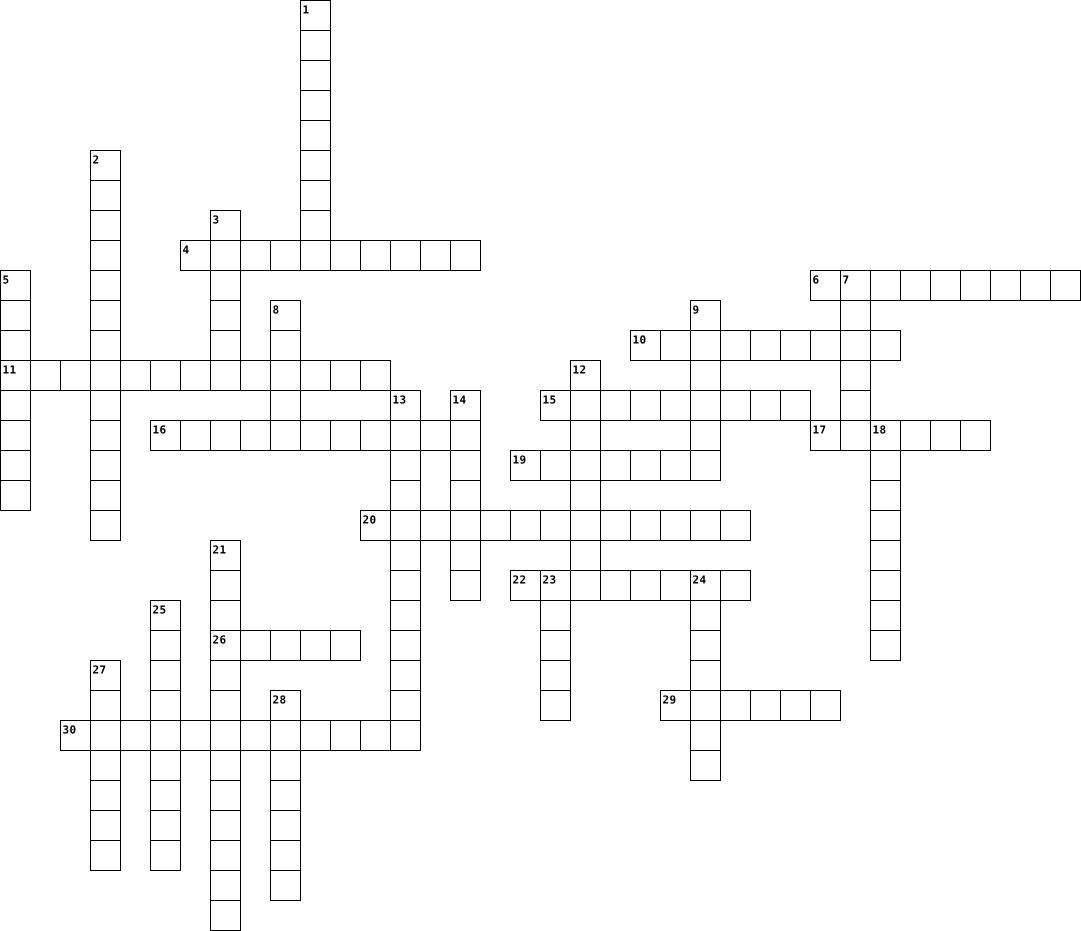
Across
- Sum of the number of protons and neutrons present in the nucleus of an atom.
- An element whose property are intermediate between those of metals and solid non-metals.
- A minute portion of matter
- The amount of particular substances contained within a solution/mixture or in a particular volume/space.
- A substance composed of identical molecules consisting of atoms of two or more chemical elements.
- Any elements occupying IA (1) of the periodic table, they are very reactive, monovalent metals that forms strongly alkaline hydroxides.
- A notation of one or two letters representing a chemical element.
- process by which molecules of a solvent tends to pass through a semipermeable membrane from a less concentrated solution into a more concentrated one.
- The physical property of matter
- A reactive non-metallic elements that forms strongly acidic compounds with hydrogen. Occupying the group of occupying group VIIA (17) of the periodic table.
- The smallest particle of a chemical element that can exist.
- Stable subatomic particle that has a positive charge .
- The number of a specific substance found in nucleus of every atom of an element.
Down
- Intermingling of substances by natural movement of their particles
- A table of the chemical elements arranged in order of atomic number in rows so that elements with similar atomic structure/ chemical properties appears in vertical columns .
- Anything that has moss and occupies space
- The universe's fundamental unit of negative charge.
- the property of matter and radiation which is manifest as a capacity to perform work.
- A solid hard, shiny material with good electrical and thermal conductivity.
- A column in the periodic table of chemical elements.
- An element or substance which is not metallic.
- Number of protons in the nucleus of an atom.
- A substance which cannot be decomposed into simpler substances.
- A group of two or more atoms that forms the smallest identifiable unit.
- Any elements occupying group IIA (2) of the periodic tbale , usually words ending with ium. They are reactive, electropositive, divalent metals.
- Metal made by combining two or more metallic elements.
- A particle formed in the nucleus of an atom and carries no electric charge.
- Smaller than or occurring within an atom.
- The row of chemical elements in the periodic table.
- The central part of an atom which contains protons and neutron along with having an enormous density of matter .
30 Clues: A minute portion of matter • The physical property of matter • Anything that has moss and occupies space • Smaller than or occurring within an atom. • Number of protons in the nucleus of an atom. • An element or substance which is not metallic. • The universe's fundamental unit of negative charge. • The row of chemical elements in the periodic table. • ...
More About Matter 2021-02-22

Across
- Any of the elements found in group A of the periodic table
- A metal made by the combining two or more metallic elements, especially to give greater strength or resistance to corrosion.
- An element or substance that is not a metal
- The movement of a solvent from a region lower of solute concentration to a region of higher solute concentration through a semi-permeable membrane
- The spreading of something more widely
- The ability to be active
- An element that forms positive ions and has metallic bonds
- A group of atoms bonded together, the smallest fundamental unit of a chemical compound that can take part in a chemical reaction
- Anything that has mass and volume
- A table of chemical elements arranged in order of atomic number, usually in rows
- A thing that is composed of two or more separate elements
- The number of chemical elements in the periodic system whereby the elements are arranged in or of increasing number of protons in the nucleus
- A subatomic particle of about the same mass as a proton but without an electronic charge
- Each of more than one hundred substances that cannot be chemically interconverted or broken down into simpler substances and are primary constituents of matter
- The total number of protons and neutrons in a nucleus
- The quantity of solute present in given quantity of solution.
Down
- A notation of one or two letters representing a chemical element
- A particle of positive charge that is in the nucleus of an atom
- The number of protons found in the nucleus of every atom of that element
- Any of the six chemicals that comprise of the periodic table.
- The smallest particle of a chemical element that can exist
- A theory of matter that explains physical properties in terms of the motion of atoms and molecules
- A chemical element that forms a salt when it reacts with metal
- An element whose properties are intermediate between those of metals and solid and non-metals or semiconductor
- A tiny bit of matter of matter that makes up everything in the universe
- A column in the periodic table of the chemical elements
- A name given to a horizontal row of the periodic table
- The positively charged central core of an atom,consisting of protons and neutrons and containing nearly all its mass
- A stable subatomic particle with a charge of negative electricity
- Smaller than or occurring with an atom
30 Clues: The ability to be active • Anything that has mass and volume • The spreading of something more widely • Smaller than or occurring with an atom • An element or substance that is not a metal • The total number of protons and neutrons in a nucleus • A name given to a horizontal row of the periodic table • A column in the periodic table of the chemical elements • ...
Unit 3 Sample work 2025-11-21

Across
- The number of protons in the atom
- A rule that states that molecules and atoms cannot be created or destroyed, only rearranged.
- A change that does not result in any new substances being formed.
- A row of elements in the periodic table
- Finding patterns in data
- Two or more substances reacting to form one or more new substances.
- A collection of elements that behave or look alike because they all have the same amount of valence electrons
- A subatomic particle that has a negative charge and orbits around the nucleus
- What holds atoms together to form molecules
- A list of all of the atoms in a molecule.
- neutrons and protons in the center of the atom
- Something's ability to combine or change into one or more new substances
- Nonreactive
- subatomic particle that is positively charged
- A group of atoms that make up a substance
- The substances before a chemical reaction.
- Look at your results to see if they support your hypothesis
- The process by which plants make energy from, light, water, and carbon dioxide.
- Shows the atoms that make up the molecule.
- A prediction on observations that can be tested
Down
- How many neutrons and protons are in an atom
- Elements in the second column of the periodic table that are silvery white metals, that have 2 valence electrons, are reactive and have low melting and boiling points
- The elements something is made of
- An intermolecular bond
- Conclusions Deciding what patterns mean in data
- Two or more chemical elements bonded together
- A structure of multiple atoms connected together such as sodium chloride.
- A toxic and reactive non-metal found in group 17 of the periodic table
- something that results in a different substance in an irreversible process.
- The orbiting electrons outside of the nucleus
- The group of elements that are found in the first column of the periodic table and are soft, silvery, have one valence electron, and are very reactive
- The outside electron shell.
- Trying to find meaning in data
- A property that can be measured
- A subatomic particle with no charge
- A charged particle that was made when an electron was added or lost from an atom or group of atoms
- The outcome of a chemical reaction.
- A group of elements on the periodic table that are nonreactive and inert
38 Clues: Nonreactive • An intermolecular bond • Finding patterns in data • The outside electron shell. • Trying to find meaning in data • A property that can be measured • The number of protons in the atom • The elements something is made of • A subatomic particle with no charge • The outcome of a chemical reaction. • A row of elements in the periodic table • ...
CROSSWORD 2016-01-17

Across
- Column in the periodic table
- Amount of energy required to remove the most loosely bound electron
- Creator of the periodic table
- ... electrons - electrons in outer energy level of an atom
Down
- Substance that resists electricity
- They have properties between metals and nonmetals
- Row in the periodic table
- Consists of protons and neutrons
8 Clues: Row in the periodic table • Column in the periodic table • Creator of the periodic table • Consists of protons and neutrons • Substance that resists electricity • They have properties between metals and nonmetals • ... electrons - electrons in outer energy level of an atom • Amount of energy required to remove the most loosely bound electron
Chemistry Crossword 2020-07-26

Across
- Where the electrons sit on an atom
- Has a negative charge
- Has a neutral charge (no charge)
- What happens to an element in water
Down
- what is each box called on the Periodic Table
- The horizontal rows on the Periodic Table
- Has a positive charge
- The vertical columns on the Periodic Table
8 Clues: Has a positive charge • Has a negative charge • Has a neutral charge (no charge) • Where the electrons sit on an atom • What happens to an element in water • The horizontal rows on the Periodic Table • The vertical columns on the Periodic Table • what is each box called on the Periodic Table
My bosley science 2024-03-11

Across
- something created by fire
- something that starts with H on the periodic table
- something made when water meets metal
- generally found in a pencil
Down
- something used to produce heat with a collar
- on the left side of the periodic table
- the periodic symbol for water
- something when it’s added to oxygen
8 Clues: something created by fire • generally found in a pencil • the periodic symbol for water • something when it’s added to oxygen • something made when water meets metal • on the left side of the periodic table • something used to produce heat with a collar • something that starts with H on the periodic table
PT Definitions 2024-10-29

Across
- Solid, hard, high melting & boiling point, conducts heat & electricity well, shiny
- Number of Protons
- Neutral; inside nucleus; Calculate mass-atomic #
- Liquid or gas, low melting & boiling point, good insulator; does not conduct well
- Row on periodic table; determines # orbital rings
- Layers of electron orbital paths around nucleus
- Non reactive because of a full shell of valence electrons
- Weak properties of both metal and nonmetal
- Breaks easily; Ex. glass
- Protons & neutrons in nucleus
Down
- Negative; outside nucleus
- Electrons in outermost shell; determines reactivity & bonding
- Can be hammered into sheets; Ex. Aluminum Foil
- Column on periodic table
- Positive; inside nucleus
- Smallest building block of matter
- Can be pulled into wire; Ex. Copper
- Anything that has mass and takes up space
18 Clues: Number of Protons • Column on periodic table • Positive; inside nucleus • Breaks easily; Ex. glass • Negative; outside nucleus • Protons & neutrons in nucleus • Smallest building block of matter • Can be pulled into wire; Ex. Copper • Anything that has mass and takes up space • Weak properties of both metal and nonmetal • Can be hammered into sheets; Ex. Aluminum Foil • ...
Science unit b cross words 2014-11-06

Across
- neutral subatomic particle
- anything that has mass and occupies space
- change where two substances that react and create new substances
- the center of the atom
- positive subatomic particle
- change in appearance and or states
- number of protons in a nucleus
- the smallest form of matter that is unbreakable
- negative subatomic particle
Down
- characteristics that can be used to describe a substance
- measure of atomic mass
- categories where element belong to
- material that can't be broken down into any simpler substance
- matter that has only one element
- vertical row in the periodic table
- a table that organizes the elements based on there properties
- matter that has two or more elements
- horizontal row in the periodic table
18 Clues: measure of atomic mass • the center of the atom • neutral subatomic particle • positive subatomic particle • negative subatomic particle • number of protons in a nucleus • matter that has only one element • categories where element belong to • vertical row in the periodic table • change in appearance and or states • matter that has two or more elements • ...
Science 2025-06-23

Across
- Excess acid build-up neutraliser
- short hand abbreviations for element names.
- Chemicals that change colour when added to an acid or base
- when the nucleus loses a neutron.
- a feature of certain types of atoms
- the average mass of the atoms in an element
- The opposite of an acid
- a liquid that releases positively charged ions.
- the number of protons in the nucleus of an atom
Down
- the product of two correct substances mixing.
- Water -> Hydrogen + Oxygen. That is a ... Reaction
- an exothermic chemical reaction
- When acid is added to a base.
- PH
- Name of the periodic table developer
- many of naturally occurring elements are :
- Oxygen + Hydrogen -> Water. That is a ... Reaction
- The ........ Table
18 Clues: PH • The ........ Table • The opposite of an acid • When acid is added to a base. • an exothermic chemical reaction • Excess acid build-up neutraliser • when the nucleus loses a neutron. • a feature of certain types of atoms • Name of the periodic table developer • many of naturally occurring elements are : • short hand abbreviations for element names. • ...
Atomic Structure Crossword Puzzle 2022-09-09

Across
- c=3.00 x 10^8 m/s
- the d section of the period table starts in this row
- higher frequency, shorter _________
- valence electrons are normally at the _____ _____
- color with the lowest frequency
- protons, electrons, and neutrons.
- arrangement of chemical elements according to atomic number
- the noble gas in the second row of the periodic table
- composite particles consisting of two protons and two neutrons tightly bound together
- should be practiced in class during experiments at all times
- the element Kr in the periodic table
- the 69th element in the periodic table
- number of protons and neutrons in an atom.
- atoms with an ion charge
- this element makes your bones stronger and helps you grow
- atoms absorb _____ and become excited
- color with the highest frequency
- known as the father of nuclear physics and was recognized for the experiment with gold foil
- bonus! miss tran's username in call of duty
- minimum amount of energy that can be gained or lost by an atom
Down
- has a positive charge; center of the atom; contains protons and neutrons
- list of colors in order of frequency
- negatively charged subatomic particle found outside of the nucleus in energy levels
- smallest part of matter
- number of protons in the nucleus of an atom.
- neutrally charged subatomic particle. Found inside the nucleus of the atom.
- energy equals (______constant)(frequency)
- an atom that has an equal number of protons and electrons
- the america element
- each elements ___ is unique and can be used to identify it
- the visible spectrum spans the wavelength region from 400 to 700 _________
- the element in the periodic table that shares the same initials as Louis Vuitton
- an atom that has an unequal number of protons and electrons is called an ___
- the element named after a university in california
- the amount of energy exerted when a force of one newton is applied over a displacement of one meter
- all of the atoms that have a given number of protons
- an element used to inflate balloons
- the element that says yes in spanish
- the potato element
- the thirteenth element in the periodic table
- the electromagnetic ________
- this element's initials support LGBTQ+
- the element named after the state we live in
- unit of frequency at one cycle per second
- positively charged subatomic particle found in the nucleus of the atom.
- the average weight of all of an element's isotopes' mass numbers, usually a decimal
46 Clues: c=3.00 x 10^8 m/s • the potato element • the america element • smallest part of matter • atoms with an ion charge • the electromagnetic ________ • color with the lowest frequency • color with the highest frequency • protons, electrons, and neutrons. • higher frequency, shorter _________ • an element used to inflate balloons • list of colors in order of frequency • ...
Matter 2021-02-16
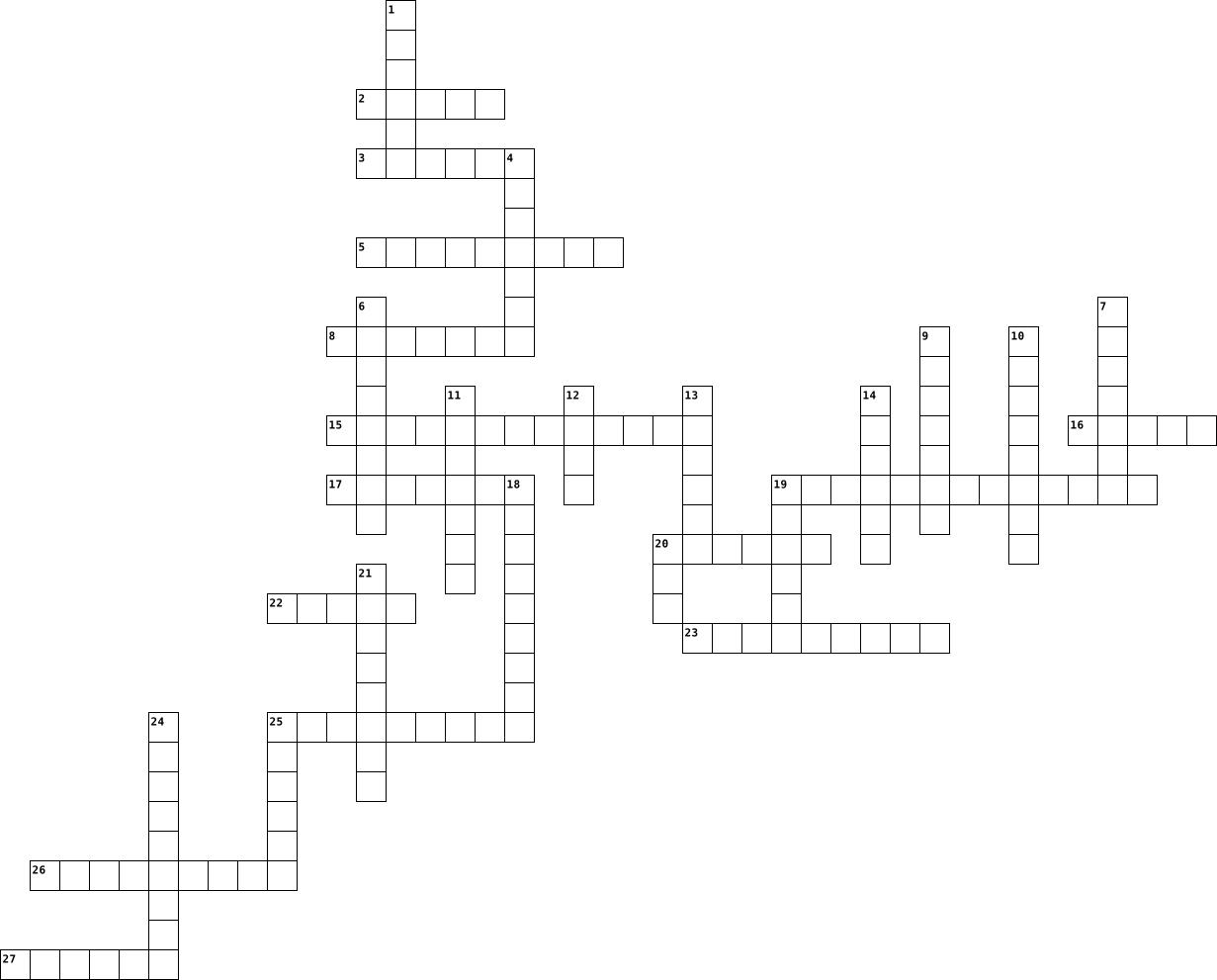
Across
- the smallest particle of a chemical element that can exist.
- a stable subatomic particle occurring in all atomic nuclei.
- an imprecise term used to describe a chemical element that forms a simple substance having properties intermediate between those of a typical metal and a typical nonmetal.
- the horizontal rows of the periodic table.
- a measure of how crowded solute particles are.
- an element that readily forms positive icons and has metallic bonds.
- theory a thermodynamics behavior of gases with which many. principal concepts of thermodynamics were established.
- six chemical elements in group 2 of the periodic table.
- a notation of one or two letters representing a chemical element.
- metallic substance composed of two or more elements as either a compound or a solution.
- a stable subatomic particle with a charge of negative electricity.
- any subatomic constituents of the physical world that interact with each other.
- the net movement of anything from a region of lower concentration.
- a column in the periodic table of the chemical elements.
Down
- a substance that has mass and takes up space
- a membrane-bound organelle that contains cell's chromosomes.
- table a table of chemical elements arranged in order of atomic number, usually in rows, so that elements with similar atomic structure appear in vertical columns.
- each of more than one hundred substances that cannot be chemically interconverted or broken down into simpler substances and are primary constituents of matter.
- the process by which molecules of a solvent tend to pass through a semipermeable membrane.
- any of the elements fluorine, chlorine, bromine, iodine and astatine.
- a subatomic particle of about the same mass as a proton but without an electric charge.
- number the total number of protons and neutrons in a nucleus.
- the strength and vitality required for sustained physical or mental activity.
- metal any elements of lithium, sodium, potassium, rubidium, caesium and francium.
- a substance made up of different elements joined together by a chemical bond.
- number the number of protons in the nucleus of an atom which is characteristics of a chemical element and determines its place in the periodic table.
- atomic any various self contained units of matter or energy that are the fundamental constituents of all matter.
- a chemical element that mostly lacks the characteristics of metal.
- a group of atoms bonded together.
- number the number of protons found in the nucleus of every atom of that element.
30 Clues: a group of atoms bonded together. • the horizontal rows of the periodic table. • a substance that has mass and takes up space • a measure of how crowded solute particles are. • six chemical elements in group 2 of the periodic table. • a column in the periodic table of the chemical elements. • the smallest particle of a chemical element that can exist. • ...
Chemistry Crossword 2015-11-13

Across
- A catalyst involved in chemical reactions in living things
- Group 1 elements in the periodic table, not including hydrogen; the most reactive of the metals
- A pure substance formed when at least one metal and one nonmetal combine
- Ability of a substance to conduct electricity
- A mixture that you can see the different substances clearly/the different substance that make up the substance are visible
- Group 17 elements in the periodic table; the most reactive non-metals
- An experiment in which all reactants and all products of a chemical reaction are accounted for
- An invisible negatively charged particle that orbits the nucleus of an atom
- A chemical reaction that occurs when oxygen reacts violently with a substance to form a new substance and gives off exothermic energy
- A cloudy mixture that the tiny particles of one substance is held within each other, and the particles cannot be separated from each other
- Mass of one atom of an element calculated from the total number of protons, neutrons and electrons of that atom. Measured in amu
- A vertical column of elements in the periodic table
Down
- An atom/group of atoms that has become electrically charged because it has lost/gained electrons
- A pure substance that cannot be broken down into other substances; substance made up of only one type of atom
- A steady flow of charged particles
- A change that results when two or more substances react to create a different substance of unique properties
- The number of protons and electrons in the nucleus of one atom of an element
- Group 2 elements in the periodic table: their reactivity is not as strong as that of an alkali metal
- The smallest part of an element that is representative of that element; a neutral particle made up of a nucleus that contains protons/neutrons and electrons
- A reaction that takes place when two or more substances react to form a new substance of unique properties
- The positively charged centre of an atom that contains protons and neutrons
- Combination of symbols that represent a compound: the formula identities the elements in a compound and the amount of each element
- A material that electricity can move through easily
- Group 18 elements in the Periodic Table of Elements that are the most stable and non reactive non-metal
- A chemical combination of two or more elements in a specific ratio
- substance that helps a chemical reaction to proceed more quickly
26 Clues: A steady flow of charged particles • Ability of a substance to conduct electricity • A material that electricity can move through easily • A vertical column of elements in the periodic table • A catalyst involved in chemical reactions in living things • substance that helps a chemical reaction to proceed more quickly • ...
SNC 1P Key words 2012-06-18

Across
- an example of electric discharge
- allow electricity to flow through easily
- released into the atmosphere by producers
- the centre of the atom
- the flow of electrons
- a positively charged subatomic particle
Down
- non-renewable sources of electricity
- a row of the periodic table
- an organism that eats for energy
- no charge
- found on the left side of the periodic table
- dioxide, used by plants for photosynthesis
12 Clues: no charge • the flow of electrons • the centre of the atom • a row of the periodic table • an example of electric discharge • an organism that eats for energy • non-renewable sources of electricity • a positively charged subatomic particle • allow electricity to flow through easily • released into the atmosphere by producers • dioxide, used by plants for photosynthesis • ...
Periodic Table 2021-10-20

Across
- The table that features hydrogen and oxygen
- A famous periodic graph for elements
- Helium is this type of element
- A kind of matter with special properties
- Made of reactants
Down
- Ingredients for a product (scientifically)
- There are 118 of these
- The number that labels each item on the periodic table
8 Clues: Made of reactants • There are 118 of these • Helium is this type of element • A famous periodic graph for elements • A kind of matter with special properties • Ingredients for a product (scientifically) • The table that features hydrogen and oxygen • The number that labels each item on the periodic table
Atoms and Elements 2021-12-09

Across
- table a display of chemical elements
- a subatomic particle with a negative charge
- the columns of the periodic table
- a subatomic particle with a no charge
Down
- the rows on the periodic table
- is made up of protons and neutrons
- the smallest unit of matter
- a subatomic particle with a positive charge
8 Clues: the smallest unit of matter • the rows on the periodic table • the columns of the periodic table • is made up of protons and neutrons • table a display of chemical elements • a subatomic particle with a no charge • a subatomic particle with a negative charge • a subatomic particle with a positive charge
Intro to Ionic Bonding 2024-11-04

Across
- An atom with a charge
- Number of Valence Electrons Atoms Want
- Elements on the Left of the Periodic Table
- Ability to attract electrons
- When an atom becomes a negative ion
Down
- Elements on the Right of the Periodic Table
- Periodic Trend for Electronegativity
- When an atom becomes a positive ion
8 Clues: An atom with a charge • Ability to attract electrons • When an atom becomes a positive ion • When an atom becomes a negative ion • Periodic Trend for Electronegativity • Number of Valence Electrons Atoms Want • Elements on the Left of the Periodic Table • Elements on the Right of the Periodic Table
Periodic Table Crossword 2023-11-30

Across
- Shiny, reflective and conducts electricity
- Arranges elements by atomic number
- Share properties of metals and non-metals
- Positive particle found in nucleus
- Dull, gases, that do not conduct electricity
Down
- atoms with the same number of protons
- Neutral particles in an atoms' nucleus
- Element number 6 on periodic table
- Found orbiting the nucleus
- Element 31 on the periodic table
- Smallest unit of matter
- Electrons on the outermost level
12 Clues: Smallest unit of matter • Found orbiting the nucleus • Element 31 on the periodic table • Electrons on the outermost level • Element number 6 on periodic table • Arranges elements by atomic number • Positive particle found in nucleus • atoms with the same number of protons • Neutral particles in an atoms' nucleus • Share properties of metals and non-metals • ...
Unit 6 Review 2025-02-12

Across
- Same element but different number of neutrons
- chemical name of the element "Cl"
- Neutrons and protons both are found in the __________.
- occupies space and has mass.
- ions that gained electron
- number of proton an element have.
- ions that lost electron
- column in the periodic table is called __________
- Bond between Ions
Down
- are made up of one type of atom.
- number of proton and neutron
- Electrons exist at energy levels surrounding the nucleus.
- Row in the periodic table is called __________
- Sharing of electrons between 2 elements
- The chemical term for two atoms joining together is called ____________
- chemical symbol for Sodium
- the smallest unit of matter.
- when different atoms are tightly joined together.
18 Clues: Bond between Ions • ions that lost electron • ions that gained electron • chemical symbol for Sodium • number of proton and neutron • occupies space and has mass. • the smallest unit of matter. • are made up of one type of atom. • chemical name of the element "Cl" • number of proton an element have. • Sharing of electrons between 2 elements • ...
The periodic table 2025-04-17

Across
- The symbol for this element is Fe
- The number the tells us the number of protons
- The vertical columns on the periodic table
- the number that tells us the amount of protons and neutrons
- Group 7 on the periodic table
Down
- The horizontal rows on the periodic table
- The place where the symbols of all elements are located
- Elements in the same group have similar _________
- These metals are extremely reactive with water
9 Clues: Group 7 on the periodic table • The symbol for this element is Fe • The horizontal rows on the periodic table • The vertical columns on the periodic table • The number the tells us the number of protons • These metals are extremely reactive with water • Elements in the same group have similar _________ • The place where the symbols of all elements are located • ...
Elements, Compound Structure, Periodic Table 2012-09-06

Across
- Used in explosives
- Commonly referred to as salt
- has an atomic weight of 10.81
- Released by the burning of fossil fuels
- Element symbol "Au"
- First element of the periodic table
- Chemical symbol "Ag"
Down
- The compound formed when hydrogen and oxygen mis
- Added to water in Australia to strengthen teeth
- The last element in the periodic table
- Used in lighting
- The element that we inhale through breathing
12 Clues: Used in lighting • Used in explosives • Element symbol "Au" • Chemical symbol "Ag" • Commonly referred to as salt • has an atomic weight of 10.81 • First element of the periodic table • The last element in the periodic table • Released by the burning of fossil fuels • The element that we inhale through breathing • Added to water in Australia to strengthen teeth • ...
The periodic table 2013-04-09

Across
- The smallest part of an element is the ________.
- The element with the most energy in the periodic table is ________.
- K is the symbol for ________.
- ________ has an average mass of 1.01.
- ________ has an average mass of 226.
- Oxygen is in the ________ group.
- Protons have a ________ charge.
- The charge of a neutron is ________.
- Cl is the symbol for ________
Down
- Boron is a ________.
- There are ________ groups in the periodic table.
- Silver`s atomic number is ________.
- ________ has an atomic number of fifteen.
- Electrons have a ________ charge.
14 Clues: Boron is a ________. • K is the symbol for ________. • Cl is the symbol for ________ • Protons have a ________ charge. • Oxygen is in the ________ group. • Electrons have a ________ charge. • Silver`s atomic number is ________. • ________ has an average mass of 226. • The charge of a neutron is ________. • ________ has an average mass of 1.01. • ...
Atoms and Radioactivity 2023-03-23

Across
- _______particle tracks that are straight
- center of the atom
- tracks are faint and change direction suddenly
- Marie Curie won a nobel Prize in this field in 1903
- Lady recognized for her discovery of radium
- elements that have the same proton number but different neutron number
- Na on the periodic table
- proton number + neutron number
Down
- device used to detect ionizing radiation
- number of protons in gold
- negatively charged particles orbiting the nucleus
- element named after curie's homeland
- mass number for Carbon
- Cl on the periodic table
14 Clues: center of the atom • mass number for Carbon • Cl on the periodic table • Na on the periodic table • number of protons in gold • proton number + neutron number • element named after curie's homeland • device used to detect ionizing radiation • _______particle tracks that are straight • Lady recognized for her discovery of radium • tracks are faint and change direction suddenly • ...
Science Crossword 2021-11-05

Across
- Table of Elements
- Electric energy flowing
- One of the many elements on the Periodic Table, starts with O, we need it to breathe.
- The smallest unit
- Characteristics of Metals and Non-Metals
- Multiple elements mixed together
- A solid that doesn't let heat and electricity through it
- Is it shiny?
- Electricity flows through wires to activate a lightbulb (EXAMPLE)
Down
- Can it be hammered?
- Shiny, Malleable, Conductive
- One of the _______ of the Periodic Table
- A solid that lets heat and electricity through it
- Dull, Brittle, Insulative
14 Clues: Is it shiny? • Table of Elements • The smallest unit • Can it be hammered? • Electric energy flowing • Dull, Brittle, Insulative • Shiny, Malleable, Conductive • Multiple elements mixed together • One of the _______ of the Periodic Table • Characteristics of Metals and Non-Metals • A solid that lets heat and electricity through it • ...
Midterm Crossword 2024-10-29

Across
- Particles that have geometric pattern and definite volume
- All elements on the right side of the periodic table
- A positive ion
- Positively charged particle
- Thompson discovered it's charge
- A negative ion
- Pure substance of two or more elements
Down
- Rutherford's experiment(2 words)
- All elements from the left through the middle of the periodic table
- Electron emits this from excited state
- Mixture with constant composition
- Mixture with varying composition
- Electron's location in the quantum model
- Particles that have little attraction to each other and definite volume
14 Clues: A positive ion • A negative ion • Positively charged particle • Thompson discovered it's charge • Rutherford's experiment(2 words) • Mixture with varying composition • Mixture with constant composition • Electron emits this from excited state • Pure substance of two or more elements • Electron's location in the quantum model • ...
Physical Science 2024-03-21

Across
- Means "cannot be divided"
- Found on the right side of a chemical equation
- A row on the Periodic Table
- Studies the parts of the atom
- The force that hold atoms together
- A measure of gravity pulling on an object
- Multiplies a compound
- Slows down a chemical reaction
- The force of a very large object
- Form from the ceiling of a cave
- Most elements on the Periodic Table
- The energy of position
- Group 18 on the Periodic Table
- A solid with a repeating 3D pattern
- Stated the Law of Conservation of Mass
- Means "the same throughout"
- Bonds by sharing electrons
- A force that resists movement between objects
- Releasing heat
- Two or more forces that are equal
- Has a pH of 7
- Means produces or yields
- Have a pH of above 7
- An example of a chemical reaction
- equation A description of a chemical reaction
- number Indicates the number of protons in an atom
- Matter without a definite shape
- Total kinetic and potential energy
- A unit of measure for weight
- The amount of matter in an object
- Distance divided by time
- The amount of mass in a given volume
- Absorbing heat
- The energy of motion
- Have a pH below 7
- Changing from a gas to a liquid
- Enables heavy objects to be moved easily
- Anything that has mass and takes up space
- A liquids resistance to flow
- Allows small objects to sit on water
- Speeds up a chemical reaction
Down
- The length of the route to be traveled
- More than one atom bonded together
- The change from a solid to a gas
- Change from a liquid to a gas
- Matter made up of one type of element
- The arrangements of all elements
- The amount of space an object takes up
- A change in size, shape, color, mass
- Up, down, top, bottom, strange, charmed
- Group 1 on the Periodic Table
- The average kinetic energy of particles
- Can be bent into shape
- An objects mass times its velocity
- All the forces acting on an object
- A column on the Periodic Table
- The change in speed over a period of time
- Two or more substances that can be separated
- Discovered energy levels in atoms
- Traveling at the same speed
- Positively charged particle in the nucleus
- Bonds positive and negative particles
- Developed a chemical shorthand for elements
- Shows the elements in a compound
- Individual parts can be seen
- The ability to do work
- A rough measure of an object
- A push or a pull
- Indicates the number of atoms of an element
- A way to describe something using numbers
- The tendency of something to resist change
- Found on the left side of a chemical equation
- Group 17 on the Periodic Table
- Rubber, plastic, or glass
- Speed plus direction
75 Clues: Has a pH of 7 • Releasing heat • Absorbing heat • A push or a pull • Have a pH below 7 • Have a pH of above 7 • The energy of motion • Speed plus direction • Multiplies a compound • Can be bent into shape • The energy of position • The ability to do work • Means produces or yields • Distance divided by time • Means "cannot be divided" • Rubber, plastic, or glass • Bonds by sharing electrons • ...
Review 2024-03-07

Across
- COLUMN in the periodic table.
- Same element but different number of neutrons.
- proton ≠ electrons
- A type of bond by atoms donating/accepting electrons.
- ions that LOST electron/s.
- made up of only ONE type of atom.
Down
- DIFFERENT atoms tightly joined together.
- ROW in the periodic table.
- ions that GAINED electron/s.
- Electrons exist at ______ levels surrounding the nucleus.
- A type of bond by SHARING electrons.
- group of atom tightly joined together.
- occupies space and has mass.
13 Clues: proton ≠ electrons • ROW in the periodic table. • ions that LOST electron/s. • ions that GAINED electron/s. • occupies space and has mass. • COLUMN in the periodic table. • made up of only ONE type of atom. • A type of bond by SHARING electrons. • group of atom tightly joined together. • DIFFERENT atoms tightly joined together. • Same element but different number of neutrons. • ...
Structure and bonding revision 2024-05-13

Across
- Charged particles
- Diamond is made up from this element
- The periodic table is made up form these
- Name of group 7 elements
- An example of a simple molecule made from carbon and oxygen
- Creator of the modern periodic table
- Bonding between a metal and a non-metal
Down
- Name of group 0 elements
- Structures made from carbon that can be used in medicine
- Bonding between metals only
- Name of group 1 elements
- Bonding between two or more non-metals
- Electrons exist in these
13 Clues: Charged particles • Name of group 0 elements • Name of group 1 elements • Name of group 7 elements • Electrons exist in these • Bonding between metals only • Diamond is made up from this element • Creator of the modern periodic table • Bonding between two or more non-metals • Bonding between a metal and a non-metal • The periodic table is made up form these • ...
chemistry 2020-12-18
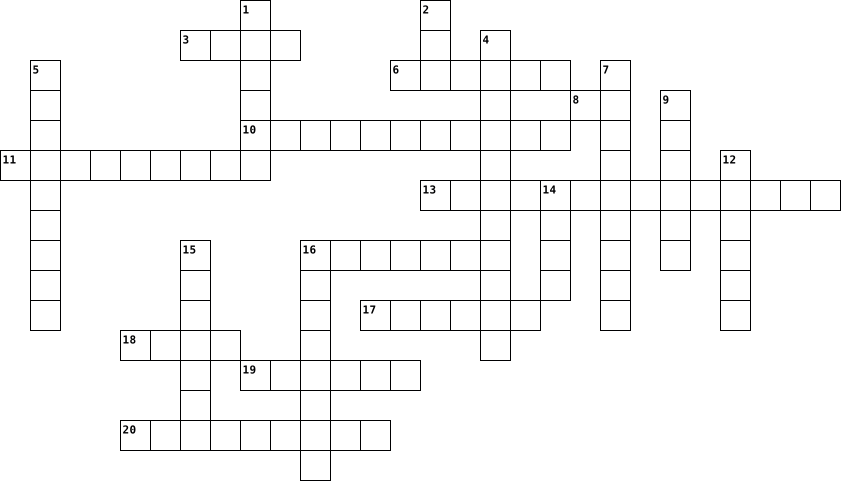
Across
- is a very small piece that cannot be divided into smaller pieces
- is Na
- two atoms of the same element is not identical
- means capable of dissolving more
- element is Mg
- is a way of seeing more colours from one color
- is the liquid
- squares are metal in the periodic table
- is the square in the periodic table that is non-metal
- means the opposite of clear
- elect is H
Down
- looks like salt when mixed with chlorine it turns into ...... chloride
- is calcium oxide
- helps separate soil and water
- is K
- are clear
- element is O
- the diffusion goes if you use hot temperature liquids
- is not a solution because its white coloured
- means to weaken the liquid
- is a solution that is salty and fish swim in it
21 Clues: is K • is Na • are clear • elect is H • element is O • element is Mg • is the liquid • is calcium oxide • means to weaken the liquid • means the opposite of clear • helps separate soil and water • means capable of dissolving more • squares are metal in the periodic table • is not a solution because its white coloured • two atoms of the same element is not identical • ...
The Periodic Table 2021-06-02

Across
- number of post transition metals
- all of group 17
- number of families
- neutral subatomic particles
- number of metalloids
- element that shares the name of the 1st planet from the sun
- most reactive metals
- mostly gases and can be found on the right side of the periodic table.
- the sum of the protons and neutrons in the nucleus.
Down
- horizontal rows of elements arranged by increasing atomic number
- vertical columns of elements with similar properties.
- properties of both metals and non-metals
- tells us the number of protons AND Electrons in an element
- take up most of the periodic table
- most reactive element
- negative subatomic particles
- 1 or 2 letters that represent the name of the element.
- positive subatomic particles
- most unreactive gases
- number of periods
20 Clues: all of group 17 • number of periods • number of families • number of metalloids • most reactive metals • most reactive element • most unreactive gases • neutral subatomic particles • negative subatomic particles • positive subatomic particles • number of post transition metals • take up most of the periodic table • properties of both metals and non-metals • ...
The Periodic Table 2021-06-02

Across
- number of post transition metals
- all of group 17
- number of families
- neutral subatomic particles
- number of metalloids
- element that shares the name of the 1st planet from the sun
- most reactive metals
- mostly gases and can be found on the right side of the periodic table.
- the sum of the protons and neutrons in the nucleus.
Down
- horizontal rows of elements arranged by increasing atomic number
- vertical columns of elements with similar properties.
- properties of both metals and non-metals
- tells us the number of protons AND Electrons in an element
- take up most of the periodic table
- most reactive element
- negative subatomic particles
- 1 or 2 letters that represent the name of the element.
- positive subatomic particles
- most unreactive gases
- number of periods
20 Clues: all of group 17 • number of periods • number of families • number of metalloids • most reactive metals • most reactive element • most unreactive gases • neutral subatomic particles • negative subatomic particles • positive subatomic particles • number of post transition metals • take up most of the periodic table • properties of both metals and non-metals • ...
Elements and Atoms 2019-09-05

Across
- color of mercury
- element that needed to breathing
- the property of group I and II in periodic table
- smallest part of matter
- red-brown liquid
- discoverer of Yttrium
- element that has atomic number 10
- element that sign in purple color (look at the periodic table in your book)
- the first element that discovered
Down
- an element in noble gas
- element that gives red spark in firework
- a substance that cannot be broken down into simpler components by any non-nuclear chemical reaction
- the color of boron
- substances that made from two or more elements that are joined together
- symbol of magnesium
- element that discovered in 1868
- the first chemist
- symbol of tin
- element that is used in compound to makes sparks
- one of the elements that found in the sun
20 Clues: symbol of tin • color of mercury • red-brown liquid • the first chemist • the color of boron • symbol of magnesium • discoverer of Yttrium • an element in noble gas • smallest part of matter • element that discovered in 1868 • element that needed to breathing • element that has atomic number 10 • the first element that discovered • element that gives red spark in firework • ...
Chemistry Unit 2016-02-10

Across
- substance that reacts
- number of protons and electrons
- atomic particle, carries negative charge
- center of an atom
- reaction that absorbs energy
- nothing disappears, something can only become something else
- rows on Periodic Table
- substance, malleable, ductile
- combination of two or more different elements
Down
- gas with full outer orbital
- mass of one atom of a particular element
- substance, brittle, non-malleable, non-ductile
- electrons in outermost orbital
- columns on the Periodic Table
- atomic particle, carries no charge
- basic substance
- combination of one or more atoms
- adding a thin layer of metal to the surface of another metal
- ring of electrons
- reaction that releases energy
- the smallest part of an element, cannot be broken
- cross between metal and nonmetal
- shortened element name
- atomic particle, carries positive charge
24 Clues: basic substance • center of an atom • ring of electrons • substance that reacts • shortened element name • rows on Periodic Table • gas with full outer orbital • reaction that absorbs energy • columns on the Periodic Table • reaction that releases energy • substance, malleable, ductile • electrons in outermost orbital • number of protons and electrons • combination of one or more atoms • ...
Chemistry Unit 1 2023-12-19

Across
- Number of __ is the atomic number of an element
- Made up of more than one type of atom
- Columns in the periodic table are called __
- __ of an atom = Protons - Electrons
- Lower level to Higher level __ energy
- Small jumps release __ light (color)
- __ are versions of the same element but with different masses
- Higher level to Lower level __ energy
- __'s equation = 6.62 x 10^-34 J-s
- Speed of __ = 3.0 x 10^8 m/s
Down
- Atoms are made up of this, positive
- Long wavelength = low frequency = __ energy
- __ number = number of protons
- A particle of light
- Short wavelength = high frequency = __ energy
- Atoms are made up of this, neutral
- Rows in the periodic table are called __
- Protons + Neutrons = __
- Atoms are made up of this, negative
- Big jumps release __ light (color)
- There are __ energy levels
- Made up of only one type of atom
22 Clues: A particle of light • Protons + Neutrons = __ • There are __ energy levels • Speed of __ = 3.0 x 10^8 m/s • __ number = number of protons • Made up of only one type of atom • __'s equation = 6.62 x 10^-34 J-s • Atoms are made up of this, neutral • Big jumps release __ light (color) • Atoms are made up of this, positive • __ of an atom = Protons - Electrons • ...