
periodic%20table Crossword Puzzles
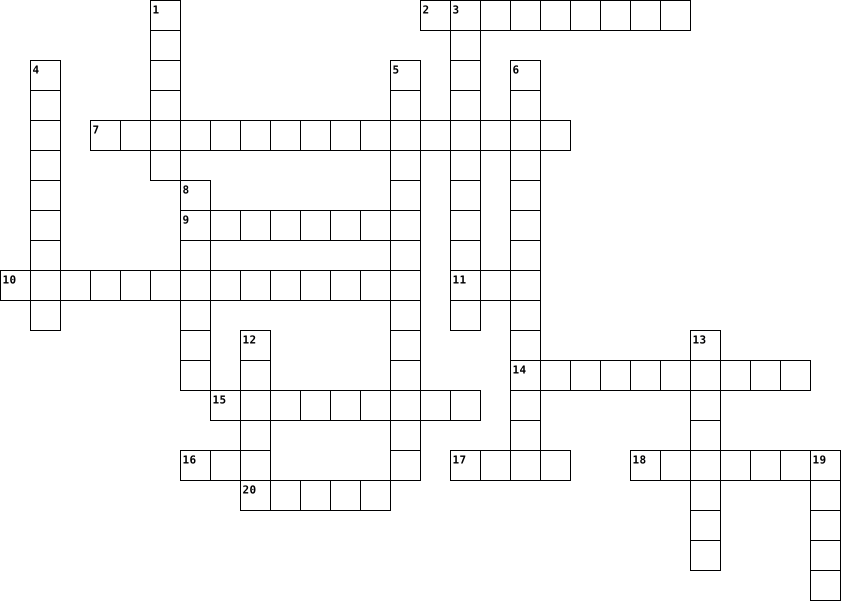
Periodic Table Crossword Puzzle 2020-01-22

Across
- the table that elements are organized in
- Element group 18
- able to be drawn out into a wire
- elements 57-71
- what elements have that describes them
- people who study science
- what elements in the table are organized into
- how reactive an element is
- Not metals
- Outer electrons
Down
- what separates the nonmetals and metals
- able to hammer into a sheet
- Element group 1
- Element group 17
- elements 57-71 and 89-103
- Not a metal or nonmetal
- how conductive the element is
- elements 89-103
- Conducts well
- where most elements are found
20 Clues: Not metals • Conducts well • elements 57-71 • Element group 1 • elements 89-103 • Outer electrons • Element group 17 • Element group 18 • Not a metal or nonmetal • people who study science • elements 57-71 and 89-103 • how reactive an element is • able to hammer into a sheet • how conductive the element is • where most elements are found • able to be drawn out into a wire • ...
6.1 Periodic Table Puzzle 2020-03-27

Across
- You can find me in the carbon family in the fifth period
- I have 2 electrons in the first chell, 8 in the second shell and 6 in the third shell
- I have 20 neutrons and am found in your teeth and bones
- I am a member of the carbon family often mistaken for the end of your pencil
- I am a transition metal with 25 electrons
- I am the only element in the halogen family that is a liquid
- I am the first element in the fourth period used in making fertilizer
- I am the 2nd most abundant element in the earth's crust and have 14 neutrons
- I am a member of the halogen family with an atomic number of 53
- I am a silvery white metal used to make salt
- I am a gas with mass number of 19
- I am the head of family 14, known as the "basis of life"
- I am not really an alkali metal but since I have only 1 electron, I behave like them.
Down
- My atomic number is 47 and I am used to make photographic film
- I am a member of the boron family and am the most abundant metal in the earth's crust
- I am a transition metal with 30 electrons useful in making paint
- My atomic mass is 35.45
- I am a noble gas with 2 electrons
- My atomic number is 79
- I am a member of the alkaline earth metals used to make fireworks and medicines
- I am a metal with 28 electrons
- am a member of the nitrogen family with 16 neutrons*Phosphorus
- I make up 78% of the air and am found in the 15th group
- I have 26 protons
- I am a metal that is liquid at room temperature
- I am a gas with 8 protons and 8 neutrons
26 Clues: I have 26 protons • My atomic number is 79 • My atomic mass is 35.45 • I am a metal with 28 electrons • I am a noble gas with 2 electrons • I am a gas with mass number of 19 • I am a gas with 8 protons and 8 neutrons • I am a transition metal with 25 electrons • I am a silvery white metal used to make salt • I am a metal that is liquid at room temperature • ...
Periodic Table of Elements 2020-12-10

Across
- is a transition metal that has the atomic number 25
- named after titan
- comes from the word "aurum" that is used for making jewelry
- also called “ferrum”
- A highly radioactive element with the atomic number 92
- a chemical element with the symbol Hf and atomic number 72
- It is in the p-block, high in electronegativity, and in group 14
- a noble gas with atomic number 18
- an actinide with the symbol Es
- with the symbol K
- means "plumbum" in Latin
- it is in period 2. it is an inert gas that is used for advertising signs
- an element with an electron configuration of [He] 2s1
- in period 3 and group 14
- named after Glenn T. Seaborg, an American chemist
- From the sub-region “Scandinavia”
- has the atomic number 55. A soft mineral
- atomic number 13
- Also one of the noble gases with the symbol Kr
- Means little silver in the Spanish term "platino"
- based on Ancient Greek Μόλυβδος molybdos, meaning lead
- In group 15. It is very essential for all living things
- The lightest element of all
- It is in group 6 and also known as "wolfram"
Down
- has the atomic number 108
- an element with the symbol Sn
- a chemical element with the symbol Ga and atomic number 31
- Comes from the word "argentum". It is high in electrical conductivity
- It has the atomic 53. It melts into a violet liquid and then into a violet gas
- has the symbol Zr
- a chemical element with the symbol Cr and atomic number 24
- named after the country France
- It has the atomic mass of 74.9216 u. It also occurs in many minerals
- comes from the Greek word "osme" meaning smell
- Discovered by Hennig Brand in his urine. Electrons per shell: 2, 8, 5
- nonmetal and with atomic number 8
- element with the symbol Tl
- in period and group 2
- named after the country Germany
- Rare earth metal and has the atomic number 39
- has the atomic number 30
- it is in the chemical series of lanthanides with the atomic number 57
- From the word "cuprum"
- has the symbol Ni, a hard and ductile material
- a chemical element with the symbol Xe
- has the atomic number 23
- Named after the village of Sweden, Ytterby
- atomic number 9. Some added in toothpastes
- it is from block 2p and column 3a
- a colorless, odorless and tasteless gas, in period 1
50 Clues: atomic number 13 • named after titan • has the symbol Zr • with the symbol K • also called “ferrum” • in period and group 2 • From the word "cuprum" • means "plumbum" in Latin • in period 3 and group 14 • has the atomic number 30 • has the atomic number 23 • has the atomic number 108 • element with the symbol Tl • The lightest element of all • an element with the symbol Sn • ...
Periodic Table Quiz 3 2021-08-18

Across
- O
- N
- Ne
- Co
- Hi
- P
- Cr
- Sr
- Ca
- H
- B
- Ni
- Rn
- Sn
- Si
- Fe
- Ba
- Li
- Al
- K
- Ag
- S
- Fr
- Zn
- Pb
- U
Down
- Sb
- Ma
- Ar
- As
- I
- Bi
- Cs
- Na
- Au
- Kr
- Xe
- F
- Cu
- Mg
- Hg
- Cl
- C
- Rb
- Ra
- Pt
- W
- Br
- Cd
49 Clues: O • N • I • P • F • C • H • B • W • K • S • U • Sb • Ma • Ar • As • Bi • Cs • Na • Ne • Au • Kr • Co • Hi • Xe • Cr • Cu • Mg • Sr • Ca • Hg • Cl • Rb • Ni • Rn • Sn • Si • Fe • Ra • Ba • Pt • Li • Al • Ag • Br • Fr • Zn • Cd • Pb
PERIODIC TABLE OF ELEMENTS 2022-11-01

Across
- H
- C
- Cl
- Au
- Zn
- Bi
- Ag
- Ca
- Pt
- Ni
- P
- Mg
- He
- U
- I
- Li
- K
Down
- B
- Hg
- Sn
- O
- Be
- Co
- Pb
- Si
- F
- S
- Cr
- Al
- Cu
- Na
- Mn
- Fe
33 Clues: B • H • C • O • F • S • P • U • I • K • Hg • Sn • Be • Cl • Co • Pb • Au • Zn • Bi • Si • Ag • Ca • Cr • Pt • Al • Cu • Ni • Na • Mg • He • Mn • Fe • Li
Periodic Table Generator - Elements 2022-10-26

Across
- named after the Greek words anti and monos
- does not exist in nature
- named after the Greek words 'prasios didymos'
- forty-sixth element of the periodic table
- found in some household products
- 8th most abundant element in the universe
- last natural rare earth element that was discovered
- how french people would say sink
- named after Lise Meitner
Down
- produced industrially by cryogenically distilling air
- named after mythical, death-dealing goblins.
- can absorb neutrons
- used in alloys with stainless steel
- named for physicist Niels Bohr
- rarest element on Earth
- 5th most abundant element in the earth's crust
- commonly put in ballons
- banana
- highly radioactive,glows with a visible blue light
- lonely
20 Clues: banana • lonely • can absorb neutrons • rarest element on Earth • commonly put in ballons • does not exist in nature • named after Lise Meitner • named for physicist Niels Bohr • found in some household products • how french people would say sink • used in alloys with stainless steel • forty-sixth element of the periodic table • 8th most abundant element in the universe • ...
Periodic Table of Elements 2022-08-26

Across
- Ar
- Mg
- N
- He
- C
- S
- Na
- L
- O
- Si
- Ca
Down
- B
- Be
- P
- Ne
- K
- H
- F
- Al
- Cl
20 Clues: B • P • K • N • H • C • S • F • L • O • Be • Ar • Mg • Ne • He • Na • Al • Cl • Si • Ca
PERIODIC TABLE OF ELEMENT 2017-11-22

Across
- Bh
- S
- Actinium
- N
- Terbium
- Niobium
- Moscovium
- Pd
- Th
- Aluminum
- Mt
- Astatine
- K
- Fl
- Xe
- C
- Ruthenium
- Ytterbium
- Nd
- P
- Rhodium
- Ca
- Sm
- Radium
- Sr
- Magnesium
- Cd
- Ds
- B
- Helium
- Neon
- Gold
- No
- Co
- Tantalum
- Krypton
- Mercury
- Pr
- I
- U
- Promethium
- W
- Mendelevium
- Rhenium
- Hafnium
- Ar
- Bi
- V
- Nh
- Europium
- Ce
Down
- Molybdenum
- Zirconium
- Ho
- Scandium
- Db
- Silver
- Germanium
- Gd
- Pt
- H
- Thallium
- Lv
- Fermium
- Protactinium
- Einsteinium
- Am
- Californium
- Fr
- Radon
- Tc
- Antimony
- Ga
- Manganese
- Lithium
- Plutonium
- Bromine
- Os
- Lead
- Seaborgium
- Tin
- Hassium
- Lanthanum
- Lutetium
- Ti
- Copernicium
- Rf
- Cm
- Iridium
- Barium
- Polonium
- Tellurium
- Er
- Berkelium
- Lawrencium
- Chlorine
- Cr
- Thulium
- O
- Y
- Sodium
- Selenium
- Zn
- Rg
- Dysprosium
- As
- Cesium
- Beryllium
- Tennessine
- Nickel
- F
- Copper
- In
- Neptunium
- Iron
- Silicon
- Rubidium
117 Clues: S • N • H • K • C • P • B • O • Y • I • U • W • F • V • Bh • Ho • Db • Gd • Pt • Pd • Th • Lv • Mt • Am • Fr • Tc • Ga • Fl • Xe • Nd • Os • Ca • Sm • Ti • Rf • Sr • Cd • Cm • Ds • Er • No • Co • Cr • Zn • Pr • Rg • As • Ar • Bi • In • Nh • Ce • Tin • Lead • Neon • Gold • Iron • Radon • Silver • Radium • Barium • Helium • Sodium • Cesium • Nickel • Copper • Terbium • Niobium • Fermium • Lithium • Bromine • Rhodium • Hassium • Iridium • Thulium • Krypton • Mercury • Rhenium • Hafnium • Silicon • Scandium • Actinium • Thallium • Aluminum • Astatine • Antimony • Lutetium • Polonium • Chlorine • Tantalum • Selenium • ...
Periodic table of elements 2023-05-09

Across
- the element with the lowest atomic number.
- Dy
- The most abundant element in the earth`s crust.
- The densest element of all.
- Li
- Neodymium
- The transuranium element that is the most abundant
- Pm
- Lawrencium
- Important ingredient in stainless steel and rechargable batteries.
- Einsteinium
- Cf
- Samarium
- Cm
- Americium
- Holmium
- Yb
- Thulium
- Pu
- Protactinium
- Is a basic building block of the complex compounds found in your body and other living organisms.
- Terbium
- Is called brimstone in the Bible.
- This metal is an ingredient of flashlight batteries.
- No
Down
- Pr
- Gd
- Er
- Fm
- The only metal that is liquid at room temperature.
- U
- It contains characteristichs of metals and nonmetals.
- Eu
- Mendelevium
- Th
- La
- Actinium
- Lutetium
- Cerium
- Neptunium
- Berkellium
41 Clues: U • Pr • Dy • Gd • Li • Er • Fm • Pm • Eu • Cf • Cm • Yb • Th • Pu • La • No • Cerium • Holmium • Thulium • Terbium • Samarium • Actinium • Lutetium • Neodymium • Americium • Neptunium • Lawrencium • Berkellium • Einsteinium • Mendelevium • Protactinium • The densest element of all. • Is called brimstone in the Bible. • the element with the lowest atomic number. • The most abundant element in the earth`s crust. • ...
PERIODIC TABLE CROSSWORD PUZZLE 2023-05-19

Across
- an element that has some properties of a metal and some properties of a nonmetal
- the number of protons contained in each nucleus of its atoms of the element.
- a substance that cannot be broken down into a simpler substance by ordinary chemical means
- describes how likely an element is to form bonds with other elements
- an element or substance that conducts heat and electricity
- the smallest unit of an element that has all of the propeties of the element
- three laws
- a bond formed by the transfer of electrons
- a chart that organizes information about all of the known elements accourding to thier properties
- a horizontal row ( left to right) in the periodic table
- electrons that are located in the outermost energy level of an atom
Down
- the single capital letter or capital letter followed by a lower case letter or letters that represents the name of the element
- a bond formed when two atoms share valence electrons
- an element that does not conduct electricity or heat and is usually a gas at room temperature
- the region surrounding the nucleus of an atom where the electrons are located
- the smallest unit of a compound that has all of the properties of the compound
- a vertical column (up and down) on the periodic table
- anything that has mass and volume
- number of protons and neutrons in the nucleus of one atom of the element
- an atom that has gained or lost one or more electrons
20 Clues: three laws • anything that has mass and volume • a bond formed by the transfer of electrons • a bond formed when two atoms share valence electrons • a vertical column (up and down) on the periodic table • an atom that has gained or lost one or more electrons • a horizontal row ( left to right) in the periodic table • ...
Periodic Table of Elements 2024-04-10

Across
- Polonium
- Rubidium
- Lanthanum
- Copper
- Barium
- Nickel
- Silicon
- Fermium
- Molybdenum
- Tantalum
- Chromium
- Thallium
- Antimony
- Lutetium
- Cerium
- Rutherfordium
- Hassium
- Phosphorus
- Helium
- Scandium
- Cobalt
- Protactinium
- Iron
- Terbium
- Cadmium
- Thorium
- Europium
- Krypton
- Einsteinium
- Arsenic
- Meitnerium
- Platinum
- Indium
- Niobium
- Nobelium
- Berkelium
- Argon
- Osmium
- Lithium
- Mendelevium
- Lead
- Titanium
- Darmstadtium
- Promethium
- Roentgenium
- Californium
- Selenium
- Rhenium
- Gold
- Bismuth
- Plutonium
- Neon
Down
- Neptunium
- Beryllium
- Magnesium
- Oxygen
- Lawrencium
- Dysprosium
- Seaborgium
- Aluminum
- Francium
- Bromine
- Holmium
- Sodium
- Chlorine
- Technetium
- Strontium
- Gadolinium
- Hydrogen
- Oganesson
- Radon
- Astatine
- Fluorine
- Palladium
- Praseodymium
- Manganese
- Curium
- Ruthenium
- Rhodium
- Americium
- Tellurium
- Dubnium
- Boron
- Actinium
- Thulium
- Bohrium
- Mercury
- Neodymium
- Cesium
- Potassium
- Sulfur
- Erbium
- Hafnium
- Iodine
- Gallium
- Germanium
- Carbon
- Radium
- Silver
- Nitrogen
- Samarium
- Calcium
- Iridium
- Tin
104 Clues: Tin • Iron • Lead • Gold • Neon • Radon • Boron • Argon • Copper • Barium • Oxygen • Nickel • Sodium • Cerium • Helium • Cobalt • Curium • Indium • Cesium • Sulfur • Osmium • Erbium • Iodine • Carbon • Radium • Silver • Silicon • Fermium • Bromine • Holmium • Hassium • Rhodium • Terbium • Cadmium • Thorium • Dubnium • Krypton • Arsenic • Thulium • Niobium • Bohrium • Mercury • Lithium • Hafnium • Gallium • Calcium • Iridium • Rhenium • Bismuth • Polonium • Rubidium • Aluminum • Francium • Tantalum • ...
Periodic table of Elements 2024-04-30

Across
- Symbol of element is Be and the atomic number is 4
- Symbol of the element is Si and the atomic number is 14
- Symbol of element is He and the atomic number is 2
- Symbol of the element is Ai and the atomic number is 13
- Symbol of element is N and the atomic number is 7
- Symbol of the element is K and the atomic number is 19
- Symbol of the element is S and the atomic number is 16
- Symbol of element is H and the atomic number is 1
- Symbol of element is F and the atomic number is 9
- Symbol of the element is Cl and the atomic number is 17
- Symbol of element is C and the atomic number is 6
- Symbol of the element is Na and the atomic number is 11
Down
- Symbol of element is V and the atomic number is 23
- Symbol of the element is Ar and the atomic number is 18
- symbol of the element is Ti and the atomic number is 22
- symbol of the element is Sc and the atomic number is 21
- Symbol of the element is Ca and the atomic number is 20
- Symbol of the element is Mg and the atomic number is 12
- Symbol of the element is P and the atomic number is 15
- Symbol of element is O and the atomic number is 8
- Symbol of element is Li and the atomic number is 3
- Symbol of the element is Ne and the atomic number is 10
22 Clues: Symbol of element is N and the atomic number is 7 • Symbol of element is O and the atomic number is 8 • Symbol of element is H and the atomic number is 1 • Symbol of element is F and the atomic number is 9 • Symbol of element is C and the atomic number is 6 • Symbol of element is V and the atomic number is 23 • Symbol of element is Be and the atomic number is 4 • ...
Periodic Table Cool Crossword 2024-04-30

Across
- determines the charge of the element
- Symbol is K
- Lightest element
- Symbol is Fe
- determines the weight of the element
- Need to breath
- on the stair step line
- Used in nukes
- Symbol is Li
- Is a liquid at room temperature
- determine the charge on element
Down
- Strongest metal
- Symbol is Cl
- link each atom to its neighbor
- Right on the stair step line
- Most common metal on Earths,s crust
- Left of the stairs step line
- Symbol is Ti
- Used in balloons
- Symbol is Ca
20 Clues: Symbol is K • Symbol is Cl • Symbol is Fe • Symbol is Ti • Symbol is Li • Symbol is Ca • Used in nukes • Need to breath • Strongest metal • Lightest element • Used in balloons • on the stair step line • Right on the stair step line • Left of the stairs step line • link each atom to its neighbor • Is a liquid at room temperature • determine the charge on element • Most common metal on Earths,s crust • ...
Periodic Table Cool Crossword 2024-04-30

Across
- determines the charge of the element
- Symbol is K
- Lightest element
- Symbol is Fe
- determines the weight of the element
- Need to breath
- on the stair step line
- Used in nukes
- Symbol is Li
- Is a liquid at room temperature
- determine the charge on element
Down
- Strongest metal
- Symbol is Cl
- link each atom to its neighbor
- Right on the stair step line
- Most common metal on Earths,s crust
- Left of the stairs step line
- Symbol is Ti
- Used in balloons
- Symbol is Ca
20 Clues: Symbol is K • Symbol is Cl • Symbol is Fe • Symbol is Ti • Symbol is Li • Symbol is Ca • Used in nukes • Need to breath • Strongest metal • Lightest element • Used in balloons • on the stair step line • Right on the stair step line • Left of the stairs step line • link each atom to its neighbor • Is a liquid at room temperature • determine the charge on element • Most common metal on Earths,s crust • ...
Periodic table elements puzzle 2025-02-03

Across
- salt is composed of
- some pools have
- number of 16
- a soft silver white metal
- in lamps and signs
- number of 4
- 2 valence electrons
- to make glue
- that is important in body functions
Down
- formation of bones and teeth
- symbol is Ar
- is Al
- flammable gas
- number is 9
- we breathe
- up 78 percent of the earths atmosphere
- what we put in balloons so they can go up
- an atomic number of six
- 2,3 electrons per shell
- has this
20 Clues: is Al • has this • we breathe • number is 9 • number of 4 • symbol is Ar • number of 16 • to make glue • flammable gas • some pools have • in lamps and signs • salt is composed of • 2 valence electrons • an atomic number of six • 2,3 electrons per shell • a soft silver white metal • formation of bones and teeth • that is important in body functions • up 78 percent of the earths atmosphere • ...
Periodic table elements puzzle 2025-02-03

Across
- For formation of bones and teeth
- Atomic number is 9
- Symbol is Al
- flammable gas
- Used in lamps and signs
- something that is important in body functions
- Used to make glue
- number of 4
Down
- Has an atomic number of six
- What some pools have
- Atomic number of 16
- Has 2,3 electrons per shell
- Makes up 78 percent of the earths atmosphere
- symbol is Ar
- Has 2 valence electrons
- What salt is composed of
- what we put in balloons so they can go up
- Milk has this
- a soft silver white metal
- What we breathe
20 Clues: number of 4 • Symbol is Al • symbol is Ar • flammable gas • Milk has this • What we breathe • Used to make glue • Atomic number is 9 • Atomic number of 16 • What some pools have • Has 2 valence electrons • Used in lamps and signs • What salt is composed of • a soft silver white metal • Has an atomic number of six • Has 2,3 electrons per shell • For formation of bones and teeth • ...
Periodic Table Crossword Project 2024-12-02

Across
- two valence electrons, not found alone in nature
- This element is a Noble Gas
- Copper is this type of element
- This element is a Halogen
- This element is an Alkali Metal
- These are good conductors of heat and electricity;shiny
- Arranged elements in order of increasing atomic number
- The current Periodic table is organized by this increasing physical feature
- Rare earth metals, have high melting and boiling points.
- Nonmetals _____ electrons to form ions, what is the other term for (give)
- Seven valence electrons, most reactive nonmetals.
- This group are the most reactive metals on the periodic table.
- This element is a Transition Metal in period 4
Down
- Created the first official periodic table
- The number of dots a Lewis Dot Structure for Flourine would have.
- This element is an Actinide
- Nonmetals become negative ions, called these
- One valence electron, silvery gray metals
- Metals _____ electrons to form ions, what is the other term for (lose)
- Have full valence electron shells, nonreactive.
- Hydrogen is this type of element
- Ductile and malleable, good conductors, compounds have different colors.
- This element is an Alkaline Earth Metal
- Boron is this type of element
- Are brittle, dull,and are poor conductors of heat and electricity
- All are radioactive, man made, and grouped into a row not a column
- These type of elements are semiconductors
- Valence electrons are the electrons in the ________ energy level
- The chemical property that determines how elements will react with other elements to form compounds
- Metals become positive ions, called these
30 Clues: This element is a Halogen • This element is an Actinide • This element is a Noble Gas • Boron is this type of element • Copper is this type of element • This element is an Alkali Metal • Hydrogen is this type of element • This element is an Alkaline Earth Metal • Created the first official periodic table • One valence electron, silvery gray metals • ...
Periodic Table of Elements 2024-12-05

Across
- Po
- Mn
- Highest Atomic Number, Format: 64 = sixfour
- Pd
- S
- Os
- Cd
- Sg
- Ne
- Au
- H
- Cs
- Ca
- Ir
- Si
- tl
- Rn
- Te
- Hf
- Db
- Zr
- Na
- Rf
- Sc
- P
- Ni
- Sn
- Fe
- Pt
- F
- Nb
- Hg
- Ts
- Rb
- Kr
- At
- Tc
- In
- W
- Al
- Ba
- B
- Xe
- Cu
- Re
- Mg
- K
- Fl
- Y
Down
- Og
- Se
- He
- Ga
- Cr
- Ge
- Ti
- Rg
- Cn
- Mc
- Bh
- Ds
- Rh
- O
- Ar
- I
- C
- Ac
- N
- Ru
- As
- Zn
- Hs
- Mt
- Ta
- Ag
- Li
- Sb
- Pb
- Br
- Mo
- Bi
- Be
- Ra
- La
- Sr
- Fr
- Nh
- Lv
- Cl
- V
- Co
91 Clues: S • O • H • I • C • N • P • F • W • B • V • K • Y • Po • Og • Mn • Se • He • Ga • Cr • Ge • Pd • Ti • Rg • Os • Cn • Cd • Mc • Bh • Sg • Ne • Au • Ds • Rh • Cs • Ar • Ca • Ir • Si • tl • Rn • Ac • Te • Hf • Ru • Db • Zr • Na • As • Zn • Rf • Hs • Mt • Ta • Sc • Ag • Ni • Sn • Li • Fe • Pt • Sb • Pb • Nb • Br • Hg • Mo • Ts • Bi • Rb • Be • Kr • Ra • At • La • Sr • Tc • In • Fr • Al • Nh • Lv • Ba • Cl • Xe • Cu • Re • Mg • Co • Fl • Highest Atomic Number, Format: 64 = sixfour
Periodic table of elements 2025-02-19

Across
- Li
- Cl
- B
- Na
- Be
- H
- O
- C
- S
- P
- Al
Down
- Sc
- Si
- Ti
- F
- Ne
- N
- Ca
- K
- He
20 Clues: F • N • B • H • O • C • S • K • P • Sc • Si • Li • Ti • Cl • Ne • Na • Be • Ca • He • Al
Periodic Table of Elements 2025-05-05

Across
- B
- K
- P
- Na
- Au
- Fl
- Ni
- Co
- Zn
- H
- Ag
- S
- Mg
- Hg
- Al
- U
- Be
Down
- C
- N
- Cu
- Br
- Si
- Pt
- O
- Ne
- Ca
- Li
- Cr
- Sn
- Fe
- Pb
- I
32 Clues: C • N • B • K • P • O • H • S • U • I • Cu • Br • Si • Pt • Na • Au • Fl • Ne • Ca • Li • Ni • Co • Zn • Cr • Ag • Sn • Mg • Fe • Hg • Al • Pb • Be
Periodic Table 1-20 2025-09-09

Across
- What is the chemical symbol of Fluorine?
- Hydrogen has the atomic number _
- Has the symbol O
- Has the symbol "Mg"
- What element is in column 15 and has the same atomic number?
- Chemical symbol of the element with the atomic number 2
- Has the atomic number 3 and the chemical symbol Li
- What is the chemical symbol of the element with atomic number 6?
- Atomic number of Sulfur
- The symbol of Sodium
- What element has the chemical symbol "B"?
Down
- Give the atomic number and chemical symbol of Beryllium
- Has an atomic number of 17
- It has the chemical signal K
- What is the atomic number of N?
- What element is in row 3 column 14?
- How many significant figures are in 13.007g Aluminum?
- What is teh atomic number of calcium?
- Has the atomic number 10
- The chemical symbol for an element with the atomic number 18
20 Clues: Has the symbol O • Has the symbol "Mg" • The symbol of Sodium • Atomic number of Sulfur • Has the atomic number 10 • Has an atomic number of 17 • It has the chemical signal K • What is the atomic number of N? • Hydrogen has the atomic number _ • What element is in row 3 column 14? • What is teh atomic number of calcium? • What is the chemical symbol of Fluorine? • ...
Periodic Table of Elements 2026-02-03

Across
- Mg
- C
- Be
- N
- B
- Fe
- Ni
- Ir
- S
- P
- W
Down
- Sc
- H
- Nb
- O
- Ac
- Ra
- Ca
- Cs
- Li
20 Clues: C • H • N • B • O • S • P • W • Mg • Sc • Be • Nb • Ac • Fe • Ra • Ca • Cs • Ni • Li • Ir
My Periodic Table Puzzle 2026-02-02

Across
- Li
- B
- Cl
- Ar
- P
- Ca
- Mg
- S
- F
- N
- Na
Down
- Si
- O
- K
- C
- He
- Al
- Be
- H
- Ne
20 Clues: B • O • K • C • P • S • F • H • N • Si • Li • Cl • Ar • He • Ca • Mg • Al • Be • Ne • Na
\Makenzie's Periodic Table Crossword 2025-11-21

Across
- Gaining electrons =?
- What react violently with most nonmetals?
- Which Metal,Nonmetal or metalliods are knowns to be dull?
- What metals come from blank in the earth's crust?
- A metal in period 4?
- Which group is where all are radioactive?
- Which group are Alkaline Earth Metals in?
- An element is classified as blank that readily forms compounds?
- What gases are colorless, odorless,tasteless?
- Who was the first person to produce a finished periodic table?
- Which scientist arranged elements in order of increasing atomic mass
- What is the most reactive metal?
- Which Metal, Nonmetal or metalloids can be properties of metals or nonmetals?
- Which group are Alkali metals in?
- Negative charged ions are known as what?
- What provides a way to visualize an atoms and potental to bond?
- Positive charged ions are known as what?
Down
- what is one way to make an element reactive?
- Which Metal,Nonmetal or metalliods are good conductors for heat and electricity?
- What metals are good conductors of heat and electricity?
- How many valence electrons does Gallium, Ga, have?
- A Nonmetal in period 3?
- Losing electrons =?
- What element is Classifed as Pr for Lanthanides?
- Classifaction for a metalliod?
- What are the most reactive nonmetals?
- What metals are less reactive than alkali metals?
- What element is Classifed as Ac for Actinides?
- Which group are halogens in?
- Who didn’t get credit for their periodic table?
30 Clues: Losing electrons =? • Gaining electrons =? • A metal in period 4? • A Nonmetal in period 3? • Which group are halogens in? • Classifaction for a metalliod? • What is the most reactive metal? • Which group are Alkali metals in? • What are the most reactive nonmetals? • Negative charged ions are known as what? • Positive charged ions are known as what? • ...
Quarter 1 Crossword 2023-09-28

Across
- two or more atoms together
- matter cannot be __ or destroyed
- said Democritus was wrong
- center of atom
- thought about putting a cat in a box
- discovered electron
- "jimmy neutron"
- sweet tea is this type of mixture
Down
- periodic table of the ____
- educated guess
- logical assumption
- gravity's affect on mass
- Heisenberg's principle
- weight, color and melting point are __ properties
- positive charge
- charge of electron
- study of matter & its changes
17 Clues: educated guess • center of atom • positive charge • "jimmy neutron" • logical assumption • charge of electron • discovered electron • Heisenberg's principle • gravity's affect on mass • said Democritus was wrong • two or more atoms together • periodic table of the ____ • study of matter & its changes • matter cannot be __ or destroyed • sweet tea is this type of mixture • ...
bananas are tasty 2022-09-07

Across
- effect scattering of light
- particles can't settle to the bottom
- periodic table
- always the same materials
- different materials
- takes up space
- contains two or more
Down
- 2 things held by chemical bonds
- atoms are all the same
- microscopic particles
- particles settle to the bottom
- two or more elements
12 Clues: periodic table • takes up space • different materials • two or more elements • contains two or more • microscopic particles • atoms are all the same • always the same materials • effect scattering of light • particles settle to the bottom • 2 things held by chemical bonds • particles can't settle to the bottom
Vocabulary Menu Project 2023-03-28

Across
- plants response to lack of water
- plant response to touch
- Change into a new substance
- 2 or more elements
- plant response to water
- inside
- found on periodic table
- plant response to gravity
Down
- only change the appearance
- balance in the body
- plant response to light
- outside
12 Clues: inside • outside • 2 or more elements • balance in the body • plant response to touch • plant response to light • plant response to water • found on periodic table • plant response to gravity • only change the appearance • Change into a new substance • plants response to lack of water
Fossil Crossword 2016-01-16

Across
- number 77 on the periodic table
- _________ Park
- tentacle marine animal
- another word for ancient
- he who studies fossils
Down
- a rock preserving a past organism
- eats both plants and meat
- shelled squid
- also called napkin and Kleenex
- the largest pterodactyl
- a type of rock
- extinct marine arthropod
12 Clues: shelled squid • a type of rock • _________ Park • tentacle marine animal • he who studies fossils • the largest pterodactyl • another word for ancient • extinct marine arthropod • eats both plants and meat • also called napkin and Kleenex • number 77 on the periodic table • a rock preserving a past organism
puzzle 2022-04-13

Across
- can be extended or shaped
- a variable
- subatomic particle that has positive charge
- horizontal columns
- materials that have conductivity
Down
- number used to
- mark or sign
- reflected light
- vertical columns
- easily broken or damaged
- has mass and volume (takes up space)
- table- shows chemical elements organized
12 Clues: a variable • mark or sign • number used to • reflected light • vertical columns • horizontal columns • easily broken or damaged • can be extended or shaped • materials that have conductivity • has mass and volume (takes up space) • table- shows chemical elements organized • subatomic particle that has positive charge
SSIS Crossword! 2022-11-07

Across
- ___ years with SSIS
- math with shapes
- a creative media
- an animal that represents us
- to be back together
- serve, receive, set, & spike.
- it's on your head!
Down
- we need this to learn
- our diverse community is ___
- a small human
- the periodic table truly scarred me
- current location
- the language we communicate in
- a color that represents us
14 Clues: a small human • math with shapes • a creative media • current location • it's on your head! • ___ years with SSIS • to be back together • we need this to learn • a color that represents us • our diverse community is ___ • an animal that represents us • serve, receive, set, & spike. • the language we communicate in • the periodic table truly scarred me
creamy crossword pot 2025-10-28

Across
- Law of Conservation of Matter/Energy
- Mass Conductor
- mixture Chemical Reaction Products
- Potential Energy Thermal Energy
- Convection Physical Change
- number Solids/liquids/gases/plasma Chemical Energy
Down
- substance Kinetic energy Periodic Table
- mixture Physical Reaction Reactants
- Density Temperature
- Physical Property Gravitational Potential Energy
- Radiation Chemical Change
- Chemical Properties Mechanical Energy
- States of matter Insulator
- Matter Heat
14 Clues: Matter Heat • Mass Conductor • Density Temperature • Radiation Chemical Change • States of matter Insulator • Convection Physical Change • Potential Energy Thermal Energy • mixture Chemical Reaction Products • mixture Physical Reaction Reactants • Law of Conservation of Matter/Energy • Chemical Properties Mechanical Energy • substance Kinetic energy Periodic Table • ...
class 2026-04-06

Across
- One of the four fundamental forces of nature.
- a wave phenomenon
- radiation
- a disturbance or oscillation
- the spreading, bending of waves
- mechanical wave
- the maximum displacement
- two or more waves same frequency
Down
- wave
- the number of waves
- the bending of a wave
- relfection
- the spatial period of a periodic wave
- the change in frequency
- a substance or material
15 Clues: wave • radiation • relfection • mechanical wave • a wave phenomenon • the number of waves • the bending of a wave • the change in frequency • a substance or material • the maximum displacement • a disturbance or oscillation • the spreading, bending of waves • two or more waves same frequency • the spatial period of a periodic wave • One of the four fundamental forces of nature.
science 2023-05-10

Across
- a solid that dissolves
- separates mixtures
- something that cant be dissolved
- eats meat and plants
- eats meat
- contains different elements not chemically combined
- separate liquids
Down
- something that dissolves
- 2 or more elements chemically joined
- eats plants
- used in filtration
- something containing a dissolved substance
- something on the periodic table
- used in coffee and in science
14 Clues: eats meat • eats plants • separate liquids • separates mixtures • used in filtration • eats meat and plants • a solid that dissolves • something that dissolves • used in coffee and in science • something on the periodic table • something that cant be dissolved • 2 or more elements chemically joined • something containing a dissolved substance • ...
SSIS Crossword! 2022-11-07

Across
- ___ years with SSIS
- math with shapes
- a creative media
- an animal that represents us
- to be back together
- serve, receive, set, & spike.
- it's on your head!
Down
- we need this to learn
- our diverse community is ___
- a small human
- the periodic table truly scarred me
- current location
- the language we communicate in
- a color that represents us
14 Clues: a small human • math with shapes • a creative media • current location • it's on your head! • ___ years with SSIS • to be back together • we need this to learn • a color that represents us • our diverse community is ___ • an animal that represents us • serve, receive, set, & spike. • the language we communicate in • the periodic table truly scarred me
Periodic Table 2022-09-30

Across
- metals are located in the center of the periodic table
- represents 21 % of the Earth's atmosphere
- horizontal row on the periodic table
Down
- tend to be good conductors of heat and electricity
- name for elements in group 17
- the noble gases
6 Clues: the noble gases • name for elements in group 17 • horizontal row on the periodic table • represents 21 % of the Earth's atmosphere • tend to be good conductors of heat and electricity • metals are located in the center of the periodic table
Periodic Table 2 2025-01-12

Across
- element with highest electron affinity
- Arrangement of elements in order of increasing atomic number
- Positively charged ion
Down
- Metals are on which side of the periodic table
- First scientist to arrange elments in tabular form
- Horizontal row in the periodic table
6 Clues: Positively charged ion • Horizontal row in the periodic table • element with highest electron affinity • Metals are on which side of the periodic table • First scientist to arrange elments in tabular form • Arrangement of elements in order of increasing atomic number
The Word Within the Word 2012-10-30

Across
- An Insect
- Result of a Change, Mutation
- Cause to be Tamed
- Fugit Time Flies
- Subject to Death
- A Group of People of the Same Race or Nationality
- Two Congruent Sides
- Beating Around The Bush
- Art of the Government
- Hidden Tomb
Down
- Heart; Center
- Cut off Head
- Quality of Red
- Country
- Female Lion
- Height
- The Stone age
- Flesh-Eating
- Not Horizontal
- First Element on the Periodic Table
- Not Written in Print
- Study of the Soul
- Holy
- Mythical Creature
- Waterfall
25 Clues: Holy • Height • Country • An Insect • Waterfall • Female Lion • Hidden Tomb • Cut off Head • Flesh-Eating • Heart; Center • The Stone age • Quality of Red • Not Horizontal • Fugit Time Flies • Subject to Death • Cause to be Tamed • Study of the Soul • Mythical Creature • Two Congruent Sides • Not Written in Print • Art of the Government • Beating Around The Bush • Result of a Change, Mutation • ...
All Things York 2015-08-10

Across
- Estuarine Studies Advisor
- Oyster Secretion
- A River Just Below The Neck
- Indians With A Punch
- Sarah's Surname
- Soldiers Learn Here
- York River Explorer Not A Forger
- Father Of A Swinging River
- Best Roe In Town
- Sailors Go Down To
- All Of Matt, Ta, and Poni
Down
- French Lighthouse Magnifier
- Equates Distance
- Regular Retreat
- Fog Sound
- Small Sodium Lakes
- Rules To Live By
- Shallow Needle Protection
- Stove Toll Crossing
- Washes Cloths
- Detailed Chart Scale Location
- Periodic Water Puller
- Female Marine Administrator
23 Clues: Fog Sound • Washes Cloths • Regular Retreat • Sarah's Surname • Equates Distance • Oyster Secretion • Rules To Live By • Best Roe In Town • Small Sodium Lakes • Sailors Go Down To • Stove Toll Crossing • Soldiers Learn Here • Indians With A Punch • Periodic Water Puller • Estuarine Studies Advisor • Shallow Needle Protection • All Of Matt, Ta, and Poni • Father Of A Swinging River • ...
labs 2019-03-01

Across
- element or substance that is not a metal.
- mass
- electode
- talble
- particle
- and shoes
- elemen
- central and most important part of an object, movement, or
- charge equal
- fight
- crystal structure
- film of a liqui
- thing that is composed of two or more
- point
Down
- of two or more forms
- ray tube
- point
- vacum tube
- substance
- to the number of protons and neutrons
- the same kind; alike.
- in the nucleus
- substance made by mixing
- or fluid
- material
- with a net release of heat.
- of matter
- solid nonmetals
28 Clues: mass • point • fight • point • talble • elemen • ray tube • electode • particle • or fluid • material • substance • and shoes • of matter • vacum tube • charge equal • in the nucleus • film of a liqui • solid nonmetals • crystal structure • of two or more forms • the same kind; alike. • substance made by mixing • with a net release of heat. • to the number of protons and neutrons • thing that is composed of two or more • ...
Second half of Quarter four Crossword 2024-05-23

Across
- used to be a planet
- first element on the periodic table
- variable that scientist changes
- step before a black hole
- star in our solar system
- result of nuclear fusion
- gravity cannot escape
- red planet
- planet with the most rings
- the sun is a kind of
- first planet
- educated guess
Down
- planet on its side
- variable the scientist measures
- not big enough to be a planet
- named after god of the sea
- named after goddess of love
- turning hydrogen into helium
- our planet
- biggest planet
20 Clues: our planet • red planet • first planet • biggest planet • educated guess • planet on its side • used to be a planet • the sun is a kind of • gravity cannot escape • step before a black hole • star in our solar system • result of nuclear fusion • named after god of the sea • planet with the most rings • named after goddess of love • turning hydrogen into helium • not big enough to be a planet • ...
vocab list 16 2022-05-16

Across
- after
- loosen
- six
- the amount of pressure change occurring over a given distance
- eight
- seasonal reversal of wind direction associated with large continents
- a high-pressure center
- master
- an instrument that measures atmospheric pressure
Down
- Two belts of wind that blow almost constantly
- a low-pressure center
- simple
- an instrument used to determine wind speed
- the force exerted by the weight of a column of air above a given point
- swift high-altitude winds
- double
- birth
- periodic warming of the ocean
- seven
- on
20 Clues: on • six • after • eight • birth • seven • loosen • simple • double • master • a low-pressure center • a high-pressure center • swift high-altitude winds • periodic warming of the ocean • an instrument used to determine wind speed • Two belts of wind that blow almost constantly • an instrument that measures atmospheric pressure • the amount of pressure change occurring over a given distance • ...
Abby’s Puzzletime Fun 2022-05-21

Across
- man that fights a handicapped horse rider
- Pig faced girl
- hold on tight
- ruined his ma’s washtub
- Big Ben’s Bell
- works well with old lace
- you alright down there
- you shall not
- auditioned for Darcy
- well known crook on AC
Down
- between a waltz and a tango
- a bird or pirate
- land of small men and cocoa beans
- time traveling acting dog
- from now on I’m
- you’re his
- make yourself a dang
- what a
- AR periodic meaning
- not blind but
20 Clues: what a • you’re his • hold on tight • you shall not • not blind but • Pig faced girl • Big Ben’s Bell • from now on I’m • a bird or pirate • AR periodic meaning • make yourself a dang • auditioned for Darcy • you alright down there • well known crook on AC • ruined his ma’s washtub • works well with old lace • time traveling acting dog • between a waltz and a tango • land of small men and cocoa beans • ...
DMBA 2024-02-06

Across
- error
- to delight
- spongy
- unhurried , sluggish
- horrified,amazed
- a traitor
- shadow , spook
- professinal name
- planned,planning
- touch blindly
- plauge, to trouble
- powerful
- supplement
- adulate, honor
- fix,generate
Down
- to declare the truth
- pull,drag
- standpoint,
- pain
- round up,to bring together
- A Knife
- to economize
- bask
- destroy
- isolated
- element in the periodic table
- a possive
- order
- command, to request
- a tool
- a chemistry
- turn aside
- oposition,rivarly
33 Clues: pain • bask • error • order • spongy • a tool • A Knife • destroy • isolated • powerful • pull,drag • a traitor • a possive • to delight • supplement • turn aside • standpoint, • a chemistry • to economize • fix,generate • touch blindly • shadow , spook • adulate, honor • horrified,amazed • professinal name • planned,planning • oposition,rivarly • plauge, to trouble • command, to request • to declare the truth • unhurried , sluggish • ...
Stormbreaker 2022-11-17

Across
- Played on a billiards table
- dead animal body
- easy to get along with
- big loud burp
- An irritable aroma
- loud electric horn
- anti-ship missile
- Group in the periodic table
- pale purple
- cut by a scythe or mower
Down
- Strangulation
- confined on all sides
- Spreading information
- used to hold a wheel in place
- Structural steel beam
- Confine a toxin or organism
- U.K slang similar to bloody
- mark or dot something
- squiggling and squirming synonym
- place to dock a boat
20 Clues: pale purple • Strangulation • big loud burp • dead animal body • anti-ship missile • An irritable aroma • loud electric horn • place to dock a boat • confined on all sides • Spreading information • Structural steel beam • mark or dot something • easy to get along with • cut by a scythe or mower • Played on a billiards table • Confine a toxin or organism • U.K slang similar to bloody • ...
Measurement of Frequency 2026-04-12

Across
- Limits of measurement
- Provides timing reference
- Wave carrying information
- Starts measurement process
- Difference from actual value
- Signal applied to instrument
- Shape of a signal
- Process of taking signal values
- Shows measured value
- Result of measurement
- Type of frequency counter
- Continuous signal representation
Down
- Generates periodic signals
- Time for one complete cycle
- Instrument used to measure frequency
- Unit of frequency
- Reference for accurate measurement
- Number of cycles per second
- Ability to distinguish small changes
- Closeness to true value
20 Clues: Unit of frequency • Shape of a signal • Shows measured value • Limits of measurement • Result of measurement • Closeness to true value • Provides timing reference • Wave carrying information • Type of frequency counter • Generates periodic signals • Starts measurement process • Time for one complete cycle • Number of cycles per second • Difference from actual value • ...
Atom Crossword 2014-03-18

Across
- Compound of most biological things.
- Main ingredient in salt.
- Found in bodies of cars.
- Negative charge.
- Found in foods like pork and chocolate.
- The air you breathe.
- Put into most drinks.
- Use to bed used in pennies.
- You put it in pencils.
- Positive charge.
Down
- Used in lasers.
- In dairy products.
- Building block of life.
- Helps sustain life found in compounds.
- In bananas.
- Neutral charge.
- Foul smelling.
- Makes magnets magnetic.
- 14 on periodic table.
- Put in thermometers.
20 Clues: In bananas. • Foul smelling. • Used in lasers. • Neutral charge. • Negative charge. • Positive charge. • In dairy products. • Put in thermometers. • The air you breathe. • 14 on periodic table. • Put into most drinks. • You put it in pencils. • Building block of life. • Makes magnets magnetic. • Main ingredient in salt. • Found in bodies of cars. • Use to bed used in pennies. • ...
All Things York 2015-08-10

Across
- Estuarine Studies Advisor
- Female Marine Administrator
- Stove Toll Crossing
- Equates Distance
- Periodic Water Puller
- All Of Matt, Ta, and Poni
- Sarah's Surname
- Small Sodium Lakes
- Soldiers Learn Here
- Washes Cloths
- Sailors Go Down To
Down
- Father Of A Swinging River
- Oyster Secretion
- Best Roe In Town
- Indians With A Punch
- Shallow Needle Protection
- A River Just Below The Neck
- Rules To Live By
- Fog Sound
- French Lighthouse Magnifier
- York River Explorer Not A Forger
- Regular Retreat
22 Clues: Fog Sound • Washes Cloths • Sarah's Surname • Regular Retreat • Oyster Secretion • Best Roe In Town • Equates Distance • Rules To Live By • Small Sodium Lakes • Sailors Go Down To • Stove Toll Crossing • Soldiers Learn Here • Indians With A Punch • Periodic Water Puller • Estuarine Studies Advisor • Shallow Needle Protection • All Of Matt, Ta, and Poni • Father Of A Swinging River • ...
Unit 1: Lessons 1-4 Review 2023-02-15

Across
- when a speaker gets off topic
- thorough and regular
- within or into a vein
- twisting
- typical mood
- periodic
- insert between two other things, like a comment
- reply angrily or quickly
- back and forth action
- intermixed
- a minor change in tone or color
- spread throughout
Down
- known well but for a negative reason
- grip
- unemotional
- scatter
- question
- bombs dropped from an airplane could do this to a bridge
- within an institution
- the edge of
- muffled
- sequence of events
- extended
23 Clues: grip • scatter • muffled • question • twisting • periodic • extended • intermixed • unemotional • the edge of • typical mood • spread throughout • sequence of events • thorough and regular • within or into a vein • within an institution • back and forth action • reply angrily or quickly • when a speaker gets off topic • a minor change in tone or color • known well but for a negative reason • ...
The Night they stormed Eureka 2021-03-17

Across
- the butler
- wee woo wee woo wee woo
- a sweet ingredient
- a mine fields
- a basic ingredient in baking
- a shiny metal
- a sweet substance
- the __________
- they were discriminated by britain
- gold's periodic table symbol
Down
- where they met for the meetings
- a scone or cake
- a bandit from the diggings
- JOE
- the country that Ballarat is located
- the main character
- caffeine
- the surname of Mr and Mr
- a miner was tied to a ____
- a golden liquid
- obesity
21 Clues: JOE • obesity • caffeine • the butler • a mine fields • a shiny metal • the __________ • a scone or cake • a golden liquid • a sweet substance • a sweet ingredient • the main character • wee woo wee woo wee woo • the surname of Mr and Mr • a bandit from the diggings • a miner was tied to a ____ • a basic ingredient in baking • gold's periodic table symbol • where they met for the meetings • ...
Dominick's Crossword Puzzle 2022-11-22

Across
- a musical instrument
- no longer in something
- can pass by it
- can be digested
- badly hurt
- to go in a higher altitude
- to invade something
- turns light into electrical energy
- can be practiced
Down
- a good decision
- spy or officer
- a short book with pictures
- can eat quite a bit
- to observe something or someone
- the periodic table is full of them
- company use them
- not breaking the rules
- the sun is it
- king or queen
- most of something
20 Clues: badly hurt • the sun is it • king or queen • spy or officer • can pass by it • a good decision • can be digested • company use them • can be practiced • most of something • can eat quite a bit • to invade something • a musical instrument • no longer in something • not breaking the rules • a short book with pictures • to go in a higher altitude • to observe something or someone • ...
Vocab Review 2018-01-30

Across
- intentional exaggeration
- to change to be suitable or fit
- of the highest order
- permitting some light
- going in a circuit, circular
- the back side
- to go around or bypass
- after someone’s death
- happening from time to time
Down
- an introduction
- to stick to something
- to warn beforehand
- excessively critical
- a prediction
- to make a written copy
- having an effect on the past
- more than what is needed
- care taken beforehand
- looking back on the past
- the outer boundary
20 Clues: a prediction • the back side • an introduction • to warn beforehand • the outer boundary • excessively critical • of the highest order • to stick to something • care taken beforehand • permitting some light • after someone’s death • to make a written copy • to go around or bypass • intentional exaggeration • more than what is needed • looking back on the past • happening from time to time • ...
James' Birthday 2019-04-11

Across
- Event Horizon Telescope Black Hole
- 79 on the Periodic Table
- British Outerware Company
- Next weekend
- 1905 Annus mirabilis
- A place to ride the bull
- Not the highest mountain, not the second, but...
- Kersbrook defensive ________
- There's pineapple shrimp, lemon shrimp, ...
- If you like ____ ______
- This will last forever
- 172B
Down
- Coach, captain and spiritual _______
- Jump on it!
- We mean ________
- Two cards, all bluff
- Working at the shop
- Royal Military College
- Sugary world capital
- Ooh na na!
- A Rising Star (and a family connection)
21 Clues: 172B • Ooh na na! • Jump on it! • Next weekend • We mean ________ • Working at the shop • Two cards, all bluff • 1905 Annus mirabilis • Sugary world capital • Royal Military College • This will last forever • If you like ____ ______ • 79 on the Periodic Table • A place to ride the bull • British Outerware Company • Kersbrook defensive ________ • Event Horizon Telescope Black Hole • ...
period 2024-05-14

Across
- the reason why we live
- number 4 in periodic table
- used in most of the acids
- one of the main component of fertilisers
- used in cars,ships,aircrafts
- used in salt
- in the air
- also main component of fertilisers
- base of the bones
- in batteries
Down
- in ballons
- in eye drops
- used to make swimming caps
- used as radium
- to keep water cool
- also used as radium
- no. 12
- also recommended by doctors to take
- released when mining
- used in carbon fibre
20 Clues: no. 12 • in ballons • in the air • in eye drops • used in salt • in batteries • used as radium • base of the bones • to keep water cool • also used as radium • released when mining • used in carbon fibre • the reason why we live • used in most of the acids • number 4 in periodic table • used to make swimming caps • used in cars,ships,aircrafts • also main component of fertilisers • ...
. 2024-02-14

Across
- Operated by water under pressure
- Fire ________
- not from this world
- Lifting surface
- One’s land
- Big rock in space
- ‘
- Opposite of hydrated
- Underground
- Air in a can
Down
- The atmosphere
- A branch of science studying space
- Traveler in a hot air balloon
- A place for small animals
- Person who goes to space
- “H” of the periodic table
- Small dog Bred to hunt rodents
- Something really bad
- What to do if exhausted
- Study’s of movements in space
- Different exercises
- Practice of flying minuvers
22 Clues: ‘ • One’s land • Underground • Air in a can • Fire ________ • The atmosphere • Lifting surface • Big rock in space • not from this world • Different exercises • Opposite of hydrated • Something really bad • What to do if exhausted • Person who goes to space • A place for small animals • “H” of the periodic table • Practice of flying minuvers • Traveler in a hot air balloon • ...
the mediterranean way 2024-04-26

Across
- relating to the body
- keep away or stay away
- a thing that a person or group does or has done.
- a mood disorder
- often
- the whole number of people in a region or country
- any thing or place from which something comes
- equally
- give support, confidence
- especially
Down
- sketch or drawing
- foundation
- a word of encouragement
- process that creates growth, progress, positive change
- seeking out knowledge
- includes
- 10 years
- definite
- many
- an element in the periodic table
20 Clues: many • often • equally • includes • 10 years • definite • foundation • especially • a mood disorder • sketch or drawing • relating to the body • seeking out knowledge • keep away or stay away • a word of encouragement • give support, confidence • an element in the periodic table • any thing or place from which something comes • a thing that a person or group does or has done. • ...
Intro to Metals 2026-03-17

Across
- combination of one or more
- rows
- deuteriation
- temp of metals
- negative word
- temp from a solid to a liquid
- atom with a overall positive or negative charge
Down
- average mass of atoms
- each atom in contact with others
- are solid room temp
- Table of elements table of all known elements
- last energy level
- particles that are small
- sub-atomic
- load applied to a material
- pure substances
- smallest unit
- with neutral change
- continued cubic parking
- columns
20 Clues: rows • columns • sub-atomic • deuteriation • smallest unit • negative word • temp of metals • pure substances • last energy level • are solid room temp • with neutral change • average mass of atoms • continued cubic parking • particles that are small • combination of one or more • load applied to a material • temp from a solid to a liquid • each atom in contact with others • ...
Sound Vocab 2026-04-01

Across
- unit to measure sound intensity
- how high or low sound it
- alters amplitude
- makes algebraic sum
- vibrates as external force
- change in pitch of sound
- stationary resonance pattern
- frequency lower than 20 Hz
- decreases sound volume
- frequency higher than human hearing
- measures fluid flow compressibility
- maximum amplitude
- particles forced together
Down
- crests and troughs align
- matches an objects natural frequency
- minimum amplitude
- vibration rate without force
- reduction of items density
- multiples of lowest fundamental frequency
- velocity exceeding Mach 5
- periodic rhythm
21 Clues: periodic rhythm • alters amplitude • minimum amplitude • maximum amplitude • makes algebraic sum • decreases sound volume • crests and troughs align • how high or low sound it • change in pitch of sound • velocity exceeding Mach 5 • particles forced together • vibrates as external force • reduction of items density • frequency lower than 20 Hz • stationary resonance pattern • ...
science 2023-05-10

Across
- a solid that dissolves
- separates mixtures
- something that cant be dissolved
- eats meat and plants
- eats meat
- contains different elements not chemically combined
- separate liquids
Down
- something that dissolves
- 2 or more elements chemically joined
- eats plants
- used in filtration
- something containing a dissolved substance
- something on the periodic table
- used in coffee and in science
14 Clues: eats meat • eats plants • separate liquids • separates mixtures • used in filtration • eats meat and plants • a solid that dissolves • something that dissolves • used in coffee and in science • something on the periodic table • something that cant be dissolved • 2 or more elements chemically joined • something containing a dissolved substance • ...
How Remote Patient Monitoring is Advancing Home Healthcare 2025-02-14

Across
- without interruption or problems
- an illness that happens suddenly
- elderly people
- a medical provider
- happening again
- a law about patient privacy
Down
- watches or patches
- ubiquity or presence everywhere
- diseases that can be transmitted between people
- a one-size fits all solution
- illnesses that last a long time
- once and a while
- slowly increasing
- increasing
14 Clues: increasing • elderly people • happening again • once and a while • slowly increasing • watches or patches • a medical provider • a law about patient privacy • a one-size fits all solution • ubiquity or presence everywhere • illnesses that last a long time • without interruption or problems • an illness that happens suddenly • diseases that can be transmitted between people
Science Vocabulary 2024-08-19

Across
- Positive
- Center of an atom
- negative
- Family
- symbol- abbreviation of element
- atomic theory- atoms can't be divided
Down
- table- Chart of all the elements
- Educated Guess
- Rows in the table
- mass- Average mass of an isotope
- number- number of protons in nucleus of atom
- No charge
- Smallest Particle
- number- sum of protons and neutrons
- Same number of protons and different number of neutrons
15 Clues: Family • Positive • negative • No charge • Educated Guess • Rows in the table • Center of an atom • Smallest Particle • symbol- abbreviation of element • table- Chart of all the elements • mass- Average mass of an isotope • number- sum of protons and neutrons • atomic theory- atoms can't be divided • number- number of protons in nucleus of atom • ...
Random 2023-10-31

Across
- spooky
- today
- periodic table of _______
Down
- Miss
- random
- red
- Emilee
7 Clues: red • Miss • today • spooky • random • Emilee • periodic table of _______
Vocabulary Final Review Part III 2016-05-31

Across
- Formula for an alkene
- Coined the name “Atom”
- Arranged the periodic table by increasing atomic number (Last Name)
- Basic unit of mass in the metric system
- Zero Kelvin (0 K) (2 Words)
- Formula for an alkane
- Ability to conduct heat and electricity
- Ability to burn
- You would use this to measure liquids in the laboratory (2 Words)
- HCl, the acid found in your stomach (2 Words)
- A reaction where energy is released
- Hydrocarbon with single bonds
- Formula for an alkyne
- The least reactive element of the Alkaline Earth Metals
Down
- Came up with “Plum Pudding” model of the atom (Last Name)
- Wrote the 3 Laws of Motion (Last Name)
- Contains the type, quantity, and arrangement of atoms (2 Words)
- Hydrocarbon with double bonds
- Contains the type and quantity of atoms (2 Words)
- Concluded that electrons travel in orbits around a nucleus in an atom (Last Name)
- An indicator that turns PINK in a base
- An organic structure that contains hydrogen and carbon
- Hydrocarbon with triple bonds
- A reaction where energy is absorbed
- Enzyme found in Pineapple that deactivates protein
- Created the “Atomic Theory” to explain atoms (Last Name)
- The most reactive element of the Alkaline Earth Metals
- Same molecular formula, different structural formula
- Ability to React
- Arranged the periodic table by increasing atomic mass (Last Name)
30 Clues: Ability to burn • Ability to React • Formula for an alkene • Formula for an alkane • Formula for an alkyne • Coined the name “Atom” • Zero Kelvin (0 K) (2 Words) • Hydrocarbon with double bonds • Hydrocarbon with triple bonds • Hydrocarbon with single bonds • A reaction where energy is absorbed • A reaction where energy is released • Wrote the 3 Laws of Motion (Last Name) • ...
Daffney Renteria 2017-11-28

Across
- a regular pattern, showing the positions of atoms, molecules, or ions
- do not have luster but they are also dull.
- made up atoms
- a chemical rule of thumb that reflects observation that atoms of main-group elements that combines
- a measure of the tendency of an atom to attract a bonding pair of electrons
- Unit any ionic or covalent network solid compound
- a particle without electrical charge.
- an ionic species having a negative charge
Down
- something that dissolves
- a solid material whose constituents (such as atoms, molecules, or ions)
- any positively charged atom or group of atoms (opposed to anion )
- good at forming bonds and cations with non-metals
- measure of its combining power with other atoms when it forms chemical compounds
- force of attraction between positively and negatively charged ions.
- molecules are molecules composed of only two atoms, of the same or different chemical elements.
- that goes around like a cycle
- are atoms or groups or a atoms with positive or negative charge.
- The number of protons and electrons is equal in each atom
- bond that involves the sharing of electron pairs between atoms.
- a column of elements in the periodic table
- is the name given to a horizontal row of the periodic table
- causing the atoms to be bound to each other
22 Clues: made up atoms • something that dissolves • that goes around like a cycle • a particle without electrical charge. • an ionic species having a negative charge • do not have luster but they are also dull. • a column of elements in the periodic table • causing the atoms to be bound to each other • good at forming bonds and cations with non-metals • ...
Chemistry 2018-03-13
Across
- the chemicals required in order for a reaction to occur
- the reaction that produces energy in the cells of living organisms
- negatively charged sub-atomic particle in an atom
- the scientist who discovered the nucleus of an atom by shooting alpha particles through gold foil
- an atom that has gained or lost an electron
- the name given to a chemical reaction where heat is produced
- the atom with the atomic number 19 and the symbol K
- the number of electrons that can be held in the first shell of an atom
- number the name given to the number of protons plus the number of neutrons in an atom
- the non-gas reactant in cell respiration
- gases very unreactive group on the periodic table
Down
- earth metals the name given to group 2 metals on the periodic table
- the name given to a chemical reaction where heat is absorbed
- the scientist who came up with the plum pudding model of the atom
- the gas produced through cell respiration
- the name of the chemical process plants use to produce glucose
- the part of an atom that has no charge
- positively charged sub-atomic particle in an atom
- the chemicals produced in a chemical reaction
- the number of electrons that can be held in the 2nd shell of an atom
20 Clues: the part of an atom that has no charge • the non-gas reactant in cell respiration • the gas produced through cell respiration • an atom that has gained or lost an electron • the chemicals produced in a chemical reaction • negatively charged sub-atomic particle in an atom • positively charged sub-atomic particle in an atom • ...
Crossword on Chemistry 2012-08-25

Across
- A subatomic particle with a positive charge
- Any form of a certain element that contains different numbers of neutrons than the other versions
- Creator of the first version of the periodic table
- The group of elements that are highly reactive
- A representation of a chemical reaction
- mass The sum of the numbers of protons and neutrons in an atom
- A substance that changes the rate or a chemical reaction
- A group of atoms held together by bonds
- A reaction in which one or more substances combine to form a new one
- A homogeneous mixture
- When two or more atoms join together, they form _______
- A substance that has only one particle is referred to as a ______ substance
- A particle that has gained or lost an electron
Down
- The substance will remain the same through a __________change
- A combination of chemical symbols and numbers
- A substance that forms in a chemical reaction
- The particle of an element
- An element that loses electron/s when forming bonds
- A mixture where the components are easily seen, and are able to be physically separated
- A subatomic particle with a negative charge
- A change where the substance/s themselves are changed
- The subatomic particle that has no charge
- This is the eighth element on the periodic table
- Helium, neon, and krypton belong in this group of elements
24 Clues: A homogeneous mixture • The particle of an element • A representation of a chemical reaction • A group of atoms held together by bonds • The subatomic particle that has no charge • A subatomic particle with a positive charge • A subatomic particle with a negative charge • A combination of chemical symbols and numbers • A substance that forms in a chemical reaction • ...
Science: Matter and Chemical Change 2014-11-10

Across
- the Law of ________ of Mass
- an atom or group of atoms that become electrically charges because it has lost or gained electrons
- organic catalysts
- positively charged particles
- a chemical reaction that takes place in the cells of your body
- a pure substance that cannot be broken down into other substances
- supported the idea that everything was made up of the 4 elements
- substance that strongly resists the flow of electricity
- occurs when oxygen reacts with metal, a chemical reaction in which the metal is decomposed
- Father of Modern Chemistry
- characteristics that can be used to describe a substance
- neutral particles
- occurs when oxygen reacts to another substance to form a new substance and releases energy
Down
- most reactive of the metals
- the 18 columns on the Periodic Table of Elements
- ______ systems is an experiment in which reactants and products can not escape
- stated each type of material was made up of a different type of atomos
- published by Andreas Libau in 1597, it describes the achievements of alchemists
- substances that helps reaction proceed faster
- compound formed when 2 non-metals combine
- experimented with the behaviour of gases
- the mass of one of an element
- Workplace Hazardous Material Information System
- the rows in the Periodic Table of Elements
- represents the number of atoms
- has the element symbol Br
26 Clues: organic catalysts • neutral particles • has the element symbol Br • Father of Modern Chemistry • most reactive of the metals • the Law of ________ of Mass • positively charged particles • the mass of one of an element • represents the number of atoms • experimented with the behaviour of gases • compound formed when 2 non-metals combine • the rows in the Periodic Table of Elements • ...
20 Hard 2014-12-15

Across
- The elements in group 17 of the periodic table.
- The chemical name for common salt.
- The element that is in the fourth period and in the sixth group.
- The emission of electrons from a metal when light shines on the metal.
- The arrangement of electrons in an atom.
- A three-dimensional region around the nucleus that indicates the probable location of an electron.
- The state in which an atom has a higher potential energy than it has in its ground state.
- The range of 400nm to 700nm on the electromagnetic spectrum.
- One amu stands for ___________.
- The element that has the atomic number of 28.
Down
- A general term for any isotope of any element.
- The electron-containing main energy level with the highest principal quantum number.
- The element with the average atomic mass of 12.011.
- The gas that is being given off when an egg's shell is put into vinegar.
- According to ____________ an electron occupies the lowest-energy orbital that can receive.
- The elements in group 18 of the periodic table.
- The smallest unit of an element that maintains the properties of that element.
- The lowest energy state of an atom.
- A hydrogen atom with one proton and no neutrons.
- the minimum quantity of energy that can be lost or gained by an atom.
20 Clues: One amu stands for ___________. • The chemical name for common salt. • The lowest energy state of an atom. • The arrangement of electrons in an atom. • The element that has the atomic number of 28. • A general term for any isotope of any element. • The elements in group 17 of the periodic table. • The elements in group 18 of the periodic table. • ...
Chemistry crossword 2015-01-11

Across
- substance that has a pH less than 7 when it is in aqueous solution
- (atomic) central core in an atom, composed of protons and neutrons.
- describes a substance with a pH of 7 when in aqueous solution
- measure of the average mass of an atom of an element
- member of the family of non-metal gases that are colorless, odorless, and unreactive
- the outermost electrons of an atom, which are located in electron shells
- one of the states of matter, where the molecules are packed close together
- new substance formed during a chemical reaction
- subatomic particle that has a positive chrge of 1+
- a solid that is packed with ions, molecules or atoms in an orderly fashion
- combination of pure substances
Down
- a molecule that has gained or lost one or more electrons
- chemical reaction between an acid and a base that produces water and a salt
- material that allows electric flow more freely
- number of protons in an atom of an element
- when a substance is below the critical temperature while in the gas phase
- subatomic particle that is neutral
- substance that has a pH of greater than 7 when it is in aqueous solution
- group 1 on the periodic table
- illustration of an atom that shows the arrangement and number of electrons in each shell
- horizontal row of the periodic table
21 Clues: group 1 on the periodic table • combination of pure substances • subatomic particle that is neutral • horizontal row of the periodic table • number of protons in an atom of an element • material that allows electric flow more freely • new substance formed during a chemical reaction • subatomic particle that has a positive chrge of 1+ • ...
Structure of the atom 2021-10-04

Across
- the man who organized the periodic table by atomic mass
- Symbol for sodium
- Center of the atom
- a row of elements
- the building block of matter
- salt forming
- used in wiring and jewelry
- the man who reorganized the p. table by atomic number(protons)
- radioactive metals that are very dense
- Scientist who developed the planetary model of the atom
- sum of protons and neutrons (2 words)
- a column of elements
- negatively charged particle
- Symbol for silver
- Name of an element used in fluorescent signs
- region surrounding the nucleus which is occupied by electrons (two words)
Down
- they are the most reactive metals (two words)
- non-reactive elements that have a full outer shell. (2 words)
- a particle with approximately the same mass as a proton
- element often made into electrical wire
- rare earth metals
- 1/12 the mass of a carbon -12 atom (3 words)
- atom of an element with a different number of neutrons
- separates the metals and nonmetals on the periodic table
- charge particle
- element name of a radioactive gas that can accumulate in houses
- only element with atoms that do not have neturons
- number number of protons in an atom
- conducts heat well
- a positively charged particle in the nucleus
- Atomic number of fluorine (spelled out)
- element used in balloons
- Element 82
33 Clues: Element 82 • salt forming • charge particle • rare earth metals • Symbol for sodium • a row of elements • Symbol for silver • Center of the atom • conducts heat well • a column of elements • element used in balloons • used in wiring and jewelry • negatively charged particle • the building block of matter • number number of protons in an atom • sum of protons and neutrons (2 words) • ...
reactivity 2022-05-17

Across
- which is essential for ironoxide to happen? water, lead or carbon.
- Elements that react to form positive ion are ___.
- Metals atom are ___ when they react because they lose electrons.
- What is the oxidising agent in this reaction: lead oxide + carbon → lead + carbon monoxide?
- How to test for carbon dioxide.
- Calcium+carbon.
- Which can displace zinc from zinc sulphate.
- which one is less reactive magnesium or aluminum.
- Which gas is required to burn.
- When u add gold in hydrochloric acid.
- When there is 2 oxygen what do you add at the end.
Down
- zinccinoxide+magnesium.
- What is the most reactive metal on the periodic table?
- Violent reaction and very dangerous when reacted with dilute acid.
- Which metal could be used for the sacrificial protection of iron?
- magnesium+hydrochloric acid= magnesium chloride+___.
- Which of these react with dilute acid? lead or copper.
- True or nope can iron displace zinc?
- Metals can be arranged in order of their reactivity in a ___.
- magnesium has slow reaction in cold water to form ___?
- What is potassium stored in?
- Which one reacts with steam but not water to form an oxidre? iron, copper or magnesium.
- What reacts violently with dilute acid and reacts slowly with cold water.
- Which one is more reactive copper or silver.
- What is the most reactice element on the periodic table?
25 Clues: Calcium+carbon. • zinccinoxide+magnesium. • What is potassium stored in? • Which gas is required to burn. • How to test for carbon dioxide. • True or nope can iron displace zinc? • When u add gold in hydrochloric acid. • Which can displace zinc from zinc sulphate. • Which one is more reactive copper or silver. • Elements that react to form positive ion are ___. • ...
The Fundamentals of Chemistry study guide 2022-01-13

Across
- what metal is very reactive with group 17
- electrons that move around the nucleus
- the process where the nucleus of an atom releases energy and particles
- what group are all the properties reactive
- a atom that has a different number of neutrons than another atom of the same element
- a uncharged particle
- a vertical column in the periodic table
- what metal is a good conductor
- an element that is not a metal and has properties generally opposite of metals
Down
- the number of protons in the nucleus of a atom
- if a atom gains a electron than it becomes a
- a negatively charged particle
- an element that tends to be shiny, early shaped, and a good conductor of electricity
- a horizontal row in the periodic table
- found in the center of an atom
- what group is very reactive with groups 1 and 2
- if a atom loses a electron than it becomes a
- what metal is reactive with group 17
- what group is very stable, colorless and odorless
- each proton of neutron is equal to 1
- an element that has the properties of both metals and nonmetal
- a positively charged particle
- a atom or group of atoms that has a positive or negative electric charge
- what group have rare earth metals
24 Clues: a uncharged particle • a negatively charged particle • a positively charged particle • found in the center of an atom • what metal is a good conductor • what group have rare earth metals • what metal is reactive with group 17 • each proton of neutron is equal to 1 • a horizontal row in the periodic table • electrons that move around the nucleus • ...
The Fundamentals of Chemistry study guide 2022-01-13

Across
- what metal is very reactive with group 17
- electrons that move around the nucleus
- the process where the nucleus of an atom releases energy and particles
- what group are all the properties reactive
- a atom that has a different number of neutrons than another atom of the same element
- a uncharged particle
- a vertical column in the periodic table
- what metal is a good conductor
- an element that is not a metal and has properties generally opposite of metals
Down
- the number of protons in the nucleus of a atom
- if a atom gains a electron than it becomes a
- a negatively charged particle
- an element that tends to be shiny, early shaped, and a good conductor of electricity
- a horizontal row in the periodic table
- found in the center of an atom
- what group is very reactive with groups 1 and 2
- if a atom loses a electron than it becomes a
- what metal is reactive with group 17
- what group is very stable, colorless and odorless
- each proton of neutron is equal to 1
- an element that has the properties of both metals and nonmetal
- a positively charged particle
- a atom or group of atoms that has a positive or negative electric charge
- what group have rare earth metals
24 Clues: a uncharged particle • a negatively charged particle • a positively charged particle • found in the center of an atom • what metal is a good conductor • what group have rare earth metals • what metal is reactive with group 17 • each proton of neutron is equal to 1 • a horizontal row in the periodic table • electrons that move around the nucleus • ...
Element Crossword Puzzle 2023-10-04

Across
- The number of protons in the nucleus of an atom
- Hg
- Any substance that cannot be decomposed into simpler substances by ordinary chemical processes
- The most abundant gas in the atmosphere
- Subatomic particle with a negative charge and almost no mass
- Zig-zag line of elements on the table; usually have variable properties
- A gaseous chemical element that does not readily enter into chemical combination with other elements
- Columns of a periodic table
- Liquid, gas, or solid that dissolves during a reaction
- Subatomic particle with a positive charge and equal mass to a neutron
- The quantity of matter contained in an atom
Down
- A basic unit of matter and the smallest unit of an element
- Elements on the left side of the table; usually ductile and malleable
- A science that deals with the composition, structure, and properties of substances and of the transformations that they undergo
- The positively charged center of the atom consisting of protons and neutrons
- Rows of a periodic table
- Subatomic particle with the same mass as a proton; has no charge
- The organized array of all the chemical elements in order of increasing atomic number
- Elements of the right side of the table; usually poor conductors
- Substance that dissolves other substances
- Ag
- An atom with a charge
22 Clues: Hg • Ag • An atom with a charge • Rows of a periodic table • Columns of a periodic table • The most abundant gas in the atmosphere • Substance that dissolves other substances • The quantity of matter contained in an atom • The number of protons in the nucleus of an atom • Liquid, gas, or solid that dissolves during a reaction • ...
Atoms, Molecules, Elements, and the Periodic Table 2023-10-06

Across
- A group of atoms bonded together, representing the smallest unit of a chemical compound.
- Chemical bond formed by the sharing of electrons between atoms.
- Vertical column in the periodic table; elements in the same group have similar properties.
- Atom's ability to attract and hold electrons.
- Electron in the outermost energy level of an atom; involved in chemical bonding.
- Atoms of the same element with different numbers of neutrons.
- SI Unit for luminosity
- Total number of protons and neutrons in an atom.
- Negatively charged particle found outside the nucleus in electron shells.
- A substance composed of two or more different elements chemically bonded together.
- Force that holds atoms together in a compound.
- SI Unit of Temperature
- SI Unit of time
Down
- SI Unit of mass
- Horizontal row in the periodic table.
- SI Unit of electric current
- SI Unit of length
- Neutral (no charge) particle found in the nucleus of an atom.
- Positively charged particle found in the nucleus of an atom.
- Pure substance made up of only one type of atom; it cannot be broken down into simpler substances by chemical means.
- Chemical bond formed by the transfer of electrons from one atom to another.
- SI Unit for amount of substance
- A number named after the Italian scientist Amedeo A. that is 6.022×10^23
- Central part of an atom, containing protons and neutrons.
24 Clues: SI Unit of mass • SI Unit of time • SI Unit of length • SI Unit for luminosity • SI Unit of Temperature • SI Unit of electric current • SI Unit for amount of substance • Horizontal row in the periodic table. • Atom's ability to attract and hold electrons. • Force that holds atoms together in a compound. • Total number of protons and neutrons in an atom. • ...
Runnymede Chemistry Review 2020-04-22

Across
- _____ metals include sodium and rubidium
- gas that makes a "Pop!" when tested with a flame
- an atom with a positive or negative charge
- the number of electrons the first orbit can hold
- uncharged part of the nucleus
- pure substance made of one kind of atom
- element found in the upper right corner of the periodic table
- type of compound formed by a metal and a nonmetal
- smallest unit of an element
- pure substance made of more than one kind of atom
- a type of bond where electrons are shared
- Niels _____ proposed that electrons existed in discreet orbits
- a row in the table of the elements
- mixture of metals
- John _____ proposed the billiard ball model of the atom
- element that tends to form positive ions
- _____ number is the sum of protons and neutrons in an atom
- include chlorine and fluorine
Down
- alkaline _____ metals include calcium and beryllium
- the number of electrons the second orbit can hold
- a negative ion
- Ernest _____ discovered the nucleus
- _____ gases hardly react chemically at all
- negatively charged atom bit
- two or more atoms chemically joined together
- a positive ion
- Dmitri _____, father of the periodic table
- positive atom bit
- elements in a chemical _____ have similar properties
- the atomic _____ tells you the number of protons
- JJ _____ proposed the plum pudding model of the atom
31 Clues: a negative ion • a positive ion • positive atom bit • mixture of metals • negatively charged atom bit • smallest unit of an element • uncharged part of the nucleus • include chlorine and fluorine • a row in the table of the elements • Ernest _____ discovered the nucleus • pure substance made of one kind of atom • _____ metals include sodium and rubidium • ...
Chemistry Bonus 2024-05-07

Across
- a mixture where individual particles can't be distinguished.
- elements that do not exist in nature as single atoms but as two atoms bonded together
- a device used to measure the energy absorbed or released as heat in a chemical reaction.
- who created the first periodic table
- substance that is dissolved
- a set of four variables used to describe the location of electrons within an atom
- microscopic particles are dispersed evenly in another substance
- substance that does the dissolving
- a substance that speeds up a chemical reaction without itself undergoing any chemical change.
- occurs when the reaction rates of a reversible reaction for the forward and reverse reactions are equal.
- discovered the proton
Down
- a mixture that is not uniform
- number defined by the amount of protons in the nucleus
- a standard unit that stands for 6.02 x 10^23
- rule that states atoms will gain, lose, or share valence electrons to attain 8 valence electrons
- the mass of an atom given in amu
- a substance that increases the concentration of hydrogen ions in an aqueous solution.
- solution is boiled to separate liquids
- length of time it takes for half of the radioactive atoms of a specific radioactive isotope to decay
- name of elements in the column all the way to the right on the periodic table
- stated the uncertainty principle
21 Clues: discovered the proton • substance that is dissolved • a mixture that is not uniform • the mass of an atom given in amu • stated the uncertainty principle • substance that does the dissolving • who created the first periodic table • solution is boiled to separate liquids • a standard unit that stands for 6.02 x 10^23 • number defined by the amount of protons in the nucleus • ...
Chem Recap - HL 2024-08-21

Across
- - The mass of one mole of a substance.
- - The energy associated with a chemical reaction that can be used to do work.
- - Elements found in the d-block of the periodic table, known for forming colored compounds.
- - An equation that links the rate of reaction to the concentration of reactants.
- - Atoms and ions that have the same number of electrons.
- - A measure of an atom's ability to attract and bond with electrons.
- - Weak forces of attraction between molecules.
Down
- - The three-dimensional arrangement of atoms in a molecule.
- - The energy required to remove an electron from a gaseous atom or ion.
- - The energy required to break a bond in a molecule.
- - The number of atoms or molecules in one mole of a substance.
- - Patterns in the periodic table that show the variations of properties across elements.
- - The minimum amount of energy required for a chemical reaction to occur.
- - The process of mixing atomic orbitals in a molecule to form new hybrid orbitals.
- - The energy required to separate one mole of a solid ionic compound into its gaseous ions.
- - A type of covalent bond where electrons are unequally shared between atoms.
- - The total charge of all the protons in the nucleus.
- - A transition metal ion binds with this species to form a complex ion.
- - A measure of the disorder or randomness in a system.
- - Heat inside.
20 Clues: - Heat inside. • - The mass of one mole of a substance. • - Weak forces of attraction between molecules. • - The energy required to break a bond in a molecule. • - The total charge of all the protons in the nucleus. • - A measure of the disorder or randomness in a system. • - Atoms and ions that have the same number of electrons. • ...
Atoms and Elements 2023-02-03

Across
- an element with the chemical symbol K
- particle with an electrical charge of 1-
- the area around the nucleus of an atom where its electrons are most likely found
- horizontal row of elements on the periodic table
- an element where its name origin comes from the Latin word calcis
- a metal element with an atomic weight of 65.38
- smaller particles that make up neutrons and protons
- atom of the same element that has a different number of neutrons
- a noble gas elemeny commonly used in balloons
- particle with an electrical charge of 1+
- an artifically made metal element with the chemical symbol Pm
- particle that does not have an electrical charge
Down
- a small, positively charged center of the atom where protons and neutrons are found
- the weighted mass of the element's mixture of its isotopes
- elemental group in which its name literally means "salt-former"
- the smallest piece of matter that still retains the property of an element
- the elements arranged by the increasing atomic number and changes in physical and chemical properties
- a Russian chemist who searched for a way to organize the elements, creating the periodic table
- uses the symbol of the element and dots to represent the electrons in the outer energy level
- the number of protons in an atom
20 Clues: the number of protons in an atom • an element with the chemical symbol K • particle with an electrical charge of 1- • particle with an electrical charge of 1+ • a noble gas elemeny commonly used in balloons • a metal element with an atomic weight of 65.38 • horizontal row of elements on the periodic table • particle that does not have an electrical charge • ...
Vocabulary Crossword Puzzle 2023-02-10

Across
- A vertical column in the periodic table, also known as a family of elements
- The force of attraction between two atoms that holds them together
- A notation that indicates the composition of a compound
- The total number of protons and neutrons in the nucleus
- A chart in which all known elements are organized by physical and chemical properties
- A particle with no charge which is located in the nucleus of an atom
- An element that is shiny, opaque, and able to conduct electricity and heat
Down
- A representation of a system that helps us predict how the system behaves
- A mixture in which the different components can be seen as individual substances
- A unit used to measure atomic mass
- A negatively charged particle in an atom
- The state of a material that is a mixture of more than one element or compound
- A material in which atoms of different elements are bonded to one another
- A combination of two or more substances in which each substance retains its properties
- A homogeneous mixture in which all components are dissolved in the same phase
- A material consisting of only one type of atom
- A term denoting the location of particles in the nucleus
- An abbreviation for an element or atom
- A positively charged particle located in the nucleus of an atom
- A horizontal row in the periodic table
20 Clues: A unit used to measure atomic mass • An abbreviation for an element or atom • A horizontal row in the periodic table • A negatively charged particle in an atom • A material consisting of only one type of atom • A notation that indicates the composition of a compound • The total number of protons and neutrons in the nucleus • ...
Nature of Matter Y8 (Vocabulary) 2023-02-21

Across
- When all elements in 1 are listed, eg. H2SO4
- All elements in the universe arranged.
- The name for group 1 elements.
- The positively charged subatomic particle.
- The name for group 17 elements.
- A pure substance made up of only 1 atom.
- 2 or more different elements bonded, eg. NaCl
- How compact a substance is.
- The amount of space an object takes up.
- A small part of matter.
- The short way of representing an element.
- The amount of matter in something.
- A column (up + down) in the periodic table.
- The number of protons in an atom.
- The name for outer shell of electrons.
Down
- Used to describe parts of an atom.
- The name of the chemical C32H12BF24.
- A force that holds 2 atoms together.
- The smallest, negative subatomic particle.
- Similar to both metals and nonmetals, eg. Si
- An element that is a good conductor, eg. Cu
- A row (side to side) in the periodic table.
- The ability of atoms to have reactions.
- A not shiny and not conductive element, eg. O
- The mass of an atom, measured in AMU.
- The name for the group 18 elements.
- A group of 2 or more atoms bonded, eg. H2
- The middle of the atom.
- The smallest unit of matter.
- The neutrally charged subatomic particle.
30 Clues: The middle of the atom. • A small part of matter. • How compact a substance is. • The smallest unit of matter. • The name for group 1 elements. • The name for group 17 elements. • The number of protons in an atom. • Used to describe parts of an atom. • The amount of matter in something. • The name for the group 18 elements. • The name of the chemical C32H12BF24. • ...
Semester 2 Vocab Review 2025-05-13

Across
- A negatively charged ion
- Columns on the periodic table
- Rows on the periodic table
- Positively charged particle
- Neutrally charged particle
- The height of a wave
- Covalent compounds are made of
- A bond where electrons are pooled, formed between metals
- A positively charged ion
- The bouncing of a wave off a surface
- The bending of a wave as it enters a new medium
- The area where particles are spread apart
- The center of the atom
- Waves that can travel through space
- The overlapping of waves
- and nonmetal Ionic compounds are made of
Down
- A wave that moves parallel to the direction of travel
- The distance between two wave crests
- The area where particles are close together
- A small group of bonded atoms
- The number of waves that pass per second
- A bond formed by transferring electrons
- Negatively charged particle
- Atoms of the same element with different neutrons
- A type of wave that requires a medium
- Type of element that loses electrons easily
- A diagram showing valence electrons
- speed The speed at which a wave travels
- electrons The outermost electrons
- A bond formed by sharing electrons
- number Number of protons in an atom
- A wave that moves perpendicular to the direction of travel
- number Number of protons plus neutrons
- A positively or negatively charged atom
34 Clues: The height of a wave • The center of the atom • A negatively charged ion • A positively charged ion • The overlapping of waves • Rows on the periodic table • Neutrally charged particle • Positively charged particle • Negatively charged particle • Columns on the periodic table • A small group of bonded atoms • Covalent compounds are made of • electrons The outermost electrons • ...
Chemistry Lessons 2025-01-15

Across
- An assembly of several atoms
- Name of the last element of the periodical classification
- Name of an ion with a positive charge
- solution which has a pH > 7.0
- Name of the solution used to identify chloride ions
- solution which has a pH < 7.0
- Number of protons of the last element in the periodic table
- Year of publication of the periodic classification
- The smallest particle of a chemical element
- substance with the ability to dissolve other substances
Down
- process for reducing the concentration of a solution by adding a solvent
- Name of the chemical family made up of atoms that do not need to gain or lose electrons
- solution which has a pH = 7.0
- substance dissolved in a solution
- Name of the link in which two atoms share two electrons
- Number of columns in the periodical classification
- technique for separating several components of a mixture
- process by which a solute is incorporated into a solvent to form a homogeneous mixture called a solution
- a scale used to specify the acidity or basicity of solutions
- a pure body is composed of a …… chemical substance (number)
- Name of the last electronic layer occupied by electrons in an atom
- liquid to be placed in the chromatography tank
- Part of the atom containing protons and neutrons
23 Clues: An assembly of several atoms • solution which has a pH = 7.0 • solution which has a pH > 7.0 • solution which has a pH < 7.0 • substance dissolved in a solution • Name of an ion with a positive charge • The smallest particle of a chemical element • liquid to be placed in the chromatography tank • Part of the atom containing protons and neutrons • ...
G8 Chemistry, unit2: atoms and elements 2024-12-06

Across
- there are 18 of these in the periodic table
- there are 7 of these in the periodic table
- all atoms of one type
- gas that makes "pop" sound when burned
- air has 21% of this
- you need to know sulfuric acid and ..... acid
- smallest particle of matter
- metals do not break if you bend them, this is called
- in a lab you always wear lab coat, gloves and ...
- air has 78% of this
- state of matter where particles slide over each other
- state of matter where particles do not move, only vibrate
- indicator that turns pink in alkali
- methyl orange is this colour in alkali
Down
- colour of hydrogen
- this metal when added to water catches fire
- a substance that is made of two or more different elements
- two or more atoms held together
- element Ar is named
- element that goes after hydrogen
- metals are shiny non-metals are ...
- potassium reacts with chlorine and forms potassium ...
- sodium oxide is formed when sodium reacts with ...
- compounds that make litmus turn red
- group 1 metals are called ... metals
- state of matter where particles are far apart
- zinc reacts with sulfuric acid and forms zinc ..... + hydrogen
- second most common element in the Earth's crust
- this metal when added to water will turn/melt into a ball
- burning ... is used to test hydrogen
30 Clues: colour of hydrogen • element Ar is named • air has 21% of this • air has 78% of this • all atoms of one type • smallest particle of matter • two or more atoms held together • element that goes after hydrogen • metals are shiny non-metals are ... • compounds that make litmus turn red • indicator that turns pink in alkali • group 1 metals are called ... metals • ...
Chemistry Words You Need To Know 2025-08-20

Across
- n. things that are formed during a chemical reaction
- n. the gas we breathe every day
- n. a pure substance made up of two or more elements
- n. the element that made Marie Curie famous
- adj. something that happens or recures in cycles
- n. the basic particals of the chemical elements
- n. a mineral that plays a role in red blood cell production
- n. the first manmade element
- n. the metal used to make Iphone 16 Pro
- n. the most gas in the air
- n. two or more atoms joined together
- n. the last element in the table
- n. a negatively charged particle
- n. a measure of how much mass is in a given volume
- n. a particle with no charge
Down
- n. the mineral that plays a crucial role in building bones and teeth
- n. is a molecule involving the sharing of electrons between atoms
- n. the 1st element in the periodic table
- n. a radioactive element used in smoke detectors
- n. a precious metal that is given to No.1's in competitions
- n. a postively charged particle
- n. something that happens during an exeriment,usually produces new products
- n. one thing
- n. a unit of measurement used to express the amount of substance
- n. a molecule or ion capable of donating a proton
25 Clues: n. one thing • n. the most gas in the air • n. the first manmade element • n. a particle with no charge • n. the gas we breathe every day • n. a postively charged particle • n. the last element in the table • n. a negatively charged particle • n. two or more atoms joined together • n. the metal used to make Iphone 16 Pro • n. the 1st element in the periodic table • ...
C1.1 Atomic Structure up to RFM 2025-10-07

Across
- Where protons and neutrons are found
- The charge of an alpha particle.
- Group 0 elements are ......
- Name for group 1.
- Use of Helium.
- The scientist that discovered neutrons.
- When group 1 metals react with water, they produce a gas called .....
- Charge of an electron.
- The most reactive out of: Lithium, Sodium and Potassium.
- All group 7 elements have .... outer shell electrons.
- The name for group 0 is ... gases.
- Lithium + water > lithium ..... + hydrogen
Down
- ... and Radon are radioactive.
- When group 7 elements react, they ... one electron.
- Mass number - atomic number = the number of .....
- There are two phases in chromatography: stationary and ....
- The number of protons = the ......
- Group 0 elements have a .... outer shell of electrons.
- Mendeleev left .... in the early periodic table.
- The more .... a substance is, the higher up the chromatography paper it will travel.
- The name for group 7.
- The maximum number of electrons that can be put on the first shell.
- In the early periodic table, Mendeleev put elements in order of ....
- The start line in chromatography needs to be drawn in ....
- Where electrons are found.
- Elements with the same number of protons but different neutrons are called ....
- Rutherford found that ... and charge were concentrated in the nucleus.
- When group 1 metals are put on water, they will ...
28 Clues: Use of Helium. • Name for group 1. • The name for group 7. • Charge of an electron. • Where electrons are found. • Group 0 elements are ...... • ... and Radon are radioactive. • The charge of an alpha particle. • The number of protons = the ...... • The name for group 0 is ... gases. • Where protons and neutrons are found • The scientist that discovered neutrons. • ...
Unit 3 Trig 2025-12-06

Across
- __________shift Horizontal shift of a trigonometric function.
- Reciprocal of tangent.
- Ratio of opposite side to hypotenuse.
- A circle of radius 1 centered at the origin.
- Traditional angle measure dividing a full rotation into 360 parts.
- side The side next to the reference angle (not the hypotenuse).
- Reciprocal of cosine.
- Ratio of opposite side to adjacent side.
- __________angle The acute angle formed with the x-axis.
- Reciprocal of sine.
- __________shift An upward or downward translation of a trig function.
- ______________________identity Fundamental relation (sinx)^2 +(cosx)^2 =1
- A function symmetric about the origin (e.g., sine).
Down
- The longest side of a right triangle, opposite the right angle.
- side The side across from the reference angle.
- Ratio of adjacent side to hypotenuse.
- Half the distance between maximum and minimum values of a trig graph.
- Angles whose terminal sides lie on the x- or y-axis.
- Angle measure defined by arc length on the unit circle.
- A function that repeats its values in regular intervals.
- A function symmetric across the y-axis (e.g., cosine).
- __________position An angle with vertex at the origin and initial side on the positive x-axis.
- Trig functions obtained by taking reciprocals of sine, cosine, or tangent.
- __________triangle trigonometry Using trig ratios to relate side lengths and angles in right triangles.
- The length of one complete cycle of a periodic function.
25 Clues: Reciprocal of sine. • Reciprocal of cosine. • Reciprocal of tangent. • Ratio of adjacent side to hypotenuse. • Ratio of opposite side to hypotenuse. • Ratio of opposite side to adjacent side. • A circle of radius 1 centered at the origin. • side The side across from the reference angle. • A function symmetric about the origin (e.g., sine). • ...
Chemistry Crossword Puzzle 2025-11-24

Across
- Elements that are usually dull, brittle, and poor condutors.
- The zig-zag on the table separates these classification.
- Elements that have a properties of both metals and nonmetals.
- Group known for being reactive.
- Atoms gain electrons to become this type of ion.
- A negatively charged ion.
- Ions form when atoms gain or lose these particals.
- Property describing how easily a metal can shaped.
- Reaction tendency of nobel gases.
- Shows how many electrons are gained or lost.
- Scientist who created the first widely recognized periodic table.
- Reactivity trend of hologens.
- Person who arranged elements by atomic number.
- Elements in the top row of the f-block.
Down
- Group including elements like iron and copper.
- Group containing very reactive elements that form salt.
- Vertical column on the periodic table.
- Elements in the bottom row of the f-block.
- Reactivity increases down this group.
- A positively charged ion.
- Group 2 elements.
- A diagram that shows only valence electrons.
- The process of losing eletcrons to form a positive ion.
- Classifaction of elements based on repeating patterns.
- Able to conduct heat electricity well.
- Number of electrons in the outer energy level.
- Property describes how shiny a metal is.
- Group containing very reactive metals.
- Reactivity decreases across.
- Law that properties repeat every 8 elemnts in early organization.
30 Clues: Group 2 elements. • A positively charged ion. • A negatively charged ion. • Reactivity decreases across. • Reactivity trend of hologens. • Group known for being reactive. • Reaction tendency of nobel gases. • Reactivity increases down this group. • Vertical column on the periodic table. • Able to conduct heat electricity well. • Group containing very reactive metals. • ...
Ain't no party like a science party 'cuz a science party's got crosswords 2022-12-08

Across
- Sir Isaac's #1 Law
- atom's attraction to electrons
- used to see anything
- primary air gas
- Mendel's plant
- Galileo's idea
- moon mission twin
- cell juice
- oxygen carrier
- used to see small things
- powerhouse
- used to see far-away things
Down
- DNA
- super continent
- geo plates
- stuff
- crazy hair, crazy smart
- dog drool analyzer
- Swedish prize
- plant reaction
- chemistry container
- resistance to movement
- be wise, protect your eyes!
- where to research
- best table ever
25 Clues: DNA • stuff • geo plates • cell juice • powerhouse • Swedish prize • plant reaction • Mendel's plant • Galileo's idea • oxygen carrier • super continent • primary air gas • best table ever • moon mission twin • where to research • Sir Isaac's #1 Law • dog drool analyzer • chemistry container • used to see anything • resistance to movement • crazy hair, crazy smart • used to see small things • ...
All About Ben 2015-10-23

Across
- favorite survivor player
- number of cousins (and step-cousins)
- favorite month
- favorite swimming stroke
- favorite president
- last digit of my phone number
- favorite season of survivor
- third favorite sport
- favorite color
- favorite instrument
- favorite sport
- father's first name
Down
- favorite animal
- favorite food
- favorite holiday
- favorite element of the periodic table
- second favorite sport
- second favorite school subject
- favorite Biggest Loser contestant
- hospital born at
- my lucky number
- mother's first name
- favorite Big Brother player
- favorite school subject
24 Clues: favorite food • favorite month • favorite color • favorite sport • favorite animal • my lucky number • favorite holiday • hospital born at • favorite president • mother's first name • favorite instrument • father's first name • third favorite sport • second favorite sport • favorite school subject • favorite survivor player • favorite swimming stroke • favorite season of survivor • ...
Vocab Review 2018-01-30

Across
- a prediction
- the back side
- an introduction
- to make a written copy
- excessively critical
- care taken beforehand
- to change to be suitable or fit
- looking back on the past
- to go around or bypass
- happening from time to time
Down
- after someone’s death
- having an effect on the past
- more than what is needed
- permitting some light
- intentional exaggeration
- to warn beforehand
- of the highest order
- going in a circuit, circular
- the outer boundary
- to stick to something
20 Clues: a prediction • the back side • an introduction • to warn beforehand • the outer boundary • of the highest order • excessively critical • after someone’s death • permitting some light • care taken beforehand • to stick to something • to make a written copy • to go around or bypass • more than what is needed • intentional exaggeration • looking back on the past • happening from time to time • ...
constitution vocab 2023-11-17

Across
- accuse official of misconduct
- consti=supreme law of the land
- govt follow rules for trials
- change in consti
- branches separate
- money pay in order to vote
- people rule
- govt spends don't exceed income
- supreme court declare laws bad
- congress make laws
Down
- check each other
- govt powers are limited
- state and national seprate
- appeal
- reject bill
- approve
- basic rights for people
- return criminal back to original state
- agreement between govts
- periodic check on govt agencies
- seven divisions of body of consti
21 Clues: appeal • approve • reject bill • people rule • check each other • change in consti • branches separate • congress make laws • govt powers are limited • basic rights for people • agreement between govts • state and national seprate • money pay in order to vote • govt follow rules for trials • accuse official of misconduct • consti=supreme law of the land • supreme court declare laws bad • ...
my lab vocab crossword puzzle 2021-05-25

Across
- two or more elements combined
- small
- has elements on it
- pure substance
- mixing substances together
Down
- a set of symbols
- everything
- chemical unit
- the number of atoms
- the number in front of a chemical formula
10 Clues: small • everything • chemical unit • pure substance • a set of symbols • has elements on it • the number of atoms • mixing substances together • two or more elements combined • the number in front of a chemical formula
Science 2023-09-01

Across
- Examples: ice, chair
- Examples: oxygen, hydrogen
- The suns surface
- Examples: water, milk
- This is on the periodic table
Down
- chemically combined
- Examples: solid, liquid, gas, and plasma
- H2O is what
- makes an element
- not chemically combined
10 Clues: H2O is what • makes an element • The suns surface • chemically combined • Examples: ice, chair • Examples: water, milk • not chemically combined • Examples: oxygen, hydrogen • This is on the periodic table • Examples: solid, liquid, gas, and plasma
Redox reactions 2025-08-13

Across
- type of reaction
- the one that gains electrons
- atomic number
- periodic table of…
- gaining electrons
- joint atoms
- a big part of chemistry
Down
- losing electrons
- the thing the oxidizing agent gains
- the one that loses electrons
10 Clues: joint atoms • atomic number • losing electrons • type of reaction • gaining electrons • periodic table of… • a big part of chemistry • the one that gains electrons • the one that loses electrons • the thing the oxidizing agent gains
M1 Science U2 Vocabulary Crossword 2024-06-19

Across
- the ability of a material to be pulled into a thin wire
- atomic number of an atom is the same as the number of ________
- a horizontal row on the periodic table
- means a material is able to be hammered or pressed into shape without breaking
Down
- means that the surface reflects light
- a vertical column on the periodic table
- atoms of the same element that have different number of neutrons
- an element that is generally shiny, can be beaten into sheets or pulled into wires
8 Clues: means that the surface reflects light • a horizontal row on the periodic table • a vertical column on the periodic table • the ability of a material to be pulled into a thin wire • atomic number of an atom is the same as the number of ________ • atoms of the same element that have different number of neutrons • ...
Periodic Table 2025-11-18

Across
- what is the newest element in the periodic table
- metals have a shiny appearance due to their ability to reflect light
- number one one eight
- the tiniest energy dense particle in an atom
Down
- a tiny particle inside the centre of an atom. They make up most of the weight of an atom but are still very small.
- what is number 1 on the periodic table
- number how many protons neutrons and electrons are in a element
- energy levels surrounding and atoms nucleus where electrons are located
8 Clues: number one one eight • what is number 1 on the periodic table • the tiniest energy dense particle in an atom • what is the newest element in the periodic table • number how many protons neutrons and electrons are in a element • metals have a shiny appearance due to their ability to reflect light • ...
Group II Elements and Their Compounds 2025-04-01

Across
- A regular, repeating arrangement of atoms, ions, or molecules in a crystalline solid.
- The energy required to remove one mole of electrons from one mole of gaseous atoms to form one mole of gaseous ions.
- The ability of an atom to attract electrons in a chemical bond. It increases across a period and decreases down a group in the periodic table.
- The tendency of a substance to undergo chemical reactions, either by itself or with other substances.
- The practice of cultivating soil, growing crops, and raising livestock for food, fiber, and other products.
- The distance from the nucleus of an atom to the outermost electron shell. It generally decreases across a period and increases down a group in the periodic table.
- Pure substances consisting of only one type of atom, distinguished by their atomic number (number of protons).
Down
- Group 2 elements in the periodic table that are reactive, form +2 ions, and are commonly found in compounds.
- The process where water molecules associate with or bind to another substance.
- The ability of a substance to dissolve in a solvent, usually water, to form a solution. It is influenced by temperature, pressure, and the nature of the solute and solvent.
10 Clues: The process where water molecules associate with or bind to another substance. • A regular, repeating arrangement of atoms, ions, or molecules in a crystalline solid. • The tendency of a substance to undergo chemical reactions, either by itself or with other substances. • ...
Periodic Table Crossword 2020-09-09

Across
- sum of protons and neutrons are ____ number
- group II metals
- metals tend to form ______ ions
- vertical columns are called families or ___
- elements in the middle of the table __metals?
- the elements are arranged by atomic number
- most of the elements are
Down
- group I Metals
- most active non-metals
- horizontal rows
- the atomic number is the number of protons
- non-metals tend to form _____ ions
- inactive gases
13 Clues: group I Metals • inactive gases • group II metals • horizontal rows • most active non-metals • most of the elements are • metals tend to form ______ ions • non-metals tend to form _____ ions • the atomic number is the number of protons • the elements are arranged by atomic number • sum of protons and neutrons are ____ number • vertical columns are called families or ___ • ...
Periodic Table Crossword 2021-10-25
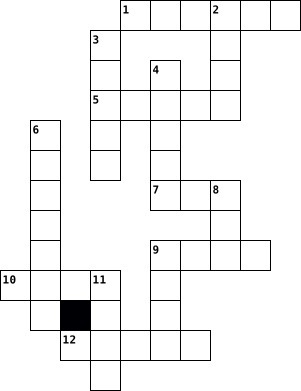
Across
- What Mr. Miller is
- Fought the south
- What you do to lemonade on a hot day
- Goes with a basketball
- Governmental alliance.
- What you use to fight
Down
- Country in the Middle East
- What a volcano does
- Covid
- What Monkeys eat
- Someone that's really good at what they do
- The opposite of cool
- Where we live
13 Clues: Covid • Where we live • Fought the south • What Monkeys eat • What Mr. Miller is • What a volcano does • The opposite of cool • What you use to fight • Goes with a basketball • Governmental alliance. • Country in the Middle East • What you do to lemonade on a hot day • Someone that's really good at what they do
Periodic Table-Miguel 2023-05-01

Across
- S
- (6,6)
- I have 82 neutrons in group 14
- is a hard brittle crystalline metallic luster
- Li
- (2,4)
- I have 27 protons
Down
- is a rare gas of group 18
- I have 79 electrons
- I have 54 protons
- I have an atomic number of 72
- Hg
- i have 86 neutrons in group 18
13 Clues: S • Li • Hg • (6,6) • (2,4) • I have 54 protons • I have 27 protons • I have 79 electrons • is a rare gas of group 18 • I have an atomic number of 72 • I have 82 neutrons in group 14 • i have 86 neutrons in group 18 • is a hard brittle crystalline metallic luster