
photosynthesis Crossword Puzzles
Photosynthesis 2023-09-28

Across
- _______ means to make or put together
- Gas that is needed for photosynthesis
- Pigment responsible for the color green
- Photo means _______
- What goes into a chemical reaction
Down
- Besides carbon dioxide and sunlight, plants need _______
- What is the main source of energy plants need for photosynthesis
- Organelle that undergoes photosynthesis
- C6H12O6 is the chemical formula for ______
- Gas produced in photosynthesis
- What comes out of a chemical reaction
11 Clues: Photo means _______ • Gas produced in photosynthesis • What goes into a chemical reaction • _______ means to make or put together • Gas that is needed for photosynthesis • What comes out of a chemical reaction • Organelle that undergoes photosynthesis • Pigment responsible for the color green • C6H12O6 is the chemical formula for ______ • ...
Photosynthesis 2023-12-08

Across
- the part of the plant where water is taken in
- this gas is produced during photosynthesis
- the sugar that plants product during photosynthesis
- this provides support and water transport in the plant
- provides the energy needed for photosynthesis
- the green pigment that absorbs sunlight during photosynthesis
- this is taken up through the roots and needed for photosynthesis
Down
- the process by which plants make their own food
- the holes in the leaves through which gas exchange happens
- photosynthesis happens in this part of the plant
- this gas is required for photosynthesis
11 Clues: this gas is required for photosynthesis • this gas is produced during photosynthesis • the part of the plant where water is taken in • provides the energy needed for photosynthesis • the process by which plants make their own food • photosynthesis happens in this part of the plant • the sugar that plants product during photosynthesis • ...
Photosynthesis 2023-11-12

Across
- Green pigment responsible for capturing light energy
- Substance that speeds up a chemical reaction
- Organelle where photosynthesis takes place
- Liquid raw material of photosynthesis
- Energy source that plants use to for photosynthesis
Down
- Gas taken in by plants, raw material of photosynthesis
- Small opening on the underside of a leaf, allows carbon dioxide in and oxygen out
- Process by which plants make food
- Food made by plants (a form of sugar)
- Gaseous product of photosynthesis
- Evaporation from the leaves of plants
11 Clues: Process by which plants make food • Gaseous product of photosynthesis • Food made by plants (a form of sugar) • Evaporation from the leaves of plants • Liquid raw material of photosynthesis • Organelle where photosynthesis takes place • Substance that speeds up a chemical reaction • Energy source that plants use to for photosynthesis • ...
photosynthesis 2024-02-20

Across
- a sugar
- compound
- a green plant
- air
Down
- a green paper
- a pore found in the epidermis
- dioxide
- one with the air
- / green pigment
- type of membrane-bound organelle
- convert solar energy
11 Clues: air • a sugar • dioxide • compound • a green paper • a green plant • one with the air • / green pigment • convert solar energy • a pore found in the epidermis • type of membrane-bound organelle
Photosynthesis 2024-02-28

Across
- Tiny pores found on the underside of leaves that are used to absorb carbon dioxide.
- The location where photosynthesis occurs. This is also the pigment that gives the plant its green color.
- The food produced by plants through the process of photosynthesis
- The gas plants need to respirate with photosynthesis.
- The process in which producers create their energy using sunlight.
Down
- Organisms that create their own food.
- The liquid plants need to conduct photosynthesis
- The scientific term for the process of breathing.
- The gas plants release into the air with photosynthesis.
- Plants can photosynthesize when in the presence of ___________.
- The part of the plant used to absorb water and minerals
11 Clues: Organisms that create their own food. • The liquid plants need to conduct photosynthesis • The scientific term for the process of breathing. • The gas plants need to respirate with photosynthesis. • The part of the plant used to absorb water and minerals • The gas plants release into the air with photosynthesis. • ...
Photosynthesis 2023-10-27

Across
- What is needed for a reaction to take place
- Organelles where photosynthesis takes place
- Living things that make their own food
- Distributes water to the plant
Down
- Green pigment in leaves that absorbs sunlight
- Living things that cannot make their own food
- Substance formed after a chemical reaction
- Independent light reaction happens here
- Dependent light reaction happens here
- What is released after photosynthesis
- Energy that plants make in the photosynthesis process
11 Clues: Distributes water to the plant • Dependent light reaction happens here • What is released after photosynthesis • Living things that make their own food • Independent light reaction happens here • Substance formed after a chemical reaction • What is needed for a reaction to take place • Organelles where photosynthesis takes place • ...
Photosynthesis 2023-10-27

Across
- What is needed for a reaction to take place
- Organelles where photosynthesis takes place
- Living things that make their own food
- Distributes water to the plant
Down
- Green pigment in leaves that absorbs sunlight
- Living things that cannot make their own food
- Substance formed after a chemical reaction
- Independent light reaction happens here
- Dependent light reaction happens here
- What is released after photosynthesis
- Energy that plants make in the photosynthesis process
11 Clues: Distributes water to the plant • Dependent light reaction happens here • What is released after photosynthesis • Living things that make their own food • Independent light reaction happens here • Substance formed after a chemical reaction • What is needed for a reaction to take place • Organelles where photosynthesis takes place • ...
Photosynthesis 2023-10-27

Across
- What is needed for a reaction to take place
- Organelles where photosynthesis takes place
- Living things that make their own food
- Distributes water to the plant
Down
- Green pigment in leaves that absorbs sunlight
- Living things that cannot make their own food
- Substance formed after a chemical reaction
- Independent light reaction happens here
- Dependent light reaction happens here
- What is released after photosynthesis
- Energy that plants make in the photosynthesis process
11 Clues: Distributes water to the plant • Dependent light reaction happens here • What is released after photosynthesis • Living things that make their own food • Independent light reaction happens here • Substance formed after a chemical reaction • What is needed for a reaction to take place • Organelles where photosynthesis takes place • ...
PHOTOSYNTHESIS 2024-05-02

Across
- ______ conducts water in the plant.
- Root absorb water from
- ultimate source of energy
- Plants use energy from the sun to produce ________________ and sugars.
- Plants manufacture food through
Down
- The ____ of the flower are brightly coloured
- Name the metal present in chlorophyll
- Carbon dioxide enter plants through the
- The two raw materials in photosynthesis are water and ______________
- Name the pigment which is responsible for absorption of light in plants?
- Plants make their own food using energy that comes from the
11 Clues: Root absorb water from • ultimate source of energy • Plants manufacture food through • ______ conducts water in the plant. • Name the metal present in chlorophyll • Carbon dioxide enter plants through the • The ____ of the flower are brightly coloured • Plants make their own food using energy that comes from the • ...
Photosynthesis 2024-10-21

Across
- found in the air and is a reactant
- the pigment that makes plants green
- organisms that make their own food
- gas that is produced from photosynthesis
- reactant provides energy
Down
- organism that does not do photosynthesis
- the sugar that is produced from photosynthesis for energy
- do photosynthesis
- part of a plant that lets CO2 in and O2 out
- the process of turning light energy into glucose
- the color that is reflected from plants
11 Clues: do photosynthesis • reactant provides energy • found in the air and is a reactant • organisms that make their own food • the pigment that makes plants green • the color that is reflected from plants • organism that does not do photosynthesis • gas that is produced from photosynthesis • part of a plant that lets CO2 in and O2 out • ...
photosynthesis, 2024-09-20

Across
- released as a byproduct of photosynthesis Oxygen The process by which plants convert sunlight into chemical energy.
- that can affect the rate of photosynthesis, like temperature or light intensity.
- A plant's ability to produce food is dependent on this process.
- within a plant cell where photosynthesis occurs.
- taken in by plants during photosynthesis.
- dioxide sugar molecule produced by photosynthesis. Gluc The primary source of energy for photosynthesSunlight
Down
- pigment in plants that absorbs sunlight for photosynthesis.
- of a plant where most photosynthesis occurs.
- equation for photosynthesis includes water and carbon dioxide as reactants.
- stage of photosynthesis happens within the thylakoids of the chloroplast.
- that absorbs light energy in photosynthesis
- for organisms that can make their own food.
12 Clues: taken in by plants during photosynthesis. • that absorbs light energy in photosynthesis • for organisms that can make their own food. • of a plant where most photosynthesis occurs. • within a plant cell where photosynthesis occurs. • pigment in plants that absorbs sunlight for photosynthesis. • A plant's ability to produce food is dependent on this process. • ...
Photosynthesis 2024-11-04

Across
- The place where photosynthesis happens within the plant cell
- A reactant of photosynthesis that is needed to help the plant grow
- The sugar that is made for plant's food
- The place where the light-dependent reactions happen
Down
- The sugar that makes up ATP
- The place where the light-independent reactions happen
- A stack of thylakoids is called this
- One of the reactants of photosynthesis (we exhale this)
- A product of photosynthesis that is beneficial for animals
- The energy molecule that is made
- This is the opposite of ATP (one less phosphate)
11 Clues: The sugar that makes up ATP • The energy molecule that is made • A stack of thylakoids is called this • The sugar that is made for plant's food • This is the opposite of ATP (one less phosphate) • The place where the light-dependent reactions happen • The place where the light-independent reactions happen • One of the reactants of photosynthesis (we exhale this) • ...
Photosynthesis 2024-11-05

Across
- where photosynthesis takes place
- waste product of photosynthesis
- reactions that do not require oxygen
- One of the ingredients of photosynthesis
- the other ingredient of photosynthesis
- formula for glucose
Down
- What color do most plant not absorb
- what is needed for photosynthesis to occur from the sky
- what is produced during photosynthesis
- what part of the plant absorbs the UV rays from the sun
- reactions that require oxygen
11 Clues: formula for glucose • reactions that require oxygen • waste product of photosynthesis • where photosynthesis takes place • What color do most plant not absorb • reactions that do not require oxygen • what is produced during photosynthesis • the other ingredient of photosynthesis • One of the ingredients of photosynthesis • ...
Photosynthesis 2025-01-17

Across
- Enzyme that fixes CO2 into glucose
- Light absorbing molecule
- phase in which G3P and ATP are used to make RUBP
- Molecule that accepts electrons in light-dependent reactions
- 5-carbon acceptor molecule
- Type of reaction that occurs in the thylakoid membrane
Down
- phase in which 3-GPA molecules are reduced to G3P
- Stage of photosynthesis that occurs in the stroma
- Process by which CO2 is fixed into glucose
- Energy-rich molecule produced in light-dependent reaction
- Molecule that is produced during the Calvin Cycle
11 Clues: Light absorbing molecule • 5-carbon acceptor molecule • Enzyme that fixes CO2 into glucose • Process by which CO2 is fixed into glucose • phase in which G3P and ATP are used to make RUBP • phase in which 3-GPA molecules are reduced to G3P • Stage of photosynthesis that occurs in the stroma • Molecule that is produced during the Calvin Cycle • ...
Plants and photosynthesis 2024-06-27

Across
- Eats plants and animals
- Only eats plant
- Gas which goes out of a plant
- Excess glucose can be stored as this
- Plant at the start of a food chain
- Organism which eats other organisms
- Liquid which is a product of photosynthesis
- Organelle involved in photosynthesis
- Sugar product of photosynthesis
Down
- Factor which can affect photosynthesis
- Only eats meat
- Type of energy plants use to make food
- Substance used to test for starch
- Pigment which makes plants green
- Absorbs water from the soil
- Plant organ which absorbs light
16 Clues: Only eats meat • Only eats plant • Eats plants and animals • Absorbs water from the soil • Gas which goes out of a plant • Plant organ which absorbs light • Sugar product of photosynthesis • Pigment which makes plants green • Substance used to test for starch • Plant at the start of a food chain • Organism which eats other organisms • Excess glucose can be stored as this • ...
Plant Crossword 2025-11-25

Across
- Lycophytes, Monilophytes
- Monocots, Eudicots
- Liquid needed for photosynthesis
- Regulate gas exchange in stomata
- Liverworts, Hogworts, Mosses
- Gas that is output from photosynthesis
- Allow gases to be exchanged in plants
- Contain chlorophyll to absorb light
Down
- Have xylem and phloem
- Do not have xylem and phloem
- Energy needed in photosynthesis
- Obtain Nitrogen by consuming organisms
- Gas that is taken in during photosynthesis
- Ginkgo's, Gnetophytes, Conifers
- There are 300000 species of these organisms
- Process by which plants utilize oxygen in order to stay alive
16 Clues: Monocots, Eudicots • Have xylem and phloem • Lycophytes, Monilophytes • Do not have xylem and phloem • Liverworts, Hogworts, Mosses • Energy needed in photosynthesis • Ginkgo's, Gnetophytes, Conifers • Liquid needed for photosynthesis • Regulate gas exchange in stomata • Contain chlorophyll to absorb light • Allow gases to be exchanged in plants • ...
CH9 Photosynthesis 2022-01-10

Across
- What is the process called where photoautotrophs convert carbon dioxide and water into carbohydrates?
- The process of moving electrons through a series of proteins during the process of making ATP (this is an abbreviation for this 3 word answer).
- The phase in photosynthesis where water is split and hydrogen is made available to be used in the second phase.
- What does the T stand for in ATP?
- The green pigment in plants that can capture and transfer light energy.
- What does the P stand for in ATP?
- The phase in photosynthesis where carbon dioxide and hydrogen is combined during a cycle to make cabohydrates.
- What does the D stand for in ADP?
- The liquid area inside the chloroplast, but outside the thylakoids, where the LIR occurs.
- What does the A stand for in ATP?
- To make or assemble something.
- The electron carrier used in photosynthesis when it is NOT carrying hydrogen and electrons.
Down
- Any organism that must consume carbohydrates since it can not make them.
- The flat, pancake-like structures where the LDR occurs.
- The proteins embedded in the thylakoid membrane that contain chlorophyll
- One of the enzymes used during the LIR to fix carbon dioxide to GP3 during the formation of carbohydrates.
- Any organism that can make its own carbohydrates.
- The electron carrier used in photosynthesis when it is carrying the hydrogen and electrons.
- The molecules that have the ability to carry Hydrogen ions and high-energy electrons (two words, but no spaces between the words).
19 Clues: To make or assemble something. • What does the T stand for in ATP? • What does the P stand for in ATP? • What does the D stand for in ADP? • What does the A stand for in ATP? • Any organism that can make its own carbohydrates. • The flat, pancake-like structures where the LDR occurs. • The green pigment in plants that can capture and transfer light energy. • ...
Photosynthesis & Respiration 2022-04-13

Across
- "without oxygen"
- "with oxygen"
- type of fermentation that we use to bake bread and make beer
- organism that can make its own food
- organelle where photosynthesis takes place
- process that converts H2O, CO2, and light into glucose and oxygen
- process in which glucose is broken down WITHOUT oxygen to release energy
- what goes into a chemical reaction (ingredients)
- process in which glucose is broken down using oxygen into H20, CO2, and energy
Down
- another word for "autotroph"
- organism that must obtain its food from other sources
- what comes out of a chemical reaction
- C6H12O6
- organelle where cellular respiration takes place
- another word for "heterotroph"
- type of energy molecule the cell can readily use
- type of fermentation that occurs in our muscle cells
- protein that speeds up a chemical reaction
- light-capturing pigment that makes plants green
19 Clues: C6H12O6 • "with oxygen" • "without oxygen" • another word for "autotroph" • another word for "heterotroph" • organism that can make its own food • what comes out of a chemical reaction • organelle where photosynthesis takes place • protein that speeds up a chemical reaction • light-capturing pigment that makes plants green • organelle where cellular respiration takes place • ...
Photosynthesis Terms 2023-03-01

Across
- Accessory pigment used in the light reactions, yellow to orange pigment.
- phase two of the calvin cycle
- Organisms that produce their own food
- early prokaryotes capable of photosynthesis
- enzyme involved in the phosphorylation of ATP
- cells that form multicellular organisms
- phase one of the calvin cycle
- Organisms unable to make their own food so they live off of other organisms
- photosystem in the thylakoids that absorbs P700
Down
- photosystem in the thylakoids that absorbs P680
- enzyme that catalysis the attached of CO2 to RuBP
- aqueous internal fluid of the chloroplast
- known as the early cell that forms a unicellular organisms
- Primary pigment used in the light reaction, Blue to green in color.
- Stacked thylakoids
- phase three of the calvin cycle
- A form of chemical energy
- Broaden the spectrum of colors that drive photosynthesis Yellow/orange pigment
- sites where the light reactions of photosynthesis occur
19 Clues: Stacked thylakoids • A form of chemical energy • phase two of the calvin cycle • phase one of the calvin cycle • phase three of the calvin cycle • Organisms that produce their own food • cells that form multicellular organisms • aqueous internal fluid of the chloroplast • early prokaryotes capable of photosynthesis • enzyme involved in the phosphorylation of ATP • ...
CH9 Photosynthesis 2021-03-23

Across
- A green molecule found in photosystems that can capture light energy.
- Any organism that can make its own carbohydrates - there are photoautotrophs and chemoautotrophs.
- An enzyme that makes ATP, found in the thylakoid membrane (and in mitochondria).
- This molecule is like a fully charged battery - it is the power source for all cells.
- What does the H in NADPH represent?
- The phase of photosynthesis that uses carbon dioxide, NADPH, and ATP to make carbohydrates.
- A series of proteins that have the ability to move electrons.
- The number of carbon and oxygen atoms in one glucose molecule.
- This organelle is the site of photosynthesis.
Down
- This molecule is like a partially charged battery - it is fully charged when a third phosphate is added to it.
- The phase of photosynthesis that produces oxygen, ATP and NADPH.
- These molecules can capture and hold high-energy electrons.
- The site of the light-independent reactions.
- Any organism that can not make its own carbohydrates and must consume them.
- Another name for the light-independent reaction.
- The number of hydrogen atoms in one glucose molecule.
- Making these is the sole purpose of photosynthesis.
- The abbreviated name for one of the enzymes used in the Calvin cycle when building carbon containing molecules.
- The site of the light-dependent reactions.
19 Clues: What does the H in NADPH represent? • The site of the light-dependent reactions. • The site of the light-independent reactions. • This organelle is the site of photosynthesis. • Another name for the light-independent reaction. • Making these is the sole purpose of photosynthesis. • The number of hydrogen atoms in one glucose molecule. • ...
Chinese photosynthesis 2022-11-28

Across
- 叶子的顶层
- 植物中运输食物的组织
- 叶子中允许气体进出的部分
- Mesophyll 交换氧气和二氧化碳的叶子部分
- 叶子中运输物质的部分
- Cell 具有最多叶绿体的特化细胞
- 叶 - 植物进行光合作用的器官
- Carbon dioxide + water = glucose + oxygen
- 植物的生殖器官
- 一种植物细胞器,是光合作用的场所
- 植物中运输水分的组织
Down
- 植物的器官提供支撑并支撑植物
- 根 - 植物从土壤中吸收水分的器官
- 光合作用 - 绿色植物吸收光能,把二氧化碳和水合成有机物
- Hair Cell 增加根部表面积的特化细胞
- 花瓣 - 一朵花的彩色叶子
- 植物中物质的运动
- Intensity 阳光有多亮
- Exchange 生物体内气体交换的过程
- 在叶绿体中发现的可以吸收阳光的化学物质
20 Clues: 叶子的顶层 • 植物的生殖器官 • 植物中物质的运动 • 植物中运输食物的组织 • 叶子中运输物质的部分 • 植物中运输水分的组织 • 叶子中允许气体进出的部分 • 花瓣 - 一朵花的彩色叶子 • 植物的器官提供支撑并支撑植物 • Intensity 阳光有多亮 • 叶 - 植物进行光合作用的器官 • 一种植物细胞器,是光合作用的场所 • 根 - 植物从土壤中吸收水分的器官 • Cell 具有最多叶绿体的特化细胞 • 在叶绿体中发现的可以吸收阳光的化学物质 • Exchange 生物体内气体交换的过程 • Hair Cell 增加根部表面积的特化细胞 • Mesophyll 交换氧气和二氧化碳的叶子部分 • 光合作用 - 绿色植物吸收光能,把二氧化碳和水合成有机物 • Carbon dioxide + water = glucose + oxygen
Biology Crossword Puzzle 2022-12-13

Across
- bunches of proteins that span the thylakoids membrane and allow H+ to pass
- ATP, Photosynthesis, pigment, chlorophyll, thylakoid, stroma, NADP+, light-dependent reactions, Light independent reactions, Photosystem, ATP-Synthase, Electron transport chain, Calvin Cycle, Chloroplast, Heterotrophs, Autotrophsm, C4-Plants, CAM-Plants
- an organisms deriving its energy from complex organic substances
- reactions in photosynthesis that don’t require light
- the light-independent reactions of photosynthesis where ATP and NADPH is used to build high-energy compounds like sugar
- Green plant organelle where light energy is turned into chemical energy through photosynthesis
- A method where plants convert light energy and use it to power reactions to make sugars and starches
- series of electron carrier proteins that transport high energy electrons during ATP which rates reactions
- a strategy that plants use, where carbon dioxide will become incorporated into organic acids during photosynthesis
- bunches of proteins and chlorophyll found in thylakoids
Down
- the cytoplasm of the chloroplast; fluid of chloroplast
- reactions that photosynthesis use energy from light to produce ATP and NADPH
- an organisms that can form energy from inorganic substances like carbon
- molecule that carries high-energy electrons to the rest of the plant
- an important pigment in plants and other similar organisms
- cells used to store and release energy
- light absorbing molecules used to gather the sun's energy
- saclike green membranes found in the chloroplast
- plants that have a specialized chemical pathway that helps them capture very low levels of carbon dioxide and pass it to the Calvin cycle
19 Clues: cells used to store and release energy • saclike green membranes found in the chloroplast • reactions in photosynthesis that don’t require light • the cytoplasm of the chloroplast; fluid of chloroplast • bunches of proteins and chlorophyll found in thylakoids • light absorbing molecules used to gather the sun's energy • ...
Biology Crossword Puzzle 2022-12-13

Across
- bunches of proteins that span the thylakoids membrane and allow H+ to pass
- ATP, Photosynthesis, pigment, chlorophyll, thylakoid, stroma, NADP+, light-dependent reactions, Light independent reactions, Photosystem, ATP-Synthase, Electron transport chain, Calvin Cycle, Chloroplast, Heterotrophs, Autotrophsm, C4-Plants, CAM-Plants
- an organisms deriving its energy from complex organic substances
- reactions in photosynthesis that don’t require light
- the light-independent reactions of photosynthesis where ATP and NADPH is used to build high-energy compounds like sugar
- Green plant organelle where light energy is turned into chemical energy through photosynthesis
- A method where plants convert light energy and use it to power reactions to make sugars and starches
- series of electron carrier proteins that transport high energy electrons during ATP which rates reactions
- a strategy that plants use, where carbon dioxide will become incorporated into organic acids during photosynthesis
- bunches of proteins and chlorophyll found in thylakoids
Down
- the cytoplasm of the chloroplast; fluid of chloroplast
- reactions that photosynthesis use energy from light to produce ATP and NADPH
- an organisms that can form energy from inorganic substances like carbon
- molecule that carries high-energy electrons to the rest of the plant
- an important pigment in plants and other similar organisms
- cells used to store and release energy
- light absorbing molecules used to gather the sun's energy
- saclike green membranes found in the chloroplast
- plants that have a specialized chemical pathway that helps them capture very low levels of carbon dioxide and pass it to the Calvin cycle
19 Clues: cells used to store and release energy • saclike green membranes found in the chloroplast • reactions in photosynthesis that don’t require light • the cytoplasm of the chloroplast; fluid of chloroplast • bunches of proteins and chlorophyll found in thylakoids • light absorbing molecules used to gather the sun's energy • ...
Biology Crossword Puzzle 2022-12-13

Across
- bunches of proteins and chlorophyll found in thylakoids
- the light-independent reactions of photosynthesis where ATP and NADPH is used to build high-energy compounds like sugar
- word bank:ATP, Photosynthesis, pigment, chlorophyll, thylakoid, stroma, NADP+, light-dependent reactions, Light independent reactions, Photosystem, ATP-Synthase, Electron transport chain, Calvin Cycle, Chloroplast, Heterotrophs, Autotrophsm, C4-Plants, CAM-Plants
- an organisms that can form energy from inorganic substances like carbon
- A method where plants convert light energy and use it to power reactions to make sugars and starches
- an important pigment in plants and other similar organisms
- reactions in photosynthesis that don’t require light
- bunches of proteins that span the thylakoids membrane and allow H+ to pass
Down
- series of electron carrier proteins that transport high energy electrons during ATP which rates reactions
- molecule that carries high-energy electrons to the rest of the plant
- Green plant organelle where light energy is turned into chemical energy through photosynthesis
- light absorbing molecules used to gather the sun's energy
- plants that have a specialized chemical pathway that helps them capture very low levels of carbon dioxide and pass it to the Calvin cycle
- a strategy that plants use, where carbon dioxide will become incorporated into organic acids during photosynthesis
- reactions that photosynthesis use energy from light to produce ATP and NADPH
- cells used to store and release energy
- an organisms deriving its energy from complex organic substances
- saclike green membranes found in the chloroplast
- the cytoplasm of the chloroplast; fluid of chloroplast
19 Clues: cells used to store and release energy • saclike green membranes found in the chloroplast • reactions in photosynthesis that don’t require light • the cytoplasm of the chloroplast; fluid of chloroplast • bunches of proteins and chlorophyll found in thylakoids • light absorbing molecules used to gather the sun's energy • ...
Words bhfgffh 2022-11-04

Across
- Makes their own food
- Holds the green pigment
- Mammals
- Holds water
- CO2
- energy from the sun
- Input
- The output
Down
- cellular respiration
- breaks down glucose
- change that can’t be undone
- how plants make their food
- where photosynthesis takes place
- Output of photosynthesis(air)
- Energy
15 Clues: CO2 • Input • Energy • Mammals • The output • Holds water • breaks down glucose • energy from the sun • cellular respiration • Makes their own food • Holds the green pigment • how plants make their food • change that can’t be undone • Output of photosynthesis(air) • where photosynthesis takes place
#6 - Photosynthesis Recap 2022-10-27

Across
- the substances present before a chemical reaction
- The pigment found in chloroplasts that absorbs the sunlight
- An organism that can make its own food
- The product of photosynthesis used for energy
- the substances present after a chemical reaction
- Reactant for photosynthesis that we breathe out (the gas reactant)
- Reactant for photosynthesis that plants can get from the ground or rain
Down
- An organism that consumes other organisms for food
- the energy source for photosynthesis
- The process by which plants use sunlight, water, and carbon dioxide to create oxygen and energy in the form of sugar
- The organelle where photosynthesis occurs
- The chemical makeup of a substance
- the gas released as a product of photosynthesis that we breathe in
13 Clues: The chemical makeup of a substance • the energy source for photosynthesis • An organism that can make its own food • The organelle where photosynthesis occurs • The product of photosynthesis used for energy • the substances present after a chemical reaction • the substances present before a chemical reaction • An organism that consumes other organisms for food • ...
Photosynthesis 2017-02-05

Across
- vessel carries water up the plant
- green pigment
- where chlorophyll is stored
- gas released during photosynthesis
- chemical that turns black when tested on starch
- what excess glucose s converted to in a plant
Down
- a process that uses glucose
- process used to make glucose using light
- vessel that carries glucose round the plant
- where gases diffuse from
- where energy comes from
11 Clues: green pigment • where energy comes from • where gases diffuse from • a process that uses glucose • where chlorophyll is stored • vessel carries water up the plant • gas released during photosynthesis • process used to make glucose using light • vessel that carries glucose round the plant • what excess glucose s converted to in a plant • ...
Photosynthesis 2018-09-25

Across
- how many carbon atoms are there in a glucose molecule
- color of visible light that has the least amount of energy
- what are animals that cannot make their own food called
- how many hydrogen atoms are there in a glucose molecule
- one of the products of photosynthesis
- photosynthesis uses the colors of red and what
Down
- the green colored pigment in the Chloroplasts
- color of visible light with the highest amount of energy
- small openings under a leaf
- one of the reactants of photosynthesis
- source of energy of all living things
11 Clues: small openings under a leaf • one of the products of photosynthesis • source of energy of all living things • one of the reactants of photosynthesis • the green colored pigment in the Chloroplasts • photosynthesis uses the colors of red and what • how many carbon atoms are there in a glucose molecule • what are animals that cannot make their own food called • ...
Photosynthesis 2013-07-22

Across
- The splitting of water
- waste product of light dependant phase
- The Phase in which ribuose biphosphate is remade.
- 5 carbon compound used during carbon fixation phase of Photosynthesis
- Process where ADP->ATP
- pigment needed for photosynthetic process
Down
- Common name for the Dark phase of Photosynthesis
- 3 carbon compound formed from splitting of unstable intermediate
- enzyme in the carbon fixation phase of Dark Phase Photosynthesis
- light phase of photosynthesis occurs here
- dark phase of photosynthesis occurs here
11 Clues: The splitting of water • Process where ADP->ATP • waste product of light dependant phase • dark phase of photosynthesis occurs here • light phase of photosynthesis occurs here • pigment needed for photosynthetic process • Common name for the Dark phase of Photosynthesis • The Phase in which ribuose biphosphate is remade. • ...
Photosynthesis 2013-10-07

Across
- Plastid, reflects green light
- cycle Light independent reactions
- 6 molecules used in photosynthesis
- Begining source of energy for life
- Tiny openings on leaves
Down
- transport chain Used to produce ATP and NADPH through chain reactions
- Disk in chloroplast where photosynthesis occurs
- 1 molecule produced in photosynthesis, sugar molecule
- Where photosynthesis occurs, contains chlorophyll
- Light energy
- Product of photosynthesis
11 Clues: Light energy • Tiny openings on leaves • Product of photosynthesis • Plastid, reflects green light • cycle Light independent reactions • 6 molecules used in photosynthesis • Begining source of energy for life • Disk in chloroplast where photosynthesis occurs • Where photosynthesis occurs, contains chlorophyll • 1 molecule produced in photosynthesis, sugar molecule • ...
Photosynthesis 2021-09-14

Across
- the air we breathe
- part of a plant that perform photosynthesis
- used by the plant as energy to help the plant grow
- oxygen gas exit leaf through
- a living thing that can make food by itself
Down
- sun's energy
- plant provide source of...
- CO2
- is found in chloroplast
- it has a sweet taste
- drinking resources
11 Clues: CO2 • sun's energy • the air we breathe • drinking resources • it has a sweet taste • is found in chloroplast • plant provide source of... • oxygen gas exit leaf through • part of a plant that perform photosynthesis • a living thing that can make food by itself • used by the plant as energy to help the plant grow
Photosynthesis 2021-05-24

Across
- food of plant
- green pigment that absorbs sunlight
- let gasses in and out
- carries water
- energy from the sun
Down
- where photosynthesis takes place
- carbon dioxide, water
- glucose, oxygen
- carries glucose
- where the chloroplast is
- waste of plant
11 Clues: food of plant • carries water • waste of plant • glucose, oxygen • carries glucose • energy from the sun • carbon dioxide, water • let gasses in and out • where the chloroplast is • where photosynthesis takes place • green pigment that absorbs sunlight
Photosynthesis 2021-10-15

Across
- What is the pigment that plants use to capture light?
- dependent reaction What is the first process that occurs in chloroplasts?
- What is a stack of thylakoids called?
- Glucose is the _____ of photosynthesis
- What's another word for inputs?
- What´s the process plants use to make sugar?
Down
- Where does the light dependent reactions take place?
- What does photosynthesis produce?
- independent reaction What is the second process that occurs in the chloroplasts?
- What carries chemical energy?
- What gets its energy from nonliving sources?
- Where does the light independent reaction take place?
12 Clues: What carries chemical energy? • What's another word for inputs? • What does photosynthesis produce? • What is a stack of thylakoids called? • Glucose is the _____ of photosynthesis • What gets its energy from nonliving sources? • What´s the process plants use to make sugar? • Where does the light dependent reactions take place? • ...
Photosynthesis 2021-11-17

Across
- What is needed for a chemical reaction to occur
- water and ___ are the reactants in the photosynthesis equation
- a green pigment that allows the plant to absorb sunlight.
- food that is produced during photosynthesis
- The organelles where photosynthesis takes place.
- Process in which plants make food and produce oxygen.
Down
- photosynthesis is a ___ reaction
- gives the plant energy
- released by the plant
- similar to the human circulatory system
- Substances formed in a chemical reaction.
11 Clues: released by the plant • gives the plant energy • photosynthesis is a ___ reaction • similar to the human circulatory system • Substances formed in a chemical reaction. • food that is produced during photosynthesis • What is needed for a chemical reaction to occur • The organelles where photosynthesis takes place. • Process in which plants make food and produce oxygen. • ...
photosynthesis 2022-03-01

Across
- you stand on it in the forest
- you drink it
- it's very bright
- things on trees and plants
- basically veins in the stem
- what makes photosynthesis happen
- holds chlorophyll
Down
- what makes the plant green
- down in the soil
- holes in the leaf
- it's in the soil
11 Clues: you drink it • down in the soil • it's very bright • it's in the soil • holes in the leaf • holds chlorophyll • what makes the plant green • things on trees and plants • basically veins in the stem • you stand on it in the forest • what makes photosynthesis happen
Photosynthesis 2022-03-01

Across
- It is a polysaccharide which functions as a carbohydrate store and is an important constituent of the human diet.
- a simple sugar which is an important energy source in living organisms and is a component of many carbohydrates.
- a colourless, odourless gas produced by burning carbon and organic compounds and by respiration.
- a plastid in green plant cells which contains chlorophyll and in which photosynthesis takes place.
- a green pigment, present in all green plants and in cyanobacteria, which is responsible for the absorption of light to provide energy for photosynthesis.
Down
- the degree or intensity of heat present in a substance or object, especially as expressed according to a comparative scale and shown by a thermometer or perceived by touch.
- the spreading of something more widely.
- a colourless, odourless reactive gas, the chemical element of atomic number 8 and the life-supporting component of the air.
- the process by which green plants and some other organisms use sunlight to synthesize nutrients from carbon dioxide and water.
- a colourless, transparent, odourless liquid that forms the seas, lakes, rivers, and rain and is the basis of the fluids of living organisms.
- the strength and vitality required for sustained physical or mental activity.
11 Clues: the spreading of something more widely. • the strength and vitality required for sustained physical or mental activity. • a colourless, odourless gas produced by burning carbon and organic compounds and by respiration. • a plastid in green plant cells which contains chlorophyll and in which photosynthesis takes place. • ...
Photosynthesis 2022-02-24

Across
- An organism that can make its own food
- These are made in a chemical reaction
- Organelle where photosynthesis takes place
- The "ingredients" in a chemical reaction
- The meaning of the arrow in a chemical equation
Down
- Process where a plant makes food using sunlight
- The sugar that plants make for food
- Green pigment that absorbs sunlight
- Plants give this off during photosynthesis
- Openings on the undersides of leaves where gases are exchanged
- The source of energy for photosynthesis
11 Clues: The sugar that plants make for food • Green pigment that absorbs sunlight • These are made in a chemical reaction • An organism that can make its own food • The source of energy for photosynthesis • The "ingredients" in a chemical reaction • Plants give this off during photosynthesis • Organelle where photosynthesis takes place • ...
Photosynthesis 2022-08-29

Across
- from food
- a substance produced in a chemical reaction
- the process by which plants use the sun's energy to convert water and carbon dioxide into sugars, which they use for food, changes radiant energy to chemical energy
Down
- an essential gas for plants in order to make their own food
- from the sun
- small opening (pore) in the lower epidermis of a plant that allows for respiration or gasses to exchange...ex: Oxygen, Carbon Dioxide and Water Vapor
- a green pigment found in the chloroplasts of plants, algae, and some bacteria that absorbs radiant energy
- the name for the substances that start a chemical reaction
- sugar; made during photosynthesis; main source of energy for plants and animals
- plant tissue that transports water and minerals from the roots to the leaves / flowers
- a gas that is the waste product in photosynthesis
11 Clues: from food • from the sun • a substance produced in a chemical reaction • a gas that is the waste product in photosynthesis • the name for the substances that start a chemical reaction • an essential gas for plants in order to make their own food • sugar; made during photosynthesis; main source of energy for plants and animals • ...
Photosynthesis 2022-02-12

Across
- life supporting component of air
- When plants use sunlight, water,and carbon dioxide to make sugar and oxygen
- undergoes change in a reaction
- substance obtained through chemical change
- Contains the chlorophyll and where photosynthesis takes place
Down
- gas produced by burning carbon
- liquid collected from the roots of the plant
- uses energy from the sun to turn water and CO2 into what?
- light from the sun
- Co2 and H2O enter through there
- responsible for the absorption of light
11 Clues: light from the sun • gas produced by burning carbon • undergoes change in a reaction • Co2 and H2O enter through there • life supporting component of air • responsible for the absorption of light • substance obtained through chemical change • liquid collected from the roots of the plant • uses energy from the sun to turn water and CO2 into what? • ...
Photosynthesis 2021-04-20

Across
- Tubes that distribute water to the plant
- Substances formed in a chemical reaction
- Green Pigment
- Lets gases in and out
- stuff needed to survive
Down
- What is needed for a reaction to take place
- comes from the sun
- Organelles needed for photosynthesis
- Plants use the energy light in a reaction
- Carries glucose
- needed for reactants
11 Clues: Green Pigment • Carries glucose • comes from the sun • needed for reactants • Lets gases in and out • stuff needed to survive • Organelles needed for photosynthesis • Tubes that distribute water to the plant • Substances formed in a chemical reaction • Plants use the energy light in a reaction • What is needed for a reaction to take place
Photosynthesis 2021-05-11

Across
- Matrix which surrounds the grana and contains all the enzymes needed to complete the process of photosynthesis and produce glucose
- Process involving both PSI and PSII in which water molecules are split using light energy to provide reducing power to make carbohydrates and at the same time produce more ATP
- Process that drives the production of ATP where light-excited electrons from PSI are taken up by an electron acceptor and passed directly along an electron transport chain to produce ATP
- Membrane disc found in the grana of a chloroplast.
- Extensions of the thylakoid membranes which connect two or more grana
Down
- Reactions that take place in the light on the thylakoid membranes of the chloroplasts.
- Factor needed for a reaction such as photosynthesis to progress that is closest to its minimum value
- Stacks of thylakoid membranes within a chloroplast.
- Reaction initiated by light.
- Splitting of a molecule using light
- Outer and inner membranes of the chloroplast along with the inter-membranal space
11 Clues: Reaction initiated by light. • Splitting of a molecule using light • Membrane disc found in the grana of a chloroplast. • Stacks of thylakoid membranes within a chloroplast. • Extensions of the thylakoid membranes which connect two or more grana • Outer and inner membranes of the chloroplast along with the inter-membranal space • ...
Photosynthesis 2022-10-26

Across
- uses light energy and water to create oxygen
- this photosystem's electrons get replaced by photosystem II electrons
- this molecule is formed from NAD+, free protons and the electrons from photosystem II
- this is where (in the chloroplast) the light reactions take place
- after the absorption of light, 2 electrons are excited in the molecule
Down
- uses carbon dioxide to create glucose
- this molecule is regenerated within the Calvin cycle
- this is where (in the chloroplast) the Calvin cycle takes place
- this type of energy is needed in order for photosynthesis to occur
- this photosystem's electrons get replaced by the splitting of water
- this molecule is formed from ADP through the help of ATP synthase
11 Clues: uses carbon dioxide to create glucose • uses light energy and water to create oxygen • this molecule is regenerated within the Calvin cycle • this is where (in the chloroplast) the Calvin cycle takes place • this molecule is formed from ADP through the help of ATP synthase • this is where (in the chloroplast) the light reactions take place • ...
Photosynthesis 2022-10-14

Across
- The pigment that makes plants green and takes in sunlight.
- The waste product of photosynthesis.
- Openings for Co2 to enter and O2 to leave.
- What gives off the light/radiant energy.
- What is originally in a chemical equation.
Down
- The process of converting light, CO2, O2, and H2O into glucose and oxygen.
- What makes energy for the plant.
- The system that transports water.
- The system that transports glucose.
- What comes of a chemical reaction.
- The place where photosynthesis occurs, only in plant cells.
11 Clues: What makes energy for the plant. • The system that transports water. • What comes of a chemical reaction. • The system that transports glucose. • The waste product of photosynthesis. • What gives off the light/radiant energy. • Openings for Co2 to enter and O2 to leave. • What is originally in a chemical equation. • ...
Photosynthesis 2024-02-04

Across
- dioxide people breathe this out and plants take this in
- energy from the sun
- this is inside the chloroplast and absorbs sunlight
- tiny holes on the plant's leaves that take in carbon dioxide
- sugar- a plant's food
- chloroplasts are in this part of a plant
Down
- the process of plants making their own food and oxygen
- most plants take this in through their roots
- a green cell in a plant's leaves where photosynthesis happens
- trees, flowers, and grass are examples of this
- people breathe this in and plants release it
11 Clues: energy from the sun • sugar- a plant's food • chloroplasts are in this part of a plant • most plants take this in through their roots • people breathe this in and plants release it • trees, flowers, and grass are examples of this • this is inside the chloroplast and absorbs sunlight • the process of plants making their own food and oxygen • ...
photosynthesis 2024-02-16

Across
- photosynthesis, plants trap light energy with their leaves. Plants use the energy of the sun to change water and carbon dioxide into a sugar called glucose.
- Organelle in plants where photosynthesis occurs.
- dioxide the series of processes by which carbon compounds are interconverted in the environment, involving the incorporation of carbon dioxide into living tissue by photosynthesis and its return to the atmosphere through respiration, the decay of dead organisms, and the burning of fossil fuels.
- is the process in which green plants, algae, and a group of bacteria called cyanobacteria use sunlight to make their own food.
Down
- Oxygen (O2) is evolved during photosynthetic electron transport when water is split by the oxygen-evolving complex to provide protons and electrons to the chloroplastic electron chain.
- Plants use the energy of the sun to change water and carbon dioxide into a sugar called glucose
- the organelles responsible for photosynthesis
- Plants use some of the glucose they’ve made and store the rest. The oxygen is released into the air.
- is found in virtually all photosynthetic organisms, including green plants, cyanobacteria, and algae
- within the plant cell, the water is oxidized, meaning it loses electrons, while the carbon dioxide is reduced, meaning it gains electrons.
- Photosynthesis is the process in which light energy is converted to chemical energy in the form of sugars.
11 Clues: the organelles responsible for photosynthesis • Organelle in plants where photosynthesis occurs. • Plants use the energy of the sun to change water and carbon dioxide into a sugar called glucose • Plants use some of the glucose they’ve made and store the rest. The oxygen is released into the air. • ...
photosynthesis 2024-02-16

Across
- Plants use some of the glucose they’ve made and store the rest. The oxygen is released into the air.
- the organelles responsible for photosynthesis
- dioxide the series of processes by which carbon compounds are interconverted in the environment, involving the incorporation of carbon dioxide into living tissue by photosynthesis and its return to the atmosphere through respiration, the decay of dead organisms, and the burning of fossil fuels.
- Oxygen (O2) is evolved during photosynthetic electron transport when water is split by the oxygen-evolving complex to provide protons and electrons to the chloroplastic electron chain.
- Photosynthesis is the process in which light energy is converted to chemical energy in the form of sugars.
- Plants use the energy of the sun to change water and carbon dioxide into a sugar called glucose
Down
- is found in virtually all photosynthetic organisms, including green plants, cyanobacteria, and algae
- is the process in which green plants, algae, and a group of bacteria called cyanobacteria use sunlight to make their own food.
- within the plant cell, the water is oxidized, meaning it loses electrons, while the carbon dioxide is reduced, meaning it gains electrons.
- Organelle in plants where photosynthesis occurs.
- photosynthesis, plants trap light energy with their leaves. Plants use the energy of the sun to change water and carbon dioxide into a sugar called glucose.
11 Clues: the organelles responsible for photosynthesis • Organelle in plants where photosynthesis occurs. • Plants use the energy of the sun to change water and carbon dioxide into a sugar called glucose • Plants use some of the glucose they’ve made and store the rest. The oxygen is released into the air. • ...
Photosynthesis 2024-02-03

Across
- released water vapor
- transports food
- uses the sunlight
- to put together
- transports water
- what plants make for themselves
Down
- what plants need from animals
- light
- opening on a leaf
- what animals need
- energy used by plant
11 Clues: light • transports food • to put together • transports water • opening on a leaf • what animals need • uses the sunlight • released water vapor • energy used by plant • what plants need from animals • what plants make for themselves
Photosynthesis 2023-10-27

Across
- is a naturally occurring gas present in the atmosphere
- is the gas released as a waste product during photosynthesis and is essential for animals and humans
- is the green pigment in plants responsible for trapping light energy for photosynthesis
- component in foods that an organism uses to survive and grow organism a plant, animal or single celled life form
- where photosynthesis takes place
Down
- to take in or soak up
- the process by which plants use the energy from sunlight to produce sugar, which cellular respiration converts into energy
- the smallest structural unit of an organism
- the roots absorb this and mineral salts from the soil and transport it to the other parts of the plant
- a type of sugar that is produce by plants in the photosynthesis process
- the sun releases energy in the form of heat and light
11 Clues: to take in or soak up • where photosynthesis takes place • the smallest structural unit of an organism • the sun releases energy in the form of heat and light • is a naturally occurring gas present in the atmosphere • a type of sugar that is produce by plants in the photosynthesis process • ...
Photosynthesis 2023-10-27

Across
- The substance that comes out of a reaction.
- Substances that are necessary for a reaction to occur.
- An organism that makes its own food using natural resources.
- A reactant of photosynthesis taken in by the roots of a plant.
- Tubes that carry CO2 to the chloroplasts of a plant.
Down
- A sugar/nutrient that plants make
- Tubes that carry glucose to different areas of the plant.
- An small opening on the bottom of a leaf that takes in CO2 and releases oxygen.
- A pigment in chloroplasts that reflects green light.
- The process by which a plant or organism makes its own food.
- The type of energy that the Sun gives off.
11 Clues: A sugar/nutrient that plants make • The type of energy that the Sun gives off. • The substance that comes out of a reaction. • A pigment in chloroplasts that reflects green light. • Tubes that carry CO2 to the chloroplasts of a plant. • Substances that are necessary for a reaction to occur. • Tubes that carry glucose to different areas of the plant. • ...
Photosynthesis 2019-09-08

Across
- An organism that manufactures its own food from inorganic substances such as carbon dioxide and ammonia.
- One thing that the plant produces during the photosynthesis.
- Process in which chlorophyll p680 acts.
- One thing that the plants need to produce oxygen.
- Cicle in which is produced by the dark phase.
Down
- Thanks to this the capture of carbon dioxide present in the atmosphere starts.
- Process used by plants and other organisms to convert light energy into chemical energy
- The _______ is the carbohydrate of the plant.
- Phase in which pure oxygen is released and it is produced ATP and NADPH2.
- A plastid that contains chlorophyll and in which photosynthesis takes place .
- Where does the photosynthesis occur?
11 Clues: Where does the photosynthesis occur? • Process in which chlorophyll p680 acts. • The _______ is the carbohydrate of the plant. • Cicle in which is produced by the dark phase. • One thing that the plants need to produce oxygen. • One thing that the plant produces during the photosynthesis. • Phase in which pure oxygen is released and it is produced ATP and NADPH2. • ...
Photosynthesis 2020-01-16

Across
- the _______ electron acceptor allows for the electrons to pass the excited energy from PS I and PS II to a create sugar molecules like glucose
- the "photo" part of synthesis where light is absorbed by pigments.
- when electrons arrive at _______, light energy is absorbed by pigments and the electron's energy becomes higher.
- when electrons are hit by a light source at a different absorption spectrum in the ____, the increase in light energy excites the electrons one more time.
- after electrons are excited by the light absorption during PS I phase the electrons move from a high level of energy to a low level of energy through the electron _______ chains by releasing energy.
- after light is absorbed through the electron a second time, the electrons energy increases again and produces ________.
Down
- carbon dioxide molecules and water is converted into sugars such as glucose and ends the process of photosynthesis
- after electrons absorb sunlight and become excited electrons, ATP (energy) is produced through a process called cyclic ________.
- the "synthesis" part of photosynthesis where the sun energy from light reactions is converted to chemical energy of sugars.
- through the absorption of light in PS II, the excited electron is passed through an acceptor molecule and replaced with an electron from water and the process releases the O2 to breathe.
- after light energy is absorbed by electrons, the energy level of the electrons increasing creating _____ (energy).
11 Clues: the "photo" part of synthesis where light is absorbed by pigments. • when electrons arrive at _______, light energy is absorbed by pigments and the electron's energy becomes higher. • carbon dioxide molecules and water is converted into sugars such as glucose and ends the process of photosynthesis • ...
Photosynthesis 2020-01-26

Across
- Synthase เอนไซม์ที่ทำให้เกิดการสร้าง ATP
- อิเล็กตรอนสถานะถูกกระตุ้น
- การถ่ายทอดอิเล็กตรอน
- ปฏิกิริยาแสง
- ระบบแสง
- สารสีเขียว
Down
- อิเล็กตรอนสถานะพื้น
- การสร้างสารพลังงานสูงที่เกิดจากการปั๊มโปรตอน
- อนุภาคของแสง
- แสงสีที่ตาคนเรามองเห็น
- สารสีพวกแคโรทีนอยด์
11 Clues: ระบบแสง • สารสีเขียว • อนุภาคของแสง • ปฏิกิริยาแสง • อิเล็กตรอนสถานะพื้น • สารสีพวกแคโรทีนอยด์ • การถ่ายทอดอิเล็กตรอน • แสงสีที่ตาคนเรามองเห็น • อิเล็กตรอนสถานะถูกกระตุ้น • Synthase เอนไซม์ที่ทำให้เกิดการสร้าง ATP • การสร้างสารพลังงานสูงที่เกิดจากการปั๊มโปรตอน
Photosynthesis 2024-04-15

Across
- Dioxide A gas released by humans and animals, that plants absorb
- Plants must have this liquid to survive.
- The process in which plants absorb water, sunlight, and CO2 to create food.
- Plants absorb water from this part of the ground.
Down
- Plants use this part to drink water like a straw
- The part of the plant in which food is created.
- A gas plants release that humans need in order to breathe
- The consequence when a plant does not absorb enough water.
- Weather that provides water to plants
- The energy source plants absorb
- The Star that provides sunlight
11 Clues: The energy source plants absorb • The Star that provides sunlight • Weather that provides water to plants • Plants must have this liquid to survive. • The part of the plant in which food is created. • Plants use this part to drink water like a straw • Plants absorb water from this part of the ground. • A gas plants release that humans need in order to breathe • ...
Photosynthesis 2023-03-02

Across
- What is needed for a reaction to take place
- A gas product made by Photosynthesis
- A green pigment that allows the plant to absorb sunlight
- Lets gasses in and out of the leaf
- Made by plants for energy
Down
- Organelles where photosynthesis takes place and is only found in plant cells
- How plants make food
- Carries glucose to the plant for its life processes
- Substances that are formed in a chemical reaction
- One carbon atom and two oxygen atoms
- Distributes water to the plant
11 Clues: How plants make food • Made by plants for energy • Distributes water to the plant • Lets gasses in and out of the leaf • A gas product made by Photosynthesis • One carbon atom and two oxygen atoms • What is needed for a reaction to take place • Substances that are formed in a chemical reaction • Carries glucose to the plant for its life processes • ...
Photosynthesis 2023-01-31

Across
- a plastid in green plant cells which contains chlorophyll and in which photosynthesis takes place.
- cell structures in the epidermis of tree leaves and needles that are involved in the exchange of carbon dioxide and water between plants and the atmosphere.
- a product of photosynthesis that is released as a byproduct
- a white, granular, organic chemical that is produced by all green plants.
- the process by which green plants and some other organisms use sunlight to synthesize nutrients from carbon dioxide and water.
Down
- the breakdown of any particular substance in presence of light.
- plants take this in as well as carbon dioxide to allow photosynthesis to occur
- The part of the plant that is responsible for taking in light and allowing for gas exchange with the air around them.
- Plants use the energy of the sun to change water and carbon dioxide into a sugar called ________.
- a colorless, odorless gas produced by burning carbon and organic compounds and by respiration. It is naturally present in air and is absorbed by plants in photosynthesis.
- a green pigment, present in all green plants and in , which is responsible for the absorption of light to provide energy for photosynthesis.
11 Clues: a product of photosynthesis that is released as a byproduct • the breakdown of any particular substance in presence of light. • a white, granular, organic chemical that is produced by all green plants. • plants take this in as well as carbon dioxide to allow photosynthesis to occur • ...
Photosynthesis 2023-01-26

Across
- An organelle within the cells of plants that absorbs sunlight and is the site of photosynthesis.
- Any of the microscopic pores in the epidermis of the leaf or stem of a plant which takes in carbon dioxide for photosynthesis.
- A colorless, odorless gas which is the product of photosynthesis and is inhaled by animals.
- A non-structural carbohydrate used to store energy which is made from one of the products of photosynthesis glucose and serves as a reserve food supply for plants.
- The process by which plants use sunlight, water, and carbon dioxide to create oxygen and energy in the form of sugar.
Down
- The separation of molecules caused by light splits the hydrogen and oxygen atoms in water for photosynthesis.
- A transparent liquid without a smell with the chemical formula H2O taken in through the root of a plant used to produce oxygen and glucose in the process of photosynthesis.
- Part of a plant that's usually green and attached to it by a stem or stalk which take in light for photosynthesis.
- A main type of sugar in plants used for energy and is a product of photosynthesis.
- Gas produced by burning carbon and organic material and by respiration which is taken in by plants and is a reactant in the process of photosynthesis.
- A pigment present in all green plants found in chloroplast which stored energy is used to convert carbon dioxide and water to glucose and oxygen in the process of photosynthesis.
11 Clues: A main type of sugar in plants used for energy and is a product of photosynthesis. • A colorless, odorless gas which is the product of photosynthesis and is inhaled by animals. • An organelle within the cells of plants that absorbs sunlight and is the site of photosynthesis. • ...
Photosynthesis 2023-04-26

Across
- light dependent reactions require ______ _____
- air
- where photosynthesis takes place
- golden hour
- sugar
- purpose:captures energy from the sun and store energy in
Down
- rainfall
- Co^2
- pigment that captures sunlight
- pancake-like stacks of thylakoid membrane
- fluid like substance that fills the space between the grana
11 Clues: air • Co^2 • sugar • rainfall • golden hour • pigment that captures sunlight • where photosynthesis takes place • pancake-like stacks of thylakoid membrane • light dependent reactions require ______ _____ • purpose:captures energy from the sun and store energy in • fluid like substance that fills the space between the grana
Photosynthesis 2024-11-18

Across
- Dioxide, A dioxide fixed into sugars (C6H12O6).
- II, Splits water molecules into two protons (H+) and expels oxygen atoms as O2 gas through the stomata.
- Mitochondria are believed to have been engulfed by ancient eukaryotic cells through.
- Stack of Thylakoids.
- Space inside the chloroplasts.
- I, The light energy absorbed by chlorophyll also powers __________ that charges up the energy carrier molecule NADP+ into NADPH.
- A compound needed for photosynthesis that is split into oxygen (O2).
Down
- A simple sugar with six carbon atoms and one aldehyde group.
- The process that converts solar energy into chemical energy that is used by biological systems.
- Produced after photosynthesis together with sugar.
- Absorbed by pigments to power photosystem I and photosystem II.
- Round flattened discs inside the Chloroplast.
12 Clues: Stack of Thylakoids. • Space inside the chloroplasts. • Round flattened discs inside the Chloroplast. • Dioxide, A dioxide fixed into sugars (C6H12O6). • Produced after photosynthesis together with sugar. • A simple sugar with six carbon atoms and one aldehyde group. • Absorbed by pigments to power photosystem I and photosystem II. • ...
Photosynthesis 2025-04-10

Across
- Molecules in which energy is stored
- Carbon Dioxide
- A pigment that reflects green
- An ingredient needed by plants for photosynthesis
- Water
- A type of sugar made by plants
Down
- A molecule that absorbs light
- The process in which plants create sugar
- Where photosynthesis takes place
- How molecules are turned into energy
- The formula for glucose
11 Clues: Water • Carbon Dioxide • The formula for glucose • A molecule that absorbs light • A pigment that reflects green • A type of sugar made by plants • Where photosynthesis takes place • Molecules in which energy is stored • How molecules are turned into energy • The process in which plants create sugar • An ingredient needed by plants for photosynthesis
Photosynthesis 2025-04-23

Across
- Plants wouldn't have been green without this!
- Plants with this color can do photosynthesis
- The light dependent reactions produce this and oxygen
- This reaction needs sunlight in order to work
Down
- Where photosynthesis happens in plant cells
- All living things depend on the organic molecules synthesized by plants as a result of
- This is the structure where photosynthesis happens on a plant
- If plants didn't produce this, we would have been dead y now!
- Many plants stop photosynthesis during this time off year
- Flattened sacs that convert sunlight into energy
- Plants produce this while sugar is made of this.
11 Clues: Where photosynthesis happens in plant cells • Plants with this color can do photosynthesis • Plants wouldn't have been green without this! • This reaction needs sunlight in order to work • Flattened sacs that convert sunlight into energy • Plants produce this while sugar is made of this. • The light dependent reactions produce this and oxygen • ...
Photosynthesis 2025-05-08

Across
- are 10 clues for a crossword based on the provided sources:
- Process by which plants create organic matter from sunlight, water, and CO2.
- Gas produced as a byproduct of photosynthesis.
- Discs inside chloroplasts where the light-dependent reaction occurs.
- Main final product of photosynthesis.
- Green pigment in chloroplasts that captures sunlight.
Down
- Organelles in plant leaves specialised for photosynthesis.
- Energy currency molecule generated in the light-dependent reaction.
- Molecule essential for the light-independent reaction, providing energy.
- Fluid inside the chloroplast where the light-independent reaction takes place.
- Type of reaction photosynthesis is, involving electron gain and loss.
11 Clues: Main final product of photosynthesis. • Gas produced as a byproduct of photosynthesis. • Green pigment in chloroplasts that captures sunlight. • Organelles in plant leaves specialised for photosynthesis. • are 10 clues for a crossword based on the provided sources: • Energy currency molecule generated in the light-dependent reaction. • ...
Photosynthesis 2025-01-23

Across
- the part of the plant that produces seeds
- food for the plant
- the energy plants need to grow
- water and nutrients travel up this to the flower and leaves
Down
- the part of the plant that makes it green
- something a plant needs to grow, can come from rain
- a living organism that uses water, sunlight, and oxygen
- a gas that plants need to grow
- keep the plant in the ground and soak up the water
- parts of a flower that can be planted to create another plant
- part of the plant that soaks in the sunlight
11 Clues: food for the plant • a gas that plants need to grow • the energy plants need to grow • the part of the plant that makes it green • the part of the plant that produces seeds • part of the plant that soaks in the sunlight • keep the plant in the ground and soak up the water • something a plant needs to grow, can come from rain • ...
Photosynthesis 2024-11-04

Across
- Fluid-filled spaces around the grana
- The membrane of each thylakoids contains green pigments
- Each mesophyll cell contains tiny organelles that are specialized to carry out the reactions of photosynthesis
- The most photosynthetic organ of a plant
- Within each chloroplast there is a disc-like structure called
Down
- The surface of the leaf is covered by a thin waxy layer
- The primary site of photosynthesis
- Disc-like structures arranged in stacks
- Dark reaction does not require
- Photosynthesis takes place in the membranes of small sacs
- Small pores found on the surface of leaves in most plants
- The process by which solar energy is transformed into chemical bond energy of organic carbon compounds
12 Clues: Dark reaction does not require • The primary site of photosynthesis • Fluid-filled spaces around the grana • Disc-like structures arranged in stacks • The most photosynthetic organ of a plant • The surface of the leaf is covered by a thin waxy layer • The membrane of each thylakoids contains green pigments • Photosynthesis takes place in the membranes of small sacs • ...
Photosynthesis 2024-10-10

Across
- A process done by plants that uses Carbon Dioxide, Water, and Sunlight to produce biomolecules and Oxygen
- An organism that makes its own nutrients (foods)
- Where in the plant cell photosynthesis takes place
- An aquatic organism that is responsible for a large amount of oxygen production on earth
- This is the energy storage molecule made during the light independent reactions
Down
- Light ___________ affects the rate of photosynthesis, the greater it is the higher the rate
- Energy The energy from the sun is converted into this type of energy
- A green pigment found in chloroplasts
- Chloroplasts use all colors of light except this one
- Energy The type of energy obtained by the sun
- All energy on earth originates from this
11 Clues: A green pigment found in chloroplasts • All energy on earth originates from this • Energy The type of energy obtained by the sun • An organism that makes its own nutrients (foods) • Where in the plant cell photosynthesis takes place • Chloroplasts use all colors of light except this one • Energy The energy from the sun is converted into this type of energy • ...
Photosynthesis 2024-11-07

Across
- A sugar molecule produced in photosynthesis.
- The chemical formula for glucose.
- Has a hydrogen atom and is used in photosynthesis.
- Has a carbon atom and used in photosynthesis (no space).
- A process that autotrophs do to make glucose.
Down
- The chemical formula for carbon dioxide.
- Where photosynthesis occurs.
- Energy that is used in photosynthesis.
- A gas produced from photosynthesis.
- The chemical formula for water.
- The chemical formula for oxygen.
11 Clues: Where photosynthesis occurs. • The chemical formula for water. • The chemical formula for oxygen. • The chemical formula for glucose. • A gas produced from photosynthesis. • Energy that is used in photosynthesis. • The chemical formula for carbon dioxide. • A sugar molecule produced in photosynthesis. • A process that autotrophs do to make glucose. • ...
Photosynthesis 2024-12-08

Across
- The fluid-filling up the inner space.
- The gas taken in by plants to start the Calvin cycle.
- The process plants use to convert light energy into chemical energy.
- The site of light-dependent reactions in chloroplasts.
- A stack of thylakoids within the chloroplast.
- A particle of light absorbed by pigments.
Down
- It will split into oxygen and hydrogen.
- A simple sugar with six carbon atoms and one aldehyde group.
- Protein-pigment complexes that capture light energy.
- Theory that explains the origin of chloroplasts.
- A by-product of photosynthesis released into the atmosphere.
11 Clues: The fluid-filling up the inner space. • It will split into oxygen and hydrogen. • A particle of light absorbed by pigments. • A stack of thylakoids within the chloroplast. • Theory that explains the origin of chloroplasts. • Protein-pigment complexes that capture light energy. • The gas taken in by plants to start the Calvin cycle. • ...
PHOTOSYNTHESIS 2024-12-09

Across
- Photosynthesis takes place in the organelle called
- Molecule that loses electrons when it absorbs light
- Molecule that is created as a result
- Molecule that makes ATP
- dioxide, Plants take in _____ from air
- _______ cycle (light independent reaction)
Down
- Molecule that takes the electrons after they’ve passed through the ETC
- Molecules that pass through the thylakoid membrane as the result of high-energyergy electrons traveling through the ETC
- Pigment that gives plants their green color is located in the ______ membrane
- Molecule that donates electron to make up for the lost one
- Photosynthesis occurs mostly in _________ (which part of the plant?)
11 Clues: Molecule that makes ATP • Molecule that is created as a result • dioxide, Plants take in _____ from air • _______ cycle (light independent reaction) • Photosynthesis takes place in the organelle called • Molecule that loses electrons when it absorbs light • Molecule that donates electron to make up for the lost one • ...
Photosynthesis 2026-02-11

Across
- Photosynthesis produces this
- A series of chemical reactions that breaks down food
- Main food of plant cells
- A substaance that reflects a particular part of the visible spectrum and absorbs the rest
- Light from this contains all colors of the visible spectrum
Down
- The process during which a plant's chlorophyll traps light energy and sugars are produced
- Green light is reflected from this
- This is released from the stomata
- Most of the water used by plants is taken in through this
- This part of the light spectrum is reflected on green plants
- Acts as doorways for raw materials to enter and exit
11 Clues: Main food of plant cells • Photosynthesis produces this • This is released from the stomata • Green light is reflected from this • Acts as doorways for raw materials to enter and exit • A series of chemical reactions that breaks down food • Most of the water used by plants is taken in through this • Light from this contains all colors of the visible spectrum • ...
PHOTOSYNTHESIS 2025-10-24

Across
- and helps to form the woody element in the stem.
- If plants did not produce this, we would have been dead by now!
- The process mostly takes place in the ________ of plant leaf mesophyll cells.
- Plants produce this while sugar is made of this.
- If we breathe through nostrils, plants breathe through these.
- Many plants stop photosynthesis during the ___________ and survive off food reserves
- Only _________ plants can photosynthesize.
- Great for plants but bad for us!
Down
- Apart from plants, photosynthesis occurs only in single-celled _______ and protists.
- All living things depend on the organic molecules synthesized by plants because of ______.
- The vascular tissue in plants that conducts water and dissolved nutrients upward from the
- during the spring and summer.
- Plants would not have been green without this!
13 Clues: during the spring and summer. • Great for plants but bad for us! • Only _________ plants can photosynthesize. • Plants would not have been green without this! • and helps to form the woody element in the stem. • Plants produce this while sugar is made of this. • If we breathe through nostrils, plants breathe through these. • ...
Leaf Structure 2020-07-29

Across
- opening (singular term) found on leaves that function to allow gaseous exchange
- gaseous end product of photosynthesis
- carbohydrate end product of photosynthesis
- waxy & waterproof substance found on the top surface of leaves
- mesophyll cells that have the highest density of chloroplasts
- raw material absorbed from soil, required for photosynthesis
- solar energy required for photosynthesis
Down
- mesophyll cells that are irregularly shaped and moderate density of chloroplasts
- scientific term to describe the stalk of the leaf
- gaseous raw material of photosynthesis
- vascular tissue that transport manufactured food away from the leaf
- vascular tissue that transports water and ions towards the leaf
- green pigment that absorbs sunlight during photosynthesis
- tissue that contains no chloroplasts and functions to protect the leaf from mechanical injury
- a pair of these cells create an opening to allow gaseous exchange
15 Clues: gaseous end product of photosynthesis • gaseous raw material of photosynthesis • solar energy required for photosynthesis • carbohydrate end product of photosynthesis • scientific term to describe the stalk of the leaf • green pigment that absorbs sunlight during photosynthesis • raw material absorbed from soil, required for photosynthesis • ...
Solve Me 2023-12-04

Across
- -Only _____ plants can photosynthesize
- It is an organism in which photosynthesis happen
- Dioxide -It is a gas that need to have an increase amount during photosynthesis
- Dioxide -Plants take in _____from the air
- -It is a by-product of photosynthesis
- Plants take in _____ from the soil
- -Plant are green because their cell contains chloroplast which has green coloured pigment known.
- -It is produced by photosynthesis that is stored within the plant.
Down
- The process of photosynthesis occurs in
- and Oxygen - It is a product of photosynthesis
- -Plants leaves have small pores called as
- -Photosynthesis starts when chlorophyll absorbs energy from
- -Plants use a process called photosynthesis to make
- -It is a green color pigment, present in leaves helps plant in absorbing energy of light
- -Plants make their food using sunlight, water, carbon dioxide and nutrients and minerals from the soil. This process is called
15 Clues: Plants take in _____ from the soil • -It is a by-product of photosynthesis • The process of photosynthesis occurs in • -Only _____ plants can photosynthesize • -Plants leaves have small pores called as • Dioxide -Plants take in _____from the air • and Oxygen - It is a product of photosynthesis • It is an organism in which photosynthesis happen • ...
Cellular Respiration & Photosynthesis 2021-10-28

Across
- 6CO2+6H2O (Cellular Respiration)
- type of respiration without oxygen used by organisms such as yeast
- makes glucose from sunlight
- includes plants, algae, euglena, and bacteria
- theory
- adenosine triphosphate
- moves to higher orbital when excited
Down
- organelle found in all organisms that is the site of aerobic cellular respiration
- 6CO2+6H2O (photosynthesis)
- energy
- energy used by plants to produce their own food
- absorbs light energy, pigment that it's green color
- has almost all wavelengths of visible light
- C6H12O6+6O2 (Cellular Respiration)
- C6H12O6+6O2 (photosynthesis)
- tiny holes in the leaves where carbon dioxide and oxygen enter and exit
- captures light, performs photosynthesis
- opposite of photosynthesis
- ability to do work
19 Clues: energy • theory • ability to do work • adenosine triphosphate • 6CO2+6H2O (photosynthesis) • opposite of photosynthesis • makes glucose from sunlight • C6H12O6+6O2 (photosynthesis) • 6CO2+6H2O (Cellular Respiration) • C6H12O6+6O2 (Cellular Respiration) • moves to higher orbital when excited • captures light, performs photosynthesis • has almost all wavelengths of visible light • ...
Photosynthesis Part 1 Crossword BIO 2025-03-12

Across
- This inorganic compound is essential for most chemical reactions in cells.
- A stack of thylakoids inside a chloroplast.
- The process in which light energy is absorbed by pigment molecules to start photosynthesis.
- The green pigment found in chloroplasts that absorbs light for photosynthesis.
- The main gas produced during photosynthesis.
- The space inside the inner membrane of a chloroplast.
- The sugar molecule that plants produce during photosynthesis.
- A type of pigment that absorbs blue and green light but reflects yellow and orange, responsible for fall leaf colors.
- An organism that cannot make its own food.
Down
- A structure found in plant cells but not in animal cells, providing support and protection.
- The energy source for cells, also known as adenosine triphosphate.
- The first stage of photosynthesis involves capturing this.
- The membrane inside chloroplasts that contains pigments for capturing light energy.
- This type of compound contains carbon and includes carbohydrates, lipids, proteins, and nucleic acids.
- An organism that makes its own food.
- The process by which plants use sunlight to make food.
- The main energy source that drives photosynthesis.
- The element found in all organic compounds.
18 Clues: An organism that makes its own food. • An organism that cannot make its own food. • A stack of thylakoids inside a chloroplast. • The element found in all organic compounds. • The main gas produced during photosynthesis. • The main energy source that drives photosynthesis. • The space inside the inner membrane of a chloroplast. • ...
Photosynthesis and Energy Roles 2025-10-07

Across
- anything written above or below the arrow, which speeds up the reaction
- organisms that externally break down dead matter, then absorb nutrients
- using chemical energy instead of light energy to make food
- an organism that makes its own food
- organisms that carry out photosynthesis to make their own food
- organisms that consume only meat or other consumers (big cats, wolves)
- substances on the right side of the arrow, ending materials
- organisms that consume dead organisms or waste products
- organisms that regularly eat both meat and plants (humans, bears)
- organelle in plant cells that performs photosynthesis
- consumers, organisms that cannot make their own food
- producers, organisms that create their own food
Down
- the site of the light-dependent reactions in photosynthesis
- the conversion of inorganic carbon to organic carbon
- organisms that produce carbohydrates by using the chemical energy
- using light energy to create carbohydrate molecules that store chemical energy
- an organism that obtains its energy by consuming other organisms
- organisms that eat only plants for energy (deer, cows, many insects)
- plants that survive by stealing water and nutrients from a host plant
- the universal energy currency of the cell
- the site of the light-independent reactions (Calvin Cycle) in photosynthesis
- the green pigment that captures light energy in photosynthesis
- substances on the left side of the arrow, starting materials
23 Clues: an organism that makes its own food • the universal energy currency of the cell • producers, organisms that create their own food • the conversion of inorganic carbon to organic carbon • consumers, organisms that cannot make their own food • organelle in plant cells that performs photosynthesis • organisms that consume dead organisms or waste products • ...
Crossword puzzle 2024-11-04

Across
- The variety of life on Earth, including all plants, animals, fungi, and microorganisms.
- The final stage of cellular respiration, where electrons are passed along a chain of molecules to produce ATP
- respiration The process by which cells break down glucose to release energy.
- The light-dependent reactions of photosynthesis occur in these structures
- A group of similar organisms that can interbreed and produce fertile offspring
- The benefits that humans derive from biodiversity, such as food, medicine, and ecosystem services.
- The main energy currency of cells
- The process that uses the energy from sunlight to split water molecules.
- The first stage of cellular respiration, where glucose is broken down into pyruvate
- The genetic variation within a species
- The gas released during photosynthesis
- The gas that plants take in from the air for photosynthesis.
- The second stage of cellular respiration, where pyruvate is converted into acetyl-CoA
Down
- The process by which plants convert light energy into chemical energy
- The sugar produced during photosynthesis
- The different types of ecosystems found in a region
- A region with a high concentration of unique species
- The molecule that carries electrons during photosynthesis
- The third stage of cellular respiration, where acetyl-CoA is oxidized to produce ATP
- The tiny pores on the surface of leaves that allow gas exchange.
- The study of the distribution and abundance of organisms
- The loss of biodiversity, often due to human activities.
- The green pigment in plants that absorbs light energy.
- The process that occurs in the absence of oxygen, producing lactic acid or ethanol
- The fluid inside chloroplasts where photosynthesis takes place
25 Clues: The main energy currency of cells • The genetic variation within a species • The gas released during photosynthesis • The sugar produced during photosynthesis • The different types of ecosystems found in a region • A region with a high concentration of unique species • The green pigment in plants that absorbs light energy. • ...
Biology Crossword Puzzle 2022-12-13

Across
- bunches of proteins that span the thylakoids membrane and allow H+ to pass
- ATP, Photosynthesis, pigment, chlorophyll, thylakoid, stroma, NADP+, light-dependent reactions, Light independent reactions, Photosystem, ATP-Synthase, Electron transport chain, Calvin Cycle, Chloroplast, Heterotrophs, Autotrophsm, C4-Plants, CAM-Plants
- an organisms deriving its energy from complex organic substances
- reactions in photosynthesis that don’t require light
- the light-independent reactions of photosynthesis where ATP and NADPH is used to build high-energy compounds like sugar
- Green plant organelle where light energy is turned into chemical energy through photosynthesis
- A method where plants convert light energy and use it to power reactions to make sugars and starches
- series of electron carrier proteins that transport high energy electrons during ATP which rates reactions
- a strategy that plants use, where carbon dioxide will become incorporated into organic acids during photosynthesis
- bunches of proteins and chlorophyll found in thylakoids
Down
- the cytoplasm of the chloroplast; fluid of chloroplast
- reactions that photosynthesis use energy from light to produce ATP and NADPH
- an organisms that can form energy from inorganic substances like carbon
- molecule that carries high-energy electrons to the rest of the plant
- an important pigment in plants and other similar organisms
- cells used to store and release energy
- light absorbing molecules used to gather the sun's energy
- saclike green membranes found in the chloroplast
- plants that have a specialized chemical pathway that helps them capture very low levels of carbon dioxide and pass it to the Calvin cycle
19 Clues: cells used to store and release energy • saclike green membranes found in the chloroplast • reactions in photosynthesis that don’t require light • the cytoplasm of the chloroplast; fluid of chloroplast • bunches of proteins and chlorophyll found in thylakoids • light absorbing molecules used to gather the sun's energy • ...
Biology 2021-05-17
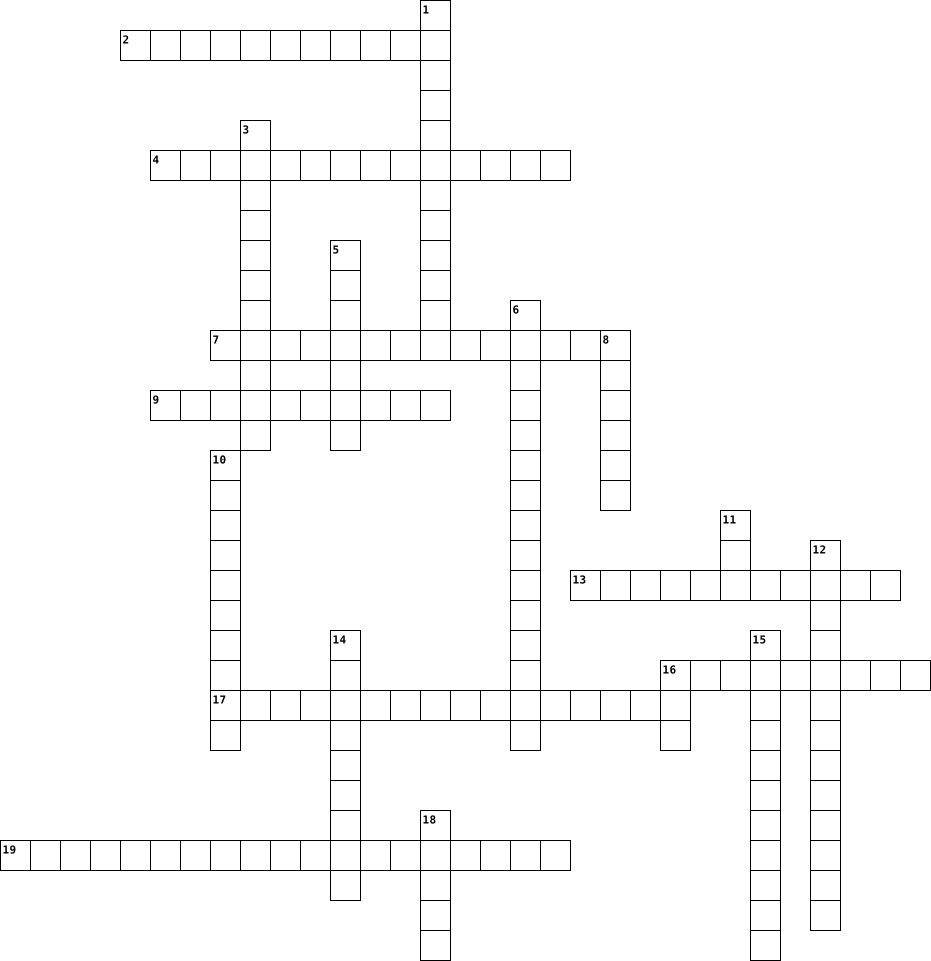
Across
- complex series of chemical reactions
- use light energy to make molecules for the next stage of photosynthesis
- convert light energy into chemical energy
- flattened membrane sac inside the chloroplast
- organelles that conduct photosynthesis
- does not require oxygen
- second of two major stages in photosynthesis
- breaks down organic compounds
Down
- where pyruvic acid goes when there's no oxygen
- pigment located in membranes within the chloroplasts of plants and algae
- where the reactions of glycolysis take place
- does not occur during the calvin cycle
- colorless fluid surrounding the grana
- a pair of curved cells that surround a stoma
- two hydrogens and oxygen
- occurs naturally in Earth's atmosphere as a trace gas
- organisms undergo cellular respiration
- organism that cannot produce its own food
- product of cellular respiration (1)
- essential electron donor in all organisms
20 Clues: does not require oxygen • two hydrogens and oxygen • breaks down organic compounds • product of cellular respiration (1) • complex series of chemical reactions • colorless fluid surrounding the grana • does not occur during the calvin cycle • organelles that conduct photosynthesis • organisms undergo cellular respiration • convert light energy into chemical energy • ...
Photosynthesis/Cellular Respiration 2022-11-28

Across
- how plants make food
- study of living things and their interactions
- organisms creating energy
- Unit of energy
- pancake shaped structure
Down
- reactant of photosynthesis/product of cellular respiration
- catalyst/reactant for photosynthesis
- molecule of light
- gas exchange zone
- reactant of cellular respiration/product of photosynthesis
- Location of photosynthesis
- where glucose is made
12 Clues: Unit of energy • molecule of light • gas exchange zone • how plants make food • where glucose is made • pancake shaped structure • Location of photosynthesis • organisms creating energy • catalyst/reactant for photosynthesis • study of living things and their interactions • reactant of photosynthesis/product of cellular respiration • ...
Unit 1 Crossword (NO SPACES) 2021-09-29

Across
- the _________ variable goes on the y-axis
- glucose is a kind of...
- this provides the plant with energy for photosynthesis
- A tiny hole in the lower epidermis. These holes let carbon dioxide from the air get into the leaf.
- What is "C" on the periodic table of elements.
- some plants are green because they contain...
- the "i" in IB stands for...
- when two variables move in opposite directions it is called a ________ correlation
- when two variables move in the same direction it is called a ________ correlation
- The name of your Science teacher right now
- The study of living things is called...
- another name for C6H12O6
- this carries water to the cells in leaves
- something else that is required for photosynthesis
Down
- The ________ contains cells that do most of the photosynthesis.
- Another name for independent variable is ________ variable.
- a relationship between variables is called a...
- All living things are made of...
- The process by which plants make food
- What is "H" on the periodic table of elements.
- the _________ variable goes on the x-axis
- Another name for dependent variable is _________ variable.
- something that is produced in photosynthesis that humans need
- The cells in the _______ do a small amount of photosynthesis.
- A variable that you want to keep the same each time so they are not affecting your experiment is called a _________ variable.
- something required for photosynthesis
- What is "Au" on the periodic table of elements.
- Anything that can change and be changed and anything that we can measure and observe is called a...
- The name of this class
- The _________ on the leaf surface stops the leaf cells from drying out.
30 Clues: The name of this class • glucose is a kind of... • another name for C6H12O6 • the "i" in IB stands for... • All living things are made of... • The process by which plants make food • something required for photosynthesis • The study of living things is called... • the _________ variable goes on the y-axis • the _________ variable goes on the x-axis • ...
Biology Spring Assessment Revision 2024-01-31

Across
- breaking down of living matter
- green part of a plant cell, where photosynthesis happens
- used to investigate how many daisies in a field
- process plants do that makes glucose and oxygen
- gas taken in during photosynthesis
- stands for body mass index, can be use to indicate if someone is a healthy weight
- grid used to work out combinations of genes
- there are two types, when your body isn't able to create enough insulin to manage your blood-sugar levels
- another name for a plant, can make its own energy using photosynthesis
- Controls the cell. Contains genes which tell the cell what to look like and what job to do
- The tough outer covering surrounding plant cells
- can be used to treat illness caused by bacteria
Down
- The jelly-like substance inside the cell, where all the reactions happen in the cell
- a disease that can be passed from one person to another
- water evaporating from leaves of a plant, pulls water up the stem
- microorganism that can cause illness e.g. chlamydia, sometimes has a tail called a flagellum
- gas made as a product during photosynthesis
- a disease that can't be passed on from one person to another
- process all living cells do, takes in oxygen and makes carbon dioxide
- shows all the processes that take carbon in and out of the atmosphere
- another name for sugar, made as a product during photosynthesis
- A large compartment full of liquid that is only found in plant cells
- liquid used as a reactant for photosynthesis
- movement of water from high concentration to low concentration
24 Clues: breaking down of living matter • gas taken in during photosynthesis • gas made as a product during photosynthesis • grid used to work out combinations of genes • liquid used as a reactant for photosynthesis • used to investigate how many daisies in a field • process plants do that makes glucose and oxygen • can be used to treat illness caused by bacteria • ...
extra credit #2 2022-12-21

Across
- plant-eating animal
- the main product of photosynthesis
- how plants make their food
- meat-eating animal
- usable energy
- where energy originates
Down
- organism that does photosynthesis
- green pigment of the plant
- where cellular respiration takes place
- something that speeds up chemical reactions
- all the food chains in a single ecosystem
- can be aerobic or anaerobic
- where photosynthesis occurs
- waste product of respiration
- waste product of respiration
15 Clues: usable energy • meat-eating animal • plant-eating animal • where energy originates • green pigment of the plant • how plants make their food • can be aerobic or anaerobic • where photosynthesis occurs • waste product of respiration • waste product of respiration • organism that does photosynthesis • the main product of photosynthesis • where cellular respiration takes place • ...
HB Photosynthesis Playlist Vocab 2022-10-13

Across
- in chloroplasts and mitochondria, a process in which the movement of protons down their concentration gradient across a membrane is coupled to the synthesis of ATP
- a green pigment that is present in most plant and algae cells and some bacteria, that gives plants their characteristic green color, and that absorbs light to provide energy for photosynthesis
- a water-conserving, carbon-fixing process; CAM plants take in carbon at night and fix it into various organic compounds and release it during the day
- an organism that produces its own nutrients from inorganic substances or from the environment instead of consuming other organisms
- an organelle found in plant and algae cells where photosynthesis occurs
- the process by which plants, algae, and some bacteria use sunlight, carbon dioxide, and water to produce carbohydrates and oxygen
- a lack of thylakoids in a chloroplast
- an organism that obtains organic food molecules by eating other organisms or their byproducts and that cannot synthesize organic compounds from inorganic materials
Down
- in chloroplasts, an acceptor of electrons lost from chlorophyll a; found in the thylakoid membrane
- a class of pigments that are present mostly in plants and that aid in photosynthesis
- a series of molecules, found in the inner membranes of mitochondria and chloroplasts, through which electrons pass in a process that causes protons to build up on one side of the membrane
- a biochemical pathway of photosynthesis in which carbon dioxide is converted into glucose using ATP
- in the thylakoid membranes of chloroplasts, a cluster of chlorophyll and other pigment molecules that harvest light energy for the light reactions of photosynthesis
- the synthesis of organic compounds from carbon dioxide, such as in photosynthesis
- in plants, the solution that surrounds the thylakoids in a chloroplast
- one of many openings in a leaf or a stem of a plant that enable gas exchange to occur (plural, stomata)
- a pathway that enables certain plants to fix CO2 into four carbon compounds
- the initial reactions in photosynthesis, which are triggered by the absorption of light by photosystems I and II and include the passage of electrons along the electron transport chains, the production of NADPH and oxygen gas, and the synthesis of ATP through chemiosmosis
- a membrane system found within chloroplasts that contains the components for photosynthesis
- a substance that gives another substance or a mixture its color
20 Clues: a lack of thylakoids in a chloroplast • a substance that gives another substance or a mixture its color • in plants, the solution that surrounds the thylakoids in a chloroplast • an organelle found in plant and algae cells where photosynthesis occurs • a pathway that enables certain plants to fix CO2 into four carbon compounds • ...
Respiration and Photosynthesis. 2019-11-25

Across
- photosyntheis happens in here
- produces glucose from animal calls
- what makes the electrons move throught the cycle
- does not need oxygen to function
- needs oxygen to function
- what happens from the light
- also made from photosynthesis
- enthanol
- replaces electrons when they are being used
- produces gluecose and oxygen from plant cells
- space inside the chloroplast
- organic acid
- energy made from cellular resp and photosynthesis
- made from cellular resp and photosynthesis
Down
- second step in breaking down glucose
- the break down of glucose
- cellular resp happens in and out of here
- a chemical breakdown of a substance
- what makes cellular resp happen
- Pathway for reactions to happen.
- first step in breaking down glucose
- thin pancake in the stroma
22 Clues: enthanol • organic acid • needs oxygen to function • the break down of glucose • thin pancake in the stroma • what happens from the light • space inside the chloroplast • photosyntheis happens in here • also made from photosynthesis • what makes cellular resp happen • Pathway for reactions to happen. • does not need oxygen to function • produces glucose from animal calls • ...
Crossword puzzle 2025-11-26

Across
- Stuff you start with in a chemical reaction
- Process plants make food from sunlight
- First step in cellular respiration
- Energy currency of cells
- Cell's powerhouses
- An organism that eats others for energy
- Needs oxygen
- Stuff you get after a chemical reaction
- respiration: Process cells get energy from food
- Cycle: Part of photosynthesis where plants fix CO2
- Cycle: Part of cellular respiration in mitochondria
- Transport Chain
- Type of sugar
Down
- Organism that makes its own food
- What we breathe
- Type of molecule with phosphorus
- What ATP turns into after energy is used
- dioxide: What plants use for photosynthesis
- Part of plant cells where photosynthesis happens
- Green pigment that captures sunlight
- Getting energy without oxygen
- Eats other organisms
- Makes its own food
- Doesn't need oxygen
24 Clues: Needs oxygen • Type of sugar • What we breathe • Transport Chain • Cell's powerhouses • Makes its own food • Doesn't need oxygen • Eats other organisms • Energy currency of cells • Getting energy without oxygen • Organism that makes its own food • Type of molecule with phosphorus • First step in cellular respiration • Green pigment that captures sunlight • ...
Jordan Distance - Photosynthesis 2023-02-22

Across
- Where water is stored in photosynthesis.
- How plants make their food.
- This macromolecule is needed for heterotrophs from plants.
- C6H12O6
- A green pigment giving plants their color.
- A process of combining ADP with a phosphate.
- A compound similar to ATP, but has only two phosphate groups.
- Organisms that consume others for food.
Down
- Organisms that make their own food.
- The catalyst during photosynthesis.
- The ability to do work.
- Aside from ATP, this is the second carrier of energy in a light-dependent reaction.
- Where photosynthesis occurs in plants.
- A molecule used for short-term energy storage and transport in a cell.
- Where light-dependent reactions during photosynthesis occur.
15 Clues: C6H12O6 • The ability to do work. • How plants make their food. • Organisms that make their own food. • The catalyst during photosynthesis. • Where photosynthesis occurs in plants. • Organisms that consume others for food. • Where water is stored in photosynthesis. • A green pigment giving plants their color. • A process of combining ADP with a phosphate. • ...
Bioenergetics Key Points 2025-06-18

Across
- Cells in plants that absorb light for photosynthesis
- Tiny pores in leaves where gas exchange happens
- Main product of photosynthesis
- Type of respiration that requires oxygen
- Energy taken in during photosynthesis
- The green pigment in chloroplasts
- This type of reaction releases energy (eg in respiration)
- Type of acid produced during anaerobic respiration in humans
- Word equation end product of aerobic respiration
- One of the raw materials for respiration
Down
- Organ where gas exchange mostly happens in humans
- This type of reaction requires energy (eg photosynthesis)
- Type of respiration used during vigorous exercise
- Site of photosynthesis in plant cells
- _______ dioxide: Glucose is broken down into this gas during aerobic respiration
15 Clues: Main product of photosynthesis • The green pigment in chloroplasts • Site of photosynthesis in plant cells • Energy taken in during photosynthesis • Type of respiration that requires oxygen • One of the raw materials for respiration • Tiny pores in leaves where gas exchange happens • Word equation end product of aerobic respiration • ...
Charged by the Sun Crossword 2026-04-20

Across
- - The energized particles that move through the system.
- - The gas taken in by plants from the air.
- - The state of NADP⁺ after gaining electrons.
- - The fluid surrounding the thylakoids.
- - The green pigment that absorbs sunlight.
- - A molecule that carries high-energy electrons (empty form).
- - The source of energy for photosynthesis.
- - The type of energy stored in glucose.
Down
- - Structures inside chloroplasts that are stacked like discs.
- - The sugar produced during photosynthesis.
- - The gas released during photosynthesis.
- - The organelle where photosynthesis takes place.
- - The overall representation of a chemical reaction.
- - The process plants use to convert light energy into chemical energy.
- - The high-energy version of NADP⁺ after it gains electrons.
15 Clues: - The fluid surrounding the thylakoids. • - The type of energy stored in glucose. • - The gas released during photosynthesis. • - The gas taken in by plants from the air. • - The green pigment that absorbs sunlight. • - The source of energy for photosynthesis. • - The sugar produced during photosynthesis. • - The state of NADP⁺ after gaining electrons. • ...
Magee's Crossword 2016-12-07

Across
- in the chloroplast
- gets energy from inorganic substances
- splitting sugars
- three phosphates
- organelle in plant cells that carries out photosynthesis
- does not make own food
- two phosphates
- oxygen is present
- oxygen is not present
- cycle involved in photosynthesis
Down
- pigment (green)
- involved in fermentation
- CO2+H2O---C6H12O6+O2
- organelle involved in cellular respiration
- O2+C6H12O6---CO2+H2O
- makes own food
- cycle involved in cellular respiration
- like cytoplasm, but in thylakoids
18 Clues: makes own food • two phosphates • pigment (green) • splitting sugars • three phosphates • oxygen is present • in the chloroplast • CO2+H2O---C6H12O6+O2 • O2+C6H12O6---CO2+H2O • oxygen is not present • does not make own food • involved in fermentation • cycle involved in photosynthesis • like cytoplasm, but in thylakoids • gets energy from inorganic substances • ...
Science vocab 2022-11-04

Across
- reaction with a chemical change
- What comes from a reaction
- Product of photosynthesis
- how animals take in oxygen and make carbon dioxide
- product of cellular respiration
- how plants make oxygen and food
- What make photosynthesis
- where cellular respiration happens
Down
- sugar
- energy
- energy from radiation
- Where photosynthesis happens
- What your using to react with
- Open and close for oxygen
14 Clues: sugar • energy • energy from radiation • What make photosynthesis • Product of photosynthesis • Open and close for oxygen • What comes from a reaction • Where photosynthesis happens • What your using to react with • reaction with a chemical change • product of cellular respiration • how plants make oxygen and food • where cellular respiration happens • ...
Biology Crossword Puzzle 2022-12-13

Across
- bunches of proteins that span the thylakoids membrane and allow H+ to pass
- ATP, Photosynthesis, pigment, chlorophyll, thylakoid, stroma, NADP+, light-dependent reactions, Light independent reactions, Photosystem, ATP-Synthase, Electron transport chain, Calvin Cycle, Chloroplast, Heterotrophs, Autotrophsm, C4-Plants, CAM-Plants
- an organisms deriving its energy from complex organic substances
- reactions in photosynthesis that don’t require light
- the light-independent reactions of photosynthesis where ATP and NADPH is used to build high-energy compounds like sugar
- Green plant organelle where light energy is turned into chemical energy through photosynthesis
- A method where plants convert light energy and use it to power reactions to make sugars and starches
- series of electron carrier proteins that transport high energy electrons during ATP which rates reactions
- a strategy that plants use, where carbon dioxide will become incorporated into organic acids during photosynthesis
- bunches of proteins and chlorophyll found in thylakoids
Down
- the cytoplasm of the chloroplast; fluid of chloroplast
- reactions that photosynthesis use energy from light to produce ATP and NADPH
- an organisms that can form energy from inorganic substances like carbon
- molecule that carries high-energy electrons to the rest of the plant
- an important pigment in plants and other similar organisms
- cells used to store and release energy
- light absorbing molecules used to gather the sun's energy
- saclike green membranes found in the chloroplast
- plants that have a specialized chemical pathway that helps them capture very low levels of carbon dioxide and pass it to the Calvin cycle
19 Clues: cells used to store and release energy • saclike green membranes found in the chloroplast • reactions in photosynthesis that don’t require light • the cytoplasm of the chloroplast; fluid of chloroplast • bunches of proteins and chlorophyll found in thylakoids • light absorbing molecules used to gather the sun's energy • ...
Biology Crossword Puzzle 2022-12-13

Across
- bunches of proteins that span the thylakoids membrane and allow H+ to pass
- ATP, Photosynthesis, pigment, chlorophyll, thylakoid, stroma, NADP+, light-dependent reactions, Light independent reactions, Photosystem, ATP-Synthase, Electron transport chain, Calvin Cycle, Chloroplast, Heterotrophs, Autotrophsm, C4-Plants, CAM-Plants
- an organisms deriving its energy from complex organic substances
- reactions in photosynthesis that don’t require light
- the light-independent reactions of photosynthesis where ATP and NADPH is used to build high-energy compounds like sugar
- Green plant organelle where light energy is turned into chemical energy through photosynthesis
- A method where plants convert light energy and use it to power reactions to make sugars and starches
- series of electron carrier proteins that transport high energy electrons during ATP which rates reactions
- a strategy that plants use, where carbon dioxide will become incorporated into organic acids during photosynthesis
- bunches of proteins and chlorophyll found in thylakoids
Down
- the cytoplasm of the chloroplast; fluid of chloroplast
- reactions that photosynthesis use energy from light to produce ATP and NADPH
- an organisms that can form energy from inorganic substances like carbon
- molecule that carries high-energy electrons to the rest of the plant
- an important pigment in plants and other similar organisms
- cells used to store and release energy
- light absorbing molecules used to gather the sun's energy
- saclike green membranes found in the chloroplast
- plants that have a specialized chemical pathway that helps them capture very low levels of carbon dioxide and pass it to the Calvin cycle
19 Clues: cells used to store and release energy • saclike green membranes found in the chloroplast • reactions in photosynthesis that don’t require light • the cytoplasm of the chloroplast; fluid of chloroplast • bunches of proteins and chlorophyll found in thylakoids • light absorbing molecules used to gather the sun's energy • ...
Biology Crossword Puzzle 2022-12-13

Across
- bunches of proteins and chlorophyll found in thylakoids
- the light-independent reactions of photosynthesis where ATP and NADPH is used to build high-energy compounds like sugar
- word bank:ATP, Photosynthesis, pigment, chlorophyll, thylakoid, stroma, NADP+, light-dependent reactions, Light independent reactions, Photosystem, ATP-Synthase, Electron transport chain, Calvin Cycle, Chloroplast, Heterotrophs, Autotrophsm, C4-Plants, CAM-Plants
- an organisms that can form energy from inorganic substances like carbon
- A method where plants convert light energy and use it to power reactions to make sugars and starches
- an important pigment in plants and other similar organisms
- reactions in photosynthesis that don’t require light
- bunches of proteins that span the thylakoids membrane and allow H+ to pass
Down
- series of electron carrier proteins that transport high energy electrons during ATP which rates reactions
- molecule that carries high-energy electrons to the rest of the plant
- Green plant organelle where light energy is turned into chemical energy through photosynthesis
- light absorbing molecules used to gather the sun's energy
- plants that have a specialized chemical pathway that helps them capture very low levels of carbon dioxide and pass it to the Calvin cycle
- a strategy that plants use, where carbon dioxide will become incorporated into organic acids during photosynthesis
- reactions that photosynthesis use energy from light to produce ATP and NADPH
- cells used to store and release energy
- an organisms deriving its energy from complex organic substances
- saclike green membranes found in the chloroplast
- the cytoplasm of the chloroplast; fluid of chloroplast
19 Clues: cells used to store and release energy • saclike green membranes found in the chloroplast • reactions in photosynthesis that don’t require light • the cytoplasm of the chloroplast; fluid of chloroplast • bunches of proteins and chlorophyll found in thylakoids • light absorbing molecules used to gather the sun's energy • ...
Photosynthesis & Cellular Respiration 2022-01-19

Across
- process by which ALL living organisms break down glucose to release ATP energy
- pigment which helps absorb sunlight
- gaseous product of photosynthesis and reactant of respiration
- product of cellular respiration and reactant of photosynthesis that plants get from their roots
- process by which energy is released without the presence of oxygen
- cell organelle responsible for photosynthesis
Down
- organism that uses photosynthesis besides plants
- main product released during cellular respiration and fermentation,
- cell organelle responsible for cellular respiration
- only reactant of photosynthesis that is NOT a product of cellular respiration
- process by which plants, algae, and some bacteria use sunlight, carbon dioxide, & water to release sugar (glucose) and oxygen
- product of photosynthesis or reactant of respiration
- gaseous product of cellular respiration
13 Clues: pigment which helps absorb sunlight • gaseous product of cellular respiration • cell organelle responsible for photosynthesis • organism that uses photosynthesis besides plants • cell organelle responsible for cellular respiration • product of photosynthesis or reactant of respiration • gaseous product of photosynthesis and reactant of respiration • ...
G7 Plant Biology Vocabulary Revision 2026-04-16

Across
- A chemical used to kill pests that damage crops
- Tissue that transports water and mineral salts from roots to leaves
- A green pigment that absorbs light energy for photosynthesis
- A plant grown by farmers for food or other uses
- A sugar produced in photosynthesis used for energy and growth
- The part of a plant that anchors it and absorbs water and mineral salts
- Cells that control the opening and closing of stomata
- The outer protective cell layer of a plant
- The main site of photosynthesis in a plant
- The process of breeding two different varieties to combine traits
- A chemical used to kill unwanted plants or weeds
- Tiny openings on leaves that allow gas exchange
- A type of plant with specific characteristics
Down
- A chemical used to kill fungi
- The process by which plants make glucose using light energy
- A specialised cell that increases surface area for water absorption
- A cell packed with chloroplasts where most photosynthesis occurs
- A waterproof layer on leaves that reduces water loss
- A chemical used to kill insects
- Essential nutrients absorbed from the soil for plant growth
- A substance used to build plant cell walls
- Tissue that transports sugars like glucose around the plant
- The part of a plant that supports it and transports substances
- Choosing plants with desired traits to reproduce
- The amount of light available for photosynthesis
- Farming method that avoids synthetic chemicals like pesticides and fertilizers
- The organelle where photosynthesis takes place
- A substance added to soil to provide nutrients for plant growth
- An organism whose genetic material has been altered using genetic engineering
29 Clues: A chemical used to kill fungi • A chemical used to kill insects • A substance used to build plant cell walls • The outer protective cell layer of a plant • The main site of photosynthesis in a plant • A type of plant with specific characteristics • The organelle where photosynthesis takes place • A chemical used to kill pests that damage crops • ...
Parts of Plants 2023-03-08

Across
- plants
- forest
- roots
- nutrients
- oxygen
- carry
- water
- seed
Down
- stem
- light
- photosynthesis
- reproduce
- flower
- fruit
- shallow
- bread
16 Clues: stem • seed • light • fruit • roots • carry • water • bread • plants • flower • forest • oxygen • shallow • reproduce • nutrients • photosynthesis
Photosynthesis and Cellular Respiration 2023-04-13

Across
- The fluid that fills the chloroplasts and surrounds the thylakoid/grana
- The green pigment found inside chloroplasts
- The first stage of cellular respiration that makes 2 ATP
- The process that turns glucose (food) into energy
- Cellular respiration without the presence of oxygen
- The organelle where cellular respiration occurs
- On average the number of ATP produced during cellular respiration
- The organelle where photosynthesis occurs
- The folds found inside of the mitochondria are called ________
Down
- The process that turns sunlight into glucose
- The reactant of cellular respiration are glucose and _______.
- The reactants of photosynthesis are sunlight, CO2, and ______
- The type of energy used during photosynthesis
- This type of fermentation is used to create many food and beverages
- This is the cycle that takes place during photosynthesis
- The type of energy made during cellular respiration
- The colors that plants absorb are red and ______
17 Clues: The organelle where photosynthesis occurs • The green pigment found inside chloroplasts • The process that turns sunlight into glucose • The type of energy used during photosynthesis • The organelle where cellular respiration occurs • The colors that plants absorb are red and ______ • The process that turns glucose (food) into energy • ...
Life processes in plants 2025-08-10

Across
- The form released during respiration and used by plants for growth and development.
- Tiny pores on the surface of leaves that help in the exchange of gases.
- The simple carbohydrate produced during photosynthesis that later gets converted into starch for storage.
- The part of a plant that takes up water and minerals from the soil.
- The movement of water, minerals and food within the plant.
- The thin tube-like structure that transports food from leaves to all parts of the plant.
- The thin tube-like structure that transports water and minerals from roots to other parts of the plant.
- The gas from the air that is essential for plants to prepare starch.
- A raw material absorbed by roots and used in photosynthesis.
- The solution used to test the presence of starch in a leaf.
Down
- The process in which glucose is broken down in the presence of oxygen releasing carbon dioxide, water and energy.
- The primary site for photosynthesis in plants.
- The green pigment in leaves that helps in capturing sunlight efficiently.
- A natural substance in leaves that gives them colour and helps in photosynthesis.
- The gas released during photosynthesis.
- A type of carbohydrate stored in the leaves of a plant and detected by the iodine test.
- The process by which plants prepare food in the presence of sunlight and chlorophyll.
- The source of carbon dioxide used in the process of photosynthesis.
18 Clues: The gas released during photosynthesis. • The primary site for photosynthesis in plants. • The movement of water, minerals and food within the plant. • The solution used to test the presence of starch in a leaf. • A raw material absorbed by roots and used in photosynthesis. • The part of a plant that takes up water and minerals from the soil. • ...
Biology Crossword Puzzle 2022-12-13

Across
- bunches of proteins that span the thylakoids membrane and allow H+ to pass
- ATP, Photosynthesis, pigment, chlorophyll, thylakoid, stroma, NADP+, light-dependent reactions, Light independent reactions, Photosystem, ATP-Synthase, Electron transport chain, Calvin Cycle, Chloroplast, Heterotrophs, Autotrophsm, C4-Plants, CAM-Plants
- an organisms deriving its energy from complex organic substances
- reactions in photosynthesis that don’t require light
- the light-independent reactions of photosynthesis where ATP and NADPH is used to build high-energy compounds like sugar
- Green plant organelle where light energy is turned into chemical energy through photosynthesis
- A method where plants convert light energy and use it to power reactions to make sugars and starches
- series of electron carrier proteins that transport high energy electrons during ATP which rates reactions
- a strategy that plants use, where carbon dioxide will become incorporated into organic acids during photosynthesis
- bunches of proteins and chlorophyll found in thylakoids
Down
- the cytoplasm of the chloroplast; fluid of chloroplast
- reactions that photosynthesis use energy from light to produce ATP and NADPH
- an organisms that can form energy from inorganic substances like carbon
- molecule that carries high-energy electrons to the rest of the plant
- an important pigment in plants and other similar organisms
- cells used to store and release energy
- light absorbing molecules used to gather the sun's energy
- saclike green membranes found in the chloroplast
- plants that have a specialized chemical pathway that helps them capture very low levels of carbon dioxide and pass it to the Calvin cycle
19 Clues: cells used to store and release energy • saclike green membranes found in the chloroplast • reactions in photosynthesis that don’t require light • the cytoplasm of the chloroplast; fluid of chloroplast • bunches of proteins and chlorophyll found in thylakoids • light absorbing molecules used to gather the sun's energy • ...
Biology Crossword Puzzle 2022-12-13

Across
- bunches of proteins that span the thylakoids membrane and allow H+ to pass
- ATP, Photosynthesis, pigment, chlorophyll, thylakoid, stroma, NADP+, light-dependent reactions, Light independent reactions, Photosystem, ATP-Synthase, Electron transport chain, Calvin Cycle, Chloroplast, Heterotrophs, Autotrophsm, C4-Plants, CAM-Plants
- an organisms deriving its energy from complex organic substances
- reactions in photosynthesis that don’t require light
- the light-independent reactions of photosynthesis where ATP and NADPH is used to build high-energy compounds like sugar
- Green plant organelle where light energy is turned into chemical energy through photosynthesis
- A method where plants convert light energy and use it to power reactions to make sugars and starches
- series of electron carrier proteins that transport high energy electrons during ATP which rates reactions
- a strategy that plants use, where carbon dioxide will become incorporated into organic acids during photosynthesis
- bunches of proteins and chlorophyll found in thylakoids
Down
- the cytoplasm of the chloroplast; fluid of chloroplast
- reactions that photosynthesis use energy from light to produce ATP and NADPH
- an organisms that can form energy from inorganic substances like carbon
- molecule that carries high-energy electrons to the rest of the plant
- an important pigment in plants and other similar organisms
- cells used to store and release energy
- light absorbing molecules used to gather the sun's energy
- saclike green membranes found in the chloroplast
- plants that have a specialized chemical pathway that helps them capture very low levels of carbon dioxide and pass it to the Calvin cycle
19 Clues: cells used to store and release energy • saclike green membranes found in the chloroplast • reactions in photosynthesis that don’t require light • the cytoplasm of the chloroplast; fluid of chloroplast • bunches of proteins and chlorophyll found in thylakoids • light absorbing molecules used to gather the sun's energy • ...
LETSDOPUZZLE 2025-01-09

Across
- What is dihydrogen monoxide known as informally?
- What is the first stage of photosynthesis?
- What is the second stage of photosynthesis?
- Besides oxygen, what is the product of photosynthesis?
- Which atom does most of the matter in a plant come from?
- What molecule transports electrons in cellular respiration? (hint:7.5)
- What is one of the molecules used in photosynthesis? (hint:2 words, no space)
Down
- What is the word for photosynthesis? (hint:7.9)
- What is the name of the fluid in the choroplast?
- What organelle is responsible for photosynthesis?
- What is the inverse process to photosynthesis? (hint:2 words, no space)
- What are we studying in this class?
- What is the name of the pigment molecule that absorbs light energy?
13 Clues: What are we studying in this class? • What is the first stage of photosynthesis? • What is the second stage of photosynthesis? • What is the word for photosynthesis? (hint:7.9) • What is dihydrogen monoxide known as informally? • What is the name of the fluid in the choroplast? • What organelle is responsible for photosynthesis? • ...