
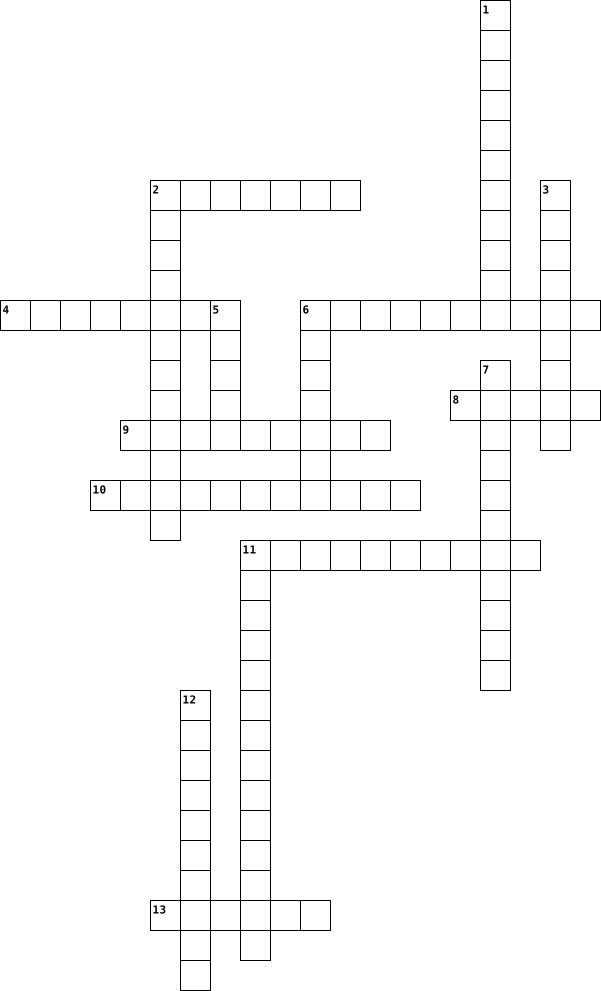
photosynthesis Crossword Puzzles
Cell Energy Cycle 2019-08-15

Across
- with the use of oxygen
- a product of cellular respiration, a reactant in photosynthesis
- The process where animals produce carbon dioxide and water
- an energy source for the cell
- when glucose is broken into two pyruvate molecules
Down
- with the absence of oxygen
- the powerhouse of the cell, where cellular respiration happens
- a product of photosynthesis, a reactant in cellular respiration
- Glucose and ATP are forms of this
- Sunlight is an example of this
- where glycolysis happens during cellular respiration
- where plants conduct photosynthesis
- the pigment that makes plants green
- a product of cellular respiration, a reactant in photosynthesis
- The process where plants produce oxygen and sugar
- sugar, a product of photosynthesis, a reactant in cellular respiration
16 Clues: with the use of oxygen • with the absence of oxygen • an energy source for the cell • Sunlight is an example of this • Glucose and ATP are forms of this • where plants conduct photosynthesis • the pigment that makes plants green • The process where plants produce oxygen and sugar • when glucose is broken into two pyruvate molecules • ...
Photosynthesis Playlist Crossword 2022-10-13

Across
- an organism that produces its own nutrients from inorganic substances or from the environment instead of consuming other organisms
- in chloroplasts and mitochondria, a process in which the movement of protons down their concentration gradient across a membrane is coupled to the synthesis of ATP
- a stack of thylakoids in a chloroplast
- an organism that obtains organic food molecules by eating other organisms or their byproducts and that cannot synthesize organic compounds from inorganic materials
- term not found
- a biochemical pathway of photosynthesis in which carbon dioxide is converted into glucose using ATP
- the initial reactions in photosynthesis, which are triggered by the absorption of light by photosystems I and II and include the passage of electrons along the electron transport chains, the production of NADPH and oxygen gas, and the synthesis of ATP through chemiosmosis
- in plants, the solution that surrounds the thylakoids in a chloroplast
- a series of molecules, found in the inner membranes of mitochondria and chloroplasts, through which electrons pass in a process that causes protons to build up on one side of the membrane
- in the thylakoid membranes of chloroplasts, a cluster of chlorophyll and other pigment molecules that harvest light energy for the light reactions of photosynthesis
Down
- a green pigment that is present in most plant and algae cells and some bacteria, that gives plants their characteristic green color, and that absorbs light to provide energy for photosynthesis
- the process by which plants, algae, and some bacteria use sunlight, carbon dioxide, and water to produce carbohydrates and oxygen
- the synthesis of organic compounds from carbon dioxide, such as in photosynthesis
- a membrane system found within chloroplasts that contains the components for photosynthesis
- a substance that gives another substance or a mixture its color
- a water-conserving, carbon-fixing process; CAM plants take in carbon at night and fix it into various organic compounds and release it during the day
- an organelle found in plant and algae cells where photosynthesis occurs
- a class of pigments that are present mostly in plants and that aid in photosynthesis
- one of many openings in a leaf or a stem of a plant that enable gas exchange to occur
- in chloroplasts, an acceptor of electrons lost from chlorophyll a; found in the thylakoid membrane
20 Clues: term not found • a stack of thylakoids in a chloroplast • a substance that gives another substance or a mixture its color • in plants, the solution that surrounds the thylakoids in a chloroplast • an organelle found in plant and algae cells where photosynthesis occurs • the synthesis of organic compounds from carbon dioxide, such as in photosynthesis • ...
Photosynthesis and Respiration Crossword 2023-11-15

Across
- C6H12O6
- A gas given off during cellular respiration
- The first step of cellular respiration
- The third step of cellular respiration
- A part of photosynthesis that requires light
- An input that is a gas in cellular respiration
Down
- The second stage of cellular respiration
- Also called the Calvin Cycle
- A liquid that is taken in during photosynthesis
- 6CO2 + 6H2O = C6H12O6 + 6O2
- C6H12O6 + 6O2 = 6CO2 + 6H2O + ATP
- The powerhouse of the cell
- A process mostly plants do
- This is what remains after a phosphate group is removed from ATP
- A process mostly animals do
- The organelle where photosynthesis occurs
- Has more energy than ADP
17 Clues: C6H12O6 • Has more energy than ADP • The powerhouse of the cell • A process mostly plants do • 6CO2 + 6H2O = C6H12O6 + 6O2 • A process mostly animals do • Also called the Calvin Cycle • C6H12O6 + 6O2 = 6CO2 + 6H2O + ATP • The first step of cellular respiration • The third step of cellular respiration • The second stage of cellular respiration • ...
Photosynthesis Review 2022-10-21

Across
- Energy that drives Light Reactions
- Liquid inside the chloroplast where the Calvin Cycle occurs
- Pigment that helps absorb light energy
- Organelle where photosynthesis takes place
- Electron carrier molecule produced in Light Reactions
- Waste product from splitting water
- Another name for the Light Reactions
Down
- Photosynthesis Reactant used in Light Reactions
- Another name for the Calvin Cycle
- Photosynthesis Reactant used in the Calvin Cycle
- The final carbohydrate product in photosynthesis
- Disc-shaped vesicle where the Light Reactions occur
- High storage compound produced in Light Reactions
- Process in which organisms convert light energy into sugars
14 Clues: Another name for the Calvin Cycle • Energy that drives Light Reactions • Waste product from splitting water • Another name for the Light Reactions • Pigment that helps absorb light energy • Organelle where photosynthesis takes place • Photosynthesis Reactant used in Light Reactions • Photosynthesis Reactant used in the Calvin Cycle • ...
dfg 2025-04-21

Across
- a chemical found in the thylakoids of chloroplasts. It is responsible for absorbing light energy in photosynthesis
- the process in which molecules are broken down by the action of light
- a membrane-bound organelle only found in plant and photoautotroph cells that is the site of photosynthesis
- a flattened sac-like structure housed inside the chloroplast. Each thylakoid is made up of a chlorophyll-containing membrane enclosing a lumen. Thylakoids are the location of the light-dependent stage of photosynthesis
- the first stage of photosynthesis, where light energy splits water molecules into oxygen and hydrogen inside the thylakoid membranes
- the fluid substance that makes up the interior of chloroplasts. It is the site of the light-independent stage of photosynthesis
- the process of capturing light energy to power the production of glucose and oxygen from carbon dioxide and water
Down
- an organism capable of undertaking photosynthesis
- a small pore on the leaf’s surface that opens and closes to regulate gas exchange
- the second stage of photosynthesis where carbon dioxide is used to form glucose in the stroma of a chloroplast.
- a plant cell type found in leaves that contain large amounts of chloroplasts
- adenosine triphosphate, a high energy molecule that, when broken down, provides energy for cellular processes
- a coenzyme that is a proton (H+) and electron carrier in photosynthesis
- a stack of thylakoids
- vascular tissue in plants responsible for transporting water and minerals from the roots to the leaves
15 Clues: a stack of thylakoids • an organism capable of undertaking photosynthesis • the process in which molecules are broken down by the action of light • a coenzyme that is a proton (H+) and electron carrier in photosynthesis • a plant cell type found in leaves that contain large amounts of chloroplasts • ...
Solve Me 2023-12-04

Across
- -Only _____ plants can photosynthesize
- It is an organism in which photosynthesis happen
- Dioxide -It is a gas that need to have an increase amount during photosynthesis
- Dioxide -Plants take in _____from the air
- -It is a by-product of photosynthesis
- Plants take in _____ from the soil
- -Plant are green because their cell contains chloroplast which has green coloured pigment known.
- -It is produced by photosynthesis that is stored within the plant.
Down
- The process of photosynthesis occurs in
- and Oxygen - It is a product of photosynthesis
- -Plants leaves have small pores called as
- -Photosynthesis starts when chlorophyll absorbs energy from
- -Plants use a process called photosynthesis to make
- -It is a green color pigment, present in leaves helps plant in absorbing energy of light
- -Plants make their food using sunlight, water, carbon dioxide and nutrients and minerals from the soil. This process is called
15 Clues: Plants take in _____ from the soil • -It is a by-product of photosynthesis • The process of photosynthesis occurs in • -Only _____ plants can photosynthesize • -Plants leaves have small pores called as • Dioxide -Plants take in _____from the air • and Oxygen - It is a product of photosynthesis • It is an organism in which photosynthesis happen • ...
Science crossword (Photosynthesis) 2022-11-01

Across
- a material for photosynthesis
- gets their food by eating others
- inhale exhale
- power house of the cell
- process for food
- unprocessed
Down
- what plants inhale
- produce by photosynthesis
- what humans and animals breathe
- plants, they start off the food chain
- an organism that does do photosynthesis
- plastid with chlorophyll
- the outcome
13 Clues: the outcome • unprocessed • inhale exhale • process for food • what plants inhale • power house of the cell • plastid with chlorophyll • produce by photosynthesis • a material for photosynthesis • what humans and animals breathe • gets their food by eating others • plants, they start off the food chain • an organism that does do photosynthesis
Chemical Reactions 2023-09-12

Across
- Another reactant for photosynthesis.
- The evidence that a precipitation reaction has occurred is that the solutions go_____
- the product of the corrosion of iron.
- Taken in by plants as a reactant for photosynthesis.
- The reaction that takes place in the chloroplast of plants.
- The reaction of metal with oxygen gas in the presence of water.
Down
- The chemical equation that takes place in all living cells.
- A word ________ can be written to describe a reaction.
- Produce by plants during photosynthesis.
- The name of the type of reaction that takes place when things burn.
- Found on the left-hand side of the arrow in a chemical reaction.
- A product of photosynthesis.
- Found on the right-hand side of the arrow in a chemical reaction.
- A reaction between two solutions that produces a solid.
- The equations for Respiration and Photosynthesis are______ of each other.
15 Clues: A product of photosynthesis. • Another reactant for photosynthesis. • the product of the corrosion of iron. • Produce by plants during photosynthesis. • Taken in by plants as a reactant for photosynthesis. • A word ________ can be written to describe a reaction. • A reaction between two solutions that produces a solid. • ...
Photosynthesis and Cellular Respiration test review 2023-03-23

Across
- the gas needed in photosynthesis
- in the process of photosynthesis, plants use energy from lights to produce this
- the organelle where photosynthesis happens in plants
- the sugar made in photosynthesis
- what are the products in cellular respiration (include and)
- cellular respiration occurs here
Down
- the process of producing ATP from oxygen and glucose
- what are the reactants in cellular respiration (include and)
- What is the chemical equation for cellular respiration
- the process in which plants make glucose
- the gas released off by plants during photosynthesis
- one of the products of cellular respiration
- plants need this to make their own food
- in the process of cellular respiration, organisms break down food to release
14 Clues: the gas needed in photosynthesis • the sugar made in photosynthesis • cellular respiration occurs here • plants need this to make their own food • the process in which plants make glucose • one of the products of cellular respiration • the process of producing ATP from oxygen and glucose • the gas released off by plants during photosynthesis • ...
Plants! 2025-11-24

Across
- sugar produced in leaves during photosynthesis
- ability to make sugar from sunlight
- carries sugar from leaves throughout the plant
- how nonvascular plants obtain water
- plants that have xylem and phloem
- role of gas exchange, located under leaves
- site of photosynthesis
- supports the leaves
Down
- product of photosynthesis
- do not have flowers or fruit,'naked seed'
- informal name for nonvascular plants
- 90% of all plants
- pigment in chloroplast
- carries water in vascular plants
- anchor plants and absorb water
15 Clues: 90% of all plants • supports the leaves • pigment in chloroplast • site of photosynthesis • product of photosynthesis • anchor plants and absorb water • carries water in vascular plants • plants that have xylem and phloem • ability to make sugar from sunlight • how nonvascular plants obtain water • informal name for nonvascular plants • do not have flowers or fruit,'naked seed' • ...
PLANTS STARTER 2025-10-01

Across
- The flat, green part of a plant where photosynthesis happens. (4)
- Plants absorb this liquid through their roots for photosynthesis. (5)
- The green pigment that captures sunlight for photosynthesis. (11)
- Tiny holes on the underside of a leaf that let gases in and out. (7)
- The gas released by plants during photosynthesis. (6)
- The energy source plants need to start photosynthesis. (8)
- The part of a plant that absorbs water and nutrients from the soil. (5)
Down
- What plants make from sunlight to help them grow. (6)
- The living organism that uses photosynthesis to make its own food. (5)
- A plant that doesn’t seem to care about photosynthesis because it’s too cool for leaves! (6)
- Plants take in this gas to use during photosynthesis. (6)
- The sugar made by plants during photosynthesis. (7)
12 Clues: The sugar made by plants during photosynthesis. (7) • What plants make from sunlight to help them grow. (6) • The gas released by plants during photosynthesis. (6) • Plants take in this gas to use during photosynthesis. (6) • The energy source plants need to start photosynthesis. (8) • The flat, green part of a plant where photosynthesis happens. (4) • ...
Biology Crossword Puzzle 2022-12-13

Across
- bunches of proteins that span the thylakoids membrane and allow H+ to pass
- ATP, Photosynthesis, pigment, chlorophyll, thylakoid, stroma, NADP+, light-dependent reactions, Light independent reactions, Photosystem, ATP-Synthase, Electron transport chain, Calvin Cycle, Chloroplast, Heterotrophs, Autotrophsm, C4-Plants, CAM-Plants
- an organisms deriving its energy from complex organic substances
- reactions in photosynthesis that don’t require light
- the light-independent reactions of photosynthesis where ATP and NADPH is used to build high-energy compounds like sugar
- Green plant organelle where light energy is turned into chemical energy through photosynthesis
- A method where plants convert light energy and use it to power reactions to make sugars and starches
- series of electron carrier proteins that transport high energy electrons during ATP which rates reactions
- a strategy that plants use, where carbon dioxide will become incorporated into organic acids during photosynthesis
- bunches of proteins and chlorophyll found in thylakoids
Down
- the cytoplasm of the chloroplast; fluid of chloroplast
- reactions that photosynthesis use energy from light to produce ATP and NADPH
- an organisms that can form energy from inorganic substances like carbon
- molecule that carries high-energy electrons to the rest of the plant
- an important pigment in plants and other similar organisms
- cells used to store and release energy
- light absorbing molecules used to gather the sun's energy
- saclike green membranes found in the chloroplast
- plants that have a specialized chemical pathway that helps them capture very low levels of carbon dioxide and pass it to the Calvin cycle
19 Clues: cells used to store and release energy • saclike green membranes found in the chloroplast • reactions in photosynthesis that don’t require light • the cytoplasm of the chloroplast; fluid of chloroplast • bunches of proteins and chlorophyll found in thylakoids • light absorbing molecules used to gather the sun's energy • ...
Biology Crossword Puzzle 2022-12-13

Across
- bunches of proteins and chlorophyll found in thylakoids
- the light-independent reactions of photosynthesis where ATP and NADPH is used to build high-energy compounds like sugar
- word bank:ATP, Photosynthesis, pigment, chlorophyll, thylakoid, stroma, NADP+, light-dependent reactions, Light independent reactions, Photosystem, ATP-Synthase, Electron transport chain, Calvin Cycle, Chloroplast, Heterotrophs, Autotrophsm, C4-Plants, CAM-Plants
- an organisms that can form energy from inorganic substances like carbon
- A method where plants convert light energy and use it to power reactions to make sugars and starches
- an important pigment in plants and other similar organisms
- reactions in photosynthesis that don’t require light
- bunches of proteins that span the thylakoids membrane and allow H+ to pass
Down
- series of electron carrier proteins that transport high energy electrons during ATP which rates reactions
- molecule that carries high-energy electrons to the rest of the plant
- Green plant organelle where light energy is turned into chemical energy through photosynthesis
- light absorbing molecules used to gather the sun's energy
- plants that have a specialized chemical pathway that helps them capture very low levels of carbon dioxide and pass it to the Calvin cycle
- a strategy that plants use, where carbon dioxide will become incorporated into organic acids during photosynthesis
- reactions that photosynthesis use energy from light to produce ATP and NADPH
- cells used to store and release energy
- an organisms deriving its energy from complex organic substances
- saclike green membranes found in the chloroplast
- the cytoplasm of the chloroplast; fluid of chloroplast
19 Clues: cells used to store and release energy • saclike green membranes found in the chloroplast • reactions in photosynthesis that don’t require light • the cytoplasm of the chloroplast; fluid of chloroplast • bunches of proteins and chlorophyll found in thylakoids • light absorbing molecules used to gather the sun's energy • ...
Plants 2019-06-27

Across
- The waste gas product of photosynthesis
- The green pigment inside plant cells which allow photosynthesis to occur
- Glucose is stored as s_______ in a plant (usually in its roots)
- The tiny structure inside plant cells where photosynthesis occurs
- The gas needed to carry out photosynthesis
- The name given to plants with white and green patches on their leaves
- Tiny tubes which carry water up from the roots
Down
- Tiny tubes which carry glucose away from the leaves
- The chemical reaction which produces food for the plant
- Apart from water, what else do plant roots absorb from the soil?
- A chemical reaction which releases energy from food
- What goes on the arrow in the equation Carbon dioxide + Water --> Oxygen + Glucose
- Complete the specialised plant cell name 'Root ____ cells'
- The sugar made during photosynthesis
- An essential mineral needed to make chlorophyll
- Tiny pores in the leaves which allow gasses to pass in and out of the leaves
16 Clues: The sugar made during photosynthesis • The waste gas product of photosynthesis • The gas needed to carry out photosynthesis • Tiny tubes which carry water up from the roots • An essential mineral needed to make chlorophyll • Tiny tubes which carry glucose away from the leaves • A chemical reaction which releases energy from food • ...
ATP and Photosynthesis 2024-10-24

Across
- Chlorophyll is a pigment found in the _____
- Chemical energy is stored in the _____ of chemical compounds
- Pigments absorb some ____ of light energy and reflect others
- The first of two parts of photosynthesis
- ATP stands for _____ triphosphate
- ______ is the ability to do work
- What is one thing that is USED in photosynthesis?
- Chlorophyll reflects yellow and ____ light
- All organisms require energy and this energy comes from ____
- Organisms that can produce their own food
- Energy comes in various forms, such as light, mechanical, and _____
Down
- When the bond between the 2nd and 3rd phosphate groups is broken, energy is _______ and can be used by the cell
- What is one thing that is USED in photosynthesis?
- What is one thing that is MADE in photosynthesis?
- Energy is like currency for cells because it can be transported from one ________ to another
- What is one thing that is MADE in photosynthesis?
- What is one thing that is used from the sun for photosynthesis?
- The second of two parts of photosynthesis
- ATP is used by cells to create __________
- Organisms that cannot produce their own food
20 Clues: ______ is the ability to do work • ATP stands for _____ triphosphate • The first of two parts of photosynthesis • The second of two parts of photosynthesis • ATP is used by cells to create __________ • Organisms that can produce their own food • Chlorophyll reflects yellow and ____ light • Chlorophyll is a pigment found in the _____ • ...
Photosynthesis/Respiration Review 2025-01-23

Across
- the gas needed for photosynthesis
- the molecules that go into a chemical reaction
- the organelle responsible for photosynthesis
- term describing organisms that make their own food
- rely on plants and animals that eat plants for their food
- where plants get the energy needed for photosynthesis
- taken up by roots of a plant
Down
- the molecules that are made during a chemical reaction
- able to do bother photosynthesis and cellular respiration
- the organelle responsible for cellular respiration
- the gas needed for cellular respiration
- the color of the chlorophyl inside chloroplasts
- term describing organisms that rely on eating other organisms for their food
- the simple sugar needed for cellular respiration
- initials for the energy produced during cellular respiration
- what part of a plant is most photosynthesis done
16 Clues: taken up by roots of a plant • the gas needed for photosynthesis • the gas needed for cellular respiration • the organelle responsible for photosynthesis • the molecules that go into a chemical reaction • the color of the chlorophyl inside chloroplasts • the simple sugar needed for cellular respiration • what part of a plant is most photosynthesis done • ...
Roots 2021-09-23
Across
- biology
- vocalize
- aquamarine
- phone
- pantyhose
- dehydration
- photograph
- vision
Down
- transgender
- bibliography
- ascending
- eject
- airport
- photosphere
- photosynthesis
- navigation
16 Clues: eject • phone • vision • biology • airport • vocalize • ascending • pantyhose • aquamarine • photograph • navigation • transgender • photosphere • dehydration • bibliography • photosynthesis
Photosynthesis - Day 1 2017-05-31

Across
- Produces own energy
- Glucose sugar and oxygen gas
- Stacks of thylakoids
- Energy Energy produced from chemical compounds
- Sacs inside a chloroplast where light reactions take place
- The conversion of solar energy into chemical
- A living organism that conducts photosynthesis
- Energy from the sun
- An organism that produces their own food
Down
- Star that gives plants energy
- Carbon dioxide and water
- Coloring matter of tissue
- A green pigment that makes photosynthesis possible
- Where photosynthesis is conducted
- Fluid that surrounds thylakoids
15 Clues: Produces own energy • Energy from the sun • Stacks of thylakoids • Carbon dioxide and water • Coloring matter of tissue • Glucose sugar and oxygen gas • Star that gives plants energy • Fluid that surrounds thylakoids • Where photosynthesis is conducted • An organism that produces their own food • The conversion of solar energy into chemical • ...
Photosynthesis and Cellular Respiration AS 2022-11-01

Across
- the only place where photosynthesis can occur
- opposite of photosynthesis
- dioxide CO2
- end results of a chemical reaction
- O2
- where the second stage of cellular respiration occurs
- beginning of the food chain
- a producer that makes its own food
Down
- H2O
- food produced from photosynthesis
- one of the two places where cellular respiration can occur
- an organism that feeds on other organisms
- opposite of cellular respiration
- where the first stage of cellular respiration occurs
- organism that doesn't make its own food
15 Clues: O2 • H2O • dioxide CO2 • opposite of photosynthesis • beginning of the food chain • opposite of cellular respiration • food produced from photosynthesis • end results of a chemical reaction • a producer that makes its own food • organism that doesn't make its own food • an organism that feeds on other organisms • the only place where photosynthesis can occur • ...
Photosynthesis/Respiration Review 2024-12-13

Across
- Fuel or energy for the cell
- Plant part transports water and food
- Sugar used in photosynthesis
- Process used to make cell energy
- Gas made by plants
- plant parts that are food factories
- Cell part used to make cell energy
- Part takes in water for plants
- Makes own food
- Green pigment in plants
Down
- Gas waste for animals
- Process using sun to make sugar
- Energy needed for photosynthesis
- Cell part used in photosynthesis
- To ingest food or eat food
15 Clues: Makes own food • Gas made by plants • Gas waste for animals • Green pigment in plants • To ingest food or eat food • Fuel or energy for the cell • Sugar used in photosynthesis • Part takes in water for plants • Process using sun to make sugar • Energy needed for photosynthesis • Process used to make cell energy • Cell part used in photosynthesis • Cell part used to make cell energy • ...
Plant Cells and Structures 2025-12-12

Across
- Process plants use to convert carbon dioxide and water into glucose using sunlight
- Carbohydrate used by plants for structure of cell wall
- Element plants need to build amino acids and proteins
- Plant structures that absorb water and nutrients from the soil
- Carbohydrate used by plants for long-term energy storage
- Process that helps organisms return to equilibrium after a change
- Plant tissue that transports glucose from leaves to other parts of the plant
- Large organelle in plant cells that stores water
Down
- Gas taken in by plants during photosynthesis
- Gas released as a byproduct of photosynthesis
- Substance plants need to build molecules and maintain health
- Organelle where photosynthesis occurs in plant cells
- Sugar molecule produced during photosynthesis and used for energy
- Openings in leaves that regulate gas exchange and water loss
- Ability of an organism to maintain internal balance
- Element needed to build ATP and other molecules
- Protein that speeds up chemical reactions (digestion/synthesizing) in cells
- Plant tissue that transports water and minerals from roots to leaves
- Rigid structure that provides support and protection to plant cells
19 Clues: Gas taken in by plants during photosynthesis • Gas released as a byproduct of photosynthesis • Element needed to build ATP and other molecules • Large organelle in plant cells that stores water • Ability of an organism to maintain internal balance • Organelle where photosynthesis occurs in plant cells • Element plants need to build amino acids and proteins • ...
Key area 3 - Photosynthesis 2021-07-15

Across
- Structural carbohydrate found in the cell wall that gives plant cells its shape and strength
- Gas which plants require in order to carry out photosynthesis. Its concentration can become a limiting factor if in short supply.
- A Limiting factor which may reduce rate of photosynthesis when low.
- Cycle that takes place in the stroma of chloroplasts when carbon dioxide is fixed to form glucose (C6H12O6)
- Chemical substance that is orange in colour but can turn blue/black in the presence of starch
- Plant cell organelle that contains chlorophyll to trap light energy
- Rate at which a reaction is at its maximum
Down
- Storage carbohydrate which can be tested for using iodine
- Factor that limits the rate of a reaction such as photosynthesis when it is in short supply.
- This molecule is split in the first stage of photosynthesis.
- Name of the first stage of photosynthesis when water is split. (Photolysis)
- Gas released during photosynthesis that is a by- product of the splitting of water
- Process by which plants convert light energy into chemical energy
- Sugar produced during the second stage of photosynthesis. Formula (C6H12O6)
14 Clues: Rate at which a reaction is at its maximum • Storage carbohydrate which can be tested for using iodine • This molecule is split in the first stage of photosynthesis. • Process by which plants convert light energy into chemical energy • A Limiting factor which may reduce rate of photosynthesis when low. • ...
Crossword: review for midterm #3 2020-11-17

Across
- oils, fats and waxes
- long, strong, flexible cells
- this cell transports sugars
- which part of the roots absorb water?
- evaporation from leaves
- a hollow cell
- a disaccharide
- a structural polysaccharide
Down
- photosynthesis takes place in this cell
- a type of protein
- this plant's lipids are saturated
- first product of photosynthesis
- found in chlorophyll
- a group of young, rapidly-growing cells
- one of the "heavy metal" micronutrients
- a small hole in the epidermis
- an energy-rich molecule containing phosphorus
- a by-product of photosynthesis
- green pigment
- micronutrient needed for chlorophyll production
20 Clues: green pigment • a hollow cell • a disaccharide • a type of protein • oils, fats and waxes • found in chlorophyll • evaporation from leaves • this cell transports sugars • a structural polysaccharide • long, strong, flexible cells • a small hole in the epidermis • a by-product of photosynthesis • first product of photosynthesis • this plant's lipids are saturated • ...
Martin's photosynthesis/ C. R review 2024-04-02

Across
- One of the reactants of photosynthesis
- One of the products of photosynthesis
- the formula for one of the reactants for Cellular respiration
- The organelle that does photosynthesis
- One of the products of cellular respiration
- Part of a cell that does a job
- The ending materials in a reaction
- The cells that open and close to let air into the plant
Down
- where cellular respiration happens
- The molecule that stores energy in photosynthesis
- The substance that is in the chloroplast
- what the little numbers in the formula are called
- The starting materials in a reaction
- The molecule that stores energy in cellular respiration
- the formula for a reactant for photosynthesis
15 Clues: Part of a cell that does a job • where cellular respiration happens • The ending materials in a reaction • The starting materials in a reaction • One of the products of photosynthesis • One of the reactants of photosynthesis • The organelle that does photosynthesis • The substance that is in the chloroplast • One of the products of cellular respiration • ...
Photosynthesis Review 2022-10-21

Across
- Photosynthesis Reactant used in the CalvinCycle
- Photosynthesis Reactant used in Light Reactions
- Energy that drives the light reactions
- Electron carrier molecule made in Light Reactions
- Disc-shaped vesicle where the Light Reactions occur
- Waste product from splitting water
- Another name for the Calvin Cycle
- High storage compound made in Light Reactions
- Pigment that helps absorb light energy
Down
- The final carbohydrate product in photosynthesis
- Another name for the Light Reactions
- Liquid inside the chloroplast where the Calvin Cycle occurs
- Organelle where photosynthesis takes place
- Process in which organisms convert light energy into sugars
14 Clues: Another name for the Calvin Cycle • Waste product from splitting water • Another name for the Light Reactions • Energy that drives the light reactions • Pigment that helps absorb light energy • Organelle where photosynthesis takes place • High storage compound made in Light Reactions • Photosynthesis Reactant used in the CalvinCycle • ...
Photosynthesis Crossword Puzzle 2026-02-24

Across
- Output with the chemical formula C6H12O6
- Input with the chemical formula CO2
- Green pigment that absorbs sunlight for photosynthesis
- Photosynthesis occurs in this (starts with P)
- Input with the chemical formula H2O
Down
- Acronym for components of photosynthesis
- Needed for photosynthesis to occur
- Where photosynthesis occurs
- Output with the chemical formula O2
- Photosynthesis occurs in some of these (starts with B)
- Photosynthesis occurs in this (starts with A)
11 Clues: Where photosynthesis occurs • Needed for photosynthesis to occur • Input with the chemical formula CO2 • Output with the chemical formula O2 • Input with the chemical formula H2O • Acronym for components of photosynthesis • Output with the chemical formula C6H12O6 • Photosynthesis occurs in this (starts with P) • Photosynthesis occurs in this (starts with A) • ...
cell energy 2023-06-01

Across
- cannot make it's own energy
- process in aerobic does not need oxygen
- The pigment that absorbs light
- Where we get the oxygen in photosynthesis
- reaction that does not need light
- can make it's own energy
- molecule split in plants releasing oxygen
- The body's energy molecule
- process is aerobic needs oxygen
- One of the products of photosynthesis
- The total amount of ATP made during cellular respiration
Down
- is the process in which cells break down food to make ATP
- where the sun's energy is trapped in chloroplast
- where photosynthesis occurs
- where glycolysis takes place
- where the krebs cycle takes place
- reaction that requires light
- process plants use to trap the sun's energy
18 Clues: can make it's own energy • The body's energy molecule • cannot make it's own energy • where photosynthesis occurs • where glycolysis takes place • reaction that requires light • The pigment that absorbs light • process is aerobic needs oxygen • where the krebs cycle takes place • reaction that does not need light • One of the products of photosynthesis • ...
plants 2023-07-24

Across
- The gas released by photosynthesis
- The organelle where photosynthesis occurs
- What is absorbed by chlorophyll and provides the energy for photosynthesis to occur
- The primary product of photosynthesis
- The reactant that is taken in by the roots of the plants
Down
- the process that producers undergo to turn sunlight into glucose sugar
- The gas that is needed for photosynthesis _ dioxide
- The type of organisms that perform photosynthesis
- The number of things needed in order for photosynthesis to occur
- The type of energy provided by the sun ( _ energy)
- The number of products made by photosynthesis
11 Clues: The gas released by photosynthesis • The primary product of photosynthesis • The organelle where photosynthesis occurs • The number of products made by photosynthesis • The type of organisms that perform photosynthesis • The type of energy provided by the sun ( _ energy) • The gas that is needed for photosynthesis _ dioxide • ...
Vocab words Biology 2013-10-08

Across
- six molecules used in photosynthesis
- First step of photosynthesis
- Structural unit of protein
- one molecule produdced in photosynthesis also called the sugar molecule
- Dark reactions doesnt need sunlight to function
- intermediate products of photosyntehsis created in light reactions
- where photon comes from
Down
- Tiny openings on leaves
- disk in chloroplast where photosynthesis occurs
- where photosynthesis occurs,contains chloroplast
- a product of photosynethesis included in light reafctions
- enters photosystem when water splits
- a particle of light
13 Clues: a particle of light • Tiny openings on leaves • where photon comes from • Structural unit of protein • First step of photosynthesis • six molecules used in photosynthesis • enters photosystem when water splits • disk in chloroplast where photosynthesis occurs • Dark reactions doesnt need sunlight to function • where photosynthesis occurs,contains chloroplast • ...
plants 2024-05-05

Across
- Gas reactant of photosynthesis
- Green pigment on a plant
- Process plants use to make food
- Products of photosynthesis beneficial to plants
Down
- Where photosynthesis happens in a plant's cell
- Liquid reactant of photosynthesis
- What plants take in for photosynthesis to happen
- The results of photosynthesis
- Radiant reactant of photosynthesis
- Product of photosynthesis beneficial to animals
10 Clues: Green pigment on a plant • The results of photosynthesis • Gas reactant of photosynthesis • Process plants use to make food • Liquid reactant of photosynthesis • Radiant reactant of photosynthesis • Where photosynthesis happens in a plant's cell • Product of photosynthesis beneficial to animals • Products of photosynthesis beneficial to plants • ...
Photosynthesis and Cellular Respiration 2024-05-28

Across
- Organelle where cellular respiration occurs
- Simple sugar produced in photosynthesis
- The process by which organisms use oxygen to break down food molecules to get chemical energy for cell functions
- Organelle where photosynthesis occurs
- C6H12O6 + 6O2 is the _______ in the chemical formula for cellular respiration
- Energy molecule produced during cellular respiration
Down
- 6CO2 + 6H2O is the _______ in the chemical formula for cellular respiration
- Process by which plants make food using sunlight
- Gas released by plants during photosynthesis
- Gas taken in by plants during photosynthesis
- Substance plants absorb to start photosynthesis
- Organism that performs photosynthesis
12 Clues: Organism that performs photosynthesis • Organelle where photosynthesis occurs • Simple sugar produced in photosynthesis • Organelle where cellular respiration occurs • Gas released by plants during photosynthesis • Gas taken in by plants during photosynthesis • Substance plants absorb to start photosynthesis • Process by which plants make food using sunlight • ...
Unit 6 vocab 2020-02-13

Across
- provides food and energy for the plant
- released during photosynthesis
- absorbed by plants during photosynthesis
- holes used to exchange gasses
- oxygen and glucose broken down
- breaking down of dead material
- diagram showing flow of energy
- solar rays absorbed by plants
Down
- transport tubes for glucose
- absorbed through the root of the plant
- position in a food chain, food web, energy pyramid
- where photosynthesis happens
- co2, H2o, and sunlight converted into glucose
- green pigment
- tubes used for transportation
15 Clues: green pigment • transport tubes for glucose • where photosynthesis happens • holes used to exchange gasses • tubes used for transportation • solar rays absorbed by plants • released during photosynthesis • oxygen and glucose broken down • breaking down of dead material • diagram showing flow of energy • absorbed through the root of the plant • ...
Uses of Glucose 2026-03-26

Across
- WHAT IS RELEASED DURING RESPIRATION
- STRUCTURE THAT SUPPORTS PLANT CELLS
- ANOTHER NAME FOR GLUCOSE
- WHAT STARCH IS USED FOR
- MATERIAL THAT BUILDS PLANT CELL WALLS
- WHERE PHOTOSYNTHESIS TAKES PLACE
- GAS USED IN RESPIRATION
- PROCESS THAT MAKES GLUCOSE IN PLANTS
Down
- SUGAR MADE DURING PHOTOSYNTHESIS
- WHERE PHOTOSYNTHESIS HAPPENS
- PART OF THE PLANT THAT CAN STORE STARCH
- GAS PRODUCED DURING RESPIRATION
- PROCESS THAT RELEASES ENERGY FROM GLUCOSE
- STORAGE FORM OF GLUCOSE IN PLANTS
- PRODUCT OF RESPIRATION
15 Clues: PRODUCT OF RESPIRATION • WHAT STARCH IS USED FOR • GAS USED IN RESPIRATION • ANOTHER NAME FOR GLUCOSE • WHERE PHOTOSYNTHESIS HAPPENS • GAS PRODUCED DURING RESPIRATION • SUGAR MADE DURING PHOTOSYNTHESIS • WHERE PHOTOSYNTHESIS TAKES PLACE • STORAGE FORM OF GLUCOSE IN PLANTS • WHAT IS RELEASED DURING RESPIRATION • STRUCTURE THAT SUPPORTS PLANT CELLS • ...
Photosynthesis Frenzy 2023-11-26

Across
- the gas needed for photosynthesis to occur
- another word for simple sugar
- needed for photosynthesis to take place
- the small openings in the leaf that allow for gas exchange
- the green pigment that absorbs sunlight
- one of the reactants of photosynthesis, absorbed primarily through the roots
Down
- the waste product of photosynthesis
- the group of organisms that primarily conduct photosynthesis for energy
- the organelle in which photosynthesis takes place
- the main product of photosynthesis
- the number of glucose molecules produced by one photosynthesis reaction
11 Clues: another word for simple sugar • the main product of photosynthesis • the waste product of photosynthesis • needed for photosynthesis to take place • the green pigment that absorbs sunlight • the gas needed for photosynthesis to occur • the organelle in which photosynthesis takes place • the small openings in the leaf that allow for gas exchange • ...
PS and CR Crossword 2023-09-17

Across
- The organelle where photosynthesis occurs
- The gas that enters during cellular respiration
- The type of energy provided by the sun
- The main product of cellular respiration
- The gas produced in cellular respiration; carbon ________
- Absorbed by chlorophyll and provides the energy for photosynthesis to occur
- The main product of photosynthesis; a type of sugar.
Down
- The organelle where cellular respiration occurs
- The process that converts sunlight into sugar
- The number of products in photosynthesis
- The number of products in cellular respiration
- One of the reactants that is taken in by the roots of plants
- The gas that enters during photosynthesis; ______ dioxide
- The number of reactants in cellular respiration
- The number of reactants in photosynthesis
- The gas released by photosynthesis
16 Clues: The gas released by photosynthesis • The type of energy provided by the sun • The number of products in photosynthesis • The main product of cellular respiration • The organelle where photosynthesis occurs • The number of reactants in photosynthesis • The process that converts sunlight into sugar • The number of products in cellular respiration • ...
Photosynthesis Crossword 2023-05-08

Across
- an organelle which contains chlorophyll
- process which creates food for the plant
- retrieves water from the ground and transfers it to the leaves
- where photosynthesis occurs
- is combined with another substance to form new substances in a chemical reaction
- a gas needed for photosynthesis
Down
- type of sugar created through photosynthesis which fuels the plant
- a pigment which allows the plant to absorb energy from the Sun
- allows gases in and out of the plant
- distributes nutrients throughout the plant
- type of energy which from the Sun; necessary for photosynthesis
- a gas created through photosynthesis
- is the result of a chemical reaction
13 Clues: where photosynthesis occurs • a gas needed for photosynthesis • allows gases in and out of the plant • a gas created through photosynthesis • is the result of a chemical reaction • an organelle which contains chlorophyll • process which creates food for the plant • distributes nutrients throughout the plant • a pigment which allows the plant to absorb energy from the Sun • ...
Photosynthesis/Cellular Respiration overview 2025-11-14

Across
- one of the little sacks in the chloroplast where photosynthesis happens
- the process that converts light, H2O, and O2 into glucose
- the chemical formula of glucose
- the liquid space inside the chloroplast
- cellular _____________ converts glucose into H2O, CO2, and ATP
- the organelle where cellular respiration occurs
- the number of oxygen molecules in the equation for cellular respiration
Down
- an organism that consumes other organisms to obtain glucose
- the 6 carbon sugar produced by photosynthesis and used by cellular respiration
- the ____________space is between the inner and outer mitochondrial membranes
- the organelle where photosynthesis occurs
- an organism that does photosynthesis to obtain glucose
- the innermost space of the mitochondria
- the number of water molecules in the equation for photosynthesis
14 Clues: the chemical formula of glucose • the liquid space inside the chloroplast • the innermost space of the mitochondria • the organelle where photosynthesis occurs • the organelle where cellular respiration occurs • an organism that does photosynthesis to obtain glucose • the process that converts light, H2O, and O2 into glucose • ...
Plants 2012-12-19

Across
- Carries water and nutrients up the plant
- Green pigment
- The process of growth
- Absorbs water and nutrients
- Product of photosynthesis
- Measurment of heat
- Energy source
- For making Chlorophyll
- Needed to make proteins
Down
- Glucose turns into this
- Method of germination
- A reactant of photosynthesis
- Stores Chlorophyll
- Product of photosynthesis
- Hydration
- External organ
16 Clues: Hydration • Green pigment • Energy source • External organ • Stores Chlorophyll • Measurment of heat • Method of germination • The process of growth • For making Chlorophyll • Glucose turns into this • Needed to make proteins • Product of photosynthesis • Product of photosynthesis • Absorbs water and nutrients • A reactant of photosynthesis • Carries water and nutrients up the plant
BIOLOGY VOCAB 2019-11-26

Across
- fluid
- it is a stack
- is the secound step in fermentaion
- creats yeasts
- the secound step in photosynthesis
- the breakdown of gloucose
- energy
- h2o
- power house of the cell
- holds all the organisums together
Down
- the first step in photosynthesis
- a process used by plants and other organisms to convert light energy into chemical energy
- dose not use oxygen
- co2
- makes bread rise
- a series of enzyme-mediated reactions where the product of one reaction is used as the substrate in the next.
- O2
- a simple sugar
- the third step in photosynthesis
- uses oxygen
- the biochemical process in which the cells of an organism obtain energy by combining oxygen and glucose, resulting in the release of carbon dioxide, water, and ATP
- involes latied
22 Clues: O2 • co2 • h2o • fluid • energy • uses oxygen • it is a stack • creats yeasts • a simple sugar • involes latied • makes bread rise • dose not use oxygen • power house of the cell • the breakdown of gloucose • the first step in photosynthesis • the third step in photosynthesis • holds all the organisums together • is the secound step in fermentaion • the secound step in photosynthesis • ...
Science Biology 2019-11-26

Across
- organic acid. It has a molecular formula CH₃CHCOOH
- each of a number of flattened sacs inside a chloroplast
- light-independent reactions in photosynthesis that take place in three key steps
- h20
- what the amoeba sisters video was about
- first step in the cycle
- series of enzyme-mediated reactions where the product of one reaction is used as the substrate in the next
- Last step
- colorless fluid surrounding the grana within the chloroplast.
- powerhouse of cell
- simple alcohol with the chemical formula C. 2H. 6O.
Down
- use light energy to make two molecules needed for the next stage of photosynthesis
- sugar plants make
- requires oxygen
- what plants perform
- no oxygen needed
- what we breathe
- second step
- enrgy for cell
- c02
- what animals perform
- photosynthesis occurs here
22 Clues: h20 • c02 • Last step • second step • enrgy for cell • requires oxygen • what we breathe • no oxygen needed • sugar plants make • powerhouse of cell • what plants perform • what animals perform • first step in the cycle • photosynthesis occurs here • what the amoeba sisters video was about • organic acid. It has a molecular formula CH₃CHCOOH • simple alcohol with the chemical formula C. 2H. 6O. • ...
Photosynthesis and Cell Respiration 2025-12-02

Across
- Plant part that transports sugar and water
- Gas used by animals
- Green pigment in plants used in photosynthesis
- reactant in photosynthesis
- Plant parts that are food factories
- Orgamism that must ingest food
- external energy used for photosynthesis
- Sugar type made by plants
- Cell part makes power for cell
- Plant part that takes in water
- Leaf part that exchanges gases
- __________triphosphate
- Cell part in plants to make sugar
- Process of using sugar for energy
Down
- when a substance rearranges atoms to form a new substance
- Process of making sugar
- What goes into a reaction
- Energy made in mitochondria from cell respiration
- What new chemicals made in a reaction
- Formula for glucose sugar
- Gas used by plants
- Organism that makes its own food
- Formula for animals waste gas
- The special coefficient for the reactions
24 Clues: Gas used by plants • Gas used by animals • __________triphosphate • Process of making sugar • What goes into a reaction • Sugar type made by plants • Formula for glucose sugar • reactant in photosynthesis • Formula for animals waste gas • Orgamism that must ingest food • Cell part makes power for cell • Plant part that takes in water • Leaf part that exchanges gases • ...
Photosynthesis Crossword 2025-11-15

Across
- Space inside the chloroplast where the Calvin cycle occurs
- Energy from electrons is transferred from electron carriers to NADPH in photosynthesis
- Electron carrier in photosynthesis that becomes NADPH
- Photosynthetic green pigment in plants
- Absorbs light and transfers electrons in photosynthesis; there are 2
- Synthesis of food by plants using light energy
- high energy molecule in organisms
- Reactions in which water is split and light energy is captured and used to form ATP and NADPH; the first part of photosynthesis
Down
- Reactions in which sugars are formed from carbon dioxide using energy from ATP and NADPH; also known as the Calvin cycle
- Synthesis of food by bacteria using chemical energy
- Substances in living organisms that have color
- Where photosynthesis occurs
- Hydrogen ions move down their concentration gradient through this transmembrane protein (peppermill) which rotates to make ATP
- Flattened sacs that contain photosynthetic pigments in chloroplasts
- lower energy precursor of ATP
15 Clues: Where photosynthesis occurs • lower energy precursor of ATP • high energy molecule in organisms • Photosynthetic green pigment in plants • Substances in living organisms that have color • Synthesis of food by plants using light energy • Synthesis of food by bacteria using chemical energy • Electron carrier in photosynthesis that becomes NADPH • ...
Photosynthesis & Respiration 2014-03-12

Across
- Photosynthesis happens in this part of the plant.
- Turns glucose and oxygen into carbon dioxide & water
- Another byproduct (result) of cellular respiration
- Fill in the Blank: Photosynthesis and cellular respiration are ___ of one another.
- Cellular respiration happens in the ___ of both plants and animals.
- Cellular respiration makes ___, an energy molecule.
Down
- Fill in the Blank: The purpose of photosynthesis is to make ___ for use in cellular respiration.
- Occurs in chloroplasts
- dioxide A byproduct (result) of cellular respiration
- Helps photosynthesis happen
- Fill in the Blank: Photosynthesis happens ONLY in ___.
- One of the byproducts (results) of photosynthesis (along with glucose)
12 Clues: Occurs in chloroplasts • Helps photosynthesis happen • Photosynthesis happens in this part of the plant. • Another byproduct (result) of cellular respiration • Cellular respiration makes ___, an energy molecule. • Turns glucose and oxygen into carbon dioxide & water • dioxide A byproduct (result) of cellular respiration • ...
Photosynthesis & Cellular Respiration 2024-11-19

Across
- Powerhouse of the cell; Where cellular respiration takes place
- Process of making glucose from CO2, H2O, and sunlight
- Process of making ATP from glucose and oxygen
- Having no oxygen to make ATP
- A product of photosynthesis; used in cellular respiration
- Having oxygen to make ATP
- A liquid with cohesive and adhesive properties; used in photosynthesis
Down
- The place where photosynthesis occurs; chlorophyll is contained here
- An energy caused by the sun; part of photosynthesis
- A product of photosynthesis; used for cellular respiration, simple sugar
- Energizes all bodily functions; product of cellular respiration
- a product of cellular respiration; used in photosynthesis
12 Clues: Having oxygen to make ATP • Having no oxygen to make ATP • Process of making ATP from glucose and oxygen • An energy caused by the sun; part of photosynthesis • Process of making glucose from CO2, H2O, and sunlight • a product of cellular respiration; used in photosynthesis • A product of photosynthesis; used in cellular respiration • ...
Photosynthesis and Cellular Respiration 2020-10-21

Across
- organelle that is the site of photosynthesis
- organisms that cannot make their own food
- another name for organisms that produce their own food
- chemical that makes plants green
- respiration the process that can be thought of as the opposite of photosynthesis
- organisms that make their own food
- dioxide one of the raw materials of photosynthesis besides water
- this is needed to run all the cell's processes
Down
- process in which plants get food
- organelle where cellular respiration takes place
- sugar produced by plants
- the energy that starts the photosynthesis process
- substances that are made at the end of a process
- another name for heterotrophs
- materials substances that go into a process
15 Clues: sugar produced by plants • another name for heterotrophs • process in which plants get food • chemical that makes plants green • organisms that make their own food • organisms that cannot make their own food • materials substances that go into a process • organelle that is the site of photosynthesis • this is needed to run all the cell's processes • ...
cc4 2025-12-11

Across
- – Dried flower petals mixed with spices for fragrance
- – Process by which plants make their own food
- – Central vein of a leaf, an extension of the stalk
- – Energy source needed for photosynthesis
- – Smaller veins branching from the midrib
- – Orange or yellow pigment found in some leaves
- – Gas given out during photosynthesis
- – Gas taken in from air during photosynthesis
Down
- – Green pigment in leaves that traps sunlight
- – _____SHAPED LEAVES Found on pine and cedar trees
- – Microscopic pores on leaves for gas exchange
- – World's largest flower, found in rainforests
- – ____ leaves Found on mango, banyan, and banana trees
- – Food made by plants during photosynthesis
- – Tube-like structures that transport water in leaves
15 Clues: – Gas given out during photosynthesis • – Energy source needed for photosynthesis • – Smaller veins branching from the midrib • – Food made by plants during photosynthesis • – Green pigment in leaves that traps sunlight • – Process by which plants make their own food • – Gas taken in from air during photosynthesis • – Microscopic pores on leaves for gas exchange • ...
Biology A Unit 5 Lesson 2: Photosynthesis 2022-10-11

Across
- adenosine di-phosphate; a lower energy, intermediate molecule used to convert to ATP by adding a third phosphate group
- green pigment that captures the energy from the sun
- organelle in a green plant cell that conducts photosynthesis
- nicotinamide adenine dinucleotide phosphate; an electron carrier molecule that accepts two high-energy electrons and one hydrogen ion to become NADPH (2 words)
- fluid-filled space that surrounds the stacks of thylakoids inside the chloroplast, within which the light-independent reactions of photosynthesis occur
- a protein that creates ATP from ADP during photosynthesis (2 words)
- sack-like structure surrounded by a membrane inside chloroplasts where the light-dependent reactions of photosynthesis occur
- a series of reactions that do not require the presence of light energy and that take the carbon from carbon dioxide and convert it to carbohydrates (glucose), amino acids, and other compounds (3 words)
- a series of reactions that take the light energy that is captured by the chlorophyll and convert it into chemical energy in the form of NADPH and ATP; consists of photosystem II, the electron transport chain, photosystem I and hydrogen ion movement and formation of ATP (3 words)
Down
- system by which high-energy electrons are moved to photosystem I and hydrogen ions are pumped into the inside of the thylakoid during photosynthesis (3 words)
- protein complex where the transfer of hydrogen ions to NADP+ to make NADPH occurs during photosynthesis (1 = I)
- protein complex where light is absorbed, water is split, hydrogen ions are created, and oxygen is released during photosynthesis (2 = II)
- adenosine tri-phosphate: a molecule that carries energy inside cells and is the energy currency of a cell; a product of the light-dependent reactions of photosynthesis
- nicotinamide adenine dinucleotide phosphate hydrogen; a product of the light-dependent reactions of photosynthesis used to power some of the reactions in the light-independent stage of photosynthesis
- process that transforms light energy into stored chemical energy
15 Clues: green pigment that captures the energy from the sun • organelle in a green plant cell that conducts photosynthesis • process that transforms light energy into stored chemical energy • a protein that creates ATP from ADP during photosynthesis (2 words) • ...
Photosynthesis and Respiration 2014-05-28

Across
- The sequence of reactions by which most living cells obtain energy aerobically is called the _____ cycle.
- Water and carbon dioxide are the _________ of photosynthesis.
- Where does photosynthesis occur?
- The ______- _______ reactions use energy from the sun to produce ATP, ADPH and oxygen.
- The _______ transport chain uses the high energy electrons from the Krebs Cycle to convert ADP into ATP.
- Where does respiration take place?
- In respiration, oxygen and glucose are the ________.
- What is the process in which plants use the sun's energy to make food?
- In respiration, water and carbon dioxide are the ______.
- The ______ Cycle uses ATP and NADPH to produce high energy sugars.
- What is the first step in releasing the energy from glucose?
Down
- __________ releases energy from food molecules by producing ATP in the absence of oxygen.
- _____ _____ is broken down into carbon dioxide in a series of energy-extracting reactions.
- What is the process in which energy is released by breaking down glucose in the presence of oxygen?
- Oxygen and glucose are the _________ of photosynthesis.
- ADP and NADP+ = ATP and ______.
- What type of process requires oxygen?
- _______ and humans mainly use respiration.
- In photosynthesis, energy is ______.
- In respiration, is energy stored or released?
20 Clues: ADP and NADP+ = ATP and ______. • Where does photosynthesis occur? • Where does respiration take place? • In photosynthesis, energy is ______. • What type of process requires oxygen? • _______ and humans mainly use respiration. • In respiration, is energy stored or released? • In respiration, oxygen and glucose are the ________. • ...
Plants 2021-02-19

Across
- the other word of glucose
- a green pigment found in plants
- that controls water loss and gas exchange
- test What experiment to see if the plant is doing photosynthesis
- something that plants need that is a liquid
- the plant cell that produces glucose
- to see if glucose is being made in the plant
- the Factors affecting rate of photosynthesis that is only 3 word
- how does the oxygen and carbon dioxide exchange
- a waste product of plants
Down
- something that is between 2 epidermal cell layer
- how does the water get into the roots of a plant
- how does the sugar from the source go to the sink
- what is the process called when plants make sugar and oxygen
- the Factors affecting rate of photosynthesis that is only 1 word
- a layer of something that makes it water proof and reduce water loss
- the cell that is in the roots that absorbs water
- Something that plants need and it is not from the Earth
- other word storage
- Something that plants need in order to do photosynthesis and animals release it as a waste
20 Clues: other word storage • the other word of glucose • a waste product of plants • a green pigment found in plants • the plant cell that produces glucose • that controls water loss and gas exchange • something that plants need that is a liquid • to see if glucose is being made in the plant • how does the oxygen and carbon dioxide exchange • ...
Plant and Soil Science: Plants 2023-02-15

Across
- Vessel used to transport sugars and carbohydrates
- What gives structure to growing plants?
- Enlarged structures used by plant to store nutrients
- Packing tissue
- Which type of respiration includes oxygen as an input?
- Vessel used to transport water
- Bottom layer of plant structure
- What gives structure to grown plants?
- Name give to the male reproductive parts of a plant
- A single layer of cells that covers the leaves, flowers, roots and stems of plants
- The central, innermost layer of cortex
- Input of photosynthesis with carbon dioxide
Down
- Which pigment allows photosynthesis to occur?
- The sugar made in photosynthesis
- Meristem is located in between permanent tissues
- Process where plant gains energy
- Two type of reproduction are sexual and ________
- Pore in the leaf that enables water and gas movement
- Meristematic tissue present at the growing tips of stems and roots
- A short, vertical, swollen underground plant stem that serves as a storage organ
- Which aerial component does most photosynthesis occur?
- A cylinder of parenchyma or sclerenchyma cells that lies just inside the endodermi
- Name given to the female reproductive parts of the plant
- A porous tissue found in the lignin/bark of dicotyledonous plants
24 Clues: Packing tissue • Vessel used to transport water • Bottom layer of plant structure • The sugar made in photosynthesis • Process where plant gains energy • What gives structure to grown plants? • The central, innermost layer of cortex • What gives structure to growing plants? • Input of photosynthesis with carbon dioxide • Which pigment allows photosynthesis to occur? • ...
Crossword 2025-07-31

Across
- Type of change where a new substance is formed. (8 letters)
- Mode of nutrition in humans. (10 letters)
- The green pigment essential for photosynthesis. (9 letters)
- The part of the plant that absorbs water and minerals. (5 letters)
- Type of heat transfer that occurs through fluids. (9 letters)
- A reversible change. (8 letters
- The process of taking in food. (9 letters)
- Tooth used for grinding food. (7 letters)
- Process of breakdown of food into simpler substances. (9 letters)
- Type of change where no new substance is formed. (8 letters
Down
- Organ that secretes bile. (5 letters)
- Plant that gets its nutrition from dead and decaying matter. (10 letters
- The finger-like projections in the small intestine that absorb nutrients. (5 letters)
- Process by which green plants prepare their own food. (14 letters)
- The organ where digestion begins. (5 letters)
- A simple carbohydrate produced during photosynthesis. (8 letters)
- The part of heat measurement, often used in daily life. (7 letters)
- The gas released during photosynthesis. (6 letters)
- A plant that traps and digests insects. (11 letters)
- The main product of photosynthesis. (5 letters)
- Heat transfer without direct contact. (11 letters)
21 Clues: A reversible change. (8 letters • Organ that secretes bile. (5 letters) • Mode of nutrition in humans. (10 letters) • Tooth used for grinding food. (7 letters) • The process of taking in food. (9 letters) • The organ where digestion begins. (5 letters) • The main product of photosynthesis. (5 letters) • Heat transfer without direct contact. (11 letters) • ...
Photosynthesis and Cellular Respiration 2025-11-17

Across
- Cellular respiration takes place in or around this.
- part of photosynthesis which doesn't need light.
- The third step in cellular respiration, in the mitochondria.
- Occurs in the cytoplasm as the sole process in fermentation.
- Doesn't require oxygen.
- The form of energy for a cell.
- Oxygen is a byproduct.
- Carbon Dioxide is a byproduct.
- Light dependent reation occurs in this.
- A cycle by which the products of one process are the reactants of another process.
- Vital for all life, this is used for photosynthesis and produced by cellular respiration.
- Calvin cycle occurs in this.
- Vital for animal life, this is produced by plants.
Down
- The second step in cellular respiration which takes place in the mitochondria.
- A form of anaerobic respiration, uses only glycolysis.
- Can be produced or taken from another form of life.
- Required for plant life, this is a product of cellular respiration.
- Part of photosynthesis which requires light.
- Photosynthesis takes place in this organelle.
- A form of fermentation common in plant cells.
- Requires oxygen.
- A form of fermentation common in animal cells.
22 Clues: Requires oxygen. • Oxygen is a byproduct. • Doesn't require oxygen. • Calvin cycle occurs in this. • The form of energy for a cell. • Carbon Dioxide is a byproduct. • Light dependent reation occurs in this. • Part of photosynthesis which requires light. • Photosynthesis takes place in this organelle. • A form of fermentation common in plant cells. • ...
Photosynthesis and Cellular Respiration 2026-01-20

Across
- Cellular respiration takes place in or around this.
- part of photosynthesis which doesn't need light.
- The third step in cellular respiration, in the mitochondria.
- Occurs in the cytoplasm as the sole process in fermentation.
- Doesn't require oxygen.
- The form of energy for a cell.
- Oxygen is a byproduct.
- Carbon Dioxide is a byproduct.
- Light dependent reation occurs in this.
- A cycle by which the products of one process are the reactants of another process.
- Vital for all life, this is used for photosynthesis and produced by cellular respiration.
- Calvin cycle occurs in this.
- Vital for animal life, this is produced by plants.
Down
- The second step in cellular respiration which takes place in the mitochondria.
- A form of anaerobic respiration, uses only glycolysis.
- Can be produced or taken from another form of life.
- Required for plant life, this is a product of cellular respiration.
- Part of photosynthesis which requires light.
- Photosynthesis takes place in this organelle.
- A form of fermentation common in plant cells.
- Requires oxygen.
- A form of fermentation common in animal cells.
22 Clues: Requires oxygen. • Oxygen is a byproduct. • Doesn't require oxygen. • Calvin cycle occurs in this. • The form of energy for a cell. • Carbon Dioxide is a byproduct. • Light dependent reation occurs in this. • Part of photosynthesis which requires light. • Photosynthesis takes place in this organelle. • A form of fermentation common in plant cells. • ...
Cells Crossword 2025-11-24

Across
- The energy molecule produced during cellular respiration.
- The jelly-like substance inside the cell where organelles are found.
- The molecule that carries genetic information.
- An organelle in plant cells where photosynthesis occurs.
- Dioxide A gas used by plants during photosynthesis.
- The green pigment in plants that absorbs light for photosynthesis.
- A complex cell with a nucleus and membrane-bound organelles.
- Membrane A thin, flexible barrier that surrounds the cell and controls what enters and leaves.
- A simple sugar produced during photosynthesis.
- Organelles that produce energy through cellular respiration.
- The control center of the cell that contains DNA.
Down
- Small structures that make proteins.
- A simple cell without a nucleus; examples include bacteria.
- The region in a prokaryotic cell where DNA is located.
- Wall A rigid layer outside the cell membrane in plant cells that provides support.
- A storage organelle for water, nutrients, and waste.
- Respiration The process by which cells break down glucose to release energy.
- Apparatus An organelle that packages and distributes proteins and other materials.
- Respiration Cellular respiration that occurs without oxygen.
- The basic unit of life in all living organisms.
- Specialized structures within a cell that perform specific functions.
- Respiration Cellular respiration that requires oxygen.
- A gas released by plants during photosynthesis.
- Reticulum (ER) A network of membranes that helps in protein and lipid production.
24 Clues: Small structures that make proteins. • The molecule that carries genetic information. • A simple sugar produced during photosynthesis. • The basic unit of life in all living organisms. • A gas released by plants during photosynthesis. • The control center of the cell that contains DNA. • Dioxide A gas used by plants during photosynthesis. • ...
Photosynthesis and Cellular Respiration 2024-11-14

Across
- the area which photosynthesis occurs
- main energy for cells
- gas taken in by plants in photosynthesis
- gas taken in by organisms during cellular respiration
- a reaction in photosynthesis that produces glucose
- a process plants go through which produces glucose
- a process that uses glucose to create ATP
- third stage of cellular respiration in which NADH and FADH2 are broken down by a series of reactions to make 34 ATP
Down
- second stage of cellular respiration, in which pyruvate is broken down into carbon dioxide, 2 ATP molecules, 2 FADH2 molecules and 6 NADH molecules in a series of energy-extracting reactions.
- H20
- a reaction in photosynthesis that requires light and water
- powerhouse of the cell
- simple sugar produced in photosynthesis
- first step of cellular respiration during which glucose is broken down into pyruvate to make ATP and NADH
- molecule that remains when a phosphate group is removed from atp
15 Clues: H20 • main energy for cells • powerhouse of the cell • the area which photosynthesis occurs • simple sugar produced in photosynthesis • gas taken in by plants in photosynthesis • a process that uses glucose to create ATP • a reaction in photosynthesis that produces glucose • a process plants go through which produces glucose • ...
Photosynthesis Light Reaction 2024-02-29

Across
- Step one of converting light energy into chemical energy
- a plastid that contains chlorophyll and in which photosynthesis takes place
- the supportive tissue of an epithelial organ, tumor, gonad, etc
- the way plants make their energy
- functional and structural units of protein complexes involved in photosynthesis.
- organisms that must get energy from food and no directly from sunlight or inorganic substances
- main sorce of energy for plants
Down
- This reaction causes NADP+ to be reduced to NADPH.
- flattened sacs inside that are bound by pigmented membrane
- this is what is transferred in the third step of photosynthesis.
- functional and structural units of protein complexes involved in photosynthesis
- absorbs light at the same time light is absorbed by photosystem II.
- this is created by photosynthesis
- An organism that is able to form nutritional organic substances from simple inorganic substances
- a stack of coin-shaped thylakoids in the chloroplasts of plant cells
15 Clues: main sorce of energy for plants • the way plants make their energy • this is created by photosynthesis • This reaction causes NADP+ to be reduced to NADPH. • Step one of converting light energy into chemical energy • flattened sacs inside that are bound by pigmented membrane • the supportive tissue of an epithelial organ, tumor, gonad, etc • ...
Photosynthesis and Cellular Respiration Crossword Puzzle 2018-12-28

Across
- Compound that starts cellular respiration
- Where aerobic respiration occurs
- A stack of thylakoids
- First stage of photosynthesis
- The process of making glucose in autotrophs
- Where the electron transport chain occurs
- Respiration with Oxygen
- Adenine triphosphate
- Organisms that make their own organic compounds
- The second stage of photosynthesis
- Created by Cellular Respiration and is used by cells to do work
Down
- First step of Cellular respiration
- Fermentation that some plants and unicellular organisms use to produce energy
- Where the chlorophyll absorbs the Sun's energy
- Complex process in which ATP is made by the cells
- Fermentation that microorganisms use to produce energy
- Where the Calvin cycle occurs
- Where energy needed for photosynthesis comes from
- A pigment in the chloroplast
- Respiration without Oxygen
- Organisms that cannot make their own organic compounds; eat autotrophs
- Needed at the end of the electron transport chain (to make water)
22 Clues: Adenine triphosphate • A stack of thylakoids • Respiration with Oxygen • Respiration without Oxygen • A pigment in the chloroplast • Where the Calvin cycle occurs • First stage of photosynthesis • Where aerobic respiration occurs • First step of Cellular respiration • The second stage of photosynthesis • Compound that starts cellular respiration • ...
Nutrition in Plants 2016-02-29
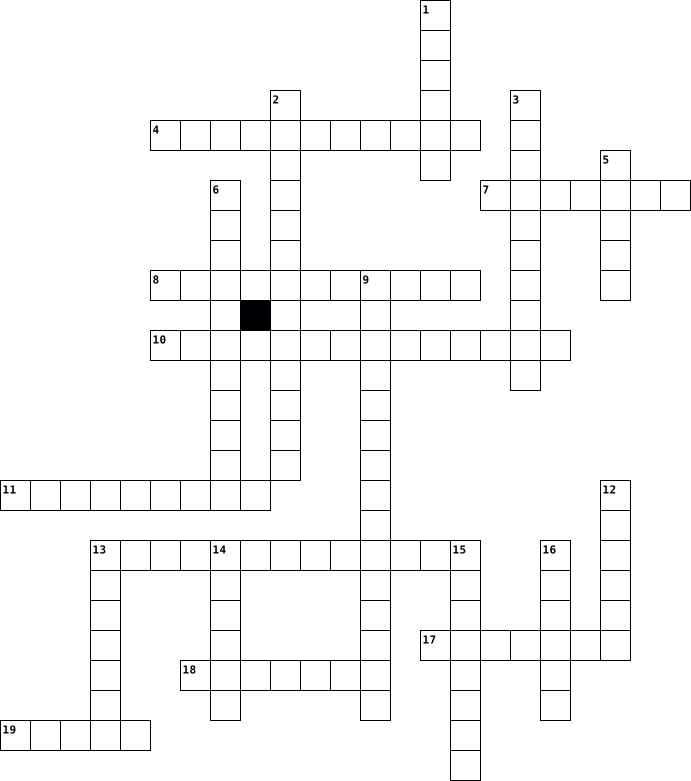
Across
- / Removal of starch
- / Many minute openings in lower epidermis
- / Provides a large surface area for maximum absorbtion of light (2 words)
- / Process in which light energy absorbed by chlorophyll is transformed into chemical energy
- / Lies just between the upper and lower epidermis
- / Simplest energy-rich organic molecules
- / Product of photosynthesis
- / Holds leaf in position to absorb maximum light energy
- / Transports water and mineral salts to mesophyll cells
Down
- / Other name of leaf blade
- / Has chemical formula CO2
- / Used in light energy to split water moleccules into O2 and hydrogen atoms
- / Has chemical formula H2O
- / Pigment in plants that absorbs sunlight
- / Simplest form of carbohydrates
- / Liquid to test whether starch is present or not
- / Waxy and transparent covering the outside of upper epidermis
- / Gas produced during photosynthesis
- / Energy essential for photosynthesis
- / Transports sugar away from leaf
20 Clues: / Removal of starch • / Other name of leaf blade • / Has chemical formula CO2 • / Has chemical formula H2O • / Product of photosynthesis • / Simplest form of carbohydrates • / Transports sugar away from leaf • / Gas produced during photosynthesis • / Energy essential for photosynthesis • / Simplest energy-rich organic molecules • / Pigment in plants that absorbs sunlight • ...
bio unit 2 2023-10-02

Across
- the first step of cellular respiration
- the gas sphere
- the site of cellular respiration when oxygen is present
- the sight of photosynthesis
- the second step of aerobic cellular respiratio
- when oxygen isn't present
- adiosine diphospate
- the living sphere
- the site of fermentation
- the process of turning light into glucose
- the end result of a chemical reaction
Down
- water sphere
- the second step of anarobic cellular respiration
- the things that are used for a chemical reaction
- the chemical name for glucose
- when oxygen is present
- what causes the color of the cloroplasts
- the process of breaking down glucose into atp
- the back bone of life
- the first step of photosynthesis
- the second step of photosynthesis
- the last step of cellular respiration that creates a lit of atp
- the sphere of rock and soil
- adiosine triphospate
24 Clues: water sphere • the gas sphere • the living sphere • adiosine diphospate • adiosine triphospate • the back bone of life • when oxygen is present • the site of fermentation • when oxygen isn't present • the sight of photosynthesis • the sphere of rock and soil • the chemical name for glucose • the first step of photosynthesis • the second step of photosynthesis • ...
Gavin's photosynthesis crossword 2024-10-31

Across
- a pigment found in green plants
- types of groups in an ATP or adp
- type of energy made by plants
- makes its own food
- the second photosystem
- cell responsible for photosynthesis
- this is not dependent on light
- plants use it to make O2 in return
- makes energy or food
- where the calvin cycle takes place in
- nitrogen
- another factor of photosynthesis
Down
- growth process of plants using sun and water
- the first photosystem
- smashed tube like structure
- finds its own food
- can affect the photosyhtisis process
- this is dependent on light
- the stuff humans breath in
- eats the food
- sugar
- type of energy in the Calvin cycle
- a factor of photosynthesis
- energy with 2 phosphates
- a natural coloring
- coin like structure in thakaloids
- energy with 3 phosphates
27 Clues: sugar • nitrogen • eats the food • finds its own food • makes its own food • a natural coloring • makes energy or food • the first photosystem • the second photosystem • energy with 2 phosphates • energy with 3 phosphates • this is dependent on light • the stuff humans breath in • a factor of photosynthesis • smashed tube like structure • type of energy made by plants • ...
biology 2021-09-27

Across
- the breakdown of glucose by enzymes, releasing energy and pyruvate
- process that releases energy by breaking down glucose and other food molecules in the presence of oxygen
- Stacks of thylakoids
- a cluster composed of hundreds of chlorophyll molecules and accessory pigments used to harvest light molecules for photosynthesis
- reactions of photosynthesis in which energy from ATP and NADPH is used to build high energy compounds
- one of the carrier molecules that transfers high energy electrons from chlorophyll to other molecules
- electron carrier that provides high energy electrons for photosynthesis
- organelle that is the site of ATP production
- uses the high energy electrons from the Krebs cycle to convert ADP into ATP
- The fluid of the chloroplast surrounding the thylakoid membrane
- respiration that does not require oxygen
Down
- an organelle found only in plant and algae cell
- green pigment in plants that absorbs light energy used to carry out photosynthesis
- reactions of photosynthesis that use energy from light to produce ATP and NADPH
- Respiration that requires oxygen
- second stage of cellular respiration
- process by which plants and some other organisms use light energy to covert water and carbon dioxide into oxygen and high energy carbohydrates such as sugars and starches
- main energy source that cells use for most of their work
- a lower energy molecule that can be converted into ATP by the addition of a phosphate group
- A flattened membrane sac inside the chloroplast
20 Clues: Stacks of thylakoids • Respiration that requires oxygen • second stage of cellular respiration • respiration that does not require oxygen • organelle that is the site of ATP production • an organelle found only in plant and algae cell • A flattened membrane sac inside the chloroplast • main energy source that cells use for most of their work • ...
Plants 2020-10-20

Across
- a plastid that contains chlorophyll
- a green pigment that captures energy from light
- plants transfer some of the ___ into the food that they make
- a part of a plant that absorbs water and minerals from the soil
- a gas used by plants in photosynthesis
- this protects the cells inside the leaf
- tiny holes in the lower epidermis that let carbon dioxide get into the leaf
- the part of a leaf that attaches it to the plant
- the part of a leaf that carries water to the cells of the leaf
- cells that provide a really big surface through which water and minerals can be absorbed
- an important gas produced by plants
Down
- a layer of a leaf that has lots of air spaces and contains cells that do a small amount of the photosynthesis
- vessels that carry water and minerals from the roots to the leaves
- a waxy substance covering leaves
- the way plants make food from light
- plants get energy from ___
- a coloured substance
- every ___ begins with a plant
- material that is made of living cells and tissues
- roots absorb minerals and water from the ___
- this is a tube that transports sugars
- a substance the plant gets from the roots that is used in photosynthesis
- these are the organs that carry out photosynthesis in most plants
- plants use carbon dioxide from the ___
- a layer of a leaf that contains cells that do most of the photosynthesis
25 Clues: a coloured substance • plants get energy from ___ • every ___ begins with a plant • a waxy substance covering leaves • a plastid that contains chlorophyll • the way plants make food from light • an important gas produced by plants • this is a tube that transports sugars • a gas used by plants in photosynthesis • plants use carbon dioxide from the ___ • ...
ATP and PHOTOSYNTHESIS 2022-12-05

Across
- Another name for Autotroph
- The organelle where photosynthesis takes place
- The substances present at the start of a reaction that are written on the left side of the arrow in the equation.
- An energy-carrying molecule (energy carrier) found in the cells of all living things.
- One of the products of photosynthesis
- The substances formed during the reaction, are written on the right side of the arrow.
- The number of phosphate groups the ATP molecule contains
- During photosynthesis light is converted into this type of energy.
- One of the reactants of photosynthesis; it is a gas (TWO-WORDS)
- The sum of all the chemical reactions that take place in a cell or in a living organism.
- Microscopic autotrophs that are the main producers in marine ecosystems
- The process by which atoms or groups of atoms are reorganized into new substances. (TWO-WORDS)
Down
- An organism that digests food (eats other organisms) as a source of energy
- An organism that uses energy to make its own food
- One of the reactants of photosynthesis
- ATP is this type of biological macromolecule. (TWO-WORDS)
- The green pigment that traps the light; it is found in the cells of most of the autotrophs.
- Another name for Heterotroph
- The number of phosphate groups the ATP molecule contains
- One of the products of photosynthesis; it is a gas
- It is required for all cellular activities
- The molecule formed when a phosphate group is removed from the ATP molecule
22 Clues: Another name for Autotroph • Another name for Heterotroph • One of the products of photosynthesis • One of the reactants of photosynthesis • It is required for all cellular activities • The organelle where photosynthesis takes place • An organism that uses energy to make its own food • One of the products of photosynthesis; it is a gas • ...
Cellular Energy 2023-10-12

Across
- The gas needed to turn BTB from blue to yellow
- What is released from ATP to move energy into the cell.
- Location of the first step in Cellular Respiration
- The light independent stage of photosynthesis
- Number of phosphates in the charged molecule for energy
- Location of the Kreb's Cycle
- The inputs into a chemical equation
- These type of cells use sunlight to make sugar
- The gas used during the aerobic stages of Cellular Respiration
Down
- Location of photosynthesis
- The _________ of photosynthesis, are the same as the outputs of cellular respiration.
- The energy needed for the process of converting light into glucose and oxygen.
- Abbreviation for the step of Cellular respiration that produces the MOST ATP.
- The color BTB will turn with equal amounts of carbon dioxide and oxygen.
- What is produced by the process of photosynthesis and cellular respiration
- The sugar that makes up the structure of ATP
- The input for the light dependent stage of photosynthesis
- Chemical energy used by the mitochondria
- Abbreviation for the energy used by the cell
19 Clues: Location of photosynthesis • Location of the Kreb's Cycle • The inputs into a chemical equation • Chemical energy used by the mitochondria • The sugar that makes up the structure of ATP • Abbreviation for the energy used by the cell • The light independent stage of photosynthesis • The gas needed to turn BTB from blue to yellow • ...
Yug Kolla Science Plus One 2019-12-05

Across
- Respiration The process that plants and animals go through in order to use stored energy
- Sometimes called ATP, energy that is put away to be used for a later date
- A reactant of photosynthesis, we also exhale it, represented by CO2
- The process that only plants go through in order for them to get energy
- The organelle where photosynthesis takes place
- A pigment that gives a plants its green color, used for photosynthesis
- A product of photosynthesis, it is also a type of sugar
Down
- The elements that come out a chemical equation
- A type of energy that is also sunlight or rays of sunlight
- A product of photosynthesis, we inhale it, represented by O2
- Energy like glucose that is a combination of chemicals
- The elements that go into a chemical equation
- Stored energy in a cell that is made in the mitochondria, it is also used to give the organism energy
- The place where ATP is made, also called the Powerhouse of the cell
- A reactant of photosynthesis, it is the way that every single organism get energy
15 Clues: The elements that go into a chemical equation • The elements that come out a chemical equation • The organelle where photosynthesis takes place • Energy like glucose that is a combination of chemicals • A product of photosynthesis, it is also a type of sugar • A type of energy that is also sunlight or rays of sunlight • ...
Plants 2021-05-04

Across
- absorb water & nutrients
- waste gas released by plants during photosynthesis
- supplies energy for photosynthesis
- C6H12O6 (made during photosynthesis)
- where photosynthesis happens in a plant
- structure in a plant cell that captures sunlight
- "baby" plant inside a seed
- process of a seed sprouting
Down
- contain reproductive parts (to make seeds)
- gas needed by plants for photosynthesis
- supports the plant and transports food/water to other parts
- holds and protects the seeds
- protective outer layer of a seed
13 Clues: absorb water & nutrients • "baby" plant inside a seed • process of a seed sprouting • holds and protects the seeds • protective outer layer of a seed • supplies energy for photosynthesis • C6H12O6 (made during photosynthesis) • gas needed by plants for photosynthesis • where photosynthesis happens in a plant • contain reproductive parts (to make seeds) • ...
Cellular Respiration Crossword 2025-01-15

Across
- what is made in a reaction
- the process where cells get energy from food
- sugar formed by photosynthesis
- gas that we breathe in
- anything that has mass and takes up space
- energy that the cell uses to do work
- organelle where cellular respiration happens
- root word that means muscle
Down
- I am ___, safe, and a learner.
- process which makes food for plants and other producers
- Cellular respiration is the ___ reaction to photosynthesis.
- starting ingredients, products of photosynthesis
- where photosynthesis happens
13 Clues: gas that we breathe in • what is made in a reaction • root word that means muscle • where photosynthesis happens • I am ___, safe, and a learner. • sugar formed by photosynthesis • energy that the cell uses to do work • anything that has mass and takes up space • the process where cells get energy from food • organelle where cellular respiration happens • ...
Photosynthesis and Energy in Plant Cells 2013-09-02

Across
- Chlorophyll absorbs every colour except this.
- Protective layer of cells, it is transparent to let light through.
- Tiny holes in the lower surface of leaf that allow gases in and out.
- It is made within the plant to keep it alive.
- Molecules stored as repeating units of sugar.
- It is made up of tiny tubes to carry water into the leaf and other carry glucose out.
- Part of the plant where photosynthesis generally occurs.
- The product of photosynthesis.
- Gas inhaled by plants.
- Large air spaces between cells allowing gases to diffuse between the stomata and the palisade cells.
- A different word for carbohydrates, it is converted into energy.
Down
- Used in all things to keep moving.
- Gas that is spelled by plants.
- Activity that all living things do, action of breathing.
- Needed for building new cell walls, glucose is used to make this.
- Process of making food for plants.
- Energy rich _______ provide the energy needed for respiration and for photosynthesis.
- A plant pigment that absorbs sunlight.
- This reaction requires direct energy of sunlight to make energy carry molecules.
- A liquid compound needed for photosynthesis.
20 Clues: Gas inhaled by plants. • Gas that is spelled by plants. • The product of photosynthesis. • Used in all things to keep moving. • Process of making food for plants. • A plant pigment that absorbs sunlight. • A liquid compound needed for photosynthesis. • Chlorophyll absorbs every colour except this. • It is made within the plant to keep it alive. • ...
Unit 4 vocab 2024-11-01

Across
- Series of reactions in mitochondria that produce energy and CO2 during aerobic respiration
- Group of pigments and proteins in chloroplasts that capture light energy
- not, without
- first part of photosynthesis where light energy becomes chemical energy. This occurs in the thylakoid membranes of chloroplasts
- Fluid in chloroplasts around the grana, where the Calvin cycle happens
- a molecule that absorbs light, giving color to plants
- An organism that makes its food, like plants, through photosynthesis or chemosynthesis
- process, action
- mouth
- A 3 carbon molecule formed during glycolysis, important in cellular respiration
- green pigment found in chloroplasts
- Red, orange, or yellow pigments that help in photosynthesis
- air, oxygen
- a stack of thylakoid membranes in a chloroplast
- breakdown, destroy
- Process where cells break down food to make energy or ATP
- Tiny openings on leaves that let CO2 in and O2 out
Down
- An anaerobic process that follows glycolysis, making lactic acid or alcohol
- process where green plants, algae, and some bacteria take carbon from the air. it makes glucose from sunlight, water, and carbon dioxide
- Type of fermentation that makes alcohol and CO2 as seen in yeast and some bacteria
- Processes that happens without oxygen
- type of fermentation that makes lactic acid
- An adaptation some plants use to store CO2 at night for daytime Photosynthesis
- Process of converting CO2 into organic compounds, like in photosynthesis
- an organism that gets energy by consuming other organisms for its energy and nutrition
- Series of molecules found in the mitochondria and chloroplasts that move electrons to make energy
- Part of photosynthesis where CO2 is turned into glucose using atp energy
- self
- Molecule in chloroplasts that accepts high energy electrons
- A sac inside chloroplasts where light reactions occur
- nutrient material, nourishment
- organelle in plant cells and some algae where photosynthesis takes place
- light
- Glycolysis is the first stage of cellular respiration in which glucose is broken down into pyruvic acid and ATP
- green
- Respiration that uses oxygen to produce energy
- together
37 Clues: self • mouth • light • green • together • air, oxygen • not, without • process, action • breakdown, destroy • nutrient material, nourishment • green pigment found in chloroplasts • Processes that happens without oxygen • type of fermentation that makes lactic acid • Respiration that uses oxygen to produce energy • a stack of thylakoid membranes in a chloroplast • ...
Energy Conversion and Cells 2024-04-11

Across
- Gas that is taken IN by animals and released by plants
- Type of energy that photosynthesis begins with
- The type of cell that has a nucleus and membrane-bound organelles
- Photosynthesis is the conversion of solar energy into _____ energy
- Energy that is created through cellular respiration
- Tiny openings on the underside of the leaf where O2 and CO2 are exchanged
- The level of organization where life begins
- Organelle in which photosynthesis occurs in
- Sugar that is a product of photosynthesis
Down
- Represented by the formula: C6H12O2
- Compound taken in by plant's roots
- Organelle in which cellular respiration occurs in
- The control center of the cell that is only present in Eukaryotic cells
- Organisms that can do both cellular respiration and photosynthesis
- Things that are needed to start a reaction or process
- Type of biomolecule that glucose is
- The type of cell that does not have a nucleus
- The kingdom that is made up of Prokaryotic cells
- What is made as a result of a reaction or process
- Green pigment in chloroplasts that help with photosynthesis
20 Clues: Compound taken in by plant's roots • Represented by the formula: C6H12O2 • Type of biomolecule that glucose is • Sugar that is a product of photosynthesis • The level of organization where life begins • Organelle in which photosynthesis occurs in • The type of cell that does not have a nucleus • Type of energy that photosynthesis begins with • ...
Photosynthesis and Cellular respiration 2012-12-08

Across
- inner part of Mitochondria
- Consume other organisms
- electron carrier for Respiration
- electron carrier for photosynthesis
- eries of e- transporters
- a process that repeats
- Plants main pigment
- fermentation producing lactic acid
- Reaction that needs light
- process of making Glucose
- Where photosynthesis happens
- powerhouse of cell
- Oxygen is NOT present
- Process plants making Glucose
- Oxygen is present
Down
- No light required
- second stage of Cellular Respiration
- protien cluster in thylakoid
- fermentation producing ethynol
- Glucose becomes pyruvic acid
- body obtains foods energy
- Saclike photosynthetic membranes
- fluid of chloroplast
23 Clues: No light required • Oxygen is present • powerhouse of cell • Plants main pigment • fluid of chloroplast • Oxygen is NOT present • a process that repeats • Consume other organisms • eries of e- transporters • Reaction that needs light • body obtains foods energy • process of making Glucose • inner part of Mitochondria • protien cluster in thylakoid • Glucose becomes pyruvic acid • ...
Quarterly Review #3 2022-04-07

Across
- autotrophs make their own ____
- gas made through photosynthesis
- movement of water molecules from high to low
- where cellular respiration occurs
- where photosynthesis occurs
- a cell increases in size
- release energy from ATP, bonds must be ___
- transport does not require ATP
- cell membrane can be found on the __ of the cell
Down
- the food produced through photosynthesis
- of layers in the cell membrane
- gas made through cellular respiration
- of energy for cellular respiration
- part of the plant where photosynthesis occurs
- form of energy in the body
- transport requires ATP
- movement of small molecules from high to low
17 Clues: transport requires ATP • a cell increases in size • form of energy in the body • where photosynthesis occurs • of layers in the cell membrane • autotrophs make their own ____ • transport does not require ATP • gas made through photosynthesis • where cellular respiration occurs • of energy for cellular respiration • gas made through cellular respiration • ...
Quarterly Review 2022-04-06

Across
- transport does not require ATP
- food produced through photosynthesis
- where cellular respiration occurs
- where photosynthesis occurs
- of layers in the cell membrane
- of the plant where photosynthesis occurs
- make their own ____
- a cell increases in size
- made through cellular respiration
- made through photosynthesis
Down
- movement of small molecules form high to low
- of energy for cellular respiration
- form of energy in the body
- transport requires ATP
- release energy form ATP,bonds must be ___
- movement of water molecules from high to low
- cell membrane can be found on the __ of the cell
17 Clues: make their own ____ • transport requires ATP • a cell increases in size • form of energy in the body • where photosynthesis occurs • made through photosynthesis • transport does not require ATP • of layers in the cell membrane • where cellular respiration occurs • made through cellular respiration • of energy for cellular respiration • food produced through photosynthesis • ...
Photosynthesis and Cellular Respiration v 1.0 2023-11-14

Across
- 36 of these are produced during cellular respiration
- product of glycolysis, a 3 carbon molecule
- waste gas produced during Kreb's Cycle
- where ETC happens during photosynthesis
- a reaction that breaks down
- the source of carbon for photosynthesis
- carbohydrate produced by photosynthesis
- collection of proteins and pigments that collect sunlight
Down
- enzyme used to produce ATP during chemiosmosis
- a reaction that builds up
- first stage of respiration
- the source of electrons for ETC during photosynthesis
- where Kreb's cycle takes place
- the electron carrier used during ETC in photosynthesis
- electron carrier in cellular respiration
- location where glycolysis takes place
- final electron acceptor during ETC in respiration
- enzyme that converts G3P back to Rubp during Calvin Cycle
- gas produced while harvesting electrons during ETC
19 Clues: a reaction that builds up • first stage of respiration • a reaction that breaks down • where Kreb's cycle takes place • location where glycolysis takes place • waste gas produced during Kreb's Cycle • where ETC happens during photosynthesis • the source of carbon for photosynthesis • carbohydrate produced by photosynthesis • electron carrier in cellular respiration • ...
Photosynthesis Voabulary 2023-08-31

Across
- are cells that are present in green plants
- pair of curved cells that surround a stoma
- is something that will change when it reacts
- is the thing that gives us light and warms our earth
- is how plants make thier own food
- a pigment that gives plants their green color
- is what we breath out
- light that you can see
- process in living organisms involving the production of energy
- type of tissue that transports water and nutrients from the roots to the leaves
Down
- we drink it
- is an important energy source
- a plastid that contains chlorophyll
- tiny openings in plant tissue
- is the finishing result
- is what we breath in
- Plants are plants that are green
- vascular tissue in charge of transport and distribution of the organic nutrients
18 Clues: we drink it • is what we breath in • is what we breath out • light that you can see • is the finishing result • is an important energy source • tiny openings in plant tissue • is how plants make thier own food • Plants are plants that are green • a plastid that contains chlorophyll • are cells that are present in green plants • pair of curved cells that surround a stoma • ...
L1 Bio - Plants Life Processes 2022-07-31

Across
- The part of a plant where photosynthesis takes place
- The opposite reaction to photosynthesis
- Absorbs water and minerals from the ground. Anchors plant in ground.
- Found in cells of plants and some other organisms that captures the energy from sunlight and converts it into food
- Energy that comes from the sun
- Factors such as sunlight availability, CO2 availability, and water availability that speed up or slow down the rate at which photosynthesis can occur
- A simple sugar that is an important source of energy.
- The leaf converts glucose into this type of sugar that is easily stored
- supporting structure that connects roots and leaves and carries water and nutrients between them
- The vascular tissue through which food moves in some plants
Down
- An organism that makes its own food, also known as a primary producer
- The reproductive structure of a plant
- A gas that is a requirement for photosynthesis and a waste product of respiration
- The liquid used up in photosynthesis
- A gas produced by plants during photosynthesis that animals use for respiration
- Main source of energy for life on earth
- Small openings on the underside of a leaf through which oxygen and carbon dioxide can be exchanged
- A green pigment found in the chloroplasts of plants and algae
- vascular tissue that carries water upward from the roots to every part of a plant
- The plant structure that contains a young plant inside a protective covering
20 Clues: Energy that comes from the sun • The liquid used up in photosynthesis • The reproductive structure of a plant • The opposite reaction to photosynthesis • Main source of energy for life on earth • The part of a plant where photosynthesis takes place • A simple sugar that is an important source of energy. • The vascular tissue through which food moves in some plants • ...
Plant Nutrition 2023-03-15

Across
- The part of the plant that absorbs water and minerals.
- The gas from the air that plants need to do photosynthesis.
- The process plants use to make their own food.
- Plants absorb these and water from the soil.
Down
- The energy that plants use to do photosynthesis.
- The parts of the plant that do photosynthesis.
- Plants do photosynthesis to make this.
- Photosynthesis only occurs during this time.
- A liquid the roots absorb from the soil.
- The plant produces this gas during photosynthesis.
- The place where the roots find the water and the minerals.
- Water and minerals are transported to the leaves through this.
12 Clues: Plants do photosynthesis to make this. • A liquid the roots absorb from the soil. • Photosynthesis only occurs during this time. • Plants absorb these and water from the soil. • The parts of the plant that do photosynthesis. • The process plants use to make their own food. • The energy that plants use to do photosynthesis. • ...
Photosynthesis and Transport in Plants 2025-08-10

Across
- Small opening on the underside of leaves that allow gas exchange
- Tissue that function as a transport system for water and nutrients in plants
- Energy used in photosynthesis
- Process of making food in plants thay used light energy
- Gas produced by photosynthesis that is used by human
- Tissue that functions as a transport system for food in plants
Down
- Product of photosynthesis that is a type of sugar
- Source of carbon used in photosynthesis
- Green pigment that helps photosynthesis
- Part of the plant that functions as a water absorber
- Part of the plant that carries out photosynthesis
- Pathway of water transport from roots to leaves in plants
12 Clues: Energy used in photosynthesis • Source of carbon used in photosynthesis • Green pigment that helps photosynthesis • Product of photosynthesis that is a type of sugar • Part of the plant that carries out photosynthesis • Part of the plant that functions as a water absorber • Gas produced by photosynthesis that is used by human • ...
KS4 photosythesis 2025-12-09

Across
- The pores/holes ni the leaf in which gases are exchanged.
- The product of photosynthesis that acts as the plants food.
- A type of reaction in which more energy is absorbed than released.
- The stage of photosynthesis in which water is split using sunlight.
- The stored form of glucose.
- The stage of photosynthesis in which carbon dioxide combines with hydrogen to make glucose.
Down
- The gas reactant of photosynthesis.
- The cells that swell to open and close the holes in the leaves.
- The pigment in plant that absorbs the sunlight.
- The process in which plants make their own food.
- A reactant of photosynthesis.
- The organelle where photosynthesis occurs.
12 Clues: The stored form of glucose. • A reactant of photosynthesis. • The gas reactant of photosynthesis. • The organelle where photosynthesis occurs. • The pigment in plant that absorbs the sunlight. • The process in which plants make their own food. • The pores/holes ni the leaf in which gases are exchanged. • The product of photosynthesis that acts as the plants food. • ...
Protist Crossword 2020-09-24

Across
- living arrangement of volvox
- ____________ vacuole pumps out water to prevent the cell from bursting
- All living things must grow and ____________
- plural of flagellum
- All living things must _______________ to the environment
- An amoeba moves by pushing a pseudopod forward and the rest of the cell follows; called _____________ streaming
- Where protists live
- protist whose only method of feeding is photosynthesis
- protist that uses pseudopod to move
- the process of making food using sunlight
Down
- a whip-like tail
- contains chlorophyll; site of photosynthesis in a cell
- specialized structure paramecium use to eat
- All living things must be able to _____________ (make more of themselves)
- “false foot;” an amoeba uses this to surround and absorb its food
- specialized structure that detects sunlight
- What all living things are made of
- tiny hairs
- protist that moves using cilia
- protist that prefers to feed itself by photosynthesis but can digest other organisms when necessary
20 Clues: tiny hairs • a whip-like tail • plural of flagellum • Where protists live • living arrangement of volvox • protist that moves using cilia • What all living things are made of • protist that uses pseudopod to move • the process of making food using sunlight • specialized structure paramecium use to eat • specialized structure that detects sunlight • ...
Grace Scott 4.01 Crossword Creation 2023-04-17

Across
- plant numbers usually grow from the number of _
- what is the Charlotte, N.C. zone?
- food & nutrients move during this process
- Glucose & _ are created during photosynthesis?
- the majority product of photosynthesis is _
- Photosynthesis creates _ & Oxygen
- What process used oxygen and gives us carbon dioxide?
- the third stage of plant growth
- The water carries _ all around the plant
- what are plants categorized by
Down
- How do plants create their food?
- the first stage of plant growth
- the second stage of plant growth
- the process of plants taking in water & air
- _ causes plants to lose water due to evaporation
- this process allows minerals & water into the plant through the cell wall
- sexual & _ are the ways of reproduction
- _ enters a plant through the cell walls
- Where else does transpiration occur?
- what percent of plant tissues are made up of water
20 Clues: what are plants categorized by • the first stage of plant growth • the third stage of plant growth • How do plants create their food? • the second stage of plant growth • what is the Charlotte, N.C. zone? • Photosynthesis creates _ & Oxygen • Where else does transpiration occur? • sexual & _ are the ways of reproduction • _ enters a plant through the cell walls • ...
Angela 2016-12-08

Across
- tca
- biological molecule the provides energy
- doesn't need oxygen
- stack like membrane
- food producer
- photosynthesis
- makes its own food
- needs oxygen
- a nucleotide that is made out adenosine
- consume to survive
- c3 h6 o3
- 1st step in cellular respiration
Down
- makes its own food with chemicals
- sunlight converts into energy
- a supportive tissue a epithelial organ
- the green pigments inside the chloroplast
- that contains chlorophyll
- a light depended reaction that takes place in photosynthesis
18 Clues: tca • c3 h6 o3 • needs oxygen • food producer • photosynthesis • makes its own food • consume to survive • doesn't need oxygen • stack like membrane • that contains chlorophyll • sunlight converts into energy • 1st step in cellular respiration • makes its own food with chemicals • a supportive tissue a epithelial organ • biological molecule the provides energy • ...
Photosynthesis & Respiration 2018-03-29

Across
- The growth and ___ slow as they get older
- ___usually from the sun
- If the ___ is too wet or compacted, there is less space in the soil for air
- Light is required for ___
- If there is little light, photosynthesis is reduced, making fewer___
- As ____ increases, so does respiration
- Opposite of photosynthesis
- ___also respire, so this can reduce the amount of oxygen available
- Growth rate and ___ activity of tissues
Down
- In the process,______ is produced, while oxygen is used up
- Oxygen is necessary for respiration
- Photosynthesis produces ___ as an important by-product
- An ample supply of carbon dioxide (CO2) from the ___
- Photosynthesis produces ___ as an important by-product
- A plant uses the ___ of light to put together chemicals which are useful to itself
- ___ from the soil or atmosphere
- Respiration is the burning, or _____, of the sugars produced during photosynthesis
17 Clues: ___usually from the sun • Light is required for ___ • Opposite of photosynthesis • ___ from the soil or atmosphere • Oxygen is necessary for respiration • As ____ increases, so does respiration • Growth rate and ___ activity of tissues • The growth and ___ slow as they get older • An ample supply of carbon dioxide (CO2) from the ___ • ...
Solar-Powered Sea Slugs 2025-11-24

Across
- Molecule that stores energy for cellular processes.
- Marine organism that performs photosynthesis by stealing chloroplasts.
- Organelle in plant cells where photosynthesis occurs.
- Process that breaks down glucose to release energy (ATP).
- Process that converts sunlight into chemical energy (glucose).
Down
- Organelle where cellular respiration occurs.
- Gas produced by cellular respiration.
- The act of stealing chloroplasts from algae.
- Sugar produced during photosynthesis.
- Simple plant-like organism eaten by solar sea slugs.
- Gas released during photosynthesis.
- Energy source for photosynthesis.
12 Clues: Energy source for photosynthesis. • Gas released during photosynthesis. • Gas produced by cellular respiration. • Sugar produced during photosynthesis. • Organelle where cellular respiration occurs. • The act of stealing chloroplasts from algae. • Molecule that stores energy for cellular processes. • Simple plant-like organism eaten by solar sea slugs. • ...
Plant Lab Crossword 2023-04-03

Across
- bionomial nomenclature is written in _________
- Pot size, consistent soil type, and environment are examples of what type of variables?
- what changes due to your independent variable
- Product of photosynthesis
- a possible answer to the question, made using scientific reasoning
- Reactant in photosynthesis
- what you change in the experiment
- consists of a plants genus and species
- looking at dat and putting into tables, graphs, or diagrams, looking for patterns to show connections
- Energy source for photosynthesis
Down
- Boron, Zinc, Mangagnes, Iron, Copper, Molybdenum, Chlorine
- the first step in the scientific methods
- How plants get food
- deciding whether the evidence clearly supports the hypothesis
- commonly found in fertilizers
- Nitrogen,Phosphorus, Potassium, Calcium, Sulfur, Magnesium, Carbon, Oxygen, Hydrogen
- How we classify plants
- Product of photosynthesis
- Evidence to test your prediction
- scientific name for radishes
- Reactant in photosynthesis
21 Clues: How plants get food • How we classify plants • Product of photosynthesis • Product of photosynthesis • Reactant in photosynthesis • Reactant in photosynthesis • scientific name for radishes • commonly found in fertilizers • Evidence to test your prediction • Energy source for photosynthesis • what you change in the experiment • consists of a plants genus and species • ...
1.5 Photosynthesis 2024-07-25

Across
- The ability to do work or cause a change.
- (C6H12O6) A type of sugar produced during the photosynthesis process.
- The chemical product of glucose molecules linking together.
- Plant cell organelles responsible for photosynthesis.
- An organism that cannot make its own food, but gets food by consuming other living things.
- A statement demonstrates equality between two mathematical or chemical expressions.
- The source materials for a chemical reaction.
Down
- (H2O) A reagent, or source material, required for photosynthesis to occur.
- The chemicals materials that result after a chemical reaction is completed.
- An organism that is able to capture energy from sunlight or chemicals and use it to produce its own food.
- The process by which plants and other autotrophs capture and use light energy to make food from carbon dioxide (CO2) and water (H2O).
- (O2) A gaseous byproduct of photosynthesis.
- (CO2) A reagent, or source material, required for photosynthesis to occur.
- A green photosynthesis pigment found in the chloroplasts of plants, algae, and some bacteria.
14 Clues: The ability to do work or cause a change. • (O2) A gaseous byproduct of photosynthesis. • The source materials for a chemical reaction. • Plant cell organelles responsible for photosynthesis. • The chemical product of glucose molecules linking together. • (C6H12O6) A type of sugar produced during the photosynthesis process. • ...
Energy flow between organisms 2025-03-21

Across
- A type of sugar that is produced from photosynthesis.
- The chemical that absorbs the sunlight.
- The site where photosynthesis occurs.
- Indicates the number of molecules involved in a chemical reaction.
- A process in which plants and animal convert food (glucose) into energy (ATP) needed for cells to function.
- A byproduct of photosynthesis that is needed for cellular respiration.
- The tiny structures that help cells carry out processes to stay alive.
- The main source of energy.
Down
- A gas that plants need for photosynthesis.
- The process in which plants convert sunlight to chemical energy (glucose).
- The results that a chemical reaction produces.
- The secondary product of a chemical reaction
- The energy molecule that is produced from cellular respiration.
- A mineral that plants absorb through their roots.
- The site where cellular respiration occurs.
- The ingredients needed for a chemical reaction to occur.
- A series of steps taken in order to achieve a particular result.
- The light color that is reflected from chlorophyll.
- All chemical reactions that occur within an organism to stay alive.
19 Clues: The main source of energy. • The site where photosynthesis occurs. • The chemical that absorbs the sunlight. • A gas that plants need for photosynthesis. • The site where cellular respiration occurs. • The secondary product of a chemical reaction • The results that a chemical reaction produces. • A mineral that plants absorb through their roots. • ...
Photosynthesis and Cellular Respiration 2024-10-18

Across
- Carbon & Oxygen
- Consume other food
- ATP is considered a ___ (Type of Biomolecule)
- Right side of the chemical equation
- Cellular respiration *without* oxygen
- The chemical takedown of a substance by microorganisms
- Where photosynthesis takes place
Down
- Captures energy
- Where cellular respiration takes place
- How plants get their green color
- Make their own food
- Hydrogen & Oxygen
- Cellular respiration *with* oxygen
- Releases energy
- Element #8
- Energy used for photosynthesis
- Carbon, Hydrogen, Oxygen
- Matter is never created or _________
- Energy created from cellular respiration
- Left side of the chemical equation
20 Clues: Element #8 • Captures energy • Carbon & Oxygen • Releases energy • Hydrogen & Oxygen • Consume other food • Make their own food • Carbon, Hydrogen, Oxygen • Energy used for photosynthesis • How plants get their green color • Where photosynthesis takes place • Cellular respiration *with* oxygen • Left side of the chemical equation • Right side of the chemical equation • ...
Cell Energy 2021-11-10

Across
- Cell part in plants where sugar is made.
- Cell organelle that makes ATP.
- sugar made by photosynthesis in plants
- the chemical energy made by cells.
- an input for photosynthesis and output for cellular respiration.
- glucose
- process cells use for making energy.
Down
- needed by plants to make sugar.
- process plants use to make glucose.
- type of cell that performs photosynthesis.
- need in cellular respiration to make energy.
- light and chemical are types of this.
- type of energy needed for photosynthesis.
13 Clues: glucose • Cell organelle that makes ATP. • needed by plants to make sugar. • the chemical energy made by cells. • process plants use to make glucose. • process cells use for making energy. • light and chemical are types of this. • sugar made by photosynthesis in plants • Cell part in plants where sugar is made. • type of energy needed for photosynthesis. • ...
What do plants need glucose for? 2023-01-17

Across
- A process that uses the glucose and oxygen to release the chemical energy (TWO-WORDS)
- A wax-like protective coating that prevents water from evaporating
- Product of Photosynthesis
- Energy needed to produce glucose
- Reactant of photosynthesis (TWO-WORDS)
- Cells / tissue where photosynthesis takes place and glucose is formed.
- A biological macromolecule formed when amino acids join together
Down
- A carbohydrate which builds or adds strength to cell walls
- Reactant of photosynthesis
- One of the products of photosynthesis
- Process by which plants and other autotrophs produce glucose.
- Formed when glucose combines with nitrates (TWO-WORDS)
- Leaf pores found underside the leaf
13 Clues: Product of Photosynthesis • Reactant of photosynthesis • Energy needed to produce glucose • Leaf pores found underside the leaf • One of the products of photosynthesis • Reactant of photosynthesis (TWO-WORDS) • Formed when glucose combines with nitrates (TWO-WORDS) • A carbohydrate which builds or adds strength to cell walls • ...
Cycles of Matter 2017-04-11

Across
- / A _______________ is a group of parts that work together to perform a function.
- / The main pigment used for photosynthesis.
- / "According to the ___________ laws, the total amount of matter and energy in the Earth system stays constant.
- cycle / The processes of evaporation, condensation, and precipitation make up the _______________.
- warming / One type of human impact on the carbon cycle, raising the overall temperature of the Earth.
- / Another word for "respiration".
- / Green is an example of a _____________, or colored chemical compound that absorbs light.
- / The process by which liquid water turns into a gas.
- / The process by which a cell captures energy in sunlight and uses it to make food.
- / "Together these two processes form a cycle that keeps the levels of oxygen and carbon dioxide fairly ____________"
- / The processes by which carbon and oxygen are recycled are _______________.
- / An organism that makes its own food / does NOT need to eat to survive.
- / During photosynthesis, sunlight is used to convert carbon dioxide and water into _______ and oxygen.
- / Cellular respiration and photosynthesis can be considered _____________ processes.
- / Organelle in plant cells where photosynthesis occurs.
- / A waste product of photosynthesis.
Down
- / Nitrogen fixation is done by these organisms.
- / Cellular ____________ is the process by which cells obtain energy from glucose.
- / Nearly all living things obtain energy either directly or indirectly from the energy of __________ .
- / An energy releasing process that does not require oxygen.
- / Where in the cell the second stage of cellular respiration occurs.
- / Rain, snow, sleet, and hail are all examples of ___________________.
- / An organism that cannot make its own food / must eat to survive.
- cycle / The _______________________ is the process by which carbon moves within and between organisms and their physical environment.
- / C6 H12 06 is the chemical compound for ______________.
- / When water vapor cools and turns back into liquid.
- / Number of stages in both cellular respiration AND photosynthesis.
- / Every living things needs __________.
- / A community of organisms that live in a particular areas, along with their non-living environment.
- / The ______________ in the photosynthesis formula means "yields".
30 Clues: / Another word for "respiration". • / A waste product of photosynthesis. • / Every living things needs __________. • / The main pigment used for photosynthesis. • / Nitrogen fixation is done by these organisms. • / When water vapor cools and turns back into liquid. • / The process by which liquid water turns into a gas. • ...
Cycles of Matter 2017-04-11

Across
- / The processes by which carbon and oxygen are recycled are _______________.
- / A waste product of photosynthesis.
- / A community of organisms that live in a particular areas, along with their non-living environment.
- / "Together these two processes form a cycle that keeps the levels of oxygen and carbon dioxide fairly ____________"
- / Another word for "respiration".
- / Green is an example of a _____________, or colored chemical compound that absorbs light.
- / The ______________ in the photosynthesis formula means "yields".
- / Cellular ____________ is the process by which cells obtain energy from glucose.
- / A _______________ is a group of parts that work together to perform a function.
- / "According to the ___________ laws, the total amount of matter and energy in the Earth system stays constant.
- / Rain, snow, sleet, and hail are all examples of ___________________.
- / The main pigment used for photosynthesis.
- / Number of stages in both cellular respiration AND photosynthesis.
- / Nitrogen fixation is done by these organisms.
Down
- / C6 H12 06 is the chemical compound for ______________.
- / Every living things needs __________.
- / An organism that cannot make its own food / must eat to survive.
- / When water vapor cools and turns back into liquid.
- cycle / The processes of evaporation, condensation, and precipitation make up the _______________.
- / An energy releasing process that does not require oxygen.
- / The process by which liquid water turns into a gas.
- cycle / The _______________________ is the process by which carbon moves within and between organisms and their physical environment.
- / Where in the cell the second stage of cellular respiration occurs.
- / Nearly all living things obtain energy either directly or indirectly from the energy of __________ .
- / An organism that makes its own food / does NOT need to eat to survive.
- / Cellular respiration and photosynthesis can be considered _____________ processes.
- / The process by which a cell captures energy in sunlight and uses it to make food.
- / Organelle in plant cells where photosynthesis occurs.
- warming / One type of human impact on the carbon cycle, raising the overall temperature of the Earth.
- / During photosynthesis, sunlight is used to convert carbon dioxide and water into _______ and oxygen.
30 Clues: / Another word for "respiration". • / A waste product of photosynthesis. • / Every living things needs __________. • / The main pigment used for photosynthesis. • / Nitrogen fixation is done by these organisms. • / When water vapor cools and turns back into liquid. • / The process by which liquid water turns into a gas. • ...
Unit 4 Biology: Photosynthesis 2024-10-31

Across
- An organism that gets energy by consuming other organisms for its energy and nutrition.
- Processes that happen without oxygen.
- Molecule in chloroplasts that accepts high-energy electrons.
- A sac inside chloroplasts where light reactions occur.
- CAM (Crassulacean Acid Metabolism). An Adaption some plants use to store CO2 at night for daytime photosynthesis.
- A molecule that absorbs light, giving color to plants.
- Process of converting CO2 into organic compounds, like in photosynthesis.
- Respiration that uses oxygen to produce energy.
- Organelle in plant cells and some algae where photosynthesis takes place.
- An anaerobic process that follows glycolysis, making lactic acid or alcohol.
- Red, orange, or yellow pigments that help in photosynthesis.
- Series of reactions in mitochondria that produce energy and CO2 during aerobic respiration.
Down
- Tiny openings on leaves that let CO2 in ad O2 out.
- Process where cells break down food (carbon compounds) to make energy or ATP.
- Type of fermentation that makes alcohol and CO2, as seen in yeast and some bacteria.
- Process where Carbon is taken from the air by green plants, algae, and some bacteria. It makes glucose from sunlight, water, and carbon dioxide.
- Type of fermentation that makes lactic acid, common in muscles.
- First part of photosynthesis where light energy becomes chemical energy. This occurs in the thylakoid membranes of chloroplasts.
- A stack of thylakoid membranes in a chloroplast.
- Green pigment found in chloroplasts.
- Series of molecules found in the mitochondria and chloroplasts that move electrons to make energy.
- An organism that makes its own food, like plants, through photosynthesis or chemosynthesis
- Fluid in chloroplasts around the grana (thylakoid stacks), where the Calvin Cycle (light-independent reactions) happens.
- The first stage of cellular respiration in which glucose is broken down into pyruvic acid and ATP.
- A 3-carbon molecule formed during glycolysis, important in cellular respiration.
- Group of pigments and proteins in chloroplasts that capture light energy.
- Part of photosynthesis where CO2 is turned into glucose using ATP energy.
27 Clues: Green pigment found in chloroplasts. • Processes that happen without oxygen. • Respiration that uses oxygen to produce energy. • A stack of thylakoid membranes in a chloroplast. • Tiny openings on leaves that let CO2 in ad O2 out. • A sac inside chloroplasts where light reactions occur. • A molecule that absorbs light, giving color to plants. • ...
Bend 2: Trees 2021-03-24

Across
- type of membrane that doesn't require energy to move
- release of carbon in the atmosphere
- liquid that forms in seas, lakes, rivers, and rain
- change in global or regional weather patterns
- simple sugar as a result of photosynthesis
- loops to maintain regulate and control
- output is oxygen and glucose
- absorbed by plants in photosynthesis
- use of oxygen to turn fuel into chemical energy
- released into the atmosphere, associated with climate change
- byproduct of photosynthesis
- also known as the cell membrane
Down
- cycle of H2O through the atmosphere
- combination of oxygen with food molecules
- glucose breaks down without oxygen
- movement of molecules that require energy
- process that results in the equalizing of the concentrations on each side of the membrane
- atomic number 15 that moves through the lithosphere, hydrosphere, and biosphere
- dispersal of something
- biochemical cycle that converts nitrogen through both biological and physical processes
20 Clues: dispersal of something • byproduct of photosynthesis • output is oxygen and glucose • also known as the cell membrane • glucose breaks down without oxygen • cycle of H2O through the atmosphere • release of carbon in the atmosphere • absorbed by plants in photosynthesis • loops to maintain regulate and control • combination of oxygen with food molecules • ...
Landen's Photosynthesis Crossword Puzzle 2024-10-03

Across
- Repeated process in plants
- cycle that occurs in chloroplast
- Part of plant that makes the food
- What plants receive from sunlight
- Part of plants that makes seeds
- part of carbon dioxide
- part of plant that takes in water
- Where plants grow
- What plants can grow from
- needed to survive
- Source of energy
- Plants function with food
- carry food and water
- Living thing that makes its own food
- Needed for photosynthesis
Down
- H2O, plants need it
- makes plants green
- Sugar, plants make it
- basic unit of life
- food made by plants
- when photosynthesis stops
- what plants get from soil
- how plants make food
- What plants give off
- light from the sun, source of energy
- Part of plant that supports leaves
- result of making food
- when photosynthesis happens
- Carbon Dioxide and Oxygen
- Contains carbon dioxide
30 Clues: Source of energy • Where plants grow • needed to survive • makes plants green • basic unit of life • H2O, plants need it • food made by plants • how plants make food • What plants give off • carry food and water • Sugar, plants make it • result of making food • part of carbon dioxide • Contains carbon dioxide • when photosynthesis stops • what plants get from soil • What plants can grow from • ...
Charged by the Sun Crossword 2026-04-21

Across
- – stacked membrane structures that contain chlorophyll
- – the organelle where photosynthesis takes place
- – the source of energy for photosynthesis
- – the high-energy molecule formed after NADP⁺ gains electrons
- – the green pigment that absorbs sunlight
- – the state of a molecule after gaining electrons
- – the sugar produced by plants for energy
- – the gas taken in by plants from the air
- – the fluid surrounding the thylakoids inside the chloroplast
Down
- – the process plants use to convert light energy into chemical energy
- – the form of energy stored in glucose
- – an electron carrier that accepts high-energy electrons
- – particles that gain energy when light is absorbed
- – the gas released as a byproduct of photosynthesis
- – a representation showing the reactants and products of photosynthesis
15 Clues: – the form of energy stored in glucose • – the source of energy for photosynthesis • – the green pigment that absorbs sunlight • – the sugar produced by plants for energy • – the gas taken in by plants from the air • – the organelle where photosynthesis takes place • – the state of a molecule after gaining electrons • – particles that gain energy when light is absorbed • ...
Science 2025-04-28

Across
- CO2
- Glucose to ATP Process
- Results of Chemical Reaction
- Convert Light Into Chemical Energy By Photosynthesis Process
- Starting Materials for Chemical Reaction
- C6H12O6
- Outputs
Down
- Cellular Respiration Happens Here
- H20
- Inputs
- Energy
- Sunlight
- O2
- Photosynthesis Happens Here
14 Clues: O2 • H20 • CO2 • Inputs • Energy • C6H12O6 • Outputs • Sunlight • Glucose to ATP Process • Photosynthesis Happens Here • Results of Chemical Reaction • Cellular Respiration Happens Here • Starting Materials for Chemical Reaction • Convert Light Into Chemical Energy By Photosynthesis Process
Photosynthesis & Cellular Respiration 2024-01-23

Across
- Photosynthesis occurs in this organelle
- One type of anaerobic respiration that produces lactic acid
- One type of anaerobic respiration that produces ethyl alcohol and CO2
- Respiration with oxygen present
- When the 3rd phosphate group is broken off ATP, this molecule is created
- Glucose is this type of macromolecule
- Cellular respiration occurs in this organelle
- Organism that makes its own food
- Major product of photosynthesis that is broken down in cellular respiration
- Disks stacked inside a chloroplast
- Major product of cellular respiration; energy molecule
- One molecule of ATP contains 3 ___________, ribose, and adenine
- First step of cellular respiration
Down
- Light independent reaction in photosynthesis is also known as the...
- Reaction in photosynthesis that requires light
- Full name for ATP
- Aerobic respiration produces this many ATP molecules
- Fluid surrounding the green disks inside a chloroplast
- Organism that must consume its food from outside source
- Water molecules break apart during this process in order to create oxygen in photosynthesis
- Green pigment that captures sunlight in a chloroplast
- Anaerobic respiration produces this many ATP molecules
- Respiration without oxygen present
- Ability to to do work
24 Clues: Full name for ATP • Ability to to do work • Respiration with oxygen present • Organism that makes its own food • Disks stacked inside a chloroplast • Respiration without oxygen present • First step of cellular respiration • Glucose is this type of macromolecule • Photosynthesis occurs in this organelle • Cellular respiration occurs in this organelle • ...
AQA GCSE Biology Trilogy Paper 1 2026-04-24

Across
- Structure in plant cells that maintains rigidity
- Loss of water from plant leaves
- Green pigment that absorbs light for photosynthesis
- transport Movement of particles against concentration gradient
- Movement of particles from high to low concentration
- Cell that carries oxygen in blood
- The control center of a cell
- Organelle containing genetic material
- Molecule carrying genetic information
- Tissue that transports sugars in plants
- Movement of water across a partially permeable membrane
- Type of sugar produced in photosynthesis
- Transport system in plants for water
- Cell membrane property allowing some substances through
- Type of cell division producing identical cells
- Small rings of DNA found in bacteria
Down
- Product of anaerobic respiration in muscles
- Organelle where aerobic respiration occurs
- A group of similar cells working together
- Type of respiration without oxygen
- The basic unit of life
- Substance that speeds up chemical reactions
- Gas produced during photosynthesis
- The locking shape model of enzyme action
- Process plants use to make food
- Process by which enzymes speed up reactions
- The site of photosynthesis in plant cells
- Surface through which gases enter leaves
- Biological molecules made of amino acids
29 Clues: The basic unit of life • The control center of a cell • Loss of water from plant leaves • Process plants use to make food • Cell that carries oxygen in blood • Type of respiration without oxygen • Gas produced during photosynthesis • Transport system in plants for water • Small rings of DNA found in bacteria • Organelle containing genetic material • ...
7th grade science grade shniagins 2026-04-08

Across
- A piece of Chloroplast that soaks up sunlight and gives the plant its green color
- The power used to make photosynthesis
- A small opening which allows air intake into plant leaves
- An air particle that is released during Cellular respiration and used during photosynthesis
- The organelle that lets plants do photosynthesis
Down
- The Organelle that does cellular respiration
- The process plants use of making glucose using the sun's energy
- The process all organisms use to make energy
- Used by plants during photosynthesis and is found in the ground
- Absorbing heat
- Releasing heat energy to make a chemical reaction
- The product of photosynthesis and is used during cellular respiration to make energy
- An air particle that is used during cellular respiration and is a waste product of photosynthesis
13 Clues: Absorbing heat • The power used to make photosynthesis • The Organelle that does cellular respiration • The process all organisms use to make energy • The organelle that lets plants do photosynthesis • Releasing heat energy to make a chemical reaction • A small opening which allows air intake into plant leaves • ...