
photosynthesis Crossword Puzzles
Year 8 Cells and Microscopes 2016-10-10

Across
- Turn it to give light under your slide
- One large ____ found in plant cells
- Jelly substance where reactions happen
- equal to one billionth of a metre (0.000000001 m).
- A neuron
- The Basic Unit of Stucture and Organisation in Organisms
- Came up with the term "the Cell"
- a one eye piece microscope (idea in 1600's)
- What you look through on a microscope
- Cell Reproduction
- Photosynthesis is the process by which plants make food from the sun
- Help transport Oxygen through the body
- Where photosynthesis happens
- Where you slide is Places on your microscope
Down
- one millionth of a metre
- Only Men have these Cells
- found in plant cells ONLY
- Cells found in things that are not humans or animals
- Uses the process of Phagocytosis to ingest large objects or cells
- Employs visible light to detect small objects
- Goes around the outside of the cell,surrounded by the cell wall
- Controls What happens inside a cell
- cell self destruction
- Thought to have invented the compound microscope
- already exists
- Produces energy for the cell
- Are the different lens in which you can magnify the slide
- Used to create further magnification to your slide
28 Clues: A neuron • already exists • Cell Reproduction • cell self destruction • one millionth of a metre • Only Men have these Cells • found in plant cells ONLY • Produces energy for the cell • Where photosynthesis happens • Came up with the term "the Cell" • One large ____ found in plant cells • Controls What happens inside a cell • What you look through on a microscope • ...
Cells Crossword 2017-11-01

Across
- they show that photosynthesis has been going on
- Most of the chemical reactions go here
- This is the main protein in mature red blood cells
- helps to support the cell and can be used as a store for chemicals
- the process by which plants that contain chlorophyll make carbohydrates from water and creates carbon dioxide
- surrounds the cytoplasm and controls which dissolved substances enter and exit
- contains the chlorophyll needed for photosynthesis
- the smallest structural and functional unit of an organism
- a cell inside a female used for reproduction
Down
- contains DNA, which makes up genes. The DNA carries the instructionsthat control the activity of the cell
- transmit messages from one part of the body to another
- The act or process of enlarging the physical appearance of something
- a cell inside a male used for reproduction
- collect water and take this solution up through the roots to the rest of the plant
- a minute short hairlike process often forming part of a fringe
- a rigid protection for the cell but can let gases and water pass through
- structures that carry out release of energy
- a tiny cell of the blood that carries oxygen from the lungs
- sites of protein synthesis
- to produce movement through force
20 Clues: sites of protein synthesis • to produce movement through force • Most of the chemical reactions go here • a cell inside a male used for reproduction • structures that carry out release of energy • a cell inside a female used for reproduction • they show that photosynthesis has been going on • This is the main protein in mature red blood cells • ...
Cellular Energy Crossword Review 2023-11-06

Across
- The by-product of Lactic Acid Fermentation
- The second stage of PS that combines electrons with CO2 to get Glucose
- The organelle where CR mostly takes place
- the abbreviation for the third step of CR
- Where all of our energy on Earth comes from
- If a cellular process requires oxygen, it is referred to as being ___________.
- The type of fermentation produced by the yeast in the Root Beer Lab
- The electron donor in PS
- The pigment that is used in photosynthesis
- The location of Glycolysis
- The third step of CR
- The charge on a phosphate
- In Glycolysis, glucose is split in half into two molecules called _______.
Down
- The type of alcohol produced by Alcoholic Fermentation
- The cellular process that happens in the mitochondria
- The second step of CR
- The type of fermentation that human cells will do if there is a lack of oxygen
- The first stage of PS that breaks open a water molecule to get electrons
- Spell out the energy molecule
- If the energy molecule only had two phosphates
- Truth or False: All organisms are able to do cellular respiration
- The step of CR where carbon dioxide is produced
- The cellular process that plants are able to perform
- The organelle that photosynthesis takes place in
- Fermentation does not need oxygen, so it is referred to as being _____________.
25 Clues: The third step of CR • The second step of CR • The electron donor in PS • The charge on a phosphate • The location of Glycolysis • Spell out the energy molecule • The organelle where CR mostly takes place • the abbreviation for the third step of CR • The by-product of Lactic Acid Fermentation • The pigment that is used in photosynthesis • ...
The Carbon and Oxygen Cycle 2023-12-11

Across
- A form of carbon that is circulated in food chains.
- Contains dissolved carbon from the atmosphere.
- A substance that's formed when carbon-based organisms are trapped under layers of sediment.
- The smallest reservoir of carbon.
- An area storing large amounts of inorganic or organic carbon.
- A gas element taken in by producers during photosynthesis or chemosynthesis.
- The process by which terrestrial and surface aquatic producers create organic carbon.
- The organisms that turns inorganic carbon to organic.
Down
- A form of carbon that is unusable to the body.
- A way for deep sea organisms to produce organic carbon without the use of sunlight.
- Part of the earth that contains ozone.
- An organism that receives its energy from consuming other organisms.
- The largest reservoir of carbon.
- What is missing from the equation C6H12O6 + O2 → 6Co2 + H2O + _________.
- A chemical reaction in which substances react very quickly together (usually with oxygen), releasing energy.
- An oxygen layer that protects earth from radiation and harmful UV rays.
- A gas element released by producers during photosynthesis or chemosynthesis.
- Slow decaying organic matter because of a lack of oxygen.
- A type of fossil fuel extracted from the earth and used to create gasoline.
- A type of wetland that contains large amounts of organic carbon and low amounts of oxygen.
20 Clues: The largest reservoir of carbon. • The smallest reservoir of carbon. • Part of the earth that contains ozone. • A form of carbon that is unusable to the body. • Contains dissolved carbon from the atmosphere. • A form of carbon that is circulated in food chains. • The organisms that turns inorganic carbon to organic. • ...
Fires 2023-11-27

Across
- /An organisms that must consume plants or animals to make ATP energy
- /Any ground that remains frozen for at least two straight years
- /The ability to do work or cause change
- consumer /An organism that eats producers
- respiration /Process of converting glucose and oxygen into carbon dioxide, water and ATP energy
- /The part of the Earth's surface characterized by the presence of frozen water
- /Process of plants converting carbon dioxide, water and sunlight into glucose and oxygen
- /Most important element to life; present in all living things
- /A consumer that eats only plants.
- /A consumer that eats only animals.
Down
- consumer /Large carnivore that eats secondary consumers.
- /Energy molecule in the cells of living things
- /Anything that has mass and takes up space
- /Partially decomposed plant material formed in wet or cold environments
- consumer /Carnivore that eats herbivores. Sometimes an omnivore.
- /An organism (producer) that can make its own food (through photosynthesis) using light, water and carbon dioxide
- /Anything that takes up space and has mass. Solid, liquid, gas and plasma
- /Organelle where photosynthesis takes place
- /The ability to do work; the ability to cause some kind of change. Energy can take many different forms: light, heat and electrical energy
- Fire /A rare phenomenon that occurs in the Arctic region where fires smolder and stay active under extreme cold conditions. They then come back as temperatures warm.
- /Powerhouse of the cell; organelle where cellular respiration happens
- /A consumer that eats both plants and animals
- sink /Any part of the Earth that absorbs more carbon from the atmosphere than it releases- for example: plants, the ocean, soil, peat
23 Clues: /A consumer that eats only plants. • /A consumer that eats only animals. • /The ability to do work or cause change • consumer /An organism that eats producers • /Anything that has mass and takes up space • /Organelle where photosynthesis takes place • /A consumer that eats both plants and animals • /Energy molecule in the cells of living things • ...
Unit Crossword 2023-10-04

Across
- Adenosine diphosphate, uncharged energy storage molecule with 2 phosphates
- Nutrient, used in phosphates of nucleic acids and phospholipids of membranes
- Second step of anaerobic respiration, 2 types include alcoholic and lactic acid
- Describes a situation in which oxygen is not present
- Sphere of earth, all the soil and rocks
- Anything that has mass and takes up space, makes up everything
- Substances at the beginning of a chemical reaction, changed into products
- Nutrient, forms the backbone for all macromolecules in living things
- Sphere of earth, all the water on earth
Down
- Type of organism that is able to make its own food, base of the food chain
- Using light energy to make glucose, CO2 and H2O into C6H12O6 and O2
- First step of aerobic respiration, breaks down glucose into pyruvate
- Nutrient, used in proteins and nucleic acids, must be "fixed"
- Substances created during a chemical reaction, made from reactants
- Organelle - site of photosynthesis
- Sphere of earth, all living things on earth
- Powerhouse of the cell
- Describes a situation in which oxygen is present
- Pigment in chloroplasts, used to trap light energy during photosynthesis
- Sphere of earth, all the gasses Fermentationearth
- Adenosine triphosphate, charged energy storage molecule with 3 phosphorus groups
21 Clues: Powerhouse of the cell • Organelle - site of photosynthesis • Sphere of earth, all the soil and rocks • Sphere of earth, all the water on earth • Sphere of earth, all living things on earth • Describes a situation in which oxygen is present • Sphere of earth, all the gasses Fermentationearth • Describes a situation in which oxygen is not present • ...
Aquatic Ecosystem Concepts (6.7-6.9) 2026-01-22

Across
- a body of water where the ocean tide meets a river or stream, causing salt water to mix with fresh water
- frozen, floating seawater connected to land
- a period of cold temperatures bringing ice and snow after the Flood
- the valley-like floor of the ocean between continents
- the ocean depth with the most light; has the most ocean life because of photosynthesis
- microscopic, floating water plants and animals
- the ocean depth with only blue light; does not allow photosynthesis
Down
- single-celled algae; able to use the sun’s energy for photosynthesis
- the underwater land along the coast of a continent
- the deepest, darkest zone of the ocean
- a triangular landform at the mouth of a river made from deposited soil
- the surface of the earth covered by an ocean
- a year-round covering of ice and snow over polar land
- small water animals
- the dark depth of the ocean after the twilight zone
- a large piece of ice that has broken from a glacier
- land covered with water for at least part of the year
- the deepest places of the ocean floor
- the place where a river flows into the ocean (or other body of water)
- a large, moving body of ice on land
20 Clues: small water animals • a large, moving body of ice on land • the deepest places of the ocean floor • the deepest, darkest zone of the ocean • frozen, floating seawater connected to land • the surface of the earth covered by an ocean • microscopic, floating water plants and animals • the underwater land along the coast of a continent • ...
Plantastic 2025-12-15

Across
- Plant parts that absorb water and minerals from the soil.
- The substance plants store food as; turns blue-black with iodine.
- A raw material needed by plants for photosynthesis.
- A form of asexual reproduction where new plants grow from plant parts.
- The process plants use to make their own food using light, water, and carbon dioxide.
- CHAIN A diagram that shows how energy moves from one organism to another.
- The sugar made by plants during photosynthesis.
- The plant part that contains seeds.
- ENERGY The type of energy stored in food.
- What is transferred along a food chain.
- Plant structures involved in reproduction.
Down
- Using resources carefully so they last into the future.
- Having reliable access to enough affordable, nutritious food.
- The chemical used to test for starch.
- Offspring that are genetically identical to the parent plant.
- The main plant part where food is made using light energy.
- The plant part that supports the plant and transports water and food.
- Organisms, such as plants, that make their own food.
- Underground plant structures used for storage and vegetative propagation.
- The energy plants get from the sun.
- A gas taken in by plants from the air to make food.
- The unit used to measure energy.
22 Clues: The unit used to measure energy. • The energy plants get from the sun. • The plant part that contains seeds. • The chemical used to test for starch. • What is transferred along a food chain. • ENERGY The type of energy stored in food. • Plant structures involved in reproduction. • The sugar made by plants during photosynthesis. • ...
Chapters 1-6 2024-10-06

Across
- the charge on an electron
- a type of nucleic acid
- the most ATP is produced during this part of cellular respiration
- organelle where photosynthesis takes place
- having 2 matched sets of chromosomes
- DNA is found here in eukaryotes
- an electron carrier in the Calvin Cycle
- a heterotroph gets energy from other __________.
- DNA is found here in prokaryotes
- the form of energy stored between chemical bonds
- the site of gas exchange in plants
- the location of ribosome manufacturing
- prokaryotic cell division
- protons + neutrons =
- proteins are synthesized here
- product of glycolysis
Down
- the location within a leaf where photosynthesis occurs
- monomers of proteins
- a type of lipid
- the number of stages in the Calvin Cycle
- electrons can be found in an atoms _____________ shell
- organelles that produce cellular energy
- a type of protein
- the sorting and shipping center of the cell
- the gas produced by the light reactions of photosynthesis
- passive transport of water across a membrane from high to low water concentration
- an example of a carbohydrate
- a bond that shares electrons
- the first phase in Mitosis
- monomers of starch
- the charge on a proton
- fermentation occurs under conditions of _____ oxygen
- lipids are synthesized here
33 Clues: a type of lipid • a type of protein • monomers of starch • monomers of proteins • protons + neutrons = • product of glycolysis • a type of nucleic acid • the charge on a proton • the charge on an electron • prokaryotic cell division • the first phase in Mitosis • lipids are synthesized here • an example of a carbohydrate • a bond that shares electrons • proteins are synthesized here • ...
Cellular Energy 2024-11-21

Across
- organism that must consume other organisms for energy
- anything that has volume and mass
- Processes completed when oxygen is present
- a single self contained entity that is alive
- the starting substances of a reaction
- a very large molecule such as a polymer or protein, a chain of smaller molecules
- energy carried by electromagnetic waves as it travels through space
- a gas found in Earth's atmosphere created during cellular respiration or combustion
- a product of anaerobic respiration that makes your muscles burn
Down
- process by which autotrophs capture light energy and conver water and CO2 into glucose and oxygen
- process which cells convert glucose into usuable energy
- a simple sugar produced during photosynthesis
- energy stored in chemical bonds
- a gas produced by plants during photosynthesis, used by animals during respiration
- process when there is no oxygen that creates ethanol and carbon dioxide
- Organism that uses sunlight to create its own energy
- processes completed when there is no oxygen present
- the energy used by cells to complete cellular processes
- the ability of a system to do work or produce heat
- primary source of energy, a molecule with carbon hydrogen and oxygen
- an organelle in the cell that functions in energy production
- The ending substances of a reaction
22 Clues: energy stored in chemical bonds • anything that has volume and mass • The ending substances of a reaction • the starting substances of a reaction • Processes completed when oxygen is present • a single self contained entity that is alive • a simple sugar produced during photosynthesis • the ability of a system to do work or produce heat • ...
Botanical Anatomy 2024-11-20

Across
- Aquatic to very wet
- The embryo has only one cotyledon
- Very dry
- cells, Each of the two “bean-shaped” cells surrounding the stoma that control its opening and closing
- Irregular in shape & arrangement. Air spaces between these aid in the circulation of gases.
- Outermost layer of cells that covers a plant and protects it
- the central cylinder of tissues within stems and roots; mostly responsible for conducting water/materials
- sheath, A layer of sclerenchyma cells that surrounds vascular bundles in monocots leaves and stems
- Waxy/protective layer formed on the outer epidermal cells
Down
- Serves as the site of photosynthesis
- Elongate “tall” cells packed closely together forming 1 to many layers
- Intermediate with moderate amounts of moisture
- Responsible for mass transport of water & products of photosynthesis
- The embryo has two cotyledons
- The opening for gas exchange the abundance of this and location can be indicative of the plant’s environment.
- The stalk that's bearing a flower or fruit
- A living tissue in vascular plants that transports organic compounds (sugars, amino acids)
- Modified leaf that forms the outer whorl of a flower
- cells, responsible for photosynthesis, are found between the two epidermal cell layers of the leaf
- Conducts water and minerals
20 Clues: Very dry • Aquatic to very wet • Conducts water and minerals • The embryo has two cotyledons • The embryo has only one cotyledon • Serves as the site of photosynthesis • The stalk that's bearing a flower or fruit • Intermediate with moderate amounts of moisture • Modified leaf that forms the outer whorl of a flower • Waxy/protective layer formed on the outer epidermal cells • ...
unit 2 vocab 2025-10-01

Across
- Nutrient, used in phosphates of nucleic acids and phospholipids of membranes, is often limited
- Organell, site of steps 2 and 3 of aerobic cellular respiration
- Describes a situation in which oxygen is not present
- Type of organism that breaks down biotic compounds into compounmds into compounds, recyclers
- The First step of photosynthesis uses sunlight to split H2O and ATP and NADPH; O2 is released
- Organelle site of photosynthesis
- Substance at the beginning of a chemical reaction is changed into products
- Second step of anaerobic respiration. 2 types include alcoholic and lactic acid
- Describes a situation in which oxygen is present
Down
- The sphere of Earth, all the water on Earth
- Pigment of chloroplasts, used to trap light energy during photosynthesis
- The sphere of Earth, all the gases surrounding Earth
- The sphere of Earth, all the solid and rocks on Earth
- Substances created during a chemical reaction, from reactants
- The sphere of Earth, all living things
- Nutrient, used in proteMitochondrions, must be "fixed" for living things to use.
- Adenosine triphosphate, a charged energy storage molecule with 3 phosphorus groups
- Anything that has mass and takes up space makes up everything
- Nutrient forms the backbone for all macromolecules in living things
- Adenosine diphosphate, an uncharged energy storage molecule with 2 phosphate groups
20 Clues: Organelle site of photosynthesis • The sphere of Earth, all living things • The sphere of Earth, all the water on Earth • Describes a situation in which oxygen is present • The sphere of Earth, all the gases surrounding Earth • Describes a situation in which oxygen is not present • The sphere of Earth, all the solid and rocks on Earth • ...
Carbon cycle 2020-05-05

Across
- Factories and humans burn things to release carbon dioxide into the atmosphere
- The process by which plants and animals release carbon dioxide back into the air
- These organisms break down dead and decaying matter
- What is process called by which plants make their own food?
- The green pigment found in plants responsible for photosynthesis
- The type of cell found at the top of a plant leaf filled with a lot of chlorophyll
Down
- The gas that plants excrete during photosynthesis
- Plants use this as a reactant in photosynthesis
- The type of cell found in the middle of a leaf which is spongy to allow for the plant to bend without breaking
- The opening on a leaf that is controlled by guard cells
10 Clues: Plants use this as a reactant in photosynthesis • The gas that plants excrete during photosynthesis • These organisms break down dead and decaying matter • The opening on a leaf that is controlled by guard cells • What is process called by which plants make their own food? • The green pigment found in plants responsible for photosynthesis • ...
Biology 2021-10-22

Across
- synthesis of organic compounds from carbon dioxide such as in photosynthesis.
- the process by which plants,algae, and some bacteria use sunlight, carbon dioxide and water.
- describes a process that does not requires oxygen.
- a membrane system found within chloroplasts that contains the components for photosynthesis.
- the anaerobic breakdown of glucose pyruvid acid which makes a small amount of energy available.
Down
- a substance that gives another substance or a mixture its color.
- an organism that obtains organic food molecules by eating other organisms or their by products.
- describes a process that requires oxygen.
- The breakdown of carbohydrates by enzymes bacteria yeasts or mold in the absence.
- a biochemical pathway of photosynthesis in which carbon dioxide is converted into glucose.
10 Clues: describes a process that requires oxygen. • describes a process that does not requires oxygen. • a substance that gives another substance or a mixture its color. • synthesis of organic compounds from carbon dioxide such as in photosynthesis. • The breakdown of carbohydrates by enzymes bacteria yeasts or mold in the absence. • ...
Chapter 7 (Photosynthesis) 2013-05-28

Across
- Main photosynthetic pigment in plants,algae,and cyanobacteria.
- Splits right away ito 3-carbon molecules.
- Extracting carbon atoms from an inorganic source.
- Coenzyme that accepts electrons and hydrogen ions.
- The electromagnetic energy to light is organized in pachets.
- They passed from one molecule of the electron transfer chain to the next.
- When a photosystem absorbs energy, electrons pop right off of its special pair.
- Visible light
Down
- Fixes carbon by attaching CO2 to five carbon RUBP.
- Make sugars from carbondioxide and water = sunlight energy.
- Distance between crests of two succesive waves of radiant energy.
- An organic molecule that absorbs light of certain wavelengths.
- Light-driven reaction that attaches phosphate to a molecule.
- H+ leave the thylakoid compartment by flowing trough membranes.
- Make their own food by using the environment.
- Assesory pigments that trap light.
16 Clues: Visible light • Assesory pigments that trap light. • Splits right away ito 3-carbon molecules. • Make their own food by using the environment. • Extracting carbon atoms from an inorganic source. • Fixes carbon by attaching CO2 to five carbon RUBP. • Coenzyme that accepts electrons and hydrogen ions. • Make sugars from carbondioxide and water = sunlight energy. • ...
Chapter 7 (Photosynthesis) 2013-05-28

Across
- Assesory pigments that trap light.
- Main photosynthetic pigment in plants,algae,and cyanobacteria.
- Distance between crests of two succesive waves of radiant energy.
- Splits right away ito 3-carbon molecules.
- Light-driven reaction that attaches phosphate to a molecule.
- Visible light
- Fixes carbon by attaching CO2 to five carbon RUBP.
- Coenzyme that accepts electrons and hydrogen ions.
- Make their own food by using the environment.
Down
- When a photosystem absorbs energy, electrons pop right off of its special pair.
- Extracting carbon atoms from an inorganic source.
- An organic molecule that absorbs light of certain wavelengths.
- H+ leave the thylakoid compartment by flowing trough membranes.
- Make sugars from carbondioxide and water = sunlight energy.
- They passed from one molecule of the electron transfer chain to the next.
- The electromagnetic energy to light is organized in pachets.
16 Clues: Visible light • Assesory pigments that trap light. • Splits right away ito 3-carbon molecules. • Make their own food by using the environment. • Extracting carbon atoms from an inorganic source. • Fixes carbon by attaching CO2 to five carbon RUBP. • Coenzyme that accepts electrons and hydrogen ions. • Make sugars from carbondioxide and water = sunlight energy. • ...
photosynthesis & cellular respiration 2022-04-05

Across
- a reaction where energy enters
- gaining electrons
- pathway of respiration that requires oxygen
- last step of cellular respiration
- pathway of respiration that doesn't require oxygen
- losing electrons
- occurs after glycolysis when there is no oxygen present
- a reaction where energy is released
- the krebs cycle turns _________ per glucose molecule
- a reaction that breaks down large molcules into smaller molecules
Down
- glucose breakdown is a _______ reaction
- ATP stands for
- first step of cellular respiration (sugar splitting)
- where glycolysis takes place
- folds in the inner membrane of mitochondria
- a reaction that builds up large molecules from smaller molecules
16 Clues: ATP stands for • losing electrons • gaining electrons • where glycolysis takes place • a reaction where energy enters • last step of cellular respiration • a reaction where energy is released • glucose breakdown is a _______ reaction • pathway of respiration that requires oxygen • folds in the inner membrane of mitochondria • pathway of respiration that doesn't require oxygen • ...
Photosynthesis Vocab Review 2024-03-18

Across
- the process of staying alive and in existence
- energy that can be sensed by the eye
- a waste product produced by plants during photosynthesis that animals use for respiration
- a part of a plant that grows into the ground, absorbs water, and hold the plant in place
- energy stored in chemical bonds and released through chemical reactions
- the process in which plants use sunlight, water, and carbon dioxide to produce sugar and release oxygen
- an increase in size, abundance, or complexity
- a type of organism that gets its energy directly from the Sun and is unable to move from place to place on its own
- what is needed to do work or cause change
- energy from the sun that reaches Earth as visible light and ultraviolet and infrared (heat) radiation
Down
- delivery of nutrients throughout the soil to the plant
- part of the plant that connects the roots with the leaves and branches; transports water and nutrients
- part of the plant that is attached to the stem that captures sunlight in order to make food
- the star at the center of our solar system that supplies heat and light to Earth; its enormous gravity keeps the solar system in orbit
- all of the living and nonliving factors in an area
- dioxide a gas produced by cells during respiration; used in photosynthesis to produce sugars
16 Clues: energy that can be sensed by the eye • what is needed to do work or cause change • the process of staying alive and in existence • an increase in size, abundance, or complexity • all of the living and nonliving factors in an area • delivery of nutrients throughout the soil to the plant • energy stored in chemical bonds and released through chemical reactions • ...
B1.3 Respiration & Photosynthesis 2022-05-09

Across
- A type of enzyme that breaks down polymers made of amino acids
- The speed of chemical reactions in your body (two words)
- ATP (two words)
- A type of molecule found in fats and oils
- A type of respiration that occurs in the absence of oxygen
- A type of enzyme that breaks down molecules found in fats and oils
Down
- The small holes in the underside of a leaf that allow gases to move in and out of a plant
- A type of reaction that transfers heat from the surroundings
- A storage molecule that is made up of glucose
- The amount of oxygen required to breakdown lactic acid
- A type of enzyme that breaks down polymers made of sugars
- A type of reaction that transfers heat to the surroundings
- a polymer molecule made up of amino acids
- A type of respiration that requires oxygen
- A type of respiration that occurs in plants and microorganisms in the absence of oxygen
- A polymer molecule made up of sugar
16 Clues: ATP (two words) • A polymer molecule made up of sugar • a polymer molecule made up of amino acids • A type of molecule found in fats and oils • A type of respiration that requires oxygen • A storage molecule that is made up of glucose • The amount of oxygen required to breakdown lactic acid • The speed of chemical reactions in your body (two words) • ...
Chapter 9 : Photosynthesis 2023-01-19

Across
- - Principal pigment of green plants
- production - ATP and high-energy electrons from NADPH to convert 3-carbon molecules to higher-energy form
- - stacks of thylakoids
- reaction - build high-energy sugars from carbon dioxide
- - contain machinery to carry photosynthesis, clusters of chlorophyll and protein
- - pairs of electrons and an H+ ion from place to place
- - cell division
Down
- - "light, "putting together", "using light to put something together"
- - Light-absorbing compound, photosynthetic organisms capture the energy in sunlight
- - energy from the sun travels to earth in a form of
- cycle - light-independent reaction
- synthase - thylakoid. membrane contains protein complex
- reaction - first set of reactions, direct involvement of light and light-absorbing pigments
- - outside of thylakoids, fluid portion of chloroplast
- - compound that looks almost like ATP, has two phosphate groups not three
- transport chain - electron carrier protein that shuttle high-energy electrons, during ATP-generating reactions
- - adenosine triphosphate
17 Clues: - cell division • - stacks of thylakoids • - adenosine triphosphate • cycle - light-independent reaction • - Principal pigment of green plants • - energy from the sun travels to earth in a form of • - outside of thylakoids, fluid portion of chloroplast • - pairs of electrons and an H+ ion from place to place • synthase - thylakoid. membrane contains protein complex • ...
Photosynthesis and Respiration 2014-05-23

Across
- pigment which captures light and is located in chloroplasts
- name of the pathway that creates larger molecules from small ones
- anaerobic process which create atp and lactic and alcohol
- last stage of cellular respiration also called electron transport chain
- enzyme that converts inorganic carbon dioxide into organic molecules in Calvin Cycle
- is the cycle in which CO2, Hydrogen and energy converts into glucose
- first stage of cellular respiration
Down
- the name of the molecule that result from the glycolysis process
- mechanism by which atp is produced as result of flow of electrons
- process in which light energy is converted into chemical energy
- acid in which bonds with pyruvic acid
- process in which an organism uses chemical energy
- process that do require oxygen
- cycle in which co2 is produced, also calleed citric acid cycle
- one of the stacks of pigment-containing thylakoids in plants
- name of the pathway that destroys large molecules into small ones
16 Clues: process that do require oxygen • first stage of cellular respiration • acid in which bonds with pyruvic acid • process in which an organism uses chemical energy • anaerobic process which create atp and lactic and alcohol • pigment which captures light and is located in chloroplasts • one of the stacks of pigment-containing thylakoids in plants • ...
Respiration and Photosynthesis 2023-02-03

Across
- Enzyme that breaks down Lipids
- Process that helps to make bread
- Your body does this to cool down
- Chemical name for sugar
- Gas produced in respiraition
- Long chains of these make a polymer
- Type of Respiration that uses oxygen
- Causes muscle cramps
Down
- Broken down into glucose
- Synthesised in ribosomes
- Waste product of aerobic respiration
- Organelle in cell where respiration takes place
- Oxygen needed after exercise
- Used to store energy and for insulation
- Gas produced in photosynthesis
- Type of respiration the creates lactic acid
16 Clues: Causes muscle cramps • Chemical name for sugar • Broken down into glucose • Synthesised in ribosomes • Oxygen needed after exercise • Gas produced in respiraition • Enzyme that breaks down Lipids • Gas produced in photosynthesis • Process that helps to make bread • Your body does this to cool down • Long chains of these make a polymer • Waste product of aerobic respiration • ...
Photosynthesis, food chains 2022-11-18

Across
- an organism that starts off the food chain and is capable of making it's own food
- this type of food chain includes aquatic organisms
- an organism that obtains ready made food from their environment
- this is each position or feeding level in a food chain
- these organisms consume broken down organic matter e.g an earthworm or ant
- this type of consumer eats the primary consumer
- process where plants make their own food
Down
- these are animals that consume dead organisms that have died from causes other than predation or have been killed by other predators
- this type of consumer eats the tertiary consumer
- this type of consumer eats the secondary consumer
- an organism that can make their food
- these organism consume both PLANT AND ANIMAL
- this type of organism only consumes only PLANTS
- this type of consumer eats the producer
- these organisms break down organic matter and digest them externally
- this organism eats only animals.
16 Clues: this organism eats only animals. • an organism that can make their food • this type of consumer eats the producer • process where plants make their own food • these organism consume both PLANT AND ANIMAL • this type of organism only consumes only PLANTS • this type of consumer eats the primary consumer • this type of consumer eats the tertiary consumer • ...
chemicals: 2016-10-23

Across
- a green chemical found in the chloroplasts of green plants, needed to carry out photosynthesis
- a reaction of acid with a base, forming salt and water
- single celled organisms that live in water
- a process in which chemicals move
- chemicals that take part in a chemical reaction
- a green coating of copper hydroxide that is produced when copper reacts with moisture, carbon dioxide and oxygen in the atmosphere
- hydrated iron (III) oxide
- a biological catalyst that speeds up reactions
Down
- endothermic reaction that takes place in green plants. uses energy from sunlight to combine water and carbon dioxide and produces glucose and oxygen gas.
- a simple sugar formed by photosynthesis
- highly combustible chemicals
- a rapid reaction with oxygen that releases energy in the form of heat and/ or light
- a chemical reaction that absorbs energy
- chemicals produced in a chemical reaction
- a term commonly used for sodium chloride
- a chemical reaction that releases energy
- a way of protecting aluminium from corrosion, by deliberately creating a layer of aluminium oxide over it
17 Clues: hydrated iron (III) oxide • highly combustible chemicals • a process in which chemicals move • a simple sugar formed by photosynthesis • a chemical reaction that absorbs energy • a term commonly used for sodium chloride • a chemical reaction that releases energy • chemicals produced in a chemical reaction • single celled organisms that live in water • ...
Cell Energy Crossword 2024-01-09

Across
- photosynthesis occurs in this organelle
- the area on the enzyme that the substrates fits
- the three products of cell respiration are water, ATP, and _____________.
- a process that releases energy by breaking down large molecules
- organisms that must consume other organisms to obtain energy
- a process in which plants convert the energy in sunlight into chemical energy in the form of sugars, such as glucose
- the two products of photosynthesis are oxygen and ____________.
Down
- the specific reactant that an enzyme acts on
- a process in which plants and animals use oxygen to break down organic molecules, such as glucose, to make energy in the form of ATP
- a type of reaction that releases energy
- enzymes can be denatured by changes in pH and ____________.
- cell respiration occurs in this organelle
- a process that requires an input of energy to build larger molecules
- organisms that can make their own food or energy
- usable energy for the cell
- biological catalysts that speed up chemical reactions by lowering the activation energy
- a type of reaction that requires an input of energy
17 Clues: usable energy for the cell • photosynthesis occurs in this organelle • a type of reaction that releases energy • cell respiration occurs in this organelle • the specific reactant that an enzyme acts on • the area on the enzyme that the substrates fits • organisms that can make their own food or energy • a type of reaction that requires an input of energy • ...
Green Planet 2024-11-15

Across
- The green pigment required for photosynthesis.
- A use of plants that relates to people's health.
- These chemicals help crops faster and stronger.
- These chemicals are sprayed onto crops to kill the pests that feed on them.
- The place where an organism lives.
- The product of photosynthesis that a plant uses for energy.
- The way that plants and animals rely on each other to survive.
- This word describes the range of species found in an area.
- Burning fossil fuels and driving cars can cause this.
Down
- A problem caused by taking too many fish out of the sea.
- The human ___________ is growing rapidly, meaning food production must be increased.
- You can test a leaf for this to find out if the plant has carried out photosynthesis.
- An animal that eats both plants and meat.
- This step in the carbon cycle describes organisms releasing carbon dioxide.
- Animals that are hunted by other animals.
- This step in the carbon cycle describes burning fuels.
- The organism found at the start of every food chain, that makes its own food.
17 Clues: The place where an organism lives. • An animal that eats both plants and meat. • Animals that are hunted by other animals. • The green pigment required for photosynthesis. • These chemicals help crops faster and stronger. • A use of plants that relates to people's health. • Burning fossil fuels and driving cars can cause this. • ...
Chapters 8/9 - Photosynthesis/Cellular Respiration - Corryn Willson 2018-09-09

Across
- made when no oxygen is present and the cell has to recycle the pieces from glycolysis
- anaerobic organisms are important in the process for global recycling of what
- the primary pigment for photosynthesis
- glycolysis produces how many molecules of ATP
- energy currency
Down
- the recycling process of glycolysis
- a reaction that occurs during photosynthesis which produces glucose
- specialized structures in plant cells where photosynthesis takes place
- the process of making energy of food available in the cell
- respiration occurs mainly in the mitochondria and what
10 Clues: energy currency • the recycling process of glycolysis • the primary pigment for photosynthesis • glycolysis produces how many molecules of ATP • respiration occurs mainly in the mitochondria and what • the process of making energy of food available in the cell • a reaction that occurs during photosynthesis which produces glucose • ...
Pigments 2021-02-18

Across
- A green pigment responsible for the absorption of light that provides energy for photosynthesis.
- Gas absorbed from the air by plants in photosynthesis.
- Plants consume carbon dioxide and ________ is released.
- ________ energy is emitted by the sun.
- Colored chemicals that plants make to respond to light.
Down
- Plant pigment that plants use to measure the length of the day.
- Carotenoid reflects _______ and orange light.
- Anthocyanin reflects ______ light.
- The process that plants use to make food.
- __________ is composed of a spectrum of all the colors of the rainbow.
10 Clues: Anthocyanin reflects ______ light. • ________ energy is emitted by the sun. • The process that plants use to make food. • Carotenoid reflects _______ and orange light. • Gas absorbed from the air by plants in photosynthesis. • Plants consume carbon dioxide and ________ is released. • Colored chemicals that plants make to respond to light. • ...
Photosynthesis crossword puzzle 2021-10-20

Across
- the fluid in the chloroplast that the grana is inside of.
- synthesizing ATP instead of light.
- process that plants use to make food out of sunlight.
- absorbs light energy from photosynthesis and creates green pigment for plants.
Down
- ATP is created as a result of absorbed light energy.
- a necessary molecule with high energy.
- chemical reactions that turn things into glucose.
- series of reaction inside of a membrane.
- a molecule with low energy.
- a membrane in chloroplasts that helps with photosynthesis.
10 Clues: a molecule with low energy. • synthesizing ATP instead of light. • a necessary molecule with high energy. • series of reaction inside of a membrane. • chemical reactions that turn things into glucose. • ATP is created as a result of absorbed light energy. • process that plants use to make food out of sunlight. • the fluid in the chloroplast that the grana is inside of. • ...
Photosynthesis Crossword 2021-10-20

Across
- Fluid area surrounding the grana (site of LIR)
- synthesizing ATP from chemicals instead of light
- process where plants use energy to convert water and carbon dioxide into oxygen and carbohydrates
- Pigment of plants, absorbs light energy for photosynthesis
Down
- light energy is absorbed, converted to ATP and NADPH
- high energy molecule, cellular processes
- chemical reactions that convert carbon dioxide; others into glucose
- reactions in a membrane that transfers electrons from one chemical to another
- low energy molecule
- Photosynthetic membranes found in chloroplasts, components of photosynthesis
10 Clues: low energy molecule • high energy molecule, cellular processes • Fluid area surrounding the grana (site of LIR) • synthesizing ATP from chemicals instead of light • light energy is absorbed, converted to ATP and NADPH • Pigment of plants, absorbs light energy for photosynthesis • chemical reactions that convert carbon dioxide; others into glucose • ...
Photosynthesis and Respiration 2023-03-31

Across
- Does not require oxygen
- The powerhouse of the cell and the place where aerobic respiration occurs
- The process in which plants turn sunlight, carbon dioxide, and water into glucose and oxygen
- A type of sugar plants create
- The first part of respiration
- Does require oxygen
- Light that is necessary for photosynthesis
Down
- The process in which plants turn oxygen and glucose into water and carbon dioxide
- The organelle in which photosynthesis happens
- Small holes in the leaf in which carbon dioxide enters
10 Clues: Does require oxygen • Does not require oxygen • A type of sugar plants create • The first part of respiration • Light that is necessary for photosynthesis • The organelle in which photosynthesis happens • Small holes in the leaf in which carbon dioxide enters • The powerhouse of the cell and the place where aerobic respiration occurs • ...
Vocab. Words 2015-10-20

Across
- a stacked membranous structure within the chloroplasts of plants and green algae that contains the chlorophyll and is the site of the light reactions
- redox cofactor that is created during the Krebs cycle and utilized during the last part of respiration
- the sequence of reactions by which most living cells generate energy during the process of aerobic respiration.
- he breakdown of glucose by enzymes, releasing energy and pyruvic acid
- he series of chemical reactions that constructs or synthesizes molecules from smaller units
- an enzyme present in plant chloroplasts, involved in fixing atmospheric carbon dioxide during photosynthesis and in oxygenation of the resulting compound during photorespiration.
- adenosine diphosphate
- a sequence of degradative chemical reactions that break down complex molecules into smaller units
- take place on the thylakoid membranes
- composed of adenosine and three phosphate
- each of a number of flattened sacs inside a chloroplast, bounded by pigmented membranes on which the light reactions of photosynthesis take place, and arranged in stacks or grana.
- the chemical breakdown of a substance by bacteria, yeasts, or other microorganisms, typically involving effervescence and the giving off of heat
- he natural coloring matter of animal or plant tissue
- is the set of metabolic pathways that breaks down molecules into smaller units that are either oxidized to release energy, or used in other anabolic reactions.
- a particle representing a quantum of light or other electromagnetic radiation
Down
- photosynthesis are chemical reactions that convert carbon dioxide and other compounds into glucose
- biochem nicotinamide adenine dinucleotide
- green pigment, present in all green plants and in cyanobacteria, responsible for the absorption of light to provide energy for photosynthesis
- process in which our cells break down food and turn it into energy that cells need to perform their life functions
- an organism deriving its nutritional requirements from complex organic substances.
- is a series of compounds that transfer electrons from electron donors to electron acceptors via redox reactions, and couples this electron transfer with the transfer of protons (H+ ions) across a membrane.
- the supportive tissue of an epithelial organ, tumor, gonad, etc., consisting of connective tissues and blood vessels.
- the chemical processes that occur within a living organism in order to maintain life.
- the process by which green plants and some other organisms use sunlight to synthesize foods from carbon dioxide and water
- type of respiration that does not use oxygen
- nicotinamide adenine dinucleotide phosphate
- a biochemical mechanism in plants by which chlorophyll absorbs light energy for photosynthesis
- organism that is able to form nutritional organic substances from simple inorganic substances such as carbon dioxide.
- the movement of ions across a selectively permeable membrane, down their electrochemical gradient
- an important enzyme that provides energy for the cell to use through the synthesis of adenosine triphosphate
30 Clues: adenosine diphosphate • take place on the thylakoid membranes • type of respiration that does not use oxygen • nicotinamide adenine dinucleotide phosphate • biochem nicotinamide adenine dinucleotide • ...
Unit III: Cell Energetics 2021-11-22

Across
- a form of anaerobic cellular respiration that takes place in animals
- the step in photosynthesis where carbon dioxide is attached to RuBp using the enzyme RuBisCo
- the final step to the light dependent reaction that facilitates the production of NADPH
- the process of anaerobic cellular respiration that takes place in prokaryotic and single celled eukaryotic cells
- the photoreceptive area of a chloroplast where the light dependent reaction takes place
- what happens when you digest food and the molecules break down in the body for use as energy
- reduced form of an electron transport molecule used in cellular respiration
- metabolic pathways that construct molecules from smaller units
- series of chemical reactions to release stored energy through the oxidation of acetyl-CoA from glucose
- a series of photosynthetic reactions that requires photons measure 680 and 700nm in wavelength
- a temporary molecule formed when an enzyme comes into perfect contact with its substrate.
- Oxygen, the element required for the continued cycling of ATP production in mitochondrion
- an electron transport molecule used in photosynthesis
- a substance that acts as a catalyst in living organisms
- catabolism of nutrients to carbon dioxide, water, and energy in the presence of oxygen
- the liquid where the Calvin Cycle takes place
Down
- the process for modulating the activity of a protein by the binding of a cellular signal
- the chemical reactions in the body's cells that change food into energy
- when an inhibitor binds to the enzyme at a location other than the active site
- the substance on which an enzyme acts
- a chemical reaction in which the standard change in free energy is positive
- interruption of a chemical pathway owing to one chemical substance inhibiting the effect of another by competing with it for binding or bonding.
- a chemical reaction where the change in the free energy is negative
- the final step of photosynthesis where G3P is created
- process by which organisms combine oxygen with food to make chemical energy
- a process that harnesses light (photon) energy and transforms it into chemical energy
- the site of photosynthesis
- an organism that produces/makes its own food
- a protein that used a proton motive force to create ATP them chemiosmosis
- cytoplasmic pathway which breaks down glucose into two three-carbon compounds
- the chemical breakdown of a substance by bacteria, yeasts, or other microorganisms, typically involving effervescence and the giving off of heat
- an organism that needs to consumer other organisms for energy
- a series of electron transporters embedded in the inner mitochondrial or thylakoid membrane
- The first step in photosynthesis where water is made into oxygen, electrons and protons
- the movement of ions (H+) across a semipermeable membrane bound structure
- the force that promotes movement of protons across membranes down a concentration gradient
36 Clues: the site of photosynthesis • the substance on which an enzyme acts • an organism that produces/makes its own food • the liquid where the Calvin Cycle takes place • the final step of photosynthesis where G3P is created • an electron transport molecule used in photosynthesis • a substance that acts as a catalyst in living organisms • ...
bio unit 4 2025-11-18

Across
- Plants that open their stomata only at night to conserve water
- Plants that minimize photorespiration by fixing CO2 into a four-carbon compound in mesophyll cells
- Specialized cell surrounding a stoma that controls its opening and closing
- Stacks of thylakoids within the chloroplast
- Waxy, waterproof outer layer on the leaf surface that reduces water loss
- Respiration that requires oxygen
- Organisms that can switch between aerobic respiration and fermentation
- Environmental conditions, like light or CO2, that restrict the rate of photosynthesis
- A coenzyme that functions as an electron carrier in photosynthesis
- The first stage of cellular respiration that splits glucose into two molecules of pyruvate
- A five-carbon molecule that combines with CO2 in the first step of the Calvin cycle
- An electron carrier that is reduced to FADH2 during the Krebs cycle
- An organism that obtains food by consuming other organisms
- A wasteful process where the enzyme Rubisco binds to O2 instead of CO2
- The fluid-filled space surrounding the grana inside a chloroplast
- An integral protein complex in the thylakoid membrane that absorbs light and re-energizes electrons
- The first protein complex in the light-dependent reactions that splits water and begins the electron transport chain
- The process of water movement through a plant and its evaporation from aerial parts, such as leaves
- Densely packed layer of cells beneath the upper epidermis where most photosynthesis occurs
- The most common type of plant, performing the Calvin cycle directly
Down
- The light-independent reactions of photosynthesis where CO2 is converted into sugar
- An anaerobic process that converts pyruvate into ethanol and carbon dioxide
- A high-energy electron carrier produced during glycolysis and the Krebs cycle
- Layer of irregularly shaped cells in the leaf with many air spaces to allow gas exchange
- The three-carbon product of glycolysis
- Sac-like photosynthetic membrane found within chloroplasts
- An anaerobic process that converts pyruvate into lactate
- A series of electron carrier proteins that shuttle high-energy electrons during ATP-generating reactions
- The main energy currency of the cell
- A graph plotting a pigment's light absorption versus wavelength
- Organisms that require oxygen for cellular respiration
- Iron-containing proteins that are components of the electron transport chain
- An organism that produces its own food, usually through photosynthesis
- The second stage of aerobic cellular respiration that generates electron carriers and a small amount of ATP
- A molecule that combines with pyruvate to form acetyl-CoA, which enters the Krebs cycle
- A three-carbon molecule produced in the Calvin cycle that can be used to synthesize glucose
- The form of the electron carrier used in photosynthesis
- Respiration that occurs in the absence of oxygen
- The enzyme that catalyzes the first step of the Calvin cycle, fixing CO2 to RuBP
- Pore-like openings on the underside of the leaf that allow gas exchange
40 Clues: Respiration that requires oxygen • The main energy currency of the cell • The three-carbon product of glycolysis • Stacks of thylakoids within the chloroplast • Respiration that occurs in the absence of oxygen • Organisms that require oxygen for cellular respiration • The form of the electron carrier used in photosynthesis • ...
plants 2022-02-02

Across
- what gathers the suns energy
- typically green and performs photosynthesis
- how plants get their food
Down
- what contains chlorophyll
- what makes the products of photosynthesis
- what plants "eat"
- what the reactants make in photosynthesis
7 Clues: what plants "eat" • what contains chlorophyll • how plants get their food • what gathers the suns energy • what makes the products of photosynthesis • what the reactants make in photosynthesis • typically green and performs photosynthesis
Biology 2021-10-18

Across
- the process that allows plants to create sugars
- this organ system in humans can help fight against infection
- this organ system in animals breaks down large materials into smaller ones for easier absorption
- the vascular tissue in plants that transports products of photosynthesis
- the structure in animals that is created by having bones outside of the body
- this organ can allow aquatic animals to breathe
- the process of moving substances in the phloem
Down
- tiny openings in the leaf surface
- a type of process that plants do everyday for 24 hours
- the vascular tissue in plants that transports substances from the roots
- the organelle that is very important in photosynthesis
- the stomata has 2 of these to allow it to open or close
- dioxide this gaseous substance can go in or out of the stomata
- this tissue type in animals allow movement
14 Clues: tiny openings in the leaf surface • this tissue type in animals allow movement • the process of moving substances in the phloem • the process that allows plants to create sugars • this organ can allow aquatic animals to breathe • a type of process that plants do everyday for 24 hours • the organelle that is very important in photosynthesis • ...
Unit 6 - Astrobiology 2017-05-23

Across
- This mineral is needed to make proteins (N)
- an animal that eats other animals (P)
- an animal that only eats plants (H)
- The chemical reaction to release energy from food (R)
- The name for the chemical reaction plants use to make glucose (P)
- This mineral is needed to maintain the chloroplasts
Down
- this man came up with the idea of survival of the fittest (D)
- an animal that does not want to be eaten! (P)
- a very small animal that can survive nearly anything (W)
- The part of the plant cell responsible for photosynthesis (C)
- a word to describe how species change due to the environment (E)
- Contains lots of plant minerals, can be added to help growth (F)
- This gives the chloroplasts energy for photosynthesis
13 Clues: an animal that only eats plants (H) • an animal that eats other animals (P) • This mineral is needed to make proteins (N) • an animal that does not want to be eaten! (P) • This mineral is needed to maintain the chloroplasts • The chemical reaction to release energy from food (R) • This gives the chloroplasts energy for photosynthesis • ...
Photosynthesis and Cellular Respiration 2022-04-14

Across
- Plants use the sun's energy to convert water and carbon dioxide into sugars
- A starting material in a chemical reaction
- gas that is a reactant of photosynthesis and a waste product of cellular respiration
- the process by which cells use oxygen to release energy from glucose
Down
- green pigment used only in plants to asorb sunlight
- organelles that capture energy from sunlight and convert it into chemical enery for the plant cell to use
- C6H12O6
- gas that is a waste product of photosynthesis but a reactant of cellular respiration
- Found in the chemical bonds of sugar
- Ending materials in a chemical reaction.
- Powerhouse of the cell, organelle that is the site of ATP (energy) production
- H2O
- (adenosine triphosphate) main energy source that cells use for most of their work
13 Clues: H2O • C6H12O6 • Found in the chemical bonds of sugar • Ending materials in a chemical reaction. • A starting material in a chemical reaction • green pigment used only in plants to asorb sunlight • the process by which cells use oxygen to release energy from glucose • Plants use the sun's energy to convert water and carbon dioxide into sugars • ...
Photosynthesis Crossword 2014-05-15

Across
- layer Protects the Earth from ultraviolet light
- Light energy is converted to this type of energy
- This can affect the process of photosynthesis
- Where plants get carbon dioxide from
Down
- What plants give off
- Where the process takes place
- energy What the sun contributes to photosynthesis
- dioxide levels What photosynthesis reduce on the Earth
- Where plants get their water from
9 Clues: What plants give off • Where the process takes place • Where plants get their water from • Where plants get carbon dioxide from • This can affect the process of photosynthesis • layer Protects the Earth from ultraviolet light • Light energy is converted to this type of energy • energy What the sun contributes to photosynthesis • ...
Askham Bryan College - 2025-04-08

Across
- The green pigment in leaves
- Gas taken in by plants during photosynthesis
- Essential liquid absorbed by roots
Down
- Sugar produced during photosynthesis
- Tiny holes in leaves where gases are exchanged
- The process where water turns into vapour from soil and leaves
- Main source of energy for plants
- Gas released during photosynthesis
- Nutrients are absorbed from this part of the plant
9 Clues: The green pigment in leaves • Main source of energy for plants • Gas released during photosynthesis • Essential liquid absorbed by roots • Sugar produced during photosynthesis • Gas taken in by plants during photosynthesis • Tiny holes in leaves where gases are exchanged • Nutrients are absorbed from this part of the plant • ...
Biology A Unit 1 Review 2021-09-23

Across
- Stores water and dissolved materials
- when a cell spends energy to move a solute from low to high concentration
- diffusion of water across a semi-permeable membrane
- Reactant in cell respiration and waste product in photosynthesis
- Grew a tree in a pot to show plants don't get their mass from the soil
- Energy currency of a cell
- Transfers protons (H+) and electrons
- Separates cell from outside environment, regulates what enters and leaves
- main product of glycolysis
- Cycle that produces NADH and FADH2
- Captures sunlight and stores the energy in glucose
- "sugar splitting", first stage of cellular respiration
- Builds proteins
- The mitochondria is often described as the (two words with a space)
- Double membrane-bound area that encases DNA
Down
- Process that moves an electron, charging up 36 ATP (three words with spaces)
- Uses energy from light reactions and CO2 to make glucose (two words with a space)
- When both sides of a membrane have an equal concentration of a dissolved solute
- When one side of a membrane has a lower concentration of a dissolved solute
- Part of photosynthesis that uses energy from light to split water
- One of the reactants for photosynthesis (two words with a space)
- All cells come from ____ cells
- Priestly
23 Clues: Priestly • Builds proteins • Energy currency of a cell • main product of glycolysis • All cells come from ____ cells • Cycle that produces NADH and FADH2 • Stores water and dissolved materials • Transfers protons (H+) and electrons • Double membrane-bound area that encases DNA • Captures sunlight and stores the energy in glucose • ...
Plant Physiology 2021-06-21

Across
- Nutrients are absorbed into the roots by this process
- Layer of cells packed with chloroplasts
- Tissue that transports water and minerals
- The organelle where photosynthesis occurs
- Tissue found on the outside of the plant
- Tissue responsible for transport around the plant
- The breakdown of food to release energy
- Tissue that undergoes cell division
- Particles of the same type stick to each other
- Makes its own food
- Transports sugars
- Barrier in the root that protects the plant and regulates nutrient uptake
- Reinforces xylem tissue
- This part of the plant is responsible for reproduction
Down
- Pores on the underside of the leaf for gaseous exchange
- Tapered ends
- The evaporation of water from the aerial part of the plant
- The sugar produced by photosynthesis
- The process by which plants make their own food
- Prevents water loss from the top layer of the leaf
- Allow lateral movement
- The movement of sugars from source to sink
- Particles stick to other materials
- The root of the plant hold it in the soil
- The movement of water from areas of high concentration to low concentration
- This type of cell controls the phloem
- The organelle where aerobic respiration occurs
27 Clues: Tapered ends • Transports sugars • Makes its own food • Allow lateral movement • Reinforces xylem tissue • Particles stick to other materials • Tissue that undergoes cell division • The sugar produced by photosynthesis • This type of cell controls the phloem • Layer of cells packed with chloroplasts • The breakdown of food to release energy • ...
Chapter 23 Crossword-Plant Structure and Function 2017-10-17

Across
- Protects the meristem
- Area within a leaf where photosynthesis occurs
- Absorbs water and minerals from the soil
- The process of water entering into the plant
- Ground tissue containing extremely thick, rigid cells walls
- Stores the products of photosynthesis
- The loss of water through the leaves
- Type of growth in plants that increases the length of the plant
- Vascular tissue that moves food
Down
- Ground tissue containing cells with strong, flexible cell walls
- Small openings in the epidermis that let gases in and out of the leaf
- Vascular tissue that transports water
- Regions of unspecialized cells in plants
- Ground tissue that has thin cell walls and large central vacuoles
- Type of growth in plants that increases the width of the plant
- Plant organ that is the main site of photosynthesis and gas exchange
- Plant organ that anchors the plant in the ground and absorbs water and nutrients from the soil
- A type of dermal tissue that is often covered with a thick waxy layer called the cuticle
- Type of root that has many equally sized branch roots
- Type of root that contains a large primary root
- Plant organ that provides support for the plant body, transports nutrients, and supports leaves
- Structure on a leaf that collects the most sunlight
22 Clues: Protects the meristem • Vascular tissue that moves food • The loss of water through the leaves • Vascular tissue that transports water • Stores the products of photosynthesis • Regions of unspecialized cells in plants • Absorbs water and minerals from the soil • The process of water entering into the plant • Area within a leaf where photosynthesis occurs • ...
Cells crossword 2017-11-01

Across
- This is the main protein in mature red blood cells
- surrounds the cytoplasm and controls which dissolved substances enters and exits
- sites of protein synthesis
- They show that photosynthesis has been going on
- the process by which plants that contain chlorophyll make catbohydrates from water and create carbon dioxide
- structures that carry out the release of energy
- to produce movement through force
- contains DNA,which makes up genes.The DNA carries the instructions that control the activity of the cell
- a tiny cell of the blood that carries oxygen from the lungs
- a cell inside a female used for reproduction
Down
- Most of the chemical reactions go here
- The act or process of enlarging the physical appearance of something.
- contains the chlorophyll needed for photosynthesis
- a rigid protection for the cell but can let gases and waater pass through
- helps to support the cell and can be used as a store for chemicals
- transmit messages from one part of the body to another
- a minute short hairlike process often forming part of a fringe
- collect water and take this solution up through the roots to the rest of the plant
- a cell inside a male that is used for reproduction
- the smallest structural and functional unit of an organism
20 Clues: sites of protein synthesis • to produce movement through force • Most of the chemical reactions go here • a cell inside a female used for reproduction • They show that photosynthesis has been going on • structures that carry out the release of energy • contains the chlorophyll needed for photosynthesis • This is the main protein in mature red blood cells • ...
Ecosystems Revision 2019-04-08

Across
- Hunts prey for food and energy
- Where organisms live together and both benefit from the relationship
- Food webs are comprised of many food _________
- Relationship where one organism benefits and the other organism is not affected
- An example of a decomposer that belongs to the fungi kingdom
- Cutting down of tress that has a negative impact on the habitats of organisms is known as _____________
- Living factors in an ecosystem
- A term that describes the living world
- Relationship where one organism lives in or on the body of another. One benefits and the other is harmed.
- An energy __________ shows how the amount of energy available at the top is less than at the bottom
Down
- A group of living organisms that are the same species, living in the same place at the same time
- Organisms that break down dead matter and return nutrients to the ecosystem
- Product of photosynthesis that is not oxygen
- Ultimate source of energy for producers comes from the ______
- Reaction that introduces chemical energy into an ecosystem
- A close physical and long-term relationship between two organisms of different species
- All the organisms in an ecosystem
- Place where a population of organisms live
- Flows through a ecological pyramid
- Non-living factors in an ecosystem
- Required for photosynthesis to occur
21 Clues: Hunts prey for food and energy • Living factors in an ecosystem • All the organisms in an ecosystem • Flows through a ecological pyramid • Non-living factors in an ecosystem • Required for photosynthesis to occur • A term that describes the living world • Place where a population of organisms live • Product of photosynthesis that is not oxygen • ...
Ecosystems Revision 2019-04-08

Across
- Required for photosynthesis to occur
- Place where a population of organisms live
- Hunts prey for food and energy
- An example of a decomposer that belongs to the fungi kingdom
- Organisms that break down dead matter and return nutrients to the ecosystem
- Food webs are comprised of many food _________
- Cutting down of tress that has a negative impact on the habitats of organisms is known as _____________
- Relationship where one organism lives in or on the body of another. One benefits and the other is harmed.
- Where organisms live together and both benefit from the relationship
- Living factors in an ecosystem
Down
- An energy __________ shows how the amount of energy available at the top is less than at the bottom
- Reaction that introduces chemical energy into an ecosystem
- Non-living factors in an ecosystem
- A term that describes the living world
- Relationship where one organism benefits and the other organism is not affected
- A group of living organisms that are the same species, living in the same place at the same time
- Flows through a ecological pyramid
- Ultimate source of energy for producers comes from the ______
- A close physical and long-term relationship between two organisms of different species
- All the organisms in an ecosystem
- Product of photosynthesis that is not oxygen
21 Clues: Hunts prey for food and energy • Living factors in an ecosystem • All the organisms in an ecosystem • Non-living factors in an ecosystem • Flows through a ecological pyramid • Required for photosynthesis to occur • A term that describes the living world • Place where a population of organisms live • Product of photosynthesis that is not oxygen • ...
Ecology 2022-06-18

Across
- the living factors of the environment
- the relationship between the flea and the dog.
- organisms that feed on dead and decaying matter
- A raw material required for photosynthesis
- The physical factors of the environment
- A swarm of bees
- the relationship between the nitrogen fixing bacteria and leguminous plants
- A group of jaguars, sloths, parrots and plants living together.
- __________________ increases the rate of reaction of enzymes and affect other processes such as photosynthesis and transpiration.
- a lion hunting a zebra is called a __________.
- The interaction of the living organisms and the physical factors of the environment
Down
- corn birds in their nest
- a relationship between two organisms where one benefits and the other does not benefit nor is it harmed.
- the role of the species is called the_______.
- Loams are the ideal_______.
- Organisms that can interbreed and produce fertile offspring
- organism that consumes other organisms as food
- A level of a food chain
- Organisms that feed on plants for nutrients
- chlorophyll molecules trap ______ which helps the process of photosynthesis.
- organisms that consume both plants and animals.
- study of the living organisms and how it interacts in the environment.
- An organism that is being hunted as food
23 Clues: A swarm of bees • A level of a food chain • Loams are the ideal_______. • corn birds in their nest • The physical factors of the environment • An organism that is being hunted as food • A raw material required for photosynthesis • Organisms that feed on plants for nutrients • organisms that consume both plants and animals. • ...
Transport in plants 2025-03-12

Across
- Layer of cells between epidermis and vascular tissue in roots.
- Small openings on leaves controlling gas exchange.
- Water molecules sticking to surfaces, aiding capillary action.
- Layer of cells between the epidermis and vascular bundle.
- Waxy layer on leaves that reduces water loss.
- Vascular tissue carrying nutrients and sugars.
- Loss of water vapor from plant surfaces.
- Leaf tissue where photosynthesis occurs.
- Vascular tissue transporting water in plants.
- Movement of substances across membranes using energy.
- Innermost root layer that regulates water entry to the xylem.
- Plant tissue providing structural support with unevenly thickened walls.
- Phloem structures transporting sugars in plants.
Down
- Measure of water’s ability to move from one area to another.
- Specialized phloem cells supporting sieve tubes.
- Membrane-bound structures in chloroplasts where photosynthesis occurs.
- Fundamental plant tissue involved in storage and photosynthesis.
- Internal pressure exerted by water inside plant cells.
- Pair of cells controlling stomatal opening and closing.
- Passive movement of molecules from higher to lower concentration.
- Supporting tissue with thick, lignified cell walls.
- Group of xylem and phloem tissues in stems and leaves.
- Root layer that gives rise to lateral roots.
- Pores in stems for gaseous exchange.
- Water movement across a membrane from high to low concentration.
25 Clues: Pores in stems for gaseous exchange. • Loss of water vapor from plant surfaces. • Leaf tissue where photosynthesis occurs. • Root layer that gives rise to lateral roots. • Waxy layer on leaves that reduces water loss. • Vascular tissue transporting water in plants. • Vascular tissue carrying nutrients and sugars. • Specialized phloem cells supporting sieve tubes. • ...
Cellular Energy 2024-11-21

Across
- organism that must consume other organisms for energy
- anything that has volume and mass
- Processes completed when oxygen is present
- a single self contained entity that is alive
- the starting substances of a reaction
- a very large molecule such as a polymer or protein, a chain of smaller molecules
- energy carried by electromagnetic waves as it travels through space
- a gas found in Earth's atmosphere created during cellular respiration or combustion
- a product of anaerobic respiration that makes your muscles burn
Down
- process by which autotrophs capture light energy and conver water and CO2 into glucose and oxygen
- process which cells convert glucose into usuable energy
- a simple sugar produced during photosynthesis
- energy stored in chemical bonds
- a gas produced by plants during photosynthesis, used by animals during respiration
- process when there is no oxygen that creates ethanol and carbon dioxide
- Organism that uses sunlight to create its own energy
- processes completed when there is no oxygen present
- the energy used by cells to complete cellular processes
- the ability of a system to do work or produce heat
- primary source of energy, a molecule with carbon hydrogen and oxygen
- an organelle in the cell that functions in energy production
- The ending substances of a reaction
22 Clues: energy stored in chemical bonds • anything that has volume and mass • The ending substances of a reaction • the starting substances of a reaction • Processes completed when oxygen is present • a single self contained entity that is alive • a simple sugar produced during photosynthesis • the ability of a system to do work or produce heat • ...
Photosynthesis and Respiration 2021-03-15

Across
- A molecule made by plants to store <4 across>
- The sugary molecule which is broken down in respiration
- The molecule made during <2 down> respiration (6,4)
- The part of the leaf where photosynthesis happens
- The movement of gas from high to low concentration
- The type of respiration that uses oxygen
- The process by which water is lost from leaves
- The "tube" that takes water from the roots to the leaves
Down
- The name given to respiration in yeast when there is no oxygen present
- The type of respiration that does not use oxygen
- The green pigment in plant that absorbs light energy
- The type of cell that controls whether <12 down> is open or closed
- The gas created in <11 across> respiration (6,7)
- The "holes" in the surface of the leaf that allow for gas exchange
- The cells in the leaf where most photosynthesis takes place
- The mineral plants need to make <5 down>
16 Clues: The type of respiration that uses oxygen • The mineral plants need to make <5 down> • A molecule made by plants to store <4 across> • The process by which water is lost from leaves • The type of respiration that does not use oxygen • The gas created in <11 across> respiration (6,7) • The part of the leaf where photosynthesis happens • ...
B1.3 Respiration & Photosynthesis 2022-05-09

Across
- A type of reaction that transfers heat from the surroundings
- A type of molecule found in fats and oils
- A type of enzyme that breaks down polymers made of sugars
- A type of reaction that transfers heat to the surroundings
- ATP (two words)
- A type of respiration that requires oxygen
- A type of enzyme that breaks down molecules found in fats and oils
- A polymer molecule made up of sugar
- A type of respiration that occurs in plants and microorganisms in the absence of oxygen
Down
- The speed of chemical reactions in your body (two words)
- a polymer molecule made up of amino acids
- A storage molecule that is made up of glucose
- A type of respiration that occurs in the absence of oxygen
- The amount of oxygen required to breakdown lactic acid
- A type of enzyme that breaks down polymers made of amino acids
- The small holes in the underside of a leaf that allow gases to move in and out of a plant
16 Clues: ATP (two words) • A polymer molecule made up of sugar • A type of molecule found in fats and oils • a polymer molecule made up of amino acids • A type of respiration that requires oxygen • A storage molecule that is made up of glucose • The amount of oxygen required to breakdown lactic acid • The speed of chemical reactions in your body (two words) • ...
Cellular respiration/Photosynthesis 2021-11-23

Across
- combines with acetyl CoA to create citric acid
- partial degradation of sugars, works without oxygen
- stage of photosynthesis that uses C02 and ATP to make sugars
- stage of cellular respiration where electrons participate in redox reactions, creating energy for ATP synthesis
- accessory pigments, provide photoprotection
- addition of electrons to another substance
- stage of cellular respiration where glucose is broken into 2 pyruvates and generates ATP
- stage of photosynthesis that uses light energy to create ATP, NADPH, O2
- tissue cell in the interior of a leaf
Down
- loss of electrons from a substance
- protein electron carriers in the ETC
- ATP synthesis using chemiosmosis during light reactions
- microscopic pores in leaves
- complex of chlorophyll and proteins
- energy in the H+ gradient used to drive cellular work like ATP synthesis
- green pigment of leaf color
16 Clues: microscopic pores in leaves • green pigment of leaf color • loss of electrons from a substance • complex of chlorophyll and proteins • protein electron carriers in the ETC • tissue cell in the interior of a leaf • addition of electrons to another substance • accessory pigments, provide photoprotection • combines with acetyl CoA to create citric acid • ...
Chapter 7: Oxygen Cycle and Carbon Dioxide Cycle 2022-10-03

Across
- needed by plants during photosynthesis
- a component of cigarette that is addictive
- sites for photosynthesis
- opening on leaves that allow gaseous exchange
- process of breathing out
Down
- one-cell thick
- food and air pass through here
- moisten the inhaled air, traps bacteria and dust
- our main respiratory organ
- movement of gaseous molecule from a region of high concentration to a region of lower concentration
- combines and transport oxygen
- used to test for the presence of starch
- a gas used during respiration
- strengthen by C-shaped cartilage
- process of breathing in
- vibrate and produce sound
16 Clues: one-cell thick • process of breathing in • sites for photosynthesis • process of breathing out • vibrate and produce sound • our main respiratory organ • combines and transport oxygen • a gas used during respiration • food and air pass through here • strengthen by C-shaped cartilage • needed by plants during photosynthesis • used to test for the presence of starch • ...
Chapter 7: Oxygen Cycle and Carbon Dioxide Cycle 2022-10-03

Across
- needed by plants during photosynthesis
- a component of cigarette that is addictive
- sites for photosynthesis
- opening on leaves that allow gaseous exchange
- process of breathing out
Down
- one-cell thick
- food and air pass through here
- moisten the inhaled air, traps bacteria and dust
- our main respiratory organ
- movement of gaseous molecule from a region of high concentration to a region of lower concentration
- combines and transport oxygen
- used to test for the presence of starch
- a gas used during respiration
- strengthen by C-shaped cartilage
- process of breathing in
- vibrate and produce sound
16 Clues: one-cell thick • process of breathing in • sites for photosynthesis • process of breathing out • vibrate and produce sound • our main respiratory organ • combines and transport oxygen • a gas used during respiration • food and air pass through here • strengthen by C-shaped cartilage • needed by plants during photosynthesis • used to test for the presence of starch • ...
Cell Organelles and Adaptations 2017-03-04

Across
- Produces ribosomes
- Site of photosynthesis
- Stores food, water, and waste
- Assembles and transports proteins
- Rigid structure outside of the cell membrane for extra support
- Extensions of cytoplasm used for movement and feeding
Down
- Site of protein synthesis
- Holds the DNA
- Controls what enters and exits the cell; maintains homeostasis
- Removes excess water from the cell
- Short hair-like structures that help the cell move
- Packages and ships proteins and lipids
- Produces ATP for the cell
- Gel-like substance that holds organelles
- Long whip-like structures that help the cell move
- Detects light for photosynthesis
16 Clues: Holds the DNA • Produces ribosomes • Site of photosynthesis • Site of protein synthesis • Produces ATP for the cell • Stores food, water, and waste • Detects light for photosynthesis • Assembles and transports proteins • Removes excess water from the cell • Packages and ships proteins and lipids • Gel-like substance that holds organelles • ...
Ecosystems 2020-02-25

Across
- are tiny pores on the leaf that allows CO2 to travel
- non living things
- where respiration occurs
- is the one being eaten
- equation: carbon dioxide + water → glucose + oxygen
- the leafs system
- a place where organisms live
- a group of the same species living in a community
- members of the same species produce offspring, ensuring
Down
- living things
- a group of organisms living together in an ecosystem
- chain: shows the feeding relationships between organisms
- where photosynthesis occurs
- web: is a number of food chains combined
- occurs when organisms compete for the same resource
- the species will survive
- equation: glucose + oxygen → carbon dioxide + water
17 Clues: living things • the leafs system • non living things • is the one being eaten • where respiration occurs • the species will survive • where photosynthesis occurs • a place where organisms live • web: is a number of food chains combined • a group of the same species living in a community • occurs when organisms compete for the same resource • ...
Cell Functions Vocabulary - use the word bank from the word search 2023-11-14

Across
- gas required for respiration
- the energy carrier of cells
- the process of cell division
- where respiration takes place
- primary energy storage molecule
- where photosynthesis takes place
- source of energy for plants
- reactant liquid for plants to make energy
- splitting into two
Down
- process of turning light into energy, usually in plants
- a word meaning "needing air"
- the breaking of glucose for energy in the form of ATP
- the ability to do things
- dioxide what animals breathe out because of respiration
- acid a by-product of anaerobic respiration
- a word meaning "without air"
16 Clues: splitting into two • the ability to do things • the energy carrier of cells • source of energy for plants • a word meaning "needing air" • gas required for respiration • the process of cell division • a word meaning "without air" • where respiration takes place • primary energy storage molecule • where photosynthesis takes place • reactant liquid for plants to make energy • ...
Cl4-S-PLANT LIFE-II_Medium 2020-07-14

Across
- Name the plant in which red substance hides the green chlorophyll and appears as red coloured leaf.
- The form of food prepared plants during photosynthesis .
- To adjust in a new living condition.
- A green substance that is present in leaves.
- Shape of the stomata cells.
- The food or grains that we get from grass family.
Down
- A chain that shows a series of organisms where each member depends on the lower member in the series for food.
- Extra food is stored in the plants in the form of
- The food prepared by the process of photosynthesis.
- The gas that is released during photosynthesis.
- Removing the green pigment in a leaf.
- Iodine solution turns starch to __________ colour
12 Clues: Shape of the stomata cells. • To adjust in a new living condition. • Removing the green pigment in a leaf. • A green substance that is present in leaves. • The gas that is released during photosynthesis. • Extra food is stored in the plants in the form of • Iodine solution turns starch to __________ colour • The food or grains that we get from grass family. • ...
Photosynthesis and Cellular Respiration 2021-02-26

Across
- Type of organism that can make its own food
- Type of organism that needs to consume other organisms to eat
- A gas that plants need to take in for photosynthesis to occur
- Where photosynthesis takes place; contains chlorophyll
- The process of converting sunlight, carbon dioxide, and water into glucose and oxygen
Down
- The powerhouse of the cell where CR takes place
- Type of cell that contains membrane-bound organelles
- A gas that animals need to breathe in for CR
- Type of sugar that is needed to make energy
- Type of respiration that turns glucose into ATP
- The form of energy created in celly
- Where most plants get light energy from
12 Clues: The form of energy created in celly • Where most plants get light energy from • Type of organism that can make its own food • Type of sugar that is needed to make energy • A gas that animals need to breathe in for CR • The powerhouse of the cell where CR takes place • Type of respiration that turns glucose into ATP • Type of cell that contains membrane-bound organelles • ...
Science Crossword 2020-01-08

Across
- The substances required to create products
- Provides the green colour to plants
- The sugar that photosynthesis produces
- Found in a plant cell
- Measured in celcius, farenheit, and kelvin
Down
- This produces colour
- Dioxide The gas that humans exhale
- Vital to animal life
- Solar panels absorb this
- The process that feeds plants
- H2O
- Something people say when old people decline that climate change is real
- The chloroplast is found in this
- Substances that every life form consumes in order to survive
14 Clues: H2O • This produces colour • Vital to animal life • Found in a plant cell • Solar panels absorb this • The process that feeds plants • The chloroplast is found in this • Dioxide The gas that humans exhale • Provides the green colour to plants • The sugar that photosynthesis produces • The substances required to create products • Measured in celcius, farenheit, and kelvin • ...
Plants, Animals, and Ecosystems 2023-03-27

Across
- Gets energy from eating plants/animals
- All living and non-living things
- Conducts photosynthesis
- Brings in water to the plant
- Process by plants to make seeds
- Any living thing
- Transports water in the plant
Down
- Creates it own food in a food web
- Large tropical storm that can bring flooding
- A group of the same species in one place
- A change to help an organism survive
- Energy source for all food webs
- Process by plants to make sugar
- Where pollination occurs
14 Clues: Any living thing • Conducts photosynthesis • Where pollination occurs • Brings in water to the plant • Transports water in the plant • Energy source for all food webs • Process by plants to make sugar • Process by plants to make seeds • All living and non-living things • Creates it own food in a food web • A change to help an organism survive • ...
Science ftw 2014-12-15

Across
- Used to reduce friction between bones
- The spider family
- How plants respirate
- Something that does not let something through it
- The starters of the food chain
- Used to move the skeleton
Down
- Split light
- Used to catch dirt and mucus in the throat
- Something that lets things through it
- Used to break down food
- Needed for photosynthesis to happen
- 400 meters per second
- The change between child and adult
- The name of a partially developed baby
14 Clues: Split light • The spider family • How plants respirate • 400 meters per second • Used to break down food • Used to move the skeleton • The starters of the food chain • The change between child and adult • Needed for photosynthesis to happen • Used to reduce friction between bones • Something that lets things through it • The name of a partially developed baby • ...
Prisila's Crossword 2016-12-06

Across
- a denosine triphosphere
- most common pigment
- produces the energy a cell needs
- an organism that creates it's own food.
- it's organelle is mitochondria
- fluid filled space outside of grana
Down
- organisms that rely on autotrophs
- turns light energy into chemical energy
- Energy gets stored in organic molecules reactant product
- light absorbing molecules
- Photosynthesis organelle
- sac like membrane
12 Clues: sac like membrane • most common pigment • a denosine triphosphere • Photosynthesis organelle • light absorbing molecules • it's organelle is mitochondria • produces the energy a cell needs • organisms that rely on autotrophs • fluid filled space outside of grana • turns light energy into chemical energy • an organism that creates it's own food. • ...
this is for a class 2024-01-26

Across
- light-absorbing molecule
- photosynthesisosenythsis
- carrier molecules that transfer high energy
- is used by plants to capture light
- is one of the most important compounds
- light depend reaction of photosynthesis
Down
- series of electron
- principal pigment of plants
- set of reaction that don't require light
- set of reaction use energy
- fluid portion of chloroplast
- cluster of chlorophyll and protein
12 Clues: series of electron • light-absorbing molecule • photosynthesisosenythsis • set of reaction use energy • principal pigment of plants • fluid portion of chloroplast • is used by plants to capture light • cluster of chlorophyll and protein • is one of the most important compounds • light depend reaction of photosynthesis • set of reaction that don't require light • ...
unit 1 - unit 4 words 2024-11-25

Across
- potato
- võrksall
- fotosüntees
- küdoonia
- belt konveierlint
- cup vahtpolüstüroolist tops
- kärnane
- jamps, pläma
Down
- pikkade sõnade foobia
- kerjus
- rahustama
- laksu andma
- vaene
- tindipott
- mikroob
- eemaletõukav
- näägutama
- läbi, kaudu
- tahm
- põlglik
20 Clues: tahm • vaene • kerjus • potato • mikroob • põlglik • kärnane • võrksall • küdoonia • rahustama • tindipott • näägutama • laksu andma • fotosüntees • läbi, kaudu • eemaletõukav • jamps, pläma • belt konveierlint • pikkade sõnade foobia • cup vahtpolüstüroolist tops
Photosynhesis 2023-12-01

Across
- What a plant needs from the sky
- what makes plants green?
- what is another name for glucose?
- what gas does a plant give out after photosynthesis?
- Another way of saying H20
- what limits a plant photosynthesising in the winter and summer?
- dioxide what gas does a plant breathe in to photosynthesise?
Down
- Name of the second product of photosynthesis
- transport used in a plant to support food and water in the centre of the plant?
- is water a reactant or a product of photosynthesis?
- tubes what tube goes through the centre of the plant?
11 Clues: what makes plants green? • Another way of saying H20 • What a plant needs from the sky • what is another name for glucose? • Name of the second product of photosynthesis • is water a reactant or a product of photosynthesis? • what gas does a plant give out after photosynthesis? • tubes what tube goes through the centre of the plant? • ...
Photosynhesis 2023-12-01

Across
- What a plant needs from the sky
- what makes plants green?
- what is another name for glucose?
- what gas does a plant give out after photosynthesis?
- Another way of saying H20
- what limits a plant photosynthesising in the winter and summer?
- dioxide what gas does a plant breathe in to photosynthesise?
Down
- Name of the second product of photosynthesis
- transport used in a plant to support food and water in the centre of the plant?
- is water a reactant or a product of photosynthesis?
- tubes what tube goes through the centre of the plant?
11 Clues: what makes plants green? • Another way of saying H20 • What a plant needs from the sky • what is another name for glucose? • Name of the second product of photosynthesis • is water a reactant or a product of photosynthesis? • what gas does a plant give out after photosynthesis? • tubes what tube goes through the centre of the plant? • ...
Plants and their processes 2023-11-15

Across
- The process of transferring pollen to new plants.
- The name of the Ecosystem with the most plants.
- Plants release this during photosynthesis.
- Plants take in water and what else?
- Plants need this to produce food. The main source is from the sun.
Down
- Plants take in this from the air during photosynthesis.
- The part of a plant that takes in water.
- How many individuals are involved in Asexual reproduction.
- The part of a plant that a new plant grows from.
- When does photosynthesis take place?
- The part of a plant that is long and thin and helps the plant to stand.
11 Clues: Plants take in water and what else? • When does photosynthesis take place? • The part of a plant that takes in water. • Plants release this during photosynthesis. • The name of the Ecosystem with the most plants. • The part of a plant that a new plant grows from. • The process of transferring pollen to new plants. • ...
Plant and Animal Cells 2020-06-10

Across
- perform biological protein synthesis in both cells
- the cell that contains chloroplasts
- structural layer around a cell
- largest organelle in the cell that contains DNA
- water + energy + ? = glucose and oxygen
- green pigment inside chloroplasts
Down
- a process used by plants to create energy
- powerhouse of the cell
- large structure in nucleus
- the cell that contains cytoplasm
- organelle that contains digestive enzymes
- carries out photosynthesis
- packages proteins into vesicles inside cell
- a thick solution that is inside a cell
- the energy that is needed to create chemical energy
15 Clues: powerhouse of the cell • large structure in nucleus • carries out photosynthesis • structural layer around a cell • the cell that contains cytoplasm • green pigment inside chloroplasts • the cell that contains chloroplasts • a thick solution that is inside a cell • water + energy + ? = glucose and oxygen • a process used by plants to create energy • ...
Global System 2015-04-27

Across
- changing everyday
- in this world has a fixed ecosystem
- some flower need to put in greenhouse
- cycle carbon cycle is important of global climate
- plants need some photosynthesis
- we has biosphere
- we are all live in lithosphere
- we emissions some co2
- computer has lots of radiation
- we has lots of climate
Down
- everyday has many deforestation
- we need hydrosphere to put some plant grow up
- everyday we have good atmosphere in class
- an enormous ocean currents circulatory system thermohaline circulation
- some thing we can renewable
15 Clues: we has biosphere • changing everyday • we emissions some co2 • we has lots of climate • some thing we can renewable • we are all live in lithosphere • computer has lots of radiation • everyday has many deforestation • plants need some photosynthesis • in this world has a fixed ecosystem • some flower need to put in greenhouse • everyday we have good atmosphere in class • ...
BIO 1 2022-12-21

Across
- Where is energy trapped
- Where does energy come from
- Autotrophs such as _ covert energy from sun
- What is the role of a decomposer_ waste
- Where does Respiration take place
- What organism would be most numerous in food web
- Where does photosynthesis take place
- Anaerobic does _ use oxygen
Down
- Aerobic uses
- When does photosynthesis take place
- ATP is fuel for
- Where is the most energy available in a food web
- food chain web
- Energy originates from the
- How much energy do you lose at each level
15 Clues: Aerobic uses • food chain web • ATP is fuel for • Where is energy trapped • Energy originates from the • Where does energy come from • Anaerobic does _ use oxygen • Where does Respiration take place • When does photosynthesis take place • Where does photosynthesis take place • What is the role of a decomposer_ waste • How much energy do you lose at each level • ...
Biology Midterm Review 2023-01-11

Across
- lower solute concentration outside of cell
- products include ATP, carbon dioxide, and water
- protects cell and controls what enters and leaves
- matches function in organisms
- cell with a nucleus and membrane bound organelles
- products include oxygen and glucose
- location of photosynthesis
- cell with no nucleus or membrane bound organelles
Down
- large molecule formed by joining smaller organic molecules (monomers) together
- location of cellular respiration
- variable that you manipulate
- same solute concentration inside and outside of cell
- variable that you measure
- higher solute concentration outside of cell
- study of life
15 Clues: study of life • variable that you measure • location of photosynthesis • variable that you manipulate • matches function in organisms • location of cellular respiration • products include oxygen and glucose • lower solute concentration outside of cell • higher solute concentration outside of cell • products include ATP, carbon dioxide, and water • ...
Cross Section of the Leaf 2017-03-29

Across
- opening of the leaf (gas exchange)
- site where photosynthesis takes place
- process in which the plant creates glucose and oxygen
- transports water
- transports sugar and nutrients
Down
- absorbs water
- opens and closes for gas exchange
- organelle where photosynthesis occurs
8 Clues: absorbs water • transports water • transports sugar and nutrients • opens and closes for gas exchange • opening of the leaf (gas exchange) • organelle where photosynthesis occurs • site where photosynthesis takes place • process in which the plant creates glucose and oxygen
Biology study crossword 2022-11-30

Across
- is given off to the atmosphere
- get energy from the sun
- stack of thylakoid discs
- where photosynthesis takes place in
- given off as waste gas
- process where glucose breaks down
- located in the inner membrane
Down
- where the Krebs cycle takes place in
- gel-like material that lies between grana
- get energy from plants and animals
- chemical breakdown by bacteria
- main energy source in photosynthesis
- where the light-dependent reaction occurs
- molecules that absorb many light wavelengths
- located where glycolysis takes place
15 Clues: given off as waste gas • get energy from the sun • stack of thylakoid discs • located in the inner membrane • is given off to the atmosphere • chemical breakdown by bacteria • process where glucose breaks down • get energy from plants and animals • where photosynthesis takes place in • where the Krebs cycle takes place in • main energy source in photosynthesis • ...
Oxygen-Carbon Dioxide Cycle 2017-01-12

Across
- are plants and animals connected through the CO2/O2 cycle
- helps keep the Earth warm
- take in oxygen
- need oxygen to survive
- used by animals underwater to breathe
- plants use carbon dioxide for this
- another word for respiration
- need oxygen to survive
- balances out CO2
- how plants take in carbon dioxide from the water
Down
- when plants and animals die
- a waste product given off during photosynthesis
- how gases move through leaves of a plant
- breathe out carbon dioxide
- burning plants, trees, or fossil fuels
- may happen with an unhealthy balance of CO2
16 Clues: take in oxygen • balances out CO2 • need oxygen to survive • need oxygen to survive • helps keep the Earth warm • breathe out carbon dioxide • when plants and animals die • another word for respiration • plants use carbon dioxide for this • used by animals underwater to breathe • burning plants, trees, or fossil fuels • how gases move through leaves of a plant • ...
Cell Resp/Photosynthesis 2023-10-05

Across
- what makes glucose in plants
- makes ATP
- what is used to push water up the roots
- what surrounds the thylakoids
- doesn't breath
- what delivers all the necessary supplies to the plant
Down
- what is produced when you need a little more energy
- what absorbs the light in the chloroplasts
- takes in CO2
- what makes plants green
- second step to making ATP
- anaerobic bread
- what powers photosynthesis
- how much atp does the first two steps of Cell. Resp. make
- is aerobic resp. more effective than anaerobic resp.
15 Clues: makes ATP • takes in CO2 • doesn't breath • anaerobic bread • what makes plants green • second step to making ATP • what powers photosynthesis • what makes glucose in plants • what surrounds the thylakoids • what is used to push water up the roots • what absorbs the light in the chloroplasts • what is produced when you need a little more energy • ...
Taxonomy & Prokaryote Crossword 2025-02-05

Across
- 3 largest groups of classification system
- classification of living things from general to specific
- live in extreme environments, make food from chemicals
- unicellular organisms without a nucleus
- one celled organism
- live in our environment, photosynthesis to make food
- most specific level of organization
- decomposers or parasites
Down
- scientific 2 part name (genus species)
- cells divide through fission
- biological classification
- process of making its own food
- organisms with more than one cell
- 2 cells connect, exchange genetic material, then divide
- organisms that make their own food
15 Clues: one celled organism • decomposers or parasites • biological classification • cells divide through fission • process of making its own food • organisms with more than one cell • organisms that make their own food • most specific level of organization • scientific 2 part name (genus species) • unicellular organisms without a nucleus • 3 largest groups of classification system • ...
Class 7 Chapter 1: Nutrition in Plants 2022-08-16
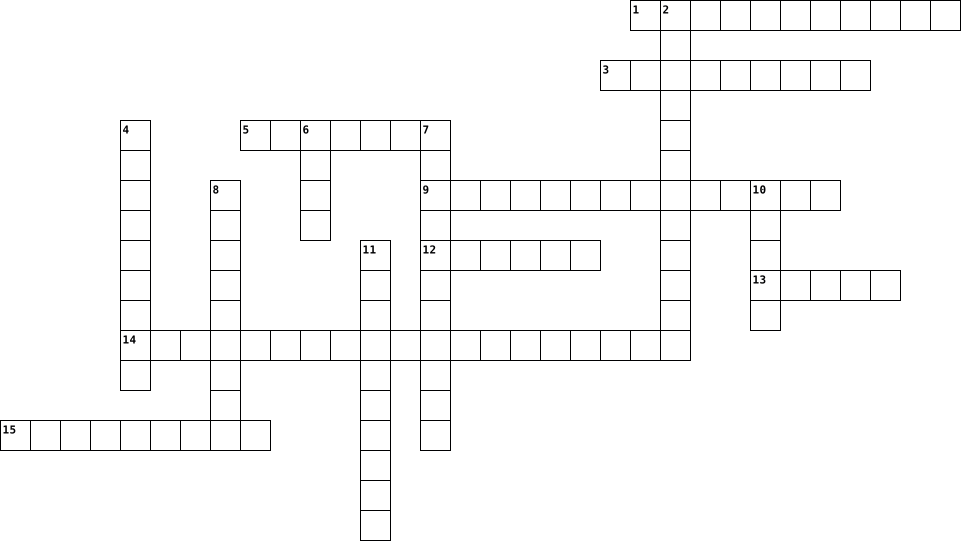
Across
- process which plants to create energy
- mode of making food by an organism
- also called as green pigment
- Membrane a thin outer boundary
- components of food
- organisms that make food themselves
- organisms sharing both shelter and nutrients
Down
- insect-eating plant
- fungi that derive nutrition from dead and decaying matter
- organisms that take in food prepared by plants
- produced during photosynthesis
- spherical structured located centrally
- surrounded by a jelly-like substance
- energy absorbed by chlorophyll present in leaves/plants
- slimy, green patches in ponds or stagnant water bodies
15 Clues: components of food • insect-eating plant • also called as green pigment • produced during photosynthesis • Membrane a thin outer boundary • mode of making food by an organism • organisms that make food themselves • surrounded by a jelly-like substance • process which plants to create energy • spherical structured located centrally • organisms sharing both shelter and nutrients • ...
Energy! 2025-10-03

Across
- where light-dependent reactions take place
- where light-independent reactions take place
- a molecule loses electrons
- energy-carrying molecule
- where cellular respiration takes place
- the ability to do work
- puts CO2 into a stable organic molecule
- where photosynthesis takes place
Down
- the process of chemicals being transferred into energy
- converting light energy into chemical energy
- a molecule gains electrons
- substances that change in a chemical process
- the first step of breaking down glucose
- result of a chemical process
- generated through anaerobic respiration in plants
15 Clues: the ability to do work • energy-carrying molecule • a molecule gains electrons • a molecule loses electrons • result of a chemical process • where photosynthesis takes place • where cellular respiration takes place • the first step of breaking down glucose • puts CO2 into a stable organic molecule • where light-dependent reactions take place • ...
Cells and Respiration Crossword 2021-08-04

Across
- The fridge
- Electromagnetic radiation
- Inhaling
- Allows vision past the naked eye
- Various biochemical and physiological processes, especially of aerobic organisms
- Mitochondria, Nucleus, Vacuole, ect
- Membrane A filter
- A type of lens that is attached to a variety of optical devices
- The simple sugar that energies the entire cell
- Responsible for holding the components of the cell and protects them from damage
Down
- Dioxide Formula CO2
- The Basic building blocks for all living things
- The main constituent of Earth's hydrosphere
- A powerhouse
- Phase
- The mind and genetics
- The site of photosynthesis
- Wall The moat for the castle
- The quantitative property that must be transferred to a body or physical system
- Self-made food and energy
20 Clues: Phase • Inhaling • The fridge • A powerhouse • Membrane A filter • Dioxide Formula CO2 • The mind and genetics • Electromagnetic radiation • Self-made food and energy • The site of photosynthesis • Wall The moat for the castle • Allows vision past the naked eye • Mitochondria, Nucleus, Vacuole, ect • The main constituent of Earth's hydrosphere • ...
Vocab Terms 2026-04-17

Across
- Section of DNA
- A group of similar cells that work together to do a specific job
- Community of living organisms
- Diffusion of water
- membrane Controls what enters and leaves
- An organism that makes its own food
- wall Provides support and protection in the cell
- Jelly-like substance inside the cell
- An organism that eats other organisms for energy
- Organelle in plant cells where photosynthesis occurs
- unit of life
Down
- Storage space in cell that holds water
- A living thing
- Movement of particles of high concentration to low concentration
- Molecule that carries genetic information
- powerhouse of the cell
- Speeds up chemical reactions
- Process plants use to make food
- Control center of a cell
- Attracts pollinaters
20 Clues: unit of life • A living thing • Section of DNA • Diffusion of water • Attracts pollinaters • powerhouse of the cell • Control center of a cell • Speeds up chemical reactions • Community of living organisms • Process plants use to make food • An organism that makes its own food • Jelly-like substance inside the cell • Storage space in cell that holds water • ...
232FDS 2021-03-17

Across
- gyhj
- awdsa
- phj
- sdsc
- po'
- ghgy
- see
- ser
Down
- esfsad
- uiolh
- gyh
- ewwggc
- awfds
- wdsa
- trhgfd
15 Clues: gyh • phj • po' • see • ser • gyhj • wdsa • sdsc • ghgy • uiolh • awdsa • awfds • esfsad • ewwggc • trhgfd
bio 2022-05-04

Across
- eleven
- three
- fifteen
- four
- five
- two
- twelve
- six
Down
- ten
- thirteen
- eight
- seven
- one
- fourteen
- nine
15 Clues: ten • one • two • six • four • five • nine • three • eight • seven • eleven • twelve • fifteen • thirteen • fourteen
NR 2022-08-25

Across
- kjkljk
- kkjl
- kjjml
- jhkkj
- kuo
- jkl
- kipol
- jhk
- khkhj
- mjklkl
Down
- kuokl
- jjk
- jhgjhkjh
- kjjl
- jklk
15 Clues: jjk • kuo • jkl • jhk • kkjl • kjjl • jklk • kuokl • kjjml • jhkkj • kipol • khkhj • kjkljk • mjklkl • jhgjhkjh
vocab 2024-05-08

Across
- 10
- 13
- 8
- 12
- 1
- 5
Down
- 2
- 14
- 11
- 4
- 9
- 7
- 3
- 17
- 6
15 Clues: 2 • 4 • 9 • 7 • 3 • 8 • 6 • 1 • 5 • 14 • 11 • 10 • 13 • 17 • 12
How Plants Use Glucose 2025-07-08

Across
- down glucose using oxygen respiration
- produced in photosynthesis oxygen
- sugar produced in photosynthesis glucose
- storage molecule in plants starch
- turns this colour with starch blue-black
- process by which plants make food photosynthesis
- use this to test for starch iodine
- organ in plants like potatoes tuber
- in seeds as energy lipid
- are made from these proteins
Down
- that eat insects carnivores
- used in respiration oxygen
- pigment in leaves chlorophyll
- is converted into this for storage starch
- + nitrate forms this amino acids
- needed to make amino acids nitrate
- removes this from leaves during testing chlorophyll
- carbohydrate used to strengthen plant cell walls cellulose
- is released in this process respiration
- molecule stores energy in seeds fat
20 Clues: in seeds as energy lipid • used in respiration oxygen • that eat insects carnivores • are made from these proteins • pigment in leaves chlorophyll • + nitrate forms this amino acids • produced in photosynthesis oxygen • storage molecule in plants starch • needed to make amino acids nitrate • use this to test for starch iodine • organ in plants like potatoes tuber • ...
Food Chains & Food Webs 2017-01-24

Across
- process plants use to make their own food
- eat only other animals
- base of food webs
- can be traced through food chains
- decomposer
- break down remains of organisms
- show flow of energy
- eat only plants
Down
- decomposer
- primary source of energy
- carnivores, third step in food chain
- animals who must get energy from other foods they eat
- green plants that are the first step in all food chains
- show the connection between food chains
- eat both plants and animals
- what every living thing needs to live and grow
- decomposer
- produced by using CO2, water and sunlight during photosynthesis
18 Clues: decomposer • decomposer • decomposer • eat only plants • base of food webs • show flow of energy • eat only other animals • primary source of energy • eat both plants and animals • break down remains of organisms • can be traced through food chains • carnivores, third step in food chain • show the connection between food chains • process plants use to make their own food • ...
Cell Organelles and Adaptations 2017-03-10

Across
- Gell-like substance that holds organelles
- Produces ribosomes
- Site of photosynthesis
- Site of protein synthesis
- Detects light for photosynthesis
- Short hair-like structures that help the cell move
- Controls what enters and exits the cell; maintains homeostatis
- Packages and ships proteins and lipids
- Removes excess water from the cell
- Holds the DNA
Down
- Assembles and transports proteins
- Extensions of cytoplasm used for movement and feeding
- Produces ATP for the cell
- Rigid structure outside of the cell membrane for extra support
- Long whip-like structures that help the cell move
- Stores food, water, and waste
16 Clues: Holds the DNA • Produces ribosomes • Site of photosynthesis • Produces ATP for the cell • Site of protein synthesis • Stores food, water, and waste • Detects light for photosynthesis • Assembles and transports proteins • Removes excess water from the cell • Packages and ships proteins and lipids • Gell-like substance that holds organelles • ...
Chapter 7: Oxygen Cycle and Carbon Dioxide Cycle 2022-10-03

Across
- our main respiratory organ
- strengthen by C-shaped cartilage
- a gas used during respiration
- movement of gaseous molecule from a region of high concentration to a region of lower concentration
- one-cell thick
- combines and transport oxygen
- sites for photosynthesis
- process of breathing in
Down
- opening on leaves that allow gaseous exchange
- needed by plants during photosynthesis
- process of breathing out
- used to test for the presence of starch
- food and air pass through here
- a component of cigarette that is addictive
- vibrate and produce sound
- moisten the inhaled air, traps bacteria and dust
16 Clues: one-cell thick • process of breathing in • process of breathing out • sites for photosynthesis • vibrate and produce sound • our main respiratory organ • a gas used during respiration • combines and transport oxygen • food and air pass through here • strengthen by C-shaped cartilage • needed by plants during photosynthesis • used to test for the presence of starch • ...
Ecosystem Structures and Functions 2023-08-09

Across
- Fe and Mg rich layer
- energy stored during photosynthesis
- Above surface land form 300-200 million years ago
- Stable pattern of development and growth
- Stable internal environment
- Tectonic plates moving sideways
- Earth's layer
Down
- energy, material and nutrient components
- Biotic components + abiotic components
- energy stored as biomass after respiration
- Truth or False: living organisms can be studied at different levels of complexity, from the smallest to the largest
- Photosynthesis, sunlight, CO2, H2O
- Hot plumes rising upward
- organism components
- Property of interactions of >2 components
- Long-term cycle variations in Earth's orbit and axial tilt
16 Clues: Earth's layer • organism components • Fe and Mg rich layer • Hot plumes rising upward • Stable internal environment • Tectonic plates moving sideways • Photosynthesis, sunlight, CO2, H2O • energy stored during photosynthesis • Biotic components + abiotic components • energy, material and nutrient components • Stable pattern of development and growth • ...
3rd Quarter Review (Chapter 3) 2020-05-04

Across
- The sugar plants make!
- The process plants perform to turn carbon dioxide and water into glucose and oxygen!
- A _______ is a linear network of links in a food web starting from a producer organism and ending with an apex predator.
- Plants release this into the air so we can breathe!
- The organelle cellular respiration happens in.
- The organelle photosynthesis happens in.
- A community of interacting organisms and their physical environment.
Down
- The opposite of photosynthesis--this process is used by all organisms to turn glucose and oxygen into energy.
- Organisms that are dependent on producers for food.
- The energy that plants use.
- Organisms that make their own food
- The ability to do work.
12 Clues: The sugar plants make! • The ability to do work. • The energy that plants use. • Organisms that make their own food • The organelle photosynthesis happens in. • The organelle cellular respiration happens in. • Organisms that are dependent on producers for food. • Plants release this into the air so we can breathe! • ...
vocab words 2021-08-16

Across
- the green pigment that uses light energy for photosynthesis
- a relationship between living things that rely on one another for nourishment.
- photosynthesis takes place in one of the small sections of a plant cell that contains chlorophyll
- substances react and form new ones
- potential for causing change
- travels by waves or particals
Down
- the process in which green plants create their own nutrients using sunlight
- a group of atoms bonded together
- a gas produced by the combustion of fuels
- is a gas that is 21% of our atmosphere
- an organism that eats other plants or animals for energy and nutrients
- a community or collection of living organisms that share a environment and interact with one another.
12 Clues: potential for causing change • travels by waves or particals • a group of atoms bonded together • substances react and form new ones • is a gas that is 21% of our atmosphere • a gas produced by the combustion of fuels • the green pigment that uses light energy for photosynthesis • an organism that eats other plants or animals for energy and nutrients • ...
Day 6 Vocabulary Assignment 2023-06-21

Across
- organism that can produce its own food using light, water, carbon dioxide.
- waste in photosynthesis.
- source of energy for use and storage at the cellular level.
- plastid that contains chlorophyll.
- Light-dependent reactions happen in this area.
- plants use sunlight, water, and carbon dioxide to create oxygen and energy in the form of sugar.
Down
- organism that eats other plants or animals for energy and nutrients
- cells and tissues that support and give structure to organs, glands, or other tissues in the body.
- carbon fixation, reduction, and regeneration of the starting molecule.
- natural compound present in green plants that gives them their color.
- first stage of photosynthesis process.
- sugar
12 Clues: sugar • waste in photosynthesis. • plastid that contains chlorophyll. • first stage of photosynthesis process. • Light-dependent reactions happen in this area. • source of energy for use and storage at the cellular level. • organism that eats other plants or animals for energy and nutrients • natural compound present in green plants that gives them their color. • ...
guess what 2023-02-08

Across
- a cell on a sieve plate that support the sieve plate
- transport of the product of photosynthesis
- a vascular tissue transporting minerals from the soil
- the organs on a plant to deposit the product of photosynthesis
- a layers of cells covering the outermost part of root
Down
- tiny gap on the lower epidermis of leaf
- hard strong substance that make up of the wall of xylem vessel
- a plant's organ that is the net producer of sugar
- a tissue beneath the upper epidermis where the place of photosynthesis
- movement of water molecules from the soil to the root
- water evaporation out of the leaf
- the apparatus which measures the rate of transpiration
12 Clues: water evaporation out of the leaf • tiny gap on the lower epidermis of leaf • transport of the product of photosynthesis • a plant's organ that is the net producer of sugar • a cell on a sieve plate that support the sieve plate • movement of water molecules from the soil to the root • a vascular tissue transporting minerals from the soil • ...
Internal Structures and Functions of Plants 2024-07-26

Across
- The _______ is a tiny opening on a leaf that takes in carbon dioxide from air and releases other gases from the plant.
- During photosynthesis, energy from the sun is used to __________ water and carbon dioxide from the air into sugar and oxygen.
- The leaf of a plant is where the process of ___________________ occurs.
- The ovary of a flower is the female reproductive part that helps the plant ___________.
- The ovaries of a flower has a specific __________ to produce eggs and provide a space for seeds to develop.
- The cactus's internal structures allow it to store water for a long time and __________ in very dry weather.
- A __________ is made of different structures, or organized parts, that work together to help the organism survive.
- The kinds of internal structures plants have depend on their ______________.
- During photosynthesis, a plants needs __________, carbon dioxide and water.
Down
- A plant's internal ____________ can best be seen and understood by dissecting the plant.
- Photosynthesis happens inside ______________, which are found inside leaves.
- The xylem moves materials in only one direction, _________ from the roots to all the plant parts.
- The plant's ___________ system is a collection of small tubes that transports materials up, down and throughout the plant.
- The _______ carries water with dissolved nutrients from the roots to all plant parts.
- The _______ moves in many directions and transports food from the leaves to all other parts of the plant.
- Some of the most important functions of the structures of a plant are survival, growth, ______________, and reproduction.
16 Clues: The leaf of a plant is where the process of ___________________ occurs. • During photosynthesis, a plants needs __________, carbon dioxide and water. • Photosynthesis happens inside ______________, which are found inside leaves. • The kinds of internal structures plants have depend on their ______________. • ...
photosynthesis bio 2023-09-26

Across
- Set of reactions in photosynthesis that use energy from light to produce ATP and NADPH
- Compound used by cells to store and release energy
- Set of reactions in photosynthesis that do not require light, complex sugars are made
- Process used by autotrophs to capture light energy and use it to power chemical reactions that convert carbon dioxide and water into sugars
- the biological conversion of one or more carbon-containing molecules and nutrients into organic matter using the oxidation of inorganic compounds or ferrous ions as a source of energy, rather than sunlight, as in photosynthesis.
- Principal pigment of plants and other photosynthetic organisms
Down
- the process by which biological fuels are oxidised in the presence of an inorganic electron acceptor, such as oxygen, to drive the bulk production of adenosine triphosphate, which contains energy
- Saclike photosynthetic membranes found in chloroplasts
- Light-independent reactions of photosynthesis in which energy from ATP and NADPH is used to build high-energy compounds such as sugar
- Light-absorbing molecule used by plants to gather the sun's energy
10 Clues: Compound used by cells to store and release energy • Saclike photosynthetic membranes found in chloroplasts • Principal pigment of plants and other photosynthetic organisms • Light-absorbing molecule used by plants to gather the sun's energy • Set of reactions in photosynthesis that do not require light, complex sugars are made • ...
Revision2 2012-10-21

Across
- cross of one trait
- where the light reaction occurs in chloroplast
- organism that converts solar energy to chemical energy
- division of cytoplasm
- alternate form of a gene
- ATP production over an H+ gradient across a membrane
- reaction where no ATP is produced (4,50
- passes electrons from PSII to PSI during photosynthesis
- trait governed by more than one gene
- end product of photosynthesis, and reactant of respiration
- name of trait that is overshadowed
- phase when sister chromatids line on equator
- last carrier to accept electrons in ETC in respiration
- name of joint reaction of oxidation and reduction
Down
- describes life stages of cell (4,5)
- physical characteristics of an organism
- Organelle involved in cellular respiration
- organelle: site of photosynthesis in cell
- number of chromosomes in a somatic cell
- high energy molecule used to drive Calvin cycle
- swapping of genetic information during meiosis (8,4)
- ATP production without oxygen
- uncontrolled cell reproduction
- also known as the citric acid cycle
- Glucose is broken down in this reaction of cellular respiration
- programmed cell death
- cell division in somatic cells
- father of genetics
- where Calvin cycle occurs
- changes to DNA that create diversity in organisms
30 Clues: cross of one trait • father of genetics • division of cytoplasm • programmed cell death • alternate form of a gene • where Calvin cycle occurs • ATP production without oxygen • uncontrolled cell reproduction • cell division in somatic cells • name of trait that is overshadowed • describes life stages of cell (4,5) • also known as the citric acid cycle • ...
Cell Processes - ENERGY 2023-02-10

Across
- process using water, carbon dioxide, and light energy to make glucose and oxygen
- a pure substance that can't be broken down chemically
- type of fermentation where glucose is broken down into ethanol, carbon dioxide, and ATP energy
- biomolecule whose monomers are amino acids
- amount of ATP produced during fermentation
- type of fermentation where glucose is broken down into lactic acid and ATP energy
- type of respiration that occurs when no oxygen is present
- biomolecule whose monomers are nucleotides
- biomolecule whose monomers are monosaccharides
- CO2
- pigment in chloroplasts that absorb sunlight
- O2
- C6H12O6
Down
- unicellular fungus that aids in fermentation
- amount of ATP produced during cellular respiration
- two or more atoms joined together by a chemical bond
- starting materials in a chemical reaction
- two or more different atoms joined together by a chemical bond
- ending materials in a chemical reaction
- a form of energy made during aerobic and anaerobic respiration
- organelle where photosynthesis takes place
- energy from the sun that is needed for photosynthesis
- organelle where aerobic respiration takes place
- the smallest unit of matter
- biomolecule whose monomers are fatty acids and glycerol
- type of respiration that combines glucose and oxygen to make water, carbon dioxide, and ATP energy
26 Clues: O2 • CO2 • C6H12O6 • the smallest unit of matter • ending materials in a chemical reaction • starting materials in a chemical reaction • biomolecule whose monomers are amino acids • amount of ATP produced during fermentation • organelle where photosynthesis takes place • biomolecule whose monomers are nucleotides • unicellular fungus that aids in fermentation • ...
1st Semester Biology 2024-12-12

Across
- nonliving thing
- 2 word and is the process that cells use to make glucose
- the phase where chromosomes condense
- living thing
- a community of living and non-living things
- 2 word something that consumes the producers
- the heat that is outside measured in Celsius,Fahrenhheit,and Kelvin
- a observable event or occurrence that can be studied
- a phase where one cell splits into two daughter cells
- 2 words again that mean how clear or transparent the water is
Down
- a stage of cell division where the chromosomes are pulled apart to opposite ends of the cell
- the phase of the cell grows and replicates its DNA and prepares its self for cell division
- 2 words as well and they consume the secondary consumers
- Something that plants just go through and the sun helps them go through
- something that we have o breath in if we want to live
- something such as plants that make there food through a process like photosynthesis at the top of the food pyramid
- a very important species in a environment
- the stage where cell division and chromosomes align in the middle before separating into the two daughter cells
- 2 words and they consume the primary consumers
- 2 words no space plants take this is through photosynthesis
20 Clues: living thing • nonliving thing • the phase where chromosomes condense • a very important species in a environment • a community of living and non-living things • 2 word something that consumes the producers • 2 words and they consume the primary consumers • a observable event or occurrence that can be studied • something that we have o breath in if we want to live • ...
Ecology 2022-06-18

Across
- the living factors of the environment
- the relationship between the flea and the dog.
- organisms that feed on dead and decaying matter
- A raw material required for photosynthesis
- The physical factors of the environment
- A swarm of bees
- the relationship between the nitrogen fixing bacteria and leguminous plants
- A group of jaguars, sloths, parrots and plants living together.
- __________________ increases the rate of reaction of enzymes and affect other processes such as photosynthesis and transpiration.
- a lion hunting a zebra is called a __________.
- The interaction of the living organisms and the physical factors of the environment
Down
- corn birds in their nest
- a relationship between two organisms where one benefits and the other does not benefit nor is it harmed.
- the role of the species is called the_______.
- Loams are the ideal_______.
- Organisms that can interbreed and produce fertile offspring
- organism that consumes other organisms as food
- A level of a food chain
- Organisms that feed on plants for nutrients
- chlorophyll molecules trap ______ which helps the process of photosynthesis.
- organisms that consume both plants and animals.
- study of the living organisms and how it interacts in the environment.
- An organism that is being hunted as food
23 Clues: A swarm of bees • A level of a food chain • Loams are the ideal_______. • corn birds in their nest • The physical factors of the environment • An organism that is being hunted as food • A raw material required for photosynthesis • Organisms that feed on plants for nutrients • organisms that consume both plants and animals. • ...