
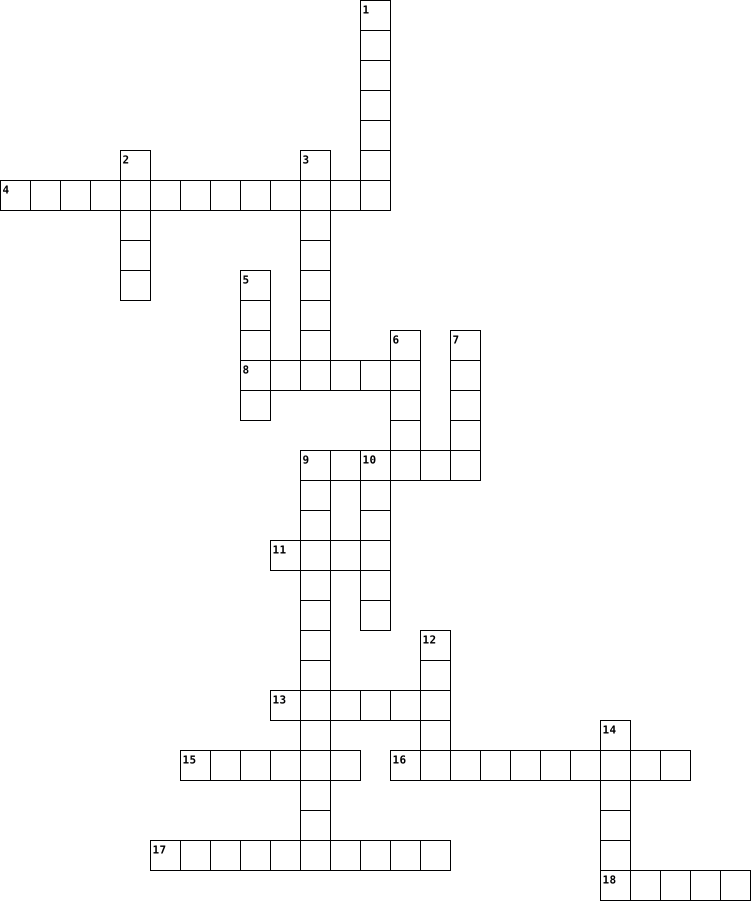
photosynthesis Crossword Puzzles
Biochemical Processes 2022-12-15

Across
- Direct source of energy for cell processes
- In the absence of oxygen,_______ will create alcohol, CO2, and 2 ATP
- An anaerobic step in cellular respiration, before the cell decides if it will go through fermentation or the Krebs Cycle and ETC
- Where glucose gets broken into pyruvate in the cell
- Where chlorophyll is stored in plant cells
- The step in photosynthesis where organisms capture CO2 in order to convert it into glucose
- Where in the mitochondria the most ATP is made during cellular respiration
- Another name for anaerobic respiration
Down
- The process many autotrophs go through to convert solar energy into chemical energy
- A byproduct of anaerobic respiration in humans
- The step in cellular respiration that creates the engery-carrying molecules ATP, NADH, and FADH2 that will power the final step
- Process that require oxygen are_________
- The process cells use to break down macromolecules like carbohydrates in order to create usable energy for cellular processes
- The step in photosynthesis and cellular respiration when energy-carrying molecules are formed
- The pigment that allows plants to absorb sunlight
15 Clues: Another name for anaerobic respiration • Process that require oxygen are_________ • Direct source of energy for cell processes • Where chlorophyll is stored in plant cells • A byproduct of anaerobic respiration in humans • The pigment that allows plants to absorb sunlight • Where glucose gets broken into pyruvate in the cell • ...
Benchmark 3 Vocabulary Review 2015-01-26

Across
- Plant that produces fruit or flowers
- Type of symbiotic relationship where one benefits and one is hurt (+, -)
- Type of reproduction that produces identical offspring from DNA of only one parent
- This gas is absorbed by plant cells during photosynthesis,and released by both plant and animal cells during respiration
- Type of cellular respiration that takes place with oxygen present
- Special bacteria that live on the root nodules of plants "fix" this in the soil
- When pollen from one flower's anther is moved to stigma of another flower
- Type of symbiotic relationship where one benefits and one is neither hurt nor harmed (+, 0)
- Type of metamorphosis with 3 stages that look the same: egg, nymph, adult
- Type of cell that undergoes photosynthesis and respiration, has chloroplast, cell wall and large vacuole
Down
- How plant and animal release stored energy in the form of ATP
- Plant that produces woody cones to hold seeds
- How plant cells store energy by making glucose
- Type of metamorphosis with 4 different looking stages: Egg, larva, pupa, adult
- Type of symbiotic relationship where both are helped (+, +)
15 Clues: Plant that produces fruit or flowers • Plant that produces woody cones to hold seeds • How plant cells store energy by making glucose • Type of symbiotic relationship where both are helped (+, +) • How plant and animal release stored energy in the form of ATP • Type of cellular respiration that takes place with oxygen present • ...
Bio 2023-11-30

Across
- an organism that is able to form nutritional organic substances from simple inorganic substances
- any coloured material found in a plant or animal cell
- the functional units for photosynthesis
- a metabolic process that produces chemical changes in organic substances through the action of enzymes
- the supporting framework of an animal organ typically consisting of connective tissue
- a 2-oxo monocarboxylic acid that is the 2-keto derivative of propionic acid
- an organism deriving its nutritional requirements from complex organic substances
Down
- stacks of structures called thylakoids
- Nicotinamide adenine dinucleotide phosphate
- each of a number of flattened sacs inside a chloroplast, bounded by pigmented membranes on which the light reactions of photosynthesis take place
- the process by which green plants and some other organisms use sunlight to synthesize foods from carbon dioxide and water
- the metabolic pathway that converts glucose into pyruvate
- a process that requires the presence of oxygen or air as opposed to an anaerobic process that does not require it
- a measure of energy
- this bacteria are germs that can survive and grow where there is no oxygen.
15 Clues: a measure of energy • stacks of structures called thylakoids • the functional units for photosynthesis • Nicotinamide adenine dinucleotide phosphate • any coloured material found in a plant or animal cell • the metabolic pathway that converts glucose into pyruvate • a 2-oxo monocarboxylic acid that is the 2-keto derivative of propionic acid • ...
Biodiversity 2026-02-04

Across
- Web A complex diagram showing the interconnecting food chains in a habitat.
- The variety of living things in an ecosystem, or on Earth.
- An organism that can make its own food e.g. green plants change light energy into chemical energy (food) by the process of photosynthesis.
- Used to identify organisms based on their physical appearance.
- A place where an organism lives
- Plants require light, warmth, carbon dioxide,______ and water to grow.
- An organism that must eat other organisms to get energy.
Down
- Chemical Equation of photosynthesis
- The process in which a plant makes its own food
- A simple diagram showing the feeding in a habitat.
- Used to measure how many plants there are in a specific area. Normally repeated multiple times
- A natural biological unit made up of living and non-living parts or a community of living things and their habitats
- Trap Used to measure how many organisms there are in a specific area
- A living thing e.g animal, plant.
- Used to show the direction of energy flow in a food chain/web
15 Clues: A place where an organism lives • A living thing e.g animal, plant. • Chemical Equation of photosynthesis • The process in which a plant makes its own food • A simple diagram showing the feeding in a habitat. • An organism that must eat other organisms to get energy. • The variety of living things in an ecosystem, or on Earth. • ...
Iyla's Science Crossword Puzzle 2022-11-01

Across
- The beginning of the food chain that uses photosynthesis like green grass
- An organism that doesn’t make it’s own food and realized on other autotroph and heterotroph like humans
- Carbon dioxide
- An organism that feed on other organisms and cannot make their own food like bears
- The process where plants and animals use glucose & oxygen to produce energy and carbon dioxide
- Glucose
- The process in which plants use sunlight, water, and carbon dioxide to produce glucose and oxygen to be used by other plants and animals
Down
- The process where plants and animals use glucose and oxygen to produce energy and carbon dioxide
- The end result of a chemical reaction.
- The organelle that is responsible for creating energy for the cell to use an carrying out cellular respiration.
- The green organelles inside of a plant cell. The organelles responsible for carrying out photosynthesis.
- A producer that makes its own food, starts a food web like flowers
- Oxygen
- Water
14 Clues: Water • Oxygen • Glucose • Carbon dioxide • The end result of a chemical reaction. • A producer that makes its own food, starts a food web like flowers • The beginning of the food chain that uses photosynthesis like green grass • An organism that feed on other organisms and cannot make their own food like bears • ...
Iyla's Science Crossword Puzzle 2022-11-01

Across
- The beginning of the food chain that uses photosynthesis like green grass
- An organism that doesn’t make it’s own food and realized on other autotroph and heterotroph like humans
- Carbon dioxide
- An organism that feed on other organisms and cannot make their own food like bears
- The process where plants and animals use glucose & oxygen to produce energy and carbon dioxide
- Glucose
- The process in which plants use sunlight, water, and carbon dioxide to produce glucose and oxygen to be used by other plants and animals
Down
- The process where plants and animals use glucose and oxygen to produce energy and carbon dioxide
- The end result of a chemical reaction.
- The organelle that is responsible for creating energy for the cell to use an carrying out cellular respiration.
- The green organelles inside of a plant cell. The organelles responsible for carrying out photosynthesis.
- A producer that makes its own food, starts a food web like flowers
- Oxygen
- Water
14 Clues: Water • Oxygen • Glucose • Carbon dioxide • The end result of a chemical reaction. • A producer that makes its own food, starts a food web like flowers • The beginning of the food chain that uses photosynthesis like green grass • An organism that feed on other organisms and cannot make their own food like bears • ...
Energy 2018-05-14

Across
- Glucose, and oxygen are products
- Organelle found in plants where photosynthesis occurs
- Sugar made during photosynthesis
Down
- Organelle where cellular respiration occurs
- Glucose, and oxygen are reactants
- Pigment found in plants
- cellular energy
7 Clues: cellular energy • Pigment found in plants • Glucose, and oxygen are products • Sugar made during photosynthesis • Glucose, and oxygen are reactants • Organelle where cellular respiration occurs • Organelle found in plants where photosynthesis occurs
Photosynthisis 2022-12-08

Across
- energy
- photosynthesis
- chloroplast
- microorganism
Down
- oxygen
- environment
- carbon
7 Clues: oxygen • energy • carbon • environment • chloroplast • microorganism • photosynthesis
การสังเคราะห์ด้วยแสง 2022-09-30

Across
- ได้รับคาร์โบไฮเดรตและออกซิเจน
- เป็นสารให้พลังงานสูงแก่เซลล์ ผลิตจากกระบวนการสังเคราะห์ด้วยแสง
- เป็นธาตุในตารางธาตุที่มีสัญลักษณ์ C
- การใช้แก๊สออกซิเจนและคายแก๊สคาร์บอนไดออกไซด์ในขณะที่ พืชสังเคราะห์ด้วยแสง
- เป็นสารเคมีที่พบมากในผักผลไม้ที่มีสีแดง ส้ม เหลือง และเขียว
- น้ำ
- เป็นออร์แกแนลที่พบในพืช เป็นพลาสติด
- ธาตุ H
- ประกอบด้วยน้ำตาลโมเลกุลเดี่ยวหรือมอโนแซ็กคาไรด์
- เป็นสารประกอบที่พบได้ในส่วนที่มีสีเขียวของพืช
Down
- สมมติฐาน
- ระบบแสง
- เป็นโครงสร้างที่ใช้รับพลังงานจากแสงเพื่อใช้ในการสังเคราะห์ด้วยแสง
- ปฏิกิริยารีดอกซ์เป็นปฏิกิริยาเกี่ยวกับการรับส่งอิเล็กตรอน
- อนุภาคชนิดนี้มีคุณสมบัติทางไฟฟ้าเป็นประจุลบ
- เป็นรงควัตถุที่มีสีส้ม หรือส้ม-แดง เป็นสายยาวของไฮโดรคาร์บอน
- เซลล์สารสี, เซลล์ที่มีสารสีอยู่ภายใน เป็นเซลล์ที่ทำให้เกิดสีในส่วนต่าง ๆ ของสิ่งมีชีวิต
- กระบวนการตรึงคาร์บอนไดออกไซด์เข้ากับ สารอินทรีย์ที่มีคาร์บอน 5 อะตอมเป็นองค์ประกอบ
- อนุภาคอย่างหนึ่งที่เกิดขึ้นมาจากกระบวนการในระดับ Atom
- การเจริญทดแทน
20 Clues: น้ำ • ธาตุ H • ระบบแสง • สมมติฐาน • การเจริญทดแทน • ได้รับคาร์โบไฮเดรตและออกซิเจน • เป็นธาตุในตารางธาตุที่มีสัญลักษณ์ C • เป็นออร์แกแนลที่พบในพืช เป็นพลาสติด • อนุภาคชนิดนี้มีคุณสมบัติทางไฟฟ้าเป็นประจุลบ • เป็นสารประกอบที่พบได้ในส่วนที่มีสีเขียวของพืช • ประกอบด้วยน้ำตาลโมเลกุลเดี่ยวหรือมอโนแซ็กคาไรด์ • อนุภาคอย่างหนึ่งที่เกิดขึ้นมาจากกระบวนการในระดับ Atom • ...
Limiting factors 2023-09-26

Across
- - something necessary for photosynthesis but isn't a limiting factor
- - along a straight line
- is the process by which plants make oxygen and energy
- - a raw material used for photosynthesis which is also a limiting factor
- - a diagram showing the relation between variable quantities
Down
- This limiting factors reaction is controlled by enzymes
- intensity - limiting factor which will continue until some other factor required for photosynthesis prevents the rate from increasing further because it is now in short supply
- word used to describe the best temperature for the enzyme to work in
8 Clues: - along a straight line • is the process by which plants make oxygen and energy • This limiting factors reaction is controlled by enzymes • - a diagram showing the relation between variable quantities • - something necessary for photosynthesis but isn't a limiting factor • word used to describe the best temperature for the enzyme to work in • ...
Plants 2021-02-23

Across
- This is on top of the plant and its temperature changes depending on the heat around it.
- This is produced after photosynthesis.
- Transports glucose to growing parts and storage organs.
- The Phloem transports this.
Down
- This is needed for photosynthesis along with water.
- This is needed for photosynthesis and it comes from a big burning ball of gas.
- This is the process of a plant losing water.
- This transports water and minerals to the leaves.
- These things absorb water from the soil.
- These things open and close and they are on the underside of the leaf.
10 Clues: The Phloem transports this. • This is produced after photosynthesis. • These things absorb water from the soil. • This is the process of a plant losing water. • This transports water and minerals to the leaves. • This is needed for photosynthesis along with water. • Transports glucose to growing parts and storage organs. • ...
Science Crossword Puzzle 2015-02-24

Across
- a typical star that is the source of light and heat for the plants in the solar system
- the green pigment found in plant cells, essential to photosynthesis
- plastid containing chlorophyll and other pigments in plants that carry out photosynthesis
- a process used by plants and other organism to convert light energy
Down
- the rays of the sun
- a heavy, colorless, odorless gas
- energy energy that you can actually see directly
- a sweat crystalline substance found in plants: your body uses to store energy
- plants, something that produce their own food
- colorless and odorless gas that people need to breath
10 Clues: the rays of the sun • a heavy, colorless, odorless gas • plants, something that produce their own food • energy energy that you can actually see directly • colorless and odorless gas that people need to breath • the green pigment found in plant cells, essential to photosynthesis • a process used by plants and other organism to convert light energy • ...
Chapter 4 Energy Crossword 2023-09-16

Across
- gas molecule that diffuses into stomata of leaves and is fixed into glucose
- primary product of photosynthesis; input of cellular respiration
- process occurs within the chloroplasts; produces glucose by fixing carbon dioxide
- photosynthetic pigment that absorbs light/photons; reflects green wavelengths of light
- breakdown of glucose without oxygen; produces 2 ATP per glucose
Down
- process occurs within mitochondria; produces ~30 ATP by completely oxidizing 1 molecule of glucose
- site of photosynthesis; contains chlorophyll
- required during cellular respiration to fully oxidize glucose
- pores on undersides of leaves allowing for gas exchange
- particle of light that travels in waves
10 Clues: particle of light that travels in waves • site of photosynthesis; contains chlorophyll • pores on undersides of leaves allowing for gas exchange • required during cellular respiration to fully oxidize glucose • breakdown of glucose without oxygen; produces 2 ATP per glucose • primary product of photosynthesis; input of cellular respiration • ...
Heterotrophs 2022-12-08

Across
- A process when an organism creates food without sunlight (usually occurs with bacteria at the bottom of the ocean)
- An organism that creates food from photosynthesis
- A process when an organism creates food from sunlight
Down
- An organism with many cells
- An organism that produces their own food through photosynthesis
- A complex type of cell that has a nucleus and has organelles
- An organism that cannot produce their own food
- An organism that only has 1 cell
- An organism that eats other organisms for food
- A basic type of cell that has no nucleus and no organelles
10 Clues: An organism with many cells • An organism that only has 1 cell • An organism that cannot produce their own food • An organism that eats other organisms for food • An organism that creates food from photosynthesis • A process when an organism creates food from sunlight • A basic type of cell that has no nucleus and no organelles • ...
Biology 2025-10-17

Across
- : The organelle known as the “powerhouse of the cell.”
- : The process that breaks down glucose into two pyruvate molecules in the cytoplasm.
- : The green pigment that absorbs sunlight in plants.
- : The final electron acceptor in the electron transport chain.
- : The main energy molecule produced at the end of cellular respiration.
- : The first stage of photosynthesis that uses sunlight to split water and release oxygen.
Down
- : The process that uses carbon dioxide to form glucose in the stroma.
- : The overall process by which plants use sunlight to produce glucose.
- : The organelle where photosynthesis occurs.
- : The waste gas released during aerobic respiration.
10 Clues: : The organelle where photosynthesis occurs. • : The green pigment that absorbs sunlight in plants. • : The waste gas released during aerobic respiration. • : The organelle known as the “powerhouse of the cell.” • : The final electron acceptor in the electron transport chain. • : The process that uses carbon dioxide to form glucose in the stroma. • ...
Light-Dependent Reactions 2023-01-15

Across
- The primary electron donor of Photosystem II.
- It is a by-product of plants; its chemical symbol is O.
- It is absorbed by plants in photosynthesis; also known as CO₂.
- It is a copper-containing protein that plays a role in the electron transport process associated with photosynthesis. It accepts electrons from cytochrome b₆f and passes to P700+ of photosystem I.
- It is used as food by the plant. It is produced inside the chloroplasts.
Down
- It is an electron transporter that transports electrons from photosystem II to cytochrome b₆f.
- It is found in chloroplasts, mediates electron transfer, and contains an iron-sulfur cluster.
- It provides the electrons and hydrogen ions needed to power the light-dependent and light-independent phases of photosynthesis; also known as H₂O.
- It is light energy.
- It is an energy-carrying molecule produced in the first stage of photosynthesis.
10 Clues: It is light energy. • The primary electron donor of Photosystem II. • It is a by-product of plants; its chemical symbol is O. • It is absorbed by plants in photosynthesis; also known as CO₂. • It is used as food by the plant. It is produced inside the chloroplasts. • It is an energy-carrying molecule produced in the first stage of photosynthesis. • ...
The products of photosynthesis 2021-01-06

Across
- To destroy any chlorophyll before testing a leaf for starch, it is boiled in...
- Chemical used to test for the presence of starch.
- Glucose is converted into this other type of sugar in fruit (to make them taste nice). This sugar is sweeter tasting than glucose.
- An advantage of storing starch rather than glucose is that starch doesn't cause water to move by...
- Amino acids are used by organisms to make larger molecules (polymers) called....
- Plant can uses fats and oils are used to store this (Especially in seeds).
- Complex carbohydrate used to build cell walls.
- If you increase the amount of light shining on a leaf, but photosynthesis doesn't increase, light was not a... (2 words)
- Lots of starch can be stored by plants underground in bulbs and...
- Where many carnivorous plants get their nitrates from.
Down
- The organelles in plant cells where photosynthesis takes place.
- The chemical in plants that absorbs light for photosynthesis.
- Group of molecules including fats and oils.
- These embryonic plant structures tend to contain a lot of lipids.
- Gas needed as a reactant in respiration.
- Cell walls help a plant by giving them ___________ support.
- The controlled release of energy by breaking down glucose.
- Glucose can be combined with nitrates to make these molecules (2 words)
- Complex carbohydrate molecule used to store energy in plants.
19 Clues: Gas needed as a reactant in respiration. • Group of molecules including fats and oils. • Complex carbohydrate used to build cell walls. • Chemical used to test for the presence of starch. • Where many carnivorous plants get their nitrates from. • The controlled release of energy by breaking down glucose. • Cell walls help a plant by giving them ___________ support. • ...
Revew 2015-02-25

Across
- The liquid starting material of photosynthesis
- Organelle where photosynthesis occurs in the cell
- The gas that is produced in photosynthesis
Down
- Having two identical alleles for a trait
- An allele whose trait always shows up in an organism
- Organelle that produces proteins in the cell
- Organelle that controls all the activities of the cell
- An organism’s physical appearance
8 Clues: An organism’s physical appearance • Having two identical alleles for a trait • The gas that is produced in photosynthesis • Organelle that produces proteins in the cell • The liquid starting material of photosynthesis • Organelle where photosynthesis occurs in the cell • An allele whose trait always shows up in an organism • ...
Biology Crossword 2016-10-26

Across
- Made in the electric transport chain
- Organelle found in cells of plants
- Step 3
- Requires oxygen
- Captures light energy
- A type of carbohydrate that is produced during photosynthesis
- Chemical reactions that break down glucose into two molecules of pyruvic acid
Down
- Process all living things use to break down food molecules (glucose) to produce energy (ATP)
- Process by which cells release energy in the absence of oxygen
- Another name for Kreb Cycle
- Constant state of internal environment
- Cell organelles in the cytoplasm of cells that functions in energy production
- The process of using the sun's energy to make simple sugars
- No oxygen is required
- Adenosine Diphosphate
- Splitting of water
16 Clues: Step 3 • Requires oxygen • Splitting of water • No oxygen is required • Adenosine Diphosphate • Captures light energy • Another name for Kreb Cycle • Organelle found in cells of plants • Made in the electric transport chain • Constant state of internal environment • The process of using the sun's energy to make simple sugars • ...
nina's crossword puzzle 2023-11-17

Across
- is a place that received extensive damage from wildfires
- starts photosynthesis
- is a city that is being attacked
- damage was caused in gaza
- has a better deal for chicken then shaws
- was made to test the cia's decoding skills
Down
- is what the hamas are doing in gaza
- is what the octopus did in the movie
- is started by chlorophyll
- colony is what the roanoke colony is referred to as
- means a living thing in the ecosystem
- describes a non-living thing in the ecosystem
- means strange odd or unusual
- are something you wear in your hair
- disappeared and no one knows why
- was what best describes Maui's climate before the fires
16 Clues: starts photosynthesis • is started by chlorophyll • damage was caused in gaza • means strange odd or unusual • is a city that is being attacked • disappeared and no one knows why • is what the hamas are doing in gaza • are something you wear in your hair • is what the octopus did in the movie • means a living thing in the ecosystem • has a better deal for chicken then shaws • ...
Topic Crossword 2016-02-24

Across
- Main substance used to release energy in respiration.
- Green Pigment that absorbs sunlight.
- Respiration without oxygen.
- Process that plants use to make sugars.
- Plants store sugars in this form.
- Protect lungs and heart.
- Largest artery in body.
- Vessel returning deoxygenated blood to the heart.
- Muscle that contracts during Inhalation.
Down
- Structure in the leaf that allows carbon dioxide in and oxygen out.
- Sac like structures that are involved in gas exchange in animals.
- Organelle where photosynthesis takes place.
- Gas that stays the same in exhaled and inhaled air.
- Disease caused by smoking.
- Organelles where most respiration occurs.
- Disease that causes the constriction of the airways.
- Root hair cells maximise this to aid in the absorbance of minerals.
17 Clues: Largest artery in body. • Protect lungs and heart. • Disease caused by smoking. • Respiration without oxygen. • Plants store sugars in this form. • Green Pigment that absorbs sunlight. • Process that plants use to make sugars. • Muscle that contracts during Inhalation. • Organelles where most respiration occurs. • Organelle where photosynthesis takes place. • ...
Trees 2020-09-30

Across
- layer between the inner and outer bark
- product made from trees, used in offices and schools
- gas given off by photosynthesis
- indicate the number of years a tree has grown
- basic material a product is made of
- used for fun
- trees that keep their leaves all year
- product made from trees used in building and construction
Down
- gas absorbed in photosynthesis
- term for the top leaves and branches of the tree
- absorb water and nutrients from the soil
- a large area mainly covered with trees
- a forest played by actor Tom Hanks
- protect the tree from insects and extreme weather
- support the tree and give it strength
- move water up and down the tree
- trees that lose their leaves
17 Clues: used for fun • trees that lose their leaves • gas absorbed in photosynthesis • gas given off by photosynthesis • move water up and down the tree • a forest played by actor Tom Hanks • basic material a product is made of • support the tree and give it strength • trees that keep their leaves all year • layer between the inner and outer bark • ...
Have Fun 2021-10-28

Across
- love your motherland
- hide
- local
- write
- sun
- in your mouth
- bread
- sun
- ordinary
Down
- movement
- spirit of knight
- eggs
- army
- many
- draw
- poor handwriting
- required as a pior condition
17 Clues: sun • sun • hide • eggs • army • many • draw • local • write • bread • movement • ordinary • in your mouth • spirit of knight • poor handwriting • love your motherland • required as a pior condition
Pollination 2021-06-04

Across
- the place in the plant cell where photosynthesis happens.
- a process of sexual reproduction, which happens after pollination and germination.
- the process where plants make glucose from sunlight, water and carbon dioxide.
Down
- an example of this is an insect, wind, water or wind.
- the part of the plant that receives the pollen.
- the sugar made during photosynthesis.
- the insect that is mostly known for it collecting of nectar.
- little leaves that protect the flower.
- the part of a stamen that produces and contains pollen.
- part in a plant that develops into a seed when it is fertilised.
10 Clues: the sugar made during photosynthesis. • little leaves that protect the flower. • the part of the plant that receives the pollen. • an example of this is an insect, wind, water or wind. • the part of a stamen that produces and contains pollen. • the place in the plant cell where photosynthesis happens. • the insect that is mostly known for it collecting of nectar. • ...
Photosynthesis by yohanes 2022-01-11

Across
- contain the green chemical called cholorophyll.
- the useful product for plants
- absorbed by the roots and transported to the leaves
- use light energy from the sun to power photosynthesis
- produced during photosynthesis and released through the stomata on the leaves
- the energy needed in photosynthesis
Down
- the substance in the leaves that traps light energy
- absorbs the energy from sunlight that allows carbon dioxide and water to react.
- produced in the leaves and transported to all other parts of the plant to be used as food
- where the carbon dioxide is taken in by the plant through tiny openings on the leaves
10 Clues: the useful product for plants • the energy needed in photosynthesis • contain the green chemical called cholorophyll. • the substance in the leaves that traps light energy • absorbed by the roots and transported to the leaves • use light energy from the sun to power photosynthesis • produced during photosynthesis and released through the stomata on the leaves • ...
Photosynthesis by yohanes 2022-01-11

Across
- contain the green chemical called cholorophyll.
- the useful product for plants
- absorbed by the roots and transported to the leaves
- use light energy from the sun to power photosynthesis
- produced during photosynthesis and released through the stomata on the leaves
- the energy needed in photosynthesis
Down
- the substance in the leaves that traps light energy
- absorbs the energy from sunlight that allows carbon dioxide and water to react.
- produced in the leaves and transported to all other parts of the plant to be used as food
- where the carbon dioxide is taken in by the plant through tiny openings on the leaves
10 Clues: the useful product for plants • the energy needed in photosynthesis • contain the green chemical called cholorophyll. • the substance in the leaves that traps light energy • absorbed by the roots and transported to the leaves • use light energy from the sun to power photosynthesis • produced during photosynthesis and released through the stomata on the leaves • ...
The Calvin Cycle Crossword Puzzle 2022-12-02

Across
- energy storage molecule
- last step in the Calvin cycle that converts the remaining ten G3P molecules called ribulose 1, 5-bisphosphates
- reactions of the calvin cycle
- the second phase of photosynthesis
- adaptive pathway that helps plants maintain photosynthesis while minimizing water loss
Down
- joining of carbon dioxide with other organic molecules
- adaptive pathway used by some plants to maximize photosynthetic activity
- two-phase anabolic pathway in which the Sun’s light energy is converted to chemical energy for use by the cell
- the product of the calvin cycle
- the source of energy for use and storage at the cellular level
10 Clues: energy storage molecule • reactions of the calvin cycle • the product of the calvin cycle • the second phase of photosynthesis • joining of carbon dioxide with other organic molecules • the source of energy for use and storage at the cellular level • adaptive pathway used by some plants to maximize photosynthetic activity • ...
photosyntheses 2021-10-25

Across
- mouth of leaves
- the chemical compound is C6H12O6
- straw for plants drink water out the roots
- we exhale this
- required for photosynthesis
Down
- sun energy is absorbed by this
- H2O
- we inhale this by-product
- goes through photosynthesis
9 Clues: H2O • we exhale this • mouth of leaves • we inhale this by-product • goes through photosynthesis • required for photosynthesis • sun energy is absorbed by this • the chemical compound is C6H12O6 • straw for plants drink water out the roots
4.01 Crossword 2023-04-17

Across
- the response of plants to different amounts of light regarding their flowering and reproduction cycles.
- Process where food and nutrients move inside a plant from one plant part to another
- Plants that require short nights to flower
- Process where plant leaves, stems and roots consume oxygen and give off carbon dioxide.
- The process by which minerals and water enter the plant through their cell walls
- Plant Process that increases plant numbers usually from seeds.
- The food and manufacturing process in green plants that combines carbon dioxide and water in the presence of light to make sugar and oxygen.
- The two main methods of reproduction are sexual and _______
- when a plant rests or grows very little, if any
- Plants that require long nights to flower
Down
- when a plant first starts to grow from a seed
- Plants are categorized by zones based on the average minimum temperature. These are known as _________ zones
- Process where plants lose water from their leaves through evaporation
- African violets and spinach are examples of ____ day plants
- Plants need Sunlight, carbon dioxide, and _____ to go through photosynthesis
- The process by which plant roots take in water and air.
- A plant's tendency to grow toward a light source.
- The end product of photosynthesis is glucose and ______
- What is the hardiness zone of Charlotte?
- What carries nutrients throughout the plant?
20 Clues: What is the hardiness zone of Charlotte? • Plants that require long nights to flower • Plants that require short nights to flower • What carries nutrients throughout the plant? • when a plant first starts to grow from a seed • when a plant rests or grows very little, if any • A plant's tendency to grow toward a light source. • ...
Plants! 2023-09-18
Across
- One of the three products of photosynthesis.
- Part of the flower that bears the pollen for the plant. One of the male parts of the flower.
- Name of all female parts of the flower.
- Part of plant that transports water and nutrients to all parts of the plant.
- Part of the flower that sits at the top and collects pollen. One of the female parts of the flower.
- Other product of photosynthesis (not glucose).
- Plants that bear "naked" seeds.
- Plants that bear flowers and fruit.
- Part of the flower that holds up the stigma and connects the stigma to the ovary.
Down
- Name of the food that plants create for themselves.
- Part of plant that absorbs water and nutrients from the ground.
- Part of the flower that holds up the anther. One of the male parts of the flower.
- Part of flower that protects flower buds.
- Part of the flower that protects and spreads the seeds of the plant.
- Part of flower that is bright and colorful to attract pollinators.
- Name of the process by which plants create food for themselves with sunlight.
- Name of all of the male parts of the flower.
- Part of the flower that contains the eggs (ovules) and develops them into seeds when pollinated. One of the female parts of the flower.
- Part of plant that converts sunlight into sugar for food.
19 Clues: Plants that bear "naked" seeds. • Plants that bear flowers and fruit. • Name of all female parts of the flower. • Part of flower that protects flower buds. • One of the three products of photosynthesis. • Name of all of the male parts of the flower. • Other product of photosynthesis (not glucose). • Name of the food that plants create for themselves. • ...
CELLS 2017-11-02

Across
- The regulation of an organism's internal environment to maintain conditions suitable for life
- The organelles where photosynthesis takes place in eukaryotic autotrophs
- multi-celled organisms
- Does not have a membrane-bound nucleus that holds the cell's DNA;much simpler;bacteria
- the organelles known as the powerhouse of the cell;where cellular respiration takes place;all eukaryotic cells have them
- Single-celled organisms
- Gel-like substance found inside the cell membrane that's mostly made of water and salts
- Contains a membrane-bound nucleus and organelles;all cells other than bacteria
- The center of the cell and the brain of the cell
- membrane A boundary that separates the cell from it's environment
Down
- An organism that must get its food/energy
- The process by which green plants and some others organisms use sunlight to synthesize foods from carbon dioxide and water. Photosynthesis in plants generally involves chlorophyll and generates oxygen.
- An organism that can make its own food/energy
- Structures inside a cell with a specific function
- respiration Glucose/Sugar is broken down into energy for cell to grow,develop,and divide
15 Clues: multi-celled organisms • Single-celled organisms • An organism that must get its food/energy • An organism that can make its own food/energy • The center of the cell and the brain of the cell • Structures inside a cell with a specific function • The organelles where photosynthesis takes place in eukaryotic autotrophs • ...
Plants and Water 2023-12-14

Across
- tissue layers on both the top and bottom of the leaf that protect the leaf from physical damage
- the organelle inside a plant cell that allows photosynthesis to happen
- the way plants make glucose and oxygen from carbon dioxide and water, using energy from sunlight
- tissue layer in the leaf that performs the majority of photosynthesis
- what happens to a plant's leaves when they don't get enough water
- the green pigment inside a chloroplast that captures sunlight
- small holes in the epidermis of a leaf that allow gases to diffuse into and out of the leaf
- long hollow tubes through which water moves in a plant
Down
- the gas that diffuses into the stomata
- waxy layer on the top of a leaf that reduces water loss through transpiration
- tissue layer in the leaf with large air spaces to allow gases to diffuse throughout the leaf
- the loss of water vapor from a plants leaves
- one reason in which plants need water: because evaporation takes away heat
- specialized cells that absorb water and mineral ions from the soil
- the gas that diffuses out of the stomata
15 Clues: the gas that diffuses into the stomata • the gas that diffuses out of the stomata • the loss of water vapor from a plants leaves • long hollow tubes through which water moves in a plant • the green pigment inside a chloroplast that captures sunlight • what happens to a plant's leaves when they don't get enough water • ...
Producers 2024-03-12

Across
- : A type of producer with a trunk, branches, and leaves
- : A liquid all plants use for phottosynthesis
- : A part of the group of things that plants use to make food
- : The process using water, sunlight, and carbon dioxide to make food and produce oxygyn
- : The animal that eats plants to get nutrients
- : Gives off oxygen during a process called photosynthesis
- : A sugary, green liquid used as food
- : A short, thin plant on the ground that many animals including rabbits eat for nutrients
Down
- : The top of the plant that collects sunlight to turn it into food
- Dioxide : A gas used during photosynthesis to get food
- : Gives off green pigment
- : Long, vain - like things that go into the ground to collect water and minerals for the plant
- : Used to connect the leaves and roots. Also used to carry water and minerals to the leaves
- : A type of producer with petals, seeds, and nectar for insects
- : A bright light used for food and is the start of every food web or chain
15 Clues: : Gives off green pigment • : A sugary, green liquid used as food • : A liquid all plants use for phottosynthesis • : The animal that eats plants to get nutrients • Dioxide : A gas used during photosynthesis to get food • : A type of producer with a trunk, branches, and leaves • : Gives off oxygen during a process called photosynthesis • ...
Technical Terms, Cells and Diffusion Voacbulary Review 2022-11-11

Across
- contains genetic material
- site of photosynthesis
- when particles are evenly distributed
- all other variables that need to be kept the same
- site of respiration provides energy to the cell
- membrane controls what goes in and out of the cell
- relating to genes and heredity
- the process by which plants synthesize food from carbon dioxide, sunlight and water
- site of chemical reactions
Down
- particle movement from an area of high concentration to low concentraion
- gradient particles move from high to low until evenly distributed
- specialized features within a living cell
- energy energy created by movement
- to be visible only by a microscope
- stores cell sap
- the values are changed or selected
16 Clues: stores cell sap • site of photosynthesis • contains genetic material • site of chemical reactions • relating to genes and heredity • energy energy created by movement • to be visible only by a microscope • the values are changed or selected • when particles are evenly distributed • specialized features within a living cell • site of respiration provides energy to the cell • ...
adis 2016-12-08

Across
- cycle - light-independent reactions in photosynthesis
- related green
- - Glucose producer
- - a high-energy molecule found in every cell
- - Flattened sacs
- - When plants take light energy to make it a Chemical energy
- - A heterotroph is an organism that cannot fix carbon from inorganic
- - It is related to the common nucleic acid ATP
- Acid -organic compound with the formula CH₃CHCO₂H.
Down
- - Organsims that make that make their food
- - Organisms that create energy
- - First step in cellular respiration
- - Require free oxygen
- -relating to, involving, or requiring an absence of free oxygen.
- - Organsim found in found in a number of cells
- - series of chemical reactions used by all aerobic organisms
16 Clues: related green • - Flattened sacs • - Glucose producer • - Require free oxygen • - Organisms that create energy • - First step in cellular respiration • - Organsims that make that make their food • - a high-energy molecule found in every cell • - Organsim found in found in a number of cells • - It is related to the common nucleic acid ATP • ...
biology 2025-01-15

Across
- where both organisms benefit
- a dramatic increase of phosphates and nitrates
- rates a rate that makes the population decrease
- the act of species entering a population
- the energy photosynthesis needs to occur
- A group of ecosystems that share a distinct climate
- an observation, fact, or calculation
- the act of species leaving a population
- an example of a carbohydrate
Down
- zones Eutrophication occurs the area beneath the algae becomes a
- Social, Enviornmental,Economic
- the energy produced in cellular respiration
- respiration The process in which all biotic factors generate energy is called
- rate a rate that makes the population higher
- gas that is released as waste from photosynthesis
- an elephant walking through a grassland
16 Clues: where both organisms benefit • an example of a carbohydrate • Social, Enviornmental,Economic • an observation, fact, or calculation • an elephant walking through a grassland • the act of species leaving a population • the act of species entering a population • the energy photosynthesis needs to occur • the energy produced in cellular respiration • ...
RosamariaJackman 2016-12-08

Across
- Fluid filled space outside of grana
- The cycle that takes place in Photosynthesis
- organisms that rely on Autotrophs for food/energy
- Sac-like membrane
- Sugar gets turned into pyruvate acid
- organic molecules are broken down to release energy for cell to use
- Light energy is converted into chemical energy
- A pathway that uses oxygen
Down
- An acronym for a biological molecule that provides energy
- Organism that captures energy from sunlight or other inorganic substances to makeits own food/energy
- A pathway that involves no oxygen
- Chemical energy/inorganic substances
- Light absorbing molecules
- The organelle where Cellular Respiration takes place
- Mostly found in the cells of leaves
- The cycle that takes place in Cellular Respiration
- The pigment found in plants
- Occurs in animal skeletal muscles
18 Clues: Sac-like membrane • Light absorbing molecules • A pathway that uses oxygen • The pigment found in plants • A pathway that involves no oxygen • Occurs in animal skeletal muscles • Fluid filled space outside of grana • Mostly found in the cells of leaves • Chemical energy/inorganic substances • Sugar gets turned into pyruvate acid • The cycle that takes place in Photosynthesis • ...
Cell systems 2026-01-07

Across
- The smallest unit of life
- Part of the cell that holds Chromosomes
- Part of mitosis where chromosomes separate
- pigment used to collect sun in photosynthesis
- Complex cell with a nucleus
- Reactant in photosynthesis
- Tightly wrapped DNA inside of the nucleus
- type of reproduction which produces genetically different offspring
- Physical separation of the two cells
- usable energy made in cellular respiration
- simple cell without a nucleus
Down
- part of the cell cycle where chromosomes line up in the middle
- structure only found in plant cells
- structure only found in animal cells
- only letting some stuff in but not all
- structure in the cell which carries out cellular respiration
- type of reproduction which produces identical offspring
- normal life for the cell
18 Clues: normal life for the cell • The smallest unit of life • Reactant in photosynthesis • Complex cell with a nucleus • simple cell without a nucleus • structure only found in plant cells • structure only found in animal cells • Physical separation of the two cells • only letting some stuff in but not all • Part of the cell that holds Chromosomes • ...
Have Fun 2021-10-28

Across
- love your motherland
- hide
- local
- write
- sun
- in your mouth
- bread
- sun
- ordinary
Down
- movement
- spirit of knight
- eggs
- army
- many
- draw
- poor handwriting
- required as a pior condition
17 Clues: sun • sun • hide • eggs • army • many • draw • local • write • bread • movement • ordinary • in your mouth • spirit of knight • poor handwriting • love your motherland • required as a pior condition
Have Fun 2021-10-28

Across
- hide
- write
- poor handwriting
- many
- spirit of knight
- draw
- required as a pior condition
- eggs
- ordinary
Down
- bread
- sun
- leaf
- army
- in your mouth
- love your motherland
- movement
16 Clues: sun • hide • leaf • army • many • draw • eggs • bread • write • movement • ordinary • in your mouth • poor handwriting • spirit of knight • love your motherland • required as a pior condition
Michael's crossword puzzle, Photo/CR 2022-11-02

Across
- an organism that makes its own food
- an individual human or plant
- an organism that produces food
- ability to do any type of work
- the powerhouse of the cell
- light from the sun
- an organism that hunts for food
- an organism that cunsumes food
- chemical compound made up of two oxygen atoms
Down
- the process in which organisms inhale carbon dioxide and breath out oxygen
- a sugar made by photosynthesis
- the organelle that contains chlorophyll in plant cells
- the process in which plants use sunlight to make food
- a chemical element with the letter O
- all inputs for photosysnthesis (carbon dioxide and water)
15 Clues: light from the sun • the powerhouse of the cell • an individual human or plant • a sugar made by photosynthesis • an organism that produces food • ability to do any type of work • an organism that cunsumes food • an organism that hunts for food • an organism that makes its own food • a chemical element with the letter O • chemical compound made up of two oxygen atoms • ...
vocab 3 level 5 2025-01-10

Across
- the beginner of the plant
- how plants behaving or acting.
- process after carnivore plants catch their prey
- microbe that helps plants to grow
- plant need this for photosynthesis
- part of plants that absorb the nutrients on the ground
- smell of rafflesia arnoldii
- creature that become the food for all herbivore animals
- way to survive in the environment
Down
- part of tree where the photosynthesis happen
- way to stay alive
- part of the plant that become fruit
- part of the earth where tree is plant
- part of carnivore plants to catch it's prey
- the way carnivore plants to lure their prey
15 Clues: way to stay alive • the beginner of the plant • smell of rafflesia arnoldii • how plants behaving or acting. • microbe that helps plants to grow • way to survive in the environment • plant need this for photosynthesis • part of the plant that become fruit • part of the earth where tree is plant • part of carnivore plants to catch it's prey • ...
ingredients of life 2024-11-25

Across
- composed of carbon,hydrogen, and oxygen.
- a organisms complete genetic information.
- store and transmit basic genetic information of life.
- when organisms use their use their solar energy stored in photosynthesis.
- organisms that cant produce their own energy.
Down
- photosynthetic pigment.
- when plants capture the sun energy to make glucose.
- proteins that speed up specific chemical reactions.
- composed by chains that help strengthen cells.
- most chemicals that make life possible.
- a different form of respiration when oxygen isn't available.
- contain nitrogen, carbon, hydrogen, and oxygen.
- fats,oils, and waxes.
- converts carbon from inorganic to organic form.
- organisms that are capable of photosynthesis.
15 Clues: fats,oils, and waxes. • photosynthetic pigment. • most chemicals that make life possible. • composed of carbon,hydrogen, and oxygen. • a organisms complete genetic information. • organisms that are capable of photosynthesis. • organisms that cant produce their own energy. • composed by chains that help strengthen cells. • contain nitrogen, carbon, hydrogen, and oxygen. • ...
Plant Puzzle 2025-11-29

Across
- One of two major types of vessels in vascular plants
- Diffusion of water through a permeable membrane
- Produced in leaves during photosynthesis
- The xylem carries _____ through a plant
- Over 90% of plants fall into this category
- Organelle where photosynthesis occurs
- Typically found on the underside of the leaf, gases can flow in
Down
- Famous carnivorous plant
- Opens and closes stomata
- Anchor plants and help absorb water
- Phloem carries ____ throughout the plant
- Time of day when many plants close their stomata
- Informal name of nonvascular plants
- One of two major types of vessels in vascular plants
- Plants are classified as vascular or ____-vascular
- Nonvascular plants are typically limited in _____
16 Clues: Famous carnivorous plant • Opens and closes stomata • Anchor plants and help absorb water • Informal name of nonvascular plants • Organelle where photosynthesis occurs • The xylem carries _____ through a plant • Phloem carries ____ throughout the plant • Produced in leaves during photosynthesis • Over 90% of plants fall into this category • ...
Bio Unit 3 Review 2026-01-06

Across
- Main energy currency of the cell
- Pigment in plants that helps them capture sunlight
- Another word for anaerobic respiration
- Type of acid produced by some bacteria and animals
- Atom that is found in glucose and CO2
- Reaction where sunlight is used to convert H2O and CO2 into sugar
- Molecule needed for aerobic respiration
Down
- Part of ATP molecule where energy is stored
- Where the light-dependent reactions occur
- Organism that does alcohol fermentation
- Reaction where glucose is chemically converted into ATP
- Where the Calvin cycle occurs
- Process involved in photosynthesis and cellular respiration
- Folded membrane inside the mitochondria
- Fluid inside the mitochondria
15 Clues: Where the Calvin cycle occurs • Fluid inside the mitochondria • Main energy currency of the cell • Atom that is found in glucose and CO2 • Another word for anaerobic respiration • Organism that does alcohol fermentation • Folded membrane inside the mitochondria • Molecule needed for aerobic respiration • Where the light-dependent reactions occur • ...
Photosynthesis 1 Recall 2023-09-07

Across
- Plants use this type of energy to make food.
- Plants need this gas for photosynthesis.
- Where does photosynthesis take place?
Down
- Plants make this sugar during photosynthesis.
- Plants make this gas during photosynthesis.
- Plants need this liquid for photosynthesis.
6 Clues: Where does photosynthesis take place? • Plants need this gas for photosynthesis. • Plants make this gas during photosynthesis. • Plants need this liquid for photosynthesis. • Plants use this type of energy to make food. • Plants make this sugar during photosynthesis.
Biodiversity 2021-12-20

Across
- การระบุสิ่งมีชีวิตที่จะศึกษา
- สิ่งมีชีวิตในภาพอยู่อาณาจักรใด
- นักวิทยาศาสตร์ชาวสวีเดนได้รับการยกย่องให้เป็นบิดาแห่งอนุกรมวิธาน
- (อนุกรมวิธาน)การจำแนกสิ่งมีชีวิตให้เป็นระบบเพื่อให้ง่ายต่อการศึกษา
- หน่วยย่อยที่เล็กที่สุดของการจำแนกประเภทสิ่งมีชีวิต
- เป็นไฟลัมของสัตว์ประเภทหนอนปล้อง
- Tiger + Lion
- เป็นระดับหรือหมู่ที่ใหญ่ที่สุดของสิ่งมีชีวิตใช้ในการจัดหมวดหมู่สิ่งมีชีวิตในโลก
- การจำแนกหมวดหมู่สิ่งมีชีวิต
- เป็นไฟลัมของสัตว์ประเภทหอยทาก หมึกหอยต่างๆ
- ผู้ที่จำแนกสิ่งมีชีวิตออกเป็น 2 กลุ่มใหญ่
- สิ่งมีชีวิตในภาพอยู่อาณาจักรใด
Down
- กระบวนการสังเคราะห์ด้วยแสง
- ผู้ที่แบ่งสิ่งมีชีวิตออกเป็น 5 อาณาจักร
- name ชื่อเรียกสิ่งมีชีวิตชนิดหนึ่งซึ่งแตกต่างกันไปตามภาษาและท้องถิ่น
- เป็นระดับหลักในปัจจุบัน ใช้ในการแบ่งสิ่งมีชีวิตในแต่ละโดเมนออกจากกัน ตามลักษณะทางกายภาพพื้นฐาน
- name ชื่อเฉพาะเพื่อใช้เรียกสิ่งมีชีวิตเป็นแบบสากล
- sirikit ชื่อวิทยาศาสตร์ของปูราชินี
- สิ่งมีชีวิตในภาพอยู่อาณาจักรใด
- เป็นไฟลัมของสัตว์ประเภทหนอนตัวกลม
- key คู่มือที่ใช้วิเคราะห์ซึ่งจะกำหนดความแตกต่างของสิ่งมีชีวิตไว้เป็นคู่
- name ชื่อเรียกสิ่งมีชีวิตตามประสาท้องถิ่นทำให้สิ่งมีชีวิตชนิดเดียวกันอาจมีชื่อแตกต่างกันไปใยแต่ละสถานที่
- Lion + Tiger
- การกำหนดชื่อสากลของสิ่งมีชีวิต
24 Clues: Tiger + Lion • Lion + Tiger • กระบวนการสังเคราะห์ด้วยแสง • การจำแนกหมวดหมู่สิ่งมีชีวิต • การระบุสิ่งมีชีวิตที่จะศึกษา • สิ่งมีชีวิตในภาพอยู่อาณาจักรใด • สิ่งมีชีวิตในภาพอยู่อาณาจักรใด • การกำหนดชื่อสากลของสิ่งมีชีวิต • สิ่งมีชีวิตในภาพอยู่อาณาจักรใด • เป็นไฟลัมของสัตว์ประเภทหนอนปล้อง • เป็นไฟลัมของสัตว์ประเภทหนอนตัวกลม • sirikit ชื่อวิทยาศาสตร์ของปูราชินี • ...
Bio unit 4 Vocab 2021-10-21

Across
- Process in which light energy is absorbed and converted into ATP and NADPH
- Photosynthetic membranes found in chloroplasts that contains the components for photosynthesis
- Series of reactions in a membrane that transfers electrons from one chemical to another across the thylakoid membrane and coupled with the buildup of proteins (H* ions). creates ATP
Down
- The chemical reactions that convert carbon dioxide and other compounds into glucose (AKA light-independent reactions)
- Process by which plants and some other organisms use light energy to convert water and carbon dioxide into oxygen and high-energy carbohydrates such as sugars and starches
- Principal pigment of plants and other photosynthesis organisms; absorbs light energy for photosynthesis
- Refer to the fluid area surrounding the grand within the chloroplast (site of LIR)
- (Adenosine TriPhosphate) High energy molecule necessary for cellular process
- (Adenosine DiPhosphate) Low energy molecule
- Process of synthesizing ATP from organic chemicals instead of light
10 Clues: (Adenosine DiPhosphate) Low energy molecule • Process of synthesizing ATP from organic chemicals instead of light • Process in which light energy is absorbed and converted into ATP and NADPH • (Adenosine TriPhosphate) High energy molecule necessary for cellular process • Refer to the fluid area surrounding the grand within the chloroplast (site of LIR) • ...
Cellular Respiration and photosynthesis vocabulary 2021-11-03

Across
- Where does cellular respiration take place.
- Where does photosynthesis take place.
- What is photosynthesis's main source of energy.
- what makes the process of cellular respiration goes faster
Down
- What process makes food for plants.
- does cellular respiration give off besides energy?
- respiration, what process makes energy for all living things.
- What does photosynthesis give off besides glucose.
8 Clues: What process makes food for plants. • Where does photosynthesis take place. • Where does cellular respiration take place. • What is photosynthesis's main source of energy. • does cellular respiration give off besides energy? • What does photosynthesis give off besides glucose. • what makes the process of cellular respiration goes faster • ...
Euk/Pro 2023-09-18

Across
- 18
- 12
- 22
- 2
- 11
- 23
- 15
- 19
- 10
- 4
- 17
- 21
- 20
- 26
Down
- 16
- 1
- 9
- 27
- 25
- 8
- 14
- 13
- 7
- 28
- 3
- 5
- 6
- 24
28 Clues: 1 • 9 • 8 • 2 • 7 • 3 • 5 • 4 • 6 • 16 • 27 • 18 • 25 • 14 • 12 • 22 • 13 • 11 • 28 • 23 • 15 • 19 • 10 • 17 • 24 • 21 • 20 • 26
Biodiversity 2021-12-20

Across
- การระบุสิ่งมีชีวิตที่จะศึกษา
- สิ่งมีชีวิตในภาพอยู่อาณาจักรใด
- นักวิทยาศาสตร์ชาวสวีเดนได้รับการยกย่องให้เป็นบิดาแห่งอนุกรมวิธาน
- (อนุกรมวิธาน)การจำแนกสิ่งมีชีวิตให้เป็นระบบเพื่อให้ง่ายต่อการศึกษา
- หน่วยย่อยที่เล็กที่สุดของการจำแนกประเภทสิ่งมีชีวิต
- เป็นไฟลัมของสัตว์ประเภทหนอนปล้อง
- Tiger + Lion
- เป็นระดับหรือหมู่ที่ใหญ่ที่สุดของสิ่งมีชีวิตใช้ในการจัดหมวดหมู่สิ่งมีชีวิตในโลก
- การจำแนกหมวดหมู่สิ่งมีชีวิต
- เป็นไฟลัมของสัตว์ประเภทหอยทาก หมึกหอยต่างๆ
- ผู้ที่จำแนกสิ่งมีชีวิตออกเป็น 2 กลุ่มใหญ่
- สิ่งมีชีวิตในภาพอยู่อาณาจักรใด
Down
- กระบวนการสังเคราะห์ด้วยแสง
- ผู้ที่แบ่งสิ่งมีชีวิตออกเป็น 5 อาณาจักร
- name ชื่อเรียกสิ่งมีชีวิตชนิดหนึ่งซึ่งแตกต่างกันไปตามภาษาและท้องถิ่น
- เป็นระดับหลักในปัจจุบัน ใช้ในการแบ่งสิ่งมีชีวิตในแต่ละโดเมนออกจากกัน ตามลักษณะทางกายภาพพื้นฐาน
- name ชื่อเฉพาะเพื่อใช้เรียกสิ่งมีชีวิตเป็นแบบสากล
- sirikit ชื่อวิทยาศาสตร์ของปูราชินี
- สิ่งมีชีวิตในภาพอยู่อาณาจักรใด
- เป็นไฟลัมของสัตว์ประเภทหนอนตัวกลม
- key คู่มือที่ใช้วิเคราะห์ซึ่งจะกำหนดความแตกต่างของสิ่งมีชีวิตไว้เป็นคู่
- name ชื่อเรียกสิ่งมีชีวิตตามประสาท้องถิ่นทำให้สิ่งมีชีวิตชนิดเดียวกันอาจมีชื่อแตกต่างกันไปใยแต่ละสถานที่
- Lion + Tiger
- การกำหนดชื่อสากลของสิ่งมีชีวิต
24 Clues: Tiger + Lion • Lion + Tiger • กระบวนการสังเคราะห์ด้วยแสง • การจำแนกหมวดหมู่สิ่งมีชีวิต • การระบุสิ่งมีชีวิตที่จะศึกษา • สิ่งมีชีวิตในภาพอยู่อาณาจักรใด • สิ่งมีชีวิตในภาพอยู่อาณาจักรใด • การกำหนดชื่อสากลของสิ่งมีชีวิต • สิ่งมีชีวิตในภาพอยู่อาณาจักรใด • เป็นไฟลัมของสัตว์ประเภทหนอนปล้อง • เป็นไฟลัมของสัตว์ประเภทหนอนตัวกลม • sirikit ชื่อวิทยาศาสตร์ของปูราชินี • ...
Ecology Terms 2024-04-05

Across
- organic
- plant and meat
- home
- non-alive
- interacting community
- photosynthesis
- levels
- eating
- hierarchy
- individual
- similar
Down
- alive
- cat
- amount in an area
- planteater
- ex:hydrosphere
- parasite
- vulture
- foodchains
- inorganic
- scienceofecosystems
- human
- fungi
- mouse
- meateater
25 Clues: cat • home • alive • human • fungi • mouse • levels • eating • organic • vulture • similar • parasite • inorganic • non-alive • hierarchy • meateater • planteater • foodchains • individual • plant and meat • ex:hydrosphere • photosynthesis • amount in an area • scienceofecosystems • interacting community
Year 9 Options Fair 2026-02-20

Across
- Resistant Materials
- Art
- IT
- Drama
- Construction
- English Literature
- Graphics
- Physics
- Spanish
- English Language
- Food Technology
Down
- Biology
- Hair and Beauty
- Sociology
- Maths
- Music
- PE
- RE
- Geography
- Chemistry
- History
- Computer Science
- French
- Motor Vehicle
- Textiles
25 Clues: PE • RE • IT • Art • Maths • Music • Drama • French • Biology • History • Physics • Spanish • Graphics • Textiles • Sociology • Geography • Chemistry • Construction • Motor Vehicle • Hair and Beauty • Food Technology • Computer Science • English Language • English Literature • Resistant Materials
Photosynthesis and Cellular Respiration 2024-01-02

Across
- a series of chemical reactions that convert light energy, water and carbon dioxide into the food-energy glucose, and give off oxygen
- source of energy made from glucose that is for use at the cellular level
- the ability to cause change
- cells in a plant where photosynthesis occurs
- an organelle containing chlorophyll where photosynthesis occurs
Down
- a tiny structure within a cell that has a specific job
- a type of sugar that is found in plants and fruits
- a green pigment that absorbs light to provide energy for photosynthesis
8 Clues: the ability to cause change • cells in a plant where photosynthesis occurs • a type of sugar that is found in plants and fruits • a tiny structure within a cell that has a specific job • an organelle containing chlorophyll where photosynthesis occurs • a green pigment that absorbs light to provide energy for photosynthesis • ...
Animal and Plant Cell Crossword 2019-09-12

Across
- Stores food, water or waste for the animal cell
- Packs protein and cell products to ship out of cell
- Color of chloroplasts
- Fluid material filling the cell
- Basic unit of structure and function in a living thing
- Make protein molecules
- Occurs in the chloroplasts of the plant cell
- Deoxyribonucleic acid
Down
- Genetic material within nucleus and contains DNA
- Organelles where photosynthesis occurs
- Determines what enters and leaves the cell
- Contains genetic material and control center of the cell
- An organisms cell(s) contain a nucleus
- reticulum Channels within cytoplasm move materials from place to place
- Organelle that provides energy
15 Clues: Color of chloroplasts • Deoxyribonucleic acid • Make protein molecules • Organelle that provides energy • Fluid material filling the cell • Organelles where photosynthesis occurs • An organisms cell(s) contain a nucleus • Determines what enters and leaves the cell • Occurs in the chloroplasts of the plant cell • Stores food, water or waste for the animal cell • ...
Biology 10 Crossword 2012-12-20

Across
- has porous space for gas exchange.
- Transports glucose up and down the plant.
- Cells Controls the opening of stomata.
- Waxy protective layer.
- 6 oxygen molecules and 6 carbon dioxide molecules produce (with the help of chlorophyll and light) 6 molecules of oxygen and glucose.
- Specialized cells.
- Pores on the stem; like stomata.
Down
- A group of tissues working together.
- Protects the plant leaf.
- Transports water upwards from the roots.
- Contains chlorophyll and its where photosynthesis happens.
- Gives plant their green pigment.
- Opening on leaves for gas exchange of water vapour, carbon dioxide and oxygen.
- Many organs working together.
- A scientific name for sugar.
15 Clues: Specialized cells. • Waxy protective layer. • Protects the plant leaf. • A scientific name for sugar. • Many organs working together. • Gives plant their green pigment. • Pores on the stem; like stomata. • has porous space for gas exchange. • A group of tissues working together. • Cells Controls the opening of stomata. • Transports water upwards from the roots. • ...
Amoeba Sisters Video 2025-11-24

Across
- vascular plants with creeping or upright stems
- process of water moving up a plant
- primary photosynthetic organ of a plant
- structure that anchors the plant
- vascular tissue that transports water and minerals
- plants that produce flowers and fruits
- opening on leaves that allows for gas exchange
- process by which plants make their own food
Down
- plants without vascular tissue
- pigment that captures light energy for photosynthesis
- vascular plants with vascular tissue but no seeds
- waxy layer on leaves that prevents water loss
- vascular tissue that transports sugars
- plants that produce seeds in cones
- ripened ovary of a flowering plant
15 Clues: plants without vascular tissue • structure that anchors the plant • process of water moving up a plant • plants that produce seeds in cones • ripened ovary of a flowering plant • vascular tissue that transports sugars • plants that produce flowers and fruits • primary photosynthetic organ of a plant • process by which plants make their own food • ...
Chloe Malburg Mr. Burkholder Chapter 8/9 2018-02-01

Across
- is the pigment that absorbs sunlight.
- make their own food
- Produces glucose sugar
- happens in the cytoplasm of the cell
- Fermentation (makes alcohol)
Down
- makes energy
- Also called the Citric Acid Cycle
- Takes place in specialized structures inside plant cells called chloroplasts
- Capture light energy for photosynthesis
- get their food from something else
10 Clues: makes energy • make their own food • Produces glucose sugar • Fermentation (makes alcohol) • Also called the Citric Acid Cycle • get their food from something else • happens in the cytoplasm of the cell • is the pigment that absorbs sunlight. • Capture light energy for photosynthesis • Takes place in specialized structures inside plant cells called chloroplasts
science 2022-03-15

Across
- Factory where photosynthesis happens
- Process of plants making their own food
- Distributes water to plants
- Only found in plant cells
Down
- What is needed for a reaction to take place
- Sugar substance
- leaf Lets gases in and out of leaf
- energy Comes from sun
- Green pigment that helps plant absorb
- Carries glucose
10 Clues: Sugar substance • Carries glucose • energy Comes from sun • Only found in plant cells • Distributes water to plants • Factory where photosynthesis happens • Green pigment that helps plant absorb • leaf Lets gases in and out of leaf • Process of plants making their own food • What is needed for a reaction to take place
Chapter 8/9-Sarah Schaub 2020-01-30

Across
- food plants makes.
- The energy that cells make and use is called
- makes 32-34 ATP
- is the pigment that absorbs sunlight.
Down
- The product of fermentation is
- This recycling process is called
- converts the sun’s energy into chemical energy stored is sugar.
- capture light energy for photosynthesis.
- Produces glucose.
- Oxygen required.
10 Clues: makes 32-34 ATP • Oxygen required. • Produces glucose. • food plants makes. • The product of fermentation is • This recycling process is called • is the pigment that absorbs sunlight. • capture light energy for photosynthesis. • The energy that cells make and use is called • converts the sun’s energy into chemical energy stored is sugar.
Photosynthesis and Cellular Respiration Crossword 2024-05-26

Across
- organelle where photosynthesis takes place
- Inhaled from the atmosphere
- Exhaled into the atmosphere
- energy used by cells
- A molecule broken down into ATP
- The process plants use to make food
- The process of breaking molecules into chemical energy
Down
- comes from the sun
- The cycle of carbon
- power house of the cell
10 Clues: comes from the sun • The cycle of carbon • energy used by cells • power house of the cell • Inhaled from the atmosphere • Exhaled into the atmosphere • A molecule broken down into ATP • The process plants use to make food • organelle where photosynthesis takes place • The process of breaking molecules into chemical energy
Meade's Puzzle 2023-03-10

Across
- a mushroom or any type of fungi
- Antonym: Inputs
- something that makes food for consumers
- The cell that preforms photosynthesis
- Antonym: Outputs
Down
- foxes eat small mice so they are
- Creates glucose and releases oxygen
- a problem with orangutans dying off
- Cellular Respiration
- A very popular resource used in many things
10 Clues: Antonym: Inputs • Antonym: Outputs • Cellular Respiration • a mushroom or any type of fungi • foxes eat small mice so they are • Creates glucose and releases oxygen • a problem with orangutans dying off • The cell that preforms photosynthesis • something that makes food for consumers • A very popular resource used in many things
Plant and Animal cell 2023-05-11

Across
- helps with photosynthesis
- controls what comes into cell
- hold waste, food and water
Down
- makes energy out of sun
- a gooey thing that keeps the organelles in place
- listens to nucleus and makes protein
- Does certain jobs
- makes energy called ATP
- is rigid strong wall
- holds the DNA of cells
10 Clues: Does certain jobs • is rigid strong wall • holds the DNA of cells • makes energy out of sun • makes energy called ATP • helps with photosynthesis • hold waste, food and water • controls what comes into cell • listens to nucleus and makes protein • a gooey thing that keeps the organelles in place
Plant and Animal cell 2023-05-11

Across
- helps with photosynthesis
- controls what comes into cell
- hold waste, food and water
Down
- makes energy out of sun
- a gooey thing that keeps the organelles in place
- listens to nucleus and makes protein
- Does certain jobs
- makes energy called ATP
- is rigid strong wall
- holds the DNA of cells
10 Clues: Does certain jobs • is rigid strong wall • holds the DNA of cells • makes energy out of sun • makes energy called ATP • helps with photosynthesis • hold waste, food and water • controls what comes into cell • listens to nucleus and makes protein • a gooey thing that keeps the organelles in place
Tayshawn's puzzle 2022-11-02

Across
- where photosynthesis takes place.
- organisms that make their own food and use the process of photosynthesis
- organisms that cannot make their own food
- when glucose is broken down in the presence of oxygen to release energy.
- the process plants use to make food.
Down
- substances that are produced/made at the end of a process also also known as “output” materials.
- where cellular respiration takes place.
- organisms that make their own food
- organisms that cannot make their own food
- substances that go “in” to a process. Also known as reactants or “input” materials.
10 Clues: where photosynthesis takes place. • organisms that make their own food • the process plants use to make food. • where cellular respiration takes place. • organisms that cannot make their own food • organisms that cannot make their own food • organisms that make their own food and use the process of photosynthesis • ...
8.11 2025-10-04

Across
- | The movement of water molecules through a semi-permeable membrane.
- | The process by which plants release excess water droplets through hydathodes.8.11
- | The sugar produced by plants during photosynthesis.
- | A specialized pore on leaves that helps guttation
- | Gas released by plants during photosynthesis.
Down
- | The movement of molecules from an area of higher concentration to lower concentration.
- | Tiny pores on leaves that allow gas exchange.
- | The loss of water vapor from plant leaves.
- | The green pigment in leaves that captures sunlight for photosynthesis.
9 Clues: | The loss of water vapor from plant leaves. • | Tiny pores on leaves that allow gas exchange. • | Gas released by plants during photosynthesis. • | A specialized pore on leaves that helps guttation • | The sugar produced by plants during photosynthesis. • | The movement of water molecules through a semi-permeable membrane. • ...
CMS School Subjects 2022-09-13

Across
- functions
- food
- cooking
- photosynthesis
- paintbrush
- trumpet
Down
- American Revoltion
- running
- poetry
- Hola
- public speaking
- sing
- multiply
13 Clues: Hola • sing • food • poetry • running • cooking • trumpet • multiply • functions • paintbrush • photosynthesis • public speaking • American Revoltion
B.1 Crossword 2023-08-09

Across
- A light absorbing pigment found in plants
- Energy rich molecules are broken down to produce carbon dioxide and water, releasing energy in the process
- Long chain molecules formed in condensation reactions
- The products of cellular respiration are the ___ in photosynthesis
- A chemical reaction in which a water molecule reacts with a large molecule breaking the covalent bond andforming two smaller molecules
- released from catabolic reactions and used to drive anabolic reactions
- The study of chemical reactions that occur in living organisms
- The process by which plants synthesize energy rich molecules such as carbohydrates
Down
- Hydrolysis reactions can also take place in the presence of an acid or an ___
- The reactants (small molecules) of Anabolism are known as ___
- A chemical reaction in which two molecules react to form a larger molecule with the loss of a small molecle (sually water) forming a covalent bond
- A process that occurs in the cells of living organisms
- Building up of small molecules to form larger molecules
- The Reactants of cellular respirration are the ___ in photosynthesis
- Hydrolysis reactions are catlysed by ___ in the human body
15 Clues: A light absorbing pigment found in plants • Long chain molecules formed in condensation reactions • A process that occurs in the cells of living organisms • Building up of small molecules to form larger molecules • Hydrolysis reactions are catlysed by ___ in the human body • The reactants (small molecules) of Anabolism are known as ___ • ...
Biology Cells and tissues 2025-01-28

Across
- Organelles that contains the green pigment, chlorophyll, which absorbs light energy for photosynthesis. Contains the enzymes needed for photosynthesis.
- A jelly-like material that contains dissolved nutrients and salts and structures called organelles. It is where many of the chemical reactions happen.
- Its structure is permeable to some substances but not to others. It therefore controls the movement of substances in and out of the cell.
- Tiny structures where protein synthesis occurs.
- Contains genetic material, including DNA, which controls the cell’s activities.
- The movement of water from a high water concentration to a low water concentration.
- The passive movement of gases and liquid molecules from high to low concentrations.
- A gas needed for photosynthesis.
- The process of water movement in a plant
Down
- Made from cellulose fibres and strengthens the cell and supports the plant.
- A hollow tube within a cell through which water moves.
- The process of sucrose movement in a plant.
- Filled with cell sap to help keep the cell turgid.
- Organelles that contain the enzymes for respiration, and where most energy is released in respiration.
- A gas needed for aerobic respiration.
15 Clues: A gas needed for photosynthesis. • A gas needed for aerobic respiration. • The process of water movement in a plant • The process of sucrose movement in a plant. • Tiny structures where protein synthesis occurs. • Filled with cell sap to help keep the cell turgid. • A hollow tube within a cell through which water moves. • ...
Bioenergetics 2026-02-23

Across
- The starting ingredients for a chemical process are known as:
- The cellular process which is the opposite of photosynthesis
- The burning of fossil fuels
- Another word for glucose
- Under a microscope we observed the tiny holes in plant leaves that take in carbon dioxide and release oxygen and water. These are called:
- The final ingredients from chemical process are known as:
Down
- A forest is able to store a lot of carbon in the form of plant matter. This is an example of a:
- The green organelle that can capture energy from the sun to power photosynthesis
- When water turns from a liquid to gas/vapor
- cellular respiration occurs here
- The process where plants and algae convert carbon dioxide and water into glucose and oxygen, using energy from the sun
- When plants are in humid environments, their stomata open and they release water vapor into the air. This process is known as:
- Where most of the mass of a plant comes from
- A polymer of glucose
- the hardest known material
15 Clues: A polymer of glucose • Another word for glucose • the hardest known material • The burning of fossil fuels • cellular respiration occurs here • When water turns from a liquid to gas/vapor • Where most of the mass of a plant comes from • The final ingredients from chemical process are known as: • The cellular process which is the opposite of photosynthesis • ...
Structure of the leaf 2024-02-19

Across
- The process of water evaporating from the stomata of leaves, helping to cool the plant and maintain moisture levels.
- Vascular bundles within leaves that transport water, minerals, and sugars, providing support and structure to the leaf.
- Small openings on the surface of leaves through which gases like carbon dioxide and oxygen are exchanged during photosynthesis.
- The inner tissue layer of a leaf where most photosynthesis takes place, containing chloroplasts and a high concentration of cells.
- The biochemical process in which plants use sunlight, carbon dioxide, and water to produce glucose (sugar) and oxygen.
Down
- cells: Specialized cells surrounding stomata that control their opening and closing to regulate gas exchange and minimize water loss.
- Organelles in plant cells where photosynthesis occurs, containing chlorophyll that captures sunlight energy.
- layer: The upper layer of mesophyll cells in a leaf adapted for photosynthesis due to its high density and exposure to light.
- layer: The lower layer of mesophyll cells in a leaf with air spaces for gas exchange and interconnected for efficient circulation.
- The outermost layer of cells in a leaf, often coated with a waxy cuticle to reduce water loss and protect against external threats.
10 Clues: Organelles in plant cells where photosynthesis occurs, containing chlorophyll that captures sunlight energy. • The process of water evaporating from the stomata of leaves, helping to cool the plant and maintain moisture levels. • The biochemical process in which plants use sunlight, carbon dioxide, and water to produce glucose (sugar) and oxygen. • ...
Characteristics of life 2025-09-10

Across
- internal balance of systems
- increase in the number of cells
- process of making new organisms
- the regulation of salt and water in an animal's body
- make their own food in processes like photosynthesis; plants
- splitting in half like bacteria do to produce offspring
- organism one-celled organism like bacteria
- response of plant to light
- changes organisms make in order to survive
- reproduction produces identical offspring; one parent
Down
- organism matures and changes form or abilities
- process autotrophs use to make food
- organism many celled organisms like a dog
- taking in of food, breaking food down, releasing energy
- reaction to a stimulus
- reproduction produces varied offspring; two parents
- molecules, cells, tissues, organs, organ systems, organism
- any change in the environment
- must eat other organisms to get food; animals
19 Clues: reaction to a stimulus • response of plant to light • internal balance of systems • any change in the environment • increase in the number of cells • process of making new organisms • process autotrophs use to make food • organism many celled organisms like a dog • organism one-celled organism like bacteria • changes organisms make in order to survive • ...
Science crossword 2026-02-27

Across
- Something that gives to they system
- The metabolic process in which cells break down glucose
- Conducts photosynthesis
- Transports nutrients
- The continuous movement of chemicals changing state
Down
- Energy released by chemical reactions
- The transfer of energy without it being created or destroyed
- What plants do to get nutrients
- Transports water
- Green tinted stuff that absorbs light
- Lets in CO2 lets out O2
11 Clues: Transports water • Transports nutrients • Conducts photosynthesis • Lets in CO2 lets out O2 • What plants do to get nutrients • Something that gives to they system • Energy released by chemical reactions • Green tinted stuff that absorbs light • The continuous movement of chemicals changing state • The metabolic process in which cells break down glucose • ...
Cells 2022-04-06

Across
- Cell that carries the genetic information of the father to the egg
- Equipment used to see very small objects
- Site of photosynthesis in plant cells
- Cell ?? controls what goes into and out of the cell
- A cell that has a specific job
- Site of all the chemical reactions
Down
- Releases energy for the cell
- ?? cell, sends electrical signals around a body
- ?? hair cell, absorbs water for a plant
- ?? cell, absorbs light for photosynthesis
- Provides strength and supports the cell
- Where proteins are made
- Controls the activities of the cell
- Cell ?? provides support for the cell
- Red ?? cell, transports oxygen around the body
- The smallest living thing
16 Clues: Where proteins are made • The smallest living thing • Releases energy for the cell • A cell that has a specific job • Site of all the chemical reactions • Controls the activities of the cell • Site of photosynthesis in plant cells • Cell ?? provides support for the cell • ?? hair cell, absorbs water for a plant • Provides strength and supports the cell • ...
nutrition in plants 2016-04-19
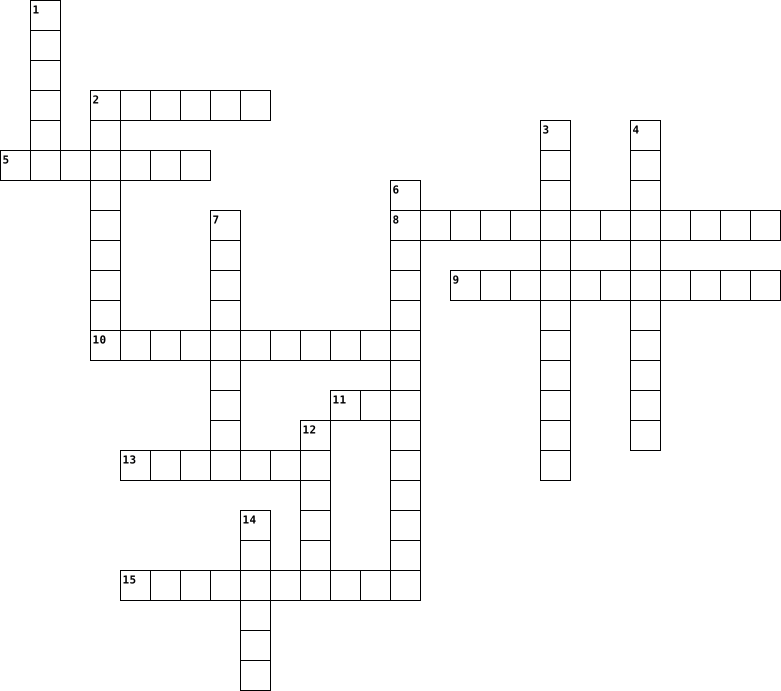
Across
- insectivorous plant
- these are heterotrophs
- the type of nutrition in which animals and non-green plants depend on green plants
- the type of nutrition in which green plants prepare their own food
- plants that grow on dead and decaying matter
- ultimate source of energy
- tiny pores on the underside of a leaf
- the cells which guard a stoma
Down
- a byproduct of photosynthesis
- plants that grow in a mutually beneficial relationship between plants
- cells of green leaves contain this
- this is a green pigment
- the process in which green plants prepare their own food
- this bacteria can convert nitrogen into water soluble compounds
- one of the of replenishing the soil
- parasitic plant
16 Clues: parasitic plant • insectivorous plant • these are heterotrophs • this is a green pigment • ultimate source of energy • a byproduct of photosynthesis • the cells which guard a stoma • cells of green leaves contain this • one of the of replenishing the soil • tiny pores on the underside of a leaf • plants that grow on dead and decaying matter • ...
CR + P 2022-11-04

Across
- a light absorbing pigment, reflects green
- what reacts in a chemical reaction
- sugar
- how heterotrophs make get their energy.
- a pore in plants that control the gas exchange.
- where photosynthesis takes place
- atomic number eight on the periodic table
Down
- a reaction irreversible by physical means.
- the powerhouse of the cell
- energy as a result of electromagnetic radiation
- the process in which autotrophs make their food.
- what is produced by a chemical reaction
- an organism that cannot make its own food.
- Adenosine 5′-triphosphate (energy)
- A compound of one Carbon and two oxygen atoms
- an organism that makes it’s own food, self sufficient.
16 Clues: sugar • the powerhouse of the cell • where photosynthesis takes place • what reacts in a chemical reaction • Adenosine 5′-triphosphate (energy) • what is produced by a chemical reaction • how heterotrophs make get their energy. • a light absorbing pigment, reflects green • atomic number eight on the periodic table • a reaction irreversible by physical means. • ...
Introduction to Biochemistry 2024-01-10

Across
- elements elements of small amounts
- green plants capturing solar energy and using it to synthesize energy-rich biomolecules
- absence of oxygen
- metabolic reactions of breakdown or degradation
- sink removes carbon dioxide from atmosphere
- first stage of respiration
- molecules present in living things
- coupling when energy from catabolism reactions is used to drive an anabolic reaction
Down
- reaction catalyzed by enzymes
- primary pigment in photosynthesis
- part of metabolism concerned with building up or synthesis
- release of energy in controlled way inside cells
- pigment molecules that absorb light
- sum of chemical reactions occurring in living organism
- basic unit of structure and function in all living things
- presence of oxygen
16 Clues: absence of oxygen • presence of oxygen • first stage of respiration • reaction catalyzed by enzymes • primary pigment in photosynthesis • molecules present in living things • pigment molecules that absorb light • elements elements of small amounts • metabolic reactions of breakdown or degradation • release of energy in controlled way inside cells • ...
Carbon Cycle 2024-03-25

Across
- most abundant element in our bodies
- the part of the leaf where photosynthesis takes place
- pure carbon
- 72% of the Earth is covered by this
- another name for sugar
- the break down of sugars in food for energy
- this type of water doesn't freeze
- happens when the temperature in the environment increase
- our current city that is experiencing gentrification
Down
- area that gentrification will occur once Miami floods
- how plants generate food for themselves
- burning these create greenhouse gasses
- this city can be underwater if the glacier melts
- forms a diamond under extreme pressure
- another name for global warming
- second most common element in our bodies
16 Clues: pure carbon • another name for sugar • another name for global warming • this type of water doesn't freeze • most abundant element in our bodies • 72% of the Earth is covered by this • burning these create greenhouse gasses • forms a diamond under extreme pressure • how plants generate food for themselves • second most common element in our bodies • ...
Biology Review 1 - 4 Alaska 2023-10-25

Across
- Energy Molecules
- The conversion of food into energy
- Provides energy
- Study of Plants
- Study of Animals
- Controls what comes in and out of the cell
- Controls many functions in the cell
Down
- Stores biochemicals, helps in plant growth
- all of the chemical processes your body uses to stay alive
- Protects the cell from injury and holds the shape of the cell
- Hydrogen, Carbon, Nitrogen, Oxygen, Phosphorus, and Sulfur
- Makes sugars and starches through photosynthesis
- The conversion of energy into food.
- Used to investigate microscopic cellular structures
- Gel-like substance between the cell membrane and the nucleus
- Special molecules that are used by the cell to store and transfer information
16 Clues: Provides energy • Study of Plants • Energy Molecules • Study of Animals • The conversion of food into energy • The conversion of energy into food. • Controls many functions in the cell • Stores biochemicals, helps in plant growth • Controls what comes in and out of the cell • Makes sugars and starches through photosynthesis • Used to investigate microscopic cellular structures • ...
The Plant Kingdom 2022-01-24

Across
- another name for primary root
- group of tissues working together to perform a specific function
- all angiosperms have these
- the outermost tissue of a root
- specialized stems that grow underground (ie potatoes)
- makes their own food
- where photosynthesis occurs
- outer sticky tip that collects pollen
Down
- process where plants convert energy from the sun into chemical energy
- cone-bearing, woody gymnosperms
- waxy layer on a leaf
- Plants are classified in the domain of:
- tiny openings that respond to outside conditions
- plants absorb water and minerals in the soil through:
- capable of moving on its own
- this carries sugars back to the root
- this carries water and minerals to the plant from the root
17 Clues: waxy layer on a leaf • makes their own food • all angiosperms have these • where photosynthesis occurs • capable of moving on its own • another name for primary root • the outermost tissue of a root • cone-bearing, woody gymnosperms • this carries sugars back to the root • outer sticky tip that collects pollen • Plants are classified in the domain of: • ...
biooooooooo 2023-04-19

Across
- sites of rapid cell divison, found at the end of growing roots and leaves
- attraction of water molecules to other molecules
- attraction of water molecules to other substances
- facilitate gas exchange
- chloroplasts are the site of
- process of water vapour leaving the leaf
- cytoplasm presses against the cell wall
- protects and prevents water loss
- made from the palisade tissue and spongy tissue
- transports sugars
Down
- blaster like structures on bark and woody stems
- pull evaporation through the stomata and lenticles creates
- cytoplasm shirks away from the cell
- below epidermis site for photosynthesis
- thin outter layer of cells
- increase surface area of the root to increases rate of absorption
- to regulate size of stomatas
- non living cells that transport water and minerals
18 Clues: transports sugars • facilitate gas exchange • thin outter layer of cells • chloroplasts are the site of • to regulate size of stomatas • protects and prevents water loss • cytoplasm shirks away from the cell • below epidermis site for photosynthesis • cytoplasm presses against the cell wall • process of water vapour leaving the leaf • ...
Rodriguez' Big Guess 2016-12-07

Across
- Reactants are glucose and oxygen.
- Going out on a long run is this type exercise.
- Chemical-self-troph.
- An organism that creates it's own food.
- Don't produce their own food.
- Uses one GLUCOSE molecule.
- Acid An acid found in sour milk and muscles.
- Energy. It's pretty straightforward.
Down
- An exercise that consist of short bursts of energy.
- An organelle found in plants and animals used to make energy.
- A pancake found in stacks.
- The reactants are Carbon Dioxide, Water, and Light.
- This cycle is found in mitochondria.
- A pigment found in plants.
- An organelle found in plants and is used for photosynthesis.
- Adenosine diphosphate.
- A cycle found in the Stroma of a Chloroplast.
17 Clues: Chemical-self-troph. • Adenosine diphosphate. • A pancake found in stacks. • A pigment found in plants. • Uses one GLUCOSE molecule. • Don't produce their own food. • Reactants are glucose and oxygen. • This cycle is found in mitochondria. • Energy. It's pretty straightforward. • An organism that creates it's own food. • Acid An acid found in sour milk and muscles. • ...
crossword 2025-12-14

Across
- System Group of organs that work together to perform a function
- Protein that speeds up chemical reactions
- Macromolecule made of amino acids
- Movement of particles from high to low concentration
- Organelle where photosynthesis occurs
- Organelle that makes proteins
- Organelle that controls cell activities
- Process by which plants make food using sunlight
- Organelle that produces energy for the cell
Down
- Segment of DNA that determines a trait
- Movement of water across a semi-permeable membrane
- Organic compound that provides energy
- Structure that carries genetic material
- Process by which cells release energy from glucose
- Organic compound that stores energy and forms cell membranes
- The basic structural and functional unit of life
- Molecule that carries genetic information
17 Clues: Organelle that makes proteins • Macromolecule made of amino acids • Organic compound that provides energy • Organelle where photosynthesis occurs • Segment of DNA that determines a trait • Structure that carries genetic material • Organelle that controls cell activities • Protein that speeds up chemical reactions • Molecule that carries genetic information • ...
Unit 3 Energy Study Guide Puzzle 2026-02-17

Across
- Variable that changes with the experiment
- A measurement of the total amount of matter
- Molecule used by plants for photosynthesis
- A molecule all cells use for energy
- Takes up space, has volume, has mass
- A sugar whose bonds hold energy
- Respiration that occurs without oxygen
- Process where glucose is broken down to make ATP
- Variable that the researcher changed
Down
- Process autotrophs use to make glucose
- Organism that must eat to take in food
- Organisms that are active at night
- Organism that can make its own food
- A measurement of light
- The ability to do work
- Used by heterotrophs for respiration and released by autotrophs as a waste prodect
- Respiration using oxygen
17 Clues: A measurement of light • The ability to do work • Respiration using oxygen • A sugar whose bonds hold energy • Organisms that are active at night • Organism that can make its own food • A molecule all cells use for energy • Takes up space, has volume, has mass • Variable that the researcher changed • Process autotrophs use to make glucose • ...
Parts that Cause Photosynthesis 2012-11-27

Across
- A cluster of chlorophyll or protein contained in Thylakoids.
- The process by which autotrophs use the energy of sunlight to produce high-energy carbohydrates.
- Thylakoids interconnected and arranged in stack like structures.
- Accepts and holds two high-energy electrons along with a hydrogen ion.
- The reactions that require the direct involvement of light and light-absorbing pigments.
- Has two phosphate groups instead of three.
- The liquid portion of the chloroplasts, outside of the thylakoids.
- Sacklike photosynthesis membrane.
- When plants use the energy that ATP and NADPH contain to build stable high-energy carbohydrate compounds that can be stored for a long time.
- Photosynthesis takes place inside of here.
Down
- The protein contained in the thylakoid membrane that spans the membrane and allows H+ ions to pass through it.
- transport chain A series of electron carrier proteins that shuttle high-energy electrons during ATP.
- ATP and NADPH molecules produced in the light-dependent reactions are used to produce high-energy sugars from carbon dioxide are used in these reaction.
- Organisms that make their own food.
- Organisms that obtain food by consuming other living things.
- Any complete round or series of occurrences that repeats or is repeated.
16 Clues: Sacklike photosynthesis membrane. • Organisms that make their own food. • Has two phosphate groups instead of three. • Photosynthesis takes place inside of here. • A cluster of chlorophyll or protein contained in Thylakoids. • Organisms that obtain food by consuming other living things. • Thylakoids interconnected and arranged in stack like structures. • ...
Biology's Vocabulary 2013-05-27

Across
- It is an organic molecule that selectively absorbs light of specific wavelenghts.
- Are groups of hundreds of pigments and other molecules that work as a unit to begin the reactions of photosynthesis.
- It is the most common photosynthetic pigment in plants, photosynthetic protist ans cyanobacteria.
- They are packets in which electromagnetic energy of light is organized.
- A photon excites the electrons.
- The energy of light gets converted to the chemical bond energy of
- Enzyme that fixes carbon by attaching CO2 to five-carbon ribulose bisphosphate.
- It is a semifluid matrix that fill the two outer membranes of plant chloroplast.
Down
- It is the distance between the crests of two succesive waves of light.
- Metabolic pathway in which organisms can harness the energy of light to build organinc molecules from inorganic raw materials.
- It is known as an accesory pigment.
- It is the process by which any molecule becomes brokendown by light energy.
- It is an organelle that specializes in photosynthesis in plants and many protist.
- It is a coenzyme that accepts electrons and hydrogen ions.
- It forms stacks of disks that are connected by channels.
- They pass from one molecule of the electron transfer chain to the next
16 Clues: A photon excites the electrons. • It is known as an accesory pigment. • It forms stacks of disks that are connected by channels. • It is a coenzyme that accepts electrons and hydrogen ions. • The energy of light gets converted to the chemical bond energy of • It is the distance between the crests of two succesive waves of light. • ...
Cellular Respiration and Photosynthesis 2015-12-07

Across
- An ester or salt of pyruvic acid.
- Pigment of photosynthesis
- The powerhouse of the cell
- Acid A colorless syrupy organic acid formed in sour milk and produced in the muscle tissues during strenuous exercise
- Muscle A muscle that is connected to the skeleton to form part of the mechanical system that moves the limbs and other parts of the body
- Active Transfer
- Living in the absence of air or free oxygen.
Down
- The process by which green plants and some other organisms use sunlight to synthesize foods from carbon dioxide and water.
- Requiring the presence of air or free oxygen for life.
- The release of energy and the production of lactic or pyruvic acid.
- Something Used to clean open wounds
- Organelle where photosynthesis takes place
- Respiration The process by which green plants and some other organisms use sunlight to synthesize foods from carbon dioxide and water.
- Cycle An ester or salt of pyruvic acid.
- Cycle A cycle of enzyme-catalyzed reactions in living cells that is the final series of reactions of aerobic
15 Clues: Active Transfer • Pigment of photosynthesis • The powerhouse of the cell • An ester or salt of pyruvic acid. • Something Used to clean open wounds • Organelle where photosynthesis takes place • Living in the absence of air or free oxygen. • Cycle An ester or salt of pyruvic acid. • Requiring the presence of air or free oxygen for life. • ...
deforestation 2022-06-21

Across
- humans burn this which makes carbon dioxide go into the atmosphere.
- Tropical deforestation causes 20% of the world’s __________emision.
- Deforestation is _______ destroying forests.
- we pump waste into the ocean threatening this sphere.
- Dioxide This thing is pulled from the air when plants do photosynthesis.
- The atmosphere brings the hydrosphere water up for precipitation. These things also help the water cycle.
Down
- Through this process, plants convert the sunlight, carbon dioxide and water into food for itself.
- when plants are _____ the carbon moves up the food chain and gets transferred.
- if one of the four major spheres does this, the rest will also be affected.
- humans overfishing, destroying habitats and over hunting effects this sphere.
- humans pile up a lot of trash in the land affecting this earth sphere.
- 25% of the atmosphere carbon dioxide from burnt fossil fuels are absorbed by certain area of _____
- Through this process humans can put carbon dioxide into the atmosphere.
- When plants do this, the carbon from them can go back into the ground.
- this thing can take in some of the carbon dioxide exhaled for photosynthesis.
15 Clues: Deforestation is _______ destroying forests. • we pump waste into the ocean threatening this sphere. • humans burn this which makes carbon dioxide go into the atmosphere. • Tropical deforestation causes 20% of the world’s __________emision. • humans pile up a lot of trash in the land affecting this earth sphere. • ...
UNIT 9 2020-05-07

Across
- the tightly packed photosynthetic cell found just under the epidermis in many leaves
- A green pigment that absorbs light and captures light energy for the cell. Found in thylakoids, which are found in chloroplasts
- in plants, the solution that surrounds the thylakoids in a chloroplast; site of light-independent reactions
- top and bottom of a leaf, thin layer of cells that allow light to pass into the middle of the leaf
- plants use the sun's energy to convert water and carbon dioxide into sugars
Down
- openings in leaves that regulate the movement of H2O, O2, and CO2
- A stacked portion of the thylakoid membrane in the chloroplast. Grana function in the light reactions of photosynthesis
- reactions of photosynthesis in which energy from ATP and NADPH is used to build high-energy compounds such as sugars
- located beneath the palisade cells also contain chloroplasts but more importantly they are the site of gas exchange
- Living vascular tissue that carries sugar and organic substances throughout a plant
- The two cells that flank the stomatal pore and regulate the opening and closing of the pore
- An organelle found in plant and algae cells where photosynthesis occurs
12 Clues: openings in leaves that regulate the movement of H2O, O2, and CO2 • An organelle found in plant and algae cells where photosynthesis occurs • plants use the sun's energy to convert water and carbon dioxide into sugars • Living vascular tissue that carries sugar and organic substances throughout a plant • ...
Cell 6 2023-06-28

Across
- an organism that is able to form nutritional organic substances from simple inorganic substances such as carbon dioxide.
- colourless, odourless, tasteless gas essential to living organisms
- A substance present in all living cells that provides energy for many metabolic processes and is involved in making RNA.
- (in green plant cells) a plastid that contains chlorophyll and in which photosynthesis takes place.
- the site of the light-dependent reactions of photosynthesis with the photosynthetic pigments embedded directly in the membrane.
- the process by which green plants and certain other organisms transform light energy into chemical energy.
Down
- an organism deriving its nutritional requirements from complex organic substances.
- the supportive tissue of an epithelial organ, tumor, gonad, etc., consisting of connective tissues and blood vessels.
- he cycle of enzyme-catalyzed dark reactions of photosynthesis that occurs in the chloroplasts of plants and in many bacteria and that involves the fixation of carbon dioxide and the formation of a 6-carbon sugar.
- the natural compound present in green plants that gives them their color.
- the reaction of something, especially the iris of the eye, to different intensities of light.
- he main sugar found in your blood.
12 Clues: he main sugar found in your blood. • colourless, odourless, tasteless gas essential to living organisms • the natural compound present in green plants that gives them their color. • an organism deriving its nutritional requirements from complex organic substances. • the reaction of something, especially the iris of the eye, to different intensities of light. • ...
Ch 9 Vocab 2024-11-18

Across
- synthase- Enzyme that spans the thylakoid membrane and produces ATP from ADP when hydrogen ions (H+) pass through it
- cluster of chlorophyll and proteins found in thylakoids.
- principal pigment of plants and other photosynthetic organisms.
- carrier molecule that transfers high-energy electrons from chlorophyll to the Calvin cycle.
- light-absorbing molecules used by plants to gather the sun’s energy.
- transport chain- series of electron carrier proteins that shuttle high-energy electrons in preparation for ATP-generating reactions
- set of reactions in photosynthesis that do not require light; energy from ATP and NADPH is used to build high-energy compounds such as sugar.
- saclike membranes found in chloroplasts, the location of the light-dependent reactions.
Down
- compound used by cells to store and release energy.
- process used by plants and other autotrophs to capture light energy and store it in energy-rich carbohydrates such as sugars and starches.
- Cycle- the light-independent reactions of photosynthesis in which energy from ATP and NADPH is used to build high-energy compounds such as sugar.
- fluid portion of the chloroplasts; outside of the thylakoids, location of the light-independent reactions (Calvin cycle).
- set of reactions in photosynthesis that use energy from light to produce ATP and NADPH.
13 Clues: compound used by cells to store and release energy. • cluster of chlorophyll and proteins found in thylakoids. • principal pigment of plants and other photosynthetic organisms. • light-absorbing molecules used by plants to gather the sun’s energy. • set of reactions in photosynthesis that use energy from light to produce ATP and NADPH. • ...
h 2025-06-26

Across
- A green pigment that absorbs light energy
- The carbohydrate produced during photosynthesis.
- The pore by which carbon dioxide enters the leaf.
- A gas that is a raw material of photosynthesis.
Down
- A process by which green plants make their own food.
- A process by which water enter the root hair cell
- A gas that is released during photosynthesis
7 Clues: A green pigment that absorbs light energy • A gas that is released during photosynthesis • A gas that is a raw material of photosynthesis. • The carbohydrate produced during photosynthesis. • The pore by which carbon dioxide enters the leaf. • A process by which water enter the root hair cell • A process by which green plants make their own food.
Photosynthesis Crossword 2023-02-07

Across
- The end result of a chemical reaction
- Distributes water to a plant
- Process by which a plant converts light energy to chemical energy to make its own food
- A reactant of photosynthesis, sugar
- Carries glucose to the plant
Down
- Pigment in the chloroplasts which absorbs the sun's energy
- Something that starts a chemical reaction
- The organelle which photosynthesis takes place
8 Clues: Distributes water to a plant • Carries glucose to the plant • A reactant of photosynthesis, sugar • The end result of a chemical reaction • Something that starts a chemical reaction • The organelle which photosynthesis takes place • Pigment in the chloroplasts which absorbs the sun's energy • ...
Biology 2025-12-10

Across
- Process that breaks down glucose to release energy
- Organelle where photosynthesis takes place
Down
- Photosynthetic process that fixes carbon into sugars
- Cell’s energy currency; powers most biological work
- Molecule split in photosynthesis to release oxygen
- Electron carrier that provides reducing power in photosynthesis
- Chain in mitochondria that passes electrons to make ATP
- Substances that enter a chemical reaction
8 Clues: Substances that enter a chemical reaction • Organelle where photosynthesis takes place • Molecule split in photosynthesis to release oxygen • Process that breaks down glucose to release energy • Cell’s energy currency; powers most biological work • Photosynthetic process that fixes carbon into sugars • Chain in mitochondria that passes electrons to make ATP • ...
Worthy White Ch.8 Crossword 2021-01-28

Across
- when plants convert the sun's energy into chemical energy
- the only color that is not absorbed by pigments
- make their own food
- food
- where photosynthesis takes place
Down
- get their food from something else
- the cycle that produces glucose
- the food plants make
- what is light absorbed by
- the currency of cells
10 Clues: food • make their own food • the food plants make • the currency of cells • what is light absorbed by • the cycle that produces glucose • where photosynthesis takes place • get their food from something else • the only color that is not absorbed by pigments • when plants convert the sun's energy into chemical energy
Meade's Puzzle 2023-03-10

Across
- a mushroom or any type of fungi
- Antonym: Inputs
- something that makes food for consumers
- The cell that preforms photosynthesis
- Antonym: Outputs
Down
- foxes eat small mice so they are
- Creates glucose and releases oxygen
- a problem with orangutans dying off
- Cellular Respiration
- A very popular resource used in many things
10 Clues: Antonym: Inputs • Antonym: Outputs • Cellular Respiration • a mushroom or any type of fungi • foxes eat small mice so they are • Creates glucose and releases oxygen • a problem with orangutans dying off • The cell that preforms photosynthesis • something that makes food for consumers • A very popular resource used in many things
Q3 Crossword 2023-03-10

Across
- food for a plant
- what a plant does that uses the sun
- a living thing
- what other living things rely on eating
- what a plant is to get its own food
Down
- the cell that is in cellular respiration
- what cells preform in a human
- mushroom
- chain shows what eats what
- where photosynthesis happens
10 Clues: mushroom • a living thing • food for a plant • chain shows what eats what • where photosynthesis happens • what cells preform in a human • what a plant does that uses the sun • what a plant is to get its own food • what other living things rely on eating • the cell that is in cellular respiration
Ecosystem Roles 2023-10-10

Across
- Plants take in sunlight, water, and _______ during photosynthesis
- An organism that is being hunted by another
- Organisms that eat only plants
- An organism that hunts other organisms
- Organisms that consume dead plants or animals
- Organisms that only eat meat
- The most important abiotic factor is....
Down
- The green pigment in plants
- What decomposers return to the soil
- The process in which plants make their own food
- Organisms that make their own food
- Organisms that break down waste
- Organisms that eat plants and animals
- Organisms that have to eat other things for energy
14 Clues: The green pigment in plants • Organisms that only eat meat • Organisms that eat only plants • Organisms that break down waste • Organisms that make their own food • What decomposers return to the soil • Organisms that eat plants and animals • An organism that hunts other organisms • The most important abiotic factor is.... • An organism that is being hunted by another • ...
Activity 1 2024-08-27

Across
- The phase change from liquid to solid.
- Organism that eats both plants and animals.
- A non-living component of the environment.
- Process by which plants make food using sunlight.
- The energy source for photosynthesis.
- An organism that decomposes organic material
- The gas required for respiration.
Down
- Organism that makes its own food.
- The process of breaking down food to release energy.
- Process of water changing from liquid to gas.
- The part of the cell responsible for controlling activities.
- The solid state of water.
- The basic unit of life.
- The natural satellite of Earth.
14 Clues: The basic unit of life. • The solid state of water. • The natural satellite of Earth. • Organism that makes its own food. • The gas required for respiration. • The energy source for photosynthesis. • The phase change from liquid to solid. • A non-living component of the environment. • Organism that eats both plants and animals. • An organism that decomposes organic material • ...
Carbon & Nitrogen Cycle Puzzle 2024-10-29

Across
- Burnining fossil fuels will release CO2 into the...
- Element of Life
- Gas that causes Ocean Acidification
- Fuel created from dead plants and animals
- Plants take up fixed _________ as nutrients
- Shell of a Sea Urchin
- Carbon Fixation
- Byproduct of Photosynthesis
Down
- Ocean Acidification leaves ________(ions) in the water
- Plants taking up fixed Nitrogen from the soil
- Deification and Decomposition re introduce Nitrogen into the Soil
- Process to get cellular energy from food
- When an element is combined with something else so it can be used by living organisms
- Way to fix Nitrogen
14 Clues: Element of Life • Carbon Fixation • Way to fix Nitrogen • Shell of a Sea Urchin • Byproduct of Photosynthesis • Gas that causes Ocean Acidification • Process to get cellular energy from food • Fuel created from dead plants and animals • Plants take up fixed _________ as nutrients • Plants taking up fixed Nitrogen from the soil • ...