
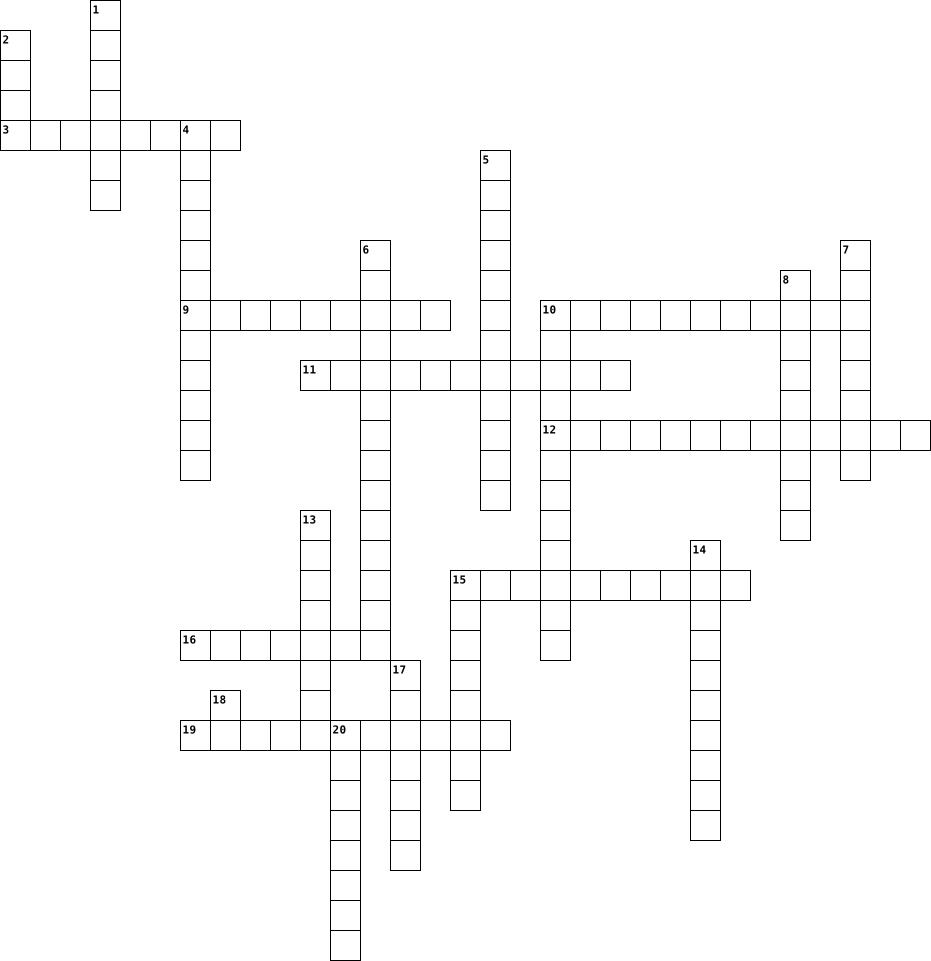
photosynthesis Crossword Puzzles
Cell Theory 2022-01-24

Across
- site of photosynthesis
- Creates protein
- control center of the cell
- powerhouse of the cell
- the process by which a substance moves from high to low concentration
- the doorway to the cell
- according to cell theory all living things are made of
- involved with shipping and packaging
- the jelly like substance in the cell
Down
- like a highway in the cell
- provides structure to plant cells
- breaks down waste and old vacuoles
- according to cell theory all cells come from
- the cell is the basic unit of structure and blank in living things
- the process of turning light into sugar
- each cell part is know as an
- contains food water or waste
- tiny water bears that live on the outside of the space station
- the movement of water from high to low concentration
19 Clues: Creates protein • site of photosynthesis • powerhouse of the cell • the doorway to the cell • like a highway in the cell • control center of the cell • each cell part is know as an • contains food water or waste • provides structure to plant cells • breaks down waste and old vacuoles • involved with shipping and packaging • the jelly like substance in the cell • ...
Biology 2025-06-13

Across
- conducts sugars and other metabolic products downwards from the leaves.
- eukaryotic organisms
- a structural layer outside the cell membrane
- Powerhouse of cells
- Responsible for protein synthesis
- the most common type of blood cell
- gets rid of waste products
- Brain of cell
- When light energy is converted chemical
- engulfing and absorbing bacteria
Down
- transport water and dissolved minerals
- a biological membrane that separates the inside of a cell from the outside environment
- the fluid that fills cells and serves several important functions
- type of white blood cell that plays a crucial role in the body's immune system
- the process of producing energy (ATP) in the absence of oxygen
- help protect the body from infection and disease
- responsible for photosynthesis
- cells convert glucose and oxygen into ATP
- carries the genetic instructions
19 Clues: Brain of cell • Powerhouse of cells • eukaryotic organisms • gets rid of waste products • responsible for photosynthesis • carries the genetic instructions • engulfing and absorbing bacteria • Responsible for protein synthesis • the most common type of blood cell • transport water and dissolved minerals • When light energy is converted chemical • ...
Plants. Structure, reproduction, nutrition 2021-03-17

Across
- The process by which green plants transform light energy into chemical energy
- It is captured by chloroplasts and used for photosynthesis
- An organelle within the cells of plants and certain algae that is the site of photosynthesis
- A male reproductive organ of a flower
Down
- Are plants that do not have flowers. Similar to flowering plants, they have roots, stems and leaves.
- The female reproductive part of a flower
- Small plant growing on different surfaces and absorbing water. It doesn't have real roots or leaves.
- Part of a flower that is often brightly colored or unusually shaped to attract pollinators.
- Main root of a carrot
- The sticky knob at the top of the pistil
- Roots absorb it from the soil
- The smallest, basic unit of life that is responsible for all of life's processes.
12 Clues: Main root of a carrot • Roots absorb it from the soil • A male reproductive organ of a flower • The female reproductive part of a flower • The sticky knob at the top of the pistil • It is captured by chloroplasts and used for photosynthesis • The process by which green plants transform light energy into chemical energy • ...
Cellular Respiration and Photosynthesis 2021-11-02

Across
- basic building blocks of living things.
- End results of a chemical reaction.
- process in which plant cells use carbon dioxide, water, and light energy to make oxygen and glucose (food for the plant)
- a process in which cells break down glucose (sugar) and oxygen to make carbon dioxide, water, and ATP for energy.
- provided by the sun during photosynthesis
Down
- substances that are present at the start of a chemical reaction.
- gas in the air that is given off by animals and used by plants for photosynthesis
- simple sugar that all living things use for energy.
- a living thing
- all living things must have ______; two parts Hydrogen and one part Oxygen, H2O
- provides energy for the cells; found in the mitochondria
- gas in the air that is given off by plants and used by animals
12 Clues: a living thing • End results of a chemical reaction. • basic building blocks of living things. • provided by the sun during photosynthesis • simple sugar that all living things use for energy. • provides energy for the cells; found in the mitochondria • gas in the air that is given off by plants and used by animals • ...
Photosynthesis And Cellular Respiration 2017-12-10

Across
- What cells use for energy
- The pigment responsible for photosynthesis
- The second stage of cellular respiration
- The colorless fluid surrounding the grana within the chloroplast
- The process of energy conversion animals go through
Down
- The flat sacs inside Chloroplasts
- The first stage of cellular respiration
- The process plants go through to get energy
- The compound that gives plants and animals color
- The third stage of cellular respiration
- The plastid that contains Chlorophyll
- A group of Thylakoids
12 Clues: A group of Thylakoids • What cells use for energy • The flat sacs inside Chloroplasts • The plastid that contains Chlorophyll • The first stage of cellular respiration • The third stage of cellular respiration • The second stage of cellular respiration • The pigment responsible for photosynthesis • The process plants go through to get energy • ...
Photosynthesis And Cellular Respiration 2017-12-10

Across
- The pigment responsible for photosynthesis
- The third stage of cellular respiration
- The plastid that contains Chlorophyll
- The flat sacs inside Chloroplasts
- The colorless fluid surrounding the grana within the chloroplast
Down
- The first stage of cellular respiration
- The second stage of cellular respiration
- The process of energy conversion animals go through
- The process plants go through to get energy
- A group of Thylakoids
- What cells use for energy
- The compound that gives plants and animals color
12 Clues: A group of Thylakoids • What cells use for energy • The flat sacs inside Chloroplasts • The plastid that contains Chlorophyll • The first stage of cellular respiration • The third stage of cellular respiration • The second stage of cellular respiration • The pigment responsible for photosynthesis • The process plants go through to get energy • ...
life processes 2013-09-08

Across
- absorbed by plants' leaves
- to get rid of waste
- plants use these to absorb water
- plants will do this to reach light
- plants use flowers to do this
- made by plants by doing photosynthesis
Down
- the colour of leaves if healthy
- another word for nutrition
- the life process that means detects changes in surroundings
- plants need this gas to do respiration
- this is where plants get nutrients
- ..... dixide is needed by plants to do photosynthesis
12 Clues: to get rid of waste • absorbed by plants' leaves • another word for nutrition • plants use flowers to do this • the colour of leaves if healthy • plants use these to absorb water • this is where plants get nutrients • plants will do this to reach light • plants need this gas to do respiration • made by plants by doing photosynthesis • ...
Oxygen Cycle 2014-10-16

Across
- / another word for earth.
- / Also known as primary producers.
- / Also known as consumers.
- / Consumers that eat meat.
- Light / Main source of Energy.
- Respiration / The process where oxygen and glucose to create CO2 and H2O.
- / the thing that organism need to move.
Down
- / The process in which light energy is convert into food.
- and Oxygen / Outcome of Photosynthesis.
- / Consumers that eat plants.
- /Consumers that rely on plants and meat.
- dioxide and Water / Outcome of cellular respiration.
12 Clues: / another word for earth. • / Also known as consumers. • / Consumers that eat meat. • / Consumers that eat plants. • Light / Main source of Energy. • / Also known as primary producers. • and Oxygen / Outcome of Photosynthesis. • / the thing that organism need to move. • /Consumers that rely on plants and meat. • dioxide and Water / Outcome of cellular respiration. • ...
Photosynthesis/Respiration Vocab 2021-04-13

Across
- The molecule that is formed from the breaking off of a phosphate group from ATP
- Chemical reactions that require the presence of oxygen
- Location where Krebs cycle takes place
- Abbreviation of the process where electrons are transferred down a chain at the end of respiration
- Process by which autotrophs trap energy from sunlight
- A series of anaerobic chemical reactions in the cytoplasm that breaks down glucose into pyruvic acid
Down
- Anaerobic process in which cells convert pyruvic acid into carbon dioxide and ethyl alcohol
- Light ____ reactions require sunlight and splits water to produce oxygen
- Chemical reactions that do NOT require the presence of oxygen
- Chemical process where mitochondria breaks down food molecules to make ATP
- Structure where photosynthesis occurs
- Molecule in cells that stores energy
- Abbreviation for the process where carbon dioxide and energy carried by ATP/NADPH are used to make sugar
- Another name for the light independent reactions
14 Clues: Molecule in cells that stores energy • Structure where photosynthesis occurs • Location where Krebs cycle takes place • Another name for the light independent reactions • Process by which autotrophs trap energy from sunlight • Chemical reactions that require the presence of oxygen • Chemical reactions that do NOT require the presence of oxygen • ...
Aerobic/Anaerobic & Photosynthesis 2025-06-02

Across
- Anaerobic respiration is inefficient because it only produces this many ATPS
- Respiration that occurs in both prokaryotes and eukaryotes
- This is the one reactant that plants need that eukaryotes don't release
- Aerobic is more __________ because it produces 36-38 ATPS
- Anaerobic respiration takes place in this organelle
- what goes into my organism/what it needs
Down
- This is the organelle that creates ATP; site of aerobic respiration
- Organelle that makes glucose
- Anaerobic respiration does NOT require this gas
- Respiration that requires OXYGEN
- Photosynthesis is mainly used by ______
- what my organism makes/ what it releases
- this type of acid builds up in muscles of eukaryotes when no oxygen is available
- Anaerobic respiration can also be described as this
- Sugar needed by the mitochondria; released from chloroplast
15 Clues: Organelle that makes glucose • Respiration that requires OXYGEN • Photosynthesis is mainly used by ______ • what my organism makes/ what it releases • what goes into my organism/what it needs • Anaerobic respiration does NOT require this gas • Anaerobic respiration can also be described as this • Anaerobic respiration takes place in this organelle • ...
Photosynthesis/Cellular Respiration Crossword 2025-11-20

Across
- An organism that cannot make its own food
- Along with Glucose, this is one of the PRODUCTS of Photosynthesis
- The green photosynthetic pigment found in the chloroplasts of plant cells
- The pattern of overlapping feeding relationships or food chains among the various organisms in an ecosystem
- The process in which oxygen and glucose undergo a complex series of chemical reactions inside cells, releasing energy
- The usable form of Energy in cells
- The "powerhouse" of the cell where most of Cellular Respiration takes place
- The process by which a cell captures energy in sunlight and uses it to make food
Down
- A series of events in an ecosystem in which organisms transfer energy by eating and by being eaten
- An organism that makes its own food
- Stage #1 of Cellular Respiration which breaks Glucose molecules into smaller pieces
- The process by which cells release energy by breaking down food molecules without using oxygen
- The thick gel like fluid in the cell where Glycolysis takes place
- Along with CO2 and Energy, this is one of the PRODUCTS of Cellular Respiation
- CO2, an INGREDIENT of Photosynthesis
- C6H12O6, an INGREDIENT of Cellular Respiration
16 Clues: The usable form of Energy in cells • An organism that makes its own food • CO2, an INGREDIENT of Photosynthesis • An organism that cannot make its own food • C6H12O6, an INGREDIENT of Cellular Respiration • The thick gel like fluid in the cell where Glycolysis takes place • Along with Glucose, this is one of the PRODUCTS of Photosynthesis • ...
Museum Crossword 2022-05-16

Across
- L
- D
- H
- I
- G
- C
Down
- F
- A
- E
- B
- K
- J
12 Clues: F • L • A • E • D • B • K • H • I • G • J • C
difficult word crossword 2020-05-06

Across
- life
- nutrients
- to get nutrients
- direction
- goal
- plants
Down
- environment
- animals
- destruction
- helped
- tree
- plant
- wasting
13 Clues: life • tree • goal • plant • helped • plants • animals • wasting • nutrients • direction • environment • destruction • to get nutrients
plant 2024-05-21

Across
- bud
- filament
- flower
- photosymthesis
- leaf
Down
- stem
- branch
- chlorophyll
- anther
- root
- soil
- plant
12 Clues: bud • stem • root • soil • leaf • plant • branch • anther • flower • filament • chlorophyll • photosymthesis
Plant Gas Exchange 2023-01-11

Across
- mesophyll layer with airspaces to allow air to reach main photosynthesising layer
- two of these form a pore on the leaf surface
- mesophyll layer where most photosynthesis takes place
- gas needed for photosynthesis
Down
- pores in the undersides of leaves
- light transports this into guard cells
- organ specialised for photosynthesis
- waterproof layer over leaf preventing water loss
8 Clues: gas needed for photosynthesis • pores in the undersides of leaves • organ specialised for photosynthesis • light transports this into guard cells • two of these form a pore on the leaf surface • waterproof layer over leaf preventing water loss • mesophyll layer where most photosynthesis takes place • ...
Chapter 6 2021-11-23

Across
- absorbs light in a plant
- A class of pigments that are present in the thylakiod membrane.
- compound that absorbs light.
- Place where photosynthesis occurs.
- cluster of pigment molecules and the proteins that are embedded in them.
- Synthesis of ATP.
- reactions when light energy is converted to chemical energy.
Down
- a system of membranes inside the chloroplasts
- Converting light to energy.
- organisms that use energy from sunlight to make organic compounds
- Electron Acceptor donates electrons to first of a series of molecules.
- transport chain transports electrons from one molecule to the next.
- stacks of thylakiod.
- a solution surrounding the grana.
- animals that get energy from food
15 Clues: Synthesis of ATP. • stacks of thylakiod. • absorbs light in a plant • Converting light to energy. • compound that absorbs light. • a solution surrounding the grana. • animals that get energy from food • Place where photosynthesis occurs. • a system of membranes inside the chloroplasts • reactions when light energy is converted to chemical energy. • ...
Plant Classification 2015-11-08

Across
- the transfer of pollen from one flower part to another
- organism that makes its own food
- process by which plants use sunlight to make their own food
- growing plants without soil
- plants
- plants with tubes to transport water and nutrients
- that bears cones
- given off by plants during photosynthesis
Down
- trees that shed their leaves each year
- chemical found in plants that absorbs sunlight
- plants without tubes to transport water and nutrients
- main body or stalk of a plant
- plants without flowers or seeds protected in fruit
- with tubes to transport water and nutrients
- seed bearing part of a plant
15 Clues: plants • that bears cones • growing plants without soil • seed bearing part of a plant • main body or stalk of a plant • organism that makes its own food • trees that shed their leaves each year • given off by plants during photosynthesis • with tubes to transport water and nutrients • chemical found in plants that absorbs sunlight • ...
Plant Classification 2015-11-08

Across
- process by which plants use sunlight to make their own food
- part the absorbs water and nutrients
- chemical found in plants that absorbs sunlight
- seed bearing part of a plant
- flowering plants
- trees that shed their leaves each year
- the transfer of pollen from one flower part to another
Down
- plants without flowers or seeds protected in fruit
- tree that bears cones
- plants with tubes to transport water and nutrients
- growing plants without soil
- plants without tubes to transport water and nutrients
- main body or stalk of a plant
- organism that makes its own food
- gas given off by plants during photosynthesis
15 Clues: flowering plants • tree that bears cones • growing plants without soil • seed bearing part of a plant • main body or stalk of a plant • organism that makes its own food • part the absorbs water and nutrients • trees that shed their leaves each year • gas given off by plants during photosynthesis • chemical found in plants that absorbs sunlight • ...
Life Processes 2022-05-24

Across
- These cells regulate the opening and closing of stomata
- Largest gland of the body
- Mode of nutrition in fungi
- Nutrients provide this to body
- Substance which builds up in the muscles during physical exercise and may cause cramps
- Final product of Photosynthesis
- Classification of human nutrition
- Final area of digestion
Down
- Movement of the walls of the food pipe
- Oral cavity opens into here
- This is released during photosynthesis
- Tube which connects the kidneys to the urinary bladder
- Plant tissue that transports water and minerals from the roots to the leaf
- Herbivores have longer small intestine to digest this
- Absorbs the nutrients from digested food
15 Clues: Final area of digestion • Largest gland of the body • Mode of nutrition in fungi • Oral cavity opens into here • Nutrients provide this to body • Final product of Photosynthesis • Classification of human nutrition • Movement of the walls of the food pipe • This is released during photosynthesis • Absorbs the nutrients from digested food • ...
Kaytlin's Cellular Respiration 2016-12-07

Across
- one of the major metabolic pathways of cellular respiration
- organism that captures energy from sunlight
- the "power house" of the cell
- store and supply the cell with needed energy
- the breaking of sugar
- does not require oxygen
- looks like a stack of pancakes
Down
- rely on autotrops for energy/food
- light energy from the sun is converted into chemical energy by autotrophs
- captures energy from the sunlight and uses it to produce food in a plant cell
- the green pigment in plants
- chemical energy
- converted to ATP to store energy during cell metabolism
- chemical reactions that take place in the chloroplasts during photosynthesis
- requires oxygen
15 Clues: chemical energy • requires oxygen • the breaking of sugar • does not require oxygen • the green pigment in plants • the "power house" of the cell • looks like a stack of pancakes • rely on autotrops for energy/food • organism that captures energy from sunlight • store and supply the cell with needed energy • converted to ATP to store energy during cell metabolism • ...
Cellular Respiration/Fermantation Puzzle 2024-02-07

Across
- is an organelle involved in photosynthesis
- first stage of cellular respiration
- the reaction of breathing
- how a plant makes food
- the process of taking food and making ATP
- cellular respiration that proceeds without oxygen
- the chemical breakdown of a substance by bacteria
Down
- C6H12O6
- one type of fermentation
- contains chlorophyll that absorbs sunlight
- present in both Krebs Cycle, ETC
- both the Krebs cycle, ETC go into this; gives you ATP
- an enzyme that catalyzes the formation of the energy storage molecule ATP
- a three-carbon acid that is naturally formed during glycolysis
- cellular respiration that proceeds with oxygen
15 Clues: C6H12O6 • how a plant makes food • one type of fermentation • the reaction of breathing • present in both Krebs Cycle, ETC • first stage of cellular respiration • the process of taking food and making ATP • contains chlorophyll that absorbs sunlight • is an organelle involved in photosynthesis • cellular respiration that proceeds with oxygen • ...
Amoeba Sisters Video 2025-11-24

Across
- vascular plants with creeping or upright stems
- process of water moving up a plant
- primary photosynthetic organ of a plant
- structure that anchors the plant
- vascular tissue that transports water and minerals
- plants that produce flowers and fruits
- opening on leaves that allows for gas exchange
- process by which plants make their own food
Down
- plants without vascular tissue
- pigment that captures light energy for photosynthesis
- vascular plants with vascular tissue but no seeds
- waxy layer on leaves that prevents water loss
- vascular tissue that transports sugars
- plants that produce seeds in cones
- ripened ovary of a flowering plant
15 Clues: plants without vascular tissue • structure that anchors the plant • process of water moving up a plant • plants that produce seeds in cones • ripened ovary of a flowering plant • vascular tissue that transports sugars • plants that produce flowers and fruits • primary photosynthetic organ of a plant • process by which plants make their own food • ...
5.3 Ecological Communities 2013-04-11

Across
- Most secondary and tertiary consumers are called _________
- A food chain is a _____ series of feeding relationships
- A species that has a strong and wide-reaching impact on the community
- Most humans that eat meat and vegetables are considered ________
- Most ______ consumers are herbivores
- During photosynthesis, ______ is used to convert carbon dioxide and water into sugars
- Where on Earth is energy stored in the bonds of hydrogen sulfide used to convert carbon dioxide and water into sugars through chemosynthesis?
- a.k.a autotrophs, perform photosynthesis
- ______ of a keystone species can alter a large portion of teh food web.
- Primary producers always make up a communities ______ trophic level
- The total amount of living tissue a trophic level contains
- Each trophic level contains only about ___% of the energy of the level below it
Down
- Consume leaf litter, waste products, and dead bodies
- Due mainly to _____ _____ only a small amount of the energy consumed by an organism in one trophic level can be transferred to the next
- The exact opposite of photosynthesis
- Break nonliving matter into simpler parts that can be taken up and reused by primary producers
- There are generally _____ organisms at higher trophic levels than at lower ones
- Organisms that rely on other organisms for energy and nutrients
- Shows the many paths by which energy and nutrients pass among organisms as they consume one another
19 Clues: The exact opposite of photosynthesis • Most ______ consumers are herbivores • a.k.a autotrophs, perform photosynthesis • Consume leaf litter, waste products, and dead bodies • A food chain is a _____ series of feeding relationships • Most secondary and tertiary consumers are called _________ • The total amount of living tissue a trophic level contains • ...
Animal and Plant Cell Crossword 2019-09-12

Across
- Basic unit of structure and function in a living thing
- Deoxyribonucleic acid
- bodies Packs protein and cell products to ship out of cell
- Organelles where photosynthesis occurs
- An organisms cell(s) contain a nucleus
- reticulum Channels within cytoplasm move materials from place to place
- Occurs in the chloroplasts of the plant cell
- Color of chloroplasts
Down
- Fluid material filling the cell
- Stores food, water or waste for the animal cell
- Genetic material within nucleus and contains DNA
- Organelle that provides energy
- Make protein molecules
- Contains genetic material and control center of the cell
14 Clues: Deoxyribonucleic acid • Color of chloroplasts • Make protein molecules • Organelle that provides energy • Fluid material filling the cell • Organelles where photosynthesis occurs • An organisms cell(s) contain a nucleus • Occurs in the chloroplasts of the plant cell • Stores food, water or waste for the animal cell • Genetic material within nucleus and contains DNA • ...
Cell Organelles 2021-01-12

Across
- Only in Eukaryotic cells; holds DNA
- Holds all organelles in place
- Breaks down food into ATP(energy)
- Allows entry and exit; protects cell
- Free flowing in Prokaryotic cells: Identity
- Sends messages outside the cell; could also be called ..... Body or ..... Apparatus
- Singular- flagellum; Helps the cell with movement and only found in prokaryotic
Down
- Sends messages inside the cell
- Releases waste from the cell
- Makes protein
- Makes chlorophyll; makes plant green and aids in photosynthesis
- Controls all activity; only in Eukaryotic cells
- Helps with photosynthesis ; holds water
- Not in animal cell; protects cell.
14 Clues: Makes protein • Releases waste from the cell • Holds all organelles in place • Sends messages inside the cell • Breaks down food into ATP(energy) • Not in animal cell; protects cell. • Only in Eukaryotic cells; holds DNA • Allows entry and exit; protects cell • Helps with photosynthesis ; holds water • Free flowing in Prokaryotic cells: Identity • ...
parts of a plant 2021-11-03

Across
- tiny holes on leaves where the gas exchange takes place
- the job of the stem
- anchor plant in the ground; absorb water and minerals
- oxygen coming out and carbon dioxide going in
- the number of parts of a plant
- transports materials to and from the leaves
- the part of the leaf that connects to the stem
Down
- number of types of stems (woody + herbaceous)
- the animal that does photosynthesis
- the job of the roots
- the stem of a tree
- part of the roots
- necessary for photosynthesis
- support leaf and carry water and minerals
- water and minerals travel through this
15 Clues: part of the roots • the stem of a tree • the job of the stem • the job of the roots • necessary for photosynthesis • the number of parts of a plant • the animal that does photosynthesis • water and minerals travel through this • support leaf and carry water and minerals • transports materials to and from the leaves • number of types of stems (woody + herbaceous) • ...
Cell Organelles and Functions 2023-10-01

Across
- forms protective barrier around animal and plant cells
- contains enzymes that make lipid membrane
- structure that contains the cell's genetic material
- packages proteins from ERs
- Powerhouse of the cell and site of cellular respiration
- How plants make energy
Down
- produces proteins and are attached to Rough ER
- Where photosynthesis Occurs
- processes of creating ATP when oxygen is low
- process of breaking down sugar to smaller molecules
- Has ribsomes attached and assembles membrane lipid components
- present in plant cells & surrounds cell membrane
- Jello like substance that fills spaces in cells
- stores materials like water, salt, proteins, and carbohydrates
14 Clues: How plants make energy • packages proteins from ERs • Where photosynthesis Occurs • contains enzymes that make lipid membrane • processes of creating ATP when oxygen is low • produces proteins and are attached to Rough ER • Jello like substance that fills spaces in cells • present in plant cells & surrounds cell membrane • ...
B2.2 - IB Biology 2024+ 2025-06-10

Across
- the building of complex molecules
- site of photosynthesis
- Glucose + oxygen > carbon dioxide + water + energy (ATP)
- the highly folded inner membrane of mitochondria
- stacks of thylakoids
- gel electrophoresis separates DNA fragments based on...
Down
- the cell wall, cytoplasm and cytoskeleton are not considered...
- Sac-like structure surrounded by a single membrane that contains enzymes
- reaction that breaks down molecules
- any respiration that uses oxygen
- process that separates plant pigments
- proteins in the cell membrane that allow receptor proteins to bind to specific sites
- reaction that joins molecules
- Carbon dioxide + water + sunlight > glucose + oxygen
14 Clues: stacks of thylakoids • site of photosynthesis • reaction that joins molecules • any respiration that uses oxygen • the building of complex molecules • reaction that breaks down molecules • process that separates plant pigments • the highly folded inner membrane of mitochondria • Carbon dioxide + water + sunlight > glucose + oxygen • ...
Alex 2018-02-05

Across
- RESPIRATION CHEMICAL ENERGY RELEASED FROM SUGARS AND CARBON BASED MOLECULES
- PROCESS NEEDING OXYGEN
- STACKS OF COIN SHAPED MEMBRANES
- LOWER ENERGY MOLECULE THAT IS CONVERTED INTO ATP
- PROCESS NOT NEEDING OXYGEN
- ABSORBS ENERGY FOR PHOTOSYNTHESIS
- CAPTURES ENERGY FROM THE SUNLIGHT TO MAKE SUGARS
- THE LIGHT INDEPENDENT REACTIONS
- SPLITS UP GLUCOSE TO MAKE ATP
Down
- ALLOWS GLYCOLYSIS TO CONTINUE BUT DOES NOT MAKE ATP
- MOLECULE IN CHLOROPLASTS THAT ABSORBS ENERGY
- MOLECULE THAT TRANSFERS ENERGY
- WHERE ENERGY IS RELEASED TO MAKE ATP
- CYCLE MOLECULES THAT CARRY ENERGY TO THE SECOND PART OF CELLULAR RESPIRATION
- PROCESS FOR ORGANISMS USING CHEMICAL ENERGY INSTEAD OF LIGHT ENERGY
- ACID WHAT CAUSES YOUR MUSCLES TO BURN DURING EXERCISE
16 Clues: PROCESS NEEDING OXYGEN • PROCESS NOT NEEDING OXYGEN • SPLITS UP GLUCOSE TO MAKE ATP • MOLECULE THAT TRANSFERS ENERGY • STACKS OF COIN SHAPED MEMBRANES • THE LIGHT INDEPENDENT REACTIONS • ABSORBS ENERGY FOR PHOTOSYNTHESIS • WHERE ENERGY IS RELEASED TO MAKE ATP • MOLECULE IN CHLOROPLASTS THAT ABSORBS ENERGY • LOWER ENERGY MOLECULE THAT IS CONVERTED INTO ATP • ...
Reactions of Life 2018-10-01

Across
- A gas needed by plants and made by animals.
- A green chemical that can trap sunlight.
- Energy trapped by chlorophyll.
- Energy produced by cellular respiration.
- A sugar made by plants and eaten by animals.
- Where oxygen enters the body of animals.
- A substance absorbed by roots.
- Holes in leaves where carbon dioxide enters.
- A chemical reaction that occurs in plants.
Down
- A reaction that absorbs energy from the surroundings.
- A chemical reaction that occurs in all life.
- A reaction that needs heat energy, a fuel and oxygen.
- Produced by plants.
- The organelle where photosynthesis takes place.
- The organelle where cellular respiration happens.
- A reaction that releases heat into the surroundings.
16 Clues: Produced by plants. • Energy trapped by chlorophyll. • A substance absorbed by roots. • A green chemical that can trap sunlight. • Energy produced by cellular respiration. • Where oxygen enters the body of animals. • A chemical reaction that occurs in plants. • A gas needed by plants and made by animals. • A chemical reaction that occurs in all life. • ...
Biology Crossword 2016-10-26

Across
- No oxygen is required
- Adenosine Diphosphate
- Process all living things use to break down food molecules (glucose) to produce energy (ATP)
- Cell organelles in the cytoplasm of cells that functions in energy production
- Made in the electric transport chain
- Constant state of internal environment
- Another name for Kreb Cycle
- Splitting of water
- Chemical reactions that break down glucose into two molecules of pyruvic acid
Down
- Organelle found in cells of plants
- Step 3
- Process by which cells release energy in the absence of oxygen
- A type of carbohydrate that is produced during photosynthesis
- The process of using the sun's energy to make simple sugars
- Requires oxygen
- Captures light energy
16 Clues: Step 3 • Requires oxygen • Splitting of water • No oxygen is required • Adenosine Diphosphate • Captures light energy • Another name for Kreb Cycle • Organelle found in cells of plants • Made in the electric transport chain • Constant state of internal environment • The process of using the sun's energy to make simple sugars • ...
ch.9 Vocab- Markus 2022-12-16

Across
- the natural coloring matter of animal or plant tissue
- plant and meat eater
- Usually overshadowed by the presence of chlorophyll
- plant eater
- a set of chemical reactions performed by the plants to reduce carbon dioxide
- a green pigment, present in all green plants and in cyanobacteria
- Adenosine Diphosphate
- break down organic materials into simpler forms
Down
- the process by which plants use sunlight, water, and carbon dioxide to create oxygen
- meat eater
- red orange yellow green blue indigo violet
- ability to do work
- they provide the platform for the light reactions of photosynthesis
- eat dead organisms
- co-enzyme in cellular electron transfer reactions
- cells money
16 Clues: meat eater • plant eater • cells money • ability to do work • eat dead organisms • plant and meat eater • Adenosine Diphosphate • red orange yellow green blue indigo violet • break down organic materials into simpler forms • co-enzyme in cellular electron transfer reactions • Usually overshadowed by the presence of chlorophyll • ...
Year 7 2022-01-02

Across
- Ink can be separated using this technique
- An example of an indicator
- It is the primary energy source
- Heart is an example of this
- Example of a hazard found in laboratories
- The change of state from liquid to gas
- An example of a renewable energy source
- A tissue found in plant body
- Only plant cells have this
Down
- Plants release this during photosynthesis
- Plants make their own food using a process called ............
- Example of a non-renewable energy resource
- It is the ability to do work
- Substance that dissolves in a solution
- Energy is measure in .............
- The basic structural and functional unit of life
- Both animal cells and plant cells have this
17 Clues: An example of an indicator • Only plant cells have this • Heart is an example of this • It is the ability to do work • A tissue found in plant body • It is the primary energy source • Energy is measure in ............. • Substance that dissolves in a solution • The change of state from liquid to gas • An example of a renewable energy source • ...
Gleed 2016-12-08

Across
- energy currency of life
- an organism deriving its nutritional requirements
- a colorless syrupy organic acid formed in sour milk.
- which the biochemical processes of respiration and energy.
- The chemical process that generates most of the
- the breakdown of glucose by enzymes, releasing energy
- an organism unique plant cells that contains chlorophyll
- each of a number of flattened sacs inside a chloroplast
Down
- an organism that is able to form nutritional organic
- a free relief of oxygen
- an organism, typically a bacterium, that derives energy
- an organelle found in large numbers in most cells,
- a molecule that displays irrecudible complexity
- a cycle that runs through photosynthesis
- a green pigment inside all green plants
- in the cell.
- a cycle in photosynthesis
17 Clues: in the cell. • energy currency of life • a free relief of oxygen • a cycle in photosynthesis • a green pigment inside all green plants • a cycle that runs through photosynthesis • a molecule that displays irrecudible complexity • The chemical process that generates most of the • an organism deriving its nutritional requirements • ...
Bioenergetics 2016-01-13

Across
- chemical used to store glucose in animals
- limiting factor of photosynthesis
- NH3
- NH2
- fats and oils
- The process by which plants convert carbon dioxide and water into glucose and oxygen
- gas used during aerobic respiration
- reaction that takes in energy
- chemical used to store glucose in plants
Down
- reaction that gives out energy
- substance that creates a burning sensation during exercise
- lipid created from one glycerol and three fatty acids
- lipid created from one glycerol, two fatty acids and a phosphate group
- toxic substance removed from body in urine
- how plants absorb nitrogen from soil.
- the reason athletes have to keep breathing deeply after ending exercise.
- polysaccharide used to create cell walls
17 Clues: NH3 • NH2 • fats and oils • reaction that takes in energy • reaction that gives out energy • limiting factor of photosynthesis • gas used during aerobic respiration • how plants absorb nitrogen from soil. • polysaccharide used to create cell walls • chemical used to store glucose in plants • chemical used to store glucose in animals • toxic substance removed from body in urine • ...
Biology 10 Section 3 2023-04-19

Across
- thin outer layer of the leaf
- transports dissolved sugars
- sites of photosynthesis
- two layers of cells between the upper and lower epidermis
- facilitate gas exchange
- water leaving the leaf through the stomata
- layer of the mesophyll that allows for gas exchange
- attraction of water molecules to molecules of other substances
- uses sugar and oxygen to produce energy
Down
- blister-like structures on bark and woody stems
- the pulling of water up the xylem
- transports water and dissolved minerals up the stem
- uses carbon dioxide and water to produce sugar
- regulate the size of the stoma opening
- attraction of water molecules to other water molecules
- Increase the surface area of the roots
- layer of the mesophyll which contains chloroplasts
17 Clues: sites of photosynthesis • facilitate gas exchange • transports dissolved sugars • thin outer layer of the leaf • the pulling of water up the xylem • regulate the size of the stoma opening • Increase the surface area of the roots • uses sugar and oxygen to produce energy • water leaving the leaf through the stomata • uses carbon dioxide and water to produce sugar • ...
Microorganisms 2022-05-18

Across
- All bacteria have ___ cell
- Smallest unit of matter
- The cycle of infection in which more viruses are produced and the host cell is destroyed
- Rod shaped bacteria
- A cell without a nucleus
- An organism that supports a parasite
- Medicine that will NOT kill a virus
- Solution containing a weakened or inactive virus
Down
- The process of using sunlight to make food
- Smallest unit of life
- Spherical-shaped bacteria
- A microscopic particle that invades a cell and destroys it
- Make their own food through photosynthesis
- Organism that gets energy by breaking down the remains of dead organisms
- Binary fission is the way most _____ reproduce
- Organism that obtains its food from other organisms
- Long, spiral-shaped bacteria
17 Clues: Rod shaped bacteria • Smallest unit of life • Smallest unit of matter • A cell without a nucleus • Spherical-shaped bacteria • All bacteria have ___ cell • Long, spiral-shaped bacteria • Medicine that will NOT kill a virus • An organism that supports a parasite • The process of using sunlight to make food • Make their own food through photosynthesis • ...
Have Fun 2021-10-28

Across
- in your mouth
- spirit of knight
- draw
- many
- write
- sun
- bread
- hide
Down
- local
- love your motherland
- army
- eggs
- required as a pior condition
- poor handwriting
- movement
- ordinary
16 Clues: sun • army • draw • many • eggs • hide • local • write • bread • movement • ordinary • in your mouth • spirit of knight • poor handwriting • love your motherland • required as a pior condition
Energy crossword 2023-12-06

Across
- storable energy source for cells
- the powerhouse of the cell
- needs to gain energy from consuming
- able to eat plants
- able to eat animals
Down
- can produce it's own energy
- able to eat plants & animals
- an organelle made for photosynthesis
- how green plants synthesize sunlight into energy
- chain a diagram of how energy transfers directly from organisms
- the process of cells producing energy
- a green pigment that absorbs sunglight, present in all plants
- web a larger diagram containing smaller food chains
13 Clues: able to eat plants • able to eat animals • the powerhouse of the cell • can produce it's own energy • able to eat plants & animals • storable energy source for cells • needs to gain energy from consuming • an organelle made for photosynthesis • the process of cells producing energy • how green plants synthesize sunlight into energy • ...
Organisms 2023-09-29

Across
- photosynthesis
- not_photosynthesis
- seed
- fly_south
- living
- two_cell
Down
- one_cell
- baby
- bigger
- not_living
- organism's_bricks
- stronger
12 Clues: baby • seed • bigger • living • one_cell • stronger • two_cell • fly_south • not_living • photosynthesis • organism's_bricks • not_photosynthesis
test 1 2024-09-21

Across
- fhrt4h4thrt
- ebrtbdfr
- bla
- thrthrtgh
- rhbth
Down
- hrvdf
- blad
- blaa
- ethtrhhth
- tbrbrnf
- ethrbrgt
- 4ethdheth
12 Clues: bla • blad • blaa • hrvdf • rhbth • tbrbrnf • ebrtbdfr • ethrbrgt • ethtrhhth • thrthrtgh • 4ethdheth • fhrt4h4thrt
Carbohyrdates 2016-11-30

Across
- Carbs that you should eat
- Carbs Carbohydrate with a simple chemical structure
- Biological molecule consisting carbon, hydrogen, and oxygen
- Examples are cashews, walnuts, peanuts
- There's different kinds such as spaghetti, chicken alfredo
- A sugar with a single chemical unit
- Supplies energy to the body - not really good in large amounts
- Examples are apples, strawberries, grapes
- Examples are green beans, corn, broccoli
- Use this to make sandwiches
Down
- Carbs Requires more work for the body to digest
- A sugar made with 2 monosaccharides
- Deals with plants using the sun's energy
- Needed for photosynthesis
- A quick breakfast
- A sugar made of several monosaccharides
- If you want to lose weight, this is something you might want to try
- More complex chemical structure than sugar
- Something you see people eat when they're upset
- A breakfast food a lot of people don't like
20 Clues: A quick breakfast • Carbs that you should eat • Needed for photosynthesis • Use this to make sandwiches • A sugar made with 2 monosaccharides • A sugar with a single chemical unit • Examples are cashews, walnuts, peanuts • A sugar made of several monosaccharides • Deals with plants using the sun's energy • Examples are green beans, corn, broccoli • ...
Leaf Crossword 2017-07-30

Across
- The plant that bears buds in leaves for propogation.
- The gas essential for photosynthesis.
- The flat green part of the leaf.
- The short stalk found at the base of leaf .
- An insectivorous pant in which the lamina is modified into pitcher.
- The leaf modification found in cactus.
- The arrangement of leaves on the stem .
- The type of venation found in Peepal leaves.
- The tip of the leaf .
- The leaf modification found in sweet peas .
Down
- Leaves loose water through this process.
- The type of venation found in banana leaf.
- The outer edge of the leaf.
- The photosynthetic pigment found in leaves .
- The smaller units of leaves found in compound leaves .
- The skeleton or a supportive framework of leaves.
- Cells The kidney shaped cells found in stomata .
- The arrangement of veins in a lamina .
- The by product formed during photosynthesis.
- The thick central vein found on leaf .
20 Clues: The tip of the leaf . • The outer edge of the leaf. • The flat green part of the leaf. • The gas essential for photosynthesis. • The leaf modification found in cactus. • The arrangement of veins in a lamina . • The thick central vein found on leaf . • The arrangement of leaves on the stem . • Leaves loose water through this process. • ...
Chapter 2 Matter 2018-08-28

Across
- the determination of the age or date of organic matter using ratio of the carbon isotopes
- organelle that performs photosynthesis
- acidity or alkalinity of a solution
- energy flow through living systems
- glucose and starch are ____
- single cell organism
- all chemical reactions taking place in cell
- ___law of thermodynamics states total amount of energy constant and conserved
Down
- smallest component of element
- energy that is stored
- cell with organelles
- 60-70% of body is made up of _______
- requires sunlight, carbon dioxide and water to produce oxygen and carbohydrate
- organism that can produce its own food
- carry blueprint of life (DNA and RNA)
- ability to do work or create change
- type of energy created when food molecules are broken
- obtains energy and carbon by consuming other organisms
- molecules that contain carbon
- basic unit of life
20 Clues: basic unit of life • cell with organelles • single cell organism • energy that is stored • glucose and starch are ____ • smallest component of element • molecules that contain carbon • energy flow through living systems • ability to do work or create change • acidity or alkalinity of a solution • 60-70% of body is made up of _______ • carry blueprint of life (DNA and RNA) • ...
Review to Ch8 2011-12-02

Across
- An alternative photosynthesis used by cacti
- The end phase of cellular respiration that receives electrons from NADPH and FADH2
- End product of Glycolysis
- A byproduct of the Light Reaction
- A type of bond that is singularly weak but collectively strong
- Speeds up chemical reactions by lowering activation barriers
- Exchange of genetic material during meiosis (8,4)
- A type of cell with a large central vacuole and cell walls
- A monomer of protein (4,4)
- Sexual reproduction that produces gametes
- Asexual division of somatic cells
Down
- A reactive nucleotide that produces energy
- Power house of the cell
- Splitting of the cell cytoplasm during cell division
- Number of chromosomes in a gamete
- A theory that explains the unity and diversity of all living things
- A bond that shares electrons
- Anaerobic phase of cellular respiration
- The backbone of all organic molecules
- Energy that drives photosynthesis
20 Clues: Power house of the cell • End product of Glycolysis • A monomer of protein (4,4) • A bond that shares electrons • A byproduct of the Light Reaction • Number of chromosomes in a gamete • Energy that drives photosynthesis • Asexual division of somatic cells • The backbone of all organic molecules • Anaerobic phase of cellular respiration • ...
Y10 REVISION 2013-06-07

Across
- THE ACCUMULATION OF NITRATE IONS IN WATERWAYS WHICH CAN LEAD TO DISASTEROUS CONSEQUENCES
- ORGANELLE FOUND IN PLANT BACTERIAL AND FUNGAL CELLS BUT NOT ANIMAL CELLS
- A BIOLOGICAL CATALYST
- CO2, TEMPERATURE AND LIGHT INTENSITY HAVE THIS EFFECT ON PHOTOSYNTHESIS
- HOW PLANTS PRODUCE GLUCOSE FROM CO2
- TYPE OF BACTERIA FOUND IN THE ROOTS OF LEGUMINOUS PLANTS
- A MOLECULE MADE UP OF AMINO ACIDS
- A WHITE BLOODCELL WHICH PRODUCES ANTIBODIES
- THE TWO LARGER CHAMBERS OF THE HEART
- MADE FROM A DEAD PATHOGEN
- ENZYME WHICH DIGESTS STARCH
- WHERE ULTRAFILTRATION OCCURS
- ION ESSENTIAL FOR PLANTS TO PRODUCE PROTEIN
Down
- THE LIQUID COMPONENT OF BLOOD
- HOW PESTICIDES CAN KILL PREDATORS
- EMULSIFIES LIPIDS
- AN ENZYME WHICH DIGESTS PROTEIN
- WHO EATS WHO!
- A DISEASE CAUSING MICROORGANISM
- THE EVAPORATION OF WATER FROM THE SURFACE OF A PLANT
- A HORMONE WHICH INCREASES REABSORPTION OF WATER
- ORGANELLE FOR PROTEIN SYNTHESIS
22 Clues: WHO EATS WHO! • EMULSIFIES LIPIDS • A BIOLOGICAL CATALYST • MADE FROM A DEAD PATHOGEN • ENZYME WHICH DIGESTS STARCH • WHERE ULTRAFILTRATION OCCURS • THE LIQUID COMPONENT OF BLOOD • AN ENZYME WHICH DIGESTS PROTEIN • A DISEASE CAUSING MICROORGANISM • ORGANELLE FOR PROTEIN SYNTHESIS • HOW PESTICIDES CAN KILL PREDATORS • A MOLECULE MADE UP OF AMINO ACIDS • ...
Photosynthesis and energy in plant cells 2013-09-02

Across
- gas present in the atmosphere and formed during respiration
- the process or act of growing, esp in organisms following assimilation of food
- making chlorophyll
- the energy that makes photosynthesis possible
- the green pigment of plants that traps the energy of sunlight
- is composed of disintegrated rock particles, humus, water, and air
- Colour of plant
- what the plants do to relese energy
- the "waste product"
- the liquid that is essential for plant and animal life and constitutes
- the tiny holes in the lower surface of leaf
Down
- plant need glucose to make a nwe chemical called...
- product of plants
- a layer of wax
- Plants make thir own food by _______
- making proteins leaves
- making roots
- the protective layer of cells
- making flower & fruits
- the main organ of photosynthesis and transpiration in higher plants
20 Clues: making roots • a layer of wax • Colour of plant • product of plants • making chlorophyll • the "waste product" • making proteins leaves • making flower & fruits • the protective layer of cells • what the plants do to relese energy • Plants make thir own food by _______ • the tiny holes in the lower surface of leaf • the energy that makes photosynthesis possible • ...
Animal and Plant Cells 2014-10-29

Across
- Pigment that gives plants their green colour
- Small structures inside the cell that carry out important functions
- Found in the nucleus, contains our genetic material
- Smallest unit of life
- In humans, there are 46 of these inside the nucleus
- Jelly-like material enclosed by the membrane
- Cell walls are only found in ______ cells
- Conversion of water and carbon dioxide into oxygen and glucose
- Parts of DNA which determine cell characteristics
- Shape of DNA (two words)
- Fluid filled organelle containing nutrients
Down
- Where proteins are created
- A type of prokaryotic organism
- Control centre of the cell, contains DNA
- Site of photosynthesis in plant cells
- Simplest type of cell
- Responsible for the energy production of the cell
- What the Cell Wall is made of
- Controls what enters and leaves the cell
- Cell with a membrane-bound nucleus
20 Clues: Simplest type of cell • Smallest unit of life • Shape of DNA (two words) • Where proteins are created • What the Cell Wall is made of • A type of prokaryotic organism • Cell with a membrane-bound nucleus • Site of photosynthesis in plant cells • Control centre of the cell, contains DNA • Controls what enters and leaves the cell • Cell walls are only found in ______ cells • ...
c y t o p l a s m 2014-12-02

Across
- basic unit of life
- cell without mitochondria
- a solution of higher osmotic pressure than another solution
- particle consists of RNA and proteins
- organelle in the cytoplasm of cells that functions in energy production
- organelle in the cytoplasm of eukaryotic cells that aids in digestion
- cell with nucleus
- equal osmotic pressure in solution
Down
- a small dense spherical structure in the nucleus of a cell during interphase
- transport that requires energy
- transport that doesn't require energy
- responsible for the absorption of light to provide energy for photosynthesis
- central part of cell
- specialized structures within a living cell
- protoplasm within a living cell
- stores water in cell
- where photosynthesis occurs in plant cell
- the spreading of something more widely
- solution of lower osmotic pressure than another solution
- threadlike structure of nucleic acids and protein found in the nucleus
20 Clues: cell with nucleus • basic unit of life • central part of cell • stores water in cell • cell without mitochondria • transport that requires energy • protoplasm within a living cell • equal osmotic pressure in solution • transport that doesn't require energy • particle consists of RNA and proteins • the spreading of something more widely • where photosynthesis occurs in plant cell • ...
Physical Science Units 1 and 2 (Ellie) 2021-01-27

Across
- the oxidation of silver results in
- the temperature of the water in our clay experiment
- made when elements combine to make a new substance
- one of the products of photosynthesis
- is a common solvent
- a formal statement of what you think may happen
- the chemical reaction we call burning
- when a solution is so concentrated in can't dissolve any more solute
- quantitative data always includes
- needed for all combustion reactions
- scientific explorations should be
- the shape of the clay in our clay experiment
Down
- has mass and takes up space
- are displayed in the periodic table
- are typically clear mixtures
- something that dissolves in a solvent
- the electrons in the outer shell
- determine the atomic number of an element
- if two things seem to be related but not causal they can be called
- elements are made of one type of
- dioxide one of the reactants of photosynthesis
21 Clues: is a common solvent • has mass and takes up space • are typically clear mixtures • the electrons in the outer shell • elements are made of one type of • quantitative data always includes • scientific explorations should be • the oxidation of silver results in • are displayed in the periodic table • needed for all combustion reactions • something that dissolves in a solvent • ...
Photosynthesis and Cellular Respiration 2021-08-18

Across
- C₆H₁₂O₆
- Cellular respiration when oxygen is present
- what we breathe in
- a substance present at the start of a chemical reaction
- Cellular respiration when oxygen is not present
- vital for all life
- the sequences of enzyme-catalyzed reactions by which relatively large molecules in living cells are broken down, or degraded
- the process by which the body utilizes the energy released by catabolism to synthesize complex molecules
- captures light
- known as the powerhouse of the cell
- consisting of living cells
Down
- a metabolic process
- the second part of cellular respiration and produces 4 atp
- the process to turn light into chemical energy
- a plastid where photosynthesis takes place
- chemical pathways
- the strength to do work
- animals and humans exhale this
- energy-carrying molecule found in the cells of all living things
- a result of a chemical reaction
- A transport chain
21 Clues: C₆H₁₂O₆ • captures light • chemical pathways • A transport chain • what we breathe in • vital for all life • a metabolic process • the strength to do work • consisting of living cells • animals and humans exhale this • a result of a chemical reaction • known as the powerhouse of the cell • a plastid where photosynthesis takes place • Cellular respiration when oxygen is present • ...
Cell organelles 2022-02-23

Across
- the way cells make energy
- has a cell membrane, no cell wall, and a mitochondria
- our bodies are made of them
- the bodyguard of the cell
- the genetic material of a cell, stored in nucleus
- stores the DNA
- the green stuff in grass
- makes energy through photosynthesis in plant cells
- muscles do it when they are sore, or worn out when oxygen isnt't availible
- makes the energy in an animal cell
- helps dispose of waste
Down
- these are in plants
- outside layer of a cell, meant for protection
- adenosine triphosphate
- the clear liquid substance inside cells
- the outside layer to the nucleus meant to send and receive information
- turning light into actual chemical energy
- the storage unit/ use for depositing materials
- makes protein
- the brain of the cell
- a smooth and rough
21 Clues: makes protein • stores the DNA • a smooth and rough • these are in plants • the brain of the cell • adenosine triphosphate • helps dispose of waste • the green stuff in grass • the way cells make energy • the bodyguard of the cell • our bodies are made of them • makes the energy in an animal cell • the clear liquid substance inside cells • turning light into actual chemical energy • ...
Chapter 1&2 2022-06-24

Across
- Organisms which cannot make their own food
- Example of a parasite (Lebrama)
- Process of eliminating undigested food
- Front teeth used for cutting and biting
- Food factories of plants
- Tiny pores that are present on the surface of leaves
- Small finger-like projections
- Channels, To transport water and minerals to different parts of plants
- Organism that shows both autotrophic and heterotrophic modes of nutrition
- Living Organism from which parasite derives its food
- Cud chewing herbivore Animals
Down
- The Process from which plants make their own food
- Animals which eat plants only
- Green pigment present in the leaves of plants
- Animals that eat both plants and meat
- False feet of Amoeba
- Animals which eat meat only
- essential for the process of photosynthesis
- Process of ‘taking in food’
- White substance that covers teeth
- Process by which digested food passes into the blood
21 Clues: False feet of Amoeba • Food factories of plants • Animals which eat meat only • Process of ‘taking in food’ • Animals which eat plants only • Small finger-like projections • Cud chewing herbivore Animals • Example of a parasite (Lebrama) • White substance that covers teeth • Animals that eat both plants and meat • Process of eliminating undigested food • ...
Cells 2021-12-03
Across
- digests worn out cell parts and food
- a smaller part inside a cell with its own job
- traps sunlight needed for photosynthesis, found in chloroplast
- an organism made of one cell
- an organism made of many cells
- type of cell with a nucleus
- the control center of the cell
- type of cell without a nucleus
Down
- storage center in cells, usually large in plant cells
- basic building block of life
- "powerhouse" of the cell; produces energy
- only in plant cells; site of photosynthesis
- packages and distributes materials throughout the cell
- only in plant cells; outer layer that supports and protects
- jelly-like substance that holds organelles
- controls what enters and exits the cell
- the only kingdom with prokaryotic cells
- tool used to magnify cells
- all cells come from ______________ cells
- a single-celled eukaryote is a _______________
- makes and transports materials in the cell (abbreviation)
- makes proteins
22 Clues: makes proteins • tool used to magnify cells • type of cell with a nucleus • basic building block of life • an organism made of one cell • an organism made of many cells • the control center of the cell • type of cell without a nucleus • digests worn out cell parts and food • controls what enters and exits the cell • the only kingdom with prokaryotic cells • ...
Daron Dhanraj, 1J 2021-03-18

Across
- A group of similar cells working together in the same way
- is a unicellular cell
- There is a ... enzyme in our saliva
- The carbohydrase in our saliva is called
- stem
- Controls what the cell does
- ... speed up chemical reactions inside cells
- The cells that carry out photosynthesis are called
- Are found in cells that carry out photosynthesis
- The food is taken into the cytoplasm in a food ...
Down
- These cells are small tubes that carry water up the
- Tiny dots in the cytoplasm seen with a powerful microscope
- Potato cells contain an enzyme called
- Some living organisms are made up of one cell
- Substances move from a high concentration to a low concentration by...
- Chemicals that speed up reactions
- The cell membrane is partially...
- Water enters the Amoeba by ...
- Plant cells are no longer firm
- Dissolves in the solvent
- A group of tissues working together
21 Clues: stem • is a unicellular cell • Dissolves in the solvent • Controls what the cell does • Water enters the Amoeba by ... • Plant cells are no longer firm • Chemicals that speed up reactions • The cell membrane is partially... • There is a ... enzyme in our saliva • A group of tissues working together • Potato cells contain an enzyme called • The carbohydrase in our saliva is called • ...
Plant and Animal Cells 2021-08-04

Across
- The basic building block of all living things
- Releases energy to power the cell
- A clear flowing substance we drink
- A structure giving extra support to the cell
- A structure that has many different jobs in the cell
- Is the process by which plants use sunlight
- The thin layer surrounding the cell
- Is a chemical reaction that happens in all living cells
- We breathe it in
- The brain of the cell
Down
- Gives the cell its shape and controls the life functions
- Makes tiny things look big
- The base that holds up the microscope
- You can use this to look through
- Travels through your bloodstream to your cell
- The organelle where photosynthesis occurs
- The sun gives it to us
- To store food, fluids or waste
- Dioxide We breathe it out
- Another word for power
20 Clues: We breathe it in • The brain of the cell • The sun gives it to us • Another word for power • Makes tiny things look big • Dioxide We breathe it out • To store food, fluids or waste • You can use this to look through • Releases energy to power the cell • A clear flowing substance we drink • The thin layer surrounding the cell • The base that holds up the microscope • ...
REVIEW 2023-11-30

Across
- specialised cell that will contract to cause movement
- provide energy
- chemical that responsible for ozone depletion
- Organism make their own food
- provide shape and support to the cell
- transport water from soil to the leave
- control the activities of the cell
- tissue for energy storage, protection, and warmth
- tissue for support
Down
- Microorganisms decompose the dead plants to produce
- Increasing the temperature of atmosphere because of carbon dioxide
- energy passes from one organism to another
- A network of interconnected food chains
- Yeast produce ... to make bread rise
- characteristic sense, detect, and respond to changes
- Sulfur dioxide and carbon dioxide are gases that can make ....
- Part of cell to do photosynthesis
- carry oxygen to all parts of the body
- pathogens causes athlete’s foot in humans
- control what enters and leaves the cell
- transport the product of the photosynthesis
- group of similar cells
22 Clues: provide energy • tissue for support • group of similar cells • Organism make their own food • Part of cell to do photosynthesis • control the activities of the cell • Yeast produce ... to make bread rise • carry oxygen to all parts of the body • provide shape and support to the cell • transport water from soil to the leave • A network of interconnected food chains • ...
Plants 2020-07-01

Across
- What the ovary develops into after fertilisation
- Where respiration takes place
- The site where photosynthesis occurs
- Holds up the stigma
- Produces pollen
- The part of the flower that holds the anther up
- The transfer of pollen from the anther to the stigma
- Catches pollen
- Ball of cell that forms when fertilised egg divides
- Movement of seeds away from the parent plant
Down
- Reproductive cells
- Contains cell sap and helps keep the cell firm
- The development of a plant from a seed
- A chemical reaction where carbon dioxide and water are converted into glucose and oxygen
- Where chemical reactions take place in a cell
- Male reproductive part of the flower
- Smallest unit in an organism
- Where the nucleus of a pollen grain joins with an ovule
- Controls the cell and contains genetic material
- Produces ovules
- The female reproductive part of the flower
21 Clues: Catches pollen • Produces pollen • Produces ovules • Reproductive cells • Holds up the stigma • Smallest unit in an organism • Where respiration takes place • The site where photosynthesis occurs • Male reproductive part of the flower • The development of a plant from a seed • The female reproductive part of the flower • Movement of seeds away from the parent plant • ...
Anatomy of a Cell 2019-11-18

Across
- the powerhouse of the cell, where cellular energy is produced
- gives the cell strength, protection, and structure
- is surrounding the nucleus
- makes lipids and hormones
- this type of cell is typically older
- helps guard the cell from unwanted intruders
- packages the proteins and sends them to the right place in the cell
- stores DNA and is the control center for the cell
Down
- keeps the organelles inside the cell
- type of prokaryotic cell that obtain energy through photosynthesis
- packages proteins and sends them to the Golgi body
- stores water and nutrients for the cell
- makes proteins for the cell
- non-cancerous cells
- produces food for the cell, this process is called photosynthesis
- this person named cells
- carries waste away from the cell
- the definition of organelles
- cells that do not have a nucleus
- transports materials around the cell and to the cell membrane
20 Clues: non-cancerous cells • this person named cells • makes lipids and hormones • is surrounding the nucleus • makes proteins for the cell • the definition of organelles • carries waste away from the cell • cells that do not have a nucleus • keeps the organelles inside the cell • this type of cell is typically older • stores water and nutrients for the cell • ...
Vocabulary List 2019-11-25

Across
- site of light dependent reaction
- the product of fermentation in animal cells
- linked series of chemical reactions like the calvin cycle
- C6H1206 end product of phototsynthesis
- the site of 1/3 of celllular respiration
- the product of fermentation in plant cells
- The process by whuch plants and animals make ATP
- C02 product of light dependent reaction
- the site of 2/3 of cellular respiration
- not requiring oxygen
Down
- process that uses glucose to make pyruvate
- process end product is glucose
- The process by which plants make food
- converts ADP to ATP and makes C02 and H20
- transfers electrons and creates a ton of ATP
- requires Oxygen
- the process used to make energy without oxygen
- H20 product of light dependent reaction
- Energy
- 02 end product of photosynthesis
20 Clues: Energy • requires Oxygen • not requiring oxygen • process end product is glucose • site of light dependent reaction • 02 end product of photosynthesis • The process by which plants make food • C6H1206 end product of phototsynthesis • H20 product of light dependent reaction • C02 product of light dependent reaction • the site of 2/3 of cellular respiration • ...
Cell Biology 2024-08-30

Across
- ribonucleic acid (in Caps.)
- protects the cell. (a barrier around the cell)
- center of the cell
- Inside plants. Makes photosynthesis.
- in the membrane of a cell. It holds the enzymes
- strong fiber found in plants. the structure and strength in the plant.
- when a parent cell decides from a daughter cell
- of the same substance in a mixture
- they fight infections. (type of cell)
- made of membrane bound organelles
Down
- they transport oxygen throughout the body
- the process of plants getting food from the sun.
- of separate mixtures in a subsistence. Ex: Oil and water)
- protein synthesis
- the energy current of the cell (In Caps.)
- gives the cell its shape. (hint: ----skeleton)
- of two or more mutated genes sometimes caused by a mutation
- filters waste products in the cell
- active in making all your features and characteristics (in Caps.)
- all the surrounding material around the nucleus and organelles
20 Clues: protein synthesis • center of the cell • ribonucleic acid (in Caps.) • made of membrane bound organelles • filters waste products in the cell • of the same substance in a mixture • Inside plants. Makes photosynthesis. • they fight infections. (type of cell) • they transport oxygen throughout the body • the energy current of the cell (In Caps.) • ...
biology 2023-03-10

Across
- someone or somethings relying on something else for food
- yeast is in the process
- the process of not getting enough oxygen and making 2 ATP
- things that make your own food
- the process which plants turn carbon dioxide to oxygen
- main type of energy for body cells
- oxygen used to produce energy
- the process maintain living organism
Down
- a place where photosynthesis takes place
- anaerobic pathway
- the process of getting alot of oxygen and making 36-38 ATP
- the gas that plants take in to make oxygen
- light absorbing pigment
- molecule involved in transferring and providing energy
- the strength to do something chemically or physically
- cells and issue that supports other things
- acid occurs in animals organism with muscles
- the source of energy use or storage
- site of exchange.
- the color produced from selective color absorption
20 Clues: anaerobic pathway • site of exchange. • yeast is in the process • light absorbing pigment • oxygen used to produce energy • things that make your own food • main type of energy for body cells • the source of energy use or storage • the process maintain living organism • a place where photosynthesis takes place • the gas that plants take in to make oxygen • ...
Chapter 3: Introduction to Atmosphere 2024-12-17

Across
- Fairly even distribution in lower atmosphere
- Ozone layer filters ultraviolet radiation
- Depth varies by location in the troposphere
- Mixture of gases, mostly nitrogen and oxygen
- Early bacteria and plants released oxygen through this process
- Factory and auto emissions release other variable gases
- Temperature decreases with increasing altitude
- Nitrogen and oxygen in the atmosphere
- Decreases with altitude in the troposphere
- Released by early life as part of photosynthesis
Down
- “Cold spot” and upper limit of surface-initiated turbulence
- Altered by volcanic eruptions
- Lowest layer in contact with the surface
- Tiny solid and liquid particles in the atmosphere
- Depth varies by latitude in the troposphere
- Nearly all clouds form in this layer
- Produced from natural and human sources
- Gaseous impurities in the air
- Ozone as a pollutant at the surface
- Depth varies by season in the troposphere
20 Clues: Altered by volcanic eruptions • Gaseous impurities in the air • Ozone as a pollutant at the surface • Nearly all clouds form in this layer • Nitrogen and oxygen in the atmosphere • Produced from natural and human sources • Lowest layer in contact with the surface • Ozone layer filters ultraviolet radiation • Depth varies by season in the troposphere • ...
Plant Organisation 2024-11-11

Across
- ____ dioxide moves into a plant
- Organ in plants responsible for photosynthesis
- As well as moving water, xylem vessels move _____
- Movement of water through a plant
- If you increase the light intensity the rate of transpiration ______
- Subcellular structures
- Vessles that carry water
- If you increase the humidity the rate of transpiration _____
- Equipment used to investigate transpiration
- Gaps in the lower surface of the leaf
- Gas that moves out of a plant
- Compound that strengthens xylem vessels
Down
- Movement of sugars throughout a plant
- Photosynthesis occurs in the ____ mesophyll layer
- Tissue where plant stem cells are found
- Groups of cells working together
- Groups of tissues working together
- If you increase the temperature the rate of transpiration _____
- Organ in plants responsible for water absorption
- Organelle found in palisade cells
- Vessels that carry sugars
- ____ cells control stomata
- If you decrease the wind speed the rate of transpiration ____
- Smallest living thing
- ____ mesophyll layer has lots of gaps
- Where plants get water from
26 Clues: Smallest living thing • Subcellular structures • Vessles that carry water • Vessels that carry sugars • ____ cells control stomata • Where plants get water from • Gas that moves out of a plant • ____ dioxide moves into a plant • Groups of cells working together • Movement of water through a plant • Organelle found in palisade cells • Groups of tissues working together • ...
Biology week 2025-04-12

Across
- Substance that stimulates immunity to a disease
- Single-celled organisms without a nucleus
- Molecule that carries genetic instructions
- A community of organisms and their environment
- A living thing
- Change in a species over time
- Unit of heredity passed from parent to offspring
- The process by which plants make food using sunlight
- Organelle that produces energy in the cell
- Division process that results in two identical daughter cells
- Small structure within a cell with a specific function
- A variant form of a gene
Down
- Basic unit of life
- Green pigment used in photosynthesis
- Process by which an organism becomes better suited to its environment
- Chemical messenger in the body
- Organelle that contains the cell's DNA
- Molecule made of amino acids
- A protein that speeds up chemical reactions
- Long-term weather patterns in a region
- Group of similar organisms that can breed and produce fertile offspring
21 Clues: A living thing • Basic unit of life • A variant form of a gene • Molecule made of amino acids • Change in a species over time • Chemical messenger in the body • Green pigment used in photosynthesis • Organelle that contains the cell's DNA • Long-term weather patterns in a region • Single-celled organisms without a nucleus • Molecule that carries genetic instructions • ...
Final Review 2025-05-20

Across
- Network involved in protein and lipid synthesis.
- Control center of the cell containing DNA.
- Organism that makes its own food via photosynthesis.
- Linear sequence of organisms feeding on each other.
- Ability to maintain ecological balance over time.
- Process of carbon moving through the environment.
- Storage organelle, larger in plant cells.
- Contains digestive enzymes to break down waste.
Down
- Gel-like substance where organelles are suspended.
- Rigid outer layer found in plant cells
- Organelles known as the powerhouse of the cell.
- Semi-permeable membrane surrounding the cell.
- Variety of life in a particular habitat or ecosystem.
- Introduction of harmful substances into the environment.
- Natural environment where an organism lives.
- Site of photosynthesis in plant cells.
- Organism that eats other organisms for energy.
- Site of protein synthesis.
- Resource that can be replenished naturally
- Organism that breaks down dead material.
20 Clues: Site of protein synthesis. • Rigid outer layer found in plant cells • Site of photosynthesis in plant cells. • Organism that breaks down dead material. • Storage organelle, larger in plant cells. • Control center of the cell containing DNA. • Resource that can be replenished naturally • Natural environment where an organism lives. • ...
Arrick's Bio Crossword 2025-06-12

Across
- two or more different atoms joined together carbon dioxide water h20
- Water
- Study of living things
- two or more atoms join together could be the same atoms or different atoms
- Storage
- Pure substance made up of one type of atom
- Produces steriods
- Photosynthesis Occurs
- Chemical processes, reactions, and molecules in living organisms
- Wall Protective Layer
Down
- Organisms that get energy by eating other organisms
- Organisms that get energy by making their own food
- Reaction when plants use energy from the sun to create their own food
- the ability to do work
- Basic unit of matter
- Responding to signals
- Substructure in a cell that has a specific function or job to perform within a cell
- Makes Proteins
- Organized way of gathering info about the world
- smallest stand alone functioning structure in a living organism
20 Clues: Water • Storage • Makes Proteins • Produces steriods • Basic unit of matter • Responding to signals • Photosynthesis Occurs • Wall Protective Layer • Study of living things • the ability to do work • Pure substance made up of one type of atom • Organized way of gathering info about the world • Organisms that get energy by making their own food • ...
Cells 2023-05-16
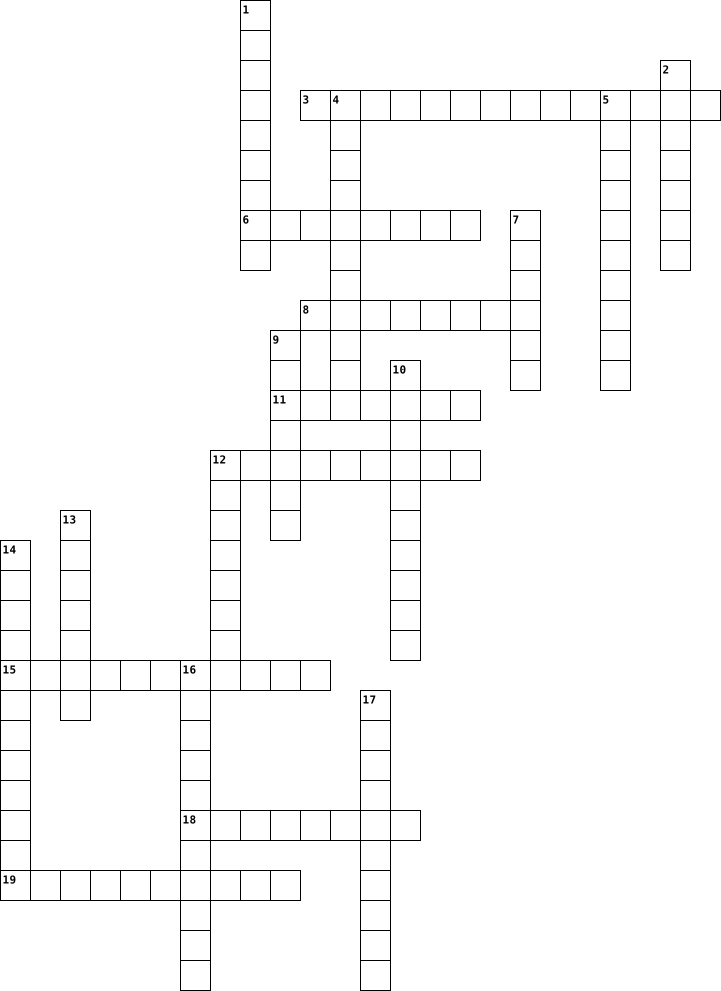
Across
- formation of compounds in plants aided by radiant energy
- an organelle containing digestive enzymes
- a relation between two opposites
- a part of the cell responsible for growth and reproduction
- the substance inside a cell
- organelle in which photosynthesis takes place
- a particle in a cell that helps synthesize proteins
- a substance used to kill microorganisms and cure infections
Down
- a specialized part of a cell
- spread out
- lacking affinity for water
- having cells with a nuclei
- a complex protein produced by cells that acts as a catalyst
- relating to the study of heredity and variation in organisms
- The organic processes that are necessary for life
- a rigid layer of polysaccharides enclosing a plant membrane
- a tiny cavity filled with fluid in the cytoplasm of a cell
- part of a cell involved in energy production
- having cells that lack a nuclei
- a threadlike strand of DNA that carries genes
20 Clues: spread out • lacking affinity for water • having cells with a nuclei • the substance inside a cell • a specialized part of a cell • having cells that lack a nuclei • a relation between two opposites • an organelle containing digestive enzymes • part of a cell involved in energy production • organelle in which photosynthesis takes place • ...
Cell Crossword Puzzle 2025-11-13

Across
- moves nutrients throughout the cell
- (_____ reticulum) makes proteins
- organelle that helps make proteins
- membrane barrier that only allows some things through
- controls activities of the cell
- membrane that allows an extremely wide range of substances through
- thing covering that surrounds the inside of cell (CELL ___)
- provides the PLANT cell with structure and support
- uses photosynthesis to make food in plant cells
Down
- what the mitochondria turns food into
- sac that stores excess food and substances
- the act of turning sunlight into food
- acronym of characteristics of living things
- (golgi _____)
- the main thing!!
- breaks down food to release energy "powerhouse of the cell"
- part of the cell that breaks down and digests food
- membrane barrier that does not allow anything to pass through
- cell that DOESN't have a wall
- cell that has a wall
20 Clues: (golgi _____) • the main thing!! • cell that has a wall • cell that DOESN't have a wall • controls activities of the cell • (_____ reticulum) makes proteins • organelle that helps make proteins • moves nutrients throughout the cell • what the mitochondria turns food into • the act of turning sunlight into food • sac that stores excess food and substances • ...
Cells 2025-11-14

Across
- Produces secretory products
- where all the organelles swim
- Protects the cell from dangerous hydrogen peroxide
- Cells that do not have a nucleus
- Cells that have a Nucleus
- pigment that gives off a green color found in plants
- where the ribosomes are made
- Secretes waste
- The security of the cell
- Dna fragment
Down
- Uses glucose and air to make atp
- The power house of the cell
- aids in cell division
- Where ribsomes reside
- The transportation of the cell
- Where photosynthesis takes place
- For cell motility
- Centrosomes, but within animal cells
- The janitor of the cell
- Helps maintain the shape of the cell
- The monosaccharide of sugars.
- where protein synthesis takes place
- Stores the waste of the cell
- the control center of a cell
- A process used by plants to make glucose
25 Clues: Dna fragment • Secretes waste • For cell motility • aids in cell division • Where ribsomes reside • The janitor of the cell • The security of the cell • Cells that have a Nucleus • Produces secretory products • The power house of the cell • Stores the waste of the cell • where the ribosomes are made • the control center of a cell • where all the organelles swim • ...
Cells 2025-11-12

Across
- – Genetic material that carries instructions for life.
- – Organelle that produces energy; the “powerhouse” of the cell.
- – Organelle that modifies and packages proteins.
- – Rigid outer layer of plant cells.
- – Structure that provides shape and support for the cell.
- – Movement of water across a membrane.
- – Jelly-like substance that fills the cell.
- – Site of photosynthesis in plant cells.
- – Boundary that controls what enters and exits the cell.
- – A complex cell with a nucleus.
Down
- – Network that transports materials through the cell.
- – Movement of molecules from high to low concentration.
- – Specialized structure within a cell that performs a specific function.
- – Process where plants make food using sunlight.
- – Control center of the cell that contains DNA.
- – Molecule that helps make proteins from genetic information.
- – A simple cell without a nucleus.
- – Organelle containing digestive enzymes.
- – Storage organelle for water and nutrients.
- – Organelle where proteins are made.
20 Clues: – A complex cell with a nucleus. • – A simple cell without a nucleus. • – Rigid outer layer of plant cells. • – Organelle where proteins are made. • – Movement of water across a membrane. • – Site of photosynthesis in plant cells. • – Organelle containing digestive enzymes. • – Jelly-like substance that fills the cell. • – Storage organelle for water and nutrients. • ...
Science 2018-03-22

Across
- a product of photosynthesis
- eats both plants and animals
- gives up active or passive immunity
- the fourth level of the classification of living things
- an organism that hunts other organisms
- a process where plants make their own food
- something used to treat bacterial infections
- a type of fungi that can grow on food
- this micro-organism can only be found within living organisms
- made up of several food chains
Down
- a use of micro-organisms to help make beer
- eat plants only
- when my dog dies, this takes place
- a green substance in the leaf
- eats meat only
- transports water to parts of the plant
16 Clues: eats meat only • eat plants only • a product of photosynthesis • eats both plants and animals • a green substance in the leaf • made up of several food chains • when my dog dies, this takes place • gives up active or passive immunity • a type of fungi that can grow on food • an organism that hunts other organisms • transports water to parts of the plant • ...
Anthony Studham 2016-12-08

Across
- Adenosine disphosphate.
- Organelle that cannot produce its own food.
- Break down of glucose by enzymes.
- Relating to, involving, or requiring an absence of free oxygen.
- Generates most energy in a cell.
- Green plants, algae ect.
- Found in sour cream, sour milk, ect.
- Cycle of Photosynthesis.
Down
- Relating to, involving, or requiring an absence of free oxygen.
- By which green plants and some other organisms use sunlight to synthesize foods from carbon dioxide and water.
- An organelle found in large numbers in most cells.
- Most living cells generate energy during the process of aerobic respiration.
- Organisms that obtain energy by the oxidation of electron donors in their environments
- In green plant cells.
- A green pigment.
- Flattened sacks inside a chloroplast. (pancake)
- Adenosine triphosphate.
17 Clues: A green pigment. • In green plant cells. • Adenosine disphosphate. • Adenosine triphosphate. • Green plants, algae ect. • Cycle of Photosynthesis. • Generates most energy in a cell. • Break down of glucose by enzymes. • Found in sour cream, sour milk, ect. • Organelle that cannot produce its own food. • Flattened sacks inside a chloroplast. (pancake) • ...
7.3 Maple Syrup 2024-05-03

Across
- organisms that eat other dead organisms.
- organelle inside cells, also known as the power house.
- green organelle inside a plant that convert sunlight, CO2, and water into food molecules.
- turns light, CO2, and water into food molecules.
- what comes out of the system.
- simple sugar.
Down
- using oxygen to break down food molecules.
- the source of energy/heat for plants.
- fats, proteins, and carbohydrates.
- process water moves out of plant and evaporate.
- organisms that make their own food through photosynthesis.
- a system use to grow plants without soil.
- has mass.
- another form of energy that is used up.
- organisms that eat other organisms to make energy.
- what goes into the system
16 Clues: has mass. • simple sugar. • what goes into the system • what comes out of the system. • fats, proteins, and carbohydrates. • the source of energy/heat for plants. • another form of energy that is used up. • organisms that eat other dead organisms. • a system use to grow plants without soil. • using oxygen to break down food molecules. • ...
Reproduction in Plants 2024-02-02

Across
- appears after the root
- ovary becomes a _______
- seeds are ___________ to ensure survival
- flowers with ______ and large petals are pollinated by insects
- receives pollen grains
- occurs between flowers from separate plants
- produces pollen grains
Down
- the process of plants making their own food
- where non-flowering plants reproduce from
- develop into seed
- the first stage in the development of a plant from a seed
- plant part that banana and pineapple plants reproduce by
- potato is an example of reproduction by ________ stems
- process where a male reproductive cell fuses with a female reproductive cell
- required in germination but not in photosynthesis
- holds up the male reproductive organ that produces pollen
16 Clues: develop into seed • appears after the root • receives pollen grains • produces pollen grains • ovary becomes a _______ • seeds are ___________ to ensure survival • where non-flowering plants reproduce from • the process of plants making their own food • occurs between flowers from separate plants • required in germination but not in photosynthesis • ...
Vocabulary Unit 4 2012-11-26

Across
- a coin shaped part of a chloroplast
- simply known as a producer
- needs light to make energy
- a stack of thylakoids
- a series of related events that occur in a consecutive order
- carries electrons
- a system made up of strictly photosynthesis related things
- formed by ATP and an inorganic molecule
Down
- simply known as a consumer
- needs one more phosphate to become ATP
- the substance surrounding the grana
- this is the formula C602+6H20->C6H12O6+6O2
- needs 1 more phosphate to become NADPH
- energy gathered from short time carriers
- does not need light to make energy
- a molecule that absorbs sunlight
- little solar panels in all the plant cells
17 Clues: carries electrons • a stack of thylakoids • simply known as a consumer • simply known as a producer • needs light to make energy • a molecule that absorbs sunlight • does not need light to make energy • a coin shaped part of a chloroplast • the substance surrounding the grana • needs one more phosphate to become ATP • needs 1 more phosphate to become NADPH • ...
Topic Crossword 2016-02-24

Across
- Main substance used to release energy in respiration.
- Sac like structures that are involved in gas exchange in animals.
- Organelles where most respiration occurs.
- Plants store sugars in this form.
- Largest artery in body.
- Vessel returning deoxygenated blood to the heart.
- Process that plants use to make sugars.
- Protect lungs and heart.
- Structure in the leaf that allows carbon dioxide in and oxygen out.
Down
- Green Pigment that absorbs sunlight.
- Disease caused by smoking.
- Root hair cells maximise this to aid in the absorbance of minerals.
- Respiration without oxygen.
- Muscle that contracts during Inhalation.
- Gas that stays the same in exhaled and inhaled air.
- Organelle where photosynthesis takes place.
- Disease that causes the constriction of the airways.
17 Clues: Largest artery in body. • Protect lungs and heart. • Disease caused by smoking. • Respiration without oxygen. • Plants store sugars in this form. • Green Pigment that absorbs sunlight. • Process that plants use to make sugars. • Muscle that contracts during Inhalation. • Organelles where most respiration occurs. • Organelle where photosynthesis takes place. • ...
Trees and Forests 2017-05-15

Across
- an organism that uses the sun to make its own food
- a low-growing plant
- the visible outer covering of a trunk
- a meat eating organism
- non-living components of a forest
- how a plant produces its own food
- an organism which eats both plants and animals
- made up of algae and fungus
Down
- a group of trees
- an organism that breaks down material and litter
- a plant eating organism
- the top of a tree
- the top branches of the trees in a forest
- an organism that feeds on anthoer organism
- green substance that is used in photosynthesis
- a hard fungus that grows on a tree trunk
- living components of a forest
17 Clues: a group of trees • the top of a tree • a low-growing plant • a meat eating organism • a plant eating organism • made up of algae and fungus • living components of a forest • non-living components of a forest • how a plant produces its own food • the visible outer covering of a trunk • a hard fungus that grows on a tree trunk • the top branches of the trees in a forest • ...
Science 2024-08-28

Across
- ____________ transports food made in the leaves to the other
- Energy currency of cells.
- Product of anaerobic respiration in yeast.
- ________ mesophyll absorbs maximum sunlight.
- Electrically charged atoms or group of atoms
- Water coming from the veins of the leaves enters the cells by
- A compound with formula N2Owhose formula is 'H2CO3'.
- The type of respiration taking place in the presence of oxygen.
Down
- The green pigment present in leaves.
- It causes cramps in the muscles.
- Imaginary path around the nucleus of an atom in which
- Product of photosynthesis
- Vertical columns of periodic table
- Raw material for photosynthesis.
- Number of molecules of ATP released in anaerobic respiration.
- Guard cells become________, stoma opens.
- The atomicity of Sulphur
17 Clues: The atomicity of Sulphur • Energy currency of cells. • Product of photosynthesis • It causes cramps in the muscles. • Raw material for photosynthesis. • Vertical columns of periodic table • The green pigment present in leaves. • Guard cells become________, stoma opens. • Product of anaerobic respiration in yeast. • ________ mesophyll absorbs maximum sunlight. • ...
Photosynthesis and Cellular Respiration 2021-11-01

Across
- result at the end of the process
- process of make food for the plant
- makes energy for living things
- materials substance that goes into a process
- where photosynthesis takes place
Down
- found in cells
- its chemical formula is O2
- cant make there own food
- organism that make there own food
- carbon dioxide
10 Clues: found in cells • carbon dioxide • cant make there own food • its chemical formula is O2 • makes energy for living things • result at the end of the process • where photosynthesis takes place • organism that make there own food • process of make food for the plant • materials substance that goes into a process
Photosyntehsis 2022-02-01

Across
- carbon dioxide
- substances that are made a chemical reaction
- green pigment
- what the plants emits after carbon dioxide
- what's needed for a reaction to take place
Down
- where the photosynthesis takes place
- the process that makes food in the form of sugar and produce oxygen
- light from the sun
- sugar
- H2O
10 Clues: H2O • sugar • green pigment • carbon dioxide • light from the sun • where the photosynthesis takes place • what the plants emits after carbon dioxide • what's needed for a reaction to take place • substances that are made a chemical reaction • the process that makes food in the form of sugar and produce oxygen
Science 2022-03-01

Across
- The process that autotrophs use to get energy
- More than 1 cell in the organism
- No defined nucleus
- 2 parents
- Makes own food through photosynthesis
Down
- Nucleus with DNA
- Has to eat other organisms for food
- 1 parent
- Is a way to produce energy without the sun
- Only 1 cell in the organism
10 Clues: 1 parent • 2 parents • Nucleus with DNA • No defined nucleus • Only 1 cell in the organism • More than 1 cell in the organism • Has to eat other organisms for food • Makes own food through photosynthesis • Is a way to produce energy without the sun • The process that autotrophs use to get energy
Flow of Energy 2022-02-02

Across
- were photosynthesis happens
- carries glucose to the plant
- comes from the sun
- lets gasses in and out of the leaf
- how a plant makes its food
Down
- pigment which absorbs the sun's energy
- were chlorophyll is stored
- needed for a reaction to take place
- formed in a chemical reaction
- distributes water to the plant
10 Clues: comes from the sun • were chlorophyll is stored • how a plant makes its food • were photosynthesis happens • carries glucose to the plant • formed in a chemical reaction • distributes water to the plant • lets gasses in and out of the leaf • needed for a reaction to take place • pigment which absorbs the sun's energy
Meade's Puzzle 2023-03-10

Across
- a mushroom or any type of fungi
- Antonym: Inputs
- something that makes food for consumers
- The cell that preforms photosynthesis
- Antonym: Outputs
Down
- foxes eat small mice so they are
- Creates glucose and releases oxygen
- a problem with orangutans dying off
- Cellular Respiration
- A very popular resource used in many things
10 Clues: Antonym: Inputs • Antonym: Outputs • Cellular Respiration • a mushroom or any type of fungi • foxes eat small mice so they are • Creates glucose and releases oxygen • a problem with orangutans dying off • The cell that preforms photosynthesis • something that makes food for consumers • A very popular resource used in many things
Meade's Puzzle 2023-03-10

Across
- a mushroom or any type of fungi
- Antonym: Inputs
- something that makes food for consumers
- The cell that preforms photosynthesis
- Antonym: Outputs
Down
- foxes eat small mice so they are
- Creates glucose and releases oxygen
- a problem with orangutans dying off
- Cellular Respiration
- A very popular resource used in many things
10 Clues: Antonym: Inputs • Antonym: Outputs • Cellular Respiration • a mushroom or any type of fungi • foxes eat small mice so they are • Creates glucose and releases oxygen • a problem with orangutans dying off • The cell that preforms photosynthesis • something that makes food for consumers • A very popular resource used in many things
Photosynthesis and Cellular Respiration 2021-10-14

Across
- Produces glucose sugar
- Converts the sun’s energy into chemical energy stored in sugar
- get their food from something else
- the pigment that absorbs sunlight.
- the way living organisms obtain energy
- makes energy WITH OXYGEN
Down
- splitting of glucose
- make their own food
- Fermentation (makes alcohol) WITHOUT OXYGEN
- Capture light energy for photosynthesis
10 Clues: make their own food • splitting of glucose • Produces glucose sugar • makes energy WITH OXYGEN • get their food from something else • the pigment that absorbs sunlight. • the way living organisms obtain energy • Capture light energy for photosynthesis • Fermentation (makes alcohol) WITHOUT OXYGEN • Converts the sun’s energy into chemical energy stored in sugar
Photosynthesis/celluar respiration 2023-11-13

Across
- the amount of atp produced by the electron transport chain
- takes place in the mitochondria
- what plants use to make energy
- the opposite of Photosynthesis
Down
- need light as energy
- doesn't require oxygen
- where oxygen enters and CO2 exits
- transforms light energy into chemical energy
- oxygen requires oxyegen
- where glycolysis takes place
10 Clues: need light as energy • doesn't require oxygen • oxygen requires oxyegen • where glycolysis takes place • what plants use to make energy • the opposite of Photosynthesis • takes place in the mitochondria • where oxygen enters and CO2 exits • transforms light energy into chemical energy • the amount of atp produced by the electron transport chain
Elements of Photosynthesis 2024-01-27

Across
- energy stored in the bonds of atoms (2 Words)
- an organelle that hold chlorophyll
- result of a chemical reaction
- components needed for a chemical reaction
Down
- _____ is converted into chemical energy during photosynthesis(2 words)
- green pigment that captures sunlight
- a sugar
- a gas that plants produce
- H2O
- a chemical reaction to make food
10 Clues: H2O • a sugar • a gas that plants produce • result of a chemical reaction • a chemical reaction to make food • an organelle that hold chlorophyll • green pigment that captures sunlight • components needed for a chemical reaction • energy stored in the bonds of atoms (2 Words) • _____ is converted into chemical energy during photosynthesis(2 words)
Photosynthesis and cellular Respiration 2024-05-23

Across
- Organelle where photosynthesis occurs
- The process of breaking down molecules for energy
- Power house of the cell
Down
- The process plants use to make food and energy
- Comes from the sun
- The cycle of carbon on the planet
- Energy used by cells
- Exhaled into atmosphere
- A molecule broken down into ATP
- Inhaled from atmosphere
10 Clues: Comes from the sun • Energy used by cells • Exhaled into atmosphere • Power house of the cell • Inhaled from atmosphere • A molecule broken down into ATP • The cycle of carbon on the planet • Organelle where photosynthesis occurs • The process plants use to make food and energy • The process of breaking down molecules for energy
Photosynthesis and Cellular Respiration 2024-05-24

Across
- organelle where photosynthesis takes place
- Inhaled from the atmosphere
- Exhaled into the atmosphere
- energy used by cells
- A molecule broken down into ATP
- The process plants use to make food
- The process of breaking molecules into chemical energy
Down
- comes from the sun
- The cycle of carbon
- power house of the cell
10 Clues: comes from the sun • The cycle of carbon • energy used by cells • power house of the cell • Inhaled from the atmosphere • Exhaled into the atmosphere • A molecule broken down into ATP • The process plants use to make food • organelle where photosynthesis takes place • The process of breaking molecules into chemical energy
โครงสร้างของคลอโรพลาสต์ สารสี และพลังงานแสง 2019-07-29

Across
- สารสีที่มีสีเขียว มีโครงสร้างเป็นวงที่มีแมกนีเซียมไอออนอยู่ตรงกลาง และมีสายยาวของไฮโครคาร์บอน
- ช่องภายในไทลาคอยด์
- สารสีที่อยู่ในกลุ่มแคโรทีนอยด์ เป็นสารสีที่มีสีเหลืองหรือสีน้ำตาล
- ตัวรับพลังงานแสง มาใช้ในกระบวนการสังเคราะห์ด้วยแสง
- ของเหลวภายในคลอโรพลาสต์ ซึ่งมีเอนไซม์ที่จำเป็นสำหรับการสังเคราะห์ด้วยแสง
- เนื้อเยื่อของไทลาคอยด์ส่วนที่ไม่ได้ซ้อนทับกันซึ่งอยู่ระหว่ากรานุม
- เยื่อในคลอโรพลาสต์ที่มีการเกิดปฏิกิริยาแสง
- กระบวนการเปลี่ยนพลังงานแสงเป็นพลังงานเคมี โดยการสังเคราะห์คาร์โบไฮเดรตจากแก๊สคาร์บอนไดออกไซด์และน้ำ
- สารสีที่อยู่ในกลุ่มแคโรทีนอยด์ เป็นสารสีที่มีสีแดงหรือส้ม
Down
- เรียกอีกอย่างหนึ่งว่าการตรึงคาร์บอน
- แต่ละชุดของไทลาคอยด์ที่เรียงต่อกันในแนวตั้ง
- ออร์แกเนลล์ที่สำคัญต่อกระบวนการสังเคราะห์ด้วยแสง
- ปฏิกิริยาที่สร้างสารพลังงานสูง ในภาวะที่มีแสงเกิดขึ้นที่ไทลาคอยด์
- เครื่องมือที่ใช้วัดค่าการดูดกลืนแสงของสารสี
- สารสีที่มีสีเหลืองส้ม มีโครสร้างเป็นสายยาวของไฮโดรคาร์บอน
- ขั้นตอนการสร้างน้ำตาลเกิดในสโตรมา โดยใช้สารพลังงานสูง ที่ได้จากปฏิกิริยาแสง
16 Clues: ช่องภายในไทลาคอยด์ • เรียกอีกอย่างหนึ่งว่าการตรึงคาร์บอน • เยื่อในคลอโรพลาสต์ที่มีการเกิดปฏิกิริยาแสง • แต่ละชุดของไทลาคอยด์ที่เรียงต่อกันในแนวตั้ง • เครื่องมือที่ใช้วัดค่าการดูดกลืนแสงของสารสี • ออร์แกเนลล์ที่สำคัญต่อกระบวนการสังเคราะห์ด้วยแสง • ตัวรับพลังงานแสง มาใช้ในกระบวนการสังเคราะห์ด้วยแสง • สารสีที่มีสีเหลืองส้ม มีโครสร้างเป็นสายยาวของไฮโดรคาร์บอน • ...
Plant crossword 2014-07-01

Across
- Three examples of plant organs.
- The green pigment which the plants use to absorb sunlight.
- The name of cells which control the opening and closing of the stomata.
- The time of day when plants are not photosynthesising.
- Taken up by the plant through the soil.
Down
- The name of the process by which a plant generates glucose and oxygen.
- The name of the parts of the cell which contain the green pigment.
- The name of the gas needed photosynthesis.
- The type of energy used by plants to generate starch.
- The name of the pores through which Co2 enters the leaves
- A key raw material required by the plant for photosynthesis, which is taken up via the roots.
11 Clues: Three examples of plant organs. • Taken up by the plant through the soil. • The name of the gas needed photosynthesis. • The type of energy used by plants to generate starch. • The time of day when plants are not photosynthesising. • The name of the pores through which Co2 enters the leaves • The green pigment which the plants use to absorb sunlight. • ...
The Carbon Dioxide-Oxygen Cycle 2014-02-19

Across
- Human activities are disrupting the _____________ balance of the carbon dioxide-oxygen cycle.
- This is the source of energy for photosynthesis.
- A process that makes food occurring in plants only .
- Green _________________ produce oxygen and use up carbon dioxide from the atmosphere.
- A gas produced by photosynthesis.
Down
- This process produces energy in the cells of living things.
- CO2 is the chemical formula for carbon _________________.
- _____________ warming is caused by an increase in greenhouse gases in the atmosphere.
- Burning of these fuels, e.g. oil, is producing more carbon dioxide gas.
9 Clues: A gas produced by photosynthesis. • This is the source of energy for photosynthesis. • A process that makes food occurring in plants only . • CO2 is the chemical formula for carbon _________________. • This process produces energy in the cells of living things. • Burning of these fuels, e.g. oil, is producing more carbon dioxide gas. • ...
Photosynthesis Pawar Public Shcool 2022-12-02

Across
- The glucose made is translocated in the form of
- Photosynthesis is also done by Plants,Bacteria and
- The spliting of Water happen here
- Exchange of gases happen here
- They countroll the Opening and closing of the stomata
Down
- The process in which plants use suns energy to convert C02 and H2O into sugar in the presence of green coloured pigment called Chlorophyll
- What does "synthesis" mean
- The spliting of Carbone Dioxide happens here
- Sugar made in the process of photosynthesis is stored in the form of
9 Clues: What does "synthesis" mean • Exchange of gases happen here • The spliting of Water happen here • The spliting of Carbone Dioxide happens here • The glucose made is translocated in the form of • Photosynthesis is also done by Plants,Bacteria and • They countroll the Opening and closing of the stomata • Sugar made in the process of photosynthesis is stored in the form of • ...
Carbon Cycle 2025-04-29

Across
- - Ocean
- - Fossil Fuels
- - Photosynthesis
- - carboncycle
Down
- - carbon
- - Decomposition
- - global warming
7 Clues: - Ocean • - carbon • - carboncycle • - Fossil Fuels • - Decomposition • - Photosynthesis • - global warming
B. Pauni's Cellular Respiration/Photosynthesis 2016-12-07

Across
- Occurs in animal skeletal muscles
- Oxygen is present
- Pigment for chloroplast
- Organism that creates it's own energy
- Broken down molecules that release energy for the cell to use
- Looks like a soggy pancake
- Organism that depends on inorganic chemicals for energy and carbon dioxide for carbon
- It occurs in the cytoplasm of the cell
Down
- Organism requiring organic compounds for a food source
- Organelle that makes energy for animals
- Oxygen is not present
- Adenosine dephosphate
- Cycle where glucose is synthesized from carbon dioxide
- Cycle where ATP is formed from reduced oxygen and where carbon dioxide is produced
- Process where energy from the sun, water, and carbon dioxide form glucose and oxygen
- Adenosine triphosphate
- This organelle carries out photosynthesis
- Supporting framework or matrix of cell
18 Clues: Oxygen is present • Oxygen is not present • Adenosine dephosphate • Adenosine triphosphate • Pigment for chloroplast • Looks like a soggy pancake • Occurs in animal skeletal muscles • Organism that creates it's own energy • Supporting framework or matrix of cell • It occurs in the cytoplasm of the cell • Organelle that makes energy for animals • ...
Introduction to Chapter 8: Cellular Energy 2015-11-24

Across
- all of the chemical reactions in a cell
- does not require oxygen
- process in which glucose is broken down in the cytoplasm
- catabolic pathway in which molecules are broken down for energy
- flattened, saclike membranes
- occurs in cytoplasm and produces ATP in an anaerobic pathway
- an enzyme
- light-absorbing colored molecules
- requires oxygen
- 2nd phase of photosynthesis in which energy is stored in organic molecules
- ability to do work
Down
- includes Krebs cycle and electron transport
- fluid-filled space outside grana
- study of flow and transformation of energy
- stacks of thylakoids
- anabolic pathway in which light energy is converted to chemical energy
- most important biomolecule that provides energy for the cell
- process in which pyruvate is broken down into carbon dioxide
18 Clues: an enzyme • requires oxygen • ability to do work • stacks of thylakoids • does not require oxygen • flattened, saclike membranes • fluid-filled space outside grana • light-absorbing colored molecules • all of the chemical reactions in a cell • study of flow and transformation of energy • includes Krebs cycle and electron transport • ...
Reproduction in Plants 2024-02-02

Across
- required in germination but not in photosynthesis
- when fruits disperse by exploding
- appears after the root
- produces pollen grains
- plant part that banana and pineapple plants reproduce by
- the first stage in the development of a plant from a seed
- occurs between flowers from separate plants
- develop into seed
Down
- process where a male reproductive cell fuses with a female reproductive cell
- ovary becomes a _______
- the process of plants making their own food
- receives pollen grains
- seeds are ___________ to ensure survival
- holds up the male reproductive organ that produces pollen
- potato is an example of reproduction by ________ stems
- flowers with ______ and large petals are pollinated by insects
- where non-flowering plants reproduce from
- fruits with _______ husks are dispersed by water
18 Clues: develop into seed • receives pollen grains • appears after the root • produces pollen grains • ovary becomes a _______ • when fruits disperse by exploding • seeds are ___________ to ensure survival • where non-flowering plants reproduce from • the process of plants making their own food • occurs between flowers from separate plants • ...
Maiya's Science Vocab 2024-05-09

Across
- When something doesn't change and stays mostly the same.
- When atoms are brought together.
- A magnet whose magnetic field is made by an electric current.
- When things become different.
- To change into something else.
- Different organisms interacting in a specific area.
- One of the two things that gets produced by photosynthesis.
- Everything is made of this.
- All the same organisms living together.
Down
- To keep alone.
- What plants do to make energy for themselves and other organisms.
- A small amount of something to test.
- Able to make things move.
- Every living thing.
- For two or more things to attach.
- Something that can change how an object moves.
- What's made from a chemical reaction.
- Two objects that pull toward each other.
18 Clues: To keep alone. • Every living thing. • Able to make things move. • Everything is made of this. • When things become different. • To change into something else. • When atoms are brought together. • For two or more things to attach. • A small amount of something to test. • What's made from a chemical reaction. • All the same organisms living together. • ...
Biology 10 Crossword 2012-12-20

Across
- has porous space for gas exchange.
- Transports glucose up and down the plant.
- Cells Controls the opening of stomata.
- Waxy protective layer.
- 6 oxygen molecules and 6 carbon dioxide molecules produce (with the help of chlorophyll and light) 6 molecules of oxygen and glucose.
- Specialized cells.
- Pores on the stem; like stomata.
Down
- A group of tissues working together.
- Protects the plant leaf.
- Transports water upwards from the roots.
- Contains chlorophyll and its where photosynthesis happens.
- Gives plant their green pigment.
- Opening on leaves for gas exchange of water vapour, carbon dioxide and oxygen.
- Many organs working together.
- A scientific name for sugar.
15 Clues: Specialized cells. • Waxy protective layer. • Protects the plant leaf. • A scientific name for sugar. • Many organs working together. • Gives plant their green pigment. • Pores on the stem; like stomata. • has porous space for gas exchange. • A group of tissues working together. • Cells Controls the opening of stomata. • Transports water upwards from the roots. • ...