
plants Crossword Puzzles
Dinosaurs 2024-11-25

Across
- plants
- teeth
- head
- eggs
- mouth
- claws
- leaves
Down
- nest
- tails
- neck
- dinosaurs
- meat
- bones
13 Clues: nest • neck • head • meat • eggs • teeth • tails • mouth • bones • claws • plants • leaves • dinosaurs
Photosynthesis 2021-09-07

Across
- responsible for the green in plants
- gates for the plants chemicals
- radiant energy
- engine for photosynthesis
- food for plants
Down
- process for making food in plants
- transports water
- liquid necessary for photosynthesis
- not needed for photosynthesis
- not very valuable for plants
10 Clues: radiant energy • food for plants • transports water • engine for photosynthesis • not very valuable for plants • not needed for photosynthesis • gates for the plants chemicals • process for making food in plants • responsible for the green in plants • liquid necessary for photosynthesis
Carbohydrates 2018-09-21

Across
- simple carbohydrates formed from plants made of carbon hydrogen and oxygen
- formed when plants combine simple glucose units into more complicated structures
- main source of energy
- sugars extracted from plants and added to sweeten foods
- substances sed in place of sugar to sweeten foods yet add few or no calories
- carbohydrates with complicated structures
- sugars with single unit chemical structures
Down
- plant materials eaten but not digestible by human enzymes
- complicated chemical arrangements that plants form by combining single glucose units to build starches
- formed when 2 monosaccharides combine chemically
- green pigment needed in plants for photosynthesis to occur
- sugars formed from simple 1 and 2 unit structures
- chemical process which makes carbohydrates
13 Clues: main source of energy • carbohydrates with complicated structures • chemical process which makes carbohydrates • sugars with single unit chemical structures • formed when 2 monosaccharides combine chemically • sugars formed from simple 1 and 2 unit structures • sugars extracted from plants and added to sweeten foods • ...
Science Review 2024-03-21

Across
- Organism that eats only meat
- Atoms are packed loosely together and slide past each other
- Plants and trees take in this gas to use in photosynthesis
- The food making process of plants
Down
- Atoms are packed tightly together in this state of matter
- Organism that eats both plants and meat
- Organism that eats only plants
- Atoms are packed very loosely and flow freely
- Part of a plant that takes in water and nutrients
- A change in which a new substance is created and can't be reversed
- All food chains begin with this
- A change in an object but no new substance is created
- Plants and trees give off this gas during photosynthesis
13 Clues: Organism that eats only meat • Organism that eats only plants • All food chains begin with this • The food making process of plants • Organism that eats both plants and meat • Atoms are packed very loosely and flow freely • Part of a plant that takes in water and nutrients • A change in an object but no new substance is created • ...
gard6 2024-06-18

Across
- Linear planting style
- Central garden feature
- Water storing plant
- Full sunlight area
- Ground cover
- Culinary plants
- Elevated planting area
- Square garden layout
- Edge of a garden bed
- Balanced design
- Border design
- Walkway through garden
Down
- Organic soil enhancer
- Reduced sunlight area
- One season plants
- Unbalanced design
- Climbing plant support
- Living fence
- Garden arch
- Returns yearly
20 Clues: Garden arch • Ground cover • Living fence • Border design • Returns yearly • Culinary plants • Balanced design • One season plants • Unbalanced design • Full sunlight area • Water storing plant • Square garden layout • Edge of a garden bed • Organic soil enhancer • Linear planting style • Reduced sunlight area • Central garden feature • Climbing plant support • Elevated planting area • ...
Food Web vs. Food Chain 2022-03-15

Across
- ____ is an example of primary consumer.
- ________ is an example of producer.
- only eats meat
- What consumer consumes the primary?
- What consumer consumes the producer?
- The source of energy for all living things; provides light for plants.
- only eats plants
Down
- eats both plants and meat
- Energy ______ throughout the food chain.
- What consumer consumes the secondary?
- What does the arrows signify?
- uses sun for nutrients
12 Clues: only eats meat • only eats plants • uses sun for nutrients • eats both plants and meat • What does the arrows signify? • ________ is an example of producer. • What consumer consumes the primary? • What consumer consumes the producer? • What consumer consumes the secondary? • ____ is an example of primary consumer. • Energy ______ throughout the food chain. • ...
Environment 2020-05-05

Across
- plants that grow on dead things
- everything that is alive in an area
- large flat area with no trees
- area covered in water
- study of animals
- get rid of all the trees
- the air that surrounds earth
Down
- to use without extinction
- area covered in trees and bushes
- protection of animals and plants
- plants and sunlight causes this
- study of plants
12 Clues: study of plants • study of animals • area covered in water • get rid of all the trees • to use without extinction • the air that surrounds earth • large flat area with no trees • plants that grow on dead things • plants and sunlight causes this • area covered in trees and bushes • protection of animals and plants • everything that is alive in an area
Rain Water Harvesting & Terrariums 2026-07-17

Across
- We collect rainwater instead of wasting it. This is rainwater ________.
- Plants drink this
- Hidden Underground parts of plants.
- Cleans rainwater before it is stored
- Stores collected rainwater
- Plants grow in this.
Down
- A green carpet-like plant
- Terrariums need this to survive
- Plants need this to make food
- Rainwater often lands here first.
- Flowers and vegetables grow here
- A tiny garden inside a container
12 Clues: Plants drink this • Plants grow in this. • A green carpet-like plant • Stores collected rainwater • Plants need this to make food • Terrariums need this to survive • Flowers and vegetables grow here • A tiny garden inside a container • Rainwater often lands here first. • Hidden Underground parts of plants. • Cleans rainwater before it is stored • ...
Mass Transport in Plants 2020-03-22

Across
- process of transporting assimilates in plants
- reduces water potential gradient leaf to atmosphere
- mesophyll cells where most sunlight is captured
- cells that control the aperture of a stoma
- leaf entry point for gases such as carbon dioxide
- water is required for this key process in plants
- the loss of water to the atmosphere by diffusion
- needed for transport from one area to another
- transports assimilates up and down
Down
- organism used to give evidence for mass flow hypothesis
- pressure due to volume of water in a vessel
- transports water up
- mechanism of transporting sucrose into companion cells
- mechanisms of transporting water across membranes
- passive process for transport of oxygen and CO2
- mood I am in when I get to teach you all Biology
- cutting away plant tissue containing phloem
- these plates are found at intervals along phloem tubes
- pulls on walls of xylem vessels and reduces their diameter
- plant with adaptations to reduce water loss in dry place
20 Clues: transports water up • transports assimilates up and down • cells that control the aperture of a stoma • pressure due to volume of water in a vessel • cutting away plant tissue containing phloem • process of transporting assimilates in plants • needed for transport from one area to another • passive process for transport of oxygen and CO2 • ...
plants and energy transfer 2020-10-20

Across
- :the act of transferring pollen grains from the male anther of a flower to the female stigma.
- :the fusion of haploid gametes, egg and sperm, to form the diploid zygote
- :have seeds that use water as a means of dispersal. The seeds float away from the parent plant.
- :that run through their stems and roots :the part of a plant which attaches it to the ground or to a support
- : a central component of chlorophyll which is supporting the function to absorb sunlight during photosynthesis. Magnesium acts as a phosphorus carrier in plants and is essential for phosphate metabolism.
- :the spongy mesophyll layer they allow the diffusion of carbon dioxide and oxygen. Stomata (small pores usually found on the lower surface of the leaf)which allows carbon dioxide and oxygen to enter and leave the leaf.
- :contains the male gametes of the flower.
- :is a space in a cell filled with fluid in the form of a membrane-covered cavity (tonoplast).
- :is a sweet,sugar liquid that flowers produce from plants when they bloom to attract pollinators such as insects.
- :The xylem parenchyma tissue cells function to store food reserves.
- :the processes of evaporation and transpiration.It can also refer to direct evaporation of liquid water from the leaf surface of the plant.
- :the process by which green plants and certain other organisms transform light energy into chemical energy. During photosynthesis in green plants, light energy is captured and used to convert water, carbon dioxide, and minerals into oxygen and energy-rich organic compounds.
- :the nuclei of the two gametes have joined together,they form a new cell.
- :A young, developing plant, such as the rudimentary plant inside the seed of higher plants or that inside the archegonium of mosses and ferns.
Down
- :the most colourful part of the flower,they attract insects or birds to the flower.
- :made in the anthers of flowers,it contains in the male gametes.
- :the central and most important part of an object, movement, or group, forming the basis for its activity and growth.
- : which is needed to make proteins for healthy growth. Plants absorb nitrates in water through their roots. Nitrates are present at high levels in plant fertilizers. Without nitrates, the amount of chlorophyll in leaves reduces.
- : a pair of guard cells similar to two curved sausages. Inland plants, there are many stomata on the underside of the leaves, while in plants that live in water, stomata are found on the upper surface of the leaves.
- :is the movement, spread or transport of seeds away from the parent plant.
- :a flowering plant's unit of reproduction, capable of developing into another such plant.
- : The enlarged basal portion of the pistil where ovules are produced.
- : chemical substances supplied to the crops to increase their productivity. These are used by the farmers daily to increase the crop yield. The fertilizers contain the essential nutrients required by the plants, including nitrogen, potassium, and phosphorus.
- :typically stored as long polymers of glucose molecules with glycosidic bonds for structural support example chitin, cellulose
- :it is something inside the female gametes,which is inside the ovary
- :part of the pistil where pollen germinates.
26 Clues: :contains the male gametes of the flower. • :part of the pistil where pollen germinates. • :made in the anthers of flowers,it contains in the male gametes. • :The xylem parenchyma tissue cells function to store food reserves. • :it is something inside the female gametes,which is inside the ovary • ...
JHCL All about plants 2020-05-05

Across
- Flower for November
- flower that might give the answer
- will this make you chilly?
- Enough supplies
- One for the string section
- Can this one play baseball?
- Is this one named after Brucie?
- rings out the colour
- Cussing crow
- Stuck in the eye
Down
- Is it bucket or bouquet?
- internet amongst the ponies
- Animal needs these for cold paws
- flower from out in space
- Is under the pillow for a good night’s sleep
- flower to wash up with
- In straight lines
- One of the happy flowers
- are they floating or planted?
- Yoga for a flower’s position
20 Clues: Cussing crow • Enough supplies • Stuck in the eye • In straight lines • Flower for November • rings out the colour • flower to wash up with • Is it bucket or bouquet? • flower from out in space • One of the happy flowers • will this make you chilly? • One for the string section • internet amongst the ponies • Can this one play baseball? • Yoga for a flower’s position • ...
Reproduction in flowering plants 2021-02-23

Across
- Base of plumule
- Without this, it would be impossible for a seed to germinate
- The process in which a seed begins to grow
- When seeds are dispersed/scattered away from original plant to avoid competition for nutrients
- The process in which the male and female gametes fuse together to become a zygote
- Part of plant that turns into seed
- Part of plant that turns into fruit
- Part of the male plant's reproductive system that produces male gametes
Down
- Female plant's reproductive organ
- This protects the female plant's reproductive system before it's fully developed
- Part of seed that stores food
- Male plant's reproductive organ
- Part of flowering plant that attracts insects
- Base of radicle
- Pathway between stigma and ovary in female plant's reproductive system
- The process of pollen grains landing on stigma
- Outer part of seed
- Type of reproduction that needs two parents
- An example of asexual reproduction in which the parent cell divides into two
- This is needed for the plant to do respiration
20 Clues: Base of plumule • Base of radicle • Outer part of seed • Part of seed that stores food • Male plant's reproductive organ • Female plant's reproductive organ • Part of plant that turns into seed • Part of plant that turns into fruit • The process in which a seed begins to grow • Type of reproduction that needs two parents • Part of flowering plant that attracts insects • ...
Reproductive System in Plants 2021-02-23

Across
- Last stage of sexual reproduction in plants
- The essential factor in germination
- Type of seed dispersal in green beans
- Name of a pollination and seed dispersal type
- Breaks down starch in seed
- Insect that aids in sexual reproduction in plants
- Path for pollen to go to the ovaries
- Pollen grains land here
- Storage of food in seed
- The radicle grows into this
- Fruit that reproduce by stolon and sexual reproduction
Down
- The process by which a female gamete fuses with a male gamete
- Part of plant that attracts insects
- Female part of flower
- Pollination from one flower to a different flower
- The transfer of pollen grains from stamen to stigma
- The ovules grow into this
- Small bag on top of the filaments, forms pollen grains
- Type of germination where cotyledons are pulled above the ground
- Part of flower that turns into fruit
20 Clues: Female part of flower • Pollen grains land here • Storage of food in seed • The ovules grow into this • Breaks down starch in seed • The radicle grows into this • Part of plant that attracts insects • The essential factor in germination • Path for pollen to go to the ovaries • Part of flower that turns into fruit • Type of seed dispersal in green beans • ...
Reproduction in flowering plants 2021-02-23

Across
- Epigeal and ________ are 2 types of germination.
- It is the joining of male and female cells to produce a zygote.
- How many types of seed dispersal are there?
- Which structure in flowering plants help to disperse seeds?
- A suitable temperature, oxygen, and _____ are conditions required for seed germination.
- What contains female gametes – eggs?
- What can attract insects on flowers?
- a thick seed coat which protects the seed from drying up and from being attacked by microbes.
- How can pollen be transported?
- Pollen grains are heavy and large with sticky/_____ walls
- What else can attract insects in flowers?
Down
- Can a cattail be dispersed by animals?
- What is the transfer of pollen from an anther to a stigma called?
- Is a sunflower an epigeal type of germination?
- What are inside anthers?
- What is a female reproductive part called in plants?
- A characteristic on a stigma to give a large surface area to trap pollen.
- What contains ovules?
- What collects pollen grains?
- How many parents does it need for asexual reproduction?
20 Clues: What contains ovules? • What are inside anthers? • What collects pollen grains? • How can pollen be transported? • What contains female gametes – eggs? • What can attract insects on flowers? • Can a cattail be dispersed by animals? • What else can attract insects in flowers? • How many types of seed dispersal are there? • Is a sunflower an epigeal type of germination? • ...
Reproduction in Flowering Plants 2021-02-22

Across
- connects stigma to the ovary
- contains female gametes - eggs
- pollen grains land here
- wind-pollinated flowers don't have this
- base of radicle
- a condition required for seed germination
- female reproductive organ in plants
- the ovary will grow into this
- part of seed that will grow into leaves
Down
- stalk part of stamen; to hold anther
- male reproductive organ in plants
- cotyledons remain below the ground
- the ovule will develop into this
- contain ovules
- base of plumule
- small bags on top of the filaments
- contains food store used by the embryo plant
- a thick seed coat which protects the seed
- protect the flower when it is still a bud
- part of seed that will grow into roots
20 Clues: contain ovules • base of plumule • base of radicle • pollen grains land here • connects stigma to the ovary • the ovary will grow into this • contains female gametes - eggs • the ovule will develop into this • male reproductive organ in plants • cotyledons remain below the ground • small bags on top of the filaments • female reproductive organ in plants • ...
Reproduction in Flowering Plants 2021-02-22

Across
- contains food store used by the embryo plant
- the ovule will develop into this
- part of seed that will grow into roots
- wind-pollinated flowers don't have this
- stalk part of stamen; to hold anther
- contain ovules
- connects stigma to the ovary
- male reproductive organ in plants
- female reproductive organ in plants
Down
- part of seed that will grow into leaves
- cotyledons remain below the ground
- the ovary will grow into this
- base of radicle
- protect the flower when it is still a bud
- base of plumule
- a thick seed coat which protects the seed
- contains female gametes - eggs
- small bags on top of the filaments
- pollen grains land here
- a condition required for seed germination
20 Clues: contain ovules • base of radicle • base of plumule • pollen grains land here • connects stigma to the ovary • the ovary will grow into this • contains female gametes - eggs • the ovule will develop into this • male reproductive organ in plants • cotyledons remain below the ground • small bags on top of the filaments • female reproductive organ in plants • ...
Seedless Plants Crossword Puzzle 2023-02-02
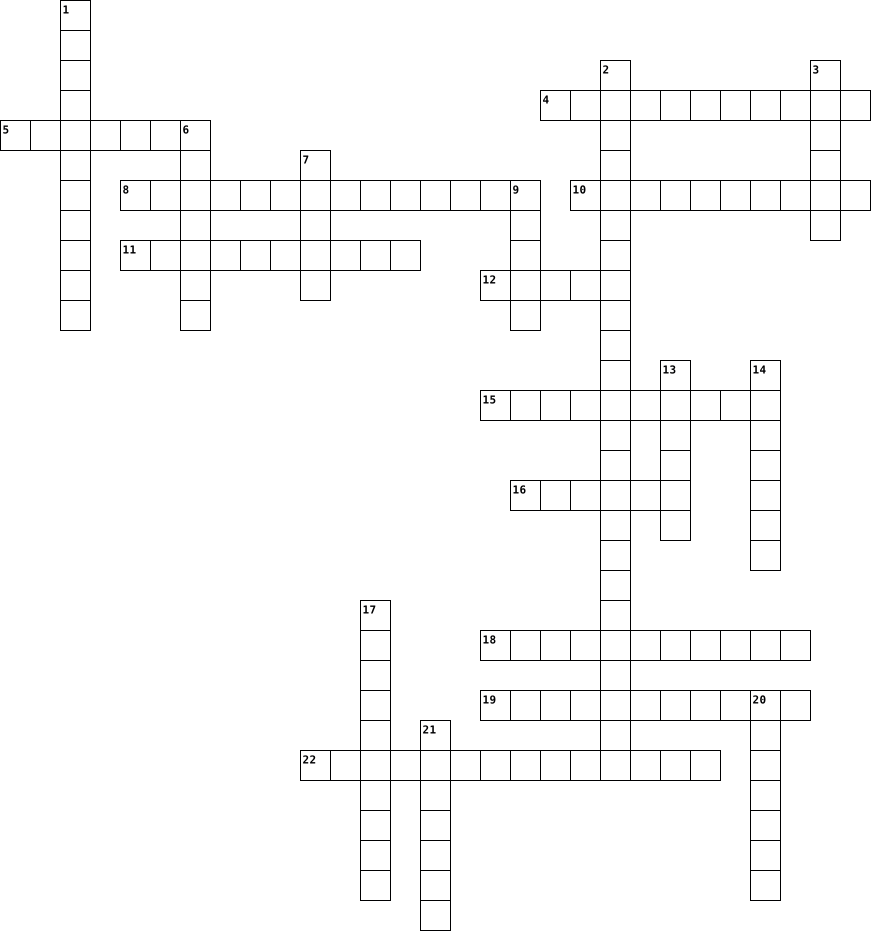
Across
- When wind or animals deliver pollen to female plant parts
- The reproductive structures that make pollen and egg cells
- A process in which 02 is released into the atmosphere
- Seedless plants that lack vascular tissue, but dont come from a clade
- control the opening and closing of the stomata
- Seed-containing structure made from flower of angiosperm
- Spore producing stage of the life cycle
- Cell made by mitosis
- Haploid generation, gamete producing stage
- Vascular plant that produces from an exposed seed
- Collection of tubes that transport sugar, water, and minerals throughout the plant
Down
- Type of green algae thought to be most closely related to plants
- life cycle of a plant in which a multicellular diploid stage alternates with a multicellular haploid stage
- Grains that consist of male gametophytes of seed plants and produce sperm
- Pores in the epidermis of the stems and leaves through which gases and water pass
- Tissue that conducts water and dissolved minerals from the roots to the leaves and is rich in lignin
- Cell that divides via mitosis to form a gametophyte
- Tissue that transports sugars made from photosynthesis to the roots and other non green parts of the plant
- cell division that results in haploid cells
- Plants that produce flowers and have their seeds enclosed fruits
- type of cell division that results in diploid cells
- A waxy coating that minimizes water loss from the aerial parts of the plant
22 Clues: Cell made by mitosis • Spore producing stage of the life cycle • Haploid generation, gamete producing stage • cell division that results in haploid cells • control the opening and closing of the stomata • Vascular plant that produces from an exposed seed • Cell that divides via mitosis to form a gametophyte • type of cell division that results in diploid cells • ...
Plants, harvest and Storage 2023-02-19

Across
- quantity of crops produced
- a young, very small shoot (pęd)
- removing unusable parts of grain
- at a fairly low temperature
- aka to reap the crops
- aka stem - a narrow part that supports leaves
- fully grown
- a limb of a plant
- suitable to be eaten
- aka flourish
- parts of a plant in which photosynthesis occurs
- a place when you can store something
Down
- upper parts of flowers, not yet flourished
- ...silo - a tall storage facility
- a chemical process that produces energy
- a strong plant that is grown for its seeds
- wetness
- organized piles
- flattening the top of a pile
- not wet anymore
- growth ... - a detailed log on crops and plants
- a part of a plant found underground
22 Clues: wetness • fully grown • aka flourish • organized piles • not wet anymore • a limb of a plant • suitable to be eaten • aka to reap the crops • quantity of crops produced • at a fairly low temperature • flattening the top of a pile • a young, very small shoot (pęd) • removing unusable parts of grain • ...silo - a tall storage facility • a part of a plant found underground • ...
Plants Crossword Puzzle Review 2015-05-04

Across
- vascular tissue that carries food made in leaves
- waxy, waterproof layer covering plant leaves
- structures that contain a young plant inside a protective covering
- one seed leaf
- seed leaf(ves) containing stored food within the seed
- structures in plants where food is made
- chemical that makes plant walls rigid
- process of water evaporating from the stomata
- vascular tissue that carries water and nutrients
- chemical that affects how a plant grows
- top of pistil (where pollen is created)
- plant response to gravity, touch, or light
- structure that captures the sun's energy and makes food
- colorful structures of the flower
- young plant within the seed
- flower 2 years and die (celery, parsley)
- leaves that protect developing flower
- flower every year (marigolds, wheat, tomatoes, cucumbers)
Down
- produces xylem and phloem cells
- two seed leaves
- flower for more than 2 years (oak trees, honeysuckle)
- early growth stage of seed
- green pigment found in chloroplasts
- process plants use to make food with energy from the sun
- pores of the leaf (allows water and carbon dioxide to enter and oxygen to leave)
- boundary surrounding all plant cells from the environment
- male reproductive parts of the flower (surrounds pistil)
- flowering plant
- center of the flower (female reproductive part)
- storage area for cells (carries water, waste and food)
- anchor the plant to the ground and allows it to absorb water and nutrients
- bottom of stamen (where seeds and fruit are created)
- hormone that speeds up the rate that plant cells grow
33 Clues: one seed leaf • two seed leaves • flowering plant • early growth stage of seed • young plant within the seed • produces xylem and phloem cells • colorful structures of the flower • green pigment found in chloroplasts • chemical that makes plant walls rigid • leaves that protect developing flower • structures in plants where food is made • chemical that affects how a plant grows • ...
Inside Humans and Plants 2016-09-15

Across
- he
- liv
- stom
- int
- aort
- mitoc
- carb
- oes
- exc
- phl
- art
- oxy
- circ
- ve
- tee
Down
- blad
- resp
- mo
- pan
- trans
- phot
- dig
- poll
- chlor
- kid
- stom
- xyl
- flo
28 Clues: he • mo • ve • liv • pan • int • dig • oes • exc • kid • phl • art • xyl • flo • oxy • tee • blad • resp • stom • aort • phot • carb • poll • stom • circ • trans • mitoc • chlor
Plants Growth and Nutrients 2016-06-05

Across
- The expanded part of a leaf or petal.
- The seed-bearing part of a plant, consisting of reproductive organs (stamens and carpels) that are typically surrounded by a brightly colored corolla (petals) and a green calyx (sepals).
- A bud that develops in the axil between a petiole and a stem.
- Manufactures food through photosynthesis, exchange of gasses with environment, stores food and water, comes off the stem and is green, and thin.
- Molecule that absorbs sunlight and uses its energy to synthesize carbohydrates from CO2 and water.
- The first portion of root too emerge.
- Process used by plants and other organisms to convert light energy, normally from the Sun, into chemical energy that can be later released to fuel the organisms' activities (energy transformation).
- The part of a plant stem from which one or more leaves emerge, often forming a slight swelling or knob.
- The stalk that joins a leaf to a stem; leafstalk.
- Parts of the plant that are underground.
- If this is too high or too low, it will result in abnormal development and reduced production.
- What the chlorophyll collects it and gets energy from it in a process called photosynthesis.
- The vascular tissue in plants that conducts sugars and other metabolic products downward from the leaves.
- Transport water and nutrients between roots and leaves, supports, produces new tissue for photosynthesis and support, stores food and water.
- The sweet and fleshy product of a tree or other plant that contains seed and can be eaten as food.
- Is a tiny opening or pore that is used for gas exchange.
- Where roots absorb nutrients, such as water.
Down
- Absorbed by roots through roots along with minerals and is transported through out plant from their, is a liquid.
- Grows off of primary root.
- Transport water from roots to shoot and leaves, but it also transports some nutrients.
- A part of a plant stem between two of the nodes from which leaves emerge.
- Where photosynthesis takes place.
- Supplied by the soil and by the addition of fertilizers.
- This part of the plant is above ground, and is composed of several organs.
- The main stem.
- Is required for plants for their respiration to carry out their functions of water and nutrient uptake.
- Can be created by using stacks ,string ,or by soil that surrounds the roots.
- The part of the plant that absorbs water from soil for needed nutrients.
- Product of photosynthesis used for energy, made in leaves, moves to where it is needed.
- Reactant for photosynthesis collected through stomata.
30 Clues: The main stem. • Grows off of primary root. • Where photosynthesis takes place. • The expanded part of a leaf or petal. • The first portion of root too emerge. • Parts of the plant that are underground. • Where roots absorb nutrients, such as water. • The stalk that joins a leaf to a stem; leafstalk. • Reactant for photosynthesis collected through stomata. • ...
Animals & Plants Review Crossword 2016-03-22

Across
- I fly
- The horse ran.
- I used to be afraid of monkeys.
- Butterfly
- We fly like birds.
- The deer jumped over the bush.
- The fly used to fly.
- The tiger attacked the zebra.
- Tree
- We bite.
- I bite
Down
- We smelled the rose.
- You smell the flower.
- The dog barked.
- The owl flies.
- The bear climbs.
- The spider ate the fly.
- The goose used to bite.
- The frog jumped toward the fly.
- The shark swam.
- The goat used to jump.
- I cut the grass.
- Duck
- The cat bites.
- The wasp stung me.
25 Clues: Duck • Tree • I fly • I bite • We bite. • Butterfly • The owl flies. • The horse ran. • The cat bites. • The dog barked. • The shark swam. • The bear climbs. • I cut the grass. • We fly like birds. • The wasp stung me. • We smelled the rose. • The fly used to fly. • You smell the flower. • The goat used to jump. • The spider ate the fly. • The goose used to bite. • The tiger attacked the zebra. • ...
Animals & Plants Review Crossword 2016-03-22

Across
- The bear climbs.
- The deer jumped over the bush.
- The spider ate the fly.
- Duck
- The goose used to bite.
- The fly used to fly.
- Tree
- We fly like birds.
- The owl flies.
- The goat used to jump.
- You smell the flower.
Down
- The wasp stung me.
- The horse ran.
- I fly
- The tiger attacked the zebra.
- We smelled the rose.
- I used to be afraid of monkeys.
- The frog jumped toward the fly.
- Butterfly
- The cat bites.
- The shark swam.
- I bite
- We bite.
- I cut the grass.
- The dog barked.
25 Clues: Duck • Tree • I fly • I bite • We bite. • Butterfly • The horse ran. • The cat bites. • The owl flies. • The shark swam. • The dog barked. • The bear climbs. • I cut the grass. • The wasp stung me. • We fly like birds. • We smelled the rose. • The fly used to fly. • You smell the flower. • The goat used to jump. • The spider ate the fly. • The goose used to bite. • The tiger attacked the zebra. • ...
plants-;increasing the numbers 2016-05-05

Across
- for the baby plant is stored in cotyledon
- harvesting grains need to be protected against moisture
- is optained from plant
- seed has hair on it
- is used for flavouring
- are the example of plants whose roots can grow into a new plant
- nail has hooks on it
- super phosphate,ammonium sulphate and nitrate are added to the soil
- is important for seeds
- and Western India has black soil
- are dispersed by explosion
- give us oil
- and pesticides protect crops from being destroyed by pests
- seed has stiff hair on it
- and groundnuts need well-drained,sandy soil
- are summer crops
- come from plants
- Bengal has clayey soil
- seed has tuft of hair on it
Down
- has two main types of crops
- needs alluvial and irrigated soil for growth
- Swaminathan is an agriculture scientist
- seeds have one seed leaves
- and bajra needs sandy soil for growth
- are winter crops
- and Goa has coastal areas
- is cereal
- has sandy soil
- has porous parts on it
- seed has wings on it
- seeds have two seed leaves
- and Darjiling has moist soil
- grass has spines on it
- and jute needs clayey soil for growth
- are pulses
- is growing plant in a large scale
- has a fibrous coat on it
- cutting of a rose can grow into a new plant
- is dispersed by animals
- provide us with wood,fibre,rubber,gum,tea and coffee
- is added to soil to increase production
- is released from plants
- and Uttar Pradesh has alluvial and irrigated soil
- coat is the outer covering of the seed
- plant needs moist soil for growth
- water and warmth is important for the growth of a plant
46 Clues: is cereal • are pulses • give us oil • has sandy soil • are winter crops • are summer crops • come from plants • seed has hair on it • seed has wings on it • nail has hooks on it • is optained from plant • is used for flavouring • has porous parts on it • is important for seeds • grass has spines on it • is dispersed by animals • is released from plants • Bengal has clayey soil • ...
Plants Moving On Up 2017-04-30

Across
- Outermost layer of bark
- Where water transpires from
- Type of bond responsible for adhesion
- (2 words) Hypothesis explaining why phloem sap always flows from source to sink
- When the cell membrane pulls away from the cell wall
- Plant adapted to arid environments
- Type of xylem formed at the apical meristem
- (2 words) Elements that are basically a living straw supported by companion cells
- (2 words) Theory of how water rises up a tree
- How leaves lower their water potential
- (2 words) Determines age of woody plants
- (2 words) Provides nuclei and organelles to support a sieve tube member
- Type of xylem that makes up wood
- Strip of wax forcing water to enter a cell before it crosses the endoderm
- Water route that goes through root hair cells
- Water is _________ up a plant
- (adj) Cells that are filled with water so that their cell walls are under pressure from inside
Down
- (2 words) Substrate with the lowest water potential, ~ -100
- Lower the water potential of plant cells
- Ions that control stomatal opening and closing
- (2 words) Large cells with thin walls formed when lots of resources are available
- Season when sugar reserves are mobilized to support new plant growth aboveground
- (2 words) Xylem cell type with unobstructed water flow, but air bubbles affect the whole tube
- Transports water and dissolved minerals through plant
- Transports sugars through plant
- (2 words) One-cell-thick layer of meristem cells for secondary growth
- Substrate with the highest water potential ~0
- Space between cork cells that allows for gas exchange from outside to living cells inside
- Secondary xylem cells filled with resin
- What a plant does when its tissues lose water
- Water route that goes around root hair cells
- Innermost layer of wood
- Type of photosynthesis in which gas exchange occurs at night and PEP is replaced by crassulaic acid
- Secondary xylem
- Xylem cell type with slow water flow and air bubbles that only affect one cell
35 Clues: Secondary xylem • Outermost layer of bark • Innermost layer of wood • Where water transpires from • Water is _________ up a plant • Transports sugars through plant • Type of xylem that makes up wood • Plant adapted to arid environments • Type of bond responsible for adhesion • How leaves lower their water potential • Secondary xylem cells filled with resin • ...
Non-Vascular Plants/Seedless 2022-04-08

Across
- land plants with its embryo retained on the parent and is nourished
- Tracheophytes
- a type of plant without a vacular system and consists of a xylem and pholem
- female part of non vascular plant
- produce spores and need very little water and can live on rocks
- non vascular, flowerless plants that are abundant in extreme environments and can become dormant
- fertilized egg that developes into a new sporophyte
- plants with a dominant sporophyte and is homosporous. It includes lycophytes, pterophytes, and seed plants.
- male part of non vascular plant
- release spores and resemble small trees or flowers
- produce sperm and egg cells
- a vascular plant don't have seeds or flowers and usually found in humid soil
Down
- liver-shaped leaves; can grow on bare rock or tree bark which helps in soil formation
- moss, liverworts, hornworts
- a vascular tissue that carries sugars and organic substances downward from leaves
- sporophytes that look like horns and have
- reduces the rate of water loss from the leaf surface
- thin, rootlike structures that anchor moss and absorb nutrients from the soil
- plant species that has a single kind of spore, no male or female
- completes gas exchange which have a pore that opens and closes
- a vascular tissue that carries water a dissolved nutrients upward from root
21 Clues: Tracheophytes • moss, liverworts, hornworts • produce sperm and egg cells • male part of non vascular plant • female part of non vascular plant • sporophytes that look like horns and have • release spores and resemble small trees or flowers • fertilized egg that developes into a new sporophyte • reduces the rate of water loss from the leaf surface • ...
Plants and plant functions. 2021-12-14

Across
- defensive organ that encloses and protects the developing reproductive structures
- a living thing) undergo natural development by increasing in size and changing physically; progress to maturity/become larger or greater over a period of time; increase
- a living organism of the kind exemplified by trees, shrubs, herbs, grasses, ferns, and mosses, typically growing in a permanent site, absorbing water and inorganic substances through its roots, and synthesizing nutrients in its leaves by photosynthesis using the green pigment chlorophyll
- invisible gaseous substance surrounding the earth, a mixture mainly of oxygen and nitrogen.
- protects the seeds and also helps to spread them
- The pollen-producing part of a flower
- green pigment, present in all green plants and in cyanobacteria, responsible for the absorption of light to provide energy for photosynthesis. Its molecule contains a magnesium atom held in a porphyrin ring
- to produce food for the plant by photosynthesis
- captures pollen
Down
- process by which green plants and some other organisms use sunlight to synthesize foods from carbon dioxide and water. Photosynthesis in plants generally involves the green pigment chlorophyll and generates oxygen as a byproduct
- reproduction
- absorbs water/anchors the plant
- colorless, transparent, odorless liquid that forms the seas, lakes, rivers, and rain and is the basis of the fluids of living organisms
- The ovule producing part of a flower
- The part of the stamen where pollen is produced
- develop into seeds upon fertilization
- the upper layer of earth in which plants grow, a black or dark brown material typically consisting of a mixture of organic remains, clay, and rock particles
- acts as a buffer against pollen contamination/to assist the process of fertilization
- protect and nourish the embryo or young plant
- light from the sun
- holds the plant up/supports the leaves
21 Clues: reproduction • captures pollen • light from the sun • absorbs water/anchors the plant • The ovule producing part of a flower • develop into seeds upon fertilization • The pollen-producing part of a flower • holds the plant up/supports the leaves • protect and nourish the embryo or young plant • The part of the stamen where pollen is produced • ...
Plants & Animal Adaptations/ Interdependence 2022-05-03

Across
- obtains nutrients from producers and consumers
- pre-adult insect undergoes incomp. metamorphosis
- when female cell is united w/ male cell
- substance that organisms need to survive & grow
- stages of an organism's growth and development
- transfers pollen; male-->female reproduction
- organism that produces its own food
- plant/animal reaction responding to stimuli
- seedlike structure; produces plants (ferns/mosses)
- male reproductive structure of flowering plant
- characteristic;increases environment survival
- species that no longer exists
- insect development w/ larval stage
- animal that lacks a backbone
- organism that is killed/ eaten by other organisms
- all non/living things interacting w/ environ.
- plants begin to grow from a seed or spore
Down
- organism's stage; undergoes complete metamorphosis
- populations of diff.species living in same area
- charact. passed from parent to offspring
- animal obtains nutrients from other animals
- animal that obtains nutrients only from plants
- insect develop.w/ pre-adult&adult
- female reproductive organ; produces egg cells
- dust-like powder from male reproductive structure
- stage in life cycle of insect between larva & adult
- diagram representing transfer of energy
- a living thing
- organism that kills and eats other organisms
- organisms of same kind;mates& produces offspring
- animal with a backbone
- makes more organisms of the same kind
32 Clues: a living thing • animal with a backbone • animal that lacks a backbone • species that no longer exists • insect develop.w/ pre-adult&adult • insect development w/ larval stage • organism that produces its own food • makes more organisms of the same kind • when female cell is united w/ male cell • diagram representing transfer of energy • charact. passed from parent to offspring • ...
Unit 2: Biology - Plants 2023-11-09

Across
- a structure of the plant that performs photosynthesis and allows for gas exchange
- is a biological process where a group of organisms change to become better suited to their environment
- is another name for a cone-bearing plant
- an organism that makes their own energy
- the process of converting sunlight to food energy
- Provides shape and structure; is like a microscopic skeleton
- allow for photosynthesis and absorb sunlight
- carries food throughout the plant
- the male reproductive units of a flower
- attract pollinators
- a structure of the plant that produces leaves, branches, and sometimes flowers
- type of reproduction involving two parents
Down
- plants that grow low to the ground and do not contain xylem and phloem
- referring to having a xylem and phloem
- another name for flowering plants
- where the fruit is produced
- the female reproductive units of a flower
- where the seeds are produced
- a structure of the plant that anchors the plant into the ground and absorbs nutrients
- stores water and nutrients in the plant cells
- a type of vascular plant that must grow near water and possesses leaves, stems, and roots
- type of reproduction where there is only one parent
- plant's male reproductive cells are in this structure
- carries water and nutrients throughout the plant
24 Clues: attract pollinators • where the fruit is produced • where the seeds are produced • another name for flowering plants • carries food throughout the plant • referring to having a xylem and phloem • an organism that makes their own energy • the male reproductive units of a flower • is another name for a cone-bearing plant • the female reproductive units of a flower • ...
Ch. 5 (Inside Plants) 2024-02-27

Across
- Thimble-shaped mass of cells that covers and protects the root apical meristem
- Water-resistant substance that helps limit the loss of water
- Compact stem tissue at or near the soil surface
- above-ground parts die back to the soil surface at the end of the growing season
- Occupies the central part of the stem
- cells that help the plant to sense gravity
- cell divides into two identical daughter cells
- hair-like outgrowths arising from the epidermis
- allows gas exchange between the atmosphere and internal parts of the leaf
- embryo with a single cotyledon
- regulate the size of the stomata
- Growth in response to gravity
- known as the ground meristem
Down
- cells laid down toward the exterior of the root
- Protective waxy coating of cutin
- Main root of a plant
- Lateral meristem in vascular plants
- sieve tube that moves dissolved sugars and other products of photosynthesis
- Movement of a substance from one place to another
- water-conducting tissue of vascular plants
- embryo with paired cotyledons
- forms off of the primary root
22 Clues: Main root of a plant • known as the ground meristem • embryo with paired cotyledons • forms off of the primary root • Growth in response to gravity • embryo with a single cotyledon • Protective waxy coating of cutin • regulate the size of the stomata • Lateral meristem in vascular plants • Occupies the central part of the stem • water-conducting tissue of vascular plants • ...
Plants vs Zombies Heroes 2025-10-25

Across
- This is the highest cost card in the game.
- This is the only animal plant that gives sun at the start of each turn.
- This trick allows you to play a zombie during tricks.
- This plant can be recycled for four-thousand sparks.
- If you are rank 39, this card will be your profile picture.
- This environment can make you invincible if paired with the right card.
- This plant heals you for the highest amount out of any heal plant.
- This zombie gets +three/+three when evolved on another zombie of its tribe.
- You can receive the Block-buster card from this pack.
- This card can attack in every lane.
- The base stats of Poison Oak (Enter the answer like this: *Number*/*Number*).
- Nuts or berries.
- If this card is conjured from Cosmic Pea, its stats will be one/one double-strike.
- Most hackers use forty copies of...
- This card's ability does damage to the zombie hero when you heal.
- The only zombie superpower that has the tribe "Zombie."
- If this plant attacks, its plant food animation from PvZ 2 will play.
- This is the only card that refunds itself when played.
- This class has the Puff-Shroom.
- This plant makes zombie tricks cost one more.
- If this card is conjured by a Cosmic Imp, it will have the frenzy, amphibious, and deadly keywords.
- This is the only plant that can be a three/four as a two cost.
- The only zero cost card in the game with zero attack.
- The base stats of this card are four/one.
- This is the only plant that has a splash damage that is different from its base attack.
- Against this hero, you are NEVER safe.
- This is the only plant that wears makeup.
- This is the most expensive gravestone card in the game.
- This card is on the image of the Triassic Pack.
- This plants favorite number is five.
- You can do bonus attacks using this plant without dealing with the consequence of Mime-Garg's ability.
- This plant is like a flower version of Melon-Pult.
- This card has the dino-roar and untrickable key words.
Down
- This card's greatest enemy is the Wallflower.
- This card can only get value if you have tempo.
- This zombie used to have a tribe that was exclusive to itself.
- The only card in the game with base ten health.
- The best superpower in the game.
- The base stats of this card are one/one, but it is a four/one the first turn you play it.
- This zombie card will make it impossible to deck out if ran in a deck.
- The base stats of Briar Rose (Enter the answer like this: *Number*/*Number*).
- He's "Wheely Cheesy"
- This card used to have a description bug that caused its evolution ability to only say the word "instead."
- This is the only trick that creates an environment.
- The most well known Plants vs Zombies Heroes streamer.
- This is the only plant unlocked in the Lost City world in PvZ 2 that was introduced into the PvZ Heroes game.
- This is the only superpower that has the possibility of giving the opponent a LOT of value.
- *Sigh* This card is the most OVERRATED-
- This is the only zombie with the splash damage keyword.
- This card can only get buffed if a zombie is in play.
- This is the lowest cost environment in the game.
- This superpower gives the keyword team-up.
- This card will have Astrocado's base stats if evolved on another plant.
- This is the only card that can buff cards in your hands.
- You cannot block if you have minimum this many cards in your hand.
- This hero has the "Blockbusting" strategy deck.
- If conjured from cross-pollination, this card will be a zero cost one/one flower plant.
- The base stats of Dark Matter Dragon Fruit if given a Fertilize (Enter the answer like this: *Number*/*Number*).
- This plant hero is named after an onomatopoeia from the original game.
- This is the only zombie that can shuffle tokens into your deck.
- This is the highest cost environment in the game.
- This superpower creates the Octo-Pet token.
- Phase two of a Zombie Hero's turn.
- Coffee zombie gives this keyword to all other zombies.
64 Clues: Nuts or berries. • He's "Wheely Cheesy" • This class has the Puff-Shroom. • The best superpower in the game. • Phase two of a Zombie Hero's turn. • This card can attack in every lane. • Most hackers use forty copies of... • This plants favorite number is five. • Against this hero, you are NEVER safe. • *Sigh* This card is the most OVERRATED- • ...
External characteristics of plants 2023-10-08

Across
- A modified stem, connected via vascular tissue, for protection (5)
- A plant with both female flowers and male flowers(10)
- Irregular-shaped, loosely-packed leaf tissue, filler or packer (6,9)
- Name of the inflorescence shape of Dandelions and Sunflowers (9)
- A leaf shape representative of a heart (7)
- Openings on the underside of leaves for gaseous exchange (7)
- The stalk of an individual flower (7)
- A collective term for all the stamens (10)
- Alternative term for the leaf blade (6)
- The outer layer of cells of stems and leaves (9)
- A plant which loses its leaves all at once at the end of the growing season (9)
- Modified leaf or shoot for a climbing plant (7)
- A flower's colourful appendage to attract pollinators (5)
- The stalk of an individual leaf (7)
- Flowers with both male and female sexual organs(13)
- The shape of the veins in a monocotyledonous leaf (8)
- A collective term for a group of carpels (9)
- The embryonic stem and leaves inside the seed (7)
- A toothy edge to a leaf margin (7)
- Collective term for anther and filament (6)
- A protective structure, modified from the epidermis as with Rosa spp. (7)
- Vascular tissue which transports water (5)
Down
- Vascular tissue which transports food (6)
- The transfer of male sexual cells from stamen to the female stigma (11)
- The whole purpose of a leaf (14)
- Oblong, tightly packed, leaf tissue full of chlorophyll (9,4)
- Leaf shape comprising of individual leaflets sharing a midvein (8)
- Protects the petals on a flower (5)
- A plant that has only one type of flower - male or female (9)
- A leaf edge without any teeth or notches (6)
- Protective sheath covering the embryonic leaves of a monocot seed (10)
- A plant which loses individual leaves throughout the year (9)
- Term for a group of flowers and how they're held on the plant (13)
- The embryonic root inside the seed (7)
34 Clues: The whole purpose of a leaf (14) • A toothy edge to a leaf margin (7) • Protects the petals on a flower (5) • The stalk of an individual leaf (7) • The stalk of an individual flower (7) • The embryonic root inside the seed (7) • Alternative term for the leaf blade (6) • Vascular tissue which transports food (6) • A leaf shape representative of a heart (7) • ...
Plants Responses Crossword Puzzle 2024-04-16

Across
- - Greek word meaning "to grow," from which "auxin" is derived.
- - Growth of a plant towards a light source.
- - The process by which plants maximize their use of light, as mentioned in the context of photomorphogenesis.
- - Type of movement in response to touch that is independent of the direction of stimulus.
- - Threadlike leafless organ of climbing plants.
- - Specific light spectrum that induces phototropism.
- - Growth and development of plants in response to light.
- - Movement of a plant in response to touch.
- - Molecules that work together with phototropins to mediate the phototropic response.
- - Growth of a plant in response to gravity.
Down
- - Growth of a plant away from light.
- - The process of receiving or giving systematic instruction, especially at a school or university.
- - Slow developmental change in the shape of a plant due to continuous mechanical stress.
- - Hormones responsible for cell elongation in phototropism and gravitropism.
- - Specialized plastids that contain starch granules.
- - A hormone thought to be involved in thigmomorphogenesis.
- - Another term for geotropism, the growth response to gravity.
- - Directional growth of a plant in response to light.
- - Protein-based receptors mediating phototropic response.
- - Another name for amyloplasts, indicating their role in sensing gravity.
20 Clues: - Growth of a plant away from light. • - Growth of a plant towards a light source. • - Movement of a plant in response to touch. • - Growth of a plant in response to gravity. • - Threadlike leafless organ of climbing plants. • - Specialized plastids that contain starch granules. • - Specific light spectrum that induces phototropism. • ...
Animals and plants cells 2024-09-01

Across
- - its the most basic, functional and simple unit of life.
- - it helps on exhanging gases between plants and its environment
- - it's a part of the nervous tissue that are shaped like stars and its function is to act as a support and control the chemical environment around the neurons
- - it's the one who produces myelin sheaths
- - it prevents the loss of water and invasion of disease causing microorganisms
- - its covered by a waxy cuticle and it covers the whole body of woody and non woody plants
- - its function is to store and synthesize plant food
- - it includes all kinds of different ecosystem
Down
- permanent tissue - its composed of two or more kind of cell
- cells - they surround the nerve fibers and also produces myelin sheaths
- -its a group of cells that work together in order to perform a specific function.
- meristem - its the primary cause of plant growth
- muscle - it can be found in the heart and has one nucleus and striations. It's muscle control is involuntary.
- - its function is to transport substance, immune response and blood clotting.
- cells - its responsible for regulating the entrance and exit of stomata
- tissue - it's the only complex permanent tissue in plants
- tissue - it's a type of animal cells that forms the inner and outer lining of the organ
- - what is the other term for Osseous tissue
- permanent tissue - its composed of one kind of cell
- - its responsible for transporting sugar to the plants
20 Clues: - it's the one who produces myelin sheaths • - what is the other term for Osseous tissue • - it includes all kinds of different ecosystem • meristem - its the primary cause of plant growth • permanent tissue - its composed of one kind of cell • - its function is to store and synthesize plant food • - its responsible for transporting sugar to the plants • ...
Animals and plants cells 2024-09-01

Across
- - it's the one who produces myelin sheaths
- - it prevents the loss of water and invasion of disease causing microorganisms
- - its covered by a waxy cuticle and it covers the whole body of woody and non woody plants
- tissue - it's the only complex permanent tissue in plants
- cells - its responsible for regulating the entrance and exit of stomata
- - its function is to store and synthesize plant food
- meristem - its the primary cause of plant growth
- - it includes all kinds of different ecosystem
- - its the most basic, functional and simple unit of life.
- -its a group of cells that work together in order to perform a specific function.
Down
- - its function is to transport substance, immune response and blood clotting.
- - what is the other term for Osseous tissue
- tissue - it's a type of animal cells that forms the inner and outer lining of the organ
- permanent tissue - its composed of two or more kind of cell
- permanent tissue - its composed of one kind of cell
- - it's a part of the nervous tissue that are shaped like stars and its function is to act as a support and control the chemical environment around the neurons
- muscle - it can be found in the heart and has one nucleus and striations. It's muscle control is involuntary.
- - its responsible for transporting sugar to the plants
- - it helps on exhanging gases between plants and its environment
- cells - they surround the nerve fibers and also produces myelin sheaths
20 Clues: - it's the one who produces myelin sheaths • - what is the other term for Osseous tissue • - it includes all kinds of different ecosystem • meristem - its the primary cause of plant growth • permanent tissue - its composed of one kind of cell • - its function is to store and synthesize plant food • - its responsible for transporting sugar to the plants • ...
FLOWERS AND MEDICINAL PLANTS 2024-11-11

Across
- Flower whose oil is used to balance hormones and reduce inflammation
- Herb used for its calming effects and to relieve anxiety
- Flower used to lower blood pressure and cholesterol
- Bright yellow-orange flower with anti-inflammatory properties
- Herb that stimulates cats but has calming effects on humans
- Root plant traditionally used for relaxation and reducing anxiety
- Aromatic herb used to ease digestive issues and headaches
- Common culinary bulb with antibacterial and heart-protective benefits
- Culinary herb with powerful antibacterial and antifungal properties
- Soothing herb often used in teas for relaxation
- Spice derived from crocus flowers, used for mood enhancement
- Aromatic herb used in cooking and for its anti-inflammatory benefits
- Root plant often used to relieve nausea and inflammation
- Spice derived from flower buds, known for its pain-relieving properties
- Culinary herb with antibacterial and antioxidant properties
- Sweet root used to soothe sore throats and digestive issues
- Root used in traditional medicine to aid digestion and reduce bloating
- Plant known for its liver-protective properties
- Root plant known for aiding sleep and reducing anxiety
- Herb used in Ayurveda to reduce stress and improve energy
- Succulent plant known for healing burns and skin irritation
- Herb known for its antimicrobial properties, often used in smudging
- Berry known for boosting immunity and fighting flu symptoms
- Fragrant herb that aids in memory and concentration
- Herb used for its digestive benefits, often paired with fish
- Tall plant with soft leaves, used to treat coughs and lung problems
- Root plant known for detoxifying the blood and promoting skin health
Down
- Tree with leaves used to improve memory and cognitive function
- Spice derived from tree bark, used for blood sugar regulation
- Herb used to relieve menopause symptoms and hormonal imbalance
- Plant used in Ayurveda for its antibacterial and skin-healing properties
- Herb used to prevent migraines and reduce fevers
- Flower used to treat mild depression and mood disorders
- Flower used to boost the immune system and fight colds
- Yellow flower used to reduce inflammation and treat urinary issues
- Herb used for detoxifying heavy metals from the body
- Bright yellow root used for its anti-inflammatory and antioxidant benefits
- Plant used for improving circulation and treating respiratory issues
- Known for its calming effects and aromatic purple flowers
- Flower used to reduce anxiety and improve sleep
- Root plant used to boost energy and support overall well-being
- Tree bark used to soothe throat irritation and digestive issues
- Flower used traditionally to stop bleeding and reduce inflammation
- Mint herb known for freshening breath and aiding digestion
- Fruit of the rose plant, rich in vitamin C, used for immune support
- Weed-like plant used to promote liver health and detoxification
- Bright orange flower used to treat skin issues and inflammation
- Berry known for supporting heart health and circulation
- Popular culinary herb that also has anti-inflammatory properties
- Herb used to aid digestion and reduce bloating
50 Clues: Herb used to aid digestion and reduce bloating • Soothing herb often used in teas for relaxation • Flower used to reduce anxiety and improve sleep • Plant known for its liver-protective properties • Herb used to prevent migraines and reduce fevers • Flower used to lower blood pressure and cholesterol • Fragrant herb that aids in memory and concentration • ...
Plants and energy jmss 2016-11-21

Across
- means or is the thing that is in the plants and helps eats it.
- means that you like eat saled that is from trees or living animals.
- means like the plants growing and with out the roots plants won't grow.
- means to produce plants or animals.
- means or is the things that was the thing that is next to the xylem to help it.
- means the meaning of when plants and animals make there own food.
- are the things that the plants get there water and food.
Down
- means to change it or do something.
- means the air that we breath for example,trees give us oxygen to breath.
- means or is the thing that makes the plant get sun light and air.
- means or is the thing that the plant takes for air.
- mean that the meaning of the things that come out or the plants.
12 Clues: means to change it or do something. • means to produce plants or animals. • means or is the thing that the plant takes for air. • are the things that the plants get there water and food. • means or is the thing that is in the plants and helps eats it. • mean that the meaning of the things that come out or the plants. • ...
Know your plant 2023-10-22

Across
- The opposite of darkness, and essential for photosynthesis to occur.
- The act of inhaling and exhaling, a vital process for living organisms.
- The release of water vapor from plants, part of the water cycle.
- Plants that complete their life cycle in one year or growing season.
Down
- A state of inactivity or rest, common in plants during the winter months.
- A cultivated variety of a plant, often with distinct characteristics.
- Trees that shed their leaves in the fall and remain bare during the winter.
- Plants with slender leaves and jointed stems, often found in lawns and meadows.
- The process by which green plants convert sunlight into energy and oxygen.
- The measure of moisture content in the air, often associated with discomfort on hot days.
- Plants that live for several years and return each growing season.
- Small to medium-sized woody plants that are larger than herbs but smaller than trees.
12 Clues: The release of water vapor from plants, part of the water cycle. • Plants that live for several years and return each growing season. • The opposite of darkness, and essential for photosynthesis to occur. • Plants that complete their life cycle in one year or growing season. • A cultivated variety of a plant, often with distinct characteristics. • ...
Five kingdoms 2017-11-01

Across
- / Plants cell are ____
- / ____ is the filament in a multicellular fungus
- / there are ____ types of bacteria
- / animalls us ____ to breath under water
- / there are ____ phyle in the animal kingdom
- / ____ do not have backbone
- / Process when plants use sunlight to make food
- / protists reproduce asexually by ____ fission
- / ____ is a kingdom of mostly unicellular eukaryotes
- / ____ consume their energy
- / ____ is another word for vertebrate
Down
- / ____ are medications that kill bacteria
- / ____ live in harsh areas
- / protists came in ____ main forms
- / Cell walls of fungi are made of ____
- / Fungi producers spores by ____
- / There are ____ kingdoms
- / ____ is the evaporation of water from the leaves of plants
- / ____ make their own energy protista
19 Clues: / Plants cell are ____ • / There are ____ kingdoms • / ____ live in harsh areas • / ____ do not have backbone • / ____ consume their energy • / Fungi producers spores by ____ • / protists came in ____ main forms • / there are ____ types of bacteria • / ____ make their own energy protista • / ____ is another word for vertebrate • / Cell walls of fungi are made of ____ • ...
Nature's Recyclers Review 2021-11-09

Across
- part of a mushroom that looks like a stem
- consumer that eats plants
- consumer that eats meat
- to rid the body of waste
- a type of fungus
- animal manure or feces
- consumer that eats meat and plants
- digested food left by earthworms
- living thing that doesn't make its own food
- smooth band around the body of a worm
- living things but not plants and animals
Down
- animals who eat animals they didn't kill
- the most numerous organism on Earth
- an animal lacking a backbone
- part of a fungus that gathers nutrients
- to rot
- any living thing
- organism that makes its own food
- the fruiting body of a fungus
19 Clues: to rot • a type of fungus • any living thing • animal manure or feces • consumer that eats meat • to rid the body of waste • consumer that eats plants • an animal lacking a backbone • the fruiting body of a fungus • organism that makes its own food • digested food left by earthworms • consumer that eats meat and plants • the most numerous organism on Earth • ...
Biomes 2022-04-08

Across
- temperature and precipitation in an area
- biome that gets lots of rain and is warm
- forest with trees that change color
- nonliving thing
- things that get energy from plants
- biome that's also called the arctic
- eats only meat
- things that help an organism survive
- can be hot and dry or cold and dry
- things that make their own food
Down
- forest with trees that have cones
- eats only plants
- biome in the plains of the US
- shows flow of energy between organisms
- frozen layer of soil under the surface
- biome with lots of rain but cold temps
- eats meat and plants
- connection of food chains
- living thing
19 Clues: living thing • eats only meat • nonliving thing • eats only plants • eats meat and plants • connection of food chains • biome in the plains of the US • things that make their own food • forest with trees that have cones • things that get energy from plants • can be hot and dry or cold and dry • forest with trees that change color • biome that's also called the arctic • ...
Unit 2.3 Ookpik Vocabulary and Spelling 2025-10-18

Across
- a paved area next to a patio
- characterized by violent winds
- investigate how rocks were formed
- covered with fuzzy hair or soft feathers
- plants
- green plants transform light into chemical energy
- characterized by a lack of concern or interest
- existing above the ground
Down
- a photographic copy of printed or written material
- moved forward in a sudden and unsteady manner
- moving quickly with small steps
- rising to prominence
- not often
- study of physical features of the earth
- family from which a creature is descended
- actions that must occur for something to work
- more than is normal or expeted
- made for a specific purpose
- transparent enclosure for raising plants
19 Clues: plants • not often • rising to prominence • existing above the ground • made for a specific purpose • a paved area next to a patio • characterized by violent winds • more than is normal or expeted • moving quickly with small steps • investigate how rocks were formed • study of physical features of the earth • covered with fuzzy hair or soft feathers • ...
How Much Can You Remember About Ecosystems? 2026-06-21

Across
- – energy for living things
- – a saltwater ecosystem
- – eats plants or animals
- – helps living things live and grow
- – needed for life
- – makes its own food (plants)
- – what living things breathe
- – dirt where plants grow
- – a living thing that moves and eats
- – something that does not grow or eat
- – a place where living things and non-living things work together
- – gives heat and energy
- – a living thing that makes its own food
Down
- – breaks down dead things
- – a safe place to live
- chain – shows who eats who
- – the place around us
- – something that grows and needs food and water
- – a place where a plant or animal lives
- – a land ecosystem with many trees
20 Clues: – needed for life • – the place around us • – a safe place to live • – a saltwater ecosystem • – gives heat and energy • – eats plants or animals • – dirt where plants grow • – breaks down dead things • – energy for living things • chain – shows who eats who • – what living things breathe • – makes its own food (plants) • – a land ecosystem with many trees • ...
How Much Can You Remember About Ecosystems? 2026-06-21

Across
- – energy for living things
- – a land ecosystem with many trees
- – a place where living things and non-living things work together
- – a living thing that makes its own food
- – gives heat and energy
- – eats plants or animals
- – a living thing that moves and eats
- – what living things breathe
- – a saltwater ecosystem
- – helps living things live and grow
Down
- – makes its own food (plants)
- – breaks down dead things
- – needed for life
- – dirt where plants grow
- chain – shows who eats who
- – something that grows and needs food and water
- – something that does not grow or eat
- – the place around us
- – a place where a plant or animal lives
- – a safe place to live
20 Clues: – needed for life • – the place around us • – a safe place to live • – gives heat and energy • – a saltwater ecosystem • – dirt where plants grow • – eats plants or animals • – breaks down dead things • – energy for living things • chain – shows who eats who • – what living things breathe • – makes its own food (plants) • – a land ecosystem with many trees • ...
dustin.p.michle@lowes.com_Grade7_Chapter7_Crossword 3 2023-10-07

Across
- By which plants take water and nutrients from soil
- The process of water evaporation through stomata on the leaves surface
- Tissue that transport water and nutrients in plants
- Blood filtration through artificial means
- The root ……… water and mineral nutrients dissolved in water
- Chlorophyl ………… green light waves.
- The pigment gives colour to leaves and helps in photosynthesis
- Cells breakdown this to supply energy to organisms
Down
- Leaves in plant prepared food during
- These prepare food for plants
- The major excretory product in human
- A group of cells
- Plants take this from soil through roots
- Vascular tissue that carries food to all parts of a plant
- Sweat helps to ……… our body
15 Clues: A group of cells • Sweat helps to ……… our body • These prepare food for plants • Chlorophyl ………… green light waves. • Leaves in plant prepared food during • The major excretory product in human • Plants take this from soil through roots • Blood filtration through artificial means • By which plants take water and nutrients from soil • ...
Parts of a plant 2024-05-23

Across
- this transports nutrients to the plant and holds the plant in place
- Holds the plant upright
- some plants grow yummy, juice delicious ....
- gather food for for the plant.
- This is where the plant stores the seeds.
- This part of the plant becomes the seed.
- all living organisms must have these
Down
- This part of the plant takes pollen in.
- All living things go through this
- hollow tube that connects the stigma to the ovary.
- to survive, all plants need soil sunlight and
- New plants grow from this
- this is spread to create more flowers
- This part of the plant produces pollen
- Plants produce this to help the environment
15 Clues: Holds the plant upright • New plants grow from this • gather food for for the plant. • All living things go through this • all living organisms must have these • this is spread to create more flowers • This part of the plant produces pollen • This part of the plant takes pollen in. • This part of the plant becomes the seed. • This is where the plant stores the seeds. • ...
Nutrition in Plants 2016-05-27
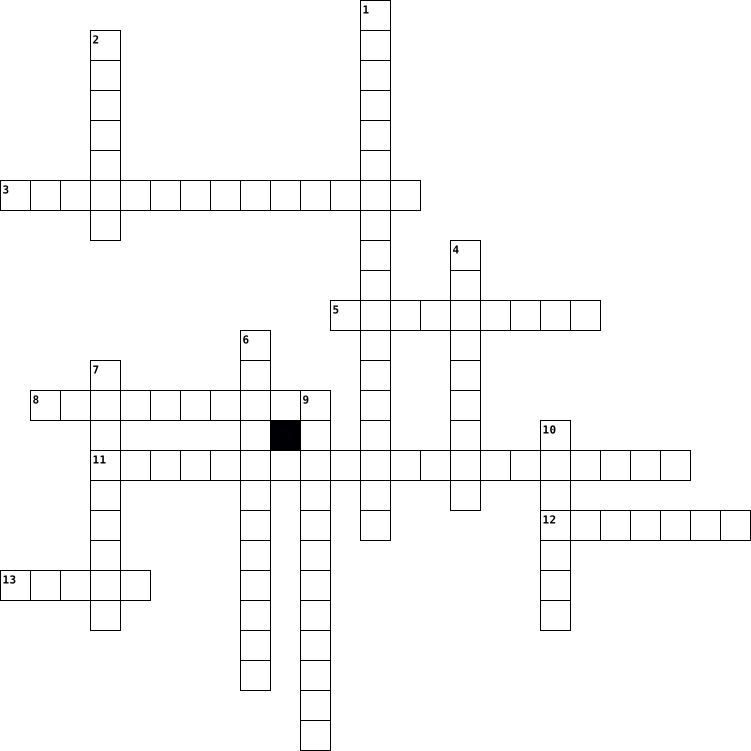
Across
- the process by which green plants make their own food
- the mode of nutrition where two different organisms work for their mutual benefit
- they control opening and closing of stomata
- the mode of nutrition where green plants make their own food
- an example of a parasitic plant
- the water and minerals absorbed by the plants and are to leaves
Down
- this can absorb carbon dioxide
- leaves take in carbon dioxide through their tiny pores
- can convert atmospheric nitrogen into water-soluble compounds.
- the cells of green leaves and young stems of plants contain numerous green structures
- organisms that live in or on other living organisms and derive their food from them
- plants that live on dead and decaying plants and animals and derive their food from them
- the plant in which the insect enters and the lid closes to trap the insect
13 Clues: this can absorb carbon dioxide • an example of a parasitic plant • they control opening and closing of stomata • the process by which green plants make their own food • leaves take in carbon dioxide through their tiny pores • the mode of nutrition where green plants make their own food • can convert atmospheric nitrogen into water-soluble compounds. • ...
Plants and Animals Crossword 2013-02-05

Across
- Slow Moving Animal
- Striped wild cat
- Ancient extinct animal
- Insect with 8 legs
- Feeds babies milk
- Keeps baby in pouch
- Aquatic animal
- Active at night
- Desert dwelling plant
- Source of new plant
Down
- Bear Black skinned arctic dweller
- Water dwelling reptile
- Man's best friend
- Australian native tree
- Mammal that cannot swim
- Aquatic Mammal
- Large flightless bird
- Aquatic polar bird
- Cold-Blooded animal
- Constricting snake
20 Clues: Aquatic Mammal • Aquatic animal • Active at night • Striped wild cat • Man's best friend • Feeds babies milk • Slow Moving Animal • Insect with 8 legs • Aquatic polar bird • Constricting snake • Keeps baby in pouch • Cold-Blooded animal • Source of new plant • Large flightless bird • Desert dwelling plant • Water dwelling reptile • Australian native tree • Ancient extinct animal • ...
Science: Plants and Animals 2013-10-13

Across
- A lipid that contains phosphorus and does not dissolve in water
- This fluid and almost all of its contents are called _______
- A small sac that surrounds material to be moved into or out of a cell
- Is where a cell begins to make its ribosomes
- A system of folded membranes in which proteins, lipids, and other materials are made
- A structure that performs specific functions
- An organism that consists of a single cell that does not have a nucleus
- A cell organelle that contains digestive enzymes
- An organism made up of cells that have a nucleus by a membrane
- A large organelle in a eukaryotic cell
Down
- An organelle in which sugar is broken down to produce energy
- The smallest unit that can perform all the processes necessary for life
- A web of proteins in the cytoplasm
- Plant cells have an outermost structure called a _____
- Is the outside layer of a cell
- An organelle that packages and distributes proteins
- Organelles in plant and algae cells in which photosynthesis takes place
- Is a vesicle
- The genetic material that carries information needed to make new cells and new organisms
- Organelles that make proteins are called _____
20 Clues: Is a vesicle • Is the outside layer of a cell • A web of proteins in the cytoplasm • A large organelle in a eukaryotic cell • Is where a cell begins to make its ribosomes • A structure that performs specific functions • Organelles that make proteins are called _____ • A cell organelle that contains digestive enzymes • An organelle that packages and distributes proteins • ...
Plants Crossword Puzzle Review 2015-05-04

Across
- young plant within the seed
- chemical that affects how a plant grows
- flower every year (marigolds, wheat, tomatoes, cucumbers)
- flowering plant
- hormone that speeds up the rate that plant cells grow
- process of water evaporating from the stomata
- structures in plants where food is made
- center of the flower (female reproductive part)
- two seed leaves
- flower for more than 2 years (oak trees, honeysuckle)
- green pigment found in chloroplasts
- anchor the plant to the ground and allows it to absorb water and nutrients
- structure that captures the sun's energy and makes food
- storage area for cells (carries water, waste and food)
- top of pistil (where pollen is created)
- one seed leaf
Down
- bottom of stamen (where seeds and fruit are created)
- flower 2 years and die (celery, parsley)
- pores of the leaf (allows water and carbon dioxide to enter and oxygen to leave)
- male reproductive parts of the flower (surrounds pistil)
- waxy, waterproof layer covering plant leaves
- process plants use to make food with energy from the sun
- vascular tissue that carries water and nutrients
- plant response to gravity, touch, or light
- seed leaf(ves) containing stored food within the seed
- vascular tissue that carries food made in leaves
- colorful structures of the flower
- early growth stage of seed
- chemical that makes plant walls rigid
- boundary surrounding all plant cells from the environment
- leaves that protect developing flower
- structures that contain a young plant inside a protective covering
- produces xylem and phloem cells
33 Clues: one seed leaf • flowering plant • two seed leaves • early growth stage of seed • young plant within the seed • produces xylem and phloem cells • colorful structures of the flower • green pigment found in chloroplasts • chemical that makes plant walls rigid • leaves that protect developing flower • chemical that affects how a plant grows • structures in plants where food is made • ...
Asexual Reproduction in Plants 2015-11-18

Across
- threadlike structures that make up body of a fungus
- structure in which scion is attached
- type of cell division associated with sexual reproduction
- swollen underground stem
- organ which gives rise to next season's crop
- inducing growth of roots on stem
- structure that gives rise to complete plant
- feeding network of a fungus
- vertical hyphae in the Penicillium
- dispersal mechanism used by fungi
- type of cell division associated with asexual reproduction
Down
- swollen ends of underground stems
- polysaccharide found in cell wall of fungi
- also known as spore case
- type of moss used in marcotting
- form of reproduction which involves one parent splitting into two identical daughter cells
- method in which stem is cut near node and transplanted
- swollen leaves on a flat stem
- connection between parent plant and offspring
- structure which is attached between the scion and stock
- small spherical cells which produce new individuals
- horizontal hyphae
- stem or bud to be grafted
23 Clues: horizontal hyphae • also known as spore case • swollen underground stem • stem or bud to be grafted • feeding network of a fungus • swollen leaves on a flat stem • type of moss used in marcotting • inducing growth of roots on stem • swollen ends of underground stems • dispersal mechanism used by fungi • vertical hyphae in the Penicillium • structure in which scion is attached • ...
Animals & Plants Review Crossword 2016-03-22

Across
- I fly
- The tiger attacked the zebra.
- The owl flies.
- The fly used to fly.
- The goose used to bite.
- The shark swam.
- I cut the grass.
- We bite.
- Tree
- The deer jumped over the bush.
- We fly like birds.
- You smell the flower.
- The dog barked.
Down
- Butterfly
- The frog jumped toward the fly.
- I bite
- The wasp stung me.
- We smelled the rose.
- Duck
- The spider ate the fly.
- I used to be afraid of monkeys.
- The horse ran.
- The bear climbs.
- The cat bites.
- The goat used to jump.
25 Clues: Duck • Tree • I fly • I bite • We bite. • Butterfly • The owl flies. • The horse ran. • The cat bites. • The shark swam. • The dog barked. • The bear climbs. • I cut the grass. • The wasp stung me. • We fly like birds. • We smelled the rose. • The fly used to fly. • You smell the flower. • The goat used to jump. • The spider ate the fly. • The goose used to bite. • The tiger attacked the zebra. • ...
Reproduction in Flowering Plants 2020-09-17

Across
- The ovule is the ............ reproductive cell of a flowering plant.
- The process seeds undergo in order for them to grow into plants.
- Seeds dispersed by ........ action are often found in pods.
- This part emerges first from the seed when germination begins.
- Insect-pollinated flowers produce pollen grains that are ........ and can get stuck on the bodies of visiting animals.
- Seeds need to be carried far away from their parent plants in order to reduce ..........
- Fertilisation occurs when the female reproductive cell and the male reproductive cell ..........
- A sweet, sticky liquid flowers that attracts animals for pollination.
- Right or wrong: Seeds dispersed by water need to be lightweight.
- This part of the flower contains the ovules.
- The seed leaves complete their job and fall off a seedling when the seedling grows its first .........
- These are brightly coloured to attract animal pollinators to the flower.
- Flowers that are bright, sweet-smelling and produce nectar are pollinated by ...........
- The seed ........ store food for the seed.
- The process of transferring pollen from a male flower to a female flower.
- Right or wrong: Seeds contained in fleshy and juicy fruits are likely to be dispersed by animals.
- The part of the male part of the flower that produces pollen.
- Seed ......... occurs in order for seeds to be carried away from parent plants.
Down
- Seeds that are dispersed by ....... often have fibrous husks and can float in water.
- This process occurs after pollination and enables the flower to turn into a fruit.
- This part of the flower will become a seed.
- Seeds do not usually germinate in winter because they lack ............
- The male reproductive cell of a flowering plant.
- Seeds require this gas in order to germinate.
- Seedlings that have their own leaves can undergo this process to make their own food.
- The part of the female flower on which pollen lands.
- Seeds that are dispersed by become attached to the bodies of passing animals often have spikes or .........
- The anther is held up by the ...........
- Seeds that land close to their parent plants compete for water, sunlight, mineral salts and ........
- The stigma is held up by the ............
- The seed ....... protects the seed from damage.
- .........-pollinated flowers often have long filaments and anthers that hang outside the flower.
- The seeds of the angsana tree are dispersed by the .........
- Non-flowering plants reproduce by ............
- A young plant becomes an adult when it starts to grow ..........
- Seeds dispersed by the wind often have .......-like structures
36 Clues: The anther is held up by the ........... • The stigma is held up by the ............ • The seed ........ store food for the seed. • This part of the flower will become a seed. • This part of the flower contains the ovules. • Seeds require this gas in order to germinate. • Non-flowering plants reproduce by ............ • The seed ....... protects the seed from damage. • ...
Plants and Microbes 1 2019-01-12

Across
- The organ where photosynthesis occurs (4)
- The type of energy that plants need (5)
- Transpiration is fastest if it is... (hint: light intensity) (6)
- When large numbers of people get a disease (8)
- Medicines that kill bacteria (11)
- Chemicals produced by white blood cells that destroy pathogens (10)
- The green pigment in plants (11)
- Where photosynthesis occurs in cells (12)
- A type of transport process that requires energy. Substances are moved from low to high concentration. (6)
- The plant organ used for reproduction (6)
- A disease caused by a virus (9)
- A gas absorbed by plants (13)
- How is water lost from plants? (11)
- Movement of substances from high to low concentration (9)
- This gives active immunity to a pathogen but can kill you! (8)
- A disease caused by bacteria (7)
- A chemical needed to make proteins (7)
- Another word for a microorganism (7)
Down
- A sugar made by plants (7)
- This microorganism causes athletes foot (6)
- A microorganism that is killed by antibiotics (8)
- Transpiration is fastest if it is... (hint: humidity) (3)
- Where respiration takes place in cells (12)
- The outermost layer in plants (9)
- A thin protective layer attached to the epidermis (7)
- Controls what enters and leaves the cell (12)
- Where genetic material is stored in the cell (7)
- Where chemical reactions occur in cells (9)
- Transpiration is fastest if it is... (hint: temperature) (3)
- What colour is chlorophyll? (5)
- Humans and cats are examples of this (6)
- Chemicals produced by white blood cells that destroy toxins (10)
- Supports the cell (8)
- A chemical needed to make chlorophyll (9)
- When you cannot get a particular disease because you have antibodies (8)
- Starch is _____ because it can't dissolve in water (9)
36 Clues: Supports the cell (8) • A sugar made by plants (7) • A gas absorbed by plants (13) • What colour is chlorophyll? (5) • A disease caused by a virus (9) • The green pigment in plants (11) • A disease caused by bacteria (7) • The outermost layer in plants (9) • Medicines that kill bacteria (11) • How is water lost from plants? (11) • Another word for a microorganism (7) • ...
Marine Algae and Plants 2023-09-14

Across
- Marine plants are ______________ meaning they have tubes called xylem and phloem that transport water and nutrients through their body
- The process by which plants use carbon dioxide, water and light to create glucose and oxygen
- Single celled algae that can produce oil in the cells to increase buoyancy
- Photosynthetic pigment found in brown algae that reflects yellow light
- The amount of dissolved inorganic solids in the water
- Phylum containing dinoflagellates
- Another name for circular shaped diatoms
- Marine plants with true roots, stems and leaves belong to this Kingdom
- Algal bloom of dinoflagellates that produces red-colored toxins that harm organisms
- Photosynthetic pigment found in red algae that reflects red light
- Marine algae that lack true roots, stems and leaves are found in this Kingdom
- The phylum containing green algae
- The phylum that contains diatoms (golden algae)
- The stem-like structure sometimes found in marine algae that connects the leaf blades to one another
- The non living factors in an ecosystem
Down
- An organism that must consume other organisms in order to survive
- The living factors in an ecosystem
- Light produced by a living organism
- Another name for elongated diatoms
- The phylum containing brown algae
- These structures secure algae to the seafloor
- The shell of a diatom is made from what substance
- Photosynthetic pigment found in red algae that reflects blue light
- The photosynthetic pigment that reflects green light
- The phylum containing red algae
- An organism that makes their own food
- Large, multicellular, plant-like organisms found in Kingdom Protista
- Drifting photosynthetic organisms in the marine environment
- Because phytoplankton must get sunlight for photosynthesis, they are generally found in this zone
- Marine ___________ is classified by the color of the pigment in their cells
30 Clues: The phylum containing red algae • The phylum containing brown algae • Phylum containing dinoflagellates • The phylum containing green algae • The living factors in an ecosystem • Another name for elongated diatoms • Light produced by a living organism • An organism that makes their own food • The non living factors in an ecosystem • Another name for circular shaped diatoms • ...
Animals and plants cells 2024-09-01

Across
- -its a group of cells that work together in order to perform a specific function.
- - its function is to transport substance, immune response and blood clotting.
- - its function is to store and synthesize plant food
- - it's a part of the nervous tissue that are shaped like stars and its function is to act as a support and control the chemical environment around the neurons
- permanent tissue - its composed of two or more kind of cell
- - it helps on exhanging gases between plants and its environment
- muscle - it can be found in the heart and has one nucleus and striations. It's muscle control is involuntary.
- - what is the other term for Osseous tissue
- permanent tissue - its composed of one kind of cell
- - its responsible for transporting sugar to the plants
- - its the most basic, functional and simple unit of life.
Down
- - it prevents the loss of water and invasion of disease causing microorganisms
- - its covered by a waxy cuticle and it covers the whole body of woody and non woody plants
- - it's the one who produces myelin sheaths
- - it includes all kinds of different ecosystem
- tissue - it's the only complex permanent tissue in plants
- meristem - its the primary cause of plant growth
- cells - they surround the nerve fibers and also produces myelin sheaths
- cells - its responsible for regulating the entrance and exit of stomata
- tissue - it's a type of animal cells that forms the inner and outer lining of the organ
20 Clues: - it's the one who produces myelin sheaths • - what is the other term for Osseous tissue • - it includes all kinds of different ecosystem • meristem - its the primary cause of plant growth • permanent tissue - its composed of one kind of cell • - its function is to store and synthesize plant food • - its responsible for transporting sugar to the plants • ...
Protists, Fungi, and Plants 2023-02-27

Across
- when plant makes food and oxygen
- of the flower
- is transferred to the stigma
- and eats with pseudopods
- male parts of flower
- with roots, stems, and leaves
- and eats with flagella or as autotroph
- that cannot make its own food
- eating from live host
- that transport food
- that generates its own food
- created during photosynthesis
Down
- fibers on fungi
- connects with ovules
- eating off of decaying matter
- female parts of flower
- the pollen is produced
- the seed
- and eats with cilia
- and host benefitting from one another
- liverwort, and moss
- that transport water
- when plant rids extra water
- when plant rids carbon dioxide
24 Clues: the seed • of the flower • fibers on fungi • and eats with cilia • liverwort, and moss • that transport food • connects with ovules • male parts of flower • that transport water • eating from live host • female parts of flower • the pollen is produced • and eats with pseudopods • when plant rids extra water • that generates its own food • is transferred to the stigma • ...
Edible and Medicinal Plants 2021-12-14

Across
- Purple flower that helps with sleep
- Reduces swelling and pain
- Helps with heart disease
- Flower that calms and relaxes the body
- Helps with lung disease
- Edible red berry often eaten with shortcake
- Grows everywhere, and all parts are edible
- Fruit on a cactus
- Improves brain and heart function
- Leaf that is similar to spinach
Down
- Helps with cough, wounds, inflamed skin
- Fry the flower petals in butter!
- Related to garlic
- We eat the protein-rich seed or grain
- Looks like a raspberry
- Green herb with strong fragrance
- Helps with muscle tension
- Edible red berry that has thorns
- Used for digestive and intestinal problems
- Seeds are edible when cooked
- Slows bleeding, helps with pain and cramps
- Grows by ponds and other water sources
- Helps with anxiety and sleep disorders
23 Clues: Related to garlic • Fruit on a cactus • Looks like a raspberry • Helps with lung disease • Helps with heart disease • Reduces swelling and pain • Helps with muscle tension • Seeds are edible when cooked • Leaf that is similar to spinach • Fry the flower petals in butter! • Green herb with strong fragrance • Edible red berry that has thorns • Improves brain and heart function • ...
Non-Vascular Plants/Seedless 2022-04-08

Across
- land plants with its embryo retained on the parent and is nourished
- Tracheophytes
- a type of plant without a vacular system and consists of a xylem and pholem
- female part of non vascular plant
- produce spores and need very little water and can live on rocks
- non vascular, flowerless plants that are abundant in extreme environments and can become dormant
- fertilized egg that developes into a new sporophyte
- plants with a dominant sporophyte and is homosporous. It includes lycophytes, pterophytes, and seed plants.
- male part of non vascular plant
- release spores and resemble small trees or flowers
- produce sperm and egg cells
- a vascular plant don't have seeds or flowers and usually found in humid soil
Down
- liver-shaped leaves; can grow on bare rock or tree bark which helps in soil formation
- moss, liverworts, hornworts
- a vascular tissue that carries sugars and organic substances downward from leaves
- sporophytes that look like horns and have
- reduces the rate of water loss from the leaf surface
- thin, rootlike structures that anchor moss and absorb nutrients from the soil
- plant species that has a single kind of spore, no male or female
- completes gas exchange which have a pore that opens and closes
- a vascular tissue that carries water a dissolved nutrients upward from root
21 Clues: Tracheophytes • moss, liverworts, hornworts • produce sperm and egg cells • male part of non vascular plant • female part of non vascular plant • sporophytes that look like horns and have • release spores and resemble small trees or flowers • fertilized egg that developes into a new sporophyte • reduces the rate of water loss from the leaf surface • ...
Non Vascular/Seedless plants 2022-04-07

Across
- that surrounds the opening of the capsule and allows periodic release of spores
- plant Plant that lacks vascular tissue, which is formed of specialized cells
- Haploid and diploid stages alternate
- Group that includes green algae and land plants
- (Plural, gemmae) Leaf fragment that spreads for asexual reproduction
- Group of non-vascular plants in which stomata appear
- Male spore
Down
- Seedless vascular plant characterized by joints
- Group of bryophytes in which a primitive conductive system appears
- Tangle of single celled called filaments that forms from the haploid spore
- Produce two types of spores
- Describes an organ that grows in an unusual place, such as roots growing from the side of a stem
- Seedless vascular plant that produces large fronds; the most advanced group of seedless vascular plants
- Other name for land plant; embryo is protected and nourished by the sporophyte
- Mosses Earliest group of seedless vascular plants
- Case of the sporangium in mosses
- No longer existing species
- Female spore
- Vascular plant
- species
- Diploid stage is the dominant stage
21 Clues: species • Male spore • Female spore • Vascular plant • No longer existing species • Produce two types of spores • Case of the sporangium in mosses • Diploid stage is the dominant stage • Haploid and diploid stages alternate • Seedless vascular plant characterized by joints • Group that includes green algae and land plants • Mosses Earliest group of seedless vascular plants • ...
Plants, Earth and Beyond 2023-10-20

Across
- Pollen sacks produce pollen which contains the male __________ ________
- The Earth rotates on its __________________
- The ________________ is one of the almost 200 billion stars.
- When the sun is over head at the Tropic of Capricorn what season is the northern hemisphere experiencing?
- Ocean animals remains form _______________ under huge amounts of pressure.
- What is protected by the sepals? ____________ ________________
- Larger objects exert a _____________ gravitational pull. Stronger
- As the Earth revolves around the Sun, the ___________ revolves around the Earth.
- Plants from swamps form _________________ after been under huge amounts of pressure.
- ______________ are bright and colorful that attract insects to help with pollination.
- The moon takes a _____________ to orbit the Earth.
- What is the female reproductive system of a flower?
- During photosynthesis plants use _______________ to absorb light energy from the sun.
- The moon has its own _____________.
Down
- The ___________ is the male part of the plant reproductive system.
- ______________are the female plant sec cells.
- The strength of the Earths gravitational pull depends on __________ and distance of an object.
- _______________ can not make their own food.
- In the southern hemisphere you will find the ______________ _______________
- Sun rays which fall at an extreme angle are called ____________. Rays.
- The Earth is one of the planets held in the sun’s ______________ pull.
- Energy Fossil fuels represent _____________ ______________ energy.
- The Earth is in the Suns____________.
23 Clues: The moon has its own _____________. • The Earth is in the Suns____________. • The Earth rotates on its __________________ • _______________ can not make their own food. • ______________are the female plant sec cells. • The moon takes a _____________ to orbit the Earth. • What is the female reproductive system of a flower? • ...
FLOWERS AND MEDICINAL PLANTS 2024-11-11

Across
- Spice derived from crocus flowers, used for mood enhancement
- Flower used to lower blood pressure and cholesterol
- Tree with leaves used to improve memory and cognitive function
- Aromatic herb used in cooking and for its anti-inflammatory benefits
- Popular culinary herb that also has anti-inflammatory properties
- Herb used for its digestive benefits, often paired with fish
- Root plant traditionally used for relaxation and reducing anxiety
- Culinary herb with antibacterial and antioxidant properties
- Root plant used to boost energy and support overall well-being
- Herb used for its calming effects and to relieve anxiety
- Plant used in Ayurveda for its antibacterial and skin-healing properties
- Herb used to relieve menopause symptoms and hormonal imbalance
- Root plant known for detoxifying the blood and promoting skin health
- Soothing herb often used in teas for relaxation
- Aromatic herb used to ease digestive issues and headaches
- Herb known for its antimicrobial properties, often used in smudging
- Sweet root used to soothe sore throats and digestive issues
- Flower whose oil is used to balance hormones and reduce inflammation
- Fragrant herb that aids in memory and concentration
- Root plant often used to relieve nausea and inflammation
- Flower used to treat mild depression and mood disorders
- Tree bark used to soothe throat irritation and digestive issues
- Flower used traditionally to stop bleeding and reduce inflammation
- Known for its calming effects and aromatic purple flowers
Down
- Herb that stimulates cats but has calming effects on humans
- Flower used to reduce anxiety and improve sleep
- Herb used in Ayurveda to reduce stress and improve energy
- Tall plant with soft leaves, used to treat coughs and lung problems
- Root used in traditional medicine to aid digestion and reduce bloating
- Berry known for supporting heart health and circulation
- Weed-like plant used to promote liver health and detoxification
- Root plant known for aiding sleep and reducing anxiety
- Plant known for its liver-protective properties
- Bright orange flower used to treat skin issues and inflammation
- Bright yellow-orange flower with anti-inflammatory properties
- Culinary herb with powerful antibacterial and antifungal properties
- Herb used for detoxifying heavy metals from the body
- Succulent plant known for healing burns and skin irritation
- Herb used to aid digestion and reduce bloating
- Mint herb known for freshening breath and aiding digestion
- Berry known for boosting immunity and fighting flu symptoms
- Plant used for improving circulation and treating respiratory issues
- Fruit of the rose plant, rich in vitamin C, used for immune support
- Spice derived from tree bark, used for blood sugar regulation
- Spice derived from flower buds, known for its pain-relieving properties
- Yellow flower used to reduce inflammation and treat urinary issues
- Flower used to boost the immune system and fight colds
- Bright yellow root used for its anti-inflammatory and antioxidant benefits
- Herb used to prevent migraines and reduce fevers
- Common culinary bulb with antibacterial and heart-protective benefits
50 Clues: Herb used to aid digestion and reduce bloating • Flower used to reduce anxiety and improve sleep • Plant known for its liver-protective properties • Soothing herb often used in teas for relaxation • Herb used to prevent migraines and reduce fevers • Flower used to lower blood pressure and cholesterol • Fragrant herb that aids in memory and concentration • ...
2.Classification of plants 2022-09-20

Across
- Amphibians of the plant kingdom
- Nuclear material is not enclosed in a
- Ferment fruit juices into vinegar
- their food
- System of arranging living organisms
- Depend on dead and decaying matter
- Excess water from the body of amoeba
- Inflammable gas produced in the
- Formation of curd from milk
- Five kingdom classification
Down
- Bacteria found in the root nodules
- Poorly developed nucleoid
- Antibiotic
- collected
- Rod shaped bacterial cell
- Animals without a backbone
- Live on dead and decaying matter
- Reserve food
- Network of hyphae
- Filamentous algae
- nuclei and enclosed in the cyst
- Nucleus divides several times to form
22 Clues: collected • Antibiotic • their food • Reserve food • Network of hyphae • Filamentous algae • Poorly developed nucleoid • Rod shaped bacterial cell • Animals without a backbone • Formation of curd from milk • Five kingdom classification • Amphibians of the plant kingdom • nuclei and enclosed in the cyst • Inflammable gas produced in the • Live on dead and decaying matter • ...
Mid-Term Sight Plants 2025-10-14

Across
- This small forb has a delicate round leaf and pretty yellow violet flower in early summer.
- This very spiny, devilish plant is found in wet, cold conditions.
- The fragrant wood of this tree is rot-resistant and prized for making canoes.
- This forb loses its leaves at the first frost and has a root that can be used to make root-beer.
- This lily has a bright blue berry and two to three basal leaves.
- This lily masquerades as a grass and is found at high elevations.
- This "false hemlock" had cones that look like they have trapped little mice inside.
- This conifer has shiny flat needles that are flattened to either side of the branch. They also have two white stomatal bands on the underside.
- This conifer is found at our highest elevations and can carry heavy snow loads.
- This pine has two needles per fascicle and can grow under tough conditions, like cold or nutrient-poor soils.
- This plant with poisonous berries is in the buttercup (Ranunculaceae) family.
- This conifer is deciduous.
Down
- This conifer has sharp needles that are square.
- This small, delicate fern has a leaf blade divided into three parts.
- The name of this tiny dogwood invokes the nation of Canada, but its whorled, simple leaves with entire margins don't look any thing like the leaf on a Canadian flag.
- This pine with grayish, scaly bark grows straight and tall and has five needles per fascicle.
- This trailing groundcover has opposite, shiny, round leaves, and two flowers on a branched stalk.
- This shrub is sometimes mistaken for huckleberry and its leaves are mucronate (with a tiny hair extending from apex).
- This small berry bush has a bright green stem and is much smaller than our larger huckleberries.
- This shrub has opposite, palmately-lobed leaves that turn bright yellow in October.
- This evergreen forb smells bright and citrusty when crushed. It also has very hairy stems.
- This shrub is prized for its fruit. Mount Spokane is a great place to gather its berries.
- This pine handles drought well, but can't stand shade. It has three needles per fascicle.
23 Clues: This conifer is deciduous. • This conifer has sharp needles that are square. • This lily has a bright blue berry and two to three basal leaves. • This very spiny, devilish plant is found in wet, cold conditions. • This lily masquerades as a grass and is found at high elevations. • This small, delicate fern has a leaf blade divided into three parts. • ...
The World of Plants 2026-04-01

Across
- An angiosperm with one seed leaf and parallel leaf veins.
- The process plants use to turn sunlight into food.
- The first "seed leaf" that provides food for a sprouting plant.
- Root-like hairs that anchor nonvascular plants to the ground.
- The sticky tip of the pistil that catches pollen.
- The colorful part of a flower used to attract pollinators.
- The tough material that makes up a plant's cell walls.
- Vascular tissue that carries food (sugar) throughout the plant.
- Low-growing plants (like moss) that lack a system of tubes.
- Vascular tissue that carries water upward from the roots.
- The female reproductive part of a flower.
Down
- The waxy, waterproof layer on a leaf that prevents water loss.
- A plant that produces "naked" seeds, usually protected by a cone.
- The top part of the stamen where pollen is produced.
- The male reproductive part of a flower.
- The green, leaf-like part that protects a flower bud.
- The base of the pistil that contains ovules and turns into a fruit.
- An angiosperm with two seed leaves and branching leaf veins.
- A flowering plant that produces seeds enclosed in a fruit.
- Plants that have "pipes" or specialized tissue to move water and nutrients.
20 Clues: The male reproductive part of a flower. • The female reproductive part of a flower. • The sticky tip of the pistil that catches pollen. • The process plants use to turn sunlight into food. • The top part of the stamen where pollen is produced. • The green, leaf-like part that protects a flower bud. • The tough material that makes up a plant's cell walls. • ...
Life processes in plants 2026-05-30

Across
- – Plant tissue that transports glucose away from leaves. (6)
- – The gas absorbed by plants during food production. (13)
- – Tiny pores on leaf surfaces used for gas exchange. (7)
- – A cone-shaped tool used to pour liquids safely. (6)
- – Plant tissue that transports water from roots to leaves. (5)
- – Nutrients like iron and magnesium absorbed from soil. (8)
- – A slim glass container used to hold small chemical samples. (8)
- – Handheld tweezers used to grab small tissues. (7)
- – To cut open a specimen to study its internal structure. (7)
- – A liquid solvent used to bleach chlorophyll out of a leaf. (12)
- – The cellular process that releases energy from glucose. (11)
Down
- – Optical instrument used to magnify plant cells. (10)
- – The process plants use to turn sunlight into food. (14)
- – A natural coloring matter found in plant tissues. (7)
- – A wide-mouthed cylindrical glass container with a spout. (6)
- – A glass enclosure used to cultivate plants safely. (10)
- – Keeping a plant in the dark to remove stored starch. (11)
- – The green molecule that captures light energy. (11)
- – An indicator fluid that turns blue-black in starch. (6)
- – A lab heat source, used to boil liquid/water (6)
20 Clues: – A lab heat source, used to boil liquid/water (6) • – Handheld tweezers used to grab small tissues. (7) • – A cone-shaped tool used to pour liquids safely. (6) • – The green molecule that captures light energy. (11) • – Optical instrument used to magnify plant cells. (10) • – A natural coloring matter found in plant tissues. (7) • ...
Ecology Vocabulary Terms 2012-09-14

Across
- breaks down dead organism
- organism must eat/absorb food
- eats dead organisms
- stable stage in ecological growth
- eats only meat
- regrowth of an area after natural diaster
- gradual change to area and inhabitants
- challenges between organisms
- eats only plants
- organism makes own food with sunlight
- feeds on living organisms
- organisms that reproduce
- study of life
Down
- nonliving organisms
- effects the survival rate of organisms
- stage to create soil and new organism
- where organism live
- animal role
- eats plants and animals
- stable internal state
- all population in area
- living organisms
- group of same species
- all abiotic and biotic factors in area
- area with similar plants, rainfall and temperature
25 Clues: animal role • study of life • eats only meat • living organisms • eats only plants • nonliving organisms • where organism live • eats dead organisms • stable internal state • group of same species • all population in area • eats plants and animals • organisms that reproduce • breaks down dead organism • feeds on living organisms • challenges between organisms • organism must eat/absorb food • ...
Photosynthesis 2022-12-07

Across
- a product of photosynthesis that the plant uses
- how plants take in water
- Part of photosynthesis that is a sticky liquid
- a product of photosynthesis that we use
- carries sugars away from the leaf
- how plants get their energy
- what we breathe out
- where photosynthesis takes place
- one leaf in seed
Down
- carries water and minerals through the plant
- organelle that does photosynthesis
- Part of photosynthesis that comes from the sun
- what gives plants their green color
- fern stem
- the type of mesophyll where chloroplasts are located
- prevents leaves from drying out
- place where transportation takes place
- two leaves in seed
- where CO2 and O2 enter and exit a leaf
- fern leaf
20 Clues: fern stem • fern leaf • one leaf in seed • two leaves in seed • what we breathe out • how plants take in water • how plants get their energy • prevents leaves from drying out • where photosynthesis takes place • carries sugars away from the leaf • organelle that does photosynthesis • what gives plants their green color • place where transportation takes place • ...
Animal & Plant Kingdom 2020-12-30

Across
- Type of animal that lives both on land and water
- This animal cant jump
- Green pigment found in plants
- Man's best friend
- This bird lays the largest egg
- A flower that always faces the sun
- Longest snake in the world
- This fruit is also a colour
- Process by which plants make food
- Part of the plant that absorbs water and nutrients
Down
- A plant that traps insects
- Animals that eat only plants
- This bird can rotate its head 270 degrees
- Fastest land animal
- National flower of India
- This bird is extinct
- Species whose male members give birth
- This fruit keeps the doctor away
- National animal of Australia
- Used to make wine
- King of the jungle
21 Clues: Man's best friend • Used to make wine • King of the jungle • Fastest land animal • This bird is extinct • This animal cant jump • National flower of India • A plant that traps insects • Longest snake in the world • This fruit is also a colour • Animals that eat only plants • National animal of Australia • Green pigment found in plants • This bird lays the largest egg • ...
KArinaLovesEcology 2024-04-05

Across
- people
- organism that breaks down other animals
- eat other living things
- lives inside another living organism
- eats dead food
- web multiple food chains
- area of organisms living and non
- living
- cant make their own food so they eat other plants and animals
- chain a chain showing different animals eating eachother
- eats variety
- nonliving
Down
- organisms that creates its own food using light/h20
- eats animals/its own food which is animals
- organism that creates its own food
- something opposite of nonlviing
- mostly feeds on plants
- gets eaten by predators
- different positions
- home of living plants/animals
- eats meat/flesh
- part of earth that hods living things
- a study of relationships
- school
- provids support
25 Clues: people • living • school • nonliving • eats variety • eats dead food • eats meat/flesh • provids support • different positions • mostly feeds on plants • eat other living things • gets eaten by predators • web multiple food chains • a study of relationships • home of living plants/animals • something opposite of nonlviing • area of organisms living and non • organism that creates its own food • ...
Plant Responses 2024-04-16

Across
- Growth away from light
- Directional growth response of plants to light
- Plant growth and development in response to light
- Discourages animals from attacking a plant
- Affects growth of trees
- Hormone responsible for cell elongation
- Shoots grow against gravity
- Force within plant cell that pushes the plasma membrane against the cell wall
- Growth of roots and shoots toward or away from the direction of gravity
Down
- Mediate the phototropic response
- Animals that only eat plants
- Organism that causes disease/s
- Growth towards light
- Reaction
- Directional growth response of plants to touch
- Relating to sensation
- Its leaves close when touched
- "To grow"
- Non-directional touch response
- Change in plant shape in response to mechanical stress
20 Clues: Reaction • "To grow" • Growth towards light • Relating to sensation • Growth away from light • Affects growth of trees • Shoots grow against gravity • Animals that only eat plants • Its leaves close when touched • Organism that causes disease/s • Non-directional touch response • Mediate the phototropic response • Hormone responsible for cell elongation • ...
ecology 2024-11-19

Across
- decomposes stuff
- Web how all food chains mingle
- Chain the way energy travels through an ecosystem
- eats other organisms not consumer
- eats other organisms
- makes food automatically
- a bunch of populations with the environment they live in
- how bacteria make their own food
- Level how high up an animal is up on the food web
- eats plants
Down
- eats animals
- Pyramid the thing that showes how high up animals are up
- organism science
- produces food
- eats dead stuff
- how plants make food
- eats both plants and animals
- dence mass of organic material
- a bunch of species
- all living things and their enviornments
- a bunch of populations
- the lowest organization of animals
- a bunch of ecosystems combined together to make a large ______
23 Clues: eats plants • eats animals • produces food • eats dead stuff • decomposes stuff • organism science • a bunch of species • how plants make food • eats other organisms • a bunch of populations • makes food automatically • eats both plants and animals • dence mass of organic material • Web how all food chains mingle • how bacteria make their own food • eats other organisms not consumer • ...
Ecology Crossword 2025-04-01

Across
- organism that harbors another organism
- interaction between multiple species
- nonliving components of ecosystem
- multiple food chains
- flow of energy through organisms linearly
- benefits one, harms the other
- area of an organism
- study of environment
- individual life form
- abiotic and biotic factors
- organism that hunts
- cannot produce food and consume through animals or plants
- cannot make their own food
- break down dead organisms
Down
- make their own food
- living components of ecosystem
- pyramid of different organisms
- group of same species
- eats only plants
- eats both plants and animals
- are also producers
- consume dead organisms
- eats animals
- global ecosystem with abiotic and biotic factors
- organism being hunted
25 Clues: eats animals • eats only plants • are also producers • make their own food • area of an organism • organism that hunts • multiple food chains • study of environment • individual life form • group of same species • organism being hunted • consume dead organisms • break down dead organisms • abiotic and biotic factors • cannot make their own food • eats both plants and animals • ...
Photosynthesis 2024-03-08

Across
- What the plant makes.
- How plants make food.
- What makes plants green.
- What carries glucose.
Down
- What reacts.
- The sugar plants make.
- Where plants make food.
- How plants transport water.
- What reaction photosynthesis is.
- What lets gases in and out of the leaves.
10 Clues: What reacts. • What the plant makes. • How plants make food. • What carries glucose. • The sugar plants make. • Where plants make food. • What makes plants green. • How plants transport water. • What reaction photosynthesis is. • What lets gases in and out of the leaves.
Photosynthesis 2024-03-08

Across
- What the plant makes.
- How plants make food.
- What makes plants green.
- What carries glucose.
Down
- What reacts.
- The sugar plants make.
- Where plants make food.
- How plants transport water.
- What reaction photosynthesis is.
- What lets gases in and out of the leaves.
10 Clues: What reacts. • What the plant makes. • How plants make food. • What carries glucose. • The sugar plants make. • Where plants make food. • What makes plants green. • How plants transport water. • What reaction photosynthesis is. • What lets gases in and out of the leaves.
Photosynthesis 2024-03-08

Across
- What the plant makes.
- How plants make food.
- What makes plants green.
- What carries glucose.
Down
- What reacts.
- The sugar plants make.
- Where plants make food.
- How plants transport water.
- What reaction photosynthesis is.
- What lets gases in and out of the leaves.
10 Clues: What reacts. • What the plant makes. • How plants make food. • What carries glucose. • The sugar plants make. • Where plants make food. • What makes plants green. • How plants transport water. • What reaction photosynthesis is. • What lets gases in and out of the leaves.
Gardening Vocabulary (verbs, tools and techniques) 2024-01-09

Across
- A "house" made of plastic to protect your plants and make them grow faster.
- A character you put in your garden to avoid birds.
- The action of picking up the fruits or vegetables.
- Move your plants to another place
- Add water to your plants.
- What you use to protect your hands.
- The object you use to move your garden tools.
Down
- Make a hole with your shovel.
- The usually small, hard part of a plant that grows into a new plant.
- Organic material to fertilize the soil.
- A container for the water.
- A container for your plants.
- What you use to dig holes.
- A mini shovel for gardening.
- The gardening scissors.
15 Clues: The gardening scissors. • Add water to your plants. • A container for the water. • What you use to dig holes. • A container for your plants. • A mini shovel for gardening. • Make a hole with your shovel. • Move your plants to another place • What you use to protect your hands. • Organic material to fertilize the soil. • The object you use to move your garden tools. • ...
photosynthesis 2024-10-04

Across
- what we breathe out so plants can take in
- a green organelle that is the site of photosynthesis
- cells that transport water from roots to leaves
- stored form of glucose in animals
- one of the products of photosynthesis
- process by which the plant releases carbon dioxide so it can let oxygen into its cells
Down
- tiny openings in plants that allow gas exchange
- stored form of glucose in plants within plant roots
- make their own food
- we drink this and its an input matter (reactant)
- the 3rd photosynthetic organism
- what plants release so we can breathe
- what enters the leaf
- what exits the leaf
- helps the photosynthesis reaction occur quickly
15 Clues: make their own food • what exits the leaf • what enters the leaf • the 3rd photosynthetic organism • stored form of glucose in animals • what plants release so we can breathe • one of the products of photosynthesis • what we breathe out so plants can take in • tiny openings in plants that allow gas exchange • cells that transport water from roots to leaves • ...
GCSE Biology T4 Bioenergetics FT 2021-02-02

Across
- Something else that can affect the rate of photosynthesis.
- What colour of light plants cannot absorb.
- Cells in a leaf where there is lots of chlorophyll.
- The chemical in the leaves of plants that allow them to absorb sunlight.
- The process by which plants make glucose (and oxygen) using water and carbon dioxide.
- Photosynthesis takes in (light) energy, so it is an _________ reaction.
Down
- A liquid that is needed for photosynthesis in plants.
- Something both animal and plant cells have. Controls the workings of the cell.
- Plants can use glucose molecules to build these bigger molecules (used in cell walls).
- Something that affects the rate of photosynthesis.
- Something plant cells have which animal cell don't. Stores sap and water.
- Made by plants during photosynthesis (very useful for animals to live)!
- The name of the underwater plant used for the "effect of light on photosynthesis" experiment. Releases small bubbles of oxygen you can count.
13 Clues: What colour of light plants cannot absorb. • Something that affects the rate of photosynthesis. • Cells in a leaf where there is lots of chlorophyll. • A liquid that is needed for photosynthesis in plants. • Something else that can affect the rate of photosynthesis. • Made by plants during photosynthesis (very useful for animals to live)! • ...
Chapter 22 Vocabulary 2017-12-07

Across
- A tough outer protective layer
- A leaf that bears sporangia
- A palm like gymnosperms
- Having the male and female reproductive organs borne on separate individuals of the same species
- The central part of an ovule
Down
- A division of vascular land plants containing a single class
- A monotypic genus of highly unusual non-flowering plants
- An embryonic plant enclosed in a protective outer covering
- A division of plants, grouped within the gymnosperms
- coat The protective outer coat of a seed.
- grain A single granule of pollen.
- A group of seed-producing plants that includes conifers, cycads, Ginkgo, and gnetophytes
- A sticky flammable organic substance, insoluble in water, exuded by some trees and other plants
13 Clues: A palm like gymnosperms • A leaf that bears sporangia • The central part of an ovule • A tough outer protective layer • grain A single granule of pollen. • coat The protective outer coat of a seed. • A division of plants, grouped within the gymnosperms • A monotypic genus of highly unusual non-flowering plants • An embryonic plant enclosed in a protective outer covering • ...
Light in Plants 2023-05-01

Across
- ___ Plants begin flowering once the nights get shorter
- ___ Light gives off Red and Orange wavelengths
- Stretching in plants caused by elongation of internodes due to low light intensity
- Light ___ refers to the intensity of light
- Plants that respond to periods of light
- ____ Light gives off higher levels of blue wavelengths
- Light-sensitive pigments that absorb light
- Ranges of Wavelengths are placed on the ___ Spectrum
Down
- Day ___ Plants don't appear to respond to change in day length
- refers to the color or wavelength of light
- Blue-green pigment involved in photoperiodic responses
- The length of time that a plant is exposed to sunlight or darkness
- ___ Plants begin flowering once the nights get longer
13 Clues: Plants that respond to periods of light • refers to the color or wavelength of light • Light ___ refers to the intensity of light • Light-sensitive pigments that absorb light • ___ Light gives off Red and Orange wavelengths • Ranges of Wavelengths are placed on the ___ Spectrum • ___ Plants begin flowering once the nights get longer • ...
Artificial Selection 2025-12-18

Across
- Crossbred plants are called this
- plants can be selectively bred to enhance this
- a group of domsetic plants or animals having similar appearance, behavior and other traits
- the process by which humans select animal or plant parents with the most desired traits to reproduce
- genetically modified organism
Down
- another name for artificial selection
- the process of adding one or more traits to an organism
- True or False-Natural and artificial selection are the same thing
- Bred animals are known as this
- True or False-Plants can be selectively bred
- this trait in dogs is one negative impact of selective breeding
- Bred plants can be known as this
- the science of breeding and caring for animals
13 Clues: genetically modified organism • Bred animals are known as this • Crossbred plants are called this • Bred plants can be known as this • another name for artificial selection • True or False-Plants can be selectively bred • plants can be selectively bred to enhance this • the science of breeding and caring for animals • ...
Photosynthesis 2022-07-11

Across
- Cellular respiration is used to make it
- A type of photosynthesis that lets a plant open its stomata during the night
- Plants do this
- Plants need to capture this
Down
- Plants have these to survive in the wild
- Plants and ____ need glucose
- Found in the chloroplast
- Plants produce this
- Plants make their own food which is ____
- This separates light into a rainbow
10 Clues: Plants do this • Plants produce this • Found in the chloroplast • Plants need to capture this • Plants and ____ need glucose • This separates light into a rainbow • Cellular respiration is used to make it • Plants have these to survive in the wild • Plants make their own food which is ____ • A type of photosynthesis that lets a plant open its stomata during the night
Animal & Plant Kingdom 2020-12-30

Across
- Type of animal that lives both on land and water
- This animal cant jump
- Green pigment found in plants
- Man's best friend
- This bird lays the largest egg
- A flower that always faces the sun
- Longest snake in the world
- This fruit is also a colour
- Process by which plants make food
- Part of the plant that absorbs water and nutrients
Down
- A plant that traps insects
- Animals that eat only plants
- This bird can rotate its head 270 degrees
- Fastest land animal
- National flower of India
- This bird is extinct
- Species whose male members give birth
- This fruit keeps the doctor away
- National animal of Australia
- Used to make wine
- King of the jungle
21 Clues: Man's best friend • Used to make wine • King of the jungle • Fastest land animal • This bird is extinct • This animal cant jump • National flower of India • A plant that traps insects • Longest snake in the world • This fruit is also a colour • Animals that eat only plants • National animal of Australia • Green pigment found in plants • This bird lays the largest egg • ...
AGRICULTURE 2021-04-22

Across
- Rock and minirals that eventually from soil
- Fruit that has high economic value
- Derived from plants
- Part ot the rice fields
- Fertilizer from waste material
- A material made of small pieces of mineral
- Agricultural crops other then rice
- Parasitic plants
- Part of the plant
- Tool for watering plant seeds
Down
- Cells like the threads of the animal/plant
- But has benefits for body health to beauty
- Fram tool
- Fruit that can be used as a room deodorizer
- Lots of nutrients
- A plant such as rice that produces wheat
- A layer of material that plants grow in
- Are tall and have closed seeds
- Thorns and grows in hot fields
- The largest part of the plant body
20 Clues: Fram tool • Parasitic plants • Lots of nutrients • Part of the plant • Derived from plants • Part ot the rice fields • Tool for watering plant seeds • Fertilizer from waste material • Are tall and have closed seeds • Thorns and grows in hot fields • Fruit that has high economic value • Agricultural crops other then rice • The largest part of the plant body • ...
Environmental Science puzzle by Jerry 2021-11-03

Across
- factors seen as non living things
- all plants and animals in a given area
- food what has more biodiversity than food chain
- substance that are created by producersby using energy from the sun
- producers
- eat plants
- eat animals
- the term for lots of different organisms
- plants and animals
Down
- producers undergo
- organisms that breakdown dead organic materials
- factors seen as living things
- study of environment
- food chain is what of energy from one organism to another
- Everything that surrounds us
- one option when animals occupy the same niche
- where an organism live
- all organism of a certain species
- all food chain start with energy from the sun
- consume organism to survive
20 Clues: producers • eat plants • eat animals • producers undergo • plants and animals • study of environment • where an organism live • consume organism to survive • Everything that surrounds us • factors seen as living things • factors seen as non living things • all organism of a certain species • all plants and animals in a given area • the term for lots of different organisms • ...
HORTICULTURE TERMS 2014-04-02

Across
- THERE ARE LOTS IN A DECK OF CARDS
- ON STRIKE BOUNDARY
- WHAT PLANTS NEED TO SUCK UP WATER
- LACK OF WATER
- MAD PATH
- A MAKE OF COMPUTER THAT YOU CAN EAT
- SOMETHING ADDED TO SOIL TO HELP PLANTS GROW.
- USE THIS TO KEEP GRASS SHORT
- SOMETHING USED TO FLATTEN MUD OR LAWN
- ANOTHER WORD FOR MUD
- FLOWERS ON TREES
Down
- ORANGE ROOT VEGETABLE
- FILLED WITH H2O IT HELPS PLANTS HYDRATE
- LOOKOUT AND SEE IT WITH DIFFERENT HORIZONS
- UNWANTED PLANT GROWTH
- TOOL USED TO CHANGE TILTH
- THINGS THAT CAN HARM YOU
- RUGBY PLAYERS CAN GET THESE EARS
- SOMETHING ADDED TO SAND TO MAKE IT GO HARD
- SOMEWHERE HIGH TO SLEEP
20 Clues: MAD PATH • LACK OF WATER • FLOWERS ON TREES • ON STRIKE BOUNDARY • ANOTHER WORD FOR MUD • ORANGE ROOT VEGETABLE • UNWANTED PLANT GROWTH • SOMEWHERE HIGH TO SLEEP • THINGS THAT CAN HARM YOU • TOOL USED TO CHANGE TILTH • USE THIS TO KEEP GRASS SHORT • RUGBY PLAYERS CAN GET THESE EARS • THERE ARE LOTS IN A DECK OF CARDS • WHAT PLANTS NEED TO SUCK UP WATER • A MAKE OF COMPUTER THAT YOU CAN EAT • ...
Scientists 2015-05-12

Across
- – studies diseases/disorders
- – studies weather
- – studies diseases, injuries and malformations of the teeth and jaw
- – studies fossilized remains of plants and animals
- – studies cells
- – studies insects
- – studies eyes and related diseases
- – studies the origins and classification of humans
- – studies ocean plants and animals
- – studies the earth
- – studies the heart and its diseases
- – studies earthquakes
Down
- – studies reptiles and amphibians
- – studies soil and crops
- – studies blood
- – studies plants
- – studies microscopic organisms
- – studies skin and its diseases
- – studies anesthesia for pain control
- – studies cancer
- – studies volcanoes
- studies Chinese practice of inserting needles
- – studies living things
- – studies birds
- – studies x-rays and other radiant energy
- – studies animals
- – studies the brain/nervous system
27 Clues: – studies blood • – studies cells • – studies birds • – studies plants • – studies cancer • – studies weather • – studies insects • – studies animals • – studies volcanoes • – studies the earth • – studies earthquakes • – studies living things • – studies soil and crops • – studies diseases/disorders • – studies microscopic organisms • – studies skin and its diseases • ...
ECOLOGY 2016-01-29

Across
- all the members of one species living in an area
- level consumer eats a herbivore
- eats dead animals
- level consumer eats plants
- LIVING OR ONCE LIVING
- all of the living and nonliving things that interact in an area
- eats meat
- made of weathered rock, minerals, and humus water and air
- must eat something for energy
- one living
Down
- all the different populations living in an area
- recycles dead organisms or waste
- makes its own food
- used water,sunlight,and carbon dioxide
- eats plants
- forest= the climax community
- eats both plants and meat
- sun provides the energy for food chains
- pyramids show the amount of energy that moves from one energy level to the next
- never living
20 Clues: eats meat • one living • eats plants • never living • eats dead animals • makes its own food • LIVING OR ONCE LIVING • eats both plants and meat • level consumer eats plants • forest= the climax community • must eat something for energy • level consumer eats a herbivore • recycles dead organisms or waste • used water,sunlight,and carbon dioxide • sun provides the energy for food chains • ...
puzzle 2023-10-24

Across
- - group of different organisms living in same place
- - group of same organisms living in same place
- - animals that eat plants
- factor - non-living part of an ecosystem
- factor - living part of an ecosystem
- - change in population of one organism
- - naming system used by scientists
- - animals that eat meat
- - variable that changes in experiment
- - key used to identify organisms
- - all living things and the environment
Down
- - putting living organisms into groups
- - plants that produce flowers
- - variable measured in experiment
- - very big group of classification
- - organisms without a backbone
- - variable that is kept the same in an experiment
- - organisms with a backbone
- - animals that eat both plants and animals
- - smallest group of classification
- - a living thing
21 Clues: - a living thing • - animals that eat meat • - animals that eat plants • - organisms with a backbone • - plants that produce flowers • - organisms without a backbone • - key used to identify organisms • - variable measured in experiment • - very big group of classification • - naming system used by scientists • - smallest group of classification • ...
Ecology Vocab 2024-04-05

Across
- All ecosystems
- Hunter
- Eats plants and animals
- Holds the parasite
- Eats other things to get energy
- where organisms interact with each other and live
- Feeds off host
- all the inhabitants of a area
- Eats only plants
- Eats only mean
- Use the sun to make food
Down
- Decomposes
- a individual being
- Non living
- Make food
- Smallest group on top largest on bottom
- the branch of biology that deals with the relations of organisms to one another and to their physical surroundings.
- Hierarchy of organisms
- Eats other plants and animals for energy
- Find dead animals for food
- A system of food chains
- Living
- Hunted
- A place where animals live
24 Clues: Hunter • Living • Hunted • Make food • Decomposes • Non living • All ecosystems • Feeds off host • Eats only mean • Eats only plants • a individual being • Holds the parasite • Hierarchy of organisms • Eats plants and animals • A system of food chains • Use the sun to make food • Find dead animals for food • A place where animals live • all the inhabitants of a area • Eats other things to get energy • ...
Intro to ecology/ Aurora 2024-11-19

Across
- diagram that shows all the animals in the food chain
- same species that live in the same area
- study between living organisms
- where life exists
- another word for heterotroph
- can produce own food
- eats plants and meat
- circle of animals eating and dying
- multiple food chains
- geographical region
- process of making food with chemical reactions
- living organisms interacting with non-living surroundings
- breaks down dead plants and animals
Down
- different species that live in the same area
- renewable energy source
- another word for autotroph
- consumer
- process of making own food
- eats decaying animals
- where the animal is on the food chain
- only eats plants
- Group of similar individuals
- only eats meat
23 Clues: consumer • only eats meat • only eats plants • where life exists • geographical region • can produce own food • eats plants and meat • multiple food chains • eats decaying animals • renewable energy source • another word for autotroph • process of making own food • another word for heterotroph • Group of similar individuals • study between living organisms • circle of animals eating and dying • ...
Midterm review crossword 2024-10-25

Across
- transports photosynthate
- involved in NADPH synthesis
- occurs at high light
- this trait separates liverworts from mosses and vascular plants
- a CAM crop
- flexible support tissue found in petioles
- where Calvin cycle occurs in the chloroplast
- she developed endosymbiotic theory
- stacks of these make up a granum
- transports water
Down
- stores C4 acid in CAM plants
- tissue type that includes root hairs and stomata
- he first measured CO2 levels at Mauna Loa
- air-vapor void in the xylem
- fixes CO2 with a 5C substrate
- loss of CO2
- responsible for oxygenic photosynthesis 2.5 bya
- a C4 crop plant
- synthesis powered by a proton gradient
- electron transporter
- algal precursor of land plants
21 Clues: a CAM crop • loss of CO2 • a C4 crop plant • transports water • occurs at high light • electron transporter • transports photosynthate • air-vapor void in the xylem • involved in NADPH synthesis • stores C4 acid in CAM plants • fixes CO2 with a 5C substrate • algal precursor of land plants • stacks of these make up a granum • she developed endosymbiotic theory • ...
Biology 2026-07-03

Across
- thing that you can use to grow your plants instead of soil
- Fungus control
- different species eat each other
- Chemicals build up in a food chain
- Fertiliser Used to makes grow better non naturally
- process of making useful things and food
- Natural pest control
- used to get rid of things that could harm plants
- levels Levels of a food chain
- animal waste product good for growing plants
Down
- same species eat each other
- Weed control
- Used to make chlorophyll
- Insect control
- Breeding the best species
- Build up of chemicals in an organism
- Used to make amino acids
- order of natural’s process of consumption
- Fertiliser Used to makes grow better naturally
- Used to make DNA
20 Clues: Weed control • Fungus control • Insect control • Used to make DNA • Natural pest control • Used to make chlorophyll • Used to make amino acids • Breeding the best species • same species eat each other • different species eat each other • Chemicals build up in a food chain • Build up of chemicals in an organism • levels Levels of a food chain • ...
QE1 2023-07-25

Across
- birthplace
- not physical, but...
- name
- UU symbol
- color
- a cause of hers
- QE what?
- on her face
- sunny state
Down
- faith
- hobby with words 1
- royal title
- what she plants
- hobby with words 2
- not passive
- not sad
- plants spot
17 Clues: name • faith • color • not sad • QE what? • UU symbol • birthplace • royal title • not passive • on her face • plants spot • sunny state • what she plants • a cause of hers • hobby with words 1 • hobby with words 2 • not physical, but...
Chapter 7 Plants Vocab 2021-03-01

Across
- tissue A tissue for higher plants
- A material that makes up a animal or human.
- The part of calyx of a plant.
- The beginning stage of a plant.
- A vascular tissue in plants.
- short for dicotyledon.
- A powder substance containing Pollen grains.
- A hard shelling.
- A plant that smells pretty good.
- a space in a cell filled with cytoplasm.
Down
- A green pigement.
- The leaf of a plant.
- plant A plant charactorized by having tissue
- The pretty parts of a flower.
- Short for Monocotylendon.
- A food that is really good and sweet.
- A plastid that contains chrolophyll in photosynthesis.
- cap Type of tissue at the tip of the plant.
- The underside in lower plants.
- tissue in a plant where phloem, xylem and cork grows by divison.
20 Clues: A hard shelling. • A green pigement. • The leaf of a plant. • short for dicotyledon. • Short for Monocotylendon. • A vascular tissue in plants. • The part of calyx of a plant. • The pretty parts of a flower. • The underside in lower plants. • The beginning stage of a plant. • A plant that smells pretty good. • tissue A tissue for higher plants • A food that is really good and sweet. • ...
BIO- reproduction in plants 2021-02-22

Across
- the female parts of a plant is called?
- seeds disperse to prevent?
- part of the flower that will turn into fruit
- cotyledon has ______ that acts as food storage for the seed before growing
- the tube that pollen grains make to reach the stigma
- another name for seed coat
- ______'s function is to attract insects that will pollinate the plant
- if plants don't have scent or attractiveness, it will be pollinated by?
- ______'s function is to catch pollen by its sticky part
- the fusion of female and male gametes present in flowers
- ovule will turn into______ in the fruit and seed formation
Down
- last stage in sexual reproduction of plants
- when the organism break into pieces and each piece will grow into an individual organism, that is called?
- the process of transferring pollen grain from anther to stigma
- the reproduction that does not make variation in offspring
- asexual reproduction that multiplies and will be the same from a parent with the same size
- the _____ in the seed will grow into shoots
- leaves under the petals are called
- is where pollen grains produced
- plants that have big and spikey pollen are pollinated by?
20 Clues: seeds disperse to prevent? • another name for seed coat • is where pollen grains produced • leaves under the petals are called • the female parts of a plant is called? • last stage in sexual reproduction of plants • the _____ in the seed will grow into shoots • part of the flower that will turn into fruit • the tube that pollen grains make to reach the stigma • ...
Plants and trees - agb 2020-08-09

Across
- something people use to dig
- something that plants need to make food
- a sharp part on some plant stems
- plants grown by farmers for food
- the seed of an oak tree
- the type of plant that grapes and pumpkins grow on
- a tree that is famous for its red leaves in autumn
- a plant that is just breaking through the soil
- a tree that begins with O
- an apple, a peach, or a pear
- an almond, a walnut, or a pecan
- an insect that pollinates flowers
- another word for flower
- the leaves of a pine tree
- a sticky powder that helps make seeds
- something plants need to grow
Down
- a product that comes from trees
- a flower before it blooms
- a part of a plant that gathers water from the soil
- a plant that people don't want in their gardens
- something people use to water the garden
- gather the crops
- a place where people grow flowers and other plants
- the type of plant that forms on your lawn
- a plant found in the desert
- the part of a pine tree that contains seeds
- the season when leaves change color
- a conifer that begins with P
- a colorful part of a plant that blooms
- a flower that begins with R
- another word for dirt
- a part of a plant that makes food out of sunlight
- a part of a plant that holds the plant up
33 Clues: gather the crops • another word for dirt • the seed of an oak tree • another word for flower • a flower before it blooms • a tree that begins with O • the leaves of a pine tree • something people use to dig • a plant found in the desert • a flower that begins with R • a conifer that begins with P • an apple, a peach, or a pear • something plants need to grow • ...
plants poison or not ? 2021-10-05

Across
- : silver oak
- :Professor Oak
- :cone
- :Royal poinciana
- :Sakura
- : flypaper,sticky leaves, sun
- : poison,name,common know, V
- :used for bow and head
- :Larkspur
- :nightshade family,donna ,root used medicine
- :when you look up outside what do you see name Duranta erecta
- : nut
- : buttercup
- : tulip and ice
- :mums,long name
Down
- : trap,fly
- :tree,big,willow meme
- : red,Beauty and the Beast
- : heaven tree
- : poison,color violet,glove
- : ghost and snowberry
- : yellow or white and lion
- :Touch-me-not
- : heart,poison, pink
- :Marsh Marigold ,woodland
25 Clues: :cone • : nut • :Sakura • :Larkspur • : trap,fly • : buttercup • : silver oak • : heaven tree • :Touch-me-not • :Professor Oak • : tulip and ice • :mums,long name • :Royal poinciana • : heart,poison, pink • :tree,big,willow meme • : ghost and snowberry • :used for bow and head • :Marsh Marigold ,woodland • : red,Beauty and the Beast • : yellow or white and lion • : poison,color violet,glove • ...
7th chpt 7 plants 2022-01-20

Across
- together, the stigma, style, and ovary make up the ___ of a flower
- the plant life cycle structure that produces egg and sperm cells
- the part of the stamen where the pollen is
- cone-bearing plants are ____
- gases move in and out of a leaf through these openings on the underside
- angiosperms with 2 seed leaves or cotyledons are called this
- monocots have petals in multiples of ___
- if a plant is this, it does not have xylem and phloem
- the ripened ovary of an angiosperm becomes this that we can sometimes eat
- these vascular tissues transport food down the plant from the leaves
- this part of a woody stem produces new vascular tissue
- in ___ reproduction, an egg and sperm cell unite, giving the offspring new genetic info different from the parents
- angiosperms with only one seed leaf or cotyledon are called ____
- in seeds, sometimes food is stored inside these, there may be one or two
- a group of cells that work together make a ____
- this is another compound found in plants that helps with structural support of the plant
- at the tip of the sporophyte , this structure will grow and it will contain the spores
- the terms used to show that a pollen grain has landed on the stigma of a flower
- the period when a plant’s growth and activity stops
- these vascular tissues transport water and minerals
- if a plant is ____ it has xylem and phloem vessels
- the structure that results from the joining of an egg and sperm cell
- all flowering plants are ____
- dicots have _____ veins on their leaves
- there is only one species on Earth left of this gymnosperm
- mosses are ___ plants
- an ____ stem is green and flexible
- the energy that powers photosynthesis comes from the ___
- a plant’s response to seasonal changes in the length of day and night
- nonvascular plants grow low to the ground and have ___ cell walls to pass water and nutrients cell to cell
Down
- older inactive ____ form the rings that are found in the dross section of a tree
- the part of a woody plant that is active xylem layers
- the dense inner part of a woody plant that is inactive
- all plants are ___, which means they can produce their own food
- the term used to show that a sperm cell has just united with an egg cell
- a response to gravity by a plant
- an example of ___ reproduction is bugging
- monocots have veins in their leaves that run ___ to each other
- these gymnosperms are the palm trees
- plant cell walls contain a rigid material called ____
- ferns are vascular, but they do not produce seeds, they produce ___ to reproduce
- a single main root with small lateral roots and root hair coming off it
- dormancy helps plants survive freezing weather and a lack of ___ ____
- a leaf’s cuticle reduces ________ that can cause water loss
- a response to touch by a plant
- plants that complete their life cycle in 2 years
- plants that live and flower for more than 2 years
- these on a root help a plant absorb nutrients and water
- a response to light by a plant
- a variety of chemicals that affect how a plant grows and develops
- plants that complete their life cycle in one year
- a response to water by a plant
- the organelle in a plant cell that stores water
- together, the anther and the filament make up the ___ of a flower
54 Clues: mosses are ___ plants • cone-bearing plants are ____ • all flowering plants are ____ • a response to touch by a plant • a response to light by a plant • a response to water by a plant • a response to gravity by a plant • an ____ stem is green and flexible • these gymnosperms are the palm trees • monocots have petals in multiples of ___ • dicots have _____ veins on their leaves • ...