
solar system Crossword Puzzles
Objects in Our Solar System 2021-11-24

Across
- The dark, smooth "seas" on the surface of the moon
- Another name for the inner planets, meaning "Earth-like"
- Rocky or metallic objects of irregular shape
- This planet rotates on an axis sideways to other planets
- Largest Dwarf planet in the solar system
- This planets has the densest atmosphere abundant in carbon dioxide
- Kuiper belt dwarf that was once classified as a planet
- Dusty snowball
Down
- This planet has a potato-shaped moon in between its rings
- Pieces of space material impact with Earth
- This planet has longer days than years.
- This is the densest planet in the solar system
- Earth's natural satellite
- This planet is home to the largest volcano in the solar system
- The largest object in the asteroid belt
- This planet has the strongest winds
- This planet has the fastest rotation
- Another name for the outer planets, meaning "Jupiter-like"
18 Clues: Dusty snowball • Earth's natural satellite • This planet has the strongest winds • This planet has the fastest rotation • This planet has longer days than years. • The largest object in the asteroid belt • Largest Dwarf planet in the solar system • Pieces of space material impact with Earth • Rocky or metallic objects of irregular shape • ...
Space 2023-11-14

Across
- This planet takes 687
- The lights that shine in the sky
- The closest planet to the Sun
- Use to be considered as a planet
- A year on this planet is the same as 165 years on Earth
- This planet had an inner and outer ring
- This planet is the only planet you cannot stand on since there is no solid surface
Down
- way Our galaxy
- The third planet from the sun
- A scientist that studies the universe
- Armstrong The first man on the moon
- Largest planet in the solar system
- The hottest planet in the solar system
- The largest star in the solar system
- An imaginary pole that goes right through the earth
15 Clues: way Our galaxy • This planet takes 687 • The third planet from the sun • The closest planet to the Sun • The lights that shine in the sky • Use to be considered as a planet • Largest planet in the solar system • Armstrong The first man on the moon • The largest star in the solar system • A scientist that studies the universe • The hottest planet in the solar system • ...
SpAcE 2025-04-03

Across
- when a star dies it...
- the best telescope in space
- my nickname is "the red planet
- the hottest planet in our solar system
- the first British astronaut to be on the ISS
- the planet with the great red spot
- the rocket that went to the moon
- the smallest dwarf planet in our solar system
- light can escape from black holes through the form of ...
- saturn's wrings where made out of
Down
- the first person to set foot on the moon
- when a star explodes
- I am the coldest planet in th solar system
- I have 7 main wrings
- the shape of the storm at Saturn's north pole
15 Clues: when a star explodes • I have 7 main wrings • when a star dies it... • the best telescope in space • my nickname is "the red planet • the rocket that went to the moon • saturn's wrings where made out of • the planet with the great red spot • the hottest planet in our solar system • the first person to set foot on the moon • I am the coldest planet in th solar system • ...
Solar System Fun Facts 2022-10-16

Across
- planet that is shrinking
- travel about 2,000 miles per hour
- have water gullies
- has been visited 7 times by spacecraft
- wind speeds here are the fastest recorded in the solar system
- home to the largest volcano and highest mountain in our solar system
- the mass of these effects their temperature which then effects their color
- an 11 year old girl gave this planet it’s name
Down
- “shooting star”
- a near perfect sphere
- more than 200 in our solar system
- moves around the earth very slowly but spins on it’s axis very fast
- not perfectly round
- a day on this planet is longer than a year on Earth
- this planet is an “ice giant”
15 Clues: “shooting star” • have water gullies • not perfectly round • a near perfect sphere • planet that is shrinking • this planet is an “ice giant” • travel about 2,000 miles per hour • more than 200 in our solar system • has been visited 7 times by spacecraft • an 11 year old girl gave this planet it’s name • a day on this planet is longer than a year on Earth • ...
Space Exploration 2024-04-26

Across
- / how you get to space
- / at type of planet that is particularly small
- / the earth does this around the sun and the moon does this around earth
- / when the moon blocks the sun and in a few places it gets 100% dark for a few moments
- / person who sails space
- / where we live along with a few other planets
- / last planet in solar system
Down
- / where we live
- / Biggest star in our solar system
- / circle of rocks in the solar system sometimes surrounding planets
- / International space station
- / closest planet to sun
- / red planet
- / how you explore space
- / we have one and the USA went there first
15 Clues: / red planet • / where we live • / how you get to space • / closest planet to sun • / how you explore space • / person who sails space • / International space station • / last planet in solar system • / Biggest star in our solar system • / we have one and the USA went there first • / at type of planet that is particularly small • ...
Space By Marcos 2020-01-14

Across
- This planet's molten core creates a magnetic field
- Fastest spinning planet in the solar system
- Star at the center of the solar system
- Smallest planet in the solar system
- Most distant planet that can be seen with the naked eye
- Named after the goddess of strife and discord
- Planet 1402 light years away
- This planet is described as the red planet
- Three dwarf planets are located here
- Named after the roman goddess of love and beauty
- Fifth moon of Jupiter
Down
- Made in a disc shape
- Often referred to as the ice giant
- Has 6 faint rings
- Reclassified from a planet to a dwarf planet in 2006
15 Clues: Has 6 faint rings • Made in a disc shape • Fifth moon of Jupiter • Planet 1402 light years away • Often referred to as the ice giant • Smallest planet in the solar system • Three dwarf planets are located here • Star at the center of the solar system • This planet is described as the red planet • Fastest spinning planet in the solar system • ...
The Solar System 2022-01-25

Across
- Rocky object that has now hit Earth's surface.
- Rocky object entering Earth's atmosphere & flying through it
- Biggest planet in our solar system; gas giant.
- Fourth planet from the sun;last inner planet.
- Closest planet to the sun; smallest planet in the Solar System.
- Rocky object; in a belt.
- Second planet from the sun; similar in size to Earth.
Down
- Has rings; rotates sideways.
- Last planet in the Solar System; farthest from the Sun.
- Made of ice & dust; has a tail.
- Rocky object flying through space towards Earth.
- A ball of burning gases.
- Only planet with life; our home!
- Has visible rings; second biggest planet.
- A celestial body that orbits a planet.
15 Clues: A ball of burning gases. • Rocky object; in a belt. • Has rings; rotates sideways. • Made of ice & dust; has a tail. • Only planet with life; our home! • A celestial body that orbits a planet. • Has visible rings; second biggest planet. • Fourth planet from the sun;last inner planet. • Rocky object that has now hit Earth's surface. • ...
Space and Planets Crossword Puzzle 2022-05-03

Across
- dwarf planet that is farthest from the sun
- how much matter an object is made up of
- closest planet to the Sun
- measure of gravitational pull on an object
- Gas giant that is surrounded by icy rings.
- force that pulls things down
- scientist who thought about falling objects
- object that revolves around the earth
- known as "The Red Planet"
Down
- orbit around another body
- coldest planet in our solar system
- The biggest planet in our solar system that has the most moons
- the smallest gas giant
- our home planet that is the only planet that supports life at the moment
- the hottest planet in the solar system
15 Clues: the smallest gas giant • orbit around another body • closest planet to the Sun • known as "The Red Planet" • force that pulls things down • coldest planet in our solar system • object that revolves around the earth • the hottest planet in the solar system • how much matter an object is made up of • dwarf planet that is farthest from the sun • ...
Space Explorers 2025-08-30

Across
- The largest planet in our solar system.
- The vast emptiness between celestial bodies.
- A tool used to observe distant objects in space.
- Everything that exists, including all matter and energy.
- The galaxy that contains our solar system.
- A giant ball of burning gas that gives off light and heat.
- The only planet known to support life.
- The smallest and closest planet to the Sun.
Down
- The farthest planet from the Sun.
- Known as the Red Planet.
- The collection of planets and other objects orbiting our Sun.
- A large object that orbits a star.
- A huge group of stars, dust, and gas held together by gravity.
- Planet famous for its beautiful rings.
- The star at the center of our solar system.
- A natural satellite that orbits a planet.
- A person trained to travel and work in space.
- The distance light travels in one year.
18 Clues: Known as the Red Planet. • The farthest planet from the Sun. • A large object that orbits a star. • Planet famous for its beautiful rings. • The only planet known to support life. • The largest planet in our solar system. • The distance light travels in one year. • A natural satellite that orbits a planet. • The galaxy that contains our solar system. • ...
Astronomy 2025-03-31

Across
- An orbit where a satellite stays above the same point on the Earths surface
- The next stage in the life cycle of our sun
- One of the final stages of a massive star
- Cosmic _______ background
- The nuclear reaction that happens inside stars
- The theory supported by CMB
- Model of the solar system with the Earth at the centre
- The energy stored in a nebula
Down
- Model of the solar system with the sun at the centre
- Scientist who discovered moons orbiting Jupiter
- The age of the universe (bn of years) according to the big bang theory
- A quantity that constantly changes for an orbiting objec
- Stars form from these
- A key quantity that the steady state theory claims stays the same
- Shape of most orbits
- Small, rocky object in our solar system
- When a massive star explodes
- This happens to the light from galaxies moving away from an observer
18 Clues: Shape of most orbits • Stars form from these • Cosmic _______ background • The theory supported by CMB • When a massive star explodes • The energy stored in a nebula • Small, rocky object in our solar system • One of the final stages of a massive star • The next stage in the life cycle of our sun • The nuclear reaction that happens inside stars • ...
Space 2022-12-15

Across
- The red planet
- an artificial object that is place into orbit to collect information
- a celestial body that orbits a star
- the study of space
- used to be considered a planet but is now called a dwarf planet
- distance that light travels in one year
- the largest planet in our solar system
- last planet in our solar system
Down
- force that attracts matter
- a group of stars that form a recognizable pattern
- system, collection of planets and moons orbiting around a star
- the planet we live on
- circular motion that planets follow around the sun
- a nonmoving, bright point in the night sky
- the closest planet to the sun
15 Clues: The red planet • the study of space • the planet we live on • force that attracts matter • the closest planet to the sun • last planet in our solar system • a celestial body that orbits a star • the largest planet in our solar system • distance that light travels in one year • a nonmoving, bright point in the night sky • a group of stars that form a recognizable pattern • ...
Solar System Fun Facts 2022-10-16

Across
- wind speeds here are the fastest recorded in the solar system
- home to the largest volcano and highest mountain in our solar system
- moves around the earth very slowly but spins on it’s axis very fast
- have water gullies
- “shooting star”
Down
- travel about 2,000 miles per hour
- a near perfect sphere
- an 11 year old girl gave this planet it’s name
- the mass of these effects their temperature which then effects their color
- not perfectly round
- planet that is shrinking
- has been visited 7 times by spacecraft
- a day on this planet is longer than a year on Earth
- this planet is an “ice giant”
- more than 200 in our solar system
15 Clues: “shooting star” • have water gullies • not perfectly round • a near perfect sphere • planet that is shrinking • this planet is an “ice giant” • travel about 2,000 miles per hour • more than 200 in our solar system • has been visited 7 times by spacecraft • an 11 year old girl gave this planet it’s name • a day on this planet is longer than a year on Earth • ...
Luis’ treasure map 2020-10-07

Across
- favorite grandma(today)
- younger brother
- youngest brother
- what does the ———— mean?
- Susie’s favorite show
- How many planets in our solar system?
- state you live in
- closest planet to the sun
Down
- Puffy clouds,like floating cotton
- you’re Susie’s —————
- largest planet in the solar system
- Your moms middle name
- how many continents are there?
- The Ocean on the East Coast
- The biggest ocean
- how old you are
- how many Great Lakes?
- town you live in
- galaxy earth is in
19 Clues: younger brother • how old you are • youngest brother • town you live in • The biggest ocean • state you live in • galaxy earth is in • you’re Susie’s ————— • Your moms middle name • how many Great Lakes? • Susie’s favorite show • favorite grandma(today) • what does the ———— mean? • closest planet to the sun • The Ocean on the East Coast • how many continents are there? • ...
Study Hall - Space 2024-04-16

Across
- The planet that shares a name with the roman goddess of love.
- A large cloud of gas in space also known as a "star nursery".
- How many moons does Jupiter have?
- The Spanish word for "sun".
- (2 words) The star used by sailors to navigate, because it showed them which way North was.
- What force causes planets to orbit the sun?
- The name of our galaxy.
- The planet in our solar system which is also the name of a type of car made by GM.
- The brightest star in Earth's sky, also known as the "dog star".
- The greek god of the sun.
- When a star explodes, it's said to have gone ____________.
- The most abundant element in the universe.
Down
- When there are two suns at the center of a solar system, it is known as a ___________ system.
- The planet in our solar system that spins "on its side".
- The closest galaxy to ours is known as the '_____ ________ dwarf galaxy'.
- One of the official names of our solar system, named after a scientist.
- There is a theory which suggests that the universe started with a _______________ (2 words).
- The constellation also known as "the hunter". (A hunter from Greek mythology.)
- The planets ___________ around the sun.
- In the context of astronomy, 'dwarf' means what?
- The planet that shares a name with the roman god of war.
- What do we call the study of space?
- The ancient Egyption sun god.
- A well of gravity from which not even light can escape.
24 Clues: The name of our galaxy. • The greek god of the sun. • The Spanish word for "sun". • The ancient Egyption sun god. • How many moons does Jupiter have? • What do we call the study of space? • The planets ___________ around the sun. • The most abundant element in the universe. • What force causes planets to orbit the sun? • In the context of astronomy, 'dwarf' means what? • ...
our solar system 2023-10-11

Across
- a large ball of burning gas in space
- a broad band of light that can be seen in the night sky
- 7th planet from the sun
- second largest planet in our solar system
- the biggest star in our solar system
- a large body in outer space that circles around the sun
- biggest planet in our solar system
Down
- where we live
- first planet from the sun
- fourth planet from the sun and has a reddish color
- eclipse passing of the moon through the earth's shadoww
- are areas on the sun that give off less energy
- natural satellite of the earth
- farthest planet from the sun
- second planet from the sun
15 Clues: where we live • 7th planet from the sun • first planet from the sun • second planet from the sun • farthest planet from the sun • natural satellite of the earth • biggest planet in our solar system • a large ball of burning gas in space • the biggest star in our solar system • second largest planet in our solar system • are areas on the sun that give off less energy • ...
Space 2019-11-19

Across
- Was a planet now a dwarf planet
- The planet furthest away from the sun
- The transportation for astronauts
- Another planet with a ring
- A person who can go into space in a space suit
- There are billions of them in solar system
- The planet closest to the sun
Down
- The planet in between Mercury and Earth
- The thing we breathe that is not in space
- The biggest planet in our solar system
- Controls the sea from space
- A rock that floats round in space
- A planet with a ring round it
- The biggest star in our solar system
- A planet that has a chocolate bar named after it
15 Clues: Another planet with a ring • Controls the sea from space • A planet with a ring round it • The planet closest to the sun • Was a planet now a dwarf planet • The transportation for astronauts • A rock that floats round in space • The biggest star in our solar system • The planet furthest away from the sun • The biggest planet in our solar system • ...
Space By Marcos 2020-01-14

Across
- Has 6 faint rings
- Named after the goddess of strife and discord
- Smallest planet in the solar system
- Named after the roman goddess of love and beauty
- Made in a disc shape
- Fastest spinning planet in the solar system
- Fifth moon of Jupiter
- Often referred to as the ice giant
Down
- This planet's molten core creates a magnetic field
- Planet 1402 light years away
- This planet is described as the red planet
- Three dwarf planets are located here
- Star at the center of the solar system
- Most distant planet that can be seen with the naked eye
- Reclassified from a planet to a dwarf planet in 2006
15 Clues: Has 6 faint rings • Made in a disc shape • Fifth moon of Jupiter • Planet 1402 light years away • Often referred to as the ice giant • Smallest planet in the solar system • Three dwarf planets are located here • Star at the center of the solar system • This planet is described as the red planet • Fastest spinning planet in the solar system • ...
William Pera's Science Crossword 2024-11-04

Across
- are the electrons filling the outermost shell of an atom
- group of atoms held together by chemical forces
- is the object that revolves around the Earth
- Negative subatomic particle of the atom
- the biggest planet in our solar system
- the smallest unit of an element
Down
- the study of planets
- The belt that surrounds our solar system
- the ball of gas that gives Earth life
- the 1st planet from the sun the hottestAstroid beltour solar system
- The neutral charge of the atom
- the 4th and 5th planet
- the 3rd planet from the sun
- the now dwarf planet that used to be a planet
- a planet that has a chance of carrying life
15 Clues: the study of planets • the 4th and 5th planet • the 3rd planet from the sun • The neutral charge of the atom • the smallest unit of an element • the ball of gas that gives Earth life • the biggest planet in our solar system • Negative subatomic particle of the atom • The belt that surrounds our solar system • a planet that has a chance of carrying life • ...
Space 2022-01-14

Across
- The planet that we live on
- A ball of matter in space that emits light
- The name of the moon that orbits the Earth
- Icy chunks that travel through the solar system
- ~1m pieces of rock that orbit the Sun
- Pieces of rock that orbit the Sun
- Millions of stars and their solar systems
Down
- The surface and soil of the world we live on
- An large object that orbits the Sun
- Small pieces of meteors that land on Earth
- The name of the star in the solar system we live vacuum A place that has no particles in it
- planet Planets that have a solid surface
- A natural body (usually rock) that orbits a planet
- system The celestial bodies that surround a star
- Way The galaxy that we live in
- planet A planet without a solid surface
16 Clues: The planet that we live on • Way The galaxy that we live in • Pieces of rock that orbit the Sun • An large object that orbits the Sun • ~1m pieces of rock that orbit the Sun • planet A planet without a solid surface • planet Planets that have a solid surface • Millions of stars and their solar systems • Small pieces of meteors that land on Earth • ...
solar systems 2024-06-14

Across
- - comes out at night
- - what holds many solar systems
- - heaviest planet in our solar system
- -gives us heat
- -plant with many rings
- -planet we live on
- - there are 8 in our solar system
Down
- way - galaxy we are in
- - 7th planet from the sun
- - the red planet
- - most famous planet
- - smaller bodies that orbit the sun
12 Clues: - the red planet • -gives us heat • -planet we live on • - comes out at night • - most famous planet • way - galaxy we are in • -plant with many rings • - 7th planet from the sun • - smaller bodies that orbit the sun • - what holds many solar systems • - heaviest planet in our solar system • - there are 8 in our solar system
ULANGAN TATA SURYA_Raffi7icp2 2026-01-22

Across
- imaginary line earth spins on
- vehicle used to travel into space
- huge system of stars and planets
- farthest planet from the sun
- largest planet in the solar system
- planet where we live
- icy object with a glowing tail
- tool used to observe space objects
- planet with famous rings
- moon phase not visible from earth
- unit used to measure distance in space
- sun and all objects orbiting it
- known as the red planet
- dark spot on the sun’s surface
- hole place with extremely strong gravity
- planet that rotates on its side
- earth’s natural satellite
- sattelite of saturn that starts with "t" and the most popular
- scientist who studies space
- when one space object blocks another
- sattelite of mars that starts with "d"
- galaxy that contains our solar system
Down
- station place where astronauts live in space
- sattelite of earth
- meteor that reaches earth’s surface
- earth’s movement on its axis
- moon phase fully visible from earth
- giant ball of hot glowing gas
- object that orbits a planet
- hottest planet in the solar system
- earth’s movement around the sun
- person trained to travel in space
- cloud of gas and dust where stars form
- group of stars forming patterns
- largest star in our solar system
- path a planet follows around the sun
- force that keeps planets in orbit
- planet closest to the sun
- layer of gases around earth
- shooting star seen in the sky
- explosion that formed the universe
- rocky object that orbits the sun
42 Clues: sattelite of earth • planet where we live • known as the red planet • planet with famous rings • earth’s natural satellite • planet closest to the sun • object that orbits a planet • layer of gases around earth • scientist who studies space • farthest planet from the sun • earth’s movement on its axis • imaginary line earth spins on • giant ball of hot glowing gas • ...
Jupiter Crossword 2026-05-14

Across
- The amount of time it takes to do one whole rotation around the sun.
- Type of planet that is in the outer solar system.
- One of the known moons of Jupiter and has a chance to have life.
- A barrier that keeps solar radiation away from Jupiter.
- The amount of moons on Jupiter.
Down
- A storm that has been active for over 300 years on Jupiter.
- The biggest planet in the solar system.
- The person who discovered Jupiter
- The most volcanically active moon of the solar system.
- The largest moon in our solar system.
10 Clues: The amount of moons on Jupiter. • The person who discovered Jupiter • The largest moon in our solar system. • The biggest planet in the solar system. • Type of planet that is in the outer solar system. • The most volcanically active moon of the solar system. • A barrier that keeps solar radiation away from Jupiter. • ...
Earth,Moon,Sun vocabulary Crossword Puzzle 2025-03-10

Across
- a moon outside our solar system
- the star that is the main source of light at the center of our solar system
- the relative size of things
- to shine light on an object and make it visible
- eclipse when the moon is completely dark
- moon a moon phase in which the moon is not visible from Earth
- a planets outside are solar system
- the border between light and dark moon
- moon a moon phase that looks like half a circle from Earth
Down
- moon a moon phase that looks like more than half a circle from Earth
- a rocky sphere that travels around a planet
- moon a moon phase that looks like a full circle from Earth
- and object,diagram,or computer program that helps us understand something by making it simpler or easier to see
- system the sun the planets that orbit the sun and other objects that orbit the sun
- moon a moon phase that looks like less than half a circle from Earth
- something we observe to be similar over and over again
- phase the shape of the illuminated part of the moon as it appears from earth
- the nearly circular path a smaller object travels around a larger object
- the amount of the time it takes for a planet to complete one orbit around a star or stars
19 Clues: the relative size of things • a moon outside our solar system • a planets outside are solar system • the border between light and dark moon • eclipse when the moon is completely dark • a rocky sphere that travels around a planet • to shine light on an object and make it visible • something we observe to be similar over and over again • ...
The Planets 2020-06-30

Across
- nicknamed the red planet
- coldest planet in our solar system
- has vertical rings
- has horizontal rings
Down
- the smallest planet in out solar system
- the mass where we collect heat from
- the hottest planet in our solar system
- The largest planet in our solar system
- we dwell on this planet
9 Clues: has vertical rings • has horizontal rings • we dwell on this planet • nicknamed the red planet • coldest planet in our solar system • the mass where we collect heat from • the hottest planet in our solar system • The largest planet in our solar system • the smallest planet in out solar system
INTRODUCTION TO ASTROPHYSICS 2023-09-26

Across
- GRAVITY IS A FORCE
- PULSES OF RADIATION AT EQUAL INTERVAL
- DYEING STAR
- UNIVERSE LOOK SAME AT ALL POINTS
- 2ND PLANET IN SOLAR SYSTEM
- BIRTH PLACE OF A STAR
- OUR GALAXY
- MAIN SEQUENCE STAR IN SOLAR SYSTEM
- SCIENCE DEALS ABOUT THE UNIVERSE
- THIS PLANET HAS AROUND 95 MOONS
Down
- RAYS EMITTED FROM HOT SOURCE
- HIGH FREQUENCY RAYS
- THIS EFFECT DEALS CHANGE IN WAVE FREQUENCY
- FROZEN LEFTOVERS FROM THE FORMATION OF SOLARSYTEM
- PLANET WHICH POSSESS LIFE
- MASSLESS AND ELECTRICALLY NEUTRAL PARTICLE
- RELATIVITY THEORY
- INFINITE DENSITY
- RED PLANETS
19 Clues: OUR GALAXY • DYEING STAR • RED PLANETS • INFINITE DENSITY • RELATIVITY THEORY • GRAVITY IS A FORCE • HIGH FREQUENCY RAYS • BIRTH PLACE OF A STAR • PLANET WHICH POSSESS LIFE • 2ND PLANET IN SOLAR SYSTEM • RAYS EMITTED FROM HOT SOURCE • THIS PLANET HAS AROUND 95 MOONS • UNIVERSE LOOK SAME AT ALL POINTS • SCIENCE DEALS ABOUT THE UNIVERSE • MAIN SEQUENCE STAR IN SOLAR SYSTEM • ...
Earth, Moon, and Sun 2021-02-01

Across
- the nearly circular path a smaller object (like the Moon) travels around a larger object (like Earth).
- an object, diagram, or computer program that helps us understand something by making it simpler or easier to see
- to shine light on an object and make it visible
- a moon phase that looks like a full circle from Earth
- the star that is the main source of light at the center of our solar system
- phase the shape of the illuminated part of the Moon as it appears from Earth
- when the Moon is completely dark
- the sun, the planets that orbit the sun, and other objects that orbit the sun
- the border between light and dark on the Moon
- a planet outside our solar system
Down
- a moon phase that looks like a half-circle from Earth
- a moon phase that looks like less than half a circle from Earth
- moon: a moon phase that looks like more than half a circle from Earth
- a rocky sphere that travels around a planet
- the relative size of things
- a moon phase in which the Moon is not visible from Earth
- the amount of time it takes for a planet to complete one orbit around a star or stars
- something we observe to be similar over and over again
- a moon outside our solar system
19 Clues: the relative size of things • a moon outside our solar system • when the Moon is completely dark • a planet outside our solar system • a rocky sphere that travels around a planet • the border between light and dark on the Moon • to shine light on an object and make it visible • a moon phase that looks like a half-circle from Earth • ...
Earth, Moon. and Sun Crossword Puzzle 2025-03-11

Across
- a moon outside our solar system
- the star that is the main source of light at the center of our Solar System
- the relative size of things
- to shine light on an object and make it visible
- Eclipse when the moon is completely dark
- Moon a moon phase in which the Moon is not visible from Earth
- a planet outside our solar system
- the border between light and dark on the Moon
- Moon a Mon phase that looks like half-circle from Earth
Down
- Moon a moon phase that looks like more than half a circle from earth
- a rocky sphere that travels around a planet
- Moon a moon phase that looks like a full circle from earth
- an object, diagram, it computer program that helps us understand something by making it simpler or easier to see
- System the Sun, the planets,that orbit the sun, and other objects that orbit the Sun
- Moon a moon phase that looks like less than half a circle from earth
- something we observe to be similar over and over again
- Phase the shape of the illuminated part of the Moon as it appears from Earth
- the nearly circular path a smaller object (like the Moon) travels around a larger object (like Earth)
- the amount of time it takes for a planet to complete one orbit around a star or stars
19 Clues: the relative size of things • a moon outside our solar system • a planet outside our solar system • Eclipse when the moon is completely dark • a rocky sphere that travels around a planet • the border between light and dark on the Moon • to shine light on an object and make it visible • something we observe to be similar over and over again • ...
OUR SOLAR SYSTEM 2025-11-17

Across
- is the coldest planet in the solar system.
- the only planet known to support life.
- These planets are mostly made of gases.
- ia a natural satellite of our planet.
- The most distant planet.
- The closest planet to the Sun.
- This planet is known as The Lord of Rings.
Down
- They are rocky planets.
- is a region of space that contains asteroids.
- The biggast planet in our solar system
- planet closest in size to the Earth.
- sometimes called "the Red planet".
- a big star and the center of the Solar System.
13 Clues: They are rocky planets. • The most distant planet. • The closest planet to the Sun. • sometimes called "the Red planet". • planet closest in size to the Earth. • ia a natural satellite of our planet. • The biggast planet in our solar system • the only planet known to support life. • These planets are mostly made of gases. • is the coldest planet in the solar system. • ...
John the extraordinary guy’s crossword 2021-05-13

Across
- Variable The thing that you change
- scale What thing do you measure with?
- The fifth planet in the Solar system
- What do they call the bones that are millions of years ago?
- Comes from a volcano
- What is something called when that is pH 7
- Formed by pressure or heat
Down
- variable The thing that you keep the same
- The eighth planet in the Solar system
- John’s favorite sentence in Science
- Are small pieces from the river
- The first planet in the Solar system
- An animal (Minh’s nickname)
13 Clues: Comes from a volcano • Formed by pressure or heat • An animal (Minh’s nickname) • Are small pieces from the river • Variable The thing that you change • John’s favorite sentence in Science • The fifth planet in the Solar system • The first planet in the Solar system • The eighth planet in the Solar system • scale What thing do you measure with? • ...
space 2021-09-13

Across
- the speed you need to get to to get out of earths gravity
- year pluto was discovered
- average temperature on earth
Down
- name of the spacecraft that visited the moon in 1969
- name of the galaxy we are in
- year the ISS first had astronauts on it
- the planet we live on
- largest moon in the solar system
- second largest planet
- smallest moon in the solar system
- the planet that was discovered in 1849
- the first planet from the sun
- number of planets in the solar system
13 Clues: the planet we live on • second largest planet • year pluto was discovered • name of the galaxy we are in • average temperature on earth • the first planet from the sun • largest moon in the solar system • smallest moon in the solar system • number of planets in the solar system • the planet that was discovered in 1849 • year the ISS first had astronauts on it • ...
Tyler the normal guy's crossword 2021-05-13

Across
- the theory that says the Sun is in the middle of the solar system
- can neutralize alkali
- the solid state of water
- the biggest star in the solar system
- the part of the plant that helps it to photosynthesis.
- formed by pressure or heat
- particles only vibrate
Down
- energy from your breakfast
- the science guy
- can be attracted by magnets
- the theory that says Earth is in the middle of the solar system
- comes from a volcano
- the only metal that is a liquid in room temperature
13 Clues: the science guy • comes from a volcano • can neutralize alkali • particles only vibrate • the solid state of water • energy from your breakfast • formed by pressure or heat • can be attracted by magnets • the biggest star in the solar system • the only metal that is a liquid in room temperature • the part of the plant that helps it to photosynthesis. • ...
space 2021-01-03

Across
- a dwarf planet not classed in the solar system
- system loads of planets held together by gravity
- loads of stars mixed together
- lumps of rock orbiting the solar system
- orbits around our planet
- one mini spin in the axis
Down
- a collection of stars that make up a pattern in the sky
- a star that we orbit
- way our solar system and stars together
- one whole orbit on an axis around the sun
10 Clues: a star that we orbit • orbits around our planet • one mini spin in the axis • loads of stars mixed together • lumps of rock orbiting the solar system • way our solar system and stars together • one whole orbit on an axis around the sun • a dwarf planet not classed in the solar system • system loads of planets held together by gravity • ...
Planets 2021-01-29

Across
- This planet has the largest known volcano
- Number of planets in the solar system.
- Only planet known to support life.
- Hottest planet in the solar system
- This planet is tilted on it’s side.
- Number of dwarf planets
Down
- This planet has more moons than any other planet.
- Smallest planet in the solar system
- largest planet in the solar system and known as the “gas giant”
- Named after the Roman god of the sea.
10 Clues: Number of dwarf planets • Only planet known to support life. • Hottest planet in the solar system • Smallest planet in the solar system • This planet is tilted on it’s side. • Named after the Roman god of the sea. • Number of planets in the solar system. • This planet has the largest known volcano • This planet has more moons than any other planet. • ...
Planets 2021-01-29

Across
- This planet has the largest known volcano
- Number of planets in the solar system.
- Only planet known to support life.
- Hottest planet in the solar system
- This planet is tilted on it’s side.
- Number of dwarf planets
Down
- This planet has more moons than any other planet.
- Smallest planet in the solar system
- largest planet in the solar system and known as the “gas giant”
- Named after the Roman god of the sea.
10 Clues: Number of dwarf planets • Only planet known to support life. • Hottest planet in the solar system • Smallest planet in the solar system • This planet is tilted on it’s side. • Named after the Roman god of the sea. • Number of planets in the solar system. • This planet has the largest known volcano • This planet has more moons than any other planet. • ...
space 2021-01-03

Across
- a dwarf planet not classed in the solar system
- a collection of stars that make up a pattern in the sky
- a star that we orbit
- one mini spin in the axis
- way our solar system and stars together
Down
- one whole obit on an axis around the sun
- loads of stars mixed together
- system loads of planets held together by gravity
- lumps of rock orbiting the solar system
- orbits around our planet
10 Clues: a star that we orbit • orbits around our planet • one mini spin in the axis • loads of stars mixed together • lumps of rock orbiting the solar system • way our solar system and stars together • one whole obit on an axis around the sun • a dwarf planet not classed in the solar system • system loads of planets held together by gravity • ...
space 2024-05-09

Across
- the largest moon in our solar system
- our star
- the planets that are before the Asteroid bellt
- a moon in our solar system
- the largest planet in our solar system
Down
- largest star in the universe
- the thing that we live in/ has billions of planest
- A big large rock not as big as a planet tho
- a planet in our solar system
- the largest object in the asteroid in the asteroid belt
10 Clues: our star • a moon in our solar system • largest star in the universe • a planet in our solar system • the largest moon in our solar system • the largest planet in our solar system • A big large rock not as big as a planet tho • the planets that are before the Asteroid bellt • the thing that we live in/ has billions of planest • ...
Astronomy CrossWord Puzzle 2022-05-31

Across
- are objects in space such as the sun, moon, planets, and stars.
- is the closest star to the earth that's why it looks so big.
- artificial body placed in orbit around the earth or moon or another planet in order to collect information or for communication
- full of or shedding light; bright or shining, especially in the dark.
- the study of everything in the universe beyond Earth's atmosphere.
- is the farthest planet from the sun in our solar system
- is the coldest planet in our solar system
- is a disk-shaped region found in the outer part of our solar system which is past Neptune's orbit.
- is the closes planet to the sun
Down
- made of ice and debris, it also creates its own atmosphere.
- has a big ring around it and has 82
- is the belt between Mars and Jupiter
- that galaxy that we are currently in
- has a scorching temperature even though it's not the closest planet to the sun.
- is the only planet with know life
- is a planet with a dusty, cold, desert world with a very thin atmosphere
- is the biggest planet in our solar system
- is what killed the dinoasuars and was 10 km wide
18 Clues: is the closes planet to the sun • is the only planet with know life • has a big ring around it and has 82 • is the belt between Mars and Jupiter • that galaxy that we are currently in • is the biggest planet in our solar system • is the coldest planet in our solar system • is what killed the dinoasuars and was 10 km wide • ...
Earth, Moon, and Sun 2021-02-02

Across
- the nearly circular path a smaller object (like the Moon) travels around a larger object (like Earth)
- an object, diagram, or computer program that helps us understand something by making it simpler or easier to see
- to shine light on an object and make it visible
- a moon phase that looks like a full circle from Earth
- the star that is the main source of light at the center of our solar system
- phase the shape of the illuminated part of the Moon as it appears from Earth
- when the Moon is completely dark
- the sun, the planets that orbit the sun, and other objects that orbit the sun
- the border between light and dark on the Moon
- a planet outside our solar system
Down
- a moon phase that looks like a half-circle from Earth
- a moon phase that looks like less than half a circle from Earth
- moon a moon phase that looks like more than half a circle from Earth
- a rocky sphere that travels around a planet
- the relative size of things
- a moon phase in which the Moon is not visible from Earth
- the amount of time it takes for a planet to complete one orbit around a star or stars
- something we observe to be similar over and over again
- a moon outside our solar system
19 Clues: the relative size of things • a moon outside our solar system • when the Moon is completely dark • a planet outside our solar system • a rocky sphere that travels around a planet • the border between light and dark on the Moon • to shine light on an object and make it visible • a moon phase that looks like a half-circle from Earth • ...
Earth, Moon and Sun Crossword 2025-03-10

Across
- the border between light and dark on the moon
- the nearly circular path a smaller object travels around a larger object
- moon: a moon phase that looks like a full circle from Earth
- the relative size of things
- phase: the shape of the illuminated part of the moon as it appears from Earth
- the star that is the main source of light at the center of out solar system
- a moon outside our solar system
- Eclipse: When the moon is completely dark
- Moon: a moon phase that looks like half-circle from Earth
- a planet outside our solar system
Down
- moon: a moon phase that looks like more than a half a circle from Earth
- to shine light on an object and make it visible
- the amount of time it takes for a planet to complete one orbit around star or stars
- Moon: a moon phase that looks like less than half a circle from Earth luna crescent
- Moon: A moon phase in which the moon is not visible from Earth
- a rocky sphere that travels around the planet
- something we observe to be similar over and over again
- system: the sun the planets that orbit the sun and other objects that orbits the sun
18 Clues: the relative size of things • a moon outside our solar system • a planet outside our solar system • Eclipse: When the moon is completely dark • the border between light and dark on the moon • a rocky sphere that travels around the planet • to shine light on an object and make it visible • something we observe to be similar over and over again • ...
Earth,Moon, and Sun glossary 2025-03-11

Across
- a moon outside our solar system
- the star that is the main source of light at the center of our solar system
- the relative size of things
- to shine light on an object and make it visible
- eclipse when the moon is completely dark
- moon a moon phase in which the moon is not visible from Earth
- a planet outside our solar system
- the border between light and dark on the moon
- moon a moon phase that looks like a half circle from Earth
Down
- moon a moon phase that looks like more than half a circle from Earth
- a rocky sphere that travels around a planet
- moon a moon phase that looks like a full circle from earth
- an object,diagram, or computer program that helps us understand something by making it simpler or easier to see
- system the sun,the planets that orbit the sun, and other objects that orbit the sun
- moon a moon phase that looks like less than half a circle
- something we observe to be similar over and over again
- phase the shape of the illuminated part of the moon as it appears from earth
- the nearly circular path a smaller object (like the moon) travels around a larger object (like earth)
- the amount of time it takes for a planet to complete one orbit around a star or stars
19 Clues: the relative size of things • a moon outside our solar system • a planet outside our solar system • eclipse when the moon is completely dark • a rocky sphere that travels around a planet • the border between light and dark on the moon • to shine light on an object and make it visible • something we observe to be similar over and over again • ...
Vocab 2025-03-27

Across
- the relative size of things
- to shine light on an object and make it visible
- the nearly circular path a smaller object (like the Moon) travels around a larger object (like Earth)
- the star that is the main source of light at the center of our solar system
- a moon outside our solar system
- the amount of time it takes for a planet to complete one orbit around a star or stars
- system the sun, the planets that orbit the sun, and other objects that orbit the sun
- eclipse when the Moon is completely dark
- an object, diagram, or computer program that helps us
Down
- moon A moon phase that looks like less than a half circle from Earth
- moon a moon phase that looks like a full circle from Earth
- moon A moon phase that looks like more than a half circle from Earth
- something we observe to be similar over and over again
- the border between light and dark on the Moon
- something by making it simpler or easier to see
- a rocky sphere that travels around a planet
- phase the shape of the illuminated part of the Moon as it appears from Earth
- moon a moon phase that looks like half a circle from Earth
- a planet outside our solar system
19 Clues: the relative size of things • a moon outside our solar system • a planet outside our solar system • eclipse when the Moon is completely dark • a rocky sphere that travels around a planet • the border between light and dark on the Moon • to shine light on an object and make it visible • something by making it simpler or easier to see • ...
Clil crossword of Gabriel Jeréz 2022-06-28

Across
- The only planet of the Solar System that contains life.
- Biggest planet of the Solar System.
- Change in a specie through the passing of generations.
- Creator of the natural selection theory.
- Type of adaptation that helps the organism physically.
- Hottest planet of the Solar system
Down
- Type of adaptation that helps the organism unconsciously.
- Type of adaptation that helps the organism socially.
- Celestial body that orbits a star.
- Smallest planet of the Solar System.
10 Clues: Celestial body that orbits a star. • Hottest planet of the Solar system • Biggest planet of the Solar System. • Smallest planet of the Solar System. • Creator of the natural selection theory. • Type of adaptation that helps the organism socially. • Change in a specie through the passing of generations. • Type of adaptation that helps the organism physically. • ...
Space by Angelite and Solaris 2024-05-21

Across
- is a natural satellite
- a small planet
- one of two ice giants and most of the planet is made out of water
- a gas giant planet and is the biggest planet
- isn't considered a planet anymore
- the smallest planet in the solar system
- is given the nickname “the red planet”
Down
- made up of the star and includes the planets
- the most distant planet in the solar system
- known for its rings
- the hottest planet
- is the star of the center in the solar system
- it's not really round
13 Clues: a small planet • the hottest planet • known for its rings • it's not really round • is a natural satellite • isn't considered a planet anymore • is given the nickname “the red planet” • the smallest planet in the solar system • the most distant planet in the solar system • made up of the star and includes the planets • a gas giant planet and is the biggest planet • ...
Earth, Moon, And Sun 2021-02-02

Across
- the border between light and dark on the Moon
- to shine light on an object and make it visible
- a moon phase in which the Moon is not visible from Earth
- when the Moon is completely dark
- the nearly circular path a smaller object (like the Moon) travels around a larger object (like Earth).
- a moon phase that looks like a half-circle from Earth
- the relative size of things
- a planet outside our solar system
- an object, diagram, or computer program that helps us understand something by making it simpler or easier to see
Down
- a moon phase that looks like less than half a circle from Earth
- moon a moon phase that looks like more than half a circle from Earth
- the star that is the main source of light at the center of our solar system
- a rocky sphere that travels around a planet
- a moon phase that looks like a full circle from Earth
- something we observe to be similar over and over again
- the amount of time it takes for a planet to complete one orbit around a star or stars
- the sun, the planets that orbit the sun, and other objects that orbit the sun
- phase the shape of the illuminated part of the Moon as it appears from Earth
- a moon outside our solar system
19 Clues: the relative size of things • a moon outside our solar system • when the Moon is completely dark • a planet outside our solar system • a rocky sphere that travels around a planet • the border between light and dark on the Moon • to shine light on an object and make it visible • a moon phase that looks like a full circle from Earth • ...
Earth, Moon, and Sun 2021-02-02

Across
- the nearly circular path a smaller object (like the Moon) travels around a larger object (like Earth).
- a moon phase in which the Moon is not visible from Earth
- a moon phase that looks like less than half a circle from Earth
- moon: a moon phase that looks like more than half a circle from Earth
- a moon outside our solar system
- the border between light and dark on the Moon
- something we observe to be similar over and over again
- the star that is the main source of light at the center of our solar system
- when the Moon is completely dark
Down
- a moon phase that looks like a half-circle from Earth
- to shine light on an object and make it visible
- phase: the shape of the illuminated part of the Moon as it appears from Earth
- the sun, the planets that orbit the sun, and other objects that orbit the sun
- the relative size of things
- an object, diagram, or computer program that helps us understand something by making it simpler or easier to see
- a planet outside our solar system
- a rocky sphere that travels around a planet
- a moon phase that looks like a full circle from Earth
18 Clues: the relative size of things • a moon outside our solar system • when the Moon is completely dark • a planet outside our solar system • a rocky sphere that travels around a planet • the border between light and dark on the Moon • to shine light on an object and make it visible • a moon phase that looks like a half-circle from Earth • ...
earth moon and sun 2025-03-10

Across
- a moon outside our solar system
- the star that is the main sour of light at the center of our solar system
- the relative size of things
- to shine on an object and make it visible
- eclipse when the moon is completely dark
- moon a moon phase in which the moon is not visible from earth
- a planet outside our solar system
- the border between light and dark on the moon
- moon a moon phase that looks like a half circle from earth
Down
- moon a moon that look like more then half a circle
- a rocky sphere that travels around a plant
- moon a moon phase that looks like a full circle from earth
- an object or diagram or computer program that helps us under something by making it simpler or easier
- system the sun the planet that orbit the other objects that orbit the sun
- moon a moon phase that looks like less half a circle from earth
- something we observe to be similar over and over again
- phase the shape of the illuminated part of the moon as it appears from earth
- the nearly circular path a smaller object travel around a large object
- the amount of time it takes for our plant to make one full orbit around a star or stars
19 Clues: the relative size of things • a moon outside our solar system • a planet outside our solar system • to shine on an object and make it visible • a rocky sphere that travels around a plant • the border between light and dark on the moon • eclipse when the moon is completely dark • moon a moon that look like more then half a circle • ...
Solar System 2023-03-13

Across
- Nearest planet to the Sun
- Planet with two moons
- Planet with rings made up of rocks and dust
- Eighth planet in the solar system
Down
- A dwarf planet
- Seventh planet in the solar system
- The red planet
- Planet in which human-beings live
- Central body of the solar system
- Largest planet in the solar system
10 Clues: A dwarf planet • The red planet • Planet with two moons • Nearest planet to the Sun • Central body of the solar system • Planet in which human-beings live • Eighth planet in the solar system • Seventh planet in the solar system • Largest planet in the solar system • Planet with rings made up of rocks and dust
7th Grade solar system 2026-01-03

Across
- is the amount of matter present in an object.
- is the most massive planet in the solar system.
- is a dwarf planet located in the asteroid belt.
- is a loose ball of ice and rock that usually has a long, narrow orbit around the sun
- is a small, mostly rocky or metallic body that orbits the sun in the inner solar system.
- is an object that orbits the sun and has enough gravity to be round but has not cleared the area of its orbit.
Down
- When a meteoroid enters Earth’s atmosphere in a streak of light, it is called a.
- is a region beyond Neptune’s orbit extending 30 to 50 AU from the sun.
- is the distance from the sun to the center of Earth.
- refers to what makes up an object or a material.
- observed the effects of gravity on Earth as well as on the motions of objects in the solar system.
- governs the motion of all objects in the solar system.
- is an average-sized star, composed of helium and hydrogen, at the center of the solar system.
13 Clues: is the amount of matter present in an object. • is the most massive planet in the solar system. • is a dwarf planet located in the asteroid belt. • refers to what makes up an object or a material. • is the distance from the sun to the center of Earth. • governs the motion of all objects in the solar system. • ...
The Solar System - Gr. 4 2018-09-26

Across
- Earth's only natural satellite
- Only planet known to harbor living things
- Smaller body in orbit around the Sun
- Largest planet in the solar system
- Planet seen as the Morning and Evening Star
- Smallest planet the solar system
- Star at the center of the solar system
Down
- Distance traveled by light in a vacuum on one year
- Also known as the "Red Planet"
- Named after the Roman god of the sea
- Name of our galaxy
- Titan is the largest moon on this planet
- Seventh planet from the Sun
13 Clues: Name of our galaxy • Seventh planet from the Sun • Also known as the "Red Planet" • Earth's only natural satellite • Smallest planet the solar system • Largest planet in the solar system • Named after the Roman god of the sea • Smaller body in orbit around the Sun • Star at the center of the solar system • Titan is the largest moon on this planet • ...
Henry's Crossword Puzzle 2023-12-14

Across
- Known for its red color
- Is the farthest planet from the Sun
- Known as the "Gas Giant"
- Neil Armstrong was the first to ever walk on it
- The hottest planet in the solar system
- Has a massive black hole in the middle of it
Down
- Is the biggest planet in the solar system
- Is known for its large rings
- Killed out the dinosaurs
- Is the core of the solar system
- The only planet we can live on
- Is no longer considered a planet
- This planet has no atmosphere
13 Clues: Known for its red color • Killed out the dinosaurs • Known as the "Gas Giant" • Is known for its large rings • This planet has no atmosphere • The only planet we can live on • Is the core of the solar system • Is no longer considered a planet • Is the farthest planet from the Sun • The hottest planet in the solar system • Is the biggest planet in the solar system • ...
Solar System 2022-11-10

Across
- is one of the planets in the solar system (solar system) contained in a galaxy called the Milky Way Galaxy (The Milky Ways or White Fog).
- is the star at the center of the solar system.
- is the second closest planet to the Sun after Mercury.
- is the seventh planet from the Sun. Uranus is a planet that has the third largest radius and the fourth largest mass in the Solar System.
- is the farthest planet when viewed from the Sun.
- is the fourth closest planet to the Sun. It is named after the Roman god of war, Mars.
Down
- is the sixth planet from the Sun and is the second largest planet in the Solar System after Jupiter.
- System is a collection of celestial bodies consisting of a star called the Sun and all objects that are bound by its gravitational force.
- is the fifth closest planet to the Sun after Mercury, Venus, Earth and Mars.
- is the smallest planet in the Solar System and the closest to the Sun.
10 Clues: is the star at the center of the solar system. • is the farthest planet when viewed from the Sun. • is the second closest planet to the Sun after Mercury. • is the smallest planet in the Solar System and the closest to the Sun. • is the fifth closest planet to the Sun after Mercury, Venus, Earth and Mars. • ...
5 Science Solar System 2023-08-29

Across
- This gas giant is the largest planet in our system.
- What the 4 planets closest to the sun are called.
- Rock and iron objects that orbit the sun.
- 2nd largest planet with thousands of rings around it.
- The only known planet to have abundant liquid water.
- A chunk of frozen gases, rock, ice, and dust that orbit the sun.
- Earth has one; Jupiter has 63; Saturn has 61.
- The smallest planet in our solar system.
Down
- Seasons on this planet last more than 20 years.
- Has been reclassified as a dwarf planet.
- Hottest planet in our solar system.
- A large round body that orbits a star.
- A streak of light burning up in the Earth's atmosphere.
- The windiest planet in our solar system.
- What the 4 planets further away from the sun are called.
- Known as the "Red Planet".
16 Clues: Known as the "Red Planet". • Hottest planet in our solar system. • A large round body that orbits a star. • Has been reclassified as a dwarf planet. • The windiest planet in our solar system. • The smallest planet in our solar system. • Rock and iron objects that orbit the sun. • Earth has one; Jupiter has 63; Saturn has 61. • ...
Astronomy crossword 2022-03-06

Across
- The second smallest.
- It is the third planet from the Sun.
- It is the 17th satellite, according to the distance from Uranus.
- largest in the solar system.
- It was the first Kuiper belt object to be discovered.
- Own light is a globular cluster of gas that radiates energy around it.
- The star at the center of the solar system.
- The name of the star comes from the queen of Greek mythology.
Down
- Its mass is 95 times greater than that of Earth.
- The Sun-Centered System There are little planets and the satellites of comets, meteorites, as well as clouds of dust and gas, which move in orbit under the influence of the Sun's gravity.
- The largest moons in the solar system
- Demos is named after Demos in Greek mythology.
- closest to the sun.
- It was discovered by Asaph Hall.
- It was discovered in 1655 by Christian Heikens.
- satellite of Pluto
16 Clues: satellite of Pluto • closest to the sun. • The second smallest. • largest in the solar system. • It was discovered by Asaph Hall. • It is the third planet from the Sun. • The largest moons in the solar system • The star at the center of the solar system. • Demos is named after Demos in Greek mythology. • It was discovered in 1655 by Christian Heikens. • ...
Planets (including pluto) 2018-10-25

Across
- What is the second smallest planet in the solar system?
- What is the biggest planet in the solar system?
- What planet has a ring around it?
- What is the coldest planet?
Down
- What is the second largest planet in the solar system?
- What is the smallest planet in the solar system?
- What is the hottest planet in the solar system?
- What planet is considered a dwarf planet?
- What planet has animals, land, and water?
9 Clues: What is the coldest planet? • What planet has a ring around it? • What planet is considered a dwarf planet? • What planet has animals, land, and water? • What is the hottest planet in the solar system? • What is the biggest planet in the solar system? • What is the smallest planet in the solar system? • What is the second largest planet in the solar system? • ...
SOLAR SYSTEM DUSTIN 2025-01-27

Across
- what is the closet planet to the sun
- what is the 2nd planet in solar system
- the only planet that has ring in solar system is
- what is the hattest planet in the solar system
- what is the ath planet in solar system
- what is the bigges planet in the solar system
Down
- what is the farthest planet from the sun
- what is the only habitable
- What is the planet that has the most satellites?
- what is the seventh plante in solar system
- what is the red planet in solar system
11 Clues: what is the only habitable • what is the closet planet to the sun • what is the 2nd planet in solar system • what is the ath planet in solar system • what is the red planet in solar system • what is the farthest planet from the sun • what is the seventh plante in solar system • what is the bigges planet in the solar system • what is the hattest planet in the solar system • ...
Ulangan Tata surya_SAYZAICP2 2026-01-22

Across
- What galaxy contains our Solar System?
- What is the outer layer of the Sun called?
- What belt of asteroids lies between Mars and Jupiter?
- What belt lies beyond Neptune?
- What is the path of a planet around the Sun called?
- Which planet that has a very visible ring?
- What is the center of our Solar System?
- What is the name of organization space USA?
- What forms when a massive star collapses completely?
- What is the hottest layer of the Sun called?
- What unit measures Earth–Sun distance?
- What explosive events release energy from the Sun’s surface?
- What object survives and hits Earth?
- What planet human live?
- What is the largest planet in solar system?
- What layer of the Sun lies above the photosphere?
- What system includes planets and the Sun?
- What dark features on the Sun indicate strong magnetic activity?
- How many minutes that sunlight take to reach earth?
- What belt lies between Mars and Jupiter?
- What is planet that has longest year?
Down
- What large system contains billions of stars?
- What gas protects Earth from harmful UV rays?
- What motion causes day and night?
- Which planet who called “Red planet”?
- What the object that orbiting sun?
- Which planet that has a day longer than a year?
- What property describes how much light a planet reflects?
- What is the coldest planet on solar systems?
- What is the true color of Sun?
- What do we call a cloud of gas in space?
- What motion is Earth orbiting the Sun called?
- What layer of gas surrounds Earth?
- What visible surface of the Sun emits light?
- Where is stars found?
- What motion causes a year?
- What object has a glowing tail near the Sun?
- What star is closest to Earth?
- Which planet who closest to sun?
- What force pulls gas together to form stars?
- What does star give?
- What gas is most abundant in the Sun?
42 Clues: What does star give? • Where is stars found? • What planet human live? • What motion causes a year? • What belt lies beyond Neptune? • What is the true color of Sun? • What star is closest to Earth? • Which planet who closest to sun? • What motion causes day and night? • What the object that orbiting sun? • What layer of gas surrounds Earth? • What object survives and hits Earth? • ...
Our Universe Crossword Puzzle 2023-05-04

Across
- Until August 2006, it was considered the ninth planet.
- An astronomical body that orbits planet Earth and causes the tides.
- Agroup where the milky way resides with Andromeda, the Triangulum Galaxy...etc
- An area which contains galaxies, black holes, stars, quasars and planets.
- A gas gigant with a Big Red spot on its surface.
- The largest moon in our solar system.
- A planet that has Olympus Mons the largest volcano in the solar system.
- One of the dwarf planets in the outer reaches of the solar system.
- icy, small Solar System body that warms and begins to release gases when passing close to the Sun
- A giant planet which got its name from a figure from Greek mythology.
- A dwarf planet tht spins very fast
- The smallest and the closest planet to the Sun.
- The smallest of the Galilean moons orbitiing Jupiter.
- A scientist name and a space telescope's name.
Down
- One of the most luminous massive star named after a weapon.
- A red supergiant which may be exploding now
- An orange giant in the constellation of Taurus.
- We are in a collision course with this galaxy.
- The star at the center of the solar system.
- A piece of equipment shaped like a tube that you look through to make distant objects look closer.
- This star is relatively close at only 25 light-years from the Sun, and one of the most luminous stars in the Sun's neighborhood.
- The hottest planet that rotates in the opposite direction.
- A Jovian planet with winds that rich 2100 km/h it has a dark spot.
- The third planet from the Sun and the only object in the Universe known to harbor life.
- A planet whose rings were discovered before the other giant planet rings.
- The brightest star in the constellation Bootes.
- A red dwarf planet in the Kuiper belt with a funny name.
27 Clues: A dwarf planet tht spins very fast • The largest moon in our solar system. • A red supergiant which may be exploding now • The star at the center of the solar system. • We are in a collision course with this galaxy. • A scientist name and a space telescope's name. • An orange giant in the constellation of Taurus. • The brightest star in the constellation Bootes. • ...
SPACE 2017-05-21

Across
- planet that orbits the earth
- now known as a dwarf planet
- the brightest planet in our solar system
- galaxy that contains our solar system
- the furthest planet from the sun
- luminous ball of gas
Down
- the fourth planet from the sun
- the largest planet in our solar system
- known as an 'ice giant'
- our home planet
- planet know for its rings
11 Clues: our home planet • luminous ball of gas • known as an 'ice giant' • planet know for its rings • now known as a dwarf planet • planet that orbits the earth • the fourth planet from the sun • the furthest planet from the sun • galaxy that contains our solar system • the largest planet in our solar system • the brightest planet in our solar system
Planets 2024-04-21

Across
- smallest planet in the solar system
- on its side
- earth's best friend
- largest planet in the solar system
- has rings
Down
- farthest from the sun
- in the middle of the solar system
- used to be a planet, but isn't anymore
- the temperature on this planet is 900 degrees C
- the red planet
- this planet is the only one that has life
11 Clues: has rings • on its side • the red planet • earth's best friend • farthest from the sun • in the middle of the solar system • largest planet in the solar system • smallest planet in the solar system • used to be a planet, but isn't anymore • this planet is the only one that has life • the temperature on this planet is 900 degrees C
Solar Energy Crossword Puzzle 2025-12-01

Across
- A measurement of energy
- Hold all the electrical power
- A system where homeowners with solar panels can send extra electricity back to the grid
- A system that uses mirrors to focus sunlight to create heat
- Energy that comes from the sun's light and heat
Down
- A technology that converts sunlight directly into electricity using solar cells
- Energy from the sun used to hear water
- The small semiconductor unit inside a solar panel
- A machine that changes the DC electricity to AC Electricity
- A device that stores extra solar energy
- A device made of many solar cells that capture sunlight and turn it into electricity
- A group of multiple solar panels
- A measure of how much sunlight a panel can turn into electricity
13 Clues: A measurement of energy • Hold all the electrical power • A group of multiple solar panels • Energy from the sun used to hear water • A device that stores extra solar energy • Energy that comes from the sun's light and heat • The small semiconductor unit inside a solar panel • A machine that changes the DC electricity to AC Electricity • ...
Space Unit Review 2025-01-22

Across
- This part of the sun is the hottest in part of our solar system.
- The closest planet to the sun?
- The most famous dwarf planet.
- The largest planet in the solar system?
- The Oort Cloud is the source of these.
- A meteor that burns up in the Earth's atmosphere
- Earth is the only place known place in the universe to have ________.
- The "red planet?"
- A remote controlled exploration vehicle.
- The closest planet to Earth?
Down
- Venus's atmosphere is made of this gas.
- The coldest planet in the solar system?
- The _________ telescope is the most famous space telescope.
- The sun in made up of hydrogen and _____________.
- A meteor that passes through the Earth's atmosphere and lands on its surface.
- An uncrewed spacecraft that travels through space.
- The largest dwarf planet.
17 Clues: The "red planet?" • The largest dwarf planet. • The closest planet to Earth? • The most famous dwarf planet. • The closest planet to the sun? • The Oort Cloud is the source of these. • Venus's atmosphere is made of this gas. • The coldest planet in the solar system? • The largest planet in the solar system? • A remote controlled exploration vehicle. • ...
Space 2026-05-12

Across
- What we use to take a closer look?
- What is the closest star to earth?
- What is the coldest planet in the solar system?
- How many moons on mercury?
- What is the name of the sun family?
- What is meteors?
- What is the largest planet in the solar system?
- How many humans walked on the moon?
- What is the hottest planet in the solar system?
- What is the type of the earth?
Down
- How many celsius is the surface of the sun?
- What is a star?
- What is the closest planet to the sun?
- What is the second person to walk on the moon?
- Who is the first person to walk on the moon?
- What is the other name of our galaxy?
- What is the furthest planet away from the sun?
17 Clues: What is a star? • What is meteors? • How many moons on mercury? • What is the type of the earth? • What we use to take a closer look? • What is the closest star to earth? • What is the name of the sun family? • How many humans walked on the moon? • What is the other name of our galaxy? • What is the closest planet to the sun? • How many celsius is the surface of the sun? • ...
Space 2024-01-26

Across
- "comet" flying in space
- has 82 moons
- has 79 moons
- the Solar System revolves around this
- "comet" flying inside the atmosphere
- no moons
- only planet that can support life
- hottest planet
- has 2 moons
- Hole larger than 1 million suns
Down
- "comet" that hit Earth's ground
- last planet
- a dwarf planet
- System everything in this orbits the Sun
- has 8 phases
- 60 Earths could fit inside
- Way our galaxy
17 Clues: no moons • last planet • has 2 moons • has 82 moons • has 79 moons • has 8 phases • a dwarf planet • hottest planet • Way our galaxy • "comet" flying in space • 60 Earths could fit inside • "comet" that hit Earth's ground • Hole larger than 1 million suns • only planet that can support life • "comet" flying inside the atmosphere • the Solar System revolves around this • ...
Space 2024-01-26

Across
- "comet" flying in space
- has 82 moons
- has 79 moons
- the Solar System revolves around this
- "comet" flying inside the atmosphere
- no moons
- only planet that can support life
- hottest planet
- has 2 moons
- Hole larger than 1 million suns
Down
- "comet" that hit Earth's ground
- last planet
- a dwarf planet
- System everything in this orbits the Sun
- has 8 phases
- 60 Earths could fit inside
- Way our galaxy
17 Clues: no moons • last planet • has 2 moons • has 82 moons • has 79 moons • has 8 phases • a dwarf planet • hottest planet • Way our galaxy • "comet" flying in space • 60 Earths could fit inside • "comet" that hit Earth's ground • Hole larger than 1 million suns • only planet that can support life • "comet" flying inside the atmosphere • the Solar System revolves around this • ...
Unit 8 Vocabulary 2024-02-26

Across
- a device that is used to obtain information from outer space and send it back to Earth
- a device without people on it that is designed for travel or operation outside of the Earth’s atmosphere
- spinning of a planet, moon, sun, or another object around its axis
- sun-centered
- a spherical region that surrounds the solar system
- objects of rock, metal, and ice that are smaller than planets and revolve around the Sun
- object that revolves around a larger object in space
- a unit used to measure distances in the Solar System equal to the average distance between the Earth and Sun
Down
- force of gravity between two objects increases as the mass of the objects increases and as the distance between them decreases
- oval shaped
- a small body from which a planet originated in the early stages of development of the solar system
- a natural object that revolves around a planet
- a piece of rock from space the enters Earth’s atmosphere and burns, creating a bright streak of light across the sky
- the region of interplanetary space between the orbits of Mars and Jupiter in which most asteroids are found
- solar system object made of ice, which follow a long, narrow orbit around the Sun dwarf planet: a celestial body similar to a planet by orbiting in a zone that has many other objects in it
- one orbit of an object in space around another object in space
- a relatively large spherical body that surrounds a star
- a piece of a meteor that breaks off and lands on the Earth meteoroid: a relatively small, rocky body that travels through space
- one of the large planets made mostly of gas geocentric: describes something that using Earth as the reference point gravitational force: force of attraction between two objects
- rocky planets in the inner solar system
- a rotating cloud of gas and dust from which the sun and planets formed
21 Clues: oval shaped • sun-centered • rocky planets in the inner solar system • a natural object that revolves around a planet • a spherical region that surrounds the solar system • object that revolves around a larger object in space • a relatively large spherical body that surrounds a star • one orbit of an object in space around another object in space • ...
Space 2024-01-26

Across
- "comet" flying in space
- has 82 moons
- has 79 moons
- the Solar System revolves around this
- "comet" flying inside the atmosphere
- no moons
- only planet that can support life
- hottest planet
- has 2 moons
- Hole larger than 1 million suns
Down
- "comet" that hit Earth's ground
- last planet
- a dwarf planet
- System everything in this orbits the Sun
- has 8 phases
- 60 Earths could fit inside
- Way our galaxy
17 Clues: no moons • last planet • has 2 moons • has 82 moons • has 79 moons • has 8 phases • a dwarf planet • hottest planet • Way our galaxy • "comet" flying in space • 60 Earths could fit inside • "comet" that hit Earth's ground • Hole larger than 1 million suns • only planet that can support life • "comet" flying inside the atmosphere • the Solar System revolves around this • ...
Astronomical Object 2021-11-21

Across
- a celestial body that revolves around the sun in an oval orbit
- an explosion from a star in a galaxy that emits more energy than a nova
- an interstellar cloud of dust, gas, and plasma
- minor planet or planetoid
- coldest planet in solar system
- a system of celestial bodies bound by the force of gravity
- hottest planet in solar system
Down
- small objects in the solar system that are smaller than asteroids but larger than a molecule
- sprinkling of light that adorns the sky
- human habitation
- orbit around the star
- a hole in outer space that sucks in the surrounding celestial bodies
- ringed planet
13 Clues: ringed planet • human habitation • orbit around the star • minor planet or planetoid • coldest planet in solar system • hottest planet in solar system • sprinkling of light that adorns the sky • an interstellar cloud of dust, gas, and plasma • a system of celestial bodies bound by the force of gravity • a celestial body that revolves around the sun in an oval orbit • ...
Solar System Vocabulary Worksheet 2025-02-05

Across
- The first planet from the sun. It is the smallest terrestrial planet.
- A system where Earth is the center of the revolving planets and stars.
- The seventh planet from the sun.
- Used a telescope to make discoveries which supported the heliocentric model.
- Small bodies that are made up of metals and rocky material. These are bigger than a meteoroid.
- The only star in our solar system and our source of energy.
- The second planet from the sun. It is often called Earth's sister planet.
- A meteoroid that enters Earth's atmosphere.
- The eighth planet from the sun.
- The sixth planet from the sun.
- A Greek astronomer that developed the geocentric model.
- The third planet from the sun. The only planet in our solar system that has a suitable atmosphere for sustaining life.
Down
- The fourth planet from the sun. Often called the red planet.
- A system where Earth and the other planets revolve around the sun.
- A meteor that reaches Earth's surface.
- The fifth planet from the sun and the largest planet in our solar system.
- A small rocky or metal body traveling in outer space.
- Copernicus Developed the heliocentric system.
- Proved the orbit of each planet is elliptical.
- Loose collections of ice, dust, and small rocky particles whose orbits are usually a very long, narrow ellipse orbiting the sun.
20 Clues: The sixth planet from the sun. • The eighth planet from the sun. • The seventh planet from the sun. • A meteor that reaches Earth's surface. • A meteoroid that enters Earth's atmosphere. • Copernicus Developed the heliocentric system. • Proved the orbit of each planet is elliptical. • A small rocky or metal body traveling in outer space. • ...
GALAXY CROSSWORD PUZZLE 2022-11-16

Across
- What surrounds our planets
- The biggest star
- What makes you float in space
- The biggest planet in our solar system
- What is in or solar system
- The smallest planet in our solar system
- The smallest star
Down
- What made galaxies
- The galaxy but in a different word
- Where are galaxies are located
- What the Milky Way is called
11 Clues: The biggest star • The smallest star • What made galaxies • What surrounds our planets • What is in or solar system • What the Milky Way is called • What makes you float in space • Where are galaxies are located • The galaxy but in a different word • The biggest planet in our solar system • The smallest planet in our solar system
Space 2023-01-30

Across
- The seventh planet from sun
- The largest planet in the solar system
- Earth's Natural Satellite
- The blue planet
- Titan is the lergest moon of ____
- The star at the center of Solar system
Down
- Smaller bodies in the orbit around the sun
- Our galaxy
- The smallest planet in the solar system
- The distance travelled by light in one tropical year
- Morning star
11 Clues: Our galaxy • Morning star • The blue planet • Earth's Natural Satellite • The seventh planet from sun • Titan is the lergest moon of ____ • The largest planet in the solar system • The star at the center of Solar system • The smallest planet in the solar system • Smaller bodies in the orbit around the sun • The distance travelled by light in one tropical year
Astronomy 2020-11-15

Across
- The planet furthest from the sun
- A gas giant planet that is smaller than Jupiter but larger than Neptune
- used to measure distances within the solar system
- What force formed the solar system
- A loose, icy body with a long, narrow orbit
Down
- An object that orbits a planet
- The smallest planet in the solar system
- A planet that formed closer to the sun than Earth but not closest to the sun
- A small rocky body that orbits the sun
- The largest planet in the solar system
- the sun, the planets, their moons, and a variety of smaller objects
11 Clues: An object that orbits a planet • The planet furthest from the sun • What force formed the solar system • A small rocky body that orbits the sun • The largest planet in the solar system • The smallest planet in the solar system • A loose, icy body with a long, narrow orbit • used to measure distances within the solar system • ...
Planets 2023-06-12

Across
- A dwarfplanet in our Solar System.
- The galaxy we live in.
- A machine used to travel in space.
- closest planet to the Sun.
- Planets orbit around this star.
- Small object mostly made out of ice, rocks, dust and frozen gases.
Down
- Biggest planet in Solar System.
- A meteroid that hit the Earth.
- Fourth planet in the Solar System.
- The planet with a ring around it.
- The planet we live on.
- The satellite of Earth.
12 Clues: The galaxy we live in. • The planet we live on. • The satellite of Earth. • closest planet to the Sun. • A meteroid that hit the Earth. • Biggest planet in Solar System. • Planets orbit around this star. • The planet with a ring around it. • A dwarfplanet in our Solar System. • Fourth planet in the Solar System. • A machine used to travel in space. • ...
Types of engineers 2021-02-25

Across
- supply engineer reinventing Urban Water infrastructure
- engineer suspension bridge
- system engineer software integration
- engineer microscopy
- engineer the cotton gin
- engineer alternating current
- engineering The Burj Khalifa
- engineer steam engine
- engineer echo ranging system
- engineer reinforced concrete
Down
- engineer manufacturing automobiles
- engineer Lawnmower
- engineer solar cell
- engineer underground aquifer
- engineer carbon nanotube
- engineer Artifical cardiac pacemaker
- engineer The X-ray
- engineer Gas turbine
- engineer nuclear power plant
- control engineer building quality
- engineer Automated Facility Maintenance Software
- engineer Analog to digital converter
- engineer generative design
23 Clues: engineer Lawnmower • engineer The X-ray • engineer solar cell • engineer microscopy • engineer Gas turbine • engineer steam engine • engineer the cotton gin • engineer carbon nanotube • engineer suspension bridge • engineer generative design • engineer underground aquifer • engineer nuclear power plant • engineer alternating current • engineering The Burj Khalifa • ...
Space Odissey 2025-06-23

Across
- Massive groups of billions of stars, along with gas, dust, and dark matter.
- The largest planet of our solar system.
- Called the "Red Planet" (due to iron oxide or rust)
- Huge balls of hot glowing gas (mostly hydrogen).
- Furthest planet from the Sun.
- The closest planet to the Sun and the smallest of our solar system
Down
- Spins on its side and it's very cold and windy.
- The hottest planet of our solar system.
- Famous for its beautiful rings
- Source of light and heat for all planets ( the center of our solar system)
- The only planet known to support life
11 Clues: Furthest planet from the Sun. • Famous for its beautiful rings • The only planet known to support life • The hottest planet of our solar system. • The largest planet of our solar system. • Spins on its side and it's very cold and windy. • Huge balls of hot glowing gas (mostly hydrogen). • Called the "Red Planet" (due to iron oxide or rust) • ...
Earth, Moon, and Sun 2021-01-29

Across
- eclipse: when the Moon is completely dark
- the border between light and dark on the Moon
- moon: a moon phase that looks like more than half a circle from Earth
- the relative size of things
- an object, diagram, or computer program that helps us understand something by making it simpler or easier to see
- a rocky sphere that travels around a planet
- phase: the shape of the illuminated part of the Moon as it appears from Earth
- a planet outside our solar system
- moon: a moon phase that looks like a half-circle from Earth
- system: the sun, the planets that orbit the sun, and other objects that orbit the sun
Down
- the star that is the main source of light at the center of our solar system
- the nearly circular path a smaller object (like the Moon) travels around a larger object (like Earth).
- moon: a moon phase that looks like less than half a circle from Earth
- the amount of time it takes for a planet to complete one orbit around a star or stars
- moon: a moon phase in which the Moon is not visible from Earth
- to shine light on an object and make it visible
- a moon outside our solar system
- something we observe to be similar over and over again
- moon: a moon phase that looks like a full circle from Earth
19 Clues: the relative size of things • a moon outside our solar system • a planet outside our solar system • eclipse: when the Moon is completely dark • a rocky sphere that travels around a planet • the border between light and dark on the Moon • to shine light on an object and make it visible • something we observe to be similar over and over again • ...
Earth, Moon, and Sun 2021-02-02

Across
- a planet outside our solar system
- the amount of time it takes for a planet to complete one orbit around a star or stars
- a moon phase that looks like a half-circle from Earth
- a moon phase that looks like more than half a circle from Earth
- to shine light on an object and make it visible
- the relative size of things
- something we observe to be similar over and over again
- the nearly circular path a smaller object (like the Moon) travels around a larger object (like Earth).
- a moon phase that looks like a full circle from Earth
- when the Moon is completely dark
- the shape of the illuminated part of the Moon as it appears from Earth
- a rocky sphere that travels around a planet
Down
- a moon outside our solar system
- the border between light and dark on the Moon
- the star that is the main source of light at the center of our solar system
- a moon phase that looks like less than half a circle from Earth
- an object, diagram, or computer program that helps us understand something by making it simpler or easier to see
- the sun, the planets that orbit the sun, and other objects that orbit the sun
- a moon phase in which the Moon is not visible from Earth
19 Clues: the relative size of things • a moon outside our solar system • when the Moon is completely dark • a planet outside our solar system • a rocky sphere that travels around a planet • the border between light and dark on the Moon • to shine light on an object and make it visible • a moon phase that looks like a half-circle from Earth • ...
Earth, Moon, and Sun 2021-02-02

Across
- to shine light on an object and make it visible
- phase: the shape of the illuminated part of the Moon as it appears from Earth
- the sun, the planets that orbit the sun, and other objects that orbit the sun
- a moon phase that looks like a half-circle from Earth
- a rocky sphere that travels around a planet
- the border between light and dark on the Moon
- when the Moon is completely dark
- a moon phase that looks like a full circle from Earth
- a moon phase that looks like less than half a circle from Earth
- something we observe to be similar over and over again
Down
- moon: a moon phase that looks like more than half a circle from Earth
- an object, diagram, or computer program that helps us understand something by making it simpler or easier to see
- a moon phase in which the Moon is not visible from Earth
- the amount of time it takes for a planet to complete one orbit around a star or stars
- the nearly circular path a smaller object (like the Moon) travels around a larger object (like Earth).
- a planet outside our solar system
- the relative size of things
- a moon outside our solar system
- the star that is the main source of light at the center of our solar system
19 Clues: the relative size of things • a moon outside our solar system • when the Moon is completely dark • a planet outside our solar system • a rocky sphere that travels around a planet • the border between light and dark on the Moon • to shine light on an object and make it visible • a moon phase that looks like a half-circle from Earth • ...
uh oh mr well 2021-02-02

Across
- to shine light on an object and make it visible
- a rocky sphere that travels around a planet
- something we observe to be similar over and over again
- an object, diagram, or computer program that helps us understand something by making it simpler or easier to see
- the relative size of things
- a moon phase that looks like less than half a circle from Earth
- the sun, the planets that orbit the sun, and other objects that orbit the sun
- a moon phase that looks like a full circle from Earth
- a moon phase in which the Moon is not visible from Earth
- moon: a moon phase that looks like more than half a circle from Earth
- a moon phase that looks like a half-circle from Earth
Down
- when the Moon is completely dark
- a moon outside our solar system
- the star that is the main source of light at the center of our solar system
- the border between light and dark on the Moon
- the amount of time it takes for a planet to complete one orbit around a star or stars
- a planet outside our solar system
- the nearly circular path a smaller object (like the Moon) travels around a larger object (like Earth).
- phase: the shape of the illuminated part of the Moon as it appears from Earth
19 Clues: the relative size of things • a moon outside our solar system • when the Moon is completely dark • a planet outside our solar system • a rocky sphere that travels around a planet • the border between light and dark on the Moon • to shine light on an object and make it visible • a moon phase that looks like a full circle from Earth • ...
Earth, Moon, and Sun 2021-02-02

Across
- something we observe to be similar over and over again
- the border between light and dark on the Moon
- to shine light on an object and make it visible
- a rocky sphere that travels around a planet
- moon a moon phase that looks like more than half a circle from Earth
- a moon phase that looks like less than half a circle from Earth
- a planet outside our solar system
- the amount of time it takes for a planet to complete one orbit around a star or stars
Down
- when the Moon is completely dark
- a moon phase that looks like a half-circle from Earth
- a moon phase that looks like a full circle from Earth
- a moon phase in which the Moon is not visible from Earth
- the star that is the main source of light at the center of our solar system
- the sun, the planets that orbit the sun, and other objects that orbit the sun
- the shape of the illuminated part of the Moon as it appears from Earth
- an object, diagram, or computer program that helps us understand something by making it simpler or easier to see
- a moon outside our solar system
- the relative size of things
- the nearly circular path a smaller object (like the Moon) travels around a larger object (like Earth).
19 Clues: the relative size of things • a moon outside our solar system • when the Moon is completely dark • a planet outside our solar system • a rocky sphere that travels around a planet • the border between light and dark on the Moon • to shine light on an object and make it visible • a moon phase that looks like a half-circle from Earth • ...
Earth, Moon, and Sun 2021-02-02

Across
- something we observe to be similar over and over again
- the border between light and dark on the Moon
- to shine light on an object and make it visible
- a rocky sphere that travels around a planet
- moon a moon phase that looks like more than half a circle from Earth
- a moon phase that looks like less than half a circle from Earth
- a planet outside our solar system
- the amount of time it takes for a planet to complete one orbit around a star or stars
Down
- when the Moon is completely dark
- a moon phase that looks like a half-circle from Earth
- a moon phase that looks like a full circle from Earth
- a moon phase in which the Moon is not visible from Earth
- the star that is the main source of light at the center of our solar system
- the sun, the planets that orbit the sun, and other objects that orbit the sun
- the shape of the illuminated part of the Moon as it appears from Earth
- an object, diagram, or computer program that helps us understand something by making it simpler or easier to see
- a moon outside our solar system
- the relative size of things
- the nearly circular path a smaller object (like the Moon) travels around a larger object (like Earth).
19 Clues: the relative size of things • a moon outside our solar system • when the Moon is completely dark • a planet outside our solar system • a rocky sphere that travels around a planet • the border between light and dark on the Moon • to shine light on an object and make it visible • a moon phase that looks like a half-circle from Earth • ...
Earth, Moon & Sun 2026-06-04

Across
- an eclipse when the moon is completely dark
- a planet outside our solar system
- the nearly circular path a smaller object, like the moon, travels around a larger object, like Earth
- the star that is the main source of light at the cneter of our solar system
- the shape of the illuminated part of the moon as it appears from Earth
- a moon phase that looks like a half-circle from Earth
- to shine light on an object and make it visible
- a moon outside our solar system
- a moon phase in which the moon is not visible from Earth
- a rocky sphere that travels around a planet
- system that includes the sun, the planets that orbit the sun and other objects that orbit the sun
Down
- a moon phase that looks like a full circle
- the amount of time it takes for a planet to complete one orbit around a star or stars
- something we observe to be similar over and over again
- the relative size of things
- a moon phase that looks like less than half a circle from Earth
- a moon phase that looks like more than half a circle from Earth
- the border between light and dark on the moon
- an object,diagram or computer program that helps us understand something
19 Clues: the relative size of things • a moon outside our solar system • a planet outside our solar system • a moon phase that looks like a full circle • an eclipse when the moon is completely dark • a rocky sphere that travels around a planet • the border between light and dark on the moon • to shine light on an object and make it visible • ...
Earth, Moon, and Sun 2021-01-29

Across
- eclipse: when the Moon is completely dark
- the border between light and dark on the Moon
- moon: a moon phase that looks like more than half a circle from Earth
- the relative size of things
- an object, diagram, or computer program that helps us understand something by making it simpler or easier to see
- a rocky sphere that travels around a planet
- phase: the shape of the illuminated part of the Moon as it appears from Earth
- a planet outside our solar system
- moon: a moon phase that looks like a half-circle from Earth
- system: the sun, the planets that orbit the sun, and other objects that orbit the sun
Down
- the star that is the main source of light at the center of our solar system
- the nearly circular path a smaller object (like the Moon) travels around a larger object (like Earth).
- moon: a moon phase that looks like less than half a circle from Earth
- the amount of time it takes for a planet to complete one orbit around a star or stars
- moon: a moon phase in which the Moon is not visible from Earth
- to shine light on an object and make it visible
- a moon outside our solar system
- something we observe to be similar over and over again
- moon: a moon phase that looks like a full circle from Earth
19 Clues: the relative size of things • a moon outside our solar system • a planet outside our solar system • eclipse: when the Moon is completely dark • a rocky sphere that travels around a planet • the border between light and dark on the Moon • to shine light on an object and make it visible • something we observe to be similar over and over again • ...
uh oh mr well 2021-02-02

Across
- to shine light on an object and make it visible
- a rocky sphere that travels around a planet
- something we observe to be similar over and over again
- an object, diagram, or computer program that helps us understand something by making it simpler or easier to see
- the relative size of things
- a moon phase that looks like less than half a circle from Earth
- the sun, the planets that orbit the sun, and other objects that orbit the sun
- a moon phase that looks like a full circle from Earth
- a moon phase in which the Moon is not visible from Earth
- moon: a moon phase that looks like more than half a circle from Earth
- a moon phase that looks like a half-circle from Earth
Down
- when the Moon is completely dark
- a moon outside our solar system
- the star that is the main source of light at the center of our solar system
- the border between light and dark on the Moon
- the amount of time it takes for a planet to complete one orbit around a star or stars
- a planet outside our solar system
- the nearly circular path a smaller object (like the Moon) travels around a larger object (like Earth).
- phase: the shape of the illuminated part of the Moon as it appears from Earth
19 Clues: the relative size of things • a moon outside our solar system • when the Moon is completely dark • a planet outside our solar system • a rocky sphere that travels around a planet • the border between light and dark on the Moon • to shine light on an object and make it visible • a moon phase that looks like a full circle from Earth • ...
Earth, Moon, And Sun 2021-02-02

Across
- the nearly circular path a smaller object (like the Moon) travels around a larger object (like Earth).
- the amount of time it takes for a planet to complete one orbit around a star or stars
- an object, diagram, or computer program that helps us understand something by making it simpler or easier to see
- the border between light and dark on the Moon
- a rocky sphere that travels around a planet
- a moon phase that looks like less than a half-circle from Earth
- a moon phase in which the Moon is not visible from Earth
- to shine light on an object and make it visible
- the shape of the illuminated part of the Moon as it appears from Earth
- a planet outside our solar system
Down
- a moon phase that looks like a half-circle from Earth
- a moon phase that looks like more than half a circle from Earth
- the sun, the planets that orbit the sun, and other objects that orbit the sun
- a moon phase that looks like a full circle from Earth
- something we observe to be similar over and over again
- the relative size of things
- a moon outside our solar system
- star that is the main source of light at the center of our solar system
- when the Moon is completely dark
19 Clues: the relative size of things • a moon outside our solar system • when the Moon is completely dark • a planet outside our solar system • a rocky sphere that travels around a planet • the border between light and dark on the Moon • to shine light on an object and make it visible • a moon phase that looks like a half-circle from Earth • ...
Earth, Moon, and Sun Vocab 2024-02-02

Across
- A planet outside our solar system.
- The amount of time it takes for a planet to complete one orbit around a star or stars.
- A moon phase that looks like a half-circle from Earth.
- A moon phase that looks like more than half a circle from Earth.
- To shine on an object and make it visible.
- The relative size of things.
- Something we observe to be similar over and over again.
- The nearly circular path a smaller object (like the moon) travels around a larger object (like Earth)
- A moon phase that looks like a full circle from Earth.
- When the Moon is completely dark.
- The shape of the illuminated part of the Moon as it appears from Earth.
- A rocky sphere that travels around a planet.
Down
- A moon outside our solar system.
- The border between light and dark on the moon.
- The star that is the main source of light at the center of our solar system.
- A moon phase that looks like less than half a circle from Earth.
- An object, diagram, or computer program that helps us understand something by making it simpler or easier to see.
- The sun, the planets that orbit the sun, and other objects that orbit that orbit the sun.
- A moon phase in which the Moon is not visible from Earth.
19 Clues: The relative size of things. • A moon outside our solar system. • When the Moon is completely dark. • A planet outside our solar system. • To shine on an object and make it visible. • A rocky sphere that travels around a planet. • The border between light and dark on the moon. • A moon phase that looks like a half-circle from Earth. • ...
Earth, Moon, Sun 2024-02-02

Across
- to shine light on an object and make it visble
- an object, diagram, or computer program that helps us understand something by making it simpler or easier to see
- the star that is the main source of light at the center of our solar system
- the amount of time it takes for a plant to complete one orbit around a star or stars
- a moon phase that looks like a half-circle from Earth
- the relative size of things
- when the Moon is completely dark
- the shape of the illuminated part of the Moon as it appears from Earth
- a plant outside our solar system
- a moon phase of the illuminated part of the Moon as it appears from Earth
- the nearly circular path a smaller object (like the Moon) travels around a larger object (like Earth)
Down
- a moon phase that looks like more than half a circle from Earth
- the border between light and dark on the Moon
- a rocky sphere that travels around a plant
- something we observe to be similar over and over again
- system the sun, the planets that orbit the sun, and other objects that orbit the sun
- a moon phase that looks like a full circle from Earth
- a moon phase that looks like less than half a circle from Earth
- a moon outside our solar system
19 Clues: the relative size of things • a moon outside our solar system • when the Moon is completely dark • a plant outside our solar system • a rocky sphere that travels around a plant • the border between light and dark on the Moon • to shine light on an object and make it visble • a moon phase that looks like a half-circle from Earth • ...
Earth, Moon, And Sun 2021-02-02

Across
- the border between light and dark on the Moon
- moon: a moon phase that looks like more than half a circle from Earth
- phase: the shape of the illuminated part of the Moon as it appears from Earth
- when the Moon is completely dark
- something we observe to be similar over and over again
- a moon phase that looks like a full circle from Earth
- the nearly circular path a smaller object (like the Moon) travels around a larger object (like Earth).
- the star that is the main source of light at the center of our solar system
Down
- a moon phase in which the Moon is not visible from Earth
- a planet outside our solar system
- a moon phase that looks like a half-circle from Earth
- a moon outside our solar system
- a moon phase that looks like less than half a circle from Earth
- the amount of time it takes for a planet to complete one orbit around a star or stars
- to shine a light on an object and make it visible
- the relative size of things
- an object, diagram, or computer program that helps us understand something by making it simpler or easier to see
- a rocky sphere that travels around a planet
- system: the sun, the planets that orbit the sun, and other objects that orbit the sun
19 Clues: the relative size of things • a moon outside our solar system • when the Moon is completely dark • a planet outside our solar system • a rocky sphere that travels around a planet • the border between light and dark on the Moon • to shine a light on an object and make it visible • a moon phase that looks like a half-circle from Earth • ...
Earth,Moon and Sun 2021-02-02

Across
- the star that is the main source of light at the center of our solar system
- a planet outside our solar system
- moon: a moon phase that looks like more than half a circle from Earth
- the sun, the planets that orbit the sun, and other objects that orbit the sun
- to shine light on an object and make it visible
- an object, diagram, or computer program that helps us understand something by making it simpler or easier to see
- the nearly circular path a smaller object (like the Moon) travels around a larger object (like Earth).
- the amount of time it takes for a planet to complete one orbit around a star or stars
- something we observe to be similar over and over again
- a moon phase in which the Moon is not visible from Earth
- phase: the shape of the illuminated part of the Moon as it appears from Earth
Down
- when the Moon is completely dark
- a moon outside our solar system
- a moon phase that looks like less than half a circle from Earth
- the relative size of things
- a moon phase that looks like a half-circle from Earth
- a moon phase that looks like a full circle from Earth
- the border between light and dark on the Moon
- a rocky sphere that travels around a planet
19 Clues: the relative size of things • a moon outside our solar system • when the Moon is completely dark • a planet outside our solar system • a rocky sphere that travels around a planet • the border between light and dark on the Moon • to shine light on an object and make it visible • a moon phase that looks like a half-circle from Earth • ...
Earth, Moon, And Sun 2021-02-02

Across
- the amount of time it takes for a planet to complete one orbit around a star or stars
- a moon outside our solar system
- the border between light and dark on the Moon
- a moon phase that looks like less than half a circle from Earth
- moon: a moon phase that looks like more than half a circle from Earth
- to shine a light on an object and make it visible
- phase: the shape of the illuminated part of the Moon as it appears from Earth
- a moon phase that looks like a full circle from Earth
- a planet outside our solar system
- the star that is the main source of light at the center of our solar system
- an object, diagram, or computer program that helps us understand something by making it simpler or easier to see
Down
- the relative size of things
- a moon phase that looks like a half-circle from Earth
- something we observe to be similar over and over again
- when the Moon is completely dark
- a rocky sphere that travels around a planet
- the nearly circular path a smaller object (like the Moon) travels around a larger object (like Earth).
- a moon phase in which the Moon is not visible from Earth
- system: the sun, the planets that orbit the sun, and other objects that orbit the sun
19 Clues: the relative size of things • a moon outside our solar system • when the Moon is completely dark • a planet outside our solar system • a rocky sphere that travels around a planet • the border between light and dark on the Moon • to shine a light on an object and make it visible • a moon phase that looks like a half-circle from Earth • ...
Earth, Moon, and Sun 2021-02-02

Across
- the border between light and dark on the Moon
- a moon phase that looks like less than half a circle from Earth
- a moon phase that looks like a full circle from Earth
- a rocky sphere that travels around a planet
- a planet outside our solar system
- a moon phase in which the Moon is not visible from Earth
- the relative size of things
- something we observe to be similar over and over again
- the sun, the planets that orbit the sun, and other objects that orbit the sun
Down
- a moon outside our solar system
- the amount of time it takes for a planet to complete one orbit around a star or stars
- the nearly circular path a smaller object (like the Moon) travels around a larger object (like Earth).
- a moon phase that looks like a half-circle from Earth
- when the Moon is completely dark
- moon, a moon phase that looks like more than half a circle from Earth
- to shine light on an object and make it visible
- the star that is the main source of light at the center of our solar system
- phase, the shape of the illuminated part of the Moon as it appears from Earth
- an object, diagram, or computer program that helps us understand something by making it simpler or easier to see
19 Clues: the relative size of things • a moon outside our solar system • when the Moon is completely dark • a planet outside our solar system • a rocky sphere that travels around a planet • the border between light and dark on the Moon • to shine light on an object and make it visible • a moon phase that looks like a half-circle from Earth • ...
Earth, Moon, and Sun 2021-02-02

Across
- something we observe to be similar over and over again
- moon, a moon phase that looks like more than half a circle from Earth
- a moon phase that looks like a full circle from Earth
- a rocky sphere that travels around a planet
- when the Moon is completely dark
- the nearly circular path a smaller object (like the Moon) travels around a larger object (like Earth).
- the border between light and dark on the Moon
- the sun, the planets that orbit the sun, and other objects that orbit the sun
- phase, the shape of the illuminated part of the Moon as it appears from Earth
- to shine light on an object and make it visible
Down
- an object, diagram, or computer program that helps us understand something by making it simpler or easier to see
- a moon phase that looks like less than half a circle from Earth
- a moon outside our solar system
- the relative size of things
- the star that is the main source of light at the center of our solar system
- a moon phase in which the Moon is not visible from Earth
- a moon phase that looks like a half-circle from Earth
- the amount of time it takes for a planet to complete one orbit around a star or stars
- a planet outside our solar system
19 Clues: the relative size of things • a moon outside our solar system • when the Moon is completely dark • a planet outside our solar system • a rocky sphere that travels around a planet • the border between light and dark on the Moon • to shine light on an object and make it visible • a moon phase that looks like a full circle from Earth • ...
Earth, Moon, and Sun. 2021-02-02

Across
- the border between light and dark on the Moon
- the amount of time it takes for a planet to complete one orbit around a star or stars
- a moon phase in which the Moon is not visible from Earth
- the relative size of things
- an object, diagram, or computer program that helps us understand something by making it simpler or easier to see
- a moon phase that looks like a full circle from Earth
- a moon outside our solar system
- the star that is the main source of light at the center of our solar system
- the nearly circular path a smaller object (like the Moon) travels around a larger object (like Earth).
- moon phase that looks like less than half a circle from Earth
- the shape of the illuminated part of the Moon as it appears from Earth
Down
- a moon phase that looks like more than half a circle from Earth
- a planet outside our solar system
- something we observe to be similar over and over again
- the sun, the planets that orbit the sun, and other objects that orbit the sun
- a rocky sphere that travels around a planet
- shine light on an object and make it visible
- the Moon is completely dark
- a moon phase that looks like a half-circle from Earth
19 Clues: the relative size of things • the Moon is completely dark • a moon outside our solar system • a planet outside our solar system • a rocky sphere that travels around a planet • shine light on an object and make it visible • the border between light and dark on the Moon • a moon phase that looks like a full circle from Earth • ...
Earth, Moon, and Sun Vocab 2024-02-02

Across
- A planet outside our solar system.
- The amount of time it takes for a planet to complete one orbit around a star or stars.
- A moon phase that looks like a half-circle from Earth.
- A moon phase that looks like more than half a circle from Earth.
- To shine on an object and make it visible.
- The relative size of things.
- Something we observe to be similar over and over again.
- The nearly circular path a smaller object (like the moon) travels around a larger object (like Earth)
- A moon phase that looks like a full circle from Earth.
- When the Moon is completely dark.
- The shape of the illuminated part of the Moon as it appears from Earth.
- A rocky sphere that travels around a planet.
Down
- A moon outside our solar system.
- The border between light and dark on the moon.
- The star that is the main source of light at the center of our solar system.
- A moon phase that looks like less than half a circle from Earth.
- An object, diagram, or computer program that helps us understand something by making it simpler or easier to see.
- The sun, the planets that orbit the sun, and other objects that orbit that orbit the sun.
- A moon phase in which the Moon is not visible from Earth.
19 Clues: The relative size of things. • A moon outside our solar system. • When the Moon is completely dark. • A planet outside our solar system. • To shine on an object and make it visible. • A rocky sphere that travels around a planet. • The border between light and dark on the moon. • A moon phase that looks like a half-circle from Earth. • ...
HiSET 2024-12-10

Across
- Hottest planet in our Solar System
- Smallest planet in our Solar System
- Another name for the Normandy Invasion?
- How many HiSET tests are there?
- How many continents are there?
- President during War of 1812
- Main component of the Sun
Down
- Known for having a Great Red Spot
- Who wrote Hamlet?
- Market structure with only one sellar?
- Plays football on Thanksgiving
- Known for extensive ring system
- Turkey ______________
- President involved with Watergate Scandal
- Scientific director of Manhattan Project?
- What is the currently of Japan?
- Which river is the longest in the world?
- Number of Justices on U.S. Supreme Court.
18 Clues: Who wrote Hamlet? • Turkey ______________ • Main component of the Sun • President during War of 1812 • Plays football on Thanksgiving • How many continents are there? • Known for extensive ring system • What is the currently of Japan? • How many HiSET tests are there? • Known for having a Great Red Spot • Hottest planet in our Solar System • Smallest planet in our Solar System • ...
Science, Earth & Space Crossword 2022-09-26

Across
- Most planets in our solar system have at least one
- The Blue Icy Planet
- The force that pulls objects towards each other
- The Red planet
- A piece of rock or metal that lands on Earth’s surface
- The planet with 7 Rings
Down
- Allows us see into space
- Star planets in solar system orbit
- The biggest planet in the solar system
- Our World
- A person trained to travel in a spacecraft
- Shiny, glows in the dark
12 Clues: Our World • The Red planet • The Blue Icy Planet • The planet with 7 Rings • Allows us see into space • Shiny, glows in the dark • Star planets in solar system orbit • The biggest planet in the solar system • A person trained to travel in a spacecraft • The force that pulls objects towards each other • Most planets in our solar system have at least one • ...
SPACE 2023-06-03
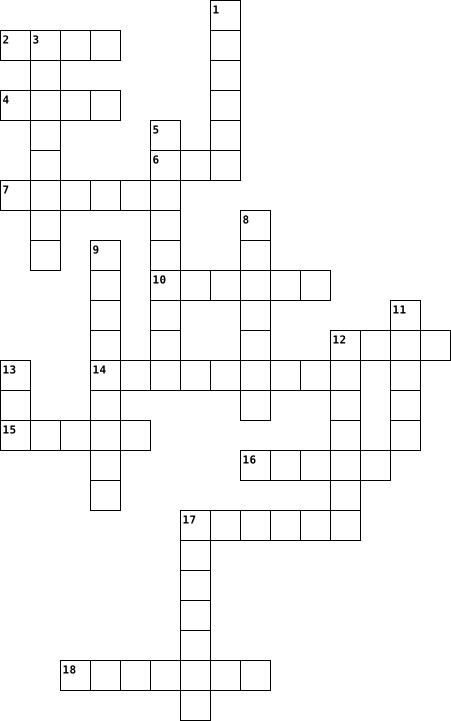
Across
- Red planet
- Twinkling celestial object
- Center of our solar system
- Vehicle that travels to space
- Cloud of gas and dust in space
- Earth's natural satellite
- Artificial object in orbit around a planet
- Prominent constellation
- Second planet from the sun
- Huge collection of stars
- Largest planet in our solar system
Down
- Planet with rings
- Rocky object orbiting the sun
- Person who explores space
- Spacecraft for launching and landing
- Optical instrument for stargazing
- Icy object with a tail
- Closest planet to the sun
- Unidentified flying object
- Force that keeps objects grounded
20 Clues: Red planet • Planet with rings • Icy object with a tail • Prominent constellation • Huge collection of stars • Person who explores space • Earth's natural satellite • Closest planet to the sun • Twinkling celestial object • Center of our solar system • Unidentified flying object • Second planet from the sun • Rocky object orbiting the sun • Vehicle that travels to space • ...
science things that I will totally use when i'm older 2024-11-07

Across
- other blue planet
- huge rock in solar system
- green planet
- distance light goes in a year
- planet with acid
- red planet
- blue planet
- cluster of stars that form a picture
- thing that holds the solar system together
Down
- black thing that sucks up stuff in space
- ball of light
- hugest gas planet
- planet with rings
- small planet
- thing that helps us see in the sky
- gut that explores space
- cluster of stars
- different balls of light
- scary unknown green dude
- small and not a planet
20 Clues: red planet • blue planet • small planet • green planet • ball of light • cluster of stars • planet with acid • other blue planet • hugest gas planet • planet with rings • small and not a planet • gut that explores space • different balls of light • scary unknown green dude • huge rock in solar system • distance light goes in a year • thing that helps us see in the sky • ...
Earth, Moon, and Sun 2021-02-01

Across
- the star that is the main source of light at the center of our solar system
- a planet outside our solar system
- moon: a moon phase that looks like more than half a circle from Earth
- the sun, the planets that orbit the sun, and other objects that orbit the sun
- to shine light on an object and make it visible
- an object, diagram, or computer program that helps us understand something by making it simpler or easier to see
- the nearly circular path a smaller object (like the Moon) travels around a larger object (like Earth).
- the amount of time it takes for a planet to complete one orbit around a star or stars
- something we observe to be similar over and over again
- a moon phase in which the Moon is not visible from Earth
- phase: the shape of the illuminated part of the Moon as it appears from Earth
Down
- when the Moon is completely dark
- a moon outside our solar system
- a moon phase that looks like less than half a circle from Earth
- the relative size of things
- a moon phase that looks like a half-circle from Earth
- a moon phase that looks like a full circle from Earth
- the border between light and dark on the Moon
- a rocky sphere that travels around a planet
19 Clues: the relative size of things • a moon outside our solar system • when the Moon is completely dark • a planet outside our solar system • a rocky sphere that travels around a planet • the border between light and dark on the Moon • to shine light on an object and make it visible • a moon phase that looks like a half-circle from Earth • ...
Earth, Moon, and Sun 2021-02-01

Across
- a planet outside our solar system
- the amount of time it takes for a planet to complete one orbit around a star or stars
- a moon phase that looks like a half-circle from Earth
- a moon phase that looks like more than half a circle from Earth
- to shine light on an object and make it visible
- the relative size of things
- something we observe to be similar over and over again
- the nearly circular path a smaller object (like the Moon) travels around a larger object (like Earth).
- a moon phase that looks like a full circle from Earth
- when the Moon is completely dark
- the shape of the illuminated part of the Moon as it appears from Earth
- a rocky sphere that travels around a planet
Down
- a moon outside our solar system
- the border between light and dark on the Moon
- the star that is the main source of light at the center of our solar system
- a moon phase that looks like less than half a circle from Earth
- an object, diagram, or computer program that helps us understand something by making it simpler or easier to see
- the sun, the planets that orbit the sun, and other objects that orbit the sun
- a moon phase in which the Moon is not visible from Earth
19 Clues: the relative size of things • a moon outside our solar system • when the Moon is completely dark • a planet outside our solar system • a rocky sphere that travels around a planet • the border between light and dark on the Moon • to shine light on an object and make it visible • a moon phase that looks like a half-circle from Earth • ...
Earth, Moon, Sun crossword 2025-03-12

Across
- eclipse: when the moon is completely dark
- the border between light and dark on the Moon
- moon: a moon phase that looks like more than a half circle from Earth
- the relative size of things
- an object, diagram, or computer program that helps us understand something by making it simpler or easier to see
- a rocky sphere that travels around a planet
- phase: the shape of the illuminate part of the moon as it appears from Earth
- a planet outside our solar system
- moon: a moon phase that looks like half-circle from Earth
- system: the sun, the planets that orbit the sun, and other objects that orbit the sun
Down
- the star that is the main source of light at the center of our solar system
- the nearly circular path a smaller object (like the Moon) travels around a larger object (like earth)
- moon: a moon phase that looks less than half a circle from Earth
- the amount of time it takes for a planet to complete one orbit around a star or stars
- moon: a moon phase in which the Moon is not visible from Earth
- to shine light on an object and make it visible
- a moon outside our solar system
- some =thing we observe to similar over and over again
- moon: a moon phase that looks like a full circle from Earth
19 Clues: the relative size of things • a moon outside our solar system • a planet outside our solar system • eclipse: when the moon is completely dark • a rocky sphere that travels around a planet • the border between light and dark on the Moon • to shine light on an object and make it visible • some =thing we observe to similar over and over again • ...