
solar Crossword Puzzles
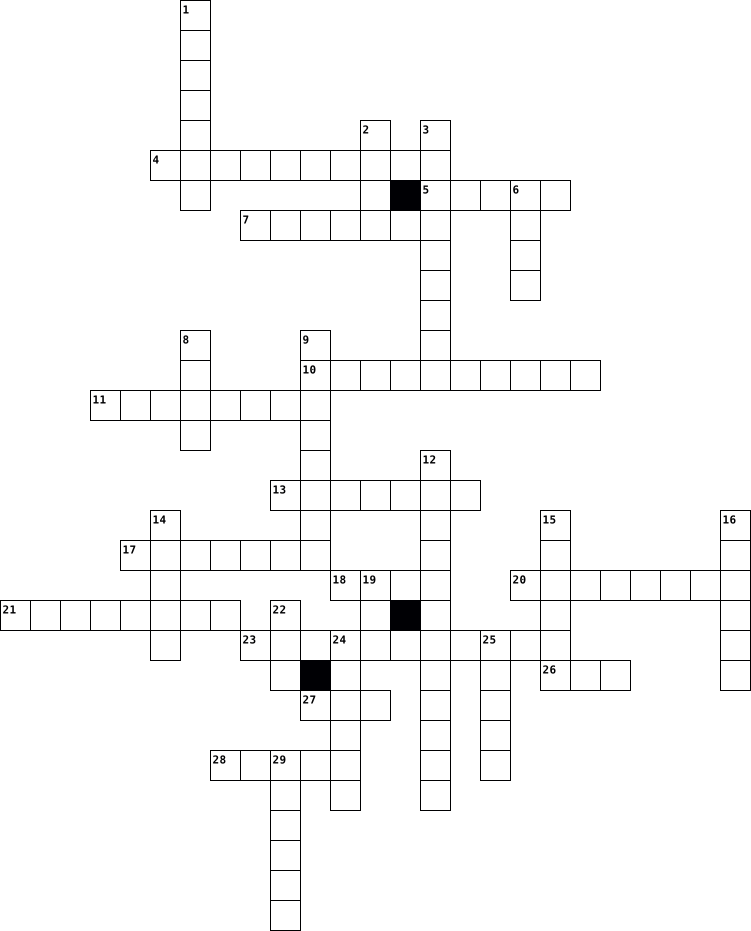
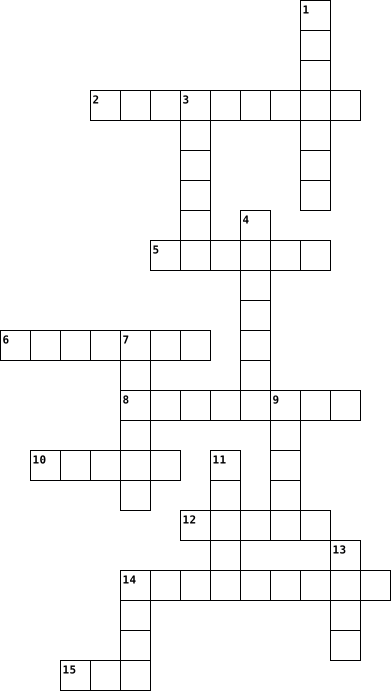
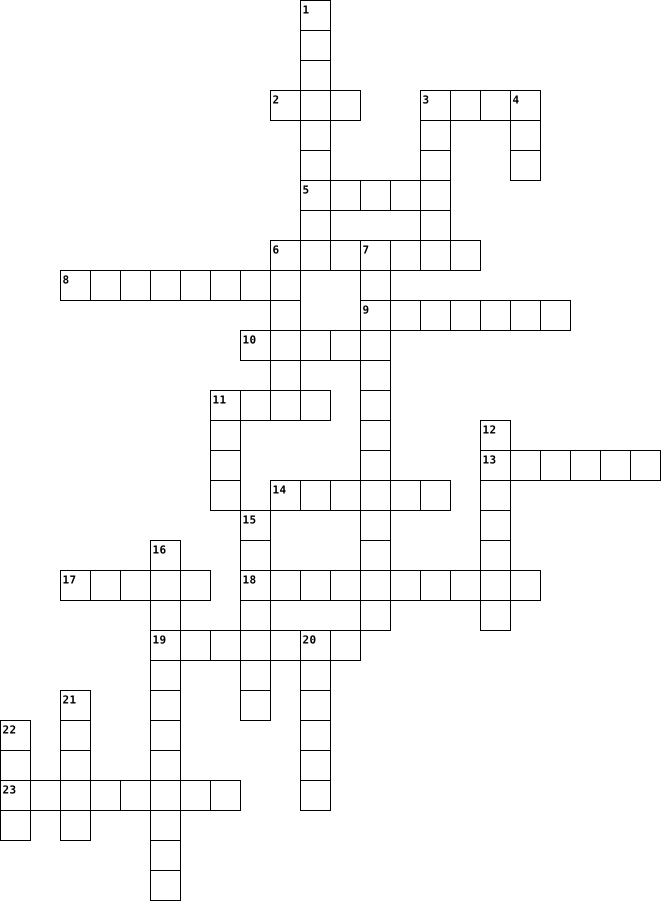
The Solar System Crossword Puzzle 2023-09-14

Across
- Vast collection of stars, like the Milky Way
- Known as Earth's "sister" planet
- Earth-centered solar system model
- Sun-centered solar system model
- - Gaseous planets further from the sun
- Italian astronomer and physicist
- Earth's natural satellite
- The center of our solar system
- Planet with a tilted axis
- Small rocky object in space
Down
- Our home planet
- Largest planet in our solar system
- Closest planet to the Sun
- Former ninth planet in our solar system
- Eighth planet from the Sun
- Rocky planets closest to the sun
- The Red Planet
- Known for its beautiful rings
- Imaginary line around which Earth rotates
19 Clues: The Red Planet • Our home planet • Closest planet to the Sun • Earth's natural satellite • Planet with a tilted axis • Eighth planet from the Sun • Small rocky object in space • Known for its beautiful rings • The center of our solar system • Sun-centered solar system model • Known as Earth's "sister" planet • Italian astronomer and physicist • Rocky planets closest to the sun • ...
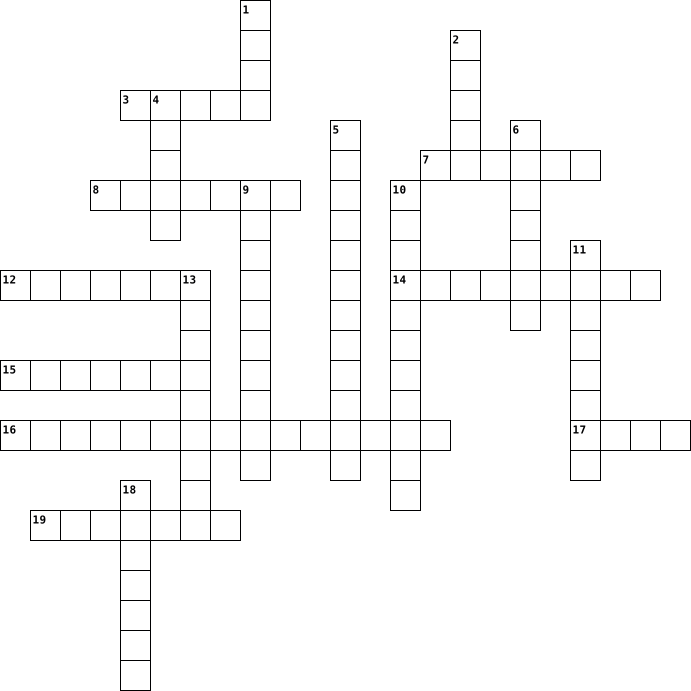
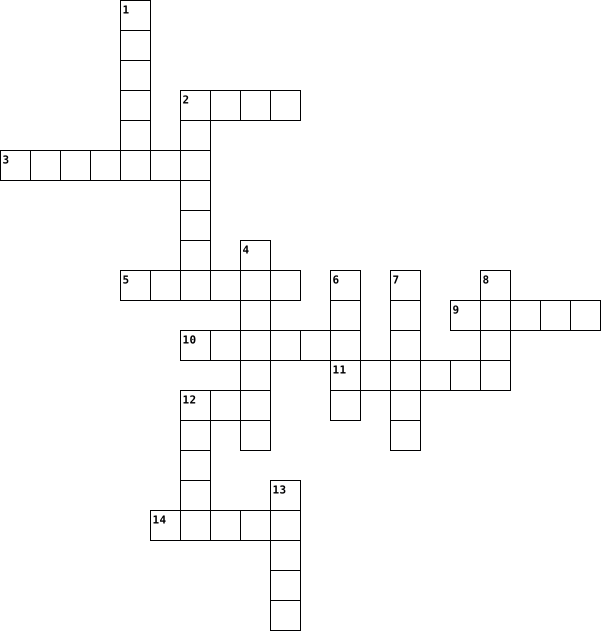
Solar 2024-04-09

Across
- 60 seconds
- we live in a ____
- Not quite complete
- This is a once in a lifetime _____
- When something reaches finality
- This is a special ___
- we live in a ____
- What happen monday
Down
- What surrounds the Earth
- What a king has on his head
- This is the ___ amount
- An individual component
- Another name for the Sun
- Something cool
- Another name for the Earth
15 Clues: 60 seconds • Something cool • we live in a ____ • we live in a ____ • Not quite complete • What happen monday • This is a special ___ • This is the ___ amount • An individual component • What surrounds the Earth • Another name for the Sun • Another name for the Earth • What a king has on his head • When something reaches finality • This is a once in a lifetime _____
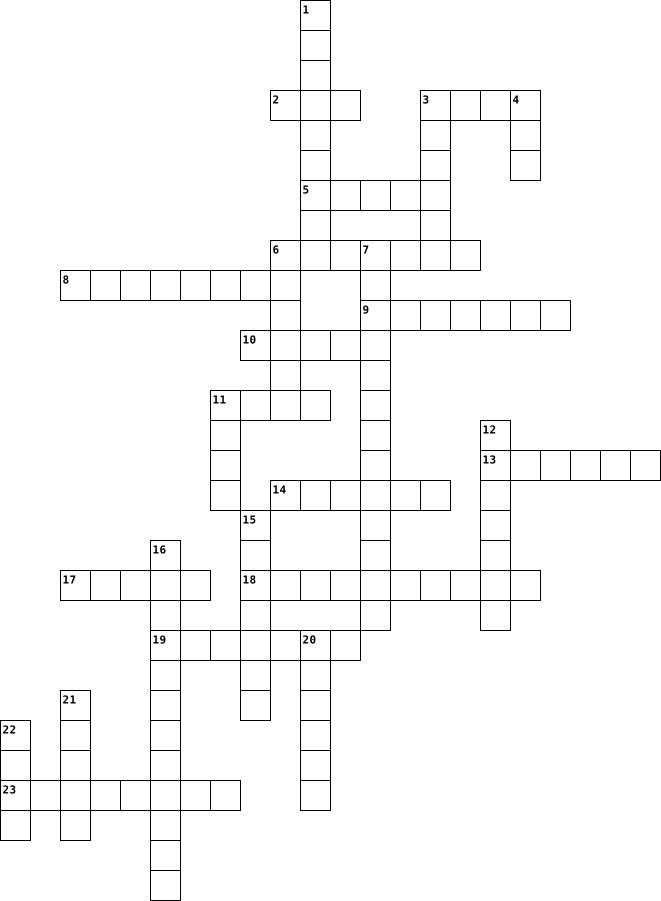
Planets 2025-03-28

Across
- the hottest planet in our solar system
- the number of planets in our solar system
- all of space, time, and their contents
- dwarf planet that is no long considered to be a part of our solar system
- the only planet that has water naturally in all 3 phases of matter
- the smallest planet in our solar system
- the coldest planet in our solar system
- the ringed planet
- Planets Jupiter, Saturn, Uranus, Neptune
Down
- Planets Mercury, Venus, Earth, and Mars
- rocky body that orbits the sun
- the red planet
- a collection of billions of stars, clouds of gas, and dust
- the largest planet in our solar system
- System 8 planets + moon + sun
- the planet farthest from the sun
- glowing hot ball of gas
17 Clues: the red planet • the ringed planet • glowing hot ball of gas • System 8 planets + moon + sun • rocky body that orbits the sun • the planet farthest from the sun • the hottest planet in our solar system • the largest planet in our solar system • all of space, time, and their contents • the coldest planet in our solar system • Planets Mercury, Venus, Earth, and Mars • ...
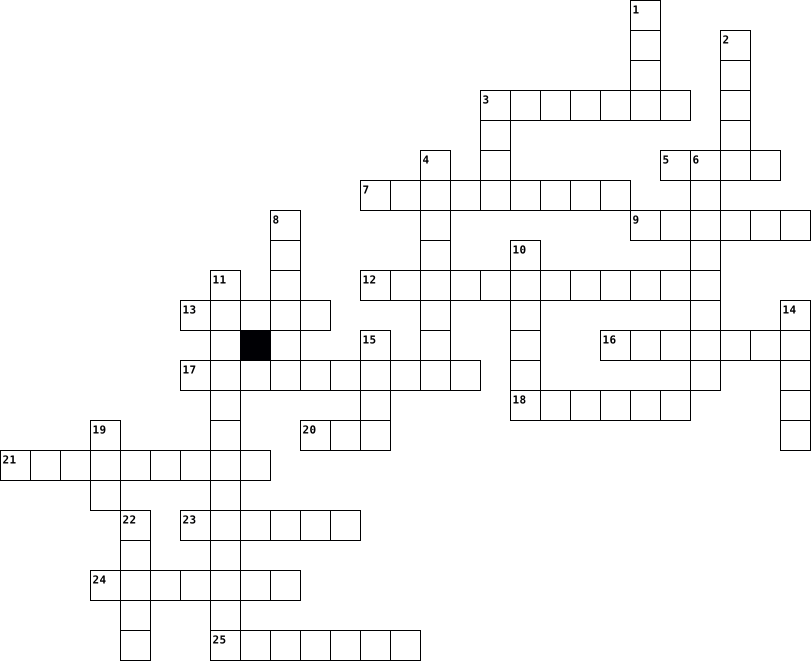
Sistema Solar 2023-10-04

Across
- Planeta que se conoce vida
- Planetoide de color rojizo
- Presenta anillos
- Ilumina todo el sistema solar
- Están formados por rocas y metal
- Número de plantas que hay en el sistema solar
- Planeta más alejado al sol
- Explosión del universo cuando se creó
- Satélite de la tierra
- La tierra gira en su propio eje
Down
- Planeta más grande del sistema solar
- La tierra gira alrededor del sol
- Planeta más caliente del sistema solar
- También conocido como planeta rojo
- Roca gigante
- La galaxia en que estamos
- Planeta destituido de los más grandes
- Planeta más cercano al sol
- Planeta más frío del sistema solar
- Plantea de hielo
20 Clues: Roca gigante • Presenta anillos • Plantea de hielo • Satélite de la tierra • La galaxia en que estamos • Planeta que se conoce vida • Planetoide de color rojizo • Planeta más cercano al sol • Planeta más alejado al sol • Ilumina todo el sistema solar • La tierra gira en su propio eje • La tierra gira alrededor del sol • Están formados por rocas y metal • ...
The Sun 2026-03-17

Across
- our solar system contains more than 200 ___.
- process by which the sun produces energy
- the majority of the Sun's gas is ____.
- our solar system contains 4 __ planets
- solar wind and the magnetic field can create the northern ___.
- Sun's Latin name
- consists largely of superheated hydrogen
- the sun looks bigger and ___ than other stars
Down
- light and heat are both important for ___.
- subatomic particles can interact with Earth's __ __.
- energy travels to Earth as ____.
- our solar system contains 800,000 ____.
- solar flares can disrupt our electrical power ____.
- eruption from the sun's surface into space
- solar flares can interrupt our ___ on earth
- process of giving plants energy
- the sun is almost completely made of ___
- so strong that most matter can't escape it
18 Clues: Sun's Latin name • process of giving plants energy • energy travels to Earth as ____. • the majority of the Sun's gas is ____. • our solar system contains 4 __ planets • our solar system contains 800,000 ____. • process by which the sun produces energy • the sun is almost completely made of ___ • consists largely of superheated hydrogen • ...
Our Solar System 2023-03-27

Across
- Known for its rings
- Region of our solar system where Pluto can be found
- Planet with the strongest gravity
- Center of our solar system
- Farthest reaches of our solar system
- In size, Mercury is the _____ planet in our solar system.
- Mars aka "The _____ Planet"
- Jupiter, Saturn, Uranus, and Neptune
- Has an axial tilt of 98 degrees, meaning it rotates on its side
- Ice giant farthest from the sun
Down
- Houses the largest volcano in our solar system
- Region separating Mars and Jupiter
- Mercury, Venus, Earth, and Mars
- Only planet in our solar system known to support life
- Jupiter has a giant _____ on its surface called the Great Red Spot.
- Hottest planet in our solar system
- Has the fastest orbit and is closest to the sun
17 Clues: Known for its rings • Center of our solar system • Mars aka "The _____ Planet" • Mercury, Venus, Earth, and Mars • Ice giant farthest from the sun • Planet with the strongest gravity • Region separating Mars and Jupiter • Hottest planet in our solar system • Farthest reaches of our solar system • Jupiter, Saturn, Uranus, and Neptune • ...
Solar System 2024-10-17

Across
- earths satelite
- galaxy where our solar system is
- first man on moon
- largest planet in solar system
- A streak of light in the sky when an asteroid hits Earth
- coldest planet in solar system
Down
- largest satelite in solar system
- planet with rings that we can see from telescope
- center of our solar system
- smallest planet in solar system
- hottest planet in solar system
- only planet with live in solar system
- farthest planet from sun
- red planet
14 Clues: red planet • earths satelite • first man on moon • farthest planet from sun • center of our solar system • hottest planet in solar system • largest planet in solar system • coldest planet in solar system • smallest planet in solar system • largest satelite in solar system • galaxy where our solar system is • only planet with live in solar system • ...
The Solar System 2014-10-26

Across
- The planet we live on.
- The “Red Planet”
- What holds us on the Earth.
- The smallest planet in the solar system.
- A Layer of gasses surrounding a planet.
- Earth’s natural satellite.
- The largest planet in the solar system.
- The 2nd largest planet.
- The planet 2nd from the Sun.
Down
- Known as “shooting stars”.
- A system consisting of stars.
- The Earth spins on this.
- The planets do this around the Sun.
- Most common include solar and luna.
- These surround Saturn.
- Also known as “minor planets”.
- The 7th planet in the Solar System.
- The planet with the highest temperature.
- The 8th planet in the Solar System.
- The star with the highest temperature.
20 Clues: The “Red Planet” • The planet we live on. • These surround Saturn. • The 2nd largest planet. • The Earth spins on this. • Known as “shooting stars”. • Earth’s natural satellite. • What holds us on the Earth. • The planet 2nd from the Sun. • A system consisting of stars. • Also known as “minor planets”. • The planets do this around the Sun. • Most common include solar and luna. • ...
Solar Electric Systems 2024-04-26

Across
- System component with the primary function to prevent over charging of battries
- Electrical unit measure the rate of flow
- Trade association and lobbying organization for VT renewable concerns
- A collection of connected solar panels
- Type of inverter that moves power in and out of batteries
- Solar panels that are on a rack built in a field
- A power system not connected to a utility
- Process by which an electrical consumer sells solar generated electricity to their utility
- Light particle that solar cells convert into an electrical charge
Down
- Type of battery traditionally used in energy systems
- Equipment used to Convert or Invert DC electricity to AC Electricity, and vice-a-versa
- The electrical "pressure" unit of electricity
- VT Permit required before an electrical consumer can sell power back to their utility
- Element which is the primary component in newer battery technology
- Solar panels that are on top of a building
- Element that is a basic building block of most solar panels
- A rate of power generated by a solar panel
- A solar system that can backfeed the utility
18 Clues: A collection of connected solar panels • Electrical unit measure the rate of flow • A power system not connected to a utility • Solar panels that are on top of a building • A rate of power generated by a solar panel • A solar system that can backfeed the utility • The electrical "pressure" unit of electricity • Solar panels that are on a rack built in a field • ...
Solar Panel 2024-05-21

Across
- what shortens a thin film's lifespan
- what percentage of new electricity was solar
- the source of solar energy
- the biggest electricity unit
- a semiconductor for PV
- a type of cell in a solar panel
- what does PV mean
- are solar panels 100% efficient
- how many times cheaper is the new solar panel compared to the commercial one
Down
- what does TPV mean
- prevents silicon from crystallizing
- a key material in making solar panels
- until what percentage does silicon metal have to get rid of impurities
- how many years does a silicon solar panel last
- a measuring unit for energy
- an acronym for copper indium gallium selenide
16 Clues: what does PV mean • what does TPV mean • a semiconductor for PV • the source of solar energy • a measuring unit for energy • the biggest electricity unit • a type of cell in a solar panel • are solar panels 100% efficient • prevents silicon from crystallizing • what shortens a thin film's lifespan • a key material in making solar panels • ...
The Planets 2014-10-29

Across
- The planet we live on.
- The star with the highest temperature.
- Also known as “minor planets”.
- The 2nd largest planet.
- A Layer of gasses surrounding a planet.
- The Earth spins on this.
- The 8th planet in the Solar System.
- Known as “shooting stars”.
- The “Red Planet”.
Down
- The 7th planet in the Solar System.
- Most common include solar and luna.
- planet with the highest temperature.
- The smallest planet in the solar system.
- The planets do this around the Sun.
- What holds us on the Earth.
- The largest planet in the solar system.
- Earth’s natural satellite.
- The planet 2nd from the Sun.
- These surround Saturn.
- A system consisting of stars.
20 Clues: The “Red Planet”. • The planet we live on. • These surround Saturn. • The 2nd largest planet. • The Earth spins on this. • Earth’s natural satellite. • Known as “shooting stars”. • What holds us on the Earth. • The planet 2nd from the Sun. • A system consisting of stars. • Also known as “minor planets”. • The 7th planet in the Solar System. • Most common include solar and luna. • ...
The Solar System 2023-05-03
Across
- What is found on the edge of the solar system.
- What type of atmosphere does Jupiter have?
- What can't you do on Venus?
- What part of earth do meteoroids burn.
- Saturn is made of hydrogen and what other gas.
- which planet is the smallest in our solar system
- What's the last planet in the solar system.
- How many dwarf planets are there in the solar system.
- Is Mercury the Largest or smallest planet in the solar system.
- How long is a day on earth?
- where does Pluto lie in?
- How many rings does Neptune have?
- What type of temperature does Venus have.
- Which planet is a dwarf planet.
Down
- What planet is cover in swirling cloud stripes?
- What does Mars have that gives it seasons.
- There are million of these in our solar system
- What's the temperature of Uranus in the solar system.
- Which planet is the fourth closest from the sun
- What's Jupiter famous that has its own magnetic field.
- What type of gas are comets made of.
- This planet was named after a roman goddess.
- There are about a trillion of these in the Oort cloud.
- Which planet has spectacular and complicated rings.
- Asteroids contain water and what other solid.
- What is mercury closest to in the solar system.
- What's mars famous moon also known as the largest.
- Which planet isn't flat but not perfectly round either.
- Which planet has the third largest diameter in our solar system
29 Clues: where does Pluto lie in? • What can't you do on Venus? • How long is a day on earth? • Which planet is a dwarf planet. • How many rings does Neptune have? • What type of gas are comets made of. • What part of earth do meteoroids burn. • What type of temperature does Venus have. • What does Mars have that gives it seasons. • What type of atmosphere does Jupiter have? • ...
Times to Review! 2024-08-04

Across
- Mercury, Venus, Earth, and Mars are grouped into ... planets based on their physical characteristics.
- Earth's ... can cause changes in seasons.
- The eight planets orbit around the Sun in ... orbits.
- The ... satellites are human's made satellite.
- The biggest planet in our solar system is ...
- Mars, Jupiter, Saturn, Uranus, and Neptune are grouped into ... planets based on Earth's orbit as the boundary.
- Uranus is a ... planet in solar system.
- Venus is the ... planet.
- Source of light in our solar system
- Make-make, Ceres, Pluto, Haumea, Eris are ... planets.
- Comets are ... that is why when comets come close to the Sun, the frozen water and gases heat up, creating a tail of gas and dust particles.
- Sun is composed mostly of hydrogen and ...
Down
- Planets in the solar system are grouped into inner and outer planets based on boundary set by the ...
- Uranus rotates in ... direction and it rotates on its side.
- Mercury and ... have no moon.
- The red planet in our solar system is ...
- Earth takes 24 hours to ... in own axis.
- Venus has a high amount of ... in their atmosphere.
- The sixth planet in our solar system is ...
- The smallest planet in our solar system is ...
20 Clues: Venus is the ... planet. • Mercury and ... have no moon. • Source of light in our solar system • Uranus is a ... planet in solar system. • Earth takes 24 hours to ... in own axis. • Earth's ... can cause changes in seasons. • The red planet in our solar system is ... • Sun is composed mostly of hydrogen and ... • The sixth planet in our solar system is ... • ...
Catástrofes Naturais e o Sistema Solar 2020-05-20

Across
- Maior planeta do Sistema Solar.
- Ponto cardeal onde o Sol nasce.
- Ponto cardeal onde o Sol se põe.
- Terceiro planeta do Sistema Solar.
- Movimento que a Terra realiza em torno de si própria.
- Satélite natural da Terra.
- Terramoto, abalo da Terra.
- Tem a forma de uma montanha e liberta lava.
- Instrumento de orientação com aspeto semelhante a um relógio de bolso.
Down
- Planeta mais pequeno do Sistema Solar.
- Planeta mais distante do Sistema Solar.
- Série de ondas de água gigantes, também chamado de maremoto.
- Tempestade tropical que atinge ventos muito fortes.
- Número de planetas do Sistema Solar.
- Cor pela qual o planeta Terra é conhecido.
- Maior estrela do Sistema Solar.
- Segundo planeta mais próximo do Sol.
- Movimento que a Terra realiza em torno do Sol.
18 Clues: Satélite natural da Terra. • Terramoto, abalo da Terra. • Maior planeta do Sistema Solar. • Ponto cardeal onde o Sol nasce. • Maior estrela do Sistema Solar. • Ponto cardeal onde o Sol se põe. • Terceiro planeta do Sistema Solar. • Número de planetas do Sistema Solar. • Segundo planeta mais próximo do Sol. • Planeta mais pequeno do Sistema Solar. • ...
The three E by Edward 2024-04-09

Across
- What do solar panels need to work
- years How long has the US used Nuclear energy.
- charge Why can metal shock you
- What material lets electrons move easily
- coating What is around wires that prevent shocks
- maximum When is the sun more active
- Energy What is the second largest source of low-carbon electricity.
- What renewable energy can cause species extinct
- years How long is the solar cycle
- percent What percent of energy does nuclear energy produce in the US?
- What reflects and captures energy in solar energy
Down
- What can solar energy interfere with
- What process does solar panels use
- poles Where are Coronal holes more common
- What is the corona made from
- What is the most common source of energy
- waste: What does Nuclear energy generate a lot of other than electricity?
- What is the cleanest zero-emission energy source
- of light How fast does electricity travel
- What stops electrons from moving easily
20 Clues: What is the corona made from • charge Why can metal shock you • What do solar panels need to work • years How long is the solar cycle • What process does solar panels use • maximum When is the sun more active • What can solar energy interfere with • What stops electrons from moving easily • What is the most common source of energy • What material lets electrons move easily • ...
Space 2023-08-22
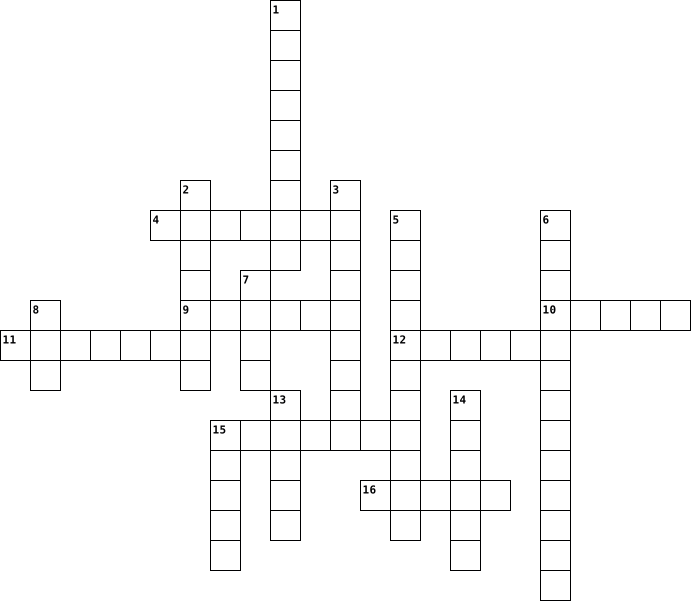
Across
- The planet farthest from the sun in the solar system
- The coldest planet in the solar system
- Huge glowing balls of gases
- The largest planet in the solar system
- Vehicle that takes people into space
- Large natural objects that orbit around Sun in space
- The hottest and the brightest planet in the solar system
Down
- Someone who travels in space
- The planet closest to the sun in the solar system
- Instrument that allows people to see distant objects
- A group of planets and other bodies that revolve around the Sun
- A group of stars
- The planet with the nickname "Red Planet"
- The closest star to Earth
- The only known planet to support life
- The sixth planet from the sun in the solar system
- A dwarf planet in the solar system
17 Clues: A group of stars • The closest star to Earth • Huge glowing balls of gases • Someone who travels in space • A dwarf planet in the solar system • Vehicle that takes people into space • The only known planet to support life • The coldest planet in the solar system • The largest planet in the solar system • The planet with the nickname "Red Planet" • ...
SISTEMA SOLAR 2022-04-14

Across
- única estrela do sistema solar.
- É o menor planeta do sistema solar e também o planeta mais próximo do Sol;
- Maior satélite natural do sistema solar.
- Como chama-se o conjunto de o que existe no espaço?
- úmero de planetas do sistema solar.
- os astros que não produzem luz, apenas refletem a luz emitida são chamados de......
- é o planeta mais distante do Sol, por isso sua temperatura é sempre muito baixa;
- fase da lua em que toda a face da lua que está voltada para terra e fica iluminada.
- É o terceiro maior planeta do sistema solar é formado por gases e possui anéis;
Down
- É o maior planeta do sistema solar é um planeta formado por gases;
- Ciência que estuda o espaço sideral.
- É o único satélite natural da terra.
- Um exemplo de astros luminosos.
- os astros que possuem luz própria são chamados de.. .
- quantos dias aproximadamente dura cada fase da lua
- Foi considerado um planeta-anão desde 2006 e rebaixado do sistema solar.
- é o planeta que possui anéis mais visíveis;
- é um planeta formado por rochas e metais é o segundo planeta do sistema solar a partir do sol;
- É o planeta em que habitamos, é um planeta rochoso;
- é o planeta que se localiza entre a terra e o Júpiter, é possível observá-lo da terra, também conhecido como planeta vermelho;
20 Clues: única estrela do sistema solar. • Um exemplo de astros luminosos. • úmero de planetas do sistema solar. • Ciência que estuda o espaço sideral. • É o único satélite natural da terra. • Maior satélite natural do sistema solar. • é o planeta que possui anéis mais visíveis; • quantos dias aproximadamente dura cada fase da lua • ...
Astronomy Part 1 2025-12-16

Across
- It lies at the center of the solar system in the Geocentric Model.
- One of the forces at work when our solar system formed.
- The emission lines in a spectrum reveal these in a star.
- The only star in our solar system: The _______.
- Besides Hot temperatures it is needed to start fusion.
- Device used to break down the light of a star.
- The current stage of life our Sun is in.
- Layer of the Sun where nuclear fusion takes place.
- A collapsed star that leaves behind its strong gravity.
- Planet with the Greenhouse Effect.
Down
- One of the famous scientists who believed in the Heliocentric Model.
- The only layer of the Sun we see on a regular basis.
- Solar system model where the Earth is the center.
- This directly determines the color of a star: _______ Temperature
- Solar system model we believe today.
- It lies between Mars and Jupiter.
- Color of the hottest star.
- A huge cloud of gas and dust where things form in space.
- The color line created by a spectroscope.
- Name of nebula that went on to create our solar system.
- Area of science we are studying.
21 Clues: Color of the hottest star. • Area of science we are studying. • It lies between Mars and Jupiter. • Planet with the Greenhouse Effect. • Solar system model we believe today. • The current stage of life our Sun is in. • The color line created by a spectroscope. • Device used to break down the light of a star. • The only star in our solar system: The _______. • ...
The Planets; 2014-10-30
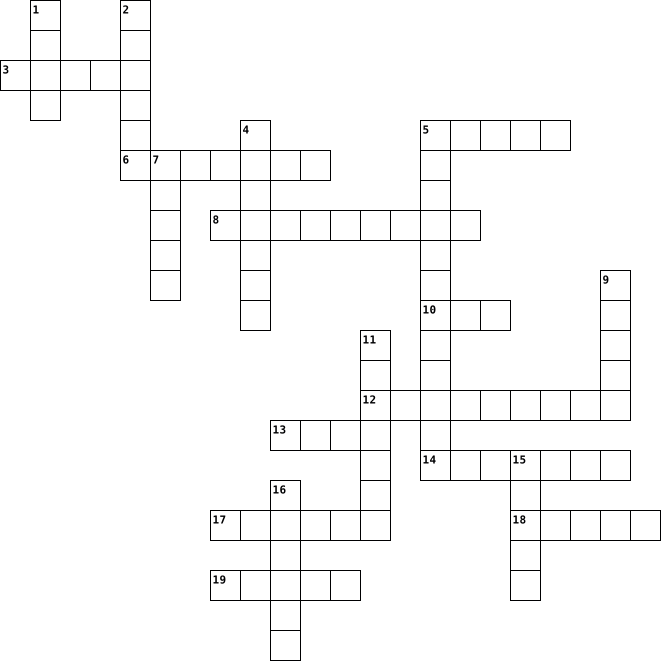
Across
- The planets ..... around the sun.
- Thousands of these can be seen at night
- The farthest planet from the sun is?
- Our galaxy is the .........
- This is something that only comes out during the day.
- are small, airless rocky worlds that revolve around the sun and are too small to be called planets.
- This only comes out at night.
- This planety is closest to the sun.
- This planet is the third largest in our solar asytem.
- These can be found around 70% of the planets.
- Pluto was classsed as a ...... planet.
Down
- This is the second smallest planet in our solar system.
- The only planet with rings around it.
- Is the largest planet in our solar system.
- There are 8 planets in our .....-......
- The planet we live on is called.....
- This planet is the second closest to the sun.
- there are 8 of these in our solar system.
- is an icy small Solar System body.
- The milky way is our........
20 Clues: Our galaxy is the ......... • The milky way is our........ • This only comes out at night. • The planets ..... around the sun. • is an icy small Solar System body. • This planety is closest to the sun. • The farthest planet from the sun is? • The planet we live on is called..... • The only planet with rings around it. • Pluto was classsed as a ...... planet. • ...
The Sun 2025-05-03

Across
- – Blazing sky orb
- – Solar output
- lines – Overexposure result
- – Burn from the sun
- – Solar storm result
- – Country of the rising sun
- – Heat of the sun
- – Sun’s morning rise
- – Total solar event
- – Sun’s yearly path
- – Life giver
- – Horizon event
- – Star at center
- – Ancient solar calendar
- – Related to the sun
- – Sun-powered
- – Light-loving plant
- – Japanese sun goddess
- – Shade provider
- – Summer solstice month
- – Light halo
- – Midday brightness
- – Ancient sun temple
- – Start of daylight
- – Summer sky sight
- – Skin protector
Down
- – Glowing in the dark
- – Earth’s rotation causes this
- – High UV alert
- – Sunglasses necessity
- – Noon position
- – Opposite of night
- – UV source
- – Sunshine drink
- – Dangerous sun dose
- – Sky watcher’s tool
- – Sun-worship ceremony
- – Soaring heat
- – Desert climate
- – Sunny disposition
- – Greek sun god
- – Sun’s visual ring
- car – Solar-powered vehicle
- – Solar explosion
- panel – Solar energy panel
- panel – Solar energy panel
- – Sungazing danger
- – Dawn or dusk colors
- – Symbol of warmth
- – Celestial body
50 Clues: – UV source • – Life giver • – Light halo • – Sun-powered • – Solar output • – Soaring heat • – High UV alert • – Noon position • – Horizon event • – Greek sun god • – Sunshine drink • – Star at center • – Desert climate • – Shade provider • – Celestial body • – Skin protector • – Blazing sky orb • – Heat of the sun • – Solar explosion • – Sungazing danger • – Symbol of warmth • – Summer sky sight • ...
Solar System Crossword 2017-05-17
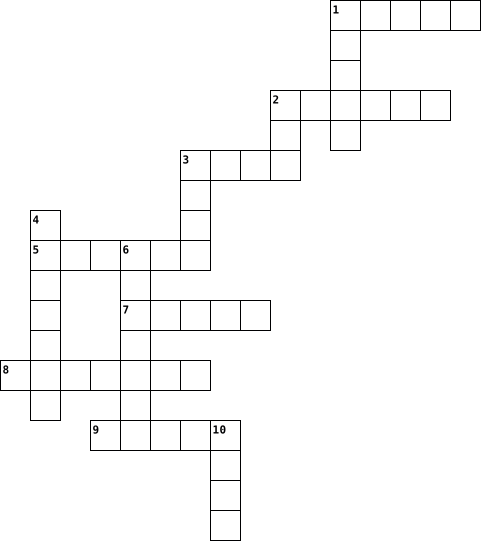
Across
- The number of planets in the Solar System
- The sixth planet in our Solar System
- The rocky body that orbits the Earth
- The seventh planet in our Solar System
- The most common Dwarf-Planet
- The first planet in our Solar System
- The second planet in our Solar System
Down
- The third planet in our Solar System
- The star at the centre of our Solar System
- The fourth planet in our Solar System
- The fifth planet in our Solar System
- The eighth planet in our Solar System
- Our sun is a _______
13 Clues: Our sun is a _______ • The most common Dwarf-Planet • The third planet in our Solar System • The sixth planet in our Solar System • The rocky body that orbits the Earth • The fifth planet in our Solar System • The first planet in our Solar System • The fourth planet in our Solar System • The eighth planet in our Solar System • The second planet in our Solar System • ...
Solar system 2022-03-03
Across
- an object that is placed in orbit around the planet
- has the most noticeable ring in the solar system
- the smallest planet in the solar system
- a minor planet of the inner solar system
- named after the Roman goddess of love and beauty
- the densest planet in the solar system
- a galaxy that the solar system is in
- the only star in the solar system
Down
- the densest among giant planet
- the smallest of the four Galilean moon
- the largest planet in the solar system
- the seventh planet from the sun
- the curved path of a celestial object
- fundamental particle which participates in the strong nuclear force
- named after the Roman god of war
- earth’s only natural satellite
16 Clues: the densest among giant planet • earth’s only natural satellite • the seventh planet from the sun • named after the Roman god of war • the only star in the solar system • a galaxy that the solar system is in • the curved path of a celestial object • the smallest of the four Galilean moon • the largest planet in the solar system • the densest planet in the solar system • ...
The Solar System 2013-12-06
Across
- What is the hottest Planet in our solar system?
- What is another name for "dirty snowballs" that are composed of ice, rock and gas?
- What is the Earth's "Rotation"?
- What is the Earth's "Revolution"?
- What is it called when there are leftovers rocks from the formation of the solar system?
- What is the farthest planet in our solar system today?
- How old is our solar system?
- What/How does the Earth rotate by?
- What is the fastest rotation Planet?
Down
- What is the longest Rotation in our solar system?
- What is the farthest planet in our solar system before 2006?
- How many planets are in our solar system?
- Why is there a ring around Saturn, what are those?
- What is the closest Planet to the Sun?
- What is it called when a planet goes around the sun once?
- What are the gas bubbles/explosions on the surface of the sun called?
- What is our galaxy name?
- What is another name for the moon?
- How was our galaxy created?
19 Clues: What is our galaxy name? • How was our galaxy created? • How old is our solar system? • What is the Earth's "Rotation"? • What is the Earth's "Revolution"? • What is another name for the moon? • What/How does the Earth rotate by? • What is the fastest rotation Planet? • What is the closest Planet to the Sun? • How many planets are in our solar system? • ...
El universo 2020-02-23

Across
- es un planeta enano del sistema solar situado a continuación de la órbita de Neptuno.
- es el segundo planeta del Sistema Solar y el más semejante a La Tierra por su tamaño, gravedad, masa, densidad y volumen.
- es el planeta del sistema solar más próximo al Sol y el más pequeño.
- Conjunto de estrellas agrupadas en una región celeste que forman, aparentemente, una figura determinada.
- es la estrella más cercana a la Tierra, y es el centro de nuestro Sistema Solar.
- es un esferoide luminoso de plasma que mantiene su forma gracias a su propia gravedad.
- Cuerpo celeste sólido que gira alrededor de una estrella y que no emite luz propia.
- es un planeta del sistema solar que gira alrededor de su estrella. Es el más denso y el quinto mayor de los ocho planetas del sistema solar.
- es el séptimo planeta del sistema solar, el tercero de mayor tamaño, y el cuarto más masivo.
Down
- es el octavo planeta en distancia respecto al Sol y el más lejano del sistema solar.
- región finita del espacio en cuyo interior existe una concentración de masa lo suficientemente elevada y densa como para generar un campo gravitatorio tal que ninguna partícula material, ni siquiera la luz, puede escapar de ella.
- es el cuarto planeta en orden de distancia al Sol y el segundo más pequeño del sistema solar.
- cuerpo celeste rocoso, más pequeño que un planeta y mayor que un meteoroide.
- conjunto de los muchos universos existentes, según las hipótesis que afirman que existen universos diferentes del nuestro propio.
- es una galaxia espiral donde se encuentra el sistema solar y a su vez se encuentra la Tierra.
- es el único satélite natural de la Tierra.
- conjunto de estrellas, nubes de gas, planetas, polvo cósmico, materia oscura y energía unidos gravitatoriamente en una estructura más o menos definida.
- cuerpos celestes constituidos por hielo, polvo y rocas que orbitan alrededor del Sol siguiendo diferentes trayectorias elípticas, parabólicas o hiperbólicas.
- es el quinto planeta del sistema solar. Forma parte de los denominados planetas exteriores o gaseosos.
- es el sexto planeta del sistema solar, el segundo en tamaño y masa después de Júpiter y el único con un sistema de anillos visible desde la Tierra.
20 Clues: es el único satélite natural de la Tierra. • es el planeta del sistema solar más próximo al Sol y el más pequeño. • cuerpo celeste rocoso, más pequeño que un planeta y mayor que un meteoroide. • es la estrella más cercana a la Tierra, y es el centro de nuestro Sistema Solar. • Cuerpo celeste sólido que gira alrededor de una estrella y que no emite luz propia. • ...
Solar Farms 2018-06-10

Across
- ____ trillion in Net Operational Savings
- RANK: _____
- Solar energy costs approx. ________ per watt and price drops are expected to continue
- Solar farms give off 94% less carbon emissions than ____________.
- Solar energy is now less than two percent of the global electricity generation, but it is reducing 220 million - 330 million tons of annual ______________.
- Drawback: Sunlight peaks midday but the demand for _________ peaks at night
- ______________ is the conversion of light into electricity using semiconducting materials that help create the photovoltaic effect
Down
- Photovoltaics are less costly than _____________.
- ______ Gigatons reduced CO2
- _____ billion net implementation cost
- Solar panels work like this: Silicon panels collect photons streaming from the sun. Then the photons, inside the hermetically sealed panel, charge electrons that make an ______________.
- Solar farms Work in hot, humid, and/or remote locations where ________ would not work
- Solar farms are getting cheaper and are faster than creating ____________.
- __________ Solar photovoltaics cost a lot of money
- ______________ is when a thing is sealed in a way that is insulated or protected from outside influences.
- Beyond particles, there are __________ needed for making a solar panel
- Solar farms eliminate emissions of ______, nitrous oxides, mercury, and particulates
17 Clues: RANK: _____ • ______ Gigatons reduced CO2 • _____ billion net implementation cost • ____ trillion in Net Operational Savings • Photovoltaics are less costly than _____________. • __________ Solar photovoltaics cost a lot of money • Solar farms give off 94% less carbon emissions than ____________. • Beyond particles, there are __________ needed for making a solar panel • ...
El universo 2020-02-23

Across
- es el segundo planeta del Sistema Solar y el más semejante a La Tierra por su tamaño, gravedad, masa, densidad y volumen.
- es el quinto planeta del sistema solar. Forma parte de los denominados planetas exteriores o gaseosos.
- es la estrella más cercana a la Tierra, y es el centro de nuestro Sistema Solar.
- cuerpo celeste rocoso, más pequeño que un planeta y mayor que un meteoroide.
- es una galaxia espiral donde se encuentra el sistema solar y a su vez se encuentra la Tierra.
- es el único satélite natural de la Tierra.
- Conjunto de estrellas agrupadas en una región celeste que forman, aparentemente, una figura determinada.
- es el planeta del sistema solar más próximo al Sol y el más pequeño.
- es el octavo planeta en distancia respecto al Sol y el más lejano del sistema solar.
- es un planeta del sistema solar que gira alrededor de su estrella. Es el más denso y el quinto mayor de los ocho planetas del sistema solar.
Down
- es el séptimo planeta del sistema solar, el tercero de mayor tamaño, y el cuarto más masivo.
- es el sexto planeta del sistema solar, el segundo en tamaño y masa después de Júpiter y el único con un sistema de anillos visible desde la Tierra.
- Cuerpo celeste sólido que gira alrededor de una estrella y que no emite luz propia.
- es el cuarto planeta en orden de distancia al Sol y el segundo más pequeño del sistema solar.
- conjunto de los muchos universos existentes, según las hipótesis que afirman que existen universos diferentes del nuestro propio.
- conjunto de estrellas, nubes de gas, planetas, polvo cósmico, materia oscura y energía unidos gravitatoriamente en una estructura más o menos definida.
- región finita del espacio en cuyo interior existe una concentración de masa lo suficientemente elevada y densa como para generar un campo gravitatorio tal que ninguna partícula material, ni siquiera la luz, puede escapar de ella.
- es un esferoide luminoso de plasma que mantiene su forma gracias a su propia gravedad.
- cuerpos celestes constituidos por hielo, polvo y rocas que orbitan alrededor del Sol siguiendo diferentes trayectorias elípticas, parabólicas o hiperbólicas.
- es un planeta enano del sistema solar situado a continuación de la órbita de Neptuno.
20 Clues: es el único satélite natural de la Tierra. • es el planeta del sistema solar más próximo al Sol y el más pequeño. • cuerpo celeste rocoso, más pequeño que un planeta y mayor que un meteoroide. • es la estrella más cercana a la Tierra, y es el centro de nuestro Sistema Solar. • Cuerpo celeste sólido que gira alrededor de una estrella y que no emite luz propia. • ...
The Solar System 2014-10-27

Across
- a star found at the center of the Solar System
- Famous for the beautiful rings that surround it
- A relatively small solar system body that orbits the Sun
- The number Earth is from the moon
- Also known as planetoids or minor planets
- The planet in the solar system is farthest from the Sun
- A small rock or particle of debris in our solar system
- The name of the force holding us to the Earth
- The smallest planet in the Solar System
- The seventh planet from the Sun
Down
- What orbits the Earth every 27.3 days
- The planet that no longer exists
- The name of the 2nd biggest planet in our solar system
- The hottest planet in our solar system
- The planet is known as the red planet
- Famous for its big red spot on it
- The surname of the first person to walk on the moon
- The number of planets in our solar system
- a massive, bright, sphere of very hot gas called plasma which is held together by its own gravity
19 Clues: The seventh planet from the Sun • The planet that no longer exists • The number Earth is from the moon • Famous for its big red spot on it • What orbits the Earth every 27.3 days • The planet is known as the red planet • The hottest planet in our solar system • The smallest planet in the Solar System • Also known as planetoids or minor planets • ...
el sistema solar 2023-09-15

Across
- cual es la primera etapa de la luna
- cual es el tercer planeta del sistema solar
- cual es el sexto planeta del sistema solar
- cual es la cuarta etapa de la luna
- cual es el octavo planeta del sistema solar
- cual es la estrella mas cerca a la tierra
- cual es la segunda etapa de la luna
- cual es el quinto planeta del sistema solar
Down
- cual es la quinta etapa de la luna
- cual es el primer planeta del sistema solar
- cual es la tercera etapa de la luna
- cual es el cuarto planeta del sistema solar
- cual es el satélite de la tierra
- cual es el segundo planeta del sistema solar
- cual es el séptimo planeta del sistema solar
15 Clues: cual es el satélite de la tierra • cual es la quinta etapa de la luna • cual es la cuarta etapa de la luna • cual es la primera etapa de la luna • cual es la tercera etapa de la luna • cual es la segunda etapa de la luna • cual es la estrella mas cerca a la tierra • cual es el sexto planeta del sistema solar • cual es el primer planeta del sistema solar • ...
Harnessing Star Power: The Magical Dance of Sunlight and Solar Panels 2024-04-17

Across
- What are we reducing by embracing solar power and protecting the environment for future generations
- What are we safeguarding for future generations by reducing our carbon footprint through embracing solar power
- What is a gift from the sun that can power everything from humble homes to awe-inspiring spaceships
- What is born when sunlight strikes a solar panel, creating an electric current
- What is a clean, renewable energy source that harnesses the sun's rays, converting them into electricity
- What do solar panels soak up to create a sustainable energy source
- What thrive on sunlight, just as our homes and cities can flourish with the bounty of solar power
- What do tireless worker bees gather golden sunlight as their pollen
Down
- What kind of energy source is solar power, harnessing the sun's rays
- What secret ballet is performed on the stage of solar panels, turning sunlight into electricity
- What is illuminated by adopting solar power, reducing our reliance on fossil fuels and protecting the environment
- What kind of energy source is created by solar panels soaking up sunlight
- What is stored for future use by solar panels, akin to squirreling away snacks for later
- What are the tiny particles of sunlight that strike the solar panel, stirring the electrons into a frenzy
- What power are we harnessing by converting sunlight into electricity with solar panels
15 Clues: What do solar panels soak up to create a sustainable energy source • What do tireless worker bees gather golden sunlight as their pollen • What kind of energy source is solar power, harnessing the sun's rays • What kind of energy source is created by solar panels soaking up sunlight • ...
Solar energy crossword 2023-04-05

Across
- Converts DC power from one solar module.
- Device that consists of multiple solar cells that connect to form a circuit.
- Process in which the homeowner decides how much energy their home requires.
- Part of solar power system that converts direct currents.
- Operational requirements of the solar power system.
- Solar system which connects to an electrical grid.
- Unit of electrical power.
- Array of solar panels installed on the ground.
Down
- Energy that does not harm the environment, and avoids using nuclear power and fossil fuels.
- Contract between the utility company and the homeowner.
- The quality of the sunlight the solar panels absorb.
- Series of interconnected networks that assist in transporting electricity to the final consumer.
- Equipment that must be securely attached to solar panels.
- Process of balancing power.
- All other components/services of a solar system besides the panels.
15 Clues: Unit of electrical power. • Process of balancing power. • Converts DC power from one solar module. • Array of solar panels installed on the ground. • Solar system which connects to an electrical grid. • Operational requirements of the solar power system. • The quality of the sunlight the solar panels absorb. • Contract between the utility company and the homeowner. • ...
Quiz 6 2018-03-27

Across
- PV cells are made of crystalline __________.
- Besides China, the country of _________ produces the most electricity from solar power.
- To utilize sunlight for home heating, large windows should be oriented towards the _________.
- These are flat, solar tracking mirrors used at large electricity generating plants.
- The ___________ zone of PV cells contains an internal electric field.
- "PV" is an abbreviation for __________.
- This is the name of the solar concentrator next to Interstate 5 in the Mojave Desert.
- The p-type side of PV cells are doped with _________.
- PV cell construction is __________ by the Chinese government, making them more affordable.
- This type of solar design contains no moving parts.
- Factors that affect how much sunlight a location gets are climate, season, time, and _________.
- Most commercially available PV cells are between 6-________ percent efficient.
Down
- Solar tracking devices for PV cells that are one-axel can be N-S, E-W, or _________.
- Solar collectors built in America can pose a threat to an endangered species of desert ________.
- The most efficient PV cells have _______ _______ tracking. (two words)
- PV cell applications include home installations, large arrays by utility companies, and use on ________.
- These types of solar concentrators pose a hazard to birds. (two words)
- The n-type side of PV cells are doped with __________.
- Linear concentrators use long ___________-shaped curved mirrors.
- The most solar panels are produced in the country of _________.
- Linear concentrators that use many thin, long, flat mirrors have a _________ design.
- Dish-shaped concentrators each collect sunlight to power a ________ engine.
- Solar tracking greatly affects PV efficiency during both morning and ________ hours.
- At noon on the winter solstice the Sun is about __________ three degrees lower than at noon on the Spring Equinox.
- Solar ________ technology uses concentrated sunlight to heat a fluid used to make steam.
25 Clues: "PV" is an abbreviation for __________. • PV cells are made of crystalline __________. • This type of solar design contains no moving parts. • The p-type side of PV cells are doped with _________. • The n-type side of PV cells are doped with __________. • The most solar panels are produced in the country of _________. • ...
Quiz 6 2018-03-27

Across
- Solar tracking devices for PV cells that are one-axel can be N-S, E-W, or _________.
- The most solar panels are produced in the country of _________.
- The n-type side of PV cells are doped with __________.
- Factors that affect how much sunlight a location gets are climate, season, time, and _________.
- The p-type side of PV cells are doped with _________.
- These are flat, solar tracking mirrors used at large electricity generating plants.
- Dish-shaped concentrators each collect sunlight to power a ________ engine.
- These types of solar concentrators pose a hazard to birds. (two words)
- This is the name of the solar concentrator next to Interstate 5 in the Mojave Desert.
- The ___________ zone of PV cells contains an internal electric field.
- PV cell applications include home installations, large arrays by utility companies, and use on ________.
- At noon on the winter solstice the Sun is about __________ three degrees lower than at noon on the Spring Equinox.
Down
- PV cells are made of crystalline __________.
- Linear concentrators use long ___________-shaped curved mirrors.
- To utilize sunlight for home heating, large windows should be oriented towards the _________.
- The most efficient PV cells have _______ _______ tracking. (two words)
- Most commercially available PV cells are between 6-________ percent efficient.
- Solar collectors built in America can pose a threat to an endangered species of desert ________.
- "PV" is an abbreviation for __________.
- PV cell construction is __________ by the Chinese government, making them more affordable.
- Solar ________ technology uses concentrated sunlight to heat a fluid used to make steam.
- This type of solar design contains no moving parts.
- Besides China, the country of _________ produces the most electricity from solar power.
- Linear concentrators that use many thin, long, flat mirrors have a _________ design.
- Solar tracking greatly affects PV efficiency during both morning and ________ hours.
25 Clues: "PV" is an abbreviation for __________. • PV cells are made of crystalline __________. • This type of solar design contains no moving parts. • The p-type side of PV cells are doped with _________. • The n-type side of PV cells are doped with __________. • The most solar panels are produced in the country of _________. • ...
Quiz 6 2018-03-27

Across
- The most efficient PV cells have _______ _______ tracking. (two words)
- The p-type side of PV cells are doped with _________.
- Solar tracking greatly affects PV efficiency during both morning and ________ hours.
- "PV" is an abbreviation for __________.
- PV cells are made of crystalline __________.
- This is the name of the solar concentrator next to Interstate 5 in the Mojave Desert.
- The ___________ zone of PV cells contains an internal electric field.
- This type of solar design contains no moving parts.
- These are flat, solar tracking mirrors used at large electricity generating plants.
- Besides China, the country of _________ produces the most electricity from solar power.
Down
- The most solar panels are produced in the country of _________.
- The n-type side of PV cells are doped with __________.
- These types of solar concentrators pose a hazard to birds. (two words)
- PV cell construction is __________ by the Chinese government, making them more affordable.
- Solar collectors built in America can pose a threat to an endangered species of desert ________.
- Linear concentrators that use many thin, long, flat mirrors have a _________ design.
- Factors that affect how much sunlight a location gets are climate, season, time, and _________.
- PV cell applications include home installations, large arrays by utility companies, and use on ________.
- Linear concentrators use long ___________-shaped curved mirrors.
- Dish-shaped concentrators each collect sunlight to power a ________ engine.
- Most commercially available PV cells are between 6-________ percent efficient.
- At noon on the winter solstice the Sun is about __________ three degrees lower than at noon on the Spring Equinox.
- To utilize sunlight for home heating, large windows should be oriented towards the _________.
- Solar ________ technology uses concentrated sunlight to heat a fluid used to make steam.
- Solar tracking devices for PV cells that are one-axel can be N-S, E-W, or _________.
25 Clues: "PV" is an abbreviation for __________. • PV cells are made of crystalline __________. • This type of solar design contains no moving parts. • The p-type side of PV cells are doped with _________. • The n-type side of PV cells are doped with __________. • The most solar panels are produced in the country of _________. • ...
Quiz 6 2018-03-27

Across
- The ___________ zone of PV cells contains an internal electric field.
- This type of solar design contains no moving parts.
- Dish-shaped concentrators each collect sunlight to power a ________ engine.
- PV cell applications include home installations, large arrays by utility companies, and use on ________.
- This is the name of the solar concentrator next to Interstate 5 in the Mojave Desert.
- Linear concentrators use long ___________-shaped curved mirrors.
- The most efficient PV cells have _______ _______ tracking. (two words)
- "PV" is an abbreviation for __________.
- Solar collectors built in America can pose a threat to an endangered species of desert ________.
- Solar tracking devices for PV cells that are one-axel can be N-S, E-W, or _________.
- Linear concentrators that use many thin, long, flat mirrors have a _________ design.
Down
- These are flat, solar tracking mirrors used at large electricity generating plants.
- Solar tracking greatly affects PV efficiency during both morning and ________ hours.
- At noon on the winter solstice the Sun is about __________ three degrees lower than at noon on the Spring Equinox.
- Besides China, the country of _________ produces the most electricity from solar power.
- To utilize sunlight for home heating, large windows should be oriented towards the _________.
- PV cells are made of crystalline __________.
- The most solar panels are produced in the country of _________.
- The n-type side of PV cells are doped with __________.
- PV cell construction is __________ by the Chinese government, making them more affordable.
- The p-type side of PV cells are doped with _________.
- These types of solar concentrators pose a hazard to birds. (two words)
- Factors that affect how much sunlight a location gets are climate, season, time, and _________.
- Most commercially available PV cells are between 6-________ percent efficient.
- Solar ________ technology uses concentrated sunlight to heat a fluid used to make steam.
25 Clues: "PV" is an abbreviation for __________. • PV cells are made of crystalline __________. • This type of solar design contains no moving parts. • The p-type side of PV cells are doped with _________. • The n-type side of PV cells are doped with __________. • The most solar panels are produced in the country of _________. • ...
Solar energy 2015-03-23

Across
- energy from sunlight
- semiconductor found in PV cells
- is not too good when the panels are too hot
- signification of DC
- there are many in a solar panel
- on top of solar panel
Down
- a renawable energy starting with letter T
- solar power is energy for a ...future
- we need one to convert DC into AC
- part of France where it is good to install solar panel
- a renewable energy starting with letter G
- a clean energy different from solar energy
- father of the phtovoltaic effect
- signification of PV
- it is not good to install solar panels in these countries
15 Clues: signification of PV • signification of DC • energy from sunlight • on top of solar panel • semiconductor found in PV cells • there are many in a solar panel • father of the phtovoltaic effect • we need one to convert DC into AC • solar power is energy for a ...future • a renawable energy starting with letter T • a renewable energy starting with letter G • ...
Quiz 6 2018-03-27

Across
- PV cells are made of crystalline __________.
- Besides China, the country of _________ produces the most electricity from solar power.
- This type of solar design contains no moving parts.
- The ___________ zone of PV cells contains an internal electric field.
- PV cell applications include home installations, large arrays by utility companies, and use on ________.
- The n-type side of PV cells are doped with __________.
- Solar tracking devices for PV cells that are one-axel can be N-S, E-W, or _________.
- Most commercially available PV cells are between 6-________ percent efficient.
- Solar ________ technology uses concentrated sunlight to heat a fluid used to make steam.
- These types of solar concentrators pose a hazard to birds. (two words)
- The most efficient PV cells have _______ _______ tracking. (two words)
- The most solar panels are produced in the country of _________.
Down
- Solar collectors built in America can pose a threat to an endangered species of desert ________.
- At noon on the winter solstice the Sun is about __________ three degrees lower than at noon on the Spring Equinox.
- This is the name of the solar concentrator next to Interstate 5 in the Mojave Desert.
- Factors that affect how much sunlight a location gets are climate, season, time, and _________.
- These are flat, solar tracking mirrors used at large electricity generating plants.
- PV cell construction is __________ by the Chinese government, making them more affordable.
- Dish-shaped concentrators each collect sunlight to power a ________ engine.
- Linear concentrators that use many thin, long, flat mirrors have a _________ design.
- The p-type side of PV cells are doped with _________.
- "PV" is an abbreviation for __________.
- Linear concentrators use long ___________-shaped curved mirrors.
- Solar tracking greatly affects PV efficiency during both morning and ________ hours.
- To utilize sunlight for home heating, large windows should be oriented towards the _________.
25 Clues: "PV" is an abbreviation for __________. • PV cells are made of crystalline __________. • This type of solar design contains no moving parts. • The p-type side of PV cells are doped with _________. • The n-type side of PV cells are doped with __________. • The most solar panels are produced in the country of _________. • ...
The Solar System 2013-05-08

Across
- The northern light
- Known as a dirty snowball
- Closest to the sun
- Our galaxy
- Minor planet
- Farthest from the sun
- Contains the largest volcano in the solar system
- Earth's natural satellite
- Only planet known to support life
- Know for it's rings
Down
- A shooting star
- Fastest rotating planet
- Without this our solar system would collapse and be none excitant
- Between Mars and Jupiter
- A distant sun
- The star at the center of our solar system
- Discovered in 1781
- The planets path
- Now called a dwarf planet
- Hottest planet in the solar system
20 Clues: Our galaxy • Minor planet • A distant sun • A shooting star • The planets path • The northern light • Closest to the sun • Discovered in 1781 • Know for it's rings • Farthest from the sun • Fastest rotating planet • Between Mars and Jupiter • Known as a dirty snowball • Earth's natural satellite • Now called a dwarf planet • Only planet known to support life • Hottest planet in the solar system • ...
Outer Space Crossword puzzle 2023-05-05

Across
- Giant Jupiter
- moon Triton
- millions in the solar system
- On the edge of the solar system
- to Sun Mercury
- Coldest body in solar system
- Day Venus
- of our solar system Saturn
Down
- Huge ring system
- smaller than earths moon
- known planets Dwarf planets
- Giant dust storms
- five percent water Earth
- rotation Mercury
- planets Havent cleared orbital path
- Moon has no atmosphere
- Known Rings Uranus
- Fastest are 26 miles per second
18 Clues: Day Venus • moon Triton • Giant Jupiter • to Sun Mercury • Huge ring system • rotation Mercury • Giant dust storms • Known Rings Uranus • Moon has no atmosphere • smaller than earths moon • five percent water Earth • of our solar system Saturn • known planets Dwarf planets • millions in the solar system • Coldest body in solar system • On the edge of the solar system • ...
Los planetas 2025-02-26

Across
- ¿Cuál es el tercer planeta del sistema solar?
- ¿Cuál es el sexto planeta del sistema solar?
- ¿Cuál es el cuarto planeta del sistema solar?
- Sun
- Planet
- Moon
- ¿Cuál es el primer planeta del sistema solar?
Down
- ¿Cuál es el segundo planeta del sistema solar?
- ¿Cuál es el séptimo planeta del sistema solar?
- Star
- ¿Cuál es el octavo planeta del sistema solar?
- Asteroids
- ¿Cuál es el quinto planeta del sistema solar?
13 Clues: Sun • Star • Moon • Planet • Asteroids • ¿Cuál es el sexto planeta del sistema solar? • ¿Cuál es el tercer planeta del sistema solar? • ¿Cuál es el cuarto planeta del sistema solar? • ¿Cuál es el octavo planeta del sistema solar? • ¿Cuál es el quinto planeta del sistema solar? • ¿Cuál es el primer planeta del sistema solar? • ¿Cuál es el segundo planeta del sistema solar? • ...
Astronomy By Birdie Engelkemier 2022-01-20
Across
- A term used to describe water in solid form
- A measure of the total amount of material in a body
- The path of a celestial body as it moves through space.
- planet closest to the Sun in our Solar System
- The angular distance of an object above the horizon.
- eighth planet from the sun in our solar system
- the second planet from the sun in our solar system
- the red planet, is the fourth planet from the sun and the most Earth-like planet in our solar system
- the seventh planet from the sun in our solar system
- huge group of stars, dust, gas, and other celestial bodies bound together by gravitational forces
- small, icy celestial body that orbits around the sun
- someone who studies astronomy
- The total or partial blocking of one celestial body by another
- rocky or metallic objects, most of which orbit the Sun
Down
- The collapsed core of a massive star
- A word used to describe anything that contains mass
- star located at the center of our Solar System
- meteoroid that has entered the Earth's atmosphere, usually making a fiery trail as it falls
- group of stars that, when seen from Earth, form a pattern
- cold, dry orb whose surface is studded with craters and strewn with rocks and dust orbiting Earth
- fifth and largest planet in our solar system
- force that pulls thing down
- phenomenon in which many meteors fall through the atmosphere in a relatively short time
- sixth planet from the sun in our solar system
- third planet from the Sun in our Solar System
- enormous glowing ball of gas
26 Clues: force that pulls thing down • enormous glowing ball of gas • someone who studies astronomy • The collapsed core of a massive star • A term used to describe water in solid form • fifth and largest planet in our solar system • planet closest to the Sun in our Solar System • sixth planet from the sun in our solar system • third planet from the Sun in our Solar System • ...
Astronomy By Birdie Engelkemier 2022-01-20
Across
- planet closest to the Sun in our Solar System
- A measure of the total amount of material in a body
- body by another
- A word used to describe anything that contains mass
- phenomenon in which many meteors fall through the atmosphere in a relatively short time
- small, icy celestial body that orbits around the sun
- fifth and largest planet in our solar system
- someone who studies astronomy
- sixth planet from the sun in our solar system
- star located at the center of our Solar System
- The collapsed core of a massive star
- huge group of stars, dust, gas, and other celestial bodies bound together by gravitational forces
- force that pulls thing down
- eighth planet from the sun in our solar system
Down
- enormous glowing ball of gas
- the second planet from the sun in our solar system
- the red planet, is the fourth planet from the sun and the most Earth-like planet in our solar system
- The angular distance of an object above the horizon.
- rocky or metallic objects, most of which orbit the Sun
- meteoroid that has entered the Earth's atmosphere, usually making a fiery trail as it falls
- the seventh planet from the sun in our solar system
- group of stars that, when seen from Earth, form a pattern
- The path of a celestial body as it moves through space.
- cold, dry orb whose surface is studded with craters and strewn with rocks and dust orbiting Earth
- A term used to describe water in solid form
- third planet from the Sun in our Solar System
26 Clues: body by another • force that pulls thing down • enormous glowing ball of gas • someone who studies astronomy • The collapsed core of a massive star • A term used to describe water in solid form • fifth and largest planet in our solar system • planet closest to the Sun in our Solar System • sixth planet from the sun in our solar system • ...
Moving to Mars Crossword Puzzle 2025-05-21

Across
- the third closest planet to our solar system's sun
- a term used for powerful Earthlings who have accrued more money than any human should
- name for the type of robot explorer sent to investigate Mars' surface
- a former ninth planet since demoted to 'dwarf planet' status
- An influential science educator of the 20th century who inspired the works of Neil DeGrasse Tyson & Bill Nye the Science Guy
- the eighth closest planet to our solar system's sun
- A famous science fiction novelist from Tacoma who predicted humanity would need to evolve past a reliance on technology or face certain extinction
- the closest planet to our solar system's sun
- the smaller of Mars' two moons, named after the Greek god of terror & dread
- the seventh closest planet to our solar system's sun
- the largest volcano on Mars and perhaps the largest in the solar system
- the fourth closest planet to our solar system's sun
Down
- The first Earthling woman to explore space
- the larger of Mars' two moons, named after the Greek god of panic & fear
- The first Earthling man to explore space
- A famous science fiction novelist who wrote many short stories set on the planet Mars
- the sixth closest planet to our solar system's sun
- one who hails from Mars
- the Greek god of war that the Romans rebranded as Mars
- the second closest planet to our solar system's sun
- The acronym for the National Aeronautics and Space Administration
- the reason for Mars' red surface, known by its scientific name of iron oxide
- the fifth closest planet to our solar system's sun
23 Clues: one who hails from Mars • The first Earthling man to explore space • The first Earthling woman to explore space • the closest planet to our solar system's sun • the third closest planet to our solar system's sun • the sixth closest planet to our solar system's sun • the fifth closest planet to our solar system's sun • the second closest planet to our solar system's sun • ...
crossword Puzzle: 2021-04-21

Across
- dense water which flows on top of the ocean is
- bear more solar energy in a tropical zone
- collision largest bodies formed are called planetesimals
- scattered solar radiation is called Diffuse
- regions recieves solar energy maximum
- house part receives a majority of solar radiation
- Planetesimals grow they attract more......
- solar system is formed in 10 million years
- generated when density of ocean water
- furnace is an example of passive solar technology
Down
- waves are radiated from the sun
- conditioners not used in a passive heating system
- influence density of ocean water includes
- building with excessive glass cover results
- involved in heat transfer through building
15 Clues: waves are radiated from the sun • regions recieves solar energy maximum • generated when density of ocean water • bear more solar energy in a tropical zone • influence density of ocean water includes • involved in heat transfer through building • Planetesimals grow they attract more...... • solar system is formed in 10 million years • ...
Solar Energy 2023-11-01

Across
- Solar power dates to over?
- generates light when sun is shinned. on
- Usually made of silicon or other semiconductor material.
- mirrors reflect sunlight onto receivers that collect solar sunlight and heat, then use it to make electricity which can be stored later.
- used in solar panels.
- largest production of solar energy in the world?
- Solar energy is used to power?
- the energys direct source.
Down
- using heat from sun to generate power.
- generates heat.
- Panels produce energy without?
- another name for solar panels?s
- taking its energy to use it in a heater.
- Panels can last up to?
- what is light?
15 Clues: what is light? • generates heat. • used in solar panels. • Panels can last up to? • Solar power dates to over? • the energys direct source. • Panels produce energy without? • Solar energy is used to power? • another name for solar panels?s • using heat from sun to generate power. • generates light when sun is shinned. on • taking its energy to use it in a heater. • ...
How can the Sun help us explore other planets? 2026-03-10

Across
- a pretend version of something
- describes when there is not a lot of visible light; the opposite of bright
- the sixth planet from the Sun in our solar system
- the amount of space between two things
- the fourth planet from the Sun in our solar system
- the third planet from the Sun in our solar system
- all the planets and other objects that orbit around a star
- the eighth planet from the Sun in our solar system
- a large, round object in outer space that orbits a star
- the first planet from the Sun in our solar system
Down
- describes when there is a lot of visible light; the opposite of dim
- the fifth planet from the Sun in our solar system
- a panel that can absorb the Sun's light to use as a source of energy
- the second planet from the Sun in our solar system
- energy from the Sun that can warm things up and be made into electricity; a renewable resource
- circling another object, like the Earth around the Sun
- the seventh planet from the Sun in our solar system
17 Clues: a pretend version of something • the amount of space between two things • the fifth planet from the Sun in our solar system • the sixth planet from the Sun in our solar system • the third planet from the Sun in our solar system • the first planet from the Sun in our solar system • the second planet from the Sun in our solar system • ...
Astronomy By Birdie Engelkemier 2022-01-20
Across
- A term used to describe water in solid form
- A measure of the total amount of material in a body
- The path of a celestial body as it moves through space.
- planet closest to the Sun in our Solar System
- The angular distance of an object above the horizon.
- eighth planet from the sun in our solar system
- the second planet from the sun in our solar system
- the red planet, is the fourth planet from the sun and the most Earth-like planet in our solar system
- the seventh planet from the sun in our solar system
- huge group of stars, dust, gas, and other celestial bodies bound together by gravitational forces
- small, icy celestial body that orbits around the sun
- someone who studies astronomy
- The total or partial blocking of one celestial body by another
- rocky or metallic objects, most of which orbit the Sun
Down
- The collapsed core of a massive star
- A word used to describe anything that contains mass
- star located at the center of our Solar System
- meteoroid that has entered the Earth's atmosphere, usually making a fiery trail as it falls
- group of stars that, when seen from Earth, form a pattern
- cold, dry orb whose surface is studded with craters and strewn with rocks and dust orbiting Earth
- fifth and largest planet in our solar system
- force that pulls thing down
- phenomenon in which many meteors fall through the atmosphere in a relatively short time
- sixth planet from the sun in our solar system
- third planet from the Sun in our Solar System
- enormous glowing ball of gas
26 Clues: force that pulls thing down • enormous glowing ball of gas • someone who studies astronomy • The collapsed core of a massive star • A term used to describe water in solid form • fifth and largest planet in our solar system • planet closest to the Sun in our Solar System • sixth planet from the sun in our solar system • third planet from the Sun in our Solar System • ...
Unit 1 Quiz Crossword Review 2024-09-25

Across
- The amount of matter per unit of space.
- The amount of matter within a substance or object.
- Calculation to find how precise a measurement is.
- When energy is produced after the combination of atoms at incredibly high temperatures.
- Solid surfaced planet with smaller diameters.
- Exists in the outermost region of the solar system.
- A unit for measuring mass.
- Region of the solar system that stretches just beyond Neptune.
- A unit for measuring volume.
- The cloud of gas and dust from which the solar system was formed.
- Gaseous planets with larger diameters.
- What exists between Mars and Jupiter.
Down
- The scientific term describing the movement of ocean currents based on their density.
- Cyclic phenomenon occurring on the sun every 11 years.
- The visible surface layer of the sun.
- Celestial object that is composed of solids that easily change to a gas when heated.
- The amount of space a substance or object takes up.
- Rock from space that passes through Earth's atmosphere.
- The combining of atoms to turn small amounts of mass into large amounts of energy.
- 4.6 __________ years ago the solar system was created.
- The number of stars within our solar system.
- The main force that caused solar nebulas to collapse and spin.
- The star in which our solar system orbits.
- The largest planet within the solar system.
- The measure of salt within water.
- Particles ejected from the sun.
26 Clues: A unit for measuring mass. • A unit for measuring volume. • Particles ejected from the sun. • The measure of salt within water. • The visible surface layer of the sun. • What exists between Mars and Jupiter. • Gaseous planets with larger diameters. • The amount of matter per unit of space. • The star in which our solar system orbits. • ...
The Solar System 2015-05-20

Across
- There are 8 in our solar system
- Our home galaxy in the universe
- Earths only natural satellite
- Known for its rings
- The red planet
- Largest of the planets
- System Made up of 8 planets, sun, moon, galaxies, comets, asteroids
- Likes to chase mice
Down
- Once considered a planet
- Closest to the sun
- Largest star
- Has a trunk
- Large marsupial
- Man's best friend
- Brightest planet in solar system
- Furthest planet from the sun
- smallest of the four "gas giants"
- Life of the solar system
- Flying mammal
19 Clues: Has a trunk • Largest star • Flying mammal • The red planet • Large marsupial • Man's best friend • Closest to the sun • Known for its rings • Likes to chase mice • Largest of the planets • Once considered a planet • Life of the solar system • Furthest planet from the sun • Earths only natural satellite • There are 8 in our solar system • Our home galaxy in the universe • ...
Solar Panels Crossword 2024-05-21

Across
- channel that explains how the solar panels work
- thin layer on a solar panels that converts sunlight into electrical energy
- unit of electrical potential
- CEO of tesla and former chairman
- 1000 watts
- Allows the solar panels to have and infinite stream of energy
- things in the solar panel that are not pure
- equal to 1 joule per second
Down
- direct conversion process from heat to electricity via photons
- More commonly used in commercial solar panels
- A device that turns sunlight into energy
- Creates The PV Effect
- sunlight into electric power
- the ability of being able to bend, solar panels are this
- More Efficient than Crystalline Silicon
- the ability of being soft
- elon musk owns this company
17 Clues: 1000 watts • Creates The PV Effect • the ability of being soft • elon musk owns this company • equal to 1 joule per second • unit of electrical potential • sunlight into electric power • CEO of tesla and former chairman • More Efficient than Crystalline Silicon • A device that turns sunlight into energy • things in the solar panel that are not pure • ...
Things in space 2021-05-26
Across
- fifth-largest natural satellite in the Solar
- Fastest Spinning Planet In The Solar System
- gas that is colorless
- we live on it
- flattest planets
- first planet found using a telescope
- really hot
- many planets do it
Down
- launches into the solar system
- doesn't have rings
- smallest gas giant
- spins clockwise on its axis
- milky way
- the fourth planet from the sun in our solar system
- system it is 4.571 billion years
- mostly of hydrogen and helium that produce light
16 Clues: milky way • really hot • we live on it • flattest planets • doesn't have rings • smallest gas giant • many planets do it • gas that is colorless • spins clockwise on its axis • launches into the solar system • system it is 4.571 billion years • first planet found using a telescope • Fastest Spinning Planet In The Solar System • fifth-largest natural satellite in the Solar • ...
Space Terms Crossword 2021-11-13
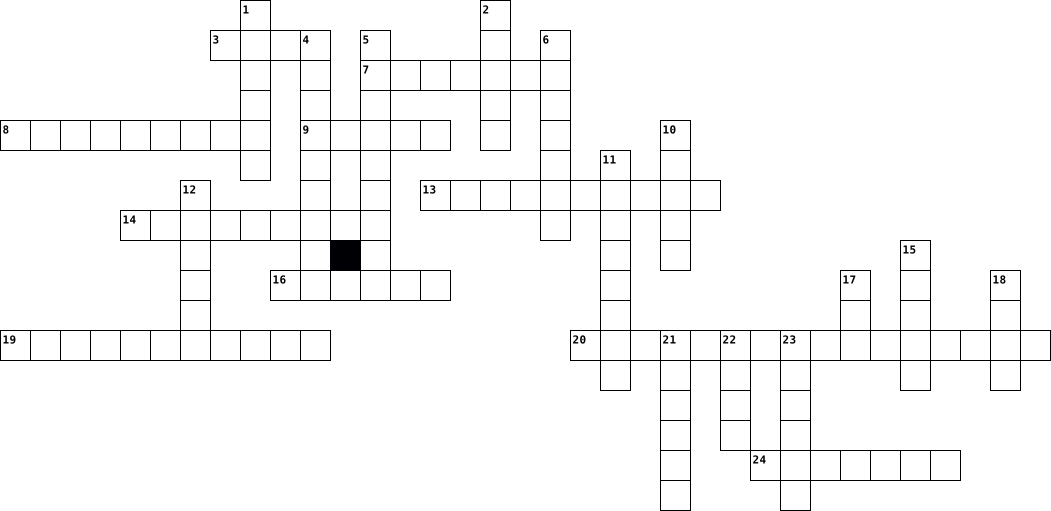
Across
- The red planet; contains ferricoxide which is a mineral that makes it look very red
- Smallest gas giant; surface gravity almost Earth-like
- 3 times as long as the Grand Canyon; once called "Easter Bunny"; dwarf planet
- Only known planet that can obtain life
- A very large star brighter than a giant star
- When a supernova dies down and collapses
- A body in the universe that contains millions or billions of stars
- The core of a supernova/supergian star
- A star that fuses hydrogen atoms to form helium atoms in its core
- Largest planet in a solar system with around sixty moons
Down
- Shaped like an egg, named after Hawaiian goddess; dwarf planet
- Considered both a planet and a dwarf planet
- When a star explodes MASSIVELY
- A galaxy that neighbors the Milky way
- The closest planet to the sun
- Hottest planet in our solar system
- A galaxy that contains the solar system
- The planet with the most rings in our solar system
- The only dwarf planet located in the inner solar system
- A main sequence star located in our Solar System; all the planets orbit around it
- A spheroid (ball) made out of hydrogen, helium and plasma
- A body of interstellar stars
- The most massive, second largest dwarf planet in the solar system
- The only planet in our solar system that orbits on its side; the least dense planet
24 Clues: A body of interstellar stars • The closest planet to the sun • When a star explodes MASSIVELY • Hottest planet in our solar system • A galaxy that neighbors the Milky way • Only known planet that can obtain life • The core of a supernova/supergian star • A galaxy that contains the solar system • When a supernova dies down and collapses • ...
Solar System Crossword Puzzle 2025-02-15

Across
- Of Mars' two moons this has the outermost orbit.
- This orbits the earth.
- The smallest of Jupiter's four Galilean moons.
- The planet that we live on.
- This dwarf planet used to be considered the ninth planet in our solar system.
- This is the largest asteroid in the asteroid belt that doesn't count as a dwarf planet.
- The largest moon in our solar system.
- This belt is between the orbit of Mars and Jupiter.
- This dwarf planet is in the asteroid belt.
- Jupiter's second largest moon.
- This planet is known for its bright and extensive system of rings.
- The largest planet in our solar system.
Down
- Pluto's moon.
- The largest moon of Uranus
- The innermost of Jupiter's four Galilean moons.
- The second largest moon in our solar system.
- This belt is home to several dwarf planets.
- The planet in our solar system that is furthest from the sun.
- This planet's orbit is between Earth's and Jupiter's.
- The planet with the largest axial tilt.
- Of Mars' two moons this has the innermost orbit.
- The smallest planet in our solar system.
- This is the third largest asteroid in the asteroid belt.
- Neptune's largest moon.
- This is the larger of the two planets in our solars system that have no moons.
- The most massive known dwarf planet in our solar system.
- the center of our solar system.
27 Clues: Pluto's moon. • This orbits the earth. • Neptune's largest moon. • The largest moon of Uranus • The planet that we live on. • Jupiter's second largest moon. • the center of our solar system. • The largest moon in our solar system. • The planet with the largest axial tilt. • The largest planet in our solar system. • The smallest planet in our solar system. • ...
SISTEMA SOLAR 2022-03-23

Across
- Planeta mais quente do sistema solar.
- Satélites natural dos planetas.
- Quarto planeta do sistema solar em afastamento do sol, conhecido como planeta vermelho.
- Corpo relativamente grande em órbita ao redor do Sol ou de outra estrela.
- Número de planetas do sistema solar
- O Sol e todos os corpos que orbitam ao seu redor devido à gravidade.
- Terceiro planeta do sistema solar.
- Maior planeta do sistema solar
Down
- Única estrela do sistema solar.
- Sétimo planeta do sistema solar.
- Sexto planeta do Sistema Solar pela ordem de afastamento do Sol, e o segundo em volume.
- Planeta mais próximo do sol.
- Nossa galáxia.
- Planeta mais distante do sol.
14 Clues: Nossa galáxia. • Planeta mais próximo do sol. • Planeta mais distante do sol. • Maior planeta do sistema solar • Única estrela do sistema solar. • Satélites natural dos planetas. • Sétimo planeta do sistema solar. • Terceiro planeta do sistema solar. • Número de planetas do sistema solar • Planeta mais quente do sistema solar. • ...
SISTEMA SOLAR 2022-03-23

Across
- Quarto planeta do sistema solar em afastamento do sol, conhecido como planeta vermelho.
- Satélites natural dos planetas.
- Corpo relativamente grande em órbita ao redor do Sol ou de outra estrela.
- Planeta mais distante do sol.
- O Sol e todos os corpos que orbitam ao seu redor devido à gravidade.
Down
- Maior planeta do sistema solar
- Terceiro planeta do sistema solar.
- Nossa galáxia.
- Sexto planeta do Sistema Solar pela ordem de afastamento do Sol, e o segundo em volume.
- Planeta mais próximo do sol.
- Única estrela do sistema solar.
- Sétimo planeta do sistema solar.
- Número de planetas do sistema solar
- Planeta mais quente do sistema solar.
14 Clues: Nossa galáxia. • Planeta mais próximo do sol. • Planeta mais distante do sol. • Maior planeta do sistema solar • Satélites natural dos planetas. • Única estrela do sistema solar. • Sétimo planeta do sistema solar. • Terceiro planeta do sistema solar. • Número de planetas do sistema solar • Planeta mais quente do sistema solar. • ...
SISTEMA SOLAR 2022-03-23

Across
- Quarto planeta do sistema solar em afastamento do sol, conhecido como planeta vermelho.
- Satélites natural dos planetas.
- Corpo relativamente grande em órbita ao redor do Sol ou de outra estrela.
- Planeta mais distante do sol.
- O Sol e todos os corpos que orbitam ao seu redor devido à gravidade.
Down
- Maior planeta do sistema solar
- Terceiro planeta do sistema solar.
- Nossa galáxia.
- Sexto planeta do Sistema Solar pela ordem de afastamento do Sol, e o segundo em volume.
- Planeta mais próximo do sol.
- Única estrela do sistema solar.
- Sétimo planeta do sistema solar.
- Número de planetas do sistema solar
- Planeta mais quente do sistema solar.
14 Clues: Nossa galáxia. • Planeta mais próximo do sol. • Planeta mais distante do sol. • Maior planeta do sistema solar • Satélites natural dos planetas. • Única estrela do sistema solar. • Sétimo planeta do sistema solar. • Terceiro planeta do sistema solar. • Número de planetas do sistema solar • Planeta mais quente do sistema solar. • ...
SISTEMA SOLAR 2022-03-23
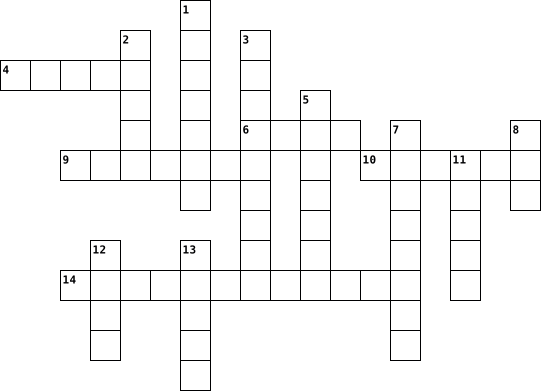
Across
- Quarto planeta do sistema solar em afastamento do sol, conhecido como planeta vermelho.
- Satélites natural dos planetas.
- Corpo relativamente grande em órbita ao redor do Sol ou de outra estrela.
- Planeta mais distante do sol.
- O Sol e todos os corpos que orbitam ao seu redor devido à gravidade.
Down
- Maior planeta do sistema solar
- Terceiro planeta do sistema solar.
- Nossa galáxia.
- Sexto planeta do Sistema Solar pela ordem de afastamento do Sol, e o segundo em volume.
- Planeta mais próximo do sol.
- Única estrela do sistema solar.
- Sétimo planeta do sistema solar.
- Número de planetas do sistema solar
- Planeta mais quente do sistema solar.
14 Clues: Nossa galáxia. • Planeta mais próximo do sol. • Planeta mais distante do sol. • Maior planeta do sistema solar • Satélites natural dos planetas. • Única estrela do sistema solar. • Sétimo planeta do sistema solar. • Terceiro planeta do sistema solar. • Número de planetas do sistema solar • Planeta mais quente do sistema solar. • ...
Solar Energy 2021-01-19

Across
- solar Energy is the _______ and most abundant
- cells solar panels are a combination of mutiple
- solar Energy can be used for () food
- when can solar power not be created?
- an advantage of solar power is that is a()source
- type of energy
- solar energy is dependant on the () of the country
- a solar panel has to be put on the () of the building
Down
- source
- solar energy is converted by green plants into() energy?
- solar power reduces() bills
- a solar panel has to be facing the ()
- solar energy can be used to make potable ()
13 Clues: source • type of energy • solar power reduces() bills • solar Energy can be used for () food • when can solar power not be created? • a solar panel has to be facing the () • solar energy can be used to make potable () • solar Energy is the _______ and most abundant • cells solar panels are a combination of mutiple • an advantage of solar power is that is a()source • ...
5 General Science U2 L1 Solar System 2025-03-14

Across
- This is the largest planet in the solar system
- These are small natural objects that revolve around other objects
- This is the smallest planet in our solar system
- This is the 3rd planet from the sun
- This planet rotates on its side
- This is a large round body that revolves around a star
- ____ planets are nearly round bodies whose orbits cross the orbits of other bodies
- There are ____ of rings around Saturn
- These are pieces of rock that break off of asteroids
- In our solar system the planets revolve around a start called the ____
- This is what the planets spin on
- This planet is known to have the most ____
- This is the 2nd largest planet in the solar system
Down
- This is the windiest planet in our solar system
- ____ planets are very dense and rocky
- Planets in our solar system are ____ based on their distance from the sun
- This is a very hot planet with thousands of volcanoes
- These are rock and iron objects that orbit the sun
- This is a chunk of frozen gasses, rock, ice and dust
- ____ system is made up of a star and the planets that revolve around it
- This is known as the red planet
- How many planets are in our solar system?
- Mercury is the closest planet to the ____
23 Clues: This planet rotates on its side • This is known as the red planet • This is what the planets spin on • This is the 3rd planet from the sun • ____ planets are very dense and rocky • There are ____ of rings around Saturn • How many planets are in our solar system? • Mercury is the closest planet to the ____ • This planet is known to have the most ____ • ...
Solar Phenomena: Delve into the dynamic and captivating phenomena of our Sun. 2025-03-27

Across
- Small, bright cells on the Sun’s surface caused by convection.
- The superheated, ionized gas that makes up the Sun.
- A disturbance caused by solar wind interacting with Earth’s magnetosphere.
- The type of radiation emitted by the Sun that causes sunburn.
- A large, bright feature extending outward from the Sun’s surface.
- The visible surface of the Sun, where most sunlight is emitted.
- The period of greatest solar activity in the Sun’s cycle.
- The event when the Sun first appears above the horizon.
Down
- Thin jets of plasma that rise and fall from the Sun’s chromosphere.
- A massive burst of solar plasma and magnetic fields released into space.
- The process that powers the Sun by combining hydrogen atoms.
- A continuous stream of charged particles released by the Sun.
- A sudden, intense burst of radiation from the Sun’s surface.
- The event when the Moon blocks the Sun’s light from Earth.
- Dark, cooler areas on the Sun’s surface caused by magnetic activity.
- The outermost layer of the Sun, visible during a total solar eclipse.
- The invisible force protecting Earth from solar particles.
- The period of least solar activity in the Sun’s cycle.
- The vast region around the Sun dominated by solar wind.
- A device used to block the Sun’s light to study the corona.
20 Clues: The superheated, ionized gas that makes up the Sun. • The period of least solar activity in the Sun’s cycle. • The vast region around the Sun dominated by solar wind. • The event when the Sun first appears above the horizon. • The period of greatest solar activity in the Sun’s cycle. • The event when the Moon blocks the Sun’s light from Earth. • ...
The 3 E's 2024-04-07
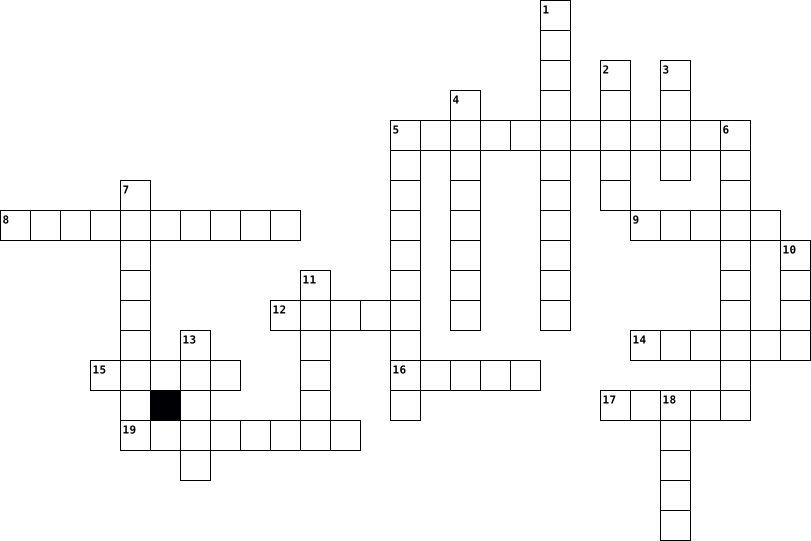
Across
- How long will totalism last?
- One different type of solar eclipse
- _____ panels are used to help generate electricity
- How many watts does a light bulb have?
- What is the rarest type of eclipse called?
- What eclipse happens every 100 years?
- Eclipse occurs when Sun, Moon and Earth are what?
- Electricity is measured in?
- solar panels convert _____ to energy
Down
- How long will the solar eclipse last?
- Renewable energy can help save?
- The kid's toy used to invent electricity
- Who invented electricity Benjamin ______
- How often does the solar eclipse happen?
- What eclipse happens every 9 years?
- What electricity is made of?
- Type of _____ turbine used to produce energy
- The ____ of April is date of the eclipse
- The end of eclipse will occur in which state?
- First state to experience totality?
20 Clues: Electricity is measured in? • How long will totalism last? • What electricity is made of? • Renewable energy can help save? • What eclipse happens every 9 years? • One different type of solar eclipse • First state to experience totality? • solar panels convert _____ to energy • How long will the solar eclipse last? • What eclipse happens every 100 years? • ...
Formation Of Our Solar System 2017-05-04
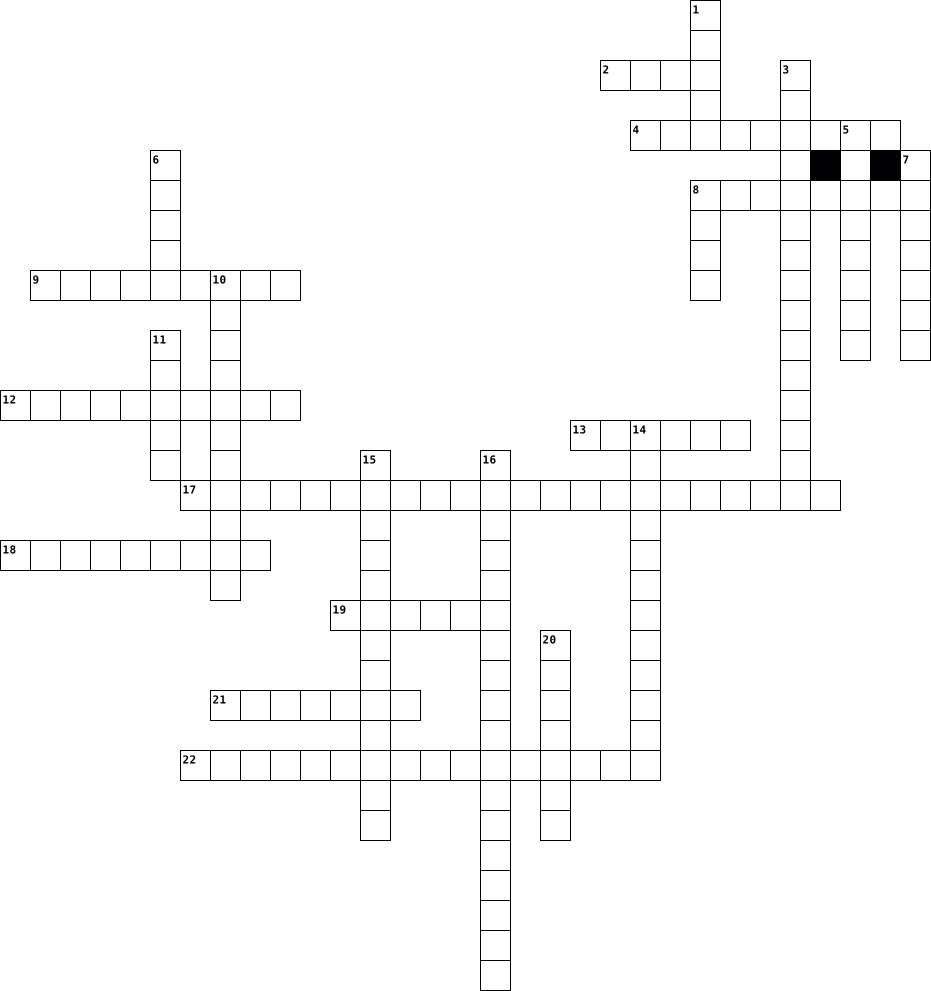
Across
- Objects whose formation involves a large collision involving Earth.
- A planet that is formed when a rocky core accumulates gas rapidly.
- A dwarf planet that is larger than pluto
- A dense super hot ball surrounded by debris.
- A disc of debris surrounding the solar system
- A planet that is knocked onto its side.
- The energy liberated at the beginnings of stars formation.
- The unit of distance based on the speed of light.
- A planet surrounded by large rings
- The largest planet in the solar system.
- The average distance from the Earth to the Sun:
Down
- The hottest planet in the solar system.
- A cloud of dust that can be described as a star nursery.
- Another potentially habitable solar system.
- A dwarf planet that was once considered a planet.
- Theriosied to once being the seventh planet of the solar system.
- The only planet in our solar system populated with active robots.
- The name of a rocky planet.
- The only planet in the solar system with life.
- A Disc of debris located between mars and Jupiter.
- The zone away from a star where water could exists as a liquid.
- The number of billion meters in 1 Au
- The planets which is only an iron core.
23 Clues: The name of a rocky planet. • A planet surrounded by large rings • The number of billion meters in 1 Au • The hottest planet in the solar system. • A planet that is knocked onto its side. • The planets which is only an iron core. • The largest planet in the solar system. • A dwarf planet that is larger than pluto • Another potentially habitable solar system. • ...
Solar Energy 2021-01-19
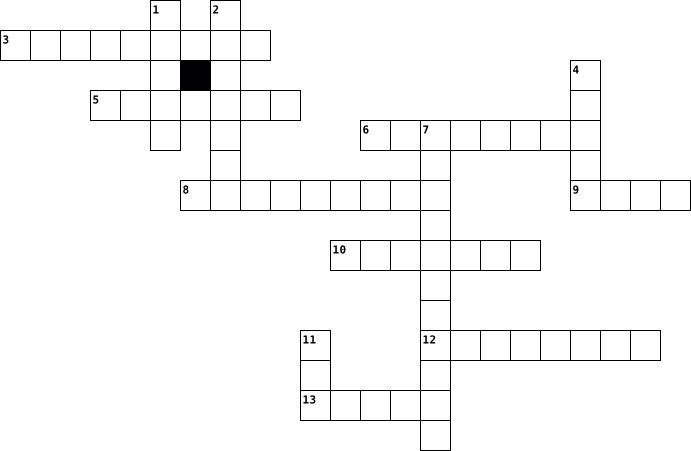
Across
- an advantage of solar power is that is a()source
- type of energy
- solar energy is converted by green plants into() energy?
- source
- a solar panel has to be put on the () of the building
- solar Energy can be used for () food
- solar Energy is the _______ and most abundant
- when can solar power not be created?
Down
- solar energy can be used to make potable ()
- solar energy is dependant on the () of the country
- cells solar panels are a combination of mutiple
- solar power reduces() bills
- a solar panel has to be facing the ()
13 Clues: source • type of energy • solar power reduces() bills • solar Energy can be used for () food • when can solar power not be created? • a solar panel has to be facing the () • solar energy can be used to make potable () • solar Energy is the _______ and most abundant • cells solar panels are a combination of mutiple • an advantage of solar power is that is a()source • ...
Energy Terms Crossword 2024-04-27

Across
- A device that converts energy of motion into electricity
- The breakdown of water molecules in oxygen and hydrogen
- Energy produced from material made by living organisms
- A device that uses silicon and electron movement to harness solar energy
- Natural distribution of solar energy in a building
- Energy harnessed from the movement of the tide
- A system of mirrors that harness solar energy as electricity
- Technological distribution of solar energy in a building
Down
- Heat energy produced by pressure
- The kinetic energy of moving water
- A device that uses metal to harness solar energy
- A group of devices that convert wind energy into electricity
- A pump that uses the stable temperature of soil to heat a building
- Acronym for the process that converts ocean thermal energy to electricity
- Liquid fuel derived from biomass
- A device that transforms hydrogen into electricity
16 Clues: Heat energy produced by pressure • Liquid fuel derived from biomass • The kinetic energy of moving water • Energy harnessed from the movement of the tide • A device that uses metal to harness solar energy • Natural distribution of solar energy in a building • A device that transforms hydrogen into electricity • Energy produced from material made by living organisms • ...
Solar System 2022-01-09
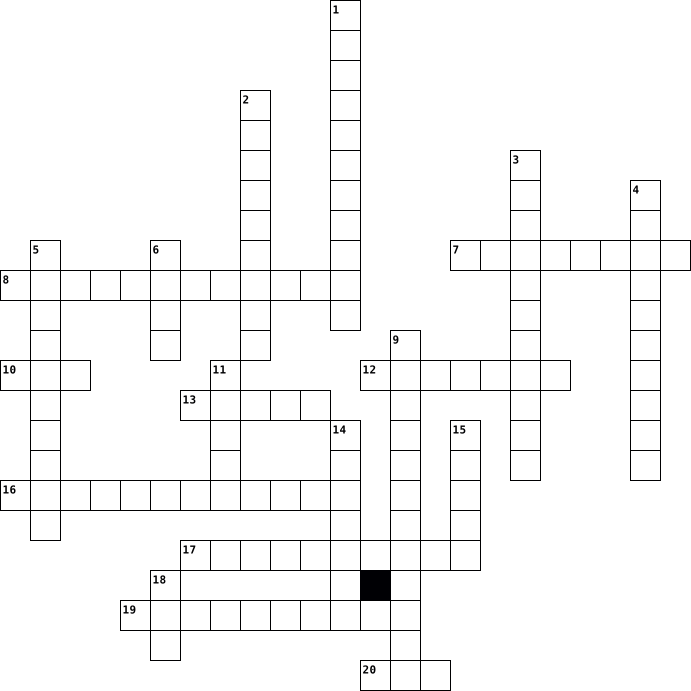
Across
- Name of the galaxy all the stars and plants reside?
- First manned space ship to the land on the moon?
- Number of stars in our solar system?
- Smallest plant in our solar system?
- Number of rings for the planet Saturn?
- Neil Armstrong stated, "that's on small step for man,_________for mankind?
- Number of confirmed moons for Jupiter?
- Person that accompanied Niel Armstrong to the moon?
- Color of Mars?
Down
- Current number of satellites in Earth's orbit?
- First astronaut to orbit the Earth, completing 3 orbits?
- America's first satellite launched into Earth's orbit?
- Space shuttle orbitor that exploded upon take off due to two small o-rings?
- Former Soviet Union's first satellite launched into Earth's orbit?
- Number of inner planets in our solar system?
- Name of the rover that landed on Mars in Febraury of 2021?
- Number of planet in our solar system?
- Largest plant in the solar system?
- name of Neptune inner most ring?
- Largest star in our solar system?
20 Clues: Color of Mars? • name of Neptune inner most ring? • Largest star in our solar system? • Largest plant in the solar system? • Smallest plant in our solar system? • Number of stars in our solar system? • Number of planet in our solar system? • Number of rings for the planet Saturn? • Number of confirmed moons for Jupiter? • Number of inner planets in our solar system? • ...
comets, asteroids, and meteors 2024-11-22

Across
- a planet that is apart of the inner solar system. it is rocky and bright
- a planet in the inner solar system that is closest to the sun.
- a celestial body that has enough gravity to stay round but is to small to be a planet
- a large chuck of rock that's larger than a meteor but smaller than a dwarf planet
- an icy planet that is in the outer solar system. it is farthest from the sun.
- a planet in the outer solar system. it is a gas giant that is the biggest planet
- a planet that is a part of the inner solar system. it is red and rocky.
- an asteroid ike object that has a coma, a nucleus, and a tail.
Down
- a region just beyond neptune. pluto, ceires, and at least two other dwarf planets reside there.
- the largest dwarf planet in our solar system.
- a celestial body that orbits something larger than it
- a sphere of small icy objects in our solar system
- a celestial body that has enough gravity to stay round
- a planet in the inner solar system that we live on.
- an icy planet that spins on its side in the outer solar system.
- a small chunk of rock that generally comes from the kuiper belt or the oort cloud
- a gas giant in the outer solar system that is known for its rings.
17 Clues: the largest dwarf planet in our solar system. • a sphere of small icy objects in our solar system • a planet in the inner solar system that we live on. • a celestial body that orbits something larger than it • a celestial body that has enough gravity to stay round • a planet in the inner solar system that is closest to the sun. • ...
Solar Power 2025-11-18

Across
- solar energy can be stored in these
- sun provides ....... energy which is captured by solar panels
- made from lots of solar cells
- small units that convert light from the sun to electricity
- solar panels produce lower amounts of electricity when the weather is ......\
- the time when solar panels don't produce electricity
Down
- it takes 8 ....... for the sun's light to reach the earth
- the closest star to the earth
- solar panels can be used on rocket....
- the sun generates both light and ..... to the earth
- a large area of land with many solar panels is called a solar....
- chemical element used in solar cells
- where solar panels are put on a house
13 Clues: the closest star to the earth • made from lots of solar cells • solar energy can be stored in these • chemical element used in solar cells • where solar panels are put on a house • solar panels can be used on rocket.... • the sun generates both light and ..... to the earth • the time when solar panels don't produce electricity • ...
Day 7 2025-08-06

Across
- Planet that rotates on its side
- ___'s law relates galaxy distance to recession velocity
- Astrophotographer's camera type
- Spin on one's axis
- Type of universe that will expand forever
- Orbit around a central body
- Of our local star
- Spectral shift indicating a galaxy is moving away
- Season of maximum solar heating
- The Red Planet
- Outermost planet in our solar system
- Study of the universe's origin and evolution
- Measure of an orbit's deviation from circular
- ___ craters are left by meteorites
Down
- Solar system's innermost planet
- Instrument that analyzes starlight by wavelength
- ___ star (what our Sun will become)
- Milky Way, for one
- Icy visitors with glowing tails
- Planet whose day is longer than its year
- Shape of every planet's orbit
- Explosive stellar endings
- Solar system's largest planet
- Earth's reflected solar illumination
- Dense stellar remnant type
- Like stellar nurseries in space
- What a meteorite is while traveling through the atmosphere
- Planet famous for its prominent rings
- Third rock from the Sun
29 Clues: The Red Planet • Of our local star • Milky Way, for one • Spin on one's axis • Third rock from the Sun • Explosive stellar endings • Dense stellar remnant type • Orbit around a central body • Shape of every planet's orbit • Solar system's largest planet • Solar system's innermost planet • Planet that rotates on its side • Astrophotographer's camera type • Icy visitors with glowing tails • ...
Astronomia 2023-04-12
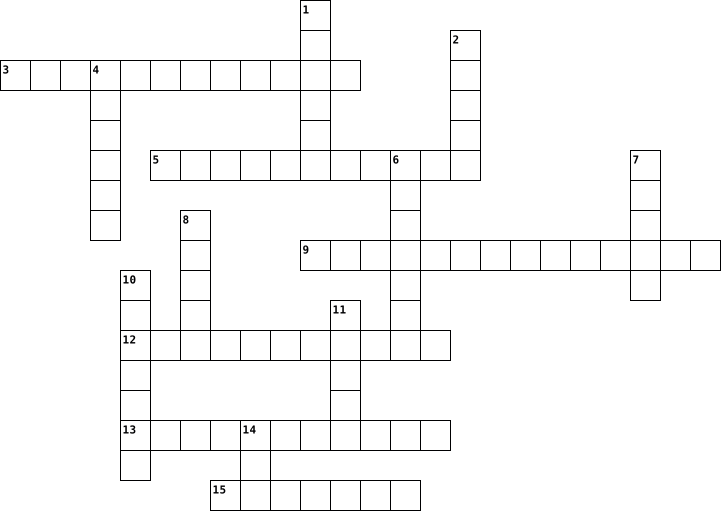
Across
- é uma expressão que designa o grupo de objetos presentes no Sistema Solar, podendo ser planetas, estrelas, asteroides, cometas, meteoroides e satélites naturais
- Uma região do espaço com um campo gravitacional tão intenso quenenhuma matéria ou radiação pode escapar
- O ___ é a estrela mais próxima da Terra
- Um corpo celeste que orbita o sol, tem massa suficiente para assumiruma forma quase redonda, não limpou a vizinhança em torno de suaórbita e não é uma lua
- Um planeta fora do Sistema Solar
- 6º planeta do Sistema Solar
Down
- 8º planeta do Sistema Solar
- Um grande planeta composto principalmente de hélio e/ou hidrogênio
- Conhecido planeta anão do Sistema Solar
- Um sistema de estrelas, remanescentes estelares, gás interestelar,poeira, matéria escura, unidos pela gravidade
- 2º planeta do Sistema Solar
- Terceiro planeta do Sistema Solar
- 5º planeta do Sistema Solar
- 4º planeta do Sistema Solar
- O ____ é o único satélite natural da Terra e o corpo celeste maispróximo
15 Clues: 8º planeta do Sistema Solar • 2º planeta do Sistema Solar • 5º planeta do Sistema Solar • 4º planeta do Sistema Solar • 6º planeta do Sistema Solar • Um planeta fora do Sistema Solar • Terceiro planeta do Sistema Solar • Conhecido planeta anão do Sistema Solar • O ___ é a estrela mais próxima da Terra • Um grande planeta composto principalmente de hélio e/ou hidrogênio • ...
Solar System 2023-09-29
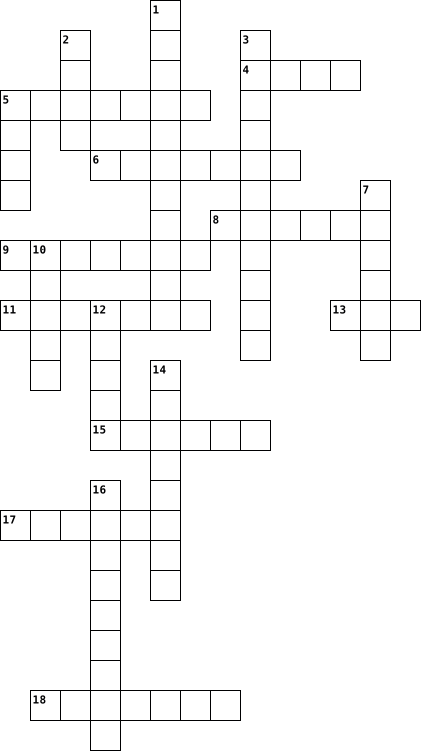
Across
- The ________ cloud is outside the Trans-Neptunian region that contains trillion of objects
- Smallest planet in the solar system
- Largest planet in the solar system
- The ____________ belt is located outside of Neptune
- Coldest planet in the solar system
- ___________ is the reason that planets are round
- The ________ contains over 99% of all of the mass in the solar system
- Planet known for its distinct ring system
- The _________ mission is where U.S. astronauts stepped foot on the moon
- The solar system is approximately 4.6 ___________ years old
Down
- Pluto is considered a _________ __________
- Iron oxide dust gives this planet its red hue
- The space race was between United States and the ________ _______
- ___________ is the reason scientist were able to predict where Neptune was located
- Planet that is rotating at almost a 90 degree angle
- 2/3 of this planet is covered in water
- Hottest planet in the solar system
- The ____________ belt is located between Mars and Jupiter
- There is a possibility that Planet Nine is a primordial _________ __________
19 Clues: Largest planet in the solar system • Coldest planet in the solar system • Hottest planet in the solar system • Smallest planet in the solar system • 2/3 of this planet is covered in water • Planet known for its distinct ring system • Pluto is considered a _________ __________ • Iron oxide dust gives this planet its red hue • ...
eclipse-EA 2024-03-25
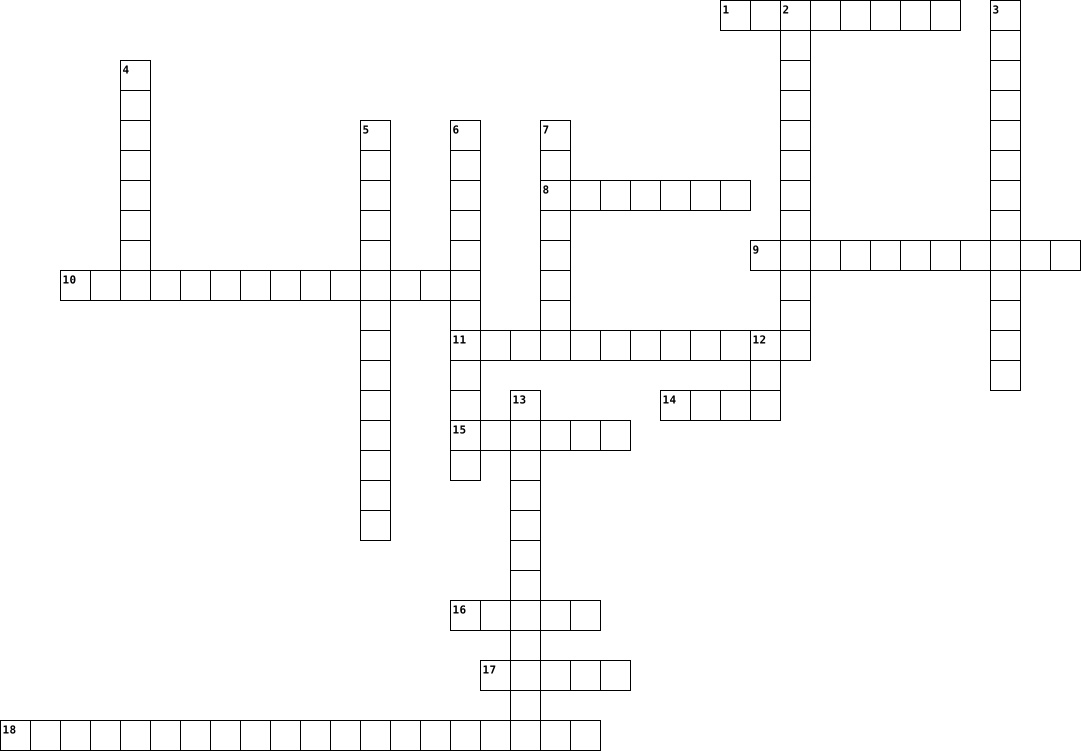
Across
- the area where the people viewing a solar eclipse will see a total eclipse.
- the moon phase during a solar eclipse.
- when the last baily bead is left and creates an image of a ring.
- a partail solar eclipse where the moon is in its furthest state form the earth and therefore can not block out the sun fully.
- when the moon is on the other side of the earth from the sun.
- the moon orbiting around the earth.
- a dark area or shape produced by a body coming between rays of light and a surface.
- the darkest part of the elliptical shadow,
- planet we live.
- the protective gear that you should where while viewing a solar eclipse.
Down
- a solar eclipse where the moon fully blocks out the sun.
- a contraption that lets you view a solar eclipse with no eye gear and is made of cardboard.
- the moon phase during a lunar eclipse.
- a solar eclipse where the moon only partaily blocks out the sun.
- when the moon passes through the sun and the earth.
- the lighter part of the elliptical shadow.
- the star in our solar system.
- when the moon is blocking out the sun but not enough to block out all of the suns ray leaving blobs of light.
18 Clues: planet we live. • the star in our solar system. • the moon orbiting around the earth. • the moon phase during a lunar eclipse. • the moon phase during a solar eclipse. • the lighter part of the elliptical shadow. • the darkest part of the elliptical shadow, • when the moon passes through the sun and the earth. • a solar eclipse where the moon fully blocks out the sun. • ...
dimarinos energy crossword 2018-02-26
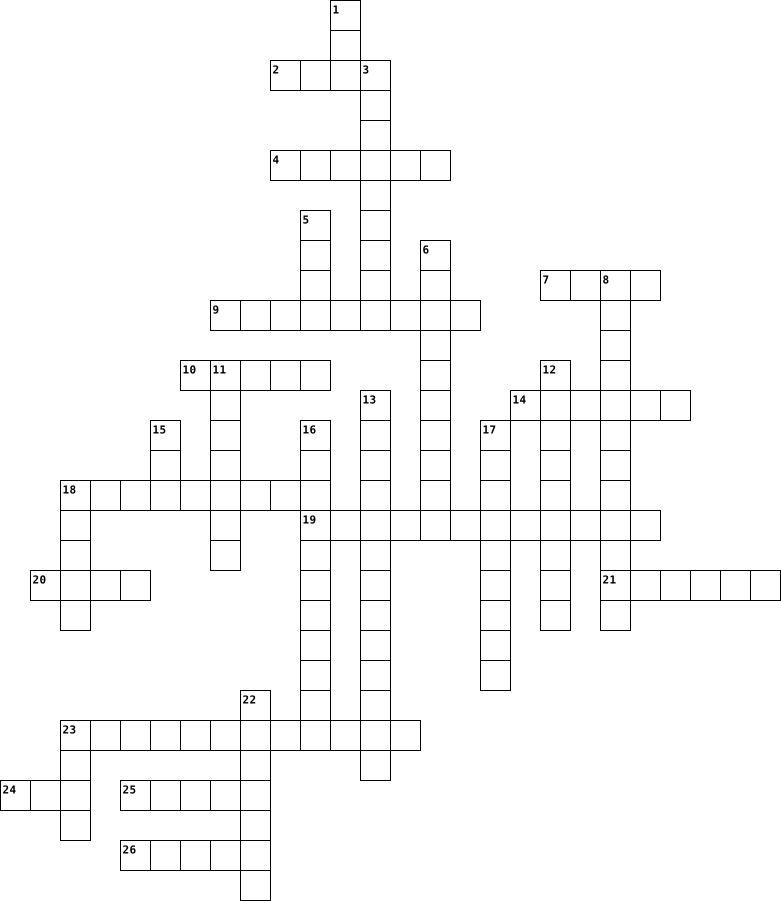
Across
- windmills create _____ energy
- biomass does not produce _____
- biomass energy is very _____ to access
- hydropower produces _____ percent of the worlds electricity
- the cost of hydropower is very _____
- every day the sun radiates large amounts of _____
- wind moves _____to create wind energy
- this means heating a space of a house or building
- biomass pollutes _____ than fossil fuels
- geothermal causes _____ global warming
- geothermal energy comes from _____miles below the earth surface
- many animals _____ in the wind energy process
- hydrogen fuel cells cost a _____ amount of money
- you cannot get solar energy at _____
Down
- solar energy is made of from gasses from the_____
- hydrogen fuel cells have a very _____ process
- geothermal comes from the earths _____
- biomass may reduce _____ gasses
- people use _____to capture solar power
- geothermal energy provides _____
- people use _____wells to get geothermal energy
- solar energy does not cause _____
- you cannot get solar energy in _____ weather
- the windmill powerplants use _____ which is bad for the earth
- hydropower is ______ energy
- hydrogen electricity is powered by _____
- biomass is threatening our _____
- solar energy is renewable because sunlight is _____
28 Clues: hydropower is ______ energy • windmills create _____ energy • biomass does not produce _____ • biomass may reduce _____ gasses • geothermal energy provides _____ • biomass is threatening our _____ • solar energy does not cause _____ • the cost of hydropower is very _____ • you cannot get solar energy at _____ • wind moves _____to create wind energy • ...
Earth and Space Systems Test Review 2021-09-23
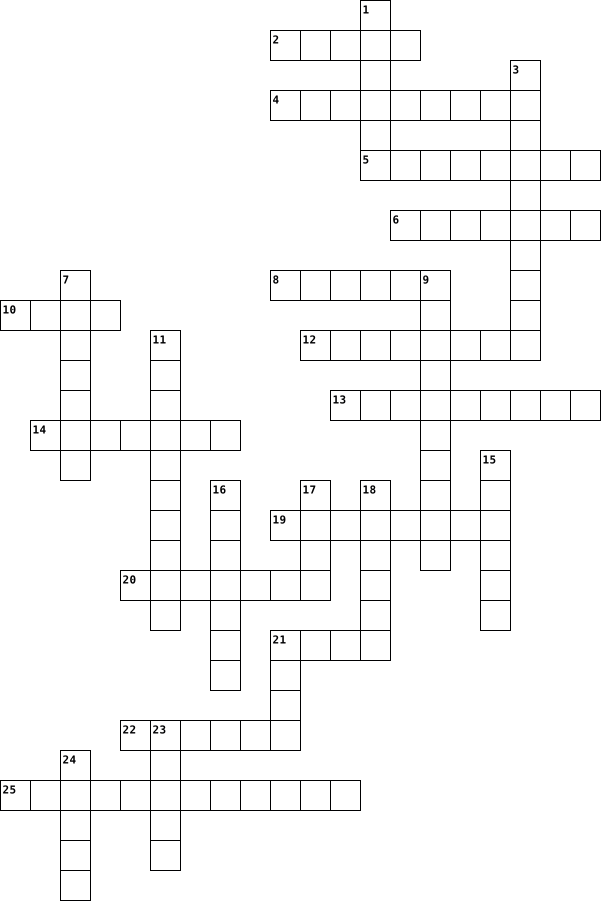
Across
- A planet with similar size and mass to Earth.
- Created geocentric model of solar system
- Between Mars and Jupiter is an ____ belt.
- Planet closest to the sun.
- When the moon appears to be getting larger
- have.
- Oxygen and ____ mostly make up Earth's atmosphere
- A meteroid that has hit Earth's surface
- Supported geocentric model of solar system
- Earth spinning on its axis
- Largest Planet
- Which object's gravity affects tides the most?
- Planet that rotates completely on its side
- Sun-centered model of the solar system.
Down
- First country to orbit human around the Earth
- One complete trip of Earth around the sun.
- Force that holds all planets in orbiting position around the sun.
- Earth centered model of the solar system.
- Created heliocentric model of solar system
- When the moon appears to be getting smaller
- Supported heliocentric model of solar system
- Number of moons Earth, Jupiter, Uranus and
- Planet with lowest density and large number of rings.
- Smallest planet
- Earth is a ____ planet (terrestrial)
- Could not clear its neighborhood and became a dwarf planet.
26 Clues: have. • Largest Planet • Smallest planet • Planet closest to the sun. • Earth spinning on its axis • Earth is a ____ planet (terrestrial) • A meteroid that has hit Earth's surface • Sun-centered model of the solar system. • Created geocentric model of solar system • Between Mars and Jupiter is an ____ belt. • Earth centered model of the solar system. • ...
Histories of lives 2021-10-08
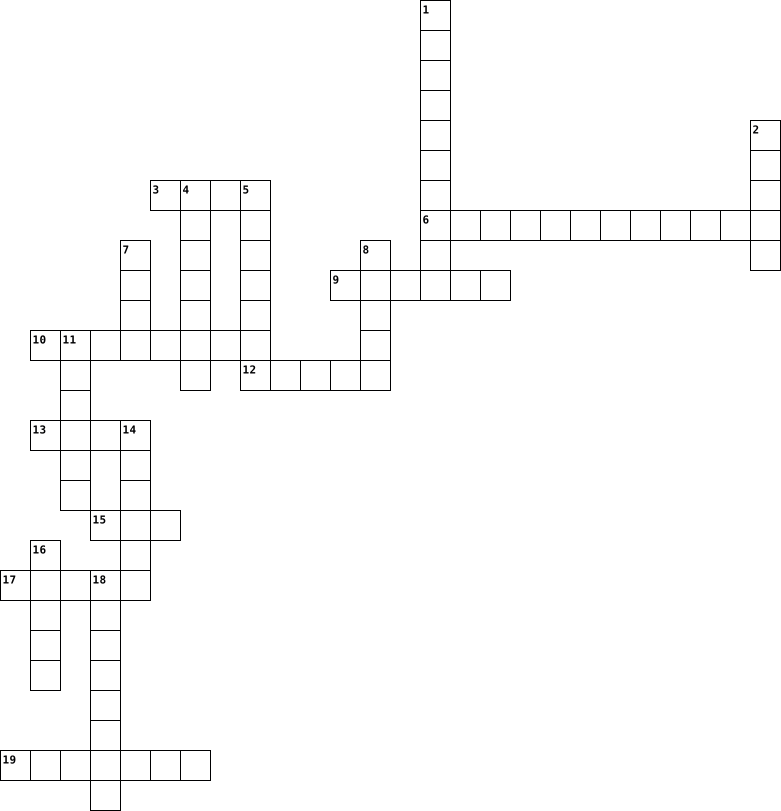
Across
- natural satellite of earth
- India got _________ (freedom’s synonym) in 1947
- the coldest planet in the sola system
- earth spinning
- number of planets in the solar system
- the rusty red planet in the solar system
- closest star to the earth
- the land of the rising sun
- the biggest planet in the solar system
Down
- earth spining around the sun
- the continents on earth
- Japan started the Tokyo ________ in 1964
- the last planet in the solar system
- the biggest continent on earth
- the fixed path which earth use to revolve around the sun
- capital of Canada
- the lightest planet in the solar system
- the planet which has air,water,sunlight,plants and living organisams on it
- the belt between Mars and Jupiter
19 Clues: earth spinning • capital of Canada • the continents on earth • closest star to the earth • natural satellite of earth • the land of the rising sun • earth spining around the sun • the biggest continent on earth • the belt between Mars and Jupiter • the last planet in the solar system • the coldest planet in the sola system • number of planets in the solar system • ...
PV Systems Crossword Quiz 2016-09-01

Across
- business that designs, builds, and installs complete PV systems, using various manufactures for components
- solar irradiation received on a specific surface over a period of time, usually one day
- point in earth's orbit that is closest to the sun
- power of solar radiation per unit area
- utility’s network of conductors, substations, and equipment that distributes electricity to consumers
- the plane of Earth's orbit around the sun
- directly from the sun that reaches Earth without scattering
- a point in the sky directly overhead a particular location
- estimate of terrestrial solar irradiance around solar moon at sea level
- total amount of energy accumulated over an area over time
- Earth's orbital position when solar declination is zero
Down
- in which many smaller power-generating systems create electrical power near the point of consumption
- device designed to absorb solar radiation and convert it to heart or electricity typically
- solar radiation reaching the surface of the earth
- a visit to asses sit conditions to determine specifications and requirements for a potential PV system site
- angle between direction of a compass needle points (magnetic north) and true geographical north
- representation of thickness of the atmosphere that radiation must pass through to reach a point on a surface
- personal fall arrest system - prevention system that stops a worker from falling with different components and devices
- angle between the equatorial plane and rays of sun
- trackinsystem that rotates one axis to approximately follow the position of the sun
- energy that emanates from the sun in the form of waves & particles
- system that rotates two axes independently to follow the position of the sun
- area of sky between sun paths for summer solstice and winter solstice for a particular location.
- number of hours required for a day's total solar irradiation to accumulate at peak sun conditions
- sun's radiation that is scattered by the atmosphere and clouds
- collection of information about a facility's or customer's energy use
- concentrating solar power is a technology that uses mirrors and lenses to reflect and concentrate solar radiation from a large area to a small area
- point in earth's orbit that is farthest from the sun
- projection of solar altitude angle onto imaginary plane perpendicular to the surface of an obstruction
- Earth's orbital position when solar declination is at it's minimum or maximum
30 Clues: power of solar radiation per unit area • the plane of Earth's orbit around the sun • solar radiation reaching the surface of the earth • point in earth's orbit that is closest to the sun • angle between the equatorial plane and rays of sun • point in earth's orbit that is farthest from the sun • Earth's orbital position when solar declination is zero • ...
astronomy smart 2024-05-20

Across
- closet star to earth
- study of celestial bodies
- Imaginary Earth line
- outer planet mission
- Region of the Solar System beyond Neptune
- Largest moon of Jupiter
- distance that light travels in one year
- star explosion
- opposite of cheese burger
Down
- largest planet in our solar system
- nearest spiral galaxy
- First artificial satellite to orbit Earth
- procces in stars
- Planets orbiting stars outside our Solar System
- galaxy containing our solar system
- instrument used for viewing distant objects
- fastest rotating star
- first moon landing mission
- giant cloud of dust and gas
- saturns prominent features
- Space telescope named after an astronomer
- red palnet
22 Clues: red palnet • star explosion • procces in stars • closet star to earth • Imaginary Earth line • outer planet mission • nearest spiral galaxy • fastest rotating star • Largest moon of Jupiter • study of celestial bodies • opposite of cheese burger • first moon landing mission • saturns prominent features • giant cloud of dust and gas • largest planet in our solar system • ...
Solar System Formation Crossword 2022-04-20
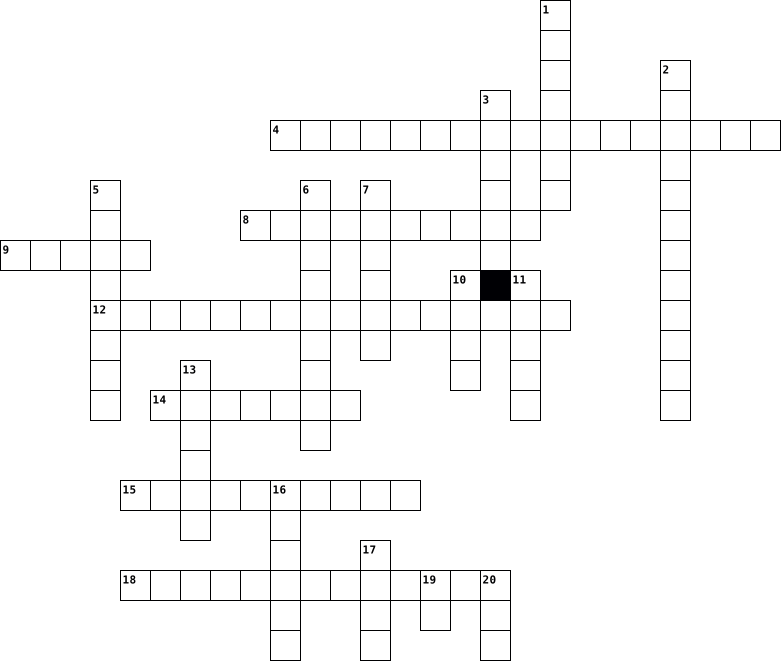
Across
- Exist between stars and are made up of hydrogen and helium gases
- The first idea for the model of the solar system
- The fourth planet from the Sun
- The apparent backward movement of a planet
- The first planet to form in the solar system
- Who discovered the idea of a heliocentric solar system model
- Left over particles from the formation of the solar system
Down
- First to use a telescope to observe the sky
- The current idea for the model of the solar system
- Material remaining from the formation of planets
- A hard and rocky planetesimal (found in the asteroid belt)
- What happens to a interstellar cloud when it becomes to dense
- Discovered three laws of planetary motion
- A bright ball of gas
- A cold and icy planetesimal (found in the Oort Cloud)
- The moon that has frozen seafloor volcanoes
- Discovered the law of gravity
- The shape a interstellar cloud takes when it collapses fully
- The measurement of distance that is equal to the distance from the Earth to the Sun
- The largest star in our solar system
20 Clues: A bright ball of gas • Discovered the law of gravity • The fourth planet from the Sun • The largest star in our solar system • Discovered three laws of planetary motion • The apparent backward movement of a planet • First to use a telescope to observe the sky • The moon that has frozen seafloor volcanoes • The first planet to form in the solar system • ...
Planets and Stars 2025-10-29

Across
- the seventh planet from the sun in our solar system
- the fourth planet from the Sun in our solar system
- circling another object, like the Earth and the Sun
- the second planet from the Sun in our solar system
- the first planet from the Sun in our solar system
- the fifth planet from the Sun in our solar system
- describes when there is not a lot of visible light; the opposite of bright
- the amount of space between two things
- the third planet from the Sun in our solar system
Down
- a large, round object in outer space that orits a star
- system all the planets and other objects that orbit around a star
- panel a penl that can absorb the Sun's light to use as a source of energy
- the eighth planet from the Sun in our solar system
- the sixth planet from the Sun in our solar system
- describes when there is a lot of visible light; the opposite of dim
- a pretend version of something that scientists use when the real thing is too big, small, or complicated to work with
- energy energy from the Sun that can warm things up and be made into electricity; a renewable resource
17 Clues: the amount of space between two things • the sixth planet from the Sun in our solar system • the first planet from the Sun in our solar system • the fifth planet from the Sun in our solar system • the third planet from the Sun in our solar system • the fourth planet from the Sun in our solar system • the second planet from the Sun in our solar system • ...
Passive and Active Solar Heating in Residential Homes 2013-04-10

Across
- The side of your house in which the sun would have to be facing in order to use suns energy.
- Solar heating that only uses rays from the sun to heat up your house.
- More of these are needed to prevent freezing and extremely high temperatures towards your solar heating device.
- Solar heating is a ___ resource.
- The amount of emissions produced from only solar powered homes.
- This happens to your homes market value once solar heating is installed.
Down
- Along with air, this can be used as a conductor for active solar heating.
- System that uses both solar heating and wind turbines in the same house.
- Name of the system that sits on the roof of your house and transforms the suns rays into electricity; They are called __ cells.
- Solar heating is an __ technology.
- Compared to active solar heating, passive is ___ when it comes to cost.
- Solar heating that uses mechanical parts to distribute heat throughout a house.
- Where the electricity comes from in your house (traditional form of electricity); Your house can still be attached to this if you install solar heating.
- Main source of energy for solar heating.
14 Clues: Solar heating is a ___ resource. • Solar heating is an __ technology. • Main source of energy for solar heating. • The amount of emissions produced from only solar powered homes. • Solar heating that only uses rays from the sun to heat up your house. • Compared to active solar heating, passive is ___ when it comes to cost. • ...
The Solar System 2023-11-10
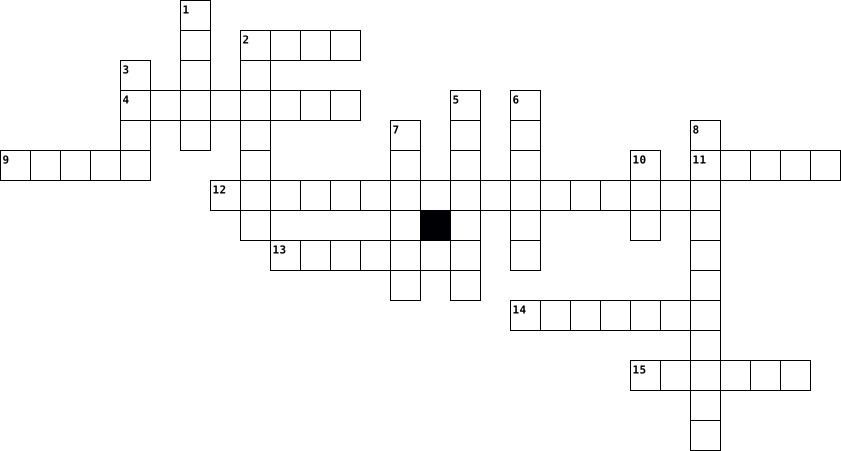
Across
- a celestial body that revolves around a planet
- large and small rocks orbiting the sun
- a planet in the solar system that is often called "Earth's twin"
- a curved path followed by a satellite as it revolves around an object
- attraction between two objects due to the invisible force of gravity
- a planet in the solar system that is blue in color and is farthest from the sun
- the force that causes objects with mass to attract one another
- a planet in the solar system that is known for its rings
Down
- a planet in the solar system that mostly made of water and where life is found
- a planet in the solar system that is closest to the sun
- a planet in the solar system that is known for its RED color
- the largest planet in the solar system
- a large celestial body that revolves around a star in the solar system
- a planet in the solar system that rotates on its side
- a star and a group of planets and other celestial bodies that are held by its gravitational attraction and revolve around it
- the luminous star which earth and other planets revolve
16 Clues: large and small rocks orbiting the sun • the largest planet in the solar system • a celestial body that revolves around a planet • a planet in the solar system that rotates on its side • a planet in the solar system that is closest to the sun • the luminous star which earth and other planets revolve • a planet in the solar system that is known for its rings • ...
Astronomy 2024-05-29

Across
- how many planets orbit the sun
- biggest planet in the solar system
- a small body of mass when it hits the ground
- planet that is tilted on its side
- most inner layer of the sun
- fourth planet from the sun
- snowball like objects that orbit the sun
- a small body orbeting the sun
- the most outer layer of the sun
- Earth is the ...... planet in the solar system
Down
- the smallest planet in the solar system
- unit of measurement used
- what is the furthest planet in the solar system
- the study of celestial bodies
- what is the densest planet in the solar system
- the sun is how many billion years old
- a small body of mass that enters earth atmposphere
- when the sun ejects matter
- center of our solar system
- Pluto is a ...... planet
20 Clues: unit of measurement used • Pluto is a ...... planet • fourth planet from the sun • when the sun ejects matter • center of our solar system • most inner layer of the sun • the study of celestial bodies • a small body orbeting the sun • how many planets orbit the sun • the most outer layer of the sun • planet that is tilted on its side • biggest planet in the solar system • ...
P1 Chapter 4 The Space 2025-10-31

Across
- System The Sun and the planets and other bodies in orbit around it.
- A rocky inner planet, second from the Sun in our Solar System.
- eclipse An eclipse where all of the Sun is covered by the Moon.
- A collection of stars that make a pattern in the sky.
- A piece of rock or dust that makes a streak of light in the night sky.
- A rocky body orbiting Earth; it is Earth’s only natural satellite.
- Lumps of rock orbiting the Sun left over from when the Solar System formed.
- of the Moon Shape of the Moon as we see it from the Earth.
- Made of rock.
- Any large body that orbits a star in a Solar System.
- Everything that exists.
- A non-contact force that acts between two masses.
- A rocky inner planet, fourth from the Sun in the Solar System.
- A stony or metallic object that has fallen to Earth from outer space.
- Way The galaxy containing our Sun and Solar System.
- eclipse An eclipse where the Moon comes between the Sun and the Earth.
- eclipse An eclipse that happens when the Earth comes between the Sun and the Moon.
- A rocky inner planet, closest to the Sun in the Solar System.
- planet A small lump of rock in orbit around the sun.
Down
- A scientist who studies space.
- The period on one section of the Earth or other planet when it is facing away from the Sun.
- eclipse A solar eclipse where only part of the Sun is covered by the Moon.
- A number of stars and the solar systems around them grouped together.
- Dust particles frozen in ice that orbit the Sun.
- A squashed circle or oval shape.
- Planets in orbit around a star other than our Sun.
- A body in space that gives out its own light.
- satellite A manmade spacecraft.
- The time it takes a planet to make one full spin on its axis.
- The star at the centre of our Solar System.
- Changes in the temperature during the year as the Earth moves around its orbit.
- The imaginary line that the Earth spins around.
- giant An outer planet in the Solar System made mainly from gas.
- A rocky inner planet, third from the Sun in the Solar System.
- The length of time it takes for a planet to orbit the Sun.
- satellite A moon in orbit around a planet.
- The path taken by one body in space around another.
37 Clues: Made of rock. • Everything that exists. • A scientist who studies space. • satellite A manmade spacecraft. • A squashed circle or oval shape. • satellite A moon in orbit around a planet. • The star at the centre of our Solar System. • A body in space that gives out its own light. • The imaginary line that the Earth spins around. • ...
The Space 2019-11-20
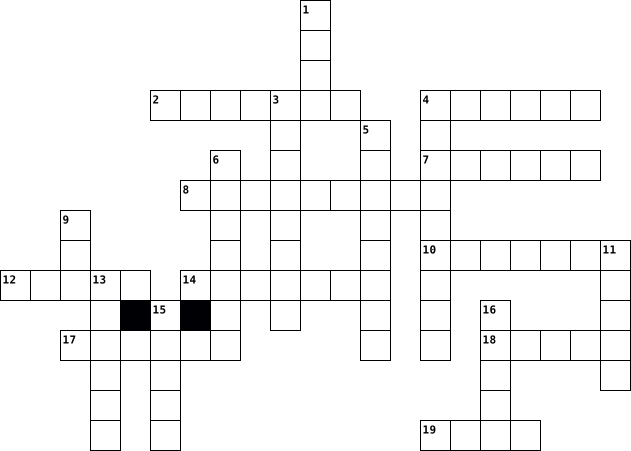
Across
- the biggest explosion.
- It has got rings.
- Thing that goes around a star
- Rock that crashes with a planet.
- the farest planet in the Solar System
- The hottest planet in the Solar System
- The biggest planet of the Solar System.
- It has a lot of stars in there.
- The fastest thing.
- The smallest particle.
Down
- The satellite of the earth
- A rock in the space
- An explosion of a star.
- the biggest thging.
- The smallest planet of Solar System
- A big ball of fire
- It's called the ''Blue planet''.
- The 7th planet.
- The red planet
- A very small planet.
20 Clues: The red planet • The 7th planet. • It has got rings. • A big ball of fire • The fastest thing. • A rock in the space • the biggest thging. • A very small planet. • the biggest explosion. • The smallest particle. • An explosion of a star. • The satellite of the earth • Thing that goes around a star • It has a lot of stars in there. • Rock that crashes with a planet. • ...
astronomy smart 2024-05-20

Across
- closet star to earth
- study of celestial bodies
- Imaginary Earth line
- outer planet mission
- Region of the Solar System beyond Neptune
- Largest moon of Jupiter
- distance that light travels in one year
- star explosion
- opposite of cheese burger
Down
- largest planet in our solar system
- nearest spiral galaxy
- First artificial satellite to orbit Earth
- procces in stars
- Planets orbiting stars outside our Solar System
- galaxy containing our solar system
- instrument used for viewing distant objects
- fastest rotating star
- first moon landing mission
- giant cloud of dust and gas
- saturns prominent features
- Space telescope named after an astronomer
- red palnet
22 Clues: red palnet • star explosion • procces in stars • closet star to earth • Imaginary Earth line • outer planet mission • nearest spiral galaxy • fastest rotating star • Largest moon of Jupiter • study of celestial bodies • opposite of cheese burger • first moon landing mission • saturns prominent features • giant cloud of dust and gas • largest planet in our solar system • ...
Solar Power in Slovenia 2024-05-20

Across
- The scientist that got a Nobel prize for his work on solar power?
- The ___ crisis promoted the search for renewable energy sources.
- Which particles make up the electrical current gathered in the solar panels?
- Which type of renewable energy source produces hazardous waste?
- The inventor of the first solar panel.
- Which Slovene municipality is experimenting with solar and hydro power plants?
- The best power gained from a renewable source.
Down
- Which structures are present in sunlight that enable solar power to be collected?
- Which country is leading with the most solar farms in the world?
- PVs.
- The scientist whose work led to the promoting of solar power?
- The inventor of the first solar cell.
- The ____ race created a demand for solar power development?
13 Clues: PVs. • The inventor of the first solar cell. • The inventor of the first solar panel. • The best power gained from a renewable source. • The ____ race created a demand for solar power development? • The scientist whose work led to the promoting of solar power? • Which type of renewable energy source produces hazardous waste? • ...
Renewable Energy Crossword Puzzle 2021-06-14

Across
- farm of wind turbines
- energy from tides
- process to make hydrogen
- electricity from biomass
- uses mirrors to produce electricity from solar energy
- uses the wind to generate electricity
- uses solar energy to get heat for water
- get solar energy and changes into electricity
Down
- uses solar energy to heat buildings
- energy that comes from living things
- pump that uses geothermal energy
- renewable energy from water
- uses solar energy for heating
- generates electricity from hydrogen
- energy that comes from the earth’s crust
- fuel that comes from biomass
16 Clues: energy from tides • farm of wind turbines • process to make hydrogen • electricity from biomass • renewable energy from water • fuel that comes from biomass • uses solar energy for heating • pump that uses geothermal energy • uses solar energy to heat buildings • generates electricity from hydrogen • energy that comes from living things • uses the wind to generate electricity • ...
Sun helps us explore other planets 2026-01-26

Across
- a pretend version of something that scientists use when the real thing is too big, small, or complicated to work with
- describes when there is not a lot of visible light; the opposite of bright
- the sixth planet from the Sun in our solar system
- the amount of space between two things
- the fourth planet from the Sun in our solar system
- the third planet from the Sun in our solar system
- all the planets and other objects that orbit around a star
- the eighth planet from the Sun in our solar system
- a large, round object in outer space that orbits a star
- the first planet from the Sun in our solar system
Down
- describes when there is a lot of visible light; the opposite of dim
- the fifth planet from the Sun in our solar system
- a panel that can absorb the Sun's light to use as a source of energy
- the second planet from the Sun in our solar system
- energy from the Sun that can warm things up and be made into electricity; a renewable resource
- circling another object, like the Earth around the Sun
- the seventh planet from the Sun in our solar system
17 Clues: the amount of space between two things • the fifth planet from the Sun in our solar system • the sixth planet from the Sun in our solar system • the third planet from the Sun in our solar system • the first planet from the Sun in our solar system • the second planet from the Sun in our solar system • the fourth planet from the Sun in our solar system • ...
How can the Sun help us explore other planets? Vocabulary 2025-03-11

Across
- describes when there is a lot of visible light; the opposite of dim
- energy from the Sun that can warm things up and be made into electricity; a renewable resource
- the amount of space between two things
- the sixth planet from the Sun in our solar system
- a pretend version of something that scientists use when the real thing is too big, small, or complicated to work with
- the first planet from the Sun in our solar system
- the third planet from the Sun in our solar system
- the ninth planet from the Sun in our solar system
Down
- a panel that can absorb the Sun's light to use as a source of energy
- a large, round object in outer space that orbits a star
- all the planets and other objects that orbit around a star
- the fourth planet from the Sun in our solar system
- circling another object, like the Earth around the Sun
- the fifth planet from the Sun in our solar system
- describes when there is not a lot of visible light; the opposite of bright
- the seventh planet from the Sun in our solar system
- the second planet from the Sun in our solar system
17 Clues: the amount of space between two things • the fifth planet from the Sun in our solar system • the sixth planet from the Sun in our solar system • the first planet from the Sun in our solar system • the third planet from the Sun in our solar system • the ninth planet from the Sun in our solar system • the fourth planet from the Sun in our solar system • ...
4-1: How can the Sun help us explore other planets? 2025-02-12

Across
- the first planet from the Sun in our solar system
- a large, round object in outer space that orbits a star
- the fourth planet from the Sun in our solar system
- describes when there is a lot of visible light; the opposite of dim
- the second planet from the Sun in our solar system
- energy from the Sun that can warm things up and be made into electricity; a renewable resource
- the fifth planet from the Sun in our solar system
- the sixth planet from the Sun in our solar system
- the amount of space between two things
- the third planet from the Sun in our solar system
- describes when there is not a lot of visible light; the opposite of bright
Down
- a pretend version of something that scientists use when the real thing is too big, small, or complicated to work with
- the eighth planet from the Sun in our solar system
- the seventh planet from the Sun in our solar system
- a panel that can absorb the Sun's light to use as a source of energy
- circling another object, like the Earth around the Sun
- all the planets and other objects that orbit around a star
17 Clues: the amount of space between two things • the first planet from the Sun in our solar system • the fifth planet from the Sun in our solar system • the sixth planet from the Sun in our solar system • the third planet from the Sun in our solar system • the eighth planet from the Sun in our solar system • the fourth planet from the Sun in our solar system • ...
Solar System 2013-05-06
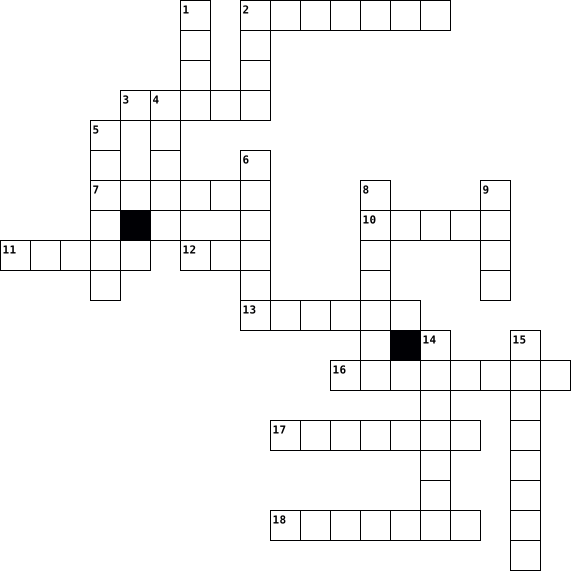
Across
- / Closest to the sun
- / Hottest planet in the solar system
- / A shooting star
- / The planets path
- / Now called a dwarf planet
- / The star at the center of our solar system
- / Known for its rings
- / Minor planet
- / Without this our solar system would collapse and be none excitant
- / Fastest rotating planet
Down
- / Earth's natural satellite
- / Contains the largest volcano in the solar system
- / Only planet known to support life
- / Known as a dirty snowball
- / Discovered in 1781
- / The Northern Light
- / A distant sun
- / Farthest from the sun
- / Our galaxy
19 Clues: / Our galaxy • / Minor planet • / A distant sun • / A shooting star • / The planets path • / Closest to the sun • / Discovered in 1781 • / The Northern Light • / Known for its rings • / Farthest from the sun • / Fastest rotating planet • / Earth's natural satellite • / Known as a dirty snowball • / Now called a dwarf planet • / Only planet known to support life • ...
Planets and Dwarf Planets 2021-04-21
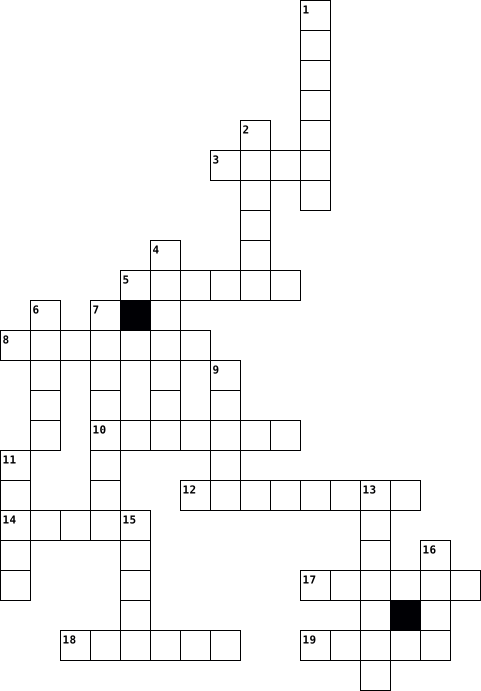
Across
- has 2 moons
- moon named Weywot
- moon named Actaea
- nearest planet to the sun
- moon named Xiangliu
- smallest dwarf planet
- has 53 confirmed & 29 awaiting confirmation moons
- coldest planet in the solar system
- hottest planet in the solar system
Down
- was discovered on 18 June 2002
- moons named Namaka and Hi'iaka
- biggest planet in the solar system
- we are on it
- moon named MK2
- disqualified from being a planet in 2006
- moon named Vanth
- farthest planet from the solar system
- takes 11,400 years to complete an orbit
- has a moon named Dysnomia
19 Clues: has 2 moons • we are on it • moon named MK2 • moon named Vanth • moon named Weywot • moon named Actaea • moon named Xiangliu • smallest dwarf planet • nearest planet to the sun • has a moon named Dysnomia • was discovered on 18 June 2002 • moons named Namaka and Hi'iaka • biggest planet in the solar system • coldest planet in the solar system • hottest planet in the solar system • ...
Space #1 2024-03-16
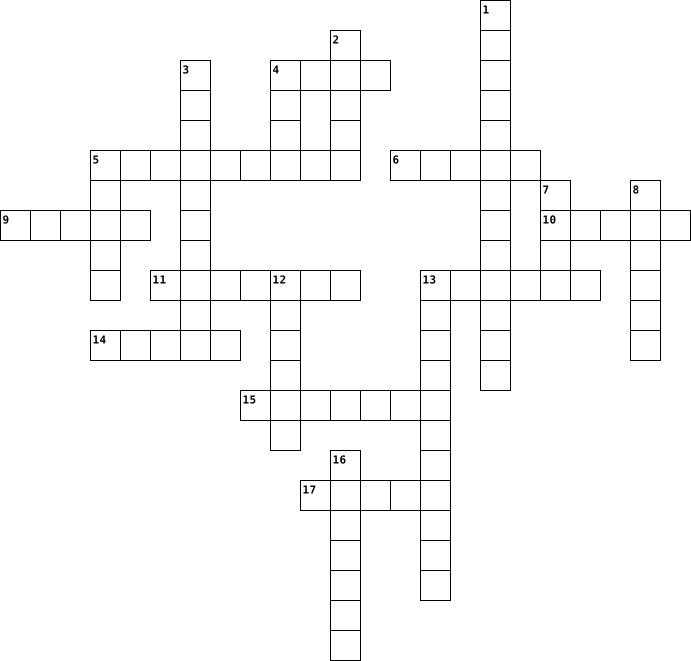
Across
- The fourth planet from the sun.
- Planet that orbits a star outside the solar system.
- Icy small Solar System body
- Small star.
- Saturn's largest moon/
- The smallest planet in our solar system.
- The sixth planet from the sun.
- Used to be called the ninth planet.
- The fifth planet from the sun.
- The sixth largest planet in our solar system.
Down
- Group of stars that appears to form a pattern or picture.
- Curved path of a celestial object or spacecraft.
- Similar to the asteroid belt, but is much larger.
- Earth's natural satellite.
- The third planet from the sun.
- Natural body visible in the sky at night.
- Collection of gas, dust, and billions of stars and their solar systems.
- The seventh planet from the sun.
- The eight planets and their moons in orbit round the sun.
- The eighth planet from the sun.
20 Clues: Small star. • Saturn's largest moon/ • Earth's natural satellite. • Icy small Solar System body • The third planet from the sun. • The sixth planet from the sun. • The fifth planet from the sun. • The fourth planet from the sun. • The eighth planet from the sun. • The seventh planet from the sun. • Used to be called the ninth planet. • The smallest planet in our solar system. • ...
outer space 2023-01-05
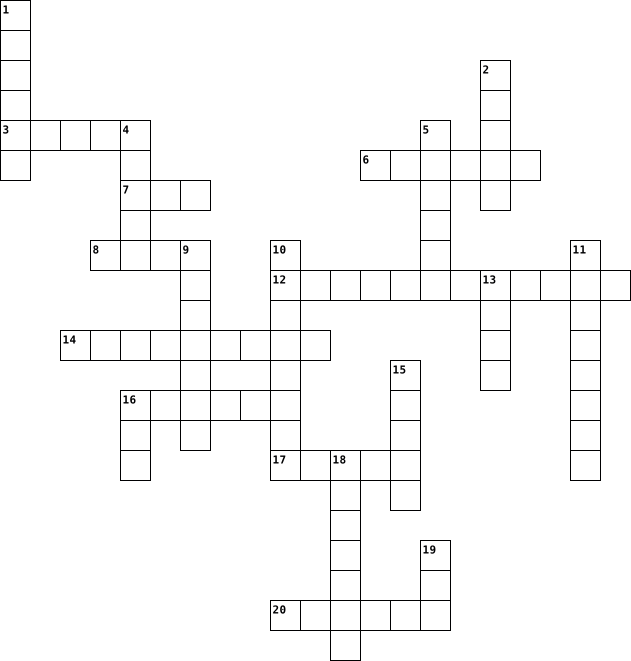
Across
- The only planet not named after God
- The first planet discovered
- The first animal sent to space
- The planet that ofen called the red planet
- The length from center of sun to earth
- The distance covered by light in one year
- The name of first rover
- The Small bodies that orbit elliptically
- The brightest star in our milky way
Down
- The largest planet
- The hottest planet in our solar system
- The largest constellation
- The only planet that can float in water
- The name of first satellite in space
- The time it takes for sun to orbit
- The smallest satellite in solar system
- The satellite that smells like gunpowder
- The only dwarf planet in our solar system
- The largest object in solar system
- The planet with the fastest orbit
- The largest satellite in solar system
21 Clues: The largest planet • The name of first rover • The largest constellation • The first planet discovered • The first animal sent to space • The planet with the fastest orbit • The time it takes for sun to orbit • The largest object in solar system • The only planet not named after God • The brightest star in our milky way • The name of first satellite in space • ...
Solar systems and Planets 2026-02-20

Across
- A terrestrial planet that we live on
- Group of stars born from the same cosmic cloud
- Belt Between Mars and Jupiter
- The number of planets in our solar system
- Dwarf planet between Mars and Jupiter in the asteroid belt
- Tilted on it's side
- Used to be a planet now is a dwarf planet
- Our solar system
- The smallest planet and the first planet in the solar system
- 4th planet from the sun and the second smallest Planet
Down
- How old is our solar system
- Planets are luminous
- Jupiter, Saturn, Uranus, Neptune
- The planet Pluto's orbit crosses
- Mercury, Venus, Earth, Mars
- Second biggest planet and has rings
- Must orbit around a star, has enough mass to be pulled into a sphere and have gravity, and it dominates it's orbit
- The Hottest planet that has an atmosphere of gas
- Biggest star in our solar system
- Biggest Planet
20 Clues: Biggest Planet • Our solar system • Tilted on it's side • Planets are luminous • How old is our solar system • Mercury, Venus, Earth, Mars • Jupiter, Saturn, Uranus, Neptune • The planet Pluto's orbit crosses • Belt Between Mars and Jupiter • Biggest star in our solar system • Second biggest planet and has rings • A terrestrial planet that we live on • ...
Space Terms 2013-06-12
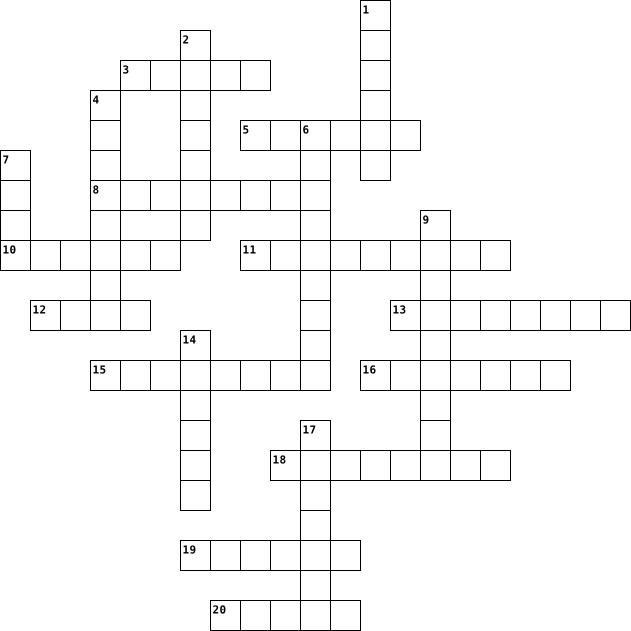
Across
- Ex planet, now classified as a dwarf
- A very bright and distant object
- A small rocky body or minor planet orbiting the sun
- The brightest star in the night sky
- The area around a star with the right conditions to sustain life.
- The push of solar radiation is known as solar ____
- Speed
- The lighter outer part of a shadow
- A place where new stars are made
- The largest moon in our solar system
- A cloud of gas and dust
- The path an object takes around another
Down
- Pulsating Star (portmanteau)
- The largest planet in our solar system
- The Moon Cycle
- The closest galaxy to the Milky Way (excluding the Canis Major Dwarf)
- Also known as the red planet
- An object from outer space landing on the surface of the Earth.
- The region of the solar system beyond the planets
- The "father of modern observational astronomy"
20 Clues: Speed • The Moon Cycle • A cloud of gas and dust • Pulsating Star (portmanteau) • Also known as the red planet • A very bright and distant object • A place where new stars are made • The lighter outer part of a shadow • The brightest star in the night sky • Ex planet, now classified as a dwarf • The largest moon in our solar system • The largest planet in our solar system • ...
comets 2021-01-31
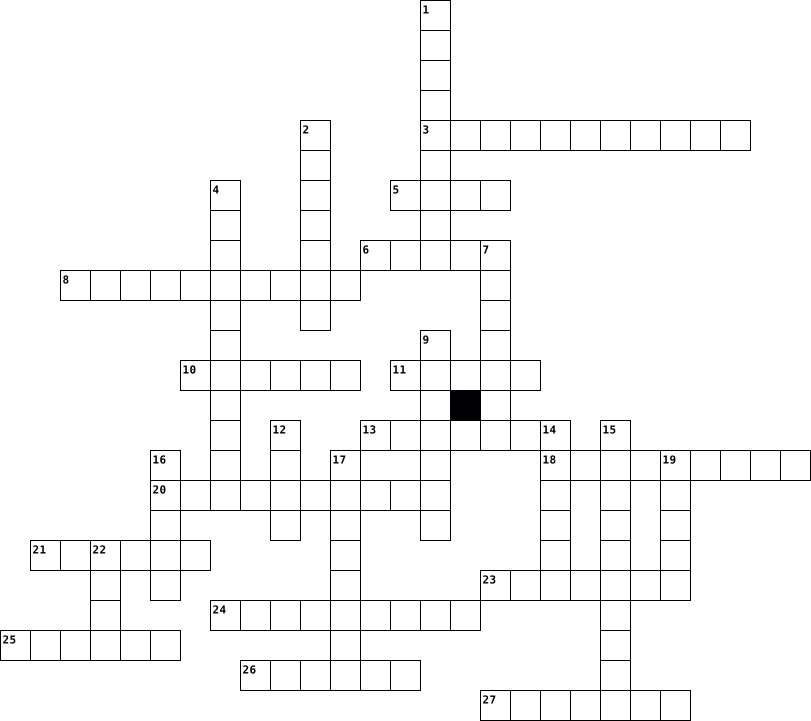
Across
- the sun and all the planets that move around it
- the center of an object
- the big deerp body of salty water
- the storns from space
- groups of liquid droplets that can be seen above the surface of a planet
- It is the hottest planet in our solar system
- the very important part of a stuff
- A person whose job involves travelling and working in a spacecraft
- a scientist who studies the space
- the objects that have two tails behind them
- the dark area on the surface of the sun
- heat, energy, etc. that is sent out in the form of rays
- it caused by the earth moves around the sun
- the planet in the solar system that is 7th in order of distance from the sun
- a large round object in space that moves around a star
Down
- a tool used to see things far away
- the largest planet of the solar system
- is much smaller than other planets in solar system
- a planet in the solar system that is 8th in order of distance from the sun
- the smallest planet in the solar system
- the round object that moves around the earth
- a large planet in the solar system that has 10000 rings around it
- the gases around the planets
- the planet that we live on
- the highest land on the earth
- the path an object takes around another object
- the planet in the solar system that is fourth in order of distance from the sun,
27 Clues: the storns from space • the center of an object • the planet that we live on • the gases around the planets • the highest land on the earth • the big deerp body of salty water • a tool used to see things far away • the very important part of a stuff • a scientist who studies the space • the largest planet of the solar system • the smallest planet in the solar system • ...
Tesla Solar Panel 2024-05-21

Across
- What type of solar panel is good for any roof
- BougeRV mainly makes flexible solar panels for two vehicles
- How many times does it cost less than commercial solar panels
- How long does a commercial solar panel last
- How much percent is the electricity going up yearly
- What is the cost of the most expensive polysilicon per kg
- One main component of the Tesla Panel
- How long does a BougeRv solar panel last
Down
- Photovoltaic cell is what colour?
- What type of Crystal cell
- What percentage of solar panels are made from crystalline silicon
- Thousand How much does a Tesla house cost
- Greatly improved ...
- positive and ...
- How many times more power is made than normal
- hundred How long does a BougeRV solar panel last without use
- Which company makes flexible solar panels
17 Clues: positive and ... • Greatly improved ... • What type of Crystal cell • Photovoltaic cell is what colour? • One main component of the Tesla Panel • How long does a BougeRv solar panel last • Thousand How much does a Tesla house cost • Which company makes flexible solar panels • How long does a commercial solar panel last • What type of solar panel is good for any roof • ...
The Solar System 2025-11-26

Across
- a rocky, airless body that orbits the sun and is smaller than a planet
- when a very massive star's core collapses under its own gravity after running out of nuclear fuel
- a massive, gravitionally bound system consisting of stars, stellar remnants, interstellar gas and dust, and dark matter
- considered being an 'ice giant'; has the strongest winds
- a small rocky or metallic object in space orbiting the sun; ranges in size from dust grain to a small asteroid
- the largest planet in the solar system
- the biggest star in the solar system
Down
- the galaxy that includes the solar system
- the smallest planet in our solar system
- an icy, rocky, and dusty body that orbits the Sun
- the only natural sattelite of Earth,it orbits around it
- the hottest planet in the solar system, also called 'the morning star'
- known as the planet dwarf; astrologists are trying to include it in the solar system itself
- the coldest planet in the solar system
- a planet which rings are made of ice and rock particles
- a place where life is possible
- a planet known as the 'red planet'; it is home to the largest volcano of the solar system, olympus mons
17 Clues: a place where life is possible • the biggest star in the solar system • the coldest planet in the solar system • the largest planet in the solar system • the smallest planet in our solar system • the galaxy that includes the solar system • an icy, rocky, and dusty body that orbits the Sun • the only natural sattelite of Earth,it orbits around it • ...
Space 2024-03-08
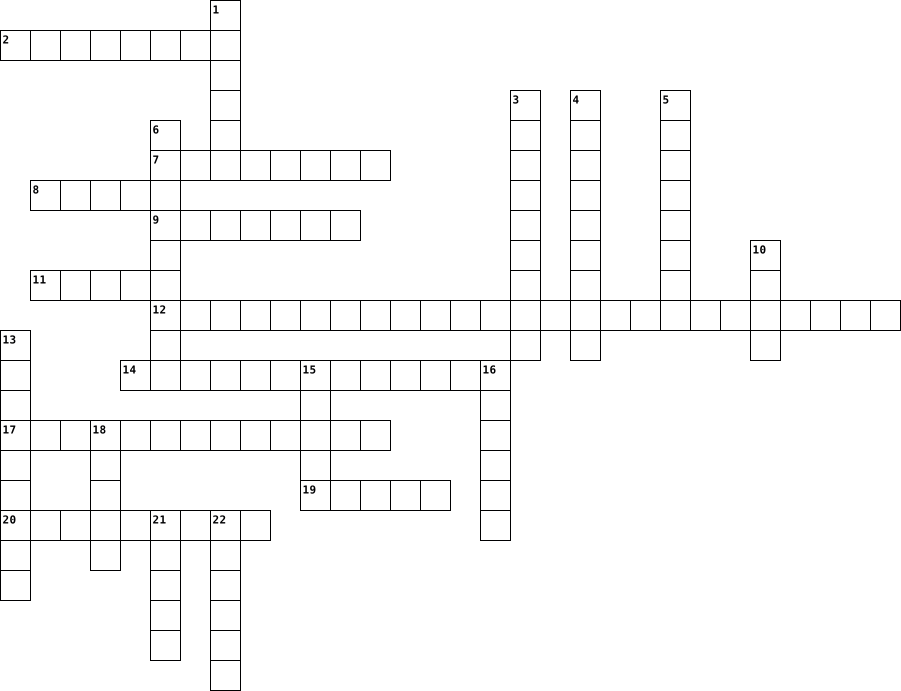
Across
- science teacher
- huge space rock
- icy space rock
- Happens with Sun, Moon, and Earth
- smaller version of space
- a satellite that astronauts live on
- astronaut from NASA
- something in space hint: last 3 letters “ody”
- energy from the sun
- an asteroid belt just beyond our solar
Down
- something that orbits a star
- a rarely known space object that lasts a few minutes its white
- looks through space
- a time warp in space could be real or fake seen in movies
- a thing that kind of orbits earth man made
- light source in the middle of a solar system
- a huge round thing in the middle of a galaxy
- round things that orbit planets
- it has multiple solar systems in it
- a round rocky planet
- Related to the moon (dark)
- Planet in our solar system (hint: 50÷5+(27-16)-14)
22 Clues: icy space rock • science teacher • huge space rock • looks through space • astronaut from NASA • energy from the sun • a round rocky planet • smaller version of space • Related to the moon (dark) • something that orbits a star • round things that orbit planets • Happens with Sun, Moon, and Earth • a satellite that astronauts live on • it has multiple solar systems in it • ...
SOLAR ENERGY!!!!! 2023-04-18
Across
- positive energy solar provides a special meter
- radiation from the sun capable of producing heat
- a thing that absorbs sunlight
- type of energy generated by the sun
- A solar electric or PV system
Down
- sun/energy that comes from the sun
- Devices or applications provides details about a solar power system
- The portion of energy in the form of sunlight that can be converted
- per watt the average cost of solar panels
- they are attached directly to a home's rafters
- a amount of solar radiation reaching a given area
- a type of material in solar panels
- a solar program that provides credit
- a photovoltaic array set in a fixed angle
- a system that delivers electricity from a generators
15 Clues: a thing that absorbs sunlight • A solar electric or PV system • sun/energy that comes from the sun • a type of material in solar panels • type of energy generated by the sun • a solar program that provides credit • a photovoltaic array set in a fixed angle • per watt the average cost of solar panels • positive energy solar provides a special meter • ...
Solar Energy 2026-03-31

Across
- What is the process of adding impurities to silicon to change its conductivity?
- What device moves solar panels to follow the sun across the sky?
- What substance is often used to store heat in solar thermal plants?
- What type of flexible solar cell is made by layering materials on asubstrate?
- What does the "C" stand for in CSP (Solar Power)?
- Which part of the solar spectrum causes sunburns?
Down
- What is the power per unit area received from the sun?
- What is the boundary in a solar cell where electricity is generated?
- What is the process of a solar cell taking in light energy?
- What is the measure of how much light bounces off a solar surface?
- What is the distance between two successive peaks of a light wave?
- What adjustment to a solar panel maximizes its exposure to the sun?
- Which part of the solar spectrum is felt as heat?
- What is the horizontal angle of the sun's position?
14 Clues: Which part of the solar spectrum is felt as heat? • What does the "C" stand for in CSP (Solar Power)? • Which part of the solar spectrum causes sunburns? • What is the horizontal angle of the sun's position? • What is the power per unit area received from the sun? • What is the process of a solar cell taking in light energy? • ...