
solar Crossword Puzzles
English 2025-02-14

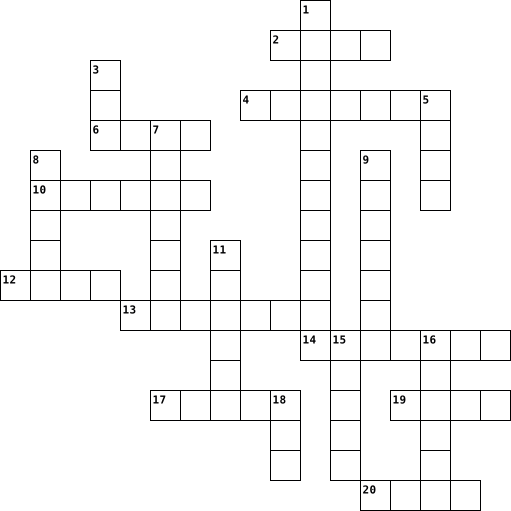
Across
- - what kind of planet is Saturn?
- - who study the sky with a telescope he built?
- - the moon ____ or moves around the Earth
- - satellite and telescope are what?
- - who has crater in them in the solar system?
- - what subject pronoun uses we and they.
- - what planet has rings in it.
- - what pronoun takes the place of nouns in the subject of a sentence
- - what subject pronoun uses he,she, and it.
- - what telescope did we learn about?
- - to look at, study, or travel to a place to learn more about it
- - what is the name of the planet we live in?
Down
- - what is the study of space
- - how many planets in our solar system?
- system - a star and the planets in orbit around the sar
- - what text informs readers by giving information about a specific topic.
- - can take the place of nouns
- - Earth and its _____
- - to watch or follow someone or something
- - the measure of how hot or cold something is
20 Clues: - Earth and its _____ • - what is the study of space • - can take the place of nouns • - what planet has rings in it. • - what kind of planet is Saturn? • - satellite and telescope are what? • - what telescope did we learn about? • - how many planets in our solar system? • - what subject pronoun uses we and they. • - the moon ____ or moves around the Earth • ...
Crossword 2021-05-17

Across
- is the second smallest planet and people are trying to make it livable
- Planets, Earth-like planets made up of rocks or metals with a hard surface
- planets, are Mercury, Venus, Earth and Mars in the order from the sun
- is the hottest planet
- the largest planet in solar system and is made up of mostly gas
- planets, the four planets on the other side of the asteroid belt(Jupiter, Saturn, Uranus, Neptune)
- giants, are planets that are composed mainly of hydrogen and helium
- is the smallest planet in the solar system
- are chunks of rock and ice that never clumped together to form a planet
Down
- is almost at a 90 degree axis
- belt, is a torus-shaped region in the Solar System, located roughly between the orbits of the planets Jupiter and Mars
- the only planet in the solar system that has life on it
- is named after the greek god Poseidon
- are mixtures of rock, ice and dust
- is the second biggest planet behind Jupiter
15 Clues: is the hottest planet • is almost at a 90 degree axis • are mixtures of rock, ice and dust • is named after the greek god Poseidon • is the smallest planet in the solar system • is the second biggest planet behind Jupiter • the only planet in the solar system that has life on it • the largest planet in solar system and is made up of mostly gas • ...
Solar System Puzzle 2025-07-17

Across
- Term for the burning light streak across the sky
- Larger fragment of a meteor that survives impact with Earth
- A dust tail of a comet always points in this direction relative to the Sun
- A small, icy body that grows a tail when near the Sun
- Chunk of rock or metal that orbits the Sun, smaller than an asteroid
- This force shapes the orbits of comets and asteroids
- Bright trail seen when a meteoroid burns up in Earth's atmosphere
- Small rocky bodies that sometimes fall to Earth
Down
- Missions that study small solar system bodies up close
- The area of the solar system beyond Neptune full of icy bodies
- Where most asteroids are located
- Leftover frozen material found in the outer solar system
- Rocky object smaller than a planet, mostly found between Mars and Jupiter
- Famous comet that appears every 76 years
- Cloud The cloud theorized to surround the solar system with icy objects
15 Clues: Where most asteroids are located • Famous comet that appears every 76 years • Small rocky bodies that sometimes fall to Earth • Term for the burning light streak across the sky • This force shapes the orbits of comets and asteroids • A small, icy body that grows a tail when near the Sun • Missions that study small solar system bodies up close • ...
Universo 2025-06-15

Across
- El planeta más lejano del Sistema Solar.
- Es el planeta donde vivimos
- Conjunto formado por el Sol y todos los cuerpos celestes que giran alrededor de él, como planetas, satélites, asteroides y cometas
- Planeta con grandes anillos hechos de hielo y rocas.
- Es la estrella que está en el centro del Sistema Solar.
- Satélite natural que gira alrededor de la Tierra.
Down
- Teoría que explica el origen del universo desde una explosión.
- Teoría que explica como se formó nuestro Sistema Solar.
- El planeta más grande del Sistema Solar.
- Cuerpo celeste que gira alrededor de una estrella.
- Planeta que rota de oeste a este y es de gas e hielo.
- Cuerpo que emite luz y calor, como el Sol.
- Están hechos de hielo y polvo, y rodean a algunos planetas.
13 Clues: Es el planeta donde vivimos • El planeta más lejano del Sistema Solar. • El planeta más grande del Sistema Solar. • Cuerpo que emite luz y calor, como el Sol. • Satélite natural que gira alrededor de la Tierra. • Cuerpo celeste que gira alrededor de una estrella. • Planeta con grandes anillos hechos de hielo y rocas. • ...
Science Review 2025-09-25

Across
- Blocking of light
- the direction your shadow faces when it is the shortest
- the only star in our solar system
- The Red planet
- The planet closest to the Sun
- a dwarf planet that used to be the ninth planet
- Earth orbiting the Sun
- the gravity on the moon causes this on Earth
Down
- The direction objects in motion want to travel
- the group of asteroids between Mars and Jupiter
- the time of day your shadow is the shortest
- the hottest planet in our solar system
- the force that keeps Earth orbiting the Sun
- The planet most famous for having rings
- The largest planet in our solar system
- the invisible line from the North to the South Pole
16 Clues: The Red planet • Blocking of light • Earth orbiting the Sun • The planet closest to the Sun • the only star in our solar system • the hottest planet in our solar system • The largest planet in our solar system • The planet most famous for having rings • the time of day your shadow is the shortest • the force that keeps Earth orbiting the Sun • ...
Solar System 2022-09-27

Across
- an inner planet
- red planet
- biggest planet
- sun and the solar system
- largest asteroid
- living planet
- dwarf planet
- center of the solar system
Down
- planet nearest the sun
- ringed planet
- between Mars and Jupiter
- an outer planet
- shooting stars
13 Clues: red planet • dwarf planet • ringed planet • living planet • biggest planet • shooting stars • an inner planet • an outer planet • largest asteroid • planet nearest the sun • between Mars and Jupiter • sun and the solar system • center of the solar system
Facts About The Solar System 2025-01-30

Across
- ___ Hole A dying star that has collapsed into a dense object with strong gravity.
- ___ Way The galaxy that contains our Solar System.
- The name for a natural or artificial body in space that orbits a planet.
- A path that a celestial body follows as it orbits another body.
- The hottest planet in our Solar System.
- The largest planet in our Solar System.
- A system of millions or billions of stars held together by gravity.
- This planet is known as the “Red Planet.”
Down
- ___ Belt A rocky body that orbits the Sun, mostly found between Mars and Jupiter.
- ___ Belt The region of space beyond Neptune, believed to contain icy bodies.
- The second-largest planet, known for its rings.
- ___ Eclipse This phenomenon occurs when the Moon blocks the Sun’s light.
- A celestial body that orbits a planet.
- The closest star to Earth.
14 Clues: The closest star to Earth. • A celestial body that orbits a planet. • The hottest planet in our Solar System. • The largest planet in our Solar System. • This planet is known as the “Red Planet.” • The second-largest planet, known for its rings. • ___ Way The galaxy that contains our Solar System. • A path that a celestial body follows as it orbits another body. • ...
Chapter 7 2025-02-26

Across
- warm, dry winds that travel down mountain slopes
- the most abundant gas in the homosphere
- this process traps heat in Earth's atmosphere
- heat transfer by electromagnetic waves
- the outermost temperature layer of the atmosphere
- type of convection cell that exists between the equator and latitude 30 degrees
- the point where the solar wind pushes on Earth's magnetic field
Down
- surface winds that blow toward the equator in the tropics
- colorful displays that occur when solar wind particles react with molecules in the atmosphere
- extremely powerful radiation that heats the molecules of the ionosphere
- the coldest point in the atmosphere
- the ratio of the solar radiation reflected by an object to the solar radiation that strikes it
- this process occurs when air expands with no heat gained or lost
- the change in the direction of winds caused by Earth's rotation
14 Clues: the coldest point in the atmosphere • heat transfer by electromagnetic waves • the most abundant gas in the homosphere • this process traps heat in Earth's atmosphere • warm, dry winds that travel down mountain slopes • the outermost temperature layer of the atmosphere • surface winds that blow toward the equator in the tropics • ...
Space 2017-05-31

Across
- The blue planet
- The Roman name for Ares
- The closest planet to the Sun
- The ringed planet
- Earth's only natural orbit
Down
- The hottest planet in the Solar System
- The largest planet int he Solar System
- Human haven
- The coldest planet in the Solar System
- No longer called a planet
- The closest star to Earth
11 Clues: Human haven • The blue planet • The ringed planet • The Roman name for Ares • No longer called a planet • The closest star to Earth • Earth's only natural orbit • The closest planet to the Sun • The hottest planet in the Solar System • The largest planet int he Solar System • The coldest planet in the Solar System
Planets 2018-06-12

Across
- Small ball circling planet Earth
- Planet with a Ring
- first planet from the sun
- largest planet in our solar system
- The Centre start of the Solar System
Down
- Falling stars in outer space
- The Blood Red colored Desert
- Funny named planet
- Barrier between Jupiter and Mars
- Smallest Planet in our solar system
- Planet between Earth and Mercury
11 Clues: Funny named planet • Planet with a Ring • first planet from the sun • Falling stars in outer space • The Blood Red colored Desert • Small ball circling planet Earth • Barrier between Jupiter and Mars • Planet between Earth and Mercury • largest planet in our solar system • Smallest Planet in our solar system • The Centre start of the Solar System
The Solar System 2021-01-14

Across
- The closest planet to the sun.
- Our sun is this type of star.
- The path a planet takes around the sun.
- This was changed to a dwarf planet in 2006.
- The farthest planet from the sun in our solar system.
- The hottest planet in our solar system.
- A body of ice, dust, and bits of rock that passes through space, leaving a tail behind it.
- The four planets farthest from the sun are classified as this type of planet.
Down
- The force that holds us on the ground. It also keeps planets in their orbit around the sun.
- / The star at the center of our solar system.
- The length of time it takes a planet to orbit the sun.
- This "belt" is an area of space beyond the orbit of Neptune where a group of minor planets and other objects orbit the sun.
- The four planets closest to the sun are this type of planet.
- A smaller object orbiting a planet.
- The largest planet in our solar system.
15 Clues: Our sun is this type of star. • The closest planet to the sun. • A smaller object orbiting a planet. • The largest planet in our solar system. • The path a planet takes around the sun. • The hottest planet in our solar system. • This was changed to a dwarf planet in 2006. • / The star at the center of our solar system. • ...
Solar System 2022-01-03

Across
- Center of our solar system
- The Red Planet
- Reflects the Sun's light
- The planet of life
- The largest planet that has a storm called the Great Red Spot
- To spin
- Well know for its rings
Down
- To go around another object
- Has the longest revolution
- Smallest planet and closest to the Sun
- An imagery line that goes through the center of a planet
- The hottest planet that rotates in the opposite direction
- Rotates on its side and in the opposite direction
13 Clues: To spin • The Red Planet • The planet of life • Well know for its rings • Reflects the Sun's light • Center of our solar system • Has the longest revolution • To go around another object • Smallest planet and closest to the Sun • Rotates on its side and in the opposite direction • An imagery line that goes through the center of a planet • ...
Solar System 2024-02-14

Across
- Has the most rings
- One was the 9th planet
- Spins on its side
- The red planet
- Ring of Rocks
- Only planet known to sustain life
- Longer days than years
Down
- Our star
- Ring of ice
- Orbits Earth
- Largest planet
- Closest to our Sun
- 8th planet
13 Clues: Our star • 8th planet • Ring of ice • Orbits Earth • Ring of Rocks • Largest planet • The red planet • Spins on its side • Has the most rings • Closest to our Sun • One was the 9th planet • Longer days than years • Only planet known to sustain life
Solar Energy 2024-07-23

Across
- direct conversion of light into electricity
- energy resulting from the flow of charged particles
- energy transmitted from the sun's radiation
- material through which electricity is transmitted
- elementary particle of an atom with a negative electrical charge
Down
- unit of power equal to 1 billion Watts
- unit of electrical current or rate of flow of electrons
- unit of measure of electrical force
- semi‐metallic chemical element that makes an excellent semiconductor
- process of adding electrical energy to a battery
- single unit of an electrochemical device
- British Thermal Unit(abbreviation)
- capability of doing work
13 Clues: capability of doing work • unit of measure of electrical force • British Thermal Unit(abbreviation) • unit of power equal to 1 billion Watts • single unit of an electrochemical device • direct conversion of light into electricity • energy transmitted from the sun's radiation • process of adding electrical energy to a battery • ...
Solar System 2022-11-09

Across
- the force that keeps us on Earth
- number of planets in our solar system
- the path a planet takes around the sun
- earth orbits the sun
- earth spinning on an axis
- the star at the center of our solar system
- the moon is Earth's natural _____________
Down
- One revolution and 365 days
- planets that are gas giants
- planets that are smaller, terrestrial
- one full rotation takes 24 ____________
- gravity pulls to the ________ of the Earth
- rotation gives us day and ___________
13 Clues: earth orbits the sun • earth spinning on an axis • One revolution and 365 days • planets that are gas giants • the force that keeps us on Earth • number of planets in our solar system • planets that are smaller, terrestrial • rotation gives us day and ___________ • the path a planet takes around the sun • one full rotation takes 24 ____________ • ...
Solar System 2025-02-06

Across
- a piece of rock or metal from space that enters Earth's atmosphere
- a rocky object that orbits the Sun, found mostly in the region between Mars and Jupiter
- the movement of an object around another object. The earth revolves around the sun.
- a large body in space that orbits a star and does not produce light on its own
- a path of an object as it circles around another object in outer space
- when an object spins on its axis
Down
- When a meteoroid lands on the Earth's surface
- a small object in space that orbits a star and is made of ice, dust particles, and frozen gases
- A huge ball of gases that makes its own heat and light
- a natural force that pulls two objects toward one another
- a natural object that revolves around a planet
- the Sun and the planets and other objects that orbit the Sun
- the only planet in the solar system on which life is known to exist
13 Clues: when an object spins on its axis • When a meteoroid lands on the Earth's surface • a natural object that revolves around a planet • A huge ball of gases that makes its own heat and light • a natural force that pulls two objects toward one another • the Sun and the planets and other objects that orbit the Sun • ...
Solar system :) 2024-11-13

Across
- This is a force that every object has.
- This planet shares a name with an element of the periodic table.
- This big planet has 146 moons.
- The source of all the planet’s lights that shines during the day.
- A collection of planets that we live in.
Down
- There are many of these within our universe and ours is in a spiral shape.
- The place we call home.
- This planet is known for a red storm that never ends.
- This never stops expanding
- This planet is blue and named for the god of the sea.
- The only planet named after a roman female god.
- This planet is home to the deepest valley and the tallest mountain.
- This planet gets a laugh out of almost everyone
13 Clues: The place we call home. • This never stops expanding • This big planet has 146 moons. • This is a force that every object has. • A collection of planets that we live in. • The only planet named after a roman female god. • This planet gets a laugh out of almost everyone • This planet is known for a red storm that never ends. • ...
Solar System 2024-11-13

Across
- a red storm? That’s an interesting spot to put it
- MAY THERE BE LIFE ON _____
- this planet is famous for it’s rings that’s stretch out
- a yellow dwarf
- a group of planets orbiting the sun
- the coldest planet in the sea
Down
- a planet known for it’s name and it’s sideways spin
- clockwise spin
- our milky way is a ______
- this planet got dehydrated and now we are trying to live here
- the biggest term used for space
- the more mass the more it pulls
- a little planet that makes mer curry
13 Clues: clockwise spin • a yellow dwarf • our milky way is a ______ • MAY THERE BE LIFE ON _____ • the coldest planet in the sea • the biggest term used for space • the more mass the more it pulls • a group of planets orbiting the sun • a little planet that makes mer curry • a red storm? That’s an interesting spot to put it • a planet known for it’s name and it’s sideways spin • ...
solar system 2024-11-13

Across
- our ___ is called the milky way
- gives us heat
- hottest planet
- has no moons
- we live here
- 4th planet from the sun
- largest planet in our solar system
Down
- keeps us on the ground
- where the planets are
- furthest planet from the sun
- has 2 dozen moons
- has rings
- is bigger then both galaxy and solar system
13 Clues: has rings • has no moons • we live here • gives us heat • hottest planet • has 2 dozen moons • where the planets are • keeps us on the ground • 4th planet from the sun • furthest planet from the sun • our ___ is called the milky way • largest planet in our solar system • is bigger then both galaxy and solar system
Sistema solar 2025-04-24

Across
- corpo
- mais perto
- satelite
- galaxia
- maior
- vizinha
- ultimo
- conhecido
Down
- galaxia
- teoria
- estrela
- foi criado
- rochoso
- cometa
14 Clues: corpo • maior • teoria • cometa • ultimo • galaxia • estrela • rochoso • galaxia • vizinha • satelite • conhecido • foi criado • mais perto
Solar Ovens 2026-03-18

Across
- Heat moving through air or liquid
- Energy Power that comes from the sun
- A material that lets light pass through (like plastic wrap)
- Heat traveling from the sun through space
- Heat moving through a solid material
- Bouncing sunlight toward the cooking area
- Material that keeps heat from escaping the oven
Down
- How hot or cold something is
- A shiny surface used to direct sunlight
- When heat is taken in by a surface
- Liquid turning into gas when heated
- Shiny material used to reflect sunlight
- Trap A design that keeps warm air inside the oven
13 Clues: How hot or cold something is • Heat moving through air or liquid • When heat is taken in by a surface • Liquid turning into gas when heated • Heat moving through a solid material • Energy Power that comes from the sun • A shiny surface used to direct sunlight • Shiny material used to reflect sunlight • Heat traveling from the sun through space • ...
Sistema Solar 2025-12-09

Across
- SOLAR_SYSTEM
- SATELLITE
- EARTH
- MERCURY
- PLANET
Down
- JUPITER
- VENUS
- MARS
- SUN
- NEPTUNE
- SATURN
- STAR
- URANUS
13 Clues: SUN • MARS • STAR • VENUS • EARTH • SATURN • URANUS • PLANET • JUPITER • NEPTUNE • MERCURY • SATELLITE • SOLAR_SYSTEM
Moons of our solar system 2022-10-18

Across
- the second-largest natural satellite in the Solar System
- the most heavily cratered moon in the solar system
- the largest known satellite relative to its parent body in our solar system.
- the only moon known to have its own magnetic field
- which moon of Saturn also called as yin yang moon?
Down
- the only moon that orbits in the opposite direction of its planet's rotation
- the most reflective moon in the solar system
- what is the name of earth's natural satellite?
- the most volcanically active world in the solar system
- The only moon with rings?
10 Clues: The only moon with rings? • what is the name of earth's natural satellite? • the most reflective moon in the solar system • the only moon known to have its own magnetic field • the most volcanically active world in the solar system • which moon of Saturn also called as yin yang moon? • the second-largest natural satellite in the Solar System • ...
Moons of our solar system 2022-10-18

Across
- the second-largest natural satellite in the Solar System
- the most heavily cratered moon in the solar system
- the largest known satellite relative to its parent body in our solar system.
- the only moon known to have its own magnetic field
- which moon of Saturn also called as yin yang moon?
Down
- the only moon that orbits in the opposite direction of its planet's rotation
- the most reflective moon in the solar system
- what is the name of earth's natural satellite?
- the most volcanically active world in the solar system
- The only moon with rings?
10 Clues: The only moon with rings? • what is the name of earth's natural satellite? • the most reflective moon in the solar system • the only moon known to have its own magnetic field • the most volcanically active world in the solar system • which moon of Saturn also called as yin yang moon? • the second-largest natural satellite in the Solar System • ...
Planets 2023-11-12

Across
- It is the only planet people can live on. It has a satellite named "moon".
- The closest planet to the Sun. It has ice in its craters and on its surface.
- The central star in our solar system.
- This planet has a ring around it.
- A dwarf planet
- The hottest planet in our solar system. There are many volcanoes on it.
Down
- This planet is also called "the red planet". It has two moons named "Phobos and Deimos".
- The largest planet in our solar system.
- A blue planet in our solar system.
- The farthest planet from the Sun in our solar system.
10 Clues: A dwarf planet • This planet has a ring around it. • A blue planet in our solar system. • The central star in our solar system. • The largest planet in our solar system. • The farthest planet from the Sun in our solar system. • The hottest planet in our solar system. There are many volcanoes on it. • ...
Felipe Castro 2022-06-28

Across
- It's the only planet that has life
- It's the biggest planet that has life
- It's the closest galaxy from the Milky Way
- It's the hottest planet of the Solar System
Down
- He belive in natural selection
- It's the last planet of the Solar System
- It's the smallest planet of the Solar System
- It's the coldest planet of the Solar System
- It has rings
- It the galaxy where we live
10 Clues: It has rings • It the galaxy where we live • He belive in natural selection • It's the only planet that has life • It's the biggest planet that has life • It's the last planet of the Solar System • It's the closest galaxy from the Milky Way • It's the coldest planet of the Solar System • It's the hottest planet of the Solar System • ...
Planet Party 2017-02-04

Across
- A controversial dwarf planet
- The name early astronomers gave to the distance between the Sun and Earth (abbreviated)
- The red planet
- The closest planet to the Sun
- A tool that increases the size and details of the planets
- The windiest planet
- The measurement of how much a light a planet reflects
- A number greater than any countable number
- Has no known natural satellite
- The only object in the Universe known to harbor life
- Astronomers who write the rules for being a planet (abbreviated)
Down
- Circle of animals
- The jewel of the Solar System
- Known for its Great Red Spot
- The curved path of a celestial object or spacecraft around a star, planet, or moon
- The path of the Sun and the plane of the Solar System. The planets never stray far
- A planet that orbits a star outside our solar system
- Wandering star
- This planet spins on its side
- An imaginary line about which a body rotates
20 Clues: The red planet • Wandering star • Circle of animals • The windiest planet • A controversial dwarf planet • Known for its Great Red Spot • The jewel of the Solar System • The closest planet to the Sun • This planet spins on its side • Has no known natural satellite • A number greater than any countable number • An imaginary line about which a body rotates • ...
SOLAR SYSTEM CROSSWORD 2014-10-26

Across
- NAMED AFTER THE ROMAN GOD OF THE SEA
- THIS PLANET TILTS OVER SO FAR ON ITS AXIS THAT IT ROTATES ON ITS SIDE
- WHEN THE MOON PASSES IN FRONT OF THE SUN
- THE LARGEST PLANET IN OUR SOLAR SYSTEM
- ALL THE GASES THAT SURROUND THE STARS AND PLANETS
- TO TURN AROUND A CENTER POINT
- THE SMALLEST PLANET IN OUR SOLAR SYSTEM
- THE LARGEST OBJECT IN THE SOLAR SYSTEM
- A ROCKY SPACE OBJECT OF VARYING SIZE
- THE SECOND LARGEST PLANET WITH MANY RINGS
Down
- PLANETS HAVE RINGS
- EARTH HAS ONE
- IRON IN THE SOIL GIVES THIS PLANET ITS RED COLOUR
- USE TO VIEW THE STARS AND PLANETS FROM EARTH
- THIS PLANET IS SOMETIMES CALLED THE EVENING STAR
- THE HUGE SPACE WHICH CONTAINS ALL OF THE MATTER AND ENERGY
- THIRD CLOSEST PLANET FROM THE SUN
- CAN TRAVEL TO SPACE IN A ROCKET
- THE PATH FOLLOWED BY AN OBJECT IN SPACE AS IT GOES AROUND ANOTHER OBJECT
- RECENTLY NAMED A DWARF PLANET
20 Clues: EARTH HAS ONE • PLANETS HAVE RINGS • TO TURN AROUND A CENTER POINT • RECENTLY NAMED A DWARF PLANET • CAN TRAVEL TO SPACE IN A ROCKET • THIRD CLOSEST PLANET FROM THE SUN • NAMED AFTER THE ROMAN GOD OF THE SEA • A ROCKY SPACE OBJECT OF VARYING SIZE • THE LARGEST PLANET IN OUR SOLAR SYSTEM • THE LARGEST OBJECT IN THE SOLAR SYSTEM • THE SMALLEST PLANET IN OUR SOLAR SYSTEM • ...
Stacy's crossword puzzle 2022-09-22

Across
- 2 x 3 what is this equation
- The sun gives us ____ for us to stay up
- a sphere that makes matter and forms earth
- The top number of a fraction
- the vertical axis in the coordinate plane
- the planet we currently live on
- good enough to live in
- the comparison of two numbers by division
- The second rocky planet in the solar system
- The bottom number of a fraction
Down
- it has a numerator and a denominator
- a sphere that contains everything in life
- a round place in space
- the first rocky planet on the solar system
- the water sphere that we use to live
- some type of sphere we use to breath
- 5 - 4 what is this equation
- the biggest planet in the solar system
- the horizontal axis in the coordinate plane
- Some green thing with big black eyes that must just be a cell
- Something that supports the claim
- a group of parts that interact
22 Clues: a round place in space • good enough to live in • 2 x 3 what is this equation • 5 - 4 what is this equation • The top number of a fraction • a group of parts that interact • the planet we currently live on • The bottom number of a fraction • Something that supports the claim • it has a numerator and a denominator • the water sphere that we use to live • ...
B3 2020 Howell 2020-11-08

Across
- chemical formula for carbon dioxide
- gases in the atmosphere that absorb infared radiation
- chemical symbol for water vapor
- greenhouse gases banned in 1978
- greenhouse gas emitted naturally by wetlands
- atmosphere layer with ozone layer
- number of greenhouse gases
- the rising of global temperatures
- when burnt these create carbon dioxide
- greenhouse gases only emitted by humans
- greenhouse gas that comes from ozone in the troposphere
- where weather happens
Down
- the cutting down of trees that releases carbon dioxide
- when greenhouse gases keep too much heat in
- second most abundant gas in the atmosphere
- most abundant gas in the atmosphere
- lights that occur naturally in the thermosphere
- primary greenhouse gas emitted by humans
- percent of oxygen in the atmosphere
- earth's coldest layer
- earth's outer layer
- solar radiation can be reflected back to ___
- the process of gases trapping solar energy in earth
- percent of nitrogen in the atmosphere
- type of radiation greenhouse gases absorb
25 Clues: earth's outer layer • earth's coldest layer • where weather happens • number of greenhouse gases • chemical symbol for water vapor • greenhouse gases banned in 1978 • atmosphere layer with ozone layer • the rising of global temperatures • most abundant gas in the atmosphere • chemical formula for carbon dioxide • percent of oxygen in the atmosphere • ...
Vocabulary - unit 1-3 2020-06-18

Across
- - before history was written.
- - a skill you can learn to make pots, usually from clay.
- the vast space outside the earth, to other galaxies
- the area on the side of sports court
- life might e_______ on other solar systems outside ours
- a person who studies science.
- - things
- store a place where you buy vegetables, fruits, food, etc
- the army __________ the castle from all sides and attack with all their might
- a tool to see objects in outer space from earth
Down
- there are many places to e_______ in Bali, let's check the out
- I am p___________ the food for today's lunch.
- the person in football/soccer that makes sure the ball doesn't go into the net.
- I love fruits, e___________ melon.
- largest planet on the solar system
- - items in display, usually in museums or gallery.
- a planet with 31 moons
- when you tell someone or something new to your friends
- system a group of planet that surrounds our sun
- sick
20 Clues: sick • - things • a planet with 31 moons • - before history was written. • a person who studies science. • I love fruits, e___________ melon. • largest planet on the solar system • the area on the side of sports court • I am p___________ the food for today's lunch. • system a group of planet that surrounds our sun • a tool to see objects in outer space from earth • ...
SPACE 2019-09-19

Across
- The path of a planet around a star
- This star gives us light
- The nationality of the first man in space
- The first animal in space was one of these
- Vehicle to transport people into space
- Our planet
- The number of planets that have been discovered in our Solar System
- The red planet
- Neil... The first man to walk on the moon
- No longer a planet
Down
- Largest planet in the Solar System
- The group of planets and star that Earth is part of
- A natural satellite
- The hottest planet in the Solar System
- Some planets are made of rock and some are made of ...
- Planet closest to the Sun
- One of the gases that is found in the Sun
- This is found in between Mars and Jupiter
- The time it takes for a planet to complete an orbit
- This was left on the moon
- the force that makes any two objects that have mass move towards each other
21 Clues: Our planet • The red planet • No longer a planet • A natural satellite • This star gives us light • Planet closest to the Sun • This was left on the moon • Largest planet in the Solar System • The path of a planet around a star • The hottest planet in the Solar System • Vehicle to transport people into space • The nationality of the first man in space • ...
BRAM'S SPACE CROSSWORD 2023-02-10

Across
- The coldest planet in our solar system
- The first satellite in space
- The planet with 83 moons
- Where a meteorite hit earth
- The biggest dwarf planet
- The explosion of a star
- The number of people that can fit in a Gemini spaceship
- A lunar body
- The length of time for the moon to orbit earth
- The smallest planet in our solar system
- What was the country to first send something in space
- A huge system of stars
- A huge system of stars
Down
- The biggest planet in our solar system
- The number of Apollo missions
- The name of our galaxy
- The first name of the first person in space
- What you look into space with
- The planet with acid rain
- The number of the Apollo mission that failed
- The name of the new mission NASA is starting
- The first animal in space
- The third planet from the sun
- A huge cloud of dust
- The planet with 2 moons
- Things around Saturn
26 Clues: A lunar body • A huge cloud of dust • Things around Saturn • The name of our galaxy • A huge system of stars • A huge system of stars • The explosion of a star • The planet with 2 moons • The planet with 83 moons • The biggest dwarf planet • The planet with acid rain • The first animal in space • Where a meteorite hit earth • The first satellite in space • The number of Apollo missions • ...
Science and the Enlightenment 2023-04-13

Across
- Flemish cartographer who made accurate maps
- Branch of government that makes laws
- Italian astronomer arrested for his scientific theories; recanted
- Scottish economist that wanted the government to keep their "hands off"
- Believed God created a rational universe
- Scientific technology to view far away spaces
- Theory that the sun is the center of the solar system
- Philosopher who promoted natural rights (life liberty property)
- German mathematician who proved planets revolved around the sun
- Philosopher who promoted popular sovereignty and voting
- Published an Encyclopedia of Enlightenment writings
Down
- The founder of modern feminism
- English doctor who studied the heart
- Branch of government that interprets and applies laws
- Flemish scientist who pioneered the study of anatomy
- English mathematician who explained gravity
- French philosopher that fought religious intolerance
- Theory that the earth is the center of the solar system
- Scientific technology that measures temperature
- Branch of government that enacts laws
- Polish astronomer who said the sun was the center of the solar system
21 Clues: The founder of modern feminism • English doctor who studied the heart • Branch of government that makes laws • Branch of government that enacts laws • Believed God created a rational universe • Flemish cartographer who made accurate maps • English mathematician who explained gravity • Scientific technology to view far away spaces • ...
Architectural and exterior design styles 2024-11-06

Across
- 1 story low pitch roof
- AmericaCivil Warar, Queen Anne, turret
- large durable,2 stories, wood & field stone
- porch along the front, open floor plan, 1 1/2 story, horazontal-made wood/ brick
- soil insulates houses, and protects them from elements
- uses solar energy for mostly everything
- wood stone or stucco, wide eaves low-pitch roof, simple natural lines
- Folk style, mansard roof, symmetrical
- Simple, geometric lines, glass & windows, flat roofs
- columns the around doorway, Jefferson'sfferson house
- diverse bizarre or shocking luxury
- low roofs, overhanging eaves, FLloyd Lloyd Wright
Down
- log cabin, gable roof steep
- Gambrel roof
- Medieval half-timber timber, stucco, large fireplace high ceiling
- Asymmetrical, Adobe brick covered w/stucco
- 2 or 3 stories, symmetrical, hip or gable roof, dormers and shutters
- grew from patriotism, symmetrical,2 or more stories, Adam style & Early classic revival
- hip roof, dentil molding under eaves
- ranch house split-level solar earth shelter
20 Clues: Gambrel roof • 1 story low pitch roof • log cabin, gable roof steep • diverse bizarre or shocking luxury • hip roof, dentil molding under eaves • Folk style, mansard roof, symmetrical • AmericaCivil Warar, Queen Anne, turret • uses solar energy for mostly everything • Asymmetrical, Adobe brick covered w/stucco • large durable,2 stories, wood & field stone • ...
The Solar System 2025-03-23

Across
- The planet known at "The Ice Giant"
- The farthest planet from the sun
- The only known planet in our solar system to have life
- The largest planet in our solar system
- The planet with the nickname "The Red Planet"
Down
- The least dense planet in our solar system
- The hottest planet in our solar system
- How many planets are in our solar system?
- The closest planet to the sun
9 Clues: The closest planet to the sun • The farthest planet from the sun • The planet known at "The Ice Giant" • The hottest planet in our solar system • The largest planet in our solar system • How many planets are in our solar system? • The least dense planet in our solar system • The planet with the nickname "The Red Planet" • ...
Sistema Solar 2025-05-12

Across
- Planeta mais quente do Sistema Solar
- Estrela que está no centro do sistema solar
- O planeta em que habitamos
- Planeta mais próximo do Sol
- Conjunto de estrelas
Down
- Planeta mais distante do sol
- Maior Planeta do Sistema Solar
- Planeta com anéis bem visíveis
- Satélite natural da terra
- Planeta que gira de lado
- Planeta Vermelho
11 Clues: Planeta Vermelho • Conjunto de estrelas • Planeta que gira de lado • Satélite natural da terra • O planeta em que habitamos • Planeta mais próximo do Sol • Planeta mais distante do sol • Maior Planeta do Sistema Solar • Planeta com anéis bem visíveis • Planeta mais quente do Sistema Solar • Estrela que está no centro do sistema solar
The Night Sky 2018-04-12

Across
- The colour of mars
- Our galaxy is known as the _______ Way
- Pieces of asteroids or meteoroids
- The smallest planet in our solar system
- Our moon is a natural _________
- Our sun is a _________
Down
- The first artificial satellite to be launched
- Planets that are made of rocks
- Icy balls of dust, rocks and ice
- A collection of stars and solar systems
- Another word for artificial
- The largest planet in our solar system
12 Clues: The colour of mars • Our sun is a _________ • Another word for artificial • Planets that are made of rocks • Our moon is a natural _________ • Icy balls of dust, rocks and ice • Pieces of asteroids or meteoroids • Our galaxy is known as the _______ Way • The largest planet in our solar system • A collection of stars and solar systems • The smallest planet in our solar system • ...
Eric's epic crossword 2023-12-14

Across
- what started the universe
- the smallest planet in our solar system
- the hottest from the sun
- coldest planet in our solar system
- spins on its side
- a rock that orbits around us
- you can live on this planet
Down
- 2 biggest planet
- a big hot star in the middle of our solar system
- a dwarf planet planet
- 70% of it is water
- a big red dot in it
- red rust known as the red planet
13 Clues: 2 biggest planet • spins on its side • 70% of it is water • a big red dot in it • a dwarf planet planet • the hottest from the sun • what started the universe • you can live on this planet • a rock that orbits around us • red rust known as the red planet • coldest planet in our solar system • the smallest planet in our solar system • a big hot star in the middle of our solar system
homework of crossword 2025-10-07

Across
- Odin gave up his eye for something
- A day named after Tyr
- The farthest planet of the solar system
- The closest planet of the solar system
- The wife of Odin
- A day named after the Sun
Down
- A planet with rings
- A day named after the Moon
- The weapon of Thor
- The study of the origins words
- The biggest planet of the solar system
- From Sunrise at noon, it the..
12 Clues: The wife of Odin • A planet with rings • The weapon of Thor • A day named after Tyr • A day named after the Sun • A day named after the Moon • The study of the origins words • From Sunrise at noon, it the.. • Odin gave up his eye for something • The biggest planet of the solar system • The closest planet of the solar system • The farthest planet of the solar system
Galaxy crosswords 2021-04-23

Across
- is a yellow dwarf star, a hot ball of glowing gases.
- an astronomical object consisting of a luminous spheroid of plasma held together by its own gravity.
- is the fourth planet from the Sun.
- This can happen when a star is dying. Because no light can get out, people can't see them.
- is the planet we live on.
- a powerful explosion that happens when the star is on the last stage.
- a celestial body that makes an orbit around a planet.
- is a huge collection of gas, dust, and billions of stars.
Down
- the biggest planet in our solar system.
- A tiny speck of space debris burning up as it enters the earth atmosphere.
- rocky, airless remnants left over from the early formation of our solar system.
- Is the galaxy that contains our Solar System.
- a theory which tells how the universe was created.
- when one object in space blocks another from view.
- The sixth planet in our solar system.
- One is named Fobos and the other is named Deimos.
16 Clues: is the planet we live on. • is the fourth planet from the Sun. • The sixth planet in our solar system. • the biggest planet in our solar system. • Is the galaxy that contains our Solar System. • One is named Fobos and the other is named Deimos. • a theory which tells how the universe was created. • when one object in space blocks another from view. • ...
Optoelectronic Junction Devices 2020-04-29

Across
- Process of forming wafers of silicon for the solar cell is called as __________________.
- A photodiode is used as a _____________.
- potential difference generated across a solar cell is called as ___________.
- Material used for making LEDs that emit InfraRed radiation
- Combination of electrons and holes to emit light is called as ____________ recombination.
Down
- V-I Characteristics of a solar-cell is drawn in the ________ quadrant.
- Solar Cell and Photodiode work on the principle of _________ effect
- A photo-diode functions in ____ bias.
- Band Gap of 1.9 eV produces _______ colour.
- Any photon with energy greater than the __________ can produce emf in a solar cell.
10 Clues: A photo-diode functions in ____ bias. • A photodiode is used as a _____________. • Band Gap of 1.9 eV produces _______ colour. • Material used for making LEDs that emit InfraRed radiation • Solar Cell and Photodiode work on the principle of _________ effect • V-I Characteristics of a solar-cell is drawn in the ________ quadrant. • ...
Solar System 2021-04-26

Across
- number of dwarf planets in our solar system
- earth is also called the
- which planet takes 88 days to revolve around the Sun
- moon of the Earth is the fifth largest moom in our solar system true8 or false
Down
- between Mars and Jupiter lies
- largest planet in our solar system
- there are 9 planets in our solar system true8 or false
- hottest planet in our solar system
- moon takes 28 days to revolve around the Earth true8 or false
- coldest planet in ous solar system
10 Clues: earth is also called the • between Mars and Jupiter lies • largest planet in our solar system • hottest planet in our solar system • coldest planet in ous solar system • number of dwarf planets in our solar system • which planet takes 88 days to revolve around the Sun • there are 9 planets in our solar system true8 or false • ...
The Planets 2015-05-28

Across
- Smallest planet in our Solar System
- Planet with the highest temperatures and volcanic activity
- Last gas giant in our Solar System
- Planet with the Great Red Spot
- Frozen gases, rock and dust
Down
- Fourth planet from the Sun
- Center of our Solar System
- Chunks of rock and debris in space
- Seventh planet from the Sun
- Planet with a fantastic ring system
- Largest asteroid
- Planet with no rings and one moon
12 Clues: Largest asteroid • Fourth planet from the Sun • Center of our Solar System • Seventh planet from the Sun • Frozen gases, rock and dust • Planet with the Great Red Spot • Planet with no rings and one moon • Chunks of rock and debris in space • Last gas giant in our Solar System • Smallest planet in our Solar System • Planet with a fantastic ring system • ...
Planets and Solar system 2023-01-30

Across
- Galaxy we live in.
- the path an object takes as it revolves arount another object in the space.
- Planet is no longer part of solar system.
- This is called red planet.
- Astronomer likely to use.
Down
- It has 12 moons.
- The natural objects revolve arount the planets.
- fastest planet in the solar system.
- The model of the earth.
- celestial body nearest to Earth.
- center of solar system
- Planet covered largerly with water.
12 Clues: It has 12 moons. • Galaxy we live in. • center of solar system • The model of the earth. • Astronomer likely to use. • This is called red planet. • celestial body nearest to Earth. • fastest planet in the solar system. • Planet covered largerly with water. • Planet is no longer part of solar system. • The natural objects revolve arount the planets. • ...
Eric's epic crossword 2023-12-14

Across
- what started the universe
- the smallest planet in our solar system
- the hottest from the sun
- coldest planet in our solar system
- spins on its side
- a rock that orbits around us
- you can live on this planet
Down
- 2 biggest planet
- a big hot star in the middle of our solar system
- a dwarf planet planet
- 70% of it is water
- a big red dot in it
- red rust known as the red planet
13 Clues: 2 biggest planet • spins on its side • 70% of it is water • a big red dot in it • a dwarf planet planet • the hottest from the sun • what started the universe • you can live on this planet • a rock that orbits around us • red rust known as the red planet • coldest planet in our solar system • the smallest planet in our solar system • a big hot star in the middle of our solar system
STEMscopedia crossword 2022-01-09

Across
- water covering three-quarters of its surface and its one moon
- gas giant
- no longer a major planet
- named for the swift message of the gods
- our solar system sits inside one of the spiral arms of the _____ _____
- Within our solar system are _______ major planets grouped by proximity to the sun
- means to rotate backwards
- known for having the largest ring system
- called the red planet, due to iron oxide (rust) in the soil
- has 63 moons and counting
Down
- rocky objects that orbit the sun
- large space rocks between Mars and Jupiter
- Roman god of the sea
- accurate view of space from Earth
- about 180 discovered ____ orbit the planets of our solar system
- small mass of dust and ice that originates in an area beyond Pluto called the Oort Cloud
- remain stationary
- survives its passage through the atmosphere and strikes Earth's surface
- covered in a thick atmosphere of carbon dioxide
- diameter is more than 100 times greater than Earth's
20 Clues: gas giant • remain stationary • Roman god of the sea • no longer a major planet • means to rotate backwards • has 63 moons and counting • rocky objects that orbit the sun • accurate view of space from Earth • named for the swift message of the gods • known for having the largest ring system • large space rocks between Mars and Jupiter • ...
The planets 2014-10-30
Across
- The only other place besides Earth that man has walked on.
- There are eight of these in the solar system.
- Earth takes this long to orbit the Sun.
- Astronauts ride in these to space.
- The sun is a yellow one of these.
- The furthest planet from the Sun.
- The closest planet to the Sun.
- The second closest planet to the Sun.
- The fourth planet from the Sun after Earth.
- Planets close to the sun spin at this speed.
Down
- It is made up of eight planets.
- Takes Earth this long to spin completely around on its axis.
- Planets furthest from the sun spin at this speed.
- The sun is a star this size.
- Planets rotate around the sun.
- The largest planet.
- The sixth planet from the Sun after Jupiter.
- Third closest planet to the Sun that humans live on.
- The planet second furthest from the Sun.
- The star that is the center of the solar system.
20 Clues: The largest planet. • The sun is a star this size. • Planets rotate around the sun. • The closest planet to the Sun. • It is made up of eight planets. • The sun is a yellow one of these. • The furthest planet from the Sun. • Astronauts ride in these to space. • The second closest planet to the Sun. • Earth takes this long to orbit the Sun. • ...
Touring the Solar System 2023-01-17

Across
- Moon of Pluto
- Largest impact crater in the SS
- Windiest Planet in the Solar System
- forces How distant moons with possible sub-surface oceans are thought to be heated
- Large moon with retrograde motion & cry-volcanoes
- Largest Moon in our Solar System
- Rocky region between Mars and Jupiter (2)
- Largest canyon in the solar system (2)
- Nasa Mission that landed on an asteroid and redirected it
- Its day is longer than its year
- Largest mountain and volcano in the SS(2)
Down
- A martian natural satellite
- Most volcanically active place in the SS
- Object that struck earth and formed out moon
- Only place besides earth with lakes
- a likely spot for life outside earth
- Rotates backwards and is on its side
- Giant Hurricane that has been raging for centuries (3)
- Home of the Caloris Basin
- roughly a quarter of a million miles from earth
- 93 million miles from earth
21 Clues: Moon of Pluto • Home of the Caloris Basin • A martian natural satellite • 93 million miles from earth • Largest impact crater in the SS • Its day is longer than its year • Largest Moon in our Solar System • Windiest Planet in the Solar System • Only place besides earth with lakes • a likely spot for life outside earth • Rotates backwards and is on its side • ...
OUTER SPACE 2023-07-12

Across
- COLDEST PLANET IN OUR SOLAR SYSTEM
- FIRST ARTIFICIAL EARTH SATELLITE
- DEMOTED TO "DWARF PLANET" IN 2006
- THE "RED PLANET"
- BIG ________, CONSTELLATION WITH 7 BRIGHT STARS
- ASTEROID _____ ORBITING BETWEEN MARS AND JUPITER
- NEIL ______
- POLARIS, ALSO KNOWN AS "THE ____ STAR"
- "HEY DIDDLE DIDDLE, THE CAT AND THE _____, THE COW JUMPED OVER THE MOON"
- PERSON TRAINED TO TRAVEL IN SPACE
- FIRST PLANET FROM THE SUN
- ICE AND DUST PARTICLES ORBIT THE SUN, HAS A "TAIL"
- LARGEST PLANET IN OUR SOLAR SYSTEM
Down
- PLANET WHO SHARES NAME WITH ROMAN GOD OF THE SEA
- U.S. GOVERNMENT AGENCY IN CHARGE OF SPACE SCIENCE AND TRAVEL
- SPACE CRAFT DESIGNED TO PROPEL INTO THE AIR
- HOTTEST PLANET IN OUR SOLAR SYSTEM
- LAYERS OF GAS THAT ENVELOP A PLANET
- THIS SPACE SHUTTLE EXPLODED JANUARY 28TH, 1986
- CONTROLS THE OCEAN TIDES
- COLD WAR RIVALRY TO REACH THE MOON FIRST
- PLANET FAMOUS FOR ITS RINGS
- SMALL ROCKY OBJECT THAT ORBITS THE SUN
- WHERE WE LIVE
- _____ ALDRIN
25 Clues: NEIL ______ • _____ ALDRIN • WHERE WE LIVE • THE "RED PLANET" • CONTROLS THE OCEAN TIDES • FIRST PLANET FROM THE SUN • PLANET FAMOUS FOR ITS RINGS • FIRST ARTIFICIAL EARTH SATELLITE • DEMOTED TO "DWARF PLANET" IN 2006 • PERSON TRAINED TO TRAVEL IN SPACE • COLDEST PLANET IN OUR SOLAR SYSTEM • HOTTEST PLANET IN OUR SOLAR SYSTEM • LARGEST PLANET IN OUR SOLAR SYSTEM • ...
NASA Spacecraft and Missions 2023-07-28

Across
- - Space telescope launched into orbit in 1990.
- - First spacecraft to visit Mercury.
- - Series of spacecraft for planetary exploration.
- - Spacecraft that studied the Sun's activity.
- - Mission that sent landers to Mars in search of life.
- - Spacecraft that explored Saturn and its moons.
- - Part of the Voyager program, explored Uranus and Neptune.
- - America's first space station, launched in 1973.
- - Series of spacecraft exploring the solar system.
- - Apollo-Soyuz Test Project, a joint U.S.-Soviet mission in 1975.
- - Vehicle used on the Moon during Apollo missions.
Down
- - Orbiters and landers that studied the Moon.
- - Space program that landed humans on the Moon.
- - First spacecraft to orbit Mars.
- - Spacecraft that studied the solar wind and magnetic fields.
- - Spacecraft that soft-landed on the Moon for exploration.
- - Spacecraft program exploring the outer solar system.
- - Second manned mission to the Skylab space station.
- - Russian spacecraft used for space missions.
- - Spacecraft that explored Jupiter and Saturn.
20 Clues: - First spacecraft to orbit Mars. • - First spacecraft to visit Mercury. • - Orbiters and landers that studied the Moon. • - Spacecraft that studied the Sun's activity. • - Russian spacecraft used for space missions. • - Space telescope launched into orbit in 1990. • - Spacecraft that explored Jupiter and Saturn. • - Space program that landed humans on the Moon. • ...
Cruzadinha 2023-09-15

Across
- Tipo de geração energética usando energia atômica
- Representação gráfica de um espaço ou território
- Direção para onde a bússola sempre aponta
- Ciclo de renovação da água no planeta
- Camada mais externa do planeta
- Sistema de posicionamento global que usa uma rede de satélites
- Tipo de geração energética usando força dos ventos
- Planeta mais próximo ao Sol
- Instrumento de localização que usa o magnetismo
- A direção a qual o Sol se põe
- Tipo de geração energética usando energia do Sol
- Maior planeta do sistema solar
Down
- País onde vivemos
- Maior rio do Brasil
- A matriz de produção energética brasileira, usando força dos rios
- Camada de gases que reveste o planeta Terra
- Conjunto de planetas que giram ao redor do Sol
- Camada mais interna do planeta Terra, formada por Níquel e Ferro
- Satélite natural do planeta, visto melhor a noite
- Precipitação da água acumulada na atmosfera
- A direção a qual o Sol nasce
21 Clues: País onde vivemos • Maior rio do Brasil • Planeta mais próximo ao Sol • A direção a qual o Sol nasce • A direção a qual o Sol se põe • Camada mais externa do planeta • Maior planeta do sistema solar • Ciclo de renovação da água no planeta • Direção para onde a bússola sempre aponta • Camada de gases que reveste o planeta Terra • Precipitação da água acumulada na atmosfera • ...
The Solar System 2024-01-26

Across
- Meteorite lacking chondrules
- Forms a planet
- Many meteors occur in a short space of time
- Low-density,hot gas
- Point in sky where meteors in showers appear to come
- Jupiter and Saturn
- Planet that is not orbiting our sun
- Pressure Force exerted by radiation on matter
- Dwarf Planet
- Region where some comets go
- Asteroid that crosses Earth´s orbit or is close to
Down
- Regions in the kuiper belt where fewer asteroids are located
- Small, solid bodies moving within the Solar System
- A ¨shooting star¨
- Has tail of dust and gas
- Small and rocky
- Planet that orbits in the outer solar system
- Belt Where most asteroids are located
- Where bodies of gas and other elements orbit the Sun
- Core of an atom around which the electrons orbit
- Plume of gas and dust from a comet
- Planet that orbits in the inner solar system
- Solid remains of a meteor that falls to Earth
- Passage of a celestial body
- Uranus and Neptune
25 Clues: Dwarf Planet • Forms a planet • Small and rocky • A ¨shooting star¨ • Jupiter and Saturn • Uranus and Neptune • Low-density,hot gas • Has tail of dust and gas • Passage of a celestial body • Region where some comets go • Meteorite lacking chondrules • Plume of gas and dust from a comet • Planet that is not orbiting our sun • Belt Where most asteroids are located • ...
5th Grade Science 2025-04-11

Across
- Planet with the Most Distinct Rings
- Hunts other Animals
- Farthest Planet Away From The Sun
- Light Bounces Off A Surface
- Closest Inner Planet To The Asteroid Belt
- Eats Plants And Meat
- Turns Into Meteoroid When It Enters Earth's Atmosphere
- Only Planet That Rotates On Its Side
- The Animal being Hunted
- One Benefits/One Harmed
- Process Plants Use For Growth
- Only Eats Plants
- Planets Orbiting The Sun
- Made From Ice And Dust/Have Tails
- Pluto
- Planet We Live On
Down
- Only Eats Meat
- All light Passes Through
- Rocky Metallic Bodies too Small To Be Planets
- Only Star In Our Solar System
- Both Benefit
- Biggest Planet In Our Solar System
- One Benefits/One Unaffected
- Light Slows Down And Bends
- Some Light Passes Through
- The Path Planets Take Around The Sun
- Distance Divided By Time
- Hottest Planet In The Solar System
- Earth Spinning On Its Axis
- Planet Closest To The Sun
- No Light Passes Through
31 Clues: Pluto • Both Benefit • Only Eats Meat • Only Eats Plants • Planet We Live On • Hunts other Animals • Eats Plants And Meat • The Animal being Hunted • One Benefits/One Harmed • No Light Passes Through • All light Passes Through • Distance Divided By Time • Planets Orbiting The Sun • Some Light Passes Through • Planet Closest To The Sun • Light Slows Down And Bends • Earth Spinning On Its Axis • ...
RENEWABLE AND NON-RENEWABLE RESOURCES 2025-05-07

Across
- Collect and process materials to repurpose them into a new product.
- agricultural products and soil
- energy sources Solar energy
- Solar energy
- resources that occur in nature without any human assistance
- management of the environment and its resources for present and future use
- sunlight, heat, wind, water, and geothermal heat
- power Heat generated within the Earth’s core
Down
- the ability to meet the needs of the present without sacrificing the needs of the future, which includes preserving natural resources, biodiversity, and ecosystems
- timber and land
- energy Organic material from plants or animals
- Find a new way to use items instead of making trash.
- Energy from flowing water generates electricity.
- resources natural resources that cannot naturally replenish themselves
- gas Cooking
- resources energy sources that cannot be used up and can supply a continuous source of clean
- energy Photovoltaic cells from the Sun’s radiation converted into electricity
- oil Liquid fuels
- energy Electricity by turning wind turbines
- Limit the amount of trash generated.
20 Clues: Solar energy • gas Cooking • timber and land • oil Liquid fuels • energy sources Solar energy • agricultural products and soil • Limit the amount of trash generated. • energy Electricity by turning wind turbines • power Heat generated within the Earth’s core • energy Organic material from plants or animals • Energy from flowing water generates electricity. • ...
angel's space crossword 2025-12-23

Across
- first element in the universe
- third zone of our solar system
- rover that landed on mars in 2021
- planet that transited the sun last in 2012
- nebula with the coldest naturally occurring temperature in the universe (1 K)
- largest moon in the solar system
- planet with the highest gravity in our solar system
- pluto's smallest moon
- smallest moon of mars
- tenth planet demoted by the IAU
- lunar phase shifting toward the new moon
- considered the other blue planet
- first game played on the moon
Down
- meteor that touches the earth surface
- first galaxy to be discovered besides The Milky Way
- one of saturn’s two moons that shepherd the f ring
- first canadian's satellite
- name of apollo 11's lunar module
- first mission to land a probe on a comet
- first planet discovered by a telescope
- displacement of spectral lines toward longer wavelenghts
- when a star collapses on itself
22 Clues: pluto's smallest moon • smallest moon of mars • first canadian's satellite • first element in the universe • first game played on the moon • third zone of our solar system • when a star collapses on itself • tenth planet demoted by the IAU • name of apollo 11's lunar module • largest moon in the solar system • considered the other blue planet • rover that landed on mars in 2021 • ...
Crucigrama sobre astronomía 2023-05-31

Across
- Es la estrella más cercana al planeta Tierra, ubicada a 149,6 millones de kilómetros de distancia. Todos los planetas del Sistema Solar orbitan a su alrededor a distintas distancias, atraídos por su gigantesca gravedad, así como los cometas y asteroides que conocemos.
- Son acumulaciones de gas, polvo y miles de millones de estrellas y sus sistemas solares, agrupadas gracias a la gravedad.
- Es el planeta del sistema solar más cercano al Sol y el más pequeño. Forma parte de los denominados planetas interiores y carece de satélites naturales al igual que Venus.
- La Tierra se mueve alrededor del Sol, y tarda 365 días con seis horas en concluirlo. En cuatro años, esas seis horas sobrantes suman 24 horas, lo que equivale a un día que se agrega al mes de febrero. A este fenómeno se le llama.
- Es un satélite natural de la Tierra, que gira alrededor de ella y refleja la luz del Sol; tiene una superficie de aspecto volcánico y carece de atmósfera.
- La Tierra gira sobre su eje de oeste a este, de tal manera que el sol siempre sale por el Este y se oculta en el oeste. Cada 24 horas un mismo punto de la Tierra pasa nuevamente frente al sol. Cuando el sol ilumina la mitad de la superficie terrestre. A este fenómeno se le llama.
- Es el segundo planeta del sistema solar en orden de proximidad al Sol y el tercero más pequeño después de Mercurio y Marte. Al igual que Mercurio, carece de satélites naturales.
Down
- Es la ciencia que estudia la estructura y la composición de los astros, su localización y las leyes de sus movimientos.
- Es el cuarto planeta en orden de distancia al Sol y el segundo más pequeño del sistema solar, después de Mercurio.
- Es un planeta del sistema solar que gira alrededor de su estrella (el Sol) en la tercera órbita más interna. Es el más denso y el quinto mayor de los ocho planetas del sistema solar.
- Es el sexto planeta del sistema solar contando desde el Sol, el segundo en tamaño y masa después de Júpiter y el único con un sistema de anillos visible desde la Tierra.
- Es el séptimo planeta del sistema solar, el tercero de mayor tamaño, y el cuarto más masivo.
- Es el planeta más grande del sistema solar y el quinto en orden de lejanía al Sol. Es un gigante gaseoso que forma parte de los denominados planetas exteriores.
- Es el octavo planeta en distancia respecto al Sol y el más lejano del sistema solar. Forma parte de los denominados planetas exteriores, y dentro de estos, es uno de los gigantes helados, y es el primero que fue descubierto gracias a predicciones matemáticas.
14 Clues: Es el séptimo planeta del sistema solar, el tercero de mayor tamaño, y el cuarto más masivo. • Es el cuarto planeta en orden de distancia al Sol y el segundo más pequeño del sistema solar, después de Mercurio. • Es la ciencia que estudia la estructura y la composición de los astros, su localización y las leyes de sus movimientos. • ...
renewable energy riley 2024-05-03

Across
- my first name starts with R
- a rock sitting on the edge of a cliff
- a constant supply of energy
- comes from windmills
- solar panel
- bicycle
- 3rd hour
- a car that is parked at the top of a hill
Down
- comes from the sun
- a volcano
- a person walking
- what activates a generator
- wood,crops/manure and garbage
- Dam
- a energy source you have to keep resupplying
- coal
- the ability to do work
- campfire
18 Clues: Dam • coal • bicycle • 3rd hour • campfire • a volcano • solar panel • a person walking • comes from the sun • comes from windmills • the ability to do work • what activates a generator • my first name starts with R • a constant supply of energy • wood,crops/manure and garbage • a rock sitting on the edge of a cliff • a car that is parked at the top of a hill • ...
The Final Frontier (Space and Planets) 2024-07-04

Across
- A layer of gases surrounding a planet or star's surface.
- the closest star to Earth.
- Comets,_________ and stars are all example of 'celestial objects'.
- The 'equator' of a planet or moon is an imaginary line around the _________.
- The emptier parts of the universe between solar systems are called interstellar _________.
- What we call the outer layer of Earth's surface.
Down
- An object or planet that is 'spherical' is shaped like a ________.
- What we call the very centre of the Earth.
- The largest planet in our solar system.
- The Earth has magnetic North and South _________.
- The planet in our solar system with the most visible rings.
- The fourth planet out from our sun.
- If the surface of the sun reaches out (flares) towards Earth, we call this a solar _______.
13 Clues: the closest star to Earth. • The fourth planet out from our sun. • The largest planet in our solar system. • What we call the very centre of the Earth. • What we call the outer layer of Earth's surface. • The Earth has magnetic North and South _________. • A layer of gases surrounding a planet or star's surface. • ...
solar system 2023-07-05

Across
- what coulour is mars
- very thin atmostphere
- not considered as a planet
- considered as a star
- closest to the sun
- how many galaxys
- people live here
Down
- yellow clouds
- farthest from the sun
- has a ring around it
- has the most moons
- 7th planet in the solar system
- how many planets
13 Clues: yellow clouds • how many planets • how many galaxys • people live here • has the most moons • closest to the sun • what coulour is mars • has a ring around it • considered as a star • farthest from the sun • very thin atmostphere • not considered as a planet • 7th planet in the solar system
solar system 2014-06-02

Across
- System Located in the Orion Arm of the Milky Way Galaxy
- A planet that is now a Dwarf planet
- The smallest planet in our solar system only slightly larger than the Earth's moon
- Has six rings
- Doesn't have any rings
- Has faint rings
- Known as the Red Planet
Down
- planets Cannot support life as we know it
- Has 53 known moons
- Atmosphere is made up mostly of hydrogen (H2) and helium (He)
- Are cosmic snowballs of frozen gases, rock and dust
- Spins backwards
- Known as the blue planet
13 Clues: Has six rings • Spins backwards • Has faint rings • Has 53 known moons • Doesn't have any rings • Known as the Red Planet • Known as the blue planet • A planet that is now a Dwarf planet • planets Cannot support life as we know it • Are cosmic snowballs of frozen gases, rock and dust • System Located in the Orion Arm of the Milky Way Galaxy • ...
Sistema Solar 2021-11-30

Across
- Segundo planeta más chico
- Cantidad de planetas enanos en el sistema
- Planeta menos denso del sistema
- Planeta más denso del sistema
- Planeta con la atmósfera más caliente
- Planeta más grande del sistema
Down
- Satélite natural más grande del sistema
- Principal componente del núcleo de la Tierra
- Planeta más frío del sistema
- Tiene estaciones del año igual que la Tierra
- ¿Cómo se llama el satélite de Urano?
- Cantidad de planetas con anillos
- ¿El Sol dejará de existir?
13 Clues: Segundo planeta más chico • ¿El Sol dejará de existir? • Planeta más frío del sistema • Planeta más denso del sistema • Planeta más grande del sistema • Planeta menos denso del sistema • Cantidad de planetas con anillos • ¿Cómo se llama el satélite de Urano? • Planeta con la atmósfera más caliente • Satélite natural más grande del sistema • ...
Solar System 2022-02-01

Across
- ดาวเนปจูน
- อุกกาบาต
- ดาวชารอน
- ดาวพลูโต
- ดาวอังคาร
- ดาวเสาร์
Down
- ดาวศุกร์
- ดาวพฤหัสบดี
- โลก
- ดาวพุธ
- ดาวยูเรนัส
- ดาวหาง
- ดวงอาทิตย์
13 Clues: โลก • ดาวพุธ • ดาวหาง • ดาวศุกร์ • อุกกาบาต • ดาวชารอน • ดาวพลูโต • ดาวเสาร์ • ดาวเนปจูน • ดาวอังคาร • ดาวยูเรนัส • ดวงอาทิตย์ • ดาวพฤหัสบดี
Solar System 2024-02-14

Across
- Has the most rings
- One was the 9th planet
- Spins on its side
- The red planet
- Ring of Rocks
- Only planet known to sustain life
- Longer days than years
Down
- Our star
- Ring of ice
- Orbits Earth
- Largest planet
- Closest to our Sun
- 8th planet
13 Clues: Our star • 8th planet • Ring of ice • Orbits Earth • Ring of Rocks • Largest planet • The red planet • Spins on its side • Has the most rings • Closest to our Sun • One was the 9th planet • Longer days than years • Only planet known to sustain life
Solar Eclipse 2024-02-10

Across
- the darkest part of a shadow completely blocking all light
- the path that one object in space takes around another object
- an event when the Moon's shadow covers part of the Sun's light
- a large object that travels around the Earth
- when the Moon blocks the Sun's light casting a shadow
- the trail that Moon's shadow travels while the Earth rotates
Down
- the only visible part of the Sun during a Total Eclipse
- the star at the center of our Solar System
- the last state in the United States to see the Total Eclipse on April 8, 2024
- an event when the Moon's shadow completely covers the Sun's light
- the country where the April 8, 2024 will first start
- the lighter part of a shadow that blocks part but not all of the light
- the third planet in our Solar System
13 Clues: the third planet in our Solar System • the star at the center of our Solar System • a large object that travels around the Earth • the country where the April 8, 2024 will first start • when the Moon blocks the Sun's light casting a shadow • the only visible part of the Sun during a Total Eclipse • the darkest part of a shadow completely blocking all light • ...
Solar Investigation 2026-02-17

Across
- – The rate at which electrical energy is transferred (measured in watts).
- – The variable kept constant to ensure a fair test.
- – The opposition to the flow of current in a circuit.
- – A complete pathway through which electricity flows.
- – A device used to measure voltage, current or resistance.
- – A factor that can change in an experiment.
Down
- – The process of converting light into electricity.
- – The degree of tilt or orientation of the solar panel.
- – The electrical potential difference measured in volts.
- – The strength or concentration of light energy.
- – A device that converts light energy into electrical energy.
- – The direction a panel faces relative to the Sun.
- – The flow of electric charge in a circuit.
13 Clues: – The flow of electric charge in a circuit. • – A factor that can change in an experiment. • – The strength or concentration of light energy. • – The direction a panel faces relative to the Sun. • – The process of converting light into electricity. • – The variable kept constant to ensure a fair test. • – The opposition to the flow of current in a circuit. • ...
sistema solar 2024-05-14

Across
- é tudo aquilo que a visão alcança , ou seja, tudo o que está presente no espaço sendo observado
- È o espaço da superfície terrestre sobre o qual um povo, por meio de um Estado poder ou soberania
- Man's best friend
- Large marsupial
- É o maior planeta
- É o terceiro planeta mais próximo do Sol
- Flying mammal
- Likes to chase mice
- uma parte ou porção do espaço geográfico que lugar - assume grande significado por ser nosso espaço de vivencia.
Down
- o planeta mais próximo do Sol
- é fruto das modificações realizadas pelo homem ao longo da história.
- Has a trunk
- É conhecido como planeta vermelho
- É a galáxia em que está localizado o sistema solar, do qual o planeta Terra faz parte.
14 Clues: Has a trunk • Flying mammal • Large marsupial • Man's best friend • É o maior planeta • Likes to chase mice • o planeta mais próximo do Sol • É conhecido como planeta vermelho • É o terceiro planeta mais próximo do Sol • é fruto das modificações realizadas pelo homem ao longo da história. • É a galáxia em que está localizado o sistema solar, do qual o planeta Terra faz parte. • ...
Solar System 2024-12-23

Across
- I am with the earth and white
- 1st planet from the sun
- I am the brightest star
- I am between Mars and Jupiter
- The blue planet
- I am a planet with many rings
Down
- the solar system's home
- I am the brightest planet
- Biggest planet
- I am a dwarf planet
- the last planet
- I am the red planet
- Our home
13 Clues: Our home • Biggest planet • the last planet • The blue planet • I am a dwarf planet • I am the red planet • the solar system's home • 1st planet from the sun • I am the brightest star • I am the brightest planet • I am with the earth and white • I am between Mars and Jupiter • I am a planet with many rings
Solar system 2025-04-30

Across
- the third planet from the sun
- the sixth planet from the sun
- A space rock
- the second planet from the sun
- the solar system we live in
- 1600s, German mathematician that studied the planets orbit
- the outer planets
Down
- the eighth planet from the sun
- the seventh plane from the sun
- the fifth planet from the sun
- a layer of rock orbiting the inner planets
- a mass that travels through space
- the fourth planet from the sun
13 Clues: A space rock • the outer planets • the solar system we live in • the third planet from the sun • the sixth planet from the sun • the fifth planet from the sun • the eighth planet from the sun • the seventh plane from the sun • the second planet from the sun • the fourth planet from the sun • a mass that travels through space • a layer of rock orbiting the inner planets • ...
os planetas 2020-11-04

Across
- é o 5º planeta do sistema solar é ...
- é o 2º planeta do sistema solar é ...
- é o planeta que moramos e o 3º planeta é ...
- é o 8º planeta do sistema solar é o ...
- é o 1º planeta do sistema solar é o ...
Down
- é o 6º planeta do sistema solar é o ...
- é o 4ºdo sistema solar é ...
- é o 7º planeta do sistema solar é o ...
8 Clues: é o 4ºdo sistema solar é ... • é o 5º planeta do sistema solar é ... • é o 2º planeta do sistema solar é ... • é o 6º planeta do sistema solar é o ... • é o 7º planeta do sistema solar é o ... • é o 8º planeta do sistema solar é o ... • é o 1º planeta do sistema solar é o ... • é o planeta que moramos e o 3º planeta é ...
Solar System Crossword 2024-02-11

Across
- This planet is sometimes called the "Red Planet."
- This planet's rings are composed primarily of ice particles.
- The only planet in our solar system known to sustain life.
- The largest moon in our solar system.
Down
- The hottest planet in our solar system
- The only planet in our solar system that rotates on its side.
- This planet has the highest number of moons in our solar system
- The largest planet in our solar system
- The smallest planet in our solar system.
9 Clues: The largest moon in our solar system. • The hottest planet in our solar system • The largest planet in our solar system • The smallest planet in our solar system. • This planet is sometimes called the "Red Planet." • The only planet in our solar system known to sustain life. • This planet's rings are composed primarily of ice particles. • ...
Planets 2024-02-06

Across
- the farthest planet in the solar system
- the forth planet in the solar system
- the coldest planet in the solar system
- the biggest planet in the solar system
Down
- the smallest planet in the solar system
- the hottest planet in the solar system
- the planet which has a ring
- the place we live
8 Clues: the place we live • the planet which has a ring • the forth planet in the solar system • the hottest planet in the solar system • the coldest planet in the solar system • the biggest planet in the solar system • the smallest planet in the solar system • the farthest planet in the solar system
Eclipses 2026-03-09

Across
- There isn't a lunar/solar eclipse every month because the moon's orbit is _______.
- The moon does not produce its own light. Instead it __________ light from the sun.
- The moon's orbit has a ______ degree tilt.
- What phase is the moon during a lunar eclipse?
- Every _____ the moon completes a full orbit around the sun.
- During a ________ eclipse the moon appears blood red.
- An eclipse happens when the ________ of on celestial body falls on another.
- What phase is the moon in during a solar eclipse?
Down
- Eclipses can only happen when the sun, moon, and Earth are ______ lined up.
- What is the order of celestial bodies for a solar eclipse?
- The moon is always ______ percent lit by the sun.
- During a ________ eclipse the sun appears to make a red "ring of fire" around the Earth.
- The moon orbits around the _______.
- Most of the time during a new moon, the moon passes above or _______ the Earth so it doesn't make a shadow on the Earth.
- The Earth orbits around the______.
- Most of the time during a full moon, the moon passes _______ or below the earth so it doesn't make a shadow .
- What is the order of celestial bodies for a lunar eclipse?
17 Clues: The Earth orbits around the______. • The moon orbits around the _______. • The moon's orbit has a ______ degree tilt. • What phase is the moon during a lunar eclipse? • The moon is always ______ percent lit by the sun. • What phase is the moon in during a solar eclipse? • During a ________ eclipse the moon appears blood red. • ...
Planet Facts 2023-05-30

Across
- The only planet that spins on its side.
- The largest volcano in our solar system, located on Mars.
- The largest planet in our solar system.
Down
- The only planet known to support life.
- The outermost known planet in our solar system.
- The hottest planet in our solar system.
- The planet known for its beautiful rings.
- The second smallest planet in our solar system.
- The planet closest to the Sun.
9 Clues: The planet closest to the Sun. • The only planet known to support life. • The only planet that spins on its side. • The hottest planet in our solar system. • The largest planet in our solar system. • The planet known for its beautiful rings. • The outermost known planet in our solar system. • The second smallest planet in our solar system. • ...
The solar System 2023-04-13

Across
- : The path that an object takes as it revolves around another object under the influence of gravity.
- : The largest planet in the solar system, with a distinctive striped appearance and many moons.
- : A massive, luminous ball of gas held together by its own gravity that produces light and other forms of radiation.
- : The collection of planets, moons, asteroids, comets, and other objects that orbit around the sun.
- : The second planet from the sun and the brightest natural object in the night sky after the moon.
- : A hypothetical region of the solar system far beyond the orbit of Pluto that is thought to contain many icy objects and comets.
- : The eighth and farthest known planet from the sun, with a deep blue coloration and many storms, including the Great Dark Spot.
Down
- : The seventh planet from the sun, with a tilted axis of rotation that causes it to appear to roll on its side.
- : A small icy object that orbits the sun and produces a visible coma or tail when it approaches the sun.
- : A region of the solar system beyond Neptune that contains many small icy objects, including dwarf planets like Pluto.
- : The force of attraction between objects that has a mass, which causes them to move toward each other.
- : The fourth planet from the sun, also known as the Red Planet due to its reddish appearance in the night sky.
- : The sixth planet from the sun, known for its iconic rings made up of ice particles and debris.
- : The smallest planet in the solar system and the one closest to the sun.
- : A small rocky or metallic object that orbits the sun and is often found in the asteroid belt between Mars and Jupiter.
- : A dwarf planet and the largest known object in the Kuiper Belt, located beyond Neptune.
- : The third planet from the sun and the only known planet with an atmosphere and liquid water on its surface, making it capable of supporting life.
- : A large group of stars, gas, and dust held together by gravity, with the Milky Way being the galaxy that includes the solar system.
- : The natural satellite of Earth, which orbits around it and causes tides on the planet's surface.
- : The star at the center of the solar system, around which the planets and other objects orbit.
20 Clues: : The smallest planet in the solar system and the one closest to the sun. • : A dwarf planet and the largest known object in the Kuiper Belt, located beyond Neptune. • : The largest planet in the solar system, with a distinctive striped appearance and many moons. • ...
Unit 2 2023-10-02

Across
- States that planets sweep out equal amounts of area in equal amounts of time. (Kepler's _______ Law of Planetary Motion)
- States that there is a relationship between the orbital period of a planet and the distance that a planet travels in it's orbit. (Kepler's ___ Law of Planetary Motion)T^2=R^3
- the Earth's motion of orbit around the Sun
- occurs twice yearly (June & December) when the sun reaches its greatest distance north or south of the equator
- elongated, closed curve with two foci
- states that the Moon formed 4.6 billion years ago when a Mars-sized object collided with Earth.( Giant ______ Theory)
- occurs twice yearly (March & September) when the sun is directly above the Earth's equator, and the number of daylight hours are equal to the number of nighttime hours, worldwide.
- rocky solar system objects of widely varying size usually found between the orbits of Mars and Jupiter in an area called the asteroid belt
- There is a force of attraction between any two objects in the universe. This force is directly proportional to the product of the masses of the objects and inversely proportional to the square of the distance between them.(Newton's Universal Law of ________)
Down
- because of the timing of Earths rotation & revolution the same side of the moon is always facing the Earth (hint _____ rotation)
- point in a planet's orbit that is closest to the sun
- sun-centered model of the solar system
- States that all orbits are in the shape of an ellipse. (Kepler's ____ Law of Planetary Motion)
- earth-centered model of the solar system
- occurs when the Moon moves directly between the Sun and Earth and casts a shadow on part of the Earth (hint ___ ellipse)
- other rocky solar system objects formed from pieces of comets and asteroids
- the point in a planet's orbit that is farthest from the sun
- mass of dust, rock particles, frozen water, methane, and ammonia that travels through space and develops a bright, distictive tail of light as it approaches the Sun and is pushed on by the solar wind
- the spinning action of the Earth, allows us to experience days
- occurs when the Earth's shadow falls on the Moon ( ___ eclipse)
20 Clues: elongated, closed curve with two foci • sun-centered model of the solar system • earth-centered model of the solar system • the Earth's motion of orbit around the Sun • point in a planet's orbit that is closest to the sun • the point in a planet's orbit that is farthest from the sun • the spinning action of the Earth, allows us to experience days • ...
Solar System 2021-12-05

Across
- The only planet known to have life
- ____ system
- The number of planet in our solar system
- The farthest planet from the Sun
- The Sun is the ____ at the center of the Solar System
Down
- The Red Planet
- The Greeks called the Sun Helios and the Romans called it ____.
- The planet nearest to the Sun
- It takes Earth 365 days to ___ the Sun.
- The planet with seven rings
- Our galaxy
- The hottest planet
12 Clues: Our galaxy • ____ system • The Red Planet • The hottest planet • The planet with seven rings • The planet nearest to the Sun • The farthest planet from the Sun • The only planet known to have life • It takes Earth 365 days to ___ the Sun. • The number of planet in our solar system • The Sun is the ____ at the center of the Solar System • ...
Solar System, chapters 8-11 2024-01-27

Across
- a planet not orbiting our sun.
- dissociation: the breaking apart of a molecule via intense radiation
- a small spherical grain embedded in a meteorite.
- Planet: A planet orbiting the outer part of the solar system. Said planets are Jupiter, Saturn, Uranus, and Neptune.
- grains: microscopic solid dust particles in outer space.
- cliffs formed where the crust has shifted that run for hundreds of kilometers across a planet’s or moon’s surface.
- Nebula Theory: the theory that the solar system developed from a cloud of gas and dust, aka the solar nebula.
- velocity: the velocity of a body along the line of sight.
- the bright trail of light created by small solid particles entering Earth’s atmosphere and burning up. A “shooting star.”
- limit: the distance from an astronomical body at which its gravitational force can pull apart another astronomical body.
- a condition in which the repetitive motion of one body interacts with the repetitive motion of another so as to reinforce the motion.
- System: A cosmic structure consisting of the sun and the planets that revolve around it
- satellites: satellites that by their gravitational attractions prevent particles in a planet’s rings from spreading out and dispersing.
- greenhouse effect: greenhouse effect in which heat trapping grows as temperature rises, so the planet’s atmosphere becomes extremely hot, as has occurred on Venus.
Down
- the solid remains of a meteor that fall to Earth.
- Planet: an object that orbits the sun and is massive enough that its gravity compresses it into a spherical shape.
- cloud: a cloud of dust and gas in between the stars.
- Planet: A planet orbiting the inner part of the solar system. Said planets are Mercury, Venus, Earth, and Mars.
- planet: a rocky planet similar to Earth in size and structure. These planets are Mercury, Venus, Earth, and Mars.
- a meteorite containing small spherical grains called chondrules.
- the passage of a celestial body such as a planet across the face of a larger body such as a star.
- disk: a disk of gas and dust surrounding a young star out of which planetary systems form.
- the technical name for the small, solid bodies moving within the Solar System
- conversion of free gas atoms or molecules into a liquid or solid.
- lensing: the bending of light from a distant object to form an image, usually distorted by the gravitation of a mass between a distant object and the observer.
25 Clues: a planet not orbiting our sun. • a small spherical grain embedded in a meteorite. • the solid remains of a meteor that fall to Earth. • cloud: a cloud of dust and gas in between the stars. • grains: microscopic solid dust particles in outer space. • velocity: the velocity of a body along the line of sight. • ...
Space & Astronomy – Planets, stars, and cosmic wonders. 2025-03-10

Across
- A planet that rotates on its side
- A planet outside our solar system
- Known as the Red Planet
- A force that pulls objects together
- Existing between the stars
- A massive system of stars and planets
- A private space company founded by Elon Musk
- A Russian space traveler
- The farthest planet from the Sun
- The center of our solar system
- Part of the name of the space station
- A dark, cooler area on the Sun's surface
- A body that orbits a planet
- A rapidly spinning neutron star
- A planet famous for its rings
- A dwarf planet in the Kuiper Belt
- A mysterious substance that makes up most of the universe’s mass
- An icy body with a glowing tail
- The dense remnant of a collapsed star
- The galaxy that contains our solar system
- A famous space telescope
- A luminous sphere of gas held by gravity
- The four-dimensional continuum of space and time
- A vehicle that propels itself into space
- A region where gravity is too strong for light to escape
- The point of no return around a black hole
Down
- The event that started the universe
- The universe as a whole
- A bright, energetic galaxy core
- A space rock burning in Earth's atmosphere
- U.S. space agency
- A distant cloud of icy objects
- A vehicle designed for space travel
- A device to observe distant objects
- The largest planet in the solar system
- A force that keeps planets in orbit
- A neutron star with an extremely strong magnetic field
- A celestial body orbiting a star
- A region beyond Neptune with icy bodies
- When one celestial body blocks another
- A cloud of gas and dust in space
- The distance light travels in a year
- A person trained for space travel
- The nearest major galaxy to the Milky Way
- The hottest planet in the solar system
- The path of a celestial body
- Related to the Sun
- A massive star's explosive death
- A small rocky body in space
- Relating to Earth's moon
- Earth’s only natural satellite
51 Clues: U.S. space agency • Related to the Sun • The universe as a whole • Known as the Red Planet • A Russian space traveler • A famous space telescope • Relating to Earth's moon • Existing between the stars • A body that orbits a planet • A small rocky body in space • The path of a celestial body • A planet famous for its rings • A distant cloud of icy objects • The center of our solar system • ...
Space & Astronomy – Planets, stars, and cosmic wonders. 2025-03-10

Across
- A body that orbits a planet
- A Russian space traveler
- The path of a celestial body
- A force that pulls objects together
- Part of the name of the space station
- A dwarf planet in the Kuiper Belt
- The four-dimensional continuum of space and time
- A distant cloud of icy objects
- Relating to Earth's moon
- The dense remnant of a collapsed star
- Existing between the stars
- A small rocky body in space
- A planet that rotates on its side
- A famous space telescope
- A cloud of gas and dust in space
- A luminous sphere of gas held by gravity
- A space rock burning in Earth's atmosphere
- The center of our solar system
- The hottest planet in the solar system
- A force that keeps planets in orbit
- The universe as a whole
- A vehicle that propels itself into space
- A private space company founded by Elon Musk
- A planet famous for its rings
- An icy body with a glowing tail
- A mysterious substance that makes up most of the universe’s mass
- Related to the Sun
Down
- A region beyond Neptune with icy bodies
- A person trained for space travel
- The galaxy that contains our solar system
- A region where gravity is too strong for light to escape
- Earth’s only natural satellite
- A rapidly spinning neutron star
- A massive system of stars and planets
- A bright, energetic galaxy core
- When one celestial body blocks another
- Known as the Red Planet
- The nearest major galaxy to the Milky Way
- U.S. space agency
- A neutron star with an extremely strong magnetic field
- The farthest planet from the Sun
- The event that started the universe
- A celestial body orbiting a star
- A device to observe distant objects
- A massive star's explosive death
- A dark, cooler area on the Sun's surface
- The distance light travels in a year
- A planet outside our solar system
- The point of no return around a black hole
- A vehicle designed for space travel
- The largest planet in the solar system
51 Clues: U.S. space agency • Related to the Sun • Known as the Red Planet • The universe as a whole • A Russian space traveler • Relating to Earth's moon • A famous space telescope • Existing between the stars • A body that orbits a planet • A small rocky body in space • The path of a celestial body • A planet famous for its rings • Earth’s only natural satellite • A distant cloud of icy objects • ...
Solar System Objects 2024-11-17

Across
- Small piece of an asteroid or comet and burns up in the earth's atmosphere.
- This dwarf planet use to be called a planet.
- The _________ Belt is found past Neptune and has many comets and some dwarf planets.
- The first and smallest planet.
- This dwarf planet is found in the asteroid belt between mars and jupiter.
- The star at the center of our solar system.
- The Asteroid _______ is found between mars and jupiter.
- The 7th planet and rotates at a 90 degree tilt.
- A planet _________ or revolves when it makes a path around the sun.
- Small piece of an asteroid or comet and lands on the earth's surface.
- These objects orbit around a planet.
- These objects orbit the sun only, are sphere shaped, and clear their orbital path.
- The last four planets from the sun. They are colder, larger, orbit sun slower, gas, have rings and more moons.
Down
- The 4th planet and is red with a tall mountain.
- A planet _________ or spins when its axis. The earth does this every 24 hours.
- The 5th Planet and is also the largest.
- This is the largest object in a solar system and located in the center with everything orbiting around it. It is made of gas and gives off heat and light.
- Large irregular shaped objects made of ice, dust and frozen gas. These get a vapor tail when they get close to the sun.
- The 3rd planet and has a lot of liquid on surface.
- The 6th planet and has the biggest rings.
- The 2nd planet and warmest.
- ___________ planets orbit the sun only, are sphere shaped but do NOT clear their orbital paths.
- The first four planets from the sun. They are warmer, smaller, orbit sun faster, no rings, solid, and less moons.
- Large irregular shaped objects made of rock and metal found between mars and jupiter.
- The _______ Way is the name of the galaxy our solar system is in.
- ______ is the amount of planets in our solar system. Before 2006 there were nine.
- A __________ system is a star and everything that orbits around it.
- The 8th planet and is the stormiest.
- This is a group of billions of solar systems.
- Small piece of an asteroid or comet and is found in space.
30 Clues: The 2nd planet and warmest. • The first and smallest planet. • These objects orbit around a planet. • The 8th planet and is the stormiest. • The 5th Planet and is also the largest. • The 6th planet and has the biggest rings. • The star at the center of our solar system. • This dwarf planet use to be called a planet. • This is a group of billions of solar systems. • ...
Super Fun Easy Crossword 2025-11-20

Across
- Burns down stuff and creates smoke
- Creator of the Geocentric Theory
- A food that can last indefinitely if stored properly
- America's national bird
- A three-pronged spear used for fishing in the past
- Popular citrus fruit
- The dwarf planet of the solar system
- Spear used for sports
- Country where the Rosetta stone was found
- Wrote the epic "The Divine Comedy"
- 40% of this country's people are under the poverty line (from Source 4 of our Capitalism debate)
- Country with the freest market
- Sacred animal in Hinduism
- "Cut one head off, two more shall grow in its place"
- One of the founders of the X-men; well known for his ability to shoot out lasers from his eyes
- A noise making device primarily used by police cars, ambulance, and/or firetrucks
- A horn that overflows infinite amounts of produce, flowers, and more
- The hottest planet in the solar system
- Strong bovine animal that is well known to plow fields
- The mentor of Alexander the Great
- Saturn's largest moon
- Central star of the solar system
- Popular Greek Sandwich (tastes VERY good)
Down
- Result of the release of static electricity built up in clouds
- Popular morning drink
- The eighth planet in the solar system; very blue
- "Extra Virgin"
- Largest planet in the solar system
- A place where a fireplace is currently kept for heating and cooking
- Needs a "diamond pickaxe" to be broken and collected
- Newton's first law of motion
- The movement of a specific large group of people (Jews, Chinese, Irish, etc.)
- Name of a Roman sword
- What Dr. Oldham called the prosecution side of the Capitalism Debate
- Heavy, silvery, liquid metal known as Hg on the periodic table
- Animal that is the mascot of "Hooters"
- Famous constellation in duet with "Orion"
- Animal used as messengers in World War I
- The largest ocean
- What people in the past called the stars
- Animal that Logan masterfully drew
- Taboo food item in Islamic Culture
- Second largest planet in the solar system
- The "King" of the Jungle
- A type of wave represented by the Greek Character(γ)
45 Clues: "Extra Virgin" • The largest ocean • Popular citrus fruit • Popular morning drink • Spear used for sports • Name of a Roman sword • Saturn's largest moon • America's national bird • The "King" of the Jungle • Sacred animal in Hinduism • Newton's first law of motion • Country with the freest market • Creator of the Geocentric Theory • Central star of the solar system • ...
solar system crossword 2023-03-31

Across
- is the most explored planet in our solar system
- smallest planet in the solar system
- by far the largest planet in the solar system
- first planet found with a telescope
- only planet not visible to the naked eye
- one of the 4 rocket planets also often called the earths twin cause it’s similar in size
- only planet to have rings made out of chunks of ice and rocks
Down
- a circular disc with rocks around it
- it appears blue and green from space
- belt it has several dwarf planets around it
- is the star at the center of the solar system
- was once a planet and now is known as a dwarf planet
12 Clues: smallest planet in the solar system • first planet found with a telescope • a circular disc with rocks around it • it appears blue and green from space • only planet not visible to the naked eye • belt it has several dwarf planets around it • by far the largest planet in the solar system • is the star at the center of the solar system • ...
Solar System 2020-07-23

Across
- Mercury,Venus,Earth & Mars are all?
- The easiest to recognize
- It is the largest terrestrial planet
- Spins on its side
Down
- The largest planet in our solar system
- you can see this planet from earthwith your bare eyes
- Its cold,dark and windy
- The Hottest planet in our solar system
- The closest star to earth
- The red planet
- Jupiter,Saturn,Uranus & Neptune are
- System Formed 4.6 billion years ago
12 Clues: The red planet • Spins on its side • Its cold,dark and windy • The easiest to recognize • The closest star to earth • Mercury,Venus,Earth & Mars are all? • Jupiter,Saturn,Uranus & Neptune are • System Formed 4.6 billion years ago • It is the largest terrestrial planet • The largest planet in our solar system • The Hottest planet in our solar system • ...
Solar System 2020-07-22

Across
- Mercury,Venus,Earth & Mars are all?
- It is the largest terrestrial planet
- Spins on its side
- The largest planet in our solar system
- The closest star to earth
Down
- The easiest to recognize
- System Formed 4.6 billion years ago
- you can see this planet from earth with your bare eyes
- Its cold,dark and windy
- Jupiter,Saturn,Uranus & Neptune are all?
- The Hottest planet in our solar system
- The red planet
12 Clues: The red planet • Spins on its side • Its cold,dark and windy • The easiest to recognize • The closest star to earth • System Formed 4.6 billion years ago • Mercury,Venus,Earth & Mars are all? • It is the largest terrestrial planet • The Hottest planet in our solar system • The largest planet in our solar system • Jupiter,Saturn,Uranus & Neptune are all? • ...
Sistema Solar 2021-04-29

Across
- Oferece luz e calor a todo o Sistema.
- É formado por uma estrela, nove planetas e dezenas de satélites, planetóides e meteoritos.
- É o sexto planeta do Sistema Solar.
- Uma das inúmeras galáxias do Universo.
- O Sol é uma...de 5ª grandeza.
- É o sétimo planeta do Sistema Solar.
Down
- Planeta que foi rebaixado de categoria e passou a ser considerado um planeta-anão, decisão histórica esta que aconteceu em 24 de agosto de 2006.
- É o quinto planeta do Sistema Solar.
- São astros luminosos que giram em torno dos planetas.
- É o segundo planeta do Sistema Solar.
- É o planeta mais quente porque está mais próximo do Sol.
- É o centro e a única estrela do Sistema Solar.
- É o único planeta que apresenta vida.
13 Clues: O Sol é uma...de 5ª grandeza. • É o sexto planeta do Sistema Solar. • É o quinto planeta do Sistema Solar. • É o sétimo planeta do Sistema Solar. • Oferece luz e calor a todo o Sistema. • É o segundo planeta do Sistema Solar. • É o único planeta que apresenta vida. • Uma das inúmeras galáxias do Universo. • É o centro e a única estrela do Sistema Solar. • ...
The solar system 2020-10-22

Across
- The planet which we all live on
- A big bright ball of fire
- The second largest planet in the solar system
- Coldest planet in the solar system
Down
- Hottest planet in the solar system
- Largest planet in the solar system
- first planet in the solar system
- The last planet in the solar system
8 Clues: A big bright ball of fire • The planet which we all live on • first planet in the solar system • Hottest planet in the solar system • Largest planet in the solar system • Coldest planet in the solar system • The last planet in the solar system • The second largest planet in the solar system
The solar system 2020-10-22

Across
- The planet which we all live on
- The second largest planet in the solar system
- Largest planet in the solar system
- The last planet in the solar system
Down
- Coldest planet in the solar system
- first planet in the solar system
- Hottest planet in the solar system
- A big bright ball of fire
8 Clues: A big bright ball of fire • The planet which we all live on • first planet in the solar system • Coldest planet in the solar system • Largest planet in the solar system • Hottest planet in the solar system • The last planet in the solar system • The second largest planet in the solar system
Sistema Solar 2021-04-29

Across
- Uma das inúmeras galáxias do Universo.
- É formado por uma estrela, nove planetas e dezenas de satélites, planetóides e meteoritos.
- É o quinto planeta do Sistema Solar.
- O Sol é uma...de 5ª grandeza.
- É o sexto planeta do Sistema Solar.
- É o sétimo planeta do Sistema Solar.
Down
- É o segundo planeta do Sistema Solar.
- São astros luminosos que giram em torno dos planetas.
- É o único planeta que apresenta vida.
- É o planeta mais quente porque está mais próximo do Sol.
- Oferece luz e calor a todo o Sistema.
- Planeta que foi rebaixado de categoria e passou a ser considerado um planeta-anão, decisão histórica esta que aconteceu em 24 de agosto de 2006.
- É o centro e a única estrela do Sistema Solar.
13 Clues: O Sol é uma...de 5ª grandeza. • É o sexto planeta do Sistema Solar. • É o quinto planeta do Sistema Solar. • É o sétimo planeta do Sistema Solar. • É o segundo planeta do Sistema Solar. • Oferece luz e calor a todo o Sistema. • Uma das inúmeras galáxias do Universo. • É o único planeta que apresenta vida. • É o centro e a única estrela do Sistema Solar. • ...
Science Vocabulary Unit 6 2015-05-12

Across
- resources that cannot keep up with human consumption
- energy that is produced by water moving a turbine
- using solar energy to heat a fluid using mechanical components
Down
- thermal energy that is generated from inside the earth
- a nuclear reaction where isotopes split into two atoms
- the directional flow of an electrical charger
- The permanent destruction of a forest
- generators of electricity that uses outside movement to turn blades
- the use of solar energy to heat a fluid not using mechanical components
- the ability to do work
- to create a new material from a product
- fuel that is made from plants and animals made after millions of years
12 Clues: the ability to do work • The permanent destruction of a forest • to create a new material from a product • the directional flow of an electrical charger • energy that is produced by water moving a turbine • resources that cannot keep up with human consumption • thermal energy that is generated from inside the earth • ...
Planets 2025-01-21

Across
- (True or False) Saturn is the only planet with rings.
- Known as the "Red Planet".
- The largest "inner" planet.
- Pluto is now classified as a _______ planet.
- Venus has an extreme form of the ______ _______ (2 words).
- Planet tipped on its side.
- Jupiter has the _____ _____ _____, a huge hurricane (3 words).
- Sixth planet from the Sun.
Down
- Mercury is the ________ planet in the solar system.
- A field of these lies between Mars and Jupiter.
- Mercury, Venus, Earth and Mars are known as the ____ ____ (2 words).
- Jupiter is the ___________ planet in the solar system.
- The planet with the extremely hot dayside and cold nightside.
- Mercury and Venus are the only planets with no ______.
- Neptune has the Great ________ Spot.
- Mars is reddish in color because it's covered with this.
- Number of planets in our solar system. (spell out number).
- Venus's ________ is longer than its year.
18 Clues: Known as the "Red Planet". • Planet tipped on its side. • Sixth planet from the Sun. • The largest "inner" planet. • Neptune has the Great ________ Spot. • Venus's ________ is longer than its year. • Pluto is now classified as a _______ planet. • A field of these lies between Mars and Jupiter. • Mercury is the ________ planet in the solar system. • ...
Solares y Eolicos 2021-06-30

Across
- combinacion de distintos gases primer capa de la atmosfera
- capacidad de realizar un trabajo
- aerogenerador que puede trabajar en varias direcciones del viento
- tubina que guia el viento hacia el suelo donde se ubica un aerogenerador horizontal
- panel que mediante la radiacion solar genera electricidad
- dispositivo solar que calienta agua
- aerogenerador que solo trabaja en una sola direccion del viento, el mas eficiente actualmente.
- energía que llega al planeta mediante radiación
Down
- dispositivo eolico del que se obtiene electricidad
- aerogenerador que flota a 600 metros
- flujo de aire a través de la atmosfera
- energía que que produce el viento
- aerogenerador sin aspas
- turbina que soporta huracanes
- aerogenerador que parece un colibri
15 Clues: aerogenerador sin aspas • turbina que soporta huracanes • capacidad de realizar un trabajo • energía que que produce el viento • dispositivo solar que calienta agua • aerogenerador que parece un colibri • aerogenerador que flota a 600 metros • flujo de aire a través de la atmosfera • energía que llega al planeta mediante radiación • ...
Space 2023-11-14

Across
- This planet takes 687
- The lights that shine in the sky
- The closest planet to the Sun
- Use to be considered as a planet
- A year on this planet is the same as 165 years on Earth
- This planet had an inner and outer ring
- This planet is the only planet you cannot stand on since there is no solid surface
Down
- way Our galaxy
- The third planet from the sun
- A scientist that studies the universe
- Armstrong The first man on the moon
- Largest planet in the solar system
- The hottest planet in the solar system
- The largest star in the solar system
- An imaginary pole that goes right through the earth
15 Clues: way Our galaxy • This planet takes 687 • The third planet from the sun • The closest planet to the Sun • The lights that shine in the sky • Use to be considered as a planet • Largest planet in the solar system • Armstrong The first man on the moon • The largest star in the solar system • A scientist that studies the universe • The hottest planet in the solar system • ...
SpAcE 2025-04-03

Across
- when a star dies it...
- the best telescope in space
- my nickname is "the red planet
- the hottest planet in our solar system
- the first British astronaut to be on the ISS
- the planet with the great red spot
- the rocket that went to the moon
- the smallest dwarf planet in our solar system
- light can escape from black holes through the form of ...
- saturn's wrings where made out of
Down
- the first person to set foot on the moon
- when a star explodes
- I am the coldest planet in th solar system
- I have 7 main wrings
- the shape of the storm at Saturn's north pole
15 Clues: when a star explodes • I have 7 main wrings • when a star dies it... • the best telescope in space • my nickname is "the red planet • the rocket that went to the moon • saturn's wrings where made out of • the planet with the great red spot • the hottest planet in our solar system • the first person to set foot on the moon • I am the coldest planet in th solar system • ...
renewable energy Angelo Earls 2016-04-10

Across
- stored energy
- biomass in a liquid
- is chemical decomposition
- used to generate electricity
- solar cell
- energy from windmill
- central heating
- converts the energy obtained from tides into power
- natural gas
Down
- where windturbines are
- absorbs solar radiation
- least expensive way to heat your home
- heat from earth
- fuel into energy
14 Clues: solar cell • natural gas • stored energy • heat from earth • central heating • fuel into energy • biomass in a liquid • energy from windmill • where windturbines are • absorbs solar radiation • is chemical decomposition • used to generate electricity • least expensive way to heat your home • converts the energy obtained from tides into power
os planetas 2020-11-04

Across
- é o 1º planeta do sistema solar é o ...
- é o planeta que moramos e o 3º planeta é ...
- é o 5º planeta do sistema solar é ...
- é o 8º planeta do sistema solar é o ...
Down
- é o 6º planeta do sistema solar é o ...
- é o 2º planeta do sistema solar é ...
- é o 4ºdo sistema solar é ...
- é o 7º planeta do sistema solar é o ...
8 Clues: é o 4ºdo sistema solar é ... • é o 2º planeta do sistema solar é ... • é o 5º planeta do sistema solar é ... • é o 6º planeta do sistema solar é o ... • é o 1º planeta do sistema solar é o ... • é o 7º planeta do sistema solar é o ... • é o 8º planeta do sistema solar é o ... • é o planeta que moramos e o 3º planeta é ...
Objects in Our Solar System 2021-11-24

Across
- The dark, smooth "seas" on the surface of the moon
- Another name for the inner planets, meaning "Earth-like"
- Rocky or metallic objects of irregular shape
- This planet rotates on an axis sideways to other planets
- Largest Dwarf planet in the solar system
- This planets has the densest atmosphere abundant in carbon dioxide
- Kuiper belt dwarf that was once classified as a planet
- Dusty snowball
Down
- This planet has a potato-shaped moon in between its rings
- Pieces of space material impact with Earth
- This planet has longer days than years.
- This is the densest planet in the solar system
- Earth's natural satellite
- This planet is home to the largest volcano in the solar system
- The largest object in the asteroid belt
- This planet has the strongest winds
- This planet has the fastest rotation
- Another name for the outer planets, meaning "Jupiter-like"
18 Clues: Dusty snowball • Earth's natural satellite • This planet has the strongest winds • This planet has the fastest rotation • This planet has longer days than years. • The largest object in the asteroid belt • Largest Dwarf planet in the solar system • Pieces of space material impact with Earth • Rocky or metallic objects of irregular shape • ...
Space By Marcos 2020-01-14

Across
- This planet's molten core creates a magnetic field
- Fastest spinning planet in the solar system
- Star at the center of the solar system
- Smallest planet in the solar system
- Most distant planet that can be seen with the naked eye
- Named after the goddess of strife and discord
- Planet 1402 light years away
- This planet is described as the red planet
- Three dwarf planets are located here
- Named after the roman goddess of love and beauty
- Fifth moon of Jupiter
Down
- Made in a disc shape
- Often referred to as the ice giant
- Has 6 faint rings
- Reclassified from a planet to a dwarf planet in 2006
15 Clues: Has 6 faint rings • Made in a disc shape • Fifth moon of Jupiter • Planet 1402 light years away • Often referred to as the ice giant • Smallest planet in the solar system • Three dwarf planets are located here • Star at the center of the solar system • This planet is described as the red planet • Fastest spinning planet in the solar system • ...
The Solar System 2022-01-25

Across
- Rocky object that has now hit Earth's surface.
- Rocky object entering Earth's atmosphere & flying through it
- Biggest planet in our solar system; gas giant.
- Fourth planet from the sun;last inner planet.
- Closest planet to the sun; smallest planet in the Solar System.
- Rocky object; in a belt.
- Second planet from the sun; similar in size to Earth.
Down
- Has rings; rotates sideways.
- Last planet in the Solar System; farthest from the Sun.
- Made of ice & dust; has a tail.
- Rocky object flying through space towards Earth.
- A ball of burning gases.
- Only planet with life; our home!
- Has visible rings; second biggest planet.
- A celestial body that orbits a planet.
15 Clues: A ball of burning gases. • Rocky object; in a belt. • Has rings; rotates sideways. • Made of ice & dust; has a tail. • Only planet with life; our home! • A celestial body that orbits a planet. • Has visible rings; second biggest planet. • Fourth planet from the sun;last inner planet. • Rocky object that has now hit Earth's surface. • ...
Space and Planets Crossword Puzzle 2022-05-03

Across
- dwarf planet that is farthest from the sun
- how much matter an object is made up of
- closest planet to the Sun
- measure of gravitational pull on an object
- Gas giant that is surrounded by icy rings.
- force that pulls things down
- scientist who thought about falling objects
- object that revolves around the earth
- known as "The Red Planet"
Down
- orbit around another body
- coldest planet in our solar system
- The biggest planet in our solar system that has the most moons
- the smallest gas giant
- our home planet that is the only planet that supports life at the moment
- the hottest planet in the solar system
15 Clues: the smallest gas giant • orbit around another body • closest planet to the Sun • known as "The Red Planet" • force that pulls things down • coldest planet in our solar system • object that revolves around the earth • the hottest planet in the solar system • how much matter an object is made up of • dwarf planet that is farthest from the sun • ...