
the plant Crossword Puzzles
Wave Hill Crossword 2026 2026-07-29

Across
- ______ bit my finger!
- They are both creepers, but one is Jeepers
- Highly invasive plant with hollow stems
- Creating a sauna for weeds
- Tiny home made from boxes and plants
- Tokens for the arcade or college
- Classic Spanish royalty name
- Method to identify tree of heaven, spicebush, or garlic mustard
- Energy beam of light
- Human______ (hit song by Michael Jackson,1995)
- Pesto ingredient that can be forged
- "____, can we get a compost pick-up?"
- Poison Ivy Remedy (plant)
Down
- Poison Ivy Remedy (soap)
- You must go far away to use this
- Native plant with sticky white sap
- __________ effect
- Your jeans after a rainy day
- Accidental groundcover, or someone who goes through your phone
- Fish-to-Food
- Hite the _______ Slope (evergreens)
- Oh,____!(Popular Broadway play)
- Zendayas' character in The Oddysey
- What you should always do before eating a plant
- You might carry these down to the compost pile
- Spotted!
- Urban Heat ______
- _____ steps (renovated staircase by the gazebo)
- What you must bring everyday
- Tape to meas., tree size
- Invasive plant with sticky white sap
- Everbody Hates (but really loves)
- Cause for concern or complaint
33 Clues: Spotted! • Fish-to-Food • __________ effect • Urban Heat ______ • Energy beam of light • ______ bit my finger! • Poison Ivy Remedy (soap) • Tape to meas., tree size • Poison Ivy Remedy (plant) • Creating a sauna for weeds • Your jeans after a rainy day • Classic Spanish royalty name • What you must bring everyday • Cause for concern or complaint • Oh,____!(Popular Broadway play) • ...
Photosynthesis and Food Webs 2013-11-24

Across
- These animals hunt and eat other animals
- These animals eat plants and other animals
- These are green plants that make their own food from sunlight
- The amount of organic material in an organism
- These animals only eat other animals
- The way plants make their energy
- The type of sugar the plant makes
Down
- The form of energy used by plants to make food
- The plant makes this as a waste product
- The plant used this from the air to help make its food
- These animals have to eat things to get their energy
- The green substance in plant cells that allow them to photosynthesize
- These are little discs in the plant cell. These have the green substance called chlorophyll in them.
- These animals get hunted and eaten by the predators!
- These animals only eat plants
15 Clues: These animals only eat plants • The way plants make their energy • The type of sugar the plant makes • These animals only eat other animals • The plant makes this as a waste product • These animals hunt and eat other animals • These animals eat plants and other animals • The amount of organic material in an organism • The form of energy used by plants to make food • ...
Chapter 7 Vocab Crossword 2019-03-31

Across
- -/the cellular tissue, typically soft and succulent, found chiefly in the softer parts of leaves, pulp of fruits, bark and pith of stems, etc.
- cells -/a thin-walled unsuberized cell found in the endodermis of vascular plants often opposite the protoxylem strands —called also transfusion cell.
- -/Removes sucrose from the phloem
- plan diagrams -/a diagram that only shows the outlines of the different tissues. it never shows individual cells.
- cells -/found within phloem of flowering plants, usually closely associated with a sieve element its function is uncertain, though it appears to regulate the activity of the adjacent sieve element and to take part in loading and unloading sugar into the sieve element.
- -/the outer layer of tissue in a plant, except where it is replaced by a periderm
- pathway -/the inner side of the plasma membrane in which water and low-molecular-weight solutes can freely diffuse.
- -/a flowering plant with an embryo that bears two cotyledons (seed leaves). Typically have broad, stalked leaves with netlike veins.
- -/a layer of loosely packed and irregularly shaped chlorophyll-bearing cells that fills the part of a leaf between the palisade layer and the lower epidermis.
- hairs -/each pf a large number of elongated microscopic outgrowths from the outer layer of cells in a root, absorbing moisture and nutrients from the soil.
- -/a pore in the epidermis of a leaf, bounded by two guard cells and needed for efficient gas exchange.
- -/a layer of columnar cells rich in chloroplasts found beneath the upper epidermis of foliage leaves
- -/a flowering plant with an embryo that bears a single cotyledon (seed leaf). Typically have elongated stalkless leaves with parallel veins.
- -/the sticking together of particles of the same substance.
- Plates -/an area of relatively large pores present in the common end walls of sieve tube elements
- -/an inner layer of cells in the cortex of a root and of some stems, surrounding a vascular bundle.
- -/the inner tissue (parenchyma) of a leaf, containing many chloroplasts.
- fibres -/provides mechanical support to the plant parts and surface fibers helps in seed and fruit dispersal.
- -/a type of water-conducting cell in the xylem that lacks perforations in the cell wall.
- loading -/the process in which hydrogen ions are removed from the companion cell by active transport, before diffusing down a potential gradient across the co-transporter proteins which allow them to bring sucrose
- -/a plant that needs very little water.
- detail diagrams -/generally shows individual cells.
- strip -/a band of cell wall material deposited in the radial and transverse walls of the endodermis, and is chemically different from the rest of the cell wall; made of Suberin and sometimes lignin.
- -/plant polysaccharide, it is made by the glucan sythase-like gene (GLS) in various places within a plant. it is produced to act as a temporary cell wall in response to stimuli such as stress or damage
Down
- sap -/fluid transported in phloem sieve tube elements of a plant.
- -/a protective and waxy or hard layer covering the epidermis of a plant, invertebrate, or shell.
- -/an inert impermeable waxy substance present in the cell walls of corky tissues.
- -/the sticking together of particles of different substances
- -/the products of photosynthesis that are transported around a plant, e.g., sucrose
- -/a device used for measuring the rate of water uptake by a leafy plant shoot
- -/the transport of assimilates such as sucrose through a plant, in phloem tissue; requires the input of metabolic energy; term is sometimes used more generally to include transport in the xylem.
- -/the process by which moisture is carried through plants from roots to small pores on the underside of leaves, where it changes to vapor and is released to the atmosphere
- -/the vascular tissue in plants that conducts water and dissolved nutrients upward from the root and also helps to form the woody element in the stem.
- -/region of the plant cell wall in which secondary wall is interrupted, exposing the underlying primary cell wall.
- -/a thin layer of plant tissue between the endodermis and the phloem.
- -/subcategory of membrane transport proteins that couple the favorable movement of one molecule with its concentration gradient and unfavorable movement of another molecule against its gradient
- pathway -/water moves between cytoplasm/vacuoles of adjacent cells, near the xylem, the Casparian strip forms an impenetrable barrier to water in the cell walls, and water must move into the cytoplasm to continue.
- -/tissue strengthened by the thickening of cell walls, as in young shoots.
- -/an outer layer of tissue immediately below the epidermis of a stem or root.
- Elements -/(aka vessel member/trachea) cell type in xylem and the building blocks of vessels.
- -/a complex organic polymer deposited in the cell walls of many plants, making them rigid and woody.
- -/a fungus which grows in association with the roots of a plant in symbiotic or mildly pathogenic relationship.
- flow -/(mass transfer and bulk flow) movement of fluids down a pressure or temperature gradient.
- Bundles -/a strand of conducting vessels in the stem or leaves of a plant, typically with phloem on the outside and xylem on the inside.
- -/release sucrose into the phloem
45 Clues: -/Removes sucrose from the phloem • -/release sucrose into the phloem • -/a plant that needs very little water. • detail diagrams -/generally shows individual cells. • -/the sticking together of particles of the same substance. • -/the sticking together of particles of different substances • sap -/fluid transported in phloem sieve tube elements of a plant. • ...
Plant organisation 2019-03-03

Across
- found at the growing tip; the site of growth
- the transport of sugars through the phloem
- the transport of water through the xylem
- transports sugars
- the movement of water from roots to stem to leaves to air
- transports water
- tissue covering the plant
Down
- a factor affecting plant transpiration
- a factor affecting transpiration in plants
- mesophyll-where most photosynthesis happens
- mesophyll-contains big air spaces to allow diffusion of gases through the leaf
- holes that allow gas exchange and water vapour out of the leaf
- another factor affecting plant transpiration
- fourth factor affecting plant transpiration
14 Clues: transports water • transports sugars • tissue covering the plant • a factor affecting plant transpiration • the transport of water through the xylem • the transport of sugars through the phloem • a factor affecting transpiration in plants • mesophyll-where most photosynthesis happens • fourth factor affecting plant transpiration • found at the growing tip; the site of growth • ...
Plant Crossword 2023-04-22

Across
- A seed leaf
- Openings on the underside of a leaf; where transpiration occurs
- Plant tissue capable of mitosis
- The pattern of veins in a leaf
- One of the main functions of a root
- Organisms that produce their own food
Down
- Process used to move water into the xylem
- A strengthening material found in some plant cell walls
- Vessel that transports food in plants
- The loss of water vapour from leaves
- An opening on the stem for gas exchange
- Process that takes place during the absorption of water into root hairs
- The point of a stem at which the leaf is attached
- Flowering plants with two cotyledons
14 Clues: A seed leaf • The pattern of veins in a leaf • Plant tissue capable of mitosis • One of the main functions of a root • The loss of water vapour from leaves • Flowering plants with two cotyledons • Vessel that transports food in plants • Organisms that produce their own food • An opening on the stem for gas exchange • Process used to move water into the xylem • ...
Plant transport 2025-04-10

Across
- The tissue located between the epidermis and the vascular bundles in a plant stem or root. The cells of the cortex often store starch.
- The loss of rigidity of non-woody structures of plants. This is due to greater water loss via transpiration than is taken up by the roots.
- A transport tissue found in plants that is specialised to transport sugars from the leaves to the rest of the plant in both directions.
- The regions of a plant that store or remove sugars e.g. roots, buds, fruits.
- The ‘sticking’ together of water molecules due to attractive forces between them. This enables water molecules to move up the xylem in a continuous stream.
- Plants that produce seeds that contain two cotyledons (embryonic leaves), forming two primary leaves.
- A transport tissue in plants that is specialised to transport water and dissolved minerals from the roots of the plant to the leaves.
Down
- Small holes found on the surface of a plant that can be opened or closed by guard cells to control water loss and gas exchange.
- Water loss from plant leaves and shoots via diffusion and evaporation. The rate of transpiration is affected by temperature and humidity.
- The movement of sugars (sucrose, amino acids, etc.) up and down a plant, from sources to sinks, via the phloem. Requires energy.
- A single layer of cells that helps to maintain the shape of the stem and reduces water vapour loss.
- The regions of a plant that produce sugars e.g. leaves, storage organs.
- Specialised cells responsible for the uptake of water and minerals from the soil. They have long hair-like extensions known as root hairs, which provide a large surface area for absorption of ions by active transport and water by osmosis.
- The total area occupied by the surface of an object. The larger the surface area, the faster the rate of diffusion.
14 Clues: The regions of a plant that produce sugars e.g. leaves, storage organs. • The regions of a plant that store or remove sugars e.g. roots, buds, fruits. • A single layer of cells that helps to maintain the shape of the stem and reduces water vapour loss. • Plants that produce seeds that contain two cotyledons (embryonic leaves), forming two primary leaves. • ...
Plant Products 2024-03-02

Across
- This process uses glucose to make energy
- Molecules needed for most cellular processes
- Liquid reactant in photosynthesis
- A product of photosynthesis that is a gas
- Where respiration happens in cells
- These molecules are insoluble plant products
- Product of photosynthesis
- Excess glucose is stored as this polymer
Down
- Where photosynthesis takes place
- Green pigment in plant cells
- Growth of a new plant from a seed
- Polymers made up of amino acids
- The waterproof part of a leaf
- The part of the cell made of lipids. The cell _________
- Needed for the plant to make amino acids
15 Clues: Product of photosynthesis • Green pigment in plant cells • The waterproof part of a leaf • Polymers made up of amino acids • Where photosynthesis takes place • Growth of a new plant from a seed • Liquid reactant in photosynthesis • Where respiration happens in cells • This process uses glucose to make energy • Needed for the plant to make amino acids • ...
Plant Form 2022-03-07

Across
- Conducts water and dissolve minerals throughout plant
- cells of the xylem of Gymnosperms
- found in the pear
- give rise to primary tissues
- plant cell that functions in storage, photosynthesis and secretion
- flank a stoma
- protect leaves from high-intensity light and ultraviolet radiation
- cells of the xylem of Angiosperms
- allows bending without breaking of plants
Down
- cell of the phloem that is found in seedless plants
- cell of the phloem with a companion cell usually found in Angiosperms
- forms the epidermis
- transports hormones amino acids and other substances necessary for plant growth
- increases plant diameter
14 Clues: flank a stoma • found in the pear • forms the epidermis • increases plant diameter • give rise to primary tissues • cells of the xylem of Angiosperms • cells of the xylem of Gymnosperms • allows bending without breaking of plants • cell of the phloem that is found in seedless plants • Conducts water and dissolve minerals throughout plant • ...
Plant & Flowers 2022-12-09

Across
- Edge Dracena, colorful tropical look. Variegated spiky leaves are green and yellow with pinkish-red edges
- an herbaceous perennial that has fragrant showy pale yellow to cream-colored flowers
- Plant, A branched, succulent shrub commonly grown indoors
- Plant, shiny dark green heart-shaped leaves
- Daisy, tend to form clumps that are 2 to 3 feet tall and 1 to 2 feet wide
- of Paradise, grows from rhizomes (underground stems) to a height of 1 to 1.5 meters about 3 to 5 feet
- Vase Bromeliad, an evergreen perennial with funnel-shaped rosettes of grey leaves
- plants that have succulent stems pads or branches with scales and spines instead of leaves
Down
- come in multiple colors, and stems have thorns
- small to medium flowers have a round layered, and slightly ruffled appearance
- Philodendron long, winding stems that can trail gracefully from a hanging basket or be trained up a support
- Orchid, large plants with strap-like foliage and long sprays of large showy flowers in abundance
- 6-tepaled flowers in a variety of shapes (trumpet funnel cup, bell bowl or flat)
- annual, biennial or perennial herbaceous plants along with woody subshrubs
14 Clues: Plant, shiny dark green heart-shaped leaves • come in multiple colors, and stems have thorns • Plant, A branched, succulent shrub commonly grown indoors • Daisy, tend to form clumps that are 2 to 3 feet tall and 1 to 2 feet wide • annual, biennial or perennial herbaceous plants along with woody subshrubs • ...
my crossword (biology) 2022-11-02

Across
- An organism that can produce its own food using light, water, carbon dioxide, or other chemicals.
- an organism that decomposes organic material.
- an organism that lives in or on an organism of another species (its host) and benefits by deriving nutrients at the other's expense.
- the weather conditions prevailing in an area in general or over a long period.
- physical rather than biological; not derived from living organisms.
- the regions of a planet occupied by other organisms
- an animal that is hunted and killed by another for food.
- the natural home or environment of an animal, plant, or other organism.
- an animal or person that eats food of flesh origin.
- the specified extent or degree to which an area is or has been populated.
Down
- an animal or person that eats food of both plant and animal origin.
- biological; living organisms
- an organism that cannot produce its own food, instead taking nutrition from other sources of organic carbon, mainly plant or animal matter.
- an animal that naturally eats on another for food.
- an area classified according to the species that live in that location.
- an animal or plant on or in which a parasite or commensal organism lives.
- a biological community of interacting organisms and their physical environment.
- an animal or person that eats food of plant origin.
- an individual animal, plant, or single-celled life form.
19 Clues: biological; living organisms • an organism that decomposes organic material. • an animal that naturally eats on another for food. • the regions of a planet occupied by other organisms • an animal or person that eats food of plant origin. • an animal or person that eats food of flesh origin. • an animal that is hunted and killed by another for food. • ...
Plants and Stuff 2024-01-22

Across
- Organs: Plant organs involved in growth and development, excluding reproductive structures.
- Tissue in vascular plants that transports sugars and other organic compounds from the leaves to other parts of the plant.
- Fine powder produced by the male parts of flowers, containing the plant's reproductive cells and transferred to the female parts for fertilization.
- A main, central root that grows vertically and gives rise to lateral roots in plants.
- Refers to a leaf shape that is oval with a length-to-width ratio greater than 1.
- The science of dating events and variations in the environment by studying tree rings.
- Vascular plants that reproduce and disperse via spores, including ferns.
- Vascular plants that have specialized tissues (xylem and phloem) for transporting water, minerals, and nutrients.
- Refers to trees or shrubs that shed their leaves annually in response to seasonal changes.
- A plant that takes two years to complete its life cycle, typically flowering and producing seeds in the second year.
Down
- Flowering plants, a group of plants that produce seeds within a fruit.
- A green pigment in plant cells that is essential for photosynthesis, the process by which plants convert sunlight into energy.
- A plant that completes its life cycle in one growing season, typically flowering and producing seeds within that time frame.
- A plant that lives for more than two years, often producing flowers and seeds repeatedly.
- Plants with seeds that typically have one cotyledon (seed leaf) and other characteristic features like parallel leaf veins.
- Non-vascular plants, including mosses, liverworts, and hornworts, which lack specialized tissues for transporting water and nutrients.
- Organs: Plant organs involved in the production of offspring, such as flowers and fruits.
- Plants with seeds that typically have two cotyledons and other characteristic features like branching leaf veins.
- Tissue in vascular plants that transports water and dissolved minerals from the roots to the rest of the plant.
- A division of gymnosperms that includes cone-bearing plants such as pines, spruces, and firs.
- Refers to a leaf shape that is triangular, resembling the Greek letter delta.
- The scientific study of plants, including their physiology, structure, genetics, ecology, distribution, classification, and economic importance.
22 Clues: Flowering plants, a group of plants that produce seeds within a fruit. • Vascular plants that reproduce and disperse via spores, including ferns. • Refers to a leaf shape that is triangular, resembling the Greek letter delta. • Refers to a leaf shape that is oval with a length-to-width ratio greater than 1. • ...
Plant Life Cycles Crossword 2025-09-11

Across
- the stage where as the plant progresses from a seedling into a mature plant, it enters the vegetative growth phase
- a plant that lives for three years or more, returning each spring after dying back in winter
- the stage where the plant begins growing within the seed, also known as seed development
- the process of combining male and female gametes during sexual reproduction, to form a zygote
- the stage where the transition from vegetative growth to the reproductive stage is a critical juncture in the plant's life cycle
- the stage where following pollination, fertilization occurs
- the orientation of a plant in response to light, typically towards the light source
Down
- the stage where as the seedling develops, the shoot emerges, bearing the “true leaves”
- a flowering plant that, generally in a temperate climate, takes two years to complete its biological life cycle.
- the seed’s protective outer covering that shields the embryo from physical damage and disease
- he young, developing plant within a seed that will grow into a new organism upon germination
- a plant is a plant that completes its life cycle, from germination to the production of seeds, within one growing season, and then dies.
- the green part of plants consisting of leaves and stems, as this develops, plants grow more leaves and become bushier
13 Clues: the stage where following pollination, fertilization occurs • the orientation of a plant in response to light, typically towards the light source • the stage where as the seedling develops, the shoot emerges, bearing the “true leaves” • the stage where the plant begins growing within the seed, also known as seed development • ...
Plants 2017-09-20

Across
- Likes to chase mice
- Has a trunk
- the seed-bearing part of a plant, consisting of reproductive organs (stamens and carpels) that are typically surrounded by a brightly coloured corolla (petals) and a green calyx (sepals).
- Flying mammal
- the part of a plant which attaches it to the ground or to a support, typically underground, conveying water and nourishment to the rest of the plant via numerous branches and fibres.
- the upper layer of earth in which plants grow, a black or dark brown material typically consisting of a mixture of organic remains, clay, and rock particles.
- a green pigment in plants which allows them to convert sunlight into energy
- a flattened structure of a higher plant, typically green and blade-like, that is attached to a stem directly or via a stalk. Leaves are the main organs of photosynthesis and transpiration.
Down
- the sweet and fleshy product of a tree or other plant that contains seed and can be eaten as food.
- the unit of reproduction of a flowering plant, capable of developing into another such plant.
- plants that grow on land
- The process by which green plants make their own food
- plants that grow in water
- Large marsupial
- A chain that shows a series of organisms where each member depends on the lower member in the series for food
- Man's best friend
16 Clues: Has a trunk • Flying mammal • Large marsupial • Man's best friend • Likes to chase mice • plants that grow on land • plants that grow in water • The process by which green plants make their own food • a green pigment in plants which allows them to convert sunlight into energy • the unit of reproduction of a flowering plant, capable of developing into another such plant. • ...
Science Crossword 2017-04-25

Across
- a push or pull
- a measure of the amount of matter in an object
- a force that acts when two things rub together
- the basic building block of most matter on Earth
- the release of a harmful substance into the environment
- a whirling wind that appears as a dark cloud shaped like a funnel
- to change slowly over time
- the part of Earth made up of the crust and upper part of the mantle
- the bending of light when it passes from one material into another
- a consumer that eats mainly plants
- an organism that makes its own food
- dark organic material made up of decayed plant and animal matter
- the smallest part of a living thing that can carry out all the processes of life
- a plant part that contains seeds
- a cell that can grow into a new organism
- a plant part that contains a plant embryo, or tiny new plant, and stored food
Down
- the force that pulls everything down toward the center of Earth
- a natural object that orbits a planet
- the process by which some materials take in light energy and change it into heat energy
- a consumer that eats mainly other animals
- to spend the winter in an inactive condition that uses little energy
- an organism that gets energy by eating other organisms
- a structure inside a plant cell that uses the sun's energy to make food for the plant
- a body in space that moves in a fixed path around a star
- a tool used to measure air pressure
- curves inward, like a bowl
- to make more of one's own kind
- the thick fluid inside all cells
- a material through which heat does not flow easily
- the control center of a cell
- the path of a body in space around another body
- a hill of sand deposited by wind
- the upper layer of Earth's land surface, in which plants grow
33 Clues: a push or pull • to change slowly over time • curves inward, like a bowl • the control center of a cell • to make more of one's own kind • the thick fluid inside all cells • a hill of sand deposited by wind • a plant part that contains seeds • a consumer that eats mainly plants • a tool used to measure air pressure • an organism that makes its own food • ...
Photosynthesis 2023-12-18

Across
- Where most of the photosynthesis occurs in plants
- the part of the stem that moves water
- A limiting factor of photosynthesis
- A reactant in photosynthesis
- The storage sugar in plants
- the energy needed by plants
- The process of producing energy
- the part of the plant that moves sugar
- The gas produced in photosynthesis
- a specialised plant cell
- Where photosynthesis occurs
- Tiny holes in the leaf
Down
- The structure in plant cells is given by the ....
- The process of plants making food
- The thing that makes plants green
- Where water is absorbed
- The indicator used in a starch test
- The amount of light is sometimes called, light.....
- the part of the cell that stores sugar and water
- Supports the leaf and flower
20 Clues: Tiny holes in the leaf • Where water is absorbed • a specialised plant cell • The storage sugar in plants • the energy needed by plants • Where photosynthesis occurs • A reactant in photosynthesis • Supports the leaf and flower • The process of producing energy • The process of plants making food • The thing that makes plants green • The gas produced in photosynthesis • ...
Floral Tools 2022-08-31

Across
- Mrs. Manyak's AWFUL dog
- Mrs. Manyak's favorite tv show
- used only to cut wire
- Mrs. Manyak's daughter's name
- used to cut plant material
- Mrs. Manyak's favorite color
- name of Mrs. Manyak's farm
- thought of as tape, used to hold things together
Down
- most commonly used to cut woody plant material
- the name of the horse who got very sick this summer
- used to adhere two pieces of plant material together
- used to stabilize and provide structure for stems
- small sticky squares
- used to cut anything other than plant material and wire
- used soaked to help extend plant life of cut flowers
- utilized to take thorns off of roses
- Mrs. Manyak's son's name
17 Clues: small sticky squares • used only to cut wire • Mrs. Manyak's AWFUL dog • Mrs. Manyak's son's name • used to cut plant material • name of Mrs. Manyak's farm • Mrs. Manyak's favorite color • Mrs. Manyak's daughter's name • Mrs. Manyak's favorite tv show • utilized to take thorns off of roses • most commonly used to cut woody plant material • ...
Planting Seeds of Knowledge 2025-06-12

Across
- A short-handled farming tool with a semicircular blade.
- A plantation of grapevines, typically producing grapes for wine.
- A tall cereal plant bearing kernels on large ears, also called maize.
- A long, slender piece of wood, used as a support.
- Organic component of soil, formed by decomposition of organic matter.
- A glass building in which plants are grown that need protection from cold weather.
- Domesticated bovines raised for meat or milk.
- A cultivated plant that is grown on a large scale commercially.
- Omnivorous, domesticated hoofed mammals raised for meat.
- Method of growing plants without soil, using mineral nutrient solutions.
- Decayed organic material used as a plant fertilizer.
- The practice of growing different crops in succession on the same land.
- Substance added to soil to enhance plant growth.
- A large farm building used for storing hay or sheltering livestock.
- A tool with prongs for lifting and moving loose material.
- A plant or part of a plant used as food.
- The sweet and fleshy product of a tree or other plant that contains seed.
- Relating to genes or heredity, as in genetic engineering of crops.
- A tool with a long, curved blade for mowing grass or grain.
- Hardy domesticated ruminant mammal that has horns.
- An embryonic plant enclosed in a protective outer covering.
- A place where bees are kept; a collection of beehives.
- Supply of water to land or crops to help growth.
- Relating to milk or milk products.
- The reproductive part of a plant, often brightly colored.
- Chemical substance used to destroy pests.
- A flattened green outgrowth from the stem of a plant, primarily for photosynthesis.
- A powerful motor vehicle used for pulling farm machinery.
- A farm implement used for initial cultivation of soil.
- Farm animals regarded as an asset.
- A small field or enclosure where horses are kept.
Down
- The top layer of earth in which plants grow.
- Fodder preserved in a silo; silage.
- An area of open land, especially one planted with crops.
- Land covered with grass and other low plants suitable for grazing animals.
- Part of a plant that anchors it to the ground and absorbs water and nutrients.
- A piece of land planted with fruit trees.
- A layer of material applied to the surface of soil to conserve moisture.
- Farming practices that are environmentally sound and economically viable.
- Grass, legumes, or other herbaceous plants cut and dried for fodder.
- Domestic fowl, such as chickens, turkeys, ducks, and geese.
- The arrangement of the natural and artificial physical features of an area.
- The process of soil or rock being worn away by natural agents.
- Farm animal valued for its wool, meat, and milk.
- A tool with teeth for gathering leaves or smoothing soil.
- The preparation of land for growing crops.
- Tightly bound bundles of hay or straw.
- A tool for digging.
- The variety of life in the world or in a particular habitat.
- Chemical substance used to destroy unwanted vegetation.
- A cereal plant widely grown in cool climates.
- The main body or stalk of a plant or shrub, typically rising above ground.
- The process or period of gathering in crops.
- A hardy cereal widely grown for food and for making malt.
- A cereal grass that is widely cultivated in warm climates for its grain.
- A place where young plants and trees are grown for sale or planting.
- A cereal grain widely cultivated for its edible grain.
- Land left uncultivated for a period to restore its fertility.
- Seed or fruit of a cereal grass, used for food.
- A tower for storing fodder or grain.
60 Clues: A tool for digging. • Relating to milk or milk products. • Farm animals regarded as an asset. • Fodder preserved in a silo; silage. • A tower for storing fodder or grain. • Tightly bound bundles of hay or straw. • A plant or part of a plant used as food. • A piece of land planted with fruit trees. • Chemical substance used to destroy pests. • ...
Important People 2023-05-22

Across
- Died September 14,1898
- Visited florida in 1883
- Flagler created lots of them
- Plant had a network of it
- Flagler did this to the development of florida
- Flagler made lots of them
- Julia helped evolve the city of______.
Down
- Julia's_______ Died so she moved to florida
- Died June 23, 1899
- Plant was born there
- Gave Flagler Hundreds of acers of it
- Flagler was born near it
- Plant worked on them
- Plant was crowded with it
14 Clues: Died June 23, 1899 • Plant was born there • Plant worked on them • Died September 14,1898 • Visited florida in 1883 • Flagler was born near it • Plant had a network of it • Plant was crowded with it • Flagler made lots of them • Flagler created lots of them • Gave Flagler Hundreds of acers of it • Julia helped evolve the city of______. • Julia's_______ Died so she moved to florida • ...
Plants 2023-07-19

Across
- A type of plant with narrow leaves that forms a dense, green carpet-like covering on the ground.
- A desert plant with thick, fleshy stems and spines instead of leaves. It stores water to survive in arid conditions.
- A plant with large, showy flowers and long, slender leaves. It comes in various colors and has a pleasant fragrance.
- A bulbous plant with large, cup-shaped flowers in various colors. It is often associated with spring and new beginnings.
- A fragrant, flowering plant with purple or blue spikes of flowers. It is often used for its calming aroma and medicinal properties.
- A non-flowering plant with delicate, feathery leaves. It thrives in moist environments like forests.
- A flowering shrub with fragrant, colorful flowers. It is often considered a symbol of love and beauty.
Down
- A tall, fast-growing plant with hollow, jointed stems. It is known for its strength, flexibility, and versatility.
- A plant with thick, fleshy leaves or stems that store water. It is known for its ability to survive in dry conditions.
- A tall plant with a large, yellow flower head. It follows the movement of the sun and produces edible seeds.
- The reproductive structure of a plant. It is often colorful and fragrant, attracting insects for pollination.
- A climbing or trailing plant with evergreen leaves. It attaches to walls or other surfaces with its aerial roots.
- A tall, woody plant with a single trunk and branches. It provides shade, produces oxygen, and bears fruits or flowers.
- A non-flowering plant with delicate, feathery leaves. It thrives in moist environments like forests.
- A simple, white flower with a yellow center. It is often seen as a symbol of innocence and purity.
- A large tree with broad leaves and acorns. It is known for its strength and longevity.
16 Clues: A large tree with broad leaves and acorns. It is known for its strength and longevity. • A type of plant with narrow leaves that forms a dense, green carpet-like covering on the ground. • A simple, white flower with a yellow center. It is often seen as a symbol of innocence and purity. • ...
Biology Unit 4 Vocabulary 2023-12-05

Across
- Unspecialized cell that can give rise to one or more types of specialized cells
- Specialized tissue in plants that carries water and nutrients
- Cells that are capable of developing into most, but not all, of the body's cell types
- Movement (Growth) of a plant toward or away from stimuli
- Grain Structure that contains the entire male gametophyte in seed plants
- Gland Gland that releases its secretions (hormones) directly into the blood, which transports the secretions to other areas of the body
- Structure in seed cones in which the female gametophytes develop
Down
- Signals to which an organism responds
- Protective outer covering of a plant
- Process by which metabolic wastes are eliminated from the body
- Vascular tissue that carries water upward from the roots to every part of a plant
- Vascular tissue that transports solutions of nutrients and carbohydrates produced by photosynthesis through the plant
- Small opening in the epidermis of a plant that allows carbon dioxide, water, and oxygen to diffuse into and out of the leaf
- Produces and stores sugars & contributes to the physical support of the plant
- Specific reaction to a stimulus
- In plants, single layer of cells that makes up dermal tissue
16 Clues: Specific reaction to a stimulus • Protective outer covering of a plant • Signals to which an organism responds • Movement (Growth) of a plant toward or away from stimuli • In plants, single layer of cells that makes up dermal tissue • Specialized tissue in plants that carries water and nutrients • Process by which metabolic wastes are eliminated from the body • ...
Plant Identifications 2023-03-01

Across
- A plant tissue that transfers water and nutrients from roots to all over the plant body
- The percent of water vapor in the air
- A vascular tissue responsible for transaction
- Green pigment found on plants
- The expanded part of the leaf or petal.
- A plant growth hormone
- Using sugars produced during photosynthesis plus the oxygen to produce energy for plant growth
- Having floral axis more or less erect but with only few leaves
Down
- Used to block the action of ethylene in plant cells
- Inhibits vegetative growth by restricting cell elongation
- Process in which cells age and permanently stop dividing but does not die
- A leaf or flower without stem of its own but attached to main stem of the plant
- An inflorescence to bear flowers having short floral stalks
- A spike born on a fleshy stem
14 Clues: A plant growth hormone • Green pigment found on plants • A spike born on a fleshy stem • The percent of water vapor in the air • The expanded part of the leaf or petal. • A vascular tissue responsible for transaction • Used to block the action of ethylene in plant cells • Inhibits vegetative growth by restricting cell elongation • ...
Life Cycles 2026-01-06

Across
- – to stay alive
- – the plant part that holds it up
- cycle – the stages of life of a living thing
- – a place that keeps living things safe
- – something that does not grow or need food
- – a living thing that eats plants or other animals
Down
- – a drink all living things need
- – what living things breathe
- – plant parts that take in water
- – plant parts that make food
- – to get bigger or taller
- – something that grows and needs food and water
- – the place where a plant or animal lives
- – what living things eat for energy
- – a living thing that makes its own food
15 Clues: – to stay alive • – to get bigger or taller • – what living things breathe • – plant parts that make food • – a drink all living things need • – plant parts that take in water • – the plant part that holds it up • – what living things eat for energy • – a place that keeps living things safe • – a living thing that makes its own food • – the place where a plant or animal lives • ...
Plants crossword 2024-05-21

Across
- A flattened structure, usually green, that produces from a tree, or a plant, and is the main organ of photosynthesis and transpiration
- The part of a plant which attaches it to the ground or to a support, typically underground, conveying water and nourishment to the rest of the plant
- The main body or stalk of a plant or shrub, typically rising above ground but occasionally subterranean
- A plants growth response to sunlight or when a plant moves to face sunlight
- The growth or turning of plant roots toward or away from water
- A vascular tissue that transports water throughout a plant's body
- A growth response to contact with a solid object
- The vascular tissue in plants that send sugars and other products downward from the leaves.
Down
- A growth response to gravity or when the roots grow down with gravity
- The force within the cell that moves water from areas of low concentration outside the cell, into the cell's vacuole
- A growth response to light or when the plant grows in the direction of the light
- The turning or bending movement toward or away from an external stimulus
- Part of the plant above the ground It is responsible for food production or photosynthesis in the plant.
13 Clues: A growth response to contact with a solid object • The growth or turning of plant roots toward or away from water • A vascular tissue that transports water throughout a plant's body • A growth response to gravity or when the roots grow down with gravity • The turning or bending movement toward or away from an external stimulus • ...
6.1 Plant Food 2021-04-15

Across
- – Cu; a metallic element found in soils at 1 to 50 parts per million, and in plants up to 100 parts per million. It is necessary for all animal and plant life. High soil phosphorus, zinc, and molybdenum can induce a copper deficiency in plants. Also, high copper can reduce plant uptake of phosphorus, iron, zinc, and molybdenum.
- – Fe; a metallic element essential to people, animals, and plants; very common in some minerals, most rocks, and all soils. In plants, iron deficiency results in iron chlorosis.
- – Mo; a gray metallic element, essential in very small amounts to the growth of plants, but usually present in sufficient amounts. Deficiencies have been discovered in a few highly acid soils.
- – For plants: boron, chlorine, cobalt, copper, iron, manganese, molybdenum, and zinc.
- – Death of plant or animal cells in tissue, usually in localized areas.
- – K; the chemical element, an alkali metal, which occurs widely in minerals. Regarded as an essential plant nutrient, potassium is present naturally in some form in all soils but in extremely variable amounts, and is likely to be in largest amounts in clay soils and in the least amounts in highly silicious soils and in peats.
- manure – Crops such as legumes or grasses that are grown to be plowed or spaded into the soil to increase humus content and improve soil structure.
- – A change in color of the lower leaves of green plants usually attributed to a lack of plant nutrients or moisture deficiency.
- – P; a chemical element found in soils in various mineral forms, but only small amounts are readily available to plants at any one time. It stimulates early growth and root development, and hastens grain maturity.
- – Produced by plants and animals; of plant or animal origin.
- – Zn; a metallic chemical element, one of the micronutrient elements in soils, essential for both plant and animal growth.
- element – Any of certain chemical elements necessary in minute quantities for optimum growth and development of plants and animals.
- – Cl; a heavy gas used in very small amounts for the growth of plants.
- – To check or hinder the growth or development of an animal or plant.
- – An insufficiency in reference to amount, volume, proportion, etc.; a lack; a state of incompleteness.
- – B; an element essential for plant growth. The original source of boron is tourmaline, but available forms are from soil organic matter.
Down
- – S; an elementary, yellow mineral, insoluble in water, easily fusible and inflammable. One of the secondary but important elements in soil fertility and used in relatively large amounts by most plants, it is an important constituent of both protein and protoplasm.
- – Ca; a chemical element present in variable amounts in all soils. It is essential for plant and animal growth and is the principal mineral element in bones.
- – Includes primary plant nutrients N, P, and K; and secondary plant nutrients Ca, Mg, and S.
- – Mg; a white metal, essential for people and animals, and for plant growth because it is a constituent of chlorophyll.
- – Organic residues or their mixture, such as peat, manure, or discarded plant material and soil, placed in a pit or enclosure, moistened, and allowed to become decomposed. Sometimes lime and chemical fertilizers are also added. Used as a fertilizer.
- fixation – When molecular nitrogen biologically or chemically converts to organic combinations or forms available for biological processes. Biological fixation occurs with legumes, whereas chemical fixation involves the manufacture of ammonia. Legume roots convert nitrogen gas to nitrates by bacteria.
- – N; a gas that occurs naturally in the air and soil, where it is converted into usable forms for plant use by bacteria and other natural processes. This nutrient is a constituent of proteins and is vital to the plant growing processes. Nitrogen can be added to the soil in any of three fertilizer forms as urea, ammonia, or nitrates.
- – Mn; a metallic element found in soils from a mere trace to as much as 15 percent, but when present, it is often in forms unavailable to plants. It is regarded as essential to normal plant growth and is often applied, usually as manganous sulfate, to soils deficient in this element.
- nutrient – Nitrogen, phosphorus, and potassium.
- – Excreta of animals, dung and urine (usually with some bedding), used to fertilize the land.
- (tonnage) – Unit of weight equivalent to 2000 pounds.
- nutrient – Calcium, magnesium, and sulfur are the secondary nutrient elements, so called because they are essential to plant growth in a lesser quantity than the primary nutrients nitrogen, phosphorus, and potassium, and in greater quantity than the micronutrients.
- – Yellowing or whitening of normally green leaves caused by lack of nutrients, air pollution, or diseases.
29 Clues: nutrient – Nitrogen, phosphorus, and potassium. • (tonnage) – Unit of weight equivalent to 2000 pounds. • – Produced by plants and animals; of plant or animal origin. • – To check or hinder the growth or development of an animal or plant. • – Cl; a heavy gas used in very small amounts for the growth of plants. • ...
Elyssa 2025-12-25

Across
- a low plant that adds nitrogen to the ground
- a weed with roots that heal the soil
- a flower known for immune support
- a gentle flower used for calming tea
- a bright flower used for skin healing
- a deep rooted plant that feeds the soil
- a woody herb that prefers dry feet
- a stinging plant that strengthens compost and people
Down
- a calming plant loved by bees
- a wise herb that thrives in poor soil
- a fragrant herb that improves garden health
- the cheerful flower that protects nearby plants
- a healer plant known for helping stop bleeding
- a ground cover herb that smells wonderful
- a fast growing herb that spreads everywhere
15 Clues: a calming plant loved by bees • a flower known for immune support • a woody herb that prefers dry feet • a weed with roots that heal the soil • a gentle flower used for calming tea • a wise herb that thrives in poor soil • a bright flower used for skin healing • a deep rooted plant that feeds the soil • a ground cover herb that smells wonderful • ...
Nathan Mundil 2023-03-24

Across
- What Columbus set out to find
- How many sisters Columbus had
- One of the three G's
- Columbus sailed from
- The ocean Columbus crossed
- Columbus is from
- Where exploration had a dramatic rise
- Native Plant that the Irish adopted
- The land Columbus wanted to find
Down
- Native American plant to smoke
- Native Plant now used for Salsa
- One of the three G's
- Which Direction did Columbus
- He sailed the ocean blue in 1492
- Where Columbus found land
- Columbus had this many brothers
- One of the three G's
- Where Columbus thought he landed
- What the locals thought the Europeans were
- How Columbus Died
20 Clues: Columbus is from • How Columbus Died • One of the three G's • One of the three G's • Columbus sailed from • One of the three G's • Where Columbus found land • The ocean Columbus crossed • Which Direction did Columbus • What Columbus set out to find • How many sisters Columbus had • Native American plant to smoke • Native Plant now used for Salsa • Columbus had this many brothers • ...
Biology Vocabulary 2024-01-18

Across
- External signals or cues that elicit a response in organisms.
- The growth or movement of a plant in response to touch or contact.
- The tissue in plants that transports water and dissolved minerals from the roots to other parts of the plant.
- A reproductive structure in plants and some microorganisms that can develop into a new organism.
- The system responsible for the exchange of gases (oxygen and carbon dioxide) between the body and the environment.
- The process by which a seed begins to grow into a new plant.
- The system responsible for breaking down food and absorbing nutrients.
- The tissue in plants that transports sugars and other nutrients from the leaves to other parts of the plant.
- The system responsible for removing metabolic wastes from the body.
- The movement or growth of a plant in response to gravity.
Down
- The system that includes the skin, hair, and nails, protecting the body from the external environment.
- The system that transports blood and nutrients throughout the body.
- The system responsible for movement and locomotion in animals.
- The growth or movement of a plant in response to light.
- The process of eliminating waste materials from the body.
- The system that provides support, protection, and structure to the body.
16 Clues: The growth or movement of a plant in response to light. • The process of eliminating waste materials from the body. • The movement or growth of a plant in response to gravity. • The process by which a seed begins to grow into a new plant. • External signals or cues that elicit a response in organisms. • ...
botany 2 2024-05-04

Across
- Plant storage organ underground.
- Indoor tree with a rubbery trunk.
- Tropical tree commonly seen in warm climates.
- Plant that climbs or trails.
- Part of the plant that absorbs water and nutrients.
- Small hand tool used for planting.
- Herb used for cooking and medicinal purposes.
Down
- Material spread over soil to conserve moisture.
- Small area used for gardening.
- Evergreen tree known for its cones.
- Apply liquid in droplets, often to pesticides.
- Container in which plants are grown.
- A section of grass covered surface soil bound by roots.
- The green, photosynthetic part of a plant.
- Unwanted plant in the garden.
15 Clues: Plant that climbs or trails. • Unwanted plant in the garden. • Small area used for gardening. • Plant storage organ underground. • Indoor tree with a rubbery trunk. • Small hand tool used for planting. • Evergreen tree known for its cones. • Container in which plants are grown. • The green, photosynthetic part of a plant. • Tropical tree commonly seen in warm climates. • ...
Crop Crossword 2017-04-12

Across
- Anchor plant and hold upright
- The science or practice of farming, including cultivation of the soil for the growing of crops and the rearing of animals to provide food, wool, and other products
- Banana, Pineapple, Mango, Papaya, Orange, Lemon, Lime, Apple, Blueberry, Raspberry, Grape
- long and orange
- Chips, Fries, Mashed, Baked
- red and healthy
- Halloween
- Produces the food used by the plant or stored for later use
- The process that plants use to convert the energy in sunlight into food that they use for energy
- The cultivated produce of the ground, while growing or when gathered
Down
- Sweet Corn, Pea, Bean, Lettuce, Tomato
- Reproduces plant
- The science and art of cultivating plants
- An angiosperm that is not a monocotyleda, having two cotyledons in the seed
- Any crop that is considered easily marketable as wheat or cotton
- A plant having its seeds enclosed in an ovary
- Potatoes, Sweet Potatoes, Yam, Banana, Cavasa
- Wheat, Rice, Corn, Barley
- Any class of angiosperm that is not plants having a single cotyledons in the seed
- Sugar Cane, Sugar Beet, Corn Syrup
20 Clues: Halloween • long and orange • red and healthy • Reproduces plant • Wheat, Rice, Corn, Barley • Chips, Fries, Mashed, Baked • Anchor plant and hold upright • Sugar Cane, Sugar Beet, Corn Syrup • Sweet Corn, Pea, Bean, Lettuce, Tomato • The science and art of cultivating plants • A plant having its seeds enclosed in an ovary • Potatoes, Sweet Potatoes, Yam, Banana, Cavasa • ...
Cell Structures 2012-12-12

Across
- organelle that makes glucose for the plant
- gas needed by the plant for photosynthesis
- controls what goes into and out of the cell
- made by cells these are the building blocks of life
- the diffusion of water across the cell membrane
- cells that have a nucleus
- made of DNA, these pass on hereditary traits
- where water and other materials are stored
- cell reproduction
- the basic unit of life
Down
- process by which plants make food
- where enzymes break down food and other waste
- scientist who first viewed plant cells using a microscope
- movement from high concentration to low concentration
- says that cells come from other living cells
- jelly-like fluid in the cell
- breaks food down to release energy(ATP)
- cells that do not have a nucleus
- series of passageways for protein delivery
- control center of the cell
- supports and protects the plant cell
- this type of respiration takes place in the mitochondria
- protein-making site of the cell
- gas needed by the cell for cellular respiration
24 Clues: cell reproduction • the basic unit of life • cells that have a nucleus • control center of the cell • jelly-like fluid in the cell • protein-making site of the cell • cells that do not have a nucleus • process by which plants make food • supports and protects the plant cell • breaks food down to release energy(ATP) • organelle that makes glucose for the plant • ...
Christmas traditions in Great Britain 2020-12-16

Across
- The way people call Santa in England.
- The number of day's in the song "The … days of Christmas".
- The day when people open their presents.
- A read flower special to Christmas.
- A pie made with minced meat.
- The day when the British have their Christmas dinner.
- The company in who's advertisement Santa first appeared in a red coat.
- The number of reindeer pulling Santa's sleigh.
- Something found in Christmas pudding that gives good luck to the person who finds it.
- A plant that is hung on doorframes during Christmas.
- A plant that shares a name with another plant that is poisonous.
Down
- When snow falls in England then it's a …
- A red and green plant that has berry's and is connected to Christmas.
- Two things that children leave near the fireplace for Santa to find.
- A scarf like Christmas decoration.
- A Christmas drink that is made with eggs.
- A round ball like Christmas decoration.
- The best-selling Christmas song of all time.
- The colors associated with Christmas.
- The thing that children get for Christmas if they've misbehaved.
- A sugary candy shaped to look like a walking stick.
21 Clues: A pie made with minced meat. • A scarf like Christmas decoration. • A read flower special to Christmas. • The way people call Santa in England. • The colors associated with Christmas. • A round ball like Christmas decoration. • When snow falls in England then it's a … • The day when people open their presents. • A Christmas drink that is made with eggs. • ...
Science Quarter Exam 2024-02-01

Across
- Predator the niche of this animal is to eat the extra plant-eating consumers in the ecosystem
- tree that produces cones instead of flowers
- movement from one place to another with the change of the seasons
- Animal that eats animals that have died
- deepest part of the ocean
- Sunflowers are this type of flower
- invertebrate with jointed legs
- an organism that can make its own food
- This layer of the forest acts as an umbrella
- deep sleep in winter
Down
- Moss and Ferns grow from this
- a triangular landform at the mouth of a river
- has the highest level of biodiversity
- The part of a seed that is the new plant
- a temperate forest has how many seasons
- active during the night
- Land covered with water for at least half a year
- treeless land because of permafrost
- a piece of ice that has broken from a glacier
- the natural home of a plant or animal
- A green plant is able to make food because it has this
21 Clues: deep sleep in winter • active during the night • deepest part of the ocean • Moss and Ferns grow from this • invertebrate with jointed legs • Sunflowers are this type of flower • treeless land because of permafrost • has the highest level of biodiversity • the natural home of a plant or animal • an organism that can make its own food • a temperate forest has how many seasons • ...
Ag Vocab Midterm 2024-01-29

Across
- (of an area of land) covered with trees
- Agricultural and Forestal Districts
- relating to herbs (in the botanical sense).
- any plant with leaves, seeds, or flowers used for flavoring, food, medicine, or perfume
- shovel square-bladed shovel is used for lifting and moving loose material
- rapid upward growth of a plant
- (especially of plants or a disease) tending to spread prolifically and undesirably or harmfully
- the upper layer of earth in which plants grow a black or dark brown material Soil texture
- an area or stretch of land having a particular characteristic, purpose, or use, or subject to particular restrictions
- the transfer of pollen to a stigma, ovule, flower, or plant to allow fertilization
- Introduce air into a material
- a small handheld tool with a flat, pointed blade, used to apply and spread mortar or plaster
- trim (a tree, shrub, or bush) by cutting away dead or overgrown branches or stems, especially to increase fruitfulness and growth
- spade all-purpose tool with a medium-size rounded blade with a pointed tip
- a figure expressing the acidity or alkalinity of a solution on a logarithmic scale on which 7 is neutral
- pruners Pruning shears, also called hand pruners (in American English), or secateurs (in British English
- fine sand, clay, or other material carried by running water and deposited as a sediment,
- An expert in garden
- any material added to the soil to improve its physical or chemical properties.
- the development of a plant from a seed or spore after a period of dormancy
- occurs twice a year.
- a tree surgeon.
- a farm tool with a long handle and sharp metal prongs, used especially for lifting hay
- (of a tree or shrub) shedding its leaves annually.
Down
- make or become hard or harder
- growing and marketing plants and with the associated activities of flower arrangement and landscape design.
- process of pruning by which old growth and seed heads are removed from the plant to promote new growth and re-flowering.
- low-growing, spreading plants that help to stop weeds from growing
- relating to or denoting a plant that retains green leaves throughout the year.
- the organic component of soil
- a stiff, sticky fine-grained earth, typically yellow, red, or bluish gray in color and often forming an impermeable
- a person born in a specified place or associated with a place by birth, whether subsequently resident there
- any plant cultivar that has been grown for a certain number of years and that breeds “true to type” from seeds, with each generation of the plant having the same combination of traits.
- plant or tree removed from one location and reset in the ground at another.
- decayed organic material used as a plant fertilizer.
- any plant that completes its life cycle in a single growing season
- vigorous vertical growth coming from the roots or lower main stem of a plant
- locking up your assets in exchange for rewards or interes
- a fertile soil of clay and sand containing humus.
- the action of driving metal pins into rock faces so that ropes can be attached to them.
- enclosing tiny particles of a substance inside another material
- a loose granular substance, typically pale yellowish brown
- becoming less dense, crowded, or numerous
- when you plant seeds directly out into prepared garden beds.
- the cultivation of crop species that live longer than two years without the need for replanting each year.
- a small cart with a single wheel at the front and two supporting legs and two handles at the rear
- the action or process of draining something
- House heated building, typically made largely of glass
- a plant of a genus that includes cabbage, turnip, Brussels sprout, and mustard.
- relating to or derived from living matter
- frame a four-sided frame of boards with a removable glass or plastic top.
- the offspring of two plants or animals of different species or varieties, such as a mule
52 Clues: a tree surgeon. • An expert in garden • occurs twice a year. • make or become hard or harder • the organic component of soil • Introduce air into a material • rapid upward growth of a plant • Agricultural and Forestal Districts • (of an area of land) covered with trees • becoming less dense, crowded, or numerous • relating to or derived from living matter • ...
Daily Science 1 2025-09-29

Across
- to make a copy of, to make or produce again
- the part of a plant that makes fruit or seeds
- to move or carry pollen to a plant to fertilize
- a smell
Down
- part of the plant that supports the leaves and brings food, water, and minerals to the plant
- change or adjust to fit in a place or role
- part of the plant that captures sunlight
- part of a plant that usually grows underground
- the small part of a flowering plant that grows into a new plant
- yellow powder made by a flowering plant
- to continue to live
11 Clues: a smell • to continue to live • yellow powder made by a flowering plant • part of the plant that captures sunlight • change or adjust to fit in a place or role • to make a copy of, to make or produce again • the part of a plant that makes fruit or seeds • part of a plant that usually grows underground • to move or carry pollen to a plant to fertilize • ...
Rainforest 2023-10-30

Across
- This tree is the most common in the rainforest
- The world's second biggest rainforest
- This tree's seed is used to make chocolate
- This plant produces the pineapple
- The world's youngest rainforest is currently growing in this country
- Most commonly known as the mascot for "Froot Loops"
- This plant is often called "the lobster claw"
- These are huge trees commonly found in New Zealand rainforests
- This animal commonly is known for eating ants and termites with its long snout
- These three-toed animals are commonly known for their slow speed
Down
- This plant is used as an alternative to chocolate in Brazil
- This tree has buttress roots and forms part of the emergent layer
- These plants belong to the family Orchidaceous
- This tree is harvested for latex
- This plant is commonly used for Christmas floral displays
- The world's largest rainforest
- Most of the Amazon rainforest is located in this country
- These animals are great apes native to the rainforests of Indonesia and Malaysia
- The world's oldest rainforest
- The largest living cat species
20 Clues: The world's oldest rainforest • The world's largest rainforest • The largest living cat species • This tree is harvested for latex • This plant produces the pineapple • The world's second biggest rainforest • This tree's seed is used to make chocolate • This plant is often called "the lobster claw" • These plants belong to the family Orchidaceous • ...
Movement into and out of cell 2024-09-19

Across
- Condition when cell membrane tear away from the cell wall
- Osmosis can be said as ...... of water
- the destination of water or molecule when they move into cell through the cell membrane
- plant cell will be plasmolyzed when they placed in the ....... solution
- pressure that push
- in active transport the molecule move ....... the concentration gradient
- Energy that move particle
- cell in plant that is specialized to absorb water and ions
- type of membrane that can pass the water but not the sugar molecule
Down
- Movement of water down the gradient of water potential
- condition when a plant cell is placed in the concentrated solution
- water act as ..... in organism
- cell wall protect plant cell from....
- Type of transport that require energy
- organelle that produce energy for active transport
- type of protein in cell membrane that change it shape to pass the ion into the cell
- solution is made up of solvent and ......
- Type of energy needed for active transport
- plants absorb .... ions from the root by active transport
- Difference concentration between two side of the membrane
20 Clues: pressure that push • Energy that move particle • water act as ..... in organism • cell wall protect plant cell from.... • Type of transport that require energy • Osmosis can be said as ...... of water • solution is made up of solvent and ...... • Type of energy needed for active transport • organelle that produce energy for active transport • ...
Science Review – Botany 2023-07-06

Across
- The first part of a seedling to emerge from the seed during the process of germination. Can also be yelled after something "totally cool" happens.
- These are a type of plant that complete their whole life cycle in just one year.
- These are a type of plant that live for multiple years.
- These are a type of plant that have a two-year life cycle.
- This is a type of plant stem that is hard and rigid in texture. Also the name of the main character in Toy Story.
- The protective outer layer that surrounds a seed.
Down
- The part of the embryo which emerges from the seed and develops into the shoot of the plant. Begins with the name of a purple fruit.
- This word means to wake up and begin to grow out of a seed; sounds like the name of a European country.
- This is when a plant seems to be asleep or inactive for a period of time.
- This is like a little food storage compartment for a baby plant inside a seed. It gives the seed food before the plant can use photosynthesis.
- This is a type of plant stem that is soft, green, and flexible.
- The part of a seed or bud that contains the earliest forms of a plant's roots, stem and leaves.
- An undeveloped plant embryo and food reserve enclosed in a protective outer covering.
13 Clues: The protective outer layer that surrounds a seed. • These are a type of plant that live for multiple years. • These are a type of plant that have a two-year life cycle. • This is a type of plant stem that is soft, green, and flexible. • This is when a plant seems to be asleep or inactive for a period of time. • ...
BCMB 321 EXAM 2 2025-10-29

Across
- hormone that induces the triple response
- two male gametes from a pollen grain fertilize two different female gametes
- structure pushing embryo into nutrient-rich endosperm
- embryonic end where root forms
- hormone promoting cell division and shoot formation
- regulates germination, de-etiolation, shade avoidance, circadian rhythms, and flowering
- protective layer of the ovule
- damaging a seed coat to promote germination
- band controlling root water flow
- general term for a plant growth regulator
- abbreviation for hormone promoting cell elongation and apical dominance
- programmed aging of plant tissues
- period of suspended growth
Down
- area where organ detachment occurs
- process by which an organism develops its shape and form
- root tissue giving rise to lateral roots
- plant organ in its earliest developmental stage
- arrangement of leaves on a stem
- hormone stimulating stem elongation and germination
- a sperm and central cell (3n)
- hormone promoting cell elongation and apical dominance
- when Pfr is exposed to far-red light, it converts to Pr. When Pr is exposed to red light, it converts to Pfr.
- transcription factor regulated by the phytochrome
- plant tissue composed of undifferentiated cells that are responsible for plant growth and development
- light-absorbing part of aa photoreceptor molecule
- cluster of flowers on a plant
- blue light receptor influencing circadian rhythms
- biosynthetic route for many hormones and pigments
- embryonic end where shoot meristem forms
- plastid that stores starch
- physiological maturation process before seed germination
- small opening in the ovule for pollen tube entry
- a cell has the capacity to form an entire organism
- young plant within a seed
34 Clues: young plant within a seed • plastid that stores starch • period of suspended growth • a sperm and central cell (3n) • protective layer of the ovule • cluster of flowers on a plant • embryonic end where root forms • arrangement of leaves on a stem • band controlling root water flow • programmed aging of plant tissues • area where organ detachment occurs • ...
Cells 2021-12-06

Across
- makes proteins
- unicellular organism with no nucleus
- Mitochondria makes energy from oxygen
- without oxygen
- supports the cell and its structure
- small parts of the cell that do various jobs
- Adenosine Triphosphate
- jelly like substance the organelles are held in
- H2O
- semipermiable membrane that surrounds the cell
- has the formula C6H12O6
Down
- packs, modifies, sends proteins
- CO2, released in respiration, used in photosynthesis
- plant cell structure that holds shape
- Powerhouse of the Cell
- makes green pigment in plant cells
- internal membrane that surrounds nucleus
- plant/animal cells that have nucleus'
- anaerobic process that breaks down glucose
- with oxygen
- contains DNA and RNA
21 Clues: H2O • with oxygen • makes proteins • without oxygen • contains DNA and RNA • Powerhouse of the Cell • Adenosine Triphosphate • has the formula C6H12O6 • packs, modifies, sends proteins • makes green pigment in plant cells • supports the cell and its structure • unicellular organism with no nucleus • plant cell structure that holds shape • Mitochondria makes energy from oxygen • ...
Crop Crossword 2017-04-12

Across
- The cultivated produce of the ground, while growing or when gathered
- Sugar Cane, Sugar Beet, Corn Syrup
- The science and art of cultivating plants
- red and healthy
- The process that plants use to convert the energy in sunlight into food that they use for energy
- A plant having its seeds enclosed in an ovary
- long and orange
- Chips, Fries, Mashed, Baked
- Produces the food used by the plant or stored for later use
Down
- Wheat, Rice, Corn, Barley
- Banana, Pineapple, Mango, Papaya, Orange, Lemon, Lime, Apple, Blueberry, Raspberry, Grape
- The science or practice of farming, including cultivation of the soil for the growing of crops and the rearing of animals to provide food, wool, and other products
- An angiosperm that is not a monocotyleda, having two cotyledons in the seed
- Any class of angiosperm that is not plants having a single cotyledons in the seed
- Potatoes, Sweet Potatoes, Yam, Banana, Cavasa
- Halloween
- Sweet Corn, Pea, Bean, Lettuce, Tomato
- Reproduces plant
- Any crop that is considered easily marketable as wheat or cotton
- Anchor plant and hold upright
20 Clues: Halloween • red and healthy • long and orange • Reproduces plant • Wheat, Rice, Corn, Barley • Chips, Fries, Mashed, Baked • Anchor plant and hold upright • Sugar Cane, Sugar Beet, Corn Syrup • Sweet Corn, Pea, Bean, Lettuce, Tomato • The science and art of cultivating plants • Potatoes, Sweet Potatoes, Yam, Banana, Cavasa • A plant having its seeds enclosed in an ovary • ...
Garden Crossword 2026-08-25

Across
- A device that sprays water over plants
- What you need while waiting for plants to grow
- What plants do as they get bigger
- a tiny new plant just beginning to grow
- Trusting even when you can’t see the result
- A tool with long teeth for gathering leaves
- Central figure in Christianity
- A flower before it opens
- A plant that climbs
- Finding or learning something new
Down
- The colorful part of a plant that makes seeds
- A red beetle with black spots
- Wanting to explore or learn
- What gardeners wear on their hands
- A cool place out of the sun
- A frame for climbing plants
- A plant used for cooking
- A flower that has opened
- A flower with soft petals and thorns
19 Clues: A plant that climbs • A plant used for cooking • A flower before it opens • A flower that has opened • Wanting to explore or learn • A cool place out of the sun • A frame for climbing plants • A red beetle with black spots • Central figure in Christianity • What plants do as they get bigger • Finding or learning something new • What gardeners wear on their hands • ...
Bulb Plants 2023-04-17

Across
- This phase undergoes the majority of growth and nutrient production: ________ growth.
- This non-starchy bulb plant is a round vegetable with brown, white, or red outer leaves.
- Plants which have modified underground stem in which food material is stored to sustain the plant throughout winter.
- This structure stabilizes the plant and absorbs water and nutrients.
- A bulbous plant normally has ______ phases during a year.
Down
- A bulb plant stores its complete life cycle __________.
- These types of leaves in the bulb store nutrients.
- This part of the bulb grows roots.
- Bulb plants are typically ______, meaning they come back year after year.
- During this phase, the bulb stores nutrients and food material for the next year until the warmer season.
- A potato is an example of a ______ plant.
- This is the part of the bulb that grows into a flower aboveground.
- During this phase, the plant flowers to initiate the reproduction cycle.
13 Clues: This part of the bulb grows roots. • A potato is an example of a ______ plant. • These types of leaves in the bulb store nutrients. • A bulb plant stores its complete life cycle __________. • A bulbous plant normally has ______ phases during a year. • This is the part of the bulb that grows into a flower aboveground. • ...
6th Grade Science Review Part 3 2012-12-12

Across
- An animal with a backbone
- The process of becoming an adult through distinctive stages
- An animal that has joined legs, has antennae, breathes through gills, and usually has some sort of claws
- A vascular plant that does not have flowers and usually produces its seeds inside a cone, with only the seed coat for a protective covering
- The four-stage process consisting of the egg, the larva, the pupa, and the adult
- To shed an exoskeleton
- A thick, long root that grows straight down into the soil
- A vascular plant that has flowers and protects its seeds inside a fruit
- Tubes that carry water and minerals from the roots to the top of a plant
- A thin, rootlike structure
- A bonelike substance that is softer and more bendable that bone
- A plant with tubelike structures that transport water
- An animal that eats only meat
- Animals that rely on the environment for warmth
- Active at night
- An animal that eats only plants
- Tiny organelles that deliver a powerful sting
- A plant tissue that carries sugars and food throughout a plant
- The tiny seed leaves of the embryo, store food for the seeds
- A cold-blooded animal that lives in the water and on land
- An animal that has jointed legs, a segmented body with an exoskeleton, and antennae
- The first root that emerges from a seed
- A thin root that grows out in all directions when the primary root stops growing
- The leafy branch of a fern
- A gymnosperm that has seeds that develop inside cones or fleshy seed coats that look like berries; has needlelike or scalelike leaves; usually an evergreen
- The coiled-up frond of a fern that is just beginning to grow
- A type of gymnosperm that has flat, fan shaped leaves
- An animal that has a soft body and a mantle
- An arthropod that has three segments (head, thorax, and abdomen), three pairs of legs on the thorax, and usually two pairs of wings
Down
- A group of tubelike structures in a plant
- A plant that has one cotyledon; also called a monocot
- An animal that eats mainly insects
- A plant that lacks structures that transport water and other materials
- An animal without a backbone
- An angiosperm that that needs two growing seasons to fully develop
- The underground stem from which some vascular plants grow
- A technique used by some animals that involves making high frequency clicks that bounce off objects and allow the animals to judge distance based on the time it takes the sound to return
- An organism that lives and feeds on another organism
- The process undergone by many insects that includes: eggs, nymph, and adult
- A hard covering that protects the arthropod's body
- Having soft, green stems
- A layer of cells between the xylem and phloem that reproduces to make more xylem and phloem, causing a tree to grow wider and wider each year
- A plant that has two cotyledons; also called a dicot
- An angiosperm that lives for only one growing season
- An angiosperm that can live for three or more years
- An underground stem that stores food for a plant and can reproduce a plant
- Animals that have a consistent internal temperature regardless of their environment
- An arthropod that has eight legs and two body segments
- An animal that eats both plants and animals
- One of many similar pieces that make up the soft body of a segmented worm
50 Clues: Active at night • To shed an exoskeleton • Having soft, green stems • An animal with a backbone • A thin, rootlike structure • The leafy branch of a fern • An animal without a backbone • An animal that eats only meat • An animal that eats only plants • An animal that eats mainly insects • The first root that emerges from a seed • A group of tubelike structures in a plant • ...
My Singing Monsters 2023-08-25

Across
- cold mythical
- oasias mythical
- faeire
- pychic
- posion
- shadow
- plant mythical
- earth,air
- plasma
- cold,plant
- earth mythical
Down
- cold
- plant
- plant,water
- crystal
- bowgart+clamble
- mech
- earth
- legendary
- air mythical
- fire
21 Clues: cold • mech • fire • plant • earth • faeire • pychic • posion • shadow • plasma • crystal • legendary • earth,air • cold,plant • plant,water • air mythical • cold mythical • plant mythical • earth mythical • oasias mythical • bowgart+clamble
Garden Crossword 2020-03-08

Across
- The scientific study of plant life is known as
- Cotton fibre is obtained from which part of the plant
- The chemical process by which plants make food by converting the energy from sunlight
- The first part of a plant to grow from a seed above the soil's surface
- The process of picking fruits and vegetables when they are ripe for eating
- this plant is used to cure itching and insects bites
- The part of plant that uses sunlight and carbon dioxide in the air to prepare food for the plant
Down
- An addition to topsoil made from decayed organic material that help plants to grow
- The part of the plant or tree that lives underground and helps to absorb water and nutrients from the soil
- The top layer of soil that is best for growing plants
- Natural or synthetic material that helps plants to grow, especially in nutrient-poor soil
- The middle portion of a plant that provide support to the plant
12 Clues: The scientific study of plant life is known as • this plant is used to cure itching and insects bites • Cotton fibre is obtained from which part of the plant • The top layer of soil that is best for growing plants • The middle portion of a plant that provide support to the plant • The first part of a plant to grow from a seed above the soil's surface • ...
Flower, Fruit, Seed 2014-12-11

Across
- part of plant that supports the plant and carries nutrients throughout plant
- protects developing seeds
- when pollen lands on a flower
- part of plant that holds it up and sucks up nutrients and water from the soil
- leaf-like structure enclosing petals
Down
- when the pollen and seed meet
- when the seed starts to grow into a new plant
- female reproductive part of a flower
- male reproductive part of a flower
- modified leaves, colored to attract pollinators
- part of plant that catches sunlight to make food
- "baby plant"
12 Clues: "baby plant" • protects developing seeds • when the pollen and seed meet • when pollen lands on a flower • male reproductive part of a flower • female reproductive part of a flower • leaf-like structure enclosing petals • when the seed starts to grow into a new plant • modified leaves, colored to attract pollinators • part of plant that catches sunlight to make food • ...
Conifer Vocabulary -- Forestry 2024-06-04

Across
- Describing leaves arranged like the vanes of a feather along a central axis.
- The release of water vapor from plant tissues, primarily through stomata.
- A type of tree that produces cones and typically has needle-like or scale-like leaves.
- A seed-producing plant with "naked" seeds, characteristic of conifers.
- Small pores on plant surfaces, regulating gas exchange.
- The slender, pointed leaf of a coniferous tree.
- A sticky substance produced by coniferous trees, often used for protection.
- A complex organic polymer providing strength and rigidity to plant cell walls, found in conifers.
- A layer of actively dividing cells in plant stems, responsible for growth in girth.
- The green pigment in plants responsible for photosynthesis.
- Trees that shed their leaves annually, in contrast to conifers.
- The outer, living wood layer of a tree, active in transporting water and nutrients.
Down
- A bitter-tasting compound found in conifer bark, often serving as a deterrent against herbivores.
- The vascular tissue responsible for transporting sugars and nutrients in plants.
- The upper layer of foliage in a forest, formed by conifer crowns.
- A tree or shrub that retains its foliage year-round, common among conifers.
- The vascular tissue responsible for transporting water and minerals in plants.
- A bud located along the sides of stems, capable of producing new growth.
- Specialized structures in conifers that produce and transport resin.
- The protective outer covering of a tree, composed of dead cells.
- An underground stem that grows horizontally, giving rise to new shoots.
- The inner, older wood of a tree, providing structural support.
- The reproductive structure of a conifer, containing seeds and scales.
- The outermost layer of cells in plant tissues, providing protection.
- A symbiotic association between fungi and conifer roots, aiding in nutrient absorption.
25 Clues: The slender, pointed leaf of a coniferous tree. • Small pores on plant surfaces, regulating gas exchange. • The green pigment in plants responsible for photosynthesis. • The inner, older wood of a tree, providing structural support. • Trees that shed their leaves annually, in contrast to conifers. • The protective outer covering of a tree, composed of dead cells. • ...
biology crossword puzzle 2021-03-12

Across
- it is mostly found on the under-surface of plant leaves
- over weight
- the flow of water through a plant
- food that have extra nutrient
- what a plant does when its leave and stems loss water
- a fence of stakes especially for defense
Down
- found only in algal and plant cells
- a disease cause by lack of vitamin b1
- it gives out oxygen and take in carbon dioxide
- a disease cause by lack of iron
- plant cells that have lost water and cannot support themselves
- mass of living material in an area
- its vacuole pushes against the cell wall
- a tube that carries water and minerals from a plant roots to its leaves
- a disease cause by lack of vitamin c
15 Clues: over weight • food that have extra nutrient • a disease cause by lack of iron • the flow of water through a plant • mass of living material in an area • found only in algal and plant cells • a disease cause by lack of vitamin c • a disease cause by lack of vitamin b1 • its vacuole pushes against the cell wall • a fence of stakes especially for defense • ...
Aphids 2025-05-27

Across
- A young insect that looks like a smaller version of the adult
- A green part of a plant that captures sunlight for food
- The part of a plant that holds seeds, like apples or pears
- A lump or bump on a plant caused by insects
- The small, oval object insects hatch from
- Smooth and shiny like a candle or crayon
- A scientist who studies insects
- The developmental stages between molts in insect nymphs
Down
- A type of insecticide used in pest control
- Small tube-like structures on the back of aphids used for defense
- A sweet, round fruit that grows on trees and comes in red, green, or yellow
- A small insect, often found on plants or in soil
- The season when many fruits, like apples, are harvested
- A tiny insect that sucks sap from plants and can damage leaves
- A fuzzy growth that appears on old fruit or damp surfaces
- A liquid used on plants to smother pests like aphids
- The sticky liquid that flows through a plant or tree
- A young stem or branch growing from a plant
18 Clues: A scientist who studies insects • Smooth and shiny like a candle or crayon • The small, oval object insects hatch from • A type of insecticide used in pest control • A lump or bump on a plant caused by insects • A young stem or branch growing from a plant • A small insect, often found on plants or in soil • A liquid used on plants to smother pests like aphids • ...
Garden Crossword 2025-06-12

Across
- A new shoot emerging from a seed
- Used to transport soil, plants, or tools
- Distributes water over large areas
- Large scissors for trimming hedges or shrubs
- used to protect skin from the sun
- A common garden tool used for weeding and soil preparation.
- Essential for plant growth and the foundation of a healthy garden
- used to ensure safety in the garden
- Insects essential for pollination
- used for a wide variety of tasks related to plant care, soil preparation, and garden maintenance
- A tool with a flat blade for digging or edging
- Can Portable container for watering plants
- Protect hands while gardening
Down
- used to promote soil quality
- A small hand tool used for digging
- To trim a plant to encourage growth or shape
- Unwanted plants competing with cultivated plants
- Plants like basil or thyme used for seasoning or medicine
- Gathers leaves, debris, or levels soil
- The primary focus of a garden, providing beauty and produce.
- Rounded blade for digging deeper holes
- used to improve soil health and enhance plant growth by providing nutrients, improving soil structure, and enhancing water retention
- used for destroying insects or other organisms harmful to cultivated plants or to animals
- Provides light necessary for photosynthesis and plant development
- Crucial for plant hydration and overall health
25 Clues: used to promote soil quality • Protect hands while gardening • A new shoot emerging from a seed • used to protect skin from the sun • Insects essential for pollination • A small hand tool used for digging • Distributes water over large areas • used to ensure safety in the garden • Gathers leaves, debris, or levels soil • Rounded blade for digging deeper holes • ...
The eye and tropism 2014-08-14

Across
- Layer at the back of the eye onto which an image is formed
- Dark layer which prevents light bouncing around inside the eye. Contains blood vessels
- Plant growth in response to gravity
- Plant growth in response to light
- Changes shape to focus an image
- When CILIARY contracts, the lens becomes more _________, to see near objects
- In short sighted people, the _____________ (5,5) is infront of the retina
- In dim light, pupils ________
- Plant growth in response to a stimulus
- Cells which work well in dim light
Down
- Transparent window allowing light into the eye. This layer also refracts light
- A plant hormone which engages in PHOTOTROPISM
- The changes in the eye which allow us to see objects at different distances
- Transmits nerve impulses to the brain (5,5)
- Tough outer coat of the eye
- Hole in the middle of IRIS
- Cells which work in bright light and can detect colour
- Muscles which relax and contract depending on the distance of an object
- Coloured ring of tissue in the eye
- Area in RETINA on which most light is focussed
20 Clues: Hole in the middle of IRIS • Tough outer coat of the eye • In dim light, pupils ________ • Changes shape to focus an image • Plant growth in response to light • Coloured ring of tissue in the eye • Cells which work well in dim light • Plant growth in response to gravity • Plant growth in response to a stimulus • Transmits nerve impulses to the brain (5,5) • ...
Horticulture review 2023-04-19

Across
- holds up the anther
- supports leaves, moves water/nutrients and stores water
- type of root system of grass
- segment of horticulture that includes cut flowers
- segment of horticulture that includes vegetables
- outer layer of root tissue
- the culture of plants and lawn/turf
- material C horizon
- flows up through the stem carrying water
- holds the pollen tube
- E horizon
- plant with one seed leaf
- the culture of plants for food, comfort and beautification
- O horizon
Down
- plant with two seed leafs
- example of a taproot
- Also known as the stem, holds up the plant
- has all reproduction parts
- where pollen is held
- R horizon
- the culture of cut flowers, potted plants or bedding plants
- holds embryo
- flows down through the stem carrying nutrients
- needs a male and female partner
- holds all of the flower parts together
- leaves that protect the early flower
- sticky part where pollen lands on the flower
- where pollination takes place
- segment of horticulture that includes fruit
- anchor the plant in the ground
- A horizon
31 Clues: R horizon • E horizon • A horizon • O horizon • holds embryo • material C horizon • holds up the anther • example of a taproot • where pollen is held • holds the pollen tube • plant with one seed leaf • plant with two seed leafs • has all reproduction parts • outer layer of root tissue • type of root system of grass • where pollination takes place • anchor the plant in the ground • ...
Cell Structures 2022-04-20

Across
- this organelle carries out the process of photosynthesis
- the "food" formed during photosynthesis
- this green pigment is found in chloroplasts that absorbs light energy
- DNA is also known as _____ material
- the name of the vacuole membrane in plant cells
- the material which cell walls in plant cells are made up of
- process in chloroplasts that uses carbon dioxide and water to produce glucose and oxygen
- energy is _____ during cellular respiration
- the membrane of the nucleus is also known as the nuclear _____
- this consists of nucleus, cytoplasm & plasma membrane
Down
- the cell wall of plant cells provides _____ support to the plant cell.
- fluid filled sac surrounded by a single membrane
- site where chemical reactions occur in a celll
- the cell surface membrane is _____ permeable
- this organelle controls all cell activities
- a structure with specialised functions found in cytoplasm of cells
- (singular) this organelle releases energy during cellular respiration
- basic unit of life
- the cell wall of plants is a _____ structure
- the ____ membrane is also known as the cell surface membrane.
20 Clues: basic unit of life • DNA is also known as _____ material • the "food" formed during photosynthesis • this organelle controls all cell activities • energy is _____ during cellular respiration • the cell surface membrane is _____ permeable • the cell wall of plants is a _____ structure • site where chemical reactions occur in a celll • ...
Johnny Appleseed 2026-08-15

Across
- The plants, animals, and outdoor world around us.
- The study of events from the past.
- A journey filled with exciting experiences and discoveries.
- A person who grows crops or raises animals.
- A tall plant with a trunk, branches, and leaves.
- The protection and careful use of natural resources.
- Walking without wearing shoes.
- The quality of being friendly and helpful to others.
- The natural world around us, including plants and animals.
Down
- The time when crops are gathered from fields or orchards.
- One of the first people to settle in a new area.
- The part of a plant that contains seeds.
- A trip from one place to another.
- The small part of a plant that can grow into a new plant.
- A place where fruit trees are grown.
- A traditional story about a famous person or event.
- The act of putting seeds or young plants into the ground.
- The edge of settled land where pioneers moved west.
- The act of traveling to learn about new places.
- A round fruit that grows on trees and was Johnny Appleseed's favorite crop.
20 Clues: Walking without wearing shoes. • A trip from one place to another. • The study of events from the past. • A place where fruit trees are grown. • The part of a plant that contains seeds. • A person who grows crops or raises animals. • The act of traveling to learn about new places. • One of the first people to settle in a new area. • ...
Photosynthesis 2026-08-24

Across
- part of a plant that transports water throughout the rest of the plant
- the process of plants making their own food
- a product of photosynthesis that animals use to breathe
- the pigment that makes plants green
- the structure in a plant that takes sunlight and turns it into food for the plant
- the energy that is leftover gets _____
- absorbed in the roots for energy
Down
- part of a plant where chloroplasts carry out photosynthesis
- an organism that makes their own food
- absorbed into the leaves for energy
- Dioxide the gas plants breathe in to turn into sugar
- part of a plant that absorbs water and nutrients from the soil
- the food plants make to use as energy
13 Clues: absorbed in the roots for energy • absorbed into the leaves for energy • the pigment that makes plants green • an organism that makes their own food • the food plants make to use as energy • the energy that is leftover gets _____ • the process of plants making their own food • Dioxide the gas plants breathe in to turn into sugar • ...
CHAPTER 13: SEED PROPAGATION 2025-04-08

Across
- a specially prepared space for seed germination
- seeds that are grown in small containers to transplantable size
- the embryo must be alive and able to reproduce
- a locally adapted or traditional variety of a plant.
- process of physically removing part of the seed coat to allow imbibition.
- a secondary dormancy that inhibits germination.
- a physical process in which water is rapidly taken up by the seed and hydrates the inner tissues.
- naturally occurring chemical compounds in seeds
- the plant has been transformed for a variety of reasons including resistance to disease, herbicides, or insects.
- the living genetic material of a plant, including seeds, tissues, or plant parts, that are maintained for the purpose of plant breeding, conservatio
- the embryonic shoot of a seed, located above the cotyledons, which develops into the stem and leaves of a new plant after germination.
- a plant hormone
- is the process of hydrating and then drying out a seed for greater germination rate and uniformity.
- is the act or process of drying something out or the state of being dried out; it's the removal or loss of moisture
Down
- is the last period of early germination characterized by the emergence of the seed root,
- describes an organism into which genetic matterial from an unrelated organism has been introduced.
- a state of reversible growth arrest where cells have exited the cell cycle but remain capable of renewed division upon stimulation, enabling developmental plasticity and resilience.
- seeds undergo a phase of swift cell enlargement due to the accumulation of food reserves in the form of carbohydrates, fats, oils, and proteins.
- the last stage of seed development. It is the point at which seeds have reached physiological maturity.
- a period with little or no water uptake, but with many cellular activities that prepare the seed to grow.
- is made up of seeds of a particular crop gathered at one time, with similar germination rates and other characteristics.
- unique natural phenomenon in which seeds germinate inside their fruit without maturation drying.
- a process that occurs asexually and creates genetic clones of the parent.
- stage of seed development when the embryo and endosperm develop distinct characteristic.
- occurs when seeds either require a period of light or dark conditions to germinate.
- the embryonic root of a plant, the first part of the seedling to emerge from the seed during germination, and which develops into the plant's primary root system
26 Clues: a plant hormone • the embryo must be alive and able to reproduce • a specially prepared space for seed germination • a secondary dormancy that inhibits germination. • naturally occurring chemical compounds in seeds • a locally adapted or traditional variety of a plant. • seeds that are grown in small containers to transplantable size • ...
plants 2023-06-21

Across
- A deciduous tree with distinctive lobed leaves that often change color in the fall.
- A tall, woody perennial plant with a trunk and branches, usually having leaves or needles.
- A small, simple flower with a yellow center and white petals.
- A succulent plant adapted to arid regions, often with spines instead of leaves.
- A flowering plant known for its fragrant blooms and thorny stems, available in various colors.
- A tall plant with large, bright yellow flowers that turn towards the sun.
- A climbing or trailing plant with evergreen leaves that often grows on walls or trees.
- A group of plants with narrow leaves, often used to cover lawns or as fodder for animals.
Down
- A non-flowering plant with feathery leaves that reproduces using spores.
- An evergreen tree with needle-like leaves and cones that produce seeds.
- A bulbous spring-flowering plant with showy, cup-shaped flowers in various colors.
- A common yellow-flowered plant with feathery seeds that can be blown away by the wind.
- A large and long-lived tree known for its strong wood and distinctive acorns.
- The reproductive part of a plant that typically has colorful petals and produces seeds.
- A diverse family of flowering plants known for their often showy and complex blooms.
15 Clues: A small, simple flower with a yellow center and white petals. • An evergreen tree with needle-like leaves and cones that produce seeds. • A non-flowering plant with feathery leaves that reproduces using spores. • A tall plant with large, bright yellow flowers that turn towards the sun. • ...
Plants 2020-10-20

Across
- this contains the plant's male g
- the female gametes in aflower is found inside the_______
- what source of energy allows photosynthesis to happen
- this is another function of water for the plant
- what do the ovary changed to after fertilisation
- what combines with carbon dioxide in chloroplasts to make glucose and oxygen
- what do the ovule become at the end after fertilisation
- what mineral does plants require to make proteins and chlorophyll
- fruits that is shaped like a parachute requires _______ to be dispersed
- what do fertilisers contain
- stapelia has a smell of rotting ______
- cells that does photosynthesis and make the plant look green
Down
- the transfer of pollen from an anther to a stigma is called ____________
- flowers are the ___________ organ of a plant
- long tubes in plants which transports water from the roots up to the leaves
- sugar belongs to a group of chemicals called ______________
- what is involved in sexual reproduction
- this mineral is also required for plants to make chlorophyll
- what sweet and sugary part of flower bees feed on
- when the necleus of a male gametes join with a female gamete
- for a plant to grow well, they need to be _________ from the parent plant
- in what form is glucose stored in plants
- plants are brightly colored to attract_____
- what is produced at the anthers
- water helps plants stand _________
25 Clues: what do fertilisers contain • what is produced at the anthers • this contains the plant's male g • water helps plants stand _________ • stapelia has a smell of rotting ______ • what is involved in sexual reproduction • in what form is glucose stored in plants • plants are brightly colored to attract_____ • flowers are the ___________ organ of a plant • ...
Marine science 2022-12-15

Across
- animals that breed live newborn
- organisms that break down substances
- the drying out or loss of water
- organs that allow mammals to breathe
- the place where an organism lives
- a woody perennial plant, typically having a single stem or trunk growing to a considerable height and bearing lateral branches
- part of a plant that’s underground a takes in water
- how plants make their own food
- a living thing that grows in the earth and has a stem, leaves, and roots
- an endangered mammal that grazes on seagrass
Down
- the largest desert in the world
- organisms that make their own food and provide energy for other animals
- free-swimming marine animals with umbrella-shaped bells and trailing tentacles
- the seed-bearing part of a plant, consisting of reproductive organs that are typically surrounded by a brightly colored corolla and a green calyx
- trash dumped into the ocean
- a raised mass of water on the surface of the ocean
- very long-period waves that move through the ocean in response to the forces exerted by the moon and sun
- a substance that provides nourishment essential for growth and the maintenance of life
- plants that grow under brackish water and form meadows
- a flattened structure of a higher plant, typically green and blade-like, that is attached to a stem
20 Clues: trash dumped into the ocean • how plants make their own food • the largest desert in the world • animals that breed live newborn • the drying out or loss of water • the place where an organism lives • organisms that break down substances • organs that allow mammals to breathe • an endangered mammal that grazes on seagrass • a raised mass of water on the surface of the ocean • ...
gardening vocabulary words 2013-04-24

Across
- a short handled tool used to plant seeds and dig up plants or soil
- making a hole for plants by removing dirt and soil from the ground. This is usually done with a shovel.
- can a container used to water plants in a garden
- a plant such as carrots, beans, or lettuce, that is grown in the ground and used for food
- any work done outside such as gardening, mowing the grass, or raking leaves
- light from the sun that gives plants energy and helps them grow
- dirt made up of minerals and is a source of food for plants
- tool that has a long handle and a row of teeth and is used to gather leaves or to smooth down soil.
- part of a plant that usually grows underground. They take up water and nutrients, and hold the plant in the soil.
Down
- removing plants that are not wanted in a garden or a yard. They are plants that hurt the growth of other plants.
- make fit for growing plants by plowing, weeding, or adding fertilizer
- to cut off or remove branches or other parts of plants with garden clippers
- an area of land used for growing flowers or vegetables
- a building made of glass where plants are grown inside
- part of a plant that makes fruit or seeds. They often have a pleasant smell and color.
- large tool with a long handle and a wide, flat blade that is used to dig soil
- when the earth's surface is washed away by wind or water
- a living thing that has leaves, makes its own food, and has roots that usually grow in the earth
- a small object that comes from a flower and grows into a new plant.
- a deep, round container made of clay or plastic that holds plants and soil
20 Clues: can a container used to water plants in a garden • an area of land used for growing flowers or vegetables • a building made of glass where plants are grown inside • when the earth's surface is washed away by wind or water • dirt made up of minerals and is a source of food for plants • light from the sun that gives plants energy and helps them grow • ...
Classification 2016-04-20

Across
- vascular tissue that caries food from the leaves to the rest of the plant
- In order to be a _____________, you need to have hair/fur, give birth to live young, breathe with lungs, and be warmblooded.
- an animal with a segmented body and it has to have bilateral symmetry
- a plant that eats what surrounds it;a plant without tubes that carry water and nutrients
- vascular tissue that carries water and nutrients from the root to the other parts of the plant
- an animal without a backbone
- an animal with smooth skin, is coldblooded, lives on land and in water, and a vertebrate
- a plats that produces seeds that are protected by a fruit
- In order to be an __________, an animal needs to have bilateral symmetry, an internal/external shell, to shed, a segmented body, and an exoskeleton
Down
- A plant with tubes that carry water and nutrients from the root to all of the other parts of it
- an animal that breathes with gills, lives in water, be a vertebrate, and be coldblooded
- an invertebrate, with 5 or more arms and radial symmetry
- an animal with bilateral symmetry, and internal/external shell, and a muscular foot/tentacle
- An animal with a backbone(Common mistake: Snakes have a very flexible backbone)
- the act of grouping animals based on the features they share
- In order to be a _______, the animal needs to breathe with lungs, have scales, be coldblooded, and be a vertebrate.
- an animal with hollow bones, a beak, feathers, a vertebrate, and it has to be warmblooded
- produces "naked" seeds
18 Clues: produces "naked" seeds • an animal without a backbone • an invertebrate, with 5 or more arms and radial symmetry • a plats that produces seeds that are protected by a fruit • the act of grouping animals based on the features they share • an animal with a segmented body and it has to have bilateral symmetry • ...
Plant Parts and Processess 2024-09-19

Across
- a green substance that gives plants their color
- thin barrier that allows things in and out of the cell
- the process of plants using light to make their own foo
- holds the plant upright/connects different parts of the plant
- gives the plant its size
Down
- where the food is made
- the brain of the cell
- houses the reproductive parts of the plant
- parts that have specific jobs within a plant
- provide support and
- absorbs sunlight to make food
- food and water storage area for the cell
- unit of life for all living things
13 Clues: provide support and • the brain of the cell • where the food is made • gives the plant its size • absorbs sunlight to make food • unit of life for all living things • food and water storage area for the cell • houses the reproductive parts of the plant • parts that have specific jobs within a plant • a green substance that gives plants their color • ...
Vocab Words 2021-08-31

Across
- Hedge- it has to have high resolution, so the picture (the shape) looks shard, not fuzzy.
- is a local set of atmospheric conditions that differ from those in the surrounding areas, often with a slight difference but sometimes with a substantial one.
- Plant Selection- is the use of computer technology to aid in the process planning of a part or product, in manufacturing.
- Tree- a tree that is on the side of a street.
- Area or Location- the open unobstructed space on a lot accessible from the street on which the lot is located
- plant-A row of taller plants, shrubs or even trees (depending on the scale of the garden) that stops the eye and helps define a garden space.
- Tree - is a large tree whose primary role is to provide shade in the surrounding environment due to its spreading canopy and crown, where it may give shelter from sunlight in the heat of the summer ...
- Tree - is a strip of planted land found between a sidewalk and its parallel street.
Down
- Hedge- is a line of shrubs that are allowed to keep a more natural form.
- Plant- t the most basic level, foundation plantings are simply beds of plants (often dominated by shrubs) installed along house foundations.
- Tree -is a tough, medium-sized flowering tree that casts a light shade that won't kill lawn grasses.
- Cover - s any plant that grows over an area of ground.
- Plant- drop their leaves at the end of every growing season, whereas evergreens keep their leaves for up to several years.
- Garden- Theme gardens are unique places where all the elements support a single purpose. In other words, it's a garden where every plant fits into one particular theme.
- Function- is a monitoring procedure that uses quickly determined field indicators to assess the function- al status of rangelands.
- Plant- is a plant which has foliage that remains green and functional through more than one growing season.
- a fence or boundary formed by closely growing bushes or shrubs.
- - the ability to endure difficult conditions.
18 Clues: Tree- a tree that is on the side of a street. • - the ability to endure difficult conditions. • Cover - s any plant that grows over an area of ground. • a fence or boundary formed by closely growing bushes or shrubs. • Hedge- is a line of shrubs that are allowed to keep a more natural form. • ...
Biology 2018-08-13

Across
- that also helps plants grow
- will grow on your plant and if a plant that grows food it can grow from the plant
- can help your plant grow.
- helps the seed to grow roots
- helps the plant stand
Down
- will grow on your plant and catapillar can come and eat some of it
- helps the seed to breathe
- is something that comes out of the seed so the plant can grow
- a life cycle of a seed
- a liquid that help plants grow
- is the start of a plant life cycle
11 Clues: helps the plant stand • a life cycle of a seed • helps the seed to breathe • can help your plant grow. • that also helps plants grow • helps the seed to grow roots • a liquid that help plants grow • is the start of a plant life cycle • is something that comes out of the seed so the plant can grow • will grow on your plant and catapillar can come and eat some of it • ...
Flower Anatomy Crossword 2022-12-15

Across
- - part of the plant that produces pollen
- - located just below the stigma, a stalk of the Pistil
- - usually the colourful part of the flower
- - when petals fuse together they are called ______
- - what you'd call a flower missing male or female parts
- - the arrangement of the flower
- - the filament produces _________
- - stores the pollen
Down
- - female parts of a plant
- - what you'd call a flower with male and female parts
- - outermost whorl of the plant
- - a flower with only female parts
- - male parts of a plant
- - the female reproductive system including the ovary, a stigma, and usually a style
- - the basic unit of the female reproductive system
- - an unbranched, type of inflorescence-bearing pedicellate flowers
- - what you call the petals and sepals together
17 Clues: - stores the pollen • - male parts of a plant • - female parts of a plant • - outermost whorl of the plant • - the arrangement of the flower • - a flower with only female parts • - the filament produces _________ • - part of the plant that produces pollen • - usually the colourful part of the flower • - what you call the petals and sepals together • ...
Plant Propagation Methods 2022-01-27

Across
- Involves bending the entire plant over and covering it completely with soil.
- the growth of tissues or cells in an artificial medium separate from the parent organism.
- Plants with more than one rooted crown (stem) can be divided and the crowns be planted separately.
- taking stem pieces which contain nodes, after roots appear then plant.
- Bend the stem to the rooting medium, and cover different portions with the rooting medium.
- Dig a hole 3-4 inches deep. Insert the shoot tip and cover it with soil.
- Inserting the bottom of a leaf into a soil medium.
- Remove a rectangular piece from the bark from the rootstock. Remove a rectangular piece from the scion with a bud. Plug the bud into the area of the rootstock that has been removed and secure.
- Remove a leaf and include up to 11⁄2 inches of the petiole.
- During the dormant season cut the plant back to 1 inch above the soil level. In the spring mound the soil over the emerging shoots to encourage rooting.
- Bend the stem to the ground, cover part of it with soil, leaving the last 6-12 inches exposed.
- A stolon is a horizontal fleshy stem that can root and produce new shoots where it touches the medium. Detach the plantlets from the parent plant.
Down
- Form of propagation by which plants that produce tubers multiply. Dig up the clump, gently pull the tubers apart and replant them.
- Joining different plant parts to become one plant.
- Dig up the parent plant and cut a 2- to 3-inch root tip off and replant the root section.
- plants with alternate leaves, take a stem with just one node.
- used on woody stemmed plants take the cutting from around the leaf and axial bud.
- Make a vertical cut and then a horizontal cut at the top of this cut. A “T”. Place in the scion on the rootstock, fold flaps of wood over and mend up.
- this method is done with opposite leaves, take two nodes with the plant.
- Slit the stem just below a node, and pry it open. Dust with rooting hormone, and pack with saturated sphagnum moss. Cover the moss with clear plastic so it does not dry out, and tape off. Roots will form on the wound. Cut the newly rooted section from the limb.
- inserting a single bud from a desirable plant into an opening in the bark of a compatible rootstock.
- taking the tip of the plant including the terminal bud.
- Taking the cutting above two nodes.
- Slice downward into the rootstock at a 45-degree angle, make a second cut about 1 inch long upward from the first cut. Remove a bud and a chip of the bark from the scion. Fit the piece into the rootstock cut and wrap.
- With a sterile knife or razor blade, make cuts across several prominent veins,right below where the vein splits, on the underside of the leaf. Place the leaf, vein side down into soil.
- propagated by cutting the long leaves into 3- to 4-inch pieces. Insert the cuttings vertically into the medium.
26 Clues: Taking the cutting above two nodes. • Joining different plant parts to become one plant. • Inserting the bottom of a leaf into a soil medium. • taking the tip of the plant including the terminal bud. • Remove a leaf and include up to 11⁄2 inches of the petiole. • plants with alternate leaves, take a stem with just one node. • ...
Important People 2023-05-19

Across
- born in Ohio
- born in New York
- Flagler struck out for himself in
- Plant became a ______ on a steamboat
- The price that Plant bought railroads for
- Flagler joined John D. Rockefeller in oil
- Flagler resigned as vice ______ of the company
- born in Connecticut
Down
- Tuttle Moved to ______ Florida
- Tuttle bought several ____ acres of land
- Plant owned ______ railroads
- Tuttle founded _____
- Tuttle's _____ died in 1886
- _____ was the center of Plant's business
- Flagler invested over____ million on Florida
15 Clues: born in Ohio • born in New York • born in Connecticut • Tuttle founded _____ • Tuttle's _____ died in 1886 • Plant owned ______ railroads • Tuttle Moved to ______ Florida • Flagler struck out for himself in • Plant became a ______ on a steamboat • Tuttle bought several ____ acres of land • _____ was the center of Plant's business • The price that Plant bought railroads for • ...
Spring is Here 2026-03-11

Across
- The green part of a plant or tree
- A colorful insect with big wings
- A tall plant with a trunk and branches
- Colors in the sky after rain
- The season after winter
- An animal with wings that can fly
Down
- A living thing that grows in the soil
- A place where people grow plants and flowers
- A colorful part of a plant
- A small insect that makes honey
- Green plants that cover the ground
- A meal eaten outside
- The bright star that gives us light and heat
- Not cold; nice temperature
- Water that falls from the sky
15 Clues: A meal eaten outside • The season after winter • A colorful part of a plant • Not cold; nice temperature • Colors in the sky after rain • Water that falls from the sky • A small insect that makes honey • A colorful insect with big wings • The green part of a plant or tree • An animal with wings that can fly • Green plants that cover the ground • ...
Cell Organelles 2022-08-30

Across
- chloroplasts generate _____ for plant cells
- cells come from __________ cells
- the control center of the cell
- a part inside a cell that performs a specialized job
- the substance inside cells that holds organelles in place
- the basic unit of life
- all cells have this to control what goes in and out
Down
- create energy for the cell
- the difference between a plant cell vacuole and an animal cell vacuole
- mitochondria create ______ for plant and animal cells
- the process that happens inside chloroplasts
- the organelle that helps give plant cells structure
- one organelle that plant cells have that animal cells do not
- stores food, water, and waste for cells
14 Clues: the basic unit of life • create energy for the cell • the control center of the cell • cells come from __________ cells • stores food, water, and waste for cells • chloroplasts generate _____ for plant cells • the process that happens inside chloroplasts • the organelle that helps give plant cells structure • all cells have this to control what goes in and out • ...
Chapter 9: Plant Diversity 2022-11-09

Across
- Plants that have tube-like structures are called __________.
- The part of a plant cell that converts light energy into chemical energy
- The type of cells plants are made of
- The process through which plants make their own food
- Plants that don't have tube-like structures are called __________.
- Plants are ____________, meaning they are made of many cells.
- A type of vascular tissue that carries water and dissolved nutrients throughout the plant
Down
- An organic compound made of chains of glucose
- The special name scientists give nonvascular seedless plants
- Small opening on the surface layer of leaves
- A leaf of a fern
- A layer of plant tissue that produces new vascular tissue
- Organisms that make their own food
- Vascular tissue that carries dissolved sugars throughout the plant
- A plant with more than two growing seasons
- A waxy protective layer on plants
16 Clues: A leaf of a fern • A waxy protective layer on plants • Organisms that make their own food • The type of cells plants are made of • A plant with more than two growing seasons • Small opening on the surface layer of leaves • An organic compound made of chains of glucose • The process through which plants make their own food • ...
Unit 17 Review 2024-10-31

Across
- tip of a shoot placed in media and covered
- fibrous- rooted begonias are frequently propagated
- section cutting selecting a section of the stem located in the middle or behind the tip cutting
- reproduction process of increasing the numbers of species
- used with large leaf types such as begonias
- reproduction uses part or parts of only one parent egg
- rate percentage of seed that germinates
- reproduction union of egg and sperm resulting in seed
- the medium
- pesticide that helps prevent diseases
- when a plant ha alternate leaves
- plant propagation by girdling a plant stem, wrapping with sphagnum peat, and protecting with plastic
- popular type of bud graft in which a vertical cut about a quarter inch long is made on the rootstock
- seed will spout and begin to grow
- resting state
- vegetative parts that the parent plant used to regenerate itself
- hormone chemical that will react with the newly formed cells ans encourage plants to develop roots faster
- top part of the plant that is to be propagated
- when plants have opposite leaves
Down
- new method of propagation
- absorption of water
- cutting made from a leaf with a petiole cut to less than a half inch
- used with woody- stem plants
- tip cutting cutting taken from the end if a stem or branch, normally including the terminal bud
- practice introducing formation of roots for new plants while maintaining the health and vigor of a parent plant
- leaf with a petiole about 0.5 to 1.5 inches long is detached from the plant
- to soak, keep moist, to aid germination
- seed is alive and capable of germinating
- union of a small piece of bark with a bud and rootstock
- vigor hybrid plants stronger than plants of variety
- section of root cut used for propagation purposes
- reproduction uses the vegetative parts of he plant namely stem, roots, and leaves
- where two parts meet
- cutting stems cut into sections that have one or two eyes or nodes
- union is wrapped with a piece of rubber band
- procedure for joining two plants together so they can grow as one
- will be the new plants root system and will supply nutrients and water
- stem is bent to the ground, held in place, and covered with soil
38 Clues: the medium • resting state • absorption of water • where two parts meet • new method of propagation • used with woody- stem plants • when a plant ha alternate leaves • when plants have opposite leaves • seed will spout and begin to grow • pesticide that helps prevent diseases • rate percentage of seed that germinates • to soak, keep moist, to aid germination • ...
Tropism Crossword 2023-09-20

Across
- Contains chlorophyll and is where photosynthesis takes place
- When a cause happens inside an organism
- Movement in response to water
- The pressure of water inside plant cells
- When a cause happens outside an organism
- Surrounds cytoplasm of a cell, controls what enters and exits a cell
- Something that elicits a response, like a cause
- Movement in response in response to touch
Down
- Bending or moving in response to gravity
- Something that happens because of a stimulus
- A specialized structure in a cell that performs a function
- Organelle that breaks down nutrients for energy
- Motion in a plant due to light
- Used for storage, different sizes in plant and animal cells
- Gel-like substance that holds organelles in place
- Provides support for a plant cell
- The cell's control center
- The movement of a plant in response to a stimulus
18 Clues: The cell's control center • Movement in response to water • Motion in a plant due to light • Provides support for a plant cell • When a cause happens inside an organism • Bending or moving in response to gravity • The pressure of water inside plant cells • When a cause happens outside an organism • Movement in response in response to touch • ...
Sources of Power Revision 2020-07-12

Across
- The electrical power plant which gets its energy from the sun and the moon
- The electrical power plant which gets its power from moving air
- The electrical power plant which uses water moving up and down to create electricity
- The part of any electrical power plant which creates the electricity
- When a power source can be use forever without running out
- The electrical power plant we learned about which is produces the most greenhouse gases
Down
- The part of the electrical power plant which is spun
- The electrical power plant we learned about which uses radioactive material
- The electrical power plant which gets its power from falling water
- A type of electrical power plant which uses power from the heat inside the Earth
- The electrical power plant that uses mirrors to focus its power
11 Clues: The part of the electrical power plant which is spun • When a power source can be use forever without running out • The electrical power plant which gets its power from moving air • The electrical power plant that uses mirrors to focus its power • The electrical power plant which gets its power from falling water • ...
Review Vocabulary Crossword 2022-10-28

Across
- spinning of planet Earth around its own axis. 24 hour cycle.
- A gas absorbed by plants for photosynthesis
- Carries water, minerals, and nutrients to other parts of the plant
- Captures sunglight and carbon dioxide from the air to make nutrients
- Holiday on December 25th
- Animals that pull a sleigh through the night sky to help Santa Claus deliver gifts
- a model of a person made of snow, especially by children
- The part of a plant which can grow into a new plant when planted in the soil.
- Living things that make their own food
- A very thick stem
Down
- Lowest layer of the atmosphere. Humans live in this layer.
- The movement of the Earth around the Sun in a fixed path. 365 day cycle.
- Hard solid compounds needed by plants to form nutrients
- Takes in water and minerals from the soil and sometimes stores nutrients
- Supports the plant and keeps it upright
- Energy needed for photosynthesis, absorbed through the plants leaves
- Develops from the flower of a plant. Usually sweet and eaten by animals
17 Clues: A very thick stem • Holiday on December 25th • Living things that make their own food • Supports the plant and keeps it upright • A gas absorbed by plants for photosynthesis • Hard solid compounds needed by plants to form nutrients • a model of a person made of snow, especially by children • Lowest layer of the atmosphere. Humans live in this layer. • ...
farah 2022-09-20

Across
- Large marsupial
- is the dusts plant
- biggest planet
- where we live in
- is the coldest plant
Down
- is The second closet plant
- Likes to chase mice
- Man's best friend
- Flying mammal
- is the closet plant
- Has a trunk
- is the star
12 Clues: Has a trunk • is the star • Flying mammal • biggest planet • Large marsupial • where we live in • Man's best friend • is the dusts plant • Likes to chase mice • is the closet plant • is the coldest plant • is The second closet plant
Ch. 27 AP Biology Plant Tissues 2017-02-21

Across
- root system found in dicots
- Type of growth that makes plants thicker
- Conducts sugar
- A single layer of cells on the outside of a plant
- A simple plant tissue that makes up most of the ground tissue with flexible cell walls
- A simple tissue that is flexible and supports rapidly growing parts
- Type of tissue that moves water and sugars
- region of rapidly dividing cells
- Regions of plants where new shoots grow
Down
- Another term for a vascular bundle in a root
- Secondary xylem in a tree
- Plants with flowering parts in multiples of threes and fibrous root systems
- Layer of cells inside the endodermis that give rise to root hairs
- A simple tissue that is dead at maturity and leave behind sturdy cell walls.
- Conducts water
- Term for peridermm and all living and dead tissues outside of vascular cambium
- Type of growth that makes a plant taller
- Seed leaf, used in identifying monocots and dicots
- Type of tissue that makes up most of a plant
- Type of tissue that is essentially plant "skin"
20 Clues: Conducts sugar • Conducts water • Secondary xylem in a tree • root system found in dicots • region of rapidly dividing cells • Regions of plants where new shoots grow • Type of growth that makes plants thicker • Type of growth that makes a plant taller • Type of tissue that moves water and sugars • Another term for a vascular bundle in a root • ...
Seed and Plant Structures 2024-05-06

Across
- growth of a seed
- protects the embryo
- baby plant inside the seed
- how a plant grows
- planted to get a new plant
- holds the plant in place
- carries water and nutrients to the plant from the roots
Down
- reproductive part of plant
- turns sunlight into food
- supplies nutrition to the seed
- all plants need water and ______.
11 Clues: growth of a seed • how a plant grows • protects the embryo • turns sunlight into food • holds the plant in place • reproductive part of plant • baby plant inside the seed • planted to get a new plant • supplies nutrition to the seed • all plants need water and ______. • carries water and nutrients to the plant from the roots
Cell Organelles-Alex Rowe 2018-11-06

Across
- instruction manual and stores information
- breaks down a cell when it dies
- The Golgi apparatus and the endoplasmic recticulum are both called a ______ that creates or packages proteins
- chromosomes are made up of this
- ______ occurs in mitochondria
- single membrane and layer of membrane
- allows a plant to do photosynthesis
- no ribosomes and creates and stores steroids and ions
- the cell wall provides shape, support, and _______ to a cell
- holds a cell together and controls what goes in and out of the cell
Down
- ribosomes on the surface and creates and packages proteins
- one in a plant cell but several in an animal cell
- Mitochondria tenses to be shaped like a _______
- gives plant it's shaped, provides support, and protects the plant
- control center, directing cell activity
- where cellular respiration occurs
- the nucleus is the ______ of the cell
- hairs surround the cell and helps movement on cells
- molecules are dissolved in the ______ for the cell to use
- where proteins are made, lengthening chains of proteins
- rotating appendages that are responsible for the mobility of a cell
21 Clues: ______ occurs in mitochondria • breaks down a cell when it dies • chromosomes are made up of this • where cellular respiration occurs • allows a plant to do photosynthesis • single membrane and layer of membrane • the nucleus is the ______ of the cell • control center, directing cell activity • instruction manual and stores information • ...
Transport in Plants 2024-05-04

Across
- measure the rate of water absorption by plant
- location of the phloem in the leaf
- the wall of the xylem vessel just above the water surface attract water molecules upward
- transpiration occurs mainly through this
- empty lumen without cytoplasm in xylem vessel
- the phloem lies outside the xylem with tissue
- the stream of water up the plant
- water enters the root hair
- phloem
- other part of the plant that use or store such as food substance
- the transport that root cell absorb mineral ions from the soil
- xylem
- control the open and close of the stomata
- the stem is covered by a layer of cells
- long tubes in phloem
- location of the phloem in the stem
- one of the factors effecting the transpiration
Down
- no chloroplast present in the leaf structure
- the transport of manufactured food substance (sucrose and amino acids)
- a plant to become weak and begin to bend towards the ground,
- location of the xylem in the stem
- the loss of water vapor from the aerial parts of the plant, mainly through the stomata of the leaves
- insect that use in translocation studies
- transport sucrose and amino acid
- thin film on the leaf surface
- location of the xylem in the leaf
- the inner walls of xylem vessel are strengthened by deposit of a substance
- absorb mineral ions from the soil
- cross walls look like a sieve
- supply sucrose and amino acids to the other parts of the plant
- the region between the pit and the epidermis
- the xylem and phloem are grouped together
- a suction force which pulls water up the xylem vessels
- product of photosynthesis
- the force of attraction between water molecules
- vascular bundle are arranged in a ring
- transport water and mineral ions
37 Clues: xylem • phloem • long tubes in phloem • product of photosynthesis • water enters the root hair • thin film on the leaf surface • cross walls look like a sieve • transport sucrose and amino acid • the stream of water up the plant • transport water and mineral ions • location of the xylem in the stem • location of the xylem in the leaf • absorb mineral ions from the soil • ...
7B - Review Crossword 2023-04-07

Across
- _______ means the amount of useful plant part per plant.
- is organic matter that is partially decomposed.
- _______ is the female part of a flower that contains ovules
- Other plants produce new stems that run underground called _______.
- _______ grains are small sticky cells.
- A _______ cycle is the stages that a living thing passes through to go from one generation to the next.
- _______ rotation is the practice of planting a different _______ in a particular field every year.
- A _______ is a group of organisms with similar traits that can reproduce with each other.
- _______ is the male part of a flower that produces pollen
- A _______ is a tiny piece of material in a cell’s nucleus. Each _______ in a cell is responsible for the inheritance of certain traits or characteristics.
- _______ are the male and female parts used for reproduction
- Reproduction of plants that doesn’t involve seeds is called _______reproduction.
- _______ anchor the plant in the soil
- _______ is attaching a part of one plant onto another plant.
- Some seed plants reproduce from their roots. New plants that form on roots are called _______.
- A variety has specific characteristics, or _______, that distinguish it from other varieties.
- _____ is not just dirt. It has spaces with air or water that is between its mineral and organic particles
- _______ is the evaporation of water from the surface of the plant—mainly from the leaves.
- _______ produce food for the plant
- tiny tubes in the roots and stems.
- the plant cell is surrounded by a membrane that has _______ , or tiny openings.
- is a special name given to the movement of water particles through a membrane
- there are separate male and female _______ for reproduction
- _______ resources are living things that can be used for human needs.
- Some produce _______, which are long stems that grow along the surface of the soil.
- Plants produce flowers and cones only so they can make seeds. To do this, the adult seed plant needs to undergo the process of _______.
- Selective _______ is the process of selecting plants with specific traits and reproducing them.
Down
- _______ respiration is when plants use this sugar for food, they get energy and produce carbon dioxide and water as waste.
- In farm management, each planted field will often be used to support growth of just one variety of plant. This is called _______.
- _______takes place when there is a difference between the concentration of a substance inside and outside a cell.
- Environmental _______ is balancing the needs of humans with the needs of the environment.
- Monoculture also reduces the _______, that is, the number of different species, of the environment, since only one kind of habitat is available.
- Sometimes, a natural predator is used to control a pest. This method of pest control is called _______ control.
- _______ are small pieces of a plant that usually have a part of the stem and a few leaves.
- The _______ capture the sun’s energy and use it to join carbon dioxide and water together to make sugar. This process also produces oxygen.
- In this unit, we are going to look only at those plants that make seeds, or _______ plants.
- In the process of photosynthesis, plants use carbon dioxide and produce oxygen. In the process of cellular respiration, plants use oxygen and produce carbon dioxide. _______ exchange is the process of these gases entering and leaving the plant.
- _______engineering is a process in which single genes are added to a plant’s cells.
- _______ are chemicals that kill plants.
- A _______ is a subset of a species.
- _______ are substances that provide the energy and materials that plants need to grow.
- Another process that does not require a difference in substance concentration is called _______ transport. _______ transport uses energy to move substances in and out of plant cells.
- Plants also prevent _______, which is the process that moves soil from one place to another.
- _______ contain an embryo that will form a new plant
- Substances that kill insects are called _______.
- Many flowering plants rely on _______, which are organisms that carry pollen from one flower to another. Birds, insects, and even bats can be _______.
- _______ provide a pathway for movement of water and food
- action is when water travels from the roots to the leaves
- _______consequences are something that you didn’t predict would result from what you did.
49 Clues: _______ produce food for the plant • tiny tubes in the roots and stems. • A _______ is a subset of a species. • _______ anchor the plant in the soil • _______ grains are small sticky cells. • _______ are chemicals that kill plants. • is organic matter that is partially decomposed. • Substances that kill insects are called _______. • ...
Plant Transport 2024-10-09

Across
- Tissue that transports nutrients and sugars throughout the plant
- Microscopic leaf openings for gas exchange
- System of the plant involved in the production of seeds
- Process by which water vapor exits the plant through leaves
- Root type that branches out into thin strands
- Root type with a main, thick central structure
Down
- Tissue that transports water and minerals upward
- Type of plant without specialized transport tissues
- Outer protective layer of the plant
- System that supports the plant and transports materials from roots to leaves
- Type of plant with specialized tissues for transport
- Type of cell around the stomata that controls its opening and closing
12 Clues: Outer protective layer of the plant • Microscopic leaf openings for gas exchange • Root type that branches out into thin strands • Root type with a main, thick central structure • Tissue that transports water and minerals upward • Type of plant without specialized transport tissues • Type of plant with specialized tissues for transport • ...
Transplanting Crossword 2025-02-18

Across
- The process of slowly introducing seedlings to outdoor conditions before transplanting is called __________.
- Before transplanting, always __________ the plant to keep the roots moist.
- If you plant too __________, the stem can rot, and if you plant too __________, the roots may dry out.
- When removing a plant from its container, you should hold it by its __________ or root ball, not the stem.
- Transplanting on a __________, __________ day is better because it reduces stress on the plant.
- A newly transplanted plant should be kept out of direct __________ for the first few days to reduce stress.
- Plants need to be transplanted to prevent them from becoming __________, which happens when roots grow in circles and can't absorb nutrients properly.
- The hole for transplanting should be about __________ the size of the plant’s root ball.
- A plant can experience __________ __________ if it is not handled properly during transplanting, causing it to wilt or stop growing.
- Right after transplanting, you should __________ the plant to help settle the soil and remove air pockets.
Down
- is the process of moving a __________ from one place to another.
- After placing the plant in the hole, fill it with __________ and press it down gently.
- Seedlings should be watered __________ to keep the soil moist but not soggy.
- One sign of transplant shock is __________ leaves or drooping stems.
- A sapling (young tree) should be watered deeply about __________ to __________ times per week.
15 Clues: is the process of moving a __________ from one place to another. • One sign of transplant shock is __________ leaves or drooping stems. • Before transplanting, always __________ the plant to keep the roots moist. • Seedlings should be watered __________ to keep the soil moist but not soggy. • ...
Horticulture Soils and Media 2024-02-06

Across
- Formal: row of woody plants of the same species used as a barrier, boundary or screen; pruned to a definite geometric shape, usually sheared and used in formal landscapes
- flowers: plants that can be grown specifically for this purpose; used in vases and other floral arrangements
- cover: plants that are relatively wider than tall used in mass to cover the ground; this is a permanent planting and usually requires less maintenance than a lawn; most will tolerate little or no traffic
- plant: plant that has a culinary use (tea, fruit, vegetable, etc.) as well as being a good ornamental
- a thick, dense, often thorny plant used to define boundaries and direct traffic
- plant: plant used to soften the transition from building to ground and tie the structure to the landscape; originally used to hide the foundations on older buildings with prominent, raised foundations
- Informal: row of woody plants of the same species used as a barrier, boundary or screen; pruned enough to keep it in bounds while allowing the plants to develop their natural form
- a plant used to draw attention to a feature of architecture. The plants can be used for their form, texture, or color.
- planting: plants that do well in the less than ideal environment of a bank or hillside and cover the bank in an attractive manner
- of Plants in the Landscape
- tree: deciduous or evergreen tree with dense foliage and relatively large habit of growth; used to provide shade
Down
- plant: herbaceous plants planted in mass for showy flowers or foliage or interesting texture, in beds that are replanted at least one time each year
- pruning of plants into geometric or whimsical shapes; small leaved evergreen plants are best
- plant: shrubs or trees of restricted growth that will thrive for years in a container, or colorful herbaceous plants of compact habit that look good in containers
- tall, wind tolerant plants used to create wind-free environments or at least moderate the strength of the wind; usually effective for a distance of at least 1 ½ times the height of the plants
- basket: plants that trail or hang attractively when grown in a suspended container
- plant: large growing shrub or small tree with attractive evergreen foliage used to provide a background for showy plants like roses
- plant: relatively low, compact, herbaceous or woody plants used in relatively long & narrow beds, along walks, driveways or lawn borders. Used for color or accent
18 Clues: of Plants in the Landscape • a thick, dense, often thorny plant used to define boundaries and direct traffic • basket: plants that trail or hang attractively when grown in a suspended container • pruning of plants into geometric or whimsical shapes; small leaved evergreen plants are best • ...
Adaptation in Plants 2022-10-13

Across
- trees sheding leaves during dry season
- tree growing in area with high rainfall
- tree growing in areas with low rainfall
- example of fixed plant
- tree growing in coastal area
- shape of tree on mountains
- example of underwater plant
- have roots fixed to bottom of pond
- marshy area
- plants that feed on insects
- plants that do not have chlorophyll
- shape of leaves of trees on mountains
- example of floating plant
- tree that grow on mountains
Down
- features that help plants survive in natural surroundings
- areas along sea coast
- example of non green plant
- plants that grow on land
- example of plant that feeds on insects
- flat area of land
- highly raised areas of land
- plant that grow in water
- plants that float on surface of water
- place where living organism lives
- tree growing in swamps
- roots growing above the soil
- trees which do not shed leaves
- tree growing in desert
28 Clues: marshy area • flat area of land • areas along sea coast • example of fixed plant • tree growing in swamps • tree growing in desert • plants that grow on land • plant that grow in water • example of floating plant • example of non green plant • shape of tree on mountains • highly raised areas of land • example of underwater plant • plants that feed on insects • tree that grow on mountains • ...
Plant Parts and Their Function 2024-09-02

Across
- The main function of roots is to take in ________ for the plant.
- The ________ holds the plant firmly to the ground.
- The ___________ trap the sunlight for the plant.
- Dogwood plants have ______ leaves to absorb more sunlight and air.
- Some plants have roots __________ the ground to obtain enough air.
- The strong stem helps them to ________ upright.
- Some fruits contains ________ and it can grow into a new plant.
- Oak trees have narrow and curvy leaves to lose ________ due heat from the sun.
Down
- Flower have part to help plant __________
- Fruits have colorful color to attract ___________
- __________ is a place to make food for the plant.
- Grape is one of plants with _________ stem.
- Some plants have roots deep into the ground to obtain more ________.
- The ___________ develop into a fruit.
- The ________ support the plant and hold the leaves up.
15 Clues: The ___________ develop into a fruit. • Flower have part to help plant __________ • Grape is one of plants with _________ stem. • The strong stem helps them to ________ upright. • Fruits have colorful color to attract ___________ • The ___________ trap the sunlight for the plant. • The ________ holds the plant firmly to the ground. • ...
Plants Crossword 2016-03-18

Across
- When seeds are moved from the plant by water, plants or animals
- A type of bird that is an important pollinator in warm places
- The brightly coloured part of the plant that helps attract insects to the plant
- The process that plants use to make sugar
- The female part of the plant
- The male part of the plant
- The transfer of pollen from the anther of a flower to the stigma of a flower
Down
- When the pollen joins with the ovule in the ovary to make a seed
- The pollen joins with an ovule during fertilization to form a _ _ _ _ _ _
- The part of the plant that produces pollen
- Protects the flower whilst it is still a bud, usually green.
- The sweet liquid produced in plants, which many insects like to drink
- When the ovary produces seeds and grows larger, it makes a _ _ _ _ _ _
- The yellow powder produced by the anthers, which is carried by insects to the stigma of other plants
14 Clues: The male part of the plant • The female part of the plant • The process that plants use to make sugar • The part of the plant that produces pollen • Protects the flower whilst it is still a bud, usually green. • A type of bird that is an important pollinator in warm places • When seeds are moved from the plant by water, plants or animals • ...
Plants! 2022-12-04

Across
- provides energy for cell activities
- a part of the woody stem
- the wall of plant cells that surrounds the cell membrane
- a running down
- converts to ATP
- important for food making by green plants
- the cell headquarters
- a protoplasm or living substance
- has one seed leaf
- the capacity to do work
- needed by us to breathe
Down
- provides energy storage
- a plant that continues to grow after a year from the same plant body
- a flower part often green or inconspicuous
- structure of genes and inheritance]
- an organic catalyst
- a seed leaf
- a flower part the leaf like appendages occurring inside the sepals, but outside the stamens
- water and mineral conducting tissue of a plants vascular system
- a plant that completes its life cycle within a years time
- provides the major portion of the life fabric or structure
- a specific pattern of flower arrangement
- two seed leaves
- xylem of a tree
- the basic structural units of plants and animals
- where seeds are produced
26 Clues: a seed leaf • a running down • converts to ATP • two seed leaves • xylem of a tree • has one seed leaf • an organic catalyst • the cell headquarters • provides energy storage • the capacity to do work • needed by us to breathe • a part of the woody stem • where seeds are produced • a protoplasm or living substance • provides energy for cell activities • structure of genes and inheritance] • ...
Plants 2025-11-26

Across
- Tree
- a sweet crystalline substance obtained from various plants
- The state of variety
- the surrounding or conditions in which a person,animal,or plant lives or operates
- a process by which molecules of a solvent tend to pass through a semipermeable membrane from less concentrated one
- the plant tissue that transport water and minerals from the roots to the rest of the plant and provides structural support
- relating to,affecting, or consisting of a vessel
- the vasculr tissue in plants that conducts sugars and other metabolic products downward from the leaves
Down
- a change or the process of change by which an organism or species becomes suited to its environment
- the part of a plant which attaches it to the ground or to a support
- lacking a system of vessels for fluid transport
- the main body or stalk of a plant
- a principal taxonomic category that ranks above class and below kingdom
- the arrangement of and relations between the parts of elements of something complex
- a flattened structure of a higher plant
15 Clues: Tree • The state of variety • the main body or stalk of a plant • a flattened structure of a higher plant • lacking a system of vessels for fluid transport • relating to,affecting, or consisting of a vessel • a sweet crystalline substance obtained from various plants • the part of a plant which attaches it to the ground or to a support • ...
Plant system 2023-09-28

Across
- The female portion of the flower made up of the stigma, style, and ovary
- Part of the stamen that produces pollen
- Growth of a plant in response to gravity
- Growth of a plant in response to light
- the sperm, or male gamete of the flower
- Vascular tissue in plants that moves water and nutrients around the plant
- The top part of the pistil that the pollen travels down
Down
- Growth of a plant in response to water
- The top part of the pistil that collects pollen
- the male part o the flower including the anther, pollen and filament
- The bottom part of the pistil that holds the ovule and will support seed
- Vascular tissie in plants that moves food (glucose) around the plant
- Growth of a plant in response to touch
13 Clues: Growth of a plant in response to water • Growth of a plant in response to light • Growth of a plant in response to touch • Part of the stamen that produces pollen • the sperm, or male gamete of the flower • Growth of a plant in response to gravity • The top part of the pistil that collects pollen • The top part of the pistil that the pollen travels down • ...
Photosynthesis 2023-03-20

Across
- What type of reaction is Photosynthesis
- Pigment which absorbs the sun’s energy
- The factory where photosynthesis happens
- C6H12O6
- Lets gases in and out of the leaf
- What the plants has after Photosynthesis
- Distributes water to the plant
- 6H20
Down
- Process by which a green plant makes its own food
- Organelle that contains chlorophyll
- 6O2
- Carries the glucose to the plant for its life processes
- What we need; the ingredients
- 6CO2
- Comes from the Sun
- Plants __ when they have no energy
16 Clues: 6O2 • 6CO2 • 6H20 • C6H12O6 • Comes from the Sun • What we need; the ingredients • Distributes water to the plant • Lets gases in and out of the leaf • Plants __ when they have no energy • Organelle that contains chlorophyll • Pigment which absorbs the sun’s energy • What type of reaction is Photosynthesis • The factory where photosynthesis happens • ...
Vocabulary Crossword Puzzle 2022-11-03

Across
- Jelly-like substance that contains organelles pads and supports organelles inside the cell found in both animal and plant cells.
- shaped organelle in the cytoplasm supplies energy for the cell; in animal and plant cells.
- the energy stored in glucose is transferred to ATP, or adenosine triphosphate, is chemical energy the cell can use. It is the molecule that provides energy for your cells to perform work; it takes place in the mitochondria.
- Thin, covering, protects cells, Performs active and passive transport, moves materials in and out of the cell found in both animal and plant cells.
- Clear, tunnel system that runs throughout the cell transports materials like proteins around the cell found in both the animal and plant cells small specks made of RNA found in the cytoplasm or endoplasmicreticulum; makes proteins in animal and plant cells.
Down
- Rigid, tough, made of cellulose protects and supports the cell only found in plant cells.
- some substances can cross the cell membrane while others cannot.
- small round structure containing enzymes; digests old cell parts, food or other objects; found in both animal and plant cells.
- the process through which plants use water and carbon dioxide to create their food, grow and release excess oxygen into the air.
- Green structure that contains chlorophyll; captures sunlight and uses it to produce food through photosynthesis; only in plant cells.
- bags with tubes connecting them; packages and secretes proteins for use in and out of the cell; found in both animal and plant cells.
- Large open storage takes for food, water, wastes or enzymes; smaller in the animal cell than in the plant cell.
- Dense, ball shaped structure contains DNA; controls all of the cell’s activities found in both animal and plant cells.
- the movement of molecules from an area of higher concentration to an area of lower concentration.
14 Clues: some substances can cross the cell membrane while others cannot. • Rigid, tough, made of cellulose protects and supports the cell only found in plant cells. • shaped organelle in the cytoplasm supplies energy for the cell; in animal and plant cells. • the movement of molecules from an area of higher concentration to an area of lower concentration. • ...
7th Grade - Keywords 2020-10-14

Across
- A macronutrient
- Jelly like substance inside the cell
- Provides instant energy to the cells
- Contains the reproductive organs of the plant
- Produces hormones
- Produces offspring
- Detects changes in the environment
- Supports the body
Down
- The power house of the cell
- Supports the plant cell
- Pigment found in chloroplast
- Control center of the cell
- A Micronutrient
- The gas given out by plants during photosynthesis
- Organ system which removes waste from the blood
- 70% of the human body
- Anchors the plant and takes up water and minerals from the soil
17 Clues: A macronutrient • A Micronutrient • Produces hormones • Supports the body • Produces offspring • 70% of the human body • Supports the plant cell • Control center of the cell • The power house of the cell • Pigment found in chloroplast • Detects changes in the environment • Jelly like substance inside the cell • Provides instant energy to the cells • ...
Plants 2023-07-17

Across
- A type of plant with narrow leaves that forms a dense, green carpet-like covering on the ground.
- A desert plant with thick, fleshy stems and spines instead of leaves. It stores water to survive in arid conditions.
- A plant with large, showy flowers and long, slender leaves. It comes in various colors and has a pleasant fragrance.
- A bulbous plant with large, cup-shaped flowers in various colors. It is often associated with spring and new beginnings.
- A fragrant, flowering plant with purple or blue spikes of flowers. It is often used for its calming aroma and medicinal properties.
- A non-flowering plant with delicate, feathery leaves. It thrives in moist environments like forests.
- A flowering shrub with fragrant, colorful flowers. It is often considered a symbol of love and beauty.
Down
- A tall, fast-growing plant with hollow, jointed stems. It is known for its strength, flexibility, and versatility.
- A plant with thick, fleshy leaves or stems that store water. It is known for its ability to survive in dry conditions.
- A tall plant with a large, yellow flower head. It follows the movement of the sun and produces edible seeds.
- The reproductive structure of a plant. It is often colorful and fragrant, attracting insects for pollination.
- A climbing or trailing plant with evergreen leaves. It attaches to walls or other surfaces with its aerial roots.
- A tall, woody plant with a single trunk and branches. It provides shade, produces oxygen, and bears fruits or flowers.
- A non-flowering plant with delicate, feathery leaves. It thrives in moist environments like forests.
- A simple, white flower with a yellow center. It is often seen as a symbol of innocence and purity.
- A large tree with broad leaves and acorns. It is known for its strength and longevity.
16 Clues: A large tree with broad leaves and acorns. It is known for its strength and longevity. • A type of plant with narrow leaves that forms a dense, green carpet-like covering on the ground. • A simple, white flower with a yellow center. It is often seen as a symbol of innocence and purity. • ...
Environmental crossword 2020-09-18

Across
- plants are also known as
- when water evaporates in the leaf
- when water is shot up the stem of the plant
- brings water down the stem
- non vascular, seedless, plants
- xylem and phloem are arranged in
- when the seed has one leaf
- plants that make their seeds in cones
- plants that die in a year
- plant embryo
Down
- occurs in cones and flowers
- where the seeds stay
- a plant with no stem or leaves
- plants that die in 2 years
- plantsbthat live more than for 3+ Years
- when a seed has 2 leaves
- provides structural support
- plants that make their seeds in flowers
- Brings water up the stem
- the top of the stamen
20 Clues: plant embryo • where the seeds stay • the top of the stamen • when a seed has 2 leaves • plants are also known as • Brings water up the stem • plants that die in a year • plants that die in 2 years • brings water down the stem • when the seed has one leaf • occurs in cones and flowers • provides structural support • a plant with no stem or leaves • non vascular, seedless, plants • ...
El Medioambiente 2025-11-21

Across
- That which we throw away
- Gas traps heat
- Where it doesn't rain
- The place where we plant
- That which we plant
- Environmental
- Contamination
- It worries me
- Pollution
- All the different varieties of animals
- Earth, for one
- Animals that swim
- The 5 largest bodies of water
Down
- It's getting hotter ...
- The systematic change in the weather
- Problem
- Removing all the trees
- Large groups of trees (usually tropical)
- Destruction
- Environment
- Death of all of a spieces
- Deterioration
- Water that flows to the sea
- Cats, for one
- Large groups of trees
- The pretty parts of a plant
- Particles in the air, bad for breathing
- Animals that fly
28 Clues: Problem • Pollution • Destruction • Environment • Deterioration • Environmental • Contamination • It worries me • Cats, for one • Gas traps heat • Earth, for one • Animals that fly • Animals that swim • That which we plant • Where it doesn't rain • Large groups of trees • Removing all the trees • It's getting hotter ... • That which we throw away • The place where we plant • Death of all of a spieces • ...
Lesson 4 2024-01-04

Across
- A small oval object with a thin shell produced by a female and containing a young bird, fish and insect.
- the process of fertilizing a plant or egg.
- Any animal with no backbone, for example a worm.
- The process of spreading something over a wide area.
- To give somebody or something a particular name.
- The process of pollen entering or being put into a flower or plant so that it produces seeds.
- To own, hold or possess something
- To make sure that somebody or something is not harmed, injured, damaged, etc.
- The long, thin part of a flower that carries the stigma.
Down
- When the seed of a plant starts to grow.
- To make somebody or something part of something.
- To grow or make something as part of a natural process
- Air that moves quickly as a result of natural forces.
- Any animal with a backbone, including all mammals, birds, fish, reptiles and amphibians.
- Producing live babies from its body.
- The part in the middle of a flower where pollen is received.
- Producing eggs.
- The structure of bones that supports the body of a person or an animal.
- The small hard part produced by a plant, from which a new plant can grow.
- The hard outer part of eggs, nuts, some seeds, and some animals.
20 Clues: Producing eggs. • To own, hold or possess something • Producing live babies from its body. • When the seed of a plant starts to grow. • the process of fertilizing a plant or egg. • To make somebody or something part of something. • Any animal with no backbone, for example a worm. • To give somebody or something a particular name. • ...
agriculture crossword vocabulary list- part-2 2026-02-24

Across
- A plant that hosts nitrogen-fixing bacteria in its roots.
- A chemical used to control rodents.
- The protection and wise use of natural resources.
- A substance added to soil to increase nutrients for plant growth.
- An animal with a multi-compartment stomach, such as cattle or sheep.
- The period of development of offspring inside the mother.
- Plant material eaten by grazing livestock.
- A plant that lives for more than two years.
- The practice of growing a single crop over a large area.
- The science of soil management and crop production.
- An organism that transfers pollen between flowers.
- The process of separating young animals from their mother’s milk.
- The farming of fish and other aquatic organisms.
Down
- A substance used to kill or control pests.
- Practices used to prevent the spread of disease in livestock.
- A chemical used to control unwanted plants.
- Offspring produced by crossing two different varieties or breeds.
- A chemical used to kill insects.
- The act of a cow giving birth.
- A plant that completes its life cycle in one growing season.
- Fermented, high-moisture stored feed for livestock.
- The wearing away of soil by wind or water.
- The daily feed given to livestock.
- The practice of alternating crops in a field over time.
- To apply water artificially to crops.
25 Clues: The act of a cow giving birth. • A chemical used to kill insects. • The daily feed given to livestock. • A chemical used to control rodents. • To apply water artificially to crops. • A substance used to kill or control pests. • The wearing away of soil by wind or water. • Plant material eaten by grazing livestock. • A chemical used to control unwanted plants. • ...
Plants- Vascular and Nonvascular 2024-01-22

Across
- Plants reproduce through _________ and spores.
- Moss and _________ are examples plants that have spores.
- Nonvascular plants prefer areas that are ______ like under rocks or on trunks of trees.
- This place on a plant stores food.
- A plant cell that can grow into a new plant.
- The sugar made in the plants leaves is used as _____ for the plant.
- The water in the plants tubes hold the plant ________.
- Most plants reproduce using a ________.
- Plants take in _______ from the soil and carbon dioxide from the air.
Down
- The name of the leaf of a fern.
- The energy from _______ changes water and CO2 into sugar and oxygen.
- This means without tubes or no tubes.
- Moss and this plant are examples of nonvascular plants.
- This word means having tubes.
14 Clues: This word means having tubes. • The name of the leaf of a fern. • This place on a plant stores food. • This means without tubes or no tubes. • Most plants reproduce using a ________. • A plant cell that can grow into a new plant. • Plants reproduce through _________ and spores. • The water in the plants tubes hold the plant ________. • ...
Arielle Dissertation Defense 2023-07-16

Across
- What about plant growth did arielle study?
- What part of the plant is under ground?
- Environmental conditions that interact with nitrogen fixation are temperature, fire, and _______.
- Whose lab is arielle in?
- Savannas are characterized by the _____ of trees and grasses.
- What do plants live in?
- What is changing in the future?
- What is resource limited for plants?
- What is one element that plants need to survive that was studied?
- Where are the plants that arielle studies?
- What does arielle study on the tree of life?
Down
- What national park were the trees collected?
- What kind of forests does arielle study?
- What kind of experiments did arielle conduct?
- Who is a doctor?
- Boreal forests act as a carbon ____.
- What do you get after six years of tears and hard work?
- What helps plant roots grow?
- What do plants do with nutrients to get what they need?
- Who is presenting?
- What plant does arielle study?
- What grows off of roots that arielle counted?
22 Clues: Who is a doctor? • Who is presenting? • What do plants live in? • Whose lab is arielle in? • What helps plant roots grow? • What plant does arielle study? • What is changing in the future? • Boreal forests act as a carbon ____. • What is resource limited for plants? • What part of the plant is under ground? • What kind of forests does arielle study? • ...
PLANTS 2021-11-07
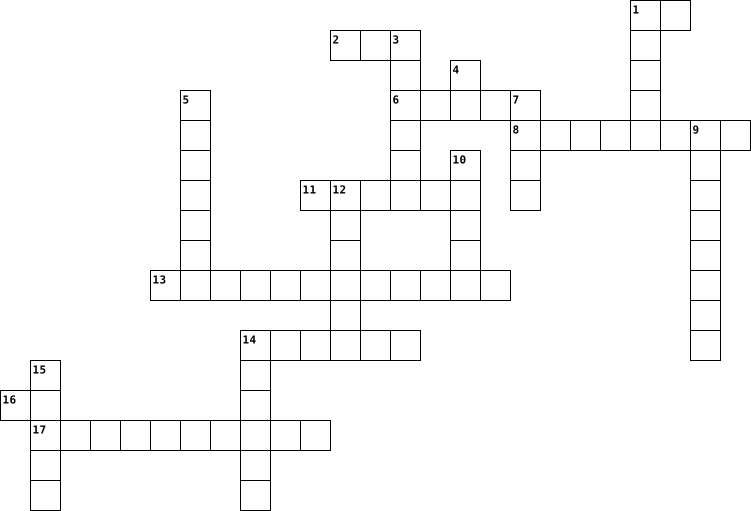
Across
- the earth
- a specific function
- the part of a plant that attaches it to the ground
- a collection of systems that work together
- not harsh
- the growth or turning of plant roots toward
- of organization the hierarchy of levels for
- away from moisture
- the growth of the parts of plants in response
Down
- a part of an organism that is self-contained and
- put forth shoots
- the force of gravity
- the force that attracts a body toward the center
- the medium plants grow in
- a young plant
- a flowering plant's mode of reproduction
- come into view
- things
- system a group of organs that work together
19 Clues: things • the earth • not harsh • a young plant • come into view • put forth shoots • away from moisture • a specific function • the force of gravity • the medium plants grow in • a flowering plant's mode of reproduction • a collection of systems that work together • the growth or turning of plant roots toward • of organization the hierarchy of levels for • ...