
the plant Crossword Puzzles
PLANTS 2021-11-07
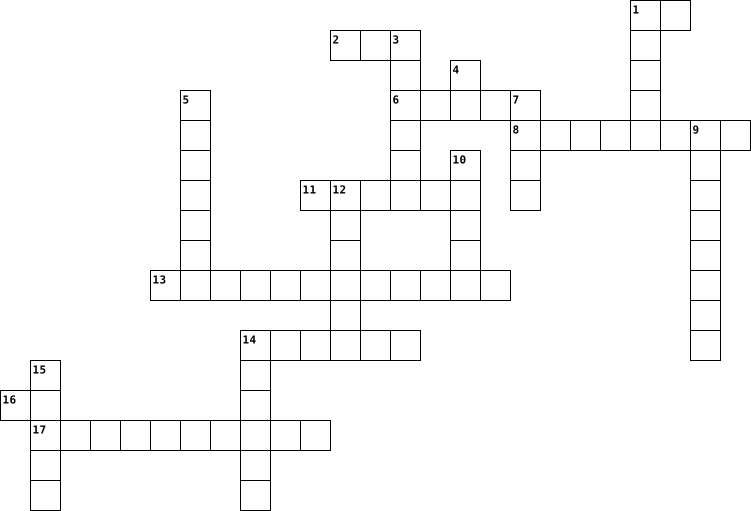
Across
- the earth
- a specific function
- the part of a plant that attaches it to the ground
- a collection of systems that work together
- not harsh
- the growth or turning of plant roots toward
- of organization the hierarchy of levels for
- away from moisture
- the growth of the parts of plants in response
Down
- a part of an organism that is self-contained and
- put forth shoots
- the force of gravity
- the force that attracts a body toward the center
- the medium plants grow in
- a young plant
- a flowering plant's mode of reproduction
- come into view
- things
- system a group of organs that work together
19 Clues: things • the earth • not harsh • a young plant • come into view • put forth shoots • away from moisture • a specific function • the force of gravity • the medium plants grow in • a flowering plant's mode of reproduction • a collection of systems that work together • the growth or turning of plant roots toward • of organization the hierarchy of levels for • ...
The Amazon Rainforest. 2026-06-09

Across
- - A tall plant with a trunk.
- - One of the biggest snakes in the world.
- - A green part of a plant.
- - An animal with eight legs.
- - A large forest that gets lots of rain.
- - A gas that people need to breathe.
- - A small animal with six legs.
- - A smart river animal that swims.
- - The name of the world's largest rainforest.
- - An animal that swings through trees.
- - The Amazon is usually warm and ____.
Down
- - A long plant that climbs trees.
- - The country with most of the Amazon Rainforest.
- - A long reptile with no legs.
- - An animal that jumps and likes water.
- - A bird with a large colourful beak.
- - A big spotted cat that lives in the Amazon.
- - A long flow of water.
- - A very slow animal that hangs in trees.
- - A bird that can copy sounds.
- - An animal that lives in water and has gills.
- - The Amazon gets lots of rain, so it is ____.
- - The layer made by the tops of trees.
- - The natural home of a plant or animal.
- - Plants, animals, rivers and forests together.
25 Clues: - A long flow of water. • - A green part of a plant. • - A tall plant with a trunk. • - An animal with eight legs. • - A long reptile with no legs. • - A bird that can copy sounds. • - A small animal with six legs. • - A long plant that climbs trees. • - A smart river animal that swims. • - A gas that people need to breathe. • - A bird with a large colourful beak. • ...
Week of 2/10 Crossword Puzzle 2025-02-05

Across
- The dog ran __________ when I opened the door. (away, nice, river)
- I will __________ flowers tomorrow. (plant, page, end)
- I turned to the next __________ in my book. (page, end, back)
- I need to put my toys __________ on the shelf. (back, fall, lace)
- The story will have an __________ when the characters reach their goal. (end, winter, back)
- I __________ the paper with scissors to make a shape. (cut, plant, lace)
- During recess, we are ________ to play. (back, away, free)
- We like to build snowmen in the __________ because it is so cold. (winter, fall, lake)
Down
- Yesterday, we __________ to the park to play with our friends. (went, back, away)
- She tied her shoes with __________ to make them look pretty. (lace, back, cut)
- We __________ some flowers in the garden this morning. (planted, cut, went)
- We went to the __________ to swim and have fun. (lake, back, plant)
- The leaves begin to __________ from the trees in autumn. (fall, lake, plant)
- I like to play outside when it’s __________ and sunny. (nice, lake, river)
- The __________ flows quickly after it rains a lot. (river, plant, winter)
15 Clues: I will __________ flowers tomorrow. (plant, page, end) • During recess, we are ________ to play. (back, away, free) • I turned to the next __________ in my book. (page, end, back) • I need to put my toys __________ on the shelf. (back, fall, lace) • The dog ran __________ when I opened the door. (away, nice, river) • ...
My Singing Monsters 2023-08-25

Across
- cold mythical
- oasias mythical
- faeire
- pychic
- posion
- shadow
- plant mythical
- earth,air
- plasma
- cold,plant
- earth mythical
Down
- cold
- plant
- plant,water
- crystal
- bowgart+clamble
- mech
- earth
- legendary
- air mythical
- fire
21 Clues: cold • mech • fire • plant • earth • faeire • pychic • posion • shadow • plasma • crystal • legendary • earth,air • cold,plant • plant,water • air mythical • cold mythical • plant mythical • earth mythical • oasias mythical • bowgart+clamble
Garden 2024-02-12

Across
- White flower seen at Easter
- Flower with many tight petals smells wonderful
- Besides flowers, what else grows in a garden
- Tool used to work in the garden
- The tiny green thing that comes up from a seed
- Another name for soil
- Brown substance on the surface you plant in
- Purple springtime long flower stem with many tiny fragrant flowers
- Large bright yellow flower with brown center
- The small things you plant to grow flowers
Down
- A vessel that holds a plant not in the ground
- Gathering the vegetables when they are ready to eat
- Things that try to choke out good plants
- What should be worn on hands in the garden
- What protects your eyes from the summer sun
- Name of the person who grows things in a garden
- Early spring flower comes in many colors
- What liquid does a plant need to survive
18 Clues: Another name for soil • White flower seen at Easter • Tool used to work in the garden • Things that try to choke out good plants • Early spring flower comes in many colors • What liquid does a plant need to survive • What should be worn on hands in the garden • The small things you plant to grow flowers • What protects your eyes from the summer sun • ...
Spelling Week 8 2026-06-23

Across
- – the process of water leaving a plant through its leaves
- – tubes that carry food through a plant
- – easy to like
- – a very short period of time
- – the part of a plant that produces seeds and attracts pollinators
- – care given to help someone or something
Down
- – a test done to discover something
- – something done incorrectly
- – sharing into equal groups
- – a disagreement between people
- – the leader of a country or organisation
- – a gift
- – tubes that carry water through a plant
- – feeling thankful
- – the act of moving
15 Clues: – a gift • – easy to like • – feeling thankful • – the act of moving • – sharing into equal groups • – something done incorrectly • – a very short period of time • – a disagreement between people • – a test done to discover something • – tubes that carry food through a plant • – tubes that carry water through a plant • – the leader of a country or organisation • ...
LIFE CYCLE OF PLANTS 2020-10-20

Across
- THE TINY PLANT INSIDE A SEED THAT GROWS INTO A NEW PLANT
- IN PLANTS SEXUAL PRODUCTION TAKES PLACE IN
- PLANTS THAT MAKE THEIR OWN FOOD IN A CHEMICAL PROCESS CALLED
- WHEN A SEED STARTS TO GROW
- WHAT TWO THINGS DO PLANTS CREATE THROUGH PHOTOSYNTHESIS
- PROTECTS THE FLOWER BEFORE IT BLOSSOMS
- PROVIDES ENERGY FOR GERMINATION
- THE WAY THINGS ARE IN THE ENVIRONMENT
- TO TAKE IN A SUBSTANCE
Down
- THE ANTHER MAKES
- TO BECOME SMALL AND VERY DRY
- HOW ARE FLOWERS WHICH DO NOT HAVE BRIGHTLY-COLOURED PETALS POLLINATED
- WHERE THE SEED DEVELOPS
- NEEDED FOR GROWTH BY PLANTS BUT NOT SEEDS
- SOMETHING THAT CAUSES CHANGES
- THE OUTER COVERING THAT PROTECTS THE SEED
- PART OF A PLANT THAT CAN GROW INTO A NEW PLANT
17 Clues: THE ANTHER MAKES • TO TAKE IN A SUBSTANCE • WHERE THE SEED DEVELOPS • WHEN A SEED STARTS TO GROW • TO BECOME SMALL AND VERY DRY • SOMETHING THAT CAUSES CHANGES • PROVIDES ENERGY FOR GERMINATION • THE WAY THINGS ARE IN THE ENVIRONMENT • PROTECTS THE FLOWER BEFORE IT BLOSSOMS • NEEDED FOR GROWTH BY PLANTS BUT NOT SEEDS • THE OUTER COVERING THAT PROTECTS THE SEED • ...
vocab 3 level 5 2025-01-10

Across
- the beginner of the plant
- how plants behaving or acting.
- process after carnivore plants catch their prey
- microbe that helps plants to grow
- plant need this for photosynthesis
- part of plants that absorb the nutrients on the ground
- smell of rafflesia arnoldii
- creature that become the food for all herbivore animals
- way to survive in the environment
Down
- part of tree where the photosynthesis happen
- way to stay alive
- part of the plant that become fruit
- part of the earth where tree is plant
- part of carnivore plants to catch it's prey
- the way carnivore plants to lure their prey
15 Clues: way to stay alive • the beginner of the plant • smell of rafflesia arnoldii • how plants behaving or acting. • microbe that helps plants to grow • way to survive in the environment • plant need this for photosynthesis • part of the plant that become fruit • part of the earth where tree is plant • part of carnivore plants to catch it's prey • ...
GAME 2024-03-07

Across
- Plant used as food
- Playground equipment for back-and-forth motion
- Edible grain
- Colorful plant part
- Metal restraints used by police
- Colorful flying insect
- Playground equipment for gliding down
- Season after summer
- Currency
- Burning substance
- Person who performs labor
- Law enforcement officer
- Insect that produces honey
- Human beings
- Mail delivery person
- Large feline
- Edible plant part
Down
- Oval object laid by birds
- Written communication sent by mail
- Part of a plant that grows into a new plant
- Free from dirt
- Urban area
- Emergency responder for fires
- Living organism that grows from the ground
- Part of a tree that falls in autumn
- Legless reptile
- Feathered creature
- Eight-armed sea creature
- Ten-legged sea creature
- Season after autumn
- Animal flesh used as food
- Low temperature
- Season after winter
- Christian holiday
- Small mammal with long ears
- Place of residence
- Opposite of clean
37 Clues: Currency • Urban area • Edible grain • Human beings • Large feline • Free from dirt • Legless reptile • Low temperature • Burning substance • Christian holiday • Opposite of clean • Edible plant part • Plant used as food • Feathered creature • Place of residence • Colorful plant part • Season after summer • Season after autumn • Season after winter • Mail delivery person • Colorful flying insect • ...
Ishan biology puzzle 2021-03-05

Across
- a monocot plant
- a bryophyte plant
- the place of pancreas where the pancreatic hormones are produced
- a type of bio fuel
- an algae which reproduces by fragmentation
- the male part of the flower
Down
- the female part of the flower
- a dicotyledon plant
- a polycotyledon plant
- the mid layer of chordata foetus
- the middle layer of uterus
- a type of fungus used for fermentation
- a chemoautotrophic bacterium
13 Clues: a monocot plant • a bryophyte plant • a type of bio fuel • a dicotyledon plant • a polycotyledon plant • the middle layer of uterus • the male part of the flower • a chemoautotrophic bacterium • the female part of the flower • the mid layer of chordata foetus • a type of fungus used for fermentation • an algae which reproduces by fragmentation • ...
Post Harvest Plant Physiology 2023-02-28

Across
- Transports nutrients from leaves to other parts of the plant
- Hormonal gas that causes aging
- Pigment that gives plant green color
- Leaf/flower without its own stem but attached to main plant stem
- Inflorescence bearing flowers having short stalks along shoots bearing flowers
- Postpones aging of ethylene-sensitive flowers
- Leafless peduncle arising near base of plant
Down
- Exchange of carbon dioxide and oxygen
- Expanded part of a leaf/petal
- Water vapor in air relative to amount that would be present if air was saturated
- Plant hormones for growth/development
- Spike borne on a fleshy stem
- Transports water and nutrients from roots to he rest of the plant
- The process of aging in plants
14 Clues: Spike borne on a fleshy stem • Expanded part of a leaf/petal • Hormonal gas that causes aging • The process of aging in plants • Pigment that gives plant green color • Exchange of carbon dioxide and oxygen • Plant hormones for growth/development • Leafless peduncle arising near base of plant • Postpones aging of ethylene-sensitive flowers • ...
Unit B review 2017-10-10

Across
- is the leaf tip.
- are plant stems that have vascular bundles each bundle contain both xylem and phloem.
- is the % of seeds that sprouts. 75 of 100 = 75%.
- is a thin, green, actively growing tissue located between the bark and wood and produces all new stem cells.
- is the leaf stalk or part that connects the leaf to the stem.
- refers to plants that retain their leaves and remain green year round.
- are breathing pores found on stems and branches.
- are long roots with few branched ones. They are more difficult to transplant.
- is the large, flat part of the leaf.
- are small green particles that contain chlorophyll, give leaves their green color and are necessary for photosynthesis.
- attracts insects for pollination.
- is the part of biology that deals with plants.
- is a bud on end of stem.
- leaves or stems have a smooth non-hairy feel (example southern magnolia).
- refers to plants that lose their leaves during the dormant season.
Down
- is the edge of the leaf.
- is a plant that is swollen or filled with moisture.
- season plants relish cool temperatures, growing best in spring or fall. Example: pansy.
- are the small openings under the leaf for breathing or transpiration.
- is the tissue that transports food down from leaves to the roots.
- absorb moisture (water) and minerals.
- is a plant that is limp because it does not have enough moisture.
- is the seed’s capability of growing or developing.
- is a plant that completes its life cycle in two years. It usually grows the first year and flowers the second year.
- is a plant that lives more than two years. Some perennials will grow and bloom the first year.
- is a stage when a plant rests or grows very little.
- is the large center vein.
- have many branched shallow roots. They are easy to transplant.
- is old inactive xylem.
- indicate where leaves were attached.
- is taking a 4-6 inch piece of the plant and forcing roots to grow.
- converts sugars and starches into energy.
- is old inactive phloem.
- is the tissue that transports water and nutrients up from the roots to the stems and leaves.
- is the bud located at the axil of the leaf.
- is a plant that completes its life cycle in one year.
36 Clues: is the leaf tip. • is old inactive xylem. • is old inactive phloem. • is the edge of the leaf. • is a bud on end of stem. • is the large center vein. • attracts insects for pollination. • indicate where leaves were attached. • is the large, flat part of the leaf. • absorb moisture (water) and minerals. • converts sugars and starches into energy. • ...
Unit B review 2017-10-10

Across
- is old inactive phloem.
- season plants relish cool temperatures, growing best in spring or fall. Example: pansy.
- refers to plants that retain their leaves and remain green year round.
- is the large center vein.
- indicate where leaves were attached.
- are small green particles that contain chlorophyll, give leaves their green color and are necessary for photosynthesis.
- are breathing pores found on stems and branches.
- is taking a 4-6 inch piece of the plant and forcing roots to grow.
- absorb moisture (water) and minerals.
- are plant stems that have vascular bundles each bundle contain both xylem and phloem.
- is the edge of the leaf.
- is a thin, green, actively growing tissue located between the bark and wood and produces all new stem cells.
- are the small openings under the leaf for breathing or transpiration.
- are long roots with few branched ones. They are more difficult to transplant.
- is the tissue that transports water and nutrients up from the roots to the stems and leaves.
- is the % of seeds that sprouts. 75 of 100 = 75%.
- refers to plants that lose their leaves during the dormant season.
- is the bud located at the axil of the leaf.
- is a plant that completes its life cycle in two years. It usually grows the first year and flowers the second year.
Down
- attracts insects for pollination.
- is the tissue that transports food down from leaves to the roots.
- is the large, flat part of the leaf.
- have many branched shallow roots. They are easy to transplant.
- is a plant that lives more than two years. Some perennials will grow and bloom the first year.
- converts sugars and starches into energy.
- leaves or stems have a smooth non-hairy feel (example southern magnolia).
- is a plant that completes its life cycle in one year.
- is the seed’s capability of growing or developing.
- is old inactive xylem.
- is a plant that is swollen or filled with moisture.
- is a stage when a plant rests or grows very little.
- is the part of biology that deals with plants.
- is a plant that is limp because it does not have enough moisture.
- is the leaf stalk or part that connects the leaf to the stem.
- is a bud on end of stem.
- is the leaf tip.
36 Clues: is the leaf tip. • is old inactive xylem. • is old inactive phloem. • is the edge of the leaf. • is a bud on end of stem. • is the large center vein. • attracts insects for pollination. • is the large, flat part of the leaf. • indicate where leaves were attached. • absorb moisture (water) and minerals. • converts sugars and starches into energy. • ...
Plant's 2025-04-10

Across
- water goes up
- holds stigma
- another way organisms can get energy
- holds anther
- plant reacts to water
- were fertilization happens
- produces pollen
- male plant reproduction
- glucose, oxygen
- female plant reproduction
Down
- plant reacts to gravity
- Power factory of cell
- sugar goes down
- plant reacts to touch
- plant reacts to light
- catches pollen
- absorb water from minerals
- water, sunlight, carbon dioxide
- attracts pollinators
19 Clues: holds stigma • holds anther • water goes up • catches pollen • sugar goes down • produces pollen • glucose, oxygen • attracts pollinators • Power factory of cell • plant reacts to touch • plant reacts to light • plant reacts to water • plant reacts to gravity • male plant reproduction • female plant reproduction • absorb water from minerals • were fertilization happens • ...
Aroida Australis Big Stopper 2022-12-04

Across
- Feature of Montane Rainforest
- Plant scientist
- Habitat loss
- Rainy season
- Large rainforest
- All around the tropics
- Nile Cabbage etc
- Philodendron fruit
- Cordillo de Cutucu home
- Plant hormone
- Air root
- African aroid genus
- Collection of plants
- Unwanted invader
- Colombian president
- Chlorophyll mutation
- Largest amorphophallus
- The green fairy
- Andraeanum flower
- Devils ivy
- German botanist ______ Bogner
- Clay balls
- Adanson's monstera
- Plant tissue type
- Plant tissue type
- Tree grower
- Inter genus love child
- Edible xanthosoma
- Aroid inflorescence
- Wasp waisted aussie native
- Petiole
- Unusual ability to make plants grow 5, 6
- Aquatic aroid
Down
- Costa Rican reserve
- Brazillian swamp plant
- Philo - In nomine patris et filii et
- Tolkien's tree man
- Product of photosynthesis
- Biological community
- Duck weed
- Picture B.
- Leaf faced spirit 5, 3.
- Angel Wings
- Borneo river dweller
- Expanded granite for growers
- Attractively slender anthurium
- Blocked nose anthurium
- Growth point
- Micro climate display
- Plant anchor
- Edible colocasia
- Pertaining to water
- Author of Aroids 4, 5.
- King anthurium
- Formerly Philodendron subg. Meconostigma
- Rain windows
- Former ASA boss man
- Funeral lily
- Aroid Family
- Picture A.
- Mite killer
- Mediterranean genus
- Type of cheese plant
- Warocqueanum
- Popular plant marketplace
65 Clues: Petiole • Air root • Duck weed • Picture B. • Picture A. • Devils ivy • Clay balls • Angel Wings • Mite killer • Tree grower • Habitat loss • Rainy season • Growth point • Plant anchor • Rain windows • Funeral lily • Aroid Family • Warocqueanum • Plant hormone • Aquatic aroid • King anthurium • Plant scientist • The green fairy • Large rainforest • Nile Cabbage etc • Edible colocasia • Unwanted invader • Andraeanum flower • ...
Plants - Ch. 18, Angiosperm Worksheet 2024-05-06

Across
- The systematic cultivation of plants by humans
- Angiosperms with scattered vascular bundles, narrow leaf with parallel veins, flower petal multiples of 3
- Region of unspecialized cells ready for differentiation
- Angiosperms with vascular bundles in a ring, seed splits into 2 equal parts, broad leaf with branching veins, flower petal multiples of 4 or 5
- Response of a plant to gravity (roots growing down & stems growing up)
- A system of branched roots without a taproot
- A plant's response to longer or shorter days
- Plants responding to touch when encountering an object, like vines on a wall
- Where leaves are attached next to buds
- Small openings in the leaf epidermis where air enters & exits
Down
- A large primary, central root growing straight down
- Protective outer covering of a plant
- Vascular tissue that transports nutrients throughout the plant
- Hormones that stimulate cell elongation & new root growth
- Chemical signals that affect growth, activity, development
- Cells that respond to a particular hormone
- Cells that control the opening & closing of stomata
- Vascular tissue that brings water up the plant from the roots
- Ground tissue in leaves where photosynthesis occurs
- Tendency of a plant to grow toward a light source
- Loss of water through the leaves
21 Clues: Loss of water through the leaves • Protective outer covering of a plant • Where leaves are attached next to buds • Cells that respond to a particular hormone • A system of branched roots without a taproot • A plant's response to longer or shorter days • The systematic cultivation of plants by humans • Tendency of a plant to grow toward a light source • ...
Plant Science pt.1 2022-09-18

Across
- a place where young trees, shrubs, and other plants are grown
- grass, hay, or silage and other feeds high in fiber
- a seed sprouting or starting to grow
- top layer of the earth's surface suitable for the growth of plant life
- material placed on soil to break the fall of raindrops, prevent weeds from growing, or improve the appearance of the area
- joining two plant parts together so that they will grow as one
Down
- young plant grown from seed
- small microscopic roots that arise from the cells located on the surface of a plant root
- crop plants grown for their vegetative growth and fed to animals
- a plant that lives from year to year
- large group of trees and shrubs
- a plant that is not wanted
- a single leaf arising from a plant stem
13 Clues: a plant that is not wanted • young plant grown from seed • large group of trees and shrubs • a plant that lives from year to year • a seed sprouting or starting to grow • a single leaf arising from a plant stem • grass, hay, or silage and other feeds high in fiber • a place where young trees, shrubs, and other plants are grown • ...
First 10 Nursery Plants 2024-09-25

Across
- What plant has heart shaped leaves with jagged edges?Acalypha wilkesiana
- What is the common name for the plant "Ajuga reptans"?
- Glossy abelias leaves' come off in ________ meaning that the leaves grow directly across from each other.
- The African Lily has ______-like leaves.
- The Japanese Maple has ______-pointed toothed leaves.
- The scientific name for the Japanese Maple is?
- The _________ tree's leaves resemble the Canadian flag.
- What is the scientific name for Copper Plant?
- What flower has skinny leaves and grows up the stalk?
Down
- The __________ has splotches of yellow on the leaves.
- What word means that the plant has foliage that remains green for more than one growing season?
- A shrub that has small glossy ovate dark green leaves with tinges of red
- What flower has 5 petals and spurs?
- African Lily flowers are what color?
- This plant has fat, pointed leaves and flowers that grow along the stalk.
15 Clues: What flower has 5 petals and spurs? • African Lily flowers are what color? • The African Lily has ______-like leaves. • What is the scientific name for Copper Plant? • The scientific name for the Japanese Maple is? • The __________ has splotches of yellow on the leaves. • The Japanese Maple has ______-pointed toothed leaves. • ...
Parts of a Flower 2022-03-02

Across
- The result of reproduction A new organism that will grow up to be similar to the parent
- The part of a flower where seeds form and that is made up of the ovary style and stigma
- The part of a plant where pollen is made
- Little bags on certain plant parts that hold something
- Easily hurt or broken
- The male cell that must join the female cell to begin new life
- The part of the flower that takes in pollen
- When a sperm cell joins an egg cell a new life is started
- Grains of dusty powder formed by flowers to carry sperm cells
- The tube that connects the stigma to the ovary
- A name given to nonflowering plants that produce seeds they are cone bearers
Down
- One of the male parts of a flowering plant that connects to the anther
- The brightly colored part of the flower that is easiest to see
- the little plant inside a seed
- A name given to flowering plants
- The part of the flower where pollen is stored it is made up of the anther and filament
- The act of changing food into a form that cells use for energy
- The part of the plant that makes and holds the egg cells
18 Clues: Easily hurt or broken • the little plant inside a seed • A name given to flowering plants • The part of a plant where pollen is made • The part of the flower that takes in pollen • The tube that connects the stigma to the ovary • Little bags on certain plant parts that hold something • The part of the plant that makes and holds the egg cells • ...
Photosynthesis & Cellular Respiration 2025-11-06

Across
- the amount of ATP produced in aerobic respiration
- green pigment used in photosynthesis
- what comes out of the reaction
- breaking down glucose
- if oxygen is present
- the amount of ATP produced in anaerobic respiration
- molecule made of energy during cellular respiration
- where gas exchange occurs
- causes muscle soreness & produced in anaerobic respiration
Down
- where glycolysis takes place in the cell
- what goes in the reaction
- moves glucose (food) throughout the plant
- where photosynthesis takes place
- anchors the plant
- sugar that plants produce
- if oxygen is not present
- where aerobic respiration takes place
- increase the surface area for water & nutrient absorption
- moves water throughout the plant
19 Clues: anchors the plant • if oxygen is present • breaking down glucose • if oxygen is not present • what goes in the reaction • sugar that plants produce • where gas exchange occurs • what comes out of the reaction • where photosynthesis takes place • moves water throughout the plant • green pigment used in photosynthesis • where aerobic respiration takes place • ...
6th Q 3 Revision Part 3 2023-03-17

Across
- In plants most of the absorption of water and minerals takes place through this.
- the protective covering over the bud before it blooms.
- They hold the plant in the ground and keep the plant from falling over.
- attract pollinators to the plant.
- The release of water vapor and oxygen in the form of gases through the stomata.
- The largest part of the seed that provides stored energy for the developing seedling is called ___________
- The microscopic openings on leaf cells through which the transpiration takes place is called _________.
- dandelion seeds are dispersed by _______.
- The innermost core consists of dead cells which are added to continually, which is called the ______.
- The outer protective layer of the trunk is made of both living and dead cells and is called the ______.
- The cells that carry water throughout the plant body.
- produces the pollen.
- A plant’s response to gravity.
Down
- The inside of the seed contains an undeveloped plant.
- What type of plants depend entirely upon their green stems for support and die each year as winter approaches?
- A plant’s response to light.
- In which root system, one main root is larger than the others?
- produce the ovule or egg that eventually becomes the seed.
- the flat extended part of the leaf.
- The first leaves to form of a seedling.
- a short stalk that attaches the leaf to the stem.
- the hormone that stimulates plant growth, and also causes plants to respond to gravity, light, touch, and other effects of the environment.
- All seeds have a tough outside covering.
- The process by which plants produce their own food using water and carbon dioxide in the presence of sunlight to produce glucose and oxygen is called _____.
- The cells that carry food through the plant's body.
- The surface of a leaf has a single layer of cells that secretes a waxy covering called ______.
- Which bud is formed at the tip of a stem?
27 Clues: produces the pollen. • A plant’s response to light. • A plant’s response to gravity. • attract pollinators to the plant. • the flat extended part of the leaf. • The first leaves to form of a seedling. • All seeds have a tough outside covering. • dandelion seeds are dispersed by _______. • Which bud is formed at the tip of a stem? • ...
7th Grade Science Plants and Animals 2021-10-20

Across
- lizards and turtles and crocodiles (Oh My!)
- Aquatic and terrestrial life phases
- type of plant that grows small and has no true roots
- autotrophs with cell walls
- sedentary sea creatures
- egg laying mammals
- the hairy ones
- mobile sea creatures with two-way digestive tract
- aquatic animals with gills
- animals with a backbone
- protective layer on stems and leaves
- insects and crustaceans
- transports water in plant vascular system
Down
- Organelle of Photosynthesis
- Type of plant that grows big and has true root
- Sea creatures with “Funky skin”
- Live birth of fully developed young
- organism that lacks vertebra
- includes clams and squids
- Ventilation on underside of leaves.
- transport sugar in plant vascular system
- mobile critter with one-way digestion and nervous system with simple brain
- Wall, protects and supports plant cells
- Pouched mammals
- mobile heterotroph
- have feathers
- The Domain to which plants and animals belong
27 Clues: have feathers • the hairy ones • Pouched mammals • egg laying mammals • mobile heterotroph • sedentary sea creatures • animals with a backbone • insects and crustaceans • includes clams and squids • autotrophs with cell walls • aquatic animals with gills • Organelle of Photosynthesis • organism that lacks vertebra • Sea creatures with “Funky skin” • Live birth of fully developed young • ...
Chapter 4 2026-09-20

Across
- Material surrounding extracellular fibers that resists compression
- Addition of a phosphate group to a protein
- Addition of phosphate groups to a receptor by its own kinase activity
- Protein that acts as a molecular switch using GDP and GTP
- ECM molecule made of a protein core with attached polysaccharides
- Protein that recognizes and binds a specific signaling molecule
- Signaling molecule released by neurons that affects nearby cells
- Stage when a signaling molecule binds to its receptor
- Enzyme that removes phosphate groups from proteins
- Signaling molecule released into bodily fluids that can affect distant cells
- Population-density threshold that triggers a coordinated microbial response
- Small GTP-binding protein that helps transmit signals from activated RTKs
- Interaction between different signaling pathways
- Cell adhesion proteins that help neighboring cells attach to each other
- Animal cell connection that allows small molecules and ions to pass between cells
- Main structural polysaccharide in plant cell walls
- Continuous network of plant cell cytoplasm connected by plasmodesmata
- Signal that can cross the plasma membrane and bind to an intracellular receptor
- Bundles of cellulose strands that provide strength to plant cell walls
- Cell that can respond to a signaling molecule because it has the correct receptor
- Plant hormone that helps prevent water loss during drought
- Enzyme-linked receptor that dimerizes and phosphorylates itself when activated
- Pore in a plant leaf that allows gas exchange
- Signal that cannot cross the plasma membrane and binds to a surface receptor
- Protein kinase involved in phosphorylation cascades
- Processes that stop a signaling pathway
- Surrounds the cell and regulates what enters and leaves
- Conversion of an extracellular signal into an intracellular signal
Down
- Community of microorganisms attached to a surface
- Stage when a signal is converted and passed through intracellular pathways
- Animal cell connection that forms a watertight seal
- Small intracellular molecule that carries and amplifies a signal
- Protein that holds signaling proteins together to increase pathway efficiency
- Region outside plant plasma membranes including cell walls and air spaces
- Cytoskeletal protein that helps produce cell movement and directional growth
- kinase Enzyme that adds phosphate groups to proteins
- Cell signaling based on population density
- Cell surface receptor that activates a G protein
- Proteins that loosen bonds between cellulose microfibrils to allow plant cells to expand
- Chemical signal involved in communication between organisms of the same species
- Channels through plant cell walls that connect the cytoplasm of adjacent cells
- Membrane proteins that connect the extracellular matrix to the cytoskeleton
- Pressure caused by water inside a plant cell pushing against the cell wall
- Hydrophilic polysaccharide that holds water in plant cell walls
- Enzyme that breaks down cAMP and cGMP
- Molecule bound to an inactive G protein
- Cellular change that occurs after a signal is received and processed
- Series of proteins that activate one another through phosphorylation
- Protein that allows tissues such as lungs to stretch and recoil
- Flexible extracellular material that provides support and attachment in animal cells
- Process in which a small signal produces a much larger cellular response
- Main structural protein fiber in animal extracellular matrix
- Molecule bound to an active G protein
- Stiff extracellular layer that provides plant cells with support and shape
- Rigid material that strengthens mature plant cell walls
- Structure made of strong fibers embedded in a softer ground substance
- Rivet-like connection that strongly holds adjacent animal cells together
- Plant cell that controls the opening and closing of a stoma
- Pectin-rich layer that glues adjacent plant cells together
- Joining of two receptor molecules
60 Clues: Joining of two receptor molecules • Enzyme that breaks down cAMP and cGMP • Molecule bound to an active G protein • Molecule bound to an inactive G protein • Processes that stop a signaling pathway • Addition of a phosphate group to a protein • Cell signaling based on population density • Pore in a plant leaf that allows gas exchange • ...
The Clarion Crossword (2022) 2022-12-04

Across
- A quick growing hedging plant that is edible if prepared correctly
- A common name for the shrub "Pyracantha"
- Tottering by _____, a variety of rose
- Member of the onion family that is harvested through winter
- Rotted down kitchen waste, clippings, cardboard etc.
- Heavy, stripy mammal that digs up potatoes!
Down
- Mucky goodness for the garden, useful for mulching
- A slow growing hedging or topiary plant suitable for tiny hedges
- A parasitic plant that is popular at Christmas
- The Flower of the Month!
- Prickly plant associated with Christmas
- Hedging plant that stays amber through winter
- Taxus trees
- Number 1 way of attracting wildlife to a garden
14 Clues: Taxus trees • The Flower of the Month! • Tottering by _____, a variety of rose • Prickly plant associated with Christmas • A common name for the shrub "Pyracantha" • Heavy, stripy mammal that digs up potatoes! • Hedging plant that stays amber through winter • A parasitic plant that is popular at Christmas • Number 1 way of attracting wildlife to a garden • ...
Activity 1 Environmental Scavenger Hunt and Crossword Creation 2025-10-18

Across
- – Used for writing and studying.
- – Green plant covering the ground.
- – A farm animal that lays eggs.
- – Where plants grow and get nutrients.
- – A flying animal found in the campus.
- – Essential for all living things.
- – Shares knowledge with students.
- – Learner studying at UNP.
- – A furry pet often seen at home.
Down
- – Used for sitting in the community.
- – A loyal animal known as man’s best friend.
- – Seat located near the garden.
- – Structure where people study.
- – A hard solid found on the ground.
- – Main source of energy for plants.
- – Colorful part of a plant that blooms.
- – A tall plant that gives shade.
- – Gives light along the street.
- – Keeps the school safe.
- – The invisible gas we breathe.
20 Clues: – Keeps the school safe. • – Learner studying at UNP. • – Seat located near the garden. • – Structure where people study. • – A farm animal that lays eggs. • – Gives light along the street. • – The invisible gas we breathe. • – Used for writing and studying. • – A tall plant that gives shade. • – Shares knowledge with students. • – A furry pet often seen at home. • ...
My Singing Monsters 2023-08-25

Across
- cold mythical
- oasias mythical
- faeire
- pychic
- posion
- shadow
- plant mythical
- earth,air
- plasma
- cold,plant
- earth mythical
Down
- cold
- plant
- plant,water
- crystal
- bowgart+clamble
- mech
- earth
- legendary
- air mythical
- fire
21 Clues: cold • mech • fire • plant • earth • faeire • pychic • posion • shadow • plasma • crystal • legendary • earth,air • cold,plant • plant,water • air mythical • cold mythical • plant mythical • earth mythical • oasias mythical • bowgart+clamble
Plant Biology 2023-11-26

Across
- Modified stem used to store starches
- Openings in the leaves that permit movement of water vapor, CO2, and oxygen in and out of the leaves
- Place on the plant where cell division occurs (Bonus: Where on the plant are these areas located?)
- The chemical process by which plants produce sugars (Bonus: what are the sugars used for?)
- Type of plant with both male and female flowers on the same plant
- The first leaf or leaves to emerge from a seed
- Vascular tissue that conducts water and mineral nutrients from the soil to the above ground plant parts
Down
- The result of a loss of turgor (rigidity) in plant cells. (Bonus: What can cause this?)
- A plant’s ability to withstand frost
- Evaporative loss of moisture through the leaves (Bonus: how does this process relate to water uptake from the soil?)
- Vascular tissue that conducts sugars and from the leaves to other plant parts.
- Type of flower with both male and female parts
- Type of plant that completes its life cycle in one year
13 Clues: A plant’s ability to withstand frost • Modified stem used to store starches • Type of flower with both male and female parts • The first leaf or leaves to emerge from a seed • Type of plant that completes its life cycle in one year • Type of plant with both male and female flowers on the same plant • ...
Cells, Muscles and Bones Review 2020-09-14

Across
- pairs of muscles that carry out opposite actions.
- joins muscle to bone
- its smooth and reduces friction in joints.
- jelly like material where chemical reactions take place
- have no nucleus and help oxygen around body
- a group of similar cells working together to carry out a function
- an instrument for looking and magnifying a sample
- where two bones meet
- protects the brain
- where a plant cell makes its own food
- stores water and sap in a plant
- location in the bone where red blood cells are made
- a strong structure on the outside of a plant cell
- the "organ of the cell"
- joins bone to bone
- a liquid used for staining plant cells
Down
- one cell
- a type of cell that does a particular job
- a group of similar tissues carrying out a function
- a layer of tissue that is used for insulating the body
- you look through this when viewing a sample on a microscope
- The bones in the chest that protect the heart and lungs.
- a type of plant cell that increase the water uptake into the root
- a group of organs carrying out similar function
- an organelle in a cell that creates energy
- more than one cell
- a layer around a cell to allow materials pass in and out
27 Clues: one cell • protects the brain • more than one cell • joins bone to bone • joins muscle to bone • where two bones meet • the "organ of the cell" • stores water and sap in a plant • where a plant cell makes its own food • a liquid used for staining plant cells • a type of cell that does a particular job • its smooth and reduces friction in joints. • ...
Plants, Animals, Products, and By-Products 2021-11-11

Across
- Term for birds that are kept for eggs
- Eggs and meat are the products from ___.
- Term for a cow's home
- Term for a chicken's home
- The highest producting fiber and oil crops are cotton, rapeseed, ___, and peanut.
- The three most important food crops are ___, wheat, and rice.
- Products are the ___ thing we get from harvesting something.
- Term for birds that are kept for meat
- Pork and beef are ___ products.
- An example of ___ plant use is eating a salad.
- Term for a horse's home
Down
- By-products are the ____.
- Term for a pig's home
- Cocoa beans are ___ products.
- Term for a rabbit's home
- What is the major livestock industry in the US?
- ___ plant use is when an animal eats a plant and then we eat the animal.
- The two types of products/by-products are edible and ____.
- The two types of products/by-products are ___ and inedible.
- Beef and milk are the products from ___.
- ____ is the product from pigs.
- Milk and cheese are ___ products.
22 Clues: Term for a pig's home • Term for a cow's home • Term for a horse's home • Term for a rabbit's home • By-products are the ____. • Term for a chicken's home • Cocoa beans are ___ products. • ____ is the product from pigs. • Pork and beef are ___ products. • Milk and cheese are ___ products. • Term for birds that are kept for eggs • Term for birds that are kept for meat • ...
Activity 1 Environmental Scavenger Hunt and Crossword Creation 2025-10-18

Across
- – Used for writing and studying.
- – A flying animal found in the campus.
- – A furry pet often seen at home.
- – A loyal animal known as man’s best friend.
- – The invisible gas we breathe.
- – Gives light along the street.
- – Main source of energy for plants.
- – Used for sitting in the community.
- – Essential for all living things.
- – Colorful part of a plant that blooms.
Down
- – Learner studying at UNP.
- – Seat located near the garden.
- – A farm animal that lays eggs.
- – Green plant covering the ground.
- – A hard solid found on the ground.
- – Shares knowledge with students.
- – Where plants grow and get nutrients.
- – Keeps the school safe.
- – A tall plant that gives shade.
- – Structure where people study.
20 Clues: – Keeps the school safe. • – Learner studying at UNP. • – Seat located near the garden. • – A farm animal that lays eggs. • – The invisible gas we breathe. • – Gives light along the street. • – Structure where people study. • – Used for writing and studying. • – A tall plant that gives shade. • – A furry pet often seen at home. • – Shares knowledge with students. • ...
Activity 1 Environmental Scavenger Hunt and Crossword Creation 2025-10-18

Across
- – Used for writing and studying.
- – Green plant covering the ground.
- – A farm animal that lays eggs.
- – Where plants grow and get nutrients.
- – A flying animal found in the campus.
- – Essential for all living things.
- – Shares knowledge with students.
- – Learner studying at UNP.
- – A furry pet often seen at home.
Down
- – Used for sitting in the community.
- – A loyal animal known as man’s best friend.
- – Seat located near the garden.
- – Structure where people study.
- – A hard solid found on the ground.
- – Main source of energy for plants.
- – Colorful part of a plant that blooms.
- – A tall plant that gives shade.
- – Gives light along the street.
- – Keeps the school safe.
- – The invisible gas we breathe.
20 Clues: – Keeps the school safe. • – Learner studying at UNP. • – Seat located near the garden. • – Structure where people study. • – A farm animal that lays eggs. • – Gives light along the street. • – The invisible gas we breathe. • – Used for writing and studying. • – A tall plant that gives shade. • – Shares knowledge with students. • – A furry pet often seen at home. • ...
Activity 1 Environmental Scavenger Hunt and Crossword Creation 2025-10-18

Across
- – Used for writing and studying.
- – Green plant covering the ground.
- – A farm animal that lays eggs.
- – Where plants grow and get nutrients.
- – A flying animal found in the campus.
- – Essential for all living things.
- – Shares knowledge with students.
- – Learner studying at UNP.
- – A furry pet often seen at home.
Down
- – Used for sitting in the community.
- – A loyal animal known as man’s best friend.
- – Seat located near the garden.
- – Structure where people study.
- – A hard solid found on the ground.
- – Main source of energy for plants.
- – Colorful part of a plant that blooms.
- – A tall plant that gives shade.
- – Gives light along the street.
- – Keeps the school safe.
- – The invisible gas we breathe.
20 Clues: – Keeps the school safe. • – Learner studying at UNP. • – Seat located near the garden. • – Structure where people study. • – A farm animal that lays eggs. • – Gives light along the street. • – The invisible gas we breathe. • – Used for writing and studying. • – A tall plant that gives shade. • – Shares knowledge with students. • – A furry pet often seen at home. • ...
PLANTS 2023-03-16

Across
- HAS NUTRIENTS
- HELPS ON PHOTOSSYNTESIS
- HOLDS THE PLANT UNDER THE SOIL
- THE PROCESS TO MAKE OXYGEN
- HILDS THE PLANT UP
- PRODUCED BY PHOTOSSYNTESIS
Down
- WHAT HUMANS PRODUCE TO HELP IN THE PHOTOSSYNTESIS
- WARM THE PLANTS
- ARE GREEN
- HOLDS THE SEED
- BEES LOVE
- WHERE THE PLANTS BEGIN
- THEME OF GLOBAL WEB
- GOOD FOR THE PLANT
14 Clues: ARE GREEN • BEES LOVE • HAS NUTRIENTS • HOLDS THE SEED • WARM THE PLANTS • GOOD FOR THE PLANT • HILDS THE PLANT UP • THEME OF GLOBAL WEB • WHERE THE PLANTS BEGIN • HELPS ON PHOTOSSYNTESIS • THE PROCESS TO MAKE OXYGEN • PRODUCED BY PHOTOSSYNTESIS • HOLDS THE PLANT UNDER THE SOIL • WHAT HUMANS PRODUCE TO HELP IN THE PHOTOSSYNTESIS
Ecology Crossword 2025-04-01

Across
- - caught and killed by another for food
- - an organism that breaks down dead plant or animal matter
- Chain - show how energy and nutrients move through an ecosystem
- - Organism consumes mostly decaying material
- web - the interconnected feeding relationships within an ecosystem
- level - Several hierarchical levels in an ecosystem
- - organisms that create their own food
- - the region on, above and below Earth's surface
- - Study of interactions between organisms & environments
- - a group of others living in the same place
- - individual animal, plant, or single-celled life form.
- factors - all the non living things
Down
- - Relationship where one organism benefits off another
- - the total of individuals occupying an area or making up a whole.
- - organisms that cannot produce its own food
- - Organism cannot produce its own food
- - Plant eaters
- - Organism produces its own food
- factors - all the living things
- - the natural home or environment of an organism.
- - eats prey
- - a community of living organisms
- - Organism that harbors or provides a home/resources for another organism
- - Meat and Plant eaters
- - Meat eaters
25 Clues: - eats prey • - Meat eaters • - Plant eaters • - Meat and Plant eaters • factors - all the living things • - Organism produces its own food • - a community of living organisms • factors - all the non living things • - Organism cannot produce its own food • - organisms that create their own food • - caught and killed by another for food • ...
Classific and Anatomy of a Plant 2023-11-14

Across
- Transports food (plant sugars) and creates bark on woody plants
- where the petiole base is attached to the stem
- Type of plant male and female flowers are on separate plants
- stems with a large pith (soft spongy tissue in the center of a stem) and live only a year or two; roses, grapes, blackberries, and raspberries
- above ground structures (usually) hold up the buds, flowers, and leaves
- stems that are more than a year old and may have lateral stems
- Type of plant both male and female flowers on a single plant
Down
- hold stored energy for future growth and plant needs
- flattened, green surface that provides a large area for efficient absorption of light energy
- stalk that holds the leaf away from the stem
- A young stem with leaves
- connect the roots to the leaves and other parts of the plant for the movement of water, minerals, and sugars (food)
- the edge of the leaf
- undeveloped shoots that gives rise to new leaves or flower parts
- A woody stem in the current or previous year's growth
15 Clues: the edge of the leaf • A young stem with leaves • stalk that holds the leaf away from the stem • where the petiole base is attached to the stem • hold stored energy for future growth and plant needs • A woody stem in the current or previous year's growth • Type of plant male and female flowers are on separate plants • ...
photosynthesis 2021-11-16

Across
- absorbs sun energy
- green dots that contain chlorophyll
- released from plants in process, we breathe it
- carries water around plant
- 02 and glucose
- holes in the leaves which lets gases escape
- the part of a plants spreading outward from plant underground
Down
- carries sugar around plant
- cell found in plant
- simple sugar
- C02, water, and energy
- the process in which plants make their own food
- sunlight
- we breathe it out and it is a reactant of plant's process
- needed as a reactant in the process of photosynthesis
15 Clues: sunlight • simple sugar • 02 and glucose • absorbs sun energy • cell found in plant • C02, water, and energy • carries sugar around plant • carries water around plant • green dots that contain chlorophyll • holes in the leaves which lets gases escape • released from plants in process, we breathe it • the process in which plants make their own food • ...
P5 Plant Transport System 2026-05-12

Across
- The simple sugar produced by plants during photosynthesis.
- Tubes that transport food from the leaves to all other parts of the plant.
- Besides water, roots also absorb mineral _______ from the soil.
- The process by which water vapor is lost from the leaves to the surroundings.
- The gas given out by plants during photosynthesis.
- Tiny openings found mainly on the underside of leaves for gas exchange.
- The direction food travels to reach the roots from the leaves.
- The green pigment in leaves that traps light energy for photosynthesis.
- The type of energy required for plants to make food.
Down
- Tubes that transport water and mineral salts from the roots to the leaves.
- The "food factory" of the plant where photosynthesis takes place.
- The only direction in which water and mineral salts travel through the plant.
- The form in which plants store excess sugar.
- The part of the plant that anchors it and absorbs water from the soil.
- The gas taken in by leaves to carry out photosynthesis.
- A plant will wilt if it loses more _______ than it can absorb.
- This happens above a cut ring on a stem because food cannot travel down.
- Root _______ increase the surface area for faster water absorption.
18 Clues: The form in which plants store excess sugar. • The gas given out by plants during photosynthesis. • The type of energy required for plants to make food. • The gas taken in by leaves to carry out photosynthesis. • The simple sugar produced by plants during photosynthesis. • A plant will wilt if it loses more _______ than it can absorb. • ...
Botany vocab crossword 2025-05-02

Across
- the leaf like structures at the base of the bud
- male reproductive cells in plants
- the process by which plants convert sunlight to nutrients
- type of plant with only one cotyledon
- the tube connecting the stigma and ovary
- when a seed/spore begins to put out roots
- the substance that brings sugars and other nutrients from the leaves to the rest of the plant
- plants that reproduce sexually
- the stalk that supports the anther
- the part at the base of the pistil that hosts the ovules
Down
- the tissue that transfers nutrients and water to the roots
- the pollen bearing part at the end of the stamen
- the study of plants
- a plant's embryo, held in a protective casing
- the bright colourful part of the flower
- the second major part of vascular plants
- the part of male flowers that makes and spreads pollen
- plants that develop two cotyledons
- the seed leaf that the plant embryo uses to germinate
- the part of the plant that holds it in the ground and collects nutrients in the soil
- the part of the flower the pollen enters
- the part of the ovary with seeds and female germ cells
22 Clues: the study of plants • plants that reproduce sexually • male reproductive cells in plants • plants that develop two cotyledons • the stalk that supports the anther • type of plant with only one cotyledon • the bright colourful part of the flower • the second major part of vascular plants • the tube connecting the stigma and ovary • the part of the flower the pollen enters • ...
Plantastic Harder 2015-01-23

Across
- A plant you can eat from the ground
- Bees help with this process
- The process of turning light to food
- The part of the plant that grows the most
- The flower on the tree
- The arm of a tree
- A sharp part of a plant
Down
- When a seed starts to grow
- Would Jack like this plant?
- A large collection of trees
- Gives energy to the plants
- A Colombian plant
12 Clues: A Colombian plant • The arm of a tree • The flower on the tree • A sharp part of a plant • When a seed starts to grow • Gives energy to the plants • Would Jack like this plant? • Bees help with this process • A large collection of trees • A plant you can eat from the ground • The process of turning light to food • The part of the plant that grows the most
Horticulture 2022-03-22

Across
- used clean up leaves
- thing that lives in the water
- grows on the ground
- thing in the ground for the flower
- hose- used to water plants
- petals with colors
- place to plant stuff
- crunchy objects in the yard
- - thing on the flower
- used to plant plants
- gasses- fumes that the greenhouse gives off
- pots for pants made out of clay
Down
- used to dig
- thing for fish and to plant plants
- food for the fish
- of or relating to the cultivation of plants
- in the grass but you to get rid of them
- room to keep plants
- the preparation of land for growing crops
- dark brown and used for plants
20 Clues: used to dig • food for the fish • petals with colors • grows on the ground • room to keep plants • used clean up leaves • place to plant stuff • used to plant plants • - thing on the flower • hose- used to water plants • crunchy objects in the yard • thing that lives in the water • dark brown and used for plants • pots for pants made out of clay • thing for fish and to plant plants • ...
Middle School Ag Terms 5/23/23 2023-05-22

Across
- deer meat
- horse
- turning over of the soil
- United States Department of Agriculture
- largest soil texture
- anything that causes sickness
- chemical substance used to kill weeds
- any plant growing in an undesirable location
- plenty of water pressure in a plant
Down
- hogs
- plant process where the by product is oxygen
- hydrogen and oxygen (H2O)
- cattle
- lack of water pressure in a plant
- Kentucky Department of Agriculture
15 Clues: hogs • horse • cattle • deer meat • largest soil texture • turning over of the soil • hydrogen and oxygen (H2O) • anything that causes sickness • lack of water pressure in a plant • Kentucky Department of Agriculture • plenty of water pressure in a plant • chemical substance used to kill weeds • United States Department of Agriculture • plant process where the by product is oxygen • ...
Roman Mythology 2022-03-21

Across
- God of Sky and Thunder
- Goddess of Marriage
- Goddess of love
- Sacred animal of Jupiter
- Symbol of Neptune
- Sacred animal of Vulcan
- God of wine
- Sacred animal of Diana
- Sacred animal of Mercury
- Symbol of Ceres
- Ceres created these
- Apollo is the God of ______
- Symbol of Minerva
- Sacred animal of Juno
- Minera is the goddess of _____
- Goddess of the hearth
Down
- Sacred plant of Mercury
- Symbol of Hades
- Sacred animal of Venus
- Creator of horses
- Symbol of Vulcan
- Symbol of Vesta
- Zeus's favorite daughter
- God of blacksmiths
- Sacred animal of Apollo
- Sacred animal of Bacchus
- Sacred animal of Mars
- God of thieves
- Sacred plant of Bacchus
- God of war
- Goddess of the Harvest
- Sacred plant of Juno
- Symbol of Mars
- God of the underworld
- Plant of Venus
- Symbol of Diana
- Sacred animal of Vesta
- Twin of Diana
- Goddess of the hunt
39 Clues: God of war • God of wine • Twin of Diana • God of thieves • Symbol of Mars • Plant of Venus • Symbol of Hades • Goddess of love • Symbol of Vesta • Symbol of Ceres • Symbol of Diana • Symbol of Vulcan • Creator of horses • Symbol of Neptune • Symbol of Minerva • God of blacksmiths • Goddess of Marriage • Ceres created these • Goddess of the hunt • Sacred plant of Juno • Sacred animal of Mars • ...
Earth Day: Actions, Resources, and Recycling 2026-03-18

Across
- Get bigger, like a plant
- Earth on the ground; soil
- Move using your feet instead of a car
- Not dirty; tidy
- To give some to others
- We drink this and plants need it to live
- Things we throw away
- Use less so we don’t waste things
- What gives us power to move or work
- Use something again instead of throwing it away
- To make something work again
Down
- The color of plants and a healthy Earth
- A hard thing found on the ground
- Be kind and look after something
- To put a seed in the ground to grow
- Makes lights and machines work
- Turn old things into new things
- A tiny thing that grows into a plant
- What we breathe
- Keep something safe or not waste it
- A small insect
- Do something nice to make things better
- The part of a plant under the ground
- Dirt where plants grow
24 Clues: A small insect • Not dirty; tidy • What we breathe • Things we throw away • To give some to others • Dirt where plants grow • Get bigger, like a plant • Earth on the ground; soil • To make something work again • Makes lights and machines work • Turn old things into new things • A hard thing found on the ground • Be kind and look after something • Use less so we don’t waste things • ...
Mecanizacion agricola 2026-03-16

Across
- – Siembra: The act of putting seeds in the soil.
- – Crecimiento:The process of increasing in size or
- – Tractor: A vehicle used on farms to pull equipment.
- – Granja / Finca: Land used for growing crops or raising
- – Invernadero: A structure used to grow plants in
- – Cosecha:The process of gathering crops.
- – Ganado: Farm animals such as cows, pigs, and
- – Clima: The usual weather conditions of a place.
- – Mala hierba: A plant that grows where it is not
- – Plaga: An insect or animal that damages crops.
Down
- – Agricultura: The science and practice of
- – Arado: A tool used to turn over the soil.
- – Riego:The supply of water to help crops grow.
- – Abono orgánico: Decayed organic material used as
- conditions.
- – Fertilizante: A substance added to soil to improve
- – Semilla: A small part of a plant that can grow into a
- plant.
- growth.
- – Suelo: The upper layer of earth where plants grow.
- – Cultivo:Plants grown by farmers for food or other uses.
21 Clues: plant. • growth. • conditions. • – Cosecha:The process of gathering crops. • – Agricultura: The science and practice of • – Arado: A tool used to turn over the soil. • – Ganado: Farm animals such as cows, pigs, and • – Riego:The supply of water to help crops grow. • – Siembra: The act of putting seeds in the soil. • – Plaga: An insect or animal that damages crops. • ...
Unit 1 2023-11-09

Across
- A complete living thing.
- A solution of sugars in water that serves as food for a plant cell.
- Short extensions of a neuron’s cytoplasm.
- Cell membrane is … , whereas the cell wall is thick.
- The environment essential for all the chemical reactions happening inside a cell.
- Another word for wide.
- The largest part of a plant cell that stores sap.
- The … system includes mouth, esophagus, stomach, and intestines.
- Short hairs used for moving mucus.
- A group of similar cells that do the same job.
- This kind of animal cells transfers electrical signals from brain to muscles.
- Flowers, bushes, and trees are … .
- A sticky substance that traps dust and bacteria when we breath in air.
- A long extension of a neuron’s cytoplasm.
- Your body’s chemical “factory”.
- This part of a cell controls its activities.
Down
- The type of a plant cell that is found in leaves.
- blood cells These cells carry oxygen around our body.
- Place in both plant and animal cells where the energy is released.
- Animal cells don’t have this type of organelles.
- Made of cellulose and is used for protection of plant cells.
- The job that someone or something does.
- Tubes inside your body that break down food.
- Cell membrane can be easily bent. What’s one word that describes this quality?
- Heart, lungs, and stomach are … .
- Fuel for every process in a living organism.
- It controls what goes in and out of the cell.
- A specialized plant cell that soaks up water from the soil.
- An … cell has no cell wall.
- Another word for tough.
30 Clues: Another word for wide. • Another word for tough. • A complete living thing. • An … cell has no cell wall. • Your body’s chemical “factory”. • Heart, lungs, and stomach are … . • Short hairs used for moving mucus. • Flowers, bushes, and trees are … . • The job that someone or something does. • Short extensions of a neuron’s cytoplasm. • A long extension of a neuron’s cytoplasm. • ...
Cells and Organelles 2025-09-09

Across
- breaks down waste in animal cells.
- the packaging and transport center in both plant and animal cells.
- an educated guess that can be tested.
- stores water and other materials; large in plant cells.
- the basic unit of life.
- the study of living things.
- the powerhouse of the cell that makes energy.
- the study of the natural world.
- the green part in plant cells that does photosynthesis.
Down
- the control center that holds DNA.
- jellylike fluid that fills the cell.
- a system of folded membranes for making and moving things.
- where proteins are built.
- the protective outer layer that controls what goes in and out.
- a well-tested explanation of natural events.
- stiff outer layer that gives plant cells shape.
16 Clues: the basic unit of life. • where proteins are built. • the study of living things. • the study of the natural world. • the control center that holds DNA. • breaks down waste in animal cells. • jellylike fluid that fills the cell. • an educated guess that can be tested. • a well-tested explanation of natural events. • the powerhouse of the cell that makes energy. • ...
Turf Management Crossword 2023-12-19

Across
- The hollow stem of grasses and grass-like plants
- The process in which water soluble substances are drained through the soil profile
- Increases soil pH
- Machine used to increase leaching, airflow, remove thatch, and alleviate compacted soils
- This beetle is destructive in all stages but especially to turf in the larval stage
- a measure of the total neg. charges within a soil that attract plant nutrients
- The way that leaf veins are arranged
- This disease has characteristic strands of reddish-pink mycellium
- Creeping habit through rhizomes
Down
- Decreases soil pH
- The flowers of grass
- Supporting nutrients that are needed for plant growth but in much smaller quantities
- This soil layer is almost non-existent in managed soils
- One of The Big Three responsible for green growth
- Host, Pathogen, and Favorable Environment
- An intertwined area of roots, stems, and dead grass blades
- Growth habit spreads in a creeping habit by stolons on the surface of the soil
- Kings,Queens, and grasses all have this
- Needed for overall plant vigor
- Clump forming, offsets are the tillers that increase plant size
20 Clues: Decreases soil pH • Increases soil pH • The flowers of grass • Needed for overall plant vigor • Creeping habit through rhizomes • The way that leaf veins are arranged • Kings,Queens, and grasses all have this • Host, Pathogen, and Favorable Environment • The hollow stem of grasses and grass-like plants • One of The Big Three responsible for green growth • ...
Unit 15 2022-10-28

Across
- short stems filled with food organs
- transfer of a pollen grain
- food storage organs during dormancy
- have both stamens and carpels
- parts that are enlarged to hold nutrients
- the part where the pollen is produced
- fine powder produced by plants; yellow
- the pollen producing part of the plant
Down
- a leaf blade that is split
- it is the leafy part of the plant
- single-cell plant models
- a leaf blade that is not split
- hair-like outgrowths of a plant root
- a classification of a group of plants
- a root growing directly downward
15 Clues: single-cell plant models • a leaf blade that is split • transfer of a pollen grain • have both stamens and carpels • a leaf blade that is not split • a root growing directly downward • it is the leafy part of the plant • short stems filled with food organs • food storage organs during dormancy • hair-like outgrowths of a plant root • a classification of a group of plants • ...
Unit 15 2022-11-02

Across
- short stems filled with food organs
- transfer of a pollen grain
- food storage organs during dormancy
- have both stamens and carpels
- parts that are enlarged to hold nutrients
- the part where the pollen is produced
- fine powder produced by plants; yellow
- the pollen producing part of the plant
Down
- a leaf blade that is split
- it is the leafy part of the plant
- single-cell plant models
- a leaf blade that is not split
- hair-like outgrowths of a plant root
- a classification of a group of plants
- a root growing directly downward
15 Clues: single-cell plant models • a leaf blade that is split • transfer of a pollen grain • have both stamens and carpels • a leaf blade that is not split • a root growing directly downward • it is the leafy part of the plant • short stems filled with food organs • food storage organs during dormancy • hair-like outgrowths of a plant root • a classification of a group of plants • ...
Name: Unit 7 2026-04-21

Across
- the female reproductive part of a flower that holds the eggs
- an organ that receives information from sense organs about the environment and tells the body how to react
- to figure out the meaning of something
- something that is on the outside of an organism of object
- a rigid inner support in vertebrates made of bones
- a waxy outer coating on a leaf that helps a plant control the amount of water that leaves the plant
- the part of a flower that receives pollen and contains the ovary
- to sort objects or living things into groups based on shared traits
- the male part of the flower that makes pollen
- a hard external covering on many invertebrates that maintains their shape and protects their organs
- the tube-like parts of a plant that transport materials throughout the plant
Down
- a trait, feature, or quality
- something that is on the inside of an organism or object
- the death of all organisms in a species
- the job that something is made to do
- the green, leaf-like part of a plant that protects a budding flower until it is ready to bloom
- an arrangement of particles for a specific purpose
- the organ in fish and young amphibians that takes in oxygen from water
- an action or change that causes a certain reaction in an animal
- an organ that pumps blood
- the main respiratory organ that takes in and releases air
21 Clues: an organ that pumps blood • a trait, feature, or quality • the job that something is made to do • to figure out the meaning of something • the death of all organisms in a species • the male part of the flower that makes pollen • a rigid inner support in vertebrates made of bones • an arrangement of particles for a specific purpose • ...
KaleMicrogreens 2024-04-05

Across
- plant puts forth shoots
- used for releasing water
- tiny water droplets
- coconut inner shell
- to pick or gather
- nutrient rich food
- used for to promote plant growth
- used for planting micro greens
- used to keep soil moist
- good for plant growth
Down
- soil mixture
- something that can be grown
- seedlings of edible vegetables
- plant grows from seed to seeding
- plant organ
- neatly packed
- a nutritious vegetable
- bottle used for watering micro greens
- plants use sunlight to synthesis food
- part of a plant
20 Clues: plant organ • soil mixture • neatly packed • part of a plant • to pick or gather • nutrient rich food • tiny water droplets • coconut inner shell • good for plant growth • a nutritious vegetable • plant puts forth shoots • used to keep soil moist • used for releasing water • something that can be grown • seedlings of edible vegetables • used for planting micro greens • ...
Transport in Plants 2014-02-06

Across
- The main body of the plant.
- The process by which plants make food using carbon dioxide, water & light energy.
- The transport of dissolved material within a plant.
- Vein like structures through which food is transported round a plant.
- The part of the plant that you find in the soil.
- The central cavity of a hollow structure in an organism or cell.
Down
- The net movement of water from an area of high concentration to an area of low concentration.
- The movement of water through a plant from the roots to the leaves as a result of the loss of water by evaporation from the surface of the leaves.
- Openings in the leaves of plants.
- The loss of water vapour from the leaves of plants through the stomata.
- The net movement of particles of a gas or a solute from an area of high concentration to an area of low concentration.
- The part of the plant where most photosynthesis occurs.
- Vein like tissue which transports water and minerals up a plant.
13 Clues: The main body of the plant. • Openings in the leaves of plants. • The part of the plant that you find in the soil. • The transport of dissolved material within a plant. • The part of the plant where most photosynthesis occurs. • Vein like tissue which transports water and minerals up a plant. • The central cavity of a hollow structure in an organism or cell. • ...
Plant Parts 2021-03-04

Across
- Salvaje
- Hierba
- Ropa
- Arbusto
- Tallo
- Flor
- Cultivado
- Fruta
- Árbol
Down
- Hojas
- Raíces
- Semillas
- Medicina
- comida
14 Clues: Ropa • Flor • Hojas • Tallo • Fruta • Árbol • Hierba • Raíces • comida • Salvaje • Arbusto • Semillas • Medicina • Cultivado
Plant Biology 2020-04-06

Across
- Grows in warm temperatures; summer or early fall.
- Remains green year-round.
- A genetic change in location.
- The transferring of pollen from one plant to another.
- Loses leaves in the dormant seasons.
- Plant rests and grows very little.
Down
- Part of biology dealing with plants.
- Completes life cycle in two years.
- Lives for more than two years.
- Occurs after plants are pollinated.
- Grows in cool temperatures; spring or fall.
- Plant that is swollen or filled with moisture.
- Completes life cycle in one year.
- plant doesn't get enough moisture causing it to limp.
14 Clues: Remains green year-round. • A genetic change in location. • Lives for more than two years. • Completes life cycle in one year. • Completes life cycle in two years. • Plant rests and grows very little. • Occurs after plants are pollinated. • Part of biology dealing with plants. • Loses leaves in the dormant seasons. • Grows in cool temperatures; spring or fall. • ...
Plant Classification 2020-03-17

Across
- Produced by most vascular plants for reproduction.
- Flowering, vascular plant that produces seeds in flowers or fruit.
- _____ plants have tissues that deliver needed materials.
- Tubes that transfer sugar.
- Cone bearing, vascular plant that produces "naked seeds".
- Angiosperm whose seeds have two cotyledons and petals in multiples of four or five.
- Dicot's leaf veins.
Down
- Produced by non-vascular plants for reproduction.
- Cone bearing trees.
- _____ plants have no xylem or phloem.
- Monocot's leaf veins.
- Tubes that transfer water.
- Organism that produces it's own food.
- Angiosperm whose seeds have one cotyledon and petals in multiples of three.
14 Clues: Cone bearing trees. • Dicot's leaf veins. • Monocot's leaf veins. • Tubes that transfer water. • Tubes that transfer sugar. • _____ plants have no xylem or phloem. • Organism that produces it's own food. • Produced by non-vascular plants for reproduction. • Produced by most vascular plants for reproduction. • _____ plants have tissues that deliver needed materials. • ...
Plant Parts 2022-04-21

Across
- two part naming system
- plants that live for several years
- supports the leaves, flowers, and fruit
- flower parts in multiples of 3
- attracts insects and birds for pollination
- supports the stigma
Down
- Seed protected by a fruit
- plants that only live one year
- The female part of a flower
- Means "Naked" seed
- flower parts in multiples of 4 or 5
- plants that live 2 years
- The male part of a flower
- produces pollen
14 Clues: produces pollen • Means "Naked" seed • supports the stigma • two part naming system • plants that live 2 years • Seed protected by a fruit • The male part of a flower • The female part of a flower • plants that only live one year • flower parts in multiples of 3 • plants that live for several years • flower parts in multiples of 4 or 5 • supports the leaves, flowers, and fruit • ...
Plant reproduction 2019-04-25

Across
- the fusion of gamete nuclei
- large, coloured petals, produces nectar
- the process resulting in the production of genetically identical offspring from one parent
- the transfer of pollen grains from the anther of flower to the stigma of the same flower
- male reproductive part in flower
- a young shoot
Down
- small, green petals, feathery stigma
- contains food for plant's embryo
- process that makes more kind of organisms
- open-end of ovule allowing pollen tube to enter the ovule
- the transfer of pollen grains from the anther to the stigma
- reproduction a process involving the fusion of two gametes to form a zygote and the production of offspring that are genetically different from each other
- a young root
- carries male nucleus down the carpel
14 Clues: a young root • a young shoot • the fusion of gamete nuclei • contains food for plant's embryo • male reproductive part in flower • small, green petals, feathery stigma • carries male nucleus down the carpel • large, coloured petals, produces nectar • process that makes more kind of organisms • open-end of ovule allowing pollen tube to enter the ovule • ...
Plant Parts 2012-12-12

Across
- edge of leaf
- flat part of leaf
- anther, filament
- attracts insects
- undeveloped shoot
- bud at the tip of the stem
- part attached to stem
- male part
- place where buds or leaves are attached
Down
- stigma, style, ovary
- female part
- protects flower
- central vein
- part of stem between buds or leaves
14 Clues: male part • female part • edge of leaf • central vein • protects flower • anther, filament • attracts insects • flat part of leaf • undeveloped shoot • stigma, style, ovary • part attached to stem • bud at the tip of the stem • part of stem between buds or leaves • place where buds or leaves are attached
Plant Tissues 2012-03-04

Across
- A group of secondary tissues forming a protective layer which replaces the epidermis of many plant stems, roots, and other parts
- It is the main tissue in the plant body, occurring in almost all regions. It is particularly abundant in the root and stem
- group of cells that are structurally alike and that performs the same function
- It is a type of simple permanent tissue mainly meant for providing mechanical support and protection to different parts of the plant body
- allow stems and roots to increase in diameter
- the outermost covering of the plant body
- type of tissue performing more than one function
Down
- responsible for the increase in length of the stems and roots
- made up of actively dividing cells may also be called as embryo cells
- It is a type of simple permanent tissue, which is mainly meant for providing mechanical support to the shoot system of a plant
- made up of cells that already lost the capacity to divide
- conducts organic substances
- type of a tissue with a single function
- conducts water and mineral substances
14 Clues: conducts organic substances • conducts water and mineral substances • type of a tissue with a single function • the outermost covering of the plant body • allow stems and roots to increase in diameter • type of tissue performing more than one function • made up of cells that already lost the capacity to divide • ...
plant reproduction 2016-10-16

Across
- __ cells contain two complete sets of chromosomes
- the __ is the part of the flower that produces ovule
- a small egg
- reproduction able to use only one parent
- the rudimentary plant, usually contained in the seed
- the male reproductive organ
- the female reproductive organ in which eggs are produced
- this part of the flower attracts bees to the flower to pollinate it
Down
- the __ protects the developing bud.
- a seed
- a type of cell division that results in two daughter cells
- a powder that fertilizes the female organ
- an advantage of __ sexual reproduction is it gets genes from both parents
- the cell produced by the union of two gametes
14 Clues: a seed • a small egg • the male reproductive organ • the __ protects the developing bud. • reproduction able to use only one parent • a powder that fertilizes the female organ • the cell produced by the union of two gametes • __ cells contain two complete sets of chromosomes • the __ is the part of the flower that produces ovule • ...
plant id 2023-11-14

Across
- southern magnolia
- japanese maple
- crape myrtle
- eastern redbud
- flowering dogwood
- red maple
- japanese flowering cherry
Down
- bradford pear
- flowering crabapple
- pin oak
- leyland cypress
- betula nigra
- willow oak
- sweetgum tree
14 Clues: pin oak • red maple • willow oak • betula nigra • crape myrtle • bradford pear • sweetgum tree • japanese maple • eastern redbud • leyland cypress • southern magnolia • flowering dogwood • flowering crabapple • japanese flowering cherry
Plant enzymes 2023-11-23

Across
- Which enzyme is extracted from the stem of pineapple?
- Plant enzyme that digest specific carbohydrate bonds found in fiber
- Which protease enzyme is present in papaya?
- Name enzyme that regulates plant growth and promotes resistance against biotic and abiotic stresses?
- What kind of enzyme is a type of cysteine protease commonly found in Kiwi fruit, pineapple, mango, banana, papaya?
- Plant enzyme that break long protein chains into smaller amino acid chains and eventually into single amino acids
- Plant enzyme that break triglycerides into individual fatty acids and glycerol
Down
- Name a region on the surface of an enzyme to which substrates will bind and catalyses a chemical reaction
- Name one of the major group of enzymes:
- Which enzyme is present in the latex of Ficus?
- Which enzyme breaks down starch in plants and plays an important role in seed germination?
- Name one of the major source of enzyme:
- Which enzyme is produced in small intestine and has industrial uses like fermentation diagnostic use medical use?
- What kind of proteins are composed of amino acids that have folded into a very specific three-dimensional shape which contains an active site?
- Highly specific biological catalysts
15 Clues: Highly specific biological catalysts • Name one of the major group of enzymes: • Name one of the major source of enzyme: • Which protease enzyme is present in papaya? • Which enzyme is present in the latex of Ficus? • Which enzyme is extracted from the stem of pineapple? • Plant enzyme that digest specific carbohydrate bonds found in fiber • ...
Plant Structure 2024-02-15

Across
- tissue that aids in protection
- converting solar energy into chemical energy for plants to use
- common to all eukaryotes
- only in plant cells, make plants green
- a waxy layer found in bark
- perform gas exchange
Down
- tissue used for transport
- how water is absorbed
- transport sugars from leaves
- Do not have vascular tissue
- transport water from roots to shoots
- collect sunlight
- Keep plants anchored
- what we will be collecting in our outdoor lab!
14 Clues: collect sunlight • Keep plants anchored • perform gas exchange • how water is absorbed • common to all eukaryotes • tissue used for transport • a waxy layer found in bark • Do not have vascular tissue • transport sugars from leaves • tissue that aids in protection • transport water from roots to shoots • only in plant cells, make plants green • ...
plant processes 2024-02-22

Across
- Reproductive unit of plants
- A creeping above ground stem that grows horizontally and produces roots
- Female organs of the flower
- _____ Leaves: 2 or more blades known as leaflets
- Arrangment staggered along the stem
- The process by which food moves within a plant
- Grows straight down with lateral roots as branching roots
Down
- Middle layer of leaf tissue containg special cells
- where leafs develops
- How the viens made up of vascular tissue are arranged
- located inside the ovary and develop into seeds after fertillization
- Small openings under the leaf for breathing or transperation
- Modified leaf that surrounds the female and male reproductive parts of the flower
- Male organs of the flower
14 Clues: where leafs develops • Male organs of the flower • Reproductive unit of plants • Female organs of the flower • Arrangment staggered along the stem • The process by which food moves within a plant • _____ Leaves: 2 or more blades known as leaflets • Middle layer of leaf tissue containg special cells • How the viens made up of vascular tissue are arranged • ...
Plant Reproduction 2023-08-02

Across
- Parts of the plant that help it to survive are called_________ parts.
- Pea and balsam seeds are enclosed in a _________
- Stems that grow along the surface of the soil is called a _________
- Maple and dandelions seed are dispersed by _________
- Hooks, spines or burrs are found on the ______ of seeds
- Roots and shoot grow to form a new plants at _________
- The process by which a plant uses its parts to reproduce is called vegetative _________ .
Down
- Underground plant stem that helps in reproduction is called _________.
- Coconut and lotus seeds are dispersed by _________
- Seeds _________ away from parent plant is called seed dispersal
- Human intervene to propagate plants is an _________ method to produce plants
- Animals swallow _________ along with the flesh of fruits.
- In _________ tiny plants grow along the edges of the leaf of the plant.
- Moss and ferns reproduce using tiny reproductive structure called _________
14 Clues: Pea and balsam seeds are enclosed in a _________ • Coconut and lotus seeds are dispersed by _________ • Maple and dandelions seed are dispersed by _________ • Roots and shoot grow to form a new plants at _________ • Hooks, spines or burrs are found on the ______ of seeds • Animals swallow _________ along with the flesh of fruits. • ...
Plant structures 2022-11-28

Across
- Vascular does not have vascular tissue.
- transport fluids and store nutrients;specialized cells create new growth and support leaves.
- female organs.
- tissue used for protection and to prevent water loss.
- collect sunlight in chloroplasts; have stomata for gas exchange;do photosynthesis.
- moves minerals from roots.
- male organs.
- absorb water and nutrients;keep plant anchored.
Down
- the metabolic process for converting solar energy into chemical energy for plants to use.
- tissue used for transport.
- Tissue used for metabolism, storage and support(any tissue that isn't dermal or vascular)
- green tissue that covers the flower when its a bud.
- contains vascular tissue (xylem and phloem).
- colorful structure used to attract specific animal pollinators.
- transports water from roots.
15 Clues: male organs. • female organs. • tissue used for transport. • moves minerals from roots. • transports water from roots. • Vascular does not have vascular tissue. • contains vascular tissue (xylem and phloem). • absorb water and nutrients;keep plant anchored. • green tissue that covers the flower when its a bud. • tissue used for protection and to prevent water loss. • ...
Plant Classification 2023-10-09

Across
- tree that loses it's leaves in the winter
- tree that does not lose its leaves in the winter
- way a plant reproduces, but not with a seed
- plants without tube like structures
- process by which plants produce their own food
- plants with tube like structures
- plant that reproduces with a spore
Down
- sorting by similar characteristics
- producing plants that reproduce using spores
- plants that produce seeds in a cone
- producing plants that reproduce with seeds
- way in which nonvascular plants get water
- structure that transports water
- plants that produce seeds in a flower or fruit
14 Clues: structure that transports water • plants with tube like structures • sorting by similar characteristics • plant that reproduces with a spore • plants that produce seeds in a cone • plants without tube like structures • tree that loses it's leaves in the winter • way in which nonvascular plants get water • producing plants that reproduce with seeds • ...
Power plant 2025-04-22

Across
- Power plant that uses falling water
- Energy source created by splitting atoms
- Long metal lines that carry power
- Energy source that depends on sunlight
- Place where electricity is generated
- Gas released by burning fossil fuels
- Power plant that uses heat from Earth's core
- We must do this with power: don’t waste it!
Down
- The opposite of renewable
- a tool Converts mechanical energy into electricity
- We use this to light our homes
- Gas made by plants and waste
- Found on rooftops, collects sunlight
- A non-renewable energy source, also called "black gold"
14 Clues: The opposite of renewable • Gas made by plants and waste • We use this to light our homes • Long metal lines that carry power • Power plant that uses falling water • Place where electricity is generated • Found on rooftops, collects sunlight • Gas released by burning fossil fuels • Energy source that depends on sunlight • Energy source created by splitting atoms • ...
Plant Care 2025-12-24

Across
- Made by people; not found in nature.
- To make something work as well as possible.
- A way to grow plants using only water, not soil.
- To change something slightly to make it better.
- Connected to the parts of a cell (DNA) that control how living things grow and look.
- Something that causes a lot of argument or disagreement.
- Able to continue for a long time without hurting the environment.
- To design and build something using scientific principles.
Down
- A special room where scientists do tests and research.
- An exact copy of a plant or animal created by scientists.
- Using new, smart, and creative ideas.
- The amount of crops or food that a farm produces.
- Working well without wasting time, money, or energy.
- A plant or animal made by mixing two different kinds together.
14 Clues: Made by people; not found in nature. • Using new, smart, and creative ideas. • To make something work as well as possible. • To change something slightly to make it better. • A way to grow plants using only water, not soil. • The amount of crops or food that a farm produces. • Working well without wasting time, money, or energy. • ...
PLANT CELL 2026-04-17

Across
- Breaks toxins
- Pigment organelle
- Vacuole membrane
- Transport sac
- Stores starch
- Cell support
- Thylakoid stack
Down
- Light reaction site
- apparatus, Packages proteins
- Chloroplast fluid
- Storage organelle
- Stores food
- lamella, Cell glue
- Cell connections
14 Clues: Stores food • Cell support • Breaks toxins • Transport sac • Stores starch • Thylakoid stack • Vacuole membrane • Cell connections • Chloroplast fluid • Pigment organelle • Storage organelle • lamella, Cell glue • Light reaction site • apparatus, Packages proteins
PLANT CELL 2026-04-17

Across
- Thylakoid stack
- Transport sac
- Stores starch
- Cell connections
- Pigment organelle
Down
- Chloroplast fluid
- Breaks toxins
- Vacuole membrane
- Stores food
- lamella Cell glue
- Storage organelle
- Light reaction site
- apparatus Packages proteins
- Cell support
14 Clues: Stores food • Cell support • Breaks toxins • Transport sac • Stores starch • Thylakoid stack • Vacuole membrane • Cell connections • Chloroplast fluid • Storage organelle • Pigment organelle • Light reaction site • lamella Cell glue • apparatus Packages proteins
Ecology part b 2024-02-28

Across
- the movement of phosphorus through the atmosphere
- transports glucose throughout the plant
- the process which carbon is exchanged throughout the atmosphere
- gas enters a plant through the
- the movement of anything
- producing energy with oxygen
- another name for this is burning
- breaks down glucose to make ATP
- the use of resources
- water found underground as a result of rainfall
- the removal of soil from the soil
- producing energy without oxygen
Down
- the breakdown of plants and animals
- converts light energy into chemical energy
- the ongoing increase in global average temperature
- gasses in the atmosphere that raises surface temperatures
- when water vapor turns into water
- when water flows over land
- water enters a plant through the
- when nitrogen is converted into ammonia
20 Clues: the use of resources • the movement of anything • when water flows over land • producing energy with oxygen • gas enters a plant through the • breaks down glucose to make ATP • producing energy without oxygen • another name for this is burning • water enters a plant through the • when water vapor turns into water • the removal of soil from the soil • ...
PS & R Vocabulary 2026-01-09

Across
- Plants make food
- Needed to live
- Stored plant food
- Let out
- Gas released in photosynthesis
- Needed for photosynthesis
- Makes its own food
- Keep for later
- Energy from the sun
- Where respiration happens
- Cannot make food
Down
- Change energy
- go down
- go up
- Where photosynthesis happens
- Gas used in respiration
- Plant food
- Living things release energy
- Smallest living unit
- Energy molecule in cells
20 Clues: go up • go down • Let out • Plant food • Change energy • Needed to live • Keep for later • Plants make food • Cannot make food • Stored plant food • Makes its own food • Energy from the sun • Smallest living unit • Gas used in respiration • Energy molecule in cells • Needed for photosynthesis • Where respiration happens • Where photosynthesis happens • Living things release energy • ...
Quiz 2022-12-07

Across
- small, hard thing in or on a fruit that can germinate
- big plant with hard stem and branches
- powdery substance inside the flowers
- part of a plant that is colourful and smells (good)
- gas that keeps us alive
- place where plants live
- living thing with roots and leaves
- earth force that pulls us down
Down
- liquid and clear substance that we drink
- spreading
- young plant
- sweet, juicy part of a plant hanging from a branch
- it comes from the sun and is warm and bright
- small insect that makes honey
- cocktail of gases that we breathe
15 Clues: spreading • young plant • gas that keeps us alive • place where plants live • small insect that makes honey • earth force that pulls us down • cocktail of gases that we breathe • living thing with roots and leaves • powdery substance inside the flowers • big plant with hard stem and branches • liquid and clear substance that we drink • it comes from the sun and is warm and bright • ...
Grade 3 - Review 2021-09-13

Across
- an object used to measure temperature
- the observations or measurements made in a test
- to soak up liquid
- being well and free from disease
- par of the plant that transports water around the plant
- to move something
Down
- to think carefully about what might happen
- a chart that shows results using bars
- part of the plant where seeds are made
- part of the plants where the plan's food is produced
- being unfit, unwell, sick or poorly
- what you find out in an investigation
- part of the plant that support the plant and collect water from the soil
13 Clues: to soak up liquid • to move something • being well and free from disease • being unfit, unwell, sick or poorly • a chart that shows results using bars • an object used to measure temperature • what you find out in an investigation • part of the plant where seeds are made • to think carefully about what might happen • the observations or measurements made in a test • ...
Botany vocab crossword 2025-05-02

Across
- the leaf like structures at the base of the bud
- male reproductive cells in plants
- the process by which plants convert sunlight to nutrients
- type of plant with only one cotyledon
- the tube connecting the stigma and ovary
- when a seed/spore begins to put out roots
- the substance that brings sugars and other nutrients from the leaves to the rest of the plant
- plants that reproduce sexually
- the stalk that supports the anther
- the part at the base of the pistil that hosts the ovules
Down
- the tissue that transfers nutrients and water to the roots
- the pollen bearing part at the end of the stamen
- the study of plants
- a plant's embryo, held in a protective casing
- the bright colourful part of the flower
- the second major part of vascular plants
- the part of male flowers that makes and spreads pollen
- plants that develop two cotyledons
- the seed leaf that the plant embryo uses to germinate
- the part of the plant that holds it in the ground and collects nutrients in the soil
- the part of the flower the pollen enters
- the part of the ovary with seeds and female germ cells
22 Clues: the study of plants • plants that reproduce sexually • male reproductive cells in plants • plants that develop two cotyledons • the stalk that supports the anther • type of plant with only one cotyledon • the bright colourful part of the flower • the second major part of vascular plants • the tube connecting the stigma and ovary • the part of the flower the pollen enters • ...
Plant Physiology Review 2021-10-06

Across
- plants rest or grow slowly
- when plants first start to grow
- tendency to grow toward the light
- movement of nutrients from one part to another
- state with zones 6-8
- nutrients and water into cell walls
- plants categorized by zones based on minimum temperature
- oxygen/glucose=carbon dioxide
- short day plant
- 90% of the plant tissue is made of water
Down
- light+6CO2+6H2O=C6H12O6+O2
- response to the amount of light
- long day plant
- losing water from leaves
- plant produce flowers, seeds, and fruit
- taking in water and nutrients
16 Clues: long day plant • short day plant • state with zones 6-8 • losing water from leaves • light+6CO2+6H2O=C6H12O6+O2 • plants rest or grow slowly • oxygen/glucose=carbon dioxide • taking in water and nutrients • response to the amount of light • when plants first start to grow • tendency to grow toward the light • nutrients and water into cell walls • ...
The Plant Kingdom 2021-09-03

Across
- The process that releases energy from the sugar inside the plant.
- The process that turns the energy from sunlight to make food from water and carbon dioxide.
- The process that allows water to leave the plant if there is to much water inside it.
- The part of the plant that moves food, water, and nutrients throughout the plant and help keep the plant upright.
Down
- A cell in a seedless plant that can grow into a new plant.
- The part of the plant that takes in water and nutrients and it keeps the plant firmly in the soil.
- Thin cells that look like thread and help absorb water and nutrients on the root.
- Tiny holes on the bottom of leaves that allow carbon dioxide to enter.
8 Clues: A cell in a seedless plant that can grow into a new plant. • The process that releases energy from the sugar inside the plant. • Tiny holes on the bottom of leaves that allow carbon dioxide to enter. • Thin cells that look like thread and help absorb water and nutrients on the root. • ...
Final Exam Crossword 2018-11-28

Across
- plants do this to water only when their water potential is lower than that of the soil
- drought induces this type of root growth
- these cells sense gravity
- this plant has leaves with salt crystals
- pathogen that eats plant once it is dead
- pathogen that eats plant alive
- the type of stress exerted by nonliving factors
- hormone involved in the triple response
- this closes due to induction by ABA and loss of turgor pressure
- the precursor of this hormone is tryptophan
- a plant that is adapted to life in dry conditions, an example being a succulent
- a type of plant that can handle extreme dessication
- carbon is stored as this in the short-term
- tolerance of transitory stress
- Blue light photoreceptors that mediate phototropism responses
- in this type of plant, stomata only open at night
- this protein is quickly replaced in response to light stress in tolerant plants
- senses water deficit
- the plant's fitness to cope with an unfavorable condition
- in response to high temperatures, membranes increase their number of this kind of fat
- this type of plant contains specialized cells called bundle sheath cells where the Calvin Cycle occurs
Down
- the type of stress exerted by living factors
- the name of the cycle that allows the flow of electrons to continue and sets up a pH gradient
- water stress promotes root growth, but suppresses this growth
- permanent modifications that assist in survival of stressful environmental conditions
- plant that can grow in soil with increased salinity
- ions have this kind of effect on plants in high salt concentrations
- this is caused by water stress; the vacuole contracts, turgor pressure decreases, and cells become flaccid
- the type of cells where ABA is synthesized
- the biosynthesis of this enzyme is induced by UV light
- carry out harmless dissipation of excess excitation energy as heat
- this hormone promotes shoot growth, growth of lateral shoot meristems, and cell culture growth
- this enzyme binds to the thylakoid membrane only in high light
- this regulates the localization of the VDE enzyme
- consist of cross-linking glycans
- this, along with LEA proteins, protects proteins during water deficit
- high temperatures cause proteins to undergo this process
- these are chaperones that prevent misfolding and precipitation of other proteins
- these mutants are ABA deficient and lose water rapidly
- photorespiration occurs in this type of plant
- cellulose synthase molecules create this structure
- this is composed of cutin and wax; it creates a hydrophobic barrier for plants
42 Clues: senses water deficit • these cells sense gravity • pathogen that eats plant alive • tolerance of transitory stress • consist of cross-linking glycans • hormone involved in the triple response • drought induces this type of root growth • this plant has leaves with salt crystals • pathogen that eats plant once it is dead • the type of cells where ABA is synthesized • ...
Food Webs and Chains 2025-03-04

Across
- top of the food chain
- breaks down dead material
- plant eating consumers
- nocturnal flying carnivore
- makes its own food/energy
- has to ingest to make energy
- eats the rabbit who eats the plant
Down
- consume to create energy
- meat eating consumer
- seed of the pine tree
- herbivore named Bambi
- blood sucking flying insect
- consumer of both plant and meat
- mushrooms are?
- first in chain to eat producer
- omnivore trash panda
- producers of their own food
17 Clues: mushrooms are? • meat eating consumer • omnivore trash panda • seed of the pine tree • top of the food chain • herbivore named Bambi • plant eating consumers • consume to create energy • breaks down dead material • makes its own food/energy • nocturnal flying carnivore • blood sucking flying insect • producers of their own food • has to ingest to make energy • ...
Nutrition 2021-01-22
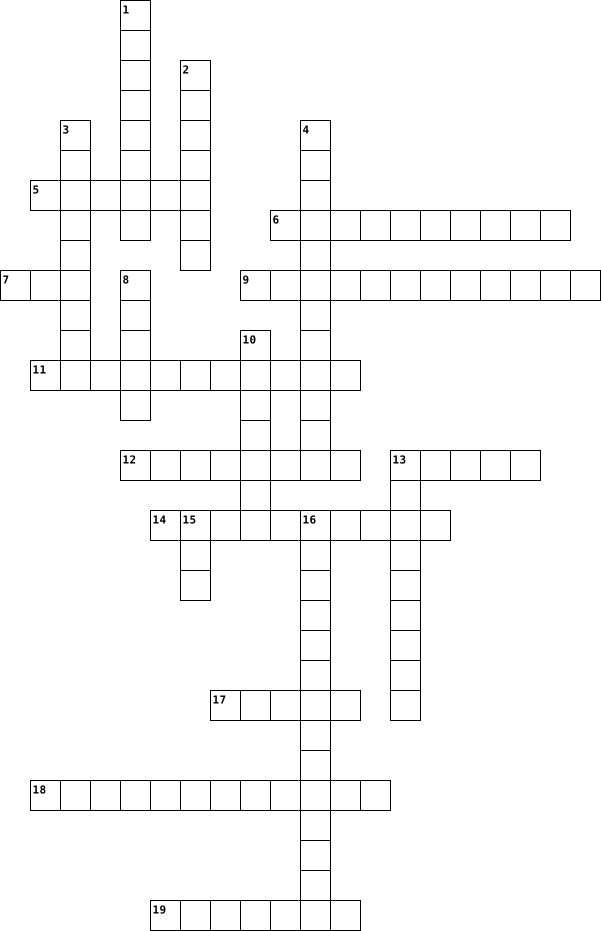
Across
- directions for cooking
- a diet that excludes meat
- a natural oily or greasy substance occurring in animals.
- a person who studies or is an expert in nutrition
- what makes up a recipe
- nutrient that cannot be synthesized by the body
- plant based diet
- added to recipes for flavor
- sweet and fleshy product of a tree or other plant that contains seed and can be eaten as food
- sugar, starch, cellulose
- sugar
Down
- a person who uses insulin to regulate blood glucose
- made up of amino acids
- an expert on diet and nutrition
- increase in blood pressure
- products made from milk
- beans, peas, lentils
- a plant or part of a plant used as food
- the incredible edible ___
- food products with long shelf life
20 Clues: sugar • plant based diet • beans, peas, lentils • made up of amino acids • what makes up a recipe • directions for cooking • products made from milk • sugar, starch, cellulose • a diet that excludes meat • the incredible edible ___ • increase in blood pressure • added to recipes for flavor • an expert on diet and nutrition • food products with long shelf life • ...
plants 2024-02-28
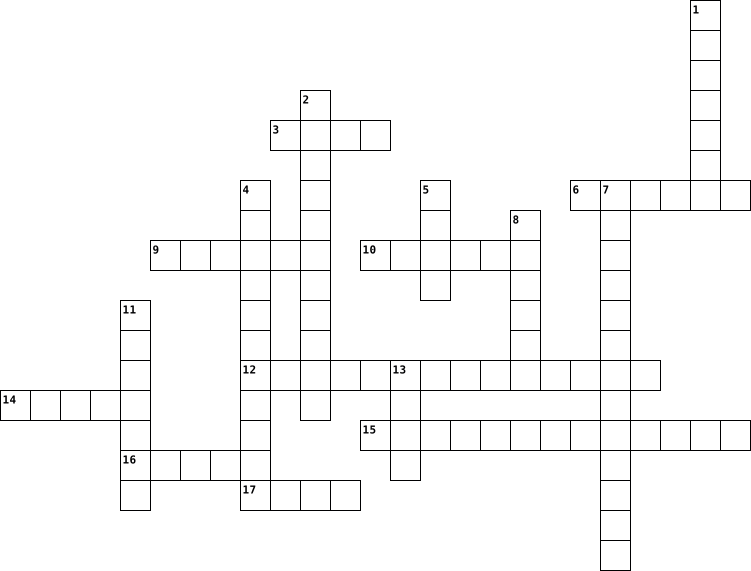
Across
- Small, often hard-covered object that can grow into a new plant.
- Male reproductive part of a flower, consisting of an anther and filament.
- Fine powder produced by flowers that is carried by wind or insects to fertilize other flowers.
- Beautiful, colorful part of a plant that attracts bees and butterflies.
- The process by which green plants and some other organisms use sunlight to synthesize foods.
- Delicious and nutritious part of some plants that contains seeds.
- The fusion of male and female gametes during sexual reproduction in plants.
- Colorful part of a flower that surrounds the reproductive parts.
- Green, flat part of a plant that helps it make food through photosynthesis.
Down
- ChatGPT…
- The process by which a seed begins to grow into a new plant.
- Green pigment in plants that absorbs light energy used to carry out photosynthesis.
- Underground part of a plant that absorbs water and nutrients from the soil.
- The process where plants absorb water through the roots and then give off water vapor through pores in their leaves.
- A part of a tree or shrub that grows out from the trunk or main stem.
- can make mistakes. Consider checking important information.
- The main support structure of a plant, holding up leaves, flowers, and fruits.
17 Clues: ChatGPT… • can make mistakes. Consider checking important information. • The process by which a seed begins to grow into a new plant. • Small, often hard-covered object that can grow into a new plant. • Colorful part of a flower that surrounds the reproductive parts. • Delicious and nutritious part of some plants that contains seeds. • ...
Science Christmas Assesment 2020-12-13

Across
- This can be small or large in our bodies
- SpeedxTime
- How a plant makes its own food
- Where a plant stores its food in the cell
- Mr........., the most patient teacher
- The gas a plant makes during photosynthesis
- System our food flows through
- Distance/Speed
- Element with 6 protons and 6 neutrons
- Chemical equation for Carbon Dioxide
Down
- Type of bond between a metal and non-metal
- Subject where you study Biology, Chemistry and Physics
- Found on the periodic table
- Type of bond between two non-metals
- This can be single, double or triple
- Type of charge on a neutron
- This can be positive, negative or neutral
- Sub-atomic particle with a positive charge
- The food a plant makes during photosynthesis
- Table with all the elements on it
- Distance/Time
- Adults have 32 of these for eating
- Sub-atomic particle with a negative charge
- Where food mixes with acid and is ground up
- 100cm
25 Clues: 100cm • SpeedxTime • Distance/Time • Distance/Speed • Found on the periodic table • Type of charge on a neutron • System our food flows through • How a plant makes its own food • Table with all the elements on it • Adults have 32 of these for eating • Type of bond between two non-metals • This can be single, double or triple • Chemical equation for Carbon Dioxide • ...
FLOWER CARE N HANDLING 2022-10-27

Across
- lack of__
- ships by air or truck to wholesalers
- receives flowers from brokers and growers; conditions flowers and sells to retail florists
- add__solution to water after harvesting plant material
- use a __ or an acidifier
- given with growth ___
- Stem diameter and ___
- used to inhibit___growth
- receives flowers from wholesalers and local growers; conditions flowers and sells and delivers flowers to consumers
- receives large quantities from foreign countries and domestic growers
- improve ___ during shipping & storage to extend the ultimate vase life of the flowers
- naturally occurring plant hormone
Down
- harvest flowers and ship them to an auction
- cut__ off the bottom of the stems
- conditioning in which fresh cut plant material is in a particular solution for a certain time
- angle cut the plant stem at a__ using a knife
- receives flowers as a gift or purchases them for personal enjoyment
- ___of the stem to absorb water
- __ immediately upon flowers arrival
- outer cells surrounding cut that dry out-preventing uptake
20 Clues: lack of__ • given with growth ___ • Stem diameter and ___ • use a __ or an acidifier • used to inhibit___growth • ___of the stem to absorb water • cut__ off the bottom of the stems • naturally occurring plant hormone • __ immediately upon flowers arrival • ships by air or truck to wholesalers • harvest flowers and ship them to an auction • ...
Ecosystems Crossword 2025-09-24

Across
- How plants make food using sunlight
- An animal that only eats other animals
- Breaks down dead matter like plants and animals
- Simple green plant-like organisms in water
- Makes its own food in nature
- The main source of energy for life
- An animal that only eats plants
- A group of chains joined together
- What moves through a food chain from the sun
- A green living thing that grows in soil
- Part of a plant that makes food from sunlight
- An animal that is hunted and eaten
- An animal that eats plants and animals
Down
- An animal that hunts other animals
- Water from the sky that helps plants grow
- Where plants grow and get nutrients
- The first level in a food chain
- An animal that eats plants or other animals
- A line that shows who eats who
- Breaks down dead plants and animals
- The next level after primary in a food chain
- The place where an animal or plant lives
22 Clues: Makes its own food in nature • A line that shows who eats who • The first level in a food chain • An animal that only eats plants • A group of chains joined together • An animal that hunts other animals • The main source of energy for life • An animal that is hunted and eaten • How plants make food using sunlight • Where plants grow and get nutrients • ...
Plants! By Evelyn Pence 2025-05-09

Across
- Sharp _____ protect a plant from animals.
- Plants need this to perform photosynthesis.
- A sweet liquid produced by flowers to attract pollinators
- The female reproductive organ in a plant.
- Plants give off _______.
- The male reproductive organ in a plant.
- The transfer of pollen.
Down
- The green pigment in plants.
- The process plants go through to make food.
- Light from the sun, needed to make food.
- Helps plants grow and carry nutrients.
- How a plant gets nutrients and water.
- This part of a plant makes food.
13 Clues: The transfer of pollen. • Plants give off _______. • The green pigment in plants. • This part of a plant makes food. • How a plant gets nutrients and water. • Helps plants grow and carry nutrients. • The male reproductive organ in a plant. • Light from the sun, needed to make food. • Sharp _____ protect a plant from animals. • The female reproductive organ in a plant. • ...
vocab 2025-10-10

Across
- Hormone, naturally occurring, organic substance produced in one part of a plant that is transported to another part to regulate physiological processes like growth
- a green pigment, present in all green plants
- each of the parts of the calyx of a flower
- where plants use oxygen and the sugars (glucose) produced during photosynthesis to create usable cellular energy
- the development of a plant from a seed or spore after a period of dormancy
- any of the minute pores in the epidermis of the leaf or stem of a plant
Down
- the process where plants release water vapor into the atmosphere
- an organelle found in plant and algal cells where photosynthesis occurs
- a region of plant tissue
- a plant that completes its life cycle over a two-year period, or to the second year in that cycle
- the part of a plant which attaches it to the ground or to a support, typically underground
- the main body or stalk of a plant or shrub
12 Clues: a region of plant tissue • each of the parts of the calyx of a flower • the main body or stalk of a plant or shrub • a green pigment, present in all green plants • the process where plants release water vapor into the atmosphere • an organelle found in plant and algal cells where photosynthesis occurs • ...
Gardening 2021-03-09

Across
- Fluttering insect that collects pollen
- Baby frogs
- Process when plants make glucose
- Male part of a flower
- These grow from the bottom of a plant
- Type of soil we use to plant indoor seeds
- Female part of flower
- Vegetable beginning with 'O'
- Popeye loved this vegetable
- Petrol device for cutting grass
Down
- This vegetable likes to be smashed!
- Flower linked to Remembrance Day
- Small hand tool use for pruning
- Flowers linked to Valentines Day
- Vegetables that help you see in the dark!
- First stage of plant growth (tiny plants)
- National flower of Wales (yellow spring flower)
- Taken & grown from original plant
- Digging tool with prongs
- Thin poles used to support plants
- Scary vegetable used on 31st October!
21 Clues: Baby frogs • Male part of a flower • Female part of flower • Digging tool with prongs • Popeye loved this vegetable • Vegetable beginning with 'O' • Small hand tool use for pruning • Petrol device for cutting grass • Process when plants make glucose • Flower linked to Remembrance Day • Flowers linked to Valentines Day • Taken & grown from original plant • ...
Nutrition 2023-11-27
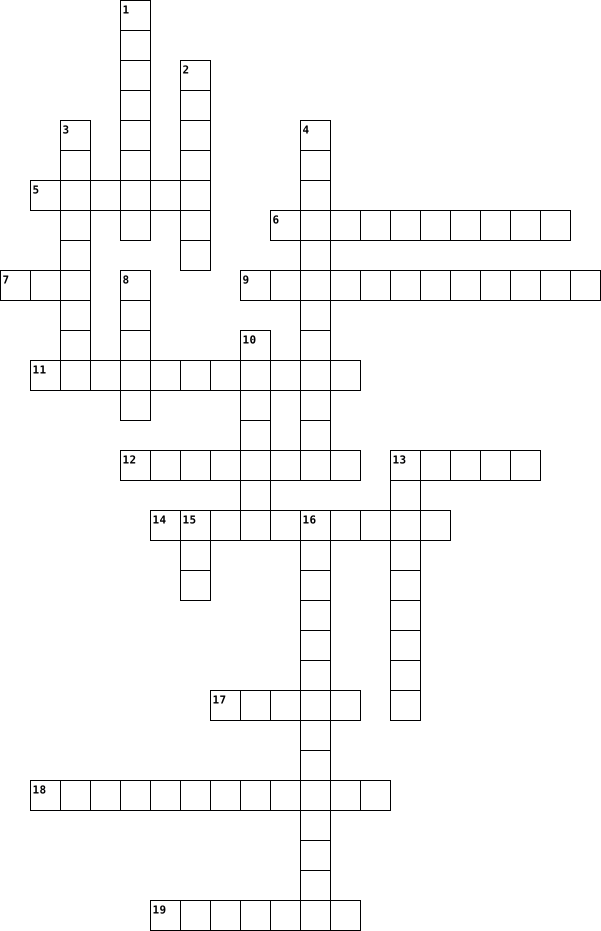
Across
- directions for cooking
- a diet that excludes meat
- a natural oily or greasy substance occurring in animals.
- a person who studies or is an expert in nutrition
- what makes up a recipe
- nutrient that cannot be synthesized by the body
- plant based diet
- added to recipes for flavor
- sweet and fleshy product of a tree or other plant that contains seed and can be eaten as food
- sugar, starch, cellulose
- sugar
Down
- a person who uses insulin to regulate blood glucose
- made up of amino acids
- an expert on diet and nutrition
- increase in blood pressure
- products made from milk
- beans, peas, lentils
- a plant or part of a plant used as food
- the incredible edible ___
- food products with long shelf life
20 Clues: sugar • plant based diet • beans, peas, lentils • made up of amino acids • what makes up a recipe • directions for cooking • products made from milk • sugar, starch, cellulose • a diet that excludes meat • the incredible edible ___ • increase in blood pressure • added to recipes for flavor • an expert on diet and nutrition • food products with long shelf life • ...
Transport in Plants [transpiration & translocation] 2020-07-12
![Transport in Plants [transpiration & translocation] crossword puzzle](/image/3299698.svg?size=30&stroke_width=1)
Across
- process which water vapour is lost via aerial parts of the plant (mainly stomata)
- refers to the concentration of water vapour in the atmosphere
- describes plant cells that have lost excessive amounts of water
- this process uses energy to load sugars into the phloem
- openings found on the surface of the leave that control gaseous exchange
- force of attraction between water molecules
- type of sugar that is transported in the phloem
- cells that control the size of openings on the leaf surface
Down
- insect used in translocation studies
- suction force responsible for moving water up the plant
- force of attraction between water molecules and xylem wall
- carbon isotope that is used in translocation studies
- condition of plant when it loses excessive amounts of water
- manufactured food is transported from _____ to __this blank__
- measures volume of water absorbed directly, to estimate volume of water lost by the plant
- manufactured food is transported from the __this blank__ to ____
16 Clues: insect used in translocation studies • force of attraction between water molecules • type of sugar that is transported in the phloem • carbon isotope that is used in translocation studies • suction force responsible for moving water up the plant • this process uses energy to load sugars into the phloem • force of attraction between water molecules and xylem wall • ...
The Structural Organization of Plants 2020-12-01

Across
- openings or pores in the epidermis of leaves
- layer of tissue between the vascular tissue and the epidermis
- tough and waterproof outer layer cork cells in woody plants
- stems that run almost parallel to the ground and can give rise to new plants at the nodes
- protective layer covering the epidermal cells of leaves and other parts and limiting water loss
- ground tissue towards the interior of the vascular tissue in a stem or root
- vascular tissue in the root is arranged in the inner portion of the root
- dead cells that have heavily thickened walls containing lignin
- support tissue with irregular thick walls
- layer of tissue between the vascular tissue and the epidermis
Down
- modified branches appearing as sharp outgrowths that protect the plant
- outermost single layer of cells covering and protecting stem, root, leaf, and other parts of a plant
- type of plant tissue actively involved in photosythesis, cellular respiration, and food storage
- transport organic compounds from the site of photosynthesis to the other parts of plants
- hair-like structures on the epidermal surface of a plant
- linear appendage found at the base of the petiole of a leaf
- transports water and nutrients from the roots to different parts of the plant
- thin and usually flattened blade of a leaf
- outermost cell layer of root giving rise to the branches in roots
- modified stem that grows horizontally underground and has nodes and internodes
20 Clues: support tissue with irregular thick walls • thin and usually flattened blade of a leaf • openings or pores in the epidermis of leaves • hair-like structures on the epidermal surface of a plant • tough and waterproof outer layer cork cells in woody plants • linear appendage found at the base of the petiole of a leaf • ...
Test Crossword 1 2025-01-04

Across
- plant that disrupts other plants growth.
- Nerve cell that transmits signals in the body.
- Plant vascular tissue.
- area covered mainly by grass.
- function provides nutrients to the developing seedling
- Asexual reproduction.
- The process by which living organisms adapt to their environment.
- Is the abnormal growth of cells.
- water vapor loss from plants
Down
- Large glycoproteins called immunoglobulins
- genetic trait that is dominant over another trait.
- Plants use light to produce food and release oxygen
- Supporting structure of the body
- Asexual reproduction of seeds.
- Plants with two cotyledons.
- One benefits, the other is harmed.
- Contamination of substances that degrade the environment.
- Land surrounded by water.
- animal or plant that no longer exists.
- organism that is the origin.
20 Clues: Asexual reproduction. • Plant vascular tissue. • Land surrounded by water. • Plants with two cotyledons. • organism that is the origin. • water vapor loss from plants • area covered mainly by grass. • Asexual reproduction of seeds. • Supporting structure of the body • Is the abnormal growth of cells. • One benefits, the other is harmed. • animal or plant that no longer exists. • ...
Unit 7: Tell me what you eat. Vocabulary Revision 2022-10-21

Across
- (v)togive a plant what it needs to develop
- having a sharp, unpleasant taste, like lemon, not sweet
- (v)to put a plant into the ground
- to collect food from plants
- person who owns a farm
- containing strong flavors from spices
- a food plant
- tasting of sugar
- an area of land for growing crops and keeping animals as a business
- sweet food eaten at the end of the meal
Down
- a group of people who live or work together, or who have someting in common
- having a sharp taste, like coffe, medicine or tonic water
- substance used to give special flavor to food
- animals raised for meat
- to collect food from plants
- part of the year
- meat from cows
- tasting of salt
- insect that makes honey
19 Clues: a food plant • meat from cows • tasting of salt • part of the year • tasting of sugar • person who owns a farm • animals raised for meat • insect that makes honey • to collect food from plants • to collect food from plants • (v)to put a plant into the ground • containing strong flavors from spices • sweet food eaten at the end of the meal • (v)togive a plant what it needs to develop • ...
cell-the unit of life 2026-08-13

Across
- The membrane-bound organelle containing hydrolytic enzymes for intracellular digestion.
- The organelle containing centrioles, typically present in animal cells.
- The complex of DNA and proteins present inside the nucleus.
- The colourless fluid matrix surrounding the grana in a chloroplast.
- LAMELLA The layer mainly composed of calcium pectate that joins adjacent plant cells.
- The first person to observe living cells using a microscope.
- The basic structural and functional unit of life.
- The membrane-bound organelle that contains the genetic material and controls cellular activities.
- The condensed form of chromatin visible during cell division.
- The flattened membranous sacs present inside the chloroplast.
- The membrane surrounding the vacuole in a plant cell.
- The organelle found in plant cells that includes chloroplasts, chromoplasts and leucoplasts.
- The green plastid responsible for photosynthesis.
- The hollow protein structures that form part of the cytoskeleton.
- RETICULUM A network of membranous tubules and sacs involved in synthesis and transport.
- A type of cell having a well-defined membrane-bound nucleus.
- The membrane-bound structure containing cell sap and commonly occupying a large part of a mature plant cell.
Down
- Cytoplasmic connections between adjacent plant cells.
- The semifluid substance between the plasma membrane and nucleus.
- MEMBRANE The selectively permeable membrane surrounding the cell.
- APPARATUS The organelle involved in modification, packaging and secretion of cellular materials.
- Stacks of thylakoids present inside chloroplasts.
- The network of protein filaments that provides structural support and helps in cell movement.
- The sites of aerobic respiration and ATP production in the cell.
- The membrane-bound organelle containing enzymes involved in oxidation reactions.
- HOOKE The scientist who first observed and named cells while studying cork.
- WALL The rigid non-living outer covering present outside the plasma membrane in plant cells.
- The dense region inside the nucleus involved in ribosome formation.
- The non-membrane-bound organelle responsible for protein synthesis.
- A type of cell lacking a membrane-bound nucleus.
30 Clues: A type of cell lacking a membrane-bound nucleus. • Stacks of thylakoids present inside chloroplasts. • The basic structural and functional unit of life. • The green plastid responsible for photosynthesis. • Cytoplasmic connections between adjacent plant cells. • The membrane surrounding the vacuole in a plant cell. • ...
TSFA Flower Study 2024-11-19

Across
- a plant with thorns along its stem with a nice smell
- sturdy, glossy plant with dark green oval leaves which grow to a narrow point
- long stiff, plant with pointed leaves which can withstand dry and harsh conditions
- tall plant with large narrow leaves
- weedy plant with narrow bluish green leaves
- smooth, gray bark, shiny with green oval leaves
- smooth long leaves with hints of red surrounding the leaves
Down
- a plan native to Africa with sword-shaped leaves
- high branching limbs with a large area of bark
- fern with many leaves that lay straight out from the roof not overlapping each other.
- a plant with numerous double-flowers that come in many color variations.
- a blue-black berry with a whitish bloom found in coastal forests
- clustered perennial which features pointed shiny leaves
- Fern with many branches of small leaves
- colorful flower head with a bird-like crest
- tall features feathery plumes of light yellow-green blooms.
- large flamboyant flowers with many colors and shapes
17 Clues: tall plant with large narrow leaves • Fern with many branches of small leaves • colorful flower head with a bird-like crest • weedy plant with narrow bluish green leaves • high branching limbs with a large area of bark • smooth, gray bark, shiny with green oval leaves • a plan native to Africa with sword-shaped leaves • ...
Flowering Plants 2025-10-29

Across
- The part of the anther that stores pollen grains before they’re released.
- A group of xylem and phloem tubes bundled together, like a plant’s “plumbing system.”
- The bottom part of the pistil that contains the ovules (eggs) and develops into fruit after fertilization.
- A protective sheath that helps the young shoot push through the soil during germination
- The first part of photosynthesis that happens in the chloroplasts and uses sunlight to make energy (ATP).
- Plants with one seed leaf (cotyledon), parallel veins, and flower parts in threes (like corn or grass).
- A layer of tall, tightly packed cells filled with chloroplasts where most photosynthesis happens
- The cell part (organelle) where photosynthesis happens; it contains chlorophyll.
- The bottom layer of the leaf, which contains most of the stomata.
- The seed coat that protects the seed.
- The sticky top part of the pistil that catches pollen during pollination.
- Tubes in a plant that carry water and minerals from the roots up to the rest of the plant
- Associated with a water seed dispersal
- Tiny hair-like structures on leaves or stems that protect the plant from insects, sunlight, or water loss.
- the union of a male and female gametes to form a zygote and initiate the development of a new plant
Down
- The green pigment in plants that captures sunlight for photosynthesis
- The flat, wide part of a leaf that catches sunlight.
- The process where plants use sunlight, water, and carbon dioxide to make food (glucose) and release oxygen
- Associated with a wind seed dispersal
- Process of which seeds are dispersed in an environment. There are 6 methods of this process: Attachment, Animals, Explode, Water, Wind, and Gravity.
- A colored substance in cells that absorbs light; chlorophyll is one example.
- Special cells around each stoma that open and close the pores to control gas exchange and water loss.
- Plants with two seed leaves, branching veins, and flower parts in fours or fives (like beans or roses).
- The base of the flower where all parts attach; it supports the flower
- When pollen from one flower fertilizes a different plant’s flower.
- The part of a stamen that makes and holds pollen.
- The stem-like stalk that connects the leaf blade to the main plant stem.
- A resting period when a seed or plant is alive but not growing.
- A layer of loosely arranged cells with air spaces for gas exchange inside the leaf.
- sits on the receptacle and surrounds the petals
- The stored food inside a seed that helps feed the young plant when it starts to grow.
- The top layer of leaf cells that protects the leaf and lets sunlight through
- When a flower’s pollen fertilizes its own egg (same plant).
- am embryonic leaf in seed-bearing plants, one of more of which are the first leave to appear from a germinating seed
- When a seed begins to sprout and grow into a new plant
- A thin, shiny coating on leaves that helps reduce water loss.
- The second part of photosynthesis where plants use that stored energy to make sugar.
- Tiny openings on the underside of leaves that let air (carbon dioxide and oxygen) move in and out.
- Tubes that carry food (sugars) made in the leaves to other parts of the plant.
39 Clues: Associated with a wind seed dispersal • The seed coat that protects the seed. • Associated with a water seed dispersal • sits on the receptacle and surrounds the petals • The part of a stamen that makes and holds pollen. • The flat, wide part of a leaf that catches sunlight. • When a seed begins to sprout and grow into a new plant • ...
Plant parts and seed parts 2025-09-24

Across
- The first leaves of the plant
- The part capable of developing into another plant of the same species
- Becomes the primary root
- Happens when a root AND a shoot are present from the new seed
- A seed containing two cotyledons
- outermost covering of the seed
Down
- only thing on the outside of the seed
- Extends the radicle of the plant
- When environmental conditions aren’t right seeds know to remain dormant.
- Helps push the plant above the soil line
- A seed containing one cotyledon
- Becomes the new shoot of the plant
- seed tissue that nourishes the embryo
- there are 6 parts in this part of the seed
14 Clues: Becomes the primary root • The first leaves of the plant • outermost covering of the seed • A seed containing one cotyledon • Extends the radicle of the plant • A seed containing two cotyledons • Becomes the new shoot of the plant • only thing on the outside of the seed • seed tissue that nourishes the embryo • Helps push the plant above the soil line • ...
landscape 2021-08-31

Across
- the ability to endure difficult conditions.
- function- An informal hedge is one which receives minimal cutting and has a looser more natural shape.
- plant- beds of plants (often dominated by shrubs) installed along house foundations
- tree- a strip of grass-covered ground between sidewalk and curb, often planted with shade trees
- plant- a plant which has foliage that remains green and functional through more than one growing season
- garden- a garden where every plant fits into one particular theme.
- plant- A row of taller plants, shrubs or even trees (depending on the scale of the garden) that stops the eye and helps define a garden space.
- a fence or boundary formed by closely growing bushes or shrubs.
Down
- plant selection- the design and/or improvement of facility layouts with the help from computer programs.
- hedge- A formal hedge is like an expensive television: it has to have high resolution, so the picture (the shape) looks shard, not fuzzy.
- tree- a tough, medium-sized flowering tree that casts a light shade that won't kill lawn grasses
- the climate of a very small or restricted area, especially when this differs from the climate of the surrounding area.
- hedge- An informal hedge is one which receives minimal cutting and has a looser more natural shape.
- tree- a tree grown primarily to produce shade.
- area or location- the open unobstructed space on a lot accessible from the street on which the lot is located
- plant- drop their leaves at the end of every growing season
- tree- any tree growing in or upon any city managed street.
- cover- low-growing, spreading plants that help to stop weeds from growing.
18 Clues: the ability to endure difficult conditions. • tree- a tree grown primarily to produce shade. • tree- any tree growing in or upon any city managed street. • plant- drop their leaves at the end of every growing season • a fence or boundary formed by closely growing bushes or shrubs. • garden- a garden where every plant fits into one particular theme. • ...
horticulture 2025-10-09

Across
- A plant that lives for more than two years.
- A form of propagation using a section of a plant stem or root to grow a new plant.
- The process by which a seed begins to grow and sprout.
- A plant that loses its leaves seasonally.
- Decomposed organic matter used to improve soil structure and nutrient content.
- A plant that takes two years to grow from a seed, produce fruit, and die.
- A plant that grows, flowers, and dies in one season.
- The technique of grafting two plants together to create a tree with a flattened shape, often against a wall.
Down
- The cultivation of flowers and ornamental plants.
- The female part of a flower that receives the pollen.
- The process of removing dead or faded flowers to encourage more blooms.
- The science of growing and managing forests.
- The science of growing vegetables.
- The science of growing fruits and nuts.
14 Clues: The science of growing vegetables. • The science of growing fruits and nuts. • A plant that loses its leaves seasonally. • A plant that lives for more than two years. • The science of growing and managing forests. • The cultivation of flowers and ornamental plants. • A plant that grows, flowers, and dies in one season. • ...
Plants growth 2022-08-26

Across
- Growing from an axil
- Young plant
- amount of extension of an object under stress
- a plant responding to light
- A space used to contain something
- parts of the calyx of a flower
- A tree that bears cones and needles
- Lengthening something
Down
- Pollen germinates
- a plant that has flowers and produces seeds
- A fine powder substance
- The male productive part of a flower
- A plant that has seeds unprotected
- Denoting an apex
- A fiber found in plant structures
15 Clues: Young plant • Denoting an apex • Pollen germinates • Growing from an axil • Lengthening something • A fine powder substance • a plant responding to light • parts of the calyx of a flower • A fiber found in plant structures • A space used to contain something • A plant that has seeds unprotected • A tree that bears cones and needles • The male productive part of a flower • ...