
the plant Crossword Puzzles
Ag 2022-05-02

Across
- A method of marketing
- to all life forms. Nitrogen is
- Grazing: Refers to the process of
- pasture or other forages.
- The crossbreeding of two
- the seed head emerges.
- in a rooting hormone to
- maturity
- for plant and animal growth
- A chemical element
- at least one calf.
- A young male or female bovine
- A female horse or pony.
- Intact (not castrated) male pig.
- A sexually mature, uncastrated
- A mature bovine usually having
Down
- of different species or varieties
- A plant propagation method
- A young sheep
- and/or produce through which
- stocking an area of pasture for a
- a part of a plant is cut and
- Heading: The act of pinching or
- brief period. This is done to prevent
- Fed: Livestock raised solely on
- Male pig castrated before
- distinct characteristics.
- growth of the forage.
- auctioneer sells to the highest bidder
- grow into a new plant.
- under 1 year of age.
- Stage of grass maturity right
- off spent fowers.
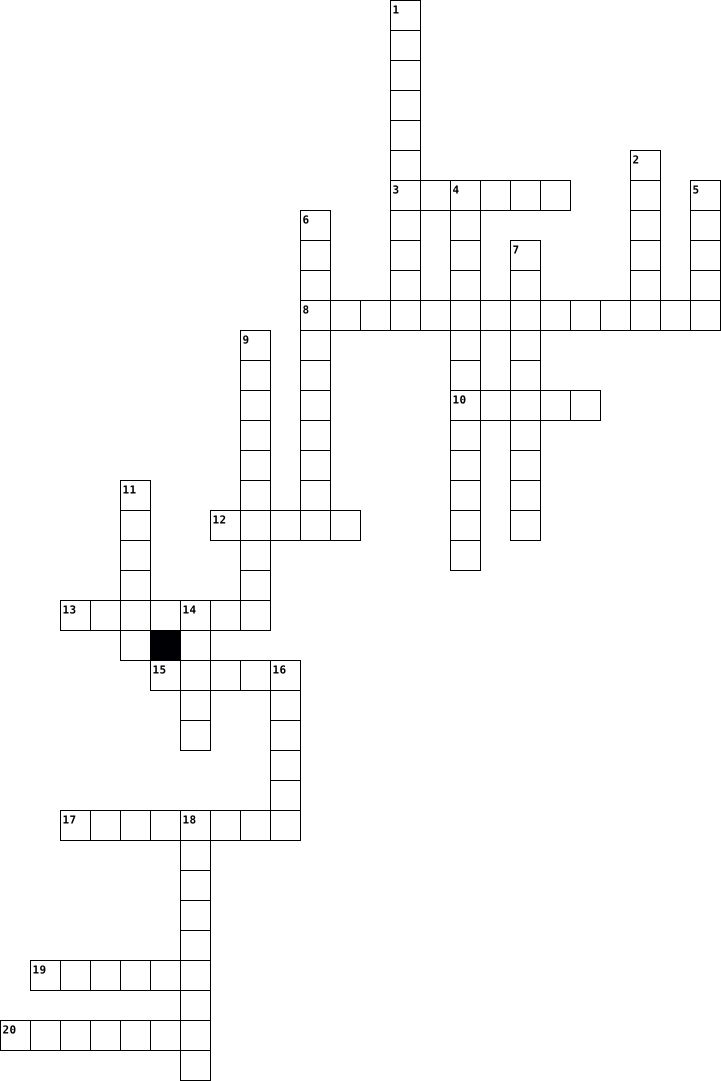
33 Clues: maturity • A young sheep • off spent fowers. • A chemical element • at least one calf. • under 1 year of age. • A method of marketing • growth of the forage. • the seed head emerges. • grow into a new plant. • in a rooting hormone to • A female horse or pony. • The crossbreeding of two • pasture or other forages. • Male pig castrated before • distinct characteristics. • ...
Little Scientists Crossword 2026-09-03

Across
- An object that can attract certain metals
- The invisible gas that we breathe
- This bright star gives Earth light and warmth
- Something that makes things warm
- A hard part inside your body that helps support you
- A tall plant with a trunk and branches
- Something we hear with our ears
- Drops of water that fall from clouds
- We drink it, and fish live in it
- A fluffy-looking group of tiny water drops in the sky
Down
- You can see this in the night sky
- It grows in soil and needs sunlight and water
- The planet where we live
- A small part of a plant that can grow into a new plant
- This organ pumps blood around your body
- An animal that lives in water and uses gills to breathe
- A bright ball of hot gas that shines in the sky
- An animal with feathers, wings, and a beak
- A hard piece of Earth found on the ground
- An animal that can live in water and on land
20 Clues: The planet where we live • Something we hear with our ears • Something that makes things warm • We drink it, and fish live in it • You can see this in the night sky • The invisible gas that we breathe • Drops of water that fall from clouds • A tall plant with a trunk and branches • This organ pumps blood around your body • An object that can attract certain metals • ...
Assignment 2024-11-13

Across
- female reproductive part of a plant
- attaches leaf to stem
- embryonic leaf of a germinating seed
- powdery substance produced by the anther
- male reproductive part of a plant
- leaf-like structure
Down
- attracts polinators
- between 2 nodes
- where leaves and branches grow
- underground and absorbs water for plant
- mature ovary of a flower often contains seeds
- reproductive part of a plant
- small structure within a fruit that contains potential for a plant to grow
- supporting structure connects roots to leaves
- photosynthesis occurs here
15 Clues: between 2 nodes • attracts polinators • leaf-like structure • attaches leaf to stem • photosynthesis occurs here • reproductive part of a plant • where leaves and branches grow • male reproductive part of a plant • female reproductive part of a plant • embryonic leaf of a germinating seed • underground and absorbs water for plant • powdery substance produced by the anther • ...
Chapter 1 Part 1 Plentiful Plants Vocabulary 2023-09-11

Across
- a pair of cells that surround the stoma on a leaf
- a layer of thick protective cells covering the end of a growing root
- a tiny package of chlorophyll within a plant cell
- a type of sugar that plants need to live
- a complex chemical process by which green plants use the energy of sunlight to change water and carbon dioxide into glucose for food
- the part of of a plant that is below the ground
- a tough, fibrous material made from glucose that is used to make the cell walls of plant cells
- holes or pores located on the under side of a leaf where air enters the leaf
Down
- the pigment, or coloring, that makes plants green and helps carry out photosynthesis
- the growth of a plant in response to a condition in its environment, such as gravity, water, light, or touch
- a single main root of a plant that penetrates deeply into the ground
- a tiny projection near the end of a root that finds water and dissolved minerals in the soil
- the part of a plant that is visible above the ground
- the waxy covering that coats the skin of a leaf and prevents water from escaping
- a large vein that runs up the middle of the leaf
15 Clues: a type of sugar that plants need to live • the part of of a plant that is below the ground • a large vein that runs up the middle of the leaf • a pair of cells that surround the stoma on a leaf • a tiny package of chlorophyll within a plant cell • the part of a plant that is visible above the ground • ...
Topic 9.4 Reproduction in Plants (2 of 2) 2022-03-01

Across
- A modified leaf that bears sporangia and hence is specialized for reproduction. (10)
- these plants flower when nights are shorter than a critical length (4, 3)
- Fusing of a pollen nucleus with the haploid ovule egg cell. (13)
- A group of undifferentiated plant cells that can give rise to the four organs making up a flower due to the expression of various genes. (6, 8)
- Biotic or abiotic agents, such as wind and bees, that move pollen from an anther to a stigma, or disperse seeds from parent plant. (6)
- A "seed leaf" which develops as a part of the seed. It provides nutrients to the developing seedling and may become the first leaf of the plant. (9)
Down
- plants that flower when nights are longer than a critical length (5, 3)
- The photoreceptor responsible for keeping track of the length of day and night; there are two forms of this, Pr (red light absorbing) and Pfr (infrared light absorbing) (11)
- Transfer of pollen from the anther to the stigma of a flower. (11)
- The movement or transport of seeds away from the parent plant, facilitated by the fruit. (9)
- A mature ovary of a flower that protects dormant seeds and aids in their dispersal. (5)
- The part of a plant embryo that gives rise to the shoot. (7)
- The part of a plant embryo that develops into the primary root (7)
- An association between organisms of two different species in which each member benefits. (11)
- Tough covering that surrounds and protects the plant embryo and keeps the contents of the seed from drying out - also called seed coat(5)
- Tiny hole in the seed coat where water enters the seed to trigger germination (9)
- A physiological response to photoperiod, the relative lengths of night and day. An example of photoperiodism is flowering. (14)
17 Clues: The part of a plant embryo that gives rise to the shoot. (7) • Fusing of a pollen nucleus with the haploid ovule egg cell. (13) • Transfer of pollen from the anther to the stigma of a flower. (11) • The part of a plant embryo that develops into the primary root (7) • plants that flower when nights are longer than a critical length (5, 3) • ...
KB3-UNIT6-P60-61 2025-07-18

Across
- — orange vegetables that grow under the ground.
- — small parts of a plant that can grow into new plants.
- dioxide — a gas that plants use to make food.
- — a green leafy vegetable we eat in salads.
- — to become bigger.
- - the mixture of gases that we breathe.
- — the gas we breathe in to live.
Down
- — the green parts of a plant that take in sunlight.
- — the soil or earth under our feet.
- — a tall plant with a big yellow flower that follows the sun.
- — the parts of a plant under the ground that take in water.
- — the part of a plant that has seeds and we can eat.
- — good for your body.
13 Clues: — to become bigger. • — good for your body. • — the gas we breathe in to live. • — the soil or earth under our feet. • - the mixture of gases that we breathe. • — a green leafy vegetable we eat in salads. • dioxide — a gas that plants use to make food. • — orange vegetables that grow under the ground. • — the green parts of a plant that take in sunlight. • ...
Plants 2020-04-22

Across
- stimulus occurring on the inside of an organism
- system responsible activities such as, stimulus and response
- organ system combines leaves, stems, flowers, and fruits
- in plants, thin layer forms protective barrier
- water evaporates and passes out through stomata
- stimulus on the outside of an organism
Down
- plant grows toward sunlight
- reproductive organ of plant
- function of transpiration
- allows minerals and water to be transported between roots and stems
- plants response to gravity
- process of plant losing leaves
- tiny pores on the underside of leaves
- below the ground plant system
14 Clues: function of transpiration • plants response to gravity • plant grows toward sunlight • reproductive organ of plant • below the ground plant system • process of plant losing leaves • tiny pores on the underside of leaves • stimulus on the outside of an organism • in plants, thin layer forms protective barrier • stimulus occurring on the inside of an organism • ...
plants 2025-09-19

Across
- color in leaves that helps make food
- growing above the ground
- that we eat
- holes on leaves for air
- wide part of a leaf
- parts in the plant
Down
- of flower or leaf
- the plant above the ground
- growing from the main trunk
- food using sunlight
- green part on stem
- the plant.
- a plant firmly in the soil. They provide water and minerals
13 Clues: the plant. • that we eat • of flower or leaf • green part on stem • parts in the plant • food using sunlight • wide part of a leaf • holes on leaves for air • growing above the ground • the plant above the ground • growing from the main trunk • color in leaves that helps make food • a plant firmly in the soil. They provide water and minerals
Yug Kolla Plus One; Cells 2019-10-29

Across
- absorb sunlight to produce sugar (glucose) photosynthesis happens here, only found in plant cells
- the powerhouse of the cell that makes energy usable
- an organism with multiple cells
- stated that cells are the basic unit of life and coined the term cells
- stated that all cells come from preexisting cells
- temporary storage area that is large in plant cells and small in animal cells
- protective layer give shape to plant cells and provide it with a rigid structure and support, only found in plant cells
- the delivery system of the cell
- multiple organ systems working together to create an entire living thing
- the basic and smallest unit of life
- a system containing many organs
- the amount of parts(tenets) of cell theory
Down
- surrounds, supports, and suspends organelles
- looked at bacteria from tooth plaque
- similar cells group into tissue to do a job
- made of multiple tissue
- stated that all plants are made from cells
- stated that all animals are made from cells
- the control center, or "brain" of the cell, contains DNA
- produces proteins by hooking amino acids together
- controls what substances enter and leave the cell
- an organism with only one cell
22 Clues: made of multiple tissue • an organism with only one cell • an organism with multiple cells • the delivery system of the cell • a system containing many organs • the basic and smallest unit of life • looked at bacteria from tooth plaque • stated that all plants are made from cells • the amount of parts(tenets) of cell theory • similar cells group into tissue to do a job • ...
The animal world #1 2024-12-11

Across
- Part of the process of making a seed to produce new plants.
- The small young plant that grows out of a seed.
- A thick forest where there is a lot of rainfall.
- A tree that always has leaves.
- Simple plantlike organisms.
- So small that it can only be seen by using a special instrument called Microscope that makes things look bigger.
- Fit and well.
- A powder that plants need to make seeds.
- Movement of water in a river or in the ocean.
- Having warm or hot weather all year long.
- Contains the parts to grow a tiny flowering plant.
Down
- Leaves growing in a ring around a stem.
- Materials found in the soil that help plants to grow & stay healthy.
- part of a large leaf sharing the same stalk.
- A rich mixture of minerals and other substances to help the plant grow.
- A large number of plants of one kind grown for human use.
- The moving of the pollen from one flower to another.
- The young part of a plant that you can see growing above the ground.
- A juice made from sugar and water.
- A huge, round object that moves around a star.
20 Clues: Fit and well. • Simple plantlike organisms. • A tree that always has leaves. • A juice made from sugar and water. • Leaves growing in a ring around a stem. • A powder that plants need to make seeds. • Having warm or hot weather all year long. • part of a large leaf sharing the same stalk. • Movement of water in a river or in the ocean. • ...
Izzy Fontenot's Organelle Puzzle 2018-11-06

Across
- This is the "brain" of the cell that controls everything.
- This is composed of smooth and rough __.
- _ is an oval shaped space that gives the plant structure.
- Short hairs surrounding a cell.
- This stores the genetic information.(DNA)
- Provides the food for the cell.
- This is the packaging system.
- This is the fluid inside of the cell.
- The Chromosome.
- The cell wall provides this along will shape and protection.
Down
- The Nucleus.
- Moves proteins and organisms inside of the cell.
- This organelle surrounds only plant cells.
- Golgi Apparatus is the __.
- Cell wall __ __.
- It protects both plant and animal cells.
- This system digests nutrients for the cell to use.
- The Vacuole.
- This is the "power house" of the cell that digests things.
- Long hairs surrounding a cell.
- This is the system that creates amino acids.
21 Clues: The Nucleus. • The Vacuole. • The Chromosome. • Cell wall __ __. • Golgi Apparatus is the __. • This is the packaging system. • Long hairs surrounding a cell. • Short hairs surrounding a cell. • Provides the food for the cell. • This is the fluid inside of the cell. • This is composed of smooth and rough __. • It protects both plant and animal cells. • ...
Plants 2024-02-08

Across
- Male Reproductive parts of the plant
- Above ground part of the plant
- Transports nutrients through the plant
- female part of the plant- receives the pollen
- Type of cell that allows the exchange of gases in the leaf
- Below ground part of the plant. Absorbs nutrients
Down
- Type of tissue that includes both the xylem and phloem
- Transports fluids through the plant
- Pores on leaves
- Center root that anchors plant
10 Clues: Pores on leaves • Above ground part of the plant • Center root that anchors plant • Transports fluids through the plant • Male Reproductive parts of the plant • Transports nutrients through the plant • female part of the plant- receives the pollen • Below ground part of the plant. Absorbs nutrients • Type of tissue that includes both the xylem and phloem • ...
Plant Based Words 2023-03-03

Across
- A spike born on fleshy stem
- Often bracteate penduncle that arises from near the base of the plant
- The tissue of vascular plants that transports water and nutrients from the soil to the stems and leaves
- Thiosulfate Commonly used to block the action of ethylene in plant cell cultures
- Humidity
- Using the sugars produced in photosynthesis
- A simple inforescence
- Class of plant hormones
Down
- The vascular tissue that transports carbon from the leaves to basal parts of the plant
- Flammable gas
- Permanently restricted to their site of germination
- The process in aging of plants
- used to cut
- Green color of many plants
14 Clues: Humidity • used to cut • Flammable gas • A simple inforescence • Class of plant hormones • Green color of many plants • A spike born on fleshy stem • The process in aging of plants • Using the sugars produced in photosynthesis • Permanently restricted to their site of germination • Often bracteate penduncle that arises from near the base of the plant • ...
Puzzling Plants 2014-11-23

Across
- do not have the same size limitations
- seed plant that does not produce a flower
- moves sugars that are made in the plant's leaves to other parts of the plant
- the energy is released when the cells of organisms use oxygen to break down the sugars stored as starch in this process
- are small and survive without a transport system
- usually grow at the bottom of a plant's stems
- branching roots that does not grow deep into the ground,but they often cover wide area
Down
- is a seed plant that produces flowers
- roots that never touch the ground
- series of tubes that moves water and minerals up the stem
- the layer that separates the xylem and phloem layers
- the process of making food
- the loss of water through a plant's leaves
- a single cell that can develop into a new plant exactly like the plant that produced it
14 Clues: the process of making food • roots that never touch the ground • do not have the same size limitations • is a seed plant that produces flowers • seed plant that does not produce a flower • the loss of water through a plant's leaves • usually grow at the bottom of a plant's stems • are small and survive without a transport system • ...
Plant Processes Crossword Activity 2021-01-20

Across
- bast tissue in plants that conduct foods made in leaves to all other parts of the plant.
- the outer epithelial layer of the external integument of the animal body that is derived from the embryotic epiblast specifically.
- the parenchyma between the epidermal layers of a foliage leaf.
- hairs are cylindrical extensions of root epidermal cells that are important for acquisition of nutrients.
- plant vascular tissue that conveys water and dissolved minerals from the roots to the rest of the plant.
- The act of inhaling and exhaling air in order to exchange oxygen for carbon dioxide.
- the outermost layer of a structure.
- the process of drawing or soaking up.
- the green coloring matter found mainly in the chloroplast of a plant.
Down
- a plastid that contains chlorophyll and is the site of photosynthesis.
- movement of water through a septipermeable membrane into a higher solute concentration that tends to equalize.
- membrane a membrane that permits passage of water and certain substances in solution.
- process used by plants, algae and certain bacteria to harness energy from sunlight.
- one of the minute openings in the epidermis of a plant organ.
- the passage of watery vapor from a living body or plant through a membrane or pores.
15 Clues: the outermost layer of a structure. • the process of drawing or soaking up. • one of the minute openings in the epidermis of a plant organ. • the parenchyma between the epidermal layers of a foliage leaf. • the green coloring matter found mainly in the chloroplast of a plant. • a plastid that contains chlorophyll and is the site of photosynthesis. • ...
Stanger In The Woods: Week three 2023-05-03

Across
- not true, fiction, false, fake
- widespread toxic plant in the carrot family
- relationships or communication between people
- infinity, without end, endlessly
- to chop or cut(to make or shape)
- guidance or instruction
- to examine or inspect thoroughly
- a monk swearing under religious vows
Down
- acutely distressed
- the middle layer of the flooring system
- branch of physical science that relates heat and energy
- are the larval form of bugs specifically from the beetle species
- is a plant-like organism that typically grows on low plant life
- not harmful or offensive
- is in the family of synthetic polymers
- ascetic solitude
- a person traveling in a canoe
- to be made known of
- honest or true about something painful
- is a silly or foolish person
20 Clues: ascetic solitude • acutely distressed • to be made known of • guidance or instruction • not harmful or offensive • is a silly or foolish person • a person traveling in a canoe • not true, fiction, false, fake • infinity, without end, endlessly • to chop or cut(to make or shape) • to examine or inspect thoroughly • a monk swearing under religious vows • ...
Practice 2025-09-08

Across
- dioxide A gas we breathe out that plants use to make food.
- A rule made by the government that everyone must follow.
- Light and warmth from the sun.
- A group of people working together for the same purpose, OR the way things are neatly arranged.
- A yellow powder from flowers that helps make seeds.
- The tree’s “skin” that covers and protects it.
- The way plants make their food using sunlight, air, and water.
- The part of the plant that holds it up and carries water and food to the leaves and flowers.
- To throw or spread things around in different directions.
Down
- The invisible force that pulls things down to the ground.
- The part of the plant that grows underground. Roots hold the plant in place and drink water and food from the soil.
- When pollen moves from one flower to another so the plant can make seeds.
- The “vitamins” and “food” that plants and people need to stay healthy.
- Information that is written or told to explain something.
- Directions we should follow to keep things fair and safe.
- The air we breathe that our body needs to stay alive.
- A living thing that grows in soil, needs water and sunlight, and usually has leaves, stems, and roots.
17 Clues: Light and warmth from the sun. • The tree’s “skin” that covers and protects it. • A yellow powder from flowers that helps make seeds. • The air we breathe that our body needs to stay alive. • A rule made by the government that everyone must follow. • The invisible force that pulls things down to the ground. • Information that is written or told to explain something. • ...
Unit 5 Vocab 2024-03-18

Across
- The solid surface of the earth
- The main body or stalk of a plant or shrub, typically rising above ground but occasionally subterranean
- A compact growth on a plant develops into a leaf, flower, or shoot
- a group of living organisms consisting of similar individuals capable of exchanging genes or interbreeding.
- A class of things that have common characteristics and that can divided into subordinate kinds
- are a thing made by combining two different elements; a mixture.
- a plant variety that has been produced in cultivation by selective breeding. Cultivars are usually designated in the style Taxus baccata ‘Variegata’.
- woody perennial plant, typically having a single stem or trunk growing to a considerable height and bearing lateral branches at some distance from the ground.
Down
- The sweet and fleshy product of a tree or other plant that contains seed and can be eaten as food
- is a plant that has flowers and produces seeds enclosed within a carpel.
- The second element in the Latin binomial name of species, which follows the generic name and distinguishes the species from another in the same genus
- Of, denoting, or relating to herbs (in the botanical sense)
- (of an area of land) covered with trees
- The quality or state being different or diverse; the absence of uniformity, sameness, or, monotony
- is a woody plant which is smaller than a tree and has several main stems arising at or near the ground.
15 Clues: The solid surface of the earth • (of an area of land) covered with trees • Of, denoting, or relating to herbs (in the botanical sense) • are a thing made by combining two different elements; a mixture. • A compact growth on a plant develops into a leaf, flower, or shoot • is a plant that has flowers and produces seeds enclosed within a carpel. • ...
Plant Life Cycles 2024-03-04

Across
- the process of moving pollen from one part of a flower (the stamen) to another part of a flower (the stigma)
- a powder plants make that is involved in plant reproduction
- one of the steps of the life cycle
- a stage in the life cycle of living things when they have offspring
- a sugary liquid that plants make
- a young plant that grows from a seed
- something that happens again and again and again in a way that can be predicted
Down
- the stages of life, including birth, growth, reproduction, and death
- the reproductive part of some plants that can make seeds
- a living thing that moves pollen from one part of a flower (the stamen)to another part of a flower (the stigma)
- babies
- the part of a plant that contains seeds inside a covering, like tomatoes
- a set of events that repeats in the same order over and over
- to pull toward
- a part of a plant that can grow into a baby plant
15 Clues: babies • to pull toward • a sugary liquid that plants make • one of the steps of the life cycle • a young plant that grows from a seed • a part of a plant that can grow into a baby plant • the reproductive part of some plants that can make seeds • a powder plants make that is involved in plant reproduction • a set of events that repeats in the same order over and over • ...
Cell Organelles 2023-11-03

Across
- controls the whole cell
- processes and packages proteins and lipids
- usually largest organelle, holds waste
- barrel shaped and support cytoskeleton, only in animal cells
- powerhouse of the cell
- protects the cell, only in plant cells
- a sensory organelle that helps the cell move around
- digestive system, only in animal cells
- separates the contents of a nucleus from the cytoplasm
- stores water, only in plant cells
- produces energy through photosynthesis, only in plant cells
- sometimes shortened to "rough ER"
Down
- holds things in place
- sometimes shortened to "smooth ER"
- gives the cell structure, hard like bones
- tool a cell uses to move different substances
- protein synthesis occurs here
- can move water or help the cell move through water
- lets things in and out of the cell
- produces the cell's ribosomes
20 Clues: holds things in place • powerhouse of the cell • controls the whole cell • protein synthesis occurs here • produces the cell's ribosomes • stores water, only in plant cells • sometimes shortened to "rough ER" • sometimes shortened to "smooth ER" • lets things in and out of the cell • usually largest organelle, holds waste • protects the cell, only in plant cells • ...
year 8 science revision 2026-03-29

Across
- – A blood vessel that carries blood away from the heart.
- – Small parts inside a cell that each have a specific job.
- – A tool used to make very small things look bigger so we can see them clearly.
- reticulum – A network in the cell that helps make and transport proteins and other substances.
- wall – A strong outer layer that supports and protects plant cells.
- – A group of organs working together to perform a major function.
- – The part of the plant that absorbs water and minerals and holds the plant in the ground.
Down
- – The control centre of the cell that contains genetic material (DNA).
- – A jelly-like substance where chemical reactions happen inside the cell.
- – The part of a plant cell where photosynthesis happens.
- – How many times bigger an image looks compared to the real object.
- cepa – The scientific name for onion, often used to study plant cells.
- – A group of similar cells working together to do a specific job.
- – Tissue that carries water and minerals from the roots to the rest of the plant.
14 Clues: – The part of a plant cell where photosynthesis happens. • – A blood vessel that carries blood away from the heart. • – Small parts inside a cell that each have a specific job. • – A group of similar cells working together to do a specific job. • – A group of organs working together to perform a major function. • ...
plant 2021-12-29

Across
- lfkjsdf
- fjsldf
- lkdsfjs
- dklsfjs
Down
- ldsjf
- fsdf
- dsfsdf
- dsfd
8 Clues: fsdf • dsfd • ldsjf • dsfsdf • fjsldf • lfkjsdf • lkdsfjs • dklsfjs
plant 2022-10-26

Across
- has lots of hair that can drink water
- powerhouse of the cell
- outer tissue as a protective barrier
- the place where the plant cook its food
Down
- window but in the leaf
- straw help the plant to drink
- ginger, tumeric, and friends type of vegetative reproductive
- window but in the stem
8 Clues: window but in the leaf • window but in the stem • powerhouse of the cell • straw help the plant to drink • outer tissue as a protective barrier • has lots of hair that can drink water • the place where the plant cook its food • ginger, tumeric, and friends type of vegetative reproductive
week 9 2021-09-21

Across
- the process of multiplying
- extremely interesting
- a state, period, or place of isolation
- a conclusion reached after consideration
- when feces are discharged in liquid form
- the state or quality of being infinite
- process of adding something to something
- plant or part of a plant used as food
- a person who indulges in hypocrisy
- fearful; frightened
Down
- a teacher of the highest rank
- a starchy plant tuber eaten as vegetable
- edible fruit that is eaten as a vegetable
- at once; instantly
- a soft, chewy, sugary confection
- become aware or conscious of something
- strange or odd; unusual
- extremely small; tiny
- heated, prolonged public disagreement
- constituting number twelve in a sequence
20 Clues: at once; instantly • fearful; frightened • extremely interesting • extremely small; tiny • strange or odd; unusual • the process of multiplying • a teacher of the highest rank • a soft, chewy, sugary confection • a person who indulges in hypocrisy • heated, prolonged public disagreement • plant or part of a plant used as food • a state, period, or place of isolation • ...
Photosynthesis 2026-07-09

Across
- Plant structures that absorb water and minerals from the soil.
- The gas released by plants as a product of photosynthesis.
- The tissue that transports food made by the leaves to other parts of the plant.
- The movement of water, minerals, and food throughout a plant.
- The molecule that stores and transfers energy in cells; commonly called ATP.
- The process by which water vapor is lost from the leaves.
- The sugar produced by plants as their food.
- The primary source of energy that drives photosynthesis.
- A gas from the air that plants take in to make food.
- Living organisms that can produce their own food through photosynthesis.
- The tissue that transports water and minerals from the roots to the leaves.
Down
- The organelle where photosynthesis takes place.
- Substances needed by plants for growth and development.
- The process of taking in water and minerals through the roots.
- A raw material absorbed by the roots and used during photosynthesis.
- The process by which plants make their own food using sunlight, water, and carbon dioxide.
- Tiny openings on leaves where gases enter and exit.
- The green pigment that absorbs light energy.
- The main plant organs where most photosynthesis occurs.
19 Clues: The sugar produced by plants as their food. • The green pigment that absorbs light energy. • The organelle where photosynthesis takes place. • Tiny openings on leaves where gases enter and exit. • A gas from the air that plants take in to make food. • Substances needed by plants for growth and development. • The main plant organs where most photosynthesis occurs. • ...
Biological Properties of Soil 2025-12-15

Across
- Plant and animal manure is broken down by these in the soil
- The area around the root where the soil is influenced by the plant root
- An important macroorganism in the soil
- When usable nitrates are converted to atmospheric nitrogen
- The type of relationship where two organisms live in close association and both benefit
- Carbon dioxide in the atmosphere is taken in by the plants through this process
Down
- The form of nitrogen that can be used by the plant
- Where bacteria live in the clover plant
- This process releases carbon dioxide into the soil during the carbon cycle
- The conversion of organic matter to humus
- A plant added to swards because of its ability to fix nitrogen
- A community of microorganisms that inhabit a particular environment
- Soil _______ is the total mass of living organisms in a soil
- Bacteria that has a symbiotic relationship with clover
14 Clues: An important macroorganism in the soil • Where bacteria live in the clover plant • The conversion of organic matter to humus • The form of nitrogen that can be used by the plant • Bacteria that has a symbiotic relationship with clover • When usable nitrates are converted to atmospheric nitrogen • Plant and animal manure is broken down by these in the soil • ...
Reproduction 2023-10-16

Across
- bacteria reproduction
- plant stems that run along the ground and sprout as ew plants
- the development of a seed into a new plant
- a flowering plant's sperm cell
- seeds with two cotyledons
- a cone-bearing tree
- a new organism from two parents
Down
- a bud growing from a fungus to become a new individual
- takes place when pollen from the stamen reaches the pistil
- seeds with one cotyledon
- the tiny offspring inside a seed that can grow into a new plant
- any characteristic of a living thing
- a new plant growing from a leaf
- coat the tough, outer covering on a seed
- production of a new organism from one parent
15 Clues: a cone-bearing tree • bacteria reproduction • seeds with one cotyledon • seeds with two cotyledons • a flowering plant's sperm cell • a new plant growing from a leaf • a new organism from two parents • any characteristic of a living thing • coat the tough, outer covering on a seed • the development of a seed into a new plant • production of a new organism from one parent • ...
B4 - Part 2 - Transport in Plants 2023-09-13

Across
- A substance that strengthens the walls of certain plant cells, especially in the xylem.
- How plants move sugars and other solutes from where they're produced to where they're needed.
- Refers to the amount of water vapour present in the air.
- Pores on a leaf's surface that allow for the exchange of gases.
- The region of active cell division in plants, leading to growth. Where plant stem cells are found.
- Responsible for transporting sugars and nutrients throughout the plant.
- The passive movement of water molecules through a selectively permeable membrane, from a dilute to a more concentrated solution.
- The layer in a leaf where most photosynthesis occurs due to its chloroplast-rich cells.
- Part of a phloem cell with many pores, facilitating movement between cells.
- Tissue responsible for transporting water in plants, often from roots to leaves.
Down
- The brightness of light affecting the rate of photosynthesis in plants.
- Specialised for absorbing water and nutrients from the soil.
- The process of water movement through a plant, often resulting in evaporation from leaves.
- This part of the leaf has many air gaps, aiding in gas exchange.
- Influences the rate of water loss from leaves, impacting transpiration.
- The outermost layer of cells in a leaf.
- Liquid stored in plant cell vacuoles containing various solutes.
- Found surrounding the plant's gas exchange pores.
18 Clues: The outermost layer of cells in a leaf. • Found surrounding the plant's gas exchange pores. • Refers to the amount of water vapour present in the air. • Specialised for absorbing water and nutrients from the soil. • Pores on a leaf's surface that allow for the exchange of gases. • This part of the leaf has many air gaps, aiding in gas exchange. • ...
Year 3 Science Revision 2019-11-19

Across
- ability for living things to increase in size
- getting rid of chemical waste from the body
- part of an insect
- group of animals with wings
- colouring matter of a leaf
- old method of measuring length
- taking in and using food
- holds a plant firmly to the ground
- rule used by tailors
- making more living things of the same type
- harmful substance in the air
- group of animals with body parts divided into three
- part of plant that prepares food for the plant
- used to measure round objects
- example of a fish
- another name for modern method of measuring length
- group of animals that live partly on water and on land
- group of animals with gills fins and scales
- transports nutrients to the plant
- group of animals that feed their young ones with milk from their breast
- example of an insect
Down
- the air we breathe in
- group of animals with thick scales
- the air we breathe out
- what plants need to grow
- another name for non standard unit of measuring length
- example of a bird
- ability to take in air
- standard unit of measuring length
- ability to detect changes around us
- moving air
- how long an object is
- example of a mammal
- example of a reptile
- Number of legs of an insect
- attracts insects to the plant
36 Clues: moving air • part of an insect • example of a bird • example of a fish • example of a mammal • rule used by tailors • example of a reptile • example of an insect • the air we breathe in • how long an object is • the air we breathe out • ability to take in air • what plants need to grow • taking in and using food • colouring matter of a leaf • group of animals with wings • ...
A botanical crossword 2018-02-06

Across
- Leaf stalk (7)
- New Zealand tree whose wood was used by early settlers to make butter boxes for export (9)
- A popular garden plant from the Three Kings Islands. All plants today descend from a single individual (10,8)
- Tallest moss in the world (scientific name) (8,7)
- Moisture-loving tree with buttress roots (common name) (7)
- Sophora species that only grows around Cook Strait (scientific name) (7)
- Hook grasses (Uncinia) have recently been transferred to this genus (5)
- Small shrub similar in appearance to 17 Down but distinguished by its hair-like stipules (scientific name) (8,6)
- Genus of distinctive introduced orange fungus (scientific name) (12)
- Seed coat (5)
- Early NZ botanist who was also a missionary and printer (7)
- Leptinella _____ a threatened species with a population near Titahi Bay (4)
- Māori name of the plant also known as wild Irishman (9)
- Mass of pollen grains in an orchid (8)
Down
- A plant that grows on another plant (but which is not parasitic) (8)
- Word that means obtaining native plants from local areas (11)
- Species of speargrass/Aciphylla that grows around the Wellington coast (scientific name) (9)
- Stalk that holds up an anther (8)
- Genus of NZ’s only indigenous fully parasitic plant (scientific name) (12)
- Species that mimics horopito (Pseudowintera colorata) (scientific name) (10, 7)
- Māori name for Muehlenbeckia astonii (8)
- Large brown algae (4)
- Nationality of Carl Linnaeus, the father of taxonomy (7)
- The perching lily genus Collospermum has now been transferred to this genus (7)
- The most speciose genus of New Zealand shrubs (8)
- One of the only two NZ species in the Proteaceae (common name) (8)
- Small flowered Veronica tree with knobbly trunk found at Te Kopahou reserve (10)
- Number of southern beech species in New Zealand (4)
- Floating native fern (6,5)
- Tree whose wood was used by Māori for fishing floats (4)
- A plant that completes its lifecycle in one growing season (6)
- NZ plant genus that once killed an elephant (scientific name) (8)
32 Clues: Seed coat (5) • Leaf stalk (7) • Large brown algae (4) • Floating native fern (6,5) • Stalk that holds up an anther (8) • Mass of pollen grains in an orchid (8) • Māori name for Muehlenbeckia astonii (8) • Tallest moss in the world (scientific name) (8,7) • The most speciose genus of New Zealand shrubs (8) • Number of southern beech species in New Zealand (4) • ...
Reproduction of Organisms 2025-03-31

Across
- a genotype in which the two alleles of a gene are different.
- response of a plant to gravity
- a type of asexual reproduction that occurs when an offspring grows from a piece of its parent.
- type of reproduction where the genetic material from two different cells combine, producing an offspring.
- a section of DNA on a chromosome that has genetic information for one trait.
- the process that occurs when pollen grains land on a female reproductive structure of a plant that is the same species as the pollen grains.
- a form of asexual reproduction where an organism grows on the body of its parent.
- a genetic factor that is blocked by the presence of a dominant factor.
Down
- the passing of traits from parents to offspring.
- the way an organism reacts to other organisms or to its environment.
- a genetic factor that blocks another genetic factor.
- a different form of a gene.
- how a trait appears or is expressed.
- a genotype in which the two alleles of a gene are the same.
- a form of asexual reproduction in which offspring grow from a part of a parent plant.
- response of a plant to touch
- a type of reproduction in which only one parent organism or part of that organism produces a new organism.
- the growth of a plant toward or away from light.
- the study of how traits are passed from parents to offspring.
- the alleles of all the genes on an organism’s chromosomes; controls an organism's phenotype.
20 Clues: a different form of a gene. • response of a plant to touch • response of a plant to gravity • how a trait appears or is expressed. • the passing of traits from parents to offspring. • the growth of a plant toward or away from light. • a genetic factor that blocks another genetic factor. • a genotype in which the two alleles of a gene are the same. • ...
Reproduction of Organisms 2025-09-22

Across
- a type of asexual reproduction that occurs when an offspring grows from a piece of its parent.
- a different form of a gene.
- a form of asexual reproduction in which offspring grow from a part of a parent plant.
- the passing of traits from parents to offspring.
- a genotype in which the two alleles of a gene are different.
- response of a plant to gravity
- a type of reproduction in which only one parent organism or part of that organism produces a new organism.
- the alleles of all the genes on an organism’s chromosomes; controls an organism's phenotype.
- a genetic factor that blocks another genetic factor.
- how a trait appears or is expressed.
- the growth of a plant toward or away from light.
- a form of asexual reproduction where an organism grows on the body of its parent.
Down
- the process that occurs when pollen grains land on a female reproductive structure of a plant that is the same species as the pollen grains.
- the way an organism reacts to other organisms or to its environment.
- a genetic factor that is blocked by the presence of a dominant factor.
- a section of DNA on a chromosome that has genetic information for one trait.
- type of reproduction where the genetic material from two different cells combine, producing an offspring.
- response of a plant to touch
- a genotype in which the two alleles of a gene are the same.
- the study of how traits are passed from parents to offspring.
20 Clues: a different form of a gene. • response of a plant to touch • response of a plant to gravity • how a trait appears or is expressed. • the passing of traits from parents to offspring. • the growth of a plant toward or away from light. • a genetic factor that blocks another genetic factor. • a genotype in which the two alleles of a gene are the same. • ...
Types of reproduction 2025-10-02

Across
- a genetic factor that is blocked by the presence of a dominant factor.
- how a trait appears or is expressed.
- a form of asexual reproduction where an organism grows on the body of its parent.
- a genetic factor that blocks another genetic factor.
- response of a plant to gravity
- the way an organism reacts to other organisms or to its environment.
- a genotype in which the two alleles of a gene are different.
- a genotype in which the two alleles of a gene are the same.
- the passing of traits from parents to offspring.
- response of a plant to touch
- the growth of a plant toward or away from light.
- type of reproduction where the genetic material from two different cells combine, producing an offspring.
Down
- a section of DNA on a chromosome that has genetic information for one trait.
- a form of asexual reproduction in which offspring grow from a part of a parent plant.
- a type of reproduction in which only one parent organism or part of that organism produces a new organism.
- the alleles of all the genes on an organism’s chromosomes; controls an organism's phenotype.
- the study of how traits are passed from parents to offspring.
- the process that occurs when pollen grains land on a female reproductive structure of a plant that is the same species as the pollen grains.
- a type of asexual reproduction that occurs when an offspring grows from a piece of its parent.
- a different form of a gene.
20 Clues: a different form of a gene. • response of a plant to touch • response of a plant to gravity • how a trait appears or is expressed. • the passing of traits from parents to offspring. • the growth of a plant toward or away from light. • a genetic factor that blocks another genetic factor. • a genotype in which the two alleles of a gene are the same. • ...
Unit 6 - You Can Be a Potato Farmer! 2014-07-23

Across
- One potatoe plant can make more than ______ new potatoes.
- v. to put into the ground
- v. to make something not wet
- n. the degree of heat
- After two or three ________, a potato plant will rise out of the ground.
- When the potato plant _______ die, dig up the new potatoes.
- The best temperature to grow potatoes is between 15-20 degrees __________.
Down
- Plant the potato about 20 ________________ deep.
- Before planting, dry a potato for two __________.
- n. an empty place, spot, or area
- adv. smallest amount; minimum
- Add animal compost or fish to the _________.
12 Clues: n. the degree of heat • v. to put into the ground • v. to make something not wet • adv. smallest amount; minimum • n. an empty place, spot, or area • Add animal compost or fish to the _________. • Plant the potato about 20 ________________ deep. • Before planting, dry a potato for two __________. • One potatoe plant can make more than ______ new potatoes. • ...
Heredity 2020-03-31

Across
- The appearance of an organism
- a plant with one dominant allele and one recessive allele
- instructions for an inherited trait
- where sperm carried in structures called pollen
- the combination of alleles that an organism get from its parents
- the passing of traits from parents to offsprings
- different versions of genes
- a trait that recedes
Down
- where sperm from one plant fertilizes the eggs of the same plant
- the study of how traits are passed on
- a plant with two dominant or two recessive traits
- Austrian man who studied peas plants at a monastery
- a trait that appears
- that mathematical chance that something will happen
- a feature that has different forms
15 Clues: a trait that appears • a trait that recedes • different versions of genes • The appearance of an organism • a feature that has different forms • instructions for an inherited trait • the study of how traits are passed on • where sperm carried in structures called pollen • the passing of traits from parents to offsprings • a plant with two dominant or two recessive traits • ...
Plants 2021-07-20

Across
- The process in which plants make food
- Carries water and minerals from the soil to the plant
- The root system of a turnip is a _____________
- This helps to carry food across the plant and sends water and minerals from the root to the leaves
- The waste products of photosynthesis
- The process of growing plants from the parent plant's body parts
- In a leaf there are palisade cells. In a palisade cell there are _______________, and finally in a _______________ is chlorophyll
- The process of transferring pollen from the stamen to the pistil
- Thick stem found in trees
Down
- China rose
- Rapid cutting down of trees
- Pigment present in leaves which helps in photosynthesis
- ________ helps to test the presence of starch
- carnivorous plants are also known as________________________
- The main product of photosynthesis
- Helps in plant breathing and makes food for the whole plant
16 Clues: China rose • Thick stem found in trees • Rapid cutting down of trees • The main product of photosynthesis • The waste products of photosynthesis • The process in which plants make food • ________ helps to test the presence of starch • The root system of a turnip is a _____________ • Carries water and minerals from the soil to the plant • ...
B4 - Part 2 - Transport in Plants 2023-09-13

Across
- Liquid stored in plant cell vacuoles containing various solutes.
- This part of the leaf has many air gaps, aiding in gas exchange.
- The outermost layer of cells in a leaf.
- Tissue responsible for transporting water in plants, often from roots to leaves.
- Found surrounding the plant's gas exchange pores.
- Refers to the amount of water vapour present in the air.
- The brightness of light affecting the rate of photosynthesis in plants.
- The process of water movement through a plant, often resulting in evaporation from leaves.
- Part of a phloem cell with many pores, facilitating movement between cells.
Down
- Responsible for transporting sugars and nutrients throughout the plant.
- The layer in a leaf where most photosynthesis occurs due to its chloroplast-rich cells.
- How plants move sugars and other solutes from where they're produced to where they're needed.
- Specialised for absorbing water and nutrients from the soil.
- Influences the rate of water loss from leaves, impacting transpiration.
- The region of active cell division in plants, leading to growth. Where plant stem cells are found.
- Pores on a leaf's surface that allow for the exchange of gases.
- The passive movement of water molecules through a selectively permeable membrane, from a dilute to a more concentrated solution.
- A substance that strengthens the walls of certain plant cells, especially in the xylem.
18 Clues: The outermost layer of cells in a leaf. • Found surrounding the plant's gas exchange pores. • Refers to the amount of water vapour present in the air. • Specialised for absorbing water and nutrients from the soil. • Pores on a leaf's surface that allow for the exchange of gases. • Liquid stored in plant cell vacuoles containing various solutes. • ...
Chernobyl 2024-12-04

Across
- moderator of this plant
- plant director
- # control rods in place during accident
- concrete shelter around reactor
- name of lava-like fuel-containing material
- radionuclide responsible for thyroid cancer
- source of neutrons
- coolant of this plant
Down
- type of ARS in emergency workers
- chemical reaction in power plant
- plant deputy chief engineer
- modern country where site is located
- town near power plant
- type of primary explosion
- major vegetation in exclusion zone
- other radionuclide
- type of reactor at this plant
17 Clues: plant director • other radionuclide • source of neutrons • town near power plant • coolant of this plant • moderator of this plant • type of primary explosion • plant deputy chief engineer • type of reactor at this plant • concrete shelter around reactor • type of ARS in emergency workers • chemical reaction in power plant • major vegetation in exclusion zone • ...
plants 2023-10-17
Across
- are actually leaves but the but are generally known as the most striking part
- is the process by which carbon dioxide and water in the presence of light are converted to sugar and oygen
- are usually underground and therefore are not easily visible
- form its structural framework
- the simple cell division
- allows the plant to reproduce
- have vascular bundles that contain both phloem and xylem
- located in the center of the flower is the female part of the flower
- make up the male reproductive part if the flower
Down
- which give green leaves their color
- are plants that have two seed leaves
- cools the plant and by moving maintains the flow of nutrients
- the plat structure is made up of tiny units called
- process they consume oxygen and give off carbon dioxide the same as animals
- during mitosis this divides into two identical parts
- open and close a small space or pore on the underside
- made attractive for animals and insects
- used for food storage
- are the green leaf like parts of the flower that cover and protects the flower bud before it opens
- is the liquid that gives the plant cell inside the plant cell wall
20 Clues: used for food storage • the simple cell division • form its structural framework • allows the plant to reproduce • which give green leaves their color • are plants that have two seed leaves • made attractive for animals and insects • make up the male reproductive part if the flower • the plat structure is made up of tiny units called • ...
LIFE'S SMALLEST UNITS 2016-12-01

Across
- Plant whose seeds have two seed leaves, like beans
- Living substance within cell excluding the nucleus
- Plant tissue capable of cell division, growth
- Living in absence of free oxygen
- Energy of light
- Convert the energy of oxidation into ATP
- DNA contained in nucleus of cell
- Cellular layer, the other skin
- Plant have single seed leaf, like corn
- Tip of shoots and roots
- Mean of which energy is made available
- Cavity within cytoplasm filled with watery fluid
- Supports the plant cell
- spherical body within nucleus of eukaryotic cell
- Center of a cell
- Cell organelle, secretion in cells
Down
- Site of protein synthesis
- Groups of cell working together to carry out common function
- Plant cell that carries out catabolic reactions
- Transports cell products
- Dynamic center of mitotic activity
- Structure of organisms
- Contains chlorophyll
- Inside parts of a cell
- Organelle, contains enzymes that break down proteins
- Principle tissue concerned with translocation
- Unit of protoplasm in one cell
- Encloses the cytoplasm and organelles of a cell
- Cells with thin walls and with large vacuoles
- Organisms that grow only in the presence of oxygen
- Chemical process that takes place in living cells
- Cell with DNA not enclosed in a nucleus
- Gelatinous material in which all life activities happen
- Basic unit of life
- Directional term meaning away from middle
35 Clues: Energy of light • Center of a cell • Basic unit of life • Contains chlorophyll • Structure of organisms • Inside parts of a cell • Tip of shoots and roots • Supports the plant cell • Transports cell products • Site of protein synthesis • Unit of protoplasm in one cell • Cellular layer, the other skin • Living in absence of free oxygen • DNA contained in nucleus of cell • ...
Seed folks 6th grade 2025-04-14

Across
- What did Leona plant in the garden?
- Besides Ana, who else was just a watcher and visitor to the garden due to arthritis?
- What is Ana's ethnicity?
- The Polish woman planted what plant in the garden?
- The garden has made the people more.
- What is Mr. Myles sitting in?
- What role does Sam play in the garden and life?
- Where does Seedfolks take place?
- Ultimately, the garden dies. Which character starts the garden the next year?
- Who has been robbed in the dry cleaning shop?
- Who realizes that they play an important part in the “Cycle of life and nature”?
Down
- What is the tool which helps pour liquids into small containers?
- Which character changed back to a man because of the garden?
- Whose father wants to plant and sell lettuce to the restaurant?
- Who is the author of Seedfolks?
- What did Ana purchase in order to see what Kim is doing in the garden?
- I walked half a block, then crossed the street and reached the _______ lot.
- Once feared by the people in the garden, this young man became the protector and fixer of the garden.
- Whose equation tells about “The older you are, the younger you get when you move to the United States?”
- What did Curtis plant in the garden to show Lateesha that he had changed?
- Who is tired of being bossed by people and finds peace in the garden?
- Who is the women that brings a trash bag to the Public Health Department?
- Throughout the novel, a sense of ___________ is developed among the people.
- Who takes care of Mr. Myles, a man who had a stroke?
- What did Amir plant in the garden?
25 Clues: What is Ana's ethnicity? • What is Mr. Myles sitting in? • Who is the author of Seedfolks? • Where does Seedfolks take place? • What did Amir plant in the garden? • What did Leona plant in the garden? • The garden has made the people more. • Who has been robbed in the dry cleaning shop? • What role does Sam play in the garden and life? • ...
HEMP 2026-07-16

Across
- Liquid wellness in a bottle.
- What customers say they're looking for.
- The plant that started all the drama.
- The cannabinoid famous for bedtime routines.
- What CBN is commonly chosen to support.
- Nature's original laboratory.
- Your body's built-in system that interacts with cannabinoids.
- The goal — not just getting through Monday.
- Rub it on — don't eat this one.
- What wellness is really about.
- The edible customers ask about every day.
Down
- The compounds responsible for aroma and personality.
- What many people hope to find.
- Fancy word for "plant-based."
- Something nobody ordered, yet everyone received.
- Why many people reach for CBG.
- The opposite of reading social media comments.
- The cannabinoid everyone thinks gets you high... but doesn't.
- Often called the "Mother of Cannabinoids."
- What CBD won't make you.
20 Clues: What CBD won't make you. • Liquid wellness in a bottle. • Fancy word for "plant-based." • Nature's original laboratory. • What many people hope to find. • Why many people reach for CBG. • What wellness is really about. • Rub it on — don't eat this one. • The plant that started all the drama. • What customers say they're looking for. • What CBN is commonly chosen to support. • ...
Plants and its parts 2020-06-05

Across
- Attract animals.
- Anchor the plant to the soil.
- The ________ tube carry substance produced by the leaves to all parts of the plant.
- Produce food for the plant.
- Non-flowering plants use this to reproduce.
Down
- Protects the seed.
- The ________ tube carry water to all parts of the plant.
- Traps sunlight for photosynthesis.
- Gaseous product of photosynthesis.
- Keeps the plant upright.
- Grows into a seedling.
11 Clues: Attract animals. • Protects the seed. • Grows into a seedling. • Keeps the plant upright. • Produce food for the plant. • Anchor the plant to the soil. • Traps sunlight for photosynthesis. • Gaseous product of photosynthesis. • Non-flowering plants use this to reproduce. • The ________ tube carry water to all parts of the plant. • ...
Why Are There So Many Different Kinds of Flowers? 2026-02-03

Across
- the process of moving pollen from one part of a flower (the stamen) to another part of a flower (the stigma)
- a powder plants make that is involved in plant reproduction
- one of the steps of the life cycle
- a stage in the life cycle of living things when they have offspring
- a sugary liquid that plants make
- a young plant that grows from a seed
- something that can be observed again and again and again in a way that can be predicted
Down
- the stages of life, including birth, growth, reproduction, and death
- the reproductive part of some plants that can make seeds
- a living thing that moves pollen from one part of a flower (the stamen) to another part of a flower (the stigma)
- babies
- the part of a plant that contains seeds inside a covering, like an apple
- a set of events that repeats in the same order over and over
- to pull toward
- a part of a plant that can grow into a baby plant
15 Clues: babies • to pull toward • a sugary liquid that plants make • one of the steps of the life cycle • a young plant that grows from a seed • a part of a plant that can grow into a baby plant • the reproductive part of some plants that can make seeds • a powder plants make that is involved in plant reproduction • a set of events that repeats in the same order over and over • ...
Spanish Soup 2025-08-11

Across
- known for their health benefits, including antioxidant and anti-inflammatory properties
- a nutritious versatile food, rich in protein, vitamins and minerals.
- a type of long handled spoon with a deep bowl, generally used for serving liquids such as soups.
- a plant whose fruit is an edible berry eaten as a vegetable.
- a utensil with s harp edge or blade.
- a kitchen utensils perforated with holes used to strain foods.
- a flowering vine in the family Piperaceae, cultivated for its fruit which is usually dried and used as a spice.
- a leafy green vegetable that is in the same plant family as beetroot
- a type of pork sausage originating from the Iberian Peninsula.
- also known as sodium chloride
Down
- any of the food items used to make a particular recipe
- abbreviated to TBSP
- a kitchen appliance used to puree food
- a kitchen utensil used to grate food into smaller peices
- an annual legume of the fabaceae plant family.
- a flowering plant in the apiaceae family,characteriszed by it long ribbed stalk.
- vegetable oil obtained by pressing the fruit of Olea europaea, a traditional tree crop of the Mediterranean Basin.
- a a strong smelling bulbous flowering plant in the genus Allium.
18 Clues: abbreviated to TBSP • also known as sodium chloride • a utensil with s harp edge or blade. • a kitchen appliance used to puree food • an annual legume of the fabaceae plant family. • any of the food items used to make a particular recipe • a kitchen utensil used to grate food into smaller peices • a plant whose fruit is an edible berry eaten as a vegetable. • ...
Transport in plants 2019-04-23

Across
- movement of sucrose and amino acids in the phloem
- process that plant absorbs mineral ions
- part of plant where sugar is used or stored
- interaction between water molecule and cellulose wall of xylem
- part of plant where sugar is made
- causes the stomata to open
- interaction between water molecules
- dead tissue that transport water and mineral ions
Down
- draws water in the xylem up against gravity
- the loss of water vapour from plant leaves by evaporation of water at the surface of mesophyll cells followed by the diffusion of water vapour through the stomata
- pathway of water uptake by root is root hair, root hair cell, _____, xylem
- the apparatus for investigating the transpiration rate in plant
- contains both xylem and phloem
- occurs when the volume of water vapour lost by leaves is greater than that absorbed by root
14 Clues: causes the stomata to open • contains both xylem and phloem • part of plant where sugar is made • interaction between water molecules • process that plant absorbs mineral ions • draws water in the xylem up against gravity • part of plant where sugar is used or stored • movement of sucrose and amino acids in the phloem • dead tissue that transport water and mineral ions • ...
Plants Vocabulary 2019-01-31
Across
- An organelle responsible for producing food and oxygen
- The movement of water molecules from a region of high water potential to a region of low water potential, across a selectively permeable membrane
- A complex carbohydrate made of multiple glucose molecules bound together
- The building blocks that make up living organisms
- A green pigment inside the chloroplast that is responsible for trapping light energy
- A chemical reaction in which a sugar and oxygen react with one another to produce energy, water vapour and carbon dioxide
- A plant organ responsible for reproduction
Down
- The mass of living materials
- A chemical reaction in which water and carbon dioxide react with one another to produce a sugar and oxygen
- A simple carbohydrate molecule produced by the process of photosynthesis
- The tough outer covering of a plant cell that prevents it from bursting
- A group of tissues working together to perform a particular function
- A specialised cell that transports food around the plant
- A hollow plant cell responsible for transporting water from the roots to the leaves of a plant
- Plant organs responsible for absorbing water and dissolved minerals from the soil
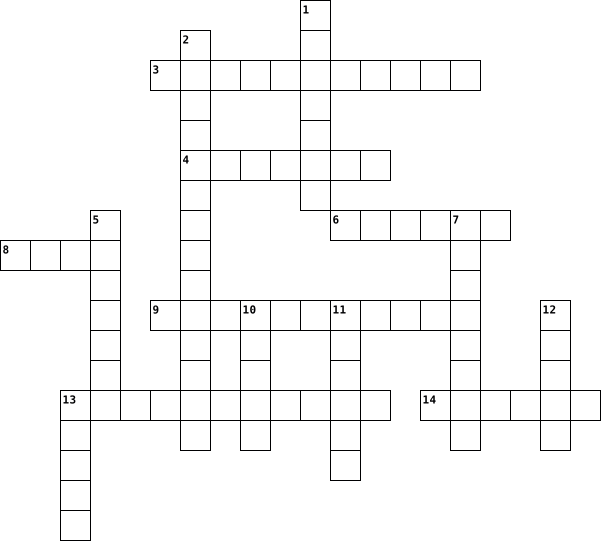
15 Clues: The mass of living materials • A plant organ responsible for reproduction • The building blocks that make up living organisms • An organelle responsible for producing food and oxygen • A specialised cell that transports food around the plant • A group of tissues working together to perform a particular function • ...
Crop Farming: Caring and Maintenance 2024-01-28

Across
- *They include unwanted insects, germs, or other organisms that affect cropping activity.
- *Stimulates the needed enzymes for storing nitrogen in plants.
- *This is an essential element for the proper management of crops for better yields.
- *It sucks the plant sap and on tender parts of leaves.
- *It sucks the plant sap and serves as a vector of ringspot.
- *This stimulates the development of healthy leaf growth through the production of chlorophyll.
- *It sucks on fruits that result in heavy dropping.
- *This is basically decomposed plant or animal waste.
- *This refers to solid wastes of hogs, chickens, and cattle that improve and maintain the soil.
- *This is the most common growth enhancer.
- *This is a fertilizer that is derived from compost, manure, and remains from plants or animals.
- *They grow in places intended for desired plants.
Down
- *Promotes the development of roots, stems, blossoms, and fruits.
- *Application of naturally occurring pathogens (fungi and bacteria) that destroy insect.
- *This is done by spreading the fertilizer over the field.
- * It is done by placing any organic covering like peanut hulls on top of the garden plot to prevent water from evaporating in the soil that impedes the growth of weeds.
- *Involves the removal of certain parts of a plant such as infected branches, buds, or roots.
- *This is also known as commercial fertilizer.
- *Refers to natural or synthetic material origin that is applied to the soil or plant tissues, usually leaves.
- *This is a chemical that eliminates weeds.
20 Clues: *This is the most common growth enhancer. • *This is a chemical that eliminates weeds. • *This is also known as commercial fertilizer. • *They grow in places intended for desired plants. • *It sucks on fruits that result in heavy dropping. • *This is basically decomposed plant or animal waste. • *It sucks the plant sap and on tender parts of leaves. • ...
Plants: Bryophtyes and Seedless Vascular 2013-02-16

Across
- nonvascular plants with the gametophyte being the dominant life stage.
- female gametangia where eggs are produced.
- cells of water transport.
- male gametangia where sperm are produced.
- opening that allows for gradual spore dispersal; teeth-like.
- producing only one type of spore that develops into a bi-sexual gameotphyte.
- modified leaves that bear sporangia.
- group united by anatomical and physiological traits rather than phylogeny.
- producing distinct types of spores that give rise to distinct types of gametophytes.
- symbiotic relationship between fungi and land plant.
Down
- multicellular diploid form that results from union of gametes.
- a strengthening material in vascular plant cell walls.
- haploid form that produces haploid cells.
- cells of mineral and nutrient transport.
- seedless vascular plants comprise a _______ group.
- clusters of sporangia on the undersides of sporophytes.
- durable polymer that forms the walls of plant spores to prevent drying out.
- haploid reproductive cell that develops into a multicellular haploid individual.
- long horizontal, subterranean extension used to anchor the plant.
19 Clues: cells of water transport. • modified leaves that bear sporangia. • cells of mineral and nutrient transport. • haploid form that produces haploid cells. • male gametangia where sperm are produced. • female gametangia where eggs are produced. • seedless vascular plants comprise a _______ group. • symbiotic relationship between fungi and land plant. • ...
P3 Science Crossword Puzzle 2025-05-29

Across
- I am a property of a material that can be bent easily
- Material that floats on water
- Plants need this to grow
- I am the part of the plant that takes in water
- I am a repeated pattern of change
- PLANT
- I have feathers on my body
- Material that sinks in water
- I am the first stage of a new plant
- I have wet scales on my body
Down
- PLANT I am the bear flowers
- I am a property of material that do not absorb water
- I have dry scales on my body
- I have feathers on my body
14 Clues: PLANT • Plants need this to grow • I have feathers on my body • I have feathers on my body • PLANT I am the bear flowers • I have dry scales on my body • Material that sinks in water • I have wet scales on my body • Material that floats on water • I am a repeated pattern of change • I am the first stage of a new plant • I am the part of the plant that takes in water • ...
Revision on living things and living systems 2021-09-20

Across
- Plants have _______________ to trap sunlight to make food.
- Plants which produce flowers are called _____________ plants.
- The leaf has ________________, which are tiny openings that help the plant take in and give out air.
- Both _____________ and bacteria do not make their own food
- The young of living things can ________________ into adults.
- There is a great _____________ of things around us.
- Bacteria can only be seen clearly under a __________________.
- Mosquitoes have three body parts, three pairs of legs and a pair of ___________________.
- Non-flowering plants reproduce by __________________.
- Plants which do not produce flowers are called ________________ plants.
- The ____________ anchor the plant firmly to the ground.
Down
- Parrot and ostrich are examples of birds. They are covered with ______________.
- Frog and salamander are examples of ___________________.
- _____________________ are very small living things that cannot be seen with our naked eyes.
- The roots absorb ____________ and mineral salts.
- The ___________ supports the plant so that the plant can remain upright to get more sunlight to make food.
- Living things can _______________ to changes around them.
- Ants and butterfly are examples of ____________________.
- Animals _________________ so that they will not become extinct and will continue to exist.
- Flowering plants reproduce by ________________.
20 Clues: Flowering plants reproduce by ________________. • The roots absorb ____________ and mineral salts. • There is a great _____________ of things around us. • Non-flowering plants reproduce by __________________. • The ____________ anchor the plant firmly to the ground. • Frog and salamander are examples of ___________________. • ...
Life Science Review #2 2021-03-29

Across
- This is the actions of organisms in response to stimuli.
- The leaf of a fern plant.
- A vertebrate whose body temperature is regulated by its internal heat, and that has skin covered with hair or fur and glands that produce milk to feed its young.
- The process that breaks down complex molecules of food into smaller nutrient molecules.
- An electrical message that carries information in the nervous system.
- This is the exchange of oxygen and carbon dioxide between an organism and its environment.
- A colored chemical compound that absorbs light.
- An organism whose cells contain a nucleus.
- A flower structure that encloses and protects ovules and seeds as they develop.
- A plant that produces seeds directly on the scales of cones—not enclosed by a protective fruit.
- This is a type of behavior that animals are born with and that helps them to survive.
Down
- A vertebrate whose body temperature is determined by the temperature of its environment, and that lives its early life in water and its adult life on land.
- This is the growth or movement of a organism (usually a plant), in response to a stimulus.
- This is when a plant grows towards water. Most of the time, it is the plant's roots that grow towards water since water is absorbed by the roots.
- The conditions that surround someone or something. These conditions and influences affect the growth, health, progress, etc., of someone or something.
- consisting of more than one cell, and having differentiated cells that perform specialized functions. Most life that can be seen with the naked eye is this.
- This is the part of the plant which is above ground and specialized for photosynthesis. It is typically flat, thin and contains chlorophyll.
- This is an animal that lives by preying on other animals.
- This is an organism that breaks down and gains nutrients from dead organisms.
- This kind of cell has a large central vacuole and a cell wall.
- A mammal whose young are born at an early stage of development, and which usually continue to develop in a pouch on their mother's body.
- The plant structure that contains a young plant and a food supply inside a protective covering.
22 Clues: The leaf of a fern plant. • An organism whose cells contain a nucleus. • A colored chemical compound that absorbs light. • This is the actions of organisms in response to stimuli. • This is an animal that lives by preying on other animals. • This kind of cell has a large central vacuole and a cell wall. • ...
Fluid Movement and Cell Review 2014-11-14

Across
- A moving fluid that distributes materials in the cell.
- The loss of water from a plant through evaporation.
- The diffusion of water through a selectively permeable membrane.
- Basic unit of life.
- A membrane that allows only a certain substances across.
- A type of tissue that transports sugars manufactured in the leaves to the rest of the plant.
Down
- Organelle which controls the cell's activities.
- A type of tissue that moves water and minerals absorbed by the root cells to every cell in the plant.
- Organelle where photosynthesis takes place.
- The cell storage units.
- The spreading out process of particles from one concentrate area to a low concentrated area.
- Organisms made up of many cells.
- A membrane that allows ALL materials across.
- A membrane that allows NO materials across.
- Tiny openings on the underside of the leaf.
- The power house of the cell.
- A type of tissue which protects the outside of a plant.
17 Clues: Basic unit of life. • The cell storage units. • The power house of the cell. • Organisms made up of many cells. • Organelle where photosynthesis takes place. • A membrane that allows NO materials across. • Tiny openings on the underside of the leaf. • A membrane that allows ALL materials across. • Organelle which controls the cell's activities. • ...
Prison Cell 2021-09-24

Across
- regulates what goes in/out of nucleus
- found in the plant cell, for protection
- used for storage/larger in plant cells
- sites of protein synthesis
- proteins in the cytoplasm/aids in support
- Smallest unit to be able to live
- regulates material in and out of cell
- process that converts light to glucose
- converts chemicals in food to ATP
- lacks membrane, makes ribosomes in the nucleus
Down
- package formed from a Golgi
- controls the cell's activities
- used to transport in the cell
- watery substance that contains the organelles
- cell division
- ER covers with ribosomes
- puts water soluble substances in fat packages
- pigment used to absorb sunlight in plant cells
- proteins used to "anchor" in mitosis
- Cell digestion/eliminates worn-out cell parts
20 Clues: cell division • ER covers with ribosomes • sites of protein synthesis • package formed from a Golgi • used to transport in the cell • controls the cell's activities • Smallest unit to be able to live • converts chemicals in food to ATP • proteins used to "anchor" in mitosis • regulates what goes in/out of nucleus • regulates material in and out of cell • ...
UNIT- 6 Energy 2022-11-16

Across
- dead vascular tube carrying water
- first step of cellular respiration
- holes in the underside of a leaf
- non-vascular primitive plant
- living vascular tube carrying nutrients
- cellular rechargeable battery
- growth layer of a tree
- combined female flower parts
- set of transport tubes
- male flower part produces pollen
- flowering plant
Down
- Cycle second step of cellular respiration
- primitive plant producing unprotected seeds
- light reaction of photosynthesis
- female flower part that leads to the ovary
- male flower part supporting the anther
- chemicals that go into a reaction
- Cycle dark reaction of photosynthesis
- combined male flower parts
- is a primitive tree that does not shed leaves
20 Clues: flowering plant • growth layer of a tree • set of transport tubes • combined male flower parts • non-vascular primitive plant • combined female flower parts • cellular rechargeable battery • light reaction of photosynthesis • holes in the underside of a leaf • male flower part produces pollen • dead vascular tube carrying water • chemicals that go into a reaction • ...
Cell Organelles Made by Reid 2018-11-06

Across
- The mitochondria is also known as the what of the cell.
- Can be found inside the nucleus and is created from DNA and stores the memory
- In the middle of the cell similar to the brain in the human.
- Chromosomes are created out of this and is responsible for the memory.
- There is a lot of them within the cell Powerhouse of the cell.
- Water bound type jell that floats in the cell and prevents cells from hitting into each other and also to transport things.
- Gives the plant cell shape and keeps good things in and bad things out.
- Golgi apparatus is responsible for packaging and transporting this.
- Digests the food in the cell
- usually found in single celled organisms but is responsible for feeling and movement
- The golgi apparatus is created out of this protein.
- Has a large sub unit and a small sub unit
- Membrane bound sack that is the largest part of the plant cell. Stores nutrients and water.
- packages micro molecules and other necessary proteins
Down
- The flagella in a single celled organism is responsible for this.
- The nucleus is also known as this in the human body.
- Lysosomes is responsible for something that involves food.
- Created out of membrane, packages proteins and other secretory products.
- Gives the plant cell the green pigment that makes it green.
- the cell wall gives this to the plant cell.
- A plant only has chloroplast if it does what?
- In the cell membrane allows for things to get in and out.
- It is a job of the vacuole to store this.
- Lets things in and out and has tiny holes on the outside
- In a ribosomes usually have two different sizes to them.
25 Clues: Digests the food in the cell • It is a job of the vacuole to store this. • Has a large sub unit and a small sub unit • the cell wall gives this to the plant cell. • A plant only has chloroplast if it does what? • The golgi apparatus is created out of this protein. • The nucleus is also known as this in the human body. • ...
Chapter 6 Review: Growing Greenhouse Crops 2024-05-13

Across
- Nitrogen, phosphorous, potassium
- Used to control the height of crops
- Elements used in large amounts
- Joining two plant parts to grow as one
- Roots emerged in continuous water source
- Growing while still attached to parent plant
- Light green color in foliage
- Transports elements around the plant
- Purple color showing under leaves
- Plants suspended near misting system
- Difference between day/night temp, reduces stem length
- Most common method of propogation
Down
- Through vegetative propogation
- Scorched, dry edges of foliage
- A solid media for anchorage and support
- Growing plants without soil
- Yellowing of the foliage
- Calcium, iron, zinc
- From seed
19 Clues: From seed • Calcium, iron, zinc • Yellowing of the foliage • Growing plants without soil • Light green color in foliage • Through vegetative propogation • Scorched, dry edges of foliage • Elements used in large amounts • Nitrogen, phosphorous, potassium • Purple color showing under leaves • Most common method of propogation • Used to control the height of crops • ...
Genetics 2022-02-07

Across
- The transfer of pollination the another one plant to show the stigma of another
- Instructions you can receive from your parents that code your traits
- The study of heredity
- Sperm cells unite with egg cells and creates seeds
- A tool used to predict the possible combinations of alleles in the offspring
- Trait that seems to hide or disappear
Down
- Having two different alleles
- Various forms of one gene
- The passing of traits from parents to offspring
- Only one plant needed before the plant polination itself
- Trait that shows up more often
- Always produce the same traits
- Characteristic of living things
- Who is the father of Genetics
- What plant did Gregor Mendel use to discover genetics?
15 Clues: The study of heredity • Various forms of one gene • Having two different alleles • Who is the father of Genetics • Trait that shows up more often • Always produce the same traits • Characteristic of living things • Trait that seems to hide or disappear • The passing of traits from parents to offspring • Sperm cells unite with egg cells and creates seeds • ...
Force - Stimulus - Response 2021-02-02

Across
- force causing roots to grow downward
- direction roots grow in response to gravity
- plant bending toward light
- force moving food through the digestives system
- fight or flight is a response to this or stress
- direction stem grows in response to gravity
- pushes the vacuole outward in turgor pressure
- hunger, thirst, body temperature are all this type of stimuli
- response to virus, bacteria, or spoiled food in the stomach
Down
- response to lack of water in a plant
- force allowing plant to become rigid & stand (2words)
- push or pull by skeleton/muscular systems
- provides force to pump blood
- root growing down and stem growing up in response to gravity
- stimulus causing a plant to bend toward a window
- response to an increase in body temperature
- stimulus causing a bear to hunt for food
- organelle involved with cell wall in turgor pressure
- soil, gravity, light, water are this type of stimulus
19 Clues: plant bending toward light • provides force to pump blood • response to lack of water in a plant • force causing roots to grow downward • stimulus causing a bear to hunt for food • push or pull by skeleton/muscular systems • direction roots grow in response to gravity • response to an increase in body temperature • direction stem grows in response to gravity • ...
Growing Plants 2020-04-02

Across
- stores food for the seed
- part of an embryo that changes into the future shoot
- baby plant that comes out of the seed
- absorbs water and mineral from plants
- seeds dispersed by wind should be_____ in weight.
- change of seed into a seedling
- baby plant inside the seed
Down
- coconut is dispersed by _______
- seed coat protects seed from mould and _____
- seeds which can grow if they get favourable conditions
- method of seed dispersal in pea plant
- outer layer of seed
- scattering of seeds away from the parent plant
- part of an embryo that changes into the root
14 Clues: outer layer of seed • stores food for the seed • baby plant inside the seed • change of seed into a seedling • coconut is dispersed by _______ • method of seed dispersal in pea plant • baby plant that comes out of the seed • absorbs water and mineral from plants • seed coat protects seed from mould and _____ • part of an embryo that changes into the root • ...
Plant Tissue Culture 2024-08-09

Across
- Formation of embryo from callus
- Culture Medium
- Gradual transfer of Plantlets to Natural environment
- Formation of root and shoot from callus
- Transfer of explant to the culture medium
- Ability of a Single live plant cell to develop whole plant.
- Any plant part used in plant tissue culture
- Growth hormone
Down
- Formation shoot from callus
- Preserving plant materials under -196C temperature
- Removal of microbes from culture media and vessels
- Promotes cell division
- controlled environmental (physical)condition
- Formation of root from callus
- Mass of undifferentiated cells
15 Clues: Culture Medium • Growth hormone • Promotes cell division • Formation shoot from callus • Formation of root from callus • Mass of undifferentiated cells • Formation of embryo from callus • Formation of root and shoot from callus • Transfer of explant to the culture medium • Any plant part used in plant tissue culture • controlled environmental (physical)condition • ...
Plants, Trees and Vegetables 2024-05-28

Across
- This grows from the trunk of a tree (6)
- The singular of 'leaves' (4)
- The main part of a tree (4)
- The process by which plants convert sunlight into food (14)
- These are produced by the plant and sown to grow new ones (5)
- Here the plant captures sunlight to make food (6)
- We do this to start seeds growing (3)
Down
- The main part of a plant (4)
- The outer covering of the trunk of a tree which is often rough (5)
- This is the fleshy part of a plant that contains the seeds (5)
- This describes the process when seeds start to grow (11)
- These grow down into the ground to collect water and minerals and to hold the plant steady (5)
- The fibrous container of beans and peas (3)
- This is done to keep trees a reasonable size and shape, and healthy (7)
14 Clues: The main part of a tree (4) • The main part of a plant (4) • The singular of 'leaves' (4) • We do this to start seeds growing (3) • This grows from the trunk of a tree (6) • The fibrous container of beans and peas (3) • Here the plant captures sunlight to make food (6) • This describes the process when seeds start to grow (11) • ...
Bio Unit 9 Sect 4 Vocabulary 2025-02-13

Across
- coat The outer protective layer of a seed.
- The male reproductive part of a flower, consisting of an anther and a filament.
- The sticky top part of the pistil where pollen lands for fertilization.
- The process where a seed begins to sprout and grow into a new plant.
- The stem-like part of a seedling between the radicle and the cotyledons.
- A cell or organism with two sets of chromosomes (one from each parent).
- A flowering plant with two cotyledons, net-like veins, and flower parts in multiples of four or five.
- The first root that emerges from a seed during germination.
- A colorful, often fragrant part of a flower that attracts pollinators.
Down
- (2 words) A form of asexual plant reproduction where new plants grow from roots, stems, or leaves.
- A leaf-like structure that protects the flower bud before it opens.
- A period when a seed or plant temporarily stops growing due to unfavorable conditions.
- The female reproductive part of a flower, made up of the stigma, style, and ovary.
- The nutrient-rich tissue inside a seed that feeds the developing plant embryo.
- A cell with only one set of chromosomes, such as gametes (sperm and egg cells).
- A flowering plant with one cotyledon (seed leaf), parallel veins, and flower parts in multiples of three.
16 Clues: coat The outer protective layer of a seed. • The first root that emerges from a seed during germination. • A leaf-like structure that protects the flower bud before it opens. • The process where a seed begins to sprout and grow into a new plant. • A colorful, often fragrant part of a flower that attracts pollinators. • ...
Photo synthesis By: Anna 2023-10-19

Across
- substances formed in a chemical reaction
- needed for reaction to take place
- what plants and humans breath
- where photosynthesis takes place and only found in plant cells
- distributes water to the plant
Down
- energy helps the plant grow and shine
- when plants make their own food
- dioxide what toxic air plants need
- helps plant grow bigger
- carries the glucose to the plant for its life processes
- green pigment that allows the plant to absorb sunlight
11 Clues: helps plant grow bigger • what plants and humans breath • distributes water to the plant • when plants make their own food • needed for reaction to take place • dioxide what toxic air plants need • energy helps the plant grow and shine • substances formed in a chemical reaction • green pigment that allows the plant to absorb sunlight • ...
engineers 2026-03-19

Across
- oil
- power of motion
- AI
- strongest power plant
- machines
- mining and rocks
- energy from the core
- energy and power
- air
- see to the bone
- industries
Down
- airplanes and spacecrafts
- joints and conjoining
- quality of life
- pillars and foundations
- factories
- plant made items
- toothpaste and medicine
- science and research
- subways
20 Clues: AI • oil • air • subways • machines • factories • industries • quality of life • power of motion • see to the bone • plant made items • mining and rocks • energy and power • science and research • energy from the core • joints and conjoining • strongest power plant • pillars and foundations • toothpaste and medicine • airplanes and spacecrafts
Nutrients 2024-01-17

Across
- Not enough could stunt the plant growth
- Essential for production of protein
- Essential for Photosynthesis
- Helps plant metabolism
- Helps build protein and fruit
- Essential for seed development
- Enables rapid growth in plants
Down
- Toxic in high quantities
- Provides strength to the plant
- Encourages blooming and root growth
- Regulates plant growth and cunsumption
- Works with enzyme systems to break down
- Used in the formation of chlorophyll
13 Clues: Helps plant metabolism • Toxic in high quantities • Essential for Photosynthesis • Helps build protein and fruit • Provides strength to the plant • Essential for seed development • Enables rapid growth in plants • Essential for production of protein • Encourages blooming and root growth • Used in the formation of chlorophyll • Regulates plant growth and cunsumption • ...
Pollination 2023-02-15

Across
- spreading pollen from flower to flower
- an action word
- a picture with labels
- part of the plant that takes in the sunlight
- plants need this to grow
Down
- sweet juice bees like to drink
- part of the plant that has nectar
- spread pollen on their hairy bodies
- part of the plant that is a container for seeds
- a long part of a plant
- grows into a plant
- a person place or thing word
12 Clues: an action word • grows into a plant • a picture with labels • a long part of a plant • plants need this to grow • a person place or thing word • sweet juice bees like to drink • part of the plant that has nectar • spread pollen on their hairy bodies • spreading pollen from flower to flower • part of the plant that takes in the sunlight • ...
Floriculture Crossword 2023-03-03

Across
- Essential plant hormones
- A flower cluster with the separate flowers attached by short equal stalks at equal distances along a central stem
- A green pigment, present in all green plants
- A leaf or flower that has no stem of its own but is attached directly to the main stem of the plant
- One of the two tissues that make up the plant's long-distance transport system
- A ratio, expressed in percent, of the amount of atmospheric moisture present relative to the amount that would be present if the air were saturated.
- A spike borne on a fleshy stem
Down
- A principal component of vascular tissue, together with phloem and cambium
- Plant hormone that regulates numerous processes in plant growth
- The expanded part of a leaf or petal
- Having a bare leafless stalk growing directly from the ground
- Used to extend the vase life of cut flowers by blocking the effect of ethylene
- Using the sugars produced during photosynthesis plus oxygen to produce energy for plant growth
- The final stage of plant development
14 Clues: Essential plant hormones • A spike borne on a fleshy stem • The expanded part of a leaf or petal • The final stage of plant development • A green pigment, present in all green plants • Having a bare leafless stalk growing directly from the ground • Plant hormone that regulates numerous processes in plant growth • ...
Plants Vocabulary 2019-01-31

Across
- An organelle responsible for producing food and oxygen
- The movement of water molecules from a region of high water potential to a region of low water potential, across a selectively permeable membrane
- A complex carbohydrate made of multiple glucose molecules bound together
- The building blocks that make up living organisms
- A green pigment inside the chloroplast that is responsible for trapping light energy
- A chemical reaction in which a sugar and oxygen react with one another to produce energy, water vapour and carbon dioxide
- A plant organ responsible for reproduction
Down
- The mass of living materials
- A chemical reaction in which water and carbon dioxide react with one another to produce a sugar and oxygen
- A simple carbohydrate molecule produced by the process of photosynthesis
- The tough outer covering of a plant cell that prevents it from bursting
- A group of tissues working together to perform a particular function
- A specialised cell that transports food around the plant
- A hollow plant cell responsible for transporting water from the roots to the leaves of a plant
- Plant organs responsible for absorbing water and dissolved minerals from the soil
15 Clues: The mass of living materials • A plant organ responsible for reproduction • The building blocks that make up living organisms • An organelle responsible for producing food and oxygen • A specialised cell that transports food around the plant • A group of tissues working together to perform a particular function • ...
Science Lab Safety is important to the sucesss of our class. 2023-09-03

Across
- Return lab equipment to the right________.
- Handle lab equipment properly. Use two ______ to carry a microscope.
- Do not _______ or drink.
- ______ and dry equipment.
- Wash your hands after ___________ up.
- Follow the _____________.
- Clean up your _________.
- Wear _______ to cover your feet.
- ____________is not allowed.
Down
- Wear safety ________.
- _______ your hands after touching an animal or a plant.
- Do not experiment without an ___________.
- Read the _____________.
- _______ an animal or a plant carefully.
- Do not pick up broken _________. Tell the adult..
- ______ must be tied back. Tell the adult.
- Do not hurt a ___________ or an animal.
- Preserve lab equipment because they are ____________.
18 Clues: Wear safety ________. • Read the _____________. • Do not _______ or drink. • Clean up your _________. • ______ and dry equipment. • Follow the _____________. • ____________is not allowed. • Wear _______ to cover your feet. • Wash your hands after ___________ up. • _______ an animal or a plant carefully. • Do not hurt a ___________ or an animal. • ...
A botanical crossword 2018-02-06

Across
- Leaf stalk (7)
- A plant that completes its lifecycle in one growing season (6)
- Large brown algae (4)
- A popular garden plant from the Three Kings Islands. All plants today descend from a single individual (10,8)
- Tallest moss in the world (scientific name) (8,7)
- Species of speargrass/Aciphylla that grows around the Wellington coast (scientific name) (9)
- Leptinella _____ a threatened species with a population near Titahi Bay (4)
- Genus of distinctive introduced orange fungus (scientific name) (12)
- Sophora species that only grows around Cook Strait (scientific name) (7)
- The perching lily genus Collospermum has now been transferred to this genus (7)
- Word that means obtaining native plants from local areas (11)
- The most speciose genus of New Zealand shrubs (8)
- Mass of pollen grains in an orchid (8)
Down
- Number of southern beech species in New Zealand (4)
- Tree whose wood was used by Māori for fishing floats (4)
- A plant that grows on another plant (but which is not parasitic) (8)
- New Zealand tree whose wood was used by early settlers to make butter boxes for export (9)
- Small shrub similar in appearance to24 Down but distinguished by its hair-like stipules (scientific name) (8,6)
- Species that mimics horopito (Pseudowintera colorata) (scientific name) (10, 7)
- One of the only two NZ species in the Proteaceae (common name) (8)
- NZ plant genus that once killed an elephant (scientific name) (8)
- Floating native fern (6,5)
- Genus of NZ’s only indigenous fully parasitic plant (scientific name) (12)
- Small flowered Veronica tree with knobbly trunk found at Te Kopahou reserve (10)
- Moisture-loving tree with buttress roots (common name) (7)
- Seed coat (5)
- Māori name of the plant also known as wild Irishman (9)
- Early NZ botanist who was also a missionary and printer (7)
- Māori name for Muehlenbeckia astonii (8)
- Stalk that holds up an anther (8)
- nationality of Carl Linnaeus, the father of taxonomy (7)
- Hook grasses (Uncinia) have recently been transferred to this genus (5)
32 Clues: Seed coat (5) • Leaf stalk (7) • Large brown algae (4) • Floating native fern (6,5) • Stalk that holds up an anther (8) • Mass of pollen grains in an orchid (8) • Māori name for Muehlenbeckia astonii (8) • Tallest moss in the world (scientific name) (8,7) • The most speciose genus of New Zealand shrubs (8) • Number of southern beech species in New Zealand (4) • ...
A botanical crossword 2018-02-07

Across
- Moisture-loving tree with buttress roots (common name) (7)
- Hook grasses (Uncinia) have recently been transferred to this genus (5)
- Māori name of the plant also known as wild Irishman (9)
- Species that mimics horopito (Pseudowintera colorata) (scientific name) (10, 7)
- Word that means obtaining native plants from local areas (11)
- Nationality of Carl Linnaeus, the father of taxonomy (7)
- Stalk that holds up an anther (8)
- New Zealand tree whose wood was used by early settlers to make butter boxes for export (9)
- Leaf stalk (7)
- Species of speargrass/Aciphylla that grows around the Wellington coast (scientific name) (9)
- A plant that completes its lifecycle in one growing season (6)
- Small flowered Veronica tree with knobbly trunk found at Te Kopahou reserve (10)
- Genus of NZ’s only indigenous fully parasitic plant (scientific name) (12)
- One of the only two NZ species in the Proteaceae (common name) (8)
- Leptinella _____ a threatened species with a population near Titahi Bay (4)
Down
- NZ plant genus that once killed an elephant (scientific name) (8)
- Small shrub similar in appearance to 1 Down but distinguished by its hair-like stipules (scientific name) (8,6)
- Number of southern beech species in New Zealand (4)
- Mass of pollen grains in an orchid (8)
- Māori name for Muehlenbeckia astonii (8)
- Floating native fern (6,5)
- Early NZ botanist who was also a missionary and printer (7)
- A popular garden plant from the Three Kings Islands. All plants today descend from a single individual (10,8)
- A plant that grows on another plant (but which is not parasitic) (8)
- Large brown algae (4)
- Tallest moss in the world (scientific name) (8,7)
- The most speciose genus of New Zealand shrubs (8)
- Sophora species that only grows around Cook Strait (scientific name) (7)
- Genus of distinctive introduced orange fungus (scientific name) (12)
- The perching lily genus Collospermum has now been transferred to this genus (7)
- Tree whose wood was used by Māori for fishing floats (4)
- Seed coat (5)
32 Clues: Seed coat (5) • Leaf stalk (7) • Large brown algae (4) • Floating native fern (6,5) • Stalk that holds up an anther (8) • Mass of pollen grains in an orchid (8) • Māori name for Muehlenbeckia astonii (8) • Tallest moss in the world (scientific name) (8,7) • The most speciose genus of New Zealand shrubs (8) • Number of southern beech species in New Zealand (4) • ...
Photosynthesis, Plant Structures, and Responses 2022-04-24

Across
- a green pigment in chloroplast that absorbs light
- energy moves from one place to another
- a plant organelle where photosynthesis takes place
- tropism where the stimulus is touch
- tropism where the stimulus is gravity
- control gas exchange in the leaf of a plant
Down
- tropism where the stimulus is water
- _________, sunlight and carbon dioxide are reactants of photosynthesis
- energy carried by a heat flow
- tropism where the stimulus is light
- a type of plant hormone
- energy changes from one form to another
- one of the products in photosynthesis
- a plant response or growth in relation to a stimulus
14 Clues: a type of plant hormone • energy carried by a heat flow • tropism where the stimulus is water • tropism where the stimulus is light • tropism where the stimulus is touch • one of the products in photosynthesis • tropism where the stimulus is gravity • energy moves from one place to another • energy changes from one form to another • ...
Introducing Biology 2026-05-10

Across
- the study of disease of plant and animals
- Father of biology
- the other name of taxonomy
- the study of viruses
- technique of producing silk by raising silkworms
- the study of structure and function of animal and plant cells
- Father of botany
- the study of parasites
- study of chemicals and reactions that take place inside the living things
- the study of algae
Down
- the study of origin and descent of organisms
- the study of geographical distribution of plant and animals
- The study of living beings
- the science of the transmission of body characters from parents to offspring
- Father of medicine
- the study of gross structure of organs in a organisms as seen in dissection
- the science that deals with the phenomena and causes of immunity
- raising crops and livestock
- the study of fishes
- the study of metabolism of organisms and their parts
20 Clues: Father of botany • Father of biology • Father of medicine • the study of algae • the study of fishes • the study of viruses • the study of parasites • The study of living beings • the other name of taxonomy • raising crops and livestock • the study of disease of plant and animals • the study of origin and descent of organisms • technique of producing silk by raising silkworms • ...
Plant science terms 2025-04-17

Across
- To add moisture
- Part of a plant that absorbs nutrients under ground
- Container for plants
- Outdoor area reserved for plants that attract pollinators
- Plants from the region
- Green, brown or red small pests that feed on leaves
- Placing a seed in soil, covering with soil, then watering
- Another term for vegetative
- a building used for growing plants
Down
- extra nutrients that support growth when added to soil or water
- a plant you can cut that will continue to grow
- To cut a plant to grow another from the cutting
- Part of a plant that absorbs sunlight
- plants with multiple color mutations that make it more valuable
- Future farmers of America
15 Clues: To add moisture • Container for plants • Plants from the region • Future farmers of America • Another term for vegetative • a building used for growing plants • Part of a plant that absorbs sunlight • a plant you can cut that will continue to grow • To cut a plant to grow another from the cutting • Part of a plant that absorbs nutrients under ground • ...
Intro to Grasslands 2023-08-30

Across
- Grasslands are interspersed with open-grown, widely spaced, orchard-like scattered trees or groupings of trees.
- Open, rocky, barren areas dominated by drought-adapted forbs, warm-season grasses, and specialized fauna. They are relatively small, often isolated native grasslands on hilltops and south-facing slopes, where thin, dry soils and dry, harsh desert-like summer conditions harbor unique natural communities of plants and animals.
- A plant that makes major growth during the cool portion of the year.
- The interacting system of a biological community and its non-living environment.
- A plant that typically lives three or more years.
- The environment in which the life needs of an organism, population, or community are supplied.
- A plant can remove nitrogen from the air and add it to the soil through its root system. Forage production needs to dilute the effects of endophyte-infected fescue.
Down
- A plant that completes most of its growth during the warm portion of the year, generally late spring and summer.
- The stages through which an organism passes during its existence.
- The sum total of plants that cover an area; plants in general.
- Vegetation, or other material wild animals use for nesting, rearing young, resting, escaping predators, or protecting from adverse weather conditions.
- A plant that completes its life cycle and dies in one year or less.
- A tract of level to hilly land that has a dominance of grasses and forbs, a scarcity of shrubs, and is treeless. The natural plant community consists of various mixtures of tall, mid, and short-growing native species.
- A plant that requires two years to complete its life cycle.
- Land on which the existing plant cover is dominated by grasses and other herbaceous (non-woody) plants (forbs).
- All land devoted to crop or livestock production, e.g., farmstead, drainage and irrigation ditches, ponds, cropland, and grazing land on farms.
16 Clues: A plant that typically lives three or more years. • A plant that requires two years to complete its life cycle. • The sum total of plants that cover an area; plants in general. • The stages through which an organism passes during its existence. • A plant that completes its life cycle and dies in one year or less. • ...
Homeostasis 2022-03-28

Across
- a plant's response to gravity
- causes a reaction
- a plant's response to light
- _______ stimulus comes from outside the organisms body
- process by which the internal environment is kept stable
- What part is the response: A mouse sees a cat and hides under a log
- a plant with _____ turgor pressure will have full cells
- phototropism causes a plant to follow the _______
Down
- how an organisms reacts to a stimulus
- ________ stimulus comes from inside the organisms body such as hunger
- a touch me not will respond to touch by _______ it's leaves
- a plant's response to touch
- part of the plant cell that fills up with water
- a state of balance
- a plant with ____ turgor pressure will look wilted
- What part is the stimulus: A bird drinks water because he is thirsty
- geotropism causes a plant's roots to grow _______
17 Clues: causes a reaction • a state of balance • a plant's response to touch • a plant's response to light • a plant's response to gravity • how an organisms reacts to a stimulus • part of the plant cell that fills up with water • geotropism causes a plant's roots to grow _______ • phototropism causes a plant to follow the _______ • ...
Plants Growth and Nutrients 2016-06-05

Across
- The expanded part of a leaf or petal.
- The seed-bearing part of a plant, consisting of reproductive organs (stamens and carpels) that are typically surrounded by a brightly colored corolla (petals) and a green calyx (sepals).
- A bud that develops in the axil between a petiole and a stem.
- Manufactures food through photosynthesis, exchange of gasses with environment, stores food and water, comes off the stem and is green, and thin.
- Molecule that absorbs sunlight and uses its energy to synthesize carbohydrates from CO2 and water.
- The first portion of root too emerge.
- Process used by plants and other organisms to convert light energy, normally from the Sun, into chemical energy that can be later released to fuel the organisms' activities (energy transformation).
- The part of a plant stem from which one or more leaves emerge, often forming a slight swelling or knob.
- The stalk that joins a leaf to a stem; leafstalk.
- Parts of the plant that are underground.
- If this is too high or too low, it will result in abnormal development and reduced production.
- What the chlorophyll collects it and gets energy from it in a process called photosynthesis.
- The vascular tissue in plants that conducts sugars and other metabolic products downward from the leaves.
- Transport water and nutrients between roots and leaves, supports, produces new tissue for photosynthesis and support, stores food and water.
- The sweet and fleshy product of a tree or other plant that contains seed and can be eaten as food.
- Is a tiny opening or pore that is used for gas exchange.
- Where roots absorb nutrients, such as water.
Down
- Absorbed by roots through roots along with minerals and is transported through out plant from their, is a liquid.
- Grows off of primary root.
- Transport water from roots to shoot and leaves, but it also transports some nutrients.
- A part of a plant stem between two of the nodes from which leaves emerge.
- Where photosynthesis takes place.
- Supplied by the soil and by the addition of fertilizers.
- This part of the plant is above ground, and is composed of several organs.
- The main stem.
- Is required for plants for their respiration to carry out their functions of water and nutrient uptake.
- Can be created by using stacks ,string ,or by soil that surrounds the roots.
- The part of the plant that absorbs water from soil for needed nutrients.
- Product of photosynthesis used for energy, made in leaves, moves to where it is needed.
- Reactant for photosynthesis collected through stomata.
30 Clues: The main stem. • Grows off of primary root. • Where photosynthesis takes place. • The expanded part of a leaf or petal. • The first portion of root too emerge. • Parts of the plant that are underground. • Where roots absorb nutrients, such as water. • The stalk that joins a leaf to a stem; leafstalk. • Reactant for photosynthesis collected through stomata. • ...
gardening 2025-01-20

Across
- this is food for herbivore animal.
- a small vehicle with one wheel and two handles that is used for carrying things.
- a garden tool with a long handle and a thin metal blade, used for breaking up soil.
- a small, round or oval object produced by a plant and from which, when it is planted, a new plant can grow.
- a tool to cut the tree
- Used to move loose materials like dirt, gravel, sand, grain, or snow.
- a machine used for preparing plantation
- something has nutrition for plants.
- small machine used for cutting grass.
- a tool for giving water to the plant
- a tool to collect dead leaves or grass
- a young plant that grows from a seed.
Down
- a small tool consisting of a flat metal blade joined to a handle, used for spreading building materials such as cement.
- the material on the surface of the ground in which plants grow.
- a building with a transparent roof and walls that is used to grow plants in a controlled environment.
- large rubber boots that you wear outside when the ground is wet and dirty.
- Used to dig straight-edged holes or trenches, cut sod, reshape beds, and create deeper planting holes.
- it has long stick and used for preparing soil
- a place to plant flower.
- a big scissors to cut branch of tree.
20 Clues: a tool to cut the tree • a place to plant flower. • this is food for herbivore animal. • something has nutrition for plants. • a tool for giving water to the plant • a big scissors to cut branch of tree. • small machine used for cutting grass. • a young plant that grows from a seed. • a tool to collect dead leaves or grass • a machine used for preparing plantation • ...
Cell Vocabulary 2015-09-19

Across
- Abbreviation for deoxyribonucleic acid, the chemical that provides detailed instructions for cells
- A group of specialized cells with similar structures and functions
- A stiff outer layer of cell that surrounds a plant,protects it
- The layer of cell that holds the cell material inside and controls what substances enter and exit the cell
- A structure that contains at least two types of tissue that work together to preform a specific function
- Plant tissue that carries food (sugar) from leaves to the other parts of the plant
Down
- The control center of a cell;it directs the cells activities
- The giving off of water by a leaf through it's stomata
- Organelles, found only in plant cells,in which sugar is made during photosynthesis
- A growth response of a plant toward or away from something in it's environment
- Tiny openings in the leaves of plants though which gases enter and exit
- Plant tissue that carries water and nutrients from a plant roots to its leaves
- Structures in the nucleus that contain an organism's genetic information and regulate the cells activities
13 Clues: The giving off of water by a leaf through it's stomata • The control center of a cell;it directs the cells activities • A stiff outer layer of cell that surrounds a plant,protects it • A group of specialized cells with similar structures and functions • Tiny openings in the leaves of plants though which gases enter and exit • ...
Control and Coordination Crossword 2025-10-19

Across
- A muscle or gland that responds to the stimulus.
- A chemical messenger secreted by endocrine glands that regulate body functions.
- A junction between two neurons where nerve impulses are transmitted chemically.
- Growth of plant parts in response to chemicals (e.g., pollen tube towards ovule).
- A specialized cell or organ that detects stimuli (e.g., skin, eyes, ears).
- Any change in the environment that causes a response in an organism.
- A quick, automatic response to a stimulus, controlled by the spinal cord.
- Directional growth movement in plants in response to stimuli.
- Central Nervous System Consists of the brain and spinal cord; controls most functions of the body.
Down
- Glands that secrete hormones directly into the bloodstream (e.g., thyroid, adrenal).
- A plant hormone that promotes cell division and delays aging.
- Growth of plant parts in response to gravity.
- Peripheral Nervous System Composed of nerves outside the CNS; connects the CNS to the body.
- Growth of a plant towards light.
- A plant hormone that promotes cell elongation and growth.
- A nerve cell that transmits electrical impulses in the nervous system.
16 Clues: Growth of a plant towards light. • Growth of plant parts in response to gravity. • A muscle or gland that responds to the stimulus. • A plant hormone that promotes cell elongation and growth. • A plant hormone that promotes cell division and delays aging. • Directional growth movement in plants in response to stimuli. • ...
CELLS! 2020-08-27

Across
- The powerhouse of the cell
- These cells contain chloroplasts
- Stores water, nutrients and waste
- The person who discovered cells: Robert ______
- These cells don't have a nucleus
- These cell types have multiple cells
- True or False: animal cells are eukaryotic
- Humans have this type of cell
- The brain of the cell
Down
- We look at cells underneath the _________
- Transports, modifies and packages proteins
- These are responsible for photosynthesis
- This cell type has a nucleus
- An organelle: _________ Reticulum
- Unicellular cells have how many cells?
- The wall surrounding plant and animal cells
- True or False: animal cells have a cell wall
- This provides rigidy in plant cells
18 Clues: The brain of the cell • The powerhouse of the cell • This cell type has a nucleus • Humans have this type of cell • These cells contain chloroplasts • These cells don't have a nucleus • Stores water, nutrients and waste • An organelle: _________ Reticulum • This provides rigidy in plant cells • These cell types have multiple cells • Unicellular cells have how many cells? • ...
Primary Science: Life Cycle of Flowering Plants 1 (Plant classification & Germination) 2020-07-25

Across
- The process in which a seed grows into a seedling and eventually becomes a young plant.
- As a seedling grows, the mass of its seed leaves __________ because it is using up the food stored in them.
- The process in which the cells of all living things take in food and oxygen in order to produce the energy they need to stay alive.
- Plants absorb water and mineral ___________ through their roots.
- The name of the sugar that a leaf makes during photosynthesis.
- Once a seedling grows its own leaves, it becomes a ___________ plant.
- Once the true leaves emerge from a seedling, the plant can make its own food by ________________.
- The part of the seedling that emerges from the seed that grows upwards towards sunlight.
- A seed planted in dry soil will not germinate because it lacks __________, one of the conditions for germination.
- The absorption of water by the seed causes it to ______________.
Down
- Flowering plants reproduce by ____________.
- The three conditions for germination are air, moisture and ___________.
- Another name for seed leaf.
- A flowering plant is also known as an _____________.
- Seeds need this gas in order to germinate.
- The seed _________ is a layer that covers a seed that protects it.
- A seed is eaten by an animal and passed out in its faeces. The seed is not damaged because it is _______________ by the seed coat.
- The first part of the seedling to emerge from the seed.
- The form in which food is stored in a plant.
- The seed _________ is the part of a seed where food is stored for the seed.
- At the very start of germination, a seed has to ____________ water.
21 Clues: Another name for seed leaf. • Seeds need this gas in order to germinate. • Flowering plants reproduce by ____________. • The form in which food is stored in a plant. • A flowering plant is also known as an _____________. • The first part of the seedling to emerge from the seed. • The name of the sugar that a leaf makes during photosynthesis. • ...
Reach Review 2022-01-04

Across
- The part of a plant that grows under the soil
- The small part of a plant from which a new plant can grow
- How something looks or what something does
Down
- To make something
- How much bigger it gets
- Set of events that happen over and over again in a pattern
- The flower of a seed plant
- A young plant or the new growth on a plant
- The dirt in which plants grow
- To need something or someone for support
- Are right, good things happen
11 Clues: To make something • How much bigger it gets • The flower of a seed plant • The dirt in which plants grow • Are right, good things happen • To need something or someone for support • A young plant or the new growth on a plant • How something looks or what something does • The part of a plant that grows under the soil • The small part of a plant from which a new plant can grow • ...
Biology Crossword 2016-03-13

Across
- Another name for illumination
- S_______ mesophyll
- Transports water
- Colour that shows presents of starch
- Top level of the leaf structure
- A gas respired by plants
- used to anchor a plant
- Part of the palisade mesophyll
- It absorbs inferred radiation
- Coal,oil & gases are examples of this
- Lower and upper.....
- The process of turning into a fossil
- P_______ mesophyll
- Light produced by the sun
- Stored glucose
- Another name for burning
- The outer protective layer of a cell
Down
- The smallest structural unit of an organism
- Transports glucose
- Holes in-between guard cells
- A gas taken in by plants
- A green substance in leaves
- How plants make food
- Part of a plant used to transport food water etc
- Opens to creates a hole
- In plant cell walls
- large group of organic compounds in food
- The turning from a living thing to dying and decomposing
- Name given to a plant deprived of starch
- Used to test for starch
- Hole in-between guard cells
- A process that involves oxygen
- Part of a plant used for the absorption of sunlight and CO2
- Part of an organism which is typically self-contained and has a specific vital function.
- Air pockets found in the spongy mesophyl
- used to remove chlorophyll from plants
- Colour that shows no starch is present
37 Clues: Stored glucose • Transports water • Transports glucose • S_______ mesophyll • P_______ mesophyll • In plant cell walls • How plants make food • Lower and upper..... • used to anchor a plant • Opens to creates a hole • Used to test for starch • A gas taken in by plants • A gas respired by plants • Another name for burning • Light produced by the sun • A green substance in leaves • ...
113-1 G2 Science Midterm Review 2024-11-04

Across
- the part of a flowering plant that holds seeds
- the part of a plant that makes food for it. It comes in different sizes and shapes.
- light from the sun
- animals that drink milk from their mother's body
- the part of a nonflowering plant that holds seeds
- new plants may grow from it
- all the living and nonliving things in one place
- tree stem
- things in the soil that helps plants grow
- animals with dry, scaly skin or with hard parts. Ex. turtle, crocodile, snake, iguana
- parts of fish used for swimming
- the part of a plant that holds it in place
Down
- to make new living things like oneself
- animals with wet, smooth skin, they lay eggs in water. When they grow up, they move on to land, ex. frog
- they need food, water, air and space to live
- the part of a fish that take in oxygen
- the part of a flowering plant that makes seeds
- they are living things, they can't move on their own, they can make their own food
- body covering of birds
- a place where an animal can be safe
- it is made up of small rocks and once-living things
- smaller than trees, they have woody stems
- they are living things, they can move around on their own
- animals that have three body parts and six legs
- body covering of mammals
25 Clues: tree stem • light from the sun • body covering of birds • body covering of mammals • new plants may grow from it • parts of fish used for swimming • a place where an animal can be safe • to make new living things like oneself • the part of a fish that take in oxygen • smaller than trees, they have woody stems • things in the soil that helps plants grow • ...
space 2013-10-30

Across
- is a dwarf planet that lies at the outer reaches of our
- the people who gose to space
- Ship a vehicle that takes astronuat's to space
- the foruth largest planet
- famous for it's rings
- the red plant
- closest to the sun
- sun
- radiation
- hole the collapsed core of a massive star
- Moon is the fifth largest moon in our solar system
Down
- chunck of frozen gasses,ice, and rocky debris that orbits
- system
- the largest plant
- the study of the nuiverse
- very hot,fluid rock
- it is named after a roman goddess of love and beauty
- the little blue plant
- we live on
- the star at the center of our solar system
- we live in a galaxy called
- got 8 moons and it's the seventh planet from the sun
- a giant ball of hot gas that creates and emits its
23 Clues: sun • system • radiation • we live on • the red plant • the largest plant • closest to the sun • very hot,fluid rock • the little blue plant • famous for it's rings • the study of the nuiverse • the foruth largest planet • we live in a galaxy called • the people who gose to space • hole the collapsed core of a massive star • the star at the center of our solar system • ...
Plants 2015-09-15

Across
- food storage
- the seed coat
- the growth of the length of a plant
- the union of the male and female gametes to form a zygote.
- The Male Reproductive Organ
- produces new individuals without the fusion of gametes.
Down
- embryonic shoot
- the transfer of pollen from the anther to a stigma
- embryonic root
- also called cell division
- part of the plant that is cut off of the parent plant
- a shoot of a parent plant is bent until it can be covered by soil.
- The Female Reproductive Organ
13 Clues: food storage • the seed coat • embryonic root • embryonic shoot • also called cell division • The Male Reproductive Organ • The Female Reproductive Organ • the growth of the length of a plant • the transfer of pollen from the anther to a stigma • part of the plant that is cut off of the parent plant • produces new individuals without the fusion of gametes. • ...
Photosynthesis 2025-11-13

Across
- The energy from the sun that helps plants make food
- The part of the plant that takes in water from the soil
- The gas that plants take in from the air
- What plants make from sunlight during photosynthesis
- What plants make to help them grow
- A living thing that can make its own food
- The part of a plant cell where photosynthesis happens
- Another word for the food plants make
- The part of the plant that collects sunlight
Down
- The liquid that plants take in through their roots
- The process plants use to make food using sunlight
- The sugar that plants make for food
- The gas that plants give off during photosynthesis
- Small holes on the bottom of leaves that let gases move in and out
- The green stuff in leaves that traps sunlight
- What plants use to get carbon dioxide
16 Clues: What plants make to help them grow • The sugar that plants make for food • Another word for the food plants make • What plants use to get carbon dioxide • The gas that plants take in from the air • A living thing that can make its own food • The part of the plant that collects sunlight • The green stuff in leaves that traps sunlight • ...
Plant and Animal cells 2022-06-03

Across
- makes protein
- brakes down waste, water
- hereditary substance in the cell
- consists of more than one cell
- any organism that lacks a distinct nucleus and other organelles
- the smallest unit that can live on its own
- powerhouse of eukaryote
- storage site for food
- protects the plant cells
- a nucleic acid present in all living cells that has structural similarities to DNA
- most important part of an object
Down
- small single celled organism
- protects the cytoplasm and cell organelles
- folded membrane
- collects protein then moves them outside
- organism whose cells contain a nucleus and other membrane-bound organelles
- captures energy from sunlight
- controls the nucleus
- a single-celled organism
- aids in plant growth, helps provide support for the plant
20 Clues: makes protein • folded membrane • controls the nucleus • storage site for food • powerhouse of eukaryote • brakes down waste, water • a single-celled organism • protects the plant cells • small single celled organism • captures energy from sunlight • consists of more than one cell • hereditary substance in the cell • most important part of an object • ...
Plant Processes Crossword Activity 2021-01-20

Across
- the green coloring matter found mainly in the chloroplast of a plant.
- the process of drawing or soaking up.
- the parenchyma between the epidermal layers of a foliage leaf.
- process used by plants, algae and certain bacteria to harness energy from sunlight.
- hairs are cylindrical extensions of root epidermal cells that are important for acquisition of nutrients.
- movement of water through a septipermeable membrane into a higher solute concentration that tends to equalize.
- plant vascular tissue that conveys water and dissolved minerals from the roots to the rest of the plant.
- a plastid that contains chlorophyll and is the site of photosynthesis.
- the outer epithelial layer of the external integument of the animal body that is derived from the embryotic epiblast specifically.
Down
- The act of inhaling and exhaling air in order to exchange oxygen for carbon dioxide.
- the passage of watery vapor from a living body or plant through a membrane or pores.
- the outermost layer of a structure.
- membrane a membrane that permits passage of water and certain substances in solution.
- one of the minute openings in the epidermis of a plant organ.
- bast tissue in plants that conduct foods made in leaves to all other parts of the plant.
15 Clues: the outermost layer of a structure. • the process of drawing or soaking up. • one of the minute openings in the epidermis of a plant organ. • the parenchyma between the epidermal layers of a foliage leaf. • the green coloring matter found mainly in the chloroplast of a plant. • a plastid that contains chlorophyll and is the site of photosynthesis. • ...
Paddock to plate 2021-09-06

Across
- A powder that is made by grinding cereal grains, or other seeds or roots.
- A large, heavy road vehicle used for carrying goods, materials, or troops
- The edible reproductive body of a seed plant.
- become larger by natural development.
- Meat that comes from cows.
- the edible portion of a plant.
- put (a seed, bulb, or plant) in the ground so that it can grow.
- An animal that has two horns and starts with a g.
- The food that is white and starts with an r.
- the process or period of gathering in crops.
Down
- A dairy product that is usually packed in cubes.
- the movement of goods and persons from place to place.
- A very sweet golden liquid that bees produce.
- A white liquid that cows produce.
- the flesh of an animal used as food.
- where something is made or assembled.
- What hens lay everyday.
17 Clues: What hens lay everyday. • Meat that comes from cows. • the edible portion of a plant. • A white liquid that cows produce. • the flesh of an animal used as food. • become larger by natural development. • where something is made or assembled. • The food that is white and starts with an r. • the process or period of gathering in crops. • ...
Photosynthesis 2019-06-02

Across
- Photosynthesis couldn’t take place without this from the Sun. (5)
- Where the green pigment is stored in a cell. (11)
- The gas used up in photosynthesis. (6,7)
- The process that is the opposite of photosynthesis. (11)
- These can open and close to change the amount of water loss. (7)
- The leaf converts glucose to this so that it can be stored. (6)
- The orange chemical used to test for starch. (6)
Down
- The process of moving substances around a plant. (13)
- Means "making something new using light". (14)
- The gas produced during photosynthesis. (6)
- The carbohydrate produced by combining water with carbon dioxide. (7)
- Process of moving substances from an area of high concentration to low. (9)
- The green pigment that absorbs light. (11)
- This part of a plant anchors the plant in the ground. (4)
- Special type of substance movement involving water. (7)
- The liquid used up in photosynthesis. (5)
- The number added to the equation to make it balance. (3)
- The part of a plant in which photosynthesis takes place. (4)
18 Clues: The gas used up in photosynthesis. (6,7) • The liquid used up in photosynthesis. (5) • The green pigment that absorbs light. (11) • The gas produced during photosynthesis. (6) • Means "making something new using light". (14) • The orange chemical used to test for starch. (6) • Where the green pigment is stored in a cell. (11) • ...
Kiana's Alaska Plant Word Search 2021-08-26

Across
- this plant is white and sometime can be green
- this one has pine cones on it
- the scientific name for this plant is chamerion angustifolium
- the scientific name for this plant is populus deltotbes
- the scientific name for this plant is actae arudra
Down
- the scientific name for this plant is picea
- this plant is gray and can be white
- the scientific name for this plant is rosa acicularis
- this plant is blue and can be found in stores
- the scientific name for this plant is empetrum nigrum
10 Clues: this one has pine cones on it • this plant is gray and can be white • the scientific name for this plant is picea • this plant is white and sometime can be green • this plant is blue and can be found in stores • the scientific name for this plant is actae arudra • the scientific name for this plant is rosa acicularis • ...
Parts of a Plant 2022-11-09

Across
- Holds the plant up and carries water and nutrients to the leaves
- Grows downward to hold the plant in place and absorb water and minerals from the soil
- Pollen-bearing part of the stamen
- part of the plant where photosynthesis and gas exchange occur
- Male part of the flower consisting of the anther and filament
Down
- Female reproductive organ where seeds are made
- brightly colored modified leaves of a flower
- Reproductive part of a plant with male and female organs
- Female part of a flower including the stigma, style and ovary
- Female part of the flower that receives pollen
- a flowering plant unit of reproduction, having an embryo of a new plant
- Green leaves at the base of a flower which protects it
12 Clues: Pollen-bearing part of the stamen • brightly colored modified leaves of a flower • Female reproductive organ where seeds are made • Female part of the flower that receives pollen • Green leaves at the base of a flower which protects it • Reproductive part of a plant with male and female organs • Female part of a flower including the stigma, style and ovary • ...
Cells 2021-03-08

Across
- Smallest unit of life
- material cell wall is made of
- walls of xylem covered in this
- A group of cells working together
- red blood cell contains this
- type of vacuole found in plant cells
Down
- contains genetic materials
- partially permeable layer
- adaptation of root hair cell
- Absorb sunlight for photosynthesis
- A group of organs working together
- animal vacuoles store this
- transports water up the plant
- plant vacuole stores this
- A group of tissues working together
- provides structure to plant cell
16 Clues: Smallest unit of life • partially permeable layer • plant vacuole stores this • contains genetic materials • animal vacuoles store this • adaptation of root hair cell • red blood cell contains this • material cell wall is made of • transports water up the plant • walls of xylem covered in this • provides structure to plant cell • A group of cells working together • ...
Ecosystems 2019-03-01

Across
- sea levels may do this due to global warming
- non-living factors that affect living things
- square used for plant sampling
- animal that hunts and kills other animals
- this would happen to fox numbers if rabbit numbers dropped
- consumer the third 'eater' in a food chain
- animal that is eaten by others
- a group of different animals and plant populations living together
- the gas given off when fossil fuels are burned
Down
- when plant sampling you always need to do this after your first results
- humans do this to fossil fuels
- animals have to do this against each other to survive
- how to place a quadrat when sampling
- chemical that kills weeds
- consumer the first 'eater' in the food chain
- the plant in a food chain
- chemical that kills pests/insects
17 Clues: chemical that kills weeds • the plant in a food chain • humans do this to fossil fuels • square used for plant sampling • animal that is eaten by others • chemical that kills pests/insects • how to place a quadrat when sampling • animal that hunts and kills other animals • consumer the third 'eater' in a food chain • sea levels may do this due to global warming • ...
SPECIALISED CELLS 2025-07-28

Across
- Cells that act as glands, making mucus, hormones, and other substances
- Blood cells that act as the bodies defence system
- Cells that line the surfaces of cavities and blood vessels
- Organelle that is required in large amounts in cells with a high energy demand
- Cells that allow your body to move
- Plant cell that allows the transport of water from roots to leaves
- Plant cells that control the movement of water and gases into the leaf
- The shape of a red blood cell
Down
- A cell that sends electrical messages
- A cell that transports oxygen to the body and carbon dioxide to the lungs
- Also called liver cells. Cells that work in the liver to break down the products of digestion
- Plant cell that controls the movement of sugars from the leaves to storage, and to the rest of the plant
- The male reproductive cell
- Cell on plant roots that allows water absorption
14 Clues: The male reproductive cell • The shape of a red blood cell • Cells that allow your body to move • A cell that sends electrical messages • Cell on plant roots that allows water absorption • Blood cells that act as the bodies defence system • Cells that line the surfaces of cavities and blood vessels • Plant cell that allows the transport of water from roots to leaves • ...
Grandma's Crossword 2020-05-03

Across
- What is used for raising & lowering boats on the canal?
- Which common English dessert contains sponge fingers?
- Which major visitor attraction in the UK was built in August 1990?
- Which river flows through Worcester?
- Ninety percent of the worlds _______ used to be made in Redditch
- What is the chemical reaction that takes place inside a plant to produce food?
- What is the real name for 'moo cow' biscuits?
- What outdoor sports facility does Droitwich Spa have that most other UK towns don't have?
- Apples, Peaches & Raspberries are related to which perennial flowering plant?
- In what region was the anchor for the Titanic made?
- What was the name of the village in France where Angela & Bruce had a flat?
Down
- What is Droitwich famous for?
- John Corbett built which French style building in 1875 for his wife?
- Which well known plant tracks the sun?
- What type of sports equipment did Grandma build for Lauren & James when they were younger?
- Which James Bond actor starred in Goldfinger?
- In which county was Horatio Nelson born?
- A slugs favourite plant to eat
- What does a red rose symbolise?
- Where does tea originate from?
20 Clues: What is Droitwich famous for? • A slugs favourite plant to eat • Where does tea originate from? • What does a red rose symbolise? • Which river flows through Worcester? • Which well known plant tracks the sun? • In which county was Horatio Nelson born? • Which James Bond actor starred in Goldfinger? • What is the real name for 'moo cow' biscuits? • ...
sofia,s crossword 2020-05-05

Across
- a unique feature a plant has that allows it to live and grow in the place it lives for example the sharp thorns on a cactus prevent animals from eating it
- the male part of a flower that is made up of the anther
- the flat part of a plant witch grows off the stem this part of the plant collects energy from the sun and turns it into food for the plant using a process called photosynthesis
- a rounded part of some plant that is under the ground and that grows into a new plant during the growing season
- the part of the plant that supports it above the ground it also carries water and minerals from the root to the leaves of the plant
- the part of a plant that is often brightly coloured witch the seed or fruit develops
Down
- the part of the plant that helps the plant stay in the ground roots absorb water and minerals from the soil
- the female part of a flower that is made up of the stigma,style and ovary
- the part of a plant that has the seed in it
- a small object produced by a plant from witch a new plant can grow
10 Clues: the part of a plant that has the seed in it • the male part of a flower that is made up of the anther • a small object produced by a plant from witch a new plant can grow • the female part of a flower that is made up of the stigma,style and ovary • the part of a plant that is often brightly coloured witch the seed or fruit develops • ...