
the plant Crossword Puzzles
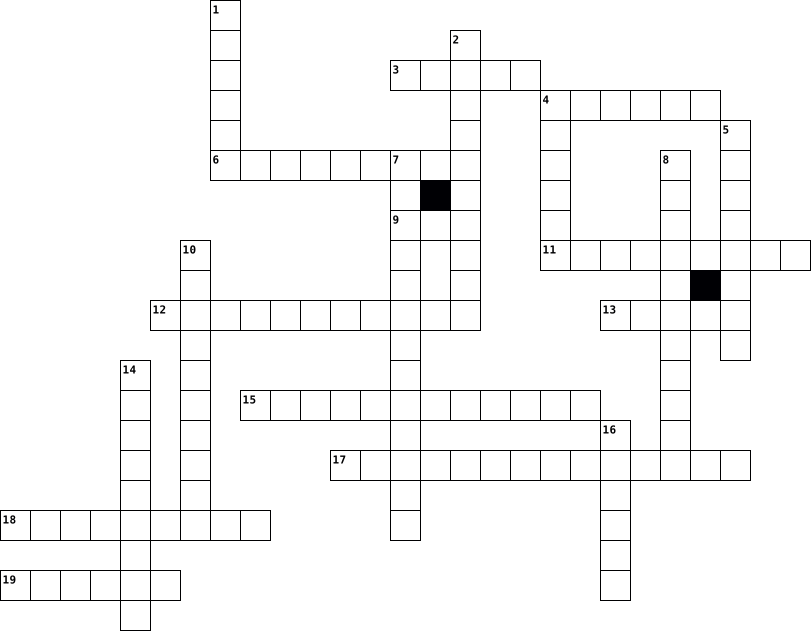
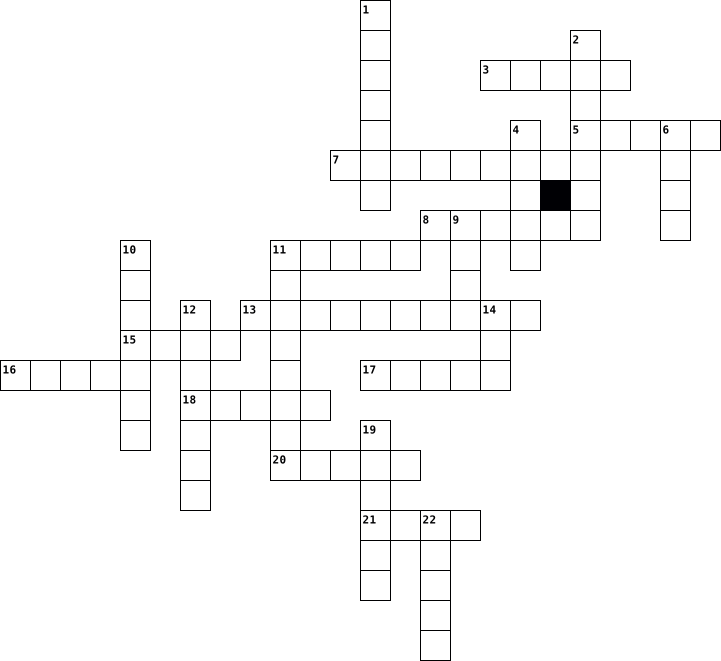
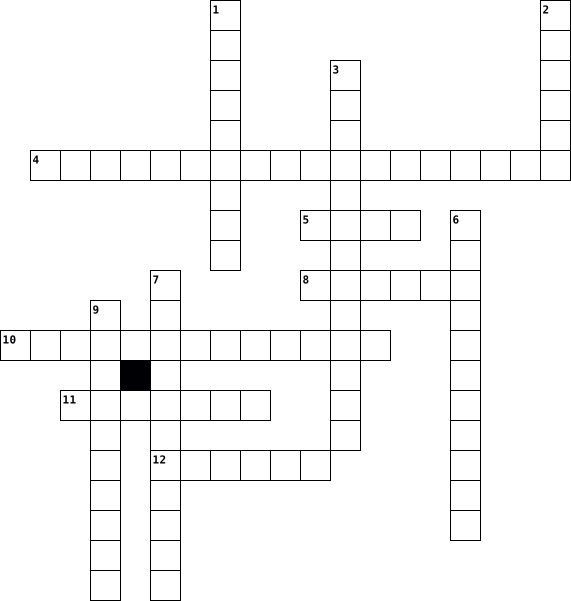
TCAP Science Crossword 2024-04-19

Across
- when the like poles of a magnet push away from each other
- when plants release moisture into the air
- when the north and south pole of a magnet come together
- when water vapor turns into water/liquid
- when clouds become full and release a form of water
- the type of energy when an object is moving
- the state of matter that has a definite shape and definite volume
- a dark cloud that is associated with thunderstorms
- the type of circuit that has lights on different wires
- inside the body
- when water turns into water vapor
- a white, fluffy cloud
- a white cloud that covers the sky
- the climate that is associated with hot, rainy weather
- spinning around
- the type of energy in a circuit that involves motion
- outside the body
Down
- a change or special feature an organism uses to survive
- the process by which a plant makes food for itself
- the type of energy when an objet has the ability to move
- structure of a plant hat supports the plant
- the pattern of weather
- a thin, wispy cloud
- structure of a plant that provides water to it
- the climate that is associated with cold, rainy winters and hot, dry summers
- the type of circuit that has lights that are connected to each other
- structure of a plant that makes food
- the climate that is associated with cold, dry weather
- going around an object
- the amount of matter in an object
- a dark cloud that covers the sky and is associated with constant rain
- the state of matter that takes the shape of its container and has a definite volume
- the type of energy in a circuit that involves heat
- the amount of space an object takes up
- the state of matter that takes the shape of its container and has an indefinite volume
35 Clues: inside the body • spinning around • outside the body • a thin, wispy cloud • a white, fluffy cloud • the pattern of weather • going around an object • when water turns into water vapor • the amount of matter in an object • a white cloud that covers the sky • structure of a plant that makes food • the amount of space an object takes up • when water vapor turns into water/liquid • ...
Plants and Plants Processes 2022-04-03

Across
- The process by which solar energy is converted to chemical energy.
- A system of tube-like tissues that transports water, nutrients, and other materials from one part of an organism to another.
- A tiny structure in which sperm forms.
- The green pigment that captures energy from sunlight.
- The loss of water from leaves.
- Vascular plants that produce flowers and fruits which surround and protect seeds
- Plant growth in response to a stimulus.
- The male reproductive structure of flowering plants.
- Plants that produce seeds that are not enclosed in a fruit.
Down
- Anything that causes a reaction or change.
- The inactive state of a seed or another plant part when conditions are not favorable for growth.
- When pollen lands on the female plant reproductive structure and fertilizes the eggs.
- The female reproductive structure of flowering plants.
- Make their own food.
- A plant embryo enclosed in a protective coating.
- Respiration The process by which cells use oxygen to release the stored energy from the bonds of sugar molecules.
16 Clues: Make their own food. • The loss of water from leaves. • A tiny structure in which sperm forms. • Plant growth in response to a stimulus. • Anything that causes a reaction or change. • A plant embryo enclosed in a protective coating. • The male reproductive structure of flowering plants. • The green pigment that captures energy from sunlight. • ...
Plants and Plants Processes 2022-04-03

Across
- The green pigment that captures energy from sunlight.
- Anything that causes a reaction or change.
- Make their own food.
- The process by which cells use oxygen to release the stored energy from the bonds of sugar molecules.
- Plants that produce seeds that are not enclosed in a fruit.
- The female reproductive structure of flowering plants.
- The loss of water from leaves.
- Plant growth in response to a stimulus.
- A system of tube-like tissues that transports water, nutrients, and other materials from one part of an organism to another.
Down
- The process by which solar energy is converted to chemical energy.
- The male reproductive structure of flowering plants.
- When pollen lands on the female plant reproductive structure and fertilizes the eggs.
- Vascular plants that produce flowers and fruits which surround and protect seeds
- The inactive state of a seed or another plant part when conditions are not favorable for growth.
- A tiny structure in which sperm forms.
- A plant embryo enclosed in a protective coating.
16 Clues: Make their own food. • The loss of water from leaves. • A tiny structure in which sperm forms. • Plant growth in response to a stimulus. • Anything that causes a reaction or change. • A plant embryo enclosed in a protective coating. • The male reproductive structure of flowering plants. • The green pigment that captures energy from sunlight. • ...
Science crossword puzzle 2021-06-10

Across
- a mixture where one substance dissolves into another, not easily separated
- makes food through photosynthesis
- the regular rise and fall of the ocean surface level
- the process of going from liquid to gas
- animals that do not have a back bone
- a straight path of light
- animals that have a back bone
- the bending of light
- the highest point of a wave
- produces the egg
- soak up water and nutrients; anchors the plant to the ground
Down
- supports plant; has water to move throughout plant
- protects the bud before the flower blooms
- a combination of humor things that can be easily separated
- a river of water that flows through the ocean
- make pollen, attract pollinators
- a substance that cannot be broken down anymore, made up of one type of atom
- the lowest point of a wave
- light goes through an object
- the number of wavelengths that pass through a good employee make per second
20 Clues: produces the egg • the bending of light • a straight path of light • the lowest point of a wave • the highest point of a wave • light goes through an object • animals that have a back bone • make pollen, attract pollinators • makes food through photosynthesis • animals that do not have a back bone • the process of going from liquid to gas • ...
...NUTRITION IN PLANTS... 2016-04-27
Across
- A combination of components is called ______.
- Farmers add this to improve the growth of the plant.
- The color of partial parasites are ______.
- Protein is a great source of ______.
- The nitrogen-fixing bacteria are found in which type of plants?
- Organisms that are found near decayed organic matter.
- Vessels which carry the food from the leaves to other parts of the plant.
- Oxygen is essential for photosynthesis.True or False?
- The only organism which can trap nitrogen.
- The aqueous liquid found inside a chloroplast.
- Fungi reproduce through ______.
- Plants that borrow nutrients from another plant.
Down
- A stoma is surrounded by _______.
- Lichen is an example of _______.
- Plants that get nutrients by using ingenious methods.
- The common name for Cuscuta.
- The cells of green leaves and young stems of plants contain numerous green structures called _______.
- Alga is an/a _________.
- The end product of photosynthesis which is given out.
- The ultimate source of energy.
20 Clues: Alga is an/a _________. • The common name for Cuscuta. • The ultimate source of energy. • Fungi reproduce through ______. • Lichen is an example of _______. • A stoma is surrounded by _______. • Protein is a great source of ______. • The color of partial parasites are ______. • The only organism which can trap nitrogen. • A combination of components is called ______. • ...
AgScience Midterm Review #2 2018-12-14

Across
- Tree that has rootstock limiting growth to under 10 feet.
- Plant with a life cycle that is completed in one growing season.
- Organism that is capable of breaking down dead plant and animal matter.
- National intracurricular organization for students enrolled in agriscience programs.
- Plant grown from seed in a special container.
- Tree that has rootstock limiting growth to under 15 feet.
- pH of less than 7.0.
- Plant that takes two growing seasons from seed to complete life cycle.
- Neither acidic or alkaline.
- Addition of water to plants to supplement rain and or snow.
- One who studies the cultivation of vegetables.
- Diseases that can be spread by contact.
- All the conditions, circumstances, and influences surrounding an organism.
- Plant with its seeds enclosed in a pod or seed case.
Down
- Water-bearing rock formation.
- Material that destroys infective agents such as bacteria and viruses.
- Mixing of air into water or soil.
- Plant that lives frim year to year.
- pH of more than 7.0.
- Weather conditions of a specific region.
- Commercial firms that have developed with or stem from agriculture.
- Diseases that cannot be spread to other animals.
- Series of activities related to a single objective or enterprise.
- Fruit grower or scientist.
- Granular soil containing good balance of sand, silt, and clay.
- Large land area from which water flows, is absorbed, drained, and released.
- Drinkable water free of harmful chemicals and organisms.
27 Clues: pH of more than 7.0. • pH of less than 7.0. • Fruit grower or scientist. • Neither acidic or alkaline. • Water-bearing rock formation. • Mixing of air into water or soil. • Plant that lives frim year to year. • Diseases that can be spread by contact. • Weather conditions of a specific region. • Plant grown from seed in a special container. • ...
Urban Ag Concept review 2026-03-04

Across
- RR
- Rr
- Colors of FFA _____________ and corn gold.
- Smallest amount of an element
- To "sow" a seed means to _______ it.
- The part of the plant where most photosynthesis is
- Trait you need both parents to give you
- What you add to soil before planting seeds
- Rr makes a red and white striped flower
Down
- Two or more atoms bonded together
- First year FFA degree in high school
- Trait you can get from one parent. Capital letter
- Smallest unit of life
- Rr makes a pink flower
- The energy made from photosynthesis
- One piece of genetic code
- The color of chlorophyll
- The basic unit of plant reproduction
18 Clues: RR • Rr • Smallest unit of life • Rr makes a pink flower • The color of chlorophyll • One piece of genetic code • Smallest amount of an element • Two or more atoms bonded together • The energy made from photosynthesis • First year FFA degree in high school • To "sow" a seed means to _______ it. • The basic unit of plant reproduction • Trait you need both parents to give you • ...
cell crossword 2023-02-08

Across
- “gardens” of a plant cell
- “post office” of the cell
- “power plants” of the cell =2
- “kitchen cupboard” or “worker”
- “control center” or “library”
- “toilets” or “ninjas” of the cell
Down
- RETICULUM “note runner”
- “juice” or “Jell-O” of the cell
- "closets” of the plant cell
- “factories”
- “power plants” of the cell =1
- “armor” of a plant cell
- “skin” of the cell
13 Clues: “factories” • “skin” of the cell • “armor” of a plant cell • RETICULUM “note runner” • “gardens” of a plant cell • “post office” of the cell • "closets” of the plant cell • “power plants” of the cell =1 • “power plants” of the cell =2 • “control center” or “library” • “kitchen cupboard” or “worker” • “juice” or “Jell-O” of the cell • “toilets” or “ninjas” of the cell
CRM 2.3 - How do Plants Function in the Environment? 2023-11-15

Across
- Site of photosynthesis
- Plant "food"
- Direction that water is moved in vascular tissue
- Byproduct of photosynthesis
- Photosynthesis tissue
- Simplified cellular respiration
- Plant "veins"
- Produces new cells via mitosis
- Combined with water to make glucose and oxygen
- Energy required to make glucose
- Site of cellular respiration
- Direction that glucose is moved in vascular tissue
Down
- Vascular tissue that carries water
- Pore-like opening; site of gas-exchange
- Plant "skin"
- Easy-to-remember photosynthesis
- Converts glucose to ATP
- Water moves up the plant's xylem and is released through the stomata
- Made by GOCOW
- Meristematic tissue found in the stem
- Control the rate of gas-exchange
- Vascular tissue that carries food
- Increase surface area for water absorption
- Absorb water
- Drills downward into soil to grow roots
25 Clues: Plant "skin" • Plant "food" • Absorb water • Made by GOCOW • Plant "veins" • Photosynthesis tissue • Site of photosynthesis • Converts glucose to ATP • Byproduct of photosynthesis • Site of cellular respiration • Produces new cells via mitosis • Easy-to-remember photosynthesis • Simplified cellular respiration • Energy required to make glucose • Control the rate of gas-exchange • ...
Escapse from chernobyl 2024-02-27

Across
- The citizen's escape route
- Yuri's cousin
- The reactor that blew up
- Yuri's job
- Reaktor Bolshoy Moschnosti Kanalnyy
- The main character
- A nuclear power plant
- what you stand on
- Alina's friend
- The setting
- what you breath in when the reactor explodes
Down
- A Russian soldier
- What Orlov tried using to put out the fire
- Yuri's cousin
- A political party in Russia
- The author's first name
- The nickname Sophia's dad gave the power plant.
- The head of Chernobyl
- Alina's disease
- The author's last name
20 Clues: Yuri's job • The setting • Yuri's cousin • Yuri's cousin • Alina's friend • Alina's disease • A Russian soldier • what you stand on • The main character • The head of Chernobyl • A nuclear power plant • The author's last name • The author's first name • The reactor that blew up • The citizen's escape route • A political party in Russia • Reaktor Bolshoy Moschnosti Kanalnyy • ...
Plant Visits and ChEminars 2014-12-03

Across
- name of one of the groups
- Eduardo ___; speaker from the Pasig River Rehabilitation Commission
- science dealing with extremely cold temperatures
- labgown, safety goggles, gloves, etc.
- third most abundant gas in air
- ChE is considered as a ___ engineering
- example of mobile source (air pollution)
- ___ Corporation; owner of Barrio Fiesta
- example of stationary source (air pollution)
- ___ Plastics; container supplier of Splash Corporation
- particulate matter
- venue of the air and marine pollution seminar
Down
- process hazard analysis
- Mylene ___; speaker for Air Pollution seminar
- rendezvous place for plant visits
- ___ Marie Pangindian; industrial hygienist
- ___ Vinluan; speaker from Fluor Philippines
- slogan of MAKBAN Geothermal Power Plant
- ___ Laboratories (UNILAB)
- seminar and plant visit-in-one
- hazard and operability analysis
- Halley ___; speaker from Unilever
22 Clues: particulate matter • process hazard analysis • name of one of the groups • ___ Laboratories (UNILAB) • third most abundant gas in air • seminar and plant visit-in-one • hazard and operability analysis • rendezvous place for plant visits • Halley ___; speaker from Unilever • labgown, safety goggles, gloves, etc. • ChE is considered as a ___ engineering • ...
Christmas #1 2025-12-05

Across
- : Another word for Christmas time
- : Long socks hung up for gifts
- : A ringing sound made by bells
- : Animals that pull Santa’s sleigh
- : A tree that stays green all year
- : A long decoration made of leaves or lights
- : The place where Santa’s elves make toys
- : A minty holiday flavor
- : A plant people hang and kiss under
- : Wax sticks that give light
- : A place where a fire burns in the home
Down
- : A Christmas plant with red berries
- : Red berries often used in holiday food
- : Bells on Santa’s sleigh
- : A deep pile of snow made by the wind
- : Santa enters houses through this
- : A Christmas song sung in groups
- : A decoration hung on a Christmas tree
- : A red Christmas plant
- : A sweet cookie made with spices
20 Clues: : A red Christmas plant • : A minty holiday flavor • : Bells on Santa’s sleigh • : Wax sticks that give light • : Long socks hung up for gifts • : A ringing sound made by bells • : Another word for Christmas time • : A Christmas song sung in groups • : A sweet cookie made with spices • : Santa enters houses through this • : Animals that pull Santa’s sleigh • ...
Jess and Harry Get Married 2025-09-25

Across
- First name of the poet after whom Harry's cat is named
- Last name of movie character after whom Jess's oldest cat is named
- Their favorite holiday
- Bird on their wedding invitation
- They both went to ___ High School
- City they got engaged in
- Jess's astrological sign
- Scarlett is a tiny little ___
- The yellow dye plant used for Harry's suit
- Years they have been together
Down
- Instrument Harry recently started playing
- City they first lived together
- Jess's favorite color
- Harry's favorite drink
- Show they are watching right now
- City where they had their first date
- Name of their biggest cat
- Harry's astrological sign
- The blue dye plant used for Harry's suit
- They started a native plant garden at ___ Park
20 Clues: Jess's favorite color • Harry's favorite drink • Their favorite holiday • City they got engaged in • Jess's astrological sign • Name of their biggest cat • Harry's astrological sign • Scarlett is a tiny little ___ • Years they have been together • City they first lived together • Show they are watching right now • Bird on their wedding invitation • They both went to ___ High School • ...
SCIENCE 2024-12-02

Across
- What type of community is central to this farming model?
- What tool is used to track energy expenditure during exercise?
- What chemical element is a key nutrient in fertilizers?
- What type of plants are typically used in light experiments?
- What form of energy does this project produce?
- In which country is the Ashalim solar power plant located?
- What type of plants are often grown to study nutrient effects?
- What essential process in plants is influenced by light?
- What device is used to generate electricity from motion?
Down
- What are the substances essential for plant growth?
- What type of energy is converted into light in this project?
- What structure is used to control the environment for plant growth?
- What device converts sunlight into electricity?
- Whattheis a key goal of this project?
- What type of energy is the focus of the Ashalim prototype?
- What activity is compared to farming in this project?
- What unit is used to measure energy burned?
- What experiment studies the effect of different colors of light on plant growth?
18 Clues: Whattheis a key goal of this project? • What unit is used to measure energy burned? • What form of energy does this project produce? • What device converts sunlight into electricity? • What are the substances essential for plant growth? • What activity is compared to farming in this project? • What chemical element is a key nutrient in fertilizers? • ...
B3 Part 1 2013-03-23

Across
- Small opening. These on the surface of the leaf allow water and gases to move in and out of the leaf.
- Continuous flow of water through the xylem of a plant, from the roots up to the leaves where it evaporates.
- Structure in the lung that provides a large surface area with an extensive network of capillaries to carry out gaseous exchange.
- Soluble protein that also contains an iron atom. Found in red blood cells. It carries oxygen from the lungs to respiring tissues.
- Pores on the surface of a leaf that allow water, carbon dioxide, and oxygen to move in and out of the leaf.
- Process that can move substances across cell membranes from low concentrations to high concentrations.
- Tissue specialised for transport of oxygen, carbon dioxide, food molecules, and wastes in larger animals.
- Structure in the small intestine that provides a large surface area with an extensive network of capillaries to absorb the products of digestion by diffusion and active transport.
- Not containing enough water to function properly
- Lower chambers of the heart that contract and force blood out of the heart into the arteries.
- Apparatus used to measure the rate of transpiration by measuring the uptake of water by a plant.
Down
- gradient Difference in concentration of a substance from one region to another.
- Protein that carries something; for example, some protein carriers transport sodium ions out of nerve cells by active transport.
- Moveent of water through the xylem of a plant, from the roots up to the leaves.
- Plant tissue made up of dead cells that has the function of transporting water and dissolved substances through the plant.
- Fluid in blood in which the cells are suspended. It transports carbon dioxide, digested food molecules and urea.
- Organ system that exchanges aterials, such as oxygen, carbon dioxide and other wastes, between the organism and its surroundings.
- Membrane that has small pores through which small molecules such as water can pass., but not larger molecules such as proteins.
- Transport of sugars made in photosynthesis in the leaf to areas of the plant that store them or use them.
- mesh tube which is inserted into a blocked artery.
- Structures that allow one way movement of blood and prevent backflow.
- Organ of many land animals, specialised to exchange oxygen and carbon dioxide.
- Movement of air into and out of the lungs, brought about by inhaling and exhaling.
- Diffusion of water through a partially permeable membrane, from a dilute solution to a more concentrated solution.
- Small blood vessel with a thin and narrow diameter. Capillaries allow exchange of substances between cells and blood.
- Having equal concentrations of dissolved substances.
- Space in a blood vessel through which blood flows.
- Plant tissue made up of living cells that has the function of transporting food substances through the plant.
- Upper chambers from the heart that receive blood from the veins.
29 Clues: Not containing enough water to function properly • mesh tube which is inserted into a blocked artery. • Space in a blood vessel through which blood flows. • Having equal concentrations of dissolved substances. • Upper chambers from the heart that receive blood from the veins. • Structures that allow one way movement of blood and prevent backflow. • ...
Different pesticides 2023-03-23

Across
- enters through nose
- use, higher toxic and needs special training to use
- must be eaten
- absorbed by the roots and moves throughout the plant
- enters through respiratory system
- kills all vegetation
- the degree of poison in the material
Down
- enters through mouth
- kills only parts of the plant the chemical touches
- use, less toxic and is safe
- after plants emerge
- before plants emerge
- absorbed through the skin
- act on one plant species and not others
- enters through eyes
15 Clues: must be eaten • after plants emerge • enters through nose • enters through eyes • enters through mouth • before plants emerge • kills all vegetation • absorbed through the skin • use, less toxic and is safe • enters through respiratory system • the degree of poison in the material • act on one plant species and not others • kills only parts of the plant the chemical touches • ...
Photosynthesis puzzle 2025-11-24

Across
- the result of the reaction
- the process where a green plant makes it's own food
- the factory where photosynthesis happens
- comes from the sun
Down
- organelle that contains Chlorophyll
- Pigment that absorbs Radiant Energy
- the things that cause a reaction
- Carries Glucose to the plant for life processes
- Let's carbon dioxide in the plant and oxygen out the plant
- Distributes water throughout the plant
10 Clues: comes from the sun • the result of the reaction • the things that cause a reaction • organelle that contains Chlorophyll • Pigment that absorbs Radiant Energy • Distributes water throughout the plant • the factory where photosynthesis happens • Carries Glucose to the plant for life processes • the process where a green plant makes it's own food • ...
Taxonomy crossword (By Charlie D.) 2025-03-26

Across
- A common reptile seen in ponds across the US (especially in Florida) is an a________.
- I am a whale. What class of Chordata do I belong to?
- I am a plant that does not have xylem or phloem. What kind of plant am I?
- I can be Multicellular or unicellular and I am always heterotrophic. What kingdom am I?
- I am referred to as “Bony fish” what kind of class of Chordata am I?
- Fungi reproduce with ______.
- I am a plant that is not nonvascular, yet I use spores. What kind of plant am I?
- A plant that uses seeds is also ________.
- Animals are ____________c.
- Are considered Animal-like protists.
- I am the only Domain that can be multicellular
- Mammals do not lay eggs to produce offspring. They instead give birth to ____ _____.
- I use seeds, and I can have fruits surrounding my seeds. What kind of plant am I?
- I am endothermic and have a wishbone. What class of Chordata do I belong to?
- A commonly known seedless plant is a ____.
- One of my defining features is that I have watertight scales. What class of Chordata do I belong to?
- A common example of a Chondrichthyes is a _____.
- Angiosperms are _________ while gymnosperms are non-_________.
- A Chondrichthyes is very similar to Agnatha but it has one defining feature Agnatha don’t. What is this feature?
- Algae are very similar to plants, and they can both _______________.
- mold I am a kind protist, but I am similar to fungi. What kind of protist am I?
- What class of Chordata begins life in the water and ends it being able to live on land?
- I can be Multicellular or unicellular, I can be autotrophic or heterotrophic. What kingdom am I?
- Eukaryotes have two things Prokaryotes don’t. What are they?
- I photosyntesize but I am always multicellular. What am I?
Down
- List the levels of taxonomy from broadest to narrowest.
- The founder of modern Taxonomy. (First and last name)
- Gymnosperms use seeds in large groups that are stacked together or _____.
- I am a kingdom that is motile at some life stage.
- I am a jawless fish. What class of Chordata do I belong to?
- I have a cell wall made of proteins and sugars.
- Vascular plants have true roots. Nonvascular plants have ________.
- I use seeds to reproduce, yet I am not an angiosperm. What kind of plant am I?
- Slime molds are similar to fungi in the sense that they are both _____________. Hint: How they get food
- Like animals, protozoa may be ______. Hint: (moving)
- I have no nucleus or mitochondria.
- Plants are P_______________.
- Prokaryotes are?
- Protists are in the domain __________.
- An Agnatha’s skeleton is composed primarily of _________.
- I am very similar to a plant, but I can be unicellular and I am a protist. What kind of protist am I?
- To be vascular, a plant must have _____ and ______
- An apple tree is an angiosperm. An angiosperm uses _____ to reproduce.
- Tadpoles mature into what Amphibian?
- Mammals use fur to maintain their body temperature. Birds use ________ to maintain their body temperatures.
- An Osteichthye’s skeleton is different is different from other fish as it is made primarily of what?
- I have a cell wall made of sugars.
- Plants that use seeds to reproduce have ___ subcategories.
48 Clues: Prokaryotes are? • Animals are ____________c. • Fungi reproduce with ______. • Plants are P_______________. • I have no nucleus or mitochondria. • I have a cell wall made of sugars. • Are considered Animal-like protists. • Tadpoles mature into what Amphibian? • Protists are in the domain __________. • A plant that uses seeds is also ________. • ...
Vegetables!! 2021-10-18

Across
- a round root with white or cream flesh which is eaten as a vegetable and also has edible leaves.
- a cultivated plant of the parsley family, with closely packed succulent leaf stalks that are eaten raw or cooked.
- a fungal growth that typically takes the form of a domed cap on a stalk, with gills on the underside of the cap.
- a tall plant of the lily family with fine feathery foliage, cultivated for its edible shoots.
- a plant related to the onion, with flat overlapping leaves forming an elongated cylindrical bulb which together with the leaf bases is eaten as a vegetable.
- a cultivated plant eaten as a vegetable, having thick green or purple leaves surrounding a spherical heart or head of young leaves.
- Chard a beet of a variety with broad white leaf stalks that may be prepared and eaten separately from the green parts of the leaf.
- the purple egg-shaped fruit of a tropical Old World plant, which is eaten as a vegetable.
- a tapering orange-colored root eaten as a vegetable.
- a long tapering cream-colored root with a sweet flavor.
- Root a variety of celery cultivated for its edible stem or hypocotyl, and shoots.
- a pear-shaped fruit with a rough leathery skin, smooth oily edible flesh, and a large stone.
- Greens a cabbage of a variety that does not develop a heart.
- a green variety of smooth-skinned summer squash.
- a long-necked onion with a small bulb, in particular a green onion.
- or broccoli rabe is a green cruciferous vegetable, with the leaves, buds, and stems all being edible. The buds resemble broccoli.
- This dark leafy green belongs to a group of cabbage cultivars grown for their edible leaves.
Down
- a glossy red, or occasionally yellow, pulpy edible fruit that is eaten as a vegetable or in salad.
- a long, green-skinned fruit with watery flesh, usually eaten raw in salads or pickled.
- an edible legume. It is an annual plant known for its lens-shaped seeds
- Greens the leaves of the mustard plant
- is the name of a native Mexican vine, although the name most commonly refers to the plant's edible tuberous root.
- spherical green seed that is eaten as a vegetable or as a pulse when dried.
- Sprouts grown for its edible buds. The leaf vegetables are typically 1.5–4.0 cm in diameter and resemble miniature cabbages.
- is a cruciferous vegetable that is naturally high in fiber and B-vitamins.
- a pungent, hot-tasting powder prepared from dried and ground peppercorns, commonly used as a spice or condiment to flavor food.
- a tall Mediterranean composite herb resembling a thistle with coarse pinnately incised leaves also
- a herbaceous plant widely cultivated as a source of food for humans and livestock, and for processing into sugar. Some varieties are grown for their leaves and some for their large nutritious root.
- large, dark green leaves that are eaten raw or cooked
- Greens The edible leaves of the turnip plant
- a large rounded orange-yellow fruit with a thick rind, edible flesh, and many seeds.
- is an edible root vegetable of the family Brassicaceae that was domesticated in Asia prior to Roman times.
- is an edible green plant in the cabbage family whose large flowering head, stalk and small associated leaves are eaten as a vegetable.
- a North American cereal plant that yields large grains, or kernels, set in rows on a cob.
- a strong-smelling pungent-tasting bulb, used as a flavoring in cooking and in herbal medicine.
- Squash quashes that are harvested when immature
- an edible bulb with a pungent taste and smell, composed of several concentric layers, used in cooking.
37 Clues: Greens the leaves of the mustard plant • Greens The edible leaves of the turnip plant • Squash quashes that are harvested when immature • a green variety of smooth-skinned summer squash. • a tapering orange-colored root eaten as a vegetable. • large, dark green leaves that are eaten raw or cooked • a long tapering cream-colored root with a sweet flavor. • ...
Science 2025-06-15

Across
- Kingdom includes mushrooms and molds
- Green pigment in plants that captures sunlight
- Kingdom made up of organisms that perform photosynthesis
- where photosynthesis takes place in plant cells
- Structure that supports the plant and transports nutrients
- Vital function involving obtaining and using food
- Vital function that involves reacting to stimuli
- Reproduction involving two parents
- Organisms made up of a single cell
- A unicellular fungus used in baking and fermentation
- A common fungus that grows in moist environments
- Process used by plants to make their own food
- Animals with a backbone
Down
- Organisms made up of more than one cell
- filaments that make up the body of a fungus
- Basic unit of life in all living things
- Organism that makes its own food, like plants or some bacteria
- Vital function that ensures species survival
- Reproduction involving only one parent
- Plant-like protists found in water
- Kingdom includes humans, dogs, and insects
- Animals without a backbone
- Microscopic organisms
23 Clues: Microscopic organisms • Animals with a backbone • Animals without a backbone • Plant-like protists found in water • Reproduction involving two parents • Reproduction involving only one parent • Basic unit of life in all living things • Organisms made up of a single cell • Kingdom includes mushrooms and molds • Organisms made up of more than one cell • ...
The Crossword of all Crosswords 2016-06-21

Across
- movement that requires no energy
- The site of photosynthesis
- wash hand with...
- the passage of water
- the amount of chromosomes
- it is important in...organisms
- containing a few genes
- shrink
- the centre of a chromosome
- spindle fibres pull them off
Down
- stays the same
- site of aerobic respiration
- chromosomes line up here
- concentration...
- becteria, plant and... cells are made differently
- the last part to reform
- cell...
- hypotonic in a plant cell
- impregnated with protein
- need energy from...
20 Clues: shrink • cell... • stays the same • concentration... • wash hand with... • need energy from... • the passage of water • containing a few genes • the last part to reform • chromosomes line up here • impregnated with protein • hypotonic in a plant cell • the amount of chromosomes • The site of photosynthesis • the centre of a chromosome • site of aerobic respiration • spindle fibres pull them off • ...
Week 17 2025-09-17

Across
- lower down
- the planet we live on
- learn by reading or practice
- a tall plant with a trunk and leaves
- something that grows in the ground
- the country we live in
- a dad
- something you eat
Down
- not moving
- a reply to a question
- in the middle of
- each one
- the final one
- a land with its own people and rules
- to get knowledge
- close by
- a large town
- to join things together
- tall or up above
- the earth and everything on it
20 Clues: a dad • each one • close by • not moving • lower down • a large town • the final one • in the middle of • to get knowledge • tall or up above • something you eat • a reply to a question • the planet we live on • the country we live in • to join things together • learn by reading or practice • the earth and everything on it • something that grows in the ground • a land with its own people and rules • ...
CH30 Grains (Pages: 469-480) 2023-11-08

Across
- edible outer layer of the kernal
- made from durum wheat flour and water
- some grains are covered with an inedible outer coat called __________.
- bread made with a leavening agent, such as yeast or baking powder
- any bread that is unleavened, or made without leavenings.
- largest part of the kernel, which is made of proteins and starches that supply the plant with food
- the most popular food plant in the world and most widely grown crop in the United States
- eggs solids added (to flour and water) for tenderness
- one of the oldest cereal grains
- starchy seed of plants grown in flooded fields in warm climates
Down
- plants in the grass family cultivated for their fruits or seeds.
- seed of a non-grass, plant that is used like a grain.
- to cook so that the pasta is firm to the bite, rather than soft and mushy.
- grains produce many small, seperate dry fruits called ______.
- the seed that grows into a new plant
- Italian word for paste that refers to dough made from flour and water
- steamed, cracked endosperm of a durum wheat.
- used in breads and crackers, ____ is a dark grain with a hearty flavor
18 Clues: one of the oldest cereal grains • edible outer layer of the kernal • the seed that grows into a new plant • made from durum wheat flour and water • steamed, cracked endosperm of a durum wheat. • seed of a non-grass, plant that is used like a grain. • eggs solids added (to flour and water) for tenderness • any bread that is unleavened, or made without leavenings. • ...
cells 2021-02-04

Across
- the plant cells that have lignin in the walls and carry water
- the gel-like substance that supports the organelles within the cell
- the turning on and off of genes that allows cells to become specialized (becoming different)
- the control center of the cell: contains DNA as chromatin
- root hair cells have lots of mitochondria so they can absorb minerals by ............ transport
- a cell with a nucleus and membrane-bound organelles
- stem cells with the complete genome, still able to become any type of cell within the body
- a cell with structures that allow it to carry out its intended function
- cells that are specialized to contract and cause movement
- a circular piece of DNA, separate from the main genome found in bacteria and often used in bacterial transformation
- wall the rigid, protective outer barrier of some cells. in plants it is made of cellulose
- the site of photosynthesis in plant cells
Down
- The projections on an intestinal cell to increase the surface area
- male reproductive cells. they are haploid and have flagellum to allow for movement
- the site of protein synthesis. found free in the cytoplasm as well as attached to the Rough ER.
- a cell with many branching projections to carry electrical signals
- cells that are specialized to attack and engulf pathogens that enter the body
- the powerhouse of the cell. the site of cellular respiration.
- stem cells that have had some genes turned off, so they can become only certain types of cells within the body
- rectangular plant cells that do most photosynthesis
- cells that are specialized to carry oxygen within the body
- a cell without a nucleus or membrane-bound organelles, and sometimes a flagella
- area of the plant cell used for storage of water and waste
- cells plant cells that control the opening and closing of stomata
- the fluid boundary surrounding all cells controlling what goes in and out
25 Clues: the site of photosynthesis in plant cells • rectangular plant cells that do most photosynthesis • a cell with a nucleus and membrane-bound organelles • the control center of the cell: contains DNA as chromatin • cells that are specialized to contract and cause movement • cells that are specialized to carry oxygen within the body • ...
Plants 2013-05-13

Across
- A flowering plant
- An opening in a plant leaf through which carbon dioxide enters and oxygen exits
- Have no seeds or fruit, but do have plant veins. For example, a fern.
- A group of living and non-living things
- A plant hormone that causes leaves to fall off (hint: look under "answers to thought questions" in the table at the end)
- The specific pigment that makes plants green (hint: look under "answers to thought questions" in the table at the end)
- Surrounds and protects seeds in angiosperms; examples include apples, cucumbers, and peppers
Down
- Have seeds but no fruit; might store seeds in a cone
- Sunlight + water + carbon dioxide --> sugar + oxygen
- The non-green pigments we see in the Fall when plants turn different colors (hint: look under "answers to thought questions" in the table at the end)
- A 6-carbon sugar produced by plants
- Examples include carrots, onions, lettuce, and potatoes
- Makes things colorful; for example, one of these makes plants green
- Have no seeds, fruit, or veins (which means they have to stay close to the ground). For example, moss.
- The cellular "organ" of photosynthesis (where photosynthesis happens)
- Needed for photosynthesis; eventually becomes oxygen, which is released from the plant
16 Clues: A flowering plant • A 6-carbon sugar produced by plants • A group of living and non-living things • Have seeds but no fruit; might store seeds in a cone • Sunlight + water + carbon dioxide --> sugar + oxygen • Examples include carrots, onions, lettuce, and potatoes • Makes things colorful; for example, one of these makes plants green • ...
Plant Tropisms 2020-11-15

Across
- plant growth towards gravity
- a plant's growth in response to water
- the growth of a plant toward or away from light
- a change in a plant resulting from a stimulus
Down
- an action or condition that provokes a response
- geotropism plant growth away from gravity
- the response of a plant to gravity
- the force of water against the cell wall that allows plants to stand up straight
- plant growth toward or away from an external stimulus
- a turning movement by a plant in response to touch
10 Clues: plant growth towards gravity • the response of a plant to gravity • a plant's growth in response to water • geotropism plant growth away from gravity • a change in a plant resulting from a stimulus • an action or condition that provokes a response • the growth of a plant toward or away from light • a turning movement by a plant in response to touch • ...
Life Cycle of a Plant Crossword Puzzle 2026-04-18

Across
- When a plant is fully grown.
- The part of a plant that grows underground and takes in water.
- The process plants use to make their own food using sunlight, water, and air.
- The colorful part of a plant that can make seeds.
Down
- Light from the sun that plants need to grow.
- The green parts of a plant that make food using sunlight.
- The part of a plant that holds seeds.
- Tiny parts of a plant that can grow into new plants.
- The dirt where plants grow.
- The part of a plant that holds it up and carries water and nutrients.
10 Clues: The dirt where plants grow. • When a plant is fully grown. • The part of a plant that holds seeds. • Light from the sun that plants need to grow. • The colorful part of a plant that can make seeds. • Tiny parts of a plant that can grow into new plants. • The green parts of a plant that make food using sunlight. • ...
Cell Biology 2021-12-13

Across
- a small sphere in the center of the nucleus; it makes ribosomes
- the powerhouse of the cell (organelle)
- a storage sac in the cell; in PLANT cells, a large one holds water
- tiny hair-like structures on the outside of some cells
- a thick and strong extra layer around the outside of PLANT cells (cell part)
- the process in PLANT cells where they use sunlight energy to make glucose; happens in the chloroplasts
- water molecules moving across a membrane from an area of high concentration to an area of low concentration
- cell __________; a barrier that goes around the cell and separates the inside of a cell from the outside (cell part)
- the garbage collector of the cell; it breaks down worn out cell parts (organelle)
- __________ transport; needs ATP energy to move molecules against the concentration gradient
- a passageway for proteins; it has ribosomes attached to it (organelle)
- long tails on the outside of some cells that help the cell move or swim
Down
- molecules moving from an area of high concentration to an area of low concentration
- the jelly-like fluid inside a cell; the organelles float around in it (cell part)
- cellular ______________; the process of making ATP energy in the mitochondria from glucose and oxygen
- it does photosynthesis in PLANT cells; it is what makes plant leaves green (organelle)
- _______ body; where proteins get customized before being sent out of the cell
- ___________ transport; molecules move on their own (without energy) through the cell membrane or through protein channels
- the "brain" or control center of the cell; it has the DNA inside (organelle)
- the tangled, spread out form of DNA
- microtubules and microfilaments; it helps the cell keep its shape
- tiny organelles that makes proteins; either floating freely or attached to the rough ER
- passageway for proteins; it doesn't have ribosomes attached (organelle)
23 Clues: the tangled, spread out form of DNA • the powerhouse of the cell (organelle) • tiny hair-like structures on the outside of some cells • a small sphere in the center of the nucleus; it makes ribosomes • microtubules and microfilaments; it helps the cell keep its shape • a storage sac in the cell; in PLANT cells, a large one holds water • ...
Nature 2023-04-18
Across
- smaller than mountains
- what you plant to grow things
- large bodies of rock
- little body of water, smaller than a river
- where farmers Plant things
- Forrest with hot humid climate
- roar
- very large animal in the sea
- white and black bear
- living organism (trees, grass, moss, ferns)
- Atlantic, Pacific, Indian
- smaller than a tree, has branches
Down
- line where the sun goes up and down
- little flowers on trees in spring
- long bodies of water that run through land
- animal with white spots, lives in forest
- tall, has branches and leavea
- flat spaces in between mountains or hills
- pink bird
- intelligent cute animal that jumps out of the sea
- smaller than an ocean
- what pandas eat
- animal in the sea, loves to eat fish, lots of sharp teeth
23 Clues: roar • pink bird • what pandas eat • large bodies of rock • white and black bear • smaller than an ocean • smaller than mountains • Atlantic, Pacific, Indian • where farmers Plant things • very large animal in the sea • what you plant to grow things • tall, has branches and leavea • Forrest with hot humid climate • little flowers on trees in spring • smaller than a tree, has branches • ...
plants provide the foundation of food chains multicellular a plant is a ____ organism angiosperms most plants are members of the _____ group fruit angiosperms produce flowers and ____ sugars plants produce ___ via photosynthesis photosynthesis it occurs 2025-07-06

Across
- it is why leaves are green
- plants produce ___ via photosynthesis
- produce pollen containing sperm and an ovary
- closest relatives of angiosperms
- plants ___ their bodies to include roots, stems, and leaves
- angiosperms produce flowers and ____
- evolution of ___ tissue was crucial
- most plants are members of the _____ group
- before vascular evolution, water and nutrients ___ through the plant’s cells
- chlorophyll absorbs energy from _________
- flowers produce nectar, a rich source of food
Down
- it occurs in plants, leading to sugar production
- ___ grow underground to absorb water and nutrients
- plants provide the ___ of food chains
- non-vascular plants are the most ______ primitive of all plants
- produce sugars; give plants energy to grow and reproduce
- seeds of gymnosperms are frequently found in ____ rather than fruit
- common non-vascular plant
- plant parts providing structure
- a plant is a ____ organism
20 Clues: common non-vascular plant • it is why leaves are green • a plant is a ____ organism • plant parts providing structure • closest relatives of angiosperms • evolution of ___ tissue was crucial • angiosperms produce flowers and ____ • plants provide the ___ of food chains • plants produce ___ via photosynthesis • chlorophyll absorbs energy from _________ • ...
Life Cycles Of Flowering Plants 2025-08-01

Across
- The powder substance reproduced by part of flower
- The male part of the flower
- The female part of the flower
- Sticky to catch pollen
- A small growth on a plant
- The embryo of a new plant
- This part is brightly coloured to attract insects to the flower: Petals
- Little green leaves that protect the flower
Down
- second stage in life cycle of plant
- Some flowers have smell
- The stalk of the anther
- Pollen tubes to travel the stigma to ovary
- The way mosses and ferns reproduce
- Contains tiny eggs
14 Clues: Contains tiny eggs • Some flowers have smell • The stalk of the anther • Sticky to catch pollen • A small growth on a plant • The embryo of a new plant • The male part of the flower • The female part of the flower • The way mosses and ferns reproduce • second stage in life cycle of plant • Pollen tubes to travel the stigma to ovary • Little green leaves that protect the flower • ...
Plant Structures, Functions, and Adaptations 2020-09-17

Across
- collects sunlight and carbon dioxide for the plant
- this is the baby plant or a new plant created from the parent plant
- the process in which sunlight, carbon dioxide and water are turned into sugar
- has petals and pollen; attracts pollinators
- a behavior or structure that allows an organism to grow, reproduce, and survive
- the process in which pollen is collected and transferred to another plant
Down
- the process of creating new plants or offspring
- collects water and nutrients from the soil
- supports the leaves, branches, flowers, and fruit
- most plants must be planted in some form of this in order to sprout
- a living organism with roots that usually relies on sunlight and water to survive
11 Clues: collects water and nutrients from the soil • has petals and pollen; attracts pollinators • the process of creating new plants or offspring • supports the leaves, branches, flowers, and fruit • collects sunlight and carbon dioxide for the plant • this is the baby plant or a new plant created from the parent plant • ...
Soil Science 212 Midterm Exam 2023-10-04

Across
- a by-product of photosynthesis
- movement that does not exert energy
- the deficiency can be found in older leaves
- inherent capacity of plants
- the destruction of soil rendering it unproductive
- Created the equation for nutrient movement from higher to lower gradient of concentration
- a condition of soil the limits nutrient availability
- the movement from higher concentration to lower concentration
- a condition of soil the limits nutrient availability
- natural substance added to soil to improve structure
- visual symptoms of these are found in the younger leaves
- negatively charged soil nutrients
- the inherent capacity of soil to support plant growth
Down
- electrical charge of soil micelle
- external factors that help plant growth
- Controls soil distribution due to differences in elevation
- condition where oxygen is not necessary
- well-developed soil found in alluvial terraces in the Phils.
- living component of soil that helps in plant growth and production
- the place where earliest recording of soil fertility was noted
- the ability of soil to turn out the quantity of plants
- a by-product of photosynthesis
- water is necessary for nutrient uptake to take place
- provides the energy needed for nutrients to move
- condition where the presence of oxygen is necessary
- help carry metal ions during nutrient intake
- nutrient uptake that takes effort
- Controls soil distribution due to presence/absence of plants
- positively charged soil nutrients
- chemical substance added to soil to help plant growth
30 Clues: inherent capacity of plants • a by-product of photosynthesis • a by-product of photosynthesis • electrical charge of soil micelle • nutrient uptake that takes effort • positively charged soil nutrients • negatively charged soil nutrients • movement that does not exert energy • external factors that help plant growth • condition where oxygen is not necessary • ...
classic 2025-03-13

Across
- – What part of a plant produces seeds and often has colorful petals?
- – What is the process of supplying water to crops using artificial means?
- - What part of a plant absorbs water and nutrients from the soil?
- - What type of tree is known for its white bark?
- – What natural energy source do plants use for photosynthesis?
- - What is the process of growing crops and raising animals?
- - What is the presence of water in the air or soil?
- - What is an open area of land used for agriculture?
- – What is the small, hard seed of cereals like wheat, rice, and corn?
- - What is a small animal that often has six legs and wings?
Down
- - What do plants produce to reproduce and grow new plants?
- - What is the general term for living vegetation, including flowers and trees?
- - What is the ability of soil to support plant growth?
- – What is the presence of heat that helps plants grow?
- – What is a part of a tree that grows from the trunk and has leaves?
- – What type of agriculture depends only on natural rainfall, without artificial watering?
- - What is a common green plant that covers lawns and fields?
- - What is the top layer of the earth where plants grow?
- - What small creatures live in the soil and help improve its quality?
- - What are tall, woody plants with branches and leaves?
20 Clues: - What type of tree is known for its white bark? • - What is the presence of water in the air or soil? • - What is an open area of land used for agriculture? • - What is the ability of soil to support plant growth? • – What is the presence of heat that helps plants grow? • - What is the top layer of the earth where plants grow? • ...
Cells 2025-02-20

Across
- controls the movement of substances in and out of the cell
- jelly-like substance filling the cell
- made up of one cell
- organisms that live on dead/decaying matter
- the membrane in osmosis is ___________
- all cells are formed from _______ cells
- powerhouse of the cell
Down
- chloroplasts trap ______ from the sun.
- process by which plants make food
- material making up walls in plant cells
- green pigment in plant cells
- protective structure of plant cells
- osmosis only involves the movement of _____ molecules
- made up of multiple cells
- process by which organisms obtain food
15 Clues: made up of one cell • powerhouse of the cell • made up of multiple cells • green pigment in plant cells • process by which plants make food • protective structure of plant cells • jelly-like substance filling the cell • chloroplasts trap ______ from the sun. • the membrane in osmosis is ___________ • process by which organisms obtain food • ...
Plants 2023-10-04

Across
- A unique flower known for its beauty and variety, often used as decoration.
- A fragrant plant with purple flowers often used in perfumes and oils.
- A spiky plant that can survive in hot, dry deserts.
- A weed with fluffy, white seeds that you can blow into the wind.
- A beautiful flower with colorful petals that come in various shades. It's often given as a symbol of love.
- A green plant with delicate, feathery leaves that grows in shady places.
- Tree A big tree with strong branches and leaves that turn red or brown in the fall.
- Flytrap A carnivorous plant that catches insects with its trap-like leaves.
Down
- A type of flower that comes in many colors and is often used in bouquets.
- A climbing plant with green leaves that can cover walls and buildings.
- A pretty flower that comes in different colors and has a shape like a cup.
- Tree A tropical tree with large, fan-like leaves that sways in the breeze.
- A tall, slender plant often used in making things like furniture and paper8. Maple Tree A tree with leaves that turn bright red or orange in the autumn.
- A tall plant with bright yellow flowers that face the sun.
14 Clues: A spiky plant that can survive in hot, dry deserts. • A tall plant with bright yellow flowers that face the sun. • A weed with fluffy, white seeds that you can blow into the wind. • A fragrant plant with purple flowers often used in perfumes and oils. • A climbing plant with green leaves that can cover walls and buildings. • ...
Science - Unit 7 Vocabulary 2023-02-08

Across
- the last level of classification that makes one organism different from another
- animals with backbones
- plants that do not reproduce seeds in flowers, also known as, "naked seed"
- a plant that lacks vascular tissue
- occurs through three stages: egg, nymph, and adult
- the name for when a plant starts to grow
- scientists use this to organize living things into similar groups
Down
- a chart with many choices that guide you to the name of the thing you want to identify
- a change in body form with four stages: egg, larva, pupa, and adult
- a plant that has vascular tissue
- animals without backbones
- the broadest level of classification
- a subdivision of a family
- plants that produce seeds in flowers
- a single reproductive cell that can grow into a whole new plant
- a series of stages a living thing goes through during its life
16 Clues: animals with backbones • animals without backbones • a subdivision of a family • a plant that has vascular tissue • a plant that lacks vascular tissue • the broadest level of classification • plants that produce seeds in flowers • the name for when a plant starts to grow • occurs through three stages: egg, nymph, and adult • ...
5.1 Planten bekijken 2024-11-18

Across
- Groepje vaten dat zorgt voor het transport van water en voedingsstoffen in de plant.
- Stevige laag om de cel die zorgt voor bescherming en stevigheid.
- Dunne buisjes in bladeren die water en opgeloste stoffen vervoeren en stevigheid geven.
- Kleine openingen in het blad waardoor verdamping plaatsvindt.
- Deel van de plant dat water en mineralen opneemt en de plant stevig in de grond houdt.
- Deel van de plant dat zorgt voor voortplanting door zaadvorming.
- Groene bolletjes in het cytoplasma die voedingsstoffen maken voor de plant.
- Onderdeel van de plant dat zorgt voor vervoer van water en voedingsstoffen en de plant rechtop houdt.
- Korrels in cellen die bloemen en vruchten kleur geven.
Down
- Cellen met houtstof in de celwanden die stevigheid geven aan bomen en struiken.
- Stroperige vloeistof in de cel waarin organellen liggen.
- Kleurloze korrels die zetmeel opslaan als reservestof.
- Vlies dat bepaalt welke stoffen de cel in- en uitgaan.
- Blaasje in de cel gevuld met water dat zorgt voor stevigheid.
- Buisjes die water en mineralen vanuit de wortels naar de bladeren vervoeren.
- Buisjes die water en voedingsstoffen vanuit de bladeren naar de rest van de plant vervoeren.
- Voedingszouten in water die belangrijk zijn voor de groei van planten.
- Groen deel van het blad waar de plant voedingsstoffen maakt.
- Aanzuiging van water door verdamping via de huidmondjes.
- Groep cellen met dezelfde vorm en functie.
20 Clues: Groep cellen met dezelfde vorm en functie. • Kleurloze korrels die zetmeel opslaan als reservestof. • Vlies dat bepaalt welke stoffen de cel in- en uitgaan. • Korrels in cellen die bloemen en vruchten kleur geven. • Stroperige vloeistof in de cel waarin organellen liggen. • Aanzuiging van water door verdamping via de huidmondjes. • ...
Wilson's crossword 2012-12-19

Across
- the above ground portion of a plant
- any contiguous living system
- the place an organism lives in
- change that helps you survive
- the distance north or south of the equator
- the lowest height level of a plant
- group of various species in the same place
Down
- non living
- the height of an object above sea level
- living
- living organisms of the kingdom Plantae including
- a major group of multicellular, eukaryotic organisms of the kingdom Animalia or Metazo
- all of the members of the same species that live together
- Layer the layer that is the highest
- all living organisms in an area with the physical environment
15 Clues: living • non living • any contiguous living system • change that helps you survive • the place an organism lives in • the lowest height level of a plant • the above ground portion of a plant • Layer the layer that is the highest • the height of an object above sea level • the distance north or south of the equator • group of various species in the same place • ...
Cat 4 Crossword 2022-04-18

Across
- Helps chemical reactions and develops muscles
- protects your body from outside invaders
- All male parts of a plant or flower
- C6H12O6 + 6O2 → 6CO2 + 6H2O
- All female parts of a plant or flower
- Fast source of energy and we eat them
- Hormones are the main function
- Forest,Tundra,Grassland, and desert
Down
- Where photosynthesis takes place
- Fats,Oils,and waxes
- 6CO2 + 6H2O → C6H12O6 + 6O2
- Same species in one area
- a substance that acts as a catalyst
- Different species in one area
- Acids Function of genetic info storage
- the substance that the enzyme acts on
- a measure of how acidic/basic water is
- An individual animal, plant,single cell
- your body's command center(brain)
19 Clues: Fats,Oils,and waxes • Same species in one area • 6CO2 + 6H2O → C6H12O6 + 6O2 • C6H12O6 + 6O2 → 6CO2 + 6H2O • Different species in one area • Hormones are the main function • Where photosynthesis takes place • your body's command center(brain) • a substance that acts as a catalyst • All male parts of a plant or flower • Forest,Tundra,Grassland, and desert • ...
organisms and their environment 2021-05-01

Across
- shows 'who eat what' in a habitat
- a graphical representation to show the biomass
- fuels example of coal and oil
- consumers that eat meat and plant material
- the study of organisms in their habitat
- the permanent destruction of large areas of forests and woodlands
- a group of organisms of the same species
- the eaters of other organism
- consumers that eat meat
- ran organism that feeds on non-living organic matter
- gas surrounding the earth
- a group of similar individuals
- consumers that eat plant material
- a planet
- living components of an ecosystem
- an individual animal or plant
Down
- each feeding levels of food chain
- the energy available to a herbivore that eats plant material
- an organism that eat others plants or animal for energy
- the material decays as a result of the action of decomposing
- all of the population of different species that form a food web
- dead organic material that are buried too quickly by water and is converted to other complex carbon compound
- the community of organisms and their environment
- a habitat
- the water on the earth's surface
- produce its own food
- the surface of earth occupied by living organisms
- an organism that makes its own food by using energy
- feeding relationships in a habitat
- non living components of an ecosystem
30 Clues: a planet • a habitat • produce its own food • consumers that eat meat • gas surrounding the earth • the eaters of other organism • fuels example of coal and oil • an individual animal or plant • a group of similar individuals • the water on the earth's surface • each feeding levels of food chain • shows 'who eat what' in a habitat • consumers that eat plant material • ...
Life Cycle of Plants Vocabulary 2013-04-06

Across
- Develops inot a leaf or flower
- Important in making seeds in the plant; seeds grow into new plants
- The parts of a plant that absorbs water and nutrients and keep the plant in the ground
- The plant that can make new plants
- Contains seeds in the plant
Down
- Needed for plants to grow and make food
- The dirt in which plants grow
- Important for plant's ability to make and move nutrients
- Food making factory; used to catch light and allows water and air to come and go
- The part of the plant that holds up the plant; carry water and nutrients soaked by the roots to the leaves
10 Clues: Contains seeds in the plant • The dirt in which plants grow • Develops inot a leaf or flower • The plant that can make new plants • Needed for plants to grow and make food • Important for plant's ability to make and move nutrients • Important in making seeds in the plant; seeds grow into new plants • ...
plants 2021-11-12

Across
- A chemical process used by plants to make glucose and oxygen from carbon dioxide and water, using light energy. Oxygen is produced as a by-product of photosynthesis. Algae subsumed within plants and some bacteria are also photosynthetic.
- the loss of water from leaves by evaporation through the stomata.
- Groups of xylem and phloem tissue in a plant.
- The plant tissue in a leaf which has loosely packed cells and air spaces between them to allow gas exchange.
- Cells of the epidermis, the outer covering layer of an organism.
- Plant tissue containing closely packed cells in the upper layer of a leaf.
Down
- The transport of molecules against their concentration gradient from a region of low concentration to a region of high concentration.
- Cells which open and close the stomata in leaves
- Cells that help the phloem to transport substances by providing energy.
- the transport of dissolved material within a plant.
- Tiny holes in the epidermis (skin) of a leaf. They control gas exchange by opening and closing and are involved in loss of water from leaves. Singular is stoma.
- Cells that have no nuclei and are connected to each other by their cytoplasm.
- Phloem moves sugar that the plant has produced by photosynthesis to where it is needed
- The xylem transports water and minerals from the roots up the plant stem and into the leaves.
- Carbohydrate material lining the xylem vessels providing strength and support.
15 Clues: Groups of xylem and phloem tissue in a plant. • Cells which open and close the stomata in leaves • the transport of dissolved material within a plant. • Cells of the epidermis, the outer covering layer of an organism. • the loss of water from leaves by evaporation through the stomata. • Cells that help the phloem to transport substances by providing energy. • ...
Photosynthesis Review 2025-02-13

Across
- a colorless, odorless greenhouse gas essential for photosynthesis
- a cell organelle that stores water (larger in plant cells)
- the gas product that is made during photosynthesis
- Photosynthesis is a _________ reaction because it makes a new substance
- the process green plants use to make food from light
- the outside part (only in a plant cell) that provides support and protection to the cell
- the nostrils of the plant that absorb CO2
Down
- the location where light is being absorbed on a plant
- green pigments found in photosynthetic organisms that absorb light
- another name for the sugar/ food made in photosynthesis
- organelle in which photosynthesis takes place
- the energy usually from the sun that is a reactant in photosynthesis
- an organism capable of synthesizing its own food
- an important liquid that is a reactant in photosynthesis
- carbon dioxide and oxygen are in state of matter
15 Clues: the nostrils of the plant that absorb CO2 • organelle in which photosynthesis takes place • an organism capable of synthesizing its own food • carbon dioxide and oxygen are in state of matter • the gas product that is made during photosynthesis • the process green plants use to make food from light • the location where light is being absorbed on a plant • ...
Les Legumes 2023-03-27

Across
- any of various fruits of plants of the gourd family that are used especially as vegetables
- of the crucifer family, with thick leaves formed into a round, compact head on a short, thick stalk
- selected especially for the flavor o sweetness of their pods
- an enlarged complex aboveground fleshy fruiting body of a fungus... one that is edible
- a tall American cereal grass plant widely grown for its large ears of starchy grain which come in many varieties
- a starchy food, a tuber of the plant Solanum tuberosum and is a root vegetable native to the Americas.
- a common garden vegetable related to the daisies that has crisp juicy leaves used especially in salads.
Down
- a garden plant closely related to the cabbage and grown for its compact edible head of usually white undeveloped flowers.
- having erect much branched stems, and very slender branchlets which are sometimes mistaken for leaves.
- if you cut it wrong it'll make you cry
- orange pointed veggie
- the thick, fleshy, edible root of either of two plants of the mustard family, the white-fleshed Brassica rapa rapifera or the yellow-fleshed rutabaga. the plant itself
- a vegetable that has wide, dark green leaves that are eaten cooked or raw
- the plant, closely related to the onion, that produces this bulb.
- used whole, crushed, or ground as a condiment.
- a smooth cylinder-shaped usually dark green summer squash
- related to the cabbage and cauliflower that is cultivated for its edible small roundish green buds which are borne on its stem and resemble miniature cabbages.
- one with a thick central stem and a compact head of dense usually green florets that is classified with the cauliflower.
- a small, round, green seed that is eaten as a vegetable
19 Clues: orange pointed veggie • if you cut it wrong it'll make you cry • used whole, crushed, or ground as a condiment. • a small, round, green seed that is eaten as a vegetable • a smooth cylinder-shaped usually dark green summer squash • selected especially for the flavor o sweetness of their pods • the plant, closely related to the onion, that produces this bulb. • ...
plant crossword 2021-02-17

Across
- hair like thingies that keep plant in dirt
- special dirt
- no carry stuff
- carry both ways
- shell that holds mini plant and food
- carry one way
Down
- carry stuffs
- an organelle in the cell that does photosynthesis
- leaf of fern
- thing that stores water in cell
- thing that keeps plant up
- basically plant sperm
12 Clues: carry stuffs • leaf of fern • special dirt • carry one way • no carry stuff • carry both ways • basically plant sperm • thing that keeps plant up • thing that stores water in cell • shell that holds mini plant and food • hair like thingies that keep plant in dirt • an organelle in the cell that does photosynthesis
Plant Diseases 2021-03-22
Across
- causes a distinct mosaic pattern on leaves
- where plants get their minerals from
- pests such as aphids act as this to transmit different pathogens
- a fungal disease that affects rose leaves
- the mineral plants lack when they can't synthesise proteins
- the part of the plant that aphids feed from
Down
- a deficiency from a lack of magnesium ions and causes leaves to yellow
- pests that destroy plants and can be controlled by ladybirds
- pests that live in the soil and feed on the plant root
- farmers can apply this to crops to add the deficient minerals
- found in plant cells and needed for photosynthesis
- a non-communicable disease caused by a lack of a certain mineral
12 Clues: where plants get their minerals from • a fungal disease that affects rose leaves • causes a distinct mosaic pattern on leaves • the part of the plant that aphids feed from • found in plant cells and needed for photosynthesis • pests that live in the soil and feed on the plant root • the mineral plants lack when they can't synthesise proteins • ...
Plant classifacation 2020-03-13

Across
- A plant with no xylem or phloem
- Produced by non-vascular plants for reproduction
- A organism that can make its own food
- Dicot's leaf veins
- A angiosperm with petals in multiples of 3 and parallel veins
- Produced by most vascular plants for reproduction
Down
- Monocot's leaf veins
- A cone bearing plant that has naked seeds
- A plant with a xylem and phloem
- A flowering and seed bearing plant
- A angiosperm with petals in multiples of 4 or 5 and netted veins
- A cone bearing tree
12 Clues: Dicot's leaf veins • A cone bearing tree • Monocot's leaf veins • A plant with a xylem and phloem • A plant with no xylem or phloem • A flowering and seed bearing plant • A organism that can make its own food • A cone bearing plant that has naked seeds • Produced by non-vascular plants for reproduction • Produced by most vascular plants for reproduction • ...
Plant reproduction 2020-03-01

Across
- the bottom of the pistil: contains ovules
- the process of a male and a female cell uniting
- sticky tip of the pistil
- structure that produces pollen
- structure that holds up the anther
Down
- brightly coloured to attract insects
- the female part of the flower
- the transfer of pollen from one plant to another
- the male part of the flower
- carry pollen from one plant to another
- connects the ovary to the top of the pistil
- protect a developing flower bud
- the part of the plant that contains the seeds
13 Clues: sticky tip of the pistil • the male part of the flower • the female part of the flower • structure that produces pollen • protect a developing flower bud • structure that holds up the anther • brightly coloured to attract insects • carry pollen from one plant to another • the bottom of the pistil: contains ovules • connects the ovary to the top of the pistil • ...
Plant Tropisms 2020-11-17

Across
- a growth in response to gravity
- a push or pull that can change the motion of an object
- the tendency of a plant stem to grow upward
- a turning movement by a plant in response to touch
- a plant or tree grow from a seed
Down
- a growth in response to water
- a change in a system resulting from a stimulus
- the force of water molecules against the cell wall that allows plants to stand up straight
- the tendency of plants to grow downward
- a growth response to light
- The growth or movement of a plant toward or away from a stimulus
- a change in an object's position
12 Clues: a growth response to light • a growth in response to water • a growth in response to gravity • a change in an object's position • a plant or tree grow from a seed • the tendency of plants to grow downward • the tendency of a plant stem to grow upward • a change in a system resulting from a stimulus • a turning movement by a plant in response to touch • ...
PLANT STRUCTURE 2021-12-09

Across
- A type of tissue that functions as photosynthesis, storage or transport
- A type of living elongated tissue found in stem, provides mechanical support
- where water moves between cytoplasms of cells
- A unique layer of cells in plant (meristem)
- A type of dead tissues that provides mechanical support to plants
- An inner layer of cells in the cortex of a root and of some stems, surrounding a vascular bundle.
- outer layer of a stem or root, which lies
Down
- What (a) is composed of
- tough, long dead cells
- the movement where water moves from cell to cell via the walls of the cell
- A band like thickening in the centre of the root endodermis (a)
- the epidermis and outside of the vascular bundle
12 Clues: tough, long dead cells • What (a) is composed of • outer layer of a stem or root, which lies • A unique layer of cells in plant (meristem) • where water moves between cytoplasms of cells • the epidermis and outside of the vascular bundle • A band like thickening in the centre of the root endodermis (a) • A type of dead tissues that provides mechanical support to plants • ...
Plant Anatomy 2021-07-01

Across
- Pith is absent in this root
- Pith is present in this root
- Other name for epiblema
- Casparian strips
- Food storage
- Transport of water and minerals
- Xylem surrounds phloem
- Conjunctive tissue of dicot root
Down
- Conjuctive tissue of monocot root
- Protects the inner tissues
- Tissue system classification types
- Transport of food
- Phloem surrounds Xylem
13 Clues: Food storage • Casparian strips • Transport of food • Phloem surrounds Xylem • Xylem surrounds phloem • Other name for epiblema • Protects the inner tissues • Pith is absent in this root • Pith is present in this root • Transport of water and minerals • Conjunctive tissue of dicot root • Conjuctive tissue of monocot root • Tissue system classification types
PLANT TISSUE 2021-08-27

Across
- provide flexible support for growing and mature plant organs extra primary wall in the corners
- tissue only meant for growth
- pair of cells that border stomata
- thick, tough secondary walls impregnated with lignin
- conducts dissolved food materials produced by
- tubes with pits rather than openings at the ends
Down
- component of the waxy outer coating of aquatic plant leaves
- certain cells associated with sieve tube
- most abundant of the cell types found in the major parts of higher plants
- parenchyma tissue with connected air spaces
- chief conducting tissue of water and minerals
- Outermost layer of cells
12 Clues: Outermost layer of cells • tissue only meant for growth • pair of cells that border stomata • certain cells associated with sieve tube • parenchyma tissue with connected air spaces • chief conducting tissue of water and minerals • conducts dissolved food materials produced by • tubes with pits rather than openings at the ends • ...
Plant Organs 2016-11-09

Across
- encircles each endodermal cell in a water-impenetrable barrier
- covers the outside surface of the root
- stores food for the embryo
- this makes up most of the root
- pores that make up about 1% of the leaf's surface
Down
- support a plants leaves and flowers
- where lateral roots are produced
- tightly packed ring of cells at the innermost center of the cortex
- the part of a seed that develops into a plant
- top portion of the embryo
- protective outside of woody plants (think bark)
- reproductive organ of angiosperms
12 Clues: top portion of the embryo • stores food for the embryo • this makes up most of the root • where lateral roots are produced • reproductive organ of angiosperms • support a plants leaves and flowers • covers the outside surface of the root • the part of a seed that develops into a plant • protective outside of woody plants (think bark) • ...
Plant Structure 2016-03-18

Across
- Tiny pores in the epidermis that allow gas exchange and water loss
- Above-ground part of the plant
- Composed of new cells, don’t have a specific job yet(2 words)
- Close to prevent water loss in dry conditions (2 words)
- Loosely packed ground tissue (2 words)
Down
- Transports waters and sugars (2 words)
- Site of photosynthesis and food storage(2 words)
- Part of the leaf with tightly packed cells, where most of the photosynthesis takes place (2 words)
- The outer layer….”skin of plants”(2 words)
- Waxy coating on the leaves
- Tubes that transport sugars
- Dead, hollow cells that allow water transport
12 Clues: Waxy coating on the leaves • Tubes that transport sugars • Above-ground part of the plant • Transports waters and sugars (2 words) • Loosely packed ground tissue (2 words) • The outer layer….”skin of plants”(2 words) • Dead, hollow cells that allow water transport • Site of photosynthesis and food storage(2 words) • Close to prevent water loss in dry conditions (2 words) • ...
Plant Tropisms 2024-03-25

Across
- The effect of a stimulus
- A plant getting bigger and stronger
- Response to touch
- Response to water
- The way a plant responds to a certain external stimulus
- Response to chemicals
Down
- Response to electric waves
- Response to gravity
- Response to light
- Away from stimulus
- The cause of a response
- Towards stimulus
12 Clues: Towards stimulus • Response to light • Response to touch • Response to water • Away from stimulus • Response to gravity • Response to chemicals • The cause of a response • The effect of a stimulus • Response to electric waves • A plant getting bigger and stronger • The way a plant responds to a certain external stimulus
Plant Tropisms 2024-03-25

Across
- The effect of a stimulus
- A plant getting bigger and stronger
- Response to touch
- Response to water
- The way a plant responds to a certain external stimulus
- Response to chemicals
Down
- Response to electric waves
- Response to gravity
- Response to light
- Away from stimulus
- The cause of a response
- Towards stimulus
12 Clues: Towards stimulus • Response to light • Response to touch • Response to water • Away from stimulus • Response to gravity • Response to chemicals • The cause of a response • The effect of a stimulus • Response to electric waves • A plant getting bigger and stronger • The way a plant responds to a certain external stimulus
plant tropisms 2024-04-04

Across
- the turning or bending of a plant or other organism in response to a directional source of heat.
- a small number written at the bottom of the symbol
- a plant or other organism in response to light, either toward the source of light
- each of more than one hundred substances that cannot be chemically interconverted or broken down into simpler substances and are primary constituents of matter. Each element is distinguished by its atomic number, i.e. the number of protons in the nuclei of its atoms.
Down
- changes, experiences, or feelings that occur within someone
- the growth of organisms navigated by chemical stimulus from outside of the organism
- the turning or bending of a plant or other organism in response to a touch stimulus.
- the movement or growth of a plant in response to gravity
- The growth or movement of a fixed organism, especially a plant, or a part of an organism toward or away from water
- a thing that is composed of two or more separate elements
- a multiplier or factor that measures some property.
- changes outside the body, or knowledge that is passed to us through our senses
12 Clues: a small number written at the bottom of the symbol • a multiplier or factor that measures some property. • the movement or growth of a plant in response to gravity • a thing that is composed of two or more separate elements • changes, experiences, or feelings that occur within someone • ...
Plant Science 2022-09-21

Across
- connection the stem to the blade
- first rood produced by a germinating seed, developing from the radicle of the embryo
- part of a plant which attaches to the ground or to a support, typically underground
- transports water and nutrients from the roots to the stem and leaves
- a protective covering. The lower part of leaf around the stem
Down
- one main root, has no nodes
- many nodes, branching root system
- part of a plant embryo that develops into the primary root
- transports food made during photosynthesis to the rest of the plant
- broad portion of a leaf as distinct from the petiole
- tillers are branches that develop from the leaf axils at each elongated node off the main shoot or form other tillers during vegetative growth
- the main body or stalk of a plant or shrub
12 Clues: one main root, has no nodes • connection the stem to the blade • many nodes, branching root system • the main body or stalk of a plant or shrub • broad portion of a leaf as distinct from the petiole • part of a plant embryo that develops into the primary root • a protective covering. The lower part of leaf around the stem • ...
Plant cells 2023-09-19

Across
- Cell (something) controls what goes in and out of cell
- where chemical reactions happen
- way parts in a cell are organised
- controls what cell does
- any living thing
- smallest individual part of an organism
Down
- filled with cell sap
- site of aerobic respiration
- equipment used to view a cell
- how parts inside a cell work together
- where photosynthesis happens
- wall supports and strengthens the cell
12 Clues: any living thing • filled with cell sap • controls what cell does • site of aerobic respiration • where photosynthesis happens • equipment used to view a cell • where chemical reactions happen • way parts in a cell are organised • how parts inside a cell work together • wall supports and strengthens the cell • smallest individual part of an organism • ...
Plant Structures 2023-08-29

Across
- Where the flower develops.
- The process that allows plants to make sugars using sunlight as an energy source
- The substance that is absorbed from the soil and travels up the stem.
- A temporary structure used in sexual reproduction of the plant.
- The green pigment that fills chloroplasts and carried out photosynthesis
- Enables the plant to grow tall and where the leaves grow from.
Down
- part of the cell where photosynthesis happens. Contains chlorophyl
- Holds the leaf clear of the stem to maximise exposure to sunlight.
- The main site of photosynthesis. Contains many chloroplasts.
- Specialised structure found on the root that increases the surface area of the root. This makes absorbtion more efficient.
- Part of the flower that often attracts insects to aide pollination
- Structures that often grow in soil and enable water and nutrients to be absorbed into the plant
12 Clues: Where the flower develops. • The main site of photosynthesis. Contains many chloroplasts. • Enables the plant to grow tall and where the leaves grow from. • A temporary structure used in sexual reproduction of the plant. • part of the cell where photosynthesis happens. Contains chlorophyl • Holds the leaf clear of the stem to maximise exposure to sunlight. • ...
Plant Terminology 2025-02-17

Across
- The tiny holes that allow a plant to breathe.
- Pollen can be found on this part of a flower.
- Essential for life.
- A form of vascular tissue.
- A substance that absorbs sunlight.
Down
- Where angiosperms keep reproductive seeds.
- Where the egg can be found in a flower.
- Organelle where water is stored in a plant.
- Where the sperm of a flower can be found.
- The female reproductive structure in a flower.
- Where gymnosperms keep reproductive seeds.
- One of the products of photosynthesis.
12 Clues: Essential for life. • A form of vascular tissue. • A substance that absorbs sunlight. • One of the products of photosynthesis. • Where the egg can be found in a flower. • Where the sperm of a flower can be found. • Where angiosperms keep reproductive seeds. • Where gymnosperms keep reproductive seeds. • Organelle where water is stored in a plant. • ...
Plant Reproduction 2025-04-13

Across
- Improves soil quality
- Seed dispersed by water
- Seed dispersed by wind
- Rabi crop grows in this season
- Underground stem
Down
- A plant that reproduces through leaves
- Grows by stem cutting
- Seed dispersed by animals/birds
- Seed dispersed by explosion of fruit
- Reproduces by spores
- Grows with a seed
- water enters the seed through it
12 Clues: Underground stem • Grows with a seed • Reproduces by spores • Grows by stem cutting • Improves soil quality • Seed dispersed by wind • Seed dispersed by water • Rabi crop grows in this season • Seed dispersed by animals/birds • water enters the seed through it • Seed dispersed by explosion of fruit • A plant that reproduces through leaves
Plant Growth 2026-03-26

Across
- raising the level leads to better crop quality
- Plants need to be in it to grow
- part of the needed food to grow, 16 of them
- How a plant responds to darkness
- Where you can grow plants during winter
- Needs to be in almost full sunlight
- Likly to happen to plants at high temperatures
Down
- needs water and C02
- The way a plant leans toward light
- depends on intensity, duration qaulity
- at which a plant grows best
- 3 and 4
12 Clues: 3 and 4 • needs water and C02 • at which a plant grows best • Plants need to be in it to grow • How a plant responds to darkness • The way a plant leans toward light • Needs to be in almost full sunlight • depends on intensity, duration qaulity • Where you can grow plants during winter • part of the needed food to grow, 16 of them • ...
Plant Vocabulary 2026-02-08

Across
- Part of plant that grows into fully formed structure
- Vascular tissue responsible for water distribution
- Waxy, protective film over epidermis
- Cells that control stomata opening/closing
- Vascular tissue responsible for sugar distribution
- Projections off roots that increase absorption
- Small outgrowths that protect plants
- Support system composed of living cells
Down
- Support system composed of dead cells
- Outer, single-celled layer of plant cells
- Unspecialized cells responsible for metabolism
- Site of gas exchange
12 Clues: Site of gas exchange • Waxy, protective film over epidermis • Small outgrowths that protect plants • Support system composed of dead cells • Support system composed of living cells • Outer, single-celled layer of plant cells • Cells that control stomata opening/closing • Unspecialized cells responsible for metabolism • Projections off roots that increase absorption • ...
PLANT CELL 2026-04-17

Across
- Channels connecting plant cells
- Stores starch in plant cells
- Fluid inside the chloroplast
- Provides shape and support to the cell
- lamella Layer that holds plant cells together
Down
- Membrane surrounding the vacuole
- Breaks down fatty acids and detoxifies substances
- Membrane structure where light reactions occur
- Small sac used for transport within the cell
- apparatus Modifies, packages, and distributes proteins
- Organelle involved in storage and synthesis
- Stack of thylakoids
12 Clues: Stack of thylakoids • Stores starch in plant cells • Fluid inside the chloroplast • Channels connecting plant cells • Membrane surrounding the vacuole • Provides shape and support to the cell • Organelle involved in storage and synthesis • Small sac used for transport within the cell • Membrane structure where light reactions occur • ...
plant cells 2026-02-17

Across
- builds and transports substances through the cell , has ribbosomes on it
- a double layer that supports and protects the cell.
- the control centre of the cell
- the powerhouse. breaks down food to produce energy in the form of AT
- jelly like fluid that surrounds and protects the organelles
- a round structure in the nucleus that make ribosomes
Down
- surrounds the nucleus
- helps make protein for the cell.
- processes and packages materials for the cell.
- stores food and water
- changes sunlight into sugar for p[lant cells.
- builds and transporrts substance through the cell. does not have ribosomes
12 Clues: surrounds the nucleus • stores food and water • the control centre of the cell • helps make protein for the cell. • changes sunlight into sugar for p[lant cells. • processes and packages materials for the cell. • a double layer that supports and protects the cell. • a round structure in the nucleus that make ribosomes • ...
Cell Biology 2021-12-13

Across
- a small sphere in the center of the nucleus; it makes ribosomes
- the powerhouse of the cell (organelle)
- a storage sac in the cell; in PLANT cells, a large one holds water
- tiny hair-like structures on the outside of some cells
- a thick and strong extra layer around the outside of PLANT cells (cell part)
- the process in PLANT cells where they use sunlight energy to make glucose; happens in the chloroplasts
- water molecules moving across a membrane from an area of high concentration to an area of low concentration
- cell __________; a barrier that goes around the cell and separates the inside of a cell from the outside (cell part)
- the garbage collector of the cell; it breaks down worn out cell parts (organelle)
- __________ transport; needs ATP energy to move molecules against the concentration gradient
- a passageway for proteins; it has ribosomes attached to it (organelle)
- long tails on the outside of some cells that help the cell move or swim
Down
- molecules moving from an area of high concentration to an area of low concentration
- the jelly-like fluid inside a cell; the organelles float around in it (cell part)
- cellular ______________; the process of making ATP energy in the mitochondria from glucose and oxygen
- it does photosynthesis in PLANT cells; it is what makes plant leaves green (organelle)
- _______ body; where proteins get customized before being sent out of the cell
- ___________ transport; molecules move on their own (without energy) through the cell membrane or through protein channels
- the "brain" or control center of the cell; it has the DNA inside (organelle)
- the tangled, spread out form of DNA
- microtubules and microfilaments; it helps the cell keep its shape
- tiny organelles that makes proteins; either floating freely or attached to the rough ER
- a passageway for proteins; it doesn't have ribosomes attached (organelle)
23 Clues: the tangled, spread out form of DNA • the powerhouse of the cell (organelle) • tiny hair-like structures on the outside of some cells • a small sphere in the center of the nucleus; it makes ribosomes • microtubules and microfilaments; it helps the cell keep its shape • a storage sac in the cell; in PLANT cells, a large one holds water • ...
Biophysical Interactions 2013-05-26

Across
- the animal life of an area or region.
- a complex chain of successive seres beginning with a pioneer community and ending with a climax community.
- the total weight of living things in a given area.
- the place where a particular plant or animal lives.
- the number of different species.
- plants originally found in an area.
- the process whereby plants collect energy from the sun and use it to combine carbon dioxide with water to produce organic nutrients.
- The community that results when a climax community becomes modified or displaced.
- a mutually beneficial relationship which develops between species.
- a community of species and their non living habitat.
- the study of interactions of living organisms with each other, their habitats and environments.
- a group of closely allied plant or animal types that can reproduce with each other.
- the position and function of plant or animal in its community.
Down
- the plant life of an area or region.
- the sequential development of more complex plant communities. The succession may start on bare, previously uncolonised ground.
- ecosystems of marine and fresh water environments
- the surface zone of the earth and its adjacent atmosphere, in which the organic life exists.
- large mammals and birds which inhabit an area.
- the inherited variation that occurs within species populations as a result of different genes or biological combinations.
- the variety of life, encompassing the different plants, animals and micro organisms, there genes and the ecosystems of which they form a part.
- the development of a disclimax community once an original community has been removed or destroyed by human activities such as fires or cyclones.
- communities of plants and animals spread broadly over the surface of the continent.
- the end product of secession – a community that is in equilibrium with its environment.
- natural change in the structure and species composition of a community over time.
- the very large ecosystem made up of specific vegetation types and their associated fauna. Biomes recur on different continents in areas with similar climates.
- a stage in the sequence of events in which a plant or animal community in an area develops over a period of time.
26 Clues: the number of different species. • plants originally found in an area. • the plant life of an area or region. • the animal life of an area or region. • large mammals and birds which inhabit an area. • ecosystems of marine and fresh water environments • the total weight of living things in a given area. • the place where a particular plant or animal lives. • ...
Plant Crossword Puzzle 2024-10-22

Across
- female gamete in flower
- where photosynthesis occurs in leaf
- tissue that transfers water in plant
- male parts of a plant
- process that autotrophs use to make glucose and oxygen
- type of vascular plant that makes flowers
- male gamete in flower
Down
- ripened ovary
- cell that allows stomata to open/close
- female parts of a plant
- someone who studies plants
- transfer of pollen to stigma
- green pigment in chloroplast
- type of vascular plant that produes cones
- occurs when pollen reaches ovules
- reproductive organ that holds ovules
- part of plant that protects ovary
- hormone that causes fruit to ripen (gas)
18 Clues: ripened ovary • male parts of a plant • male gamete in flower • female parts of a plant • female gamete in flower • someone who studies plants • transfer of pollen to stigma • green pigment in chloroplast • occurs when pollen reaches ovules • part of plant that protects ovary • where photosynthesis occurs in leaf • tissue that transfers water in plant • ...
B & a P 2024-09-30

Across
- Current Favorite TV show
- Favorite craft
- Lil guy that sits by my kitchen plant
- Glass bottle cap Color
- Your two favorite numbers
- Our favorite Uber food order
- Plant place that I never remember the name of
- Where we got our first compliment
- Gift the Canadian guy gave us
Down
- Name of light up store
- Favorite cat around
- Friday night spot
- Scrub down tool
- How many uber trips we took on our first date
- Lil’ Grem
- Our favorite plant
- Place I gave you your necklace
- Best guac in town
- Lil’ gifts I need to bring back into the rotation
- My favorite color
- Country in Europe I’ve spent the most time in
- How many punches are in a Pinky-Punch Card
- Name of golf range
- What I love about you
24 Clues: Lil’ Grem • Favorite craft • Scrub down tool • Friday night spot • Best guac in town • My favorite color • Our favorite plant • Name of golf range • Favorite cat around • What I love about you • Name of light up store • Glass bottle cap Color • Current Favorite TV show • Your two favorite numbers • Our favorite Uber food order • Gift the Canadian guy gave us • Place I gave you your necklace • ...
Reading Explorer 2 Unit 1 2025-03-18

Across
- (noun)a piece of land consisting of countries
- (adjective) not wasting time or energy
- (verb)to persuade someone to buy something
- (adjective) easy to see or understand
- (noun)a strong desire to have something regularly
- (verb)to make; to create
- (adjective)relating to the past
- (noun)a fight
- (noun)a feature or characteristic of something
Down
- (verb)to put forward an idea
- (verb)to suggest
- (noun)how something tastes
- (noun)the size or extent of something
- (noun)places or buildings used for particular activities
- (verb)to keep something
- (noun)a plant grown in large amounts
- (noun)the part of a plant from which a new plant grows
- (noun)a range of different types
- (noun)a chemical substance that affects the body
- down(phrase)to reduce
20 Clues: (noun)a fight • (verb)to suggest • down(phrase)to reduce • (verb)to keep something • (verb)to make; to create • (noun)how something tastes • (verb)to put forward an idea • (adjective)relating to the past • (noun)a range of different types • (noun)a plant grown in large amounts • (noun)the size or extent of something • (adjective) easy to see or understand • ...
KINGDOM PLANTAE 2025-09-06

Across
- Alternation of __________ is a common feature in plants
- Monocot seeds have __________ cotyledon
- Process by which plants make food using light
- Protective structure enclosing the seed in angiosperms
- Plants that lack true roots, stems, and leaves
- Plant division with enclosed seeds
- Example of a gymnosperm is __________ tree
- Dicot roots show __________ root system
- The fern sporophyte bears these large green structures
- Brown patches on fern fronds that contain sporangia
Down
- Plant division that produces naked seeds
- Main plant body is the __________ generation in Bryophytes
- Reproductive organ of an angiosperm
- Vascular plants that reproduce by spores
- Monocot roots show __________ root system
- Dicots have __________ venation in their leaves
- Monocots have parallel __________ venation
- Gymnosperms produce seeds on woody structures called __________
- Non-vascular plants that need water for fertilization
- Dicot seeds have __________ cotyledons
- Structure at the tip of moss sporophyte that releases spores
21 Clues: Plant division with enclosed seeds • Reproductive organ of an angiosperm • Dicot seeds have __________ cotyledons • Monocot seeds have __________ cotyledon • Dicot roots show __________ root system • Plant division that produces naked seeds • Vascular plants that reproduce by spores • Monocot roots show __________ root system • Monocots have parallel __________ venation • ...
Feisty Fibers 2025-02-24

Across
- A synthetic fiber which is soft, bulky, washable, and wool-like.
- A fine thread-like particle of plant, animal, or chemical.
- A synthetic fiber that has a lot of stretch to it.
- A natural fiber from flax plants.
- Another term for man-made fibers.
- When 2 or more fibers are put together in a fabric.
- Fibers that do not come from animal or plant sources.
- A synthetic fiber which washes easily and resists wrinkling but retains oily stains.
Down
- The ability of a fiber to hold its shape; very little wrinkle.
- The name of the plant from which linen is made.
- What you can do to see if the fiber content is natural or synthetic
- Fibers that come from animal or plant sources.
- A natural, lustrous, lightweight fiber from worms.
- The ability of a fiber to hold moisture.
- A synthetic fiber which is very strong.
- A natural, warm, springy, fiber from sheep.
- A natural, absorbant, soft, washable fiber from a plant.
17 Clues: A natural fiber from flax plants. • Another term for man-made fibers. • A synthetic fiber which is very strong. • The ability of a fiber to hold moisture. • A natural, warm, springy, fiber from sheep. • Fibers that come from animal or plant sources. • The name of the plant from which linen is made. • A synthetic fiber that has a lot of stretch to it. • ...
Animal and Plant Cells 2025-02-03

Across
- brain of a cell
- the outer layer of an animal and plant cell
- use this to observe cells
- what the nucleus looks like or is described as
- powerhouse of the cell, battery
- the rigid out layer of a plant cell
Down
- attack foreign substances in a cell
- only found in a plant cell, makes green, and helps with photosynthesis
- energy of a cell
- shape of an animal cell
- the specialized organs of a cell that have a particular job to do
- shape of an plant cell
- liquid that fills up a cell
13 Clues: brain of a cell • energy of a cell • shape of an plant cell • shape of an animal cell • use this to observe cells • liquid that fills up a cell • powerhouse of the cell, battery • attack foreign substances in a cell • the rigid out layer of a plant cell • the outer layer of an animal and plant cell • what the nucleus looks like or is described as • ...
9.3 Plants 2022-11-28

Across
- a group of plants hormones that controls growth, fruit development, and germination
- a group of plant hormones that interacts with auxin to control cell division, cell differentiation, apical dominance, and germination
- embryonic or young developing leaf (2 words)
- an important plant hormone that control primary growth, cell differentiation, apical dominance and leaf development
- directional growth responses to external stimuli
- a gas plant that promotes growth, fruit ripening, and plant death
- area of dividing cells to produce layers of stem and root bark (2 words)
- growing toward or away from gravitational pull
- enzyme that loosens cell walls to enable cell elongation
- growth or movement toward a stimuli (2 words)
- process of cell division that produces identical diploid daughter cells
Down
- Meristem in stem and roots that causes secondary growth
- thickening of plant parts (2 words)
- only terminal buds experience growth due to high concentration of auxin (2 words)
- process of leaf death and dropping
- area of dividing cells to produce xylem and phloem tissue (2 words)
- a region of plant tissue consisting of undifferentiated cells that are actively dividing
- growth or movement away from a stimuli (2 words)
- phase of cell division where the cytoplasm are separated
- growing toward light
- undifferentiated tissue that will mature to produce dermal tissue
21 Clues: growing toward light • process of leaf death and dropping • thickening of plant parts (2 words) • embryonic or young developing leaf (2 words) • growth or movement toward a stimuli (2 words) • growing toward or away from gravitational pull • directional growth responses to external stimuli • growth or movement away from a stimuli (2 words) • ...
BOC 1.1 Exercise 2020-09-24

Across
- Product sent to a Downstream Gas Plant
- Supplies products during peak demand
- Example of a Downstream Gas Plant product
- Pumped back into wells to recover more oil
- A plant producing sales gas,NGL and sulfur
- Facilities separating gas/water from oil
- Example of a refinery petroleum product
- These define product quality requirements
- Joint venture between Aramco and Dow Chem.
- Supplies products to local customers
- A center that removes sour gas from crude
Down
- Crude oil sent from oil wells to a GOSP
- A facility producing petroleum products
- Who manages hydrocarbon production/stock
- Crude oil from a well contains ___________
- Tankers are loaded here for export
- Gas separated from oil
- _______ vessels are used in GOSP processes
- Downstream Gas Plant in the western region
- A facility that supplies fuel for aircraft
20 Clues: Gas separated from oil • Tankers are loaded here for export • Supplies products during peak demand • Supplies products to local customers • Product sent to a Downstream Gas Plant • Crude oil sent from oil wells to a GOSP • A facility producing petroleum products • Example of a refinery petroleum product • Who manages hydrocarbon production/stock • ...
pech is the best 2022-11-17

Across
- stain to look up the nucleus
- get smaller
- water pressure inside the cell
- h
- get bigger
- from liquid to gas
- one single molecule
- air we nreathe
- plant loose turgor pressure
- empty area in a cell
- h20
Down
- change food to energy
- plants need
- c
- many molecule make
- sweet
- hot
- plant movement
18 Clues: c • h • hot • h20 • sweet • get bigger • get smaller • plants need • plant movement • air we nreathe • many molecule make • from liquid to gas • one single molecule • empty area in a cell • change food to energy • plant loose turgor pressure • stain to look up the nucleus • water pressure inside the cell
Rside-DG-3.3 2013-05-06

Across
- When an organism eats all or part of another (prey)
- A species that is very important to a specific ecosystem
- A species that is native to an area
- A category of organism
- A hookworm attaches to a dogs intestines
- A yellow introduced plant that ruins lawns
- A biological community of interacting organisms and their physical environment.
- A species that is brought into a foreign environment
- An invasive garden plant that holds up to 18,000 seeds per plant and survives draughts
Down
- When there is a variety of healthy organisms in an ecosystem
- When a species' habitat is altered in any way
- A species that is intoroduced into a foreign habitat or ecosystem that harms the native organisms
- An invasive plant that is found in waterways that can grow from small pieces from other lakes
- An invasive rat that eats a variety of food, including native species
- A plant takes all the resources of an another plant preventing it from growing
15 Clues: A category of organism • A species that is native to an area • A hookworm attaches to a dogs intestines • A yellow introduced plant that ruins lawns • When a species' habitat is altered in any way • When an organism eats all or part of another (prey) • A species that is brought into a foreign environment • A species that is very important to a specific ecosystem • ...
How does your garden grow? 2014-10-21

Across
- the part of the plant that takes up water and nutrients
- the part of the plant that makes food from the sunlight
- part of the flower that attracts insects
- when a seed starts to grow and produce a root and shoot
- the part of the carpel that pollen grains attach to during pollination
- the male part of a flower which produces pollen
- the tubes in a leaf that carry water and food
Down
- the dust-like powder made in the stamen of a flower
- moving the pollen from one flower to another
- the part of the plant where leaves are made
- the female part of the flower
- the part of the plant that contains tubes that allow water to travel to the rest of the of the plant
12 Clues: the female part of the flower • part of the flower that attracts insects • the part of the plant where leaves are made • moving the pollen from one flower to another • the tubes in a leaf that carry water and food • the male part of a flower which produces pollen • the dust-like powder made in the stamen of a flower • ...
Plants 2023-05-04

Across
- Tiny, dustlike grains from a flower
- Grouping things that have similar characteristics
- Plants that produce seeds in cones
- Smaller than a seed and does not have stored food
- Part of the flower that receives the pollen
- Make more of the same kind
- To sprout or grow from a seed
Down
- Transfer of pollen to the pistil
- Thin stalk in a flower with a knoblike structure at its top
- Scientist that studies plants
- Part of some plants that makes the seeds
- To spread the seeds
- A young plant
- Part of the flowering plant that contains the seeds
- Often the most colorful part of a flower
- First stage of growth of a plant
16 Clues: A young plant • To spread the seeds • Make more of the same kind • Scientist that studies plants • To sprout or grow from a seed • Transfer of pollen to the pistil • First stage of growth of a plant • Plants that produce seeds in cones • Tiny, dustlike grains from a flower • Part of some plants that makes the seeds • Often the most colorful part of a flower • ...
Movement in plant 2025-09-02

Across
- Gas needed by plants during photosynthesis
- Plant structure that climbs using thigmotropism
- Movement in response to touch, like vines wrapping
- Non-directional movement response
- Growth of a plant towards light
- Growth of roots away from light
- Daily leaf movement due to day and night
- Cells controlling stomata opening
- Growth away from light
- Movement caused by internal growth stimulus
- Rapid movement of Mimosa pudica leaves
Down
- Movement of pollen tube towards ovule
- Growth of shoots towards light
- Directional movement towards a stimulus
- Green chemical needed for photosynthesis
- Plant organ that grows positively towards gravity
- Plant organ that usually shows negative geotropism
- Plant hormone responsible for bending towards light
- Plant movement in response to water
- Movement of roots downward due to gravity
20 Clues: Growth away from light • Growth of shoots towards light • Growth of a plant towards light • Growth of roots away from light • Non-directional movement response • Cells controlling stomata opening • Plant movement in response to water • Movement of pollen tube towards ovule • Rapid movement of Mimosa pudica leaves • Directional movement towards a stimulus • ...
CNC Puzzle 2 2025-04-15

Across
- This bird is big predator and sometimes has a red tail
- This mammal hops around the park
- A black and red bug
- A fast huge collection of data for scienctist
- A tool used to see far away
- The path you walk on while at the park
- The planet we live on
- A pollinator that is black and yellow
- This reptile has four legs and loves laying in the sun
- The part of a fungus that sticks out of the ground
- What you use to take pictures of nature
Down
- The app used to collect species data
- The part of the plant that attracts pollinators
- When you look at things you make _____
- The part of the plant that does photosynthesis
- Dog-like mammal that lives at Willow Springs Park
- A winged bug that was once a caterpillar
- Large plant with bark
- An animal with feathers and wings
- This tool will help you find your way around
20 Clues: A black and red bug • The planet we live on • Large plant with bark • A tool used to see far away • This mammal hops around the park • An animal with feathers and wings • The app used to collect species data • A pollinator that is black and yellow • When you look at things you make _____ • The path you walk on while at the park • What you use to take pictures of nature • ...
Cell Choice Board Crossword 2023-02-17

Across
- Has a nucleus
- Does not have a nucleus
- In an animal and plant cell; contains DNA and controls the cell's activities
- In a bacteria and plant cell; provides additional support and protection
- In bacterial, plant, and animal cells; the site of protein synthesis
- Living thing
Down
- In plant and animal cells; the powerhouse of the cell
- In plant and animal cells; stores food, enzymes, and other materials
- In plant, animal, and bacteria cells; a flexible boundary that surrounds the cell
- Only in plant cells; uses photosynthesis for food
10 Clues: Living thing • Has a nucleus • Does not have a nucleus • Only in plant cells; uses photosynthesis for food • In plant and animal cells; the powerhouse of the cell • In plant and animal cells; stores food, enzymes, and other materials • In bacterial, plant, and animal cells; the site of protein synthesis • ...
Unit 7.5.1 2024-03-26

Across
- stimulus A response can be burning your hand
- Plant response to touch
- Plant growth in response to stimulus
- stimulus A response can be being hungry
- Plant response to lack of water
Down
- Plant response to light
- Plant response to gravity
- A factor that is able to cause a response in an organism
- The body's ability to regulate its functions in response to changing elements
- Plant response to water
- What a stimulus causes
- Raised core body temperature
12 Clues: What a stimulus causes • Plant response to light • Plant response to water • Plant response to touch • Plant response to gravity • Raised core body temperature • Plant response to lack of water • Plant growth in response to stimulus • stimulus A response can be being hungry • stimulus A response can be burning your hand • ...
Crossword Game 2022-11-25

Across
- A prolonged period of abnormally low rainfall
- The soil-dwelling larvae of click beetles
- “If you eat, you are part of …”
- This plant hormone play a role in cell division and differentiation
- A first in a market Growth Nutrition seed treatment in LumiGen offer
- A liquid or dry product that feeds the plant development and growing
- The environment for which the UBP technology was first created
- An insecticide seed treatment product by Corteva
Down
- The capacity to endure continued subjection to environmental conditions, without adverse reaction
- Application of biological and chemical agents to seeds to provide them protection
- What is the crop that symbolize loyalty, adoration thanks to the myth of Clytie and Apollo
- This product promotes plant health
- The ability not to be affected by something
- Growth nutrition seed treatment product for cereals
- Crop that was first domesticated by indigenous peoples in southern Mexico about 10,000 years ago
- Crop with the smallest seed on which Lumidapt is applied
- The first developmental step of a plant from a seed
17 Clues: “If you eat, you are part of …” • This product promotes plant health • The soil-dwelling larvae of click beetles • The ability not to be affected by something • A prolonged period of abnormally low rainfall • An insecticide seed treatment product by Corteva • Growth nutrition seed treatment product for cereals • The first developmental step of a plant from a seed • ...
Shoot System Crossword 2024-09-01

Across
- The type of stem bamboo and kangkong have for easy water transport from roots to the leaves
- Roses and bougainvillea have this structure on their stems for protection.
- The green pigment of the leaves
- The reproductive parts of a plant that contain seeds.
- The "food factory" or "kitchen" of a plant
- It carries and protects the seeds inside it; it is formed from the plant's flower
- They grow into new plants when the right conditions are met
Down
- Plants with green and soft stem
- A kind of gas we breathe, produced during photosynthesis
- Part of a leaf that lets it breathe, gives out excess water, and allows carbon dioxide to enter the plant.
- Plants that crawl along the ground as they grow, like watermelon and squash
- Part of a leaf that connects the leaf blade to the stem to bring water and mineral to its veins.
- Type of plants with thin wood stem growing near the ground, such as sampaguita and gumamela
- The part of the plant that supports the plant above the ground and holds the leaves, flowers and fruits
14 Clues: Plants with green and soft stem • The green pigment of the leaves • The "food factory" or "kitchen" of a plant • The reproductive parts of a plant that contain seeds. • A kind of gas we breathe, produced during photosynthesis • They grow into new plants when the right conditions are met • Roses and bougainvillea have this structure on their stems for protection. • ...
Vocab Crossword Puzzle 2019-02-26

Across
- Provides energy to warm the earth's atmosphere, and helps make plant food.
- A group of organisms that are linked because each one is eaten by the one above it in the sequence, from plant to plant-eater to meat-eater.
- Individuals of the same kind living in an environment.
- All the plants and animals in a place, they are connected to each other and to the non-living parts of their environment.
- Organisms that make their own food.
- Plants need this and it is fresh and clean.
Down
- The place where a plant or animal naturally lives, and where it can get what it needs to live and grow.
- Organisms that break down dead or decaying organisms.
- An individual animal, plant, or single-celled life form.
- All the living things in a place that interact with each other.
- All living organisms need this to grow and survive, and it helps the plant grow.
- Organism that feeds on other organisms in a food chain.
- The environment in which seeds grow, and provides heat, nutrients, and water that are available for use to nurture plants to grow.
13 Clues: Organisms that make their own food. • Plants need this and it is fresh and clean. • Organisms that break down dead or decaying organisms. • Individuals of the same kind living in an environment. • Organism that feeds on other organisms in a food chain. • An individual animal, plant, or single-celled life form. • ...
How does your garden grow 2014-10-21

Across
- the part of the plant that makes food from the sunlight
- moving the pollen from one flower to another
- the female part of the flower
- the part of the plant where leaves are made
- part of the flower that attracts insects
- the tubes in a leaf that carry water and food
- the part of the plant that contains tubes that allow water to travel to the rest of the of the plant
Down
- when a seed starts to grow and produce a root and shoot
- the male part of a flower which produces pollen
- the dust-like powder made in the stamen of a flower
- the part of the plant that takes up water and nutrients
- the part of the carpel that pollen grains attach to during pollination
12 Clues: the female part of the flower • part of the flower that attracts insects • the part of the plant where leaves are made • moving the pollen from one flower to another • the tubes in a leaf that carry water and food • the male part of a flower which produces pollen • the dust-like powder made in the stamen of a flower • ...
IPM Vocabulary Review 2022-11-18

Across
- tiny hair-like roundworms that feed on the root of plants
- Economic ________ level is the point at which the cost of pest control equals the
- a disturbance to the normal growth and development of a plant
- small organisms with an exoskeleton, two body parts, and eight legs
- plants that are undesirable
- _______ control use of living organisms to reduce pest populations
- ________ control is used to physically remove or exclude pests
- Pesticide ________ is the ability of an organism to tolerate a lethal level of a pesticide
- the living organisms that cause disease
- ______ control uses of pesticides to reduce pest populations
Down
- loss caused by a pest
- economic ______ is the number of insects per plant or the amount of damage to the plant that economically justifies the use of control measures
- caused by environmental imbalances and cannot be spread to other plants
- caused by living organisms, such as bacteria, fungi, or viruses
- extract water and nutrients from other plants and give nothing in return
- a group of animals with an exoskeleton and three body parts
- ___________ control used to make the crop environment unsuitable for pests to feed, live, or reproduce
- organisms that lack chlorophyll
- one-celled or unicellular microscopic organisms that can enter a plant only through wounds or natural openings
19 Clues: loss caused by a pest • plants that are undesirable • organisms that lack chlorophyll • the living organisms that cause disease • tiny hair-like roundworms that feed on the root of plants • a group of animals with an exoskeleton and three body parts • ______ control uses of pesticides to reduce pest populations • ...
Ivy's Farm to school crossword puzzle 2016-11-24

Across
- You can ___________out the weeds
- The place where your plot of plant is
- You must ______ in the soil before dropping in the seed
- You can grow your plant in it
- A thing(liquid) that your plant needs to grow
- A tool for digging
- The thing you drop into the soil after weeding
Down
- A thing that you can grow
- A thing that is good for your plant
- A plant that you need to pluck before seeding
10 Clues: A tool for digging • A thing that you can grow • You can grow your plant in it • You can ___________out the weeds • A thing that is good for your plant • The place where your plot of plant is • A thing(liquid) that your plant needs to grow • A plant that you need to pluck before seeding • The thing you drop into the soil after weeding • ...
CELLS 2025-12-02

Across
- – Gel-like substance inside the cell where organelles are found.
- – Organelle known as the “powerhouse” of the cell.
- – Process where cells develop specific structures and functions.
- – Rigid outer layer that provides structure to plant cells.
- – A specialized structure within a cell.
- – A group of similar cells working together.
- – A storage sac in a cell, often large in plant cells.
- – Tiny organelle that makes proteins.
- – The control center of a cell; contains DNA.
Down
- – The increase in apparent size of an object when viewed.
- – Organelle where photosynthesis occurs in plant cells.
- – The outermost layer of cells, e.g., in plant leaves or human skin.
- – An instrument used to view very small objects.
- – The outer boundary of a cell that controls what enters and exits.
14 Clues: – Tiny organelle that makes proteins. • – A specialized structure within a cell. • – A group of similar cells working together. • – The control center of a cell; contains DNA. • – An instrument used to view very small objects. • – Organelle known as the “powerhouse” of the cell. • – A storage sac in a cell, often large in plant cells. • ...
Horticulture 3.02 Crossword 2024-10-22

Across
- Plants reach this stage in response to extreme temperatures.
- This process can be done either sexually or asexually by most plants.
- This plant only lives for a single year.
- This process includes the introduction of minerals or water into a cell through its wall. (Hint: Chris Rock!)
- This process includes the absorption of oxygen and the release of CO2.
- Plants grow best during the summertime or fall, also known as _.
- This plant lives longer than two years.
- These plants shed their leaves during dormant season.
- This plant lives for two years.
Down
- This process is where plants soak in water or air molecules.
- This process includes the movement of nutrients throughout a plant body.
- This process includes the pull of water from a plant's roots into the leaves through evaporation.
- This process is used to make plant food, and in return releases important gases needed for human and animal respiration.
- These plants keep their leaves and color for the entire year.
14 Clues: This plant lives for two years. • This plant lives longer than two years. • This plant only lives for a single year. • These plants shed their leaves during dormant season. • This process is where plants soak in water or air molecules. • Plants reach this stage in response to extreme temperatures. • These plants keep their leaves and color for the entire year. • ...
Living and Nonliving Things 2020-04-07

Across
- holds up the plant
- help plants grow
- things that grow and change
- plant that grows around seeds
- keep the plant in the ground
Down
- use sunlight and air to make food
- things that do not grow and change
- part of a plant that makes seeds
- thick stem of a tree
- part of a plant that can grow into a new plant
10 Clues: help plants grow • holds up the plant • thick stem of a tree • things that grow and change • keep the plant in the ground • plant that grows around seeds • part of a plant that makes seeds • use sunlight and air to make food • things that do not grow and change • part of a plant that can grow into a new plant
Sheet 33 2021-09-29

Across
- Cut a slice of bread from the ______.
- A sunflower can ______ more than 5cm in a week.
- The school put on a variety ______.
- A succulent plant
- A sheet of floating ice
- To quieten the sound of your footsteps you can walk on ______.
- There was ______ on the mountain after the freeing cold.
- A boy's name, short for Joseph
- A trick/deception
- A leafy plant with red and white berries, often used for decoration at Christmas.
- How much do you ______ about Egypt?
- a small vessel for travelling over water
- The ______ is a highly intelligent bird.
Down
- After the rains the river began to ______ again.
- A cereal plant
- Wash your hands with ______and water.
- To complain
- The ______ of the candle lit up the dark room.
- A mass of small bubbles
- an enemy
- An amphibian similar to a frog
- Sorrow
- The wind began to ______.
- A tree which bears acorns
- Opposite of fast
- A woodwind musical instrument
- A female deer
27 Clues: Sorrow • an enemy • To complain • A female deer • A cereal plant • Opposite of fast • A succulent plant • A trick/deception • A mass of small bubbles • A sheet of floating ice • The wind began to ______. • A tree which bears acorns • A woodwind musical instrument • An amphibian similar to a frog • A boy's name, short for Joseph • The school put on a variety ______. • ...
Science Crossword 2012-10-07

Across
- Shaped like spiral.
- Found in the Monera, Protoctista and Fungi kingdoms.
- What cells do not come back once their gone?
- The "Power House" of the cell.
- Thin layer that surrounds the cell.
- Found in the Protoctista, Fungi, Plant and Animal kingdoms.
- Most common way to treat cancer.
- 23 from your Mom, 23 from your Dad and 46 in total.
- Controls the amount of water entering the cell.
- Good or bad to have two many on two less chromosomes.
- Used to carry the microscope on place to another.
Down
- Fills all space not occupied by other structures.
- Larger in plant cells.
- Makes nutrients and breaks down waste.
- Only exist in plant cells.
- Provides Light.
- Controls how much light is needed to see the specimen.
- Used to look through and see the specimen.
- Some of the symptoms include purple-blue bruises, feeling tired and sleeping for hours.
- "Brain" of the cell.
20 Clues: Provides Light. • Shaped like spiral. • "Brain" of the cell. • Larger in plant cells. • Only exist in plant cells. • The "Power House" of the cell. • Most common way to treat cancer. • Thin layer that surrounds the cell. • Makes nutrients and breaks down waste. • Used to look through and see the specimen. • What cells do not come back once their gone? • ...
Sarahs Cell Crossword 2016-10-12

Across
- controls what goes in and out of the cell
- powerhouse of the cell, produces energy
- pre-exisiting, unit of structure, one or more cells (first lesson)
- contains cell sap, found in plant cells
- extremely small
- using light from the microscope to look at the specimen
- long, send messages though body
- where you put your eye to look into the microscope
- using sunlight to create energy
- engulfing food
- the building blocks that make up living things
- is the glass you see through
- where you place the slide
Down
- cell self-destruction
- 2 optical lenses
- magnifying glass (40x, 100x, 400x)
- brain of the cell
- a cell of plants
- site of photosynthesis, give plant colour
- found the microscopes
- cell division
- mm->x1000 um->x1000 = _ _ _ _ _ _ _ _ _
- found the microscopes
- only found in males,
- located outside the cell membrane, found in plant cells only
- carry oxygen, move easily
- already existing
- changes the zooming size
- jelly-like substance found in all cells
29 Clues: cell division • engulfing food • extremely small • 2 optical lenses • a cell of plants • already existing • brain of the cell • only found in males, • cell self-destruction • found the microscopes • found the microscopes • changes the zooming size • carry oxygen, move easily • where you place the slide • is the glass you see through • long, send messages though body • ...
Plant Physiology Crossword Puzzle 2021-12-06

Across
- A fundamental process in plants where CO2 and H2O are combined with the help of sunlight to form Sugar molecules and oxygen gas.
- An organism that can make their own food.
- It is a community of various plants dominated by trees.
- The state where essential substances from the soil is inadequate; limits the growth of plants.
- These are complex sequence of chemical reactions in cells that transforms food into energy.
- Process of water loss because of water evaporation from the leaves of the plant
- An Irreversible increase through cell division and enlargement, It is the process of transforming reserve materials into structural materials.
- is the process where the cell shrinks when it is exposed to a hypertonic solution.
Down
- Its the movement of atoms or molecules from an area of high concentration to lower concentration.
- It is a scale is logarithmic and inversely indicates the concentration of hydrogen ions in the solution.
- __________ is a substance or an enzyme that speeds up chemical reactions.
- __________ is generated when the cell membrane pushes against the cell wall of the plant.
- The sciences that deals with plant function as well as the physical and chemical processes in plants.
- It is the movement of water from an area of high concentration to an area of low concentration through a semi permeable membrane.
- It moves water and nutrients from the soil up and to other parts of its body.
- It moves sugars and other nutrients in a bidirectional movement from the leaves to the storage organs of the plant.
- Plant __________ is the uptake of mineral elements from the soil.
- Organic compounds such as sugars and starch that is used for food storage are classified as __________.
- _______ is the site of gas exchange in plants, it is typically found in epidermis of the leaf.
- It is one of the unique cell structure that uniquely found in plants.
20 Clues: An organism that can make their own food. • It is a community of various plants dominated by trees. • Plant __________ is the uptake of mineral elements from the soil. • It is one of the unique cell structure that uniquely found in plants. • __________ is a substance or an enzyme that speeds up chemical reactions. • ...
Plant Science 2023-08-24

Across
- The part of the plant that holds it up and carries water to the leaves.
- The dirt where plants grow.
- The small part of a plant that can grow into a new plant.
- The part of a plant that holds seeds and is often good to eat.
- The colorful part of a plant that can make seeds.
- When a seed starts to grow.
Down
- How plants make their own food using sunlight.
- The green part of a plant that helps make food from sunlight.
- The light from the Sun that helps plants grow.
- The part of the plant that grows underground and takes in water.
10 Clues: The dirt where plants grow. • When a seed starts to grow. • How plants make their own food using sunlight. • The light from the Sun that helps plants grow. • The colorful part of a plant that can make seeds. • The small part of a plant that can grow into a new plant. • The green part of a plant that helps make food from sunlight. • ...
Gabriella W 2024-12-11

Across
- plant form from explants and tissue culture
- softening/breaking seed coat to allow water in
- nature structures removed from parent plant
- (see tissue culture)
- reproduction of plants with use of seeds
- to cut a plant that would reproduce in a new one
- Lower portion of graft that turns into roots
- asexualmeathof with leaf blade
- Genetically identical
- reproduction method (joins scion to bark)
- pieces of plants used to grow a new one
- use of biotech to transfer genes or manipulate
Down
- reproduction of a new plant from a parent
- stem that contains terminal or lateral buds
- a young plant grown from seed
- White tissue that forms over a wound in plants
- Asexual propagation to roots form in stem by parent
- short piece of stem with one or two buds
- planting in greenhouses or indoors then moved outside
- When two plants unite into one
- differential mass of cells
- seeds in cooler temp and with less water
- method of growing plants called Explants
- Leaf, petiolebud a short stem with lateral bud
- causes stems to rot (Fungal Disease)
- seeds planted in direct soil outside.
- part of the plant in which makes new leaves
- Sugar-based cell
28 Clues: Sugar-based cell • (see tissue culture) • Genetically identical • differential mass of cells • a young plant grown from seed • When two plants unite into one • asexualmeathof with leaf blade • causes stems to rot (Fungal Disease) • seeds planted in direct soil outside. • pieces of plants used to grow a new one • short piece of stem with one or two buds • ...