
verbs Crossword Puzzles
UNIT 3 LEVEL 2 REVIEW 2026-03-11

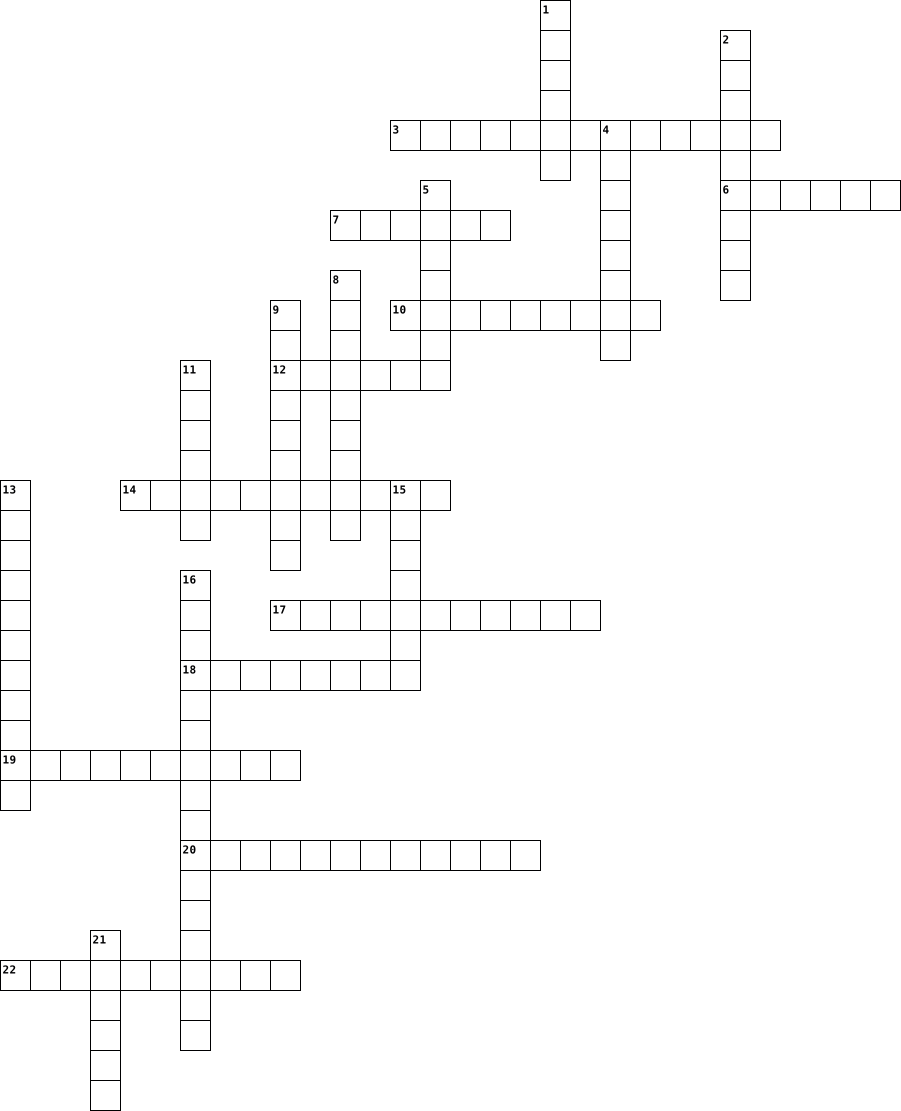
Across
- these two aux. verbs are applied in present perfect tense
- this structure is applied to talk about action and reaction in present
- the way in which you separete a couple of verbs putting the second into ing form
- we conjugate the verb in present perfect tense into....
- when you express a talent or ability with an adjective plus a preposition your next verb goes with....
- verbs that change in meaning when they are followed by a preposition; they are not literal all the time
Down
- the way in which you split a couple of verbs by setting a "to" in the middle
- you used this phrase when you want to express when and where your existance begins
- this tense is used to express experiences and near past actions
- when using this grammar point you predict a future consequence from a present action
10 Clues: we conjugate the verb in present perfect tense into.... • these two aux. verbs are applied in present perfect tense • this tense is used to express experiences and near past actions • this structure is applied to talk about action and reaction in present • the way in which you split a couple of verbs by setting a "to" in the middle • ...
Spanish 2023-02-07

Across
- the conjugated word for yall are dancing
- the gender netural pronoun you would add "an" to their verbs
- the conjucated word for we study
- the conjugated word for I need
- the conjugated word for they walked
- the group that you would add a ais to their verbs
- the verb ending for nosotros
- the verb ending for they
- the ending of an unconjugated verb
Down
- the term for after
- the conjugated word for we were talking
- the verb ending for yall
- the informal term for "you"
- the conjucated word for I watch
- the term for I
- the conjugated word for he sings
- the feminine pronon that would use a to conjugate a verb
- the conjugated word for I was yelling
- the conjugated word for she practices
- the conjugated word for she works
20 Clues: the term for I • the term for after • the verb ending for yall • the verb ending for they • the informal term for "you" • the verb ending for nosotros • the conjugated word for I need • the conjucated word for I watch • the conjugated word for he sings • the conjucated word for we study • the conjugated word for she works • the ending of an unconjugated verb • ...
English Terms 2023-02-09

Across
- direct statement of a source
- guide to make writing
- the way his or her personality comes through on the page
- shows exactly what a writing might be about in one sentence
- cites texts used in writings
- beginning of a story
- origin of evidence
- the subject receives the action
- middle of essays
- first attempt writing
- writing that adds up a source/essay/story
- set of reasons
Down
- essay or story
- formatted list of all sources
- determining yourself and how well you did in writing
- overall whole writing piece
- reliable source
- mentioning
- general subject
- investigating
- convey doing
- map of essay
- end of a story
- fixing writing
- restatement in your own words
- in body paragraphs
26 Clues: mentioning • convey doing • map of essay • investigating • essay or story • end of a story • fixing writing • set of reasons • reliable source • general subject • middle of essays • origin of evidence • in body paragraphs • beginning of a story • guide to make writing • first attempt writing • overall whole writing piece • direct statement of a source • cites texts used in writings • ...
Grammatikalische Grundbegriffe Natalie Haas 2018-07-11

Across
- Wortart, mit der Lebewesen (Menschen, Tiere)bezeichnet werden
- Satzglied, das über die näheren Umstände eines Geschehenes Auskunft gibt.
- (Ergänzung im 3. Fall) Frage: Wem?
- Das ... (persönliches Fürwort)steht stellvertretend für Personen oder Sachen.
- stehen hinter dem Bezugswort
- Satz, der alleine stehen kann. Er besteht mindestens aus einem Subjekt und einem Prädikat.
- Haupsatz der die wörtliche Rede begleitet
- gegenteil von konjunktiv
- Bezieht sich auf ein votangegangenes Nomen
- Personalform des verbs
- Bindewort
Down
- "Leioder bin ich krank", erklärt Pia.
- Bestimmung der Zeitangabe
- Wortart mit der man Eigenschaften beschreibt
- (Einzahl): der Bauer, die Katze, das Pferd
- Deklinationsform des Nomens
- Ein Befehl
- Frage: Wo? Wohin?
- Es wird aus der Sicht des betroffenen gesehen
- Bei einer nachgestellten ... muss ein Komma stehen
- Beugung
- Grundform des Verbs
- Grammatisches Geschelcht des Nomens
23 Clues: Beugung • Bindewort • Ein Befehl • Frage: Wo? Wohin? • Grundform des Verbs • Personalform des verbs • gegenteil von konjunktiv • Bestimmung der Zeitangabe • Deklinationsform des Nomens • stehen hinter dem Bezugswort • (Ergänzung im 3. Fall) Frage: Wem? • Grammatisches Geschelcht des Nomens • "Leioder bin ich krank", erklärt Pia. • Haupsatz der die wörtliche Rede begleitet • ...
English Language Arts & Reading 2022-05-13
Across
- the repetition of the same sound
- a play
- a phrase not meant to be taken literally
- words that take the place of nouns
- names for persons, places, things, or ideas
- people in a book, story, poem, drama...
- the end of the conflict
- where, and when a story takes place
- to explain using as few words as possible
- "and"
- very exaggerated
Down
- the message/lesson of a story
- the important idea expressed in a story
- words that describe verbs & adjectives
- a type of literary work in verse
- the order of events
- the problem(s) the characters face in a story
- a play
- words that describe nouns or pronouns
- uses like or as to compare two things
- giving human characteristics to something that is not human
- action or "being" words
22 Clues: "and" • a play • a play • very exaggerated • the order of events • the end of the conflict • action or "being" words • the message/lesson of a story • the repetition of the same sound • a type of literary work in verse • words that take the place of nouns • where, and when a story takes place • words that describe nouns or pronouns • uses like or as to compare two things • ...
After the midterm 1b 2026-01-21

Across
- I have
- Orange (The longest color word)
- Thank you
- To live (the infinitive form)
- Hello
- You're welcome (two words in Spanish, often written as one in puzzles)
- You (informal) write
- Blue (The color of eyes in your "tengo" question)
- Black
- Purple
- The ending for -AR verbs in the progressive (e.g., hablando)
- Please
- Green
Down
- Polar _____ (The animal from the reading)
- Yellow
- He or she has
- The ending for -ER/-IR verbs in the progressive (e.g., comiendo)
- Seals (The other animal from the reading)
- Goodbye
- The verb used for permanent characteristics (like being talented)
- We speak
- The verb used to build the Present Progressive
- White
- Red (The color of the planet Mars)
- To sing (the infinitive form)
- To eat (the infinitive form)
26 Clues: Hello • White • Black • Green • I have • Yellow • Purple • Please • Goodbye • We speak • Thank you • He or she has • You (informal) write • To eat (the infinitive form) • To live (the infinitive form) • To sing (the infinitive form) • Orange (The longest color word) • Red (The color of the planet Mars) • Polar _____ (The animal from the reading) • Seals (The other animal from the reading) • ...
UTS 2023-09-25

Across
- when is indonesia's independence day
- while biting the spoon carrying the marble
- The Past Simple verbs "participate"
- Galang came second at the marble in spoon race competition.
- Monita won the Krupuk race competition in the
- how many structure of recount text
- first recount text structure
- The Past Simple verbs "celebrate"
Down
- a game where prizes are awarded
- talking about past experiences
- speed fight with half of the body in the sack
- Day celebration.
- a game played by two groups and using ropes/tethers
13 Clues: Day celebration. • first recount text structure • talking about past experiences • a game where prizes are awarded • The Past Simple verbs "celebrate" • how many structure of recount text • The Past Simple verbs "participate" • when is indonesia's independence day • while biting the spoon carrying the marble • speed fight with half of the body in the sack • ...
Parts of Speech 2023-09-18

Across
- describes nouns
- describes adverbs, adjectives, and verbs
- shows emotion, is separate from the rest of the sentence
- what we use to remember conjunctions
- True or False- There are only 3 articles
- connector word, FANBOYS
- replaces a noun
Down
- Can a word change what part of speech it is depending on how it's used?
- a, an, the
- action or state of being (can be sneaky)
- each word's job in a sentence
- shows time, direction,& location
- True or False- Only verbs can be past, present, or future tense
- person, place, thing or idea
14 Clues: a, an, the • describes nouns • replaces a noun • connector word, FANBOYS • person, place, thing or idea • each word's job in a sentence • shows time, direction,& location • what we use to remember conjunctions • action or state of being (can be sneaky) • describes adverbs, adjectives, and verbs • True or False- There are only 3 articles • ...
prefixes root words and suffixes 2021-02-23
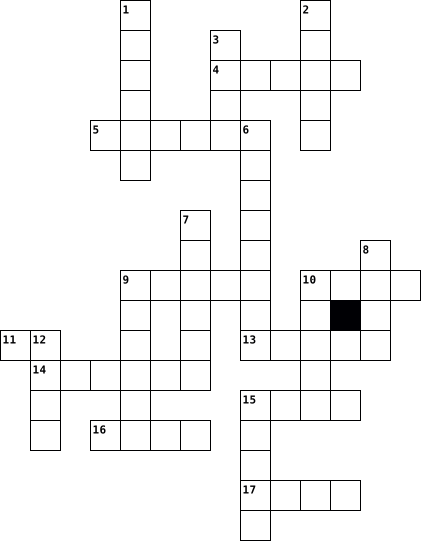
Across
- small
- fear
- water
- full of
- past tense verbs; adjectives
- over; too much
- between; among
- wrongly
- shape
- before
Down
- soul; spirit
- time
- both
- man; human; humanity
- under; too little
- under
- different
- without
- to say
- form; shape
20 Clues: time • both • fear • small • under • water • shape • to say • before • full of • without • wrongly • different • form; shape • soul; spirit • over; too much • between; among • under; too little • man; human; humanity • past tense verbs; adjectives
Dong zuo he jia ren 2024-11-11

Across
- Older sister
- younger brother
- Listen
- Mother
- Stand
- Older Brother
- Grandmother (Mother's side)
- Walk
- younger sister
- Run
- Speak
Down
- Grandmother (Father's side)
- Eat
- Family
- Action Verbs
- Father
- Jump
- Grandfather (Father's side)
- Grandfather (Mother's side)
- Sit
- Drink
21 Clues: Eat • Sit • Run • Jump • Walk • Stand • Speak • Drink • Family • Father • Listen • Mother • Older sister • Action Verbs • Older Brother • younger sister • younger brother • Grandmother (Father's side) • Grandfather (Father's side) • Grandmother (Mother's side) • Grandfather (Mother's side)
3.1 vocabulary crossword 2023-01-17
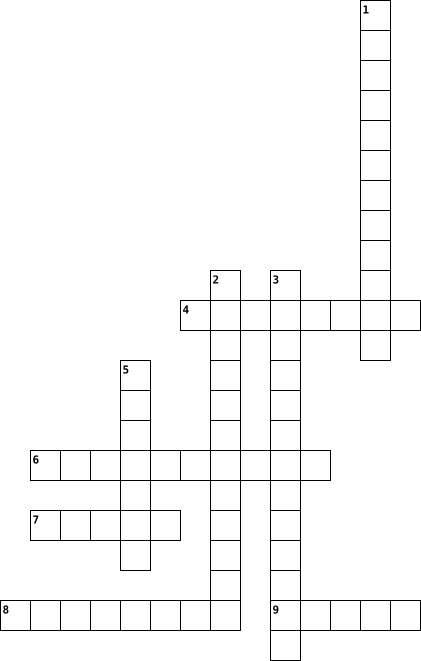
Across
- replace nouns
- describe nouns and pronouns
- show actions
- let you know that a noun will follow
- people, places, and things
Down
- joining words
- show relationships between words
- expressive words
- describe verbs, adjectives,, or other adverbs
9 Clues: show actions • joining words • replace nouns • expressive words • people, places, and things • describe nouns and pronouns • show relationships between words • let you know that a noun will follow • describe verbs, adjectives,, or other adverbs
Ristikko 2026-01-27

Across
- an_oven
- vihje
- a_roof
- alakerta
- in_the_city_center
- muuttaa
Down
- sisutaa
- a_porch
- a_stove
- an_adventure
- a_toalet
- verbs
- a_flat
13 Clues: vihje • verbs • a_roof • a_flat • sisutaa • a_porch • a_stove • an_oven • muuttaa • a_toalet • alakerta • an_adventure • in_the_city_center
FILL ME IN 2022-11-21

Across
- uses 'is' to compare.
- an homophone to wait.
- a complete thought
- verbs that take direct actions towards objects.
- they point at what is being talked about.
- Plural of thesis.
Down
- synonym to skillful
- the telling part of a sentence.
- modifies verbs.
- Always begins with a capital letter.
10 Clues: modifies verbs. • Plural of thesis. • a complete thought • synonym to skillful • uses 'is' to compare. • an homophone to wait. • the telling part of a sentence. • Always begins with a capital letter. • they point at what is being talked about. • verbs that take direct actions towards objects.
Verb Review 2022-10-28

Across
- A linking verb is followed by this part of speech
- is Was Helping or Linking in this sentence? Ms. Zhuño was crying yesterday.
- this verb can be linking or action...to sniff/to sense an odor
- A linking verb may also be followed by this part of speech
- This type of verb links to descriptions and conditions
- These verbs can be either linking OR helping verbs
- This part of the sentence tells what the subject is doing
- How many helping verbs are there?
Down
- This type of verb tells what the subject does
- This type of verb helps main action
- This is the star of the show; who or what the sentence is about
- This word can be linking or helping...to see/to use your eyes
- is Was helping or linking in this sentence? The turtle tank was stinky.
- This part of speech is a describing word
- This part of speech is action
15 Clues: This part of speech is action • How many helping verbs are there? • This type of verb helps main action • This part of speech is a describing word • This type of verb tells what the subject does • A linking verb is followed by this part of speech • These verbs can be either linking OR helping verbs • This type of verb links to descriptions and conditions • ...
Pooja 2021-08-02

Across
- can win writer. Shiv Khera
- of adversity.good time
- of every success story is also a story of great failure. Shiv Khera
- was a detour not a. Dead end
- name of helping verbs.
- vujicic was a.troso
Down
- verbs
- tube inventor. Lee de forest
- of KFC chicken.colonel Sanders
- is. Altitude
10 Clues: verbs • is. Altitude • vujicic was a.troso • of adversity.good time • name of helping verbs. • can win writer. Shiv Khera • tube inventor. Lee de forest • was a detour not a. Dead end • of KFC chicken.colonel Sanders • of every success story is also a story of great failure. Shiv Khera
adverbs_exceptions & rules 2021-10-20

Across
- adverb form of 'hard'
- stay, remain, become, get, grow are verbs of ... and change/development
- we call one and ones ... words
- meaning of hardly in German
- adverb form of 'good'
- mine, yours, his etc. are possessive ...
Down
- adverb form of 'fast'
- my, your, his etc. are possessive ...
- adverb form of 'happy'
- smell, taste, seem are verbs of...
- adverb of 'fantastic'
11 Clues: adverb form of 'fast' • adverb form of 'hard' • adverb of 'fantastic' • adverb form of 'good' • adverb form of 'happy' • meaning of hardly in German • we call one and ones ... words • smell, taste, seem are verbs of... • my, your, his etc. are possessive ... • mine, yours, his etc. are possessive ... • stay, remain, become, get, grow are verbs of ... and change/development
Words and their parts 2024-10-07

Across
- bird
- not,not any
- together
- to make bigger
- again
- after
- to throw
- to hang
- under
- between,among
- not
- to pull drag and draw
Down
- sound
- to write
- self
- to walk
- before
- forms nouns from verbs
- to say
- earth
20 Clues: not • bird • self • sound • again • after • under • earth • before • to say • to walk • to hang • to write • together • to throw • not,not any • between,among • to make bigger • to pull drag and draw • forms nouns from verbs
Unit 2 2024-11-06

Across
- 첫번째
- 2x2
- 도시들
- 수학
- 산들
- 지리학
- 예술
- 2÷2
- 그후에
- 공부하다
- 과학
- 고대그리스사람들
Down
- 고대로마사람들
- 명사
- 마침내
- 2-2
- 페인트칠하다
- 그리다
- 화학
- 과목
- 2+2
- 생물학
- 강들
- 다음
- 작은도시
- 역사
- 동사
27 Clues: 명사 • 화학 • 수학 • 과목 • 산들 • 예술 • 강들 • 다음 • 역사 • 과학 • 동사 • 첫번째 • 마침내 • 2-2 • 2x2 • 그리다 • 도시들 • 지리학 • 2+2 • 생물학 • 2÷2 • 그후에 • 공부하다 • 작은도시 • 페인트칠하다 • 고대로마사람들 • 고대그리스사람들
Verbs 2025-01-13

Across
- links, or joins, the subject of a sentence with an adjective, a noun, or a pronoun
- is followed by a word or words that answer the question what or whom
- verbs have four forms
- tells what someone or something does
Down
- form their past and past participle without adding -ed to the base form
- is not followed by a word that answers what or whom
- consists of a main verb and all its auxiliary verbs
- expresses time
- a word that expresses action or a state of being and is necessary to make a statement
- helping verbs
10 Clues: helping verbs • expresses time • verbs have four forms • tells what someone or something does • is not followed by a word that answers what or whom • consists of a main verb and all its auxiliary verbs • is followed by a word or words that answer the question what or whom • form their past and past participle without adding -ed to the base form • ...
Grammatical features of GL 2022-11-05

Across
- Which of Germanic language did not have 3 classes or weak verbs distinguished by their steam - building suffixes?
- Who describef an old english poetry?
- What were simpler and shorter in Germanic languages than in other Indro - European languages?
- Which language did develop weak and strong adjectives?
Down
- Grimm Who has subdivided all the verbs into two groups according to the way they build their principal forms?
- Which suffix lost its own meaning, joined with the case inflection and can no longer be identified?
- Which structure is changed into a two-part structure in the earliest documents of Germanic languages?
- How many forms of strong verbs were there in old Germanic?
- In which alphabet the decoration is limited to a few large , framed initals and at the bottom of each page a silver arcade which encloses the monograms of the four evangelists?
- How many classes all strong verbs fall into, according to the type of gradation?
10 Clues: Who describef an old english poetry? • Which language did develop weak and strong adjectives? • How many forms of strong verbs were there in old Germanic? • How many classes all strong verbs fall into, according to the type of gradation? • What were simpler and shorter in Germanic languages than in other Indro - European languages? • ...
Grammatical features of GL 2022-11-05

Across
- Which structure is changed into a two-part structure in the earliest documents of Germanic languages?
- What were simpler and shorter in Germanic languages than in other Indro - European languages?
- How many forms of strong verbs were there in old Germanic?
- Which language did develop weak and strong adjectives?
- In which alphabet the decoration is limited to a few large , framed initals and at the bottom of each page a silver arcade which encloses the monograms of the four evangelists?
Down
- Who describef an old english poetry?
- Which of Germanic language did not have 3 classes or weak verbs distinguished by their steam - building suffixes?
- Which suffix lost its own meaning, joined with the case inflection and can no longer be identified?
- Who has subdivided all the verbs into two groups according to the way they build their principal forms?
- How many classes all strong verbs fall into, according to the type of gradation?
10 Clues: Who describef an old english poetry? • Which language did develop weak and strong adjectives? • How many forms of strong verbs were there in old Germanic? • How many classes all strong verbs fall into, according to the type of gradation? • What were simpler and shorter in Germanic languages than in other Indro - European languages? • ...
Grammatical features of GL 2022-11-05

Across
- Which structure is changed into a two-part structure in the earliest documents of Germanic languages?
- What were simpler and shorter in Germanic languages than in other Indro - European languages?
- How many forms of strong verbs were there in old Germanic?
- Which language did develop weak and strong adjectives?
- In which alphabet the decoration is limited to a few large , framed initals and at the bottom of each page a silver arcade which encloses the monograms of the four evangelists?
Down
- Who describef an old english poetry?
- Which of Germanic language did not have 3 classes or weak verbs distinguished by their steam - building suffixes?
- Which suffix lost its own meaning, joined with the case inflection and can no longer be identified?
- Who has subdivided all the verbs into two groups according to the way they build their principal forms?
- How many classes all strong verbs fall into, according to the type of gradation?
10 Clues: Who describef an old english poetry? • Which language did develop weak and strong adjectives? • How many forms of strong verbs were there in old Germanic? • How many classes all strong verbs fall into, according to the type of gradation? • What were simpler and shorter in Germanic languages than in other Indro - European languages? • ...
Grammatical features of GL 2022-11-05

Across
- Which of Germanic language did not have 3 classes or weak verbs distinguished by their steam - building suffixes?
- Who describef an old english poetry?
- What were simpler and shorter in Germanic languages than in other Indro - European languages?
- Which language did develop weak and strong adjectives?
Down
- Grimm Who has subdivided all the verbs into two groups according to the way they build their principal forms?
- Which suffix lost its own meaning, joined with the case inflection and can no longer be identified?
- Which structure is changed into a two-part structure in the earliest documents of Germanic languages?
- How many forms of strong verbs were there in old Germanic?
- In which alphabet the decoration is limited to a few large , framed initals and at the bottom of each page a silver arcade which encloses the monograms of the four evangelists?
- How many classes all strong verbs fall into, according to the type of gradation?
10 Clues: Who describef an old english poetry? • Which language did develop weak and strong adjectives? • How many forms of strong verbs were there in old Germanic? • How many classes all strong verbs fall into, according to the type of gradation? • What were simpler and shorter in Germanic languages than in other Indro - European languages? • ...
Grammatical features of GL 2022-11-05

Across
- Which of Germanic language did not have 3 classes or weak verbs distinguished by their steam - building suffixes?
- Who describef an old english poetry?
- What were simpler and shorter in Germanic languages than in other Indro - European languages?
- Which language did develop weak and strong adjectives?
Down
- Grimm Who has subdivided all the verbs into two groups according to the way they build their principal forms?
- Which suffix lost its own meaning, joined with the case inflection and can no longer be identified?
- Which structure is changed into a two-part structure in the earliest documents of Germanic languages?
- How many forms of strong verbs were there in old Germanic?
- In which alphabet the decoration is limited to a few large , framed initals and at the bottom of each page a silver arcade which encloses the monograms of the four evangelists?
- How many classes all strong verbs fall into, according to the type of gradation?
10 Clues: Who describef an old english poetry? • Which language did develop weak and strong adjectives? • How many forms of strong verbs were there in old Germanic? • How many classes all strong verbs fall into, according to the type of gradation? • What were simpler and shorter in Germanic languages than in other Indro - European languages? • ...
Grammatical features of GL 2022-11-05

Across
- Which structure is changed into a two-part structure in the earliest documents of Germanic languages?
- What were simpler and shorter in Germanic languages than in other Indro - European languages?
- How many forms of strong verbs were there in old Germanic?
- Which language did develop weak and strong adjectives?
- In which alphabet the decoration is limited to a few large , framed initals and at the bottom of each page a silver arcade which encloses the monograms of the four evangelists?
Down
- Who describef an old english poetry?
- Which of Germanic language did not have 3 classes or weak verbs distinguished by their steam - building suffixes?
- Which suffix lost its own meaning, joined with the case inflection and can no longer be identified?
- Who has subdivided all the verbs into two groups according to the way they build their principal forms?
- How many classes all strong verbs fall into, according to the type of gradation?
10 Clues: Who describef an old english poetry? • Which language did develop weak and strong adjectives? • How many forms of strong verbs were there in old Germanic? • How many classes all strong verbs fall into, according to the type of gradation? • What were simpler and shorter in Germanic languages than in other Indro - European languages? • ...
El subjunctivo 2024-02-27

Across
- to find the subjunctive ending for a verb, ______ the present tense endings
- to conjugate in the subjunctive you NEED to have what word
- acronym for subjunctive
- Spanish word for what E in JEDI stands for
- (nosotros) tener
- (tú) hablar
- car/gar/zar/ger/gir changes happen in ______ form
- Spanish word for what D in JEDI stands for
- Spanish word for what J in JEDI stands for
Down
- Spanish word for what I in JEDI stands for
- (yo) preferir
- for subjunctive you need two...
- in ir boot verbs, o - u and e - i are changes that happen ______ the boot
- (nosotros) entender
- acronym for irregular verbs
15 Clues: (tú) hablar • (yo) preferir • (nosotros) tener • (nosotros) entender • acronym for subjunctive • acronym for irregular verbs • for subjunctive you need two... • Spanish word for what I in JEDI stands for • Spanish word for what E in JEDI stands for • Spanish word for what D in JEDI stands for • Spanish word for what J in JEDI stands for • ...
Grammatical features of GL 2022-11-05

Across
- Which structure is changed into a two-part structure in the earliest documents of Germanic languages?
- What were simpler and shorter in Germanic languages than in other Indro - European languages?
- How many forms of strong verbs were there in old Germanic?
- Which language did develop weak and strong adjectives?
- In which alphabet the decoration is limited to a few large , framed initals and at the bottom of each page a silver arcade which encloses the monograms of the four evangelists?
Down
- Who describef an old english poetry?
- Which of Germanic language did not have 3 classes or weak verbs distinguished by their steam - building suffixes?
- Which suffix lost its own meaning, joined with the case inflection and can no longer be identified?
- Who has subdivided all the verbs into two groups according to the way they build their principal forms?
- How many classes all strong verbs fall into, according to the type of gradation?
10 Clues: Who describef an old english poetry? • Which language did develop weak and strong adjectives? • How many forms of strong verbs were there in old Germanic? • How many classes all strong verbs fall into, according to the type of gradation? • What were simpler and shorter in Germanic languages than in other Indro - European languages? • ...
Recount 2021-03-03

Across
- Words like 'because', 'so' and 'and' are ____
- 'a' and 'the' are examples of ________
- It is the retelling of what happened in the past.
- _____ verbs change in spelling when it is a past tense.
- She is (run)around the house.
- Past tense of bring.
- Ann was late ____________ the plane was delayed.
Down
- The last part of recount.
- A recount story always has a _________
- I have (write)the letter.
- Present tense of wore.
- Past tense of know.
- I was going to ride my bike ______ the tyre was flat.
- It was raining ______ there was lightning.
- ______ verbs always add ed when it is a past tense.
15 Clues: Past tense of know. • Past tense of bring. • Present tense of wore. • The last part of recount. • I have (write)the letter. • She is (run)around the house. • A recount story always has a _________ • 'a' and 'the' are examples of ________ • It was raining ______ there was lightning. • Words like 'because', 'so' and 'and' are ____ • ...
Poetic Technqiues 2018-11-25

Across
- describe verbs
- the speaker if the poem
- the alliteration of vowels within words in a line
- giving inanimate objects a human quality
- describe nouns
- the verse of a poem
- when lines run into one another without punctuation
Down
- where characters or events in literature represent ideas that relate to morals, religion or politics
- the alliteration of the s sound
- comparing two things using 'like' or 'as'
- action words
- the use of commas within a line for a pause
- the repetition of consonants in a number of words in a line
- four lines of a poem
- the alliteration of the p/b sound
- saying something IS something else
- two lines of a poem
17 Clues: action words • describe verbs • describe nouns • two lines of a poem • the verse of a poem • four lines of a poem • the speaker if the poem • the alliteration of the s sound • the alliteration of the p/b sound • saying something IS something else • giving inanimate objects a human quality • comparing two things using 'like' or 'as' • the use of commas within a line for a pause • ...
Verb challenge! 2018-02-01

Across
- Past participle of shake.
- I've never _______ this sad before; this is terrible.
- Verbs that end always in -ed in past tenses.
- Present tense of fed.
- She has __________ the ball 10 times in this game.
- Past participle of teach.
- Past participle of speak.
- I ____ my friends in the fair.
- Present tense of forgave.
- Past tense of draw
- Yesterday, I _________ the window of my room.
Down
- She explained 2 times but I didn't _____________.
- Past participle of sell.
- Verbs that have different endings.
- A verb that is the same in all 3 forms.
- I must _______ the alarm before I sleep.
- A verb that is spelled the same but pronounced differently.
- I have ________ $200 dollars during this week.
- A verb that is the same in all 3 forms.
- Do you _________ who made this painting?
- Past tense of become.
- Past tense of fight.
- Past perticiple of fly.
23 Clues: Past tense of draw • Past tense of fight. • Present tense of fed. • Past tense of become. • Past perticiple of fly. • Past participle of sell. • Past participle of shake. • Past participle of teach. • Past participle of speak. • Present tense of forgave. • I ____ my friends in the fair. • Verbs that have different endings. • A verb that is the same in all 3 forms. • ...
PRESENT PERFECT 2024-03-08

Across
- PAST PARTICIPLE OF SELL
- PAST PARTICIPLE OF RUN
- PAST PARTICIPLE OF BUY
- PAST PARTICIPLE OF TAKE
- PAST PARTICIPLE OF COME
- THE MAIN VERB GOES IN ____TO FORM THE PRESET PERFECT
- PAST PARTICIPLE OF TO BE
- PAST PARTICIPLE OF WRITE
- IS A TOOL THAT HELPS US TO EXPRESS OUR EXPERIENCES
Down
- PAST PARTICIPLE OF DO
- PAST PARTICIPLE OF DRIVE
- PAST PARTICIPLE OF GO
- AUXILIARY VERB USED TO FORM THE PRESENT PERFECT
- WE ADD___TO FORM THE NEGATIVE OF THE PRESENT PERFECT
- PAST PARTICIPLE OF THINK
- THE THIRD PERSON SINGULAR (HE, SHE, IT) USES THIS AUXILIARY VERB
- PAST PARTICIPLE OF DRINK
- VERBS THAT STAY THE SAME OR CHANGE A LOT TO FORM THE PAST AND PAST PARTICIPLE
- PAST PARTICIPLE OF EAT
- PAST PARTICIPLE OF READ
- VERBS THAT ADD "ED" TO FORM THEIR PAST OR PAST PARTICIPLE
- PAST PARTICIPLE OF TELL
22 Clues: PAST PARTICIPLE OF DO • PAST PARTICIPLE OF GO • PAST PARTICIPLE OF RUN • PAST PARTICIPLE OF BUY • PAST PARTICIPLE OF EAT • PAST PARTICIPLE OF SELL • PAST PARTICIPLE OF TAKE • PAST PARTICIPLE OF COME • PAST PARTICIPLE OF READ • PAST PARTICIPLE OF TELL • PAST PARTICIPLE OF DRIVE • PAST PARTICIPLE OF THINK • PAST PARTICIPLE OF DRINK • PAST PARTICIPLE OF TO BE • PAST PARTICIPLE OF WRITE • ...
Français (La Semaine 11) 2025-04-08

Across
- How the French abbreviate the United States of America.
- when you have 2 verbs in a _______, conjugate the first one only
- the plural translation of "the"
- à + les
- How to translate "in" when talking about living in feminine countries
- (_____ mon ami !)
- the first pattern of regular verbs we've learned
- If not BANGS, then put it
- the dictionary version of a verb
- 3x the thing missing here: "Elle est bavard."
- to live
Down
- buy bread here, NOT CAKES
- THIS IS ENOUGH!!!!!!
- the process of changing a verb to make it fit who did the action
- the most meme-able number, hypenated
- In a few days, there will be no more...
- THIS IS TOO MUCH!!!!!!!!
- Ne's friend.
- 10 + 55 - 35
- There is the first third.
- Non! I just like you. Not like-like you.
- à + le
22 Clues: à + le • à + les • to live • Ne's friend. • 10 + 55 - 35 • (_____ mon ami !) • THIS IS ENOUGH!!!!!! • THIS IS TOO MUCH!!!!!!!! • buy bread here, NOT CAKES • If not BANGS, then put it • There is the first third. • the plural translation of "the" • the dictionary version of a verb • the most meme-able number, hypenated • In a few days, there will be no more... • ...
Gerunds 2024-02-16

Across
- Gerunds are to be _____
- For example with imperatives, use the
- Eating is the gerund used as the
- Gerunds____ specific words
- Use gerunds after a
Down
- My dog is eating my dessert is
- A gerund functions as a
- Forms of verbs ending in "-ing" acting as nouns
- Drinking water is
- Gerund follows specific
10 Clues: Drinking water is • Use gerunds after a • Gerunds are to be _____ • A gerund functions as a • Gerund follows specific • Gerunds____ specific words • My dog is eating my dessert is • Eating is the gerund used as the • For example with imperatives, use the • Forms of verbs ending in "-ing" acting as nouns
Grammatical features of GL 2022-11-05

Across
- Which of Germanic language did not have 3 classes or weak verbs distinguished by their steam - building suffixes?
- How many classes all strong verbs fall into, according to the type of gradation?
- Who has subdivided all the verbs into two groups according to the way they build their principal forms?
- Who describef an old english poetry?
- What were simpler and shorter in Germanic languages than in other Indro - European languages?
Down
- Which suffix lost its own meaning, joined with the case inflection and can no longer be identified?
- Which structure is changed into a two-part structure in the earliest documents of Germanic languages?
- Which language did develop weak and strong adjectives?
- How many forms of strong verbs were there in old Germanic?
- In which alphabet the decoration is limited to a few large , framed initals and at the bottom of each page a silver arcade which encloses the monograms of the four evangelists?
10 Clues: Who describef an old english poetry? • Which language did develop weak and strong adjectives? • How many forms of strong verbs were there in old Germanic? • How many classes all strong verbs fall into, according to the type of gradation? • What were simpler and shorter in Germanic languages than in other Indro - European languages? • ...
Verb Review 2020-05-12

Across
- verb in this tense tells about an action happening now
- this tense is formed by adding "will" or "going to" w/verb
- verb that joins subject to a subject complement
- verbs that form the past by some other ending besides ed
Down
- a group of words made up of helping verbs and main verbs
- shows when an action takes place
- verb that tells what someone or something does
- verb that always comes before another verb usually action
- verb that shows what someone or something is
9 Clues: shows when an action takes place • verb that shows what someone or something is • verb that tells what someone or something does • verb that joins subject to a subject complement • verb in this tense tells about an action happening now • a group of words made up of helping verbs and main verbs • verbs that form the past by some other ending besides ed • ...
estar + -ando(ar) & -iendo(ir & er) 2023-05-31

Across
- We are speaking/talking
- You are eating
- We are learning
- I am eating
- I am playing
- We are listening
- You(familiar) are speaking/talking
- I am buying
- He/she is speaking/talking
- You are listening
- You are listening
- He/she is writing
- You are buying
- She is buying
- You all are buying
- You are learning
Down
- He/she is listening
- They are eating
- They are writing
- We are eating
- We are writing
- The english equivalent for -ING and -er and -ir verbs is
- I am learning
- I am listening
- They are listening
- He/she is eating
- They are speaking/talking
- I am writing
- The english equivalent for ING and - ar verbs is
- I am talking
- You are writing
- I am listening
- They are learning
- You are playing
34 Clues: I am eating • I am buying • I am playing • I am writing • I am talking • We are eating • I am learning • She is buying • You are eating • We are writing • I am listening • I am listening • You are buying • They are eating • We are learning • You are writing • You are playing • They are writing • He/she is eating • We are listening • You are learning • They are learning • You are listening • You are listening • ...
Parts of speech 2020-01-31

Across
- ,describe verbs, adjectives and adverbs.
- , express surprise and emotion.
- ,describes nouns and pronouns.
- , replace nouns.
Down
- ,express actions.
- , help to define nouns.
- ,joins words,sentences,phrases and clauses.
- ,link nouns to other words.
- , names of people, places, things and idea.
9 Clues: , replace nouns. • ,express actions. • , help to define nouns. • ,link nouns to other words. • ,describes nouns and pronouns. • , express surprise and emotion. • ,describe verbs, adjectives and adverbs. • ,joins words,sentences,phrases and clauses. • , names of people, places, things and idea.
misc intermediate 2024-04-03

Across
- past of "go"
- verbs that are not finite
- place where you exercise
- an unreal type of intelligence
- anxious about past, present future verbs
- the best programming language if you're an apple
- first in first out
Down
- using the first letters of a word as a short form (e.g. USA)
- deadly weight lifting exercise
- book of synonyms
- word that is often omitted by people learning english
11 Clues: past of "go" • book of synonyms • first in first out • place where you exercise • verbs that are not finite • deadly weight lifting exercise • an unreal type of intelligence • anxious about past, present future verbs • the best programming language if you're an apple • word that is often omitted by people learning english • ...
Punctuation 2021-09-19

Across
- what the sentence is about
- a mark that shows surprise, shock or volume
- this type of sentence contains a dependent clause
- when an apostrophe creates one word from two
- auxiliary verbs do this for main verbs
- the strongest punctuation mark
- use instead of a noun
- this part of the speech is always close to the action
- also called a speech mark
- this type of sentence contains a conjunction
Down
- this part of speech tells you more about a verb
- one function of the apostrophe
- this part of speech describes a noun
- joining word
- this letter begins the first word in a sentence
- use this mark to make a request
- a sentence with a subject and a verb
- names things, ideas, people
- use this mark to separate items in a list
- the trickiest mark of all
20 Clues: joining word • use instead of a noun • also called a speech mark • the trickiest mark of all • what the sentence is about • names things, ideas, people • one function of the apostrophe • the strongest punctuation mark • use this mark to make a request • this part of speech describes a noun • a sentence with a subject and a verb • auxiliary verbs do this for main verbs • ...
NEW - Final Project Crossword v6 2025-12-18

Across
- Acronym learned associated with adjectives.
- Il était laid et malin.
- International hub for diplomacy; La capitale de la Suisse.
- Il écrit "Le mythe de Sisyphe."
- Nickname for the four (4) most important irregular verbs in French.
- Je suis le chef des Gaulois; J'étais capturé par Jules César.
- Il dit "Je pense; donc, je suis."
- Acronym learned associated with l'Imparfait.
- Ma capitale est Paris.
- French city in the Alps; Mr. DiLandro's favorite city.
- Known for Alps and banking; À l'est de la France.
- Il écrit "Le Contrat social."
Down
- Dictionary website.
- Past tense associated with DATE LAW; Verbs are one word.
- Le contraire de l'Imparfait.
- Le palais près de Paris.
- L'empereur du saint-Empire romain germanique.
- Le père de Versailles.
- Forbidden website.
- Person associated with le Passé Composé; Learned during French 2.
- First French verb learned; Irregular.
- Le cardinal pour Louis XIII.
- Il n'est pas petit.
23 Clues: Forbidden website. • Dictionary website. • Il n'est pas petit. • Le père de Versailles. • Ma capitale est Paris. • Il était laid et malin. • Le palais près de Paris. • Le contraire de l'Imparfait. • Le cardinal pour Louis XIII. • Il écrit "Le Contrat social." • Il écrit "Le mythe de Sisyphe." • Il dit "Je pense; donc, je suis." • First French verb learned; Irregular. • ...
Vocab #7 2017-01-27

Across
- / "Exactly," she said with enough _________ that he chuckled.
- sentence / In spite of heavy snow and cold temperatures, the game continued.
- / “I know what you’re going to say…’That if they look at it properly they’ll see that it wasn’t our fault. But will they look at it properly? Of course they won’t. You know what cats they are…”
- language / "I’ve told you a million times to clean your room!"
- / The antagonism between free labour and slave labour became the ____________ of many of his speeches.
- / The quality of being open to more than one interpretation; inexactness.
- / Slavery is the ______________ of freedom.
- / The use of successive verbal constructions in poetry or prose that correspond in grammatical structure, sound, meter, meaning, etc.
- / The poetic _____________ in which the prophets clothed the doom of Babylon, like the romantic account of Herodotus
- / The arrangement of words and phrases to create well-formed sentences in a language.
Down
- / The literal or primary meaning of a word, in contrast to the feelings or ideas that the word suggests.
- / “Never let a Fool Kiss You or a Kiss Fool You.”
- / "I looked upon the rotting sea, And drew my eyes away; I looked upon the rotting deck, And there the dead men lay."
- / "As one community, without distinction of class, without enmity, united by brotherly love--let us pray!" thought Natasha.
- symbols / Morning : purity and promise Rainbows : heralds of good fortune, heaven Thunder : God’s wrath, punishment
- complement / The adjective, noun, or pronoun that follows a linking verb. The following verbs are true linking verbs: any form of the verb be [am, is, are, was, were, has been, are being, might have been, etc.], become, and seem. These true linking verbs are always linking verbs.
- hominem argument / "All murderers are criminals, but a thief isn’t a murderer, and so can’t be a criminal."
- irony / Clear like dirt.
- symbols / Object representing another to give it an entirely different meaning that is much deeper and more significant.
- person narration / “It was times like these when I thought my father, who hated guns and had never been to any wars, was the bravest man who ever lived.”
20 Clues: irony / Clear like dirt. • / Slavery is the ______________ of freedom. • / “Never let a Fool Kiss You or a Kiss Fool You.” • / "Exactly," she said with enough _________ that he chuckled. • language / "I’ve told you a million times to clean your room!" • / The quality of being open to more than one interpretation; inexactness. • ...
Room 4 Crossword 2022-03-30

Across
- "She must be terrified," is an example of a ________ verb
- "She has finished her coffee," is an example of a ________ perfect tense.
- ________ conditionals will likely happen.
- The word can is used when something is likely ________.
Down
- There are ________ and uncountable nouns.
- Second conditional is ________ to happen.
- There are two types of modal verbs. Present modal verbs and ________ modal verbs.
- Past perfect tense has two ________.
8 Clues: Past perfect tense has two ________. • There are ________ and uncountable nouns. • Second conditional is ________ to happen. • ________ conditionals will likely happen. • The word can is used when something is likely ________. • "She must be terrified," is an example of a ________ verb • "She has finished her coffee," is an example of a ________ perfect tense. • ...
Research Vocab 2023-02-16

Across
- To get a rough idea of your essay
- What you are writing about
- To start your essay
- 3 of these in a 5 paragraph essay
- To change stuff up in an essay
- Verbs that are passive
- to refer to something
- To sum up something big into something small
- To shorten a sentence
- To wrap everything up
- What you are writing about
- Fill it out
- Verbs that have action
- An edited version of your rough draft
- Something word for word that someone said
- Website you found your information
- This gets its own page with all of your sources
Down
- a set of reasons
- Cite sources (Bob 67)
- Look up to learn
- To evaluate yourself
- Sum up the central point of your paper
- an acroymn
- Unedited version of your essay
- able to be believed
- The way his/her voice comes through a page
26 Clues: an acroymn • Fill it out • a set of reasons • Look up to learn • To start your essay • able to be believed • To evaluate yourself • Cite sources (Bob 67) • to refer to something • To shorten a sentence • To wrap everything up • Verbs that are passive • Verbs that have action • What you are writing about • What you are writing about • To change stuff up in an essay • ...
Grammar Chapters 1 - 12 2023-05-22

Across
- (1st PP) always takes a complementary infinitive
- (one word) tells the declension of a noun
- (one word)"the nom and acc are always the same"
- (one word) only difference betw 3Cio & 4C
- nom. fem. demonstrative that can mean "that wretched"
- another name for "command"
- the five groups all nouns belong to
- you get the base from this form of the adjective
Down
- (one word) most verbs have 4 of these
- 2nd principal part
- the tense BEFORE the completed past.
- nine 1/2D adjectives with "-ius,-i" pattern
- tense that always has "ba" in all conjugations
- an adjective that can stand in place of a noun
- the "direct object" case
- the four groups most verbs belong to
- nom. masc. demonstrative that also means "the famous"
- tells who is doing the action of the verb
- the infinitive of an irregular linking verb
- usually goes after the noun it modifies
20 Clues: 2nd principal part • the "direct object" case • another name for "command" • the five groups all nouns belong to • the tense BEFORE the completed past. • the four groups most verbs belong to • (one word) most verbs have 4 of these • usually goes after the noun it modifies • (one word) tells the declension of a noun • (one word) only difference betw 3Cio & 4C • ...
L2 Guided Notes Review 2025-02-04

Across
- irregular verb "to be able"
- the sense or feeling of a verb
- noun case used for prep phrases
- this form of a noun is used to create its stem
- nouns and adjectives do NOT need to agree in this
- these typically describe verbs
- tells if the subject is doing or receiving the action
- most verbs have four of these parts
- a verb family
- refers to when the action of a verb takes place
- adjectives have three of these
Down
- "blue stem" 2nd part minus last three letters
- "red stem" 3rd part minus i
- a noun or adjective family
- "green stem" fourth part minus us / urus
- irregular verb "to be"
- the point of view or subject of a verb
- grammatical term for a command
- noun case used for prep phrases and direct objects
- imperatives can be positive or
- noun or phrase referred back to by a pronoun
- refers to singular or plural
22 Clues: a verb family • irregular verb "to be" • a noun or adjective family • irregular verb "to be able" • "red stem" 3rd part minus i • refers to singular or plural • the sense or feeling of a verb • grammatical term for a command • these typically describe verbs • imperatives can be positive or • adjectives have three of these • noun case used for prep phrases • ...
Pretirate O´s 2025-03-31

Across
- what does the g in gar verbs turn into
- what does venir turn into in the preterate
- what does ir turn into in the preterate
- what does dar turn into in the preterate
- Vivir in the ellos/ellas/ustedes Form
- what does estar turn into in the preterate
- what does dicir turn into in the preterate
- Jugar in the Tu Form
- Almorzar in the nosotros Form
- what does poner turn into in the preterate
Down
- poder in the el/ella/usted
- Tocar in the Yo form
- what does ver turn into in the preterate
- ver in the Yo Form
- Nadar in the vosotros Form
- what does hacer turn into in the preterate
- what does pude turn into in the preterate
- tener in the Yo Form
- what does quierer turn into in the preterate
- what does tener turn into in the preterate
- what does the c in car verbs turn into
- what does saber turn into in the preterate
22 Clues: ver in the Yo Form • Tocar in the Yo form • tener in the Yo Form • Jugar in the Tu Form • poder in the el/ella/usted • Nadar in the vosotros Form • Almorzar in the nosotros Form • Vivir in the ellos/ellas/ustedes Form • what does the g in gar verbs turn into • what does the c in car verbs turn into • what does ir turn into in the preterate • ...
windah 2025-07-17

Across
- The Beginning part that introduces the story
- The place and time of the story
- The suquence of events called
- The part where the problem starts
- "Once upon a time" is
- To describe characters or things use?.
- Tense Tense that usually used in a narrative text.
- A story explaining natural events or gods
- The purpose of narrative text
- Kind of verbs used in narrative text
- How many parts are in a narrative text?
- A short version of the story is called
Down
- The part where the problem is solved
- A narrative with magical elements.
- The exact words spoken by a Character
- The most exciting or important moment. . Kind of verbs are used in narrative text
- The character who opposes the protagonist
- A person who is telling the story is
- A traditional story from the past:
- The main idea or message is called
20 Clues: "Once upon a time" is • The suquence of events called • The place and time of the story • The part where the problem starts • A traditional story from the past: • The main idea or message is called • The part where the problem is solved • A person who is telling the story is • Kind of verbs used in narrative text • The exact words spoken by a Character • ...
L2 Guided Notes Review 2025-02-28

Across
- most verbs have four of these parts
- this form of a noun is used to create its stem
- a verb family
- "red stem" 3rd part minus i
- a noun or adjective family
- noun or phrase referred back to by a pronoun
- adjectives have three of these
- nouns and adjectives do NOT need to agree in this
- irregular verb "to be able"
Down
- grammatical term for a command
- irregular verb "to be"
- imperatives can be positive or
- noun case used for prep phrases and direct objects
- noun case used for prep phrases
- "blue stem" 2nd part minus last three letters
- "green stem" fourth part minus us / urus
- these typically describe verbs
- refers to singular or plural
- the point of view or subject of a verb
- tells if the subject is doing or receiving the action
- refers to when the action of a verb takes place
- the sense or feeling of a verb
22 Clues: a verb family • irregular verb "to be" • a noun or adjective family • "red stem" 3rd part minus i • irregular verb "to be able" • refers to singular or plural • grammatical term for a command • imperatives can be positive or • these typically describe verbs • adjectives have three of these • the sense or feeling of a verb • noun case used for prep phrases • ...
Verbs, Adjectives, & Adverbs Crossword Puzzle 2022-01-24

Across
- A word that describes a verb.
- The name of your English teacher's assistant.
- The simple past of "swear."
- A word that describes a noun.
- The name of the math teacher at Highlands (hint: it's the opposite of sad).
- The simple past (NOT PAST PARTICIPLE) of "drive."
- The simple past of "shake."
- A verb that does not end in "ed."
- A verb tense that requires BOTH helping verbs "has" and "be."
- The past participle of "sing."
- The past participle of "write."
- The past participle of "wake" (hint: it's NOT "woke."
- The simple past of "become."
Down
- The name of your English teacher.
- The past participle of "forgive" (hint: it's NOT "forgave").
- The past participle of "think."
- A verb tense that requires the helping verb "be."
- The simple past of "forgive."
- Conjugate "has" to _________ when your subject is plural, "I" or "you."
- The simple past of "drink."
- A word that describes an action.
- Approximately _______________ percent of verbs in English are irregular (spell out the number).
- The simple past of "take."
- The eight forms of the verb be are: be, is, am, was, were, are, been and ____________.
- The past participle of "drink."
- The best way to get to know irregular verbs (hint: it's something you do with a book).
- A verb tense that requires the helping verb "has."
- The past participle of "choose."
- The simple past of "teach.
- A verb tense that requires NO helping verb.
30 Clues: The simple past of "take." • The simple past of "teach. • The simple past of "drink." • The simple past of "swear." • The simple past of "shake." • The simple past of "become." • A word that describes a verb. • The simple past of "forgive." • A word that describes a noun. • The past participle of "sing." • The past participle of "think." • The past participle of "drink." • ...
Vocab #7 2017-01-27

Across
- sentence / In spite of heavy snow and cold temperatures, the game continued.
- / The arrangement of words and phrases to create well-formed sentences in a language.
- / The quality of being open to more than one interpretation; inexactness.
- / Slavery is the ______________ of freedom.
- symbols / Morning : purity and promise Rainbows : heralds of good fortune, heaven Thunder : God’s wrath, punishment
- / "I looked upon the rotting sea, And drew my eyes away; I looked upon the rotting deck, And there the dead men lay."
- / The use of successive verbal constructions in poetry or prose that correspond in grammatical structure, sound, meter, meaning, etc.
- person narration / “It was times like these when I thought my father, who hated guns and had never been to any wars, was the bravest man who ever lived.”
- language / "I’ve told you a million times to clean your room!"
- / The antagonism between free labour and slave labour became the ____________ of many of his speeches.
Down
- / The literal or primary meaning of a word, in contrast to the feelings or ideas that the word suggests.
- hominem argument / "All murderers are criminals, but a thief isn’t a murderer, and so can’t be a criminal."
- / The poetic _____________ in which the prophets clothed the doom of Babylon, like the romantic account of Herodotus
- / “Never let a Fool Kiss You or a Kiss Fool You.”
- / "Exactly," she said with enough _________ that he chuckled.
- / "As one community, without distinction of class, without enmity, united by brotherly love--let us pray!" thought Natasha.
- irony / Clear like dirt.
- / “I know what you’re going to say…’That if they look at it properly they’ll see that it wasn’t our fault. But will they look at it properly? Of course they won’t. You know what cats they are…”
- symbols / Object representing another to give it an entirely different meaning that is much deeper and more significant.
- complement / The adjective, noun, or pronoun that follows a linking verb. The following verbs are true linking verbs: any form of the verb be [am, is, are, was, were, has been, are being, might have been, etc.], become, and seem. These true linking verbs are always linking verbs.
20 Clues: irony / Clear like dirt. • / Slavery is the ______________ of freedom. • / “Never let a Fool Kiss You or a Kiss Fool You.” • / "Exactly," she said with enough _________ that he chuckled. • language / "I’ve told you a million times to clean your room!" • / The quality of being open to more than one interpretation; inexactness. • ...
CROSSWORD PUZZLE PART 2 2025-07-06

Across
- The Indonesian for "gigi." (Irregular Nouns)
- The quality of being easily broken. (Substance Quality)
- A path for walking in public, beside a road. (Landmark on the Street)
- The leaf of a tree (plural). (Irregular Nouns)
- A conjunction meaning "in addition to." (Basic Conjunctions)
- The soft, white part of a cloud. (Substance Quality)
- To put on (clothing) (phrasal verb). (Phrasal Verbs)
- The part of the body at the end of your arm. (Part of Body)
- Prefix meaning "two." (Prefix)
- A place where students gather for performances. (Part of School Area)
- AFFAIRS The department responsible for internal affairs. (Government Department)
- The Indonesian for "hidung." (Part of Body)
- Past Simple (V2) of "make." (Irregular Verbs)
- Someone who designs and builds structures. (Job and Profession)
- The Indonesian for "otak." (Part of Body)
- A noun suffix indicating state or quality. (Suffix)
- Indonesian for "pendidikan." (School Subject)
- A type of large snake known for squeezing prey. (Animals)
- To put a plan into action. (Technical Document Word List)
- To generate something. (Technical Document Word List)
Down
- To make something shorter. (Suffix)
- Past Simple (V2) of "write." (Irregular Verbs)
- The Indonesian for "jembatan." (Landmark on the Street)
- The Indonesian for "keuangan." (Government Department)
- The plural form of "child." (Irregular Nouns)
- The Indonesian for "pintar." (Personal Adjective)
- A place for outdoor games at school. (Part of School Area)
- Someone who drives a vehicle. (Job and Profession)
- A vehicle for air travel. (Means of Transportation)
- A cutting tool with a toothed blade. (Basic Tools)
- A type of light often found on streets at night. (Landmark on the Street)
- Prefix meaning "together" or "with." (Prefix)
- A structure or building to honor a person or event. (Landmark on the Street)
- The study of the past. (School Subject)
- The Indonesian word for "kucing." (Animals)
- A long vehicle for public transport. (Means of Transportation)
- Past Participle (V3) of "see." (Irregular Verbs)
- Having a lot of words; talkative. (Personal Adjective)
- To use information or a device. (Action Verb in Technical Work)
39 Clues: Prefix meaning "two." (Prefix) • To make something shorter. (Suffix) • The study of the past. (School Subject) • The Indonesian for "otak." (Part of Body) • The Indonesian word for "kucing." (Animals) • The Indonesian for "hidung." (Part of Body) • The Indonesian for "gigi." (Irregular Nouns) • The plural form of "child." (Irregular Nouns) • ...
What to LEARN for AFRIKAANS FINAL EXAM (CONTENTS MODULE 4) 2012-10-30

Across
- PLURALS
- THREE GROUPS
- NEGATIVES
- DIMINUTIVES
- ONLY LEARN THE _______ IN THE OTHER MODULES
- PUNCTUATION
- LEARN EVERYTHING IN MODULE ______
- TYE
- STOMPI
- GENDER
Down
- OPPOSITES
- VERBS
- PRONOUNS
- BYVOEGLIKE_NAAMWOORDE
- PREPOSITIONS
15 Clues: TYE • VERBS • STOMPI • GENDER • PLURALS • PRONOUNS • OPPOSITES • NEGATIVES • DIMINUTIVES • PUNCTUATION • THREE GROUPS • PREPOSITIONS • BYVOEGLIKE_NAAMWOORDE • LEARN EVERYTHING IN MODULE ______ • ONLY LEARN THE _______ IN THE OTHER MODULES
CROSSWORD PUZZLE PART 4 2025-07-06

Across
- A tool for driving nails. (Basic Tools)
- A place where buses stop. (Landmark on the Street)
- To observe or check the progress of something. (Technical Document Word List)
- Suffix for "berhubungan dengan." (Suffix)
- The subject that covers history and geography. (School Subject)
- To make changes to something (verb). (Action Verb in Technical Work)
- The quality of being "mudah pecah." (Substance Quality)
- The Indonesian for "koki." (Job and Profession)
- Someone who writes for newspapers or magazines. (Job and Profession)
- A type of boat that carries passengers and vehicles across water. (Means of Transportation)
- Plural of "goose." (Irregular Nouns)
- The department dealing with environmental protection. (Government Department)
- The main structural part of a plant supporting leaves and flowers. (Part of Plant)
- Past Simple (V2) of "run." (Irregular Verbs)
- A suffix meaning "one who does" (e.g., teacher). (Suffix)
- The quality of being "not good." (Adjective Quality)
- The green part of a plant. (Part of Plant)
Down
- The overall structure of a system. (Technical Document Word List)
- The study of matter and energy. (School Subject)
- To begin; to start (verb). (Action Verb in Technical Work)
- A conjunction indicating a reason. (Basic Conjunctions)
- The main administrative area in a school. (Part of School Area)
- Prefix meaning "not" or "non-." (Prefix)
- A very small flying insect that bites. (Animals)
- To put off (delay) (phrasal verb). (Phrasal Verbs)
- Past Simple (V2) of "sleep." (Irregular Verbs)
- The quality of being pure. (Substance Quality)
- A small box or stall where things are sold on the street. (Landmark on the Street)
- The Indonesian for "ceroboh" (antonym of careful). (Personal Adjective)
- A domestic animal that barks. (Animals)
- The part of your body where your arm joins your trunk. (Part of Body)
- A word for "man" in the plural. (Irregular Nouns)
- A structure or building to honor a person or event. (Landmark on the Street)
- The Indonesian for "ramah." (Personal Adjective)
- The plural of "foot." (Irregular Nouns)
- Past Simple (V2) of "find." (Irregular Verbs)
- The Indonesian for "beruang." (Animals)
- The Indonesian for "mobil." (Means of Transportation)
38 Clues: Plural of "goose." (Irregular Nouns) • A tool for driving nails. (Basic Tools) • A domestic animal that barks. (Animals) • The plural of "foot." (Irregular Nouns) • The Indonesian for "beruang." (Animals) • Prefix meaning "not" or "non-." (Prefix) • Suffix for "berhubungan dengan." (Suffix) • The green part of a plant. (Part of Plant) • ...
Grammar 2025-10-10

Across
- This type of adverb shows the degree or quantity of an action (for example: very, quite, too).
- This type of adverb tells us when or where an action happens (for example: today, here, outside).
- Which grammarian suggests that adverbs, prepositions, conjunctions and interjections should be called particles?
Down
- Which verbs combined with nouns, adjectives, prepositional phrases and so on add to the whole combination the meaning of process?
- Which term is not considered to be a separate part of speech?
- From the point of view of their meaning verbs fall under two groups: notional and…
- Which verbs cannot be used independently in the sentence?
- According to which grammarian the sentence "The Earth is round" differs two types: Full and Form words?
- which verbs form their basic forms by means of productive suffixes-(e)d?
9 Clues: Which verbs cannot be used independently in the sentence? • Which term is not considered to be a separate part of speech? • which verbs form their basic forms by means of productive suffixes-(e)d? • From the point of view of their meaning verbs fall under two groups: notional and… • ...
Affix Vocabulary/Grammar Unit 6 Review 2020-12-08

Across
- A word that describes a noun is called an ____________.
- Part of speech that shows relationships between things, such as location, time, or direction.
- A word that describes a verb is called an ____________.
- A word that can take the place of a noun is known as a ___________.
- The root word LOG means _________ or word.
- Words that connect other words, phrases, or clauses together are called _________.
- The root words CRED means ________.
- Any word that is a person, place, or thing.
- the prefix NON- means _________.
- The type of affix that adds to the end of a word and changes the meaning.
Down
- The prefix MID- means ______.
- The prefix that means large.
- The prefix that means small.
- Nouns that are specific and have to be capitalized are called __________ nouns.
- The prefix MIS- means _________ or not.
- The prefix INTER- means __________.
- The prefixes EX- and E- mean_________.
- The base meaning of a word, that affixes can be added to, is called the ________ of the word.
- Verbs that describe a state of existence, such as is or was, are called __________ verbs.
- The word _______ is a hint for remembering the conjunctions for, and, nor, but, or, yet, and so.
- Words such as run, jump, and dance are examples of __________ verbs.
- The prefixes IN-, IM-, IL-, and IR- usually mean not, but can mean ________.
- The type of affix that adds to the beginning of a word and changes the meaning.
- The prefix MONO- means __________.
24 Clues: The prefix that means large. • The prefix that means small. • The prefix MID- means ______. • the prefix NON- means _________. • The prefix MONO- means __________. • The prefix INTER- means __________. • The root words CRED means ________. • The prefixes EX- and E- mean_________. • The prefix MIS- means _________ or not. • The root word LOG means _________ or word. • ...
Affix Vocabulary/Grammar Unit 5 Review 2020-11-09

Across
- A word that describes a noun is called an ____________.
- A word that describes a verb is called an ____________.
- The type of affix that adds to the beginning of a word and changes the meaning.
- Words such as run, jump, and dance are examples of __________ verbs.
- The root word LOG means _________ or word.
- Words that connect other words, phrases, or clauses together are called _________.
- No matter whether it is used as a root or prefix, the word part AUTO means _______.
- The prefix that means against, instead, or opposite.
- The prefix that means around.
- The word _______ is a hint for remembering the conjunctions for, and, nor, but, or, yet, and so.
- The root words GRAPH and SCRIB both mean ________.
Down
- The prefixes CO-, CON-, and COM- mean_________ or with.
- Verbs that describe a state of existence, such as is or was, are called __________ verbs.
- The prefix DE- means opposite, _______, or away from.
- The prefix DIS- means not, __________, or reverse.
- Nouns that you can NOT see, touch, or interact with.
- The prefix CONTRA- means ______.
- A word that can take the place of a noun is known as a ___________.
- The prefixes EM- and EN- mean ________.
- Any word that is a person, place, or thing.
- The type of affix that adds to the end of a word and changes the meaning.
- The base meaning of a word, that affixes can be added to, is called the ________ of the word.
- The prefix BI- means _________.
23 Clues: The prefix that means around. • The prefix BI- means _________. • The prefix CONTRA- means ______. • The prefixes EM- and EN- mean ________. • The root word LOG means _________ or word. • Any word that is a person, place, or thing. • The prefix DIS- means not, __________, or reverse. • The root words GRAPH and SCRIB both mean ________. • ...
Learn Vocabulary (verb) 2021-06-20

Across
- transitive verbs consisting of 4 letters, starting with the letter M and ending with the letter N
- is synonym of See
- the transitive verb to recognize someone or something
- transitive verbs synonyms of Apply
- synonym of Carry
- transitive verb in Indonesian Memperlihatkan
- the past tense of Do
Down
- the present tense of the word Undid
- in Indonesia Suka
- is an auxiliary verb which has the power to do something
- synonym of ExamineDo present tense of Did
- past tense of the word Use
- past tense of the word Get
13 Clues: synonym of Carry • is synonym of See • in Indonesia Suka • the past tense of Do • past tense of the word Use • past tense of the word Get • transitive verbs synonyms of Apply • the present tense of the word Undid • synonym of ExamineDo present tense of Did • transitive verb in Indonesian Memperlihatkan • the transitive verb to recognize someone or something • ...
kookie 2018-01-19

Across
- dire
- finir
- marche
- écouter
- lire
- regarder
- manger
- jouer
Down
- skier
- dancer
- faire
- attendre
- the answer is help. i cant think of any more verbs
- parler
- etendre
15 Clues: dire • lire • skier • finir • faire • jouer • dancer • marche • parler • manger • écouter • etendre • attendre • regarder • the answer is help. i cant think of any more verbs
Wortarten 2014-03-21

Across
- Tatform
- Gegenwart
- Vergangenheit
- Einzahl
- Beugung des Substantives
- Wunsch-, Möglichkeitsform
- Mehrzahl
- beschreibung von Form und bedeutung der Wörter
- Formänderung einiger Wörter
- Handlungsrichtung
Down
- Grundbaustein der Sprache
- Beugung des Verbs
- Zeit
- Aussageweise
- Wirklichkeitsform
- Leideform
- Steigerung des Adjektivs
- Anzahl
18 Clues: Zeit • Anzahl • Tatform • Einzahl • Mehrzahl • Gegenwart • Leideform • Aussageweise • Vergangenheit • Beugung des Verbs • Wirklichkeitsform • Handlungsrichtung • Beugung des Substantives • Steigerung des Adjektivs • Grundbaustein der Sprache • Wunsch-, Möglichkeitsform • Formänderung einiger Wörter • beschreibung von Form und bedeutung der Wörter
English Grammar and Punctuation 2022-03-08

Across
- shows action or helps to make a statement
- modifies adjectives, verbs, and adverbs
- modifies nouns and pronouns
- used when punctuating the titles of short things and dialogue
- sentence type that has two or more independent clauses and one or more dependent clauses
- to + a verb
- used to make words possessive and to make contractions
- punctuation indicating a question
- verb acting like adjectives
- verbs that link two words together
- joins two clause without a coordinating conjunction and can be used in series with a comma for clarity
- Nominative a noun or pronoun that following a linking verb and renames the subject
- verbs that help an action verb or linking verb
- pronouns that don't refer to a definite person or thing
- Adjective an adjective that follows a linking verb and describes the subject
- takes the place of a noun
- person, place, thing, or idea
- a clause that can usually stand alone
- noun or pronoun that follows and renames another noun or pronoun
- used at the end of a sentence
Down
- verbs not behaving like a verb
- a verb that takes a direct object
- starts with a relative pronoun or a subordinating conjunction
- shows relationship between a noun or pronoun and some other word in the sentence
- sentence type that contains one independent clause and one or more dependent clauses
- indicates a pause between parts of a sentence and to separate items in a list
- part of a sentence about which something is being said; must be a noun pronoun, gerund, or infinitive
- punctuation indicating an exclamation
- sentence type that contains one independent clause
- Object a noun or pronoun that follows an action verb; never in a prepositional phrase
- pronoun that starts dependent clauses
- joins words, phrases, and clauses
- Object a noun or pronoun that comes before a direct object; never in a prepositional phrase
- a verb that does not take a direct object
- sentence type that contains two or more independent clauses
- verb acting like a noun
36 Clues: to + a verb • verb acting like a noun • takes the place of a noun • modifies nouns and pronouns • verb acting like adjectives • person, place, thing, or idea • used at the end of a sentence • verbs not behaving like a verb • a verb that takes a direct object • punctuation indicating a question • joins words, phrases, and clauses • verbs that link two words together • ...
English Grammar and Punctuation 2022-03-08

Across
- shows action or helps to make a statement
- modifies adjectives, verbs, and adverbs
- modifies nouns and pronouns
- used when punctuating the titles of short things and dialogue
- sentence type that has two or more independent clauses and one or more dependent clauses
- to + a verb
- used to make words possessive and to make contractions
- punctuation indicating a question
- verb acting like adjectives
- verbs that link two words together
- joins two clause without a coordinating conjunction and can be used in series with a comma for clarity
- Nominative a noun or pronoun that following a linking verb and renames the subject
- verbs that help an action verb or linking verb
- pronouns that don't refer to a definite person or thing
- Adjective an adjective that follows a linking verb and describes the subject
- takes the place of a noun
- person, place, thing, or idea
- a clause that can usually stand alone
- noun or pronoun that follows and renames another noun or pronoun
- used at the end of a sentence
Down
- verbs not behaving like a verb
- a verb that takes a direct object
- starts with a relative pronoun or a subordinating conjunction
- shows relationship between a noun or pronoun and some other word in the sentence
- sentence type that contains one independent clause and one or more dependent clauses
- indicates a pause between parts of a sentence and to separate items in a list
- part of a sentence about which something is being said; must be a noun pronoun, gerund, or infinitive
- punctuation indicating an exclamation
- sentence type that contains one independent clause
- Object a noun or pronoun that follows an action verb; never in a prepositional phrase
- pronoun that starts dependent clauses
- joins words, phrases, and clauses
- Object a noun or pronoun that comes before a direct object; never in a prepositional phrase
- a verb that does not take a direct object
- sentence type that contains two or more independent clauses
- verb acting like a noun
36 Clues: to + a verb • verb acting like a noun • takes the place of a noun • modifies nouns and pronouns • verb acting like adjectives • person, place, thing, or idea • used at the end of a sentence • verbs not behaving like a verb • a verb that takes a direct object • punctuation indicating a question • joins words, phrases, and clauses • verbs that link two words together • ...
English Grammar and Punctuation 2022-03-08

Across
- used to make words possessive and to make contractions
- sentence type that contains one independent clause
- sentence type that contains two or more independent clauses
- sentence type that contains one independent clause and one or more dependent clauses
- joins words, phrases, and clauses
- modifies nouns and pronouns
- a clause that can usually stand alone
- a noun or pronoun that comes before a direct object; never in a prepositional phrase
- punctuation indicating a question
- pronoun that starts dependent clauses
- used at the end of a sentence
- verbs that help an action verb or linking verb
- a verb that does not take a direct object
- noun or pronoun that follows and renames another noun or pronoun
- takes the place of a noun
- an adjective that follows a linking verb and describes the subject
- shows action or helps to make a statement
Down
- verb acting like a noun
- a noun or pronoun that following a linking verb and renames the subject
- punctuation indicating an exclamation
- sentence type that has two or more independent clauses and one or more dependent clauses
- shows relationship between a noun or pronoun and some other word in the sentence
- a noun or pronoun that follows an action verb; never in a prepositional phrase
- part of a sentence about which something is being said; must be a noun pronoun, gerund, or infinitive
- person, place, thing, or idea
- indicates a pause between parts of a sentence and to separate items in a list
- starts with a relative pronoun or a subordinating conjunction
- joins two clause without a coordinating conjunction and can be used in series with a comma for clarity
- verb acting like adjectives
- used when punctuating the titles of short things and dialogue
- a verb that takes a direct object
- pronouns that don't refer to a definite person or thing
- modifies adjectives, verbs, and adverbs
- to + a verb
- verbs that link two words together
- verbs not behaving like a verb
36 Clues: to + a verb • verb acting like a noun • takes the place of a noun • verb acting like adjectives • modifies nouns and pronouns • person, place, thing, or idea • used at the end of a sentence • verbs not behaving like a verb • joins words, phrases, and clauses • punctuation indicating a question • a verb that takes a direct object • verbs that link two words together • ...
Vocab #7 2017-01-27

Across
- / “Never let a Fool Kiss You or a Kiss Fool You.”
- symbols / Object representing another to give it an entirely different meaning that is much deeper and more significant.
- / Slavery is the ______________ of freedom.
- complement / The adjective, noun, or pronoun that follows a linking verb. The following verbs are true linking verbs: any form of the verb be [am, is, are, was, were, has been, are being, might have been, etc.], become, and seem. These true linking verbs are always linking verbs.
- / The quality of being open to more than one interpretation; inexactness.
- / “I know what you’re going to say…’That if they look at it properly they’ll see that it wasn’t our fault. But will they look at it properly? Of course they won’t. You know what cats they are…”
- / The literal or primary meaning of a word, in contrast to the feelings or ideas that the word suggests.
- / The antagonism between free labour and slave labour became the ____________ of many of his speeches.
- person narration / “It was times like these when I thought my father, who hated guns and had never been to any wars, was the bravest man who ever lived.”
- / "Exactly," she said with enough _________ that he chuckled.
Down
- / The poetic _____________ in which the prophets clothed the doom of Babylon, like the romantic account of Herodotus
- language / "I’ve told you a million times to clean your room!"
- / "I looked upon the rotting sea, And drew my eyes away; I looked upon the rotting deck, And there the dead men lay."
- / "As one community, without distinction of class, without enmity, united by brotherly love--let us pray!" thought Natasha.
- irony / Clear like dirt.
- / The use of successive verbal constructions in poetry or prose that correspond in grammatical structure, sound, meter, meaning, etc.
- / The arrangement of words and phrases to create well-formed sentences in a language.
- symbols / Morning : purity and promise Rainbows : heralds of good fortune, heaven Thunder : God’s wrath, punishment
- sentence / In spite of heavy snow and cold temperatures, the game continued.
- hominem argument / "All murderers are criminals, but a thief isn’t a murderer, and so can’t be a criminal."
20 Clues: irony / Clear like dirt. • / Slavery is the ______________ of freedom. • / “Never let a Fool Kiss You or a Kiss Fool You.” • / "Exactly," she said with enough _________ that he chuckled. • language / "I’ve told you a million times to clean your room!" • / The quality of being open to more than one interpretation; inexactness. • ...
ACT Review 2 2023-03-29
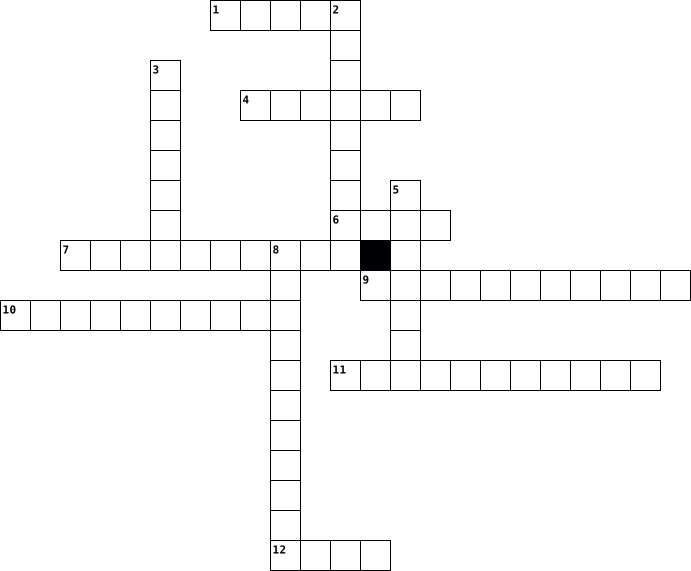
Across
- This mark most commonly separates non-essential clauses
- Modify verbs, adjectives, other adverb, phrases/clauses
- Expresses action; being or state of being
- Verbs that are being used as adjectives
- If a clause can stand alone as a sentence, it is _______
- Add this mark to make a word possessive
- Indicate relationships between words, phrases and clauses
- A person, place, thing, or idea
Down
- Modify nouns and pronouns
- To have a complete sentence, you need this and a verb
- Replaces a noun
- Time and location words
12 Clues: Replaces a noun • Time and location words • Modify nouns and pronouns • A person, place, thing, or idea • Verbs that are being used as adjectives • Add this mark to make a word possessive • Expresses action; being or state of being • To have a complete sentence, you need this and a verb • This mark most commonly separates non-essential clauses • ...
Verbs 2026-02-03

Across
- type of verb which serve to connect the subject of a sentence to a subject complement.
- indicates actions or states that will happen in the...
- any of the forms of a verb which show the time at which an action happened
- a common action verb
- verbs are the workhorses of language
- verbs work alongside main verbs to express mood or voice
Down
- they don't follow the standard rules of conjugation
- they don't require a direct object to complete their meaning
- the person or thing that performs the action of a verb or is joined to a description by a verb
- Words that express action
10 Clues: a common action verb • Words that express action • verbs are the workhorses of language • they don't follow the standard rules of conjugation • indicates actions or states that will happen in the... • verbs work alongside main verbs to express mood or voice • they don't require a direct object to complete their meaning • ...
Derek's EFL Grammar Crossword 2 2023-06-04

Across
- "I _ _ hungry."
- these kinds of words tell us something about nouns
- "be", "speak", and "run" are what kind of words?
- "you" is what kind of noun?
- a, an, _ _ _
- these words are people, places or things
- action words are these kinds of words
- "sea" is what kind of word?
Down
- these kinds of words describe verbs
- "see" is what kind of word?
- "very" is this kind of word
- "I _ _ to school five days a week."
- "pen" is this kind of word
13 Clues: a, an, _ _ _ • "I _ _ hungry." • "pen" is this kind of word • "see" is what kind of word? • "very" is this kind of word • "you" is what kind of noun? • "sea" is what kind of word? • these kinds of words describe verbs • "I _ _ to school five days a week." • action words are these kinds of words • these words are people, places or things • ...
Wortarten 2014-03-20

Across
- Wunsch-, Möglichkeitsform
- Aussageweise
- Beugung des Verbs
- Wirklichkeitsform
- Tatform
- Vergangenheit
- Zeit
- Handlungsrichtung
- Mehrzahl
- Grundbaustein der Sprache
Down
- Formänderung einiger Wörter
- Gegenwart
- Leideform
- Beugung des Substantives
- beschreibung von Form und bedeutung der Wörter
- Steigerung des Adjektivs
- Anzahl
- Einzahl
18 Clues: Zeit • Anzahl • Tatform • Einzahl • Mehrzahl • Gegenwart • Leideform • Aussageweise • Vergangenheit • Beugung des Verbs • Wirklichkeitsform • Handlungsrichtung • Beugung des Substantives • Steigerung des Adjektivs • Wunsch-, Möglichkeitsform • Grundbaustein der Sprache • Formänderung einiger Wörter • beschreibung von Form und bedeutung der Wörter
Wortarten 2014-03-21

Across
- Wirklichkeitsform
- Beugung des Substantives
- beschreibung von Form und bedeutung der Wörter
- Leideform
- Mehrzahl
- Vergangenheit
- Aussageweise
- Handlungsrichtung
Down
- Grundbaustein der Sprache
- Wunsch-, Möglichkeitsform
- Formänderung einiger Wörter
- Einzahl
- Beugung des Verbs
- Steigerung des Adjektivs
- Tatform
- Anzahl
- Zeit
- Gegenwart
18 Clues: Zeit • Anzahl • Einzahl • Tatform • Mehrzahl • Leideform • Gegenwart • Aussageweise • Vergangenheit • Wirklichkeitsform • Beugung des Verbs • Handlungsrichtung • Beugung des Substantives • Steigerung des Adjektivs • Grundbaustein der Sprache • Wunsch-, Möglichkeitsform • Formänderung einiger Wörter • beschreibung von Form und bedeutung der Wörter
Wortarten 2018-07-04

Across
- Tatform
- Gegenwart
- Vergangenheit
- Einzahl
- Beugung des Substantives
- Wunsch-, Möglichkeitsform
- Mehrzahl
- beschreibung von Form und bedeutung der Wörter
- Formänderung einiger Wörter
- Handlungsrichtung
Down
- Grundbaustein der Sprache
- Beugung des Verbs
- Zeit
- Aussageweise
- Wirklichkeitsform
- Leideform
- Steigerung des Adjektivs
- Anzahl
18 Clues: Zeit • Anzahl • Tatform • Einzahl • Mehrzahl • Gegenwart • Leideform • Aussageweise • Vergangenheit • Beugung des Verbs • Wirklichkeitsform • Handlungsrichtung • Beugung des Substantives • Steigerung des Adjektivs • Grundbaustein der Sprache • Wunsch-, Möglichkeitsform • Formänderung einiger Wörter • beschreibung von Form und bedeutung der Wörter
Grammar 2018-10-01

Across
- Case used before a gerund
- Punctuation used to separate two main clauses
- Words that express emotion
- "Beside" is this part of speech
- Case required when pronouns are used as subjects
Down
- Modifies a verb
- Notion that nouns should be balanced with nouns, verbs with verbs, etc.
- Clause that expresses a complete thought
- Phrase beginning with "to"
- Naming word
10 Clues: Naming word • Modifies a verb • Case used before a gerund • Words that express emotion • Phrase beginning with "to" • "Beside" is this part of speech • Clause that expresses a complete thought • Punctuation used to separate two main clauses • Case required when pronouns are used as subjects • Notion that nouns should be balanced with nouns, verbs with verbs, etc.
Descriptive Techniques 2022-12-05

Across
- Saying something is something else
- Words which describe how verbs are done
- Moving back in time to describe a memory
- Giving something human characteristics
Down
- Using the weather to create emotion (2)
- Action words
- Words that describe nouns
- A comparison that uses like or as
- People, places, or objects
- Anything to do with the senses
10 Clues: Action words • Words that describe nouns • People, places, or objects • Anything to do with the senses • A comparison that uses like or as • Saying something is something else • Giving something human characteristics • Using the weather to create emotion (2) • Words which describe how verbs are done • Moving back in time to describe a memory
Word Fun #1 2021-11-16

Across
- A language spoken using one's hands
- Words like "of, from, with, without, below"
- Words that are shortened like "can't, won't"
- Words that are a person, place, thing, or idea
- A language spoken in the USA
Down
- Words that join ideas like "but, and, so"
- Words that state action
- Words that describe verbs
- The number of letters in the English alphabet
- Words that replace nouns like "he, she, I, you"
- Words that describe nouns
- A language spoken in Latin America and the USA
12 Clues: Words that state action • Words that describe verbs • Words that describe nouns • A language spoken in the USA • A language spoken using one's hands • Words that join ideas like "but, and, so" • Words like "of, from, with, without, below" • Words that are shortened like "can't, won't" • The number of letters in the English alphabet • ...
Grammatical Concepts 2022-11-16

Across
- used for fact or unchanged situations
- first word of the condition
- used for cause and consequence
- part of a conditional with WILL or WOULD
- used for hypothetical situations
- verbs which do NOT contain -ED
Down
- tense used in the first conditional
- essential word in the result of the second conditional
- part of a conditional with the word IF
- tense used in the second conditional
- essential word in the result of the first conditional
- verbs containing -ED inflection
12 Clues: first word of the condition • used for cause and consequence • verbs which do NOT contain -ED • verbs containing -ED inflection • used for hypothetical situations • tense used in the first conditional • tense used in the second conditional • used for fact or unchanged situations • part of a conditional with the word IF • part of a conditional with WILL or WOULD • ...
Parts of Speech 2026-05-13

Across
- this kind of noun doesn't need to be capitalized
- words that tell HOW
- adding this to an adjective makes it an adverb
- number of nouns in this sentence: Julio and Emily like pizza.
- which one? It's such a PRETTY picture.
- action words, but also "state of being" and possession
- the correct response to "How are you?"
- people, places, and things
Down
- this kind of noun needs to be capitalized
- can be nouns and adjectives (green, blue, yellow, etc.)
- words that tell which or what kind
- T/F: verbs are always actions
- which one? We arrived PRETTY late.
- how annoying?
- how did he walk down the hall
- type of verb that is accompanied by a "main" one
16 Clues: how annoying? • words that tell HOW • people, places, and things • T/F: verbs are always actions • how did he walk down the hall • words that tell which or what kind • which one? We arrived PRETTY late. • which one? It's such a PRETTY picture. • the correct response to "How are you?" • this kind of noun needs to be capitalized • adding this to an adjective makes it an adverb • ...
starter unit english plus 2 2014-10-09

Across
- wf
- temat
- przedmiotyscisle
- siostrzenica
- rodzic
- dziecko
- wnuczek
- strona
- egzamin
- matkachrzestna
- geografia
- zona
- pismo
- blizniak
- czasowniki
Down
- cwiczenie
- informatyka
- surowy
- pracadomowa
- wujek
- salagimnastyczna
- mily
- corka
- ojczym
- siostrzeniec
- notatki
- maz
- staranny
- francuski
- nauczyciel
30 Clues: wf • maz • mily • zona • temat • wujek • corka • pismo • surowy • ojczym • rodzic • strona • dziecko • wnuczek • egzamin • notatki • staranny • blizniak • cwiczenie • geografia • francuski • nauczyciel • czasowniki • informatyka • pracadomowa • siostrzenica • siostrzeniec • matkachrzestna • przedmiotyscisle • salagimnastyczna
Language Test #6 Review 2023-11-28

Across
- a word that modifies a verb, an adjective, or another adverb
- a word that describes a noun
- a word that takes the place of a noun
- what must agree and be in the right form (possessive etc.)
- a modifying phrase consisting of a preposition and its object.
- words that describe a noun that can include adjectives, verbs and nouns themselves
- what must match nouns as plural/singular, and watch out for irregular verbs
- words we use before nouns or pronouns to show their relationship with other words in the sentence. Example: behind (the tree), across (Maple Street), down (the stairs)
Down
- prepositional phrases as what asks does it describe a noun?
- action, state of being, or helping
- express strong emotions. Followed by an exclamation point or a comma depending on the strength of emotion. Examples: Wow!, Yuck!, Yes, Holy cow!
- connects words and phrases; always followed by a comma, remember FANBOYS: for, and, nor, but, or, yet, so
- a person, place, thing, or idea
- as adverbs ask does it describe an adjective, verb, or another adverb?
14 Clues: a word that describes a noun • a person, place, thing, or idea • action, state of being, or helping • a word that takes the place of a noun • what must agree and be in the right form (possessive etc.) • prepositional phrases as what asks does it describe a noun? • a word that modifies a verb, an adjective, or another adverb • ...
English 3 Module 1 Vocabulary 2023-02-09

Across
- names a person, place, thing, or idea
- often called linking verbs because they link the subject of the sentence with information about it
- refers, to a specific person, place, thing, or idea
- a verb that can be felt by the senses
- the eight basic types of English words
- modifies a noun
- expresses emotions
- joins words or groups of words
Down
- take the place of a noun
- a verb that you cannot see; it commonly refers to verbs that describle feeling
- show action or being
- a mnemonic device used to remember the seven most common conjunction
- refers to any person, place, thing, or idea
- modifies a verb, adjective, or adverb
- show in relationships
15 Clues: modifies a noun • expresses emotions • show action or being • show in relationships • take the place of a noun • joins words or groups of words • names a person, place, thing, or idea • a verb that can be felt by the senses • modifies a verb, adjective, or adverb • the eight basic types of English words • refers to any person, place, thing, or idea • ...
POGAW Grammar 2026-03-14

Across
- Relates a noun or pronoun to another word
- Formed by adding -ing to a verb
- A verb that transfers the action to another word in the sentence
- A group of things
- Time x Form of verbs
- Modifies nouns or pronouns
- Names a person, place, thing, activity or idea
- Modifies verbs, adjectives or adverbs
Down
- contains a subject/verb but cannot stand alone
- Adjectives that answer "whose"
- Expresses sudden emotion or commands
- A word that does an action, shows a state of being, helps another word or links two words together
- Form of verb that contains "to" plus the verb
- Used to connect words, phrases or clauses
- Can be active or passive
- Adjectives that answer "what kind"
- Replaces a noun in order to avoid repetition
17 Clues: A group of things • Time x Form of verbs • Can be active or passive • Modifies nouns or pronouns • Adjectives that answer "whose" • Formed by adding -ing to a verb • Adjectives that answer "what kind" • Expresses sudden emotion or commands • Modifies verbs, adjectives or adverbs • Relates a noun or pronoun to another word • Used to connect words, phrases or clauses • ...
Vocab 11 and 12 2023-04-12

Across
- ____ verbs are very fun verbs
- I used _____ to read my friends mind
- In comedy problems are _____
- She got a longer say then me, my say was ____
- The butterfly's had a ______
- Some people say she is different she is ____
- The cup I drank I out of was _____
Down
- I ______ my way from a situation
- I used a _____ for my travel
- I did extra credit so I could ____ in my class
- He is normally a good student but today he ___
- There was a _____ at the funeral
- The litte girl had a ____ in the store
- I only sometimes like to go to vollyball its _____
- We ______ at my office
- The _____ was very bad, it smelled like trash
16 Clues: We ______ at my office • I used a _____ for my travel • In comedy problems are _____ • The butterfly's had a ______ • ____ verbs are very fun verbs • I ______ my way from a situation • There was a _____ at the funeral • The cup I drank I out of was _____ • I used _____ to read my friends mind • The litte girl had a ____ in the store • ...
MID TERM Chapters 1-10 2017-04-16
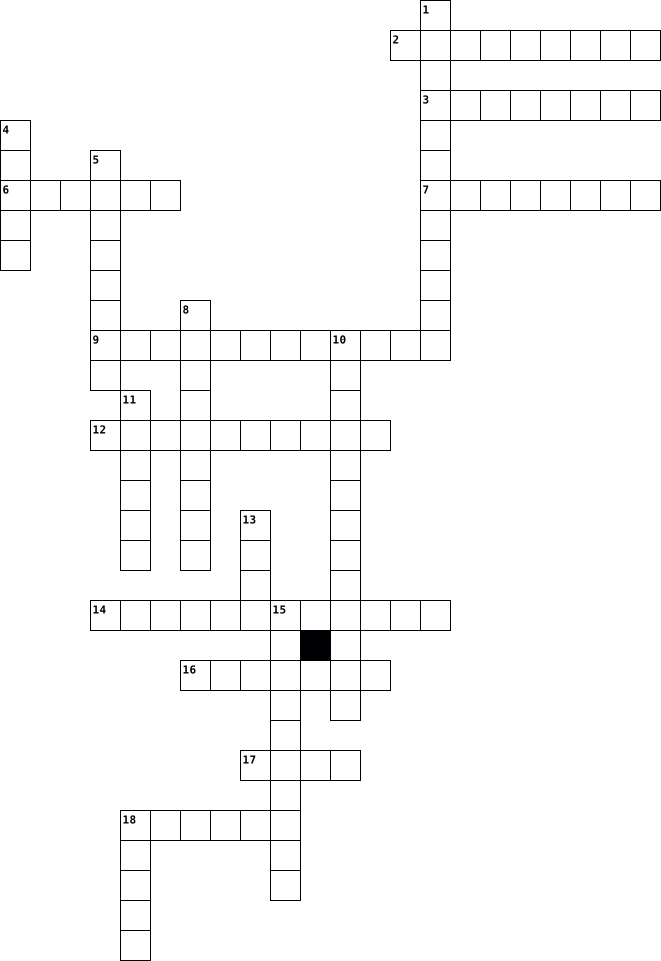
Across
- words that describe or limit
- words used in place of nouns
- describe or limit verbs, adjectives and other adverbs
- special group of adjectives
- shortened forms of subjects and verbs
- describe nouns and pronouns
- words that connect other words or groups
- gives an order or makes a direct request
- expresses an action or state of being
- group of related words including a subject and a verb
Down
- introduced by words such as them or has
- group of related words without a subject and verb
- groups of words that express complete thoughts
- makes an assertion and ends with period
- word that expresses strong feelings but are usually unconnected grammatically to the sentence
- word combinations that are unique to that language
- refers to person place or thing
- noun pronoun or adjective that renames or describes the subject
- indicates a pause
19 Clues: indicates a pause • special group of adjectives • describe nouns and pronouns • words that describe or limit • words used in place of nouns • refers to person place or thing • shortened forms of subjects and verbs • expresses an action or state of being • introduced by words such as them or has • makes an assertion and ends with period • words that connect other words or groups • ...
Instructions 2020-07-01

Across
- things you use to tell a person what to do
- the finishing paragraph
- mini headings telling the reader what that pert is about
- title
Down
- words describing verbs
- tells the reader what it’s about
- bossy verbs (the proper way of saying it; exclude the verbs)
7 Clues: title • words describing verbs • the finishing paragraph • tells the reader what it’s about • things you use to tell a person what to do • mini headings telling the reader what that pert is about • bossy verbs (the proper way of saying it; exclude the verbs)
1 2023-10-22

Across
- A verb form used to create verb tenses (e.g., "swimming" in "I am swimming").
- Verb Verbs that do not follow the typical conjugation patterns.
- Verb Auxiliary verbs that express necessity, possibility, or permission (e.g., can, could, must).
- A word or phrase to which a pronoun refers.
- The variation of verbs to indicate tense, person, number, and mood.
- Words that are spelled the same but have different meanings and pronunciations.
- Article The word "the," used to specify a particular item.
- A verb form ending in "ing" that functions as a noun.
Down
- A form of an adjective or adverb used to compare three or more items.
- Marks used to separate and clarify the elements of written language.
- Words that sound the same but have different meanings and spellings (e.g., "to," "too," "two").
- The base form of a verb, often preceded by "to."
12 Clues: A word or phrase to which a pronoun refers. • The base form of a verb, often preceded by "to." • A verb form ending in "ing" that functions as a noun. • Article The word "the," used to specify a particular item. • Verb Verbs that do not follow the typical conjugation patterns. • The variation of verbs to indicate tense, person, number, and mood. • ...
Example Milestone Narrative Review 2023-04-18
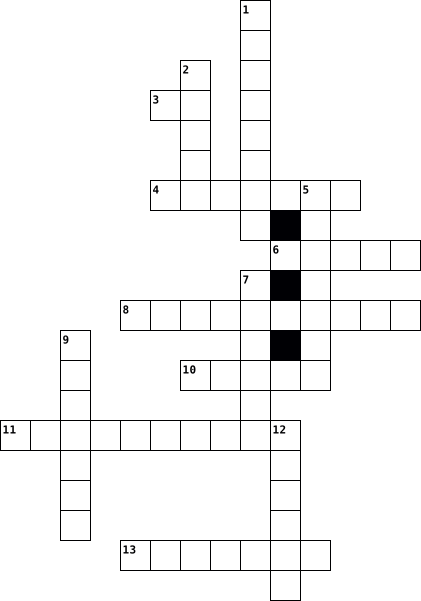
Across
- infinitives always have the word ____ plus a verb.
- ____________ are words that look like verbs but function like other parts of speech.
- gerunds are words that look like verbs but function as _______ in a sentence.
- participles are words that look like verbs but function like adjectives.
- a noun is a person, place, or ________.
- Performing in front of the crowd made her happy. What is the gerund in the sentence?
- The smiling chef cooked an award winning dinner. What is the participle in the sentence?
Down
- adjectives _____________or modify nouns and pronouns.
- He had to use his computer to complete the assignment. What is the infinitive (two words) in the sentence?
- Looking into the window, the thief examined the house. What is the participle in the sentence?
- a verb shows _________ or what someone is doing.
- The detective had to track down the thief. What is the infinitive (two words) in the sentence..
- The young teenager loved gaming. What is the gerund in the sentence?
13 Clues: a noun is a person, place, or ________. • a verb shows _________ or what someone is doing. • infinitives always have the word ____ plus a verb. • adjectives _____________or modify nouns and pronouns. • The young teenager loved gaming. What is the gerund in the sentence? • participles are words that look like verbs but function like adjectives. • ...
intro to verbs sheet 2023-11-02

Across
- example of a main verb
- what kind of word must be to the left
- form of verbs that are not limited by person,
Down
- modify verbs, and they are often near verbs, but they are NOT verbs
- what do gernurds end in
- a form of verbs that are not limited by person, number, tense, mood, and voice.
6 Clues: example of a main verb • what do gernurds end in • what kind of word must be to the left • form of verbs that are not limited by person, • modify verbs, and they are often near verbs, but they are NOT verbs • a form of verbs that are not limited by person, number, tense, mood, and voice.
Grammatikalische Grundbegriffe - Franzi 2018-07-11
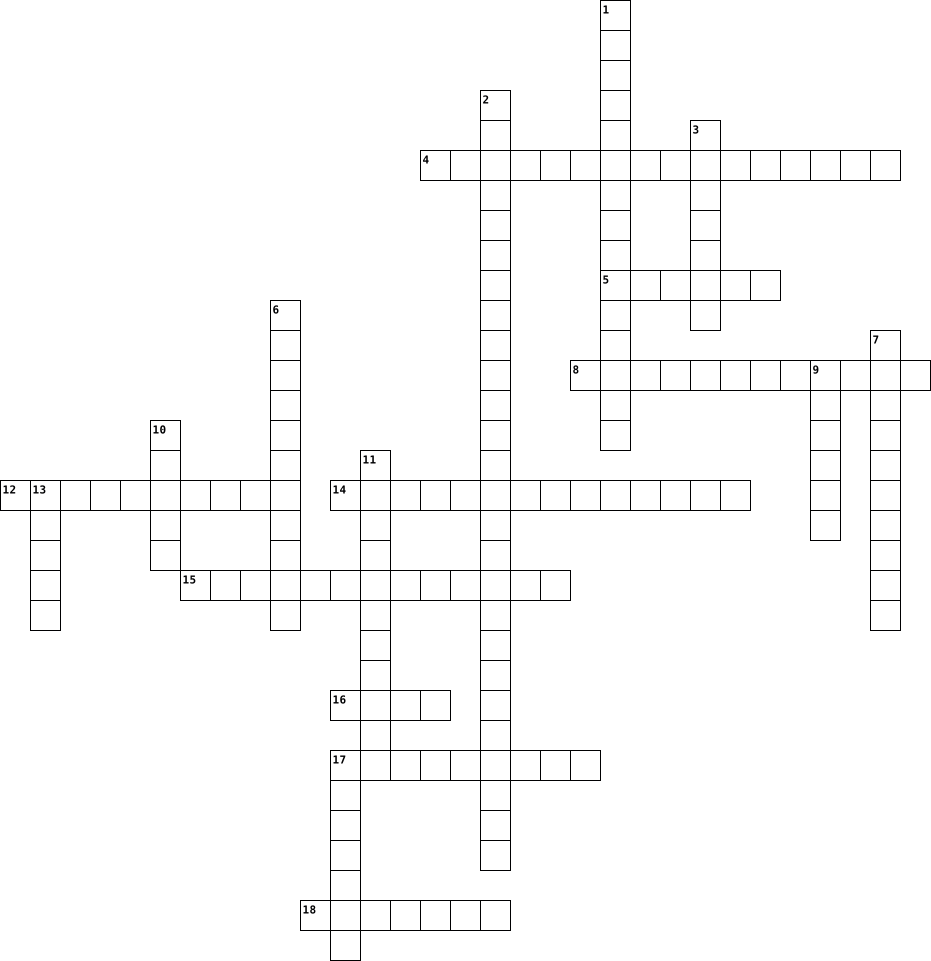
Across
- persönliches Fürwort
- Dieses Satzglied ergänzt das Prädikat.
- Form des Verbs, die angibt, wie viele Personen zu einer bestimmten Zeit etwas tut.
- (männlich) z.B. der Hund
- gebeugte Personalform des Verbs (2 Wörter)
- Gibt wieder,was eine andere Person gesagt hat. (2 Wörter)
- Wortart, die bezeichnet was eine Person tut
- Satz, der nicht allein stehen kann, sondern immer von einem Hauptsatz abhängig ist.
- Drückt aus, dass ein Geschehen in der Zukunft abläuft und dort als abgeschlossen angesehen wird.
Down
- Ergänzung im 4. Fall (Wen oder was?)
- Pia erklärt: "Leider bin ich krank" (2 Wörter)
- Begleiter
- Wörter miteinem geminsamen Wortstamm bilden eine...
- Beschreibt eine Tätigkeit, die vergangen ist.
- 1. Zukunft
- Wörter bestehen aus einer oder mehreren...
- Wird in Anführungszeichen gesetzt und vor dem Begleitsatz durch Doppelpunkt bzw. Komma getrennt (2 Wörter)
- Steht in einem Satz das Verb im..., wird das Geschehen aus der Sicht des Handelnden gesehen.
- (sachlich) z.B. das Tier
19 Clues: Begleiter • 1. Zukunft • persönliches Fürwort • (männlich) z.B. der Hund • (sachlich) z.B. das Tier • Ergänzung im 4. Fall (Wen oder was?) • Dieses Satzglied ergänzt das Prädikat. • Wörter bestehen aus einer oder mehreren... • gebeugte Personalform des Verbs (2 Wörter) • Wortart, die bezeichnet was eine Person tut • Beschreibt eine Tätigkeit, die vergangen ist. • ...
How to describe language 2015-05-15

Across
- Ought is an example of this type of auxiliary verb.
- Object that refers to things affected by the verb.
- Word used to connect sentences and clauses.
- ...is an adverb of manner.
- Whose is a...pronoun.
- Word used to describe an action or state.
- A...is used with the verbs seem, be and look.
- Verbs that take objects are...
- There are three types of adverbials:time, manner and...
Down
- Post office is an example of this type of noun.
- In 'John sat down.' down is a/an...
- These, some and the are examples of...
- Object that refers to the person benefited from the action.
- News is an example of ...noun.
- Family is an example of this type of noun.
- Friendly is an...
16 Clues: Friendly is an... • Whose is a...pronoun. • ...is an adverb of manner. • News is an example of ...noun. • Verbs that take objects are... • In 'John sat down.' down is a/an... • These, some and the are examples of... • Word used to describe an action or state. • Family is an example of this type of noun. • Word used to connect sentences and clauses. • ...
Vocab 11 and 12 2023-04-12

Across
- She got a longer say then me, my say was ____
- He is normally a good student but today he ___
- The _____ was very bad, it smelled like trash
- The litte girl had a ____ in the store
- I ______ my way from a situation
- I used a _____ for my travel
- Some people say she is different she is ____
- I did extra credit so I could ____ in my class
Down
- I only sometimes like to go to vollyball its _____
- We ______ at my office
- The cup I drank I out of was _____
- There was a _____ at the funeral
- The butterfly's had a ______
- ____ verbs are very fun verbs
- I used _____ to read my friends mind
- In comedy problems are _____
16 Clues: We ______ at my office • The butterfly's had a ______ • I used a _____ for my travel • In comedy problems are _____ • ____ verbs are very fun verbs • There was a _____ at the funeral • I ______ my way from a situation • The cup I drank I out of was _____ • I used _____ to read my friends mind • The litte girl had a ____ in the store • ...
tts inggris bu neni 2023-11-24

Across
- auxiliary verbs used in with wh-words questions
- week direct sentence from “the previous”
- her , him , them shows the word
- speech direct speech change in to
- these changed to indirech speech to be
Down
- statement using conjunctions
- indirect sentence of “here”
- give one example of verb 3
- negative commands use patterns
- name one the verbs without wh-words questions auxillary
10 Clues: give one example of verb 3 • indirect sentence of “here” • statement using conjunctions • negative commands use patterns • her , him , them shows the word • speech direct speech change in to • these changed to indirech speech to be • week direct sentence from “the previous” • auxiliary verbs used in with wh-words questions • ...
MID TERM 1-10 chapters 2017-04-11
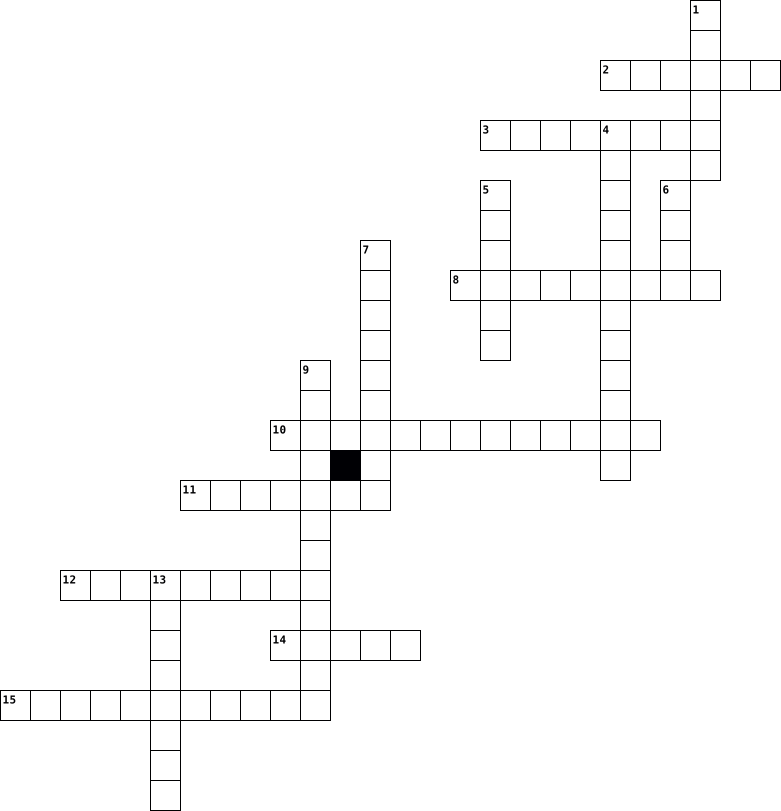
Across
- group of related words without a subject and verb
- special category of adjectives
- all letters or than vowels
- words that express strong feelings but are usually unconnected
- describe or limit verbs, adjectives and other adverbs
- makes an assertion and ends with period
- indicates a pause
- rename describe or explain preceding nouns or pronouns
Down
- group of related words including a subject and a verb
- words that connect other words or groups of words
- word combinations that are unique to that language
- refers to a person place or thing
- words that describe or limit
- shortened forms of subjects and verbs
- meaning that it falls at the end of a sentence
15 Clues: indicates a pause • all letters or than vowels • words that describe or limit • special category of adjectives • refers to a person place or thing • shortened forms of subjects and verbs • makes an assertion and ends with period • meaning that it falls at the end of a sentence • group of related words without a subject and verb • ...
Grammar crossword 2021-11-04

Across
- verbs that are used in a verb phrase (meaning, used with a second verb) to show tense
- a word used to describe an action, state, or occurrence
- the name of a particular person, place, or thing and that usually begins with a capital letter.
- a pronoun that introduces a clause modifying an antecedent
- a noun denoting an idea, quality, or state rather than a concrete object.
- Is refers to name a person, place, thing or animal
- is a verb that links (connects) the subject of the sentence to information about that subject
Down
- verbs
- Is a word that modifies the noun
- comes before all other adjectives in the noun phrase
- a noun that names a class of persons or things or any individual of a class
- physical object in the real world
- an adjective, typically capitalized, derived from a proper noun.
- a word or phrase that modifies or qualifies an adjective, verb, or other adverb or a word group,
- a word that can function by itself as a noun phrase and that refers either to the participants in the discourse or to someone or something mentioned elsewhere in the discourse
15 Clues: verbs • Is a word that modifies the noun • physical object in the real world • Is refers to name a person, place, thing or animal • comes before all other adjectives in the noun phrase • a word used to describe an action, state, or occurrence • a pronoun that introduces a clause modifying an antecedent • an adjective, typically capitalized, derived from a proper noun. • ...
Parts of Speech Crossword Puzzle 2024-04-09

Across
- words that describes verbs
- adjective 3 words that can be used before a noun
- a sentence that asks a question
- a person, place, or thing
- verb when there are two verbs in a sentence, the first verb is this
- words that sound alike but have different meanings and spelled differently
Down
- a sentence that tells a statement
- a word that shows action
- words that describe nouns
- shows how a noun or pronoun is related to another word in a sentence
- take the place of the noun
- not a complete sentence
- noun name of a special person, place, or thing
- a sentence that shows excitement or emotion
14 Clues: not a complete sentence • a word that shows action • words that describe nouns • a person, place, or thing • words that describes verbs • take the place of the noun • a sentence that asks a question • a sentence that tells a statement • a sentence that shows excitement or emotion • noun name of a special person, place, or thing • ...
Subjects 2024-11-10

Across
- coding
- Shakespeare
- experiments
- Pablo Picasso
- old wars
Down
- trumpet
- Don Quijote
- baguette
- -ing verbs
- maps
- geometry
- tennis
12 Clues: maps • coding • tennis • trumpet • baguette • geometry • old wars • -ing verbs • Don Quijote • Shakespeare • experiments • Pablo Picasso
Escape the Grammar Gestapo 2021-04-10
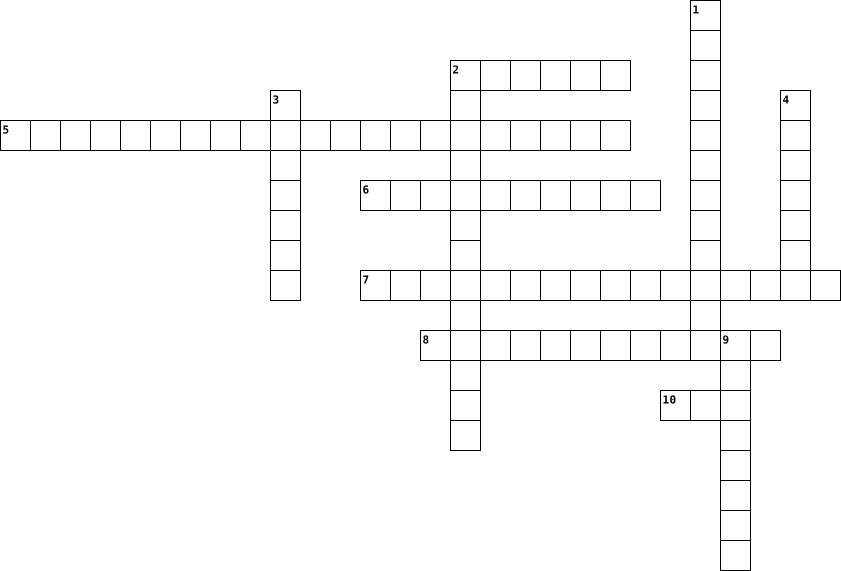
Across
- a word class that describes verbs, adjectives or complete sentences
- kongruens på engelsk
- The US is a nation of...
- America's history as a settler colony
- nutid
- The author of "The Tell-Tale Heart"
Down
- a genre where detectives solve crimes
- a belief that everyone can achieve success through hard work
- verbs that end on -ed in the past tense
- the environment and surroundings in a story
- the world's most famous detective
11 Clues: nutid • kongruens på engelsk • The US is a nation of... • the world's most famous detective • The author of "The Tell-Tale Heart" • a genre where detectives solve crimes • America's history as a settler colony • verbs that end on -ed in the past tense • the environment and surroundings in a story • a belief that everyone can achieve success through hard work • ...
Grammar crossword 2021-11-04

Across
- Is a word that modifies the noun
- verbs
- an adjective, typically capitalized, derived from a proper noun.
- the name of a particular person, place, or thing and that usually begins with a capital letter.
- a noun that names a class of persons or things or any individual of a class
- a word or phrase that modifies or qualifies an adjective, verb, or other adverb or a word group,
- a noun denoting an idea, quality, or state rather than a concrete object.
- verbs that are used in a verb phrase (meaning, used with a second verb) to show tense
- physical object in the real world
- a word used to describe an action, state, or occurrence
Down
- a pronoun that introduces a clause modifying an antecedent
- is a verb that links (connects) the subject of the sentence to information about that subject
- Is refers to name a person, place, thing or animal
- a word that can function by itself as a noun phrase and that refers either to the participants in the discourse or to someone or something mentioned elsewhere in the discourse
- comes before all other adjectives in the noun phrase
15 Clues: verbs • Is a word that modifies the noun • physical object in the real world • Is refers to name a person, place, thing or animal • comes before all other adjectives in the noun phrase • a word used to describe an action, state, or occurrence • a pronoun that introduces a clause modifying an antecedent • an adjective, typically capitalized, derived from a proper noun. • ...
Grammar crossword 2021-11-04

Across
- Is a word that modifies the noun
- verbs
- an adjective, typically capitalized, derived from a proper noun.
- the name of a particular person, place, or thing and that usually begins with a capital letter.
- a noun that names a class of persons or things or any individual of a class
- a word or phrase that modifies or qualifies an adjective, verb, or other adverb or a word group,
- a noun denoting an idea, quality, or state rather than a concrete object.
- verbs that are used in a verb phrase (meaning, used with a second verb) to show tense
- physical object in the real world
- a word used to describe an action, state, or occurrence
Down
- a pronoun that introduces a clause modifying an antecedent
- is a verb that links (connects) the subject of the sentence to information about that subject
- Is refers to name a person, place, thing or animal
- a word that can function by itself as a noun phrase and that refers either to the participants in the discourse or to someone or something mentioned elsewhere in the discourse
- comes before all other adjectives in the noun phrase
15 Clues: verbs • Is a word that modifies the noun • physical object in the real world • Is refers to name a person, place, thing or animal • comes before all other adjectives in the noun phrase • a word used to describe an action, state, or occurrence • a pronoun that introduces a clause modifying an antecedent • an adjective, typically capitalized, derived from a proper noun. • ...
Estar and Gerunds Crossword 2020-11-19

Across
- Tú ________ corriendo en práctica. (estar)
- Vosotros ________ caminando a clase. (estar)
- What four letters do you add to ¨ar¨ verbs to make them into the gerund form?
- What four letters do you add to ¨er¨ and ¨ir¨ verbs to make them into the gerund form?
- The gerund form of the verb ¨hablar¨ is ______
- Yo estoy _________ a la televisión. (mirar)
- Yo _______ en clase. (estar)
- What is the gerund from of the verb ¨comer¨
Down
- Tú estás _________ la música. (escuchar)
- Los estudiantes están __________. (estudiar)
- Ellos ________ en la clase de ciencias. (estar)
- Él ________ practicando. (estar)
- Las chicas están ___________ comida. (comprar)
- Nosotros ___________ hablando. (estar)
14 Clues: Yo _______ en clase. (estar) • Él ________ practicando. (estar) • Nosotros ___________ hablando. (estar) • Tú estás _________ la música. (escuchar) • Tú ________ corriendo en práctica. (estar) • Yo estoy _________ a la televisión. (mirar) • What is the gerund from of the verb ¨comer¨ • Los estudiantes están __________. (estudiar) • ...
Parts of Speech 2024-04-25

Across
- a main part of speech that is often used to describe or indicate an action
- the part of speech that names a person, place, thing, or idea
- words that connect or link phrases, sentences, clauses, or words together
- a word used to describe a verb
- a word that tells you where or when something is in relation to something else
Down
- a type of word that replaces a noun
- verbs help main verbs express an action or a state
- words that express strong emotions or sudden feelings, like joy, grief, suffering, and regret
- words that are used to describe nouns
- verbs tell what something or someone is (am, is, are, was, were, seem, seems, seemed are examples)
10 Clues: a word used to describe a verb • a type of word that replaces a noun • words that are used to describe nouns • verbs help main verbs express an action or a state • the part of speech that names a person, place, thing, or idea • words that connect or link phrases, sentences, clauses, or words together • ...
tts bahasa inggris xg 2023-11-24

Across
- negative commands use patterns
- statement using conjunctions
- speech direct speech change in to
- these changed to indirech speech to be
- name one the verbs without wh-words questions auxillary
Down
- her , him , them shows the word
- week direct sentence from “the previous”
- indirect sentence of “here”
- give one example of verb 3
- auxiliary verbs used in with wh-words questions
10 Clues: give one example of verb 3 • indirect sentence of “here” • statement using conjunctions • negative commands use patterns • her , him , them shows the word • speech direct speech change in to • these changed to indirech speech to be • week direct sentence from “the previous” • auxiliary verbs used in with wh-words questions • ...
First day! 2013-09-10
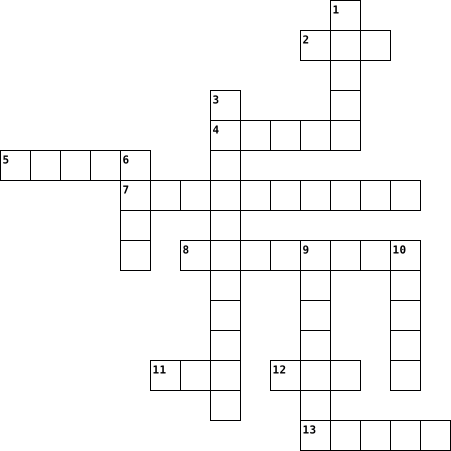
Across
- people
- pronouns
- finally
- list
- lots
- people
- wow
- yum
Down
- adverbs
- lessons
- time
- time
- fun
13 Clues: fun • wow • yum • time • list • lots • time • people • people • adverbs • lessons • finally • pronouns
Weak Verbs 2022-11-30

Across
- these are those that use a dental suffix in the past or "preterite" tense, either -t- or -d-.
- in this language there were five main classes of weak verbs: • Class I verbs were formed with a suffix -j- (-i- in the past), e.g. Gothic satjan "to set" (Old English settan), sandjan "to send" (Old English sendan), sōkjan "to seek" (Old English sēcan)
- it descends from Dutch,and in it the past tense has fallen out of use altogether, and the past participle is marked only with the prefix ge-.
- the situation of this language was similar to Icelandic, but intervocalic /ð/ eventually disappeared.
- in this language the dental is always /t/ and always spelled ⟨t⟩ because of the third phase of the High … consonant shift (d→t).
- in this language the dental was originally a voiced dental fricative /ð/. It is preserved as such after vowels, voiced fricatives and /r/ but has been hardened to a stop /d/ after nasals and /l/, and has been devoiced to /t/ after voiceless consonants and in some other cases (in most Old Norse texts, the alternation is already found in heavy roots, but the light ones preserve /ð/).
Down
- verbs are a class of verbs which have a present tense in the form of a strong preterite and a past tense like the past of a weak verb.
- In the Germanic languages weak verbs are by far the largest group of verbs, are therefore often regarded as…
- these languages developed further tenses periphrastically, that is, using auxiliary verbs, but the constituent parts of even the most elaborate periphrastic constructions are still only in either present or preterite tenses (or non finite-forms: cf I would have been doing, an English conditional perfect progressive with would in the preterite, the other three parts being non-finite).
9 Clues: these are those that use a dental suffix in the past or "preterite" tense, either -t- or -d-. • the situation of this language was similar to Icelandic, but intervocalic /ð/ eventually disappeared. • In the Germanic languages weak verbs are by far the largest group of verbs, are therefore often regarded as… • ...