
verbs Crossword Puzzles
Job Search Vocab 2024-02-26

Across
- I should choose strong action ________ to use in my resume.
- A division of an organization that handles hiring, administration, benefits, training and more!
- These are skills that are not taught that you acquire throughout life.
- The abbreviation for human resources.
- A one page business letter you submit with a job application to persuade a company to hire you.
- The lowest amount you can be paid per hour legally.
- Being treated unfairly by an employer or coworker due to race, religion, sexual orientation, gender identity, age, and more!
Down
- People a potential employer will call to verify yours skills, abilities, and character.
- The verbs in my resume should match the verbs in the ______ posting.
- The actual amount of money you can spend after all deductions have been taken out of your paycheck.
- A formal meeting for a potential employer to see if you are a fit for the company.
- If I do not have work experience, I can include ______________ experience on my resume.
- A document you create to present your background, skills, accomplishments, education, experience, and more.
- The amount of money you make before any deductions are taken out of your paycheck.
- The AR minimum wage is how much per hour?
- These are skills that are related specifically to a job.
16 Clues: The abbreviation for human resources. • The AR minimum wage is how much per hour? • The lowest amount you can be paid per hour legally. • These are skills that are related specifically to a job. • I should choose strong action ________ to use in my resume. • The verbs in my resume should match the verbs in the ______ posting. • ...
reflexive verbs crossword 2022-05-23

Across
- to shower
- to wash
- towel
- to leave
- kitchen
- to shave
- always
- to fall asleep
- pillow
- to get up
Down
- bed
- breakfast
- to put on makeup
- never
- verbs that always end in -se
- to brush teeth
- early
17 Clues: bed • towel • never • early • always • pillow • to wash • kitchen • to leave • to shave • to shower • breakfast • to get up • to brush teeth • to fall asleep • to put on makeup • verbs that always end in -se
Poetic Terms 2015-11-12

Across
- / What is hair/ bear and face/space an example of?
- / When you give an object human characteristics
- / Comparing an object to something else
- / Word class - describing words
- / Word class - objects and things
- / A comparison, using the words as or like
Down
- language / When a word conveys strong feelings
- / Word class - words which describe verbs
- / What is "Billy's big bike" an example of?
- / The name for a group of lines in a poem. Otherwise known as the verse
- / A word which is spelt like it sounds
- / Word class - Action words
- / What is "she sells sea shells" an example of?
13 Clues: / Word class - Action words • / Word class - describing words • / Word class - objects and things • / A word which is spelt like it sounds • / Comparing an object to something else • / Word class - words which describe verbs • / A comparison, using the words as or like • / What is "Billy's big bike" an example of? • language / When a word conveys strong feelings • ...
ENGLISH PUZZLE-1 2019-06-18

Across
- surprising
- appreciate
- once in a blue moon
- bad-looking
- limited
- substitute
- safe
Down
- used in place of noun and pronoun
- look
- group of singers
- strange
- naming thing
- perfect
- beautiful
- angry
- used to qualify verbs
16 Clues: look • safe • angry • strange • perfect • limited • beautiful • surprising • appreciate • substitute • bad-looking • naming thing • group of singers • once in a blue moon • used to qualify verbs • used in place of noun and pronoun
Affix Vocabulary/Grammar Unit 7 Review 2021-01-12

Across
- The prefix INTER- means __________.
- The word _______ is a hint for remembering the conjunctions for, and, nor, but, or, yet, and so.
- The prefix that means half or partly.
- Nouns that are specific and have to be capitalized are called __________ nouns.
- A word that describes a noun is called an ____________.
- A word that can take the place of a noun is known as a ___________.
- The prefix RE- means ______ or again.
- Verbs that describe a state of existence, such as is or was, are called __________ verbs.
- Words that connect other words, phrases, or clauses together are called _________.
- The root word LOG means _________ or word.
- Any word that is a person, place, or thing.
- The prefix POST- means ________.
Down
- A word that describes a verb is called an ____________.
- Part of speech that shows relationships between things, such as location, time, or direction.
- a clause that can not stand as a sentence on its own is called ____________.
- The type of affix that adds to the beginning of a word and changes the meaning.
- The base meaning of a word, that affixes can be added to, is called the ________ of the word.
- The prefix SUPER- means _________ or over.
- Words such as run, jump, and dance are examples of __________ verbs.
- group of words containing a subject and verb
- The prefix UN- means _________.
- The prefix that means many.
- The prefix that means together, with, or same.
- The prefix MONO- means __________.
- The prefix TRI- means _________.
- The type of affix that adds to the end of a word and changes the meaning.
26 Clues: The prefix that means many. • The prefix UN- means _________. • The prefix TRI- means _________. • The prefix POST- means ________. • The prefix MONO- means __________. • The prefix INTER- means __________. • The prefix that means half or partly. • The prefix RE- means ______ or again. • The prefix SUPER- means _________ or over. • The root word LOG means _________ or word. • ...
Crossword puzzle 2023-05-23

Across
- To persuade someone with facts.
- "am", "is", "___" are simple present forms of the verb to be.
- ___________ in jobs interviews are phrases commonly used in an interview.
- A truthful person.
- To raise something.
- A public road in a city or town with houses on both sides.
- "have", "do, "will" are examples of _________ verbs.
- Words that usually end in "–er" and are used to compare to things.
- "The shoes are _____ the table"
- A suggestion or recommendation.
- We use this preposition to talk about months, years, decades.
- What are the words "good-bye" or "bye-bye"?
- An area where people live and interact with each other.
- A document made by candidates to show their qualifications, education and experience.
Down
- Instructions on how to reach a destination.
- Part of a large organization.
- We use _______ adverbs to describe how often something happens.
- "________ verbs" are verbs we use in a business environment.
- Characteristics of a person.
- To leave a job.
- What are the words "good morning" or "hi!"?
- Words that usually end in "–est" and are used to stand out something amongst a group because of a certain remarkable characteristic.
- A graphic representation of an area.
- These are words used to describe people or things.
- A word that connects the ideas of two phrases.
- A conversation between an employee and a candidate to ask questions about them.
- "in", "on", "at" are examples of ____________.
- Frequency adverb for something that happens 100% of the time.
- ________ are words we use to make inquiries.
- "The sky is _____ us"
30 Clues: To leave a job. • A truthful person. • To raise something. • "The sky is _____ us" • Characteristics of a person. • Part of a large organization. • To persuade someone with facts. • "The shoes are _____ the table" • A suggestion or recommendation. • A graphic representation of an area. • Instructions on how to reach a destination. • What are the words "good morning" or "hi!"? • ...
Crucigrama-Unidad 2-Lección 2 2023-03-04

Across
- nail
- to be
- to wake up
- to be in a hurry
- generally
- to take a bath
- wrist
- shoulder
- finally
- to get up
Down
- to take a shower
- to be sleepy
- routine
- to shave oneself
- to turn off the light
- used to express reflexive verbs
- sometimes
- toothbrush
- towel
- first
20 Clues: nail • to be • towel • wrist • first • routine • finally • shoulder • sometimes • generally • to get up • to wake up • toothbrush • to be sleepy • to take a bath • to take a shower • to shave oneself • to be in a hurry • to turn off the light • used to express reflexive verbs
Final Prep - Comp 2023-03-22
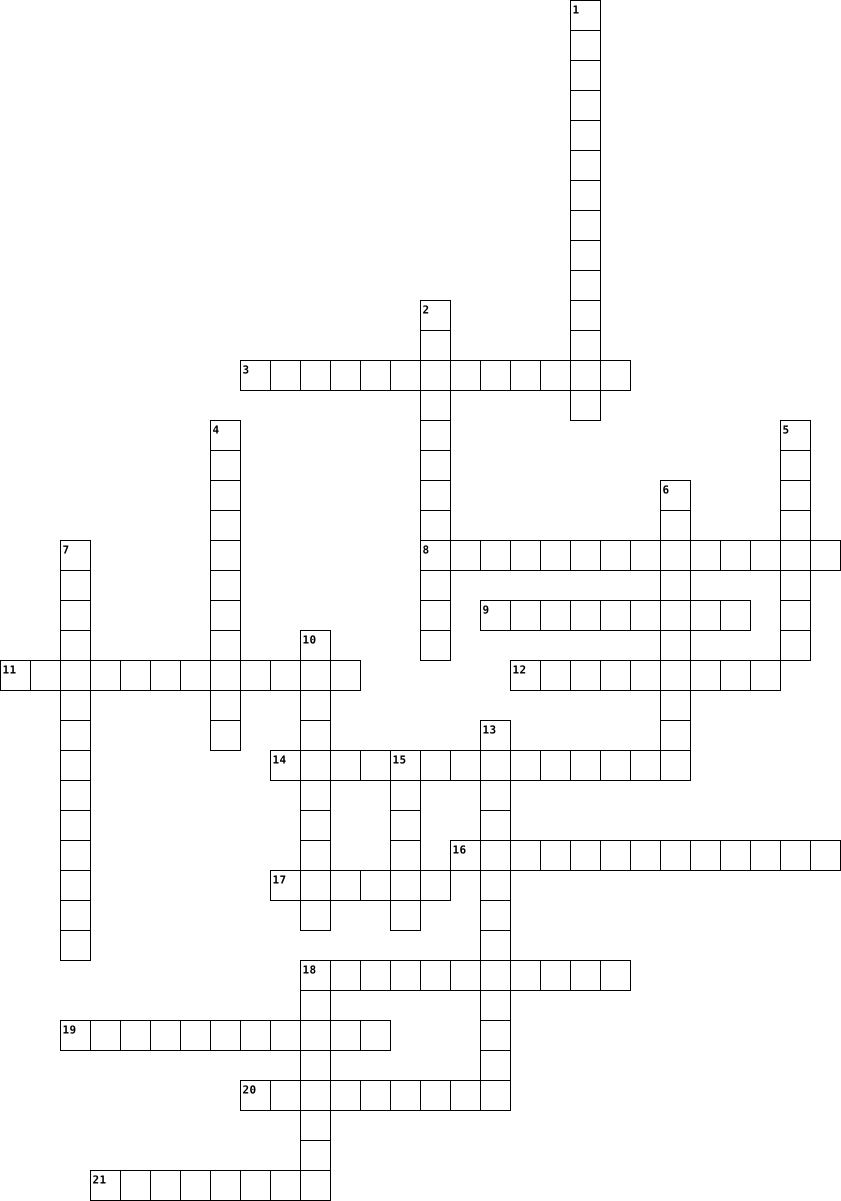
Across
- join equivalent structures, such as two or more nouns, pronouns, verbs, adjectives, adverbs, prepositions, conjunctions, phrases, or clauses
- express surprise or emotions and they often stand alone
- take the place of nouns or other words functioning as nouns so you don’t have to repeat words that have already been mentioned
- join equal elements and they come in pairs
- introduce dependent clauses and relate the dependent clause to the rest of the sentence
- (this, that, these, those) identify specific nouns
- connect words or groups of words to each other and tell something about the relationship between these words
- move the meaning of a sentence along by showing action, occurrence, or being
- modify nouns and pronouns, usually describing, identifying, or quantifying those words
- personal pronouns that indicate ownership
- refer to specific persons or things
- is a group of words that lacks a subject or predicate or both
Down
- introduce adverb clauses and signal the relationship between the adverb clause and another clause
- adverbs, connect independent clauses and often act as transitional expressions
- do not refer to specific persons or things
- are groups of words containing a subject and a predicate
- have the same form as reflexive pronouns but might emphasize a noun or another pronoun
- used to ask questions
- refer to the subject of the sentence or clause in which they appear
- express relationships in space, time, or other senses, between nouns or pronouns and other words in a sentence
- names persons, places, things, or concepts
- modify verbs, adjectives, or other adverbs or entire clauses
22 Clues: used to ask questions • refer to specific persons or things • personal pronouns that indicate ownership • do not refer to specific persons or things • join equal elements and they come in pairs • names persons, places, things, or concepts • (this, that, these, those) identify specific nouns • express surprise or emotions and they often stand alone • ...
Verbs Review 2022-11-21

Across
- verb that means to place something in a position
- voice where the subject is receiver of action
- voice where subject is the doer of action
- this has no receiver of the action
- verbs used with another verb
Down
- transitive verb has to have this
- verb that means to lift something
- formed by adding d or ed to present tense
- past participle of choose
- action goes from doer to receiver
- verb that means to put or place something
- these express action, being or state of being
- verb that means to rest or recline
13 Clues: past participle of choose • verbs used with another verb • transitive verb has to have this • verb that means to lift something • action goes from doer to receiver • this has no receiver of the action • verb that means to rest or recline • formed by adding d or ed to present tense • voice where subject is the doer of action • verb that means to put or place something • ...
Find the techniques! 2025-02-11

Across
- animalistic verbs used to exaggerate
- comparing using like or as
- when a line runs onto the next line in poetry with no punctuation
- a full stop in the middle of a line of poetry
- when words sound like what they are describing
Down
- exaggeration
- instructional verbs that tell someone what to do
- language when single syllable words are used
- couplet when pairs of lines rhyme
- pentameter 10 syllables (beats) per line
- giving an inanimate object human characteristics
- when repeated vowel sounds are used
- when a character speaks to the audience but other characters cannot hear
13 Clues: exaggeration • comparing using like or as • when repeated vowel sounds are used • animalistic verbs used to exaggerate • couplet when pairs of lines rhyme • a full stop in the middle of a line of poetry • when words sound like what they are describing • language when single syllable words are used • pentameter 10 syllables (beats) per line • ...
Bahasa Indonesia - Pertemuan 2 2025-06-17

Across
- to speak
- good day
- to eat
- to read
- to write
- good night
- to say
- good afternoon
- not (followed by nouns and numbers)
- to study
Down
- good evening
- good morning
- who
- what
- not (followed by verbs and adjectives)
- question word for numbers
- to sleep
- to drink
- how
- to listen
20 Clues: who • how • what • to eat • to say • to read • to speak • good day • to write • to sleep • to drink • to study • to listen • good night • good evening • good morning • good afternoon • question word for numbers • not (followed by nouns and numbers) • not (followed by verbs and adjectives)
Christophe's Crossword! 2021-06-08

Across
- "The book was written by Christophe." In this sentence, "by" is a preposition of...
- Words like "am," "is," "was," and "seems" are examples of _______ verbs.
- A book where you can look up a word's definition.
- A book where you can look up synonyms.
- The first name of your English teacher.
- She offers tutoring hours from 1:00 to 2:00.
- "Lourdes graduated before June 25." In this sentence, "before" is a preposition of...
- A noun that is NOT capitalized is called a _______ noun.
- A noun that is ALWAYS capitalized is called a ______ noun.
- This is the name of your school.
- This word means "excessively talkative, chatty." (We talked about it on Monday.)
Down
- Most verbs that do not end in "ed" are called ________ verbs.
- The first name of the Highlands math teacher.
- A word that has the opposite meaning of another word.
- A noun is a ______, place, thing, or idea.
- "The car drove toward the city." In this sentence, "toward" is a preposition of...
- These types of words come in four different types: time, place, direction, and agency.
- "I keep my stash inside the cupboard." In this sentence, "inside" is a preposition of...
- A fancy word that refers to a word's history.
- A dictionary can also tell you a word's part of _____.
- When a word is spelled EXACTLY how it sounds, it is called the _______ spelling.
- Words like "jump" and "run" are example of what kind of verb?
- A word that has the same or similar meaning
23 Clues: This is the name of your school. • A book where you can look up synonyms. • The first name of your English teacher. • A noun is a ______, place, thing, or idea. • A word that has the same or similar meaning • She offers tutoring hours from 1:00 to 2:00. • The first name of the Highlands math teacher. • A fancy word that refers to a word's history. • ...
The Irregular Preterite verbs 2013-02-03

Across
- When you go somewhere but not to a specific place
- The prefix of Decir in a irregular preterite verb stem change
- The tú form of Tener
- The él,ella,Ud. form of Estar
- Conjugated the same way as Ir
Down
- Irregular Preterite verbs are verbs in the _____ tense
- This verb is used to go to a specific place
- The vosotros form of Andar
- The ellas,ellos,Uds. form of Decir
- The nosotros form of Ser
- The yo form of Ir
- Same stem change as Andar and Tener
12 Clues: The yo form of Ir • The tú form of Tener • The nosotros form of Ser • The vosotros form of Andar • The él,ella,Ud. form of Estar • Conjugated the same way as Ir • The ellas,ellos,Uds. form of Decir • Same stem change as Andar and Tener • This verb is used to go to a specific place • When you go somewhere but not to a specific place • ...
English Crossword Puzzle 2019-02-24

Across
- words that describes verbs or adjectives
- closest friend of Nwoye
- figures of speech that compares two things ("like" is used)
- ___ nouns refer to something that cannot be counted
- exaggerated statements or claims not meant to be taken literally
- a word used to connect clauses or sentences or to coordinate words in the same clause (e.g. and, but, if )
- rama's father
- ___ nouns refer to groups of people or things, e.g. audience, family, government
- a type of sentence that consists of an independent clause and a dependent clause
- ___ verbs connects the subject of a sentence to a noun or adjective that renames or describes the subject
- part of the plot; the characters are introduced
- rama's wife
- word or phrase used to compare two unlike objects, ideas, thoughts or feelings to provide a clearer description
- a kind of sentence that asks a question; ends with a question mark
- ___ nouns are names that identifies a particular person, place, or thing, e.g. Steven, Africa, London
- ___ nouns are nouns that refers to people or things in general, e.g. boy, country, bridge, city, birth
- main character of the story of "Things Fall Apart"
- the country where Seoul is located
- the problems start to get resolved
- one of the two major epic of India; it was written by Valmiki
- a kind of sentence that makes a statement and ends with a period
- refers to the character who opposes the protagonist
- A ___ noun is a noun which refers to people and to things that exist physically and can be seen, touched, smelled, heard, or tasted
- father of okonkwo
- words that replace nouns to avoid repetition
- main idea of the story
- part of a sentence that tells us what the subject does or is
- the ones who acts in the story
- place of origin of "Things Fall Apart"
- a sentence consisting of only one clause, with a single subject and predicate
- ___ nouns are those that refer to something that can be counted
Down
- country where Beijing is located
- ___ verbs are used before action or linking verbs to convey additional information regarding aspects of possibility or time
- the country where we live; our hometown
- ___ verbs are words that expresses an action
- a type of sentence that consists of two independent clauses joined by a conjunction
- words that expresses an action
- a kind of sentence that gives commands
- words that describes nouns or pronouns
- tense of a verb that tells that an action has not yet happened
- a sentence that consists of two or more independent clauses and one or more dependent clauses
- oldest son of okonkwo
- ___ verbs are also called helping verbs
- rama's closest brother
- the most exciting/interesting part of the story
- tense of a verb that refers to an action that is currently happening
- refers to the main character who usually is fighting to do something good
- the event where the conflict is revealed
- country where Tokyo is located
- the person who wrote the novel "Things Fall Apart"
- final outcomes of the story; also called "Resolution"
- tense of a verb that tells that an action has happened
- main antagonist of the story of "Ramayana"
- place of origin of "Ramayana"
- a kind of sentence that shows a strong feeling
- element of a short story that refers to the place and time of the story
- part of a sentence that refers to the person, place, or thing that is performing the action
- An ___ noun is a noun which refers to ideas, qualities, and conditions - things that cannot be seen or touched and things which have no physical reality, e.g. truth, danger
- (element)refers to the problem of the story
- main character of the story of "Ramayana"
- the arrangement of the events in the story
61 Clues: rama's wife • rama's father • father of okonkwo • oldest son of okonkwo • rama's closest brother • main idea of the story • closest friend of Nwoye • place of origin of "Ramayana" • words that expresses an action • country where Tokyo is located • the ones who acts in the story • country where Beijing is located • the country where Seoul is located • the problems start to get resolved • ...
Affix Vocabulary/Grammar Unit 11 Review 2021-03-17

Across
- The suffix that means in the direction of.
- The suffix -ATE means to __________ or office of.
- The type of affix that adds to the end of a word and changes the meaning.
- Words that connect other words, phrases, or clauses together are called _________.
- A word that describes a noun is called an ____________.
- The prefix RE- means back or _________.
- Any word that is a person, place, or thing.
- The base meaning of a word, that affixes can be added to, is called the ________ of the word.
- A word that describes a verb is called an ___________
- The suffix -ITY or -TY means __________ of.
- The suffix -FY or -IFY means _________ or become.
- suffix -DOM means place or ______ of.
Down
- Words such as he, we, and she, that can take the place of a noun are known as ___________.
- Words such as run, jump, and dance are examples of __________ verbs.
- Part of speech that shows relationships between things, such as location, time, or direction.
- The type of affix that adds to the beginning of a word and changes the meaning.
- The suffix -OUS means _________ of.
- The suffix -LY means _________ of.
- Nouns that can be seen or touched are called __________ nouns.
- The word _______ is a hint for remembering the conjunctions for, and, nor, but, or, yet, and so.
- Verbs that describe a state of existence, such as is or was, are called __________ verbs.
- The suffix that means science or study of.
- The suffix -ER or -OR usually means one who _______.
- The suffix ________ always makes a word an adverb.
- The suffix -en means _________ or made of.
25 Clues: The suffix -LY means _________ of. • The suffix -OUS means _________ of. • suffix -DOM means place or ______ of. • The prefix RE- means back or _________. • The suffix that means in the direction of. • The suffix that means science or study of. • The suffix -en means _________ or made of. • Any word that is a person, place, or thing. • ...
10th Grade Grammar Terms Review, Remote Learning Assignment 3/8/23 2023-03-07

Across
- Type of object that answers "to whom" or "for whom"
- Part of speech that replaces or takes the place of a noun
- The FANBOY acronym represents what coordinating part of speech?
- Part of speech where it looks like a verb but acts like a noun
- Part of speech that demonstrates a relationship between a noun or pronoun and the rest of the sentence
- Completes the meaning of the subject and the verb
- Type of sentence that gives a command
- Identify the adjective in the following sentence: "The poem's epic figure, Olaf, is a conscientious objector who will not go to war."
- Part of speech that modifies verbs, adverbs, and adjectives
- Identify the verb tense being used in the following sentence: I was excited when I got to pet a dog yesterday."
Down
- "A", "An", and "The" are the only 3 of this part of speech in the English language
- Identify the preposition in the following sentence: "Ms. Hanks worked at the school yesterday."
- Part of speech that modifies nouns or pronouns
- To + verb, acting like a noun
- Verbs that do NOT transfer an action to an object
- "Be" verbs (is, are, was, were, be, being, been) are always this type
- Type of clause that CANNOT stand alone
- "Halloween" is an example of what type of noun?
- Identify the OBJECT of the preposition in the following sentence: "Wow! I found a $10 bill on the sidewalk!"
- Type of sentence made up of 1 independent clause and 1 or more dependent clauses
- Verb acting like an adjective
21 Clues: To + verb, acting like a noun • Verb acting like an adjective • Type of sentence that gives a command • Type of clause that CANNOT stand alone • Part of speech that modifies nouns or pronouns • "Halloween" is an example of what type of noun? • Verbs that do NOT transfer an action to an object • Completes the meaning of the subject and the verb • ...
Morphology and Syntax 2017-11-01

Across
- type of verbal that uses -ing form to take the place of a noun or pronoun
- this type of conjunction joins words phrases or clauses of equal weight
- type of clause that carries sufficient information and can stand alone
- he she her him are examples of words that replace nouns and are called
- unit of meaning that cannot function independently
- words that provide more information about nouns and pronouns and are categorized as descriptive or limiting
- a sentence that makes a statement
- both form and function impact ...
Down
- name for a pronoun that does not have gender
- added to inflect the main verb to show changes in verb tense, mood, or voice
- type of mood that expresses wishes and demands
- nouns that represent countable objects
- the smallest unit of a language that has meaning
- this type of conjunction consists of words that go in pairs
- an assembly of phrases, having its own subject and predicate
- part of the predicate and a constituent of the verb
- type of clause that does not carry sufficient information and can not stand alone
- smallest unit of meaning that can stand alone
- 'be' verbs such as: is, am, are
- this type of conjunction is used to clauses of unequal weight
- 'myself' 'yourself' are examples of this type of pronoun
- perfect, "We have eaten" is in what tense
- modifying words to show tense and plurality
- words that modify verbs, adjectives, and other words of its kind
- action words that allow us to communicate commands and requests
25 Clues: 'be' verbs such as: is, am, are • a sentence that makes a statement • both form and function impact ... • nouns that represent countable objects • perfect, "We have eaten" is in what tense • modifying words to show tense and plurality • name for a pronoun that does not have gender • smallest unit of meaning that can stand alone • ...
REGULAR -AR CONJUGATION CROSSWORD 2025-12-03

Across
- TO CHANGE A VERB TO MATCH A SUBJECT
- THE STEM OF CAMINAR
- ______ PERSON REFERS TO ME/MYSELF AND IS USED TO TALK ABOUT THINGS I DO
- I CLEAN (LIMPIAR)
- A PRONOUN THAT CAN BE USED FOR “EL PADRE” OR “JUAN”
- THE STUDENTS SING (CANTAR)
- THE TÚ ENDING FOR -AR VERBS
- YOU LOOK (MIRAR)
- LA MADRE (LLAMAR) EL DOCTOR
- THE PRONOUN FOR YOU FORMAL
- LOS ESTUDIANTES (ESTUDIAR) POR EL EXAMEN
- REFERS TO ONLY ONE- YO, TÚ, ÉL, ELLA, USTED
- THE PRONOUN FOR YOU PLURAL FORMAL
- USTEDES (APOYAR) EL CLUB.
- THE STEM OF BEBER
- FIRST PERSON SINGULAR SUBJECT PRONOUN IN SPANISH
Down
- WE TALK (HABLAR)
- A PRONOUN THAT CAN BE USED TO REFER TO A GROUP OF BOYS
- THE ELLOS/ELLAS/USTEDES ENDING FOR -AR VERBS
- SHE CALLS (LLAMAR)
- THE ORIGINAL FORM OF THE VERB BEFORE CHANGING IT, "TO [ACTION]"
- A PRONOUN THAT CAN BE USED FOR "LA MADRE"
- YOU AND YOUR FRIENDS COOK (COCINAR)
- THE STEM OF COCINAR
- TÚ Y DIEGO (PAGAR) EN EL RESTAURANTE
- THE NOSOTROS & NOSOTRAS ENDING FOR -AR VERBS
- ______ REFERS TO HE/SHE AND IS USED TO TALK ABOUT SOMEONE OR REFERS TO SOMEONE YOU RESPECT AND IS USED TO ADDRESS THEM DIRECTLY(USTED)
- REFERS TO MULTIPLE- NOSOTROS, NOSOTRAS, VOSOTROS, VOSOTRAS, ELLOS, ELLAS, USTEDES
- COMER WITHOUT THE STEM
- ______ PERSON REFERS TO YOU AND IS USED TO DIRECTLY ADDRESS SOMEONE
- THE PART OF THE VERB THAT YOU ADD THE ENDING TO AFTER YOU REMOVE THE LAST TWO LETTERS
- LIMPIAR WITHOUT THE STEM
32 Clues: WE TALK (HABLAR) • YOU LOOK (MIRAR) • I CLEAN (LIMPIAR) • THE STEM OF BEBER • SHE CALLS (LLAMAR) • THE STEM OF CAMINAR • THE STEM OF COCINAR • COMER WITHOUT THE STEM • LIMPIAR WITHOUT THE STEM • USTEDES (APOYAR) EL CLUB. • THE STUDENTS SING (CANTAR) • THE PRONOUN FOR YOU FORMAL • THE TÚ ENDING FOR -AR VERBS • LA MADRE (LLAMAR) EL DOCTOR • THE PRONOUN FOR YOU PLURAL FORMAL • ...
definitions 2020-04-10

Across
- these verbs come before main verbs
- adverbs or adverbial phrases that strengthen the meaning of other expressions and show emphasis
- definite article
- some verbs never have an object
Down
- some nouns which can be counted
- we commonly use this to show a relationship in space or time or a logical relationship between two or more things
- the opposite of affirmative
- words such as the, my, this, some, twenty, each, any, which are used before nouns
8 Clues: definite article • the opposite of affirmative • some nouns which can be counted • some verbs never have an object • these verbs come before main verbs • words such as the, my, this, some, twenty, each, any, which are used before nouns • adverbs or adverbial phrases that strengthen the meaning of other expressions and show emphasis • ...
Language Arts Crossword Puzzle 2023-11-06
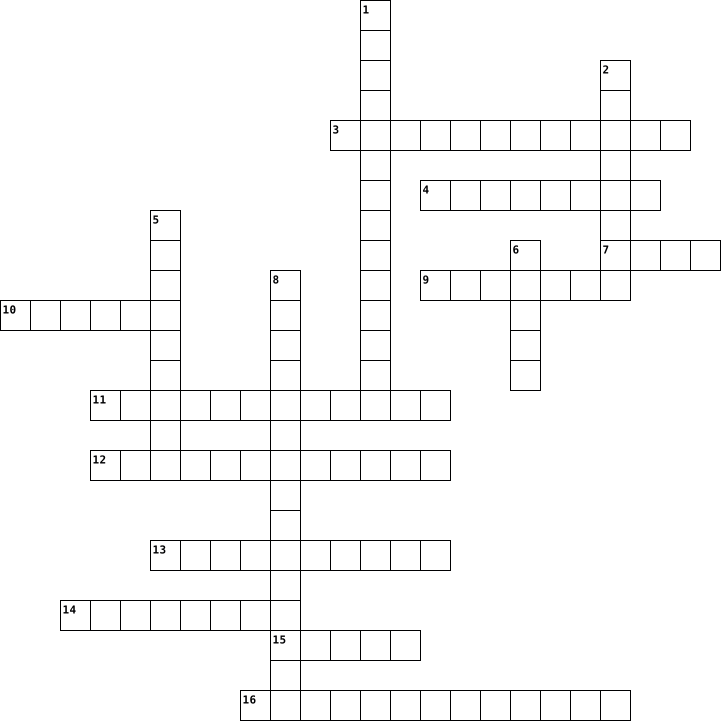
Across
- words that join other words or clauses (FANBOYS)
- one thing described as though it were something else
- people, places, things, or ideas
- words that modify verbs, adjectives, or adverbs
- a comparison between two unlike things using "like" or "as"
- when a word makes the sound of the thing it describes
- words that connect a noun or pronoun to another word
- a word that modifies a noun
- a sentence missing a subject, verb, or complete thought
- a word or phrase with a different meaning from literal words
- words that express emotion
Down
- occurs when two or more independent clauses are joined improperly
- take the place of a noun
- use of extreme exaggeration
- words that express action or state of being
- assigning human traits to non-human things
16 Clues: take the place of a noun • words that express emotion • use of extreme exaggeration • a word that modifies a noun • people, places, things, or ideas • assigning human traits to non-human things • words that express action or state of being • words that modify verbs, adjectives, or adverbs • words that join other words or clauses (FANBOYS) • ...
Stage 2 Vocabulary Crossword Puzzle 2023-09-27

Across
- friend (noun)
- toga (noun)
- table (noun)
- slave-girl (noun)
- sleeps (verb)
- food (noun)
- tunic (noun)
- happy (adjective)
Down
- praises (verb)
- tastes (verbs)
- greets (verb)
- also; too (adverb)
- dinner (noun)
- merchant (noun)
- master (noun)
- enters (verb)
16 Clues: toga (noun) • food (noun) • table (noun) • tunic (noun) • friend (noun) • greets (verb) • dinner (noun) • master (noun) • sleeps (verb) • enters (verb) • praises (verb) • tastes (verbs) • merchant (noun) • slave-girl (noun) • happy (adjective) • also; too (adverb)
Subjunctive Tense 2022-04-28

Across
- to hope that
- what is the second person conjugation for hablar in subjunctive
- spanish translation for subjunctive
- request; represents R in WEIRDOS
- wishes; represents W in WEIRDOS
- what is the fifth and sixth person conjugation for poder in subjunctive
- impersonal expressions; represents I in WEIRDOS
- fourth person ending for er verbs in subjunctive
Down
- a trigger word for Emotions in WEIRDO; means "to be happy that"
- means "to desire"; a trigger word for Wish in WEIRDOS
- expressions of emotion; represents E in WEIRDOS
- what does the D in WEIRDOS represent
- what is the third person conjugation for poder in subjunctive
- to doubt that
- what is the fourth person conjugation for hablar in subjunctive
- what is the first person conjugation for poder in subjunctive
- fourth person ending for ar verbs in subjunctive
- means the same thing as "hope" or "desire"
18 Clues: to hope that • to doubt that • wishes; represents W in WEIRDOS • request; represents R in WEIRDOS • spanish translation for subjunctive • what does the D in WEIRDOS represent • means the same thing as "hope" or "desire" • expressions of emotion; represents E in WEIRDOS • impersonal expressions; represents I in WEIRDOS • fourth person ending for ar verbs in subjunctive • ...
How to describe language 2015-05-15

Across
- News is an example of ...noun.
- There are three types of adverbials:time, manner and...
- Object that refers to things affected by the verb.
- In 'John sat down.' down is a/an...
- Post office is an example of this type of noun.
- Ought is an example of this type of auxiliary verb.
- Features such as body language and intonation are...
- Family is an example of this type of noun.
- Word used to describe an action or state.
- Object that refers to the person benefited from the action.
- Whose is a...pronoun.
Down
- ...is an adverb of manner.
- ...are used with verbs like seem, be and look.
- These, some and the are examples of...
- Word used to connect sentences and clauses.
- Verbs than can't take objects are...
- Friendly is an...
- Put up with is an example of...
18 Clues: Friendly is an... • Whose is a...pronoun. • ...is an adverb of manner. • News is an example of ...noun. • Put up with is an example of... • In 'John sat down.' down is a/an... • Verbs than can't take objects are... • These, some and the are examples of... • Word used to describe an action or state. • Family is an example of this type of noun. • ...
creative project 2025-05-01

Across
- verb often confused with 'quotation'
- arose from picture drawings, such as cave paintings
- Use _____ voice and minimize 'being' verbs
- Last name of the author of 'Concussion'
- for effective paragraphs begins is a topic sentence that makes an original claim
- highest national honor for journalism, literature, and music
- the system that dictates how the letters of the alphabet are used
- the original story "Fat Ham" is based on
Down
- a system of arbitrary signs involving meaning, expression and context
- include ____ language between sentences and paragraphs
- Verbs to avoid (are, was, were, be, been, being, become, becoming)
- Main character of 'The Princess Bride'
- the common read for this year
- set of graphic symbols, each representing a sound
- avoid _____ person pronouns
15 Clues: avoid _____ person pronouns • the common read for this year • verb often confused with 'quotation' • Main character of 'The Princess Bride' • Last name of the author of 'Concussion' • the original story "Fat Ham" is based on • Use _____ voice and minimize 'being' verbs • set of graphic symbols, each representing a sound • ...
Javeria's Crossword 2014-01-20

Across
- The second stage in the bill to law process.
- The state of matter where the molecules move freely.
- The name of our Prime Minister.
- The word for happy in French.
- The words that describe verbs.
- The name used for action words.
- The type of chemical that can be changed back.
Down
- The word for Friday in French.
- The type of word that names a person, place or thing.?
- The party that sounds 'eco-friendly'.
- This powers solar energy.
- The type of chemical that, when changed, cannot be changed back.
- The source of energy that powers a computer or a T.V.
- The name of a triangle which has 2 equal sides.
- The energy stored in our food.
- The form of energy contained in a moving object.
16 Clues: This powers solar energy. • The word for happy in French. • The word for Friday in French. • The energy stored in our food. • The words that describe verbs. • The name of our Prime Minister. • The name used for action words. • The party that sounds 'eco-friendly'. • The second stage in the bill to law process. • The type of chemical that can be changed back. • ...
Verb 2023-11-02

Across
- characteristics of every verb
- every real sentence must have a ____
- must have a helping verbb to the left
- what is a helping verb
- what is a 2 latter linking verb
- what is a commonly mistaken adverb
- what is a main verb
Down
- Linking verbs ______ a state of being
- what is another commily mistaken adverb
- are the “to” form of verbs that are not limited by person
10 Clues: what is a main verb • what is a helping verb • characteristics of every verb • what is a 2 latter linking verb • what is a commonly mistaken adverb • every real sentence must have a ____ • Linking verbs ______ a state of being • must have a helping verbb to the left • what is another commily mistaken adverb • are the “to” form of verbs that are not limited by person
parts of speach 2022-04-21
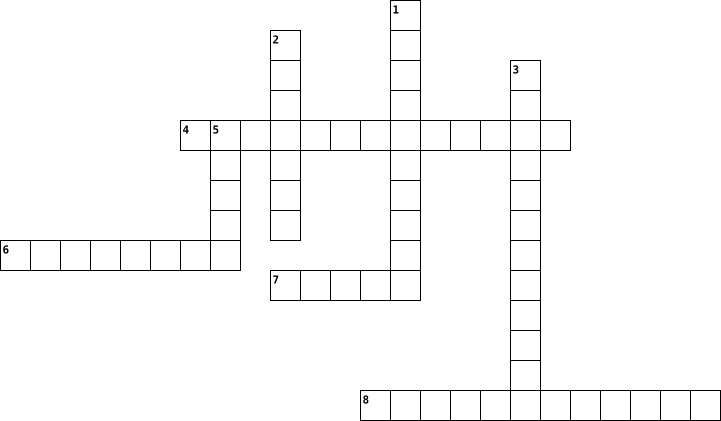
Across
- showing strong emotions or feeling
- replacing nouns
- expressing a physical action or state
- showing relationship of words and phrases
Down
- Describing nouns and pronouns
- modifying verbs,adjectives & adverbs
- joining words,phrases & clauses
- naming people,places,things & ideas/concepts
8 Clues: replacing nouns • Describing nouns and pronouns • joining words,phrases & clauses • showing strong emotions or feeling • modifying verbs,adjectives & adverbs • expressing a physical action or state • showing relationship of words and phrases • naming people,places,things & ideas/concepts
How to describe language 2015-05-15

Across
- Friendly is an...
- Object that refers to the person benefited from the action.
- ...are used with verbs like seem, be and look.
- Put up with is an example of...
- Features such as body language and intonation are...
- News is an example of ...noun.
- Object that refers to things affected by the verb.
- ...is an adverb of manner.
Down
- These, some and the are examples of...
- Word used to describe an action or state.
- Verbs than can't take objects are...
- Whose is a...pronoun.
- In 'John sat down.' down is a/an...
- Ought is an example of this type of auxiliary verb.
- There are three types of adverbials:time, manner and...
- Word used to connect sentences and clauses.
- Family is an example of this type of noun.
- Post office is an example of this type of noun.
18 Clues: Friendly is an... • Whose is a...pronoun. • ...is an adverb of manner. • News is an example of ...noun. • Put up with is an example of... • In 'John sat down.' down is a/an... • Verbs than can't take objects are... • These, some and the are examples of... • Word used to describe an action or state. • Family is an example of this type of noun. • ...
6th Grade Grammar Review 2023-10-27

Across
- a group of people who share the same goals and values
- verb that helps other verbs
- verbs that show some kind of activity or movement
- noun that has no physical properties
- noun that stands for multiple people in a group
- a noun that must be capitalized
Down
- person, place, thing, or idea that the sentence is about
- this shows the action or activity of the sentence
- noun with physical properties
- Global Goal #1
- the time and place of a story
- the summary of the story, usually a sequence of events
12 Clues: Global Goal #1 • verb that helps other verbs • noun with physical properties • the time and place of a story • a noun that must be capitalized • noun that has no physical properties • noun that stands for multiple people in a group • this shows the action or activity of the sentence • verbs that show some kind of activity or movement • ...
The Irregular Preterite verbs 2013-02-02

Across
- When you go somewhere but not to a specific place
- The yo form of Ir
- The él,ella,Ud. form of Estar
- The ellas,ellos,Uds. form of Decir
- The tú form of Tener
- Irregular Preterite verbs are verbs in the _____ tense
Down
- This verb is used to go to a specific place
- The vosotros form of Andar
- The nosotros form of Ser
- Conjugated the same way as Ir
- Same stem change as Andar and Tener
- The prefix of Decir in a irregular preterite verb stem change
12 Clues: The yo form of Ir • The tú form of Tener • The nosotros form of Ser • The vosotros form of Andar • Conjugated the same way as Ir • The él,ella,Ud. form of Estar • The ellas,ellos,Uds. form of Decir • Same stem change as Andar and Tener • This verb is used to go to a specific place • When you go somewhere but not to a specific place • ...
Grammar Unit 1 Test Review 1 2024-10-07

Across
- modify or describe adjectives or verbs
- on, above, near, outside, inside are____
- noun referring to a specific person
- conjunctions that include: after, although, as, as if, because, before, how, if, since, than, though, unless, until, when, where and while
- modify/describe nouns and pronouns
- is the comparative form of good
- noun groups of several elements like "a herd of cows"
- object that receives the action of the verb
- person, place, thing, or idea
Down
- pronouns that don't specify persons
- word that takes the place of one or more nouns
- for, and, nor, but, or, yet, so
- is the superlative form of good
- words that express emotion
- connecting words that join words or groups
- used in linking verbs before another verb "he X playing"
16 Clues: words that express emotion • person, place, thing, or idea • for, and, nor, but, or, yet, so • is the superlative form of good • is the comparative form of good • modify/describe nouns and pronouns • pronouns that don't specify persons • noun referring to a specific person • modify or describe adjectives or verbs • on, above, near, outside, inside are____ • ...
PROCEDURE TEXT 2025-10-30

Across
- Words like must, may, or should in instructions.
- short note warning about possible danger.
- The section listing tools or materials needed.
- A signal word meaning the action is completed.
- The person the text is written for.
- The final product or expected outcome.
- The main goal or purpose of a procedure.
Down
- Verbs often used at the start of each step.
- The part that tells what to do before starting.
- Words showing order such as first or next.
- brief note that explains a tricky step.
- The written format used for technical steps.
- Sentences that describe how to perform the action.
- The verbs that give direct commands like “mix” or “cut.”
- The tone used to give instructions politely.
15 Clues: The person the text is written for. • The final product or expected outcome. • brief note that explains a tricky step. • The main goal or purpose of a procedure. • short note warning about possible danger. • Words showing order such as first or next. • Verbs often used at the start of each step. • The written format used for technical steps. • ...
Grammar Crossword - Framework Revision 2014-02-02

Across
- describe verbs (and sometimes adjectives)
- 'doing' word
- The system of rules that governs how words and sentences are constructed.
- connect single words or longer units of language that have equal status eg. 'and' & 'or'
- give extra information about the main verb and can affect the meaning of the sentence
- define relationships between words in terms of time, space and direction
- 'naming' word
- identify the action of the sentence
Down
- groups of people, animals or things
- concepts, states, qualities or emotions
- give specific kinds of information about a noun (eg. quantity or possession)
- a noun naming specific people, places or brands
- can only occur with reference to a main verb eg. 'can', 'will', 'might'
- 'do', 'have', 'be'. They can be main verbs.
- 'connecting' words
- things you physically touch or see
- describe nouns (and sometimes pronouns)
- take the place of nouns
18 Clues: 'doing' word • 'naming' word • 'connecting' words • take the place of nouns • things you physically touch or see • groups of people, animals or things • identify the action of the sentence • concepts, states, qualities or emotions • describe nouns (and sometimes pronouns) • describe verbs (and sometimes adjectives) • 'do', 'have', 'be'. They can be main verbs. • ...
How to describe language 2015-05-15

Across
- Ought is an example of this type of auxiliary verb.
- Post office is an example of this type of noun.
- News is an example of ...noun.
- Put up with is an example of...
- These, some and the are examples of...
- Verbs than can't take objects are...
- Friendly is an...
- There are three types of adverbials:time, manner and...
- Word used to describe an action or state.
- Word used to connect sentences and clauses.
Down
- Family is an example of this type of noun.
- ...are used with verbs like seem, be and look.
- Object that refers to things affected by the verb.
- ...is an adverb of manner.
- Features such as body language and intonation are...
- Object that refers to the person benefited from the action.
- Whose is a...pronoun.
- In 'John sat down.' down is a/an...
18 Clues: Friendly is an... • Whose is a...pronoun. • ...is an adverb of manner. • News is an example of ...noun. • Put up with is an example of... • In 'John sat down.' down is a/an... • Verbs than can't take objects are... • These, some and the are examples of... • Word used to describe an action or state. • Family is an example of this type of noun. • ...
BRYAN FORTIN WILLAM GAUTHIER 2017-05-12

Across
- use a or an or the pierre is ____ honest persons
- which number is in the middle of ten and thirty?
- verbs to have in the futur
- who is the more intelligent teacher in the school?
- what is the meaning of "cela"?
- what is the past of do?
- how many girls in the class?
- how many boys in the class?
- is a regular or irregular verbs?
Down
- choice do or make i____ a telephone call yesterday
- which color is on the class?
- how many student in the class?
- when yours absent what pierre alway's says?
- what "among" says in french?
- what is " il y aura" in english?
- use a or an or the i replaced your new ferrari with____ used honda
- i_____(to be) to rome(correct present perfect)
- used______ whit month, season, years and periods
- what between says?
- how many verb with simple past?
- verb to be in past,third persons plurials
21 Clues: what between says? • what is the past of do? • verbs to have in the futur • how many boys in the class? • which color is on the class? • what "among" says in french? • how many girls in the class? • how many student in the class? • what is the meaning of "cela"? • how many verb with simple past? • what is " il y aura" in english? • is a regular or irregular verbs? • ...
YEAR 8 - June 2, 2023 2023-06-01

Across
- STRIKER IN THE WORLD CUP OF 1986
- EXCUSE OR REASON OFFERED FOR AN INDIVIDUAL FOR NOT COMMITING A CRIME
- EVOLUTION OF A CHARMANDER
- TEENAGE ROCK'N'ROLL STAR
- QUESTION AT THE END OF A SENTENCE JUST TO CONFIRM WITH YOUR SPEAKER SOMETHING YOU MAY ALREADY KNOW
- VERY DIRTY; EXTREME ADJECTIVE
- PAUL, JOHN, RINGO AND GEORGE
- SONG BY CHITAOZINHO E XORORÓ, TRANSLATED IN ENGLISH
- ACTOR IN "DUNE" AND "CALL ME BY YOUR NAME"
- PARTICIPLE OF THE VERB "BECOME"
- PREPOSITION USED AFTER THE VERBS "WORRY" AND "DREAM"
- WHAT LUCAS IS
Down
- KIND OF BROWN COLOR
- TEACHER WAGNER'S FAVORITE KIND OF MUSIC
- THE RIVAL OF THE PROTAGONIST
- MEAT FROM PIGS
- THE VERB IMMEDIATELLY AFTER A PREPOSITION ENDS WITH...
- WATSON AND STONE, ACTRESSES
- YOU WEAR IT IN THE CAR
- CHARACTER IN GTA: SAN ANDREAS
- PREPOSITION USED AFTER THE VERBS "DEPEND" AND "RELY"
- ANIMAL ARRESTED WITH DRUGS IN BRAZIL WHICH WE READ ABOUT IN CLASS
- VERB FOR 'TO REACH A CONLUSION'
23 Clues: WHAT LUCAS IS • MEAT FROM PIGS • KIND OF BROWN COLOR • YOU WEAR IT IN THE CAR • TEENAGE ROCK'N'ROLL STAR • EVOLUTION OF A CHARMANDER • WATSON AND STONE, ACTRESSES • THE RIVAL OF THE PROTAGONIST • PAUL, JOHN, RINGO AND GEORGE • VERY DIRTY; EXTREME ADJECTIVE • CHARACTER IN GTA: SAN ANDREAS • PARTICIPLE OF THE VERB "BECOME" • VERB FOR 'TO REACH A CONLUSION' • ...
Niken Mutiarany XII IBB 2023-10-18

Across
- clause that used to describe a noun
- made up of a group of words that includes subject and verb
- why events happens
- verb used to explain word nearby
- to refer a reason
- to modify a location
- words that signal causes
- used to suppose something is impossible to bring in reality in the past time
- clause the gives readers a clue
- verbs that depend on time of activity
- used to imagine events in certain condition
- the base form of a verb
Down
- words that signal effect
- S+will/shall+V1+O
- prepositional function
- S+V1+O
- verbs which shows someone's activities
- used to express unreal condition in the present
- the-ing form a verb that serves as a noun
- s group of words containing preposition, a noun or pronoun
- To modify a noun of time
- words that can be used to combine or add ideas in writing
- an event that happens because of cause
- consist of two clauses together
24 Clues: S+V1+O • S+will/shall+V1+O • to refer a reason • why events happens • to modify a location • prepositional function • the base form of a verb • words that signal effect • To modify a noun of time • words that signal causes • clause the gives readers a clue • consist of two clauses together • verb used to explain word nearby • clause that used to describe a noun • ...
Research Terms 2023-02-07

Across
- sources you used
- what you will write about
- voice, the narrator
- a shortened version of what you read
- what your side is on the topic
- when you give credit to someone
- draft, after you review your paper
- an acronym used to shape your paragraphs
- something that someone else said or you got from a website
- reviewing your essay so it doesn't have mistakes
- the beginning of your essay
- a summary of a quote or paragraph
- websites, books, etc you use
Down
- looking for information to help you find out more about something
- providing evidence in your writing
- giving credit to the quotes you got from your sources
- a rough draft
- the topic of your essay
- ending of a paragraph
- the subject receives the action
- paragraphs, parts of an essay
- verbs,
- grading yourself
- justification for what you did
- plan for your essay
- draft, before you edit your writing
26 Clues: verbs, • a rough draft • sources you used • grading yourself • voice, the narrator • plan for your essay • ending of a paragraph • the topic of your essay • what you will write about • the beginning of your essay • websites, books, etc you use • paragraphs, parts of an essay • what your side is on the topic • justification for what you did • the subject receives the action • ...
Derek's EFL Grammar Crossword 1 2023-05-28
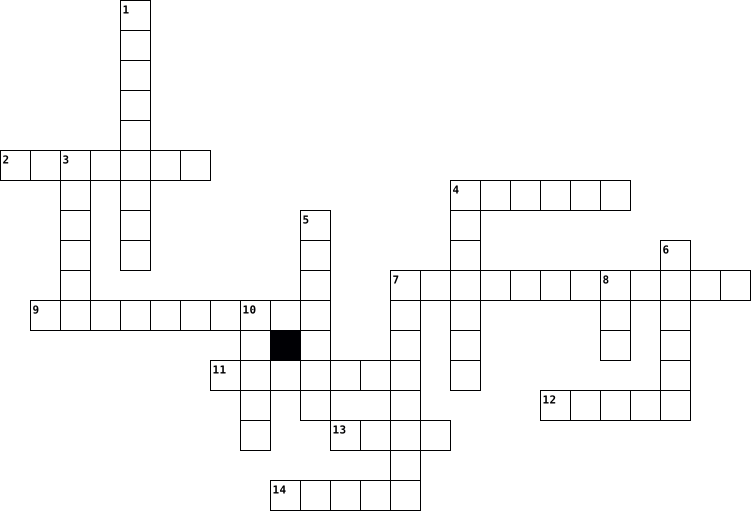
Across
- every sentence starts with one of these
- what part of speech is "really", as in, "He ran really fast"?
- these are words such as: under, to, beside, toward
- modifies or tells us about nouns
- "she" is an example of what part of speech?
- simple past of "sleep"
- a person, place, or thing
- love and hate are what kind of words in grammar?
Down
- what part of speech is "small", as in "a small cat"?
- most, but not all, sentences end with one of these
- these modify verbs, adjectives, and other adverbs
- to show you do something regularly (every day, for example),you use this tense
- simple past of buy
- these take the place of nouns
- a, an, _____
- action words are these
16 Clues: a, an, _____ • simple past of buy • action words are these • simple past of "sleep" • a person, place, or thing • these take the place of nouns • modifies or tells us about nouns • every sentence starts with one of these • "she" is an example of what part of speech? • love and hate are what kind of words in grammar? • these modify verbs, adjectives, and other adverbs • ...
Making Request Crosswords 2022-11-06

Across
- ... sentences are used to give an order directly without further ado.
- An act of asking politely or formally for something.
- A verb that causes someone else to do something is ... verb
- "Can you give me a hand with this??" is an example of asking request in ... context
- "Eat more vegetables, it’s good for your health." is an imperative sentence that used for giving a ...
Down
- Two kinds of verbs that used in making requests are regular verbs and ... verbs
- A willing to allow or approve of something or someone request.
- "Have a good day!" is an imperative sentence that used for express ...
- A willing to allow or disapprove of something or someone request.
- "Could you help me?" is an example of asking request in ... context
10 Clues: An act of asking politely or formally for something. • A verb that causes someone else to do something is ... verb • A willing to allow or approve of something or someone request. • A willing to allow or disapprove of something or someone request. • "Could you help me?" is an example of asking request in ... context • ...
Closed Class Words 2025-10-15

Across
- words that come before nouns to specify reference, quantity, or possession
- words that show the relationship between nouns/pronouns and other elements in a sentence
- words that replace nouns or noun phrases to avoid repetition
Down
- small function words that often accompany verbs to form phrasal verbs
- words that connect other words, phrases, or clauses
- verbs helping verbs that combine with main verbs to form tenses, voices, or moods
6 Clues: words that connect other words, phrases, or clauses • words that replace nouns or noun phrases to avoid repetition • small function words that often accompany verbs to form phrasal verbs • words that come before nouns to specify reference, quantity, or possession • verbs helping verbs that combine with main verbs to form tenses, voices, or moods • ...
Angelo and Alex's crossword 2012-12-03

Across
- the word before bye
- the room foir pe
- ascian ors bike motorbike
- opposite of south
- verbs the first verb you studi in english
- inportant person in a monarchy
- the past of eat
- objet to write
- the person who drives
- a toy which flies
- preposition for moviment
- verbs similar to briny
- profession jobs for electiones
- personal pronoms sing.
- animal with no legs
- the past is broke
- you do it whit your launch
- the past is met
- small animal , like nice
Down
- in sam religions
- it was black,now it's white!it's in the class
- colour of tress
- opposite offar
- possesive pronom 1st person
- with long ears, loves carots
- type of music
- past of take
- ing form of get
- school subjet
- williams wife
- opposite of boy
- personal pronom sing male
- opposite of alwayse
- opposite of hate
- cardinalpoint oppposite of west
- preposition
- you are n°1
37 Clues: preposition • you are n°1 • past of take • type of music • school subjet • williams wife • opposite offar • objet to write • colour of tress • ing form of get • opposite of boy • the past of eat • the past is met • in sam religions • the room foir pe • opposite of hate • opposite of south • a toy which flies • the past is broke • the word before bye • animal with no legs • opposite of alwayse • ...
SEMESTER WRAP-UP 2023-06-23

Across
- Unfair treatment to a person
- The beautiful game
- One of the two past tense forms of TO BE
- Of a size that is less than normal or usual
- Past tense of WORK
- Verbs that in their past form do not follow an specific rule
- The color of grass
- An emotional state
- Having the same rights and opportunities
- Origin in Chile
- A large area covered by trees
- Adult human female
Down
- Past tense of BUILD
- Origin in Japan
- A statement that can be proved as true
- A person's thoughts or feelings on a topic
- Strongly held thought or idea
- Attractive in a delicate way without being truly beautiful
- A desolate place with little to no water and vegetation
- Of advanced age
- Verbs that in their past form end in -ed
- The color of the sky
- A strip of land by the sea
- A large natural elevation of land
- Past tense of GO
25 Clues: Origin in Japan • Of advanced age • Origin in Chile • Past tense of GO • The beautiful game • Past tense of WORK • The color of grass • An emotional state • Adult human female • Past tense of BUILD • The color of the sky • A strip of land by the sea • Unfair treatment to a person • Strongly held thought or idea • A large area covered by trees • A large natural elevation of land • ...
Stage 6: Verb Tense Crossword 2021-08-28

Across
- he curses
- the tense that shows ongoing past actions
- they were punching
- he is carrying
- the Imperfect of "festīnat"
- the Present 3rd Person Plural Ending
- he was cursing
- they were working
- they carried
- they were cursing
- the tense that shows current actions
- they carried
- they overcame/overpowered
- he cursed
- the tense that shows completed past actions
Down
- they are working
- the Perfect 3rd Person Singular Ending
- the Imperfect 3rd Person Singular Ending
- the Imperfect of "est"
- the Infinitive meaning "to punch"
- They hurried
- he was carrying
- they were overpowering/overcoming
- verbs that end in -nt are always
- verbs that end in -t are always
- the Perfect 3rd Person Plural Ending
- multiple people cursed
- they were carrying
- they were buying
- the Imperfect 3rd Person Plural Ending
- he punched
- they worked
- she buys
- He hurried
- the present of "pulsābat"
- she overcame/overpowered
- he carried
37 Clues: she buys • he curses • he cursed • he punched • He hurried • he carried • they worked • They hurried • they carried • they carried • he is carrying • he was cursing • he was carrying • they are working • they were buying • they were working • they were cursing • they were punching • they were carrying • the Imperfect of "est" • multiple people cursed • she overcame/overpowered • the present of "pulsābat" • ...
End of Year Puzzle 2023-05-31

Across
- the comparative form of "funny"
- we use "have t" to talk about . . .
- a modal verb used to give advice
- a device you use to print things
- ´. . .´ of bread
- a modal verb used for obligation
- what you use to write on a computer
- to put a file from your computer on the internet
- tablets have this feature, but computers don´t
- a secret word you use to open files
- a ´piece´ of cake
- very cold weather
Down
- a very tall building
- "... router" means a router without a wire
- when there is a lot of water on the streets
- the comparative form of "bad"
- "... verbs" are verbs with a preposition
- the opposite of straight hair
- something you walk over
- the comparative form of "good"
- the comparative form of "busy"
- snow and rocks falling down a mountain
- when you take a file and put it on your computer
- when the ground moves and breaks
24 Clues: ´. . .´ of bread • a ´piece´ of cake • very cold weather • a very tall building • something you walk over • the comparative form of "bad" • the opposite of straight hair • the comparative form of "good" • the comparative form of "busy" • the comparative form of "funny" • a modal verb used to give advice • a device you use to print things • a modal verb used for obligation • ...
Reflexive verbs crossword - Parkhill Spanish 2 2021-12-09

Across
- __ lavas las manos. (FEFLEXIVE PRONOUN)
- to comb one's hair. (Sammy se ____)
- Johnny se cepillarse los ____. (teeth)
- Sofía va a _____ ahora (to put on makeup)
- nos _____ los zapatos (We put on our shoes)
Down
- ____ verbs. (____ verbs are used to indicate that the subject does something to or for themselves)
- Ella se ____ en la mañana. (to get up)
- Yo me _____. (to shave)
- when the reflexive verb is conjugated the reflexive ____ agrees with the subject
- __ lavas todos los días. (REFLEXIVE PRONOUN)
- to take a shower.
11 Clues: to take a shower. • Yo me _____. (to shave) • to comb one's hair. (Sammy se ____) • Ella se ____ en la mañana. (to get up) • Johnny se cepillarse los ____. (teeth) • __ lavas las manos. (FEFLEXIVE PRONOUN) • Sofía va a _____ ahora (to put on makeup) • nos _____ los zapatos (We put on our shoes) • __ lavas todos los días. (REFLEXIVE PRONOUN) • ...
English poetic devices 2025-03-13

Across
- (repeating a point for emphasis
- language with strong emotional associations
- grouping points in threes) revision: make
- asking a direct question to the reader
Down
- an exaggeration
- Anecdotes (a personal experience or story a personal dictionary
- Verbs (verbs like must, should, ought etc.
- a numbered fact such as a percentage
- sentences a commanding sentence that starts with a verb)
- pronouns that connect directly with the reader such as, you, we etc.
10 Clues: an exaggeration • (repeating a point for emphasis • a numbered fact such as a percentage • asking a direct question to the reader • grouping points in threes) revision: make • Verbs (verbs like must, should, ought etc. • language with strong emotional associations • sentences a commanding sentence that starts with a verb) • ...
Phrasal Verbs and prepositions 2026-03-16

Across
- A word that connects a verb to other words.
- To give something to a teacher.
- prepositional phrases require a preposition and an _____.
- To delay; postpone.
- To write information on a piece of paper.
- I don't want to _________ of college, even though the classes are hard.
- Some phrasal verbs are _________.
- Phrasal verbs with 3 words are ___________.
Down
- To stop trying.
- The reading was difficult; we had to _____ so many words!
- After vacation, I have to _________on all of my work.
- They wanted to ______ the game when they saw how much fun everyone was having.
- To review.
- To put your name on a list for a future class or event.
14 Clues: To review. • To stop trying. • To delay; postpone. • To give something to a teacher. • Some phrasal verbs are _________. • To write information on a piece of paper. • A word that connects a verb to other words. • Phrasal verbs with 3 words are ___________. • After vacation, I have to _________on all of my work. • To put your name on a list for a future class or event. • ...
Review Crosswords 2024-03-13

Across
- Past of the verb do?
- Verbs that we add -ed at the end in the past
- Present tense where we add -ing.
- Big, Beautiful, Smart are?...
- When we refer to the future, we use?...
- Past of the verb to be I, He, She, and It?
Down
- What type of verbs are Bought, Ran, and Was?
- I, He, She, You are?...
- smarter, larger, and bigger are?...
- smartest, largest, and biggest are?...
- Past of the verb to be You, We, and They?
11 Clues: Past of the verb do? • I, He, She, You are?... • Big, Beautiful, Smart are?... • Present tense where we add -ing. • smarter, larger, and bigger are?... • smartest, largest, and biggest are?... • When we refer to the future, we use?... • Past of the verb to be You, We, and They? • Past of the verb to be I, He, She, and It? • What type of verbs are Bought, Ran, and Was? • ...
Passé Composé 2024-12-11

Across
- manger
- change in the pronoun for Elles
- dormir
- marcher
- perndre
- choisir
- how many parts are in the le passé composé
- write
- The change in pronoun for vous
- vendre
- finir
Down
- The Helping Verbs
- comprenre
- apprendre
- faire
- regarder
- change in the pronoun nous
17 Clues: faire • write • finir • manger • dormir • vendre • marcher • perndre • choisir • regarder • comprenre • apprendre • The Helping Verbs • change in the pronoun nous • The change in pronoun for vous • change in the pronoun for Elles • how many parts are in the le passé composé
Wer ist unser Grammatik-Champion? 2020-05-04

Across
- Verhältniswort
- 4. Fall
- besitzanzeigendes Fürwort
- männliches grammatisches Geschlecht
- andere Bezeichnung für Nomen
- 2. Fall
Down
- Grundform des Verbs
- grammatischer Fall
- Einzahl
- Bindewort
- Begleiter
- hinweisendes Fürwort
- aufs Verb bezogen
- Zukunft
14 Clues: 4. Fall • Einzahl • Zukunft • 2. Fall • Bindewort • Begleiter • Verhältniswort • aufs Verb bezogen • grammatischer Fall • Grundform des Verbs • hinweisendes Fürwort • besitzanzeigendes Fürwort • andere Bezeichnung für Nomen • männliches grammatisches Geschlecht
Crossword about Unit 7 and 8 2021-05-13

Across
- Message that is send online, by a computer or phone
- Name of the game in which people pay to get a ticket, and if their tickets have the same sequence as the shown on TV, they earn a great quantity of money
- Expression use to refer about an unrealistic way of thinking
- Word use to express things that you want to happen but probably won't
- Expression use to introduce a clause that has a subject and a verb
- Expression that means "let see us regularly (you want to remain in contact with him"
- Informal way to say "in my opinion" (example: (the expression), I think you got this)
- Conjunction of time that is not followed by future forms of verbs even though the verbs tell about future time, and the present is used instead. It's meaning is similar to "as fast as"
- Formal way of saying or writing "in spite of"
- Expression that is used to say you won't allow something let someone down, disappoint you
- Verb form that, apart from nouns and gerunds prepositions can be followed by (preposition + gerunds)
- Conjunction of time that is not followed by future forms of verbs even though the verbs tell about future time, and the present is used instead. The word start with an "W"
Down
- Type (number) of the Conditional Sentences that is use to talk about imaginary situations in the present (write it using type at the end)
- Word use in the conditional sentences to express "if someone were able to (do something)" and is used in the If-Clause, and also can be use to express "if someone would be able to (do something)" and, if it is use in this way, is used in Main Clause
- Word use in the conditional sentences to express possibility and is used instead of "would"
- Expressions that is used to give someone permission or encouragement
- Expression that is followed by a noun or a gerund
- Question expression use as an echo question, to confirm what was said (here, to show disbelief)
- It is used with an adjective or with "many", "much", "few", or "little" to express result or degree. The sentence or phrase ends with "that"
- Informal way to say " Have a good time"
- Informal way to say "this person"
- similar to be honest and frank
22 Clues: Informal way to say "this person" • similar to be honest and frank • Informal way to say " Have a good time" • Formal way of saying or writing "in spite of" • Expression that is followed by a noun or a gerund • Message that is send online, by a computer or phone • Expression use to refer about an unrealistic way of thinking • ...
Etre Verbs 2024-05-16

Across
- to go down
- to be born
- to fall
- to stay
- to come
- to die
- to recome/come back
- to leave
- to return
- to pass (by)
Down
- to become
- to arrive
- to enter
- to go
- to re-enter
- to go out
- "all reflexive verbs.."
- to go up
18 Clues: to go • to die • to fall • to stay • to come • to enter • to leave • to go up • to become • to arrive • to go out • to return • to go down • to be born • to re-enter • to pass (by) • to recome/come back • "all reflexive verbs.."
Subject-Verb Agreement 2017-09-28

Across
- Verbs ________ from subjects are when there is a phrase between the subject and verb.
- Participles, gerunds, and ____________ cannot serve as the main verb in a sentence.
- Auxiliary verbs can express time through various ________.
- A verb has to be __________ when it precedes a noun.\
Down
- Nouns that represent groups are __________________.
- Other nouns may be present in a sentence, but the verb ultimately has to agree with the __________.
- An -s or -es is added to verbs of the __________ tense.
- Verb endings changed based on the _________ of nouns they refer to.
8 Clues: Nouns that represent groups are __________________. • A verb has to be __________ when it precedes a noun.\ • An -s or -es is added to verbs of the __________ tense. • Auxiliary verbs can express time through various ________. • Verb endings changed based on the _________ of nouns they refer to. • ...
Review Crosswords 2024-03-13

Across
- Past of the verb do?
- Verbs that we add -ed at the end in the past
- Present tense where we add -ing.
- Big, Beautiful, Smart are?...
- When we refer to the future, we use?...
- Past of the verb to be I, He, She, and It?
Down
- What type of verbs are Bought, Ran, and Was?
- I, He, She, You are?...
- smarter, larger, and bigger are?...
- smartest, largest, and biggest are?...
- Past of the verb to be You, We, and They?
11 Clues: Past of the verb do? • I, He, She, You are?... • Big, Beautiful, Smart are?... • Present tense where we add -ing. • smarter, larger, and bigger are?... • smartest, largest, and biggest are?... • When we refer to the future, we use?... • Past of the verb to be You, We, and They? • Past of the verb to be I, He, She, and It? • What type of verbs are Bought, Ran, and Was? • ...
engels opdracht 2020-09-29

Across
- zinnen
- frequentie
- jij
- fotografie
Down
- bijenkorfen
- onderwerpen
- gisteren
- meubels
- jappans
- idee
10 Clues: jij • idee • zinnen • meubels • jappans • gisteren • frequentie • fotografie • bijenkorfen • onderwerpen
Features of a personal recount 2025-01-15

Across
- In the form of direct speech
- simple, compound, complex are ___________ sentence structures
- a literary device that give human attributes to non-living things
- ___________ phrases describe the feelings of the author
- Details in the form of adjectives and verbs about other things/settings/people
- action words, usually vivid
Down
- ________ phrases show time sequences
- The tense in recounts is usually in the __________
- 'I' is a personal ______________
- a literary device that compares one thing to another
- Personal recounts usually end with some meaningful ___________
11 Clues: action words, usually vivid • In the form of direct speech • 'I' is a personal ______________ • ________ phrases show time sequences • The tense in recounts is usually in the __________ • a literary device that compares one thing to another • ___________ phrases describe the feelings of the author • simple, compound, complex are ___________ sentence structures • ...
Conjugation 2023-03-03

Across
- The infinitive German form of "to be."
- The ____ form is the -en form of German verbs or the to __ form of English verbs.
- _____ Person is used when talking to someone else directly.
- The person or thing doing the action.
- Plural, second person, informal.
- The form used for multiple subjects/objects.
Down
- Changing the verb based on the subject.
- Singular, third person, masculine.
- _____ person is used when talking about someone who is neither me nor you.
- An action word.
- The formal you form that can be either singular or plural.
- _____ person is used when talking about oneself.
- The form used for a single subject/object.
13 Clues: An action word. • Plural, second person, informal. • Singular, third person, masculine. • The person or thing doing the action. • The infinitive German form of "to be." • Changing the verb based on the subject. • The form used for a single subject/object. • The form used for multiple subjects/objects. • _____ person is used when talking about oneself. • ...
Greek and Latin roots #2 2023-11-09

Across
- ambi
- corp
- makes nouns out of verbs
- port
- scrip
Down
- bene
- poli
- biblio
- dict
- arch
- vert
11 Clues: bene • ambi • poli • corp • dict • port • arch • vert • scrip • biblio • makes nouns out of verbs
Parts of Speach 2023-04-18

Across
- a noun or prounoun after an transitive verb.
- when two or more verbs make up simple predicate of a sentence the verbs in front of the main verb are known as helping verbs.
- a prounoun that comes after the linking verb
- action verb that has a direct object
- a noun or prounoun that recives the direct object.
Down
- is a word that expreses a state of being instead of an action.
- The noun or prounoun following a prepesition.
- a noun that comes after the linking verb
8 Clues: action verb that has a direct object • a noun that comes after the linking verb • a noun or prounoun after an transitive verb. • a prounoun that comes after the linking verb • The noun or prounoun following a prepesition. • a noun or prounoun that recives the direct object. • is a word that expreses a state of being instead of an action. • ...
Lesson 1: art 2022-09-04

Across
- / past simple of buy
- / verbs that change
- / past simple of want
Down
- / verbs that need an "ed" or "d" to form it past simple
- / past simple of take
- / past simple of study
- / past simple of play
- / past simple of run
8 Clues: / verbs that change • / past simple of buy • / past simple of study • / past simple of play • / past simple of want • / past simple of take • / past simple of run • / verbs that need an "ed" or "d" to form it past simple
Spanish Vocabulary 2024-03-20

Across
- table
- el pescado
- waiter
- salad
- water
- el refresco
Down
- estar
- orange juice
- el arroz
- we conjugation for ir verbs
- los frijoles
- ver
12 Clues: ver • estar • table • salad • water • waiter • el arroz • el pescado • el refresco • orange juice • los frijoles • we conjugation for ir verbs
7th Grade: Grammar Review 2022-12-08

Across
- case of the subject
- these prepositions rules this case (ad, apud, in, per, prope)
- case of the direct object
- this declension's nominative singular ends in -a
Down
- case of prepositions
- case of the indirect object
- tense of actions occurring in the past
- these prepositions rules this case (a/ab,cum,de,e/ex,in,pro,sine,sub)
- tense of verbs ending in -bam, -bas, -bat, -batis, -bant
- this declension's nominative singular ends in -us
- this declension's nominative varies
- tense of verbs ending in -o,-s,-t,-mus,-tis,-nt
12 Clues: case of the subject • case of prepositions • case of the direct object • case of the indirect object • this declension's nominative varies • tense of actions occurring in the past • tense of verbs ending in -o,-s,-t,-mus,-tis,-nt • this declension's nominative singular ends in -a • this declension's nominative singular ends in -us • ...
4th Form Latin - Lesson 26 2024-02-21

Across
- Which conjugation does eo belong to?
- All of the verbs in this lesson are ____________ verbs which are forms of the irregular verb eo.
- to go away
- He has gone away, withdrawn, escaped, burst forth! -Cicero
- to begin, enter upon
Down
- to go across, to cross
- to go (The answer will contain parenthesis.)
- to go out (w/ex or w/de - both abl.)
- to return
- to go to, visit
10 Clues: to return • to go away • to go to, visit • to begin, enter upon • to go across, to cross • to go out (w/ex or w/de - both abl.) • Which conjugation does eo belong to? • to go (The answer will contain parenthesis.) • He has gone away, withdrawn, escaped, burst forth! -Cicero • All of the verbs in this lesson are ____________ verbs which are forms of the irregular verb eo.
English poetic devices 2025-03-13

Across
- Anecdotes a personal experience or story a personal dictionary
- a numbered fact such as a percentage
- language with strong emotional associations
- (repeating a point for emphasis
Down
- asking a direct question to the reader
- Verbs (verbs like must, should, ought etc.
- pronouns that connect directly with the reader such as, you, we etc.
- sentences a commanding sentence that starts with a verb)
- an exaggeration
- grouping points in threes) revision: make
10 Clues: an exaggeration • (repeating a point for emphasis • a numbered fact such as a percentage • asking a direct question to the reader • grouping points in threes) revision: make • Verbs (verbs like must, should, ought etc. • language with strong emotional associations • sentences a commanding sentence that starts with a verb) • ...
Lesson Nineteen 2014-07-31

Across
- learn
- receive training
- originally
- often
- bad
- control
- opposite
- encounter
- depend
- witness
- free
- superstitious
- used to make verbs reflexive
Down
- believer
- bondage; tied up
- smooth
- growth
- from the beginning
- attitude
- measure word for things
- strange; odd
- mutual
- unlucky
- difficulties
- ordinary
- handle
- luck
- offer
28 Clues: bad • luck • free • learn • often • offer • smooth • growth • mutual • handle • depend • control • unlucky • witness • believer • attitude • opposite • ordinary • encounter • originally • strange; odd • difficulties • superstitious • bondage; tied up • receive training • from the beginning • measure word for things • used to make verbs reflexive
English poetic devices 2025-03-13

Across
- Anecdotes (a personal experience or story a personal dictionary
- a numbered fact such as a percentage
- language with strong emotional associations
- (repeating a point for emphasis
Down
- asking a direct question to the reader
- Verbs (verbs like must, should, ought etc.
- pronouns that connect directly with the reader such as, you, we etc.
- sentences a commanding sentence that starts with a verb)
- an exaggeration
- grouping points in threes) revision: make
10 Clues: an exaggeration • (repeating a point for emphasis • a numbered fact such as a percentage • asking a direct question to the reader • grouping points in threes) revision: make • Verbs (verbs like must, should, ought etc. • language with strong emotional associations • sentences a commanding sentence that starts with a verb) • ...
Части речи 2024-05-25

Across
- Прилагательные
- Предлоги
- Числительные
- Междометия
- Существительные
- Глаголы
Down
- Местоимения
- Артикли
- Союзы
- Наречия
10 Clues: Союзы • Артикли • Наречия • Глаголы • Предлоги • Междометия • Местоимения • Числительные • Прилагательные • Существительные
Part of Speech 2022-11-14
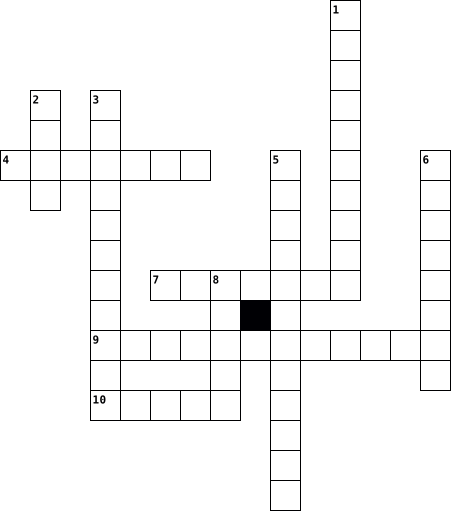
Across
- A word that is put next to a noun (the,a,an)
- Modifying verbs,adjectives&adverbs(slowly)
- A short exclamation(Wow!,Hi!,Bravo!)
- Naming, people, places, things & concepts
Down
- describing nouns and pronouns (Happy)
- An action word (run,clap)
- Join words of words in sentence (and,or)
- Showing strong emotions/feelings
- Replacing Nouns (her, you, me)
- A word that describes an action
10 Clues: An action word (run,clap) • Replacing Nouns (her, you, me) • A word that describes an action • Showing strong emotions/feelings • A short exclamation(Wow!,Hi!,Bravo!) • describing nouns and pronouns (Happy) • Join words of words in sentence (and,or) • Naming, people, places, things & concepts • Modifying verbs,adjectives&adverbs(slowly) • ...
verbs 2021-03-30

Across
- идти
- быть
- думать
- брать
- глаголы
Down
- делать
- получать
- знать
- иметь
- делать
- говорить
11 Clues: идти • быть • знать • иметь • брать • делать • думать • делать • глаголы • получать • говорить
Grundbegriffe der Grammatik 2017-02-19

Across
- Zeitform des Verbs in Schriftsprache gebräuchlich
- So nennt man die Grundform des Verbs.
- Nebensätze, die mit "bis, während, nachdem, als .." eingeleitet werden, heißen ...
- "Ich friere, obwohl es nicht kalt ist" ist ein ....
- Wenn sich ein Nomen nach dem Fall ändert, nennt man das...
- "mein, dein, seine, ihren ...." sind ...
- Wörter, die einen Artikel erfordern
Down
- Man fragt "wem" nach diesem Satzglied
- Wörter wie "in, auf, neben, mit, durch .."nennt man...
- Man fragt "wen oder was" nach diesem Satzglied.
- "Ich friere, denn es ist kalt" ist eine....
- Wörter, die Satzglieder oder Sätze miteinander verbinden, sind ....
- Man fragt "wer oder was" nach diesem Satzglied
13 Clues: Wörter, die einen Artikel erfordern • Man fragt "wem" nach diesem Satzglied • So nennt man die Grundform des Verbs. • "mein, dein, seine, ihren ...." sind ... • "Ich friere, denn es ist kalt" ist eine.... • Man fragt "wer oder was" nach diesem Satzglied • Man fragt "wen oder was" nach diesem Satzglied. • Zeitform des Verbs in Schriftsprache gebräuchlich • ...
Third Grade Language Test #9 2026-01-29

Across
- An action, helping, or state of being word
- verbs like seen, known, taken, ridden, given, sung, come, gone, frozen, rung require a helping verb (has/have, was/were)
- verbs that help the main verb express an action or a state of being. Examples: have (laughed), been (doing), were (lost)
Down
- is made up of a main verb and one or more helping verbs.
- tells what the subject is or does, contains the verb
- who or what the sentence is about
- knowing ? to use helping verbs requires asking yourself if the sentence makes sense without a helping verb
7 Clues: who or what the sentence is about • An action, helping, or state of being word • tells what the subject is or does, contains the verb • is made up of a main verb and one or more helping verbs. • knowing ? to use helping verbs requires asking yourself if the sentence makes sense without a helping verb • ...
Affix Vocabulary/Grammar Unit 10 Review 2021-02-23

Across
- The type of affix that adds to the beginning of a word and changes the meaning.
- The prefix RE- means back or _________.
- the suffix -ISM means _________ of.
- The suffix -ION or -TION means act or ______ of.
- The suffix -IZE or -ISE means _________ or become.
- A word that describes a noun is called an ____________.
- Any word that is a person, place, or thing.
- Words such as he, we, and she, that can take the place of a noun are known as ___________.
- Part of speech that shows relationships between things, such as location, time, or direction.
- Verbs that describe a state of existence, such as is or was, are called __________ verbs.
- An apostrophe can indicate a contraction or ___________.
- The type of affix that adds to the end of a word and changes the meaning.
Down
- Words such as run, jump, and dance are examples of __________ verbs.
- the suffix that means act of or result.
- Nouns that can not be seen or touched are called __________ nouns.
- The suffix -IC or -ICAL means pertaining to or one who _________.
- Words that connect other words, phrases, or clauses together are called _________.
- A word that describes a verb is called an ___________
- The suffix -AL or -IAL means __________ to.
- The word _______ is a hint for remembering the conjunctions for, and, nor, but, or, yet, and so.
- The suffix -S or -ES means something is _________, that there is more than one.
- The suffix -IST means one who __________.
- The root word MIT means _________.
- The root word JECT means _________.
- To show that someone directly said something, you put _________ marks around it.
- The base meaning of a word, that affixes can be added to, is called the ________ of the word.
26 Clues: The root word MIT means _________. • the suffix -ISM means _________ of. • The root word JECT means _________. • the suffix that means act of or result. • The prefix RE- means back or _________. • The suffix -IST means one who __________. • The suffix -AL or -IAL means __________ to. • Any word that is a person, place, or thing. • ...
Grammatische Grundbegriffe 2021-02-22

Across
- Kasusfrage für den Genitiv
- weibliches Genus
- sächliches Genus
- Kasusfrage für den Dativ
- Hauptwort
- Satzaussage
Down
- männliches Genus
- Tätigkeitswort
- Geschlecht
- Satzgegenstand
- grammatischer Fall
- Anzahl
- Grundform des Verbs
13 Clues: Anzahl • Hauptwort • Geschlecht • Satzaussage • Tätigkeitswort • Satzgegenstand • männliches Genus • weibliches Genus • sächliches Genus • grammatischer Fall • Grundform des Verbs • Kasusfrage für den Dativ • Kasusfrage für den Genitiv
Lab Fun! 2023-07-29

Across
- not strong
- place to keep cows
- make verbs agree
- cold keeper
- uncounted
- retriever
- fly blocker
- caro-cell?
- entire
- big lizard
Down
- head protector
- breaks all by itself
- navy bed
- low friction fun
- try a bit
- tiny sight
- a tipple
- not fancy
- room without a view
- one who looks around
20 Clues: entire • navy bed • a tipple • try a bit • uncounted • retriever • not fancy • not strong • tiny sight • caro-cell? • big lizard • cold keeper • fly blocker • head protector • low friction fun • make verbs agree • place to keep cows • room without a view • breaks all by itself • one who looks around
Poetic Devices 2021-01-31

Across
- An exaggerated word or phrase.
- Words used to describe actions
- Words that describe how verbs are done.
- Two or more words in a sentence that begin with the same letter or sound.
- Words used to describe nouns
- Giving an object human qualities.
Down
- Comparing two things saying that one IS something else.
- Comparing two things – usually using like or as
- A question which doesn’t require an answer.
- Words and phrases intended to create a certain feeling in the reader.
- Saying a word or phrase more than once for impact.
- A language feature that paints a picture in the readers mind.
12 Clues: Words used to describe nouns • An exaggerated word or phrase. • Words used to describe actions • Giving an object human qualities. • Words that describe how verbs are done. • A question which doesn’t require an answer. • Comparing two things – usually using like or as • Saying a word or phrase more than once for impact. • ...
Antonella Cross Word 2021-06-23

Across
- _o_ (Religion)
- Pl__e_ (C.Naturales)
- M_p_ (E.Sociales)
- cr_a_i___y (Eca)
- _o__r_ (Eca)
- _um__r_ (Matematica)
- bi__e (Religion)
Down
- Co__t_y (E.Sociales)
- r_a_in_ (Lenguaje)
- P_an_s (C.Naturales)
- T_a__l__e (Ingles)
- V__bs (Ingles)
- s_m (Matematica)
13 Clues: cr_a_i___y (Eca) • _o__r_ (Eca) • T_a__l__e (Ingles) • V__bs (Ingles) • Co__t_y (E.Sociales) • M_p_ (E.Sociales) • _o_ (Religion) • r_a_in_ (Lenguaje) • Pl__e_ (C.Naturales) • P_an_s (C.Naturales) • bi__e (Religion) • s_m (Matematica) • _um__r_ (Matematica)
Grammar 1 2025-11-03

Across
- Used to describe actions that started in the past and continue to the present ...
- Used with singular nouns or pronouns in the past, like "I ... tired"
- The form of "be" used with the pronoun "I" ...
- The past form of "be" used with plural subjects ...
- Used to describe actions happening at the moment of speaking ...
- Expresses an action, occurrence, or state of being ...
- The past participle of "be," often used with "have" or "has" ...
- we use "ed" verbs for the...tense
- Refers to more than one person, place, thing, or idea ...
- Tells how, when, where, or to what extent ...
- Connects the subject to a word or group of words that describes or identifies the subject ...
- Used with plural nouns or pronouns in the present, like "They ... happy"
- The past tense form of the verb "do" ...
- Describes a noun, like "red" or "tall" ...
- Refers to one person, place, thing, or idea ...
Down
- Used for habitual actions, general truths, or facts ...
- Modify verbs, adjectives, or other adverbs ...
- Verb Takes a direct object to complete its meaning ...
- Indicates when an action takes place ...
- A form of "be" used to show continuous action, like "I am ..."
- Refers to general things, not specific names ...
- Words that replace nouns ...
- Helps the main verb express action or state of being ...
- Used with third-person singular subjects in the present simple tense ...
- Used to describe actions that happened and finished in the past ...
- Names a person, place, thing, or idea ...
- Words that describe nouns ...
- Takes the place of a noun, like "he," "she," or "it" ...
- The principal verb in a clause, expressing the primary action or state ...
- Used with singular nouns or pronouns in the present, like "He ... here"
30 Clues: Words that replace nouns ... • Words that describe nouns ... • we use "ed" verbs for the...tense • Indicates when an action takes place ... • The past tense form of the verb "do" ... • Names a person, place, thing, or idea ... • Describes a noun, like "red" or "tall" ... • Tells how, when, where, or to what extent ... • The form of "be" used with the pronoun "I" ... • ...
Affix Vocabulary/Grammar Unit 9 Review 2021-02-09

Across
- A word that describes a verb is called an ____________.
- The suffix -ISH means somewhat like or ________.
- Words such as run, jump, and dance are examples of __________ verbs.
- The root word LOG means _________ or words.
- Words that connect other words, phrases, or clauses together are called _________.
- The suffix -LESS means _________.
- The suffix -ESS means __________.
- Verbs that describe a state of existence, such as is or was, are called __________ verbs.
- The root that means bend.
- Part of speech that shows relationships between things, such as location, time, or direction.
- The suffix that means state or quality of.
- Words such as he, we, and she, that can take the place of a noun are known as ___________.
- The type of affix that adds to the beginning of a word and changes the meaning.
Down
- A word that describes a noun is called an ____________.
- A punctuation mark that is used to join independent clauses without using a conjunction is called a __________.
- The suffix -ABLE or -IBLE means can be done or ______ to be done.
- The base meaning of a word, that affixes can be added to, is called the ________ of the word.
- The prefix RE- means back or _________.
- The suffix -NESS means _________ of.
- The suffix -Y means _________ of.
- A __________ can be used to indicate the start of a list.
- The type of affix that adds to the end of a word and changes the meaning.
- The suffix -SHIP means __________ of.
- The word _______ is a hint for remembering the conjunctions for, and, nor, but, or, yet, and so.
- Any word that is a person, place, or thing.
- Nouns that are specific and have to be capitalized are called __________ nouns.
26 Clues: The root that means bend. • The suffix -Y means _________ of. • The suffix -LESS means _________. • The suffix -ESS means __________. • The suffix -NESS means _________ of. • The suffix -SHIP means __________ of. • The prefix RE- means back or _________. • The suffix that means state or quality of. • The root word LOG means _________ or words. • ...
Writing and Grammar 2021-10-11

Across
- a noun substitute
- the ______ tense of a verb is its second principal part
- it makes a statement about the subject
- a sentence that expresses strong emotion
- ______ verbs need a direct object to receive its action
- the ______ perfect tense expresses action completed before some past time or event
- nouns that are general words for persons, places, things, and ideas
- _______ pronouns emphasize a noun or pronoun already in the sentence
- a sentence that makes a statement
- the ________ tense of a verb is the auxiliary will or shall and the verb's first principal part
- ______ verbs do not need a direct object to receive its action
- ______nouns can be made plural to show how many
- _______ pronouns are used as direct objects, indirect objects, and objects of preposition
- the _______ tense of a verb comes from its first principal part
Down
- ________ pronouns point out objects, persons, places, or ideas
- nouns that are specific words for persons, places, things, and ideas
- adding s or es to most singular nouns make which form
- is the noun that a pronoun refers to
- a sentence that asks a question
- the three _______ tenses use forms of the auxiliary have and the past participle of the main verb
- a _______ verb joins the subject to a word that renames or describes the subject
- what the sentence is about
- _______ pronouns are generally used to aske questions
- ______nouns are always singular in form
- words that name
- the _______ perfect tense expresses action that will be completed before a future time or event
- a sentence that gives a command or request
- an _______ object is a noun or pronoun that tells to whom or for whom the verbs action was done
- a word that shows action or state of being
- a _______ object is a noun or pronoun that receives the action of a transitive verb
- an incomplete sentence
31 Clues: words that name • a noun substitute • an incomplete sentence • what the sentence is about • a sentence that asks a question • a sentence that makes a statement • is the noun that a pronoun refers to • it makes a statement about the subject • ______nouns are always singular in form • a sentence that expresses strong emotion • a sentence that gives a command or request • ...
Grammar 1 2025-11-03

Across
- Used with plural nouns or pronouns in the present, like "They ... happy"
- The form of "be" used with the pronoun "I" ...
- Refers to more than one person, place, thing, or idea ...
- Used with singular nouns or pronouns in the present, like "He ... here"
- Expresses an action, occurrence, or state of being ...
- The principal verb in a clause, expressing the primary action or state ...
- Connects the subject to a word or group of words that describes or identifies the subject ...
- Modify verbs, adjectives, or other adverbs ...
- Takes the place of a noun, like "he," "she," or "it" ...
- Describes a noun, like "red" or "tall" ...
- The past form of "be" used with plural subjects ...
- The past participle of "be," often used with "have" or "has" ...
- Used to describe actions that started in the past and continue to the present ...
- A form of "be" used to show continuous action, like "I am ..."
- Used to describe actions happening at the moment of speaking ...
Down
- Refers to general things, not specific names ...
- Helps the main verb express action or state of being ...
- Used to describe actions that happened and finished in the past ...
- Used with third-person singular subjects in the present simple tense ...
- Verb Takes a direct object to complete its meaning ...
- Words that describe nouns ...
- Used for habitual actions, general truths, or facts ...
- Used with singular nouns or pronouns in the past, like "I ... tired"
- Refers to one person, place, thing, or idea ...
- The past tense form of the verb "do" ...
- Tells how, when, where, or to what extent ...
- Indicates when an action takes place ...
- Words that replace nouns ...
- we use "ed" verbs for the...tense
- Names a person, place, thing, or idea ...
30 Clues: Words that replace nouns ... • Words that describe nouns ... • we use "ed" verbs for the...tense • The past tense form of the verb "do" ... • Indicates when an action takes place ... • Names a person, place, thing, or idea ... • Describes a noun, like "red" or "tall" ... • Tells how, when, where, or to what extent ... • The form of "be" used with the pronoun "I" ... • ...
Grammar 1 2025-11-03

Across
- Used to describe actions that started in the past and continue to the present ...
- Used with singular nouns or pronouns in the past, like "I ... tired"
- The form of "be" used with the pronoun "I" ...
- The past form of "be" used with plural subjects ...
- Used to describe actions happening at the moment of speaking ...
- Expresses an action, occurrence, or state of being ...
- The past participle of "be," often used with "have" or "has" ...
- we use "ed" verbs for the...tense
- Refers to more than one person, place, thing, or idea ...
- Tells how, when, where, or to what extent ...
- Connects the subject to a word or group of words that describes or identifies the subject ...
- Used with plural nouns or pronouns in the present, like "They ... happy"
- The past tense form of the verb "do" ...
- Describes a noun, like "red" or "tall" ...
- Refers to one person, place, thing, or idea ...
Down
- Used for habitual actions, general truths, or facts ...
- Modify verbs, adjectives, or other adverbs ...
- Verb Takes a direct object to complete its meaning ...
- Indicates when an action takes place ...
- A form of "be" used to show continuous action, like "I am ..."
- Refers to general things, not specific names ...
- Words that replace nouns ...
- Helps the main verb express action or state of being ...
- Used with third-person singular subjects in the present simple tense ...
- Used to describe actions that happened and finished in the past ...
- Names a person, place, thing, or idea ...
- Words that describe nouns ...
- Takes the place of a noun, like "he," "she," or "it" ...
- The principal verb in a clause, expressing the primary action or state ...
- Used with singular nouns or pronouns in the present, like "He ... here"
30 Clues: Words that replace nouns ... • Words that describe nouns ... • we use "ed" verbs for the...tense • Indicates when an action takes place ... • The past tense form of the verb "do" ... • Names a person, place, thing, or idea ... • Describes a noun, like "red" or "tall" ... • Tells how, when, where, or to what extent ... • The form of "be" used with the pronoun "I" ... • ...
Chapter 9 terms 2015-03-29

Across
- impaired understanding of the meaning of stimuli although no sensory organs are impaired
- nonsense syllables are uttered or several words run together as one
- difficulty performing mathematical tasks
- loss of previously acquired reading skills
- persistent repetition of phrases and utterances
- verbal output often limited to nouns and verbs, with omissions of function words
- lack of awareness of their language impairment
- beating around the bush because of a lack of access to precise words
- parrot-like repetition of what is heard
Down
- literal (substituting letter, syllables) and semantic (substitution of words)
- the use of words that only have meaning to the person using them
- alterations in inflection, stress, and rhythm
- slow rate of speech
- syllable or series of syllables the patient utters without variations
- inability to speak in a grammatically correct fashion
- initial speechlessness or delay in time to initiate speech
- loss of previously acquired writing skills
- excessive and often incoherent talkativeness or wordiness
- difficulty in naming mainly nouns, verbs and adverbs
19 Clues: slow rate of speech • parrot-like repetition of what is heard • difficulty performing mathematical tasks • loss of previously acquired reading skills • loss of previously acquired writing skills • alterations in inflection, stress, and rhythm • lack of awareness of their language impairment • persistent repetition of phrases and utterances • ...
Morphological Madness 2026-05-29

Across
- not real; fake
- The verb form of the word "unification"
- Someone who studies the heart
- This suffix means "characterized by"; add it to a word like moment or humor
- Add this suffix to word like "real" or "scandal" to turn them into verbs
- A fake name
- The verb form of the word "intensification"
- A morpheme that comes at the start of a word
- The noun forb of the word "motivate"
Down
- Someone who studies the mind
- The verb form of the word "fort"
- This suffix means "tending to"; add it to words like invent to make new words!
- A root that means "truth"
- A morpheme that comes at the end of a word
- This type of morpheme gives the word its base meaning
- Add this suffix to words like alien or valid to make verbs
16 Clues: A fake name • not real; fake • A root that means "truth" • Someone who studies the mind • Someone who studies the heart • The verb form of the word "fort" • The noun forb of the word "motivate" • The verb form of the word "unification" • A morpheme that comes at the end of a word • The verb form of the word "intensification" • A morpheme that comes at the start of a word • ...
Wortarten 2 2025-03-16

Across
- Bestimme die Zeitform: Ich sang ein Lied.
- wollen, sollen, können, mögen, müssen, dürfen sind...
- Bestimme den Modus des Verbs: Er hat gesucht.
- Ein Verb, dessen Handlung sich auf den Handelnden zurück bezieht, nennen wir...
- Wenn ein Verb weder ein Hilfsverb noch ein Modalverb ist, nennt man es...
- Verbformen, bei denen die Person nicht ausgedrückt wird, nennen wir...
- Die Möglichkeitsform nennt man auch noch...
- Bestimme die Zeitform: Ich singe ein Lied.
- Verben, die ihren Stammvokal in allen Verbformen beibehalten, nennen wir...
- sein, haben und werden sind...
Down
- Bestimme die Zeitform: Ich hatte ein Lied gesungen.
- Verben, die einen Akkusativ verlangen, nennen wir...
- Bestimme den Modus des Verbs: Trink!
- Verben, deren Stammvokal nicht in allen Verbformen gleich sind, nennen wir...
- Verben, die keinen Akkusativ verlangen, nennen wir...
- Bestimme die Zeitform: Ich habe ein Lied gesungen.
- Verbformen, bei denen Person und Numerus ausgedrückt wird, nennen wir...
17 Clues: sein, haben und werden sind... • Bestimme den Modus des Verbs: Trink! • Bestimme die Zeitform: Ich sang ein Lied. • Bestimme die Zeitform: Ich singe ein Lied. • Die Möglichkeitsform nennt man auch noch... • Bestimme den Modus des Verbs: Er hat gesucht. • Bestimme die Zeitform: Ich habe ein Lied gesungen. • Bestimme die Zeitform: Ich hatte ein Lied gesungen. • ...
Parts Of Speech 2022-08-13
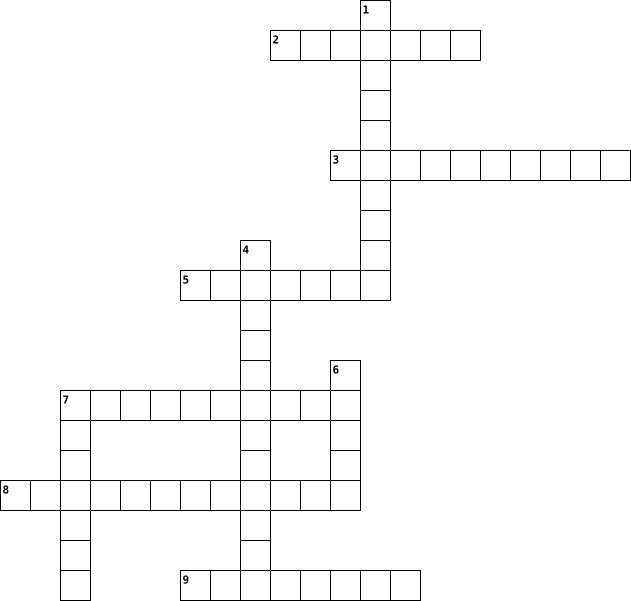
Across
- Words that describe or qualify verbs
- Possessive, Quantitative, Descriptive, Proper, Compound, and Demonstrative, are all kinds of ...
- Words that act like nouns.
- When a pronoun shows ownership, it is called ...
- To join two sentences together
- What kind of noun is intangible, like emotions e.g. love, personality?
Down
- Words that act like adjectives
- To indicate the position of a noun
- Words that show action
- A word that replaces a noun is called a ...
10 Clues: Words that show action • Words that act like nouns. • Words that act like adjectives • To join two sentences together • To indicate the position of a noun • Words that describe or qualify verbs • A word that replaces a noun is called a ... • When a pronoun shows ownership, it is called ... • What kind of noun is intangible, like emotions e.g. love, personality? • ...
Latin Root Words 2015-09-10

Across
- to drive
- to say
- to throw
- again;back
- across, beyond
- after
- not
- to lead, bring
Down
- not, not any
- forms nouns from verbs
- between, among
- to turn
- to pull, drag
- forms nouns from verbs
- together
15 Clues: not • after • to say • to turn • to drive • to throw • together • again;back • not, not any • to pull, drag • between, among • across, beyond • to lead, bring • forms nouns from verbs • forms nouns from verbs
Parts of speech 2019-10-18

Across
- Adverbs of __________ answer the question: where things happen?
- Type of word which is used to point a noun.
- Complete the order in which adjectives have to be placed.
- Type of words which are used to connect words.
- Verb which represent states rather tahn actions.
- Type of words which are used to replace nouns.
- Example of a preposition of movement.
Down
- Example of a proper noun which is a german city.
- Type of words which are used to show a relationship between words.
- Adverbs of ________________ answer the question: how often?
- _____________ nouns are things we can actually touch.
- _________ verbs expresses ability or possibility.
- Example of an abstract noun, which is the opposite of goodwill.
- Type of words which are used to name people, things or places.
- Verbs often represent ______________.
15 Clues: Example of a preposition of movement. • Verbs often represent ______________. • Type of word which is used to point a noun. • Type of words which are used to connect words. • Type of words which are used to replace nouns. • Example of a proper noun which is a german city. • Verb which represent states rather tahn actions. • ...
Warm up 2025-10-06

Across
- Latin word meaning "to"
- personal ending for 1st person plural verbs
- the base form of Latin verbs e.g. "to verb"
- person or thing that performs an action
Down
- case used for separation
- Greek warrior who was invincible except for his ankle
- the prince who started the Trojan war
- person or thing that receives an action
- Latin word for "teacher"
9 Clues: Latin word meaning "to" • case used for separation • Latin word for "teacher" • the prince who started the Trojan war • person or thing that receives an action • person or thing that performs an action • personal ending for 1st person plural verbs • the base form of Latin verbs e.g. "to verb" • Greek warrior who was invincible except for his ankle
English Terms 2021-09-01

Across
- person, place, thing
- main point
- ends the sentence
- bad guy
- describes nouns
- describes verbs
- solves the problem
Down
- problem
- a pause
- good guy
- what's happening
- action word
- message
- where it happens
14 Clues: problem • a pause • bad guy • message • good guy • main point • action word • describes nouns • describes verbs • what's happening • where it happens • ends the sentence • solves the problem • person, place, thing
Antonella Cross Word 2021-06-23

Across
- _o_ (Religion)
- M_p_ (E.Sociales)
- Pl__e_ (C.Naturales)
- cr_a_i___y (Eca)
- _um__r_ (Matematica)
- T_a__l__e (Ingles)
- bi__e (Religion)
Down
- _o__r_ (Eca)
- s_m (Matematica)
- P_an_s (C.Naturales)
- Co__t_y (E.Sociales)
- r_a_in_ (Lenguaje)
- V__bs (Ingles)
13 Clues: _o__r_ (Eca) • cr_a_i___y (Eca) • T_a__l__e (Ingles) • V__bs (Ingles) • M_p_ (E.Sociales) • Co__t_y (E.Sociales) • _o_ (Religion) • P_an_s (C.Naturales) • Pl__e_ (C.Naturales) • r_a_in_ (Lenguaje) • bi__e (Religion) • s_m (Matematica) • _um__r_ (Matematica)
Affix Vocabulary/Grammar Unit 8 Review 2021-01-26
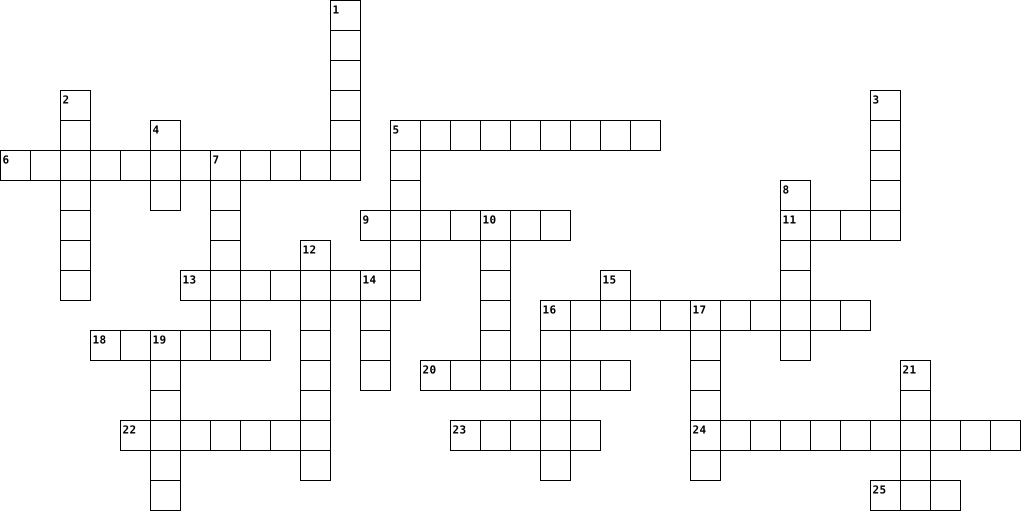
Across
- A word that describes a noun is called an ____________.
- Words that connect other words, phrases, or clauses together are called _________.
- The prefix PRO- means __________ or for.
- The base meaning of a word, that affixes can be added to, is called the ________ of the word.
- Words such as he, we, and she, that can take the place of a noun are known as ___________.
- Part of speech that shows relationships between things, such as location, time, or direction.
- A group of words containing both a subject and verb is known as a _________.
- The word _______ is a hint for remembering the conjunctions for, and, nor, but, or, yet, and so.
- The root word CRED means _________.
- The prefix that means over or above.
- If a clause works by inself as a sentence, it is _______________.
- The prefix that means before.
Down
- In writing, ________ are used to indicate a short pause.
- Verbs that describe a state of existence, such as is or was, are called __________ verbs.
- The prefix AB- and ABS- mean ______ or away from.
- The prefix UNI- means _________.
- The prefix TRANS- means _________ or through.
- The prefix A- or AD- means in, on, into, or _________.
- The type of affix that adds to the beginning of a word and changes the meaning.
- Words such as run, jump, and dance are examples of __________ verbs.
- The prefix COM- means with or __________.
- Any word that is a person, place, or thing.
- The prefix that means down or away from
- Nouns that are specific and have to be capitalized are called __________ nouns.
- The type of affix that adds to the end of a word and changes the meaning.
- A word that describes a verb is called an ____________.
- The prefix SUB- means ________.
27 Clues: The prefix that means before. • The prefix SUB- means ________. • The prefix UNI- means _________. • The root word CRED means _________. • The prefix that means over or above. • The prefix that means down or away from • The prefix PRO- means __________ or for. • The prefix COM- means with or __________. • Any word that is a person, place, or thing. • ...
Stage 4 Verb Practice 2021-11-18

Across
- This verb that means "I am doing"
- This pronoun always goes with First Person endings
- This verb means "He is searching"
- Nominative of "ring"
- This verb means "You are giving back"
- This verb means "I have"
- This verb means "You are doing"
- Accusative of "ring"
- This man recites poetry
- Who?
- This verb means "You are calling"
- -ō is the ending for __________ Person Verbs
- Accusative of "wax tablet"
- This verb means "I am cooking"
- This verb means "I am giving back"
- This man cuts beards
- This verb means "She is selling"
- Nominative of "wax tablet"
- -t is the ending for __________ Person Verbs
- Money (Nominative)
- A liar (Nominative)
- this noun can mean either sign, seal, OR signal
- This verb means "She has"
Down
- This man handles money
- Why?
- This verb means "You are searching"
- This verb means "I am searching"
- You might shout this if something goes wrong
- This verb means "You have"
- This verb means "she says"
- This adjective means "enough"
- -s is the ending for ___________ Person Verbs
- This verb means "I am calling"
- This verb means "She is doing"
- This verb means "You are selling"
- Money (Accusative)
- This verb means "He is cooking"
- A judge (Nominative)
- What?
- This verb means "He is giving back"
- This verb means "He is calling"
- This verb means "I am selling"
- This one letter preposition means "out of"
- This pronoun always goes with Second Person endings
- This verb means "you are cooking"
- person is ______ is doing the action
46 Clues: Why? • Who? • What? • Money (Accusative) • Money (Nominative) • A liar (Nominative) • Nominative of "ring" • Accusative of "ring" • This man cuts beards • A judge (Nominative) • This man handles money • This man recites poetry • This verb means "I have" • This verb means "She has" • This verb means "You have" • This verb means "she says" • Accusative of "wax tablet" • Nominative of "wax tablet" • ...
Year 7 - Sentences and Grammar! 2024-10-17

Across
- A kind of sentence that wants to know or find out something.
- The adverb in this sentence: "The turtle moved slowly across the path."
- One of the nouns in this sentence "Their friendship grew stronger over the years."
- The adverb in this sentence: "The cat jumped suddenly when it heard the noise."
- A verb describes an _______ or a state of being
- A conjunction that indicates a reason or explanation
- Words that help to connect parts of sentences
- Words that describe actions or states of being.
- A kind of sentence that gives information.
- An incomplete sentence.
- One of the verbs in this sentence "He juggled six bananas while riding a unicycle."
- Words that describe nouns.
- These words replace nouns.
Down
- A kind of sentence that starts with the verb and tells someone what to do.
- The adjective in this sentence "The exciting game kept everyone on their toes."
- One of the adjectives in this sentence "The fluffy marshmallow exploded in the microwave like a tiny cloud."
- These words modify verbs, adjectives and other adverbs.
- One of the nouns in this sentence "The music filled the room with joy."
- adverb in this sentence: "She was very excited about the trip."
- One of the nouns in this sentence "He found a pickle under the couch and wondered how it got there."
- A conjunction that introduces a consequence or result of something
- A kind of sentence that expresses strong emotion!
- The verb in this sentence "He is cooking dinner for his family."
- A conjunction that shows difference or contrast
- Nouns name a person, place, thing or ________.]
- A ____________ is a complete idea.
- Words that name people, places, things or ideas.
- One of the nouns in this sentence "The music filled the room with joy."
28 Clues: An incomplete sentence. • Words that describe nouns. • These words replace nouns. • A ____________ is a complete idea. • A kind of sentence that gives information. • Words that help to connect parts of sentences • A verb describes an _______ or a state of being • Words that describe actions or states of being. • A conjunction that shows difference or contrast • ...
Analytical and Hortatory Exposition Text 2026-04-22

Across
- Words like "certainly, surely" are called modal _____
- Each point that supports the writer's stance
- Unique closing section of hortatory exposition
- Verbs related to mental processes
- Ordinal numbers are used to _______ the arguments in order
- The tense commonly used in hortatory exposition text
- Verbs showing physical activity (e.g. talk, watch)
Down
- The main argument/viewpoint the writer wants to prove
- Type of exposition that persuades readers to take action
- Nouns that represent ideas or concepts (e.g. belief, consideration)
- "First, second, third" help make the text more _______ and clear
- A recommendation is used to give _______ or suggestion to the readers to make a choice by considering the presented arguments
- Words like 'furthermore', 'finally' are called
- Words used to judge or assess (example: valuable)
- Comes after "first" in sequencing arguments
15 Clues: Verbs related to mental processes • Comes after "first" in sequencing arguments • Each point that supports the writer's stance • Words like 'furthermore', 'finally' are called • Unique closing section of hortatory exposition • Words used to judge or assess (example: valuable) • Verbs showing physical activity (e.g. talk, watch) • ...
LETTERS 2022-10-04

Across
- Adjectives Verbs, verbs, adverbs and adjectives are asked “how much?" is the answer to his question.
- letters reveal the way verbs and verbs are realized, tell how they are made.
- Indicate the time of the verb or verb to occur.
- Complete the meaning of verbs and verbs through the question.
Down
- of the earth inform the direction to which verbs and verbs are directed.
5 Clues: Indicate the time of the verb or verb to occur. • Complete the meaning of verbs and verbs through the question. • of the earth inform the direction to which verbs and verbs are directed. • letters reveal the way verbs and verbs are realized, tell how they are made. • ...
present perfect - dialog 2025-01-29

Across
- Have you __ (speak) to Mr Iglesias? He has been a great help to me.
- I have __(chose)Don Quixote.
- How many irregular verbs have you already __(learn)?
- __'ll be all right. Don't worry.
- How many exercises have you already __(do)?
- Yes, I have already __ (talk)to him but I'm still not sure.
- Have you __ done all the translation exercises?
- I __ finished yet.
Down
- I have __(complete)the first four.
- About half __ them.
- I have __(study)most of the verbs, but I still have to study the vocabulary.
- Oh, that sounds great. I haven't decided __.
- (Be)you ready for the final Spanish exam next week?
- That's good. What book __ you read for the oral part of the exam?
14 Clues: I __ finished yet. • About half __ them. • I have __(chose)Don Quixote. • __'ll be all right. Don't worry. • I have __(complete)the first four. • How many exercises have you already __(do)? • Oh, that sounds great. I haven't decided __. • Have you __ done all the translation exercises? • (Be)you ready for the final Spanish exam next week? • ...
Vocabulary. 2024-11-15

Across
- past simple of the verb to be in singular
- word that you use to indicate which place was you born.
- used to express hability in the past.
- auxiliary for the present perfect simple
- verb do in past
Down
- swim in past tense.
- word that you use to indicate a period of time.
- word that you use to indicate a point in the time.
- used with uncountable verbs.
- termination adding to regular verbs in past.
10 Clues: verb do in past • swim in past tense. • used with uncountable verbs. • used to express hability in the past. • auxiliary for the present perfect simple • past simple of the verb to be in singular • termination adding to regular verbs in past. • word that you use to indicate a period of time. • word that you use to indicate a point in the time. • ...
Espanol 1: Tema 2(Los Verbos) 2019-11-13

Across
- to give
- to travel
- to come (to)
- to attend
- to receive
- to dance
- to drink
- to cook
- to go (to)
Down
- to decorate
- to invite
- verbs
- to visit
- to celebrate
- to sing
- to take/to carry/to wear
- to prepare
- to look for
18 Clues: verbs • to give • to sing • to cook • to visit • to dance • to drink • to travel • to invite • to attend • to prepare • to receive • to go (to) • to decorate • to look for • to come (to) • to celebrate • to take/to carry/to wear
Sources of verbs 2025-10-26

Across
- Submitting
- Annoying
- Appreciating
- Challenging
- Commenting
- Completing
Down
- Sources of verbs
- Saving (rescuing)
- Clarifing
- Correcting
10 Clues: Annoying • Clarifing • Submitting • Correcting • Commenting • Completing • Challenging • Appreciating • Sources of verbs • Saving (rescuing)