
water cycle Crossword Puzzles
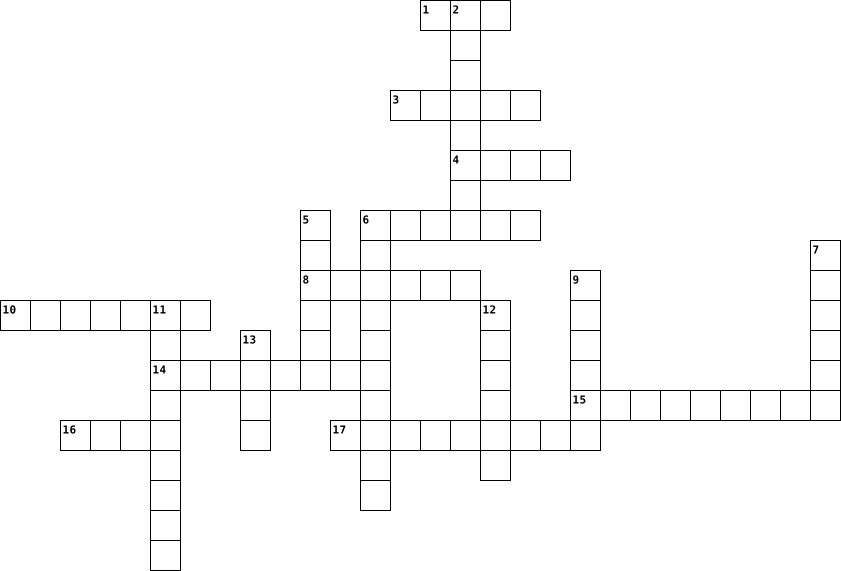
Sulphur dioxide, Carbon dioxide and Water cycle 2020-11-17

Across
- where is the most water located on earth?
- when compounds like sulfur dioxide and nitrogen oxides are released into the air
- water loss from plant leaves is called
- the hydrologic cycle is driven primarily by what energy?
- water falling from the air as rain, sleet or snow
- what form is carbon monoxide?
- carbon monoxide is very
Down
- how is carbon released into the atmosphere
- fuels what causes sulphur dioxide to be produced
- a symptom of carbon monoxide poisoning
- a change of state in which a gas becomes a liquid
- where does water go when it's evaporated?
- formula for carbon monoxide
13 Clues: carbon monoxide is very • formula for carbon monoxide • what form is carbon monoxide? • a symptom of carbon monoxide poisoning • water loss from plant leaves is called • where is the most water located on earth? • where does water go when it's evaporated? • how is carbon released into the atmosphere • fuels what causes sulphur dioxide to be produced • ...
MODULE 4 AND 5 2020-11-14

Across
- This is the symptom regardless of malaria type.
- Entire chain of segment/proglottids
- Infective stage of Plasmodium spp to Man
- Diagnosis finding in T. solium
- Infective stage of Plasmodium to Vector
- May develop in human tissue
- Shortest adult
- an encysted form of ookinete
- part of the cycle that happens within RBCs
- Asexual cycle happens in Man
- Diagnosis in E. granulosus
Down
- Ingestion of plerocercoid larva in D. latum can lead to
- Round to oval
- female gametocyte
- It is tapeworms/cestodes are under
- With globular scolex without hooks
- Infective stage of H. diminuta
- Sexual cycle – happens in the VECTOR
- part of the cycle that happens within LIVER/HEPATIC CELL
- Larval form in man
20 Clues: Round to oval • Shortest adult • female gametocyte • Larval form in man • Diagnosis in E. granulosus • May develop in human tissue • an encysted form of ookinete • Asexual cycle happens in Man • Infective stage of H. diminuta • Diagnosis finding in T. solium • It is tapeworms/cestodes are under • With globular scolex without hooks • Entire chain of segment/proglottids • ...
BASIC ECOLOGICAL CONCEPT & PRINCIPLES 2019-03-19

Across
- RUNOFF
- SULFUR-CYCLE
- AVAPORATION
- CHEMOSYNTHESIS
- PRODUCERS
- TRANSPIRATION
- CARNIVORES
- ALTITUDE
- CONDENSATION
- HERBIVORES
- ECOSYSTEM
- LATITUDE
Down
- FOOD-WEB
- PRECIPITATION
- FOOD-CHAIN
- PHOTOSYNTHESIS
- AGROESYSTEMS
- DETRITIVOES
- NITROGEN
- OMNIVORES
20 Clues: RUNOFF • FOOD-WEB • ALTITUDE • NITROGEN • LATITUDE • PRODUCERS • OMNIVORES • ECOSYSTEM • FOOD-CHAIN • CARNIVORES • HERBIVORES • AVAPORATION • DETRITIVOES • SULFUR-CYCLE • AGROESYSTEMS • CONDENSATION • PRECIPITATION • TRANSPIRATION • PHOTOSYNTHESIS • CHEMOSYNTHESIS
GT Menu Crossword 2025-02-06

Across
- Sun is hot on the ocean
- Biking or -----
- Earth protector
- Over time
- Rain
- My middle name/friendo
Down
- soda can
- What is rain made of
- Day to day
- Ms.Klingan song
- what do you teach aside from math
11 Clues: Rain • soda can • Over time • Day to day • Biking or ----- • Earth protector • Ms.Klingan song • What is rain made of • My middle name/friendo • Sun is hot on the ocean • what do you teach aside from math
Cycles of Matter and Energy 2022-03-11

Across
- transparent,tasteless,and odorless liquid which is the main constituent of Earth's hydrosphere
- the process in which a product of condensation falls under gravitational pull from clouds
- the series of processes by which nitrogen and its compounds are interconverted in the environment and in living organisms
- a series of events that are regularly repeated in the same order
- a material that makes up all living things
Down
- the process of turning from liquid into vapor
- water that collects as droplets on a cold surface when humid air is in contact with it
- the cycle of processes by which water circulates between the earth's oceans, atmosphere, and land
- odorless unreactive gas that forms about 78 percent of the earth's atmosphere
- the series of processes by which carbon compounds are interconverted in the environment
10 Clues: a material that makes up all living things • the process of turning from liquid into vapor • a series of events that are regularly repeated in the same order • odorless unreactive gas that forms about 78 percent of the earth's atmosphere • water that collects as droplets on a cold surface when humid air is in contact with it • ...
MS Science Week 2 Vocabulary: Cycles of Matter Crossword Puzzle 2017-03-27

Across
- the release of excess nutrients ( usually nitrogen) into a body of water; causes algae to grow excessively
- the continual movement of an element, such as carbon or nitrogen, between Earth's organisms and the environment
- process of converting carbon dioxide, water, and light energy to glucose and oxygen; part of the carbon cycle
- the process in which bacteria change nitrogen gas into compounds that other organisms can use
- the transformation of ammonia into nitrates and nitrites by bacteria
Down
- the continuous movement of nitrogen through Earth's systems
- process of converting glucose and oxygen into carbon dioxide, water, and chemical energy; part of the carbon cycle
- the conversion of nitrates and ammonium molecules in soil back into nitrogen gas
- burning, especially carbon-based material
- the continuous movement of carbon through Earth's systems
10 Clues: burning, especially carbon-based material • the continuous movement of carbon through Earth's systems • the continuous movement of nitrogen through Earth's systems • the transformation of ammonia into nitrates and nitrites by bacteria • the conversion of nitrates and ammonium molecules in soil back into nitrogen gas • ...
Lunar Cycle 2021-04-13

Across
- The different ____ of the Moon
- Quarter: Half the moon is lit on the left side
- 25% of light is showing
- Dark, the first phase of the cycle
- Light on the right side
- water, waves, sand, and water
- More than 50% is showing
Down
- moving around an object
- Light on the left side
- Another word for lit up
- move around, spinning
11 Clues: move around, spinning • Light on the left side • moving around an object • Another word for lit up • 25% of light is showing • Light on the right side • More than 50% is showing • water, waves, sand, and water • The different ____ of the Moon • Dark, the first phase of the cycle • Quarter: Half the moon is lit on the left side
Cell Metabolism 2025-02-07

Across
- Plant cell organelle that makes glucose
- All the reactions that break down molecules
- All the reactions that make molecules
- Biological catalysts
- Process that plants use to make glucose
Down
- _____ Synthesis, anabolism that gives off water
- Catabolism that uses water
- Organelle that makes ATP
- _____ Cycle, light Independent parts of photosynthesis
- Reaction where glucose is broken down
- Light ______, first part of photosynthesis
11 Clues: Biological catalysts • Organelle that makes ATP • Catabolism that uses water • Reaction where glucose is broken down • All the reactions that make molecules • Plant cell organelle that makes glucose • Process that plants use to make glucose • Light ______, first part of photosynthesis • All the reactions that break down molecules • ...
Biology crossword puzzle 2021-10-22

Across
- The continuous movement of water within the Earth and atmosphere.
- Relationship in which two organisms of different species benefit of eachother.
- The variety of life on Earth at all its levels.
- Organisms that make their own food.
- The change in the amount of individuals of a specials in an area over time.
- Geographic area where plants, animals, and other organisms, as well as weather and landscapes, work together to form life.
- relationship in which one organism lives off of another organism harming it and possibly causing death.
- Repeating cycle of processes during which nitrogen moves through both living and non-living things.
- The process in which carbon atoms continually travel from the atmosphere to the Earth and then back into the atmosphere.
- Water property tha refers to the attraction of molecules for other molecules of the same kind.
- The movement of water within the spaces of a porous material due to the forces of adhesion, cohesion, and surface tension.
Down
- Relationship between individuals of two species in which one species obtains food or other benefits from the other
- Water property that refers to the attraction of molecules of one kind for molecules of a different kind.
- The biogeochemical cycle that describes the movement of phosphorus through the lithosphere, hydrosphere, and biosphere.
- Organism that consumes other organisms in a food chain.
- The property of the surface of a liquid that allows it to resist an external force.
- Term describing any relationship or interaction between two dissimilar organisms.
- Competition with members of the same species.
- The flow of energy through living things within an ecosystem.
- Competition with members of the same species.
20 Clues: Organisms that make their own food. • Competition with members of the same species. • Competition with members of the same species. • The variety of life on Earth at all its levels. • Organism that consumes other organisms in a food chain. • The flow of energy through living things within an ecosystem. • ...
Weathering, Erosion, and Deposition Crossword Puzzle 2026-02-04

Across
- hard
- blowing air
- moving rocks to a different place
- keeps on going
- we live on it
- Material settles
- fall apart
- To move from one place to another
- little particles
- the breaking of rocks
Down
- falls down and its wet
- Water moving soil away
- Plant part that can break rocks
- Let material settle
- Slowly break down
- to drop off
- Small piece broken off
- Small stones
- big hit in the ocean
- all over the beach
20 Clues: hard • fall apart • blowing air • to drop off • Small stones • we live on it • keeps on going • Material settles • little particles • Slowly break down • all over the beach • Let material settle • big hit in the ocean • the breaking of rocks • falls down and its wet • Water moving soil away • Small piece broken off • Plant part that can break rocks • moving rocks to a different place • ...
photosynthesis 2022-03-16

Across
- works with water in ldr to make 2 PGAL
- collects co2
- the part of a cell that absorbs light in plants.
- molecule used as an energy source in cells
- a type of sugar made from photosynthesis
- the nucleus of a hydrogen atom after separated
- how CO2 gets into the plants
- times that LIR is repeated
- a coenzyme used in photosynthesis
Down
- taken up through the roots.
- is recycled back to the thylakoid to be used later
- where the reactions from light take place
- the transfer of protons through them membrane
- the gas used to make glucose
- formed from ATP and NADPH to make it
- the result of splitting water from light.
- the systems that chloroplast absorb light energy to do task.
- what kick starts the actions of photo synthesis.
- one of the products of photo synthesis
- where the Calvin cycle takes place
20 Clues: collects co2 • times that LIR is repeated • taken up through the roots. • the gas used to make glucose • how CO2 gets into the plants • a coenzyme used in photosynthesis • where the Calvin cycle takes place • formed from ATP and NADPH to make it • works with water in ldr to make 2 PGAL • one of the products of photo synthesis • a type of sugar made from photosynthesis • ...
Rock Crossword 2012-11-28

Across
- cycle Series of processes that occur on Earth's surface and in the crust and mantle that slowly change rocks from one kind to another
- minerals dissolved in water and crystallized
- Forms under surface
- rock fragments carried away because of erosion
- Look & feel of a rock based on size, shape, and pattern of grains
- minerals crystallize sediments together
- Grains arranged randomly
- Type of Sedimentary, rock fragments squeezed together
- Solid pieces of materials from living things
- Type of rock formed by lava/magma being cooled
Down
- process by which running water, wind, or ice carry away bits of broken rock
- Pressing sediments together
- Where they form
- Rock fragments packed together
- Forms on Earth's surface
- Formed by other rocks through heat and pressure
- Type of minerals in the rock
- Remains of plants and animals pressed together
- rocks with thin layering
- Sediment settles out of wind/water
20 Clues: Where they form • Forms under surface • Forms on Earth's surface • rocks with thin layering • Grains arranged randomly • Pressing sediments together • Type of minerals in the rock • Rock fragments packed together • Sediment settles out of wind/water • minerals crystallize sediments together • minerals dissolved in water and crystallized • ...
Rock Crossword 2012-11-28

Across
- Solid pieces of materials from living things
- minerals crystallize sediments together
- Remains of plants and animals pressed together
- process by which running water, wind, or ice carry away bits of broken rock
- Type of rock formed by lava/magma being cooled
- Type of minerals in the rock
- Look & feel of a rock based on size, shape, and pattern of grains
- cycle Series of processes that occur on Earth's surface and in the crust and mantle that slowly change rocks from one kind to another
- Where they form
- rocks with thin layering
- Sediment settles out of wind/water
Down
- Type of Sedimentary, rock fragments squeezed together
- minerals dissolved in water and crystallized
- rock fragments carried away because of erosion
- Grains arranged randomly
- Rock fragments packed together
- Formed by other rocks through heat and pressure
- Forms under surface
- Forms on Earth's surface
- Pressing sediments together
20 Clues: Where they form • Forms under surface • Grains arranged randomly • Forms on Earth's surface • rocks with thin layering • Pressing sediments together • Type of minerals in the rock • Rock fragments packed together • Sediment settles out of wind/water • minerals crystallize sediments together • minerals dissolved in water and crystallized • ...
Nutrients Cycle 2023-04-25

Across
- too much CO2 in the atmosphere may be responsible for the _________ effect.
- animals and ______ cannot directly use the nitrogen in our atmosphere.
- _______ is within each cycle
- _______ are chemicals substances that an organism needs to live.
- phosphorus is contained of ______ and minerals.
- _________ bacteria breaks down ammonia into a gaseous form.
- phosphorus, water, nitrogen, and ________.
- photosynthesis is used to make _______ and oxygen.
- source of phosphorus in water comes from man-made ______.
- 6CO2 + 6H20 -> C6H12O6 + 6O2.
Down
- _______ is not found in the free state of nature.
- too much phosphorus in water leads to plant _______.
- animals use O2 in the process of _____ to make CO2
- main regulator of CO2.
- every organism needs nutrients to survive.
- higher organism use nitrogen to make their _______.
- animals waste ______ because of bacteria.
- ______ eat plants containing nitrogen.
- our atmosphere is 78% _______ gas.
- _________ bacteria can directly use nitrogen in the atmosphere.
20 Clues: main regulator of CO2. • _______ is within each cycle • 6CO2 + 6H20 -> C6H12O6 + 6O2. • our atmosphere is 78% _______ gas. • ______ eat plants containing nitrogen. • animals waste ______ because of bacteria. • every organism needs nutrients to survive. • phosphorus, water, nitrogen, and ________. • phosphorus is contained of ______ and minerals. • ...
Cumulative Crossword 2D 2020-11-14

Across
- rivers, lakes, oceans, streams
- energy source for the water cycle
- fluffy puffy fair sunny weather cloud
- sun warming a greenhouse full of flowers
- touching a hot light match
- gas to liquid;creates clouds
- low level rain and fog cloud
- opposite of condensation
- water lost by plants by heat energy
- changes states of matter,changes shape
- towering thunderstorm cloud
- a pressure system in a hurricane;brings rain
- determines whether its rain or snow
- rain, sleet, snow, hail
- examples are bacteria and fungi
- main organ for the nervous system
Down
- what mass goes in comes out (3 words)
- examples are heaters and hot air balloons
- opposite of evaporation
- examples are trees and monkeys
- examples are bacteria, fungi, paramecium
- high wispy ice crystal cloud;change of weather
- the function of the nervous system(2words)
- all day rain cloud
- dogs,humans,maple tree,roses, lion
- creates a new substance;can't bereversed
- water flowing across the land
27 Clues: all day rain cloud • opposite of evaporation • rain, sleet, snow, hail • opposite of condensation • touching a hot light match • towering thunderstorm cloud • gas to liquid;creates clouds • low level rain and fog cloud • water flowing across the land • rivers, lakes, oceans, streams • examples are trees and monkeys • examples are bacteria and fungi • energy source for the water cycle • ...
Cumulative Crossword 3G 2021-02-20

Across
- make their own food through photosynthesis
- have to eat to get their energy
- force goes in opposite direction; slows/stops
- distance divided by time
- system organs heart, blood/vessels, lungs
- system organs are brain, spinal cord, nerves
- plastic, water, air, Styrofoam
- examples are fungus, worms, bacteria
- doesn't let heat flow evenly;heat/cold stay in
- lets heat flow evenly to heat things(pots/pan)
- system that sends electrical messages to body
- another name for a herbivore
- copper, silver, iron, steel
- before/after change stays same
Down
- speed and direction
- moving force keeps moving until it is stopped
- another name for a carnivore
- total (sum) of all forces
- system organs are stomach,esophagus,intestines
- system that breaks down food into nutrients
- system also known as circulatory
- start every food chain/web/pyramid
- water cycle stage like lakes, oceans, ponds
- water vapor cools and creates clouds
- system which makes our body move
25 Clues: speed and direction • distance divided by time • total (sum) of all forces • copper, silver, iron, steel • another name for a carnivore • another name for a herbivore • plastic, water, air, Styrofoam • before/after change stays same • have to eat to get their energy • system also known as circulatory • system which makes our body move • start every food chain/web/pyramid • ...
Plants Respiration Photosynthesis Puzzle 2024-11-18

Across
- Water, Carbon Dioxide, Energy in cell respiration
- Process of changing ATP to ADP
- Partially charged battery
- Where cell respiration occurs
- Female parts of a flower
- Occurs in the chloroplast
- Involved in water and mineral transport
- Enzymes function to lower ________ energy
- This cycle makes 2 net ATP
- Water and Carbon Dioxide in photosynthesis
- Stomata are usually _______ at night
Down
- Process of changing ADP to ATP
- Energy for photosynthesis comes from the _____
- Must be present in aerobic respiration
- Male parts of a flower
- The part of a plant that is MOST dependent on its surface area to carry out its function
- Involved with growth and maintenance of new parts of a plant
- Glucose to Pyruvic Acid - makes 2 ATP
- Fully charged battery
- Transport of nutrients and other compounds
- By eating a plant, we obtain this type of molecule used in cell respiration
- Transport chain that makes 32 ATP
22 Clues: Fully charged battery • Male parts of a flower • Female parts of a flower • Partially charged battery • Occurs in the chloroplast • This cycle makes 2 net ATP • Where cell respiration occurs • Process of changing ADP to ATP • Process of changing ATP to ADP • Transport chain that makes 32 ATP • Stomata are usually _______ at night • Glucose to Pyruvic Acid - makes 2 ATP • ...
Final Exam Puzzle 2025-04-26

Across
- Energy storage molecule in animals
- Made of mostly hydrocarbon regions that do not mix well with water
- Electron carrier in cellular respiration
- Polymer of monosaccharides
- Y-linked gene that regulates male development
- Reactions that require energy
- Different levels of organization result in different properties and functions
- Location of the Calvin cycle
- Viruses that infect bacteria
- All living organisms transform energy from one form to another
- Increases the H+ concentration of a solution
Down
- All organisms are modified descendants of common ancestors
- One gene masks the expression of another
- Region where prokaryotic DNA is found
- Reaction that uses water to break polymers
- Breaks large molecules into small ones
- All living organisms rely on DNA to store, express, and transmit information
- Centrosomes begin to move apart
- Decreases the H+ concentration of a solution
- Nonpolar substances that repel water
20 Clues: Polymer of monosaccharides • Location of the Calvin cycle • Viruses that infect bacteria • Reactions that require energy • Centrosomes begin to move apart • Energy storage molecule in animals • Nonpolar substances that repel water • Region where prokaryotic DNA is found • Breaks large molecules into small ones • One gene masks the expression of another • ...
Exam revision 2023-10-15

Across
- Animals that only eat plants.
- The fuel that is used for nuclear power.
- The third step in the water treatment plant.
- When pollutants poisen the water so that nothing can live in it.
- An advantage of using solar and wind energy.
- pollutants that do not dissolve in water.
- Animals that only eat meat.
- Energy is measured in this unit.
- Competition between members of different species.
- A relationship between two living organisms which may or may not be beneficial.
- These produce thheir own food using a process called photosynthesis.
- What we call a third level carnivore.
- The step in the water treatment plant where chlorine is added to kill surviving germs.
- When two or more cells are connected we call it a?
- Competition between members of the same species.
- In this relationship the host is harmed while the other benefits.
- when electricty cannot pass through a material we call it an?
- Athletes foot is an example of this type of infection.
Down
- The purification process of pouring water through a funnel and paper to remove pollution.
- Changes in how an individual animal or a society do things in their daily lives.
- Instead of drawing pictures for circuits we use?
- This disease uses a snail as a host for part of its life cycle.
- An example of a soluble pollutant.
- When a pathway of electricity is closed we say it is?
- A type of physical adaptation.
- An interaction between two or more species where each has a net benefit.
- When a pathway of electricity is open we say it is?
- The relationship between humpback whales and barnacles.
- A chemical that is added to water to kill germs.
- When electricity can easily pass through a material we call it a?
- When people keep getting sick from a water source it is called what cycle?
- A bacterial disease causing severe diarrhoea and dehydration, usually spread in water.
- A community or group of living organsisms that live in and interact with each other in a specifc environment.
- In predation the predator is referred to as this.
- Worms and bacteria are examples of these.
- Adaptations to an animals body.
- Who is in charge of making sure citizens get clean water.
- Power is measure in this unit.
- Dysentry causes the intestines to become?
- One of the most effective ways of purifying water.
40 Clues: Animals that only eat meat. • Animals that only eat plants. • A type of physical adaptation. • Power is measure in this unit. • Adaptations to an animals body. • Energy is measured in this unit. • An example of a soluble pollutant. • What we call a third level carnivore. • The fuel that is used for nuclear power. • pollutants that do not dissolve in water. • ...
moon phases 2024-05-03

Across
- the thing that helps us stay on earth
- cycle cycle of the moon
- the movement
- barely visible moon
Down
- between half way full on
- fully visible moon
- tides are the things moon creates with water
7 Clues: the movement • fully visible moon • barely visible moon • cycle cycle of the moon • between half way full on • the thing that helps us stay on earth • tides are the things moon creates with water
Weather Vocabulary Review 2013-03-04

Across
- the movement of cool air on land moving toward the ocean
- a tool that tells which direction the wind is blowing
- weight of the atmosphere in a certain area that pushes down on the earth
- average weather patterms and conditions over a long period of time
- a powerful Atlantic ocean current that influences weather in the US
- the amount of water vapor in the air
- large piles of puffy, white clouds that appear during fair weather, but can also bring precipitation
- an area where two air masses meet
- winds that move weather systems across the US from west to east
- an area where a warm air mass is caught between two cold air masses; brings cool temperatures, rain and snow
- rain, sleet, snow, hail, or mixed forms of water that fall from the sky
- a mass of cold air that is pushing a warm air mass, creating lots of clouds and storms
- a tool for measuring the wind speed
- a tool measuring air pressure
- clouds that bring precipitation and/or storms
- a tool for measuring temperature
- thin, wispy clouds that are a sign of fair, but changing, weather
- daily conditions of wind, temperature, clouds, humidity and precipitation
- a mass of warm air that is pushing a cold air mass, creating clouds and light precipitation
Down
- a pressure area of warm air that often causes stormy weather
- the movement of water
- thick, low, sheet-like clouds that cover the sky and signal rainy weather
- water vapor cools and turns into water droplets in this part of the water cycle
- a pressure area that usually has fair weather
- an area where a warm air mass and cold air mass meet, but neither has enough energy to push each other; brings overcast, rainy weather.
- cool air that comes off the ocean and moves toward the land
- climate pattern that describes the warming of surface waters in the Pacific Ocean
- a tool that measures precipitation
- water heats up and turns into a gas in this part of the water cycle
- a fast flowing river of air that moves weather across the land
- a tool that measures humidity
31 Clues: the movement of water • a tool measuring air pressure • a tool that measures humidity • a tool for measuring temperature • an area where two air masses meet • a tool that measures precipitation • a tool for measuring the wind speed • the amount of water vapor in the air • a pressure area that usually has fair weather • clouds that bring precipitation and/or storms • ...
Water Is Precious 2021-01-18

Across
- saving water is very important, use this easy way
- me and I won't be clean, don't wash me, and I'll be clean. What am I?
- another name for water
- lakes, river, sea and oceans are examples of
Down
- daily cycle
- you use this water to drink
- drop found on leaves early morning
- pollution dirty water has a different name'
- what comes down but never goes up?
9 Clues: daily cycle • another name for water • you use this water to drink • drop found on leaves early morning • what comes down but never goes up? • pollution dirty water has a different name' • lakes, river, sea and oceans are examples of • saving water is very important, use this easy way • me and I won't be clean, don't wash me, and I'll be clean. What am I?
Plants 2021-05-02
Across
- lotus aquatic plant
- whose leaves can be used for seasoning foods and medicines
- plant that refracts with spores
- plant in the desert
- dwarf
- sewer plant
- parasitic plant
- the outer cell layer of animals or plants
- harvesting vegetation
- spice plant
Down
- plant that goes through its entire life cycle in water
- comes from growing plants
- coniferous plant
- plants
- plant whose stem fibers are spicy
- vegetable plants
- study of plants
- tropical plant
18 Clues: dwarf • plants • sewer plant • spice plant • tropical plant • study of plants • parasitic plant • coniferous plant • vegetable plants • lotus aquatic plant • plant in the desert • harvesting vegetation • comes from growing plants • plant that refracts with spores • plant whose stem fibers are spicy • the outer cell layer of animals or plants • ...
Freshwater Crossword 2023-02-23

Across
- The continuous cycle of water evaporating & condensing on Earth.
- The process of water releasing from clouds in the form of rain, hail, or snow.
- is the process of water vapor turning into liquid water.
- Water in gas form.
- The process of water soaking into the ground.
Down
- The process where plants release water vapor through their leaves (evaporation through stomata)
- is the process of water changing from liquid to gas (Water Vapor).
- Water that flows over Earth's surface.
- Permeable sediment of rock that holds significant amounts of water.
- A large mass of ice, formed by snow accumulation on land, moves slowly across Earth's surface.
- Water is sorted in cracks & pores beneath Earth's surface.
- A river and all its tributaries, or small streams together with the watershed, the land area that supplies water to the system.
12 Clues: Water in gas form. • Water that flows over Earth's surface. • The process of water soaking into the ground. • is the process of water vapor turning into liquid water. • Water is sorted in cracks & pores beneath Earth's surface. • The continuous cycle of water evaporating & condensing on Earth. • is the process of water changing from liquid to gas (Water Vapor). • ...
Photosynthesis 2024-10-02

Across
- Individual packets of light
- when an atom or molecules gains electrons
- pulls H+ ions from the stroma into the lumen
- electron donor involved in energy transfers
- cluster of photosynthetic pigments embedded in the thylakoid membrane which can process energy of a photon
- cycle that intakes NADPH,ATP and CO2 and outputs C6-H12-O6
- a photosynthetic plant cell
- process of incorporation CO2 into glucose
- a water filled interior contained by thylakoid membrane
Down
- C6-H12-O6
- when an atom or molecules loses electrons
- when a reaction needs light to function
- provides immediate energy for cellular functions
- another word for oxidation
- process of breaking apart H2-O into 4e-, 4H+, O2
- progressively stronger electron acceptors with energy released with each transfer
- a stack of thylakoid disks
- where first 2 stages of photosynthesis takes place
18 Clues: C6-H12-O6 • another word for oxidation • a stack of thylakoid disks • Individual packets of light • a photosynthetic plant cell • when a reaction needs light to function • when an atom or molecules loses electrons • when an atom or molecules gains electrons • process of incorporation CO2 into glucose • electron donor involved in energy transfers • ...
Water 2026-01-13

Across
- When water falls from clouds as rain, snow, or hail
- Untreated human waste that can contaminate water sources
- A human activity that removes trees and disrupts the water cycle
- The process where liquid water changes into water vapour due to heat.
- Movement of water through plants and into the atmosphere
Down
- llnesses that are spread by drinking or using contaminated water.
- The presence of harmful or dirty substances in water that make it unsafe to use.
- A disease caused by drinking contaminated water that causes severe diarrhoea
- The process where water vapour cools and forms clouds
- Tiny living organisms, such as bacteria or viruses, that can cause disease.
- When rainwater flows over land into rivers and lakes
11 Clues: When water falls from clouds as rain, snow, or hail • When rainwater flows over land into rivers and lakes • The process where water vapour cools and forms clouds • Untreated human waste that can contaminate water sources • Movement of water through plants and into the atmosphere • A human activity that removes trees and disrupts the water cycle • ...
Bio Cross word puzzle 2013-10-09

Across
- / In what cell organelle does photosynthesis occur?
- / two examples of how land water can get back to the ocean are rivers and _________.
- / four major storage areas for water area Atmosphere, surface water, the ocean, and ________.
- / the process when organisms die and decompose.
- / C6H12O6 + 6O2 --> 6CO2 + 6H2O + energy
- / 6CO2 + 6H2O + energy --> C6H12O6 + 6O2
- / C6h12O6
- / _____ ____s are the only organism that can perform respiration and photosynthesis
- / what is the only form of nitrogen that non-legume plants can take in and use?
- / brings water down from the atmosphere
- / all energy starts from one source. the ___.
- / where is ground water stored?
Down
- / brings water up to the atmosphere
- / what other organism can decompose dead organisms besides worms and fungi?
- / fossil fuel fuel formation leads to what in the carbon cycle that then leads to combustion? (coal, oil, and natural gas)
- / In what cell organelle does respiration occur?
- / two ways carbon dioxide can get back into the atmosphere are respiration and ________.
- / What component of photosynthesis can not be recycled?
- / what is used to get nitrogen out of the atmosphere besides N-fixation/N-fixing bacteria?
- / _____ _____s only capable of performing respiration
20 Clues: / C6h12O6 • / where is ground water stored? • / brings water up to the atmosphere • / brings water down from the atmosphere • / C6H12O6 + 6O2 --> 6CO2 + 6H2O + energy • / 6CO2 + 6H2O + energy --> C6H12O6 + 6O2 • / all energy starts from one source. the ___. • / the process when organisms die and decompose. • / In what cell organelle does respiration occur? • ...
Weather+Climate 2023-03-23

Across
- Cloud white and puffy
- Front moving faster than the cold air mass
- an enormous storm with high winds and heavy rains
- Water that falls to Earth in any form
- Cycle shows the continuous movement of water
- System more air pressure than their surroundings
- Cloud like a thick blanket
- Cloud thin and wispy
- Mass a large body of air
- a huge release of electricity
- Front warm air mass becomes trapped between two cold air masses
- a boundary between air masses
Down
- amount of heat present in an object
- a snow storm that has high winds
- System Systems that have less pressure
- the amount of water vapor in the air
- Rain,Snow,Sleet,Hail
- Point temperature at which water vapor condenses
- a funnel-shaped cloud of whirling high winds
- Front two air masses stop moving when they meet
- all weather conditions
- Humidity the percent of water vapor in the air relative to the total amount the air can hold
- Front occurs when a cold air mass runs into a warm air mass
- A cloud attached to the ground
24 Clues: Rain,Snow,Sleet,Hail • Cloud thin and wispy • Cloud white and puffy • all weather conditions • Mass a large body of air • Cloud like a thick blanket • a huge release of electricity • a boundary between air masses • A cloud attached to the ground • a snow storm that has high winds • amount of heat present in an object • the amount of water vapor in the air • ...
Unit 1 Vocab Crossword Puzzle 2024-09-25

Across
- Movement of particles high to low
- Can occur in the light or dark (Calvin cycle)
- The breakdown of glucose by enzymes
- Requires oxygen
- Semi-Permeable membrane surrounding the cytoplasm
- Can convert to ATP with an extra phosphate group
- Attracted to water
- An organism that produces its own food
- Can occur in the light
- Water moves out the cell (Shrinks)
- Repelled from water
- Two layers of lipid that make the cell membrane
- Stacks of thylakoids in the stomata if a chloroplast
- Movement of water high to low
- water moved in and out equal amounts
Down
- What dissolves in a solution
- Green pigment found in plants
- Goes against the concentration gradient
- Used by living organisms to store and release energy
- Plants make their own food
- Maintaining internal body conditions
- Able to dissolve other substances
- Transport Goes with the concentration gradient
- Break down of food to produce energy
- Cell drinking;taking in liquid
- Cell eating; taking in larger particles
- Does noy require oxygen
- Cell will bursts from to much water
- Sugar that is energy source for living organisms
- Flattened sacs inside a chloroplast
30 Clues: Requires oxygen • Attracted to water • Repelled from water • Can occur in the light • Does noy require oxygen • Plants make their own food • What dissolves in a solution • Green pigment found in plants • Movement of water high to low • Cell drinking;taking in liquid • Movement of particles high to low • Able to dissolve other substances • Water moves out the cell (Shrinks) • ...
Science Crossword III 2024-12-21

Across
- the process of shedding the old skin.
- mammal that lays egg.
- a complete change from a young form to an adult.
- plants that grow in water.
- example of an underwater plant.
- plants that grow on lands.
- the food factory of a plant.
- mangroves with breathing roots grow in these areas.
- plants that absorb nutrients from dead plants and animals.
- duckweed and water hyacinth are examples of these plants.
- plants that are carnivorous in nature.
Down
- plants that grow in desert.
- animals reproduce by giving birth.
- the process by which green plants make their own food.
- cycle various stages of development from an embryo to a mature adult.
- tiny openings in the leaf that help a plant to let air in and out.
- white jelly like substance within the egg shell.
- leaves appear green due the presence of __.
- example of fixed plant that grows in water.
- green plants prepare their own food with the help of sunlight, water and __.
- these absorb water and minerals for the plant.
- the food prepared by the process of photosynthesis.
- large cluster of eggs frog lays in water.
- these trees grow in coastal areas.
24 Clues: mammal that lays egg. • plants that grow in water. • plants that grow on lands. • plants that grow in desert. • the food factory of a plant. • example of an underwater plant. • animals reproduce by giving birth. • these trees grow in coastal areas. • the process of shedding the old skin. • plants that are carnivorous in nature. • large cluster of eggs frog lays in water. • ...
Biogeochemical cycles 2025-04-16

Across
- these are types of plants that have root nodules on them
- some plant roots have ________ that house nitrogen fixing bacteria
- important for making proteins and nucleic acids (dna rna)
- fungi and ______ are decomposers that contribute to carbon nitrogen and phosphorus cycles
- This is how we get extra phosphorus for farming
- fuels full of carbon in the ground
- the process where extra phosphates and excess nitrogen can lead to large algae blooms in lakes and streams
- nitrogen gas is turned into ammonium by BACTERIA in the soil and in nodules
- water released by plant leaves
- when gas turns to liquid
- Is the process of buring fossil fuels for energy
- __________ eat thier nitrogen, phosphorus, carbon and water
Down
- examples include soy beans, peas, alfalfa, clover and peanuts
- matter can not be created or destroyed. it can be ________
- water falling from the sky
- nitrogen and phosphorus are both produced for ______ by humans
- important as a solvent for dissolving substances in living things
- there is no atmospheric component to this cycle
- Nitrogen can be produced in
- the uptake of nitrates from the soil by plant roots
- this is how phosphorus is released from rocks
- When liquid water turns to gas
- important for making cell membranes
- most our fresh water is found in glaciers and _____
24 Clues: when gas turns to liquid • water falling from the sky • Nitrogen can be produced in • When liquid water turns to gas • water released by plant leaves • fuels full of carbon in the ground • important for making cell membranes • this is how phosphorus is released from rocks • there is no atmospheric component to this cycle • This is how we get extra phosphorus for farming • ...
Photosynthesis vs Cellular Respiration 2016-06-15

Across
- This cycle is very similar to the Krebs Cycle
- The gaseous substance produced by photosynthesis
- Cellular respiration is what type of process?
- The gaseous substance produced by cellular respiration
- The number of stages in cellular respiration
- The initial stage in Cellular Respiration
- This cycle produces ATP, NADH, and FADH2
- The number of CO2 required for one turn of the Calvin Cycle
Down
- An alternative cycle to the Calvin Cycle
- Photosynthesis is what type of process?
- Through this gradient process ATP Synthase is able to function in both cellular respiration and photosynthesis
- The number of stages in photosynthesis
- The powerhouse of the cell where cellular respiration occurs
- The location at which photosynthesis occurs
- The resembling stage in cellular respiration similar to the photosysytems (Light reaction system) in photosynthesis
- The sweet product of photosynthesis
16 Clues: The sweet product of photosynthesis • The number of stages in photosynthesis • Photosynthesis is what type of process? • An alternative cycle to the Calvin Cycle • This cycle produces ATP, NADH, and FADH2 • The initial stage in Cellular Respiration • The location at which photosynthesis occurs • The number of stages in cellular respiration • ...
moon phases 2024-05-03

Across
- the thing that helps us stay on earth
- cycle cycle of the moon
- the movement
- barely visible moon
Down
- between half way full on
- fully visible moon
- tides are the things moon creates with water
7 Clues: the movement • fully visible moon • barely visible moon • cycle cycle of the moon • between half way full on • the thing that helps us stay on earth • tides are the things moon creates with water
Amphibian 2024-03-21

Across
- like reptiles, amphibians are
- extinct early amphibian with a weird head
- phylum of amphibians
- part of the _______ kingdom
- class of animals that are able to live both on land and in water
- typically spend their adult life on land and returning to water to breed.
- frogs have a _____ intestine
- limbless,vermiform or serpentine amphibians
- must stay in a ______ environment, to survive
Down
- most amphibians have an/a _____ life cycle
- frogs have _____ feet
- a mexican salamander capable of regeneration
- a tailless amphibian with long hind legs for leaping
- a lizard-like amphibian
- most amphibians that are brightly colored are
- produce useful proteins
- typically having dry warty skin that can exude poison looks like a frog
- largest amphibian to ever live
- how many chambers do amphibians' hearts have
- can breathe and absorb _____ through their skin
20 Clues: phylum of amphibians • frogs have _____ feet • a lizard-like amphibian • produce useful proteins • part of the _______ kingdom • frogs have a _____ intestine • like reptiles, amphibians are • largest amphibian to ever live • extinct early amphibian with a weird head • most amphibians have an/a _____ life cycle • limbless,vermiform or serpentine amphibians • ...
Seju's Science Crossword 2025-09-25

Across
- Cold air that replaces warm air
- The water and water cycle of Earth
- A form of water that falls into Earth's surface
- The layer of gas surrounding a planet
- Energy that travels through space
- The Earth's layer and continents
- The living things on Earth
- The physical transfering of heat through
- Less dense air slides on denser air mass.
- The result of an experiment
- The second layer closest to Earth's atmosphere
- Heat moved by currents
- A large body of air
Down
- The force of air on a surface
- The fourth atmosphere level
- The thing that is changed on purpose
- The outer layer of the atmosphere
- The lowest layer of Earth's atmosphere
- The closest type of cloud to Earth's surface
- The thing that is kept constant during an experiment.
- The coldest layer of the atmosphere
- The moisture of the air
22 Clues: A large body of air • Heat moved by currents • The moisture of the air • The living things on Earth • The fourth atmosphere level • The result of an experiment • The force of air on a surface • Cold air that replaces warm air • The Earth's layer and continents • The outer layer of the atmosphere • Energy that travels through space • The water and water cycle of Earth • ...
What is Quality in Business? 2023-04-04

Across
- The payments used to create a product
- To make or do better
- Last name of the Romanian-American man known for his studies in quality
- The tasks and processes used to produce a product, you may have played a medical game with a similar name
- The “A” in the PDCA Cycle, to perform
- Last name of the person who popularized the PDCA Cycle
- The team that oversees production in operations
- To make a product quicker you need to increase ________ in the processes
- Last name of the person who founded the PDCA Cycle
- New machinery in a process to speed up tasks, often thought of as computers, phones, etc
- How well a product in meets customer expectations
- A car company known for their production process in the 20th century
- The persons that determine whether a product is quality or not, who purchases the goods
- A repetitive process, the name of a sport
- Nation known for their high quality, also home to Tokyo
- High quality can be defined as the lasting duration that a product has, can you see it working in the ____-____?
- The “P” in the PDCA Cycle, you need to make a _____
- Brand known for its high quality, founded by Steve Jobs
Down
- The “S” in the SDCA Cycle, to conform to a set of rules or codes
- The “D” in the PDCA Cycle, “monkey see monkey __”
- Money earned
- Customer ________ can be expected if a product is of high quality and keeps the customers coming back for more
- The “C” in the PDCA Cycle, to make sure something is right
- The plan for implementing improvements in a company
- What the customer anticipates they will get from a product
- The “S” in the PDSA Cycle, what you need to do before a test in school
- A plan used to implement new processes and achieve a goal
- To pay attention to feedback from employees, you need to ______ not just hear
- Scientific ______ One of the foundations for creating the PDCA cycle
- Where Joseph Juran popularized his lectures on quality, capital is Beijing
- Quality ________ is key in making sure that a product’s quality stays consistent
- The group of people that are behind making a great product
32 Clues: Money earned • To make or do better • The payments used to create a product • The “A” in the PDCA Cycle, to perform • A repetitive process, the name of a sport • The team that oversees production in operations • The “D” in the PDCA Cycle, “monkey see monkey __” • How well a product in meets customer expectations • Last name of the person who founded the PDCA Cycle • ...
Glycolysis & Krebs Cycle 2023-01-26

Across
- a waste product produced during the Krebs Cycle
- the total number of NADH's produced during the Krebs Cycle
- the number of pyruvates produced from one glucose molecule
- another name for the Krebs cycle
- the process of converting glucose to pyruvate
Down
- the enzyme that is responsible for breaking down pyruvate
- a type of respiration that requires oxygen
- place where glycolysis takes place
- an electron carrier found in photosynthesis but not cellular respiraton
- the process of converting pyruvate to carbon dioxide
- place where the Krebs Cycle takes place
- process that doesn't require oxygen
- electron carrier produced from NAD+
- the name for the 6-carbon compound produced during the Krebs Cycle
- the compound that enters the mitochondria to be used in the Krebs Cycle
- the total number of ATP produced from Glycolysis
16 Clues: another name for the Krebs cycle • place where glycolysis takes place • process that doesn't require oxygen • electron carrier produced from NAD+ • place where the Krebs Cycle takes place • a type of respiration that requires oxygen • the process of converting glucose to pyruvate • a waste product produced during the Krebs Cycle • ...
Medios de transporte 2020-05-12

Across
- Has two wheels
- Takes few people to travel by water
- The whole family can travel on it
- Takes you to Hogwarts
- Underground railway in a city
Down
- Flys like a bird
- moved by pushing with one foot
- Vehicle to travel by water
- Cheap transport for all
- Takes you from Dover to Calais
- The combination of 'motor' and 'cycle'
11 Clues: Has two wheels • Flys like a bird • Takes you to Hogwarts • Cheap transport for all • Vehicle to travel by water • Underground railway in a city • moved by pushing with one foot • Takes you from Dover to Calais • The whole family can travel on it • Takes few people to travel by water • The combination of 'motor' and 'cycle'
If Wishes Were Fishes... 2021-05-04

Across
- sensory organ; detects movement, pressure, and vibrations
- eggs develop externally
- inner eyelid that protects eye
- eggs develop internally without nourishment from mother
- stage of oyster life cycle where a foot is developed
- born in and reproduce in freshwater, but live majority of their lives in salt water
- unorganized group of fish
- cell containing pigment that produces color
- bony fish
- cartilaginous fish
- dark top and light belly to help fish blend in from above and below with ground and sky
Down
- embryo develops without fertilization
- organ that allows fish to be buoyant
- sensory organ; picks up small electrical fields
- eggs develop internally with nourishment from mother
- Jawless fish
- born in and reproduce in salt water, but live majority of their lives in fresh water
- protein that gives tuna extra oxygen
- contain guanine crystal that reflect light; give fish shimmery appearance
- protective covering of the gills
20 Clues: bony fish • Jawless fish • cartilaginous fish • eggs develop externally • unorganized group of fish • inner eyelid that protects eye • protective covering of the gills • organ that allows fish to be buoyant • protein that gives tuna extra oxygen • embryo develops without fertilization • cell containing pigment that produces color • sensory organ; picks up small electrical fields • ...
Midyear Review 2025-01-20

Across
- any structure, behavior, or internal process that enables an organism to better survive in an environment
- bulk transport (in)
- all cells have to maintain homeostasis and regulate materials getting in and out of cells
- study of life
- location of protein synthesis
- contain C, H, & O (no 1:2:1 ratio)
- location of the Calvin cycle
- monomers are amino acids
- number of layers of phospholipids in cell membrane
- found between phospholipid tails of the membrane to increase fluidity
Down
- cellular energy
- water + water
- solution causing a cell to shrink/shrivel
- cannot mix with water
- UPS/Amazon of the cell
- lipid containing only single bonds between carbon atoms
- protein that lowers activation energy speeding up reactions
- bond formed from sharing valence electrons
- larger cells; not bacteria
- stacks of thylakoid membranes
- turns solar energy into chemical energy in plants
21 Clues: water + water • study of life • cellular energy • bulk transport (in) • cannot mix with water • UPS/Amazon of the cell • monomers are amino acids • larger cells; not bacteria • location of the Calvin cycle • location of protein synthesis • stacks of thylakoid membranes • contain C, H, & O (no 1:2:1 ratio) • solution causing a cell to shrink/shrivel • ...
ROCKS & WEATHERING 2026-03-01

Across
- – Rocks formed from cooled magma or lava.
- cycle – Continuous process of rock transformation.
- – A factor that causes physical weathering.
- – Increase in size due to heating.
- – The breakdown of rocks by physical or chemical processes.
- – A metamorphic rock formed from limestone.
- – Movement of sediments by water or wind.
- – The movement of weathered materials by water or wind.
- – The process of sediments settling in a new place.
- – A natural solid material that makes up the Earth’s crust.
- – Sediments being pressed together.
Down
- – A light, porous volcanic rock.
- – Weathering caused by water freezing and expanding in cracks.
- – A sedimentary rock rich in calcium carbonate.
- – Minerals binding sediments together.
- carbonate – Main chemical in limestone.
- – Decrease in size due to cooling.
- – Rocks formed from compacted sediments.
- – Rocks changed by heat and pressure.
- – The amount of empty space in a rock.
- – Remains of ancient plants or animals found in rocks.
- – Small rock particles produced by weathering.
22 Clues: – A light, porous volcanic rock. • – Decrease in size due to cooling. • – Increase in size due to heating. • – Sediments being pressed together. • – Rocks changed by heat and pressure. • – Minerals binding sediments together. • – The amount of empty space in a rock. • carbonate – Main chemical in limestone. • – Rocks formed from compacted sediments. • ...
lois 2017-02-28

Across
- fudge
- family
- brownies
- hike
- netball
- lois
- theatre
- birthday
- cycle
Down
- fig
- happy
- muffins
- laugh
- sixtieth
- books
- ski
- tart
- travel
18 Clues: fig • ski • hike • lois • tart • happy • fudge • laugh • books • cycle • family • travel • muffins • netball • theatre • sixtieth • brownies • birthday
ANDREW'S COOL CROSSWORD PUZZLE OF COOLNESS 2017-09-13

Across
- The process where water becomes a gas (water vapor).
- The logical way water moves through our atmosphere (water cycle).
- Horizontal movement of a mass liquid such as air or ocean currents.
- This is where water sinks into the ground, replenishing the water table.
- The process where water vapor condenses to form clouds.
Down
- The process where a gas changes directly into a solid.
- The process in which plants release water vapor into the atmosphere.
- The process in which water moves through our atmosphere.
- The rain, snow, sleet or hail that falls from the sky.
- Water that flows over the land surface
10 Clues: Water that flows over the land surface • The process where water becomes a gas (water vapor). • The process where a gas changes directly into a solid. • The rain, snow, sleet or hail that falls from the sky. • The process where water vapor condenses to form clouds. • The process in which water moves through our atmosphere. • ...
Water Cycle - 12-3-2026 2026-03-12

Across
- Water vapor cools and forms tiny droplets making clouds
- Water stored beneath the Earth's surface in soil and rock
- Water changes from liquid to vapor due to heat from the sun
- Plants release water vapor from their leaves into the air
- Water flows over land into rivers and lakes
Down
- Visible masses of tiny water droplets or ice crystals in the sky
- Water falls from clouds as rain, snow, sleet, or hail
- Water soaks into the ground from the surface
- Water gathers in rivers, lakes, and oceans
- The main source of energy that drives the water cycle
10 Clues: Water gathers in rivers, lakes, and oceans • Water flows over land into rivers and lakes • Water soaks into the ground from the surface • Water falls from clouds as rain, snow, sleet, or hail • The main source of energy that drives the water cycle • Water vapor cools and forms tiny droplets making clouds • Water stored beneath the Earth's surface in soil and rock • ...
The Water Cycle 2021-06-09

Across
- The Fourth Cycle In The Water Cycle
- The Second Cycle In The Water Cycle
Down
- The First Cycle In The Water Cycle
- The Third Cycle In The Water Cycle
4 Clues: The First Cycle In The Water Cycle • The Third Cycle In The Water Cycle • The Fourth Cycle In The Water Cycle • The Second Cycle In The Water Cycle
k, c, q, ck, x, ch 2021-02-28

Across
- to fall over, cave in or totally crumble
- a series of events that happen repeatedly in the same order
- actually
- invisible line which splits the earth in half
- the act of submitting
- how much
- crash together
- a role
Down
- storage container which holds water for sea creatures
- to lower in value
- rhymes with locket
- very good, high quality
- unfortunate
- make a loud piercing sound
- lacking noise
- not included
- one thousand grams
- repetition of sound
- an offensive move
19 Clues: a role • actually • how much • unfortunate • not included • lacking noise • crash together • to lower in value • an offensive move • rhymes with locket • one thousand grams • repetition of sound • the act of submitting • very good, high quality • make a loud piercing sound • to fall over, cave in or totally crumble • invisible line which splits the earth in half • ...
cordialfinanceslides 2023-05-23

Across
- What you pay to use your policy Ex: 500 or 1,000
- Spending habits and personality
- Highest point in the business cycle
- Agreement between you and an insurance company
- Model showing the cycle of growth and recession in an economy
- Organizing your money for specific needs and wants
- Total amount paid for your policy Ex: 800 every 6 months
- Stands for Gross Domestic Product
- Premium divided into monthly payments
- Period of recession in the business cycle
Down
- Affected by credit score
- Items meant to be used continuously for a period of time
- Ability to pay back debts
- What could be taken if debts are unpaid
- Measures ability to pay debts
- Period of growth in the business cycle
- Lowest point in the business cycle
- Model showing the circulation of resources in an economy
18 Clues: Affected by credit score • Ability to pay back debts • Measures ability to pay debts • Spending habits and personality • Stands for Gross Domestic Product • Lowest point in the business cycle • Highest point in the business cycle • Premium divided into monthly payments • Period of growth in the business cycle • What could be taken if debts are unpaid • ...
Vocab Words 3 2022-11-03

Across
- material that proves something is true or real
- sounds that people have arranged in a pleasing way
- a form of self-expression
- stage in a cycle
- mammal that live in and around water
- sound you can hear
- rate at which that energy is used
- something that you win
- bony structures located in the mouth
- raised platform used for performances
Down
- stream of water
- sweet substance that comes from plants
- various units of mass and weight
- injury involving cutting or breaking of tissue
- physical activity that people do for fun
- landform along the coast of an ocean
- early stage of life
- regal
- a unit of time
- express happiness by making sounds
20 Clues: regal • a unit of time • stream of water • stage in a cycle • sound you can hear • early stage of life • something that you win • a form of self-expression • various units of mass and weight • rate at which that energy is used • express happiness by making sounds • landform along the coast of an ocean • mammal that live in and around water • bony structures located in the mouth • ...
Climate Change 2013-06-24

Across
- fumes of various kinds
- ice cap
- extreme precipitation
- conversion of land into farms
- mountains of waste
- degradation in a dry land
- human pressure on biodiversity
- rampage in the wild
- bleaching warmer waters
- lowest portion of earth's atmosphere
- absorbs UV rays of sun
- crevices on earth
- mass of glacier ice
- Snow flows down the slope
- introducing a new product
- seasonal variations in plant life
Down
- population of more than ten million
- ethics of resource use
- crowns the mountains
- alternative to conventional energy
- mistake of nuclear energy
- trapping waste carbon
- clouds, smog, smoke
- tradable emission certificate
- high temperature urban areas
- important part of water cycle
- manmade compound
- rapid burst of water
- depleting by the day
- when coal becomes expensive
- tree growth hindered by low temperature
- pay for pollution
- water from your kitchen sink
33 Clues: ice cap • manmade compound • crevices on earth • pay for pollution • mountains of waste • clouds, smog, smoke • rampage in the wild • mass of glacier ice • crowns the mountains • rapid burst of water • depleting by the day • extreme precipitation • trapping waste carbon • ethics of resource use • fumes of various kinds • absorbs UV rays of sun • bleaching warmer waters • mistake of nuclear energy • ...
rocks 2013-11-18

Across
- is very hot molten, found in a volcano
- small particles of rock broken off by the weathering
- are solid that have variety of special shape
- particles often microscopic, very soft rock
- the strongest one of the 3 rock tupes
- is a model geologists use to explain the endless cycle of changes
- temperature change,the action of water and ice,wind and more
- granite is made from it
- have very small crystal in them, part of the igneous group
- erosion and deposition of sediment
- is a dark igneous rock
Down
- is used for building and sculpture
- particles of sand, usually harder than mudstone
- involes water and chemicals in the water and air reacting
- the study of rocks
- form when dead plant matter or animal debris
- is a light coloured igneous rock
- rocks that are made up of chemical substance
- is used for stone tools
- characteristics of sedimentary rocks
20 Clues: the study of rocks • is a dark igneous rock • granite is made from it • is used for stone tools • is a light coloured igneous rock • is used for building and sculpture • erosion and deposition of sediment • characteristics of sedimentary rocks • the strongest one of the 3 rock tupes • is very hot molten, found in a volcano • particles often microscopic, very soft rock • ...
photosynthesis 2022-03-16

Across
- works with water in ldr to make 2 PGAL
- collects co2
- the part of a cell that absorbs light in plants.
- molecule used as an energy source in cells
- a type of sugar made from photosynthesis
- the nucleus of a hydrogen atom after separated
- how CO2 gets into the plants
- times that LIR is repeated
- a coenzyme used in photosynthesis
Down
- taken up through the roots.
- is recycled back to the thylakoid to be used later
- where the reactions from light take place
- the transfer of protons through them membrane
- the gas used to make glucose
- formed from ATP and NADPH to make it
- the result of splitting water from light.
- the systems that chloroplast absorb light energy to do task.
- what kick starts the actions of photo synthesis.
- one of the products of photo synthesis
- where the Calvin cycle takes place
20 Clues: collects co2 • times that LIR is repeated • taken up through the roots. • the gas used to make glucose • how CO2 gets into the plants • a coenzyme used in photosynthesis • where the Calvin cycle takes place • formed from ATP and NADPH to make it • works with water in ldr to make 2 PGAL • one of the products of photo synthesis • a type of sugar made from photosynthesis • ...
MODULE 4 AND 5 2020-11-14

Across
- part of the cycle that happens within LIVER/HEPATIC CELL
- Sexual cycle – happens in the VECTOR
- Larval form in man
- Infective stage of Plasmodium spp to Man
- part of the cycle that happens within RBCs
- an encysted form of ookinete
- May develop in human tissue
- Ingestion of plerocercoid larva in D. latum can lead to
- With globular scolex without hooks
- Shortest adult
Down
- female gametocyte
- It is tapeworms/cestodes are under
- Diagnosis finding in T. solium
- Infective stage of Plasmodium to Vector
- Asexual cycle happens in Man
- Infective stage of H. diminuta
- Round to oval
- Diagnosis in E. granulosus
- This is the symptom regardless of malaria type.
- Entire chain of segment/proglottids
20 Clues: Round to oval • Shortest adult • female gametocyte • Larval form in man • Diagnosis in E. granulosus • May develop in human tissue • Asexual cycle happens in Man • an encysted form of ookinete • Diagnosis finding in T. solium • Infective stage of H. diminuta • It is tapeworms/cestodes are under • With globular scolex without hooks • Entire chain of segment/proglottids • ...
MODULE 4 AND 5 2020-11-14

Across
- This is the symptom regardless of malaria type.
- Entire chain of segment/proglottids
- Infective stage of Plasmodium spp to Man
- Diagnosis finding in T. solium
- Infective stage of Plasmodium to Vector
- May develop in human tissue
- Shortest adult
- an encysted form of ookinete
- part of the cycle that happens within RBCs
- Asexual cycle happens in Man
- Diagnosis in E. granulosus
Down
- Ingestion of plerocercoid larva in D. latum can lead to
- Round to oval
- female gametocyte
- It is tapeworms/cestodes are under
- With globular scolex without hooks
- Infective stage of H. diminuta
- Sexual cycle – happens in the VECTOR
- part of the cycle that happens within LIVER/HEPATIC CELL
- Larval form in man
20 Clues: Round to oval • Shortest adult • female gametocyte • Larval form in man • Diagnosis in E. granulosus • May develop in human tissue • an encysted form of ookinete • Asexual cycle happens in Man • Infective stage of H. diminuta • Diagnosis finding in T. solium • It is tapeworms/cestodes are under • With globular scolex without hooks • Entire chain of segment/proglottids • ...
MODULE 4 AND 5 2020-11-14

Across
- part of the cycle that happens within RBCs
- Shortest adult
- Sexual cycle – happens in the VECTOR
- May develop in human tissue
- Diagnosis finding in T. solium
- Ingestion of plerocercoid larva in D. latum can lead to
- Infective stage of Plasmodium spp to Man
- an encysted form of ookinete
- part of the cycle that happens within LIVER/HEPATIC CELL
- With globular scolex without hooks
Down
- It is tapeworms/cestodes are under
- Infective stage of H. diminuta
- Round to oval
- female gametocyte
- Larval form in man
- Asexual cycle happens in Man
- This is the symptom regardless of malaria type.
- Entire chain of segment/proglottids
- Diagnosis in E. granulosus
- Infective stage of Plasmodium to Vector
20 Clues: Round to oval • Shortest adult • female gametocyte • Larval form in man • Diagnosis in E. granulosus • May develop in human tissue • Asexual cycle happens in Man • an encysted form of ookinete • Infective stage of H. diminuta • Diagnosis finding in T. solium • It is tapeworms/cestodes are under • With globular scolex without hooks • Entire chain of segment/proglottids • ...
Book Tasting 2024-09-20

Across
- liquid water droplets that occur above freezing point
- occurs when heat from the sun or another heat source causes liquid water to become vapor
- occurs when excess rain water flows to a water source
- any natural water source that accumulates precipitation and leads back to the oceans
- occurs when water vapor gets cool and changes back to liquid water
- frozen water that forms ice crystals and falls as white flakes in below freezing temperatures
- a single drop of matter that can change states, travel into the sky and underground through rivers oceans and plants too
- mixture of frozen and liquid water due to snowflakes partially melting when they fall through a shallow layer of warm air
Down
- occurs when water falls from clouds
- the process of water circulating between earths oceans atmosphere and land
- leads to all bodies of water to accumulate precipitation and allows evaporation to occur
- the main heat source in the water cycle that allows water accumulation to evaporate
- chunks of frozen water that fall from cumulonimbus clouds
13 Clues: occurs when water falls from clouds • liquid water droplets that occur above freezing point • occurs when excess rain water flows to a water source • chunks of frozen water that fall from cumulonimbus clouds • occurs when water vapor gets cool and changes back to liquid water • the process of water circulating between earths oceans atmosphere and land • ...
Sophia Erhart- Water Cycle- Period 4 2023-11-27

Across
- the energy that powers the water cycle
- falls from the sky{ rain, snow, hail,etc}
- spring is a place where water moving underground finds an opening to the land surface and emerges
- a stream of water with a current
- water vapor in the air
Down
- when a liquid seeps down into the ground
- The water coming out of these vents is full of dissolved minerals, even salt; this is one way that the oceans become salty.
- water that runs off mountains
- storage The ground stores huge amounts of water and it exists to some degree no matter where on Earth you are
- liquid to a gas
- A water molecule contains 2 hydrogen (H) atoms and 1 oxygen (O) atom.
- liquid water into water vapor gas,
12 Clues: liquid to a gas • water vapor in the air • water that runs off mountains • a stream of water with a current • liquid water into water vapor gas, • the energy that powers the water cycle • when a liquid seeps down into the ground • falls from the sky{ rain, snow, hail,etc} • A water molecule contains 2 hydrogen (H) atoms and 1 oxygen (O) atom. • ...
Sophia Erhart- Water Cycle- Period 4 2023-11-27

Across
- the energy that powers the water cycle
- falls from the sky{ rain, snow, hail,etc}
- spring is a place where water moving underground finds an opening to the land surface and emerges
- a stream of water with a current
- water vapor in the air
Down
- when a liquid seeps down into the ground
- The water coming out of these vents is full of dissolved minerals, even salt; this is one way that the oceans become salty.
- water that runs off mountains
- storage The ground stores huge amounts of water and it exists to some degree no matter where on Earth you are
- liquid to a gas
- A water molecule contains 2 hydrogen (H) atoms and 1 oxygen (O) atom.
- liquid water into water vapor gas,
12 Clues: liquid to a gas • water vapor in the air • water that runs off mountains • a stream of water with a current • liquid water into water vapor gas, • the energy that powers the water cycle • when a liquid seeps down into the ground • falls from the sky{ rain, snow, hail,etc} • A water molecule contains 2 hydrogen (H) atoms and 1 oxygen (O) atom. • ...
Sophia Erhart- Water Cycle- Period 4 2023-11-27

Across
- the energy that powers the water cycle
- falls from the sky{ rain, snow, hail,etc}
- spring is a place where water moving underground finds an opening to the land surface and emerges
- a stream of water with a current
- water vapor in the air
Down
- when a liquid seeps down into the ground
- The water coming out of these vents is full of dissolved minerals, even salt; this is one way that the oceans become salty.
- water that runs off mountains
- storage The ground stores huge amounts of water and it exists to some degree no matter where on Earth you are
- liquid to a gas
- A water molecule contains 2 hydrogen (H) atoms and 1 oxygen (O) atom.
- liquid water into water vapor gas,
12 Clues: liquid to a gas • water vapor in the air • water that runs off mountains • a stream of water with a current • liquid water into water vapor gas, • the energy that powers the water cycle • when a liquid seeps down into the ground • falls from the sky{ rain, snow, hail,etc} • A water molecule contains 2 hydrogen (H) atoms and 1 oxygen (O) atom. • ...
Sophia Erhart- Water Cycle- Period 4 2023-11-27

Across
- the energy that powers the water cycle
- falls from the sky{ rain, snow, hail,etc}
- spring is a place where water moving underground finds an opening to the land surface and emerges
- a stream of water with a current
- water vapor in the air
Down
- when a liquid seeps down into the ground
- The water coming out of these vents is full of dissolved minerals, even salt; this is one way that the oceans become salty.
- water that runs off mountains
- storage The ground stores huge amounts of water and it exists to some degree no matter where on Earth you are
- liquid to a gas
- A water molecule contains 2 hydrogen (H) atoms and 1 oxygen (O) atom.
- liquid water into water vapor gas,
12 Clues: liquid to a gas • water vapor in the air • water that runs off mountains • a stream of water with a current • liquid water into water vapor gas, • the energy that powers the water cycle • when a liquid seeps down into the ground • falls from the sky{ rain, snow, hail,etc} • A water molecule contains 2 hydrogen (H) atoms and 1 oxygen (O) atom. • ...
Hydrosphere 2025-10-04

Across
- – Huge masses of ice that move slowly over land.
- – Large bodies of fresh water surrounded by land.
- – The process where water changes from liquid to vapor due to heat.
- – Collections of tiny water droplets or ice crystals floating in the sky.
- cycle – The continuous movement of water through evaporation, condensation, and precipitation.
- – Any form of water that falls from the sky, like rain or snow.
Down
- – When water vapor cools and turns into liquid droplets.
- – Movements on the surface of the ocean caused by wind.
- – Water found beneath Earth’s surface in soil or rock layers.
- – Large-scale movements of water in oceans and seas.
- – The largest bodies of salt water covering most of Earth’s surface.
- – Natural flowing watercourses that usually flow into an ocean or lake.
12 Clues: – Huge masses of ice that move slowly over land. • – Large bodies of fresh water surrounded by land. • – Large-scale movements of water in oceans and seas. • – Movements on the surface of the ocean caused by wind. • – When water vapor cools and turns into liquid droplets. • – Water found beneath Earth’s surface in soil or rock layers. • ...
Oceanic energy 2024-10-05

Across
- Open cycle OTEC
- Low boiling liquid
- Lambert’s law
- Closed cycle OTEC
Down
- cold sea water
- Low boiling point
6 Clues: Lambert’s law • cold sea water • Open cycle OTEC • Low boiling point • Closed cycle OTEC • Low boiling liquid
Weather Crossword ( Pt.1 ) 2016-08-25

Across
- a unit for measuring temperature
- a prolonged period of abnormally low rainfall; a shortage of water resulting from this
- a system of winds rotating inward to an area of low atmospheric pressure, with a counterclockwise (northern hemisphere) or clockwise (southern hemisphere) circulation; a depression
- a term used to describe a change in atmospheric conditions or weather patterns
- the regions of the surface, atmosphere, and hydrosphere of the earth (or analogous parts of other planets) occupied by living organisms
- tiny drops of water that form on cool surfaces at night, when atmospheric vapor condenses
- the perceptible natural movement of the air
- the blanket of gas on the surface of a planet
- an arch of colors formed in the sky in certain circumstances, caused by the refraction and dispersion of the sun’s light by rain or other water droplets in the atmosphere
- a cloud with its base at the earth's surface
- the transition zone between two distinct air masses
- part of the weather cycle; rain, snow, sleet, or hail that falls to the ground
- of or denoting a scale of temperature in which water freezes at 0 degrees and boils at 100 degrees under standard conditions
- a brief, strong rush of wind
- of or at a low or relatively low temperature, especially when compared with the human body
- the process by which a liquid changes into a gas
- downward moving air, usually within a thunderstorm cell
- small drops between 0.2 and 0.5 mm in diameter that fall slowly and reduce visibility more than light rain
- pellets of frozen rain that fall in showers from cumulonimbus clouds
- a heavy rainfall
- a loud rumbling or crashing noise heard after a lightning flash due to the expansion of rapidly heated air
Down
- a body of water or air moving in a definite direction, especially through a surrounding body of water or air in which there is less movement
- an instrument that measures atmospheric pressure
- the invisible gaseous substance surrounding the earth, a mixture mainly of oxygen and nitrogen
- to predict (weather conditions) on the basis of correlated meteorological observations
- a visible mass of condensed water vapor floating in the atmosphere, typically high above the ground
- the accumulation of daily and seasonal weather events over a long period of time. A description of aggregate weather conditions; the sum of all statistical weather information that helps describe a place or region.
- atmospheric moisture
- the occurrence of a natural electrical discharge of very short duration and high voltage between a cloud and the ground or within a cloud
- of or denoting a scale of temperature on which water freezes at 32 degrees and boils at 212 degrees under standard conditions
- the degree or intensity of heat present in a substance or object
- the last stage of the water cycle; also called. storage; the water that falls from the sky is stored. in rivers, lakes and oceans.
- to be carried slowly by a current of air or water
- a severe weather condition characterized by low temperatures and strong winds (greater than 32 mi/hr) bearing a great amount of snow
- part of the weather cycle; the conversion of a vapor or gas to a liquid
- an instrument containing a magnetized pointer that shows the direction of magnetic north and bearings from it
- a process that occurs in subfreezing air when water vapor changes directly to ice without becoming a liquid first
- a covering of ice produced by deposition (sublimation) on exposed surfaces when the air temperature falls below the frost point (the dew point is below freezing)
- an overflowing of a large amount of water beyond its normal confines, especially over what is normally dry land
- in the direction that the wind is blowing
40 Clues: a heavy rainfall • atmospheric moisture • a brief, strong rush of wind • a unit for measuring temperature • in the direction that the wind is blowing • the perceptible natural movement of the air • a cloud with its base at the earth's surface • the blanket of gas on the surface of a planet • an instrument that measures atmospheric pressure • ...
Unit 5 Africa - Lesson 19 2024-05-17

Across
- a geographic region with too little rainfall to support much plant life; also a vegetation zone
- the flowing together of two or more streams
- an artificial lake where water is stored
- water in the form of a gas, as in steam or moisture in the atmosphere
- a raised area of land, such as a hill or mountain, with a flat top
- a mountainous part of a country; a climate zone where temperature and precipitation vary with latitude and elevation; a vegetation zone where the mix of plants varies with latitude and elevation; also refers to the type of vegetation in this zone
- the electrical power that can be generated from flowing water
- the area drained by a river and its tributaries. These tributaries are the smaller streams that flow into the main river. Rain falling anywhere in a river basin will eventually flow into the main river.
- a system that allows for the year-round watering of crops
- sand, mud, or clay made up of fine bits of soil and found at the bottom of a river or lake
- solid and liquid waste from homes and other buildings that is carried away by sewers or drains
- the movement of water from Earth’s surface into the soil
Down
- electricity that is generated from the power of moving water
- the layer of air that surrounds Earth
- the stream or streams that make up the beginnings of a river
- a series of rapids and low waterfalls on a river
- water from rainfall that is not absorbed into the soil and instead flows into streams or lakes
- the process by which a liquid, such as water, turns into a vapor, or gas
- the movement of water from the surface of Earth to the atmosphere and back again. During this cycle, water evaporates from rivers, lakes, and oceans, rises and condenses into clouds, and then falls back to Earth as rain, hail, sleet, or snow. This process is also known as the hydrologic cycle.
- the usually dry bed of a river or stream in a desert or semiarid area
- to lose heat and change from a vapor or gas into a liquid. Moisture, or water vapor, in the air condenses to form rain.
- the triangle-shaped deposit of sand and sediment that occurs where a river flows into an ocean
- a stream or river that flows into a larger stream or river
- the flat area around a river that is covered with sediment as a result of frequent flooding
24 Clues: the layer of air that surrounds Earth • an artificial lake where water is stored • the flowing together of two or more streams • a series of rapids and low waterfalls on a river • the movement of water from Earth’s surface into the soil • a system that allows for the year-round watering of crops • a stream or river that flows into a larger stream or river • ...
Plate tectonics and water cycle 2023-02-06

Across
- the breaking down of rock
- the dropping of sediments that make sedimentary layers
- the transportation of sediments
- plate tectonics diving away from each other
- plate tectonics sliding past each other
- when water vapor (gas) turns into a liquid
Down
- condense water building up and falling due to gravity
- when water evaporates and goes into the sky to cool off
- plate tectonics coming together
- turning water into water vapor (gas)
- water flowing over or under land and into a body of water
- when plants release water vapor
12 Clues: the breaking down of rock • plate tectonics coming together • the transportation of sediments • when plants release water vapor • turning water into water vapor (gas) • plate tectonics sliding past each other • when water vapor (gas) turns into a liquid • plate tectonics diving away from each other • condense water building up and falling due to gravity • ...
Atmosphere/Air Quality/Water Cycle 2018-04-24

Across
- ex. tornadoes, hurricanes
- the last layer in the atmosphere
- when water evaporates from the leaves, stems of plants
- heats the earth's surface
- the amount of pollution in it air
Down
- sun, exporation, condensation, clouds ...
- the second "half" of the last layer in the atmosphere
- dry air contains 21% of it
- when chemicals in the air meets the sunlight
- the first "half" of the Thermosphere
- the dry air contains 78% of it
- chemicals in the that will harm the body
12 Clues: ex. tornadoes, hurricanes • heats the earth's surface • dry air contains 21% of it • the dry air contains 78% of it • the last layer in the atmosphere • the amount of pollution in it air • the first "half" of the Thermosphere • chemicals in the that will harm the body • sun, exporation, condensation, clouds ... • when chemicals in the air meets the sunlight • ...
Water Cycle vocab By: Webb 2023-12-08

Across
- the continuous movement of water
- when plants take up liquid water from the soil
- precipitation that does not soak into the soil but instead moves on the Earth's surface toward streams
- a rock that contains water
- A water storage area
- gas changing to a liquid
- A liquid changing to a solid
Down
- A liquid turning to a vapor
- A floating ice block
- A solid changing to a liquid
- All of the changes involving water
- When water falls form the sky
12 Clues: A floating ice block • A water storage area • gas changing to a liquid • a rock that contains water • A liquid turning to a vapor • A solid changing to a liquid • A liquid changing to a solid • When water falls form the sky • the continuous movement of water • All of the changes involving water • when plants take up liquid water from the soil • ...
Water Cycle Vocabulary By: Na'Laiah 2023-12-08

Across
- A process in which water moves around the atmosphere.
- A large body of ice that moves in a slow pace.
- Solid turned to a liquid.
- A body of rock that contains and moves groundwater.
- Gas turned to a liquid.
- Water evaporating from plants.
Down
- Something that changes to one state of matter to another.
- A lake used as water supply.
- Something that falls from a cloud.
- Liquid turned to a solid.
- Liquid turned to a gas.
- Water that doesn't gets adsorbed into soil but falls in stream, rivers, ponds, lakes.
12 Clues: Liquid turned to a gas. • Gas turned to a liquid. • Liquid turned to a solid. • Solid turned to a liquid. • A lake used as water supply. • Water evaporating from plants. • Something that falls from a cloud. • A large body of ice that moves in a slow pace. • A body of rock that contains and moves groundwater. • A process in which water moves around the atmosphere. • ...
cordialfinanceslides 2023-05-23

Across
- What you pay to use your policy Ex: 500 or 1,000
- Spending habits and personality
- Highest point in the business cycle
- Agreement between you and an insurance company
- Model showing the cycle of growth and recession in an economy
- Organizing your money for specific needs and wants
- Total amount paid for your policy Ex: 800 every 6 months
- Stands for Gross Domestic Product
- Premium divided into monthly payments
- Period of recession in the business cycle
Down
- Affected by credit score
- Items meant to be used continuously for a period of time
- Ability to pay back debts
- What could be taken if debts are unpaid
- Measures ability to pay debts
- Period of growth in the business cycle
- Lowest point in the business cycle
- Model showing the circulation of resources in an economy
18 Clues: Affected by credit score • Ability to pay back debts • Measures ability to pay debts • Spending habits and personality • Stands for Gross Domestic Product • Lowest point in the business cycle • Highest point in the business cycle • Premium divided into monthly payments • Period of growth in the business cycle • What could be taken if debts are unpaid • ...
Sophia Erhart- Water Cycle- Period 4 2023-11-27

Across
- the energy that powers the water cycle
- falls from the sky{ rain, snow, hail,etc}
- spring is a place where water moving underground finds an opening to the land surface and emerges
- a stream of water with a current
- water vapor in the air
Down
- when a liquid seeps down into the ground
- The water coming out of these vents is full of dissolved minerals, even salt; this is one way that the oceans become salty.
- water that runs off mountains
- storage The ground stores huge amounts of water and it exists to some degree no matter where on Earth you are
- liquid to a gas
- A water molecule contains 2 hydrogen (H) atoms and 1 oxygen (O) atom.
- liquid water into water vapor gas,
12 Clues: liquid to a gas • water vapor in the air • water that runs off mountains • a stream of water with a current • liquid water into water vapor gas, • the energy that powers the water cycle • when a liquid seeps down into the ground • falls from the sky{ rain, snow, hail,etc} • A water molecule contains 2 hydrogen (H) atoms and 1 oxygen (O) atom. • ...
ultrasound terms 2022-09-26

Across
- medium
- pressure
- cycle
- density
- temperature
- signal
- volume
- wavelength
- velocity
Down
- interference
- frequency
- period
- amplitude
- mass
- propagation
- sound
- mechanical
- speed
18 Clues: mass • cycle • sound • speed • medium • period • signal • volume • density • pressure • velocity • frequency • amplitude • mechanical • wavelength • temperature • propagation • interference
Water Crossword 2020-10-12

Across
- Not using oxygen
- Areas of saturated ground which is usually composed of peat
- Wooded wetlands, wetlands with trees
- Single-celled protists
- Low, narrow islands that form parallel to a coastline
- The sunlit layer of the ocean where photosynthesis can occur
- Similar to bogs, but fed by groundwater instead of precipitation
- A special variety of trees that grow in salt water
- This cycle describes the path of water through the environment
- A group that includes crabs and shrimps
- The deepest zone in an ocean
- A sharp temperate boundary in water
- The bottom of a body of water
- Name of the submarine that discovered deep-sea thermal vents in 1977
Down
- Dead marine organisms sinking toward the ocean floor
- Key producers in marine ecosystems
- A body that contains large amounts of water
- Corals expel algae and die in this process
- Another name for the thermocline
- Bays where rivers empty into the sea
- This ecosystem occupies less than 5% of US lands but is essential for biodiversity
- Wetlands without trees
- Moderately salty
- A depression in a rocky shoreline that floods at high tide and retains water at low tide
24 Clues: Not using oxygen • Moderately salty • Single-celled protists • Wetlands without trees • The deepest zone in an ocean • The bottom of a body of water • Another name for the thermocline • Key producers in marine ecosystems • A sharp temperate boundary in water • Wooded wetlands, wetlands with trees • Bays where rivers empty into the sea • A group that includes crabs and shrimps • ...
climate 2023-04-10

Across
- caused of related to humans
- greenhouse
- greenhouse
- nitrogen
- fossil
Down
- clean
- deforestation
- hole in the atmosphere
- climate
- carbon
10 Clues: clean • carbon • fossil • climate • nitrogen • greenhouse • greenhouse • deforestation • hole in the atmosphere • caused of related to humans
Book Tasting Crossword 2024-09-20

Across
- occurs when heat from the sun or another heat source causes liquid water to become vapor
- mixture of frozen and liquid water due to snowflakes partially melting when they fall through a shallow layer of warm air
- any natural water source that accumulates precipitation and leads back to the oceans
- occurs when water vapor gets cool and changes back to liquid water
- liquid water droplets that occur above freezing point
- the main heat source in the water cycle that allows water accumulation to evaporate
- occurs when excess rain water flows to a water source
- the process of water circulating between earths oceans atmosphere and land
Down
- occurs when water falls from clouds
- chunks of frozen water that fall from cumulonimbus clouds
- frozen water that forms ice crystals and falls as white flakes in below freezing temperatures
- a single drop of matter that can change states, travel into the sky and underground through rivers oceans and plants too
- leads to all bodies of water to accumulate precipitation and allows evaporation to occur
13 Clues: occurs when water falls from clouds • liquid water droplets that occur above freezing point • occurs when excess rain water flows to a water source • chunks of frozen water that fall from cumulonimbus clouds • occurs when water vapor gets cool and changes back to liquid water • the process of water circulating between earths oceans atmosphere and land • ...
Sophia Erhart- Water Cycle- Period 4 2023-11-27

Across
- the energy that powers the water cycle
- falls from the sky{ rain, snow, hail,etc}
- spring is a place where water moving underground finds an opening to the land surface and emerges
- a stream of water with a current
- water vapor in the air
Down
- when a liquid seeps down into the ground
- The water coming out of these vents is full of dissolved minerals, even salt; this is one way that the oceans become salty.
- water that runs off mountains
- storage The ground stores huge amounts of water and it exists to some degree no matter where on Earth you are
- liquid to a gas
- A water molecule contains 2 hydrogen (H) atoms and 1 oxygen (O) atom.
- liquid water into water vapor gas,
12 Clues: liquid to a gas • water vapor in the air • water that runs off mountains • a stream of water with a current • liquid water into water vapor gas, • the energy that powers the water cycle • when a liquid seeps down into the ground • falls from the sky{ rain, snow, hail,etc} • A water molecule contains 2 hydrogen (H) atoms and 1 oxygen (O) atom. • ...
Medios de transporte 2020-05-12

Across
- Has two wheels
- Takes few people to travel by water
- The whole family can travel on it
- Takes you to Hogwarts
- Underground railway in a city
Down
- Flys like a bird
- moved by pushing with one foot
- Vehicle to travel by water
- Cheap transport for all
- Takes you from Dover to Calais
- The combination of 'motor' and 'cycle'
11 Clues: Has two wheels • Flys like a bird • Takes you to Hogwarts • Cheap transport for all • Vehicle to travel by water • Underground railway in a city • moved by pushing with one foot • Takes you from Dover to Calais • The whole family can travel on it • Takes few people to travel by water • The combination of 'motor' and 'cycle'
Water Supply Vocabulary 2025-03-13

Across
- vapor turning into liquid
- supply water that's by public utilities
- distribution system pipes, pumps, and storage facilities
- water soaking into the ground
- water that flows over the ground surface
Down
- located beneath the earth's surface
- water turning into vapor
- released from clouds as rain, snow, sleet
- cycle movement of water on, above, and below the earth's surface
- Water Safe to drink or used for food preparation
10 Clues: water turning into vapor • vapor turning into liquid • water soaking into the ground • located beneath the earth's surface • supply water that's by public utilities • water that flows over the ground surface • released from clouds as rain, snow, sleet • Water Safe to drink or used for food preparation • distribution system pipes, pumps, and storage facilities • ...
Science 2016-10-14

Across
- When carbon-based substances change to become fossil fuels.
- The individuals of the same species that live in a certain place as a certain times.
- Over and over again movement of matter.
- The first species that arrive in an otherwise barren area.
- When a new community begins where nothing has ever been.
Down
- A process made up of three main processes: evaporation, condensation, and precipitation.
- When a community has been destroyed or disturbed.
- The populations of different species that live and interact in the same place.
- Result of connecting all possible food chains
- Flow that shows how living things are connected to each other by the food they eat.
- The predictable pattern of change in ecosystems.
- The closely related group of living thing that are able to mate a reproduce.
12 Clues: Over and over again movement of matter. • Result of connecting all possible food chains • The predictable pattern of change in ecosystems. • When a community has been destroyed or disturbed. • When a new community begins where nothing has ever been. • The first species that arrive in an otherwise barren area. • ...
Earth Systems Crossword Puzzle 2026-01-14

Across
- Water that flows over land into rivers, lakes, or oceans.
- When eroded material is dropped in a new place.
- When water vapor cools and changes into liquid water.
- Materials from Earth that people use, such as water, soil, or minerals.
- The ability to cause change or do work, such as heat from the Sun that affects Earth.
- The breaking down of rocks into smaller pieces by wind, water, ice, or plants.
- Water stored underground in soil and rock.
- When liquid water changes into water vapor due to heat.
- Water that falls from clouds as rain, snow, sleet, or hail.
- The solid part of Earth, including rocks, soil, mountains, and landforms.
- A large, slow-moving mass of ice.
- A natural feature of Earth’s surface, such as a mountain, valley, or plain.
Down
- The movement of weathered rock and soil by wind, water, ice, or gravity.
- The frozen parts of Earth, including glaciers, ice caps, snow, and sea ice.
- A mixture of weathered rock, minerals, air, water, and organic matter.
- The preserved remains or traces of ancient living organisms.
- A group of parts that work together to form a whole.
- The layer of gases that surrounds Earth.
- When two or more Earth systems work together or affect each other.
- All the water on Earth, including oceans, rivers, lakes, groundwater, and ice.
- The average weather of a place over a long period of time.
- All living things on Earth, including plants, animals, and humans.
- Cycle, The continuous movement of water between Earth’s surface and the atmosphere.
23 Clues: A large, slow-moving mass of ice. • The layer of gases that surrounds Earth. • Water stored underground in soil and rock. • When eroded material is dropped in a new place. • A group of parts that work together to form a whole. • When water vapor cools and changes into liquid water. • When liquid water changes into water vapor due to heat. • ...
Module 3 Vocab 2024-12-09

Across
- water with 0.2% of dissolved salt
- areas of permeable sediment that hold a lot of water
- the act of things coming together and having an effect on each other
- an attractive force that exists between all objects with mass
- water underground
- storage area
- the way something is divided or spread out
- the process of a gas changing into a liquid
- an amount of liquid in something
- rain that falls from clouds
- very strong
Down
- to cause change in something
- water moving from the surface to the atmosphere over and over again
- to return something after it strikes a surface
- a large mass of ice that moves slowly over land
- the process by which plants release water
- allowing water, oil or gas to pass through
- the process by which atoms create a solid in an orderly pattern
- very great in size
- to soak up or to take in
- the outer face or area of a thing
- the process of liquid changing into a gas
- a group of actions that end in a certain result
- a sheet that spreads out over all land
24 Clues: very strong • storage area • water underground • very great in size • to soak up or to take in • rain that falls from clouds • to cause change in something • an amount of liquid in something • water with 0.2% of dissolved salt • the outer face or area of a thing • a sheet that spreads out over all land • the process by which plants release water • ...
Unit 5 Vocab 2019-01-16

Across
- The amount of water vapor in the air
- All the water on earth
- The mostly solid, rocky part of the Earth
- Gas to liquid
- Rain, snow, sleet, or hail that falls to the ground
- Liquid to gas
- A mixture of gases that surrounds a planet
Down
- Consists of all life on Earth and all parts of the Earth in which life exists
- When a factor depends on another factor
- The cycle through which water in the hydrosphere moves
- When heat energy is directly transferred between molecules through molecular collisions or direct contact
- The transfer of heat by the movement of a fluid
- The energy transferred between objects that are at different temperatures
- when water on the ground surface enters the soil
- The process by which water moves downward in the soil
15 Clues: Gas to liquid • Liquid to gas • All the water on earth • The amount of water vapor in the air • When a factor depends on another factor • The mostly solid, rocky part of the Earth • A mixture of gases that surrounds a planet • The transfer of heat by the movement of a fluid • when water on the ground surface enters the soil • ...
Weather project 2021-10-14

Across
- when a liquid turns into a gas
- a collection of water in rivers, lakes, puddles, etc.
- clouds that look like puffy cotton balls
- clouds that covers larges areas of the sky and blocks out the sun
- the layer of the atmosphere where all the weather occurs
- a form of precipitation and occurs from condensation
- when air moves from high pressure places to low pressure places
- aggressive winter storms
Down
- any form of water that hits the ground
- when a gas turns into a liquid
- water collects into tiny particles in the air
- the amount of water vapor in the air
- clouds that are high in the sky and look thin
- violently aggressive rotating winds
- a form of heat transfer that takes part in the water cycle and comes from the sun
15 Clues: aggressive winter storms • when a gas turns into a liquid • when a liquid turns into a gas • violently aggressive rotating winds • the amount of water vapor in the air • any form of water that hits the ground • clouds that look like puffy cotton balls • water collects into tiny particles in the air • clouds that are high in the sky and look thin • ...
Photosynthesis 2023-02-24

Across
- Means to make
- Dioxide Gas needed for plants to live
- The other name for light-independent reactions
- Last name of the person who discovered Photosynthesis
- Where the Chlorophyll is located
- Where the Calvin Cycle takes place
- Meaning light
- Make their food by eating other organisms
- Gas released by plants
Down
- Process where plants make their food
- Make food on their own
- Main source of energy for plants
- The liquid needed by plants
- The pigment found in plants
- The part needed of water
- The sugar made by plants
- The little mouths on the leaves that breathe in air
- Another color reflected by plants
- Where light dependent reactions take place
- Color plants reflect
20 Clues: Means to make • Meaning light • Color plants reflect • Make food on their own • Gas released by plants • The part needed of water • The sugar made by plants • The liquid needed by plants • The pigment found in plants • Main source of energy for plants • Where the Chlorophyll is located • Another color reflected by plants • Where the Calvin Cycle takes place • ...
MZ 2024-04-16

Across
- distance, or height, from that midpoint
- energy passes through a material
- Wave that are made in nature; that move in a continuous stream
- the matter (atoms) the waves travels through
- Cycle the sun is our energy source
- "stuff"
- energy stays within a material
- most important, powerful, or influential
- light, water, carbon dioxide, and oxygen
- how many times a wave repeats in a specific time
- identify elements
- focuses on water
Down
- midpoint of a wave
- force that works on mass
- change of direction
- energy bounces off a material
- Man-made Waves that are basic on and off patterns
- change in velocity
- Receptors eyes, tongue, ears, nose, and skins
- energy that is transmitted in a scattered way
20 Clues: "stuff" • focuses on water • identify elements • midpoint of a wave • change in velocity • change of direction • force that works on mass • energy bounces off a material • energy stays within a material • energy passes through a material • Cycle the sun is our energy source • distance, or height, from that midpoint • most important, powerful, or influential • ...
Y is for Yield 2016-06-12

Across
- A large area used to pond water for infiltration that starts with a B.
- Hydrology is the study of the ________ cycle.
- A name for dirt that starts with S.
- The water that is under the ground is called _________.
- The term for how much groundwater can be pumped from an aquifer.
Down
- The word that describes water soaking into the ground. (Starts with an I)
- The person that evaluates safe yields.
- Water can be ________ underground.
- Engineers ________ basins to let the water soak down.
- Water is _________ from underground for use by people. (Starts with a P)
10 Clues: Water can be ________ underground. • A name for dirt that starts with S. • The person that evaluates safe yields. • Hydrology is the study of the ________ cycle. • Engineers ________ basins to let the water soak down. • The water that is under the ground is called _________. • The term for how much groundwater can be pumped from an aquifer. • ...
Ceramic Key Terms Module 4 2025-01-08

Across
- Aluminum silicate: the chemical name for clay that has had the chemically bound water molecules burned off through firing.
- Burning off of organic materials from clay.
- Beginning stage of the firing cycle. As the ware is heated, the last of the water of plasticity is driven off.
- Burning off of the chemical water from clay.
- Condition of clay that has dried enough to be damp but is no longer plastic or malleable.
Down
- The process of becoming glasslike.
- Part of the firing cycle that happens at about 1000*F. The quartz crystals grow in size and then reshrink when cooled.
- The entire process of firing ware.
- Condition of unfired ware of pottery that looks and feels completely dry.
9 Clues: The process of becoming glasslike. • The entire process of firing ware. • Burning off of organic materials from clay. • Burning off of the chemical water from clay. • Condition of unfired ware of pottery that looks and feels completely dry. • Condition of clay that has dried enough to be damp but is no longer plastic or malleable. • ...
Animal and Plant kingdom 2020-12-24

Across
- invertebrate with six legs
- Loss of water through leaves
- found in plant cell walls
- The skin of mammals is covered by__________.
- Plants life cycle normally taking two seasons
- Man's best friend
- Fish use these to extract oxygen from water.
- vertebrates like us
- Young plant developing from the zygote
- both vertebrates and invertebrates need to breath in this gas
- group of similar cells performing a function
- they produce milk for their young
- Flying mammal
Down
- Joining on a sperm cell and an egg cell
- Respiration The process by which cells use oxygen to produce energy from food.
- The process by which plants, algea, and some bacteria use sunlight, carbon dioxide, and water to make food.
- A green pigment that captures light energy for photosynthesis.
- Large marsupial
- Likes to chase mice
- invertebrate with 8 legs
- Live in moist environments for reproduction
- Has a trunk
22 Clues: Has a trunk • Flying mammal • Large marsupial • Man's best friend • Likes to chase mice • vertebrates like us • invertebrate with 8 legs • found in plant cell walls • invertebrate with six legs • Loss of water through leaves • they produce milk for their young • Young plant developing from the zygote • Joining on a sperm cell and an egg cell • ...
Dynamic Earth Crossword Puzzle 2022-01-27

Across
- All of the gasses surrounding Earth
- Plates under the earth that can cause earthquakes
- Water flowing down land's surface
- Process where carbon is used in the environment and by organisms
- System where matter can go in and out of
- Process where nitrogen is converted through fixation and decomposition
- The type of system that Earth is
- Solid innermost layer of Earth's interior
- All of the landmass that makes up Earth
- Part of earth where all life exists
Down
- All of the water on Earth's surface
- Large aquifer in the Midwest
- Allows a planet to maintain an atmosphere
- Other name for the water cycle
- Gas layer that protects us from UV rays
- Outermost layer of Earth where all life is
- Liquid layer surrounding the inner core
- Layer that consists of the crust and part of the mantle
- Solid layer of Earth's interior
- Ancient landmass of every continent combined
20 Clues: Large aquifer in the Midwest • Other name for the water cycle • Solid layer of Earth's interior • The type of system that Earth is • Water flowing down land's surface • All of the gasses surrounding Earth • All of the water on Earth's surface • Part of earth where all life exists • Gas layer that protects us from UV rays • Liquid layer surrounding the inner core • ...
rocks 2013-11-18

Across
- is very hot molten, found in a volcano
- small particles of rock broken off by the weathering
- are solid that have variety of special shape
- particles often microscopic, very soft rock
- the strongest one of the 3 rock tupes
- is a model geologists use to explain the endless cycle of changes
- temperature change,the action of water and ice,wind and more
- granite is made from it
- have very small crystal in them, part of the igneous group
- erosion and deposition of sediment
- is a dark igneous rock
Down
- is used for building and sculpture
- particles of sand, usually harder than mudstone
- involes water and chemicals in the water and air reacting
- the study of rocks
- form when dead plant matter or animal debris
- is a light coloured igneous rock
- rocks that are made up of chemical substance
- is used for stone tools
- characteristics of sedimentary rocks
20 Clues: the study of rocks • is a dark igneous rock • granite is made from it • is used for stone tools • is a light coloured igneous rock • is used for building and sculpture • erosion and deposition of sediment • characteristics of sedimentary rocks • the strongest one of the 3 rock tupes • is very hot molten, found in a volcano • particles often microscopic, very soft rock • ...
Photosynthesis & Diffusion 2022-05-20

Across
- substance across a cell membrane requiring no energy
- where the Calvin Cycle occurs
- substance doing the dissolving
- polar and hydrophillic
- substance being dissolved
- lower concentration of solutes
- the difference in concentration of substance from one place to another
- higher concentration of solutes
Down
- the process that uses energy from the sun
- non-polar and hydrophobic
- uptake solutes
- stack of thylakoids
- expel solutes
- the ability of a cell to maintain homeostasis by moving substance across the cell membrane
- where light dependent reactions occur
- movement of molecules from an area of high concentration of the molecules to an area with lower concentration of the molecules
- diffusion of water molecules across a selectively or semipermeable membrane from an area of higher concentration of water molecules to an area of lower concentration of water molecules
- substances across a cell membrane that requires energy
- same concentration of solutes
- green pigment in plants
20 Clues: expel solutes • uptake solutes • stack of thylakoids • polar and hydrophillic • green pigment in plants • non-polar and hydrophobic • substance being dissolved • where the Calvin Cycle occurs • same concentration of solutes • substance doing the dissolving • lower concentration of solutes • higher concentration of solutes • where light dependent reactions occur • ...
Homeostasis Study Game 2025-03-04

Across
- To control or maintain
- a substance that can be dissolved in water
- To remove or get rid of
- A process using oxygen and glucose to
- The movement of water
- The surrounding layer of a cell that maintains homeostasis
- A protein released by the pancreas
- Released through the skin to cool the bodys tempurature
- Large qauntity
- Large molecules in foods like bread and pasta
Down
- Organelle that creates energy
- Water with dissolved salts
- Small sugar our body uses to make ATP
- A cycle bringing the body to/ away from a normal range
- Gas we inhale using the respiratory system
- A state of balance stable environment
- To keep- also want to keep homeostasis
- Energy created by the mitochondria
- Small quantity
- energy
- The waste that builds up in muscles during exercise
- Transports oxygen/ nutrients to cells
22 Clues: energy • Small quantity • Large qauntity • The movement of water • To control or maintain • To remove or get rid of • Water with dissolved salts • Organelle that creates energy • Energy created by the mitochondria • A protein released by the pancreas • Small sugar our body uses to make ATP • A state of balance stable environment • A process using oxygen and glucose to • ...
Porifera & Cnidarian 2025-09-25

Across
- On the Ocean Floor
- Free swimming larva
- Something that can contract
- Male and female bodies
- An organism that creates both eggs and sperm in one of itself
- Spike like component of skeletal structure
- Central opening to control water flow
- When a polyp clones itself and releases them
- An organism that filters out food from its environment
- A very small organism that are food for many creatures
Down
- Small holes where water is let in
- An Animal that makes both eggs and sperm within one of itself
- Tiny hair like appendages that can be used for eating and moving
- Collagen based protein skeletal structure
- Meaning to be fixed in place
- Opening to expel water
- Simple Inner canals
- An insects post egg stage in its life cycle
- The free floating sexual form of cnidarians
- Complex inner canal system
- The sessile asexual form of cnidarians
- Vase like structure
22 Clues: On the Ocean Floor • Free swimming larva • Simple Inner canals • Vase like structure • Male and female bodies • Opening to expel water • Complex inner canal system • Something that can contract • Meaning to be fixed in place • Small holes where water is let in • Central opening to control water flow • The sessile asexual form of cnidarians • Collagen based protein skeletal structure • ...
Chapter 10 Cellular Respiration 2023-01-10

Across
- full bus
- getting air in one's body
- break down glucose and food for E
- air
- E source
- plant way to get food
- first in cellular respiration
Down
- cells release E without o2
- product of photosynthesis
- intermost part of mitochondrion
- second stage in cellular respiration
- no air
- lesser E source
- exhaled from humans
- 1 gram of water by 1 degree celsius
- generated by Kerbs cycle
- electron carrier
17 Clues: air • no air • full bus • E source • lesser E source • electron carrier • exhaled from humans • plant way to get food • generated by Kerbs cycle • getting air in one's body • product of photosynthesis • cells release E without o2 • first in cellular respiration • intermost part of mitochondrion • break down glucose and food for E • 1 gram of water by 1 degree celsius • ...
Minerals And Water Resources (pages 75-89) 2023-03-07

Across
- Most surface water on Earth is found in ___________ (page 86)
- Water is needed to produce our food, manufacture products, and carry out many chemical ______________(page 88)
- All rivers begin as a small flow of water caused by ________________ (page 86)
- The molten and semi-molten rock mixture found beneath Earth's surface (page77)
- When magma breaks to the surface is is known as __________ (page77)
- Most of the water on Earth is ___________ water (Page 85)
- Minerals are used in the production of buildings, ____________, electronics, and other materials we use every day. ( page 80)
- Humans access groundwater resources by digging wells in _______________ (page 88)
- Although Earth is known as the water planet the water that living things rely on represents only a ___________ of the planets total water (page 85)
- Surface water is _____________ found on top of Earth's land surface (page86)
- ___________ are made from one or more minerals(page 75)
- Fish are replenished through a ____________ cycle (page 89)
- A fair amount of water is contained ___________ as groundwater (page 85)
- Desalination plants around the world are _________ and require a lot of energy to distill saltwater (page89)
- When a mineral deposit is large enough and valuable enough to be extracted from the ground it is known as an _________ (page75)
- _____________ can result in sever reductions or complete collapses of ocean ecosystems and the resources they provide (page 89)
- Some valuable minerals are located in parts of the world that are politically __________________ (page 80)
- _________________ rely on minerals in many ways (page80)
Down
- Something else that is often made from minerals (page 80)
- Nonrenewable resources means when they are removed from the ground they will ________ grow back anytime soon (page 80)
- Gold, __________, and talc are a few examples of minerals (page 75)
- This removes salt and minerals from saltwater to make freshwater (page 89)
- Humans rely on water not only to live and grow, but also for agriculture and ______________________ (page 88)
- Deep groundwater reservoirs can take hundreds or thousands of years to _____________________(page 87)
- The water _________ circulates water through Earths Oceans and other bodies of water on and below the surface (page 85)
- Surface water is not evenly ______________ across Earth (page86)
- a solid substance that is non living and made from a particular combination of elements(page 75)
- Elements in a solution can __________ to form a new mineral (page 77)
- Other minerals may form from ______________ in the ocean or on land (page78)
- The presence of groundwater depends on the type of rock layers in Earth's ____________(page87)
- Humans rely on the ocean to provide a number of other important resources besides water such as __________ organisms for food and other products (page 89)
- In some areas humans are ________________ water resources faster than they are being replenished (page 88)
- New studies of Earth's mantle reveal there may be many _________ worth of water locked hundreds of kilometers below the surface (page87)
- _______ is rare at the surface because most of it sank into the core when the early Earth was molten (page 78)
- We may eventually use __________ energy to convert ocean water to freshwater (page 89)
35 Clues: ___________ are made from one or more minerals(page 75) • _________________ rely on minerals in many ways (page80) • Something else that is often made from minerals (page 80) • Most of the water on Earth is ___________ water (Page 85) • Fish are replenished through a ____________ cycle (page 89) • Most surface water on Earth is found in ___________ (page 86) • ...
Verbs for Hobbies and Interests 2022-08-29

Across
- Hotpot and stew
- Cars and roads
- Track and field
- Books and Newspapers
- Pool and water
Down
- Pedalling and riding
- Malls and clothes
- Line and hook
- Music and fun
- Pencil and pictures
10 Clues: Line and hook • Music and fun • Cars and roads • Pool and water • Hotpot and stew • Track and field • Malls and clothes • Pencil and pictures • Pedalling and riding • Books and Newspapers
Criss Cross Applesauce 2025-03-19

Across
- The liquid plants take in from the ground. It gets split into oxygen and used to make glucose.
- The first step in cellular respiration where glucose is broken down into smaller parts. This process creates a little bit of ATP.
- Dioxide The gas that plants take in from the air. It combines with water to make glucose during photosynthesis.
- The gas produced during photosynthesis.
- The energy molecule that cells use to do work. It powers everything from moving muscles to growing cells.
- The process by which plants make food using sunlight, water, and carbon dioxide.
- The sugar that plants make from sunlight, water, and carbon dioxide. This is the food plants use to grow and survive.
- A series of reactions in cellular respiration that produce ATP and CO2.
- The organelle where photosynthesis takes place.
- The green stuff in plants that catches sunlight. It helps start the process of making food in plants.
Down
- Cycle A process in the mitochondria that breaks down glucose to make energy. It also produces carbon dioxide as a waste.
- A type of sugar that plants use for energy and growth.
- The molecule that captures light energy in photosynthesis.
- The gas that cells need to make energy in cellular respiration.
- The type of respiration that requires oxygen.
- The type of energy used by cells to power activities.
- reaction The process in which light energy is used to make glucose.
- A process that produces energy without oxygen, used by cells when oxygen is unavailable.
- The organelle where cellular respiration takes place.
- A type of sugar that plants use for energy and growth.
20 Clues: The gas produced during photosynthesis. • The organelle where photosynthesis takes place. • The organelle where cellular respiration takes place. • The type of respiration that requires oxygen. • A type of sugar that plants use for energy and growth. • The molecule that captures light energy in photosynthesis. • ...
Aerobic Respiration 2024-11-12

Across
- As electrons go down the electron transport chain, H ___ are pushed out of the matrix into the intermembrane space
- Intermediate step produces 2 NADH, 2 CO2, and 2 ___ per glucose
- This creates an electrochemical ___ where the ions go through the ATP synthase back into the matrix
- ETC produces NAD+,FAD, 2 ____ molecules ,and 32-34 ATP per glucose
- Electrons come from the ___ of glycolysis, intermediate step, and Krebs cycle in the form of NADH & FADH2 (electron carriers)
Down
- Electron transport chain (ETC) occurs in the ___ of the mitochondria
- Through chemiosmosis,the ions go through ATP ___ which synthesizes ATP
- Inhaled oxygen (O2) is ___ by the electrons from ETC (O), and combines with 2 H+ ions to create H2O!
- Krebs Cycle (Citric Acid Cycle) occurs in the mitochondrial ____
- Krebs cycle produces 2 ___,6 NADH, 2 FADH2, and 2 CO2 per glucose
10 Clues: Intermediate step produces 2 NADH, 2 CO2, and 2 ___ per glucose • Krebs Cycle (Citric Acid Cycle) occurs in the mitochondrial ____ • Krebs cycle produces 2 ___,6 NADH, 2 FADH2, and 2 CO2 per glucose • ETC produces NAD+,FAD, 2 ____ molecules ,and 32-34 ATP per glucose • Electron transport chain (ETC) occurs in the ___ of the mitochondria • ...
Sophia Erhart- Water Cycle- Period 4 2023-11-27

Across
- the energy that powers the water cycle
- falls from the sky{ rain, snow, hail,etc}
- spring is a place where water moving underground finds an opening to the land surface and emerges
- a stream of water with a current
- water vapor in the air
Down
- when a liquid seeps down into the ground
- The water coming out of these vents is full of dissolved minerals, even salt; this is one way that the oceans become salty.
- water that runs off mountains
- storage The ground stores huge amounts of water and it exists to some degree no matter where on Earth you are
- liquid to a gas
- A water molecule contains 2 hydrogen (H) atoms and 1 oxygen (O) atom.
- liquid water into water vapor gas,
12 Clues: liquid to a gas • water vapor in the air • water that runs off mountains • a stream of water with a current • liquid water into water vapor gas, • the energy that powers the water cycle • when a liquid seeps down into the ground • falls from the sky{ rain, snow, hail,etc} • A water molecule contains 2 hydrogen (H) atoms and 1 oxygen (O) atom. • ...
Sophia Erhart- Water Cycle- Period 4 2023-11-27

Across
- the energy that powers the water cycle
- falls from the sky{ rain, snow, hail,etc}
- spring is a place where water moving underground finds an opening to the land surface and emerges
- a stream of water with a current
- water vapor in the air
Down
- when a liquid seeps down into the ground
- The water coming out of these vents is full of dissolved minerals, even salt; this is one way that the oceans become salty.
- water that runs off mountains
- storage The ground stores huge amounts of water and it exists to some degree no matter where on Earth you are
- liquid to a gas
- A water molecule contains 2 hydrogen (H) atoms and 1 oxygen (O) atom.
- liquid water into water vapor gas,
12 Clues: liquid to a gas • water vapor in the air • water that runs off mountains • a stream of water with a current • liquid water into water vapor gas, • the energy that powers the water cycle • when a liquid seeps down into the ground • falls from the sky{ rain, snow, hail,etc} • A water molecule contains 2 hydrogen (H) atoms and 1 oxygen (O) atom. • ...
Sophia Erhart- Water Cycle- Period 4 2023-11-27

Across
- the energy that powers the water cycle
- falls from the sky{ rain, snow, hail,etc}
- spring is a place where water moving underground finds an opening to the land surface and emerges
- a stream of water with a current
- water vapor in the air
Down
- when a liquid seeps down into the ground
- The water coming out of these vents is full of dissolved minerals, even salt; this is one way that the oceans become salty.
- water that runs off mountains
- storage The ground stores huge amounts of water and it exists to some degree no matter where on Earth you are
- liquid to a gas
- A water molecule contains 2 hydrogen (H) atoms and 1 oxygen (O) atom.
- liquid water into water vapor gas,
12 Clues: liquid to a gas • water vapor in the air • water that runs off mountains • a stream of water with a current • liquid water into water vapor gas, • the energy that powers the water cycle • when a liquid seeps down into the ground • falls from the sky{ rain, snow, hail,etc} • A water molecule contains 2 hydrogen (H) atoms and 1 oxygen (O) atom. • ...
Tic tac toe crossword puzzle 2021-02-28

Across
- respiration- Cellular respiration is the process by which organisms use oxygen to break down food molecules to get chemical energy for cell functions.
- 2- Photosystem II (or water-plastoquinone oxidoreductase) is the first protein complex in the light-dependent reactions of oxygenic photosynthesis.
- 1- Photosystem I is an integral membrane protein complex that uses light energy to catalyze the transfer of electrons across the thylakoid membrane from plastocyanin to ferredoxin. Ultimately, the electrons that are transferred by Photosystem I are used to produce the high energy carrier NADPH.
- biology, the basic membrane-bound unit that contains the fundamental molecules of life and of which all living things are composed.
- is a membrane-bound organelle found in the cytoplasm of eukaryotic cells. It is the powerhouse of the cell; it is responsible for cellular respiration and production of (most) ATP in the cell. Each cell can have from one to thousands of mitochondria.
- Biotics describe living or once living components of a community; for example organisms, such as animals and plants.
Down
- movement of a solvent (such as water) through a semipermeable membrane (as of a living cell) into a solution of higher solute concentration that tends to equalize the concentrations of solute on the two sides of the membrane.
- is the process in which one glucose molecule is broken down to form two molecules of pyruvic acid (also called pyruvate). The glycolysis process is a multi-step metabolic pathway that occurs in the cytoplasm of animal cells, plant cells, and the cells of microorganisms.
- cycle- a sequence of reactions in the living organism in which oxidation of acetic acid or acetyl equivalent provides energy for storage in phosphate bonds (as in ATP) — called also citric acid cycle, tricarboxylic acid cycle.
- contains the cell's genes and controls the cell's growth and reproduction.
- transport chain- The electron transport chain is a cluster of proteins that transfer electrons through a membrane within mitochondria to form a gradient of protons that drives the creation of adenosine triphosphate (ATP).
- Abiotic factors, also called abiotic components are non-living factors that impact an ecosystem.
- Photosynthesis, the process by which green plants and certain other organisms transform light energy into chemical energy.
- smallest unit into which matter can be divided without the release of electrically charged particles. It also is the smallest unit of matter that has the characteristic properties of a chemical element.
- cycle- The Calvin cycle, light-independent reactions, biosynthetic phase, dark reactions, or photosynthetic carbon reduction cycle of photosynthesis are the chemical reactions that convert carbon dioxide and other compounds into glucose.
15 Clues: contains the cell's genes and controls the cell's growth and reproduction. • Abiotic factors, also called abiotic components are non-living factors that impact an ecosystem. • Biotics describe living or once living components of a community; for example organisms, such as animals and plants. • ...