
water cycle Crossword Puzzles
Chapter 8 2026-02-26

Across
- virus entering the host cell
- an infectious agent that needs a host cell to reproduce
- infection inactive viral infection
- viral DNA in bacterial chromosome
- virus that infects bacteria
- putting new viruses together
- complete virus particle
- effects cell damage caused by viruses
- transcriptase enzyme that makes DNA from RNA
- cycle replication cycle that bursts the host cell
Down
- cell cell a virus infects
- range cells a virus can infect
- outer membrane on some viruses
- cycle cycle where viral DNA joins host DNA
- RNA virus that makes DNA
- viruses leaving the host cell
- acid viral DNA or RNA
- protein coat around viral genes
- virus binding to host cell
- copying viral genetic material
20 Clues: acid viral DNA or RNA • complete virus particle • RNA virus that makes DNA • cell cell a virus infects • virus binding to host cell • virus that infects bacteria • virus entering the host cell • putting new viruses together • viruses leaving the host cell • range cells a virus can infect • outer membrane on some viruses • copying viral genetic material • ...
Marine Bio Unit 1 2025-03-20

Across
- Driven by wind & moves warm water
- To attract other molecules of the same kind
- A flow of energy or motion
- To resist rupture when stressed
- Formed by hydrogen and oxygen
- 2 high & 2 low, different heights
- Nutrients come up from the bottom
- Rapid temperature decrease
- pH levels 0-6.9
- Short wavelength wave
- Measure of acid or basic, 0-14
- pH levels 7.01-14
- Surface water sinking down to the bottom
- Measure of water clarity
- Amount of salt in water
- Attracts H20 molecules to another
- All heat is gone
- Displacement of a large amount of water
- Amount of time it takes to complete a cycle
- Strengthened tropical trade winds
- Weekend tropical trade winds
- Force that causes water to return
Down
- The sun heats it & wind moves it
- Continuous & direct movement of water
- Decrease of pH in ocean
- The sun and moon controls it
- 1 high & 1 low
- Energy contained in a system responsible for temperature
- Least different high and low
- Long and thin wave
- Spinning storms
- 2 high & 2 low
- Waves Formed by a disturbance in the water
- Looks like a typical ocean wave
- Highest tide
- Same size waves
- Different water density
- Mass of a substance
38 Clues: Highest tide • 1 high & 1 low • 2 high & 2 low • pH levels 0-6.9 • Spinning storms • Same size waves • All heat is gone • pH levels 7.01-14 • Long and thin wave • Mass of a substance • Short wavelength wave • Decrease of pH in ocean • Different water density • Measure of water clarity • Amount of salt in water • A flow of energy or motion • Rapid temperature decrease • The sun and moon controls it • ...
Unit 1.3 & 1.4 TEST Review 2025-10-13

Across
- Long-term averages of temperature and precipitation
- A process of energy transfer where warm fluids rise and cooler ones sink
- A process where condensed water falls from the sky in 1 of 4 forms
- Process where warm water changes to gas form
- Natural cycle between Earth's Spheres that gives us freshwater
- Salinity and __ are the reasons for ocean water to sink
- A sphere of Earth that contains soil, rock, lava and volcanoes
- This sphere contains all the water on Earth
- Earth's gaseous protective layer
Down
- Largest ocean current that transfers heat throughout Earth
- When evaporated water reaches a point with lower pressure and cooler temperatures
- Movement of ocean water cause by wind and density
- The Greenhouse __ is when gas in the atmosphere traps in heat like a car on a hot day
- This is considered a long term storage for carbon
- With rising temperatures we should expect a higher __ in hurricanes and strong hurricanes
- A storm that gains intensity with warm ocean water
- Process plants use to capture carbon from the atmosphere
- A sphere of Earth that contains all living and dead organisms
- Carbon Dioxide, Water Vapor & Methane are all gasses that trap heat or...
- Water takes longer to heat up and longer to cool down because it has a high __ capacity
- With __ pressure you should expect warm, humid and stormy weather
21 Clues: Earth's gaseous protective layer • This sphere contains all the water on Earth • Process where warm water changes to gas form • Movement of ocean water cause by wind and density • This is considered a long term storage for carbon • A storm that gains intensity with warm ocean water • Long-term averages of temperature and precipitation • ...
Microbiology chapter 5 2026-02-02

Across
- infection inactive viral infection
- virus that infects bacteria
- outer membrane on some viruses
- viral DNA in bacterial chromosome
- complete virus particle
- RNA virus that makes DNA
- effects cell damage caused by viruses
- cycle cycle where viral DNA joins host DNA
Down
- virus binding to host cell
- acid viral DNA or RNA
- copying viral genetic material
- double stranded DNA as genetic material
- viruses leaving the host cell
- an infectious agent that needs a host cell to reproduce
- cell cell a virus infects
- protein coat around viral genes
- virus entering the host cell
- transcriptase enzyme that makes DNA from RNA
- cycle replication cycle that bursts the host cell
- putting new viruses together
- range cells a virus can infect
21 Clues: acid viral DNA or RNA • complete virus particle • RNA virus that makes DNA • cell cell a virus infects • virus binding to host cell • virus that infects bacteria • virus entering the host cell • putting new viruses together • viruses leaving the host cell • copying viral genetic material • outer membrane on some viruses • range cells a virus can infect • ...
Science - Geology 2024-02-06

Across
- the center of the earth that's divided into two: outer and inner
- a volcano that could erupt again
- contains all the water in the Earth
- a scale used to measure earthquakes
- the supercontinent where all continents were together as one
- the process in water cycle where gas transforms to water vapour
- the ground level of the Earth, in other words the land we're standing on
- continuously modifying the Earth's surface because of the action of wind and water
Down
- the process where liquid water turns to gas
- the opening of the volcano that allows magma to rise
- the process where water from clouds pour to the ground, which we call rain or snow
- the second layer of the Earth, which contains semiliquid rock
- a violent movement of the ground, and occur on the boundaries between tectonic plates
- a volcano that will erupt again
- the outermost layer of the Earth's surface; solid rock
- semi-liquid rock BELOW the Earth's surface
- semi-liquid rock ON the Earth's surface
- the domain that pertains to all the life on Earth
- the domain which contains all the air of the Earth
- a volcano that will never erupt again
20 Clues: a volcano that will erupt again • a volcano that could erupt again • contains all the water in the Earth • a scale used to measure earthquakes • a volcano that will never erupt again • semi-liquid rock ON the Earth's surface • semi-liquid rock BELOW the Earth's surface • the process where liquid water turns to gas • the domain that pertains to all the life on Earth • ...
Sustainable Biomes 2024-07-25

Across
- a part of Earth where life exists
- breeding, raising and harvesting of aquatic organisms
- ability to maintain and support a process over time
- geographical region distinguished by the animal and plant life found
- dynamic _____, the state of balance in a system
Down
- _____ cycle, continuous cycle of water in the Earth-atmosphere system
- a measuring unit of atmospheric pressure
- a bubble of life
- carving steps in sloping land to aid in agriculture
- the measure of reflectivity
- grown and processed using no synthetic fertilisers or pesticides
- found in a particular geographic area, population or region; native
12 Clues: a bubble of life • the measure of reflectivity • a part of Earth where life exists • a measuring unit of atmospheric pressure • dynamic _____, the state of balance in a system • carving steps in sloping land to aid in agriculture • ability to maintain and support a process over time • breeding, raising and harvesting of aquatic organisms • ...
assessment standard 4 elements C 2015-03-20

Across
- a group of people living in the same place or having a particular characteristic in common.
- - the action or process of adapting or being adapted.
- action or process of adapting or being adapted.
- factors -are the living parts of an ecosystem---the animals, plants and microorganisms. Abiotic factors are the non living parts of an ecosystem.
- cycle-the series of processes by which carbon compounds are interconverted in the environment, chiefly involving the incorporation of carbon dioxide into living tissue by photosynthesis and its return to the atmosphere through respiration, the decay of dead organisms, and the burning of fossil fuels.
Down
- the inhabitants of a particular town, area, or country.
- biological community of interacting organisms and their physical environment.
- factors -are non-living conditions which can influence where plants or animals live.
- cycle - the cycle of processes by which water circulates between the earth's oceans, atmosphere, and land, involving precipitation as rain and snow, drainage in streams and rivers, and return to the atmosphere by evaporation and transpiration.
- cycle -the series of processes by which nitrogen and its compounds are interconverted in the environment and in living organisms, including nitrogen fixation and decomposition.
10 Clues: action or process of adapting or being adapted. • - the action or process of adapting or being adapted. • the inhabitants of a particular town, area, or country. • biological community of interacting organisms and their physical environment. • factors -are non-living conditions which can influence where plants or animals live. • ...
Action Verbs 2021-10-29

Across
- making food
- in the car
- sports
- what do you do with a book
- sports in the water
Down
- using bike
- spending money
- in the lake
- move your body
- make a picture
10 Clues: sports • using bike • in the car • making food • in the lake • spending money • move your body • make a picture • sports in the water • what do you do with a book
Unit 5 Vocab 2019-01-16

Across
- All the water on earth
- The cycle through which water in the hydrosphere moves
- The mostly solid, rocky part of the Earth
- When a factor depends on another factor
- Liquid to gas
- Gas to liquid
- The energy transferred between objects that are at different temperatures
- The transfer of heat by the movement of a fluid
Down
- when water on the ground surface enters the soil
- Rain, snow, sleet, or hail that falls to the ground
- Consists of all life on Earth and all parts of the Earth in which life exists
- The process by which water moves downward in the soil
- A mixture of gases that surrounds a planet
- When heat energy is directly transferred between molecules through molecular collisions or direct contact
- The amount of water vapor in the air
15 Clues: Liquid to gas • Gas to liquid • All the water on earth • The amount of water vapor in the air • When a factor depends on another factor • The mostly solid, rocky part of the Earth • A mixture of gases that surrounds a planet • The transfer of heat by the movement of a fluid • when water on the ground surface enters the soil • ...
Chrome Grids 2022-03-15

Across
- Sharp pointy teeth to bite into meat
- animal with no external ears
- What does the burning of fire need?
- What is the way that water moves between being water vapor to liquid water and then back to water vapor called?
- What are plants that grow in water called?
Down
- Plants are green in colour because of
- Which scientist discovered gravity?
- A large stream of fresh flowing water is called?
- Which planet is known as the Red Planet?
- What is the thick blanket of air that surrounds us called?
10 Clues: animal with no external ears • What does the burning of fire need? • Which scientist discovered gravity? • Sharp pointy teeth to bite into meat • Plants are green in colour because of • Which planet is known as the Red Planet? • What are plants that grow in water called? • A large stream of fresh flowing water is called? • ...
Earth science 6 point 2026-01-08

Across
- water coming down hills and mountains to go back into bodies of water
- the process of water being turned into gas
- the cycle of different stages that water goes through
- a period of time when a region recives no water
- a very large storm with something called an eye
Down
- a spinning mass of air
- the short term atmospheric conditions
- the process of water being released from the clouds
- the long term effects in the atmosphere
- the process of excess water from plants going back into the clouds
10 Clues: a spinning mass of air • the short term atmospheric conditions • the long term effects in the atmosphere • the process of water being turned into gas • a period of time when a region recives no water • a very large storm with something called an eye • the process of water being released from the clouds • the cycle of different stages that water goes through • ...
Crossword 2018-06-20

Across
- / Resources that are available in infinite amounts.
- / The process by which salt and minerals are removed from salt water so that it cane be used for human consumption or irrigation.
- / Water that is located beneath the Earth’s surface.
- / Water that falls from clouds and may be in the form of rain, hail, snow or sleet.
- / The process by which water on the ground surface soaks into the soil.
- / Resources that cannot be replenished faster than they are consumed.
- / IWSS stands for an Integrated Water ________ Scheme.
- / A reduction in the quality of an environmental resource.
- / The longest river in the USA.
- / The process by which water changes from a liquid into a gas and escapes into the atmosphere.
- / Water (from participation) that flows over the land and collects in rivers, lakes, seas and oceans.
Down
- / A reduction in the quantity of an environmental resource.
- / Preserving and restoring resources from loss, damage and neglect.
- / The wise use of resources so they are available both today and tomorrow.
- / Resources that are continuously replenished by nature over time.
- / Combustible material derived from the fossilized remains of plants and animals.
- / This river is over 6000kms in length and runs through countries including Egypt.
- / The process by which water molecules join together and so change from a gas to a liquid
- / The continuous cycling of water through the Earth’s spheres is called the ‘water ______’
- / Where water is stored between layers of rock underground.
20 Clues: / The longest river in the USA. • / Resources that are available in infinite amounts. • / Water that is located beneath the Earth’s surface. • / IWSS stands for an Integrated Water ________ Scheme. • / A reduction in the quality of an environmental resource. • / A reduction in the quantity of an environmental resource. • ...
Water Systems 2021-05-03

Across
- a tunnel dug that reaches an aquifer, allowing water to be pumped to a house.
- The area in which all water drains to a common point.
- When an aquifer is emptied faster than it can be recharged.
- The ___________ effect contributes to the rising temperatures on Earth.
- Water ___________ plants are responsible for ensuring a city has clean drinking water.
- ___________ water is the water that collects on top of land.
- Our watershed drains into Lake ___________.
- A consequence of melting ice caps.
- Geographic features of land surfaces that impact watersheds.
- ground water flows into and replenishes surface water.
- When Fluoride is added to drinking water to assist in oral health.
- any water found below the water table.
- The warm phase of the ENSO cycle, bringing warm, dry winters to the north
Down
- Something impacted by watershed activity.
- water disinfectant that affects it's taste.
- Our local conservation authority, acronym.
- The local _____________ authorities monitor watershed conditions.
- Both land and water _____________ are threatened by the melting of the ice caps.
- A large deposit of groundwater
- the movement of an ice sheet towards the ocean.
- Higher air and water temperatures are causing Ice Caps to _______.
- A large storm categorized by strong winds and heavy precipitation.
- wastewater treatment option for buildings not on municipal water systems
- When a large amount of snow falls in a short amount of time, it is likely attributed to the __________ effect.
- High latitude region of land or water covered in ice.
- One of the metal contaminants tested for in drinking water.
- Result of a long period of little or no precipitation.
27 Clues: A large deposit of groundwater • A consequence of melting ice caps. • any water found below the water table. • Something impacted by watershed activity. • Our local conservation authority, acronym. • water disinfectant that affects it's taste. • Our watershed drains into Lake ___________. • the movement of an ice sheet towards the ocean. • ...
Photosynthesis 2023-08-21

Across
- waste to the plant
- where chlorophyll is located
- transports electrons and makes a concentration gradient
- where the calvin cycle happens
- uses the concentration gradient to make cellular energy
- the organelle responsible for photosynthesis
Down
- another name for the LIR
- uses light and water to make ATP & NADPH
- organisms that make their own food
- needed by the plant and the reason for the whole process
- reactant of light dependent reaction
- holding high energy electrons
- uses ATP & NADPH & carbon dioxide to make sugar
- ultimate source of energy for photosynthesis
- needed to make high energy sugars
- molecule of cellular energy
- absorb sunlight to charge electrons
17 Clues: waste to the plant • another name for the LIR • molecule of cellular energy • where chlorophyll is located • holding high energy electrons • where the calvin cycle happens • needed to make high energy sugars • organisms that make their own food • absorb sunlight to charge electrons • reactant of light dependent reaction • uses light and water to make ATP & NADPH • ...
assessment standard 4 elemenet c 2015-03-20

Across
- factors -are non-living conditions which can influence where plants or animals live.
- cycle - the cycle of processes by which water circulates between the earth's oceans, atmosphere, and land, involving precipitation as rain and snow, drainage in streams and rivers, and return to the atmosphere by evaporation and transpiration.
- the inhabitants of a particular town, area, or country.
- cycle-the series of processes by which carbon compounds are interconverted in the environment, chiefly involving the incorporation of carbon dioxide into living tissue by photosynthesis and its return to the atmosphere through respiration, the decay of dead organisms, and the burning of fossil fuels.
- factors -are the living parts of an ecosystem---the animals, plants and microorganisms. Abiotic factors are the non living parts of an ecosystem.
- a group of people living in the same place or having a particular characteristic in common.
- biological community of interacting organisms and their physical environment.
Down
- cycle -the series of processes by which nitrogen and its compounds are interconverted in the environment and in living organisms, including nitrogen fixation and decomposition.
- action or process of adapting or being adapted.
- - the action or process of adapting or being adapted.
10 Clues: action or process of adapting or being adapted. • - the action or process of adapting or being adapted. • the inhabitants of a particular town, area, or country. • biological community of interacting organisms and their physical environment. • factors -are non-living conditions which can influence where plants or animals live. • ...
Verbs for Hobbies and Interests 2022-08-29

Across
- Hotpot and stew
- Cars and roads
- Track and field
- Books and Newspapers
- Pool and water
Down
- Pedalling and riding
- Malls and clothes
- Line and hook
- Music and fun
- Pencil and pictures
10 Clues: Line and hook • Music and fun • Cars and roads • Pool and water • Hotpot and stew • Track and field • Malls and clothes • Pencil and pictures • Pedalling and riding • Books and Newspapers
CELL TRANSPORT AND VIRUS COMPARISON 4B 4C 2023-04-09

Across
- transport cell transport requiring no energy
- cycle viral replication inside a host cell where the virus lies dormant until triggered
- a balance or steady state of internal environment
- cells of organisms without a nucleus
- a solution causing cells to swell
Down
- cells of organisms with a true nucleus
- molecules move from high concentration to low concentration
- diffusion of water across a selectively permeable membrane
- a solution at equilibrium; cells do not gain or lose mass
- cycle viral replication inside a host cell causing death of cell
- transport cell transport requiring energy
- a solution causing cells to shrink
12 Clues: a solution causing cells to swell • a solution causing cells to shrink • cells of organisms without a nucleus • cells of organisms with a true nucleus • transport cell transport requiring energy • transport cell transport requiring no energy • a balance or steady state of internal environment • a solution at equilibrium; cells do not gain or lose mass • ...
Life Cycles of Animals 2025-11-17

Across
- A chicken has a ______-stage life cycle.
- The adult cockroach has ______ but not the nymph.
- The ______ stage of a butterfly feeds a lot.
- The larva will ______ several times as it grows bigger.
- The larva of a butterfly is called a _______.
- The _______ stage of a beetle does not feed.
- The young of a frog is called a _________.
Down
- The young of a grasshopper is called a ________.
- A beetle has a ______-stage life cycle.
- The young of a frog does not ______ its adult.
- The young of a frog lives in _______.
- The stages of a mosquito are the egg, larva, pupa and _____.
12 Clues: The young of a frog lives in _______. • A beetle has a ______-stage life cycle. • A chicken has a ______-stage life cycle. • The young of a frog is called a _________. • The ______ stage of a butterfly feeds a lot. • The _______ stage of a beetle does not feed. • The larva of a butterfly is called a _______. • The young of a frog does not ______ its adult. • ...
Ecology A 2012-12-29

Across
- A term that describes an organism associated with a land environment.
- A relationship between two organisms in which one organism benefits and the other organism does not benefit or is not harmed.
- A term that describes a nonliving factor in an ecosystem.
- A species normally living outside a distribution range that has been introduced through either deliberate or accidental human activity; also can be known as introduced, invasive, alien, nonindigenous, or exotic.
- Type of reproductive isolation due to individuals being active at different times of the day, seasons, or mating periods
- The cycle of abiotic factors between the living and nonliving components within ecosystems; (i.e., water cycle, carbon cycle, oxygen cycle, and nitrogen cycle).
- A group of individuals of the same species living in a specific geographical area and reproducing.
- An organism that uses a primary energy source to conduct photosynthesis or chemosynthesis.
- A series of predictable and orderly changes within an ecosystem over time.
- An organism that obtains energy by feeding on other organisms or their remains.
- A relationship between two organisms in which both organisms benefit
Down
- Living or once‐living organism in an ecosystem.
- Relationship: A relationship between two organisms
- Chemical or physical factor that limits the existence, growth, abundance, or distribution of an individual organism or a population.
- An area that provides an organism with its basic needs for survival.
- The position of an organism in relation to the flow of energy and inorganic nutrients through an ecosystem (e.g., producer, consumer, and decomposer).
- A large area or geographical region with distinct plant and animal groups adapted to that environment.
- An organism that obtains nutrients by consuming dead and decaying organic matter which allows nutrients to be accessible to other organisms.
- A relationship between two organisms in which one organism benefits and the other organism is harmed.
- A system composed of organisms and nonliving components of an environment.
- A species that is found in its originating location and is generally restricted to that geographic area.
21 Clues: Living or once‐living organism in an ecosystem. • Relationship: A relationship between two organisms • A term that describes a nonliving factor in an ecosystem. • An area that provides an organism with its basic needs for survival. • A relationship between two organisms in which both organisms benefit • ...
Protist Evolution and Diversity 2017-06-01

Across
- cycle / bacteriophage life cycle in which the virus incorporates its DNA into that of a bacterium; occurs preliminary to the lytic cycle
- / long, slender extension used for locomotion by some bacteria, protozoans, and sperm
- / organism able to synthesize organic molecules by using carbon dioxide as the carbon source and the oxidation of an inorganic substance such as hydrogen sulfide as the energy source
- / photosynthetic bacterium that contains chlorophyll and releases oxygen; formerly called a blue-green alga
- / spore formed within a cell
- / transfer of genetic material from one cell to another
- / type of archaea that lives in extremely salty habitats
- / a member of a large group of unicellular microorganisms that have cell walls but lack organelles and an organized nucleus, including some that can cause disease
- / type of archaea that lives in oxygen-free habitats such as swaps, and releases methane gas
- / protective protein containing the genetic material of a virus
Down
- cycle / bacteriophage life cycle in which the virus takes over the operation of the bacterium immediately upon entering it and subsequently destroys the bacterium
- / organism that is unable to produce its own organic molecules, and therefore requires organic nutrients in its diet
- / small, bristle like fiber on the surface of bacterial cell, which attaches bacteria to a surface; also fingerlike extension from the oviduct near the ovary
- / virus that infects bacteria
- / symbiotic relationship between certain fungi and algae, in which the fungi possibly provides inorganic food or water and the algae provides organic food
- anaerobe / prokaryote that is able to grow in either the presence or the absence of gaseous oxygen
- virus / newly identified viruses that are becoming more prominent
- / prokaryotes with biochemical characteristics that distinguish them from both bacteria and eukaryotes
- fission / splitting of a parent cell into two daughter cells; serves as an asexual form of reproduction in bacteria
- specific / organisms that can be infected by a virus, specifically
- / region of prokaryotic cells where DNA is located; it is not bounded by the nuclear envelope
21 Clues: / spore formed within a cell • / virus that infects bacteria • / transfer of genetic material from one cell to another • / type of archaea that lives in extremely salty habitats • / protective protein containing the genetic material of a virus • virus / newly identified viruses that are becoming more prominent • ...
Rock Cycle 2024-12-09

Across
- made by heat and pressure
- metamorphic rock melting
- over and over
- rock broken down by water and air
- how igneous rock is formed
- rock
- how igneous rock is formed
Down
- formed together
- small pieces of rock
- I don't know
- ho metamorphic rock is formed
- how metamorphic rock is formed
- made by cooled magma
- idk
- small pieces of rock
15 Clues: idk • rock • I don't know • over and over • formed together • small pieces of rock • made by cooled magma • small pieces of rock • metamorphic rock melting • made by heat and pressure • how igneous rock is formed • how igneous rock is formed • ho metamorphic rock is formed • how metamorphic rock is formed • rock broken down by water and air
Plant Classifications 2024-12-05

Across
- The movement and loss of water through evaporation
- seeds that have one Cotyledon
- Roots system with many small roots
- Plants that have soft stems that are killed by frost
- plants that complete their life cycle in 2 growing seasons
- Plants that produce seeds not covered by fruit
Down
- Roots that grow from the stem or leaf of a plant
- Means covered seed in Greek
- Plants that complete their life cycle in one season
- The process of plants using stored energy
- Seedlings that have 2 seed leaves
- The chemical process converting sunlight into energy and food for the plant
12 Clues: Means covered seed in Greek • seeds that have one Cotyledon • Seedlings that have 2 seed leaves • Roots system with many small roots • The process of plants using stored energy • Plants that produce seeds not covered by fruit • Roots that grow from the stem or leaf of a plant • The movement and loss of water through evaporation • ...
12 Point Crossword Assignment 2026-01-09

Across
- The Process of Organisms breaking down Glucose to release energy.
- What makes Green plants Green.
- Connection from the Glycolysis Cycle to the Citric Acid Cycle.
- The beginning Materials that go through Chemical change, breaking their bonds.
- Energy carried by electromagnetic waves.
- The body's main source of energy.
- The Process of Plants absorbing water from their Roots.
- Splits sugar into smaller compounds with a lot of energy.
Down
- Plural of the Powerhouse of the cell.
- An Organelle that performs Photosynthesis.
- The process of converting light into energy.
- Like an Organ in a body, but in a Cell.
12 Clues: What makes Green plants Green. • The body's main source of energy. • Plural of the Powerhouse of the cell. • Like an Organ in a body, but in a Cell. • Energy carried by electromagnetic waves. • An Organelle that performs Photosynthesis. • The process of converting light into energy. • The Process of Plants absorbing water from their Roots. • ...
Lesson 3.4 Vocabulary 2025-08-01

Across
- This cycle is critical as it's a component in ATP, DNA, and phospholipids in cell membranes.
- this type of cycle is the movement of a particular chemical through the biotic and abiotic components of an ecosystem.
- About 78% of Earth’s atmosphere is composed of
Down
- Under certain conditions, the burial process stores that carbon in Earth's crust where, over millions of years, it becomes.
- is present in most chemical compounds that make up living things, called this cycle.
- this cycle is also known as the water cycle.
- a product of photosynthesis that is released into the atmosphere in this cycle.
7 Clues: this cycle is also known as the water cycle. • About 78% of Earth’s atmosphere is composed of • a product of photosynthesis that is released into the atmosphere in this cycle. • is present in most chemical compounds that make up living things, called this cycle. • This cycle is critical as it's a component in ATP, DNA, and phospholipids in cell membranes. • ...
Water Cycle Crossword By Alex Horton 2023-12-05

Across
- The cycle that makes when it changes from a gas to liquid to solid and so on.
- The process of water evaporating from a plant.
- Water that has nowhere to go or soak into.
- Underground layer of the earth of rock that stores water.
- A place used to store large bodies of water.
- The process of a gas changing to a liquid.
- The process of a liquid changing to a solid
Down
- The process of a liquid changing to a gas.
- Frozen river of ice.
- The process of a solid changing to a liquid.
- Water changing phases.
- The process of any form of liquid falling to the ground.
12 Clues: Frozen river of ice. • Water changing phases. • The process of a liquid changing to a gas. • Water that has nowhere to go or soak into. • The process of a gas changing to a liquid. • The process of a liquid changing to a solid • The process of a solid changing to a liquid. • A place used to store large bodies of water. • The process of water evaporating from a plant. • ...
Dynamic Earth unit terms 2021-10-12

Across
- precipitating
- underground
- cycle
- flow
- gas
Down
- liquid
- underground
- gas
- snow
9 Clues: gas • gas • snow • flow • cycle • liquid • underground • underground • precipitating
science crossword year seven term 4 2022-11-25

Across
- Saturation is the point at which a solution of a substance can dissolve no more of that substance.
- The water cycle or hydrologic cycle describes the complex systems that allow water to move across the Earth and atmosphere. The most basic step of the water cycle is the change of state of water as a liquid, gas or solid in the atmosphere.
- In chemistry, solubility is the ability of a substance, the solute, to form a solution with another substance, the solvent. Insolubility is the opposite property, the inability of the solute to form such a solution.
- Concentration is the degree to which one substance is present in a mixture.
- A solution is a homogeneous mixture of two or more substances. A solution may exist in any phase.
Down
- A solvent is a molecule that has the ability to dissolve other molecules, known as solutes.
- a substance that can be dissolved by a solvent to create a solution. A solute can come in many forms. It can be gas, liquid, or solid.
- Insoluble means incapable of dissolving in a solvent. It is rare for absolutely no solute to dissolve at all. However, many substances are poorly soluble.
- A gyre is a large system of rotating ocean currents. There are five major gyres, which are large systems of rotating ocean currents. The ocean churns up various types of currents.
- A substance that cannot be separated physically
- More than one substance combined
11 Clues: More than one substance combined • A substance that cannot be separated physically • Concentration is the degree to which one substance is present in a mixture. • A solvent is a molecule that has the ability to dissolve other molecules, known as solutes. • A solution is a homogeneous mixture of two or more substances. A solution may exist in any phase. • ...
New school, new life 2020-01-20
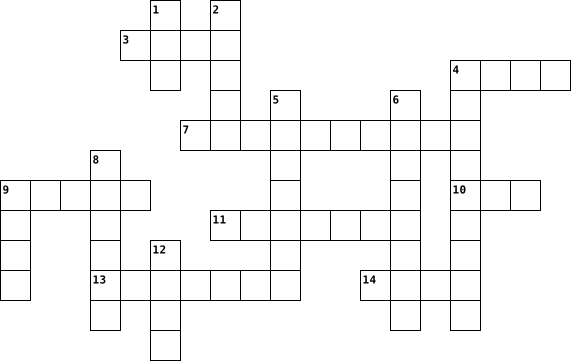
Across
- Amuse oneself in a game.
- Reside in.
- Also known as TV.
- An athletic activity.
- United States of America (initials)
- From the UK.
- The activity of preparing food.
- Not like at all.
Down
- I’m 11 years …
- Ride a bike.
- I’m bilingual. I speak two … fluently.
- Looking at books and understanding.
- Natal day or anniversary.
- From France
- Move along in water.
- Like very much.
16 Clues: Reside in. • From France • Ride a bike. • From the UK. • I’m 11 years … • Like very much. • Not like at all. • Also known as TV. • Move along in water. • An athletic activity. • Amuse oneself in a game. • Natal day or anniversary. • The activity of preparing food. • Looking at books and understanding. • United States of America (initials) • I’m bilingual. I speak two … fluently.
Water System Resources 2023-11-07

Across
- the smallest form of moving water
- area where waterways gather and feed into a river
- supply water to land and crops to help growth, often by means of channels
- type of lentic water form, can be small or large
Down
- cycle a process by which water is recycled
- the smallest form of still water
- a lowland area that holds water
- a place where plants and animals are protected and not disturbed by humans
- smallest form of lotic water
9 Clues: smallest form of lotic water • a lowland area that holds water • the smallest form of still water • the smallest form of moving water • cycle a process by which water is recycled • type of lentic water form, can be small or large • area where waterways gather and feed into a river • supply water to land and crops to help growth, often by means of channels • ...
Water 2021-08-12

Across
- Form of evolution
- The name of a Beatles song
- Need to drink some water
Down
- Frozen water
- You find it in Antarctica
- Lack of water
- Country that has the largest water source
7 Clues: Frozen water • Lack of water • Form of evolution • Need to drink some water • You find it in Antarctica • The name of a Beatles song • Country that has the largest water source
Fresh water 2021-01-28

Across
- process in which water becomes too heavy in the clouds and falls back to earth as rain snow, sleet, hail, fog, mist or dew
- process in which water from leaves and stems of plants escapes into the atmosphere as water vapor
- natural or artificial lake or area used to store a large amount of water used by people
- process in which plants convert solar energy into sugar for fuel
- a process of removing salt from ocean water
- slimy
- process in which water vapor cools into a liquid
Down
- the downward movement of water through pores and other spaces in soil due to gravity
- vapor invisible gases from water, water in the form of invisible gas
- of aeration rainwater passes through upper zone
- of saturation area where water collects and the spaces between the rock particles is filled with water
- cycle continuous movement of water on, above, and below the surface of the earth also know as the hydrologic cycle
- the artificial application of water to land to assist in the production of crops
- process in which water falls back to earth in areas such as lakes, rivers, ponds, oceans and groundwater
- excess water on earth's surface which flows over land
- water located beneath the earth's surface in pores and spaces between rocks
- star; the center of the solar system - provides the energy which powers the water cycle; energy produced by nuclear fusion
17 Clues: slimy • a process of removing salt from ocean water • of aeration rainwater passes through upper zone • process in which water vapor cools into a liquid • excess water on earth's surface which flows over land • process in which plants convert solar energy into sugar for fuel • vapor invisible gases from water, water in the form of invisible gas • ...
water 2019-09-09

Across
- pile
- daddy eats it for breakfast
- something that can be poured like water
- move continuously and easily
- water flowing from the mountains to the sea
- hard, firm
- dark stone that burns
- frozen water
Down
- something like air
- a cloud created when cooking
- cut grass
- world / Earth
- cover with water
- move around, wander
- water falling from the sky
- white sheep in the sky
- large area of salty water
17 Clues: pile • cut grass • hard, firm • frozen water • world / Earth • cover with water • something like air • move around, wander • dark stone that burns • white sheep in the sky • large area of salty water • water falling from the sky • daddy eats it for breakfast • a cloud created when cooking • move continuously and easily • something that can be poured like water • ...
Water 2021-09-01

Across
- tulva
- sade
- pisara
- vesiputous
- läiskyttää
- puro, oja
- järvi
- aalto
Down
- tihkusade
- suihku
- valtameri
- allas
- hanavesi
- lammikko
- virta
- keittää, kiehua
- hukkua
17 Clues: sade • tulva • allas • virta • järvi • aalto • suihku • pisara • hukkua • hanavesi • lammikko • tihkusade • valtameri • puro, oja • vesiputous • läiskyttää • keittää, kiehua
Water 2023-03-08

Across
- these are individual bits of water
- to use less of something
- when you use too much of something badly
- this is where water comes out to drink
- this is a space in the ground
- you fill this with water
- you wear these on your feet in the rain
- you use this in the garden on the plants
- this is very loud in a storm
Down
- This keeps you dry when it rains
- this is dirty and brown
- to put water inside a container
- when you get drops of water on you
- on when you open the tap
- this is an area of stagnant water after raining
- this is light in the sky
- this is many colours in the sky
- off when you close the tap
18 Clues: this is dirty and brown • to use less of something • this is light in the sky • you fill this with water • on when you open the tap • off when you close the tap • this is very loud in a storm • this is a space in the ground • to put water inside a container • this is many colours in the sky • This keeps you dry when it rains • when you get drops of water on you • ...
Spelling Review lists 3-5 2014-11-24

Across
- young woman.
- large body of water (Pacific)
- to be strong
- I am
- suck a drink through
- not front
Down
- to be alive
- the happen in order, over and over.
- USA, Canada and Malaysia are each a what?
- opposite to left.
- belonging to us
- not dark.
- 3rd
13 Clues: 3rd • I am • not dark. • not front • to be alive • young woman. • to be strong • belonging to us • opposite to left. • suck a drink through • large body of water (Pacific) • the happen in order, over and over. • USA, Canada and Malaysia are each a what?
Spelling Unit #7 2018-10-25

Across
- to prepare food
- a grade 3 boy in 3A
- a tool for colouring
- breakfast food
- a grade 3 boy in 3A
- to rotate through days
- very slippery frozen water
Down
- time to play
- a 2-D shape
- a test of speed
- to stop an event
- a large place where people live
- to yell out loud
- dinner food
14 Clues: a 2-D shape • dinner food • time to play • breakfast food • to prepare food • a test of speed • to stop an event • to yell out loud • a grade 3 boy in 3A • a grade 3 boy in 3A • a tool for colouring • to rotate through days • very slippery frozen water • a large place where people live
Crossword 2018-06-20

Across
- / The continuous cycling of water through the Earth’s spheres is called the ‘water ______’
- / Water that is located beneath the Earth’s surface.
- / The process by which water molecules join together and so change from a gas to a liquid
- / IWSS stands for an Integrated Water ________ Scheme.
- / Resources that cannot be replenished faster than they are consumed.
- / The process by which water changes from a liquid into a gas and escapes into the atmosphere.
- / Water that falls from clouds and may be in the form of rain, hail, snow or sleet.
- / The longest river in the USA.
- / The process by which water on the ground surface soaks into the soil.
- / Resources that are continuously replenished by nature over time.
Down
- / Resources that are available in infinite amounts.
- / A reduction in the quality of an environmental resource.
- / Water (from participation) that flows over the land and collects in rivers, lakes, seas and oceans.
- / The wise use of resources so they are available both today and tomorrow.
- / Preserving and restoring resources from loss, damage and neglect.
- / This river is over 6000kms in length and runs through countries including Egypt.
- / The process by which salt and minerals are removed from salt water so that it cane be used for human consumption or irrigation.
- / Combustible material derived from the fossilized remains of plants and animals.
- / Where water is stored between layers of rock underground.
- / A reduction in the quantity of an environmental resource.
20 Clues: / The longest river in the USA. • / Resources that are available in infinite amounts. • / Water that is located beneath the Earth’s surface. • / IWSS stands for an Integrated Water ________ Scheme. • / A reduction in the quality of an environmental resource. • / Where water is stored between layers of rock underground. • ...
New school, new life 2020-01-20
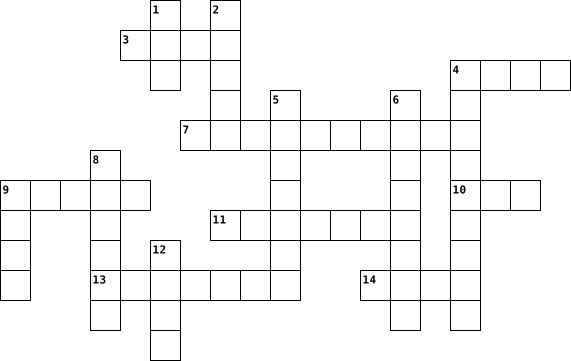
Across
- Amuse oneself in a game.
- Reside in.
- Also known as TV.
- An athletic activity.
- United States of America (initials).
- From the UK.
- The activity of preparing food.
- Not like at all.
Down
- I’m 11 years …
- Ride a bike.
- I’m bilingual. I speak two … fluently.
- Looking at books and understanding.
- Natal day or anniversary.
- From France.
- Move along in water.
- Like very much.
16 Clues: Reside in. • Ride a bike. • From France. • From the UK. • I’m 11 years … • Like very much. • Not like at all. • Also known as TV. • Move along in water. • An athletic activity. • Amuse oneself in a game. • Natal day or anniversary. • The activity of preparing food. • Looking at books and understanding. • United States of America (initials). • I’m bilingual. I speak two … fluently.
Spelling words 2021-05-17

Across
- opposite of death
- color of the sun
- opposite of boy
- wear it on your chest
- the opposite of before
- when you want something to drink
- comes after second
Down
- water ____, life ______
- rhymes with berry
- belongs to us
- when a baby leaves his mommy's tummy
- fair according to the law
- rhymes with bought
- plants roots grow in
- person, place, or _____ (plural)
- put numbers together
16 Clues: belongs to us • opposite of boy • color of the sun • rhymes with berry • opposite of death • rhymes with bought • comes after second • plants roots grow in • put numbers together • wear it on your chest • the opposite of before • water ____, life ______ • fair according to the law • person, place, or _____ (plural) • when you want something to drink • when a baby leaves his mommy's tummy
Farm to school (SSIS MH) 2016-12-01

Across
- red colour
- use to make water or tea
- a liquid to let plant grow
- the first the first sage of life cycle in the plant
Down
- use to make french fries
- rabbits loves to eat
- helps plant grow but stinkyS
- to loosening the soil
- it eats pants
- it is bad for plants
10 Clues: red colour • it eats pants • rabbits loves to eat • it is bad for plants • to loosening the soil • use to make french fries • use to make water or tea • a liquid to let plant grow • helps plant grow but stinkyS • the first the first sage of life cycle in the plant
Mosquito's Life 2025-11-24

Across
- third stage
- what do mosquito larvae eat?
- first stage?
- Places around the home where water collects and mosquitoes can breed.
- what is the process of the life cycle called?
Down
- a well known diseases they spread
- second stage?
- another name for larvae?
- type of water the eggs are laid in?
- what does mosquitoes consume?
10 Clues: third stage • first stage? • second stage? • another name for larvae? • what do mosquito larvae eat? • what does mosquitoes consume? • a well known diseases they spread • type of water the eggs are laid in? • what is the process of the life cycle called? • Places around the home where water collects and mosquitoes can breed.
Paige M 7th hour Science 2023-11-28

Across
- the biggest bodies of water on earth, 96% of the earth is ocean water.
- and dew- water vapor kind of like clouds but very light.
- are made of water which has weight and eventually they precipitate. Ice and snow- a frozen or cold type of precipitation.
- springs- A small body of water that is warm and can be up to 73 degrees Fahrenheit.
- When plants breathe and release water and Oxygen.
- Apart of the water cycle but does not belong on earth and very hot.
Down
- When it erupts it release steam.
- When rain or snow falls off a hill goes through runoff and goes into a small body of water.
- water has to get back from the earths surface back up in the sky so it can rain on your crops or yard.
- An invisible water vapor and condenses back into liquid water.
- and snow- When its cold and it precipitates and when water freezes and turns into a solid.
- Another "fancy" word for water.
- When water on the lands surface due to gravity.
- Moves water to everywhere on earth.
- When rain or snow falls from the clouds.
15 Clues: Another "fancy" word for water. • When it erupts it release steam. • Moves water to everywhere on earth. • When rain or snow falls from the clouds. • When water on the lands surface due to gravity. • When plants breathe and release water and Oxygen. • and dew- water vapor kind of like clouds but very light. • ...
science 2014-05-29

Across
- i ____ how to walk.
- the force of pressing down.
- to deposit.
- A inherited _______.
- the last planet in the solar system.
- the _____ system has 8 planets.
Down
- The first step in the water cycle.
- the ability to dissolve.
- water that forms at the tops of mountains and hills.
- something that consists of matter.
10 Clues: to deposit. • i ____ how to walk. • A inherited _______. • the ability to dissolve. • the force of pressing down. • the _____ system has 8 planets. • The first step in the water cycle. • something that consists of matter. • the last planet in the solar system. • water that forms at the tops of mountains and hills.
Crossword 2015-07-14

Across
- The Amazon is a giant rain____
- 1,000,000,000
- School was ____ because of MERS
- The Earth is getting warmer because of global____
- Everyone's least favourite video game league of _____
Down
- A bicycle has two of these
- 1000
- The largest animal on Earth
- Raina changed her name to this
- The water ____ carries water around the world
10 Clues: 1000 • 1,000,000,000 • A bicycle has two of these • The largest animal on Earth • The Amazon is a giant rain____ • Raina changed her name to this • School was ____ because of MERS • The water ____ carries water around the world • The Earth is getting warmer because of global____ • Everyone's least favourite video game league of _____
Plants 2021-01-21

Across
- Released through holes in the leaf's surface
- Attract animals
- The process by which plants make food
- Are cells that can grow into a new plant
Down
- Trees use cones to make seeds
- Make seeds
- Absorb carbon dioxide from the air
- Absorb water and nutrients
- Transport water and nutrients
- Continue plant life cycle
10 Clues: Make seeds • Attract animals • Continue plant life cycle • Absorb water and nutrients • Trees use cones to make seeds • Transport water and nutrients • Absorb carbon dioxide from the air • The process by which plants make food • Are cells that can grow into a new plant • Released through holes in the leaf's surface
SEV 1 review 2024-12-02

Across
- the cycle we're disrupting by burning fossil fuels
- an example would be a flock of birds and some fish
- happens when fertilizer runs into a body of water
- fish swimming in a pond
Down
- the name for when phosphrous drains from a rock
- the amount of salt in the water
- the cycle in which bacteria playes a huge part
7 Clues: fish swimming in a pond • the amount of salt in the water • the cycle in which bacteria playes a huge part • the name for when phosphrous drains from a rock • happens when fertilizer runs into a body of water • the cycle we're disrupting by burning fossil fuels • an example would be a flock of birds and some fish
Year 8 Rivers and Flooding 2020-12-17

Across
- The process by which water flows across the top of the land
- The process by which water moves through rocks back towards the river
- Flood prevention methods that interfere with natural processes e.g. embankments or walls
- Water cooling, turning back into droplets and forming clouds
- The flowing together of 2 or more streams - the point at which they meet
- When trees and plants catch and soak up rain water before it gets to the river
- A surface that allows water to soak in
- Any form of moisture that falls from the atmosphere e.g. rain, sleet or hail
- Flood prevention methods that work with natural processes e.g. river restoration
Down
- A stream or river that flows into the main river
- The way that water moves around between the land and atmosphere, it's also called the hydrological cycle
- The process by which water moves through the soil back towards the river
- The start of the river, usually high in the mountains
- The land drained by a river and it's tributaries
- The boundary that separates 2 river basins
- The process by which water soaks into the ground
- A surface that doesn't allow water to soak in
- The end of the river, where it flows into the sea
- Water heating, turning into a gas and rising into the atmosphere
- This happens when here is too much water for the river channel to hold
20 Clues: A surface that allows water to soak in • The boundary that separates 2 river basins • A surface that doesn't allow water to soak in • A stream or river that flows into the main river • The land drained by a river and it's tributaries • The process by which water soaks into the ground • The end of the river, where it flows into the sea • ...
Crossword Puzzle - Earth Processes 2022-02-16

Across
- the envelope of gases surrounding the earth or another planet.
- weathering causes rocks to crumble.
- the study of the forms and features of land surfaces.
- an area or ridge of land that separates water flowing to different rivers, basins, or seas.
- the laying down of sediment carried by wind, flowing water, the sea, or ice.
- part of the water cycle in which the water flows over the land as surface water.
- the rigid outer parts of the earth (crust).
- the underground layer of water bearing permeable rock.
- the weather conditions prevailing in an area in general of over a long period.
- the regions of the surface, atmosphere, and hydrosphere of the earth occupied by living organisms.
Down
- water water held underground in the soil or in pores and crevices in rock.
- erosion movement of glacier ice over its bed.
- any of the almost spherical concentrate regions of matter that makes up the earth and atmosphere.
- the process of eroding or being eroded by wind, water, or other natural agents.
- all the waters on earths surface.
- the central or innermost portion of the earth.
- is the mostly-solid bulk of earths surface.
- horizon a layer parallel to the soil surface whose physical, chemical, and biological characteristics differ from the layers.
- erosion a normal process that moves soil from one location to another by wind power.
- the breaking down or dissolving of rocks and minerals.
- erosion the detachment and removal of soil material by water.
21 Clues: all the waters on earths surface. • weathering causes rocks to crumble. • is the mostly-solid bulk of earths surface. • the rigid outer parts of the earth (crust). • erosion movement of glacier ice over its bed. • the central or innermost portion of the earth. • the study of the forms and features of land surfaces. • ...
Biology Crossword Puzzle Chp.4 2022-03-01

Across
- this is changed into ATP when a phosphate group is added
- plants in this climate use different methods to fix carbon
- primary source of energy for cells
- light energy from sun converted to chemical energy, stored in ATP and NADPH
- creates colors you see during fall
- converting CO2 and water to sugar using sunlight
- allows plants to fix CO2 into 4 Carbon Compounds
- enzyme assisted reactions that produce a three-carbon sugar
- compounds that absorb light
- this is responsible for collecting sunlight
Down
- organisms able to make their own food
- Carbon from CO2 is converted to sugars called…
- Calvin Cycle occurs in this part of the plant
- plants using Calvin cycle are called this
- organisms that must get their energy from other sources
- Chlorophylls and carotenoids are grouped in clusters of hundreds of pigments
- most common type of pigment(2 types)
- end goal of photosynthesis
- most common form of ATP
- three-carbon molecules are called
20 Clues: most common form of ATP • end goal of photosynthesis • compounds that absorb light • three-carbon molecules are called • primary source of energy for cells • creates colors you see during fall • most common type of pigment(2 types) • organisms able to make their own food • plants using Calvin cycle are called this • this is responsible for collecting sunlight • ...
Ecology Vocab Crossword 2017-04-26

Across
- nonliving factors in an organism’s environment
- large group of ecosystems that share same climate
- organisms that obtain energy from the sun
- a thin layer around Earth that supports life
- role or position of an organism in its environment
- any factor that restricts the number of an organism
- a single species that share the same location
- type of succession that takes place after a fire
- one organism benefits and the other is unaffected
- only cycle that does not contain the atmosphere
- type of growth model represented by carrying capacity
- cycle where plants contribute through transpiration
Down
- living factors in an organism’s environment
- a group of interacting populations that share the same area
- one organism benefits at the others expense
- organism that must eat to obtain energy
- species that is changing conditions on earth by its activities
- the variety of life in an area determined by the # of species
- model representing many interconnected food chains
- type of succession that does not have any topsoil
20 Clues: organism that must eat to obtain energy • organisms that obtain energy from the sun • living factors in an organism’s environment • one organism benefits at the others expense • a thin layer around Earth that supports life • a single species that share the same location • nonliving factors in an organism’s environment • only cycle that does not contain the atmosphere • ...
Study guide 2019-11-25

Across
- sugar
- flattened sacs inside a chloroplast
- a colorless, transparent, odorless liquid
- series of enzyme-mediated reactions
- natural fermentation of glucose
- shuttles electrons from NADH and FADH2 to molecular oxygen
- the breakdown of glucose by enzymes
- plants use this to make glucose
- bacteria requiring oxygen
- energy
- a colorless, odorless gas produced by burning carbon and organic compounds and by respiration
Down
- where processes of respiration and energy production occur
- produced in the muscle tissues during strenuous exercise
- chemical breakdown of a substance by bacteria or yeast
- living organisms generate ATP during aerobic respiration
- the energy storage molecule ATP and the reduced electron carrier NADPH
- photosynthesis that takes place in three key steps
- something humans cannot live without
- where the grana are embedded in the chloroplast
- a process in living organisms generating ATP
- a plastid that contains chlorophyll and in which photosynthesis takes place
- bacteria that does not require oxygen
22 Clues: sugar • energy • bacteria requiring oxygen • natural fermentation of glucose • plants use this to make glucose • flattened sacs inside a chloroplast • series of enzyme-mediated reactions • the breakdown of glucose by enzymes • something humans cannot live without • bacteria that does not require oxygen • a colorless, transparent, odorless liquid • ...
Spheres and Cycles 2020-03-30

Across
- The part of the Earth consisting of all the air around the planet
- This type of plate boundary leads to the formation of trenches
- This type of rock is formed when heat or pressure is applied to a rock
- This type of rock is formed by the compaction or cementation of small bits of rock
- This type of rock is formed by the cooling of magma or lava
- The part of the Earth consisting of all living things
- This type of plate boundary leads to the formation of rift valleys
Down
- When water enters the atmosphere through plant leaves
- A component of this cycle is the formation of fossil fuels
- The part of Earth consisting of rocks and land forms
- The part of the atmosphere where weather occurs
- This type of plate boundary leads to many earthquakes
- The part of the Earth consisting of all water
- A component of this cycle is fixation by bacteria
14 Clues: The part of the Earth consisting of all water • The part of the atmosphere where weather occurs • A component of this cycle is fixation by bacteria • The part of Earth consisting of rocks and land forms • When water enters the atmosphere through plant leaves • This type of plate boundary leads to many earthquakes • ...
Plant Science Crossword 2023-10-30

Across
- food factory for the plant
- lives for more than two years
- two gametes form a cell with two chromosomes
- process by which plant gives up water vapor
- process in which light is converted to energy
- takes two years to complete lifecycle
- produce nearly exact duplicates
- membrane that contains chlorophyll
- reproduction that produces a seed
Down
- completes its life cycle within one year
- substance that makes leaves green in color
- process in which cells take in oxygen
- produce different plants
- absorbs water and nutrients for plant
- reproduction with 100% replication of parents
- used for reproduction, beauty, fragrance, etc.
- supports leaves, flowers, and fruit
17 Clues: produce different plants • food factory for the plant • lives for more than two years • produce nearly exact duplicates • reproduction that produces a seed • membrane that contains chlorophyll • supports leaves, flowers, and fruit • process in which cells take in oxygen • absorbs water and nutrients for plant • takes two years to complete lifecycle • ...
Science test - WATER 2026-03-03

Across
- People enjoy swimming in this (4 letters)
- We use water mainly for ______ (8 letters)
- Stream of water flowing into sea (5 letters)
- Throwing waste into rivers causes ______ (9 letters)
- Water is used for ______, transport, and agriculture (10 letters)
- Waste water can be ______ for other uses (8 letters)
- Turn off the ______ when brushing teeth (3 letters)
- Found in salty oceans but made of fresh water (8 letters)
- Covers 70% of Earth’s surface (5 letters)
- Clean water is important for staying ______ (6 letters)
- Polluted water can make us ______ (4 letters)
- Found in cracks of soil and rock (11 letters)
- Reuse water from washing vegetables to ______ plants (5 letters)
- Another way to clean water is to ______ it (4 letters)
- Produced when water boils (5 letters)
- Water flowing from high to low point (9 letters)
- One way to clean water is to ______ it (6 letters)
- Indonesia lies between Indian and ______ Ocean (7 letters)
- Only 3% of Earth’s water is ______ water (5 letters)
- Collect this from the sky to wash cars (8 letters)
- Use a ______ instead of hose to wash car (6 letters)
Down
- Water is needed for ______ plants in farming (9 letters)
- Fun activity in water: ______ (8 letters)
- Water vapor cooled becomes ______ (9 letters)
- Growing plants without soil, using water (11 letters)
- Surrounded by land, usually fresh water (4 letters)
- Ice melts into this state (5 letters)
- Large ships carry goods across oceans (5 letters)
- Frozen water is called ______ (3 letters)
- Ice melts because of rising ______ (11 letters)
- Heated water turns into ______ vapor (5 letters)
- We must ______ water carefully so it lasts (7 letters)
- Water takes the shape of its ______ (9 letters)
- Dirty water contains harmful ______ (14 letters)
- Water exists in solid, liquid, and ______ (3 letters)
- 97% of Earth’s water is this type (4 letters)
- Water cycle includes rain, river, sea, and ______ (10 letters)
37 Clues: Ice melts into this state (5 letters) • Produced when water boils (5 letters) • Fun activity in water: ______ (8 letters) • People enjoy swimming in this (4 letters) • Frozen water is called ______ (3 letters) • Covers 70% of Earth’s surface (5 letters) • We use water mainly for ______ (8 letters) • Stream of water flowing into sea (5 letters) • ...
weather 2021-03-30

Across
- a kind of precipitation that is in the winter
- a kind of precipitation that mostly happens
- the warmest season
- crisp clouds way up in a sky
- ice form of rain
Down
- white fluffy cloud
- Where water moves around
- gray cloud that covers the whole sky
- the coldest season
- where plants bloom again
10 Clues: ice form of rain • white fluffy cloud • the coldest season • the warmest season • Where water moves around • where plants bloom again • crisp clouds way up in a sky • gray cloud that covers the whole sky • a kind of precipitation that mostly happens • a kind of precipitation that is in the winter
Farm to school (SSIS MH) 2016-12-01

Across
- red colour
- use to make water or tea
- a liquid to let plant grow
- the first the first sage of life cycle in the plant
Down
- use to make french fries
- rabbits loves to eat
- helps plant grow but stinkyS
- to loosening the soil
- it eats pants
- it is bad for plants
10 Clues: red colour • it eats pants • rabbits loves to eat • it is bad for plants • to loosening the soil • use to make french fries • use to make water or tea • a liquid to let plant grow • helps plant grow but stinkyS • the first the first sage of life cycle in the plant
Crossword 2018-06-20

Across
- / A reduction in the quantity of an environmental resource.
- / A reduction in the quality of an environmental resource.
- / The process by which water molecules join together and so change from a gas to a liquid
- / Water that falls from clouds and may be in the form of rain, hail, snow or sleet.
- / The process by which water changes from a liquid into a gas and escapes into the atmosphere.
- / Preserving and restoring resources from loss, damage and neglect.
- / Where water is stored between layers of rock underground.
- / Resources that are available in infinite amounts.
- / The longest river in the USA.
- / The continuous cycling of water through the Earth’s spheres is called the ‘water ______’
- / Resources that are continuously replenished by nature over time.
Down
- / IWSS stands for an Integrated Water ________ Scheme.
- / The process by which salt and minerals are removed from salt water so that it cane be used for human consumption or irrigation.
- / This river is over 6000kms in length and runs through countries including Egypt.
- / Resources that cannot be replenished faster than they are consumed.
- / The wise use of resources so they are available both today and tomorrow.
- / The process by which water on the ground surface soaks into the soil.
- / Water (from participation) that flows over the land and collects in rivers, lakes, seas and oceans.
- / Water that is located beneath the Earth’s surface.
- / Combustible material derived from the fossilized remains of plants and animals.
20 Clues: / The longest river in the USA. • / Resources that are available in infinite amounts. • / Water that is located beneath the Earth’s surface. • / IWSS stands for an Integrated Water ________ Scheme. • / A reduction in the quality of an environmental resource. • / A reduction in the quantity of an environmental resource. • ...
Crossword 2018-06-20

Across
- / Where water is stored between layers of rock underground.
- / Resources that are available in infinite amounts.
- / Water that falls from clouds and may be in the form of rain, hail, snow or sleet.
- / The process by which water on the ground surface soaks into the soil.
- / Resources that cannot be replenished faster than they are consumed.
- / The continuous cycling of water through the Earth’s spheres is called the ‘water ______’
- / Preserving and restoring resources from loss, damage and neglect.
- / Resources that are continuously replenished by nature over time.
- / The longest river in the USA.
- / A reduction in the quality of an environmental resource.
Down
- / A reduction in the quantity of an environmental resource.
- / The process by which water changes from a liquid into a gas and escapes into the atmosphere.
- / The wise use of resources so they are available both today and tomorrow.
- / The process by which salt and minerals are removed from salt water so that it cane be used for human consumption or irrigation.
- / Combustible material derived from the fossilized remains of plants and animals.
- / This river is over 6000kms in length and runs through countries including Egypt.
- / The process by which water molecules join together and so change from a gas to a liquid
- / Water (from participation) that flows over the land and collects in rivers, lakes, seas and oceans.
- / IWSS stands for an Integrated Water ________ Scheme.
- / Water that is located beneath the Earth’s surface.
20 Clues: / The longest river in the USA. • / Resources that are available in infinite amounts. • / Water that is located beneath the Earth’s surface. • / IWSS stands for an Integrated Water ________ Scheme. • / A reduction in the quality of an environmental resource. • / A reduction in the quantity of an environmental resource. • ...
Crossword 2018-06-20

Across
- / The continuous cycling of water through the Earth’s spheres is called the ‘water ______’
- / Water that is located beneath the Earth’s surface.
- / The process by which water molecules join together and so change from a gas to a liquid
- / IWSS stands for an Integrated Water ________ Scheme.
- / Resources that cannot be replenished faster than they are consumed.
- / The process by which water changes from a liquid into a gas and escapes into the atmosphere.
- / Water that falls from clouds and may be in the form of rain, hail, snow or sleet.
- / The longest river in the USA.
- / The process by which water on the ground surface soaks into the soil.
- / Resources that are continuously replenished by nature over time.
Down
- / Resources that are available in infinite amounts.
- / A reduction in the quality of an environmental resource.
- / Water (from participation) that flows over the land and collects in rivers, lakes, seas and oceans.
- / The wise use of resources so they are available both today and tomorrow.
- / Preserving and restoring resources from loss, damage and neglect.
- / This river is over 6000kms in length and runs through countries including Egypt.
- / The process by which salt and minerals are removed from salt water so that it cane be used for human consumption or irrigation.
- / Combustible material derived from the fossilized remains of plants and animals.
- / Where water is stored between layers of rock underground.
- / A reduction in the quantity of an environmental resource.
20 Clues: / The longest river in the USA. • / Resources that are available in infinite amounts. • / Water that is located beneath the Earth’s surface. • / IWSS stands for an Integrated Water ________ Scheme. • / A reduction in the quality of an environmental resource. • / Where water is stored between layers of rock underground. • ...
jnjnjnknk 2021-03-02

Across
- animals that hunt prey
- cycle: continuous movement of water between earth and its atmosphere
- areas of land that are flooded with water for part of the year
- the saltiness of a body of water
- large material or artificial lake
- water found underneath the earth' s surface
- reestablishing a forest by planting or seeding an area from which forest vegetation has been removed
- a large mass of ice moving over land
Down
- when a plant makes its own food
- when organisms change their features or behaviour to camouflage into their habitat
- trees that lose their leaves seasonally
- forest: a hot and humid forest
12 Clues: animals that hunt prey • forest: a hot and humid forest • when a plant makes its own food • the saltiness of a body of water • large material or artificial lake • a large mass of ice moving over land • trees that lose their leaves seasonally • water found underneath the earth' s surface • areas of land that are flooded with water for part of the year • ...
Science terms 2025-10-13

Across
- A harmful effect of algae over production
- The watershed we live on!
- the separation of an electrical charge
- when large amounts of groundwater have been withdrawn from certain types of rocks
- the way similar materials stick together
- less than one percent of one percent of water is drinkable and available
Down
- overusing a well so that instead of fresh water it produces salt water
- The cycle of nitrogen
- A surface water cannot go through
- Zones with reduced oxygen
- how hot something can be
- a fishing net that’s been lost or abandoned in the ocean
12 Clues: The cycle of nitrogen • how hot something can be • Zones with reduced oxygen • The watershed we live on! • A surface water cannot go through • the separation of an electrical charge • the way similar materials stick together • A harmful effect of algae over production • a fishing net that’s been lost or abandoned in the ocean • ...
Ecology Vocab Crossword 2017-04-26

Across
- role or position of an organism in its environment
- both organisms benefit
- organism that must eat to obtain energy
- the variety of life in an area determined by the # of species
- cycle that includes burning of fossil fuels
- model representing many interconnected food chains
- each step in a food chain or food web
- type of growth model represented by carrying capacity
- large group of ecosystems that share same climate
- type of succession that does not have any topsoil
- one organism benefits at the others expense
- a biological community and all of the abiotic factors
Down
- species that is changing conditions on earth by its activities
- organisms that obtain energy from the sun
- the max # of individuals an environment can support
- and area why an organism lives
- cycle where plants contribute through transpiration
- study of relationship among organisms and their environment
- living factors in an organism’s environment
- a single species that share the same location
- a thin layer around Earth that supports life
21 Clues: both organisms benefit • and area why an organism lives • each step in a food chain or food web • organism that must eat to obtain energy • organisms that obtain energy from the sun • cycle that includes burning of fossil fuels • living factors in an organism’s environment • one organism benefits at the others expense • a thin layer around Earth that supports life • ...
AP Bio Review 2021-05-18

Across
- a cell that's ready for plasmids
- chromosomes split up
- the mailroom of the cell
- to mark an animal's territory
- intronic box
- ___ cycle (light-dependent)
- diffusion with a protein helper
- check these for carbon-14
- concentration of H+ ions
- protocells
- law of ____ (gametes split up)
- transfers amino acids
- makes energy from chemicals
- not a plant, not an animal
- estrogen, for example
- yeast enzyme
- prokaryotic collision
- at the end of a chromosome
- water moves
- feeds itself
Down
- a secondary messenger
- A goes with T, C goes with G
- eggs
- glycolysis location
- removes waste
- every enzyme has one
- membrane bilayer
- makes (most of the) ATP
- losing electrons
- intracellular relay race
- acid
- stomach of the cell
- adenine and guanine
- only half the DNA
- a photosynthetic cycle
- uncontrolled cell division
- sisters in a chromosome
- bilayer stabilizers
- A proteins special
- expressed region
40 Clues: eggs • acid • protocells • water moves • intronic box • yeast enzyme • feeds itself • removes waste • membrane bilayer • losing electrons • expressed region • only half the DNA • A proteins special • glycolysis location • stomach of the cell • adenine and guanine • bilayer stabilizers • chromosomes split up • every enzyme has one • a secondary messenger • transfers amino acids • estrogen, for example • ...
MIDTERM FOR GARDENING 2022-03-09

Across
- what bugs do to the vegetables, but made them stronger
- the seed leaf
- materials like minerals, rocks, or sand
- our teacher along with another one
- plants are introduced to this topic just like humans
- a dirt pile where there’s healthy food inside
- a cycle that relates to nitro
- this word means it can grow for a lifetime
- the class we are doing this midterm for
- two-letter symbol that is common on the phosphorus cycle
Down
- what pretty much the entire world needs to breathe
- what seeds need to stay alive
- the seedling is from this type of process
- where a plant comes from
- the genre on the movie we watched
- don’t wanna touch the dirt without these
- what happens when the topsoil goes away
- there are this number ways of composting
- the way you tell how deep to plant a seed
- another word for wood chips
- what you do to the plants with water
21 Clues: the seed leaf • where a plant comes from • another word for wood chips • what seeds need to stay alive • a cycle that relates to nitro • the genre on the movie we watched • our teacher along with another one • what you do to the plants with water • materials like minerals, rocks, or sand • what happens when the topsoil goes away • the class we are doing this midterm for • ...
Endocrine Hormones 2024-02-15

Across
- prepares the body for stress (fight/flight)
- (F)regulates the menstrual cycle
- for milk production and mammary gland development
- triggers release of LH and FSH
- triggers primordial germ cells to mature
- decreases blood calcium
- promotes pleasure, motivation, and satisfaction
- signals bone and muscle tissue to grow
- (M)regulates libido, bone/fat/lean mass, and RBC and sperm production
- inhibits other hormone release and helps GI function
- increases blood gluscose
- targets adrenal glands to release stress hormones
- decreases metabolism during stress
- stimulates metabolism passively
- regulates BP with Na and K
- controls thyroid hormone production
- increases alertness, arousal, and attention during stress
Down
- lowers blood glucose
- (F)prepares for pregnancy and placental development
- increases blood calcium
- regulates the HPA axis for stress
- controls menstrual cycle and egg release
- Growth hormone releasing hormone
- triggers release of TSH
- causes water retention and regulates BP
- sleep and circadian rhythm regulation
- actively stimulates metabolism
- contracts the uterus during childbirth and assists lactation
28 Clues: lowers blood glucose • increases blood calcium • triggers release of TSH • decreases blood calcium • increases blood gluscose • regulates BP with Na and K • triggers release of LH and FSH • actively stimulates metabolism • stimulates metabolism passively • (F)regulates the menstrual cycle • Growth hormone releasing hormone • regulates the HPA axis for stress • ...
Biology crossword 2019-11-25

Across
- The chemical breakdown of substances
- respiration use oxygen to produce food
- does not require oxygen
- uses light energy to make molecules needed for photosynthesis
- respiration and energy production occur here
- carries energy within the cell
- the breakdown of glucose, releases energy
- glucose and carbon are converted into cellular energy
Down
- Where light-dependent reaction takes place
- chain Transports electrons from NADH to oxygen
- produces oxygen and glucose
- The sequence of reactions which most cells get energy from
- a pathway with linked chemical reactions occuring in a cell
- odorless gas produced by repiration
- converts glucose, fructose, and sucrose into cellular energy
- vital for all known forms of life
- where photosynthesis takes place
- requires oxygen
- life-supporting component in the air
- a simple sugar which is an important energy source
- the supportive tissue of an organ
- Cycle refers to the light-independent reactions in photosynthesis
22 Clues: requires oxygen • does not require oxygen • produces oxygen and glucose • carries energy within the cell • where photosynthesis takes place • vital for all known forms of life • the supportive tissue of an organ • odorless gas produced by repiration • The chemical breakdown of substances • life-supporting component in the air • respiration use oxygen to produce food • ...
AP Biology - Photosynthesis 2020-10-20

Across
- Organism that makes food using the energy from the sun.
- When hydrogen is pumped across the thylakoid membrane creating a gradient.
- Opening in leaf where gas exchange occurs.
- Produced with the help of the enzyme NADP reductase.
- Pigment found in chloroplasts.
- Open and close the stomata.
- What happens to the primary electron acceptor when it gains electrons.
- Makes food using the energy from chemicals.
- What plants do at night.
- Waste product of photosynthesis.
- Another name for the Calvin Cycle.
- Orange and yellow accessory pigments.
- Absorbs wavelengths of light at 700 nm.
Down
- Enzyme imbedded into the thylakoid membrane - helps produce ATP.
- Discrete units of light.
- WHen ATP is made using light energy.
- Thick fluid where light independent reactions occur.
- Source of the oxygen released during photosynthesis.
- Absorbs wavelengths of light at 680 nm.
- Occurs in the stroma.
- Where photosystem one and two take place.
- NADPH and ___ go to the Calvin Cycle from the light dependent reactions.
- Stack of thylakoids.
23 Clues: Stack of thylakoids. • Occurs in the stroma. • Discrete units of light. • What plants do at night. • Open and close the stomata. • Pigment found in chloroplasts. • Waste product of photosynthesis. • Another name for the Calvin Cycle. • WHen ATP is made using light energy. • Orange and yellow accessory pigments. • Absorbs wavelengths of light at 680 nm. • ...
Day 14 2023-06-20

Across
- To think of something again. p. 77
- winter is to snow as spring is to ______p. 26
- Please check the _____to see if my package has come p. 7
- You may _____ have a candy bar. p. 80
- Synonym for display p. 71
- ______ helps Ellie look for a new clover. p. 37
- A ladybug's life cycle has _____ stages. p. 79
- To stay alive p. 41
- Synonym for attempt p. 49
- Stage 2 of a ladybug's life cycle. p. 68
Down
- Antonym for fake. p. 85
- to look carefully p. 22
- At first, the boy wants to buy a gift for _____p. 82
- Synonym for water droplets p. 34
- What does Ellie find on the way to school? p. 37
- Antonym for old p. 34
- The ______ woke up the sun. p. 28
- Antonym for friend p. 71
- The first berry is to ______ p. 64
- What did the little iguana find? p. 28
20 Clues: To stay alive p. 41 • Antonym for old p. 34 • Antonym for fake. p. 85 • to look carefully p. 22 • Antonym for friend p. 71 • Synonym for display p. 71 • Synonym for attempt p. 49 • Synonym for water droplets p. 34 • The ______ woke up the sun. p. 28 • To think of something again. p. 77 • The first berry is to ______ p. 64 • You may _____ have a candy bar. p. 80 • ...
water 2014-05-30

Across
- sediment in water
- chunk of ice
- falling water
- H
- H2o
- clean water
- glacier debris
- rain,hail,etc
- fast tides
- salt
- O
Down
- slow wave
- high concentration of magnesium and calcium
- weather over time
- vaporization of water
- water
- frozen water
17 Clues: H • O • H2o • salt • water • slow wave • fast tides • clean water • chunk of ice • frozen water • falling water • rain,hail,etc • glacier debris • sediment in water • weather over time • vaporization of water • high concentration of magnesium and calcium
water 2021-09-07

Across
- water is a ..... molecule that is made from one oxygen and 2 hydrogens (H2O)
- what bond type holds the hydrogen and oxygen together meaning they share electrons (strong)
- molecules can break apart when reacting with substances, allowing them to form new atoms eg hydrolysis
- attraction hold molecules together in a continuous stream, the water molecules 'stick' together
- what does water heat slower than due to its hydrogen bonds needing to be broken before kinetic energy increases
- what kind of bonds are created between the water molecules due to the opposite charges attracting each other
- water molecules can stick to other polar molecules
- water molecules attract downwards at the surface of the water, allowing small animals to walk on it
Down
- what reaction can take place that happen freely between molecules and ions once dissolved
- this refers to the energy lost, waters is high as when a small amount evaporates it has a large cooling effect eg sweat
- water is this as many substances can dissolve in it
- a measure of kinetic energy in molecules, it makes the molecules move faster when this is increased
- what allows other substances to be dissolved as they are attracted
- what process happens to water giving it a cooling effect as the energy travels with the water molecules which reduces the energy left
- which atom has the negative charge
- which atom has the positive charge
- what king of heat capacity does water have , this stops the body from overheating and keeps temperatures in lakes similar
- what is the name given to water as it has 2 charges meaning the electrons are not shared equally
18 Clues: which atom has the negative charge • which atom has the positive charge • water molecules can stick to other polar molecules • water is this as many substances can dissolve in it • what allows other substances to be dissolved as they are attracted • water is a ..... molecule that is made from one oxygen and 2 hydrogens (H2O) • ...
Water 2022-11-01

Across
- Lymph, blood and plasma are the ________ system for water
- Increase in body temperature
- Normal water levels in the body
- Diets high in salt, sugar or artificial colours and sweeteners are hard on this organ
- Symptoms include headache, nausea and uncoordinated movements, seizures
- The required level of water to remain stable
- Antidiuretic hormone
- Excretes water through urine
- Water is a component in biological fluids that _____ and protects body tissues
Down
- The number of days a person can survive without water
- (2 words) The process of water moving in and out of the cells to maintain a balance within and between cells
- Symptoms include thirst, mild headache and dark yellow urine
- Coffee, tea and colas
- Water is 2nd only to this element for sustaining life
- It is necessary to drink water every day to remove this from the body
- Electrically charged minerals are _____ potassium and chloride
- The larger amount of _______ tissue in the body, the less percentage of water
- Diminishes with age
18 Clues: Diminishes with age • Antidiuretic hormone • Coffee, tea and colas • Increase in body temperature • Excretes water through urine • Normal water levels in the body • The required level of water to remain stable • The number of days a person can survive without water • Water is 2nd only to this element for sustaining life • ...
water 2024-02-08

Across
- massive bodies of ice
- large bodies of water surrounded by island
- soaks by another substance
- long water corce
- how plants and animals break down
- consuming gooda
- living organish
- visible masses of water
- oxygen is taken inside of body
- water seeps into the ground
Down
- beneath the earth surface
- plants release water vapor
- how waste products are removed from body
- movement of water
- top layer of earth surface
- procces of substances through body
- large body of salt water
17 Clues: consuming gooda • living organish • long water corce • movement of water • massive bodies of ice • visible masses of water • beneath the earth surface • large body of salt water • plants release water vapor • soaks by another substance • top layer of earth surface • water seeps into the ground • oxygen is taken inside of body • how plants and animals break down • ...
Water 2025-02-28

Across
- how big of a wave did the asteroid that killed the dinosaurs make?
- how big was the biggest wave ever recorded?
- what is the deepest part of the ocean in the world?
- What do you call several huge tidal waves?
- What do you call people how dive into the water with air tanks?
- What do you call one huge tidal wave
- what is a body of water separated from larger bodies of water by a natural barrier called.
- what was the biggest whirlpool called?
Down
- what percent of the water in the world is ocean water?
- what is voted the ugliest aquatic creature currently?
- How many people die of drowning each year.
- how many aquatic species are there?
- approximately how many ships are at the bottom of the ocean floor?
- what is the most recent ocean?
- what percent of the world is water?
- what do you call a tornado over water?
- what is the largest lake in the world?
17 Clues: what is the most recent ocean? • how many aquatic species are there? • what percent of the world is water? • What do you call one huge tidal wave • what do you call a tornado over water? • what is the largest lake in the world? • what was the biggest whirlpool called? • How many people die of drowning each year. • What do you call several huge tidal waves? • ...
water 2025-05-06

Across
- too much of this group of substances causes algal blooms in water
- movement of soil by water
- buildup of harmful chemicals in the food web that are stored in the fat of animals
- a smaller creek (like Crum Creek) that flows into a larger river (like the Delaware)
- the measure of the amount of minerals in water
- book written by Rachel Carson about persistent pesticides killing off bird populations
- area that is responsible for cleaning and filtering polluted water naturally
- term for the area where freshwater rivers mix with saltwater bays
- "cloudiness" of water. measurement of the amount of sediment/particles in water
Down
- created by pesticide resistance being passed from generation to generation
- runoff from streets, farms, lawns and cities is this type of water pollution
- first order streams at the start of a watershed
- term for the boundary between watersheds
- measurement of how basic or acidic a liquid is
- of Mexico where the largest "Dead Zone" in the US can be found due to excess nutrients in the Mississippi River from farms
- a pipe dumping waste into a river is an example of this type of water pollution
- geographic area that rains into the same body of water(ex. Delaware River)
17 Clues: movement of soil by water • term for the boundary between watersheds • the measure of the amount of minerals in water • measurement of how basic or acidic a liquid is • first order streams at the start of a watershed • too much of this group of substances causes algal blooms in water • term for the area where freshwater rivers mix with saltwater bays • ...
Water Cycle Leah Diaz 😜 2023-02-01

Across
- surface _______ in oceans, lakes, reservoirs, and glaciers
- The draining away of water from the surface of land
- Water that falls from the atmosphere to the Earth's surface
- The movement of water into the ground from the surface
- When water that falls from the clouds collects in bodies of water
Down
- The movement of water through the soil itself
- The process by which water vapor in the air is changed into liquid water
- cycle The continuous movement of water within the Earth and atmosphere
- The process that changes liquid water to gaseous water
- water Some precipitation and runoff soaks into the ground to become___________.
10 Clues: The movement of water through the soil itself • The draining away of water from the surface of land • The process that changes liquid water to gaseous water • The movement of water into the ground from the surface • surface _______ in oceans, lakes, reservoirs, and glaciers • Water that falls from the atmosphere to the Earth's surface • ...
AP Biology Unit 3 Review 2025-05-22

Across
- generates ATP without an ETC; extension of glycolysis
- type of plant that opens stomata at night and closes them during the day
- energy particles that make up light
- stored energy
- reaction type involving complete or partial transfer of 1+ electrons from one reactant to another
- cellular ____; process where cells harvest chemical energy stored in organic molecules to generate ATP
- uses energy from H+ gradient to turn ADP+P into ATP
- ____ Cycle; cyclic process with 3 phases that uses ATP and NADPH to reduce CO2
- gain of electrons; RIG/GER
- pathway type that releases energy & breaks down complex molecules
- pathway type that consumes energy to build complex molecules
Down
- type of respiration that occurs when no oxygen is present; generates ATP with an ETC
- location of Calvin cycle; aqueous internal fluid
- produced by Calvin cycle (sugar)
- disorder of the universe
- starting point of cellular respiration; splits glucose into 2 pyruvates
- type of reaction that releases energy
- type of reaction that absorbs energy
- cells that make up the interior tissues of leaves
- loss of electrons; OIL/LEO
- when plants close their stomata to stop water loss, producing CO2 and no sugar (wastes energy)
- energy used to determine if reactions are energetically favorable
- energy associated with motion
- type of plant where stomata partially close; involves bundle sheaths
- location of light reactions;
25 Clues: stored energy • disorder of the universe • loss of electrons; OIL/LEO • gain of electrons; RIG/GER • location of light reactions; • energy associated with motion • produced by Calvin cycle (sugar) • energy particles that make up light • type of reaction that absorbs energy • type of reaction that releases energy • location of Calvin cycle; aqueous internal fluid • ...
Photosynthesis <3 2025-01-16

Across
- these kinds of plants can withstand drought!
- colors that can be viewed by the human eye
- these plants open their stomata at night
- most plants are...
- multiple stacks of thylakoids
- one of the organelles inside of a plant cell, but not in an animal cell
- plants don't need this!! (Also leaves the plant as waste)
- first ingredient needed for light-dependent reactions
- organisms that go through photosynthesis
- Colors that absorb light (one produces energy, the others don't)
- produced by the Calvin Cycle
Down
- occurs inside the thylakoids
- occurs in the stroma (just outside the thylakoids)
- Jelly fluid in a chloroplast
- created from the Light-dependent reaction, followed by oxygen
- The pigment that is reflected by almost all plants
- in a single stack of granum
- the only thing required for the Calvin Cycle
- microscopic holes in the underside of leaves, similar to lips
- second ingredient required for light-dependent reactions
- one billionth of a meter
21 Clues: most plants are... • one billionth of a meter • in a single stack of granum • occurs inside the thylakoids • Jelly fluid in a chloroplast • produced by the Calvin Cycle • multiple stacks of thylakoids • these plants open their stomata at night • organisms that go through photosynthesis • colors that can be viewed by the human eye • these kinds of plants can withstand drought! • ...
Photosynthesis 2022-10-07

Across
- Light _________ reactions take place in the stroma.
- _______ Cycle uses CO2 and energy to make sugar.
- Molecule that transfers energy from food molecules to cell processes.
- Organisms that make their own food.
- Produced in the Calvin Cycle.
- Light absorbing molecule found in the thylakoid membrane.
- Site of Photosynthesis.
- Process where solar energy is captured and converted it into storable chemical energy.
Down
- Released by the light dependent reaction as waste.
- ATP ________ makes ATP by adding phosphate groups to ADP.
- Stack of thylakoids.
- Light dependent reactions take place in the Thylakoid __________.
- Energy from _________ diffuse Hydrogen Ions across the thylakoid membrane.
- Process used by organisms that don't rely on sunlight as their source of chemical energy.
- A type of Energy carrying molecule.
- Organisms that cannot make their own food.
- Fluid that surrounds the grana.
- Carbon based molecule that stores the most energy in your body.
- Hydrogen _____ form when water molecules break down in Photosystem II.
- Number of phosphates in a ADP molecule.
20 Clues: Stack of thylakoids. • Site of Photosynthesis. • Produced in the Calvin Cycle. • Fluid that surrounds the grana. • A type of Energy carrying molecule. • Organisms that make their own food. • Number of phosphates in a ADP molecule. • Organisms that cannot make their own food. • _______ Cycle uses CO2 and energy to make sugar. • ...
Hydropower 2022-09-20

Across
- Animal that gets caught in turbines
- Large structure across a river
- Lake behind a dam
- Part of a dam for extra or overflow water
- points
- Land that water flows across or under on its way to a stream, river, lake, or ocean
- Process of expanding, upgrading, and improving efficiency of existing hydropower facilities
- This energy powers the water cycle
- Dams can _______ energy until its needed
- Device that converts the rotational energy from a turbine to electrical energy
- The advantage to hydropower
- a facility that channels a portion of a river through a canal or penstock
Down
- The water downstream of the powerhouse
- Precipitation, snowmelt, glacial melt, or irrigation water that appears in uncontrolled surface streams, rivers, drains, or sewers
- Moving water spins the blade of this
- Hydropower can be replenished in a short amount of time
- An electrical transmission and distribution system
- This country uses hydropower the most
- The rotating part of the turbine that converts the energy of falling water energy
- The water level above the powerhouse
- The disadvantage of hydropower
- Rotating inner portion of a generator consisting of a series of windings that surround the
- The giant tube in a hydropower plant
- What generates hydropower?
- The amount of electrical power delivered or required at any specific point or points on a system
25 Clues: points • Lake behind a dam • What generates hydropower? • The advantage to hydropower • Large structure across a river • The disadvantage of hydropower • This energy powers the water cycle • Animal that gets caught in turbines • Moving water spins the blade of this • The water level above the powerhouse • The giant tube in a hydropower plant • This country uses hydropower the most • ...
Emery Delbridge Puzzle 2021-05-17

Across
- product that is formed in the light dependent
- occurs along the inner membrane of the mitochondrion
- glucose into ATP
- follows glycolysis and converts pyruvate into either
- C6H12O6 + 6O2 --> 6CO2 + 6 H2O + energy
- during reactions that breakdown glucose
- An organism that is able to capture energy from sunlight and transform it into an organic molecule of gluclose
- molecule that brings electrons and H via FADH2 to the electron transport chain to create ATP
- molecule that brings electrons and H via NADH to the electron transport chain to create ATP
- AKA citric acid cycle
- product created from oxygen and electrons from ETC
- reactant split during the light dependent reactions
- product that is built in the light independent reactions
- site of glycolysis
- product of final breakdown of glucose in Kreb's cycle
- An organism that obtains organic food molecules by eating other organisms
Down
- the breakdown of glucose into carbon dioxide
- 6CO2 + 6H2O + ENERGY --> C6H12O6 + 6O2
- site of aerobic cellular respiration
- Begins initial breakdown of glucose
- metabolic pathway that does not use oxygen (AKA fermentation); breakdown of pyruvate into lactic acid or alcohol and CO2
- Plants
- The process of converting glucose into a form of energy (ATP) that is useable by cells
- reactant that is used to build glucose in light independent reactions
- metabolic pathway that requires oxygen (Kreb's --> ETC); complete breakdown of glucose and oxygen into carbon dioxide and water
- Reactant that is broken
- reactant that is used to accept electrons in ETC
- in the matrix of the mitochondrion
- during reactions that breakdown glucose
- The molecules created from the initial breakdown of glucose during glycolysis
- accepts a phosphate group to store energy in the form of ATP
- ENERGY ACQUIRING
- series of reactions that uses energy from light to produce ATP and NADPH
- AKA Calvin cycle or dark cycle series of reactions that do not require light
- the site of photosynthesis
- adenosine triphosphate
- molecule that transfers electrons Calvin cycle to build glucose
- in the cytoplasm
38 Clues: Plants • glucose into ATP • ENERGY ACQUIRING • in the cytoplasm • site of glycolysis • AKA citric acid cycle • adenosine triphosphate • Reactant that is broken • the site of photosynthesis • in the matrix of the mitochondrion • Begins initial breakdown of glucose • site of aerobic cellular respiration • 6CO2 + 6H2O + ENERGY --> C6H12O6 + 6O2 • C6H12O6 + 6O2 --> 6CO2 + 6 H2O + energy • ...
Chapter 7 vocabulary 2021-11-08

Across
- Plants that open their stomata only at night when it is colder to avoid photorespiration.
- Enzyme that bonds carbon dioxide molecules into 3-carbon chains
- Clear fluid inside chloroplast
- Chemical that shuttles electrons in the electron transport chain
- The process whereby plants, algae, and some bacteria form simple sugars from carbon dioxide and water in the presence of light and chlorophyll
- Green pigment in plants and algae
- Opening on the underside of plant leaves
- The anaerobic breakdown of sugars to pyruvate and then to either lactic acid or carbon dioxide and alcohol
- Pigmented sack found inside a chloroplast
- A series of compounds that transfer electrons from electron donor substances to electron acceptors. These chains are an important part in both photosynthesis and cellular respiration
- Plants that use the Calvin cycle to produce three-Carbon precursor of glucose (known as G3P)
Down
- 3-Carbon precursor to glucose made during photosynthesis
- The process by which cells break down glucose or other nutrients to produce usable energy
- Enzyme in the thylakoid membrane that shuttles hydrogen ions into the stroma to store energy
- Describes any chemical process that does NOT require Oxygen
- are plants which cycle carbon dioxide to 4-carbon sugar compounds in order to enter the C3 or the Calvin cycle. These plants are very productive in climatic conditions that are hot and dry and produce a lot of energy.
- The second phase of the aerobic cellular respiration in which pyruvate reacts with enzymes to produce CoA, Carbon Dioxide, Hydrogen ions, ATP, and electrons; also called Kerbs cycle
- 6-Carbon sugar that is a product of photosynthesis
- microscopic openings or pores on the underside of leaves which allows movement of gases in and out of the plant
- the end product of glycolysis, which is converted into acetyl coA that enters the Krebs cycle when there is sufficient oxygen available.
- Describes any chemical process that requires Oxygen
- The first phase of cellular reproduction, in which glucose is broken down into pyruvate
- Stack of thylakoids
23 Clues: Stack of thylakoids • Clear fluid inside chloroplast • Green pigment in plants and algae • Opening on the underside of plant leaves • Pigmented sack found inside a chloroplast • 6-Carbon sugar that is a product of photosynthesis • Describes any chemical process that requires Oxygen • 3-Carbon precursor to glucose made during photosynthesis • ...
Photosynthesis & Respiration 2023-11-09

Across
- Calvin A nobel prize winning scientist who created the _____ cycle
- These absorb light energy and transfer it to reaction centers
- the initial step of cellular respiration; breaks down glucose into smaller pieces
- Overall output of _____ ATP during cellular respiration
- Converts light energy into chemical energy; this process used sunlight, carbon dioxide, and water to produce glucose and oxygen
- Respiration The process divided into 3 main stages: glycolysis, krebs cycle, and electron transport chain
- Cycle uses ATP and NADPH produced in the light dependent reactions to convert into glucose
- Priestly The scientist who is responsible for discovering the gas necessary for respiration
- The sites where light energy is trapped and converted into chemical energy
- the metabolic process where a substance breaks down into a simpler substance
- Cycle also known as the citric cycle
- Plays a role to transfer electrons and energy
- Organisms that cannot make their own food; rely on consuming other organisms for energy.
- A process or organism that can function without the use of oxygen
- The Electron Transport System produces __ ATP
- Contains chlorophyll and serves as the site for light dependent reactions of photosynthesis
Down
- the final step of cellular respiration
- Acid A three carbon molecule that is the product of glycolysis
- Dependent Reactions Involve the conversion of light energy into chemical energy in the form of ATP and NADPH
- Acid A byproduct of anaerobic respiration
- A colored molecule that absorbs light during photosynthesis; gives plants colors
- These organisms are able to produce their own food using energy from the sun
- The unit of measurement used to quantify energy
- A fluid-filled space within the chloroplast
- the ____________ is the powerhouse of the cell
- Triphosphate also known as ATP
- This molecule is an electron carrier involved in photosynthesis
- A site where many cellular processes take place
- Glycolysis uses __ ATP
- Production that requires oxygen
- Synthase ___________ makes ATP by chemiosmosis
- A green pigment found in plants
32 Clues: Glycolysis uses __ ATP • Production that requires oxygen • A green pigment found in plants • Triphosphate also known as ATP • the final step of cellular respiration • Cycle also known as the citric cycle • Acid A byproduct of anaerobic respiration • A fluid-filled space within the chloroplast • Plays a role to transfer electrons and energy • ...
Hydrology 2022-04-01

Across
- possible sources are soap personal products and paint
- The nitrite ion has the chemical formula NO2
- Possible sources are animal waste and cleaning products
- contamination of water bodies, usually as a result of human activities
- The study of how the major bodies of water have shifted, expanded and changed land masses
Down
- biological characteristics of water based on the standards of its usage
- oxygen how mush oxygen is in water
- how much dirt is suspended in water
- the part of the water cycle that flows over land as surface water
- how acids or basic water is
10 Clues: how acids or basic water is • oxygen how mush oxygen is in water • how much dirt is suspended in water • The nitrite ion has the chemical formula NO2 • possible sources are soap personal products and paint • Possible sources are animal waste and cleaning products • the part of the water cycle that flows over land as surface water • ...
Water System Resources 2023-11-07

Across
- the smallest form of moving water
- area where waterways gather and feed into a river
- supply water to land and crops to help growth, often by means of channels
- type of lentic water form, can be small or large
Down
- cycle a process by which water is recycled
- the smallest form of still water
- a lowland area that holds water
- a place where plants and animals are protected and not disturbed by humans
- smallest form of lotic water
9 Clues: smallest form of lotic water • a lowland area that holds water • the smallest form of still water • the smallest form of moving water • cycle a process by which water is recycled • type of lentic water form, can be small or large • area where waterways gather and feed into a river • supply water to land and crops to help growth, often by means of channels • ...
Second Quarter Exam Review 2024-12-10

Across
- /Assembles amino acids to create proteins.
- / Cell____________ controls what comes in and out of a cell.
- / Organisms that break down dead plants & animals and release nitrogen back into atmosphere
- /______________ Reticulum is like the transporter.
- / Process of breaking down dead organisms (plants and animals)
- / In the oceans, algae, plants, and other organisms use carbon from the atmosphere for _____.
- / Gel-like fluid where the organelles are found.
- / As carbon dioxide increases _______________ increases.
- / When sun heats up water and turns it into water vapor is called?
- / Found inside the nucleus and produces ribosomes.
- / Helps to clean things up.
- / Nitrification happens in the ______
- / What is the first process in the Phosphorous Cycle?
- / When water collects in the reservoir is called?
- / What is the last process in the Phosphorous Cycle
- / What is the process where bacteria turns Nitrogen gas from the atmospheres into nitrates by bacteria?
Down
- / Process when animals use oxygen to make energy from food and release CO2.
- / When water falls from the clouds is called?
- / What is the main reservoir of nitrogen?
- / In a dead zone, _________ levels are really low such that living organisms are not able to survive.
- / Captures energy from the sunlight and uses it to produce food in plant cells.
- / Cell_____ is a ridged outer layer of a plant.
- / Is the control center.
- / Nitrogen is an important building block of _____ for living things.
- / Excess fertilizer causes this?
- / Which is not a carbon? Carbon dioxide, glucose, oxygen, or carbon monoxide
- / The ______________________ Cycle transfers essential elements between earth, life, air, water, rocks, or soil.
- / Process of burning fossil fuels for energy.
- /Stores food, water, wastes, and other materials.
- / _____ is the conversion of organic nitrogen into ammonia.
- / Carbon moves from the biosphere to the atmosphere through _________ repiration.
- / Nitrogen _______ What is the process where bacteria turns Nitrogen gas from the atmospheres into usable compounds?
- /Tiny strands inside the nucleus that contain instructions for cell's function.
- / ________obtain their carbon by eating plants and animals.
- / Is just like a "mighty power house.
- / _________bodiesreceives proteins and materials from the ER, packages & distributes them.
36 Clues: / Is the control center. • / Excess fertilizer causes this? • / Helps to clean things up. • / Nitrification happens in the ______ • / Is just like a "mighty power house. • / What is the main reservoir of nitrogen? • /Assembles amino acids to create proteins. • / When water falls from the clouds is called? • / Process of burning fossil fuels for energy. • ...
1B Shemaiah Dillard 2021-04-20

Across
- colorless and non-flammable gas
- the act or process of breathing
- its a cycle which water circulates between earths oceans and etc
- its apart of earth where living things thrive and live
- gases that surround earth
Down
- remains of a once-living thing
- converting light into chemical energy
- water vapor that falls from the clouds
- when the sun heats water on plant leaves changing it to water vapor
- - extremally small germs you cant see with your eyes
- changes from liquid into gas
- a plant that is used as dry grains and the seed is also called a pulse
12 Clues: gases that surround earth • changes from liquid into gas • remains of a once-living thing • colorless and non-flammable gas • the act or process of breathing • converting light into chemical energy • water vapor that falls from the clouds • its apart of earth where living things thrive and live • - extremally small germs you cant see with your eyes • ...
Week 24 2023-01-23

Across
- A process that goes in a circle and repeats itself.
- to spend time with someone
- water from the dam is transported to the farm to ____________ the plants
- The water will _________________ and "dry up".
- to look away from something important
- To see how things are the same
- The fertile soil in rivers that is good for
Down
- The ocean waters have strong ________________ as water flows from one place to another
- Soon in will be rainy season and then water will _______________ every day
- To see how things are different
- Another word for 'stream'
- the _______________ was ended when the rain started.
12 Clues: Another word for 'stream' • to spend time with someone • To see how things are the same • To see how things are different • to look away from something important • The fertile soil in rivers that is good for • The water will _________________ and "dry up". • A process that goes in a circle and repeats itself. • the _______________ was ended when the rain started. • ...
Spelling 23, 2015 2015-01-17

Across
- gentle
- circle
- regular
- stranded
- burrows
- instinctively
- damage
- nestles
- dancer
- dangerous
- cereal
Down
- twice
- cycle
- geography
- cinder
- uninhabited
- cardinal
- venture
- celebrate
- sugar
- ledge
- signal
- concert
- strange
24 Clues: twice • cycle • sugar • ledge • gentle • circle • cinder • damage • signal • dancer • cereal • regular • burrows • venture • nestles • concert • strange • stranded • cardinal • geography • celebrate • dangerous • uninhabited • instinctively
Earth Materials 2025-10-17

Across
- Weathering
- Rock Sycle
- System
- Chemical Change
- Cycle
- Solar System
- Cooling
- Sedimentary Rock
- Erosion
Down
- Melting
- Heat
- Metamorphic Rock
- Pulley System
- Respiratory System
- Energy
- Physical Change
- Magma
- Compact
- Igneous Rock
- Pressure
20 Clues: Heat • Magma • Cycle • Energy • System • Melting • Compact • Cooling • Erosion • Pressure • Weathering • Rock Sycle • Igneous Rock • Solar System • Pulley System • Physical Change • Chemical Change • Metamorphic Rock • Sedimentary Rock • Respiratory System
Hydrology crossword 2025-09-24

Across
- the large scale of ocean water on upper layers normally made by wind
- flat area of the deep ocean floor thats has the word plain in it
- the way water turns into water vapor from plants
- another word for snow, sleet, rain and hail
- the tide that happens after a new or full moon that has the biggest difference between high and low tides
- the deepest part of a ocean
- the part of the water cycle where clouds are formed
- a mountain ridge like feature that is found in the ocean
Down
- a body of water that curls into an arched form that breaks on the shore
- slow moving water that floats below the surface and is moving by salinity and water temperature
- a slope between the coastline and the ocean floor
- the tide that happens after the first or thrid quaters when theres the least difference in high and low tides
- a submarine mountain
- the way water turns into water vapor
- a seamount but with a flat top
- shallow underwater margin that extends a coastline to a slope
- powerful waves that are caused by an undersea earthquake, volcanic eruption or a landslide
17 Clues: a submarine mountain • the deepest part of a ocean • a seamount but with a flat top • the way water turns into water vapor • another word for snow, sleet, rain and hail • the way water turns into water vapor from plants • a slope between the coastline and the ocean floor • the part of the water cycle where clouds are formed • ...
Weather vocabulary CROSSWORD 2025-10-14

Across
- How much matter is in a substance mass/volume
- The height of an object or point in relation to sea level or ground level
- The continuous movement of water on above,and below the Earth's surface
- The weight of all the air above a given area
- heat driven cycles that occur in the air,ocean,and mantle
- The process of turning from liquid into vapor
- a small group of two or more atoms that are joined together with chemical bonds
Down
- water located beneath the Ear's surface within Saturated zones of soil and rock
- Used to measure air pressure
- The downward movement of water through soil and rock
- The process where a gas changes into a liquid
- layer of gases surrounding a planet
- vapor When it is heated,liquid water forms a gas,or vapor
- The process where plants release water vapor into the atmosphere
- Any form of water in liquid or solid form that falls from the atmosphere to the Earth's surface
- water often forms rain or melting snow that flows over the Earth's surface instead of soaking into the ground
- The degree of heat present in a substance or object
17 Clues: Used to measure air pressure • layer of gases surrounding a planet • The weight of all the air above a given area • The process where a gas changes into a liquid • How much matter is in a substance mass/volume • The process of turning from liquid into vapor • The degree of heat present in a substance or object • The downward movement of water through soil and rock • ...
water monster 2013-03-18

Across
- cycle the constant movement of water from the surface to the atmosphere and back again
- water that goes up
- fog and clouds form
Down
- amount of water vapor
- when it rains
- little drops
- a boundary where two differenr air masses meet
- a pattern of weather over a long period of time
- the state of the atmosphere at a certain place or time
9 Clues: little drops • when it rains • water that goes up • fog and clouds form • amount of water vapor • a boundary where two differenr air masses meet • a pattern of weather over a long period of time • the state of the atmosphere at a certain place or time • cycle the constant movement of water from the surface to the atmosphere and back again
Summer 2024 - Physical Geology (GEOL101) - Exam 6 (Glaciers+Deserts) Review Crossword 2024-05-21

Across
- One of the two types of glacial movement, occasional movement (2 words)
- Dunes where ridges form perpendicular to wind direction
- HIGHER or LOWER latitudes are where deserts are more common (pick one)
- A Milankovitch Cycle, the change in the orientation of Earth’s axis, every 26,000 years
- Desert erosional feature formed by abrasion
- A bowl-shaped feature formed by glacial erosion
- Granular snow that is converted to glacial ice
- Features that cover 10% of Earth’s land surface
- In deserts, yearly evaporation is MORE or LESS than precipitation (pick one)
- Another name for axial tilt, a Milankovitch Cycle of every 11,000 years
- The dominant weathering process in deserts
- Crescent dune with tips pointing downwind
- Dominant driver of erosion in deserts
- Features that cover 30% of Earth’s land surface
Down
- Piles of rubble left along the edges or terminus of a glacier
- Dunes where ridges form parallel to wind direction
- Crescent dune with tips pointing upwind
- The Milankovitch Cycle affecting Earth's orbit, occurs every 100,000 years
- The number of meters thick a glacier must be for plastic flow to begin
- Type of soil found in desert environments
- The only continent on present-day Earth without glaciers
- Desert erosional feature formed by deflation (2 words)
- Tall, towering desert erosional feature with caprock that is resistant to erosion
- Fertile windblown deposit, made up of silt and clay
24 Clues: Dominant driver of erosion in deserts • Crescent dune with tips pointing upwind • Type of soil found in desert environments • Crescent dune with tips pointing downwind • The dominant weathering process in deserts • Desert erosional feature formed by abrasion • Granular snow that is converted to glacial ice • A bowl-shaped feature formed by glacial erosion • ...
Physical Geology (GEOL101) - Exam 5 Review Crossword 2020-08-05

Across
- One of the two types of glacial movement, occasional movement (2 words)
- Dunes where ridges form perpendicular to wind direction
- HIGHER or LOWER latitudes are where deserts are more common (pick one)
- A Milankovitch Cycle, the change in the orientation of Earth’s axis, every 26,000 years
- Desert erosional feature formed by abrasion
- A bowl-shaped feature formed by glacial erosion
- Granular snow that is converted to glacial ice
- Features that cover 10% of Earth’s land surface
- In deserts, yearly evaporation is MORE or LESS than precipitation (pick one)
- Another name for axial tilt, a Milankovitch Cycle of every 11,000 years
- The dominant weathering process in deserts
- Crescent dune with tips pointing downwind
- Dominant driver of erosion in deserts
- Features that cover 30% of Earth’s land surface
Down
- Piles of rubble left along the edges or terminus of a glacier
- Dunes where ridges form parallel to wind direction
- Crescent dune with tips pointing upwind
- The Milankovitch Cycle affecting Earth's orbit, occurs every 100,000 years
- The number of meters thick a glacier must be for plastic flow to begin
- Type of soil found in desert environments
- The only continent on present-day Earth without glaciers
- Desert erosional feature formed by deflation (2 words)
- Tall, towering desert erosional feature with caprock that is resistant to erosion
- Fertile windblown deposit, made up of silt and clay
24 Clues: Dominant driver of erosion in deserts • Crescent dune with tips pointing upwind • Type of soil found in desert environments • Crescent dune with tips pointing downwind • The dominant weathering process in deserts • Desert erosional feature formed by abrasion • Granular snow that is converted to glacial ice • A bowl-shaped feature formed by glacial erosion • ...
Evolution and Natural Selection 2023-03-06

Across
- cycle illustrated in the host cell makes many copies of the viral RNA or DNA
- sometimes called eubacteria are prokaryotic organisms that belong to domain bacteria
- cycle also illustrated in the viral DNA inserts or integrates
- vacuoles collect the excess water from the cytoplasm and expel it from the cell
- cause infection or disease is called a proteinaceous infectious particle
- in which two prokaryotes attach to each other and exchange genetic information
- layer of polysaccharides around the cell wall forming
- singular pilus are submicroscopic hairlike structures that are made of protein
- and has a complex replication cycle
- shown in figure 1 is an example of an animal like protist because it is a heterotroph
Down
- which are elongated cylindrical bodies that can discharge a spinelike structure.
- is enclosed by a layer of membrane
- is a hard, porous covering similar to a shell which surrounds the cell membrane
- outer layer of all viruses is made of proteins
- are microscopic protozoans that cause disease in insects.
- fission is the division of a cell into two genetically identical cells.
- is a temporary extension of cytoplasm
- genes are found on a large circular chromosome in an area of the cell
- is nonliving strand of genetic material within a protein coat
- harsh some types of bacteria produce a structure
20 Clues: is enclosed by a layer of membrane • and has a complex replication cycle • is a temporary extension of cytoplasm • outer layer of all viruses is made of proteins • harsh some types of bacteria produce a structure • layer of polysaccharides around the cell wall forming • are microscopic protozoans that cause disease in insects. • ...
Gr03 Lifecycles and Traits 2023-04-19

Across
- the stage of an insect’s life cycle between the larva and the adult stages
- plant an organism that has produced offspring; in this case, a plant that produced an offspring
- a structure of a plant in which seeds form
- a plant structure that is usually green and makes food from sunlight, water, and carbon dioxide
- the passing of information from one generation to another
- any living thing
- to decide how much or how many without counting each object in the group
- to keep from harm
- traits traits that result from environmental factors
Down
- the process of transformation from an immature form to an adult form in two or more distinct stages
- to stay alive
- a difference
- an action that helps a plant or an animal survive
- a material needed by a living organism to help it grow and develop
- cycle the sequence of changes or stages an organism goes through as it grows and develops
- a plant structure that grows into fruit
- to have offspring
- the structure in a fruit that holds the undeveloped plant, or embryo
- the first stage in an animal’s life cycle
- fully developed
- a characteristic; how a structure or feature looks for an individual or one kind of animal
- the hard-shelled pupa of some insects
22 Clues: a difference • to stay alive • fully developed • any living thing • to have offspring • to keep from harm • the hard-shelled pupa of some insects • a plant structure that grows into fruit • the first stage in an animal’s life cycle • a structure of a plant in which seeds form • an action that helps a plant or an animal survive • traits traits that result from environmental factors • ...
AP Biology Unit 3 Review 2025-05-22

Across
- generates ATP without an ETC; extension of glycolysis
- type of plant that opens stomata at night and closes them during the day
- energy particles that make up light
- stored energy
- reaction type involving complete or partial transfer of 1+ electrons from one reactant to another
- cellular ____; process where cells harvest chemical energy stored in organic molecules to generate ATP
- uses energy from H+ gradient to turn ADP+P into ATP
- ____ Cycle; cyclic process with 3 phases that uses ATP and NADPH to reduce CO2
- gain of electrons; RIG/GER
- pathway type that releases energy & breaks down complex molecules
- pathway type that consumes energy to build complex molecules
Down
- type of respiration that occurs when no oxygen is present; generates ATP with an ETC
- location of Calvin cycle; aqueous internal fluid
- produced by Calvin cycle (sugar)
- disorder of the universe
- starting point of cellular respiration; splits glucose into 2 pyruvates
- type of reaction that releases energy
- type of reaction that absorbs energy
- cells that make up the interior tissues of leaves
- loss of electrons; OIL/LEO
- when plants close their stomata to stop water loss, producing CO2 and no sugar (wastes energy)
- energy used to determine if reactions are energetically favorable
- energy associated with motion
- type of plant where stomata partially close; involves bundle sheaths
- location of light reactions;
25 Clues: stored energy • disorder of the universe • loss of electrons; OIL/LEO • gain of electrons; RIG/GER • location of light reactions; • energy associated with motion • produced by Calvin cycle (sugar) • energy particles that make up light • type of reaction that absorbs energy • type of reaction that releases energy • location of Calvin cycle; aqueous internal fluid • ...
Respiration and Fermentation Part II 2023-11-09

Across
- the starting molecule of glycolyis
- (two words); small organic molecules that shuttle high energy electrons from one plae to another.
- a nucleoside triphosphate that is the main energy-providing molecule that powers cellular work.
- a water product of pyruvate oxidation and the citric acid cycle
- (two words); a turbine-ike enzyme that makes ATP when hydrogen ions move through it.
- a waste product of the electron transport chain
Down
- ******-***; a starting molecule in the Kreb's cycle
- the final electron acceptor in aerobic respiration
- the coupled reaction of atoms/molecules gaining and losing electrons
- one output molecule of glycolysis
- (three words); a series of protein complexes and other molecules that transfer electrons from electron donors to electron acceptors via redox reactions and couples this electron transfer with the transfer of protons across a membrane; pumps hydrogen ions back to the intermembrane space.
- the movement of ions across a semipermeable membrane
- the gain of electrons and energy
- the electron donor in cellular respiration and fermentation
- the loss of electrons and energy
15 Clues: the gain of electrons and energy • the loss of electrons and energy • one output molecule of glycolysis • the starting molecule of glycolyis • a waste product of the electron transport chain • the final electron acceptor in aerobic respiration • ******-***; a starting molecule in the Kreb's cycle • the movement of ions across a semipermeable membrane • ...
Unit 3 Science Crossword 2018-11-10

Across
- Collection of small water droplets that are suspended in the air
- Instrument used to measure temperature
- Instrument used to measure wind speed
- Condition of Earth's atmosphere at a certain time and place
Down
- Amount of water vapor in the air
- Instrument used to measure air pressure
- Measure of how hot or cold something is
- cycle Movement of water between the atmosphere, land, and ocean
- Water vapor that condenses very near Earth's surface
- Air that moves horizontally, or parallel to the ground
10 Clues: Amount of water vapor in the air • Instrument used to measure wind speed • Instrument used to measure temperature • Instrument used to measure air pressure • Measure of how hot or cold something is • Water vapor that condenses very near Earth's surface • Air that moves horizontally, or parallel to the ground • Condition of Earth's atmosphere at a certain time and place • ...
Unit 2 2021-09-22

Across
- has factories,decomposition, animal respiration, plant respiration, photosynthesis
- automatically make their own food, using the sun
- releases energy by breaking down food molecules
- also known as the Calvin Cycle
- total amount of water found on the earth
- converts chemical energy stored in food into compounds that are more usable for the cell, site of cellular respiration
- has N2,NH4+, nitrogen fixing bacteria living in root nodules, and decomposers
- first step in the breakdown of glucose to extract energy for cellular metabolism
- where life exists
Down
- eats only meats
- also known as the citric acid cycle
- eats both plants and meat
- obtain energy by eating other organisms
- envelope of gases surrounding the earth or another planet
- eats only plants
- includes the rocks and minerals
- different organisms that work together to create a food chain
- eats dead matter
- process that has condensation, transpiration, precipitation, evaporation, and percolation
- breaks down organic matter
20 Clues: eats only meats • eats only plants • eats dead matter • where life exists • eats both plants and meat • breaks down organic matter • also known as the Calvin Cycle • includes the rocks and minerals • also known as the citric acid cycle • obtain energy by eating other organisms • total amount of water found on the earth • releases energy by breaking down food molecules • ...