
bill of rights Crossword Puzzles
Markwez Black Crossword 2019-02-07

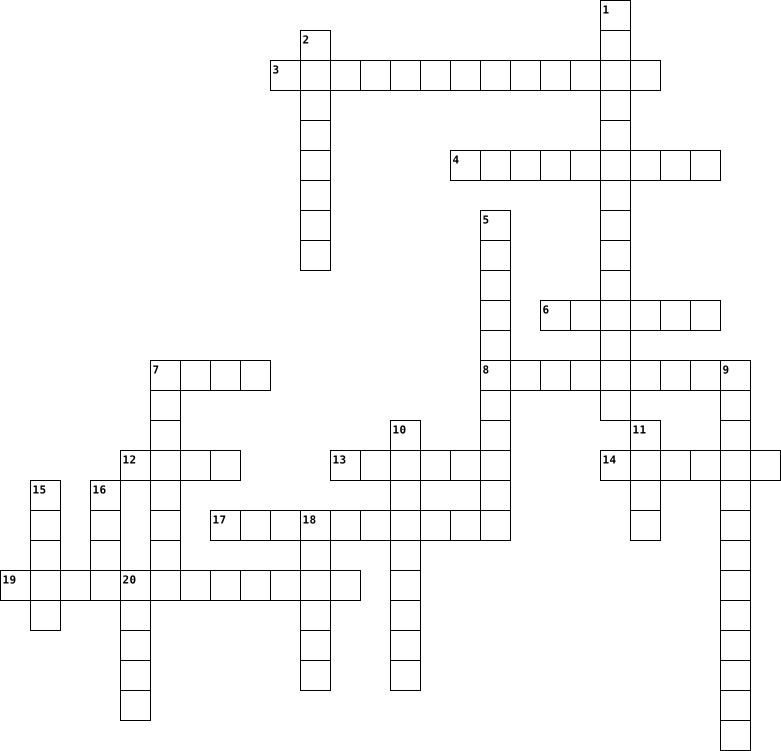
Across
- and balances system set up in the constitution where each branch of the government has some authority over the other
- an agreement acceptable to both sides
- convention a 1787 meeting in Philadelphia during which the USA Constitution was written
- to officially approve a proposal
- tow houses of the legislative branched of government
- branch the branch of government that carries out the laws made by the legislative branch
- government in which people elect officials to represent them
- Of Confederation a constitution drafted by Congress on November 15,1777
Down
- depression a period of time when business activity slows down and unemployment increases
- branch the lawmaking branch of government
- alteration or written change to a document
- action by which an executive rejects a bill submitted by legislature to refuse to approve
- of rights the first 10 amendment to the USA Constitution
13 Clues: to officially approve a proposal • an agreement acceptable to both sides • branch the lawmaking branch of government • alteration or written change to a document • tow houses of the legislative branched of government • of rights the first 10 amendment to the USA Constitution • government in which people elect officials to represent them • ...
Midterm Review 2025-01-14

Across
- Written by Thomas Paine.
- law added to the Constitution.
- settlement under the control of a foreign country.
- type of government in the U.S.
- leader of the U.S.
- Supreme law of the land.
Down
- The _____ of Independence declared the U.S independent.
- no taxation without ____.
- to not buy or use.
- The 1st 10 Amendments is known as the ______ of Rights.
10 Clues: to not buy or use. • leader of the U.S. • Written by Thomas Paine. • Supreme law of the land. • no taxation without ____. • law added to the Constitution. • type of government in the U.S. • settlement under the control of a foreign country. • The _____ of Independence declared the U.S independent. • The 1st 10 Amendments is known as the ______ of Rights.
Colonial Vocabulary 2024-08-21

Across
- a boy could obtain after Dame School
- Established in 1636
- believes all Christians are priest
- listed bill of rights
- alphabet and bible reading
- the philosophy of Harvard College
- boys and girls learned the 4 r's
- Passed by the US Congress
- every town with 50 families had to hire a teacher
Down
- emphasizes reading and writing
- Required parents to see that their children knew how to read
- teacher-centered educator during the colonial times
- textbooks
- One room structures for boys
14 Clues: textbooks • Established in 1636 • listed bill of rights • Passed by the US Congress • alphabet and bible reading • One room structures for boys • emphasizes reading and writing • boys and girls learned the 4 r's • the philosophy of Harvard College • believes all Christians are priest • a boy could obtain after Dame School • every town with 50 families had to hire a teacher • ...
Chapter 5 2017-03-30

Across
- complex system with many departments, rules, and people
- the practice of offering your time and services without payment
- a national service organization
- Bill and Melinda Gates
- security, equality, and liberty
- serve in court
- things that we are required to do
Down
- attend school
- vote
- the happiness, health, and prosperity of people
- things that we should do
- to call up for military service
- respecting and accepting others, regardless of their beliefs, practices, or differences
13 Clues: vote • attend school • serve in court • Bill and Melinda Gates • things that we should do • to call up for military service • a national service organization • security, equality, and liberty • things that we are required to do • the happiness, health, and prosperity of people • complex system with many departments, rules, and people • ...
Reconstruction Plan 2021-09-29

Across
- Black Codes
- 10 Percent Plan
- wade davis bill
- Freedmen's bureau
Down
- Civil rights act of 1866
- 13th Amendment
- process 14th amendment
7 Clues: Black Codes • 13th Amendment • 10 Percent Plan • wade davis bill • Freedmen's bureau • process 14th amendment • Civil rights act of 1866
history review 2020-09-30

Across
- Destiny Indian Removal Act Mexican-American War
- Republicans Jim Crow Laws transcontinental railroad Ku Klux Klan
- plantation French and Indian War
- Sectionalism Treaty of Guadalupe Hidalgo
- processes Dawes Act reservation assimilation Carlisle Indian School Reconstruction
- Acts propaganda Proclamation of 1763 Loyalists
Down
- Anti-Federalism checks and balances
- Sovereignty Siege Emancipation Proclamation
- War of Attrition Declaration of Independence
- Exchange Jamestown Indentured Servant Cash Crop
- of Confederation Shay’s Rebellion Northwest Ordinance of 1787
- Purchase War of 1812 Monroe Doctrine Secession
- of Rights
- amendment 14th amendment 15th amendment total war
14 Clues: of Rights • plantation French and Indian War • Anti-Federalism checks and balances • Sectionalism Treaty of Guadalupe Hidalgo • War of Attrition Declaration of Independence • Sovereignty Siege Emancipation Proclamation • Destiny Indian Removal Act Mexican-American War • Acts propaganda Proclamation of 1763 Loyalists • ...
history review 2020-09-30

Across
- Acts propaganda Proclamation of 1763 Loyalists
- of Rights
- Sectionalism Treaty of Guadalupe Hidalgo
- Purchase War of 1812 Monroe Doctrine Secession
- of Confederation Shay’s Rebellion Northwest Ordinance of 1787
- processes Dawes Act reservation assimilation Carlisle Indian School Reconstruction
- amendment 14th amendment 15th amendment total war
Down
- War of Attrition Declaration of Independence
- Republicans Jim Crow Laws transcontinental railroad Ku Klux Klan
- Sovereignty Siege Emancipation Proclamation
- Anti-Federalism checks and balances
- plantation French and Indian War
- Exchange Jamestown Indentured Servant Cash Crop
- Destiny Indian Removal Act Mexican-American War
14 Clues: of Rights • plantation French and Indian War • Anti-Federalism checks and balances • Sectionalism Treaty of Guadalupe Hidalgo • War of Attrition Declaration of Independence • Sovereignty Siege Emancipation Proclamation • Acts propaganda Proclamation of 1763 Loyalists • Destiny Indian Removal Act Mexican-American War • ...
Unit 3 Vocabulary 2023-02-08

Across
- of Rights the first ten amendments
- a body of fundamental principles
- of Confederation, the original constitution of the US, ratified in 1781
- Madison 4th president of the US
- federal principle
- Hamilton established the US central banking system
Down
- fundamental truth or proposition
- Convention was a formal meeting held in 1787
- opposed the ratification of the 1787 Constitution
- of the Constitution introduces the American Constitution
- Jay US chief justice 1789–95
- Papers collection of essays written under the pseudonym
- to the Constitution the 27 amendments
- Rebellion was an armed uprising
- of the Constitution describe the way the government is structured
15 Clues: federal principle • Jay US chief justice 1789–95 • Madison 4th president of the US • Rebellion was an armed uprising • fundamental truth or proposition • a body of fundamental principles • of Rights the first ten amendments • to the Constitution the 27 amendments • Convention was a formal meeting held in 1787 • opposed the ratification of the 1787 Constitution • ...
Unit 4 Assessment 2020-12-08

Across
- and spend public money
- 3rd congressional
- voting rights
- house or chamber of a bicameral
- house
- power
- of congress votes on a bill
- the oath of office to the members
- and passes federal laws
- 30 years of age
- bipartisan
- 1,section 8
- between the nation and another
Down
- to the federal government
- of senate &House representatives
- the legislation to house which it orginated
- Legislation
- legislation on nation health care
- politically by a designated government
- nominations foe executive
- house legislative system
- difference in legislation
- states ,individual districts
- and collect taxes
24 Clues: house • power • bipartisan • Legislation • 1,section 8 • voting rights • 30 years of age • 3rd congressional • and collect taxes • and spend public money • and passes federal laws • house legislative system • to the federal government • nominations foe executive • difference in legislation • of congress votes on a bill • states ,individual districts • between the nation and another • ...
Ga Studies⭐️ 2024-05-01

Across
- Amount of money someone earns
- found in the Bill of Rights
- Joseph E. Brown,Alfred H.Colquitt,John B. Gordon
- Person against State
- “New South”
- Created after slavery to prevent blacks
- Georgia’s largest region
- Takes risks personally and financially
- The largest passenger airline
- Created by Eli Witney
Down
- Enforces laws
- President FDR’s plan to help recover from the great depression
- responsible for overseeing the executive branch
- mode of transportation used to ship a large amount of goods
- Atlanta Mutual Life Insurance
- Person again person
- the amount a person purchases
- Paid farmers not to grow crops
- jewish man who was accused of murder and was lynched
- Talmage Georgia governor who fought against Roosevelt’s policies
20 Clues: “New South” • Enforces laws • Person again person • Person against State • Created by Eli Witney • Georgia’s largest region • found in the Bill of Rights • Amount of money someone earns • Atlanta Mutual Life Insurance • the amount a person purchases • The largest passenger airline • Paid farmers not to grow crops • Takes risks personally and financially • ...
Government Vocab Crossword 2018-08-23

Across
- Group of delegates that attended the Philadelphia Convention
- set up fundamental rights like trial of jury, due process and protection against arbitration; the great charter
- Prohibited a standing army in peacetime and parliamentary elections are free; restored in Glorious Revolution
- limited the power of King Charles I; could not imprison or punish without judgement of law
- Member of congress; chair
- government of, by and for the people
- Two house legislature
- Congress should be composed of two houses; a senate with equal representation and a house with representation based on population
- Written grant of authority from the monarch
Down
- Government can exist only with the consent of the governed
- Established a firm league of friendship among the states
- Formal approval of a law
- Joining of several groups for a common purpose
- Representatives
- Slaves count as three-fifths of a person for population stats
- restraint on actions of government
- Colonies organized by a proprietor
- Representation based on population or amount of money given to support central government; proposed by James Madison
- To revoke a law
- Each state is equally represented
20 Clues: Representatives • To revoke a law • Two house legislature • Formal approval of a law • Member of congress; chair • Each state is equally represented • restraint on actions of government • Colonies organized by a proprietor • government of, by and for the people • Written grant of authority from the monarch • Joining of several groups for a common purpose • ...
Legislative Terminology 2018-11-29

Across
- Formal expression of will/decision by members.
- Building where the Governor's Office is located.
- First in Importance; Money; Main person
- Upper House
- Money: Principal; Chief
- Concise statement of contents of bill.
- Laws of Nevada
- Lower House
- Lawyer or Attorney
- Brief and unofficial explanation of contents of bill or resolution.
- Version of bill/resolution subsequent to introduced version with amendments adopted by either house.
- To change or modify
Down
- Action of Governor in disapproval of bill.
- Note Document that states estimated monetary impact of a bill. (two words)
- Exact wording; word for word
- General agreement
- Law upon which others are based
- Intermission during floor session or committee meeting.
- To suspend indefinitely.
- Accurate written report of proceedings of a meeting.
- Minimum number of members present to transact business legally.
21 Clues: Upper House • Lower House • Laws of Nevada • General agreement • Lawyer or Attorney • To change or modify • Money: Principal; Chief • To suspend indefinitely. • Exact wording; word for word • Law upon which others are based • Concise statement of contents of bill. • First in Importance; Money; Main person • Action of Governor in disapproval of bill. • ...
Bill Clinton's Life Before the Presidency 2024-02-10

Across
- First name of Clinton's wife
- Instrument that Clinton learned to play as a teenager
- Small town that Bill Clinton called home as a child
- First name of the Clinton's only child
- War that Bill Clinton actively participated against
- Age in which Clinton was first elected governor of Arkansas
- University that Clinton attended for his undergraduate degree
- 1972 presidential candidate that Clinton worked for
- Presidential candidate that Clinton gave the nominating address for
- State that Bill Clinton called home
Down
- Bill Clinton's birth name
- Law school that Clinton attended
- President that Clinton met in 1963 that inspired him to go into politics
- Perhaps the issue that Clinton handled best in Arkansas
- First name of Bill Clinton's step-father
- Disease that Roger Clinton battled
- First name of Bill Clinton's mother
- License that Clinton taxed to help pay for his social programs in Arkansas
- Very prestigious scholarship that Clinton won
- Number of times Clinton was elected governor of Arkansas
20 Clues: Bill Clinton's birth name • First name of Clinton's wife • Law school that Clinton attended • Disease that Roger Clinton battled • First name of Bill Clinton's mother • State that Bill Clinton called home • First name of the Clinton's only child • First name of Bill Clinton's step-father • Very prestigious scholarship that Clinton won • ...
Ch5 Famous People 2024-04-12

Across
- believed people need basic human rights, chosen to be the American delegate to the UN
- worked for civil rights, first African American Supreme Court justice
- founding father, his leadership helped win the Revolutionary War
- found father, helped plan the Constitution and the Bill of Rights
- born into slavery, worked in the Underground Railroad
- wrote the Emancipation Proclamation, worked to end slavery
Down
- founding father, helped write the Declaration of Independence
- not allowed to practice her religion, ended up in an area later known as Rhode Island
- abolitionist, spoke out about slavery, wrote a book
- voted in the election for US president before it was legal for women to vote
- awarded the Nobel Peace Prize, started a settlement house call Hull House
- brought soldiers medicine and supplies while on the battlefield, later started the American Red Cross
- wrote the "I have a dream" speech, worked to end segregation, organized peaceful protests
13 Clues: abolitionist, spoke out about slavery, wrote a book • born into slavery, worked in the Underground Railroad • wrote the Emancipation Proclamation, worked to end slavery • founding father, helped write the Declaration of Independence • founding father, his leadership helped win the Revolutionary War • ...
Lesson 12 Congressional Lawmaking TCI 2022-12-09

Across
- is a number of votes greater than a simple majority
- a high school junior who works as a messenger and errand-runner in the House or Senate
- a method of voting in Congress in which members register their vote individually, either by voice vote (in the Senate) or by electronic means (in the House)
- the power of the House speaker or Senate majority leader to grant permission to speak on the House or Senate floor
- the tradition that a congressional committee member’s number of years of unbroken service on a committee—determines that member’s position on the committee
- a bill with so many riders attached to it that it seems to offer something for everyone
- the tactic of using endless speeches on the Senate floor to delay or prevent the passage of legislation
- the process used to end a filibuster in the Senate
- a meeting of lawmakers to hear testimony and gather information on a proposed piece of legislation
Down
- a method of voting in Congress in which members call out their vote as a group, first those who support the bill (saying “aye”), followed by those who oppose it (saying “no”)
- a amendment attached to a bill that has little or no relation to the subject of the bill
- a method of voting in Congress in which members stand up as a group,
- a condition placed on a bill by the House Rules Committee that permits floor debate and amendments
- up-or-down votea direct vote on a bill in the full House or Senate; the bill must be approved or rejected as is
- the members of a congressional conference committee
- a condition placed on a bill by the House Rules Committee that severely limits floor debate and amendments
- the trading of votes among legislators to ensure the passage of various bills in which they have a special interest
- request by a senator to delay action on a bill
- To choose not to cast a vote on a bill
- a meeting of a legislative committee at which members amend a bill before putting it to a vote
20 Clues: To choose not to cast a vote on a bill • request by a senator to delay action on a bill • the process used to end a filibuster in the Senate • is a number of votes greater than a simple majority • the members of a congressional conference committee • a method of voting in Congress in which members stand up as a group, • ...
Congress Part 1 2021-01-11

Across
- A part of congress with 435 members
- When a bill successfully goes through the conference committee it is called a _____ version.
- A technique used by senators who talk a bill to death
- If you have the job you are running for you are the _____
- In the house of representatives, a bill is introduced when it is place in a box called the _____
- The ____ _ __ ____ is whoever is on the floor during session in the house
- The ___ ___ ___ committee is a powerful committee where tax bills and spending bills are sent to
- During _____ witnesses appear and questions are asked relating to the bill
- A ____ is something attached to a piece of legislation that is not germane to the bill
- A group of voters who are being represented by someone
- During a ____ ____ a roll call is taken to determine if the minimum number of member in the house are present
Down
- When committees set aside a bill causing it to die
- ___ ___ originally chose our senators
- The _____ of the house is in charge of the house of representatives
- When amendments are ____ they are relevant to the bill
- Both houses of congress are divided up into groups based on areas of specialization
- Every 10 years this is done to determine the populations of states relative to each other
- Small groups inside of committees
- ____ districts where incumbents win by extremely large amounts
- _____ rules govern debate in the senate
- When a bill has gone through both house passed as two seperate versions, this bill is made into a single version at the _________
- ______ legislature is a two chamber legislature
- The person in charge of the senate is known as the ____ officer
- The ___ ___ was the nickname for the original senate
- _____ districts where the candidate elected tends to win in a close election
- A part of congress with 100 members, 2 per state
- A ___ ___ bill is a bill with a bunch of riders
- ____ rules govern debate in the house of representatives
28 Clues: Small groups inside of committees • A part of congress with 435 members • ___ ___ originally chose our senators • _____ rules govern debate in the senate • ______ legislature is a two chamber legislature • A ___ ___ bill is a bill with a bunch of riders • A part of congress with 100 members, 2 per state • When committees set aside a bill causing it to die • ...
Chapter 11 2017-04-03

Across
- Laws regarding the official language of the state, in Canada it is English and French
- A bill of rights and human rights that was passed by the national assembly of Quebec in 1975
- This act replaced the war measures act, it is designed to protect our rights and freedoms in times of crisis.
Down
- A responsibility of citizens living in a liberal democracy,Failure of showing this RESPECT could result in a state of chaos
- Guarantees our political and civil rights as Canadians
- Ideologies opposed to the values, beliefs and principals of liberalism
- Made to protect Canadians from terrorism after the September 11 attacks
- The name of the first ten amendments to the constitution
- Violent actions against an enemy state or culture against the public.(allah Akbar)
9 Clues: Guarantees our political and civil rights as Canadians • The name of the first ten amendments to the constitution • Ideologies opposed to the values, beliefs and principals of liberalism • Made to protect Canadians from terrorism after the September 11 attacks • Violent actions against an enemy state or culture against the public.(allah Akbar) • ...
The Constitution crossword 2024-01-25

Across
- Articels of ____________
- what describes the purpose of the constitution
- The ______ compromise
- This branch consists of the House of Representatives and the Senate
- James ______
- The Bill of_____
Down
- This branch has the sole power to interpret the law
- a political ideology centered on citizenship in a state organized as a republic
- This branch conducts diplomacy with other nations
- The division & sharing of power between the national and state government
- George ___________
- How many articles
12 Clues: James ______ • The Bill of_____ • How many articles • George ___________ • The ______ compromise • Articels of ____________ • what describes the purpose of the constitution • This branch conducts diplomacy with other nations • This branch has the sole power to interpret the law • This branch consists of the House of Representatives and the Senate • ...
Chapter 13 2013-08-09

Across
- verbal expression in front of an audience
- first clause of first amendment
- decisions made on the same issue in earlier cases
- jury is kept isolated
- use of actions and symbols instead of words
- fundamental freedoms
- process by which the Bill of Rights was extended to states and localities
- nonreligious
- patrolling an establishment to convince workers and public not to enter
Down
- clause prohibits government from interfering with exercise of religion
- schools operated by religious group
- speech urging resistance to authority
- censorship of information before it is published
- limited
14 Clues: limited • nonreligious • fundamental freedoms • jury is kept isolated • first clause of first amendment • schools operated by religious group • speech urging resistance to authority • verbal expression in front of an audience • use of actions and symbols instead of words • censorship of information before it is published • decisions made on the same issue in earlier cases • ...
Constitution Era 2025-09-10

Across
- Washington, President of the Constitutional Convention
- individuals who supported a strong national government and ratification
- Two houses
- Plan, a Plan that proposed a bicameral legislature based on population
- of Confederation, First governing document of the United States, which created a weak central government
- One house
- Convention, Meeting in 1787, where the Constitution was written
Down
- system that divides power between the national and state governments
- Rebellion, a Rebellion led by a Massachusetts farmer, highlighting the weaknesses of the Confederation
- individuals who feared a strong national government and wanted states' rights
- Compromise, an Agreement that created a two - house legislature balancing large and small states
- Madison, Father of the Constitution
- of Rights, The first 10 amendments to the Constitution
- Jersey Plan, Plan that gave equal representation to all states, regardless of size
14 Clues: One house • Two houses • Madison, Father of the Constitution • Washington, President of the Constitutional Convention • of Rights, The first 10 amendments to the Constitution • Convention, Meeting in 1787, where the Constitution was written • system that divides power between the national and state governments • ...
Constition 2023-05-23

Across
- and Balances
- of Powers the legeslative and judical and exctitive
- Government that is restricted
- of Rights
- Madison 4th President
Down
- Participation of citizens
- Sharing of power
7 Clues: of Rights • and Balances • Sharing of power • Madison 4th President • Participation of citizens • Government that is restricted • of Powers the legeslative and judical and exctitive
Government Crossword Puzzle 2021-01-13

Across
- Each state has this amount of Senators
- Approve or pass an amendment
- Something that goes against the Constitution is
- The chief executive at the state level
- Court system that deals with United States laws
- Carry out law
- Each state's system of local government is slightly
- A draft of a law is called a
- What an appellate court looks for when reviewing a case
- The division of power among a central government and a smaller regional government
- favoring one view or another
Down
- Type of court that will review a trial courts decision
- The process of becoming a U.S. citizen when you are not born in the United States or to parents who are U.S. citizens is called
- A plan for how money is earned and spent
- number of justices on the Supreme court
- Attention paid to something
- Minority rights are needed in order to treat everyone this way
- Group of people who decide a case after hearing the evidence
- what a judge wears
- Type of case relating to the peoples rights
- Number of branches state governments usually have
- people or things that can prove one side's version of what happened
- There are how many ways to become a Citizen of the United States
- A state's number of members in the House of Representatives is based on its
- What branch is Congress
- Being a member of a nation or country and having full rights and responsibility under the law
- The constitution tells how these are made
27 Clues: Carry out law • what a judge wears • What branch is Congress • Attention paid to something • Approve or pass an amendment • A draft of a law is called a • favoring one view or another • Each state has this amount of Senators • The chief executive at the state level • number of justices on the Supreme court • A plan for how money is earned and spent • ...
Re-Evals 2016-10-27

Across
- This type of re-eval paragraph lets you use your own wording
- Inpatient and Outpatient bills need this tab filled out
- The last digit in UB-04, box 4, if the bill is a re-eval
- The tab where the bill's specific codes and charges are entered
- This type of bill is not re-eval'd unless the DOS is after 7/1/15
- Bills that have been corrected and are now being submitted again
- How to handle a bill that needs to be processed as new
- This type of re-eval paragraph has already been written for you
- Where we pull up bill images
- To look at a previously reviewed bill to ensure it was paid correctly
- The work queue where re-evals are found
Down
- Press Shift+F2 to ensure this is correct on every bill you handle
- The company that handles Independent Bill Reviews
- The people who send us bills after seeing the injured worker
- The tab on which the basic information about the bill is entered
- A bill with BGW2 is most likely this
- A two-digit code that changes a CPT code
- The part of the Notes tab where we enter internal documentation
- The environment in which "Dummy" bills are processed
- Another name for the Bill ID Number
- We use this program to process bills
- How to handle a bill that is actually a duplicate
- An official form used to request a re-evaluation
- How to remove a re-eval you copied in error
- A form which should never be in a sendback letter
25 Clues: Where we pull up bill images • Another name for the Bill ID Number • A bill with BGW2 is most likely this • We use this program to process bills • The work queue where re-evals are found • A two-digit code that changes a CPT code • How to remove a re-eval you copied in error • An official form used to request a re-evaluation • ...
bill 2021-03-16

Across
- having or showing a lot of energy
- willing to tack risks or tryout new stuff
- oval ball you kick
- you need a pencil to do it
- I am a mans best friend
- feeling or showing excitement
- something that rolls in mud and screams
Down
- causing laughter or amusement
- not afraid very brave
- something that has a hard drive
- six strings you strum
- able to a just to new conditions
- bike something with two wheels
- something you go in side off to punch another
- not messy clean
- you need a sony controller to play me
16 Clues: not messy clean • oval ball you kick • not afraid very brave • six strings you strum • I am a mans best friend • you need a pencil to do it • causing laughter or amusement • feeling or showing excitement • bike something with two wheels • something that has a hard drive • able to a just to new conditions • having or showing a lot of energy • you need a sony controller to play me • ...
Reconstruction (John, Jonny) 2023-05-31

Across
- Guaranteed equal rights to all citizens
- The first African American to serve a full term as a U.S. senator
- Laws that limited the freedoms of african americans
- Divided south into 5 districts with a military commander in each one
- Gave African american men the right to vote
- An official pardon
- The act in 1875, that guaranteed rights for African Americans
- A group of white southerners who were opposed to civil rights
- People who thought the southern states had to change a ton before being let into the union
- The separation of African Americans and white people in outside locations.
- The amendment that made slavery illegal
Down
- Leader of radical republicans from Massachusetts
- Bill that allowed the southern states to join the union but had to ban slaves and follow the union laws
- An order that was to help poor people in the south
- The man who assassinated Abraham Lincoln
- The process of combining the union and the confederacy into one nation
- A name for northern-born republicans that moved to the south
- The tax that African Americans had to pay to voteSegregation
- Provided african americans with same rights as white americans
- A severe downfall in the U.S. economy that caused 2 million people to lose their jobs
- A name that southern democrats used for southern Republicans
- The plan allowed the southern states to join but they had to make slavery illegal and ten percent of people had to vote to be a part of the government
- The new president after Lincoln's assassination
- Man who won the 1868 election
24 Clues: An official pardon • Man who won the 1868 election • Guaranteed equal rights to all citizens • The amendment that made slavery illegal • The man who assassinated Abraham Lincoln • Gave African american men the right to vote • The new president after Lincoln's assassination • Leader of radical republicans from Massachusetts • ...
Congress & How a Bill Becomes Law 2022-09-15

Across
- a two chamber legislative body
- every bill starts with one
- the method by which a senator talks a bill to death do it will not pass
- the number of votes needed to pass a bill
- what happens to a bill when it is ignored in a committee
- has 435 members
- is the member of the committee that decides which bills get discussed or ignored
- power is one that is written in the constitution
- in when 60 members of the Senate vote to stop a fillibuster.
Down
- when members of a congress vote by saying yes or no
- when members of congress argue the pros and cons of a bill prior to a vote
- committees are when both chambers of congress get together to pass a bill that is identical.
- member of a political party that gets members to vote for a bill the party wants passed
- of the house is the leader of the majority party in the house of representatives
- the process by which a elected member of the government is charged with crime by the legislative branch
- is something
- powers are inferred(not written) via the necessary and proper clause of the US Constitution
- has 100 members in it
- the gender of most members of the congressional branch
- committee determines how a new law is to be debate on prior to a vote in the house of representatives
- is when the president says NO to a bill passed by congress
21 Clues: is something • has 435 members • has 100 members in it • every bill starts with one • a two chamber legislative body • the number of votes needed to pass a bill • power is one that is written in the constitution • when members of a congress vote by saying yes or no • the gender of most members of the congressional branch • ...
American & French Revolutions 2026-02-23

Across
- Rights — Basic rights all people are born with, such as life, liberty, and property.
- Court Oath — Promise by the Third Estate to create a new constitution.
- Washington — Commander of the Continental Army and first U.S. president.
- Acts — Punishments imposed on Massachusetts after the Boston Tea Party.
- Act — British law taxing printed materials in the colonies, increasing colonial anger.
- of Paris — Agreement officially ending the American Revolution.
- of Lexington and Concord — The first military battles of the American Revolution.
- of Rights — The first ten amendments protecting individual freedoms.
- of the Governed — The principle that people give government its power.
- Robespierre — Radical leader who directed the Reign of Terror.
- of the Rights of Man and of the Citizen — Document declaring liberty and equality for French citizens.
- of Terror — Period of mass executions led by radical revolutionaries.
- Jefferson — Primary author of the Declaration of Independence.
- XVI — French king executed during the Revolution.
- of Independence — Document declaring the colonies independent and affirming natural rights.
- — Meeting of France’s three estates to address financial crisis.
Down
- Estate — Commoners who paid most taxes and had little political power.
- — An intellectual movement of the 1600s–1700s emphasizing reason, liberty, equality, and natural rights.
- of the Bastille — Paris mob attacked a prison symbolizing royal tyranny.
- Estate — The clergy of France who paid few taxes.
- Estate — The nobility of France who held special privileges.
- — British economic system that controlled colonial trade for the benefit of the mother country.
- Locke — Enlightenment thinker who argued government exists to protect natural rights and can be overthrown if it fails.
- Contract — The idea that government gains authority from the consent of the governed.
- Tea Party — Colonial protest against British tea taxes in which tea was dumped into Boston Harbor.
- Without Representation — Colonial complaint that Britain taxed them without allowing colonial representatives in Parliament.
- Antoinette — Queen of France executed during the Revolution.
- — A government where citizens elect representatives to govern.
- — Execution device used widely during the Reign of Terror.
- of Powers — Dividing government into legislative, executive, and judicial branches.
- Bonaparte — Military leader who seized power and ruled France as emperor.
- Wars — Series of wars spreading revolutionary ideas across Europe.
- System — France’s rigid social class structure dividing society into three estates.
33 Clues: Estate — The clergy of France who paid few taxes. • XVI — French king executed during the Revolution. • — Execution device used widely during the Reign of Terror. • Estate — The nobility of France who held special privileges. • Antoinette — Queen of France executed during the Revolution. • Robespierre — Radical leader who directed the Reign of Terror. • ...
US History 2013-12-16
Across
- a body of fundamental principles or established precedents according to which a state or other organization is acknowledged to be governed.
- Courts
- Washington/first president of the United States treasury department
- 4, 1776/ The date of Declaration of Independence was adopted
- Hamilton/ the federalist leader
- of Rights/ the first, 10 amendments of the Constitution
- Jefferson/ One author of the Declaration of Independence
- Tea Party/ In 1773, a protest in which colonist dressed up as Indians, and dumped Boston tea into the harbor
- president (enforces laws)
- congress
Down
- Convention/ a convention that met in Philadelphia in 1787 and drafted the Constitution
- refuses to buy
- they preferred a strong national government
- Review/ the power of the courts to declare an act of congress
- War/ The American war of independence (1775-1783)
- Purchase/ this doubled the size of the United States, expanded farming and trade
- Locke/ influenced the Declaration of Independence, and adopted Natural Rights
- Madison/ he attended the Constitutional Convention
- Federalist/ they preferred limited national government
- and Balances/ each of the three branches of government can limit the powers of the others
- Act/ placed on all the printed materials
21 Clues: Courts • congress • refuses to buy • president (enforces laws) • Hamilton/ the federalist leader • Act/ placed on all the printed materials • they preferred a strong national government • War/ The American war of independence (1775-1783) • Madison/ he attended the Constitutional Convention • Federalist/ they preferred limited national government • ...
Facts and Terms Unit 3 2026-01-06

Across
- Protections against government interference in personal freedoms
- Government censorship before publication
- Offensive material lacking serious value
- Movement for equal treatment
- Protects the right to practice any religion
- Guarantees freedom of speech, religion, press, assembly, and petition
- First ten amendments to the Constitution
- Promotes diversity in hiring/admissions
- Ended slavery
- Case involving free speech and incorporation
- Women’s suffrage
- Ended segregation in public schools
- Protects disabled Americans
Down
- Applies the Bill of Rights to the states
- Prevents unfair government actions
- Extends due process and equal protection to the states
- Written defamation
- Upheld racial segregation
- Prevents government from creating an official religion
- Right to vote
20 Clues: Right to vote • Ended slavery • Women’s suffrage • Written defamation • Upheld racial segregation • Protects disabled Americans • Movement for equal treatment • Prevents unfair government actions • Ended segregation in public schools • Promotes diversity in hiring/admissions • Applies the Bill of Rights to the states • Government censorship before publication • ...
Larry Norman: Most are albums...sometimes (Larrynormanness) 2025-03-05

Across
- Dog Turned Record Label
- Larry Norman...Remixed
- Cleopatra = Album Title
- The Vinyl Solution
- Sometimes Considered Normal
- People! "Reunion"
- Kickstarted Album
- And A Happy New Year
- It Both Begins And Ends At Six
- Larry released a cover, Charly released a double album of theirs
- Starstorm
- Sticks & Stones Counterpart
- Don't Ask Me
- Some Deep Theological Study
- Street Level "Limited" credit
Down
- 2 in 1
- Bill Of Rights Cancelled
- 4 in 1
- The British Invasion
- On The Prowl
- Stonehill Record Label = Norman Record Label
- Bootleg The Bootleggers
- Frisbee Two
- 3 in 1
- Capitol Bible-Rock
- Green Mutant
- ...But Not Out
27 Clues: 2 in 1 • 4 in 1 • 3 in 1 • Starstorm • Frisbee Two • On The Prowl • Green Mutant • Don't Ask Me • ...But Not Out • People! "Reunion" • Kickstarted Album • The Vinyl Solution • Capitol Bible-Rock • The British Invasion • And A Happy New Year • Larry Norman...Remixed • Dog Turned Record Label • Cleopatra = Album Title • Bootleg The Bootleggers • Bill Of Rights Cancelled • Sometimes Considered Normal • ...
US History Final 2026 2026-05-11

Across
- making public accusations without evidence
- organization created by Fourteen Points
- operation launched by George H.W. Bush
- project to build the first atomic bomb
- president during WWI
- desegregated public schools
- Truman pledged to help resist this
- concrete barrier to keep people in East
- Nixon was the only president to do this
Down
- dropped atomic bombs on Japan
- organized camp david accords
- populatized by "Buffalo Bill" Cody
- youngest elected president
- emphasized "rugged
- most famous writer of Gilded Age
- note proposing Germany-Mexico alliance
- U.S. strategy in the Pacific Theater
- journalists who criticized evils of society
- first state to grant women voting rights
- name given to Churchill, FDR, Stalin
20 Clues: emphasized "rugged • president during WWI • youngest elected president • desegregated public schools • organized camp david accords • dropped atomic bombs on Japan • most famous writer of Gilded Age • populatized by "Buffalo Bill" Cody • Truman pledged to help resist this • U.S. strategy in the Pacific Theater • name given to Churchill, FDR, Stalin • ...
chapter 3 2024-05-13

Across
- rights The first ten amendments
- The act of being a member of a country
- warrant a document issued by judge
- A formal change to constitution
- process the act of following clear
- one who buys and uses products
Down
- A Lawmaking branch of government
- right A right given by god
- A plan of government
- the lawmaking branch
10 Clues: A plan of government • the lawmaking branch • right A right given by god • one who buys and uses products • rights The first ten amendments • A formal change to constitution • A Lawmaking branch of government • warrant a document issued by judge • process the act of following clear • The act of being a member of a country
Chapter 12: Voting and Voter Behavior 2020-05-21

Across
- that tend to vote in noticeable patterns
- former slaves and free blacks the right to vote and was the first federal mandate affecting state voting requirements
- Rights Act/first such bill since Reconstruction that addressed discrimination in voter registration and established the U.S. Office of Civil Rights, and enforcement agency in the Justice Department
- elections for senators became the law of the land
- women the right to vote
- who go to the polls to cast a vote for the American president and some lower offices
- difference in political views between men and women and how these views are expressed at the voting booth
- popular method for southern states to keep African Americans from voting
- that voters be able to read; formerly used in the South to disenfranchise blacks.
- that their vote makes a difference
- poll taxes in any federal elections
Down
- states to recognize a registering voter as it would have recognized his grandfather, prevented scores of blacks from voting, while it allowed illiterate and poor whites to circumvent the literacy test and poll tax requirements
- over the age of 18, and in nearly all states, they must also be non-felons
- right to vote
- who look backward to consider candidates' track records
- act/the most effective bill to bring the black populace into the political process
- simple fee required to vote
- Washington D.C. 3 electoral college votes
- popular leader and advocate for expanding suffrage to all white men
- lack of concern for the election outcome
20 Clues: right to vote • women the right to vote • simple fee required to vote • that their vote makes a difference • poll taxes in any federal elections • that tend to vote in noticeable patterns • lack of concern for the election outcome • Washington D.C. 3 electoral college votes • elections for senators became the law of the land • ...
Design Thinking Crossword Puzzel 2022-02-14

Across
- life,liberty,and property
- feared because if people dont participate the government could abuse power
- Government limits how much the government can interfere with your ability to pursuit life,liberty,property, and happiness
- movement centered around the idea that humans are capable of understanding the universe and improving humanity
- people fled to america to find religious freedom and this lead to a direct democracy
- an enlightenment thinker who believed natural rights are to be protected by the government
- court system and judges make sure law is applied fairly
Down
- king meet with Parliament and this establishes power of legislative branch
- people can only live together if we agree to certain rules
- believed we need government because we are all bad and evil
- an enlightenment thinker who felt it was best to separate powers across the three branches to prevent abuse of power.
- customs that were enforced in England that caused equal law for everyone.
- Bill of Rights outline of rights of citizens and this lead to the idea of divine selection
13 Clues: life,liberty,and property • court system and judges make sure law is applied fairly • people can only live together if we agree to certain rules • believed we need government because we are all bad and evil • customs that were enforced in England that caused equal law for everyone. • king meet with Parliament and this establishes power of legislative branch • ...
Government Terms 2026-05-06

Across
- A device used only in the Senate to delay or prevent a vote by time-consuming talk. Requires invoking cloture to halt it.
- – Financial operations of the government are carried out in a 12-month fiscal year, beginning on October 1 and ending on September 30 of the following year.
- If the President disapproves a bill and sends it back to Congress, Congress may override the veto by a two-thirds vote in each House. If the two-thirds majority is reached in each House, the bill then becomes law over the President’s objection.
- The leading spokesperson and legislative strategist for the party in control of either the House or Senate.
- The assistant majority leader in the House or Senate. Responsibilities include reminding majority members of important upcoming votes and keeping “count” of how members plan to vote.
- the process of choosing government officials by vote of the citizens.
- The presiding officer.
- Pertaining to the purpose of the bill in question.
- Bill Final copy of a bill that has passed the House and Senate in identical form.
- Legislation that has passed both Houses and was signed by the President, thus becoming a law.
Down
- Referral When a bill is introduced, the presiding officer of the body in which it is introduced is empowered to assign the legislation to a committee of jurisdiction for consideration. The guidelines for bill referrals are spelled out in Senate and House rules.
- House and Senate Committee sessions in which testimony regarding legislation is received from interested parties.
- A consolidation of the laws of the United States, arranged by subject under 50 titles.
- – The elected presiding officer of the House of Representatives. Elected by the full House and a member of the majority party.
- Veto If there are fewer than 10 working days left in the Congressional session when the President receives a bill and the President does not sign the bill, the bill dies and does not become law.
- Both a verb and a noun, When a committee returns a bill to the floor of either the Senate or House, it “reports” the bill. A “report” is a document setting forth the commi explanation of its action.
- A Senator or Representative.
- Different from adjournment, does not interfere with unfinished business. Halts the proceedings temporarily.
- Change or modify a bill or motion by striking out, adding or substituting language.
19 Clues: The presiding officer. • A Senator or Representative. • Pertaining to the purpose of the bill in question. • the process of choosing government officials by vote of the citizens. • Bill Final copy of a bill that has passed the House and Senate in identical form. • Change or modify a bill or motion by striking out, adding or substituting language. • ...
Bill of Rights and the Constitution 2025-01-07

Across
- Part of the First Amendment, this freedom allows you to say whatever you want
- Part of the Fourth Amendment, this right protects us from the police and requires a warrant for this activity
- part of the Fifth Amendment, this right protect people in court from saying something that would make the guilty
- part of the Sixth amendment, this right is to protect people accused of a crime to have this type trial that is another word for quick
- Part of the Third Amendment, this right bans this type of person from living in your home
Down
- part of the Ninth Amendment, this right protect the rights that are not written and they belong to this group
- part of the Seventh Amendment, this right make sure that anyone accused of a crime has the right to have their case decided by these people
- Part of the Tenth Amendment, This right says that if the government does not have the authority it goes to this government
- part of the Eighth Amendment, this right protects us from usaul fines and this which happens if someone is sentenced
- Part of the Second Amendment, this freedom allows people to own and buy this type of weapon
- Part of the First Amendment, this freedom allows you to worship freely
11 Clues: Part of the First Amendment, this freedom allows you to worship freely • Part of the First Amendment, this freedom allows you to say whatever you want • Part of the Third Amendment, this right bans this type of person from living in your home • Part of the Second Amendment, this freedom allows people to own and buy this type of weapon • ...
The New Government 2025-01-03

Across
- chosen to speak for others
- law making body of the United States
- leader of the United States
- meeting held to discuss something
Down
- supreme law of the land
- when each party gives a little
- law added to the Constitution
- shared powers between states and national Gov.
- power of the people
- of Rights first 10 Amendments to the Constitution
10 Clues: power of the people • supreme law of the land • chosen to speak for others • leader of the United States • law added to the Constitution • when each party gives a little • meeting held to discuss something • law making body of the United States • shared powers between states and national Gov. • of Rights first 10 Amendments to the Constitution
Unit 1 Exam Review 2022-09-15

Across
- democracy that emphasizes broad participation in politics and civil society
- Individual rights protected from governmental power
- document favored by the Anti-Federalist
- Both groups were arguing about this
Down
- group in favor of Bill of Rights
- group in favor of the Articles of Confederation
- Articles of Confederation implented this principle
7 Clues: group in favor of Bill of Rights • Both groups were arguing about this • document favored by the Anti-Federalist • group in favor of the Articles of Confederation • Articles of Confederation implented this principle • Individual rights protected from governmental power • democracy that emphasizes broad participation in politics and civil society
History Crossword Puzzle 2021-02-15

Across
- Amendment; Amendment that grants the freedom of speech, religion, press, etc.
- Gin; A seed remover for cotton.
- Jefferson; Third President of the United States.
- This branch of government makes the laws.
- This branch of government enforces and carries out the laws and includes the president.
- Those who are loyal to the King of Britain during the split in 1775.
- of powers; Divides the government into three separate branches.
- An action by a state to cancel a federal law.
- To withdraw, often from a group or alliance.
- of Rights; First ten amendments of the Constitution.
- People who invest in money.
Down
- Washington; First president of the United States.
- Widespread starvation.
- People who wanted to preserve the country for white Americans.
- Amendment; Amendment that grants the right to bear arms.
- A ceremony where the President takes an oath of office.
- system; Practice of rewarding government jobs to loyal supporters of the winning party after an election.
- Those who favor independence and fight for it during the split in 1775.
- Sense ;Thomas Paine made this pamphlet to mock the idea of kings.
- Denial of equal rights to certain groups of people.
20 Clues: Widespread starvation. • People who invest in money. • Gin; A seed remover for cotton. • This branch of government makes the laws. • To withdraw, often from a group or alliance. • An action by a state to cancel a federal law. • Jefferson; Third President of the United States. • Washington; First president of the United States. • ...
The US Constitution 2022-02-02

Across
- Powers given to the states in the 10th Amendment
- Amendments 15, 19, and 24 deal with these
- Article IV describes the relationship between...
- Article that describes the Legislative Branch
- Articles written to persuade support for the ratification of the Constitution
- Amendments in the Bill of Rights
- Article that explains how to Amend the Constitution
- the number of Amendments to the Constitution
- Article that describes the Executive Branch
Down
- establishes rules and principles government must follow (5th &14th Amendments)
- The 18th Amendment is the only Amendment to be..
- the 19th Amendment gave voting rights to...
- The Article which states nine states is sufficient for ratifying the Constituion
- The Anti Federalists demanded be added to the Constitution
- purposes of government outlined
- a way to change the Constitution
- How old a person must be to run for a US Senator
- Article that describes the Judicial Branch
- Is in Article VI, Section 2 and establishes that the Constitution, laws passed by Congress and treaties of the US are the supreme law of the land.
19 Clues: purposes of government outlined • Amendments in the Bill of Rights • a way to change the Constitution • Amendments 15, 19, and 24 deal with these • Article that describes the Judicial Branch • the 19th Amendment gave voting rights to... • Article that describes the Executive Branch • the number of Amendments to the Constitution • ...
Quarter 1 Crossword Review 2025-10-06

Across
- This governmental department was created after 9/11
- This document officially separated the colonies from Great Britain
- This Enlightenment thinker had ideas like separation of powers/checks and balances
- The U.S. Constitution has three of these
- This branch makes laws
- This was the first constitution of the U.S.
- This amendment does not allow self incrimination or testifying against yourself
- This term means to set up a national court system
- This is where most of the power was during the first constitution
- This group wanted the Bill of Rights added to the U.S. Constitution
- This idea by John Locke explained that people had certain liberties that couldn't be taken away
- This branch enforces laws
- This amendment includes freedom of assembly and freedom of the press
- This amendment gave citizens more rights outside of the Constitution
- This term means "peace within the country"
Down
- This phrase is connected to a complaint made by the colonists
- This branch interprets laws
- This document established rule of law for King John
- This amendment involves civil court
- This document influenced the Declaration of Independence
- This document established self government for the settlers
- This document protected specific rights of individuals
- This amendment includes no cruel punishment
- This is the introduction section of the Constitution
- This group wanted a stronger central government
- One word that can describe the first constitution of the U.S.
26 Clues: This branch makes laws • This branch enforces laws • This branch interprets laws • This amendment involves civil court • The U.S. Constitution has three of these • This term means "peace within the country" • This was the first constitution of the U.S. • This amendment includes no cruel punishment • This group wanted a stronger central government • ...
28:1 2016-04-19

Across
- The-highest-judicial-court-in-a-country-or-state.
- A-document-that-outlines-fundamental-laws-and-principles.
- The-elected-executive-head-of-a-state-of-the-US.
- Makes-the-laws-of-the-state.
- The-lower-house-of-the-United-States-of-Congress.
- A-political-power-reserved-by-a-constitution-to-the-exclusive jurisdiction of a specified political authority.
- A-minor-change-in-a-document.
Down
- The-first-ten-amendments-to-the-US-Consecutive-and-guaranteeing such rights as the freedoms of speech, assembly, and worship.
- Interprets-the-laws-of-the-state-and-decides-how-the-laws-should be applied.
- Was-one-of-the-constituent-states.
- Acts-on-a-check-on-the-powers.
- Any-of-various-legislative-or-governing-bodies.
- Prevents-any-branch-from-having-too-much-power.
- Guarantees-from-the-government-to-repay-money-it-borrows.
- Responsible-for-seeing-that-the-laws-of-the-state-are-arried out.
- The-federal-principle-or-system-of-a-government.
16 Clues: Makes-the-laws-of-the-state. • A-minor-change-in-a-document. • Acts-on-a-check-on-the-powers. • Was-one-of-the-constituent-states. • Any-of-various-legislative-or-governing-bodies. • Prevents-any-branch-from-having-too-much-power. • The-elected-executive-head-of-a-state-of-the-US. • The-federal-principle-or-system-of-a-government. • ...
American Revolution History 2015-12-15

Across
- The man who started Shay's rebellion, his revolts against taxes led to flaws in the Articles of Confederation
- Fourth president of the United States, signed the Declaration of Independence
- City in which the continental congress held meetings
- The part of congress that are chosen based on the population of the state they represent
- The part of congress that have two representatives from each state
- Also known as the the Virginia Plan that chooses representatives based on the population to represent the House
- President of the board of agriculture, British farmer, his goal was to not trade anything with America
- When two people with different ideas merge them together so that they benefit both people
- President Thomas Jefferson sent marines to the coast to deal with _____
- The government has a little more powers than the ones that are strictly named in the Constitution
- Capital of the colonies after the Constitution was ratified
- Under the Articles of Confederation, America had a very ____ __________
- Under the Articles of Confederation, the ______ had many ______ and they were hesitant to ratify the Constitution for fear that they would lose their power
- Important political figure, he made sure the Bill of Rights was written, made sure Virginia did not agree with the Constitution until there was a Bill of Rights
- Under the Constitution, America had a ______ __________
- The branch of government that is run by the Supreme Court
- A group of advisors to the president
Down
- Laws that stated what your rights were and what not to do
- Also known as the New Jersey plan that chooses two representatives from each state to represent the Senate
- The man who created the Declaration of Independence, the third president of the United States, the first Secretary of State, the second Vice President of the United States.
- Created the Lightning rod, ambassador of the colonies represented the colonies in Great Britten, convinced the French to join the Revolutionary War
- When the Constitution is strictly interpreted by the government
- The first Ten Amendments of the Constitution
- The man who gave the "give me liberty or give me death" speech
- An amount of money that the government collects, there are indirect and direct forms of ____, the Articles of Confederation did not have any money because they weren't allowed to _____ the states
- The man on the 10 dollar bill, was the first U.S treasurer, convinced New York to agree with the constitution, was one of George Washington's advisors
- General in the revolutionary war, first president of the United States
- The Articles of Confederation were going to be _______ but the Constitution took its place
- A gathering that drafts or revises the Constitution is called the Constitutional __________
- The branch of government that the president is in charge of
30 Clues: A group of advisors to the president • The first Ten Amendments of the Constitution • City in which the continental congress held meetings • Under the Constitution, America had a ______ __________ • Laws that stated what your rights were and what not to do • The branch of government that is run by the Supreme Court • ...
Civics Crossword 2025-05-08

Across
- A "law" that has yet to be passed
- The power of a President to "block" a law
- Protection against unfair treatment by the government
- Branch that interprets laws
- Division of power between national and state governments
- Branch that makes laws
- Branch that enforces the laws
- A payment required by the government
- Head of the executive branch
Down
- First ten amendments to the Constitution
- Group of elected lawmakers
- Highest court in the United States
- Prevents one branch from becoming too powerful
- A change or addition to the Constitution
- Rights all people are born with
- The right to participate in elections
- Opening statement of the Constitution
- Group of citizens deciding legal cases
18 Clues: Branch that makes laws • Group of elected lawmakers • Branch that interprets laws • Head of the executive branch • Branch that enforces the laws • Rights all people are born with • A "law" that has yet to be passed • Highest court in the United States • A payment required by the government • The right to participate in elections • Opening statement of the Constitution • ...
CONSTITUTION 2023-09-17

Across
- A judicial philosophy that interprets the Constitution based on its original meaning at the time it was written
- Constitutional mechanism by which the Bill of Rights is extended to protect citizens from state and local government actions
- The division of powers and responsibilities between the national and state governments.
Down
- An ideology emphasizing the interests and unity of a nation as a whole promoted by Hamilton and Lincoln
- The part of the Constitution that outlines the relationship between states and the federal government
- The powers specifically listed in the Constitution that belong to the federal government.
- Powers not explicitly mentioned in the Constitution but inferred from its language and interpretation.
- The process of applying the protections of the Bill of Rights to the states
- A form of government where power is shared between a central authority and individual states
9 Clues: The process of applying the protections of the Bill of Rights to the states • The division of powers and responsibilities between the national and state governments. • The powers specifically listed in the Constitution that belong to the federal government. • A form of government where power is shared between a central authority and individual states • ...
Constitutional Convention Newspaper 2021-12-07

Across
- Supreme law of the USA
- a general government with regional governments
- strong central government
- Rebellion rebellion after the revolutionary war
- of rights first ten amendments
- strong state government
- Jersey Plan plan that favored small states
Down
- Plan plan that favored the big states
- politicians
- Worker forced to work without pay
10 Clues: politicians • Supreme law of the USA • strong state government • strong central government • of rights first ten amendments • Worker forced to work without pay • Plan plan that favored the big states • Jersey Plan plan that favored small states • a general government with regional governments • Rebellion rebellion after the revolutionary war
Civil Rights Movement 2024-04-19

Across
- Supreme court ruling banning segregation in schools
- Large scale protest in DC, 1963
- Depriving someone of the right to vote
- Little Rock ____
- President that signed Civil Rights bill of 1964
Down
- "Separate but equal" court ruling
- Southern US laws that enforced segregation
- Famous bus boycott in 1955
- Woman that triggered Montgomery Bus Boycott
- Separation
10 Clues: Separation • Little Rock ____ • Famous bus boycott in 1955 • Large scale protest in DC, 1963 • "Separate but equal" court ruling • Depriving someone of the right to vote • Southern US laws that enforced segregation • Woman that triggered Montgomery Bus Boycott • President that signed Civil Rights bill of 1964 • Supreme court ruling banning segregation in schools
Branches of Government 2016-04-19

Across
- The elected executive head of a state of the US.
- The highest judicial court in a country or state.
- The federal principle or system of a government.
- Interprets the laws of the state and decides how the laws should be applied.
- Any of various legislative or governing bodies.
- A minor change in a document.
- The lower house of the United States of Congress.
- Responsible for seeing that the laws of the state are carried out.
- Guarantees from the government to repay money it borrows.
Down
- Makes the laws of the state.
- A document that outlines fundamental laws and principles.
- Acts on a check on the powers.
- Was one of the constituent states.
- Prevents any branch from having too much power.
- A political power reserved by a constitution to the exclusive jurisdiction of a specified political authority.
- The first ten amendments to the US Consecuative, and guaranteeing such rights as the freedoms of speech, assembly, and worship.
16 Clues: Makes the laws of the state. • A minor change in a document. • Acts on a check on the powers. • Was one of the constituent states. • Prevents any branch from having too much power. • Any of various legislative or governing bodies. • The elected executive head of a state of the US. • The federal principle or system of a government. • ...
Democracy 2022-11-15

Across
- entitlements each person has
- politicians like cuddling them when campaigning
- arguments for and against
- a political system based on various freedoms
- a member of the Senate
- of or relating to federation
- a proposed motion
- a compulsory opportunity to vote
- the original principles of a country
- the mandatory rules that govern society
Down
- used by politicians to turn soil at openings
- the National Assembly of elected representatives
- surname of our current prime minister
- to choose a leader
- the right to be an individual
- in accordance with principles of honour
- a vote by the people on a particular topic
- the separate sections in a country
18 Clues: a proposed motion • to choose a leader • a member of the Senate • arguments for and against • entitlements each person has • of or relating to federation • the right to be an individual • a compulsory opportunity to vote • the separate sections in a country • the original principles of a country • surname of our current prime minister • in accordance with principles of honour • ...
Constitutional era 2023-05-08

Across
- Federalist wrote to approve of the new constitution
- 6 goals of the U.S constitution
- wanted a bill of rights
- bicameral legislature
Down
- Father of the constitution
- wanted strong national government
- Where the constitutional convention took place
- America's first constitution
- A change or addition to a document
9 Clues: bicameral legislature • wanted a bill of rights • Father of the constitution • America's first constitution • 6 goals of the U.S constitution • wanted strong national government • A change or addition to a document • Where the constitutional convention took place • Federalist wrote to approve of the new constitution
Reconstruction Era 2013-10-06

Across
- 1st black vote(year)
- wanted to restore the south and it's confederacy
- Equal rights
- public property that a society uses
- white southern republicans seen as traitors
- farmers that paid to rent land
Down
- the end of reconstruction (year)
- former slave elected into the senate
- no man can be denied a vote
- ...wants the union back together
- act that limits the power of the president
- thought Lincoln was too lenient
- republicans that moved from the north
- abolished slavery
- nurse that testified to congress injuries of black victims
- Act in which Bill died in a pocket veto
16 Clues: Equal rights • abolished slavery • 1st black vote(year) • no man can be denied a vote • farmers that paid to rent land • thought Lincoln was too lenient • the end of reconstruction (year) • ...wants the union back together • public property that a society uses • former slave elected into the senate • republicans that moved from the north • Act in which Bill died in a pocket veto • ...
Chapter 3 - Charter Of Rights 2023-06-12

Across
- The section of the charter which allows people to exercise their freedom of expression, religion, etc.
- The section of the charter which allows people to participate in trial without delay, to be innocent until proven guilty, and to not be faced with unjustified search and/or seizure.
- Putting a person in some kind of punishment (Prison)
- The section of the charter which allows Canadian citizens to freely vote for whoever they want.
- The section of the charter which allows people to travel in and out of Canada and/or move wherever within Canada without intrusion.
- The section of the charter which allows people to choose religion, sexuality and more without discrimination by employers or government people.
Down
- The Right to act, speak, or think as we want.
- The Canadian Bill of Rights
- Protects those basic rights of all Canadians
- What people are allowed to do in a society.
- An organization of workers that acts to protect workers rights and interests.
11 Clues: The Canadian Bill of Rights • What people are allowed to do in a society. • Protects those basic rights of all Canadians • The Right to act, speak, or think as we want. • Putting a person in some kind of punishment (Prison) • An organization of workers that acts to protect workers rights and interests. • ...
Unit 3 Facts and Terms Crossword 2026-01-06

Across
- Requires states to treat citizens equally
- Bans discrimination against those with disabilities
- Banned discrimination in public and employment
- A fee required in order to vote
- Equal pay for work of equal value
- Protects speech, religion, press, and assembly
- Agreement to plead guilty for a lesser sentence
- Ruled slaves were property, not citizens
- Being forced to testify against oneself
- A fixed number of people or things
- Speech or images lacking redeeming social value
- Written defamation that damages a reputation
- Constitutional amendment that abolished slavery
- Prohibited by the Eighth Amendment
- Prohibits government-sanctioned official religion
- Established the "separate but equal" doctrine
- Protects the right to practice religion
- Unwelcome sexual advances in the workplace
- Upheld internment of Japanese Americans
Down
- Ended formal and informal barriers to voting
- Abolished poll taxes in federal elections
- Ended legal segregation in public schools
- Policies designed to protect against discrimination
- Applies federal rights to state governments
- First ten amendments to the Constitution
- Grants citizenship and equal legal protection
- Nonverbal communication that expresses an idea
- Extended the right to vote to women
- Extended voting rights to African American men
- Individual protections against government action
- Prohibits using illegally obtained evidence
- Policy to increase opportunities for minorities
- Prohibits arbitrary deprivation of life or liberty
- The legal right to vote
- Proposed amendment for equal rights for women
- Applied Bill of Rights to states
- Communication in the form of advertising
- First case upholding a gender discrimination claim
- Government censorship of materials before publication
- The right to a private personal life
40 Clues: The legal right to vote • A fee required in order to vote • Applied Bill of Rights to states • Equal pay for work of equal value • A fixed number of people or things • Prohibited by the Eighth Amendment • Extended the right to vote to women • The right to a private personal life • Being forced to testify against oneself • Protects the right to practice religion • ...
The Enlightment 2021-03-10

Across
- A type of law
- A type of hard math
- A type of government person thing.
- A type of system
- A type of force of life
- Somebody at a school
- A writer can use this for a name.
Down
- To start something new
- Disloyalty
- An object that is large and wide spread is also known as ______.
- You could ask someone this if you want to know why?
- A type of disease
- A person that stays in a court room.
- Something in a christian Church
- Beliefs or a practice.
15 Clues: Disloyalty • A type of law • A type of system • A type of disease • A type of hard math • Somebody at a school • To start something new • Beliefs or a practice. • A type of force of life • Something in a christian Church • A writer can use this for a name. • A type of government person thing. • A person that stays in a court room. • You could ask someone this if you want to know why? • ...
Middle Ages 2023-01-31

Across
- A member of a relgous community of men
- Europes version of the bill of rights
- A high ranking official
- A soldier who serves the higher archy
- Main type of government at the time
- Most common religion in the middle ages
- The first holy roman empire
- Battle where William the conquer got his title
Down
- Scandinavian pirates
- A Place where #9 lived
- A poor farmer of low social class
- A male ruler of an indepent state
- Most common type of castle
- Year when the middle ages started
- Person who signed #5
15 Clues: Scandinavian pirates • Person who signed #5 • A Place where #9 lived • A high ranking official • Most common type of castle • The first holy roman empire • A poor farmer of low social class • A male ruler of an indepent state • Year when the middle ages started • Main type of government at the time • Europes version of the bill of rights • A soldier who serves the higher archy • ...
Domain 2 2025-11-19

Across
- Compromise** – Agreement at the Constitutional Convention creating a bicameral legislature with representation by population in the House and equal representation in the Senate.
- System** – Economic plan by Henry Clay promoting tariffs, a national bank, and internal improvements.
- Ordinance of 1785** – A law that set up a system for surveying and dividing western lands into townships for sale and settlement.
- Rebellion** – An armed uprising of farmers in Massachusetts protesting economic injustices and weaknesses in the Articles of Confederation.
- Brown’s Raid** – Attempt by abolitionist John Brown to start a slave revolt by seizing a federal arsenal at Harpers Ferry.
- of 1877** – Agreement ending Reconstruction by withdrawing federal troops from the South.
- Act** – Law allowing popular sovereignty to decide slavery in new territories, leading to violence (“Bleeding Kansas”).
- Ordinance of 1787** – Legislation that established a process for admitting new states from the Northwest Territory and banned slavery there.
- Movement** – Campaign to reduce or eliminate alcohol consumption.
- Sovereignty** – Principle that the people of a territory should decide on issues like slavery.
- Act** – Law passed under John Adams that restricted speech critical of the government.
- – Age of Jackson**
- Amendment** – Guaranteed voting rights regardless of race.
- Proclamation** – Executive order by Lincoln freeing slaves in Confederate states.
- of Confederation** – The first constitution of the United States, which created a weak central government and strong state governments.
- – Supporters of the Constitution who favored a strong central government.
- Destiny** – Belief that the U.S. was destined to expand across the continent.
- Reconstruction** – Lenient plan by Lincoln and Johnson to quickly restore Southern states to the Union.
- Purchase** – Land acquisition by Thomas Jefferson that doubled the size of the U.S.
- Corpus** – Legal principle requiring a person under arrest to be brought before a judge.
- v. Sanford (Dred Scott Case)** – Supreme Court decision ruling that African Americans were not citizens and Congress could not ban slavery in territories.
- – Civil War**
- Annexation** – Incorporation of Texas into the United States, contributing to tensions with Mexico.
- Klux Klan** – White supremacist group using violence to oppose Reconstruction and civil rights.
Down
- Great Awakening** – Religious revival movement that inspired social reforms like temperance and women’s rights.
- – An action or decision that serves as an example for future situations.
- Democracy** – Political movement toward greater democracy for the common man during Andrew Jackson’s presidency.
- – Adoption and Implementation of the U.S. Constitution**
- Compromise** – Agreement allowing Missouri as a slave state and Maine as a free state, maintaining balance in Congress.
- Address** – Lincoln’s speech emphasizing national unity and equality.
- Reconstruction** – Stricter plan led by Radical Republicans to protect rights of freedmen.
- Crisis** – Conflict between South Carolina and the federal government over tariffs and states’ rights.
- Codes** – Laws passed in the South to restrict the rights of African Americans.
- Federalist Papers** – A series of essays written to promote ratification of the Constitution.
- – Loyalty to a region rather than the nation as a whole.
- Amendment** – Granted citizenship and equal protection under the law.
- of 1850** – Series of laws addressing slavery and territorial expansion, including the Fugitive Slave Act.
- – Movement to end slavery in the United States.
- – Opponents of the Constitution who feared a strong central government and demanded a Bill of Rights.
- Amendment** – Abolished slavery.
- Suffrage** – The extension of voting rights to more people, particularly non-property-owning white men.
- Compromise** – Agreement that three-fifths of enslaved people would count toward a state’s population for representation and taxation.
- Bureau** – Agency providing aid to former slaves and poor whites after the Civil War.
- Removal Act** – Law that forced Native American tribes to relocate west of the Mississippi River.
- War** – Conflict between the U.S. and Mexico resulting in U.S. acquisition of southwestern territories.
- Doctrine** – Policy declaring the Americas off-limits to European colonization.
- War** – Military strategy targeting not only enemy forces but also resources and civilian infrastructure.
- of Rights** – The first ten amendments to the Constitution guaranteeing individual liberties.
- of 1812** – Conflict between the U.S. and Britain over trade restrictions and impressment of sailors.
- – Slavery, Sectionalism, and Westward Expansion**
- – Challenges of the First Five Presidents**
- Government** – Principle that government power is restricted by law, usually through a constitution.
52 Clues: – Civil War** • – Age of Jackson** • Amendment** – Abolished slavery. • – Challenges of the First Five Presidents** • – Movement to end slavery in the United States. • – Slavery, Sectionalism, and Westward Expansion** • – Adoption and Implementation of the U.S. Constitution** • – Loyalty to a region rather than the nation as a whole. • ...
Founding Fathers 2023-09-18

Across
- introduced the new jersey plan
- pushed for impeachment provisions
- wrote a methodical assessment of the proposed United States Constitution
- helped invent electricity
- helped create the bill of rights
- helped pave the way to the federal Constitutional Convention
Down
- general in the military
- helped write the federalist essay
- senators serve for life
- prevented a stalemate
10 Clues: prevented a stalemate • general in the military • senators serve for life • helped invent electricity • introduced the new jersey plan • helped create the bill of rights • helped write the federalist essay • pushed for impeachment provisions • helped pave the way to the federal Constitutional Convention • ...
Chapter 11 Vocabulary Crossword 2023-03-30

Across
- when non-elected officials carry out laws
- an overwhelming victory
- attempts to ruin a candidate's reputation
- move someone to another place
- the right to vote
- a tax on imports and exports
- to cancel or make ineffective
- period of low economic activity
- replacing gov't officials with supporters
- to reject a bill and prevent it from becoming law
- surprise attack tactics
Down
- gov't interference very little in economy
- Harrison's "man of the people" campaign
- largest single share
- delegates select party's candidate
- more than half
- rights and powers separate from federal gov't
- candidate backed by home state
- meeting held by political party to choose candidate
- to leave or withdraw
20 Clues: more than half • the right to vote • largest single share • to leave or withdraw • an overwhelming victory • surprise attack tactics • a tax on imports and exports • move someone to another place • to cancel or make ineffective • candidate backed by home state • period of low economic activity • delegates select party's candidate • Harrison's "man of the people" campaign • ...
Founding Fathers 2021-04-07

Across
- First Chief Justice of the United States
- Grew up in Massachusetts
- worked as a lawyer, diplomat and politician
- father of the Constitution and Bill of Rights
Down
- symbol of democracy and liberty
- on the ten dollar bill
6 Clues: on the ten dollar bill • Grew up in Massachusetts • symbol of democracy and liberty • First Chief Justice of the United States • worked as a lawyer, diplomat and politician • father of the Constitution and Bill of Rights
Social studies Thing 2023-04-28

Across
- how much did the Louisiana Territory cost?
- John
- How many amendments are there?
- Who can Veto?
- Which branch makes laws?
Down
- The Louisiana Territory was originally transferred by _____ to_____
- Franklin
- Was Thomas jefferson the 3rd president of the U.S
- In which branch is the president in?
- The bill of ____
10 Clues: John • Franklin • Who can Veto? • The bill of ____ • Which branch makes laws? • How many amendments are there? • In which branch is the president in? • how much did the Louisiana Territory cost? • Was Thomas jefferson the 3rd president of the U.S • The Louisiana Territory was originally transferred by _____ to_____
Topic 4: A Constitution for the U.S. 2025-11-21

Across
- The government is divided into three branches.
- A period when business activity slows, prices rise, wages fall, and unemployment rises.
- The government's power comes from the consent of the people.
- someone who supported the passage of the Constitution.
- What group wanted the promise of a Bill of Rights before they would ratify the Constitution?
- A system for settling the Northwest Territory.
- Power is shared by the national and state governments
Down
- The very first constitution of the U.S.
- A form of government where citizens are represented by elected officials.
- What was the combination of the Virginia and New Jersey plans called?
- Each branch can limit the power of the other branches
- A government's power is restricted by laws in order to protect individual rights and liberties.
- to vote or pass
13 Clues: to vote or pass • The very first constitution of the U.S. • The government is divided into three branches. • A system for settling the Northwest Territory. • Each branch can limit the power of the other branches • Power is shared by the national and state governments • someone who supported the passage of the Constitution. • ...
Constitution:Navarro 2019-04-24

Across
- and balances Powers given to seperate branches of government to keep any one from getting to much power
- branch the branch of government that interprets the laws and the Constitution
- official approval of the Constitution
- The division of power between the federal and state governments
- of Rights Set of amendments passed to protect individual rights
Down
- Madison One of the leaders of the Constitutional Convention
- A loose alliance of states
- branch The branch of government that makes laws
- branch The branch of government that enforces the laws
- of confederation The set of laws that established the first government of the people
10 Clues: A loose alliance of states • official approval of the Constitution • branch The branch of government that makes laws • branch The branch of government that enforces the laws • Madison One of the leaders of the Constitutional Convention • The division of power between the federal and state governments • of Rights Set of amendments passed to protect individual rights • ...
Government Class Crossword Puzzle 2026-05-06

Across
- System where power is divided between the government and states
- Aaron Burr Shot him Dead
- Ability to pass a bill even if vetoed
- Leader of the Senate
Down
- Federal Laws>State Laws
- Two Chamber system
- Restriction of Suffrage
- Ruler of Great Britian during the American revolution
- Part of The Government Responsible for Taxation
- Enumerated Rights Amendment
- System designed so that no Branch becomes overpowered
11 Clues: Two Chamber system • Leader of the Senate • Federal Laws>State Laws • Restriction of Suffrage • Aaron Burr Shot him Dead • Enumerated Rights Amendment • Ability to pass a bill even if vetoed • Part of The Government Responsible for Taxation • Ruler of Great Britian during the American revolution • System designed so that no Branch becomes overpowered • ...
civics 2013-12-01

Across
- people who vote for you or in your district
- limits laws limiting how long a person may remain in office
- people who act on behalf of interest groups
- having two branches, chambers, or houses, as a legislative body
- an official in a political party whose primary purpose is to ensure party discipline in a legislature.
- rule says that the senior member of the committee of the power party is the committee chair; can use parliamentary power to get rid of a bill if he/she doesn't like it
- the dividing of a state, county, etc., into election districts as to give one political party a majority in many districts while concentrating the voting strength of the other party into as few districts as possible
- committee members of the house and members of the senate iron out the bills
- unite two bills; make them into one
- attachment to the bill that’s unrelated to the bill
- committee where the work really happens; holds hearings and invites people to testify who will be in favor or opposition of the bill
- to reject a bill into becoming a law
Down
- a member of a legislature who makes a long speech and basically talks a bill to death
- an adherent or supporter of a person, group, party, or cause, especially a person who shoes a biased, emotional allegiance
- up session when you change or revise a bill
- veto bill automatically becomes a law if the president does not sign the bill within 10 days of end of session
- of the house John Boehner; gets the bill and assigns it to the committee; also decides who sits on which committee
- process in which a filibuster is broken
- dividing up votes on proportion
- if you contribute enough money, you will get facetime with the congress person and they will listen to what you have to say
20 Clues: dividing up votes on proportion • unite two bills; make them into one • to reject a bill into becoming a law • process in which a filibuster is broken • people who vote for you or in your district • people who act on behalf of interest groups • up session when you change or revise a bill • attachment to the bill that’s unrelated to the bill • ...
1787 2023-01-09

Across
- Replaced the Articles of Confederation
- Branch of government with congress
- Bill of...
- How the US split from Britain
Down
- Branch of government with the president
- Highest court in the US
- First president if the US
- To make true
8 Clues: Bill of... • To make true • Highest court in the US • First president if the US • How the US split from Britain • Branch of government with congress • Replaced the Articles of Confederation • Branch of government with the president
History crossward puzzle 2025-12-03

Across
- we the people
- the person who rules our country
- all of the rules of the United States the packet we have been doing
- a cruel government rule
Down
- a system of government
- way of government
- what you can do to still go by the law
- will go to and get signed
- the way of being fair
- public
10 Clues: public • we the people • way of government • the way of being fair • a system of government • a cruel government rule • will go to and get signed • the person who rules our country • what you can do to still go by the law • all of the rules of the United States the packet we have been doing
citizenship 2 2014-04-13

Across
- another cabinet-level position is (secretary of---)
- the "rule of law" is (---must follow the law)
- two rights in the Declaration of Independence (life &---)
- another one of the 13 original states is---
- what did the Constitution do? (announced our---)
- number of years we elect a President
- checks & balances stops 1 branch of government from becoming too---
- the economic system in the U.S. is(---economy)
- 2 of our U.S senators are Mike Lee & Orrin---
- the number of years we elect a U.S. senator
Down
- 2 parts of the U.S Congress are (--- & House of Reps.)
- there are 13 original states name one (also the place where the Statue of Liberty is)
- how many amendments does the constitution have?
- another one of the 13 original states is---
- what does the Constitution do? (sets up the---)
- there are 1--- U.S. senators (2 for each state)
- last name of the current Vice President (Joe---)
- you can practice any religion, or not practice a religion is(freedom of---)
- who signs the bills to become laws & vetoes bills
- we call the 1st 10 amendments to the Constitution (the bill of---)
- what does the president's cabinet do? (---the President)
- name one cabinet-level position (secretary of---_
22 Clues: number of years we elect a President • another one of the 13 original states is--- • another one of the 13 original states is--- • the number of years we elect a U.S. senator • the "rule of law" is (---must follow the law) • 2 of our U.S senators are Mike Lee & Orrin--- • the economic system in the U.S. is(---economy) • how many amendments does the constitution have? • ...
GA Studies People 2026-04-22

Across
- Man worked with the Populist Party, developed the Rural Free Delivery Bill
- President that did the New Deal and during WWII.
- President who signed the Indian Removal Act
- Developed the concept of the New South
- Brought in major league sports to Atlanta, kept the city of Atlanta calm during the Civil Rights movement.
- American Indian chief who permitted the colonists to settle on Yamacraw Bluff
- Father of the Two Ocean Navy
- Gave the Atlanta Compromise speech, believed in slow progress for African American progress
- Spanish conquistador who game to Georgia looking for God, gold, and glory.
- Chief of the Cherokee people who worked to help them keep their land
- Helped found the NAACP, believed in immediate education and progress for African Americans.
Down
- Founder of the colony of Georgia
- Brought aviation to Atlanta
- Civil Rights leader, member of SNCC, represented Georgia in Congress
- Creek Chief who sold his people's land with the Treaty of Indian Spring
- Civil Rights leader from Atlanta, gave the I Have a Dream speech, head of the SCLC.
- Elected in 1860, led to the South succeeding from the Union.
- Only president from Georgia
- Took over Reconstruction after Lincoln's death
- Daughter of a Creek woman and Irish trader, translated for Oglethorpe and Tomochichi
- Jewish man was lynched after being accused of the murder of Mary Phagan
- Entrepreneur who developed a barbershop and founded Atlanta Mutual Life Insurance
22 Clues: Brought aviation to Atlanta • Only president from Georgia • Father of the Two Ocean Navy • Founder of the colony of Georgia • Developed the concept of the New South • President who signed the Indian Removal Act • Took over Reconstruction after Lincoln's death • President that did the New Deal and during WWII. • Elected in 1860, led to the South succeeding from the Union. • ...
Revolutions Vocabulary 2021-12-02

Across
- Former French colony that became independent after a slave revolt.
- "No taxation without ____" was a slogan of the American Revolution.
- American city where the "Tea Party" and "Massacre" occurred.
- The Reign of _____ was the period during the French Revolution where wealthy people were killed.
- Machine used to behead people during the French Revolution
- Leader of the Haitian Revolution.
- Number of amendments in the U.S. Bill of Rights.
- Movement in Europe that inspired political revolutions.
Down
- The Declaration of ____ was signed in July of 1776 in America.
- French King who was beheaded during the revolution.
- Fort attacked and destroyed by French peasants at the start of the revolution.
- Leader of the Jacobins in the French Revolution.
- French colony that later became Haiti.
- Leader of the Continental Army and first President of the United States.
- The Declaration of the ____ of Man and Citizen was signed in France in 1791.
- Author of the Declaration of Independence.
16 Clues: Leader of the Haitian Revolution. • French colony that later became Haiti. • Author of the Declaration of Independence. • Leader of the Jacobins in the French Revolution. • Number of amendments in the U.S. Bill of Rights. • French King who was beheaded during the revolution. • Movement in Europe that inspired political revolutions. • ...
civics 2013-12-01

Across
- rule says that the senior member of the committee of the power party is the committee chair; can use parliamentary power to get rid of a bill if he/she doesn't like it
- dividing up votes on proportion
- people who vote for you or in your district
- of the house John Boehner; gets the bill and assigns it to the committee; also decides who sits on which committee
- people who act on behalf of interest groups
- process in which a filibuster is broken
- an official in a political party whose primary purpose is to ensure party discipline in a legislature.
- up session when you change or revise a bill
- having two branches, chambers, or houses, as a legislative body
- limits laws limiting how long a person may remain in office
- to reject a bill into becoming a law
- a member of a legislature who makes a long speech and basically talks a bill to death
Down
- committee where the work really happens; holds hearings and invites people to testify who will be in favor or opposition of the bill
- the dividing of a state, county, etc., into election districts as to give one political party a majority in many districts while concentrating the voting strength of the other party into as few districts as possible
- attachment to the bill that’s unrelated to the bill
- veto bill automatically becomes a law if the president does not sign the bill within 10 days of end of session
- unite two bills; make them into one
- committee members of the house and members of the senate iron out the bills
- an adherent or supporter of a person, group, party, or cause, especially a person who shoes a biased, emotional allegiance
- if you contribute enough money, you will get facetime with the congress person and they will listen to what you have to say
20 Clues: dividing up votes on proportion • unite two bills; make them into one • to reject a bill into becoming a law • process in which a filibuster is broken • people who vote for you or in your district • people who act on behalf of interest groups • up session when you change or revise a bill • attachment to the bill that’s unrelated to the bill • ...
The First Ten Amendments 2023-09-07

Across
- Must have what to search someone's property?
- Third Freedom in SPARP
- You can only Jury in what kind of cases?
- What year was the Bill of Rights ratified
- The first ten amendments make up the what?
- First Freedom in SPARP
- No unreasonable what in the fourth amendment?
- Fifth Freedom in SPARP
- Right to bear arms (not arm bears)
- Which amendment lets you become the Jury in civil cases?
- Reserved powers are for the who?
- What are you doing if you flip-flop bear arms?
- You have the right to what in the Sixth Amendment?
- The Fifth Amendment gives you protection from what?
Down
- What is the Tenth Amendment?
- No cruel or unusual punishments
- Unenumerated rights are for the who?
- Unenumerated rights is what Amendment?
- No quartering/ housing soldiers
- You have the right to remain silent in what amendment?
- Right to a speedy trial by jury
- What is the amount of money needed to make a Jury Trial
- Freedom of Speech, Press, Assembly, Religion, and Petition
- Forth Freedom in SPARP
- What is it called when you get trialed for the same crime twice?
- You can’t ___ soldiers in the third amendment
- What is the Ninth Amendment?
- Reserved Powers is what Amendment?
- How many freedoms are in the First Amendment?
- Second Freedom in SPARP
30 Clues: Third Freedom in SPARP • Forth Freedom in SPARP • First Freedom in SPARP • Fifth Freedom in SPARP • Second Freedom in SPARP • What is the Tenth Amendment? • What is the Ninth Amendment? • No cruel or unusual punishments • No quartering/ housing soldiers • Right to a speedy trial by jury • Reserved powers are for the who? • Right to bear arms (not arm bears) • ...
U.S. History Review 2026-03-26

Across
- Organization that worked to end segregation.
- A first hand account made by someone who participated in or witnessed the event.
- A source created after the event by someone who did not experience it firsthand.
- The 18th amendment led to an increase in _______________ ______________.
- The ________________ amendment outlawed the purchase and sale of alcohol.
- The New Deal increased the role of the _______________ government.
- Organization that advocated for women's rights.
- Group that argued for a stronger national government.
- Senator Joseph _______________ accused many Americans of being communist with little to no evidence.
- A decades-long era of conflict between the U.S. and the USSR.
- A form of protest used to bargain for better working conditions.
Down
- An organization that fights for workers' rights.
- Period of mass hysteria and anti-communist fears in the U.S.
- Group that argued for a weaker national government and a Bill of Rights.
- When a larger, more powerful country takes over a smaller, weaker one.
- The ________________ amendment increased the number of eligible voters by giving women the right to vote.
- The countryside or other low population area.
- Organization advocated for Native Americans/American Indians.
- The ________________ amendment made the purchase and sale of alcohol legal.
- A town or city.
- Organization that advocated for migrant farm workers.
- A national policy of avoiding involvement in World affairs.
- The first ten amendments.
- Series of federal programs created by FDR to help Americans during the Great Depression.
24 Clues: A town or city. • The first ten amendments. • Organization that worked to end segregation. • The countryside or other low population area. • Organization that advocated for women's rights. • An organization that fights for workers' rights. • Organization that advocated for migrant farm workers. • Group that argued for a stronger national government. • ...
Chapter 1 Lessons 3 & 4 2023-08-07

Across
- To have the law in known, orderly ways.
- The division of government into separate branches.
- Nations An international peacekeeping organization founded in 1945 to provide security to the nations of the world.
- A system of governing in which the ruler's power is limited by law.
- A formal summary of the rights and liberties believed essential for the people.
- The idea that monarchs are God's representatives on Earth and therefore answer only to God.
- A document, written by English nobles, as a way to present their demands to the king. It was a contract between the king and nobles of England.
- A form of government where citizens elect representatives to make laws and policies for them.
Down
- A unified body of law formed from rulings of England's royal judges that serves as the basis for law in many English-speaking countries today, including the United States.
- A system of government in which power is divided between a central authority and a number of individual states.
- an 18th-century European movement in which thinkers attempted to apply the principles of reason and the scientific method to all aspects of society.
- The bloodless overthrow of the English king James II and his replacement by William and Mary.
- The agreement by which people define and limit their individual rights, thus creating an organized society or government.
- A body of representatives that makes laws for a nation.
- The rights human beings have by nature, such as life, liberty and property.
15 Clues: To have the law in known, orderly ways. • The division of government into separate branches. • A body of representatives that makes laws for a nation. • A system of governing in which the ruler's power is limited by law. • The rights human beings have by nature, such as life, liberty and property. • ...
Executive Branch Crossword 2025-12-05

Across
- Directives issued by the president that have the force of law
- Formal agreement between two or more independent states
- Change to the US constitution that addressed rules for the president and vice president succession is the 25th-
- Representative of the people
- Congress' upper chamber
- Legal forgiveness of a crime
- Home of the president and his family
- Person who succeeds president
- First ten constitutional amendments is called the Bill of-
- The president represents the nation internationally and acts as it's spokesman to the world as Chief-
- Advisory body of the president (Heads of executive agencies)
- Important document that replaced the Articles of Confederation
Down
- Branch of the US Government that enforces laws
- The 55 delegates who drafted the constitution were called the-
- Ceremonial head of the nation
- Leader of the nations armed forces
- The authority to issue executive orders
- 4th person in the line of presidential succession is the Secretary of-
- An unwelcome person
- 5th person in the line of presidential succession is the Secretary of the-
- Congress' lower chamber
- Has Executive Power allowing president to deny a bill
- The formal charging of an official of a wrongdoing
- Annual speech delivered to congress is called the State of the-
- The symbol of the American People
25 Clues: An unwelcome person • Congress' upper chamber • Congress' lower chamber • Representative of the people • Legal forgiveness of a crime • Ceremonial head of the nation • Person who succeeds president • The symbol of the American People • Leader of the nations armed forces • Home of the president and his family • The authority to issue executive orders • ...
White- Preamble 2021-04-15

Across
- just behavior or treatment, fairness
- together, united
- freedom
- changes made to the Bill of Rights
- tranquility peace and order in the nation
- welfare well-being of America's citizens
Down
- God's/someone's favor or protection
- a legal inhabitant of a nation, state or city
- delegates who helped draft the constitution
- defense a country's duty to protect its citizens
- a large body of people united
- Revolution a war for America's freedom from Britain
12 Clues: freedom • together, united • a large body of people united • changes made to the Bill of Rights • God's/someone's favor or protection • just behavior or treatment, fairness • welfare well-being of America's citizens • tranquility peace and order in the nation • delegates who helped draft the constitution • a legal inhabitant of a nation, state or city • ...
Bill of Quantities 2025-06-17

Across
- Person responsible for preparing and verifying the BoQ.
- Detailed section in the BoQ listing labor and material components separately.
- Document used to provide a total cost estimate without detailed breakdowns.
- Tools like meters or square feet that quantify items in the BoQ.
- Section that summarizes the total cost for each listed item.
- A critical function of the BoQ that helps monitor financial performance during the project.
- Cost category in the BoQ for undefined or uncertain tasks, estimated in advance.
Down
- A process where contractors submit their bids based on the BoQ.
- Activity involving oversight of the contract and resolving scope or cost issues.
- A structured document listing quantities and costs for all components of a construction project.
- Section in the BoQ used for work that will be priced based on time and materials.
- Changes made to the original scope of work, often involving cost adjustments.
- Section of the BoQ that lists general project requirements and site conditions.
- The acquisition process for materials, services, or contractors.
- Category in the BoQ covering quantifiable construction tasks.
15 Clues: Person responsible for preparing and verifying the BoQ. • Section that summarizes the total cost for each listed item. • Category in the BoQ covering quantifiable construction tasks. • A process where contractors submit their bids based on the BoQ. • The acquisition process for materials, services, or contractors. • ...
foundations 2021-10-14

Across
- The concern of the government for the health, peace, morality, and safety of the citizens.
- Insure domestic tranquility.
- By the states.
- Life,Liberty,and the pursuit of happiness.
- The rule of people.
- To form a more perfect union.
Down
- Bill of rights
- We the people.
- This document asserted rule of law.
- Government can only do the things the people have given it power to do.
- To make choices about what to do.
- Established the structure of the US government.
- There are this many amendments today.
- Everyone follows the law.
- Action by congress or convention of the states.
15 Clues: Bill of rights • We the people. • By the states. • The rule of people. • Everyone follows the law. • Insure domestic tranquility. • To form a more perfect union. • To make choices about what to do. • This document asserted rule of law. • There are this many amendments today. • Life,Liberty,and the pursuit of happiness. • Established the structure of the US government. • ...
Collins cross word 2021-12-08

Across
- made president inaugration onthe 20th of january
- president who just lost the election
- the leader of the military
- reject a bill
- first government of the US
- used to vote president
- money paid to the government by individuals and companies
Down
- gave women rights to vote
- used in the electoral college to choose the president
- number of votes needed to win the presidential election
- made of congress
- made of the president and his officials
- allowed african american men to vote
- Plane of the president of the US
- talks about the executive government
15 Clues: reject a bill • made of congress • used to vote president • gave women rights to vote • the leader of the military • first government of the US • Plane of the president of the US • president who just lost the election • allowed african american men to vote • talks about the executive government • made of the president and his officials • ...
vocabulary 2025-03-03

Across
- branch largest branch of the u.s government
- compromise a proposal put forward by connecticut delegates
- a body of fundamental principles
- and balances a system that prevent any one branch
- branch made up of house and senate
- plan strong national government
- of rights the first ten amendments
- rebellion armend uprising in western massachusetts
Down
- of power a government model that divides power among three separate
- a change
- of confederation the organization of the u.s.
- branch one part of the u.s government
- compromise agreement made in 1787
- jersey plan represened the less population states
- give formal consent
15 Clues: a change • give formal consent • plan strong national government • a body of fundamental principles • compromise agreement made in 1787 • branch made up of house and senate • branch one part of the u.s government • of rights the first ten amendments • branch largest branch of the u.s government • of confederation the organization of the u.s. • ...
Executive Branch Crossword 2025-12-05

Across
- Power The authority to issue executive orders
- Non Grata An unwelcome person
- Order Directives issued by the president that have the force of law
- 5th person in the line of presidential succession is the Secretary of the-
- Important document that replaced the Articles of Confederation
- House Home of the president and his family
- Has Executive Power allowing president to deny a bill
- The president represents the nation internationally and acts as it's spokesman to the world as Chief-
- Citizen Representative of the people
- The symbol of the American People
Down
- in Chief Leader of the nations armed forces
- President Person who succeeds president
- The 55 delegates who drafted the constitution were called the-
- of State Ceremonial head of the nation
- Change to the US constitution that addressed rules for the president and vice president succession is the 25th-
- Branch Branch of the US Government that enforces laws
- Congress' upper chamber
- Advisory body of the president (Heads of executive agencies)
- Congress' lower chamber
- Legal forgiveness of a crime
- Annual speech delivered to congress is called the State of the-
- 4th person in the line of presidential succession is the Secretary of-
- The formal charging of an official of a wrongdoing
- Formal agreement between two or more independent states
- First ten constitutional amendments is called the Bill of-
25 Clues: Congress' upper chamber • Congress' lower chamber • Legal forgiveness of a crime • Non Grata An unwelcome person • The symbol of the American People • Citizen Representative of the people • of State Ceremonial head of the nation • President Person who succeeds president • House Home of the president and his family • in Chief Leader of the nations armed forces • ...
US Government - Final Exam Review 2024-05-14

Across
- consenting to be governed.
- of the ___.
- Population, Territory, Government, Sovereignty are four
- Compromise The combo of the Virginia Plan and the New Jersey Plan.
- policies.
- The Declaration of Independence was issued on __ 4, 1776.
- Contract The theory that says the state arose out of people who were born
- This philosopher influenced TJ and believed all men have
- Power is divided between a central government and several local
- Federalists The country's first two political parties were the Federalists and
- Madison The “Father of the Constitution”
- Carta The 1st Europe document that limited the power of the King.
Down
- of Law Everyone is subject to and must obey the law.
- Jefferson The author of the Declaration of Independence.
- Which philosopher believed in the “general will” or majority rule?
- Separation of Powers and Checks * Balances were introduced by
- The city where the US Constitution was created.
- Laws setting out the principles, structures, and processes of a
- of Confederation The United States first attempt at a structured government.
- of Rights 1st ten amendments to the US Constitution.
- The institution through which a society makes and enforces its
- rights.
22 Clues: rights. • policies. • of the ___. • consenting to be governed. • The city where the US Constitution was created. • Madison The “Father of the Constitution” • of Law Everyone is subject to and must obey the law. • Population, Territory, Government, Sovereignty are four • of Rights 1st ten amendments to the US Constitution. • ...
13 Colonies Vocab Crossword 2025-11-10

Across
- act of decision that sets an example for others to follow
- of rights written list of freedoms that the government promises to protect
- part of government that makes the laws
- of Burgesses representative assembly in colonial Virginia
- A company or group having control of all or nearly all of a business
- colonies to benefit the mother country
- person who cannot pay his/her debts
- Compact A document signed by the settlers agreeing to self rule
Down
- large estate with many workers, mostly African-American slaves
- toleration recognition that others have rights to opinions and different religious beliefs
- servants sign contract for set number of years in exchange for ocean passage to the colonies
- meetings settlers vote on and discuss issues
- person who takes a religious journey
13 Clues: person who cannot pay his/her debts • person who takes a religious journey • part of government that makes the laws • colonies to benefit the mother country • meetings settlers vote on and discuss issues • act of decision that sets an example for others to follow • of Burgesses representative assembly in colonial Virginia • ...
Absolutism/Enlightenment 2026-05-05

Across
- Author of the Encyclopedia which spread knowledge to the masses
- English Bill of Rights created a _____ monarchy
- Author of Common Sense.
- Powerful King of France. _______ XIV.
- ______ the first assumed the English throne after Elizabeth.
- Belief in a creator but not organized religion
Down
- Battle where the British surrendered to Washington
- Turning point battle of American Revolution
- Spanish Queen. Funded Columbus.
- Checks and _______.
- Wrote Candide. Hated absolute monarchies.
- James II attempted to restore this to England
- ______ Years War killed nearly 50% of Germany's Population.
- Author of Leviathan
- Lost North American possessions after 7 Year's War.
15 Clues: Checks and _______. • Author of Leviathan • Author of Common Sense. • Spanish Queen. Funded Columbus. • Powerful King of France. _______ XIV. • Wrote Candide. Hated absolute monarchies. • Turning point battle of American Revolution • James II attempted to restore this to England • Belief in a creator but not organized religion • ...
MTC CNA Review Chapter 27 Review End of Life Care 2025-11-11

Across
- "________less"
- One of the rights of a dying resident
- The Dying Person's Bill of Rights says that one has the right to have questions answered _______.
- Stage of grief when one may make promises in the hope of recovery
- Care given of a body after death.
- The right to be free from _______.
- - Care focused on comfort and symptom management
- Believed to be the last sense to leave a dying person
- The process of burning a dead body until it becomes ash.
- ______mortis - Skin discoloration in dependent body parts after death
Down
- "_______more"
- ______mortis - Cooling of a body along with loss of skin elasticity
- Care that is ordered when there is a terminal illness with a life expectancy of 6 months or less
- Describes an illness that is expected to lead to death
- Stage of grief when one begins to make plans for their last days
- One of the rights of a dying resident
- ______mortis - the stiffening of a deceased body.
- When one refuses to believe they may be dying.
- Stage of grief where others may be blamed for the illness
- Stage of grief when one becomes withdrawn and may not be able to do simple tasks
- The emotional response to loss.
21 Clues: "_______more" • "________less" • The emotional response to loss. • Care given of a body after death. • The right to be free from _______. • One of the rights of a dying resident • One of the rights of a dying resident • When one refuses to believe they may be dying. • - Care focused on comfort and symptom management • ______mortis - the stiffening of a deceased body. • ...
7 Principles Bea Gonzalez 2023-04-01

Across
- to cancel
- Branch of government is made up of two houses that pass laws
- Three branches of government
- Branch in government that enforces the laws; President is Commander-in-Chief
- Your rights are protected through the Bill of Rights
Down
- A system created to prevent unlimited power
- People elect representatives to make rules and laws for them by voting
- Power is reserved to the people in order to hold final authority in government
- Branch in government interprets the laws by declaring them constitutional or unconstitutional
- Everyone must obey the laws
- The 10th amendment is the principle of shared power between the federal and state governments
11 Clues: to cancel • Everyone must obey the laws • Three branches of government • A system created to prevent unlimited power • Your rights are protected through the Bill of Rights • Branch of government is made up of two houses that pass laws • People elect representatives to make rules and laws for them by voting • ...
Unit 6 Crossword Puzzle 2021-05-11

Across
- This act gave the federal government new powers to fight terrorism.
- The accords which caused Vietnam to split into North and South.
- Organized Hispanic migrant farm workers.
- The ____ Panthers formed to fight against age discrimination.
- Action programs which lead to the hiring of more women and minorities.
- President who called for a "War on Poverty."
Down
- President who withdrew America from the war in Vietnam.
- An important founder of the Student-Nonviolent Coordinating Committee: Stokely ______
- This Chief Justice expanded the rights of all Americans.
- President who proposed the Civil Rights Bill.
10 Clues: Organized Hispanic migrant farm workers. • President who called for a "War on Poverty." • President who proposed the Civil Rights Bill. • President who withdrew America from the war in Vietnam. • This Chief Justice expanded the rights of all Americans. • The ____ Panthers formed to fight against age discrimination. • ...
AP Final 2021-01-12

Across
- a procedure in which a counting of representatives is done, to see if the house can be in session
- the group of voters represented by someone
- legislation introduced in either the house or the senate
- what happens when a giant difference in each chamber's vote on a bill
- the process in which both sets of congress overrule the presidents veto with 2/3 of each chamber
- upper half of congress
- an amendment passed that allowed the public to vote for the US senators
- a nongermane amendment to a bill
- when someone objects a proposed bill, claiming they would like to debate it
- a long speech used to prevent a vote from occurring
- Q and As that occur in order to determine whether to reject or pass a bill
- the group of the minimum number of representatives to be in session(100)
- a way for a bill to survive if a committee does not vote favorably
- committee of the house where tax bills are sent
- the competition in elections that holds the position being fought for
Down
- lower half of congress
- smaller committees within in each congressional committee
- small groups that specialize in certain areas of law
- when the president denies a bill approved by congress
- a two chambered legislature
- a procedure used to end filibusters (can be done with 2/3 of the senate vote)
- the person who is in charge of a committee
- a bill containing many riders
- the name in which debate for a bill is not needed, as no one objects the bill
- a session where committees or subcommittees make additions or extensions to bills
25 Clues: lower half of congress • upper half of congress • a two chambered legislature • a bill containing many riders • a nongermane amendment to a bill • the group of voters represented by someone • the person who is in charge of a committee • committee of the house where tax bills are sent • a long speech used to prevent a vote from occurring • ...
Social word crossthingy 2014-01-20

Across
- The sense of self
- the elective, lower house of the Parliament of Great Britain and Northern Ireland, Canada, and various other countries in the Commonwealth of Nations.
- the state of being vested with the rights
- The act of Urbanizing
- The act of Immigrating
- Canadian Broadcasting Channel
- the act of amending or the state of being amended
- able to speak two languages
- Living in a City
- government involves making laws
- A point of difference
Down
- a group of higher up people
- the process or act of migrating
- a governor who is chief
- A body of members living in a community
- subject to controversy
- to make mechanical
- the formal signing of an act
- Advancing machinery; items
- Living in the Country
20 Clues: Living in a City • The sense of self • to make mechanical • The act of Urbanizing • Living in the Country • A point of difference • subject to controversy • The act of Immigrating • a governor who is chief • Advancing machinery; items • a group of higher up people • able to speak two languages • the formal signing of an act • Canadian Broadcasting Channel • the process or act of migrating • ...
Progressive Era Review 2024-10-24

Across
- A goal of Progressivism that included Prohibition and Carry A. Nation
- Author of The Jungle
- A Civil Rights advocate who argued for immediate equality
- The only Democrat president during the Progressive Era
- A founder of Settlement Houses that helped immigrants
- President who busted the most trusts, but was the LEAST Progressive President
Down
- A bill put forth by the people to the government
- Journalists who exposed problems in society
- The removal of a local candidate from office through a vote of the people
- Known for his Square Deal Policies and being the Trust Buster
- A Civil Rights advocate who accepted segregation for slow progress
11 Clues: Author of The Jungle • Journalists who exposed problems in society • A bill put forth by the people to the government • A founder of Settlement Houses that helped immigrants • The only Democrat president during the Progressive Era • A Civil Rights advocate who argued for immediate equality • Known for his Square Deal Policies and being the Trust Buster • ...
Naturalization Test 2016-01-26

Across
- and Balances: Stops one group from becoming too powerful
- month we vote for President
- Economic system of the US
- Elect a Senator every how many years
- signs bills into laws
- President: becomes president if he can no longer serve
- Amendments to the Constitution
Down
- Change to the Constitution
- of Law: Everyone must follow the law
- Supreme law of the land
- of Rights: First 10 amendments
11 Clues: signs bills into laws • Supreme law of the land • Economic system of the US • Change to the Constitution • month we vote for President • of Rights: First 10 amendments • Amendments to the Constitution • of Law: Everyone must follow the law • Elect a Senator every how many years • President: becomes president if he can no longer serve • ...
Civics 2023-06-05

Across
- Branch that makes the Laws
- Carries out the laws
- Amount of Judges on the supreme court
- The word used the turn down a law
Down
- Lowest Level of Government
- The Branch with the supreme court
- Head of the Executive Branch
- Wrote the Bill of Rights
- First three words in the Constitution
- The day America gained independence
- How many states does the USA have
11 Clues: Carries out the laws • Wrote the Bill of Rights • Lowest Level of Government • Branch that makes the Laws • Head of the Executive Branch • The Branch with the supreme court • How many states does the USA have • The word used the turn down a law • The day America gained independence • First three words in the Constitution • Amount of Judges on the supreme court
7 Final Review 2022-06-06

Across
- Journey taken by enslaved Africans to the Americas _______ Passage
- Principle that each government branch has a different role
- Which president warned the U.S. to stay out of foreign affairs?
- First 10 amendments that protect individual rights
- Trade between Europe, Africa and the Americas
- Trade of goods/services between Old and New World ______________ Exchange
- who wanted the Bill of Rights added to the U.S. Constitution?
- Belief that the U.S. was destine to reach from coast to coast
Down
- Which group of people did Andrew Jackson target and send on the Trail of Tears?
- Cash crop that slaves tended to on Southern Plantations
- The first President of the U.S.
- Canal that connected the Hudson River to Atlantic Ocean
- Which Doctrine limited European presence in the Western Hemisphere?
- Lewis and Clark took an expedition by river in which new land PURCHASED by President Jefferson?
- Invention by Eli Whitney that removed the seeds in cotton. The Cotton __________
- true or false: The cotton gin decreased the need for slavery.
16 Clues: The first President of the U.S. • Trade between Europe, Africa and the Americas • First 10 amendments that protect individual rights • Cash crop that slaves tended to on Southern Plantations • Canal that connected the Hudson River to Atlantic Ocean • Principle that each government branch has a different role • ...
Congress 2023-10-18

Across
- drawing district lines to benefit a party
- assistant to party leader who encourages party votes
- necessary and proper clause, Section 8 clause 18
- consisting of two houses
- to distribute the seats of the House
- formal disproval of actions of members of Congress
- refusal to sign a bill
- legal protection
Down
- bill approving the spending of extra public money
- veto by ignoring the bill
- proposed law
- method of delaying votes by talking until time runs out to vote
- an act that betrays ones country
- limit on debate of a bill
- powers not specifically granted to Congress, but are delegated to Congress
- meeting of party leaders
- meeting of Congress
- a law
18 Clues: a law • proposed law • legal protection • meeting of Congress • refusal to sign a bill • consisting of two houses • meeting of party leaders • veto by ignoring the bill • limit on debate of a bill • an act that betrays ones country • to distribute the seats of the House • drawing district lines to benefit a party • necessary and proper clause, Section 8 clause 18 • ...
5th Amendment Crossword Puzzle 2022-01-26

Across
- the amendments in the Bill of Rights that precedes the sixth amendment
- the government will compensate you justly if they take this from you
- the clause that prevents someone from being prosecuted twice for the same crime (second word)
- _______'s rights
- you can not be a _______ against yourself
Down
- exempt from the 5th Amendment in time of war or crisis
- will be appointed to you, if you can not afford one
- a grand version of this will be present when on trial
- Miranda v. _______
- will not be deprived of life, liberty, and property without due process of
- "You have the right to remain ______"
11 Clues: _______'s rights • Miranda v. _______ • "You have the right to remain ______" • you can not be a _______ against yourself • will be appointed to you, if you can not afford one • a grand version of this will be present when on trial • exempt from the 5th Amendment in time of war or crisis • the government will compensate you justly if they take this from you • ...
Constitutional Era 2023-05-10

Across
- of Confederation: Us first constitution.
- A change to the constitution.
- Support of a strong national government.
- Begin lng of the constitution.
- Where the DoI was signed.
Down
- (exclude dash): Opposes us constitution.
- essay to ratify us constitution.
- Compromise: Legislative & Representation for States.
- Madison:4th us president.
- of Rights: First 10 Amendments to Constitution.
10 Clues: Madison:4th us president. • Where the DoI was signed. • A change to the constitution. • Begin lng of the constitution. • essay to ratify us constitution. • (exclude dash): Opposes us constitution. • of Confederation: Us first constitution. • Support of a strong national government. • of Rights: First 10 Amendments to Constitution. • ...
Constitution Terms 2024-02-12

Across
- Officially approve or sanction
- Introduction tConstitutiontution
- Initial part of constitutional amendments
- Legislative branch of the government
- State in which supreme power is held by the people and there represetatives
- Change to the constitution
Down
- A section or provision within constitution
- Head of the executive branch
- Representative authorized to act on behalf of others
- Guaranteed individual liberties
10 Clues: Change to the constitution • Head of the executive branch • Officially approve or sanction • Guaranteed individual liberties • Introduction tConstitutiontution • Legislative branch of the government • Initial part of constitutional amendments • A section or provision within constitution • Representative authorized to act on behalf of others • ...
Vocabulary 2016-04-19

Across
- the highest judicial court in a country or state.
- was one of the constituent states.
- the federal principle or system of government.
- The lower house of the United States Congress.
- is a document that outlines the laws.
- responsible for seeing the laws carried out.
Down
- acts on a check on the powers.
- prevents any branch from having too much power.
- makes the laws of the state.
- the first ten amendments to the US Constitution,and guaranteeing such rights as the freedoms of speech, assembly, and worship.
- decides how the laws should be applied.
- a political power reserved by a constitution to the exclusive jurisdiction of a specified political authority.
- the elected executive head of a state of the US.
- guarantees from the government to repay money it borrows.
- any of various legislative or governing bodies
- a minor change in a document.
16 Clues: makes the laws of the state. • a minor change in a document. • acts on a check on the powers. • was one of the constituent states. • is a document that outlines the laws. • decides how the laws should be applied. • responsible for seeing the laws carried out. • the federal principle or system of government. • The lower house of the United States Congress. • ...
Domain 2 2025-11-19

Across
- Sovereignty – Principle that the people of a territory should decide on issues like slavery.
- Annexation – Incorporation of Texas into the United States, contributing to tensions with Mexico.
- Act – Law allowing popular sovereignty to decide slavery in new territories, leading to violence (“Bleeding Kansas”).
- Destiny – Belief that the U.S. was destined to expand across the continent.
- Doctrine – Policy declaring the Americas off-limits to European colonization.
- Act – Law passed under John Adams that restricted speech critical of the government.
- – Supporters of the Constitution who favored a strong central government.
- Great Awakening – Religious revival movement that inspired social reforms like temperance and women’s rights.
- Reconstruction – Stricter plan led by Radical Republicans to protect rights of freedmen.
- Address – Lincoln’s speech emphasizing national unity and equality.
- Brown’s Raid – Attempt by abolitionist John Brown to start a slave revolt by seizing a federal arsenal at Harpers Ferry.
- Proclamation – Executive order by Lincoln freeing slaves in Confederate states.
- Amendment – Guaranteed voting rights regardless of race.
- Government – Principle that government power is restricted by law, usually through a constitution.
- Bureau – Agency providing aid to former slaves and poor whites after the Civil War.
- Crisis – Conflict between South Carolina and the federal government over tariffs and states’ rights.
- of Rights – The first ten amendments to the Constitution guaranteeing individual liberties.
- Ordinance of 1785 – A law that set up a system for surveying and dividing western lands into townships for sale and settlement.
- – Loyalty to a region rather than the nation as a whole.
- of Confederation – The first constitution of the United States, which created a weak central government and strong state governments.
- Purchase – Land acquisition by Thomas Jefferson that doubled the size of the U.S.
- of 1812 – Conflict between the U.S. and Britain over trade restrictions and impressment of sailors.
- Rebellion – An armed uprising of farmers in Massachusetts protesting economic injustices and weaknesses in the Articles of Confederation.
Down
- Reconstruction – Lenient plan by Lincoln and Johnson to quickly restore Southern states to the Union.
- Amendment – Granted citizenship and equal protection under the law.
- Democracy – Political movement toward greater democracy for the common man during Andrew Jackson’s presidency.
- System – Economic plan by Henry Clay promoting tariffs, a national bank, and internal improvements.
- Codes – Laws passed in the South to restrict the rights of African Americans.
- – Opponents of the Constitution who feared a strong central government and demanded a Bill of Rights.
- Klux Klan – White supremacist group using violence to oppose Reconstruction and civil rights.
- Suffrage – The extension of voting rights to more people, particularly non-property-owning white men.
- War – Conflict between the U.S. and Mexico resulting in U.S. acquisition of southwestern territories.
- Movement – Campaign to reduce or eliminate alcohol consumption.
- Amendment – Abolished slavery.
- of 1850 – Series of laws addressing slavery and territorial expansion, including the Fugitive Slave Act.
- Ordinance of 1787 – Legislation that established a process for admitting new states from the Northwest Territory and banned slavery there.
- Compromise – Agreement at the Constitutional Convention creating a bicameral legislature with representation by population in the House and equal representation in the Senate.
- v. Sanford (Dred Scott Case) – Supreme Court decision ruling that African Americans were not citizens and Congress could not ban slavery in territories.
- of 1877 – Agreement ending Reconstruction by withdrawing federal troops from the South.
- – An action or decision that serves as an example for future situations.
- Compromise – Agreement allowing Missouri as a slave state and Maine as a free state, maintaining balance in Congress.
- – Movement to end slavery in the United States.
- Federalist Papers – A series of essays written to promote ratification of the Constitution.
- Compromise – Agreement that three-fifths of enslaved people would count toward a state’s population for representation and taxation.
- Removal Act – Law that forced Native American tribes to relocate west of the Mississippi River.
- Corpus – Legal principle requiring a person under arrest to be brought before a judge.
46 Clues: Amendment – Abolished slavery. • – Movement to end slavery in the United States. • Amendment – Guaranteed voting rights regardless of race. • – Loyalty to a region rather than the nation as a whole. • Movement – Campaign to reduce or eliminate alcohol consumption. • Amendment – Granted citizenship and equal protection under the law. • ...
Government 2 2015-10-05

Across
- Composed of the monarch, senate and HoC. Has the power to make laws in certain responsibilities. also a period of time between an election and a dissolution
- A change that is made to a bill, a motion or a comitee report with
- Bills that are passed by Parliament and become laws
- A term most often used for someone elected into a seat in HoC
- 1 of 3 parts of parliament, MPs debate there (HoC)
- A person who has full rights in their country
- A proposal for a law, to be considered by Parliament
- A group made up of all senators and member of paliament from the same political party. They meet regulary
- Makes decisions about the Government's priorities and policies
Down
- To change or improve something
- A proposal by a Member for either the Hoc or Senate, to be considered by the chamber, it must be seconded by another memeber, and then voted on by all members
- All political parties and independent members who do not belong to the governing party
- the 'Upper House' of Parliament- Made up of 105 members
- AKA The lower house,where the members of Parliament meet
- Where the Senators meet to discuss buisness
- the end of a parliament
- The government's plan for how it will collect and spend the money each year
- (noun) the member of parliament in a political party who is responsible for keeping other party memebers informed about the Chamber's buisness and making sure they are present in the chamber
- The last stage before a bill becomes a law
19 Clues: the end of a parliament • To change or improve something • The last stage before a bill becomes a law • Where the Senators meet to discuss buisness • A person who has full rights in their country • 1 of 3 parts of parliament, MPs debate there (HoC) • Bills that are passed by Parliament and become laws • A proposal for a law, to be considered by Parliament • ...
Constitution Terms 2024-02-12

Across
- Officially approve or sanction
- Introduction tConstitutiontution
- Initial part of constitutional amendments
- Legislative branch of the government
- State in which supreme power is held by the people and there represetatives
- Change to the constitution
Down
- A section or provision within constitution
- Head of the executive branch
- Representative authorized to act on behalf of others
- Guaranteed individual liberties
10 Clues: Change to the constitution • Head of the executive branch • Officially approve or sanction • Guaranteed individual liberties • Introduction tConstitutiontution • Legislative branch of the government • Initial part of constitutional amendments • A section or provision within constitution • Representative authorized to act on behalf of others • ...