
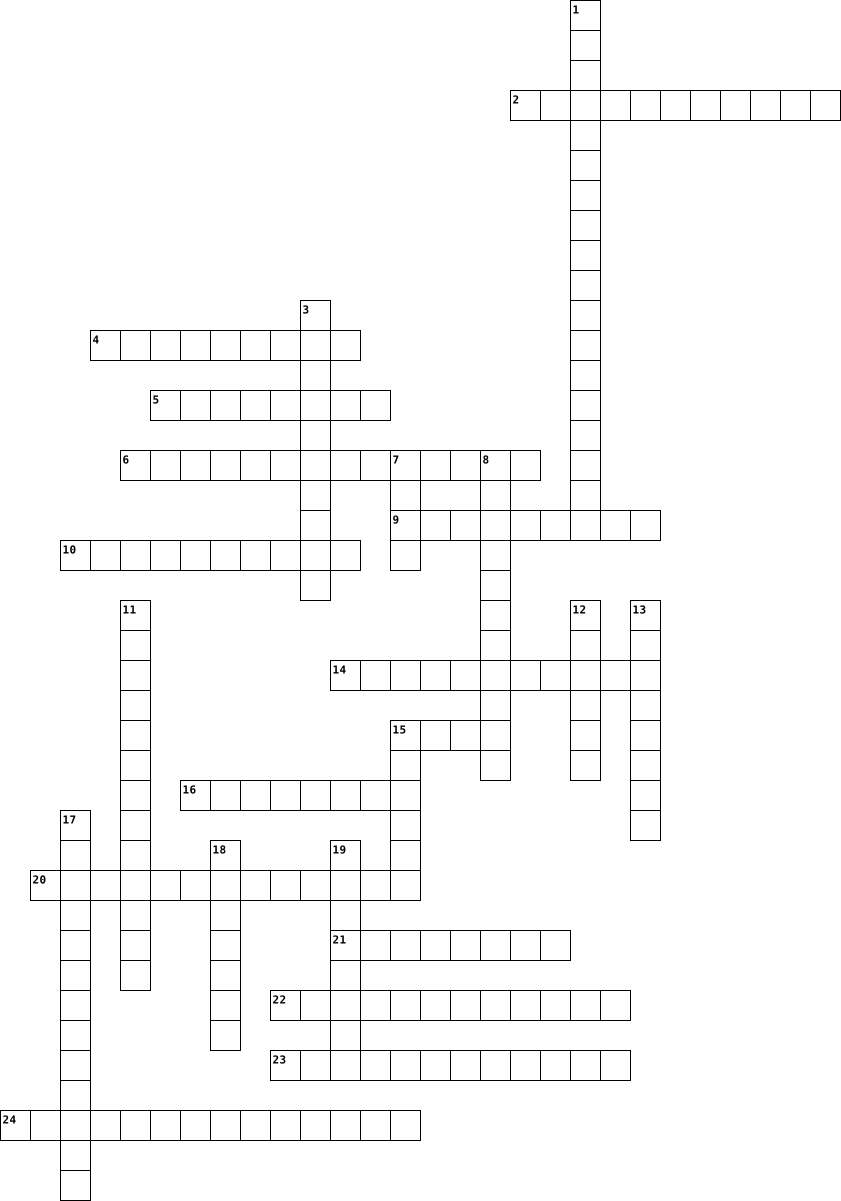
biology Crossword Puzzles
Biology 2022-11-09

Across
- -square shaped cell, contains cell wall and chloroplast.
- -sequence of growth and division
- -organelle in both plant and animals cells. Separates the inside of the cell from te outside.
- -Division of the cytoplasm, form two separate daughter cells
- -Rod shaped organelles converts energy in food molecules to energy the cell. The powerhouse.
- -Cells become specialized in structure and function.
- -thick,jelly like fluid, holds the organelles.
- -Cell grows,performs its normal functions and prepares for division
- -Contains a nucleus and membrane bound organelle.
- -A rigid supporting layer,surrounding the cells of plants
- -round shaped cell that contains a cell membrane,nucleus.
- -Cell division,nucleus divide,nuclei containing the same number of chromosomes.
- -Makes proteins
Down
- -Whiplike tails,one celled organisms to aid movement.
- -theory that mitochondria and chloroplasts originated as prokaryotic cells
- -Hairlike projections, extend from the plasma membrane used for locomotion.
- -tiny cell structure that carries out a specific function
- -Unicellular organism, lacks a nucleus and membrane bound organelles.
- -unspecialized cells, abilitiy to become a wide variety of specialized cells.
- -A large oval organelle,contains cell's genetic material in form of DNA. Controls many cell activities.
- -An organelle in the cells of plants. Changes into an energy form that cells can use to make food.
- -A sac like organell that stores water,food
22 Clues: -Makes proteins • -sequence of growth and division • -A sac like organell that stores water,food • -thick,jelly like fluid, holds the organelles. • -Contains a nucleus and membrane bound organelle. • -Cells become specialized in structure and function. • -Whiplike tails,one celled organisms to aid movement. • -square shaped cell, contains cell wall and chloroplast. • ...
Biology 2022-11-02

Across
- Jenis leukosit yang plasmanya bersifat asam
- Salah satu bagian darah yang memiliki peranan bagi pembekuan darah
- Pembuluh darah yang mempunyai volume darah terbesar terdapat pada bagian
- Alat yang digunakan untuk mengukur tekanan darah
- Bagian yang bertanggung jawab atas kontraksi jantung
- Sel darap putih pada tubuh kita yang mempunyai peranan dalam keadaan alergi
- Protein dalam plasma darah yang digunakan untuk membentuk zat antibodi
- Darah yang kaya akan oksigen
- Bagian darah yang berperan dalam pengangkutan makanan
- Terjadinya pembekuan darah di daerah
Down
- Jantung manusia dilapisi oleh lapisan otot
- Kelainan karena darah tidak dapat membeku di sebut
- Zat makanan dan mineral yang terdapat dalam plasma darah
- sel darah putih
- darah disebut
- Bagian jantung yang menerima darah dari pulmo yaitu
- plasma darah yang tidak mengandung protein
- Leukimia disebabkan oleh saah satu sel darah yang berkembang pesat
- Zat yang membentuk benang-benang fibrin
- Komponen pada darah yang memiliki jumlah paling banyak
20 Clues: darah disebut • sel darah putih • Darah yang kaya akan oksigen • Terjadinya pembekuan darah di daerah • Zat yang membentuk benang-benang fibrin • Jantung manusia dilapisi oleh lapisan otot • plasma darah yang tidak mengandung protein • Jenis leukosit yang plasmanya bersifat asam • Alat yang digunakan untuk mengukur tekanan darah • ...
Biology 2022-11-02

Across
- Darah yang kaya akan oksigen
- Darah yang mengalir dalam vena tidak dapat mengalir ke bagian sebelumnya karena sepanjang vena terdapat
- Protein dalam plasma darah yang digunakan untuk membentuk zat antibodi
- sel darah putih
- Terjadinya pembekuan darah di daerah pembuluh darah disebut
- Komponen pada darah yang memiliki jumlah paling banyak
- Kelainan karena darah tidak dapat membeku di sebut
- plasma darah yang tidak mengandung protein
- Zat yang membentuk benang-benang fibrin
- Jantung manusia dilapisi oleh lapisan otot
Down
- Sel darap putih pada tubuh kita yang mempunyai peranan dalam keadaan alergi
- Bagian darah yang berperan dalam pengangkutan makanan
- Bagian yang bertanggung jawab atas kontraksi jantung
- Alat yang digunakan untuk mengukur tekanan darah
- Jenis leukosit yang plasmanya bersifat asam
- Bagian jantung yang menerima darah dari pulmo yaitu
- Zat makanan dan mineral yang terdapat dalam plasma darah
- Leukimia disebabkan oleh saah satu sel darah yang berkembang pesat
- Salah satu bagian darah yang memiliki peranan bagi pembekuan darah
- Pembuluh darah yang mempunyai volume darah terbesar terdapat pada bagian
20 Clues: sel darah putih • Darah yang kaya akan oksigen • Zat yang membentuk benang-benang fibrin • plasma darah yang tidak mengandung protein • Jantung manusia dilapisi oleh lapisan otot • Jenis leukosit yang plasmanya bersifat asam • Alat yang digunakan untuk mengukur tekanan darah • Kelainan karena darah tidak dapat membeku di sebut • ...
biology 2022-11-08

Across
- 18
- 19
- 8
- 6
- dominance 26
- 41
- 33
- 43
- 17
- 35
- 29
- 25
- 28
- 4
- 23
- 9
- 13
- 11
- 31
- 3
Down
- 45
- 22
- 7
- 24
- 10
- 14
- l
- 20
- 30
- 15
- 12
- 37
- 2
- 16
- 27
- 21
- 39
- 47
- 5
39 Clues: 7 • 8 • 6 • l • 2 • 4 • 9 • 5 • 3 • 45 • 18 • 22 • 24 • 19 • 10 • 14 • 41 • 20 • 30 • 33 • 43 • 15 • 12 • 17 • 37 • 35 • 29 • 16 • 25 • 27 • 28 • 21 • 39 • 23 • 47 • 13 • 11 • 31 • dominance 26
Biology 2022-11-07

Across
- h6
- h10
- h13
- h8
- h4
- h17
- h11
- h1
- h19
- h9
Down
- h15
- h3
- h2
- h18
- h12
- h14
- h16
- h20
- h7
- h5
20 Clues: h6 • h3 • h2 • h8 • h4 • h7 • h1 • h5 • h9 • h15 • h18 • h10 • h12 • h13 • h14 • h17 • h16 • h20 • h11 • h19
Biology 2021-05-11

Across
- Тараагуур судас
- ургамал юугаараа ус авдаг вэ
- анабомум+натабомум
- эхлэх кодон
- транскрипц, навчны аль хэсэгт явагддаг вэ
- тэжээллийн бодисыг хөндлөн зөөвөрлөдөг эд
- хуурай газар амьдрах чадваргүй ургамлын бүлэг
- ургамал ус эрдсийг өсгөх чиглэлд зөөвөрлөдөг гуурс
Down
- транскрипц, ургамлын аль эрхтнээр яваддаг вэ?
- цус бүх биеэр урсах хөдөлгөөнийг цусны..
- зүрхны шигдээс зүрхний ямар судас бөглөрснөөс болдог вэ
- хураагуур садас
- ургамал дахь шим бодисыг уруу чиглэлд зөөх гуурс
- Днх-н мэдээллийн РНХ өөртөө буулган нийлэгжих
- 3 тасалтайгаа ч 2 ховдол дундуураа 2 хуваагдсан амьтад
- транслицийн үр дүнд юу үүсэх вэ
- цус биеийг тойрч эргэхэд зүрхний 1 дайрдаг эргэлтийг цусны ... эргэлт гэнэ
- ксерофит бүлгийн 1 ургамал
- дамжуулах багц ургамлын хаана байрладаг вэ
- артерийн захын хялгасан судсууд венийн захын ханасан судаснууд нийлээд хялгасан судасны...
20 Clues: эхлэх кодон • Тараагуур судас • хураагуур садас • анабомум+натабомум • ксерофит бүлгийн 1 ургамал • ургамал юугаараа ус авдаг вэ • транслицийн үр дүнд юу үүсэх вэ • цус бүх биеэр урсах хөдөлгөөнийг цусны.. • транскрипц, навчны аль хэсэгт явагддаг вэ • тэжээллийн бодисыг хөндлөн зөөвөрлөдөг эд • дамжуулах багц ургамлын хаана байрладаг вэ • ...
Biology 2021-05-12
Across
- Antibiotics are used against this pathogen
- A primitive cell
- Seattle's new hockey team
- Something that fights or prevents a virus
- Another name for hay fever
- Material released from flowers and trees
- Rod shaped bacteria
- A yellow fruit
- Cell powerhouse
- Genetic material found in the nucleus
- A popular antibiotic
- This fertilizes the plant egg
- Knife blade that cuts bread
- Antibiotics cannot kill it
- Broadleaf evergreen tree
- Virus type of covid 19
Down
- Contains plant pigment
- Best way to fight Covid is to wear a ____
- Green pigment in plants
- Drink 8 cups of this every day
- What seniors look forward to
- Not a true tree nut
- A viral disease found in Africa
- This tree has scale-like leaves
- Bacterial disease
- A plant egg
- Plant cells have this but not animal cells
- Needles are in bunches of 2, 3, or 5.
- Tree that has palmate venation
- A non-living pathogen
- Trees that lose their leaves in the fall
- Seeds are on the outside of this fruit
32 Clues: A plant egg • A yellow fruit • Cell powerhouse • A primitive cell • Bacterial disease • Not a true tree nut • Rod shaped bacteria • A popular antibiotic • A non-living pathogen • Contains plant pigment • Virus type of covid 19 • Green pigment in plants • Broadleaf evergreen tree • Seattle's new hockey team • Another name for hay fever • Antibiotics cannot kill it • Knife blade that cuts bread • ...
Biology 2022-10-24

Across
- Chemical messages
- Located proximal to the ankle, distal to the knee
- Excess glucose in the body
- Medical examination after death of a body
- The entire space occupied by the heart and rib cage
- A circulation that starts from the left ventricle
- Functions also in the body as a blood pressure maintainer
- Helps stimulate contraction in women during pregnancy
- Lumps attached to the nerves
- Excision of the kidney
- Relating to the viscera
- Responsible for development of traits in females
Down
- Gland found in the neck
- pain relievers
- Sits between two lungs
- Hormones in the body performing their functions from afar
- Gland found at the top right of the kidney
- Inflammation of the bone
- egg-shaped,found in the middle of the brain, involved in movement and sensory responses
- Where steroids are made
20 Clues: pain relievers • Chemical messages • Sits between two lungs • Excision of the kidney • Gland found in the neck • Relating to the viscera • Where steroids are made • Inflammation of the bone • Excess glucose in the body • Lumps attached to the nerves • Medical examination after death of a body • Gland found at the top right of the kidney • ...
biology 2023-11-12

Across
- the body system that allows you to digest food
- the organs for cells
- system a group of organs that work together to perform a specific function
- A microscope with a high resolution and uses two sets of lenses
- transportation for the cell
- the hard structures in your body that gives you shape and protection
- the gradual change in a species over time
- A segment of DNA
- produce energy through photosynthesis and oxygen- release processes
- the body system that allows you to breathe
- the body system that circulates blood around the body
- a microscope the allows you to see by transmitting light through a string of lenses.
Down
- an instrument used for viewing very small objects
- the powerhouse of the cell
- Creates protein
- the body system that gets rid of waste
- A type of protein that acts as a biological catalyst
- the liquid inside the cell
- membrane provides protection for a cell
- the brain of the cell
- an individual living thing
- a microscope in which a beam of electrons is used to produce an enlarged image of a very small object
- Protects the plant cell
- for animals it gets rid of waste, for plants it provides water balance
24 Clues: Creates protein • A segment of DNA • the organs for cells • the brain of the cell • Protects the plant cell • the powerhouse of the cell • the liquid inside the cell • an individual living thing • transportation for the cell • the body system that gets rid of waste • membrane provides protection for a cell • the gradual change in a species over time • ...
Biology 2023-11-17

Across
- having no affinity for water
- nucleus atom's center core
- having an affinity for water
- minimizes changes in the concentrations of H+ and OH-
- smallest unit of matter retaining properties of element
- element elements indispensable for life
- solution where solute dissolves In water(the solvent)
- dissolving agent of a solution
- energy anything that moves
- positively charged ion
Down
- negatively charged ion
- word for an ant
- reactions making and breaking of chemical bonds
- resulting materials
- clinging of one substance to another
- bond double covalent bond
- bond sharing of a pair of valence electrons by 2 atoms
- anything that takes up space and has mass
- bond single covalent bond
- can't be broken down to other substances by chem reactions
20 Clues: word for an ant • resulting materials • negatively charged ion • positively charged ion • bond double covalent bond • bond single covalent bond • nucleus atom's center core • energy anything that moves • having no affinity for water • having an affinity for water • dissolving agent of a solution • clinging of one substance to another • element elements indispensable for life • ...
Biology 2023-11-29

Across
- mouth directed downward
- spiders, scorpions, ticks, mites, and harvestmen
- body temperature matches the outside environment
- have many setae per segment
- is free-swimming filter feeder with bilateral symmetry
- are lemurs, tarsiers, and lorises
- collects waste and excretes it through an opening in the body wall
- mouth directed upward from substrate
- Oral sucker and at least one other sucker for attachment
- brain, eyespots, and chemosensitive organs on the auricles
- Clams, oysters, scallops, and mussels
- are spiders, scorpions, ticks, mites, and harvestmen
- To be a hominin, must have anatomy suitable for standing erect and walking on two feet
- body cavity
- how many chambered heart (amphibians)
- generate internal heat
- few setae per segment
- are barnacles, shrimp, lobsters, crabs, crayfish, and pill bugs
- body cavity incompletely lined with mesoderm
- various modifications
- can be seen externally in rings encircling body of earthworm
- not all body parts change at the same rate.
- leads to specialization
Down
- envelopes but does not enclose visceral mass
- out of water using pores and collar cell microvilli
- animal has right and left halves.
- are monkeys, apes, and humans
- fins supported by bony spikes
- provides insulation against heat loss
- Nudibranchs, conchs, and snails, and are Herbivores or carnivores
- Octopuses, squids, and nautiluses
- are invertebrate chordates and found in shallow water and partially buried in sand
- animal is organized circularly.
- multicellularity
- tonguelike with many teeth
- Annelids concluded what
- well-developed senses enable sharks and rays to detect prey
- repeating body units Well-developed nervous system
- internal organs
- enable female to feed young without leaving them to find food
- no body cavity
- two pairs of appendages per segment
- Dorsal supporting rod
- body cavity completely lined with mesoderm
- radial versus bilateral
- one pair of appendages per segment
- made of chitin, must be molted
- has brain and ventral nerve cord
- jointed vertebrate limbs
- study of insects adapted to active life on land
50 Clues: body cavity • no body cavity • internal organs • multicellularity • Dorsal supporting rod • few setae per segment • various modifications • generate internal heat • mouth directed downward • Annelids concluded what • radial versus bilateral • leads to specialization • jointed vertebrate limbs • tonguelike with many teeth • have many setae per segment • are monkeys, apes, and humans • ...
Biology 2023-11-09

Across
- one of two or more alternative forms of a gene that arise by mutation and are found at the same place on a chromosome
- a hybrid that is heterozygous for alleles of two different genes
- has two identical alleles of a particular gene or genes.
- the deliberate breeding of two different individuals that results in offspring that carry part of the genetic material of each parent
- embryos"
- a trait that is expressed only when genotype is homozygous
- found in the inner cell mass of the human blastocyst
- the inheritance of a trait governed by more than one genes
- an offspring of two animals or plants of different subspecies, breeds, varieties, species, or genera
- the passing on of physical or mental characteristics genetically from one generation to another
- the inheritance of traits that are typically passed vertically from parent to child where both the parent and the child are affected by the trait or disorder that is related to that gene.
- describes how different genes independently separate from one another when reproductive cells develop
- an ancestral line
Down
- immature cells that are able to make other blood cells that mature and function as needed
- has two different alleles of a particular gene or genes.
- a person who can pass an inherited (genetic) disease on to their children but who does not have the disease
- three or more possible alleles for one individual trait
- is a helpful tool that helps to predict the variations and probabilities that can come from cross breeding
- the genetic constitution of an individual organism
- is a type of inheritance in which two versions (alleles) of the same gene are expressed separately to yield different traits in an individual
- The phenomenon in which two true-breeding parents crossed to produce an intermediate offspring
21 Clues: embryos" • an ancestral line • the genetic constitution of an individual organism • found in the inner cell mass of the human blastocyst • three or more possible alleles for one individual trait • has two different alleles of a particular gene or genes. • has two identical alleles of a particular gene or genes. • ...
biology 2023-10-05

Across
- movement of water molecules through partially permeable membrane is called
- reogent to test fat
- solvent molecules can also be called as ... molecules
- contains DNA of cell, controls all the activity
- simple form of fat is .... acid
- diffuses water and gases like carbon dioxide and oxygen
- reogent to test starch
- cell sap
- active transport needs .... from respiration
- simple form of protein is ... acid
- simple form of carbohydrate
- most enzymes are ... above 60 degree C
- release energy through respiration
- osmosis can only happen in...
- in complex carbohydrate ... is a storage form of carbohydrate in mammal
- the change in 3 dimensional structure of an enzyme
Down
- biological molecule that has nitrogen
- cell ... allow certain substances to pass through
- ....is transported through air spaces
- enzymes that breakdown protein
- substance that can increase rate of reaction, without being chemically changes by the reaction
- ... happens in all state
- lack of iron can cause ...
- osmosis only happen in ...
- the colour of a substance when it has less sugar
- at low temperature an enzyme is ...
- simple form of fat
- enzymes that break down fat
- lack of vitamin C can cause
- the ... cell wall protects plant from bursting
- keeps cell alive
31 Clues: cell sap • keeps cell alive • simple form of fat • reogent to test fat • reogent to test starch • ... happens in all state • lack of iron can cause ... • osmosis only happen in ... • simple form of carbohydrate • enzymes that break down fat • lack of vitamin C can cause • osmosis can only happen in... • enzymes that breakdown protein • simple form of fat is .... acid • ...
biology 2023-10-05

Across
- substances at the beginning of a chemical reaction, changed into products.
- process of using light energy to make glucose,starts with CO2 and H2O and ends with C6H12O6 and O2
- nutrient, used in phosphates of nucleic acids and phospholipids of membranes, often limited.
- pigment in chloroplasts, used to trap light energy during photosynthesis.
- reactions second step of photosynthesis, uses energy in ATP and NADPH to make glucose(C6H12O6) from CO2.
- describes a situation in which oxygen is present
- respiration process of breaking down glucose to make ATP, starts with C6H12O6 and O2 and ends with CO2 and H2O.
- sphere of the earth, all living things on earth.
Down
- second step of anaerobic respiration, 2 types include alcoholic and lactic acid.
- type of organism that is able to make it's own base of the food chain.
- describes a situation in which oxygen is not present,
- organelle,site of photosynthesis
- adenosine triphosphate, charged energy storage molecule with 3 phosphorus groups.
- nutrient, used in proteins and nucleic acids, must be "fixed" for living things to use, often limited.
- adenosine diphosphate, uncharged energy storage molecule with 2 phosphates.
- sphere of earth, all the soil and rocks on earth.
- sphere of earth,all the water on earth.
- anything that has mass and takes up space, makes up everything.
- reactions substances created during a chemical reaction, made from reactants.
- describes a situation in which oxygen is present.
20 Clues: organelle,site of photosynthesis • sphere of earth,all the water on earth. • describes a situation in which oxygen is present • sphere of the earth, all living things on earth. • sphere of earth, all the soil and rocks on earth. • describes a situation in which oxygen is present. • describes a situation in which oxygen is not present, • ...
biology 2023-10-02

Across
- pigment in chloroplast, used to trap light energy
- Adenosine Diphosphate,on charged energy storage
- sphere of earth, all gases surround earth
- First step of Aerobic Respiration,breaks down glucose into pyruvate.
- sphere of earth,all the soil and rock
- substances created during a chemical reaction made from reactants.
- oxygen is present.
- reactions first step of photosynthesis.
- densive triphosphate charged energy.
- nutrients used in phosphates of nucleic acid often limited
- type of organism that can make it's own food.
- second step of anaerobic definition,2 types include alcoholic and lactic acid
Down
- Site of photosynthesis.
- Nutrient used in proteins and nucleic acid must be fixed.
- describes a situation which oxygen is not present.
- respirations process of breaking down glucose.
- substances at the beginning of a chemical reaction
- Reactions second step of photosynthesis uses energy to make NADPH
- sphere of all water on earth
- Anything that has mass and takes up space
20 Clues: oxygen is present. • Site of photosynthesis. • sphere of all water on earth • densive triphosphate charged energy. • sphere of earth,all the soil and rock • reactions first step of photosynthesis. • sphere of earth, all gases surround earth • Anything that has mass and takes up space • type of organism that can make it's own food. • ...
biology 2023-09-28

Across
- product
- Matter
- aerobic
- ATP
- Chlorophyll
- Chloroplast
- Decomposer
- autotroph
- Fermentation
- biosphere
- Hydrosphere
- celluarresperation
Down
- carbon
- Electrontransportchain
- Glycolysis
- ADP
- Heterotroph
- Darkreactions
- atmosphere
- biosphere
- Geosphere
21 Clues: ADP • ATP • carbon • Matter • product • aerobic • autotroph • biosphere • Geosphere • biosphere • Glycolysis • atmosphere • Decomposer • Chlorophyll • Heterotroph • Chloroplast • Hydrosphere • Fermentation • Darkreactions • celluarresperation • Electrontransportchain
Biology 2023-09-10

Across
- Ligament holding eye lens
- Hereditary variations
- Snail in ear
- Striations
- Control muscle coordination
- shoulder bone
- GMO mouse
- longest bone
- Lack of synovial fluid
- Beauty bone
- First sign of life
- eyeball muscle
Down
- strongest bone
- Tongue bone
- People are 8-9ft tall
- Knee bone
- Travels at 50m/s
- no jaw
- image formation
- muscle cells
- Neurotransmitter starting from A
- Butterfly shaped gland
22 Clues: no jaw • Knee bone • GMO mouse • Striations • Tongue bone • Beauty bone • Snail in ear • longest bone • muscle cells • shoulder bone • strongest bone • eyeball muscle • image formation • Travels at 50m/s • First sign of life • Hereditary variations • People are 8-9ft tall • Lack of synovial fluid • Butterfly shaped gland • Ligament holding eye lens • Control muscle coordination • ...
Biology 2023-10-10

Across
- active transport needs .... from respiration
- reogent to test fat
- enzymes that breakdown protein
- reogent to test starch
- contains DNA of cell, controls all the activity
- substance that can increase rate of reaction, without being chemically changes by the reaction
- lack of iron can cause ...
- ... happens in all state
- biological molecule that has nitrogen
- at low temperature an enzyme is ...
- simple form of fat
- diffuses water and gases like carbon dioxide and oxygen
- the ... cell wall protects plant from bursting
- keeps cell alive
- release energy through respiration
Down
- ....is transported through air spaces
- the colour of a substance when it has less sugar
- in complex carbohydrate ... is a storage form of carbohydrate in mammal
- the change in 3 dimensional structure of an enzyme
- simple form of carbohydrate
- solvent molecules can also be called as ... molecules
- simple form of protein is ... acid
- most enzymes are ... above 60 degree C
- simple form of fat is .... acid
- enzymes that break down fat
- movement of water molecules through partially permeable membrane is called
- osmosis can only happen in...
- osmosis only happen in ...
- lack of vitamin C can cause
- cell sap
- cell ... allow certain substances to pass through
31 Clues: cell sap • keeps cell alive • simple form of fat • reogent to test fat • reogent to test starch • ... happens in all state • lack of iron can cause ... • osmosis only happen in ... • simple form of carbohydrate • enzymes that break down fat • lack of vitamin C can cause • osmosis can only happen in... • enzymes that breakdown protein • simple form of fat is .... acid • ...
Biology 2023-10-10

Across
- active transport needs .... from respiration
- reogent to test fat
- enzymes that breakdown protein
- reogent to test starch
- contains DNA of cell, controls all the activity
- substance that can increase rate of reaction, without being chemically changes by the reaction
- lack of iron can cause ...
- ... happens in all state
- biological molecule that has nitrogen
- at low temperature an enzyme is ...
- simple form of fat
- diffuses water and gases like carbon dioxide and oxygen
- the ... cell wall protects plant from bursting
- keeps cell alive
- release energy through respiration
Down
- ....is transported through air spaces
- the colour of a substance when it has less sugar
- in complex carbohydrate ... is a storage form of carbohydrate in mammal
- the change in 3 dimensional structure of an enzyme
- simple form of carbohydrate
- solvent molecules can also be called as ... molecules
- simple form of protein is ... acid
- most enzymes are ... above 60 degree C
- simple form of fat is .... acid
- enzymes that break down fat
- movement of water molecules through partially permeable membrane is called
- osmosis can only happen in...
- osmosis only happen in ...
- lack of vitamin C can cause
- cell sap
- cell ... allow certain substances to pass through
31 Clues: cell sap • keeps cell alive • simple form of fat • reogent to test fat • reogent to test starch • ... happens in all state • lack of iron can cause ... • osmosis only happen in ... • simple form of carbohydrate • enzymes that break down fat • lack of vitamin C can cause • osmosis can only happen in... • enzymes that breakdown protein • simple form of fat is .... acid • ...
Biology 2024-02-06

Across
- Helps move cells
- protects and supports cell
- Solutions that are categorized as having equivalent or identical
- portion of the cell outside the nucleus
- A single-celled organism that has neither a distinct nucleus with a membrane
- Store materials
- A cylindrical organelle near the nucleus in animal cells, occurring in pairs and involved in the development of spindle fibers
- chemical energy stored food converts solar energy
- The tendency toward a relatively stable equilibrium between interdependent elements
- A minute particle consisting of RNA and associated proteins found in large numbers
- Storage and transport out of the cells
Down
- The process of gradual or unconscious assimilation of ideas, knowledge, etc.
- Convert chemical energy to usable compounds
- Break down and recycle marcomolecules
- Shapes, supports, protects the cell
- large, dynamic structure that serves many roles in the cell
- Cells that has a nucleus membrane that surrounds the nucleus.
- The movement of ions or molecules across a cell membrane into a region of higher concentration, assisted by enzymes and requiring energy
- Contains DNA
- The intermingling of substance by the natural movement of their particles
20 Clues: Contains DNA • Store materials • Helps move cells • protects and supports cell • Shapes, supports, protects the cell • Break down and recycle marcomolecules • portion of the cell outside the nucleus • Storage and transport out of the cells • Convert chemical energy to usable compounds • chemical energy stored food converts solar energy • ...
Biology 2023-10-13

Across
- a common condition that causes swelling and irritation of the skin.
- A condition when the immune system reacts abnormally to foreign substances. Can mostly be cause by food or surrounding environme
- : conditions or practices conducive to maintaining health and preventing disease, especially through cleanliness.
- : a thin, clear membrane that protects your eye.
- humor : the transparent gelatinous tissue filling the eyeball behind the lens.
- : is a organ of the visual system
- Measurement of how hot or cold is in the surrounding environment
- The largest organ of the human body and called as the sense of touch
- : the light-sensitive layer of tissue at the back of the eyeball.
- a skin disease that makes your skin dry with a red or pink color to it.
- : the part of the retina at the back of your eye that's responsible for central (as opposed to peripheral) vision, deciphering color, and picking up the fine details.
- The middle part and the thickest layer of the skin
- The top layer of the skin. Visible by human
- The deepest layer of the skin above the bones and muscles
- body : the part of the eye that connects the iris to the choroid. It consists of the ciliary muscle (which alters the curvature of the lens), a series of radial ciliary processes (from which the lens is suspended by ligaments), and the ciliary ring (which adjoins the choroid).
- The ability of keeping body tenperature
- surgery : the removal of the natural lens (also called the "crystalline lens") of the human eye that has developed a cataract, an opaque or cloudy area.
- the act of separating a body from others by nonconductors, so as to prevent the transfer of electricity or of heat; also, the state of a body so separated
- : a group of eye diseases that can cause vision loss and blindness by damaging a nerve in the back of your eye called the optic nerve.
Down
- : contains a cluster of photoreceptor cells surrounded by support cells and pigment cells.
- Consisting of proteins that play a role in the formation of desmosomes that join cells to one another.
- Skin damage caused by prolonged exposure from sunlight
- : a medical condition in which the lens of the eye becomes progressively opaque, resulting in blurred vision.
- Small pockets of fluid that usually form in the above layers of skin after it was damaged
- : the transparent layer forming the front of the eye.
- : the white outer layer of the eyeball. At the front of the eye it is continuous with the cornea.
- vision : also called indirect vision, is vision as it occurs outside the point of fixation, i.e. away from the center of gaze or, when viewed at large angles, in the "corner of one's eye".
- detachment : An emergency when part of the eye (the retina) pulls away from supportive tissue.
- : a treatment where your healthcare provider applies extreme cold to freeze and destroy abnormal tissue.
- A tissue that gives skeletal ability to move
- Pigments that gives color to the skin
- : a flat, colored, ring-shaped membrane behind the cornea of the eye, with an adjustable circular opening (pupil) in the center.
- certain boundaries, even when the surrounding temperature is very different.
- vessels : which provide blood to the inner retinal neurons.
- Long-term skin condition that occurs when dead skin cells and oil from the skin clog hair follicles.
- nerve : the second cranial nerve, which carries sensory nerve impulses from the more than one million ganglion cells of the retina toward the visual centres in the brain.
- Branch of biology that studies about the skin
- Carry electrical impulses between the brain to the rest of the body including the skin
- : the black opening in the middle of the colored part of your eye (iris).
- eye : an arthropod eye subdivided into many individual, light-receptive elements, each including a lens, a transmitting apparatus, and retinal cells.
40 Clues: : is a organ of the visual system • Pigments that gives color to the skin • The ability of keeping body tenperature • The top layer of the skin. Visible by human • A tissue that gives skeletal ability to move • Branch of biology that studies about the skin • : a thin, clear membrane that protects your eye. • The middle part and the thickest layer of the skin • ...
Biology 2024-01-08

Across
- Energy required to start reaction
- ATP is a _______
- Darwin discovered ______. Orgainsims genetically adapt through it
- Glucose is split into pyruvate during _____
- location of reaction on enzymes
- Proteins are so flexible due to the
- New individuals
- Study of life
- All prokaryotes are_____
- Organisms must be able to _____ to change
- The process that creates glucose in photoautotrophs
- What enzymes react with
- Most Eukaryotes(not protists) are ____
- Without a central vacuole, plants would
- If the temperature is to high, enzymes ______
- The passing of genetic information
- DNA
- Material We pass ____ to our offspring
- Carbohydrates form
- The smooth endoplasmic reticulum produces in all eukaryotes
- The kind of reproduction requiring two individuals
- Nucleotides have a _____, phosphate group, and nitrogenous base
- The way the body limits enzymes
- Shorthand for the stage of cellular where water is created
- Stacks of thylakoids
- De-energized ATP is..
- a substance is a base when the pH is _____ 7.
- The main role of enzymes is to ______ reactions
- Toxic substance produced during lactic acid fermentation
- Stable internal conditions
- Biomolecule of enzymes
- A process requiring oxygen
- Location of light dependent reactions
- Location of calvin cycle
- The process that creates ATP without oxygen
Down
- Transportation center
- Key organelle of cell division
- All of the reactions that provide organisms with energy
- The Process that creates ATP from glucose
- Rough endoplasmic reticulum is rough because of
- recycler of cells
- Lactic acid fermentation is done by our _____ cells
- the light dependent reaction uses energy from ____
- Homeostasis of all cells is maintained by the
- Biomolecules with monosaccharides as monomers
- The body is insulated by
- There are __ characteristics of life
- anything that is considered alive
- Energy is stored in the third _____ of ATP
- Rate of reactions
- Electrons for the ETC are generated in the _____
- Organelle movement is done by the
- The characteristic of life not yet mentioned is ______ and developement
- The kind of reproduction requiring one individual
- ATP
- Job of the vacuole is _____
- Cellular respiration generates ______2-_____6 ATP
- is produced by the calvin cycle
- Site of cellular respiration
- All prokaryotes have a _____, like plants
- All organisms have organization. This is called ___
- Enzymes ____ reaction rate
- ADP
- Only organelle that surrounds all organelles
- Creating new individuals is called
- DNA is stored in the
- Ribosomes and Rough ER produce
- Acidity
- Location of photosynthesis
- Yeast makes bread rise because alcoholic fermentation releases___
- A high substrate concentration mean ____ reaction rate
- Enzymes ______ activation energy
72 Clues: ATP • DNA • ADP • Acidity • Study of life • New individuals • ATP is a _______ • recycler of cells • Rate of reactions • Carbohydrates form • Stacks of thylakoids • DNA is stored in the • Transportation center • De-energized ATP is.. • Biomolecule of enzymes • What enzymes react with • The body is insulated by • All prokaryotes are_____ • Location of calvin cycle • Enzymes ____ reaction rate • ...
biology 2019-05-08
Across
- sacs for storage, digestion and waste removal
- they feed on bacteria or smaller protagonists
- finger like extensions of the amoeba's cytoplasm are called what...
- how all members of phylum ciliophora move
- hair like structures used to move
- organs working together converting food into energy and basic nutrients to feed the entire body
- circulates blood and lymph through the body
- used by plants and other organisms to convert light energy into chemical energy
- it lives in freshwater
- process of discharging wastes
- a group of similar cells working together
- its like a tail
- protects the cell and provides strength
- one cell
- are the "power plant" of the cell (produces energy)
- makes its food from sunlight
Down
- a number of organized or specialized structures within a living cell
- this cell has a cell wall
- organs responsible for taking in oxygen and expelling carbon dioxide
- having or consisting of many cells
- a group of organs working together
- surround cell, controls entry and exiting
- this cell has no chloroplast
- it's like a solar panel
- its the control center
- an individual animal, plant, or single-celled life form
- form when different types of tissue come together to perform a specific job for the body
27 Clues: one cell • its like a tail • it lives in freshwater • its the control center • it's like a solar panel • this cell has a cell wall • this cell has no chloroplast • makes its food from sunlight • process of discharging wastes • hair like structures used to move • having or consisting of many cells • a group of organs working together • protects the cell and provides strength • ...
biology 2019-05-08

Across
- A large mass of similar cells
- uses pseudopods to move
- used to sense sunlight, found in Euglena and Volvox
- A temporary foot-like extension of a cell
- removes waste from your body
- responsible for moving nutrients throughout the body.
- power of the cell
- a structure that surrounds a cell membrane
- controls the substances that go in and out of the cell
- hair type organelles
- carries out a specific function within the cell
- stores materials like water and protein
- made of 1 cell
- a cell that has cell walls and chloroplast
- control center for cell
- A collection of tissues
Down
- brings oxygen into the body
- breaks down food into smaller molecules
- has a Red eyespot to sense light
- using sunlight to synthesize foods from carbon dioxide and water
- has more than l one cell (plants and animals)
- lives in pond water and uses cilia to move
- a cell that has no cell walls
- group of organs that work together
- a living thing
- are helically shaped structures containing the protein flagellin
- A colonial form of live green algae
27 Clues: a living thing • made of 1 cell • power of the cell • hair type organelles • uses pseudopods to move • control center for cell • A collection of tissues • brings oxygen into the body • removes waste from your body • A large mass of similar cells • a cell that has no cell walls • has a Red eyespot to sense light • group of organs that work together • A colonial form of live green algae • ...
biology 2019-05-09

Across
- hair like things to help move the paramecium
- travels in groups
- many organs working together
- tail like thing that helps volvox and euglena move
- this cell only has a cell membrane
- living thing
- carries oxygen around the body
- plants go through this
- organized or specialized structures in a living cell.
- carries cells waste
- one cell
- Wall
- many cells working together
Down
- only cell that can change shape
- the lungs are in the system
- helps brake down food
- a part of an organism
- energy production
- removes waste
- more then one cell
- directs euglena and volvox to sunlight to create food
- this cell has both a cell membrane and cell wall
- uses flageum to move
- helps amoeba move
- uses cilia to move
25 Clues: Wall • one cell • living thing • removes waste • travels in groups • energy production • helps amoeba move • more then one cell • uses cilia to move • carries cells waste • uses flageum to move • helps brake down food • a part of an organism • plants go through this • the lungs are in the system • many cells working together • many organs working together • carries oxygen around the body • ...
Biology 2019-05-06

Across
- a single-celled organism that's spread out like a splat and uses a pseudopod to move
- any living thing
- cells that have a cell wall and uses photosynthesis
- the organs of a cell
- cells that don't have a cell wall and doesn't use photosynthesis
- The organelle that surrounds the cell
- hair-like structures
- the storage closet of the cell
- finger-like structures
- the body system that takes in oxygen, removes waste,and eliminates carbon dioxide
- the body system that collects waste produced by cells and removes waste from the body
- the body system that breaks down food, absorbs nutrients, and eliminates waste
- the powerhouse the a cell
- a whip like tail
Down
- the combination of different tissues to perform a job
- used to sense sunlight
- an organism that is made up of one cell
- a single-celled organism that use a flagellum to move and has an eyespot to seek food
- an organism that is made up of multiple cells
- the brain of the cell
- the body system that carries needed substances to cells, carries waste products away form cells, and contains blood cells that fight disease
- a single-celled organism that's circular, uses a flagellum to move and has chloroplast to make food
- the process that plants use to make food from sunlight
- found in plant cells and protects the cell
- a single-celled organism that has a shape of an oval and can't make its own food
- a group of similar cells working together
- a group of organs working together
27 Clues: any living thing • a whip like tail • the organs of a cell • hair-like structures • the brain of the cell • used to sense sunlight • finger-like structures • the powerhouse the a cell • the storage closet of the cell • a group of organs working together • The organelle that surrounds the cell • an organism that is made up of one cell • a group of similar cells working together • ...
biology 2019-01-01

Across
- a polymer made of monomers called amino acids
- small organelle that contains and transports materials within the cytoplasm
- release of substances out of cell by the fusion of vesicle with the membrane
- division of the cytoplasm
- Outer protein coat of a virus
- the substances changed during a chemical reaction. On left side of equation
- The evolutionary history of a species
- an underground network of hyphae.
- an organized group of related parts that interact to form a whole
Down
- a segment of DNA that stores genetic information
- Process that requires oxygen to occur
- organelle that contains enzymes
- fusion of an egg and sperm cell
- the substance that is present in the greater amount of a solution and dissolves into another substance
- tool that provides an enlarged image of an object
- fungus that grows symbiotically with algae, resulting in a composite organs that grows on rocks or tree trunks
- Process that does not require oxygen
- cell that has only one copy of each chromosome
- multi-phase division of the nucleus
- compounds that remove H+ ions from a solution
20 Clues: division of the cytoplasm • Outer protein coat of a virus • organelle that contains enzymes • fusion of an egg and sperm cell • an underground network of hyphae. • multi-phase division of the nucleus • Process that does not require oxygen • Process that requires oxygen to occur • The evolutionary history of a species • a polymer made of monomers called amino acids • ...
Biology 2019-01-01

Across
- is a protein that detects a signal molecule and performs an action in response.
- is the use and application of living things and biological processes
- are cylinder-shaped organelles made of short microtubules arranged in a circle
- includes using our senses to study the world
- is a physical environment with different species that interact with one another and with nonliving things
- is a proposed answer for a scientific question. A hypothesis must be specific and testable
- is the movement of molecules in a fluid or gas from a region of higher concentration to a region of lower concentration
- is the scientific study of all forms of life
- The conditions that do not change during an experiment
Down
- are organelles that carry out photosynthesis
- is the study and comparison of genomes both within and across species. Here again, biologists need to use computers
- is the smallest basic unit of matter.
- is the basic unit of life. In fact, microscopic, single-celled organisms are the most common forms of life on Earth.
- are catalysts for chemical reactions in living things
- provides an enlarged image of an object
- is an organized group of related parts that interact to form a whole.
- is the change in living things over time. More specifically, evolution is a change in the genetic makeup of a subgroup, or population, of a species
- is any individual living thing. All organisms on Earth share certain characteristics
- is a fluid-filled sac used for the storage of materials needed by a cell
- is a proposed explanation for a wide range of observations and experimental results that is supported by a wide range of evidence
20 Clues: is the smallest basic unit of matter. • provides an enlarged image of an object • are organelles that carry out photosynthesis • includes using our senses to study the world • is the scientific study of all forms of life • are catalysts for chemical reactions in living things • The conditions that do not change during an experiment • ...
Biology 2019-01-02

Across
- (GMO (Genetically Modified Organism)) An organism with functional recombinant DNA
- Regions of linked variations in the human genome
- sepearating DNA fragments by size using and elctric current
- a selection of DNA that contains the genes necessary for a metabolic pathway (Repressible: Usually on but can be turned off, Triptophan) (Influencible: usually off but can be turned on,Lae)
- Breeding closely related indeviduals in order to maintain desired traits and or eliminate undesired traits
- the technology to manipulate DNA in order to insert exogenous DNA
- Bonding pattera created by gel electrophoresis used to compare DNA samples
- DNA from one functional DNA
- Selecting Organisms from different species and sub secies with the desired traits to produce offspring with a combination of desired traits
- the study of how genetic ineritence affects the bodies response to drugs
- Crossing organisms of unknown genotype with a homozygous recessive organism in order to determine genotype
- identifies the DNA sequence of cloned recombinant DNA molecules for further study
Down
- Used to inser DNA into a host cell (Biological: Plasmid, Vector) (Mechanical: Micro Pippettes, Gene Gun)
- Circular piece of Dna found in bacteria cells used as a vector
- series of heating and cooling cycles used to make millions of copies of a DNA segment
- bacterial cells take up recombinant plasmid DNA through a process called transformation
- the technology involves manipulating the DNA of one organism in order to insert exogenous DNA that is the DNA of another organism
- Variations in the DNA sequence that occur in a single nucleotide in the genome is altedered, it occurs in at least 1% of the population for it to be and SNP
- controls expression of genes corresponding to body regions
- Organisms with the exact same DNA
- 1.) Find a gene, 2.)Isolate the gene, 3.) Replace gene, 4.)Insert Gene
- choose the organism that you want to breed to get the desired outcome (Artificial Selection)
- Used to cut DNA at a specific gene, recognizes unique palendromic, sequences hundreds of restricion enzymes. Ex: EcoRI: GAA TTC (CTT GAA) CTT AAG (GAA TTC) ecoli restricion enzyme 1
- creating and maintaing databases of biological information. The analysis of sequence information involves finding genes in DNA sequences in various organisms and developing methods to predict the structure and function of newly discovered proteins
24 Clues: DNA from one functional DNA • Organisms with the exact same DNA • Regions of linked variations in the human genome • controls expression of genes corresponding to body regions • sepearating DNA fragments by size using and elctric current • Circular piece of Dna found in bacteria cells used as a vector • ...
Biology 2018-12-20

Across
- this is destroyed before you get ill
- contaminated water born disease
- this is a pain killer
- shortened version of measles, mumps,rubella
- shortened-of methicillin - resistant staphlycoccus aurues
- blood cell defends against pathogens
- cannot be a transmitted disease
- the drug extracted from fox glove
- contaminated food e.g raw meat
- contain a weakened/harmful version of a pathogen
Down
- what comes from willow bark
- eukaryotic organisms
- disease caused by insects
- Fleming discovered penicillin in 1928
- when the pathogens are engulfed by the white blood cells
- infectious disease
- doctor who observed death in women after birth
- from human contact
- an antibiotic
- bacteria is an example of this
- relieve symptoms of disease
21 Clues: an antibiotic • infectious disease • from human contact • eukaryotic organisms • this is a pain killer • disease caused by insects • what comes from willow bark • relieve symptoms of disease • bacteria is an example of this • contaminated food e.g raw meat • contaminated water born disease • cannot be a transmitted disease • the drug extracted from fox glove • ...
Biology 2018-12-20

Across
- dicovered penicillin
- producesdby a type of white blood cell to defend the body
- poison
- disease causing micro-organisms
- protitst diesease
- type of immunity done in large groups of people
- name for a disease that cannot be transmitted form person to person
- a type of painkiller
- releive symptons of disease
Down
- contains a weakened/dead pathogen to become immune
- a doctor in the 1950s
- a single-celled eukaryotic organism that don't belong to a 'kingdom'
- detect which virus is entering the body
- originates from willow bark
- eukaryotic organism
- a type of bacterial disease
- name for infectious disease
- when the pathogens are engulfed by the white blood cells
- measles,mumps,rubella vacine
- proteins on the surface of cells
20 Clues: poison • protitst diesease • eukaryotic organism • dicovered penicillin • a type of painkiller • a doctor in the 1950s • originates from willow bark • a type of bacterial disease • name for infectious disease • releive symptons of disease • measles,mumps,rubella vacine • disease causing micro-organisms • proteins on the surface of cells • detect which virus is entering the body • ...
Biology 2019-09-30

Across
- electron an outer shell electron that is associated with an atom, and that can participate in the formation of a chemical bond if the outer shell is not closed
- the electronegativity of the atoms will be equal
- fat there is at least one double bond in the fatty acid chain and tends to be liquid from plants
- complex the structure that results in the maximum energy point along the reaction path.
- lipid monomer
- a type of lipid that is made up of four interlocked rings of carbon called a steroid, only found in animal cells
- a natural or artificial place where water is collected and stored for use
- polysaccharides of glucose that serves as a form of energy storage in animals
Down
- fat lack double bonds between the individual carbon atoms and tends to be solid and from animals
- reaction an action that releases heat, causing the temperature of the immediate surroundings to rise
- monomers of nucleic acid
- bond a chemical bond formed between two molecules when the carboxyl group of one molecule reacts with the amino group of the other molecule, releasing a molecule of water
- the electronegativity of the atoms will be different.
- a fibrous substance consisting of polysaccharides, which is the major constituent in the exoskeleton
- formed from glycerol and three fatty acid groups
- the part of the metabolism responsible for breaking complex molecules down into smaller molecules.
- the part which builds complex molecules from simpler ones
- heat the amount of heat one gram of a substance must absorb or lose to change its temperature by one degree Celsius.
- reaction an action that absorbs heat and cools the surroundings
- Fat a form of unsaturated fat associated with a number of negative health effects
20 Clues: lipid monomer • monomers of nucleic acid • the electronegativity of the atoms will be equal • formed from glycerol and three fatty acid groups • the electronegativity of the atoms will be different. • the part which builds complex molecules from simpler ones • reaction an action that absorbs heat and cools the surroundings • ...
Biology 2020-03-19

Across
- Is the junction between a neuron and another cell
- Longest bone in the human body
- Cells that contain a true nucleus and membrane bound organelles
- Cells with no true nucleus and no membrane bound organelles
- Acts as a relay center connecting the cerebrum and cerebellum to the spinal cord.
- Is located behind the third ventricle. It helps regulate the body’s internal clock and circadian rhythms by secreting melatonin
- All living things are made up of this.
- A tough, flexible band made of fibrous connective tissue, and functions to connect muscle to bone.
- Long protein filaments in the cytosol that support the cell.
- Protects the brain that is contained in the cranial vault. Also known as skull.
- This gland produces insulin
- Is the largest part of the brain and is composed of right and left hemispheres.
- Connect the ends of bones together in order to form a joint.
- Is composed of the cerebrum, cerebellum, and brainstem. Protected by the skull
- Female reproductive organ. Produces estrogen and progesterone
Down
- Are bundles of axons in the peripheral nervous system (PNS) that act as information highways to carry signals between the brain and spinal cord and the rest of the body.
- This gland produces parathyroid hormones
- Adrenal gland produces what hormones
- Lies in a small pocket of bone at the skull base called the sella turcica. Known as the master gland.
- Is located under the cerebrum. Its function is to coordinate muscle movements, maintain posture, and balance.
- Are the bone articulations allowing movement
- Serves as a relay station for almost all information that comes and goes to the cortex
- Regulates all cell activities
- Is located in the floor of the third ventricle and is the master control of the autonomic system.
- Are fast, involuntary responses to stimuli.
- Testes produces what hormone
- Power house of the cell
- It functions as protection for the vital organs of the chest, such as the heart and lungs.
- Smallest bone in the human body. Located in the middle ear.
- This gland produces calcitonin
30 Clues: Power house of the cell • This gland produces insulin • Testes produces what hormone • Regulates all cell activities • Longest bone in the human body • This gland produces calcitonin • Adrenal gland produces what hormones • All living things are made up of this. • This gland produces parathyroid hormones • Are fast, involuntary responses to stimuli. • ...
Biology 2019-11-26

Across
- first step of cellular respiration
- one of the forms of fermentation
- the other form of fermentation
- sugar
- byproduct of cellular respiration that is used for photosynthesis
- the powerhouse of the cell
- where the light dependent reaction occurs
- occurs in the thylakoid
- how animals breath
Down
- doesn't require oxygen
- second step of cellular repiration
- requires oxygen
- last step of cellular respiration
- green pigment of plants
- where long chains of chemical reactions take place
- where the calvin cycle occurs
- Cellular respiration without oxygen
- What plants do to make glucose
- occurs in the stroma
- energy created in cellular respiration
- what we breath
- basic liquid for all living organisms
22 Clues: sugar • what we breath • requires oxygen • how animals breath • occurs in the stroma • doesn't require oxygen • green pigment of plants • occurs in the thylakoid • the powerhouse of the cell • where the calvin cycle occurs • the other form of fermentation • What plants do to make glucose • one of the forms of fermentation • last step of cellular respiration • ...
BIOLOGY 2020-01-28

Across
- A colorless liquid of the lymphatic system.
- A substance that triggers an allergy or an allergic reaction
- Substances that are required for metabolism, growth, maintenance and repair
- A cartilage flap that covers the glottis so that the food enters the esophagus, not the lungs.
- Rhythmic waves of contractions that propel food in one direction
- This is where the signal to contract begins and also known as the sinoatrial node
- A substance that stimulates active immunity against a pathogen without actually causing illness
- A condition in which the immune system lacks one or more essential components
- The process wherein organisms control the concentration of ions in their body fluids as their environment changes
- A box-like structure that produces the voice. Also referred to as the adam’s apple.
- Refers to the widening of blood vessels that occurs when smooth muscles in the arteriole relaxes
- They are the finest branches in the lungs
- An infection of the bacterium, Mycobacterium tuberculosis
- Functional units of the Kidney
- The tube that connects the bladder to the outside of the body
- Liquid waste formed as the kidney cleanse the blood
Down
- Scavenger cells that engulf and destroy bacteria and debris
- A chemical that dilates blood vessels and causes them to become leakier
- Process wherein food enters into the mouth
- Mineral-hardened structures embedded in the jaws.
- Major excretory organs in the urinary system.
- A hormone that stimulates production of sodium channels in the nephron
- A type of respiration that uses oxygen to generate ATP that is required for life
- A reaction in which cells clump together due to the production of antibodies against incompatible blood types.
- A condition in which there are fatty deposits inside the walls of arteries which reduce blood flow
- A type of circulation wherein blood from the right side of the heart exchanges gasses at the lungs and returns to the lungs
- Semifluid mixture of food and gastric juice in the stomach
- Inflammation of the alveoli wherein mucus and white blood cell accumulate.
- Also known as the throat
- An enzyme that digests proteins
30 Clues: Also known as the throat • Functional units of the Kidney • An enzyme that digests proteins • They are the finest branches in the lungs • Process wherein food enters into the mouth • A colorless liquid of the lymphatic system. • Major excretory organs in the urinary system. • Mineral-hardened structures embedded in the jaws. • ...
BIOLOGY 2020-01-28

Across
- A colorless liquid of the lymphatic system.
- A cartilage flap that covers the glottis so that the food enters the esophagus, not the lungs.
- A type of respiration that uses oxygen to generate ATP that is required for life
- Refers to the widening of blood vessels that occurs when smooth muscles in the arteriole relaxes
- The tube that connects the bladder to the outside of the body
- This is where the signal to contract begins and also known as the sinoatrial node
- Liquid waste formed as the kidney cleanse the blood
- They are the finest branches in the lungs
- A condition in which the immune system lacks one or more essential components
- A substance that triggers an allergy or an allergic reaction
- A box-like structure that produces the voice. Also referred to as the adam’s apple.
- Inflammation of the alveoli wherein mucus and white blood cell accumulate.
- Functional units of the Kidney
- Also known as the throat
- Mineral-hardened structures embedded in the jaws.
Down
- Rhythmic waves of contractions that propel food in one direction
- A hormone that stimulates production of sodium channels in the nephron
- Process wherein food enters into the mouth
- Scavenger cells that engulf and destroy bacteria and debris
- A type of circulation wherein blood from the right side of the heart exchanges gasses at the lungs and returns to the lungs
- A substance that stimulates active immunity against a pathogen without actually causing illness
- A chemical that dilates blood vessels and causes them to become leakier
- A condition in which there are fatty deposits inside the walls of arteries which reduce blood flow
- An enzyme that digests proteins
- The process wherein organisms control the concentration of ions in their body fluids as their environment changes
- A reaction in which cells clump together due to the production of antibodies against incompatible blood types.
- An infection of the bacterium, Mycobacterium tuberculosis
- Semifluid mixture of food and gastric juice in the stomach
- Major excretory organs in the urinary system.
- Substances that are required for metabolism, growth, maintenance and repair
30 Clues: Also known as the throat • Functional units of the Kidney • An enzyme that digests proteins • They are the finest branches in the lungs • Process wherein food enters into the mouth • A colorless liquid of the lymphatic system. • Major excretory organs in the urinary system. • Mineral-hardened structures embedded in the jaws. • ...
Biology 2020-01-28
Across
- a small fluid-filled bladder sac cyst or vacuole within the body.
- endoplasmic reticulum,proteins that are released, or exported, from the cell are synthesized on the rough ER
- A segment of DNA that contains instructions for a single trait
- apparatus, a complex of vesicles and folded membranes within the cytoplasm of most eukaryotic cells involved in secretion and intracellular transport.
- A single stranded molecule that aids in the replication of DNA.
- Process in which part of the nucleotide sequence of DNA is copied into a complementary sequence in RNA
- Monomer of nucleic acids that is made up of a 5-carbon sugar a phosphate group and a nitrogenous base
- a small dense spherical structure in the nucleus of a cell during interphase
- mutation, mutation the shifts the "reading frame: of the genetic message by inserting or deleting a nucleotide
- electrophoresis, a technique used to separate DNA fragments according to their size.
- A double stranded molecule that determines the codes for traits
- messenger RNA type of RNA that carries instructions from DNA in the nucleus to the ribosome
- Complex particles that facilitate the orderly linking of amino acids into polypeptide chain
- endoplasmic reticulum, collection of enzymes that perform specialized tasks including synthesis of membrane lipids and the detoxification of drugs
- group of three nucleotide bases in mRNA that specify a particular amino acid to be incorporated into a protein
Down
- transfer RNA type of RNA that carries amino acids to the ribosome
- Threadlike structures made of condensed DNA molecules that contains genetic information
- Decoding of an mRNA message into a polypeptide chain
- A term applied to two molecules that are side by side but run in opposite directions.
- a microscopic network of protein filaments and tubules in the cytoplasm of many living cells, giving them shape and coherence
- DNA, DNA that has been formed artificially by combining constituents from different organisms.
- group of three bases on a tRNA molecule that a complementary to the three bases of a codon of mRNA
- a membrane-bound organelle that contains genetic material (DNA) of eukaryotic organisms.
- enzyme, an enzyme produced chiefly by certain bacteria having the property of cleaving DNA molecules at or near a specific sequence of bases.
- therapy, an experimental technique that uses genes to treat or prevent disease.
- change in the genetic material of a cell
- mutation, gene mutation in which a single base pair in DNA has been changed
27 Clues: change in the genetic material of a cell • Decoding of an mRNA message into a polypeptide chain • A segment of DNA that contains instructions for a single trait • A single stranded molecule that aids in the replication of DNA. • A double stranded molecule that determines the codes for traits • transfer RNA type of RNA that carries amino acids to the ribosome • ...
Biology 2020-01-28
Across
- a small fluid-filled bladder sac cyst or vacuole within the body.
- endoplasmic reticulum,proteins that are released, or exported, from the cell are synthesized on the rough ER
- A segment of DNA that contains instructions for a single trait
- apparatus, a complex of vesicles and folded membranes within the cytoplasm of most eukaryotic cells involved in secretion and intracellular transport.
- A single stranded molecule that aids in the replication of DNA.
- Process in which part of the nucleotide sequence of DNA is copied into a complementary sequence in RNA
- Monomer of nucleic acids that is made up of a 5-carbon sugar a phosphate group and a nitrogenous base
- a small dense spherical structure in the nucleus of a cell during interphase
- mutation, mutation the shifts the "reading frame: of the genetic message by inserting or deleting a nucleotide
- electrophoresis, a technique used to separate DNA fragments according to their size.
- A double stranded molecule that determines the codes for traits
- messenger RNA type of RNA that carries instructions from DNA in the nucleus to the ribosome
- Complex particles that facilitate the orderly linking of amino acids into polypeptide chain
- endoplasmic reticulum, collection of enzymes that perform specialized tasks including synthesis of membrane lipids and the detoxification of drugs
- group of three nucleotide bases in mRNA that specify a particular amino acid to be incorporated into a protein
Down
- transfer RNA type of RNA that carries amino acids to the ribosome
- Threadlike structures made of condensed DNA molecules that contains genetic information
- Decoding of an mRNA message into a polypeptide chain
- A term applied to two molecules that are side by side but run in opposite directions.
- a microscopic network of protein filaments and tubules in the cytoplasm of many living cells, giving them shape and coherence
- DNA, DNA that has been formed artificially by combining constituents from different organisms.
- group of three bases on a tRNA molecule that a complementary to the three bases of a codon of mRNA
- a membrane-bound organelle that contains genetic material (DNA) of eukaryotic organisms.
- enzyme, an enzyme produced chiefly by certain bacteria having the property of cleaving DNA molecules at or near a specific sequence of bases.
- therapy, an experimental technique that uses genes to treat or prevent disease.
- change in the genetic material of a cell
- mutation, gene mutation in which a single base pair in DNA has been changed
27 Clues: change in the genetic material of a cell • Decoding of an mRNA message into a polypeptide chain • A segment of DNA that contains instructions for a single trait • A single stranded molecule that aids in the replication of DNA. • A double stranded molecule that determines the codes for traits • transfer RNA type of RNA that carries amino acids to the ribosome • ...
BIOLOGY 2020-05-07
Across
- mengatur gerakan tidak sadar pada gerakan otot polos, jantung, dan kelenjar
- memiliki 1 akson dan beberapa dendrit
- yang mengeluarkan sisa metabolisme berupa oksigen dan karbondioksida darah bentuk uap air
- selaput pembungkus neurit
- kapasitas paru-paru yang jumlahnya 3500 ml
- proses pengeluaran zat yang tidak digunakan tubuh
- membawa impuls saraf dari reseptor ke sistem saraf pusat
- kita melakukan pernapasan ini ketika sedang beraktivitas
- penerima rangsangan
- lengkung henle yang pendek
- kelainan neuron-neuron diotak karena kerusakan otak
- terjadi melalui gerakan perjalanan impuls pendek dari reseptor
- hormon yang merangsang sintesis dan metabolisme lemak
- oksigen yang berdifusi ke kapiler arteri akan diikat oleh hemoglobin
Down
- lengkung henle yang panjang
- tempat transportasi protein
- mengandung pigmen untuk trima
- peristiwa perubahan muatan pada membaran plasma neuron disepanjang serabut
- fungsinya untuk menyampaikan dan menerima getaran
- kelenjar yang ditemukan di bagian depan leher, sedikit dibawah laring
- sambungan antara 1 neuron dengan neuron lain
- letak kelenjar keringat dan minyak
- kerusakan pada pendengaran
- kantung yang didalamnya berisi testis antara kantung sebelah kanan dan kiri
- yang berfungsi mengatur gerakan otot dan keseimbangan posisi tubuh
25 Clues: penerima rangsangan • selaput pembungkus neurit • kerusakan pada pendengaran • lengkung henle yang pendek • lengkung henle yang panjang • tempat transportasi protein • mengandung pigmen untuk trima • letak kelenjar keringat dan minyak • memiliki 1 akson dan beberapa dendrit • kapasitas paru-paru yang jumlahnya 3500 ml • sambungan antara 1 neuron dengan neuron lain • ...
Biology 2020-10-07

Across
- small dense spherical structure in the nucleus
- plastid that contains chlorophyll
- apparatus, complex of vesicles and folded membranes
- wall, layer on the outside of plant cells
- reticulum, network of membranes tubules usually has ribosomes attacked
- space in cytoplasm enclosed by membrane
- particle consisting of RNA
- group of unicellular microorganisms which have cell walls
- ER without ribosomes
- cannot manufacture its own food by carbon dioxide
- helps bacterium swim
- single celled paganism that doesn't have a distinct nucleus
- acts as a messenger carrying instructions from DNA
- number of organized or specialized structures within a living cell
Down
- core of an atom
- small fluid filled bladder
- self replicating material that carries genetic information
- plants get food though the sun
- organelle in the cytoplasm containing degradedve enzymes enclosing in the membrane
- material or protoplasm within a living cell
- smallest structural and functional unit of an organism
- bacterium found mainly in the intensities and the soil
- membrane, surrounding the cytoplasm of a cell
- similar to bacteria, lacks nuclei
- powerhouse of the cell
25 Clues: core of an atom • ER without ribosomes • helps bacterium swim • powerhouse of the cell • small fluid filled bladder • particle consisting of RNA • plants get food though the sun • plastid that contains chlorophyll • similar to bacteria, lacks nuclei • space in cytoplasm enclosed by membrane • wall, layer on the outside of plant cells • material or protoplasm within a living cell • ...
biology 2024-09-04

Across
- flatworms
- flatworms
- has both male and female reproductive systems
- natural vegetative reproduction
- an unfertilized egg develops
- sea urchins
- ability of an organism to grow its lost parts.
- egg
- embryo splitting
- type of vegetative
- develops from a fertilized jellyfish egg
Down
- cnidarian
- adult jellyfish
- fragmentation
- duplicate
- oysters
- pisces
- occurs externally or internally
- artificial generative reproduction
- aquatic environments
- land based
- growing bodyparts
- invertebrates reproduce asexually by
- crabs,shrimps
- baby jellyfish
- male bee
- female bee
27 Clues: egg • pisces • oysters • male bee • cnidarian • flatworms • duplicate • flatworms • land based • female bee • sea urchins • fragmentation • crabs,shrimps • baby jellyfish • adult jellyfish • embryo splitting • growing bodyparts • type of vegetative • aquatic environments • an unfertilized egg develops • occurs externally or internally • natural vegetative reproduction • artificial generative reproduction • ...
Biology 2024-09-05

Across
- kromosom yang menentukan sifat-sifat sel
- saat kromosom tidak membelah
- basa purin tersusun
- basa pirimidin tersusun
- Lengan kromosom
- satu set kromosom haploid
- Gen dan pewarisan sifat
- proses penerjemahan
- bentuk dna adalah
Down
- proses penyalina
- gen yang pengaruhnya lebih kuat
- kromosom yang menentukan kelamin
- letak gen pada kromosom
- basa nitrogen ada 2 jenis yaitu
- struktur kromosom yang berfungsi
- gula pentosa dalam dna
- setiap dua untaian dna disusun oleh
- urutan 3 basa nukleotida pada mrna
- sifat yang tampak
- gen yang terletak pada lokus
20 Clues: Lengan kromosom • proses penyalina • sifat yang tampak • bentuk dna adalah • basa purin tersusun • proses penerjemahan • gula pentosa dalam dna • letak gen pada kromosom • basa pirimidin tersusun • Gen dan pewarisan sifat • satu set kromosom haploid • saat kromosom tidak membelah • gen yang terletak pada lokus • gen yang pengaruhnya lebih kuat • basa nitrogen ada 2 jenis yaitu • ...
biology 2024-09-10

Across
- bagian penting sel eukariotik sebagai pengatur aktivitas sel
- nama latin dari sel
- sel yang belum memiliki membran inti
- struktur sel yg melindungi sel hewan dan tumbuhan
- struktur dalam mitokondria
- struktur pada sel tumbuhan yang menyimpan air dan nutrisi
- organel yg mengandung klorofil dan berperan dalam fotosintesis
- organel tempat sintesis protein terjadi
- sel yg memperbanyak diri secara independen
- contoh tumbuhan yg terdapat kloroplas
- organel yg berperan dalam proses pencernaan intraseluler
- organel yg mengandung informasi gwnetik dalam bentuk dna
- organel yg tidak berwarna
- jaringan struktural
- proses pembuatan protein
Down
- struktur berbentuk kantung
- proses pengangkutan zat
- molekul menyimpan dan mengirimkan energi
- tipe sel yang memiliki inti sejati
- proses pembelahan sel
- proses perpindahan air konsentrasi tinggi ke rendah
- unit terkecil penyusun makhluk hidup
- ilmuwan yang menemukan adanya ruang kecil bernama
- komponen utama penyusun dinding sel tumbuhan
- materi genetik di inti sel
- sistem organel yg mengangkut dan memodifikasi protein
- bagian dari nukleus memproduksi ribosom
- proses pembelahan sel yg menghasilkan dua sel anak identik
28 Clues: nama latin dari sel • jaringan struktural • proses pembelahan sel • proses pengangkutan zat • proses pembuatan protein • organel yg tidak berwarna • struktur berbentuk kantung • struktur dalam mitokondria • materi genetik di inti sel • tipe sel yang memiliki inti sejati • sel yang belum memiliki membran inti • unit terkecil penyusun makhluk hidup • ...
Biology 2024-05-23

Across
- It suspends the organelles and provides an environment for chemical reactions within the cell
- Organisms who's cells lack a nucleus and other organelles
- Provides shape, structure, and protection for the cell
- Any cell or organism that possesses a clearly defined nucleus
- The small rings of DNA
- Stores genetic information
- Where the DNA is prokaryotic cells
- Creates special structures called spindle fibers that are used on cell division
- Modifies, sorts, and ships proteins
- Projections that aid in locations and feeding
- Flattened stack of tubular membranes that modifies proteins and packages them for distribution outside the cell
- A structure that has one or more specific jobs to preform in a cell
- Makes lipids and membranes (detoxifies the liver, stores calcium in the muscle
Down
- Uses enzymes to digest bacteria, viruses, and old organelles
- Stores water in order to maintain plant shapes
- Hair-like structures that helps with movement and attachment
- The site of photosynthesis
- Crates energy or ATP from food
- Any number of organized structures with a living cell
- Provides structure for cells and movement for organelles
- Makes proteins
- Maintains homeostasis by controlling what enters and leaves the cell
- Makes and transports proteins
- Stores food, water, or wastes within the cells
24 Clues: Makes proteins • The small rings of DNA • The site of photosynthesis • Stores genetic information • Makes and transports proteins • Crates energy or ATP from food • Where the DNA is prokaryotic cells • Modifies, sorts, and ships proteins • Projections that aid in locations and feeding • Stores water in order to maintain plant shapes • ...
Biology 2024-04-19

Across
- The name of three bases together to make a code
- A type of transport that goes against the concentration gradient
- The broadest taxon
- The first part in protein synthesis
- A type of transport that doesn't require energy
- The physical expression of genes
- A type of bacteria that lives in harsh environments
- A plants react to gravity
- The system in which white blood cells and skin is found to defent against disease
- Uncontrolled cell division
- A structure that does not have any current use
- A stimulus that causes an increase until an end point
- Eqilibrium in the body
- When two dominant alleles are both shown in fullness
- Where cellular respiration takes place in the cell
- The part of a plant above the soil
- The state of the phospholipid bilayer, allows some things to enter and exit, selective
Down
- Comparing the DNA of different species to find a potential common ancestor
- The sugar in the backbone of DNA, the 'D' in DNA
- The maximum amount of biodiversity in a growing ecosystem/ community
- A type of succession that starts with rocks
- A cell that does not have a nucleus
- What happens to the chromosomes in Meiosis
- The middle four stages of the Cell cycle
- The second part in protein synthesis
- A relationship between two species where one is benefited and one is unaffected
- A genetic mutation where one base is added
- A level of an energy pyramid that breaks down organisms
- The system where red blood cells are made
- Something that attaches to an enzyme that blocks the substrate from attaching
- The female part of a flower
- The movement of water
- Needs a host to reproduce,
- A gene movement that causes high biodiversity
34 Clues: The broadest taxon • The movement of water • Eqilibrium in the body • A plants react to gravity • Uncontrolled cell division • Needs a host to reproduce, • The female part of a flower • The physical expression of genes • The part of a plant above the soil • The first part in protein synthesis • A cell that does not have a nucleus • The second part in protein synthesis • ...
Biology 2024-03-23

Across
- Acids - are the basic building blocks of proteins.
- - is the set of biochemical reactions by which organisms produce and extract food energy.
- - is the organism with the altered DNA
- - polymerization of small organic molecules (like amino acids) to form larger ones, called
- -is a group of related species
- - is a group of related genera
- - is a group of related families
- DNA - is also known as the altered DNA
- - change in populations over time.
- - the process of the evolution of a new species
- - a trait that improves an organism's change for survival and reproduction
- - is a group of related classes
- - is aerobic metabolism - with oxygen.
- structure - body structure that has no function in present-day organisms but was probably useful to an ancestor.
- - is a group of related orders
- - is the set of biochemical reactions by which organisms produce and extract food energy.
Down
- - this have been modified to produce plastic and fuel as byproducts of photosynthesis
- - it is where one species resembles another species
- Adaptation - arise over time anti biotic resistance of bacteria.
- - gathered into larger clusters to make planets.
- - where a species blends with their sorroundings
- - process whereby plants use light energy to cause carbon dioxide to react with water.
- - most specific unit of classification
- - is the linking together (or polymerization) of small organic molecules (like amino acids) to form larger ones
- - a tiny liquid droplets or solid particles suspended in the atmosphere.
- - A bacteria have been modified to produce diesel fuel
- fossils - are indirect evidence of organisms
- - describes the evolutionary history of a related group of species
- - stores genetic information.
- - genetically modified (transgenic) animals are used mostly to make human proteins that have medicinal value.
30 Clues: - stores genetic information. • -is a group of related species • - is a group of related genera • - is a group of related orders • - is a group of related classes • - is a group of related families • - change in populations over time. • - is the organism with the altered DNA • - most specific unit of classification • DNA - is also known as the altered DNA • ...
BIOLOGY 2024-03-21

Across
- the ''Golden age'' of fishes
- Is a group of related classes
- Mammals successfully colonized all environments
- This is the highest and most comprehensive level of classification
- As development continuoes form embryo to a more mature organism
- Is a group of related species
- Amino acids are the basic building blocks of ___
- This is the branch of science that names and groups organism
- When the evolution of one species affects the evolution of another species
- It is a person who study biology
- Are layers of calcium carbonate that form in warm, shallow seas
- Gathered into larger clusters to make plants
- Is a group of families
- The process of the evolution of anew species
- The age of dinosaurs
- Change in population over time
Down
- This is a natural and important part of evolution
- The genetic makeup of an individual
- It stands for deoxyribonucleic acid
- Process whereby plants use light energy to cause carbon dioxide to react with water
- Evidence for evolution
- The idea that species originate through a gradual change of adaptions
- Bones and other hard parts are replaced by minerals
- Horses and elephants
- Changes in the gene pool of a population that result in changes in allele frequencies
- The generation of major change in the assemblage of organism
- The traits of an individual
- He grouped everything into simple groups such as animals or plants
- Is a group of related orders
- the ''Golden age'' of cephalopods
30 Clues: Horses and elephants • The age of dinosaurs • Evidence for evolution • Is a group of families • The traits of an individual • the ''Golden age'' of fishes • Is a group of related orders • Is a group of related classes • Is a group of related species • Change in population over time • It is a person who study biology • the ''Golden age'' of cephalopods • ...
Biology 2024-04-02

Across
- Ribose/deoxyribosee
- Making of proteins
- Pair of bases
- Transcription, translation
- Third stage of cell division
- More ¨powerful¨ trait
- Structural unit of nucleic acids
- Fifth stage of cell division
- Growth
- Change in DNA sequence
- Lipid bilayer
- Thymine
- Cytosine
- Second stage of cell division
- First stage of cell division
- Less ¨powerful¨ trait
Down
- Double stranded
- Cell makes a RNA copy
- Adenine
- Cell division
- Mating of heterogeneous for same two traits
- Genetic material
- Same
- Different
- Guanine
- Preparation for mitosis
- Fourth stage of cell division
- A,T,C,G
28 Clues: Same • Growth • Adenine • Guanine • A,T,C,G • Thymine • Cytosine • Different • Cell division • Pair of bases • Lipid bilayer • Double stranded • Genetic material • Making of proteins • Ribose/deoxyribosee • Cell makes a RNA copy • More ¨powerful¨ trait • Less ¨powerful¨ trait • Change in DNA sequence • Preparation for mitosis • Transcription, translation • Third stage of cell division • ...
Biology 2024-04-17

Across
- The part of a plant above the soil
- A type of bacteria that lives in harsh environments
- The name of three bases together to make a code
- Where cellular respiration takes place in the cell
- The female part of a flower
- Needs a host to reproduce,
- Uncontrolled cell division
- A plants react to gravity
- The movement of water
- A stimulus that causes an increase until an end point
- A cell that does not have a nucleus
- A gene movement that causes high biodiversity
- The state of the phospholipid bilayer, allows some things to enter and exit, selective
- The system where red blood cells are made
- The middle four stages of the Cell cycle
- A type of transport that goes against the concentration gradient
- When two dominant alleles are both shown in fullness
- A genetic mutation where one base is added
Down
- The broadest taxon
- What happens to the chromosomes in Meiosis
- The system in which white blood cells and skin is found to defent against disease
- The sugar in the backbone of DNA, the 'D' in DNA
- eqilibrium in the body
- The first part in protein synthesis
- A type of transport that doesn't require energy
- The physical expression of genes
- The second part in protein synthesis
- Comparing the DNA of different species to find a potential common ancestor
- A structure that does not have any current use
29 Clues: The broadest taxon • The movement of water • eqilibrium in the body • A plants react to gravity • Needs a host to reproduce, • Uncontrolled cell division • The female part of a flower • The physical expression of genes • The part of a plant above the soil • The first part in protein synthesis • A cell that does not have a nucleus • The second part in protein synthesis • ...
Biology 2024-04-15

Across
- Where cellular respiration takes place in the cell
- A cell that does not have a nucleus
- When two dominant alleles are both shown in fullness
- A plants react to gravity
- Comparing the DNA of different species to find a potential common ancestor
- The middle four stages of the Cell cycle
- A structure that does not have any current use
- The sugar in the backbone of DNA, the 'D' in DNA
- The name of three bases together to make a code
- The first part in protein synthesis
- A gene movement that causes high biodiversity
Down
- What happens to the chromosomes in Meiosis
- The female part of a flower
- The second part in protein synthesis
- Needs a host to reproduce,
- A type of transport that goes against the concentration gradient
- The movement of water
- A type of transport that doesn't require energy
- The broadest taxon
- A type of bacteria that lives in harsh environments
- The physical expression of genes
- The state of the phospholipid bilayer, allows some things to enter and exit, selective
- Uncontrolled cell division
- The part of a plant above the soil
- A genetic mutation where one base is added
25 Clues: The broadest taxon • The movement of water • A plants react to gravity • Needs a host to reproduce, • Uncontrolled cell division • The female part of a flower • The physical expression of genes • The part of a plant above the soil • A cell that does not have a nucleus • The first part in protein synthesis • The second part in protein synthesis • ...
biology 2024-04-11

Across
- A species that influences the survival of many other species in an ecosystem
- An ecological succession that begins in an area where no biotic community previously existed
- relating to water
- Succession following a disturbance that destroys a community without destroying the soil
- living
- bottom of the ocean
- relating to land
- no light
Down
- Portion of the shoreline that lies between the high and low tide lines
- plants and animals that have migrated to places where they are not native
- A stable, mature community that undergoes little or no change in species over time
- non-living
- a broad, regional type of ecosystem characterized by distinctive climate and soil conditions and a distinctive kind of biological community adapted to those conditions.
- living thing
- Portion of the marine biome that is shallow enough for sunlight to penetrate.
- A biological community of interacting organisms and their physical environment.
- A structure of calcite skeletons built up by coral animals in warm, shallow ocean water.
- A group of individuals that belong to the same species and live in the same area
- the variety of life in the world or in a particular habitat or ecosystem.
- First species to populate an area during primary succession
20 Clues: living • no light • non-living • living thing • relating to land • relating to water • bottom of the ocean • First species to populate an area during primary succession • Portion of the shoreline that lies between the high and low tide lines • plants and animals that have migrated to places where they are not native • ...
Biology 2024-09-18

Across
- study of plants
- water falling from the sky in any form
- tool used to magnify small things
- levels of feeding relationships in a food web
- survival of the fittest
- interconnection of animals eating other animals
- processes required to stay alive
- study of animals
- changing to environment around you
- ability to do work
- how water on the ground gets under the soil
- gases released into the atmosphere becuase of human actions
Down
- proteins that help speed up metabolism
- water changing from a liquid to a gas
- Large & long term weather changes
- what is the abbreviation for adenosine triphosphate
- study of living things
- converts light energy into chemical energy stored in glucose
- changes in a species over time
- when the body does not have enough water
- disease/condition that usually lasts for 3 months or more & may get worse over time
- the action a thing is designed to do
- continuous process of how water moves through the earth
- tiniest part of a living thing
- kinds of food a person/animal typically eats
- relationship between organisms
26 Clues: study of plants • study of animals • ability to do work • study of living things • survival of the fittest • changes in a species over time • tiniest part of a living thing • relationship between organisms • processes required to stay alive • Large & long term weather changes • tool used to magnify small things • changing to environment around you • ...
Biology 2024-07-08

Across
- A SEGMENT OF DNA THAT CODES FOR A SPECIFIC PROTEIN
- a type of lipid molecule that forms the bilayer of the cell membrane
- a digestive ENZYME in the stomach that breaks down proteins
- THE DIFFUSION OF WATER ACROSS A SEMI-PERMEABLE MEMBRANE
- the process by which a cell takes in materials by engulfing them in a vesicle
- THE POWER HOUSE OF THE CELL WHERE RESPIRATION OCCURS
- THE SITE OF PROTEIN SYNTHESIS IN A CELL
- THE SITE OF PHOTOSYNTHESIS IN PLANT CELLS
- THE TEMPORARY STRUCTURE FORMeD WHEN AN ENZYME BINDS TO ITS SUBSTRATE
- the organelle involved in the development of spindle fibers in cell division
- the type of cell division that results in four non identical daughter cells each with half the number of chromosomes
- THE STRUCTURE THAT SURROUNDS THE CELL CONTROLLING WHAT ENTERS AND LEAVES
- THE ORGANELLE INVOLVED IN THE MODIFICATION AND PACKAGING OF PROTEINS
- THE JELLY-LIKE SUBSTANCE WITHIN CELL MEMBRANE
- THE FINAL STAGE OF CELL DIVISION WHERE THE CELL SPLITS INTO TWO DAUGHTER CELLS
- THE PROCESS OF CELL DIVISIIN THAT RESULTS IN TWO IDENTICAL DAUGHTER CELLS
Down
- THE ORGAN WHERE PROTEIN DIGESTION BEGINS AND HYDROCHLORIC ACID IS PRODUCED
- the protein in red blood cells that carries oxygen
- THE ORGANELLE THAT CoNTAINS DIGESTIVE ENZYMES TO BREAK DOWN WASTE MATERIALS
- the substance that makes up the cell wall in plant cells
- an ENZYME that breaks down lactose into glucose and galactose
- THE WAVE-LIKE MUSCLE CONTRACTIONS THAT MOVE FOOD THROUGH THE DIGESTIVE TRACT
- the process by which a cell engulfs large particles or other cells
- a form of stored glucose in animals
- THE MOVEMENT OF PARTIClES FROM AN AREA OF HIGH CONCENTRATION TO AN AREA OF LOW CONCENTRATION
- an ENZYME that breaks down fats into fatty acids and glycerol
- the semi liquid mass of partly digested food that moves from the stomach to the small intestine
- an organism whose cell lacks a nucleus
- FINGER-LIKE PROJECTIONS IN THE SMALL INTENSTINE THAT INCREASE SURFACE AREA FOR ABSORPTION
- A SUBSTANCE PRODUCED BY THE LIVER THAT EMULSIFIES FAT
- adenosine triphosphate the energy currency cell
- A BIOLOGIC CATALYST THAT SPEEDS UP CHEMICAL REACTIONS
- THE MOVEMENT OF MOLECULES AGAINST A CONCENTRATION GRADIENT REQUIRING ENERGY
- THE PART OF THE CELL THAT CONTAINS ⁸GENETIC MATERIAL
- ANOTHER TERM FOR THE CELL MEMBRANE
- THE PROCESS BY WHICH AN ENZYME LOSES ITS SHAPE AND FUNCTION DUE TO HIGH TEMPERATURE OR PH
- an organism whose cells contain a nucleus
- the chemical breakdown of a compound due to reaction with water
- THE COMPLETE SET OF GENETIC MATERIAL IN AN ORGANISM
- AN ENZYME THAT BREAKS DOWN STARCH INTO SUGARS
40 Clues: ANOTHER TERM FOR THE CELL MEMBRANE • a form of stored glucose in animals • an organism whose cell lacks a nucleus • THE SITE OF PROTEIN SYNTHESIS IN A CELL • THE SITE OF PHOTOSYNTHESIS IN PLANT CELLS • an organism whose cells contain a nucleus • AN ENZYME THAT BREAKS DOWN STARCH INTO SUGARS • THE JELLY-LIKE SUBSTANCE WITHIN CELL MEMBRANE • ...
Biology 2024-06-18

Across
- Promotes flower and fruit production
- Variety of biological, climatic, geological and chemical ingredients
- Middle layer of animals
- Thin filament in Fungi
- Organism like living in salty environment
- 1 symmetry in animals
- Ancient Bacteria
- Kingdom that can be killed by antibiotics and cannot survive over 100°C
- Irregular animals
- Diagram that shows the relationship between ancestors and descendants
- Obtain energy by other organism
- Bacteria that make stain pink
- Cycle that virus will kill the host
- Fungi that catch preys
- Fungi that absorb nutrients from host
- Organism that produce methane as by-product
- Sexual reproduction of bacteria through dead bacteria
- The variety and abundance of organisms, genes and ecosystem
- Kingdom that are all Autotrophs and mostly terrestrial
- Practice of classifying organisms
- Virus type that is less likely to mutate
- Kingdom made up of chitin
- aka Mosses, which are non-vascular
- Gradual change in species composition in a certain area
- Variety and abundance of species
- aka Flowering Plants (Vascular)
- aka blood platelet, for blood clotting
- Bottom layer of animals
- aka Conifers(vascular)
- NOT A KINGDOM (non-living)
- The process of attaching a young branch from one plant to the stem + roots of the other plant
- Plants cell wall major component
- Fungi that have symbiotic relationship
- Network of Hyphae
- How minerals are transported
- aka red blood cell, to carry oxygen
Down
- Round-shaped bacteria
- Cycle that virus will remain dormant in the bacteria
- Type of virus that can change RNA to DNA
- aka club mosses (vascular)
- Virus type that is less likely to be recognized by antibodies
- Variety of heritable characteristics
- Bacteria that make stain purple
- Diploid gamete-producing structure in plants and fungi and algae
- Obtain energy by themselves
- Outermost layer of animals
- Animals with rod of cartilage, Gill slits and tail bone
- Deathly disease that cause by a protist called Plasmodium
- direction of growth/movement in responds to stimulus
- Rod-shaped bacteria
- Does have a true nucleus
- ____ succession takes place in place with no soil nor organism
- diagram that separates to two different choices
- Slows cell aging
- Kingdom that has the most variaty of organisms
- Sexual reproduction of bacteria through pili
- ____ succession takes place after existing community has been disturbed
- "Plants stress hormone"
- Does not have a true nucleus
- Haploid sexual stage of a plant and algae
- aka Ferns (vascular)
- Fungi+cyanobacteria/algae
- Promotes cell elongation
- Infinite number of symmetry in an animal
- La in La cucaracha
- Asexual reproduction of bacteria
- Organism like living in hot springs and deep sea hydrothermal vents
- Fungi which are decomposers
- Kingdom that contains all mobile organism
- Plant-like protist
- Spiral-shaped bacteria
- aka white blood cell, to fight infections
- Animal-like protist
- It includes a single ancestor and all descendants
74 Clues: Ancient Bacteria • Slows cell aging • Irregular animals • Network of Hyphae • La in La cucaracha • Plant-like protist • Rod-shaped bacteria • Animal-like protist • aka Ferns (vascular) • Round-shaped bacteria • 1 symmetry in animals • Thin filament in Fungi • Fungi that catch preys • aka Conifers(vascular) • Spiral-shaped bacteria • Middle layer of animals • "Plants stress hormone" • ...
biology 2023-03-10

Across
- someone or somethings relying on something else for food
- yeast is in the process
- the process of not getting enough oxygen and making 2 ATP
- things that make your own food
- the process which plants turn carbon dioxide to oxygen
- main type of energy for body cells
- oxygen used to produce energy
- the process maintain living organism
Down
- a place where photosynthesis takes place
- anaerobic pathway
- the process of getting alot of oxygen and making 36-38 ATP
- the gas that plants take in to make oxygen
- light absorbing pigment
- molecule involved in transferring and providing energy
- the strength to do something chemically or physically
- cells and issue that supports other things
- acid occurs in animals organism with muscles
- the source of energy use or storage
- site of exchange.
- the color produced from selective color absorption
20 Clues: anaerobic pathway • site of exchange. • yeast is in the process • light absorbing pigment • oxygen used to produce energy • things that make your own food • main type of energy for body cells • the source of energy use or storage • the process maintain living organism • a place where photosynthesis takes place • the gas that plants take in to make oxygen • ...
biology 2023-03-07

Across
- A hierarchical series of organisms each dependent on the next as a source of food.
- organisms that can interbreed with each other & produce fertile offspring
- a large region characterized by a specific type of climate and certain types of plants and animal communities.
- an organism that eats plants and animals.
- non-living chemical and physical parts of the environment that affect living organisms and the functioning of ecosystems.
- a type of symbiotic relationship where all species involved benefit from their interactions.
- A set of species occupying one level of the ecological food chain.
- an animal that only eats plants
Down
- An interaction in wich one organism kills and eats another.
- Association between two different organisms wherein one benefits at the expense of the other.
- organism on the food chain that depends on autotrophs (producers) or other consumers for food, nutrition, and energy.
- any living component that affects the population of another organism, or the environment.
- a group of organisms, all of the same species that live in a specific area.
- an environment in which a species normally lives or the location of a living organism.
- A close relationship between two species that benefits at least one of the species.
- organic matter that can be used to obtain energy.
- the role an organism plays in a community
- part of earth in which life exists including lands, water, air or atmosphere.
- organisms that make their own food
- The network of all the inter-related food chains in a biological community
20 Clues: an animal that only eats plants • organisms that make their own food • an organism that eats plants and animals. • the role an organism plays in a community • organic matter that can be used to obtain energy. • An interaction in wich one organism kills and eats another. • A set of species occupying one level of the ecological food chain. • ...
Biology 2023-01-24
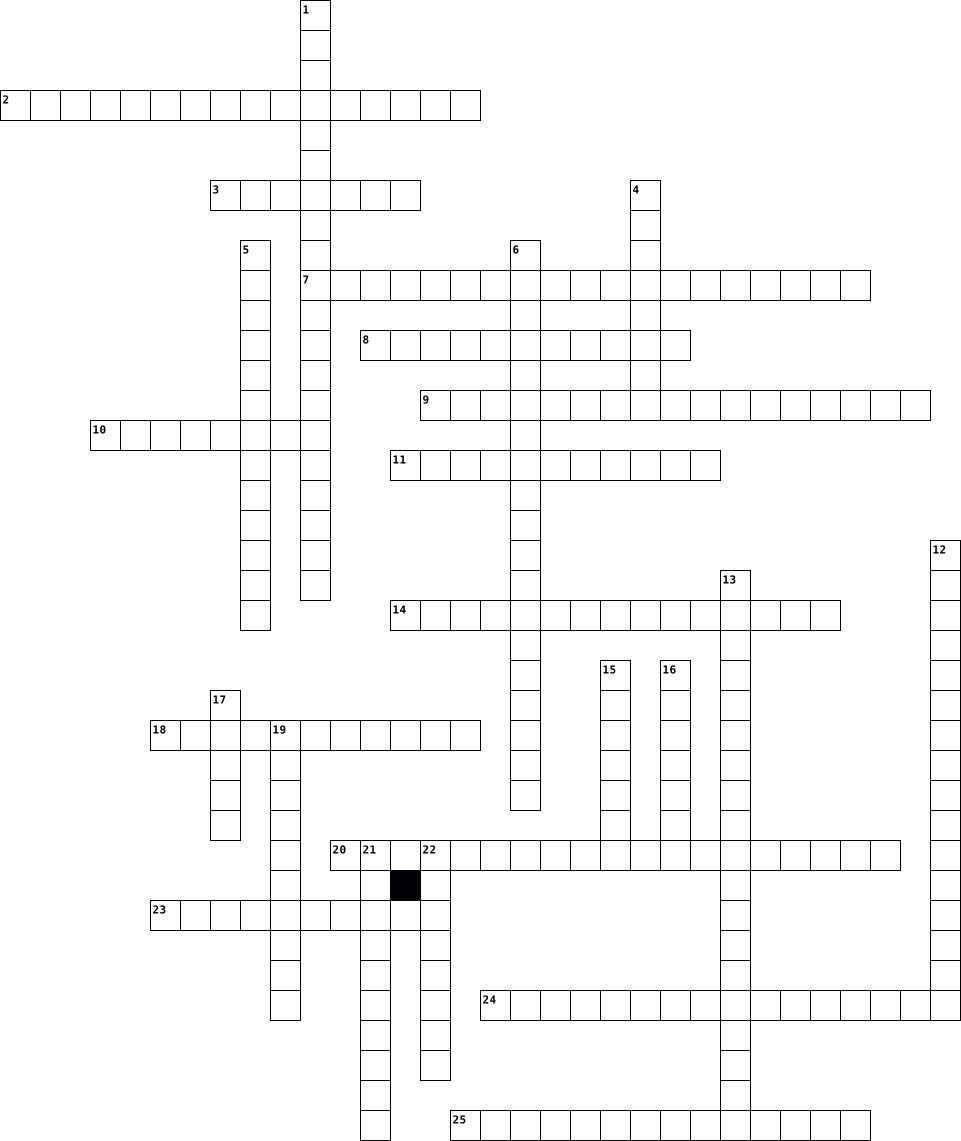
Across
- Population experiences rapid reproduction in individuals
- when organisms will impersonate other organisms.
- selection within a population due to human interference.
- Migration of new individuals into a population.
- Differences in mating time.
- Necessary commodity in ecosystem of a population.
- Natural selection where average phenotype achieves higher fitness.
- Percent of individuals of a population that have a particular trait.
- equation that shows dominant alleles, homozygous individuals and all heterozygous individuals.
- Isolation due to physical barrier
- Any characteristic that increase fitness.
- refers to differences among individuals in a population
- state of genetic equilibrium characterized by a large population.
Down
- When one extreme achieves higher fitness.
- Collection of all alleles present in a population.
- When a small part of a population is separated from the rest.
- Both extremes achieve higher fitness.
- Odea that individuals best suited to environment will achieve higher fitness.
- isolation due to difference in communication
- drift Random change in allele frequencies.
- Measurement of the ability of an individual to survive and reproduce.
- Hardy-weinberg that states dominant alleles (p) plus all recessive alleles (q)
- group of individuals of the same species that live in same area, time and population.
- Migration out of a population
- Movement of genes/alleles/individuals between two populations.
25 Clues: Differences in mating time. • Migration out of a population • Isolation due to physical barrier • Both extremes achieve higher fitness. • When one extreme achieves higher fitness. • Any characteristic that increase fitness. • drift Random change in allele frequencies. • isolation due to difference in communication • Migration of new individuals into a population. • ...
Biology 2023-06-01

Across
- is the cell formed when two gametes fuse during fertilization.
- Taxonomy is the branch of biology that classifies all living things.
- is a diploid organism with two alleles, each of a different type.
- is the biochemical pathway which converts the energy of light into the bonds of glucose molecules.
- are the building blocks of polypeptides and proteins and play important roles in metabolic pathway, gene expression, and cell signal transduction regulation.
- the study of taxonomy
- track reproductive cells (gametes) as they progress through fertilization, become a single-celled zygote, then an embryo, all the way to a fully functioning organism.
- maintains internal order within the body by coordinating the activities of muscles and organs, receives input from sense organs, trigger reactions, generating learning and understanding, and providing protection from danger.
- is a tiny pore in the surface of a leaf that is used for gas exchange.
- describes the complex systems that allow water to move across the Earth and atmosphere.
- is necessary for the production of proteins, the regulation, metabolism, and reproduction of the cell.
Down
- is the code our body uses to convert the instructions contained in our DNA the essential materials of life.
- is the branch of biology that classifies all living things.
- is the process by which male and female gametes are fused together, initiating the development of a new organism.
- is the longest stage in the eukaryote cell cycle. During interphase, the cell acquires nutrients, creates and uses proteins and other molecules, and starts the process of cell division by replicating the DNA.
- is an organelle in cells which functions to hold various solutions or materials.
- are defined as interactions between organisms of two different species, in which each organism benefits from the interaction in some way.
- is a single individual, or being.
- are specialized vesicles within cells that digest large molecules through the use of hydrolytic enzymes.
- a cycle of stages that cells pass through to allow them to divide and produce new cells.
- is a type of tissue in vascular plants that transports water and some nutrients from the roots to the leaves.
- are single-celled microorganisms with prokaryotic cells, which are single cells that do not have organelles or a true nucleus and are less complex than eukaryotic cells.
22 Clues: the study of taxonomy • is a single individual, or being. • is the branch of biology that classifies all living things. • is the cell formed when two gametes fuse during fertilization. • is a diploid organism with two alleles, each of a different type. • Taxonomy is the branch of biology that classifies all living things. • ...
Biology 2023-05-19

Across
- According to Charles ___________, individuals best suited to their environment survive and reproduce most successfully.
- The term fitness refers to an organism's ability to survive and _________ in a specific environment.
- According to Darwin, the word _______________ would indicate organisms' ability to survive and reproduce in their particular environments.
- Principle that living things were derived from common ancestors.
- Artificial selection as practiced by farmers is also called...
- Natural selection on single-gene traits can lead to changes in ______________ frequencies.
- Which process does NOT release energy from glucose?
- the branch of biology that deals with the relations of organisms to one another and to their physical surroundings.
- Process by which individuals that are better suited to their environment survive and reproduce most successfully.
- When individuals near the center of the curve have higher fitness than individuals at either end of the curve, the result is....
- Preserved remains or evidence of an ancient organism.
- Inherited characteristic that increases chances of survival
Down
- In a population of snakes with a range of body lengths, if the longest individuals have the highest fitness, ____________________ selection is likely to occur.
- (adenosine triphosphate) main energy source that cells use for most of their work
- In a gene pool, as the relative frequency of one allele for a trait increases, the relative frequencies of other alleles for that trait _______________.
- A well-tested explanation that unifies a broad range of observations.
- Serves no useful function in an organism but shows a link to a common ancestor.
- Mutations do not always affect an organism's ______________—its physical, behavioral, and biochemical characteristics.
- ___________________ may occur when a small group of individuals colonize a new habitat.
- When individuals at one end of a bell-shaped curve of phenotype frequencies have higher fitness than individuals in the middle the result is...
- Change in species over time.
- The Galapagos finch species are an excellent example of....
- The starting molecule for glycolysis is _________.
- Because all members of a population can ________________, biologists often study their genes as a single group.
- In ___________ populations, an allele can become more or less common simply by chance.
25 Clues: Change in species over time. • The starting molecule for glycolysis is _________. • Which process does NOT release energy from glucose? • Preserved remains or evidence of an ancient organism. • The Galapagos finch species are an excellent example of.... • Inherited characteristic that increases chances of survival • ...
Biology 2023-05-19

Across
- According to Charles ___________, individuals best suited to their environment survive and reproduce most successfully.
- The term fitness refers to an organism's ability to survive and _________ in a specific environment.
- According to Darwin, the word _______________ would indicate organisms' ability to survive and reproduce in their particular environments.
- Principle that living things were derived from common ancestors.
- Artificial selection as practiced by farmers is also called...
- Natural selection on single-gene traits can lead to changes in ______________ frequencies.
- Which process does NOT release energy from glucose?
- the branch of biology that deals with the relations of organisms to one another and to their physical surroundings.
- Process by which individuals that are better suited to their environment survive and reproduce most successfully.
- When individuals near the center of the curve have higher fitness than individuals at either end of the curve, the result is....
- Preserved remains or evidence of an ancient organism.
- Inherited characteristic that increases chances of survival
Down
- In a population of snakes with a range of body lengths, if the longest individuals have the highest fitness, ____________________ selection is likely to occur.
- (adenosine triphosphate) main energy source that cells use for most of their work
- In a gene pool, as the relative frequency of one allele for a trait increases, the relative frequencies of other alleles for that trait _______________.
- A well-tested explanation that unifies a broad range of observations.
- Serves no useful function in an organism but shows a link to a common ancestor.
- Mutations do not always affect an organism's ______________—its physical, behavioral, and biochemical characteristics.
- ___________________ may occur when a small group of individuals colonize a new habitat.
- When individuals at one end of a bell-shaped curve of phenotype frequencies have higher fitness than individuals in the middle the result is...
- Change in species over time.
- The Galapagos finch species are an excellent example of....
- The starting molecule for glycolysis is _________.
- Because all members of a population can ________________, biologists often study their genes as a single group.
- In ___________ populations, an allele can become more or less common simply by chance.
25 Clues: Change in species over time. • The starting molecule for glycolysis is _________. • Which process does NOT release energy from glucose? • Preserved remains or evidence of an ancient organism. • The Galapagos finch species are an excellent example of.... • Inherited characteristic that increases chances of survival • ...
Biology 2023-04-17

Across
- Longest stage
- The same letter
- Smaller trait
- Bigger trait
- Genetic Material
- makes 2 daughter cells
- End of mitosis
- Cross between traits
- First cell division stage
- Cells are different
- Can work together
- Forms DNA
- Rna to Protien
- Nucleotide base
Down
- Chromosomes separate
- Linked to phosphate group
- Attached to Nucleotide
- Formation of 2 cells
- DNA to RNA
- Big and Small trait
- Nucleotide base
- Chromosomes line up
- helix Physical appearance of DNA
- Nucleotide base
- Nucleotide base
- Cell growth happens
26 Clues: Forms DNA • DNA to RNA • Bigger trait • Longest stage • Smaller trait • End of mitosis • Rna to Protien • The same letter • Nucleotide base • Nucleotide base • Nucleotide base • Nucleotide base • Genetic Material • Can work together • Big and Small trait • Cells are different • Chromosomes line up • Cell growth happens • Chromosomes separate • Formation of 2 cells • Cross between traits • ...
Biology 2023-04-19

Across
- changes in the DNA sequence that can occur spontaneously or as a result of exposure to environmental factors, and can sometimes lead to genetic disorders or evolution
- the stage of the cell cycle when a cell is not actively dividing, but is carrying out normal functions and preparing for division
- a term used to describe a genetic trait that is only expressed in an organism's phenotype when two copies of the gene are present
- one of the four nitrogenous bases found in DNA and RNA, which pairs with cytosine
- the stage of mitosis where the chromosomes line up in the middle of the cell, ready to be separated into two new cells
- describing an inheritance pattern involving one/two genes, respectively, and their alleles, which determines the traits of offspring based on the combination of alleles inherited from their parents
- the process in which genetic information from DNA is copied into RNA
- the two phases of interphase in which a cell grows and carries out normal metabolic functions, and prepares for DNA replication and cell division
- the stage of mitosis during which the sister chromatids separate and are pulled to opposite ends of the cell by the spindle fibers
- the building blocks of DNA and RNA, consisting of adenine, guanine, cytosine, and thymine/uracil
- one of the four nitrogenous bases found in DNA and RNA, which pairs with thymine in DNA and with uracil in RNA
- nitrogenous base in DNA that pairs with adenine
- describing the pairing of nitrogenous bases in DNA or RNA, where adenine pairs with thymine/uracil, and guanine pairs with cytosine
- the final stage of the cell cycle where the cell's cytoplasm divides in two, resulting in two new daughter cells
Down
- a molecule that is one of the building blocks of nucleic acids like DNA and RNA, and is also a component of the cell membrane and ATP
- one of the four nitrogenous bases found in DNA and RNA, which pairs with guanine
- the first stage of mitosis, during which chromatin condeses into visible chromosomes, the nuclear envelope breaks down, and the spindle apparatus begins to form
- describing an organism that has two different alleles for a particular trait
- describing an organism that has two copies of the same allele for a particular trait
- characteristic that is expressed in an organism's phenotype if only one copy of the gene responsible is present
- the final stage of mitosis in which the chromosomes reach opposite ends of the cell, the spindle apparatus breaks down,a dn two new nuclei form
- the process in which the genetic information in RNA is used to build a protein
- a molecule that is one of the building blocks of nucleic acids like DNA and RNA, and is also a source of energy for the body
- genetic material that carries instructions for the development and function of all living organisms
- the process by which cells build proteins, including transcription, and translation
- the building block of DNA and RNA, consisting of a sugar molecule, a phosphate group, and a nitrogenous base
- the three-dimensional structure of DNA, consisting of two complementary strands of nucleotides wound around each other in a spiral shape
- the process of cell division that results in two genetically identical daughter cells, each with the same number of chromosomes as the parent cell
28 Clues: nitrogenous base in DNA that pairs with adenine • the process in which genetic information from DNA is copied into RNA • describing an organism that has two different alleles for a particular trait • the process in which the genetic information in RNA is used to build a protein • one of the four nitrogenous bases found in DNA and RNA, which pairs with guanine • ...
Biology 2022-12-09

Across
- strand of RNA created during transcription
- gene mutation where a base is added or deleted
- 1st step of protein synthesis
- second step of protein synthesis
- type of mutation that only affects one gene
- 3 letter section of mRNA
- replicating strand of DNA that adds nucleotides moving away from the helicase
- Double stranded nucleic acid that has all genetic material.
Down
- type of mutation that changes whole sections of a chromosome by adding the deletion inverting or moving sections
- segment of newly formed DNA on the lagging strand
- refers to DNA and histone protein that make up chromosomes.
- organelle where proteins are made
- Replicating strand
- Enzyme used to unzip the DNA molecule
- gene mutation when a base is substituted
- Used for enzymes, transport, and cell structure.
- single stranded nucleic acid used by cells it also has bases A, U, G, and C
- three layer section of tRNA that matches to a codon of mRNA
- monomer of proteins
- monomer of a protein these are carried by tRNA molecules.
20 Clues: Replicating strand • monomer of proteins • 3 letter section of mRNA • 1st step of protein synthesis • second step of protein synthesis • organelle where proteins are made • Enzyme used to unzip the DNA molecule • gene mutation when a base is substituted • strand of RNA created during transcription • type of mutation that only affects one gene • ...
Biology 2022-12-09

Across
- type of mutation that only affects one gene
- monomer of a protein these are carried by tRNA molecules.
- Used for enzymes, transport, and cell structure.
- Replicating strand that adds nucleotide moving toward helicase
- refers to DNA and histone protein that make up chromosomes.
- second step of protein synthesis
- type of mutation that changes whole sections of a chromosome by adding the deletion inverting or moving sections
- organelle where proteins are made
Down
- 1st step of protein synthesis
- strand of RNA created during transcription
- Enzyme used to unzip the DNA molecule
- three layer section of tRNA that matches to a codon of mRNA
- segment of newly formed DNA on the lagging strand
- replicating strand of DNA that adds nucleotides moving away from the helicase
- 3 letter section of mRNA
- gene mutation where a base is added or deleted
- gene mutation when a base is substituted
- monomer of proteins
- Double stranded nucleic acid that has all genetic material.
- single stranded nucleic acid used by cells it also has bases A, U, G, and C
20 Clues: monomer of proteins • 3 letter section of mRNA • 1st step of protein synthesis • second step of protein synthesis • organelle where proteins are made • Enzyme used to unzip the DNA molecule • gene mutation when a base is substituted • strand of RNA created during transcription • type of mutation that only affects one gene • gene mutation where a base is added or deleted • ...
Biology 2023-07-23

Across
- - Introduction of harmful substances into the environment, affecting living organisms and ecosystems.
- Resources - Resources that can be replenished or replaced naturally, such as solar energy and wind power.
- Square - A diagram used to predict the possible outcomes of a genetic cross.
- Fuels - Non-renewable energy sources formed from the remains of ancient plants and animals.
- - Organisms that break down dead organic matter into simpler substances, returning nutrients to the ecosystem.
- you can customize these connections based on your curriculum and learning objectives. Feel free to add more details or examples to each definition to provide a comprehensive and engaging learning experience for the players. Happy teaching and playing!
- Traits - Characteristics passed down from parents to offspring through genes.
- - The process of cell division that results in two identical daughter cells.
- Cells - Cells with a nucleus and membrane-bound organelles, found in plants, animals, fungi, and protists.
- - The movement of water across a selectively permeable membrane to balance concentrations.
- Succession - The gradual change in an ecosystem's structure and composition over time.
- - The ability of an organism to maintain a stable internal environment despite external changes.
Down
- Selection - The process by which organisms with favorable traits for their environment survive and reproduce more successfully.
- Species - Organisms at risk of becoming extinct due to low population numbers.
- Levels - The hierarchical levels in a food chain or food web, including producers, consumers, and decomposers.
- System - The network of cells and tissues responsible for transmitting signals and coordinating bodily functions.
- - The green pigment in plant cells that captures light energy during photosynthesis.
- - The variety of life in an ecosystem or on Earth as a whole.
- Niche - The role and position of a species within its habitat and how it interacts with other organisms.
- Variation - Differences in the genetic makeup of individuals within a population.
- Chains - The sequence of energy transfer from one organism to another in an ecosystem.
21 Clues: - The variety of life in an ecosystem or on Earth as a whole. • Square - A diagram used to predict the possible outcomes of a genetic cross. • - The process of cell division that results in two identical daughter cells. • Traits - Characteristics passed down from parents to offspring through genes. • ...
Biology 2024-12-20

Across
- Type of blood cell that defends the body against infections and foreign invaders.
- A substance that stimulates the immune system to produce an immune response without causing the disease.
- Single-celled microorganisms, some of which can cause infections or diseases.
- A change in the DNA sequence that can lead to variations in traits
- An immune response to harmless substances, such as pollen or certain foods.
- Having two different alleles for a particular gene.
- The process by which a disease-causing agent is passed from one individual to another.
- The process by which organisms with traits better suited to their environment tend to survive and reproduce more successfully.
- A microorganism or agent that causes disease or infection in a host.
Down
- Immune cell that "remembers" a specific pathogen, providing quicker responses during future infections.
- An allele that expresses its trait even when only one copy is present.
- Differences in traits among individuals of a species
- Having two identical alleles for a particular gene.
- Protein produced by the immune system to neutralize or destroy foreign substances like bacteria or viruses.
- The passing of genetic traits from parents to offspring.
- a distinguishing characteristic or feature of an organism.
- An allele that only expresses its trait when two copies are present, one from each parent.
- A microscopic infectious agent that requires a host cell to replicate and can cause disease.
- A characteristic or behavior that helps an organism survive and reproduce in its environment.
- A substance that triggers an immune response, often found on the surface of pathogens.
20 Clues: Having two identical alleles for a particular gene. • Having two different alleles for a particular gene. • Differences in traits among individuals of a species • The passing of genetic traits from parents to offspring. • a distinguishing characteristic or feature of an organism. • A change in the DNA sequence that can lead to variations in traits • ...
biology 2024-12-17

Across
- contain instructions for making proteins
- mixture of 2 or more
- has affinity for water
- complex structures
- smallest part of an element
- Carries genetics
- helps maintain cells shap
- intercellular structure
- genetic liquids
- small basic sub units
- anything that has mass
Down
- membrane bound
- smallest
- powerhouse
- no affinity for water
- building blocks
- attraction between 2 of the same molecules
- what's dissolved
- what's dissolving
- attraction between 2 different molecules
20 Clues: smallest • powerhouse • membrane bound • building blocks • genetic liquids • Carries genetics • what's dissolved • what's dissolving • complex structures • mixture of 2 or more • no affinity for water • small basic sub units • has affinity for water • anything that has mass • intercellular structure • helps maintain cells shap • smallest part of an element • contain instructions for making proteins • ...
Biology 2025-01-09

Across
- Non-identical genes.
- 23 Pairs.
- hardboiled
- the life of a cell
- The act of Replicating
- Opposite of Parallel
- Phase where the cell replicates
- male gamate
- The end result of cell division
- Phase where cell divides
- Two full sets of chromosomes
Down
- Connects Sister Chromatids
- Nitrogen bases join.
- Produced by the Nucleus.
- extremely fast Replicating cells
- Makes chromosomes
- In DNA.
- Divides Genetic Material
- Forms structure of DNA
- Reduces chromosomes
- We have 46 of them
- When cells seperate.
- Single set of chromosomes
- Longest phase of a cells life
24 Clues: In DNA. • 23 Pairs. • hardboiled • male gamate • Makes chromosomes • the life of a cell • We have 46 of them • Reduces chromosomes • Nitrogen bases join. • Non-identical genes. • Opposite of Parallel • When cells seperate. • The act of Replicating • Forms structure of DNA • Produced by the Nucleus. • Divides Genetic Material • Phase where cell divides • Single set of chromosomes • ...
Biology 2024-11-11

Across
- cell organelle that stores materials such as water, salt, proteins, and carbohydrates
- dissolves substances in a solution
- attraction between molecules of different substances
- Carrier molecule that transfers high energy electrons from chlorophyll to other molecules.
- substance that speeds up the rate of chemical reactions
- the biological equivalent of solar power plants that Capture energy from sunlight and convert it to chemical energy, Stored in food during photosynthesis
- element or compounds that enter into a chemical reaction
- prevents sharp, sudden changes in PH
- Fluid portion of the chloroplast outside the thylakoids
- dissolved in a solution
- atom charged positive or negative
- contains genetic material in the form of DNA
- mixture where all compounds are evenly distributed
- Compound used by cells To store and release energy
- PH of more than 7
- attraction between molecules of the same substance
- When comparing two solutions, the solution with the lesser concentration of solutes
- energy needed to get a reaction started
- small particles of RNA and protein found throughout the Cytoplasm
- PH less than 7
- use of evidence to come to a conclusion
- specialized structure that performs important cellular functions within a eukaryotic cell
- Light absorbing molecules used by plants to gather the sun's energy.
- reactant of a enzyme catalyzed reaction
- protein catalyst that speeds up specific biological reactions
- type of cell with a nucleus
- weak attraction between a hydrogen atom and another atom
- small chemical unit that makes up a polymer
Down
- When comparing two solutions, the solution with the greater concentration of salutes.
- network of protein filaments in a eukaryotic cell that gives the cell its shape and internal organization and its involved in movement
- Group of similar cells that perform a particular function.
- type of cell with no nucleus
- the process by which particles tend to move from an area where they are more concentrated to an area where they are less concentrated.
- cell organelle that breaks down lipids carbs and proteins into small molecules that can be used by the rest of the cell
- group of tissues that work together to perform closely related functions.
- a particular preference or point of view that is personal, rather than specific
- principal pigment Of plants and other photosynthetic organisms.
- Process Used by plants and other autotrophs to capture light energy and use it to power chemical reactions
- mixture of water and no dissolved material
- modifies and packages cells during protein synthesis
- On or in a cell a specific protein to whose shape fits that of a specific molecular messenger, such as a hormone.
- Concentration of two solutions is the same.
- Sack-like photosynthetic membranes found in chloroplast.
- water channel protein in a cell
- produced by a chemical reaction
- basic unit of matter
- relatively constant internal physical and chemical conditions that organisms maintain
- Diffusion of water through a selectively permeable membrane
- a scientific explanation that can be tested upon further
- series of electron carriers proteins that shuttle high-energy electrons during ATP-generating reactions.
- substance with only one type of atom
- negativity charged particle
- cluster of chlorophyll and proteins found in thylakoids.
53 Clues: PH less than 7 • PH of more than 7 • basic unit of matter • dissolved in a solution • negativity charged particle • type of cell with a nucleus • type of cell with no nucleus • water channel protein in a cell • produced by a chemical reaction • atom charged positive or negative • dissolves substances in a solution • prevents sharp, sudden changes in PH • ...
Biology 2024-11-19

Across
- A chemical compound that is used to make one of the building blocks of DNA
- A structure found inside the nucleus of a cell
- One of the numbered chromosomes as opposed
- Deoxyribonucleic acid
- Acid
- Contains the complete pairs of DNA
- Synthesis
- Single set of DNA with no pairs
- A group of three bases
- over
- Building blocks of DNA and RNA
- Very exact copying or duplication
- A chemical compound that is used to make one of the building blocks of DNA and RNA
- One strand of RNA is the product
- A process where a single cell divides four times
Down
- The two strands of DNA are separated
- Ribonucleic acid
- cells
- Building block for DNA
- helix
- The basic building of nucleic acids
- RNA is made based on the info from the DNA
- Egg and sperm cells
23 Clues: Acid • over • cells • helix • Synthesis • Ribonucleic acid • Egg and sperm cells • Deoxyribonucleic acid • Building block for DNA • A group of three bases • Building blocks of DNA and RNA • Single set of DNA with no pairs • One strand of RNA is the product • Very exact copying or duplication • Contains the complete pairs of DNA • The basic building of nucleic acids • ...
Biology 2025-01-30

Across
- Selection The process by which humans selectively breed organisms for specific traits.
- An adaptation that allows an organism to blend in with its environment to avoid predators.
- Selection A type of natural selection that favors individuals at both extremes of a trait over the average.
- Equilibrium A principle stating that allele frequencies in a population remain constant if specific conditions are met.
- Flow The transfer of alleles between populations through movement of individuals or gametes.
- Isolation The separation of populations by physical barriers, leading to speciation.
- The movement of individuals into a population.
- Pool The total collection of genes in a population.
- A trait that helps an organism survive and reproduce in its environment.
- Anything required by an organism to survive, grow, and reproduce.
- An adaptation where an organism resembles another species for protection or other advantages.
- Selection A type of natural selection that favors the average phenotype, reducing variation.
- A group of individuals of the same species living in the same area.
- An organism’s ability to survive and reproduce in its environment.
- Structures in different species that have a similar form due to common ancestry.
- Drift Random changes in allele frequencies in a population, often affecting small populations.
- Frequency: The proportion of a specific allele within a population's gene pool.
Down
- Selection: The process where organisms with favorable traits are more likely to survive and reproduce, passing those traits to future generations.
- The theory that evolution occurs slowly over long periods through small changes.
- Differences among individuals of the same species.
- Variation Differences in the genetic makeup of individuals within a population.
- Isolation When populations do not mate due to differences in mating behaviors.
- The movement of individuals out of a population.
- Isolation When populations reproduce at different times, preventing interbreeding.
- Selection A type of natural selection that favors one extreme phenotype over others.
- Effect A sharp reduction in the size of a population due to environmental events, leading to reduced genetic diversity.
- Effect A type of genetic drift that occurs when a small group of individuals establishes a new population, leading to reduced genetic diversity.
27 Clues: The movement of individuals into a population. • The movement of individuals out of a population. • Differences among individuals of the same species. • Pool The total collection of genes in a population. • Anything required by an organism to survive, grow, and reproduce. • An organism’s ability to survive and reproduce in its environment. • ...
biology 2025-04-02

Across
- the study of living things
- population of different species
- any living things
- converts energy to a nonliving
- breaks down dead organic matter
- an organism that lives within another organism
- a linear sequence of organisms through which nutrients and energy pass as one organism eats another
- level in the food chain
- an organism that cannot produce its own food
- showing feeding relationships within a community
- the natural home or environment of a plant
- animals that are killed and eaten by other animals
- a community of living organisms
Down
- eats plant only
- eats dead remains
- an organism that creates its own food
- organisms that hunt and kill other organisms for food
- a groups of individuals of the same species
- eats meat only
- an organism that eats other plants an animals for energy
- the region of earth that encompasses all living organisms
- living
- non living
- an organism that harbors another organism
- eats meat and plants
25 Clues: living • non living • eats meat only • eats plant only • eats dead remains • any living things • eats meat and plants • level in the food chain • the study of living things • converts energy to a nonliving • population of different species • breaks down dead organic matter • a community of living organisms • an organism that creates its own food • an organism that harbors another organism • ...
Biology 2025-04-04

Across
- makes up nucleic acids
- nucleotide that matches up with guanine
- specific steps in interphase where cell grows
- creates covalent bond
- encode genetics
- Two letters are same
- Synthesis Protein to Amino Acid
- structure of DNA
- Lowercase letter in allele
- the relationship between two structures
- matches with uracil and thymine
- first step in mitosis
- nucleic acids
- chromosomes split
- RNA to protein
Down
- matches with adenine
- permanant change in DNA
- cytoplasm separates
- phase where cell grows
- step when nucleus separates
- way to see percent of genes passed
- glucose
- DNA to RNA
- separation of two cells
- Domiant and recessive
- nucleotide that matches up with cytosine
- Uppercase letter in allele
- chromosomes lined up in middle
28 Clues: glucose • DNA to RNA • nucleic acids • RNA to protein • encode genetics • structure of DNA • chromosomes split • cytoplasm separates • matches with adenine • Two letters are same • creates covalent bond • Domiant and recessive • first step in mitosis • phase where cell grows • makes up nucleic acids • permanant change in DNA • separation of two cells • Lowercase letter in allele • ...
Biology 2025-03-17

Across
- ккк
- өнгөгүй
- Чийгсэг
- байрлах
- рбррб
- ус,намгийн
- хураагуур
- Сс
Down
- ус,эрдэс хөөрнө
- долон
- шингэн
- хоёр янзтай
- ус уурших
- Улаан
- тараагуур
- Хялгасан
- Хуурайсаг
- модлог
- Мэдэхгүй
- уусдаггүй
20 Clues: Сс • ккк • долон • Улаан • рбррб • шингэн • модлог • өнгөгүй • Чийгсэг • байрлах • Хялгасан • Мэдэхгүй • ус уурших • тараагуур • Хуурайсаг • уусдаггүй • хураагуур • ус,намгийн • хоёр янзтай • ус,эрдэс хөөрнө
Biology 2025-03-24

Across
- - The natural environment of an organism.
- - A trait that helps an organism survive in its environment.
- - A community of living organisms and their environment.
- - A protein that speeds up chemical reactions.
- - The process by which plants make their own food using sunlight.
- - A change in the DNA sequence.
- - Single-celled organisms without a nucleus.
- - The movement of water across a semi-permeable membrane.
- - The genetic makeup of an organism.
- - The molecule that carries genetic information.
- - The basic unit of life.
- - A nerve cell that transmits signals.
- - The process of releasing energy from food.
Down
- - A protein that helps fight infections.
- - A segment of DNA that codes for a protein.
- - The process of maintaining a stable internal environment.
- - Organisms like mushrooms and molds that decompose organic matter.
- - The process by which species change over time.
- - The part of a plant cell where photosynthesis happens.
- - A molecule made of amino acids, essential for life functions.
- - Known as the powerhouse of the cell.
- - A large ecological area with specific plants and animals.
- - The part of a cell that contains genetic material.
- - A microscopic agent that infects living organisms.
24 Clues: - The basic unit of life. • - A change in the DNA sequence. • - The genetic makeup of an organism. • - Known as the powerhouse of the cell. • - A nerve cell that transmits signals. • - A protein that helps fight infections. • - The natural environment of an organism. • - A segment of DNA that codes for a protein. • - Single-celled organisms without a nucleus. • ...
Biology 2025-04-11

Across
- The regions of Earth where living organisms exist
- A process that changes solar energy into chemical energy
- A measure of the amount of energy or biomass transferred from one trophic level to the next higher trophic level
- Rain,snow,or fog that is naturally acidic due to gases in the atmosphere that react with water to form acids
- A terrestrial ecosystem that is land-based
- A chemical that is essential to living things and is cycled through ecosystems
- A process in which materials, especially toxins, are ingested by an organism at a rate greater than they are eliminated
- Atmospheric gases that prevent heat from leaving the atmosphere, thus increasing the temperature of the atmosphere
- The warming of Earth as a result of greenhouse gases, which trap some of the energy that would otherwise leave Earth
- The nonliving parts of an ecosystem
Down
- A process in which nutrient levels in aquatic ecosystems increase, leading to an increase in the populations of primary producers
- An ecosystem that is capable of withstanding pressure and giving support to a variety of organisms
- ALL the water found on Earth, including lakes, oceans, and groundwater
- Aquatic ecosystem an ecosystem that is water- based, either freshwater or saltwater
- The living parts of an ecosystem
- A category of organisms that is defined by how the organisms gain their energy
- The total mass of living organisms in a defined group or area
- A process that releases energy from organic molecules, especially carbohydrates, in the absence of oxygen
- The hard part of Earth’s surface
- The layer of gases above Earth’s surface
- All the interacting parts of a biological community and its environment
- A process that releases energy from organic molecules, especially carbohydrates, in the presence of oxygen
22 Clues: The living parts of an ecosystem • The hard part of Earth’s surface • The nonliving parts of an ecosystem • The layer of gases above Earth’s surface • A terrestrial ecosystem that is land-based • The regions of Earth where living organisms exist • A process that changes solar energy into chemical energy • The total mass of living organisms in a defined group or area • ...
biology 2025-04-24

Across
- Many enzymes require these inorganic ions for optimal activity.
- AND KEY The model describing how an enzyme and substrate fit together like a lock and key.
- A type of inhibitor that binds to a site other than the active site.
- A factor, besides substrate concentration, that can affect enzyme activity.
- FIT MODEL The process where an enzyme's active site changes shape to fit the substrate.
- ACIDS The building blocks of proteins, which most enzymes are made of.
- Enzymes are biological __________.
- The general term for a substance that speeds up a chemical reaction.
- The location on an enzyme where the substrate binds.
- The molecule that an enzyme acts upon.
Down
- The breaking down of large molecules into smaller ones.
- The suffix commonly used to name enzymes.
- Enzymes are highly ______ for their specific substrates.
- A type of inhibitor that binds to the active site, blocking the substrate.
- A condition, like high temperature, that can cause an enzyme to lose its shape and function.
- The environment in which an enzyme functions best (e.g., acidic or basic).
- The state of an enzyme after it has catalyzed a reaction, ready to bind another substrate.
- The overall process that enzymes catalyze.
- A non-protein helper molecule that assists enzyme function.
- The study of enzymes.
- An enzyme that breaks down starch.
- The energy required to start a chemical reaction. Enzymes lower this.
- The synthesis of larger molecules from smaller ones.
23 Clues: The study of enzymes. • Enzymes are biological __________. • An enzyme that breaks down starch. • The molecule that an enzyme acts upon. • The suffix commonly used to name enzymes. • The overall process that enzymes catalyze. • The synthesis of larger molecules from smaller ones. • The location on an enzyme where the substrate binds. • ...
BIOLOGY 2025-04-24

Across
- Father of Biology
- The study of Fishes
- The Science of the transmission of Body Characteristics from parents to offspring
- The study of Structure and Function of Animal and plant cells
- The study of Algae
- Science Treatment and Surgery of Animals
- The study of Geographical Distribution of plants and Animals
- The study of Birds
Down
- Technique of Growing Fish
- The study of Insects
- The study of Plants
- The study of Diseases of plants and animals
- Father of Medicine
- The study of Fungi
- The study of Animals
- Also called as Systematics
- The process of Raising Crops and Livestock
- Biology study of Life in Sea
- Study of Origin and Descent of Organisms
- The study of Viruses
20 Clues: Father of Biology • Father of Medicine • The study of Fungi • The study of Algae • The study of Birds • The study of Plants • The study of Fishes • The study of Insects • The study of Animals • The study of Viruses • Technique of Growing Fish • Also called as Systematics • Biology study of Life in Sea • Science Treatment and Surgery of Animals • Study of Origin and Descent of Organisms • ...
biology 2025-05-06

Across
- one or more forms of a gene that are alternative but are located in the same place
- a state of balance in a organism despite changes on outside
- two sets of full chromosomes in a organisms cell
- organisms that arent able to produce their own food and rely on consuming other organisms to get energy
- protein factory
- 2 same alleles of a gene
- two different versions of a gene
- molecule that is bonded with other identical monomers to form polymers
- a group of organisms that reproduce with only each other to produce fertile offspring
- a molecule produced by a living organism
- genetic code that is responsible for genes in organisms
- organisms specific set of genes
- species being able to live in different conditions and withstand them
- physical characteristics of a organism
- cell division that occurs from one cell into 2 identical daughter cells
- chemical reaction in plants that makes their food
Down
- how elements in a material object or system are organized
- water fearing
- Removal of trees
- Organisms that are able to produce their own food
- cell nucleus structures that have the dna
- lack of water
- A species who has a bigger population then they're environment can handle
- a big number of similar units bonded
- tiny holes that allow gas to enter and exit
- powerhouse of cell
- where items bind
- green pigment in plants that cause the chemical reaction
- the role of a trait of an organism
- animals that breakdown decaying organisms and waste in order to release their nutrients back into the environment as a cycle
30 Clues: water fearing • lack of water • protein factory • Removal of trees • where items bind • powerhouse of cell • 2 same alleles of a gene • organisms specific set of genes • two different versions of a gene • the role of a trait of an organism • a big number of similar units bonded • physical characteristics of a organism • a molecule produced by a living organism • ...
biology 2025-05-06

Across
- both alles look different
- flow of genetic info within a biological system
- each new DNA molecule consist of one original
- containing organelles found in the cell or green plants and some prustist
- are specific sequences of DNA that code for proteins
- both alles look the same
- chemical reactions that do not require the presence of oxygen
- chemical reactions that require the presence of oxygen
- what is does
- structures within the cell nucleus that contain dna
- what it looks like
- what is made of produced
Down
- the character change-disrupts function
- are weak attractions between the nitrogenous bases of the dna strands
- organisms that use energy from the sun or energy stored in chemical compounds to manufacture their own nutrients
- eukrytotic membrane -band organelles that transform energy stored in food molecules
- too many species for resources available
- moleecule similar to DNA but usually single stranded
- small particles important for living things
- what you start with
- is the process by which DNA makes a copy of itself
- multiple monomers connected together
- new species evolves
- maintaining stable conditions
- to live
- number of times /average /how often
- is a molecule that carries the genetic blueprint of living organisms
- speed up chemical reactions
- rate how fast/slow organisms have babies
- light absorbing pigment in pants and some prusit that require photosynthesis
30 Clues: to live • what is does • what it looks like • what you start with • new species evolves • both alles look the same • what is made of produced • both alles look different • speed up chemical reactions • maintaining stable conditions • number of times /average /how often • multiple monomers connected together • the character change-disrupts function • ...
biology 2025-05-06

Across
- both alles look different
- flow of genetic info within a biological system
- each new DNA molecule consist of one original
- containing organelles found in the cell or green plants and some prustist
- are specific sequences of DNA that code for proteins
- both alles look the same
- chemical reactions that do not require the presence of oxygen
- chemical reactions that require the presence of oxygen
- what is does
- structures within the cell nucleus that contain dna
- what it looks like
- what is made of produced
Down
- the character change-disrupts function
- are weak attractions between the nitrogenous bases of the dna strands
- organisms that use energy from the sun or energy stored in chemical compounds to manufacture their own nutrients
- eukrytotic membrane -band organelles that transform energy stored in food molecules
- too many species for resources available
- moleecule similar to DNA but usually single stranded
- small particles important for living things
- what you start with
- is the process by which DNA makes a copy of itself
- multiple monomers connected together
- new species evolves
- maintaining stable conditions
- to live
- number of times /average /how often
- is a molecule that carries the genetic blueprint of living organisms
- speed up chemical reactions
- rate how fast/slow organisms have babies
- light absorbing pigment in pants and some prusit that require photosynthesis
30 Clues: to live • what is does • what it looks like • what you start with • new species evolves • both alles look the same • what is made of produced • both alles look different • speed up chemical reactions • maintaining stable conditions • number of times /average /how often • multiple monomers connected together • the character change-disrupts function • ...
biology 2025-06-13

Across
- The adjustable opening in the center of the eye that controls light entry.
- The process by which plants convert sunlight into energy.
- The ability to maintain a stable internal environment in an organism.
- The protective covering around nerve fibers that facilitates signal transmission.
- The process by which species change over time through natural selection.
- A diverse group of mostly unicellular organisms, including algae and protozoa.
- The process of widening blood vessels to enhance blood flow.
- A cluster of capillaries in the kidneys where blood filtration occurs.
- The movement of particles from an area of higher concentration to one of lower concentration.
- the method of producing genetically identical organisms.
- Describing processes that occur without oxygen.
Down
- A specialized form of cell division that produces gametes with half the chromosome number.
- Referring to reactions that absorb heat from their surroundings.
- White blood cells essential for the immune response.
- Vascular tissue responsible for water transport in plants.
- The narrowing of blood vessels, reducing blood flow.
- Plant tissue that transports sugars and nutrients.
- The interior space of a tubular structure, such as a blood vessel or intestine.
- The gap between two neurons where information is transmitted.
- The process of organizing actions and responses in the body.
20 Clues: Describing processes that occur without oxygen. • Plant tissue that transports sugars and nutrients. • White blood cells essential for the immune response. • The narrowing of blood vessels, reducing blood flow. • the method of producing genetically identical organisms. • The process by which plants convert sunlight into energy. • ...
Biology 2025-06-13

Across
- Where urine is stored
- Main equipment used for investigating transpiration
- The part of a vein that prevents the back-flow of blood
- The part of the nervous system where the brain locates
- The type of sugar that makes the cell wall of a fungus cell
- The energy required for photosynthesis
- The type of sugar that makes the cell wall of a plant
- A word used to describe a cell with cilia
- The behaviour of the arterioles in response to high body temperature, in order to radiate heat to the surroundings
- Multicellular organisms
- It is a thin part of the leaf that is transparent to allow the maximum amount of light to penetrate through the leaf
- The growth of plant in response to the force of gravity
Down
- A product of photosynthesis (a sugar)
- The part of the heart where there is a thick wall of muscles to pump blood around the body
- A process phagocytes perform as a part of the immune response to pathogens
- Cell without nucleus
- The nerve connecting the eye and the brain
- The ion needed to produce amino acid in plants
- The plant tissue that transports water and food and allows substances to flow both ways
- The type of respiration that requires oxygen
20 Clues: Cell without nucleus • Where urine is stored • Multicellular organisms • A product of photosynthesis (a sugar) • The energy required for photosynthesis • A word used to describe a cell with cilia • The nerve connecting the eye and the brain • The type of respiration that requires oxygen • The ion needed to produce amino acid in plants • ...
Biology 2025-06-13

Across
- Makes up approximately 78% of air
- Structure transporting water and mineral ions in a plant
- Structure transporting sucrose and amino acids in plants
- Store of energy in plants
- Blood vessel carrying deoxygenated blood back to the heart
- Process used by plants to absorb water from the soil
- Green pigment in plants for photosynthesis
- Process by which water escapes the leaf as water vapour
- Absorbs energy from surrounding environment
- Waste product in respiration, Reactant in photosynthesis
- Blood vessel carrying oxygenated blood to the body
Down
- Store of energy in animals
- Process by which plants produce energy
- Site of respiration in cells
- Organelle that is the site of photosynthesis
- Uses glucose to release ATP with/without oxygen
- Simple indicator for the presence of carbon dioxide
- Structure responsible for gas exchange in the lungs
- Reactant in aerobic respiration, waste product in photosynthesis
- Releases energy into the surrounding environment
20 Clues: Store of energy in plants • Store of energy in animals • Site of respiration in cells • Makes up approximately 78% of air • Process by which plants produce energy • Green pigment in plants for photosynthesis • Absorbs energy from surrounding environment • Organelle that is the site of photosynthesis • Uses glucose to release ATP with/without oxygen • ...
Biology 2023-01-17

Across
- is a type of membrane transport that does not require energy to move substances across cell membranes.
- is an important mechanism by which cells can respond to their environment and extracellular cues.
- a nucleic acid present in all living cells. Its principal role is to act as a messenger carrying instructions from DNA for controlling the synthesis of proteins.
- Is a reaction that use atp through catabolism of ketone bodies.
- is transparent to visible light but absorbs infrared radiation, acting as a greenhouse gas.
- a biological process which converts sugars such as glucose, fructose, and sucrose into cellular energy, producing ethanol and carbon dioxide as by-products.
- a cell communication pathway mediated by extracellular nucleotides and nucleosides.
- a microscopic fungus consisting of single oval cells that reproduce by budding, and are capable of converting sugar into alcohol and carbon dioxide.
- the smallest unit that can live on its own and that makes up all living organisms and the tissues of the body.
- A large group of single-cell microorganisms. Some cause infections and disease in animals and humans.
- a colorless, odorless, highly flammable gas, the chemical element of atomic number 1.
- is a nucleotide used in cells for DNA synthesis (or replication), as a substrate of DNA polymerase.
- a simple sugar which is an important energy source in living organisms and is a component of many carbohydrates.
- A product of fermentation.
- a nucleoside phosphate comprised of a ribonucleoside and two phosphate groups.
- the breakdown of glucose by enzymes, releasing energy and pyruvic acid.
- A chemical process in which oxygen is used to make energy from carbohydrates.
- is a polymer composed of two polynucleotide chains that coil around each other to form a double helix.
- an organelle found in large numbers in most cells, in which the biochemical processes of respiration and energy production occur.
- A molecule made up of amino acids.
- a chemical element with an atomic number of 8
- the chemical breakdown of a substance by bacteria, yeasts, or other microorganisms, typically involving effervescence and the giving off of heat.
- a metabolic process by which glucose or other six-carbon sugars are converted into cellular energy and the metabolite lactate, which is lactic acid in solution. Happens in muscle cells.
Down
- a series of chemical reactions to release stored energy through the oxidation of acetyl-CoA derived from carbohydrates, fats, and proteins
- is similar to paracrine signaling but there is a special structure called the synapse between the cell originating and the cell receiving the signal.
- are organisms whose cells have a nucleus
- an important “energy molecule” found in all life forms.
- A chemical substance found in drinks such as beer, wine, and liquor.
- a series of protein complexes and other molecules that transfer electrons from electron donors to electron acceptors via redox reactions
- is the movement of molecules or ions across a cell membrane from a region of lower concentration to a region of higher concentration against the concentration gradient.
- a type of respiration where oxygen is not used or scarce.
- the chemical breakdown of a compound due to reaction with water.
- is a biological catalyst and is almost always a protein
- is found in all cells and separates the interior of the cell from the outside environment.
- a cellular process that harnesses the reduction of oxygen to generate high-energy phosphate bonds in the form of adenosine triphosphate
- a redox-active coenzyme associated with various proteins, which is involved with several enzymatic reactions in metabolism.
- a coenzyme that functions as a universal electron carrier, accepting electrons and hydrogen atoms to form NADPH
- a plastid that contains chlorophyll and in which photosynthesis takes place.
- Its main function is to deliver the acetyl group to the citric acid cycle to be oxidized for energy production.
- Is a necessary function of everyday life and could not occur without ATP
- a central metabolic coenzyme/cosubstrate involved in cellular energy metabolism and energy production.
41 Clues: A product of fermentation. • A molecule made up of amino acids. • are organisms whose cells have a nucleus • a chemical element with an atomic number of 8 • an important “energy molecule” found in all life forms. • is a biological catalyst and is almost always a protein • a type of respiration where oxygen is not used or scarce. • ...
Biology 2025-02-19

Across
- Jaringan ikat yang menghubungkan tulang dengan tulang
- Sendi yang hanya bisa digerakkan ke satu arah, seperti pada lutut
- Jaringan yang menghubungkan otot dengan tulang
- Penyakit akibat pengeroposan tulang akibat usia lanjut
- Kelainan tulang akibat kekurangan vitamin D pada anak-anak
- Nama lain dari tulang selangka
- Sendi yang memungkinkan gerakan memutar, seperti pada leher
- Tulang yang menyusun bagian atas wajah, tempat tumbuhnya gigi atas
- Nama lain dari tulang dada
- Penyakit tulang akibat kekurangan kalsium pada orang tua
- Otot yang bekerja tanpa kendali dan ditemukan di organ dalam
- Penyakit peradangan sendi yang menyebabkan nyeri
- Tulang yang berbentuk melingkar dan melindungi otak
- Penyakit akibat gesekan sendi yang menyebabkan nyeri dan pembengkakan
- Tulang panjang yang terdapat di paha
Down
- Tulang yang membentuk pergelangan tangan
- Jenis otot yang ditemukan di jantung dan bekerja tanpa sadar
- Tulang yang menyusun lengan atas
- Bagian rangka yang menyusun wajah dan melindungi organ sensorik
- Jenis gerak yang dilakukan secara sadar oleh tubuh
- Tulang yang berbentuk pipih dan melindungi organ dada
- Tulang yang berada di betis, lebih kecil dari tulang kering
- Bagian tubuh yang terdiri dari tulang-tulang kecil dan fleksibel di punggung
- Kelainan pada tulang belakang yang melengkung ke samping
- Jenis otot yang melekat pada rangka tubuh dan bekerja secara sadar
- Jenis sendi yang tidak dapat digerakkan
- Jenis otot yang bekerja tanpa sadar
- Bagian dari sistem gerak yang berfungsi sebagai alat gerak pasif
- Jenis sendi yang memungkinkan gerakan ke segala arah
- Tulang yang melindungi otak
30 Clues: Nama lain dari tulang dada • Tulang yang melindungi otak • Nama lain dari tulang selangka • Tulang yang menyusun lengan atas • Jenis otot yang bekerja tanpa sadar • Tulang panjang yang terdapat di paha • Jenis sendi yang tidak dapat digerakkan • Tulang yang membentuk pergelangan tangan • Jaringan yang menghubungkan otot dengan tulang • ...
biology 2024-10-24

Across
- species change in a population
- no one is harmed
- aquatic organisms
- conditions over a time period
- interaction between animals
- any necesity of life
- surviving and reproducing under bad conditions
- feeds on producers
- feed on skin and blood
- tall trees
- frozen subsoil
- day to day conditions '
Down
- combination of algae
- relationship between species
- zone dark
- water covers soil
- where a organism lives
- succession less predictable changes
- what a orgasim does and thinks
- sicessions break down rock
- short trees
- sucessions farming
- dense forest
- zone light
- species first to colonize barren areas
25 Clues: zone dark • zone light • tall trees • short trees • dense forest • frozen subsoil • no one is harmed • water covers soil • aquatic organisms • sucessions farming • feeds on producers • combination of algae • any necesity of life • where a organism lives • feed on skin and blood • day to day conditions ' • sicessions break down rock • interaction between animals • relationship between species • ...
Biology 2024-10-21

Across
- a group of tissues
- the smallest unit of life
- 1:2:1
- releasing
- a universal base
- The gelatinous liquid that fills the inside of a cell.
- examples are fat, oils and waxes
- The process of moving particles from areas of high concentration to low concentration.
- Sodium chloride
- Fe
- makes the cell look like a raisin
- the organism responds to this
- a group of cells
Down
- the powerhouse of the cell
- the living planet that all living things share
- the catalyst in nature
- makes the cell get bigger until it explodes
- Specialized structures within a cell that carry out specific functions.
- membrane surrounds all cells
- a group of organs
- A bond between two atoms who have lost or gained electrons
- same on the inside and outside
- lowers the energy in a reaction
- A bond between atoms that are sharing electrons
- the reactants in a enzyme reaction
25 Clues: Fe • 1:2:1 • releasing • Sodium chloride • a universal base • a group of cells • a group of organs • a group of tissues • the catalyst in nature • the smallest unit of life • the powerhouse of the cell • membrane surrounds all cells • the organism responds to this • same on the inside and outside • lowers the energy in a reaction • examples are fat, oils and waxes • ...
Biology 2024-10-31

Across
- transferMRNA into the nucleus
- enzyme that regulate synthesis
- transports amino acid
- Addition of Nucleotides
- unzips
- Old and New DNA
- Discontinue DNA
Down
- Makes RNA
- single ringed
- reads and translates to make protein
- single protein that repairs
- double ringed
- attached to protein
- interrupted periodically
- Messenger
- run opposite ways
- twisted ladder
- make ribosome with protein
- structure in the nucleous
- coding sequences
20 Clues: unzips • Makes RNA • Messenger • single ringed • double ringed • twisted ladder • Old and New DNA • Discontinue DNA • coding sequences • run opposite ways • attached to protein • transports amino acid • Addition of Nucleotides • interrupted periodically • structure in the nucleous • make ribosome with protein • single protein that repairs • transferMRNA into the nucleus • ...
biology 2024-11-08

Across
- Acids. A monomer that contains an amino group and a carboxyl group.
- of a certain type of cells.
- An attraction between molecules of the same substance.
- of carbon and hydrogen. Some examples are fats, oils, and waxes.
- and a nitrogenous base.
- a compensation of two or more elements
- the substance that is dessolved
- found in a ratio of 1:2:1.
- any compound that forms OH- ions in solutions
- The system scientists use to determine the concentration of H + ions in a
- A type of biological molecule that is not soluble in water. Mostly
- phosphorus. These are the polymers of nucleotides.
- Compounds made up of carbon, hydrogen, and oxygen that are
- A monomer made of three parts: A 5-carbon sugar, and phosphate
- an attraction between molecules of different substances
Down
- any compound that forms H+ ions in solutions
- small compounds that can be bonded together
- Acids Macromolecules that contain hydrogen, oxygen, nitrogen, carbon,
- many small compounds that have joined together
- the substance that does the dissolving
- a mixture where everything is evenly distributed
- a single Sugar molecule
- A macromolecule that contains nitrogen, carbon, hydrogen, and
- membrane A thin, flexible, barrier that surrounds all cells.
- the basic unit of life.
- weak acids or bases that can react with strong bases or acids
- bond The attraction between a partially positive Hydrogen atom
- A large membrane enclosed structure that contains the genetic
- The polymer of
29 Clues: The polymer of • a single Sugar molecule • and a nitrogenous base. • the basic unit of life. • found in a ratio of 1:2:1. • of a certain type of cells. • the substance that is dessolved • the substance that does the dissolving • a compensation of two or more elements • small compounds that can be bonded together • any compound that forms H+ ions in solutions • ...
Biology 2026-01-21

Across
- Specialized, membrane--bound structures within a cell that perform specific, vital functions
- A specialized protein embedded in cell membranes that moves ions, small molecules, and macromolecules
- movement of molecules or ions across a cell membrane
- A solution with the same solute concentration (an water potential) as another solution, usually inside a cell
- The membrane-bound organelle in eukaryotic cells that acts as the cell's control center
- microscopy to observe shape, organelles
- An organism made of a single cell that performs all life functions independently
- The ability of a living system to maintain a stable, constant internal environment
- Double layer of lipids that forms the core structure of all cell membranes, creating a barrier where water-loving heads outward
- Long, whip-like appendages that extend from the surface of cells
- A vital celluar machine, made of ribosomal RNA and proteins
- The movement of substances across a cell membrane down their concentration gradient without the cell using any energy
- The minimum pressure needed to stop water from moving across a semipermeable membrane
- The amount of a substance dissolved in a specific amount of liquid
- Describes the cell membrane as a flexible, dynamic barrier made of a phospholipid bilayer
- A solution with a higher solute (like salt or sugar) concentration compared to another solution
- Cell organelle that acts as the "post office," modiying, sorting
- A crucial semipermeable barrier enclosing all cells, separating their internal contents from the external environment
Down
- The fundamental structure of cell membranes, consisting of two ayers of phospholipids with their water-loving phosphate
- A solution with a lower solute concentration compared to another solution
- Jelly-like substance filling a cell, enclosed by the cell membrane
- A key organelle in eukaryotic cells that acts as the cell's processing
- A single-celled organism whose cells lack a mebrane-bound nucleus and other organells
- A membrane-bound organelle within a cell,acting as a versatile storage sac for water, nutrients, waste, and other molecules
- Essential organelles in eukaryotic cells, known as the "powerhouses"
- A vast network of membranes in eukaryotic cells
- Small, green, oval-shaped organelles in plant/algae cells
- Describes molecules or substances that are attracted to and can mix with water
- a mixture of a weak acid and its salt
- Molecules that repel water, don't mix with it easily and are "water-fearing"
- A small, circular, double-standard DNA molecule that exists separately from a cell's main chromosomal DNA
- Unique size, shape, and banding patterns
- Any organism whose cells have membrane-bound nucleus that houses its DNA
- Fixed, often rectangular shape
- The passive movement of water molecules across a selectively permeable membrane
- Organisms made of multiple, interconnected cells that work together, allowing for complex structures
- The natural, passive movement of molecules form an area where they are highly concentrated
37 Clues: Fixed, often rectangular shape • a mixture of a weak acid and its salt • microscopy to observe shape, organelles • Unique size, shape, and banding patterns • A vast network of membranes in eukaryotic cells • movement of molecules or ions across a cell membrane • Small, green, oval-shaped organelles in plant/algae cells • ...
biology 2025-08-22

Across
- long and hard
- wall this protects a cell
- the way your body sends messages
- the way plants get energy
- house of the dna
- what homeostasis uses
- this is in a cell and is a main part in energy
- formila for water
- the way a body stays stable
- study of plants
- cells do this to live
Down
- all living things have this
- this is in every cell
- the way we feel things
- every body is made of these strands
- plants use this
- this absorbs water
- plants convert this
- what helps with photo synthesis
- all living things need this
- the things in cells
21 Clues: long and hard • plants use this • study of plants • house of the dna • formila for water • this absorbs water • plants convert this • the things in cells • this is in every cell • what homeostasis uses • cells do this to live • the way we feel things • wall this protects a cell • the way plants get energy • all living things have this • all living things need this • the way a body stays stable • ...
Biology 2025-08-22

Across
- merupakan komponen utama dalam sel yang berfungsi mengatur aktivitas sel
- adalah difusi yang memerlukan bantuan protein spesifik dalam bentuk saluran protein dan protein transpor
- adalah sel yang memiliki inti sel (nukleus)
- adalah transpor pada membran sel yang tidak memerlukan energi
- adalah alat bantu penglihatan yang memiliki lensa untuk memperbesar penampakan objek
- berfungsi membentuk sel dan dinding sel tumbuhan
- merupakan lapisan pembatas antara sel dan lingkungan luarnya
- adalah peristiwa masuknya zat padat atau cair melalui membran
- adalah perpindahan air atau zat pelarut dari larutan hipotonis ke larutan hipertoni
- terdapat pada sel tumbuhan
- berfungsi sebagai kerangka sel
- adalah cairan yang terdapat didalam sel
Down
- merupakan sebuah sistem membran yang berlipat yang bersatu dengan membran sel dan membran inti
- unit terkecil penyusun makhluk hidup
- sel yang tidak memiliki membran yang melapasi inti sel
- berfungsi sebagai the power of house karena merupakan tempat berlangsungnya respirasi aerob sel
- terdapat didalam sitoplasma secara bebas dan terikat pada RE
- adalah mikroskop yang menghasilkan gambar objek melalui berkas elektron
- adalah perpindahan zat padat,cair dan gas dari larutan hipertonis ke larutan hipotonis
- adalah proses pengeluaran zat padat atau cair melalui membran
20 Clues: terdapat pada sel tumbuhan • berfungsi sebagai kerangka sel • unit terkecil penyusun makhluk hidup • adalah cairan yang terdapat didalam sel • adalah sel yang memiliki inti sel (nukleus) • berfungsi membentuk sel dan dinding sel tumbuhan • sel yang tidak memiliki membran yang melapasi inti sel • terdapat didalam sitoplasma secara bebas dan terikat pada RE • ...
Biology 2025-08-22

Across
- adalah perpindahan zat padat,cair dan gas dari larutan hipertonis ke larutan hipotonis
- adalah perpindahan air atau zat pelarut dari larutan hipotonis ke larutan hipertoni
- yaitu lepasnya membran plasma dari dinding sel tumbuhan jika sel tumbuhan dimasukkan ke dalam larutan hipertonis
- yaitu robeknya membran plasma sel jika sel dimasukkan kedalam larutan hipotonis dibandingkan sel tersebut
- berfungsi membentuk sel dan dinding sel tumbuhan
- adalah penghancuran diri sel dengan cara membebaskan semua isi lisosom dalam sel
- adalah mikroskop yang menghasilkan gambar objek melalui berkas elektron
- berfungsi sebagai kerangka sel
- adalah alat bantu penglihatan yang memiliki lensa untuk memperbesar penampakan objek
- berperan dalam memisahkan sel anak
- memiliki akuaporin untuk mengisap kembali air dari dalam urine
- adalah peristiwa masuknya zat padat atau cair melalui membran
Down
- terdapat didalam sitoplasma secara bebas dan terikat pada RE
- merupakan komponen utama dalam sel yang berfungsi mengatur aktivitas sel
- yaitu mengerutnya sel jika sel dimasukkan ke dalam larutan hipertonis dibandingkan sel tersebut
- adalah cairan yang terdapat didalam sel
- adalah difusi yang memerlukan bantuan protein spesifik dalam bentuk saluran protein dan protein transpor
- merupakan sebuah sistem membran yang berlipat yang bersatu dengan membran sel dan membran inti
- adalah transpor pada membran sel yang tidak memerlukan energi
- adalah sel yang memiliki inti sel (nukleus)
- adalah penyingkiranstruktur struktur yang tidak dikehendaki dalam sel
- merupakan lapisan pembatas antara sel dan lingkungan luarnya
- berfungsi sebagai the power of house karena merupakan tempat berlangsungnya respirasi aerob sel
- unit terkecil penyusun makhluk hidup
- adalah pembebasan enzim ke luar sel
- sel yang tidak memiliki membran yang melapasi inti sel
- ada tiga macam yaitu kloroplas,kromoplas,dan leukoplas
- adalah proses pengeluaran zat padat atau cair melalui membran
- berfungsi mempertahankan bentuk sel
- terdapat pada sel tumbuhan
30 Clues: terdapat pada sel tumbuhan • berfungsi sebagai kerangka sel • berperan dalam memisahkan sel anak • adalah pembebasan enzim ke luar sel • berfungsi mempertahankan bentuk sel • unit terkecil penyusun makhluk hidup • adalah cairan yang terdapat didalam sel • adalah sel yang memiliki inti sel (nukleus) • berfungsi membentuk sel dan dinding sel tumbuhan • ...
Biology 2025-08-22

Across
- adalah penyingkiranstruktur struktur yang tidak dikehendaki dalam sel
- berfungsi mempertahankan bentuk sel
- adalah mikroskop yang menghasilkan gambar objek melalui berkas elektron
- adalah cairan yang terdapat didalam sel
- yaitu mengerutnya sel jika sel dimasukkan ke dalam larutan hipertonis dibandingkan sel tersebut
- memiliki akuaporin untuk mengisap kembali air dari dalam urine
- adalah proses pengeluaran zat padat atau cair melalui membran
- adalah pembebasan enzim ke luar sel
- terdapat pada sel tumbuhan
- adalah sel yang memiliki inti sel (nukleus)
- adalah transpor pada membran sel yang tidak memerlukan energi
Down
- adalah alat bantu penglihatan yang memiliki lensa untuk memperbesar penampakan objek
- adalah difusi yang memerlukan bantuan protein spesifik dalam bentuk saluran protein dan protein transpor
- berfungsi sebagai the power of house karena merupakan tempat berlangsungnya respirasi aerob sel
- merupakan komponen utama dalam sel yang berfungsi mengatur aktivitas sel
- adalah perpindahan zat padat,cair dan gas dari larutan hipertonis ke larutan hipotonis
- adalah penghancuran diri sel dengan cara membebaskan semua isi lisosom dalam sel
- sel yang tidak memiliki membran yang melapasi inti sel
- adalah peristiwa masuknya zat padat atau cair melalui membran
- adalah perpindahan air atau zat pelarut dari larutan hipotonis ke larutan hipertoni
- berfungsi membentuk sel dan dinding sel tumbuhan
- berperan dalam memisahkan sel anak
- yaitu robeknya membran plasma sel jika sel dimasukkan kedalam larutan hipotonis dibandingkan sel tersebut
- ada tiga macam yaitu kloroplas,kromoplas,dan leukoplas
- terdapat didalam sitoplasma secara bebas dan terikat pada RE
- merupakan sebuah sistem membran yang berlipat yang bersatu dengan membran sel dan membran inti
- merupakan lapisan pembatas antara sel dan lingkungan luarnya
- yaitu lepasnya membran plasma dari dinding sel tumbuhan jika sel tumbuhan dimasukkan ke dalam larutan hipertonis
- unit terkecil penyusun makhluk hidup
- berfungsi sebagai kerangka sel
30 Clues: terdapat pada sel tumbuhan • berfungsi sebagai kerangka sel • berperan dalam memisahkan sel anak • berfungsi mempertahankan bentuk sel • adalah pembebasan enzim ke luar sel • unit terkecil penyusun makhluk hidup • adalah cairan yang terdapat didalam sel • adalah sel yang memiliki inti sel (nukleus) • berfungsi membentuk sel dan dinding sel tumbuhan • ...
Biology 2025-08-22

Across
- merupakan sebuah sistem membran yang berlipat yang bersatu dengan membran sel dan membran inti
- adalah sel yang memiliki inti sel (nukleus)
- berfungsi mempertahankan bentuk sel
- berfungsi sebagai kerangka sel
- berfungsi membentuk sel dan dinding sel tumbuhan
- ada tiga macam yaitu kloroplas,kromoplas,dan leukoplas
- yaitu robeknya membran plasma sel jika sel dimasukkan kedalam larutan hipotonis dibandingkan sel tersebut
- adalah perpindahan zat padat,cair dan gas dari larutan hipertonis ke larutan hipotonis
- adalah transpor pada membran sel yang tidak memerlukan energi
- sel yang tidak memiliki membran yang melapasi inti sel
- adalah penghancuran diri sel dengan cara membebaskan semua isi lisosom dalam sel
- yaitu lepasnya membran plasma dari dinding sel tumbuhan jika sel tumbuhan dimasukkan ke dalam larutan hipertonis
- terdapat pada sel tumbuhan
- adalah difusi yang memerlukan bantuan protein spesifik dalam bentuk saluran protein dan protein transpor
Down
- yaitu mengerutnya sel jika sel dimasukkan ke dalam larutan hipertonis dibandingkan sel tersebut
- adalah pembebasan enzim ke luar sel
- merupakan lapisan pembatas antara sel dan lingkungan luarnya
- berfungsi sebagai the power of house karena merupakan tempat berlangsungnya respirasi aerob sel
- adalah alat bantu penglihatan yang memiliki lensa untuk memperbesar penampakan objek
- adalah proses pengeluaran zat padat atau cair melalui membran
- terdapat didalam sitoplasma secara bebas dan terikat pada RE
- adalah mikroskop yang menghasilkan gambar objek melalui berkas elektron
- adalah peristiwa masuknya zat padat atau cair melalui membran
- adalah cairan yang terdapat didalam sel
- adalah penyingkiranstruktur struktur yang tidak dikehendaki dalam sel
- adalah perpindahan air atau zat pelarut dari larutan hipotonis ke larutan hipertoni
- berperan dalam memisahkan sel anak
- memiliki akuaporin untuk mengisap kembali air dari dalam urine
- unit terkecil penyusun makhluk hidup
- merupakan komponen utama dalam sel yang berfungsi mengatur aktivitas sel
30 Clues: terdapat pada sel tumbuhan • berfungsi sebagai kerangka sel • berperan dalam memisahkan sel anak • adalah pembebasan enzim ke luar sel • berfungsi mempertahankan bentuk sel • unit terkecil penyusun makhluk hidup • adalah cairan yang terdapat didalam sel • adalah sel yang memiliki inti sel (nukleus) • berfungsi membentuk sel dan dinding sel tumbuhan • ...
Biology 2025-08-22

Across
- berperan dalam memisahkan sel anak
- yaitu robeknya membran plasma sel jika sel dimasukkan kedalam larutan hipotonis dibandingkan sel tersebut
- berfungsi mempertahankan bentuk sel
- adalah perpindahan air atau zat pelarut dari larutan hipotonis ke larutan hipertoni
- terdapat didalam sitoplasma secara bebas dan terikat pada RE
- adalah penyingkiranstruktur struktur yang tidak dikehendaki dalam sel
- adalah difusi yang memerlukan bantuan protein spesifik dalam bentuk saluran protein dan protein transpor
- berfungsi sebagai the power of house karena merupakan tempat berlangsungnya respirasi aerob sel
- unit terkecil penyusun makhluk hidup
- adalah sel yang memiliki inti sel (nukleus)
- memiliki akuaporin untuk mengisap kembali air dari dalam urine
- adalah transpor pada membran sel yang tidak memerlukan energi
- sel yang tidak memiliki membran yang melapasi inti sel
- ada tiga macam yaitu kloroplas,kromoplas,dan leukoplas
- yaitu mengerutnya sel jika sel dimasukkan ke dalam larutan hipertonis dibandingkan sel tersebut
- adalah mikroskop yang menghasilkan gambar objek melalui berkas elektron
- adalah pembebasan enzim ke luar sel
- merupakan sebuah sistem membran yang berlipat yang bersatu dengan membran sel dan membran inti
Down
- adalah perpindahan zat padat,cair dan gas dari larutan hipertonis ke larutan hipotonis
- merupakan lapisan pembatas antara sel dan lingkungan luarnya
- yaitu lepasnya membran plasma dari dinding sel tumbuhan jika sel tumbuhan dimasukkan ke dalam larutan hipertonis
- terdapat pada sel tumbuhan
- berfungsi sebagai kerangka sel
- adalah cairan yang terdapat didalam sel
- berfungsi membentuk sel dan dinding sel tumbuhan
- merupakan komponen utama dalam sel yang berfungsi mengatur aktivitas sel
- adalah proses pengeluaran zat padat atau cair melalui membran
- adalah peristiwa masuknya zat padat atau cair melalui membran
- adalah penghancuran diri sel dengan cara membebaskan semua isi lisosom dalam sel
- adalah alat bantu penglihatan yang memiliki lensa untuk memperbesar penampakan objek
30 Clues: terdapat pada sel tumbuhan • berfungsi sebagai kerangka sel • berperan dalam memisahkan sel anak • berfungsi mempertahankan bentuk sel • adalah pembebasan enzim ke luar sel • unit terkecil penyusun makhluk hidup • adalah cairan yang terdapat didalam sel • adalah sel yang memiliki inti sel (nukleus) • berfungsi membentuk sel dan dinding sel tumbuhan • ...
Biology 2025-09-14

Across
- TISSUE,The tissue that covers surfaces and lines body cavities.
- SYSTEM,The system responsible for breaking down food and absorbing nutrients.
- SYSTEM,The system that produces gametes and offspring.
- SYSTEM,The system that includes the brain, spinal cord, and nerves.
- TISSUE,The tissue that provides support and connects other tissues and organs.
- SYSTEMS,A group of organs that work together to perform one or more functions.
- TISSUE,A group of specialized cells that contract to produce movement.
- SYSTEM,The system that protects the body, regulates temperature, and detects sensations.
- SYSTEM,The system responsible for movement.
- TISSUE,The tissue that transmits and processes information.
- SYSTEM,The system responsible for gas exchange.
Down
- SYSTEM,The system responsible for the movement of blood.
- most basic structural and functional unit of all known organisms.
- SYSTEM,The system that helps the body fight off infections.
- is the biology word and clue list formatted for easy entry into a free crossword generator.
- copy and paste the entire block of text below into the "Words and Clues" box on a crossword puzzle generator website. Each line contains a word followed by a comma and its corresponding clue.
- complete living thing.
- group of different tissues that work together to perform a specific function.
- SYSTEM,The body's communication system using hormones.
- SYSTEM,The system that supports the body and protects internal organs.
- ability of an organism to maintain a stable internal environment.
- group of specialized cells that work together to perform a specific function.
- SYSTEM,The system that removes waste from the body.
23 Clues: complete living thing. • SYSTEM,The system responsible for movement. • SYSTEM,The system responsible for gas exchange. • SYSTEM,The system that removes waste from the body. • SYSTEM,The system that produces gametes and offspring. • SYSTEM,The body's communication system using hormones. • SYSTEM,The system responsible for the movement of blood. • ...
Biology 2026-02-15

Across
- Reduce, reuse, recycle!
- Singular, taking away the last letter gives a literary device
- Duo, month-long confusion
- Occur, , regularity, estimate
- You're jealous that Virus and Bacteria are besties
- Methotrexate
- DON'T FORGET
- Hint: allosteric enzymes
- Restore this condition/number
- Do you think miRNAs ever say "It's me, hi, I'm the problem, it's me"?
- Continental viruses, continental diseases
- _________
- Goes together with a synonym of growing up
- Sorry Membranes is so boring this is basically everything
Down
- Stem cells are
- 2, 2, 2, 2, forms!
- lim (cells --> infinity) = 0
- In ________ school we only learnt about hydrogen bonds
- Usually shuts off a long study session
- Measure of how much you've thought about the paper/yourself/anything really
- Not of the alpha type
- Culprit of non-polar, hydrophobic patch
- Substitution mutation occurred at site S5.
- 2:1
- Have you ever thought about trying this really great crossword? Please try it!! Please!!!
25 Clues: 2:1 • _________ • Methotrexate • DON'T FORGET • Stem cells are • 2, 2, 2, 2, forms! • Not of the alpha type • Reduce, reuse, recycle! • Hint: allosteric enzymes • Duo, month-long confusion • lim (cells --> infinity) = 0 • Occur, , regularity, estimate • Restore this condition/number • Usually shuts off a long study session • Culprit of non-polar, hydrophobic patch • ...
Biology 2026-04-21

Across
- a linear sequence of organisms,which nutrients and energy pass around as one organism eats another
- the variety of life in the world/habitat/ecosystem
- colorless gas that is necessary for most plant and animal life
- animal that naturally preys on others
- provides sunlight, life and warmth
- best teacher
- community of organisms and their environment
- a large area with a specific climate and certain types of living things
- animal that feeds on plants
- tiny, single-celled organisms
- animal that eats both plants and meat (animals)
Down
- living factore
- animal that eats meat (animals)
- clear, colorless, odorless, and tasteless liquid essential for most living things to survive
- a network of interconnecting food chains in an ecological community
- substances that is essential for growth and maintenance of life
- organism that breaks down organic material (fungi/bacteria)
- non-living factors
- individual living thing
- animal that is hunted and killed by another for food
20 Clues: best teacher • living factore • non-living factors • individual living thing • animal that feeds on plants • tiny, single-celled organisms • animal that eats meat (animals) • provides sunlight, life and warmth • animal that naturally preys on others • community of organisms and their environment • animal that eats both plants and meat (animals) • ...