
body parts Crossword Puzzles
Nutrition 2026-02-03

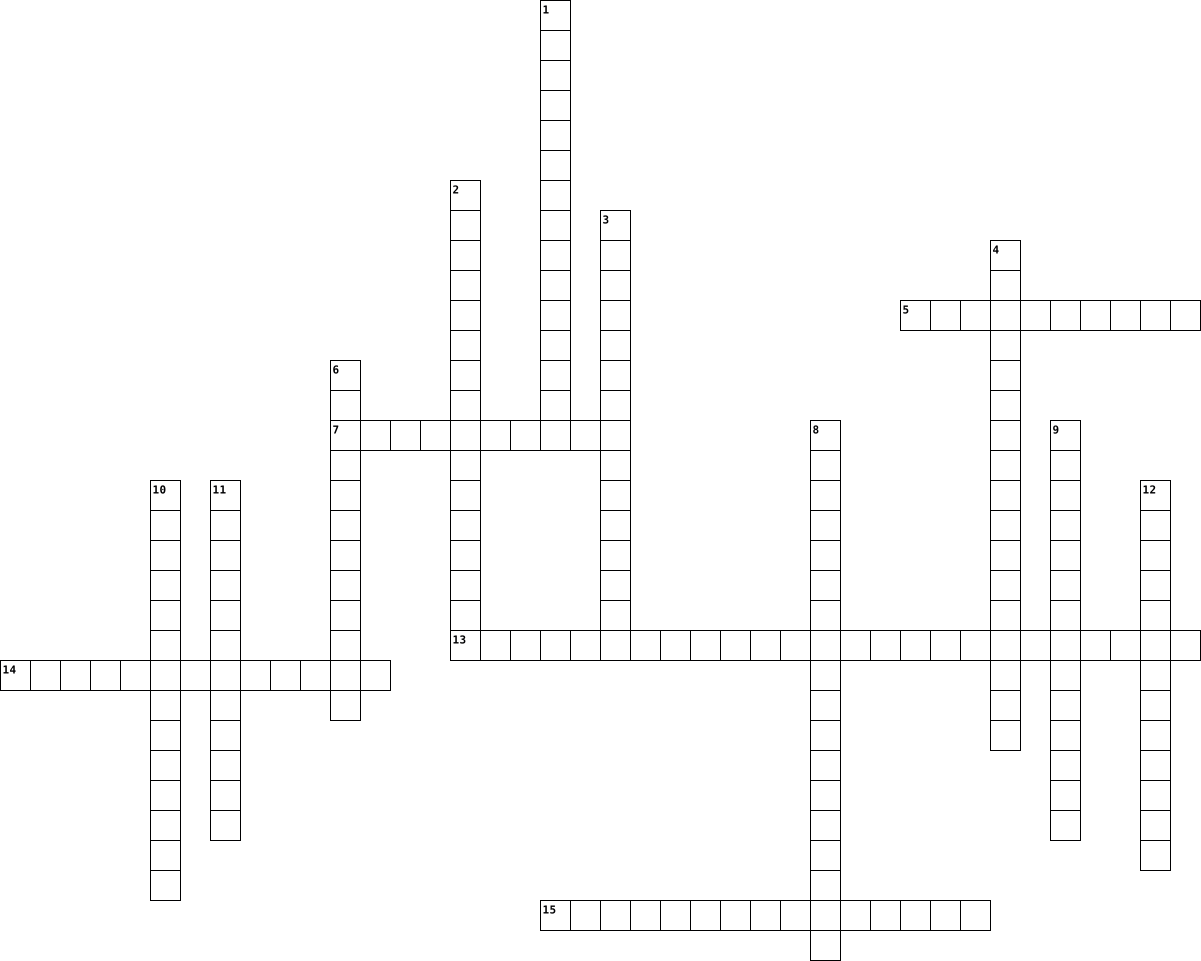
Across
- excessive body weight
- found in all body tissues
- is a metabolic disease leading to high blood pressure
- digestion, absorption, etc...
- produces steroid hormones and is a component of cell membranes
- organic compounds, one main compound essential for life
- non-living elements found in all tissues
- poor diet or illness
Down
- helps with bowel movements
- high blood pressure
- are commonly called fats
- food with less fat and are used for obese patients
- helps protect the body from harmful chemicals
- breaking food into smaller pieces
- restricts food that has cholesterol
- high fiber is 30 grams and low fiber is 10 to 15 grams
- builds tissue and provides energy
- chemicals in food and are used to make different body parts function
- maintains body temp, and are acids
- when the body doesn't produce enough hormone and need insulin
20 Clues: high blood pressure • poor diet or illness • excessive body weight • are commonly called fats • found in all body tissues • helps with bowel movements • digestion, absorption, etc... • breaking food into smaller pieces • builds tissue and provides energy • maintains body temp, and are acids • restricts food that has cholesterol • non-living elements found in all tissues • ...
Physical Education Vocab 2025-08-27

Across
- Endurance, the ability of the heart and lungs to supply oxygen to the body
- Weights, weights that are not attached to a machine or driven by a cable
- the ability to combine movements of various body parts at the same time
- Stretch, increasing speed of movement and reach involving moving parts of your body
- Exercise, an activity that someone can participate in for the duration of his/her life
- Heart Rate, the rate you want your heart to beat while doing exercise
- the duration of the exercise
- how often you exercise
- Up, exercises performed at the beginning of a workout to prepare the body for activity
- the time it takes you to move a certain distance
- Training, a combo of aerobic & resistance training target fat loss, build muscle, & heart-lung fitness
- Exercise, activity that improves oxygen consumption by the body, moderate intensity for long time
- Heart Rate, the number of time your heart beats per minute while at rest
- Time, the time between recognizing a stimulus and your body moving in response
Down
- the ability to combine strength and speed
- Skills, motor skills in which the feet move the body from one place to another
- Fat, the % of your body mass that isn’t composed of lean muscle, water, bones, or vital organs
- Stretch, a stretch that goes to the point of tension and is held without moving or bouncing
- Training, training that involves high intensity exercise alternated with low intensity exercise
- the ability to change direction of movement quickly while staying in control of your body
- the ability to maintain body equilibrium in different movements
- Strength, the ability of the muscles to generate force in a short period of time
- the ability to move joints and muscles through their full range of motion
- the degree of difficulty of the exercise
- Exercise, activity that produces energy without oxygen, high level of intensity for a short time
- Endurance, the ability to sustain muscle contraction over a period of time without fatigue
- Composition, the percentage of body fat relative to muscle, bone, and other body tissue
- Training, using different activities into a workout routine to avoid overuse injuries and boredom
- Down, low intensity activity transition from exercise to resting by gradually reducing the heart rate
29 Clues: how often you exercise • the duration of the exercise • the degree of difficulty of the exercise • the ability to combine strength and speed • the time it takes you to move a certain distance • the ability to maintain body equilibrium in different movements • Heart Rate, the rate you want your heart to beat while doing exercise • ...
Systems of the Human Body 2022-01-11

Across
- The organs responsible for eliminating waste products from the human body, including the kidneys, bladder and even the skin.
- Has 206 parts in the human body and the tissues that connect them. This system gives your body its structure and provides protection for the inner organs.
- The organs that make and send special chemical messengers called hormones throughout the body to help the body to grow, to burn sugar for energy, to digest foods, to recover from injury and to help the body perform well under pressure.
- Has 600 parts that give your body the ability to move and bend. Some are attached to bones and can be moved voluntarily while others, like the heart, contract and relax.
- Body parts that perform a given function, like the heart, lungs, and brain
- Special chemicals made by the endocrine system to help the body to grow and develop
- The microscopic, living building blocks of which every living thing is comprised. The human body is composed of over 75 trillion
Down
- blood, blood vessels and heart. This system is responsible for transporting nutrients, eliminating waste and maintaining the health of every cell.
- All of the cells and organs in the body that protect against disease-causing germs
- organs, glands, and other structures that allow an organism to produce offspring
- The organs that are responsible for controlling the entire body (the brain, nerves, spinal cord) and the sense organs that help us learn what is going on around us (ears, eyes, nose, tongue, and skin)
- The mouth, stomach and intestines. This system is responsible for breaking down the food we eat into particles that are small enough for the cells to take in.
12 Clues: Body parts that perform a given function, like the heart, lungs, and brain • organs, glands, and other structures that allow an organism to produce offspring • All of the cells and organs in the body that protect against disease-causing germs • Special chemicals made by the endocrine system to help the body to grow and develop • ...
Animals, sponges, and cnidarians 2020-01-27

Across
- The part that allows the water to come in through a sponge
- Arrangement of body parts to create a mirror image
- Each cell becomes specialized
- The only freshwater cnidarian
- Creation of the egg and sperm
- The fourth classification for animals
- Can move to get food
Down
- No body parts create a mirror image
- Reproducing for a sponge asexually is called
- A collection of sensory organs at the top of the head
- Obtains energy from an outside source
- The head of an animal
- One type of cnidarian that has its tentacles faced down
- Reef coral is a type of _____ which is a cnidarian
- wall Rigid outer boundary of a cell
15 Clues: Can move to get food • The head of an animal • Each cell becomes specialized • The only freshwater cnidarian • Creation of the egg and sperm • No body parts create a mirror image • wall Rigid outer boundary of a cell • Obtains energy from an outside source • The fourth classification for animals • Reproducing for a sponge asexually is called • ...
Medical terminology crossword 2026-04-20

Across
- The word root referring to the kidneys.
- Anatomical term for body parts located above other parts.
- The enlargement of an organ or tissue
- Massive or heavy bleeding.
- An artificial opening in the skin.
- Medical term for low blood pressure.
- Pertaining to the cavity that contains the brain.
Down
- The word root derived from the Greek word for "bones".
- General term for a muscle disease.
- Derived from the Greek word for "heart".
- Pain in a joint (root "arthr" + suffix "algia").
- The surgical removal of a body part or tissue.
- The word root for "lungs".
- The medical meaning for the root "derm" (skin).
- A suffix indicating inflammation or infection.
15 Clues: The word root for "lungs". • Massive or heavy bleeding. • General term for a muscle disease. • An artificial opening in the skin. • Medical term for low blood pressure. • The enlargement of an organ or tissue • The word root referring to the kidneys. • Derived from the Greek word for "heart". • The surgical removal of a body part or tissue. • ...
Human Body Systems 2025-09-24

Across
- the control center of your body
- I am the system that helps your body move
- I protect the brain
- a muscle that pumps blood
- I am the system that turns food into energy
- these can make us sick
Down
- I am the system with the heart and blood
- I am the system that has the brain
- a group of organs working together
- I am the system that holds up the body
- holds something up
- I send messages from your brain to your body
- sickness that can hurt your body
- body parts that perform specific tasks
14 Clues: holds something up • I protect the brain • these can make us sick • a muscle that pumps blood • the control center of your body • sickness that can hurt your body • I am the system that has the brain • a group of organs working together • I am the system that holds up the body • body parts that perform specific tasks • I am the system with the heart and blood • ...
Chapter 3 Review 2014-05-22

Across
- made of of many similar sections
- a invertebrate with an unsegmented soft body
- a row of tiny holes with nerve endings
- feelers on the heads of arthropods
- an arthropod with 5 pairs of legs
- an invertebrate with jointed feet
- an arthropod with 4 pairs of walking legs
- the middle section of an insects body
Down
- a hard covering that supports the body
- tender flexible body part
- the rear section of an insects body
- to regrow lost body parts
- a vertebrate that begins life with gills
- an organ that harms other organs
14 Clues: tender flexible body part • to regrow lost body parts • made of of many similar sections • an organ that harms other organs • an arthropod with 5 pairs of legs • an invertebrate with jointed feet • feelers on the heads of arthropods • the rear section of an insects body • the middle section of an insects body • a hard covering that supports the body • ...
Chapter 27 Vocab 2022-10-31

Across
- supports the body and connects its parts
- eliminates waste from the body
- group of tissues working together to perform a function
- lines interior and exterior of body surfaces
- breaks down food;eliminates waste
- in charge of the response to changes in internal and external environments
- group of organs working together to perform a function
- transports oxygen,nutrients,and hormones
Down
- makes movement of the body possible
- brings oxygen into the body
- response that opposes original stimulus
- group of similar cells working together to perform a function
- constant maintenance of internal conditions
- transports nerve impulses throughout the body
14 Clues: brings oxygen into the body • eliminates waste from the body • breaks down food;eliminates waste • makes movement of the body possible • response that opposes original stimulus • supports the body and connects its parts • transports oxygen,nutrients,and hormones • constant maintenance of internal conditions • lines interior and exterior of body surfaces • ...
Human Body Systems 2024-04-25

Across
- tissue that brings oxygen and nutrients to all the parts of the body so they can keep working
- supports the body
- defends the body from infections
- breaks down food
- an organ that transports nutrients to organs or tissues and to transport wastes away from organs or tissues in the blood
- collects sensory input from the body
- an organ that pumps blood and oxygen around the body and deliver waste products back to the lungs to be removed
- an organ that remove waste products from the blood and produce urine
- transports oxygen and nutrients through the body
Down
- secretes hormones
- helps get rid of carbon dioxide
- protects interior organs
- tissues that control your body tempature
- filters out waste from the body
- Movement
15 Clues: Movement • breaks down food • secretes hormones • supports the body • protects interior organs • helps get rid of carbon dioxide • filters out waste from the body • defends the body from infections • collects sensory input from the body • tissues that control your body tempature • transports oxygen and nutrients through the body • ...
Human Body Systems 2024-04-25

Across
- tissue that brings oxygen and nutrients to all the parts of the body so they can keep working
- supports the body
- defends the body from infections
- breaks down food
- an organ that transports nutrients to organs or tissues and to transport wastes away from organs or tissues in the blood
- collects sensory input from the body
- an organ that pumps blood and oxygen around the body and deliver waste products back to the lungs to be removed
- an organ that remove waste products from the blood and produce urine
- transports oxygen and nutrients through the body
Down
- secretes hormones
- helps get rid of carbon dioxide
- protects interior organs
- tissues that control your body tempature
- filters out waste from the body
- Movement
15 Clues: Movement • breaks down food • secretes hormones • supports the body • protects interior organs • helps get rid of carbon dioxide • filters out waste from the body • defends the body from infections • collects sensory input from the body • tissues that control your body tempature • transports oxygen and nutrients through the body • ...
Cancer, Immune System and Skin Disorders 2025-02-10

Across
- a sign of uterin cancer
- a sign of bladder cancer
- a sign of mouth or lip cancer
- a procedure in which a piece of tissue is removed for testing
- a sign of thyroid cancer
- a sign of chest cancer
- a sign of pancreatic cancer
- sign of kidney cancer
- the shape of abnormal stools-sign of colon cancer
- a sign of breast cancer
Down
- a new growth of abnormal cells that is benign or malignant
- cancer involving white blood cells
- the urine stream of someone who may have prostate cancer
- swelling in the lymph nodes of neck-axilla-groin-stomach
- the spread of cancer to other body parts
- a sign of a brain tumor
- a cancer in which a sore does not heal
- a tumor that does not spread to other body parts
- the edges of a mole that may signal melanoma
19 Clues: sign of kidney cancer • a sign of chest cancer • a sign of uterin cancer • a sign of a brain tumor • a sign of breast cancer • a sign of bladder cancer • a sign of thyroid cancer • a sign of pancreatic cancer • a sign of mouth or lip cancer • cancer involving white blood cells • a cancer in which a sore does not heal • the spread of cancer to other body parts • ...
Chapter 6 Introduction to the Human Body Lessons 1 and 2(6) 2021-03-22

Across
- A substance that you get from food that your body needs to carry out processes.
- The lining of your digestive system consists of this tissue.
- This type of tissue can contract, or shorten.
- A place in the body where two bones come together.
- This carries electrical messages back and forth between the brain and other parts of the body.
- This system is made up of the brain, spinal cord, and nerves.
- These are attached to the bones of your skeleton and provide the force that moves your bones.
- This directs the cells activities and holds information that controls a cell's function.
- This system is made up of the heart and blood vessels.
- Through this process, nutrients move through the digestive system into the bloodstream.
- Blood that flows through these vessels carries materials such as water, oxygen and food to every cell.
Down
- This system is made up of bones, cartilage, ligaments and tendons.
- This forms the outside border of a cell.
- The basic unit of structure in a living thing.
- This system tells your body when to act.
- The job of an ____ is usually more complex than that of a tissue.
- These are organs that release chemical signals directly into the bloodstream.
- A group of similar cells that perform the same function.
- You do this more than 20,000 times a day.
- A structure that is made up of different types of tissue.
- This type of tissue provides support for your body and connects all of its parts.
- The ___ consists of cells, tissues, organs and organ systems.
22 Clues: This forms the outside border of a cell. • This system tells your body when to act. • You do this more than 20,000 times a day. • This type of tissue can contract, or shorten. • The basic unit of structure in a living thing. • A place in the body where two bones come together. • This system is made up of the heart and blood vessels. • ...
Ch.1 Introduction to Physiology 2017-05-27

Across
- Collections of cells that carry out related functions
- The rate at which a material is removed from the blood by excretion, metabolism, or both
- Smallest unit of structure capable of carrying out all life processes
- Allow a cell, a tissue, or an organ to specialize and isolate functions
- The "how" of a physiological system or event
- The study of body functions in a disease state
- Law that says that if the amount of a substance in the body is to remain constant, any input must be offset by equal loss
- The "why" of a physiological system or event
- The study of the normal functioning of a living organism and its component parts
- Fluid that is inside cells
- Lipid and protein barrier that separates cells from their external environment
- One of several organs that clear substances from the body
- Extracellular fluid component of blood
- Structural and functional units formed by tissues
Down
- Properties that cannot be predicted from the properties of the individual component parts
- Groups of organs with integrated functions
- Approach to physiology that explains why events happen
- The amount of a substance in the body
- Approach sometimes described as "bench to bedside"
- Approach to physiology that explains how events happen
- Relatively stable state in which the ECF and ICF exists
- Maintenance of a relatively constant internal environment
- Fluid that is the watery internal environment that surrounds the cells
- The elimination of material from the body
24 Clues: Fluid that is inside cells • The amount of a substance in the body • Extracellular fluid component of blood • The elimination of material from the body • Groups of organs with integrated functions • The "how" of a physiological system or event • The "why" of a physiological system or event • The study of body functions in a disease state • ...
Revision 2 2021-10-06

Across
- to absorb water from food
- the right amount
- to keep food safe and fresh
- to keep safe
- salt
- a person who looks after your teeth
- things you don't want in your body they can make you I'll
Down
- when your body gets enough water
- the amount of energy in your body
- %
- a liquid that comes out of your skin
- preserved by smoke
- how much you eat at one time
- the movable parts in your body
14 Clues: % • salt • to keep safe • the right amount • preserved by smoke • to absorb water from food • to keep food safe and fresh • how much you eat at one time • the movable parts in your body • when your body gets enough water • the amount of energy in your body • a person who looks after your teeth • a liquid that comes out of your skin • ...
Michael Nichols' Crossword 2021-11-12

Across
- Device used in the performance of a task.
- Major muscles of the body include the abdominal, biceps, triceps, pectorals,
- The ability to change body position quickly and to control one’s physical movements.
- The effort or tension generated in movement.
- A means or method of defending or protecting.
- quadriceps, gluteals, gastrocnemius, and trapezius
- The ability to keep an upright posture while stationary or moving.
Down
- The ability to move the joints through the full range of motion.
- The amount of force a muscle can exert.
- Actions that involve the movement of muscles in the body. Motor skills are divided into two groups.
- The ability to use one’s senses together with one’s body parts, or to use two or more body parts together.
11 Clues: The amount of force a muscle can exert. • Device used in the performance of a task. • The effort or tension generated in movement. • A means or method of defending or protecting. • quadriceps, gluteals, gastrocnemius, and trapezius • The ability to move the joints through the full range of motion. • The ability to keep an upright posture while stationary or moving. • ...
Types Doctors 2022-11-07
Across
- treats immune system disorders
- cares for urinary tract
- exercise and sports
- focused on heart and blood vessels
- care for the whole family
Down
- repairs parts of body
- expert on hormones and metabolism
- operates on whole body
- drugs to put you under
- nervous system
- digestive organs
- treats skin
- breathing issues
- uses radiation
- care for children
15 Clues: treats skin • nervous system • uses radiation • digestive organs • breathing issues • care for children • exercise and sports • repairs parts of body • operates on whole body • drugs to put you under • cares for urinary tract • care for the whole family • treats immune system disorders • expert on hormones and metabolism • focused on heart and blood vessels
PE 2024-04-29

Across
- UPPER LEG BONE
- INCREASE BMI
- RANGE OF MOTION AROUND A JOINT
- TALL AND SLIM
- FRONT LOWER LEG MUSCLE
- WITH OUT OXYGEN
- WITH OXGEN
Down
- UPPER ARM BONE
- GIVES ENERGY
- BPS
- PREPARES MUSCLE TISSUE
- BROAD SHOULDERS SMALL WAIST
- BODY MASS INDEX
- MUSCLE ON THE POSTERIA OF THE ARM
- USING TWO OR MORE BODY PARTS AT THE SAME TIME
15 Clues: BPS • WITH OXGEN • GIVES ENERGY • INCREASE BMI • TALL AND SLIM • UPPER ARM BONE • UPPER LEG BONE • BODY MASS INDEX • WITH OUT OXYGEN • PREPARES MUSCLE TISSUE • FRONT LOWER LEG MUSCLE • BROAD SHOULDERS SMALL WAIST • RANGE OF MOTION AROUND A JOINT • MUSCLE ON THE POSTERIA OF THE ARM • USING TWO OR MORE BODY PARTS AT THE SAME TIME
PE 2024-04-29

Across
- UPPER LEG BONE
- INCREASE BMI
- RANGE OF MOTION AROUND A JOINT
- TALL AND SLIM
- FRONT LOWER LEG MUSCLE
- WITH OUT OXYGEN
- WITH OXGEN
Down
- UPPER ARM BONE
- GIVES ENERGY
- BPS
- PREPARES MUSCLE TISSUE
- BROAD SHOULDERS SMALL WAIST
- BODY MASS INDEX
- MUSCLE ON THE POSTERIA OF THE ARM
- USING TWO OR MORE BODY PARTS AT THE SAME TIME
15 Clues: BPS • WITH OXGEN • GIVES ENERGY • INCREASE BMI • TALL AND SLIM • UPPER ARM BONE • UPPER LEG BONE • BODY MASS INDEX • WITH OUT OXYGEN • PREPARES MUSCLE TISSUE • FRONT LOWER LEG MUSCLE • BROAD SHOULDERS SMALL WAIST • RANGE OF MOTION AROUND A JOINT • MUSCLE ON THE POSTERIA OF THE ARM • USING TWO OR MORE BODY PARTS AT THE SAME TIME
PE 2024-04-29

Across
- UPPER LEG BONE
- INCREASE BMI
- RANGE OF MOTION AROUND A JOINT
- TALL AND SLIM
- FRONT LOWER LEG MUSCLE
- WITH OUT OXYGEN
- WITH OXGEN
Down
- UPPER ARM BONE
- GIVES ENERGY
- BPS
- PREPARES MUSCLE TISSUE
- BROAD SHOULDERS SMALL WAIST
- BODY MASS INDEX
- MUSCLE ON THE POSTERIA OF THE ARM
- USING TWO OR MORE BODY PARTS AT THE SAME TIME
15 Clues: BPS • WITH OXGEN • GIVES ENERGY • INCREASE BMI • TALL AND SLIM • UPPER ARM BONE • UPPER LEG BONE • BODY MASS INDEX • WITH OUT OXYGEN • PREPARES MUSCLE TISSUE • FRONT LOWER LEG MUSCLE • BROAD SHOULDERS SMALL WAIST • RANGE OF MOTION AROUND A JOINT • MUSCLE ON THE POSTERIA OF THE ARM • USING TWO OR MORE BODY PARTS AT THE SAME TIME
My Heart, My Love 2023-02-14

Across
- The study of the heart
- Top parts of the heart are called ____
- Person who specializes in the study of the heart
- Another medical term for heart is _____
- Bottom parts of the heart called _____
- The heart is in the ____ left quadrant
Down
- Largest artery in the body
- Enlargement of the heart
- Red blood cells carry ____ to the heart
- Disease of the heart muscle
- The heart is located on ____ side of the body
11 Clues: The study of the heart • Enlargement of the heart • Largest artery in the body • Disease of the heart muscle • Top parts of the heart are called ____ • Bottom parts of the heart called _____ • The heart is in the ____ left quadrant • Red blood cells carry ____ to the heart • Another medical term for heart is _____ • The heart is located on ____ side of the body • ...
Human Body #6 2021-01-19

Across
- finger opposite other fingers
- joint that connects the hand to the arm
- five parts of the hand used to grab or hold
- bony cage that surrounds the body's vital organs
- the part of the body containing the brain
- connects the foot to the hip
Down
- thin material that grows on the head
- five parts of the foot that move
- joint that connects the two parts of the leg
- parts connected to the bottom of the leg
- part below the wrist
- joint that connects the foot to the leg
12 Clues: part below the wrist • connects the foot to the hip • finger opposite other fingers • five parts of the foot that move • thin material that grows on the head • joint that connects the hand to the arm • joint that connects the foot to the leg • parts connected to the bottom of the leg • the part of the body containing the brain • five parts of the hand used to grab or hold • ...
The Human Body 2022-03-30

Across
- I breathe out____________________.
- ____________ carry oxygenated blood away from the heart.
- I use my _____ to breathe.
- I breathe in __________.
- My ____________ contains a watery substance that helps me balance.
- _________ help me feel things. They are most concentrated on the tips of my fingers and my tongue. They help me distinguish temperature, pain, pressure and itch.
- My __________ pumps blood through my body
- _________ cover my skeleton and help me move around.
Down
- The ________ is the colored part around the pupil of your eye.
- The small bumps on my tongue are called __________.
- My _________ help divide the good parts and the bad parts of food and expel waste from my body.
- __________ connect my muscles to my bones.
- The _________ is the black circle on the center of my eye. It monitors the amount of light that comes through my eye.
- My_____ is an organ that makes me think and controls many of the functions of my body.
- ___________ make up my skeleton. They give my body support and protect my organs.
- The biggest organ I have is my _______.
- When I swallow food it goes down my ___________.
- My ___________ carry de-oxygenated blood to my heart.
- My __________ uses acids to turn my food into mush to help with digestion.
19 Clues: I breathe in __________. • I use my _____ to breathe. • I breathe out____________________. • The biggest organ I have is my _______. • My __________ pumps blood through my body • __________ connect my muscles to my bones. • When I swallow food it goes down my ___________. • The small bumps on my tongue are called __________. • ...
Human Body Systems 2024-04-25

Across
- tissue that brings oxygen and nutrients to all the parts of the body so they can keep working
- supports the body
- defends the body from infections
- breaks down food
- an organ that transports nutrients to organs or tissues and to transport wastes away from organs or tissues in the blood
- collects sensory input from the body
- an organ that pumps blood and oxygen around the body and deliver waste products back to the lungs to be removed
- an organ that remove waste products from the blood and produce urine
- transports oxygen and nutrients through the body
Down
- secretes hormones
- helps get rid of carbon dioxide
- protects interior organs
- tissues that control your body tempature
- filters out waste from the body
- Movement
15 Clues: Movement • breaks down food • secretes hormones • supports the body • protects interior organs • helps get rid of carbon dioxide • filters out waste from the body • defends the body from infections • collects sensory input from the body • tissues that control your body tempature • transports oxygen and nutrients through the body • ...
Human Body Systems 2024-04-25

Across
- tissue that brings oxygen and nutrients to all the parts of the body so they can keep working
- supports the body
- defends the body from infections
- breaks down food
- an organ that transports nutrients to organs or tissues and to transport wastes away from organs or tissues in the blood
- collects sensory input from the body
- an organ that pumps blood and oxygen around the body and deliver waste products back to the lungs to be removed
- an organ that remove waste products from the blood and produce urine
- transports oxygen and nutrients through the body
Down
- secretes hormones
- helps get rid of carbon dioxide
- protects interior organs
- tissues that control your body tempature
- filters out waste from the body
- Movement
15 Clues: Movement • breaks down food • secretes hormones • supports the body • protects interior organs • helps get rid of carbon dioxide • filters out waste from the body • defends the body from infections • collects sensory input from the body • tissues that control your body tempature • transports oxygen and nutrients through the body • ...
Human Body Systems 2024-04-25

Across
- tissue that brings oxygen and nutrients to all the parts of the body so they can keep working
- supports the body
- defends the body from infections
- breaks down food
- an organ that transports nutrients to organs or tissues and to transport wastes away from organs or tissues in the blood
- collects sensory input from the body
- an organ that pumps blood and oxygen around the body and deliver waste products back to the lungs to be removed
- an organ that remove waste products from the blood and produce urine
- transports oxygen and nutrients through the body
Down
- secretes hormones
- helps get rid of carbon dioxide
- protects interior organs
- tissues that control your body tempature
- filters out waste from the body
- Movement
15 Clues: Movement • breaks down food • secretes hormones • supports the body • protects interior organs • helps get rid of carbon dioxide • filters out waste from the body • defends the body from infections • collects sensory input from the body • tissues that control your body tempature • transports oxygen and nutrients through the body • ...
Human Body Systems 2024-04-25

Across
- tissue that brings oxygen and nutrients to all the parts of the body so they can keep working
- supports the body
- defends the body from infections
- breaks down food
- an organ that transports nutrients to organs or tissues and to transport wastes away from organs or tissues in the blood
- collects sensory input from the body
- an organ that pumps blood and oxygen around the body and deliver waste products back to the lungs to be removed
- an organ that remove waste products from the blood and produce urine
- transports oxygen and nutrients through the body
Down
- secretes hormones
- helps get rid of carbon dioxide
- protects interior organs
- tissues that control your body tempature
- filters out waste from the body
- Movement
15 Clues: Movement • breaks down food • secretes hormones • supports the body • protects interior organs • helps get rid of carbon dioxide • filters out waste from the body • defends the body from infections • collects sensory input from the body • tissues that control your body tempature • transports oxygen and nutrients through the body • ...
anatomy puzzle homework. 2023-09-21

Across
- brings oxygen to all body parts
- these, originally white, things you bite food with
- the bottom part of your foot
- small pouch,on your colon,that may rupture
- the biggest internal organ
- humans have over 200 of these
- if you fall head first,it might get broken
- pee travels through this out of your body
Down
- food goes down through this into you stomach
- pumps blood
- essential organ for breathing
- popular BBQ food
- only finger that has 2 phalanges
- often gets broken during cpr
- is the largest bone in your body
- holds urine
- air flows through this into your lungs
- organ that people have two, but can live with one
- second longest bone in your body
19 Clues: pumps blood • holds urine • popular BBQ food • the biggest internal organ • the bottom part of your foot • often gets broken during cpr • essential organ for breathing • humans have over 200 of these • brings oxygen to all body parts • only finger that has 2 phalanges • is the largest bone in your body • second longest bone in your body • air flows through this into your lungs • ...
PE 2024-04-29

Across
- UPPER LEG BONE
- INCREASE BMI
- RANGE OF MOTION AROUND A JOINT
- TALL AND SLIM
- FRONT LOWER LEG MUSCLE
- WITH OUT OXYGEN
- WITH OXGEN
Down
- UPPER ARM BONE
- GIVES ENERGY
- BPS
- PREPARES MUSCLE TISSUE
- BROAD SHOULDERS SMALL WAIST
- BODY MASS INDEX
- MUSCLE ON THE POSTERIA OF THE ARM
- USING TWO OR MORE BODY PARTS AT THE SAME TIME
15 Clues: BPS • WITH OXGEN • GIVES ENERGY • INCREASE BMI • TALL AND SLIM • UPPER ARM BONE • UPPER LEG BONE • BODY MASS INDEX • WITH OUT OXYGEN • PREPARES MUSCLE TISSUE • FRONT LOWER LEG MUSCLE • BROAD SHOULDERS SMALL WAIST • RANGE OF MOTION AROUND A JOINT • MUSCLE ON THE POSTERIA OF THE ARM • USING TWO OR MORE BODY PARTS AT THE SAME TIME
PE 2024-04-29

Across
- UPPER LEG BONE
- INCREASE BMI
- RANGE OF MOTION AROUND A JOINT
- TALL AND SLIM
- FRONT LOWER LEG MUSCLE
- WITH OUT OXYGEN
- WITH OXGEN
Down
- UPPER ARM BONE
- GIVES ENERGY
- BPS
- PREPARES MUSCLE TISSUE
- BROAD SHOULDERS SMALL WAIST
- BODY MASS INDEX
- MUSCLE ON THE POSTERIA OF THE ARM
- USING TWO OR MORE BODY PARTS AT THE SAME TIME
15 Clues: BPS • WITH OXGEN • GIVES ENERGY • INCREASE BMI • TALL AND SLIM • UPPER ARM BONE • UPPER LEG BONE • BODY MASS INDEX • WITH OUT OXYGEN • PREPARES MUSCLE TISSUE • FRONT LOWER LEG MUSCLE • BROAD SHOULDERS SMALL WAIST • RANGE OF MOTION AROUND A JOINT • MUSCLE ON THE POSTERIA OF THE ARM • USING TWO OR MORE BODY PARTS AT THE SAME TIME
Mechanical Engineering 2023-10-18

Across
- Fix, Replace something with something new
- Done automatically and no help technology
- Fixing something that is malfunctioning
- engines, machines, and structures
- Fix, make something
Down
- Computers, and Phones
- Repair, help , and motors
- Stuff, parts to build like on cars motor.
- Artificial body parts,and electromechanical ones
- Computer program or robot
10 Clues: Fix, make something • Computers, and Phones • Repair, help , and motors • Computer program or robot • engines, machines, and structures • Fixing something that is malfunctioning • Fix, Replace something with something new • Stuff, parts to build like on cars motor. • Done automatically and no help technology • Artificial body parts,and electromechanical ones
PE 2024-04-29

Across
- UPPER LEG BONE
- INCREASE BMI
- RANGE OF MOTION AROUND A JOINT
- TALL AND SLIM
- FRONT LOWER LEG MUSCLE
- WITH OUT OXYGEN
- WITH OXGEN
Down
- UPPER ARM BONE
- GIVES ENERGY
- BPS
- PREPARES MUSCLE TISSUE
- BROAD SHOULDERS SMALL WAIST
- BODY MASS INDEX
- MUSCLE ON THE POSTERIA OF THE ARM
- USING TWO OR MORE BODY PARTS AT THE SAME TIME
15 Clues: BPS • WITH OXGEN • GIVES ENERGY • INCREASE BMI • TALL AND SLIM • UPPER ARM BONE • UPPER LEG BONE • BODY MASS INDEX • WITH OUT OXYGEN • PREPARES MUSCLE TISSUE • FRONT LOWER LEG MUSCLE • BROAD SHOULDERS SMALL WAIST • RANGE OF MOTION AROUND A JOINT • MUSCLE ON THE POSTERIA OF THE ARM • USING TWO OR MORE BODY PARTS AT THE SAME TIME
PE 2024-04-29

Across
- UPPER LEG BONE
- INCREASE BMI
- RANGE OF MOTION AROUND A JOINT
- TALL AND SLIM
- FRONT LOWER LEG MUSCLE
- WITH OUT OXYGEN
- WITH OXGEN
Down
- UPPER ARM BONE
- GIVES ENERGY
- BPS
- PREPARES MUSCLE TISSUE
- BROAD SHOULDERS SMALL WAIST
- BODY MASS INDEX
- MUSCLE ON THE POSTERIA OF THE ARM
- USING TWO OR MORE BODY PARTS AT THE SAME TIME
15 Clues: BPS • WITH OXGEN • GIVES ENERGY • INCREASE BMI • TALL AND SLIM • UPPER ARM BONE • UPPER LEG BONE • BODY MASS INDEX • WITH OUT OXYGEN • PREPARES MUSCLE TISSUE • FRONT LOWER LEG MUSCLE • BROAD SHOULDERS SMALL WAIST • RANGE OF MOTION AROUND A JOINT • MUSCLE ON THE POSTERIA OF THE ARM • USING TWO OR MORE BODY PARTS AT THE SAME TIME
PE 2024-04-29

Across
- UPPER LEG BONE
- INCREASE BMI
- RANGE OF MOTION AROUND A JOINT
- TALL AND SLIM
- FRONT LOWER LEG MUSCLE
- WITH OUT OXYGEN
- WITH OXGEN
Down
- UPPER ARM BONE
- GIVES ENERGY
- BPS
- PREPARES MUSCLE TISSUE
- BROAD SHOULDERS SMALL WAIST
- BODY MASS INDEX
- MUSCLE ON THE POSTERIA OF THE ARM
- USING TWO OR MORE BODY PARTS AT THE SAME TIME
15 Clues: BPS • WITH OXGEN • GIVES ENERGY • INCREASE BMI • TALL AND SLIM • UPPER ARM BONE • UPPER LEG BONE • BODY MASS INDEX • WITH OUT OXYGEN • PREPARES MUSCLE TISSUE • FRONT LOWER LEG MUSCLE • BROAD SHOULDERS SMALL WAIST • RANGE OF MOTION AROUND A JOINT • MUSCLE ON THE POSTERIA OF THE ARM • USING TWO OR MORE BODY PARTS AT THE SAME TIME
PE 2024-04-29

Across
- UPPER LEG BONE
- INCREASE BMI
- RANGE OF MOTION AROUND A JOINT
- TALL AND SLIM
- FRONT LOWER LEG MUSCLE
- WITH OUT OXYGEN
- WITH OXGEN
Down
- UPPER ARM BONE
- GIVES ENERGY
- BPS
- PREPARES MUSCLE TISSUE
- BROAD SHOULDERS SMALL WAIST
- BODY MASS INDEX
- MUSCLE ON THE POSTERIA OF THE ARM
- USING TWO OR MORE BODY PARTS AT THE SAME TIME
15 Clues: BPS • WITH OXGEN • GIVES ENERGY • INCREASE BMI • TALL AND SLIM • UPPER ARM BONE • UPPER LEG BONE • BODY MASS INDEX • WITH OUT OXYGEN • PREPARES MUSCLE TISSUE • FRONT LOWER LEG MUSCLE • BROAD SHOULDERS SMALL WAIST • RANGE OF MOTION AROUND A JOINT • MUSCLE ON THE POSTERIA OF THE ARM • USING TWO OR MORE BODY PARTS AT THE SAME TIME
Science Vocab Chapter 13 2025-04-07

Across
- an adaptation that enables a species to blend in with its environment.
- Structures body parts of organisms that are similar in structure and position but different in function.
- Breeding the breeding of organisms for desired characteristics.
- an inherited trait that increases an organism’s chance of surviving and reproducing in its environment.
- a fossil copy of an organism in a rock.
- Selection the process by which populations of organisms with variations that help them survive in their environments live longer, compete better, and reproduce more than those that do not have the variations.
- a slight difference in an inherited trait of individual members of a species.
- the impression of an organism in a rock.
- Record made up of all the fossils ever discovered on Earth.
- the science of the development of embryos from fertilization to birth.
- Fossil the preserved evidence of the activity of an organism.
Down
- Evolution the change over time in populations of related organisms.
- a person who studies plants and animals by observing them.
- Time Scale a chart that divides Earth’ history into different time units.
- occurs when the last individual organism of a species dies.
- Structures body parts that perform a similar function but different in structure.
- Structures body parts that have lost their original function through evolution.
- Anatomy the study of similarities and differences among structures of living species.
- the resemblance of one species to another species.
19 Clues: a fossil copy of an organism in a rock. • the impression of an organism in a rock. • the resemblance of one species to another species. • a person who studies plants and animals by observing them. • occurs when the last individual organism of a species dies. • Record made up of all the fossils ever discovered on Earth. • ...
Biology Revision for Year 7 2023-05-16

Across
- The liquid that makes up most of the cell in which chemical reactions happen.
- The waste gas that is produced during photosynthesis.
- This contains the genetic material (DNA) of the organism and controls the cell’s activities.
- A strong cord-like tissue which connects muscles to bones.
- The spongy material inside your large bones like those in your legs and hips, that make blood cells
- The gas that all your cells need in order to carry out respiration.
- A tough outer layer of the cell, to provide strength and support to the plant.
- The smallest thing that living things are made of.
- Tiny parts of cells floating in the cytoplasm where energy is released from glucose.
Down
- The gas you breath out, that is a waste product of respiration.
- A flexible outer layer that surrounds the cell and controls which substances can pass into and out from it.
- These parts of the body help support, provide movement and protection to the body.
- The use full product of photosynthesis.
- Muscles always work in pairs called _______________ pairs.
- Which is the longest and strongest bone in the body?
- Structures found in the cells of green parts of plants only (leaves and stems) which contain a green pigment called chlorophyll in which photosynthesis occurs.
16 Clues: The use full product of photosynthesis. • The smallest thing that living things are made of. • Which is the longest and strongest bone in the body? • The waste gas that is produced during photosynthesis. • A strong cord-like tissue which connects muscles to bones. • Muscles always work in pairs called _______________ pairs. • ...
Archunde, Addison Per 4 Game 1 2022-09-20

Across
- above
- Toward the midline
- Away from the midline
- toward the back
- A vertical plane that divides the body or any of its parts into right and left portions
- A vertical plane that divides the body or any of its pieces into the front and back portions
Down
- The multidisciplinary study of physical activity or movement; encompasses anatomy, biomechanics, physiology, psychomotor behavior, and social and cultural factors.
- below
- Farthest from
- A horizontal plane dividing the body or any of its parts into upper and lower parts
- Nearest to
- toward the front
12 Clues: below • above • Nearest to • Farthest from • toward the back • toward the front • Toward the midline • Away from the midline • A horizontal plane dividing the body or any of its parts into upper and lower parts • A vertical plane that divides the body or any of its parts into right and left portions • ...
PE! 2024-02-11

Across
- mind
- fat tissue
- body motion
- delicate body
- related to cognition
Down
- muscular
- related to economy
- government
- oversimplified
- parts of something that is interconnected
10 Clues: mind • muscular • fat tissue • government • body motion • delicate body • oversimplified • related to economy • related to cognition • parts of something that is interconnected
Human physiology 2024-07-01

Across
- largest organ of the body
- tissue protective lining on cavities of the body
- study of structures of the human body
- study of the functions of the human body
- movable part of the muscle
- forms the physical foundation of the body
Down
- tissue supports, protects, and binds
- middle part of the muscle
- tissue contracts and moves various parts of the body
- affects growth development, sexual activities, and normal regulatory process of the body
- closest to the skeleton
- microscopic anatomy
12 Clues: microscopic anatomy • closest to the skeleton • largest organ of the body • middle part of the muscle • movable part of the muscle • tissue supports, protects, and binds • study of structures of the human body • study of the functions of the human body • forms the physical foundation of the body • tissue protective lining on cavities of the body • ...
Science 4 Insects & Spiders 2022-10-05

Across
- have two body parts and eight legs
- help a spider catch its prey
- a tube that allows insect to suck
- group of insects that live together
- hard outer covering
- invertebrates with separate body sections and jointed legs
Down
- metamorphosis is a process of ____ as it grows
- a brown recluse spider is ____
- stage of growth between adult and larva
- _____ comes out spinnerets on the spiders abdomen
- last section of insect's body
- have three body sections and six legs
- middle section of insect body
13 Clues: hard outer covering • help a spider catch its prey • last section of insect's body • middle section of insect body • a brown recluse spider is ____ • a tube that allows insect to suck • have two body parts and eight legs • group of insects that live together • have three body sections and six legs • stage of growth between adult and larva • ...
Science Chapter 6 Vocabulary 2016-11-23

Across
- the resemblance of one species to another species is ___________.
- is the preserved evidence of the activity of an organism.
- is a fossil copy of an organism in a rock.
- is a slight difference in an inherited trait of individual members of a species.
- body parts that preform a similar function but differ in structure ____________ ____________.
- is a chart that divides Earth's history into different time units.
- the impression of an organism in a rock is called a _______.
- the science of the development of embryos from fertilization to birth is called __________________.
- is the process by which populations of organisms with variations that help them survive in their environments live longer, compete better, and reproduce more than those that do not have the variations.
Down
- are body parts of organisms that are similar in structure and position but different in function.
- is an inherited trait that increases and organism's chance of surviving and reproducing in its environment.
- are body parts that have lost their original function through evolution.
- is the study of similarities and differences among structures of living species.
- the breeding of organisms for desired characteristics is called ___________ _____________.
- is a person who studies plants and animals by observing them.
- is made up of all the fossils ever discovered on Earth.
- is the change over time in populations of related organisms.
- occurs when the last individual organism of a species dies.
- is an adaptation that enables a species to blend in with its environment.
19 Clues: is a fossil copy of an organism in a rock. • is made up of all the fossils ever discovered on Earth. • is the preserved evidence of the activity of an organism. • occurs when the last individual organism of a species dies. • is the change over time in populations of related organisms. • the impression of an organism in a rock is called a _______. • ...
insects 2020-08-09

Across
- a mosquito sucks
- An insect's body part is divided into how many parts
- a grasshopper's movement
- butterflies drink
- how many body parts does an insect have?
- How many legs an insect have?
Down
- It helps the insect to feel, smell and taste
- It is the lowermost part of the insect
- a caterpillar's movement
- which is the middle part of an insect
10 Clues: a mosquito sucks • butterflies drink • a caterpillar's movement • a grasshopper's movement • How many legs an insect have? • which is the middle part of an insect • It is the lowermost part of the insect • how many body parts does an insect have? • It helps the insect to feel, smell and taste • An insect's body part is divided into how many parts
Dermatomyositis and Such 2024-05-16

Across
- Dermatomyositis has no
- How to spot DM
- Another treatment for DM is physical
- Autoimmune disease that causes muscle weakness and skin rashes
- The cause for DM is
Down
- Used to treat DM
- Accidentally targets healthy parts of the body
- Type of disease where the immune system attack healthy parts of the body
- More likely to get an autoimmune disease
- Dermatomyositis can be
10 Clues: How to spot DM • Used to treat DM • The cause for DM is • Dermatomyositis has no • Dermatomyositis can be • Another treatment for DM is physical • More likely to get an autoimmune disease • Accidentally targets healthy parts of the body • Autoimmune disease that causes muscle weakness and skin rashes • Type of disease where the immune system attack healthy parts of the body
Anatomical Terminology 2017-09-13

Across
- movement around a joint bring two adjacent bones or body segments farther apart
- cranial/ toward upper portion, located above a structure of the body
- toward the origin of the structure (often used to describe limbs)
- think of as middle, between internal and external
- plane/ splits the body between left and right planes
- think of “abduction, or taking away”- movement of structure away from midline
- anatomical position of the body with face and ventral surface of the body facing downward
- away from origin of the structure (also often used to describe limbs)
- ventral/ toward front or in front of structure of body
Down
- both sides of the body
- movement around a joint bring two segments of adjacent bones or body parts closer together
- anatomical position of body with face and ventral surface of body facing upward
- external- towards the surface of a structure of the body, like skin
- horizontal plane/ divides your body between top and bottom
- dorsal/ toward back or behind structure of the body
- opposite side of the body
- toward midline (central axis of the body)
- internal, is away from the surface of a structure of the body, like a bone
- coronal plane/ separates body into front and back
- same side of the body
- think of as “adding to the body”- movement of a structure toward midline
- caudal/ lower portion/below structure of the body
- away from central axis
23 Clues: same side of the body • both sides of the body • away from central axis • opposite side of the body • toward midline (central axis of the body) • coronal plane/ separates body into front and back • think of as middle, between internal and external • caudal/ lower portion/below structure of the body • dorsal/ toward back or behind structure of the body • ...
animals 3***** 2020-09-24

Across
- mammals which eat flesh only
- gnawing mammals
- invertebrate with three body parts
- highly developed mammals e.g. gorillas
- vegetation eating mammals
Down
- mammals which eat both flesh and vegetables
- invertebrate with two body parts e.g. spider
- invertebrates with long slender bodies no
- invertebrates with jointed legs, mainly live
9 Clues: gnawing mammals • vegetation eating mammals • mammals which eat flesh only • invertebrate with three body parts • highly developed mammals e.g. gorillas • invertebrates with long slender bodies no • mammals which eat both flesh and vegetables • invertebrate with two body parts e.g. spider • invertebrates with jointed legs, mainly live
Unit 1 Dalton Johns 2023-04-03

Across
- when a cell becomes something
- uses sperm and egg to make offspring
- has a nucleus
- is singled celled
- uses numbers to describe something
- an organisms ability to maintain stable internal conditions
- eats other things for food
- is multi celled
Down
- non-living parts
- no nucleus
- makes identical copies
- how the body uses energy
- uses descriptions to describe something
- make their own food
- living of once living parts
15 Clues: no nucleus • has a nucleus • is multi celled • non-living parts • is singled celled • make their own food • makes identical copies • how the body uses energy • eats other things for food • living of once living parts • when a cell becomes something • uses numbers to describe something • uses sperm and egg to make offspring • uses descriptions to describe something • ...
Body Planes and Positions Assignment 2023-02-13

Across
- a description of any region or part of the body in a specific stance is called the
- Away from the surface of the body
- at or near the front of the body.
- : Situated nearer to the feet than the head;the lower part of a structure.
- Close to the surface of the body
- if the body is lying face up, it is
- words used to describe the position of one body relative to another.
- Divides the body vertically into equal right and left sides.
- Farther from the origination of a structure.
- Passes through a structure or the entire body at an angle.
- Nearer to the origination of a structure.
- farther from the midline
Down
- Divides the body into anterior (front)and posterior (back) portions.
- situated toward the head and further away from the feet; the upper part of a structure
- at or near the back of the body.
- Divides the body vertically into unequal right and left sides
- the imaginary line that divides the body into right and left halves
- nearer to midline
- Divides the body into superior (upper) and inferior (lower) portions
- Divides a structure or the body vertically into right or left portions.
- if the body is lying face down, it is
- imaginary flat surfaces that pass through parts of the body.
22 Clues: nearer to midline • farther from the midline • at or near the back of the body. • Close to the surface of the body • Away from the surface of the body • at or near the front of the body. • if the body is lying face up, it is • if the body is lying face down, it is • Nearer to the origination of a structure. • Farther from the origination of a structure. • ...
Body Planes and Positions Assignment 2022-02-26

Across
- a description of any region or part of the body in a specific stance is called the
- Away from the surface of the body
- at or near the front of the body.
- : Situated nearer to the feet than the head;the lower part of a structure.
- Close to the surface of the body
- if the body is lying face up, it is
- words used to describe the position of one body relative to another.
- Divides the body vertically into equal right and left sides.
- Farther from the origination of a structure.
- Passes through a structure or the entire body at an angle.
- Nearer to the origination of a structure.
- farther from the midline
Down
- Divides the body into anterior (front)and posterior (back) portions.
- situated toward the head and further away from the feet; the upper part of a structure
- at or near the back of the body.
- Divides the body vertically into unequal right and left sides
- the imaginary line that divides the body into right and left halves
- nearer to midline
- Divides the body into superior (upper) and inferior (lower) portions
- Divides a structure or the body vertically into right or left portions.
- if the body is lying face down, it is
- imaginary flat surfaces that pass through parts of the body.
22 Clues: nearer to midline • farther from the midline • at or near the back of the body. • Close to the surface of the body • Away from the surface of the body • at or near the front of the body. • if the body is lying face up, it is • if the body is lying face down, it is • Nearer to the origination of a structure. • Farther from the origination of a structure. • ...
Body Systems and Homeostasis 2022-03-21

Across
- System that aids in the breaking down of food into primal molecules your body needs
- This system aids in the removal of waste from the body
- Your body control system, sends electrical pulses to tell your body what to do
- A system of glands and hormones that influence bodily actions as you age
- Certain fibers of muscles that help in contracting and expanding helps with local motion
- Chemical messengers in the body
- Provides support to the body
- System in the body that contains veins and arteries that pump blood throughout the body
- Aids in pumping blood to other parts of the body
- Aid in the transfer of blood throughout the body
- connects arteries and veins together
- when the body tries to find an equilibrium to preserve function.
Down
- A serious of organs and structures that help support the body
- Aids in sexual reproduction
- System in the body that aids in cellar respiration by supplying oxygen and removing carbon dioxide
- produce certain substances in the body which perform various actions in the body
- A system of contractile and strength muscled that help your body move
- Breaks down the smaller pieces not different molecules
- Aids in breaking down larger pieces of food into smaller pieces
- Tubular shaped and when piled together help with making bigger muscles for motion
20 Clues: Aids in sexual reproduction • Provides support to the body • Chemical messengers in the body • connects arteries and veins together • Aids in pumping blood to other parts of the body • Aid in the transfer of blood throughout the body • This system aids in the removal of waste from the body • Breaks down the smaller pieces not different molecules • ...
PE 2024-04-29

Across
- UPPER LEG BONE
- INCREASE BMI
- RANGE OF MOTION AROUND A JOINT
- TALL AND SLIM
- FRONT LOWER LEG MUSCLE
- WITH OUT OXYGEN
- WITH OXGEN
Down
- UPPER ARM BONE
- GIVES ENERGY
- BPS
- PREPARES MUSCLE TISSUE
- BROAD SHOULDERS SMALL WAIST
- BODY MASS INDEX
- MUSCLE ON THE POSTERIA OF THE ARM
- USING TWO OR MORE BODY PARTS AT THE SAME TIME
15 Clues: BPS • WITH OXGEN • GIVES ENERGY • INCREASE BMI • TALL AND SLIM • UPPER ARM BONE • UPPER LEG BONE • BODY MASS INDEX • WITH OUT OXYGEN • PREPARES MUSCLE TISSUE • FRONT LOWER LEG MUSCLE • BROAD SHOULDERS SMALL WAIST • RANGE OF MOTION AROUND A JOINT • MUSCLE ON THE POSTERIA OF THE ARM • USING TWO OR MORE BODY PARTS AT THE SAME TIME
PE 2024-04-29

Across
- UPPER LEG BONE
- INCREASE BMI
- RANGE OF MOTION AROUND A JOINT
- TALL AND SLIM
- FRONT LOWER LEG MUSCLE
- WITH OUT OXYGEN
- WITH OXGEN
Down
- UPPER ARM BONE
- GIVES ENERGY
- BPS
- PREPARES MUSCLE TISSUE
- BROAD SHOULDERS SMALL WAIST
- BODY MASS INDEX
- MUSCLE ON THE POSTERIA OF THE ARM
- USING TWO OR MORE BODY PARTS AT THE SAME TIME
15 Clues: BPS • WITH OXGEN • GIVES ENERGY • INCREASE BMI • TALL AND SLIM • UPPER ARM BONE • UPPER LEG BONE • BODY MASS INDEX • WITH OUT OXYGEN • PREPARES MUSCLE TISSUE • FRONT LOWER LEG MUSCLE • BROAD SHOULDERS SMALL WAIST • RANGE OF MOTION AROUND A JOINT • MUSCLE ON THE POSTERIA OF THE ARM • USING TWO OR MORE BODY PARTS AT THE SAME TIME
PE 2024-04-29

Across
- UPPER LEG BONE
- INCREASE BMI
- RANGE OF MOTION AROUND A JOINT
- TALL AND SLIM
- FRONT LOWER LEG MUSCLE
- WITH OUT OXYGEN
- WITH OXGEN
Down
- UPPER ARM BONE
- GIVES ENERGY
- BPS
- PREPARES MUSCLE TISSUE
- BROAD SHOULDERS SMALL WAIST
- BODY MASS INDEX
- MUSCLE ON THE POSTERIA OF THE ARM
- USING TWO OR MORE BODY PARTS AT THE SAME TIME
15 Clues: BPS • WITH OXGEN • GIVES ENERGY • INCREASE BMI • TALL AND SLIM • UPPER ARM BONE • UPPER LEG BONE • BODY MASS INDEX • WITH OUT OXYGEN • PREPARES MUSCLE TISSUE • FRONT LOWER LEG MUSCLE • BROAD SHOULDERS SMALL WAIST • RANGE OF MOTION AROUND A JOINT • MUSCLE ON THE POSTERIA OF THE ARM • USING TWO OR MORE BODY PARTS AT THE SAME TIME
Metabolism Vocab 2022-02-16

Across
- Atoms rearrange and form something new
- Name of this unit
- Chemical reaction between oxygen and glucos
- Carbon and Oxygen
- Molecule used to release energy
- Air and Water molecule
- Now will you see my ____?
- A group of atoms
- A type of energy storing molecule
- A set of parts that form a larger whole
- A statement or belief
- Body system that takes in oxygen
Down
- Support or refute a claim
- Building blocks of protein
- Claim supported by evidence
- Large molecules with important functions inside the body
- System that breaks down food
- Makes things move or change
- Body system that transports molecules
19 Clues: A group of atoms • Name of this unit • Carbon and Oxygen • A statement or belief • Air and Water molecule • Support or refute a claim • Now will you see my ____? • Building blocks of protein • Claim supported by evidence • Makes things move or change • System that breaks down food • Molecule used to release energy • Body system that takes in oxygen • A type of energy storing molecule • ...
Monteith Ava P:5 Game 2 2022-09-20

Across
- Toward the front
- Cavity that can be found in the head
- Joint that connects bones using ligaments
- Fibrous connective tissue found in the skull
- Position we use in anatomy
- Cavity that can be found in the spine
- Plane that divides the body from upper and lower parts
- A joint that can be found in your teeth
- Furthest from a joint
- Cavity that can be found in the heart
Down
- Above
- Nearest to a joint
- Further from the midline of the body
- The study of physical activity or movement
- Below
- Toward the back
- Plane that divides the body from front to back
- The articular system allows for...
- Plane that divides the body from right to left
- Toward the midline of the body
20 Clues: Above • Below • Toward the back • Toward the front • Nearest to a joint • Furthest from a joint • Position we use in anatomy • Toward the midline of the body • The articular system allows for... • Further from the midline of the body • Cavity that can be found in the head • Cavity that can be found in the spine • Cavity that can be found in the heart • ...
Physical Activity 2026-01-05

Across
- Slow movements after exercise to relax your body
- Moving your body to stay healthy
- Working together with others
- Being kind and fair to yourself and others
- How easily your body can bend and stretch
- How strong your muscles are
- Being careful to avoid getting hurt
- Being able to keep going without getting tired
Down
- Drinking water to keep your body healthy
- Using your body parts together smoothly
- Easy movements to get your body ready to exercise
- Keeping your body steady without falling
12 Clues: How strong your muscles are • Working together with others • Moving your body to stay healthy • Being careful to avoid getting hurt • Using your body parts together smoothly • Drinking water to keep your body healthy • Keeping your body steady without falling • How easily your body can bend and stretch • Being kind and fair to yourself and others • ...
Body Part 2023-07-22

Across
- The organ where food is digested and broken down, providing nutrients for the body.
- The rear side of the body, supporting the spine and enabling us to stand upright.
- The body parts at the end of the legs, providing support and balance while walking or running.
- The opening in the face through which we eat, speak, and express emotions.
- The lower limbs supporting the body and helping us walk, run, and stand upright.
- The upper part of the body connecting the arms to the torso, providing movement and stability.
- The central organ of the nervous system, responsible for thinking, feeling, and memory.
Down
- The body parts at the end of our arms, used for holding, touching, and manipulating objects.
- A muscular organ that pumps blood throughout the body, keeping us alive and healthy.
- The facial organ used for smelling and breathing, detecting various scents and odors.
- The joints connecting the thighs and lower legs, allowing us to bend and walk.
- The upper limbs connecting the shoulders to the hands, assisting in movement and tasks.
- The front area of the body between the neck and abdomen, housing vital organs like the heart and lungs.
- The organs of sight, allowing us to see the world around us and perceive colors and shapes.
- The organs of hearing, enabling us to listen to sounds and communicate with others.
15 Clues: The opening in the face through which we eat, speak, and express emotions. • The joints connecting the thighs and lower legs, allowing us to bend and walk. • The lower limbs supporting the body and helping us walk, run, and stand upright. • The rear side of the body, supporting the spine and enabling us to stand upright. • ...
Unit 8 Spelling Revision 2024-03-15

Across
- Its the part of your arm where your hand connects. It helps you move your hand up and down.
- Its the soft part of your body where your food goes when you eat. It's also called your belly.
- Its the part of your leg that bends when you run, jump, or sit down.
- Means moving your body in different ways to stay healthy and strong, like running, jumping, or playing.
Down
- Are the soft parts in your body that help you move your arms, legs, and other body parts.
- Its like a pump inside your body that helps push blood around to keep you alive.
- Are hard parts inside your body that make you strong and help you move.
- Its the short, thick finger on the side of your hand that helps you grab and hold things.
- Are the hard nails at the ends of your toes that help protect them.
- Its the bendy part of your arm between your shoulder and your hand.
10 Clues: Are the hard nails at the ends of your toes that help protect them. • Its the bendy part of your arm between your shoulder and your hand. • Its the part of your leg that bends when you run, jump, or sit down. • Are hard parts inside your body that make you strong and help you move. • ...
Mr. B Musculoskeletal 2021-02-05

Across
- makes up 80% of all bone
- the "freely" movable joint
- plane that divides the body into two equal left and right parts
- vertebrae are classified as this bone
- movement towards midline
- humerus and metatarsals are two examples of this bone
- torate palm to face upwards
- joint that only allows rotation
- deals with the structure of the human body
Down
- where two or more bones articulate
- towards the midline
- deals with the function of the body
- sole of foot turns outward
- combines flexion,extension, adduction and abduction
- farther away on a limb
- towards the front of the body
- raise toe to shin
- another term for the frontal plane
- universal position as a healthcare reference
19 Clues: raise toe to shin • towards the midline • farther away on a limb • makes up 80% of all bone • movement towards midline • the "freely" movable joint • sole of foot turns outward • torate palm to face upwards • towards the front of the body • joint that only allows rotation • where two or more bones articulate • another term for the frontal plane • deals with the function of the body • ...
PE 2024-04-29

Across
- UPPER LEG BONE
- INCREASE BMI
- RANGE OF MOTION AROUND A JOINT
- TALL AND SLIM
- FRONT LOWER LEG MUSCLE
- WITH OUT OXYGEN
- WITH OXGEN
Down
- UPPER ARM BONE
- GIVES ENERGY
- BPS
- PREPARES MUSCLE TISSUE
- BROAD SHOULDERS SMALL WAIST
- BODY MASS INDEX
- MUSCLE ON THE POSTERIA OF THE ARM
- USING TWO OR MORE BODY PARTS AT THE SAME TIME
15 Clues: BPS • WITH OXGEN • GIVES ENERGY • INCREASE BMI • TALL AND SLIM • UPPER ARM BONE • UPPER LEG BONE • BODY MASS INDEX • WITH OUT OXYGEN • PREPARES MUSCLE TISSUE • FRONT LOWER LEG MUSCLE • BROAD SHOULDERS SMALL WAIST • RANGE OF MOTION AROUND A JOINT • MUSCLE ON THE POSTERIA OF THE ARM • USING TWO OR MORE BODY PARTS AT THE SAME TIME
PE 2024-04-29

Across
- UPPER LEG BONE
- INCREASE BMI
- RANGE OF MOTION AROUND A JOINT
- TALL AND SLIM
- FRONT LOWER LEG MUSCLE
- WITH OUT OXYGEN
- WITH OXGEN
Down
- UPPER ARM BONE
- GIVES ENERGY
- BPS
- PREPARES MUSCLE TISSUE
- BROAD SHOULDERS SMALL WAIST
- BODY MASS INDEX
- MUSCLE ON THE POSTERIA OF THE ARM
- USING TWO OR MORE BODY PARTS AT THE SAME TIME
15 Clues: BPS • WITH OXGEN • GIVES ENERGY • INCREASE BMI • TALL AND SLIM • UPPER ARM BONE • UPPER LEG BONE • BODY MASS INDEX • WITH OUT OXYGEN • PREPARES MUSCLE TISSUE • FRONT LOWER LEG MUSCLE • BROAD SHOULDERS SMALL WAIST • RANGE OF MOTION AROUND A JOINT • MUSCLE ON THE POSTERIA OF THE ARM • USING TWO OR MORE BODY PARTS AT THE SAME TIME
Body 2015-03-10
Across
- our face is on the front of this body part
- These protect our lungs and make some people ticklish
- We wear socks on these
- We breathe with these
- Part of our feet
- We taste our food with this
- These should be brushed two times a day
- This is very full after a big meal
- All of your thinking is done here
Down
- Our ears do this
- This is used for smelling
- Your brain is located here
- We have two of these, they can be blue, green, brown or gray
- We kiss with these or whistle
- we point with these handy body parts
- We need this to eat and to talk
- We have two of these, one on each hand
- This red liquid flows through the veins and arteries
- This is in the middle of our arm
- We clap with these
- This is always beating in your chest
- Grows out of your head
- The head sits on top of this body part
23 Clues: Our ears do this • Part of our feet • We clap with these • We breathe with these • We wear socks on these • Grows out of your head • This is used for smelling • Your brain is located here • We taste our food with this • We kiss with these or whistle • We need this to eat and to talk • This is in the middle of our arm • All of your thinking is done here • ...
Body 2023-01-24
Across
- kämmen
- pisama
- leuka
- kynsinauhat
- reisi
- sierain
- varvas
- vatsa
- hymykuoppa
- ikenet
- nilkka
Down
- korvannipukka
- sänki
- rystyset
- nivuset
- kantapää
- vyötärö
- arpi
- käsi
- pulisongit
- jalkapohja
21 Clues: arpi • käsi • sänki • leuka • reisi • vatsa • kämmen • pisama • varvas • ikenet • nilkka • nivuset • vyötärö • sierain • rystyset • kantapää • pulisongit • hymykuoppa • jalkapohja • kynsinauhat • korvannipukka
Body 2017-08-10
Across
- arc
- test
- orr
- lábafejek
- mellkas
- haj
- vállak
- kar
- fogak
- kézfej
- lábszát
Down
- lábfej
- ujjak
- szemek
- fülek
- hát
- fog
- pocak, has
- fej
- lábujjak
20 Clues: arc • orr • hát • fog • haj • fej • kar • test • ujjak • fülek • fogak • lábfej • szemek • vállak • kézfej • mellkas • lábszát • lábujjak • lábafejek • pocak, has
BODY 2017-08-09
Across
- zebra
- zily
- krk
- prsty
- loket
- bricho
- kotnik
- jatra
- usta
- jazyk
- koleno
Down
- pater
- pata
- lebka
- ledvina
- rameno
- pas
- hrudnik
- plice
- kost
- bok
21 Clues: krk • pas • bok • pata • zily • kost • usta • zebra • pater • lebka • prsty • loket • plice • jatra • jazyk • rameno • bricho • kotnik • koleno • ledvina • hrudnik
Body 2021-02-16
Across
- светлые волосы
- длинные волосы
- рот
- рыжие волосы
- рука
- шея
- кисть руки
- стопа
- палец ноги
- любой пальчик
- стопы
Down
- уши
- кудрявые волосы
- большой пальчик
- прямые волосы
- голова
- нога
- короткие волосы
- нос
- глаза
20 Clues: уши • рот • шея • нос • рука • нога • стопа • стопы • глаза • голова • кисть руки • палец ноги • рыжие волосы • прямые волосы • любой пальчик • светлые волосы • длинные волосы • кудрявые волосы • большой пальчик • короткие волосы
Body 2021-04-20
Across
- a hand closed into a ball with the fingers and thumb curled tightly together
- one of the hard, white objects in your mouth that you use for biting and crushing food
- one of the five, long, separate parts at the end of your hand
- the part of your body under your arm, where your arm meets your shoulder
- the organs inside a person's or animal's body
- the front of your body between your neck and your waist
- the soft thing inside your mouth that you move and use for tasting and speaking
- where your arm joins your body next to your neck
- the part around the middle of your body where you wear a belt
- the soft part of your face below your eye
- the part of your leg that is just above your foot
- a small, dark mark on the skin
Down
- one of the two flat parts on the ends of your legs that you stand on
- the bottom part of your face, below your mouth
- the short, thick finger on the side of your hand that can touch the top of all your other fingers
- the part of your face between your eyes and your hair
- one of the two organs on your head that you hear with
- the small hairs on the edges of your eye
- a mark on someone's skin that has been there since they were born
- the back of your leg below your knee
- the top part of your leg above your knee
- the middle part of your leg where it bends
- one of the two organs in your face, which you use to see with
23 Clues: a small, dark mark on the skin • the back of your leg below your knee • the small hairs on the edges of your eye • the top part of your leg above your knee • the soft part of your face below your eye • the middle part of your leg where it bends • the organs inside a person's or animal's body • the bottom part of your face, below your mouth • ...
Body 2022-08-14
Across
- body
- chin
- elbow
- cheek
- hand
- arms
- thumb
- ankles
- eyes
- ear
- tongue
- teeth
- shoulder
- eyebrows
- lips
- waist
- finger
Down
- moustache
- neck
- mouth
- chest
- wrist
- nose
- face
- beard
- knee
- hair
- legs
- eyelashes
- head
- back
- feet
32 Clues: ear • body • chin • neck • hand • nose • arms • face • knee • eyes • hair • legs • head • back • lips • feet • mouth • elbow • chest • cheek • wrist • thumb • beard • teeth • waist • ankles • tongue • finger • shoulder • eyebrows • moustache • eyelashes
Body 2022-11-25
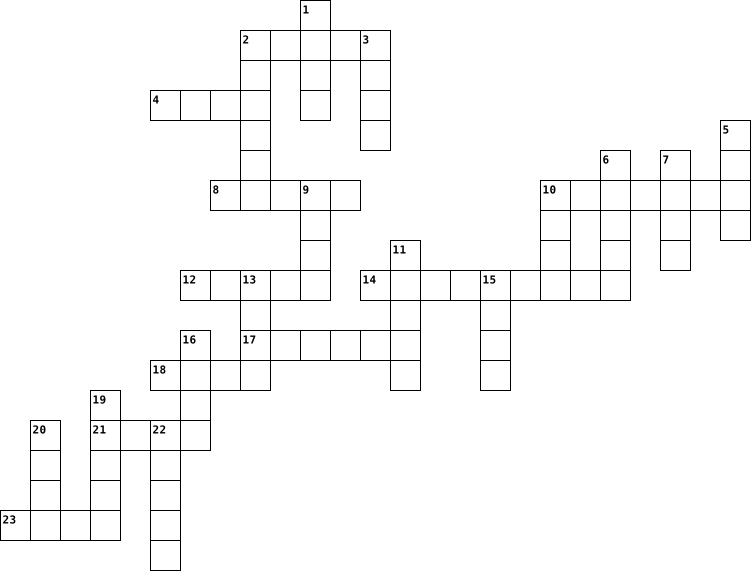
Across
- dientes
- piocha
- vientre
- dedos
- manos
- hombros
- cachetes
- espalda
- brazos
- ojos
Down
- cabeza
- lengua
- cabello
- nariz
- rodillas
- pies
- piernas
- cara
- pecho
- cuello
- labios
- orejas
- uñas
- cuerpo
- boca
25 Clues: pies • cara • uñas • boca • ojos • nariz • dedos • pecho • manos • cabeza • lengua • piocha • cuello • labios • orejas • cuerpo • brazos • dientes • cabello • vientre • piernas • hombros • espalda • rodillas • cachetes
Body 2016-09-02
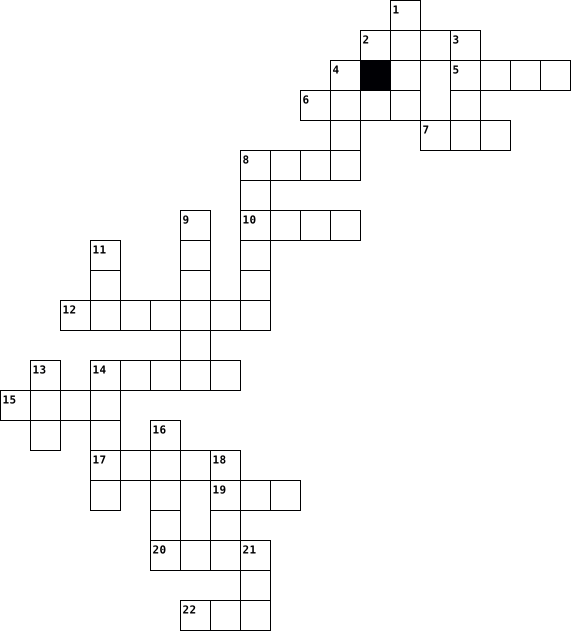
Across
- Rücken
- Hals
- Kopf
- Bein
- Fuß
- Nase
- Pflaster
- Bauch
- Gesicht
- Zahn
- Arm
- wehtun
- Auge
Down
- Hand
- Knie
- Füße
- Finger
- Po
- krank
- Ohr
- Zähne
- Mund
- Haare
- Zeh
24 Clues: Po • Fuß • Ohr • Arm • Zeh • Hand • Knie • Füße • Hals • Kopf • Bein • Nase • Mund • Zahn • Auge • krank • Bauch • Zähne • Haare • Rücken • Finger • wehtun • Gesicht • Pflaster
Body 2017-10-05
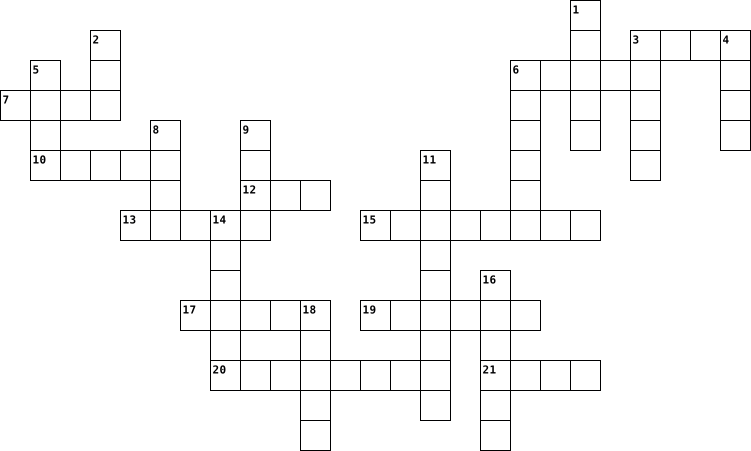
Across
- the back of your leg below your knee
- the top part of your leg above your knee
- a small, dark mark on the skin
- one of the hard, white objects in your mouth that you use for biting and crushing food
- one of the two organs on your head that you hear with
- the part of your leg that is just above your foot
- the part of your face between your eyes and your hair
- the front of your body between your neck and your waist
- the part of your body under your arm, where your arm meets your shoulder
- where your arm joins your body next to your neck
- the organs inside a person's or animal's body
Down
- the part around the middle of your body where you wear a belt
- one of the two organs in your face, which you use to see with
- the soft part of your face below your eye
- a hand closed into a ball with the fingers and thumb curled tightly together
- one of the two flat parts on the ends of your legs that you stand on
- the soft thing inside your mouth that you move and use for tasting and speaking
- the bottom part of your face, below your mouth
- the middle part of your leg where it bends
- a mark on someone's skin that has been there since they were born
- the small hairs on the edges of your eye
- one of the five, long, separate parts at the end of your hand
- the short, thick finger on the side of your hand that can touch the top of all your other fingers
23 Clues: a small, dark mark on the skin • the back of your leg below your knee • the top part of your leg above your knee • the small hairs on the edges of your eye • the soft part of your face below your eye • the middle part of your leg where it bends • the organs inside a person's or animal's body • the bottom part of your face, below your mouth • ...
body 2017-12-14
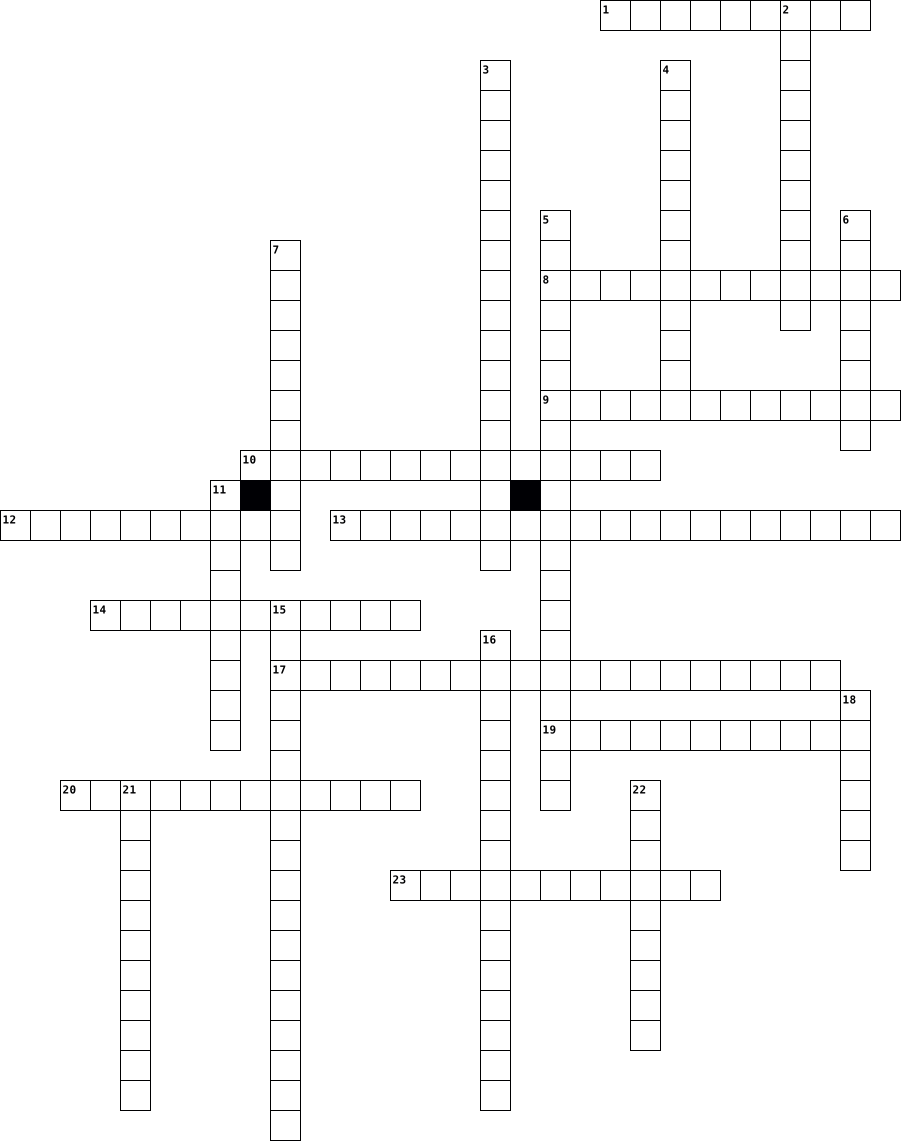
Across
- to,plus
- constituent element
- layer surrounding the earth
- connection, association
- source of supply
- or difficulty
- or relating to the body
- or control
- place in school
- or store
- mention; allusion
Down
- line of thought or action activitiy:a use of energy or force
- of rules
- attention
- or social equality for all
- way of doing
- animal, especially a nonhuman
- allow to do something
- management of any office
- of performance
- be able to proceed:go forward
- learner
- from hurt or risk
23 Clues: to,plus • learner • of rules • or store • attention • or control • way of doing • or difficulty • of performance • place in school • source of supply • from hurt or risk • mention; allusion • constituent element • allow to do something • connection, association • or relating to the body • management of any office • or social equality for all • layer surrounding the earth • animal, especially a nonhuman • ...
body 2018-08-07
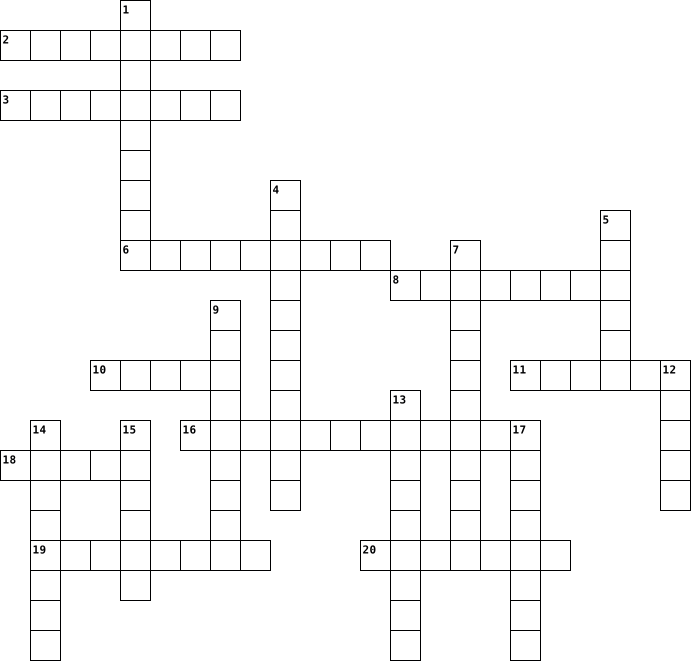
Across
- knowledgeable
- adventurous
- lethargic
- gloomy
- disloyal
- dishonest
- lazy
- kind
- inept
- insincere
Down
- good-natured
- narrow-minded
- rude
- optimistic
- quiet
- punctual
- disorganized
- unimaginative
- Stupid
- stingy
20 Clues: rude • lazy • kind • quiet • inept • gloomy • Stupid • stingy • disloyal • punctual • lethargic • dishonest • insincere • optimistic • adventurous • good-natured • disorganized • knowledgeable • narrow-minded • unimaginative
Body 2023-05-16
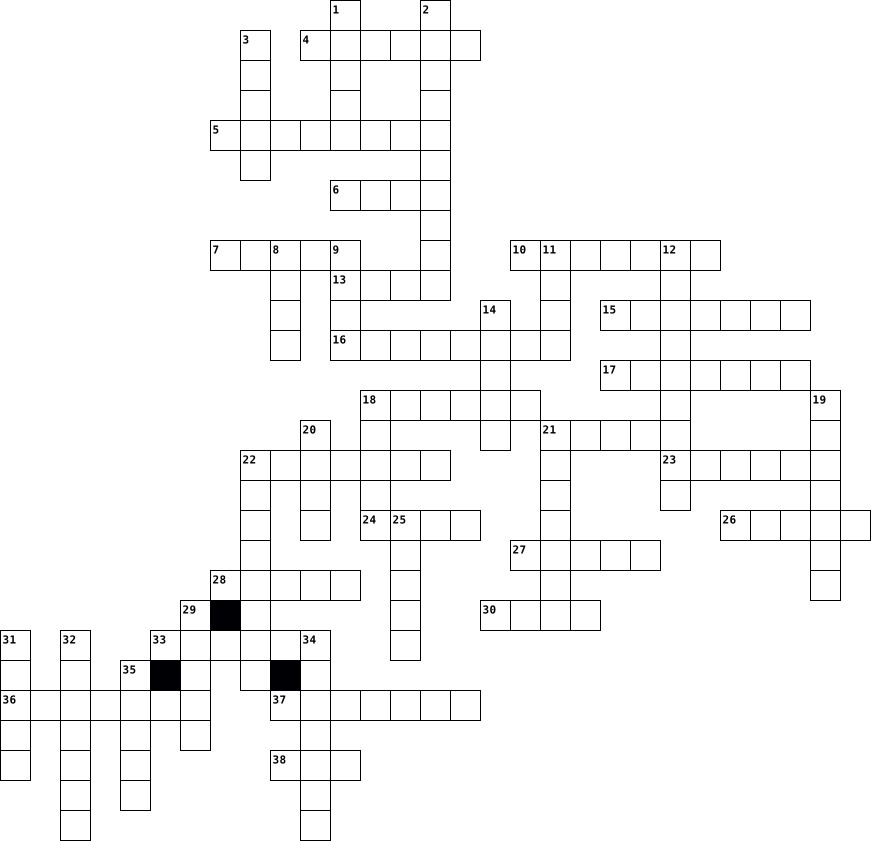
Across
- a hollow under the arm at the shoulder.
- A gland in the male reproductive system.
- the protruding part of the face below the mouth, formed by the apex of the lower jaw.
- two sponge-like, cone-shaped structures that fill most of the chest cavity.
- a muscular membranous sac in the abdomen which receives urine from the kidneys and stores it for excretion.
- the back part of the human foot below the ankle.
- the strip of hair growing on the ridge above a person's eye socket.
- two external openings of the nasal cavity in vertebrates that admit air to the lungs and smells to the olfactory nerves.
- a female reproductive organ in which eggs are produced
- an abdominal organ involved in the production and removal of blood cells in most vertebrates and forming part of the immune system.
- the part of the human leg between the hip and the knee.
- the internal organ in which the major part of the digestion of food occurs
- each of the upper and lower folds of skin which cover the eye when closed.
- the inside part of the hand between the wrist and the fingers.
- a rounded knotty depression in the centre of a person's belly caused by the detachment of the umbilical cord after birth
- the part of the human body below the ribs and above the hips, often narrower than the areas above and below.
- any of the tubes forming part of the blood circulation system of the body,
- refers to the posterior portion of the lower leg.
- the passage which leads from the back of the mouth of a person or animal.
- the membrane of the middle ear, which vibrates in response to sound waves
- a part of a finger at a joint where the bone is near the surface, especially where the finger joins the hand.
- a projection of the pelvis and upper thigh bone on each side of the body in human beings
Down
- the part or joint connecting the hand with the forearm.
- the hard, smooth covering that protects the upper part of the end of a finger.
- muscular organ that pumps the blood through the circulatory system by rhythmic contraction and dilation.
- the part of a person's or animal's body connecting the head to the rest of the body.
- the front of the leg below the knee.
- two fleshy parts which form the upper and lower edges of the opening of the mouth.
- short curved hairs growing on the edges of the eyelids
- a large lobed glandular organ in the abdomen of vertebrates, involved in many metabolic processes.
- the skin covering the head, excluding the face.
- each of a pair of organs in the abdominal cavity of mammals, birds, and reptiles, that excrete urine.
- the undersurface of a person's foot.
- the nail at the tip of each toe
- an internal or external framework of bone, cartilage, or other rigid material supporting or containing the body of an animal or plant.
- the part or joint connecting the foot with the leg.
- the short, thick first digit of the human hand
- the front surface of a person's or animal's body between the neck and the stomach.
- the part of a person's arm extending from the elbow to the wrist or the fingertips.
- One of two small masses of lymphoid tissue on either side of the throat.
- he control centre of the nervous system,located within the skull
41 Clues: the nail at the tip of each toe • the front of the leg below the knee. • the undersurface of a person's foot. • a hollow under the arm at the shoulder. • A gland in the male reproductive system. • the short, thick first digit of the human hand • the skin covering the head, excluding the face. • the back part of the human foot below the ankle. • ...
Body 2023-12-11
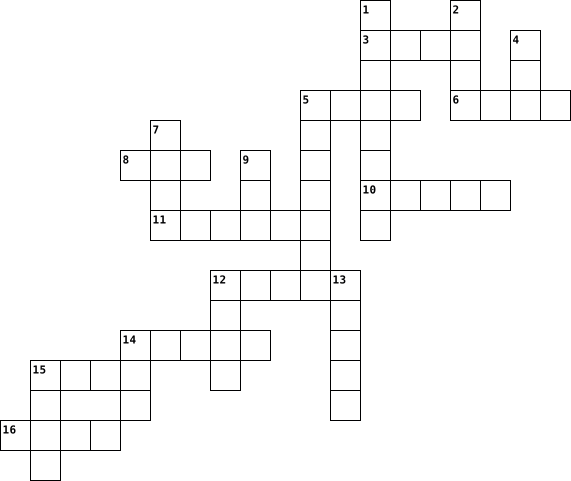
Across
- nariz
- cara
- roilla
- dedo del pie
- codo
- lengua
- pecho
- tobillo
- pelo
- orejas
Down
- nudillos
- cuello
- ojo
- dedos
- pata
- pierna
- muscle musculo de la pantorrilla
- diente
- brazo
- cabeza
20 Clues: ojo • cara • pata • codo • pelo • nariz • dedos • pecho • brazo • cuello • roilla • pierna • lengua • diente • cabeza • orejas • tobillo • nudillos • dedo del pie • muscle musculo de la pantorrilla
Body 2024-01-08
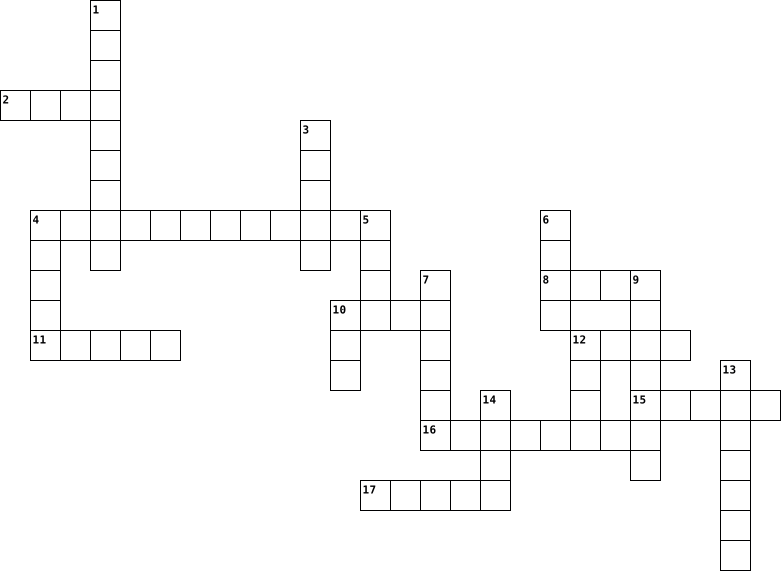
Across
- 6
- 5
- 11
- 10
- 12
- 2
- 4
- 19
- 16
Down
- 18
- 7
- 15
- 9
- 3
- 13
- 1
- 14
- 20
- 17
- 8
20 Clues: 6 • 7 • 5 • 9 • 3 • 1 • 2 • 8 • 4 • 18 • 15 • 13 • 11 • 10 • 14 • 12 • 20 • 17 • 19 • 16
BODY 2026-01-22

Across
- palec (u ręki)
- oko
- łokieć
- nos
- stopa
- dłoń
- kostka
- ząb
- klatka piersiowa
- palec (u nogi)
- szyja
- zęby
Down
- podbródek
- ucho
- czoło
- policzek
- brzuch
- kolano
- ramię/bark
- kciuk
- nadgarstek
- warga
- usta
- plecy
- stopy
25 Clues: oko • nos • ząb • ucho • dłoń • usta • zęby • czoło • stopa • kciuk • warga • plecy • stopy • szyja • brzuch • kolano • łokieć • kostka • policzek • podbródek • ramię/bark • nadgarstek • palec (u ręki) • palec (u nogi) • klatka piersiowa
Body 2025-11-09

Across
- When the skin is opened by something sharp.
- Pain in a tooth.
- Pain in the head.
- throat Pain or discomfort when swallowing.
- When your temperature is higher than normal.
- Red, itchy spots on the skin.
- When a part of the body becomes bigger than normal.
- To bring food back up from the stomach through the mouth.
- A dark mark on the skin after being hit.
- Feeling like everything is spinning.
- pain Pain in the back.
- Injury to a joint that causes pain and swelling (not broken).
Down
- Pain in the stomach area.
- A mild illness causing sneezing and a blocked nose.
- A small break or crack in a bone.
- To force air from your throat with a short sound.
- Pain inside the ear.
- nose When it’s hard to breathe through your nose.
- nose When liquid comes from the nose because of illness.
- of breath Difficulty breathing normally.
- A stronger illness causing fever, tiredness, and body aches.
- Feeling weak and with no energy.
- Illness caused by bacteria or a virus.
- Feeling like you might vomit.
- Damage to the skin caused by heat.
25 Clues: Pain in a tooth. • Pain in the head. • Pain inside the ear. • pain Pain in the back. • Pain in the stomach area. • Red, itchy spots on the skin. • Feeling like you might vomit. • Feeling weak and with no energy. • A small break or crack in a bone. • Damage to the skin caused by heat. • Feeling like everything is spinning. • Illness caused by bacteria or a virus. • ...
Animals 2025-01-17

Across
- languages used in america
- a tool used to clean dust on the floor
- job that works selling goods
- this animal loves bananas
- animal that have long trunks
Down
- this animal has a very long neck
- jobs that work in hospital
- what body parts are used when writting
- what is the red fruit
- what body parts are used for walking
10 Clues: what is the red fruit • languages used in america • this animal loves bananas • jobs that work in hospital • job that works selling goods • animal that have long trunks • this animal has a very long neck • what body parts are used for walking • what body parts are used when writting • a tool used to clean dust on the floor
Crossword Puzzle 2025-01-17

Across
- this animal has a very long neck
- animal that have long trunks
- what body parts are used when writting
- what body parts are used for walking
- this animal loves bananas
Down
- a tool used to clean dust on the floor
- languages used in america
- job that works selling goods
- jobs that work in hospital
- what is the red fruit
10 Clues: what is the red fruit • languages used in america • this animal loves bananas • jobs that work in hospital • animal that have long trunks • job that works selling goods • this animal has a very long neck • what body parts are used for walking • a tool used to clean dust on the floor • what body parts are used when writting
Evidence of Evolution 2022-03-03

Across
- body parts that have lost their original function through evolution
- shallow external molds left by animal/plant tissues with little or no organic materials present
- no two individual is the same
- the splitting of the ancestral population that are isolated from one another and have a homologous structure
- body parts of organisms that have similar functions but different origin
Down
- body parts of organisms that may perform different functions but are of the same origin
- study of fossils
- traces of organisms that lived in the past and were preserved by natural process
- The change in inherited traits over successive generations in populations of organisms
- the ability of an organism to survive and produce offspring
10 Clues: study of fossils • no two individual is the same • the ability of an organism to survive and produce offspring • body parts that have lost their original function through evolution • body parts of organisms that have similar functions but different origin • traces of organisms that lived in the past and were preserved by natural process • ...
Body 2021-07-08
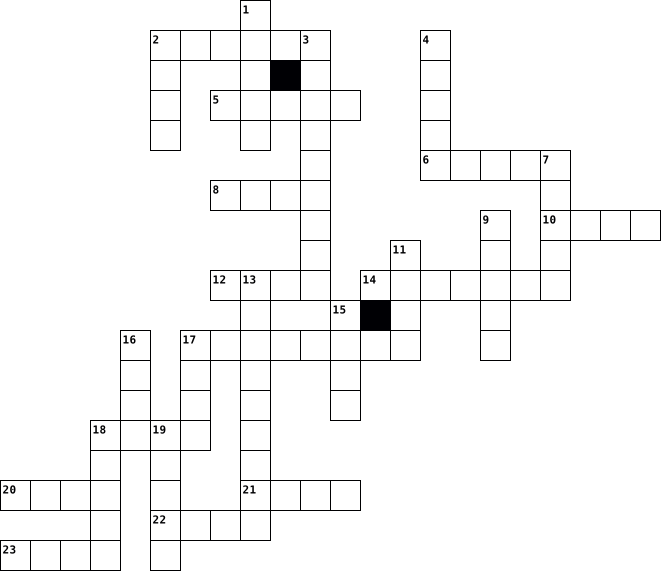
Across
- you kiss them when you greet your mom or dad
- part of your arm
- dentists work with your ...
- there is your brain inside ( or maybe not)
- It moves when you nod
- they make you walk
- you grab things with your...
- above your eyes
- raise your ... to the sky!
- Watch your ...!!
- you listen with your...
- fingers, but of your feet
- you smell with...
Down
- It rumbles when you are hungry
- double or triple in horrible pics
- have a good head on your ...
- bracelets on your...
- put your ... up!
- sometimes you fall on your ...
- ...red like Coca-Cola
- mascara on...
- you kick the ball with it
- long or short, curly or straight
- you see with your...
- if it is sprained you can't walk!
- shut your ... up!
26 Clues: mascara on... • above your eyes • part of your arm • put your ... up! • Watch your ...!! • shut your ... up! • you smell with... • they make you walk • bracelets on your... • you see with your... • It moves when you nod • ...red like Coca-Cola • you listen with your... • you kick the ball with it • fingers, but of your feet • raise your ... to the sky! • dentists work with your ... • ...
Body 2017-10-05
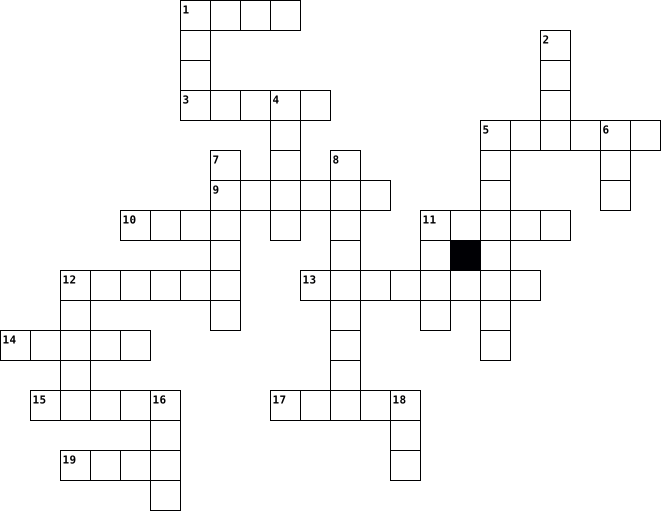
Across
- a hand closed into a ball with the fingers and thumb curled tightly together
- one of the hard, white objects in your mouth that you use for biting and crushing food
- one of the five, long, separate parts at the end of your hand
- the part of your body under your arm, where your arm meets your shoulder
- the organs inside a person's or animal's body
- the front of your body between your neck and your waist
- the soft thing inside your mouth that you move and use for tasting and speaking
- where your arm joins your body next to your neck
- the part around the middle of your body where you wear a belt
- the soft part of your face below your eye
- the part of your leg that is just above your foot
- a small, dark mark on the skin
Down
- one of the two flat parts on the ends of your legs that you stand on
- the bottom part of your face, below your mouth
- the short, thick finger on the side of your hand that can touch the top of all your other fingers
- the part of your face between your eyes and your hair
- one of the two organs on your head that you hear with
- the small hairs on the edges of your eye
- a mark on someone's skin that has been there since they were born
- the back of your leg below your knee
- the top part of your leg above your knee
- the middle part of your leg where it bends
- one of the two organs in your face, which you use to see with
23 Clues: a small, dark mark on the skin • the back of your leg below your knee • the small hairs on the edges of your eye • the top part of your leg above your knee • the soft part of your face below your eye • the middle part of your leg where it bends • the organs inside a person's or animal's body • the bottom part of your face, below your mouth • ...
body 2016-05-22
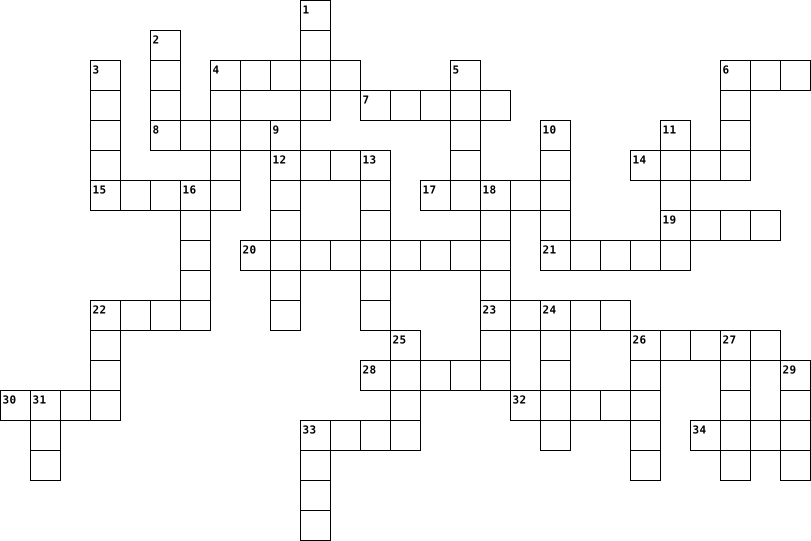
Across
- cintura
- cadera
- observar
- uñas
- ...your hair
- ...your arms
- corazon
- tobillo
- pantorrilla
- estirarse
- muslo
- ... your nails
- codo
- ...hands
- pulmones
- mastegar
- higado
- clucar l'ull
- talon
Down
- puño
- vadallar
- ...your teeth or your hair
- muñeca
- fruncir el ceño
- ...somebody's hand
- rascar
- pecho
- ...your toes
- culo
- ...your eyebrows
- riñones
- ... your nose
- cerebro
- ...your thumb
- ...your shoulders
- agenollarse
- palma
- abraçar
- dir adeu
39 Clues: puño • uñas • culo • codo • pecho • muslo • palma • talon • muñeca • cadera • rascar • higado • cintura • corazon • tobillo • riñones • cerebro • abraçar • vadallar • observar • ...hands • pulmones • mastegar • dir adeu • estirarse • pantorrilla • agenollarse • ...your toes • ...your hair • ...your arms • clucar l'ull • ... your nose • ...your thumb • ... your nails • fruncir el ceño • ...your eyebrows • ...your shoulders • ...somebody's hand • ...
BODY 2019-03-08
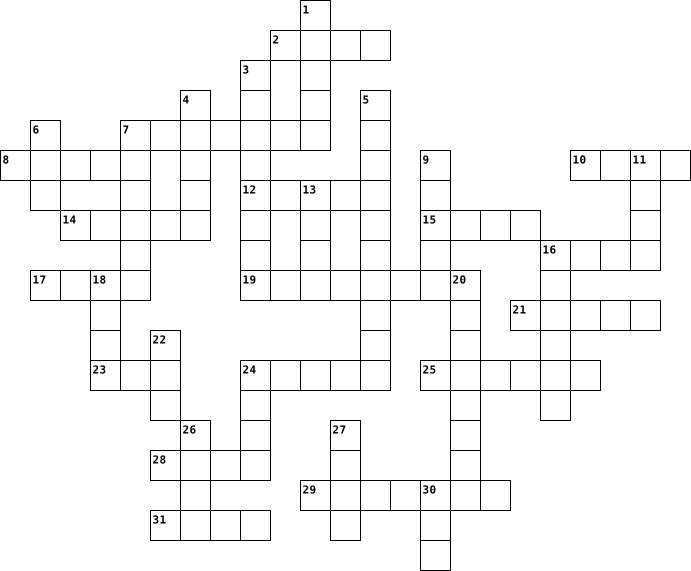
Across
- stopa
- żołądek
- mózg
- przeziębienie
- kostka
- zęby
- plecy
- palce u nóg
- kość
- brwi
- broda
- oko
- serce
- mięsień
- głowa
- palce u rąk
- skóra
Down
- buzia
- ból głowy
- kaszleć
- ból gardła
- ramię
- kichać
- łokieć
- wargi
- kolano
- grypa
- nos
- ramię, bark
- noga
- dłoń, ręka
- szyja
- włosy
- ucho
34 Clues: nos • oko • mózg • zęby • kość • brwi • noga • ucho • buzia • stopa • ramię • wargi • plecy • grypa • broda • serce • szyja • włosy • głowa • skóra • kichać • łokieć • kostka • kolano • kaszleć • żołądek • mięsień • ból głowy • ból gardła • dłoń, ręka • palce u nóg • ramię, bark • palce u rąk • przeziębienie
Body 2019-11-03
Across
- Limbs on which a person or animal walks and stands (plural)
- Two organs in the chest with which people and some animals breathe
- An arm joint
- Back
- One of a series of 12 curved bones that occur in pairs
- Limbs on which a person or animal walks and stands (plural)
- A part of the body that sweats very much
- The front part of the head
- A part of the finger that girls paint (plural)
- A clapping tool
- The second largest internal organ
Down
- A soft part of the body with which we sit on something
- Two oval organs that produce sperm in men (plural)
- The internal organ in which the major part of the digestion of food occurs
- A part of the body that is a sign of love
- Male genital organ
- Limbs of the human body from the shoulder to the hand
- Female genital organ
- Two oval organs that produce sperm in men (plural)
- A part of the body that sweats very much
- The middle joint of the leg that allows the leg to bend
- Ends of the arm (plural)
- Human skeleton is made of this
23 Clues: Back • An arm joint • A clapping tool • Male genital organ • Female genital organ • Ends of the arm (plural) • The front part of the head • Human skeleton is made of this • The second largest internal organ • A part of the body that sweats very much • A part of the body that sweats very much • A part of the body that is a sign of love • A part of the finger that girls paint (plural) • ...
Body 2013-01-30
Across
- mouth
- eyelash
- handrina
- foot
- body
- fingers
- tooth
- nose
- elbow
- arm
- cheeks
- face
- belly
- head
Down
- skin
- lower leg
- back
- lungs
- hair
- chest
- lips
- thigh
- eyelids
- knee
- hand
- eye
- tongue
- breast
- fist
- heart
- ear
- chin
32 Clues: eye • arm • ear • skin • back • hair • lips • knee • foot • hand • body • fist • nose • chin • face • head • lungs • mouth • chest • thigh • tooth • heart • elbow • belly • tongue • breast • cheeks • eyelash • eyelids • fingers • handrina • lower leg
Body 2023-10-30
Across
- Organ in the body for digesting food and storing it.
- Organ used for hearing and balance located on each side of the head.
- Joint connecting the hand to the arm.
- Digit of the foot used for balance and movement.
- Lower limb used for standing, walking, and movement.
- Joint connecting the foot to the leg.
- Organ of sight situated in the eye socket that allows vision.
- Facial orifice used for eating, speaking, and expression.
- Facial feature used for breathing and sense of smell.
- Joint in the middle of the leg, enabling bending and movement.
Down
- Lower part of the leg that is used for standing, walking, and balance.
- Filamentous structure covering the scalp and body.
- Upper part of the body that includes the face, brain, and senses.
- Limb extending from the shoulder to the hand used for movement and tasks.
- Body part connecting the arm to the torso, allowing movement.
- Rear part of the body, extending from the shoulders to the waist.
- Upper part of the torso housing the heart and lungs.
- Joint connecting the forearm to the upper arm.
- Body part at the end of the arm with fingers for grasping and manipulating objects.
- Part of the body connecting the head to the torso.
20 Clues: Joint connecting the hand to the arm. • Joint connecting the foot to the leg. • Joint connecting the forearm to the upper arm. • Digit of the foot used for balance and movement. • Filamentous structure covering the scalp and body. • Part of the body connecting the head to the torso. • Organ in the body for digesting food and storing it. • ...
body 2022-10-25
Across
- špičatý
- plnovous
- ruka
- malý (nízký)
- tlustý
- kudrnatý
- blonďatý
- zrzavý
- vysoký
- mladý
- kulatý
Down
- rovný
- plešatý
- vlasy
- hubený
- obličej
- dlouhý
- oválný
- tmavý
- vlnitý
- starý
- paže
22 Clues: ruka • paže • rovný • vlasy • tmavý • mladý • starý • hubený • tlustý • dlouhý • oválný • vlnitý • zrzavý • vysoký • kulatý • špičatý • plešatý • obličej • plnovous • kudrnatý • blonďatý • malý (nízký)
Body 2023-03-07
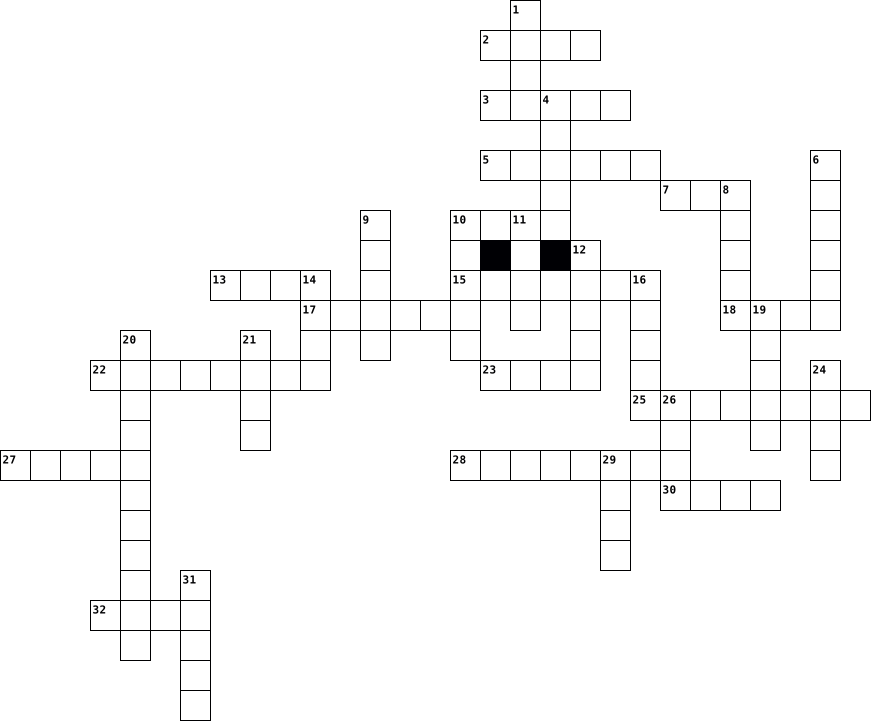
Across
- You use it to hold or pick up things.
- This is the middle of your arm.
- A pink part of the body that is inside the mouth.
- A long body part that is used to throw things.
- Each foot has 5 of these.
- It is the middle part of your leg.
- This is hair just above the eye.
- This part of the body is under your shoulder. It sometimes smells bad.
- This grows on the top of your head.
- Birds have many of these.
- You wear a shoe on it.
- This is a joint between the arm and body.
- This gets big if you eat too much.
- Hair on your face, under your nose.
- People have two, but many animals have four and spiders have eight.
- You use it to smell things.
Down
- This is long and at the back of the body.
- These are white, hard, and inside of your body.
- You can use this to point and there are five on each hand.
- Used for eating and speaking.
- This is a big finger. You have one on each hand.
- They are used to bite and chew food.
- You use them to see.
- You can wear a watch here.
- You use them to listen.
- Birds and planes use these to fly.
- It joins your feet to your legs.
- It is in the middle of the belly.
- The brain is inside this.
- Wear a scarf around this.
- This is at the bottom of the foot at the back.
- This is at the bottom of the face.
- This is hair on your face.
33 Clues: You use them to see. • You wear a shoe on it. • You use them to listen. • Each foot has 5 of these. • The brain is inside this. • Birds have many of these. • Wear a scarf around this. • You can wear a watch here. • This is hair on your face. • You use it to smell things. • Used for eating and speaking. • This is the middle of your arm. • This is hair just above the eye. • ...
body 2023-05-01
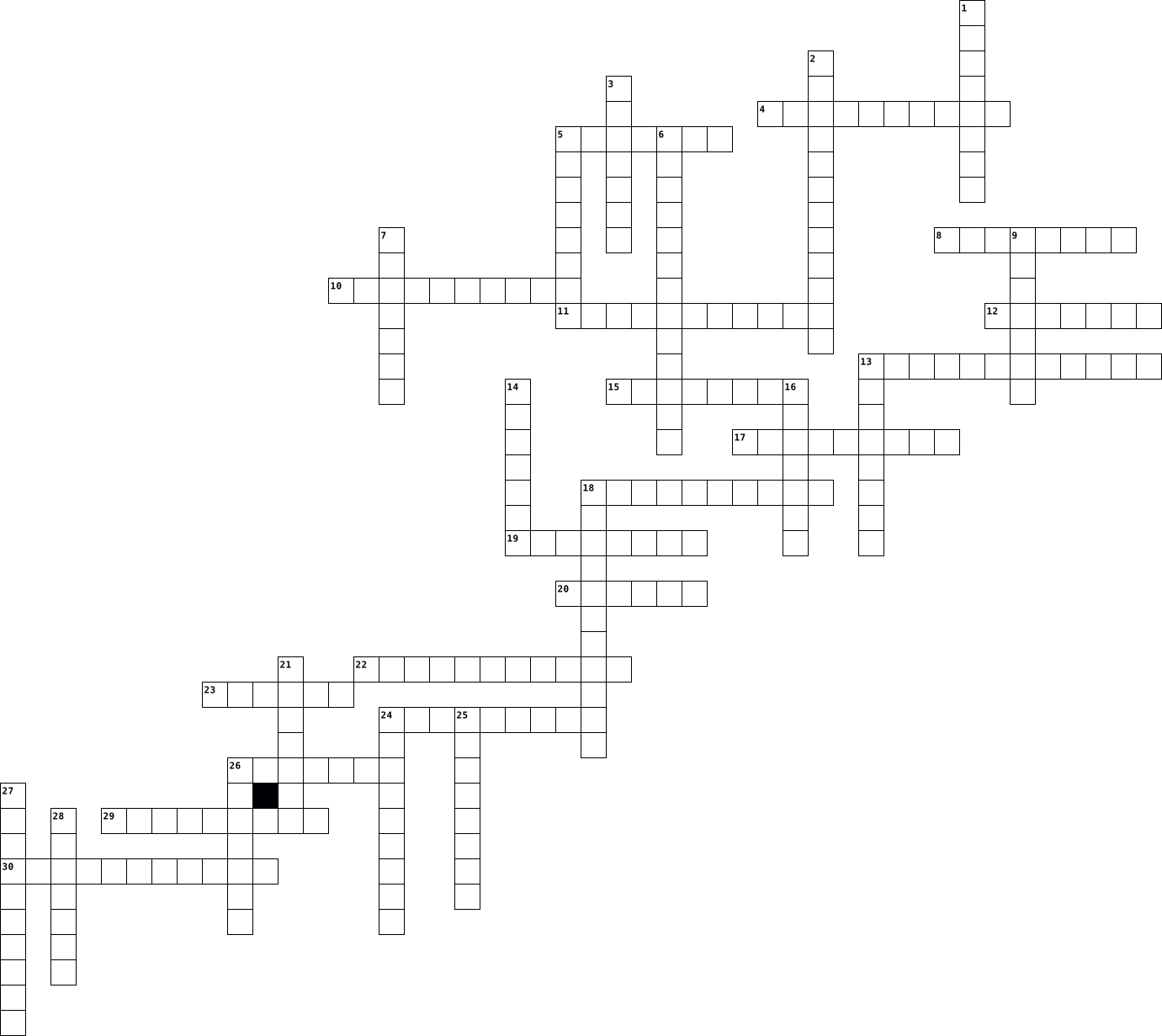
Across
- el abdomen
- la barilla
- los dientes
- el parapado
- el bigote
- la espalda
- El cuerpo humano
- el pecho
- el sobaco
- la Ceja
- el cado
- el brazo
- las narices
- la cadera
- la lengua
- la cara
- las mejillas
- la frente
Down
- la barba
- la Pestana
- el pelo
- la cintura
- ¿Cómo te sientes?
- los labios
- la Cabeza
- la Boca
- las nalgas
- la nariz
- el hombro
- el cuello
- la pelvis
- button el ombiligo
- la oreja
- las amigdalas
- los ojos
35 Clues: el pelo • la Boca • la Ceja • el cado • la cara • la barba • el pecho • la nariz • el brazo • la oreja • los ojos • la Cabeza • el bigote • el sobaco • el hombro • el cuello • la cadera • la lengua • la pelvis • la frente • la Pestana • el abdomen • la barilla • la cintura • los labios • la espalda • las nalgas • los dientes • el parapado • las narices • las mejillas • las amigdalas • El cuerpo humano • ¿Cómo te sientes? • button el ombiligo
body 2024-11-18

Across
- genou
- bras
- menton
- poignet
- ongles
- front
- sourcils
- orteils
- cils
- pied
- cheveux
- dos
- cou
Down
- taille
- oreille
- cheville
- hanches
- main
- poitrine
- doigt
- épaules
- nez
- tête
- jambe
- yeux
- pieds
- ventre
- joue
- ventre (plus familier)
29 Clues: nez • dos • cou • bras • main • tête • yeux • cils • pied • joue • genou • doigt • jambe • front • pieds • taille • menton • ongles • ventre • oreille • hanches • poignet • épaules • orteils • cheveux • cheville • poitrine • sourcils • ventre (plus familier)
Body 2024-11-05

Across
- skin
- foot
- nose
- beard
- hip
- head
- elbow
- ankle
- lips
- mouth
- eyes
Down
- leg
- tummy
- face
- brain
- neck
- fingers
- arm
- bone
- hand
20 Clues: leg • hip • arm • skin • foot • face • nose • head • neck • bone • hand • lips • eyes • tummy • beard • brain • elbow • ankle • mouth • fingers
Body 2025-05-14

Across
- the front of the leg below the knee
- the inside of your hand
- urine is stored here
- a pigmented spot
- your spine consist of these smaller bones
- the name of the hidmost teeth (not everyone has them)
- these hold your teeth in place
- the bottom part of your foot
- this connects two bones and enables movement
- the part of ear which is often pierced
- you have white and red blood_____
- you use this organ to breathe
- the smallest finger
Down
- to take air or substances into the lungs by breathing in
- women carry children here
- openings in the nose; allow air to enter and exit
- the breakdown of food into nutrients
- teeth in the back of your mouth
- you get these when you're cold or scared
- the hole in your stomach
20 Clues: a pigmented spot • the smallest finger • urine is stored here • the inside of your hand • the hole in your stomach • women carry children here • the bottom part of your foot • you use this organ to breathe • these hold your teeth in place • teeth in the back of your mouth • you have white and red blood_____ • the front of the leg below the knee • the breakdown of food into nutrients • ...
Body 2025-04-28

Across
- 12
- 19
- 7
- 4
- 18
- 17
- 23
- 20
- 22
- 11
- 2
- 21
- 1
Down
- 16
- 14
- 6
- 10
- 8
- 13
- 3
- 9
- 5
- 15
23 Clues: 6 • 7 • 4 • 8 • 3 • 9 • 5 • 2 • 1 • 16 • 14 • 12 • 19 • 10 • 18 • 13 • 17 • 23 • 20 • 22 • 15 • 11 • 21
Body 2026-03-18

Across
- Thigh
- Mouth
- Chest
- Cheeks
- skin
- finger
- Front
- Shoulder
- Elbow
- Blood
- Stomach
- leg
- Ankle
- Lips
- Teeth
- wrist
Down
- muscle
- Back
- Neck
- Bone
- Chin
- Hair
- foot
- Toes
- Head
- face
- heart
- Eye
- Ribs
- Eyebrows
- Nose
- Ear
- Tongue
33 Clues: Eye • leg • Ear • Back • Neck • Bone • Chin • Hair • skin • foot • Toes • Head • face • Ribs • Nose • Lips • Thigh • Mouth • Chest • Front • Elbow • Blood • heart • Ankle • Teeth • wrist • muscle • Cheeks • finger • Tongue • Stomach • Shoulder • Eyebrows
BODY 2026-03-09

Across
- the area around the middle of the body between the ribs and the hips, often narrower than the areas above and below
- the part of the body under the arm where it joins the shoulder
- the part of the body below the chest that contains the stomach, bowels, etc.
- a substance produced in the body when you are excited, afraid or angry. It makes the heart beat faster and increases your energy and ability to move quickly.
- the small bone at the bottom of the spine
- the small round part in the middle of the stomach, on the front of somebody's body, where the umbilical cord was cut at birth
- the liquid that is produced in your mouth that helps you to swallow food
- the area at either side of the body between the top of the leg and the middle part of the body
- the organ in women and female animals in which babies or young animals develop before they are born
- the part of food that helps to keep a person healthy by keeping the bowels working and moving other food quickly through the body
- a small hollow place in the skin, especially in the face
- the joint between the hand and the arm
- the tube through which food passes from the mouth to the stomach
Down
- a collection of cells that form the different parts of humans, animals and plants
- a large organ in the body that cleans the blood and produces bile
- either of the two organs in the body that remove waste products from the blood and produce urine
- the front part of the leg below the knee
- the part of the body that you sit on
- the back part of the leg between the ankle and the knee
- a hole or opening, especially one in the body
- the soft part at the bottom of the ear
- the inner surface of the hand between the wrist and the fingers
- a place where two bones are joined together in the body in a way that enables them to bend and move
- the tube along which food passes after it has been through the stomach, especially the end where waste is collected before it is passed out of the body
- a hand when it is tightly closed with the fingers bent into the palm
- the tube in the body through which food passes when it leaves the stomach
26 Clues: the part of the body that you sit on • the soft part at the bottom of the ear • the joint between the hand and the arm • the front part of the leg below the knee • the small bone at the bottom of the spine • a hole or opening, especially one in the body • the back part of the leg between the ankle and the knee • ...
Medical Terminology 2022-09-02

Across
- Closer toward the trunk of the body
- Position Reference used to describe body parts in relation to one another
- Fixed lines of reference
- Creates a top and bottom half
- Creates a front and back side
- Further from the trunk of the body
- above or nearer to the head
Down
- Closer to the midline of the body
- Back side
- Further from the midline of the body
- below or nearer to the feet
- Creates a right and left side
- Front side
13 Clues: Back side • Front side • Fixed lines of reference • below or nearer to the feet • above or nearer to the head • Creates a right and left side • Creates a top and bottom half • Creates a front and back side • Closer to the midline of the body • Further from the trunk of the body • Closer toward the trunk of the body • Further from the midline of the body • ...
body sytems 2018-02-14

Across
- provides movement to the body
- arrangements of elements or parts
- an activity or purpose
- allows you to breath
- breaks down food and collects nutrients
- carries messages to and from the brain
Down
- protects the body from the outside world
- circulates blood throughout the body
- supports the body
- produces hormones
- eliminates waste
11 Clues: eliminates waste • supports the body • produces hormones • allows you to breath • an activity or purpose • provides movement to the body • arrangements of elements or parts • circulates blood throughout the body • carries messages to and from the brain • breaks down food and collects nutrients • protects the body from the outside world
ANATOMY-Aleksandar Nikolic 2018-03-29

Across
- one of the long body parts that are used especially for standing, walking, and running
- either one of the two long body parts that join the top of your body at the shoulder and that end at the hand or wrist
- the tube that leads from the mouth through the throat to the stomach
- one of the five long parts of the hand that are used for holding things
Down
- a large organ of the body that produces bile and cleans the blood
- an organ located near your stomach that destroys worn-out red blood cells and produces white blood cells
- the part of the body below the chest that contains the stomach and other organs
- the organ in your chest that pumps blood through your veins and arteries
- the opening through which food passes into the body : the part of the face that includes the lips and the opening behind them
- the part of the leg on which an animal or person stands and moves : the part of the leg below the ankle
10 Clues: a large organ of the body that produces bile and cleans the blood • the tube that leads from the mouth through the throat to the stomach • one of the five long parts of the hand that are used for holding things • the organ in your chest that pumps blood through your veins and arteries • ...
Body Movements 2024-01-24

Across
- Flexible skeletal tissue, not as hard as bones
- Moves using a muscular, flat foot, gliding on a mucus-lubricated surface
- Modified forelimbs as wings, hollow bones for flight
- Connects the neck to the head, enabling forward/backward and left/right movement
- Lacks internal skeleton, moves through soil by muscle contraction
- Internal structure aiding movement, shaping the body, providing support
Down
- Immovable joints located in the skull
- Lacks legs, relies on a long backbone and muscles for movement
- Joints found in hips and shoulders
- Varied movement patterns in animals based on differences in skeletal structure
- Body parts enabling movements, attached to bones in humans
- Points where skeleton parts connect for movement
- Streamlined body reduces resistance for swimming, uses a tail fin for propulsion
13 Clues: Joints found in hips and shoulders • Immovable joints located in the skull • Flexible skeletal tissue, not as hard as bones • Points where skeleton parts connect for movement • Modified forelimbs as wings, hollow bones for flight • Body parts enabling movements, attached to bones in humans • Lacks legs, relies on a long backbone and muscles for movement • ...