
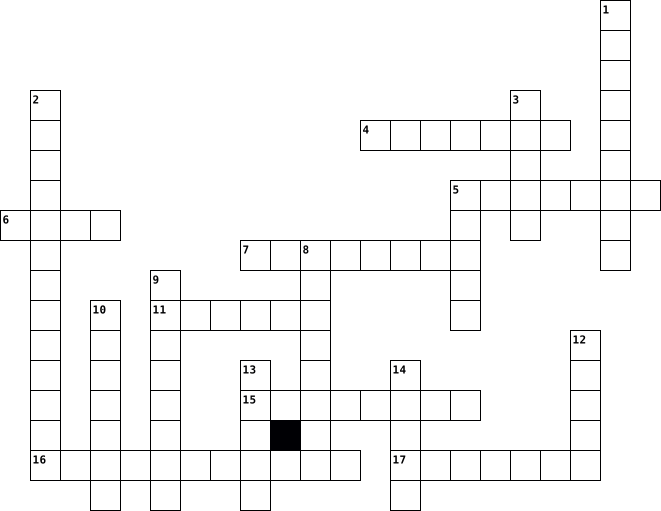
body parts Crossword Puzzles
The lifesavers 2023-02-16

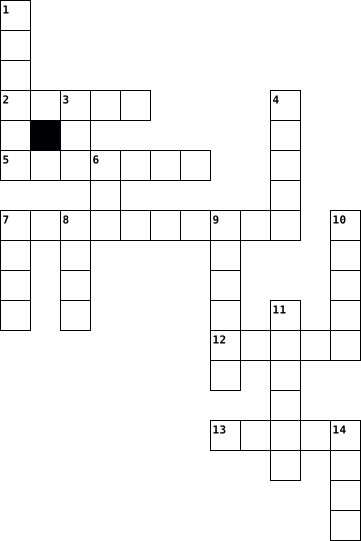
Across
- drug treatment that uses powerful chemicals to kill fast-growing cells in your body
- a device that holds injured body parts in place
- section of the hospital where patients get constant attention and doctors rely on specialized equipment
- occurs when the body doesn't have enough red blood cells
- a medical disorder that is harmful to a person's health
- the hospital room used for treating patients with immediate and life-threatening injuries
- wounds that develop on a patient's body from lying in one place for too long
- loss of mental capacity
- removal of human tissue in order to conduct certain medical tests
- of the time period leading up to giving birth
Down
- a medical condition or physical feature that is passed on in the family
- a virus commonly contracted by children, characterized by itchy spots all over the body
- higher than normal body temperature
- restoring a person's breath and circulation
- the place where major surgeries and operations take place
- objects that people with injured legs or feet use to help them walk
- type of disease typically involving insulin deficiency
- unable to move certain areas of the body
- the virus that infects the human T-cells and leads to AIDS
- a tube that pumps liquids and medication into a patient's body
- injured body tissue that is visible underneath the skin
- a hard bandage that is wrapped around a broken bone to keep it in place
- expected to grow and get much worse (especially related to cancerous cells)
- a sac in the body-tissue filled with fluid (sometimes diseased)
- no feeling in a certain body part
25 Clues: loss of mental capacity • no feeling in a certain body part • higher than normal body temperature • unable to move certain areas of the body • restoring a person's breath and circulation • of the time period leading up to giving birth • a device that holds injured body parts in place • type of disease typically involving insulin deficiency • ...
Puzzle 2018-10-25

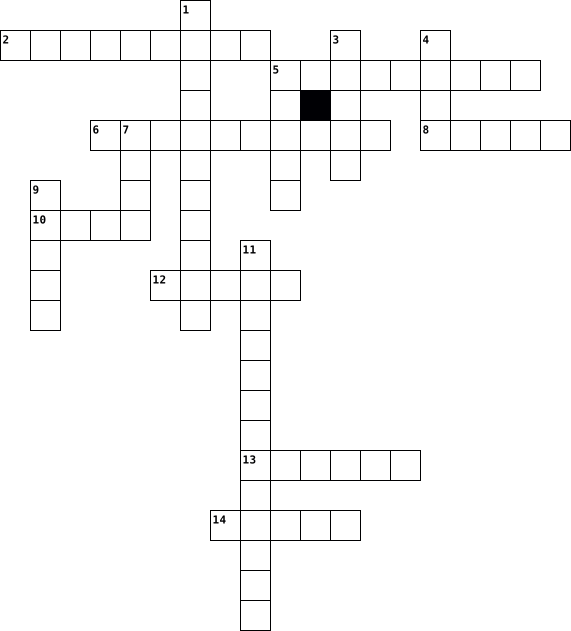
Across
- male reproductive cell
- is a chromosome threadlike structure nuclei and proteins found in a nucleus
- thickness
- is the body structure or a complex body part
- innate present at birth but nor heredity
- mature female reproductive cell
- the male and female sperm
- somatic cell any cell that is not reproductive
Down
- duplication of a cell and all of its parts
- genetically the same
- cell nucleus organisms and other bacteria are composed
- to create or recreate something
- fertilized ovum or egg
- finish
14 Clues: finish • thickness • genetically the same • male reproductive cell • fertilized ovum or egg • the male and female sperm • to create or recreate something • mature female reproductive cell • innate present at birth but nor heredity • duplication of a cell and all of its parts • is the body structure or a complex body part • somatic cell any cell that is not reproductive • ...
halloween 2025-09-05

Across
- Ancient body wrapped in bandages
- Light made from a pumpkin or candle
- Stone marker in a graveyard
- Power used in spells
- Another word for ghost
- Place where the dead are buried
- Words witches use for magic
Down
- A big scary (or funny) creature
- Hard parts that make up a body
- Drink witches make in a cauldron
- Creature that howls at the full moon
- 12 o’clock at night
- Dark shape made when light is blocked
- Something you wear on your face for Halloween
14 Clues: 12 o’clock at night • Power used in spells • Another word for ghost • Stone marker in a graveyard • Words witches use for magic • Hard parts that make up a body • A big scary (or funny) creature • Place where the dead are buried • Ancient body wrapped in bandages • Drink witches make in a cauldron • Light made from a pumpkin or candle • Creature that howls at the full moon • ...
Biology 2021-10-18

Across
- this tissue supports the structure of plants
- this tissue supports the structure of our body
- this tissue covers external and inner linings of the body
- a type of plant organ
- This organism only has one level of organization
- benefits of having specialized tissues
- a group of organs that function together
- a type of organ system in a plant
- a type of organ system in a plant
Down
- the organ system that allow us to breathe
- the organ system that allows nutrients to flow into all parts of our body
- these things make up an organ
- this tissue only covers the outermost part of the body
- The smallest living thing
- Function of cell division in multicellular organisms
- the vascular tissue in plants mainly transports this substance
- the organ system that allows animals to feel sensations on their skin
17 Clues: a type of plant organ • The smallest living thing • these things make up an organ • a type of organ system in a plant • a type of organ system in a plant • benefits of having specialized tissues • a group of organs that function together • the organ system that allow us to breathe • this tissue supports the structure of plants • this tissue supports the structure of our body • ...
Survivor: Wellness Island 2025-04-08

Across
- Plate which replaced the food pyramid
- There are 13 of these that require the body to work completely
- It's the circle of
- A system that helps the body process germs
- Avoid this at all times
- the ability to withstand hardship
- The time meetings will be held
- A plant used to help with healing injuries
- The process where your body breaks down food into smaller parts
Down
- When camping this can help a person stay warm
- Replaces the water your body loses, usually through drinking fluids, to keep it functioning properly
- Make sure to wear this when going outside. Especially on hot days
- An example of this is a house
- The state of being in good health, especially as an actively pursued goal
- Used to hold your items for survival
- The way a person or group lives
16 Clues: It's the circle of • Avoid this at all times • An example of this is a house • The time meetings will be held • The way a person or group lives • the ability to withstand hardship • Used to hold your items for survival • Plate which replaced the food pyramid • A system that helps the body process germs • A plant used to help with healing injuries • ...
Body System, Digestive and Excretory System 2021-11-08

Across
- ex. uses enzymes and acid to break down food
- where saliva is formed
- expandable, muscular sac which holds urine
- tract kidney, ureters, bladder, and urethra
- to control movement in the body
- squeezing motion (relaxing and contracting) that pushes food through the digestive system
- the tube hat leads the urine from the bladder to the outside of the body
- organ that absorbs water
- stores bile
- produces bile
- to release chemicals called hormones
- to change food into a form that can be used by the body
- final milkshake-like mixture that leaves the stomach
- organ that absorbs nutrients for the body
- the filtering units in the kidney which help to clean the blood
- to receive and carry messages to the body and its parts
Down
- contains enzymes, acids, and mucus
- to support and move the body and protect some of the organs
- ex. chew,tear,grind,mash,mix
- tiny finer-like projections in the small intestine
- how the food enters the body and the first step in the digestive process
- to carry materials such as food/oxygen to the cells of the body
- narrow tubes that move urine from the kidneys to the bladder
- to bring in oxygen for the body to use and take away carbon dioxide
- organ responsible for cleaning the blood in the body
- J-shaped muscular bag in which gastric juices mix and churn together to break down food
- to excrete, or remove waste from the body
- a muscular tube that brings food from the mouth to the stomach
- molecule that speed up chemical reactions
29 Clues: stores bile • produces bile • where saliva is formed • organ that absorbs water • ex. chew,tear,grind,mash,mix • to control movement in the body • contains enzymes, acids, and mucus • to release chemicals called hormones • to excrete, or remove waste from the body • organ that absorbs nutrients for the body • molecule that speed up chemical reactions • ...
Directional Terminology: Vet 2022-11-02

Across
- relating to the palm of the hand.
- situated or extending across something.
- nearer the front, especially situated in the front of the body or nearer to the head.
- toward the head end of the body; upper
- nearer the front, especially situated in the front of the body or nearer to the head.
- at or near the tail or the posterior part of the body.
- relating to the skull or cranium.
- situated near the median plane of the body or the midline of an organ.
- relating to the sole of the foot.
- situated or occurring near the front end of the body, especially in the region of the nose and mouth or (in an embryo) near the hypophyseal region.
- of or at the front.
Down
- relating to or denoting the suture on top of the skull which runs between the parietal bones in a front to back direction.
- further back in position; of or nearer the rear or hind end, especially of the body or a part of it.
- the position of one structure relative to the surface of the body or to another underlying structure
- of, on, or relating to the underside of an animal or plant; abdominal.
- situated nearer to the center of the body or the point of attachment.
- of, at, toward, or from the side or sides.
- situated away from the center of the body or from the point of attachment.
- of, on, or relating to the upper side or back of an animal, plant, or organ.
- of, in, or relating to the head.
- the position of a structure as away from the surface of the body
- away from the head; lower
- divides the body into two parts
23 Clues: of or at the front. • away from the head; lower • divides the body into two parts • of, in, or relating to the head. • relating to the palm of the hand. • relating to the skull or cranium. • relating to the sole of the foot. • toward the head end of the body; upper • situated or extending across something. • of, at, toward, or from the side or sides. • ...
The Body Vocab Review 2023-05-03

Across
- groups of cells join together to form ____
- the system that carries blood to all parts of the body
- the system that breaks down food to obtain nutrients
- the muscular and skeletal systems form this system
- the whole living thing
- the system that obtains oxygen to help us breathe
- the process that breaks down food to obtain nutrients
Down
- the system that eliminates waste from the body
- organs join together to form ____
- the process where blood vessels carry nutrients and oxygen around the body
- the basic living units in the human body
- ____ join together to form organs
12 Clues: the whole living thing • organs join together to form ____ • ____ join together to form organs • the basic living units in the human body • groups of cells join together to form ____ • the system that eliminates waste from the body • the system that obtains oxygen to help us breathe • the muscular and skeletal systems form this system • ...
IGCSE - Unit 1 Vocab 2023-12-08

Across
- permanent increase in size
- uptaking materials necessary for energy, growth and development
- multicellular organisms made of cells without cell walls or chloroplasts
- removal of toxic materials from the organism
- transformed limbs of vertebrates used for swimming
- eyes made of many separate lenses grouped together
- used by vertebrates for breathing on land
- structures produced by sking of birds
- made of transformed jaws in birds
- eyes in myriapods
- limbs divided into parts connected by flexible joints
- armor-like external body coverage in crustaceans made of chitin
- flap-like external ear typical for mammals
- sorting into a meaningful order
- action by an organism causing a change of position or place
- system of naming species where each species has a Latin name composed of two parts: genus and species descriptor
Down
- last body part i.e. in crustaceans and insects
- middle body part of an insect
- stiff plate-like structures covering skin of fish and reptiles
- ability to detect and respond to changes in the environment
- structures produced by mammalian skin
- limb of fish used for swimming
- elongated structures placed on the head, used for touching and sense chemicals
- sructure used for gas exchange underwater
- elongated stiff structure on the back of vertebrates, made of vertebrae
- group of organisms which can reproduce and create fertile offspring
- making more organisms of the same kind
- chemical reactions in cell which break down nutrient molecules and release energy
28 Clues: eyes in myriapods • permanent increase in size • middle body part of an insect • limb of fish used for swimming • sorting into a meaningful order • made of transformed jaws in birds • structures produced by mammalian skin • structures produced by sking of birds • making more organisms of the same kind • sructure used for gas exchange underwater • ...
Fitness 2023-11-06
Across
- These are extremely small and can cause disease if they get into your body.
- The unit for measuring the amount of energy that food provides.
- It's a very common illness, especially in winter.
- These are extremely small and can cause disease if they get into your body.
- The system that protects your body from illness.
- When you feel better again after an illness.
- If you don't have a good diet and the right amount of sleep, you're more likely to be __________________ to illness
- Having meals at the same time each day is having ___________ meals.
Down
- A disease in a part of your body that is caused by viruses or bacteria
- You find them in food and they give your body energy
- The smallest living parts of an animal or plant.
- Want something, usually food, very much.
- Serotonin is a _____________ which helps to keep your moods and emotions in balance.
- A disease in which the body cannot control the level of sugar in the blood.
- Another word for disease
- It's important to eat a good breakfast to restore your blood ____________ levels.
- It's in your head and you can't think without it.
- It sends the blood around your body.
18 Clues: Another word for disease • It sends the blood around your body. • Want something, usually food, very much. • When you feel better again after an illness. • The smallest living parts of an animal or plant. • The system that protects your body from illness. • It's a very common illness, especially in winter. • It's in your head and you can't think without it. • ...
Serese Puzzle 2022-10-24

Across
- A fat that is liquid at room temperature and comes from a plant.
- the substances found in food that keep your body functioning.
- sugars that are absorbed quickly.
- adding greatly-needed nutrients to foods that might not have had them in the first place. Minerals a nutrient that is needed in small amounts to keep the body healthy.
- includes the parts of plant foods your body can't digest or absorb.
- an easy to follow food guide.
- that were lost during processing are added back in.
- if a food does not contain nutrients or if the calories from sugar and fats outweigh the nutrients found in the food.
- a collection of foods that share similar nutritional properties or biological classifications. Metabolism is the chemical process by which the body breaks down substances and gets energy.
- cannot be synthesized by the body, must be supplied from.
Down
- sugars that are added during the processing of foods.
- Provides energy. Help to build, maintain, and repair body tissues.
- fats formed from a process called hydrogenation which causes unsaturated fats to harden.
- body is made up of 70% of it.
- substances that our bodies need to develop and function normally.
- a mineral found in many foods.
- how we measure energy in food.
- fat-like substance that's found in all the cells in your body.
- starches that are absorbed more slowly.
19 Clues: body is made up of 70% of it. • an easy to follow food guide. • a mineral found in many foods. • how we measure energy in food. • sugars that are absorbed quickly. • starches that are absorbed more slowly. • that were lost during processing are added back in. • sugars that are added during the processing of foods. • ...
Knowledge Aquisition 2014-02-05

Across
- system/ supports the body, protects internal organs
- tissue/ provides support for the body and connects its parts
- system/ brings oxygen needed for cellular respiration and removed excess carbon dioxide from the body
- one or more double bonds between carbon atoms
- system/ helps protect the body from diseases
- describes the relativity constant internal physical and chemical conditions hat organisms maintain despite changes in internal and external environment
- the most important nutrient
- inhabitation/ process in which a stimulus produces a response that opposes the original stimulus
- tissue/ the tissue that line the interior and exterior body surfaces
- system/ eliminates waste products from the body
- group of cells that perform a single function
Down
- system/ breaks down food, absorbs nutrients, eliminated wastes
- help the body absorb fat-soluble vitamins and are a part of cell membrane, nerve cells and certain hormones
- tissue/ nerve impulses are transmitted through the body
- system/ transports oxygen, nutrients, and hormones to cells
- the________ that the body needs include water, carbohydrates, fats, proteins, vitamins and minerals
- major source of energy for the body
- tissue/ it makes possible the movements of the body
- systems/ group of organs that perform closely related functions
- one single bond between the carbon atom in the fatty acids
- supple raw materials for growth and repair of structures such as skin and muscle
- produces bile, which acids in the digestion of fats
- a group of different types of tissues that work together to perform a single function or several related functions
- molecules in food contain chemical energy hat cells use to produced_____
- basic unit structure and function in living things
25 Clues: the most important nutrient • major source of energy for the body • system/ helps protect the body from diseases • one or more double bonds between carbon atoms • group of cells that perform a single function • system/ eliminates waste products from the body • basic unit structure and function in living things • system/ supports the body, protects internal organs • ...
Body System, Digestive and Excretory System 2021-11-08

Across
- ex. uses enzymes and acid to break down food
- where saliva is formed
- expandable, muscular sac which holds urine
- tract kidney, ureters, bladder, and urethra
- to control movement in the body
- squeezing motion (relaxing and contracting) that pushes food through the digestive system
- the tube hat leads the urine from the bladder to the outside of the body
- organ that absorbs water
- stores bile
- produces bile
- to release chemicals called hormones
- to change food into a form that can be used by the body
- final milkshake-like mixture that leaves the stomach
- organ that absorbs nutrients for the body
- the filtering units in the kidney which help to clean the blood
- to receive and carry messages to the body and its parts
Down
- contains enzymes, acids, and mucus
- to support and move the body and protect some of the organs
- ex. chew,tear,grind,mash,mix
- tiny finer-like projections in the small intestine
- how the food enters the body and the first step in the digestive process
- to carry materials such as food/oxygen to the cells of the body
- narrow tubes that move urine from the kidneys to the bladder
- to bring in oxygen for the body to use and take away carbon dioxide
- organ responsible for cleaning the blood in the body
- J-shaped muscular bag in which gastric juices mix and churn together to break down food
- to excrete, or remove waste from the body
- a muscular tube that brings food from the mouth to the stomach
- molecule that speed up chemical reactions
29 Clues: stores bile • produces bile • where saliva is formed • organ that absorbs water • ex. chew,tear,grind,mash,mix • to control movement in the body • contains enzymes, acids, and mucus • to release chemicals called hormones • to excrete, or remove waste from the body • organ that absorbs nutrients for the body • molecule that speed up chemical reactions • ...
Simple Terms 2025-04-11

Across
- the study of the DNA of a body
- technique of producing silk by silkworms
- the study of the universe
- management and analysis of biological information stored in databases
- science of growing fruits flowers or ornamental plants
- to produce genetically indentical individuals
Down
- technique of growing fish
- it includes making of the body artificial body parts from metal and plastic
- to raise crops and livestock
- practice of keeping bees for the manufactture of honey and beeswax
- unique identification of a person by body features
- the use of living cells or microorganisms in the industry and technology
12 Clues: technique of growing fish • the study of the universe • to raise crops and livestock • the study of the DNA of a body • technique of producing silk by silkworms • to produce genetically indentical individuals • unique identification of a person by body features • science of growing fruits flowers or ornamental plants • ...
body 2019-12-09
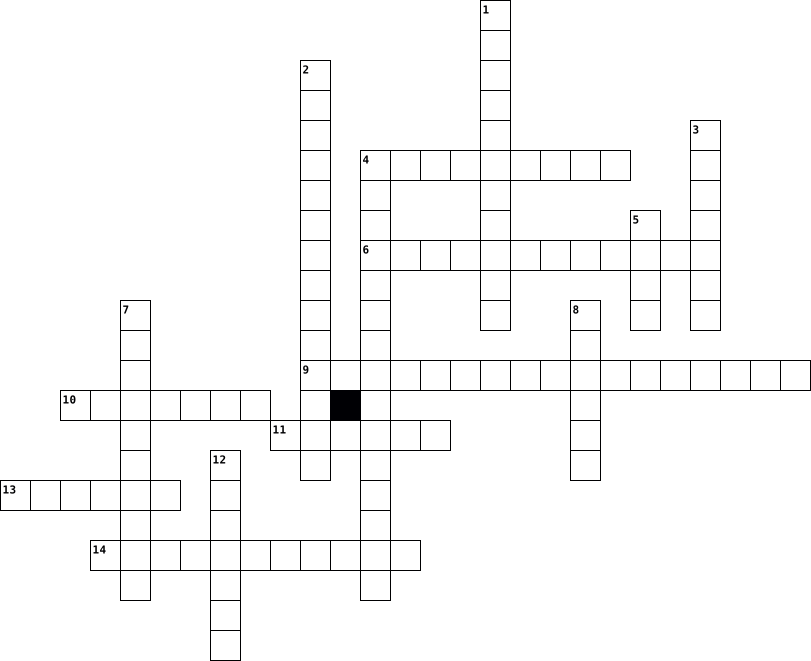
Across
- A muscular tube that connects the mouth to the stomach
- Blood cells that carry oxygen from the lungs to the body cells.
- the system that pumps blood around the body
- Found in the kidney, little filter that blood goes through
- liquid part of the blood
- tiny sacs of lung tissue specialized for the movement of gases between air and blood
- group of organs that work together to perform a specific function
Down
- Airways in the lungs that lead from the bronchi to the alveoli
- cells that fight a sickness
- helps make scabs
- The system that pumps out cell waste
- building block of life
- small blood vessel that connects veins and arteries
- upper chamber of the heart
- The passages that direct air into the lungs
15 Clues: helps make scabs • building block of life • liquid part of the blood • upper chamber of the heart • cells that fight a sickness • The system that pumps out cell waste • the system that pumps blood around the body • The passages that direct air into the lungs • small blood vessel that connects veins and arteries • A muscular tube that connects the mouth to the stomach • ...
Body 2021-11-26
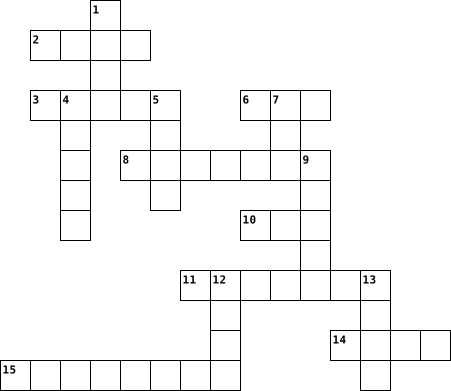
Across
- ręka
- zęby
- noga
- palce
- eye
- brzuch
- dłoń
- pośladki
Down
- kolano
- łokieć
- włosy
- ucho
- foot
- palce u stóp
- głowa
15 Clues: eye • ręka • zęby • noga • ucho • foot • dłoń • włosy • palce • głowa • kolano • łokieć • brzuch • pośladki • palce u stóp
Body 2022-04-21
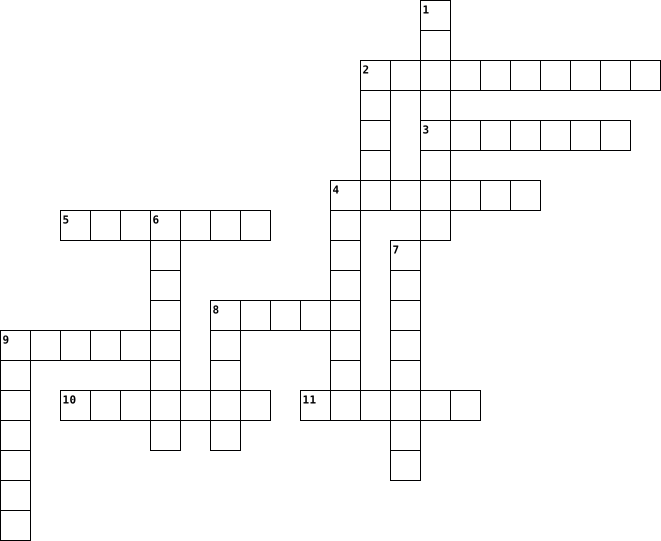
Across
- rings
- arm
- eyes
- silver
- foot
- mouth
- cap
- silk
Down
- toes
- long
- leg
- hands
- head
- gold
- nose
15 Clues: arm • leg • cap • toes • long • eyes • head • foot • gold • nose • silk • rings • hands • mouth • silver
Body 2018-05-25
Across
- You open them to see.
- He went down on one ______and asked her to marry him.
- Dogs can find things by the smell because they have good _____.
- A foot has five ______.
- You need to brush them every day.
- Some people bite them when they are nervous or worried.
- It controls how you think, feel and move.
Down
- Giraffes have the longest ______.
- You hear with your _______.
- Your ____ type can be A, B, AB or O.
- It beats faster If you are excited or exercise.
- A hand has five ________.
- one of the longest parts that connect the feet to the rest of the body
- the biggest body part
- It can be long or short, straight or curly, black or blonde.
15 Clues: You open them to see. • the biggest body part • A foot has five ______. • A hand has five ________. • You hear with your _______. • Giraffes have the longest ______. • You need to brush them every day. • Your ____ type can be A, B, AB or O. • It controls how you think, feel and move. • It beats faster If you are excited or exercise. • ...
body 2020-01-11
Across
- tangan in english is?
- wajah in english is?
- dagu in english is?
- dahi in english is?
- mata in english is?
- kelopakmata in english is?
- rambut in english is?
- mulut in english is?
Down
- bahu in english is?
- alismata in english is?
- hidung in english is?
- kepala in english is?
- leher in english is?
- bulumata in english is?
- telinga in english is?
15 Clues: bahu in english is? • dagu in english is? • dahi in english is? • mata in english is? • wajah in english is? • leher in english is? • mulut in english is? • tangan in english is? • hidung in english is? • kepala in english is? • telinga in english is? • alismata in english is? • bulumata in english is? • rambut in english is? • kelopakmata in english is?
body 2020-01-13
Across
- jari in english is
- mata in english is
- gigi in english is
- pipi in english is
- mulut in english is
- dagu in english is
- kepala in english is
- telinga in english is
Down
- lutut in english is
- kaki in english is
- perut in english is
- tangan in english is
- hidung in english is
- rambut in english is
- leher in english is
15 Clues: jari in english is • kaki in english is • mata in english is • gigi in english is • pipi in english is • dagu in english is • lutut in english is • perut in english is • mulut in english is • leher in english is • tangan in english is • hidung in english is • kepala in english is • rambut in english is • telinga in english is
Body 2014-11-09
Across
- With them you grab something
- You can show antic with them
- Organ of hearing
- Organ of eating
- You can clap with them
- With that you can feel the taste of food
- Organ of smelling
Down
- Organ of seeing
- You can show something with it
- Without them you can't walk
- What connect head and body?
- Shampoo - Head and...
- What you comb every day?
- They are in your mouth
- They are on your fingers
15 Clues: Organ of seeing • Organ of eating • Organ of hearing • Organ of smelling • Shampoo - Head and... • You can clap with them • They are in your mouth • What you comb every day? • They are on your fingers • Without them you can't walk • What connect head and body? • With them you grab something • You can show antic with them • You can show something with it • ...
body 2023-11-16
Across
- 13
- 7
- 14
- 11
- 12
- 6
- 5
Down
- 9
- 10
- 4
- 15
- 1
- 8
- 2
- 3
15 Clues: 9 • 4 • 7 • 1 • 8 • 2 • 6 • 3 • 5 • 10 • 13 • 15 • 14 • 11 • 12
Body 2023-06-15
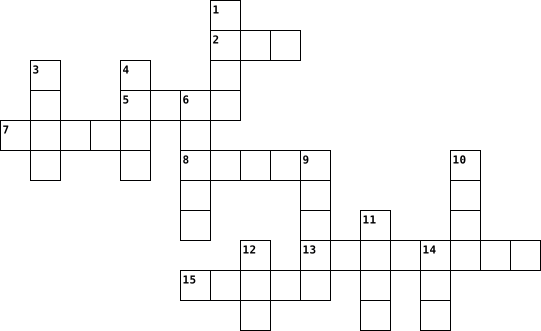
Across
- The long part connected to your shoulder, used for reaching and carrying things.
- The part connecting your head to your body, allowing you to turn your head side to side.
- The joint connecting your foot to your leg, letting your foot move up, down, and around.
- The bendy part in the middle of your arm that allows you to fold it.
- The part where your arms connect to your body, giving you support to carry backpacks.
- The part between your chest and your hips, where you usually wear a belt.
Down
- The part at the rear side of your body opposite your chest, helping you stand up straight.
- The part at the end of your arm with fingers, used for holding, touching, and high-fives.
- The bendy part in the middle of your leg that allows you to bend it and sit down.
- The front part of your upper body, which has your ribs and protects your heart and lungs.
- The place where your arm meets your hand, allowing you to move it in different directions.
- The top part of your body that houses your brain, eyes, nose, and mouth.
- The part at the end of your leg that goes in a shoe and helps you stand and walk.
- The part of your lower body that connects your legs to your waist and helps you move around.
- The long part below your waist, used for walking, running, and jumping.
15 Clues: The bendy part in the middle of your arm that allows you to fold it. • The long part below your waist, used for walking, running, and jumping. • The top part of your body that houses your brain, eyes, nose, and mouth. • The part between your chest and your hips, where you usually wear a belt. • ...
body 2023-07-12
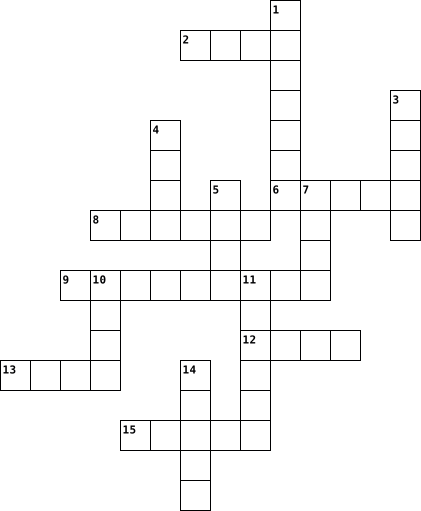
Across
- | Quick and nimble
- | Skilled and dexterous
- | Flexible and agile
- | Strong and supportive
- | Firm and upright
- | Active and sturdy
- | Stable and steady
Down
- | Nourished and satisfied
- | Well-proportioned and defined
- | Graceful and slender
- | Intelligent and thoughtful
- | Agile and flexible
- | Balanced and stable
- | Articulate and precise
- | Resilient and protective
15 Clues: | Quick and nimble • | Firm and upright • | Active and sturdy • | Stable and steady • | Agile and flexible • | Flexible and agile • | Balanced and stable • | Graceful and slender • | Skilled and dexterous • | Strong and supportive • | Articulate and precise • | Nourished and satisfied • | Resilient and protective • | Intelligent and thoughtful • | Well-proportioned and defined
Body 2023-07-19
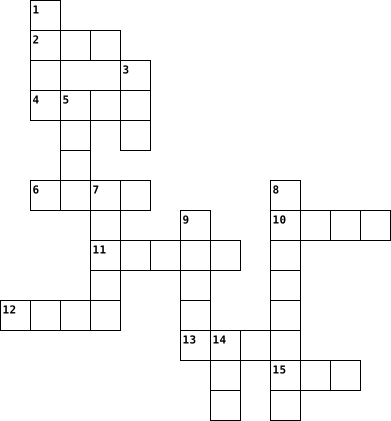
Across
- The upper limb of the body extending from the shoulder to the hand. It allows us to perform various movements and actions.
- The joint in the middle of the leg that allows for bending and straightening. It is essential for walking and other movements.
- The part of the body that connects the head to the rest of the body. It supports the head and allows it to move in various directions.
- The part of the body at the end of the arm with fingers and a thumb. It is used for grasping, holding, and manipulating objects.
- The joint connecting the forearm to the upper arm. It allows for bending and extending the arm.
- The part of the body at the end of the leg that comes into contact with the ground. It helps us walk, balance, and support our weight.
- The upper part of the body that contains the brain, eyes, nose, mouth, and ears. It is where thoughts and senses are processed.
- The organ of hearing that allows us to listen to sounds and perceive auditory information. It is located on the sides of the head.
Down
- The rear part of the body, opposite the chest, and abdomen. It is essential for posture, stability, and protecting the spinal cord.
- The lower limb of the body extending from the hip to the foot. It helps us stand, walk, run, and perform other physical activities.
- The part of the face used for smelling and breathing. It has nostrils that allow air to enter and exit the body.
- The front part of the body between the neck and the abdomen. It contains the heart and lungs and protects vital organs.
- The joint connecting the arm to the body. It allows for a wide range of arm movements and helps support heavy objects.
- The opening in the face used for eating, speaking, and breathing. It contains teeth and a tongue for processing food and forming words.
- The organ of sight that allows us to see the world around us. It is sensitive to light and helps us perceive shapes, colors, and objects.
15 Clues: The joint connecting the forearm to the upper arm. It allows for bending and extending the arm. • The part of the face used for smelling and breathing. It has nostrils that allow air to enter and exit the body. • The joint connecting the arm to the body. It allows for a wide range of arm movements and helps support heavy objects. • ...
Body 2023-07-21
Across
- We use our head to think and it has hair on top.
- With our hands, we can touch and grab things.
- We bend our knees to sit and stand up."
- Our toes are at the end of our feet.
- We use our arms to reach and carry objects.
- Our legs help us walk, run, and jump.
- Our shoulders connect our arms to our body.
Down
- The back is the rear part of our body.
- Our ears allow us to hear sounds and noises.
- The stomach helps digest the food we eat.
- We have fingers on our hands for fine movements.
- Our nose helps us to smell different scents.
- We use our eyes to see the world around us.
- We use our mouth to eat, drink, and talk.
- We use our feet to stand and walk on the ground.
15 Clues: Our toes are at the end of our feet. • Our legs help us walk, run, and jump. • The back is the rear part of our body. • We bend our knees to sit and stand up." • The stomach helps digest the food we eat. • We use our mouth to eat, drink, and talk. • We use our eyes to see the world around us. • We use our arms to reach and carry objects. • ...
Body 2023-09-10
Across
- The rear part of the body.
- The joint that connects the thigh to the leg.
- The area of the body where food is digested.
- Covers the head and varies in color and length.
- Used for eating, speaking, and smiling.
- Connects the arm to the torso.
Down
- The front part of the upper body.
- The sense organ for smelling.
- Organ for hearing sounds.
- Upper part of the body, contains the brain.
- The lower part of the leg for walking.
- The upper part of the body with a hand.
- The part of the arm with fingers.
- The part of the body used for walking.
- Organ for vision, comes in various colors.
15 Clues: Organ for hearing sounds. • The rear part of the body. • The sense organ for smelling. • Connects the arm to the torso. • The front part of the upper body. • The part of the arm with fingers. • The lower part of the leg for walking. • The part of the body used for walking. • The upper part of the body with a hand. • Used for eating, speaking, and smiling. • ...
Body 2023-09-24
Across
- The area in the abdomen where food is digested.
- The extremities of the legs, used for standing and walking.
- The upper part of the body on either side of the neck.
- The joints in the middle of the legs, allowing bending.
- The extremities of the arms, with fingers for grasping objects.
- The slender part connecting the head to the body.
- Limbs extending from the hips, used for walking and running.
Down
- The opening in the face used for eating, speaking, and more.
- The front part of the upper body, protecting vital organs.
- Organs on the sides of the head that enable hearing.
- Limbs extending from the shoulders, used for various tasks.
- The uppermost part of the body, containing the brain and the face.
- The rear part of the body, opposite the chest.
- The central part of the face, used for breathing and smelling.
- Organs that allow you to see, located in the eye sockets.
15 Clues: The rear part of the body, opposite the chest. • The area in the abdomen where food is digested. • The slender part connecting the head to the body. • Organs on the sides of the head that enable hearing. • The upper part of the body on either side of the neck. • The joints in the middle of the legs, allowing bending. • ...
Body 2026-01-12

Across
- deguns
- roka
- klausīties
- seja
- slēpties
- delna
- atvērt
Down
- ķermenis
- auss
- mute
- galva
- kāja
- pirksts
- mati
- acs
15 Clues: acs • auss • roka • mute • kāja • seja • mati • galva • delna • deguns • atvērt • pirksts • ķermenis • slēpties • klausīties
body 2026-02-02

Across
- - You use this to walk, run, and kick.
- - The joint in the middle of your arm.
- - This grows on your head.
- - You eat and speak with this.
- - You have ten of these on your hands.
- - You use this to smell and breathe.
- - The part of your body that contains your brain and eyes.
Down
- - You see with this organ.
- - The joint connecting your hand to your arm.
- - Your eyes, nose, and mouth are on this.
- - This connects your hand to your shoulder.
- - The joint in the middle of your leg.
- - You have five fingers on each one.
- - The part of your body that you stand and walk on.
- - You hear with this organ.
15 Clues: - You see with this organ. • - This grows on your head. • - You hear with this organ. • - You eat and speak with this. • - You have five fingers on each one. • - You use this to smell and breathe. • - You use this to walk, run, and kick. • - The joint in the middle of your arm. • - The joint in the middle of your leg. • - You have ten of these on your hands. • ...
Car Lingo Crossword 2023-10-30

Across
- Like Kind and Quality Parts
- a rubber cushion that fits around a wheel of a car.
- The type of replacement parts that are not made by the original equipment manufacturer
- What does original equipment manufacturer for?
- The loss in value over time due to factors such as age and wear and tear
- The bar attached transversely behind a car body to prevent contact between an obstruction and the car body
- What is the hinged cover that rests over the engine of a front-engine vehicle? Also referred to as a bonnet.
- The bar attached transversely in front of a car body to prevent contact between an obstruction and the car body.
Down
- What is the body panel of an car between a rear door and the trunk?
- The policy condition that your insurer is not obligated to pay for any repairs or replacements which result in a vehicle's improvement over the quality that existed before an accident.
- a device incorporated in the exhaust system of a motor vehicle, containing a catalyst for converting pollutant gases into less harmful ones.
- What is the panel that bends over the wheel on the side of the car, extending from the front bumper to the car door?
12 Clues: Like Kind and Quality Parts • What does original equipment manufacturer for? • a rubber cushion that fits around a wheel of a car. • What is the body panel of an car between a rear door and the trunk? • The loss in value over time due to factors such as age and wear and tear • The type of replacement parts that are not made by the original equipment manufacturer • ...
Exercise Pathophysiology Mid-Term Exam #2 2023-09-21

Across
- OA and RA affects these parts on these parts on the body
- Common medication for Type II Diabetes
- Improves with Exercise OA and RA (abbreviated)
- Bad Lipids
- Decrease risk of falling and hip fractures
- Causes Improved insulin sensitivity
Down
- Waxy substance made by liver
- Hormone for satiety
- Dissolve & Break down old bone
- Pizza in the video about type 2 Diabetes
- Used to treat Arthritis & Low Back Pain
11 Clues: Bad Lipids • Hormone for satiety • Waxy substance made by liver • Dissolve & Break down old bone • Causes Improved insulin sensitivity • Common medication for Type II Diabetes • Used to treat Arthritis & Low Back Pain • Pizza in the video about type 2 Diabetes • Decrease risk of falling and hip fractures • Improves with Exercise OA and RA (abbreviated) • ...
Melisa's Toy Story Crossword 2020-11-17

Across
- a toy whose body parts fall off
- evil neighbor kid of Andy
- Andy's astronaut
- dachshund with the upper and lower body connected with spring
- eating utensil that Bonnie made
Down
- Andy's cowboy
- piggy bank toy
- bear which Andy plays with often
- girl who likes woody
- girlfriend of buzz
- the heroine and toy owner of the movie
11 Clues: Andy's cowboy • piggy bank toy • Andy's astronaut • girlfriend of buzz • girl who likes woody • evil neighbor kid of Andy • a toy whose body parts fall off • eating utensil that Bonnie made • bear which Andy plays with often • the heroine and toy owner of the movie • dachshund with the upper and lower body connected with spring
Body 2019-02-06
Across
- suu
- jalasäär
- näpp
- varvas
- kael
- käelaba
- silm
- kürv
Down
- jalalaba
- õlg
- nina
- pea
- põlv
- juuksed
- käsivars
15 Clues: õlg • suu • pea • näpp • nina • kael • põlv • silm • kürv • varvas • käelaba • juuksed • jalalaba • jalasäär • käsivars
Body 2019-02-06
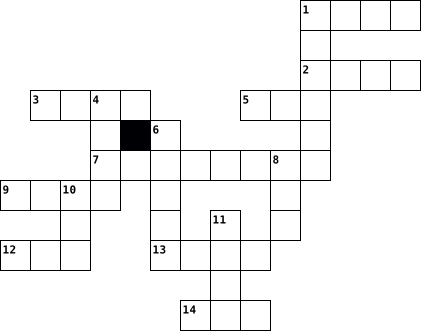
Across
- jalalaba
- kael
- käelaba
- jalasäär
- õlg
- põlv
- varvas
- pea
- käsivars
Down
- näpp
- nina
- suu
- kõrv
- silm
- juuksed
15 Clues: suu • õlg • pea • näpp • kael • nina • kõrv • põlv • silm • varvas • käelaba • juuksed • jalalaba • jalasäär • käsivars
BODY 2022-02-15
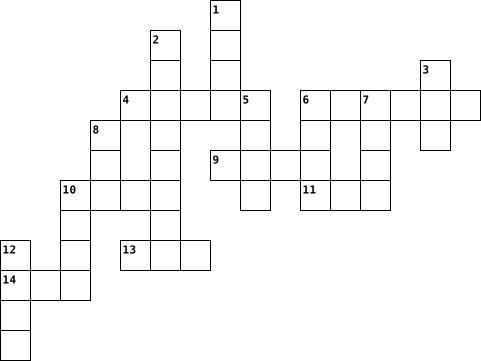
Across
- suu
- sõrm
- põlv
- pea
- varvas
- käsivars
- kõrv
Down
- jalg
- õlg
- jalg
- käsi
- jalad
- nina
- silm
- juuksed
- kael
16 Clues: õlg • suu • pea • jalg • jalg • käsi • sõrm • nina • silm • põlv • kael • kõrv • jalad • varvas • juuksed • käsivars
body 2022-11-08
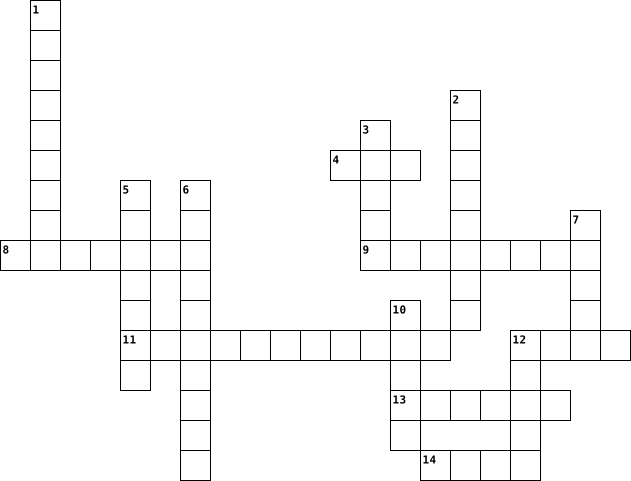
Across
- teeth
- scared
- 216 of me in you if you are an adult
- mucles
- you
- comsuming
- running
Down
- going down from belly
- in your arms if you work out
- eating
- belly
- going down
- running in your body
- thinking
- in you and in your hands
15 Clues: you • teeth • belly • eating • scared • mucles • running • thinking • comsuming • going down • running in your body • going down from belly • in you and in your hands • in your arms if you work out • 216 of me in you if you are an adult
Body 2023-05-21
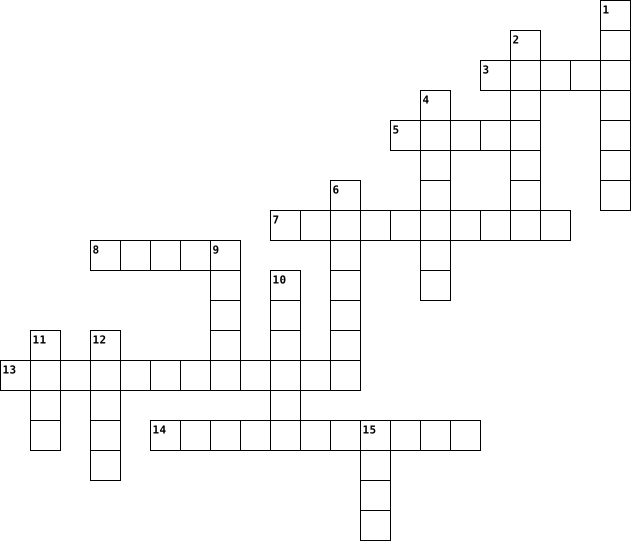
Across
- Dense and weighty on the palate
- Delicate and low in intensity, opposite of full-bodied
- Rich and robust in flavor and texture
- Smooth and well-balanced in body and structure
- Moderate in body and flavor
- Solid and weighty in body
Down
- Complex and multi-dimensional in flavor and structure
- Mouthfeel and viscosity of a wine
- Thick and syrupy in texture
- Graceful and refined in body and style
- Thick and concentrated in body
- The perception of the wine's physical presence on the palate
- Light-bodied and low in richness
- Smooth and velvety in texture
- Lacking substance and depth, opposite of full-bodied
15 Clues: Solid and weighty in body • Thick and syrupy in texture • Moderate in body and flavor • Smooth and velvety in texture • Thick and concentrated in body • Dense and weighty on the palate • Light-bodied and low in richness • Mouthfeel and viscosity of a wine • Rich and robust in flavor and texture • Graceful and refined in body and style • ...
Body 2023-06-16
Across
- The long part of your body used for reaching.
- The joint in the middle of your leg.
- The thing at the end of your arm with fingers.
- The smaller parts at the end of your foot.
- The joint connecting your foot and leg.
- The part connecting your arm and body.
- The bottom part of your leg that helps you walk.
Down
- The opening on your face for eating and talking.
- The joint connecting your hand and arm.
- The part on top of your neck where your face is.
- The thing on your face that helps you see.
- The thing in the middle of your face for smelling.
- The part on the side of your head for hearing.
- The joint in the middle of your arm.
- The part that helps you stand and walk.
15 Clues: The joint in the middle of your leg. • The joint in the middle of your arm. • The part connecting your arm and body. • The joint connecting your hand and arm. • The joint connecting your foot and leg. • The part that helps you stand and walk. • The thing on your face that helps you see. • The smaller parts at the end of your foot. • ...
Body 2023-06-15
Across
- The part of the body that extends from the shoulder to the hand. It is used for various activities such as lifting, carrying, and waving.
- The rear part of the body, opposite the chest. It provides support for the spine and allows for various movements.
- The part of the body that connects the head to the rest of the body. It allows for head movement and protects important blood vessels and nerves.
- The uppermost part of the body, which contains the brain, eyes, nose, mouth, and ears. It is where our senses are located.
- The joint connecting the arm to the torso. It allows for a wide range of arm movements and provides support for the upper body.
- The joint connecting the upper and lower parts of the arm. It allows for bending and straightening of the forearm.
- The lower part of the leg, specifically the part that touches the ground when standing or walking. It helps us balance and move.
- One of the digits on the foot, connected to the sole. We have five toes on each foot, which help with balance and walking.
Down
- The joint connecting the foot to the leg. It allows for movement and provides stability while walking or running.
- The front part of the body between the neck and the abdomen. It houses the heart, lungs, and other vital organs.
- The joint between the thigh and the lower leg. It allows for bending and straightening of the leg and supports body weight.
- The part of the body at the end of the arm, consisting of the palm, fingers, and thumb. It is used for grasping, holding, and manipulating objects.
- The part of the body that extends from the hip to the foot. It supports the body's weight and allows for walking, running, and jumping.
- The joint connecting the hand to the forearm. It allows for flexibility and movement of the hand and fingers.
- One of the digits on the hand, connected to the palm. We have five fingers on each hand, which we use for tasks like gripping and pointing.
15 Clues: The joint connecting the hand to the forearm. It allows for flexibility and movement of the hand and fingers. • The front part of the body between the neck and the abdomen. It houses the heart, lungs, and other vital organs. • The joint connecting the foot to the leg. It allows for movement and provides stability while walking or running. • ...
Body 2023-06-12
Across
- One of the digits on the foot.
- One of the digits on the hand.
- The opening in the face used for eating and speaking.
- The organ on the face used for smelling and breathing.
- The upper part of the body that contains the brain, eyes, ears, nose, and mouth.
- The organ responsible for hearing.
- The organ responsible for vision.
Down
- The joint where the arm connects to the body.
- The lower limb of the body used for walking and running.
- The terminal part of the leg that is used for standing and walking.
- The upper limb of the body connected to the shoulder.
- The part of the body that connects the head to the torso.
- The part of the body at the end of the arm with fingers.
- The strands that grow on the head.
- The joint that connects the thigh and the lower leg.
15 Clues: One of the digits on the foot. • One of the digits on the hand. • The organ responsible for vision. • The strands that grow on the head. • The organ responsible for hearing. • The joint where the arm connects to the body. • The joint that connects the thigh and the lower leg. • The upper limb of the body connected to the shoulder. • ...
Body 2023-11-14
Across
- Haven A body in harmony, where each part works seamlessly together, creating a sense of balance, strength, and well-being.
- Vessel The body as a vital vessel, a complex and miraculous system that houses the essence of life, energy, and experiences.
- Realm The body as a resilient realm, adapting to challenges and changes, and providing a strong foundation for growth and development.
- Machine A marvelous machine, intricately designed with bones, muscles, and organs, capable of performing amazing tasks and feats.
- Glands Glands, like guardians, secreting hormones and chemicals, regulating bodily functions and maintaining a delicate balance.
- Fingers The fingers, like fluttering butterflies, agile and expressive, facilitating communication, creativity, and a touch of magic.
- Core The core, a courageous center, providing stability and strength, supporting the body in various activities and challenges.
- Sensors The sensory system, with sensitive sensors, allowing the body to experience the world through touch, taste, smell, sight, and sound.
Down
- Spine The spine, a spirited support, standing tall and strong, providing structure and protection for the body's intricate nervous system.
- Respirator The respiratory system, a radiant respirator, bringing in fresh air and oxygen, fueling the body with the breath of life.
- Engine The body as an energetic engine, constantly fueling activities and adventures with boundless energy and enthusiasm.
- Microcosm The body as a miraculous microcosm, a world within itself, with cells and systems working harmoniously to maintain health and vitality.
- Muscles Muscles, like majestic warriors, powering movement and strength, allowing the body to conquer physical challenges with grace.
- Joints The joints, like hinges of joy, allowing flexibility and movement, enabling the body to dance, play, and express itself freely.
- Drumbeat The heart, a dynamic drumbeat, pulsating with rhythm and life, symbolizing the center of emotions, love, and vitality.
15 Clues: Engine The body as an energetic engine, constantly fueling activities and adventures with boundless energy and enthusiasm. • Haven A body in harmony, where each part works seamlessly together, creating a sense of balance, strength, and well-being. • ...
body 2024-01-29
Across
- you can have it red
- you can put mascara on it
- you can paint it with nail polish
- you can have it blue, brown and green
- if you ate a lot of candies you can have bad
Down
- you can work out to have it
- you can see with that
- you can have it only black
- you can kick something with it
- you can put shoes on it
- you can smell with it
- you neet to put deodorant in it
- you can chew food with it
- you have it on hand
- you can comb them
15 Clues: you can comb them • you can have it red • you have it on hand • you can see with that • you can smell with it • you can put shoes on it • you can put mascara on it • you can chew food with it • you can have it only black • you can work out to have it • you can kick something with it • you neet to put deodorant in it • you can paint it with nail polish • ...
body 2023-10-19
Across
- пухлые губы
- усы
- хорошо сложенный
- молодой
- глаза
- зубы
- язык
- щека
Down
- средних лет
- кудрявые
- волнистый
- рот
- уши
- борода
- прямые волосы
15 Clues: усы • рот • уши • зубы • язык • щека • глаза • борода • молодой • кудрявые • волнистый • средних лет • пухлые губы • прямые волосы • хорошо сложенный
body 2025-04-11

Across
- You have ten of these—one on each hand
- You speak, eat, and smile with this
- You see with these
- The back part of your body
- It might hurt after a big meal
- Another word for “face”
- You wear shoes on it
Down
- You shake this to say hello
- It beats inside your chest
- These are in your mouth—you brush them
- The top part of your body where your brain is
- You raise this to ask a question
- You use it to hear
- You breathe and smell with this
- You use it to walk and run
15 Clues: You see with these • You use it to hear • You wear shoes on it • Another word for “face” • It beats inside your chest • The back part of your body • You use it to walk and run • You shake this to say hello • It might hurt after a big meal • You breathe and smell with this • You raise this to ask a question • You speak, eat, and smile with this • You have ten of these—one on each hand • ...
body 2025-03-24

Across
- - кашель
- - шия
- - плече
- - ін'єкція, укол
- - підборіддя
- - лікоть
- - коліно
- - грип
Down
- - застуда
- - грудна клітка
- - знеболювальне
- - брова
- - живіт, шлунок
- - зап'ясток
- - щиколотка
15 Clues: - шия • - грип • - брова • - плече • - кашель • - лікоть • - коліно • - застуда • - зап'ясток • - щиколотка • - підборіддя • - грудна клітка • - знеболювальне • - живіт, шлунок • - ін'єкція, укол
Body 2025-06-25

Across
- chodidlo
- koleno
- tělo
- loket
- ucho
- pusa
- noha
- ruka
Down
- nos
- prst na ruce
- rameno
- oko
- prst na noze
- paže
- hlava
15 Clues: nos • oko • tělo • ucho • paže • pusa • noha • ruka • loket • hlava • rameno • koleno • chodidlo • prst na ruce • prst na noze
Body(; 2025-09-25

Across
- To shorten or tighten a muscle, causing movement.
- a place where two or more bones meet, which allows for movement.
- Part of a neuron that gathers information and carries it toward the cell body.
- The bones of the chest that protect the heart and lungs.
- An electrical signal that travels along a neuron to transmit information.
- A specialized nerve cell that carries electrical messages, or impulses, throughout the body.
- muscle A muscle that you can control and move by choice, like the muscles in your arms and legs.
Down
- muscle Involuntary muscles that control movement in the internal organs, like the stomach and blood vessels.
- A tissue composed of fibers that contract and relax to create movement.
- A tough cord of tissue that attaches muscle to bone.
- The rigid tissue that makes up the skeleton of the human body.
- An automatic and quick reaction to a stimulus that is not controlled by choice.
- cord The bundle of nerves that extends from the brain down the back and is protected by the vertebrae.
- The bony framework of the head that protects the brain.
- muscle A muscle that moves automatically without you thinking about it, such as your heart.
15 Clues: To shorten or tighten a muscle, causing movement. • A tough cord of tissue that attaches muscle to bone. • The bony framework of the head that protects the brain. • The bones of the chest that protect the heart and lungs. • The rigid tissue that makes up the skeleton of the human body. • a place where two or more bones meet, which allows for movement. • ...
Giant Panda 2018-04-09

Across
- part of body that causes movement
- in your neck
- very much
- keep safe
- related to you
- example is elephants, humans and bears
- eats vegetables
- food
- area of land
- system to breakdown food
- girl
Down
- edible plant
- prefer to be alone
- a group of animals
- teeth
- areas of colour
- eats meat
- low numbers
- to soak up
- parts of food not easy to digest
- strong
- cannot see
22 Clues: food • girl • teeth • strong • very much • eats meat • keep safe • to soak up • cannot see • low numbers • edible plant • in your neck • area of land • related to you • areas of colour • eats vegetables • prefer to be alone • a group of animals • system to breakdown food • parts of food not easy to digest • part of body that causes movement • example is elephants, humans and bears
The Crossword by Flambow 2025-09-26

Across
- Big tex’s team, on the scoreboard
- Former Met of Flambow heritage, to friends
- Greeting, in Nanjing
- Birthday mo.
- 2020 unspeakable tragedy
- Beloved soccer player
- Nutritious meal
- Underground foe
- Island protector
- Two-way baseball star
- Distant cousin
Down
- Underground pal
- Favorite movie
- Favorite body parts
- Portal location
- “Mr. Flambourine Man” singer
- Unisex bow?
- Star of favorite show
- Flambow feature, debatably
- Replacement for a star?
- Least favorite activity
21 Clues: Unisex bow? • Birthday mo. • Favorite movie • Distant cousin • Underground pal • Portal location • Nutritious meal • Underground foe • Island protector • Favorite body parts • Greeting, in Nanjing • Star of favorite show • Beloved soccer player • Two-way baseball star • Replacement for a star? • Least favorite activity • 2020 unspeakable tragedy • Flambow feature, debatably • ...
Greek Root bio; Latin Roots aud, rupt 2024-02-16

Across
- the ability to be broken down naturally
- medicine
- mutually beneficial relationship
- explode
- assembled spectators
Down
- dishonestly
- performing arts interview
- an account of
- space used for performances
- stop the continuous progress
- sudden and unexpected
- artificial body parts
12 Clues: explode • medicine • dishonestly • an account of • assembled spectators • sudden and unexpected • artificial body parts • performing arts interview • space used for performances • stop the continuous progress • mutually beneficial relationship • the ability to be broken down naturally
Structure of an Essay Vocabulary 2024-02-02

Across
- parts of a body paragraph
- the last sentence of the body paragraph
- the first paragraph of an essay
- the number of body paragraphs
- what we restate in the conclusion
- the sentence that tells you what you have to write the essay about
- an organized piece of writing
Down
- words to introduce text evidence and conclusion
- gives you the background information
- the total number of paragraphs in an essay
- the last paragraph of an essay
- the answer to the prompt
- the number of points of development
- the name of your essay
14 Clues: the name of your essay • the answer to the prompt • parts of a body paragraph • the number of body paragraphs • an organized piece of writing • the last paragraph of an essay • the first paragraph of an essay • what we restate in the conclusion • the number of points of development • gives you the background information • the last sentence of the body paragraph • ...
Barni,Máté 2021-12-06

Across
- its biggest part of your hand
- inside your head, you use it to think
- this is the skin on the top of your head
- these are on the midle of your leg
- its inside your neck
- toes on your hand
- you can see with these
Down
- an organ that allow you to breathe
- under your arm
- you can hear with these body parts
- its pumping the blood
- it covers your full body
- over your eyes
- fingers on your feet
14 Clues: under your arm • over your eyes • toes on your hand • its inside your neck • fingers on your feet • its pumping the blood • you can see with these • it covers your full body • its biggest part of your hand • an organ that allow you to breathe • you can hear with these body parts • these are on the midle of your leg • inside your head, you use it to think • ...
Fitness Components 2022-07-12

Across
- refers to the ability to exert a force against a resistance several times whilst resisting fatigue
- the maximal amount of energy that can be generated over a given period of time using anaerobic sources of energy
- refers to the ability to use muscular strength with speed in the shortest amount of time possible
- refers to the amount of time it takes to respond to a stimulus
- refers to the ability to keep your body upright or in position whilst static or moving
- refers to as the ability to move a joint through it's complete range of movement and the degree of flexibility is specific to each joint
Down
- refers to the maximum amount of force your muscles can produce / exert against a resistance in one single effort
- is a measure of the proportionate relationship of body tissues, including muscle, bone and fat, and refers to the percentage of body weight that is made up of body fat
- refers to the ability to move different parts of the body together at the same time
- refers to the ability perform movements quickly
- referred to as aerobic fitness and is the ability of the heart, lungs and blood vessels to supply oxygen to the muscles during prolonged physical activity of moderate to vigorous activity
- refers to the ability to change direction of the body or parts of the body quickly and with control
12 Clues: refers to the ability perform movements quickly • refers to the amount of time it takes to respond to a stimulus • refers to the ability to move different parts of the body together at the same time • refers to the ability to keep your body upright or in position whilst static or moving • ...
metabolism 2022-02-18

Across
- supported by evidence
- breaking down the food
- interacting parts
- found in air
- rearrangement of atoms
- a scientific question
- body part that takes oxygen
- large molecules needed for life
- building blocks of protein
- energy storage molecule
- group of atoms
Down
- oxygen atoms
- to prove
- molecules that provide growth
- releases energy
- make things move or change
- plants produce this
- transportation of molecules
- supports evidence
19 Clues: to prove • oxygen atoms • found in air • group of atoms • releases energy • interacting parts • supports evidence • plants produce this • supported by evidence • a scientific question • breaking down the food • rearrangement of atoms • energy storage molecule • make things move or change • building blocks of protein • transportation of molecules • body part that takes oxygen • ...
Terminology 2023-05-26

Across
- surgery A procedure used to treat certain types of skin cancer
- glands There are eccrine and apocrine sweat glands
- the lower or inner layer of the two main layers of cells that make up the skin
- The epidermis is the outermost layer of the skin and protects the body from the environment
- red yellow pigment
- formed or arranged into strata
- test substances are injected into the skin in order to observe it
- A type of protein found on epithelial cells
Down
- A cell in the skin and eyes that produces and contains the pigment called melanin
- Removal of tissue with a curette.
- a natural cleft between body parts
- A cell in the skin and eyes that produces and contains the pigment called melanin
- red yellow pigment
- tiny opening in the body
- flat
- Adipocytes are the major energy storage sites in the body
- Brown Black Pigment
17 Clues: flat • red yellow pigment • red yellow pigment • Brown Black Pigment • tiny opening in the body • formed or arranged into strata • Removal of tissue with a curette. • a natural cleft between body parts • A type of protein found on epithelial cells • glands There are eccrine and apocrine sweat glands • Adipocytes are the major energy storage sites in the body • ...
KDSIJFSIFJS 2024-06-25

Across
- MOST VIRULENT SPECIES OF STAPHYLOCOCCUS
- INCREASED CELL SIZE
- the ability to understand the personal experience of the patient without bonding with them
- DECREASED BODY PERFUSION
- ABNORMAL CONNECTIONS BETWEEN TWO BODY PARTS
- GENERALISED BODY EDEMA
- INACTIVE X CHROMOSOME\
Down
- the replacement of one differentiated somatic cell type with another differentiated somatic cell type in the same tissue
- WHAT DOES C STAND IN CAUTI
- INFLAMMATION WHICH INVOLVES ALL LAYERS OF GIT
- TRISOMY OF CHROMOSOME 13
11 Clues: INCREASED CELL SIZE • GENERALISED BODY EDEMA • INACTIVE X CHROMOSOME\ • DECREASED BODY PERFUSION • TRISOMY OF CHROMOSOME 13 • WHAT DOES C STAND IN CAUTI • MOST VIRULENT SPECIES OF STAPHYLOCOCCUS • ABNORMAL CONNECTIONS BETWEEN TWO BODY PARTS • INFLAMMATION WHICH INVOLVES ALL LAYERS OF GIT • ...
nervous ststem 2021-10-27

Across
- Part of your body that receives sounds
- a series of intertwined nerves that are in the spine and connects most of the body to the brain made up of vertebrae
- bundle of fiber that transmits signals to and from the brain
- the connected bones that make up the spinal cord
- The pair of organs that allow you to see.
- Highly specialized to transmit messages from one part of the body to another
- The System made up of the brain and spinal cord
- The loss of the ability to move your mussels
- the part of the human body that intakes food and water and allows you to speak
Down
- The "control system" for your body.
- transmit impulses from the peripheral system to the central system
- network of nerves cells and fiber that transmits impulses between the body.
- The nerves that go out of your brain and spinal cord. This allows body parts to connect to the Central Nervous System.
- The part of your body that allows you to breathe
14 Clues: The "control system" for your body. • Part of your body that receives sounds • The pair of organs that allow you to see. • The loss of the ability to move your mussels • The System made up of the brain and spinal cord • the connected bones that make up the spinal cord • The part of your body that allows you to breathe • ...
Nutrition 2022-02-28

Across
- the process of taking in substances and using it for growth
- a substance to keep going
- nutrients to promote normal body growth
- a substance your body uses to form healthy parts
- a unit of temperature that measures energy in food
Down
- compounds to help your natural processes
- to build and repair cells in your body
- image the way you view yourself
- eating eating too much food rapidly
- a complex substance to get rid of
10 Clues: a substance to keep going • image the way you view yourself • a complex substance to get rid of • eating eating too much food rapidly • to build and repair cells in your body • nutrients to promote normal body growth • compounds to help your natural processes • a substance your body uses to form healthy parts • a unit of temperature that measures energy in food • ...
Nutrition 2022-02-28

Across
- the process of taking in substances and using it for growth
- a substance to keep going
- nutrients to promote normal body growth
- a substance your body uses to form healthy parts
- a unit of temperature that measures energy in food
Down
- compounds to help your natural processes
- to build and repair cells in your body
- image the way you view yourself
- eating eating too much food rapidly
- a complex substance to get rid of
10 Clues: a substance to keep going • image the way you view yourself • a complex substance to get rid of • eating eating too much food rapidly • to build and repair cells in your body • nutrients to promote normal body growth • compounds to help your natural processes • a substance your body uses to form healthy parts • a unit of temperature that measures energy in food • ...
Our bodies defense mechanisms against Microorganisms. 2025-08-26

Across
- The chemical that kills microorganisms
- Contains lysozymes to kill bacteria in the mouth
- Tiny hairs found in many places in the body
- An oily antibacterial substance
- Acts as a First barrier
Down
- Acid that Breaks down Microorganisms in the body
- Contains lysozyme that kills bacteria in the eyes
- Flushes out all of the microorganisms that have entered the body
- Traps microorganisms and kills them
- Lines parts of the body and protects them
10 Clues: Acts as a First barrier • An oily antibacterial substance • Traps microorganisms and kills them • The chemical that kills microorganisms • Lines parts of the body and protects them • Tiny hairs found in many places in the body • Acid that Breaks down Microorganisms in the body • Contains lysozymes to kill bacteria in the mouth • ...
Nervous system 2016-12-22

Across
- nerve The eye detects light rays and transmits impulses to the brain through the ________ ________.
- What is the branch part of the neuron that receives messages and sends them to the cell body?
- The regulation of steady, life-maintaining conditions inside an organisms is called ________.
- The taste buds on your tongue can detect the stimuli of ________, sour, bitter, salty, and the taste of MSG.
- A ________ is made up of a cell body, dendrite, and axon.
- cells The ________ ________ in the nasal passages detect molecules in the air, transmitting these impulses as odors.
- The olfactory cells in the nasal passages detect ________ in the air, transmitting these impulses as odors.
- A ________ is a small space across which an impulse travels to move from one neuron to another.
- The ________ nervous system is made up of the brain and spinal cord.
- What is the branch part of the neuron that transports messages away from the cell body?
- buds On the tongue ________ ________ can detect five different stimuli: sweet, sour, bitter, salty, and the taste of MSG.
Down
- The senses act as the body's alert system, reacting to ________ and transmitting impulses to the brain.
- rays The eye detects ________ ________ and transmits impulses to the brain through the optic nerve.
- This part of the brain coordinates voluntary muscle movements
- The ________ nervous system is made up of all the nerves outside the brain and spinal cord.
- This is the largest part of the brain.
- The taste buds on your tongue can detect the stimuli of sweet, ________, bitter, salty, and the taste of MSG
- cord Which part of the body is made up of bundles of neurons that carry impulses from all parts of the body to the brain and from the brain to all parts of the body?
- waves The ear, along with detecting and transmitting ________ ________, also controls the body's balance by reacting to motion and gravity.
- The ear, along with detecting and transmitting sound waves, also controls the body's ________ by reacting to motion and gravity
20 Clues: This is the largest part of the brain. • A ________ is made up of a cell body, dendrite, and axon. • This part of the brain coordinates voluntary muscle movements • The ________ nervous system is made up of the brain and spinal cord. • What is the branch part of the neuron that transports messages away from the cell body? • ...
Environmental Science Vocabulary Challenge 2025-04-09

Across
- the measure of dissolved salts in water
- any area of land smaller than a continent and entirely surrounded by water.
- a large mass of ice floating at sea; usually broken off of a polar glacier.
- is water that exists underground in saturated zones beneath the land surface.
- the process of water movement through a plant and its evaporation from aerial parts, such as leaves, stems and flowers.
- a continuous body of salt water that is contained in an enormous basin on Earth's surface.
- a large natural stream of water flowing in a channel to the sea, a lake, or another such stream.
- a large body of salt water.
- a small island.
- an area of land that is usually saturated with water
- is a ring-shaped island, including a coral rim that encircles a lagoon.
- a body of water, confined within a bed and banks, and detectably flowing.
- the boundary between the unsaturated zone and the saturated zone underground.
- an area where a freshwater river or stream meets the ocean.
- An overflow of water onto normally dry land.
Down
- the process of removing salts and other minerals from water
- a part of the water cycle and occurs when water moves into the ground from the surface and begins to soak into the soil and rock layers underneath.
- an extremely large mass of ice which moves very slowly, often down a mountain valley.
- the continuous, predictable, directional movement of seawater driven by gravity, wind (Coriolis Effect), and water density
- an area that contains a chain or group of islands scattered in lakes, rivers, or the ocean
- something that drains or flows off, as rain that flows off from the land in streams.
- a large man-made body of water.
- are very long-period waves that move through the ocean in response to the forces exerted by the moon and sun.
- a body of water surrounded on all sides by land.
- a large area of land that drains into a body of water.
- are steep depressions in the deepest parts of the ocean
26 Clues: a small island. • a large body of salt water. • a large man-made body of water. • the measure of dissolved salts in water • An overflow of water onto normally dry land. • a body of water surrounded on all sides by land. • an area of land that is usually saturated with water • a large area of land that drains into a body of water. • ...
sarah's crossword 2012-03-29

Across
- sendings messages to different parts of the body
- have different sizes, shapes, and jobs to do
- an important role in motor control
- a neural pathway that controls an action reflex
- not born with, watch others to do
- has both innate and learned behaviour
- and error testing and retesting
- a type of behaviour that birds sometimes use to migrate
- the brain chemicals that communicate information around the body
- is the ability to use past experiences to solve new problems
- largest part of the brain
- organ capable of responding to a stimulus
- a group of cells that work together to perform a specific function
- controls your moods
- connects the cerebrum with the spinal cord
- the main functions of everyone's body
Down
- its like a reaction that takes place in your body when something happens to you
- a structure that lets a neuron to pass
- causes reaction
- behaviour within a society
- joins two hemispheres
- learned response to a stimulus
- a very complex system of the body
- is apart of the nervous system but its central
- getting used to a certain stimulus
- proteins embedded in the cell membrane
- cells that make up the brain
- controls your body
- is also apart of the nervour system
- inbone behavious
30 Clues: causes reaction • inbone behavious • controls your body • controls your moods • joins two hemispheres • largest part of the brain • behaviour within a society • cells that make up the brain • learned response to a stimulus • and error testing and retesting • not born with, watch others to do • a very complex system of the body • an important role in motor control • ...
chapter 2 2014-09-30

Across
- bones
- tail or lower part of body
- situated farthest from the midline or beginning of a body structure.
- the direction toward the midline
- head or crown
- the study of the structure,composition,and function of tissue
- situated in the back
- the direction toward or near the side and away from the midline
- the membrane that protects and supports the organs located in the abdominal cavity
- lowermost, below or toward the feet
- means tissue
- bones
- toward the head
- the buildup of fluid in the space between the lining of the abdominal and abdominal organs.
- specialized cells that secrete material used elsewhere in the body
- and body systems:body parts organized into systems according to function
- means located behind
Down
- Gland
- head or skull
- fat
- cells cells with the ability to divide without limit and to give rise to specialized cells
- uterus
- the structures of cells,chromosomes,DNA,and genetics
- a specialist in the study of cells and microscopic tissue
- cell
- refers to the back of the body or organ
- large intestine
- study of structural and functional changes caused by disease
- means situated nearest the midline or beginning of a body structure
- liver
- liver
- kidneys
32 Clues: fat • cell • Gland • bones • liver • liver • bones • uterus • kidneys • means tissue • head or skull • head or crown • large intestine • toward the head • situated in the back • means located behind • tail or lower part of body • the direction toward the midline • lowermost, below or toward the feet • refers to the back of the body or organ • the structures of cells,chromosomes,DNA,and genetics • ...
Grade 9 exam 2025-08-21

Across
- muscular tube that connects the pharynx with the stomach
- muscles that increase the angle between the bones of a joint
- the chemical and physical processes by which the body breaks down food and generates energy
- body's largest veins
- inability of the eyes to focus on distant objects
- eating disorder characterized by self-induced starvation and being severely underweight
- rigid ring of thick bone that supports most of the body's weight
- connective tissue that attaches muscle to bone
- colored part of the eye
- a dangerous surface current formed when large quantities of water recede rapidly into the sea
- freezing of the body tissue
- an unborn baby once he is distinctly recognizable as a miniature baby
Down
- pressure during contraction of the ventricles
- below-normal body temperature
- type of circulation that involves the movement of blood through all parts of the body except the lungs
- large, spongy organs located inside the thoracic cavity
- white of the eye
- the most important and complex part of the nervous system
- responsible for functions that are consciously controlled
- largest artery in the body
- wasting away of muscle through lack of use
- a serious reduction in the body's water content
- nerve cells of the body
23 Clues: white of the eye • body's largest veins • nerve cells of the body • colored part of the eye • largest artery in the body • freezing of the body tissue • below-normal body temperature • wasting away of muscle through lack of use • pressure during contraction of the ventricles • connective tissue that attaches muscle to bone • a serious reduction in the body's water content • ...
Circulatory Crossword 2024-10-25

Across
- TUBES THROUGH WHICH THE BLOOD FLOW
- IS DIGESTED IN THIS SYSTEM
- PUMP BLOOD TO ALL PARTS OF THE BODY
Down
- IS TRANSPORTED IN THE BLOOD TO THE LUNGS TO BE REMOVED
- TRANSPORT OXYGEN,DIGESTED FOOD AND WATER TO ALL PARTS OF THE BODY
- ENTER THE LUNGS TO ABSORBED INTO THE BLOOD AND TRANSPORT TO ALL PARTS OF THE BODY
6 Clues: IS DIGESTED IN THIS SYSTEM • TUBES THROUGH WHICH THE BLOOD FLOW • PUMP BLOOD TO ALL PARTS OF THE BODY • IS TRANSPORTED IN THE BLOOD TO THE LUNGS TO BE REMOVED • TRANSPORT OXYGEN,DIGESTED FOOD AND WATER TO ALL PARTS OF THE BODY • ENTER THE LUNGS TO ABSORBED INTO THE BLOOD AND TRANSPORT TO ALL PARTS OF THE BODY
Circulatory Crossword 2024-10-25

Across
- TUBES THROUGH WHICH THE BLOOD FLOW
- IS DIGESTED IN THIS SYSTEM
- PUMP BLOOD TO ALL PARTS OF THE BODY
Down
- IS TRANSPORTED IN THE BLOOD TO THE LUNGS TO BE REMOVED
- TRANSPORT OXYGEN,DIGESTED FOOD AND WATER TO ALL PARTS OF THE BODY
- ENTER THE LUNGS TO ABSORBED INTO THE BLOOD AND TRANSPORT TO ALL PARTS OF THE BODY
6 Clues: IS DIGESTED IN THIS SYSTEM • TUBES THROUGH WHICH THE BLOOD FLOW • PUMP BLOOD TO ALL PARTS OF THE BODY • IS TRANSPORTED IN THE BLOOD TO THE LUNGS TO BE REMOVED • TRANSPORT OXYGEN,DIGESTED FOOD AND WATER TO ALL PARTS OF THE BODY • ENTER THE LUNGS TO ABSORBED INTO THE BLOOD AND TRANSPORT TO ALL PARTS OF THE BODY
Musculoskeletal System 2025-05-26

Across
- connective tissue that connects muscles to bones
- structural support, protect soft tissue
- move bones and in turn the body
Down
- work together in coordination
- Brings two body parts closer together
- moves two body parts away from each other
6 Clues: work together in coordination • move bones and in turn the body • Brings two body parts closer together • structural support, protect soft tissue • moves two body parts away from each other • connective tissue that connects muscles to bones
vocab words 2023-09-11

Across
- guide for making healthful daily food choices
- substances that the body cannot manufacture but that are needed for forming healthy bones and teeth and for regulating many vital body processes
- a natural physical drive that protects you from starvation
- a desire, rather than a need, to eat
- a set of recommendations for healthful eating and active living
- units of heat that measure the energy used by the body and the energy that foods supply to the body
- nutrients that help build and maintain body cells and tissues
- the starches and sugars present in foods
Down
- proteins that the body responds to as if they were pathogens, or foreign invaders
- an indigestible complex carbohydrate
- a condition in which the body’s immune system reacts to substances in some foods
- substances intentionally added to food to produce a desired effect
- food that your body needs to grow, to repair itself, and to supply you with energy
- a fatty substance that does not dissolve in water
- food poisoning
- compounds that help regulate many vital body processes, including the digestion, absorption, and metabolism of other nutrients
- the process by which the body takes in and uses food
- a negative reaction to a food or part of food caused by a metabolic problem, such as the inability to digest parts of certain foods or food components
18 Clues: food poisoning • an indigestible complex carbohydrate • a desire, rather than a need, to eat • the starches and sugars present in foods • guide for making healthful daily food choices • a fatty substance that does not dissolve in water • the process by which the body takes in and uses food • a natural physical drive that protects you from starvation • ...
vocab words 2023-09-11

Across
- guide for making healthful daily food choices
- substances that the body cannot manufacture but that are needed for forming healthy bones and teeth and for regulating many vital body processes
- a natural physical drive that protects you from starvation
- a desire, rather than a need, to eat
- a set of recommendations for healthful eating and active living
- units of heat that measure the energy used by the body and the energy that foods supply to the body
- nutrients that help build and maintain body cells and tissues
- the starches and sugars present in foods
Down
- proteins that the body responds to as if they were pathogens, or foreign invaders
- an indigestible complex carbohydrate
- a condition in which the body’s immune system reacts to substances in some foods
- substances intentionally added to food to produce a desired effect
- food that your body needs to grow, to repair itself, and to supply you with energy
- a fatty substance that does not dissolve in water
- food poisoning
- compounds that help regulate many vital body processes, including the digestion, absorption, and metabolism of other nutrients
- the process by which the body takes in and uses food
- a negative reaction to a food or part of food caused by a metabolic problem, such as the inability to digest parts of certain foods or food components
18 Clues: food poisoning • an indigestible complex carbohydrate • a desire, rather than a need, to eat • the starches and sugars present in foods • guide for making healthful daily food choices • a fatty substance that does not dissolve in water • the process by which the body takes in and uses food • a natural physical drive that protects you from starvation • ...
small animals 2022-09-28

Across
- diseases that can betransmitted from animals to humans
- back
- front of the body
- underside of the body
- diseases capable of being spread from one animal to another.
- divides the body into dorsal transverseplane divides the body into cranial and caudal parts
Down
- a term used to describe small pets once only thought of as laboratory animals. such as gerbils, hamsters, guinea pigs, mice and rats
- the isolation of an animal
- the removal of female reproductive organs
- head
- period of time between the animal contact with an infection and the appearance of disease symptoms
- tail
12 Clues: back • head • tail • front of the body • underside of the body • the isolation of an animal • the removal of female reproductive organs • diseases that can betransmitted from animals to humans • diseases capable of being spread from one animal to another. • divides the body into dorsal transverseplane divides the body into cranial and caudal parts • ...
Science - Animals Clifton 3C 2021-10-27

Across
- _____ have fur or hair as their body covering.
- Sharks and guppies are examples of _____.
- A _____ has a pair of wings and a beak.
- _____ can live both on land and water.
- The body of a fish is covered with _____.
- Only _____ have three pairs of legs.
Down
- Lizards and crocodiles breathe through _____.
- The body of a sparrow is covered with _____.
- Turtles and tortoises are examples of _____.
- Tadpoles breathe through _____ in water.
- A shark has _____ and a tail that allow it to move in water.
- An ant has three body parts, which are the head, _____ and abdomen.
12 Clues: Only _____ have three pairs of legs. • _____ can live both on land and water. • A _____ has a pair of wings and a beak. • Tadpoles breathe through _____ in water. • Sharks and guppies are examples of _____. • The body of a fish is covered with _____. • The body of a sparrow is covered with _____. • Turtles and tortoises are examples of _____. • ...
chapter 24 science crossword 2025-05-01

Across
- - Animals that don’t have a backbone
- - arthropods that have only two body regions
- - invertebrates with long, flattened bodies and bilateral symmetry.
- - a rigid body covering
- - a group of animals that have radial symmetry
- - soft bodied invertebrates that usually have a shell
Down
- - primitive sedentary aquatic invertebrate with a soft porous body
- - animals that have jointed appendages
- - hollow bodied animals with two cell layers that are organized into tissues
- - a group of parasites such as tapeworms.
- - completely changing body form
- - the arrangement of the individual parts of an object that can be divided into similar halves
12 Clues: - a rigid body covering • - completely changing body form • - Animals that don’t have a backbone • - animals that have jointed appendages • - a group of parasites such as tapeworms. • - arthropods that have only two body regions • - a group of animals that have radial symmetry • - soft bodied invertebrates that usually have a shell • ...
Simple Terms 2025-04-11

Across
- the study of the universe
- study of the DNA of a body
- management and analysis of biological information stored in databases
- to raise crops and livestock
- unique identification of a person by body features
- practice of keeping bees for the manufactture of honey and beeswax
- technique of growing fish
Down
- it includes making of the body artificial body parts from metal and plastic
- technique of producing silk by silkworms
- the use of living cells or microorganisms in the industry and technology
- science of growing fruits flowers or ornamental plants
- to produce genetically indentical individuals
12 Clues: the study of the universe • technique of growing fish • study of the DNA of a body • to raise crops and livestock • technique of producing silk by silkworms • to produce genetically indentical individuals • unique identification of a person by body features • science of growing fruits flowers or ornamental plants • ...
Importance Of Healthy Life 2025-02-24

Across
- Types of drinks that are important for maintaining body hydration
- Good sleep habits are important to maintain.......body
- which functions to pump blood throughout the body and lungs
- What to do every day to keep your body healthy
- How to keep your heart healthy
- hormones that increase heart function
Down
- Fiber foods that help digestion
- Clinical manifestations in children with congenital heart disease
- Avoiding fast food and processed foods can support your lifestyle
- parts of the body that need to be kept clean to prevent disease
10 Clues: How to keep your heart healthy • Fiber foods that help digestion • hormones that increase heart function • What to do every day to keep your body healthy • Good sleep habits are important to maintain.......body • which functions to pump blood throughout the body and lungs • parts of the body that need to be kept clean to prevent disease • ...
Science and Technology Crossword Puzzle 2017-01-10

Across
- ____________ is the largest planet.
- ___________ house is made of bricks, iron rod and cement.
- A means of communication used to get desired information whenever we want.
- ____________ of a body is the amount of matter in the body.
- ______________ system
- __________ system helps us to breathe air.
- It makes food using water, sunlight and carbon dioxide.
- Light does not pass through ________________ materials.
- This bird have sharp curved claws called talons.
- Man went to the Moon for the first time in a spacecraft called _____________.
- An ____________ is produced when sound is reflected or bounced back to you.
- ____________ system helps in digesting food.
- _____________ system
- The ___________ is the Earth's satellite.
- ____________ is a force that opposes motion.
- Foods with lots of sugar and starch are rich in _________________.
- _________ transport is the most common means of trasport.
- It is the fastest way to send written messages.
- __________ system transports blood from heart to various parts of the body.
- It is the movement of Earth around the Sun in a fixed path called orbit.
Down
- __________ house is made of mud, sticks and straw.
- _____________ is a force that pulls everything down towards the Earth.
- This bird have long thin legs to wade through water.
- ___________ is anything that has mass and occupies space.
- ____________ system removes the waste from the body.
- Good source of protein for a vegetarian person.
- It fixes the plant in the soil.
- House made of ice.
- Spinning movement of the Earth about its axis is called ________________.
- _____________ system gives shape and support to the body.
- Light passes through ________________ materials.
- Amount of space that a body occupies is called its _______________.
- Bird uses its beak as needle to sew leaves with materials loke thread and wool.
- ____________ is the smallest planet.
- _________ system helps in producing young ones.
- Our Earth is _____________ in shape.
- There are _________ planets in our solar system.
- It is a complete food because it contains proteins, fats, vitamins and minerals.
- __________ transport is the fastest means to travel.
- It supports the plant and carries water and food to different parts of the plant.
- Light is a form of ____________.
41 Clues: House made of ice. • _____________ system • ______________ system • It fixes the plant in the soil. • Light is a form of ____________. • ____________ is the largest planet. • ____________ is the smallest planet. • Our Earth is _____________ in shape. • The ___________ is the Earth's satellite. • __________ system helps us to breathe air. • ...
Chapter 1 - Part of something bigger 2014-09-30

Across
- The characteristic of life that an organism can go from one place to another
- A gel-like liquid inside a cell
- The organ system that controls and coordinates all activities of your body.
- Everything that is alive
- The characteristic of life that an organism can take in food and fluids
- The organ system that gives in oxygen to your body to produce energy and gets rid of carbon dioxide and water.
- A cell organelle that turns food into energy
- The cell organelle that makes food inside a plant
- The lens closest to your eye in a microscope
- The organ system that transports oxygen and food to the organs and transports waste for removal.
- The smallest living part of an organism
- vacuole A plant stores food, waste products and water in this structure.
- The tissue that supports other tissues and binds them together.
- A group of cells that perform a common, or related, taks
- The organ system that breaks down and absorbs food.
- The tissue that provides a covering, such as skin or the surfaces of parts inside the body.
- The cell organelle that controls what the cell does. It contains DNA.
Down
- The characteristic of life that an organism can het bigger.
- Part of your body with a special function
- The characteristic of life that an organism can het energy out of food.
- The tissue that is made up from nerve cells, that work together to send and receive messages to and from other body parts.
- The characteristic of life that an organism can react to changes in the environment.
- The characteristic of life that an organism can make a new living organism.
- Little cell organs that do different jobs for the cell
- The lens closest to the object you look at through the microscope.
- A ... drawing without small details and no sketching.
- The characteristic of life that an organism can remove waste.
- The organ system that makes movement possible.
- The organ system that holds the body upright and supports and protects your organs.
- The tissue that is made up of muscle cells that contract.
30 Clues: Everything that is alive • A gel-like liquid inside a cell • The smallest living part of an organism • Part of your body with a special function • A cell organelle that turns food into energy • The lens closest to your eye in a microscope • The organ system that makes movement possible. • The cell organelle that makes food inside a plant • ...
Nervous System 2025-11-23

Across
- specialized cells that detect changes in the body.
- carries impulses from all parts of the brain to the body and all parts of the body to the brain.
- a series of small bones forming the backbone, having several projections for articulation and muscle attachment, and a hole through which the spinal cord passes.
- is a signaling molecule secreted by a neuron to affect another cell across a synapse. The cell receiving the signal may be another neuron, but could also be a gland or muscle cell.
- nerve cells that carry electrical messages.
- an _____________impulse is a surge of electrical activity that allows nerve cells and muscle cells to communicate.
- this is a challenge one.... do it last- a neurological disease that babies can be born with affects muscle control, movement, and coordination.
- responsible for muscle tone, balance, posture, and muscle coordination.
- the type of neuron that sends messages to muscles, organs and glands.
- a space where information is transmitted between two neurons or between a neuron and another cell, like a muscle cell.
- connects the brain to the spinal cord and controls automatic functions.
- is the long single fiber of a neuron that transmits electrical signals away from the neuron's cell body to other neurons, muscles, or glands.
Down
- the body's state of equilibrium, maintained by the nervous system.
- the major controlling, regulatory, and communicating system in the body.
- short branched extensions of a nerve cell which receive the nerve impulse
- which part of the nervous system is made up of the brain and spinal cord?
- act as a link between sensory and motor neurons, integrating signals and coordinating responses within the central nervous system (CNS)
- largest part of the brain-controls memory/reasoning.
- a reflex is a rapid and involuntary response to a stimulus that helps protect the body from injury. It occurs without conscious thought, bypassing the brain to process the signal in the spinal cord.
- what is your nervous system trying to maintain when you sweat?
- the division of the nervous system that contains all of the nervous outside of yout brain and spinal cord is know as the ________________ nervous system.
21 Clues: nerve cells that carry electrical messages. • specialized cells that detect changes in the body. • largest part of the brain-controls memory/reasoning. • what is your nervous system trying to maintain when you sweat? • the body's state of equilibrium, maintained by the nervous system. • the type of neuron that sends messages to muscles, organs and glands. • ...
Medical Terminology: Positions & Systems of the Body 2024-03-29

Across
- The system that includes the brain and the spinal cord
- Male and Female system, responsible for egg/sperm production and developing offspring
- Away from
- System consisting of skin, hair and nails
- Closer to
- Refers to parts toward the head
- System in charge of hormone production
- System responsible for defending the body against infection
- Standing upright, facing forward, palms and feet facing forward
- Patient lies on back with head and shoulders elevated
- Patient lies on back with feet elevated
Down
- Patient lies flat on back
- System that consists of heart and blood vessels
- The back of the body
- System that contains the lungs, responsible for gathering oxygen and removing carbon dioxide
- Inferior, away from the head
- The system in charge of ridding the body of waste
- A position above or higher that another
- System that provides structure, support and protection for the body
- System that is responsible for movement
- Close to the skin, as opposed to deep beneath the skin
- Below or lower than another part
- Sitting position
- Breaks down food to release nutrients
- toward the midline of the body
- Patient lied face down on stomach
- The front of the body
27 Clues: Away from • Closer to • Sitting position • The back of the body • The front of the body • Patient lies flat on back • Inferior, away from the head • toward the midline of the body • Refers to parts toward the head • Below or lower than another part • Patient lied face down on stomach • Breaks down food to release nutrients • System in charge of hormone production • ...
Echinoderms & Arthropods 2026-03-26

Across
- Bulb-like sacs that control tube feet by pumping water.
- The main body area where the arms attach.
- Fixed in one place; does not move.
- The side opposite the mouth.
- Small calcium carbonate plates that make up an echinoderm's internal skeleton.
- Body plan arranged in five parts around a central axis.
- Living on or near the ocean floor.
- A large group of invertebrates with jointed limbs, segmented bodies, and a hard exoskeleton.
- Tiny, planktonic crustaceans found in oceans and freshwater; important part of the aquatic food chain.
- The last segment of an arthropod’s body, often forming a tail-like structure.
- The rear section of the body in arthropods, often containing digestive and reproductive organs.
Down
- A species that has a disproportionately large impact on its ecosystem.
- Appendages near the mouth used for feeding and handling food.
- Small, flexible structures used for movement, feeding, and attachment.
- A hard, protective shell covering the back of some arthropods.
- The ability to intentionally shed a body part
- Canals that extend from the ring canal into each arm.
- A skeleton located inside the body.
- A sieve-like opening where water enters the water vascular system.
- Marine invertebrates with spiny skin, radial symmetry, and a water vascular system.
20 Clues: The side opposite the mouth. • Fixed in one place; does not move. • Living on or near the ocean floor. • A skeleton located inside the body. • The main body area where the arms attach. • The ability to intentionally shed a body part • Canals that extend from the ring canal into each arm. • Bulb-like sacs that control tube feet by pumping water. • ...
Arthropod 2022-11-28

Across
- polymer occurring in nature
- shedding
- different species
- outside skeleton
- seed shrimp
- eye spots
- similar body parts
- the transformation prosses
- spider and kin
- immature form
- pores on an insect
- joint legs
- excretory organs
- first stage to an adult
Down
- sea spider
- a period between molting
- having male and female reproductive organs
- limbs
- inactive state between larva and adults
- fused head
- scents
- in the title
- fossil
23 Clues: limbs • scents • fossil • shedding • eye spots • sea spider • fused head • joint legs • seed shrimp • in the title • immature form • spider and kin • outside skeleton • excretory organs • different species • similar body parts • pores on an insect • first stage to an adult • a period between molting • the transformation prosses • polymer occurring in nature • inactive state between larva and adults • ...
Words 2024-01-17

Across
- not angry
- 60 minutes
- on a head
- not the same
- under a rule
- not indoors
- we must keep well
- not busy
- 60 seconds
Down
- not easy
- to be famous and rich
- to search
- two equal parts of the whole
- we must do as our homework
- not with
- we must do it with our health
- not free
- not difficult
- irregular verb starting iwth "f"
- a body part
20 Clues: not easy • not with • not free • not busy • not angry • to search • on a head • 60 minutes • 60 seconds • not indoors • a body part • not the same • under a rule • not difficult • we must keep well • to be famous and rich • we must do as our homework • two equal parts of the whole • we must do it with our health • irregular verb starting iwth "f"
Animal Bodies as Systems 2023-05-10

Across
- System that takes in oxygen and releases carbon dioxide
- System that provides movement and support
- Detect changes in the environment, which then get sent to the body systems in order to respond to the change
- Tissue that connects parts of your body together
- Tissue that forms and protects boundaries
Down
- Multiple organs combine together to make this which preforms specific functions
- System that carries oxygen, water, and nutrients to the body
- Tissue that functions as a messaging system
- System that processes information
- A group of animals
- Made up of two or more tissue types
- Tissue that produces movement
- Two or more types of which make up organs
- System that breaks down food into energy the body can use
- System that gets rid of waste
15 Clues: A group of animals • Tissue that produces movement • System that gets rid of waste • System that processes information • Made up of two or more tissue types • System that provides movement and support • Two or more types of which make up organs • Tissue that forms and protects boundaries • Tissue that functions as a messaging system • ...
Animal Science 2 Vocabulary Unit 6 2024-04-19

Across
- group of phyla that comprises the single-celled microscopic animals
- done within or between the layers of the skin
- situated closer to the center of the body or the point of attachment
- removing the horns from an animal
- cut the tail of an animal short
- administration of food or drugs by force
Down
- a large group of unicellular microorganisms
- the removal of the testicles of a male
- a vertical plane that passes through the midline of the body and bisects the body into two parts
- situated or occurring near the front end of the body
- to be administered into
- parallel to the back
- not profound or thorough
- forcibly administer a drug in liquid form orally to an animal
- the quality of being resistant to a particular infectious disease
15 Clues: parallel to the back • to be administered into • not profound or thorough • cut the tail of an animal short • removing the horns from an animal • the removal of the testicles of a male • administration of food or drugs by force • a large group of unicellular microorganisms • done within or between the layers of the skin • situated or occurring near the front end of the body • ...
Caple, Lucy Period 4 Game 1 2024-02-21

Across
- to move
- plane running from side to side and divides the body into front and back portions
- plane dividing the body into upper and lower parts
- a hollow space within the body, an organ, or a bone
- includes the cranial cavity and the vertebral cavity
- the study of
Down
- when the body stands up right
- includes the thoracic, abdominal,and pelvic cavity
- The multidisciplinary study of physical activity or movement
- plane running from front to back and divides the body into right and left sides
10 Clues: to move • the study of • when the body stands up right • includes the thoracic, abdominal,and pelvic cavity • plane dividing the body into upper and lower parts • a hollow space within the body, an organ, or a bone • includes the cranial cavity and the vertebral cavity • The multidisciplinary study of physical activity or movement • ...
Reproduction in Plants 2017-12-03

Across
- The lower two parts of the heart
- The system used to transport blood around the body
- Process of losing water in form of vapour from plant
- Blood vessel which carries blood away from the heart
- Tiny filtering units of kidney
- Process of removal of metabolic wastes from the body
Down
- System responsible for removing waste in the form of urine
- Gives the blood the red colour
- Device used to listen to heartbeats
- Diffusion of water from high pressure to low pressure
- Transports water and minerals throughout the plant body
- Carries nutrients,oxygen,waste products throughout the body
12 Clues: Gives the blood the red colour • Tiny filtering units of kidney • The lower two parts of the heart • Device used to listen to heartbeats • The system used to transport blood around the body • Process of losing water in form of vapour from plant • Blood vessel which carries blood away from the heart • Process of removal of metabolic wastes from the body • ...
Reproduction in Plants 2017-12-03

Across
- Process of removal of metabolic wastes from the body
- The system used to transport blood around the body
- Process of losing water in form of vapour from plant
- The lower two parts of the heart
- Transports water and minerals throughout the plant body
- Diffusion of water from high pressure to low pressure
Down
- System responsible for removing waste in the form of urine
- Gives the blood the red colour
- Tiny filtering units of kidney
- Device used to listen to heartbeats
- Blood vessel which carries blood away from the heart
- Carries nutrients,oxygen,waste products throughout the body
12 Clues: Gives the blood the red colour • Tiny filtering units of kidney • The lower two parts of the heart • Device used to listen to heartbeats • The system used to transport blood around the body • Process of removal of metabolic wastes from the body • Blood vessel which carries blood away from the heart • Process of losing water in form of vapour from plant • ...
Part of the Body 2024-03-11

Across
- What is the largest organ in your body?
- What part of your body connects your head to your shoulders?
- What part of your body pumps blood?
- What two bones protect your brain?
- What do you use to taste your food?
- What do you use to see?
Down
- How many fingers do you have on one hand?
- What covers your body like a shield?
- What do you use to smell flowers?
- What do you wear on your head to keep warm?
- What do you use to walk and run?
- What are the first parts of your fingers called?
- What covers your knees?
13 Clues: What do you use to see? • What covers your knees? • What do you use to walk and run? • What do you use to smell flowers? • What two bones protect your brain? • What part of your body pumps blood? • What do you use to taste your food? • What covers your body like a shield? • What is the largest organ in your body? • How many fingers do you have on one hand? • ...
My body. 2024-05-30

Across
- - You use this to talk and eat.
- - The hard tips on your fingers.
- - The hard tips on your toes.
- - The part of your body that thinks and controls everything.
- - Tiny things that can make you sick.
- - The bone that protects your brain.
Down
- - The parts that cover your eyes when you blink or sleep.
- - Another word for the main part of your body, except the head and limbs.
- - The middle part of your body, between your chest and hips.
- - The holes in your nose that you breathe through.
- - The outer covering of your body.
- - Helps you taste food and speak.
12 Clues: - The hard tips on your toes. • - You use this to talk and eat. • - The hard tips on your fingers. • - Helps you taste food and speak. • - The outer covering of your body. • - The bone that protects your brain. • - Tiny things that can make you sick. • - The holes in your nose that you breathe through. • - The parts that cover your eyes when you blink or sleep. • ...
How are animals different 2023-09-21

Across
- most have scales, have fins, have gills, lay eggs
- all birds have this
- fur or hair; most have live young; drink milk
- the body covering of a fish or reptile
- feathers; beak and wings; lay eggs; find food for young
- the body covering of mammals
- takes care of animals at a zoo
Down
- smooth, wet skin or rough, bumpy skin, lay eggs in water, most gown live on land
- the mouth of a bird
- have 3 body parts, 6 legs, have a hard shell
- dry skin an scales; some have a shell; lay eggs
- covers a bird's body
12 Clues: the mouth of a bird • all birds have this • covers a bird's body • the body covering of mammals • takes care of animals at a zoo • the body covering of a fish or reptile • have 3 body parts, 6 legs, have a hard shell • fur or hair; most have live young; drink milk • dry skin an scales; some have a shell; lay eggs • most have scales, have fins, have gills, lay eggs • ...
Body System, Digestive and Excretory System 2021-11-08

Across
- to control movement in the body
- contains enzymes, acids, and mucus
- to release chemicals called hormones
- to bring in oxygen for the body to use and take away carbon dioxide
- to receive and carry messages to the body and its parts
- how the food enters the body and the first step in the digestive process
- where saliva is formed
- final milkshake-like mixture that leaves the stomach
- J-shaped muscular bag in which gastric juices mix and churn together to break down food
- narrow tubes that move urine from the kidneys to the bladder
- to change food into a form that can be used by the body
- to carry materials such as food/oxygen to the cells of the body
- organ that absorbs nutrients for the body
- to support and move the body and protect some of the organs
- ex. chew,tear,grind,mash,mix
- tiny finer-like projections in the small intestine
- the filtering units in the kidney which help to clean the blood
Down
- organ that absorbs water
- the tube hat leads the urine from the bladder to the outside of the body
- to excrete, or remove waste from the body
- a muscular tube that brings food from the mouth to the stomach
- produces bile
- molecule that speed up chemical reactions
- expandable, muscular sac which holds urine
- stores bile
- ex. uses enzymes and acid to break down food
- squeezing motion (relaxing and contracting) that pushes food through the digestive system
- organ responsible for cleaning the blood in the body
- tract kidney, ureters, bladder, and urethra
29 Clues: stores bile • produces bile • where saliva is formed • organ that absorbs water • ex. chew,tear,grind,mash,mix • to control movement in the body • contains enzymes, acids, and mucus • to release chemicals called hormones • to excrete, or remove waste from the body • molecule that speed up chemical reactions • organ that absorbs nutrients for the body • ...
Jayden Credeur Body Systems and Homeostasis 2023-03-16

Across
- the system of organs that are involved in breathing
- a blood vessel that carries blood to the heart from tissues and organs in the body
- a biological occurrence wherein the output of a system amplifies the system or inhibits the system
- an organ system composed of specialized cells called muscle fibers
- when the product of a reaction leads to a decrease in that reaction
- groups of organs and tissues that work together to perform important jobs for the body
- an organ that makes one or more substances
- the organized network of nerve tissue in the body
- the system that circulates blood and lymph through the body
- the process of mechanically and enzymatically breaking down food into substances for absorption into the bloodstream
Down
- a state of balance among all the body systems needed for the body to survive and function correctly
- a blood vessel that carries blood from the heart to tissues and organs in the body
- one of many substances made by glands in the body
- the result of a reaction that is amplified to make it occur more quickly
- the organs that take in food and liquids and break them down into substances that the body can use for energy, growth, and tissue repair
- single muscle cells
- composed of cells that have the special ability to shorten or contract in order to produce movement of the body parts
- the tissues, glands, and organs involved in producing offspring
- the framework that supports the soft tissues of vertebrate animals and protects many of their internal organs
- the process where complex molecules like proteins, fats, and carbohydrates are broken down into smaller pieces that your body can use
20 Clues: single muscle cells • an organ that makes one or more substances • one of many substances made by glands in the body • the organized network of nerve tissue in the body • the system of organs that are involved in breathing • the system that circulates blood and lymph through the body • the tissues, glands, and organs involved in producing offspring • ...
Evidence of evolution 2023-03-03

Across
- Survival of the fittest
- a genetic variation that is helpful to the species
- same species, different traits
- the remains of body parts
Down
- Evidence of the activities of organism
- gradual slow process
- a rock that contains preserved parts
- error in DNA
- structure organisms have similar bone or organ structures
- Proposed the theory of Natural selction
- Collection of fossils that show the timeline of life on earth
11 Clues: error in DNA • gradual slow process • Survival of the fittest • the remains of body parts • same species, different traits • a rock that contains preserved parts • Evidence of the activities of organism • Proposed the theory of Natural selction • a genetic variation that is helpful to the species • structure organisms have similar bone or organ structures • ...
Body 2020-02-23
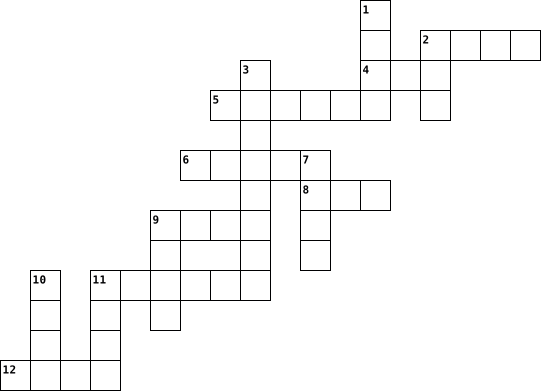
Across
- губы
- глаза
- щеки
- рот
- рука
- голова
- палец
- ступни
Down
- пальцы ноги
- нога
- плечо
- волосы
- кисть
- нос
- ступня
15 Clues: рот • нос • губы • нога • щеки • рука • плечо • глаза • кисть • палец • волосы • голова • ступня • ступни • пальцы ноги
body 2020-01-13
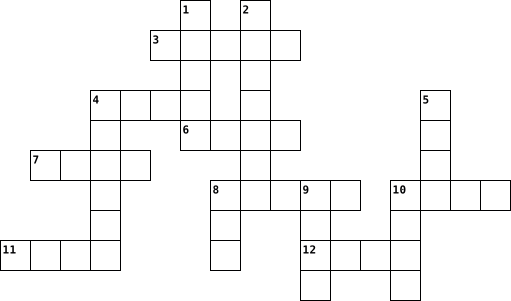
Across
- mulut in english is
- kaki in english is
- kepala in english is
- tangan in english is
- pipi in english is
- leher in english is
- rambut in english is
- telinga in english is
Down
- gigi in english is
- perut in english is
- jari in english is
- lutut in english is
- dagu in english is
- mata in english is
- hidung in english is
15 Clues: gigi in english is • kaki in english is • jari in english is • pipi in english is • dagu in english is • mata in english is • perut in english is • mulut in english is • lutut in english is • leher in english is • kepala in english is • tangan in english is • hidung in english is • rambut in english is • telinga in english is
Body 2021-02-16
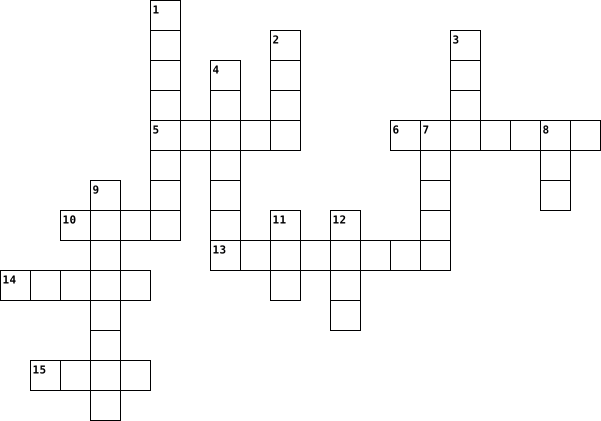
Across
- _ o n _ _ 骨头
- _ h _ _ t _ h 猎豹
- _ _ n _ 手
- s _ _ l _ t _ _ 骨骼
- w _ _ g _ 翅膀
- _ _ _ t 脚
Down
- _ a _ _ b _ r d 瓢虫
- t _ _ s 脚趾
- _ _ e e 膝盖
- f i _ g e _ _ 手指
- _ u _ _ m 人类
- a _ _ 手臂
- _ a _ g _ r _ _袋鼠
- _ e g 腿
- h _ _ d 头
15 Clues: _ e g 腿 • a _ _ 手臂 • _ _ n _ 手 • h _ _ d 头 • _ _ _ t 脚 • t _ _ s 脚趾 • _ _ e e 膝盖 • _ o n _ _ 骨头 • _ u _ _ m 人类 • w _ _ g _ 翅膀 • f i _ g e _ _ 手指 • _ h _ _ t _ h 猎豹 • _ a _ g _ r _ _袋鼠 • _ a _ _ b _ r d 瓢虫 • s _ _ l _ t _ _ 骨骼
Body 2017-09-05
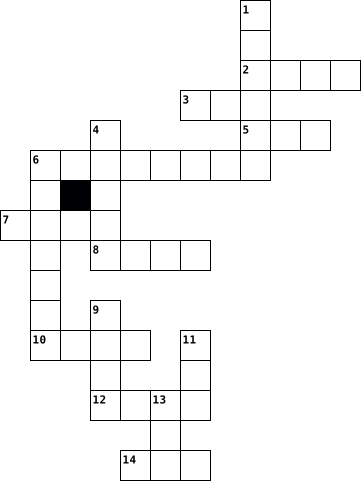
Across
- Nase
- Bein
- Auge
- Schulter
- Fuß
- Hand
- Kopf
- Knie
- Arm
Down
- Finger
- Zahn
- Bauch
- Rücken
- Fußzeh
- Ohr
15 Clues: Fuß • Ohr • Arm • Nase • Bein • Zahn • Auge • Hand • Kopf • Knie • Bauch • Finger • Rücken • Fußzeh • Schulter
Body 2020-09-24
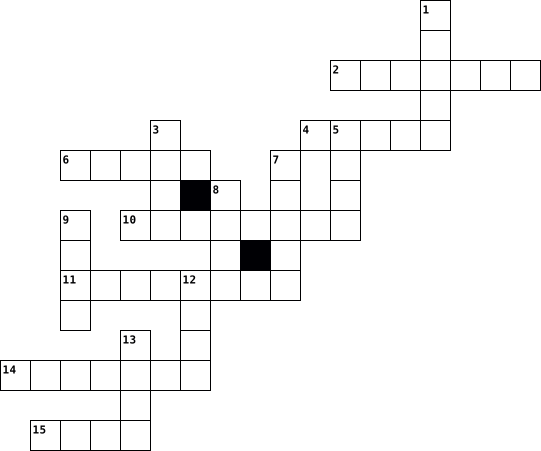
Across
- Drink alot of water to help these work
- Grabby things on your body
- The organ in your body that pumps the blood
- The hard things in the middle of your legs
- thing inside u tht stops u frm bein mush
- You have 5 of these on both graby thingies
- If you didnt have you wouldnt be able 2 read
Down
- You also need this to live ,Oxygen
- This helps carry oxygen through your blood
- The limbs that r attached 2 the graby thingies
- This is at the top you need this to live at all
- These touch the floor at all times(almost)
- You smell stuff with that
- You hear things with these
- The limbs that help you walk
15 Clues: You smell stuff with that • Grabby things on your body • You hear things with these • The limbs that help you walk • You also need this to live ,Oxygen • Drink alot of water to help these work • thing inside u tht stops u frm bein mush • This helps carry oxygen through your blood • These touch the floor at all times(almost) • The hard things in the middle of your legs • ...
Body 2021-03-28
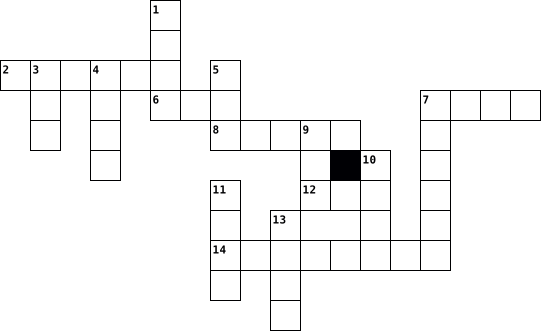
Across
- heledajuukseline
- kõrv
- jalad
- suu
- silm
- õlg
Down
- põlv
- jalasäär
- kael
- käsivars
- sõrm
- varvas
- pea
- nina
- keha
15 Clues: suu • pea • õlg • põlv • kael • kõrv • sõrm • nina • silm • keha • jalad • varvas • jalasäär • käsivars • heledajuukseline