
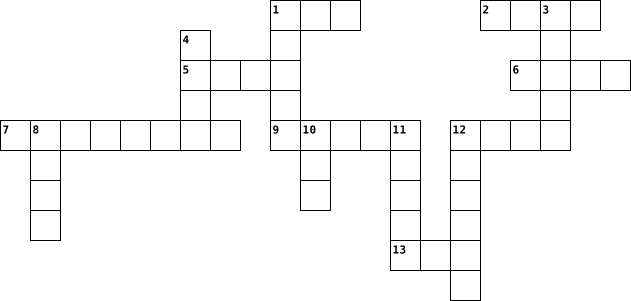
body parts Crossword Puzzles
Body 2023-08-16
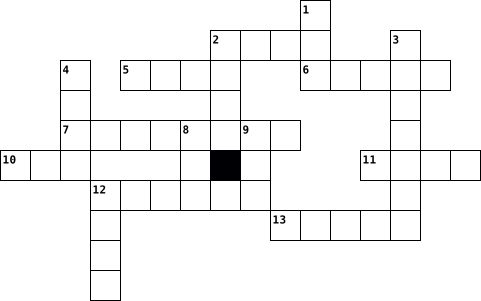
Across
- The strands that grow from the scalp on the head.
- The joint in the middle of the leg.
- The opening in the face used for eating and speaking.
- The joint that connects the arm to the body.
- The organ that allows you to see.
- The part of the body at the end of the arm with fingers.
- One of the digits on the hand.
- A hard, white structure in the mouth used for biting and chewing.
Down
- The part of the body between the shoulder and the hand.
- The upper part of the body that contains the brain and the face.
- The organ in the body where food is digested.
- The part of the face used for smelling and breathing.
- The part of the body used for walking and standing.
- The part of the body used for hearing.
- The end part of the leg used for walking and balance.
15 Clues: One of the digits on the hand. • The organ that allows you to see. • The joint in the middle of the leg. • The part of the body used for hearing. • The joint that connects the arm to the body. • The organ in the body where food is digested. • The strands that grow from the scalp on the head. • The part of the body used for walking and standing. • ...
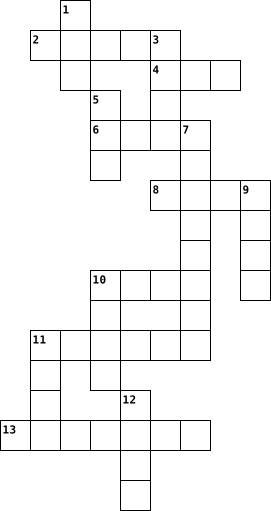
BODY 2024-08-10

Across
- It make sound when you are hungry.
- You use this to smell things.
- You see with this.
- Connects your shoulder to your hand.
- The top part of your body where your brain is.
- You listen with this.
- There are five of these on each hand
Down
- There are five of these on each foot.
- This is in the middle of your leg and helps it bend.
- This connects your arm to your body
- This part of your body helps you walk and run.
- This grows on your head and can be long or short.
- You eat and speak with this.
- You use this to hold things.
- You stand on these.
15 Clues: You see with this. • You stand on these. • You listen with this. • You eat and speak with this. • You use this to hold things. • You use this to smell things. • It make sound when you are hungry. • This connects your arm to your body • Connects your shoulder to your hand. • There are five of these on each hand • There are five of these on each foot. • ...
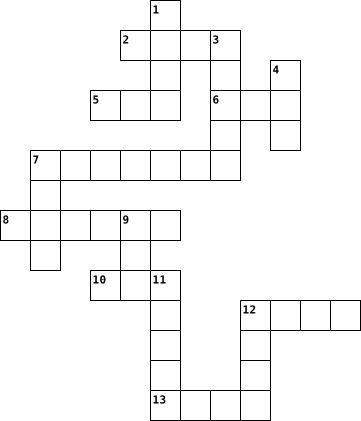
Body 2023-06-19
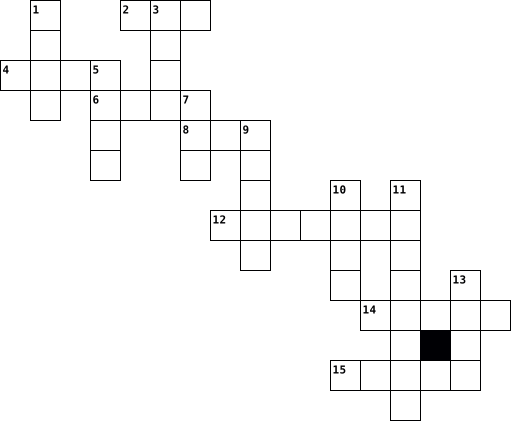
Across
- The long and sturdy support that helps us stand tall, walk, run, and leap with joy, exploring the world one step at a time.
- The reliable support that carries us through life's challenges, allowing us to stand tall and giving gentle pats of comfort.
- The trusty guide that helps us smell the sweet scent of flowers, the aroma of delicious food, and the crisp air after rain.
- The strong and flexible limb that gives us the power to embrace, throw, catch, and wave hello to friends near and far.
- The hungry little beast that growls and rumbles when it's time for a meal, ready to be filled with scrumptious delights.
- The clever hinge in our arm, enabling us to reach and grasp, making daily tasks easier and tickling our funny bone.
- The protective cage that houses our beating heart, reminding us of the love and emotions that make us who we are.
Down
- The command center of our body, housing the brilliant brain that thinks, dreams, and comes up with amazing ideas.
- Like two curious explorers, they open the window to the world, allowing us to see the colors, shapes, and wonders around us.
- The trusty joint that bends and flexes, allowing us to kneel, crawl, and jump, ready for adventures big and small.
- The listening buddy that captures the melodies of music, the whispers of secrets, and the sounds of nature's symphony.
- The gateway to laughter, friendship, and tasty treats, where words are formed and delicious food is enjoyed with gusto.
- Our versatile helpers, ready to create, build, draw, and give comforting hugs, always reaching out to lend a helping hand.
- The soft landing spot for weary heads, and the strength that helps us carry burdens and share warm hugs with loved ones.
- The steady foundation that carries us on grand adventures, whether skipping, jumping, dancing, or exploring new paths.
15 Clues: The command center of our body, housing the brilliant brain that thinks, dreams, and comes up with amazing ideas. • The protective cage that houses our beating heart, reminding us of the love and emotions that make us who we are. • The trusty joint that bends and flexes, allowing us to kneel, crawl, and jump, ready for adventures big and small. • ...
Body 2023-06-19
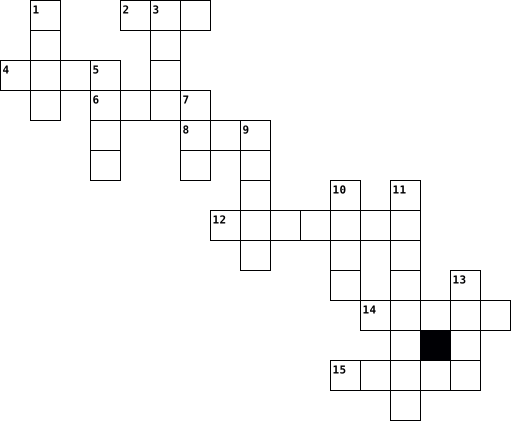
Across
- The long and sturdy support that helps us stand tall, walk, run, and leap with joy, exploring the world one step at a time.
- The reliable support that carries us through life's challenges, allowing us to stand tall and giving gentle pats of comfort.
- The trusty guide that helps us smell the sweet scent of flowers, the aroma of delicious food, and the crisp air after rain.
- The strong and flexible limb that gives us the power to embrace, throw, catch, and wave hello to friends near and far.
- The hungry little beast that growls and rumbles when it's time for a meal, ready to be filled with scrumptious delights.
- The clever hinge in our arm, enabling us to reach and grasp, making daily tasks easier and tickling our funny bone.
- The protective cage that houses our beating heart, reminding us of the love and emotions that make us who we are.
Down
- The command center of our body, housing the brilliant brain that thinks, dreams, and comes up with amazing ideas.
- Like two curious explorers, they open the window to the world, allowing us to see the colors, shapes, and wonders around us.
- The trusty joint that bends and flexes, allowing us to kneel, crawl, and jump, ready for adventures big and small.
- The listening buddy that captures the melodies of music, the whispers of secrets, and the sounds of nature's symphony.
- The gateway to laughter, friendship, and tasty treats, where words are formed and delicious food is enjoyed with gusto.
- Our versatile helpers, ready to create, build, draw, and give comforting hugs, always reaching out to lend a helping hand.
- The soft landing spot for weary heads, and the strength that helps us carry burdens and share warm hugs with loved ones.
- The steady foundation that carries us on grand adventures, whether skipping, jumping, dancing, or exploring new paths.
15 Clues: The command center of our body, housing the brilliant brain that thinks, dreams, and comes up with amazing ideas. • The protective cage that houses our beating heart, reminding us of the love and emotions that make us who we are. • The trusty joint that bends and flexes, allowing us to kneel, crawl, and jump, ready for adventures big and small. • ...
Body 2023-06-15
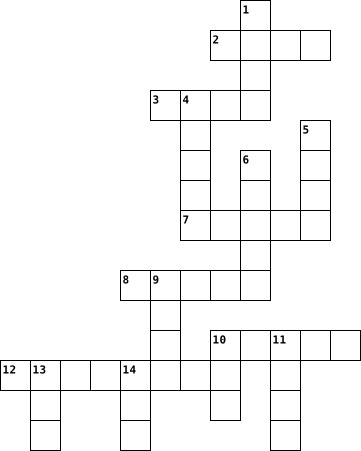
Across
- The part at the end of your arm with fingers, used for holding, touching, and high-fives.
- The part connecting your head to your body, allowing you to turn your head side to side.
- The place where your arm meets your hand, allowing you to move it in different directions.
- The front part of your upper body, which has your ribs and protects your heart and lungs.
- The joint connecting your foot to your leg, letting your foot move up, down, and around.
- The part where your arms connect to your body, giving you support to carry backpacks.
Down
- The part at the rear side of your body opposite your chest, helping you stand up straight.
- The bendy part in the middle of your arm that allows you to fold it.
- The part at the end of your leg that goes in a shoe and helps you stand and walk.
- The part between your chest and your hips, where you usually wear a belt.
- The top part of your body that houses your brain, eyes, nose, and mouth.
- The long part connected to your shoulder, used for reaching and carrying things.
- The bendy part in the middle of your leg that allows you to bend it and sit down.
- The part of your lower body that connects your legs to your waist and helps you move around.
- The long part below your waist, used for walking, running, and jumping.
15 Clues: The bendy part in the middle of your arm that allows you to fold it. • The long part below your waist, used for walking, running, and jumping. • The top part of your body that houses your brain, eyes, nose, and mouth. • The part between your chest and your hips, where you usually wear a belt. • ...
Body 2023-06-15
Across
- The part of the body that extends from the shoulder to the hand. It is used for various activities such as lifting, carrying, and waving.
- The rear part of the body, opposite the chest. It provides support for the spine and allows for various movements.
- The part of the body that connects the head to the rest of the body. It allows for head movement and protects important blood vessels and nerves.
- The uppermost part of the body, which contains the brain, eyes, nose, mouth, and ears. It is where our senses are located.
- The joint connecting the arm to the torso. It allows for a wide range of arm movements and provides support for the upper body.
- The joint connecting the upper and lower parts of the arm. It allows for bending and straightening of the forearm.
- The lower part of the leg, specifically the part that touches the ground when standing or walking. It helps us balance and move.
- One of the digits on the foot, connected to the sole. We have five toes on each foot, which help with balance and walking.
Down
- The joint connecting the foot to the leg. It allows for movement and provides stability while walking or running.
- The front part of the body between the neck and the abdomen. It houses the heart, lungs, and other vital organs.
- The joint between the thigh and the lower leg. It allows for bending and straightening of the leg and supports body weight.
- The part of the body at the end of the arm, consisting of the palm, fingers, and thumb. It is used for grasping, holding, and manipulating objects.
- The part of the body that extends from the hip to the foot. It supports the body's weight and allows for walking, running, and jumping.
- The joint connecting the hand to the forearm. It allows for flexibility and movement of the hand and fingers.
- One of the digits on the hand, connected to the palm. We have five fingers on each hand, which we use for tasks like gripping and pointing.
15 Clues: The joint connecting the hand to the forearm. It allows for flexibility and movement of the hand and fingers. • The front part of the body between the neck and the abdomen. It houses the heart, lungs, and other vital organs. • The joint connecting the foot to the leg. It allows for movement and provides stability while walking or running. • ...
Body 2023-08-27
Across
- The opening that you use to eat, speak, and smile.
- The upper limb of your body, connected to your shoulder.
- Organs that allow you to hear sounds and noises.
- The part of your face that you use to smell things.
- The part of your body where your face and brain are.
- One of the five digits on your hand, used for gripping and pointing.
- The area of your body where food is digested and stored.
Down
- One of the five digits on your foot, part of your balance.
- The strands that grow on your head and come in various colors.
- The lower limb of your body, used for walking and running.
- The joint connecting your arm to your upper body.
- Organs that help you see the world around you.
- The part of your body with fingers that you use for holding and grabbing.
- The end of your leg, used for standing and walking.
- The rear part of your body, opposite to your front.
15 Clues: Organs that help you see the world around you. • Organs that allow you to hear sounds and noises. • The joint connecting your arm to your upper body. • The opening that you use to eat, speak, and smile. • The part of your face that you use to smell things. • The end of your leg, used for standing and walking. • The rear part of your body, opposite to your front. • ...
Body 2023-08-24
Across
- The bottom part of the leg used for walking and balancing.
- The smaller parts at the end of the foot, used for balance and walking.
- Sensory organ for seeing, comes in different colors and sizes.
- Inside the body, helps digest food, can sometimes feel "butterflies."
- Thin and long part of the hand, used for picking up small things.
- Long part of the body from the shoulder to the hand, used for reaching.
- Grows on the head, comes in different colors, lengths, and textures.
- The part at the end of the arm with fingers for holding and touching.
Down
- On the face, used for smelling, comes in various shapes and sizes.
- Hard structures in the mouth used for biting and chewing food.
- Lower part of the body used for standing, walking, and running.
- Outer covering of the body, protects everything inside.
- Sensory organ for hearing, comes in pairs, helps us listen.
- Part of the face used for eating, speaking, and sometimes smiling.
- Top part of the body where the brain and face are, covered by hair.
15 Clues: Outer covering of the body, protects everything inside. • The bottom part of the leg used for walking and balancing. • Sensory organ for hearing, comes in pairs, helps us listen. • Hard structures in the mouth used for biting and chewing food. • Sensory organ for seeing, comes in different colors and sizes. • ...
Body 2025-02-02

Across
- 9
- 5
- 4
- 3
- 2
- 6
- 11
- 13
Down
- 12
- 7
- 14
- 8
- 10
- 1
- 15
15 Clues: 9 • 7 • 5 • 8 • 4 • 3 • 2 • 1 • 6 • 12 • 14 • 10 • 15 • 11 • 13
Body 2023-12-09
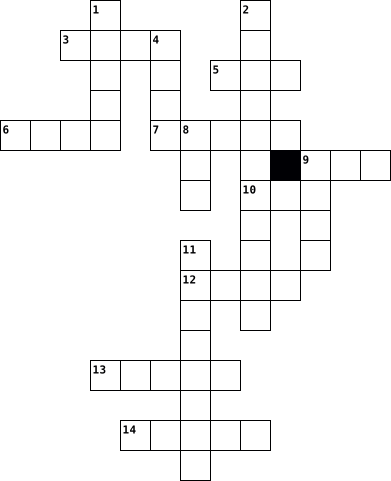
Across
- The rear part of the body, extending from the neck to the lower spine.
- The upper limb of the body, extending from the shoulder to the hand.
- The terminal part of the leg, consisting of toes and a sole, used for walking and balance.
- The joint between the forearm and upper arm, allowing the arm to bend.
- The joint where the thigh bone meets the pelvis, contributing to leg movement.
- The digits at the end of the foot, typically five on each foot.
- The terminal part of the human arm, consisting of fingers and a palm.
- The joint connecting the foot and leg, allowing movement such as pointing and flexing.
- The front part of the body between the neck and abdomen, containing the heart and lungs.
Down
- The part of the body between the chest and hips, often associated with the narrowest part of the torso.
- The central part of the body, excluding the head, arms, and legs. Contains the chest and abdomen.
- The joint between the thigh and the lower leg, allowing leg movement.
- The lower limb of the body, extending from the hip to the foot.
- The upper part of the body that contains the brain and sensory organs like eyes and ears.
- The part of the body between the neck and upper arm, allowing arm movement.
15 Clues: The lower limb of the body, extending from the hip to the foot. • The digits at the end of the foot, typically five on each foot. • The upper limb of the body, extending from the shoulder to the hand. • The joint between the thigh and the lower leg, allowing leg movement. • The terminal part of the human arm, consisting of fingers and a palm. • ...
Body Systems 2022-05-11

Across
- Left and right muscular chamber that pumps blood out of the heart and into the circulatory system
- A strong and smooth substance made up of chondrocytes
- This system controls the blood circulation and heat generation
- The largest artery in the body
- A blood vessel that carries blood to the heart from tissues and organs in the body
- This system includes the pulmonary circulation the systemic circulation, and the coronary circulation
- This system includes the upper and lower limbs, pelvic girdle, and the shoulder girdle
- A biomolecule comprised of amino acid residues joined together by peptide bands
- A membraneous fold that supports an organ and keeps it in position
- Sends and receives signals to the brain
Down
- Control center of the body
- Connects the nervous system with the rest of the body
- The part of the skull enclosing the brain
- Exchanges oxygen, nutrients, and waste between blood, and tissues
- This system includes the nose, trachea, and breathing muscles
- A flexible inelastic cord of strong collagen tissue attaching a muscle to a bone
- The smallest structural and functional unit of an organism
- Pumps the blood through the body
- A structure in the human body which two parts are fitted together
- A blood vessel that carries blood from the heart to the tissues and organs in the body
20 Clues: Control center of the body • The largest artery in the body • Pumps the blood through the body • Sends and receives signals to the brain • The part of the skull enclosing the brain • Connects the nervous system with the rest of the body • A strong and smooth substance made up of chondrocytes • The smallest structural and functional unit of an organism • ...
Chapter 2 Brain and Behavior 2021-09-01

Across
- emotional center of the brain
- the transmitting part of the neuron
- regulates rate of metabolism
- seeing part of the brain
- involves brain and spinal cord
- involved in understanding one's speech
- involuntary movement
- gap between neurons
- where chemicals are stored
- ability for our brains to change in response to the environment
- how specialized each side of your brain is
Down
- occurs when a neuron sends information down an axon away from the body
- gaps along the axons
- relays sensory input
- awake and alert brain wave
- allows you to see different parts of the brain where there are activities
- cell body
- involves heartrate and breathing
- measures different types of brain waves
19 Clues: cell body • gap between neurons • gaps along the axons • relays sensory input • involuntary movement • seeing part of the brain • awake and alert brain wave • where chemicals are stored • regulates rate of metabolism • emotional center of the brain • involves brain and spinal cord • involves heartrate and breathing • the transmitting part of the neuron • ...
sami ohaver worm crossword 2023-03-20

Across
- stinging cell in jellyfish
- containing male and female parts
- capture prey and defense
- body cavity
- matured jellyfish
- early stage of jellyfish
- main digestive line
- phylum of roundworms
Down
- capture food and water
- phylum of flatworms
- the middle layer of skin
- invertabrate lacking coelum
- the opening
- each segment of tapeworm
- cavity leading to esophagus
- free swimming flatworms
- tapeworm head
- protective layer of skin
18 Clues: body cavity • the opening • tapeworm head • matured jellyfish • phylum of flatworms • main digestive line • phylum of roundworms • capture food and water • free swimming flatworms • the middle layer of skin • capture prey and defense • each segment of tapeworm • early stage of jellyfish • protective layer of skin • stinging cell in jellyfish • invertabrate lacking coelum • ...
All Things Chiropractic 2024-12-30

Across
- The ability to stay steady and upright.
- To concentrate on one thing.
- The backbone that supports the body and protects the spinal cord.
- To release tension and feel calm.
- overall condition of the body and mind.
- A state of good health, especially when actively maintained.
Down
- The organ in the head that controls thoughts, memory, and the nervous system.
- The strength and vitality required for physical or mental activity.
- The way someone holds their body when sitting or standing.
- The top vertebra in the spine, supporting the skull.
- Fibers that send messages between the brain, spinal cord, and the body.
- Mental or physical tension caused by challenging situations.
- To place parts of the body in a straight, proper position.
13 Clues: To concentrate on one thing. • To release tension and feel calm. • The ability to stay steady and upright. • overall condition of the body and mind. • The top vertebra in the spine, supporting the skull. • The way someone holds their body when sitting or standing. • To place parts of the body in a straight, proper position. • ...
cancer cure crossword 2024-03-12

Across
- In the state of not being awake and not aware of things around you, especially as the result of a head injury
- The blood flowing through the body of an organism
- A drug treatment that uses powerful chemicals to kill fast-growing cells in your body
- An action or way of treating a patient or a condition medically
- growth The process by which cells collect mass and increase size
- A type of cancer treatment
- To introduce a solution into the body through a vein
- Cancer in the blood cells
- A machine that helps a patient breathe
- A state of unconsciousness that lasts a long time
- Intensely painful
Down
- Invasion and growth of germs in the body
- cancer Is A disease caused by abnormal Pediatric
- trial Testing an experiment treatment
- Help form clots that stop a wound from bleeding
- marrow Soft tissue between or center of the bones
- A disease that causes inflammation throughout the joints of the body
- A treatment intended to relieve or heal a disorder
- oncologist A doctor who cares for children's witsystemcer
- A disease in which some of the body’s cells grow uncontrollably and spread to other parts of the body
- An illness that affects people animals, or plants
- sytem Systems that help the body fight infections and disease
22 Clues: Intensely painful • Cancer in the blood cells • A type of cancer treatment • trial Testing an experiment treatment • A machine that helps a patient breathe • Invasion and growth of germs in the body • Help form clots that stop a wound from bleeding • The blood flowing through the body of an organism • An illness that affects people animals, or plants • ...
Human Anatomy 2023-08-07

Across
- The rigid organ that forms the skeleton and supports the body.
- The upper limb between the shoulder and the elbow.
- The point where two or more bones meet and allow movement.
- The flexible column of bones that surrounds and protects the spinal cord.
- The outer covering of the body, protecting it from the environment.
- The organ that detoxifies chemicals and metabolizes drugs, among other functions.
- The organ where food is partially digested and stored before entering the small intestine.
- The central organ of the nervous system, controlling various bodily functions.
- The terminal part of the arm, consisting of fingers and a thumb.
- The organ responsible for vision and sight.
- The lower limb between the knee and the ankle.
Down
- The terminal part of the leg, used for standing and walking.
- The muscular organ that pumps blood throughout the body.
- The long tube-like structure that aids in digestion and nutrient absorption.
- The pair of organs that filter waste products from the blood to form urine.
- The pair of organs responsible for breathing and gas exchange.
- The fluid that circulates through the body, carrying nutrients and oxygen.
- The bundle of fibers that transmit signals between the brain and other body parts.
- The tissue that contracts to produce movement in the body.
- The uppermost part of the body, containing the brain and sensory organs.
20 Clues: The organ responsible for vision and sight. • The lower limb between the knee and the ankle. • The upper limb between the shoulder and the elbow. • The muscular organ that pumps blood throughout the body. • The point where two or more bones meet and allow movement. • The tissue that contracts to produce movement in the body. • ...
Functions of parts of plants, animals and humans 2023-03-24

Across
- the part of the animals body used to fly
- the part of the human body used to bring and take something
- The Parts of body Used to see something
- the part of the human body used to walk, to kick, to jump and to run
- The part of the plant body used to Stem supports
Down
- the part of the Human body used to Breathe and smell
- the part of the human body used to Balance tool And heard
- The part of the plant body for photosynthesis
- the part of the human body used to speak
- the part of the human body used to think
10 Clues: The Parts of body Used to see something • the part of the animals body used to fly • the part of the human body used to speak • the part of the human body used to think • The part of the plant body for photosynthesis • The part of the plant body used to Stem supports • the part of the Human body used to Breathe and smell • ...
Functions of parts of plants, animals and humans 2023-03-24

Across
- the part of the human body used to Balance tool And heard
- the part of the human body used to think
- The part of the plant body for photosynthesis
- the part of the human body used to speak
- the part of the Human body used to Breathe and smell
Down
- the part of the animals body used to fly
- The Parts of body Used to see something
- The part of the plant body used to Stem supports
- the part of the human body used to walk, to kick, to jump and to run
- the part of the human body used to bring and take something
10 Clues: The Parts of body Used to see something • the part of the animals body used to fly • the part of the human body used to think • the part of the human body used to speak • The part of the plant body for photosynthesis • The part of the plant body used to Stem supports • the part of the Human body used to Breathe and smell • ...
Chapter 8 2025-04-03

Across
- reptile with a prehensile tail
- larval form of a frog or toad
- amphibian with no legs
- animal with four limbs
- a cold-blooded vertebrate that spends part of its life in water and parts on land
- color changing cells
- how a snake can smell
- how salamanders are classified
- the plates of a turtle
- most numerous reptiles
Down
- the growth cycle from egg to adult
- how reptiles breathe
- the largest amphibian
- clear covering of a geckos eye
- largest living lizard
- extra skin on a lizard
- reptile that can grip to a ceiling
- scientist who studies reptiles
- the regrowing of body parts, like a lizards tail
- every frog has this type of skin
- one way a snake moves
- the group that frogs and toads belong to
22 Clues: how reptiles breathe • color changing cells • the largest amphibian • largest living lizard • how a snake can smell • one way a snake moves • amphibian with no legs • animal with four limbs • extra skin on a lizard • the plates of a turtle • most numerous reptiles • larval form of a frog or toad • reptile with a prehensile tail • clear covering of a geckos eye • ...
Gonzales, Samantha 2nd Period Game 1 2021-09-20

Across
- away from the midline of the body
- divides body into front and back portions
- study of physical activity or movement
- houses thoracic, abdominal, pelvic cavity
- the wrist is blank to the hand
Down
- horizontal plane dividing body into upper and lower parts
- houses the cranial and spinal cavity
- the heart is blank to the pelvis
- the naval is on the blank side of the body
- the functions are motion and stability
10 Clues: the wrist is blank to the hand • the heart is blank to the pelvis • away from the midline of the body • houses the cranial and spinal cavity • the functions are motion and stability • study of physical activity or movement • divides body into front and back portions • houses thoracic, abdominal, pelvic cavity • the naval is on the blank side of the body • ...
Lamb period 2 2021-09-20

Across
- A vertical plane running from side to side
- Away from the body
- Above
- A plane dividing the body into upper and lower parts
Down
- The human body stands erect, eyes looking forward, arms and the side, and the palms of the hands and feet facing forward
- Toward the midline of the body
- Farthest from a reference point
- Below
- A vertical plane running from front to back
- Nearest to a reference point
10 Clues: Below • Above • Away from the body • Nearest to a reference point • Toward the midline of the body • Farthest from a reference point • A vertical plane running from side to side • A vertical plane running from front to back • A plane dividing the body into upper and lower parts • ...
Lamb period 2 2021-09-20

Across
- A vertical plane running from side to side
- Away from the body
- Above
- A plane dividing the body into upper and lower parts
Down
- The human body stands erect, eyes looking forward, arms and the side, and the palms of the hands and feet facing forward
- Toward the midline of the body
- Farthest from a reference point
- Below
- A vertical plane running from front to back
- Nearest to a reference point
10 Clues: Below • Above • Away from the body • Nearest to a reference point • Toward the midline of the body • Farthest from a reference point • A vertical plane running from side to side • A vertical plane running from front to back • A plane dividing the body into upper and lower parts • ...
Nutrition 2022-02-28

Across
- the process of taking in substances and using it for growth
- a substance to keep going
- nutrients to promote normal body growth
- a substance your body uses to form healthy parts
- a unit of temperature that measures energy in food
Down
- compounds to help your natural processes
- to build and repair cells in your body
- image the way you view yourself
- eating eating too much food rapidly
- a complex substance to get rid of
10 Clues: a substance to keep going • image the way you view yourself • a complex substance to get rid of • eating eating too much food rapidly • to build and repair cells in your body • nutrients to promote normal body growth • compounds to help your natural processes • a substance your body uses to form healthy parts • a unit of temperature that measures energy in food • ...
Primary 5 Systems 2020-09-13

Across
- the basic unit of life
- food-carrying tubes transport food made in the _________ to the other parts of the plant (roots, stem, flowers and fruits)
- ___________ circuit allows electric current to flow through it.
- tiny openings that allow gases such as oxygen and carbon dioxide to enter or leave a plant
- water-carrying tubes transport __________ and dissolved minerals from the roots to the other parts of the plant
Down
- contains chlorophyll that absorbs light energy for photosynthesis.
- system where the blood transport oxygen, digested food and water to all parts of a human body. The blood carries carbon dioxide and waste materials away from different parts of the human body
- ____________ of electricity do not allow electric current to flow through in the circuit.
- photosynthesis is a process where ________ leaves use water and carbon dioxide to make food in the presence of sunlight
9 Clues: the basic unit of life • ___________ circuit allows electric current to flow through it. • contains chlorophyll that absorbs light energy for photosynthesis. • ____________ of electricity do not allow electric current to flow through in the circuit. • tiny openings that allow gases such as oxygen and carbon dioxide to enter or leave a plant • ...
Science Corssword 2022-04-28

Across
- The chemical battery used to help with cellular respiration
- Carry blood to the heart
- Where Dr. Charles Drew went to college
- The most abundant type of blood in the body; primary transporter of oxygen to cells throughout the body
- The organ in our upper body where air is exchanged
- The hole where air comes in and out of
- The last name of the scientist who discovered the four types of blood
- Little sacks in our lungs the help with breathing
- A profession many people believed was too hard for women in the 1800's
- The larger lung
- Healthy habits that keep your body clean and happy like brushing your teeth or washing your hands
- These carry oxygen rich blood away from the heart to the body
Down
- Carries nutrients to the cells and transports waste away
- The study of food and how it works in your body
- A place where people can receive medical treatment
- Where Elizabeth Blackwell was born
- Strong muscle in upper body that helps breathing
- These tiny blood cells connect arteries and veins
- This lung is split in 2 parts
- The chemical we breathe, that also makes candles burn
- This long tube is 4-5 inches in diameter and is where oxygen travels down and carbon dioxide travels up
- The type of blood cells that help fight infections
22 Clues: The larger lung • Carry blood to the heart • This lung is split in 2 parts • Where Elizabeth Blackwell was born • Where Dr. Charles Drew went to college • The hole where air comes in and out of • The study of food and how it works in your body • Strong muscle in upper body that helps breathing • These tiny blood cells connect arteries and veins • ...
Med Term 2022-08-31

Across
- inflammation of a gland
- the direction toward or nearer the side of the body
- the process through which the body maintains a constant internal environment
- a physician who specializes in the care of older people
- protects the brain
- a benign tumor that arises in or resembles glandular tissue
- situated farthest from the midline or beginning of a body structure, the opposite of proximal
- the study of the structures of the body
- the direction toward or nearer the midline
- divided into 4 equal parts
- situated nearest the midline or beginning of a body structure, the opposite of distal
Down
- the study of the structure, composition, and function of tissues
- an outbreak of a disease occurring over a large geographic area, possibly world wide
- undifferentiated cells found amoung differentiated cells in a tissue or organ, harvested from the bone marrow for therapeutic uses
- the study of the formation, structure and functions of cells
- situated in the front, opposite of posterior
- divides the body into unequal left and right portions
- a vertical plane that divides the body into anterior (front) and posterior (back) portions
- protects the spinal cord
- containing thousands of genes and found in the nucleus of each cell, DNA is packaged in a chromosome as two spiraling strands that twist together to form a double helix
- situated in the back, opposite of anterior
21 Clues: protects the brain • inflammation of a gland • protects the spinal cord • divided into 4 equal parts • the study of the structures of the body • the direction toward or nearer the midline • situated in the back, opposite of anterior • situated in the front, opposite of posterior • the direction toward or nearer the side of the body • ...
Fate 2025-05-19

Across
- Small, soft-bodied insect
- A physical battle
- Spiritual part of a person
- Someone who works for others
- Wealthy ruling class
- Secret or magical beliefs
- Edge or boundary
- Melody
- A sacred object
- Magic users
- American coin
Down
- Internal parts of the body
- False belief
- Person in power
- Something decomposed
- To be self-righteous
- Knights' code of honor
- Savage warriors
- Heavy load
- To give up something precious
20 Clues: Melody • Heavy load • Magic users • False belief • American coin • Person in power • Savage warriors • A sacred object • Edge or boundary • A physical battle • Wealthy ruling class • Something decomposed • To be self-righteous • Knights' code of honor • Small, soft-bodied insect • Secret or magical beliefs • Internal parts of the body • Spiritual part of a person • Someone who works for others • ...
Patho: Nervous System Terms 2025-04-01

Across
- covers the axon of some neurons and helps speed neural impulses (MS)
- Area of the brain responsible for all voluntary activities of the body (C)
- plasma-like clear fluid circulating in and around the brain and spinal cord (CSF)
- chemical messengers that cross the synaptic gaps between neurons (N)
- A region of the cerebral cortex that processes visual information (OL)
- the junction between the axon tip of the sending neuron and the dendrite or cell body of the receiving neuron (S)
- a nerve cell; the basic building block of the nervous system (N)
- cells that support and protect neurons (N)
Down
- Brain and spinal cord tissue that appears gray with the naked eye; consists mainly of neuronal cell bodies (nuclei) and lacks myelinated axons (GM)
- information transmitted in the form of electrical and chemical changes (I)
- three protective membranes that surround the brain and spinal cord (MC)
- A region of the cerebral cortex associated with reasoning, planning, parts of speech, movement, emotions, and problem solving (FL)
- A region of the cerebral cortex whose functions include processing information about touch (PL)
- A region of the cerebral cortex responsible for hearing and language (TL)
- Branchlike parts of a neuron that are specialized to receive information (D)
- Extension that carries impulses away from the cell body (A)
- Nerves that run up and down the length of the back and transmit most messages between the body and brain (SC)
- Whitish nervous tissue of the CNS consisting of neurons and their myelin sheaths (WM)
18 Clues: cells that support and protect neurons (N) • Extension that carries impulses away from the cell body (A) • a nerve cell; the basic building block of the nervous system (N) • covers the axon of some neurons and helps speed neural impulses (MS) • chemical messengers that cross the synaptic gaps between neurons (N) • ...
Science Review 2023-02-23

Across
- structure that extends from centrioles
- acronym for mitosis stages
- tumor that cells cannot spread to other body parts
- cluster of cells with uncontrolled mitosis
- chromosomes align along the center of cell
- carries extra genes
- chromatids being pulled apart by spindle fibers
- stage of cell cycle when cell splits
Down
- cell splits into two daughter cells
- nucleus rebuilds around chromatids
- asexual reproduction, creates new bacteria
- movement of bacterial DNA via a virus
- cells with damaged DNA
- cancer cells spreading throughout body
- first phase of mitosis
15 Clues: carries extra genes • cells with damaged DNA • first phase of mitosis • acronym for mitosis stages • nucleus rebuilds around chromatids • cell splits into two daughter cells • stage of cell cycle when cell splits • movement of bacterial DNA via a virus • structure that extends from centrioles • cancer cells spreading throughout body • asexual reproduction, creates new bacteria • ...
Space Case 2023-04-26

Across
- something considered wrong
- waste matter discharged from bowels
- system of parts working together
- a single race
- when your body takes calories and puts them into use
- to feel fear, disgust, or horror
- the enjoyment of torturing others
- a medical doctor
- dried food or drink
Down
- to destroy utterly
- heat processed to destroy harmful microorganisms and enzymes
- in a way that relates to the theory of a area of study
- losing courage or confident
- in a way that is completely airtight
- a major passage in the body
15 Clues: a single race • a medical doctor • to destroy utterly • dried food or drink • something considered wrong • losing courage or confident • a major passage in the body • system of parts working together • to feel fear, disgust, or horror • the enjoyment of torturing others • waste matter discharged from bowels • in a way that is completely airtight • ...
Vocab words 2019-10-30

Across
- it prevents back blood flowing
- something hard in your body
- Were gas exchange happened
- it forms a clot to stop blood
- It is in the middle
- blood cell they carry oxygen
- were is splits into two ways
Down
- were blood comes back to the heart
- It is in the membrane
- there are three layers
- blood cell Which prevent from infection
- theory three parts
- were blood is taken away from the body
- which divide them into 4 section
- it is a air way
15 Clues: it is a air way • theory three parts • It is in the middle • It is in the membrane • there are three layers • Were gas exchange happened • something hard in your body • blood cell they carry oxygen • were is splits into two ways • it forms a clot to stop blood • it prevents back blood flowing • which divide them into 4 section • were blood comes back to the heart • ...
Rhythmic and Expressive Activities 2025-08-20

Across
- Performing without preparation.
- A repeated pattern of sound or movement.
- Performing movements at the correct moment.
- The ability to use body parts together smoothly.
- Acting without words.
- The speed of the music.
- A series of movements performed in order.
Down
- Showing feelings through movement.
- The basic unit of time in music.
- The smooth movement from one step to another.
- The arrangement of people in a pattern.
- A particular body position.
- The variations in force or intensity.
- A movement that conveys meaning.
- The sequence of steps in a dance.
15 Clues: Acting without words. • The speed of the music. • A particular body position. • Performing without preparation. • The basic unit of time in music. • A movement that conveys meaning. • The sequence of steps in a dance. • Showing feelings through movement. • The variations in force or intensity. • The arrangement of people in a pattern. • A repeated pattern of sound or movement. • ...
Five Senses 2014-10-22

Across
- what we do to get around
- we use our nose to do this
- what our eyes give us
- hides inside our mouth until we talk
- we use our fingers to do this
- what we use our ears for
- connected to our mouth
- what we hold things with
- these help us when we eat
- what sits at the top of our head
- what our body is covered in
Down
- what we see with
- our topic is on .....
- what we eat things with
- connected to our hands
- all these parts are connected to our .... ?
- what we smell with
- we use our mouth to do this
- how we hear sounds
19 Clues: what we see with • what we smell with • how we hear sounds • our topic is on ..... • what our eyes give us • connected to our hands • connected to our mouth • what we eat things with • what we do to get around • what we use our ears for • what we hold things with • these help us when we eat • we use our nose to do this • we use our mouth to do this • what our body is covered in • ...
Metabolism vocab 2022-02-16

Across
- this changes as you get older and is this units purpose
- lungs use this
- reactions cause by some molecules mixing
- the sugar in our blood
- The way our body digests.
- what builds back muscles
- A proposed anwser
- green house gas
- made up from a chain of atoms
Down
- the way our body transports cells
- Stomach acid
- an arguement using science
- info that can be used for a theory.
- what you can use to support evidence
- releases energy from oxygen and glucose
- a process using parts that can be used in mechanics or our bodies.
- potatoes are high in this
- It can power phones and bodys.
- what we breathe
19 Clues: Stomach acid • lungs use this • green house gas • what we breathe • A proposed anwser • the sugar in our blood • what builds back muscles • The way our body digests. • potatoes are high in this • an arguement using science • made up from a chain of atoms • It can power phones and bodys. • the way our body transports cells • info that can be used for a theory. • ...
Health and Disease 2024-02-01

Across
- This is a risk factor for developing lung cancer
- This is caused by uncontrolled cell division
- This is risk factor for type 2 diabetes
- This tumour spreads to other parts of the body
Down
- Diseases that cannot be spread from person to person
- Diseases that can be spread from person to person
- These increase your chance of developing a certain disease
- The state of physical and mental wellbeing
- This tumour is slow growing and does not spread to other parts of the body
9 Clues: This is risk factor for type 2 diabetes • The state of physical and mental wellbeing • This is caused by uncontrolled cell division • This tumour spreads to other parts of the body • This is a risk factor for developing lung cancer • Diseases that can be spread from person to person • Diseases that cannot be spread from person to person • ...
Nervous system 2025-04-07

Across
- I regulate and coordinate muscular activities. It is located at the back of the brain.
- To be able to control your body parts.
- A cell that sends messages to and from the brain.
- The largest part of the brain. Split into 2 parts.
- A doctor who manages the nervous system.
- I send messages to the brain.
Down
- Carry's out the brain's commands through the body.
- This is a system that includes the brain CNS and etc.
- I am the middle.
9 Clues: I am the middle. • I send messages to the brain. • To be able to control your body parts. • A doctor who manages the nervous system. • A cell that sends messages to and from the brain. • Carry's out the brain's commands through the body. • The largest part of the brain. Split into 2 parts. • This is a system that includes the brain CNS and etc. • ...
Levels of Organization 2024-09-29

Across
- this system uses the lungs as the major organ to bring oxygen into our body
- the organ that is the control center of all aspects of the body
- levels by which the body is structured
- this is used in movement of the body
- a group of tissues that work together to do a particular job
- the basic unit of life in an organism
- a group of cells that work together to do a particular job
- this system uses the stomach as its major organ to break down food for the body
Down
- a group of organs that work together to do a particular job
- all of the organ systems work together to make this
- organ that has the job of pumping oxygenated blood throughout the body
- this type of cell carries oxygen to all parts of the body
- this type of cell is our defense against germs
- this is brought in by the respiratory system and is necessary for life
- this system uses the brain as its major organ to command all aspects of the body
15 Clues: this is used in movement of the body • the basic unit of life in an organism • levels by which the body is structured • this type of cell is our defense against germs • all of the organ systems work together to make this • this type of cell carries oxygen to all parts of the body • a group of cells that work together to do a particular job • ...
7.2 Invertebrates 2016-02-19

Across
- Flattened extensions on each segment of an Annelid
- Then walled extensions of the body wall that allow for easy absorption
- Arrangement of body parts, there is only one way to cut the body and get two identical halves
- Polyps that lack the medusa stage
- Jellyfish that is predominately in the medusa form
- The back side
Down
- Stiff and sometimes sharp bristles found on the end of parapodia
- A long, fleshy tube used to entangle prey
- Long cilia fused at the base like combs, that beat in waves
- The back end
- Live in close association with other animals and feed on their tissues, blood, or intestinal contents
- The front end
- Cavity throughout the body that is filled with fluid
- Middle layer of tissues, makes muscles
- The belly, abdomen
15 Clues: The back end • The front end • The back side • The belly, abdomen • Polyps that lack the medusa stage • Middle layer of tissues, makes muscles • A long, fleshy tube used to entangle prey • Flattened extensions on each segment of an Annelid • Jellyfish that is predominately in the medusa form • Cavity throughout the body that is filled with fluid • ...
Simple Terms 2025-04-14

Across
- it includes making of the body artificial body parts from metal and plastic
- unique identification of a person by body features
- management and analysis of biological information stored in databases
- to produce genetically indentical individuals
- to raise crops and livestock
- study of the DNA of a body
- technique of producing silk by silkworms
- practice of keeping bees for the manufactture of honey and beeswax
Down
- any of the forms of a gene that can occupy the same locus
- the use of living cells or microorganisms in the industry and technology
- a hypothetical organic phenomenon by which living organisms are created from nonliving matter
- a substance used to kill microorganisms and cure infections
- technique of growing fish
- the study of the universe
- science of growing fruits flowers or ornamental plants
15 Clues: technique of growing fish • the study of the universe • study of the DNA of a body • to raise crops and livestock • technique of producing silk by silkworms • to produce genetically indentical individuals • unique identification of a person by body features • science of growing fruits flowers or ornamental plants • any of the forms of a gene that can occupy the same locus • ...
Anatomy Ch.1 & 5 Review 2024-12-11

Across
- A term used to describe the back of the head.
- The study of tissues.
- The system responsible for breaking down food and drink.
- A word used to describe all of the chemical reactions in the body.
- Concentric layers of collagen fibers in bones.
- The muscle tissue that has intercalated disks.
- Opposite of superior
- The type of gland that releases hormones directly into the bloodstream.
- The left arm is __________ to the left leg.
- The tissue that holds body parts together.
- A word used to describe muscle tissue that has a striped appearance due to fibers.
Down
- The most commonly found cartilage in the body.
- A term used to describe the back of the knee.
- Further away from a body part.
- The ability to maintain a stable internal environment.
- The voluntary muscle tissue.
- The type of cell that releases histamine to trigger an inflammatory response.
- This type of cartilage is found in the intervertebral discs and the knees.
- Another word for chin.
- This body cavity is found at the front of the body and contains the thoracic cavity and the abdomino-pelvic cavity.
- A flattened cell shape. This cell shape is often found in the epidermis.
- The membrane on the surface of the heart. Visceral ___________.
22 Clues: Opposite of superior • The study of tissues. • Another word for chin. • The voluntary muscle tissue. • Further away from a body part. • The tissue that holds body parts together. • The left arm is __________ to the left leg. • A term used to describe the back of the knee. • A term used to describe the back of the head. • The most commonly found cartilage in the body. • ...
Body Systems Spelling 2026-03-10

Across
- the soft material inside bones where blood cells are made
- an organ that filters waste from the blood
- a strong band of tissue that connects bones to other bones
- a blood vessel that carries blood back to the heart
- the small bones that make up the spine
- a small pouch connected to the large intestine
- tiny fibers that carry messages between the brain and the body
- organs that help you breathe by taking in oxygen and sending out carbon dioxide
- an organ that breaks down food after you swallow it
- the framework of bones that supports and shapes the body
- a thick bundle of nerves that carries messages between the brain and the body
- body parts that tighten and relax to help you move
Down
- a blood vessel that carries blood away from the heart
- the flow of blood moving through the body
- the tube that carries food from the mouth to the stomach
- the outer layer of your skin that protects your body
- the yellowish liquid part of blood that carries cells and nutrients
- strong cords that connect muscles to bones
- small lumps in the throat that help fight germs
- the bones in the head that protect the brain
20 Clues: the small bones that make up the spine • the flow of blood moving through the body • an organ that filters waste from the blood • strong cords that connect muscles to bones • the bones in the head that protect the brain • a small pouch connected to the large intestine • small lumps in the throat that help fight germs • body parts that tighten and relax to help you move • ...
Wellness crossword 2026-03-03

Across
- type of brain injury
- natural hormone that relieves pain and create a good feeling
- repetitve movementsand range of motion
- ratio of fat % vs essential body fat
- short periods of high intensity
- stretching that helps bring the heart back down to its resting state
- frequency, intensity, time, and type
- Rest, Ice, compress, and elevate
- using different body parts to work smoothly
- internal organs are visible through the skin in the abdominal region
- activation without visible movement
- deadly, body temp reaches over 103 deg
- injury caused by overuseage
- freezing body temp
Down
- fancy word for a bruise
- the time between stimulus and response
- The ability of the lungs, heart, and blood vessels to work efficiently together
- affects a tendon or muscle
- build up in the muscles
- using different muscles to prevent overuse
- help with electrical signals and maintain fluid balance
- keeping weight even and steady on all sides
- Gradually making your body work harder than normal over time
- affects a joint or ligiment
- long periods of low intensity
- the ability to move quickly and easily in any direction
- a chemical process that helps break down food into energy for the body
- stretching that gets the heart pumping
28 Clues: freezing body temp • type of brain injury • fancy word for a bruise • build up in the muscles • affects a tendon or muscle • affects a joint or ligiment • injury caused by overuseage • long periods of low intensity • short periods of high intensity • Rest, Ice, compress, and elevate • activation without visible movement • ratio of fat % vs essential body fat • ...
Science Terms 2023-06-09

Across
- living parts of an ecosystem
- an organism capable of making its own food
- the only biomolecule with phosphorus
- provides the body with sugar
- great for muscle development
- determines whether a species can survive in their environment or not
- makes proteins
- all earths ecosystems combined
- cannot make their own food
- the act of obtaining traits from your parents
Down
- the powerhouse of the cell
- nonliving parts of an ecosystem
- building blocks of protein
- building blocks
- the limit of a population that can be supported
- combination of alleles for a gene
- controls what goes in and out of the cell
- one of the building blocks for lipids
- the variety of species in an ecosystem
- physical traits that you can see
- characteristics transferred from parent to offspring
21 Clues: makes proteins • building blocks • the powerhouse of the cell • building blocks of protein • cannot make their own food • living parts of an ecosystem • provides the body with sugar • great for muscle development • all earths ecosystems combined • nonliving parts of an ecosystem • physical traits that you can see • combination of alleles for a gene • ...
Circulatory System 2023-04-28

Across
- large veins that carry blood to the heart form other parts of the body
- carry blood to the heart
- connects veins and arteries
- a gas that your body needs to survive ; o2
Down
- organ that pumps blood through the body
- a gas that is eliminated by inhalation
- carry blood away from the heart
- organ that supplies body with oxygen and removes carbon dioxide
- open and close to insure correct direction in bloodflow
- a necessary body fluid that turns red when exposed to oxegyn
10 Clues: carry blood to the heart • connects veins and arteries • carry blood away from the heart • a gas that is eliminated by inhalation • organ that pumps blood through the body • a gas that your body needs to survive ; o2 • open and close to insure correct direction in bloodflow • a necessary body fluid that turns red when exposed to oxegyn • ...
EVS - all about me 2022-01-23

Across
- parents and their children make a ______
- these help us hear
- this is the framework of our body
- these many sensory organs we have
- the food we eat digests here
- these help us see
- mothers parents are my ____ grandparents
Down
- we taste with this
- my uncles and aunts children are my _____
- they protect bones and help us move
- this helps us breathe
- This helps us smell
- fathers parents are my ____ grandparents
- this pumps blood to all parts of our body
- we can feel the objects with our _______
15 Clues: these help us see • we taste with this • these help us hear • This helps us smell • this helps us breathe • the food we eat digests here • this is the framework of our body • these many sensory organs we have • they protect bones and help us move • parents and their children make a ______ • fathers parents are my ____ grandparents • we can feel the objects with our _______ • ...
Food nutrients 2024-05-09

Across
- for strong bones and teeth
- indication to not eat the type of food
- sweets cause our teeth to
- balanced, regular and fresh meals
- help us know what our food contains
- for brain power and strong bones
- protect your organs
- hydrates our bodies
- make antibodies that fight infections
Down
- substances required for regulating the body function
- we eat
- Source of starch
- for growth and repair of tissues in all parts of you body
- gives us energy when we eat it
- added to processed food to keep the food fresh
15 Clues: we eat • Source of starch • protect your organs • hydrates our bodies • sweets cause our teeth to • for strong bones and teeth • gives us energy when we eat it • for brain power and strong bones • balanced, regular and fresh meals • help us know what our food contains • make antibodies that fight infections • indication to not eat the type of food • ...
Animal Crossword Puzzle 2025-03-21

Across
- Bladder A gas-filled organ that helps fish maintain buoyancy.
- An animal without a backbone.
- Symmetry Symmetry where the body can be divided into two equal halves.
- Lack of symmetry in an organism.
- The free-swimming form of certain cnidarians, such as jellyfish.
- Animals that can regulate their body temperature internally.
- An internal skeleton that supports the body.
Down
- A flexible, strong connective tissue found in joints and other parts of the body.
- Eggs Eggs that have a protective membrane, allowing for terrestrial reproduction.
- An animal with a backbone.
- Vascular System A system of fluid-filled canals used by echinoderms for movement and feeding.
- An organism that has both male and female reproductive organs.
- Animals that rely on external sources of heat to regulate body temperature.
- The process of shedding an old skin or outer covering.
- Glands Glands that produce milk in mammals.
- An organ in mammals that provides nutrients to a developing fetus
- A form of asexual reproduction in which a new organism develops from an outgrowth of a parent.
- A hard outer structure that supports and protects an animal’s body.
- Referring to organisms that live on or near the seafloor.
- Symmetry Symmetry around a central axis.
- A stationary, tubular form of certain cnidarians.
21 Clues: An animal with a backbone. • An animal without a backbone. • Lack of symmetry in an organism. • Symmetry Symmetry around a central axis. • Glands Glands that produce milk in mammals. • An internal skeleton that supports the body. • A stationary, tubular form of certain cnidarians. • The process of shedding an old skin or outer covering. • ...
Specialized Cells 2024-12-18

Across
- a bundle of axoms that carries signals to and from the brain
- vascular tissue that carries nutrients all over plants
- a plant that doesn't have vascular tissue
- an extension of a cell body of a neuron that sends signals
- a type of tissue in plants that covers and protects the outer surface
Down
- any of the unspecialized cellsthat can divide and become any type of cell in the body
- a type of tissue that covers organs or forms the inner lining of body cavities
- vascular tissue that carries water and minerals upward from the roots to the rest of the plant
- hairlike parts on the outside of a cell that move
- a type of tissue that in plants that provide support and store food
- small parts that stick out of the cells of a plant's roots
11 Clues: a plant that doesn't have vascular tissue • hairlike parts on the outside of a cell that move • vascular tissue that carries nutrients all over plants • small parts that stick out of the cells of a plant's roots • an extension of a cell body of a neuron that sends signals • a bundle of axoms that carries signals to and from the brain • ...
Grade 5 Science - The Respiratory System 2020-10-28

Across
- carries oxygen to all parts of your body
- means to breathe in
- another name for a windpipe
- a second thing your body needs to stay alive
- a gas found in the air that you breathe
- something your body needs to stay alive
Down
- means to breathe out
- a muscle used to move air in and out of lungs
- a waste product produced by the body
- two organs at the bottom of the trachea
10 Clues: means to breathe in • means to breathe out • another name for a windpipe • a waste product produced by the body • two organs at the bottom of the trachea • a gas found in the air that you breathe • something your body needs to stay alive • carries oxygen to all parts of your body • a second thing your body needs to stay alive • a muscle used to move air in and out of lungs
week 7 vocab system 2020-10-20

Across
- a group of similar cells that preform the same function and mak eup an organ
- bring oxygen into the body
- protects / supports the organs, provides framework
- a group of parts that work together as a whole
Down
- breaks down food
- electrochemical network, all nerves in body
- skeletal muscles tendons and ligaments
- an individual living thing
- transports everything around the body
- a collection of tissues that carry out a certain job within the body
10 Clues: breaks down food • an individual living thing • bring oxygen into the body • transports everything around the body • skeletal muscles tendons and ligaments • electrochemical network, all nerves in body • a group of parts that work together as a whole • protects / supports the organs, provides framework • a collection of tissues that carry out a certain job within the body • ...
Nutrition 2022-02-28

Across
- the process of taking in substances and using it for growth
- a substance to keep going
- nutrients to promote normal body growth
- a substance your body uses to form healthy parts
- a unit of temperature that measures energy in food
Down
- compounds to help your natural processes
- to build and repair cells in your body
- image the way you view yourself
- eating eating too much food rapidly
- a complex substance to get rid of
10 Clues: a substance to keep going • image the way you view yourself • a complex substance to get rid of • eating eating too much food rapidly • to build and repair cells in your body • nutrients to promote normal body growth • compounds to help your natural processes • a substance your body uses to form healthy parts • a unit of temperature that measures energy in food • ...
Muscle functions and movements 2025-10-21

Across
- have a nuclei also known as muscle fibres or cells begins with m
- bringing a joint towards the midline, but bending it decreases the angle between two parts begins with f
- rotation of the hand, arm, face to face downwards
- movement of a limb away from the mid-line of the body
- process where a muscle fibre will shorten or lengthen its fibres
Down
- straightening of a joint, increases the angle between two bones or body parts
- moving a limb towards the mid-line of the body
- a rotation movement of the arm turning the palm upwards or face upwards
- process of reducing tension in our muscles
- another word for hot, also, begins with h, a natural by-product of metabolic activity (exercise)
10 Clues: process of reducing tension in our muscles • moving a limb towards the mid-line of the body • rotation of the hand, arm, face to face downwards • movement of a limb away from the mid-line of the body • have a nuclei also known as muscle fibres or cells begins with m • process where a muscle fibre will shorten or lengthen its fibres • ...
List 12 2021-11-15

Across
- a small rocky body orbiting the sun
- group of three
- amount left over when one number is divided by another
- a person who is trained to travel into outer space
- the answer to a division problem
- a hard choice
- a star-shaped character * used in printing
- speaking two languages
- number by which another
Down
- the antonym of prime
- a number that shows the number of times a quantity is multiplied by itself
- three related plays, movies, or books
- enormous, immense, huge
- retelling the most important parts of what was read.
- a person who studies planets and stars
- a number that can only be divided by 1 and itself
- number that is being divided
- a number close to a given number
- inverse of multiplication; dividing a number into parts
- many different things; variety
20 Clues: a hard choice • group of three • the antonym of prime • speaking two languages • enormous, immense, huge • number by which another • number that is being divided • many different things; variety • the answer to a division problem • a number close to a given number • a small rocky body orbiting the sun • three related plays, movies, or books • a person who studies planets and stars • ...
Sponge 2020-01-28

Across
- what is the broadest category of classification.
- no body parts to create mirror images.
- where cells become specialized.
- What type of symmetry has no symmetry.
- smallest broadest category.
- inner layer of a cell
- what type of symmetry is slow moving
- rigid outboundary of a cell.
Down
- sponges live in a
- water enters through the
- egg and sperm are in one body
- what word means study of animals.
- outside layer of a sponge.
- sponges may do____ reproduction by a process called budding.
- creation of egg and sperm
15 Clues: sponges live in a • inner layer of a cell • water enters through the • creation of egg and sperm • outside layer of a sponge. • smallest broadest category. • rigid outboundary of a cell. • egg and sperm are in one body • where cells become specialized. • what word means study of animals. • what type of symmetry is slow moving • no body parts to create mirror images. • ...
Vocab Words 2019-10-30

Across
- were blood is taken away from the body
- blood cell they carry oxygen
- something hard in your body
- it prevents back blood flowing
- it is a air way
- It is in the membrane
- blood cell Which prevent from infection
- there are three layers
Down
- which divide them into 4 section
- it forms a clot to stop blood
- were is splits into two ways
- theory three parts
- It is in the middle
- were blood comes back to the heart
- Were gas exchange happened
15 Clues: it is a air way • theory three parts • It is in the middle • It is in the membrane • there are three layers • Were gas exchange happened • something hard in your body • were is splits into two ways • blood cell they carry oxygen • it forms a clot to stop blood • it prevents back blood flowing • which divide them into 4 section • were blood comes back to the heart • ...
chapter 13 jared leininger 2017-02-27

Across
- Language of genetics
- The condition in which an organism has extra sets of chromosones
- Regulates organs that develops in specific parts of the body
- Group of genes that are regulated together
- Silencing complex
- Carries copies of the dna
- A nucleic acid that consists of long chain of nucleotides
- Chemical or physical agent in the environment
Down
- Variation
- Carries coded rna
- Code for transcription
- Determines the identities of each segment of a flies body
- Becoming specialized in structure and function
- Many proteins
- Decoding of mRNA message
15 Clues: Variation • Many proteins • Carries coded rna • Silencing complex • Language of genetics • Code for transcription • Decoding of mRNA message • Carries copies of the dna • Group of genes that are regulated together • Chemical or physical agent in the environment • Becoming specialized in structure and function • Determines the identities of each segment of a flies body • ...
photosynthesis and nutriens 2020-10-01

Across
- the main types of foods
- important parts o food that make us live
- an illness that stops our body from working
- a gas that makes us live
- plants breath it in
- push poo out of digestive system
- a possible explanation for an observation
Down
- comes mostly from animal food product
- food keeping our bodies healthy
- system in our body that protects from germs
- food from a factory
- something that makes plants green
- gives energy to living organisms
- a nutrient from meat and nuts
- another for for sodium
15 Clues: food from a factory • plants breath it in • another for for sodium • the main types of foods • a gas that makes us live • a nutrient from meat and nuts • food keeping our bodies healthy • gives energy to living organisms • push poo out of digestive system • something that makes plants green • comes mostly from animal food product • important parts o food that make us live • ...
Space Case 2023-04-26

Across
- to destroy utterly
- system of parts working together
- the enjoyment of torturing others
- in a way that is completely airtight
- a single race
- something considered wrong
- a medical doctor
- dried food or drink
- when your body takes calories and puts them into use
Down
- in a way that relates to the theory of a area of study
- heat processed to destroy harmful microorganisms and enzymes
- losing courage or confident
- to feel fear, disgust, or horror
- a major passage in the body
- waste matter discharged from bowels
15 Clues: a single race • a medical doctor • to destroy utterly • dried food or drink • something considered wrong • losing courage or confident • a major passage in the body • system of parts working together • to feel fear, disgust, or horror • the enjoyment of torturing others • waste matter discharged from bowels • in a way that is completely airtight • ...
Nutrition Unit 2022-06-02

Across
- provide energy
- your body uses this to make enzymes
- parts of fruit and veggies that cant be digested
- substances that our body's need to develop
- are organic compounds made up of carbon
- solid at room temperature
- abstain from eating
- diets weight loss plans
Down
- one of the main types of nutrients
- compulsive eating
- a disorder in which using some form of purging
- type of fat that contains one double bond
- regulates body temp
- being heavily over-weight
- irrational fear of becoming obese
15 Clues: provide energy • compulsive eating • regulates body temp • abstain from eating • diets weight loss plans • being heavily over-weight • solid at room temperature • irrational fear of becoming obese • one of the main types of nutrients • your body uses this to make enzymes • are organic compounds made up of carbon • type of fat that contains one double bond • ...
Rhythmic and Expressive Activities 2025-08-23

Across
- A movement that conveys meaning.
- A repeated pattern of sound or movement.
- Acting without words.
- Performing movements at the correct moment.
- A particular body position.
- Performing without preparation.
- The basic unit of time in music.
- The sequence of steps in a dance.
Down
- Showing feelings through movement.
- The variations in force or intensity.
- The arrangement of people in a pattern.
- The ability to use body parts together smoothly.
- The smooth movement from one step to another.
- A series of movements performed in order.
- The speed of the music.
15 Clues: Acting without words. • The speed of the music. • A particular body position. • Performing without preparation. • A movement that conveys meaning. • The basic unit of time in music. • The sequence of steps in a dance. • Showing feelings through movement. • The variations in force or intensity. • The arrangement of people in a pattern. • A repeated pattern of sound or movement. • ...
Human Body Systems 2017-10-20

Across
- system of organs functioning in respiration
- the muscles of the body collectively
- are made up of the brain and spinal cord
- system of blood
Down
- framework of the body
- by the skin, hair, nails, and associated glands
- of glands that produce endocrine secretions
- complex of male or female gonads
- system by which the body ingest food
- system the excrete waste from the body
10 Clues: system of blood • framework of the body • complex of male or female gonads • the muscles of the body collectively • system by which the body ingest food • system the excrete waste from the body • are made up of the brain and spinal cord • of glands that produce endocrine secretions • system of organs functioning in respiration • ...
Unit 1 Key Vocabulary 2025-04-06

Across
- to help someone do something
- to stay alive, especially in danger
- to share ideas or feelings by talking, writing or moving
- different from others; important
- to put something where others can't see it
- how something or someone looks
- clever or quick-thinking
- when two things look or act the same
- a way to do something
- an emotional state or physical sensation
Down
- parts that work together as a whole
- to make or create something
- parts inside your body that help you move
- to grow or change over time
- a living thing, like an animal or insect
- able to learn and think quickly
- the form of something
- a design with repeated lines, shapes, or colors
- something good that helps you do better
- the power or skill to do something
20 Clues: the form of something • a way to do something • clever or quick-thinking • to make or create something • to grow or change over time • to help someone do something • how something or someone looks • able to learn and think quickly • different from others; important • the power or skill to do something • parts that work together as a whole • to stay alive, especially in danger • ...
key terms 2022-04-13

Across
- mechanics
- that requires that employers inform employees of all chemicals and hazards in the workplace.radiation exposure
- with feet 8–10 inches apart to provide better balance.
- Exposure to Hazardous Chemicals Standard
- standards
- way in which the body moves and maintains balance; proper body mechanics involves the most efficient use of all body parts.
- environmental hazard that is a major concern in radiology departments and dental offices; risks of exposure are involved with use radiographs and radioactive iodine in procedures.
- that can be used to put out fires.
Down
- Pathogen Standard
- sheet that must be provided by the manufacturer for all hazardous products.
- that has mandates to protect health care providers from diseases caused by exposure to body fluids.
- Data Sheet (SDS)
- of rules designed to protect both the patient and the health care worker.
- extinguishers
- of support
15 Clues: mechanics • standards • of support • extinguishers • Data Sheet (SDS) • Pathogen Standard • that can be used to put out fires. • Exposure to Hazardous Chemicals Standard • with feet 8–10 inches apart to provide better balance. • of rules designed to protect both the patient and the health care worker. • sheet that must be provided by the manufacturer for all hazardous products. • ...
The Nervous System 2013-10-17

Across
- long tube like structure that transmits information away from the cell body
- sends messages between central nervous system and other body parts
- produces energy that fuels the cell body
- consists of the brain and spinal cord
- small fibers that branch out from the axon
- nerve cells that run through our body and communicate
Down
- carries information to the cell body
- regulates the body's vital functions ex. heartbeat
- chemicals that are stored in sacs in the axon terminals
- transmits sensory messages to the central nervous system
- column of nerves that extend from the brain down the back; about as thick as a thumb
- actions between the axon terminals and dendrites of neurons
- white fatty substance that insulates and protects the axon
13 Clues: carries information to the cell body • consists of the brain and spinal cord • produces energy that fuels the cell body • small fibers that branch out from the axon • regulates the body's vital functions ex. heartbeat • nerve cells that run through our body and communicate • chemicals that are stored in sacs in the axon terminals • ...
Chapter 2 Vocabulary Review 2014-09-28

Across
- chosen standards used to make decisions
- active at night
- system an arrangement of organisms into groups according to criteria
- an animal with a backbone
- plan the overall shape or layout of an organism's body
- a living part of a habitat
- a nonliving part of a habitat
Down
- symmetry a property by which a shape can be folded in half so that the sides mirror each other
- a scientist who organizes living things according to a classification system
- a smaller body part that extends from the main body part
- symmetry a body plan in which parts are arranged in a circular pattern around the center
- to arrange things into groups by their similarities
- an animal without a backbone
13 Clues: active at night • an animal with a backbone • a living part of a habitat • an animal without a backbone • a nonliving part of a habitat • chosen standards used to make decisions • to arrange things into groups by their similarities • plan the overall shape or layout of an organism's body • a smaller body part that extends from the main body part • ...
Rescue Santa 2025-12-03

Across
- The opening through which food and air enter the body
- The upper part of the body that contains the brain
- The part of the body that connects the head to the shoulders
- Hair-covered skin on top of the head
- The lower limbs used for standing, walking, and movement
- The act of inhaling and exhaling air
- The body parts at the bottom of the legs used for balance and support
Down
- The organ used for smell and breathing
- Upper limbs used for lifting and holding
- The front part of the head with eyes, nose and mouth
- Organs used for hearing and balance
- The bony structure at the base of the spine
- The front part of the upper body between neck and abdomen
13 Clues: Organs used for hearing and balance • Hair-covered skin on top of the head • The act of inhaling and exhaling air • The organ used for smell and breathing • Upper limbs used for lifting and holding • The bony structure at the base of the spine • The upper part of the body that contains the brain • The front part of the head with eyes, nose and mouth • ...
Jimenez juan (7) game 2 2023-09-20

Across
- a vertical plane running from side to side
- the cavity that contains the digestive viscera
- the cavity that contains the reproductive organs
- the cavity that contains the spinal cord
Down
- the multidisciplinary study of physical activity or movement
- the cavity that contains the heart and the lungs
- the cavity thats in the brain
- a horizontal plane dividing the body or any of its parts into upper and lower parts
- A hollow space within the body, an organ, or a bone
9 Clues: the cavity thats in the brain • the cavity that contains the spinal cord • a vertical plane running from side to side • the cavity that contains the digestive viscera • the cavity that contains the heart and the lungs • the cavity that contains the reproductive organs • A hollow space within the body, an organ, or a bone • ...
Life Science Studies 2025-08-18

Across
- Study of the functioning of living things-how their body parts work.
- Study of how characteristics are passed from parents to offspring.
- Study of the structure of living things- what body parts of made of.
- Study of tiny living things that can be seen only with a microscope.
- Study of cells and how they work.
Down
- Study of animals.
- Study of the interactions among different kinds of living things and their environment.
- Study of how living things can be classified into groups.
- Study of plants.
9 Clues: Study of plants. • Study of animals. • Study of cells and how they work. • Study of how living things can be classified into groups. • Study of how characteristics are passed from parents to offspring. • Study of the functioning of living things-how their body parts work. • Study of the structure of living things- what body parts of made of. • ...
animals body and feelings 2021-11-22

Across
- a body part that we use for hearing
- when you watch a horror movie and there is a jump scare
- this is you when you are playing out side in summer
- a body part used for eating
- a animal that we get our eggs from
- connected to your scalp
- what people used to ride on
- this you what your feel after a long day
- everyone right before dinner
- dedos on your feet
- a body part used for breathing
- a body part that have the ojos, boca, nariz, and orejas
- when you stub your toe
- a body part that you need to see
Down
- this is when you play in the snow with out warm clothes
- ocho anos you are now able to ride in a car with out a car seat
- furry and soft and like cuddles
- connected to your manos
- what makes beef
- body parts that are connected to your bazos
- a body part that you use to hold up your manos
- the place where pelo, orejas, ojos, boca, and nariz are
- what you use to stand on
- we think they like carrots but they most likely don't
- mans best friend
- male gallina
- alive bacon
- you would need to drink water if you are this
28 Clues: alive bacon • male gallina • what makes beef • mans best friend • dedos on your feet • when you stub your toe • connected to your manos • connected to your scalp • what you use to stand on • a body part used for eating • what people used to ride on • everyone right before dinner • a body part used for breathing • furry and soft and like cuddles • a body part that you need to see • ...
Integumentary System 2024-04-25

Across
- swelling in both optic discs in your eyes
- fungi of the nail
- the study of abnormal changes in the body
- studies fluid, tissues, and organs of the human body
- milky, cloudy urine
- a substance that can cause cancer
- bad bruise that is caused by a large pool of blood under the skin
- loss of fat in different parts of the body
- a blue or purple discoloration of the skin
- skin infection marked by pus-filled lesions
- measuring across the depths of the skin
- death of live tissue
- series of skin disorders that lead to dry, itchy skin
- a doctor that specializes in skin, nails, and hair
- abnormal laziness in the upper eyelid
- thinking of the cornea, causing bulging that looks horn-shaped
- extremely low body temperature
Down
- applied to a part of the body
- extremely high body temperature
- parasitic fungi that grows on any part of the human body
- itchy mange caused mites
- referring to the integumentary system
- the presence of a cancerous tumor
- a rash that causes extreme itchiness
- disease that causes inflammation and fibrosis of the skin
- cells that appear like fish scales
- destructive skin infection that spreads from the subcutaneous tissues
- excessive sweating
- disease that causes skin cells to multiply too quickly
- very low temperatures
30 Clues: fungi of the nail • excessive sweating • milky, cloudy urine • death of live tissue • very low temperatures • itchy mange caused mites • applied to a part of the body • extremely low body temperature • extremely high body temperature • the presence of a cancerous tumor • a substance that can cause cancer • cells that appear like fish scales • a rash that causes extreme itchiness • ...
Invertebrates 2025-12-01

Across
- Phylum containing segmented worms
- Respiratory organs used by spiders for gas exchange
- Tissue in mollusks that produces the shell
- Phylum containing roundworms
- Phylum that includes insects spiders and crustaceans
- Phylum of sponges
- Openings on an insect’s body that allow it to breathe
- External skeleton that protects and supports arthropods
- Middle body section of an insect where wings and legs attach
- Body arranged around a central point
- Division of the body into repeated sections
- Phylum including jellyfish corals and sea anemones
- Fused head and chest region found in arachnids
- Free-swimming bell-shaped form of a cnidarian
- Tube-shaped stationary form of a cnidarian
- Tubelike mouthpart used by some insects for feeding
Down
- Phylum including snails clams and squid
- A body support system that uses internal fluid pressure
- Feeding method where organisms strain food from water
- Process of transformation during an insect’s life cycle
- Body with two mirror-image sides
- Sensory organs insects use for smell touch and vibration
- Phylum of sea stars and sea urchins
- eye Eye made of many small lenses that creates a wide field of vision
- Bristles used for movement in segmented worms
- molting Process where arthropods shed their outer covering to grow
- Phylum containing flatworms
- Ability to regrow lost body parts
- An animal without a backbone
- Sensory and feeding appendages near the mouth of spiders
30 Clues: Phylum of sponges • Phylum containing flatworms • Phylum containing roundworms • An animal without a backbone • Body with two mirror-image sides • Phylum containing segmented worms • Ability to regrow lost body parts • Phylum of sea stars and sea urchins • Body arranged around a central point • Phylum including snails clams and squid • Tissue in mollusks that produces the shell • ...
Livestock Evaluation Terms 2026-01-28

Across
- Female animals that look heavier and fuller in body shape.
- Animals that have loose extra fat hanging on their body.
- How much the ribs stick out from the backbone.
- The spot where the ham and loin meet on an animal.
- A color pattern (mostly in hogs) with red or sandy areas mixed with black.
- How well the animal’s body parts fit together.
- Traits that show strong bones and toughness (big feet thick legs).
- When the toes point toward each other.
- A word that means an animal has fat on its body.
- When the top jaw sticks out farther than the bottom jaw.
Down
- When the back legs bend inward causing the feet to point outward.
- A word used for an animal that looks nice and catches your eye.
- A word describing a female animal that looks smooth and graceful.
- Having the right size and weight for that animal’s age.
- When the front legs bend outward at the knees.
- The lower cheek area on animals like pigs.
- In sheep and goats when the front end of the body is higher or bigger.
- How grown-up an animal is for its age (body size puberty fatness).
- Describes an animal with a small chest and ribs (little depth).
- Body size based on bone structure (height length width).
20 Clues: When the toes point toward each other. • The lower cheek area on animals like pigs. • How much the ribs stick out from the backbone. • When the front legs bend outward at the knees. • How well the animal’s body parts fit together. • A word that means an animal has fat on its body. • The spot where the ham and loin meet on an animal. • ...
The Nervous System 2017-03-09

Across
- Controls automatic jobs AND everything you think about
- Tell the brain what is happening in the outside world
- When our body needs to move so fast it ‘skips’ the brain
Down
- Helps different parts of the body ‘talk’ to each other
- Column of nerves in the backbone
- Lets the brain control our muscles
- Covers all parts of body and sends messages back to the brain
7 Clues: Column of nerves in the backbone • Lets the brain control our muscles • Tell the brain what is happening in the outside world • Helps different parts of the body ‘talk’ to each other • Controls automatic jobs AND everything you think about • When our body needs to move so fast it ‘skips’ the brain • Covers all parts of body and sends messages back to the brain
Anatomy and Physiology 2018-10-02

Across
- Largest organ of the body forming an external protective covering
- during this process the body stores water, food, and oxygen for when it is needed. Constructive metabolism. The building of larger molecules from smaller ones.
- Study of the functions and activities performed by body structures.
- This body system purifies the body by eliminating waste matter. Consist of kidneys, liver, skin, intestines, and lungs
- All the protoplasm of a cell, except for what is in the nucleus. Contains food material for growth, reproduction and self-repair of the cell.
- Study of the science of minute structures of organic tissue (microscopic anatomy)
- Dense active protoplasm found in the center of the cell. Plays an important part in cell reproduction and metabolism
- This body system, affects growth, development, sexual activities, and health of the entire body. Consists of specialized glands.
- This body system controls and coordinates all other systems and makes it work harmoniously and efficiently; consist of brain, spinal cord, and nerves.
- This body system is responsible for plants and animals producing offspring
- Excrete water and waste products
- Circulates the blood
Down
- Division of cells is known as
- This body system enables breathing, supplying the body with oxygen eliminating carbon monoxide as a waste product; consists of lungs and air passages
- Supply oxygen to the blood
- A substance that is colorless, jellylike, contains food elements such as protein, fat, carbohydrates, mineral salts, and water are present
- This process releases energy that is stored by special molecules to be used in muscle contractions, body secretions, or heat production
- This body system controls the steady circulation of blood through the body by means of the heart and blood vessels.
- This body system changes food into nutrients and waste; consists of mouth, stomach, intestines, salivary and gastric glands.
- This organ removes toxic products of digestion
- This body system covers, shapes and supports the skeleton tissue; also contracts and moves various parts of the body
- Encloses protoplasm and permits soluble substances to enter and leave the cell
- The basic unit of all living things.
- Digests Food
- The study of the structure of the human body
25 Clues: Digests Food • Circulates the blood • Supply oxygen to the blood • Division of cells is known as • Excrete water and waste products • The basic unit of all living things. • The study of the structure of the human body • This organ removes toxic products of digestion • Largest organ of the body forming an external protective covering • ...
Anatomy and Physiology 2018-10-02

Across
- This body system controls the steady circulation of blood through the body by means of the heart and blood vessels.
- The study of the structure of the human body
- Study of the science of minute structures of organic tissue (microscopic anatomy)
- This body system covers, shapes and supports the skeleton tissue; also contracts and moves various parts of the body
- This body system, affects growth, development, sexual activities, and health of the entire body. Consists of specialized glands.
- The basic unit of all living things.
- This process releases energy that is stored by special molecules to be used in muscle contractions, body secretions, or heat production
- A substance that is colorless, jellylike, contains food elements such as protein, fat, carbohydrates, mineral salts, and water are present
- Digests Food
- Excrete water and waste products
- Study of the functions and activities performed by body structures.
- This body system controls and coordinates all other systems and makes it work harmoniously and efficiently; consist of brain, spinal cord, and nerves.
Down
- This body system is responsible for plants and animals producing offspring
- All the protoplasm of a cell, except for what is in the nucleus. Contains food material for growth, reproduction and self-repair of the cell.
- Encloses protoplasm and permits soluble substances to enter and leave the cell
- This organ removes toxic products of digestion
- during this process the body stores water, food, and oxygen for when it is needed. Constructive metabolism. The building of larger molecules from smaller ones.
- Dense active protoplasm found in the center of the cell. Plays an important part in cell reproduction and metabolism
- Circulates the blood
- This body system enables breathing, supplying the body with oxygen eliminating carbon monoxide as a waste product; consists of lungs and air passages
- This body system purifies the body by eliminating waste matter. Consist of kidneys, liver, skin, intestines, and lungs
- Division of cells is known as
- Supply oxygen to the blood
- This body system changes food into nutrients and waste; consists of mouth, stomach, intestines, salivary and gastric glands.
- Largest organ of the body forming an external protective covering
25 Clues: Digests Food • Circulates the blood • Supply oxygen to the blood • Division of cells is known as • Excrete water and waste products • The basic unit of all living things. • The study of the structure of the human body • This organ removes toxic products of digestion • Largest organ of the body forming an external protective covering • ...
Anatomy and Physiology 2018-10-02

Across
- Circulates the blood
- All the protoplasm of a cell, except for what is in the nucleus. Contains food material for growth, reproduction and self-repair of the cell.
- This body system changes food into nutrients and waste; consists of mouth, stomach, intestines, salivary and gastric glands.
- Supply oxygen to the blood
- Study of the functions and activities performed by body structures.
- This body system enables breathing, supplying the body with oxygen eliminating carbon monoxide as a waste product; consists of lungs and air passages
- This body system purifies the body by eliminating waste matter. Consist of kidneys, liver, skin, intestines, and lungs
- This body system is responsible for plants and animals producing offspring
- This body system covers, shapes and supports the skeleton tissue; also contracts and moves various parts of the body
- Study of the science of minute structures of organic tissue (microscopic anatomy)
- The study of the structure of the human body
- This process releases energy that is stored by special molecules to be used in muscle contractions, body secretions, or heat production
- The basic unit of all living things.
- This body system controls and coordinates all other systems and makes it work harmoniously and efficiently; consist of brain, spinal cord, and nerves.
Down
- Digests Food
- Excrete water and waste products
- during this process the body stores water, food, and oxygen for when it is needed. Constructive metabolism. The building of larger molecules from smaller ones.
- Dense active protoplasm found in the center of the cell. Plays an important part in cell reproduction and metabolism
- This body system controls the steady circulation of blood through the body by means of the heart and blood vessels.
- Encloses protoplasm and permits soluble substances to enter and leave the cell
- A substance that is colorless, jellylike, contains food elements such as protein, fat, carbohydrates, mineral salts, and water are present
- This organ removes toxic products of digestion
- This body system, affects growth, development, sexual activities, and health of the entire body. Consists of specialized glands.
- Division of cells is known as
- Largest organ of the body forming an external protective covering
25 Clues: Digests Food • Circulates the blood • Supply oxygen to the blood • Division of cells is known as • Excrete water and waste products • The basic unit of all living things. • The study of the structure of the human body • This organ removes toxic products of digestion • Largest organ of the body forming an external protective covering • ...
Body 2022-04-21
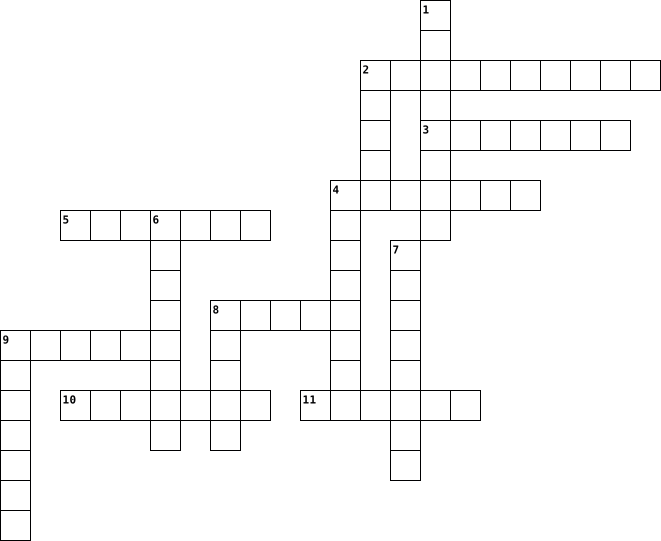
Across
- rings
- arm
- eyes
- silver
- foot
- mouth
- cap
- silk
Down
- toes
- long
- leg
- hands
- head
- gold
- nose
15 Clues: arm • leg • cap • toes • long • eyes • head • foot • gold • nose • silk • rings • hands • mouth • silver
body 2022-11-08
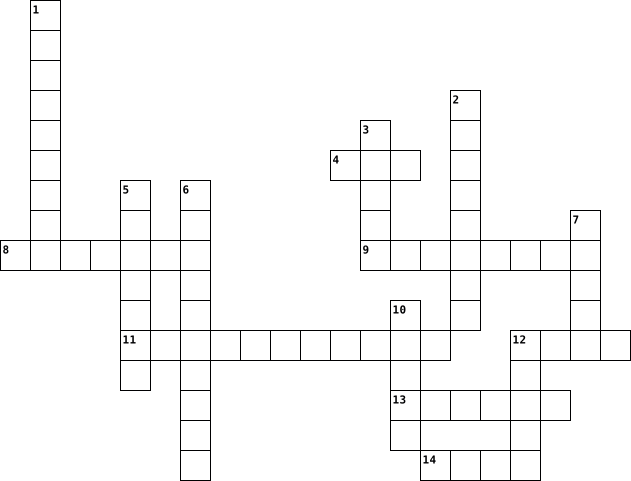
Across
- teeth
- scared
- 216 of me in you if you are an adult
- mucles
- you
- comsuming
- running
Down
- going down from belly
- in your arms if you work out
- eating
- belly
- going down
- running in your body
- thinking
- in you and in your hands
15 Clues: you • teeth • belly • eating • scared • mucles • running • thinking • comsuming • going down • running in your body • going down from belly • in you and in your hands • in your arms if you work out • 216 of me in you if you are an adult
Body 2023-09-14
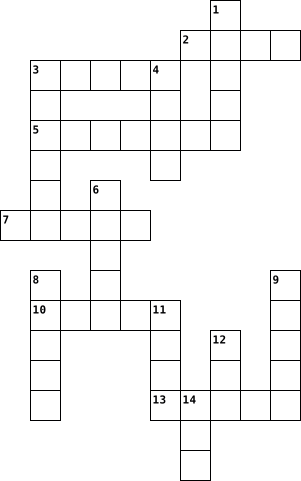
Across
- Rigid organs that make up the skeletal system and provide support.
- The opening in the face used for eating and speaking.
- The digestive organ where food is broken down.
- A muscular organ that pumps blood throughout the body.
- Organs responsible for breathing and exchanging oxygen and carbon dioxide.
- A bundle of fibers that transmit signals between the brain and body.
Down
- Hard structures in the mouth used for chewing food.
- Tissues in the body that contract to produce movement.
- The upper part of the body that contains the brain and sensory organs.
- The central organ of the nervous system, responsible for thinking and control.
- The fluid circulating in the body that carries nutrients and oxygen.
- The flexible column of bones in the back, also known as the backbone.
- The outer covering of the body, protecting it from the environment.
- An organ for hearing and balance, often shaped like a shell.
- An organ for vision, often with a colored iris.
15 Clues: The digestive organ where food is broken down. • An organ for vision, often with a colored iris. • Hard structures in the mouth used for chewing food. • The opening in the face used for eating and speaking. • Tissues in the body that contract to produce movement. • A muscular organ that pumps blood throughout the body. • ...
Body 2023-11-03
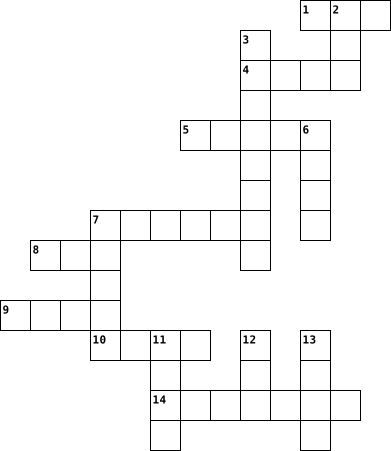
Across
- A part of the body that extends from the hip to the foot. It helps in walking, running, and standing.
- The thin strands that grow on the head and body. It comes in various colors and textures.
- An opening on the face that is used for eating, speaking, and expressing emotions. It contains the tongue and teeth.
- A muscular organ in the mouth that is used for tasting, swallowing, and speaking. It helps us enjoy food flavors.
- A sensory organ on the face that is used for seeing. It collects light and helps us perceive the world.
- The part of the body at the end of the leg that is used for standing and walking. It has toes for balance.
- The part of the body at the end of the arm that has fingers and a thumb. It is used for grasping and holding things.
- An organ in the body that helps digest food. It is located in the abdomen and processes nutrients.
Down
- A sensory organ on the side of the head that is used for hearing and balancing. It collects sound waves.
- A part of the body that connects the arm to the torso. It provides mobility and flexibility for the upper body.
- The top part of the body that contains the brain and the face. It is used for thinking and sensing the world.
- Hard structures in the mouth that are used for biting and chewing food. They help in the digestion process.
- A part of the face that is used for smelling and breathing. It helps us detect scents and odors.
- A part of the body that extends from the shoulder to the hand. It helps in lifting and carrying objects.
- The rear part of the body from the shoulders to the hips. It provides support and protection for the spine.
15 Clues: The thin strands that grow on the head and body. It comes in various colors and textures. • A part of the face that is used for smelling and breathing. It helps us detect scents and odors. • An organ in the body that helps digest food. It is located in the abdomen and processes nutrients. • ...
body 2023-10-19
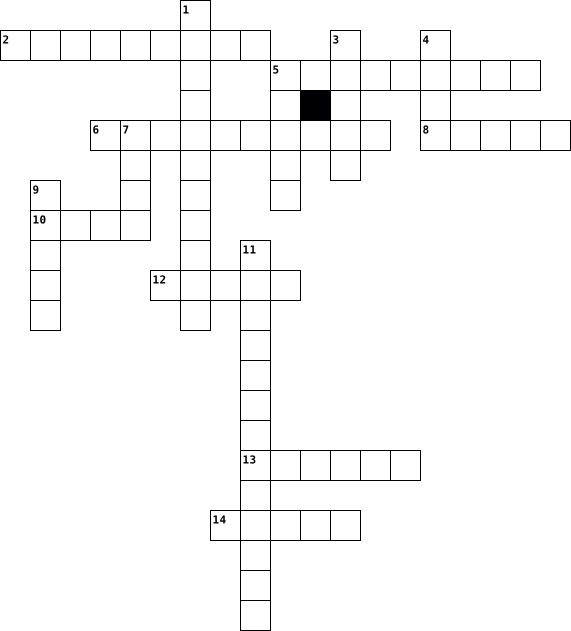
Across
- пухлые губы
- усы
- хорошо сложенный
- молодой
- глаза
- зубы
- язык
- щека
Down
- средних лет
- кудрявые
- волнистый
- рот
- уши
- борода
- прямые волосы
15 Clues: усы • рот • уши • зубы • язык • щека • глаза • борода • молодой • кудрявые • волнистый • средних лет • пухлые губы • прямые волосы • хорошо сложенный
Body 2020-06-02
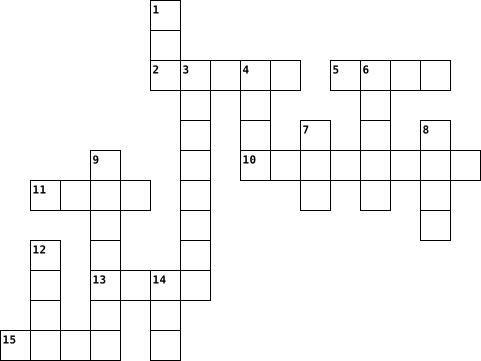
Across
- tänder
- knä
- Axel
- Hår
- Ögon
- Ben
Down
- rumpa
- Ögonbryn
- tår
- naglar
- Fot
- Huvud
- Fingrar
- Näsa
- öra
15 Clues: tår • knä • Fot • Hår • öra • Ben • Axel • Näsa • Ögon • rumpa • Huvud • tänder • naglar • Fingrar • Ögonbryn
Body 2023-06-18
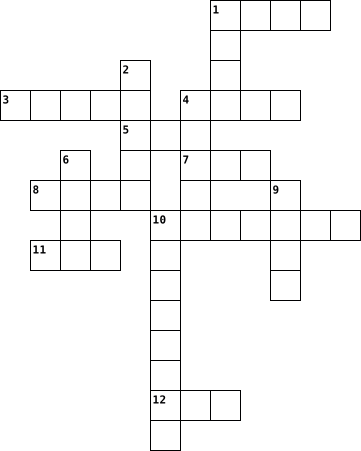
Across
- The rear surface of the body
- The opening in the face used for eating and speaking
- The upper part of the body where the face is located
- An organ used for seeing objects
- The upper limb of the body
- The lower part of the leg used for standing and walking
- The organ where food is digested
- The body part that connects the foot and the hip
- An organ used for hearing sounds
Down
- The hard material that makes up the skeleton
- The part of the body between the neck and the abdomen
- The organ that pumps blood throughout the body
- The part of the face used for smelling and breathing
- The body part at the end of the arm
- The joint connecting the arm to the body
15 Clues: The upper limb of the body • The rear surface of the body • An organ used for seeing objects • The organ where food is digested • An organ used for hearing sounds • The body part at the end of the arm • The joint connecting the arm to the body • The hard material that makes up the skeleton • The organ that pumps blood throughout the body • ...
Body 2023-06-18
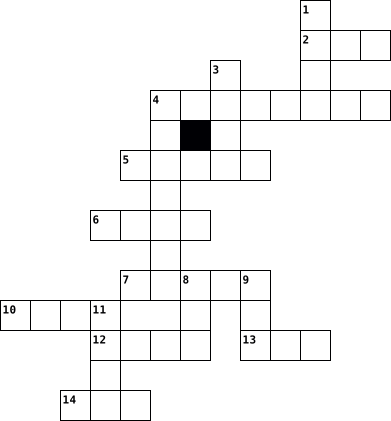
Across
- The upper limb of the body extending from the shoulder to the hand
- The joint where the arm connects to the body
- The opening in the face used for eating, speaking, and tasting
- The upper part of the body that contains the brain, eyes, nose, mouth, and ears
- The front part of the body between the neck and abdomen, containing the heart and lungs
- The part of the body that connects the head to the rest of the body
- The facial organ used for smelling and breathing
- The organ of hearing located on the sides of the head
- The lower limb of the body extending from the hip to the foot
Down
- The body part at the end of the arm, used for grasping and manipulating objects
- The body part at the end of the leg, used for standing, walking, and running
- The organ in the body where food is digested
- The organ of sight located in the head
- The digits at the end of the foot
- The joint in the middle of the leg that allows bending and straightening
15 Clues: The digits at the end of the foot • The organ of sight located in the head • The joint where the arm connects to the body • The organ in the body where food is digested • The facial organ used for smelling and breathing • The organ of hearing located on the sides of the head • The lower limb of the body extending from the hip to the foot • ...
Body 2023-07-14
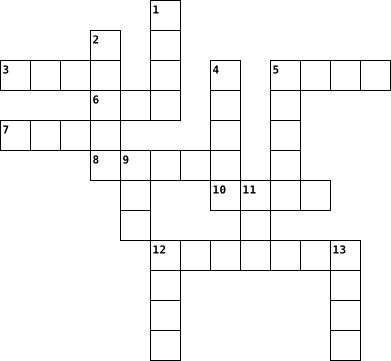
Across
- The part of the face that protrudes above the mouth, used for breathing and smelling. It helps us detect scents and odors.
- Hard and rigid structures that make up the skeleton. They provide support, protect organs, and help us move.
- The organ on the side of the head that allows us to hear. It picks up sound waves and sends signals to the brain for interpretation.
- The lower part of the leg, with toes. It helps us balance and supports our weight when we walk or stand.
- The muscular organ in the chest that pumps blood throughout the body. It keeps us alive by delivering oxygen and nutrients to our cells.
- The part of the body at the end of the arm, with fingers and a thumb. It allows us to grasp and manipulate objects.
- The organ in the body where food is digested. It breaks down food and absorbs nutrients for energy and growth.
Down
- The thread-like strands that grow from the skin on our head. It helps regulate body temperature and adds beauty to our appearance.
- Hard structures in the mouth that help us bite, chew, and grind food. They are important for maintaining oral health.
- The opening in the face with lips and teeth. It is used for eating, speaking, and tasting.
- The control center of the body located in the head. It is responsible for thinking, learning, memory, and controlling our body functions.
- The organ in the head that allows us to see. It detects light and sends signals to the brain, helping us perceive the world visually.
- The upper limb of the body extending from the shoulder to the hand. It allows us to reach and grab things.
- The outer covering of the body. It protects our internal organs and helps regulate body temperature.
- The part of the body that includes the face, brain, eyes, ears, nose, and mouth. It helps us think and sense the world around us.
15 Clues: The opening in the face with lips and teeth. It is used for eating, speaking, and tasting. • The outer covering of the body. It protects our internal organs and helps regulate body temperature. • The lower part of the leg, with toes. It helps us balance and supports our weight when we walk or stand. • ...
Body 2023-06-15
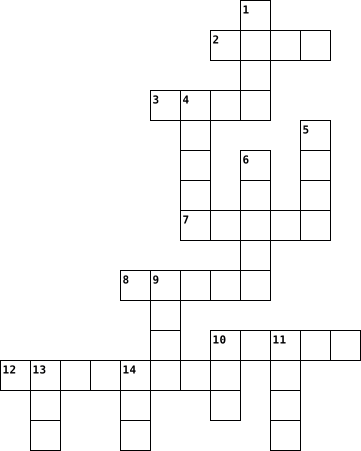
Across
- The part at the end of your arm with fingers, used for holding, touching, and high-fives.
- The part connecting your head to your body, allowing you to turn your head side to side.
- The place where your arm meets your hand, allowing you to move it in different directions.
- The front part of your upper body, which has your ribs and protects your heart and lungs.
- The joint connecting your foot to your leg, letting your foot move up, down, and around.
- The part where your arms connect to your body, giving you support to carry backpacks.
Down
- The part at the rear side of your body opposite your chest, helping you stand up straight.
- The bendy part in the middle of your arm that allows you to fold it.
- The part at the end of your leg that goes in a shoe and helps you stand and walk.
- The part between your chest and your hips, where you usually wear a belt.
- The top part of your body that houses your brain, eyes, nose, and mouth.
- The long part connected to your shoulder, used for reaching and carrying things.
- The bendy part in the middle of your leg that allows you to bend it and sit down.
- The part of your lower body that connects your legs to your waist and helps you move around.
- The long part below your waist, used for walking, running, and jumping.
15 Clues: The bendy part in the middle of your arm that allows you to fold it. • The long part below your waist, used for walking, running, and jumping. • The top part of your body that houses your brain, eyes, nose, and mouth. • The part between your chest and your hips, where you usually wear a belt. • ...
body 2023-06-19
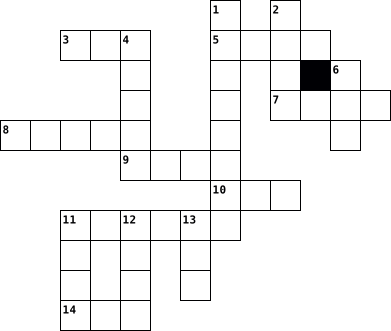
Across
- | The long limb on each side of the body that extends from the shoulder to the hand.
- | The top part of the body that contains the brain, eyes, nose, mouth, and ears.
- | The joint that connects the thigh to the lower leg. It allows for bending and straightening.
- | The front part of the body between the neck and the abdomen.
- | The part of the body at the end of the arm that has fingers and is used for holding and manipulating objects.
- | The organ on the side of the head that is used for hearing.
- | One of the digits on the hand. There are usually five fingers on each hand.
- | One of the digits on the foot. There are usually five toes on each foot.
Down
- | The joint that connects the arm to the body. It allows for movement and flexibility.
- | The rear part of the body, opposite the chest.
- | The opening in the face that is used for eating, speaking, and expressing emotions.
- | The limb on each side of the body that supports weight and helps with walking and running.
- | The lower part of the leg that is used for standing, walking, and running. It has toes.
- | The organ on the face that is used for smelling and breathing.
- | The organ in the head that is used for seeing. We usually have two eyes.
15 Clues: | The rear part of the body, opposite the chest. • | The organ on the side of the head that is used for hearing. • | The front part of the body between the neck and the abdomen. • | The organ on the face that is used for smelling and breathing. • | The organ in the head that is used for seeing. We usually have two eyes. • ...
Body 2023-08-09
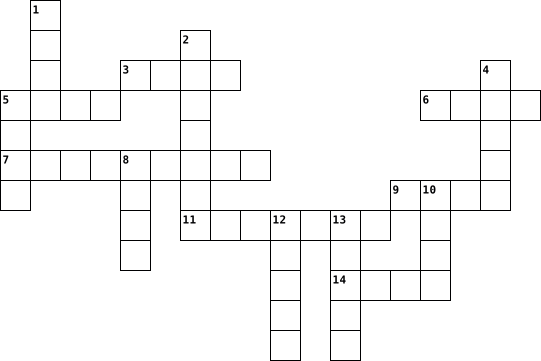
Across
- Thin fibers that cover the head
- Connects the head to the body, supports the head
- The top part of the body with eyes, nose, and mouth
- The area where the arms connect to the body, helping with arm movement and supporting the upper body.
- Located on the sides of the head, used for hearing
- Below the chest, where food is digested
- Two organs on the face used for seeing
Down
- The front part of the head, with eyes, nose, mouth, etc.
- The small parts at the end of the hands, used for intricate tasks and touching
- Below the wrists, used for gripping and touching
- The part in the middle of the face, used for smelling and breathing
- Extend from thighs to calves, used for walking
- Extend from the shoulders to the wrists, used for lifting and waving
- The central part of the face used for eating and speaking
- The central part of the body, where the heart is located
15 Clues: Thin fibers that cover the head • Two organs on the face used for seeing • Below the chest, where food is digested • Extend from thighs to calves, used for walking • Below the wrists, used for gripping and touching • Connects the head to the body, supports the head • Located on the sides of the head, used for hearing • ...
body 2025-04-03

Across
- To point and touch
- To eat and speak
- To chew
- To think
- To see
Down
- To bend the leg
- To lift and carry
- To smell
- To stand and walk
- To hold things
- To balance
- To bend the arm
- To cover your head
- To walk and run
- To hear
15 Clues: To see • To chew • To hear • To smell • To think • To balance • To hold things • To bend the leg • To bend the arm • To walk and run • To eat and speak • To lift and carry • To stand and walk • To point and touch • To cover your head
Body 2025-05-07

Across
- Medicines that reduce or stop pain.
- Objects you use to walk when you hurt your leg or foot.
- Organs that help you breathe.
- Places where two bones meet that let your body move (like knees and elbows).
- A dark mark on the skin caused by a bump or hit.
- The outer covering of your body.
Down
- To suddenly lose consciousness for a short time, usually from being too hot or tired.
- A special image that shows bones inside your body.
- An injury to a joint (like an ankle or wrist) caused by twisting it.
- An organ that cleans your blood and helps with digestion.
- A small sticky bandage you put on cuts or small wounds.
- A hard cover for a broken bone to keep it still while it heals.
- A sudden noise you make when your throat or lungs are irritated.
- A feeling that everything is spinning or that you’re going to faint.
- Small threads doctors use to close a deep cut or wound.
15 Clues: Organs that help you breathe. • The outer covering of your body. • Medicines that reduce or stop pain. • A dark mark on the skin caused by a bump or hit. • A special image that shows bones inside your body. • A small sticky bandage you put on cuts or small wounds. • Objects you use to walk when you hurt your leg or foot. • ...
Body 2025-05-07

Across
- Medicines that reduce or stop pain.
- Objects you use to walk when you hurt your leg or foot.
- Organs that help you breathe.
- Places where two bones meet that let your body move (like knees and elbows).
- A dark mark on the skin caused by a bump or hit.
- The outer covering of your body.
Down
- To suddenly lose consciousness for a short time, usually from being too hot or tired.
- A special image that shows bones inside your body.
- An injury to a joint (like an ankle or wrist) caused by twisting it.
- An organ that cleans your blood and helps with digestion.
- A small sticky bandage you put on cuts or small wounds.
- A hard cover for a broken bone to keep it still while it heals.
- A sudden noise you make when your throat or lungs are irritated.
- A feeling that everything is spinning or that you’re going to faint.
- Small threads doctors use to close a deep cut or wound.
15 Clues: Organs that help you breathe. • The outer covering of your body. • Medicines that reduce or stop pain. • A dark mark on the skin caused by a bump or hit. • A special image that shows bones inside your body. • A small sticky bandage you put on cuts or small wounds. • Objects you use to walk when you hurt your leg or foot. • ...
The Organ Systems 2016-04-06

Across
- Breaks down the food that you eat into nutrients that your body can absorb
- Works with the skeletal system to help you move
- Provides the body with oxygen and removes carbon dioxide
- Pumps blood through all of your vessels
- Take in air through the trachea and are filled with sacs to to hold oxygen
- Removes waste from blood and regulates bodily fluids
Down
- Has four chambers, pumps blood, and is very important to the body's survival
- Largest internal organ—controls many things in the body, especially in the digestive system
- Skin, hair, and nails—protects tissue beneath it
- Receives and sends electrical messages throughout the body
- Returns leaked fluid to the blood vessels and helps the body get rid of bacteria and viruses
- The control center of the body and main part of the nervous system
- Very long part of the nervous system that if damaged, can paralyze or kill you
- Has glands that send out chemical messages
- Has the organs necessary to produce children
- Provides a frame to support and protect your body parts
- Major part of the digestive system that helps regulate blood sugar levels
17 Clues: Pumps blood through all of your vessels • Has glands that send out chemical messages • Has the organs necessary to produce children • Works with the skeletal system to help you move • Skin, hair, and nails—protects tissue beneath it • Removes waste from blood and regulates bodily fluids • Provides a frame to support and protect your body parts • ...
Anatomy and Physiology 2018-10-02

Across
- This body system, affects growth, development, sexual activities, and health of the entire body. Consists of specialized glands.
- Circulates the blood
- This body system controls and coordinates all other systems and makes it work harmoniously and efficiently; consist of brain, spinal cord, and nerves.
- This body system purifies the body by eliminating waste matter. Consist of kidneys, liver, skin, intestines, and lungs
- Excrete water and waste products
- This body system covers, shapes and supports the skeleton tissue; also contracts and moves various parts of the body
- Division of cells is known as
- Study of the science of minute structures of organic tissue (microscopic anatomy)
- A substance that is colorless, jellylike, contains food elements such as protein, fat, carbohydrates, mineral salts, and water are present
- This body system controls the steady circulation of blood through the body by means of the heart and blood vessels.
- during this process the body stores water, food, and oxygen for when it is needed. Constructive metabolism. The building of larger molecules from smaller ones.
- Study of the functions and activities performed by body structures.
- The study of the structure of the human body
Down
- Dense active protoplasm found in the center of the cell. Plays an important part in cell reproduction and metabolism
- This body system changes food into nutrients and waste; consists of mouth, stomach, intestines, salivary and gastric glands.
- This process releases energy that is stored by special molecules to be used in muscle contractions, body secretions, or heat production
- The basic unit of all living things.
- Largest organ of the body forming an external protective covering
- All the protoplasm of a cell, except for what is in the nucleus. Contains food material for growth, reproduction and self-repair of the cell.
- Encloses protoplasm and permits soluble substances to enter and leave the cell
- Supply oxygen to the blood
- This body system is responsible for plants and animals producing offspring
- This body system enables breathing, supplying the body with oxygen eliminating carbon monoxide as a waste product; consists of lungs and air passages
- This organ removes toxic products of digestion
- Digests Food
25 Clues: Digests Food • Circulates the blood • Supply oxygen to the blood • Division of cells is known as • Excrete water and waste products • The basic unit of all living things. • The study of the structure of the human body • This organ removes toxic products of digestion • Largest organ of the body forming an external protective covering • ...
Brain Parts and Neuron parts 2026-02-05

Across
- regulates hormone activity, master gland (Brain)
- the center of decision making, ceo of cell, takes information in and makes decisions(neuron)
- Voluntary movements and balance (Brain)
- insulation (neuron)
- Controls the whole neuron (neuron)
- primary regulator of arousal and consciousness (Brain)
- Creates electrical signalsaway from the cell body toward other cells (neuron)
- understanding (Brain)
- responsible for your memory and learning (Brain)
- get incoming information, gives feedback to the cell body (neuron)
- sits on kidneys, adrenaline (Brain)
- regulates metabolic and calcium rate (Brain)
- relays sensory information to your cerebral cortex from the rest of your body (Brain)
- Interprets your five senses (Brain)
- regulates many automatic body functions (Brain)
Down
- helps you retrieve memories and understand language and emotions(Brain)
- Protects the cell (neuron)
- speaking (Brain)
- movement and sleep(Brain)
- formation Arousal(Brain)
- It controls voluntary movements, social understanding, thinking and learning, and more (Brain)
- convert electrical signals into chemical signals (neuron)
- eating, drinking, body temperature, emotions, pleasure, endocrine system (Brain)
- receives and interprets signals from other parts of your brain so you can understand your environment and the state of your body(Brain)
- heartbeat and breathing(Brain)
- allows you to process and interpret visual information from your eyes(Brain)
26 Clues: speaking (Brain) • insulation (neuron) • understanding (Brain) • formation Arousal(Brain) • movement and sleep(Brain) • Protects the cell (neuron) • heartbeat and breathing(Brain) • Controls the whole neuron (neuron) • sits on kidneys, adrenaline (Brain) • Interprets your five senses (Brain) • Voluntary movements and balance (Brain) • regulates metabolic and calcium rate (Brain) • ...
The Cardiovascular System 2025-10-29

Across
- pertaining to the heart and blood vessels
- thin and smallest blood vessels in the body which allows for the exchange of oxygen, nutrients and waste between cells and tissues
- transports blood from the upper portion of the body to the heart
- enable blood to flow only toward the heart and prevents it from flowing away from the heart
- smaller, thinner branches of arteries that deliver blood to the capillaries
- transports blood from the lower portion of the body to the heart
- oxygen,carbon dioxide, nitrogen
- smallest veins that join to form the larger veins
Down
- brings oxygen and nutrients to the cells and carries away waste
- processes waste products and toxins of the blood
- smallest formed elements of the blood, allowing for clotting
- transports blood to and from all areas of the body
- light colored fluid within the blood, that contains nutrients, hormones, waste products and water
- relating to, or contained in, the veins
- two largest veins in the body, that return blood to the heart
- returns blood from all body parts to the heart
- measurement of pressure exerted against the walls of the arteries
- receives blood from the veins and pumps blood
- large blood vessels that carry blood away form the heart to all regions of the body
- facilitates gas exchange of oxygen and carbon dioxide to the heart
20 Clues: oxygen,carbon dioxide, nitrogen • relating to, or contained in, the veins • pertaining to the heart and blood vessels • receives blood from the veins and pumps blood • returns blood from all body parts to the heart • processes waste products and toxins of the blood • smallest veins that join to form the larger veins • transports blood to and from all areas of the body • ...
Fitness 2022-05-05
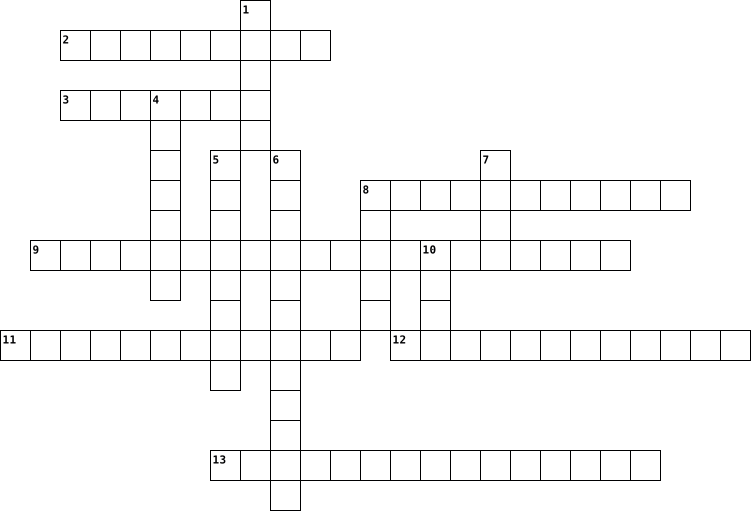
Across
- Your muscles build strength with use and lose strength with lack of use
- Keeping an upright posture
- Exercising a certain part of the body, or practicing a skill will develop that
- Ability to do everyday life things
- Combining hand, eye, and foot movements
- The amount of time it takes to start a movement once you processes a signal
- Taking rest days and using that time for your body to recover is important in reducing the amount of stress you put on your body
Down
- Quick bursts of explosive energy
- changing direction quickly while moving
- Once your body adapts to a workload, it won’t continue to improve unless the workload is increased and changed
- Ability to perform task related to certain sports or activities.
- An organized way to create a workout
- moving your body or parts of your body as quickly as possible
- The number of fitness principles there are
14 Clues: Keeping an upright posture • Quick bursts of explosive energy • Ability to do everyday life things • An organized way to create a workout • changing direction quickly while moving • Combining hand, eye, and foot movements • The number of fitness principles there are • moving your body or parts of your body as quickly as possible • ...
Nutrition 2022-10-02

Across
- sodium, needed by the body in small amounts
- mineral that helps control fluid balance
- a mineral needed for strong bones and muscle contraction
- these types of fats raise blood cholesterol levels and are therefore linked to heart disease.
- a macronutrient that provides us with energy
- major component of hemoglobin, which carries oxygen from your lungs to all parts of the body
- - essential nutrients providing hundreds of roles in the body
- body mass _______ : calculated by dividing an individual’s weight by the square of their height
Down
- measured in units, can affect sleep and mood
- an adverse reaction to certain foods
- found in many other products such as cocoa, baking chocolate and cola, helps ward off tiredness
- high levels of this are associated with increased risk of heart disease and stroke
- a unit of measurement for the amount of energy our body can get from food
- help the body and immune system to function
14 Clues: an adverse reaction to certain foods • mineral that helps control fluid balance • sodium, needed by the body in small amounts • help the body and immune system to function • measured in units, can affect sleep and mood • a macronutrient that provides us with energy • a mineral needed for strong bones and muscle contraction • ...
Cardiovascular System Vocabulary 2025-02-25

Across
- When the blood leaves the heart it is carried throughout the body in vessels
- Irregular or abnormal rhythm, usually refering to the heart rythm
- Moves the blood between the heart and lungs
- Tiny blood vessels that connects arterioles and venules and allows for exchange of nutrients and gases between the blood and the body cells
- has low oxygen
- Pertaining to the heart and blood vessels
- Provides and delivers oxygen to the heart
Down
- Moves the blood between the heart and lungs
- A protein that carries oxygen in the blood
- Blood vessels that carry blood away from the heart
- Muscular,hollow organ often called the "pump" of the body
- Blood vessels that carry blood back to the heart
- Largest artery in the body;carries blood away from the heart
- Fluid that circulates throughout the vessels in the body to carry substances to all body parts
- supplying oxygen to the tissue
15 Clues: has low oxygen • supplying oxygen to the tissue • Pertaining to the heart and blood vessels • Provides and delivers oxygen to the heart • A protein that carries oxygen in the blood • Moves the blood between the heart and lungs • Moves the blood between the heart and lungs • Blood vessels that carry blood back to the heart • ...
The body systems 2013-02-28

Across
- They carry blood from the body to the heart.
- A part of the respiratory system, that contains your vocal chords.
- A strong and flexible tissue that cuisines you joints.
- They connect veins and arteries to the cells in the body.
- The main openings through which air can enter the lungs.
- The exchange of gasses between the body and the air.
- A chronic condition through which small air passages in a persons respiratory system become narrowed or blocked.
- A fluid that softens food in order for a person to easily swallow it.
- The breakdown and changing, into material the body needs, of food.
- The breaking of a bone caused by injury.
- They carry blood from the heart to other parts of the body.
- Soft tissue in the center of certain bones.
Down
- Also called the large intestine.
- A windpipe that leads air to the lungs.
- Another name for high blood pressure.
- A flap tissue which closes over the trachea when you swallow.
- Tissues that are cord like and connect the bones in joints
- A muscle that separates the lungs from the abdomen.
- They bent the arm at the elbow.
- They bend the hand at the wrist.
20 Clues: They bent the arm at the elbow. • Also called the large intestine. • They bend the hand at the wrist. • Another name for high blood pressure. • A windpipe that leads air to the lungs. • The breaking of a bone caused by injury. • Soft tissue in the center of certain bones. • They carry blood from the body to the heart. • A muscle that separates the lungs from the abdomen. • ...
Lessons 8-9 2025-09-19

Across
- ambulatory aid used for support and steadiness
- placement and alignment of the resident's body when assisting them to sit, lie down, or turn
- device for transporting residents unable to walk or use a wheelchair
- lying flat on the back with legs straight
- laying on the right or left side
- to turn or move the resident without disturbing the alignment of the body
- sitting on the edge of the bed with feet hanging down
- to turn with one foot remaining stationary
- a hydraulic or electrical device used to transfer or weigh dependent and obese residents
- abnormally formed parts of the body
Down
- being in a straight line
- moving the resident from one surface to another
- using the body to coordinate balance and movement
- head of the bed 45-60 degrees with legs straight
- head of the bed 30-45 degrees with legs straight
- equipment used to help residents increase independence
- device used to assist to move from one location to another
- ambulatory aid used when there is weakness on one side of the body
- walking
- safety belt used to assist the resident who is weak or unsteady during transfers or ambulation
20 Clues: walking • being in a straight line • laying on the right or left side • abnormally formed parts of the body • lying flat on the back with legs straight • to turn with one foot remaining stationary • ambulatory aid used for support and steadiness • moving the resident from one surface to another • head of the bed 45-60 degrees with legs straight • ...