
cells Crossword Puzzles
B1 Cell Biology 2023-06-14

Across
- Cells that contain nuclei
- Cell _____ found around plant cells
- ______ cells are adapted for a specific job
- Ability to distinguish between two points
- Length of DNA
- cell Cell adapted for contraction
- Small section of DNA that codes for a protein
- Movement of substances from high to low concentrations
- Smallest living thing
- Contains cell sap
- Site of chemical reactions
- Site of aerobic respiration
- Structure found within cells
- cell Cell adapted for photosynthesis
- Polymer that codes for every protein in the body
- Cellular division that produces gametes
- hair cell Cell adapted for water absorption
- blood cell Cell adapted for oxygen transport
Down
- Cell ________ controls what enters and leaves the cell
- cell Cells found lining airways
- Describes the movement of water
- Cells that do not contain nuclei
- Cellular division that produces identical daughter cells
- cell Cell adapted for swimming
- cell Cell that contains the mother’s DNA
- Degree to which an image is bigger than the thing itself
- Equipment used to observe cells
- Site of photosynthesis
- cell Cell capable of differentiating into any specialised cell
- Entire DNA of an organism
- Site of protein synthesis
- Contains DNA
- transport Cellular transport that works against concentration gradients
33 Clues: Contains DNA • Length of DNA • Contains cell sap • Smallest living thing • Site of photosynthesis • Cells that contain nuclei • Entire DNA of an organism • Site of protein synthesis • Site of chemical reactions • Site of aerobic respiration • Structure found within cells • cell Cell adapted for swimming • cell Cells found lining airways • Describes the movement of water • ...
7 The Human Body U2 L1 The Immune System 2025-01-16

Across
- this is a substance that is prepared from killed or weakened pathogens
- These cells activate B cells
- ____ secreted by the skin can kill pathogens
- this system is the skin and all of its structures
- Hair such as ____ protects your eyes from particles entering your body
- the ____ system consists of T and B cells
- Microscopic ____ are all around you
- these are cell pieces in the blood
- this is a structure of skin ____ ____
- these are specialized proteins that bind to a specific antigen
Down
- this is your body's response to an infection. It slows down the growth of bacteria
- this is a white blood cell that destroys pathogens
- the immune system is made up of ____ ____ cells
- white blood cells destroy invading ____
- immunity is the ability to ____ infection
- A pathogen causes ____
- ____ cells are B cells and T cells that remember a specific pathogen
- this occurs when blood flow increases to an injured area causing it to swell and turn red
- both inflammation and fever are your body's internal
- Your ____ provides external protection against pathogens
- A pathogen can cause a ____
- The body builds ____ against a disease then it is exposed to the pathogen that causes the disease
- this is a substance that stimulates a response by the immune system
23 Clues: A pathogen causes ____ • A pathogen can cause a ____ • These cells activate B cells • these are cell pieces in the blood • Microscopic ____ are all around you • this is a structure of skin ____ ____ • white blood cells destroy invading ____ • immunity is the ability to ____ infection • the ____ system consists of T and B cells • ____ secreted by the skin can kill pathogens • ...
cells 2013-03-25

Across
- when the nucleus splits and forms a new cell.
- a jelly like fluid.
- what helps remove waste.
- the building blocks of life.
- what lets good stuff in and bad ones out.
- a cell's brain.
Down
- other cells in groups.
- what makes protein and turns food into energy and gets rid of waste.
- what keeps a plant's shape.
9 Clues: a cell's brain. • a jelly like fluid. • other cells in groups. • what helps remove waste. • what keeps a plant's shape. • the building blocks of life. • what lets good stuff in and bad ones out. • when the nucleus splits and forms a new cell. • what makes protein and turns food into energy and gets rid of waste.
cells 2018-02-22

Across
- storge area for the cell
- wall provides protection and suport
- reticulum transports materials in the cell
- breaks down food particles and worn out parts
Down
- powerhouses the cell that produces energy
- bluids protein for the cell function
- controls what enters and leaves the cell
- is the command center, direct the cells activities
- body receives packages and distributes materials
9 Clues: storge area for the cell • wall provides protection and suport • bluids protein for the cell function • controls what enters and leaves the cell • powerhouses the cell that produces energy • reticulum transports materials in the cell • breaks down food particles and worn out parts • body receives packages and distributes materials • ...
Cells 2018-03-22

Across
- It is the cell's power producers
- The mitochondria is where the cell gets its ____
- A structural layer surrounding some types of cells, just outside the cell membrane
- The main job of the ribosome is to make these for the cell
Down
- The outer boundary of the cell
- A part of the cell such as the nucleus, ribosomes, and lysosomes
- What is formed when many of the same type of cells are together in a group
- Basic unit of life
- Eukaryotic cells are the types of cells that make up plants and ____
- The outer boundary of the cell
10 Clues: Basic unit of life • The outer boundary of the cell • The outer boundary of the cell • It is the cell's power producers • The mitochondria is where the cell gets its ____ • The main job of the ribosome is to make these for the cell • A part of the cell such as the nucleus, ribosomes, and lysosomes • Eukaryotic cells are the types of cells that make up plants and ____ • ...
Cells 2020-04-13

Across
- Helps animals, humans, and plants, along with many more organisms live.
- This makes protein for the cell
- Found inside the nucleus
- An organelle found in eukaryotic systems mainly
- The leader/brain of the cell.
- Very large numbers of these are found in cells.
Down
- sacs that hold cytoplasm
- The liquid found in cells to provide nutrients to all the other components.
- similar to the cytoplasm of the cell but located in the nucleus
9 Clues: sacs that hold cytoplasm • Found inside the nucleus • The leader/brain of the cell. • This makes protein for the cell • An organelle found in eukaryotic systems mainly • Very large numbers of these are found in cells. • similar to the cytoplasm of the cell but located in the nucleus • Helps animals, humans, and plants, along with many more organisms live. • ...
cells!!! 2021-02-12

Across
- organelle only found in plant cells, provides structure
- organelle used for storage
- tiny organs
- organisms that have more than one cell
- homeostasis
Down
- power house of the cell
- organisms that have only one cell
- stores genetic information in a eukaryotic cell
- also known as the plasma membrane,
9 Clues: tiny organs • homeostasis • power house of the cell • organelle used for storage • organisms that have only one cell • also known as the plasma membrane, • organisms that have more than one cell • stores genetic information in a eukaryotic cell • organelle only found in plant cells, provides structure
CELLS 2020-12-08

Across
- this organ system responds to sensations
- a group of tissues working together for a specific function
- the control center sends a message to this to correct the "problem" and bring the body back to balance
- this organ system is responsible for processing foods
Down
- All organisms must maintain
- detects the change and sends a signal to the control center
- control center
- Smallest unit of Life
- group of cells with similar structure and function are known as:
9 Clues: control center • Smallest unit of Life • All organisms must maintain • this organ system responds to sensations • this organ system is responsible for processing foods • detects the change and sends a signal to the control center • a group of tissues working together for a specific function • group of cells with similar structure and function are known as: • ...
Cells 2020-12-18

Across
- protects cell from ruptures
- Metabolizes waste products
- Located on the outer part
- Produces the Eukaryotes energy
- allows the prokaryote to move
- contains genetic material
Down
- make the cells protein+DNA
- where nutrients and waste pass
- Keeps waste or maintains water
- maintain the cell's shape
10 Clues: Located on the outer part • maintain the cell's shape • contains genetic material • make the cells protein+DNA • Metabolizes waste products • protects cell from ruptures • allows the prokaryote to move • where nutrients and waste pass • Keeps waste or maintains water • Produces the Eukaryotes energy
Cells 2017-05-18

Across
- What carries DNA and information on how to make the cell grow
- What is the control centre of the cell called
- what holds the organelles in place
- What organelle is only found in plant cells
- wall What surrounds the cell and gives it their shape
- What stores food or nutrients in a cell
Down
- What are small organs inside of a cell called
- What is known as the powerhouse of the cell
- What digest excess food particles
9 Clues: What digest excess food particles • what holds the organelles in place • What stores food or nutrients in a cell • What is known as the powerhouse of the cell • What organelle is only found in plant cells • What are small organs inside of a cell called • What is the control centre of the cell called • wall What surrounds the cell and gives it their shape • ...
Cells 2018-06-05
Across
- What fertilises an egg cell - female gamete?
- What Chemical process take place controlled by Enzymes?
- What contains haemoglobin to carry oxygen to cells?
- What strengthens the cells?
Down
- What absorbs water and and mineral ions from the soil?
- What does the blood circulate around?
- What contains genetic material, which controls the cell?
- What absorbs light energy for photosynthesis?
- Controls the movement of substances into and out the cell?
9 Clues: What strengthens the cells? • What does the blood circulate around? • What fertilises an egg cell - female gamete? • What absorbs light energy for photosynthesis? • What contains haemoglobin to carry oxygen to cells? • What absorbs water and and mineral ions from the soil? • What Chemical process take place controlled by Enzymes? • ...
Cells 2019-05-19

Across
- jelly-like fluid in the middle of the cell
- found inside of plant cells
- large structure that controls all activity's of the cell
Down
- the power house of the cell
- Membrane thin layer that forms the outside boundary of the cell opening
- any of the cells making up the skin
- Membrane thin layer around the nucleus
- tiny structures inside the
- are storage bubbles found in cells
9 Clues: tiny structures inside the • the power house of the cell • found inside of plant cells • are storage bubbles found in cells • any of the cells making up the skin • Membrane thin layer around the nucleus • jelly-like fluid in the middle of the cell • large structure that controls all activity's of the cell • ...
Cells 2017-12-05

Across
- Theory that states cells come from other cells
- A group of molecules
- A group of tissues
- Cell division
- A group of organs
- A group of cells
Down
- The smallest organization for living things
- When nutrients move across plasma membrane with energy
- Organelles that help plants make food
9 Clues: Cell division • A group of cells • A group of organs • A group of tissues • A group of molecules • Organelles that help plants make food • The smallest organization for living things • Theory that states cells come from other cells • When nutrients move across plasma membrane with energy
Cells! 2018-05-27

Across
- Outside layer of a cell
- they have a true nucleus and specialized structures called organelles that carry out different functions.
- organelles, specialized compartments, in plant and algal cells.
- Living Cell
Down
- cells that differ in several key aspects from the cells of other eukaryotic organisms.
- A space or vesicle within the cytoplasm of a cell, enclosed by a membrane and typically containing fluid.
- a dense organelle present in most eukaryotic cells, typically a single rounded structure bounded by a double membrane, containing the genetic material.
- Non-living cell
- The semipermeable membrane surrounding the cytoplasm of a cell.
9 Clues: Living Cell • Non-living cell • Outside layer of a cell • The semipermeable membrane surrounding the cytoplasm of a cell. • organelles, specialized compartments, in plant and algal cells. • cells that differ in several key aspects from the cells of other eukaryotic organisms. • ...
Cells 2021-05-25

Across
- helps cell crawl
- surrounds the cell membrane
- specialized cell structure
- whip like structure
Down
- supports and protects cell
- hair like structure
- jelly-like substance inside cell
- makes protiens
- basic unit of living things
9 Clues: makes protiens • helps cell crawl • hair like structure • whip like structure • supports and protects cell • specialized cell structure • basic unit of living things • surrounds the cell membrane • jelly-like substance inside cell
cells 2023-09-28

Across
- vacuole contains water solution, membrane-bound sac for storage,digestion, and waste removal
- protein packaging plant and moves materials within the cell and out of the cell
- found in cells that contain
- gel-like substance that fills the cell.
- organelle within a cell that contains chromosomes
- make protein and are found in the rough ER
Down
- contain genetic material which provides instructions for the cell functions
- wall found in only plant cells and supports and protects the cell and provides the shape of cell
- digestive plant for proteins,fats and carbohydrates
- membrane A double layer to the cell and controls what goes in and out of the cell
10 Clues: found in cells that contain • gel-like substance that fills the cell. • make protein and are found in the rough ER • organelle within a cell that contains chromosomes • digestive plant for proteins,fats and carbohydrates • contain genetic material which provides instructions for the cell functions • ...
cells 2023-09-06

Across
- is the transportation
- makes ribosomes
- storage for water and food
- makes energy from the sun
Down
- holds everything in place
- holds everything up
- chooses what goes in and comes out
- makes energy
- is the brain of the cell
- the digestive system of the cell
10 Clues: makes energy • makes ribosomes • holds everything up • is the transportation • is the brain of the cell • holds everything in place • makes energy from the sun • storage for water and food • the digestive system of the cell • chooses what goes in and comes out
Cells 2023-09-15

Across
- where genetic information is stored
- contains cell sap
- made of cellulose
- absorbs energy from sun
- powerhouse of the cell (aerobic respiration)
Down
- where the cell makes protein
- another name for bacterial cells
- where metabolic reactions take place
- it controls what goes in and out of the cell
9 Clues: contains cell sap • made of cellulose • absorbs energy from sun • where the cell makes protein • another name for bacterial cells • where genetic information is stored • where metabolic reactions take place • it controls what goes in and out of the cell • powerhouse of the cell (aerobic respiration)
Cells 2023-05-16

Across
- It has genes
- Import and export
- Bound to the membrane
- Photosensitizers
- One and none
- Center of the universe
Down
- Many in one
- Its in our cells
- Little red things
9 Clues: Many in one • It has genes • One and none • Its in our cells • Photosensitizers • Import and export • Little red things • Bound to the membrane • Center of the universe
CELLS 2023-08-13

Across
- Place where photosynthesis happens
- circular DNA
- place where genetic information is stored
- doesn't have nucleus
- Control what goes in and out of cell
Down
- place where energy produced
- making protein
- large structure in plant cell, cell sap
- Smallest units from which all organism are made
9 Clues: circular DNA • making protein • doesn't have nucleus • place where energy produced • Place where photosynthesis happens • Control what goes in and out of cell • large structure in plant cell, cell sap • place where genetic information is stored • Smallest units from which all organism are made
Cells! 2023-08-22

Across
- / Single-celled
- / prokaryotic
- / nucleus
- / cell
- / DNA
Down
- / organisms
- / Rer
- / energy
- / multicelluar
9 Clues: / Rer • / DNA • / cell • / energy • / nucleus • / organisms • / prokaryotic • / multicelluar • / Single-celled
CELLS 2021-09-22

Across
- RECTICULAM THE ORAGENLLE THAT HELPS IN THE PRODUCTION OF PROTEINS AND LIPID COMPONETS OF THE CELL
- THE JELLY LIKE LIVING MATERIAL INSIDE A CELL
- THE POWER HOUSE OF THE CELL WHERE CELLUAR RESPIRATION TAKES PLACE
Down
- GROUPS OF CELLS THAT PERFORM A PARTICULAR FUNCTION
- APPRATUS ORANGELLE THAT TRANSPORTS MOLECULE IN AND OUTSIDE OF THE CELL
- THREAD LIKE STRUCTURE BODIES INSIDE A NUCLEAS GENES
- THE BASIC STRUCTURAL AND FUCTIONAL UNITS OF LIVING ORGANISAM
- THE GREEN CLOURED PLASTIDS THAT CONTAIN THE GREEN PIGMENT CHLOROPHYLL
- THE ORGENLLE THAT CONTROLS ALL THE ACTIVTIES OF HE CELL
9 Clues: THE JELLY LIKE LIVING MATERIAL INSIDE A CELL • GROUPS OF CELLS THAT PERFORM A PARTICULAR FUNCTION • THREAD LIKE STRUCTURE BODIES INSIDE A NUCLEAS GENES • THE ORGENLLE THAT CONTROLS ALL THE ACTIVTIES OF HE CELL • THE BASIC STRUCTURAL AND FUCTIONAL UNITS OF LIVING ORGANISAM • THE POWER HOUSE OF THE CELL WHERE CELLUAR RESPIRATION TAKES PLACE • ...
cells 2021-09-10

Across
- the main unit of life
- surrounding the chloroplast of the cell
- an organelle found in most cells
- a material or protoplasm with a living cell
- a space or vessel within the cytoplasm of a cell
- middle the cell that holds DNA
Down
- a layer outside of the membrane
- the structure of the cell that has one or more jobs
- where photosynthesis takes place
9 Clues: the main unit of life • middle the cell that holds DNA • a layer outside of the membrane • where photosynthesis takes place • an organelle found in most cells • surrounding the chloroplast of the cell • a material or protoplasm with a living cell • a space or vessel within the cytoplasm of a cell • the structure of the cell that has one or more jobs
Cells 2021-09-12

Across
- large sac that holds food, water, and waste
- cells are basic building blocks of life in plants
- outer layer of an animal cell and controls movement in and out of the cell
- brain of the cell, controls the cell's activities
- jelly like substance holds and protects cell's organelles
Down
- outer layer of a plant cell, supports the cell
- green structure found only in plant cells uses energy from sun to make food
- powerhouse of cell because they release energy
- cells are the basic building blocks of life in animals
9 Clues: large sac that holds food, water, and waste • outer layer of a plant cell, supports the cell • powerhouse of cell because they release energy • cells are basic building blocks of life in plants • brain of the cell, controls the cell's activities • cells are the basic building blocks of life in animals • jelly like substance holds and protects cell's organelles • ...
cells 2022-04-11

Across
- / produces energy through photosynthesis
- / Allows materials to pass in and out of the cell
- / important in the production of the cells energy
- / outer layer of an animal cell
Down
- / contains important nutrients
- / makes protein in the cell
- / used as a storage area
- / provide support & protection to a plant
- / unique to a animal cell
- / responsible for direction the cells activities
10 Clues: / used as a storage area • / unique to a animal cell • / makes protein in the cell • / contains important nutrients • / outer layer of an animal cell • / produces energy through photosynthesis • / provide support & protection to a plant • / responsible for direction the cells activities • / Allows materials to pass in and out of the cell • ...
Cells 2025-02-24

Across
- – A storage sac inside the cell that holds water, nutrients, or waste.
- – The powerhouse of the cell that produces energy (ATP).
- – The molecule that carries genetic instructions for the cell.
- – The control center of the cell that contains genetic material (DNA).
- – The green organelle in plant cells that carries out photosynthesis.
Down
- – A tiny organelle that makes proteins for the cell.
- – A thin protective layer that controls what enters and leaves the cell.
- – A jelly-like fluid inside the cell where organelles are suspended.
- – The basic unit of life found in all living organisms.
- Wall – A rigid outer layer found in plant cells that provides support and structure.
10 Clues: – A tiny organelle that makes proteins for the cell. • – The basic unit of life found in all living organisms. • – The powerhouse of the cell that produces energy (ATP). • – The molecule that carries genetic instructions for the cell. • – A jelly-like fluid inside the cell where organelles are suspended. • ...
CELLS 2024-01-08

Across
- sorts and transports protein throughout the cell
- gives the cell its shape
- The powerhouse of the cell
- the digestive system of the cell,
- The control center of the cell
- handles waste products of the cell
Down
- the site of protein synthesis in the cell.
- the fluid that surrounds the organelle
- the control center of the cell
- the mailman of the cell
10 Clues: the mailman of the cell • gives the cell its shape • The powerhouse of the cell • the control center of the cell • The control center of the cell • the digestive system of the cell, • handles waste products of the cell • the fluid that surrounds the organelle • the site of protein synthesis in the cell. • sorts and transports protein throughout the cell
cells 2023-10-20

Across
- material that carries genetic information in a cell
- the substance inside a cell, not including the nucleus
- organelle in which photosynthesis takes place
- a part of the cell responsible for growth and reproduction
Down
- a threadlike strand of DNA that carries genes
- the act of dispersing something
- the process by which a cell divides into two smaller cells
- wall a rigid layer of polysaccharides enclosing a plant membrane
- any of green pigments found in photosynthetic organisms
- the basic structural and functional unit of all organisms
10 Clues: the act of dispersing something • a threadlike strand of DNA that carries genes • organelle in which photosynthesis takes place • material that carries genetic information in a cell • the substance inside a cell, not including the nucleus • any of green pigments found in photosynthetic organisms • the basic structural and functional unit of all organisms • ...
cells 2025-03-31

Across
- long virus cycle
- houses DNA/RNA
- complex cells
- green chemical in plant cells
Down
- have dna, require energy, and are living
- have dna/rna, protein capsids, and are non-living
- simple cells
- short virus cycle
- needs a host
- powerhouse of the cell
- smallest unit of living things
11 Clues: simple cells • needs a host • complex cells • houses DNA/RNA • long virus cycle • short virus cycle • powerhouse of the cell • green chemical in plant cells • smallest unit of living things • have dna, require energy, and are living • have dna/rna, protein capsids, and are non-living
Cells 2025-04-24

Across
- help with cell division
- cell bacteria
- the garbage can of the cell
- non-living
Down
- location of photosynthesis
- tenent of cells all organisms are made of cells
- DNA & RNA
- pispose of chemical waster from life process
- the jelly like substance filling up the cell
9 Clues: DNA & RNA • non-living • cell bacteria • help with cell division • location of photosynthesis • the garbage can of the cell • pispose of chemical waster from life process • the jelly like substance filling up the cell • tenent of cells all organisms are made of cells
Cells 2024-03-15

Across
- storage areas for the cell
- separates the Nucleus from the cytoplasm
- breaks down food and releases energy to the cell
- directs the activity of a cell; contains chromosomes with the DNA
- widely accepted explanation that explains the relationship between cells and living things
Down
- a gel-like structure inside the cell; contains water and nutrients for the cell
- forms the outer boundary of the cell and allows only certain materials to move into or out of the cell
- wall provides structure to the plant cell
- contain chlorophyll that makes food for the plant
- the smallest part of any living thing
10 Clues: storage areas for the cell • the smallest part of any living thing • separates the Nucleus from the cytoplasm • wall provides structure to the plant cell • breaks down food and releases energy to the cell • contain chlorophyll that makes food for the plant • directs the activity of a cell; contains chromosomes with the DNA • ...
cells 2024-04-18

Across
- membrane, a thin flexible barrier that surrounds a cell and control which substances pass in and out
- a small grain shaped organelle in the cytoplasm of a cell that produces proteins
- a sac-like organelle that stores water, food, and other materials
- a cell organelle which contains chemicals that break down large food particles
- the thick fluid region of a cell located inside the cell membrane or between the cell membrane and nucleus
Down
- a large oval organelle that contains the cells genetic material
- the basic unit of structure and function in living things
- rod shaped organelles that convert energy in food molecules to energy the cell can use
- an organelle in the cells of plants that capture energy from sunlight and changes it to an energy form that cells can use in making food
- wall, a rigid supporting layer that surrounds cells of plants and other organisms
10 Clues: the basic unit of structure and function in living things • a large oval organelle that contains the cells genetic material • a sac-like organelle that stores water, food, and other materials • a cell organelle which contains chemicals that break down large food particles • a small grain shaped organelle in the cytoplasm of a cell that produces proteins • ...
Cells 2021-09-02

Across
- only found plant cells
- contains enzymes that break down wastes and other materials
- takes nutrients, breaks them down, and supply energy to the cell
- gathers molecules and makes them more complex
- found inside of the nucleus and helps produce ribosomes
Down
- absorb light energy from the sun and use it to convert carbon dioxide and water to sugar and oxygen
- thin allows materials to pass in and out of the cell
- controls all the activities of the cell
- build proteins in the cell
9 Clues: only found plant cells • build proteins in the cell • controls all the activities of the cell • gathers molecules and makes them more complex • thin allows materials to pass in and out of the cell • found inside of the nucleus and helps produce ribosomes • contains enzymes that break down wastes and other materials • ...
Cells 2022-01-12

Across
- the type of cell system in humans
- Eukaryotic
- sorts and packages proteins
- jello
- Control center
Down
- Eukaryotic
- powerhouse
- the type in bacteria not a complex
- like little nerds
- is a small thing that makes things up
10 Clues: jello • Eukaryotic • powerhouse • Eukaryotic • Control center • like little nerds • sorts and packages proteins • the type of cell system in humans • the type in bacteria not a complex • is a small thing that makes things up
Cells 2022-01-12

Across
- the type of cell system in humans
- Eukaryotic
- sorts and packages proteins
- jello
- Control center
Down
- Eukaryotic
- powerhouse
- the type in bacteria not a complex
- like little nerds
- is a small thing that makes things up
10 Clues: jello • Eukaryotic • powerhouse • Eukaryotic • Control center • like little nerds • sorts and packages proteins • the type of cell system in humans • the type in bacteria not a complex • is a small thing that makes things up
Cells 2022-01-12

Across
- the type of cell system in humans
- Eukaryotic
- sorts and packages proteins
- jello
- Control center
Down
- Eukaryotic
- powerhouse
- the type in bacteria not a complex
- like little nerds
- is a small thing that makes things up
10 Clues: jello • Eukaryotic • powerhouse • Eukaryotic • Control center • like little nerds • sorts and packages proteins • the type of cell system in humans • the type in bacteria not a complex • is a small thing that makes things up
Cells 2022-10-05

Across
- holds things together
- wall/ holds up parts of the cell
- make proteins
- removes items that are unwanted in the cell
Down
- makes the plants grow and gives them energy
- Reticulum/transports materials in the cell
- the central part of the cell
- stores proteins
- provides energy
- membrane/ controls what goes in and out
10 Clues: make proteins • stores proteins • provides energy • holds things together • the central part of the cell • wall/ holds up parts of the cell • membrane/ controls what goes in and out • Reticulum/transports materials in the cell • makes the plants grow and gives them energy • removes items that are unwanted in the cell
Cells 2022-08-22

Across
- powerhouse of the cell, produces energy
- The region of the cell between the cell membrane and the nucleus
- One of several bodies with a specialized function that is suspended in the cytosol of the cell
- A cell that contains a nucleus and membrane bound organelles
- The organelle where ribosomes are made, synthesized and partially assembled, located in the nucleus
- A membrane bound sac that contains materials involved in transport of the cell.
Down
- An organelle containing digestive enzymes
- A unicellular organism that lacks a nucleus and membrane bound organelles
- A unicellular organism that lacks a nucleus and membrane bound organelles
- The organelle that contains the DNA and controls the processes of the cell
10 Clues: powerhouse of the cell, produces energy • An organelle containing digestive enzymes • A cell that contains a nucleus and membrane bound organelles • The region of the cell between the cell membrane and the nucleus • A unicellular organism that lacks a nucleus and membrane bound organelles • A unicellular organism that lacks a nucleus and membrane bound organelles • ...
Cells 2022-11-02

Across
- German Zoologist who concluded that animals are made of cells and contributed to the cell theory
- cell membrane is also known as the ______ membrane.
- (2 words) Highway system of single membranous tubes and sacks. Two types: rough and smooth
- all living* things are composed of ______.
- German Botanist who concluded that plants are made of cells and contributed to cell theory
Down
- (2 words) flattened single membranous tubes that ship proteins to their final destination
- spherical organelles made of RNA and protein produced in the nucleolus
- known as food vacuoles. Store nutrients and are formed when cells engulf food.
- site for RNA synthesis
- this organelle produces ATP from food, inherited maternally, and is known as the power house of the cell
10 Clues: site for RNA synthesis • all living* things are composed of ______. • cell membrane is also known as the ______ membrane. • spherical organelles made of RNA and protein produced in the nucleolus • known as food vacuoles. Store nutrients and are formed when cells engulf food. • ...
Cells!!! 2022-10-28

Across
- a plastid that contains chlorophyll and in which photosynthesis takes place late 19th century. mitochondria an organelle found in large numbers in most cells, in which the biochemical processes of respiration and energy production occur.
- a space or vesicle within the cytoplasm of a cell, enclosed by a membrane and typically containing fluid.
- a network of membranous tubules within the cytoplasm of a eukaryotic cell, continuous with the nuclear membrane.
- a complex of vesicles and folded membranes within the cytoplasm of most eukaryotic cells, involved in secretion and intracellular transport.
Down
- a minute particle consisting of RNA and associated proteins found in large numbers in the cytoplasm of living cells.
- a microscopic membrane of lipids and proteins which forms the external boundary of the cytoplasm of a cell or encloses a vacuole.
- The centeral and most importan part of a object.
- a type of organelle that is found in the cells of plants, protozoa, and animals.
- a rigid layer of polysaccharides lying outside the plasma membrane of the cells of plants, fungi, and bacteria.
9 Clues: The centeral and most importan part of a object. • a type of organelle that is found in the cells of plants, protozoa, and animals. • a space or vesicle within the cytoplasm of a cell, enclosed by a membrane and typically containing fluid. • a rigid layer of polysaccharides lying outside the plasma membrane of the cells of plants, fungi, and bacteria. • ...
Cells!!! 2022-10-28

Across
- a plastid that contains chlorophyll and in which photosynthesis takes place late 19th century. mitochondria an organelle found in large numbers in most cells, in which the biochemical processes of respiration and energy production occur.
- a space or vesicle within the cytoplasm of a cell, enclosed by a membrane and typically containing fluid.
- a network of membranous tubules within the cytoplasm of a eukaryotic cell, continuous with the nuclear membrane.
- a complex of vesicles and folded membranes within the cytoplasm of most eukaryotic cells, involved in secretion and intracellular transport.
Down
- a minute particle consisting of RNA and associated proteins found in large numbers in the cytoplasm of living cells.
- a microscopic membrane of lipids and proteins which forms the external boundary of the cytoplasm of a cell or encloses a vacuole.
- The centeral and most importan part of a object.
- a type of organelle that is found in the cells of plants, protozoa, and animals.
- a rigid layer of polysaccharides lying outside the plasma membrane of the cells of plants, fungi, and bacteria.
9 Clues: The centeral and most importan part of a object. • a type of organelle that is found in the cells of plants, protozoa, and animals. • a space or vesicle within the cytoplasm of a cell, enclosed by a membrane and typically containing fluid. • a rigid layer of polysaccharides lying outside the plasma membrane of the cells of plants, fungi, and bacteria. • ...
Cells 2022-02-07

Across
- makes sugar
- is the power house of the cell
- is something that contains a nucules
- is living
Down
- having only one cell
- is a structure
- is a single cell that does not have a nucelus
- controls what comes in and out
- having more than one cell
9 Clues: is living • makes sugar • is a structure • having only one cell • having more than one cell • is the power house of the cell • controls what comes in and out • is something that contains a nucules • is a single cell that does not have a nucelus
Cells 2022-01-21

Across
- is another main type of cell
- is one main type of cell
- is a form of mutlicellular organisms
- organisms use many different cells to carry out different functions
- is a form of technology used to view cells too small to see with the naked eye
Down
- is a form of unicellular organisms
- is another example of multicellular organims
- organisms that are made of only one cell which carries out all the function of the cell
- are considered as the building blocks of life as it makes up all living organisms
9 Clues: is one main type of cell • is another main type of cell • is a form of unicellular organisms • is a form of mutlicellular organisms • is another example of multicellular organims • organisms use many different cells to carry out different functions • is a form of technology used to view cells too small to see with the naked eye • ...
cells 2022-04-21

Across
- Part of the cell.
- Site of phototynthasis.
- Eneyms that help function.
- Breaks down the cell.
Down
- Lets good thing in.
- Storage vesicle.
- Guide Ribosomes.
- The powerhouse.
- Ups.
9 Clues: Ups. • The powerhouse. • Storage vesicle. • Guide Ribosomes. • Part of the cell. • Lets good thing in. • Breaks down the cell. • Site of phototynthasis. • Eneyms that help function.
cells 2023-01-25

Across
- stores protein and water
- cell has a nucleus
- membrane holds the cell together
- make protein
Down
- only in eukaryotic cells
- makes chemical energy for a cell
- smallest part of a living animal
- the cells organs
- cell does not have a nucleus
9 Clues: make protein • the cells organs • cell has a nucleus • only in eukaryotic cells • stores protein and water • cell does not have a nucleus • makes chemical energy for a cell • smallest part of a living animal • membrane holds the cell together
Cells 2022-09-16

Across
- Any living thing. You, me, plants, animals, fish.
- Cells that make up organisms that breath oxygen
- The basic unit of life. All living things are made of cells.
- Cells that make up organisms that perform photosynthesis
- Not a cell, cannot survive on its own.
Down
- A category of organisms made up of one cell
- A category of organisms made up of more than one cell and of different types of cells
- One
- Many, multiple
9 Clues: One • Many, multiple • Not a cell, cannot survive on its own. • A category of organisms made up of one cell • Cells that make up organisms that breath oxygen • Any living thing. You, me, plants, animals, fish. • Cells that make up organisms that perform photosynthesis • The basic unit of life. All living things are made of cells. • ...
Cells 2022-09-20

Across
- provides tensile strength and protection against mechanical and osmotic stress
- generate most of the chemical energy needed to power the cell's biochemical reactions.
- separates the outside and the inside
- a membrane-bound cell organelle that contains digestive enzymes.
Down
- a liquid that fills the inside of a cell
- threadlike structures made of protein and a single molecule of DNA that serve to carry the genomic information from cell to cell.
- handle waste products,
- the controls and regulates the activities of the cell
- smallest unit of life
9 Clues: smallest unit of life • handle waste products, • separates the outside and the inside • a liquid that fills the inside of a cell • the controls and regulates the activities of the cell • a membrane-bound cell organelle that contains digestive enzymes. • provides tensile strength and protection against mechanical and osmotic stress • ...
cells 2022-09-22

Across
- provides tensile strength and protection against mechanical and osmotic stress
- controls the cell/brain
- medium for chemical reaction
- start of life
- help sequester waste products
Down
- power for the cell
- lets things in and keeps things out
- the digestive system of the cell
- carry genetic information to be passed on from one generation to another
9 Clues: start of life • power for the cell • controls the cell/brain • medium for chemical reaction • help sequester waste products • the digestive system of the cell • lets things in and keeps things out • carry genetic information to be passed on from one generation to another • provides tensile strength and protection against mechanical and osmotic stress
cells 2022-09-22

Across
- lets things in and keeps things out
- power for the cell
- controls the cell/brain
- the digestive system of the cell
Down
- support for the cell
- help sequester waste products
- provides tensile strength and protection against mechanical and osmotic stress
- carry genetic information to be passed on from one generation to another
- start of life
9 Clues: start of life • power for the cell • support for the cell • controls the cell/brain • help sequester waste products • the digestive system of the cell • lets things in and keeps things out • carry genetic information to be passed on from one generation to another • provides tensile strength and protection against mechanical and osmotic stress
Cells 2026-02-17

Across
- -round thing in the nucleus that makes ribosomes
- membrane -surrounds the nucleus
- body -processes materials for cell
- membrane -A double layer that protects the cell
- -Helps make protein for the cell
Down
- -changes sunlight into sugar for cell
- ER -builds and transports stuff in the cell
- -control center of the cell
- -Breaks down food to produce energy
- wall -gives shape and protects inner cell
10 Clues: -control center of the cell • -Helps make protein for the cell • -Breaks down food to produce energy • -changes sunlight into sugar for cell • membrane -surrounds the nucleus • body -processes materials for cell • wall -gives shape and protects inner cell • -round thing in the nucleus that makes ribosomes • ER -builds and transports stuff in the cell • ...
Cells 2025-09-06

Across
- both cells have this as its function is to make energy for the cell
- The process where plants make their own food in the chloroplast of the cell.
- There are many of these in animal cells, whereas there is only one in a plant cell
- Both plant and animal cells have this as it controls what goes in and out of the cell
- A plant cell only has one of these and it's bigger than ones you find in an animal cell because it needs lots of water to give it shape.
Down
- The process that makes energy in the mitochondrion of the cell
- Animal cells don't have this as animals have muscles and bones to support them
- Plant cells have this extra structure because they need to make their own food
- It controls the cell and DNA is found here
9 Clues: It controls the cell and DNA is found here • The process that makes energy in the mitochondrion of the cell • both cells have this as its function is to make energy for the cell • The process where plants make their own food in the chloroplast of the cell. • Animal cells don't have this as animals have muscles and bones to support them • ...
Cells 2025-08-22

Across
- cells develop a function or shape
- What the cell wall is made of.
- Group of cells
- Group of tissues
- Is in a cell is to break down food to release energy
Down
- Fluid filled sacs, helps keep the plant upright.
- multiple cells
- One cell
- Group of organs
- cells develop a function or shape.
10 Clues: One cell • multiple cells • Group of cells • Group of organs • Group of tissues • What the cell wall is made of. • cells develop a function or shape • cells develop a function or shape. • Fluid filled sacs, helps keep the plant upright. • Is in a cell is to break down food to release energy
Biology Terminology 2018-01-28

Across
- has a cytoplasm and nucleus in a membrane
- (Haploid) sperm and egg cells
- Half the number of diploid chromosomes
- What do Ribosomes produce?
- The layer that surrounds plant cells
- Where the microtubules attach on a chromosome
- Small section of DNA that gives the instructions for the construction of protein
- results in 2 identical daughter cells
- hereditary unit of information, found in the nucleus of cells
- equally divides the chromosomes into two daughter cells
- final phase of cell division that results in two nuclei being formed
- The first phase of mitosis
- The third phase of Mitosis
- What is an organisms complete set of DNA called?
- long section of DNA (humans have 23 pairs of it)
- Membrane bound functions within a cell
- having double the haploid chromosomes
Down
- different version of the same gene
- The living cell found in four out of the five kingdoms
- The type of living cell found in the Monera kingdom
- contains the DNA
- The phase of a cells life in which it copies its DNA, to prepare for mitosis
- (Diploid) skin and bone cells
- Image of all chromosomes in a nucleus
- process of cell death
- results in 4 non-identical haploid daughter cells
- population of bodily cells
- Can be found attached to the rough endoplasmic reticulum or floating in the cytoplasm
- located near the nucleus, it functions during cell division
29 Clues: contains the DNA • process of cell death • What do Ribosomes produce? • population of bodily cells • The first phase of mitosis • The third phase of Mitosis • (Haploid) sperm and egg cells • (Diploid) skin and bone cells • different version of the same gene • The layer that surrounds plant cells • Image of all chromosomes in a nucleus • results in 2 identical daughter cells • ...
Plant/Animal Cell Project 2021-09-02

Across
- The arrangement of parts in an organism
- A system of ideas that explains many related observations and is supported by a body of evidence acquired by scientific investigation
- The special normal or proper activity of an organ or part
- Complex Packages and distributes materials within or out of the cell
- Deoxyribonucleic acid, a molecules that is present in all living cells and that contains information that determines traits
- Theory Describes the basic characteristics of all cells and organisms
- Makes protein
- rigid structure that surrounds the cell membrane in plant cells; provide structure and support
- The smallest functional unit of all living things
- an organelle found in plant and algae cells where photosynthesis occurs
- Gel-like liquid inside a cell; helps cell maintain shape and is about 80% water
- Structures within a cell that have special functions to keep the cell working
- Cells WITH a nucleus
Down
- The site of cellular respiration, which releases energy for use by the cell
- Where genetic material is stored and controls the cells growth and reproduction
- Protective, flexible barrier that controls what does in and out of the cell
- Processes and transports proteins and makes lipids
- A fluid-filled vesicle that contains food, water and waste. Plant cells have a large central vacuole that stores water.
- One of the structures in the nucleus that are made up of DNA and protein
- Cells without a defined nucleus; usually smaller than eukaryotic cells
- Produces enzymes that digest wastes, cell parts, and foreign invaders
21 Clues: Makes protein • Cells WITH a nucleus • The arrangement of parts in an organism • The smallest functional unit of all living things • Processes and transports proteins and makes lipids • The special normal or proper activity of an organ or part • Complex Packages and distributes materials within or out of the cell • ...
Plant/Animal Cell Project 2021-09-02

Across
- The arrangement of parts in an organism
- A system of ideas that explains many related observations and is supported by a body of evidence acquired by scientific investigation
- The special normal or proper activity of an organ or part
- Complex Packages and distributes materials within or out of the cell
- Deoxyribonucleic acid, a molecules that is present in all living cells and that contains information that determines traits
- Theory Describes the basic characteristics of all cells and organisms
- Makes protein
- rigid structure that surrounds the cell membrane in plant cells; provide structure and support
- The smallest functional unit of all living things
- an organelle found in plant and algae cells where photosynthesis occurs
- Gel-like liquid inside a cell; helps cell maintain shape and is about 80% water
- Structures within a cell that have special functions to keep the cell working
- Cells WITH a nucleus
Down
- The site of cellular respiration, which releases energy for use by the cell
- Where genetic material is stored and controls the cells growth and reproduction
- Protective, flexible barrier that controls what does in and out of the cell
- Processes and transports proteins and makes lipids
- A fluid-filled vesicle that contains food, water and waste. Plant cells have a large central vacuole that stores water.
- One of the structures in the nucleus that are made up of DNA and protein
- Cells without a defined nucleus; usually smaller than eukaryotic cells
- Produces enzymes that digest wastes, cell parts, and foreign invaders
21 Clues: Makes protein • Cells WITH a nucleus • The arrangement of parts in an organism • The smallest functional unit of all living things • Processes and transports proteins and makes lipids • The special normal or proper activity of an organ or part • Complex Packages and distributes materials within or out of the cell • ...
Stem Cell Vocab 2023-05-31

Across
- Stem Cells - Undifferentiated cells that replenish dying cells
- - part of an organism that has a specific vital function in the body
- Cell - special human cells that are able to develop into many different cell types. Marrow - a soft and fatty substance found in the cavities of bones, in which blood cells are produced
- - the smallest unit of life that can live on its own; makes up tissue
- - any of the fine threadlike strands growing from the skin of humans, mammals, and some other animals.
- - A group or layer of cells that work together to perform a specific function
- - an unborn or unhatched offspring in the process of development
- - treatment intended to relieve a disorder
- - a small secretory cavity, sac, or gland.
- - cause something to arise or come about.
- - Can develop into a limited variety of cells Differentiate - make or become different in the process of growth or development
- - a mature melanin-forming cell, especially in the skin.
Down
- - a medical procedure where something from a body is replaced from another body
- - a mammalian blastula in which some differentiation of cells has occurred.
- - a disease caused by the unregulated hyperdivision of a cell
- - regrow new tissue to replace lost or injured tissue (for living organisms).
- - Able to produce a fertile individual
- - the natural coloring of animal or plant tissue.
- - make or become different in the process of growth or development.
- - Able to develop into many types of different cells
20 Clues: - Able to produce a fertile individual • - cause something to arise or come about. • - treatment intended to relieve a disorder • - a small secretory cavity, sac, or gland. • - the natural coloring of animal or plant tissue. • - Able to develop into many types of different cells • - a mature melanin-forming cell, especially in the skin. • ...
Blood Basics 2025-10-09

Across
- Colour of deoxygenated blood
- Thickest blood vessel walls
- Cells that fight infection
- Shape of red blood cells
- Fragments of cells that help clotting
- Oxygen-carrying pigment
- Smallest blood vessels
- Nutrients carried in blood
- Where are blood cells made?
- Main component of plasma
Down
- Cells that carry oxygen
- Colour of oxygenated blood
- Gas removed by blood
- Purpose of valves in veins
- Main liquid part of blood
- Average human resting heartbeat felt in an artery
- Gas picked up in lungs
- Vessels carrying blood to the heart
- Vessels carrying blood away from heart
19 Clues: Gas removed by blood • Gas picked up in lungs • Smallest blood vessels • Cells that carry oxygen • Oxygen-carrying pigment • Shape of red blood cells • Main component of plasma • Main liquid part of blood • Colour of oxygenated blood • Purpose of valves in veins • Cells that fight infection • Nutrients carried in blood • Thickest blood vessel walls • Where are blood cells made? • ...
Body Systems and Homeostasis 2022-03-28

Across
- The outer superficial layer of skin is the ____.
- ______ found in many other bones, consists of stored fat.
- _____ is a pigment that absorbs light energy, which protects deeper cells from the damaging effects of ultraviolet rays of sunlight.
- The outer layers of epidermal cells contain ____.
- The involuntary muscle present only in the heart is called ________.
- The formation of bone from osteblasts is called _______.
- Red and white blood cells and platelets are produced in ________.
- ______ are muscles attached to bones by tendons and when tightened, or contracted, cause movement.
- Cells called ______ break down bone cells, which are then replaced by new bone tissue.
- Directly beneath the epidermis is the _____.
- The _____ includes the bones of the shoulder, arms, hands, hips, legs and feet.
Down
- Hair cells grow out of narrow cavities in the dermis called ______.
- As the name suggests _____ is less dense and has many cavities that contain bone marrow.
- _____ is dense and strong; it provides strength and protection.
- ______ lubricate skin and hair.
- The ____ includes the skull, the vertebral column, the ribs,and the sternum.
- ______ are tough bands of connective tissue that attach one bone to another.
- Many hollow internal organs such as the stomach, intestines, bladder, and uterus are lined with _____.
- The blood vessles provide oxygen and nutrients to ____ -- living blood cells.
- During fetal developement, cells in fetal cartilage develope into bone-forming cells called _____.
20 Clues: ______ lubricate skin and hair. • Directly beneath the epidermis is the _____. • The outer superficial layer of skin is the ____. • The outer layers of epidermal cells contain ____. • The formation of bone from osteblasts is called _______. • ______ found in many other bones, consists of stored fat. • _____ is dense and strong; it provides strength and protection. • ...
Biology Time 2017-12-24

Across
- the control centre of an atom.
- 1 set of chromosome
- a grid of chromosomes from 1-23.
- a cylindrical cell structure composed mainly of a protein called tubulin.
- small section of DNA.
- the first stage of cell division, before metaphase.
- acid another word for DNA
- sperm or egg cells.
- a type of structure that a cell conducts a specific function.
- are between the first and second division of meiosis.
- long strand of DNA.
- cell also called body cells eg.skin cells.
- an alternate form of a gene.
Down
- is a substance that contains amino acids.
- cell is a sequence of cells which develop into eggs and sperm.
- wall a protective layer that protects the cells.
- have cell wall only in plants and fungi.
- the final phase of cell division, between anaphase and interphase.
- all of the organism's DNA.
- daughter cells are different to parent and each other.(also occurs in gametes)
- have cell wall is usually chemically complexed.
- fibre a protein structure that divides the genetic substance in a cell.
- part of a chromosome that joins two chromatids together.
- 2 sets of chromosomes
- the death of cells that occurs controlled part of an organism's growth.
- the second stage of cell division, before prophase.
- an area found in the cytoplasm of prokaryotic cells.
- some unicellular organisms reproduce asexually (also occurs in somatic cells)
28 Clues: 1 set of chromosome • sperm or egg cells. • long strand of DNA. • small section of DNA. • 2 sets of chromosomes • acid another word for DNA • all of the organism's DNA. • an alternate form of a gene. • the control centre of an atom. • a grid of chromosomes from 1-23. • have cell wall only in plants and fungi. • is a substance that contains amino acids. • ...
Biology Terminology 2018-01-28

Across
- What is an organisms complete set of DNA called?
- Can be found attached to the rough endoplasmic reticulum or floating in the cytoplasm
- located near the nucleus, it functions during cell division
- (Diploid) skin and bone cells
- Half the number of diploid chromosomes
- contains the DNA
- hereditary unit of information, found in the nucleus of cells
- The type of living cell found in the Monera kingdom
- The third phase of Mitosis
- The living cell found in four out of the five kingdoms
- process of cell death
- final phase of cell division that results in two nuclei being formed
- The first phase of mitosis
- results in 2 identical daughter cells
Down
- (Haploid) sperm and egg cells
- equally divides the chromosomes into two daughter cells
- long section of DNA (humans have 23 pairs of it)
- Where the microtubules attach on a chromosome
- having double the haploid chromosomes
- has a cytoplasm and nucleus in a membrane
- The phase of a cells life in which it copies its DNA, to prepare for mitosis
- population of bodily cells
- different version of the same gene
- Small section of DNA that gives the instructions for the construction of protein
- Membrane bound functions within a cell
- What do Ribosomes produce?
- Image of all chromosomes in a nucleus
- The layer that surrounds plant cells
- results in 4 non-identical haploid daughter cells
29 Clues: contains the DNA • process of cell death • population of bodily cells • What do Ribosomes produce? • The third phase of Mitosis • The first phase of mitosis • (Haploid) sperm and egg cells • (Diploid) skin and bone cells • different version of the same gene • The layer that surrounds plant cells • having double the haploid chromosomes • Image of all chromosomes in a nucleus • ...
Unit B Crossword Assignment Emma Morris 2016-11-17

Across
- Light Microscope- the full name for a microscope
- a device that that allowed scientists to view cells
- different body parts to do certain tasks
- what some blood cells were called, the Latin word for hair
- organisms that are made up of two or more cells
- a process that moves many substances through the cell membrane
- helps a body part function
- the diffusion of water particles through a selectively permeable membrane
- anything that causes a response in an organism
- Permeable- cell membrane is one that allows certain molecules or ions to pass through it by means of active or passive transport
- projections that amoebas use to move around
- the smallest known functioning units of life
- hair-like structures that cover paramecia
Down
- each structure is used for a specific one
- Cells- there are various kinds of cells, and each kind carries out a specific function or functions needed to support life
- organisms made up of only a single cell
- a type of tissue most bones contain
- microscopic organisms
- System- work together to perform a certain task or function
- the sum of all the different processes that happen in an organism
- another word for stimulus
- to organize cells
- a group of organisms
- substances that provide the energy and materials that organisms need to grow, develop, and reproduce
- Blood Cells- to carry oxygen to all cells of your body
25 Clues: to organize cells • a group of organisms • microscopic organisms • another word for stimulus • helps a body part function • a type of tissue most bones contain • organisms made up of only a single cell • different body parts to do certain tasks • each structure is used for a specific one • hair-like structures that cover paramecia • projections that amoebas use to move around • ...
Blood Crossword 2022-04-28

Across
- What make up 20-40% of White Blood Cells?
- What is responsible for transporting oxygen in the blood?
- What has granules in their cytoplasm?
- How many liters of blood are in an average adult?
- The process of blood formation, occurs in bone marrow
- What is an essential element for blood production?
- What is another word for white blood cells?
- What are characterized by the absence of granules in their cytoplasm?
- What are least common in White Blood cells?
- cells Makes up 45% of total volume of blood
- What makes 40-60% of white blood cells?
- What make up 0-4% of White Blood Cells?
Down
- What is the yellowish liquid portion of blood that contains electrolytes, nutrients and vitamins, and hormones.
- What is the process which stops bleeding after an injury?
- What engulfs and destroys microorganisms and cellular debris?
- What are the clotting factors that are carried in the plasma?
- Highly trained healthcare providers who specialize in diseases of blood are...
- Blood Cells What is the most abundant cells in our body?
- What is another word for red blood cells?
- Thrombosis What is it called when the blood clot blocks a vein?
- What is the process by which a blood clot is formed?
- What living tissue carries oxygen and nutrients to all parts of the body?
- What is the study of blood in health and disease?
- Billion How many red blood cells are in two to three drops of blood?
24 Clues: What has granules in their cytoplasm? • What makes 40-60% of white blood cells? • What make up 0-4% of White Blood Cells? • What make up 20-40% of White Blood Cells? • What is another word for red blood cells? • What is another word for white blood cells? • What are least common in White Blood cells? • cells Makes up 45% of total volume of blood • ...
biology unit 2025-01-28

Across
- made of a single cell
- Cells that have a nucleus.
- Control center of the cell
- made up more than one cell
- a trait that helps a organism survive and reproduce.
- - Bacteria
- adaptation that involves a body part's job of controlling a life process, like producing poison or changing color or shape
- Organisms that make their own food.
- - Plants
- basic unit of life.
- Brings oxygen into the body. Gets rid of carbon dioxide.
Down
- A physical feature of an body having a specific function that contributes to the survival of the organism
- A rigid layer of nonliving material that surrounds the cells of plants and some other organisms.
- - Animal and Plant Cells
- Protects and supports body organs and provides a framework the muscles use to support movement. Made up of bones and joints
- A cell structure that controls which substances can enter or leave the cell.
- Cells that do not have a nucleus.
- The cells and tissues that recognize and attack foreign substances in the body
- A jellylike fluid inside the cell in which the organelles are suspended
- organisms that survive and live, reproduce and pass on their genes to the next generation.
- An individual living thing
- organisms that obtain their nutrients or food from consuming other organisms EX- Animals
- idea that all living things are composed of cells, cells are the basic units of structure and function in living things, and new cells are produced from existing cells
23 Clues: - Plants • - Bacteria • basic unit of life. • made of a single cell • - Animal and Plant Cells • Cells that have a nucleus. • Control center of the cell • An individual living thing • made up more than one cell • Cells that do not have a nucleus. • Organisms that make their own food. • a trait that helps a organism survive and reproduce. • ...
Chapter 4 & 5 Review 2025-09-22

Across
- ________ proteins are formed by free ribosomes (think location, what type of proteins would free ribosomes create)
- ________ ER is responsible for initiation of synthesis of proteins that will be secreted by the cell
- only found in plant cells, examples include chloroplast, amyloplast, chromoplast
- only found in plant cells, water & small molecules can pass from cell to cell
- requires energy, molecules moving from low to high concentration
- ________ ER is involved with detoxification and is the primary site of oils, phospholipids and steroid synthesis
- passive process, molecules move from a region of high to low concentration
- most similar to plasmodesmata, channels that run between membrane protein pores
- state in which animal cells are normal
- ________ diffusion, molecules move from high to low concentration but with help from a protein
- state in which plant cells are normal (turgid)
Down
- hold neighboring cells firmly together
- the type of cells bacteria and archaea are
- the direction that phospholipids can move within the bilayer
- prevent substances from moving through spaces between cells
- membranous sac containing hydrolytic enzymes to digest macromolecules
- component of cytoskeleton, acts as a highway within cell
- type of fatty acid that helps keep the membrane more fluid at lower temperature
- contains both hydrophilic and hydrophobic regions
- _______ water, highly purified water created through a process of boiling and condensing water
- ________ signaling, secreted signal molecule only travel short distances and influence cells in the immediate vicinity
- _______ theory that early ancestor of eukaryotic cells engulfed another cell
22 Clues: hold neighboring cells firmly together • state in which animal cells are normal • the type of cells bacteria and archaea are • state in which plant cells are normal (turgid) • contains both hydrophilic and hydrophobic regions • component of cytoskeleton, acts as a highway within cell • prevent substances from moving through spaces between cells • ...
The cell - extended version 2025-11-21

Across
- Photosynthesis takes place in this organelle.
- Microtubules are an important component of this structure, which gives the cell its shape.
- “All organisms are composed of one or more cells”, according to…
- Another word for cell membrane is…
- Builds proteins.
- This animal cell organelle is important for cell division.
- A network with many functions.
- Ribosomes build proteins based on instructions in…
- This type of endoplasmic reticulum does not carry ribosomes.
- An organism composed of many cells is said to be…
- In mitochondria, glucose reacts with oxygen and energy is released. This is called aerobic…
- Eukaryotes have many chromosomes, while prokaryotes only have…
- An organism composed of a single cell is said to be…
- According to cell theory, all cells come from pre-existing…
Down
- Cell respiration takes place in these organelles.
- Plant cells store water and sugars in a central…
- Surrounds all cells and some organelles.
- This organelle takes care of waste disposal in animal cells.
- The rough endoplasmic reticulum is abbreviated…
- Prokaryotes have these small, circular DNA molecules.
- The fundamental unit of organisation, structure and function of organisms.
- The ER does many things. For example, it produces…
- Contains eukaryotic DNA.
- These organisms are prokaryotes.
- The powerhouse of the eukaryotic cell.
- These long, thread-like structures are part of the cytoskeleton.
- The cell membrane of plants cells, but not of animal cells, is surrounded by a...
- Archaea and bacteria.
- These organisms are prokaryotes.
- This “logistics center” was named after Camillo…
30 Clues: Builds proteins. • Archaea and bacteria. • Contains eukaryotic DNA. • A network with many functions. • These organisms are prokaryotes. • These organisms are prokaryotes. • Another word for cell membrane is… • The powerhouse of the eukaryotic cell. • Surrounds all cells and some organelles. • Photosynthesis takes place in this organelle. • ...
Cell Parts 2021-10-06

Across
- Robert Hooke described cells as
- most cells are what type
- spherical organelles that degrade hydrogen peroxide
- hair like organelles on outside of cell
- membrane bound organelle that contains the cell's DNA
- only found in plant cells, acts as an additional barrier around the cell
- semi permeable membrane around the cell
- which type of cell has a cell wall
- nine sets of triplet microtubules that divide cells
- powerhouse of cell that turns food to energy
- made of two subunits, and carries out protein synthesis
- membrane around the nucleus
- partner to cilia
- gel like fluid inside cell membrane
Down
- network of thin fibrous elements that provide support for the cell
- bacteria are this type of cell
- stacked flat stacks that distribute proteins
- sac of fluid surrounded by cell membrane for storage, large one in plant cells
- acts as intracellular highway but has no ribosomes covering it
- only found in plant cells, site of photosynthesis
- part of cell that breaks down food particles and invading objects
- acts as the intercellular highway and ribosomes covering it
- Schleiden, Schwan, and Virchow made this theory
- allows small molecules to pass into or out of nucleus
- place where ribosomes are made
- cells come from other cells, true or false
26 Clues: partner to cilia • most cells are what type • membrane around the nucleus • bacteria are this type of cell • place where ribosomes are made • Robert Hooke described cells as • which type of cell has a cell wall • gel like fluid inside cell membrane • hair like organelles on outside of cell • semi permeable membrane around the cell • cells come from other cells, true or false • ...
Cells and Respiration 2021-08-12

Across
- A common and simple sugar, think about the formula for photosynthesis
- The process plants use to create glucose and oxygen
- dioxide What we release into the atmosphere when we exhale
- There are 37.2 trillion of these in your body
- Where you put the specimen on the microscope
- One of the outputs of cellular respiration
- A scientific tool used to look at specimens
- The chemical reaction that cells use to obtain energy but without the first word of the name of the reaction
- A type of lens on a microscope, an eye____
- "The site of photosynthesis"
- A liquid we need to survive
- Like a mother that controls what her kinds do it starts with the letter N
Down
- What we need to leave and no not water or food
- A barrier for cells but not the wall
- Finish the phrase "Cells Cells ..." trust me is rhymes
- Humans and plants need this, this is one of the things plants need to photosynthesise
- helps deal with waste in animal cells, and helps maintain water in plant cells
- "The powerhouse of the cells"
- A compound(solution)in cells that is made of water,salts and proteins
- A wall but put one of the already listed words in
20 Clues: A liquid we need to survive • "The site of photosynthesis" • "The powerhouse of the cells" • A barrier for cells but not the wall • One of the outputs of cellular respiration • A type of lens on a microscope, an eye____ • A scientific tool used to look at specimens • Where you put the specimen on the microscope • There are 37.2 trillion of these in your body • ...
Immunology Midterm review 2026-01-21

Across
- Name of a cytokine that can kill tumor cells
- What is a bacterium that has been engulfed into a pouch by a macrophage called?
- Cells that contain granules that have killing compenents
- First step in helper T cell activation to recognize what?
- A molecule that clips C3 molecules into C3b
- What class of cell is a neutrophil
- External and noninfectious elements
- Type of cell that prevents the immune system from overreacting
- Molecules that participate in creating membrane attack complexes
- A system composed of 20 proteins that work together to kill invaders
- When a B cell is triggered to double in size and divide into daughter cells
- Sectiton of an immunoglobulin G (IgG), also known as Fab
Down
- Created by Neutrophils
- Leftover B and T cells from past infections are part of the adaptive immune system
- How does the immune system recognize that there is an invasion?
- Chemicals that recruit other immune system parts to participate in the battle site
- The strategic activation pathway
- The immune system you are born with
- Another name for Killer T cells
- A blood test that profiles red blood cells
- The most well-known secondary lymphoid organ
- Macrophages, dendritic cells, & neutrophils are a part of what class of cells
22 Clues: Created by Neutrophils • Another name for Killer T cells • The strategic activation pathway • What class of cell is a neutrophil • External and noninfectious elements • The immune system you are born with • A blood test that profiles red blood cells • A molecule that clips C3 molecules into C3b • Name of a cytokine that can kill tumor cells • ...
Anaemia 2024-09-16

Across
- GIT syndrome characterised by a triad of symptoms including iron deficiency anaemia
- Protein in red blood cells that carries oxygen.
- Large, abnormal red blood cells due to impaired DNA synthesis.
- Immature red blood cells seen in blood tests.
- Fragmented red blood cells seen in hemolytic anaemia.
- A protein made by your liver to eliminate haemoglobin outside your red blood cells
- Genetic disorder affecting haemoglobin production.
- Pale skin colour due to reduced haemoglobin.
- Type of anaemia where red blood cells are destroyed prematurely.
- Spoon-shaped nails due to iron deficiency anaemia.
- Symptom sometimes seen in hemolytic anemias.
- Protein that stores iron; its levels are checked in anaemia.
Down
- Protein required for vitamin B12 absorption.
- Vitamin B9 needed for red blood cell production.
- Percentage of blood volume occupied by red blood cells.
- Inflammation of the tongue seen in certain anemias.
- Type of anaemia caused by bone marrow failure.
- Hormone that stimulates red blood cell production.
- an increase in abnormal red blood cells of any shape that makes up 10% or more of the total population
- Enzyme deficiency that can cause hemolytic anaemia.
- Protein that transports iron in the blood.
- Craving for non-food items like dirt, associated with iron deficiency.
22 Clues: Protein that transports iron in the blood. • Protein required for vitamin B12 absorption. • Pale skin colour due to reduced haemoglobin. • Symptom sometimes seen in hemolytic anemias. • Immature red blood cells seen in blood tests. • Type of anaemia caused by bone marrow failure. • Protein in red blood cells that carries oxygen. • ...
cells and organisms crossword 2020-03-27

Across
- a plant cell's skeleton
- lower solute concentration
- a large storage space
- when somethings spreads like a wildfire
- the highway of the cell
- membrane a membrane but only some things can make it through
- the parts of a cell
- cloning
- making somethings balanced
- cellular an organism with one lonely cell
- perfectly balanced… as all things should be
- when an organism adapts they create an……
- a small holding space
- the basic building blocks of all living things
Down
- the powerhouse of the cell
- a plant cells food factory
- apparatus the packaging and transporting part of the cell
- cellular an organism with lots of cells
- higher solute concentration
- cells the cells you see in plants
- the brain of the cell
- lots of cells grouped together to do one thing
- reproducing with two different cell
- the cells doorman
- cell the cells you see in animals
- exchange how a cell can breathe
- how organisms create more of their species
- what causes you to react to a change in an environment
- when organisms change to survive
29 Clues: cloning • the cells doorman • the parts of a cell • a large storage space • the brain of the cell • a small holding space • a plant cell's skeleton • the highway of the cell • the powerhouse of the cell • a plant cells food factory • lower solute concentration • making somethings balanced • higher solute concentration • exchange how a cell can breathe • when organisms change to survive • ...
Histology Review 2024-09-17

Across
- Serves as packing material that wraps and cushions organs
- located in Epiglottis and external ear
- Most abundant tissue found in the Body
- Is found in the Heart
- Most common type of cartilage found in the body
- flat cells
- Forms a soft skeleton that supports other cells
- Two or more layers of cells
- Found in Brain and spinal Cord
- The study of Tissue
- Causes all body movement
- Found in tendons and ligaments
- tissue that covers all internal and external body surfaces, lines body cavities, and makes up glands
- insulates body heat(fat cells)
- Box Like Cells
Down
- The only liquid body tissue
- Stretches easy to allow urine to stretch bladder
- Many spaces between fibers
- This type of muscle is found inside many organs including stomach, intestines, ect
- Few spaces between fibers of the matrix
- composed of units called osteons
- Tall and Skinny Cells
- attached to bones and sometimes your skin
- Strong when pulled in many directions
- Appears as multiple layers but is only one
- One layer of cells
- Carries oxygen through blood stream
27 Clues: flat cells • Box Like Cells • One layer of cells • The study of Tissue • Is found in the Heart • Tall and Skinny Cells • Causes all body movement • Many spaces between fibers • The only liquid body tissue • Two or more layers of cells • Found in Brain and spinal Cord • Found in tendons and ligaments • insulates body heat(fat cells) • composed of units called osteons • ...
Cell division Crossword 2024-03-07

Across
- How many daughter cells are produced in meiosis?
- How many daughter cells are produced in mitosis?
- Phase where the nucleolus begins to disappear.
- _______ goes through cell division twice.
- Organisms produced by ___________ reproduction will have cells that are diploid.
- Chromosomes are aligned in the center of the cell.
- What the G stands for in G1 and G2.
- What are all the stages of mitosis in order?
- chromosomes with the same genes but different variation.
- Phase of Mitosis where nuclear membranes begin to form.
- Chromosomes are pulled apart into chromatids and brought to opposite sides of the cell.
Down
- DNA turns into this during prophase.
- Cells spend most their lifetime in this stage.
- Term for a fertilized egg cell.
- How many times the cell goes through the cell division cycle in meiosis.
- Term for reproductive cells.
- The stage of interphase where DNA is synthesized.
- A cell that contains genetic material from mother and father.
- A cell that has a single set of genetic material.
- Term for body cells.
- Stage of cell division where the cell splits and daughter cells are formed.
21 Clues: Term for body cells. • Term for reproductive cells. • Term for a fertilized egg cell. • What the G stands for in G1 and G2. • DNA turns into this during prophase. • _______ goes through cell division twice. • What are all the stages of mitosis in order? • Cells spend most their lifetime in this stage. • Phase where the nucleolus begins to disappear. • ...
Cell Crossword 2025-11-14

Across
- Cell with a nucleus and has membrane bound organelles, like plants and animals, eu means do.
- Process that chloroplasts do
- Ms.Giannone's dog
- Like the brain of the cell, holds and protects the DNA
- Small dot sized organelles that make proteins
- Cells constantly working to stay stable and balanced.
- Organism that is only one cell big
- Has cells with a chloroplast, cell wall, and one large vacuole.
- Cell with no nucleus or membrane bound organelles, like bacteria, pro means no.
- Stores water, larger in plants and smaller in animals
- Ms.Giannone's best friend
Down
- Has cells with NO chloroplasts or cell wall and has small vacuoles.
- Jelly filling of the cell, protects the organelles
- Takes sugar and nutrients and turns it into energy (ATP)
- Flexible layer that lets things in and out of the cell
- Organism that is made of multiple cells
- Three rules that tell us all living things are made of cells
- Ms.Giannone's cat
- Only in plant cells, does photosynthesis to make sugar.
- Only in plant cells, provides support and protection
20 Clues: Ms.Giannone's dog • Ms.Giannone's cat • Ms.Giannone's best friend • Process that chloroplasts do • Organism that is only one cell big • Organism that is made of multiple cells • Small dot sized organelles that make proteins • Jelly filling of the cell, protects the organelles • Only in plant cells, provides support and protection • ...
Trinh Le n10248935 2018-08-10

Across
- The term used to describe cells that have no nucleus
- The term used to describe the group of cells that the red blood cell belongs to
- The hormone that promotes the formation of red blood cells
- The term used to describe the shape of the red blood cell
- The process by which red blood cells are formed
- The protein in the red blood cell that is responsible for the transport of gases and gives blood its colour
- The term given to the rupturing or destruction of red blood cells
- Red blood cells are initially produced with a nucleus, they lose the nucleus upon
- The gas that is transported from the lungs to the cells in the body
Down
- The condition that results from the lack of red blood cells in the body
- This gas that is transported to the lungs and removed through exhaling
- The scientific name given to red blood cells
- Red blood cells are often measured in this unit
- The part of the body where red blood cells are produced
- The feature that aids the red blood cell's movement through various blood vessels
- The process that mature red blood cells are unable to under go due to their lack of a nucleus and other organelles
16 Clues: The scientific name given to red blood cells • Red blood cells are often measured in this unit • The process by which red blood cells are formed • The term used to describe cells that have no nucleus • The part of the body where red blood cells are produced • The term used to describe the shape of the red blood cell • ...
Plant Cells V.S Animal Cells 2019-09-15

Across
- Found only in plant cells and is green because of the chlorophyll in it
- Found only in plants. Gives rigidity and structure to the cell
- Only found in plant cells and are pores between plant cell walls that allow molecules and communication signals to pass between individual plant cells
- F ound on one side in the plant cell because of the large central vacuole, while in animal cells it us usually found in the middle. Also known as the command center
- Large, where food, waste, but mainly water is stored
- shape of animal cells
- boxy in shape
Down
- These are not found in animal cells and help degrade lipids
- Chloroplasts turn sunlight into energy. What is this process called?
- Smaller than the type of cell that can do photosynthesis
- Usually found in animal cells but not usually in plant cells. They are microtubules that aid in cellular locomotion.
- Chloroplast are examples of this and this is only found in plant cells
- Animal cells contain these cylindrical structures that organize the assembly of microtubules during cell division. Plant cells do not typically contain these
- animal cells have these and they get rid of waste while plant cells' vacuoles get rid of waste
- found in animal cells and stores food, waste, and water
15 Clues: boxy in shape • shape of animal cells • Large, where food, waste, but mainly water is stored • found in animal cells and stores food, waste, and water • Smaller than the type of cell that can do photosynthesis • These are not found in animal cells and help degrade lipids • Found only in plants. Gives rigidity and structure to the cell • ...
biology 2014-01-12
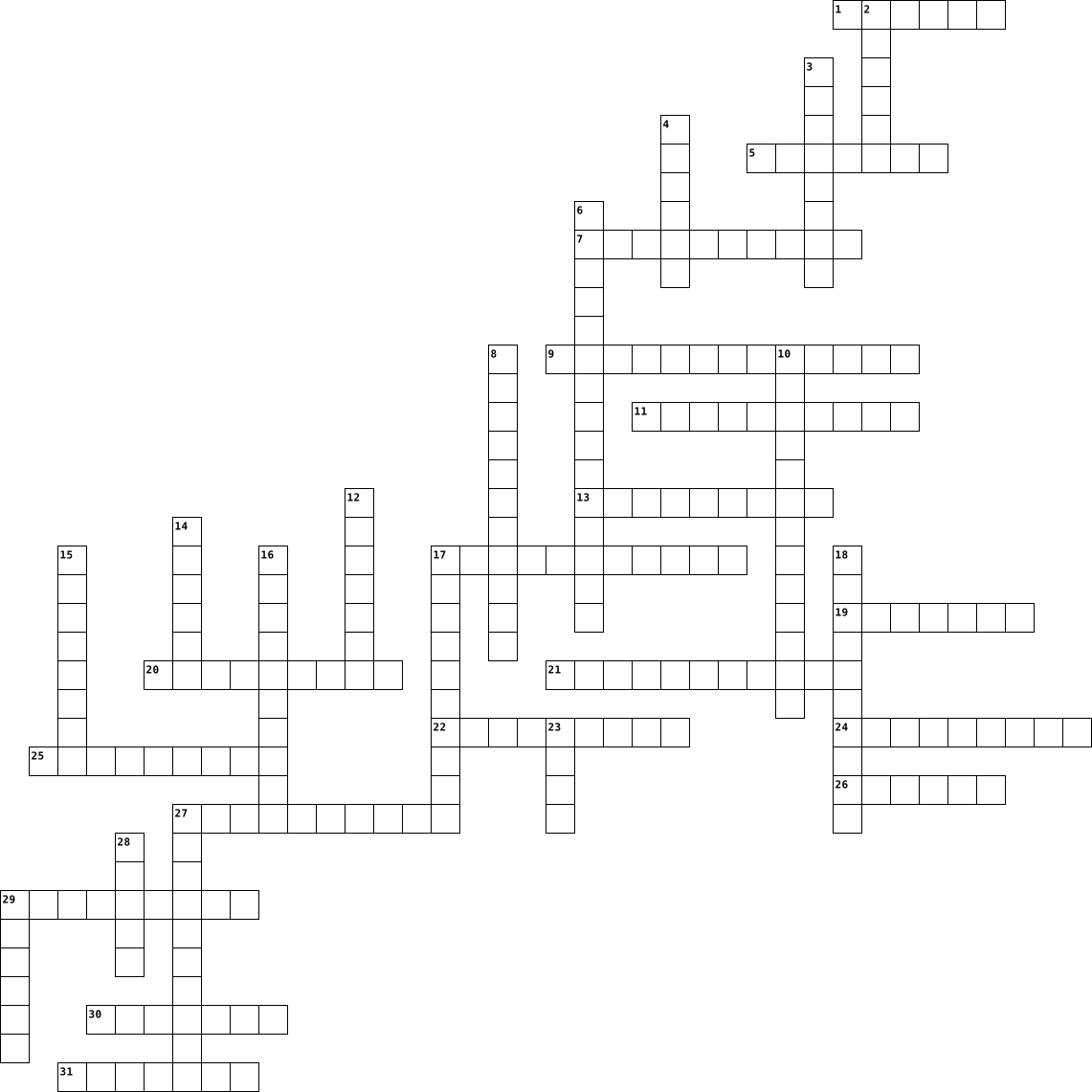
Across
- structure that contains four chromatids
- one set of genes
- in between period of growth in cell division
- moniter the growth and division of cells
- two sets of chromosomes
- process of programmed cell death
- division of cytoplasm
- reproduction/ production of genetically identical offspring from a single parent
- chromosomes line up in the center of the cell
- adult stem cells
- unspecialized cells from which differentiated cells develop
- DNA strands in the duplicated chromosome
- final phase of mitosis
- reproduction/ production thats offspring inherit some of their genetic information from each parent
- an area where dna molecules can be seen and attatch along there length
- complex chromosome and protein
- two complete sets of genes
- process of which the number of chromosomes is divided in half
Down
- developmental stage
- chromosomes separate to opposite ends of the cell
- disorder in which body cells lose the ability to control growth
- process by which cells become specialized
- type of cell that can develop most of the bodys cell types
- process of homologous pairs forming tetrads
- division of the cell nucleus
- fertilized egg
- chromosomes become visable and the spindle starts to form
- body is formed by a single cell
- genetic information is bundled into packages of DNA
- hallow ball of cells
- division/ process by which a cell divides into two new daughter cells
- tiny paired structures
- mass of cancer cells
- regulates the cell cycle
34 Clues: fertilized egg • one set of genes • adult stem cells • developmental stage • hallow ball of cells • mass of cancer cells • division of cytoplasm • final phase of mitosis • tiny paired structures • two sets of chromosomes • regulates the cell cycle • two complete sets of genes • division of the cell nucleus • complex chromosome and protein • body is formed by a single cell • ...
Cell Study Game 2021-09-23

Across
- Helps fill out the cell and keeps the organelles in their places
- When the eyespot on a cell directs it to move towards light for the purpose of photosynthesis
- The structure that covers organelles that are considered membrane-bound organelles
- Is only present in plant cells and is used during photosynthesis
- Creates ATP energy that fuels other organelles
- One of the few organelles that is present in both eukaryotic and prokaryotic cells, it's the site of protein synthesis
- an extra layer of protection only plant cells have that helps keep their structure
- Is present only in eukaryotic cells since it is contained in the nucleus
- Complex and typically multicellular organism that contains a nucleus and membrane-bound organelles
- What amoeba use to move and surround their food
- How organelles work to maintain homeostasis in their cell
Down
- Present only in prokaryotic cells and floats around in the cytoplasm
- Lists the three basic principles that explain how cells exist within our world
- The perfect living condition
- Where an organism move to certain chemicals to perform chemosynthesis
- A semipermeable organelle, has proteins embedded on it, and has polar and non-polar aspects
- Simple Unicellular organism that has no nucleus
- Used in cells to expel excess water, therefore, maintaining homeostasis
- Are larger in plant cells compared to animal cells, also used to store various materials
- This determines the function of its organelle
- Structure for locomotion on euglena
- What paramecium use to perform taxis
22 Clues: The perfect living condition • Structure for locomotion on euglena • What paramecium use to perform taxis • This determines the function of its organelle • Creates ATP energy that fuels other organelles • Simple Unicellular organism that has no nucleus • What amoeba use to move and surround their food • How organelles work to maintain homeostasis in their cell • ...
Cell Crossword 2016-02-04

Across
- An instrument that makes a smaller object look larger than it really is.
- He said that all animals were made cell.
- A large sac in the center of the cell that stores food, water, and other materials that will be needed.
- A thick fluid region that fills the region between the cell membrane and the nucleus.
- Supports the body above the stage.
- The first thing Robert Hooke looked at under a microscope that he saw cells in
- He was a Dutch businessman that built microscopes in his free time
- Thin strands of DNA in the nucleus.
- Where ribosomes are made.
- Contains substances that break down large food particles into smaller ones.
- The powerhouse of the cell.
- It is only in plant cells and it creates energy for the cell by capturing sunlight.
- A widely accepted explanation of the relationship between cells and living things.
Down
- He concluded that all plants were made of cells.
- What is the thick, rigid layer that surrounds the cells of plants and other organisms.
- It controls which substances pass in or out of the cell.
- It is like the mail system.
- He proposed that new cells are formed only from cells that already are alive.
- It is an organelle that has a network of membranes that produces many substances.
- It contains a lens that magnifies an object 10 times.
- It stores food, water, and other materials that will be needed by the cell.
- The control center of any cell.
- The parts of an organism that carry out all of its functions.
- He was a British scientist who saw cork cells under his microscope.
- Little factories that make protein in both plant and animal cells.
25 Clues: Where ribosomes are made. • It is like the mail system. • The powerhouse of the cell. • The control center of any cell. • Supports the body above the stage. • Thin strands of DNA in the nucleus. • He said that all animals were made cell. • He concluded that all plants were made of cells. • It contains a lens that magnifies an object 10 times. • ...
Cell Cycle 2021-12-05

Across
- Condensed chromatin
- Checks for cell size, growth factors, and DNA damage
- Longest portion of cell cycle- contains G1, S, and G2
- Region on chromatid where they are most closely attached
- Chromatin condenses, mitotic spindle forms, centrosomes move away from each other
- Hormones released by cells that stimulate cell growth-CDKs activated leading to progression through cycle
- Body cells-contain diploid cells-divide by mitosis
- Protein that provides structural support to a chromosome
- Two nucleus formed in preparation for cytoplasm to split
- Cells rely on attachment to other cells of matrix to divide
- One set of chromosomes
Down
- Proteins attached to centromere to link chromatid to mitotic spindle
- Repeating unit of eukaryotic chromatin
- A way to prevent cancer, by killing the
- Similar to all cancers because it has DNA mutations- don't follow checkpoints, immortal, and evade apoptosis.
- Has specific regulatory effect-these phosphorylate target proteins, which help regulate events in the cell cycle
- Includes Mitosis, Cytokinesis, and results in 2 identical diploid cells
- Material are composed as DNA/RNA
- Chromatids separate and move to opposite sides of cell, cell then elongates
- Nuclear envelope fragments, and microtubules enter nuclear area and some attach to kinetochores
- Centrosomes at opposite poles, line up at metaphase plate, and microtubules attached to each kinetochore
- Reproductive cells-contain haploid-divide by meiosis
- Cells are split into 2 cells by cleavage furrow(animals), and cell plate forms (plant)
- Synthesized and degraded at specific stages of the cell cycle
- Checks for completion of DNA replication and DNA damage-If good, then moves to mitosis
- Two sets of chromosomes, one set from each parent
- growing cells
- Some stay here forever, and some can be called back into the cell
28 Clues: growing cells • Condensed chromatin • One set of chromosomes • Material are composed as DNA/RNA • Repeating unit of eukaryotic chromatin • A way to prevent cancer, by killing the • Two sets of chromosomes, one set from each parent • Body cells-contain diploid cells-divide by mitosis • Checks for cell size, growth factors, and DNA damage • ...
Unit 3 Crossword Puzzle 2022-08-25

Across
- Structures found in cells.
- Requires Energy to transport substances.
- Diffusion of water.
- Structure that allows somethings to pass through and other things are blocked.
- Fluid found in cells.
- Theory that states 3 things: All cells come from preexisting cells.
- A reaction that plant cells use to make food.
- Meats are example of this
- Bread, rice, and pasta are example of this
- When many small molecules come together to make a large molecule
- Reaction in which substances go from area of high concentration to area of low concentration.
- Stores food and water.
- A reaction that breaks down glucose into smaller particles.
- Fats are example of this
- DNA and RNA are these
- When the cell takes in substances from outside.
- Organisms with many cells.
- Cells that have nucleus.
Down
- Cells that lack nucleus.
- Organisms with only one cell.
- Used to look at cells
- Contains Chlorophyll.
- When the cell release substances outside the cell.
- When the cell needs energy in a low oxygen environment.
- Control center of the cell.
- Many organ systems work together for a living thing. Humans and animals belong at this level.
- Does not require energy transport.
- When many tissues work together to do a function.
- When the substances outside of cell is equal inside the cell.
- A reaction that makes energy for the cell.
- Keeps shape for plant cell.
- When multiple cells work together to do a function.
- Smallest unit of life
- Powerhouse of the cell.
- When many organs work together to do a function.
35 Clues: Diffusion of water. • Used to look at cells • Contains Chlorophyll. • Fluid found in cells. • Smallest unit of life • DNA and RNA are these • Stores food and water. • Powerhouse of the cell. • Cells that lack nucleus. • Fats are example of this • Cells that have nucleus. • Meats are example of this • Structures found in cells. • Organisms with many cells. • Control center of the cell. • ...
21D: T-cells 2024-02-08

Across
- innate phagocytes; do not require permission to chomp chomp cells. Roam around the immune system killing anything that is deemed foreign using perforins
- T cell that is responsible for the immune system's capability to respond to an antigen it has encountered before
- cells that live on the body's surface in the; starts an immune reaction
- who tests the T cells in the thymus by presenting self-antigens to them
- T cell that inhibits the immune response
- extracellular pathogens are considered:
- B lymphocyte's effector cells are in:
- MHC proteins
- immunity directed against a particular pathogen
Down
- T-cells that are capable of recognizing antigens presented to them by APCs are...
- immunity where lymphocytes directly attack and destroy foreign cells or diseased host cells
- T-cell that gives the okay for phagocytes to chomp chomp
- the rounds of mitosis that make clones of effector and memory cells (a part of t-cell activation)
- selection type where the T-cell should not recognize self-antigens
- T-cell that is considered the effector of cellular immunity
- specific regions on an antigen that stimulate immune responses
- immunity that is antibody-mediated
- selection type where the T-cell should recognize MHC
- site of origin for lymphocytes
- any molecule that triggers an immune response
- where T-cells migrate to when they are being "deployed"
- intracellular pathogens are considered:
- site of maturation for T-cells
- an APC that asks the helper T cell if it can eat any cell that looks like what is being presented
- protein that pokes holes in pathogens
- what encounters and processes an antigen
26 Clues: MHC proteins • site of origin for lymphocytes • site of maturation for T-cells • immunity that is antibody-mediated • protein that pokes holes in pathogens • B lymphocyte's effector cells are in: • intracellular pathogens are considered: • extracellular pathogens are considered: • T cell that inhibits the immune response • what encounters and processes an antigen • ...
Cancer crossword puzzle 2024-01-04

Across
- The theorized organism that most likely birthed bacteria, Archaea, and Eukarya.
- Treatment that kills cancer cells by radiation.
- A disease where a cell is uncontrollable and rapidly creates more of itself, turning “selfish”, and makes it a tumor if untreated for long enough.
- Cancer that has spread throughout the body from a tumor.
- Organisms that have evolved from single cells that have worked together to help each other but at a risk of betraying them.
- Cells in your body that kills off invading pathogens, prevents disease, and seeks cancer cells to kill before it turns into a tumor.
- The most common brain cancer in children.
- An important gene in repairing DNA damage.
- the creator of the book “Rebel Cell”.
- Anything that might cause cancer to an organism.
Down
- Treatment that kills uncontrollable cells by powerful chemicals in the body.
- The person who called the disease “cancer” and known as the “Father of Medicine”.
- A condition that disables you and limits your abilities for more than a year.
- A contagious version of cancer that infects dogs by cells passing through one dog to another.
- Cells that are grown from the bone marrow and are capable of tuning into any cell in the body.
- Genes that help suppress cancer cells and tumors.
- A defense mechanism after an injury where it is indicated by swelling, redness, and heat.
- A process in which an organism changes one or more of their genes in the process of making a new species.
- A solution for identifying tumors inside a body.
- A gene which can turn a cell into a cancer cell.
20 Clues: the creator of the book “Rebel Cell”. • The most common brain cancer in children. • An important gene in repairing DNA damage. • Treatment that kills cancer cells by radiation. • A solution for identifying tumors inside a body. • A gene which can turn a cell into a cancer cell. • Anything that might cause cancer to an organism. • ...
Intro to Histology 2020-10-04

Across
- controlled by somatic nervous system and found in connected to bones
- highly flexible
- provides flexible cushioning
- (blood cells) blood
- contains lots of collagen mostly running parallel
- single, flat layer of cells, that is thin and permeable. Rapid diffusion of materials. Found in blood vessels and lung tissue.
- tissue with some open space
- engulf invading substances
- secretes ground substances,fibers, fluid, etc
- Cartilage
- contains reticular fibers, which create a stifflike framework
- Irregular collagen fiber are arranged in multiple directions
- bone
- multiple thick layers of cells. Provides proteins for the underlying layers. Epidermal Layer
- Cell nuclei are found at different levels, so it appears stratified, though it is not. Secretion and absorption. Upper respiratory tract
- free surface cells. Transitions into shapes. Lining of the bladder
- firm ground substance with lacuna
- connective tissue proper
Down
- Columnar cell on the free surface. Rare in the body. Found in the larynx
- composed of fat cells
- cells detect foreign substances
- single layer of cube shaped cells. Secretion and absorption of substances. Found in the kidney
- carries oxygen(red) provides immune response(white)
- striated and found in the heart
- multiple layers of thick cube like cells. Rare in the body. Found in salivary glands
- A portion of the cell pinches off with the secreted products.
- cells excrete the products via exocytosis
- Pass impulses to other neurons, muscle fibers, or glands
- layer of tall compact cells. Secretion of mucus for protection and absorption of substances. Lining of digestive tract
- Regular collagen fibers are arranged in one direction
- cell rupture and spills products into the duct.
- non-striated and found in found in the walls of multiple organs
- secrete hormones into the bloodstream.
- support and protect neurons and regenerates after an injury
34 Clues: bone • Cartilage • highly flexible • (blood cells) blood • composed of fat cells • connective tissue proper • engulf invading substances • tissue with some open space • provides flexible cushioning • cells detect foreign substances • striated and found in the heart • firm ground substance with lacuna • secrete hormones into the bloodstream. • cells excrete the products via exocytosis • ...
Za Crooky Dooky 2023-05-20

Across
- Single-celled organisms that lack a nucleus or other membrane-bound organelles.
- A structural carbohydrate found in the cell walls of plants and some other organisms.
- The process by which organisms eliminate waste products from their body.
- A small, circular piece of DNA found in some bacteria that can replicate independently of the chromosomal DNA.
- The cellular structure responsible for synthesizing proteins.
- membrane: The thin, flexible barrier that surrounds cells and regulates the movement of materials in and out of the cell.
- The metabolic process by which cells use oxygen to convert nutrients into energy and produce carbon dioxide as a waste product.
- The ability of organisms or their cells to move from one place to another.
- The organelle in eukaryotic cells that contains the cell's genetic material, or DNA.
- The organelles in eukaryotic cells that produce energy in the form of ATP.
- The process of obtaining and using nutrients from food to support bodily functions.
- Membrane-bound structures in eukaryotic cells that store water, nutrients, and waste products.
- The process by which organisms increase in size and complexity over time.
- A type of fungus that is used in baking and brewing, and can ferment sugars into alcohol and carbon dioxide.
Down
- The green pigment in plants and algae that absorbs light energy for photosynthesis.
- Organisms with cells that contain a nucleus and other membrane-bound organelles.
- The organelle in plant cells that carries out photosynthesis.
- The process by which organisms produce offspring to continue their species.
- The gel-like substance that fills the interior of cells and contains organelles, proteins, and other molecules.
- The ability of organisms or cells to respond to changes in their environment or stimuli.
- wall: A rigid outer layer that provides additional support and protection for cells in plants, fungi, and some bacteria.
21 Clues: The organelle in plant cells that carries out photosynthesis. • The cellular structure responsible for synthesizing proteins. • The process by which organisms eliminate waste products from their body. • The process by which organisms increase in size and complexity over time. • The ability of organisms or their cells to move from one place to another. • ...
Za Crooky Dooky 2023-05-20

Across
- Single-celled organisms that lack a nucleus or other membrane-bound organelles.
- A structural carbohydrate found in the cell walls of plants and some other organisms.
- The process by which organisms eliminate waste products from their body.
- A small, circular piece of DNA found in some bacteria that can replicate independently of the chromosomal DNA.
- The cellular structure responsible for synthesizing proteins.
- membrane: The thin, flexible barrier that surrounds cells and regulates the movement of materials in and out of the cell.
- The metabolic process by which cells use oxygen to convert nutrients into energy and produce carbon dioxide as a waste product.
- The ability of organisms or their cells to move from one place to another.
- The organelle in eukaryotic cells that contains the cell's genetic material, or DNA.
- The organelles in eukaryotic cells that produce energy in the form of ATP.
- The process of obtaining and using nutrients from food to support bodily functions.
- Membrane-bound structures in eukaryotic cells that store water, nutrients, and waste products.
- The process by which organisms increase in size and complexity over time.
- A type of fungus that is used in baking and brewing, and can ferment sugars into alcohol and carbon dioxide.
Down
- The green pigment in plants and algae that absorbs light energy for photosynthesis.
- Organisms with cells that contain a nucleus and other membrane-bound organelles.
- The organelle in plant cells that carries out photosynthesis.
- The process by which organisms produce offspring to continue their species.
- The gel-like substance that fills the interior of cells and contains organelles, proteins, and other molecules.
- The ability of organisms or cells to respond to changes in their environment or stimuli.
- wall: A rigid outer layer that provides additional support and protection for cells in plants, fungi, and some bacteria.
21 Clues: The organelle in plant cells that carries out photosynthesis. • The cellular structure responsible for synthesizing proteins. • The process by which organisms eliminate waste products from their body. • The process by which organisms increase in size and complexity over time. • The ability of organisms or their cells to move from one place to another. • ...
Adaptive Defences-Our 3rd Line of Defence 2025-03-29

Across
- takes about ten days to reach peak and then antibodies decrease
- happens when there are too many RBC's(increased blood viscosity)
- where sixty five percent of iron is found
- antibody found on skin and mucous membranes
- antibody whos role is not known
- attack mircoorganisms and prevent them from growing
- substances that can mobilize adaptive defences and provoke an immune response
- production of WBC's
- found in all bodily fluids(smallest and most common antibody)
- free iron ions are
- cleans up antigens by by clumping them togetherso they are easier to get rid of
- cells that"fight now"
- this happens when there are too few RBC's
- cells that remember the antigen and then attack stronger
- the largest of all WBC's
- cellular immunity involves
- hematopoietic stem cells
- this process takes 15 days
- the hormone that stimulated the formation of RBC's
- causes vasodialation and leakiness of the vessels, leading to symptomsof runny nose and watery eyes
Down
- humoral immunity involves
- when lymphocytes are educated and mature in primary lymphoid organs
- naive cells cells that become active only when antigen is presented
- the third line of defence
- happens due to release of pyrogens
- that responds to allergic reactions
- acquired condition that impairs the function or production of immune cells
- takes two to three days to peak
- prolong the clotting time of the blood
- process of making blood cells in the body
- congenital or aquiredcondition thatimpair functionor production of immune cells or molecules.
- largest antibody that protects the blood stream
- the main antibody in defence,it amplifies immune system response.
- cripples the immune system by interferring with activity of helper t cells
- when antibodies block by binding to cell
- blocks the spread to neighbouring cells and activate natural killer cells
- immature RBC
37 Clues: immature RBC • free iron ions are • production of WBC's • cells that"fight now" • the largest of all WBC's • hematopoietic stem cells • humoral immunity involves • the third line of defence • cellular immunity involves • this process takes 15 days • antibody whos role is not known • takes two to three days to peak • happens due to release of pyrogens • ...
Pathology and Disease of Small Animals - Test 4 2025-05-05

Across
- A ___ tumor “harmful”, invades locally, spreads by metastasis.
- The study of neoplasia.
- This process is the result of direct seeding of cancer cells within a body cavity.
- The embryonic germ layer mesenchymal tumors originate.
- The characteristic that is associated with benign tumors, contributing to their typically better prognosis compared to malignant tumors.
- A ____ tumor is “harmless”, Does not invade surrounding tissue.
- benign tumor epithelial cells.
- The term refers to normal mature tissue located in an abnormal location.
Down
- A benign tumor of dendritic cells.
- A benign tumor of adipocytes.
- A term for wide variation in cell size observed in tumor cells.
- A cellular process that is characterized by irreversible genetic changes rendering cells unresponsive to typical growth controls.
- A growth's cells exhibit a loss of differentiation and reversion to a primitive morphology.
- An example of a choristoma.
- The term that describes the loss of cellular differentiation and reversion to a more primitive cellular morphology.
- The process by which the immune system recognizes and eliminates tumor cells.
- A process that describes the stage where a tumor becomes increasingly malignant, involving genetic and epigenetic changes.
- A nonneoplastic supporting structure of proteins and glycoproteins.
- The extensive fibrous reaction stimulated by tumor cells that increases the production of collage.
- During neoplastic transformation, ___ initiates the irreversible genetic change in a normal cell.
- A tumor that is derived from chondrocytes.
- Variance in cells size and shape
- A cellular process that is directly inhibited by the loss of cadherins in tumor cells during metastasis.
- ______ are composed of normal mature tissue located at an ectopic site
- A tumor that contains tissues derived from all three embryonic germ layers is classified as this type of tumor.
25 Clues: The study of neoplasia. • An example of a choristoma. • A benign tumor of adipocytes. • benign tumor epithelial cells. • Variance in cells size and shape • A benign tumor of dendritic cells. • A tumor that is derived from chondrocytes. • The embryonic germ layer mesenchymal tumors originate. • A ___ tumor “harmful”, invades locally, spreads by metastasis. • ...
Immunology Crossword 2023-05-10

Across
- Serves as the antigen receptor of B lymphocytes.
- Regulator of complement activation which cleaves C3b. (2 words)
- Antigen-specific T cells that remain long-term after an infection has been eliminated.
- Type of immune response for a fast nonspecific response.
- B cells response.
- Type of Class II MHC expressing APC responsible for priming. (2 words)
- LFA-1 is this type of molecule.
- Unresponsiveness of the adaptive immune system to antigens. (2 words)
- Subset/type of effector T cell which acts on B cells.
- What event occurs only within germinal centers?(2 words)
- Activation means the B & T cells become capable of this.
- The rearrangement of gene segments that is mediated by a lymphoid-specific enzyme. (2 words)
- The receptors that are needed to limit or terminate immune responses.
- Polymorphonuclear leukocytes (PMNs).
Down
- The hormone produced by lymphocytes which are used in communication.
- The portion of an antibody that is responsible for antigen recognition. (2 words)
- Type of immune-specific immune response.
- Natural killer cells are a member of this family of cells.
- B cells that are obtained from an animal immunized with an antigen and fused in vitro with myeloma cells. (2 words)
- barrier The major interface between the body and the external environment. (2 words)
- Type of T cell capable of killing cells.
- Type of antigen recognized in T-dependent antibody responses.
- The interface between an antigen-presenting cell or target and a lymphocyte. (2 words)
- Type of T cell involved in the activation of B cells.
- The organ where T cell progenitors migrate to.
25 Clues: B cells response. • LFA-1 is this type of molecule. • Polymorphonuclear leukocytes (PMNs). • Type of immune-specific immune response. • Type of T cell capable of killing cells. • The organ where T cell progenitors migrate to. • Serves as the antigen receptor of B lymphocytes. • Subset/type of effector T cell which acts on B cells. • ...
chapter 11 cancer 2025-08-15

Across
- sample of abnormal cells
- abnormal cell mass
- cell replication
- these are made of DNA and protein
- dry mouth
- (2)protects healthy cells during chemo
- what chromatin becomes during division
- (2)double membrane that surrounds the nucleus
- (2)when normal cells stop replicating when they touch each other
- (2) a tumor that closely resembles a normal tissue
- when a tumor migrates from it's original site
- inflammation of the mouth
- (2)tumor that sits in one place
- (2)control what goes in/out of the nucleus
- lack of appetite
- symptom control
- virus that increases risk for cancer
- 2nd step where abnormal cells become tumor
- another name for a tumor
- abnormal cells that invade other cells
- cancer of epithelial cells
- the process to make a copy of DNA
- (2) a tumor with few normal cells
Down
- peeling skin
- HPV vaccine
- 3rd step where abnormal tumor grows and mestaticizes
- DNA errors made during a lifetime
- prevention, treatment of cancers
- low platelet count
- abnormal cells that are not cancerous
- is in the center of the nucleus and makes ribosomes
- an IV med that can destroy tissues
- low WBC count
- cancer of the lymph system
- (2)time, distance, shielding
- test for cervical cancer
- contains DNA
- cancer of connective tissue
- (2) HPV, HIV, H. pylori,radiation
- first step in process of erred DNA
- x-ray of breast tissue
- test for prostate cancer
- abnormal cells that take over the function of an organ
- formula for staging cancer
44 Clues: dry mouth • HPV vaccine • peeling skin • contains DNA • low WBC count • symptom control • cell replication • lack of appetite • abnormal cell mass • low platelet count • x-ray of breast tissue • sample of abnormal cells • test for cervical cancer • another name for a tumor • test for prostate cancer • inflammation of the mouth • cancer of the lymph system • cancer of epithelial cells • ...
Infectious Disease Crossword 2020-11-10

Across
- immunity that results from ether having a disease or from receiving a vaccine
- An illness that passes from one organism to another
- An epidemic that has grown world-wide, affecting many continents
- A type of pathogen that is living and can be treated using antibiotics
- (physical & Chemical Barriers) This line of defense is your skin, mucous membranes, cilia, tears, saliva, digestive system
- turn off the immune response once the immune system has controlled the infection
- Microorganisms or germs that cause infectious disease when they enter your body and multiply
- your body's ability to destroy pathogens that it has previously encountered before the pathogens are able to cause disease
- This line of defense is inflammation and accumulation of fluids at the site of an infection that leads to heat, redness and swelling. Cells involved include Phagocytes that engulf pathogens.
Down
- destroy body cells that are infected or damaged by pathogens
- fights disease by producing a separate set of weapons for each kind of pathogen it encounters
- white blood cells that produce custom made antibodies against invading pathogens
- This line of defense is the immune system. T Cells, B Cells, and Antibodies
- white blood cells that search for pathogens stimulate B cells to fight produce antibodies
- organisms that are so small that they can only be viewed using a microscope
- A nonliving pathogen that uses your own body cells to multiply.
- immunity acquired by receiving antibodies from a source other than one's own immune system
- Produced by B cells, protein markers that attach to the surface of pathogens and render them harmless
- white blood cells that engulfs and destroy pathogens
- an unusually high occurrence of a disease in a certain place during a certain time period
- another name for "infectious" disease
21 Clues: another name for "infectious" disease • An illness that passes from one organism to another • white blood cells that engulfs and destroy pathogens • destroy body cells that are infected or damaged by pathogens • A nonliving pathogen that uses your own body cells to multiply. • An epidemic that has grown world-wide, affecting many continents • ...
Altered Immunity 2016-02-21
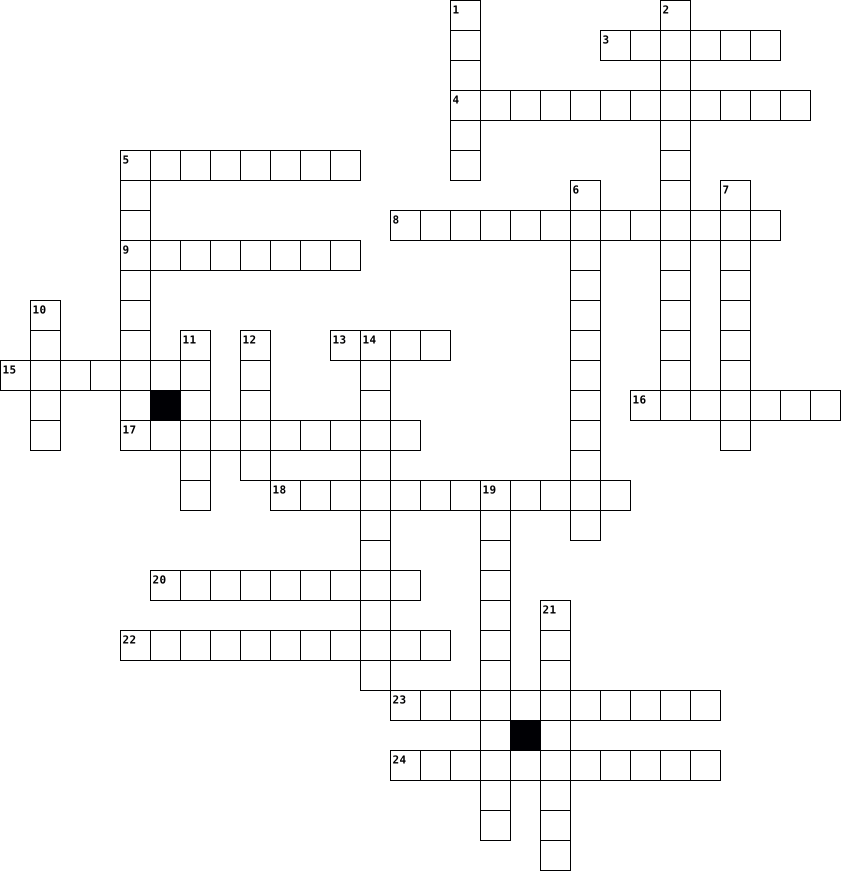
Across
- Due to the action of _______ cells the body has a much more rapid response when re-exposed to the same antigen.
- The happens when there is an immune response due to the presense of cells from another individual.
- This type of immunity is specific and has a memory of antigens.
- These non-specific cells circulate until destroying a threatening cell they come into contact with.
- The process by which the body recognizes foreign substances and neutralizes them.
- Basophils and ____ cells work to establish an allergic reaction.
- This is given to a person to stimulate immunity through exposure to an antigen.
- A substance that induces a state of sensitivity or an immune response.
- These T lymphocytes limit the immune response.
- These develop in the bone marrow.
- These are common antigens that are usually harmless.
- These are produced and differentiated in the central organs of the lymphatic system.
- These offer greatest protection against parasites.
- These rapidly respond to bacterial infections.
Down
- This type of immunity is a rapid, first responder.
- Another name for antibodies.
- After B lymphocytes bind with an antigen, they differentiate into plasma cells and produce _____.
- These mature and fully differentiate in the thymus.
- These are "antigen presenting" cells.
- The lymphatic system _____ antigens captured by the cells of the immune system.
- These T lymphocytes activate other cells of the immune response.
- The immune response is the body's _____ line of defense.
- This happens when the body cannot recognize "self" from "nonself".
- Cytotoxic T lymphocytes are the primary cells involved in _________ immunity.
- These T lymphocytes destroy antigen carrying cells.
25 Clues: Another name for antibodies. • These develop in the bone marrow. • These are "antigen presenting" cells. • These T lymphocytes limit the immune response. • These rapidly respond to bacterial infections. • This type of immunity is a rapid, first responder. • These offer greatest protection against parasites. • These mature and fully differentiate in the thymus. • ...
Pause and Reflect #1 (thru October 24, 2022) 2022-10-24

Across
- All cells are surrounded by one of these.
- Cells are made-up of ___ like mitochondria.
- Active transport moves materials ___ the concentration gradient across the cell membrane.
- This kind of diffusion occurs when material moves through the cell membrane’s bilayer.
- Prokaryotes have this organelle in common with plant and animal cells.
- A form of active transport which moves large molecules out of the cell.
- head In the phospholipid bilayer which makes-up the cell membrane, the ___ is polar (similar to magnetic).
- This kind of diffusion occurs when a membrane protein helps move material across the cell membrane.
- wall Prokaryotes have this protective structure in common with plant cells.
- Passive transport across the cell membrane occurs from high ___ to low ___.
- Cells are the basics ___ and functional unit for living things.
- Materials move with or along the concentration ___ during passive transport across the cell membrane.
- A form of active transport which moves large molecules into the cell.
Down
- This organelle is the site of aerobic respiration in eukaryotes.
- A properly functioning cell membrane is critical for maintain the cell’s ___, because it controls what enters and leaves the cell.
- Cells with a nucleus and other membrane-bound organelles are referred to as ___.
- Passive transport across the cell membrane does not require ___.
- Cells are made-up of ___ like protein.
- Cells which lack a nucleus and other membrane-bound organelles are referred to as ___.
- wall The protective structure that sets plant cells apart from animal cells.
- This is where ribosomes are assembled in eukaryotes.
- tail In the phospholipid bilayer which makes-up the cell membrane, the ___ is nonpolar (similar to un-magnetic).
- This structure is where photosynthesis happens in pant cells.
- Any kind of cell transport which uses-up some of the cell’s energy.
- The region where a prokaryote’s DNA ay be found.
25 Clues: Cells are made-up of ___ like protein. • All cells are surrounded by one of these. • Cells are made-up of ___ like mitochondria. • The region where a prokaryote’s DNA ay be found. • This is where ribosomes are assembled in eukaryotes. • This structure is where photosynthesis happens in pant cells. • Cells are the basics ___ and functional unit for living things. • ...
Za Crooky Dooky 2023-05-20

Across
- Single-celled organisms that lack a nucleus or other membrane-bound organelles.
- A structural carbohydrate found in the cell walls of plants and some other organisms.
- The process by which organisms eliminate waste products from their body.
- A small, circular piece of DNA found in some bacteria that can replicate independently of the chromosomal DNA.
- The cellular structure responsible for synthesizing proteins.
- membrane: The thin, flexible barrier that surrounds cells and regulates the movement of materials in and out of the cell.
- The metabolic process by which cells use oxygen to convert nutrients into energy and produce carbon dioxide as a waste product.
- The ability of organisms or their cells to move from one place to another.
- The organelle in eukaryotic cells that contains the cell's genetic material, or DNA.
- The organelles in eukaryotic cells that produce energy in the form of ATP.
- The process of obtaining and using nutrients from food to support bodily functions.
- Membrane-bound structures in eukaryotic cells that store water, nutrients, and waste products.
- The process by which organisms increase in size and complexity over time.
- A type of fungus that is used in baking and brewing, and can ferment sugars into alcohol and carbon dioxide.
Down
- The green pigment in plants and algae that absorbs light energy for photosynthesis.
- Organisms with cells that contain a nucleus and other membrane-bound organelles.
- The organelle in plant cells that carries out photosynthesis.
- The process by which organisms produce offspring to continue their species.
- The gel-like substance that fills the interior of cells and contains organelles, proteins, and other molecules.
- The ability of organisms or cells to respond to changes in their environment or stimuli.
- wall: A rigid outer layer that provides additional support and protection for cells in plants, fungi, and some bacteria.
21 Clues: The organelle in plant cells that carries out photosynthesis. • The cellular structure responsible for synthesizing proteins. • The process by which organisms eliminate waste products from their body. • The process by which organisms increase in size and complexity over time. • The ability of organisms or their cells to move from one place to another. • ...
Za Crooky Dooky 2023-05-20

Across
- Single-celled organisms that lack a nucleus or other membrane-bound organelles.
- A structural carbohydrate found in the cell walls of plants and some other organisms.
- The process by which organisms eliminate waste products from their body.
- A small, circular piece of DNA found in some bacteria that can replicate independently of the chromosomal DNA.
- The cellular structure responsible for synthesizing proteins.
- membrane: The thin, flexible barrier that surrounds cells and regulates the movement of materials in and out of the cell.
- The metabolic process by which cells use oxygen to convert nutrients into energy and produce carbon dioxide as a waste product.
- The ability of organisms or their cells to move from one place to another.
- The organelle in eukaryotic cells that contains the cell's genetic material, or DNA.
- The organelles in eukaryotic cells that produce energy in the form of ATP.
- The process of obtaining and using nutrients from food to support bodily functions.
- Membrane-bound structures in eukaryotic cells that store water, nutrients, and waste products.
- The process by which organisms increase in size and complexity over time.
- A type of fungus that is used in baking and brewing, and can ferment sugars into alcohol and carbon dioxide.
Down
- The green pigment in plants and algae that absorbs light energy for photosynthesis.
- Organisms with cells that contain a nucleus and other membrane-bound organelles.
- The organelle in plant cells that carries out photosynthesis.
- The process by which organisms produce offspring to continue their species.
- The gel-like substance that fills the interior of cells and contains organelles, proteins, and other molecules.
- The ability of organisms or cells to respond to changes in their environment or stimuli.
- wall: A rigid outer layer that provides additional support and protection for cells in plants, fungi, and some bacteria.
21 Clues: The organelle in plant cells that carries out photosynthesis. • The cellular structure responsible for synthesizing proteins. • The process by which organisms eliminate waste products from their body. • The process by which organisms increase in size and complexity over time. • The ability of organisms or their cells to move from one place to another. • ...
Unit 7 Cell Division 2025-01-29

Across
- Cells that contain two complete sets of chromosomes, one from each parent, represented as 2n (n = 23 in humans).
- During prophase I, homologous chromosome pairs swap genes to create genetic variation.
- A section of DNA that contains the instructions to make proteins, which then code for traits.
- The organized, tightly coiled form of DNA.
- The unorganized, loose form of DNA.
- After mitosis, cell contents are divided
- Chromatin condenses into chromosomes.Nuclear membrane disappears.
- Two nuclei start to form. Chromosomes decondense
- Chromosomes are lined up in the middle of the cell by spindle fibers.
- The process by which germ cells divide the nucleus to produce gametes for reproduction.
- The center of the chromosome where the sister chromatids attach.
- The process by which somatic cells divide the nucleus to make two identical cells.
Down
- Are a pair of chromosomes that have,same size,same gene locations,one from the biological mother,one from the biological father
- During metaphase I, chromosome pairs line up randomly, so daughter cells may receive any combination of the maternal or paternal chromosomes.
- Chromosomes break at the centromeres, and sister chromatids are pulled apart.
- "Growth 1”- Cell does normal cell activities and replicates organelles.“Synthesis”-DNA replication occurs(copy of DNA is made).“Growth 2”- Cell grows, DNA is checked for mutations, and the cell prepares for division.
- Chromatid One copy or one side of a chromosome.
- Haploid reproductive cells.
- A cell with one set of chromosomes (n).n = 23 chromosomes (“half”).
- Cells that make up the body.Examples: Nerve cells, muscle cells, bone cells, etc.
- The entire set of DNA of an organism. Humans = 23 pairs of chromosomes.
21 Clues: Haploid reproductive cells. • The unorganized, loose form of DNA. • After mitosis, cell contents are divided • The organized, tightly coiled form of DNA. • Chromatid One copy or one side of a chromosome. • Two nuclei start to form. Chromosomes decondense • The center of the chromosome where the sister chromatids attach. • ...
Cell Energy 2025-03-29

Across
- Nucleic acid containing three phosphates that is the energy molecule for cells
- Organelle that is the site of aerobic respiration in eukaryotic cells
- Process by which yeast cells break down glucose to produce ATP, carbon dioxide, and ethanol alcohol
- Openings generally on the underside of leaves through which plants exchange oxygen and carbon dioxide gas
- Tissues that transport water, sugar, and other minerals throughout the plant
- Process by which cells use oxygen to help break down glucose into carbon dioxide, water, and ATP energy
- Vascular tissue that transports sugar from the leaves to other cells in the plant
- Cells located in the middle of leaves that are the main site of photosynthesis
- Organelle in which photosynthesis takes place inside of plant and algae cells
- Nucleic acid containing two phosphates that can be converted into ATP with the addition of a phosphate group
- Process by which bacteria, yeast, and animal muscle cells break down glucose to produce ATP without the help of oxygen
- Process by which some bacteria and animal muscle cells break down glucose to produce ATP and lactic acid
Down
- Process by which light energy is used to combine water and carbon dioxide to produce glucose and oxygen
- Main pigment that absorbs light energy used during photosynthesis
- Movement of water up the xylem tissues in stems of plants
- Pair of cells that control the opening and closing of stomata
- Vascular tissue that transports water from the roots to the leaves of plants
- Process by which water evaporates out of stomata in the leaves of plants
- Pigments that help plants absorb wavelengths of light that chlorophyll does not absorb
- Process by which organisms break down glucose to produce ATP energy
20 Clues: Movement of water up the xylem tissues in stems of plants • Pair of cells that control the opening and closing of stomata • Main pigment that absorbs light energy used during photosynthesis • Process by which organisms break down glucose to produce ATP energy • Organelle that is the site of aerobic respiration in eukaryotic cells • ...
biology 2025-05-12

Across
- – Outer layer in plant cells.
- – Outer cover of cell.
- – Jelly inside cell.
- – All life has cells.
- – Living part of cell.
- – Parts inside cell.
- – One-celled organism.
- – Group of similar cells.
- – Makes food in plants.
- – Many-celled organism.
- – Group of organs.
Down
- – Inside nucleus.
- – Carry genes.
- – Discovered cell.
- – Controls the cell.
- – Gives energy.
- – Stores food/waste.
- – Color parts in plant cells.
- – Group of tissues.
19 Clues: – Carry genes. • – Gives energy. • – Inside nucleus. • – Discovered cell. • – Group of organs. • – Group of tissues. • – Controls the cell. • – Jelly inside cell. • – Stores food/waste. • – Parts inside cell. • – All life has cells. • – Outer cover of cell. • – Living part of cell. • – One-celled organism. • – Makes food in plants. • – Many-celled organism. • – Group of similar cells. • ...
BHS 316 Midterm 2 Crossword 2022-11-08

Across
- "assisted suicide" by perforin helping CTL deliver granzyme B
- when naive Th cells activate in a rich TGFb environment
- what is the germinal center zone established by inactive B cells?
- known as protein chippers, cutting protein into peptides to be used by cells to remake new proteins
- is a process of eliminating obsolete T cells which have been re-stimulated multiple times to create room for new T cells
- special vesicles in the cytoplasm that is used to move class II MHC molecules out of the Golgi stack
Down
- a protein involved in AICD to eliminate exhausted T cells
- are received by naive T cells to amplify their T cell's receptors strength
- secondary lymphoid organs which generate natural regulatory T cells (nTregs)
- is a term used to describe T cells that recognizes their cognate antigen presented on a cell but can't receive the co-stimulation
- a protein that partners with CTLA-4 to "decommission" T cells
- cytokine produced dendritic cells to acquire Th1 cell
- cytokines that choreograph secondary lymphoid organ by CXCL13
- a type of negative thymic dendritic cell
- a type of positive cortical thymic epithelial cell
- what kind of ______ T cells have "passports" that give them access to all secondary lymphoid organs except the site of inflammation
16 Clues: a type of negative thymic dendritic cell • a type of positive cortical thymic epithelial cell • cytokine produced dendritic cells to acquire Th1 cell • when naive Th cells activate in a rich TGFb environment • a protein involved in AICD to eliminate exhausted T cells • "assisted suicide" by perforin helping CTL deliver granzyme B • ...
Lymphatic system 2021-10-22

Across
- cells that replace the thymus after involution
- aggregated lymphatic nodules in pharynx
- organs that generate lymphocytes from progenitor cells
- this structure within lymphatic vessels prevents backflow
- pulp in the spleen that consist of follicles and Periarterial lymphoid sheaths
- type of circulation system seen in the spleen
- T cell site within the spleen
- secondary organ responsible for filtering/storing blood
- cells found in the paracortical tissue of the lymph node
- specialized epithelial cells that pinocytose GI contents
- site for B cell maturation in birds
- secondary organ responsible for filtering lymph
- rich content of erythrocytes within sinuses of the ruminant
- organs that are sites of lymphocyte activation/differentiation in context of immune response
- structures within the spleen that contains vasculature, connective tissue, and smooth muscle
- cells found in primary and secondary follicles
Down
- dendritic cells, macrophages, B cells
- calcified cells surrounded by keratin found in the thymic medulla
- B cell site within the spleen
- aggregated lymphatic nodules in the small intestine
- site for T cell maturation
- source of pluripotent stem T and B cells
- indentation where afferent and efferent vasculature enter and leave the lymph node, respectively
- blind ended chyle-filled capillaries in the small intestine
- single or aggregations of lymphoid nodules found at mucosal surfaces
- Thymic area for positive T cell selection
- first sinus in afferent lymph vessel travel in the lymph node
- pulp in the spleen that consists of sinusoids
28 Clues: site for T cell maturation • B cell site within the spleen • T cell site within the spleen • site for B cell maturation in birds • dendritic cells, macrophages, B cells • aggregated lymphatic nodules in pharynx • source of pluripotent stem T and B cells • Thymic area for positive T cell selection • type of circulation system seen in the spleen • ...
Tissue Types Crossword Puzzle 2021-12-08

Across
- transports, defends, and involved in clotting; located throughout the body in blood vessels and the heart
- found in brain, spinal cord, and peripheral nerves, sensory reception, and conduction of nerve impulses
- type of muscle tissue; located in the heart wall, involuntary, striated, and contain intercalated discs
- flexible and located in the external ear and the larynx
- type of muscle tissue; attached to bones, striated, and voluntary
- single layer of flat cells
- single layer of elongated cells
- most abundant and located at the ends of bones, nose, and respiratory passages
- many cell layers with cube-shaped and elongated cells
Down
- many cell layers with top cells being flat
- cushions, insulates, and stores fat; located beneath skin, behind eyeballs, and around the kidney and heart
- false layers
- type of muscle tissue; located in the walls of organs and blood vessels and the skin, involuntary, and non-striated
- single layer of cube-shaped cells
- top layer of elongated cells with cube-shaped cells in deeper layers
- 2-3 layers of cube-shaped cells
- very tough and shock absorber; located in intervertebral discs and pads of knee and pelvic girdle
- bind skin to structures and located between muscles
- supports internal organ walls and located in the walls of liver, spleen, and lymphatic organs
- bind body parts together and located in tendons, ligaments, and the dermis
- supports, protects, and forms blood cells; attachment for muscles; located in the skeleton
21 Clues: false layers • single layer of flat cells • 2-3 layers of cube-shaped cells • single layer of elongated cells • single layer of cube-shaped cells • many cell layers with top cells being flat • bind skin to structures and located between muscles • many cell layers with cube-shaped and elongated cells • flexible and located in the external ear and the larynx • ...