
cells Crossword Puzzles
Cells Chapter 1 2021-11-15

Across
- any living thing
- a logical answer to a question based on data and observation
- standard to which the outcome of a test is compared
- a statement about how things work in nature that seems to be true all the time
- the largest category used to organized organisms
- something in an experiment that the scientist can control, what is being tested
- the theory that living things only come from other living things
- a series of procedures scientists use to solve problems
- the things that remain the same in an experiment
Down
- an organisms ability to keep the proper conditions inside no matter what is going on outside the organism
- the two word naming system that gives all living things their scientific name
- changes based on the independent variable
- the smallest unit of an organism that carries on the functions of life
- a response to a stimulus
- how an organism has changed over time, the evolutionary history of an organism
- something in an experiment that can change
- the idea that living things come from nonliving things
- an explanation that can be tested
- the first word of the two word scientific name used to identify a group of similar species`
- anything that causes some change in an organism
- an explanation of things or events based on scientific knowledge that is the result of many observations or experiments
21 Clues: any living thing • a response to a stimulus • an explanation that can be tested • changes based on the independent variable • something in an experiment that can change • anything that causes some change in an organism • the largest category used to organized organisms • the things that remain the same in an experiment • standard to which the outcome of a test is compared • ...
Cells/Mitosis/Meiosis 2022-04-02

Across
- cells without a nucleus
- apparatus of stack membranes that processes and sorts proteins
- controls movement of materials in and out of cell
- first stage of mitosis and chromosomes condense
- type of reproduction, offspring are identical
- chromosome uncoil and nuclear membrane reforms
- jelly-like substance site of cell metabolism
- fluid filled sac that stores materials
- cells with a nucleus
- division of cell cytoplasm
- chromosomes along cell equator
- process by which cell divides its nucleus
Down
- long thread of DNA made of many genes
- longest cell phase preparing for division
- chromatids separate
- interconnected membranes for transport
- egg and sperm
- type of reproduction with 2 parents
- fertilized egg cell
- basic unit of life
- surrounds plant membrane made of cellulose
- storehouse for genetic information
- carries out photosynthesis
- energy powerhouse
- disease with uncontrolled cell division
- process forming gametes
26 Clues: egg and sperm • energy powerhouse • basic unit of life • chromatids separate • fertilized egg cell • cells with a nucleus • cells without a nucleus • process forming gametes • carries out photosynthesis • division of cell cytoplasm • chromosomes along cell equator • storehouse for genetic information • type of reproduction with 2 parents • long thread of DNA made of many genes • ...
Cells and Metabolism 2022-02-24

Across
- the series of reactions that occur in the mitochondria during aerobic respiration; another name for the krebs cycle
- muscle that is not under our conscious control
- a protein that increases the speed of chemical reactions
- the site of cellular respiration
- the energy required to get a chemical reaction started
- an enzyme that breaks down fats
- the transport of materials into or out of a cell in membrane-bound sacs
- a nerve cell
- tissue that forms the outer part of the skin and lines hollow organs
- the process by which a cell surrounds and takes in solid particles
- a group of cells that are similar in structure and function
- a lipid molecule that contains a phosphate group
Down
- a difference in concentration of a solution
- a molecule that stores energy in cells
- a molecule upon which an enzyme acts
- all chemical reactions occurring in a living organism
- a protein that allows ions, water and small molecules to pass through the cell membrane
- tissue providing support for body organs
- chemical reactions that break down large organic molecules into smaller ones, with the release of energy
- a membrane that forms the external boundary of a celll
- a small membrane-bound cavity in the cytoplasm of a cell
- the diffusion of water molecules through a semi-permeable membrane
- the ions or inorganic molecules required by enzymes to catalyse a reaction
23 Clues: a nerve cell • an enzyme that breaks down fats • the site of cellular respiration • a molecule upon which an enzyme acts • a molecule that stores energy in cells • tissue providing support for body organs • a difference in concentration of a solution • muscle that is not under our conscious control • a lipid molecule that contains a phosphate group • ...
Cells and Organelles 2025-01-07

Across
- Found in cytoplasm.
- Makes energy the cell can use.
- No cell wall.
- Has genetic information.
- hairlike struture.
- Both plant and animal.
- Inside the nucleus.
- Plant and animal cells.
- Many cells.
- DNA is in this organelle.
Down
- Breaks down carbs,and protein.
- Sunlight for food.
- Network of tubes.
- Produces proteins.
- One cell.
- processes carbs,lipids,and toxins.
- Cell wall.
- whiplike tail.
- Sorts packages.
- cell reproduction.
- Produces more membranes.
21 Clues: One cell. • Cell wall. • Many cells. • No cell wall. • whiplike tail. • Sorts packages. • Network of tubes. • Sunlight for food. • Produces proteins. • cell reproduction. • hairlike struture. • Found in cytoplasm. • Inside the nucleus. • Both plant and animal. • Plant and animal cells. • Has genetic information. • Produces more membranes. • DNA is in this organelle. • Breaks down carbs,and protein. • ...
Cells Unit Review 2024-12-10

Across
- the movement of particles from an area of high concentration to low concentration
- all plant and animal cells contain a jelly-like material
- tiny parts within the cell that have special functions
- a common stain used on animal cells to make the nucleus visible
- tiny organelles that help make proteins
- a special kind of diffusion that involves only the movement of water through a selectively permeable membrane
- photographs taken with a microscope
- a device that uses light focussed through several different lenses to form a magnified image of a specimen
- last name of the scientist who built the first successful light microscope
- a thin covering that both plant and animal cells possess to keep the cytoplasm together
Down
- the concept that all cells are created from existing cells
- where the objective lenses are mounted
- the "control centre" of the cell
- If you let the soil around a plant dry out, the plant would begin to ____________
- the idea that the cell is the basic unit of life
- a large, sac-like organelle that stores excess food, waste and other substances
- this has different-sized holes that let different amounts of light pass through the specimen on the stage
- the inability of water and air to pass through a membrane
- the movement of substances into and out of a cell
- this term refers to the property of a barrier that allows only certain substances to pass through it
- a common stain used to detect the presence of starch
- the ability of water and air to pass through a membrane
22 Clues: the "control centre" of the cell • photographs taken with a microscope • where the objective lenses are mounted • tiny organelles that help make proteins • the idea that the cell is the basic unit of life • the movement of substances into and out of a cell • a common stain used to detect the presence of starch • tiny parts within the cell that have special functions • ...
Plant & Animal Cells 2025-02-14

Across
- Transports protein
- Protects and gives cell it's shape
- Cell that gains energy by other organisms
- Break down food & recycle
- Produces proteins
- Powerhouse of the cell
- Used to see Cells up close
- An area inside the nucleus
- Packages proteins
- A type of membrane protein the is permantly attached to the biological membrane
- jelly like substance in cell
Down
- Allows things in and out of the cell
- Cell that gains energy by sunlight
- The boss of the cell
- One of the series of openings found in the cells nuclear membrane
- Basic membrane bound unit
- stores food and other materials
- Intructions for cell functions
- A waxy fat like substance
- Microspocic single cell organism
- captures energy from the sun and turns it into food
21 Clues: Produces proteins • Packages proteins • Transports protein • The boss of the cell • Powerhouse of the cell • Basic membrane bound unit • Break down food & recycle • A waxy fat like substance • Used to see Cells up close • An area inside the nucleus • jelly like substance in cell • Intructions for cell functions • stores food and other materials • Microspocic single cell organism • ...
Cells CW 1 2025-02-27

Across
- a chemical process in which oxygen is used
- Allows light to settle onto slide
- The chemical process in which stored energy is broken down so it can be used by an organism to survive when there is no food source available.
- adenosine triphosphate, a molecule that provides energy for cellular respiration
- a process by which glucose is partially broken down into pyruvic acid without the use of oxygen
- a small structure that can store food (leucoplast) or pigment (chromoplast).
- clips on top of stage that allow you to secure the specimen or slide.
- a double-layered membrane that surrounds the cell. Also called the plasma membrane, it regulates what enters and leaves the cell.
- a jelly-like substance, composed mainly of water, occupying most of the space between the cell membrane and the nucleus.
- series of chemical reactions that convert energy in food molecules into ATP
- series of reactions that convert light energy, water, and CO2 into glucose and give off oxygen
- a round body in the center of the cell that contains DNA and regulates gene expression.
- a simple sugar that serves as the major energy source for all cellular processes.
- a network of passageways in which chemical compounds are manufactured, processed, and transported.
- a small sac, or vesicle, that contains digestive chemicals
- energy that is released or absorbed in chemical reactions
- the outermost layer of a bacterial cell that prevents harmful materials from entering, keeps the cell from drying out, and protects the bacterial cell from the immune cells of other organisms.
- made of many cells
- a platform on top of the base of the microscope on which specimen are placed
- lenses at the viewing end of a microscope
- lens at the end of a microscope nearest the object
- a portion of the microscope that allows you to switch back and forth between lens powers.
Down
- a double-layered membrane that surrounds and protects the nucleus.
- a stack of membranes that collects, modifies, and packages chemical compounds.
- filaments, including actin, microtubules, and microfilaments, that aid in cell movement and give the cell its shape.
- a hair-like organelle that helps a cell move.
- A nonliving protective shell with genetic material inside of it.
- a type of vesicle that stores water, nutrients, and other chemicals. The large vacuole found in plant cells helps the cells maintain their shape.
- Genetic material that holds information for making more cells.
- an organelle that converts the radiant energy of the Sun into chemical energy through the process of photosynthesis.
- The chemical process in which carbon dioxide and water combine, using energy from the Sun, to make sugar and oxygen.
- an organelle that uses oxygen to convert nutrients into energy that can be used by the cell.
- on/off button that powers the light.
- energy in the form of electromagnetic radiation
- a bundle of microtubules that helps organize the movement of chromosomes during cell division.
- a green pigment inside chloroplasts that converts light energy into a chemical form the plant can use
- made of one cell
- a region inside a bacterial cell that contains genetic material. Unlike in plant and animal cells, the nucleoid in bacteria is not surrounded by a nuclear membrane.
- a small, sac-like package of nutrients, proteins, or water created by the Golgi apparatus. Types of vesicles include vacuoles and lysosomes.
- living things are made of one or more cells; the cell is the smallest unit of life; new cells come from preexisting cells
- a cell structure that performs a specific function.
- a small, circular piece of DNA separate from the genetic material in the nucleoid of a bacterial cell. Plasmids often contain genes that provide an advantage to the cell, like antibiotic resistance.
- a hair-like structure that helps bacterial cells adhere to surfaces. Some pili are able to transfer genetic material to other cells.
- a tiny structure where proteins are synthesized
- a small body in the nucleus where ribosomes are synthesized.
- a chemical process that does not use oxygen
- A type of single-celled organism found almost everywhere on Earth.
- the rigid, porous outer layer of a plant cell.
- The basic unit of all living things.
49 Clues: made of one cell • made of many cells • Allows light to settle onto slide • on/off button that powers the light. • The basic unit of all living things. • lenses at the viewing end of a microscope • a chemical process in which oxygen is used • a chemical process that does not use oxygen • a hair-like organelle that helps a cell move. • ...
Cells Unit Crossword 2023-12-07

Across
- heart, kidneys, and lungs are all what?
- This system send messages from the brain to the rest of the body to function
- This system allows movement to the body
- What is a group of cells that have similar structure and that function together as a unit
- This organelle handles the waste products of a cell
- This organelle makes the protein for the cell
- This organelle is like the control centre of a cell
- This system Move fresh air into the body while removing waste gasses
- This organelle holds the components of the cell and protects them from damages
- What is a group of organs that work together to perform a specific function called?
- This system is in control of carrying oxygen, nutrients and separates waste
- The organelle is only found in plant cell and it helps to support or keep things together and protection to things with in it
Down
- This organelle produce proteins for the rest of the cell to function
- A cell that is mainly involved in the to move water, oxygen and other soluble substances through their cell membranes
- This system is responsible for breaking down food into nutrients for our bodies
- This organelle generates most of the chemical energy needed to power the cell's biochemical reactions
- The only cell that has Chloroplast
- This organelle produce energy through photosynthesis and oxygen-release, and it is only found in plant cells
- This organelle lets things move in and out of the cell
- compartments within cells that perform different functions
20 Clues: The only cell that has Chloroplast • heart, kidneys, and lungs are all what? • This system allows movement to the body • This organelle makes the protein for the cell • This organelle handles the waste products of a cell • This organelle is like the control centre of a cell • This organelle lets things move in and out of the cell • ...
Chemistry of Cells 2023-10-24

Across
- fatty acids with no carbon-carbon double bonds
- enzymes, hemoglobin, insulin and antibodies among others
- fatty acids with two or more carbon-carbon double bonds
- a chain of monomers
- DNA, RNA and ATP
- stores genetic information in the nucleus
- polysaccharide found in rice, potatoes, and bread
- glucose, fructose and galactose
- sugar and starches
- monosaccharide that makes up polysaccharides
Down
- bond between two amino acids in a protein
- weak bond between two water molecules
- supplies energy to do work in cells
- digestion of polymers into monomers that requires water
- synthesis that combines two monomers and produces water
- building block of proteins
- fats, oils, and waxes
- a disaccharide found in milk of mammals
- a disaccharide that is found in plants
- organic molecules must contain this element as well as hydrogen
- building block of nucleic acids
21 Clues: DNA, RNA and ATP • sugar and starches • a chain of monomers • fats, oils, and waxes • building block of proteins • building block of nucleic acids • glucose, fructose and galactose • supplies energy to do work in cells • weak bond between two water molecules • a disaccharide that is found in plants • a disaccharide found in milk of mammals • ...
Cells Review Crossword 2023-10-26

Across
- Organelle that make energy for the cell
- The spreading out of particles from a high to low concentration
- This is a nucleic acid that gets past down from parent to offspring
- This type of cell has a nucleus
- Macromolecule that provides the main source of energy for the cell
- The diffusion of water
- Organelle that helps break down waste and broken down cell parts
- Controls what go in and what goes out of the cell
- This macromolecule is made of amino acids and does lots of different things!
- These are the "mini organs" of the cell
Down
- This type of cell has a cell wall and chloroplasts
- This macromolecule is in fats and oils
- Type of transport that brings materials or waste out of the cell.
- Type of transport that doesn't use energy
- The control center of the cell
- Type of transport that brings materials into the cell
- This organelle helps make proteins for the cell
- Type of transport that uses energy
- Gel-like substance that surrounds the organelles in the cell
- This is an example of a single celled prokaryote
20 Clues: The diffusion of water • The control center of the cell • This type of cell has a nucleus • Type of transport that uses energy • This macromolecule is in fats and oils • Organelle that make energy for the cell • These are the "mini organs" of the cell • Type of transport that doesn't use energy • This organelle helps make proteins for the cell • ...
Chapter 7: Cells 2025-04-13

Across
- the study of microscopic structure and function of cells and associated tissue.
- are metabolically active specialized structures within the cell.
- three-dimensional system of support within cell.
- Cells with similar characteristics of form and function are grouped together.
- metabolically inert substances or transient structures within cell.
- Clear constricted area where two chromatids of chromosome are joined.
- substance transparent substance that fills in spaces between tissue cells.
- period when cell is between divisions but is growing and functioning.
- pores Avenues of communication between inner nucleoplasm and outer cytoplasm.
- complex does the segregating, packaging, and transporting from of the new protein from the ER, and is known as the "distribution center" for the cell.
- are organelles produced by the golgi complex and function in both the intracellular and extracellular digestion by the cell.
- intercellular junction between two cells.
- reticulum consists of parallel membrane-bound channels, and acts as a "highway" system for the cell.
- the fluid part within the nucleus.
- are the tiny sphere shaped organelles in the cell, and function as mobile "protein factories" for the cell.
- projections on the cell surface that are fewer and longer than cilia.
- Separate concentrations of chromatin in dividing nucleus of cell.
- Chief nucleoprotein in nondividing nucleoplasm.
- final phase of mitosis with division into two daughter cells and reappearance of the nuclear membrane.
- the engulfing and then digesting of solid waste and foreign material by the cell through enzymatic breakdown of the material.
- intermediate filaments having major role in intercellular junctions.
Down
- holds two centrioles and is located near the nucleus, and plays a big part in a cell's ability to reproduce.
- two filamentous daughter chromosomes joined at centromere during cell division.
- Various tissue types are bonded together.
- Spaces or cavities within the cytoplasm.
- pair of cylindrical structures in the centrosome.
- the semifluid part contained within the cell membrane as well as the skeletal system of support or cytoskeleton.
- plural for nucleus.
- forms intercellular junction involving attachment of cell to nearby noncellular surface.
- the uptake of materials from the extracellular environment into the cell.
- Rounded nuclear organelle centrally placed in nucleoplasm.
- Group of organs functioning together.
- envelope a double-layered membrane that surrounds the nucleus.
- junctions mechanical attachments between cells or between cells and nearby non-cellular surfaces.
- projections on the cell surface that are more numerous and shorter than flagella.
- is the largest, densest, and most conspicuous organelle in the cell when it is examined microscopically.
- are the most numerous organelles in the cell, and are associated with energy conversion and thus the "power stations" for the cell.
- filaments components of cytoskeleton.
- The smallest living unit of organization in the body.
- membrane surrounds the cell and acts as a "gatekeeper" for the cell's interior.
- second phase of mitosis in which chromosomes are aligned into equatorial position.
- cell division that occurs in phases and results in two daughter cells.
- first phase of mitosis with chromatin condensing into chromosomes.
- an active transport of material from a vesicle within the cell out into the extracellular environment.
44 Clues: plural for nucleus. • the fluid part within the nucleus. • Group of organs functioning together. • filaments components of cytoskeleton. • Spaces or cavities within the cytoplasm. • Various tissue types are bonded together. • intercellular junction between two cells. • Chief nucleoprotein in nondividing nucleoplasm. • three-dimensional system of support within cell. • ...
Cells, Skeletal, Muscular 2025-04-03

Across
- a living thing that has an organized structure
- System a group of organs that work together to perform a certain function
- Specialized smooth muscle only found in the heart, contracts to pump blood throughout the body
- connect muscles to bone (like rubberbands), moves joint/bones
- the smallest unit that makes up all living organisms and the tissues of the body.
- Voluntary muscles, support posture, provide movement. Connected to bones by tendons.
- a structure composed of a group of tissues that work together to perform a specific function
- a group of cells that have similar structure and that function together as a unit
- (skull) protects brain
- collar bone
- Marrow produces red blood cells that carry oxygen, white blood cells that prevent infection and platelets that control bleeding
Down
- (upper arm bone) Allows your arm to move, flex and rotate. Holds 13 muscles in place. Stabilizes the rest of your arm, including your elbow and hand.
- cushions the joint and prevents friction and wear and tear between the bone ends
- (spinal column) consists of 33 vertebrae, protects spinal cord, provides structure and support, allows for movement and flexibility.
- connect bone to bone, stabilizes joints
- (hip bones) Supports your upper body, allows movement, walking, standing, bending
- (thigh bone) largest bone, provides support for body weight, allows for movement
- Joint (shoulder and hips) allows for rotational (circular) movement
- Involuntary muscles, moves food along digestive tract, arteries and veins circulate blood throughout the body.
- (knee, elbow, ankle) allows for bending and straightening
- (rib cage) consists of 24 ribs, 12 per side, protect vital organs, expand/contract to allow for breathing
- where bones meet, allows for movement
22 Clues: collar bone • (skull) protects brain • where bones meet, allows for movement • connect bone to bone, stabilizes joints • a living thing that has an organized structure • (knee, elbow, ankle) allows for bending and straightening • connect muscles to bone (like rubberbands), moves joint/bones • Joint (shoulder and hips) allows for rotational (circular) movement • ...
Cells Quiz Crossword 2024-04-01

Across
- assembles amino acids to create proteins
- controls what comes into and out of a cell; found in plant AND animal cells
- tissues working together to perform a function
- the process where living things create offspring
- control center of the cell; contains DNA
- receives proteins & materials from the endoplasmic reticulum, packages them, & distributes them
- an event that triggers a reaction in an organ or tissue
- organs working together to perform a function
- captures energy from the sunlight and uses it to produce food in a plant cells
- has passageways that carry proteins and other materials from one part of the cell to another
Down
- stores food, water, wastes, and other materials
- cells working together to perform a function
- strands inside the nucleus, contain the instructions for cell functions
- a cell WITH a nucleus
- the process of maintaining a stable internal environment
- gel-like fluid where the other organelles are found
- produces the energy a cell needs to carry out its functions
- found inside the nucleus and produces ribosomes
- the total of all the biochemical reactions occurring in an organism
- a cell with NO nucleus
- uses chemicals to break down food and worn out cell parts
- rigid outer layer of a plant cell
22 Clues: a cell WITH a nucleus • a cell with NO nucleus • rigid outer layer of a plant cell • assembles amino acids to create proteins • control center of the cell; contains DNA • cells working together to perform a function • organs working together to perform a function • tissues working together to perform a function • stores food, water, wastes, and other materials • ...
Cells CW 2 2024-02-26

Across
- an organelle that converts the radiant energy of the Sun into chemical energy through the process of photosynthesis.
- a small body in the nucleus where ribosomes are synthesized.
- a simple sugar that serves as the major energy source for all cellular processes.
- series of chemical reactions that convert energy in food molecules into ATP
- The chemical process in which carbon dioxide and water combine, using energy from the Sun, to make sugar and oxygen.
- a small, circular piece of DNA separate from the genetic material in the nucleoid of a bacterial cell. Plasmids often contain genes that provide an advantage to the cell, like antibiotic resistance.
- the rigid, porous outer layer of a plant cell.
- living things are made of one or more cells; the cell is the smallest unit of life; new cells come from preexisting cells
- made of many cells
- a tiny structure where proteins are synthesized
- a cell structure that performs a specific function.
- a hair-like structure that helps bacterial cells adhere to surfaces. Some pili are able to transfer genetic material to other cells.
- adenosine triphosphate, a molecule that provides energy for cellular respiration
- a double-layered membrane that surrounds and protects the nucleus.
- a double-layered membrane that surrounds the cell. Also called the plasma membrane, it regulates what enters and leaves the cell.
- a round body in the center of the cell that contains DNA and regulates gene expression.
Down
- an organelle that uses oxygen to convert nutrients into energy that can be used by the cell.
- The chemical process in which stored energy is broken down so it can be used by an organism to survive when there is no food source available.
- made of one cell
- a region inside a bacterial cell that contains genetic material. Unlike in plant and animal cells, the nucleoid in bacteria is not surrounded by a nuclear membrane.
- Genetic material that holds information for making more cells.
- a small structure that can store food (leucoplast) or pigment (chromoplast).
- a process by which glucose is partially broken down into pyruvic acid without the use of oxygen
- The basic unit of all living things.
- a chemical process that does not use oxygen
- a small sac, or vesicle, that contains digestive chemicals
- a hair-like organelle that helps a cell move.
- a stack of membranes that collects, modifies, and packages chemical compounds.
- series of reactions that convert light energy, water, and CO2 into glucose and give off oxygen
- a green pigment inside chloroplasts that converts light energy into a chemical form the plant can use
- a network of passageways in which chemical compounds are manufactured, processed, and transported.
- the outermost layer of a bacterial cell that prevents harmful materials from entering, keeps the cell from drying out, and protects the bacterial cell from the immune cells of other organisms.
- energy that is released or absorbed in chemical reactions
- A nonliving protective shell with genetic material inside of it.
- energy in the form of electromagnetic radiation
- a type of vesicle that stores water, nutrients, and other chemicals. The large vacuole found in plant cells helps the cells maintain their shape.
- a small, sac-like package of nutrients, proteins, or water created by the Golgi apparatus. Types of vesicles include vacuoles and lysosomes.
- filaments, including actin, microtubules, and microfilaments, that aid in cell movement and give the cell its shape.
- a bundle of microtubules that helps organize the movement of chromosomes during cell division.
- a jelly-like substance, composed mainly of water, occupying most of the space between the cell membrane and the nucleus.
- a chemical process in which oxygen is used
- A type of single-celled organism found almost everywhere on Earth.
42 Clues: made of one cell • made of many cells • The basic unit of all living things. • a chemical process in which oxygen is used • a chemical process that does not use oxygen • a hair-like organelle that helps a cell move. • the rigid, porous outer layer of a plant cell. • energy in the form of electromagnetic radiation • a tiny structure where proteins are synthesized • ...
Cells And Transport 2022-03-16

Across
- energy provider
- energy
- water and waste
- the nucleus
- of the cell
- of stuff from high to low concentration
- concentrated
- leaves the cell
- a water loving and water hating end
- cells come from other cells
- the cell
- center
- of cells
- between nucleus & CM
- indentification
Down
- drinking
- DNA
- proteins
- of proteins in CM
- the solar energy
- cell organelles
- of water
- of the CM
- no nucleus
- of cell that has a cell wall
25 Clues: DNA • energy • center • drinking • proteins • of water • the cell • of cells • of the CM • no nucleus • the nucleus • of the cell • concentrated • energy provider • water and waste • cell organelles • leaves the cell • indentification • the solar energy • of proteins in CM • between nucleus & CM • cells come from other cells • of cell that has a cell wall • a water loving and water hating end • ...
Cells And Transport 2022-03-16

Across
- energy provider
- energy
- water and waste
- the nucleus
- of the cell
- of stuff from high to low concentration
- concentrated
- leaves the cell
- a water loving and water hating end
- cells come from other cells
- the cell
- center
- of cells
- between nucleus & CM
- indentification
Down
- drinking
- DNA
- proteins
- of proteins in CM
- the solar energy
- cell organelles
- of water
- of the CM
- no nucleus
- of cell that has a cell wall
25 Clues: DNA • energy • center • drinking • proteins • of water • the cell • of cells • of the CM • no nucleus • the nucleus • of the cell • concentrated • energy provider • water and waste • cell organelles • leaves the cell • indentification • the solar energy • of proteins in CM • between nucleus & CM • cells come from other cells • of cell that has a cell wall • a water loving and water hating end • ...
Cells And Transport 2022-03-16

Across
- has a water loving and water hating end
- /UPS center
- supports cell organelles
- /stores water and waste
- janitors of the cell
- cell drinking
- type of cell that has a cell wall
- absorbs the solar energy
- stuff leaves the cell
- more concentrated
- function of proteins in CM
- father of cells
- cell identification
- movement of water
- movt of stuff from high to low concentration
- powers the cell
Down
- function of the CM
- requires energy
- in between nucleus & CM
- waterloving
- solar energy provider
- covers the nucleus
- has no nucleus
- all cells come from other cells
- makes proteins
- /stores DNA
26 Clues: /UPS center • waterloving • /stores DNA • cell drinking • has no nucleus • makes proteins • requires energy • father of cells • powers the cell • more concentrated • movement of water • function of the CM • covers the nucleus • cell identification • janitors of the cell • solar energy provider • stuff leaves the cell • /stores water and waste • in between nucleus & CM • supports cell organelles • ...
5. Cells & Energy 2022-11-02

Across
- Basic unit of life
- smallest part of a biomolecule; what makes up a biomolecule.
- sugars, 36 immediate ATP, example cell walls in plants, exoskeleton of insects
- chemical compounds created by living things (used to make ATP)
- the ability to do work, examples growth, movement, reproduction, and more
- Glucose, a sugar. Reactant of cellular respiration; product of photosynthesis
- site of cellular respiration, converts glucose into ATP, has own DNA, "power house" of the cell
- complex cells with many organelles including a nucleus, example plants, animals, amoeba
- requires oxygen
- Carbon dioxide. Reactant of photosynthesis, product of cellular respiration
- structural components, hair, nails, enzymes, fight infections, transport, not usually used for energy about 36 ATP per molecule, subunit amino acid
- basic cells, only have ribosomes and DNA inside cell, example bacteria
- get their energy by eating other organisms, example animals
Down
- phosphate bonds Releases energy
- Sugar (C6H12O6)
- adenosine triphosphate, a molecule that stores energy
- Fats, protects, insulates, 80% of your energy, 146 ATP per fat molecule, hard to break down, subunit fatty acid tail
- Acid Muscle soreness while working out, caused by anaerobic respiration (lack of oxygen)
- get their energy from the sun, example plants
- place in a eukaryotic cell where the DNA is located
- tiny structure that performs a specific job in a cell
- some organisms make alcohol as a product of anaerobic respiration
- the outer covering of a cell or organelle
- Water. Reactant of photosynthesis, product of cellular respiration
- respiration/aerobic respiration process where food is broken down with oxygen to make energy
- respiration creating ATP without oxygen (make only 2) does not happen in mitochondria
- gel-like substance inside every cell that keeps organelles in their place
- without oxygen
- Oxygen. Reactant of cellular respiration; product of photosynthesis
29 Clues: without oxygen • Sugar (C6H12O6) • requires oxygen • Basic unit of life • phosphate bonds Releases energy • the outer covering of a cell or organelle • get their energy from the sun, example plants • place in a eukaryotic cell where the DNA is located • adenosine triphosphate, a molecule that stores energy • tiny structure that performs a specific job in a cell • ...
Cells and Organelles 2023-01-08

Across
- stores things
- gives support and protection around the plant cell
- helps produce proteins and makes lipids (fats) too
- A small body that performs a specific function in the cell
- A cell with a nucleus
- A cell with no nucleus
- A protective layer that covers the cell’s surface
- packages materials that the cell creates
- gives cell its shape
- The region inside the cell membrane that includes the fluid and organelles of the cell
Down
- Makes energy for the plant cell
- The first person to describe cells
- creates energy for the cell
- just one cell
- gets rid of wastes in the cell
- holds and delivers materials like enzymes, nutrients, water and wastes
- the smallest structural and functional unit of all living organisms
- What all living things are made of
- Controls all cell functions
- builds proteins
- more than one cell
21 Clues: just one cell • stores things • builds proteins • more than one cell • gives cell its shape • A cell with a nucleus • A cell with no nucleus • creates energy for the cell • Controls all cell functions • gets rid of wastes in the cell • Makes energy for the plant cell • The first person to describe cells • What all living things are made of • packages materials that the cell creates • ...
Intro to Cells 2023-01-21

Across
- A gel like substance inside a cell
- An organism made up of many cells
- A cell membrane that allows some materials to pass through it
- The thread like structure of DNA that is found in living cells
- Maintaining a stable internal condition in a changing environment
- Cells that have a nucleus and membrane-bound organelles
- The stage in the cell cycle where DNA is copied
- The part of the cell cycle that results in the production of two identical cells
- The division of the cell at the end of mitosis that creates two daughter cells
- The smallest unit of structure and function in living things
Down
- Diffusion of water across the cell membrane
- A type of transport across a cell membrane without the use of energy
- A protective layer that covers a cell's surface and acts as a barrier between the inside of a cell and the cell's environment
- Genetic material that provides instructions for all cell processes
- A single celled organism that has no nucleus and no membrane bound organelles
- An organism made up of one cell
- A structure inside the cell that is involved in making proteins
- Any living thing
- A type of transport across a cell membrane that requires energy to move particles
- The part of the cell that contains DNA in eukaryotic organisms
20 Clues: Any living thing • An organism made up of one cell • An organism made up of many cells • A gel like substance inside a cell • Diffusion of water across the cell membrane • The stage in the cell cycle where DNA is copied • Cells that have a nucleus and membrane-bound organelles • The smallest unit of structure and function in living things • ...
Cells Vocab Crossword 2022-11-29

Across
- enters and leaves the cell.
- the orderly structure shown by living
- is the diffusion of water across a selectively permeable membrane using transport proteins.
- is one of the fundamental ideas of modern
- contain a nucleus and other
- are specialized structures that perform specific cell functions.
- the basic structural and functional unit of all living organisms
- are short, numerous projections that look like hair and that move in tandem, like oars
- concentration to an area of lower concentration.
- organelles.
- membrane.
- are macarbon,nitrogen,oxygen,hydrogen,and sometimes sulfur.
Down
- uses transport proteins to move ions and small molecules across the plasma membrane.\
- do not have a nucleus or other
- a special boundary that helps control
- are longer and less numerous than cilia.They
- move substances and wastes through
- the net movement of particles from an area of
- electric charge
- molecules continue to move, but the concentration remains the same.
- the first and longest stage of
- the second stage of mitosis
- is the distinct central organelle that contains the cell’s genetic material.
- are macromolecules that transmit and store genetic information.
- with a whip-like motion.
- an atom or group of atoms with a positive or
- a rowboat.
27 Clues: membrane. • a rowboat. • organelles. • electric charge • with a whip-like motion. • enters and leaves the cell. • the second stage of mitosis • contain a nucleus and other • do not have a nucleus or other • the first and longest stage of • move substances and wastes through • a special boundary that helps control • the orderly structure shown by living • ...
cells genetics&biotech 2022-12-09

Across
- การศึกษาสิ่งมีชีวิตแบบองค์รวมหรือการศึกษาสิ่งมีชีวิตแบบทั้งระบบ
- มะเร็งต่อมน้ำเหลือง
- แบคเทอริโอเฟจ
- เซลล์วิทยา
- มะเร็งเยื่อบุผิว;มะเร็งของเยื่อบุ
- แอนติเจน
- อินทรอน
- นิโครซิส/เนื้อตาย/การตายของเนื้อเยื่อ
- พยาธิภาวะของต่อมไร้ท่อชนิดที่สืบทอดทางพันธุกรรม
- พันธุ์ที่เกิดขึ้นจากการผสมพันธุ์โดยมนุษย์
- แอนติบอดี
- ลูกหลาน/ผู้สืบทอดสกุล
- การมีหลายรูปผลึก/โพลิมอร์ฟีซึม
- การผสมพันธุ์สัตว์,การปรับปรุงพันธุ์
- ลักษณะข่ม
- มะเร็งชนิดเริ่มรุกรานจริง
- อีพีเจเนติกส์/หรือพันธุศาสตร์ด้านกระบวนการเหนือพันธุกรรม
- การข่มข้ามคู่
- จีนานโดรมอร์ฟ
- albino
- ลำดับนิวคลีโอไทด์ของDNAในยีน
- ทำให้เกิดมะเร็ง
- การกลายพันธุ์ของยีนหนึ่งๆที่สามารถแสดงออกเป็นลักษณะที่ผิดปกติที่ไม่สัมพันธ์ต่อกันในหลายระบบ
Down
- ชุดที่สมบูรณ์ของโมเลกุลขนาดเล็กสารเคมีที่พบในตัวอย่างทางชีวภาพ
- ห้องปฏิบัติการทางเนื้อเยื่อวิทยา
- คารีโอไทพ์, แบบคาริโอ
- เนื้องอกร้ายของปากมดลูก
- เลือดออกหรือการตกเลือด
- การวิเคระห์จีโนมของจุลินทรีย์ ความหลากหลายทางพันธุกรรมของจุลินทรีย์
- ชีวสารสนเทศศาสตร์
- การตายของเซลล์
- เซลล์ผิดปกติ/การกลายพันธุ์
- ยีโนฟอร์
- การผสมพันธุ์เลือดชิด
- การสร้างภูมิคุ้มกัน
- สารเคมีที่ก่อให้เกิดมะเร็ง
- มิวตาเจน/สารก่อกลายพันธุ์
- หน่วยประสาท/เซลล์ประสาท/เส้นประสาท
38 Clues: albino • อินทรอน • แอนติเจน • ยีโนฟอร์ • แอนติบอดี • ลักษณะข่ม • เซลล์วิทยา • แบคเทอริโอเฟจ • การข่มข้ามคู่ • จีนานโดรมอร์ฟ • การตายของเซลล์ • ทำให้เกิดมะเร็ง • ชีวสารสนเทศศาสตร์ • มะเร็งต่อมน้ำเหลือง • การสร้างภูมิคุ้มกัน • การผสมพันธุ์เลือดชิด • คารีโอไทพ์, แบบคาริโอ • ลูกหลาน/ผู้สืบทอดสกุล • เลือดออกหรือการตกเลือด • เนื้องอกร้ายของปากมดลูก • มิวตาเจน/สารก่อกลายพันธุ์ • มะเร็งชนิดเริ่มรุกรานจริง • ...
cells genetics&biotech 2022-12-09

Across
- omics
- metabolome
- heritable
- carcinogen
- lymphoma
- cancer
- dominance
- exon
- bacteriophage
- progeny
- polymorphism
- antibody
- antigen
- epigenetics
- clastogen
- epistasis
- gynandromorph
- offspring
Down
- karyotype
- albino
- mutation
- metagenome
- breeding
- cultivar
- mutagen
- cytology
- malignancy
- intron
- necrosis
- carcinoma
- genophore
- neuron
- apoptosis
- histology
- immunization
- inbreeding
- bleeding
- pleiotropy
38 Clues: exon • omics • albino • cancer • intron • neuron • mutagen • progeny • antigen • mutation • breeding • cultivar • lymphoma • cytology • necrosis • antibody • bleeding • karyotype • heritable • dominance • carcinoma • genophore • apoptosis • histology • clastogen • epistasis • offspring • metabolome • metagenome • carcinogen • malignancy • inbreeding • pleiotropy • epigenetics • polymorphism • immunization • bacteriophage • gynandromorph
cells genetics&biotech 2022-12-09

Across
- mutagen
- pleiotropy
- lymphoma
- cytology
- apoptosis
- epistasis
- metagenome
- cancer
- breeding
- carcinogen
- bacteriophage
- malignancy
- metabolome
- inbreeding
- clastogen
- dominance
Down
- carcinoma
- epigenetics
- histology
- necrosis
- polymorphism
- mutation
- cultivar
- intron
- offspring
- gynandromorph
- antigen
- immunization
- antibody
- karyotype
- neuron
- genophore
- heritable
- omics
- progeny
- albino
- bleeding
- exon
38 Clues: exon • omics • intron • neuron • cancer • albino • mutagen • antigen • progeny • necrosis • lymphoma • mutation • cytology • cultivar • antibody • breeding • bleeding • carcinoma • histology • offspring • apoptosis • epistasis • karyotype • genophore • heritable • clastogen • dominance • pleiotropy • metagenome • carcinogen • malignancy • metabolome • inbreeding • epigenetics • polymorphism • immunization • gynandromorph • bacteriophage
cells genetics&biotech 2022-12-09

Across
- cultivar
- bioinformatics
- pleiotropy
- bacteriophage
- neuron
- epigenetics
- offspring
- gynandromorph
- apoptosis
- malignancy
- bleeding
- omics
- carcinoma
- antibody
- heritable
- genophore
- necrosis
- progeny
- metabolome
- immunization
Down
- karyotype
- cancer
- mutagen
- mutation
- epistasis
- cytology
- exon
- intron
- polymorphism
- albino
- carcinogen
- dominance
- histology
- antigen
- inbreeding
- clastogen
- lymphoma
- metagenome
- breeding
39 Clues: exon • omics • cancer • neuron • intron • albino • mutagen • antigen • progeny • cultivar • mutation • cytology • bleeding • antibody • lymphoma • necrosis • breeding • karyotype • epistasis • offspring • apoptosis • dominance • histology • clastogen • carcinoma • heritable • genophore • pleiotropy • malignancy • carcinogen • inbreeding • metagenome • metabolome • epigenetics • polymorphism • immunization • bacteriophage • gynandromorph • bioinformatics
cells genetics&biotech 2022-12-09

Across
- แบคเทอริโอเฟจ
- นิโครซิส/เนื้อตาย/การตายของเนื้อเยื่อ
- มะเร็งต่อมน้ำเหลือง
- การมีหลายรูปผลึก/โพลิมอร์ฟีซึม
- คารีโอไทพ์, แบบคาริโอ
- การผสมพันธุ์สัตว์,การปรับปรุงพันธุ์
- การข่มข้ามคู่
- อินทรอน
- การวิเคระห์จีโนมของจุลินทรีย์ ความหลากหลายทางพันธุกรรมของจุลินทรีย์
- แอนติบอดี
- พยาธิภาวะของต่อมไร้ท่อชนิดที่สืบทอดทางพันธุกรรม
- มะเร็งชนิดเริ่มรุกรานจริง
- การตายของเซลล์
- เนื้องอกร้ายของปากมดลูก
- ภาวะผิวเผือก
- เซลล์วิทยา
Down
- มิวตาเจน/สารก่อกลายพันธุ์
- ชุดที่สมบูรณ์ของโมเลกุลขนาดเล็กสารเคมีที่พบในตัวอย่างทางชีวภาพ
- เลือดออกหรือการตกเลือด
- ยีโนฟอร์
- ลูกหลาน/ผู้สืบทอดสกุล
- พันธุ์ที่เกิดขึ้นจากการผสมพันธุ์โดยมนุษย์
- สารเคมีที่ก่อให้เกิดมะเร็ง
- การสร้างภูมิคุ้มกัน
- อีพีเจเนติกส์/หรือพันธุศาสตร์ด้านกระบวนการเหนือพันธุกรรม
- การศึกษาสิ่งมีชีวิตแบบองค์รวมหรือการศึกษาสิ่งมีชีวิตแบบทั้งระบบ
- หน่วยประสาท/เซลล์ประสาท/เส้นประสาท
- ชีวสารสนเทศศาสตร์
- จีนานโดรมอร์ฟ
- ห้องปฏิบัติการทางเนื้อเยื่อวิทยา
- ลักษณะข่ม
- เซลล์ผิดปกติ/การกลายพันธุ์
- แอนติเจน
- ลำดับนิวคลีโอไทด์ของDNAในยีน
- การกลายพันธุ์ของยีนหนึ่งๆที่สามารถแสดงออกเป็นลักษณะที่ผิดปกติที่ไม่สัมพันธ์ต่อกันในหลายระบบ
- มะเร็งเยื่อบุผิว;มะเร็งของเยื่อบุ
- การผสมพันธุ์เลือดชิด
- ทำให้เกิดมะเร็ง
38 Clues: อินทรอน • ยีโนฟอร์ • แอนติเจน • แอนติบอดี • ลักษณะข่ม • เซลล์วิทยา • ภาวะผิวเผือก • แบคเทอริโอเฟจ • จีนานโดรมอร์ฟ • การข่มข้ามคู่ • การตายของเซลล์ • ทำให้เกิดมะเร็ง • ชีวสารสนเทศศาสตร์ • มะเร็งต่อมน้ำเหลือง • การสร้างภูมิคุ้มกัน • การผสมพันธุ์เลือดชิด • ลูกหลาน/ผู้สืบทอดสกุล • คารีโอไทพ์, แบบคาริโอ • เลือดออกหรือการตกเลือด • เนื้องอกร้ายของปากมดลูก • มิวตาเจน/สารก่อกลายพันธุ์ • มะเร็งชนิดเริ่มรุกรานจริง • ...
Cells Exam Review 2022-10-04

Across
- Include plants, animals and fungi
- Light + CO2 = Glucose + O2
- When water molecules move from low to high concentration
- Performs cellular respiration for the cell
- cells are the _____________ of life
- When molecules move from low to high concentration
- Include bacteria, archaea and protists
- Balance among all cellular and/or bodily functions
- Use for sexual reproduction and results in 4 cells, eahc with a half set of DNA
Down
- Performs photosynthesis for the plant cell
- Smallest, oldest, no nucleus and include bacteria and archaea
- The inside of the cell
- Internal structure of cells that do different jobs for the cell
- Bigger, complex, with a nucleus and include plants, animals, fungi and protists
- Glucose + O2 = ATP(energy) + CO2 + H2O
- A protein that can start and/or speed up a chemical reaction
- Used for aseuxal reproduction and replacing old cell that results in two clone cells
- All ______________ are made of cells
- The outer layer of the cell that controls what goes in and out
- Organelle that processes cellular waste
20 Clues: The inside of the cell • Light + CO2 = Glucose + O2 • Include plants, animals and fungi • cells are the _____________ of life • All ______________ are made of cells • Glucose + O2 = ATP(energy) + CO2 + H2O • Include bacteria, archaea and protists • Organelle that processes cellular waste • Performs photosynthesis for the plant cell • ...
ORGANISM AND CELLS 2025-08-25

Across
- ORGANELLES THAT ONLY FOUND IN PLANT CELL
- ORGANISM THAT CAN MAKE THEIR OWN FOOD
- JELLY-LIKE MATERIAL INSIDE THE CELL
- ALL ORGANISMS ARE MADE FROM THIS
- ONE OF RED BLOOD CELL'S ADAPTATION
- PROVIDES RIGID SUPPORT FOR PLANT CELL
- LIFE PROCESS THAT GETTING RID OF WASTES
- CHEMICAL PROCESS TO PRODUCE ENERGY IN YOUR BODY
Down
- LIFE PROCESS THAT GIVES OFFSPRINGS
- INSTRUMENT THAT MAKES SMALL OBJECTS APPEAR LARGER
- ORGANISM MADE OF ONE CELL
- PLANT CELL THAT HAS MANY CHLOROPLAST
- CELL ORGANELLE USED FOR RESPIRATION
- "BRAIN" OF THE CELLS
- ONE OF PLANT ORGANS
- SUBSTANCE NEEDED FOR RESPIRATION
- ONE OF LIFE PROCESSES
- EXCRETORY ORGAN IN OUR BODY
- GROUP OF CELLS WORKING TOGETHER
- LARGEST ORGAN IN HUMAN BODY
20 Clues: ONE OF PLANT ORGANS • "BRAIN" OF THE CELLS • ONE OF LIFE PROCESSES • ORGANISM MADE OF ONE CELL • EXCRETORY ORGAN IN OUR BODY • LARGEST ORGAN IN HUMAN BODY • GROUP OF CELLS WORKING TOGETHER • ALL ORGANISMS ARE MADE FROM THIS • SUBSTANCE NEEDED FOR RESPIRATION • LIFE PROCESS THAT GIVES OFFSPRINGS • ONE OF RED BLOOD CELL'S ADAPTATION • JELLY-LIKE MATERIAL INSIDE THE CELL • ...
Cells & Macromolecules 2 2025-12-10

Across
- Large molecules made of carbon, hydrogen, and oxygen, typically in a 1:2:1 ratio (C:H2:O)
- Glucose + fructose =
- A fatty acid with no double bonds between carbons and as many hydrogens as possible is a ______ fat
- Specialized macromolecules that speed up chemical reactions
- Family of nitrogenous bases with a 6-membered ring fused to a 5-membered ring. Includes Adenine (A) and Guanine (G).
- Structural polysaccharide with monomers alternating in up/down orientation.
- Process where a bond between monomers is broken by adding a water molecule.
- Element unparalleled in its ability to form large, complex, and varied molecules.
- Covalent bond between two monosaccharides.
- Family of nitrogenous bases with one six-membered ring of carbon and nitrogen atoms. Includes Cytosine (C), Thymine (T), and Uracil.
- ALMOST a macromolecule, hydrophobic AF!
- Form glucose is stored in plants.
- Bond type linking carboxyl group of one amino acid to amino group of the next.
- Unbranched component of starch.
Down
- The branched component of starch.
- Type of bond by a phosphate group between the sugars of two nucleotides.
- A glycerol plus 3 fatty acids.
- Process where two molecules are bonded to each other with the loss of a water molecule.
- Carbonyl group within a carbon skeleton.
- The attraction of a particular atom for the electrons of a covalent bond.
- Glucose + glucose =
- Form that animals store glucose in.
- Compound with four fused rings, important cell membrane component and signaling molecule.
- Chemical group with emergent properties (like shape or charge) directly involved in chemical reactions.
- Long molecule made of many similar or identical building blocks linked by covalent bonds.
- Bond formed by a dehydration reaction between a hydroxyl group and a carboxyl group.
- Molecule with an amino, carboxyl, and an R-grouP.
- Polymer made of amino acids.
- Carbonyl group at the end of a carbon skeleton.
- Glycerol with two fatty acids and a phosphate group.
- Functional group —OH, polar, alcohols.
31 Clues: Glucose + glucose = • Glucose + fructose = • Polymer made of amino acids. • A glycerol plus 3 fatty acids. • Unbranched component of starch. • The branched component of starch. • Form glucose is stored in plants. • Form that animals store glucose in. • Functional group —OH, polar, alcohols. • ALMOST a macromolecule, hydrophobic AF! • Carbonyl group within a carbon skeleton. • ...
Biology - Cells EC 2026-02-10

Across
- the body's ability to maintain internal conditions within a healthy range
- expressed with numbers, such as measurements of height or temperature
- lack of proper nutrition caused by not having enough to eat, not eating enough of the right things, or not being able to use the food one does eat
- illness caused by viruses or bacteria that people spread to one another through contact with contaminated surfaces, bodily fluids, blood products, insect bites, or through the air
- a substance made of large molecules that are chains of smaller sugar molecules
- a group of tissues organized into a structure that performs a specific function
- the process of obtaining the food necessary for health and growth
- the smallest structural unit, enclosed by a membrane, that makes up all living organisms
- large molecules made of chains of subunits called amino acids that have many functions in an organism; proteins are encoded by genes, and changes in proteins can result in changes in an organism’s traits
- a group of similar cells that work together to perform a specific function
- non-numerical, such as observations of color or shape
- any breakdown in the structure or function of a living organism
- cell structures that perform a specific function; they are often surrounded by a separate membrane
- microscopic cellular organisms or virus
- a sweet substance that can be broken down to release energy
Down
- the basic building block of matter
- substance that is essential in large amounts to the growth and health of a living organisms
- an organism that spreads diseases causing microbes from one host to another without getting sick itself
- the process by which an organism's cells break down glucose and release energy that can be used for life functions, such as movement and growth
- substance required in trace amounts for the normal growth and development of a living organism
- the process by which the cells of green plants and some other organisms use carbon dioxide and water to produce glucose and oxygen in the presence of light energy
- a preparation that stimulates the body's immune response to prevent or control an infection
- small molecules that are building blocks of proteins
- the ability to meet a community’s present needs without compromising the ability of future generations to meet their own needs
- a form of energy that causes an increase in temperature
25 Clues: the basic building block of matter • microscopic cellular organisms or virus • small molecules that are building blocks of proteins • non-numerical, such as observations of color or shape • a form of energy that causes an increase in temperature • a sweet substance that can be broken down to release energy • ...
Biology Crossword 2023-05-16

Across
- In cells form follows _____.
- Last name of the person who named cells
- The process plants use to convert sunlight and water into energy
- The nucleotide base in RNA that pairs with Adenine
- process where proteins are made from RNA
- These cells don’t have a nucleus or membrane bound organelles
- The nucleotide base that pairs with Thymine in DNA
- The nucleotide base that pairs with Guanine in both RNA and DNA
Down
- Grid used to determine simple genetic crosses
- The process where cells multiply
- Organelle in animal cells that converts sugar and oxygen into energy
- Dioxyribo Nucleic Acid
- The process where RNA is made from DNA
- Cells that have a nucleus are called…
- Shape of DNA strands
15 Clues: Shape of DNA strands • Dioxyribo Nucleic Acid • In cells form follows _____. • The process where cells multiply • Cells that have a nucleus are called… • The process where RNA is made from DNA • Last name of the person who named cells • process where proteins are made from RNA • Grid used to determine simple genetic crosses • ...
Biology Crossword 2023-05-16

Across
- In cells form follows _____.
- Last name of the person who named cells
- The process plants use to convert sunlight and water into energy
- The nucleotide base in RNA that pairs with Adenine
- process where proteins are made from RNA
- These cells don’t have a nucleus or membrane bound organelles
- The nucleotide base that pairs with Thymine in DNA
- The nucleotide base that pairs with Guanine in both RNA and DNA
Down
- Grid used to determine simple genetic crosses
- The process where cells multiply
- Organelle in animal cells that converts sugar and oxygen into energy
- Dioxyribo Nucleic Acid
- The process where RNA is made from DNA
- Cells that have a nucleus are called…
- Shape of DNA strands
15 Clues: Shape of DNA strands • Dioxyribo Nucleic Acid • In cells form follows _____. • The process where cells multiply • Cells that have a nucleus are called… • The process where RNA is made from DNA • Last name of the person who named cells • process where proteins are made from RNA • Grid used to determine simple genetic crosses • ...
Crossword Activity 1 2024-08-23

Across
- Cells that appear stratified because their nuclei are at 2 or more levels.
- The top layer of cells contain elongated cells while box shaped cells make up the bottom layer.
- Tissue that covers the bodies surface.
- Anchors epithelium to connective tissue.
- Box shaped cells in a single layer.
- Single layer of thin flattened cells.
Down
- Cells that secrete mucus.
- Elongated cells where their nuclei are situated in the basal region.
- Two or three layers of cube shaped cells.
- Multi-layered cells with a flattened top layer.
- Specialized cells that can change shape.
11 Clues: Cells that secrete mucus. • Box shaped cells in a single layer. • Single layer of thin flattened cells. • Tissue that covers the bodies surface. • Specialized cells that can change shape. • Anchors epithelium to connective tissue. • Two or three layers of cube shaped cells. • Multi-layered cells with a flattened top layer. • ...
3.2 Meiosis 2014-04-07

Across
- the division of cells after meiosis the forms to daughter cells
- the 23 pairs of homologous chromosomes are aligned along the equatorial plate
- reproductive cell
- when an egg containing 23 chromosomes and a sperm containing 23 chromosomes unite to form a zygote containing 46 chromosomes the process is called
- when two chromosomes pair up and exchange segments of their genetic materials during meiosis
- a cell that has one set of chromosomes
- the stage where a cell grows and matures to prepare for division
- having the same structure or shared ancestry
- fertilization between two haploid cells
- this process occurs during meiosis when two homologous chromosomes pair
- cell division that is necessary for sexual reproduction
Down
- spindle fibers attach to centromeres when sister chromosomes separate
- the original cells that make up the ovaries
- cells that are located in the male testis that produce sperm cells
- an organized package of DNA
- containing two sets of chromosomes
- a method of asexual reproduction
- cytokinesis takes place during this stage marking the end of the fist division of nuclear material
- chromosomes become more condensed and can be viewed under a microscope
19 Clues: reproductive cell • an organized package of DNA • a method of asexual reproduction • containing two sets of chromosomes • a cell that has one set of chromosomes • fertilization between two haploid cells • the original cells that make up the ovaries • having the same structure or shared ancestry • cell division that is necessary for sexual reproduction • ...
Exel Lesson 2 Words 2021-01-19

Across
- A mouse pointer that enables users to drag a cell or range of cells to a new location, replacing any existing data in the destination cells.
- To insert data from the Clipboard to a new location in a worksheet.
- Items you directly change, such as keywords.
- all of the selected cells.
- a feature that fill cells with data
- Text entered in a worksheet that identifies numeric data
- used to copy data to adjacent cells
- bar a bar that allows you to edit contents of a cell
Down
- A location that collects and stores up to 24 copied or cut items that are then available to be used in the active workbook, in other workbooks, and in other Office programs.
- drag a cell or range of cells from one location to another
- a word assigned to a document’s properties
- tool that has solid, dashed, or dotted lines
- to duplicate data
- to remove data from a worksheet
- Highlighting text that is to be changed.
- A formatted series of text or numbers that are in a normal sequence such as months, weekdays, numbers, or times.
- A group of adjacent cells you select to perform operations
17 Clues: to duplicate data • all of the selected cells. • to remove data from a worksheet • a feature that fill cells with data • used to copy data to adjacent cells • Highlighting text that is to be changed. • a word assigned to a document’s properties • tool that has solid, dashed, or dotted lines • Items you directly change, such as keywords. • ...
biology crossword exam jorge barrera 2023-12-07

Across
- it moves water molecules from a solution with a high concentration of water molecules to a solution with low concentration
- one small part of the cell that has very specific job
- a process where cells eat materials from the outside by forming a pocket with their cell membrane
- the passive movement of molecules with high concentration to a low concentration, creating at concentration gradient
- the smallest basic unit of life
- a solution that that has the same concentration as another solution
- plants and animals are composed of cells and the cell is the basic unit of life
- a state of balance and stability
- the membrane that separates the interior from the outside environment
Down
- A solution that has a low concentration where water molecules tend to move into the cell
- organisms that have no nuclear membrane and no organelles
- the mass of cells in a animal or plant cells
- process where living cells drink other cells or particles
- organisms that contain a nucleus and other membrane organelles
- A solution that has a high concentration where water molecules tend to move out of the cells
- the green pigment found in all green plants
- a very large molecule
17 Clues: a very large molecule • the smallest basic unit of life • a state of balance and stability • the green pigment found in all green plants • the mass of cells in a animal or plant cells • one small part of the cell that has very specific job • organisms that have no nuclear membrane and no organelles • process where living cells drink other cells or particles • ...
Science 2020-07-08

Across
- The arteries are the blood vessels that deliver oxygen-rich blood from the heart to the tissues of the body.
- transport oxygen in your body.
- blood vessels that carry blood low in oxygen from the body back to the heart.
- large shaped protein.
- Transmission electron microscope image of a cross-section of a capillary occupied by a red blood cell.
- like the skin
- a organism made of many cells
- is a large vein that carries deoxygenated blood from the lower middle body.
- is the superior of the two venae cavae.
Down
- are the cells of the immune system
- short eyeshlike that is numerous in tissues or cells.
- organsim only of one cell.
- Fluid comprising a mixture of substances, including pepsin and hydrochloric acid, secreted by glands of the stomach.
- Formation of blood clots; prevention of bleeding.
- theory of the cells.
- is the spontaneous net movement of solvent molecules.
- is a structural layer surrounding some types of cells.
- is the main and largest artery in the human body.
- Blood plasma is a 'yellowish liquid' component of blood that holds the blood cells of whole blood in suspension.
19 Clues: like the skin • theory of the cells. • large shaped protein. • organsim only of one cell. • a organism made of many cells • transport oxygen in your body. • are the cells of the immune system • is the superior of the two venae cavae. • Formation of blood clots; prevention of bleeding. • is the main and largest artery in the human body. • ...
Cell 2 2017-10-16

Across
- contain digestive enzymes, which break down worn out or damaged organelles, waste materials, and foreign invaders in the cell.
- a chemical compound that contains carbon atoms.
- describes the basic characteristics of all cells and organisms.
- assist in the production, processing, and transport of proteins and in the production of lipids.
- a rigid structure that surrounds the cell membrane in plant cells.
- the organelle in which cellular respiration occurs.
- large molecules made up of smaller molecules called amino acids.
Down
- a fluid filled vesicle found in the cells of most animals, plants, and fungi.
- a substance that is made entirely of one type of atom.
- the membrane-bound organelle that packages and distributes materials, such as proteins.
- molecules including sugars, starches, and fiber.
- cells that do have a nucleus. (Mostly Multicellular)
- the organelle that makes proteins by putting together chains of amino acids.
- cells that do not have a nucleus. (Mostly Unicellular)
- acids are large organic molecules
- a network of protein filaments that gives shape and support to cells.
- the smallest unit of a substance that maintains the properties of that substance.
- organelles where photosynthesis occurs.
- molecules including fats, oils, waxes, and phospholipids.
19 Clues: acids are large organic molecules • organelles where photosynthesis occurs. • a chemical compound that contains carbon atoms. • molecules including sugars, starches, and fiber. • the organelle in which cellular respiration occurs. • cells that do have a nucleus. (Mostly Multicellular) • a substance that is made entirely of one type of atom. • ...
The cell crossword 2025-10-09

Across
- A substructure found in eukaryotic cells and makes ribosomes inside the nucleus.
- Tiny hair like structures that help cells move or sense
- The scientific explanation of how all living things are constituted of cells.
- Where photosynthesis happens
- The jelly like substance that is in the cell and holds everything in place.
- The main part of the cells that controls everything and holds DNA.
- The network of membranes that transport materials across the cell.
- Stacks of sacs that package and send proteins.
Down
- An organism made up of more than one cell.
- An organism composed of only a single cell.
- The ability of a cell membrane to allow molecules to pass through it.
- Example: Plant roots absorbing water from the soil, potatoes shrinking in saltwater.
- Turns food into energy for the cell.
- A single cell organelle that has no nucleus.
- What digests unwanted stuff in the cell.
- Example: The scent of a perfume spreading through a room.
- A complex and large cell that has a membrane-bound nucleus.
- A flexible selectively permeable barrier that encloses all cells.
- The stiff outer layer that gives plant cells shape and support.
19 Clues: Where photosynthesis happens • Turns food into energy for the cell. • What digests unwanted stuff in the cell. • An organism made up of more than one cell. • An organism composed of only a single cell. • A single cell organelle that has no nucleus. • Stacks of sacs that package and send proteins. • Tiny hair like structures that help cells move or sense • ...
Organelles 2022-10-04

Across
- organisms made of only one cell
- makes food
- Invention that led to the cell theory:
- Stores materials
- Cells with no nucleus
- Trasport
Down
- outside shell
- Regulates entry and exit of materials
- Organisms made of multiple cells
- powerhouse
- liquid filling
- cells with a nucleus
- Brain of cell
- building blocks of life
14 Clues: Trasport • powerhouse • makes food • outside shell • Brain of cell • liquid filling • Stores materials • cells with a nucleus • Cells with no nucleus • building blocks of life • organisms made of only one cell • Organisms made of multiple cells • Regulates entry and exit of materials • Invention that led to the cell theory:
Organelles 2022-10-04

Across
- organisms made of only one cell
- makes food
- Invention that led to the theory
- Stores materials
- Cells with no nucleus
- Trasport
Down
- outside shell
- Regulates entry and exit of materials
- Organisms made of multiple cells
- powerhouse
- liquid filling
- cells with a nucleus
- Brain of cell
- building blocks of life
14 Clues: Trasport • powerhouse • makes food • outside shell • Brain of cell • liquid filling • Stores materials • cells with a nucleus • Cells with no nucleus • building blocks of life • organisms made of only one cell • Organisms made of multiple cells • Invention that led to the theory • Regulates entry and exit of materials
Organelles 2022-10-04

Across
- powerhouse
- Brain of cell
- liquid filling
- Invention that led to the theory
- outside shell
- Stores materials
- Cells with no nucleus
Down
- Regulates entry and exit of materials
- makes food
- Organisms made of multiple cells
- organisms made of only one cell
- building blocks of life
- cells with a nucleus
- Trasport materials
14 Clues: makes food • powerhouse • Brain of cell • outside shell • liquid filling • Stores materials • Trasport materials • cells with a nucleus • Cells with no nucleus • building blocks of life • organisms made of only one cell • Organisms made of multiple cells • Invention that led to the theory • Regulates entry and exit of materials
Chapter 21 – The Immune System: Innate and Adaptive Body Defenses 2013-08-05

Across
- Most abundant type of white blood cell
- Help to control bacterial and fungal colonization in exposed areas
- Fluid containing clotting factors and antibodies
- Clumping of cells
- D Required for activation of CDD8 cells to become Tc cells
- Provides resistance against acids, alkalis, and bacteria enzymes in skin
- Congenital or acquired condition that impairs the production or function of immune cells
- Term describing the links between the brain and immune system to help explain how depression, emotional stress, and grief can impair the immune response
- Nonspecific defense system; first line of defense
- Cleanses the lower urinary tract as it flushes from the body
- Propel debris laden mucus away from nasal cavity and lower respiratory passages
- Complement proteins or antibodies to which phagocyte receptors can bind
Down
- Immune system damages tissue as it fights off a perceived threat that would otherwise be harmless to the body
- Specific defense system
- Inhibits bacteria growth
- Simplest defense mechanism – occurs when antibodies block specific sites on viruses
- Harmful or disease causing microorganisms
- Some infected cells create small proteins called __________ to alert/protect cells that are not yet infected
- Traps microorganisms in respiratory and digestive tracts
- Destroys bacteria - found in saliva, respiratory mucus, and lacrimal fluid
20 Clues: Clumping of cells • Specific defense system • Inhibits bacteria growth • Most abundant type of white blood cell • Harmful or disease causing microorganisms • Fluid containing clotting factors and antibodies • Nonspecific defense system; first line of defense • Traps microorganisms in respiratory and digestive tracts • ...
chapter 2 2014-09-30

Across
- bones
- tail or lower part of body
- situated farthest from the midline or beginning of a body structure.
- the direction toward the midline
- head or crown
- the study of the structure,composition,and function of tissue
- situated in the back
- the direction toward or near the side and away from the midline
- the membrane that protects and supports the organs located in the abdominal cavity
- lowermost, below or toward the feet
- means tissue
- bones
- toward the head
- the buildup of fluid in the space between the lining of the abdominal and abdominal organs.
- specialized cells that secrete material used elsewhere in the body
- and body systems:body parts organized into systems according to function
- means located behind
Down
- Gland
- head or skull
- fat
- cells cells with the ability to divide without limit and to give rise to specialized cells
- uterus
- the structures of cells,chromosomes,DNA,and genetics
- a specialist in the study of cells and microscopic tissue
- cell
- refers to the back of the body or organ
- large intestine
- study of structural and functional changes caused by disease
- means situated nearest the midline or beginning of a body structure
- liver
- liver
- kidneys
32 Clues: fat • cell • Gland • bones • liver • liver • bones • uterus • kidneys • means tissue • head or skull • head or crown • large intestine • toward the head • situated in the back • means located behind • tail or lower part of body • the direction toward the midline • lowermost, below or toward the feet • refers to the back of the body or organ • the structures of cells,chromosomes,DNA,and genetics • ...
SCIENCE VOCAB 2015-05-19

Across
- system a system that includes the sweat glands and the oil glands
- carries out photosynthesis and captures energy from the sunand changes it to a form energy cells can use in making food
- the first stage of the cell cycle
- made of strong connective tissue
- this technology revealed cells and led to the cell theory
- a condition that causes the spaces in bones to become larger
- the process in which molecules move from an area of higher concentration to an area of lower concentration
- a pigment that colors the skin
- a small round structure in the nucleus
- the cells nucleus divides into new nuclei and one set of DNA is distributed into each daughter cell
- the smallest unit of an element.
- a total of 26 small bones
- a group of similar cells that work together and perform a speciic function
Down
- tissue that is in your ears and the tip of your nose
- where new cells form in the skin
- produces most of your blood cells
- completes the process of cell division
- directed by your nervous system but often involve other body systems
- contains substances that break down large food molecules into smaller
- stores water in the plant cell.
20 Clues: a total of 26 small bones • a pigment that colors the skin • stores water in the plant cell. • where new cells form in the skin • made of strong connective tissue • the smallest unit of an element. • produces most of your blood cells • the first stage of the cell cycle • completes the process of cell division • a small round structure in the nucleus • ...
JADPRO Live Crossword Puzzle 2021-09-27

Across
- Removal of cells or tissue for examination by a pathologist
- Noncancerous
- An abnormal mass of tissue formed when cells grow out of control
- Testing of tissue and/or blood for disease
- Begins quickly, severe and sharp
- care Therapy that focuses on improving patients’ quality of life
- Study of cancer of the blood
- The spread of cancer cells from where they first form to another area
- Cancer that grows in bone or soft tissues of the body
- Professional society for oncology advanced practitioners founded in 2014
- Decrease in or disappearance of signs and symptoms of cancer
- Therapy that is used to damage and kill cancer cells
Down
- Form of cancer that begins in melanocytes
- Type of trial that looks at patients with different cancers, but the same biomarker
- Peer-reviewed journal for oncology advanced practitioners started in 2010
- Type of mutation that occurs in the reproductive cells and is passed on from parents to offspring
- A treatment planning approach that includes expert clinicians from different specialties
- Programmed cell death
- Cancer that starts in blood-forming tissue, such as the bone marrow
- Cancer that begins in the cells of the immune system
- Branch of medicine that specializes in the diagnosis and treatment of cancer
21 Clues: Noncancerous • Programmed cell death • Study of cancer of the blood • Begins quickly, severe and sharp • Form of cancer that begins in melanocytes • Testing of tissue and/or blood for disease • Cancer that begins in the cells of the immune system • Therapy that is used to damage and kill cancer cells • Cancer that grows in bone or soft tissues of the body • ...
M5 CROSSWORD 2022-04-05

Across
- malignant neoplasms of epithelial cells
- a benign tumor arising in fibrous tissue
- rapidly spreading neoplasm which can cause death to the host
- means new growth
- these tumors are made up of a mixture of various tissue types arising from totipotent cells derived from the three germ cell layers
- malignant tumor of the testis
- slow-growing, localized neoplasm
- benign epithelial neoplasms producing gland patterns and to neoplasms derived from glands but not necessarily exhibiting glandular patterns
- supportive host-derived non-neoplastic component
- benign epithelial neoplasms, growing on any surface, that produce microscopic or macroscopic finger-like fronds
- malignant tumor of the lymphoid tissue
- a benign tumor arising from cartilages
Down
- term used for cancer of blood forming cells.
- carcinoma of the melanocytes
- group of malignant tumors which arise from embryonal or partially differentiated cells which would normally form blastema of the organs and tissue during embryogenesis.
- comprised by proliferating tumor cells determines the biologic behavior of tumor
- carcinoma of the hepatocytes
- the branch of science dealing with the study of neoplasms or tumors
- mass of tissue formed as a result of abnormal, excessive, uncoordinated, autonomous and purposeless proliferation of cells even after cessation of stimulus for growth which caused it
- agents which can induce tumors
20 Clues: means new growth • carcinoma of the melanocytes • carcinoma of the hepatocytes • malignant tumor of the testis • agents which can induce tumors • slow-growing, localized neoplasm • malignant tumor of the lymphoid tissue • a benign tumor arising from cartilages • malignant neoplasms of epithelial cells • a benign tumor arising in fibrous tissue • ...
biology bonus 2022-01-03

Across
- What is the microscopic opening in the leaves of plants that allows for gas exchange and water loss?
- What is a disorder in which body cells lose the ability to control cell division?
- DNA makes up genes which make up...
- What happens during the G1 phase of the cell cycle?
- The way an organism looks or the trait the organism possesses?
- What are the cells that can become more than one type of cell?
- What makes up the sides of the DNA molecules?
- When all organisms have died?
- All living things are made of...
- what increases genetic variance when natural selection selects for tow more extreme phenotypes when each have specific advantages?
- What kind of cells does mitosis produces?
- What is it called when you group thing into levels based upon similarities?
Down
- What are the preserved remains or impression of an organism?
- What is the resulting cell called after fertilization?
- What controls all function of cells
- What occurs at the same time as telophase?
- When cancer cells spread to new parts of the body?
- The delivery of characteristics from parent to offspring?
- What type of mutation allow one or more bases to be inserted into a DNA sequence?
- When both alleles are expressed but neither one is dominant over the other?
20 Clues: When all organisms have died? • All living things are made of... • What controls all function of cells • DNA makes up genes which make up... • What kind of cells does mitosis produces? • What occurs at the same time as telophase? • What makes up the sides of the DNA molecules? • When cancer cells spread to new parts of the body? • ...
Growth Disturbances and Neoplasia 2022-03-06

Across
- Variation in size and shape of the tumor cells
- A branch of science dealing with the study of neoplasms or tumor
- Means new growth
- Carcinoma of the hepatocytes
- Is the lack of differentiation and is a characteristic feature of most malignant tumors.
- Comprised by proliferating tumor cells determines the biologic behavior of tumor
- Supportive host-derived non-neoplastic component composed of fibrous connective tissue and blood vessels
- Neoplasm that proliferates rapidly, spread throughout the body and may eventually cause death of the host
- Carcinoma of the melanocytes
- Malignant tumor of the lymphoid tissue
Down
- A benign tumor arising in fibrous tissue
- Neoplasm that is slow-growing and localized without causing much difficulty to the host
- Malignant tumor of the testis
- The ectopic islands of normal tissue
- A benign tumor arising from cartilages
- Tumors made up of a mixture of various tissue types arising from totipotent cells derived from the three germ cell layers— ectoderm, mesoderm, and endoderm
- Term used for cancer of blood forming cells
- Collective term used for all malignant tumors
- Malignant neoplasm of epithelial cells
- A mass of tissue formed as a result of abnormal excessive, uncoordinated, autonomous, and purposeless proliferation of cells even after cessation of stimulus for growth which caused it.
20 Clues: Means new growth • Carcinoma of the hepatocytes • Carcinoma of the melanocytes • Malignant tumor of the testis • The ectopic islands of normal tissue • A benign tumor arising from cartilages • Malignant neoplasm of epithelial cells • Malignant tumor of the lymphoid tissue • A benign tumor arising in fibrous tissue • Term used for cancer of blood forming cells • ...
STC GMM Lessons 1-3 2022-05-09

Across
- cutting a stem of a plant and rooting it into a new plant
- made up of many cells
- made of only one cell
- an organism creating offspring
- growing new cells to replace lost or dead cells
- cells without a membrane around their genetic material
- humans selectively controlling organism reproduction
- a complete, single life form
- a slide made with liquid and a cover slip
- reproduction involving two parents
- new life created by parents
- hydra reproduction, a small hydra grows off of the parent
Down
- reproduction involving one parent
- paramecium reproducing by dividing cells
- organelle where eukaryotes store their genetic material
- offspring receiving traits from parents
- smallest unit of life
- not everything the same
- structures inside a cell that perform a specific function
- multicellular animal in the same family as jellyfish
- a fishy model organism
- genetic material
- an amimal like protist with cilia, oral groove and contractile vacuole
- the gooey insides of the cell
- a physical characteristic determined by genes
- cells with membranes around their genetic material
- an organism of exceptional value that is studied
- study of passing traits to new generations
- the organelle which divides the inside of the cell from the outside environment
29 Clues: genetic material • made up of many cells • smallest unit of life • made of only one cell • a fishy model organism • not everything the same • new life created by parents • a complete, single life form • the gooey insides of the cell • an organism creating offspring • reproduction involving one parent • reproduction involving two parents • offspring receiving traits from parents • ...
Biology 2022-02-14
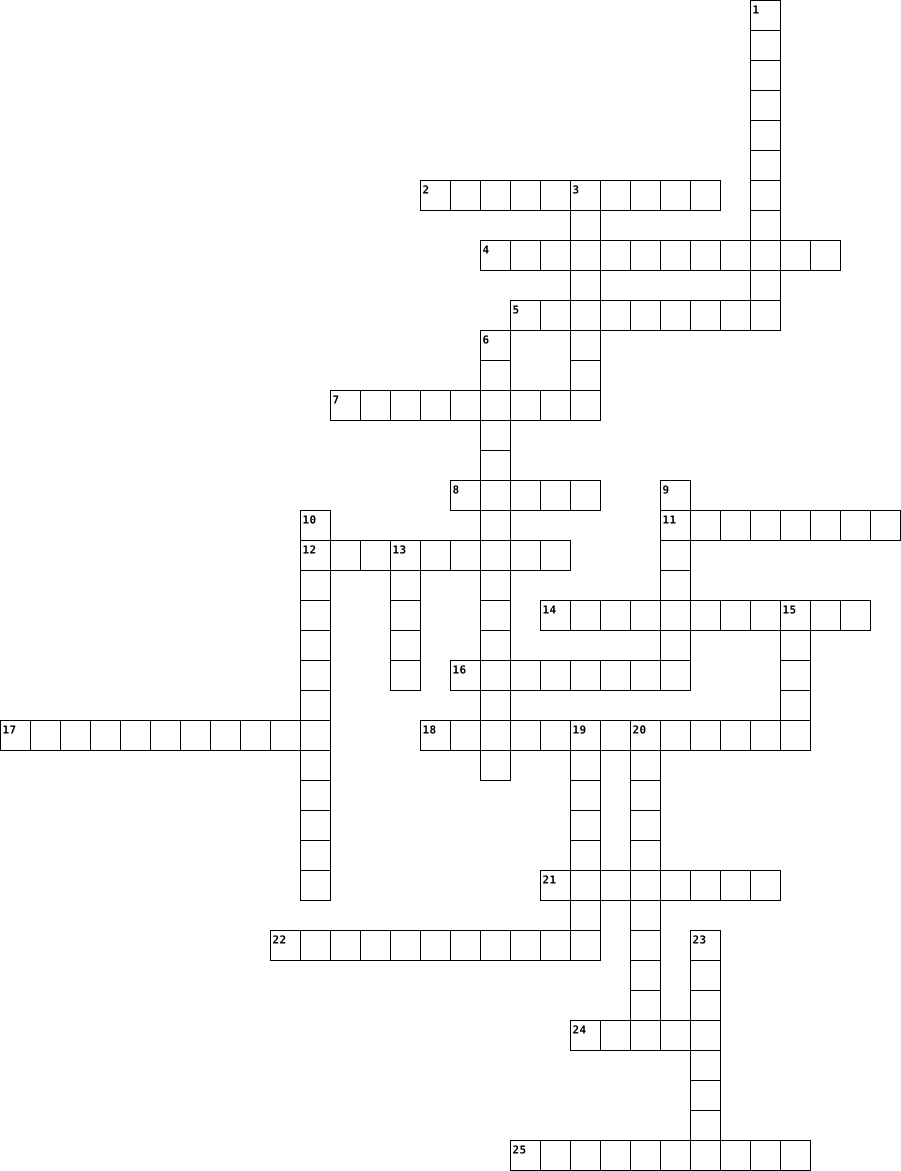
Across
- move food to the protozoan with help or without help
- unicellular and classified as protozoa
- forms filamentous colonies
- branchlike lichen with noticeable fruiting bodies
- all are photosynthetic with cell walls
- special cells that anchor the algae to something that appear rootlike
- hyphae that enters host cells to get nutrition from host cells
- floating protozoan or animals that eat phytoplankton
- hyphae that grow within the material the fungus is growing on and digest food and support the fungus
- green algae
- specilized cells are different in size and form
- simple colony of a slender chain of cells growing end to end
- sperm is produced in
- affect vegetative parts like leaves
- two identical specialized cells
Down
- golden algae stored food as oil
- gives shape to its body but doesn't have a cell wall
- most important group of algae in the open ocean and are main oxygen producers there
- body of a plantlike organism that does not have leaves, roots and stems
- tiny floating organisms that are mainly algae
- affect fruits like ears of corn
- show avoiding reactions and moves away from extreme temperatures but like acid
- nonmotile gametes or egg
- small pockets that hold up the thallus
- flat like growth lichens
25 Clues: green algae • sperm is produced in • nonmotile gametes or egg • flat like growth lichens • forms filamentous colonies • golden algae stored food as oil • affect fruits like ears of corn • two identical specialized cells • affect vegetative parts like leaves • unicellular and classified as protozoa • all are photosynthetic with cell walls • small pockets that hold up the thallus • ...
Biology Exam 3 2022-11-18

Across
- Two copies of dominant alleles
- Neither allele is dominant
- Observable appearance
- Only shows in the division of animal cells
- Two different alleles
- The reproduction of cells
- Crossing two varieties of an Organism
- is The actual division of genetic material to produce two identical cells
- Only shows in the division of plant cells
- A gene with multiple phenotype effects
- The equal division producing two identical cells from a parent cell
- The DNA in the cell
Down
- The offspring is unique due to combinations of genes from parents
- The division of the cytoplasm to the two genetically-identical cells
- The parent cell is duplicating its chromosomes
- The offspring are exact genetic copies
- Genetic makeup
- The first phase that the cell is growing by producing proteins and organelles
- The character is masked
- Identical alleles
- The life of a cell from the time it is formed from the parent cell to the division
- Two alleles affect the phenotype differently
- The cell division in gametes (Eggs & Sperm)
- Breeding unknown genotype with recessive homozygotes
- The phenotype expression at one locus alters the gene at the second locus
- The character shows
26 Clues: Genetic makeup • Identical alleles • The character shows • The DNA in the cell • Observable appearance • Two different alleles • The character is masked • The reproduction of cells • Neither allele is dominant • Two copies of dominant alleles • Crossing two varieties of an Organism • The offspring are exact genetic copies • A gene with multiple phenotype effects • ...
Pd. 2 Sch. Biology Project 2023-11-07

Across
- found only in algal and plant cells, is a cell organelle that produces energy through photosynthesis
- the basic unit of life
- -.. -. .-
- . ..- -.- .- .-. -.-- --- - .
- the tendency of some substances to cling to other substances.
- membrane that separates and protects the interior of a cell from the outside environment
- is the change in the heritable characteristics of biological populations over successive generations
- the fluid that fills the cell
- is a biological process used by many cellular organisms to convert light energy into chemical energy
Down
- a network of filaments and tubules that extends throughout a cell, through the cytoplasm, which is all of the material within a cell except for the nucleus
- a large vacuole found inside of plant cells
- the building blocks of polypeptides and proteins and play important roles in metabolic pathway, gene expression, and cell signal transduction regulation
- single-celled microorganisms with prokaryotic cells, which are single cells that do not have organelles or a true nucleus and are less complex than eukaryotic cells
- -- ..- .-.. - .. -.-. . .-.. .-.. ..- .-.. .- .-.
- .... -.-- -.. .-. --- .--. .... --- -... .. -.-.
- is a long DNA molecule with part or all of the genetic material of an organism
- -. ..- -.-. .-.. . ..- ...
- . -. --.. -.-- -- .
- is an outer layer surrounding certain cells that is outside of the cell membrane
- is any biological living system that functions as an individual life form
20 Clues: -.. -. .- • . -. --.. -.-- -- . • the basic unit of life • -. ..- -.-. .-.. . ..- ... • . ..- -.- .- .-. -.-- --- - . • the fluid that fills the cell • a large vacuole found inside of plant cells • .... -.-- -.. .-. --- .--. .... --- -... .. -.-. • -- ..- .-.. - .. -.-. . .-.. .-.. ..- .-.. .- .-. • the tendency of some substances to cling to other substances. • ...
Routt Cell Division 2022-03-10

Across
- ______ cells never have cell walls.
- a hollow tube-shaped protein.
- an indentation in the plasma membrane that forms during cytokinesis in animal cells.
- part of a chromosome that attaches to the spindle apparatus and where sister chromatids attach to each other.
- ______ cells never have centrioles.
- 4th phase of mitosis
- a form of DNA: loose uncoiled DNA strands.
- 1st phase of mitosis
- watery goo inside a cell.
- genetic material.
- 2nd phase of mitosis
- structure made of spindle fibers that separates chromosomes during cell division.
- structure inside the nucleus where ribosomes are formed.
Down
- organelle containing the DNA.
- microtubules that form the spindle apparatus.
- thick rigid structure surrounding plant cells (and others) outside the plasma membrane.
- thin and flexible container for all cells; contains the cell; controls cell transport.
- the rest of the cell cycle other than mitosis and cytokinesis.
- one of a pair of identical chromosomes attached together at their centromeres.
- division of the cytoplasm.
- double membrane surrounding the DNA of the nucleus.
- two new cell walls along with two new plasma membranes that form during cytokinesis in plant cells.
- a form of DNA: skein-like DNA coiled around spools of protein.
- structure that organizes the microtubules of the cell.
- 3rd phase of mitosis
25 Clues: genetic material. • 4th phase of mitosis • 1st phase of mitosis • 2nd phase of mitosis • 3rd phase of mitosis • watery goo inside a cell. • division of the cytoplasm. • organelle containing the DNA. • a hollow tube-shaped protein. • ______ cells never have cell walls. • ______ cells never have centrioles. • a form of DNA: loose uncoiled DNA strands. • ...
Blood type meanings 2024-02-05

Across
- it can donate to B and Ab
- any substance that causes your immune system to produce antibodies against it.
- hormone that stimulates RBC’s production
- an antigen-antibody reaction that occurs when an antigen is mixed with its corresponding antibody at a suitable pH and temperature.
- Red blood cells , they are bioncave discs without a nucleus
- measures the proportion of red blood cells in the blood
- it can donate to AB
- white blood cells that simply lack any granules within their cytoplasm
- a type of white blood cell that works closely with your immune system to defend your body from allergens, pathogens and parasites.
- a white blood cell with secretory granules in its cytoplasm
Down
- a specialized cell of the immune system, eats worms
- the formation of a blood clot, which prevents further blood loss from a wound.
- white blood cells
- it can donate to A and Ab bloods cells
- platelets
- proteins that protect you when an unwanted substance enters your body.
- a type of white blood cell
- A type of white blood cell that surrounds and kills microorganisms, removes dead cells,
- a type of white blood cell and a type of phagocyte
- it can donate to any body
20 Clues: platelets • white blood cells • it can donate to AB • it can donate to B and Ab • it can donate to any body • a type of white blood cell • it can donate to A and Ab bloods cells • hormone that stimulates RBC’s production • a type of white blood cell and a type of phagocyte • a specialized cell of the immune system, eats worms • ...
Living Things: Levels of Organization 2020-01-23

Across
- an organism consisting of a single cell, like algae or bacteria
- in _________ cells, there is no nucleus and genetic material is found in the cytoplasm.
- the smallest unit of matter
- the units which living things are composed of
- a multicellular or unicellular living thing
- a group of similar cells with a common specific function
- an organism consisting of more than one cell (all plants and animals are this type of organism)
- a group of tissues that does a particular job
- specialized structures that perform specific functions in a cell
- fluid substance inside cells where organelles are found
- _________ biomolecules are exclusive to living things.
Down
- in eukaryotic cells, the place where genetic material is stored
- wall only found in plant cells, this structure surrounds the plasma membrane and provides rigidity for the cell
- the small, green organelle only found in plant cells which is responsible for photosynthesis.
- (2 wds) the 'envelope' that separates the inside of the cell from the exterior environment
- groups of organs that work together
- _________ beings are not alive and include things like rocks, minerals, water, and air
- these are formed when bioelements join together
- _________ biomolecules are found in both living and non-living things.
- primary bioelements include carbon, hydrogen, oxygen, phosphorus, and __________.
20 Clues: the smallest unit of matter • groups of organs that work together • a multicellular or unicellular living thing • the units which living things are composed of • a group of tissues that does a particular job • these are formed when bioelements join together • _________ biomolecules are exclusive to living things. • ...
Vitiligo 2023-04-17

Across
- Vitiligo that appears on only the face and hands.
- Fighter cells in the body’s immune system.
- The layer of skin where melanin is found.
- The inner lining of the mouth and nose.
- The pigment that colors skin.
- Cells that identify foreign substances and attack them to protect the body.
- The gene that regulates inflammation.
- Vitiligo that affects only one part of the body.
- Coloring or color
- Vitiligo that affects many parts of the body, and sometimes appears symetrically.
- A gene that creates proteins which controls the activity of T Cells.
- Vitiligo that affects nearly all skin surfaces.
Down
- A disorder in which the body cannot tell what’s foreign and what’s part of the body, so it attacks normal body cells.
- Places where bone is close to the skin.
- Radiation from artificial light or the sun.
- The body’s reaction to an injury in which fighter cells will be sent to attack germs, but will sometimes attack healthy cells, too.
- An autoimmune disorder in which the body attacks melanocytes, which causes depigmentation.
- Vitiligo that affects only a few parts or sections of skin.
- The loss of pigment or lightening of skin.
- The cell in the skin that creates melanin.
20 Clues: Coloring or color • The pigment that colors skin. • The gene that regulates inflammation. • Places where bone is close to the skin. • The inner lining of the mouth and nose. • The layer of skin where melanin is found. • Fighter cells in the body’s immune system. • The loss of pigment or lightening of skin. • The cell in the skin that creates melanin. • ...
Cardiovascular System Review 2023-05-16

Across
- Chamber of the heart that sends deoxygenated blood to the lungs.
- A muscle that pumps blood.
- Component of blood that transports nutrients and electrolytes.
- Artery that carries blood to the lungs.
- Chamber of the heart that receives deoxygenated blood from the cells.
- Component of blood responsible for forming blood clots.
- Substance that is carried through the body by blood vessels.
- Large artery that carries blood to the cells.
- Vein that can be superior or inferior that carries blood from cells.
- The body system that contains the heart and blood vessels.
- Blood vessel that carries blood from the heart or lungs to cells.
- Component of blood that contains hemoglobin and is responsible for carrying oxygen.
Down
- Component of blood responsible for fighting infections.
- Part of the heart that separates the left and right sides.
- Chamber of the heart that sends oxygenated blood to cells.
- Chamber of the heart that receives oxygenated blood from the lungs.
- Vein that carries blood from the lungs.
- The substance that deoxygenated blood contains.
- Blood vessel that carries blood from cells to the heart or lungs.
- A part of the heart that controls the direction of the flow of blood through the heart.
- The substance that oxygenated blood contains.
21 Clues: A muscle that pumps blood. • Artery that carries blood to the lungs. • Vein that carries blood from the lungs. • Large artery that carries blood to the cells. • The substance that oxygenated blood contains. • The substance that deoxygenated blood contains. • Component of blood responsible for fighting infections. • ...
Biology Crossword Review 2025-12-22

Across
- A sugar molecule that stores energy and provides raw materials for building other molecules.
- Organelle where photosynthesis occurs
- Cell division process that creates 2 identical daughter cells
- Physical atoms that make up living things (C, H, O, N, P)
- Chemical reaction that converts glucose to ATP
- Where energy is stored in a molecule
- Living and nonliving things in one area interacting
- Where DNA is located in cells. Transcription also occurs here
- Plant or algae - makes their own food
- Chemical reaction that converts sunlight to glucose
- Organelle where cell respiration occurs
- Visual model that shows how energy decreases at each trophic level
- Required for for producers, along with sunlight and land
- Collection of similar cells
Down
- Source of all energy for producers
- Collection of similar tissues
- Maintaining balanced internal conditions in the body
- Breaks down dead things to return matter back to the soil
- Percent of energy that moves up each trophic level
- Basic unit of life
- Where RNA is used to make protein in cells
- Something that eats another organism for energy
- The ability to cause change or do work in cells.
- Building block of DNA, made of CHONP
- Molecule that cells use for energy
- Building block of protein, made of CHON
26 Clues: Basic unit of life • Collection of similar cells • Collection of similar tissues • Source of all energy for producers • Molecule that cells use for energy • Where energy is stored in a molecule • Building block of DNA, made of CHONP • Organelle where photosynthesis occurs • Plant or algae - makes their own food • Organelle where cell respiration occurs • ...
Circulatory System 2022-05-26

Across
- the liquid part of the blood
- located in the middle of your chest and vital for circulation
- carries blood away from the heart
- a muscle that separates the atria and the ventricles
- are produced in the thymus gland
- carries blood towards the heart
- receive blood from the atria
- filled with incoming blood
- give red blood cells the bright red look
- create antibodies
Down
- joins each artery and vein
- breaks down quickly in the blood
- recognize foreign antigens, and stimulate macrophages, B cells, and other T cells
- makes up 45% of red blood cells
- activated by helper T cells or presence of a foreign antigen. Kill foreign cells by puncturing a hole in their membrane.
15 Clues: create antibodies • joins each artery and vein • filled with incoming blood • the liquid part of the blood • receive blood from the atria • makes up 45% of red blood cells • carries blood towards the heart • breaks down quickly in the blood • are produced in the thymus gland • carries blood away from the heart • give red blood cells the bright red look • ...
THE CELL CYCLE 2016-01-29

Across
- cells Having two sets of chromosomes
- The centromere's split
- Provides support and structure for cell
- Where the cytoplasm divides
- Shortest phase of mitosis
- The longest phase of mitosis
Down
- Only in plant cells; where photosynthesis takes place
- Whip like tail
- cells This process makes body cells
- Gets rid of worn out organelles
- Energy is stored here
- Is the brain of the cell
- Wall Protects the cell & is only in plant cells
- Spindles break apart
14 Clues: Whip like tail • Spindles break apart • Energy is stored here • The centromere's split • Is the brain of the cell • Shortest phase of mitosis • Where the cytoplasm divides • The longest phase of mitosis • Gets rid of worn out organelles • cells This process makes body cells • cells Having two sets of chromosomes • Provides support and structure for cell • ...
N5 Biology - Producing New Cells - KA1 U2 2022-04-29

Across
- where stem cells can be obtained
- full set of chromosomes
- one sets of chromosomes
- where chromatids are attached to
- line in the middle of a cell
- groups of cells working together
- two sets of chromosomes
Down
- unspecialised cells which have the potential to become many cell types
- functions of stem cells
- when cells are given a function
- shortened and thickened chromosomes
- groups of organs working together
- cell division
- groups of tissues working together
14 Clues: cell division • functions of stem cells • full set of chromosomes • one sets of chromosomes • two sets of chromosomes • line in the middle of a cell • when cells are given a function • where stem cells can be obtained • where chromatids are attached to • groups of cells working together • groups of organs working together • groups of tissues working together • ...
cell processes and energy 2019-10-21

Across
- genetic material in a cell
- one way to treat cancer
- one copy of DNA is distributed to 2 daughter cells
- plant cells have but animal cells don't
- C6H12O6
- eats other organisms
- cells break down molecules and release energy
Down
- substances that produces color
- one way to treat cancer
- cell grows, copies DNA
- mutations disrupt the normal cell cycle
- mass of cancer cells
- cytoplasm divides in two
- original source of energy for living things
- produces own food
15 Clues: C6H12O6 • produces own food • mass of cancer cells • eats other organisms • cell grows, copies DNA • one way to treat cancer • one way to treat cancer • cytoplasm divides in two • genetic material in a cell • substances that produces color • plant cells have but animal cells don't • mutations disrupt the normal cell cycle • original source of energy for living things • ...
Immune cells 2025-07-18

Across
- The most abundant granulocytes and first responders to bacterial infection
- Innate lymphocytes that kill virus‑infected or tumor cells
- Adaptive lymphocytes that recognize antigen via T‑cell receptor and kill infected cells
- Tissue‑resident cells that degranulate histamine in allergic reactions
- – Phagocytic tissue cells that engulf pathogens and debris
- Innate lymphoid cells lacking antigen receptors but producing key cytokines
Down
- Adaptive lymphocytes that mature into antibody‑secreting plasma cells
- Cells expressing both NK and T‑cell markers, bridging innate and adaptive immunity
- Granulocytes involved in parasitic infections and allergic responses
- Regulatory T cells that suppress immune responses to maintain tolerance
- Antigen‑presenting “tree‑like” cells that activate T cells
- Circulating phagocytes that differentiate into macrophages in tissues
12 Clues: Innate lymphocytes that kill virus‑infected or tumor cells • Antigen‑presenting “tree‑like” cells that activate T cells • – Phagocytic tissue cells that engulf pathogens and debris • Granulocytes involved in parasitic infections and allergic responses • Adaptive lymphocytes that mature into antibody‑secreting plasma cells • ...
Chapter 10 - Cell Division Vocab Crossword 2017-12-04

Across
- duplication of the cell's genetic information in four phases
- third phase of mitosis
- one of the duplicated strands of DNA.
- a series of events where the cell grows.
- single parent and identical offspring.
- DNA packaged and prepared in the cell for cell division.
- proteins that regulate the timing of the cell cycle; these proteins are inside and outside the cell.
- proteins that stimulate the growth and division of cells.
- "beads on a string"
- the process by which a cell divides into two daughter cells.
- second phase of mitosis
- a mass of cells; can be benign which means the mass doesn't spread.
Down
- final phase of mitosis where spindle breaks apart.
- a mass of body cells that do not respond to the signals that regulate the growth of most cells.
- the part of the cell cycle where the cell grows.
- tiny paired structures where spindles come from to attach to the centromere to.
- two parents and genetic material taken from both parents.
- first described phase of mitosis
- a process of programmed cell death; cells end their life cycle in one of two ways: damage or programmed.
- the splitting of one cell into two.
- duplicated strands of DNA attach.
21 Clues: "beads on a string" • third phase of mitosis • second phase of mitosis • first described phase of mitosis • duplicated strands of DNA attach. • the splitting of one cell into two. • one of the duplicated strands of DNA. • single parent and identical offspring. • a series of events where the cell grows. • the part of the cell cycle where the cell grows. • ...
Hodgkins and Non-Hodgkins Lymphoma 2016-11-22

Across
- Monoclonal antibody against antigen CD20
- Survival of B cell may be linked to this infection
- Most common chromosomal alteration in NHL
- Skin lesions occurring in HL
- RS cells often take this form
- B cell tumor characterized by a facial mass around the jaw
- Effectiveness of treatment related to this
- Most prominent protein in the blood in MM
- Progression from one group of lymph nodes to another
- Depleted by Rituximab
- Lymphomas originating from NK cells
- Triggering mechanism of cells
Down
- Main treatment in NHL
- represent the malignant transformation of lymph cells
- Chromosome 13 has this chromosomal alteration occur in half of MM cases
- Treatment in HL
- Most common abnormal elevation in the blood of a patient with MM
- System of the body rarely involved in HL
- Cancers originate from this in cellular genes
- Symptom of Hodgkins Lymphoma characterized by itchy skin
- Symptom in NHL where there is fluid in the peritoneal cavity
- B cell cancer characterized by the proliferation of malignant plasma cells infiltrating the bone marrow
- Bacterial infection increasing the risk for gastric lymphomas
- Variety of lymphomas including myelomas that originate from B cells at various stages of differentiation
- Staging classification system used in HL to establish a correlation between the disease and prognosis
25 Clues: Treatment in HL • Main treatment in NHL • Depleted by Rituximab • Skin lesions occurring in HL • RS cells often take this form • Triggering mechanism of cells • Lymphomas originating from NK cells • Monoclonal antibody against antigen CD20 • System of the body rarely involved in HL • Most common chromosomal alteration in NHL • Most prominent protein in the blood in MM • ...
Heart & Lungs Crossword 2023-10-30

Across
- Small sac at the end of bronchial tubes
- when oxygen and carbon dioxide are exchanged between blood cells and surrounding tissue cells
- Muscle below your lungs that contracts and causes your chest to expand so you inhale
- Eliminates germs to help prevent infection and disease
- Tube leading to the lungs
- throat
- System made up of your lungs, responsible for breathing
- when gases are exchanged within a cell
- similar to identification tags in a cell
Down
- the exchange of oxygen and carbon dioxide
- These stick together to close a cut
- Carries blood toward the heart
- Connects veins and arteries
- A yellowish liquid that carries blood cells through the blood vessels
- System made up of your heart, blood, and blood vessels, transports blood throughout your body
- the exchange of oxygen for carbon dioxide in the lungs
- Tiny hairs that sweep particles out of the bronchi into the esophagus
- Carries oxygen and nutrients to cells and carries away waste products
- A stringy substance that forms a web over cuts
- Major artery of the heart
- Carries blood away from the heart
- vocal cords
- Two tubes that enter the lungs
23 Clues: throat • vocal cords • Tube leading to the lungs • Major artery of the heart • Connects veins and arteries • Carries blood toward the heart • Two tubes that enter the lungs • Carries blood away from the heart • These stick together to close a cut • when gases are exchanged within a cell • Small sac at the end of bronchial tubes • similar to identification tags in a cell • ...
Molecular Genetics 2024-05-05

Across
- a type of cell division where gametes are made.
- a reproductive cell of an animal or plant.
- programmed cell death.
- a molecule that contains the genetic code that is unique to an organism.
- a series of events that takes place in a cell as it grows and divides.
- the smallest unit that can live on its own and makes up all living organisms and the tissues of their bodies.
- structure that holds together two chromatids.
- an individuals complete set of chromosomes
- the presence of one complete set of chromosomes in an organism's cell.
- first step of PMAT, chromosomes begin to condense.
Down
- a mixture of DNA and other proteins that forms chromosomes.
- the stage of the cell cycle that the cell spends the most time in.
- division of the cytoplasm, completely separating the two daughter cells.
- second step of PMAT, chromosomes line up in the middle.
- the presence of two complete sets of chromosomes in an organism's cells.
- a disease caused by the uncontrollable division of cells.
- condensed dna
- a type of cell division that produces two genetically identical daughter cells.
- fourth step of PMAT,the cells form new nuclear membranes and prepare to become separate cells.
- third step of PMAT, chromosomes are pulled to opposite ends of the cell.
20 Clues: condensed dna • programmed cell death. • a reproductive cell of an animal or plant. • an individuals complete set of chromosomes • structure that holds together two chromatids. • a type of cell division where gametes are made. • first step of PMAT, chromosomes begin to condense. • second step of PMAT, chromosomes line up in the middle. • ...
science 2022-11-01

Across
- - food making process in plants occurs in the cells chloroplast
- phase - nuclear membrane disappears
- -input
- -movement of substances (other than
- -breaking down food into smaller pieces
- - chromosomes separates
- - organisms are made of many cells that can ONLY be eukaryotic.
- -different tissues working together to do a specific job
- -makes reproductive cells that have half of # chromosomes as the parent cell
- -removal(exiting of waste matter
- -output
- - movement of water across the cell membrane
Down
- -taking food into the body or cell membrane
- - cytoplasm spilts into 2 equal halves
- -makes body cells for growth & repair that are identical to the parent cell
- -2 new nuclei form
- -releases the stored energy from food eaten or made into usable energy (ATP)
- - organisms are made of only one cell that can be prokaryotic or eukaryotic.
- - groups of similar cells organized to do a specific
- - are specialized so that all jobs in the body get done
- -(a healthy internal balance of things like temperature,sugar,CO2 levels in blood)
- system - groups of organs working together to perform a specific job
- - chromosomes line up in the middle
- - all the levels together at the highest level of origination
- phase -chromosomes double
25 Clues: -input • -output • -2 new nuclei form • - chromosomes separates • phase -chromosomes double • -removal(exiting of waste matter • -movement of substances (other than • - chromosomes line up in the middle • - cytoplasm spilts into 2 equal halves • -breaking down food into smaller pieces • phase - nuclear membrane disappears • -taking food into the body or cell membrane • ...
Porifera and Cnidaria 2022-05-27

Across
- how many species of Cnidarians are there
- skeleton made of silica
- origin of the word Porifera meaning
- the condition of having both male and female reproductive organs
- what symmetry do sponges body display
- the movement of water into cells through the pores
- what is the most primitive animal
- creates the water currents
- inner layer
- how do sponges eat without a mouth
- the origin of the word Cnidaria
- what kind of symmetry do cnidarians have
- responsible for the digestion of food and transport of nutrients
- where do sponges keep their eggs
- sensory cells that help determine the direction of gravity
- outer layer
Down
- how long have sponges been around for
- asexual reproduction is also known as...
- cnidocysts contain these in their capsules
- part of the sponge breaks off, settles on the sea floor and forms a new sponge
- cells the food is ingested by the ... in sponges
- sessile(doesn't move alot)
- polyps and medusa contain this
- contains stinging cells called...
- contains ... layers of cells
- bell shaped form of tentacles
- cell filters food particles
- what cnidarian goes through polyp and medusa stage
- the sponge does not move therefore it is...
- carries nutrients to other cells
30 Clues: inner layer • outer layer • skeleton made of silica • sessile(doesn't move alot) • creates the water currents • cell filters food particles • contains ... layers of cells • bell shaped form of tentacles • polyps and medusa contain this • the origin of the word Cnidaria • where do sponges keep their eggs • carries nutrients to other cells • what is the most primitive animal • ...
The Cell 2023-09-26

Across
- Also known as deoxyribonucleic acid; contains the genetic code for all cells
- The control center of the cell
- A jelly-like substance that suspends the organelles
- Clusters of DNA, RNA, and proteins
- The green pigment found in plant cells that gives plants their green coloring
- A network of fibers that hold the cells together
- The aqueous component of cytoplasm (70 percent water)
- Makes proteins
- Moves the cell back and forth through short cell projections
- Store food in plant cells
- Stores proteins and lipids
- Spiral strands of protein forming a tubelike structure
- Organize microtubules
- Propels the cell through thin projections from cell surface
- Large protein molecules that exert strict control over which chemical reactions occur and when
- Converts glucose/energy into ATP; has its own DNA
Down
- Also known as the ER; rough ER has ribosomes, smooth ER does not have ribosomes
- Sacs that transport materials in and out of the cell
- A membrane-bound sac and some contain digestion waste products
- The inner folds of mitochondria
- Forms ribosomes in the cell
- Only in plant cells; a rigid structure outside of the cell
- Performs photosynthesis in plant cells
- Breaks down molecules through hydrolysis
- The semi-permeable membrane that allows H2O and O2 into the cell, but not toxins.
25 Clues: Makes proteins • Organize microtubules • Store food in plant cells • Stores proteins and lipids • Forms ribosomes in the cell • The control center of the cell • The inner folds of mitochondria • Clusters of DNA, RNA, and proteins • Performs photosynthesis in plant cells • Breaks down molecules through hydrolysis • A network of fibers that hold the cells together • ...
First Semester Final Exam Review 2024-12-17

Across
- Loosely coiled DNA
- A type of protein that speeds up reactions
- The building block of a polymer
- Causes an imbalance in the body
- Chromosomes are pulled apart to opposite ends of the cell
- Chromosomes line up in the middle of the cell
- Tightly coiled DNA and proteins
- Movement of molecules across the cell membrane from high to low concentration
- A sequence of DNA
- An organ that helps regulate blood sugar
- A type of cell transport that focuses on the movement of water
Down
- Cytoplasm is split, forming two identical daughter cells
- Utilized for quick energy in the body
- Cells spend most of their time in this phase of the cell cycle
- Process that gives cells their unique function by turning on specific genes within the cells DNA
- Process that can aid in repairing wounds by creating identical daughter cells to replace worn out cells
- The base that complements thymine
- The base that complements cytosine
- The complementary sequence for TCGATG
- Part of the cell membrane that has a carbohydrate chain attached and is used for cell communication
- The monomer of a nucleic acid
- Detects the stimulus and sends information to the control center
- The sugar found in DNA
23 Clues: A sequence of DNA • Loosely coiled DNA • The sugar found in DNA • The monomer of a nucleic acid • The building block of a polymer • Causes an imbalance in the body • Tightly coiled DNA and proteins • The base that complements thymine • The base that complements cytosine • Utilized for quick energy in the body • The complementary sequence for TCGATG • ...
Sickle Cell Crossword 2026-03-05

Across
- A condition where the body lacks enough healthy red blood cells
- An individual with one sickle cell allele who does not show symptoms
- The oxygen-carrying protein found inside red blood cells
- A genetic disease caused by misshapen red blood cells
- A change in a single nucleotide base pair in the DNA sequence
- The building blocks that link together to form proteins
- A gas carried by red blood cells and delivered to body tissues
- The molecule that carries genetic instructions in all living things
- A permanent change in the DNA sequence of a gene
Down
- The passing of genetic information from parents to offspring
- The body system responsible for pumping blood throughout the body
- The smallest type of blood vessel in the body
- The process of reading RNA to build a protein
- A segment of DNA that contains instructions for making a protein
- A version of a gene inherited from a parent
- A structure in the cell nucleus made of coiled DNA
- The type of cell division that produces sperm and egg cells
- The process of copying DNA into RNA
- A molecule built from amino acids that carries out functions in cells
- A sequence of three RNA nucleotides that codes for one amino acid
20 Clues: The process of copying DNA into RNA • A version of a gene inherited from a parent • The smallest type of blood vessel in the body • The process of reading RNA to build a protein • A permanent change in the DNA sequence of a gene • A structure in the cell nucleus made of coiled DNA • A genetic disease caused by misshapen red blood cells • ...
Digestive and immune system 2026-05-05

Across
- Intestinal hormone stimulated by fat/protein; triggers bile and pancreatic enzymes
- Lymphocyte that kills virus-infected and cancer cells via perforin
- ~30 serum proteins causing opsonization, inflammation and lysis
- Enzyme in saliva; breaks starch into disaccharides SAU7 Digestion
- Hormone from G cells; stimulates gastric juice release
- Duodenal enzyme that converts trypsinogen into active trypsin
- Lymphocyte peptide blocking viral replication and tumour growth
- Fixed tissue phagocyte engulfing large particles; presents antigens
- Wave-like smooth muscle contractions that propel food along the gut
- Thymus hormone aiding T lymphocyte maturation
- Lymphocyte that differentiates into antibody-secreting plasma cells
- Finger-like gut projections that maximise absorption surface area
- Most abundant WBC; first responder engulfing small pathogens
Down
- Cell-surface complex that displays antigenic fragments to T cells
- Liver product emulsifying fats into micelles for lipase access
- Lipid-protein cluster absorbed by lacteals after fat digestion
- Lymphocyte activated by antigen-presenting cells; drives cellular immunity
- Molecule that triggers a specific immune response
- Semifluid stomach paste emptied into the small intestine
- Immunoglobulin secreted by plasma cells; binds specific antigens
- Active pancreatic protease; activates other pancreatic enzymes
- Dormant cell enabling faster secondary immune response
- Released by acidic chyme; prompts pancreas to secrete bicarbonate
- Inactive stomach enzyme activated by low pH to digest proteins
24 Clues: Thymus hormone aiding T lymphocyte maturation • Molecule that triggers a specific immune response • Hormone from G cells; stimulates gastric juice release • Dormant cell enabling faster secondary immune response • Semifluid stomach paste emptied into the small intestine • Most abundant WBC; first responder engulfing small pathogens • ...
Life Science Chapter 2 Vocab 2023-09-27

Across
- Made of a single cell
- Fats, found in cell membranes
- The theory that cellscome from pre-existing cells, all living things are made of cells, all cells perform functions of living things
- Protein that controls the rate of specific reactions
- Scientist that discovered cells first to observe "small chambers" in cork and call them cells.
- Builds and repairs body tissue fight disease
- Tiny structures that make up all living things, basic unit of life
- Birth, growth, reproduction, death
- Long chains in specific order to make up protein molecules
- A complete living thing
Down
- Consisting of many cells
- sugars and starches, found in plant cell walls and storage of energy in plants and animals
- DNA and RNA
- The simplest structural unit of an element or compound, made of 2 or more atoms
- Study of the general principles of scientific classification
- Is the ability to do work, plants use energy to make food and animals get energy from food
- Uses DNA instructions to make protein molecules
- Coded instructions for order of amino acids in protein chains
18 Clues: DNA and RNA • Made of a single cell • A complete living thing • Consisting of many cells • Fats, found in cell membranes • Birth, growth, reproduction, death • Builds and repairs body tissue fight disease • Uses DNA instructions to make protein molecules • Protein that controls the rate of specific reactions • Long chains in specific order to make up protein molecules • ...
Unit 3 Introduction 2023-10-17

Across
- middle layer of the gastrula (i.e. notochord, skeletal muscle, kidney tubules, red blood cells)
- complete split of the blastula/blastocysts
- series of changes in the state of the cell, tissue, organ, or organism
- cell that can differentiate into all cell types in a body (not the first cells of an organism)
- second stage of embryonic development
- first stage of embryonic development
- outer layer of the gastrula (i.e. epidermis, brain, neurons)
- cell that can differentiate into some cell types in a body
- cell that can only differentiate into one cell type in a body
Down
- inner layer of the gastrula (i.e. pancreatic acinar cells, thyroid follicular cells, lung alveolar cells)
- incomplete split of the blastoderm
- fifth stage of embryonic development
- third stage of embryonic development
- gets bigger with age without a limit on size
- size gets bigger with age, but reach a certain size where you won’t get bigger
- fourth stage of embryonic development
- increase in weight or size
- cell that can differentiate into all cell types in a body (the first cells of an organism)
18 Clues: increase in weight or size • incomplete split of the blastoderm • fifth stage of embryonic development • third stage of embryonic development • first stage of embryonic development • second stage of embryonic development • fourth stage of embryonic development • complete split of the blastula/blastocysts • gets bigger with age without a limit on size • ...
Organelles 2022-10-04

Across
- organisms made of only one cell
- makes food
- Invention that led to the cell theory:
- Stores materials
- Cells with no nucleus
- Trasport
Down
- outside shell
- Regulates entry and exit of materials
- Organisms made of multiple cells
- powerhouse
- liquid filling
- cells with a nucleus
- Brain of cell
- building blocks of life
14 Clues: Trasport • powerhouse • makes food • outside shell • Brain of cell • liquid filling • Stores materials • cells with a nucleus • Cells with no nucleus • building blocks of life • organisms made of only one cell • Organisms made of multiple cells • Regulates entry and exit of materials • Invention that led to the cell theory:
Organelles 2022-10-04

Across
- organisms made of only one cell
- makes food
- Invention that led to the theory
- Stores materials
- Cells with no nucleus
- Trasport
Down
- outside shell
- Regulates entry and exit of materials
- Organisms made of multiple cells
- powerhouse
- liquid filling
- cells with a nucleus
- Brain of cell
- building blocks of life
14 Clues: Trasport • powerhouse • makes food • outside shell • Brain of cell • liquid filling • Stores materials • cells with a nucleus • Cells with no nucleus • building blocks of life • organisms made of only one cell • Organisms made of multiple cells • Invention that led to the theory • Regulates entry and exit of materials
Cardiovascular System 2022-10-14

Across
- What each lower chamber of the heart is called.
- A fluid that transports supplies for cells, removes waste so cells can maintain homeostasis, and carries chemical messages.
- system An organ system that carries nutrients, gases, and hormones to body cells and waste products away from body cells.
- A blood vessel that carries blood away from the heart.
- Tiny blood vessel that allows exchange between body cells and blood.
- Number of chambers that a heart has.
- Blood that travels through your body in tubes.
Down
- Blood cells that fight pathogens such as bacteria and viruses.
- hat each upper chamber of the heart is called.
- Side of heart that recieves oxygen-rich blood.
- A blood vessel that carries blood back to the heart.
- The organ that sends blood around the body and is one of the main parts of the cardiovascular system.
- Tiny pieces of larger cells that clump together when you bleed to prevent yourself from bleeding out.
- Side of heart that recieves oxygen-poor blood.
- Blood cells that carry oxygen to every cell in your body.
15 Clues: Number of chambers that a heart has. • hat each upper chamber of the heart is called. • Side of heart that recieves oxygen-rich blood. • Side of heart that recieves oxygen-poor blood. • Blood that travels through your body in tubes. • What each lower chamber of the heart is called. • A blood vessel that carries blood back to the heart. • ...
Medical Terminology: Blood and Lymphatic Systems 2014-10-19

Across
- A surgical procedure that partially or completely removes the spleen.
- Someone whose immune system has been compromised by disease.
- Any disease process affecting a lymph node or nodes.
- Anyone of a large group of carcinomas derived from glandular tissue.
- Immature red blood cells.
- A procedure to remove a piece of tissue or a sample of cells from your body so that it can be analyzed in a laboratory.
- Development of red and white blood cells.
Down
- Process by which certain living cells called phagocytes ingest or engulf other cells or particles.
- A tumor originating from the epithelial cells of the thymus.
- An endoscopic technique of visualizing the inside of the airways for diagnostic and therapeutic purposes.
- Any disorder in which there is an abnormally low amount of platelets.
- The destruction of red blood cells.
- A type of cancer treatment that uses drugs to destroy cancer cells.
- Type of cancer that starts in the bone marrow.
- An imaging method that uses high-frequency sound waves to produce relatively precise images of structures within your body.
15 Clues: Immature red blood cells. • The destruction of red blood cells. • Development of red and white blood cells. • Type of cancer that starts in the bone marrow. • Any disease process affecting a lymph node or nodes. • A tumor originating from the epithelial cells of the thymus. • Someone whose immune system has been compromised by disease. • ...
Cardiovascular System Crossword Puzzle 2022-10-14

Across
- Blood cells that carry oxygen to every cell in your body.
- A blood vessel that carries blood away from the heart.
- Side of heart that recieves oxygen-rich blood.
- Blood that travels through your body in tubes.
- Blood cells that fight pathogens such as bacteria and viruses.
- Side of heart that recieves oxygen-poor blood.
- A blood vessel that carries blood back to the heart.
Down
- What each lower chamber of the heart is called.
- Tiny blood vessel that allows exchange between body cells and blood.
- A fluid that transports supplies for cells, removes waste so cells can maintain homeostasis, and carries chemical messages.
- system An organ system that carries nutrients, gases, and hormones to body cells and waste products away from body cells.
- hat each upper chamber of the heart is called.
- Number of chambers that a heart has.
- Tiny pieces of larger cells that clump together when you bleed to prevent yourself from bleeding out.
- The organ that sends blood around the body and is one of the main parts of the cardiovascular system.
15 Clues: Number of chambers that a heart has. • Side of heart that recieves oxygen-rich blood. • Blood that travels through your body in tubes. • hat each upper chamber of the heart is called. • Side of heart that recieves oxygen-poor blood. • What each lower chamber of the heart is called. • A blood vessel that carries blood back to the heart. • ...
Cells 54-60, 73-80 2023-03-24

Across
- fast moving b/c of cilia, sweeps food into gullet, complex organism
- a part of a cell that carry out a function in a cell
- bring large particle into cell, energy required
- movement of molecules across the cell membrane, down concentration gradient; ex – oxygen
- cells that have a nucleus and membrane-bound organelles, exs: plant cells and animal cells
- that living organisms are made up of cells, that they are the basic structural/organizational unit of all organisms, and that all cells come from pre-existing cells.
- tool used to make objects bigger
Down
- push large particles outside cell, energy required
- movement of water molecules across the cell membrane
- flagellum, eye-spot, in light uses chloroplasts – photosynthesis, flexes body
- transparent (see through) sphere w/over 500 individual cells, colony, spins b/c flagella move in unison, photosynthesis
- cells that do not have a nucleus or membrane-bound organelles, very small, ex: bacteria
- shape shifter, moving cytoplasm causes pseudopods (false feet), wraps around & takes in food - endocytosis
- number times makes bigger; power
- the basic unit or building block of living things
15 Clues: number times makes bigger; power • tool used to make objects bigger • bring large particle into cell, energy required • the basic unit or building block of living things • push large particles outside cell, energy required • movement of water molecules across the cell membrane • a part of a cell that carry out a function in a cell • ...
Science class (1) 2021-12-06

Across
- A membrane-bound organelle that contains a cell's chromosomes.
- All living things are made of cells and new cells come from old ones.
- An organism made up of one singular cell.
- A structural layer that covers some types of cells.
- Separates the interior of the cell from the outside.
- Special structures that perform different jobs with a cell.
- Organisms that nuclei are concealed in a nuclear envelope.
- A tool that magnifies objects by transmitting light through a series of lenses.
- The process that living organisms use to hold steady conditions for survival.
- organelle found in a large bit of cells.
- A unnicellular organism that does not have a destinct nucleus with a membrane or other special organelles.
Down
- An organism made up of 2 or more cells.
- A microscope that uses electron beams instead of light ones.
- A solution that fills the cell and is contained the cell's cell membrane.
- the smallest unit of life that makes up every organism on earth
- A process in which organisms combine oxygen with other molecules.
- A plastid that contains chlorophyll inside of green plant cells.
- A biological process that organisms use to create offspring.
- A substance that has amino acids.
19 Clues: A substance that has amino acids. • An organism made up of 2 or more cells. • An organism made up of one singular cell. • organelle found in a large bit of cells. • A structural layer that covers some types of cells. • Separates the interior of the cell from the outside. • Organisms that nuclei are concealed in a nuclear envelope. • ...
The cell crossword 2025-10-09

Across
- A substructure found in eukaryotic cells and makes ribosomes inside the nucleus.
- An organism composed of only a single cell.
- A single cell organelle that has no nucleus.
- The ability of a cell membrane to allow molecules to pass through it.
- Example: The scent of a perfume spreading through a room.
- An organism made up of more than one cell.
- A complex and large cell that has a membrane-bound nucleus.
- The network of membranes that transport materials across the cell.
- Turns food into energy for the cell.
- Where photosynthesis happens
Down
- The scientific explanation of how all living things are constituted of cells.
- Stacks of sacs that package and send proteins.
- The jelly like substance that is in the cell and holds everything in place.
- The main part of the cells that controls everything and holds DNA.
- A flexible selectively permeable barrier that encloses all cells.
- The stiff outer layer that gives plant cells shape and support.
- What digests unwanted stuff in the cell.
- Example: Plant roots absorbing water from the soil, potatoes shrinking in saltwater.
- Tiny hair like structures that help cells move or sense
19 Clues: Where photosynthesis happens • Turns food into energy for the cell. • What digests unwanted stuff in the cell. • An organism made up of more than one cell. • An organism composed of only a single cell. • A single cell organelle that has no nucleus. • Stacks of sacs that package and send proteins. • Tiny hair like structures that help cells move or sense • ...
The Cell Crossword 2025-10-10

Across
- A substructure found in eukaryotic cells and makes ribosomes inside the nucleus.
- Tiny hair like structures that help cells move or sense
- The scientific explanation of how all living things are constituted of cells.
- Where photosynthesis happens.
- The jelly like substance that is in the cell and holds everything in place.
- The main part of the cells that controls everything and holds DNA.
- The network of membranes that transport materials across the cell.
- Stacks of sacs that package and send proteins.
Down
- An organism made up of more than one cell.
- An organism composed of only a single cell.
- The ability of a cell membrane to allow molecules to pass through it.
- Example: Plant roots absorbing water from the soil, potatoes shrinking in saltwater.
- Turns food into energy for the cell.
- A single cell organelle that has no nucleus.
- What digests unwanted stuff in the cell.
- Example: The scent of a perfume spreading through a room.
- A complex and large cell that has a membrane-bound nucleus.
- A flexible selectively permeable barrier that encloses all cells.
- The stiff outer layer that gives plant cells shape and support.
19 Clues: Where photosynthesis happens. • Turns food into energy for the cell. • What digests unwanted stuff in the cell. • An organism made up of more than one cell. • An organism composed of only a single cell. • A single cell organelle that has no nucleus. • Stacks of sacs that package and send proteins. • Tiny hair like structures that help cells move or sense • ...
Organization of Living Things and Cell Organelles Crossword 2023-08-16

Across
- This is the control center of the cell, it tells the cell what to do!
- When organisms are made up of a single cell.
- This gel-like substance allows nutrients to move through the cell.
- This is semi-permeable and controls what comes in and goes out of a cell.
- When different tissues work together to perform a function.
- These break down excess or worn-out cell parts.
- When organs and tissues work together.
Down
- This is what keeps the cell together, it gives it structure and support.
- When organisms are made up of many different cells.
- There are two types of eukaryotic cells ___________ cells and plant cells.
- This is when the cell has a nucleus.
- This type of cell doesn't have a nucleus.
- Cells in a multicellular organism are ____________ (this means they each have a certain job or function to do).
- This is the genetic material of the cell.
- This is a group of similar cells that are organized to do a specific job.
- This is the strong arm of the cell, it breaks down material into energy for the cell.
- This is where cholorphyll is in plant cells. It uses light energy to make food for itself.
17 Clues: This is when the cell has a nucleus. • When organs and tissues work together. • This type of cell doesn't have a nucleus. • This is the genetic material of the cell. • When organisms are made up of a single cell. • These break down excess or worn-out cell parts. • When organisms are made up of many different cells. • ...
Excel B 2011-12-07

Across
- type of cell reference that doesn't change when copied
- button on the ribbon that adds up all the numbers in a range of cells
- rules that determine which operation to perform first
- type of cell reference that looks like this: A2
- type of cell reference that looks like this: G$12
- dragging the fill handle on a cell to copy the cell's contents
- a formula that uses more than one arithmetic operator.
- function that returns the smallest value in a set of values
- the equal sign
Down
- item on the ribbon that open a dialog box or tast pane
- function that adds all the numbers in a range of cells
- function that counts the number of cells in a range that contain numbers
- a predefined worksheet formula
- function that adds all the numbers and divides the sum by the number of cells
- displays a list of functions from which you can choose
- button you press while dragging and dropping to copy cells
- clears the contents of selected cells
- puts the cell into edit mode
- lets you convert from relative cell reference to an absolute cell reference
- function that returns the largest value in a set of values
20 Clues: the equal sign • puts the cell into edit mode • a predefined worksheet formula • clears the contents of selected cells • type of cell reference that looks like this: A2 • type of cell reference that looks like this: G$12 • rules that determine which operation to perform first • item on the ribbon that open a dialog box or tast pane • ...
Cancer 2014-08-29

Across
- pertaining to a malignant neoplasm
- any abnormal swelling
- spontaneously emitting alpha, beta, or gamma rays
- in cancer pthology, a classification of the rate of growth of cancer cells
- use of a light-sensitive drug with a laser beam to destroy cells
- the science dealing with cancer
- cancer arising in bone-forming cells
- cancer-producing agent
- a malignant and invasive epithelial tumor
- given in smaller amounts and more frequently
- destructive to cells
- a specialist in pathology
- programmed normal cell death
- cancer arising from cartilage cells
- to penetrate and invade a tissue or cell
- process of determination of the extent of the distribution of neoplasm
- extremely toxic or pathogenic
- a malignant tumor originating in connective tissue
- to increase in number through reproduction
Down
- a new growth, either a benign or malignant tumor
- treatment using radiation
- treatment using chemical agents
- cancer derived from skeletal muscle
- tumor that invades surrounding tissues and metastasizes to distant organs
- a normal gene involved in normal cell growth
- program of treatment
- a cancer arising from glandular epithelial cells
- radioactive agent used in diagnostic imaging
- spread of disease from one part of the body to another
- denoting the nonmalignant character of a neoplasm or illness
30 Clues: program of treatment • destructive to cells • any abnormal swelling • cancer-producing agent • treatment using radiation • a specialist in pathology • programmed normal cell death • extremely toxic or pathogenic • treatment using chemical agents • the science dealing with cancer • pertaining to a malignant neoplasm • cancer derived from skeletal muscle • ...
Hodgkins and Non-Hodgkins Lymphoma 2016-11-22

Across
- Most common chromosomal alteration in NHL
- Most common abnormal elevation in the blood of a patient with MM
- Staging classification system used in HL to establish a correlation between the disease and prognosis
- Symptom of Hodgkins Lymphoma characterized by itchy skin
- RS cells often take this form
- Progression from one group of lymph nodes to another
- Cancers originate from this in cellular genes
- represent the malignant transformation of lymph cells
- Main treatment in NHL
- Monoclonal antibody against antigen CD20
- Variety of lymphomas including myelomas that originate from B cells at various stages of differentiation
- Effectiveness of treatment related to this
- Most prominent protein in the blood in MM
Down
- Chromosome 13 has this chromosomal alteration occur in half of MM cases
- B cell cancer characterized by the proliferation of malignant plasma cells infiltrating the bone marrow
- Bacterial infection increasing the risk for gastric lymphomas
- Treatment in HL
- Survival of B cell may be linked to this infection
- Depleted by Rituximab
- Skin lesions occurring in HL
- Lymphomas originating from NK cells
- B cell tumor characterized by a facial mass around the jaw
- System of the body rarely involved in HL
- Symptom in NHL where there is fluid in the peritoneal cavity
- Triggering mechanism of cells
25 Clues: Treatment in HL • Depleted by Rituximab • Main treatment in NHL • Skin lesions occurring in HL • RS cells often take this form • Triggering mechanism of cells • Lymphomas originating from NK cells • System of the body rarely involved in HL • Monoclonal antibody against antigen CD20 • Most common chromosomal alteration in NHL • Most prominent protein in the blood in MM • ...
Immune System 2023-03-16

Across
- Network of organs, cells and proteins that defends the body against infection
- Getting rid of certain pathogens that have been encountered by the immune system.
- Substances that are capable of killing and stopping growth of specific bacteria.
- When bacteria becomes immune to antibiotics.
- A microorganism that infects cells and may cause disease.
- When the body is given immunity to a disease by intentional exposure.
- When a person is given antibodies to a disease rather than producing them.
- Helps the body fight infection and other diseases.
- Protective proteins produced by your immune system.
Down
- When the reproduction of viruses using a host cell to manufacture more viruses.
- Phage infects a bacterium and inserts its DNA into the bacterial chromosome.
- Tissues and organs that work together to protect the body.
- Exposure to a disease that triggers the immune system to produce antibodies.
- Cells involved in the detection, phagocytosis and destruction of bacteria.
- Engulfing and destroying foreign particles
- Immunity that is naturally existing
- Giving medicine to the body to produce protection from a specific disease.
- A substance that causes the body to be immune against that substance.
- Physical and chemical barriers that defend the body from infection.
- Cells that are formed in the bone marrow from stem cells that give rise to all blood cells.
20 Clues: Immunity that is naturally existing • Engulfing and destroying foreign particles • When bacteria becomes immune to antibiotics. • Helps the body fight infection and other diseases. • Protective proteins produced by your immune system. • A microorganism that infects cells and may cause disease. • Tissues and organs that work together to protect the body. • ...
Growth Disturbances and Neoplasia 2022-12-16

Across
- Malignant tumor of the lymphoid tissue
- Benign tumor which is made up of mature but disorganized cells of tissues indigenous to the particular organ
- Branch of science dealing with the study of neoplasms or tumors
- Variation in size and shape of the tumor cells
- Are slow-growing and localized without causing much difficulty to the host
- Coined the term karkinos for cancer of the breast
- Malignant neoplasms arising in “solid” mesenchymal tissues or its derivatives
- Refers to the mechanism of induction of tumors
- Supportive host-derived non-neoplastic component
- Proliferate rapidly, spread throughout the body and may eventually cause death of the host
Down
- Made up of a mixture of various tissue types arising from totipotent cells derived from the three germ cell layers—ectoderm, mesoderm and endoderm
- New growth produced is called
- A benign tumor arising from cartilages
- Defined as the gross and microscopic degree of differentiation of the tumor
- Term used for cancer of blood forming cells
- A group of malignant tumors which arise from embryonal or partially differentiated cells which would normally form blastema of the organs and tissue during embryogenesis
- Comprised by proliferating tumor cells
- Means new growth
- The common or collective term used for all malignant tumors is…
- Extent of spread of the tumor within the patient
20 Clues: Means new growth • New growth produced is called • Malignant tumor of the lymphoid tissue • A benign tumor arising from cartilages • Comprised by proliferating tumor cells • Term used for cancer of blood forming cells • Variation in size and shape of the tumor cells • Refers to the mechanism of induction of tumors • Extent of spread of the tumor within the patient • ...
Blood Review Activity 2022-12-07

Across
- Originates from lymph nodes, protects body from foreign invaders, single lobed nuclei
- Engulfs/destroys foreign bacteria
- Blood plasma is primarily made of water. What else is found in it?
- Releases histamines
- Where does haemopoiesis occur?
- Originates from bone marrow, helps fight off infection, 4 lobed nucleus
- The process that forms blood cells
- Fragments of other cells, clots the blood
- Can receive blood from type B and O
- Blood clot that forms in a vein
- Makes antibodies, helps kill tumor cells
- Universal donor
- Transports oxygen in the blood of vertebrates
- Kills parasitic worms ingested in food
Down
- Can receive blood from type A and O
- Red blood cell, transports gasses and nutrients
- Determines if blood type is positive or negative
- White blood cell, defends the body against diseases
- The main antigens found on human red blood cells
- The stem cell that differentiates into all others
- Universal recipient
- The volume percentage of red blood cells in blood
- Kills microorganisms, removes dead cells, boosts immune responses
- Moves through the blood vessels until it reaches a vessel that is too small to let it pass
- Number of oxygen molecules one hemoglobin protein carry
- Element found at the center of each heme group
26 Clues: Universal donor • Releases histamines • Universal recipient • Where does haemopoiesis occur? • Blood clot that forms in a vein • Engulfs/destroys foreign bacteria • The process that forms blood cells • Can receive blood from type A and O • Can receive blood from type B and O • Kills parasitic worms ingested in food • Makes antibodies, helps kill tumor cells • ...
Unit 1 & 2 Review Crossword 2022-10-15

Across
- the change in the behavior of an organism due to a change in the environment
- the movement of substances other than water into and out of cells
- this organelle fills up the cell and keeps other organelles in their place
- found in only plant cells this organelle creates food for a cell from sunlight
- the movement of materials into and out of cells
- many tissues working together to perform a specific function
- a change in the environment that causes an organism to respond
- a living thing that can sustain its own life
- the organelle where cell transport (osmosis and diffusion) takes place
Down
- a beneficial characteristic that helps an organism survive in its given environment
- the last name of the scientist who is responsible for naming cells
- the ability to maintain a stable internal environment
- an equal amount of a substance is both inside a cell and outside the cell
- this organelle is the information center for a cell
- this organelle stores food, water and waste for a cell
- the organelle that creates energy for a cell
- the movement of water into and out of cells
- many organs working together to perform one or more functions
- many similar cells working together to perform a specific function
- the smallest unit of life
20 Clues: the smallest unit of life • the movement of water into and out of cells • the organelle that creates energy for a cell • a living thing that can sustain its own life • the movement of materials into and out of cells • this organelle is the information center for a cell • the ability to maintain a stable internal environment • ...
Innate Immunity 2022-10-23
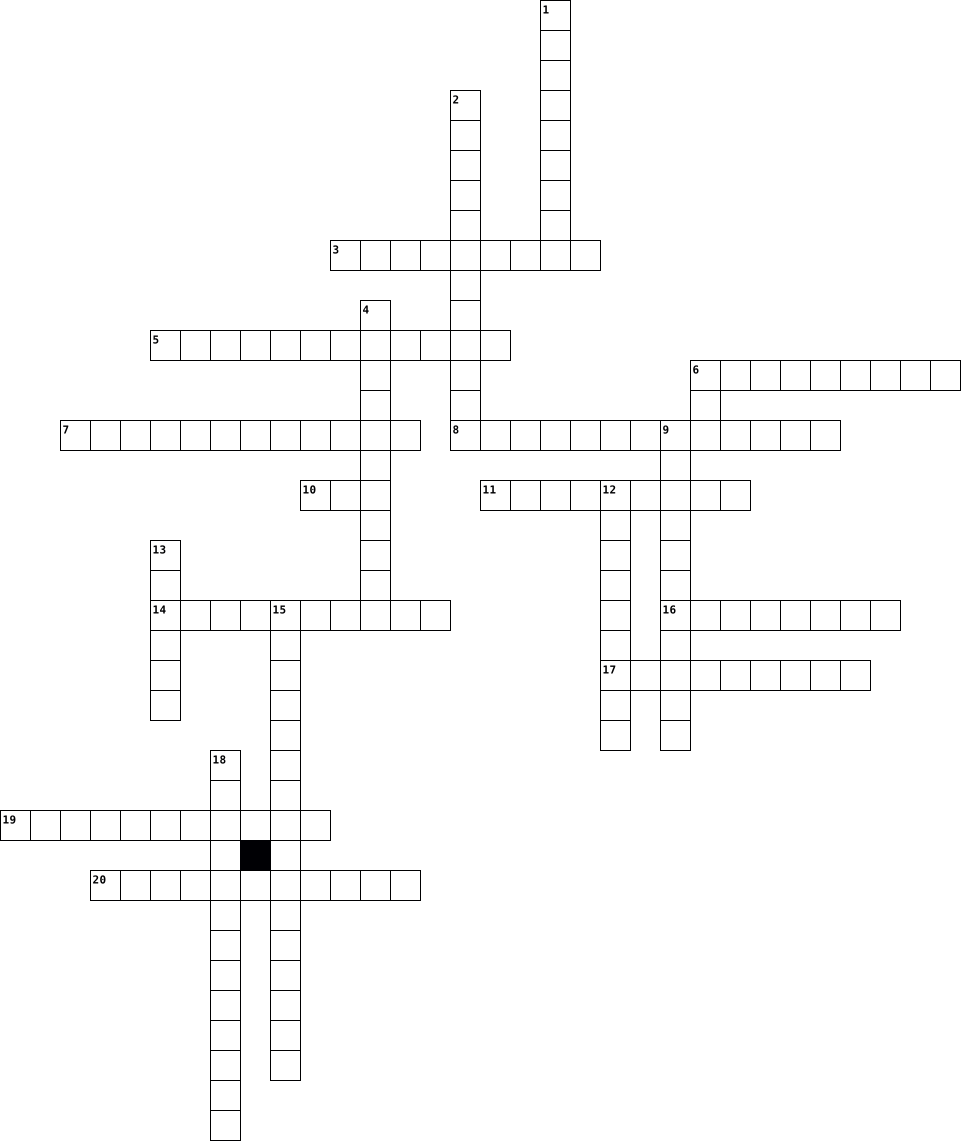
Across
- vasoactive molecules; histamine and serotonine
- mast cells lead to _________ which increases vascular permeability
- predominant at later stages of inflammation
- leukocyte chemotaxis --> leukocytes are drawn to areas of _______ which have increased chemockines
- ex: dendritic cells, macrophages, mast cells; pro-inflammatory and antimicrobial mediators
- Type _____ interferons: produced by virus-infected cells; non-specific response to viral infection; IFN-α & IFN-β -> inhibit viral replication & induce an antiviral state
- damages the mucopeptides in the bacterial cell wall
- leukocyte extravasation--> Migration
- _____ proteins: damage the bacterial cell wall
- leukocyte extravasation--> Adhesion
- ________ pathway: complement proteins are activated on microbial surfaces
- predominant during acute inflammation
Down
- ________ pathways: activated by antibodies that bind to microbes or other antigens
- active process of capturing and ingesting foreign objects/microorganisms
- sequestrates iron thus inhibiting bacterial growth
- breaches the cell membrane of the microbe, allowing water to rush into the cell
- present once the adaptive immune system is engaged in the response
- leukocyte extravasation --> Rolling
- ________ pathway: activated when a carbohydrate-binding plasma protein, MLB, binds to terminal mannose residues on the surface of glycoproteins
- use of oxygen and glucose increases several fold "respiratory burst"
- these cells recognize and respond to infected and stressed cells; secretion of IFN-γ -> stimulates and activates macrophages
21 Clues: leukocyte extravasation --> Rolling • leukocyte extravasation--> Adhesion • leukocyte extravasation--> Migration • predominant during acute inflammation • predominant at later stages of inflammation • vasoactive molecules; histamine and serotonine • _____ proteins: damage the bacterial cell wall • sequestrates iron thus inhibiting bacterial growth • ...
Semester 1: Anatomy and Physiology 2023-12-06

Across
- / Any organism that can cause disease.
- / Primary function of melanin.
- / A rapid rise and subsequent fall in voltage or membrane potential.
- / Protein that forms thin filaments in muscle fibers.
- / Substance that induces an immune response.
- / Pigment providing skin color and UV protection.
- / Junction between two nerve cells.
- / Cells responsible for bone formation.
- / Insulating layer around nerves.
- / Cells responsible for producing antibodies.
- / Biological preparation providing acquired immunity.
- / Dense outer layer of bone providing strength.
- / Chemical messengers in the nervous system.
- / This soft tissue produces blood cells.
- / They help in cooling the body.
- / Mineral vital for bone strength.
- / Cells that play a central role in cell-mediated immunity.
Down
- / Basic unit of the nervous system.
- / Shortening of muscle fibers.
- / Ability of muscles to work for extended time.
- / Mature bone cells.
- / Energy molecule required for muscle movement.
- / Long part of a neuron transmitting impulses.
- / Glands producing oil in the skin.
- / Type of white blood cell.
- / Protein used by the immune system to neutralize pathogens.
- / Structure in the dermis where hair originates.
- / First line of defense in the immune response.
- / The unit of muscle contraction.
- / Protein that strengthens skin, hair, and nails.
- / Central nervous system, comprising the brain and spinal cord.
31 Clues: / Mature bone cells. • / Type of white blood cell. • / Shortening of muscle fibers. • / Primary function of melanin. • / They help in cooling the body. • / Insulating layer around nerves. • / The unit of muscle contraction. • / Mineral vital for bone strength. • / Basic unit of the nervous system. • / Glands producing oil in the skin. • / Junction between two nerve cells. • ...
Mitosis and Meiosis Crossword Puzzle 2024-02-27

Across
- Fertilized Egg that results from sperm and a female gamete
- An individuals complete set of chromosomes
- This is the presence of a single set of chromosomes in an organism's cells
- The process by which a single parent cell divides to make two new daughter cells is _______.
- A type of cell division in sexually reproducing organisms
- An example of this reproduction are bacteria
- Stage that prepares for mitosis where the Nucleus is well-defined
- Stage where the Nucleolus disappears and the nuclear membrane breaks down
- A reproductive cell
- This forms the poles of the spindle during mitosis
- mixture of DNA and proteins that form the chromosomes found in the cells of humans and other higher organisms
Down
- The process where two haploid cells (gametes) fuse to form a diploid zygote
- Stage where Sister chromatids separate at kinetochores
- This is presence of two complete sets of chromosomes in an organism's cells, with each parent contributing a chromosome to each pair.
- Stage in which the cell is nearly done dividing
- Paired chromosomes must carry “matching” genes (same information)
- Stage where spindle fibers attach to centromeres
- The physical separation of two daughter cells
- In this reproduction, the sperm and egg join
- these link to the chromosomes and pull them apart
20 Clues: A reproductive cell • An individuals complete set of chromosomes • In this reproduction, the sperm and egg join • An example of this reproduction are bacteria • The physical separation of two daughter cells • Stage in which the cell is nearly done dividing • Stage where spindle fibers attach to centromeres • these link to the chromosomes and pull them apart • ...
Cell Cycle 2025-01-21

Across
- Nuclear membrane reforms
- Set of tissues working together for a common function
- One individual member of a species
- This is where the chromosomes line up during metaphase
- A section of DNA with instructions for making a protein
- At the end of the cell cycle, 1 cell becomes 2 identical ______________ cells
- One long continuous thread of DNA that consists of thousands of genes
- A process that creates special structures and functions
- A set of organs working together for a common function
- During prophase, the spindle fibers for out of _____________
- In this phase, DNA replication occurs
- Cell Division
Down
- During this phase, spindle fibers connect to the centromeres
- In this phase, the nuclear membrane disappears
- Sister chromatids separate
- Group of cells working together for a common function
- These stem cells have never differentiated and can become any type of cell
- These stem cells are found in bone marrow and are partially differentiated
- End of the DNA molecule
- Separation of the cytoplasm
- Undifferentiated cells that can become differentiated into one or more types of specialized cells
- Area of the condensed chromosome that looks pinched
- The growth phase of the cell cycle
- Most basic unit of life that has all the characteristics of life
- ______ chromatid half of a duplicated chromosome
25 Clues: Cell Division • End of the DNA molecule • Nuclear membrane reforms • Sister chromatids separate • Separation of the cytoplasm • One individual member of a species • The growth phase of the cell cycle • In this phase, DNA replication occurs • In this phase, the nuclear membrane disappears • ______ chromatid half of a duplicated chromosome • ...
Cytokines 2025-10-26

Across
- Stimulates T cell activation
- IFN-lambda; secreted by dendritic cells
- Pro-survival for B cells
- "signal___"
- Class I; IL-6, IL-12, IL-23
- Test on multi-well plate; flourescent intensity indicates amount of target substance
- Hormones; type of cytokine action
- mAb; disrupts cytokine-driven inflammatory response
- Th2, worm infection, B cells makes IgE
- "pro-__"; IL-17 function
- IL-1 function
- one cytokine inactivates the other
- Can describe most cytokines; opposite of insoluble
- Cytokine; directs leukocyte migration
- Cytokine action; binds to oneself
Down
- A rapid point of care tests, uses mAbs
- Cytokines released to nearby cells
- movement of blood cells out of capillaries, into tissue
- Type of interferon-- adaptive, dimeric
- >=2 cytokines induce greater effect
- Uses hybridomas, treatments also end in these letters
- Cell death/survival; proinflammatory
- Type of interferon-- innate, dimeric
- artificially manufactured antibody
- NK; membrane bound TNF
- pro-inflammatory; innate; pyrogen
- Many cytokines have same effect
- One cytokine produces multiple effects
- Amino acid used by chemokines
- Antiviral class; increases MHC
- IL-2, 4, 6, 12, 23
- Antibody induction method, high variety and natural
- Virus that uses CCR5; CD4+ for cell entry
- excessive, uncontrolled cytokine release
- With B cells, used to make hybridoma
35 Clues: "signal___" • IL-1 function • IL-2, 4, 6, 12, 23 • NK; membrane bound TNF • Pro-survival for B cells • "pro-__"; IL-17 function • Class I; IL-6, IL-12, IL-23 • Stimulates T cell activation • Amino acid used by chemokines • Antiviral class; increases MHC • Many cytokines have same effect • Hormones; type of cytokine action • pro-inflammatory; innate; pyrogen • ...
THE CELL CYCLE 2016-01-29

Across
- cells This process makes body cells
- Shortest phase of mitosis
- Energy is stored here
- Is the brain of the cell
- Spindles break apart
- The centromere's split
Down
- Gets rid of worn out organelles
- Provides support and structure for cell
- Where the cytoplasm divides
- Wall Protects the cell & is only in plant cells
- Only in plant cells; where photosynthesis takes place
- cells Having two sets of chromosomes
- Membrane Controls what enters and exits
- The longest phase of mitosis
- Whip like tail
15 Clues: Whip like tail • Spindles break apart • Energy is stored here • The centromere's split • Is the brain of the cell • Shortest phase of mitosis • Where the cytoplasm divides • The longest phase of mitosis • Gets rid of worn out organelles • cells This process makes body cells • cells Having two sets of chromosomes • Provides support and structure for cell • ...
Cardiovascular System Crossword Puzzle 2022-10-13

Across
- The organ that sends blood around the body and is one of the main parts of the cardiovascular system.
- What each lower chamber of the heart is called.
- Side of heart that recieves oxygen-poor blood.
- Blood cells that carry oxygen to every cell in your body.
- Number of chambers that a heart has.
- Blood cells that fight pathogens such as bacteria and viruses.
- Tiny blood vessel that allows exchange between body cells and blood.
Down
- system An organ system that carries nutrients, gases, and hormones to body cells and waste products away from body cells.
- Side of heart that recieves oxygen-rich blood.
- A blood vessel that carries blood back to the heart.
- Tiny pieces of larger cells that clump together when you bleed to prevent yourself from bleeding out.
- hat each upper chamber of the heart is called.
- Blood that travels through your body in tubes.
- A blood vessel that carries blood away from the heart.
- A fluid that transports supplies for cells, removes waste so cells can maintain homeostasis, and carries chemical messages.
15 Clues: Number of chambers that a heart has. • Side of heart that recieves oxygen-rich blood. • hat each upper chamber of the heart is called. • Blood that travels through your body in tubes. • Side of heart that recieves oxygen-poor blood. • What each lower chamber of the heart is called. • A blood vessel that carries blood back to the heart. • ...