
cells Crossword Puzzles
Biology 2021-01-26

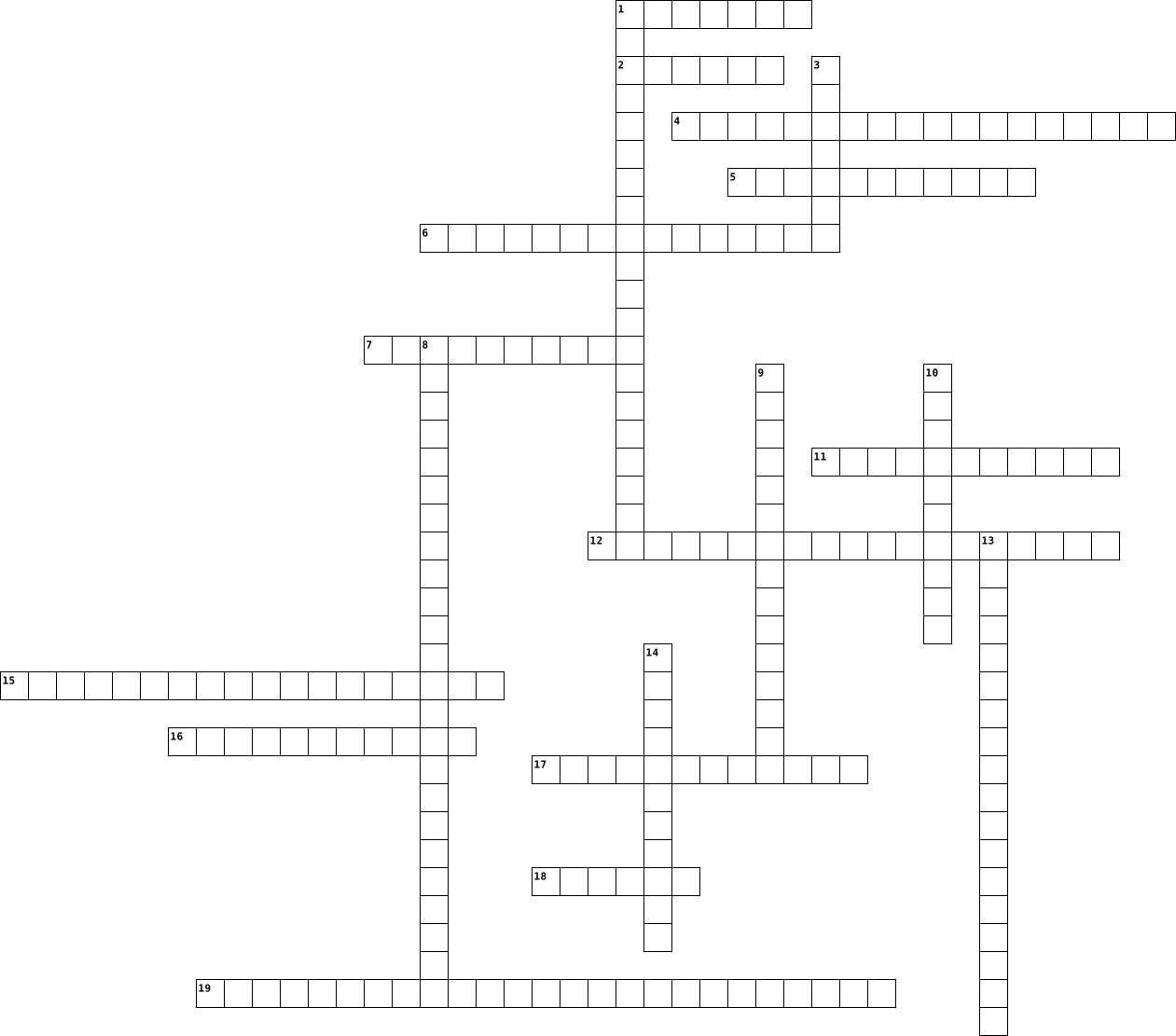
Across
- class of pigments involved in photosynthesis
- macromolecular machines, found within all living cells
- organelles that conduct photosynthesis
- organelle found in most eukaryotic cells
- organelle found in both animal cells and plant cells
- series of connected flattened sacs
- maintains the integrity of genes and controls the activities of the cell
Down
- vacuole found inside of plant cells
- membrane-bound cell organelle that contains digestive enzymes
- the basic membrane-bound unit that contains life
- single-celled organism that has neither a distinct nucleus with a membrane nor other specialized organelles.
- generate most of the chemical energy needed to power the cell's biochemical reactions
- the semipermeable membrane surrounding the cytoplasm of a cell.
- organisms whose cells have a nucleus
- a rigid layer of polysaccharides lying outside the plasma membrane of a plants cell
15 Clues: series of connected flattened sacs • vacuole found inside of plant cells • organisms whose cells have a nucleus • organelles that conduct photosynthesis • organelle found in most eukaryotic cells • class of pigments involved in photosynthesis • the basic membrane-bound unit that contains life • organelle found in both animal cells and plant cells • ...
Biology 2021-01-26

Across
- class of pigments involved in photosynthesis
- macromolecular machines, found within all living cells
- organelles that conduct photosynthesis
- organelle found in most eukaryotic cells
- organelle found in both animal cells and plant cells
- series of connected flattened sacs
- maintains the integrity of genes and controls the activities of the cell
Down
- vacuole found inside of plant cells
- membrane-bound cell organelle that contains digestive enzymes
- the basic membrane-bound unit that contains life
- single-celled organism that has neither a distinct nucleus with a membrane nor other specialized organelles.
- generate most of the chemical energy needed to power the cell's biochemical reactions
- the semipermeable membrane surrounding the cytoplasm of a cell.
- organisms whose cells have a nucleus
- a rigid layer of polysaccharides lying outside the plasma membrane of a plants cell
15 Clues: series of connected flattened sacs • vacuole found inside of plant cells • organisms whose cells have a nucleus • organelles that conduct photosynthesis • organelle found in most eukaryotic cells • class of pigments involved in photosynthesis • the basic membrane-bound unit that contains life • organelle found in both animal cells and plant cells • ...
Chapter 5 2026-01-31

Across
- replicating viral genetic material
- the first virus discovered, causing disease in tobacco plants.
- Virus-like agents that affect plants, composed of naked strands of RNA.
- getting into host cell
- new virions leave host cell and infect other cells
- putting together new virions
- single-stranded DNA
- Infectious agents composed solely of protein, with no nucleic acid.
Down
- help viruses attach to host cells and are common in viruses that infect animal cells.
- A fully formed virus that is capable of establishing an infection in a host cell.
- infections can last for years and may remain latent.
- Viruses that infect bacteria, most commonly containing s theidouble-stranded DNA ar genetic material.
- the effect of oncogenic viruses on host cells, causing them to change into cancerous cells.
- not composed of cells and cannot reproduce on their own.
- double-stranded DNA
15 Clues: single-stranded DNA • double-stranded DNA • getting into host cell • putting together new virions • replicating viral genetic material • new virions leave host cell and infect other cells • infections can last for years and may remain latent. • not composed of cells and cannot reproduce on their own. • the first virus discovered, causing disease in tobacco plants. • ...
word wall :) 2021-11-10

Across
- the gel in the cell split.
- add more cells.
- regrows cell parts.
- cells with nuclei split.
- chromosomes line up in the middle
- cells become specialized.
- chromosomes form and nucleus dissapears.
Down
- organism grows tiny version on its body.
- chemical that controls cell function.
- nucleis reapears and dna becomes thread like.
- tightly wound DNA.
- DNA becomes one with the organism.
- replace or repair cells.
- chromosomes bulled to oposite sides.
- copies DNA
15 Clues: copies DNA • add more cells. • tightly wound DNA. • regrows cell parts. • replace or repair cells. • cells with nuclei split. • cells become specialized. • the gel in the cell split. • chromosomes line up in the middle • DNA becomes one with the organism. • chromosomes bulled to oposite sides. • chemical that controls cell function. • organism grows tiny version on its body. • ...
Chapter 10 2016-12-14

Across
- disorder in which cells divide uncontrollably
- factors stimulates cell cycle
- proteins that regulate timing of cell cycle
- holds a cells genetic information
- division of nucleus
- first 3 steps of cell cycle
- first step of mitosis
Down
- mass of cells produced by cancer
- division of cytoplasm
- solves the information overload in cells
- involved in development of spindle fibers
- DNA winds around histone proteins forming _______
- sister chromatids separate
- chromosomes begin to unwind
- chromosomes line up
15 Clues: chromosomes line up • division of nucleus • division of cytoplasm • first step of mitosis • sister chromatids separate • chromosomes begin to unwind • first 3 steps of cell cycle • factors stimulates cell cycle • mass of cells produced by cancer • holds a cells genetic information • solves the information overload in cells • involved in development of spindle fibers • ...
Biology Concept 1 2025-10-16

Across
- Plant cells only and is where photosynthesis happens
- Makes RNA
- Makes proteins
- Holds everything in place
- Specialized structures within the cell
- Animal cells only made of microtubules
- Protects the DNA
- Composed of cell
Down
- Moves entire cell through the extracellular fluid
- Powerhouse of the cell
- Give the cell shape
- Animal cells only and breaks down dead stuff
- Composed of many cells
- Storage for water, nutrients, waste, etc.
- Moves fluid across cell's surface
15 Clues: Makes RNA • Makes proteins • Protects the DNA • Composed of cell • Give the cell shape • Powerhouse of the cell • Composed of many cells • Holds everything in place • Moves fluid across cell's surface • Specialized structures within the cell • Animal cells only made of microtubules • Storage for water, nutrients, waste, etc. • Animal cells only and breaks down dead stuff • ...
Organization of Life 2014-03-17

Across
- contains a nucleus
- nomenclature means "two names"
- seventh level of classification
- I am a prokaryote, unicellular, I get energy from cellular respiration or photosynthesis, and I can survive in extremely hot environments.
- does not contain a nucleus
- I am a eukaryote, and and made up of only one cell. I cannot make my own energy and I can reproduce sexually or asexually.
- The organisms in my kingdom are made up of many cells. Their cells contain a nucleus. They receive their energy through cellular respiration, and they reproduce sexually.
- first level of classification
Down
- My cells contain no nucleus. My cells can either be unicelluar or multicellular. I get energy through photosynthesis and cellular respiration. I reproduce sexually.
- I am a prokaryote, and am unicellular. I get energy by cellular respiration and photosynthesis. I am considered "the trashcan kingdom"
- sixth level of classification
- the process of grouping things based on their similarities.
- the scientific study of how things are classified.
- fourth level of classification
- My cells contain a nucleus. I am made of many cells and reproduce sexually.
- second level of classification
- fifth level of classification
- third level of classification
18 Clues: contains a nucleus • does not contain a nucleus • sixth level of classification • fifth level of classification • third level of classification • first level of classification • nomenclature means "two names" • fourth level of classification • second level of classification • seventh level of classification • the scientific study of how things are classified. • ...
Module 5 (3) 2023-10-11

Across
- migration of cells out of blood vessels into the tissues.
- lysosome fused with phagosome (death ~ 30 minutes).
- migration in response to specific chemicals at the site of injury or infection.
- attracted to sites of parasitic infections and antigen-antibody reactions.
- necrosis factor they are cytotoxic for tumor cells, apoptotic inducer and…
- liberated by monocytes, neutrophils,and macrophages during phagocytosis ; interleukin-1 and tumor necrosis factor (TNF).
- fibroblasts and epithelial cells
- consists of 26 blood proteins that work in concert to destroy bacteria and viruses.
Down
- derived from monocytes; scavenge and process foreign substances to prepare them for reactions with B and T lymphocytes.
- lymphocytes and macrophages
- react early to bacteria and other foreign materials, and to damaged tissue.
- T cells
- they are initiated by fever and they reset the hypothalamus to increase body temperature; signals muscles to increase heat production and vasoconstriction.
- products of infectious agents.
- they are produced by the WBCs with many functions.
- chemotactic and chemokinetic for leukocytes. Play a key role in the inflammatory response.
- they are responsible for stimulation and regulation of the growth and differentiation process in blood cell formation.
- small protein produced by certain white blood cells and tissue cells.
18 Clues: T cells • lymphocytes and macrophages • products of infectious agents. • fibroblasts and epithelial cells • they are produced by the WBCs with many functions. • lysosome fused with phagosome (death ~ 30 minutes). • migration of cells out of blood vessels into the tissues. • small protein produced by certain white blood cells and tissue cells. • ...
Chapter 2 Vocabulary Review 2024-12-02

Across
- Dutch scientist who first observed unicellular organisms
- tissue with cells and fibers that move bones, pump blood, and push substances through the digestive system
- a substance formed by the chemical combination of two or more elements
- compounds that provide energy to cells
- English scientist who first observed a cell
- compounds that enable cells to build their own proteins
- a group of organs working together
- tissue containing the outer skin layer, and the lining of the cheeks and digestive system
- German scientist who found all animals are made of cells
- compounds that store and release more energy than carbohydrates
- tissue that carries messages throughout the body
Down
- Scottish scientist who discovered the cellular nucleus
- tissue that includes bones, cartilage, and tendons
- German scientist who found that all plants are made of cells
- a pure substance that cannot be broken down into a simpler substance and is made of only one type of atom
- a group of two or more types of tissue that work together to carry out one specific funtion
- a group of similar cells that work together to perform the same function
- basic unit of life and the smallest part of a living thing capable of life
18 Clues: a group of organs working together • compounds that provide energy to cells • English scientist who first observed a cell • tissue that carries messages throughout the body • tissue that includes bones, cartilage, and tendons • Scottish scientist who discovered the cellular nucleus • compounds that enable cells to build their own proteins • ...
circulatory system kate mcgougan 2013-05-21

Across
- largest gland in the body
- living cells in the blood that transports oxygen to all other living cells in the body
- a gas in the air(and water) that animals need to breathe
- a musclular organ that pumps blood through the circlulatory system so that oxygen and nutrients can be transported to the bodies cells and wastes can be transported away
- the body system that circulates oxygen in blood to all the cells of the body
- circuit component that has resistance
- living cells that fight bacteria and viruses
- special cells that detect energy and convert it to electrical energy that is sent to the brain
- a small cavity, usually filled with fluid
- the organ for breathing air
Down
- a simple carbohydrate and the simplest form of sugar
- the chemical reaction involving oxygen that moves the energy in glucose into the compound ATP
- small veins
- atrium upper left section of the heart where oxygenated blood from the lungs enters the heart
- blood vessels that carry blood back to the heart
- adenosine triphosphate: a form of energy released during cellular respiration
- large vein leading into the top right chamber of the heart
- ventricle lower right section of the heart which pumps deoxygenated blood to the lungs
- the red liquid that circulates through the body
19 Clues: small veins • largest gland in the body • the organ for breathing air • circuit component that has resistance • a small cavity, usually filled with fluid • living cells that fight bacteria and viruses • the red liquid that circulates through the body • blood vessels that carry blood back to the heart • a simple carbohydrate and the simplest form of sugar • ...
Excel Test Review 2019-10-15

Across
- Mathematical expressions that use values in spreadsheets to perform calculations.
- Area below the ribbon where you can type in equations to add, subtract, multiply or divide, etc...
- Run horizontally and are represented by a number
- Data that appears in alphabetic form
- Function to locate the highest value in a range of cells
- Function to find the average value in a group of cells
- The amount of earned income AFTER deductions
- These run vertically and are represented by a letter
Down
- Function to count a selected group of cells that have values in them
- Name of keyboard function key "edit" key.
- A grid of columns and rows in Excel, with which to add labels, numbers, formulas and/or clipart
- An Excel file that may contain one or more spreadsheets/worksheetws
- The amount of earned income BEFORE deductions are subtracted
- Data that appears in the form of numbers
- Each cell has one and consists of a column letter and a row number
- Name of a select group of cells
- Function that will add values in a range of cells
- What is created when a column and a row intersect.
- Function to locate the lowest value in a select group of cells
19 Clues: Name of a select group of cells • Data that appears in alphabetic form • Data that appears in the form of numbers • Name of keyboard function key "edit" key. • The amount of earned income AFTER deductions • Run horizontally and are represented by a number • Function that will add values in a range of cells • What is created when a column and a row intersect. • ...
VOCAB. 1 point for each correct answer 2018-09-23

Across
- Clot-destroying enzyme
- The greenish pigment that liver cells convert heme groups into
- Condition of having an abnormally high hematocrit
- Physiological response to injury; prevents excessive blood loss
- This molecule is secreted by kidney cells and stimulates erythocyte production
- Molecules that leukocytes make that stimulate growth of other leukocytes
- An inherited disorder caused by a nonfunctional clotting factor
- The cranial nerve containing parasympathetic axons that innervate the heart
Down
- A brand-new erythrocyte that has just entered the bloodstream
- Uncoordinated contraction of cardiac muscle cells
- This molecule stimulates heart cells; it's secreted by adrenal cells and sympathetic neurons
- The fluid that surrounds every living cell in your body
- A clot drifting in the circulatory system
- A cancer of lymphoid or myeloid stem cells
- The time when a heart chamber is contracting
15 Clues: Clot-destroying enzyme • A clot drifting in the circulatory system • A cancer of lymphoid or myeloid stem cells • The time when a heart chamber is contracting • Uncoordinated contraction of cardiac muscle cells • Condition of having an abnormally high hematocrit • The fluid that surrounds every living cell in your body • ...
Ch. 13: Crossword 2026-03-24

Across
- Cells are subset leading to a humoral response
- Until TCR they recognize antigen, becoming activated
- Recognize antigen presented via MCH 11 and also express CD4
- Substances that can elicit a response from B and T cell
- Record information to fight pathogen if it comes back
- Cells are a subset against primarily intracellular pathogens
- Cells that directly destroy virus infected cells they recognize
Down
- This activation involves T cell stimulation
- Response Antibodies are able to bind to pathogens and mark them for elimination
- T cells participate in...
- Host proteins displaying antigen fragments on the cell surface
- Actively secrete antibodies
- Modulate the immune response, including by limiting chronic inflammatory diseases
- Part of an antigen that binds to antigen receptor is called..
- Cells are a subset that contribute to protection at mucosal surfaces
15 Clues: T cells participate in... • Actively secrete antibodies • This activation involves T cell stimulation • Cells are subset leading to a humoral response • Until TCR they recognize antigen, becoming activated • Record information to fight pathogen if it comes back • Substances that can elicit a response from B and T cell • ...
cell 2025-05-07

Across
- Bone-building cells.
- Cells that transmit nerve impulses.
- Cells that line blood vessels and organs.
- Cells that carry oxygen in the blood.
- Cells that store fat.
Down
- Cells that produce antibodies.
- Cells found in the outer layer of skin.
- Cells that fight infections.
- Bone-resorbing cells.
- Cells responsible for muscle contraction.
10 Clues: Bone-building cells. • Bone-resorbing cells. • Cells that store fat. • Cells that fight infections. • Cells that produce antibodies. • Cells that transmit nerve impulses. • Cells that carry oxygen in the blood. • Cells found in the outer layer of skin. • Cells responsible for muscle contraction. • Cells that line blood vessels and organs.
sec 2 and 3 vocab crossword 2016-09-30

Across
- vacuole- A large sac that is found in plant cells
- bilayer- the basic structure of a biological membrane
- a cell organelle that contains digestive enzymes
- small bodies found in a cell
- the main part of a cell
- A lipid that contains phosphorus and that is a structural component in a cell
- A jelly like fluid that is in a cell
- reticulum- System of membranes that is found in a cell's cytoplasm
- an organelle found in plant cells where photosynthesis occurs
- A cell that does not include a nucleus
Down
- theory- A theory that states that all living things have cells
- A structure arranged in tightly packed rows that projects from the surface of cells
- An organelle in a cell that is made up of RNA
- a sac that contains materials in a eukaryotic cell
- Long hairlike structure that grows out of a cell and enables it to move
- An organism made up of cells that have a nucleus enclosed by a membrane
- apparatus- Cell organelle that helps make and package materials to be transported out of the cell
- In Eukaryotic Cells, the cell organelle that is surrounded by two membranes
18 Clues: the main part of a cell • small bodies found in a cell • A jelly like fluid that is in a cell • A cell that does not include a nucleus • An organelle in a cell that is made up of RNA • a cell organelle that contains digestive enzymes • vacuole- A large sac that is found in plant cells • a sac that contains materials in a eukaryotic cell • ...
Kiera 7th 2021-11-10

Across
- chromosomes pulled to opposite sides
- replace cells or cell parts
- regrows missing parts
- cells with nuclei split
- nucleus reforms and dna becomes tread-like
- add more cells
- dna comes from one organism
Down
- chromosomes form a nucleus that disappears
- cells become specialized
- cell grows and copies dna
- organisms without a nucleus splits
- chemical that controls cell functions
- chromosomes line up in the middle
- tightly wound dna
- organism grows tiny versions on its body
15 Clues: add more cells • tightly wound dna • regrows missing parts • cells with nuclei split • cells become specialized • cell grows and copies dna • replace cells or cell parts • dna comes from one organism • chromosomes line up in the middle • organisms without a nucleus splits • chromosomes pulled to opposite sides • chemical that controls cell functions • ...
Charlie w sponges and cnidarians 2021-11-11

Across
- cant move
- sperm and egg mixed together
- blastula pushed in with slight indentation
- complete body cavity
- 32 or more cells with no cavity in the center
- give sponges suport
- can move
Down
- divide into 2 4 8 16 cells
- when cells are made different
- inner lining of organs
- only freshwater cnidarian
- not symetrical
- no body cavity
- what is on the outside of sponges
- cells make single layer around central cavity
15 Clues: can move • cant move • not symetrical • no body cavity • give sponges suport • complete body cavity • inner lining of organs • only freshwater cnidarian • divide into 2 4 8 16 cells • sperm and egg mixed together • when cells are made different • what is on the outside of sponges • blastula pushed in with slight indentation • 32 or more cells with no cavity in the center • ...
cell organelles 2012-10-23

Across
- controls cell activites
- fluid- like material of cell where reactions take place
- packages and ships proteins
- regulates movment in and out of all cells
- stores materials in plant cells
- produces energy in cells
- makes ribosomes
- pathway to transport proteins
Down
- makes protein
- support and protect plant cell
- makes food for plant cells
- regulates movement in and out of nucleus
- controles cell division in animals
- cleans out the cell
- makes lipids and hormones
15 Clues: makes protein • makes ribosomes • cleans out the cell • controls cell activites • produces energy in cells • makes lipids and hormones • makes food for plant cells • packages and ships proteins • pathway to transport proteins • support and protect plant cell • stores materials in plant cells • controles cell division in animals • regulates movement in and out of nucleus • ...
Host Defenses I – Overview & Innate Defenses 2026-03-15

Across
- large phagocytic immune cell
- Specific immunity developed after exposure
- microorganism that causes disease
- blood cell that responds quickly to infection
- barrier against pathogens
- in tears and saliva that breaks bacteria
- where cells engulf microbes
- responsible for cellular immunity
Down
- swelling heat and pain response
- rapid nonspecific defense present at birth
- that produce antibodies
- CELLS Cells that destroy infected body cells
- body's ability to resist infection
- body temperature during infection
- that bind pathogens
15 Clues: that bind pathogens • that produce antibodies • barrier against pathogens • where cells engulf microbes • large phagocytic immune cell • swelling heat and pain response • microorganism that causes disease • body temperature during infection • responsible for cellular immunity • body's ability to resist infection • in tears and saliva that breaks bacteria • ...
Cnidarians 2013-04-24

Across
- Class of the box jelly.
- Surface The part of the Cnidarian containing the mouth.
- Provides additional area to help digest larger prey.
- Small pores that allows water to enter the sponge.
- Outer cell layer.
- Class that lacks a medusa stage.
- Stinging cells; also known as cnidae.
- Digestion on the outside.
- Another name for Cnidarians
- Surface The part of the Cnidarian opposite the mouth.
- A large opening in a sponge allowing water to leave.
- Wandering cells that can specialize in different tasks.
- Inner cell layer.
- Tentacle up stage.
- Slender, finger-like extensions used to help capture food.
- A tube-like cell in sponges forming pores.
- Small particles of organic matter that provide nutrition to organisms.
- Class containing colonies of polyps.
- Tentacle down stage.
Down
- Eat meat.
- Digestion on the inside.
- Anthozoans made mainly of proteins.
- support in sponges.
- Hydrozoans that form drifting polyps.
- Specialized cells in the tentacles that house the nematocysts.
- Flat cells that cover the surface of sponges.
- Anemone A common, colorful Anthozoa.
- Cells that help sponges capture their food; also known as collar cells.
- Gas filled chambers that give medusae a sense of balance.
- Gelatinous middle layer.
- Groups of mostly colonial anthozoans.
- Class that contains Jellyfish.
- Net A network of nerves.
- Specialized larva.
34 Clues: Eat meat. • Outer cell layer. • Inner cell layer. • Tentacle up stage. • Specialized larva. • support in sponges. • Tentacle down stage. • Class of the box jelly. • Digestion on the inside. • Gelatinous middle layer. • Net A network of nerves. • Digestion on the outside. • Another name for Cnidarians • Class that contains Jellyfish. • Class that lacks a medusa stage. • ...
Blood and the Lymphatic system 2014-05-03

Across
- inorganic substance found in plasma
- whitish protein action of thrombin and fibrinogen
- blood cells, opposite of white blood cells
- cells responsible for coagulation
- disease baring organisms
- iron-containing pigment of red blood cells,carried oxygen to from lungs to tissue
- polymorphonuclear
- WBC's that destroy paracytes and increase during allergic reaction
- hereditary disease that prolongs clotting
- 10% of blood
- known as WBC's
- loss of cells nucleus
- having bacteria or toxins in the blood stream
- liquid converts to gel or solid
- dissolved protein in plasma
- granulated WBC releases histamine and heparin
- blood, mixture of plasma and formed elements
- WBC important for phagocytosis
Down
- lack of oxygen and red blood cells for the tissues
- shape of erythrocyte
- waste product of muscle metabolism
- the end result of hemostasis
- clumping together to start a process
- proteins, serum albumin serum globulin and fibrinogen are found
- rapid flow of blood
- blood test to determine of inflammatory disease
- waste product from distruction of RBC's
- inorganic substance found in plasma important for bone and muscle
- protein found in blood stream
- WBC's that provides protection through immune response
- disease bearing organisms
- blood protein needed for clotting
- inorganic substance found in plasma
- waste product transported to kidneys
- study of taking blood
- form of sugar in the body to make energy
- removes erythrocytes after 120 days
37 Clues: 10% of blood • known as WBC's • polymorphonuclear • rapid flow of blood • shape of erythrocyte • loss of cells nucleus • study of taking blood • disease baring organisms • disease bearing organisms • dissolved protein in plasma • the end result of hemostasis • protein found in blood stream • WBC important for phagocytosis • liquid converts to gel or solid • ...
Cell- Structure and Function 2017-05-02

Across
- contains the green coloured pigments that give colour to the leaves.
- rod-like structures that oxidise food also known as a powerhouse of the cell.
- Cells that lack a well –defined nucleus surrounded by a nuclear membrane.
- allows water, minerals and some other essential substances to pass through it.
- the nucleus and the cytoplasm together.
- organisms having more than one cell.
- organelles that make proteins in the cell.
- group of organs joining together to form an -----------.
- sac-like structures that store food, water and wastes.
- the cells formed by cell division.
- A jelly-like substance that makes up most of the inside of the cell.
- thread-like structures in the nucleus which carry genes that contain information needed to function and reproduce.
Down
- absents in animal cells but gives support and protection for the plant cell.
- green coloured plastids.
- helps transport substances within the cell.
- secretes substances such as enzymes.
- Cells that have a well defined nucleus.
- small projections on the outer surface of unicellular organisms which help in the movement of the cells.
- small structures present in the cytoplasm.
- the process by which new cells are formed.
- help destroy old cell structures.
- regulates cell division.
- the liquid in the nucleus.
- a small spherical body floating in the centre of the cytoplasm.
- the kitchen of the cell.
25 Clues: green coloured plastids. • regulates cell division. • the kitchen of the cell. • the liquid in the nucleus. • help destroy old cell structures. • the cells formed by cell division. • secretes substances such as enzymes. • organisms having more than one cell. • the nucleus and the cytoplasm together. • Cells that have a well defined nucleus. • ...
Chapter 6: Cell Parts 2019-07-24

Across
- Region where the cell's microtubules are initiated; contains a pair of centrioles
- Produces a usable form of energy (ATP) for the cell
- Membrane enclosing the cell
- Double membrane enclosing the nucleus
- Many cells secrete proteins that are produced by ribosomes
- Sticky layer made mostly of collagen that holds animal cells together
- Projections that increase the cell's surface area
- Organelle active in synthesis, modification, sorting, and secretion of cell products
- Produces hydrogen peroxide as a by-product and then converts it to water
- Material consisting of DNA and proteins
- Cell control center
- Motility structure present in some animal cells
- Reinforces cell's shape, functions in cell movement
Down
- Lipids manufactured here; breaks down drugs and toxin in liver
- Changes in cell shape; muscle contraction; cytoplasmic streaming in plant cells
- Anchorage of nucleus and certain other organelles
- Sac of digestive enzymes (macromolecules are hydrolyzed)
- The region of the cell between the plasma membrane and the nucleus
- Maintenance of cell shape; cell motility; chromosome movements in cell division
- Cytoplasmic channels through cell walls that connect the cytoplams of adjacent cells
- May store water, needed chemicals and wastes in plant cells
- Photosynthetic organelle; converts energy of sunlight to chemical energy stored in sugar molecules
- Small structure that makes protein
- Rigid covering of a plant cell; maintains cell's shape and protects cell from damage
24 Clues: Cell control center • Membrane enclosing the cell • Small structure that makes protein • Double membrane enclosing the nucleus • Material consisting of DNA and proteins • Motility structure present in some animal cells • Anchorage of nucleus and certain other organelles • Projections that increase the cell's surface area • ...
Cell Cycle/Mitosis 2023-11-14

Across
- the number of stages in Interphase.
- another name for Mitosis is _____.
- this phase in Mitosis can also be called reverse Prophase.
- in Metaphase, chromosomes move toward the center of the cell, which is called the ____ plate.
- in this stage of Interphase, DNA is replicated.
- when cells are not continually dividing, they are in this stage of Interphase.
- the division of the nucleus is called _____.
- when Cytokinesis occurs in plant cells, a cell _____ forms, dividing the cytoplasm into two new cells.
- the cell spends most of its time in this stage of the cell cycle.
- this structure disappears during Prophase, it surrounds the nucleus.
- this type of cell contains a nucleus.
Down
- chromosomes line up in the middle of this cell in this phase of Mitosis.
- when a cell divides into two new identical cells, the new cells are called ____ cells.
- the gene is regarded as the tumor suppressor gene. (special character "-" included)
- the number of phases in Mitosis.
- in this stage of the cell cycle, the cytoplasm divides.
- the cell is performing its metabolic tasks and growing in this stage of Interphase.
- in this phase of Mitosis, chromatin condenses into chromosomes.
- chromosomes split and move apart in this phase of Mitosis.
- the structure in the center of the chromosome is called a _____.
- in this stage of Interphase, the cell is preparing for nuclear division.
21 Clues: the number of phases in Mitosis. • another name for Mitosis is _____. • the number of stages in Interphase. • this type of cell contains a nucleus. • the division of the nucleus is called _____. • in this stage of Interphase, DNA is replicated. • in this stage of the cell cycle, the cytoplasm divides. • this phase in Mitosis can also be called reverse Prophase. • ...
Plant Cell & Organelles 2023-11-29

Across
- Control center of the cell; president
- There is only ___ large vacuole in the plant cell
- The powerhouse of both cells and completes cellular respiration
- A water storage that sustains pressure against the cell wall
- Helps in the synthesis of ribosomes, inside the nucleus covered by DNA
- The organelle in both cells which helps both by transporting proteins and uses enzymes to digest
- Inside of chloroplast to let photosynthesis happen
- A web of protein in cytoplasm, helps the cell move, and acts like a muscle or skeleton
- This organelle receives proteins from the ER to process and transport it
Down
- The cell with a one large vacuole and cell wall
- The plant cell was the nucleus on the
- This organelle has chemical reactions that happens in both cells; contains ribosomes
- Related to plastids, also this organelle makes proteins
- Both plant and animal cells have this semi-permeable membrane
- Both cells have this wall that protects the inside organelles
- Outer covering of the cell that protects the plant cell and gives it shape
- A group of storage organelle found in algae and plants that store chlorophyll
- The way the plant makes sugar and food for itself
- This organelle has chemical reactions which happens in both cells; no ribosomes
- Contains chlorophyll and gets its green pigment from the energy absorbed from the sun
20 Clues: Control center of the cell; president • The plant cell was the nucleus on the • The cell with a one large vacuole and cell wall • There is only ___ large vacuole in the plant cell • The way the plant makes sugar and food for itself • Inside of chloroplast to let photosynthesis happen • Related to plastids, also this organelle makes proteins • ...
Lymphatic & Immune System 2023-06-07

Across
- Not a permanent form of immunity, it can be natural or artifical.
- "Kissing disease"
- Sometimes called natural immunity.
- A gene that can transform a healthy cell into a tumor cell.
- white blood cells that protect against foreign organisms that have managed to infect body cells.
- Production of all types of blood cells.
- One of many small, bean shaped organs located throughout the lymphatic system.
- the main organ of the lymphatic system located in the upper chest.
- burn cancer from the body
- HIV
- the final stage of HIV infection.
- An injection containing epinephrine.
Down
- Also called suppressor.
- Acts as a filter for our blood and a graveyard to old blood cells.
- A disorder that causes extreme fatigue.
- Individuals aren't born with this immunity, acquire it in two days.
- Swelling that generally occurs in one of your arms or legs and sometimes both.
- Cancer has metastasized, or spread, to other tissues or organs.
- Disease that develops when your immune system decides your healthy cells are foreign.
- Directly terminate antigens.
- a fluid containing the infection fighting white blood cells from the tissues.
- form of arthritis that causes pain, swelling, stiffness and loss of function in your joints.
- autoimmune disease in which the body's immune system mistakenly attacks healthy tissue.
- protects the body from pathogens and other foreign substances.
24 Clues: HIV • "Kissing disease" • Also called suppressor. • burn cancer from the body • Directly terminate antigens. • the final stage of HIV infection. • Sometimes called natural immunity. • An injection containing epinephrine. • A disorder that causes extreme fatigue. • Production of all types of blood cells. • A gene that can transform a healthy cell into a tumor cell. • ...
Lecture 2 - Innate Immunity 2024-09-19

Across
- One of the endosomal TLR that recognize ssRNAs
- Structural arrangements of dead or damaged cells that are recognized by innate molecules
- Immunity of a host which is considered as the ‘first line of defense’ against infection
- Cytokine secreted by NK cells which activate macrophages
- Classical pathway of initiation of complement activation requires
- A type of innate immune response against viral infections
- Receptors present on innate immune cells (in abbreviation)
- It is an extracellular innate cellular receptor (in abbreviation)
- A type of innate cell that kills virus infected cells (in short form)
- The cytosolic portion of the TLR receptor is known as domain
- It is the type of interferon secreted as antiviral defense by the innate immune system
- One of the cytosolic innate cellular receptors (in abbreviation)
Down
- One of the two types of innate immune response
- It is one of the two types of innate immune reactionor elimination of microbes
- One of the cytosolic innate cellular receptors that recognized microbial DNAs (in abbreviation)
- Structural arrangements of microbes that stimulate innate immunity
- Total number of TLRs present in animals and human
- One of the endosomal TLR that recognize dsRNAs
- In innate immunity cells that produce cytokines and perform like T cells but lack of TCRs
- One of the cytosolic innate cellular receptors specifically recognize viral RNAs (in abbreviation)
- One of the endosomal TLR that recognize CpG DNA
- Most of the TLRs dependent on this cell signalling pathway
22 Clues: One of the two types of innate immune response • One of the endosomal TLR that recognize ssRNAs • One of the endosomal TLR that recognize dsRNAs • One of the endosomal TLR that recognize CpG DNA • Total number of TLRs present in animals and human • Cytokine secreted by NK cells which activate macrophages • A type of innate immune response against viral infections • ...
Lecture 2 - Innate Immunity 2024-09-19

Across
- Structural arrangements of dead or damaged cells that are recognized by innate molecules
- The cytosolic portion of the TLR receptor is known as domain
- One of the endosomal TLR that recognize CpG DNA
- One of the endosomal TLR that recognize ssRNAs
- Structural arrangements of microbes that stimulate innate immunity
- Immunity of a host which is considered as the ‘first line of defense’ against infection
- Cytokine secreted by NK cells which activate macrophages
- One of the two types of innate immune response
- Total number of TLRs present in animals and human
- One of the cytosolic innate cellular receptors that recognized microbial DNAs (in abbreviation)
- One of the cytosolic innate cellular receptors specifically recognize viral RNAs (in abbreviation)
- It is an extracellular innate cellular receptor (in abbreviation)
- One of the cytosolic innate cellular receptors (in abbreviation)
Down
- Receptors present on innate immune cells (in abbreviation)
- It is one of the two types of innate immune reactionor elimination of microbes
- One of the endosomal TLR that recognize dsRNAs
- It is the type of interferon secreted as antiviral defense by the innate immune system
- Classical pathway of initiation of complement activation requires
- In innate immunity cells that produce cytokines and perform like T cells but lack of TCRs
- Most of the TLRs dependent on this cell signalling pathway
- A type of innate immune response against viral infections
- A type of innate cell that kills virus infected cells (in short form)
22 Clues: One of the endosomal TLR that recognize dsRNAs • One of the endosomal TLR that recognize ssRNAs • One of the two types of innate immune response • One of the endosomal TLR that recognize CpG DNA • Total number of TLRs present in animals and human • Cytokine secreted by NK cells which activate macrophages • A type of innate immune response against viral infections • ...
mitosis 2023-12-12

Across
- process where a cell becomes specialized
- the stage of the cell cycle where the cell completely divides
- the stage of the cell cycle where the cell gets ready to divide
- anything that causses cancer
- the cycle that cells goes through to divide
- The stage of mitosis where the sister chromatids are separated to the ends of the cell
- two of the same chromatids
- Chromosomes that contain identical genes come as pairs in the body
- The stage of mitosis where the Chromosomes line up in the middle of the cell
- the ends of a chromosome
Down
- process where one cell becomes two
- when a cell undergoes programmed death because of a flaw in the cell cycle
- the stage of the cell cycle where a cell divides to become two identical cells
- the stage of mitosis where the DNA condenses
- a group of cells that break away from the tumor
- cells that can specialize to become another cell
- a section of DNA that codes for a protein
- a group of tumor cells that generally stay together
- word for rules that govern when a cell can divide
- uncontrolled or unregulated cell division
- the middle section of a chromosome
- half of a copied chromosome
- when cancer cells spread
- DNA that has been condensed and contains many genes
- the stage of mitosis where the nuclei begin to reform
25 Clues: when cancer cells spread • the ends of a chromosome • two of the same chromatids • half of a copied chromosome • anything that causses cancer • process where one cell becomes two • the middle section of a chromosome • process where a cell becomes specialized • a section of DNA that codes for a protein • uncontrolled or unregulated cell division • ...
Biology 2024-11-20

Across
- DNA is pulled toward opposite ends by spindle fibers.
- Cell begins to form two separate daughter cells by forming a nucleus on each side
- Single set of DNA
- What ribo refers to
- What two strands of DNA are held together by.
- How many strands of mRNA are made.
- Chromosomes line up in the middle of cells and spinal fibers attach to centromeres.
- What a group of three bases is called
- Produces many offspring and no mate is required.
- Cell membrane starts to pinch in to form two daughter cells
- Nucleic acids are made of
- The type of reproduction that produces very few offspring and takes a long amount of time.
- One cell replicates itself by splitting its DNA into two.
Down
- Reads the condons and brings in the correct amino acids
- The enzyme that opens The DNA and adds RNA bases.
- Condensed strands of DNA.
- Where proteins are made
- The process that creates gametes
- Where DNA is found in all cells.
- DNA in the nucleus condenses and becomes visible and spindle fibers begin to form
- The product of transcription
- The shape of the structure of DNA
- The cell that contains all of the cells' genetic information/ Deoxyribonucleic acid
- What a condo signify's
- Egg and Sperm cells.
- Means missing or a lack of oxygen
26 Clues: Single set of DNA • What ribo refers to • Egg and Sperm cells. • What a condo signify's • Where proteins are made • Condensed strands of DNA. • Nucleic acids are made of • The product of transcription • The process that creates gametes • Where DNA is found in all cells. • The shape of the structure of DNA • Means missing or a lack of oxygen • How many strands of mRNA are made. • ...
cancer 2024-03-12

Across
- Bone marrow is found in the center of most bones and has many blood vessels.
- a disease caused by an uncontrolled division of abnormal cells in a part of the body.
- machines that act as bellows to move air in and out of your lungs
- type of cancer that affects your blood cells.
- A colorless, odorless gas
- such as bacteria, or a virus
- The flow or movement of blood throughout the body.
- network of organs, cells and proteins that defends the body against infection
- A type of leukemia (blood cancer) that comes on quickly and is fast growing.
- disease in which malignant (cancer) cells form in the lymph system
Down
- treatment that uses powerful chemicals to kill fast-growing cells in your body
- normal or usual, typically in an undesirable way
- how someone behaves toward or deals with someone
- Plasma is mainly water, but it also contains many important substances such as proteins
- unit of heredity which is transferred from a parent to offspring
- disorder of structure or function in a human
- hospital room or area staffed and equipped for the reception and treatment
- treatment intended to relieve or heal a disorder.
- the molecule that carries genetic information for the development and functioning of an organism
- broad term for cancer that begins in cells of the lymph system
20 Clues: A colorless, odorless gas • such as bacteria, or a virus • disorder of structure or function in a human • type of cancer that affects your blood cells. • normal or usual, typically in an undesirable way • how someone behaves toward or deals with someone • treatment intended to relieve or heal a disorder. • The flow or movement of blood throughout the body. • ...
biology bonus 2022-01-03

Across
- What kind of cells does mitosis produces?
- What contains a nucleus and membrane-bound structures?
- What is the microscopic opening in the leaves of plants that allows for gas exchange and water loss?
- what increases genetic variance when natural selection selects for tow more extreme phenotypes when each have specific advantages?
- What are the cells that can become more than one type of cell?
- What is it called when you group thing into levels based upon similarities?
- What happens during the G1 phase of the cell cycle?
- What is a disorder in which body cells lose the ability to control cell division?
- What occurs at the same time as telophase?
Down
- DNA makes up genes which make up...
- What makes up the sides of the DNA molecules?
- When both alleles are expressed but neither one is dominant over the other?
- When all organisms have died?
- What are the preserved remains or impression of an organism?
- What controls all function of cells
- What is the resulting cell called after fertilization?
- The delivery of characteristics from parent to offspring?
- All living things are made of...
- What type of mutation allow one or more bases to be inserted into a DNA sequence?
- The way an organism looks or the trait the organism possesses?
- When cancer cells spread to new parts of the body?
21 Clues: When all organisms have died? • All living things are made of... • DNA makes up genes which make up... • What controls all function of cells • What kind of cells does mitosis produces? • What occurs at the same time as telophase? • What makes up the sides of the DNA molecules? • When cancer cells spread to new parts of the body? • ...
Unit 1 Crossword 2022-02-03

Across
- structures located in the axon terminal that release neurotransmitters into the synapse
- cell division that results in two daughter cells of two different cell types
- cell division that results in two daughter cells of the same cell type
- the process in which neuronal circuits are assembled
- molecule attracts growing axons toward a target
- molecule that repels growing axons away
- most distal part of the axon
- located in the mesoderm, sends signals to tell the ectoderm to thicken to form the neural plate
- the name of the structure that includes dendrites and soma
- serve as tracks for cell migration of cells that will become neurons in the inside-out pattern
- a layer of the cell that most of the nervous system is derived from
- the process in which a neuron is "born"
Down
- the layer that lines the inside of vesicles early on in development
- cell that gives rise to neuron and glial cells and only can replicate a limited amount of times
- a process that results in an increased number of cells
- structure that will give rise to the CNS
- develops in the inside-out pattern where cells migrate from the ventricular zone to their target
- the portion of the thickened ectoderm is called the
- the process in which the neural tube is created
- structure that will give rise to the PNS
20 Clues: most distal part of the axon • molecule that repels growing axons away • the process in which a neuron is "born" • structure that will give rise to the CNS • structure that will give rise to the PNS • molecule attracts growing axons toward a target • the process in which the neural tube is created • the portion of the thickened ectoderm is called the • ...
Immune System 2022-03-21
Across
- Used to prevent the allegery response in the body
- These cells are immunity cells found in bone marrow
- Immune cells that target certain antigens
- Usually found at the sight of the infection, first responders
- Once being infected once body creates antibodies that are immune to said infection/disease
- Engulfs and absorbs bacteria and small cells
- Usually a shot that helps to promote immunity
- The second step in attempting to defend you from outside threats phagocyte cells
- body is given immunity based on body being exposed to threat in small amounts
- Helps produce antibodies, another version of white blood cell
- Protects body from outside threats
- Help in the aid of adaptability of the immune system
- When immunity is given through antibodies that are supplied, not created.
Down
- When bacteria through natural selection become less affected by antibiotics
- When someones immune response goes overdrive to protect the body from threat
- When being exposed to an outside threat such as disease prompts immunity to said disease
- Part of the immune response help fight against infection and disease
- Proteins in the blood that act at countering diseases in the blood
- These are the first systems of your body that protect you from outside threats such as skin
- These cells help to protect your body against different foreign threats to the body
20 Clues: Protects body from outside threats • Immune cells that target certain antigens • Engulfs and absorbs bacteria and small cells • Usually a shot that helps to promote immunity • Used to prevent the allegery response in the body • These cells are immunity cells found in bone marrow • Help in the aid of adaptability of the immune system • ...
Blood review, A&P 2022-03-23

Across
- type of WBC that develops in the lymph nodes
- most plentiful type of WBC; plays an essential role in killing bacteria
- This is given to Rh negative mothers to prevent future maternal/fetal blood incompatability
- blood test that measures the number of RBCS, WBCs, and platelets
- clumping of blood cells; occurs when blood types do not match
- a traveling blood clot
- the non-living part of blood
- type of WBC that is found in lungs and helps to prevent blood clots
- type of WBC that patrols the body for cancer cells
- hormone that is produced by the kidney; essential for hematopoiesis
Down
- bleeding disorder where a person is lacking a clotting factor; often called the "royal disease"
- this is where hematopoiesis occurs
- The first stage of hemostasis is blood vessel ______
- blood protein that carries oxygen and CO2
- blood cells that carry oxygen and CO2
- blood cells that help our blood clot
- blood cells that protect us from infections
- the destruction of a blood cell; occurs when the wrong blood type is administered
- blood test that shows the % of blood cells in a sample of blood
- blood type that is the universal donor
- category of WBC that contains granules (speckles)
- type of WBC that is active with allergies
- a blood clot
23 Clues: a blood clot • a traveling blood clot • the non-living part of blood • this is where hematopoiesis occurs • blood cells that help our blood clot • blood cells that carry oxygen and CO2 • blood type that is the universal donor • blood protein that carries oxygen and CO2 • type of WBC that is active with allergies • blood cells that protect us from infections • ...
Lecture 19- Diabetes-Obesity 2022-11-21

Across
- muscle cells express this transporter in their cell membrane to mediate glucose uptake
- leptin binds to these neurons to stimulate the release of this substance and create sense of satiety
- this enzyme phosphorylates glucose in the glycolysis cycle to ultimately produce ATP
- insulin-producing cells are destroyed by this process in Type 1 diabetes
- the ob/ob transgenic mouse is deficient in _____________
- this hormone stimulates differentiation of fat cells from multipotent stem cells
- diabetic ____________ is associated with degeneration of peripheral nerves
- this biomarker reflects average blood sugar levels over the past 2-3 months
- phosphorylation of these amino acid residues on IRS-1 leads to insulin resistance
- this calcium -dependent movement of insulin granules out of the cell
Down
- the leptin receptor is located in the pituitary, reproductive system and this central brain gland
- this hormone is released when blood glucose is too low
- diabetic ___________ is the leading cause of blindness
- having a large ________ size is associated with greater abdominal fat, and central adiposity
- these cells secrete insulin
- this syndrome is associated with insulin resistance, high triglycerides, central adiposity
- this enzyme converts androgens to estrogens
- this kinase is activated by physiological stressors associated with obesity, stress and inflammation
- the insulin receptor phosphorylates targets on these amino acid residues
- adipose tissue is comprised of these cells
20 Clues: these cells secrete insulin • adipose tissue is comprised of these cells • this enzyme converts androgens to estrogens • this hormone is released when blood glucose is too low • diabetic ___________ is the leading cause of blindness • the ob/ob transgenic mouse is deficient in _____________ • this calcium -dependent movement of insulin granules out of the cell • ...
Growth Disturbances & Neoplasia Crossword 2022-06-15

Across
- category of neoplasm that spread throughout the body and may eventually cause death of the host
- variation in size and shape of the tumor cells
- a tumor that generally consist of acini, sheets, columns or cords of epithelial tumor cells
- a benign tumor arising in fibrous tissue
- means extent of spread of the tumor within the patient
- the term used for cancer of blood forming cells
- malignant tumor of the lymphoid tissue
- supportive host-derived non-neoplastic
- is the rare combination of malignant tumor of the epithelium and mesenchymal tissue such as in thyroid
Down
- a tumor such a leukemias and lymphomas often have none or little stromal support
- means growth
- is lack of differentiation
- is the branch of science that deals with the study of neoplasms or tumors
- is the ectopic islands of normal tissue; a congenital anomaly consisting of a heterotopic rest of cells
- category of neoplasm that is amenable to local surgical removal
- a benign epithelial neoplasms that produce microscopic or macroscopic finger-like fronds
- is defined as the gross and microscopic degree of differentiation of the tumor
- these tumors are made up of a mixture of various tissue types arising from totipotent cells derived from the three germ layer
- compromised by proliferating tumor cells
- a benign tumor arising from cartilages
20 Clues: means growth • is lack of differentiation • a benign tumor arising from cartilages • malignant tumor of the lymphoid tissue • supportive host-derived non-neoplastic • a benign tumor arising in fibrous tissue • compromised by proliferating tumor cells • variation in size and shape of the tumor cells • the term used for cancer of blood forming cells • ...
CH. 5 Vocab Review 2022-12-13

Across
- _________ reproduction produces offspring from a single parent (no fusion of gametes).
- Cell ____________ is the process by which cells become specialized.
- Programmed cell death.
- _______ factors are proteins that stimulate cell division.
- Organ ________ is a group of organs that carry out a similar function.
- Disease that is characterized by uncontrolled cell division.
- A tumor where cancer cells break away.
- Process that divides the cells cytoplasm.
- One half of a duplicated chromosome.
- Phase in mitosis where DNA condenses and the nuclear envelope breaks down.
- Protein that DNA wraps around when the DNA condenses in prophase.
- Site where sister chromatids are held together.
Down
- A substance that produce or promote cancer.
- The division of the cell nucleus and its contents.
- Phase in mitosis where the nuclear membrane reforms and the chromosomes begin to uncoil.
- Group of tissue that work together for a similar function.
- A tumor where the cancer cells remain clumped together.
- One long continuous thread of DNA that consists of genes and regulatory information.
- _____ cycle is the regular pattern of growth, DNA replication, and division that occurs in eukaryotic cells.
- Phase in mitosis where sister chromatids separate from each other.
- Phase in mitosis where chromosomes line up along the equator of the cell.
- Group of cells that work together for a similar function.
22 Clues: Programmed cell death. • One half of a duplicated chromosome. • A tumor where cancer cells break away. • Process that divides the cells cytoplasm. • A substance that produce or promote cancer. • Site where sister chromatids are held together. • The division of the cell nucleus and its contents. • A tumor where the cancer cells remain clumped together. • ...
chapter 2.1 (3) 2025-12-11

Across
- what is the cell's nucleus filled with
- compound light microscopes focus light through
- describes how cells are related to living things
- a large organism is made up of many millions of
- ribosomes are made in the
- controls the materials that move into and out of a cell
- the ability to distinguish two nearby objects
- water molecules moves out of the skin cells of a person swimming in a freshwater pond. No energy
- allows large particles to leave the cell
- glucose enters a liver cell through a protein channel. No engery is required
- the cell membrane is built of a double layer
- occurs when a cell engulfs large food particles to bring them into the cell
- the first person to see living cells under a microscope
- where photosynthesis occurs
Down
- a cells function can include obtaining food and water and getting rid of
- oxygen moved into a concentrating heart muscle. No energy is required
- takes place in yeast
- uses energy to pick up specific molecules and carry them across the cell membrane
- facilitated diffusion moves large molecules through
- an organism that is made of one cell is what type of organism
- a nerve cell uses energy to pump sodium out of the cell into a sodium rich enviorment
- the scientist who determined that all animals are made of cells
22 Clues: takes place in yeast • ribosomes are made in the • where photosynthesis occurs • what is the cell's nucleus filled with • allows large particles to leave the cell • the cell membrane is built of a double layer • the ability to distinguish two nearby objects • compound light microscopes focus light through • a large organism is made up of many millions of • ...
chapter 2.1 2025-12-11

Across
- the first person to see living cells under a microscope
- the cell membrane is built of a double layer
- oxygen moved into a concentrating heart muscle. No energy is required
- glucose enters a liver cell through a protein channel. No engery is required
- a large organism is made up of many millions of
- controls the materials that move into and out of a cell
- compound light microscopes focus light through
- water molecules moves out of the skin cells of a person swimming in a freshwater pond. No energy
- what is the cell's nucleus filled with
- a nerve cell uses energy to pump sodium out of the cell into a sodium rich enviorment
- uses energy to pick up specific molecules and carry them across the cell membrane
- the ability to distinguish two nearby objects
- a cells function can include obtaining food and water and getting rid of
- the cell membrane changes shape to engulf a particle
Down
- facilitated diffusion moves large molecules through
- ribosomes are made in the
- an organism that is made of one cell is what type of organism
- where photosynthesis occurs
- the scientist who determined that all animals are made of cells
- allows large particles to leave the cell
- describes how cells are related to living things
- occurs when a cell engulfs large food particles to bring them into the cell
22 Clues: ribosomes are made in the • where photosynthesis occurs • what is the cell's nucleus filled with • allows large particles to leave the cell • the cell membrane is built of a double layer • the ability to distinguish two nearby objects • compound light microscopes focus light through • a large organism is made up of many millions of • ...
PITS Part 2 2025-10-09

Across
- Appears when a formula is incorrect
- Cell reference that changes when copied
- Removes both data and formatting
- Cell reference that stays constant with dollar signs
- Tool used to change specific text or numbers
- Adds up a range of values
- Symbol used to begin every formula in Excel
- Removes an entire column from the worksheet
- Arranges data in ascending or descending order
- Counts the number of cells containing numbers
Down
- Automatically fills cells with a series or pattern
- Typing numbers or text into cells
- Automatically adjusts column width or row height
- Keeps selected rows or columns visible while scrolling
- Returns the smallest number in a range
- Adds a new column to the left of the selected one
- Displays only rows that meet certain criteria
- Removes an entire row from the worksheet
- Group of built-in formulas organized by category
- A group of selected cells
- Calculates the mean of selected values
- Removes data but keeps cell formatting
- Highlighting one or more cells for action
- Tool used to locate specific text or numbers
- Adds a new row above the selected one
- Removes selected data and places it in clipboard
- Returns the largest number in a range
- A mathematical expression used for calculations
- Inserts copied data into selected cells
- Duplicates selected data to clipboard
30 Clues: A group of selected cells • Adds up a range of values • Removes both data and formatting • Typing numbers or text into cells • Appears when a formula is incorrect • Adds a new row above the selected one • Returns the largest number in a range • Duplicates selected data to clipboard • Returns the smallest number in a range • Calculates the mean of selected values • ...
1.4 Cell Division 2024-07-25

Across
- To make more of something.
- Chromosomes are made of two identical chromatids, so that each DNA copy can be transfered to the daughter cells when the time comes.
- The series of events in which a cell grows, prepares for division, and divides to form two daughter cells.
- The third phase of mitosis where DNA chromatids are pulled apart to far ends of the cell and the cell begins to stretch out.
- The final stage product of the cell cycle where two new cells are the end result.
- The fourth phase of mitosis where the chromatids are separated on the far ends of the cell and the nuclear membrane begins to reform around the two groupings of chromatids.
- A series of connected events that happen in a specific order.
- The second stage of the cell cycle, during which the cell’s nucleus divides into two new nuclei and one set of DNA is distributed into each daughter cell. .
- The development of a rigid wall that separates the daughter cells in plant cells. Ultimately the cell plate will turn into a new cell wall for the daughter cells.
- To split something into equal parts.
Down
- The first phase of mitosis where DNA condenses into chromosomes and the nuclear membrane falls apart.
- The second phase of mitosis where the DNA chromosomes are aligned in the center of the cell.
- The first stage of the cell cycle that takes place before cell division occurs, during which a cell grows and makes a copy of its DNA.
- A series of small cylindrical tubes which serve as anchor points to move the seperating chromatids around the cell during mitosis.
- The process by which a cell makes a copy of DNA in its nucleus before cell division.
- The final stage of the cell cycle, in which the cell’s cytoplasm divides, distributing the organelles into each of the two new daughter cells.
- The compact bundling of DNA that helps cells get ready for mitosis.
- Filament's that connect the DNA chromatids to the centrioles during cell division.
- The genetic instruction material that tells cells how to work and what to do.
19 Clues: To make more of something. • To split something into equal parts. • A series of connected events that happen in a specific order. • The compact bundling of DNA that helps cells get ready for mitosis. • The genetic instruction material that tells cells how to work and what to do. • The final stage product of the cell cycle where two new cells are the end result. • ...
Meiosis and Mitosis 2022-11-20

Across
- Meiosis makes this many daughter cells
- This only happens in meiosis
- Mitosis produces cells that are ______ to the original
- Meiosis produces cells with ____ as many chromosomes
- Strands of DNA that join to form chromosomes
- Crossing over ensures cells have this
Down
- All sperm and egg cells are ______
- Mitosis makes these kinds of cells
- Mitosis produces this many daughter cells
- Humans have this many chromosomes
- Meiosis produces these kinds of cells
11 Clues: This only happens in meiosis • Humans have this many chromosomes • All sperm and egg cells are ______ • Mitosis makes these kinds of cells • Meiosis produces these kinds of cells • Crossing over ensures cells have this • Meiosis makes this many daughter cells • Mitosis produces this many daughter cells • Strands of DNA that join to form chromosomes • ...
Cells fun crossword 2025-02-25

Across
- Contains the waste
- Protects the plant cells
- Holds the chlorophyll
- Holds the dna for the cells
- Generates protein
- ‘Control centre’ of cells
Down
- Generates energy
- Basic units of life
- protects the cells
- Jelly-like substance
- Transports materials accross the cells
11 Clues: Generates energy • Generates protein • Contains the waste • protects the cells • Basic units of life • Jelly-like substance • Holds the chlorophyll • Protects the plant cells • ‘Control centre’ of cells • Holds the dna for the cells • Transports materials accross the cells
B1 Cell cycle, cell division, and stem cells 2023-08-17

Across
- second phase of prophase where homologous chromosomes begin to pair (synapsis)
- formed through cell proliferation, specialization, interaction, and movement
- third phase of prophase I where chromosomes within a tetrad condense and all 4 chromatids become visible, crossing over occurs
- turns off cyclin-Cdk complex by adding a phosphate to Cdk, process is undone by Cdc25 phosphatase
- brush border cells or enterocytes within the GI tract
- checkpoint which cell uses to make sure sufficient growth has occurred before DNA replication can happen, makes sure damaged DNA is not replicated
- segment of mitosis where sister chromatids synchronously separate to form 2 daughter chromosomes which are pulled slowly toward the spindle pole it faces, kinetochore microtubules get shorter and spindle poles move apart to contribute to chromosome separation, once a cell enters this phase mitosis must be completed
- describes stem cells of fetal origin, differentiated from embryonic cells, or induced pluripotent cells, poised for clinical trials in repair of spinal injury, macular degeneration, diabetes, and cancer
- checkpoint which cell uses to ensure sufficient growth has occurred before cell division and makes sure DNA is not damaged before cell enters mitosis
- proteins such as P27 which makes cyclin-Cdk complex inactive by binding to both cyclin and Cdk , rearranges the binding site, and inserts ATP to complex binding site which further inhibits enzyme activity, important in the control of G1 and S phases
- cytoplasm separation via contraction actin and myosin filaments around the middle of the newly replicated cells
- ability of a single cell to divide and produce all cells in the body (can give rise to any cells in the body), present zygote through morula in development
- innermost layer of cells/tissues in an embryo, gives rise to pancreas, liver, thyroid, lung, bladder, urethra
- blocks DNA synthesis by halting cell in S phase and delays mitosis, if added in addition to caffeine mitosis occurs according to normal schedule with incompletely replicated DNA and the cells die
- contains 3 distinct germ layers, present 14-16 days after fertilization
- the ability of stem cells to differentiate into any specialized cell
- cells within the GI tract with more than 15 different subtypes, secrete serotonin and cholecystokinin (CCK)
- describes stem cells which are used for immune suppression and inflammatory conditions during bone marrow transplant
- heteromeric 6 subunit protein needed for eukaryotic DNA replication, binds at DNA replication origin in ATP-dependent manner and serves as a scaffold for assembly of other key initiation factors, remains associated with replication origin throughout cell cycle, associates with Cdc6 during G1
- process which occurs to nuclear laminins which results in the reassembly of the lamina that bind to the vesicles of the nuclear envelope membrane that fuse around the chromosomes
- fourth stage in prophase I where homologous chromosomes separate except where crossing over has occurred (chiasmata)
- middle layer of cells/tissues in an embryo, gives rise to bone marrow, all 3 types of muscle, heart, blood vessels, kidney tubules
- hollow sphere of epithelial cells surrounding a cavity formed when a fertilized egg divides, contains outer cell mass and inner cell mass, present 5-6 days after fertilization
Down
- segment of mitosis where nuclear envelope breaks down, allowing chromosome to attach to the mitotic spindle via kinetochores
- an enormous, steadily growing mass with cryptlike structures
- starts at end of G2 and continues until start of G1, includes mitosis and cytokinesis
- proteins that contain these are imported to the newly formed nucleus after mitosis
- type of microtubule which attach with their (+) ends to each sister chromatid to pull them to opposite poles before cytokinesis, over 40 of these microtubules bind to each sister chromatid
- activate receptor on PM which activates PI 3 kinase which promotes protein synthesis; control regulation of cell growth/division, proliferation of cells, survival, migration, and physiological functions of cells
- not terminally differentiated, can divide without limit (self-renewal), when divides the daughter cells have a choice: remain on the same path or commit to terminal differentiation
- long-range signaling molecules that determine developing tissues in a concentration-dependent manner, includes hedgehogs
- microtubule organizing center with their (-) ends nucleated here and their (+) ends grow outwards towards cell periphery, must be duplicated before cell divides, contains 2 centrioles angled 90 deg apart from each other
- cells with secrete mucus within the GI tract
- type of interaction with intercellular or intracellular transfer of information, through a signal pathway such as hormones most common form of interaction, in development 1 cell or group of cells can influence the developmental fate of another, signals are limited to time and space
- fifth and final stage of prophase I where homologous chromosomes are fully separated, sister chromatids are still connected, nuclear envelope breaks down
- when active triggers mitosis, induces assembly of mitotic spindle, ensure the replicated chromosomes attach to the spindle, cause chromosomes to attach to spindle, nuclear envelop breakdown, actin cytoskeleton rearrangement, recognition of Golgi and ER
- first phase of prophase I where each chromosome becomes visible as 2 fine threads
- triggered by activation of M-phase cyclin-Cdk complexes (MCdks), involves chromosomal condensation, breakdown of nuclear envelope, ER and Golgi fragmentation, cell loosening extracellular adhesions, cytoskeleton organizing movements to segregate chromosomes, and phosphorylation to a large number of proteins
- type of microtubule which connects the centriole with (+) end to the cell cortex on the inner part of the cell membrane to help spindle orient itself and control the plane of division
- multi-subunit protein complexes which bind/crosslink sister chromatids together
- describes pluripotent stem cell and are derived form a non-pluripotent (somatic) cell, somatic cells are forced to express certain genes and transcription factors, have similar traits to embryonic stem cells but do not require use of embryos
- can differentiate into cells from any 1 of the 3 germ layers, present in the blastocyst
- gene regulatory protein which increases the transcription of genes and promotes E2F directly and indirectly, associates with protein Max to form heterodimer
- cells which form part of the innate immune defense system in the GI tract
- segment of mitosis where chromosomal alignment occurs in the midline of the cell, kinetochore microtubules attach sister chromatids to opposite poles of the spindle
- part of cell cycle when DNA is replicated
- enzymes which control cell division through phosphorylation of various substrates to signal the cell is ready to pass into the next stage of the cell cycle
- outermost layer of cells/tissues in an embryo, gives rise to skin, neurons, pituitary gland, eyes
- process where some of the cells in the blastula tuck into the interior to form the gut and other internal tissues, form the ectoderm, mesoderm, and endoderm, involves cell pole epithelium expanding, mesodermal cells migrating over fibronectin which helps pull the invaginated tissues forward, bottle cells helping force curvature of invaginating epithelium, marginal zone undergoing convergent extension
- segment of mitosis where chromosome condense, centrosomes duplicate and migrate to opposite poles of the cell, mitotic spindle assembles
- segment in mitosis where the 2 sets of daughter chromosomes arrive at the poles of the spindle and decondense, a new nuclear envelope forms around each set of chromosomes
- type of microtubules which interact with (+) ends directed together from opposite poles to support chromosome segregation
- a small bioactive protein or peptide that induces a cell to begin cell division, or enhances the rate of division, when they bind to cell-surface receptors leads to activate of MAP kinase cascade and increased production of Myc
53 Clues: part of cell cycle when DNA is replicated • cells with secrete mucus within the GI tract • brush border cells or enterocytes within the GI tract • an enormous, steadily growing mass with cryptlike structures • the ability of stem cells to differentiate into any specialized cell • contains 3 distinct germ layers, present 14-16 days after fertilization • ...
Cell Biology 2022-10-22

Across
- Phagocytic cell; consumes pathogens and cancer cells
- Cells that produce antibodies
- Class of antibody found in body secretions
- Antigenic determinant
- Cells responsible for intracellular defence (cell-mediated); binding and lysing
- Binds to antigens
- Glycoprotein which aids in communication between T cells and APC
Down
- Imitation of antibodies for immune response and memory cells
- Type of T cell which remains after pathogen
- Class I …. molecule which helps other cells recognise infection via antigens
- Produced in the thymus and bone marrow. B and T cells
- Produce antibodies, no receptors, which cell am I?
12 Clues: Binds to antigens • Antigenic determinant • Cells that produce antibodies • Class of antibody found in body secretions • Type of T cell which remains after pathogen • Produce antibodies, no receptors, which cell am I? • Phagocytic cell; consumes pathogens and cancer cells • Produced in the thymus and bone marrow. B and T cells • ...
Plant Cells vs. Animal Cells 2015-10-09

Across
- A membrane bound organelle that contains the cell's DNA and that has a role in processes such as growth, metabolism, and reproduction.
- Use light energy to make carbs, water, and carbon.
- The cell organelle that is surrounded by two membranes and that is the site of cellular respiration,which produces ATP.
- Short, present in large numbers on certain cells. Assists cells in movement.
- Cell organelle that helps make and package materials to be transported out of the cell.
- Long, present in small numbers on certain cells. Assists cells in movement.
Down
- Small, spherical shaped sacs that are surrounded by their contents.
- Organize the microtubules of the cytoskeleton during cell division.
- A rigid structure that surrounds the cell membrane and provides support to the cell.
- A large,fluid-filled organelle that stores water, enzymes, metabolic wastes, and other materials.
- Act as system of internal tracks.
- An organelle of that contains specific substances and performs specific functions for the cell.
12 Clues: Act as system of internal tracks. • Use light energy to make carbs, water, and carbon. • Small, spherical shaped sacs that are surrounded by their contents. • Organize the microtubules of the cytoskeleton during cell division. • Long, present in small numbers on certain cells. Assists cells in movement. • ...
Week 12 Workshop 2022-10-18

Across
- Pathogens and other “non‐self molecules"
- Fusing Spleen Cells
- Second exposure
- A specific immune response
- White Blood Cells
- Expression
Down
- Cell Division
- A non-specific immune response
- respond to chemicals released by pathogens
- inactivate the pathogen
- Killer T Cells
- Blood serum
- Not activated
- antigenic determinants
- tyrosine kinase Lck
- transmembrane glycoprotein co‐receptor
16 Clues: Expression • Blood serum • Cell Division • Not activated • Killer T Cells • Second exposure • White Blood Cells • Fusing Spleen Cells • tyrosine kinase Lck • antigenic determinants • inactivate the pathogen • A specific immune response • A non-specific immune response • transmembrane glycoprotein co‐receptor • Pathogens and other “non‐self molecules" • ...
Plants - Transport and Gas Exchange 2020-04-17

Across
- single layer of cells that covers the leaves, flowers, roots and stems of plants. It forms a boundary between the plant and the external environment.
- A tendency of a plant to maintain a balanced or constant internal state; the regulation of water pressure (turgor) and water loss
- the column shaped cells packed tightly at the surface of leaves, are responsible for collecting light for photosynthesis
- The "mouth-like" structures on the bottom of the leaves that open and close to regulate water balance (homeostasis) within the plant
- the two cells on either side of the stoma (hole), regulates the movement of gases and water loss (transpiration)
- The gas that is taken into the plant through the stoma (holes) in a leaf
- the cells found at the base of the leaves that are loosely packed and have a lot of air space, allows for gaseous exchange
- Process that moves minerals from the soil across the cell membrane and into the root cells of plants
- the act of water moving up small tubular cells such as xylem cells, helps water move up stems
Down
- the outer layer of leaves and plant surfaces, made of waxy substance, helps plant conserve water
- Diffusion of water through a selectively permeable membrane towards the solutes
- tissue that includes veins of plants such as xylem and phloem cells organized into clusters
- The gas that is released from the plant through the stoma (holes) in a leaf
- vascular tissue in plants that transports glucose photosynthates and hormones throughout the plant
- vein tissue of plants including xylem & phloem to conduct water & minerals up the stem and transport of sugars and hormones throughout the plant.
- loss of water vapor from the stoma (holes) in the leaves, helps pull water molecules up through the stem
- thin slender cells round on the root that extend the surface area of the root, allow active transport of minerals thus osmosis to occur
- tissue vascular tissue in plants used to transport water and minerals from the soil up the stem and throughout the leaves
- The universal solvent that plants need for life and photosynthesis
19 Clues: The universal solvent that plants need for life and photosynthesis • The gas that is taken into the plant through the stoma (holes) in a leaf • The gas that is released from the plant through the stoma (holes) in a leaf • Diffusion of water through a selectively permeable membrane towards the solutes • ...
PLANT AND ANIMAL CELLS 2025-12-03

Across
- A group of similar cells working together to perform a specific function (e.g., muscle tissue, leaf tissue).
- A structure made up of different tissues working together to perform a major function (e.g., heart, leaf).
- The chemical process in the mitochondria that releases energy from food for the cell to use.
- A rigid outer layer (cell wall) that surrounds plant cells, providing support and structure. Animal cells do not have one.
- A storage sac within the cell. Plant cells have a large central vacuole for water and nutrients; animal cells have smaller ones.
- The green organelle found only in plant cells where photosynthesis takes place, containing chlorophyll.
- A specialised structure within a cell that performs a specific function (e.g., nucleus, mitochondria).
- An instrument used to magnify and view very small objects, such as cells, which are otherwise invisible to the naked eye.
Down
- Organelles known as the "powerhouses" of the cell, where energy (ATP) is released during cellular respiration.
- The thin, flexible barrier (cell membrane) that surrounds all cells, controlling what enters and exits.
- A tough carbohydrate that makes up the primary component of the rigid cell wall in plant cells.
- The process in chloroplasts where plant cells use sunlight, water, and carbon dioxide to make food (glucose) and oxygen.
- A large organelle that acts as the cell's control centre, containing genetic material (DNA).
- The jelly-like substance inside the cell where organelles are suspended and many chemical reactions occur.
- The basic, smallest unit of life and building block of all plants and animals.
15 Clues: The basic, smallest unit of life and building block of all plants and animals. • The chemical process in the mitochondria that releases energy from food for the cell to use. • A large organelle that acts as the cell's control centre, containing genetic material (DNA). • ...
APBIO 2a Cells and Organelles 2021-09-17

Across
- Genetic control center of a eukaryotic cell; it controls the cells activities by directing the synthesis of ____ in the cytosol
- Lacking ribosomes, this part of the membranous network may have many functions, including detoxifying poisons in liver cells, storing calcium in muscle cells, and making ____ in most cells.
- Network of membranes inside and around a eukaryotic cell, related either through direct physical contact or by the transfer of membranous _____
- Organelle containing enzymes to break down fatty acids and detoxify alcohol and peroxides, but unlike ______, these organelles are not part of the endomembrane system
- Dense region of DNA in a prokaryotic cell; unlike it's eukaryotic counterpart, it is not enclosed by a ____
- A structure in an animal cell composed of cylinders of microtubule triplets arranged in a 9 and 0 pattern; it's involved in ______ _______
- Organelle in eukaryotic cells consisting of stacks of membranous sacs that _____, _____ and _____ products of the endoplasmic reticulum.
- This sets a cell off from its surroundings and acts as a selective barrier to the passage of ions and molecules into and out of the cell; it consists of a ___ ____ in which are embedded proteins and cholesterol.
- This membrane-enclosed sac occupies most of the interior of a mature plant cell; some of its possible storage functions are 3 P's: pigments, pisons, or _____
- Extensive membranous network in a eukaryotic cell, continuous with the nuclear _____
- Long, single appendage specialized for movement of the cell, this contains an internal arrangement of "9 + 2" ___.
- Thinnest of the three main kinds of protein fibers making up the cytoskeleton of a eukaryotic cell; a solid, helical rod composed of the globular protein _____
- Thickest of the three main kinds of fibers making up the cytoskeleton of a eukaryotic cell; a straight, hollow tube made of globular proteins called _______
- This double membrane structure that encloses the nucleus contains many ___ through which pass materials into and out of the nucleus.
- Network of protein fibers in the cytoplasm of a eukaryotic cell; includes microfilaments, intermediate filaments, and microtubules; these fibers provide ____ ____ and ____ _____
- Cell structure consisting of RNA and protein organized into two subunits and functioning as the site of protein synthesis; there are 2 types in a cell, depending on their association with membranes: _____ & ____
- Digestive organelle in eukaryotic cells; contains hydrolytic _____ that digest the cell's food and wastes
- Organelle in eukaryotic cells where cellular respiration occurs. Enclosed by two membranes, it is where most of the cell's ___ is made.
Down
- Type of cell that has a membrane-enclosed nucleus and other membrane-enclosed organelles; these cells make up organisms of protists, plants, fungi, and _____
- Structure within the nucleus of a eukaryotic cell where ribosomal RNA is made and put together with proteins from the cytoplasm into ____ subunits.
- Studded with ribosomes, this part of the membranous network is responsible for making more ____ proteins (such as insulin).
- An open channel in a plant cell wall through which strands of cytoplasm connect from adjacent cells; both the plasma membrane and the _____ extend through this.
- Substance in which the cells of an animal tissue are embedded; this ____ the cell to its place.
- Organelle in plants responsible for photosynthesis, converting light energy into chemical energy in the form of sugar molecules; like mitochondria, these also contain circular ____
- Short, numerous appendages specialized for movement of the cell or of material past the cell, they are wrapped in an extension of the ______ ______
- Mid-sized protein fiber that is one of the three main kinds of fibers making up the ____
- Only found in plant cells and some prokaryotes, this provides support and rigidity to a cell; with plants, the main macromolecule in this feature is ____
- This states that cells make up all living things, cells are the basic unit of life, and cells come only from other cells. Who discovered cells? ___
- Membrane-enclosed structure with a specialized function within a cell; a ribosome is not technically considered one of these because…
- This type of cell lacking a membrane-enclosed nucleus and other membrane-enclosed organelles, but they do contain ____ which make proteins.
- Sac made of membrane in the cytoplasm of a eukaryotic cell; many of these are transported to or from the ____ _____
- Aqueous mixture inside a cell between the plasma membrane and the nucleus; in eukaryotic cells, it is a complex mix that holds many _____-enclosed organelles
32 Clues: Extensive membranous network in a eukaryotic cell, continuous with the nuclear _____ • Mid-sized protein fiber that is one of the three main kinds of fibers making up the ____ • Substance in which the cells of an animal tissue are embedded; this ____ the cell to its place. • ...
Meiosis 2021-01-29

Across
- the number of cells that form from the end of mitosis
- number of chromosomes in a human body cell
- image of the chromosomes in the cell nuclei
- 2 complete sets of chromosomes
- half the number of chromosomes
- chromosomes of the same size and shape
Down
- the exchange of genetic information between segments of homologous chromosomes during prophase I of meiosis
- mitosis is the type of cell division that occurs in the __________ cells.
- the number of stages in the cell cycle
- number of new cells that form from the end of meiosis
- alternate form of a gene,brown eyes
- 2 diploid cells form from this process
- crossing over leads to ___________ in the offspring
- the name of the cells produced from cell division
- number of chromosomes in the new cells after meiosis
15 Clues: 2 complete sets of chromosomes • half the number of chromosomes • alternate form of a gene,brown eyes • the number of stages in the cell cycle • 2 diploid cells form from this process • chromosomes of the same size and shape • number of chromosomes in a human body cell • image of the chromosomes in the cell nuclei • the name of the cells produced from cell division • ...
Chapter 3 Lessons 1 & 2 2021-12-10

Across
- One of the two identical strands of DNA that make up a duplicated chromosome
- The division of a cell's cytoplasm and contents
- Growth, development, and division
- Unspecialized cells that develop into many different cell types
- The structure that holds sister chromatids together
- A group of different tissues working together to perform a particular job
- The cell's period of growth and development
- The division of the cell's nucleus and its contents
Down
- The two new cells that result from mitosis and cytokinesis
- A group of organs working together to complete a series of tasks
- A group of similar types of cells that work together to carry out specific tasks
- Made of two or more parts
- Cells with membrane-bound structures
- The process by which cells become different types of cells
- Long muscle cell
15 Clues: Long muscle cell • Made of two or more parts • Growth, development, and division • Cells with membrane-bound structures • The cell's period of growth and development • The division of a cell's cytoplasm and contents • The structure that holds sister chromatids together • The division of the cell's nucleus and its contents • ...
About Blood and Disease 2024-04-15

Across
- disease-causing microorganisms
- B-cells and Helper T-cells make up this system that helps us fight illness and keep us healthy
- describes pathogens that spread through the air
- tiny blood vessels that connect arteries and veins
- blood cells that attack and destroy germs
- a plant, bacteria, virus, or animal that is too small to be seen without a microscope
- your body's blood system
- blood vessels that carry blood toward your heart
Down
- tiny blood cells that clot your blood
- blood vessels that carry blood away from your heart to the rest of your body
- contagious by spread from person to person
- blood cells that carry oxygen to body cells and take away carbon dioxide
- describes pathogens that spread through body fluid like blood
- the liquid part of your blood
- the virus that causes AIDS
15 Clues: your body's blood system • the virus that causes AIDS • the liquid part of your blood • disease-causing microorganisms • tiny blood cells that clot your blood • blood cells that attack and destroy germs • contagious by spread from person to person • describes pathogens that spread through the air • blood vessels that carry blood toward your heart • ...
Cell Cycle 2026-01-21

Across
- Genes that have not turned cancerous. Yet.
- When cancer cells split from the tumor & travel elsewhere in the body
- The daughter cells split into two
- Cell cycle for somatic cells
- The new cell wall that daughter plant cells grow between themselves to fully separate
- The phase where the chromosomes have arrived at opposite poles of the cell
- The phase when the spindle fibers connect to the chromosomes
- The phase where the chromosomes are lined up in the middle of the cell
Down
- A clumps of cells that aren't reproducing correctly. A tumor.
- A cancer-causing agent
- The gene called the guardian of the genome
- The phase where the sister chromatids are pulled apart
- The majority of the cell cycle with G1, G2, & S phases
- First phase where the nuclear membrane breaks down
- Body cells
15 Clues: Body cells • A cancer-causing agent • Cell cycle for somatic cells • The daughter cells split into two • Genes that have not turned cancerous. Yet. • The gene called the guardian of the genome • First phase where the nuclear membrane breaks down • The phase where the sister chromatids are pulled apart • The majority of the cell cycle with G1, G2, & S phases • ...
UNIT 1 Bio 10 2024-05-27

Across
- Transport The movement of substances across a cell membrane without the use of energy, typically facilitated by diffusion or osmosis.
- Organelles responsible for cellular respiration, producing energy (ATP) from glucose and oxygen.
- The jelly-like substance that fills the cell, where organelles are suspended and various cellular processes occur.
- Transport The movement of substances across a cell membrane against their concentration gradient, requiring energy in the form of ATP.
- The movement of molecules from an area of higher concentration to an area of lower concentration, down a concentration gradient.
- Membrane-bound sacs within the cell that store water, nutrients, or waste products.
- Cells Cells that have a nucleus and membrane-bound organelles. They are more complex and larger in size compared to prokaryotic cells.
- Specialized structures within a cell that perform specific functions. Examples include mitochondria, chloroplasts, and the endoplasmic reticulum.
- Theory The scientific theory that states all living organisms are composed of cells, and that cells are the basic unit of structure and function in living organisms.
- Reticulum A network of membranes within the cell that is involved in protein and lipid synthesis, as well as transport within the cell.
Down
- The organelle that contains the cell's genetic material (DNA) and controls cellular activities such as growth, metabolism, and reproduction.
- The process by which cells engulf external materials by forming a vesicle from the cell membrane.
- The diffusion of water across a selectively permeable membrane, from an area of lower solute concentration to an area of higher solute concentration.
- Small organelles responsible for protein synthesis, where mRNA is translated into polypeptide chains.
- Membrane A semi-permeable membrane that surrounds the cell, controlling the movement of substances in and out of the cell.
- Cells Cells that lack a nucleus and membrane-bound organelles. They are typically smaller and simpler in structure compared to eukaryotic cells.
- Organelles found in plant cells responsible for photosynthesis, converting light energy into chemical energy (glucose).
- Organelles containing enzymes that break down waste materials and cellular debris.
- The process by which cells release substances from vesicles into the extracellular environment by fusion with the cell membrane.
- Apparatus An organelle responsible for modifying, sorting, and packaging proteins and lipids for transport within or outside the cell.
20 Clues: Organelles containing enzymes that break down waste materials and cellular debris. • Membrane-bound sacs within the cell that store water, nutrients, or waste products. • Organelles responsible for cellular respiration, producing energy (ATP) from glucose and oxygen. • ...
Plants 2016-10-11
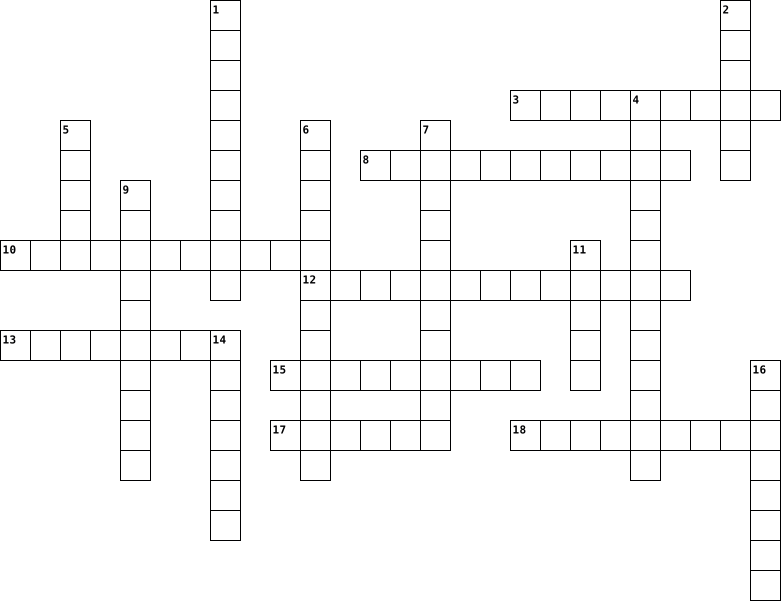
Across
- older xylem, cannot conduct fluids
- _________ or Ground tissue make up the bulk of the plant, provide support, storage of food and water
- needle trees, cones are reproductive structures
- process of water loss through evaporation in leaves
- Herbaceous _______: vascular bundles are scattered throughout stem
- ________ Strip prevents water from moving around in endoderm cells, allows water to get to cells
- Herbaceous _______: vascular bundles are arranged in a ring
- outer cell layer of the plant
Down
- plants that lack: roots, stems, leaves and vascular tissue
- alive cells that conduct carbohydrates made in leaves to other parts of the plants, cells do not have nucleus take orders from companion cell
- plants that have: roots, stems, leaves and vascular tissue; able to grow much taller
- dead hollow cells to conduct water and dissolved minerals from roots to the rest of plant
- ______ Tissue divide by mitosis to produce new cells, used for growth in both length and width of the plant
- flowering plant , flowers are reproductive structures
- ________ Tissue covers the surface of leaves, roots and stems, for protection and prevention of water loss
- Herbaceous ______: soft, green short lived stems
- newer layer of xylem, produced by vascular cambium, conduct water and minerals
- ______ Tissue transport materials
18 Clues: outer cell layer of the plant • ______ Tissue transport materials • older xylem, cannot conduct fluids • needle trees, cones are reproductive structures • Herbaceous ______: soft, green short lived stems • process of water loss through evaporation in leaves • flowering plant , flowers are reproductive structures • ...
Chapter 10: Immune System and Blood 2022-11-22

Across
- inflammation of the tonsils
- surgical fixation of the spleen
- excision of the tonsils
- formation of white blood cells
- excision of the adenoids
- abnormal reduction of clotting cells (platelets)
- increase in white blood cells
- physician who studies and treat immune system disorders
Down
- record of the lymphatic vessels
- disease of the lymph glands
- inflammation of the spleen
- formation of bone marrow
- inflammation of the adenoids
- increase in red blood cells
- study of blood
15 Clues: study of blood • excision of the tonsils • formation of bone marrow • excision of the adenoids • inflammation of the spleen • disease of the lymph glands • inflammation of the tonsils • increase in red blood cells • inflammation of the adenoids • increase in white blood cells • formation of white blood cells • record of the lymphatic vessels • surgical fixation of the spleen • ...
Main receptors for hearing – Inner Hair Cells Amplify and tune mechanical vibrations – Outer Hair Cells Fluid-filled structure for transduction – Cochlea Vibrations move this to stimulate hair cells – Basilar Membrane Tiny projections on hair cells – 2025-07-18

Across
- cilia toward tallest causes – Depolarization
- inside the cochlea; houses hair cells – Organ of Corti
- move this to stimulate hair cells – Basilar Membrane
- channel involved in transduction – TRPA1
- receptors for hearing – Inner Hair Cells
- structure for transduction – Cochlea
Down
- by neurotransmitters from hair cells – Spiral Ganglion
- released by hair cells – Glutamate
- cilia away from tallest causes – Hyperpolarization
- projections on hair cells – Cilia
- and tune mechanical vibrations – Outer Hair Cells
- structure that touches outer hair cells – Tectorial Membrane
12 Clues: projections on hair cells – Cilia • released by hair cells – Glutamate • structure for transduction – Cochlea • channel involved in transduction – TRPA1 • receptors for hearing – Inner Hair Cells • cilia toward tallest causes – Depolarization • and tune mechanical vibrations – Outer Hair Cells • cilia away from tallest causes – Hyperpolarization • ...
Cell Reproduction and Flowers 2022-03-03

Across
- New section of cell wall that grows between new daughter cells in telophase of plant cells [two words, no space].
- What idea in biology says that all living things are made of cells, that cells are the basic units of life, and that living cells only come from other living cells [two words, no space]?
- What organelle is sometimes called the “powerhouse of the cell?”
- Animal cells have these to help with the spindle fibers, but plant cells do not.
- This type of cell reproduction makes two identical cells.
- What organelle stores hereditary (a.k.a. genetic) information about the cell?
- What is the passive transport of water through a semipermeable membrane from an area of high concentration to low concentration?
- If the gametes of an organism are different sizes, what is the larger one called?
- What type of cell does not have membrane-bound organelles?
- During this phase, the chromosomes separate and move toward opposite ends of the cell.
- This type of cell reproduction makes cells that are NOT genetically identical.
- These long, skinny tubes help guide the movement of chromosomes during cellular reproduction [two words, no space].
- The phase of mitosis in which the chromosomes first become visible.
- Pollen is located on this part of the flower.
Down
- What is the name for the process of copying chromosomes?
- What organelle makes the thing that makes proteins?
- Phase in meiosis similar to interphase, but replication does not happen.
- A pair of X-shaped chromosomes linked together in prophase I is called a…
- What organelle makes proteins?
- The type of cell that results from meiosis.
- This disappears at the end of prophase [two words, no space].
- Term for a cell that has paired chromosomes (X-shaped, not I-shaped)
- What part of a plant contains its reproductive structures?
- What phase is the same in mitosis and meiosis?
- Phase of a cells life when it copies its chromosomes.
- Phase in meiosis where the tetrads separate and go to the poles of the cell [two words, no space].
- Which object lens has a 4x magnification power?
- At the end of this phase, the cell divides into two genetically identical daughter cells.
- The pinch that happens in the cell membrane at the end of telophase [two words, no space].
- The process of two gametes combining their genetic material to create a new cell.
- This results from an ovule being fertilized by pollen.
- The process of chromosomes swapping sections with each other in a tetrad – or something you might do on a bridge over a river.
- This part of the pistil is usually sticky so to help capture pollen.
- What scientist use pea plants to study how traits are passed from one organism to the other [last name]?
- Phase of mitosis where chromosomes are lined up along the equator of the cell.
- How many non-identical cells are created at the end of meiosis?
- Term for a cell that has unpaired chromosomes (I-shaped, not X-shaped).
37 Clues: What organelle makes proteins? • The type of cell that results from meiosis. • Pollen is located on this part of the flower. • What phase is the same in mitosis and meiosis? • Which object lens has a 4x magnification power? • What organelle makes the thing that makes proteins? • Phase of a cells life when it copies its chromosomes. • ...
Immunology Exam #2 Review - Renee Myers 2022-02-16

Across
- Regulatory T cell that protects from autoimmune disease
- T cell that generally expresses the CD4 co-receptor (3 words - no abbreviations)
- Antigen presenting cell that can "re-stimulate" experienced T cells, can be activated by IFN-g and DOESN'T travel to the lymph nodes (2 words)
- Antibody that is highly effective at neutralizing viruses and fixing complement
- These cut proteins into peptides in the cytoplasm
- This helper T cell subset produces IL-17 and IL-21, and is activated by IL-6 and TGFb
- This helper T cell subset produces IL-4, IL-5, and IL-13 and is activated by IL-4
- The step of B cell maturation in which the rearranged genes can mutate to increase the average affinity of BCRs for their cognate antigen (2 words)
- These cells are embedded in the regions of the secondary lymphoid organs, with the primary function of displaying antigen to B cells (3 words)
- The step of B cell maturation in which the B cell changes the class of antibody it produces (2 words)
- Region of the cognate antigen that a BCR actually binds to
- Regulatory T cell that dampens the immune response (abbreviation)
- A B cell that is an "antibody factory"
- Combination of gene segments that will produce a full-length Hc protein (2 words)
Down
- Fragments of proteins manufactured by the cell; displayed by class I MHC molecules (2 words)
- T cell that generally expresses the CD8 co-receptor (3 words - no abbreviations)
- Fully mature Th cells that help B cells switch classes or undergo somatic hypermution through the interaction between CD40L and CD40 proteins(4 words)
- Antigen presenting cell that can activate virgin T cells; these cells can be activated by TNF and travel to lymph nodes to present antigen (2 words)
- Protein that can bind to cell membranes and drill holes in them
- Antibody that guards the mucosal surfaces of the body
- Antigens that come from outside the cell; displayed by class II MHC molecules (2 words)
- "Doorway" through which B and T cells enter the secondary lymphoid organs from the blood (3 words, abbreviation)
- B cells that have encountered their cognate antigen and have been activated (3 words)
- Antigen presenting cell that is not used during initial stages of infection, but can quickly activate helper T cells by concentrating antigen for presentation
- Antibody that activates the classical (antibody-dependent) pathway; first antibody made by B cells
- Antibody that causes allergies and anaphylactic shock
- This helper T cell subset produces TNF, IFN-g, and IL-2 and is activated by IL-12
- Protein that prevents the class II MHC molecule from picking up other peptides in the ER AND guides class II MHC molecules through the Golgi apparatus (2 words)
- These transporter proteins carry proteasomes across the membrane of the endoplasmic reticulum
- This helper T cell subset is unbiased and commits to a subset based on the cytokine environment
- Enzyme that triggers cells to commit suicide by apoptosis once it enters the cytoplasm of the target cell (2 words)
31 Clues: A B cell that is an "antibody factory" • These cut proteins into peptides in the cytoplasm • Antibody that guards the mucosal surfaces of the body • Antibody that causes allergies and anaphylactic shock • Regulatory T cell that protects from autoimmune disease • Region of the cognate antigen that a BCR actually binds to • ...
Biology Ch. 8 Vocab 2022-10-27

Across
- when comparing two solutions, the solution with the greater concentration of solutes
- when the concentration of two solutions is the same
- fundamental concept of biology that states that all living things are composed of cells; that cells are the basic units of structure and function in living things; and that new cells are produced from existing cells
- when comparing two solutions, the solution with the lesser concentration of solutes
- specialized structure that performs important cellular functions within a eukaryotic cell
- in cells, structure that contains the cell's genetic material in the form of DNA
- strong, supporting layer around the cell membrane in some cells
- unicellular organism that lacks a nucleus
- cell organelle consisting of RNA and protein found throughout the cytoplasm in a cell; the site of protein synthesis
- internal membrane system found in eukaryotic cells; place where lipid components of the cell membrane are assembled
- group of organs that work together to perform a specific function
- process of diffusion in which molecules pass across the membrane through cell membrane channels
- basic unit of all forms of life
- pressure that must be applied to prevent osmotic movement across a selectively permeable membrane
- relatively constant internal physical and chemical conditions that organisms maintain
- thin, flexible barrier that surrounds all cells; regulates what enters and leaves the cell
Down
- cell organelle that converts the chemical energy stored in food into compounds that are more convenient for the cell to use
- group of similar cells that perform a particular function
- property of biological membranes that allows some substances to pass across it while others cannot; also called semipermeable membrane
- cell organelle that stores materials such as water, salts, proteins, and carbohydrates
- water channel protein in a cell
- organelle in cells that modifies, sorts, and packages proteins and other materials from the endoplasmic reticulum for storage in the cell or release outside the cell
- on or in a cell, a specific protein to whose shape fits that of a specific molecular messenger, such as a hormone
- process by which particles tend to move from an area where they are more concentrated to an area where they are less concentrated
- cell organelle that breaks down lipids, carbohydrates, and proteins into small molecules that can be used by the rest of the cell
- organelle found in cells of plants and some other organisms that captures the energy from sunlight and converts it into chemical energy
- fluid portion of the cell outside the nucleus
- network of protein filaments in a eukaryotic cell that gives the cell its shape and internal organization and is involved in movement
- group of tissues that work together to perform closely related functions
- flexible double-layered sheet that makes up the cell membrane and forms a barrier between the cell and its surroundings
- organism whose cells contain a nucleus
- diffusion of water through a selectively permeable membrane
32 Clues: water channel protein in a cell • basic unit of all forms of life • organism whose cells contain a nucleus • unicellular organism that lacks a nucleus • fluid portion of the cell outside the nucleus • when the concentration of two solutions is the same • group of similar cells that perform a particular function • ...
TSLOC 2025-03-16

Across
- Single-celled eukaryotic organisms, some of which cause diseases.
- The insulating layer around nerve fibers that speeds up signal transmission.
- A type of white blood cell essential for immune responses.
- Undifferentiated cells capable of developing into specialized cell types.
- Protein structures in cell membranes that regulate ion flow.
- A selective barrier that protects the brain from harmful substances.
- Junctions between neurons where signals are transmitted.
- The liquid surrounding and protecting the brain and spinal cord.
- The organelle responsible for protein and lipid synthesis.
- Communities of microorganisms that stick to surfaces and resist antibiotics.
- Long nerve fibers that transmit electrical impulses away from the cell body.
- Hollow protein structures that help maintain cell shape and transport materials.
- A rare disorder where the body’s immune system attacks the peripheral nervous system.
- Cytotoxic immune cells that destroy virus-infected and cancerous cells.
- A disease where the immune system mistakenly attacks the myelin sheath of nerve cells.
- Small membrane-bound sacs that transport materials within the cell.
- A chronic inflammation of the digestive tract, including Crohn’s disease and ulcerative colitis.
- The specialized junction where immune cells communicate.
- White blood cells responsible for antibody production.
- Electrical patterns in the brain that reflect different states of consciousness.
- The brain’s ability to adapt and reorganize neural connections.
Down
- The most abundant type of white blood cell, important for fighting infections.
- Cells in the central nervous system that produce myelin.
- The organelle that modifies, sorts, and packages proteins for secretion.
- Drugs that help the immune system recognize and attack cancer cells.
- A gene-editing system derived from bacterial immune defense mechanisms.
- Misfolded proteins that can cause neurodegenerative diseases.
- The powerhouse of the cell, responsible for producing ATP.
- Small proteins that facilitate communication between cells, especially in the immune system.
- Tiny extracellular vesicles involved in cell communication.
- DNA and RNA, the molecules that store and transmit genetic information.
- Branch-like structures that receive signals from other neurons.
- A bacterial infection that primarily affects the lungs.
- A parasite that can alter host behavior and is often spread through cat feces.
- A type of white blood cell that plays a key role in adaptive immunity.
- The basic building blocks of all living organisms.
- Chemical messengers that transmit signals across synapses.
- A virus primarily transmitted by mosquitoes, linked to birth defects.
- Star-shaped glial cells that support neurons and maintain the blood-brain barrier.
- A molecule that triggers an immune response.
- A bacterial communication system used by phages to decide infection strategies.
- Proteins with carbohydrate chains attached, playing roles in cell recognition.
- Organelles containing digestive enzymes that break down cellular waste.
- A protein that forms microfilaments and is essential for cell movement.
- Small protrusions on dendrites that help strengthen synaptic connections.
- The brain’s resident immune cells that remove debris and damaged neurons.
- A deadly virus that causes severe hemorrhagic fever.
47 Clues: A molecule that triggers an immune response. • The basic building blocks of all living organisms. • A deadly virus that causes severe hemorrhagic fever. • White blood cells responsible for antibody production. • A bacterial infection that primarily affects the lungs. • Cells in the central nervous system that produce myelin. • ...
Jodi and Reynaldo's crossword 2025-04-01

Across
- the part of a molecule that is recognized by the immune system antigens have multiple
- provide immunity from future exposure to antigen
- fuses with enzyme containing lysosome
- site of development is inside the red bone marrow
- subunits conjugated with proteins to make them more immunogenic
- pentamer 10% in plasm, 1 degree immune response
- product of lymphocytes, fibroblasts and macrophages
- chemical barrier found in digestive system
- debris given off from the cell
- engulfed vesicle fuses with vesicle containing digestive fluids
- inflammation signals cause cells to migrate to the area
- route of administration under the skin
- antibody-mediated helps seperate tcells and b cell
- gut associated lymphoid tissue ie appendix
- when reexposed to the same pathogen,the body reacts so quickly that there is nonoticeable illness
- easier to give than injections
- substance that prompts the generation of antibodies and triggers an immune response
- attack foreign cells and diseased host cells
- the process of eating dead or weak antigens
- characteristic of antibodies: the ability to bind
- foreign cells are broken into small pieces
- a drain system for the inflammatory response
- helps promote Tc cell and Bcell action
- injection of immune serum (gamma Globulin)
- more readily accepted stimulates IgA protection on mucous membranes
- antibodies pass from mother to fetus via placenta or from mothers milk
- the study of the immune system
Down
- filters plasma and provides immune cells
- vaccine using dead or attenuated pathogens
- route of administration into muscle
- characteristic of antibodies: masks dangerous parts of bacterial endotoxin
- immunity directed against a particular pathogen
- immunogen certain bacterial capsules
- defensive protein in blood plasma and body secretions
- redness warmth and swelling
- immunogen, cell membrane
- pattern recognition receptors identify and stick to foreign cells
- differences in immune factors that lead to the ability to fight off infections
- covering that prevents bacteria from attaching
- first line of defense (physical) covers the entire body in epithelial cells
- immunogen DNA complexed to proteins but not pure DNA
- monomer on mast cells stimulates release of histamines
- pathogen-associated molecular patterns (red flags)
- immunogen blood cell marker
- movement of wbc from the blood into tissue
- other product of lymphocytes, fibroblasts and macrophages
- major histocompatibility complex id tag on cells
- plasma from clotted blood
- where the tcell matures
- small protein produced by WBC and tissue cells involved in defense against microbes immune regulation and communication btw cells
- Route of administration into a layer of connective tissue located in between the skin
- product of tcells
- found in tears, an enzyme that disrupts peptidoglycan
- monomer 80% circulating crosses placenta to fetus
- carry out the attack
- monomer in plasma dimer in mucus, saliva, tears milk etc.
- monomer; Bcell membrane antigen receptor
- stimulates a primary response and memory response in the body
- organ that filters blood and removes old red blood cells from circulation
59 Clues: product of tcells • carry out the attack • where the tcell matures • immunogen, cell membrane • plasma from clotted blood • redness warmth and swelling • immunogen blood cell marker • debris given off from the cell • easier to give than injections • the study of the immune system • route of administration into muscle • immunogen certain bacterial capsules • ...
Jodi and Reynaldo's crossword 2025-04-01

Across
- immunogen DNA complexed to proteins but not pure DNA
- other product of lymphocytes, fibroblasts and macrophages
- major histocompatibility complex id tag on cells
- easier to give than injections
- first line of defense (physical) covers the entire body in epithelial cells
- Route of administration into a layer of connective tissue located in between the skin
- immunogen certain bacterial capsules
- antibody-mediated helps seperate tcells and b cell
- characteristic of antibodies: masks dangerous parts of bacterial endotoxin
- organ that filters blood and removes old red blood cells from circulation
- defensive protein in blood plasma and body secretions
- pentamer 10% in plasm, 1 degree immune response
- fuses with enzyme containing lysosome
- debris given off from the cell
- pattern recognition receptors identify and stick to foreign cells
- foreign cells are broken into small pieces
- monomer on mast cells stimulates release of histamines
- when reexposed to the same pathogen,the body reacts so quickly that there is nonoticeable illness
- engulfed vesicle fuses with vesicle containing digestive fluids
- provide immunity from future exposure to antigen
- the study of the immune system
- chemical barrier found in digestive system
- immunogen blood cell marker
- characteristic of antibodies: the ability to bind
- a drain system for the inflammatory response
Down
- gut associated lymphoid tissue ie appendix
- more readily accepted stimulates IgA protection on mucous membranes
- plasma from clotted blood
- route of administration into muscle
- route of administration under the skin
- vaccine using dead or attenuated pathogens
- antibodies pass from mother to fetus via placenta or from mothers milk
- pathogen-associated molecular patterns (red flags)
- the part of a molecule that is recognized by the immune system antigens have multiple
- inflammation signals cause cells to migrate to the area
- subunits conjugated with proteins to make them more immunogenic
- found in tears, an enzyme that disrupts peptidoglycan
- helps promote Tc cell and Bcell action
- carry out the attack
- movement of wbc from the blood into tissue
- covering that prevents bacteria from attaching
- where the tcell matures
- the process of eating dead or weak antigens
- immunity directed against a particular pathogen
- attack foreign cells and diseased host cells
- monomer 80% circulating crosses placenta to fetus
- substance that prompts the generation of antibodies and triggers an immune response
- immunogen, cell membrane
- product of lymphocytes, fibroblasts and macrophages
- injection of immune serum (gamma Globulin)
- redness warmth and swelling
- stimulates a primary response and memory response in the body
- small protein produced by WBC and tissue cells involved in defense against microbes immune regulation and communication btw cells
- similar to veins in structure but no pressure
- differences in immune factors that lead to the ability to fight off infections
- product of tcells
- filters plasma and provides immune cells
- site of development is inside the red bone marrow
- monomer in plasma dimer in mucus, saliva, tears milk etc.
- monomer; Bcell membrane antigen receptor
60 Clues: product of tcells • carry out the attack • where the tcell matures • immunogen, cell membrane • plasma from clotted blood • redness warmth and swelling • immunogen blood cell marker • easier to give than injections • debris given off from the cell • the study of the immune system • route of administration into muscle • immunogen certain bacterial capsules • ...
The Injury Process Vocabulary 2022-01-19

Across
- Therapeutic use of cold.
- Introduction of ions of soluble salt into the body through ultrasound.
- Powerful inflammatory chemical that causes an increase in vascular permeability and vasodilation.
- White blood cells
- Agent that relieves or reduces fever.
- Complete healing where dead cells and cellular debris are removed and the tissue is left functionally the same.
- Abnormal accumulation of fluid in the interstitial tissue between the skin and body cavities. Homeostasis of fluid mechanics is disturbed.
- Indirect result of tissue trauma. Healthy tissues surrounding primary injury die due to aggressive eating of healthy tissue within area of original injury. Waste products also damage cell membranes of healthy cells causing cell death. (3 words)
- Physical agents that help create an optimal healing environment.
- Chemical released when cells are damaged that serves as a precursor to the formation of other inflammatory chemicals including leukotrienes and prostaglandins. (2 words)
- Agent that relieves pain without causing a complete loss of sensation.
- The major protein of connective tissue.
- Wound or injury.
- Nonsteroidal anti-inflammatory drug.
- Using an electrical current to drive a chemical directly through the skin.
- Cellular organelles that contain enzymes that break down waste materials and cellular debris.
- Immature, fiber-producing cells of connective tissue that can mature into one of several different cell types.
Down
- Red discoloration of the skin.
- Part of the immune system. It is innate and complements the antibodies and cleaning cells to clear pathogens from damaged tissue.(2 words)
- Cells that synthesize bone. Function in groups of connected cells.
- Damaged tissue is replaced by some cells of the same type along with scar tissue, and it retains most of its original structure.
- Indirect result of tissue trauma. Healthy tissues surrounding primary injury die due to lack of blood flow and lack of metabolic supplies. The energy needed exceeds that of the energy available.(3 words)
- Process of programmed cell death. Biochemical events can lead to changes in cell characteristics thereby causing cell death.
- Drugs designed to prevent swelling. Two basic categories are currently in use: steroidal and nonsteroidal.
- Inflammatory chemical released when tissues are damaged; it results in increased pain in the area and may play a role in the production of other inflammatory chemicals such as prostaglandins.
- Decrease in the diameter of a blood vessel resulting in a decreased blood flow.
- The most common tissue in the body; includes ligaments, bones, retinaculum, joint capsules, cartilage, fascia, and tendons. (2 words)
- Perhaps some of the most powerful chemicals produced in the body; related to the inflammatory process, they cause a variety of effects including vasodilation, increased vascular permeability, pain, fever, and clotting.
- Formation of capillaries which interconnect, resulting in the formation of new vessels.
- Destruction of injurious cells or particles by phagocytes (white blood cells).
- Increase in the diameter of a blood vessel resulting in and increased blood flow.
- Bone cells that remove bone tissue by breaking up the organic bone.
- Original tissue is replaced by scar tissue and the structure and function are lost.
- Therapeutic use of heat.
34 Clues: Wound or injury. • White blood cells • Therapeutic use of cold. • Therapeutic use of heat. • Red discoloration of the skin. • Nonsteroidal anti-inflammatory drug. • Agent that relieves or reduces fever. • The major protein of connective tissue. • Physical agents that help create an optimal healing environment. • ...
Neurodevelopment Crossword 2021-09-09

Across
- The resulting portion of neuroectoderm formed during development after the thickening of the trilaminar disc, made possible through specific signaling molecules released by the notochord
- The bordering tissue of the neural plate that gives rise to the peripheral nervous system
- The process that encourages the growth cone of one neuron to grow towards a specific target due to the secretion of membrane-bound chemoattractive cues
- The process by which a neuronal stem cell divides to produce two daughter cells; both neuronal stem cells and differentiated cells can be produced
- The order in which the layers of cells are developed in the cerebral cortex
- Portion of the neuron located at the end of a neurite seeking a synaptic target; this element of the neuron detects and selectively identifies molecular signals within the environment in the efforts of pursuing a synaptic partner
- Collective term for the axons and dendrites of a neuron
- A specialized region of the mesoderm which provides signaling cues during embryonic development, particularly during the formation of the neural plate
- The membrane-bound guidance molecule secreted that selectively discourages a growth cone from growing towards a target, thereby repelling the growth cone from the incorrect target
- The innermost layer of the trilaminar disc; most of the cells in the nervous system are derived from this tissue
- Neurons are born in and migrate from this location to their intended layer of the cerebral cortex, by way of radial glia
- A type of neural cell that can only complete a limited number of cell division cycles, thus limiting the capability of neurons in the brain to divide and create new neurons
Down
- This feature of the cerebral cortex allows for the specific organization of cells within the cortex; cortical cells travel through this inside-out “scaffolding” with the help of radial glia
- The type of stem cell division resulting in either two daughter stem cells or two daughter differentiated cells
- The membrane-bound guidance molecule secreted that selectively encourages a growth cone to grow towards a target, thereby drawing the growth cone towards the correct target
- Function in neurodevelopment to provide transportation for cells forming the specialized layers of the cerebral cortex
- The process by which the neural plate folds in on itself, forming the neural tube and the elementary construction of the central and peripheral nervous system
- The process that discourages the growth cone from growing towards a specific target due to the secretion of membrane-bound chemorepulsive cues
- The process in which new neurons are produced or “born”
- Process that occurs within the cerebral cortex, as neurons born in the ventricular zone must relocate to their intended cortical layer; radial glial cells aid in this process
- The formation that arises when the neural plate involutes, a process known as neurulation; this formation gives rise to the central nervous system
- The type of stem cell division resulting in two daughter cells, one of which is another stem cell, and the other a differentiated cell
22 Clues: The process in which new neurons are produced or “born” • Collective term for the axons and dendrites of a neuron • The order in which the layers of cells are developed in the cerebral cortex • The bordering tissue of the neural plate that gives rise to the peripheral nervous system • ...
Jodi and Reynaldo's crossword 2025-04-01

Across
- injection of immune serum (gamma Globulin)
- characteristic of antibodies: masks dangerous parts of bacterial endotoxin
- covering that prevents bacteria from attaching
- carry out the attack
- immunogen blood cell marker
- found in tears, an enzyme that disrupts peptidoglycan
- Route of administration into a layer of connective tissue located in between the skin
- immunogen certain bacterial capsules
- monomer on mast cells stimulates release of histamines
- differences in immune factors that lead to the ability to fight off infections
- pattern recognition receptors identify and stick to foreign cells
- gut associated lymphoid tissue ie appendix
- when reexposed to the same pathogen,the body reacts so quickly that there is nonoticeable illness
- monomer; Bcell membrane antigen receptor
- redness warmth and swelling
- monomer in plasma dimer in mucus, saliva, tears milk etc.
- fuses with enzyme containing lysosome
- foreign cells are broken into small pieces
- pentamer 10% in plasm, 1 degree immune response
- where the tcell matures
- defensive protein in blood plasma and body secretions
- provide immunity from future exposure to antigen
- subunits conjugated with proteins to make them more immunogenic
- other product of lymphocytes, fibroblasts and macrophages
- plasma from clotted blood
- immunogen DNA complexed to proteins but not pure DNA
- monomer 80% circulating crosses placenta to fetus
- product of lymphocytes, fibroblasts and macrophages
- vaccine using dead or attenuated pathogens
- route of administration under the skin
- the part of a molecule that is recognized by the immune system antigens have multiple
Down
- engulfed vesicle fuses with vesicle containing digestive fluids
- inflammation signals cause cells to migrate to the area
- attack foreign cells and diseased host cells
- organ that filters blood and removes old red blood cells from circulation
- antibodies pass from mother to fetus via placenta or from mothers milk
- movement of wbc from the blood into tissue
- immunity directed against a particular pathogen
- characteristic of antibodies: the ability to bind
- first line of defense (physical) covers the entire body in epithelial cells
- a drain system for the inflammatory response
- major histocompatibility complex id tag on cells
- debris given off from the cell
- antibody-mediated helps seperate tcells and b cell
- helps promote Tc cell and Bcell action
- immunogen, cell membrane
- easier to give than injections
- small protein produced by WBC and tissue cells involved in defense against microbes immune regulation and communication btw cells
- pathogen-associated molecular patterns (red flags)
- the study of the immune system
- site of development is inside the red bone marrow
- route of administration into muscle
- chemical barrier found in digestive system
- filters plasma and provides immune cells
- product of tcells
- stimulates a primary response and memory response in the body
- the process of eating dead or weak antigens
- similar to veins in structure but no pressure
- substance that prompts the generation of antibodies and triggers an immune response
- more readily accepted stimulates IgA protection on mucous membranes
60 Clues: product of tcells • carry out the attack • where the tcell matures • immunogen, cell membrane • plasma from clotted blood • immunogen blood cell marker • redness warmth and swelling • debris given off from the cell • easier to give than injections • the study of the immune system • route of administration into muscle • immunogen certain bacterial capsules • ...
Histology 2012-11-06

Across
- mostly in the walls of hollow organs
- highly vascularized and contains red bone marrow
- Covers, lines and protects
- elastic glue layer
- initial skeleton of the fetus
- strongest most durable cartilage
- Group of similar cells
- Located in glands and their ducts and tubules of organs such as the kidney
- Function is to diffuse and filtrate
- there are three types hyaline, fibrocartilage, and elastic
- Communicates and coordinates activities, most complex
Down
- Native to the Andes mountains in South America
- enables voluntary movement
- Supports, connects and holds together
- Mesh of a certain type of cells and slender, branching fibers
- Goblet cells, cilia, and microvilli can be present
- transports nutrients, waste, O2 & CO2
- makes up 80% of the human skeleton
- lines the walls of the heart
- Cells here known as adipocytes
20 Clues: elastic glue layer • Group of similar cells • enables voluntary movement • Covers, lines and protects • lines the walls of the heart • initial skeleton of the fetus • Cells here known as adipocytes • strongest most durable cartilage • makes up 80% of the human skeleton • Function is to diffuse and filtrate • mostly in the walls of hollow organs • ...
PNP 103 Acid-Base Daily 2022-04-19

Across
- Carbonic acid deficit
- Carbonic acid excess
- Bicarbonate deficit
- 70-100 mmHg
- Low potassium levels in the body
- 7.35-7.45
- Low calcium levels in the body
- Fluid within the cells
- Substances that can bind hydrogen in a solution
- 35-45 mmHg
- The concentration of dissolved materials present in fluid
- Normal 136-145 mEq/L-Essential for electrical activity of neurons and muscle cells
Down
- An abnormal increase in the amount of tissue fluid, may be localized or systemic
- Bicarbonate excess
- pH<7.35
- Fluid outside the cells
- Low sodium levels in the body
- pH>7.45
- Elevated potassium levels in the body
- Normal 3.5-5 mEq/L-essential for electrical activity of neurons and muscle cells
- Substances having one or more hydrogen ions that can be liberated into a solution
21 Clues: pH<7.35 • pH>7.45 • 7.35-7.45 • 35-45 mmHg • 70-100 mmHg • Bicarbonate excess • Bicarbonate deficit • Carbonic acid excess • Carbonic acid deficit • Fluid within the cells • Fluid outside the cells • Low sodium levels in the body • Low calcium levels in the body • Low potassium levels in the body • Elevated potassium levels in the body • Substances that can bind hydrogen in a solution • ...
Animal Cell 2022-11-29

Across
- provides a platform upon which other organelles can operate within the cell
- provides mechanical support
- eukaryotic cells that have both a membrane-bound nucleus and other membrane-bound organelles
- move an entire cell
- has no ribosomes
- animal cells are found in
- dotted with ribosomes
- Found in the middle of the cell
- can contain waste
- small flat sacs
- network of membranes inside a cell through which proteins and other molecules move
Down
- found only in animal cells
- produce energy
- Provides protection for a cell
- hereditary material in humans and almost all other organisms
- all organisms are composed of one or more cells
- make proteins
- fluid inside the nucleus
- the shape of a animal cell
- support the shape of a cell
- digestive system of the cell
21 Clues: make proteins • produce energy • small flat sacs • has no ribosomes • can contain waste • move an entire cell • dotted with ribosomes • fluid inside the nucleus • animal cells are found in • found only in animal cells • the shape of a animal cell • provides mechanical support • support the shape of a cell • digestive system of the cell • Provides protection for a cell • ...
Vocabulary 4.2 LAC 2021-03-18

Across
- makes baby's skin and eyes look yellow
- scale system of rating physical condition
- lower part of the uterus
- mew mothers get very sad
- delivery surgical incision in the abdomen
- tightening and releasing of the muscles in the uterus
- substance produced by red blood cells breaking down
- special enclosed crib- oxygen, temp and humidity is checked
- period following the baby's birth
Down
- fine hair growing on baby's body
- cells cells producing types of blood cells
- to widen or open the uterus
- high calorie and protein early breast milk
- period first month after birth
- blood left behind in the umbilical cord
- open space found on baby's head
- thick, white paste substance that covers infant after birth
- watching unborn heart rate
- forming emotional ties
- breast feeding specialist
- baby remains with mother
21 Clues: forming emotional ties • lower part of the uterus • mew mothers get very sad • baby remains with mother • breast feeding specialist • watching unborn heart rate • to widen or open the uterus • period first month after birth • open space found on baby's head • fine hair growing on baby's body • period following the baby's birth • makes baby's skin and eyes look yellow • ...
Organelle Crossword 2023-12-08

Across
- the basic building blocks of protein
- large and complex molecules that have multiple critical roles for survival
- Gives plant cells their green color
- subcellular structure with one or more jobs
- organelle that contains digestive enzymes and recycles
- Package cellular material and ship them to the membrane
- Gell like substance used for mobility
- separates and protects the insides of a cell
- instructions and information for the cell
Down
- Plant wall found outside of membrane
- Stores material for the cells
- process that uses sunlight, water, and CO2 to produce oxygen
- director of cells, the one in charge
- small factories that create life ingredients
- Sugar produced from photosynthesis
- structure with many parts and functions
- fat molecules
- Smooth endoplasmic reticulum
- powerhouse of the cell
- Rough endoplasmic reticulum
- Cells that store and use energy
21 Clues: fat molecules • powerhouse of the cell • Rough endoplasmic reticulum • Smooth endoplasmic reticulum • Stores material for the cells • Cells that store and use energy • Sugar produced from photosynthesis • Gives plant cells their green color • Plant wall found outside of membrane • director of cells, the one in charge • the basic building blocks of protein • ...
Cardiovascular Terms 2023-03-24

Across
- 2 upper chambers of the heart that receive blood
- a person trained to draw blood from a patient
- formation of all blood cells
- slow heart rate (less than 60 bpm)
- is an infection of the lining of the heart chambers and/or the valves
- 2 lower chambers of the heart that discharge blood
- formation of red blood cells
- the action of blood being collected from a vein
- layer in the heart wall that lines the heart chambers
Down
- is a disease of the heart that makes it harder to pump blood
- relaxation/filling in the cardiac cycle
- fluid portion of blood
- platelets
- high blood pressure
- formation of platelets
- rapid heart rate (over 100 bpm)
- white blood cells
- contraction/pumping in the cardiac cycle
- machine that separates blood components
- red blood cells
20 Clues: platelets • red blood cells • white blood cells • high blood pressure • fluid portion of blood • formation of platelets • formation of all blood cells • formation of red blood cells • rapid heart rate (over 100 bpm) • slow heart rate (less than 60 bpm) • relaxation/filling in the cardiac cycle • machine that separates blood components • contraction/pumping in the cardiac cycle • ...
Bio Organisms crossword 2023-05-17

Across
- Outer layers of all cells
- double-stranded DNA molecule
- Pigment that gives the plant its green color
- Are all other cells(plants,animals, fungi and protozoa)
- The main substance in the walls of plant cells
- Removal of waste products and excess waste
- Jelly-like fluid
- permanent change that is irreversible
- Control centre of the cell
- Ability to detect and respond to changes in the environment
- Power centre of the cell
- Cells that have no membrane-covered organelles
- Protects and supports the cell
Down
- To make more of the same kind of organism
- Release energy for metabolism
- Supports the shape of the plant
- An action causing a change of position or place
- Green organelle found in plant cell
- Taking materials for development
- Where amino acids make protein molecules
20 Clues: Jelly-like fluid • Power centre of the cell • Outer layers of all cells • Control centre of the cell • double-stranded DNA molecule • Release energy for metabolism • Protects and supports the cell • Supports the shape of the plant • Taking materials for development • Green organelle found in plant cell • permanent change that is irreversible • ...
Plant Cells by Malachi 2025-10-13

Across
- The organelle for photosynthesis.
- Transport tissue in a leaf.
- Flowering plants.
- Organism that eats other things for food.
- A plant with unenclosed seeds.
- Gaps in a leaf for air.
- The middle layer of a leaf.
- Pores on a leaf for gas exchange.
- A group of similar cells.
- The bottom layer of a leaf.
- Plants making food from sunlight.
- A formula for a chemical reaction.
- Cells that open and close stomata.
Down
- The top layer of a leaf.
- A plant without transport tubes.
- Organism that makes its own food.
- Layer of cells in a leaf for gas exchange.
- Small, nonvascular plants.
- Layer of cells in a leaf for light absorption.
- A plant with transport tubes.
- The green pigment in plants.
- A waxy layer on a leaf.
22 Clues: Flowering plants. • Gaps in a leaf for air. • A waxy layer on a leaf. • The top layer of a leaf. • A group of similar cells. • Small, nonvascular plants. • Transport tissue in a leaf. • The middle layer of a leaf. • The bottom layer of a leaf. • The green pigment in plants. • A plant with transport tubes. • A plant with unenclosed seeds. • A plant without transport tubes. • ...
Final project 2021-06-09

Across
- energy living things store.
- a shape or structure.
- a substance that has amino acids.
- - made up of DNA
- natural things.
- a community of interacting.
- materials can be classified based on
- respiration- the reactions happen inside
- made of cells.
- the process in which green plants.
Down
- one molecule used for chemical energy
- - the smallest unit of life.
- Atoms or small molecules.
- the study of life.
- movement- glucose moves from plants' leave to all of its cells.
- proteins that act as biological catalysts.
- pictures of the chromosome.
- biomass- total mass of organisms in a given area.
- respiration- cells need this energy to move and
- physical and chemical
- to make their own food.
- cells
22 Clues: cells • made of cells. • natural things. • the study of life. • - made up of DNA • a shape or structure. • physical and chemical • to make their own food. • Atoms or small molecules. • energy living things store. • a community of interacting. • pictures of the chromosome. • - the smallest unit of life. • a substance that has amino acids. • the process in which green plants. • ...
Final project 2021-06-09

Across
- energy living things store.
- a shape or structure.
- a substance that has amino acids.
- - made up of DNA
- natural things.
- a community of interacting.
- materials can be classified based on
- respiration- the reactions happen inside
- made of cells.
- the process in which green plants.
Down
- one molecule used for chemical energy
- - the smallest unit of life.
- Atoms or small molecules.
- the study of life.
- movement- glucose moves from plants' leave to all of its cells.
- proteins that act as biological catalysts.
- pictures of the chromosome.
- biomass- total mass of organisms in a given area.
- respiration- cells need this energy to move and
- physical and chemical
- to make their own food.
- cells
22 Clues: cells • made of cells. • natural things. • the study of life. • - made up of DNA • a shape or structure. • physical and chemical • to make their own food. • Atoms or small molecules. • energy living things store. • a community of interacting. • pictures of the chromosome. • - the smallest unit of life. • a substance that has amino acids. • the process in which green plants. • ...
mitoses crossword puzzle 2021-11-17

Across
- DNA is changed
- spreads to other sites of the body
- cells way of communicating
- encloses the nucleus
- final stage of mitosis
- DNA is replicated
- first grow
- comes in 200 types
- identical copy of the chromosomes
- End result
- cells spend most of their time here
- composed of proteins
- found on the end of chromosomes
- undifferentiated inner mass cells
- a lump in your body
- found inside the nucleus
Down
- spiders look alike
- found in the body after development
- rapid cell growth phase
- tumor but doesn't spread
- separates and duplicates
- spindles attach
- single cell divide
- membrane-bound organelle
- Making sure enough proteins are made
- death of cells
- distorts nearby tissue
- chromosomes go in a straight line
- before metaphase
- undergoes maturation
- from parent to offspring
31 Clues: first grow • End result • DNA is changed • death of cells • spindles attach • before metaphase • DNA is replicated • spiders look alike • single cell divide • comes in 200 types • a lump in your body • encloses the nucleus • composed of proteins • undergoes maturation • final stage of mitosis • distorts nearby tissue • rapid cell growth phase • tumor but doesn't spread • separates and duplicates • ...
Chapter 10 - BLOOD REVIEW 2021-12-21

Across
- most abundant blood cell
- protein found in plasma used in clotting
- liquid portion of blood; 55%
- determines whether or not blood is positive or negative
- a blood clot that is traveling through cardiovascular system
- B cells and T cells used for specific defense
- appropriate song for this chapter by Shawn Mendes
- abundance of white blood cells
- type O blood, can give to anyone
Down
- known as the universal recipient
- ion used in blood clotting process
- singer of the song "Bad Blood"
- most abundant WBC
- cell fragments; used to clot blood
- low amount of white blood cells
- used to fight pathogens; WBCs
- song by Leona Lewis released in 2007 that makes sense for this crossword
- largest WBC
- protein in erythrocyte that carries oxygen
- main component of plasma; 90-92%
20 Clues: largest WBC • most abundant WBC • most abundant blood cell • liquid portion of blood; 55% • used to fight pathogens; WBCs • singer of the song "Bad Blood" • abundance of white blood cells • low amount of white blood cells • known as the universal recipient • main component of plasma; 90-92% • type O blood, can give to anyone • ion used in blood clotting process • ...
Cell Cycle Crossword 2023-03-24

Across
- The region of the chromosome where the mitotic spindle attaches
- Resting phase
- Loosely coiled dna
- Series of events for a cell to divide into two daughter cells
- DNA Duplication
- division of parent cell cytoplasm
- third phase of mitosis
- first phase of mitosis
- another name for mitosis
- fourth phase of mitosis
Down
- Cell growth and DNA Replication
- second phase of mitosis
- Cell divides creating two identical cells
- one half of duplicated chromosome
- Microtubule structure used to move chromosomes around
- Period after DNA duplicated and the cell prepares for division
- Moves to opposite sides of the cell and spindle fibers attaches to them
- Cell grows and normal metabolic tasks
- final phase of meiosis
- splits animal cells
- amount of phases within mitosis
- splits plant cells
- chromatids pair of two identical chromatids
23 Clues: Resting phase • DNA Duplication • Loosely coiled dna • splits plant cells • splits animal cells • third phase of mitosis • final phase of meiosis • first phase of mitosis • second phase of mitosis • fourth phase of mitosis • another name for mitosis • Cell growth and DNA Replication • amount of phases within mitosis • one half of duplicated chromosome • division of parent cell cytoplasm • ...
Mitosis and Meiosis 2023-03-01

Across
- chromosomes are on opposite sides of the cell
- second step in Meiosis
- cell grows and preforms its functions
- a stage in Mitosis and Meiosis
- a stage that includes mitosis and cytokinesis
- what chromosomes help create
- a type of cell division that ends up with four daughter cells
- a multicellular organism except egg or sperm
- a gene carrying DNA
- second growth phase of the cell cycle
Down
- long strands of DNA found in eukaryotic cells nucleus
- instructions for making an organism
- the first growth phase of the cell cycle
- identical copies of chromosomes
- the final stage of cell cycle
- the synthesis phase of the cell cycle
- process of reproduction and growth of cells
- a type of cell division
- reproductive cells
- a condensed region where chromatids are held together
20 Clues: reproductive cells • a gene carrying DNA • second step in Meiosis • a type of cell division • what chromosomes help create • the final stage of cell cycle • a stage in Mitosis and Meiosis • identical copies of chromosomes • instructions for making an organism • cell grows and preforms its functions • the synthesis phase of the cell cycle • second growth phase of the cell cycle • ...
Mitosis and Meiosis 2023-03-01

Across
- chromosomes are on opposite sides of the cell
- second step in Meiosis
- cell grows and preforms its functions
- a stage in Mitosis and Meiosis
- a stage that includes mitosis and cytokinesis
- what chromosomes help create
- a type of cell division that ends up with four daughter cells
- a multicellular organism except egg or sperm
- a gene carrying DNA
- second growth phase of the cell cycle
Down
- long strands of DNA found in eukaryotic cells nucleus
- instructions for making an organism
- the first growth phase of the cell cycle
- identical copies of chromosomes
- the final stage of cell cycle
- the synthesis phase of the cell cycle
- process of reproduction and growth of cells
- a type of cell division
- reproductive cells
- a condensed region where chromatids are held together
20 Clues: reproductive cells • a gene carrying DNA • second step in Meiosis • a type of cell division • what chromosomes help create • the final stage of cell cycle • a stage in Mitosis and Meiosis • identical copies of chromosomes • instructions for making an organism • cell grows and preforms its functions • the synthesis phase of the cell cycle • second growth phase of the cell cycle • ...
Cell Cycle for 2B 2023-03-02

Across
- division of parent cell cytoplasm
- Series of events for a cell to divide into two daughter cells
- first phase of mitosis
- Resting phase
- Cell divides creating two identical cells
- Cell growth and DNA Replication
- Loosely coiled dna
- amount of phases within mitosis
- One half of duplicated chromosome
- Period after DNA duplicated and the cell prepares for division
- third phase of mitosis
- DNA Duplication
- The region of the chromosome where the mitotic spindle attaches
Down
- Moves to opposite sides of the cell and spindle fibers attaches to them
- antoher name for mitosis
- Microtubule structure used to move chromosomes around
- fourth phase of mitosis
- pair of two identical chromatids
- second phase of mitosis
- Cytokinesis in animal cells
- Cell grows and normal metabolic tasks
- plate Cytokinesis in plant cells
22 Clues: Resting phase • DNA Duplication • Loosely coiled dna • first phase of mitosis • third phase of mitosis • fourth phase of mitosis • second phase of mitosis • antoher name for mitosis • Cytokinesis in animal cells • Cell growth and DNA Replication • amount of phases within mitosis • pair of two identical chromatids • plate Cytokinesis in plant cells • division of parent cell cytoplasm • ...
Cell Cycle for 2B 2023-03-02

Across
- Cell divides creating two identical cells
- antoher name for mitosis
- amount of phases within mitosis
- The region of the chromosome where the mitotic spindle attaches
- Loosely coiled dna
- fourth phase of mitosis
- Period after DNA duplicated and the cell prepares for division
- Moves to opposite sides of the cell and spindle fibers attaches to them
- plate Cytokinesis in plant cells
- One half of duplicated chromosome
- first phase of mitosis
- second phase of mitosis
Down
- third phase of mitosis
- pair of two identical chromatids
- DNA Duplication
- Microtubule structure used to move chromosomes around
- Series of events for a cell to divide into two daughter cells
- Cytokinesis in animal cells
- Cell grows and normal metabolic tasks
- Resting phase
- division of parent cell cytoplasm
- Cell growth and DNA Replication
22 Clues: Resting phase • DNA Duplication • Loosely coiled dna • third phase of mitosis • first phase of mitosis • fourth phase of mitosis • second phase of mitosis • antoher name for mitosis • Cytokinesis in animal cells • amount of phases within mitosis • Cell growth and DNA Replication • pair of two identical chromatids • plate Cytokinesis in plant cells • One half of duplicated chromosome • ...
Puzzling Topics - Cell Divison 2024-05-21

Across
- Stage where chromosomes split to opposite sides of the cell
- Number of cells after meiosis
- Stage where chromosomes align in center of the cell
- Having two sets of each chromosome
- Stage where cytoplasm splits
- Number of cells after mitosis
- Chromosomes failing to separate
- Another word for genetic recombination
- Stage where nuclear membranes reform
- Stage of prophase where crossing over occurs
Down
- Longest cell cycle phase
- Crossing over between nonhomologous chromosomes
- Atypical number of chromosomes in a cell
- Stage where nuclear membrane dissolves
- Acronym for complex made from binding of CDKs and cyclins
- Used to make identical somatic cells
- Complete set of chromosomes
- Where nondividing cells go
- Having a single set of chromosomes
- Name of interphase stage with DNA replication
- Occurs in G1 and G2
21 Clues: Occurs in G1 and G2 • Longest cell cycle phase • Where nondividing cells go • Complete set of chromosomes • Stage where cytoplasm splits • Number of cells after meiosis • Number of cells after mitosis • Chromosomes failing to separate • Having two sets of each chromosome • Having a single set of chromosomes • Used to make identical somatic cells • ...
Human anatomy and cell structure 2024-10-07

Across
- Practices for health and cleanliness
- X-Ray uses this technique
- cells that can become specialized are called .... cells
- Organelle containing genetic material.
- Long whip-like structures for movement of bacteria
- organism without a nucleus.
- Diagnostic method using sound waves.
- Organelle that digests waste.
- Powerhouse of the cell for energy production.
- Specialized cell structure with a specific function.
- Group of tissues performing a function.
- Study of organism structure.
Down
- translation of "anatomy" from Latin
- Group of similar cells working together.
- Basic unit of life.
- unit of a chemical compound, bigger than an atom
- Plant cell wall component
- In plant cells vacuole is big and ...
- Jelly-like substance inside the cell.
- Storage sac in a cell.
- Short hair-like structures that make cell stick to surfaces
- Diagnostic method using magnetic fields.
22 Clues: Basic unit of life. • Storage sac in a cell. • X-Ray uses this technique • Plant cell wall component • organism without a nucleus. • Study of organism structure. • Organelle that digests waste. • translation of "anatomy" from Latin • Practices for health and cleanliness • Diagnostic method using sound waves. • In plant cells vacuole is big and ... • ...
Unit 1 Review 2022-09-14

Across
- basic unit of structure and function of living thing
- tool that allows us to see cells
- control center of a cell; contains DNA
- group of different organs working together
- stores water, nutrient and waste in a cell
- conducts photosynthesis in a plant cell
- cell without a nucleus
- genetic material
- group of different tissues working together
- requires two parents
- group of similar cells working together
- organ systems working together that create a living thing
- flexible; controls what enter and exits
Down
- rigid structure surrounds plant cell
- organism made of a single cell
- requires one parent
- organism made of multiple cells
- 3 statements about cells and living things
- organelle that converts energy to be used
- jelly-like substance that fills a cell
- cell with a nucleus
21 Clues: genetic material • requires one parent • cell with a nucleus • requires two parents • cell without a nucleus • organism made of a single cell • organism made of multiple cells • tool that allows us to see cells • rigid structure surrounds plant cell • control center of a cell; contains DNA • jelly-like substance that fills a cell • conducts photosynthesis in a plant cell • ...
Integumentary System Crossword 2024-09-24

Across
- The upper lining of the skin made of keratinized stratified squamous cells
- Layer of dermis that houses hair roots & glands
- Cell within the stratum spinosum
- Yellowing due to bilirubin
- Nerves that cause hair movement
- Where keratinization occurs in hair
- Immune cells patrolling deep in the epidermis
- Muscle that causes goose bumps
- Blushing, fever, or allergies
Down
- Substance in skin that absorbs UV radiation
- The nerves that cause/sense pain
- Area of hair above the epidermis
- Blueing of the skin due to hypoxia
- What makes blood appear red
- Epidermis has no blood vessels
- Found in corneum & most visible at palms/soles
- The junctions that give the stratum spinosum a spiny appearance
- The stratum that has stem cells that become keratinocytes
- Layer of the dermis that makes ridges
- Tactile cells for light touch
20 Clues: Yellowing due to bilirubin • What makes blood appear red • Tactile cells for light touch • Blushing, fever, or allergies • Epidermis has no blood vessels • Muscle that causes goose bumps • Nerves that cause hair movement • The nerves that cause/sense pain • Area of hair above the epidermis • Cell within the stratum spinosum • Blueing of the skin due to hypoxia • ...
Reproduction Review 2025-04-01

Across
- Female reproductive cells
- Type of reproduction that requires two parents
- Reproduction creates the next one of these
- Source organism in reproduction
- Reproduction helps organisms survive as this
- The first cell of a new organism
- How offspring from asexual reproduction are genetically related to parent
- Male reproductive cells
- Process when sperm meets egg
- Structures that contain genetic material
Down
- The ability to make the next generation
- Number of chromosomes in a human zygote
- Number of chromosomes in human gametes
- New organisms produced through reproduction
- Reproductive cells like sperm and eggs
- Type of reproduction that requires only one parent
- Reptile that can reproduce asexually
- Special type of cell division that produces gametes
- How chromosomes are arranged in human cells (23 of these)
- How offspring from sexual reproduction are genetically related to parents
20 Clues: Male reproductive cells • Female reproductive cells • Process when sperm meets egg • Source organism in reproduction • The first cell of a new organism • Reptile that can reproduce asexually • Number of chromosomes in human gametes • Reproductive cells like sperm and eggs • The ability to make the next generation • Number of chromosomes in a human zygote • ...
cell structure 2025-11-17

Across
- - Connects to nuclear envelope & cell membrane
- - Makes ribosomes that make proteins
- - Powerhouse” of the cell
- - Contains the DNA in chromosomes
- - observed, under the microscope, cells dividing
- - Found in the cytoplasm
- - first to view living things
- - shipping side of golgi body
- - protects the plants from injury and gives plant a fixed shape
- - Protein factories” for cell
- - receiving side of golgi body
- - Contains structures called ORGANELLES
- - contain chlorophyll- for photosynthesis
- - is responsible for naming cells
Down
- - concluded that all animals were made of cells
- - Contains nuclear pores for materials to enter & leave nucleus
- - Help to pull chromosome pairs apart to opposite ends of the cell
- - Look like a stack of pancakes
- - Controls what enters or leaves the cell
- - concluded that all plants were made of cells
- - Fluid filled sacks for storage
21 Clues: - Found in the cytoplasm • - Powerhouse” of the cell • - Protein factories” for cell • - first to view living things • - Fluid filled sacks for storage • - Contains the DNA in chromosomes • - Look like a stack of pancakes • - Makes ribosomes that make proteins • - is responsible for naming cells • - receiving side of golgi body • ...
PNP 102 Ch 33 Immune System 2021-04-08

Across
- cell surface proteins that match an individual’s own genetic code or assist the immune system to identify foreign molecules.
- white blood cells that engulf and digest bacteria and foreign material.
- type of cytokines that attracts neutrophils and monocytes to remove debris, promotes the maturation of more T cells when they detect antigens, and directs B-cell lymphocytes to multiply and mature.
- immunity that occurs as a direct result of infection by a specific microorganism.
- chemical substances that destroy foreign agents such as microorganisms.
- large phagocytes present in tissues such as the lungs, liver, lymph nodes, spleen, and peritoneum.
- immediate but short-lived immunity that develops when ready-made antibodies are given to a susceptible individual.
- immune process in which many different proteins are activated in a chain reaction when an antibody binds with an antigen.
- foreign substance that induces an immune response.
- formation of antibodies
- white blood cells with immune functions.
Down
- immunity that results from the administration of a killed or weakened microorganism or attenuated toxin.
- structures that maintain immunocompetence, the ability to cooperatively protect a person from external invaders and the body’s own altered cells.
- process that occurs when T cells survey proteins in the body, actively analyze the surface features, and respond to those that differ from the host by directly attacking the invading antigen.
- phagocytes present in blood that migrate to tissue as necessary to ingest small-sized debris.
- proteins produced by B lymphocyte plasma cells that bind with antigens and promote the destruction of invading cells; also known as antibodies.
- inability to mount an immune response.
- target-specific system of defense against infectious, foreign, or cancerous cells carried out primarily by lymphocytes.
18 Clues: formation of antibodies • inability to mount an immune response. • white blood cells with immune functions. • foreign substance that induces an immune response. • white blood cells that engulf and digest bacteria and foreign material. • chemical substances that destroy foreign agents such as microorganisms. • ...
cells cells there made of organells 2023-11-16

Across
- single celled organism
- makes food for the plant cell
- makes energy for the cell
- stores food and waste
- transports materials throughout the cell
- helps with digestion
- controls what goes in and out
Down
- circular cell
- gel-like fluid that supports the cell
- packages and sends cellular materials
- single or multiple celled organism
- the control center of the cell
- makes protein for the cell
- rectangular cell
- helps keep the structure of the cell (PLANT ONLY)
15 Clues: circular cell • rectangular cell • helps with digestion • stores food and waste • single celled organism • makes energy for the cell • makes protein for the cell • makes food for the plant cell • controls what goes in and out • the control center of the cell • single or multiple celled organism • gel-like fluid that supports the cell • packages and sends cellular materials • ...
Cells, Cells, They're Made of Organelles 2024-02-09

Across
- Plant cells are ___________ in shape.
- Controls what enters and leaves the cell.
- Helps break down materials within the cell.
- Transports materials in the cell.
- Makes proteins to help repair damage to the cell.
- Storage area for the cell.
Down
- Jelly-like substance that holds all of the organelles in their place.
- Plants cells are ____________ due to chloroplasts being in plant cells.
- Helps with Cell Division; a barrel-shaped organelle.
- Converts energy to food for the cell through photosynthesis.
- Protects and supports the cell.
- Powerhouse of the cell; produces energy.
- Animal cells are ___________ in shape.
- Animal cells are ___________, meaning that they do not have color within the cell.
- “Brain” of the cell, directs the cell’s activities.
15 Clues: Storage area for the cell. • Protects and supports the cell. • Transports materials in the cell. • Plant cells are ___________ in shape. • Animal cells are ___________ in shape. • Powerhouse of the cell; produces energy. • Controls what enters and leaves the cell. • Helps break down materials within the cell. • Makes proteins to help repair damage to the cell. • ...
Cells Cells their made of organelles 2025-08-21

Across
- A structure made of different tissues that work together (e.g., the heart).
- An organism made of many cells.
- A group of organs that work together to perform a major function (e.g., the digestive system).
- The part of a plant cell that uses sunlight to make food.
- Wall: The rigid outer layer of a plant cell that provides structure.
- The "control center" that contains the cell's DNA.
- The process plants use to turn sunlight into food.
Down
- The "warehouse" that stores water, food, and waste.
- The jelly-like substance that fills the cell.
- The general term for a tiny "organ" inside a cell.
- A cell's ability to maintain a stable internal environment.
- The movement of water across a membrane.
- The "powerhouse" that creates energy for the cell.
- An organism made of only one cell.
- Membrane: The "gatekeeper" that controls what enters and exits the cell.
- A group of similar cells that perform the same job.
16 Clues: An organism made of many cells. • An organism made of only one cell. • The movement of water across a membrane. • The jelly-like substance that fills the cell. • The general term for a tiny "organ" inside a cell. • The "powerhouse" that creates energy for the cell. • The "control center" that contains the cell's DNA. • The process plants use to turn sunlight into food. • ...
Immune Tycoon!!! With Aaliyah Spalding, Macy Meyer, and Purvie Dubey 2024-10-14

Across
- Produces class II MHC proteins
- A second exposure to antigen stimulates memory cells, causing rapid response in producing cytotoxic T cells and "---" cells.
- A type of antigen inactivation that blocks bacterial binding sites.
- Can be created to produce monoclonal antibodies
- Site where T cell develops
- Found in the cytoplasm of granulocytes, can release antimicrobial agents, bacteria-degrading enzymes and toxic chemicals.
- Type of immune response that skin and phagocytic cells alike are a part of.
- A mix of antibodies that bind to multiple epitopes
- Antigens displayed by infected cells activate this type of T-cell
- Type of cell that reacts directly with antigens in blod.
Down
- Antibody concentration is greater during the "---" response.
- Released by cytotoxic T-cell, this serine protease triggers the cell death in infected cells.
- Types of linkages that bind heavy and light chains in antibodies together.
- A T-cell presents and antigen and interacts with B-cell mitosis and differentiation when it is "---"
- Each B-cell is specific for a particular "---"
- Antibody-mediated immune response
- Also called immunoglobulins, these are Y-shaped proteins.
17 Clues: Site where T cell develops • Produces class II MHC proteins • Antibody-mediated immune response • Each B-cell is specific for a particular "---" • Can be created to produce monoclonal antibodies • A mix of antibodies that bind to multiple epitopes • Type of cell that reacts directly with antigens in blod. • Also called immunoglobulins, these are Y-shaped proteins. • ...
Organelle Odyssey 2025-06-15

Across
- jellylike substance where cell organelles are suspended.
- property of the cell membrane that allows some substances to pass while blocking others.
- phospholipid bilayer that controls what enters and leaves the cell.
- organelle that processes packages and transports proteins and lipids.
- complex of DNA and proteins found in the nucleus that condenses into chromosomes.
- the basic unit of life found in all living organisms.
Down
- cylindrical structures involved in cell division found in animal cells.
- type of cell without a nucleus or membranebound organelles
- vesicles containing enzymes that digest waste materials and cellular debris.
- principle stating all living things are made of cells cells are basic units and arise from existing cells.
- storage organelle for water nutrients and waste especially large in plant cells
- type of cell with a nucleus and membranebound organelles.
- network of membranes involved in protein and lipid synthesis.
- rigid outer layer that provides support and protection in plant cells and some microbes.
- organelles where cellular respiration produces energy in the form of ATP.
- small structures that synthesis proteins in the cell.
- It stores genetic material.
17 Clues: It stores genetic material. • small structures that synthesis proteins in the cell. • the basic unit of life found in all living organisms. • jellylike substance where cell organelles are suspended. • type of cell with a nucleus and membranebound organelles. • type of cell without a nucleus or membranebound organelles • ...
Science Chapter Revision: Cells 2017-03-07

Across
- A ___ cell supports our body.
- ___ store information that is passed down from parent to child.
- The cell membrane is a ___ layer which controls substances which move in and out of the cell.
- Each type of cell has their ___ and unique function.
- The nucleus is also known as the ___ centre of the cell.
- The red colour of red blood cells is caused by a substance named ___.
- The ___ of the cell contains water and food materials.
- The animal cell has ___ parts.
Down
- ___ are the basic units of life.
- Red blood cells do not have a ___ to increase the amount of oxygen carried.
- We have learnt ___ types of cells.
- We can use a ___ to view cells.
- Bone cells need ___ and phosphates to remain strong.
- __ is known as the passing down of characteristics from parent to child.
- The muscle cell is able to ___ and relax to help us to move.
- If both parents of Sam are not able to roll their tongue, Sam too would ___ able to do so.
- ___ blood cell transports oxygen.
17 Clues: A ___ cell supports our body. • The animal cell has ___ parts. • We can use a ___ to view cells. • ___ are the basic units of life. • ___ blood cell transports oxygen. • We have learnt ___ types of cells. • Bone cells need ___ and phosphates to remain strong. • Each type of cell has their ___ and unique function. • The ___ of the cell contains water and food materials. • ...
SI Cells Part 1 2023-02-16

Across
- channels that perforate plant cell walls; analogous to GAP JUNCTIONS in animals.
- amphiphilic; has regions which are both hydrophobic and hydrophilic
- ****** membrane; a biological membrane that separates and protects the interior of all cells from the outside environment.
- ************* proteins; proteins that are embedded completely across the cell membrane.
- a carbohydrate covalently bonded to a protein
- diverse domain of organisms whose cells have a nucleus and organelles
- a carbohydrate covalently bonded to a lipid
- cell junction that connects the cytoskeletons of cells
Down
- a long hairlike appendage provides motility.
- the membrane-enclosed organelle within a cell that contains the chromosomes.
- a single-celled organism that lacks a nucleus and other membrane-bound organelles
- "little organ"; a specialized subunit usually within a cell that has a specific function.
- *** junctions; cell junction that acts as channels between cells
- surrounds the plasma membrane of certain cells and provides structural support and protection
- gel-like fluid inside the cell.
- ******** region; where DNA in prokaryotic cells is located.
- ***** junctions; cell junction that seals cell together
17 Clues: gel-like fluid inside the cell. • a carbohydrate covalently bonded to a lipid • a long hairlike appendage provides motility. • a carbohydrate covalently bonded to a protein • cell junction that connects the cytoskeletons of cells • ***** junctions; cell junction that seals cell together • ******** region; where DNA in prokaryotic cells is located. • ...
All about Cells 2022-09-27

Across
- This fluid fills up cells and is mostly made of water
- This organelle is made of two subunits
- The energy molecule created by mitochondria
- A fluid filled sac of phospholipids that carries substances around cells
- The type of protein in cell membranes that large molecules enter and exit from
- This prefix means cell
- All cells make ___________.
- The step of protein synthesis that involves using a strand of mRNA to create a protein in the correct order and arrangement
- Strands of protein throughout the cell that hold the cells shape and help with moving substances within cells
- This organelle finishes proteins and makes fat molecules
Down
- This organelle sends finished proteins to their final destination
- The organelle responsible for breaking down waste in a cell
- The type of molecule that proteins are made of
- This step of protein synthesis occurs in a cell's nucleus
- This level of organization is made of cells, no recognizable shape
- The type of molecule that makes up the cell membrane (plasma membrane)
- The molecule found in the nucleus.
17 Clues: This prefix means cell • All cells make ___________. • The molecule found in the nucleus. • This organelle is made of two subunits • The energy molecule created by mitochondria • The type of molecule that proteins are made of • This fluid fills up cells and is mostly made of water • This organelle finishes proteins and makes fat molecules • ...