
chemical reaction Crossword Puzzles
Science Midterm - Spring 2024 2024-04-08

Across
- Neutral subatomic particle found in the nucleus.
- Substances formed during a chemical reaction.
- Temperature at which a substance changes from a solid to a liquid.
- Elements that conduct electricity at high temperature but don't at low temperatures
- Type of chemical reaction in which one element replaces another in a compound.
- Mass per unit volume of a substance.
- Substances that release hydrogen ions in water and have a pH less than 7.
- Method of separating solid particles from a liquid.
- Positively charged subatomic particle found in the nucleus.
- The amount of matter in an object.
- Heterogeneous mixture in which particles settle out over time.
- Homogeneous mixture where one substance dissolves in another
- Number of protons in an atom's nucleus.
- Device used to measure weight.
- Device used to measure mass.
- Process of changing directly from a solid to a gas.
- Unit of force
- Type of chemical bond formed between oppositely charged ions.
- Method of separating particles based on size
- Method to measure the volume of an irregularly shaped object.
- Principle stating that the buoyant force on an object equals the weight of the fluid displaced by the object.
- Substance being dissolved in a solution.
- Type of chemical reaction in which two or more substances combine to form a new compound.
- Type of chemical reaction in which a compound breaks down into simpler substances.
Down
- Substances present at the start of a chemical reaction.
- Temperature at which a substance changes from a liquid to a gas.
- Highly reactive nonmetals
- Process of changing from a liquid to a gas.
- Fog and smoke are both examples of ____.
- The amount of space occupied by an object.
- The smallest particle of an element that still has the same chemical properties of the element
- Elements that don't react naturally with other elements
- Negatively charged subatomic particle.
- The number of protons plus the number of neutrons
- Matter cannot be created or destroyed in a chemical reaction.
- Chemical reaction that absorbs energy.
- Elements that are typically shiny, malleable, and good conductors of electricity.
- Reaction between an acid and a base to form water and a salt.
- Atoms with a positive or negative charge.
- Type of vaporization that occurs at the surface of a liquid.
- Type of colloid consisting of two immiscible liquids.
- Substances that release hydroxide ions in water and have a pH greater than 7.
- Chemical reaction that releases energy.
- Substance doing the dissolving in a solution.
- Central part of an atom containing protons and neutrons.
- The smallest particle of a compound that still has all of the properties of the compound
- The force exerted on an object due to gravity.
47 Clues: Unit of force • Highly reactive nonmetals • Device used to measure mass. • Device used to measure weight. • The amount of matter in an object. • Mass per unit volume of a substance. • Negatively charged subatomic particle. • Chemical reaction that absorbs energy. • Number of protons in an atom's nucleus. • Chemical reaction that releases energy. • ...
chem vocab 2022-06-15

Across
- Amount of product that is actually obtained during the experiment
- a chemical process involving the exchange of bonds between two reacting chemical species which results in the creation of products with similar or identical bonding affiliations
- a conversion factor between compounds in a chemical reaction, that is derived from the coefficients of the compounds in a balanced equation
- 6.02x10^23
- limits the amount of substance that can be made
- the process of simplifying a single chemical entity into two or more fragments
- the process by which one or more chemical reactions are performed with the aim of converting a reactant or starting material into a product or multiple products.
- Numerical representation for how much of the theoretical yield was actually made in the reaction.
Down
- The maximum amount of product that can be produced with the limiting reactant used
- base unit of amount of substance
- how much is created
- a chemical reaction between substances, usually including oxygen and usually accompanied by the generation of heat and light in the form of flame.
- has excess after the reaction
- the mass of a sample of that compound divided by the amount of substance in that sample
- the relationship between the relative quantities of substances taking part in a reaction or forming a compound
- a chemical reaction in which one element is replaced by another in a compound
16 Clues: 6.02x10^23 • how much is created • has excess after the reaction • base unit of amount of substance • limits the amount of substance that can be made • Amount of product that is actually obtained during the experiment • a chemical reaction in which one element is replaced by another in a compound • ...
CHEMICAL AND PHYSICAL CHANGES OF SUBSTANCE 2025-12-03

Across
- A chemical reaction where a substance gains oxygen. Rusting is a slow form of oxidation.
- The new substances formed in a chemical reaction.
- (Short for Conservation of Mass) The principle that mass is not created or destroyed in a chemical reaction; the total mass of reactants equals the total mass of products.
- A type of change that does not create a new substance (e.g., change of state, dissolving). It is usually reversible.
- A special type of mixture where one substance (the solute) is dissolved in another (the solvent), like salt in water.
- Two or more substances that are not chemically combined and can be separated by physical methods.
- A process where substances interact and change into new substances.
- A characteristic used to describe or identify a substance (e.g., colour, melting point, reactivity).
- A type of change where new substances with different properties are formed. It is usually irreversible.
- The starting substances in a chemical reaction.
Down
- A change that cannot be easily undone to get the original materials back (a key feature of most chemical changes).
- A chemical reaction where a substance reacts rapidly with oxygen, releasing heat and light (burning).
- A change that can be undone to get the original materials back (a key feature of most physical changes).
- A solid that forms and settles out of a liquid during a chemical reaction.
- A physical separation method used to separate an insoluble solid from a liquid.
15 Clues: The starting substances in a chemical reaction. • The new substances formed in a chemical reaction. • A process where substances interact and change into new substances. • A solid that forms and settles out of a liquid during a chemical reaction. • A physical separation method used to separate an insoluble solid from a liquid. • ...
bio unit 2 2023-10-02

Across
- the first step of cellular respiration
- the gas sphere
- the site of cellular respiration when oxygen is present
- the sight of photosynthesis
- the second step of aerobic cellular respiratio
- when oxygen isn't present
- adiosine diphospate
- the living sphere
- the site of fermentation
- the process of turning light into glucose
- the end result of a chemical reaction
Down
- water sphere
- the second step of anarobic cellular respiration
- the things that are used for a chemical reaction
- the chemical name for glucose
- when oxygen is present
- what causes the color of the cloroplasts
- the process of breaking down glucose into atp
- the back bone of life
- the first step of photosynthesis
- the second step of photosynthesis
- the last step of cellular respiration that creates a lit of atp
- the sphere of rock and soil
- adiosine triphospate
24 Clues: water sphere • the gas sphere • the living sphere • adiosine diphospate • adiosine triphospate • the back bone of life • when oxygen is present • the site of fermentation • when oxygen isn't present • the sight of photosynthesis • the sphere of rock and soil • the chemical name for glucose • the first step of photosynthesis • the second step of photosynthesis • ...
Neutralisation 2026-03-10

Across
- pH14
- pH13
- Strongest colour of an acid
- pH1
- pH0
- pH4
- Shows colour to determine pH number
- Neutral
- a process where substances interact and change into new substances
- Chemical term for baking soda
- pH11
- A chemical reaction where an acid and an alkali mix together to form a substance with a neutral pH number
- a compound formed when an acid reacts with an alkali during neutralisation
Down
- A symbolic way of showing a chemical reaction using formulas
- pH9
- A tool to check if a liquid or gas is acidic or alkaline
- pH3
- Juice What’s stronger lemon juice or apple juice
- pH6
- one of the products formed during a neutralisation reaction
- When something is equal or stable
- Strongest colour of an alkali
- To combine substances together
- pH12
- pH 0-6
- pH5
- pH2
- pH 8-14
- pH10
- pH8
30 Clues: pH9 • pH1 • pH3 • pH6 • pH0 • pH4 • pH5 • pH2 • pH8 • pH14 • pH13 • pH12 • pH10 • pH11 • pH 0-6 • Neutral • pH 8-14 • Strongest colour of an acid • Strongest colour of an alkali • Chemical term for baking soda • To combine substances together • When something is equal or stable • Shows colour to determine pH number • Juice What’s stronger lemon juice or apple juice • ...
Chemical Reactions 2023-10-07

Across
- Chemical reaction where a hydrocarbon reacts with oxygen to produce carbon dioxide and water
- Chemical reaction where an element replaces another element in a compound
- Chemical reaction where two compounds react to create two new compounds
Down
- List of elements in order of reactivity
- Chemical reaction where two or more substances join to make one substance
- Chemical at the beginning of a reaction
- Chemical reaction where once substance breaks down into two or more substances
- Chemical produced at the end of the reaction
- Chemical equation that follows the law of conservation of mass
- Equation that shows the chemicals reacting during a chemical reaction
10 Clues: List of elements in order of reactivity • Chemical at the beginning of a reaction • Chemical produced at the end of the reaction • Chemical equation that follows the law of conservation of mass • Equation that shows the chemicals reacting during a chemical reaction • Chemical reaction where two compounds react to create two new compounds • ...
CHEMICAL AND PHYSICAL CHANGES OF SUBSTANCE 2025-12-03

Across
- A solid that forms and settles out of a liquid during a chemical reaction.
- A special type of mixture where one substance (the solute) is dissolved in another (the solvent), like salt in water.
- A type of change where new substances with different properties are formed. It is usually irreversible.
- A physical separation method used to separate an insoluble solid from a liquid.
- The starting substances in a chemical reaction.
- The new substances formed in a chemical reaction.
Down
- A change that can be undone to get the original materials back (a key feature of most physical changes).
- A chemical reaction where a substance reacts rapidly with oxygen, releasing heat and light (burning).
- A characteristic used to describe or identify a substance (e.g., colour, melting point, reactivity).
- A type of change that does not create a new substance (e.g., change of state, dissolving). It is usually reversible.
- Two or more substances that are not chemically combined and can be separated by physical methods.
- A process where substances interact and change into new substances.
- A change that cannot be easily undone to get the original materials back (a key feature of most chemical changes).
- (Short for Conservation of Mass) The principle that mass is not created or destroyed in a chemical reaction; the total mass of reactants equals the total mass of products.
- A chemical reaction where a substance gains oxygen. Rusting is a slow form of oxidation.
15 Clues: The starting substances in a chemical reaction. • The new substances formed in a chemical reaction. • A process where substances interact and change into new substances. • A solid that forms and settles out of a liquid during a chemical reaction. • A physical separation method used to separate an insoluble solid from a liquid. • ...
Grade 9 Chemistry Review 2023-11-02

Across
- Type of compound that is always solid at room temperature
- Contributes to atomic mass but doesn't have a charge
- Type of compound that is bad at conducting heat
- Pure substance containing only one type of atom
- Anything with mass
- A atom with more or less electrons than protons
- A mixture with even distribution of components
- Is given or taken when an atom becomes an ion
- Reaction with a metal and oxygen
- Reactive gases - group 17 on the periodic table
Down
- A substance with different compounds/elements
- The type of reaction that happens when the products of a chemical reaction feel cold
- Substance with the same type of molecule but different atoms
- The atomic number tells you the amount of these in an atom
- Type of atom that conducts heat well
- The substances that are made in a chemical reaction
- The type of reaction that is happening when a car burns gasoline
- A substance that speeds up a chemical reaction
18 Clues: Anything with mass • Reaction with a metal and oxygen • Type of atom that conducts heat well • A substance with different compounds/elements • Is given or taken when an atom becomes an ion • A mixture with even distribution of components • A substance that speeds up a chemical reaction • Type of compound that is bad at conducting heat • ...
Unit 7 Crossword 2024-02-02

Across
- his equation demonstrated the mathematical relationship between a reaction's rate constant, activation energy, and temperature
- type of catalyst present in the same phase as the reactants
- this type of rate is at any instant in time
- rate______ is the proportionality constant in a rate law
- reaction _______ value of an exponent in a rate law
- _______ energy is the minimum energy necessary in order for a reaction to take place
- number of reactant species involved in an elementary reaction
- this type of reaction involves two reactant species
- _______ complex is the unstable combination of reactant species formed during a chemical reaction
- substance that increases the rate of a reaction without itself being consumed by the reaction
- ______ factor relates to the relative number of collisions having an orientation capable of leading to product formation
Down
- species produced in one step of a reaction mechanism and consumed in a subsequent step
- rate ______ mathematical representation defining reaction rate as change in amount, concentration, or pressure of reactant or product
- type of catalyst present in a different phase from the reactants, furnishing a surface at which a reaction can occur
- this type of reaction involves a single reactant species
- this type of reaction involves three reactant species
- this type of rate is computed as the ratio of a measured change in amount or concentration of substance to the time interval over which the change occurred
- time required for half of a given amount of reactant to be consumed
- this type of reaction takes place in a single step, precisely as depicted in its chemical equation
- rate ______ is a mathematical equation showing the dependence of reaction rate on the rate constant and the concentration of one or more reactants
- this theory emphasizes the energy and orientation of molecular collisions to explain and predict reaction kinetics
- reaction ________ stepwise sequence of elementary reactions by which a chemical change takes places
22 Clues: this type of rate is at any instant in time • reaction _______ value of an exponent in a rate law • this type of reaction involves two reactant species • this type of reaction involves three reactant species • this type of reaction involves a single reactant species • rate______ is the proportionality constant in a rate law • ...
Chemistry fun! 2012-03-16

Across
- a substance that increases the rate of a reaction and is regenerated at the end of the reaction
- [ H2 + 02 = H2O ] is an example of a _____ equation
- a positively charged ion
- Al2S3
- an ion that is composed of more than one atom
- German chemist who patented the process of extracting ammonia in 1910
- a chemical reaction in which one element takes the place of another element in a compound is a ______ displacement reaction.
- a pure substance that undergoes a chemical change
- AB = A + B (type of reaction)
- in the activity series the _____ reactive metals appear at the bottom
Down
- a number that is placed in front of a chemical formula in a balanced chemical equation
- Change in colour and formation of a precipitate are examples of evidence that a _____ ______ has occurred.
- a negatively charged ion
- A + B =AB (type of reaction)
- CO32-
15 Clues: Al2S3 • CO32- • a positively charged ion • a negatively charged ion • A + B =AB (type of reaction) • AB = A + B (type of reaction) • an ion that is composed of more than one atom • a pure substance that undergoes a chemical change • [ H2 + 02 = H2O ] is an example of a _____ equation • German chemist who patented the process of extracting ammonia in 1910 • ...
Molecules & Chemical Formulas Vocabulary 2023-11-03

Across
- elements or compounds that enter into a chemical reaction
- a pure substance made of only one kind of atom
- a change in which one or more substances are converted into new substances
- a chemical bond formed when two atoms share valence electrons
- the elements or compounds produced by a chemical reaction
- two or more atoms held together by covalent bonds
- the smallest particle of an element that still has the properties of that element
Down
- numbers representing the number of units of each substance that are taking part in a chemical reaction
- a group of chemical symbols and numbers that represent the elements and the number of atoms of each element that make up a compound
- electrons in the outermost energy level of an atom that are involved in chemical reactions
- matter is neither created nor destroyed in a chemical reaction
- a way to describe a chemical reaction using chemical formulas and other symbols
- a substance made up of atoms of two or more different elements joined by chemical bonds
13 Clues: a pure substance made of only one kind of atom • two or more atoms held together by covalent bonds • elements or compounds that enter into a chemical reaction • the elements or compounds produced by a chemical reaction • a chemical bond formed when two atoms share valence electrons • matter is neither created nor destroyed in a chemical reaction • ...
chemical reactions 2023-10-05

Across
- Compound made up of phosphorus and at least another element
- Chemical ______ process in which new substances are created
- Compound made up of phosphorus, oxygen and at least another element
- material with particular chemical characteristics
- the substances that react
- reaction that produces heat
- Compound made up of oxygen and at least another element
Down
- _______ change. Easy to revert, no new substances are created
- Compound made up of oxygen, sulfur and at least another element
- reaction that absorbs heat
- the substances that result from a chemical reaction
- substance made up of two or more different elements
- word ______, a simplified way to describe a chemical reaction
- Compound made up of carbon and at least another element
14 Clues: the substances that react • reaction that absorbs heat • reaction that produces heat • material with particular chemical characteristics • the substances that result from a chemical reaction • substance made up of two or more different elements • Compound made up of carbon and at least another element • Compound made up of oxygen and at least another element • ...
Enzymes Crossword Puzzle 2023-11-12

Across
- an enzyme that has a damaged active site; can no longer catalyze chemical reactions
- the part of the enzyme that the reactants bind to
- reactions that use energy to combine smaller molecules into bigger molecules
- molecules that speed up chemical reactions by lowering the activation energy needed for a chemical reaction to occur
- the enzyme-substrate _____________ is the combination of the enzyme and the substrate when they're bound together
- the word to describe the ideal temperature or pH for an enzyme
- the amount of energy needed to start a chemical reaction
- the starting materials in a chemical reaction
- biological catalysts
Down
- the _______ of reaction is how fast or how well an enzyme works
- reactions that break down big molecules into smaller molecules, releasing energy
- all of the chemical reactions in a cell or organism
- one of the two conditions that affect an enzyme's rate of reaction
- one of the two conditions that affect an enzyme's rate of reaction
- the starting materials in a chemical reaction
- the reactants that bind to the active site
16 Clues: biological catalysts • the reactants that bind to the active site • the starting materials in a chemical reaction • the starting materials in a chemical reaction • the part of the enzyme that the reactants bind to • all of the chemical reactions in a cell or organism • the amount of energy needed to start a chemical reaction • ...
4.3 Controlling Chemical Reactions 2024-02-05

Across
- the burning of fuels, such as wood, or oil
- added to food to prevent spoiling
- a type of protein that speeds up chemical reaction in a living thing
- hand warmers use ___ energy
- minimum energy required to start a chemical reaction
- increasing the ____ can be dangerous if it speeds up a reaction
- Hydrogen and Oxygen can react to form __
- a spark most likely ignited ___ and destroyed the airship
Down
- when a banana or an avocado turn brown
- draw energy from the surroundings, and leave an area feeling cold
- airship destroyed by flames in New Jersey
- chemical reactions using enzymes require __ activation energy
- material used to decrease the rate of a chemical reaction
- increases the reaction rate
- the amount of a substance in a given volume
15 Clues: increases the reaction rate • hand warmers use ___ energy • added to food to prevent spoiling • when a banana or an avocado turn brown • Hydrogen and Oxygen can react to form __ • airship destroyed by flames in New Jersey • the burning of fuels, such as wood, or oil • the amount of a substance in a given volume • minimum energy required to start a chemical reaction • ...
unit vocab 2024-12-17

Across
- proteins that help speed up metabolism, or the chemical reactions in our bodies
- The chemical substances which are formed due to a chemical reaction between two or more chemical substances
- s a region of repetitive DNA sequences at the end of a chromosome.
- The basic unit of heredity passed from parent to child
- any one of a large number of diseases characterized by the development of abnormal cells that divide uncontrollably and have the ability to infiltrate and destroy normal body tissue
- cells with the potential to develop into many different types of cells in the body.
- threadlike structures made of protein and a single molecule of DNA that serve to carry the genomic information from cell to cell
- the identical copies of a chromosome that are held together during replication and remain attached until they are separated during mitosis
- An exothermic process releases heat, causing the temperature of the immediate surroundings to rise
- only the atoms present in the reactants can end up in the products
- a chemical reaction that releases energy by light or heat
Down
- the minimum amount of energy needed to start a chemical reaction
- tissue building (mainly muscle)
- the sequences of enzyme-catalyzed reactions by which relatively large molecules in living cells are broken down, or degraded
- proteins that help speed up metabolism, or the chemical reactions in our bodies
- A reactant in a chemical reaction is called a substrate when acted upon by an enzyme.
- the chemical reactions in the body's cells that change food into energy.
- a region on an enzyme that binds to a protein or other substance during a reaction
- a series of events that takes place in a cell as it grows and divides
- the unfolding or breaking up of a protein, modifying its standard three-dimensional structure
20 Clues: tissue building (mainly muscle) • The basic unit of heredity passed from parent to child • a chemical reaction that releases energy by light or heat • the minimum amount of energy needed to start a chemical reaction • s a region of repetitive DNA sequences at the end of a chromosome. • only the atoms present in the reactants can end up in the products • ...
Chemistry Crossword Assignment 2015-11-19

Across
- combination of pure substances.
- change of state from a solid to a liquid.
- ability of a substance to conduct electricity or heat.
- a reaction that takes place when two or more substances react to form new substances.
- an experiment in which all reactants and all products of a chemical reaction are accounted for.
- positively charged particle in the nucleus of an atom
- an experiment in which one or more products of a chemical reaction can escape.
- mass of one atom of an element calculated from the total number of protons,neutrons ,and electrons of that atom (measured in amu.)
- substance that reacts with another substance or substances in a chemical reaction to create new substances with different properties.
- pure substance that cannot be broken down into other substances.
- Workplace Hazardous Materials Information System; a system of easy-to-see warning symbols on hazardous materials
- vertical column of elements in the periodic table.
- invisible negatively charged particle that orbits the nucleus of an atom
Down
- pure substances formed when non-metals combine.
- atom that has become electrically charged because it has lost or gained electrons.
- number of protons in the nucleus of one atom of an element.
- group 1 elements in the periodic table, not include hydrogen; the most reactive of the metals.
- group 17 elements in the periodic table; the most reactive non-metals.
- substance that helps a chemical reaction to proceed more quickly.
- description of a substance that can be pounded or rolled into sheets.
- new substance produced in a chemical reaction between reactants.
- a slow chemical change change that occurs when oxygen in air reacts with a metal
- horizontal row of elements in the periodic table.
- a chemical combination of two or more elements in a specific ratio
- neutral particle in the nucleus of an atom.
25 Clues: combination of pure substances. • change of state from a solid to a liquid. • neutral particle in the nucleus of an atom. • pure substances formed when non-metals combine. • horizontal row of elements in the periodic table. • vertical column of elements in the periodic table. • positively charged particle in the nucleus of an atom • ...
Chemistry Crossword 2015-11-17

Across
- Description of a solid that can be stretched into a long wire
- substance that reacts with another substance or substances in a chemical reaction to create new substances with different properties
- Chemical combination of two or more elements in a specific ration
- chemical reaction that releases heat/energy
- description of a substance that can be pounded or rolled into sheets
- change in the appearance or state of a substance that does not change the composition
- neutral particle in the nucleus of an atom
- Mass of one atom of an element calculated from the total number of protons, neutrons, and electrons of the atom; measured in atomic mass units
- new substance produced in a chemical reaction between reactants
- pure substance formed when non-metals combine
- Group 1 Elements in the periodic table, not including hydrogen; the most reactive of the metals
Down
- pure substance that cannot be broken down into other substances
- combination of pure substances
- Slow chemical change that occurs when oxygen in the air reacts with a metal
- group 18 elements in the periodic table; the most stable and unreactive elements
- Stands for Atomic Mass Units
- A reaction that takes place when two or more substances react to form new substances
- Group 2 elements in the periodic table; their reactivity is not as strong as that of the alkali earth metals
- Change that results when two or more substances react to create a different substance or substances; the new substances have completely different properties from the original ones
- positively charged particle in the nucleus of an atom
- Pure substance formed when at least one metal and one non-metal combine
- Number of protons in the nucleus of one atom of an element
- chemical reaction that absorbs heat/energy
- Ability of a substance to conduct electricity or heat
- Substance that helps a chemical reaction to proceed more quickly
25 Clues: Stands for Atomic Mass Units • combination of pure substances • chemical reaction that absorbs heat/energy • neutral particle in the nucleus of an atom • chemical reaction that releases heat/energy • pure substance formed when non-metals combine • positively charged particle in the nucleus of an atom • Ability of a substance to conduct electricity or heat • ...
Chapter Six Vocabulary 2024-03-08

Across
- Chemical reaction that requires an input of energy; opposite of exergonic reaction
- Energy that must be added in order for molecules to react with one another
- Series of linked reactions, beginning with a particular reactant and terminating with an end product
- Nucleotide with two phosphate groups that can accept another phosphate group and become ATP
- Substance that participates in a reaction
- Nucleotide with three phosphate groups. The breakdown of ATP into ADP + P makes energy available for energy-requiring processes in cells
- Nonprotein assistant required by an enzyme in order to function. Many cofactors are metal ions; others are coenzymes
- Energy associated with motion
- Substance that forms as a result of a reaction
- RNA molecule that functions as an enzyme that can catalyse chemical reactions
- A paired set of chemical reactions in which one molecule gives up electrons (oxidized) while another molecule accepts electrons (reduced); commonly called a redox reaction
- Nonprotein organic molecule that aids the action of the enzyme to which it is loosely bound
- stored energy in a potentially usable form, as a result of location or spatial arrangement
- Change in the shape of an enzyme's active site that enhances the fit between the active site and its substrates
Down
- Chemical reaction that releases energy; opposite of endergonic reaction
- Reactions that occur simultaneously; one is an exergonic reaction that releases energy, and the other is an endergonic reaction that requires an input of energy in order to occur
- Region of an enzyme where the substrate binds and where the chemical reactions occurs
- Capacity to do work and bring about change; occurs in a variety of forms
- Energy in a system that is capable of performing work
- Two laws explaining energy and its relationships and exchanges. The first, also called the "law of conservation," says that energy cannot be created or destroyed but only can be changed from one form to another. The second says that energy cannot be changed from one form to another without a loss of usable energy
- Means by which cells regulate enzyme activity; may be competitive or noncompetitive inhibition
- Metabolic process that breaks down large molecules into smaller ones; catabolic metabolism
- Measure of disorder or randomness in a system
- The sum of the chemical reactions that occur in a cell
- Organic nutrient that is required in small amounts for metabolic functions. Vitamins are often part of coenzymes
- Chemical reaction in which smaller molecules (monomers) are combined to form larger molecules (polymers); anabolic metabolism
- Organic catalyst, usually a protein, that speeds a reaction in cells due to its particular shape
27 Clues: Energy associated with motion • Substance that participates in a reaction • Measure of disorder or randomness in a system • Substance that forms as a result of a reaction • Energy in a system that is capable of performing work • The sum of the chemical reactions that occur in a cell • Chemical reaction that releases energy; opposite of endergonic reaction • ...
Chemical Reactions Vocabulary 2025-03-26

Across
- Formula Shows the type and number of atoms in a particular molecules
- The number that goes beside a molecule and can be added to a balance a chemical equation
- The atoms that go into a chemical reaction
- A change that alters only the physical properties of a substance
- A type of reaction that involves two substances splitting
- The new molecules that are formed after a chemical reaction
Down
- A change that alters the chemical composition of a substance and involves the rearrangement of atoms
- Used to show the number of atoms in a chemical formula
- A reaction that releases heat
- A type of reaction that involves two substances combining
- A reaction that absorbs heat
- A type of reaction that involves a fuel reacting with oxygen
- The Law Of Conservation Of ____ states that matter cannot be created or destroyed, only rearranged
13 Clues: A reaction that absorbs heat • A reaction that releases heat • The atoms that go into a chemical reaction • Used to show the number of atoms in a chemical formula • A type of reaction that involves two substances combining • A type of reaction that involves two substances splitting • The new molecules that are formed after a chemical reaction • ...
Chem - Reaction Kinetics 2021-04-12

Across
- a transitional structure that results from an effective collision and that persists while old bonds are breaking and new bonds are forming
- the combined enthalpy-entropy function of a system
- an equation that relates the reaction rate and concentrations of reactants
- the energy transferred between samples of matter because of a difference in their temperature
- the area of chemistry that is concerned with reaction rates and reaction mechanisms
- a reaction involving reactants in two different phases
- the heat released or absorbed when one mole of a compound is formed by the combination of its elements
- a measure of the degree of randomness of the particles, such as molecules, in a system
- the action of a catalyst
- the quantity of energy released or absorbed as heat during a chemical reaction
- a measure of the average kinetic energy of the particles in a sample of matter
- the amount of energy absorbed or lost by a system during a process at constant pressure
- the SI unit of heat energy as well as all other forms of energy
- a catalyst whose phase is different from that of the reactants
- an equation that includes the quantity of heat released or absorbed during the reaction as written
- the amount of heat energy required to raise the temperature of one gram of substance by one Celsius degree or one kelvin
- a species that appears in some steps of a reaction but not in the net equation
- set of assumptions regarding collisions and reactions
- a device used to measure the heat absorbed or released in a chemical or physical change
Down
- the slowest-rate step for a chemical reaction
- the difference between the change in enthalpy, H, and the product of the Kelvin temperature and the entropy change, which is defined as TS, at a constant pressure and temperature
- energy released as heat by the complete combustion of one mole of a substance
- the change in concentration of reactants per unit time as a reaction proceeds
- a catalyst that is in the same phase as all the reactants and products in a reaction system
- the minimum energy required to transform the reactants into an activated complex
- a substance that changes the rate of a chemical reaction without itself being permanently consumed
- a reaction whose reactants and products exist in a single phase
- the step-by-step sequence of reactions by which the overall chemical change occurs
- the study of the changes in heat energy that accompany chemical reactions and physical changes
- the overall enthalpy change in a reaction is equal to the sum of the enthalpy changes for the individual steps in the process
30 Clues: the action of a catalyst • the slowest-rate step for a chemical reaction • the combined enthalpy-entropy function of a system • set of assumptions regarding collisions and reactions • a reaction involving reactants in two different phases • a catalyst whose phase is different from that of the reactants • ...
Biomolecule and Enzyme Vocabulary 2024-04-24

Across
- molecules where information is stored
- a nonmental on the Periodic Table of Elements
- a sugar needed to form DNA
- building blocks of protein
- an organic molecule in living things
- small molecules that form polymer together
- a main nutrients in food
- where molecules undergo a reaction
- a molecule that has nitrogen and has the chemical properties of a base
Down
- amount of energy that is required to start a reaction
- building block of body fats
- substance made by plants and animals
- large molecules that are made of monomer
- a substance used in a reaction
- a substance which increases the rate of a chemical reaction
- using water to break down a molecule into two
- a base layer
- something that is made
- large compounds that are necessary for life
- a chemical compound found in living organisms
20 Clues: a base layer • something that is made • a main nutrients in food • a sugar needed to form DNA • building blocks of protein • building block of body fats • a substance used in a reaction • where molecules undergo a reaction • substance made by plants and animals • an organic molecule in living things • molecules where information is stored • large molecules that are made of monomer • ...
Sarah's Chemistry Crossword Puzzle 2025-12-20

Across
- solids,glass,rubber their atoms randomly arranged
- processes rusting batteries, corrosion
- chemical donds,electrons
- a state of balance
- who won the first Nobel prize in chemistry last name No Van't
- synthetic, superheavy, group 4 transition metal
- cyanogenic glycoside
- substance that speeds up a chemical reaction
- specific wavelengths, to quantify it, instrument
Down
- ideal Gas law
- substance formed by the electrostatic attraction between oppositely charged particles
- conical laboratory flask
- the most common reaction is between aluminum and iron oxide producing aluminum oxide and molten iron.
- Law of Conservation of Mass, Last name
- chemical process where a substance loses electrons, often involving the gain of _____ or loss of hydrogen, leading to increased _____ state
- element with the highest boiling point in the periodic table (5930*C)
- form of photoluminescence
- reaction carbon=carbon double bonds, last name
- reaction carbon-carbon bonds___ reagent
- fundamental way to express solution concentration
20 Clues: ideal Gas law • a state of balance • cyanogenic glycoside • conical laboratory flask • chemical donds,electrons • form of photoluminescence • processes rusting batteries, corrosion • Law of Conservation of Mass, Last name • reaction carbon-carbon bonds___ reagent • substance that speeds up a chemical reaction • reaction carbon=carbon double bonds, last name • ...
Reactive Thinking 2025-04-27

Across
- A substance that increases the rate of a chemical reaction without itself undergoing. any permanent chemical change.
- Type of decomposition reaction which only takes place with the presence of heat.
- Process of a substance loosing electrons during a redox reaction.
- process where reactant/s react to form one or more products
- A reaction which absorbs heat.
- Process of a substance gaining electrons during a redox reaction.
- Reacts to form one or more products.
Down
- Type of reaction where an element reacts with a compound and takes the place of another element in that compound.
- Type of decomposition reaction which only takes place with the presence of light.
- Type of reaction where a compound breaks down into two or more simpler substances.
- A reaction which radiates heat.
- Substance/s formed after a chemical reaction.
- Type of reaction where two or more reactants form a single product.
- A reaction that takes place between an oxidizing substance and a reducing substance.
- Type of decomposition reaction which only takes place with the presence of electricity.
15 Clues: A reaction which absorbs heat. • A reaction which radiates heat. • Reacts to form one or more products. • Substance/s formed after a chemical reaction. • process where reactant/s react to form one or more products • Process of a substance loosing electrons during a redox reaction. • Process of a substance gaining electrons during a redox reaction. • ...
Arson and Explosives Crossword 2021-04-12

Across
- What most arsons are started with
- a very rapid oxidation reaction accompanied by the generation of a low-intensity pressure wave that can disrupt the surroundings
- any material used to start or sustain a fire
- The loss of electrons from a substance involved in a redox reaction.
- substance reacts with oxygen to give heat and light
- Examples of this explosive type are :Dynamite, TNT, PETN and RDX
- the minimum temperature at which a fuel spontaneouly ignites
- a chemical reaction accompanied by the evolution of heat
Down
- a chemical reaction accompanied by the absorption of heat
- bombing incidents that confront police agencies today involve
- the type of chemical reaction fire is
- a high explosive that normally has to be detonated by a primary explosive.
- the lowest temperature at which the vapor of a combustible liquid can be ignited in air
- a violent release of energy caused by a chemical or nuclear reaction
- a mechanical device you can carry in your hand that will pick up compounds
- a sudden outburst
- a high explosive that is easily detonated by heat, shock, or friction
- the amount of heat required to raise the temperature of one pound of water by one degree Fahrenheit
18 Clues: a sudden outburst • What most arsons are started with • the type of chemical reaction fire is • any material used to start or sustain a fire • substance reacts with oxygen to give heat and light • a chemical reaction accompanied by the evolution of heat • a chemical reaction accompanied by the absorption of heat • ...
Chemical Compounds 2016-01-16

Across
- When an elements' charge is increased in a chemical equation.
- The type of bond formed in NaCl.
- A lasting attraction between atoms.
- Zn + 2HCl -> ZnCl2 + H2
- Zncl2 is an example of this.
- When an elements' charge is reduced in a chemical equation.
- A useful guide for predicting products of metal displacement.
- Shape of H2O.
- When a compounds' shape is NOT symmetrical.
- Substance that changes in a chemical reaction.
- Ag, Zn, Al are examples of this.
- Shape of BBr3.
Down
- Br2, I2, N2, Cl2, H2, O2, F2
- C2H3O2 -> CO2 + H2O
- HCl + AgNO3 -> AgCl + HNO3
- A single hydrogen atom is one of these.
- Symbolic representation of a chemical reaction.
- A number or symbol multiplied with a variable.
- 2NaCl -> 2Na + Cl2
- Shape of CH4.
- Na + Cl -> NaCl
- Shape of NCl3.
- The type of bond formed when Zn(NO3)2 is produced.
- Substance that is formed ion a chemical reaction.
- Physical property.
- Shape of BeH2.
- when a compounds' shape IS symmetrical.
27 Clues: Shape of CH4. • Shape of H2O. • Shape of NCl3. • Shape of BBr3. • Shape of BeH2. • Na + Cl -> NaCl • 2NaCl -> 2Na + Cl2 • Physical property. • C2H3O2 -> CO2 + H2O • Zn + 2HCl -> ZnCl2 + H2 • HCl + AgNO3 -> AgCl + HNO3 • Br2, I2, N2, Cl2, H2, O2, F2 • Zncl2 is an example of this. • The type of bond formed in NaCl. • Ag, Zn, Al are examples of this. • A lasting attraction between atoms. • ...
biology 2023-01-23

Across
- compound
- any of the class of sugars
- scale a measure of how acidic/basic water is.
- The chemical changes that take place in a cell or an organism
- organic compounds that are fatty acids or their derivatives
- nucleoside linked to phosphate
- The substances that go into a chemical reaction
- the surface on which an organism
- from within
Down
- a diverse category of products and are generally large, complex molecules
- reaction when chemical bonds between atoms are formed or broken
- a substance that molecular structure consisting chiefly of or entirely of similar units bound together
- large group of organic compounds
- biological catalyst and is almost always a protein.
- energy the amount of energy required to reach the transition state
- acid: complex organic substance
- acid molecules that combine to form proteins
- to
- of
- enzyme
- molecule made up of amino acids
- a molecule which can facilitate a chemical reaction without being consumed or changed.
22 Clues: to • of • enzyme • compound • from within • any of the class of sugars • nucleoside linked to phosphate • acid: complex organic substance • molecule made up of amino acids • large group of organic compounds • the surface on which an organism • acid molecules that combine to form proteins • scale a measure of how acidic/basic water is. • The substances that go into a chemical reaction • ...
Bundle 1: Chemical Reactions Vocabulary Review 2022-12-06

Across
- state of matter with definite shape & volume
- observed/measured after chemicals react
- large amounts
- formulas & symbols to show a reaction
- made from 1 or more natural resources
- process changing a chemical or compound
- simplest unit of a chemical compound
- not replaced in a short time by nature
- characteristics used to describe a substance
- to prevent the loss of something
- produced during a chemical reaction
- anything with volume and mass
- smallest particle of an element
- can't be created nor destroyed
- solid material with atoms arranged in a pattern
Down
- insoluble solid formed in a reaction
- small number below & the right of the symbol
- existing w/out human intervention
- & numbers to show a substance
- observed without changing a substance
- 2 or more elements chemically combined
- a substance changes producing new one
- amount of matter in a substance
- number in front of a chemical symbol
- single substance w/composition& properties
- undergoes change during chemical reactions
26 Clues: large amounts • & numbers to show a substance • anything with volume and mass • can't be created nor destroyed • amount of matter in a substance • smallest particle of an element • to prevent the loss of something • existing w/out human intervention • produced during a chemical reaction • insoluble solid formed in a reaction • simplest unit of a chemical compound • ...
BI 112 CH 6 2020-02-22

Across
- A type of inhibitor that is an off switch for an enzyme's active site
- A type of reaction that is spontaneous because it releases energy. Delta G is negative.
- Disorganized energy and is related to the 2nd law of thermodynamics
- Binds to active site competing with substrate. (2 words)
- The end product of a metabolic pathway shuts down the pathway which helps to prevent a cell from wasting chemical resources. (2 words)
- A type of energy that is the initial energy that is required to destabilize the existing bonds to initiate a chemical reaction.
- A type of energy that is defined as chemical. It is stored energy, like a rock sitting on the edge of a cliff.
- Non protein enzyme helpers. They help increase rate of reaction time or may be required for an enzyme to function, a lot of vitamins are these.
- A chemical agent that speeds up chemical reactions without being consumed.
Down
- On switch for an enzyme's active site (2 words)
- Defined as the ability to do work
- Binds to another part of an enzyme causing it to change shape thus making it less active (2 words)
- A type of reaction that is not spontaneous because it needs energy. Delta G is positive.
- State right before the molecules break down in a chemical reaction
- A linked series of chemical reactions occurring within a cell. It builds and breaks down molecules for cellular processes (2 words)
- ATP drives an endergonic reaction by ______ which is transferring a phosphate group to another molecule
- A type of energy that is associated with movement. An example is a skier flying through the air.
- To do work cells much manage energy _____
- A type of pathway that's breaking down large molecules and releasing energy.
- A type of pathway that consumes energy and is used to build large molecules from smaller subunits
20 Clues: Defined as the ability to do work • To do work cells much manage energy _____ • On switch for an enzyme's active site (2 words) • Binds to active site competing with substrate. (2 words) • State right before the molecules break down in a chemical reaction • Disorganized energy and is related to the 2nd law of thermodynamics • ...
chemistry crosswords 2014-11-29

Across
- negatively charged atom particle that is part of an atom
- is a system easy-to-see warning symbols and hazardous materials
- element that both metallic and non-metallic properties
- the new material that is produced from the reaction
- a reaction that takes place when two or more substance react to form new substances
- CHANGE that results when two or more substance react to create a different substance or substances
- group of of atoms joined by bonds
- dull, brittle element that does not conduct electricity
- solid to a liquid
- a chemical reaction that releases heat energy
- the starting a material of a reaction
- matter can exist as solid and liquids and gases
Down
- chemical combination of two or more elements in specific ratio
- is something that has mass and occupies space
- change in the appearance or state of a substance that does not change the composition
- liquid to a gas
- liquid to a solid
- number of protons in an atom of a nucleus
- a substance that speeds up a chemical reaction
- a chemical reaction that absorbs heat energy
- gas to a liquid
- atom that has become electrically charged because it has lost one or gained electrons
- a pure substance that can't be broken down into more atoms
- a catalyst to break down food
- shiny, malleable,conductive material, and ductile
25 Clues: liquid to a gas • gas to a liquid • liquid to a solid • solid to a liquid • a catalyst to break down food • group of of atoms joined by bonds • the starting a material of a reaction • number of protons in an atom of a nucleus • a chemical reaction that absorbs heat energy • is something that has mass and occupies space • a chemical reaction that releases heat energy • ...
Chemistry Unit Test Review 2014-03-09

Across
- This type of chemical reaction has the equation: A + B --> AB
- This type of paper indicator gives the specific pH
- In an exothermic reaction, energy is _________ from the reactants and is __________ into the surroundings.
- Energy is transferred from the surroundings to the reactants in an _____________ reaction
- When acids and bases neutralize they produce a _________
- A solution that has a pH above 7 is a ______
- In a combustion reaction, the products always have _______.
Down
- A phase change is a type of
- When hydronium, H3O+ and hydroxide, OH- react what is produced is ______________
- When bases are put in water, they release _____________ ions.
- Energy was absorbed to ________ bonds
- In a chemical reaction the atoms will be
- Chemical energy is energy that is present in _____________
- Energy is released to _________ bonds
- Limestone is a base and will __________ with an acid.
- When put into water, acids release _________ ions.
- The reactants are different from the products in a ________change
17 Clues: A phase change is a type of • Energy was absorbed to ________ bonds • Energy is released to _________ bonds • In a chemical reaction the atoms will be • A solution that has a pH above 7 is a ______ • This type of paper indicator gives the specific pH • When put into water, acids release _________ ions. • Limestone is a base and will __________ with an acid. • ...
General Chemistry 2 Chapter 2 2025-02-16

Across
- The chemical reaction that forms a polymer.
- The negatively charged electrode in electrolysis.
- The ability of an atom to attract electrons in a bond.
- The energy stored in chemical bonds
- The theory that explains how gases behave.
- The movement of electrons from one substance to another
- The most abundant gas in the atmosphere.
- The breaking of a chemical bond using water.
- The natural tendency of systems to move towards disorder.
- The pressure exerted by the atmosphere at sea level.
- The process of heat transfer through direct contact.
- A positively charged ion.
- A state of matter with definite volume but no fixed shape.
- The pH of a neutral solution
- A solution that resists changes in pH
- A reaction that occurs when substances combine with oxygen to release energy.
- A solid formed in a solution during a chemical reaction.
- A gas law that relates pressure and temperature
Down
- The number of protons in an atom.
- The ability of a substance to undergo a chemical change
- A phase change from gas to liquid.
- A measure of the amount of matter in an object.
- The law stating that mass is neither created nor destroyed in a chemical reaction
- A reaction where two substances combine to form one product.
- The type of bond formed by the transfer of electrons.
- The study of the composition, structure, properties, and reactions of matter.
- The force that holds atoms together in a molecule.
- The SI unit of energy
- The smallest particle of a chemical compound that retains its properties.
- A mixture with uniform composition throughout.
30 Clues: The SI unit of energy • A positively charged ion. • The pH of a neutral solution • The number of protons in an atom. • A phase change from gas to liquid. • The energy stored in chemical bonds • A solution that resists changes in pH • The most abundant gas in the atmosphere. • The theory that explains how gases behave. • The chemical reaction that forms a polymer. • ...
Vocabulary Crossword 2023-01-30

Across
- A substance that expands freely without shape or volume
- Change One or more substances change into new substances
- Reaction Reaction in which electrons are transferred from one reactant to another
- Reaction One in which a substance reacts rapidly with oxygen, often producing heat and light
- Mass Mass of one mole of an substance
- Replacement Reaction in which one element takes place of another element in a compound
- Rate Rate at which reactants change into products
Down
- Substance that affects the reaction rate without being used up in the reaction
- Subtances that undergo change
- Reaction Chemical reaction that absorbs energy from its surroundings
- Energy Energy stored in the chemical bonds of a substance
- A substance that flows freely
- Reaction Chemical reacts that releases energy to its surroundings
- Replacement One in which two different compunds exchange positive ions and form two new compounds
- Firm and Stable
15 Clues: Firm and Stable • Subtances that undergo change • A substance that flows freely • Mass Mass of one mole of an substance • Rate Rate at which reactants change into products • A substance that expands freely without shape or volume • Change One or more substances change into new substances • Energy Energy stored in the chemical bonds of a substance • ...
SCIENCE 2014-12-09

Across
- Sedi
- Were alive
- Stuff to create something
- We turn it on
- life
- your playing with it
- Sand Stone
- We drink it
- cell
- Minecraft
- Rocks with a y
Down
- I'm Hot
- it's in
- Very windy
- we use it everyday
- Millions of alu ;)
- We walk on it
- Main source
- chemical reaction
- its a planet
- the building block of life
21 Clues: Sedi • life • cell • I'm Hot • it's in • Minecraft • Very windy • Were alive • Sand Stone • Main source • We drink it • its a planet • We walk on it • We turn it on • Rocks with a y • chemical reaction • we use it everyday • Millions of alu ;) • your playing with it • Stuff to create something • the building block of life
Chemical Reactions (Group 2) 2025-03-17

Across
- A reaction where a single compound breaks down into two or more simpler substances.
- The substance that is formed as a result of a chemical reaction.
- A type of energy involved in chemical reactions, especially endothermic and exothermic processes.
- states the principle that mass is neither created nor destroyed in a chemical reaction.
- A solid that forms and settles out of a liquid solution in a chemical rea
- A substance that speeds up a chemical reaction without being consumed.
Down
- The small number in a chemical formula that indicates the number of atoms of an element.
- A chemical reaction in which a substance reacts with oxygen, often producing heat and light.
- A reaction in which two or more substances combine to form a single product.
- A symbolic representation of a chemical reaction using element symbols and formulas.
- A substance that starts a chemical reaction and is consumed during the process.
11 Clues: The substance that is formed as a result of a chemical reaction. • A substance that speeds up a chemical reaction without being consumed. • A solid that forms and settles out of a liquid solution in a chemical rea • A reaction in which two or more substances combine to form a single product. • ...
Chemistry Crossword. 2017-11-08

Across
- mass of one atom of an element calculated from the total number of protons, neutrons, and electrons of that atom
- cloudy mixture in which tiny particles of one substance are held within another and particles cannot be separated out from the other substance\
- positively charged centre of an atom
- property that describes the physical appearance and composition of a substance
- an experiment in which all reactants and all products of a chemical reaction are accounted for
- a reaction that takes place when two or more substances react to form new substances
- group 2 elements in the periodic table
- dull, brittle element that does not conduct electricity
- amount of mass in a given volume of a substance
- group 18 elements in the periodic table
- homogeneous mixture
Down
- description of a solid that can be stretched into a long wire
- chemical reaction that occurs when oxygen reacts with a substance to form a new substance and give off energy
- the smallest part of an element that is representative of that element
- number of protons in the nucleus of one atom of an element
- slow chemical change that occurs when oxygen in the air reacts with metal
- substance that reacts with another substance or substances in a chemical reaction to create a new substances with different properties
- metals group 1 elements in the periodic table
- principle that matter is not created or destroyed in a chemical reaction
- group of atoms acting as one
- change in the appearance or state of a substance that does not change the composition
- changing of state from a solid to a liquid
- chemical combination of two or more elements in a specific ratio
- an experiment in which one or more products of a chemical reaction can escape
- mass of a substance that can dissolve in a given amount of solvent to form a saturated solution at a given temperature
25 Clues: homogeneous mixture • group of atoms acting as one • positively charged centre of an atom • group 2 elements in the periodic table • group 18 elements in the periodic table • changing of state from a solid to a liquid • metals group 1 elements in the periodic table • amount of mass in a given volume of a substance • dull, brittle element that does not conduct electricity • ...
Chapter 6 Vocabulary 2024-03-08

Across
- Organic nutrient that is required in small amounts for metabolic functions.
- Nonprotein assistant required by an enzyme in order to function.
- Chemical reaction that requires an input of energy.
- Energy in a system that is capable of performing work.
- Chemical reaction that releases energy.
- Series of linked reactions, beginning with a particular reactant and terminating with an end product.
- Nucleotide with two phosphate groups that can accept another phosphate group and become ATP.
- Reactions that occur simultaneously.
- Substance that participates in a reaction.
- Change in the shape of an enzyme's site that enhances the fit between the active site and its substrate(s).
- energy Stored energy in a potentially usable form, as a result of location or spacial arrangement.
- Chemical reaction in which smaller molecules (monomers) are combined to form larger molecules (polymers)
- Organic catalyst, usually a protein, that speeds a reaction in cells due to its particular shape.
- Nonprotein organic molecules that aids the action of the enzyme to which it is loosely bound.
- Means by which cells regulate enzyme activity.
Down
- Energy associated with motion.
- Energy that must be added in order for molecules to react with one another.
- Two laws explaining energy and its relationships and exchanges.
- Substance that forms as a result of a reaction.
- Nucleotide with three phosphate groups.
- Metabolic process that breaks down large molecules into smaller ones.
- Region of an enzyme where the substrate binds and where the chemical reactions occurs.
- The sum of the chemical reactions that occur in a cell.
- A paired set of chemical reactions in which one molecule gives up electrons (oxidized) while another molecule accepts electrons (reduced).
- Capacity to do work and bring about change.
- RNA molecule that functions as an enzyme that can catalyze chemical reactions.
- Measure of disorder or randomness in a system.
27 Clues: Energy associated with motion. • Reactions that occur simultaneously. • Chemical reaction that releases energy. • Nucleotide with three phosphate groups. • Substance that participates in a reaction. • Capacity to do work and bring about change. • Measure of disorder or randomness in a system. • Means by which cells regulate enzyme activity. • ...
Integrated Science - Chemical Reactions 2021-12-17

Across
- any substance that increases the rate of a chemical reaction without itself being consumed by the reaction
- the substances that interact to form a new substance in a chemical reaction
- description of a chemical reaction in which there is a net release of energy
- the amount of energy required to pull two bonded atoms apart, which is the same amount of energy released when two atoms are brought together into a bond
- a rapid exothermic reaction between a flammable substance and oxygen
- the new materials formed in a chemical reaction
Down
- a measure of how quickly the concentration of products in a chemical reaction increases or the concentration of reactants decreases
- a representation of a chemical reaction in which reactants are written to the left of an arrow that points towards the products on the right
- this states that matter is neither created nor destroyed during a chemical reaction; atoms are merely rearranged to form new molecules
- the minimum energy required in order for a chemical reaction to proceed
- description of a chemical reaction in which there is a net absorption of energy
11 Clues: the new materials formed in a chemical reaction • a rapid exothermic reaction between a flammable substance and oxygen • the minimum energy required in order for a chemical reaction to proceed • the substances that interact to form a new substance in a chemical reaction • description of a chemical reaction in which there is a net release of energy • ...
Chemical Reactions and Equations 2024-05-14

Across
- a reaction where two reactants combine to form a single product
- bags of chips are usually filled with _________ gas
- a substance that undergoes a chemical change in a reaction
- a substance which turns from green to white when heated
- most reactive metal
- during a double displacement reaction, _____ are exchanged
- corrosion and rancidity are _______ reactions
- common name of calcium hydroxide
- 2Mg+O2 = 2MgO is a _______ reaction
- acid-metal reactions are ________ reactions
Down
- an insoluble solid formed during a double displacement reaction
- gas evolved when an acid reacts with a metal
- a magnesium ribbon burns in _____ colour
- reaction where light causes the breakdown of a subtance
- substance that speeds up a chemical reaction
- brown gas produced during the decomposition of lead nitrate
- CaO + H20 is a ______ reaction (exothermic/endothermic)
17 Clues: most reactive metal • common name of calcium hydroxide • 2Mg+O2 = 2MgO is a _______ reaction • a magnesium ribbon burns in _____ colour • acid-metal reactions are ________ reactions • gas evolved when an acid reacts with a metal • substance that speeds up a chemical reaction • corrosion and rancidity are _______ reactions • ...
Hobbit Words 2023-2024 Week 27 2022-11-03

Across
- reaction in which one substance takes the place of another
- an official church statement and explanation of the biblical truths that are believed
- symbolic representation of a chemical reaction
- reaction in which two substances trade places
- finding a way to work through a disagreement
- an official explanation
- a molecule breaks apart into two or more atoms
- the act of choosing; God's free choice to graciously save certain sinners
- often a disagreement, or when two or more people do not agree with each other
- the act of continuing; not falling away
- an official statement of the basic Christian beliefs
Down
- relaying your feelings by blaming others, beginning with "you"
- agreement; oneness
- the elect; the true Christians; the saved children of God
- matter and energy cannot be created or destroyed; they can only change forms
- impossible to stop; all-powerful
- occurs when atomic bonds are formed or broken
- feelings, including happiness, sadness, fear, loneliness, love, and so many more
- absolute; without any attached conditions
- two or more atoms combine to form a molecule
- atoms or molecules present at the beginning of a chemical reaction
- atoms or molecules formed by a chemical reaction
- the state of being without any good; being full of sin and evil; being spiritually dead in sin
- the rate or speed at which a chemical reaction takes place
24 Clues: agreement; oneness • an official explanation • impossible to stop; all-powerful • the act of continuing; not falling away • absolute; without any attached conditions • finding a way to work through a disagreement • two or more atoms combine to form a molecule • occurs when atomic bonds are formed or broken • reaction in which two substances trade places • ...
First Quarter Wrap Up 2024-10-09

Across
- a colorless, transparent gas that is more dense than air an extinguishes a flame
- any kind of stored energy
- the 118 different kinds of atoms (laid out in a table)
- the smallest functional unit of matter (for this class)
- any two or more atoms chemically bonded together
- an element that can create 4 chemical bonds in any direction
- energy stored in the position of an object (how high off the ground it has been raised)
- the blue crystalline chemical we used in our flameless heater reaction
Down
- the amount of matter within a given volume
- a chemical reaction that releases energy
- the energy of motion
- energy in the form of moving electrons
- the chemical responsible for the sour flavor (formula is C6H8O7)
- characteristics of materials defined by their molecules (ex: texture, odor, color, density)
- the general term used to name all of the stuff that makes up existence
- energy stored in the chemical bonds between atoms
- a chemical reaction that absorbs energy
- captured energy holding a molecule together
- "Matter cannot be created or destroyed, only transformed" is the Law of _________________.
19 Clues: the energy of motion • any kind of stored energy • energy in the form of moving electrons • a chemical reaction that absorbs energy • a chemical reaction that releases energy • the amount of matter within a given volume • captured energy holding a molecule together • any two or more atoms chemically bonded together • energy stored in the chemical bonds between atoms • ...
Dining on the sun 2024-10-02

Across
- gives plants their green color
- represents a chemical reaction with symbols
- type of energy stored as glucose
- what is produced by a chemical reaction
- process that makes food from sunlight
- "tiny organs of a cell"
- are producers that gives energy through food and oxygen
Down
- substance required for a chemical reaction
- plants get this from the air
- sugar created from sunlight
- manufacturing center for photosynthesis
- source of energy for all food on earth
- waste product of photosynthesis
- plants absorb this through their roots
- energy from the sun
15 Clues: energy from the sun • "tiny organs of a cell" • sugar created from sunlight • plants get this from the air • gives plants their green color • waste product of photosynthesis • type of energy stored as glucose • process that makes food from sunlight • source of energy for all food on earth • plants absorb this through their roots • manufacturing center for photosynthesis • ...
Unit 1 2022-12-07

Across
- and element that exist in more than 2 forms
- process of splitting something into fragments with the addition of water
- chemical reaction that absorbs energy
- attraction between a hydrogen atom and another
- made of hydrogen, oxygen, nitrogen, carbon, and phosphorus
- known as "water fearing"
- chemical reaction that release anergy
- process of using energy to create a large molecules from smaller molecules
- all chemical reactions within an organism to maintain life
Down
- made of carbon, hydrogen and oxygen
- made of nitrogen, carbon, hydrogen, oxygen
- molecules that combine from proteins
- same element with different number of neutrons in them
- known as "water loving
- attraction of molecules to the same substance
- made of carbon and hydrogen
- process of releasing energy to break large molecules into smaller molecules
- a substance which a enzyme acts during a chemical reaction
- molecule that transports chemical energy for metabolism
- attraction of different molecules of different substance
20 Clues: known as "water loving • known as "water fearing" • made of carbon and hydrogen • made of carbon, hydrogen and oxygen • molecules that combine from proteins • chemical reaction that absorbs energy • chemical reaction that release anergy • made of nitrogen, carbon, hydrogen, oxygen • and element that exist in more than 2 forms • attraction of molecules to the same substance • ...
Chemical Compounds 2016-01-16

Across
- A number or symbol multiplied with a variable.
- 2NaCl -> 2Na + Cl2
- The type of bond formed when Zn(NO3)2 is produced.
- Shape of BeH2.
- When an elements' charge is reduced in a chemical equation.
- Physical property.
- A lasting attraction between atoms.
- When a compounds' shape is NOT symmetrical.
- HCl + AgNO3 -> AgCl + HNO3
- Substance that is formed ion a chemical reaction.
- A useful guide for predicting products of metal displacement.
- Shape of BBr3.
- Substance that changes in a chemical reaction.
Down
- Shape of NCl3.
- Symbolic representation of a chemical reaction.
- when a compounds' shape IS symmetrical.
- C2H3O2 -> CO2 + H2O
- A single hydrogen atom is one of these.
- Zn + 2HCl -> ZnCl2 + H2
- When an elements' charge is increased in a chemical equation.
- Br2, I2, N2, Cl2, H2, O2, F2
- Shape of H2O.
- Shape of CH4.
- The type of bond formed in NaCl.
- Na + Cl -> NaCl
- Ag, Zn, Al are examples of this.
- Zncl2 is an example of this.
27 Clues: Shape of H2O. • Shape of CH4. • Shape of NCl3. • Shape of BeH2. • Shape of BBr3. • Na + Cl -> NaCl • 2NaCl -> 2Na + Cl2 • Physical property. • C2H3O2 -> CO2 + H2O • Zn + 2HCl -> ZnCl2 + H2 • HCl + AgNO3 -> AgCl + HNO3 • Br2, I2, N2, Cl2, H2, O2, F2 • Zncl2 is an example of this. • The type of bond formed in NaCl. • Ag, Zn, Al are examples of this. • A lasting attraction between atoms. • ...
Physical Science 2023-11-13

Across
- mass must equal the same before and after a chemical reaction
- two or more atoms fused
- left side of a chemical equation
- can be physically separated
- letter(s) representing an element
- properties only observed after a chemical reaction
- stored energy in an object
- the ability a system has to function
Down
- matter isn't created nor destroyed
- a mixture blended evenly
- right side of a chemical equation
- horizontal rows of the periodic table
- energy can't be created or destoryed
- the amount of matter per unit of volume
- a mixture blended unevenly
- energy in the form of motion
- element symbols and subscripts representing a substance
- ionized gas
- everything and anything that has mass
- substance made of one atom throughout
- properties that can be observed before a chemical reaction
- smallest unit of an element
- organizes all known elements
- either an element or a compound
- vertical rows of the periodic table
25 Clues: ionized gas • two or more atoms fused • a mixture blended evenly • a mixture blended unevenly • stored energy in an object • smallest unit of an element • can be physically separated • energy in the form of motion • organizes all known elements • either an element or a compound • left side of a chemical equation • right side of a chemical equation • letter(s) representing an element • ...
Enzymes 2013-11-24

Across
- The name of the enzyme that breaks down starch.
- The conditions which are best for an enzyme reaction.
- A chemical process controlled by enzymes.
- Reaction which makes large molecules from smaller ones.
- Describes the enzyme after the reaction.
- What the enzyme reacts with.
- A biological catalyst.
Down
- Washing powder that contains enzymes.
- The part of the enzyme involved in the reaction.
- What are formed during an enzyme reaction.
- Enzymes only react with one substrate and so are described as this.
- What happens to an enzyme at high temperature.
- A chemical that speeds up the rate of a chemical reaction.
- What enzymes are made of.
14 Clues: A biological catalyst. • What enzymes are made of. • What the enzyme reacts with. • Washing powder that contains enzymes. • Describes the enzyme after the reaction. • A chemical process controlled by enzymes. • What are formed during an enzyme reaction. • What happens to an enzyme at high temperature. • The name of the enzyme that breaks down starch. • ...
Chemical Kinetics 2023-11-19

Across
- The time it takes for the reactant concentration to drop to half of the initial concentration
- a factor appears in the Arrhenius equation, and is related to both the collision frequency of the reactants and the orientation of the molecule at the time of collision.
- the minimum energy required to initiate a chemical reaction
- a state spotted the high point on the diagram
- A substance that changes the speed of a chemical reaction without undergoing a permanent chemical change itself
- The site of the enzyme where the catalysis occurs
- the number of molecules present in an elementary step
- a species which appears in an elementary step which is not a reactant or product
- A substance that speeds up a biochemical reaction but is not shown in the overall chemical reaction
- the reaction that if doubling the concentration causes an 2^2 increase in rate
- the limit value of the average rate when the time interval △t tends to zero
Down
- a step-by-step detailed description of a chemical reaction
- the average value of the change in the concentration of a substance over a period of time
- the molecularity of the reaction 2N2O(g) → 2N2(g)+O2(g)
- measured by the change in concentration with time.
- its total value is 2 in the equation v = k[A][B]
- the substance present at the transition state
- the reactant in the reaction catalyzed by the enzyme
- Reactions under this condition are limited by the area of contact of the reactants
- determination of the proportions (by weight or number of molecules) in which elements or compounds react with one another
- a coefficient in the rate equation, which is independent of the concentration of reactants, and its value can be determined experimentally
- Involving either all gases or all liquids
- any process that occurs in a single step
- the study of how fast chemical reactions occur.
- a type of RNA based enzyme which can catalyze the cleavage of other RNA
- molecules approach to each other and generate strong effects
26 Clues: any process that occurs in a single step • Involving either all gases or all liquids • a state spotted the high point on the diagram • the substance present at the transition state • the study of how fast chemical reactions occur. • its total value is 2 in the equation v = k[A][B] • The site of the enzyme where the catalysis occurs • ...
Electrochemistry 2019-04-09

Across
- agent,a substance that tends to bring about reduction by being oxidized and losing electrons.
- structure that contains a conductive electrode and a surrounding conductive electrolyte separated by a naturally-occurring Helmholtz double layer
- cell,a device capable of generating energy from chemical reactions or using energy to cause chemical reactions
- chemical reaction that involves the gaining of electrons by one of the atoms involved in the reaction
- decomposition produced by passing an electric current through a liquid or solution containing ions
- degradation of metal, stone, etc. due to a chemical or electrochemical reaction
- oxidation or reduction reaction component of a redox reaction
- process of using electrolysis to increase the purity of a metal extracted from its ore
- agent,a substance that tends to bring about oxidation by being reduced and gaining electrons
Down
- cell,a cell in which electrolysis occurs
- SI unit of electromotive force
- process of oxidizing
- a metal object by electrolytic deposition with chromium, silver, etc.
- protection,a technique used to control the corrosion of a metal surface by making it the cathode of an electrochemical cell
- titration,a type of titration based on a redox reaction between the analyte and the titrant
- number,a number assigned to an element in chemical combination which represents the number of electrons lost or gained by an atom of that element in the compound
- conductor through which electricity enters or leaves in an object, substance, or region
- law,states that when the magnetic flux linking a circuit changes, and electromotive force is induced in the circuit proportional to the rate of change of the flux linkage
18 Clues: process of oxidizing • SI unit of electromotive force • cell,a cell in which electrolysis occurs • oxidation or reduction reaction component of a redox reaction • a metal object by electrolytic deposition with chromium, silver, etc. • degradation of metal, stone, etc. due to a chemical or electrochemical reaction • ...
biology definition 2026-03-03

Across
- process of breaking down large molecules
- reaction that has net release of free energy
- minimum energy requires to start a chemical reaction
- new substance formed as a result of a chemical reaction
Down
- reaction that absorbs free energy from surrounding
- active site has a fixed shape
- sum of all chemical reaction in cell
- starting substance in a chemical reaction
- process of making large molecules from smaller ones
- molecule that inhibit the activity of enzyme
- active site conforms the substrate
- non-protein molecule that helps enzyme function properly
12 Clues: active site has a fixed shape • active site conforms the substrate • sum of all chemical reaction in cell • process of breaking down large molecules • starting substance in a chemical reaction • reaction that has net release of free energy • molecule that inhibit the activity of enzyme • reaction that absorbs free energy from surrounding • ...
Energy 2023-07-12
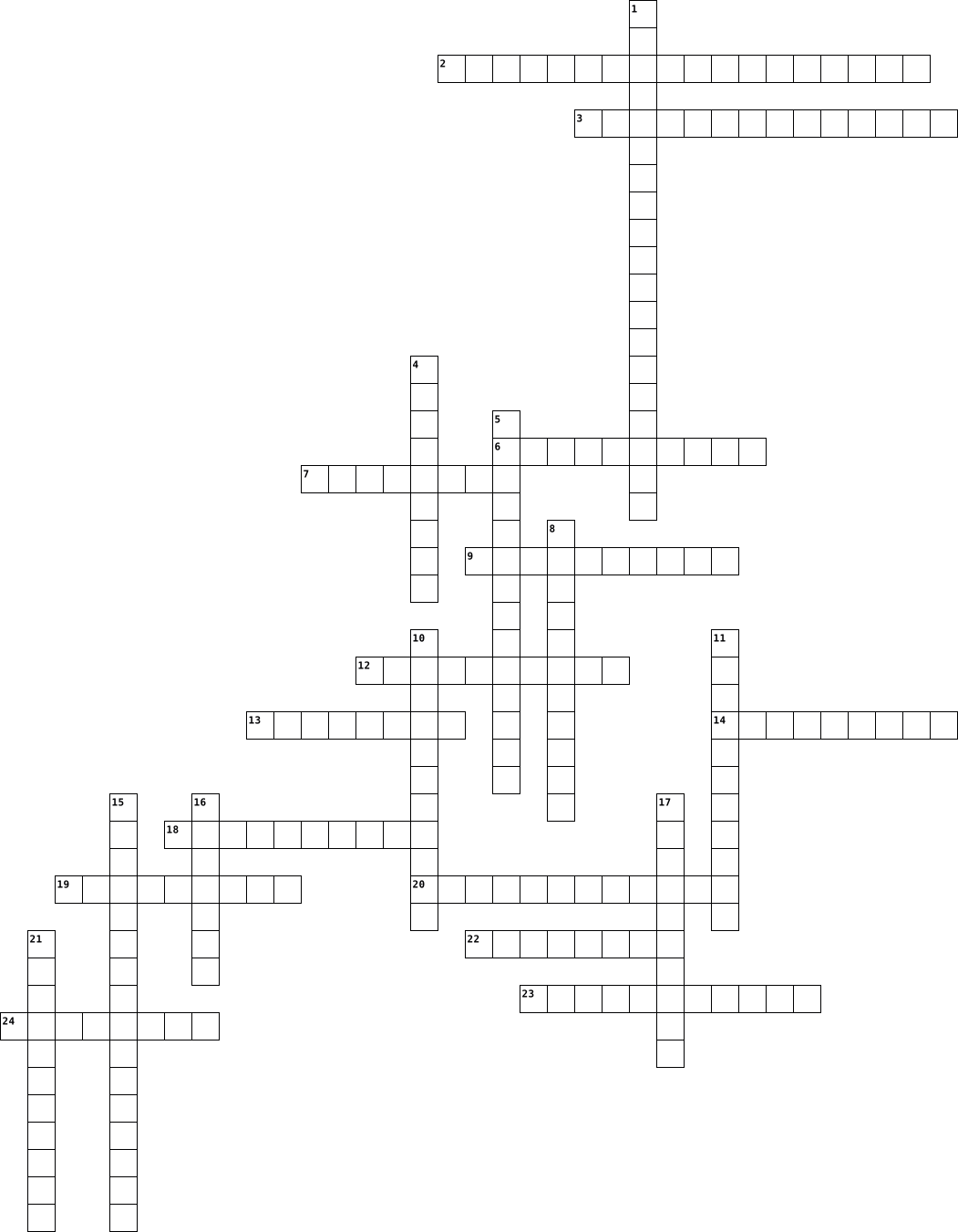
Across
- A graph showing the energy change in a reaction
- Heat energy change measured at constant pressure
- A reaction which gives out heat energy to the surroundings
- A cell which produces electrical energy when hydrogen and oxygen react
- A reaction which can go both forwards and backwards
- The mean energy needed to break a particular type of covalent bond
- A negative particle found in the shells of atoms
- The substances reacted in a chemical reaction
- An example of an exothermic reaction
- A reaction where oxygen is added
- A reaction which only goes one way (forwards)
- The substances made in a chemical reaction
- Ensuring there are sufficient resources/energy for now as well as for future generations
- A process which is cost effective
Down
- Two connected electrodes placed in an electrolyte to produce a voltage
- A reaction where oxygen is removed
- A use of an exothermic reaction
- A measure of how much heat energy something has
- A reaction which takes in heat energy from the surroundings
- A piece of apparatus used to record the temperature
- Minimum energy needed for a reaction to happen when 2 particles collide
- Several cells connected together in series
- A reaction between fuel and oxygen which gives out heat energy
- A solution which conducts electricity
24 Clues: A use of an exothermic reaction • A reaction where oxygen is added • A process which is cost effective • A reaction where oxygen is removed • An example of an exothermic reaction • A solution which conducts electricity • Several cells connected together in series • The substances made in a chemical reaction • The substances reacted in a chemical reaction • ...
Types of Reactions 2024-05-05

Across
- An element of a compound is replaced by another element
- Release of heat
- Absorption of heat
- Synonym of Combination reaction
- Provide unpleasant odour to foods
- Substance that changes in a reaction
- Exchange of ions
- Multiple reactants and a single product
- Addition of oxygen
- Chemical reaction expressed in words
Down
- Single reactant and multiple products
- Symbolic representation of a chemical reaction
- Substance that speeds up a reaction
- Removal of oxygen
- Gradual deterioration of materials
15 Clues: Release of heat • Exchange of ions • Removal of oxygen • Absorption of heat • Addition of oxygen • Synonym of Combination reaction • Provide unpleasant odour to foods • Gradual deterioration of materials • Substance that speeds up a reaction • Substance that changes in a reaction • Chemical reaction expressed in words • Single reactant and multiple products • ...
Macromolecules of Life Crossword Puzzle 2020-12-11

Across
- fats, oils and waxes
- energy carrying molecule
- means to split with water
- a single sugar molecule
- starches and sugars
- the double-stranded nucleic acid that is the instructions for building proteins
- many sugars
- the building blocks of proteins
- a large organic molecule composed of smaller molecules
- a protein that speeds up chemical reactions in a living thing
- ending materials in a chemical reaction
Down
- the reactant an enzyme changes
- starting material in a chemical reaction
- a long molecule made of monomers
- a chemical reaction that uses the removal of water to put molecules together
- monomer of nucleic acids
- a process that combines monomers into polymers
- word used to describe carbon-based molecules
- a polymer made of amino acids
- changes one set of chemical into another
- two sugars
- a single molecule that can be bonded together to form a polymer
- molecules that transmit hereditary information
- a single stranded nucleic acid
24 Clues: two sugars • many sugars • starches and sugars • fats, oils and waxes • a single sugar molecule • monomer of nucleic acids • energy carrying molecule • means to split with water • a polymer made of amino acids • the reactant an enzyme changes • a single stranded nucleic acid • the building blocks of proteins • a long molecule made of monomers • ending materials in a chemical reaction • ...
Photosynthesis 2022-09-26

Across
- C6H12O6
- O2
- H2O
- Site of the Calvin Cycle
- Cell's energy currency
- Cell's "dead battery" molecule
- what is made during a chemical reaction
- Site of the light-dependent reaction
- the process by which plants transform solar energy into chemical energy
- Process that makes glucose
Down
- Process that splits water and makes ATP
- Organelle that performs photosynthesis
- what is used during a chemical reaction
- Light-absorbing green pigment
- CO2
15 Clues: O2 • H2O • CO2 • C6H12O6 • Cell's energy currency • Site of the Calvin Cycle • Process that makes glucose • Light-absorbing green pigment • Cell's "dead battery" molecule • Site of the light-dependent reaction • Organelle that performs photosynthesis • Process that splits water and makes ATP • what is used during a chemical reaction • what is made during a chemical reaction • ...
Chemical reactions 2021-06-18

Across
- The process by which the atoms of one or more substances are rearranged to form different substances
- more substances react to produce a single product
- involves an exchange of ions between two compounds
- a single compound breaks
- a chemical reaction in which two
Down
- oxygen combines with a substance and
- a single compound breaks
- a statement that uses
- involved in a chemical reaction.
- formulas to show the identities and relative amounts of the
- into two or more elements or new compounds.
- The substances formed during a chemical reaction
- The starting substances of a chemical reaction
- into two or more elements or new compounds.
- The number written in front of a reactant or product
- energy in the form of heat and light.
16 Clues: a statement that uses • a single compound breaks • a single compound breaks • involved in a chemical reaction. • a chemical reaction in which two • oxygen combines with a substance and • energy in the form of heat and light. • into two or more elements or new compounds. • into two or more elements or new compounds. • The starting substances of a chemical reaction • ...
Rates of reaction 2012-12-13

Across
- The salt formed when a metal oxide reacts with hydrochloric acid
- The quantity of a chemical dissolved in a set volume of solution
- Limewater turns this colour when carbon dioxide bubbles through it
- The colour of Universal Indicator in an acid
- The salt formed when nitric acid reacts with a metal
- The salt formed when sulphuric acid reacts with a metal carbonate
- A reaction that gives out energy to the surroundings
- The material Han Solo was frozen in
- A chemical that speeds up a chemical reaction but is not used up in the process
- A measure of how quickly a reaction happens
Down
- The test for hydrogen gas
- The theory that reactions happen when molecules collide
- Increasing this increases the area in contact with a liquid (2 words)
- When this compound reacts with an acid, a salt and water are formed (2 words)
- A reaction that takes in energy from the surroundings
- A compound that reacts with an acid to produce a salt, carbon dioxide and water
- These diagrams show the changes in energy of the reactants and the products (2 words)
- A factor that affects the rate of a chemical reaction
- A metal commonly reacted with hydrochloric acid to form hydrogen gas
- A measure of how acidic a solution is
- A substance that shows if a solution is acidic or alkaline
- A summary of a chemical reaction showing the reactants and products
- Gives off hydrogen when it reacts with a metal
23 Clues: The test for hydrogen gas • The material Han Solo was frozen in • A measure of how acidic a solution is • A measure of how quickly a reaction happens • The colour of Universal Indicator in an acid • Gives off hydrogen when it reacts with a metal • The salt formed when nitric acid reacts with a metal • A reaction that gives out energy to the surroundings • ...
DarbySmith 2013-09-20

Across
- Single-celled organisims that live in water. They are an important store of carbon or carbon sink.
- Hydrated iron (III) oxide.
- A base that dissolves in water.
- A green chemical found in the chloroplasts of green plants.
- A reaction of an acid with a base, forming a salt and water.
- Simple written description of what is happening in a reaction.
- A substance that releases hydroxide ions.
- Highly combustible chemicals; petrol is a mixture of this.
- A biological catalyst that speeds up a reaction.
- A way of protecting aluminium from corrsion, by deliberately creating a layer of aluminium oxides over it.
Down
- A black coating of silver sulfide that is produced when silver reacts with sulfur in the atmosphere; chemical formula Ag2S.
- A simple sugar formed by photosynthesis and used in respiration.
- Chemicals produced in a chemical reaction. They are written on the right-hand side of the arrow.
- A process in which chemicals move, caused by different concentrations of the chemical.
- A scale used to measure the concentration of hydrogen ions in a solution.
- Endothermic reaction that takes place in green plants. Uses energy from sunlight to combine water and carbon dioxide and produce glucose and oxygen gas.
- A chemical reaction that releases energy.
- A substance that releases hydrogen ions into an aqueous solution.
- A term used to describe materials that store carbon in their structures. Plants and animals can be thought of as carbon sinks.
- Rain that has acids such as nitric acid and sulfuric acid dissolved in it.
20 Clues: Hydrated iron (III) oxide. • A base that dissolves in water. • A chemical reaction that releases energy. • A substance that releases hydroxide ions. • A biological catalyst that speeds up a reaction. • Highly combustible chemicals; petrol is a mixture of this. • A green chemical found in the chloroplasts of green plants. • ...
AP Biology Unit 3 Crossword Puzzle 2024-05-24

Across
- a catalyst protein
- kinetic energy associated with random movement of atoms or molecules
- Covalent bonds arise when atoms of different electronegativity share two electrons unequally
- the region on the enzyme where the substrate binds
- weak attractions or interactions between molecules
- organic coenzyme
- brings chemical groups of the active site into positions that enhance their ability to catalyze the reaction
- energy that matter possesses because of its location or structure
- potential energy available for release in a chemical reaction
- reaction absorbs free energy from its surroundings and is nonspontaneous
- Ionic and covalent bonds between elements require energy to break
- processes occur without energy input; they can happen quickly or slowly
- inhibitors bind to another part of an enzyme, causing the enzyme to change shape and making the active site less effective
Down
- inhibitors bind to the active site of an enzyme, competing with the substrate
- Covalent bond between two atoms of the same element or between different elements that share electrons equally
- energy associated with motion
- the process of breaking a molecule bond with water
- The reactant that an enzyme acts on
- the study of how energy flows through living organisms
- a chemical agent that speeds up a reaction without being consumed by the reaction
- the capacity to cause change
- the totality of an organism’s chemical reactions
- Bond formed between a positive and negative charged ion
- nonprotein enzyme helpers
- cells energy cell
- Bond between metal atoms and non-metal atoms
- reaction proceeds with a net release of free energy and is spontaneous
27 Clues: organic coenzyme • cells energy cell • a catalyst protein • nonprotein enzyme helpers • the capacity to cause change • energy associated with motion • The reactant that an enzyme acts on • Bond between metal atoms and non-metal atoms • the totality of an organism’s chemical reactions • the process of breaking a molecule bond with water • ...
Matter Unit 1 - Properties of Matter 2023-08-13

Across
- chemical property where a element has the ability to react with an acid
- amount of mass in a volume
- anything that has mass and has a volume
- substance that is not identical throughout
- temperature at which a liquid becomes a gas or vapor
- substance in which a solute dissolves to produce a homogeneous mixture
- substance is identical throughout
- chemical reaction in a substance that has a low flashpoint and can ignite and burn easily
- characteristic that can be observed and measured without changing the chemical identity of a substance
- amount of a given substance that can be dissolved in a certain amount of solvent
- solution that is unable to absorb or dissolve any more of a solute at a given temperature and pressure
- resistance to flow of a fluid
- substance that dissolves in a solvent to produce a homogeneous mixture
- amount of space an object takes up
Down
- measure of the ease at which an electric charge or heat can pass through a material
- temperature at which a liquid becomes a solid
- amount of matter in an object
- chemical reaction breaking down substances into simpler substances
- chemical reaction when a substance comes into contact with oxygen
- properties that can be measured or observed only when matter undergoes a change to become an entirely different kind of matter
- chemical reaction in a substance that has a high flashpoint, and must have a flame in order to ignite and burn
- process in which a solid is eaten away and changed by a chemical reaction
- temperature at which a solid becomes a liquid
23 Clues: amount of mass in a volume • amount of matter in an object • resistance to flow of a fluid • substance is identical throughout • amount of space an object takes up • anything that has mass and has a volume • substance that is not identical throughout • temperature at which a liquid becomes a solid • temperature at which a solid becomes a liquid • ...
Physical Science Chapter 7A 2025-11-19

Across
- gas release showing evidence of chemical change
- coefficients ___ the equation
- formed during a chemical reaction
- evidence of chemical change found in eggs producing hydrogen sulfide gas
- solid forming from liquids mixing together
- 4Fe + ___O2 🡪 2Fe2O3
- N2 + 3H2 🡪 ___NH3
- number placed in front of a chemical formula
Down
- indicates the number of atoms of that element
- chemical ____: process that rearranges the atoms in one or more substances into one or more new substances
- releasing or absorbing energy is often found as a ____ change
- chemical evidence of wood turning to ash is a ___ change
- product in this equation: 2H2 + O2 🡪 2H2O
- enters into a chemical reaction
14 Clues: N2 + 3H2 🡪 ___NH3 • 4Fe + ___O2 🡪 2Fe2O3 • coefficients ___ the equation • enters into a chemical reaction • formed during a chemical reaction • product in this equation: 2H2 + O2 🡪 2H2O • solid forming from liquids mixing together • number placed in front of a chemical formula • indicates the number of atoms of that element • gas release showing evidence of chemical change • ...
Ch. 8 Chemistry Crossword 2014-01-11

Across
- An equation for a reaction in solution showing all strong electrolytes as ions
- A chemical change in which two or more substances react to form a single new substance
- A chemical change that involves an exchange of positive ions between two compounds
- A chemical change in which oxygen reacts with another substance which often produces energy in the forn of heat and light
- A chemical change in which a single compound is broken down into two or more simpler products
Down
- A chemical equation that does not indicate the relative amounts of reactants and products
- A chemical equation in which mass is conserved and each side of the equation has the same number of atoms of each element
- A chemical change in which one element replaces a second element in a compound
- Shows number and type of atoms present in the smallest representative unit of a substance
- A small whole number that appears in front of a formula in a balanced chemical equation
- An ion that is not directly involved in a chemical reaction
- A table listing metals in order of decreasing activity
- An equation for a reaction in solution showing only those particles that are directly involved in the chemical change
- An expression representing a chemical reaction
- A substance that increases the rate of reaction by lowering the activation-energy barrier
15 Clues: An expression representing a chemical reaction • A table listing metals in order of decreasing activity • An ion that is not directly involved in a chemical reaction • A chemical change in which one element replaces a second element in a compound • An equation for a reaction in solution showing all strong electrolytes as ions • ...
Chemical Compounds 2016-01-16

Across
- when a compounds' shape IS symmetrical.
- A number or symbol multiplied with a variable.
- Substance that changes in a chemical reaction.
- Shape of H2O.
- Shape of CH4.
- Zn + 2HCl -> ZnCl2 + H2
- Shape of BeH2.
- C2H3O2 -> CO2 + H2O
- Symbolic representation of a chemical reaction.
- When a compounds' shape is NOT symmetrical.
- A single hydrogen atom is one of these.
- 2NaCl -> 2Na + Cl2
- A lasting attraction between atoms.
- Br2, I2, N2, Cl2, H2, O2, F2
- Substance that is formed ion a chemical reaction.
Down
- Ag, Zn, Al are examples of this.
- Shape of BBr3.
- Na + Cl -> NaCl
- A useful guide for predicting products of metal displacement.
- HCl + AgNO3 -> AgCl + HNO3
- Shape of NCl3.
- When an elements' charge is reduced in a chemical equation.
- Physical property.
- When an elements' charge is increased in a chemical equation.
- Zncl2 is an example of this.
- The type of bond formed when Zn(NO3)2 is produced.
- The type of bond formed in NaCl.
27 Clues: Shape of H2O. • Shape of CH4. • Shape of BBr3. • Shape of NCl3. • Shape of BeH2. • Na + Cl -> NaCl • Physical property. • 2NaCl -> 2Na + Cl2 • C2H3O2 -> CO2 + H2O • Zn + 2HCl -> ZnCl2 + H2 • HCl + AgNO3 -> AgCl + HNO3 • Zncl2 is an example of this. • Br2, I2, N2, Cl2, H2, O2, F2 • Ag, Zn, Al are examples of this. • The type of bond formed in NaCl. • A lasting attraction between atoms. • ...
Chemical Compounds 2016-01-16

Across
- Ag, Zn, Al are examples of this.
- Br2, I2, N2, Cl2, H2, O2, F2
- Shape of H2O.
- Na + Cl -> NaCl
- A single hydrogen atom is one of these.
- When an elements' charge is increased in a chemical equation.
- Shape of NCl3.
- A useful guide for predicting products of metal displacement.
- Zn + 2HCl -> ZnCl2 + H2
- Substance that changes in a chemical reaction.
- Symbolic representation of a chemical reaction.
- A number or symbol multiplied with a variable.
- Shape of CH4.
- The type of bond formed in NaCl.
- When a compounds' shape is NOT symmetrical.
- when a compounds' shape IS symmetrical.
- Physical property.
- A lasting attraction between atoms.
Down
- 2NaCl -> 2Na + Cl2
- C2H3O2 -> CO2 + H2O
- HCl + AgNO3 -> AgCl + HNO3
- Substance that is formed ion a chemical reaction.
- Shape of BBr3.
- The type of bond formed when Zn(NO3)2 is produced.
- When an elements' charge is reduced in a chemical equation.
- Zncl2 is an example of this.
- Shape of BeH2.
27 Clues: Shape of H2O. • Shape of CH4. • Shape of NCl3. • Shape of BBr3. • Shape of BeH2. • Na + Cl -> NaCl • 2NaCl -> 2Na + Cl2 • Physical property. • C2H3O2 -> CO2 + H2O • Zn + 2HCl -> ZnCl2 + H2 • HCl + AgNO3 -> AgCl + HNO3 • Br2, I2, N2, Cl2, H2, O2, F2 • Zncl2 is an example of this. • Ag, Zn, Al are examples of this. • The type of bond formed in NaCl. • A lasting attraction between atoms. • ...
Chemical Compounds 2016-01-16

Across
- Br2, I2, N2, Cl2, H2, O2, F2
- A single hydrogen atom is one of these.
- C2H3O2 -> CO2 + H2O
- A lasting attraction between atoms.
- 2NaCl -> 2Na + Cl2
- Physical property.
- HCl + AgNO3 -> AgCl + HNO3
- Shape of NCl3.
- A useful guide for predicting products of metal displacement.
- Shape of BBr3.
Down
- The type of bond formed in NaCl.
- Substance that is formed ion a chemical reaction.
- Shape of H2O.
- Symbolic representation of a chemical reaction.
- Shape of CH4.
- A number or symbol multiplied with a variable.
- Substance that changes in a chemical reaction.
- The type of bond formed when Zn(NO3)2 is produced.
- Zn + 2HCl -> ZnCl2 + H2
- Ag, Zn, Al are examples of this.
- When a compounds' shape is NOT symmetrical.
- When an elements' charge is increased in a chemical equation.
- Na + Cl -> NaCl
- Zncl2 is an example of this.
- Shape of BeH2.
- when a compounds' shape IS symmetrical.
- When an elements' charge is reduced in a chemical equation.
27 Clues: Shape of H2O. • Shape of CH4. • Shape of NCl3. • Shape of BeH2. • Shape of BBr3. • Na + Cl -> NaCl • 2NaCl -> 2Na + Cl2 • Physical property. • C2H3O2 -> CO2 + H2O • Zn + 2HCl -> ZnCl2 + H2 • HCl + AgNO3 -> AgCl + HNO3 • Br2, I2, N2, Cl2, H2, O2, F2 • Zncl2 is an example of this. • The type of bond formed in NaCl. • Ag, Zn, Al are examples of this. • A lasting attraction between atoms. • ...
Unit 2 Camden Ahrens 2023-04-04

Across
- the diffusion of water
- when the active site gets misshapen because of temperature or other factors
- organs that work together as a unit in the body
- protein that speeds up chemical reactions
- the building block of all matter
- transport things in and out of the cell with energy
- where the enzyme binds to the substrate for the chemical reaction
- structures that perform specific jobs in the cell
- the energy needed to initiate a chemical reaction
- water loving
Down
- decides what goes in and out
- transport things in and out of the cell without energy
- enzyme binds to this for the chemical reactions
- the spreading of something
- made up of one of more atoms
- tissues that perform a specific function in the body
- what you get after the enzyme's chemical reaction
- a living thing
- a group of cells that do a job for the organism
- cell membrane is made of these
- hates water
- building block of all living things
22 Clues: hates water • water loving • a living thing • the diffusion of water • the spreading of something • decides what goes in and out • made up of one of more atoms • cell membrane is made of these • the building block of all matter • building block of all living things • protein that speeds up chemical reactions • organs that work together as a unit in the body • ...
Chemical Reactions Revision 2022-08-25

Across
- The product of hydrochloric acid and copper carbonate
- The colour of a base
- Covalently bonded elements (same element - a molecule)
- To burn
- A form of combustion that burns with a clean flame and the products are CO2 and H2O
- A reaction in which one element or radical takes the place of another element or radical in a compound (A + BC --> AC + B)
- Bitter and low pH
- A number placed in front of an element, symbol or chemical formula in an equation
- A reaction in which two or more substances combine to form one new compound (also called a synthesis reaction)
- The colour of an acid
- A compound that contains carbon and is able to form a bond with hydrogen
- A reaction where a more complex molecule breaks down to form two or more simpler products
Down
- The law that mass is neither created or destroyed which is the reason chemical reactions are balanced
- Tells you how many atoms of each element are in a molecule
- Involves two non-metal atoms and share electrons to make outermost shells of both full (neither can take the electrons)
- A chemical reaciton in real life. It is the reaction that happens in the plant so it can breathe and allows us to breathe
- A representation of a chemical reaction that uses symbols to show the relationship between the reactants and the products
- A form of combustion that burns with a smokey flame and has insufficient oxygen
- Different elements e.g. H2O
- Is sour and can burn
- A number in a chemical formula that tells the number of atoms in a molecule or the ratio of elements in a compound
- doesn't contain carbon and can't form a bond with hydrogen
- A reaction where the products are water and salt
- An insoluble solid that is formed from the reaction between solutions
- The things that make up everything
25 Clues: To burn • Bitter and low pH • The colour of a base • Is sour and can burn • The colour of an acid • Different elements e.g. H2O • The things that make up everything • A reaction where the products are water and salt • The product of hydrochloric acid and copper carbonate • Covalently bonded elements (same element - a molecule) • ...
Chemical Reaction Terms HCL 2024-10-25

Across
- a process in which some substances change into different substances
- more energy is used to break bonds in reactants than is released when bonds form in products
- the simplest form of matter that has a unique set of properties
- a force of attraction between atoms or ions
- the force of attraction that holds together two nonmetal atoms that share a pair of electrons
- substances that are produced in the reaction
- a reaction that occurs when two or more reactants combine to form a single product
- substances that start a chemical reaction
- a unique substance that forms when two or more elements combine chemically
Down
- state of matter in which particles are free to slide past one another but stay close
- a reaction that occurs when elements switch places in compounds
- the force of attraction that holds together oppositely charged ions
- more energy is released when bonds form in products than is used to break bonds in reactants
- a reaction that occurs when one reactant breaks down into two or more products
- a substance that increases the rate of a chemical reaction
- state of matter in which particles are free to move about their container
- a mixture of a metal with one or more other elements
- state of matter in which particles are locked in place
18 Clues: substances that start a chemical reaction • a force of attraction between atoms or ions • substances that are produced in the reaction • a mixture of a metal with one or more other elements • state of matter in which particles are locked in place • a substance that increases the rate of a chemical reaction • ...
Percent Yield 2013-04-05

Across
- /A ratio between the amounts in moles of any two compounds involved in a chemical reaction
- /A mathematical determination of the size or number of somethingreactant /Starting material in a chemical reaction.
- /A method for comparing the dimensions of the physical quantities occurring in a problem to find relationships between the quantities without having to solve the problem completely.
- /Relationship between two variables when their ratio is equal to a constant value.
- /Starting material in a chemical reaction.
- /Calculation of the actual yield over the theoretical yield multiplied by 100 and represented as a percent.
- /Values that are directly proportional to each other
- /The amount of actual product created
Down
- /Ideal yield that would be produced if every atom involved in the reaction reacted with all other atoms.
- /The number in front of an element
- /An equation for a chemical reaction in which the number of atoms for each element in the reaction and the total charge are the same for both the reactants and the products
- /The mass of one mole of a substance.
- /A method in chemistry that describes numerical relationships in chemical reactions using conversion factors
- /The relative size of two quantities expressed as the quotient of one divided by the other.
- /The ending material in a chemical reaction .
15 Clues: /The number in front of an element • /The mass of one mole of a substance. • /The amount of actual product created • /Starting material in a chemical reaction. • /The ending material in a chemical reaction . • /Values that are directly proportional to each other • /Relationship between two variables when their ratio is equal to a constant value. • ...
Energy Change & Rates of Reactions 2021-04-03

Across
- Heat of reaction for burning one mole of a substance.
- Chemical or physical change occurs "naturally".
- C value in certain equations.
- Mathematical expression obtained by comparing reaction rates with reactant concentrations.
- To separate a substance into simpler compounds. Type of Change.
- Minimum energy that a reactant molecule must possess to have a successful reaction.
- The law of ___ states energy cannot be created or destroyed.
- A Branch of chemistry, that deals with the relations of heat and chemical reactions.
Down
- A theory that chemical reactions can occur only if the reactants collide with proper orientation.
- When the rate is increasing.
- Thermodynamic equation used for calculating changes in the Gibbs energy of a system.
- Total amount of thermal energy in a system or substance.
- A substance that can alter the rate of a chemical reaction.
- The reaction or substance changing.
- An equation that is needed to be successful with Hess's Law.
- Measurement of the heat flow out of or into the system
- When two molecules combine to form a larger molecule and a small molecule.
- To make (a liquid) thinner or less strong by adding another liquid.
- A measure of the molecular disorder, or randomness, of a system.
- Multi-step process used when a reaction cannot be done in a calorimeter.
- ΔH is greater than Zero.
21 Clues: ΔH is greater than Zero. • When the rate is increasing. • C value in certain equations. • The reaction or substance changing. • Chemical or physical change occurs "naturally". • Heat of reaction for burning one mole of a substance. • Measurement of the heat flow out of or into the system • Total amount of thermal energy in a system or substance. • ...
Chemistry 2024-06-07

Across
- Substance that speeds up a chemical reaction
- Atoms of the same element with different numbers of neutrons
- Basic unit of a chemical element
- Product of an acid-base reaction
- Two or more atoms bonded together
- Electrons in the outer shell of an atom
- Positively charged particle
- Substance dissolved in a solvent
- Substance that donates protons
- Substance composed of two or more elements
Down
- Pure substance consisting of one type of atom
- Substance that accepts protons
- Process of chemical change
- Substance that dissolves a solute
- Neutral particle in the nucleus
- Table of elements
- Atom or molecule with a net electric charge
- Negatively charged particle
- Connection between atoms
- Measure of acidity or basicity
20 Clues: Table of elements • Connection between atoms • Process of chemical change • Negatively charged particle • Positively charged particle • Substance that accepts protons • Substance that donates protons • Measure of acidity or basicity • Neutral particle in the nucleus • Basic unit of a chemical element • Product of an acid-base reaction • Substance dissolved in a solvent • ...
Chemistry! 2023-12-09

Across
- Crystal shapes that are geometric and uniform
- Any property that can only be observed during a chemical reaction
- A substance that dissolves in a solvent
- The substances present at the start of a chemical reaction
- A substance in which something is dissolved
- A cavity in a rock lined with crystals
- The phase in the column that does move with the sample. Can be a gas or a liquid.
- A property of a crystal that gives it a flat surface
- The process of making polymers
- Substance that can taste sour and has a pH less than 7
- A chemical process scientists use to separate and analyze different parts of a mixture
- Process by which large crystals form from their solutions
Down
- The process of gaining an electron in a chemical reaction
- A combination of 2 or more substances, where each individual substance maintains its original chemical property
- Smaller molecules that come together to form a larger molecule
- The substances formed by the reaction
- A ruler for acidity and basicity
- Any property that can be observed using the five senses or can be measured without changing the matter
- The substance that is to be separated from the mixture
- A mixture in which one substance dissolves into another
- The phase in the column that doesn’t move with the sample. Usually a porous solid
- Substance that can feel slippery and has a pH more than 7
- The process of losing an electron in a chemical reaction
- Very big molecule made up of smaller molecules arranged in a repeating pattern
24 Clues: The process of making polymers • A ruler for acidity and basicity • The substances formed by the reaction • A cavity in a rock lined with crystals • A substance that dissolves in a solvent • A substance in which something is dissolved • Crystal shapes that are geometric and uniform • A property of a crystal that gives it a flat surface • ...
Enzyme Crossword Sabinske 2023-08-25

Across
- where reactants bind on an enzyme (two words)
- either can cause an enzyme to change (three words)
- BLANK is made by living cells to speed up a reaction
- important factor in determining if a reaction will occur
- what plants use for energy
- what animals use for energy
- reactants in a enzyme-catalyst reaction are known as
- compounds engaging in the reaction
Down
- amount of energy needed to start a reaction
- These can switch an enzyme on or off
- can be released as heat, light or sound
- compounds produced from the reaction
- two things conserved in a reaction (three words)
- process that changes one set of compounds into another
- catalyst BLANK the activation energy needed
- biological catalysts
- Pepsin works best in what condition?
17 Clues: biological catalysts • what plants use for energy • what animals use for energy • compounds engaging in the reaction • These can switch an enzyme on or off • compounds produced from the reaction • Pepsin works best in what condition? • can be released as heat, light or sound • amount of energy needed to start a reaction • catalyst BLANK the activation energy needed • ...
Chemical Reactions and Equations 2024-05-14

Across
- a reaction where two reactants combine to form a single product
- bags of chips are usually filled with _________ gas
- a substance that undergoes a chemical change in a reaction
- a substance which turns from green to white when heated
- most reactive metal
- during a double displacement reaction, _____ are exchanged
- corrosion and rancidity are _______ reactions
- common name of calcium hydroxide
- 2Mg+O2 = 2MgO is a _______ reaction
- acid-metal reactions are ________ reactions
Down
- an insoluble solid formed during a double displacement reaction
- gas evolved when an acid reacts with a metal
- a magnesium ribbon burns in _____ colour
- reaction where light causes the breakdown of a subtance
- substance that speeds up a chemical reaction
- brown gas produced during the decomposition of lead nitrate
- CaO + H20 is a ______ reaction (exothermic/endothermic)
17 Clues: most reactive metal • common name of calcium hydroxide • 2Mg+O2 = 2MgO is a _______ reaction • a magnesium ribbon burns in _____ colour • acid-metal reactions are ________ reactions • gas evolved when an acid reacts with a metal • substance that speeds up a chemical reaction • corrosion and rancidity are _______ reactions • ...
Chemical Reactions and Equations 2024-05-14

Across
- a reaction where two reactants combine to form a single product
- bags of chips are usually filled with _________ gas
- a substance that undergoes a chemical change in a reaction
- a substance which turns from green to white when heated
- most reactive metal
- during a double displacement reaction, _____ are exchanged
- corrosion and rancidity are _______ reactions
- common name of calcium hydroxide
- 2Mg+O2 = 2MgO is a _______ reaction
- acid-metal reactions are ________ reactions
Down
- an insoluble solid formed during a double displacement reaction
- gas evolved when an acid reacts with a metal
- a magnesium ribbon burns in _____ colour
- reaction where light causes the breakdown of a subtance
- substance that speeds up a chemical reaction
- brown gas produced during the decomposition of lead nitrate
- CaO + H20 is a ______ reaction (exothermic/endothermic)
17 Clues: most reactive metal • common name of calcium hydroxide • 2Mg+O2 = 2MgO is a _______ reaction • a magnesium ribbon burns in _____ colour • acid-metal reactions are ________ reactions • gas evolved when an acid reacts with a metal • substance that speeds up a chemical reaction • corrosion and rancidity are _______ reactions • ...
Chemical Reactions and Equations 2024-05-14

Across
- reaction where light causes the breakdown of a subtance
- acid-metal reactions are ________ reactions
- a substance which turns from green to white when heated
- a substance that undergoes a chemical change in a reaction
- brown gas produced during the decomposition of lead nitrate
- substance that speeds up a chemical reaction
- during a double displacement reaction, _____ are exchanged
- CaO + H20 is a ______ reaction (exothermic/endothermic)
Down
- an insoluble solid formed during a double displacement reaction
- gas evolved when an acid reacts with a metal
- a reaction where two reactants combine to form a single product
- common name of calcium hydroxide
- bags of chips are usually filled with _________ gas
- corrosion and rancidity are _______ reactions
- a magnesium ribbon burns in _____ colour
- most reactive metal
- 2Mg+O2 = 2MgO is a _______ reaction
17 Clues: most reactive metal • common name of calcium hydroxide • 2Mg+O2 = 2MgO is a _______ reaction • a magnesium ribbon burns in _____ colour • acid-metal reactions are ________ reactions • gas evolved when an acid reacts with a metal • substance that speeds up a chemical reaction • corrosion and rancidity are _______ reactions • ...
biology definition 2026-03-03

Across
- process of breaking down large molecules
- reaction that has net release of free energy
- minimum energy requires to start a chemical reaction
- new substance formed as a result of a chemical reaction
Down
- reaction that absorbs free energy from surrounding
- active site has a fixed shape
- sum of all chemical reaction in cell
- starting substance in a chemical reaction
- process of making large molecules from smaller ones
- molecule that inhibit the activity of enzyme
- active site conforms the substrate
- non-protein molecule that helps enzyme function properly
12 Clues: active site has a fixed shape • active site conforms the substrate • sum of all chemical reaction in cell • process of breaking down large molecules • starting substance in a chemical reaction • reaction that has net release of free energy • molecule that inhibit the activity of enzyme • reaction that absorbs free energy from surrounding • ...
biology definition 2026-03-03

Across
- reaction that absorbs free energy from surrounding
- active site has a fixed shape
- minimum energy requires to start a chemical reaction
- sum of all chemical reaction in cell
- process of making large molecules from smaller ones
Down
- non-protein molecule that helps enzyme function properly
- new substance formed as a result of a chemical reaction
- starting substance in a chemical reaction
- molecule that inhibit the activity of enzyme
- reaction that has net release of free energy
- process of breaking down large molecules
- active site conforms the substrate
12 Clues: active site has a fixed shape • active site conforms the substrate • sum of all chemical reaction in cell • process of breaking down large molecules • starting substance in a chemical reaction • molecule that inhibit the activity of enzyme • reaction that has net release of free energy • reaction that absorbs free energy from surrounding • ...
Chemistry and Physics Lesson 4 2017-08-16

Across
- Molecules arranged in long chains of lots of repeating small molecules
- When heat energy is absorbed during a chemical reaction TWO WORDS
- The substances you start with in a chemical reaction
- When two or more chemical substances interact with each other and change into different chemical substances TWO WORDS
- Solids that have a regular, repeating arrangement of atoms
- A term that means potential for hydrogen
- A base that works against the acid upsetting your stomach
Down
- When heat energy is released during a chemical reaction TWO WORDS
- A reaction that doesn't change the molecules of substance but changed how the substance looks and sometimes its state TWO WORDS
- the chemical opposite of an acid
- A substance that tastes sour, conducts electricity, ruins metals, and donates hydrogen ions
- Valuable crystals often used to make jewelry
- A substance that speeds up a chemical reaction without being used up in the process
- A type of polymer that is hard to break and can be recycled
14 Clues: the chemical opposite of an acid • A term that means potential for hydrogen • Valuable crystals often used to make jewelry • The substances you start with in a chemical reaction • A base that works against the acid upsetting your stomach • Solids that have a regular, repeating arrangement of atoms • A type of polymer that is hard to break and can be recycled • ...
Chemistry 2022-03-18
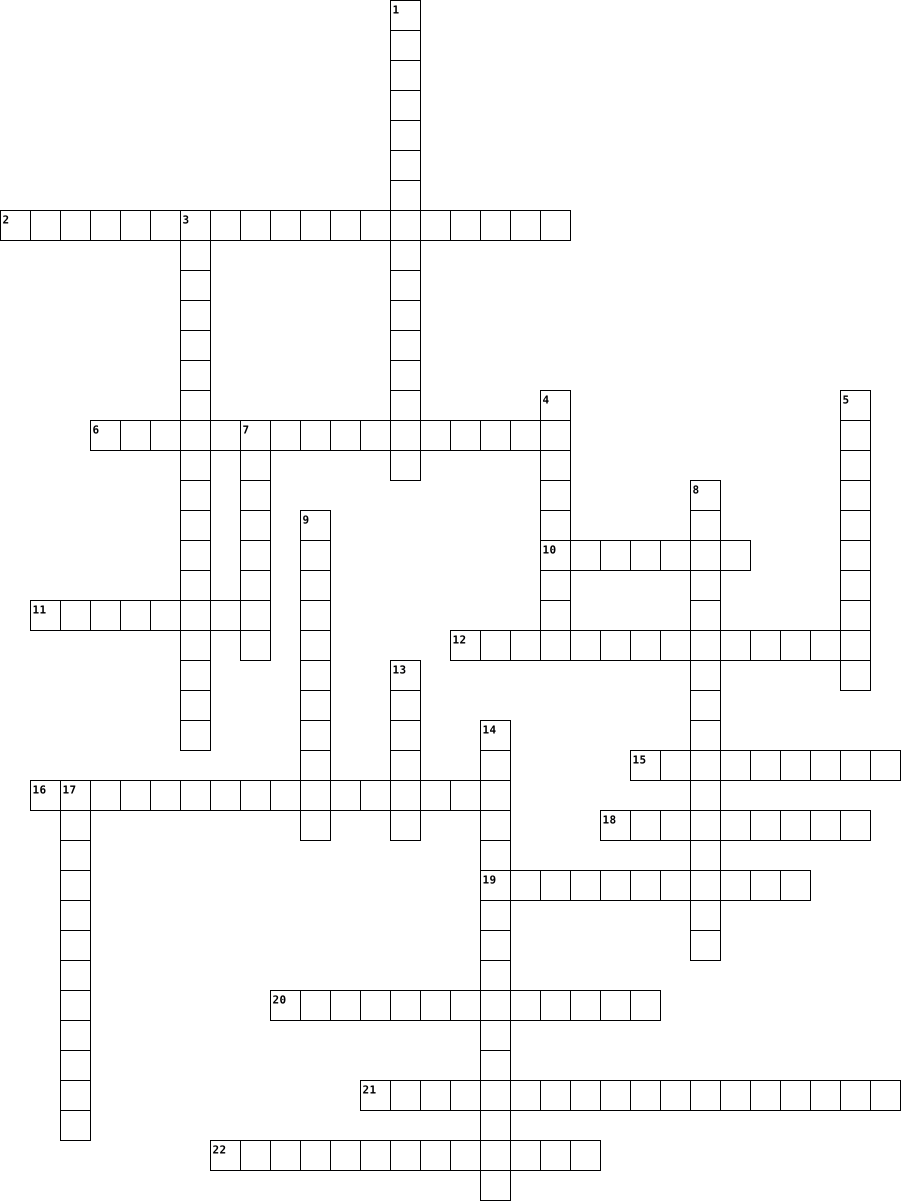
Across
- is a reaction in which energy is absorbed
- is a characteristic of a substance that describes its ability to change into other substances
- the cells in your body contain biological catalysts
- when the reaction is complete, you have new substances call...
- is any change that alters the form or appearance of a substance but does not make it into another substance
- the study of matter and how matter changes
- minimum amount of energy to start a chemical reaction
- the substances you have at the beginning are called...
- is a number placed in front of a chemical formula in an equation
- the amount of a substance in a given volume
- mass that is conserved in chemical reactions
- breaks down compounds into simpler products When a substance in complete you have a new substance called---
Down
- an easy way to show a chemical reaction using symbols instead of words
- a reaction that releases energy in the form of heat
- when two or more elements or compounds combine to make a complex substance
- matter can enter from or escape to the surroundings
- a material that increases the rate of a reaction by lowering the activstion
- a change in matter that produces one or more new substances in a chemical
- when two different elements switch places
- anything that has mass and takes up space
- is a characteristic of a substance that can be observed without changing the substance into another substance
- matter is not allowed to enter or leave
22 Clues: matter is not allowed to enter or leave • is a reaction in which energy is absorbed • when two different elements switch places • anything that has mass and takes up space • the study of matter and how matter changes • the amount of a substance in a given volume • mass that is conserved in chemical reactions • a reaction that releases energy in the form of heat • ...
Chapter 13 Physical Science, Lilly Stoykoff 2019-02-28

Across
- A measure of the concentration of hydronium ions
- AB → A + B
- AB + CD → AD + CB
- When reaction and it’s reverse act at the same rate
Down
- A + BC → AC + B
- The minimum energy required in order for a chemical to proceed
- A + B → AB
- Description of a chemical reaction in which there is a net release of energy
- Description of a solution in which hydronium ion concentration is higher than the hydroxide ion concentration
- Description of a chemical reaction in which there is a net absorption of energy
- The reacting substances in a chemical reaction
- The new materials formed in a chemical reaction
- AB + oxygen → oxides of A & B + H2O
13 Clues: A + B → AB • AB → A + B • A + BC → AC + B • AB + CD → AD + CB • AB + oxygen → oxides of A & B + H2O • The reacting substances in a chemical reaction • The new materials formed in a chemical reaction • A measure of the concentration of hydronium ions • When reaction and it’s reverse act at the same rate • The minimum energy required in order for a chemical to proceed • ...
Science Vocab 2016-12-09

Across
- a chemical bond that involves the sharing of electron pairs between atoms
- the law that the properties of the elements are periodic functions of their atomic numbers
- the total number of protons and neutrons
- a substance that takes part in and undergoes change during a reaction
- properties are intermediate between those of metals and solid nonmetals. They are electrical semiconductors.
- a non solid material
- can include changing the color, shape, state of matter, or volume of a substance.
- each of two or more forms of the same element that contain equal numbers of protons but different numbers of neutrons in their nuclei
- when two ions bond
- a particle smaller than an atom
- an atom or molecule with a net electric charge due to the loss or gain of one or more electrons
- is energy stored in the bonds
- single column
- a combination of two or more pure substances
- characteristic of something
- a stable subatomic particle occurring in all atomic nucle
- positive charged core of an atom
- does not depend on that of another
- type of chemical reaction where two compounds react, and the positive ions and the negative ions of the two reactants switch places
- an exothermic reaction in which something reacts with oxygen
- a substance that increases the rate of a chemical reaction without itself undergoing any permanent chemical change
- absorbs
- a substance consisting of atoms which all have the same number of protons
- a quantity obtained by multiplying quantities together
- legally sound, effective, or binding
- smallest form of an element
- a solid material
- a stable subatomic particle with a charge of negative electricity
- the bond between two chemicals
- a material system made up of two or more different substances
Down
- a tryout or experiment to test quality, value, or usefulness
- a molecular ion, is a charged chemical species
- quantity that is unknown but assumed to have a fixed value in a specified mathematical context
- substance a definite and constant composition
- a substance that is observed during a reaction in which the chemical composition or identity of the substance is changed
- total number of protons and neutron is a neucleus
- equation occurs when the number of the atoms involved in the reactants side is equal to the number of atoms in the products side
- chemical rule of thumb that reflects observation that atoms of main-group elements tend to combine
- is a type of chemical reaction where one element replaces another element in a compound.
- designed to minimize the effects of variables other than the independent variable
- puts out
- a set of chemical symbols showing the elements present in a compound and their relative proportions
- chemical reaction in which a single compound breaks down into two or more elements or new compounds
- educated guess
- depends on that of another
- constant term related to the properties of a product
- a positively charged ion,
- a positively charged ion,
- A mixture which has uniform composition and properties throughout
- chemical reaction in which two or more simple substances combine to form a more complex product
- liable to change
- allow atoms to make covalent bonds
- a subatomic particle of about the same mass as a proton but without an electric charge
- the symbolic representation of a chemical reaction in the form of symbols and formulae
- can be observed or measured without changing the composition of matter
- is any change that results in the formation of new chemical substances
- the amount of protons in a neucleus
- The mass of atoms, their size, and how they are arranged
- a substance formed when two or more chemical elements
- a group of similar elements
60 Clues: absorbs • puts out • single column • educated guess • liable to change • a solid material • when two ions bond • a non solid material • a positively charged ion, • a positively charged ion, • depends on that of another • characteristic of something • smallest form of an element • a group of similar elements • is energy stored in the bonds • the bond between two chemicals • ...
Lesson 4 Crossword 2022-10-28

Across
- a term that means potential for hydrogen
- the substances you start with in a chemical reaction
- when heat energy is absorbed during a chemical reaction TWO WORDS
- molecules arranged in ling chains of lots of repeating small molecules
- a reaction that doesn't change the molecules of a substance but changes how the substance looks and sometimes its state TWO WORDS
- a substance that speeds up a chemical reaction without being used up in the process
- solids that have a regular, repeating arrangement of atoms
- when two or more chemical substances interact with each other and change into different chemical substances TWO WORDS
Down
- a type of polymer that is hard to break and can be recycled
- the chemical opposite of an acid
- when heat energy is released during a chemical reaction TWO WORDS
- valuable crystals often used to make jewelry
- a base that works against the acid upsetting your stomach
- a substance that tastes sour, conducts electricity, ruins metals and donates hydrogen ions
14 Clues: the chemical opposite of an acid • a term that means potential for hydrogen • valuable crystals often used to make jewelry • the substances you start with in a chemical reaction • a base that works against the acid upsetting your stomach • solids that have a regular, repeating arrangement of atoms • a type of polymer that is hard to break and can be recycled • ...
Chapter 2 2022-03-18

Across
- A number in front of a chemical formula in an equation that indicates how many molecules or atoms of each reactant and product are involved in a reaction.
- when the reaction is complete, you will have new substances called
- A characteristic of a substance that describes its ability to change into other substances
- Anything that has mass and takes up space.
- Any change that alters the form or appearance of a substance but does not make the substance into another substance
- The substances you have at the beginning
- A change in matter that produces one or more new substances is a chemical change, or a
- A principle that states during a chemical reaction, matter is not created or destroyed.
- A reaction that releases energy in the form of heat
- A characteristic of a substance that can be observed without changing the substance into another substance
Down
- A system in which matter can enter from or escape to the surroundings.
- A reaction in which energy is absorbed
- A system in which no matter is allowed to enter or leave.
- A short, easy way to show a chemical reaction, using symbols instead of words
- A solid that forms from solution during a chemical reaction is called a
- The study of matter and how matter changes
16 Clues: A reaction in which energy is absorbed • The substances you have at the beginning • Anything that has mass and takes up space. • The study of matter and how matter changes • A reaction that releases energy in the form of heat • A system in which no matter is allowed to enter or leave. • when the reaction is complete, you will have new substances called • ...
Chemical reactions crossword puzzle 2022-01-05

Across
- Piece of an atom with no charge
- Chemical symbol Fe
- substance made from different elements
- type of reaction which absorbs energy
- Negatively charged piece of an atom
- chemical symbol K
Down
- substance found on the right side of a chemical equation
- Substance made of only one type of atom
- substance found on the left side of a chemical equation
- Type of reaction which releases energy
- "law of conservation of..."
- chemical formula H2O
- positively charged piece of an atom
- released from a reaction when we notice a smell
14 Clues: chemical symbol K • Chemical symbol Fe • chemical formula H2O • "law of conservation of..." • Piece of an atom with no charge • positively charged piece of an atom • Negatively charged piece of an atom • type of reaction which absorbs energy • substance made from different elements • Type of reaction which releases energy • Substance made of only one type of atom • ...
CHEMISTRY 2017-03-23

Across
- A long-chain molecule formed by the joining of many smaller and repeating molecules
- A small amount of active molecules (such as acid) in a solution
- A mixture of a solute dissolved in a chemical reaction
- A reaction that involves oxygen and releases light and heat energy
- A reaction in which an acid and base combine to produce a metal salt and water
- A small molecule from which polymers are made
- A substance that increases the rate of a reaction but is not used up in the reaction
- A molecule that only contains carbon and hydrogen atoms
Down
- THEORY A theory stating that the particles involved in a chemical reaction must collide in order to react
- An insoluble compound formed in a precipitation reaction
- A strong acid readily releases a hydrogen ion in a chemical reaction, can also be used to describe the bond between different atoms
- Process of joining of smaller units to form a long-chain molecule
- Object or substance that can be broken down by bacteria, fungi and other living organisms
- The breakdown is the separation of a chemical compound into elements or simpler compounds
- The number of active molecules in a set volume of solution
- A reaction that involves the building up of compounds by combining simpler substances, normally elements
16 Clues: A small molecule from which polymers are made • A mixture of a solute dissolved in a chemical reaction • A molecule that only contains carbon and hydrogen atoms • An insoluble compound formed in a precipitation reaction • The number of active molecules in a set volume of solution • A small amount of active molecules (such as acid) in a solution • ...
Biomolecules Vocab 2022-09-30

Across
- two carbohydrate monomers joined together
- dihydrogen monoxide
- a single sugar unit
- starch would be an example of one of these
- a type of biological molecule that folds into complex 3D shapes
- a disaccharide known as "milk sugar"
- the smallest bit of an element that can exist
- more than one atom bonded together
- a chain of amino acids joined by peptide bonds
- what happens to a chain of amino acids to reach a 3D shape
Down
- a set of 8 valence electrons
- the chemical substance that goes into a chemical reaction
- "inside the nucleus" it's the "N" in DNA
- a type of nucleic acid that stores your genes
- a category of biological molecules that includes fats and oils
- a type of biological molecule used primarily as a fuel source
- how fast or slow a chemical reaction is
- the type of bond that forms when electrons get shared
- a type of protein that speeds chemical reactions
- the chemical process that uses water to split polymers into monomers
- ___ synthesis joins monomers together
- the element that is the basis of life on earth
- the chemical substance that comes out of a chemical reaction
23 Clues: dihydrogen monoxide • a single sugar unit • a set of 8 valence electrons • more than one atom bonded together • a disaccharide known as "milk sugar" • ___ synthesis joins monomers together • how fast or slow a chemical reaction is • "inside the nucleus" it's the "N" in DNA • two carbohydrate monomers joined together • starch would be an example of one of these • ...
chapter 7 vocabulary 2021-12-06

Across
- reaction is a process that leads to the chemical transformation of one set of chemical substances to another.
- reactions release heat energy.
- is the amount of substance present in a certain volume.
- a substance that slows down a chemical reaction.
- reactions absorb heat energy.
Down
- of reaction tells how fast a reaction occurs after it has started.
- is a substance that speeds up a chemical reaction.
- equation tells chemist at a glance the reactants, products, physical sate, and the proportions of each substance present.
- a substance that forms as a result of the reaction.
- is the substance that exists before the reaction beings.
- energy to start a chemical reaction you need this energy.
- are large protein molecules that speed up reactions needed for your cells to work properly.
12 Clues: reactions absorb heat energy. • reactions release heat energy. • a substance that slows down a chemical reaction. • is a substance that speeds up a chemical reaction. • a substance that forms as a result of the reaction. • is the amount of substance present in a certain volume. • is the substance that exists before the reaction beings. • ...
Equilibrium Crossword 2024-04-23

Across
- expresses the relationship between products and reactants of a reaction at equilibrium with respect to a specific unit
- condition in the course of a reversible chemical reaction in which no net change in the amounts of reactants and products occurs
- a chemical or physical process that absorbs heat from its surroundings
- one in which all species are present in the same phase
- the speed at which a chemical reaction proceeds
- a natural physical system that does not allow transfer of matter in or out of the system
- a substance that takes part in and undergoes change during a reaction.
- a reaction in which the conversion of reactants to products and the conversion of products to reactants occur simultaneously
- A change in one of the variables that describe a system at equilibrium produces a shift in the position of the equilibrium that counteracts the effect of this change.
- the state wherein both the reactants and the products present in the concentration have no tendency to change with the period of time during a chemical reaction
Down
- measures the relative amounts of products and reactants present during a reaction at a particular point in time
- the minimum amount of energy that is required to activate atoms or molecules to a condition in which they can undergo chemical transformation or physical transport.
- occurs when a system's state of equilibrium contains components from multiple phases
- is a thermodynamic process or reaction that releases energy from the system to its surroundings
- the measurement of energy in a thermodynamic system
- a substance that is present at the end of a chemical reaction
16 Clues: the speed at which a chemical reaction proceeds • the measurement of energy in a thermodynamic system • one in which all species are present in the same phase • a substance that is present at the end of a chemical reaction • a chemical or physical process that absorbs heat from its surroundings • ...
Science crossfire 2016-12-13

Across
- does not depend on that of another
- a substance formed when two or more chemical elements
- constant term related to the properties of a product
- each of two or more forms of the same element that contain equal numbers of protons but different numbers of neutrons in their nuclei
- can include changing the color, shape, state of matter, or volume of a substance.
- a quantity obtained by multiplying quantities together
- a combination of two or more pure substances
- a subatomic particle of about the same mass as a proton but without an electric charge
- can be observed or measured without changing the composition of matter
- positive charged core of an atom
- legally sound, effective, or binding
- equation occurs when the number of the atoms involved in the reactants side is equal to the number of atoms in the products side
- the amount of protons in a neucleus
- chemical reaction in which two or more simple substances combine to form a more complex product
- when two ions bond
- an atom or molecule with a net electric charge due to the loss or gain of one or more electrons
- absorbs
- puts out
- the symbolic representation of a chemical reaction in the form of symbols and formulae
- is a type of chemical reaction where one element replaces another element in a compound.
- a non solid material
- a molecular ion, is a charged chemical species
- a substance that is observed during a reaction in which the chemical composition or identity of the substance is changed
- depends on that of another
- a material system made up of two or more different substances
- a positively charged ion,
- characteristic of something
- a substance consisting of atoms which all have the same number of protons
- educated guess
- liable to change
- a stable subatomic particle occurring in all atomic nucle
- a solid material
Down
- chemical rule of thumb that reflects observation that atoms of main-group elements tend to combine
- a substance that increases the rate of a chemical reaction without itself undergoing any permanent chemical change
- type of chemical reaction where two compounds react, and the positive ions and the negative ions of the two reactants switch places
- a positively charged ion,
- quantity that is unknown but assumed to have a fixed value in a specified mathematical context
- substance a definite and constant composition
- properties are intermediate between those of metals and solid nonmetals. They are electrical semiconductors.
- a chemical bond that involves the sharing of electron pairs between atoms
- single column
- is energy stored in the bonds
- the bond between two chemicals
- a group of similar elements
- an exothermic reaction in which something reacts with oxygen
- total number of protons and neutron is a neucleus
- chemical reaction in which a single compound breaks down into two or more elements or new compounds
- designed to minimize the effects of variables other than the independent variable
- a particle smaller than an atom
- allow atoms to make covalent bonds
- a set of chemical symbols showing the elements present in a compound and their relative proportions
- is any change that results in the formation of new chemical substances
- the law that the properties of the elements are periodic functions of their atomic numbers
- a substance that takes part in and undergoes change during a reaction
- A mixture which has uniform composition and properties throughout
- a tryout or experiment to test quality, value, or usefulness
- a stable subatomic particle with a charge of negative electricity
- The mass of atoms, their size, and how they are arranged
- smallest form of an element
- the total number of protons and neutrons
60 Clues: absorbs • puts out • single column • educated guess • liable to change • a solid material • when two ions bond • a non solid material • a positively charged ion, • a positively charged ion, • depends on that of another • a group of similar elements • smallest form of an element • characteristic of something • is energy stored in the bonds • the bond between two chemicals • ...
Enzymes 2025-10-13

Across
- the energy required to start a chemical reaction
- specialized protein that catalyzes chemical reactions in living things
- environmental factor that can influence enzyme function
- substance that reduces the activation energy for a chemical reaction
- region on an enzyme where the substrate can bind
- environmental factor that can influence enzyme function
- the result of an enzyme-catalyzed reaction
- factors that stick to the active site and prevent chemical reactions
- enzyme that breaks down lipids
- enzyme changes shape due to poor environmental conditions
Down
- factors that stick to allosteric site and prevent reactions
- enzyme that breaks down starches
- enzyme that breaks down sugars
- enzyme that breaks down lactose
- factors that help enzymes work faster
- reactant in an enzyme-catalyzed reaction
16 Clues: enzyme that breaks down sugars • enzyme that breaks down lipids • enzyme that breaks down lactose • enzyme that breaks down starches • factors that help enzymes work faster • reactant in an enzyme-catalyzed reaction • the result of an enzyme-catalyzed reaction • the energy required to start a chemical reaction • region on an enzyme where the substrate can bind • ...
Chemical Reaction Crossword 2013-01-16

Across
- The kind of energy stored in chemicals
- A change in which no new substances are formed
- A change in which new substances are formed
- Is formed when steel or iron reacts with oxygen and water
- A permanent change that cannot be reversed
Down
- A new chemical formed in a chemical reaction
- Something that puts out fire
- A change that can be reversed
- Produced when acids react with limestone
- Chemicals that join together to form a new substance
- A compound that includes oxygen
- The scientific word for burning
12 Clues: Something that puts out fire • A change that can be reversed • A compound that includes oxygen • The scientific word for burning • The kind of energy stored in chemicals • Produced when acids react with limestone • A permanent change that cannot be reversed • A change in which new substances are formed • A new chemical formed in a chemical reaction • ...
Chemistry Lessons 44-52 2020-01-27

Across
- substance with a pH less than seven
- describes objects or substances that float in water
- measure of the average kinetic energy of matter
- temperature scale used in the United States
- chemical reaction that gives off energy
- new substance formed by a chemical reaction
- instrument used to measure mass of matter
- amount of matter a substance contains
- occurs when a compound breaks down into two or more elements or simpler compounds
- occurs when two or more elements or compounds that make a new compound
- standard international measure of temperature
- pH of pure water
Down
- amount of space matter takes up
- substance that is being changed
- substance with a density of one
- chemical reaction that occurs when an acid and a base react
- chemical reaction that absorbs or gains energy
- temperature used by scientists worldwide
- occurs when an organic compound is heated and reacts with oxygen
- substance with a pH greater than seven
- measure of how tightly the atoms or molecules in matter are packed together
21 Clues: pH of pure water • amount of space matter takes up • substance that is being changed • substance with a density of one • substance with a pH less than seven • amount of matter a substance contains • substance with a pH greater than seven • chemical reaction that gives off energy • temperature used by scientists worldwide • instrument used to measure mass of matter • ...
Biochem: Matter, Water, Enzymes 2024-09-17

Across
- Does not dissolve in water
- When mixed with water it makes more H+ ions
- When an enzyme loses its function
- Unequal distribution of charge
- Creating a stable internal env based upon external env
- Organic compounds only have these type of bonds
- Water attraction to other substances
- Gaining or Losing more than one electron
- A type of inhibition that changes the enzyme shape change for no reaction
- This is less dense than water
- The part of the enzyme that holds the substrate
- Liquid that something is dissolved in
Down
- A type of inhibition that has a molecule blocking the active site
- Newly formed substances from a chemical reaction
- Water is _
- Amount of energy needed to start a chemical reaction
- These molecules speed up chemical reactions
- Water attraction between same molecules
- If this goes outside of optimal range, proteins stop working
- A type of formula that shows elements and arrangements
- The substance an enzyme acts on
- Only one type of atom
- If molecules have energy level complete
- Term for the starting materials in a chemical reaction
24 Clues: Water is _ • Only one type of atom • Does not dissolve in water • This is less dense than water • Unequal distribution of charge • The substance an enzyme acts on • When an enzyme loses its function • Water attraction to other substances • Liquid that something is dissolved in • Water attraction between same molecules • If molecules have energy level complete • ...
Chemistry 2024-06-07

Across
- - Substance that accepts protons
- - Substance that donates protons
- - Electrons in the outer shell of an atom
- - Atoms of the same element with different numbers of neutrons
- - Substance that speeds up a chemical reaction
- - Positively charged particle
- - Pure substance consisting of one type of atom
- - Process of chemical change
- - Measure of acidity or basicity
Down
- - Connection between atoms
- - Substance that dissolves a solute
- - Negatively charged particle
- - Product of an acid-base reaction
- - Basic unit of a chemical element
- - Substance dissolved in a solvent
- - Two or more atoms bonded together
- - Atom or molecule with a net electric charge
- - Neutral particle in the nucleus
- - Table of elements
- - Substance composed of two or more elements
20 Clues: - Table of elements • - Connection between atoms • - Process of chemical change • - Negatively charged particle • - Positively charged particle • - Substance that accepts protons • - Substance that donates protons • - Measure of acidity or basicity • - Neutral particle in the nucleus • - Product of an acid-base reaction • - Basic unit of a chemical element • ...
Chapter 16: Reaction Rates 2022-04-07

Across
- A short lived, unstable arrangement of atoms that can break apart and re-form the reactants or can form products; also sometimes referred to as the transition state.
- The rate of decomposition at a specific time, calculated from the rate law, the specific rate constant, and the concentrations of all the reactants.
- A chemical reaction that consists of two or more elementary steps.
- The change in concentration of a reactant or product per unit time, generally calculated and expressed in moles per liter per second.
- The minimum amount of energy required by reacting particles in order to form the activated complex and lead to a reaction.
- A numerical value that relates reaction rate and concentration of reactant at a specific temperature.
- A catalyst that exists in a different physical state than the reaction it catalyzes.
- The slowest elementary step in a complex reaction; limits the instantaneous rate of the overall reaction.
Down
- The complete sequence of elementary steps that make up a complex reaction.
- States that atoms, ions, and molecules must collide in order to react.
- A substance produced in one elementary step of a complex reaction and consumed in a subsequent elementary step.
- For a reactant, describes how the rate is affected by the concentrations of that reactant.
- A catalyst that exists in the same physical state as the reaction it catalyzes.
- Determines the reaction order by comparing the initial rates of a reaction carried out with varying reactant concentrations.
- A substance that increases the rate of a chemical reaction by lowering activation energies but is not itself consumed in the reaction.
- A substance that slows down the reactions rate of a chemical reaction or prevents a reaction from happening.
- The mathematical relationship between the rate of a chemical reaction at a given temperature and the concentrations of reactants.
17 Clues: A chemical reaction that consists of two or more elementary steps. • States that atoms, ions, and molecules must collide in order to react. • The complete sequence of elementary steps that make up a complex reaction. • A catalyst that exists in the same physical state as the reaction it catalyzes. • ...
Biology Unit 2 crossword 2022-09-28

Across
- powerhouse of the cell, ATP is produced
- plants use the sun to make energy,oxygen
- process that requires oxygen
- cells release energy in place of oxygen
- fluid portion of chloroplast
- sugar that provides energy
- breakdown of glucose by enzymes
- process that does't require oxygen
- reaction of photosynthesis, no light
- molecule that stores energy for etc
Down
- compound produced by chemical reaction
- anything that has mass/takes up space
- reaction of photosynthesis, yes light
- flatten membrane sack inside chloroplast
- where photosynthesis takes place
- the reduced form of NAD+
- adenosine triphosphate (energy source)
- jelly like fluid inside of cells
- starting material in chemical reaction
- second stage of cellular respiration
20 Clues: the reduced form of NAD+ • sugar that provides energy • process that requires oxygen • fluid portion of chloroplast • breakdown of glucose by enzymes • where photosynthesis takes place • jelly like fluid inside of cells • process that does't require oxygen • molecule that stores energy for etc • second stage of cellular respiration • reaction of photosynthesis, no light • ...
Chemistry Crossword 2017-11-08

Across
- can be between a metal and a nonmetal
- mixture of two or more pure substances
- non-reversible or the composition does change
- example would be neon
- reversible or the composition does not change
- a group of atoms that has become electrically charged
- a prefix or latin name
- releases heat
- a chemical reaction when oxygen reacts with a substance
- a substance that reacts with another substance
Down
- gas to liquid
- sodium, potassium, rubidium, caesium, francium.
- insulator and ductile
- example would be copper
- absorbs heat
- non reactive metal
- slow chemical change
- found in living and nonliving things
- a chemical reaction that takes place in your body.
- helps break down food (organic)
- liquid to gas
- a thing that is composed of two or more separate elements; a mixture.
- a new substance produced produced in a chemical reaction
- anything on the periodic table
24 Clues: absorbs heat • gas to liquid • liquid to gas • releases heat • non reactive metal • slow chemical change • insulator and ductile • example would be neon • a prefix or latin name • example would be copper • anything on the periodic table • helps break down food (organic) • found in living and nonliving things • can be between a metal and a nonmetal • mixture of two or more pure substances • ...
chemistry 2019-04-30

Across
- reaction of the release of heat
- change a irreversible chemical reaction involving the arrangement of one or more atoms
- rapid chemical reaction involving oxygen causing heat and light
- chemical reaction with two soluble salts in aqueous solution
- something that changes during a reaction
Down
- chemical reaction with acid and salt
- reaction accompanied by heat
- smallest particle of a chemical element
- change the matter is altered but never changed
- a substance that is produced during a natural,chemical or manufactured process
10 Clues: reaction accompanied by heat • reaction of the release of heat • chemical reaction with acid and salt • smallest particle of a chemical element • something that changes during a reaction • change the matter is altered but never changed • chemical reaction with two soluble salts in aqueous solution • rapid chemical reaction involving oxygen causing heat and light • ...
chemical reactions and equations 2025-05-01

Across
- equal atom counts and charges on both sides
- A reactant is a substance consumed in a chemical reaction to form products.
- spoilage of fats/oils through oxidation or hydrolysis, producing foul odors and flavors.
- a more reactive element replaces a less reactive element in a compound
- chemical process where a single compound breaks down into two or more simpler substances
- homogeneous mixture where water acts as the solvent
- releases energy (typically heat or light) into the surroundings
- loss of electrons or gain of oxygen during a chemical reaction
Down
- represents reactants and products with chemical formulas
- when two or more substances combine to form a single product
- insoluble solid formed after a chemical reaction
- a substance formed in a chemical reaction
- Redox reactions involve electron transfer between species, with simultaneous oxidation (electron loss) and reduction (electron gain).
- absorbs energy (typically heat) from its surroundings
- degradation of metals through oxidation
- homogeneous mixture of two or more substances
16 Clues: degradation of metals through oxidation • a substance formed in a chemical reaction • equal atom counts and charges on both sides • homogeneous mixture of two or more substances • insoluble solid formed after a chemical reaction • homogeneous mixture where water acts as the solvent • absorbs energy (typically heat) from its surroundings • ...
chemistry crossword 2014-11-06

Across
- of or relating to chemistry or the interactions of substances as studied in chemistry
- gas any of the gaseous elements helium, neon, argon, krypton, xenon, and radon, occupying Group 0 (18) of the periodic table
- new substances produced in a chemical reaction between reactants
- rapid chemical combination of a substance with oxygen, involving the production of heat and light
- is poisonous an can kill you
- change Substances often undergo changes that make them have a dramatically different appearance even though the chemical composition of the substance remains unchanged
- a substance that takes part in and undergoes change during a reaction
- gas is a substance that is a gas at normal room temperature and pressure, and is contained under pressure, usually in a cylinder
- element that has both metallic and non-metallic properties
- mass the mass of an atom of a chemical element expressed in atomic mass units
- an atom or molecule with a net electric charge due to the loss or gain of one or more electrons
- a mathematical relationship or rule expressed in symbols
Down
- a substance produced by a living organism that acts as a catalyst to bring about a specific biochemical reaction
- a group of atoms bonded together, representing the smallest fundamental unit of a chemical compound that can take part in a chemical reaction
- is a column of elements in the periodic table of the chemical elements
- is tending to cause corrosion
- (of a reaction or process) accompanied by or requiring the absorption of heat
- a substance that increases the rate of a chemical reaction without itself undergoing any permanent chemical change
- compound A compound which is held together by ionic bonds
- a solid material that is typically hard, shiny, malleable, fusible, and ductile, with good electrical and thermal conductivity (e.g., iron, gold, silver, copper, and aluminum, and alloys such as brass and steel)
- (of a compound) formed from its constituent elements with a net release of heat
- is the name given to a horizontal row of the periodic table
- any of the elements fluorine, chlorine, bromine, iodine, and astatine, occupying group VIIA (17) of the periodic table
- a subatomic particle of about the same mass as a proton but without an electric charge, present in all atomic nuclei except those of ordinary hydrogen
24 Clues: is poisonous an can kill you • is tending to cause corrosion • a mathematical relationship or rule expressed in symbols • compound A compound which is held together by ionic bonds • element that has both metallic and non-metallic properties • is the name given to a horizontal row of the periodic table • ...
physical science crossword puzzle 2022-12-15

Across
- substances that form in chem reaction
- the thickness or runniness of a liquid
- temp of boiling
- enerrgy required to pull 2 atoms apart
- chemical bonds between atoms are broke
- electrons are shared
- electrons in the outermost shell
- ability to be deformed
- the absorbtion of heat
- molecules not having a dipol
- electrons flow in an electron sea
- temp of melting
Down
- hard metals that are malleable
- rate the speed of any chem reaction
- electrons are given and taken
- substances that react
- the heat releases
- burns at room temp
- unequal sharing of electrons
- soft metals highly reactive with water
- written form of a chemical reaction
21 Clues: temp of boiling • temp of melting • the heat releases • burns at room temp • electrons are shared • substances that react • ability to be deformed • the absorbtion of heat • molecules not having a dipol • unequal sharing of electrons • electrons are given and taken • hard metals that are malleable • electrons in the outermost shell • electrons flow in an electron sea • ...
What's Hot? 2014-09-23

Across
- a positively charged ion
- letter or letters that represent and element
- substance made up of two or more elements
- a substance which has a solute dissolved in it
- reaction between an acid and a base
- the substances combined in a chemical reaction
- the new substances formed after a chemical reaction
- a process or reaction which gives out energy
- two or more atoms joined together as a unit
- base that can dissolve in water
- can burn or eat away a material
Down
- a shorthand way of representing a chemical reaction
- a solution with a large amount of solute in a solvent
- an insoluble substance formed from the combination of two solutions
- a substance made up of one type of atom
- substance with a high pH
- symbols which represent a compound
- a solution with a small amount of solute and a large amount of solute
- a solution formed when a solute dissolves in water
- a process or reaction which takes in energy
- a negatively charged ion
- a substance which is dissolved in a solution
- a scale used to measure acidity
- corrosive substance with a low pH
- a compound formed in a neutralisation reaction
- an atom or group of atoms that has lost or gained electrons
26 Clues: a positively charged ion • substance with a high pH • a negatively charged ion • a scale used to measure acidity • base that can dissolve in water • can burn or eat away a material • corrosive substance with a low pH • symbols which represent a compound • reaction between an acid and a base • a substance made up of one type of atom • substance made up of two or more elements • ...