
chemical reaction Crossword Puzzles
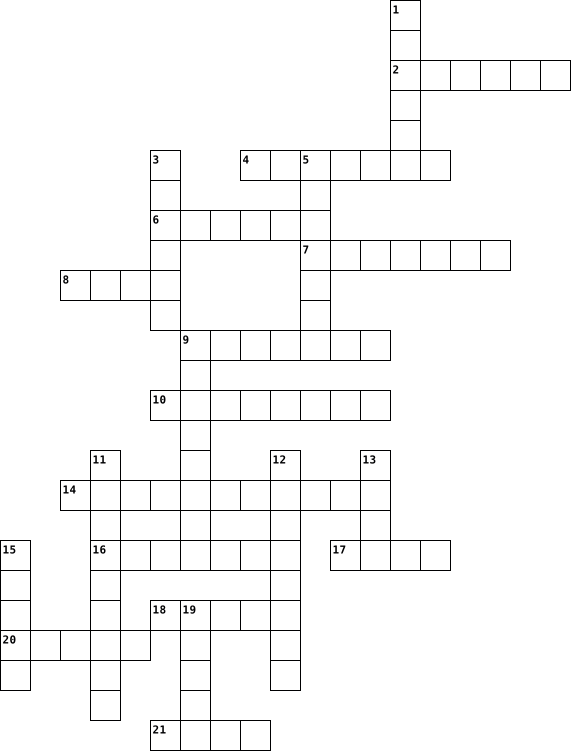
Bio Review Chpt. 2 2023-09-07

Across
- Stored chemical energy that holds two atoms together
- Compound Atoms bonded together through sharing valence electrons
- The immaterial stuff that gets things done
- Allows a specific chemical reaction to happen with far less initial energy
- Pure substances, made up of only one kind of atom
- The molecule that docks at an Enzyme
- We begin a chemical reaction with a...
- The attraction of water molecules to each other
- Docks in an Enzyme's active port and blocks substrates
- Matter tends to spread out
- Made of Carbons, Hydrogens, and Oxygens. EG: Sugars
- Acid A 4-petal molecule with a Carbon base. Make up proteins.
- The smallest part of a covalent compound
- We end a chemical reaction with a...
- Pure substance made of two or more elements, chemically combined
- A change in which the matter's identity is completely transformed
- One substance is broken into smaller pieces by another substance
- Forms Hydrogen atoms when dissolved in water
- Extremely specialized, organic catalysts
- Compound Atoms bonded together through electrical charge
Down
- The end result of an Enzyme-Substrate reaction
- A nitrogen, a sugar, and a phosphate. Form Nucleic Acids, which are important for DNA
- The average speed at which particles are moving
- The basic building blocks of matter
- The attraction between water molecules and other molecules
- Carbon, covalently bonded to other elements
- Energy disperses into the world, and at least some part is forever lost
- Forms Hydroxide atoms when dissolved in water
- The physical stuff that makes up the universe
- The molecule has areas of positive and of negative charge
- A three-Carbon base, with Hydrogen. Are nonpolar. EG: Oils
- A change in which the matter's identity doesn't change
32 Clues: Matter tends to spread out • The basic building blocks of matter • The molecule that docks at an Enzyme • We end a chemical reaction with a... • We begin a chemical reaction with a... • The smallest part of a covalent compound • Extremely specialized, organic catalysts • The immaterial stuff that gets things done • Carbon, covalently bonded to other elements • ...
Matter and Energy 2025-01-31

Across
- A set of interacting parts forming a complex whole
- A group of atoms joined together
- Matter that makes up the living and dead organisms in an ecosystem
- All the living and nonliving things interacting in a particular area
- The chemical reaction between oxygen and glucose that releases energy into cells
- A type of energy storage molecule
- Matter that makes up the nonliving parts of an ecosystem
- Living things, such as plants, animals, and bacteria
- An ending substance that is made during a chemical reaction
- Something that is required for a process
- A type of energy storage molecule made of many glucose molecules connected together
- An organism that can make its own energy storage molecules
- The part of a cell where photosynthesis happens
- An organism that gets energy storage molecules by breaking down dead matter
Down
- A molecule that organisms can use to release the energy they need to survive
- To link two or more things
- The tiny pieces that all matter is made of
- A type of atom that makes up the living and dead organisms in an ecosystem
- A starting substance that is part of a chemical reaction
- An organism that needs to eat in order to get energy storage molecules
- The ability to make things move or change
- A molecule made of carbon and oxygen atoms
- The process by which plants and other producers use energy from sunlight to change carbon dioxide and water into oxygen and glucose
- An ecosystem experiment in the 90's
- A type of energy storage molecule
- A molecule that organisms can use to release energy, made of carbon, hydrogen, and oxygen
- The part of a cell where cellular respiration happens
- Something that results from a process
28 Clues: To link two or more things • A group of atoms joined together • A type of energy storage molecule • A type of energy storage molecule • An ecosystem experiment in the 90's • Something that results from a process • Something that is required for a process • The ability to make things move or change • The tiny pieces that all matter is made of • ...
Matter 2025-06-15

Across
- - The table that lists all known elements.
- - What happens to particles when cooled.
- - Two or more substances not chemically bonded.
- - Change from liquid to gas.
- - Starting substance in a chemical reaction.
- - Method used to separate solids from liquids.
- - Change where no new substance is made.
- - Change from solid directly to gas.
- - New substance made in a chemical reaction.
- - Process where substances change into new substances.
- - Change where a new substance is made.
- - State of matter that takes the shape of its container but has fixed volume.
- - Substance that dissolves in a solvent.
- - State of matter that fills any container completely.
- - Anything that takes up space and has mass.
- - Movement of particles from high to low concentration.
Down
- - Mixture where the solute dissolves completely in the solvent.
- - Tiny pieces that make up all matter.
- - Change from gas to liquid.
- - Rain, snow, hail or sleet falling from clouds.
- - Substance that does the dissolving in a solution.
- - Two or more elements chemically bonded.
- - Method used to separate liquids with different boiling points.
- - Water that flows over land back into rivers or oceans.
- - Natural process where water changes state and moves through the environment.
- - Force produced by particles colliding with container walls.
- - Smallest unit of an element.
- - State of matter with fixed shape and volume.
- - What happens to particles when heated.
- - Device that uses expansion of metals to control temperature.
- - Another word that completes 'Periodic ______'.
- - Substance made of only one type of atom.
- - Change from liquid to solid.
- - Change from solid to liquid.
34 Clues: - Change from gas to liquid. • - Change from liquid to gas. • - Smallest unit of an element. • - Change from liquid to solid. • - Change from solid to liquid. • - Change from solid directly to gas. • - Tiny pieces that make up all matter. • - Change where a new substance is made. • - What happens to particles when cooled. • - Change where no new substance is made. • ...
"hard" spelling crossword 2021-10-05

Across
- an elementary particle that is identical with the nucleus of the hydrogen atom
- relationship
- each of more than one hundred substances
- always late or never shows up
- arrogant
- in definite proportions joined by chemical bonds into a molecule
- a jealous desirable
Down
- self-punishment
- a short half-laugh
- a person who studies birds
- squirming
- a very small particle that has a negative charge of electricity and travels around the nucleus of an atom
- a particle of matter that uniquely defines a chemical element
- quite a harsh laugh/expressing contempt
- group of atoms bonded together, representing the smallest fundamental unit of a chemical compound that can take part in a chemical reaction.
- a membrane-bound organelle that contains the cell's chromosomes
16 Clues: arrogant • squirming • relationship • self-punishment • a short half-laugh • a jealous desirable • a person who studies birds • always late or never shows up • quite a harsh laugh/expressing contempt • each of more than one hundred substances • a particle of matter that uniquely defines a chemical element • a membrane-bound organelle that contains the cell's chromosomes • ...
Enzymes - IGCSE 2018-02-27

Across
- An enzyme capable of digesting proteins into amino acids
- 3 words. Model of enzyme activity that explains how a particular enzyme will only fit with one particular type of substrate.
- 2 words. The part of an enzyme or antibody where the chemical reaction occurs.
- The movement energy that substrates and enzymes have
- A substance produced in a chemical reaction
- A factor that can decrease enzyme activity away from its optimum by affecting the shape of the active site. E.g. acids or alkalis
- A biological catalyst made from protein that speeds up chemical reactions without being used up
- catalyzes the decomposition of hydrogen peroxide to water and oxygen
- An enzyme secreted in the digestive tract that catalyzes the breakdown of fats into individual fatty acids and glycerol that can be absorbed into the bloodstream
Down
- An enzyme that is secreted by the salivary glands and by the pancreas to break carbohydrates down into sugars
- Only one enzyme catalyses one reaction with one type of substrate, so enzymes are highly __________________.
- the molecule(s) that fits into the enzyme active site and is either broken down or combined
- the process when an enzyme loses its activity due to a change in the shape of its active site so that it cannot bind to the substrate
- When an enzyme active site hits a substrate molecule
- A factor that increases enzyme activity up to an optimum, due to more energy for collisions. Beyond optimum it denatures enzymes.
- Denaturation changes the _____________ of the active site
- When the enzyme active site and substrate attract together, they _________________
- Collisions between enzyme active site and substrate are called this when they lead to the formation of product
- a substance that speeds up the rate of chemical reactions (by lowering activation energy) without being used up itself
19 Clues: A substance produced in a chemical reaction • When an enzyme active site hits a substrate molecule • The movement energy that substrates and enzymes have • An enzyme capable of digesting proteins into amino acids • Denaturation changes the _____________ of the active site • catalyzes the decomposition of hydrogen peroxide to water and oxygen • ...
Stoichiometry 2022-11-29

Across
- tells you by mass what percent of each element is present in a compound
- a chemical formula showing the simplest ratio of elements in a compound rather than the total number of atoms in the molecule
- a compound, typically a crystalline one, in which water molecules are chemically bound to another compound or an element.
- the relationship between the relative quantities of substances taking part in a reaction or forming a compound, typically a ratio of whole integers.
- the unit of amount of substance in the International System of Units
- a process that involves rearrangement of the molecular or ionic structure of a substance, as opposed to a change in physical form or a nuclear reaction.
- the chemical formula of an ionic compound that lists the ions in the lowest ratio that equals a neutral electrical charge
Down
- the number of atoms or molecules in one mole of a substance, equal to 6.023 × 10²³.
- an equation for a chemical reaction in which the number of atoms for each element in the reaction and the total charge are the same for both the reactants and the products
- an arithmetical multiplier for converting a quantity expressed in one set of units into an equivalent expressed in another.
- a sample of matter with both definite and constant composition and distinct chemical properties
- a formula giving the number of atoms of each of the elements present in one molecule of a specific compound.
- the mass of a sample of that compound divided by the amount of substance which is the number of moles in that sample
13 Clues: the unit of amount of substance in the International System of Units • tells you by mass what percent of each element is present in a compound • the number of atoms or molecules in one mole of a substance, equal to 6.023 × 10²³. • a sample of matter with both definite and constant composition and distinct chemical properties • ...
Science reaction 2023-10-15

Across
- happens when two or more substances combine in ways that make new substances form that have different properties from the beginning materials
- a change of matter from one form to another without a change in chemical properties; only physical changes
- a substance or molecule that is formed in a chemical reaction; the final output
- states that the mass of an object, or collection of objects new changes, no matter how the parts are rearranged
Down
- a representation of a chemical reaction using symbols of the elements to indicate the amount of substance of each reactant and product
- a substance or molecule that participates in a chemical reaction; the ingredients that you start with
- a change that occurs when one or more substances change into entirely new substances with different properties
- a solid formed by a change in a solution, often due to a chemical reaction or change in temperature
8 Clues: a substance or molecule that is formed in a chemical reaction; the final output • a solid formed by a change in a solution, often due to a chemical reaction or change in temperature • a substance or molecule that participates in a chemical reaction; the ingredients that you start with • ...
Science reaction 2023-10-15

Across
- happens when two or more substances combine in ways that make new substances form that have different properties from the beginning materials
- a change of matter from one form to another without a change in chemical properties; only physical changes
- a substance or molecule that is formed in a chemical reaction; the final output
- states that the mass of an object, or collection of objects new changes, no matter how the parts are rearranged
Down
- a representation of a chemical reaction using symbols of the elements to indicate the amount of substance of each reactant and product
- a substance or molecule that participates in a chemical reaction; the ingredients that you start with
- a change that occurs when one or more substances change into entirely new substances with different properties
- a solid formed by a change in a solution, often due to a chemical reaction or change in temperature
8 Clues: a substance or molecule that is formed in a chemical reaction; the final output • a solid formed by a change in a solution, often due to a chemical reaction or change in temperature • a substance or molecule that participates in a chemical reaction; the ingredients that you start with • ...
Science Vocabulary Words 2023-10-19

Across
- a change of matter from one form to another without a change in chemical properties; only physical changes
- a solid formed by a change in a solution, often due to a chemical reaction or change in temperature
- states that the mass of an object, or collection of objects new changes, no matter how the parts are rearranged
- a substance or molecule that is formed in a chemical reaction; the final output
- a substance or molecule that participates in a chemical reaction; the ingredients that you start with
Down
- happens when two or more substances combine in ways that make new substances form that have different properties from the beginning materials
- a representation of a chemical reaction using symbols of the elements to indicate the amount of substance of each reactant and product
- a change that occurs when one or more substances change into entirely new substances with different properties
8 Clues: a substance or molecule that is formed in a chemical reaction; the final output • a solid formed by a change in a solution, often due to a chemical reaction or change in temperature • a substance or molecule that participates in a chemical reaction; the ingredients that you start with • ...
Science Vocab 2025-10-16

Across
- a change that occurs when one or more substances change into entirely new substances with different properties
- states that the mass of an object, or collection of objects new changes, no matter how the parts are rearranged
- a substance or molecule that participates in a chemical reaction; the ingredients that you start with
Down
- a change of matter from one form to another without a change in chemical properties; only physical changes
- a substance or molecule that is formed in a chemical reaction; the final output
- a solid formed by a change in a solution, often due to a chemical reaction or change in temperature
- a representation of a chemical reaction using symbols of the elements to indicate the amount of substance of each reactant and product
- happens when two or more substances combine in ways that make new substances form that have different properties from the beginning materials
8 Clues: a substance or molecule that is formed in a chemical reaction; the final output • a solid formed by a change in a solution, often due to a chemical reaction or change in temperature • a substance or molecule that participates in a chemical reaction; the ingredients that you start with • ...
Science Vocab 2025-10-16

Across
- Change: a change of matter from one form to another without a change in chemical properties; only physical changes
- a representation of a chemical reaction using symbols of the elements to indicate the amount of substance of each reactant and product
- a solid formed by a change in a solution, often due to a chemical reaction or change in temperature
- a substance or molecule that participates in a chemical reaction; the ingredients that you start with
- a change that occurs when one or more substances change into entirely new substances with different properties
Down
- a substance or molecule that is formed in a chemical reaction; the final output
- happens when two or more substances combine in ways that make new substances form that have different properties from the beginning materials
- of Mass: states that the mass of an object, or collection of objects new changes, no matter how the parts are rearranged
8 Clues: a substance or molecule that is formed in a chemical reaction; the final output • a solid formed by a change in a solution, often due to a chemical reaction or change in temperature • a substance or molecule that participates in a chemical reaction; the ingredients that you start with • ...
Chemical Reactions 2024-10-17

Across
- happens when two or more substances combine in ways that make new substances form that have different properties from the beginning materials
- a substance or molecule that is formed in a chemical reaction; the final output
- a change that occurs when one or more substances change into entirely new substances with different properties
- a change of matter from one form to another without a change in chemical properties; only physical changes
Down
- a representation of a chemical reaction using symbols of the elements to indicate the amount of substance of each reactant and product
- a solid formed by a change in a solution, often due to a chemical reaction or change in temperature
- a substance or molecule that participates in a chemical reaction; the ingredients that you start with
- states that the mass of an object, or collection of objects new changes, no matter how the parts are rearranged
8 Clues: a substance or molecule that is formed in a chemical reaction; the final output • a solid formed by a change in a solution, often due to a chemical reaction or change in temperature • a substance or molecule that participates in a chemical reaction; the ingredients that you start with • ...
Chemical Reactions 2024-10-17

Across
- happens when two or more substances combine in ways that make new substances form that have different properties from the beginning materials
- a substance or molecule that is formed in a chemical reaction; the final output
- a change that occurs when one or more substances change into entirely new substances with different properties
- a change of matter from one form to another without a change in chemical properties; only physical changes
Down
- a representation of a chemical reaction using symbols of the elements to indicate the amount of substance of each reactant and product
- a solid formed by a change in a solution, often due to a chemical reaction or change in temperature
- a substance or molecule that participates in a chemical reaction; the ingredients that you start with
- states that the mass of an object, or collection of objects new changes, no matter how the parts are rearranged
8 Clues: a substance or molecule that is formed in a chemical reaction; the final output • a solid formed by a change in a solution, often due to a chemical reaction or change in temperature • a substance or molecule that participates in a chemical reaction; the ingredients that you start with • ...
Science Vocab 2024-10-16

Across
- The mass of an object, or collection of objects new changes, no matter how the parts are rearranged.
- A substance or molecule that participates in a chemical reaction; the ingredients that you start with.
- A solid formed by a change in a solution, often due to a chemical reaction or change in temperature.
Down
- A change of matter from one form to another without a change in chemical properties; only physical changes.
- When two or more substances combine in ways that make new substances form that have different properties from the beginning materials.
- Representation of a chemical reaction using symbols of the elements to indicate the amount of substance of each reactant and product.
- A change that occurs when one or more substances change into entirely new substances with different properties
- A substance or molecule that is formed in a chemical reaction; the final output.
8 Clues: A substance or molecule that is formed in a chemical reaction; the final output. • The mass of an object, or collection of objects new changes, no matter how the parts are rearranged. • A solid formed by a change in a solution, often due to a chemical reaction or change in temperature. • ...
Science 2024-10-16

Across
- happens when two or more substances combine in ways that make new substances form that have different properties from the beginning materials
- a representation of a chemical reaction using symbols of the elements to indicate the amount of substance of each reactant and product
- a solid formed by a change in a solution, often due to a chemical reaction or change in temperature
- a change that occurs when one or more substances change into entirely new substances with different properties
Down
- a substance or molecule that is formed in a chemical reaction; the final output
- a change of matter from one form to another without a change in chemical properties; only physical changes
- a substance or molecule that participates in a chemical reaction; the ingredients that you start with
- states that the mass of an object, or collection of objects new changes, no matter how the parts are rearranged
8 Clues: a substance or molecule that is formed in a chemical reaction; the final output • a solid formed by a change in a solution, often due to a chemical reaction or change in temperature • a substance or molecule that participates in a chemical reaction; the ingredients that you start with • ...
Chemical Reaction Vocabulary Words 2024-10-16

Across
- happens when two or more substances combine in ways that make new substances form that have different properties from the beginning materials
- a change that occurs when one or more substances change into entirely new substances with different properties
- a change of matter from one form to another without a change in chemical properties; only physical changes
- a solid formed by a change in a solution, often due to a chemical reaction or change in temperature
- a substance or molecule that is formed in a chemical reaction; the final output
- states that the mass of an object, or collection of objects new changes, no matter how the parts are rearranged
Down
- a substance or molecule that participates in a chemical reaction; the ingredients that you start with
- a representation of a chemical reaction using symbols of the elements to indicate the amount of substance of each reactant and product
8 Clues: a substance or molecule that is formed in a chemical reaction; the final output • a solid formed by a change in a solution, often due to a chemical reaction or change in temperature • a substance or molecule that participates in a chemical reaction; the ingredients that you start with • ...
Chemical Reactions 2025-2026 2025-10-27

Across
- the original substances you start with before that chemical reaction occurs
- a property of substance determined by the number, type, and arrangement of atoms that make up that substance
- a thing that is composed of two or more separate elements that have been chemically combined
- the new substances that are produced from a chemical reaction
- a series of operations that involves changing one or more chemicals or chemical compounds through chemical reactions
- substances that are made up of only one kind of particle and have a fixed or constant structure
- holds molecules together
- a substance that can't be broken down
Down
- a combination of two or more substances that are not uniformly distributed, meaning its composition varies throught.
- when matter changes from one state to another, new types of particles are created, no new substance is produced
- when new substances are produced from one or more molecules of the old substances
- a substance or mixture where the components are uniformly distributed throughout, resulting in a composition that is the same no matter where you take a sample
- are substances that are formed by physically mixing two or more substances
- harmful materials, part of acid rain
- a homogeneous mixture composed of two or more substances
- any form of precipitation that is unusually acidic
- substance that is dissolved in a solution
- substance in which other materials dissolve to form a solution
18 Clues: holds molecules together • harmful materials, part of acid rain • a substance that can't be broken down • substance that is dissolved in a solution • any form of precipitation that is unusually acidic • a homogeneous mixture composed of two or more substances • the new substances that are produced from a chemical reaction • ...
Science:) Property and changes 2024-11-20

Across
- A Characteristic that can be observed as it changes to a different type of matter
- the energy released when atoms form bonds.
- the amount of matter in an object
- happens when substances react with one and other changing It to a new substance
- more energy is required to break the bonds of the reactants than isreleased when products form.
- more energy is released when the products form than is required tobreak the bonds in the reactants.
- a substance produced by a chemical reaction.
Down
- a process in which atoms of one or more substances rearrange to form one or more new substances.
- States the total moss of the reactants before a chemical ration
- the amount of space a substance takes up
- law that states that energy is always transferring, but energy is notcreated or destroyed.
- a starting substance in a chemical reaction.
- change of materials into another, new materials with different properties and one or more than one new substances are formed.
- A characteristic of matter that can be measured without change of identity
- a number placed in front of an element symbol or chemical formulain an equation.
- Happens when substances react with oxidizing agents, changing to a new substance
- the ability of a type of matter to burn easily
- the mass per unit volume of a substance
18 Clues: the amount of matter in an object • the mass per unit volume of a substance • the amount of space a substance takes up • the energy released when atoms form bonds. • a starting substance in a chemical reaction. • a substance produced by a chemical reaction. • the ability of a type of matter to burn easily • ...
A Solubility Crossword 2015-12-07

Across
- made up of at least two substances and form a stable mixture
- chemical batteries, has certain corrosion resistance
- still dissolve more solvent
- solution contains the amount of solute
- the action of energy, the process of atoms and molecules to form ions
- have gained electrons and have a negative charge
- quality that a solid substance can saturated in a certain solvent
- for chemical B
- is generated when the insoluble in reactant substance in solution
- A dissolves in chemical B
Down
- to the unit volume solution solute contained in the amount of substance of B
- or molecules in the solvent release process of ions
- for chemical A
- ability of conduction current
- or gained one or more electronic to the outermost electron
- of outer electrons to achieve relatively stable structure of the ionic form.
- up of atoms
17 Clues: up of atoms • for chemical A • for chemical B • A dissolves in chemical B • still dissolve more solvent • ability of conduction current • solution contains the amount of solute • have gained electrons and have a negative charge • or molecules in the solvent release process of ions • chemical batteries, has certain corrosion resistance • ...
Chemistry Crossword Puzzles 2022-03-08

Across
- a chemical formula showing the simplest ratio of elements in a compound rather than the total number of atoms in the molecule.
- a number placed in front of a chemical symbol or formula.
- 6.02214076 × 10²³ of some chemical unit, be it atoms, molecules, ions, or others.
- the ratio between the amounts in moles of any two compounds involved in a chemical reaction.
Down
- a section of chemistry that involves using relationships between reactants and/or products in a chemical reaction to determine desired quantitative.
- consists of the chemical symbols for the constituent elements followed by numeric subscripts describing the number of atoms of each element present in the molecule.
- maximum amount of product that can be formed in a chemical reaction based on the amount of limiting reactant.
- the actual yield divided by the theoretical yield times 100.
8 Clues: a number placed in front of a chemical symbol or formula. • the actual yield divided by the theoretical yield times 100. • 6.02214076 × 10²³ of some chemical unit, be it atoms, molecules, ions, or others. • the ratio between the amounts in moles of any two compounds involved in a chemical reaction. • ...
Covalent and Ionic Bonds Review 2023-04-27

Across
- This type of bond involves sharing electrons
- A charged atom
- This element only needs two valence electrons to satisfy the octet rule
- This rule says that all atoms want a full valence shell
- If there is no subscript next to an element in a chemical formula, there is/are ___ atom/s of that element
- The chemicals that go IN to a chemical reaction; on the left side of the arrow
- The strongest type of covalent bond
- The method to figure out the ratio of atoms in an ionic compound
Down
- A model for atoms and molecules that shows only valence electrons
- The outermost electron shell on an atom
- A covalent bond that involves two pairs of electrons
- The chemicals that come OUT of a chemical reaction; on the right side of the arrow
- The number of valence electrons that most main-group elements want to have
- The number of Oxygen atoms in Ca3(PO4)2
- This type of bond involves the transfer of electrons from one atom to another
- The name of the compound CaO
16 Clues: A charged atom • The name of the compound CaO • The strongest type of covalent bond • The outermost electron shell on an atom • The number of Oxygen atoms in Ca3(PO4)2 • This type of bond involves sharing electrons • A covalent bond that involves two pairs of electrons • This rule says that all atoms want a full valence shell • ...
Science Crossword Puzzle 2024-09-03

Across
- reactions in which precipitate is formed
- the process in which the energy gets released.
- the process in which both plants and animals obtain food and use it to get energy.
- also called diverging mirror.
- the chemical process by which different kinds of chemical reactions get involved to control the living state of the cells of that organism.
- those reactions in which oxygen addition takes takes and removal of hydrogen takes place
- reaction in which new substances with new properties are formed.
- those reactions in which removal of oxygen and addition of hydrogen takes place.
- a form of energy that enables us to see things
Down
- lens having both the type of lenses.
- the process in which the exchange of gases takes place
- When chemical reaction is denoted in the forms of symbols is called ________ _________.
- also called converging mirror.
- The surface which can reflect the light is a _____.
- the process in which the energy gets stored for future requirements.
15 Clues: also called diverging mirror. • also called converging mirror. • lens having both the type of lenses. • reactions in which precipitate is formed • the process in which the energy gets released. • a form of energy that enables us to see things • The surface which can reflect the light is a _____. • the process in which the exchange of gases takes place • ...
Unit 2 week 2 vocab crossword homework 2021-09-17

Across
- energy Random kinetic energy possessed by objects in a material
- the speed at which a chemical reaction occurs
- the number of atoms of a particular element in a chemical reaction
- in any chemical process, matter is neither lost or gained
- The number placed in front of a compound to balance a chemical equation
Down
- A chemical equation where the number of atoms of each element are the same on both sides
- this is the rate at which a substance undergoes a chemical change
- the measure of quantity of matter
8 Clues: the measure of quantity of matter • the speed at which a chemical reaction occurs • in any chemical process, matter is neither lost or gained • energy Random kinetic energy possessed by objects in a material • this is the rate at which a substance undergoes a chemical change • the number of atoms of a particular element in a chemical reaction • ...
Mixtures Crossword 2020-12-01

Across
- a mixture that has different parts, not evenly mixed.
- a small number placed after an element that shows how many atoms are in the molecule.
- a substance that takes part in and undergoes change during a reaction.
- when the solute breaks up from a larger crystal of molecules into much smaller groups or individual molecules.
- a liquid mixture in which the minor component (the solute) is uniformly distributed within the major component (the solvent).
- a reaction that occurs when heat is released by the system into the surroundings.
- a reaction that occurs when heat is absorbed by the system from the surroundings.
- the minor component in a solution, dissolved in the solvent.
- a number placed before the molecule in that tells you how many molecules are in the equation
- the substances formed from chemical reactions.
- a mixture consisting of parts that are all the same, or evenly mixed. A solution is a type of homogenous mixture.
Down
- a system of chemical changes that involves the breaking and reforming of chemical bonds to create new substances.
- able to dissolve other substances.
- a law that states that matter is not destroyed or created, therefore the reactants will have the same mass as the products.
- when particles of different substances mix together naturally.
- a mixture contains different substances that are not chemically joined to each other.
16 Clues: able to dissolve other substances. • the substances formed from chemical reactions. • a mixture that has different parts, not evenly mixed. • the minor component in a solution, dissolved in the solvent. • when particles of different substances mix together naturally. • ...
Year 8 Chemistry Revision 2013-08-23

Across
- remains of plants or animals sometimes seen in sedimentary rocks (7)
- can be hammered/bent into different shapes (9)
- changes colour in acid and alkali solutions (9,9)
- a word that describes what is made in a chemical reaction (8)
- type of rock formed from cooled magma (7)
- solution used to test for carbon dioxide gas (9)
- the breakdown of rock into smaller pieces (10)
- gas needed for a fuel to burn
- what is formed when two or more different atoms bond together (8)
Down
- when a lit splint is put into this gas a popping sound is heard (8)
- type of rock formed by heating or compressing other rocks (10)
- acid found in the stomach (12)
- a reaction where a more reactive substance substitutes a less reactive substance from solution (12)
- a poisonous gas formed by a car engine (6,8)
- a blue substance containing copper, sulfur and oxygen (6,7)
- a reaction between an acid and an alkali (14)
- a substance made up of one type of atom (7)
- a reaction where you burn a fuel (10)
- the reaction of a metal with oxygen in the air (9)
19 Clues: gas needed for a fuel to burn • acid found in the stomach (12) • a reaction where you burn a fuel (10) • type of rock formed from cooled magma (7) • a substance made up of one type of atom (7) • a poisonous gas formed by a car engine (6,8) • a reaction between an acid and an alkali (14) • can be hammered/bent into different shapes (9) • ...
Chemistry Balance Crossword 2022-10-05

Across
- No atoms can be made or created.
- Stuff.
- The rearrangement of molecules.
- No atoms lost/added in equation.
Down
- Before a chemical equation.
- Signifies a chemical reaction.
- Atoms lost/added in equation.
- After a chemical equation.
- A branch of science.
- Doesn't change when shape/form changes.
10 Clues: Stuff. • A branch of science. • After a chemical equation. • Before a chemical equation. • Atoms lost/added in equation. • Signifies a chemical reaction. • The rearrangement of molecules. • No atoms can be made or created. • No atoms lost/added in equation. • Doesn't change when shape/form changes.
Chemistry Balance Crossword 2022-10-05

Across
- No atoms can be made or created.
- Stuff.
- The rearrangement of molecules.
- No atoms lost/added in equation.
Down
- Before a chemical equation.
- Signifies a chemical reaction.
- Atoms lost/added in equation.
- After a chemical equation.
- A branch of science.
- Doesn't change when shape/form changes.
10 Clues: Stuff. • A branch of science. • After a chemical equation. • Before a chemical equation. • Atoms lost/added in equation. • Signifies a chemical reaction. • The rearrangement of molecules. • No atoms can be made or created. • No atoms lost/added in equation. • Doesn't change when shape/form changes.
English Quiz 2020-04-20

Across
- a shrewd manner
- with prolonged noises;of dogs
- to the structure or movement of the earth's crust
- substance that is formed as the result of a chemical reaction
- of several international socialist organizations
- produced by or used in a reaction involving changes in atoms or molecules
- a part of a structure having some specific characteristic or function
- idea,concept or belief
- the atoms of the reactants to create different substances
- or add together; "combine resources"
Down
- and vibration at the surface of the earth resulting from underground movement from volcanic activity
- person who writes plays.
- metal cap or band placed on a wooden pole to prevent splitting
- the successful ending of the american independence
- or characterized by error
- style at the expense of thought
- or severe weather
17 Clues: a shrewd manner • or severe weather • idea,concept or belief • person who writes plays. • or characterized by error • with prolonged noises;of dogs • style at the expense of thought • or add together; "combine resources" • of several international socialist organizations • to the structure or movement of the earth's crust • the successful ending of the american independence • ...
English Quiz 2020-04-20

Across
- a shrewd manner
- with prolonged noises;of dogs
- to the structure or movement of the earth's crust
- substance that is formed as the result of a chemical reaction
- of several international socialist organizations
- produced by or used in a reaction involving changes in atoms or molecules
- a part of a structure having some specific characteristic or function
- idea,concept or belief
- the atoms of the reactants to create different substances
- or add together; "combine resources"
Down
- and vibration at the surface of the earth resulting from underground movement from volcanic activity
- person who writes plays.
- metal cap or band placed on a wooden pole to prevent splitting
- the successful ending of the american independence
- or characterized by error
- style at the expense of thought
- or severe weather
17 Clues: a shrewd manner • or severe weather • idea,concept or belief • person who writes plays. • or characterized by error • with prolonged noises;of dogs • style at the expense of thought • or add together; "combine resources" • of several international socialist organizations • to the structure or movement of the earth's crust • the successful ending of the american independence • ...
End of Mocks Year 10 Crossword 2018-06-29

Across
- the sub-atomic particle that is positive
- the part of the cell that contains genetic material
- the equipment that we use to mesuare current in a circuit
- a microorganism that causes disease
- the part of the cell that releases energy, respiration happens here
- the chemical reaction that releases energy and happens in mitochondria
- a disease that you can catch
- energy resources that will can be used over and over again
- the movement of particles from an area of high concentration to an area of low concentration
- one type of atom only, they are listed on the periodic table
- the units of resistance
Down
- the rate of flow of charge around a circuit
- two of more elements chemically bonded together
- the chemical reaction that plants use to make food using energy from the sun
- the energy associated with movement
- a push or a pull
- a sub-atomic particle with no charge
17 Clues: a push or a pull • the units of resistance • a disease that you can catch • a microorganism that causes disease • the energy associated with movement • a sub-atomic particle with no charge • the sub-atomic particle that is positive • the rate of flow of charge around a circuit • two of more elements chemically bonded together • ...
Unit 1 Vocab 3 2022-10-21

Across
- energy stored in bonds of chemical
- the smallest part of a substance that still has all of the physical and chemical properties
- a reaction that releases free energy
- feels like a cussion and is the top of water
- regulates temperature of the environment and planet
- allows for reaction rates to occur without denaturation
- stored energy that the relative position or various parts of a system
- the energy of motion and potential energy it stores
- it requires energy to be driven
Down
- when people sweat the water is evaporating and cooling the body
- water dissolves other molecules
- the act of combining
- when water sticks to itself
- energy that a body passes while in motion
- substance containing atoms and ions or more elements that are chemically bonded
- an extremely strong bond between molecules with a hydrogen atom
- determines the acidity and base of a substance
17 Clues: the act of combining • when water sticks to itself • water dissolves other molecules • it requires energy to be driven • energy stored in bonds of chemical • a reaction that releases free energy • energy that a body passes while in motion • feels like a cussion and is the top of water • determines the acidity and base of a substance • ...
Chemical reactions 2020-07-08

Across
- The reaction of metals with air and water in the atmosphere
- A reaction that takes in heat energy
- A reaction that involves the addition of oxygen
- A reaction that gives out heat energy
- The reaction when a substance burns in the air
Down
- A reaction that involves a compound being broken down by heat
- A reaction when a more reactive metal displaces a less reactive metal from a solution
- The reaction between an acid and an alkali to make a salt
- In a chemical reaction, all particles at the start in the reactants are there at the end, rearranged in the products
- The reaction that takes place in every living cell, releasing energy
10 Clues: A reaction that takes in heat energy • A reaction that gives out heat energy • The reaction when a substance burns in the air • A reaction that involves the addition of oxygen • The reaction between an acid and an alkali to make a salt • The reaction of metals with air and water in the atmosphere • A reaction that involves a compound being broken down by heat • ...
Chemistry Review 2019-11-04

Across
- Installed on smokestacks to prevent harmful products from entering the environment
- A metal (usually iron) rusts or is oxidized
- 2 words Examples are coal, oil, natural gas and gasoline
- Type of reaction where an acid and a base combine
- Substance containing hydrogen in solution with a pH less than 7
Down
- Chemical in the air that causes harm to living things or the environment
- Process of applying a zinc coating to protect iron or steel
- Substance usually containing hydroxide with a pH greater than 7
- Compounds produced in a chemical reaction
- 2 words Gas that traps heat in Earth's atmosphere preventing heat from escaping into space
- Type of reaction where carbon dioxide and water are produced
- 2 words One of the key greenhouse gases that scientists are most concerned with
12 Clues: Compounds produced in a chemical reaction • A metal (usually iron) rusts or is oxidized • Type of reaction where an acid and a base combine • 2 words Examples are coal, oil, natural gas and gasoline • Process of applying a zinc coating to protect iron or steel • Type of reaction where carbon dioxide and water are produced • ...
Chemistry Review 2019-11-04

Across
- Compounds produced in a chemical reaction
- 2 words Gas that traps heat in Earth's atmosphere preventing heat from escaping into space
- Chemical in the air that causes harm to living things or the environment
- Process of applying a zinc coating to protect iron or steel
- Type of reaction where carbon dioxide and water are produced
- Installed on smokestacks to prevent harmful products from entering the environment
Down
- Substance containing hydrogen in solution with a pH less than 7
- A metal (usually iron) rusts or is oxidized
- Substance usually containing hydroxide with a pH greater than 7
- Type of reaction where an acid and a base combine
- 2 words One of the key greenhouse gases that scientists are most concerned with
- 2 words Examples are coal, oil, natural gas and gasoline
12 Clues: Compounds produced in a chemical reaction • A metal (usually iron) rusts or is oxidized • Type of reaction where an acid and a base combine • 2 words Examples are coal, oil, natural gas and gasoline • Process of applying a zinc coating to protect iron or steel • Type of reaction where carbon dioxide and water are produced • ...
Units 7 & 8 2022-09-11

Across
- a connecting wire, usually made of copper, wrapped in plastic covering.
- the flow of electricity charges through materials.
- a chemical reaction that happens when objects or substances are burned.
- an object which can attract other objects made of iron and other magnetic metals.
- a method used to separate liquids that have different boiling points in homogeneous mixtures.
- a material which allows electrical charges to move.
- a device with a magnetic needle that always points north. We use it to orient ourselves.
- a material which does not allow electrical charges to move.
- a method used to separate substances of different density in heterogeneous mixture.
- a chemical reaction that happen when some metal substances such as iron combine with oxygen in the presence of water.
- a type of matter which contains two or more pure substances.
Down
- the force of attraction exerted by magnets.
- a chemical reaction that happens in some living things, such as yeast and bacteria.
- the component of an electric circuit which provides the electricity.
- a mixture in which the different components can be distinguished.
- a closed path through which electricity flows.
- a mixture in which the different components cannot be distinguished.
- the component of an electric circuit which transform electricity into another type of energy.
- these happen when atoms react and group together differently.
- another word for a homogeneous mixture.
- a method used to separate solids from liquids in homogenous mixture.
- a type of matter which contains only one type of component.
- a method used to separate solids from liquids, or solids with different size particles, in heterogeneous mixtures.
23 Clues: another word for a homogeneous mixture. • the force of attraction exerted by magnets. • a closed path through which electricity flows. • the flow of electricity charges through materials. • a material which allows electrical charges to move. • a type of matter which contains only one type of component. • a material which does not allow electrical charges to move. • ...
Environmental science 2021-09-06

Across
- a compound found mainly in living things.
- the energy needed to start a chemical reaction.
- it is a latin word that means knowledge.
- is the main element in organic compound.
- ability to do work.
- organized body of knowledge that is obtained by study and experimentation.
- a substance that forms as a result of a chemical reaction.
- the protective blanket of gases surrounding the earth.
- unit work of energy in the International System of Units.
- the sum of all the biochemical reactions in an organism.
- Is a a substance that consist of two or more element
- the concentration of hydronium ions in a solution.
- comprises all types of water resources oceans, lakes, seas, rivers, streams, reservoirs,icecaps, glaciers, and groundwaters.
- a substance that starts a chemical reaction.
- the rate at which energy is used.
Down
- developing knew knowledge based upon old knowledge.
- a force that holds molecules together.
- the outer mantle of the solid earth.
- anything that takes up space and has mass.
- type of biochemical reactions that breakdowns molecules into smaller units and release energy.
- these reactions build up bigger molecules from smaller ones.
- The study of the interactions between life and its physical environment.
- a test that is used to rule out a hypothesis or validate something already known.
- A widely accepted hypothesis that stands the test of time. Theories are oftentested and usually not rejected.
- is the study of energy.
- is a pure substance.
- needed by all known forms of life.
- where life operates.
- the unit of power.
- are tiny units that make up all matter in the universe and energy what holds the nucleus together.
30 Clues: the unit of power. • ability to do work. • is a pure substance. • where life operates. • is the study of energy. • the rate at which energy is used. • needed by all known forms of life. • the outer mantle of the solid earth. • a force that holds molecules together. • it is a latin word that means knowledge. • is the main element in organic compound. • ...
Chemistry Layered Curriculum Crosswrod 2016-11-26

Across
- The basic building block of most of the matter around us; the smallest particle of an element that has all the properties of that element
- The neutrally charged subatomic particle that is located inside the nucleus of an atom
- A measure of an atoms mass that is equal to the number of protons and neutrons in the elements nucleus
- The substance that is formed as a result of an chemical reaction
- The ability for a given substance, the solute , to dissolve into a solvent
- The temperature at which a substance changes from a solid to a liquid
- A pure substance that forms when two or more elements join chemically in a fixed proportion.
- A change that results in the formation of a new substance or substances
- The temperature at which a substance boils
- Science that deals with the identification, properties, reactions, and changes of substances in matter.
- A homogeneous mixture composed of two or more substances
- What is formed when two or more atoms combine and join together
Down
- A material system made up of two or more different substances which are mixed but not combined chemically
- A positive negatively charged subatomic
- Substances initially present in a chemical reaction that are consumed during the reaction to make a product
- The number of protons in the nucleus of an atom
- A substance that dissolves a solute
- A negatively charged subatomic particle that is located outside the nucleus of an atom
- Changes in a substance that affects its form but not its chemical composition
- A substance dissolved into another substance, that usually is smaller in proportion, forming a solution
20 Clues: A substance that dissolves a solute • A positive negatively charged subatomic • The temperature at which a substance boils • The number of protons in the nucleus of an atom • A homogeneous mixture composed of two or more substances • What is formed when two or more atoms combine and join together • The substance that is formed as a result of an chemical reaction • ...
Matter and Energy in Ecosystems 2025-02-09

Across
- a type of energy storage molecule.
- an organism that needs to eat in order to get energy storage molecules.
- a group of atoms joined together in particular way.
- respiration the chemical reaction between oxygen and glucose that release energy into cells.
- a type of energy storage molecule.
- something that results from a process.
- a set of interacting parts forming a complex whole.
- matter that makes up the living and dead organisms in an ecosystem.
- the tiny pieces that all matter-all the stuff in the world-is made of.
- living things, such as plants, animals and bacteria.
- dioxide a molecule made of carbon and oxygen atoms.
- something that is required for a process.
- storage molecule a molecule that organisms can use to release the energy they need to survive.
Down
- the ability to make things move or change
- the process by which plants and other producers use energy from sunlight to change carbon dioxide and water into oxygen and glucose.
- the part of cell where photosynthesis happens.
- to link two or more things.
- an ending substance that is made during a chemical reaction.
- an organism that gets energy storage molecules (such as glucose) by breaking down dead matter.
- that part of a cell where cellular respiration happens.
- a molecule that organisms can use to release energy, and that is made of carbon, hydrogen, and oxygen atoms.
- a type of atom (a tiny piece) that makes up molecules such as carbon dioxide and energy storage molecules.
- a closed ecosystem made by humans.
- a type of energy storage molecule made of many glucose molecules connected together.
- all the living and nonliving things interacting in a particular area.
- a starting substance that is part of chemical reaction.
- matter that makes up the nonliving parts of an ecosystem, such as air, water, and rocks.
- an organim that can make its own energy storage molecules (such as glucose)
28 Clues: to link two or more things. • a type of energy storage molecule. • a closed ecosystem made by humans. • a type of energy storage molecule. • something that results from a process. • the ability to make things move or change • something that is required for a process. • the part of cell where photosynthesis happens. • a group of atoms joined together in particular way. • ...
Natural Science: vocabulary Unit 7 & 8 2024-06-27

Across
- a method used to separate solids from liquids, or solids with different size particles in heterogeneous mixtures
- another word for a homogeneous mixture
- the flow of electrical charges through materials
- these happen when atoms react and group together differently
- a method used to separate substances of different density in heterogeneous mixtures
- a mixture in which the different components can be distinguished
- the component of an electric circuit which provides the electricity
- a method used to separate liquids that have different boiling points in homogeneous mixtures
- a type of matter which contains only one type of component
- a chemical reaction that happens in some living things, such as yeast and bacteria
- a material which allows electrical charges to move
Down
- a chemical reaction that happens when some metal substances such as iron combine with oxygen in the presence of water
- a type of matter which contains two or more pure substances
- a mixture in which the different components cannot be distinguished
- a material which does not allow electrical charges to move
- the component of an electric circuit which transforms electricity into another type of energy
- a device with a magnetic needle that always points north, we use it to orient ourselves
- an object which can attract other objects made of iron and other magnetic metals
- a connecting wire, usually made from copper,wrapped in plastic covering
- a closed path through which electricity flows
- the force of attraction exerted by magnets
- a method used to separate solids from liquids in homogeneous mixtures
- a chemical reaction that happens when objects or substances are burned
23 Clues: another word for a homogeneous mixture • the force of attraction exerted by magnets • a closed path through which electricity flows • the flow of electrical charges through materials • a material which allows electrical charges to move • a material which does not allow electrical charges to move • a type of matter which contains only one type of component • ...
Holiday Homework 2025-06-20

Across
- Solid formed in a double displacement reaction.
- The bending of light around edges or through small openings.
- The point where parallel rays converge in a concave mirror.
- Bends when light passes from one medium to another.
- Type of reaction where heat is absorbed.
- Change in a substance where a new substance is formed.
- Reaction in which a substance gains oxygen.
- Green pigment essential for photosynthesis.
Down
- Organ that filters blood in humans.
- Tube that connects mouth to stomach.
- Tiny vessels where exchange of gases occurs.
- The number written in front of a compound in a chemical equation.
- A surface or object that reflects most of the light that hits it.
- Process of breaking down food to release energy.
- Mirror with a curved reflecting surface.
15 Clues: Organ that filters blood in humans. • Tube that connects mouth to stomach. • Type of reaction where heat is absorbed. • Mirror with a curved reflecting surface. • Reaction in which a substance gains oxygen. • Green pigment essential for photosynthesis. • Tiny vessels where exchange of gases occurs. • Solid formed in a double displacement reaction. • ...
Physics 2016-09-01
Across
- nuclear force the force that holds particles together
- energy energy the holds nucleus together
- mass unit to express atomic weights
- a subatomic particle
- nuclear force responsible for beta and decay of hadrons
- reaction change the identity of the atomic nucleus
- when things are being done
- emission of ionizing radiation
- splitting
- production changing of radiation quantum to electron and positron
- decay atomic nucleus loses energy
- reaction a chemical reaction of products
- number total # of protons and neutrons
Down
- joining two or more things together
- elementary particle of matter
- specific # of protons and neutrons
- a proton or neutron
- half of the radioactive value
- model math model of elementary particles of matter
- decay when an electron is emitted
- carriers give rise to forces between other particles
- decay # of reduced by 4 an atomic number by 2
22 Clues: splitting • a proton or neutron • a subatomic particle • when things are being done • elementary particle of matter • half of the radioactive value • emission of ionizing radiation • decay when an electron is emitted • decay atomic nucleus loses energy • specific # of protons and neutrons • joining two or more things together • mass unit to express atomic weights • ...
Biology Crossword 2021-01-27

Across
- organelle near nucleus in an animal cell.
- Constrain to population size.
- without air.
- As known as the nuclear membrane.
- Connects all other types of tissue.
- All living things are composed of cells.
- leave to find a different habitat.
- pigment that runs photosynthesis.
- Protection.
- Cell changes from one type to another.
Down
- Reaction product used to regulate.
- Also known as the citric acid cycle.
- Send and receive signals.
- Organism make their own food.
- small molecules bond together.
- chemical fuel for living things.
- Dark reaction or light independent.
- particles move from high to low concentration.
- how an organism uses it's environment.
- Process that passes matter from an organism to the biosphere.
- speeds up a reaction.
- atoms of the same element with different numbers of neutrons.
- attraction between molecules of the same substance.
- balanced conditions maintained by living things.
- attraction between molecules of different substances.
25 Clues: Protection. • without air. • Send and receive signals. • speeds up a reaction. • Organism make their own food. • Constrain to population size. • As known as the nuclear membrane. • Reaction product used to regulate. • pigment that runs photosynthesis. • Dark reaction or light independent. • Connects all other types of tissue. • Also known as the citric acid cycle. • ...
Biology Crossword! 2022-12-12

Across
- The organelle in which respiration takes place
- The part of the leaf which transports water
- How glucose is stored in plants
- The variable which is changed
- The point at which levels of Respiration and Photosynthesis are the same
- The water plant used in many tests
- The alcohol used to remove chlorophyll from leaves
- The protective layer on the top of the leaf
- The thing that makes plants green
- organelle that controls the cell's DNA
- The organelles which produce enzymes
Down
- The chemical name for the liquid used in Photosynthesis
- A cell with an adaption
- The site of photosynthesis
- The reaction in which the plant produces Water
- The waste gas produced in Respiration
- The outer organelle found in plants (which can provide structure)
- Mineral needed for the reaction which produces Glucose
- The reaction in which the plant produces oxygen
- The part of the leaf which transports sugars
- How particles move through a substance
21 Clues: A cell with an adaption • The site of photosynthesis • The variable which is changed • How glucose is stored in plants • The thing that makes plants green • The water plant used in many tests • The organelles which produce enzymes • The waste gas produced in Respiration • How particles move through a substance • organelle that controls the cell's DNA • ...
800 2025-11-16

Across
- Unit of current flow
- Unit of electric charge
- Collection of electrochemical cells
- Study of chemical and electrical energy conversion
- Substance that dissolves another
- Unit of potential difference
- Rate of energy use or transfer
- Solution holding maximum solute amount
- Solution that can dissolve more solute
- Homogeneous mixture of two or more substances
- Substance being dissolved
- Metal deterioration through oxidation
- Accepts electrons in redox process
Down
- Uses electricity to drive nonspontaneous reaction
- Device generating electricity from reaction
- Voltage for half-reaction under standard conditions
- Opposition to electric flow
- Amount of solute that dissolves at given temperature
- Measured under 1 M, 1 atm, 25°C
- Contains more solute than normally possible
- Equation correcting potential for nonstandard conditions
- Flow of electric charge
- Ability to carry electric current
- Constant representing one mole of charge
- Unit of electrical resistance
25 Clues: Unit of current flow • Unit of electric charge • Flow of electric charge • Substance being dissolved • Opposition to electric flow • Unit of potential difference • Unit of electrical resistance • Rate of energy use or transfer • Measured under 1 M, 1 atm, 25°C • Substance that dissolves another • Ability to carry electric current • Accepts electrons in redox process • ...
Chemistry 2026-03-31

Across
- a new substance is made during a reaction
- measure if a substance is an acid or basic
- a group of elements bonded together
- the small number next to a element showing how many atoms there are
- average mass of an element
- vertical columns
- 2 or more chemically combined elements
- smallest particle of matter which has protons, neutrons and electrons
- unevenly disturbed mixture
- shiny,conductive, and malleable element
Down
- the number of protons in an element
- Poor conductors, dull, brittle.
- set of chemical symbols and subscripts showing which elements are bonded together to form molecules
- mass stays the same during a reaction
- a new substance is NOT made during a reaction
- the big number next to the element showing how many molecules there are
- evenly distributed mixture
- Elements with properties between metals and nonmetals.
- combination of substances not chemically combined
- a table full of elements
20 Clues: vertical columns • a table full of elements • evenly distributed mixture • average mass of an element • unevenly disturbed mixture • Poor conductors, dull, brittle. • the number of protons in an element • a group of elements bonded together • mass stays the same during a reaction • 2 or more chemically combined elements • shiny,conductive, and malleable element • ...
Metabolism & Enzyme 2021-10-22

Across
- substances that participate in chemical reactions
- amount of disorder in a system
- a ball rolling down a hill
- substances that form as a result of a chemical reaction
- enzyme shape changes, it can't bind
Down
- chemical reactions that take place in a cell
- composed of adenosine, ribose, and three phosphate groups
- speed up chemical reactions
- a ball sitting on top of a hill
- release energy
- absorb energy
11 Clues: absorb energy • release energy • a ball rolling down a hill • speed up chemical reactions • amount of disorder in a system • a ball sitting on top of a hill • enzyme shape changes, it can't bind • chemical reactions that take place in a cell • substances that participate in chemical reactions • substances that form as a result of a chemical reaction • ...
Enzymes 2022-10-24

Across
- ........ enzymes are produced inside of the cell
- Reaction that made a large molecules from smaller molecules
- All the chemical reaction of life consist of anabolic and catabolic reaction
- Energy is needed to raise molecules to a transition state
- Enzyme bind with specific substrate = "bind site"
- Proposes that the initial interaction between enzyme and substrate is relatively weak, but that these weak interactions rapidly induce conformational changes in the enzyme that strengthen binding
- effect when enzyme (protein) meet high temperature , eq: boiled egg
Down
- Anabolic reaction of enzyme (Making food in plant)
- Enzymes are also .......... protein
- type of inhibitor that bind in the same site as the substrate
- an enzyme produced by many organisms. It is located in the brush border of the small intestine of humans and other mammals (lactose)
- Molecules involved and collectively from metabolism process
- tools that used for measure the progress of enzyme catalysed reactions
- final result from enzyme and substrate
- Biological Catalyst
- starting substance in an enzyme reaction
16 Clues: Biological Catalyst • Enzymes are also .......... protein • final result from enzyme and substrate • starting substance in an enzyme reaction • ........ enzymes are produced inside of the cell • Enzyme bind with specific substrate = "bind site" • Anabolic reaction of enzyme (Making food in plant) • Energy is needed to raise molecules to a transition state • ...
Science Review 2021-04-21

Across
- change, a change that involves atoms rearranging to form new substances
- law of conservation of mass, mass cannot be created nor destroyed
- system, a system in which mass and energy cannot enter or escape
- to collect toxic waste so it can be used again
- reaction, a reaction that involves creating new substances and rearranging atoms
- liquid, gas, solid
- nothing is gained nor lost
- a solid that fired when you mix two liquid substances
- limitations to your design
- system, a system in which energy and mass can both enter and escape
Down
- more energy is being gained than emitted
- what you get after a chemical reaction
- energy, the total energy of motion of the particles in a sample of a substance
- things you need to make the reaction happen
- an early model of a product
- more energy is being emitted than gained
- the minimum
- to mix substances on a scale of individual particles
18 Clues: the minimum • liquid, gas, solid • nothing is gained nor lost • limitations to your design • an early model of a product • what you get after a chemical reaction • more energy is being gained than emitted • more energy is being emitted than gained • things you need to make the reaction happen • to collect toxic waste so it can be used again • ...
NUCLEAR ENERGY CROSSWORD 2023-11-03

Across
- the emission of ionizing radiation or particles caused by the spontaneous disintegration of atomic nuclei.
- the number of protons in the nucleus of an atom, which determines the chemical properties of an element and its place in the periodic table.
- a helium nucleus emitted by some radioactive substances, originally regarded as a ray.
- a nuclear reaction in which a heavy nucleus splits spontaneously or on impact with another particle, with the release of energy.
- the total number of protons and neutrons in a nucleus.
- a subatomic particle of about the same mass as a proton but without an electric charge, present in all atomic nuclei except those of ordinary hydrogen.
- each of two or more forms of the same element that contain equal numbers of protons but different numbers of neutrons in their nuclei, and hence differ in relative atomic mass but not in chemical properties; in particular, a radioactive form of an element.
Down
- a fast-moving electron emitted by radioactive decay of substances.
- penetrating electromagnetic radiation of a kind arising from the radioactive decay of atomic nuclei.
- a nuclear reaction in which atomic nuclei of low atomic number fuse to form a heavier nucleus with the release of energy.
- the positively charged central core of an atom, consisting of protons and neutrons and containing nearly all its mass.
- the time taken for the radioactivity of a specified isotope to fall to half its original value.
- reaction a chemical reaction or other process in which the products themselves promote or spread the reaction, which under certain conditions may accelerate dramatically.
- a stable subatomic particle occurring in all atomic nuclei, with a positive electric charge equal in magnitude to that of an electron, but of opposite sign.
14 Clues: the total number of protons and neutrons in a nucleus. • a fast-moving electron emitted by radioactive decay of substances. • a helium nucleus emitted by some radioactive substances, originally regarded as a ray. • the time taken for the radioactivity of a specified isotope to fall to half its original value. • ...
8.1 How Organisms Obtain Energy 2022-01-16

Across
- Almost all the energy in living organisms originates from the ______
- Organism that makes its own food
- The ability to do work
- ATP is a nucleotide made of an adenine base, a ribose sugar, and three __________ groups
- The catabolic pathway in which organic molecules are broken down to release energy for use by the cell is called Cellular _______________
- ATP can be broken down into ______ and a free phosphate group
- The first law of thermodynamics is the law of _______________ of energy, which states that energy can be converted, but not created nor destroyed
- The study of the flow and transformation of energy
- The anabolic pathway in which light energy from the Sun is converted to chemical energy for use by the cell
Down
- Autotroph that converts energy from the Sun
- The measure of disorder, or unusable energy, in a system
- A series of chemical reactions in which the product of one reaction is the substrate for the next reaction is called a metabolic _____________
- Organism that needs to ingest food to obtain energy
- Autotroph that converts inorganic substances as a source of energy
- The _________ pathway uses the energy released by catabolic pathways to build larger molecules from smaller molecules
- The _________ pathway releases energy by breaking down larger molecules into smaller molecules
- The most important biological molecule that provides chemical energy
- All of the chemical reactions in a cell
18 Clues: The ability to do work • Organism that makes its own food • All of the chemical reactions in a cell • Autotroph that converts energy from the Sun • The study of the flow and transformation of energy • Organism that needs to ingest food to obtain energy • The measure of disorder, or unusable energy, in a system • ...
Malaki, Waves, 3 2025-05-06

Across
- Results in a proton and electron
- Consists of 2 neutrons and one proton.
- Results in a positron and neutron
- The atoms involved in starting a chemical reaction
- Atoms that have either lost or gained neutrons
- An electron with a positive charge. Result of beta decay
- The energy released from an atom during gamma decay
Down
- Consists of one neutron and one proton
- When two atoms form to make one
- The result of a chemical reaction
- Results in a particle that consists of 2 protons and neutrons
- When a neutron turns U-235 into U-236
12 Clues: When two atoms form to make one • Results in a proton and electron • The result of a chemical reaction • Results in a positron and neutron • When a neutron turns U-235 into U-236 • Consists of one neutron and one proton • Consists of 2 neutrons and one proton. • Atoms that have either lost or gained neutrons • The atoms involved in starting a chemical reaction • ...
IPC vocabulary 2019-10-18

Across
- a state of matter characterized by particles arranged such that their shape and volume are relatively stable
- the name given to a horizontal row of the periodic table
- a species of atom having the same number of protons in their atomic nuclei
- n element that readily forms positive ions and has metallic bonds
- the Potential difference between two electrodes; a measure of the chemical potential for a redox reaction to occur
- a stable subatomic particle with a charge of negative electricity, found in all atoms and acting as the primary carrier of electricity in solids
- a chemical substance composed of many identical molecules composed of atoms from more than one element held together by chemical bonds
- a movement of positive or negative electric particles accompanied by such observable effects as the production of heat, of a magnetic field, or of chemical transformations
- an element whose properties are intermediate between those of metals and solid nonmetals or semiconductors
- an element that doesn't have the characteristics of metal including: ability to conduct heat or electricity, luster, or flexibility
- a column of elements in the periodic table of the chemical elements
- a material's ability to conduct electricity
- a material made up of two or more different substances which are physically combined
Down
- one of the states of matter that has no shape
- a stable subatomic particle occurring in all atomic nuclei, with a positive electric charge equal in magnitude to that of an electron, but of opposite sign
- a separation of electric charge leading to a molecule or its chemical groups having an electric dipole moment
- the opposition that a substance offers to the flow of electric current
- the tendency of a substance to undergo chemical reaction
- a homogeneous mixture of two or more substances
- a subatomic particle of about the same mass as a proton but without an electric charge, present in all atomic nuclei except those of ordinary hydrogen
- a material whose internal electric charges do not flow freely
- the basic unit of a chemical element
- a chemical property referring to the ability for a given substance
- a state of matter consisting of particles that have neither a defined volume nor defined shape
24 Clues: the basic unit of a chemical element • a material's ability to conduct electricity • one of the states of matter that has no shape • a homogeneous mixture of two or more substances • the name given to a horizontal row of the periodic table • the tendency of a substance to undergo chemical reaction • a material whose internal electric charges do not flow freely • ...
Science Crossword 2021-07-19

Across
- the fire triangle is made of fuel heat and ------
- the law that states no atoms are created or destroyed during a chemical reaction
- Mg(NO3)2
- something that speeds up a reaction but does not change the end result
- elements found on the right of the arrow
- liquid used to test for CO2
- scientific word for burning
- diagrams that help to show weather a reaction is exothermic or endothermic
- a reaction that gives off heat to its surroundings
Down
- elements on the left of the arrow
- forces that hold atoms together
- seven letter fuel beginning with m
- what type of change is melting
- element found in the air beginning with n
- when a compound breaks down into simpler compounds or elements due to heat
15 Clues: Mg(NO3)2 • liquid used to test for CO2 • scientific word for burning • what type of change is melting • forces that hold atoms together • elements on the left of the arrow • seven letter fuel beginning with m • elements found on the right of the arrow • element found in the air beginning with n • the fire triangle is made of fuel heat and ------ • ...
MULTIPLE ASSISMENT (SCIENCE) 2023-07-04

Across
- A reaction in which energy is absorbed
- which movement is seen when food is going through Oesophagus
- how many type of decomposition reaction are there
- which energy enable us to see things around
- The saliva contains which enzymes
- which is the most reactive metal
- which cell is responsible for the opening and closing of pore
Down
- A substance which is formed during a chemical reaction
- who is responsible for the transportation of water in plants
- A mirror whose reflecting surfaces are spherical
- what are the balloon like structures present in lungs
- A reaction in which Two substance are combined to form a new substance
- light travels in which lines
- which mirrors are used as rear view mirror
- which angle is equal to the angle of reflection
15 Clues: light travels in which lines • which is the most reactive metal • The saliva contains which enzymes • A reaction in which energy is absorbed • which mirrors are used as rear view mirror • which energy enable us to see things around • which angle is equal to the angle of reflection • A mirror whose reflecting surfaces are spherical • ...
CHEMISTRY 10 FA1 2013-14 2013-04-21

Across
- The reaction in which heat is given out
- It is a short hand method of representing a chemical reaction in terms of symbols and formulae of the different chemical reactants and products
- A substance turns milky (ppt of calcium carbonate) when carbon dioxide gas is passed through it
- It is a type of decomposition in which lead nitrate gives more than two products
Down
- It is a reaction that takes place in teh presence of sunlight
- Nitrogen and hydrogen gas react to give a single product ammonia
- The gas evolved when zinc reacts with sulphuric acid
- It is the process in which water is split to give hydrogen and oxygen gas
- The white precipitate formed when barium chloride reacts with sodium sulphate
- Respiration is a type of _____ change
10 Clues: Respiration is a type of _____ change • The reaction in which heat is given out • The gas evolved when zinc reacts with sulphuric acid • It is a reaction that takes place in teh presence of sunlight • Nitrogen and hydrogen gas react to give a single product ammonia • It is the process in which water is split to give hydrogen and oxygen gas • ...
Lesson 4 Vocabulary Crossword 2022-10-20

Across
- Type of decomposition reaction where one of the reactants is water
- Reaction in which small molecules are assembled into large molecules by removing water
- Chemical substances that neutralize alkalis, dissolves metals, and turns litmus red; sour-tasting
Down
- Substance in which two or more elements are combined
- Small molecules that are the building blocks of proteins
- Chemically organic functional group composed of a carbon atom double bonded to an oxygen atom
- substances that are slippery, taste bitter, change the color of indicators
- Chemical compound in which two or more atoms of carbon are covalently linked to atoms of other elements
- substance produced by the reaction of an acid with a base
- Chemical group, ion, or radical OH that consists of one hydrogen atom and one oxygen atom; is neutral or negatively charged
10 Clues: Substance in which two or more elements are combined • Small molecules that are the building blocks of proteins • substance produced by the reaction of an acid with a base • Type of decomposition reaction where one of the reactants is water • substances that are slippery, taste bitter, change the color of indicators • ...
Chemical vs Physical Change 2019-05-14

Across
- When a liquid turns into a solid
- A physical change will often change the ________ of an object
- What we make to help us tell if a change is physical or chemical
- When a solid turns into a liquid
- A chemical change is usually not ______________
- These bonds are formed in a chemical reaction
Down
- An ___________ is a sign of a chemical change
- Changes of __________ are physical changes
- If we feel the equipment during a chemical change we may notice a change in _____________
- A clue that a chemical change has taken place is a change in ____________
- If a gas is produced during a chemical change you may see ___________
- When a liquid becomes a gas
- A clue that a chemical change has taken place is a change in ____________
13 Clues: When a liquid becomes a gas • When a liquid turns into a solid • When a solid turns into a liquid • Changes of __________ are physical changes • An ___________ is a sign of a chemical change • These bonds are formed in a chemical reaction • A chemical change is usually not ______________ • A physical change will often change the ________ of an object • ...
Vocabulary List 2019-11-25

Across
- site of light dependent reaction
- the product of fermentation in animal cells
- linked series of chemical reactions like the calvin cycle
- C6H1206 end product of phototsynthesis
- the site of 1/3 of celllular respiration
- the product of fermentation in plant cells
- The process by whuch plants and animals make ATP
- C02 product of light dependent reaction
- the site of 2/3 of cellular respiration
- not requiring oxygen
Down
- process that uses glucose to make pyruvate
- process end product is glucose
- The process by which plants make food
- converts ADP to ATP and makes C02 and H20
- transfers electrons and creates a ton of ATP
- requires Oxygen
- the process used to make energy without oxygen
- H20 product of light dependent reaction
- Energy
- 02 end product of photosynthesis
20 Clues: Energy • requires Oxygen • not requiring oxygen • process end product is glucose • site of light dependent reaction • 02 end product of photosynthesis • The process by which plants make food • C6H1206 end product of phototsynthesis • H20 product of light dependent reaction • C02 product of light dependent reaction • the site of 2/3 of cellular respiration • ...
32 2025-11-30

Across
- Unit of current flow
- Unit of electric charge
- Collection of electrochemical cells
- Study of chemical and electrical energy conversion
- Substance that dissolves another
- Unit of potential difference
- Rate of energy use or transfer
- Solution holding maximum solute amount
- Solution that can dissolve more solute
- Homogeneous mixture of two or more substances
- Substance being dissolved
- Metal deterioration through oxidation
- Accepts electrons in redox process
Down
- Uses electricity to drive nonspontaneous reaction
- Device generating electricity from reaction
- Voltage for half-reaction under standard conditions
- Opposition to electric flow
- Amount of solute that dissolves at given temperature
- Measured under 1 M, 1 atm, 25°C
- Contains more solute than normally possible
- Equation correcting potential for nonstandard conditions
- Flow of electric charge
- Ability to carry electric current
- Constant representing one mole of charge
- Unit of electrical resistance
25 Clues: Unit of current flow • Unit of electric charge • Flow of electric charge • Substance being dissolved • Opposition to electric flow • Unit of potential difference • Unit of electrical resistance • Rate of energy use or transfer • Measured under 1 M, 1 atm, 25°C • Substance that dissolves another • Ability to carry electric current • Accepts electrons in redox process • ...
Physics 2016-09-01
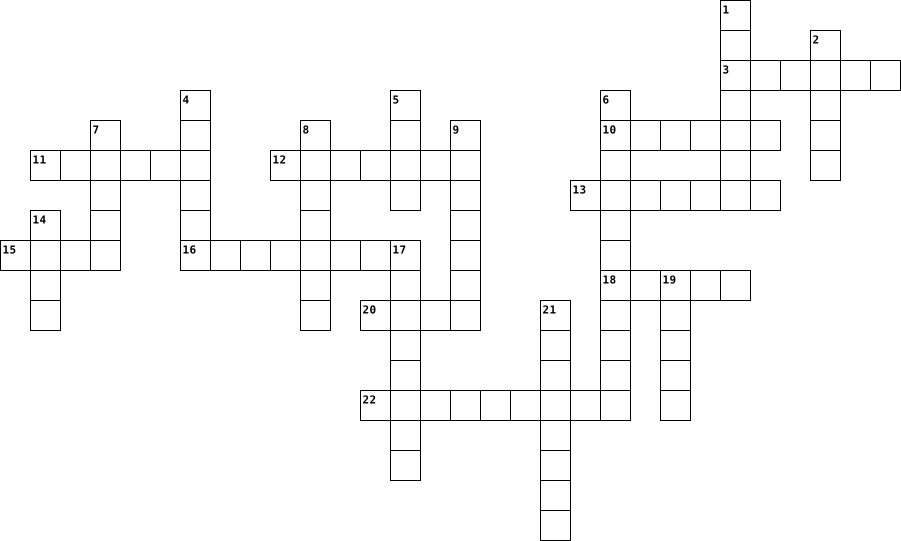
Across
- nuclear force the force that holds particles together
- mass unit to express atomic weights
- elementary particle of matter
- specific # of protons and neutrons
- energy energy the holds nucleus together
- decay when an electron is emitted
- a proton or neutron
- reaction a chemical reaction of products
- number total # of protons and neutrons
- half of the radioactive value
Down
- splitting
- carriers give rise to forces between other particles
- joining two or more things together
- production changing of radiation quantum to electron and positron
- emission of ionizing radiation
- decay atomic nucleus loses energy
- reaction change the identity of the atomic nucleus
- a subatomic particle
- nuclear force responsible for beta and decay of hadrons
- model math model of elementary particles of matter
- decay # of reduced by 4 an atomic number by 2
- when things are being done
22 Clues: splitting • a proton or neutron • a subatomic particle • when things are being done • elementary particle of matter • half of the radioactive value • emission of ionizing radiation • decay atomic nucleus loses energy • decay when an electron is emitted • specific # of protons and neutrons • joining two or more things together • mass unit to express atomic weights • ...
Vocabulary 2024-10-17

Across
- a representation of a chemical reaction using symbols of the elements to indicate the amount of substance of each reactant and product
- happens when two or more substances combine in ways that make new substances form that have different properties from the beginning materials
- states that the mass of an object, or collection of objects new changes, no matter how the parts are rearranged
Down
- a change of matter from one form to another without a change in chemical properties; only physical changes
- a change that occurs when one or more substances change into entirely new substances with different properties
- a substance or molecule that is formed in a chemical reaction; the final output
- a solid formed by a change in a solution, often due to a chemical reaction or change in temperature
- a substance or molecule that participates in a chemical reaction; the ingredients that you start with
8 Clues: a substance or molecule that is formed in a chemical reaction; the final output • a solid formed by a change in a solution, often due to a chemical reaction or change in temperature • a substance or molecule that participates in a chemical reaction; the ingredients that you start with • ...
Vocabulary 2024-10-17

Across
- a representation of a chemical reaction using symbols of the elements to indicate the amount of substance of each reactant and product
- happens when two or more substances combine in ways that make new substances form that have different properties from the beginning materials
- states that the mass of an object, or collection of objects new changes, no matter how the parts are rearranged
Down
- a change of matter from one form to another without a change in chemical properties; only physical changes
- a change that occurs when one or more substances change into entirely new substances with different properties
- a substance or molecule that is formed in a chemical reaction; the final output
- a solid formed by a change in a solution, often due to a chemical reaction or change in temperature
- a substance or molecule that participates in a chemical reaction; the ingredients that you start with
8 Clues: a substance or molecule that is formed in a chemical reaction; the final output • a solid formed by a change in a solution, often due to a chemical reaction or change in temperature • a substance or molecule that participates in a chemical reaction; the ingredients that you start with • ...
Science Vocab Crossword 2025-10-17

Across
- A substance or molecule that is formed in a chemical reaction; the final output
- A change that occurs when one or more substances change into entirely new substances with different properties
- A representation of a chemical reaction using symbols of the elements to indicate the amount of substance of each reactant and product
- a substance or molecule that participates in a chemical reaction; the ingredients that you start with
Down
- States that the mass of an object, or collection of objects new changes, no matter how the parts are rearranged
- A solid formed by a change in a solution, often due to a chemical reaction or change in temperature
- A change of matter from one form to another without a change in chemical properties; only physical changes
- Happens when two or more substances combine in ways that make new substances form that have different properties from the beginning materials
8 Clues: A substance or molecule that is formed in a chemical reaction; the final output • A solid formed by a change in a solution, often due to a chemical reaction or change in temperature • a substance or molecule that participates in a chemical reaction; the ingredients that you start with • ...
Vocab words crossword puzzle 2025-10-20

Across
- a change that occurs when one or more substances change into entirely new substances with different properties
- happens when two or more substances combine in ways that make new substances form that have different properties from the beginning materials
- a substance or molecule that is formed in a chemical reaction; the final output
Down
- states that the mass of an object, or collection of objects new changes, no matter how the parts are rearranged
- a change of matter from one form to another without a change in chemical properties; only physical changes
- a solid formed by a change in a solution, often due to a chemical reaction or change in temperature
- a substance or molecule that participates in a chemical reaction; the ingredients that you start with
- a representation of a chemical reaction using symbols of the elements to indicate the amount of substance of each reactant and product
8 Clues: a substance or molecule that is formed in a chemical reaction; the final output • a solid formed by a change in a solution, often due to a chemical reaction or change in temperature • a substance or molecule that participates in a chemical reaction; the ingredients that you start with • ...
vocab 1st prd 2025-11-18

Across
- A heat treatment that reduces brittleness and increases toughness after hardening.
- Metals that do not contain iron and do not rust easily.
- A pure substance made of only one type of atom.
- When a material expands in size as its temperature increases.
- When substances combine or break apart to form new substances.
- Steel with a low carbon content; softer, more ductile, and easier to shape.
- How much a material opposes the flow of electrical current.
- A reddish metal that is an excellent conductor of electricity and heat.
- A chemical bond formed when atoms share electrons.
- A reaction in which one element replaces another in a compound.
- The negative electrode where reduction happens in a chemical reaction.
- A metal often used to coat other metals to protect them from corrosion.
- Steel mixed with chromium to resist rust and corrosion.
- A chemical reaction where a substance loses electrons, often when reacting with oxygen.
- How brittle or dense an object is
- The amount of matter in an object.
- The amount of space an object or substance takes up.
- Steel with a high carbon content, making it very hard and strong but less ductile.
- The ability of a metal to be hammered or rolled into thin sheets without breaking.
- Metals that contain iron
- The smallest unit of an element that keeps its chemical properties.
- How tightly matter is packed.
- The unit used to measure electrical potential (the “pressure” behind electric flow).
Down
- A strong metal used widely in construction that rusts easily when exposed to oxygen and moisture.
- How well a material transfers heat.
- To heat a metal and let it cool slowly to make it softer and less brittle.
- A characteristic describing how a material behaves under force, such as strength or hardness.
- The positive electrode where oxidation happens in a chemical reaction.
- An atom or molecule with an electric charge caused by losing or gaining electrons.
- Two or more atoms chemically bonded together.
- A mixture of two or more metals
- How well a material lets electricity or heat pass through it.
- A very lightweight, reactive metal often used in alloys to make them stronger.
- Heat treatment that increases a metal’s hardness and strength.
- A substance made of two or more different elements chemically bonded.
- A shiny element that conducts heat and electricity well and can be shaped or formed.
- The gradual destruction of a metal caused by chemical reactions
- A characteristic that can only be seen when a substance changes into a new substance
- A material’s ability to resist scratching or denting.
- How much pulling force a material can handle before it breaks.
- A lightweight, silvery metal known for good corrosion resistance.
- Able to return to its original shape after being stretched or bent.
- The force that allows some materials to attract or repel others with magnetic properties.
- An alloy mainly made of iron and carbon, strong and widely used in construction.
- A substance that conducts electricity when dissolved or melted because it forms ions.
- A reaction where two different metals in contact with an electrolyte produce electric current and corrosion.
- The ability of a material to be drawn into wires without breaking.
- A characteristic that can be observed or measured without changing the substance.
48 Clues: Metals that contain iron • How tightly matter is packed. • A mixture of two or more metals • How brittle or dense an object is • The amount of matter in an object. • How well a material transfers heat. • Two or more atoms chemically bonded together. • A pure substance made of only one type of atom. • A chemical bond formed when atoms share electrons. • ...
Vocabulary Crossword puzzle 2023-10-17

Across
- a change that occurs when one or more substances change into entirely new substances with different properties
- happens when two or more substances combine in ways that make new substances form that have different properties from the beginning materials
- a substance or molecule that is formed in a chemical reaction; the final output
Down
- states that the mass of an object, or collection of objects new changes, no matter how the parts are rearranged
- a change of matter from one form to another without a change in chemical properties; only physical changes
- a solid formed by a change in a solution, often due to a chemical reaction or change in temperature
- a substance or molecule that participates in a chemical reaction; the ingredients that you start with
- a representation of a chemical reaction using symbols of the elements to indicate the amount of substance of each reactant and product
8 Clues: a substance or molecule that is formed in a chemical reaction; the final output • a solid formed by a change in a solution, often due to a chemical reaction or change in temperature • a substance or molecule that participates in a chemical reaction; the ingredients that you start with • ...
Science Vocabulary 2024-10-16

Across
- A change that occurs when one or more substances change into entirely new substances with different properties
- A change of matter from one form to another without a change in chemical properties; only physical changes
- A substance or molecule that is formed in a chemical reaction; the final output
- A solid formed by a change in a solution, often due to a chemical reaction or change in temperature
- States that the mass of an object, or collection of objects new changes, no matter how the parts are rearranged
Down
- Happens when two or more substances combine in ways that make new substances form that have different properties from the beginning materials
- A substance or molecule that participates in a chemical reaction; the ingredients that you start with
- A representation of a chemical reaction using symbols of the elements to indicate the amount of substance of each reactant and product
8 Clues: A substance or molecule that is formed in a chemical reaction; the final output • A solid formed by a change in a solution, often due to a chemical reaction or change in temperature • A substance or molecule that participates in a chemical reaction; the ingredients that you start with • ...
Vocabulary 2025-10-17

Across
- a substance or molecule that participates in a chemical reaction; the ingredients that you start with
- a change that occurs when one or more substances change into entirely new substances with different properties
- a change of matter from one form to another without a change in chemical properties, only physical changes
- states that the mass of an object, or collection of objects new changes, no matter how the parts are rearranged
Down
- a representation of a chemical reaction using symbols of the elements to indicate the amount of substance of each reactant and product
- happens when two or more substances combine in ways that make new substances form that have different properties from the beginning materials
- a substance or molecule that is formed in a chemical reaction; the final output
- a solid formed by a change in a solution, often due to a chemical reaction or change in temperature
8 Clues: a substance or molecule that is formed in a chemical reaction; the final output • a solid formed by a change in a solution, often due to a chemical reaction or change in temperature • a substance or molecule that participates in a chemical reaction; the ingredients that you start with • ...
chemical reactoin 2025-10-16

Across
- states that the mass of an object, or collection of objects new changes, no matter how the parts are rearranged
- a change of matter from one form to another without a change in chemical properties; only physical changes
- happens when two or more substances combine in ways that make new substances form that have different properties from the beginning materials
Down
- a representation of a chemical reaction using symbols of the elements to indicate the amount of substance of each reactant and product
- a solid formed by a change in a solution, often due to a chemical reaction or change in temperature
- a change that occurs when one or more substances change into entirely new substances with different properties
- a substance or molecule that participates in a chemical reaction; the ingredients that you start with
- a substance or molecule that is formed in a chemical reaction; the final output
8 Clues: a substance or molecule that is formed in a chemical reaction; the final output • a solid formed by a change in a solution, often due to a chemical reaction or change in temperature • a substance or molecule that participates in a chemical reaction; the ingredients that you start with • ...
Reaction Types 2014-05-19

Across
- REDUCTION REACTION/Any chemical change in which one species is oxidized(loses electrons)and another species(gains electrons); also called redox reaction.
- organic group that has one or more electrons available for bonding.
- process in which an electric current is used to produce a chemical reaction, such as the decomposition of water.
Down
- REACTION/The oxidation reaction of an organic compound, in which heat is released.
- DISPLACEMENT REACTION/A reaction in which a gas, a solid precipitate, or a molecular compound forms from the apparent exchange of atoms or ions between two compounds.
- REACTION/A reaction in which a single compound brakes down to form two or more simpler substances.
- REACTION/A reaction in which two or more substances combine to form a new compound.
- DISPLACEMENT REACTION/A reaction in which one element or radical takes the place of another element or radical in a compound.
8 Clues: organic group that has one or more electrons available for bonding. • REACTION/The oxidation reaction of an organic compound, in which heat is released. • REACTION/A reaction in which two or more substances combine to form a new compound. • REACTION/A reaction in which a single compound brakes down to form two or more simpler substances. • ...
week 6 2024-02-16

Across
- one sided
- having the necessary ability, knowledge, or skill to do something successfully.
- limit
- based on
- to make sure
- constructed in a rudimentary or makeshift way.
- be of the same opinion
- comfort someone when needed
Down
- a substance that increases the rate of a chemical reaction without itself undergoing any permanent chemical change.
- to hide
- decisive
- continuouslydone
- to come together
- being open and honest
- to surpass
15 Clues: limit • to hide • decisive • based on • one sided • to surpass • to make sure • continuouslydone • to come together • being open and honest • be of the same opinion • comfort someone when needed • constructed in a rudimentary or makeshift way. • having the necessary ability, knowledge, or skill to do something successfully. • ...
8th Grade Science 2023-12-06

Across
- Speed=Distance/Time
- Straight line going up on a distance vs. time graph.
- In the nucleus with a neutral charge.
- Straight horizontal line on a distance vs. time graph.
- The force applied in one direction is greater than the force applied in the opposite direction.
- A curved line on a distance vs. time graph.
- How fast something is going.
- An object in motion remains in motion unless acted on by an unbalanced force.
- Two or more molecules producing a new product(s).
- On the rings of an atom.
Down
- Symbolic representation of chemical reaction.
- For every action there is an equal and opposite reaction.
- The rate of change of velocity.
- Positive charge in the nucleus.
- Net force is equal to mass times acceleration.
- Those that are opposite in direction and equal in size.
- Are shiny and malleable.
- On the last ring of an atom.
- On the staircase of the Periodic Table.
- Numbers that come after a symbol in a chemical equation.
20 Clues: Speed=Distance/Time • Are shiny and malleable. • On the rings of an atom. • On the last ring of an atom. • How fast something is going. • The rate of change of velocity. • Positive charge in the nucleus. • In the nucleus with a neutral charge. • On the staircase of the Periodic Table. • A curved line on a distance vs. time graph. • Symbolic representation of chemical reaction. • ...
Science 2014-08-11

Across
- Ignition Point
- Solution Suspension
- Change Solute
- Concentrated
- States Of Matter
- Neutralise
Down
- Substance
- Chemical reaction
- Solid
- Melting
- Change
11 Clues: Solid • Change • Melting • Substance • Neutralise • Concentrated • Change Solute • Ignition Point • States Of Matter • Chemical reaction • Solution Suspension
school subjects 2025-10-30

Across
- songs
- mixing
- george Washington
- painting
- jungle
- footbol americano
Down
- to drink
- silk road
- 1+2
- beber
- chemical reaction
11 Clues: 1+2 • beber • songs • mixing • jungle • to drink • painting • silk road • chemical reaction • george Washington • footbol americano
Chemistry 2017-02-17

Across
- a solid that forms in a chemical reaction.
- a change that's observable that indicates a chemical reaction
- the ability to bend a metal without it breaking
- the process where one substance is changed to a different substance. Indicators show this reaction.
- a mixture that is made up of the same components throughout the whole thing.
- the basic unit of a element
Down
- made up of atoms and is pure.
- a change that changes the physical form of something.
- a mixture that is physically separated
9 Clues: the basic unit of a element • made up of atoms and is pure. • a mixture that is physically separated • a solid that forms in a chemical reaction. • the ability to bend a metal without it breaking • a change that changes the physical form of something. • a change that's observable that indicates a chemical reaction • ...
Chemical Reactions 2026-03-09

Across
- the relative size of things
- the tiny pieces that all matter is made of
- a process in which atoms rearrange to form new substances
- to change the order or position of something
Down
- an object or diagram that helps us understand something by making it simpler
- a starting substance that is part of a chemical reaction
- something that is made of all the same atoms or groups of atoms
- something that can be observed about a substance
- an ending substance that is made during a chemical reaction
9 Clues: the relative size of things • the tiny pieces that all matter is made of • to change the order or position of something • something that can be observed about a substance • a starting substance that is part of a chemical reaction • a process in which atoms rearrange to form new substances • an ending substance that is made during a chemical reaction • ...
stoichiometry bingo words 2026-02-05

Across
- A chemical equation in which the number of atoms of each element is equal on both the reactant and product sides, satisfying the Law of Conservation of Mass.
- The ratio between the moles of any two substances in a balanced chemical equation, derived from the coefficients; used as a conversion factor in stoichiometric calculations.
- The substances formed as a result of a chemical reaction, written on the right side of the chemical equation.
- The starting substances in a chemical reaction, written on the left side of the chemical equation.
Down
- A number placed in front of a chemical formula in a balanced equation that indicates the relative number of moles of that substance involved in the reaction.
- A symbolic representation of a chemical reaction using chemical formulas to show reactants and products.
- A number written below and to the right of an element symbol that indicates how many atoms of that element are in a single molecule or formula unit.
7 Clues: The starting substances in a chemical reaction, written on the left side of the chemical equation. • A symbolic representation of a chemical reaction using chemical formulas to show reactants and products. • The substances formed as a result of a chemical reaction, written on the right side of the chemical equation. • ...
chapter 13 kristiana 2019-09-30

Across
- of times atoms appear before the arrom must be equal to the number of times atoms appear after the arrow.
- reaction there is a net of absorption of energy.
- appears as a result of a chemical.
- of mass conservation: No atoms are gained or lost during any reaction.
- energy is the amount of energy required to pull two bonded atoms apart.
Down
- reaction there is a net release of energy.
- equations must be BALANCED.
- Energy is also called Bond Energy.
- → Products
9 Clues: → Products • equations must be BALANCED. • Energy is also called Bond Energy. • appears as a result of a chemical. • reaction there is a net release of energy. • reaction there is a net of absorption of energy. • of mass conservation: No atoms are gained or lost during any reaction. • energy is the amount of energy required to pull two bonded atoms apart. • ...
science 2023-10-16

Across
- a solid formed by a change in a solution, often due to a chemical reaction or change in temperature
- a change of matter from one form to another without a change in chemical properties; only physical changes
- a representation of a chemical reaction using symbols of the elements to indicate the amount of substance of each reactant and product
- a substance or molecule that participates in a chemical reaction; the ingredients that you start with
Down
- happens when two or more substances combine in ways that make new substances form that have different properties from the beginning materials
- states that the mass of an object, or collection of objects new changes, no matter how the parts are rearranged
- a change that occurs when one or more substances change into entirely new substances with different properties
- a substance or molecule that is formed in a chemical reaction; the final output
8 Clues: a substance or molecule that is formed in a chemical reaction; the final output • a solid formed by a change in a solution, often due to a chemical reaction or change in temperature • a substance or molecule that participates in a chemical reaction; the ingredients that you start with • ...
Science reaction 2023-10-15

Across
- happens when two or more substances combine in ways that make new substances form that have different properties from the beginning materials
- a change of matter from one form to another without a change in chemical properties; only physical changes
- a substance or molecule that is formed in a chemical reaction; the final output
- states that the mass of an object, or collection of objects new changes, no matter how the parts are rearranged
Down
- a representation of a chemical reaction using symbols of the elements to indicate the amount of substance of each reactant and product
- a substance or molecule that participates in a chemical reaction; the ingredients that you start with
- a change that occurs when one or more substances change into entirely new substances with different properties
- a solid formed by a change in a solution, often due to a chemical reaction or change in temperature
8 Clues: a substance or molecule that is formed in a chemical reaction; the final output • a solid formed by a change in a solution, often due to a chemical reaction or change in temperature • a substance or molecule that participates in a chemical reaction; the ingredients that you start with • ...
VOCAB Station 2023-10-15

Across
- a representation of a chemical reaction using symbols of the elements to indicate the amount of substance of each reactant and product
- a substance or molecule that participates in a chemical reaction; the ingredients that you start with
- a change that occurs when one or more substances change into entirely new substances with different properties
Down
- states that the mass of an object, or collection of objects new changes, no matter how the parts are rearranged
- a substance or molecule that is formed in a chemical reaction; the final output
- happens when two or more substances combine in ways that make new substances form that have different properties from the beginning materials
- a change of matter from one form to another without a change in chemical properties; only physical changes
- a solid formed by a change in a solution, often due to a chemical reaction or change in temperature
8 Clues: a substance or molecule that is formed in a chemical reaction; the final output • a solid formed by a change in a solution, often due to a chemical reaction or change in temperature • a substance or molecule that participates in a chemical reaction; the ingredients that you start with • ...
Science Vocab 2024-10-17

Across
- a solid formed by a change in a solution, often due to a chemical reaction or change in temperature
- a change of matter from one form to another without a change in chemical properties; only physical changes
- a representation of a chemical reaction using symbols of the elements to indicate the amount of substance of each reactant and product
- a substance or molecule that participates in a chemical reaction; the ingredients that you start with
Down
- happens when two or more substances combine in ways that make new substances form that have different properties from the beginning materials
- states that the mass of an object, or collection of objects new changes, no matter how the parts are rearranged
- a change that occurs when one or more substances change into entirely new substances with different properties
- a substance or molecule that is formed in a chemical reaction; the final output
8 Clues: a substance or molecule that is formed in a chemical reaction; the final output • a solid formed by a change in a solution, often due to a chemical reaction or change in temperature • a substance or molecule that participates in a chemical reaction; the ingredients that you start with • ...
Science Vocab words 2025-10-15

Across
- a change of matter from one form to another without a change in chemical properties; only physical changes
- a substance or molecule that is formed in a chemical reaction; the final output
- a change that occurs when one or more substances change into entirely new substances with different properties
- a substance or molecule that participates in a chemical reaction; the ingredients that you start with
- a representation of a chemical reaction using symbols of the elements to indicate the amount of substance of each reactant and product
Down
- states that the mass of an object, or collection of objects new changes, no matter how the parts are rearranged
- a solid formed by a change in a solution, often due to a chemical reaction or change in temperature
- happens when two or more substances combine in ways that make new substances form that have different properties from the beginning materials
8 Clues: a substance or molecule that is formed in a chemical reaction; the final output • a solid formed by a change in a solution, often due to a chemical reaction or change in temperature • a substance or molecule that participates in a chemical reaction; the ingredients that you start with • ...
Science Vocab 2025-10-16

Across
- a change that occurs when one or more substances change into entirely new substances with different properties
- a change of matter from one form to another without a change in chemical properties; only physical changes
Down
- a representation of a chemical reaction using symbols of the elements to indicate the amount of substance of each reactant and product
- : happens when two or more substances combine in ways that make new substances form that have different properties from the beginning materials
- of Mass: states that the mass of an object, or collection of objects new changes, no matter how the parts are rearranged
- a substance or molecule that is formed in a chemical reaction; the final output
- a substance or molecule that participates in a chemical reaction; the ingredients that you start with
- a solid formed by a change in a solution, often due to a chemical reaction or change in temperature
8 Clues: a substance or molecule that is formed in a chemical reaction; the final output • a solid formed by a change in a solution, often due to a chemical reaction or change in temperature • a substance or molecule that participates in a chemical reaction; the ingredients that you start with • ...
Science Vocab 2025-10-16

Across
- a substance or molecule that participates in a chemical reaction; the ingredients that you start with
- states that the mass of an object, or collection of objects new changes, no matter how the parts are rearranged
- a substance or molecule that is formed in a chemical reaction; the final output
- : happens when two or more substances combine in ways that make new substances form that have different properties from the beginning materials
- a change that occurs when one or more substances change into entirely new substances with different properties
Down
- a change of matter from one form to another without a change in chemical properties; only physical changes
- a representation of a chemical reaction using symbols of the elements to indicate the amount of substance of each reactant and product
- a solid formed by a change in a solution, often due to a chemical reaction or change in temperature
8 Clues: a substance or molecule that is formed in a chemical reaction; the final output • a solid formed by a change in a solution, often due to a chemical reaction or change in temperature • a substance or molecule that participates in a chemical reaction; the ingredients that you start with • ...
Gas Laws Vocabulary 2016-05-15

Across
- law: states that the volume of a fixed amount of gas held at constant temperature varies inversely with the pressure
- zero: zero on the Kevin scale, which represents the lowest possible theoretical temperature
- volume: is the volume of one mole of a substance
- energy: energy which an object has because of its positon
- a form of energy that flows from a warmer object to a cooler object
- a chemical reaction or process in which a greater amount of energy is required to break the existing bonds in the reactants than is released when the new bonds form in the products molecules
- the heat content of a system at constant pressure
- law: states that the pressure of a fixed mass of gas varies directly with the kelvin temperature when the volume remains constant
- heat: the amount of heat required to raise the temperature of one gram of a given substance by one degree Celsius
- an insulated device that is used to measure the amount of heat released or absorbed during a physical or chemical process
Down
- temperature and pressure: temperature of 273 K and 1 (atm) pressure
- a chemical reaction or process in which more energy is release than is required to break bonds in the in the initial reactants
- the SI unit of heat and energy
- a measure of the average kinetic energy of the particles in a sample of matter
- law: states that the volume of a given mass of gas is directly proportional to its kelvin temperature at constant pressure
- gas law: describes the physical behavior of an ideal gas in terms of pressure, volume, temperature, and number of moles of gas
- energy: energy an object possesses due to its motion
- of conservation of energy: states that in any chemical reaction or physical process, energy may change from one form to another, but it is neither created nor destroyed
- the capacity to do work or produce heat
19 Clues: the SI unit of heat and energy • the capacity to do work or produce heat • volume: is the volume of one mole of a substance • the heat content of a system at constant pressure • energy: energy an object possesses due to its motion • energy: energy which an object has because of its positon • temperature and pressure: temperature of 273 K and 1 (atm) pressure • ...
Balancing Chemical Equations Vocab 2024-12-13

Across
- substances present after a chemical reaction
- the symbol used to separate the reactants side and product side in a chemical equation
- three words, states that matter cannot be created or destroyed
- large numbers in front of a molecule that shows how many of them there are in the equation
- substances present before a chemical reaction
Down
- used to describe a chemical equation that is not equal on both sides
- small numbers behind an element symbol that show how many of an atom there are in a molecule
- anything that has mass and takes up space
- used to describe a chemical equation equal on both sides
9 Clues: anything that has mass and takes up space • substances present after a chemical reaction • substances present before a chemical reaction • used to describe a chemical equation equal on both sides • three words, states that matter cannot be created or destroyed • used to describe a chemical equation that is not equal on both sides • ...
Elnathan Leul: Science Crossword Puzzle 2025-03-19

Across
- the process by which plants and some bacteria convert light energy, typically from sunlight, into chemical energy (sugars) using carbon dioxide and water, releasing oxygen as a byproduct.
- a substance that takes part in and undergoes change during a reaction.
- the substances that are formed as a result of a chemical reaction.
- Reaction a process that leads to the chemical transformation of one set of chemical substances to another.
Down
- Change the material involved in the change is structurally the same before and after the change.
- of Matter no matter can ever be created or destroyed.
- the ability to do work or cause change.
- a simple sugar (monosaccharide) that serves as the primary energy source for the body. It is a six-carbon carbohydrate with the chemical formula C6H12O6.
- Resparation the process by which cells break down glucose to produce energy in the form of ATP, with oxygen as a key component in the process, releasing carbon dioxide and water as waste products.
9 Clues: the ability to do work or cause change. • of Matter no matter can ever be created or destroyed. • the substances that are formed as a result of a chemical reaction. • a substance that takes part in and undergoes change during a reaction. • Change the material involved in the change is structurally the same before and after the change. • ...
thomas vocab 2.1 2021-10-27

Across
- thermal reaction
- the substances present before
- a chemical reaction
- a chemical reaction
Down
- a chemical change
- the substances that are formed
- a change in matter
- material that has mass
8 Clues: thermal reaction • a chemical change • a change in matter • a chemical reaction • a chemical reaction • material that has mass • the substances present before • the substances that are formed
Andrés Navarrete Oxidation 2022-01-18

Across
- Set of steps or operations that occurs to an object to transform or elaborate it
- Result of a work or natural or artificial elaboration
- Variation of the internal structure of a compound
- chemical reaction represented with symbols
- Consequence of an action
Down
- Method of determining the climate and the degrees that we are
- changes in an object, living being, energy, etc.
- alterations only in physical properties
- Element which allows us to live
- action that is reciprocal between two objects, people, energies or entities
- chemical reaction when an element loses
- Homogeneous matter whose composition is fixed and chemically defined
12 Clues: Consequence of an action • Element which allows us to live • alterations only in physical properties • chemical reaction when an element loses • chemical reaction represented with symbols • changes in an object, living being, energy, etc. • Variation of the internal structure of a compound • Result of a work or natural or artificial elaboration • ...
extra credit-Danny 2024-02-26

Across
- an equation that tells you the atoms in molecules
- what you end up with in a chemical reaction
- multiple different atoms bonded together
- types of atoms
- the combining of molecules
- what you start with in a chemical reaction
Down
- atoms bonded together
- atoms sharing electrons
- a formula that tells you how much of the atoms and molecules are in the reactant and product
- a rule that says that matter cannot be destroyed
- smallest particle that makes up anything
- a small number at the bottom of an atomic symbol that tells how much of it there is
12 Clues: types of atoms • atoms bonded together • atoms sharing electrons • the combining of molecules • smallest particle that makes up anything • multiple different atoms bonded together • what you start with in a chemical reaction • what you end up with in a chemical reaction • a rule that says that matter cannot be destroyed • an equation that tells you the atoms in molecules • ...
extra credit-Danny 2024-02-26

Across
- an equation that tells you the atoms in molecules
- what you end up with in a chemical reaction
- multiple different atoms bonded together
- types of atoms
- the combining of molecules
- what you start with in a chemical reaction
Down
- atoms bonded together
- atoms sharing electrons
- a formula that tells you how much of the atoms and molecules are in the reactant and product
- a rule that says that matter cannot be destroyed
- smallest particle that makes up anything
- a small number at the bottom of an atomic symbol that tells how much of it there is
12 Clues: types of atoms • atoms bonded together • atoms sharing electrons • the combining of molecules • smallest particle that makes up anything • multiple different atoms bonded together • what you start with in a chemical reaction • what you end up with in a chemical reaction • a rule that says that matter cannot be destroyed • an equation that tells you the atoms in molecules • ...
Unit 1 notes 2021-08-26

Across
- simple sugar made in producers
- One species benefits while the other is not affected
- an animal or person that eats food of both plant and animal origin
- a chemical reaction that uses sunlight to make glucose and oxygen
- A close, long -term relationship between organisms
- Consumer eat only producer
- eat decomposing organisms
Down
- must eat other organisms to get energy
- dioxide the gas that plants (and other producers) breathe in, and humans (and other animals) breathe out
- One species benefits and the other is harmed
- cellular energy
- respiration a chemical reaction that uses glucose and oxygen to make ATP, in the mitochondria
- Consumer eat primary consumers (eat omnivores and carnivores)
- perform photosynthesis to make their own glucose
- Consumer Eat secondary consumers
- Good for both organisms because oth pieces benefit
16 Clues: cellular energy • eat decomposing organisms • Consumer eat only producer • simple sugar made in producers • Consumer Eat secondary consumers • must eat other organisms to get energy • One species benefits and the other is harmed • perform photosynthesis to make their own glucose • A close, long -term relationship between organisms • ...
Energy In Living Systems 2017-01-19

Across
- Compound used by cells to store and release energy.
- Process that changes, or transform one set of chemicals into another set of chemicals.
- Pigments in a plant that absorb the wavelengths that chlorophyll can't.
- Organelle found in cells of plants and some other organisms that captures energy from sunlight and converts it into chemical energy.
- Process by which cells release energy in the absence of oxygen.
- Organelle that converts the chemical energy stored in food into compounds that are more convenient for the cell to use.
- An organism that makes its own food and energy.
Down
- Post-translational modification of proteins.
- Process that releases energy by breaking down glucose and other food molecules in the presence of oxygen
- Formed when a phosphate is removed from ATP to release energy.
- Light absorbing molecule used by plants to gather the sun's energy.
- Process that doesn't require oxygen.
- Principal pigment of plants and other photosynthetic organisms.
- Process where plants take oxygen in the light and give out carbon dioxide (opposite of photosynthesis).
- The process in which plants use the energy of sunlight to convert water and carbon dioxide into high energy carbohydrates and release oxygen as a waste product.
- Process that requires oxygen.
- Elements or compounds produced by a chemical reaction.
- Elements or compounds that enter into a chemical reaction.
18 Clues: Process that requires oxygen. • Process that doesn't require oxygen. • Post-translational modification of proteins. • An organism that makes its own food and energy. • Compound used by cells to store and release energy. • Elements or compounds produced by a chemical reaction. • Elements or compounds that enter into a chemical reaction. • ...
Crossword Puzzle - Heat and Temperature 2021-08-15

Across
- the state of matter in which the particles have the least amount of energy
- temperature scale based on 0° for the freezing point of water and 100° for the boiling point of water
- a chemical reaction that absorbs heat from the surroundings and therefore feels cold
- phase change that occurs when a liquid becomes a solid
- the state of matter in which the particles have the greatest amount of energy
- temperature scale used in the United States
- phase change that occurs when a liquid becomes a gas
- the SI unit for temperature
- the ability to do work
- phase change that occurs when a gas becomes a liquid
- phase change that occurs when a gas becomes a solid
Down
- process of measuring the amount of heat released or absorbed during a chemical reaction
- a substance with a heat capacity of 4.184 J/g C
- the SI unit for work or energy
- phase change that occurs when a solid becomes a gas
- a measure of the average kinetic energy of atoms and molecules in a system
- a chemical reaction that releases heat into the surroundings and therefore feels hot
- amount of heat that must be added to one gram of a substance to raise its temperature by one degree celsius
- unit used to describe the amount of energy in food
- flow of energy from areas of high temperature to areas of low temperature
- phase change that occurs when a solid becomes a liquid
- the state of matter in which the particles flow freely past each other but have a fixed volume
22 Clues: the ability to do work • the SI unit for temperature • the SI unit for work or energy • temperature scale used in the United States • a substance with a heat capacity of 4.184 J/g C • unit used to describe the amount of energy in food • phase change that occurs when a solid becomes a gas • phase change that occurs when a gas becomes a solid • ...
✨Science✨ 2023-10-30

Across
- single stranded molecule that holds genetic information
- a solution where a solvent cannot dissolve any more solute at a given temperature
- scale a scale that measures how acidic an object is
- a chemical bond between 24.
- the result of a solute and a solvent
- organic compounds that are insoluble in water
- object with a high number on the pH scale
- acids Acids that carry genetic information
- the highest and most basic number on the pH scale
- bond sharing electrons between atoms
- substance produced by a chemical reaction
- double helix that allows traits to be passed down to the next generation
- a mixture where the components composition is not uniform throughout the mixture
- dissolving medium
- the lowest and most acidic number on the pH scale
Down
- substance that go into a chemical reaction
- a solution in which a solvent is capable of dissolving any more solute at a given temperature.
- sugar molecules that provide glucose to the body
- a number that tells us how many of each molecule is in a reaction
- large complex molecules that are made up of one or more long folded chains of amino acids
- a phase of matter that possesses the same proportions of its components
- bond a bond that transfers an electron
- a solution that contains a large amount of solute that will crystallize once temperature is lowered two atoms involving six bonding electrons instead of the usual two
- object with a low number on the pH scale
- substances that are present in organisms and are essential to said organisms biological process
- dissolving substance
26 Clues: dissolving medium • dissolving substance • a chemical bond between 24. • the result of a solute and a solvent • bond sharing electrons between atoms • bond a bond that transfers an electron • object with a low number on the pH scale • object with a high number on the pH scale • substance produced by a chemical reaction • substance that go into a chemical reaction • ...
Vocabulary for CHapter 8 2023-02-02

Across
- The heat content of a system at constant pressure
- Work The pumping of substances across membranes against the direction of spontaneous movement
- Kinetic energy associated with the random movement of atoms or molecules
- Energy Energy can be associated with the relative motion of objects
- Reaction "Energy Outward" Proceeds with a net release of free energy
- Pathway Begins with a specific molecule, which is then altered in a series of defined steps, resulting in a certain product.
- All of the chemical reactions that occur within an organism
- The study of how energy flows through living organisms
Down
- Energy The potential energy available for release in a chemical reaction
- Energy Energy that matter possesses because of its location or structure
- A process that can occur without an input of energy
- Pathways (build) Consume energy to build complicated molecules from simpler ones; they are sometimes biosynthetic pathways
- Work The pushing of endergonic reactions that would not occur spontaneously, such as the synthesis of polymers from monomers
- The study of the energy transformations that occur in a collection of matter
- Reaction "Energy Inward" One that absorbs free energy from it's surroundings
- Work Such as the beating of cilia, the contraction of muscle cells, and the movement of chromosomes during cellular reproduction
- Law of Thermodynamics Every energy transfer or transformation increases the entropy of the universe
- Pathways (breakdown) Release energy by breaking down complex molecules to simpler compounds
- A measure of disorder or randomness
- Energy The portion of a system's energy that can perform work when temperature and pressure are uniform throughout the system, as in a living cell
- Law of Thermodynamics The energy of the universe is constant: Energy can be transferred, but it cannot be created or destroyed
21 Clues: A measure of disorder or randomness • The heat content of a system at constant pressure • A process that can occur without an input of energy • The study of how energy flows through living organisms • All of the chemical reactions that occur within an organism • Energy Energy can be associated with the relative motion of objects • ...
M&E in Ecosystems!!! 2025-04-04

Across
- A type of organism that breaks down dead matter to get its ESM's.
- The part of the cell that photosynthesis occurs in a plant cell.
- The substance that starts at chemical reaction.
- A type of molecule that is used to release energy when needed.
- A chemical reaction that occurs with oxygen and glucose atoms that release energy into cells.
- Something that is used for a process.
- A type of atom that makes up energy storage molecules.
- The end substance after a chemical reaction occurs.
- A type of ESM made of that can join together to make starch.
- All the matter in an ecosystem that is NON-living.
- All the matter in an ecosystem the IS living.
Down
- To join multiple things together.
- A type of ESM with a lower energy density then fat.
- The result of a process.
- The ability to make things move or change.
- A group of atoms joined together in a particular.
- A type of organism that has to eat in order to get ESM's.
- An organism that makes its own ESM's through energy from the sunlight.
- All the abiotic and biotic matter in an ecosystem.
- A molecule made up of 1 carbon atom and 2 oxygen atoms.
- The molecule made when multiple glucose molecules are joined together.
- A tiny particle that everything is made of.
- An organelle that cellular respiration occurs.
- A type of Energy Storage Molecule that has a higher energy density then glycogen.
- The process when producers use energy from the sunlight to get energy storage molecules.
- The set of parts forming a complex whole.
- Another word for biotic matter, representing all living things
- A man-made ecosystem.
28 Clues: A man-made ecosystem. • The result of a process. • To join multiple things together. • Something that is used for a process. • The set of parts forming a complex whole. • The ability to make things move or change. • A tiny particle that everything is made of. • All the matter in an ecosystem the IS living. • An organelle that cellular respiration occurs. • ...
Natural Science: vocabulary Unit 7 & 8 2024-06-27

Across
- a method used to separate solids from liquids, or solids with different size particles in heterogeneous mixtures
- another word for a homogeneous mixture
- the flow of electrical charges through materials
- these happen when atoms react and group together differently
- a method used to separate substances of different density in heterogeneous mixtures
- a mixture in which the different components can be distinguished
- the component of an electric circuit which provides the electricity
- a method used to separate liquids that have different boiling points in homogeneous mixtures
- a type of matter which contains only one type of component
- a chemical reaction that happens in some living things, such as yeast and bacteria
- a material which allows electrical charges to move
Down
- a chemical reaction that happens when some metal substances such as iron combine with oxygen in the presence of water
- a type of matter which contains two or more pure substances
- a mixture in which the different components cannot be distinguished
- a material which does not allow electrical charges to move
- the component of an electric circuit which transforms electricity into another type of energy
- a device with a magnetic needle that always points north, we use it to orient ourselves
- an object which can attract other objects made of iron and other magnetic metals
- a connecting wire, usually made from copper,wrapped in plastic covering
- a closed path through which electricity flows
- the force of attraction exerted by magnets
- a method used to separate solids from liquids in homogeneous mixtures
- a chemical reaction that happens when objects or substances are burned
23 Clues: another word for a homogeneous mixture • the force of attraction exerted by magnets • a closed path through which electricity flows • the flow of electrical charges through materials • a material which allows electrical charges to move • a material which does not allow electrical charges to move • a type of matter which contains only one type of component • ...
Natural Science 2022-08-20

Across
- a device with a magnetic needle that always points north. We use it to orient ourselves.
- a type of matter which contains two or more pure substances.
- a material which does riot allow electrical charges to move.
- a chemical reaction that happens when objects or substances are burned.
- an object which can attract other objects made of iron and other magnetic metals.
- circuit a closed path through which electricity flows.
- a method used to separate solids from liquids in homogeneous mixtures. fermentation a chemical reaction that happens in some living things. such as yeast and bacteria.
- a method used to separate solids from liquids, or solids with different size particles, in heterogeneous mixtures.
- these happen when atoms react and group together differently.
- the component of an electnc circuit which provides the electricity.
- the force of attraction exerted by magnets.
- a mixture in which the different components cannot be distinguished.
Down
- the component of an electric circuit which transforms electricity into another type of energy.
- another word for a homogeneous mixture.
- a method used to separate liquids that have different boiling points in homogeneous mixtures.
- a type of matter which contains only one type of component.
- a chemical reaction that happens when some meta substances such as iron combine with oxygen in the presence of water.
- a method used to separate substances of different density in heterogeneous mixtures.
- a matenal which allows electrical charges to move.
- a mixture in which the different components can be distinguished.
- a connecting wire, usually made of copper. wrapped in plastic covering.
- the flow of electncal charges through materials.
22 Clues: another word for a homogeneous mixture. • the force of attraction exerted by magnets. • the flow of electncal charges through materials. • a matenal which allows electrical charges to move. • circuit a closed path through which electricity flows. • a type of matter which contains only one type of component. • ...