
chemical reaction Crossword Puzzles
Physics Crossword 2020-04-28

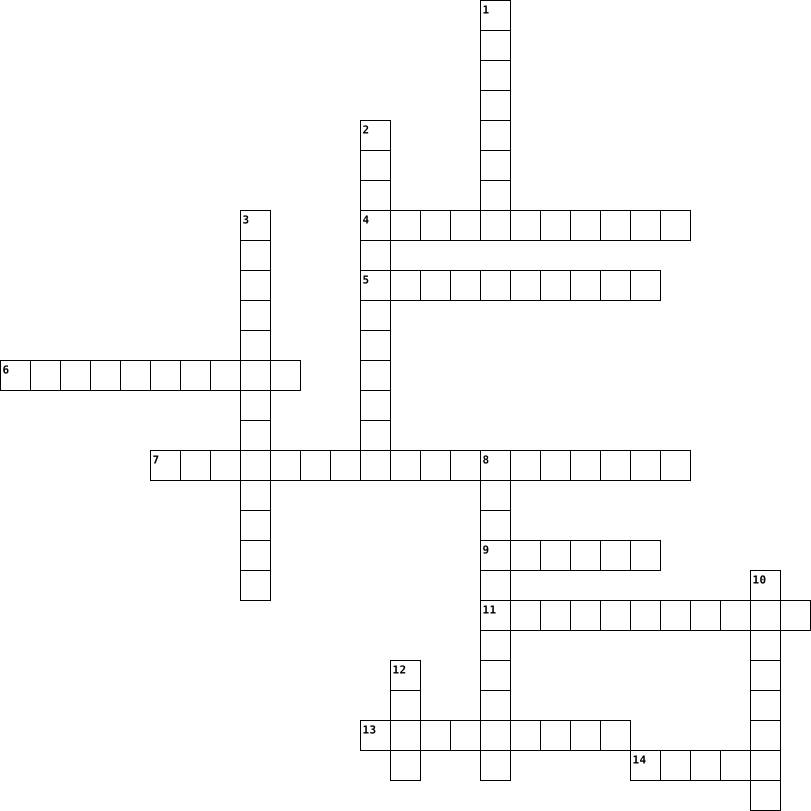
Across
- The foul smell developed due to oxidation of food
- 2 or more substances combine to form single substance
- Reaction in which heat energy is released
- reaction in which one element displaces another
- gain of oxygen/loss of hydrogen
Down
- An insoluble substance in a chemical reaction
- Tarnishing of metals due to the reaction with air & H2O
- Reaction in which heat energy is absorbed by reactants
- A precious metal which resist corrosion
- Loss of oxygen/gain of hydrogen
10 Clues: Loss of oxygen/gain of hydrogen • gain of oxygen/loss of hydrogen • A precious metal which resist corrosion • Reaction in which heat energy is released • An insoluble substance in a chemical reaction • reaction in which one element displaces another • The foul smell developed due to oxidation of food • 2 or more substances combine to form single substance • ...
Science Keyword Crossword Puzzle By: Andrew and Lydia 2017-09-27

Across
- Sugar molecule.
- Organelle found inside a cell, it is the site of cellular respiration.
- Type of long chain sugar molecule that is found in plants.
- Process by which oxygen reacts with glucose to form carbon dioxide, water and energy in the form of ATP.
- Process by which plants make their own sugar, by reacting carbon dioxide with water, in the presence of sunlight to produce sugar and oxygen.
Down
- Type of reaction that requires energy to start the reaction, the energy is absorbed from its surroundings.
- Enzyme which breaks down carbohydrate, and long sugar molecules into glucose.
- Plant cell organelle, where photosynthesis occurs.
- Substances that will interact with each other during a chemical reaction.
- Substances that are formed, from a chemical reaction.
- Structure in the intestine, which enables the absorption of nutrients into the blood.
11 Clues: Sugar molecule. • Plant cell organelle, where photosynthesis occurs. • Substances that are formed, from a chemical reaction. • Type of long chain sugar molecule that is found in plants. • Organelle found inside a cell, it is the site of cellular respiration. • Substances that will interact with each other during a chemical reaction. • ...
Science Vocab 2017-09-27

Across
- Enzyme which breaks down carbohydrate, and long sugar molecules into glucose
- Substances that will interact with each other during a chemical reaction
- Structure in the intestine, which enables the absorption of nutrients into the blood.
- Type of long chain sugar molecule that is found in plants.
- Sugar molecule
- Process by which plants make their own sugar, by reacting carbon dioxide with water, in the presence of sunlight to produce sugar and oxygen
- Plant cell organelle, where photosynthesis occurs
Down
- Type of reaction that requires energy to start the reaction. The energy is absorbed from it's surroundings.
- Respiration process by which oxygen reacts with glucose to form carbon dioxide, water and energy in the form of ATP.
- Substances that are formed, from a chemical reaction.
- Organelle found inside a cell. It is the site of cellular respiration
11 Clues: Sugar molecule • Plant cell organelle, where photosynthesis occurs • Substances that are formed, from a chemical reaction. • Type of long chain sugar molecule that is found in plants. • Organelle found inside a cell. It is the site of cellular respiration • Substances that will interact with each other during a chemical reaction • ...
Rates of Reactions 2017-05-02

Across
- Form of limestone reacting slowly
- The amount of energy needed for a reaction to begin
- The amount of particles in a given volume
- The unit of time
- Form of limestone reacting fast
Down
- The speed with which a particular chemical reaction progresses
- The larger that is the faster the rate of reaction
- Particles must do this before they react
- A substance that changes the rate of reaction without being used up
- Increasing the temperature gives the particles more ……….
- A biological catalyst
11 Clues: The unit of time • A biological catalyst • Form of limestone reacting fast • Form of limestone reacting slowly • Particles must do this before they react • The amount of particles in a given volume • The larger that is the faster the rate of reaction • The amount of energy needed for a reaction to begin • Increasing the temperature gives the particles more ………. • ...
CHEMISTRY ATTENDANCE PROJECT 2023-12-04

Across
- Or burning; a high-temperature exothermic redox chemical reaction between a fuel and an oxidant
- The substance formed from chemical reactions.
- A place where experiments related to chemistry are conducted
- The process or effect of simplifying a single chemical entity into two or more fragments
- Any substance that has mass and takes up space
- A person who is studying at a school or college.
Down
- A small Texas town in which you live in
- A school that typically comprises grades 9 through 12, attended after primary school or middle school.
- A process in which one or more substances, are converted to one or more different substances
- The branch of science that deals with the identification of the substances of which matter is composed
- A chemical substance that cannot be broken down into other substances, there's a whole table based off these
- The queen herself, your teacher.
12 Clues: The queen herself, your teacher. • A small Texas town in which you live in • The substance formed from chemical reactions. • Any substance that has mass and takes up space • A person who is studying at a school or college. • A place where experiments related to chemistry are conducted • ...
PS 3-5 Vocabulary 2022-03-28

Across
- waste from remains of nuclear reactions
- Law of ________ of Mass
- on the right side of the arrow in an equation
- combining of the nuclei of atoms
- starting materials in a chemical reaction
- the type of bond between a metal and nonmetal
- a bond with shared electrons between nonmetals
Down
- electrons that are on the outer level of an atom
- on the left side of the arrow in an equation
- used to represent a chemical reaction
- an atom that has gained or lost electrons
- new compounds formed during a reaction
- reaction that involves the nucleus of atoms
- atoms cannot be ______________ or destroyed
- splitting of the nucleus of atoms
- released during fission and fusion
16 Clues: Law of ________ of Mass • combining of the nuclei of atoms • splitting of the nucleus of atoms • released during fission and fusion • used to represent a chemical reaction • new compounds formed during a reaction • waste from remains of nuclear reactions • an atom that has gained or lost electrons • starting materials in a chemical reaction • ...
lila johnson mr.B physical science 2017-10-03

Across
- is the minimun amount of energy to overcome the inital breaking of bonds
- no atoms are gained or lost during any reaction
- how quickly the concentration of reactants decreases
Down
- were commonly used as refrigerants,
- is a substance that lowers the actvation energy of a chemical reaction
- a net release of energy
- have to make physical contact with each other in order to transform into products
- is the amount of energy to pull two bonded atoms apart
- during a ________ reaction one or more new compounds are formed as a result of the rearrangement of atoms
- a net absorption of energy
10 Clues: a net release of energy • a net absorption of energy • were commonly used as refrigerants, • no atoms are gained or lost during any reaction • how quickly the concentration of reactants decreases • is the amount of energy to pull two bonded atoms apart • is a substance that lowers the actvation energy of a chemical reaction • ...
enzymes 2021-01-23

Across
- Scale of acidity or alkalinity.
- A substance on which enzymes act.
- A substance that changes the rate of a chemical reaction without being changed by the reaction itself.
- To construct a larger biological molecule from smaller ones.
- The part of the enzyme to which a specific substrate can attach or fit on to.
- Fat or oils, composed of fatty acids and glycerol.
Down
- Food belonging to the food group consisting of sugars, starch and cellulose.
- A simple sugar used by cells for respiration.
- Naturally occurring compounds of carbon, hydrogen and oxygen.
- The building blocks that make up a protein molecule.
- A protein which catalyses or speeds up a chemical reaction.
11 Clues: Scale of acidity or alkalinity. • A substance on which enzymes act. • A simple sugar used by cells for respiration. • Fat or oils, composed of fatty acids and glycerol. • The building blocks that make up a protein molecule. • A protein which catalyses or speeds up a chemical reaction. • To construct a larger biological molecule from smaller ones. • ...
Chemical systems and Equilibrium Crossword 2022-01-27

Across
- when products and reactants reach the same rate and are equal
- a rate at which products are formed
- the release of energy
- yield the amount of product obtained from a lab
- a substance that speeds up a reaction without itself being included in the reaction
- the net charge of an atom due to losing or gaining an electron
- quotient helps determine the state/position of a reaction
- a substance that has OH ions
- the absorption of energy
- the force exerted to compress something such as gas (kPa)
- a state of constant change (never stops)
- gas an unreactive gas that has no impact on equilibrium
- concentration the concentration at the beginning of a reaction
- a rate at which reactants are formed
- describes whether a the products or reactants are favored in a reaction
- yield amount of product obtained from stoichiometry
- equilibria when reactants and products have the same state
- a substance that can be measured using pH
Down
- the formation of a solid compound in a chemical reaction
- the amount of space a object occupies (L/mL)
- reaction when products are formed in a reaction but reactants are reformed
- when a substance is able to dissolve in water
- yield used to calculate the percentage of which products/reactions are favored
- law an equation where k is a constant and the concentration of reactants is used to determine the rate of the reaction
- a table used to differentiate initial change in equilibrium
- equilibria when reactants and products have different states
- measured in mol/L
- rule a rule used when the concentration of a substance is 1000x greater than Keq
- when ions break into separate entities when dissolved in water
- chatelier's principle when equilibrium is disturbed and the system will counteract the disruption by opposing it
30 Clues: measured in mol/L • the release of energy • the absorption of energy • a substance that has OH ions • a rate at which products are formed • a rate at which reactants are formed • a state of constant change (never stops) • a substance that can be measured using pH • the amount of space a object occupies (L/mL) • when a substance is able to dissolve in water • ...
Mr. Sir 2017-03-23

Across
- The number of active molecules in a set volume of solution
- an insoluble compound formed in a precipitation reaction
- a long-chain molecule formed by the joining of many smaller repeating molecules (monomers)
- a reaction that involved oxygen and releases light and heat energy
- a mixaure of a solute dissolved in a solvent such as water
- a reaction in which an acid and a base combine to produce a metal, salt, and water
- A small number of active molecules (such as acid) in a solution
Down
- A strong acid readily releases a hydrogen ion in a chemical reaction
- A molecule that contains only carbon and hydrogen atoms
- an object or substance that can be broken down by bacteria, fungi, and other living organisms
- a small molecule from which polymers are made
- a reaction that involves the breakdown of a compund into simpler substances
- process of joining of smaller units to form a long chain molecule
- A reaction that involves the building up of compounds by combining simpler substance, normally elements
- a substance that increases the rate of a reaction but is not is not used up in the reaction
15 Clues: a small molecule from which polymers are made • A molecule that contains only carbon and hydrogen atoms • an insoluble compound formed in a precipitation reaction • The number of active molecules in a set volume of solution • a mixaure of a solute dissolved in a solvent such as water • A small number of active molecules (such as acid) in a solution • ...
Chemical Reactions and Equations 2024-07-01

Across
- the process of splitting a molecule using electricity
- oxidation of the top layer of metal surface
- substance that undergoes change in a chemical reaction
- substances which are added to food to prevent rancidity
Down
- common name of Calcium Carbonate
- insoluble substance formed when Barium Chloride reacts with Sodium Sulphate
- type of chemical reaction that involves only one reactant
- respiration is a _____________ reaction
8 Clues: common name of Calcium Carbonate • respiration is a _____________ reaction • oxidation of the top layer of metal surface • the process of splitting a molecule using electricity • substance that undergoes change in a chemical reaction • substances which are added to food to prevent rancidity • type of chemical reaction that involves only one reactant • ...
Chemical reactions 2024-10-16

Across
- Is an another term for burning
- A substance used at the beginning of a chemical reaction
- Is a white powder formed due to a reaction between magnesium and oxygen
- Produces a brown colour
Down
- Produces carbon dioxide and alcohol
- Is a technique used in cooking
- a procedure that produces new chemicals
- A substance obtained at the end of a chemical reaction
8 Clues: Produces a brown colour • Is a technique used in cooking • Is an another term for burning • Produces carbon dioxide and alcohol • a procedure that produces new chemicals • A substance obtained at the end of a chemical reaction • A substance used at the beginning of a chemical reaction • Is a white powder formed due to a reaction between magnesium and oxygen
Chemistry revision activity 2013-11-16
Across
- The hotter a reaction, the more likely it is to go in the ______ direction
- If the forward reaction is _____ then the backward reaction is endothermic in a reversible reaction
- ____ the concentration of a substance tips the equilibrium in the direction that uses up the concentration of the substance added
- ____ ____is when the rate of a forward reaction is the same as the rate of the backward reaction
- In a gas reaction, the _____ the pressure the more the reaction moves in the direction with less gas molecules
- This is one of the factors that can be changed to influence the position of an equilibrium
- In the haber process, iron beds are present in the ____
- Ammonia is produced through the ____ process in industries
Down
- A ____ is used to speed up a chemical reaction
- Most reactions are this type of reactions
- This is one of the factors that can be changed to influence the position of an equilibrium
- According to _____'s principle, whatever you do to a reaction, it tries to do the opposite
- This is one of the factors that can be changed to influence the position of an equilibrium
- In a reversible reaction, the forward reaction is exothermic. You can maximise output by performing the reaction in a ___ environment
14 Clues: Most reactions are this type of reactions • A ____ is used to speed up a chemical reaction • In the haber process, iron beds are present in the ____ • Ammonia is produced through the ____ process in industries • The hotter a reaction, the more likely it is to go in the ______ direction • ...
science 2023-11-22

Across
- a number placed in front of an element symbol or chemical formula in an equation
- stored energy
- the amount of matter in an object
- occurs when one substance reacts to another
- the mass per unit volume of a substance
- a charachteristic of matter that can be observed
- could be hot or cold
- more energy is released when the products form than is required
- energy due to motion
- occurs when substances react with oxidizing agents changing it to a new substance
- the amount of force per unit area applied to an objects surface
- the amount of space an item takes up
- more energy is required to break the bonds of the reactants
Down
- the ability to burn
- matter with a composition that is always the same
- from a liquid to a gas
- two or more atoms that are held together by convalent bonds
- when atoms form new bonds
- a starting substance in a chemical reaction
- the energy released when atoms form bonds
- the result of the motipon of all the particles heating the substance up
- a substance produced by a chemical reaction
- a substance containing one or more different elements chemically bonded together
- smallest thing in the universe
- consists of only one type of atom
25 Clues: stored energy • the ability to burn • could be hot or cold • energy due to motion • from a liquid to a gas • when atoms form new bonds • smallest thing in the universe • the amount of matter in an object • consists of only one type of atom • the amount of space an item takes up • the mass per unit volume of a substance • the energy released when atoms form bonds • ...
science 2023-11-22

Across
- a number placed in front of an element symbol or chemical formula in an equation
- stored energy
- the amount of matter in an object
- occurs when one substance reacts to another
- the mass per unit volume of a substance
- a charachteristic of matter that can be observed
- could be hot or cold
- more energy is released when the products form than is required
- energy due to motion
- occurs when substances react with oxidizing agents changing it to a new substance
- the amount of force per unit area applied to an objects surface
- the amount of space an item takes up
- more energy is required to break the bonds of the reactants
Down
- the ability to burn
- matter with a composition that is always the same
- from a liquid to a gas
- two or more atoms that are held together by convalent bonds
- when atoms form new bonds
- a starting substance in a chemical reaction
- the energy released when atoms form bonds
- the result of the motipon of all the particles heating the substance up
- a substance produced by a chemical reaction
- a substance containing one or more different elements chemically bonded together
- smallest thing in the universe
- consists of only one type of atom
25 Clues: stored energy • the ability to burn • could be hot or cold • energy due to motion • from a liquid to a gas • when atoms form new bonds • smallest thing in the universe • the amount of matter in an object • consists of only one type of atom • the amount of space an item takes up • the mass per unit volume of a substance • the energy released when atoms form bonds • ...
science 2023-11-22

Across
- a number placed in front of an element symbol or chemical formula in an equation
- stored energy
- the amount of matter in an object
- occurs when one substance reacts to another
- the mass per unit volume of a substance
- a charachteristic of matter that can be observed
- could be hot or cold
- more energy is released when the products form than is required
- energy due to motion
- occurs when substances react with oxidizing agents changing it to a new substance
- the amount of force per unit area applied to an objects surface
- the amount of space an item takes up
- more energy is required to break the bonds of the reactants
Down
- the ability to burn
- matter with a composition that is always the same
- from a liquid to a gas
- two or more atoms that are held together by convalent bonds
- when atoms form new bonds
- a starting substance in a chemical reaction
- the energy released when atoms form bonds
- the result of the motipon of all the particles heating the substance up
- a substance produced by a chemical reaction
- a substance containing one or more different elements chemically bonded together
- smallest thing in the universe
- consists of only one type of atom
25 Clues: stored energy • the ability to burn • could be hot or cold • energy due to motion • from a liquid to a gas • when atoms form new bonds • smallest thing in the universe • the amount of matter in an object • consists of only one type of atom • the amount of space an item takes up • the mass per unit volume of a substance • the energy released when atoms form bonds • ...
Enzymes 2024-02-08

Across
- In human saliva, breaks down starch
- Energy needed to start a reaction
- Substrates undergo chemical changes to form new substances called
- Enzymes act as these because they are not changed during a reaction
- The biological molecule that the enzyme will work on
- How fast our bodies can break stuff down
- A measure of how acidic/basic water is
- A pH rating of 1-6.99
- A pH rating of 7
- Breaks down wase H202 made by cells
- Builds monomers into polymers
- Enzymes control this aspect of chemical reactions
Down
- Adding substrates to an enzyme
- Like poisons can block active sites
- This is added to an enzyme to turn the substrates into products
- What activities enzymes activate
- Factors that affect enzymes
- The unfolding of an enzyme so its shape changes and it no longer works
- Where the substrate temporarily fits into during metabolic reactions
- A pH rating of 7.01-14
- Helps explain the enzyme function, substrate fits into an enzyme like a lock and key
- Removing substrates from an enzyme
- The name of an enzyme typically ends in what three letters
- Proteins made of amino acids required by all chemical processes in organisms
- What is the pH of water
25 Clues: A pH rating of 7 • A pH rating of 1-6.99 • A pH rating of 7.01-14 • What is the pH of water • Factors that affect enzymes • Builds monomers into polymers • Adding substrates to an enzyme • What activities enzymes activate • Energy needed to start a reaction • Removing substrates from an enzyme • In human saliva, breaks down starch • Like poisons can block active sites • ...
States of Matter 2020-05-03

Across
- the temperature at where a substance begins to melt
- when a solid turns into a gas without turning into a liquid
- properties of a substance that are observed during or after a chemical reaction
- the state of a substance that takes the shape of its container and can flow or be poured
- the energy needed fro particles to spread
- when turns water into its solid form
- a very small object that makes up everything
- a substance that occupies physical space
- when steam turns into water
- when the particles in a liquid begin to spread
- a chemical substance that can not be broken down by a chemical reaction
- the state that has a fixed shape and the particles are all packed together
- turning ice into water
Down
- properties of a substance like smell or feel that are observed without changing the composition of matter
- the temperature at when a substance begins to boil
- the amount of substance that makes up an object usually measured in kilograms
- when something becomes larger in size
- when water changes into a gas
- the state of a substance where the particles are spread out and move around rapidly
- the amount of space a substance takes up
- a well thought out opinion
21 Clues: turning ice into water • a well thought out opinion • when steam turns into water • when water changes into a gas • when turns water into its solid form • when something becomes larger in size • a substance that occupies physical space • the amount of space a substance takes up • the energy needed fro particles to spread • a very small object that makes up everything • ...
Biology Ch 1.1, 1.2, 2 2019-09-30

Across
- The smallest unit that can perform all life processes
- The attractive force between two bodies of different substances that are in contract with each other
- molecular subunit of a polymer
- a class of molecules that includes sugar, starches, and fiber
- Substance that has a molecular structure consisting of a large number of similar units bonded together
- All organisms and the part of Earth where they exist
- An atom, radical, or molecule that has gained or lost one or more electrons and has a negative or positive charge
- In a solution, the substance that dissolves in the solvent
- In a solution, the substance in which the solute dissolves
- A molecule that acts as a catalyst in biochemical reaction
Down
- A fat molecule that has similar properties
- A substance consisting of atoms or ions of two or more elements that are chemically bonded together
- The smallest unit of an element
- The sum of all chemical processes that occur in an organism
- A community of organisms and their abiotic environment
- A living thing
- A substance that cannot be decomposed into simpler substances by chemical means
- The force that holds molecules of a single material together
- A substance that forms in a chemical reaction
- Measurement of acidity
20 Clues: A living thing • Measurement of acidity • molecular subunit of a polymer • The smallest unit of an element • A fat molecule that has similar properties • A substance that forms in a chemical reaction • All organisms and the part of Earth where they exist • The smallest unit that can perform all life processes • A community of organisms and their abiotic environment • ...
Science Crossword 2023-07-10

Across
- A substance that speeds up a chemical reaction without depleting
- A place where an organism makes its home
- What is the chemical reaction used by micro organisms to convert glucose into energy
- A creature eaten by other animals
- A substance that does not dissolve
- Liquid which has passed through a filter
- nurturances that store fat for the body
- A process that results in changes in the genetic material of a population over time
- A type of stone made when magma or lava cools
Down
- To make a product safe for consumption by heating
- What is the name for a process that breaks up protein and changes its three-dimensional structure
- A material that physically attracts other substances
- A unit of measurement, symbol is v
- An organisms that share characteristics and are able to produce off spring
- What is the name for the selective boiling and subsequent condensation of a component in a liquid mixture
- The name for the group 7 elements
- A negatively charged occurrence that is commonly found in an atom
- A material with small holes that make it able to absorb liquid
- A chemical that contains information on how to make an organism (acronym)
- Organisms that are exact genetic copies
20 Clues: A creature eaten by other animals • The name for the group 7 elements • A unit of measurement, symbol is v • A substance that does not dissolve • nurturances that store fat for the body • Organisms that are exact genetic copies • A place where an organism makes its home • Liquid which has passed through a filter • A type of stone made when magma or lava cools • ...
Unit 2 Shawna Schmitmeyer 2023-04-04

Across
- a process that is not required to spend energy to move molecules across the membrane
- when the active site changes shape
- cells that are combined together
- the diffusion of water across a membrane
- atoms combine together to make this
- organs combine together to make this
- the lone time build up of all the energy required to active the chemical reactions
- molecules combined together make this
- what the substrate turns into at the end of the chemical reaction
- all the organ systems combine make this
- means fear of water and is what the two tail of the phospholipid are
Down
- molecules naturally move apart from being clustered
- organelles combined together to make this
- this is when the cell membrane chooses what goes in and out of the cell
- a part of an enzyme that fits right into the active site
- a special protein that lowers the activation energy needed
- where the substrate should fit perfect and where the chemical reaction happens
- a process that occurs when cells spend energy to move molecules across the membrane through transport proteins
- this makes up the cell membrane
- basic unit of matter
- means water loving and is what the head of the phospholipid are
- tissues combine together
22 Clues: basic unit of matter • tissues combine together • this makes up the cell membrane • cells that are combined together • when the active site changes shape • atoms combine together to make this • organs combine together to make this • molecules combined together make this • all the organ systems combine make this • the diffusion of water across a membrane • ...
Elements & Compounds 2022-08-25

Across
- - the number next to a chemical symbol used in chemical formulas
- - a form of matter that has a constant composition and properties that are constant throughout the sample
- - the separation of a compound into its elements used with electric current usually with a battery - a container consisting of one or more cells, in which chemical energy is converted into electricity and used as a source of power.
- - a group of atoms bonded together, representing the smallest fundamental unit of a chemical compound that can take part in a chemical reaction
- - a pure substance of two or more elements chemically combined
- - a set of chemical symbols showing the elements present in a compound and their relative proportions, and in some cases the structure of the compound.
- - element with the chemical symbol "O"
- - chemical compound, living organisms breath this out, CO2
- - chemical compound used to accelerate
Down
- - The location of the atoms, groups or ions relative to one another in a molecule, as well as the number and location of chemical bonds
- - occupies space and has weight
- - element with the chemical symbol "H"
- - a pure substance that cannot be broken down chemically or physically.
- - negative charged electrode that supplies current
- - a notation of one or two letters representing a chemical element
- - positive charged electrode that supplies current
- - compound that can put out fire, also known as H2O
- - the basic unit of a chemical element
18 Clues: - occupies space and has weight • - element with the chemical symbol "H" • - element with the chemical symbol "O" • - the basic unit of a chemical element • - chemical compound used to accelerate • - negative charged electrode that supplies current • - positive charged electrode that supplies current • - compound that can put out fire, also known as H2O • ...
Key Rocketry Terms 2022-10-04

Across
- Resists change in motion
- Causes acceleration
- increase drag at back of rocket
- reaction mass ejected from rocket engine
- Propels a rocket forward
- Law stating V=IR
- chemical required for rocket fuel to react
- Product of force and time
- Newton's law stating F=ma
- Point of closest orbit
Down
- Change in velocity over time
- Quantity of matter or measure of inertia
- Newton's aw of inertia
- Change in position over time
- Newton's law of Action-Reaction
- height above sea level
- Point of farthest orbit
- heat source causing propellant to combust
18 Clues: Law stating V=IR • Causes acceleration • Newton's aw of inertia • height above sea level • Point of closest orbit • Point of farthest orbit • Resists change in motion • Propels a rocket forward • Product of force and time • Newton's law stating F=ma • Change in velocity over time • Change in position over time • increase drag at back of rocket • Newton's law of Action-Reaction • ...
Aaron Peacock 2022-03-08

Across
- is a reaction in which two or more substances combine to form a single new substance
- is a reaction in which two or more substance combine to form a single new substance
- simplest whole ratio of element within a compound
- is a reaction in which two or more substances combine to form a single new substance
- is a reaction in which the positive and negative ions of two ionic compounds exchange places to form two new compounds.
Down
- is the maxium amount of a reactant produce
- study of ratios within chemical reactions
- mass of one mole of a substance
- is a reaction in which a substance reacts with oxygen gas, releasing energy in the form of light and heat.
- the substance that will be use up first in chemical reaction
10 Clues: mass of one mole of a substance • study of ratios within chemical reactions • is the maxium amount of a reactant produce • simplest whole ratio of element within a compound • the substance that will be use up first in chemical reaction • is a reaction in which two or more substance combine to form a single new substance • ...
U3S2 2021-12-07

Across
- a reactant present in an amount in excess of that required to combine with all of the limiting reactant.
- the reactant that gets consumed first in a chemical reaction
Down
- the number of atoms or molecules in one mole of a substance, equal to 6.023 × 10²³.
- It is calculated to be the experimental yield divided by theoretical yield multiplied by 100%.
- The amount that is actually produced in a reaction
- the relationship between the relative quantities of substances taking part in a reaction or forming a compound, typically a ratio of whole integers.
- he maximum possible mass of a product that can be made in a chemical reaction.
- the ratio between the amounts in moles of any two compounds involved in a chemical reaction.
8 Clues: The amount that is actually produced in a reaction • the reactant that gets consumed first in a chemical reaction • he maximum possible mass of a product that can be made in a chemical reaction. • the number of atoms or molecules in one mole of a substance, equal to 6.023 × 10²³. • ...
I guess it's a crossword 2022-12-06

Across
- Mr. Scott's favorite pokemon
- Mr. Scott has two of these at home
- 2 + 2 = 4
- (two words, no space) a terrible band
- (again) products have new __________
Down
- products have new __________
- never change in a chemical reaction
- something created in a chemical reaction
- rearrange in a chemical reaction
9 Clues: 2 + 2 = 4 • products have new __________ • Mr. Scott's favorite pokemon • rearrange in a chemical reaction • Mr. Scott has two of these at home • never change in a chemical reaction • (again) products have new __________ • (two words, no space) a terrible band • something created in a chemical reaction
Chemistry Balance Crossword 2022-10-05

Across
- No atoms can be made or created.
- Stuff.
- The rearrangement of molecules.
- No atoms lost/added in equation.
Down
- Before a chemical equation.
- Signifies a chemical reaction.
- Atoms lost/added in equation.
- After a chemical equation.
- A branch of science.
- Doesn't change when shape/form changes.
10 Clues: Stuff. • A branch of science. • After a chemical equation. • Before a chemical equation. • Atoms lost/added in equation. • Signifies a chemical reaction. • The rearrangement of molecules. • No atoms can be made or created. • No atoms lost/added in equation. • Doesn't change when shape/form changes.
CROSSWORD PUZZLE ON PLANT NUTRITION 2013-09-02

Across
- Tiny holes that allow gases in and out of a leaf.
- energy Type of energy that is used by plants to make photosynthesis.
- One of the processes that can be done inside the plant by the use of glucose. This process also requires minerals to make new chemical substances.
- Chemical reaction where energy is used to convert CO2 and H2O into glucose and oxygen.
- Plants are known as the ______ because they provide food for other organisms.
- _______ layer :Layer with large air spaces between the cells that allow gases to difuse .
- Plant´s organ where food is made.
- Where plants can get minerals and water from.
- A gas needed by plants for photosynthesis is _______ dioxide.
Down
- Simple sugar made by plants .
- To find out if a leaf has glucose or not, a ________ test can be done.
- Plants that do not contain chlorophyll in parts of the leaf.
- Substances needed by plants to keep healthy.
- Mineral used by the plant to make flowers and fruit.
- Liquid that travels to chloroplast by osmosis.
- Green pigment of plants.
- Transparent layer that protects the leaf.
- panels Sun light is absorbed by plants to make photosynthesis, therefore, plants are similar to __________.
- Most of the minerals used by plants are found in _________ .
- reaction Photosynthesis is an example of a ___________.
20 Clues: Green pigment of plants. • Simple sugar made by plants . • Plant´s organ where food is made. • Transparent layer that protects the leaf. • Substances needed by plants to keep healthy. • Where plants can get minerals and water from. • Liquid that travels to chloroplast by osmosis. • Tiny holes that allow gases in and out of a leaf. • ...
Metabolism Crossword 2018-02-19

Across
- A chemical reaction that builds up large molecules.
- A stored form of glucose in plants.
- The green pigment chemical that is important for the process of photosynthesis.
- Another term for a catabolic pathway.
- The substance that extracts the green pigment from leaves.
- A type of animal that uses energy from other sources, such as the sun, to keep themselves warm.
- Another term for an anabolic pathway.
- Organisms that need to obtain their food from eating other organisms.
- A plant that is placed in a dark cupboard for 2 days.
Down
- A chemical reaction that breaks down large molecules.
- An organelle found in plants that contains chlorophyll.
- An opening on the underside of leaves that allow gases to move in and out of the leaf.
- A type of animal that uses energy obtained from food to keep its body warm.
- A process of obtaining energy.
- The metabolic process of making food and oxygen by using up water and carbon dioxide.
- Organisms that can make their own food.
- Simplest food molecule formed through the process of photosynthesis.
- The metabolic process of breaking down food using oxygen and producing water and carbon dioxide as waste products.
- An external source of energy that is necessary for photosynthesis.
- Food is required to carry out this process.
20 Clues: A process of obtaining energy. • A stored form of glucose in plants. • Another term for a catabolic pathway. • Another term for an anabolic pathway. • Organisms that can make their own food. • Food is required to carry out this process. • A chemical reaction that builds up large molecules. • A chemical reaction that breaks down large molecules. • ...
science 2023-11-22

Across
- a number placed in front of an element symbol or chemical formula in an equation
- stored energy
- the amount of matter in an object
- occurs when one substance reacts to another
- the mass per unit volume of a substance
- a charachteristic of matter that can be observed
- could be hot or cold
- more energy is released when the products form than is required
- energy due to motion
- occurs when substances react with oxidizing agents changing it to a new substance
- the amount of force per unit area applied to an objects surface
- the amount of space an item takes up
- more energy is required to break the bonds of the reactants
Down
- the ability to burn
- matter with a composition that is always the same
- from a liquid to a gas
- two or more atoms that are held together by convalent bonds
- when atoms form new bonds
- a starting substance in a chemical reaction
- the energy released when atoms form bonds
- the result of the motipon of all the particles heating the substance up
- a substance produced by a chemical reaction
- a substance containing one or more different elements chemically bonded together
- smallest thing in the universe
- consists of only one type of atom
25 Clues: stored energy • the ability to burn • could be hot or cold • energy due to motion • from a liquid to a gas • when atoms form new bonds • smallest thing in the universe • the amount of matter in an object • consists of only one type of atom • the amount of space an item takes up • the mass per unit volume of a substance • the energy released when atoms form bonds • ...
Chemical and Physical change 2024-09-13

Across
- One of the forms that matter can take, such as solid, liquid or gas
- A change in matter that does not form new substances
- A physical change from a gas to a solid
- Any substance that can burn
- A physical change from a liquid to a gas
- The breakdown of food by physical and chemical changes
- A substance with a fixed volume that flows and changes shape
- A chemical change where a substance burns
- A physical change from a gas to a liquid
- A reaction that absorbs heat
Down
- An atom or molecule
- A physical change from a liquid to a solid
- A reaction that releases heat
- An attractive force that holds two atoms together
- A physical change from a solid to a gas
- Any substance that takes up space and has mass
- A physical change from a solid to a liquid
- A chemical change where iron combines with oxygen and water
- A change in matter that forms one or more new substances
- A substance with no fixed shape or volume
- A substance with a fixed shape and volume
- A physical change where two or more substances are combined
- A physical change where a solid spreads through a liquid
23 Clues: An atom or molecule • Any substance that can burn • A reaction that absorbs heat • A reaction that releases heat • A physical change from a solid to a gas • A physical change from a gas to a solid • A physical change from a liquid to a gas • A physical change from a gas to a liquid • A substance with no fixed shape or volume • A substance with a fixed shape and volume • ...
Puzzle 4 2022-12-10

Across
- bacterium found in soil that helps in fixing nitrogen in leguminous plants
- Hepatitis is a general term for a disease that is caused by
- positive catalyst ------ the rate of reaction in a chemical reaction
- Impure camphor is purified by
- ray with the highest penetrating power?
- Which element is found in the highest amount in the universe?
- ____ is a drug or substance that makes you feel relaxed and makes your body work and react more slowly.
- Purest form of iron?
- NaHCO3 is chemical formula for ___________.
Down
- What is the mass number of an element, the atom of which contains two Protons, two neutrons and two electrons?
- ------ systems of the body primarily attacked by the HIV?
- Which organ of the body produces the fluid known as bile?
- Edward Jenner started ------
- If the pH value of a substance is lower than 7, it would be considered as ----
- ----- Power is the clean source of energy
- In which part of the body does digestion of protein starts?
- Sodium silicate is the chemical name of which mineral
- ------- hardness of water may be removed by the addition of sodium carbonate
- What is the unit of Curie?
- Brain and the spinal cord are invested by membranes called:
20 Clues: Purest form of iron? • What is the unit of Curie? • Edward Jenner started ------ • Impure camphor is purified by • ray with the highest penetrating power? • ----- Power is the clean source of energy • NaHCO3 is chemical formula for ___________. • Sodium silicate is the chemical name of which mineral • ------ systems of the body primarily attacked by the HIV? • ...
Biology Ch. 2 Terms 2022-09-15

Across
- having an asymmetrical shape because of differing charges
- stored chemical energy that holds two atoms together
- a substance that dissolves to form hydrogen ions
- the smallest part of a covalent compound
- physical stuff that makes up the universe
- the starting materials of a chemical reaction
- organic compounds made of carbons, hydrogen, and oxygens
- basic building blocks of matter
- the attraction of water to itself
- containing carbon
- also known as fats
- the measure of the average speed of particles
- the process by which one substance is broken into smaller pieces by another substance
- the immaterial stuff that gets things done
Down
- a substance used to reduce a catalyst's undesired effects
- the tendency of living things to spread out
- the final materials in a chemical reaction
- the tendency of particles to spread out
- naturally-occurring catalysts in living things
- made up of amino acids
- the attraction of water to other substances
- the basic building blocks of nucleic acids
- a substance that provides an alternate rout from reactants to products that doesn't require as much energy
- a substance that dissolves to form hydroxide ions
- a pure substance made of two or more elements chemically combined
- pure substances made of only one kind of atom
26 Clues: containing carbon • also known as fats • made up of amino acids • basic building blocks of matter • the attraction of water to itself • the tendency of particles to spread out • the smallest part of a covalent compound • physical stuff that makes up the universe • the final materials in a chemical reaction • the basic building blocks of nucleic acids • ...
Science 2021-06-03

Across
- Any substance that has mass and takes up space by having volume
- A force of attraction that holds atoms or ions together in a molecule or crystal.
- term used for the elements and compounds after chemical reaction takes place
- the smallest unit of ordinary matter that forms a chemical element.
- term used for the elements and compounds before chemical reaction takes place
Down
- When both sides of a chemical equation have the same number of atoms it is __________
- change, Changes affecting the form of a chemical substance, but not its chemical composition.
- If the numbers of each type of atom are different on the two sides of a chemical equation, then the equation is _________
- the amount of matter in any given object
9 Clues: the amount of matter in any given object • Any substance that has mass and takes up space by having volume • the smallest unit of ordinary matter that forms a chemical element. • term used for the elements and compounds after chemical reaction takes place • term used for the elements and compounds before chemical reaction takes place • ...
Chemistry Crossword Puzzle 2022-02-16

Across
- Chex Mix
- Type of element that shares electrons to bond
- Type of element that donate electrons to form a bond
- Salt water
- The type of compound that forms between a metal and a nonmetal
- Has mass but not charge
- C₂O₄
- Mg²⁺
- Type of property that describes reactivity, flammability
Down
- Produces new chemical species
- Outermost shell of electrons
- Type of property that describes color, shape, hardness, conductivity
- SO₄²⁻
- Ba(NO₃)₂
- Particle that gives you the mass number
- Gives elements it's properties
- Nickel (III)
- Indicate the number of atoms in a chemical
- More than one atom bonded together
- What atoms are trying to achieve by forming ions
- Core of the atom
- Carbon-13's relationship to Carbon-12
22 Clues: C₂O₄ • Mg²⁺ • SO₄²⁻ • Chex Mix • Ba(NO₃)₂ • Salt water • Nickel (III) • Core of the atom • Has mass but not charge • Outermost shell of electrons • Produces new chemical species • Gives elements it's properties • More than one atom bonded together • Carbon-13's relationship to Carbon-12 • Particle that gives you the mass number • Indicate the number of atoms in a chemical • ...
Super Cool Crossword of Science!!! 2024-05-15

Across
- 6th atomic element
- Two or more elements combined
- Not biotic
- Not abiotic
- Highest point on a wave
- Something that makes it's own food.
- Things on the periodic table
- The product of a chemical change
- Before a chemical change
- Sugar
- Breathing
- Slowest moving state of matter
- Large biological community
- Why plants are green
- What all living organisms need
- How compact something is
Down
- Things like mushrooms and bacteria
- Something that consumes energy other organisms make
- Second fastest moving state of matter
- Process of plants growing
- Chemical reaction usually creating fire
- The heat something has
- Fastest moving state of matter
- What everything is made of
- The powerhouse of the cell!!!
- Group of atoms
26 Clues: Sugar • Breathing • Not biotic • Not abiotic • Group of atoms • 6th atomic element • Why plants are green • The heat something has • Highest point on a wave • Before a chemical change • How compact something is • Process of plants growing • What everything is made of • Large biological community • Things on the periodic table • Two or more elements combined • The powerhouse of the cell!!! • ...
sciene 2025-06-27

Across
- energy a form of energy
- the minimum amount of electricity that a power grid
- a chemical compound
- the rate of change of a quantity
- carries genetics
- a chemical compound
- electric charged
- move objects
- molecule made up of amino acid
- rule a chemical principle
- that is a constituent of RNA
- energy produced by the lactic acid system
Down
- second stage of cell division
- a chemical compound
- trait or gene
- the amount of a substance in a defined space
- third stage of cell division
- physical process of cell division
- area total area of outside surface
- the resting phase of cell division
- a negatively charged ion
- a chemical reaction
- the tendency of an object
- energy the stored energy in an object
- molecule with a net electric charge
25 Clues: move objects • trait or gene • carries genetics • electric charged • a chemical compound • a chemical compound • a chemical compound • a chemical reaction • energy a form of energy • a negatively charged ion • the tendency of an object • rule a chemical principle • third stage of cell division • that is a constituent of RNA • second stage of cell division • molecule made up of amino acid • ...
Chapter 2.4 Vocab Crossword Puzzle 2020-11-24

Across
- second step of cellular respiration occurs in eukaryotic cells
- series of chemical reaction that convert the energy in food molecules into useable form of ATP
- produces oxygen into atmosphere
- process by which glucose is broken down
- first step of cellular respiration
- where fermentation occurs
Down
- yeast out of atp process
- reaction to obtain energy from oxygen level
- used to make cheese yogurt and sour cream
- series of chemical reaction to give off oxygen
10 Clues: yeast out of atp process • where fermentation occurs • produces oxygen into atmosphere • first step of cellular respiration • process by which glucose is broken down • used to make cheese yogurt and sour cream • reaction to obtain energy from oxygen level • series of chemical reaction to give off oxygen • second step of cellular respiration occurs in eukaryotic cells • ...
Aaron Peacock 2022-03-08

Across
- is a reaction in which two or more substances combine to form a single new substance
- is a reaction in which two or more substance combine to form a single new substance
- simplest whole ratio of element within a compound
- is a reaction in which two or more substances combine to form a single new substance
- is a reaction in which the positive and negative ions of two ionic compounds exchange places to form two new compounds.
Down
- is the maxium amount of a reactant produce
- study of ratios within chemical reactions
- mass of one mole of a substance
- is a reaction in which a substance reacts with oxygen gas, releasing energy in the form of light and heat.
- the substance that will be use up first in chemical reaction
10 Clues: mass of one mole of a substance • study of ratios within chemical reactions • is the maxium amount of a reactant produce • simplest whole ratio of element within a compound • the substance that will be use up first in chemical reaction • is a reaction in which two or more substance combine to form a single new substance • ...
Ch. 13 Brookelyn Gleckler 2021-12-01

Across
- substance that lowers the activation energy of a chemical reaction,
- Not all collisions lead to
- if changed, the
- Bond Energy is also known as?
- shifts to oppose change,
- In a reaction there is a net
Down
- No atoms are gained or lost during any reaction.
- of energy.
- when reaction and it’s reverse act at the same rate.
- in a reaction there is a net release of energy.
10 Clues: of energy. • if changed, the • shifts to oppose change, • Not all collisions lead to • In a reaction there is a net • Bond Energy is also known as? • in a reaction there is a net release of energy. • No atoms are gained or lost during any reaction. • when reaction and it’s reverse act at the same rate. • substance that lowers the activation energy of a chemical reaction,
chapter 2 vocab 2013-09-23

Across
- Deoxyribouncleic acid
- A pure substance made of only one kind of atom
- Compounds that form hydrogen ions when dissolved into water
- The energy needed to start a chemical reaction
- The hydrogen bonds between water molecules
- Smallest unit of life
- A substance made of the joined atoms of two or more elements
- Usually a large molecule formed by linking smaller molecules
- The building blocks of protein
- An atom or molecule that has gained or lost one or more electron
- Made of three parts: sugar, a base, and a phosphate
- on which an enzyme acts during a chemical reaction
- The ability to move or change matter
- An attraction between different substances
Down
- A long chain of smaller molecules
- Compounds that reduce the concentration of hydroxide ions
- Non polar molecules that are not soluble or mostly insoluble in water
- The building blocks of carbohydrates
- Organic compounds made of carbon, hydrogen, and oxygen atoms
- A large protein with fold from pockets
- Riboncleic acid
- Two or more atoms that share electrons to form a molecule
- Adenosine triphosphate
- A mixture in which one or more substances are evenly distributed
- Substances that increase the speed of chemical reactions
25 Clues: Riboncleic acid • Deoxyribouncleic acid • Smallest unit of life • Adenosine triphosphate • The building blocks of protein • A long chain of smaller molecules • The building blocks of carbohydrates • The ability to move or change matter • A large protein with fold from pockets • The hydrogen bonds between water molecules • An attraction between different substances • ...
science terms :D 2012-12-04

Across
- rays a form of energy that you cannot see or feel
- Meter sticks or metric rulers are used to measure
- a gas that occurs naturally
- split apart
- The base unit for length
- this makes up molecules
- a chemical change in which oxygen reacts with other substances
- Celsius The base unit for temperature
- is formed in the earth from radium, which is also radioactive
- the prediction of what will happen
- can slowly destroy objects made of iron or steel
- The base unit for Mass
- A thermometer is used to measure
- of conservation of mass the fact that matter can neither be created nor destroyed by any chemical reaction
- reaction one or more substances change to form new substances
- the stuff that makes up everything
- how tightly packed the molecule are
Down
- is made of molecules
- a plentiful fossil fuel
- putting together
- the study of rocks
- this is a theory
- fusion a change in which small nuclei join to form a larger nucleus
- inquiring of something you don't know
- elements elements whose nuclei naturally break down into other nuclei, giving off particles and energy
- the stuff that makes up matter
- Graduated cylinders & beakers are used to measure
27 Clues: split apart • putting together • this is a theory • the study of rocks • is made of molecules • The base unit for Mass • a plentiful fossil fuel • this makes up molecules • The base unit for length • a gas that occurs naturally • the stuff that makes up matter • A thermometer is used to measure • the prediction of what will happen • the stuff that makes up everything • ...
Science Unit B 2014-11-03

Across
- experimented with the behavior of gases
- the 7 rows in the periodic table
- book describing the achievements of alchemists
- a compound formed when 2 non-metals combine
- NaCl
- 1 electron 1 proton and 0 neutrons
- organic catalyst
- no additional material is allowed to enter or leave
- the 18 columns in the periodic table
- an atom or group of atoms that become electrically charged because it has lost or gained electrons
- a new substance produced in a chemical reaction
Down
- absorbs heat
- material is allowed to leave and enter
- occurs when oxygen reacts with a new substance to form a new substance and give off energy
- Workplace Hazardous Materials Information System
- hardest material on the Mohs' hardness scale
- the mass of the reactants always equal the mass of the products
- Slow chemical change that occurs when oxygen in the air reacts to metal
- releases heat
- studied chemical reactions
- a substance that reacts with another substance or substances to create something new
- substances that help a reaction proceed faster
- the last Alkali metal on the Periodic table of elements
- used the word "Atomos"
- Gas to Solid and vice versa
- number that represents the number of atoms
- "indivisible'
27 Clues: NaCl • absorbs heat • releases heat • "indivisible' • organic catalyst • used the word "Atomos" • studied chemical reactions • Gas to Solid and vice versa • the 7 rows in the periodic table • 1 electron 1 proton and 0 neutrons • the 18 columns in the periodic table • material is allowed to leave and enter • experimented with the behavior of gases • ...
Concepts of basic chemistry 2017-01-02

Across
- Electrolytes act as ___________ to maintain pH in the body.
- A primary, simple substance that cannot be broken by chemical means.
- _____________ refers to a high pH and low hydrogen circulating in extracellular fluid.
- These ions contain a negative charge.
- Electrolytes exert ___________ pressure to contain bodily fluids in their compartments.
- The chemistry of life processes.
- The breakdown of large molecules into smaller molecules.
- The science that deals with elements and molecular structure.
- Something that has mass and occupies space.
- A substance that has more than one element.
Down
- pH is the measure of ____________ ions in a solution such as blood.
- The building up of small molecules into bigger molecules.
- _____________ is a metabolic pathway of thew body.
- 7.35 - 7.45 is the normal pH of which bodily fluid?
- An ionic compound that when dissolved in water conducts electricity.
- The kidneys aid in regulating body pH through the reabsorption of ______________ ions.
- This is released as a result of a chemical reaction.
- The main form of energy used and produced by the body.
- These ions contain a positive charge.
- A chemical ______________ is the result of the atoms of an element rearranging themselves to form a new substance.
- The smallest unit of an element.
21 Clues: The chemistry of life processes. • The smallest unit of an element. • These ions contain a negative charge. • These ions contain a positive charge. • A substance that has more than one element. • Something that has mass and occupies space. • _____________ is a metabolic pathway of thew body. • 7.35 - 7.45 is the normal pH of which bodily fluid? • ...
Ecology Terminology 2023-07-06

Across
- A chemical reaction that makes food (occurring in plants)
- A consumer that obtains its nutrients by feeding off the body of another living
- Producers
- An organism that makes its own food.
- Energy used by plants for photosynthesis
- Non-living components of an ecosystem
- Community of living organisms and the environment they live in.
- A meat-eating consumer.
- An organism that eats other organisms to obtain nutrients.
- An organism’s physical, chemical and biological surroundings.
- A chemical reaction that releases energy from food.
Down
- An organism that obtains its nutrients by breaking down dead organisms and
- A group of organisms of the same species living in a particular community.
- A plant-eating consumer.
- Organisms that share an environmental resource, e.g. animals that eat the same
- The living components of an ecosystem
- moving between its living and non-living components)
- Different species of organisms living together in a particular place.
- The place in which an organism lives
- Process in which materials in an ecosystem are reused over and over again (by
- A consumer that feeds off the bodies of dead organisms.
- All living organisms are found in this ‘sphere’ (or layer around the Earth)
- Study of the interrelationships between organisms and their environments.
23 Clues: Producers • A meat-eating consumer. • A plant-eating consumer. • An organism that makes its own food. • The place in which an organism lives • The living components of an ecosystem • Non-living components of an ecosystem • Energy used by plants for photosynthesis • A chemical reaction that releases energy from food. • moving between its living and non-living components) • ...
Science Crossword 2023-07-10

Across
- A substance that speeds up a chemical reaction without depleting
- What is the name for the selective boiling and subsequent condensation of a component in a liquid mixture
- Liquid which has passed through a filter
- To make a product safe for consumption by heating
- A chemical that contains information on how to make an organism (acronym)
- nurturances that store fat for the body
- A material that physically attracts other substances
- A process that results in changes in the genetic material of a population over time
- A unit of measurement, symbol is v
- A negatively charged occurrence that is commonly found in an atom
- A material with small holes that make it able to absorb liquid
Down
- A substance that does not dissolve
- An organisms that share characteristics and are able to produce off spring
- What is the name for a process that breaks up protein and changes its three-dimensional structure
- A place where an organism makes its home
- What is the chemical reaction used by micro organisms to convert glucose into energy
- A type of stone made when magma or lava cools
- The name for the group 7 elements
- Organisms that are exact genetic copies
- A creature eaten by other animals
20 Clues: The name for the group 7 elements • A creature eaten by other animals • A substance that does not dissolve • A unit of measurement, symbol is v • nurturances that store fat for the body • Organisms that are exact genetic copies • Liquid which has passed through a filter • A place where an organism makes its home • A type of stone made when magma or lava cools • ...
Chemistry - MT 1 2023-12-07

Across
- particles of light
- a negatively charged ion
- unit of energy
- a positively charged ion
- elements found between metals and nonmetals
- bonds formed when atoms share electrons
- a mixture in which substances are evenly distributed throughout the mixture
- a horizontal row of elements on the periodic table
- 0 kelvin
- elements found to the left side of the periodic table
Down
- a reaction that absorbs energy in the form of heat
- group 1 elements
- group 17 elements
- smallest particle of an element
- Avogadro's number of anything
- anything that has mass and takes up space
- groups of two or more atoms held together by chemical bonds
- elements found at the far right side of the periodic table
- a chemical reaction that gives off heat
- groups 3-12 on the periodic table
- the study of the properties of matter and how matter changes
- bonds resulting from the attraction between oppositely charged ions
- atoms of the same element with different numbers of neutrons
- a region in an atom where there is a high probability of finding electrons
- a number written slightly below and to the right of a chemical symbol that shows how many atoms of an element are in a compound
25 Clues: 0 kelvin • unit of energy • group 1 elements • group 17 elements • particles of light • a negatively charged ion • a positively charged ion • Avogadro's number of anything • smallest particle of an element • groups 3-12 on the periodic table • a chemical reaction that gives off heat • bonds formed when atoms share electrons • anything that has mass and takes up space • ...
science 2023-11-22

Across
- a number placed in front of an element symbol or chemical formula in an equation
- stored energy
- the amount of matter in an object
- occurs when one substance reacts to another
- the mass per unit volume of a substance
- a charachteristic of matter that can be observed
- could be hot or cold
- more energy is released when the products form than is required
- energy due to motion
- occurs when substances react with oxidizing agents changing it to a new substance
- the amount of force per unit area applied to an objects surface
- the amount of space an item takes up
- more energy is required to break the bonds of the reactants
Down
- the ability to burn
- matter with a composition that is always the same
- from a liquid to a gas
- two or more atoms that are held together by convalent bonds
- when atoms form new bonds
- a starting substance in a chemical reaction
- the energy released when atoms form bonds
- the result of the motipon of all the particles heating the substance up
- a substance produced by a chemical reaction
- a substance containing one or more different elements chemically bonded together
- smallest thing in the universe
- consists of only one type of atom
25 Clues: stored energy • the ability to burn • could be hot or cold • energy due to motion • from a liquid to a gas • when atoms form new bonds • smallest thing in the universe • the amount of matter in an object • consists of only one type of atom • the amount of space an item takes up • the mass per unit volume of a substance • the energy released when atoms form bonds • ...
science 2023-11-22

Across
- a number placed in front of an element symbol or chemical formula in an equation
- stored energy
- the amount of matter in an object
- occurs when one substance reacts to another
- the mass per unit volume of a substance
- a charachteristic of matter that can be observed
- could be hot or cold
- more energy is released when the products form than is required
- energy due to motion
- occurs when substances react with oxidizing agents changing it to a new substance
- the amount of force per unit area applied to an objects surface
- the amount of space an item takes up
- more energy is required to break the bonds of the reactants
Down
- the ability to burn
- matter with a composition that is always the same
- from a liquid to a gas
- two or more atoms that are held together by convalent bonds
- when atoms form new bonds
- a starting substance in a chemical reaction
- the energy released when atoms form bonds
- the result of the motipon of all the particles heating the substance up
- a substance produced by a chemical reaction
- a substance containing one or more different elements chemically bonded together
- smallest thing in the universe
- consists of only one type of atom
25 Clues: stored energy • the ability to burn • could be hot or cold • energy due to motion • from a liquid to a gas • when atoms form new bonds • smallest thing in the universe • the amount of matter in an object • consists of only one type of atom • the amount of space an item takes up • the mass per unit volume of a substance • the energy released when atoms form bonds • ...
chemistry bonus 2024-05-01

Across
- point where two phases of a substance becomes indistinguishable from each other
- a compound that can act as either an acid or a base
- the minimum amount of energy that must be applied to a system to initiate a chemical change
- strong acids and bases ____ in water
- NaOH, KOH, Ca(OH)2, Ba(OH)2 are examples of ___
- the species produced when a base accepts a hydrogen ion (H+) from an acid
- to find the concentration of a basic solution, titrate with a known ___
- the change in heat of the products from the reactants
- monoprotic acid donates ___ proton per molecule
- to find the concentration of an acidic solution, titrate with a known ___
Down
- neutralization is what type of reaction
- solid to gas
- a procedure in which the concentration of a solution is determined by comparing it to a solution of known concentration
- as temperature _____ increases according to Gay-Lussac's law.
- HCl, HNO3, H2So4 are examples of ____
- the total amount of energy; movement
- the point at which the indicator used in a titration changes color.
- gas to a solid
- salt is what type of compound
- a substance that speeds up a chemical reaction without itself undergoing any chemical change
20 Clues: solid to gas • gas to a solid • salt is what type of compound • the total amount of energy; movement • strong acids and bases ____ in water • HCl, HNO3, H2So4 are examples of ____ • neutralization is what type of reaction • NaOH, KOH, Ca(OH)2, Ba(OH)2 are examples of ___ • monoprotic acid donates ___ proton per molecule • a compound that can act as either an acid or a base • ...
Photosynthesis & Cellular Respiration 2025-03-06

Across
- Gas that plants take in for photosynthesis and needed for cellular respiration
- The organelle where cellular respiration takes place
- The energy required for photosynthesis comes from this...
- The process that occurs in organisms to release energy from food for cells
- Photosynthesis and cellular respiration together makes up a ____________ where each provides what is needed for the other process.
- The location where water is absorbed by plants.
- The organelle where photosynthesis takes place
- The main source of energy for photosynthesis
- The molecule that stores energy released during cellular respiration
Down
- The process that occurs in plants to make food
- Sugar produced during photosynthesis and broken down in cellular respiration
- The gas that plants release during photosynthesis and is needed for cellular respiration
- Photosynthesis and Cellular Respiration are both types of ______________ that uses chemical compounds and creates new ones.
- This type of organism goes through both photosynthesis and cellular respiration.
- The liquid needed for photosynthesis to occur and is also produced in cellular respiration
- The things produces in a chemical reaction.
- The things needed for a chemical reaction to take place.
- The openings in leaves that allow gases to move in and out
- The pigment that captures sunlight in plant cells
- Where the first stage of cellular respiration takes place.
20 Clues: The things produces in a chemical reaction. • The main source of energy for photosynthesis • The process that occurs in plants to make food • The organelle where photosynthesis takes place • The location where water is absorbed by plants. • The pigment that captures sunlight in plant cells • The organelle where cellular respiration takes place • ...
ENVIRONMENTAL SCIENCE 2025-07-21

Across
- common chemical substance on Earth
- excess water that flows across land
- All biochemical reactions in an organism
- the branch of biology that deals with the relations of organisms to one another and to their physical surroundings.
- pH higher than 7
- the solid outer mantle of Earth
- pH lower than 7
- A metabolic process where cells get energy (ATP) by using oxygen and releasing carbon dioxide from breaking down organic substances.
- the ability to do work
- the science that deals with the earth's physical structure and substance, its history, and the processes that act on it.
- has mass and takes up space
- breaking down of rocks and minerals
- study of energy
- all types of water resources
Down
- a pure substance
- substance formed after a chemical reaction
- where life operates
- found in water, soil, sediments
- removal of material via water
- essential in organic compound
- dependence on natural resources
- made two or more elements
- Substance that reacts in a chemical reaction
- return to earth via rain
- body of knowledge from study and experiment
- done when force is applied over distance
- concentration of hydronium ions
- the protective blanket of gases
- smallest particle of an element
- rate at which energy is used
30 Clues: pH lower than 7 • study of energy • a pure substance • pH higher than 7 • where life operates • the ability to do work • return to earth via rain • made two or more elements • has mass and takes up space • all types of water resources • rate at which energy is used • removal of material via water • essential in organic compound • found in water, soil, sediments • ...
Physics 2020-03-15

Across
- name one metal which exist in free state
- acid suffix used for acid
- I am constant during refraction guess who am I
- c60also known as
- n butane and and 2 methylpropane are
- decay if pH of the mouth is less than 5.5 causes
- Hgs is called
- converging lens
- a current carrying helical coil is known as
Down
- valence bond theory proposed by
- in thermite reaction who acts as a reducing element
- the substance which does not take participate in a chemical reaction but changes the rate of reaction
- red strontium chloride gives.. flame
- unit of power
- most electron affinity element
- Nano tubes is invented by
- ore froth flotation method is used for
- evaporation is a
- if you want high resistance then what we have to connected resistors in series and parallel
19 Clues: unit of power • Hgs is called • converging lens • c60also known as • evaporation is a • Nano tubes is invented by • most electron affinity element • valence bond theory proposed by • n butane and and 2 methylpropane are • acid suffix used for acid • name one metal which exist in free state • a current carrying helical coil is known as • ...
Chemical Reactions Review 2022-05-03

Across
- end result of a chemical reaction
- an insoluble solid that's created when two liquids are mixed together
- reaction that releases energy into the environment
- starting substances
- a limitation
- solids,liquids,and gases
- reaction that absorbs energy from the environment
- to cause to disperse or disappear
- where one or more substances get altered
Down
- a process in which two or more substances are converted into one or more substances
- the energy of motion of particles within a substance
- one or more new substances
- protecting a natural substance
- says that the mass of the reactants is always going to be equal to the mass of the product
- a means of judging
- a demo/model
- container where reactants/products can escape
- pull out metal to reuse it
- container where none of the reactants/products can escape
19 Clues: a limitation • a demo/model • a means of judging • starting substances • solids,liquids,and gases • one or more new substances • pull out metal to reuse it • protecting a natural substance • end result of a chemical reaction • to cause to disperse or disappear • where one or more substances get altered • container where reactants/products can escape • ...
CHEMDYNAMIC CROSSWORD PUZZLE 2025-03-16

Across
- The gas taken in by plants at night for respiration.
- The force that holds atoms together in a molecule.
- Map A tool used to visually represent concepts and their relationships.
- A type of weak attraction between molecules, important in determining boiling points.
- A technique used to explore students’ understanding through verbal questioning.
- The scientist who developed a methodology for diagnostic tests in science education.
- The subject where students often struggle with misconceptions about bonding and structure.
Down
- The gas released by plants during photosynthesis.
- The element that forms the backbone of organic molecules.
- A test designed to identify students' misunderstandings in science.
- A common misconception about covalent bonding is that it involves the transfer of ____.
- The process in which green plants convert light energy into chemical energy.
- The type of chemical bond where electrons are shared between atoms.
- The study of matter and its interactions.
- The type of chemical reaction where bonds are broken and new substances form.
15 Clues: The study of matter and its interactions. • The gas released by plants during photosynthesis. • The force that holds atoms together in a molecule. • The gas taken in by plants at night for respiration. • The element that forms the backbone of organic molecules. • A test designed to identify students' misunderstandings in science. • ...
Chemistry Review 2019-11-04

Across
- Type of reaction where carbon dioxide and water are produced
- Type of reaction where an acid and a base combine
- A metal (usually iron) rusts or is oxidized
- 2 words Examples are coal, oil, natural gas and gasoline
- Installed on smokestacks to prevent harmful products from entering the environment
- Substance containing hydrogen in solution with a pH less than 7
Down
- Chemical in the air that causes harm to living things or the environment
- Process of applying a zinc coating to protect iron or steel
- 2 words One of the key greenhouse gases that scientists are most concerned with
- 2 words Gas that traps heat in Earth's atmosphere preventing heat from escaping into space
- Substance usually containing hydroxide with a pH greater than 7
- Compounds produced in a chemical reaction
12 Clues: Compounds produced in a chemical reaction • A metal (usually iron) rusts or is oxidized • Type of reaction where an acid and a base combine • 2 words Examples are coal, oil, natural gas and gasoline • Process of applying a zinc coating to protect iron or steel • Type of reaction where carbon dioxide and water are produced • ...
TYPES OF REACTIONS 2024-05-11

Across
- The chemical formula of magnesium oxide is ______.
- What type of reaction is respiration
- removal of oxygen is called
- A compound used for whitewashing is
- The condition produced by aerial oxidation of fats and oils in foods marked by unpleasant smell and taste is called
- When a magnesium ribbon is burnt in air, the ash formed is
- A substance added to food containing fats and oils is called
Down
- …………. is the process in which metals are eaten up gradually by the action of air, moisture or a chemical on their surface.
- Reactions in which energy is given out are known as
- Reaction in which an element displaces another element from its compound is called
- Identify the type of reaction: H2 + Cl2 → 2HCl
- What type of chemical reactions take place when electricity is passed through water?
- The addition of oxygen to a substance is called
- How is the decomposition of silver chloride carried out?
- Precipitation reactions produce insoluble
- Which metal can prevent the corrosion of tin?
16 Clues: removal of oxygen is called • A compound used for whitewashing is • What type of reaction is respiration • Precipitation reactions produce insoluble • Which metal can prevent the corrosion of tin? • Identify the type of reaction: H2 + Cl2 → 2HCl • The addition of oxygen to a substance is called • The chemical formula of magnesium oxide is ______. • ...
Science 2021-06-03

Across
- A force of attraction that holds atoms or ions together in a molecule or crystal.
- If the numbers of each type of atom are different on the two sides of a chemical equation, then the equation is _________
- term used for the elements and compounds after chemical reaction takes place
- term used for the elements and compounds before chemical reaction takes place
Down
- change, Changes affecting the form of a chemical substance, but not its chemical composition.
- the amount of matter in any given object
- When both sides of a chemical equation have the same number of atoms it is __________
- the smallest unit of ordinary matter that forms a chemical element.
- Any substance that has mass and takes up space by having volume
9 Clues: the amount of matter in any given object • Any substance that has mass and takes up space by having volume • the smallest unit of ordinary matter that forms a chemical element. • term used for the elements and compounds after chemical reaction takes place • term used for the elements and compounds before chemical reaction takes place • ...
Chemistry terms 2023-02-18

Across
- Chemical glass
- Chemical element that represents silver
- Base that can dissolve in water
- Interact and undergo a chemical or physical change.
- A colloidal suspension of particles dispersed in air or gas
- An organic compound containing the group —C(O)NH2
- Common container for liquids in chemistry
- The product of alcohol oxidation
- A very large quantity of something
- Atom with net electric charge
- Old chemical name for "water"
- The simplest and smallest ketone
- A chemical used to make materials whiter or for sterilizing
- The negatively charged electrode
- An apparatus used to turn vapours into liquids by cooling them down
- Two or more metals combined
- The action of adding an ingredient to something else
- When as a result of reaction to initial compound was added new one
- Something that settled to the bottom of liquid
- The action of purifying a liquid by a process of heating and cooling.
- A graduated glass tube with a tap at one end which is used for titration
- An apparatus for stirring liquid
- The sticking together of particles of different substances
- First representative of saturated hydrocarbons
- The existence of a chemical element in two or more forms
Down
- The state or process of rotting
- A substance that remains after a process
- A thin sphere of liquid enclosing air or another gas
- A vessel used to melt substances, usually metallic elements, prior to casting
- To decrease a concentration of solution
- The mass of a particular substance that can displace one gram of hydrogen or eight grams of oxygen
- A set of numbers used for measuring things
- A glass container for removing moisture
- Chemical term for "dry"
- Any substance that gives a visible sign of the presence or absence of a threshold concentration of a chemical species
- First representative of aromatic hydrocarbons
- Without a clearly defined shape
- Compound that gives off H+ ions in solution.
- A compound of metal and -OH group
- The opposite of accelerator
- The substance that causes chemical reaction
- A compound of metal and acidic residue
- A hollow container, especially one used to hold liquid
- The temperature at which a liquid bubbles and turns to vapour
- A strong force of attraction holding atoms together in a molecule
45 Clues: Chemical glass • Chemical term for "dry" • Two or more metals combined • The opposite of accelerator • Atom with net electric charge • Old chemical name for "water" • The state or process of rotting • Base that can dissolve in water • Without a clearly defined shape • The product of alcohol oxidation • The simplest and smallest ketone • The negatively charged electrode • ...
AG 2022-10-31

Across
- process: A method of using economic input.
- The chemical breakdown of substance.
- The sale of goods to the public.
- A person who purchase goods.
- The selling of goods.
- Borne Illness: caused by consuming contaminated food.
- An insistent and peremptory
- sensory Testing: The use of the human senses in the objective.
- Perform a series of mechanical operation.
- An incidental or secondary.
- A chemical element or substance
- A person, company, or country.
Down
- Gather or killing.
- An agent who supplies goods to stores.
- Integration: The combination in one company of two or more stages.
- processing: Any method used to turn fresh food into food products.
- nutrient: A chemical element of substances required.
- A stock of a resource
- A substance that causes an allergic reaction
- Production chain: The processes that describe how food from.
- The loss or remove.
- The quality of having origin or course.
- The temperature was well above freezing.
23 Clues: Gather or killing. • The loss or remove. • A stock of a resource • The selling of goods. • An insistent and peremptory • An incidental or secondary. • A person who purchase goods. • A person, company, or country. • A chemical element or substance • The sale of goods to the public. • The chemical breakdown of substance. • An agent who supplies goods to stores. • ...
Type I hypersensitivity 2025-05-02

Across
- People who are more likely to have these reactions are called ___ individuals
- For histamine release, mast cells (process name)
- Reexposure to antigen can lead to a local reaction or systemic ____
- This cytokine promotes Th2 cells and activates eosinophils
- Secondary mediator-linked vasodilation can lead to ___
- It takes ___ for this reaction to begin
- A quick easy way to test for type 1 hypersensitivities
- Mediators released by mast cells that enable SM contraction, vascular permeability and gland secretion are___
- Secondary mediator creation uses which chemical pathway?
- Are reactions only to harmless antigens?
- The first stage of type 1 hypersensitivities is called the ___ phase
- Mast cell degranulation releases histamine, chemotactic factors and ____
- Itchiness is caused by the
Down
- Late-phase reaction of the nose
- This can be administered to counteract low blood pressure and bronchospasms
- The effector phase involves the immediate hypersensitivity reaction and the ___ reaction
- The second stage of this reaction is called the ___ phase
- The effector phase happens after ___ to the antigen
- Redness seen in type 1 hypersensitivity can be explained by ____
- The main antibody involved here is ___
- Respiratory effects of secondary mediators include
- Type I hypersensitivities are classified as ____, due to their timeframe
- Both primary and secondary mediators contribute to the production of ___
- IgE binds to __ receptors during sensitisation
- Atopic individuals have higher IgE levels because they have more IL-4 producing ___ cells
25 Clues: Itchiness is caused by the • Late-phase reaction of the nose • The main antibody involved here is ___ • It takes ___ for this reaction to begin • Are reactions only to harmless antigens? • IgE binds to __ receptors during sensitisation • For histamine release, mast cells (process name) • Respiratory effects of secondary mediators include • ...
Chemistry 2.1 (as, a level) organic chemistry 2025-06-30

Across
- Reaction where an atom is replaced by a different atom or group
- Species that donates a lone pair of electrons to form a bond
- Series of compounds with same functional group but differing by CH₂
- Process that breaks long alkanes into shorter hydrocarbons
- Compound with a halogen atom replacing hydrogen in an alkane
- Molecule containing at least one double or triple bond
- Saturated hydrocarbon with single C–C bonds
- Reaction of hydrocarbons with oxygen to produce CO₂ and H₂O
- Reaction adding water across a double bond
- Species attracted to electron-rich regions
- Technique used to separate liquids based on boiling point
- Intermediate with a positively charged carbon atom
Down
- Formula showing the arrangement of atoms in a molecule
- Reaction where atoms add across a double bond
- GROUP Group of atoms responsible for chemical reactions of a compound
- Compound containing only carbon and hydrogen
- Method of producing ethanol from sugars
- Molecule containing only single bonds
- SUBSTITUTION Mechanism for reactions of haloalkanes with hydroxide ions
- Unsaturated hydrocarbon with a C=C double bond
- Formula showing all bonds in a molecule
- ADDITION Mechanism for reactions of alkenes with halogens or hydrogen halides
- Technique used to heat a reaction mixture without losing volatile substances
- Reaction turning a primary alcohol into an aldehyde or acid
- Compounds with same molecular formula but different structure
25 Clues: Molecule containing only single bonds • Method of producing ethanol from sugars • Formula showing all bonds in a molecule • Reaction adding water across a double bond • Species attracted to electron-rich regions • Saturated hydrocarbon with single C–C bonds • Compound containing only carbon and hydrogen • Reaction where atoms add across a double bond • ...
Structure of Matter 2019-05-05

Across
- A substance made up of only one kind of atoms that cannot be broken down into simpler substances by chemical methods.
- The atoms of many elements cannot exist independently in nature and called _______ elements.
- The smallest particle of an element or a compound that can exist independently.
- The number of atoms present in a molecule of an element.
- The smallest particle of an element that can take part in a chemical reaction.
- The combining capacity of an element to attain stability.
- These are used to represent elements.
Down
- These are used to represent compounds.
- Certain elements show more than one valency, they exhibit _______ valency.
- The atoms of some elements can exist independently and called ________ elements.
- A substance formed by the chemical combination of two or more elements in fixed proportions.
- The elements or compounds that take part in a chemical reaction are called the _______.
12 Clues: These are used to represent elements. • These are used to represent compounds. • The number of atoms present in a molecule of an element. • The combining capacity of an element to attain stability. • Certain elements show more than one valency, they exhibit _______ valency. • The smallest particle of an element that can take part in a chemical reaction. • ...
Structure of Matter 2019-05-05

Across
- Certain elements show more than one valency, they exhibit _______ valency.
- The atoms of some elements can exist independently and called ________ elements.
- The atoms of many elements cannot exist independently in nature and called _______ elements.
- A substance formed by the chemical combination of two or more elements in fixed proportions.
- These are used to represent compounds.
- These are used to represent elements.
- The combining capacity of an element to attain stability.
Down
- The elements or compounds that take part in a chemical reaction are called the _______.
- The number of atoms present in a molecule of an element.
- The smallest particle of an element that can take part in a chemical reaction.
- The smallest particle of an element or a compound that can exist independently.
- A substance made up of only one kind of atoms that cannot be broken down into simpler substances by chemical methods.
12 Clues: These are used to represent elements. • These are used to represent compounds. • The number of atoms present in a molecule of an element. • The combining capacity of an element to attain stability. • Certain elements show more than one valency, they exhibit _______ valency. • The smallest particle of an element that can take part in a chemical reaction. • ...
Energy for Life 2013-04-01

Across
- helps enzyme, some made of vitamins
- the enzyme that works on maltose
- past tense of get
- adenosine triphosphate
- place in cell where proteins are made
- cycle which is a series of reactions not requiring light
- first step in aerobic respiration
- requiring oxygen
- chemical test for starch
- gaining electrons
- process used in making bread and beer
- a chemical catalyst, lowers activation energy
- what an enzyme works on
- acid that builds up in muscles
- enzyme in saliva
Down
- powerhouse of the cell
- losing electrons
- substance that amylase works on
- model that explains enzymes
- electron carrier for respiration
- the test for monosaccharides
- electron carrier for photosynthesis
- anything that speeds up a reaction
- chemical that can absorb light energy
24 Clues: losing electrons • requiring oxygen • enzyme in saliva • past tense of get • gaining electrons • powerhouse of the cell • adenosine triphosphate • what an enzyme works on • chemical test for starch • model that explains enzymes • the test for monosaccharides • acid that builds up in muscles • substance that amylase works on • the enzyme that works on maltose • ...
7th Grade Key Terms 2023-05-22

Across
- a property that describes how well one substance dissolves in another substance
- to change state from a solid to a gas
- a push or a pull on an object
- to change state from a gas to a solid
- a solid structure whose atoms or molecules are arranged in a repeating, three-dimensional pattern
- an individual particle of an element
- a limitation on the range of possible solutions to a design
- a representation of an object which makes important aspects easier to see
- when referring to forces, pulling together
- a full-scale, working model of a design that can be tested as part of the design process
- a chemical reaction that releases more energy to the surroundings than it absorbs
- a property that describes the mass of a certain volume of matter
- the requirements that must be met for an engineering solution to be successful
- the state of matter in which atoms or molecules are completely separated from one another by empty space and can move around independently of one another
- the amount of force exerted over a certain area
- a chemical reaction that absorbs more energy from the surroundings than it releases
- to change state from a gas to a liquid
- a substance that exists before a chemical reaction takes place and changes as a result of the reaction
- to change state from a liquid to a gas at the surface of the liquid
- a unique particle of matter that is a fundamental building block of matter
Down
- a shorthand notation of one, two, or three letters that represent the name of the element
- a new substance that forms during a chemical reaction
- a measure of the average kinetic energy of the particles of a substance
- an amount of something measured per unit of something else
- the rate of change of an object’s velocity; can be speeding up, slowing down, or changing direction
- a characteristic of matter
- on a scale that people can see with their eyes
- the distance and direction that an object is from a reference point
- able to be broken down into smaller molecules by biological agents, such as bacteria
- the path that an object in space follows around another object due to gravitational forces between the objects
- the state of matter in which atoms or molecules are closely packed and touching one another in fixed positions
- a group of two or more atoms that are held together by chemical bonds
- a force that opposes motion between two surfaces that are touching
- a unit used to measure the strength of a force
- a type of extended structure that is made of many smaller, repeating subunits in a chain
- matter that has a constant chemical composition and characteristics
- the amount of gravitational force on an object
- the state of matter in which atoms or molecules are closely packed and touching one another but are not held in fixed positions
- the amount of matter in an object or sample
- an object’s speed and direction of motion
- the rate that describes how far an object moves over time
- thermal energy transferred from a warmer object to a cooler one
42 Clues: a characteristic of matter • a push or a pull on an object • an individual particle of an element • to change state from a solid to a gas • to change state from a gas to a solid • to change state from a gas to a liquid • an object’s speed and direction of motion • when referring to forces, pulling together • the amount of matter in an object or sample • ...
Review 1 - Final Test Semester 1 Grade 11 2024-11-13

Across
- Organic compounds required in small amounts for various biochemical reactions in the body, often functioning as enzyme cofactors.
- A single-stranded nucleic acid involved in protein synthesis and gene regulation.
- An RNA molecule that helps decode mRNA sequences into proteins by bringing the appropriate amino acids to the ribosome.
- A covalent bond formed between the amino group of one amino acid and the carboxyl group of another, linking amino acids in a protein.
- A substance that decreases the activity of an enzyme. Can be competitive, non-competitive, or uncompetitive.
- The process by which DNA is copied to produce two identical molecules, ensuring genetic information is passed on during cell division.
- A type of RNA that carries genetic information from the DNA to the ribosome, where it is used as a template for protein synthesis.
- A protein that accelerates (catalyzes) chemical reactions by lowering the activation energy required for the reaction to proceed.
- A non-protein chemical compound that is required for an enzyme’s activity, often a metal ion or a coenzyme.
- A three-nucleotide sequence in mRNA that specifies a particular amino acid or a stop signal during protein synthesis.
- Non-coding regions of a gene that are transcribed into mRNA but are removed during RNA processing before translation.
- The specific region of an enzyme where the substrate binds and undergoes a chemical reaction.
- Organic compounds made up of carbon, hydrogen, and oxygen that provide energy to living organisms. Examples include sugars and starches.
- Biological macromolecules (DNA and RNA) made of nucleotides that store and transmit genetic information.
- The twisted, double-stranded structure of DNA, discovered by Watson and Crick, held together by hydrogen bonds between base pairs.
Down
- Chemical modifications (such as phosphorylation, glycosylation, or acetylation) that occur to proteins after translation, affecting their function and activity.
- The energy required to start a chemical reaction, which enzymes lower to increase the reaction rate.
- Polymers made of amino acids that perform a wide variety of functions, including catalysis (enzymes), structure, and transport.
- A molecular machine composed of rRNA and proteins that catalyzes the translation of mRNA into a polypeptide chain.
- Lipids with a phosphate group, essential components of cell membranes, having both hydrophilic and hydrophobic properties.
- The building blocks of proteins. There are 20 standard amino acids that form proteins through peptide bonds.
- A group of hydrophobic molecules, including fats, oils, and phospholipids, that are important for energy storage and membrane structure.
- The molecule upon which an enzyme acts during a chemical reaction.
- Long chains of monosaccharides that serve as storage forms of energy or structural components, such as starch or cellulose.
- A theory describing how the enzyme’s active site adjusts its shape to better fit the substrate once it binds.
- The process in which mRNA is used as a template to synthesize proteins at the ribosome.
- A small organic molecule (often derived from vitamins) that helps an enzyme perform its catalytic activity.
- A double-stranded molecule that stores genetic information in cells, forming the basis of heredity.
- The coding regions of a gene that are transcribed into mRNA and translated into protein.
- The synthesis of RNA from a DNA template, producing messenger RNA (mRNA) for protein synthesis.
- Simple sugars (e.g., glucose, fructose) that are the basic building blocks of carbohydrates.
- The basic units of nucleic acids, consisting of a nitrogenous base, a sugar molecule, and a phosphate group.
32 Clues: The molecule upon which an enzyme acts during a chemical reaction. • A single-stranded nucleic acid involved in protein synthesis and gene regulation. • The process in which mRNA is used as a template to synthesize proteins at the ribosome. • The coding regions of a gene that are transcribed into mRNA and translated into protein. • ...
Chemistry Review 2019-11-04

Across
- Compounds produced in a chemical reaction
- 2 words Gas that traps heat in Earth's atmosphere preventing heat from escaping into space
- Type of reaction where carbon dioxide and water are produced
- A metal (usually iron) rusts or is oxidized
- 2 words Examples are coal, oil, natural gas and gasoline
- Substance usually containing hydroxide with a pH greater than 7
- Process of applying a zinc coating to protect iron or steel
Down
- Installed on smokestacks to prevent harmful products from entering the environment
- Chemical in the air that causes harm to living things or the environment
- 2 words One of the key greenhouse gases that scientists are most concerned with
- Type of reaction where an acid and a base combine
- Substance containing hydrogen in solution with a pH less than 7
12 Clues: Compounds produced in a chemical reaction • A metal (usually iron) rusts or is oxidized • Type of reaction where an acid and a base combine • 2 words Examples are coal, oil, natural gas and gasoline • Process of applying a zinc coating to protect iron or steel • Type of reaction where carbon dioxide and water are produced • ...
Proteins 2021-09-20

Across
- Protein produced by living cells which act as a biological catalyst which speeds up chemical reactions
- A protein that is involved in defence in animals
- Fitting together like a hand in a glove
- The position on the surface of an enzyme molecule to which specific substrate molecules can bin d
- The substance made by an enzyme-catalysed reaction
- A reaction that breaks large molecules into smaller ones
- The shape of the active site is complementary to this
Down
- Each different enzyme acts on only one substrate
- Cell surface protein which allows a cell to recognise specific substrates
- Protein released by an endocrine gland into the blood to act as a chemical messenger
- Examples include proteins in membranes, muscle, bone and nails
- A reaction that builds smaller molecules into larger ones
12 Clues: Fitting together like a hand in a glove • Each different enzyme acts on only one substrate • A protein that is involved in defence in animals • The substance made by an enzyme-catalysed reaction • The shape of the active site is complementary to this • A reaction that breaks large molecules into smaller ones • ...
Proteins 2021-09-20

Across
- Protein produced by living cells which act as a biological catalyst which speeds up chemical reactions
- A protein that is involved in defence in animals
- Fitting together like a hand in a glove
- The position on the surface of an enzyme molecule to which specific substrate molecules can bind
- The substance made by an enzyme-catalysed reaction
- A reaction that breaks large molecules into smaller ones
- The shape of the active site is complementary to this
Down
- Each different enzyme acts on only one substrate
- Cell surface protein which allows a cell to recognise specific substrates
- Protein released by an endocrine gland into the blood to act as a chemical messenger
- Examples include proteins in membranes, muscle, bone and nails
- A reaction that builds smaller molecules into larger ones
12 Clues: Fitting together like a hand in a glove • Each different enzyme acts on only one substrate • A protein that is involved in defence in animals • The substance made by an enzyme-catalysed reaction • The shape of the active site is complementary to this • A reaction that breaks large molecules into smaller ones • ...
Structure of Matter 2019-05-05

Across
- The combining capacity of an element to attain stability.
- The atoms of some elements can exist independently and called ________ elements.
- Certain elements show more than one valency, they exhibit _______ valency.
- A substance formed by the chemical combination of two or more elements in fixed proportions.
- These are used to represent elements.
- These are used to represent compounds.
Down
- The elements or compounds that take part in a chemical reaction are called the _______.
- The number of atoms present in a molecule of an element.
- The smallest particle of an element or a compound that can exist independently.
- The atoms of many elements cannot exist independently in nature and called _______ elements.
- The smallest particle of an element that can take part in a chemical reaction.
- A substance made up of only one kind of atoms that cannot be broken down into simpler substances by chemical methods.
12 Clues: These are used to represent elements. • These are used to represent compounds. • The number of atoms present in a molecule of an element. • The combining capacity of an element to attain stability. • Certain elements show more than one valency, they exhibit _______ valency. • The smallest particle of an element that can take part in a chemical reaction. • ...
Module 2 2025-08-18

Across
- of vaporization
- pool
- Table
- cycle
- molecule
- reaction
- formula
- tension
- bond
Down
- symbol
- reaction
- reaction
- heat
13 Clues: pool • heat • bond • Table • cycle • symbol • formula • tension • reaction • reaction • molecule • reaction • of vaporization
AP Unit 4 Crossword 2022-03-24

Across
- an organic molecule serving as a cofactor; most vitamins function as these in metabolic reactions
- a process that occurs without an overall input of energy; a process that is energetically favorable
- a temporary complex formed when an enzyme binds to its substrate molecule
- the capacity to cause change, especially to do work (to move matter against an opposing force
- energy available in molecules for release in a chemical reaction; a form of potential energy
- the energy that matter possesses as a result of its location of spatial arrangement
Down
- a spontaneous chemical reaction in which there is a net release of free energy
- a measure of molecular disorder, or randomness
- thermal energy in transfer from one body of matter to another
- a nonspontaneous chemical reaction in which free energy is absorbed from the surroundings
10 Clues: a measure of molecular disorder, or randomness • thermal energy in transfer from one body of matter to another • a temporary complex formed when an enzyme binds to its substrate molecule • a spontaneous chemical reaction in which there is a net release of free energy • the energy that matter possesses as a result of its location of spatial arrangement • ...
Combustion 2026-02-10

Across
- the process of adding oxygen to something
- the process of a substance or chemical element oxidizing
- Rapid oxidation producing heat and light
- a stream of hot, burning gas from something on fire
- any basic substance that is used in or produced by a reaction involving changes to atoms or molecules
- the process of burning something completely
- The process of burning
- If a substance oxidizes, it combines with oxygen and loses hydrogen to form another substance, and if something oxidizes a substance, it causes it to do this.
- the power and ability to be physically and mentally active
Down
- a chemical combination of hydrogen and carbon, such as in oil or petrol
- the electrical system in an engine that causes the fuel to burn or explode in order to start the engine
- the fact of something such as a bomb exploding
- a substance that is used to provide heat or power, usually by being burned
- the part of a cooker, light, etc. that produces flame or heat
- the force you produce when you press something
- the process of a substance or chemical element oxidizing
- an occasion when two or more substances react with and change each other
- small dry sticks or other materials used to start a fire
- a chemical element that is a gas with no smell or colour. Oxygen forms a large part of the air on earth, and is needed by animals and plants to live.
19 Clues: The process of burning • Rapid oxidation producing heat and light • the process of adding oxygen to something • the process of burning something completely • the fact of something such as a bomb exploding • the force you produce when you press something • a stream of hot, burning gas from something on fire • the process of a substance or chemical element oxidizing • ...
Matter 2022-10-27
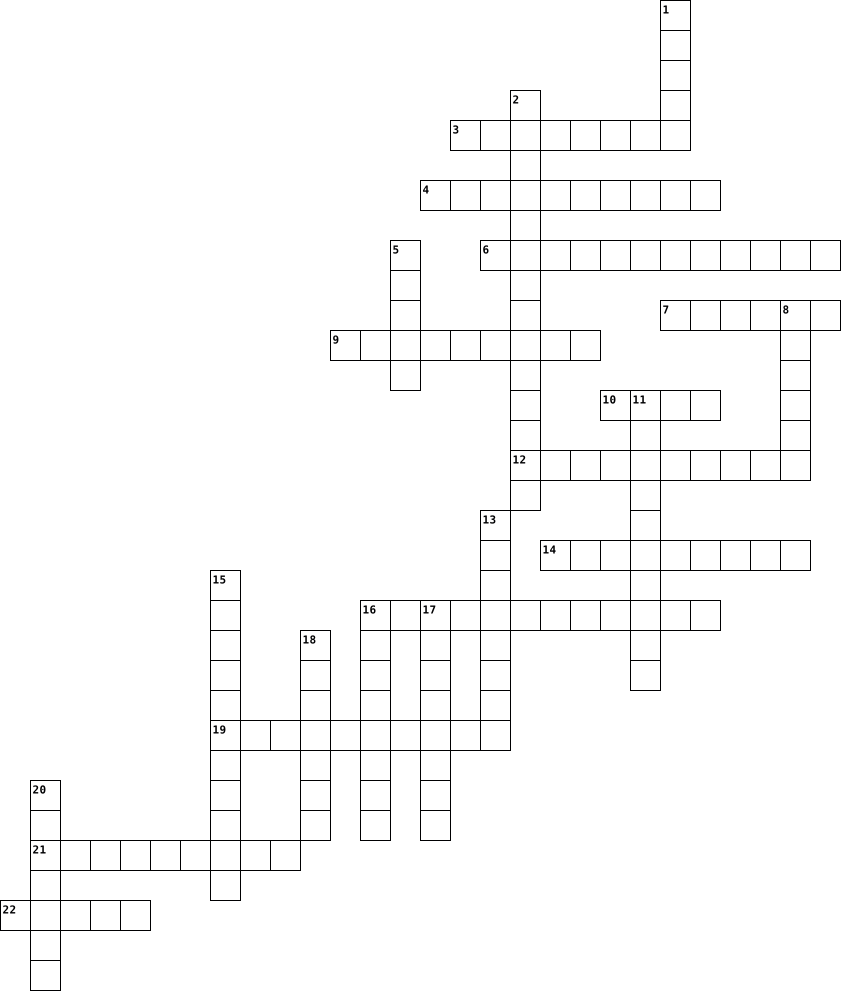
Across
- temperature related
- scales with amount
- identity and ratio of the things of which a thing is made
- material in which electrons are shared between many atoms
- molecule with >1 type of atom
- state in which atoms are free to roam in three dimensions
- matter with uniform properties
- Type of bond in which electrons are not mobile.
- process that converts thermal energy into potential energy
- deliberately created by humans
- something partially or totally consumed in a reaction
- 6.022E23
Down
- measured with a balance
- non-uniform
- smallest part of an element that retains all its properties
- You need to see, but rarely see.
- energy, energy needed for a chemical reaction to proceed
- >1 unbonded touching substances
- self-sustaining exothermic reaction with oxygen gas.
- made from only one atom
- mass/volume
- has mass and takes up volume
- element 6
23 Clues: 6.022E23 • element 6 • non-uniform • mass/volume • scales with amount • temperature related • measured with a balance • made from only one atom • has mass and takes up volume • molecule with >1 type of atom • matter with uniform properties • deliberately created by humans • >1 unbonded touching substances • You need to see, but rarely see. • Type of bond in which electrons are not mobile. • ...
A Year of Chemistry 2022-11-28

Across
- type of ion that forms with loss of electrons
- organic compound with an OH
- four carbon alkane
- the reaction between hydrocarbons and oxygen alkaline a soluble base
- smallest particle of matter
- the reaction type for substances breaking down
- two or more atoms bonded together
- a compound that releases H+ in water
- organic compound with a double bond
- the smallest element
- nail polish remover
- an chemical interaction between two substances state the type of symbol that describes physical appearance
- a charged particle
Down
- five carbon alkane
- 'double ....' between two ionic solutions electrons negatively charged subatomic particles
- an ion that forms an insoluble salt with silver
- a compound that forms a solution with a pH over 7
- the charge of an atom
- the bond between two nonmetals
- branch of chemistry studying carbon compounds
- the bond between metals and nonmetals
- 2 carbon alkane
22 Clues: 2 carbon alkane • five carbon alkane • four carbon alkane • a charged particle • nail polish remover • the smallest element • the charge of an atom • organic compound with an OH • smallest particle of matter • the bond between two nonmetals • two or more atoms bonded together • organic compound with a double bond • a compound that releases H+ in water • ...
Vocab 6B 2017-03-20

Across
- reactions A chemical reaction in which heat is released and usually feels warm when the heat is released from the reaction.
- A chemical reaction that requires an input of energy and usually feels cold when it absorbs heat in the reaction.
- elements that have some properties of metals and non-metals and are found along the zigzag on the Periodic Table.
- electrons on the outermost energy level of an atom that determine the reactivity of the atom.
Down
- states that matter is neither created nor destroyed in ordinary chemical and physical changes.
- horizon row of elements
- veritable line of elements
- an interaction that holds atoms together.
8 Clues: horizon row of elements • veritable line of elements • an interaction that holds atoms together. • electrons on the outermost energy level of an atom that determine the reactivity of the atom. • states that matter is neither created nor destroyed in ordinary chemical and physical changes. • ...
Rates of Reactions 2017-05-02

Across
- Form of limestone reacting slowly
- The amount of energy needed for a reaction to begin
- The amount of particles in a given volume
- The unit of time
- Form of limestone reacting fast
Down
- The speed with which a particular chemical reaction progresses
- The larger that is the faster the rate of reaction
- Particles must do this before they react
- A substance that changes the rate of reaction without being used up
- Increasing the temperature gives the particles more ……….
- A biological catalyst
11 Clues: The unit of time • A biological catalyst • Form of limestone reacting fast • Form of limestone reacting slowly • Particles must do this before they react • The amount of particles in a given volume • The larger that is the faster the rate of reaction • The amount of energy needed for a reaction to begin • Increasing the temperature gives the particles more ………. • ...
Vocab words for science 2023-10-19

Across
- A substance or molecule that is formed in a chemical reaction; the final output.
- Happens when two or more substances combine in ways that make new substances form that have different properties from the beginning materials.
- A change of matter from one form to another without a change in chemical properties; only physical changes.
- A solid formed by a change in a solution, often due to a chemical reaction or change in temperature.
Down
- States that the mass of an object, or collection of objects changes, no matter how the parts are rearranged.
- A substance or molecule that participates in a chemical reaction; the ingredients that you start with
- A change that occurs when one or more substances change into entirely new substances with different properties.
- A representation of a chemical reaction using symbols of the elements to indicate the amount of substance of each reactant and product.
8 Clues: A substance or molecule that is formed in a chemical reaction; the final output. • A solid formed by a change in a solution, often due to a chemical reaction or change in temperature. • A substance or molecule that participates in a chemical reaction; the ingredients that you start with • ...
Vocabulary of Chemical Reaction 2024-10-15

Across
- a representation of a chemical reaction using symbols of the elements to indicate the amount of substance of each reactant and product
- a change that occurs when one or more substances change into entirely new substances with different properties
- a substance or molecule that participates in a chemical reaction; the ingredients that you start with
- a substance or molecule that is formed in a chemical reaction; the final output
Down
- a change of matter from one form to another without a change in chemical properties; only physical changes
- happens when two or more substances combine in ways that make new substances form that have different properties from the beginning materials
- a solid formed by a change in a solution, often due to a chemical reaction or change in temperature
- states that the mass of an object, or collection of objects new changes, no matter how the parts are rearranged
8 Clues: a substance or molecule that is formed in a chemical reaction; the final output • a solid formed by a change in a solution, often due to a chemical reaction or change in temperature • a substance or molecule that participates in a chemical reaction; the ingredients that you start with • ...
science 2025-10-16

Across
- a solid formed by a change in a solution, often due to a chemical reaction or change in temperature
- a change of matter from one form to another without a change in chemical properties; only physical changes
- a representation of a chemical reaction using symbols of the elements to indicate the amount of substance of each reactant and product
- a substance or molecule that participates in a chemical reaction; the ingredients that you start with
Down
- happens when two or more substances combine in ways that make new substances form that have different properties from the beginning materials
- states that the mass of an object, or collection of objects new changes, no matter how the parts are rearranged
- change that occurs when one or more substances change into entirely new substances with different properties
- a substance or molecule that is formed in a chemical reaction; the final output
8 Clues: a substance or molecule that is formed in a chemical reaction; the final output • a solid formed by a change in a solution, often due to a chemical reaction or change in temperature • a substance or molecule that participates in a chemical reaction; the ingredients that you start with • ...
science crossword 2025-10-16

Across
- a change of matter from one form to another without a change in chemical properties; only physical changes
- a solid formed by a change in a solution, often due to a chemical reaction or change in temperature
- a substance or molecule that participates in a chemical reaction; the ingredients that you start with
- states that the mass of an object, or collection of objects new changes, no matter how the parts are rearranged
Down
- a change that occurs when one or more substances change into entirely new substances with different properties
- a representation of a chemical reaction using symbols of the elements to indicate the amount of substance of each reactant and product
- a substance or molecule that is formed in a chemical reaction; the final output
- happens when two or more substances combine in ways that make new substances form that have different properties from the beginning materials
8 Clues: a substance or molecule that is formed in a chemical reaction; the final output • a solid formed by a change in a solution, often due to a chemical reaction or change in temperature • a substance or molecule that participates in a chemical reaction; the ingredients that you start with • ...
Intro to Chemistry 2022-08-30

Across
- A pH above 7
- Two or more atoms joined together
- Bond in which electrons are equally shared between atoms
- A pH below 7
- A substance dissolved in a liquid
- Number of protons plus the number of neutrons
- A negatively charged part of an atom
- A liquid mixture
- An uncharged part of an atom
- Connection between atoms
- Liquid, solid, or gas at room temperature
Down
- An ingredient or atom that combines with others to cause a reaction
- The result of a chemical reaction
- A positively charged part of an atom
- Bond in which electrons are unequally shared between atoms
- An atom in which the number of neutrons is different from the number of protons
- Another name for an atom
- A substance that speeds up a reaction
- A liquid that dissolves a substance
- Part of the atom that contains protons and neutrons
20 Clues: A pH above 7 • A pH below 7 • A liquid mixture • Another name for an atom • Connection between atoms • An uncharged part of an atom • The result of a chemical reaction • Two or more atoms joined together • A substance dissolved in a liquid • A liquid that dissolves a substance • A positively charged part of an atom • A negatively charged part of an atom • ...
study guide 2022-09-13

Across
- a molecule composed of amino acids joined together by peptide bonds
- enzymes that break down starch into sugar
- single building block
- quick energy
- Elements of nucleic acids
- monomer of a protein
- explain binding between the active site of an enzyme and a substrate molecule
- substance that speeds up the rate of a chemical reaction
- are the simplest form of carbohydrate
- part of the enzyme where the substrate binds
- When an enzyme binds to the appropriate substrate, subtle changes in the active site occur
- phosphorus groups, nitrogenous base, and sugar make this up
Down
- long term energy storage
- are relatively more complex carbohydrates. They are polymers made up of many monosaccharides.
- A catalyst that brings about a specific biochemical reaction.
- Elements of proteins
- reactant of an enzyme catalyzed reaction
- 1:2:1
- stores genetic information
- Competitive/Non-Competitive
20 Clues: 1:2:1 • quick energy • Elements of proteins • monomer of a protein • single building block • long term energy storage • Elements of nucleic acids • stores genetic information • Competitive/Non-Competitive • are the simplest form of carbohydrate • reactant of an enzyme catalyzed reaction • enzymes that break down starch into sugar • part of the enzyme where the substrate binds • ...
Wyatt Reed - Chemistry 2019-10-17

Across
- a liquid with a pH value above 7
- a substance formed through a chemical reaction
- a subatomic particle with a neutral charge
- a liquid with a pH value below 7
- The mass of an atom
- He made the Table of Elements periodic
- a substance that undergoes change during a reaction
- toxicity, flammability, and reactivity
- a subatomic particle with a positive charge
- a mixture that is the same all over (not soup)
- a mixture of different metals to make a new metal
Down
- a substance that cannot be broken down into simpler substances
- when liquid gets cold and turns into a solid
- when "clouds" form in a liquid
- materials mixed together
- color, texture, and density
- a subatomic particle with a negative charge
- The building blocks of matter
- A thing that is made of two or more elements
- the reaction of iron, oxygen, and water
20 Clues: The mass of an atom • materials mixed together • color, texture, and density • The building blocks of matter • when "clouds" form in a liquid • a liquid with a pH value above 7 • a liquid with a pH value below 7 • He made the Table of Elements periodic • toxicity, flammability, and reactivity • the reaction of iron, oxygen, and water • a subatomic particle with a neutral charge • ...
Chemistry 2nd semester Final Vocabulary 2025-05-21

Across
- Solution that contains more hydroxide ions than hydrogen ions.
- Base that dissociates entirely into metal ions.
- Reactant leftover when a reaction stops.
- Acid that produces fewer ions.
- Solution that resist changes in pH when limited amounts of acid or base are added.
- Negative logarithm of the hydrogen ion concentration.
- Acid that produces the maximum number of ions.
- Standard solution.
- Study of quantitative relationships between the amounts of reactants used and amounts of products formed by a chemical reaction.
- An ionic compound made up of a cation from a base and an anion from an acid.
- Method for determining the concentration of a solution by reacting a known volume of that solution with a solution of a base of known concentration.
- Base that ionizes only partially in dilute solutions.
- Reactant that limits the extent of the reaction.
Down
- Value of the equilibrium constant expression for the self-ionization of water. 1 x 10-14.
- Point at which moles of hydrogen ion from the acid equal moles of hydroxide ion from the base.
- Substances that can act as both acids and bases.
- Negative logarithm of the hydroxide ion concentration.
- Ratio between the number of moles of any two of the substances in a balanced chemical equation.
- Solution that contains more hydrogen ions than hydroxide ions.
19 Clues: Standard solution. • Acid that produces fewer ions. • Reactant leftover when a reaction stops. • Acid that produces the maximum number of ions. • Base that dissociates entirely into metal ions. • Substances that can act as both acids and bases. • Reactant that limits the extent of the reaction. • Negative logarithm of the hydrogen ion concentration. • ...
The Chemistry of Fire 2026-03-18

Across
- _________ __________ is a product of incomplete combustion.
- An electrical outlet that catches on fire would be a "_____ _" fire.
- This type of extinguisher leaves no residue.
- A chemical reaction that absorbs energy and thus feels cold.
- A substance that burns easily.
- What is removed when you "stop, drop and roll"?
- You are charging an electric scooter and it catches on fire. This would be a "_____ _" fire.
- A fast, exothermic reaction where fuel reacts with oxygen.
- A fire made out of a wood would be a "______ _" fire.
- Most flammable fuels are organic and contain ______ and hydrogen, like methane (CH4) and propane (C3H8).
Down
- Soot is fine, black, dusty carbon leftover from the incomplete combustion of a fuel normally due to lack of _______.
- The amount of mass per unit volume of a substance. This determines whether a substance sinks or floats.
- A natural fiber that is harder to ignite.
- Gas produced by the complete combustion of carbon.
- One way to increase the flammability of a material is to increase its ______ ______.
- A fire at a gas station would most likely be "______ _"
- The toxic gaseous and solid mixture produced by a fire.
- The process of a liquid turning into a gas.
- This is used to put out a fire.
- You can tell whether a material is flammable or not by its ______ ______.
- A chemical reaction that feels hot is ____________.
- In order for a fire to occur there must be fuel, _______, and energy to start the reaction.
22 Clues: A substance that burns easily. • This is used to put out a fire. • A natural fiber that is harder to ignite. • The process of a liquid turning into a gas. • This type of extinguisher leaves no residue. • What is removed when you "stop, drop and roll"? • Gas produced by the complete combustion of carbon. • A chemical reaction that feels hot is ____________. • ...
2.4: Chemical Reactions and enzymes 2021-09-08

Across
- minimum amount of energy needed to begin a chemical reaction
- the reactants of enzyme catalyzed reactions
- process that changes one set of compounds into another
- elements or compounds produced by a chemical reaction
Down
- elements or compounds that engage in a reaction
- biological catalyst; a protein
- a substance that speeds up the rate of a reaction without being consumed by the reaction
7 Clues: biological catalyst; a protein • the reactants of enzyme catalyzed reactions • elements or compounds that engage in a reaction • elements or compounds produced by a chemical reaction • process that changes one set of compounds into another • minimum amount of energy needed to begin a chemical reaction • ...
My crossword ♦♣♠♥→Chimin 2015-06-14

Across
- all substances made by this small particles
- First element in periodic table
- The substances produced when two or more elements combine in chemical reaction
- Element that name like Albert Einstein
Down
- Symbol is Fe
- Compound of Hydrogen and oxygen
- First element in the periodic table
- Symbol of Gold
- Second element in periodic table
- One way to make chemical reaction that use heat
10 Clues: Symbol is Fe • Symbol of Gold • Compound of Hydrogen and oxygen • First element in periodic table • Second element in periodic table • First element in the periodic table • Element that name like Albert Einstein • all substances made by this small particles • One way to make chemical reaction that use heat • ...
General Biology 2023-01-23

Across
- chemical process by which molecules such as glucose are broken down anaerobically.
- the main source of energy for cells and an important part of aerobic respiration.
- Extremely energetic electrons that are liberated from the inner nucleus.
- component of the air.
- a reaction that releases free energy in the process of the reaction.
- is a reaction that requires free energy to proceed.
- energylike property or state function of a system in thermodynamic equilibrium.
- the most common mechanism of regulating protein function and transmitting signals throughout the cell.
- the water-based solution which found inside of cells
- A substance present in all living cells that provides energy for many metabolic processes and is involved in making RNA.
- the type of respiration through which cells can break down sugars to generate energy in the absence of oxygen
- the process by which the body utilizes the energy released by catabolism to synthesize complex molecules.
- a simple monocarboxylic acid containing two carbons
- A chemical process in which oxygen is used to make energy from carbohydrates.
- a chemical reaction of the interaction of chemicals with water, leading to the decomposition of both the substance and water.
- A nucleoside phosphate compromised of a ribonucleoside and two phosphate
- a reaction that yields ATP through the catabolism of ketone bodies
- The primary phosphate group on the ATP molecules that is hydrolyzed when the
- a series of reactions that extract energy from glucose by splitting it into two three-carbon molecules called pyruvates.
- the act of bringing or coming together
- Triglycerides are a type of fat (lipid) found in your blood.
- An important mechanism by which cells can respond to their environment and
Down
- an organic acid that probably occurs in all living cells.
- , A chemical compound that is used to make one of the building blocks of DNA and RNA.
- the main source of energy for cells and an important part of aerobic respiration.
- A colorless, odorless reactive gas, the chemical element of atomic number 8 and the
- is needed to drive anabolic reactions.
- the movement of ions across a semipermeable membrane bound structure, down their electrochemical gradient.
- the stored form of glucose that's made up of many connected glucose molecules.
- a metabolite derived from glucose, fatty acid, and amino acid catabolism.
- cues
- a bacterial a process that takes place during the production of numerous food products.
- a substance or material consisting of very large molecules called macromolecules, composed of many repeating subunits
- the part of the metabolic process that breaks down large, complicated molecules into smaller ones in order to produce energy.
- provide structure and function for all living things, from microorganisms to humans.
- atoms or small molecules that bond together to form more complex structures such as polymers.
- the process of breathing in oxygen and breathing out carbon dioxide.
- The phosphate group is closest to the ribose sugar.
- a type of sugar normally made in the body from glucose.
- the process by which plants use sunlight, water, and carbon dioxide to create oxygen and energy in the form of sugar.
- the ability of a cell to receive, process, and transmit signals with its environment and with itself.
- proteins that help speed up metabolism, or the chemical reactions in our bodies.
- the main type of sugar in the blood and is the major source of energy for the body's cells.
43 Clues: cues • component of the air. • is needed to drive anabolic reactions. • the act of bringing or coming together • is a reaction that requires free energy to proceed. • The phosphate group is closest to the ribose sugar. • a simple monocarboxylic acid containing two carbons • the water-based solution which found inside of cells • ...
General Biology 2023-01-23

Across
- Energy like property or state function of a system in thermodynamic equilibrium.
- a simple monocarboxylic acid containing two carbons
- The main source of energy for cells and an important part of aerobic respiration.
- The primary phosphate group on the ATP molecules that is hydrolyzed when the
- A substance present in all living cells that provides energy for many metabolic processes and is involved in making RNA.
- Proteins that help speed up metabolism, or the chemical reactions in our bodies.
- the movement of ions across a semipermeable membrane bound structure, down their electrochemical gradient.
- The process by which plants use sunlight, water, and carbon dioxide to create oxygen and energy in the form of sugar.
- provide structure and function for all living things, from microorganisms to humans.
- The phosphate group is closest to the ribose sugar.
- The most common mechanism of regulating protein function and transmitting signals throughout the cell.
- the part of the metabolic process that breaks down large, complicated molecules into smaller ones in order to produce energy.
- An important mechanism by which cells can respond to their environment
- The act of bringing or coming together
- A nucleoside phosphate compromised of a ribonucleoside and two phosphate
- the type of respiration through which cells can break down sugars to generate energy in the absence of oxygen
- A chemical process in which oxygen is used to make energy from carbohydrates.
- The stored form of glucose that's made up of many connected glucose molecules.
- Chemical process by which molecules such as glucose are broken down anaerobically.
Down
- A colorless, odorless reactive gas, the chemical element of atomic number 8 and the life-supporting component of the air.
- A chemical reaction of the interaction of chemicals with water leading to the decomposition of both the substance and water.
- The main type of sugar in the blood and is the major source of energy for the body's cells.
- the process by which the body utilizes the energy released by catabolism to synthesize complex molecules.
- Are a type of fat (lipid) found in your blood.
- Extremely energetic electrons that are liberated from the inner nucleus.
- the water-based solution which found inside of cells
- The main source of energy for cells and an important part of aerobic respiration.
- A reaction that releases free energy in the process of the reaction.
- a metabolite derived from glucose, fatty acid, and amino acid catabolism.
- is needed to drive anabolic reactions.
- Atoms or small molecules that bond together to form more complex structures such as polymers.
- A bacterial a process that takes place during the production of numerous food products.
- A series of reactions that extract energy from glucose by splitting it into two three-carbon molecules called pyruvates.
- A reaction that yields ATP through the catabolism of ketone bodies
- A type of sugar normally made in the body from glucose.
- A substance or material consisting of very large molecules called macromolecules, composed of many repeating subunits
- An organic acid that probably occurs in all living cells.
- The process of breathing in oxygen and breathing out carbon dioxide.
- A chemical compound that is used to make one of the building blocks of DNA and RNA.
- Is a reaction that requires free energy to proceed.
- The ability of a cell to receive, process, and transmit signals with its environment and with itself.
41 Clues: is needed to drive anabolic reactions. • The act of bringing or coming together • Are a type of fat (lipid) found in your blood. • a simple monocarboxylic acid containing two carbons • The phosphate group is closest to the ribose sugar. • Is a reaction that requires free energy to proceed. • the water-based solution which found inside of cells • ...
IMPORTANT TERMS IN CHEMISTRY 2014-01-12

Across
- energy The amount of energy it takes to break one mole of bonds
- fraction The number of moles of stuff in a mixture that are due to one of the compounds
- A measurement of the randomness in a system
- Law The volume of a gas at constant temperature varies inversely with pressure
- A substance that cannot be decomposed into simpler substances
- A compound that turns different colors at different pH values
- A unit used to measure temperature
- Law The volume of a gas at constant pressure is directly proportional to the temperature
Down
- mass The mass of one mole of particles
- A system of two or more distinct chemical substances
- A substance that slows down a chemical reaction
- A change in which one or more chemical elements or compounds form new compounds
- The amount of matter in an object
- substance containing an OH group attached to a hydrocarbon group
- A homogeneous mixture of a liquid with a gas or solid
15 Clues: The amount of matter in an object • A unit used to measure temperature • mass The mass of one mole of particles • A measurement of the randomness in a system • A substance that slows down a chemical reaction • A system of two or more distinct chemical substances • A homogeneous mixture of a liquid with a gas or solid • ...
Crossword Puzzle 2021-09-07

Across
- This reaction breaks down molecules into smaller units and release energy.
- It the sum of all the biochemical reactions in an organism.
- Developing new knowledge based upon old knowledge.
- This is the ability to do work.
- It is a reaction that changes some chemical substances into others.
- Elements pertain to economic, social and political elements are essentially manmade features, which make cultural milieu.
- This is done when force is applied to an object over a distance.
Down
- Organized body of knowledge that is obtained by study and experimentation
- Elements like plants, animals, microorganisms, and men
- This is the outer mantle of the solid earth.
- Stored energy that depends upon the relative position of various parts of a system.
- This is the study of energy.
- Where life operates.
- An element which determines the variable character of the human habitat, its opportunities as well as limitations.
- This is anything that takes up space and has mass. Matter, in turn, is made up of chemical substances.
15 Clues: Where life operates. • This is the study of energy. • This is the ability to do work. • This is the outer mantle of the solid earth. • Developing new knowledge based upon old knowledge. • Elements like plants, animals, microorganisms, and men • It the sum of all the biochemical reactions in an organism. • This is done when force is applied to an object over a distance. • ...
Chemical Reactions 2012-11-14

Across
- A reaction which we cannot reverse.
- Safety equipment we wear to protect our eyes.
- A reaction which can be reversed.
Down
- The flame we use to heat things.
- A sign that a gas is being produced in a reaction.
- A gas which can be detected using lime water.
- The flame we use when we are not heating.
- A gas produced during some chemical reactions.
8 Clues: The flame we use to heat things. • A reaction which can be reversed. • A reaction which we cannot reverse. • The flame we use when we are not heating. • A gas which can be detected using lime water. • Safety equipment we wear to protect our eyes. • A gas produced during some chemical reactions. • A sign that a gas is being produced in a reaction.
CHEMISTRY 2025-11-18

Across
- An atom or molecule with a net electrical charge due to the loss or gain of one or more electrons.
- The number of protons in the nucleus of an atom.
- A substance that cannot be broken down into simpler substances by chemical means.
- A mixture where one substance (the solute) is dissolved evenly throughout another substance (the solvent).
- A chemical reaction where a substance combines rapidly with oxygen, releasing heat and light.
Down
- A chemical bond involving the sharing of electron pairs between atoms.
- A substance that increases the rate of a chemical reaction without undergoing a permanent chemical change itself.
- The region of space around the nucleus where electrons are most likely to be found.
- The process by which a solid changes directly into a gas without first becoming a liquid (e.g., dry ice).
- The basic unit of a chemical element.
10 Clues: The basic unit of a chemical element. • The number of protons in the nucleus of an atom. • A chemical bond involving the sharing of electron pairs between atoms. • A substance that cannot be broken down into simpler substances by chemical means. • The region of space around the nucleus where electrons are most likely to be found. • ...
science stuff 2022-03-21

Across
- An open system is a system that has external interactions
- In physics and chemistry, the law of conservation of mass or principle of mass conservation states that for any system closed to all transfers of matter and energy
- he action or process of replacing someone or something.
- the state or process of rotting
Down
- A chemical equation is the symbolic representation of a chemical reaction in the form of symbols
- a substance that takes part in and undergoes change during a reaction.
- a thing or person that is the result of an action or process.
- a multiplier or factor that measures some property
- the production of chemical compounds by reaction from simpler materials.
- A closed system is a physical system that does not allow transfer of matter in or out of the system
10 Clues: the state or process of rotting • a multiplier or factor that measures some property • he action or process of replacing someone or something. • An open system is a system that has external interactions • a thing or person that is the result of an action or process. • a substance that takes part in and undergoes change during a reaction. • ...
Biology Unit 2 2019-09-03

Across
- The specific region of an enzyme where a chemical reaction occurs.
- Molecules that are long chains of lipid-carboxylic acid found in fats and oils.
- The most basic form of carbs.
- A substance that speeds up a chemical reaction.
- Any of various complex organic acids that are composed of nucleotide chains.
- The electromagnetic attraction between polar molecules in which hydrogen is bound to a larger atom.
- The basic structural units of nucleic acids with a nitrogen-containing base, a five-carbon sugar, and a phosphate group.
- The tendency of dissimilar particles or surfaces to cling to one another.
Down
- The tendency of similar or identical particles/surfaces to cling to one another.
- A substance that has amino acids, compounds and carbon, hydrogen, oxygen, nitrogen and sometimes sulfur and is found in many foods.
- The least possible amount of energy which is required to start a reaction.
- A small molecule that reacts with a similar molecule to form a larger molecule.
- The building blocks of proteins.
- Protein molecules in cells which work as biological catalysts. they speed up chemical reactions in the body, but do not get used up in the process.
- Sugars, starches and fibers found in fruits, grains, vegetables, and dairy products.
- A type of organic molecule found in living things. They are long chains of carbon and hydrogen molecules.
16 Clues: The most basic form of carbs. • The building blocks of proteins. • A substance that speeds up a chemical reaction. • The specific region of an enzyme where a chemical reaction occurs. • The tendency of dissimilar particles or surfaces to cling to one another. • The least possible amount of energy which is required to start a reaction. • ...
Biology Unit 2 2019-09-03

Across
- A small molecule that reacts with a similar molecule to form a larger molecule.
- The basic structural units of nucleic acids with a nitrogen-containing base, a five-carbon sugar, and a phosphate group.
- The least possible amount of energy which is required to start a reaction.
- Molecules that are long chains of lipid-carboxylic acid found in fats and oils.
- Any of various complex organic acids that are composed of nucleotide chains.
- The electromagnetic attraction between polar molecules in which hydrogen is bound to a larger atom.
Down
- A substance that has amino acids, compounds and carbon, hydrogen, oxygen, nitrogen and sometimes sulfur and is found in many foods.
- A substance that speeds up a chemical reaction.
- Sugars, starches and fibers found in fruits, grains, vegetables, and dairy products.
- The specific region of an enzyme where a chemical reaction occurs.
- The most basic form of carbs.
- A type of organic molecule found in living things. They are long chains of carbon and hydrogen molecules.
- The building blocks of proteins.
- The tendency of dissimilar particles or surfaces to cling to one another.
- The tendency of similar or identical particles/surfaces to cling to one another.
- Protein molecules in cells which work as biological catalysts. they speed up chemical reactions in the body, but do not get used up in the process.
16 Clues: The most basic form of carbs. • The building blocks of proteins. • A substance that speeds up a chemical reaction. • The specific region of an enzyme where a chemical reaction occurs. • The tendency of dissimilar particles or surfaces to cling to one another. • The least possible amount of energy which is required to start a reaction. • ...
Photosynthesis! 2026-02-05

Across
- Process where molecules interact to create new molecules
- The chemical reaction where plants and other photosynthetic organisms convert sunlight into glucose
- The molecules on the left side of a chemical equation
- Plants can conduct photosynthesis without water
- Plants need this from the sun
- Plants need sugar to give them this
- This is where plants get their energy from
Down
- The molecules on the right side of a chemical reaction
- The organelle in plant cells where photosynthesis occurs
- This is where animals get their energy from, either by eating them directly or by eating other animals who have eaten them
- The part of the plant that gets water from the soil
- The gas that plants take out of the atmosphere to use for photosynthesis
- The simple sugar created by plants during photosynthesis
- Plants take this in through their roots as needed for photosynthesis
- If plants did not produce this gas during photosynthesis we would be dead by now!
15 Clues: Plants need this from the sun • Plants need sugar to give them this • This is where plants get their energy from • Plants can conduct photosynthesis without water • The part of the plant that gets water from the soil • The molecules on the left side of a chemical equation • The molecules on the right side of a chemical reaction • ...
Biochemistry Crossword Puzzle 2015-08-30

Across
- a substance that increases the rate of a chemical reaction without itself undergoing any permanent chemical change.
- incapable of being dissolved
- a sugar present in milk. It is a disaccharide containing glucose and galactose units.
- a large molecule, or macromolecule, composed of many repeated subunits
- a substance produced by a living organism that acts as a catalyst to bring about a specific biochemical reaction.
- a lipid containing a phosphate group in its molecule,
- the chemical breakdown of a compound due to reaction with water.
- A simple Sugar
- They contain hydrogen and oxygen in the same ratio as water (2:1) and typically can be broken down to release energy
- At least one double bonded carbon
- a compound of the sterol type found in most body tissues
- a hexose sugar found especially in honey and fruit.
- a fat in which the carbon atoms are fully hydrogenated
- Makes you stronger
- Found in amino acids containing carbon
- of, relating to, or derived from living matter
Down
- a simple sugar that is an important energy source in living organisms and is a component of many carbohydrates.
- It is a polysaccharide consisting of chains of glucose monomers.
- A polysaccharide
- Many Sugars
- A simple organic compound containing both a carboxyl and an amino group
- take away or alter the natural qualities of
- Two monosaccharides
- To remove water from
- a compound consisting of two or more amino acids linked in a chain
- a carboxylic acid consisting of a hydrocarbon chain and a terminal carboxyl group, especially any of those occurring as esters in fats and oils.
- A polysaccharide
- a molecule that can be bonded to other identical molecules to form a polymer.
- a simple polyol compound
- Found on amino acids
30 Clues: Many Sugars • A simple Sugar • A polysaccharide • A polysaccharide • Makes you stronger • Two monosaccharides • To remove water from • Found on amino acids • a simple polyol compound • incapable of being dissolved • At least one double bonded carbon • Found in amino acids containing carbon • take away or alter the natural qualities of • of, relating to, or derived from living matter • ...