
chemistry/ Crossword Puzzles
Chemistry CrossWord 2012-10-31

Across
- same numbers of protons(atomic number) but different numbers of neutrons
- a mixture in which the individual substances are visible to the naked eye
- electron configuration: 1s2 2s2 2p1
- electrons fill orbitals starting at the lowest available energy state before filing higher states
- Group 1 of the Periodic table
- An atom or molecule with a net electric charge due to the loss or gain of one or more electrons
- elements 90-103
- particle that has no charge and is located in the nucleus
- characteristic of a substance that can be observed without changing the substance into another substance
- atomic symbol of SodiumChloride
- horizontal row of elements in the periodic table
- Group that has 7 valence electron
Down
- positive charged particle located in the nucleus of an atom
- chemical bond formed when electrons are shared
- use to hold,mix,and heat liquids
- used for protecting your eyes during an experiment
- smallest particle of an element
- the ability of an atom to attract electrons
- element with 8 protons, 8 electrons, and 8 neutrons
- negatively charged particle in an atom
- chemical bond that involves electrons to be gained or lost
- electron configuration: 1s2 2s2 2p6 3s2 3p4
- Elements 58-71
- English scientist that stated All matter is made of atoms and Atoms are indivisible and indestructible.
- Anything that has mass and occupies space
- A change in matter which does not alter the chemical properties of the matter
- Group that has 8 valence electron
- covalent bond in which electrons are shared unequally
- Atomic symbol is Ca
- pair of electron that does not bond
30 Clues: Elements 58-71 • elements 90-103 • Atomic symbol is Ca • Group 1 of the Periodic table • smallest particle of an element • atomic symbol of SodiumChloride • use to hold,mix,and heat liquids • Group that has 8 valence electron • Group that has 7 valence electron • electron configuration: 1s2 2s2 2p1 • pair of electron that does not bond • negatively charged particle in an atom • ...
Chemistry Vocabulary 2012-11-29

Across
- mass/ The mass in grams of one mole (or 6.02 x 10²³ molecules) of any chemical compound.
- mass/ the sum of atomic weights of the atoms in a molecule
- length/ the average distance between nuclei of two bonded atoms in a molecule
- composition/ Usually means percent composition by mass. Could also be percent composition by mole, or by weight.
- formula/ a chemical formula based on analysis and molecular weight.
- bond/ a chemical bond in which one atom loses an electron to form a positive ion and the other atom gains an electron to form a negative ion.
- a method of describing the delocalized electrons in some molecules where the bonding cannot be explicitly expressed by a single Lewis structure
- bond/ A chemical bond in which three pairs of electrons are shared between two atoms.
- covalent bond/ a bond in which one nucleus of an atom donates both electrons to form a bond with another atom
- hybridization/ mixing atomic orbitals to form new hybrid orbitals suitable for the qualitative description of atomic bonding properties.
- rule/ atoms that tend to combine in such a way that they each have eight electrons in their valence shells
Down
- bond/ A real fancy way of saying "single bond"
- number/ The number of atoms or molecules in one mole of a substance
- The mole is a unit of measurement for the amount of substance or chemical amount.
- bond/ A chemical bond in which two pairs of electrons are shared between two atoms.
- ion/ An ionic species containing more than one element.
- bond/ a chemical bond that involves sharing a pair of electrons between atoms in a molecule.
- promotion/ A statement describing the populations of electronic energy sublevels of an atom
- bond/ a bond formed from the overlap of two parallel p-orbitals.
- covalent bonds/ A covalent bond in which the electrons are not shared equally, giving the bond some ionic character
20 Clues: bond/ A real fancy way of saying "single bond" • ion/ An ionic species containing more than one element. • mass/ the sum of atomic weights of the atoms in a molecule • bond/ a bond formed from the overlap of two parallel p-orbitals. • formula/ a chemical formula based on analysis and molecular weight. • ...
Organic Chemistry 2012-11-29

Across
- compound with two carbonyl carbons connected by an oxygen
- The position on an aromatic of the second substituent that is OPPOSITE of the first
- the type of bond that makes a compound an ALKYNE
- different name for ester hydrolysis
- alkane with 3 carbons
- type of reagents used in Grignard and Gillman's reactions
- type of aromatic substituent that blocks Friedel-Crafts reaction
- type of P-orbital required to count as an aromatic
- reaction which forms new Carbon Carbon double bond on a carbonyl in place of oxygen
- reaction that turns two identical aldehydes into one larger Beta Hydroxy Aldehyde
- the type of bond that makes a compound an ALKENE
Down
- compound with a hydrogen and double-bonded oxygen on a terminal carbon.
- forms new Carbon Carbon single bond, turns carbonyl into alcohol
- a carbon in a compound with 4 different groups attached to it
- A 6 membered aromatic compound
- a reaction mechanism for aromatics
- reaction that converts a dione into a 5 or 6 membered ring
- A geometric requirement for aromatics
- a carbon with a positive charge
- a 6 membered carbon ring
- The position on an aromatic of the second substituent that is ADJACENT to the first
21 Clues: alkane with 3 carbons • a 6 membered carbon ring • A 6 membered aromatic compound • a carbon with a positive charge • a reaction mechanism for aromatics • different name for ester hydrolysis • A geometric requirement for aromatics • the type of bond that makes a compound an ALKYNE • the type of bond that makes a compound an ALKENE • ...
Chemistry Crossword 2012-12-01

Across
- The SI unit of frequency equal to one cycle per second.
- The arrangement of electrons around the nucleus of an atom in its ground state.
- A dumbbell region around the nucleus where and electron may be found.
- The modern description, primarily mathematical, of the behavior of electrons in atoms.
- The lowest energy level occupied in the periodic table.
- Displayed an atom with the majority of the mass in the nucleus.
- The pattern of frequencies obtained by passing light emitted by the atoms of an element in the gaseous state through a prism.
- Describes the wavelength of a moving particle.
- electrons are ejected by certain metals where they absorb light with a frequency above a threshold frequency.
- Electrons enter orbitals of lowest energy first.
- no more than two electrons can occupy an atomic orbital.
Down
- A number used to calculated the radiant energy absorbed or emitted by a body based on the frequency of radiation.
- Displayed the atom as a ball of positive charge with a few electrons.
- A spherical region around the nucleus where an electron may be found. The inner most sphere is one of these.
- States that it is impossible to know both the velocity and the position of a particle at the same time.
- Proposition that electrons travel in definite orbits around the nucleus.
- When electrons occupy orbitals of equal energy.
- A region around the nucleus of an atom where an electron is likely to be moving.
- a region in space around the nucleus of an atom where there is a high probability of finding an electron.
- A nucleus that has a higher energy level than a ground level.
- The amount of energy needed to move an electron from its present energy level to the next higher one.
- The number of wave cycles that pass a given point per unit of time.
- The distance between two adjacent crests of a wave.
- The height of a wave from the origin to the crest.
- A quantum of light; a discrete bundle of electromagnetic energy that behaves as a particle.
25 Clues: Describes the wavelength of a moving particle. • When electrons occupy orbitals of equal energy. • Electrons enter orbitals of lowest energy first. • The height of a wave from the origin to the crest. • The distance between two adjacent crests of a wave. • The SI unit of frequency equal to one cycle per second. • ...
Chemistry Crossword 2012-12-01

Across
- Displayed an atom with the majority of the mass in the nucleus.
- A nucleus that has a higher energy level than a ground level.
- A quantum of light; a discrete bundle of electromagnetic energy that behaves as a particle.
- The amount of energy needed to move an electron from its present energy level to the next higher one.
- The pattern of frequencies obtained by passing light emitted by the atoms of an element in the gaseous state through a prism.
- Describes the wavelength of a moving particle.
- The arrangement of electrons around the nucleus of an atom in its ground state.
- no more than two electrons can occupy an atomic orbital.
- A dumbbell region around the nucleus where and electron may be found.
- A region around the nucleus of an atom where an electron is likely to be moving.
Down
- When electrons occupy orbitals of equal energy.
- Proposition that electrons travel in definite orbits around the nucleus.
- The distance between two adjacent crests of a wave.
- States that it is impossible to know both the velocity and the position of a particle at the same time.
- The SI unit of frequency equal to one cycle per second.
- A number used to calculated the radiant energy absorbed or emitted by a body based on the frequency of radiation.
- electrons are ejected by certain metals where they absorb light with a frequency above a threshold frequency.
- The number of wave cycles that pass a given point per unit of time.
- a region in space around the nucleus of an atom where there is a high probability of finding an electron.
- Displayed the atom as a ball of positive charge with a few electrons.
- The modern description, primarily mathematical, of the behavior of electrons in atoms.
- A spherical region around the nucleus where an electron may be found. The inner most sphere is one of these.
- Electrons enter orbitals of lowest energy first.
- The lowest energy level occupied in the periodic table.
- The height of a wave from the origin to the crest.
25 Clues: Describes the wavelength of a moving particle. • When electrons occupy orbitals of equal energy. • Electrons enter orbitals of lowest energy first. • The height of a wave from the origin to the crest. • The distance between two adjacent crests of a wave. • The SI unit of frequency equal to one cycle per second. • ...
Chemistry Crossword 2012-09-08

Across
- Occurring without definite aim
- Change from solid to liquid without passing through the liquid state
- Smallest particle of an element
- Uses electricity to break down compounds into simpler substances
- Something that binds , holds something together
- A reactions which results in the increase in surrounding temperature
- Primary charge carriers in electric current
- Neat and regular sequence
- Pressed together, dense, compact
Down
- Substance that cannot be broken down any further
- Magnetic force between 2 oppositely charged bodies causing them to draw together
- Substance that undergoes a chemical change in a given reaction
- A reaction which results in the decrease in surrounding temperature
- A proton or a neutron
- Can be returned to original state
- An electrically charged atom formed by the loss or gain of one or more electrons
- Process which causes rusting & spoiling of fresh food
- Change from gas to solid without passing through the liquid state
- 2 or more elements involved
- 2 or more atoms chemically combined together (a group of atoms)
20 Clues: A proton or a neutron • Neat and regular sequence • 2 or more elements involved • Occurring without definite aim • Smallest particle of an element • Pressed together, dense, compact • Can be returned to original state • Primary charge carriers in electric current • Something that binds , holds something together • Substance that cannot be broken down any further • ...
Chemistry Puzzle 2013-04-30

Across
- The densest liquid element
- A common name for Calcium Carbonate
- The colour with the longest wavelength
- The only two letters to not officially appear on the periodic table (Alphabetically)
- An acid that ionizes slightly in a solution (2 words)
- The maximum amount of solute that can be dissolved into a solvent at a given temperature
- The most common isotope of this element is 238
- This type of alcohol is commonly consumed
- The smallest length, theoretically (2 words)
- The nuclear reaction that takes place in the sun’s core
- This element is the most conductive metal, but comes at a price
- Many computer chips are made from this element
Down
- A base that produces few hydroxide ions when dissolved in water (2 words)
- This type of electromagnetic radiation is used for telecommunications around the world
- This subatomic particle is released during beta decay
- This type of spin is an angular momentum carried by electrons (2 words)
- This metal is used in pipes and wires
- All intermolecular bonds are caused by ___ ___ ___ forces (3 words)
- The lowest theoretical temperature (2 words)
- The nucleus of this element is released during alpha decay
- A solid solution of two or more metals
- The final part of the standard model to be discovered (2 words)
- This element is added to table salt for its health benefits
- The term used to describe a complete valence shell
24 Clues: The densest liquid element • A common name for Calcium Carbonate • This metal is used in pipes and wires • The colour with the longest wavelength • A solid solution of two or more metals • This type of alcohol is commonly consumed • The lowest theoretical temperature (2 words) • The smallest length, theoretically (2 words) • The most common isotope of this element is 238 • ...
Cell Chemistry 2013-04-12

Across
- the monomer of a protein
- tiny molecular strands which code for all life on Earth
- a reaction involving the chemical basis of several objects
- adenosine triphosphate
- the acidic level of a substance
- a sweet, crystalline substance
- a substance that provides nourishment
- the act of conducting photosynthesis
- a type of diffusion where molecules move from areas of lower concentration to higher concentration; require energy
- self replication
- a gaseous element which makes up 1/5 of the volume of the atmosphere, and is necessary for all life on Earth
- the diffusion of water
- one of the various types of energy
- an exertion of power
- a state of balance due to the equal action of opposing forces
Down
- to suck up or fill
- any acids that bond to a glycerol to form a fat molecule
- the quality of acid of a substance
- having the form of a sphere
- any of 4 of the nitrogenous bases of DNA, or RNA (they differ in both)
- energy of a chemical compound which must undergo a change
- a combination of two or more atoms
- the process of burning
- to acquire something
- a type of diffusion where no energy is required
- a plant process where light+CO2+water=O2+glucose
- a molecular sugar: C6 H12 O6
- the green coloring matter of leaves and plants
- a chain of subsequent energy reactions
- energy constituted by light
- this builds and repairs cells and cell tissue
- to make a solution by mixing with liquid
- proteins which break down molecules and molecular bonds
- a limit
34 Clues: a limit • self replication • to suck up or fill • to acquire something • an exertion of power • the process of burning • adenosine triphosphate • the diffusion of water • the monomer of a protein • having the form of a sphere • energy constituted by light • a molecular sugar: C6 H12 O6 • a sweet, crystalline substance • the acidic level of a substance • the quality of acid of a substance • ...
Cell Chemistry 2013-04-16

Across
- Diffusion of a solvent (usually water molecules) through a semipermeable membrane from an area of low solute concentration to an area of high solute concentration.
- the act or process of burning.
- A microscopic organism, esp. a bacterium, virus, or fungus.
- The process by which green plants and some other organisms use sunlight to synthesize foods from carbon dioxide and water
- The process or action by which one thing absorbs or is absorbed by another: "shock absorption".
- diffusion Transport of substances across a biological membrane from an area of higher concentration to an area of lower concentration by means of a carrier molecule. Since the substances move along the direction of their concentration gradients, energy is not required.
- transport The movement of ions or molecules across a cell membrane into a region of higher concentration, assisted by enzymes and requiring energy.
- Something put into a system or expended in its operation to achieve output or a result,
- A member of a large group of unicellular microorganisms lacking organelles and an organized nucleus, including some that can cause disease.
- A substance that provides nourishment essential for growth and the maintenance of life.
- the metabolic processes whereby certain organisms obtain energy from organic molecules.
- A line that marks the limits of an area; a dividing line
- something, such as a liquid or gas, that flows in
- Respiration the oxidation of organic compounds that occurs within cells, producing energy for cellular processes.
- transport transport of a substance across a cell membrane by diffusion; expenditure of energy is not required.
Down
- An individual animal, plant, or single-celled life form
- A group of interacting, interrelated, or interdependent elements forming a complex whole.
- the act of concentrating; the state of being concentrated.
- force a force which is the result of two or more forces acting conjointly, or a motion which is the result of two or more motions combined.
- Take in or soak up (energy, or a liquid or other substance) by chemical or physical action, typically gradually.
- Synthesize sugars or other substances by means of photosynthesis.
- Reaction A process that involves rearrangement of the molecular or ionic structure of a substance, as opposed to a change in physical form Compound
- Get, acquire, or secure (something):
- The process of becoming smaller.
- A member of a large group of unicellular microorganisms lacking organelles and an organized nucleus, including some that can cause disease.
- The passive movement of molecules or particles along a concentration gradient, or from regions of higher to regions of lower concentration.
- Of or relating to the properties of spheres
- The first trophic level in a food chain in which it serves as a food source for consumers or for higher trophic levels.
- to make a solution of, as by mixing with a liquid; pass into solution
- reproduction reproduction without the fusion of gametes
- Consisting of many different and connected parts.
31 Clues: the act or process of burning. • The process of becoming smaller. • Get, acquire, or secure (something): • Of or relating to the properties of spheres • something, such as a liquid or gas, that flows in • Consisting of many different and connected parts. • An individual animal, plant, or single-celled life form • A line that marks the limits of an area; a dividing line • ...
Chemistry Katok 2014-02-26

Across
- – Physical observation using senses
- – Negatively charged ion
- – The study of composition, properties and behavior of matter.
- – Does not depend on the amount of matter
- – Process of evaporation
- – the qualitative relationship of reactants by products in a balance equation
- – Transformation of matter of which the composition change
- – Slippery and soapy structure
- – the study of carbon and its compounds
- - Electrons that are found on the outer shell of an element.
- – A complete transfer of electron from one atom to another
- – Measured with specific units
- – The act of mixing or the state of being mixed
- – The structure changes but the composition does not
- – Pouring gently the liquid to separate from solid particle
- – Involves of sharing of electron
Down
- – A size or extent of something base on standard
- – Separation of liquid with solid
- – Positively charged ion
- Acid – HClO2
- – Anything that occupies space
- – A way of writing/ expressing large numbers into small numbers
- – Atoms of the same element but differ in atomic mass/weight
- – When matter does not change its original composition
- – Molecules are tightly bonded to one another
- Attraction – A build up of charge on the surface
- Acid – HClO3
- – Composed of two or more elements
- – One of the simplest constituent principles, or parts of which anything consists
- – Has no definite shape but it adapts the shape of its container
30 Clues: Acid – HClO2 • Acid – HClO3 • – Positively charged ion • – Negatively charged ion • – Process of evaporation • – Anything that occupies space • – Slippery and soapy structure • – Measured with specific units • – Separation of liquid with solid • – Involves of sharing of electron • – Composed of two or more elements • – Physical observation using senses • ...
Chemistry & Matter 2014-02-23

Across
- made of two or more substances,elements, or compounds that are together in the same place but not chemically combined
- machine that moves atomic nuclei at high speeds until they crash into one another
- groups of two or more atoms held together by chemical bonds
- mixture in which substances are evenly distributed throughout the mixture
- shows the elements in the compound and the ratio of atoms
- elements in group 3, through 12 of periodic table
- mixture in which pure substances are unevenly distributed throughout the mixture
- a force of attraction between two atoms
- the basic particle from which all elements are made
- a single kind of matter, has a specific set of properties
- measure of the average energy of random motion of particles of matter
- mixture that forms when one substance dissolves another
- ability of an object to transfer heat or electricity to another object
- the average mass of all the isotopes of the element
- group 2 of periodic table
- elements in the same vertical column of the periodic table
- term used to describe material that can be pounded into shapes
- a one or two letter representation of an element
- the total energy of all the particles in an object
- any change that alters the form or appearance of matter but does not make any new substance
Down
- pure substance that cannot be broken down into another substance by physical or chemical means
- matter is not destroyed in any chemical or physical change
- study of the properties of matter
- produces new substances with properties different from those of the original substance
- metals in group 1, from lithium to francium
- a chart of the elements showing the repeating pattern of their properties
- describes a material that can be pulled into a wire
- a change in which energy is taken in
- anything that has mass and takes up space
- ease and speed with which an element combines, or reacts, with other elements and compounds
- mixture of 2 or more elements, one of which is metal
- gradual wearing away of a metal element due to chemical reaction
- a pure substance made of two or more elements chemically combined in a set ratio
- class of elements characterized by physical properties
- releases energy
- ability to do work or cause change
- a horizontal row of elements in the periodic table
37 Clues: releases energy • group 2 of periodic table • study of the properties of matter • ability to do work or cause change • a change in which energy is taken in • a force of attraction between two atoms • anything that has mass and takes up space • metals in group 1, from lithium to francium • a one or two letter representation of an element • ...
Organic Chemistry 2014-04-05

Across
- formed when monomers combine
- soap is made by the hydrolysis of fats/oils with _____
- fats have the same ester linkage as _____
- used to break long-chained alkanes in short-chained alkanes/alkenes
- (23.) requires a high temperature and a _____
- _____ have a C=C double bond
- petroleum is separated into different fractions by _____
- a biological catalyst
- atom (group) that gives an organic compound its chemical properties
- incomplete combustion can also produce _____
- only UNSATURATED (9.)s decolourise _____
- proteins can be hydrolysed to _____ by heating with hydrochloric acid
- compound containing only C and H atoms
- alkanes will only react with chlorine in the presence of _____
- proteins, fats and carbohydrates are the main _____ in food
Down
- C₆H₁₄
- (24.) can be made by the oxidation of (25.) with acidified _____(VII)
- compounds with alkyl groups sticking out from the main carbon chain
- alkanes are generally _____ except for burning
- _____ have the general formula Cx(H2O)y
- _____ + water -----> ethyl ethanoate + water
- compound with the same molecular formula but different structural formulae
- group of organic compounds with the same functional group and similar properties
- each method of disposing plastic has its _____
- in a _____ reaction the monomers join to form a polymer and a small molecule is eliminated
- we can use the (25.) produced in fermentation as a _____
- we can use paper _____ to identify sugars
- the kind of combustion that produces CO2 and H2O
- _____ can be made by adding steam to ethene with a catalyst
29 Clues: C₆H₁₄ • a biological catalyst • formed when monomers combine • _____ have a C=C double bond • compound containing only C and H atoms • _____ have the general formula Cx(H2O)y • only UNSATURATED (9.)s decolourise _____ • fats have the same ester linkage as _____ • we can use paper _____ to identify sugars • _____ + water -----> ethyl ethanoate + water • ...
Chemistry Review 2013-12-09

Across
- When 2 or more elements come together and bind chemically.
- Has an atomic mass of 12.011.
- Published the first periodic table in which the elements are arranged by atomic.
- Used gold foil experiment to determine that most of an atom's mass is in the nucleus.
- Property that can be observed by the 5 senses.
- An amount equal to 6.02 x 10^23.
- Type of physical property that does not depend on the amount of mass of a substance.
- Type of mixture that cannot be easily separated such as Kool-aid, generally a solution.
- Variations of an element with different numbers of neutrons.
- Dull, brittle, most are gases, poor conductors of heat and electricity.
- Horizontal rows of elements on the periodic table.
- 2 or more molecules or elements chemically bound to each other and can only be changed by a chemical reaction.
- Change that results in new compounds.
- Slightly compressible, atoms slide past one another--no fixed shape, but does have a fixed volume.
- A group of elements with the same number of valence electrons, and similar characterics including reactivity.
- Establishes identity of the element.
- The densely packed middle of an atom.
- Has the atomic symbol Xe.
Down
- Hypothesized that electrons traveled in discrete orbits around the nucleus.
- A physical property defined at mass/volume and has units of g/ml org/cm^2.
- Negative particle of an atom.
- Family with 3 valence electrons.
- Type of mixture that can be easily separated such as chunky peanut butter, or stew.
- Many data points that are closely grouped together.
- The combination of 2 or more substances that does not result in a chemical change.
- Good conductor of heat and electricity, malleable, shiny.
- Family with an oxidation number of -3.
- Type of physical property that depends on the amount of mass of a substance.
- Compressible, atoms move quickly and have a large amount of space between them--no fixed shape or volume.
- Not compressible, atoms are closely packed and only move slightly--has a fixed shape and volume.
- What goes into a chemical reaction.
- Found on the periodic table and cannot be separated out to a more pure form.
- Attaining the intended target.
- Has an atomic number of 17.
- A positive ion.
- The result of a chemical reaction.
- An element that has lost or gained electrons.
- Vertical columns of elements on the periodic table.
- Has the atomic symbol Na.
- Discovered the modern periodic table.
- A negative ion.
41 Clues: A positive ion. • A negative ion. • Has the atomic symbol Na. • Has the atomic symbol Xe. • Has an atomic number of 17. • Negative particle of an atom. • Has an atomic mass of 12.011. • Attaining the intended target. • Family with 3 valence electrons. • An amount equal to 6.02 x 10^23. • The result of a chemical reaction. • What goes into a chemical reaction. • ...
Chemistry Words 2014-03-24

Across
- Contractive tendency of the surface of a liquid that allows it to resist an external force
- Type of vaporization of a liquid that occurs from the surface of a liquid into a gaseous phase that is not saturated with the evaporating substance
- a unique arrangement of atoms or molecules in a crystalline structure
- The process in which a gas escapes through a small hole
- Action of bringing liquid to the temperature at which it bubbles and turns into vapor
- An element or compound is a phase transition from the liquid phase to a gas phase
- To make solid
- A solid material whose constituent atoms, molecules, or ions are arranged in an ordered patteren
- A piece of homogeneous solid substance having a natural geometrically regular form
- a physically distinctive form of matter, such as solid, liquid, gas, or plasma
- the smallest group of atoms of a substance that has the overall symmetry of a crystal of that substance
- One of several transport phenomena that occur in nature.
Down
- The temperature at which a given solid will melt
- process of lowering the temperature of a liquid or a gas beliw its freezing point without it becoming a solid
- A point on a phase diagram at which both the liquid and gas phases of a substance have the same density
- the process in which a liquid turns into a solid
- sediments settle down in a different place on the ground
- Become liquefied by heat
- The ability of a liquid to flow in narrow spaces without the assistance of, and in opposition to, external forces like gravity.
- without a clearly defined shape
20 Clues: To make solid • Become liquefied by heat • without a clearly defined shape • The temperature at which a given solid will melt • the process in which a liquid turns into a solid • The process in which a gas escapes through a small hole • sediments settle down in a different place on the ground • One of several transport phenomena that occur in nature. • ...
Chemistry Revision 2014-01-27

Across
- The atoms of halogens are……
- He discovered the electron
- What is the common name for CaCO3
- The series of processes by which nitrogen and its compounds are interconverted in the environment and in living organisms, including nitrogen fixation and decomposition
- Which gas turns limewater milky?
- The time it takes for half of the atoms of a substance to decay
- A radioactive isotope used in the treatment of cancer
- The elements between the groups 2 and 3 are called the
- What are the group seven elements called?
- This process is used to find the age of dead organisms by comparing the amounts of two isotopes of carbon.
- What is the flame colour for potassium
- Plants can create most of the world’s free oxygen through this process
- This element is used to make nuclear power
- This is one of the types of subatomic particle
Down
- The fourth alkali metal
- A type of bonding where electrons are transferred from one atom to another
- What is the seventh element in the periodic table.
- Transition can be hammered into shape without breaking. They are ……
- woman discovered radium?
- A type of bonding where the electrons are shared
- Oxygen and nitrogen can be obtained from liquid air by a process called…
- One of the allotropes of carbon which is used in jewellery
- The emission of energy as electromagnetic waves or moving subatomic particles
- The ore that pure uranium and pure radium can be obtained from.
- Hydrogen burns with a……
- The space an electron occupies is called an
- Elements with the same number or protons and electrons but different numbers of….
27 Clues: The fourth alkali metal • Hydrogen burns with a…… • woman discovered radium? • He discovered the electron • The atoms of halogens are…… • Which gas turns limewater milky? • What is the common name for CaCO3 • What is the flame colour for potassium • What are the group seven elements called? • This element is used to make nuclear power • ...
Chemistry Crossword 2014-05-21

Across
- A type of metal extraction by heat
- Its chemical formula is Cu5FeS4
- Shows and classifies all 118 known types of atoms(elements)
- The symbol of this element is N
- Group number in periodic table is 1 and period in periodic table is 4
- Is a common metal that can only be extractedusing electrolysis
- The most common method of obtaining metals
- Are chemical substances that make up rocks
- The alloy that is used for silver coins
- Contains 20% chronium and 10% nickel to stop it from rusting
- The least common group in the periodic table
- A scale that measures the amount of pure gold in jewellery
Down
- Are lustrous, malleable and ductile
- Is the closest we get to pure iron in everyday materials
- The main component of steel
- Metal most abundant in Australian silver coins, common to both brass and bronze
- Superheated liquids in the earths crust
- Cracks in the rocks where minerals are formed
- Cannot be used as pure elements, are too soft to be made into anything useful
- The building blocks from which everything else is made
- Formed by sediments deposited on the sea floor
- Another type of metal extraction by heat
- A metal combined with another element
- Pure Iron with small amounts of carbon added
- Is a rock that has sufficient metal making it worthwhile to mine
25 Clues: The main component of steel • Its chemical formula is Cu5FeS4 • The symbol of this element is N • A type of metal extraction by heat • Are lustrous, malleable and ductile • A metal combined with another element • Superheated liquids in the earths crust • The alloy that is used for silver coins • Another type of metal extraction by heat • ...
Chemistry Crossword 2014-11-24

Across
- The ability of something to float
- Particles with no charge
- The occurrence when an atom is atracted or repelled to/against each other
- A material that is bendable
- The tempature that makes a solid turn into a liquid
- The resistance (or thickness) to flow in a liquid
- Special features,traits, and/or attributes of materials found in the universe
- The tempature when a gas becomes a liquid
- The tempature that makes a liquid turn into a gas
- A material that can be changed into a different shape without breaking
- An object can be changed into a wire if it has ___________
- Water molecules special bond that helps them stick together is called ___________
- When a solid turns directly into a gas without going through the liquid state
- Water atoms that are going crazy with all kinds of energy
Down
- Replacing matter with another kind of matter
- Positivly charged particles
- The tempature that makes a liquid turn into a solid
- People that lived a long time ago and mixed chemicals together to see what would happen were called ______________
- This word means how shiny something is
- This is a property of matter that tells us how much matter is inside something
- A state of matter that is free to flow but has a specific volume
- A state of matter with particles that don't have a specific volume or shape
- A solid without shape
- Two differnt elements combined to make something new
- How much mass is in a certain volume of matter
- Negativly charged particles
- An atom that does not have the right number of electrons
- The amount of space something takes up is called _________
- Liquid atoms that have changed into a gas
- The smallest chemical unit of matter known to man
30 Clues: A solid without shape • Particles with no charge • Positivly charged particles • A material that is bendable • Negativly charged particles • The ability of something to float • This word means how shiny something is • The tempature when a gas becomes a liquid • Liquid atoms that have changed into a gas • Replacing matter with another kind of matter • ...
Chemistry Crossword 2014-11-07

Across
- Without it you pretty much die
- New substance produced in a chemical reaction
- Takes place when two or more substances react to create a new one
- John Dalton's model
- Most explosive element on the periodic table
- When a metal and non-metal combine
- Positive particle in the nucleus of an atom
- The smallest part of an element
- Releases energy
- Change in appearance or state
- Negative particle that orbits the nucleus in an atom
- Slow chemical change that occurs when oxygen reacts with a metal
- This element is found in many swimming pools
- Absorbs energy
Down
- _________+ Oxygen= H20
- It is present in bananas
- Chemical reaction that takes place in cells
- First scientist to organize the elements into a chart
- Element that has metallic and non-metallic properties
- table in which the elements are organized
- Chemical reaction that occurs when oxygen reacts with a substance
- Substance that helps a chemical reaction proceed more quickly
- Aurum is another name for this element
- Most reactive non-metals
- Neutral particle in the nucleus of an atom
25 Clues: Absorbs energy • Releases energy • John Dalton's model • _________+ Oxygen= H20 • It is present in bananas • Most reactive non-metals • Change in appearance or state • Without it you pretty much die • The smallest part of an element • When a metal and non-metal combine • Aurum is another name for this element • table in which the elements are organized • ...
Chemistry Crossword 2014-11-07

Across
- releases heat energy.
- a table in which the elements are organized by their physical and chemical properties.
- a change where two or more substances react to create a new substance.
- a mixture of two or more pure substances that look like one.
- number of protons in the nucleus in one atom of an element.
- mass of one atom or an element.
- absorbs heat energy.
- a substance that reacts with another substance or substances in a chemical reaction to create a new substance with different products or properties.
Down
- substance that helps speed up a chemical reaction.
- a combination of pure substances, not a compound.
- a chemical reaction that occurs when oxygen reacts with a substance to form a new substance, the process is fast.
- group one elements in the periodic table.
- a substance made up of only one kind or matter, which has a unique set of properties.
- a pure substance that cannot be broken down into other substances, only one type of atom.
- a change that results when two or more substances react to create a different substance.
- a change in appearance or state of a substance that does not change composition.
- an experiment in which all the reactants and all products of a chemical reaction are accounted for.
- a cloudy mixture where tiny particles of one substance are held within another and the particles cannot be separated out of the other substance.
- chemical combination of two or more elements in a specific ratio.
- a new substance produced in a chemical reaction between reactants.
- an atom or a group of atoms that has become electrically charged because it has lost or gained electrons.
- group 17 elements on the periodic table.
- is a slow chemical change that occurs when oxygen in the air reacts with a metal.
- an experiment in which one or more products of a chemical reaction can escape.
24 Clues: absorbs heat energy. • releases heat energy. • mass of one atom or an element. • group 17 elements on the periodic table. • group one elements in the periodic table. • a combination of pure substances, not a compound. • substance that helps speed up a chemical reaction. • number of protons in the nucleus in one atom of an element. • ...
Chemistry Crossword 2014-11-07

Across
- An enzyme found in plant and animal cells.
- The smallest part of an element that is representative of that element.
- Invisible negatively charged particle that orbits the nucleus of an atom.
- Vertical column of elements in the table.
- Produced when two non-metals are combined.
- Can be in-between metals and non-metals.
- Produced when a metal and non-metal are combined.
- Positively charged particle in the nucleus of an atom.
- Came from the Greek word,"khemia" meaning juice of a plant.
- Positive charges.
- The number that represents the amount of atoms in a chemical formula.
- Substances that start a reaction.
- The positive charged centre of an atom.
- A chemical change, which releases heat energy
Down
- Anything that has mass and occupies space.
- Substance(s) created by a reaction.
- A slow chemical reaction in which the metal is decomposed when it reacts with oxygen.
- Group 9, period 6.
- Neutral particle in the nucleus of an atom.
- The speed of a chemical reaction.
- Measure of atomic mass; (amu).
- Group 15, period 7.
- An organic catalyst.
- Horizontal row of elements in the periodic table.
- Most reactive non-metals.
25 Clues: Positive charges. • Group 9, period 6. • Group 15, period 7. • An organic catalyst. • Most reactive non-metals. • Measure of atomic mass; (amu). • The speed of a chemical reaction. • Substances that start a reaction. • Substance(s) created by a reaction. • The positive charged centre of an atom. • Can be in-between metals and non-metals. • Vertical column of elements in the table. • ...
chemistry lab 2014-11-08

Across
- positively charged center of an atom
- description of a solid that can be stretched into a long wire
- slow chemical change that occurs when oxygen in air reacts with metals
- Change a change in where 2 or more substances react to create a new substance with completely different properties
- vertical column of elements in the periodic table
- Metals group 1 in the periodic table, not including hydrogen
- dull, brittle element that does not conduct electricity
- Solution a solution in which water is the solvent
- Formula combination of symbols that represent a compound
- Number number of protons in the nucleus of one atom of an element
- change of state from a solid to a liquid
- Gases group 18 in the periodic table
- combination of pure substances
- an atom that has become electrically charged
- System an experiment in which all reactants and all products of a chemical reaction are accounted for
Down
- amount of mass in a given volume of a substance
- anything that has mass and occupies space
- change of state from a gas to a solid
- substance that helps a chemical reaction to proceed more quickly
- chemical reaction that occurs when oxygen reacts with a substance to form a new substance and give off energy
- description of a substance that can be rolled or pounded into sheets
- group 17 in the periodic table of elements
- chemical combination of two or more elements in a specific ratio
- pure substance made up of only one type atom
- Mass mass of one element of an atom
25 Clues: combination of pure substances • positively charged center of an atom • Mass mass of one element of an atom • Gases group 18 in the periodic table • change of state from a gas to a solid • change of state from a solid to a liquid • anything that has mass and occupies space • group 17 in the periodic table of elements • pure substance made up of only one type atom • ...
Chemistry Crossword 2014-11-06

Across
- change of state from solid to a gas
- positively charged centre of an atom; contains protons and neutrons
- chemical reaction that absorbs energy
- property that describes the physical appearance and composition of a substance
- refers to three common states in which matter can exist: solid, liquid, and gas
- dull,brittle element that does not conduct electricity
- cloudy mixture in which tiny particles of one substance are held within one another, and the particles can be separated out
- positively charged particle in the nucleus of an atom
- a table in which the elements are organized by their physical and chemical properties
- group 17 elements in the periodic table; the most reactive non-metals
- change of state from a solid to a liquid
- substance that helps a chemical reaction to proceed more quickly
- substance that reacts with another substance or substances in a chemical reaction to create new substances with different properties
- a system of easy-to-see warning symbols on hazardous materials
- group 1 element in the periodic table, not including hydrogen; most reactive of the metals
- element that has both metallic and non-metallic properties
Down
- characteristic that describes a particular substance
- pure substance formed when at least one metal and one non-metal combine
- homogeneous mixture; mixture of two or more pure substances that looks like one substance
- combination of symbols that represent a compound
- characteristics that can be used to describe a substance
- an experiment in which one or more products of chemical reaction can escape
- the smallest part of an element that is representative of the element
- is anything that has mass and occupies space
- fourth state of matter
25 Clues: fourth state of matter • change of state from solid to a gas • chemical reaction that absorbs energy • change of state from a solid to a liquid • is anything that has mass and occupies space • combination of symbols that represent a compound • characteristic that describes a particular substance • positively charged particle in the nucleus of an atom • ...
Chemistry Crossword 2014-11-06

Across
- the amount of heat needed to raise the temperature of one gram of water by one degree Celsius
- function property that does not depend in any way on the system's past or future; only on the present
- includes everything else in the universe
- a derived unit of energy in the international system of units
- takes the shape and volume of its container
- heat flow into a system
- anything that has mass and takes up space
- the study of the flow or exchange of energy
- the measure of gravitational pull on an object
- definite shape and volume
Down
- the amount of space that matter takes up
- a measure of the average kinetic energy of particles in matter
- the measurable amount of matter
- takes shape of container but has definite volume
- a measure of randomness or disorder in a system
- energy transferred between objects by electromagnetic waves
- the capacity to do work or produce heat
- energy due to motion
- energy flow out of a system
- part of the universe on which we wish to focus attention
- form of energy transferred between two objects due to a temperature difference between them
21 Clues: heat flow into a system • definite shape and volume • energy due to motion • energy flow out of a system • the measurable amount of matter • the capacity to do work or produce heat • the amount of space that matter takes up • includes everything else in the universe • anything that has mass and takes up space • takes the shape and volume of its container • ...
chemistry crossword 2014-11-06

Across
- of or relating to chemistry or the interactions of substances as studied in chemistry
- gas any of the gaseous elements helium, neon, argon, krypton, xenon, and radon, occupying Group 0 (18) of the periodic table
- new substances produced in a chemical reaction between reactants
- rapid chemical combination of a substance with oxygen, involving the production of heat and light
- is poisonous an can kill you
- change Substances often undergo changes that make them have a dramatically different appearance even though the chemical composition of the substance remains unchanged
- a substance that takes part in and undergoes change during a reaction
- gas is a substance that is a gas at normal room temperature and pressure, and is contained under pressure, usually in a cylinder
- element that has both metallic and non-metallic properties
- mass the mass of an atom of a chemical element expressed in atomic mass units
- an atom or molecule with a net electric charge due to the loss or gain of one or more electrons
- a mathematical relationship or rule expressed in symbols
Down
- a substance produced by a living organism that acts as a catalyst to bring about a specific biochemical reaction
- a group of atoms bonded together, representing the smallest fundamental unit of a chemical compound that can take part in a chemical reaction
- is a column of elements in the periodic table of the chemical elements
- is tending to cause corrosion
- (of a reaction or process) accompanied by or requiring the absorption of heat
- a substance that increases the rate of a chemical reaction without itself undergoing any permanent chemical change
- compound A compound which is held together by ionic bonds
- a solid material that is typically hard, shiny, malleable, fusible, and ductile, with good electrical and thermal conductivity (e.g., iron, gold, silver, copper, and aluminum, and alloys such as brass and steel)
- (of a compound) formed from its constituent elements with a net release of heat
- is the name given to a horizontal row of the periodic table
- any of the elements fluorine, chlorine, bromine, iodine, and astatine, occupying group VIIA (17) of the periodic table
- a subatomic particle of about the same mass as a proton but without an electric charge, present in all atomic nuclei except those of ordinary hydrogen
24 Clues: is poisonous an can kill you • is tending to cause corrosion • a mathematical relationship or rule expressed in symbols • compound A compound which is held together by ionic bonds • element that has both metallic and non-metallic properties • is the name given to a horizontal row of the periodic table • ...
Chemistry Crossword 2014-11-04

Across
- cloudy mixture that cannot be separated
- solids at a room temperature
- pounded or rolled into sheets
- gas to liquid.
- stands for workplace Hazardous Materials Information System
- liquid to gas
- can be in between metals and non-metals
- an element is defined by the number of protonsit has.
- a substance that reacts with another substance
- most reactive non-metal
- most stable and unreactive
- chemical combination of two or more elements
- characteristics that can be used to describe a substance
Down
- comes from a Greek word Khemeia , meaning juice of plant.
- metal + non metal, high melting point
- when 2 non-metals combine
- cloudy mixture that can be separated.
- anything that has mass occupies space.
- made up of two or more substances combined together
- substance made up of only one type of atom.
- the average mass of an element in atomic mass units.
- mixture of two or more pure substances that looks like one substance
- most reactive, especially in air and water
- a chemical change, which absorbs heat energy
- a new substance produced in a chemical reaction between reactants
25 Clues: liquid to gas • gas to liquid. • most reactive non-metal • when 2 non-metals combine • most stable and unreactive • solids at a room temperature • pounded or rolled into sheets • metal + non metal, high melting point • cloudy mixture that can be separated. • anything that has mass occupies space. • cloudy mixture that cannot be separated • can be in between metals and non-metals • ...
Chemistry Crossword 2014-08-03

Across
- R - NH2
- with double and triple bonds
- Benzene w/ Alcohol
- atom with net electric charge
- CnH2n
- High Stretch Fiber
- Bromine-Bromo , Iodine-______
- Artificial Flavorings
- replacement of an atom group in a compound by another atom
- when added, becomes polymer
- 1,2 in Benzene
- "Silly Puddy"
- Adding Hydrogen
- H2O
- Chloride: PVC
- Cl
- CnH2n + 2
Down
- Property of Ketone
- Super strong plastic
- 1,3 in Benzene
- Negative Ion
- 1,4 in Benzene
- Not Organic
- Teflon
- CH3 - CH2 - CH3
- Property of Naturqal Polymer
- Used in making fiber
- Negative Ion
- without double and triple bonds
- Product of Polysterene
- glyceryl trioleate
- Sollvent
- Removal of Hydrogen
- Made up of Monomers
- Density Polyethylene: LDPE
- Reaction: Occurs in Polymerization
36 Clues: Cl • H2O • CnH2n • Teflon • R - NH2 • Sollvent • CnH2n + 2 • Not Organic • Negative Ion • Negative Ion • "Silly Puddy" • Chloride: PVC • 1,3 in Benzene • 1,4 in Benzene • 1,2 in Benzene • CH3 - CH2 - CH3 • Adding Hydrogen • Property of Ketone • Benzene w/ Alcohol • High Stretch Fiber • glyceryl trioleate • Removal of Hydrogen • Made up of Monomers • Super strong plastic • Used in making fiber • Artificial Flavorings • ...
Chemistry crossword 2013-07-21

Across
- amount of material contained in a body
- is an ion that is negatively charged, and is attracted to the cathode (negative electrode) in electrolysis
- Table/ systematic arrangement of known elements based on increasing atomic number
- smallest estimated value from the device
- German who contributed in the development of the periodic table in 1829
- it a non-metal that behaves like a metal
- measure of the pull of gravity of Earth
- a process of comparing something with a standard (devices) to see how many times as big it is with a standard
- element that is best for conducting heat and electricity
- Gravity/ ratio of the weight of a substance to the weight of equal volume of water
- English man who contributed the Law of Octave in 1865
- property of metals wherein they're able to be drawn to wire or sheets
- Latin name for Ag
- group of the horizontal rows int he periodic table
- the ratio of the mass of a substance per unit volume
Down
- he focused on the chemical properties of the elements and his contribution to the periodic table is superior
- Number/ it is the identity of the element; refers to the # protons and electrons
- Molecular Theory/ this theory stated that when the volume increases the density becomes smaller
- phenomenon wherein a substance can behave as acid or base at the same time
- composition is variable; easily separated
- refers to the hotness or coldness of a substance
- property of metals that can be hammered into thin sheets
- smallest exact digit or line which is taken directly from the instrument or device
- simplest form of substance
- metals/ group of metals where Silver, Gold and copper can be made to coins or jewelries
- is anything that has mass and volume
- group of the vertical rows in the periodic table
- French man who contributed the Helix in 1889
- is an ion, which has a net positive charge, is attracted to the anode (positive electrode) in electrolysis
- consisting of 2 or more elements but in a definite ratio
- substance/ single component; constant composition
31 Clues: Latin name for Ag • simplest form of substance • is anything that has mass and volume • amount of material contained in a body • measure of the pull of gravity of Earth • smallest estimated value from the device • it a non-metal that behaves like a metal • composition is variable; easily separated • French man who contributed the Helix in 1889 • ...
Madein Chemistry 2013-07-24

Across
- gives meaning to the process
- the person who ridiculed Newland
- designated by roman numeral
- amount of space matter occupies
- most abundant isotope
- borderline elements
- smallest estimated value from the device
- element that was used to misplaced by Mendeleev's periodic table
- smallest exact digit line w/c is taken directly from the device
- a pure substance that cannot be broken down into simpler substances by chemical reaction
- anything that mas mass and volume
- a process of comparing something with a standard devices to see how many times as big it is with standard
- He was considered superior during his time
- A substance that will neutralise an acid is called a base.
- numerical value are equal
- ionic compounds composed of anions and cat ions
- chemically bonded number of atoms that are electrically neutral
- A molecule or ion that sticks to the central atom in a complex.
Down
- building block of nucleon
- invented the law of octave
- a positive unit or subatomic particle that has a positive charge
- particle with the same mass as fundamental particle but of opposite charge
- phenomenon wherein a substance can behave as acid or base at the same time
- A mixture of two metals.
- Figures refers to the number of exact digits and one digit w/c is estimated
- any operation involving uncertain digit
- the only particle of the atom responsible for chemical reaction
- amount of matter in a body
- massive part of the atom
- also called as absolute
30 Clues: borderline elements • most abundant isotope • also called as absolute • A mixture of two metals. • massive part of the atom • building block of nucleon • numerical value are equal • invented the law of octave • amount of matter in a body • designated by roman numeral • gives meaning to the process • amount of space matter occupies • the person who ridiculed Newland • ...
Chemistry Fun 2013-09-17

Across
- a force that measures the pull on mass by gravity
- Gaseous state of a substance that is usually solid or liquid
- Simplest form of matter
- Measure of how close a series of measurements are to another
- Indefinite shape but has a definite volume
- A substance produced in the reaction
- Another name for a homogenous mixture
- Substance present at the start of a reaction
- Measure of the space occupied by an object
- Definite shape and volume
- Quantity with both a number and a unit
- Separates a liquid from a solid
Down
- Physical blend of two or more components
- Used to describe a sample with a uniform composition
- How hot or cold an object is
- Substance that contains two or more elements
- Liquid is boiled to produce a vapor
- Basic unit of SI unit for mass
- Indefinite shape and volume
- Measure of how close a measurement is to the true value
20 Clues: Simplest form of matter • Definite shape and volume • Indefinite shape and volume • How hot or cold an object is • Basic unit of SI unit for mass • Separates a liquid from a solid • Liquid is boiled to produce a vapor • A substance produced in the reaction • Another name for a homogenous mixture • Quantity with both a number and a unit • Physical blend of two or more components • ...
Organic Chemistry 2013-09-18

Across
- organic compounds formed by reaction between alcohols and acids
- …… group is the part of an organic molecule responsible for its chemical reactions
- compound that contains only hydrogen and carbon
- hydrocarbon with carbon atoms joined in straight or branched chains
- technique of condensing vapours and returning the condensate to the original system
- process of boiling a liquid, condensing and collecting the vapour
- simplified organic formula with the hydrogen atoms removed
- …… are saturated straight-chained hydrocarbons with single C-C bonds only
- an atom which is attracted to an electron-deficient centre and donates a pair of electrons
- type of formula e.g. CH3CH2CH3
- substance that increases the rate of a reaction without being used up in the process
- molecule composed of 6 carbon atoms joined in a ring, with 1 hydrogen atom attached to each carbon atom
Down
- reaction where a reactant is added to an unsaturated molecule to make a saturated molecule
- molecules with the same molecular formula but with different arrangements of the atoms
- an atom which is attracted to an electron rich centre and accepts a pair of electrons
- organic molecule CH3(CH2)4CH3
- unsaturated hydrocarbons that contain one or more double C-C bonds
- acid consisting of R-COOH, where R is some monovalent functional group
- hydrocarbon containing at least one carbon-to-carbon doulble bonds
- long molecular chain built up from monomer units
- hydrocarbon with only single bonds
- species with an unpaired electron
- organic compound in which the hydroxyl functional group (-OH) is bound to a carbon atom
23 Clues: organic molecule CH3(CH2)4CH3 • type of formula e.g. CH3CH2CH3 • species with an unpaired electron • hydrocarbon with only single bonds • compound that contains only hydrogen and carbon • long molecular chain built up from monomer units • simplified organic formula with the hydrogen atoms removed • organic compounds formed by reaction between alcohols and acids • ...
Chemistry Project 2013-10-18

Across
- / A class of chemical element which have a characteristic shiny appearance and are good conductors of heat and electricity.
- / The solid substance that has dissolve in liquid to form a solution.
- / Toxic metal that can cause learning difficulties in children.
- / A common natural gas that is contain in your fart.
- / A from of calcium carbonate (CaCO3)
- / Atom of the same element which have different numbers of neutrons in their nuclei.
- / Sources of energy and other resources which cannot run out.
- / Substance which increases the rate of a chemical reaction.
- / When liquid changes to gas.
- Cycle / The system by which nitrogen and its compound are interchanged.
- / A substance formed by the chemical combination of two or more elements in fixed proportions.
- / Separating a liquid from a solution.
- Cycle / Natural cycle by which rocks are possibly changed into another type of rock by conditions of temperature and pressure.
- / Semi-metal.
- / A vertical column of the periodic table containing elements with similar properties.
- Fuel / It is form from the buried remains of plants and animals.
- / A chemical reaction in which a compound is made from its elements.
- / A state of matter that has a definite shape.
- / Materials we get from the environment to meet our needs.
- / _________ is the process in which plants take in C02 and convert it to sugar.
- / Our favorite food ;)
- / The ________ is measured by a thermometer.
- / U.
- - Metal / A class of chemical element that are typically poor conductors of heat and electricity.
- / H20
- / A horizontal row of the periodic table.
- / First element in the periodic table.
- / The separation of a solid from a liquid, using a fine filter paper which does not allow the solid to pass through.
- / Water is a type of this state of matter.
- / NH3
- / Substance that can be used as a source of energy.
- / Changes of physical state from liquid to solid.
Down
- / Anything which occupies space and has mass.
- / Changes of physical state from solid to liquid.
- / Most reactive group of non-metals.
- / Seawater is made drinkable by ________.
- / Harmful effect of human activity and waste.
- Rain / Rain which has been made more acidic than normal.
- / The liquid that dissolves the solid solute to form a solution.
- / Paper ________ was used to separate solutions of coloured substance.
- / Creator of the periodic table.
- / A type of chemical reaction where a compound breaks down into simpler substances.
- / Liquéfaction.
- / A word used to describe the property that metals that can be drawn out and stretched into wires.
- Dioxide / Composes 0.04% of the atmosphere.
- / Type of rock that cover three - quarters of the land surface.
- / A subatomic particle that is located in energy levels outside the nucleus.
- / Source of life.
- / Zr.
- / A direct change of state from solid to gas or gas to solid.
- / A substance which can't be further divided into simpler substances like chemical methods.
- / Type of rock form by heat and pressure changing existing rocks.
- / A process in which heat energy is produced and released to the surrounding.
- / P.
- / Composes 21% of the atmosphere.
- / A word used to describe the property that metals can be bend and beaten into sheets.
- / Mixtures of elements design to have the properties useful for a particular purpose.
- / Xe
- / Type of rock form by solidification of melted minerals.
- / A state of matter that doesn't have a fix volume.
60 Clues: / U. • / P. • / Xe • / Zr. • / H20 • / NH3 • / Semi-metal. • / Liquéfaction. • / Source of life. • / Our favorite food ;) • / When liquid changes to gas. • / Creator of the periodic table. • / Composes 21% of the atmosphere. • / Most reactive group of non-metals. • / A from of calcium carbonate (CaCO3) • / Separating a liquid from a solution. • / First element in the periodic table. • ...
Chemistry Crossword 2013-10-06

Across
- A law stating that at constant temperature the volume of gas is inversely proportional to the pressure.
- Refers to the weight in grams of a substance or solution which supply one reacting unit
- Reactions in which transfer of electrons takes place.
- A homogenous mixture of two or more substances where
- The one in the greater quantity
- Also called synthesis. The reaction in which two or more substance combine
- Reaction in which single substance break down into two or more substance.
- A chemical reaction that absorbs heat.
- determined by the number of electrons the atom will lose, gain, or share
- A device used for temperature measurements.
- Indicator that detects Acid, Base or Neutral
- it is the smallest exact value
- A flask that is very accurate for volume measurement..
- Having the characteristics of an acid and a base.
Down
- Refers to the #- g. equivalent weight per liter.
- The other in less quantity
- These are liquids which can’t be separated, they co-distill one another.
- This is the process of separating liquid mixtures.
- It is the strength of the solution.
- This is the process of separating colors.
- A law stating that matter can neither be created nor destroyed but can be converted from one form to another.
- Refers to the number of moles of solute per kg. of solution
- Reaction that do not involve any change in valence or oxidation state
- Process in which a solid becomes a gas.
- A Change that alters the composition of a substance.
- A physical property of solution that depends quantitatively upon the number of particles of solute present in a solution
- A chemical reaction that release heat at the time of their occurrence
- A type of flame that has an incomplete combustion.
- it is the smallest estimated value
- refers to the Number of mole of solute per liter.
30 Clues: The other in less quantity • it is the smallest exact value • The one in the greater quantity • it is the smallest estimated value • It is the strength of the solution. • A chemical reaction that absorbs heat. • Process in which a solid becomes a gas. • This is the process of separating colors. • A device used for temperature measurements. • ...
chemistry vocabulary 2013-10-10

Across
- any of the gases in group O (18) of the periodic table
- samples of a pure compound always contain the same elements
- a table of chemical elements arranged in order of atomic number
- an elementary particle that is a fundamental constituent of matter
- the integer number nearest in value to the atomic weight of an atom and equal to the number of nucleons
- molecules composed only of two metals
- any element in group 2 of the periodic table
- a positively charged ion
- any element in group 17 of the periodic table
- an ionic species having a negative charge
Down
- an ionic bond is a chemical link between two atoms caused by an electrostatic force
- theory that matter consists of of invisible particles called atoms
- any of two or more forms of a chemical element
- a fundamental group of atoms in a molecule serving as a base
- a positively charged elementary that is a fundamental constituent of all atomic nuclei
- an element whose properties are intermediate between metals and solid non metals
- a representation of a substance using symbols for its constituent elements
- any of the elements in group ia 1 of the periodic table
- the number of positive charges of protons in the nucleus of an atom of a given element
- an atom or molecule with a net electric charge due to the loss or gain of one or more electrons
- any of the set of metallic elements in groups 4-12 of the periodic table
21 Clues: a positively charged ion • molecules composed only of two metals • an ionic species having a negative charge • any element in group 2 of the periodic table • any element in group 17 of the periodic table • any of two or more forms of a chemical element • any of the gases in group O (18) of the periodic table • any of the elements in group ia 1 of the periodic table • ...
Chemistry Vocabulary 2015-06-15

Across
- A compound that taste sour, corrodes metals and tissue, and turns blue litmus paper red
- A group of letters and subscript numbers that represent the make-up of a chemical compound
- A change in matter that produces new substances with new properties
- A compound that taste bitter, has a slippery texture, corrodes tissue, and turns red litmus paper blue
- A type of chemical reaction in which the metal ions of two different compounds exchange places
- An equation that uses chemical symbols to represent reactants and products in a chemical reaction
- Non-toxic base that is used to neutralize stomach acid; relieves the pain of excess stomach acid (acid reflux or heartburn)
- A substance that changes colour when added to an acid or a base
- A type of reaction in which one compound breaks down into two or more simpler compounds or elements
Down
- A type of chemical reaction in which one element takes the place of another element in a compound
- Represents a chemical reaction using coefficients (numbers in front of the reactants and products) that tell you how much of the reactants are used and how much of the products are made
- Substances that react together in a chemical reaction
- New substances produced in a chemical reaction
- A chemical reaction in which two or more reactants combine to produce a new product
- An atom or a group of atoms that has an electrical charge, either positive or negative
- A scale from 0 to 14 that describes how acidic or basic a substance is
- Reduced in concentration be being mixed with a liquid, such as water
- of mass During a chemical reaction. The total mass and number of atoms of the reactants equal to total mass and number of atoms of the products
- A chemical reaction between an acid and a base that “neutralizes” their acidic and basic properties
- Uses words instead of chemical formulas to describe what happens to reactants and products during a chemical reaction
20 Clues: New substances produced in a chemical reaction • Substances that react together in a chemical reaction • A substance that changes colour when added to an acid or a base • A change in matter that produces new substances with new properties • Reduced in concentration be being mixed with a liquid, such as water • ...
Chemistry Vocabulary 2015-06-16

Across
- A compound that taste sour, corrodes metals and tissue, and turns blue litmus paper red
- Substances that react together in a chemical reaction
- A compound that taste bitter, has a slippery texture, corrodes tissue, and turns red litmus paper blue
- A scale from 0 to 14 that describes how acidic or basic a substance is
- A type of chemical reaction in which the metal ions of two different compounds exchange places
- An atom or a group of atoms that has an electrical charge, either positive or negative
- A chemical reaction in which two or more reactants combine to produce a new product
- New substances produced in a chemical reaction
- A group of letters and subscript numbers that represent the make-up of a chemical compound
- Uses words instead of chemical formulas to describe what happens to reactants and products during a chemical reaction
- A change in matter that produces new substances with new properties
Down
- A type of chemical reaction in which one element takes the place of another element in a compound
- A substance that changes colour when added to an acid or a base
- A type of reaction in which one compound breaks down into two or more simpler compounds or elements
- Represents a chemical reaction using coefficients (numbers in front of the reactants and products) that tell you how much of the reactants are used and how much of the products are made
- During a chemical reaction. The total mass and number of atoms of the reactants equal to total mass and number of atoms of the products
- An equation that uses chemical symbols to represent reactants and products in a chemical reaction
- A chemical reaction between an acid and a base that “neutralizes” their acidic and basic properties
- Reduced in concentration be being mixed with a liquid, such as water
- Non-toxic base that is used to neutralize stomach acid; relieves the pain of excess stomach acid (acid reflux or heartburn)
20 Clues: New substances produced in a chemical reaction • Substances that react together in a chemical reaction • A substance that changes colour when added to an acid or a base • A change in matter that produces new substances with new properties • Reduced in concentration be being mixed with a liquid, such as water • ...
Chemistry Matters! 2015-08-31

Across
- Physical properties can be observed or measured without changing the composition of matter.
- Digits that carry meaning. Critical when reporting scientific data because they give the reader an idea of how well you could actually measure/report your data.
- A conclusion reached on the basis of evidence and reasoning.
- Information or data that describes color, odor, shape, or some other physical characteristic
- Properties that do not depend on the amount of the matter present.
- A level of individual particles that make up matter can be observed.
- A mixture in which the uneven texture of the material can be detected.
- Refers to the closeness of the measurements to the correct accepted value
- Pure substances composed of two or more different elements held together by chemical bonds.
- The action or process of noticing something or someone carefully or in order to gain information.
- A property used to characterize materials in reactions that change their identity.
- Very small pieces of solid are spread through a liquid but do not dissolve
Down
- Has no definite shape or volume. Can expand to fill the container they are in and can be compressed.
- A mixture that consists of two or more substances in the same phase. They are often called solutions.
- Have definite volume but take the shape of the container. The particles move just fast enough to overcome some of the attraction between each other.
- The way that scientists easily handle very large numbers or very small numbers.
- This information is shown numerically. Often used to show data involving temperature, pressure, volume, and quantity of chemical formed.
- Composed of one type of atom
- This is an intrinsic property that is measured g/mL.
- Characteristics of properties observed by unaided human senses.
- The smallest particle of an element that retains the characteristic chemical properties of that element.
- Expressed as a percentage the difference between an approximate or measured value and an exact or known value.
- Properties that do depend on the amount of matter present.
- Refers to the closeness of a set of measurements to the correct accepted value of the quantity measured.
- Has definite shape and volume. The particles vibrate because they do not move fast enough to vibrate.
- A homogeneous mixture composed of only one phase.In such a mixture, this is a substance dissolved in another substance.
- A substance in which one substance of microscopically dispersed insoluble particles is suspended throughout another substance.
- Forms when temperature of a gas is extremely high and its particles are positively and negatively charged. It conducts electric current and are affected by magnetic fields.
28 Clues: Composed of one type of atom • This is an intrinsic property that is measured g/mL. • Properties that do depend on the amount of matter present. • A conclusion reached on the basis of evidence and reasoning. • Characteristics of properties observed by unaided human senses. • Properties that do not depend on the amount of the matter present. • ...
Bio- chemistry 2015-09-21

Across
- molecule that can be bonded, from a polymer.
- protein- movement such as proteins, help control contractions.
- protein amount of sugar that's in the blood.
- reaction- transformation of one molecule to another molecule.
- release of heat.
- a very large number of atoms and protein.
- absorption of heat.
- large numbers of similar units bonded together.
- bonding- attraction between to atoms.
- protein- support of connective tissue(finger nails)
- acid- DNA OR RNA.
- process of breaking food down.
- organic compounds consit of larger molecules( hair and nails)
Down
- protein- parts of the body to be used by cells in cellular respiration.
- acid
- living organism to maintain life.
- large group of organic compounds occurring in foods.
- energy- quantity of energy that the reacting species must posses.
- protein- protein that breaks down food into digestive.
- unit of nucleic acid.
- acids- organic compound containing carboxyl.
- substance produced by a living organisms that acts like a biochemical.
- molecule that decreases its activity.
- class of organic compounds that are fatty acids.
24 Clues: acid • release of heat. • acid- DNA OR RNA. • absorption of heat. • unit of nucleic acid. • process of breaking food down. • living organism to maintain life. • molecule that decreases its activity. • bonding- attraction between to atoms. • a very large number of atoms and protein. • molecule that can be bonded, from a polymer. • protein amount of sugar that's in the blood. • ...
Chemistry crossword 2015-11-17

Across
- Vertical column of elements in the periodic table
- Neutral particle in a nucleus of an atom
- Hydrogen Symbol
- An experiment in which is one or more products of a chemical reaction can escape
- A reaction that takes place when two or more substances form new substances
- Dull, Brittle element that does not conduct electricity.
- Change that results when two or more substances react to create a different substance or substances
- Smallest part of a element
- something that resists electricity
- Invisible negatively charged particle that orbits the neclues of an atom
- Water's chemical formula
- Change of state from liquid to solid
- Gold Symbol
- The most reactive element
- Group 1 elements in the periodic table. Not including oxygen
Down
- Combining of pure substance
- reaction Chemical reaction that absorbs energy
- A compound made from a non-metal and a non-metal
- Change of state from solid to liquid
- orbit of electrons around the nucleus of an atom
- Number of protons in a nucleus
- Slow chemical change that occurs when oxygen in the air reacts with metal
- Gases least reactive non metal
- Gas, Solid and Liquid
- Potassium Symbol
25 Clues: Gold Symbol • Hydrogen Symbol • Potassium Symbol • Gas, Solid and Liquid • Water's chemical formula • The most reactive element • Smallest part of a element • Combining of pure substance • Number of protons in a nucleus • Gases least reactive non metal • something that resists electricity • Change of state from solid to liquid • Change of state from liquid to solid • ...
Chemistry Crossword 2015-11-17

Across
- An attribute, quality, or characteristic of something
- A scientific theory which states that matter is composed of discrete units called atoms
- When two or more substances react to form a new substance,the new substance has different properties
- Created my the gain or loss of electrons
- The number of protons and electrons in the element
- A table in which elements are organized by their physical and chemical properties
- Carries a negative charge
- A substances that is only made up of one type of Atom
- When a material changes state, or appearance, but doesn't change its composition
- Workplace Hazardous Material Information System
- Substance that is produced in the reaction
- Substances that start a chemical reaction
Down
- The average mass of an element,also known as the atomic mass unit
- The release of heat
- Smallest part of an element, that contains protons,neutron,being held together by the neutron,with electrons orbiting around.
- A formula that identifies the element in a compound and the amount in each element
- Made up of protons and neutrons
- The absorption of Heat
- A law that explains that matter cannot be created nor destroyed
- Carries no charge
- A pure substance formed when 1 metal and 1 non-metal combine
- Carries a positive charge
- When 2 or more elements combine
- When 2 non-metals combine and create a pure substance
- Anything that has mass or occupies space
25 Clues: Carries no charge • The release of heat • The absorption of Heat • Carries a negative charge • Carries a positive charge • Made up of protons and neutrons • When 2 or more elements combine • Created my the gain or loss of electrons • Anything that has mass or occupies space • Substances that start a chemical reaction • Substance that is produced in the reaction • ...
Chemistry Crossword 2015-11-17

Across
- Pure substance formed when at least one metal and one non-metal combine.
- The smallest part of an element that is representative of that element; a neutral particle made up of a nucleus containing protons and neutrons, and in which the number of electrons equals the number of protons.
- Group 18 elements in the periodic table; the most stable and unreactive elements.
- New substance produced in a chemical reaction between reactants.
- Chemical reaction that absorbs energy; example cold pack.
- Pure substance formed when non-metals combine.
- A pure substance that cannot be broken down into other substances; the substance is made up of only one type of atom.
- Metals Group 2 elements in the periodic table; their reactivity is not as strong as that of the alkali metals.
- Number of protons in the nucleus of one atom of an element.
- Group of atoms acting as one (for example, carbonate or CO32-).
Down
- Principle that matter is not created or destroyed in a chemical reaction; the mass of the products always equals the mass of the reactants.
- Substance that helps a chemical reaction to proceed more quickly.
- Description of a solid that can be stretched into a long wire.
- Change that results when two or more substances react to create a different substance or substances and the new substances have completely different properties from the original ones.
- Change in the appearance or state of a substance that does not change the composition.
- Chemical reaction that releases energy; example fire.
- A reaction that takes place when two or more substances react to form new substances.
- Mass of one atom of an element calculated from the total number of protons, neutrons, and electrons of that atom; measured in amu.
- Anything that has mass and occupies space.
- Description of a substance that can be pounded or rolled into sheets.
- Ability of a substance to conduct electricity or heat.
- Substance that reacts with another substance or substances in a chemical reaction to create new substances with different properties.
- Group 1 elements in the periodic table, not including hydrogen; the most reactive of the metals.
- Group 17 elements in the periodic table; the most reactive non-metals.
- Atom that has become electrically charged because it has lost or gained electrons.
25 Clues: Anything that has mass and occupies space. • Pure substance formed when non-metals combine. • Chemical reaction that releases energy; example fire. • Ability of a substance to conduct electricity or heat. • Chemical reaction that absorbs energy; example cold pack. • Number of protons in the nucleus of one atom of an element. • ...
chemistry crossword 2015-11-17

Across
- They are used to describe matter, like colour or conductivity
- Substance that reacts with another substance in a chemical reaction to create new substances with different propeties
- A table in which elements are organized by their physical and chemical properties
- Number of protons in the nucleus of one atom of an element
- States that mass cannot be created or destroyed
- Chemical reaction that absorbs energy
- Pure substance formed when at least one metal and one non-metal combine
- A positively charged particle
- Slow chemical change that occurs when oxygen in the air reacts with a metal
- Occurs when a material changes from one state o another
- Matter which has a specific composition and specific properties / every pure element
- Horizontal row of elements in the periodic table
Down
- Chemical reaction that releases energy
- Vertical column of elements in the periodic table
- Pure substance formed when non-metals combine
- New substance produced in a chemical reaction between reactants
- Mass of one atom of an element
- Pure substance that cannot be broken down into other substances
- Anything that has mass and takes up space
- The most reactive non-metals
- Occurs when two or more materials react and create new materials
- Elements that have both metallic and non-metallic properties
- A system of easy-to-use warning symbols on hazardous materials
- Chemical reaction that occurs when oxygen reacts with a substance to form a new energy and give off energy
24 Clues: The most reactive non-metals • A positively charged particle • Mass of one atom of an element • Chemical reaction that absorbs energy • Chemical reaction that releases energy • Anything that has mass and takes up space • Pure substance formed when non-metals combine • States that mass cannot be created or destroyed • Horizontal row of elements in the periodic table • ...
chemistry crossword 2015-11-17

Across
- Vertical column of elements in the periodic table
- They are used to describe matter, like colour or conductivity
- Slow chemical change that occurs when oxygen in the air reacts with a metal
- New substance produced in a chemical reaction between reactants
- Anything that has mass and takes up space
- Matter which has a specific composition and specific properties / every pure element
- States that mass cannot be created or destroyed
- Horizontal row of elements in the periodic table
- Pure substance formed when at least one metal and one non-metal combine
- Chemical reaction that releases energy
Down
- The most reactive non-metals
- Pure substance that cannot be broken down into other substances
- Occurs when a material changes from one state o another
- A table in which elements are organized by their physical and chemical properties
- Pure substance formed when non-metals combine
- Elements that have both metallic and non-metallic properties
- Number of protons in the nucleus of one atom of an element
- A system of easy-to-use warning symbols on hazardous materials
- Occurs when two or more materials react and create new materials
- Substance that reacts with another substance in a chemical reaction to create new substances with different propeties
- Mass of one atom of an element
- Chemical reaction that occurs when oxygen reacts with a substance to form a new energy and give off energy
- an atom with a neutral charge is one where the number of electrons is equal to the atomic number
- Chemical reaction that absorbs energy
- A positively charged particle
25 Clues: The most reactive non-metals • A positively charged particle • Mass of one atom of an element • Chemical reaction that absorbs energy • Chemical reaction that releases energy • Anything that has mass and takes up space • Pure substance formed when non-metals combine • States that mass cannot be created or destroyed • Horizontal row of elements in the periodic table • ...
Chemistry crossword 2015-11-13

Across
- something that helps speed up the chemical reaction
- positively charged centre of an atom
- a chemical reaction in which heat is abosorbed
- able to form the object to something else without breaking it
- a compound made from a metal and non-metal elements
- a change where a new substance is made
- the most reactive element
- a compound made with 2 non-metal elements
- an experiment in which is one or more products of a chemical reaction can escape
- how well the element or compound is able to conduct electricity
- a group of atoms joined by covalent bonds
- a group of elements that are the most reactive non-metals
- hydogen's symbol
- a combination of pure chemicals
Down
- this is a principle saying that matter cannot be gained or lost in a chemical reaction
- a chemical reaction that releases heat
- chemical combination of 2 ore more elements in a specific ratio
- the metals found in group 1
- an element that has the bot metallic and non-metallic properties
- number the sum of the number of protons and neutrons in an atom
- a change in the appearance.
- water's chemical formula
- a group of non-metal elements that are the most stable
- substance that has a strong resistance to the flow of electricity
- neutral particle in the nucleus of an atom
25 Clues: hydogen's symbol • water's chemical formula • the most reactive element • the metals found in group 1 • a change in the appearance. • a combination of pure chemicals • positively charged centre of an atom • a chemical reaction that releases heat • a change where a new substance is made • a compound made with 2 non-metal elements • a group of atoms joined by covalent bonds • ...
Chemistry crossword 2015-11-13

Across
- group 17 elements in the periodic table;the most reactive non-metals
- combination of pure substances;unlike a compound,the components of a mixture do not combine chemically and are not always in the same ratio
- variations within a species
- the smallest part of an element that is representative of that element;a neutral particle made up of a nucleus containing protons and neutrons,and in which the number of electrons equals the number of protons
- invisible negatively charged particle that orbits the nucleus of an atom
- atom that has become electrically charged because it has lost or gained electrons;a positive ion is an atom that has lost one or more electrons;a negative ion is an atom that has gained one or more electrons
- substance that reacts with another substance or substances in a chemical reaction to create new substances with different properties
- pure substance that cannot be broken down into other substances;substance made up of only one type of atom
- positively charged particle in the nucleus of an atom
- catalyst involved in chemical reactions in living things
- ability to do work
Down
- horizontal row of elements in the periodic table
- positively charged centre of an atom;contains protons and neutrons
- substance that helps a chemical reaction to proceed more quickly
- amount of mass in a given volume of a substance
- element that has both metallic and non-metallic properties
- chemical reaction that occurs when oxygen reacts with a substance to form a new substance and give off energy
- shiny,malleable,ductile element that conducts electricity
- description of a substance that can be pounded or rolled into sheets
- new substances produced in a chemical reaction between reactants
- group of atoms joined by covalent bonds
- chemical combination of two or more elements in a specific ratio
- neutral particle in a nucleus of an atom
- organic molecules made up of atoms of carbon,hydrogen and oxygen (ex,fats,oils and waxes);lipids are insoluble in water
- vertical column of elements in the periodic table;elements in a family all have similar chemical properties;also called a group
25 Clues: ability to do work • variations within a species • group of atoms joined by covalent bonds • neutral particle in a nucleus of an atom • amount of mass in a given volume of a substance • horizontal row of elements in the periodic table • positively charged particle in the nucleus of an atom • catalyst involved in chemical reactions in living things • ...
chemistry crossword 2016-02-25

Across
- organic catalyst
- negatively charged particle
- horizontal column of the periodic table of elects
- group 18 on the periodic table of elements
- an experiment which all reactants and all products of a chemical reaction are accounted for
- vertical column of elements on the periodic table
- a reaction that takes place when two or more substances react to form new substances
- description of how a substance interacts with other substances such as acids
- chemical reaction that releases energy
- an element with both metal and non-metal properties
- positively charged particle in the nucleus of an atom
Down
- a solution in which water is the solvent
- chemical combination of two more elements in a specific ratio
- substance made of only one type of matter
- pure substance formed when non-metals mix
- neutral particle the nucleus of an atom
- substance that helps speed up chemical reaction
- chemical reaction that absorbs energy
- change that results when two or more substances react to create a different substance or substances
- a formula of symbols that represent a compound
- an experiment in which one or more products of a chemical reaction can escape
21 Clues: organic catalyst • negatively charged particle • chemical reaction that absorbs energy • chemical reaction that releases energy • neutral particle the nucleus of an atom • a solution in which water is the solvent • substance made of only one type of matter • pure substance formed when non-metals mix • group 18 on the periodic table of elements • ...
chemistry crossword 2015-11-10

Across
- a fourth state of matter
- a change from a liquid to a gas
- compound when two non-metals combine
- when oxygen reacts with a substance to form a new substance and give off energy
- compounds are pure substances consisting of at least one metal and one non-metal
- a change from a gas to a liquid
- have both metallic and non-metallic properties
- the amount of mass in a given volume of substance
- properties used to identify matter ex- color and luster
- point changes from a solid to liquid
Down
- change its appearance or state may be altered,but its composition stays the same
- substances ability to resist being scratched
- substance that help a reaction proceed faster
- is a material that cannot be broken down into any simpler substance
- is the ability of a substance to conduct electricity or heat
- mass is the mass or one atom or an element
- respiration a chemical reaction that takes place in the cells in your body
- chemical reaction that releases heat energy
- a slow chemical change that occurs when oxygen in the air reacts with a metal
- substance that can be pounded or rolled into sheets
- mixture different substances that make up the mixture are visible
- any solid that can be stretched into a long wire
- chemical reaction that absorbs heat energy
- the ability of a substance to be dissolved in another
- point changes from a liquid to a gas
25 Clues: a fourth state of matter • a change from a liquid to a gas • a change from a gas to a liquid • compound when two non-metals combine • point changes from a liquid to a gas • point changes from a solid to liquid • chemical reaction that absorbs heat energy • mass is the mass or one atom or an element • chemical reaction that releases heat energy • ...
Chemistry Crossword 2015-11-19

Across
- A vertical column on the periodic table that have similar properties
- When a nonmetal and a nonmetal combine
- A form of mixture, milk is one example
- A unit used to measure atomic mass
- When two elements join, there are ionic and molecular ones
- Happens to an atom when it losses or gains electrons
- The process of losing heat to turn from a gas to a solid
- A horizontal row on the periodic table
- A physical property calculated by mass divided by volume
- Elements that don’t react much, gases
- A positively charged Elementary Particle that is embedded in the Nucleus
- A pure substance that can’t be separated any more, 118 of them
Down
- Table A table that organizes the elements
- A atom model developed by J.J. Thomson
- The most reactive group of metals on the periodic table
- A neutral charged Elementary Particle that forms part of the Nucleus
- When a metal and a nonmetal with ionic charges combine
- A pseudo science that involved turning things into gold
- Gas to liquid
- The person who created the word atom or atomos
- The person who came up with the current periodic table
- A physical property based on the Moh’s scale
- The core or solid center of an atom
- A negatively charged Elementary Particle that moves in shells around the nucleus
- The fourth state of matter
25 Clues: Gas to liquid • The fourth state of matter • A unit used to measure atomic mass • The core or solid center of an atom • Elements that don’t react much, gases • A atom model developed by J.J. Thomson • When a nonmetal and a nonmetal combine • A form of mixture, milk is one example • A horizontal row on the periodic table • Table A table that organizes the elements • ...
~ Chemistry Crossword ~ 2015-11-19

Across
- they react when exposed to air and water but their reactivity is not as strong as that of the alkali metals.
- Are shiny, malleable, ductile and are good conductors
- Takes place when 2 or more substances combine to form new substances.
- Identifies which elements, and how much of each, are in the compound.
- Chemical reaction that absorbs heat energy
- found in many different types of animal and plant cells, speeds up the breakdown of hydrogen peroxide into harmless oxygen and water.
- is the slow chemical change that occurs when oxygen in the air reacts with a metal
- The new materials produced by the reaction
- Meaning to go and wonder
- have both metallic and non-metallic properties.
- Means below
- without these, many reactions would require much higher temperatures- a situation that would be deadly to the human body.
- common example of corrosion- associated with certain metals (;metal gates, car bumpers etc)
Down
- most reactive metals
- Most reactive non-metals
- Are pure substances formed as a result of the attraction between particles of opposite charges
- sodium bicarbonate
- Horizontal row
- meaning 5
- Is measured by atomic mass unit
- They can be solids, liquids, or gases at room temperature, insulators and or poor conductors of electricity
- are substances that help a reaction proceed faster
- The materials at the start of a reacttion
- Most stable elements
- is a chemical reaction that occurs when oxygen reacts with a substance to form a new substance and give off energy.
25 Clues: meaning 5 • Means below • Horizontal row • sodium bicarbonate • most reactive metals • Most stable elements • Most reactive non-metals • Meaning to go and wonder • Is measured by atomic mass unit • The materials at the start of a reacttion • Chemical reaction that absorbs heat energy • The new materials produced by the reaction • have both metallic and non-metallic properties. • ...
Chemistry Crosswords 2015-11-19

Across
- are shiny, malleable and ductile metallic's.
- is a material that cant be broken down into and simpler substance.
- is a vertical row in the periodic table. Also known as a family.
- is a positive ion.
- are between metals and non-metals.
- is a combination of pure substances.
- is a particle in a element.
- is a positive charged particle.
- is from gas to liquid.
- is when a solid goes to a gas.
- is from liquid to solid.
- is workplace hazardous material information system.
- is a cloudy mixture that can not be separated.
Down
- is anything that has a mass or occupies space.
- is from solid to liquid.
- is when a gas goes to a solid.
- is another positive charged particle.
- are characteristics that can be used to describe a substance.
- is a horizontal row in the periodic table.
- is from liquid to gas.
- is a mixture that looks like a pure substance.
- is a negative ion.
- is more then two elements combined together.
- is a cloudy mixture that can be separated.
- is another word for metal.
25 Clues: is a positive ion. • is a negative ion. • is from liquid to gas. • is from gas to liquid. • is from solid to liquid. • is from liquid to solid. • is another word for metal. • is a particle in a element. • is when a gas goes to a solid. • is when a solid goes to a gas. • is a positive charged particle. • are between metals and non-metals. • is a combination of pure substances. • ...
Chemistry Crossword 2015-11-19

Across
- A combination of pure substances.
- Shiny, malleable, ductile, conduct electricity.
- Negatively charged particles.
- The new materials produced by the reaction.
- Anything on the periodic table.
- A chemical reaction that releases heat energy.
- Liquid to solid.
- Most reactive non-metals.
- Positively charged particles.
- Characteristics that can be used to describe a substance.
- A cloudy mixture that cannot be separated.
- An element that we need to live.
Down
- Gas to solid.
- The materials at the start of a reaction.
- Have both metallic and non-metallic properties.
- Solid to gas.
- A catalyst found in the human body.
- A chemical reaction that absorbs heat energy.
- A substance that help a reaction proceed faster.
- Liquid to gas.
- Anything that has mass and occupies space.
- Solid to liquid.
- A cloudy mixture that can be separated.
- The horizontal rows on the periodic table.
- The vertical rows on the periodic table.
25 Clues: Gas to solid. • Solid to gas. • Liquid to gas. • Liquid to solid. • Solid to liquid. • Most reactive non-metals. • Negatively charged particles. • Positively charged particles. • Anything on the periodic table. • An element that we need to live. • A combination of pure substances. • A catalyst found in the human body. • A cloudy mixture that can be separated. • ...
Chemistry Crossword 2015-11-23

Across
- new substance produced in a chemical reaction between reactants
- chemical reaction that releases heat
- vertical column of elements in the periodic table
- pure substance fromed when non-metals combine
- horizontal row of elements in the periodic table
- substance that reacts with another substance or substances in chemical reaction to create new substance with different properties
- an experiment in which one or more products of a chemical reaction can escape
- pure substance formed when at least one metal and non-metal combine
- reactivity is not as strong as alkali metals
- the most stable and unreactive elements
- group of atoms joined by covalent bonds
- shiny,malleable,ductile element that conducts electricity
- dull,brittle element that does not conduct electricity
Down
- anything that has mass and occupies space
- change in the appearance or state of a substance that does not change the composition
- change that results when two or more substances react to create a different substance or substances
- chemical reaction that absorbs heat
- neutral particle in the nucleus of an atom
- element that has both metallic and non-metallic properties
- characteristic that describes a particular substance
- a table with elements organized by their physical and chemical properties
- the most reactive non-metals
- an experiment in which all reactants and products of a chemical reaction are accounted for
- positively charged particle in the nucleus of an atom
- the most reactive of the metals
25 Clues: the most reactive non-metals • the most reactive of the metals • chemical reaction that absorbs heat • chemical reaction that releases heat • the most stable and unreactive elements • group of atoms joined by covalent bonds • anything that has mass and occupies space • neutral particle in the nucleus of an atom • reactivity is not as strong as alkali metals • ...
Chemistry Crossword 2015-11-23

Across
- a table in which the elements are organized by their physical and chemical properties
- mass of one atom of an element from the protons, neutrons, and electrons
- cloudy mixture in which tiny particles of one substance are held within each other and particles cannot be separated out from the other substance
- cloudy mixture in which tiny particles of one substance are held within another, and the particles can be separated out
- homogeneous mixture; mixture of two or more pure substances that looks like one substance
- combination of pure substances
- description of how a substance interacts with other substances
- dull, brittle element that doesn't conduct electricity
- when two or more substances react to each other and create a whole new substance
- when two or more substances react to make a new different substance; has new properties then the original ones
- chemical combination of two or more elements in a specific ratio
- a solution in which water is the solvent
Down
- particle in the nucleus of an atom
- orbit of electrons around the nucleus of an atom
- a 'group' of elements
- heterogeneous mixture in which the different substances that make up the mixture are visible
- change in appearance or or state of a substance that does not change the composition
- shiny, malleable, ductile element that conducts electricity
- horizontal row of elements in the periodic table of elements
- measurement of atomic mass
- not a metal, but not a non-metal
- pure substance that cannot be broken down into other substances; made up of only one type of atom
- positively charged particle in the nucleus of an atom
- number number of protons in the nucleus of one atom of an element
24 Clues: a 'group' of elements • measurement of atomic mass • combination of pure substances • not a metal, but not a non-metal • particle in the nucleus of an atom • a solution in which water is the solvent • orbit of electrons around the nucleus of an atom • positively charged particle in the nucleus of an atom • dull, brittle element that doesn't conduct electricity • ...
Chemistry Crossword 2015-11-23

Across
- metals Group 1 elements in the periodic table not including hydrogen most reactive
- A subatomic particle of about the same mass as a proton but without an electric charge, present in all atomic nuclei except those of ordinary hydrogen.
- Earth metals group 2 elements in the periodic table their reactivity is not as strong as alkali metals
- A chemical reaction that absorbs heat
- Hydrogens Chemical symbol
- a element that has both metallic and nonmetallic properties
- Hydrogens symbol
- Group 18 elements in the periodic table
- Number of protons in the nucleus of one atom of an element
- A change in appearance
- A reaction where some of the products can be lost
- The basic unit of a chemical element
- the most reactive of all elements
- A combo of elements
Down
- A stable subatomic particle with a charge of negative electricity, found in all atoms and acting as the primary carrier of electricity in solids.
- Mass of one element calculated from the total number of protons and neutrons
- A chemical reaction that releases heat
- Oxygens Chemical symbol
- A change when a new substance is made
- Water's chemical formula
- a substance that helps a chemical reaction to proceed more quickly
- A substance that is made up of one kind of matter, which has a unique set of properties
- A reaction where all the products will remain and be accounted for
- charge equal in magnitude to that of an electron, but of opposite sign.
- The positively charged central core of an atom, consisting of protons and neutrons and containing nearly all its mass.
25 Clues: Hydrogens symbol • A combo of elements • A change in appearance • Oxygens Chemical symbol • Water's chemical formula • Hydrogens Chemical symbol • the most reactive of all elements • The basic unit of a chemical element • A chemical reaction that absorbs heat • A change when a new substance is made • A chemical reaction that releases heat • Group 18 elements in the periodic table • ...
Chemistry Crossword 2015-11-19

Across
- Catalyst involved in a chemical reaction in living things.
- The smallest part of an element that is representative of that element.
- A material that that electric charge can move through easily.
- Shiny, malleable, ductile element that conducts electricity.
- Chemical reaction that takes place in cell.
- Change of state from a liquid to gas.
- Chemical combination of two or more elements in a specific ratio.
- Chemical reaction that releases energy.
- Anything that has mass and occupies space.
- Slow chemical change that occurs when oxygen in the air reacts with a metal.
- Change of state from solid to liquid.
Down
- Number of protons in the nucleus of one atom of an element.
- Invisible negatively charged particle that orbits the nucleus of an atom.
- Measure of atomic mass.
- Description of a substance that can be pounded or rolled into sheet.
- Chemical reaction that absorb energy.
- Substance that helps a chemical reaction to proceed more quickly.
- Change of state from a gas to liquid.
- Change of state from a gas to solid.
- Vertical column of element in the periodic table.
- Group 17 elements in the periodic table.
- Substance that strongly resist the flow of electricity.
- Chang of state from a liquid to solid.
- Amount of mass in a given volume of a substance.
- Ability to work.
25 Clues: Ability to work. • Measure of atomic mass. • Change of state from a gas to solid. • Chemical reaction that absorb energy. • Change of state from a gas to liquid. • Change of state from a liquid to gas. • Change of state from solid to liquid. • Chang of state from a liquid to solid. • Chemical reaction that releases energy. • Group 17 elements in the periodic table. • ...
Chemistry Crossword 2015-11-19

Across
- a subatomic particle of about the same mass as a proton but without an electric charge
- the smallest part of an element
- mass of one atom of an element calculated from the number of protons, neutrons, and electrons
- new substance produced in a chemical reaction between reactants
- a stable subatomic particle occurring in all atomic nuclei,
- an experiment in which all reactants and all products of a chemical reaction are accounted
- pure substance when two or more non-metals combine
- an atom or group of atoms that has become electrically charged because it has lost or gained electrons
- anything that has mass and occupies space
- chemical reaction that takes place in cells
- a reaction that takes place when two or more substances react to form a new substance
- pure substance that cannot be broken down into other substances
- number of protons in the nucleus of one atom of an element
- Workplace Hazardous Materials Information Systems
- a stable subatomic particle with a charge of negative electricity
- chemical reaction that occurs when oxygen reacts with a substance to form a new substance and give off energy
Down
- substance that reacts with another substance or substances in a chemical reaction to create new substances with different properties
- an experiment in which one or more products of a chemical reaction can escape
- chemical reaction that absorbs heat
- fundamental principle that energy cannot be created or destroyed in a chemical reaction
- a substance that increases the rate of a chemical reaction without itself undergoing any permanent chemical change.
- pure substance formed when at least one metal and non-metal combine
- a table in which the elements are organized by their physical and chemical properties
- slow chemical change that occurs when oxygen in the air reacts with a metal
- chemical reaction that releases heat
25 Clues: the smallest part of an element • chemical reaction that absorbs heat • chemical reaction that releases heat • anything that has mass and occupies space • chemical reaction that takes place in cells • Workplace Hazardous Materials Information Systems • pure substance when two or more non-metals combine • number of protons in the nucleus of one atom of an element • ...
Chemistry Terms 2016-02-12

Across
- release energy in the form of heat and light, so they are exothermic
- is a type of reaction that occurs when the cations and anions switch between two reactants to form new products
- are molecules made of two atoms chemically bonded together. The atoms can be of the same element
- Substances initially present in a chemical reaction that are consumed during the reaction to make products
- is an insoluble solid that emerges from a liquid solution. The emergence of the insoluble solid from solution
- A representation of a chemical reaction using symbols of the elements to indicate the amount of substance, usually in moles, of each reactant and product
- A number or symbol multiplied with a variable or an unknown quantity in an algebraic term
- Also referred to as reaction yield, is the amount of product obtained in a chemical reaction. The absolute yield can be given as the weight in grams or in moles
- In chemical formulas the number of atoms in a molecule
- A decomposition reaction is a type of chemical reaction where one reactant yields two or more products.
Down
- A process in which atoms of the same or different elements rearrange themselves to form a new substance
- A combustion reaction is a type of chemical reaction where a compound and an oxidant is reacted to produce heat and a new product.
- a chemical reaction in which an acid and a base interact with the formation of a salt;with strong acids and bases the essential reaction is the combination of hydrogen ions with hydroxyl ions to form water
- State of matter consisting of particles that have neither a defined volume nor defined shape
- is a substance formed when two or more chemical elements are chemically bonded together
- Also called single-replacement reaction, is a type of oxidation-reduction chemical reaction when an element or ion moves out of one compound and into another that is, one element is replaced by another in a compound.
- solution is a solution in which the solvent is water
- Tend to be packed together much closer than the other particles
- The substances that result from this recombination of atoms
- Form of matter between a gas and a solid that has a definite volume, but no definite shape
20 Clues: solution is a solution in which the solvent is water • In chemical formulas the number of atoms in a molecule • The substances that result from this recombination of atoms • Tend to be packed together much closer than the other particles • release energy in the form of heat and light, so they are exothermic • ...
Chemistry unit 2016-02-10

Across
- From positive iron
- Positive electron
- in each of these the atomic number increased from left to right
- center of the atom
- neutral electron
- smallest partial in chemical element
- negative electron
- a substance that takes part in and under goes change during a reaction
- can be changed from on from to another
- mass of a atomic partial
- outside reaction
- what was made after the reactions
Down
- he made the table
- outer part of a orbital
- ring around the nucleus
- located to the right of metalloids and to the left of halogen
- neon, argon,krypton, xenon,and radon are all
- thin coat of gold silver or other metal.
- concealed reaction
- column of elements of the P.T of the chemical element
- how many rings
- abbreviation of element
- mixture of those metals and non metals
- name of the atom
- Every solid, liquid, and gas is made up of these
25 Clues: how many rings • neutral electron • name of the atom • outside reaction • he made the table • Positive electron • negative electron • From positive iron • center of the atom • concealed reaction • outer part of a orbital • ring around the nucleus • abbreviation of element • mass of a atomic partial • what was made after the reactions • smallest partial in chemical element • ...
Chemistry Crossword 2015-11-05

Across
- represented by "h" and is used to find energy of a quantum
- half the total height of a wave
- A particle that produces a photoelectric effect
- The form of energy that was originally thought of in waves only
- represented by "v" and expressed in waves per second
- λ=h/mv
- special electrons that determine chemical properties of an element
- increments of energy discovered by Planck
- Hydrogen's ___ has a radius of .0529 with a quantum number of n=1
Down
- related to size of orbital and excited state of an electron
- represented by "λ" measured in nano meters
- Used to convert energy of light to electrical energy in a calculator
- Hydrogen's ___ shows only four certain frequencies of light
- .B. .N.
- A specific spectrum from 10^4 v to 10^22 v
- how electrons are arranged in the atoms's orbitals
- electrons must start off as close to ground state
- a rule that distributes electrons in equal-energy orbitals
- an electron's most probable location
- a principal energy level 2 consists of two ____
20 Clues: λ=h/mv • .B. .N. • half the total height of a wave • an electron's most probable location • increments of energy discovered by Planck • represented by "λ" measured in nano meters • A specific spectrum from 10^4 v to 10^22 v • A particle that produces a photoelectric effect • a principal energy level 2 consists of two ____ • electrons must start off as close to ground state • ...
Chemistry crossword 2015-12-01

Across
- A horizontal column in the period table
- Any solid that could be stretched into a long wire
- Characteristics that can be used to describe a substance
- When liquid mixtures are combined to create a major compound
- A subatomic particle of about the same mass as a proton but without an electric charge
- It is a chemical process where a solid turns into a liquid without the liquid stage
- A solid matter that is typical hard
- Able to shatter violently apart
- The freezing point of water
- A vertical column in the period table
- Poisonous
- The compactness of a substance
Down
- A cloudy mixture, but the particles of the suspended substance are so small that they cannot be easily separated out from the other substance
- Physical substance in general
- Is a cloudy mixture in which tiny particles of one substance are held within another
- A substance that could be pounded or rolled into sheets
- Tending to cause corrosion
- Make something liquefied by heat
- The condition of being hard
- A chemical property referring to the ability for a given substance
- A mixture that is composed of 2 separate elements
- It is a charged particle
- More than one hundred substances that cannot be chemically inter converted or broken down into simpler substances
- Is a combination of pure substances
- Firm and stable in shape
25 Clues: Poisonous • It is a charged particle • Firm and stable in shape • Tending to cause corrosion • The condition of being hard • The freezing point of water • Physical substance in general • The compactness of a substance • Able to shatter violently apart • Make something liquefied by heat • A solid matter that is typical hard • Is a combination of pure substances • ...
Chemistry Crossword 2015-12-01

Across
- Materials produced by a reaction.
- Substances that help a reaction proceed faster.
- Substances formed as a result of the attraction between particles of opposite charges.
- Heat being given off
- Most stable and unreactive element.
- Most reactive metals.
- The amount of mass in a given volume of a substance.
- Absorption of heat.
- The smallest part of an element.
- Gas to solid.
- Positively charged centre of an atom.
- A pure substance that cannot be broken down any further.
- Neutral particle
Down
- Positively charged particles.
- Slow chemical change that occurs when air reacts with metal.
- When non metals combine.
- Takes place when two or more substances combine to form a new substance.
- An atom that has become electrically charged.
- Materials at the start of a reaction.
- The most reactive non metals.
- Anything that has mass and occupies space.
- Element that has both metallic and non metallic properties.
- Solid to a gas.
- Negatively charged particle in an atom.
- Catalyst involved in chemical reactions in living things.
25 Clues: Gas to solid. • Solid to a gas. • Neutral particle • Absorption of heat. • Heat being given off • Most reactive metals. • When non metals combine. • Positively charged particles. • The most reactive non metals. • The smallest part of an element. • Materials produced by a reaction. • Most stable and unreactive element. • Materials at the start of a reaction. • ...
Chemistry Crossword 2015-12-01

Across
- group of atoms joined by covalent bonds
- catalyst involved in chemical reactions in living things.
- group 17 elements in the periodic table; the most reactive non-metals.
- homogeneous mixture of two or more substances that look like one substance.
- cloudy mixture in which tiny particles of one substance are held within another, and the particles can be separated out.
- combination of pure substances, the components do not combine chemically and are not always in the same ratio.
- number of protons in the nucleus of one atom of an element
- positively charged center of atom; contains protons and neutrons.
- an experiment in which one or more products of a chemical reaction can escape.
- chemical reaction that occurs when oxygen reacts with a substance to form a new substance and give off energy.
- vertical column of elements in the periodic table; elements in the periodic table, elements in a family all have similar chemical properties.
- positively charged particle in the nucleus of an atom
Down
- Chemical combination of two or more elements in a specific ratio.
- invisible negatively charged particle that orbits the nucleus of an atom
- substance that reacts with another substance(s) in a chemical reaction to create new substances with different properties.
- change of state from solid to gas or from gas to solid.
- cloudy mixture in which tiny particles of one substance are held within another, and the particles cannot be separated out.
- characteristics that describe a particular substance
- change of state from gas to a solid
- change of state from a gas to liquid.
- new substance produced in a chemical reaction between reactants
- atom that has become electrically charged because it has lost or gained electrons.
- Pure substance that cannot be broken down into other substances.
- element that has both metallic and nonmetallic properties.
- substance that helps a chemical reaction to proceed more quickly.
25 Clues: change of state from gas to a solid • change of state from a gas to liquid. • group of atoms joined by covalent bonds • characteristics that describe a particular substance • positively charged particle in the nucleus of an atom • change of state from solid to gas or from gas to solid. • catalyst involved in chemical reactions in living things. • ...
Chemistry Crossword 2015-12-01

Across
- Element that has both metallic and non-metallic properties
- Absorbs heat
- The ability of a substance to dissolve into another
- When a gas changes to a solid
- change When a substance changes state but its composition stays the same.
- The most stable and nonreactive elements in the periodic table
- table A table of the chemical elements known by humans
- The ability of a substance to conduct electricity or heat
- The temperature in which a substance changes from a solid to a liquid
- characteristics used to describe a substance or material
- Dull, brittle element that does not conduct electricity
- Shiny, malleable, ductile element that conducts electricity
Down
- A pure substance made up of one type of particle and cannot be broken down
- Fundamental principle that states that energy cannot be created or destroyed, only rearranged.
- compound Formed when atoms transfer electrons to or from other atoms
- A substance's resistance to scratches
- The amount of mass in a given volume of a substance
- The fourth state of matter
- number The number of protons in the nucleus of an atom
- The temperature in which a substance changes from a liquid to a gas
- properties Used to identify and classify matter
- When a solid changes to a gas
- Anything that has mass and occupies space
- Releases heat
- mass The average mass of an atom of an element
25 Clues: Absorbs heat • Releases heat • The fourth state of matter • When a gas changes to a solid • When a solid changes to a gas • A substance's resistance to scratches • Anything that has mass and occupies space • mass The average mass of an atom of an element • properties Used to identify and classify matter • The amount of mass in a given volume of a substance • ...
Chemistry Crossword 2015-12-01

Across
- A physical property calculated by mass divided by volume
- A substance that helps a chemical reaction to proceed more quickly.
- A pseudo science that involved turning things into gold
- The person who came up with the current periodic table
- A vertical column on the periodic table that have similar properties
- Table A table that organizes the elements
- A slow chemical change that occurs when oxygen in the air reacts with a metal.
- Group 17 elements in the periodic table: the most reactive non-metals.
- Gas to liquid
- The process of losing heat to turn from a gas to a solid
- A atom model developed by J.J. Thomson
- A horizontal row on the periodic table
- A change of state from liquid to a solid.
- A neutral charged Elementary Particle that forms part of the Nucleus
Down
- A pure stance that can’t be separated any more, 118 of them
- A physical property based on the Moh’s scale
- metal The most reactive group of metals on the periodic table
- The person who created the word Atom or Atomos
- A unit used to measure atomic mass
- A form of mixture, milk is one example
- charge Happens to an atom when it losses or gains electrons
- A negatively charged elementary Particle that moves in shells around the nucleus
- Elements that don’t react much because of their equal numbered valence shell
- The core or solid center of an atom
- A positively charged Elementary Particle that is embedded in the Nucleus
25 Clues: Gas to liquid • A unit used to measure atomic mass • The core or solid center of an atom • A form of mixture, milk is one example • A atom model developed by J.J. Thomson • A horizontal row on the periodic table • Table A table that organizes the elements • A change of state from liquid to a solid. • A physical property based on the Moh’s scale • ...
Chemistry crossword 2015-12-01

Across
- gases- group 18 elements in the periodic table;the most stable and unreactive elements
- system- an experiment in which one or more products of a chemical reaction can escape
- shiny, malleable, ductile element that conducts electricity
- pure substance that cannot be broken down into other substances; substance made up of only one type of atom
- a substance with a sour taste.
- mass- mass of one atom of an element calculated from the total number of protons,neutrons, and electrons of that atom
- change of state from a solid to a liquid
- mass of a substance that can dissolve in a given amount of solvent to form a saturated solution at a given temperature
- such a substance, as dissolved sugar or salt in solution.
- to make or form by combining parts, elements.
- element that has both metallic and nonmetallic properties
- system- an experiment in which all reactants and all products of a chemical reaction are accounted for
- number- number of protons in the nucleus of one atom of an element
Down
- one of the electrically charged particles formed in a gas by electric discharge or the like.
- elements in a family all have similar chemical properties
- any of various proteins, as pepsin, originating from living cells and capable of producing certain chemical changes in organic substances by catalytic action, as in digestion.
- anything extremely small; a minute quantity
- metals- any of a group of soft, white, low-density, low-melting, highly reactive metallic elements
- any substance that undergoes a chemical change in a given reaction.
- the act or process of burning.
- a substance that causes or accelerates a chemical reaction without itself being affected.
- any of the electronegative elements, fluorine, chlorine, iodine, bromine, and astatine, that form binary salts by direct union with metals.
- invisible negatively charged particle that orbits the nucleus of an atom
- mass per unit volume.
- compound pure substance formed when at least one metal and one non-metal combine
25 Clues: mass per unit volume. • a substance with a sour taste. • the act or process of burning. • change of state from a solid to a liquid • anything extremely small; a minute quantity • to make or form by combining parts, elements. • elements in a family all have similar chemical properties • such a substance, as dissolved sugar or salt in solution. • ...
Chemistry Unit 2016-02-09

Across
- smallest particle in a substance
- negative electrical charge
- element not having a metal character
- top to bottom on a Periodic Table
- any closed system subjected to no external forces, the mass is constant irrespective of its changes in form
- gives off heat and energy
- a substance changes when combined with other substances in a chemical reaction
- group of rare gases
- center part of an atom with protons and neutrons
- one or more atoms of the same substance
- represents the element
- absorbs energy and is cold
- substance that is a conductor of heat and electricity
- substance obtained from another substance through chemical change
Down
- amount of orbitals on the outer shell of an atom
- positive electrical charge
- no electrical charge
- an external layer of metal
- Russian chemist and formed the Periodic law
- combining two or more substances
- represents the number of protons and electrons
- mass of a given element
- properties between metals and nonmetals
- one substance made from atoms
- goes around the nucleus of an atom
- left to right on a Periodic Table
26 Clues: group of rare gases • no electrical charge • represents the element • mass of a given element • gives off heat and energy • positive electrical charge • negative electrical charge • an external layer of metal • absorbs energy and is cold • one substance made from atoms • smallest particle in a substance • combining two or more substances • top to bottom on a Periodic Table • ...
Chemistry Review 2015-11-30

Across
- / H+Br
- / mx TxCp
- / CO2+H20
- / A charged group of covalently bonded atoms.
- / AD+CB
- Reaction / 2 or more substances combine to form a new compound.
- Yield / The ratio of the actual yield to the theoretical yield, multiplied by 2.
- / 2
- Numbers / In order to indicate the general distribution of electrons among the bonded atoms in a molecular compound or a polyatomic ion.
- / The decomposition of a substance by an electric current.
- Replacement Reaction / 1 element replaces a similar element in a compound.
- Mass Unit / Exactly 1/12 the mass of a carbon-12 atom
- / 5
- / B+AC
- / Q/M T
- / An ionic compound composed of a cation and the anion from an acid.
- / A+B
- Bonding / The sharing of electron pairs between 2 atoms.
- Stoichiometry / The mass relationship of elements in a compounds.
- Mass / The mass of one mole of a pure substance
- / H+ClO4
- / The smallest unit of an element that maintains the properties of that element.
- Bond / A covalent bond produced by the sharing of 3 pairs of electrons between 2 atoms.
- / Tf-Ti
- Mass / The sum of the average atomic masses of all the atoms represented in its formula.
- / The study of the composition, structure, and properties of matter and the changes it undergoes.
- bond / Double and triple bonds.
- / A general term for any isotope of any element.
- Molecule / A molecule containing only 2 atoms.
- / A broad generalization that explains a body of facts or phenomena.
- Replacement / The ions of 2 compounds exchange places in an aqueous solution to form 2 new compounds.
Down
- / -log(OH-)
- / They never have an uneven distribution of charge.
- / A basis for making predictions and for carrying out further experiments.
- / Something that has magnitude, size. or amount.
- Reaction / A substance combines with oxygen, releasing a large amount of energy in the form of light and heat.
- / 4
- / H+I
- / -log(H30+)
- / 1
- Stoichiometry / The mass relationships between reactions and products in a chemical reactions.
- / A small whole number that appears in front of a formula in a chemical equation.
- Composition / The percentage by mass of each element in a compound.
- / A specific portion of matter in a given region of space that has been selected for study during an experiment or observation.
- Yield / The measured amount of a product obtained from a reaction.
- Ratio / A conversion factor that relates the amounts in moles of any 2 substances involved in a chemical reaction.
- / A pure substance made of only one kind of atom.
- / AB
- / Any substance that has a definite composition.
- number / the number of particles in exactly 1 mole of a pure substance.
- Method / A logical approach to solving problems by observing and collecting data, formulating hypothesis, and formulating theories that are supported by data.
- / 3
- / Atoms of the same element that have different masses.
- / H+CL
- / A measure of the amount of matter.
- / Polyatomic ions that contain oxygen.
- / A neutral group of atoms that are held together by covalent bonds.
- Compounds / Compounds composed of 2 different elements.
- Reactant / The substance that is not used up completely in a reaction.
- atomic mass / The weighted average of the atomic masses of the naturally occurring isotopes of an element.
- / An explanation of how phenomena occur and how data or events are related.
- / H+ClO3
62 Clues: / 4 • / 2 • / 1 • / 5 • / 3 • / AB • / H+I • / A+B • / H+Br • / B+AC • / H+CL • / AD+CB • / Q/M T • / Tf-Ti • / H+ClO4 • / H+ClO3 • / mx TxCp • / CO2+H20 • / -log(OH-) • / -log(H30+) • bond / Double and triple bonds. • / A measure of the amount of matter. • / Polyatomic ions that contain oxygen. • / A charged group of covalently bonded atoms. • Molecule / A molecule containing only 2 atoms. • ...
Chemistry Crossword 2016-01-27

Across
- Elements that typically is a hard, shiny solid material that is a good conductor of heat and electricity
- Ions ions that are made of more than one atom
- What is dissolved in a solution
- process that changes one set of chemicals into another set of chemicals.
- a grouping of electrons surrounding the nucleus of an atom
- Mixture of a solid and a liquid where the solid never settles out.
- a particle that is electrically charged can be positive or negative
- consists of two or more different elements
- number of protons in an atom's nucleus
- is a tiny subatomic particle found in the nucleus of an atom and it has a positive charge.
- chemical bonding that results from the electrical attraction between cations and anions
- of a substance capable of being dissolved in some solvent Usually water.
- consists of two more substances that can be separated.
Down
- Properties of a metal and an non-metal.
- The particles of the nucleus that have no electrical charge, but add to the mass of the atom.
- Non metallic elements in the last group of the periodic table which have the most stable and unreactive elements
- substance in which a solute is dissolved to form a solution.
- A table that shows the elements, their atomic number, symbol, and average atomic mass
- is the smallest particle of an element that can take part in a chemical reaction
- a compound made of oppositely charged ions. tend to be brittle,and soluble.
- A group of atoms that are held together.
- is a tiny subatomic particle revolves around the nucleus and it has a negative charge.
- The elements in a horizontal row of the periodic table.
- A measure of how much solute can dissolve in a solvent at a given temperature
- protons + neutrons
- A substance which cannot be further divided into simpler substances by chemical methods.
26 Clues: protons + neutrons • What is dissolved in a solution • number of protons in an atom's nucleus • Properties of a metal and an non-metal. • A group of atoms that are held together. • consists of two or more different elements • Ions ions that are made of more than one atom • consists of two more substances that can be separated. • ...
Organic Chemistry 2016-04-26

Across
- A compound with an -OH functional group and a general formula of CnH2n+1OH
- A molecule that can combine to form a polymer
- The breakdown of glucose in a lack of oxygen to form ethanol and carbon dioxide
- distillation Separation of different substances of different boiling points in a liquid
- A molecule made of only Hydrogen and Carbon
- A hydrocarbon containing one or more C=C and having the general formula CnH2n
- A polymer with -CONH- Linkages
- compound Compounds containing carbon and usually hydrogen and perhaps other elements
Down
- A hydrocarbon with only single bonds with the maximum amount of bonds possible
- polymerisation Polymerisation where water is formed as a product
- A substance Made from a large amount of monomers
- series A group of organic compounds that share the same general formula and similar chemical properties
- A substance that speeds up a reaction without being chemically changed
- The breaking of long chained alkanes into short chained alkenes by heat and a catalyst
- group A group of atoms responsible for the characterisics of a homologous series
- The breakdown of a compound by reaction with water
- acids A weak acid with a general formula CnH2n+1COOH
- fuel Fuel formed from decomposing animals and plants over millions of years
- A hydrocarbon with the general formula CnH2n+2
- A compoud formed when a carboxylic acid reacts with an alcohol
20 Clues: A polymer with -CONH- Linkages • A molecule made of only Hydrogen and Carbon • A molecule that can combine to form a polymer • A hydrocarbon with the general formula CnH2n+2 • A substance Made from a large amount of monomers • The breakdown of a compound by reaction with water • acids A weak acid with a general formula CnH2n+1COOH • ...
Chemistry crossword 2016-05-13

Across
- the mass in grams of 1 mol of a substance
- describes a process in which heat is absorbed from the environment
- a charged electron emitted during a certain type of radioactive decay, such as beta decay
- a base that releases few hydroxide ions in aqueous solution
- an atom that is identified by the number of protons and neutrons in its nucleus
- a change of matter from one form to another without a change in chemical properties
- a measure of how hot (or cold) something is
- the rate at which a chemical reaction takes place
- a series of steps followed to solve problems, including collecting data, formulating a hypothesis, testing the hypothesis, and stating conclusions
- a solution of known concentration
- the capacity to do work
- a method to determine the concentration of a substance in solution by adding a solution of known volume
- a number that specifies the properties of electrons
- describes a process in which a system releases heat into the environment
- the principle that states that two particles of a certain class cannot be in the exact same energy state
- the area of chemistry that is the study of reaction rates and reaction mechanisms
- energy transferred between objects that are at different temperatures
- a substance that donates a proton to another substance
- the minimum mass of a fissionable isotope that provides the number of neutrons needed to sustain a chain reaction
- the high-energy photon emitted by a nucleus during fisson and radioactive decay
- wavelengths of electromagnetic radiation
- a base that forms when an acid loses a proton
- the splitting of the nucleus of a large atom into two or more fragments, a process that produces additional neutrons and a lot of energy
- an acid that ionizes completely in a solvent
- a region in an atom where there is a high probability of finding electrons
- the quantity of heat required to raise a unit mass of homogeneous material 1 K or 1°C in a specified way given constant pressure and volume
- a solution of known concentration that is used to titrate a solution of unknown concentration
- a summary of many experimental results and observations; a law tells how things work
- a proton or a neutron
- the point in a titration at which a marked color change takes place
- an atom’s central region, which is made up of protons and neutrons
- a subatomic particle that has a positive charge and that is found in the nucleus of an atom
Down
- the interaction that binds nucleons together in a nucleus
- the combination of the nuclei of small atoms to form a larger nucleus, a process that releases energy
- a state in which an atom has more energy than it does at its ground state
- the lowest energy state of a quantized system
- the sum of the numbers of protons and neutrons of the nucleus of an atom
- an acid that forms when a base gains a proton
- the arrangement of electrons in an atom
- a base that ionizes completely in a solvent
- all of the frequencies
- an atom that has the same number of protons (atomic number) as other atoms of the same element but has a different number of neutrons (atomic mass)
- the point at which the two solutions used in a titration
- the SI base unit used to measure the amount of a substance whose number of particles is the same as the number of atoms in 12 g of carbon-12
- the change of a substance from a liquid to a gas
- a subatomic particle that has a negative electric charge
- a theory or explanation that is based on observations and that can be tested
- the pH range through which an indicator changes color
- the reaction of the ions that characterize acids
- the number of protons in the nucleus of an atom
- the time required for half of a sample of a radioactive substance to disintegrate by radioactive decay or natural processes
- the energy of an object that is due to the object’s motion
- 6.022 × 10²³, the number of atoms or molecules in 1 mol
- a change that occurs when one or more substances change into entirely new substances with different properties
- a reaction in which a change in a single molecule makes many molecules change until a stable compound forms
- the process by which an unstable nucleus emits one or more parti- cles or energy in the form of electromagnetic radiation
- the mass of an atom expressed in atomic mass units
- an acid that releases few hydrogen ions in aqueous solution
- a subatomic particle that has no charge and that is found in the nucleus of an atom
- describes a substance, such as water, that has the properties of an acid and the properties of a base
- an explanation for some phenomenon that is based on observation, experimentation, and reasoning
61 Clues: a proton or a neutron • all of the frequencies • the capacity to do work • a solution of known concentration • the arrangement of electrons in an atom • wavelengths of electromagnetic radiation • the mass in grams of 1 mol of a substance • a base that ionizes completely in a solvent • a measure of how hot (or cold) something is • an acid that ionizes completely in a solvent • ...
chemistry crossword 2016-06-29

Across
- / A soluble base with a pH greater than 7
- shell / the shell furthest away from the nucleus
- / gain of electrons
- / unit for distance
- / speeds up a reaction not used up
- / two or more elements
- / OH
- energy / energy to start a reaction
- / name of all the elements in group 7 of the periodic table
- oil / source of ethene
- / pink to colourless in acid
- syringe / used to collect or measure volume of gas
- / a mixture made by adding a soluble substance to water
- / non-metal and non-metal
- / quantity measured by a ruler
- / saturated
- / name of apparatus used to add a liquid drop by drop
Down
- / H2
- / made up of more than one atom chemically bonded
- / unit for mass
- formula / shows all bonds and atoms
- reaction / reaction when two or more reactants form only one product
- / a red-brown liquid
- / loss of electrons
- and cross / name of diagram used to show the molecules in a particle
- indicator / measures pH
- / burning with an excess of oxygen
- / smallest unit for distance
- / compound made up of hydrogen and carbon only
- / He
- / C2H4O
- / smaller unit for distance
- / quantity for a gas syringe
- / unsaturated
- / metal and a non-metal stick together
- / a substance made up of only one type of atom
- monoxide / created from incomplete combustion
37 Clues: / H2 • / OH • / He • / C2H4O • / saturated • / unsaturated • / unit for mass • / loss of electrons • / gain of electrons • / unit for distance • / a red-brown liquid • / two or more elements • oil / source of ethene • indicator / measures pH • / non-metal and non-metal • / smaller unit for distance • / smallest unit for distance • / pink to colourless in acid • / quantity for a gas syringe • ...
Thermo Chemistry 2016-05-17

Across
- energy that moves because of a temperature difference and warms an object up
- the enthalpy change caused by one mole of a liquid as it solidifies
- (out of a system) measure of heat flow
- energy changes during chemical reactions and has endo or exo reactions
- potential energy: stored in chemical bonds
- amount of heat needed to increase the temperature of one gram by one degree celsius
- the amount of heat absorbed by one mole of a liquid as it vaporizes
- the amount of heat released by one mole of vapor as it turns to a liquid
- something you focus all attention on
Down
- the heat of reaction for the complete burning of one mole of a substance
- insulated device to measure release or absorption of heat in a process
- the heat content of a system at a constant pressure
- process that absorbs heat from its surrounding.. in
- the amount of heat lost by one mole of a liquid as it turns to a solid
- equation including an enthalpy change
- amount of heat absorbed by one mole of a solid substance into a liquid at a constant temperature
- the enthalpy change for a chemical equation
- process that gives off heat.. out
- everything that surrounds the system
- amount of heat needed to increase the temperature of an object
20 Clues: process that gives off heat.. out • everything that surrounds the system • something you focus all attention on • equation including an enthalpy change • (out of a system) measure of heat flow • potential energy: stored in chemical bonds • the enthalpy change for a chemical equation • the heat content of a system at a constant pressure • ...
Chemistry Puzzle 2018-03-22

Across
- a well-substantiated explanation of some aspect of the natural world.
- Atomic Mass weighted average of the atomic masses for the isotopes of an element
- table a table that classifies chemical elements. Arranged by atomic number and families that have similar characteristics.
- Homogeneous mixture with particles so small that they cannot be seen with a microscope.
- the elements or compounds produced by a chemical reaction.
- atom that has a positive or negative charge.
- the vertical columns of the periodic table.
- a procedure or process for obtaining an objective.
- Mixture Contains 2 or more gases, liquids, or solids substances blended evenly.
- the state of matter distinguished from the solid and liquid states by: relatively low density and viscosity
- Figures the number of all known digits reported in measurements plus one estimated digit.
- the amount of space an object takes up.
- these have some properties of metals and some of nonmetals.
- Number the number of protons in an atom.
- composed of the elements hydrogen and oxygen. this is an example of a compound.
- Number protons + neutrons.
Down
- Mixture Mixture in which different materials can easily be distinguished.
- these have a positive electrical charge.
- Number 6.022 x 10^23. The number of particles in exactly one mole of a pure substance.
- a substance in the fluid state of matter having no fixed shape but a fixed volume
- The ability to do work or cause change.
- have a shiny or metallic luster, good conductors of heat and electricity.
- Analysis a technique of problem-solving that uses the units that are part of a measurement to help solve the problem.
- these have no electrical charge, they are neutral.
- This means two parts hydrogen.
- The basic particle from which all elements are made.
- A pure substance made of two or more elements chemically combined in a set ratio.
- Mass the mass of one mole of a pure substance.
- move around the nucleus electrons.
29 Clues: Number protons + neutrons. • This means two parts hydrogen. • move around the nucleus electrons. • The ability to do work or cause change. • the amount of space an object takes up. • these have a positive electrical charge. • Number the number of protons in an atom. • the vertical columns of the periodic table. • atom that has a positive or negative charge. • ...
Chemistry Vocab 2018-02-15

Across
- drawn into thin wire
- family in periodic table
- made up of multiple atoms
- between molecules
- able to change shape
- subatomic particle
- state of being reactive
- substance is changed
- characterisitc
- metal and nonmetals
Down
- determines shape of molecule
- nonmetals only
- within molecules
- mixed together
- ability to dissolve
- bonded together
- shows bonding structure
- negatively charged
- positively charged
- shape is the same
20 Clues: nonmetals only • mixed together • characterisitc • bonded together • within molecules • between molecules • shape is the same • subatomic particle • negatively charged • positively charged • ability to dissolve • metal and nonmetals • drawn into thin wire • able to change shape • substance is changed • shows bonding structure • state of being reactive • family in periodic table • ...
Chemistry Crossword 2019-11-08

Across
- Metals most reactive metal
- System a system which occurs in a given area
- compound non-metal+ non-metal
- Substance made up of one type of matter
- word that means 3
- releases heat energy
- cloudy mixture that can be separated
- a new substance produced in a chemical reaction between reactants
- in between metals and non-metals
- chemical combination of two or more elements in a specific ratio
- word that means 5
- Gases the most stable and unreactive
- word that means 1
Down
- ionized gas
- word that means 2
- absorbs heat energy
- columns
- made up of two or more substances combined together
- rows
- cloudy mixture that cannot be separated
- word that means 4
- compound metal+non-metal
- word that means 6
- is the most abundant in the Periodic Table of Elements
- system a system which one or more products of a chemical reaction can escape
25 Clues: rows • columns • ionized gas • word that means 2 • word that means 3 • word that means 4 • word that means 6 • word that means 5 • word that means 1 • absorbs heat energy • releases heat energy • compound metal+non-metal • Metals most reactive metal • compound non-metal+ non-metal • in between metals and non-metals • cloudy mixture that can be separated • Gases the most stable and unreactive • ...
Sudduth - Chemistry 2019-10-17

Across
- a substance deposited in solid form from a solution.
- matter cannot be created nor destroyed
- visible parts in the solution
- something that can be experienced with the senses
- composed of two or more bonded elements
- a change which does not form a new substance
- what is formed from a reaction
- group of the same atom bonded together
- on the left side of a yield sign
Down
- chemicals combine in specific amounts
- a trait which cannot be experienced with the senses
- mixture
- a reaction which does form a new substance
- smallest part of any element
- man given credit for organizing the periodic table
- a table in which the elements are organized
- mass of an atom
- no visible parts in the solution
- 118 found in the periodic table
- relation between 2 numbers in which they are set whole numbers
20 Clues: mixture • mass of an atom • smallest part of any element • visible parts in the solution • what is formed from a reaction • 118 found in the periodic table • no visible parts in the solution • on the left side of a yield sign • chemicals combine in specific amounts • matter cannot be created nor destroyed • group of the same atom bonded together • ...
aniya-chemistry 2019-10-17

Across
- are the positive charge in atoms
- materials that are mixed together
- is a mixture that is all the same
- is a property that changes the form of matter chemically
- is a change that dose not happen to its chemical form
- is a mixture that is not all the same
- when something is overly filled
- are materials that you start with
- the partial that cannot be broken down into smaller pieces
Down
- is made up of atoms and cannot be broken down
- an atom with an negative charge
- two substances that form together to make a new substance
- atoms bonded together
- is a change that happens to the chemical form
- is a property that dose not go through that dose not change the matter or form chemically
- are materials that in a chemical equation that you end with
- is a fusion of two or more atoms
- is the weight of how many atoms in something
- was the man who created the current periodic table
- of definite proportion chemicals combined in specific amount
- is the middle part of an atom
21 Clues: atoms bonded together • is the middle part of an atom • an atom with an negative charge • when something is overly filled • are the positive charge in atoms • is a fusion of two or more atoms • materials that are mixed together • is a mixture that is all the same • are materials that you start with • is a mixture that is not all the same • ...
Chemistry Y7 2020-03-31

Across
- Is molten rock generated by geothermal energy and expelled through fractures in planetary crust.
- Process: Gathering of rocks
- Molten metamorphic rocks.
- The middle of the Earth.
- "Water" that can damage rocks.
- Igneous rocks can be found here.
- Is an object sea life hides in
- The soil which hols the water.
- Change of state: Solid to liquid.
- A dangerous type of Weathering.
- Is a rigid organ that constitutes part of the vertebrate skeleton in animals.
- Some kind of rock which lets the water go through.
- Small particles which have a little bit of space between them.
- You can find it the mantel, it's a type of rock
- This can cause ...(answer from 10) weathering.
- Caused by repeated melting and freezing of water.
- Comes from the sky and can destroy parts of the Earth.
- Phenomena which can destroy the rocks
- A fraction of soil, organic matter.
- The first layer of the Earth.
Down
- Helps the Soil to not be overflowed.
- The type of weathering which is caused by living organisms.
- Forms using sedimentation
- Weathering caused by different forces.
- Is the flow of gases on a large scale.
- What is found under the continents and move on magma.
- All the fossils in different rocks make up this.
- Reverse change for solid to liquid
- Most commonly relates to volcanoes. Lava coming to surface.
- The planet you're living on.
- Is a solid material whose constituents are arranged in a highly ordered. Has just pure compounds.
- Fossils may have these from animals which have legs.
- The space that remains in rocks after an organism is decomposed in them
- A liquid layer below the mantle.
- The layer which is below the crust.
- It's formed from cooled magma.
- Can be found in rocks
- Is the solid remains of fires.
38 Clues: Can be found in rocks • The middle of the Earth. • Forms using sedimentation • Molten metamorphic rocks. • Process: Gathering of rocks • The planet you're living on. • The first layer of the Earth. • "Water" that can damage rocks. • Is an object sea life hides in • The soil which hols the water. • It's formed from cooled magma. • Is the solid remains of fires. • ...
Chemistry vocabulary 2021-01-26

Across
- The ability to be drawn out into thin wires
- Property - A measurable characteristic (size, shape, or state ) of matter not involving interactions with other substances (as color, hardness, boiling point).
- - Chemical reaction in which thermal energy is absorbed.
- - Measure of acidity or basicity of a substance.
- - The readiness of a substance to produce hydroxide ions.
- Reaction - Combining substances so that new substances are formed that are not separated by normal chemical means. The new substances have properties different from those of the original substances.
- The amount of space an object occupies.
- Change - Process where one or more substances are altered into new and different substances.
- - Chemical reaction in which thermal energy is released.
- The amount of matter in a defined volume. (density = mass/volume)
- The characteristic of being able to attract because of an electrical force
- - Property of a substance relating to how easily it reacts with other substances.
- The ability to be hammered or pressed down
Down
- - The readiness of a substance to produce hydrogen ions.
- Point - Temperature at which a liquid substance becomes a gas.
- - The external features of a substance.
- - A chemical substance that produces hydroxide ions in solution and tastes bitter.
- The ability to rust do to oxygen
- Point - Temperature at which a solid substance becomes a liquid.
- - A solid substance that forms from a chemical reaction that takes place in a liquid solution.
- Change - A type of change in which the form of matter is altered but one substance is not transformed into another.
- Property - A characteristic of a substance that describes its potential to change when interacting with other substances (reactivity with air or water, combustibility, flammability).
- Measure of the amount of matter in an object.
- - Property of a substance defining how easily it ignites and burns.
- - The characteristic smell of a substance.
- - A chemical substance that produces hydrogen ions in solution and tastes sour.
- - Capacity of an acid to react with a base, measured by the number of hydrogen atoms that can be replaced by a base.
- The ability to produce electricity
- The characteristic of a slow moving sticky substance
29 Clues: The ability to rust do to oxygen • The ability to produce electricity • - The external features of a substance. • The amount of space an object occupies. • - The characteristic smell of a substance. • The ability to be hammered or pressed down • The ability to be drawn out into thin wires • Measure of the amount of matter in an object. • ...
Chemistry Crossword 2021-02-09

Across
- Ionic compounds always have a crystal _______ structure.
- Covalent compounds have _____ bonds.
- these kinds of substances contain one type of atom.
- An atom is mainly made out of _____ space.
- Orange juice is an example of a ___________ mixture.
- Ionic compounds usually have _____ melting and boiling points.
- A type of homogeneous mixture that has microscopically dispersed particles between one to a thousand nanometers.
- Carbon, Oxygen, and Hydrogen must all be present in this reaction.
- Unexpected color change, release of energy, and unexpected temperature change are all _______ of a chemical change.
- 2H2 + O2 → 2H2O is an example of a _______ reaction.
- _______ compounds are formed when the electrons from metals are transferred over to nonmetals.
- the center of the atom where protons and neutrons are found.
Down
- In chemicals equations both sides must be balanced to achieve _______.
- A type of mixture that is not uniform in terms of composition.
- Pure substances include elements and _______.
- These types of mixture are not evenly distributed and can be separated by a physical process.
- Melting ice cream is an example of this type of change.
- A type of chemical bond formed when atoms share electrons.
- __Al + 3O2 → 2Al2O3 (write it in word form).
- Most nonmetals that form ionic bonds have _____ to seven valence electrons.
- C2H4 + 3O2 → __CO2 + 2H2O (write it in word form).
21 Clues: Covalent compounds have _____ bonds. • An atom is mainly made out of _____ space. • __Al + 3O2 → 2Al2O3 (write it in word form). • Pure substances include elements and _______. • C2H4 + 3O2 → __CO2 + 2H2O (write it in word form). • these kinds of substances contain one type of atom. • Orange juice is an example of a ___________ mixture. • ...
General chemistry 2020-04-30
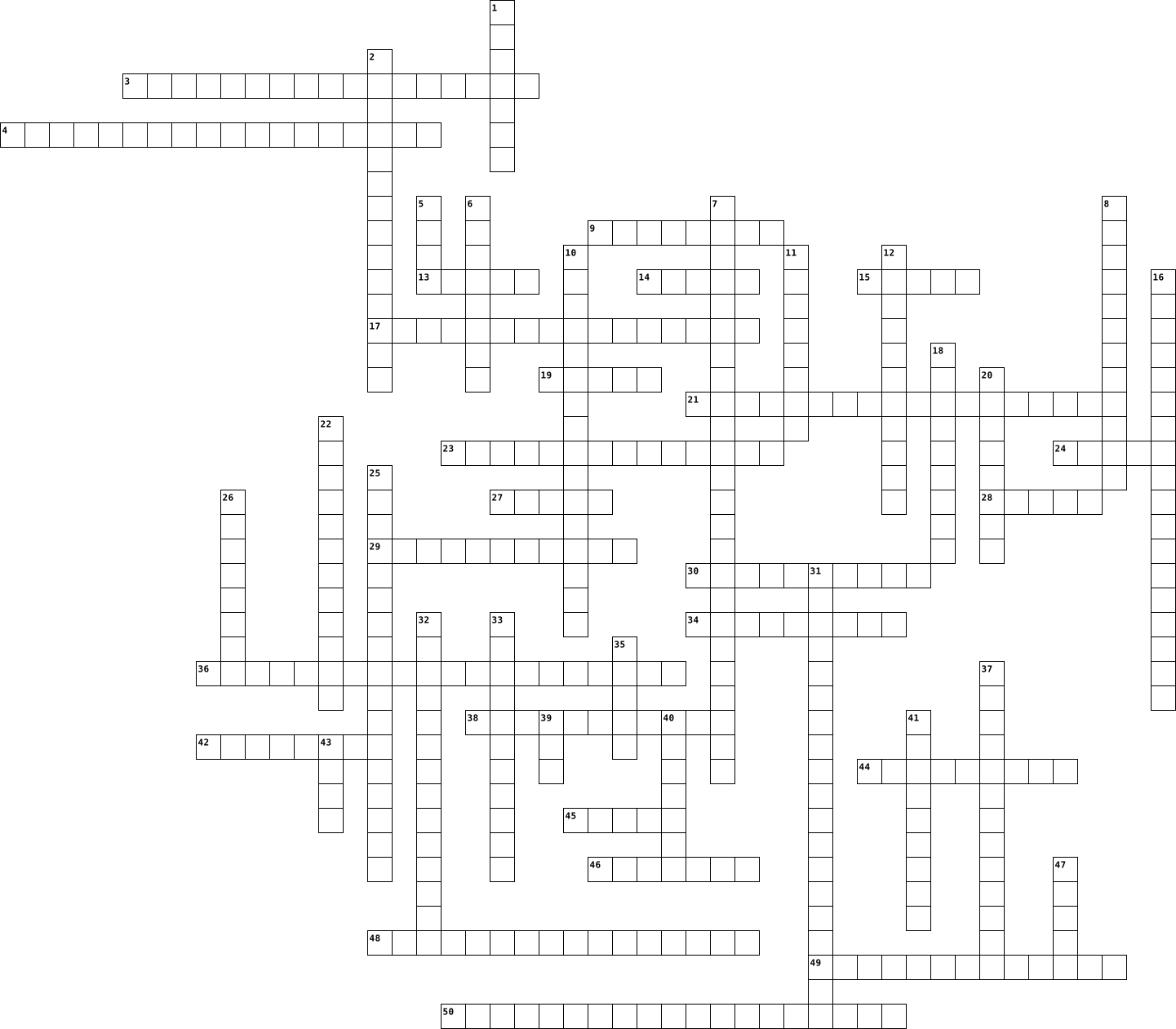
Across
- property also called extrinsic property
- bond in which two atoms share one pair of electrons'
- branch of chemistry that applies physics to the study of chemistry
- zeros used as placeholders in a large number without a decimal point are not significant
- if the number is less than 1, then only the zeros at the end of the number and the zero between nonzero digits are significant
- zeros to the left of the first nonzero digits are not significant
- can be measured and observed without changing the composition of the substance
- for numbers with trailing zero that do not contain a decimal point, the zeros may or may not be significant
- the digits in any measurement that are known with certainty plus one digit which is uncertain
- occur when the internal make-up of the matter stays the same.
- give the number of significant figure of 301 cm
- if the number is greater than 1, then all the zeros written to the right of the decimal point are significant
- all nonzero digits are significant
- process of converting liquid to gas
- process of separating the components of a suspension
- study of inorganic compounds
- composition varies from one position to another
- process of determining the extent of the dimensions, quantity or extent of something
- tells how close a measured value is to the "true" values
- refers to how the values agree closely with one another
- give the number of significant figure of 60.0 min
- process by which a substance changes from the solid phase to the liquid phase
- ability of a substance to react with other substances such as air, water, acid, and base
- ability to scatters a beam or light that passes through it
- process in which a conversion factor written in a form of ratio
Down
- branch of chemistry that studies the structure, properties and reactions of organic compounds
- the separation of a mixture by passing it in solution or suspension
- give the number of significant figure of 2355 mm
- consist of a dispersed phase or the substance that is dissolved or scattered
- in which an ordinary decimal number is expressed as the product of a number between 1 and 10 times 10 raised to a power.
- branch of science concerned with the chemical and physicochemical processes and substances that occur within living organisms.
- substance composed of many identical molecules composed of atoms from more than one element held together by chemical bonds.
- process of separating elemental metals from other particles in a mixture
- process of changing solid to gas
- also called solution
- states that atoms other than hydrogen tend to form bonds until surrounded by eight valence electrons
- composed of two or more substances combined physically
- process of separating a homogeneous mixture composed of two substances with different boiling points.
- property also called as intrinsic property, does not depend on the size of the sample
- aggregate of at least 2 atoms in a definite proportion which bind together using covalent bonds
- studies and uses instruments and methods used to separate, identify, and quantify matter
- occurs when a substance is converted to a new substance
- consist of coarse particles which are visible to the naked eye
- zeros between nonzero digits are significant
- matter that has a definite composition and distinct properties
- give the number of significant figure of 69.4208 ft
- simplest form of matter
- branch of science that deals with the identification of the substances of which matter is composed
- smallest particle of an element
- give the number of significant figure of 0.0580 g
50 Clues: also called solution • simplest form of matter • study of inorganic compounds • smallest particle of an element • process of changing solid to gas • all nonzero digits are significant • process of converting liquid to gas • property also called extrinsic property • zeros between nonzero digits are significant • give the number of significant figure of 301 cm • ...
General Chemistry 2020-06-05
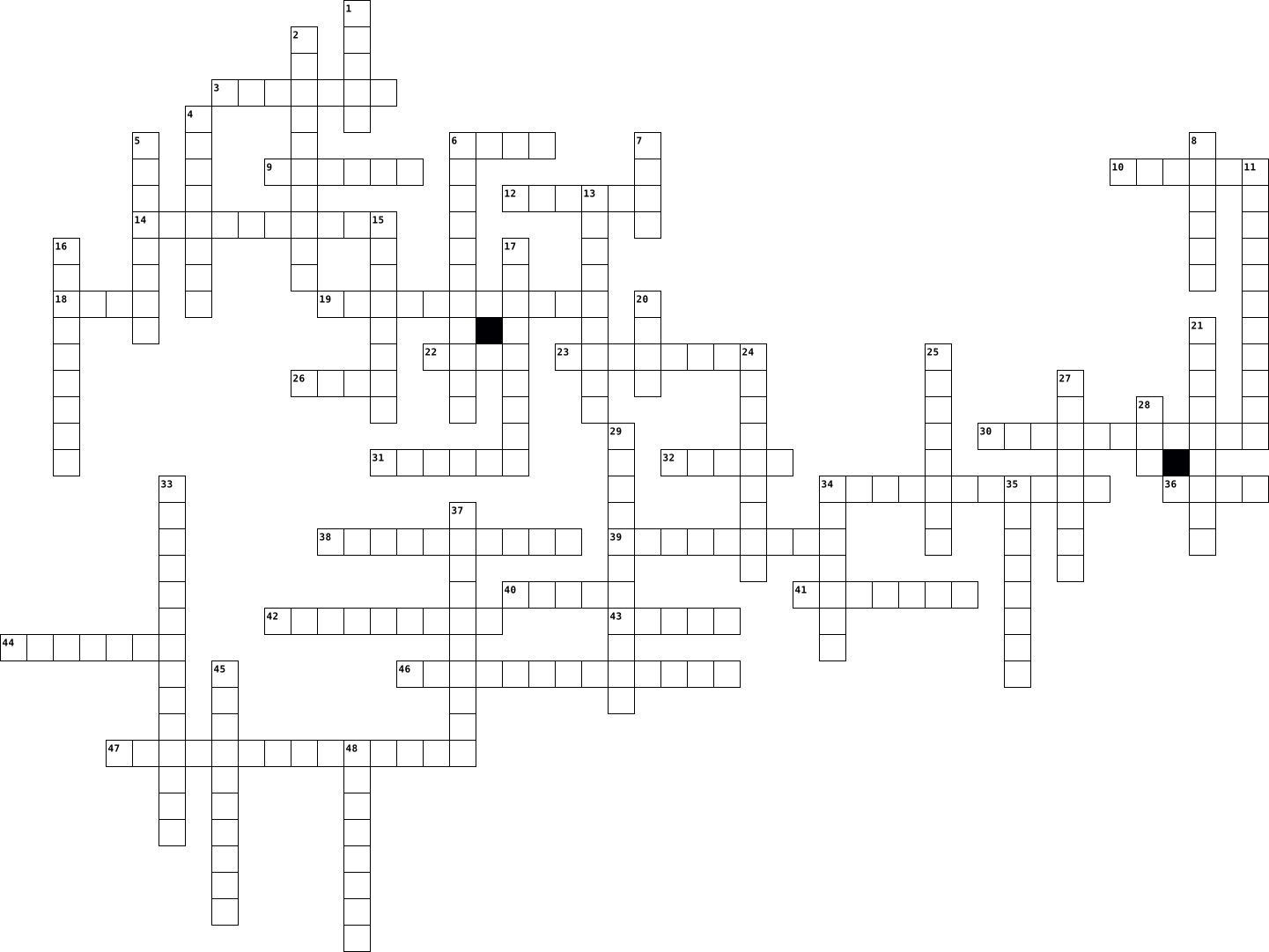
Across
- _____ chemistry is a branch of chemistry that studies the structure, properties and reactions of organic compounds, which contain carbon in covalent bonding.
- It is denoted by the symbol “M” in the SI that is in the millionth numerical value.
- It is the state of matter when particles are neither too close nor too far from each other.
- It is used to quantify the electric current with the “A” symbol.
- It is anything that has mass and occupies space.
- _____ notation is used in counting the number of significant figures.
- It is denoted by the symbol “T” in the SI that is in the trillionth numerical value
- It is a mixture that is also called as solution since it is relatively uniform in composition.
- It is denoted by the symbol “d” in the SI that is in the tenth numerical value.
- It is used to quantify the mass with the “kg” symbol.
- It is denoted by the symbol “G” in the SI that is in the billionth numerical value.
- It occurs when solid turns into gas by the addition of heat.
- It is used to quantify the temperature with the “K” symbol.
- It is used to quantify the length with the “m” symbol.
- In addition and ______, the answer must have the same number of decimal places as the measured number with the least number of decimal places.
- It is denoted by the symbol “p” in the SI that is in the trillionth numerical value.
- It occurs when gas turns into solid.
- This physical property is also called as intrinsic property that does not depend on the size or amount of the sample.
- It is denoted by the symbol “m” in International System of Units in the thousandth numerical value.
- Hand ____ is the simplest method in separating mixtures.
- It is the study of matter, its properties, how and why substances combine or separate to form other substances, and how substances interact with energy.
- It is denoted by the symbol “c” in the SI that is in the hundredth numerical value.
- It is the simplest form of matter since it is composed of only one kind of atom.
- It is a mixture whose composition varies from one position to another within the sample.
- In _____ and division, the answer must have the same number of significant figures as the measured number with the lowest number of significant figures.
Down
- It is the state of matter when particles are very close to each other.
- A type of chemical property: whether it reacts with acids, bases, and oxygen, gas, or not.
- _____ chemistry is the study of macroscopic, and particulate phenomena in chemical systems in terms of the principles and concepts of physics such as motion, energy, force, and time.
- This type of change occurs when the internal make-up of the matter stays the same even after the change.
- It is the process of determining the extent of the dimensions, quantity, or extent of something.
- ____s between nonzero digits are significant.
- It is used to quantify the time with the “s” symbol.
- It is the process of converting liquid to gas.
- It is generally used by farmers to separate grains from stalks after harvesting.
- This type of change occurs when a substance is converted into a new substance.
- Extensive physical property is also called as _____ property.
- It refers to how the values agree closely with one another.
- It is the smallest particle of an element.
- A type of chemical property: whether the substance can be easily decomposed or not.
- It is the process of separating elemental metals from other particles in a mixture.
- These are composed of two or more substances combined physically in variable proportions.
- It exhibits the Tyndall Effect. It consist of dispersed phase or the substance that is dissolved or scattered.
- It is the state of matter when particles are far apart from each other.
- ____ figures are the digits in any measurement that are known with certainty, plus one digit which is uncertain.
- A type of chemical property: whether the substance undergoes combustion or not.
- It is a simple technique for separating dry mixtures.
- A type of chemical property: whether the substance can damage an organism or not.
- It is a process of separating the components of a suspension. An example of a mixture that can be separated through this is sand and water solution.
- A type of chemical property: whether it will break into charged particles when in solution with water or not.
- It tells how close a measured value is to the “true” value.
50 Clues: It occurs when gas turns into solid. • It is the smallest particle of an element. • ____s between nonzero digits are significant. • It is the process of converting liquid to gas. • It is anything that has mass and occupies space. • It is used to quantify the time with the “s” symbol. • It is used to quantify the mass with the “kg” symbol. • ...
General Chemistry 2020-05-24
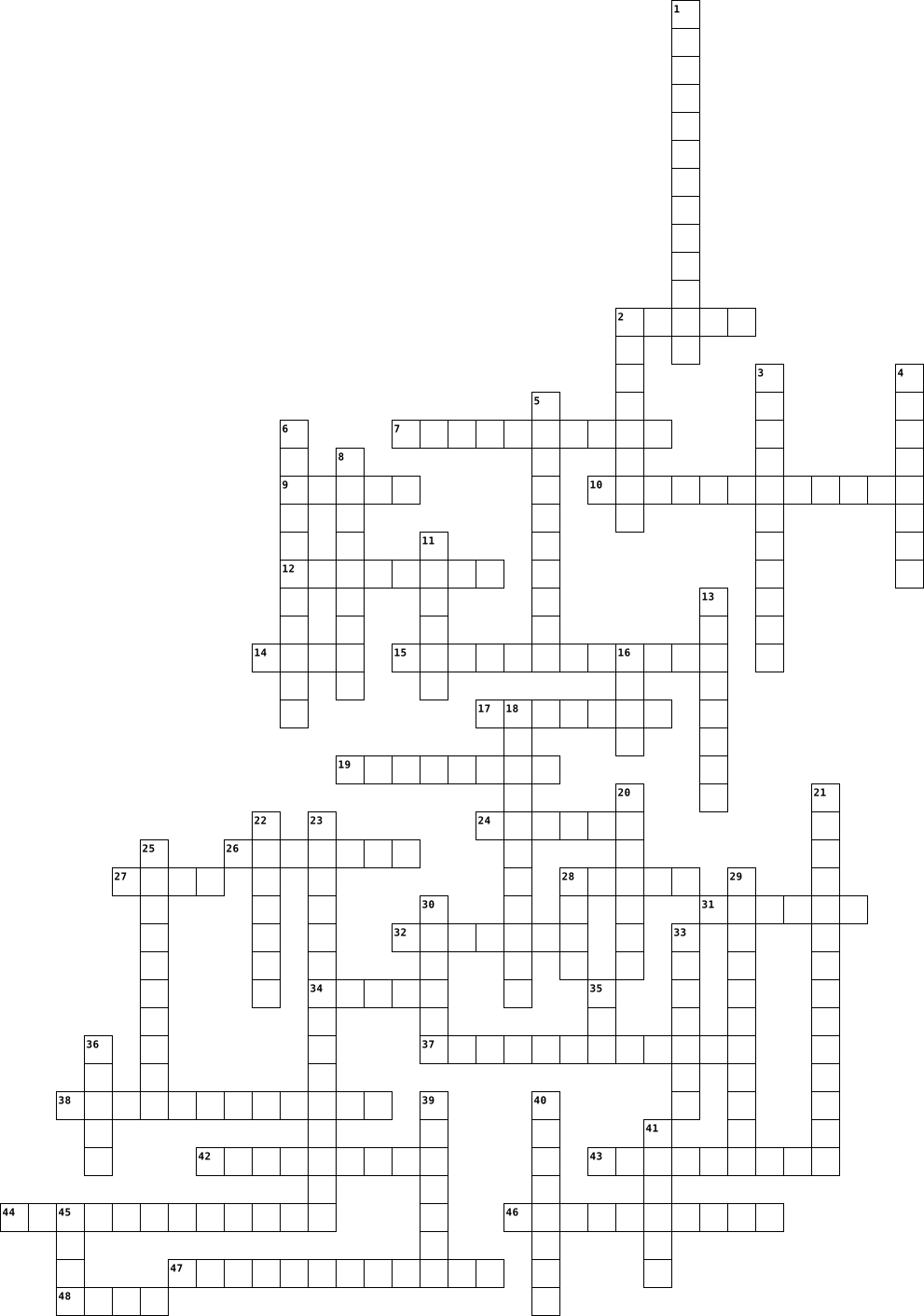
Across
- unit of mass, it's abbreviation is lbs.
- scale where the freezing point is 32° _ and it's oiling point is 212° _
- 1 kilogram is equivalent to 1000 _____
- the most time consuming but easiest way of separating substance
- point when the temperature reaches 0° C
- measures the amount of matter in
- a process that uses a high boiling point in removing particles or bacteria
- the surface's characteristic, often describe with the words soft, rough, etc.
- a pure substance or any mixture
- amount of space that is occupied
- a process where they use sifters to separate a dry mixture
- this measurement's symbol is d
- used in measuring the width of something
- amount of space that is occupied by the material, it is a n extensive property
- _____ zeros are never significant
- appearance of an object in respect of the reflection of the light
- conversion of gas to liquid
- it refers to when a substance will burn when it encountered fire or flame
- has the same physical and chemical properties
- a branch of science that focuses on the study of matter composition and chemical reaction as well as structure
- studies about drugs and it's reaction to an organism
- studies the effect of poisons on living organism
- wherein it studies the reaction of a chemical that's in a living things
- amount of a substance
Down
- mixture wherein you can see the two different substance with the naked eye
- chemistry studies the behavior and changes of a matter
- goes straight from solid state through gas without passing the liquid stage
- quantity of mass
- chemistry deals with the composition of a substance
- all non-zero digits are ____
- a process where they use magnets to separate a material from the mixture
- a state in which particles are flowing with each other
- study of hereditary and genes
- this measurement's factor is 10¹²
- it's a process where it is separated by heat that turns liquid into gas
- point in which the temperature causes the substance to melt
- separated based on the inner molecular attraction
- when two or more substance are combined but still has their own chemical identities
- the study of the arrangement of atoms and it's physical and chemical effect on a substance
- sum of chemical reaction in living things
- this measurement's symbol is M
- mixture that are combined thoroughly that you can't distinguish the elements
- system composed of seven basic units, it is used around the world.
- point it is when the temperature causes the substance to boil
- a state of matter where the particles are loosely scattered and are far away from each other
- a state of matter wherein the particles are compact with each other tightly
- can't be split into simpler components
- when two elements are chemically combined
- commonly used for measuring the time
- smallest particle of matter
50 Clues: quantity of mass • amount of a substance • conversion of gas to liquid • smallest particle of matter • all non-zero digits are ____ • study of hereditary and genes • this measurement's symbol is d • this measurement's symbol is M • a pure substance or any mixture • measures the amount of matter in • amount of space that is occupied • this measurement's factor is 10¹² • ...
General Chemistry 2020-05-25
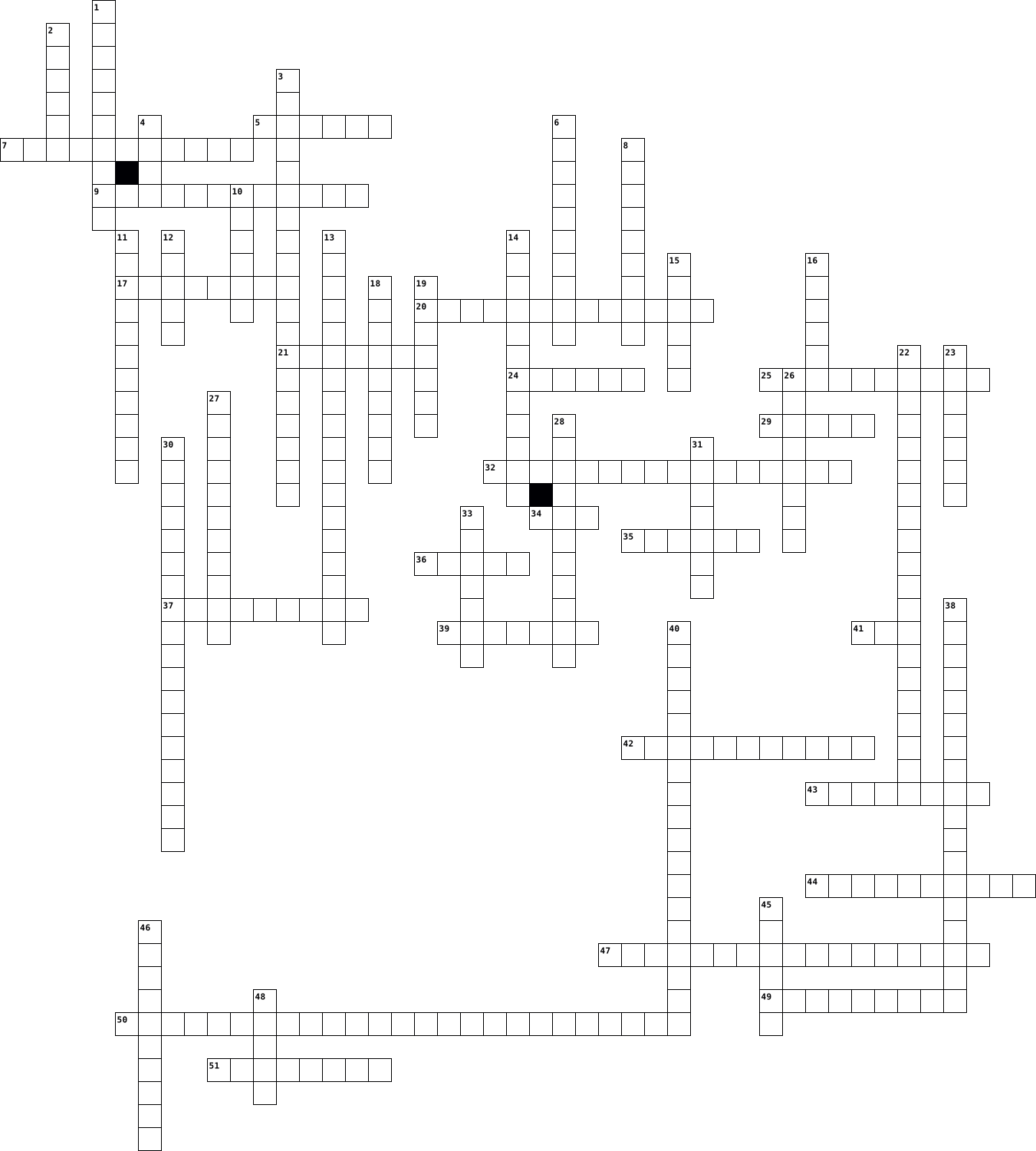
Across
- Anything that has mass and occupies space
- Organic compound with carbon and oxygen only
- Separates components of mixture at different boiling points.
- Element that appears at the far right side of the periodic table
- Compound that consists of two charged ions
- Substance consisting of only one kind of atom
- Elements at the left side and in the center of the periodic table
- a metric unit of length equal to one hundredth of a meter.
- the fundamental unit of length in the metric system equal to 100 centimeters or approximately 39.37 inches.
- it is a branch of chemistry that studies the structure properties and reactions of organic compounds which contain carbon in covalent bonding. Study of structure determines their chemical composition and formula.
- Formed when atom loses or gains electron
- Horizontal row in the periodic table
- a substance or object that is solid rather than liquid or fluid
- the branch of science that deals with the identification of the substances of which matter is composed; the investigation of their properties and the ways in which they interact combine and change; and the use of these processes to form new substances.
- Uncharged particle found within the atomic nuclei
- a substance or matter in a state in which it will expand freely to fill the whole of a container having no fixed shape and no fixed volume.
- the size length or amount of something as established by measuring.
- insert gas located at the rightmost side of the periodic table
- the quality, condition, or fact of being exact and accurate.
- the branch of chemistry concerned with the application of the techniques and theories of physics to the study of chemical systems.
- Indicates that one mole of an element has a mass in grams numerically equal to its atomic mass units
- physical property that does not depend on the size or amount of the sample
- Phase change in which liquid is converted to solid
Down
- Elements found in the zigzag order in the periodic table
- a substance that flows freely but is of constant volume having a consistency like that of water or oil.
- it is a branch of chemistry that studies and uses instruments and methods used to separate identify and quantify matter.
- The quantity of matter in the body
- Process in which the solid particles are filtered to allow the liquid or filtrate to pass through the filter and be collected as residue
- movement of one fluid through another.
- the measurement or extent of something from end to end.
- inner transition elements located in the first row of the f block in the periodic table
- bond Formed by losing and gaining of electrons between metal and nonmetal
- Called as solution a mixture with uniform composition.
- it is a branch of chemistry that studies the chemical processes within and relating to living organisms. Biochemical processes give rise to the complexity of life.
- a period of time equal to sixty seconds or a sixtieth of an hour.
- Positively charged subatomic particle of an atom
- states that atoms other than hydrogen tend to form bonds until surrounded by eight valence electrons
- Composed of two or more substances combined physically in variable proportions
- Mixture whose a composition varies from position to position within a sample.
- Phase change that involves the conversion from solid to liquid
- Negatively charged subatomic particle of an atom
- Specific energy value of electrons for an atom
- phase change in which liquid is converted to gas
- The separation of elemental metals from the mixtures
- Ratio of the mass of an object to the volume occupied by that object.
- Group 7A elements
- The digits in any measurement that are known with certainty plus one digit which is uncertain
- it is a branch of chemistry that deals with synthesis and behavior of inorganic and organometallic compounds.
- The amount of space occupied by a substance
- The sum of the number of protons and neutrons in its nucleus
- a metric unit of capacity formerly defined as the volume of one kilogram of water under standard conditions now equal to 1 000 cubic centimeters
51 Clues: Group 7A elements • The quantity of matter in the body • Horizontal row in the periodic table • movement of one fluid through another. • Formed when atom loses or gains electron • Anything that has mass and occupies space • Compound that consists of two charged ions • The amount of space occupied by a substance • Organic compound with carbon and oxygen only • ...
General Chemistry 2020-05-25
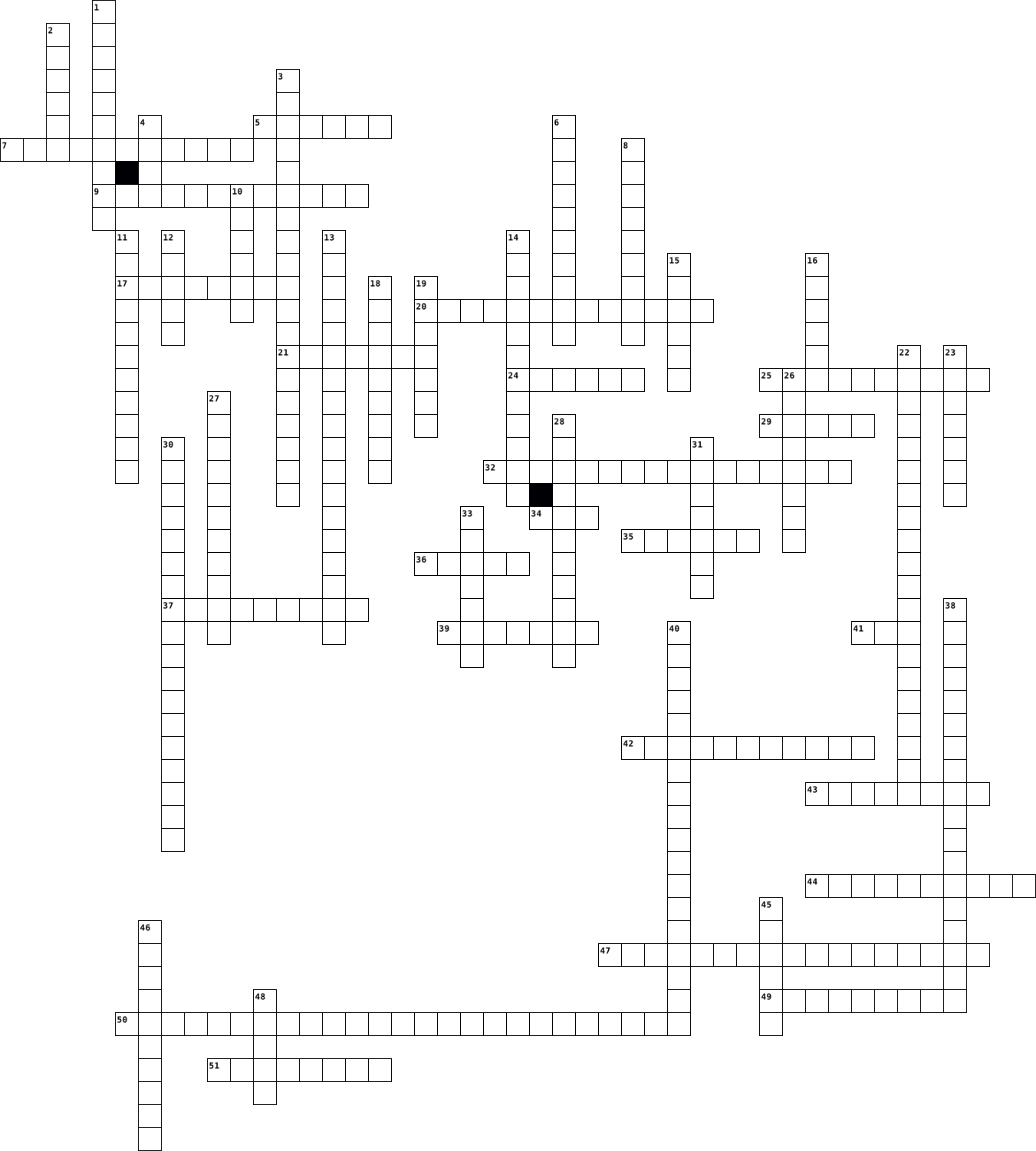
Across
- Anything that has mass and occupies space
- Organic compound with carbon and oxygen only
- Separates components of mixture at different boiling points.
- Element that appears at the far right side of the periodic table
- Compound that consists of two charged ions
- Substance consisting of only one kind of atom
- Elements at the left side and in the center of the periodic table
- a metric unit of length equal to one hundredth of a meter.
- the fundamental unit of length in the metric system equal to 100 centimeters or approximately 39.37 inches.
- it is a branch of chemistry that studies the structure properties and reactions of organic compounds which contain carbon in covalent bonding. Study of structure determines their chemical composition and formula.
- Formed when atom loses or gains electron
- Horizontal row in the periodic table
- a substance or object that is solid rather than liquid or fluid
- the branch of science that deals with the identification of the substances of which matter is composed; the investigation of their properties and the ways in which they interact combine and change; and the use of these processes to form new substances.
- Uncharged particle found within the atomic nuclei
- a substance or matter in a state in which it will expand freely to fill the whole of a container having no fixed shape and no fixed volume.
- the size length or amount of something as established by measuring.
- insert gas located at the rightmost side of the periodic table
- the quality, condition, or fact of being exact and accurate.
- the branch of chemistry concerned with the application of the techniques and theories of physics to the study of chemical systems.
- Indicates that one mole of an element has a mass in grams numerically equal to its atomic mass units
- physical property that does not depend on the size or amount of the sample
- Phase change in which liquid is converted to solid
Down
- Elements found in the zigzag order in the periodic table
- a substance that flows freely but is of constant volume having a consistency like that of water or oil.
- it is a branch of chemistry that studies and uses instruments and methods used to separate identify and quantify matter.
- The quantity of matter in the body
- Process in which the solid particles are filtered to allow the liquid or filtrate to pass through the filter and be collected as residue
- movement of one fluid through another.
- the measurement or extent of something from end to end.
- inner transition elements located in the first row of the f block in the periodic table
- bond Formed by losing and gaining of electrons between metal and nonmetal
- Called as solution a mixture with uniform composition.
- it is a branch of chemistry that studies the chemical processes within and relating to living organisms. Biochemical processes give rise to the complexity of life.
- a period of time equal to sixty seconds or a sixtieth of an hour.
- Positively charged subatomic particle of an atom
- states that atoms other than hydrogen tend to form bonds until surrounded by eight valence electrons
- Composed of two or more substances combined physically in variable proportions
- Mixture whose a composition varies from position to position within a sample.
- Phase change that involves the conversion from solid to liquid
- Negatively charged subatomic particle of an atom
- Specific energy value of electrons for an atom
- phase change in which liquid is converted to gas
- The separation of elemental metals from the mixtures
- Ratio of the mass of an object to the volume occupied by that object.
- Group 7A elements
- The digits in any measurement that are known with certainty plus one digit which is uncertain
- it is a branch of chemistry that deals with synthesis and behavior of inorganic and organometallic compounds.
- The amount of space occupied by a substance
- The sum of the number of protons and neutrons in its nucleus
- a metric unit of capacity formerly defined as the volume of one kilogram of water under standard conditions now equal to 1 000 cubic centimeters
51 Clues: Group 7A elements • The quantity of matter in the body • Horizontal row in the periodic table • movement of one fluid through another. • Formed when atom loses or gains electron • Anything that has mass and occupies space • Compound that consists of two charged ions • The amount of space occupied by a substance • Organic compound with carbon and oxygen only • ...
General Chemistry 2020-05-25
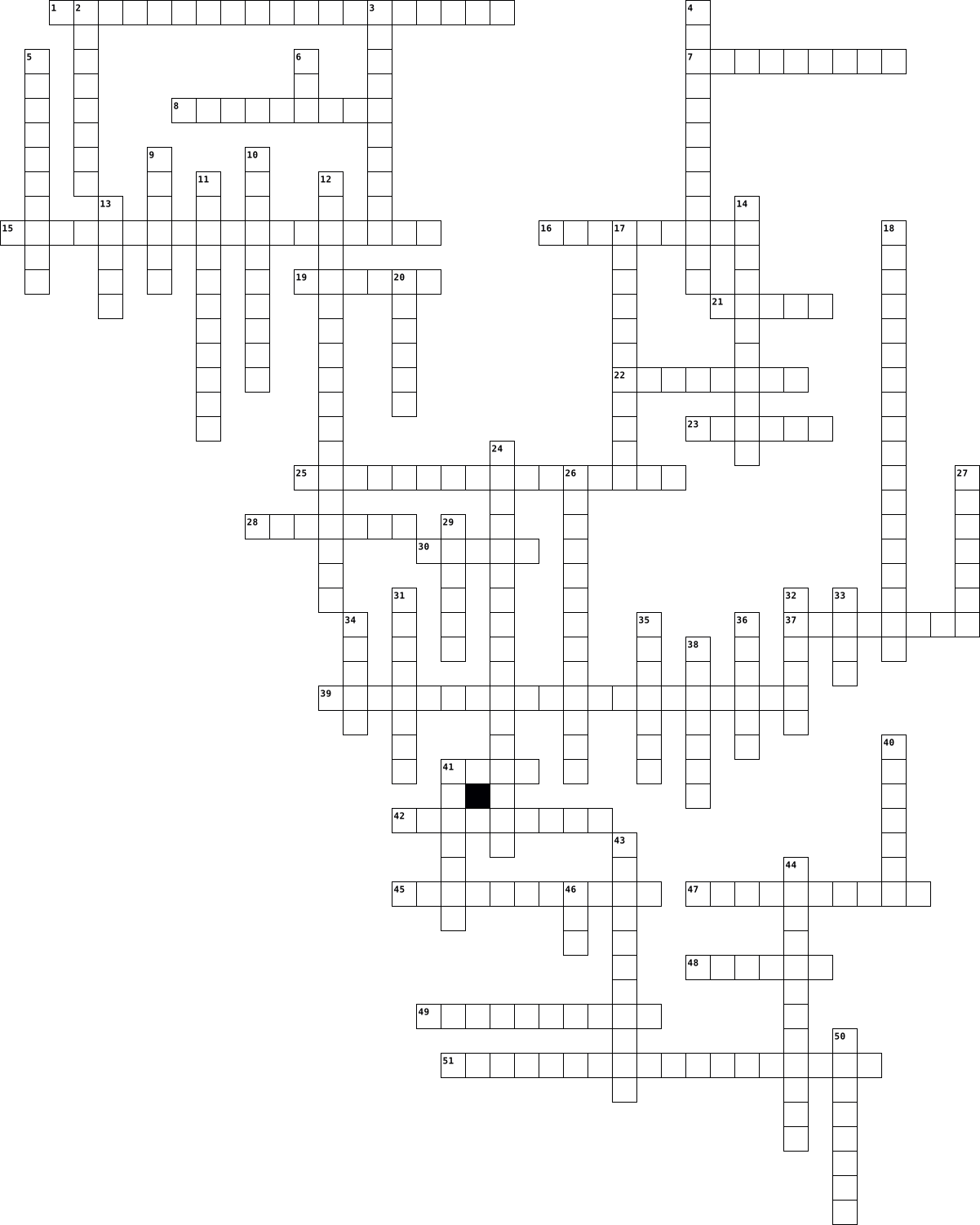
Across
- it is a branch of chemistry that studies and uses instruments and methods used to separate identify and quantify matter.
- states that atoms other than hydrogen tend to form bonds until surrounded by eight valence electrons
- movement of one fluid through another.
- The digits in any measurement that are known with certainty plus one digit which is uncertain
- the branch of science that deals with the identification of the substances of which matter is composed.
- Elements at the left side and in the center of the periodic table
- bond Formed by losing and gaining of electrons between metal and nonmetal
- Negatively charged subatomic particle of an atom
- Positively charged subatomic particle of an atom
- it is a branch of chemistry that studies the structure properties and reactions of organic compounds which contain carbon in covalent bonding. Study of structure determines their chemical composition and formula.
- Uncharged particle found within the atomic nuclei
- a substance or object that is solid rather than liquid or fluid
- the quality or state of being correct or precise.
- Mixture whose a composition varies from position to position within a sample.
- The quantity of matter in the body
- Indicates that one mole of an element has a mass in grams numerically equal to its atomic mass units
- inner transition elements located in the first row of the f block in the periodic table
- the quality, condition, or fact of being exact and accurate.
- a substance that flows freely but is of constant volume having a consistency like that of water or oil.
- a metric unit of length equal to one hundredth of a meter.
- Called as solution a mixture with uniform composition.
Down
- Element that appears at the far right side of the periodic table
- The sum of the number of protons and neutrons in its nucleus
- it is a branch of chemistry that studies the chemical processes within and relating to living organisms. Biochemical processes give rise to the complexity of life.
- Elements found in the zigzag order in the periodic table
- a substance or matter in a state in which it will expand freely to fill the whole of a container having no fixed shape and no fixed volume.
- Horizontal row in the periodic table
- Process in which the solid particles are filtered to allow the liquid or filtrate to pass through the filter and be collected as residue
- phase change in which liquid is converted to gas
- The separation of elemental metals from the mixtures
- a metric unit of capacity formerly defined as the volume of one kilogram of water under standard conditions now equal to 1 000 cubic centimeters
- Organic compound with carbon and oxygen only
- the size length or amount of something as established by measuring.
- it is a branch of chemistry that deals with synthesis and behavior of inorganic and organometallic compounds.
- the measurement or extent of something from end to end.
- the branch of chemistry concerned with the application of the techniques and theories of physics to the study of chemical systems.
- Compound that consists of two charged ions
- Ratio of the mass of an object to the volume occupied by that object.
- The amount of space occupied by a substance
- insert gas located at the rightmost side of the periodic table
- Anything that has mass and occupies space
- a chemical substance that neutralizes some elements.
- the fundamental unit of length in the metric system equal to 100 centimeters or approximately 39.37 inches.
- Substance consisting of only one kind of atom
- a period of time equal to sixty seconds or a sixtieth of an hour.
- Composed of two or more substances combined physically in variable proportions
- Group 7A elements
- Phase change that involves the conversion from solid to liquid
- Specific energy value of electrons for an atom
- Separates components of mixture at different boiling points.
- Formed when atom loses or gains electron
- Phase change in which liquid is converted to solid
52 Clues: Group 7A elements • The quantity of matter in the body • Horizontal row in the periodic table • movement of one fluid through another. • Formed when atom loses or gains electron • Anything that has mass and occupies space • Compound that consists of two charged ions • The amount of space occupied by a substance • Organic compound with carbon and oxygen only • ...
General Chemistry 2020-05-25
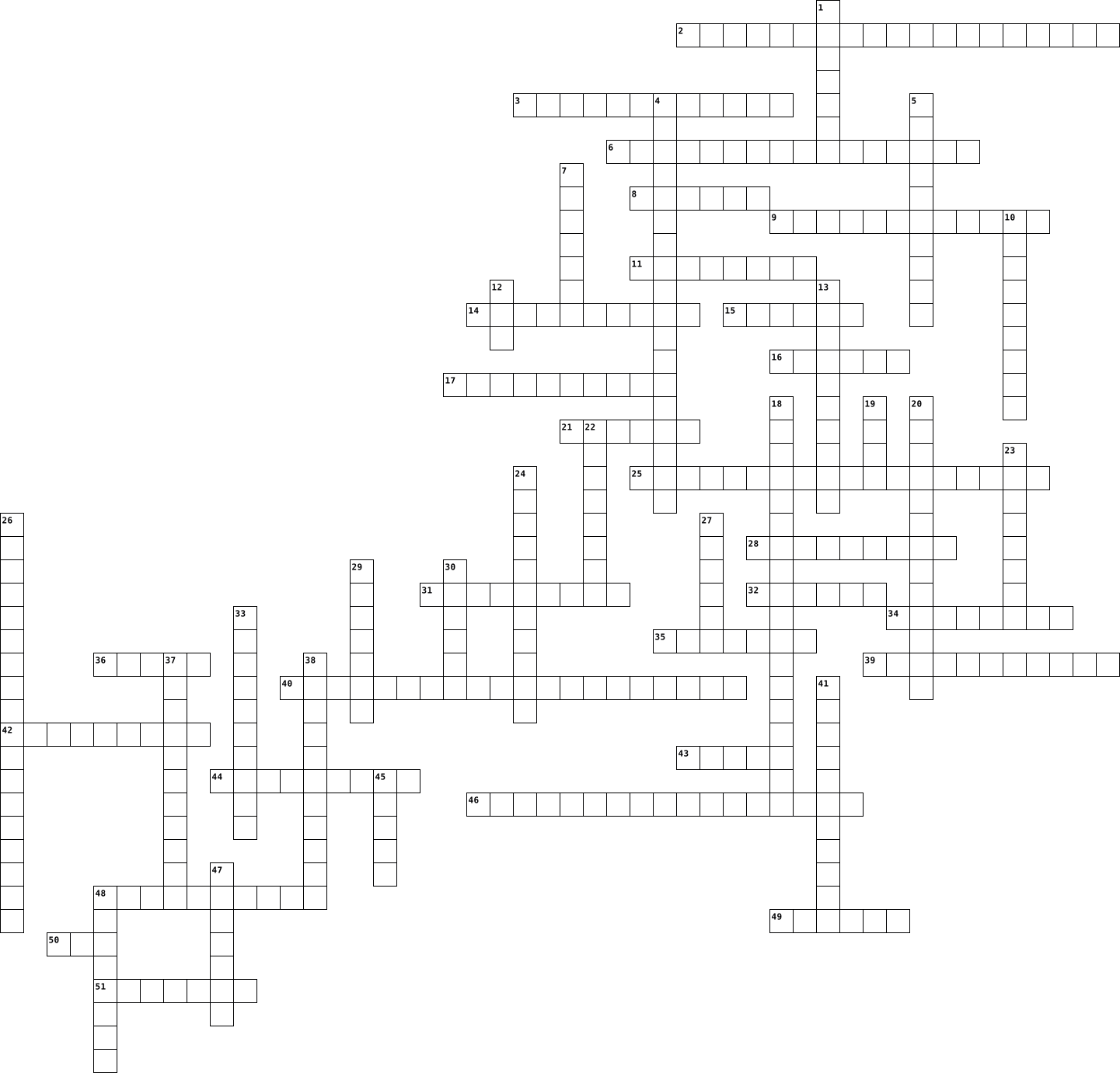
Across
- it is a branch of chemistry that studies and uses instruments and methods used to separate identify and quantify matter.
- it is a branch of chemistry that studies the chemical processes within and relating to living organisms. Biochemical processes give rise to the complexity of life.
- it is a branch of chemistry that studies the structure properties and reactions of organic compounds which contain carbon in covalent bonding. Study of structure determines their chemical composition and formula.
- Horizontal row in the periodic table
- Separates components of mixture at different boiling points.
- the quality or state of being correct or precise.
- The sum of the number of protons and neutrons in its nucleus
- a substance that flows freely but is of constant volume having a consistency like that of water or oil.
- Elements at the left side and in the center of the periodic table
- a metric unit of length equal to one hundredth of a meter.
- the measurement or extent of something from end to end.
- Called as solution a mixture with uniform composition.
- movement of one fluid through another.
- Formed by losing and gaining of electrons between metal and nonmetal
- Anything that has mass and occupies space
- insert gas located at the rightmost side of the periodic table
- Ratio of the mass of an object to the volume occupied by that object.
- the fundamental unit of length in the metric system equal to 100 centimeters or approximately 39.37 inches.
- inner transition elements located in the first row of the f block in the periodic table
- Mixture whose a composition varies from position to position within a sample.
- the branch of science that deals with the identification of the substances of which matter is composed.
- a metric unit of capacity formerly defined as the volume of one kilogram of water under standard conditions now equal to 1 000 cubic centimeters
- Indicates that one mole of an element has a mass in grams numerically equal to its atomic mass units
- the branch of chemistry concerned with the application of the techniques and theories of physics to the study of chemical systems.
- a result without the expected content
- a period of time equal to sixty seconds or a sixtieth of an hour.
- Formed when atom loses or gains electron
- Substance consisting of only one kind of atom
Down
- Composed of two or more substances combined physically in variable proportions
- The separation of elemental metals from the mixtures
- Elements found in the zigzag order in the periodic table
- Uncharged particle found within the atomic nuclei
- states that atoms other than hydrogen tend to form bonds until surrounded by eight valence electrons
- a substance or matter in a state in which it will expand freely to fill the whole of a container having no fixed shape and no fixed volume.
- Process in which the solid particles are filtered to allow the liquid or filtrate to pass through the filter and be collected as residue
- The digits in any measurement that are known with certainty plus one digit which is uncertain
- The quantity of matter in the body
- Compound that consists of two charged ions
- Negatively charged subatomic particle of an atom
- Phase change in which liquid is converted to solid
- Organic compound with carbon and oxygen only
- it is a branch of chemistry that deals with synthesis and behavior of inorganic and organometallic compounds.
- Positively charged subatomic particle of an atom
- Group 7A elements
- The amount of space occupied by a substance
- the quality, condition, or fact of being exact and accurate.
- Specific energy value of electrons for an atom
- the size length or amount of something as established by measuring.
- phase change in which liquid is converted to gas
- a substance or object that is solid rather than liquid or fluid
- Phase change that involves the conversion from solid to liquid
- Element that appears at the far right side of the periodic table
52 Clues: Group 7A elements • The quantity of matter in the body • Horizontal row in the periodic table • a result without the expected content • movement of one fluid through another. • Formed when atom loses or gains electron • Anything that has mass and occupies space • Compound that consists of two charged ions • The amount of space occupied by a substance • ...
General Chemistry 2020-05-25
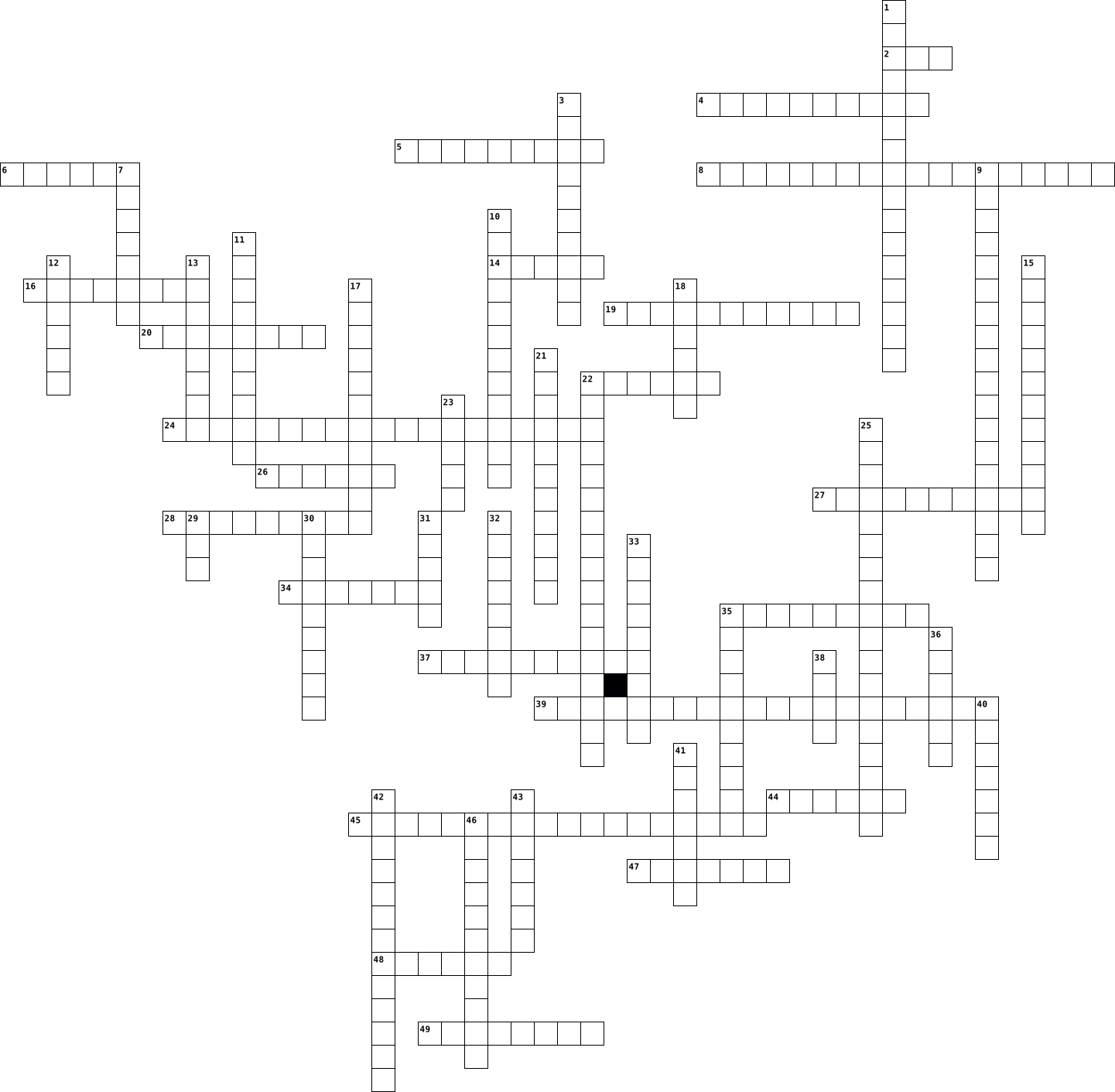
Across
- a substance or matter in a state in which it will expand freely to fill the whole of a container having no fixed shape and no fixed volume.
- the quality, condition, or fact of being exact and accurate.
- states that atoms other than hydrogen tend to form bonds until surrounded by eight valence electrons
- the measurement or extent of something from end to end.
- it is a branch of chemistry that deals with synthesis and behavior of inorganic and organometallic compounds.
- a substance or object that is solid rather than liquid or fluid
- Element that appears at the far right side of the periodic table
- Organic compound with carbon and oxygen only
- the quality or state of being correct or precise.
- Horizontal row in the periodic table
- it is a branch of chemistry that studies and uses instruments and methods used to separate identify and quantify matter.
- a substance that flows freely but is of constant volume having a consistency like that of water or oil.
- a metric unit of length equal to one hundredth of a meter.
- movement of one fluid through another.
- Composed of two or more substances combined physically in variable proportions
- Indicates that one mole of an element has a mass in grams numerically equal to its atomic mass units
- Elements found in the zigzag order in the periodic table
- Mixture whose a composition varies from position to position within a sample.
- Anything that has mass and occupies space
- Called as solution a mixture with uniform composition.
- Ratio of the mass of an object to the volume occupied by that object.
- Elements at the left side and in the center of the periodic table
- Phase change in which liquid is converted to solid
Down
- it is a branch of chemistry that studies the structure properties and reactions of organic compounds which contain carbon in covalent bonding. Study of structure determines their chemical composition and formula.
- Process in which the solid particles are filtered to allow the liquid or filtrate to pass through the filter and be collected as residue
- Group 7A elements
- The separation of elemental metals from the mixtures
- Separates components of mixture at different boiling points.
- a result without the expected content
- The amount of space occupied by a substance
- Negatively charged subatomic particle of an atom
- it is a branch of chemistry that studies the chemical processes within and relating to living organisms. Biochemical processes give rise to the complexity of life.
- phase change in which liquid is converted to gas
- Positively charged subatomic particle of an atom
- inner transition elements located in the first row of the f block in the periodic table
- the branch of chemistry concerned with the application of the techniques and theories of physics to the study of chemical systems.
- the fundamental unit of length in the metric system equal to 100 centimeters or approximately 39.37 inches.
- The digits in any measurement that are known with certainty plus one digit which is uncertain
- Formed when atom loses or gains electron
- Formed by losing and gaining of electrons between metal and nonmetal
- a metric unit of capacity formerly defined as the volume of one kilogram of water under standard conditions now equal to 1 000 cubic centimeters
- insert gas located at the rightmost side of the periodic table
- the branch of science that deals with the identification of the substances of which matter is composed.
- The sum of the number of protons and neutrons in its nucleus
- a period of time equal to sixty seconds or a sixtieth of an hour.
- The quantity of matter in the body
- Substance consisting of only one kind of atom
- Phase change that involves the conversion from solid to liquid
- Compound that consists of two charged ions
- Uncharged particle found within the atomic nuclei
- Specific energy value of electrons for an atom
51 Clues: Group 7A elements • The quantity of matter in the body • Horizontal row in the periodic table • a result without the expected content • movement of one fluid through another. • Formed when atom loses or gains electron • Anything that has mass and occupies space • Compound that consists of two charged ions • The amount of space occupied by a substance • ...
General Chemistry 2020-05-04
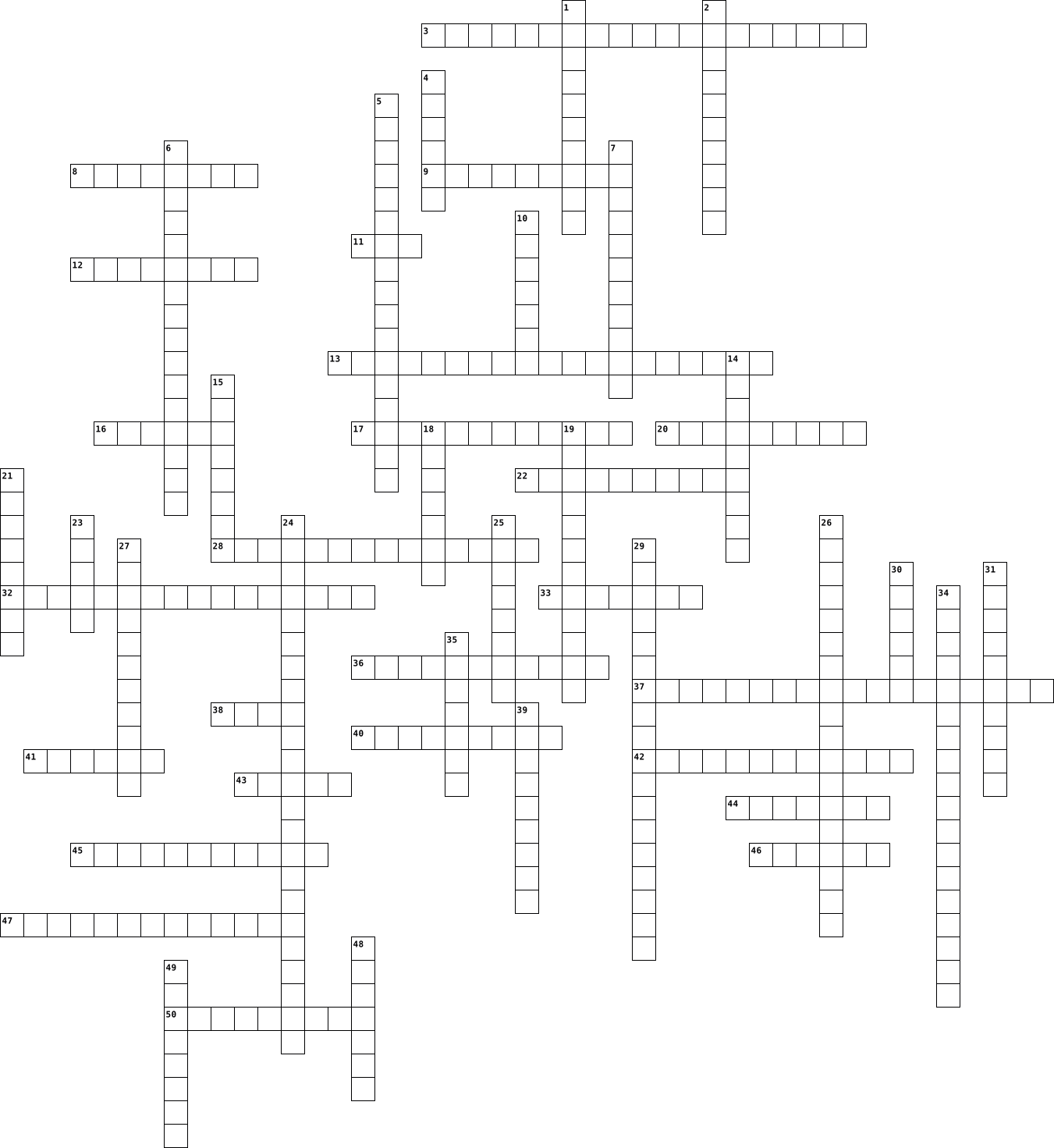
Across
- a branch of chemistry that studies and uses instruments and methods used to separate, identify, and quantify matter.
- tells how close a measured value is to the "true" value
- a physical property of matter that changes when the amount of matter in a sample changes. Examples are mass, volume, length, and charge.
- has no definite shape and volume and the structure of particles are far away from each other.
- a property of matter that shows no change in composition when a substance is seperated.
- a process in which a conversion factor which is written in a form of ratio is used to change the units given in the data to the units desired.
- a state of matter that is often thought of as a subset of gases, but the two states behave very differently.
- number of protons present in the nucleus of every atom
- combination of at least two atoms in a definite proportion, bound together by covalent bonds
- mass of an atom
- separation of a mixture by passing it in solution or suspension or as a vapor through a medium in which the components move at different rates.
- energy required to remove an electron from the atom
- one way of seperating a mixture used when 2 solids are going to be seperated.
- tells an object how hot or cold an object is.
- is concerned with the properties and behavior of inorganic compounds, which include metals, minerals, and organometallic compounds.
- the quantity of matter in an object.
- a branch of science that involves the study of the composition, structure and properties of matter.
- ion that has a positive net charge
- water molecules in the air cool and slow down and the attractions overcome their speed and join together, forming liquid water.
- ion with negative net charge
- process by which a substance changes from the solid phase to the liquid phase.
- he transition of a substance directly from the solid to the gas state, without passing through the liquid state.
- it has a characteristics of indefinite shape but has definite volume; the structure of particles are close together.
- tabular display of the chemical elements
- process of separating components of mixtures by using magnets to attract magnetic materials.
Down
- way of seperating a mixture used when a liquid and a solid is going to be seperated.
- a phase transition in which gas transforms into solid without passing through the liquid phase.
- anything that has mass and takes up space
- branch of chemistry concerned with the application of the techniques and theories of physics to the study of chemical systems.
- a branch of chemistry that studies the structure, properties and reactions of organic compounds, which contain carbon in covalent bonding.
- is the process of determining the extent of the dimensions, quantity, or extent of something.
- kr;noble gas
- a physical property of matter that does not change as the amount of matter change; it doesnt affect the value, amount or condition of a certain substance.
- molecule that contains only two atoms
- a substance made by combining two or more different materials in such a way that no chemical reaction occurs.
- the study of chemical processes within and relating to living organisms.
- a phase transition where a liquid turns into a solid when its temperature is lowered below its freezing point.
- one of the states of matter that has a definite shape & volume and the structure of particles is very compact.
- a state of matter that occurs when a group of atoms cooled to within a hair of absolute zero. When they reach that temperature the atoms are hardly moving relative to each other; they have almost no free energy to do so.
- a property of matter that shows a big change in composition when a substance is seperated.
- the digits in any measurement that are known with certainty, plus one digit which is uncertain.
- occurs when the surface of the liquid is exposed, allowing molecules to escape and form water vapor.
- expressed as N x 10^n
- amount of space occupied by a substance.
- molecule that consists of more than two atoms
- one of the common measurements done in laboratory; involves getting mass,volume and temperature of an object.
- is the ratio of the mass of an object to the volume it occupies.
- refers to how the values agree closely with one another
- a pure substance that is made from a single type of atom.
- 2 or more different elements combined
50 Clues: kr;noble gas • mass of an atom • expressed as N x 10^n • ion with negative net charge • ion that has a positive net charge • the quantity of matter in an object. • molecule that contains only two atoms • 2 or more different elements combined • amount of space occupied by a substance. • tabular display of the chemical elements • anything that has mass and takes up space • ...
General Chemistry 2020-06-01
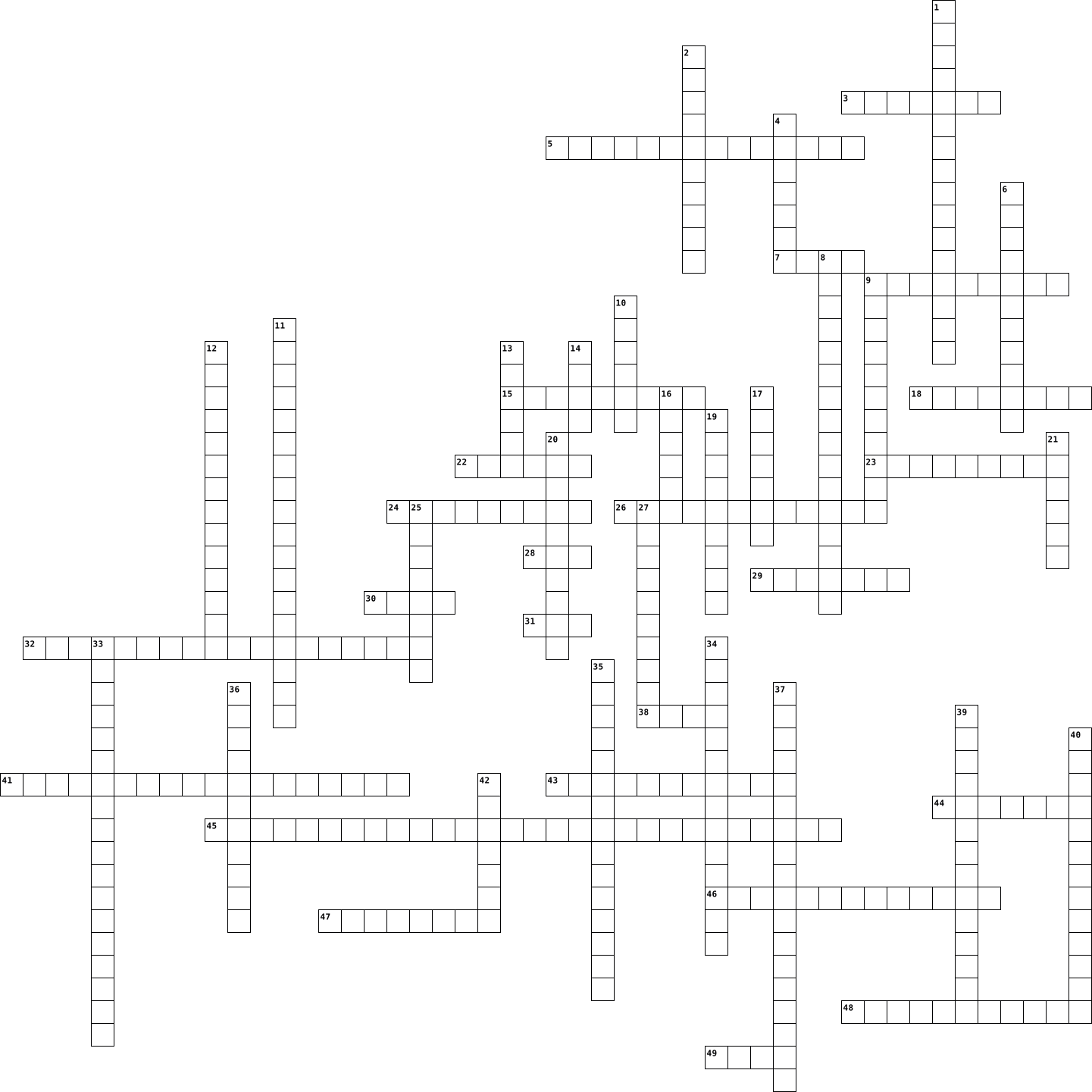
Across
- their particles are neither too close nor to far from each other.
- whether the substance undergoes combustion or not.
- 1 000 000 000
- can be affected by the size and amount of samples.
- it floats.
- elements react with each other to form a compound.
- independent from the base unit they modify and always remain constant.
- does not depend on the size or amount of the sample.
- whether the substance can be easily decomposed or not.
- process of separating a homogeneous mixture composed of two substances with different boiling points.
- their particles are far apart from each other.
- process of changing solid to liquid state.
- 0.000000000001
- symbol of Mole.
- one of the common measurements done in the laboratory.
- 0.000000001
- matter are those that can be measured and observed without changing the composition of the substance.
- tells how hot or cold an object is.
- composed of two or more substance combined physically in variable proportions.
- processes of separating heterogeneous mixture.
- is a matter that has a definite composition and distinct properties.
- a certain quantitative value is relatively close to the true value.
- a solution is composed of a solute or the dissolving substance, and a solvent or the dissolving medium.
- 1 000
Down
- ability of a substance to react with other substance.
- whether it reacts with acids, bases, and oxygen, gas, or not.
- is the simplest form of matter since it is composed of only one kind of atom.
- process of changing solid to gas without passing through liquid state.
- whether the material is more active or less active than other members of it's chemical family.
- process of converting liquid to gas.
- is anything that has mass and occupies space.
- the digits in any measurement that are known with certainty with an additional one digit which is uncertain.
- occurs when a substance is converted to a new substance.
- the amount of space occupied by a substance.
- the quantity of the matter in the object.
- their particles are very close to each other.
- unit of cd.
- the consistency of a result.
- is a process of separating the components of a suspension.
- it sinks.
- whether the substance can damage an organism or not.
- whether it will break into charged particles when in solution with water or not.
- the process of simplifying a very large number or very small and it used to express multidigit numbers involving many zeros.
- another method of separating mixture.
- other uncertainties may come from a flaw in the equipment used or the design of an experiment.
- result from the effects of uncontrolled variables.
- process of separating elemental metals from other particles in a mixture.
- the matter stays the se even after the change only shape, size, and state are altered.
- a mixture can be either a suspension or colloid.
- the ratio of the mass of an object to the volume it occupies.
50 Clues: 1 000 • it sinks. • it floats. • unit of cd. • 0.000000001 • 1 000 000 000 • 0.000000000001 • symbol of Mole. • the consistency of a result. • tells how hot or cold an object is. • process of converting liquid to gas. • another method of separating mixture. • the quantity of the matter in the object. • process of changing solid to liquid state. • ...
Chemistry Crossword 2020-05-31

Across
- - a membrane-bound organelle that contains genetic material (DNA) of eukaryotic organisms.
- - accompanied by or requiring the absorption of heat.
- - a organized chart of all the elements.
- - is the phase transition in which gas transforms into solid without passing through the liquid phase
- - the process of separating the components or substances from a liquid mixture by using selective boiling and condensation.
- - the medieval forerunner of chemistry, based on the supposed transformation of matter. It was concerned particularly with attempts to convert base metals into gold or to find a universal elixir
- - a property that describes a substances ability to participate in chemical reaction.
- – a compound that lacks carbon-hydrogen bond
- - a branch of chemistry that deals with the study of chemical processes that occur inside of living organisms.
- - the mass of an atom of a chemical element expressed in atomic mass units.
- - 2 or more substances compound physically in variable proponents.
- – is the science of obtaining, processing, and communicating information about the composition and structure of matter.
- - it has a definite shape and a definite volume.
- - composed of 2 or more atom.
- - is an atom or molecule that has a net electrical charge
- - a negatively charged ion
- - is known as the originator of the quantum theory of energy.
- - uniterm in composition.
- - is the change of the physical state of matter from the gas phase into the liquid phase
- - is any process which requires or absorbs energy from its surroundings, usually in the form of heat
- - the process or effect of simplifying a single chemical entity into two or more fragments
Down
- - it has indefinite shape and a definite volume, takes shape of a container.
- - is the study of matter, its properties, how and why substances combine or separate to form other substances, and how substances interact with energy.
- - type of matter and the way matter is arranged.
- - the natural science that studies matter, its motion and behavior through space and time, and the related entities of energy and force.
- - the smallest constituent unit of ordinary matter that constitutes a chemical element.
- – is the separation of a mixture by passing it in solution or suspension or as a vapor (as in gas chromatography) through a medium in which the components move at different rates.
- - chemical element is the number of protons found in the nucleus of every atom of that element
- - the ability of a chemical to burn or ignite, causing fire combustion.
- - is the conversion of one chemical element or isotope into another.
- – it alters the composition of the original matter
- - is a form of matter in which many of the electrons wander around freely among the nuclei of the atoms.
- – a compound that contains carbon-hydrogen bond
- – the one who developed the periodic table
- - is a type of vaporization that occurs on the surface of a liquid as it changes into the gas phase.
- - A state of matter that have an indefinite shape and indefinite volume.
- - significant rule non-zero digits are always
- – is one of the most important part of Physical chemistry
- - is a phase transition in which a liquid turns into a solid when its temperature is lowered to or below its freezing point
- - is the transition of a substance directly from the solid to the gas state, without passing through the liquid state
- – discovered the Polonium and Radium
- - is an experimental gas law relating the volume of a gas to the amount of substance of gas present.
- - a chemical reaction that releases energy.
- - who put the pieces of the puzzle together and developed an atomic theory in 1803
- - a type of chemical bonding that involves the electrostatic attraction between oppositely charged ions
- - a subatomic particle, with a positive electric charge.
- - a subatomic particle, with a negative electric charge
- - Any substance that has mass and takes up space.
- - a positively charged ion
- – an expert in chemistry
50 Clues: – an expert in chemistry • - uniterm in composition. • - a negatively charged ion • - a positively charged ion • - composed of 2 or more atom. • – discovered the Polonium and Radium • - a organized chart of all the elements. • – the one who developed the periodic table • - a chemical reaction that releases energy. • – a compound that lacks carbon-hydrogen bond • ...
GENERAL CHEMISTRY 2020-06-03
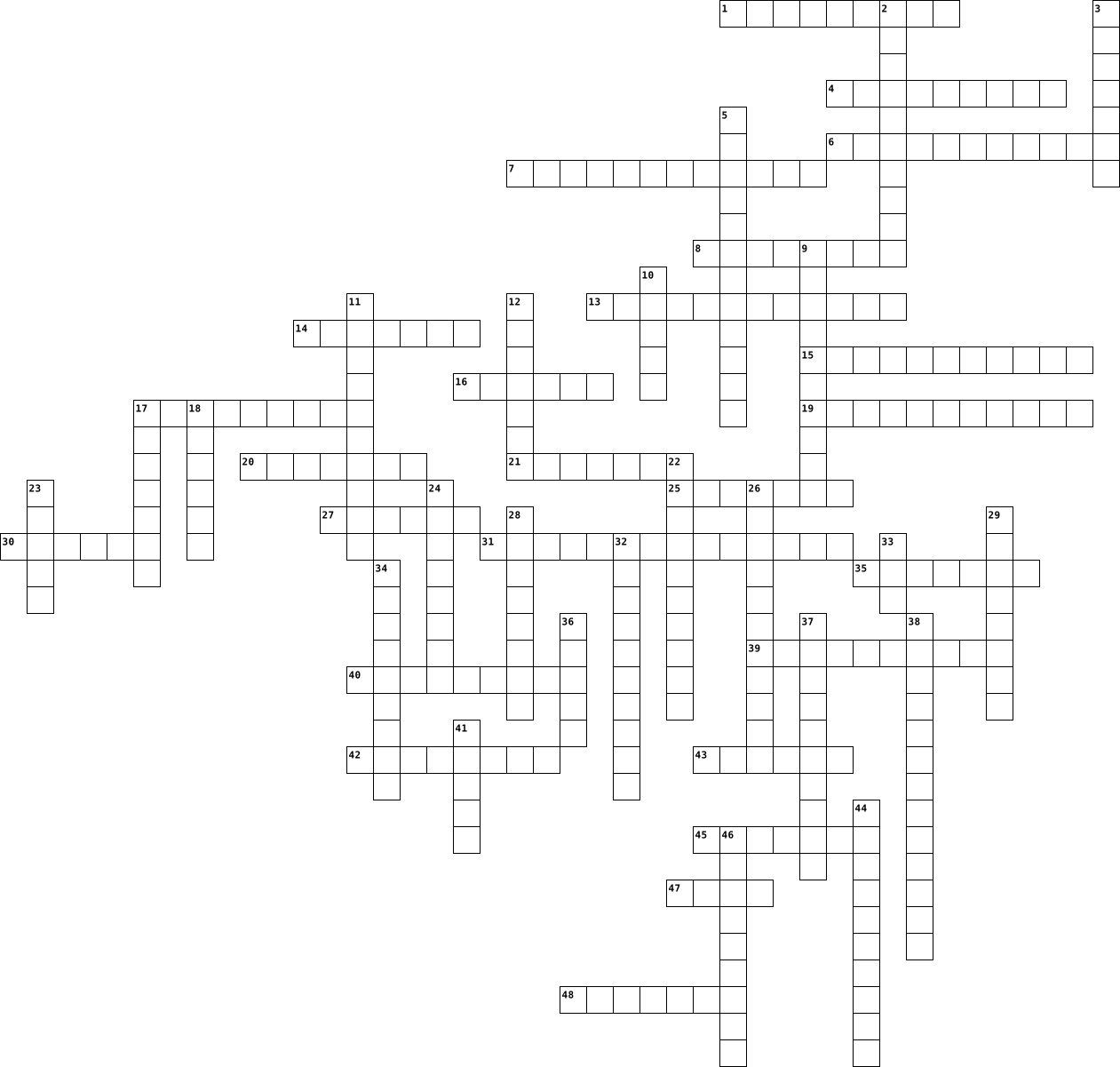
Across
- _______ conceptualized chemical elements into the first rudimentary periodic tables.
- He asserted that all pure substances were homoeomerous and composed of the elements air, earth, fire, and water.
- Liquid to Gas
- Gas to Liquid
- The sticking together of particles of the same substance.
- Is the branch of science that explores the chemical proce, or scattered.
- Ability to scatter a beam of light that passes through it.
- Accompanied by or requiring the absorption of heat.
- It consists of a gas of ions – atoms which have some of their orbital electrons removed – and free electrons.
- Ability of solute to dissolve in a solvent to form a solution.
- Solid to Gas
- Solid to Liquid
- Consist of a dispersed phase or the substance that is dissolved or scattered.
- Composed of only one kind of atom.
- The vertical columns on the periodic table.
- Are a type of subatomic particle with a positive charge.
- The separation of a mixture by passing it in solution or suspension.
- Any of the electronegative elements that form binary salts by direct union with metals.
- A chemical reaction that releases energy through light or heat.
- Non-zero digits are always ________.
- ________ zeros to the right of the decimal are significant.
- Anything that occupies space and has volume.
- Composed of two or more substances combined physically in variable proportions.
- Smallest unit of a matter.
- Are a type of subatomic particle with no charge.
Down
- Is the process by which an atom or a molecule acquires a negative or positive charge by gaining or losing electrons.
- ________ zeros are not significant.
- A mixture whose composition varies from one position to another within the sample.
- Consist of a course particle which are visible to the naked eye.
- The atoms are closely packed together.
- Studies and uses instruments and methods used to separate, identify, and quantify matter.
- The study of carbon and its compounds; the study of the chemistry of life.
- The liquid in which a solute is dissolved to form a solution.
- Take on the shape of their container.
- Gas to Solid
- Having minute spaces or holes through which liquid or air may pass.
- Type of subatomic particle with a negative charge.
- Contribute to the degree of accuracy of the value.
- Changes affecting the form of a chemical substance, but not its chemical composition.
- Changes occur when a substance combines with another to form a new substance
- is the process in which atoms, ions or molecules from a substance adhere to a surface of the adsorbent.
- Has no fixed shape and no fixed volume.
- Study of properties, composition, and structure of a matter.
- Universal solvent
- Also called as solution, is relatively uniform in composition.
- Process of converting certain elements into others.
- The ability to flow
- Believed that everything in the universe was made up of atoms, which were microscopic and indestructible.
- The study of compounds not covered by organic chemistry; the study of inorganic compounds, or compounds that don't contain a C-H bond.
49 Clues: Solid to Gas • Gas to Solid • Liquid to Gas • Gas to Liquid • Solid to Liquid • Universal solvent • The ability to flow • Smallest unit of a matter. • Composed of only one kind of atom. • ________ zeros are not significant. • Non-zero digits are always ________. • Take on the shape of their container. • The atoms are closely packed together. • Has no fixed shape and no fixed volume. • ...
GENERAL CHEMISTRY 2020-06-01
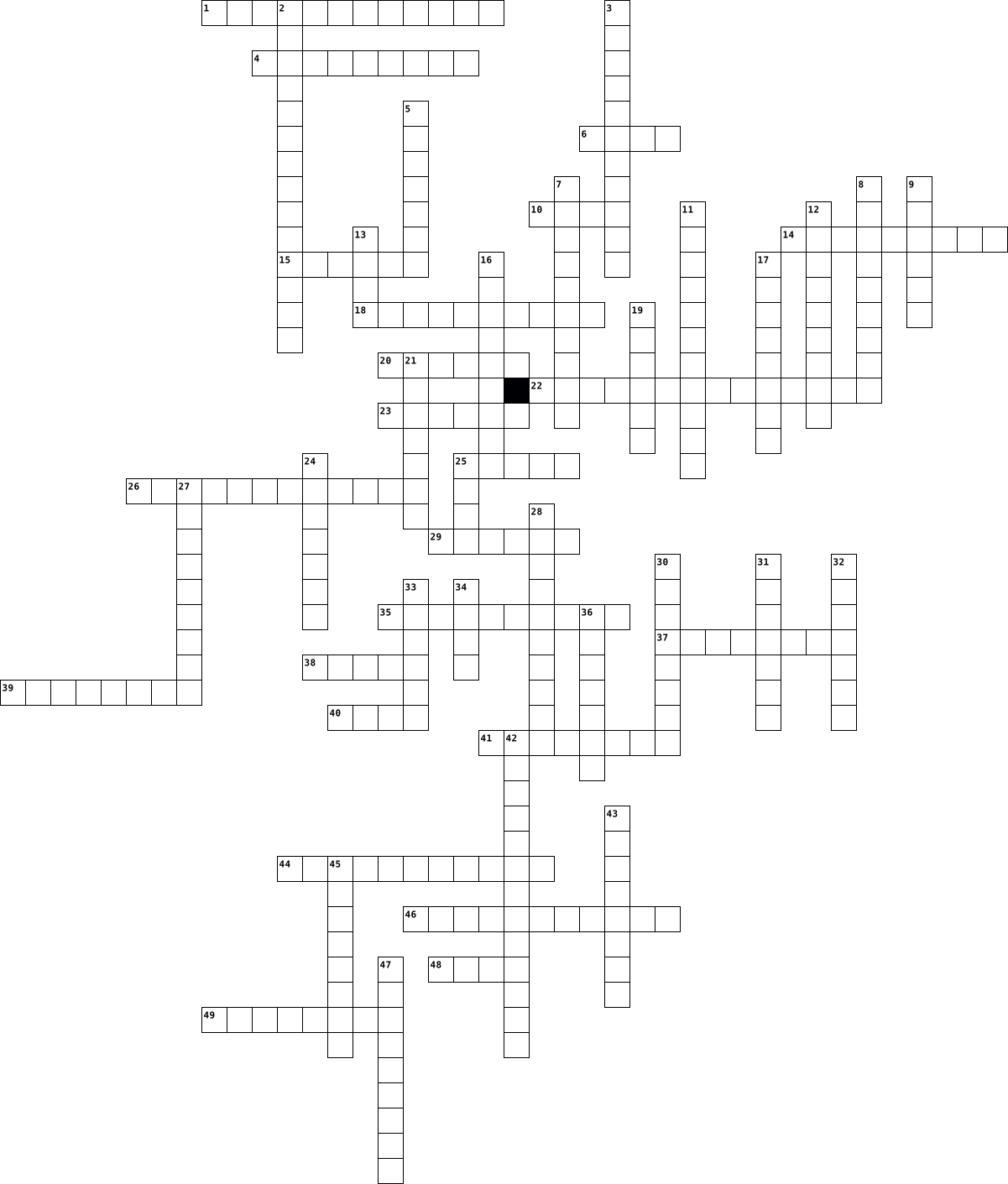
Across
- the study of chemical process that occur inside a living organism
- is the consistency of the result
- with the numerical value of 1000000000000
- with the numerical value of 1000
- does not depend on size or amount of sample
- unit of electrical current
- the study of the chemistry of matter'
- unit of time
- whether the substance undergoes combustion or not
- unit of temperature
- unit of length
- is one effective method to separate mixtures comprised with two or more liquids
- is anything that has mass and occupies space
- if it breaks into charged particles or not
- are composed of two or more substances
- with the numerical value of 0.01
- if the substance is toxic or not
- is the quantity of the matter in an object
- this branch applies physics to the study
- is a technique used to separate homogeneous mixture
- consists of coarse particles
- unit of amount of substance
- are those that can be measured
Down
- is the separation of a mixture by passing it in a solution
- is relatively uniform in composition
- can be separated
- is a method used to separate pure substances in mixtures
- is one of the physical science that helps us explain the world
- their particles are far from each other
- tells how hot or cold an object is
- the study of compound not covered by organic chemistry
- with the numerical value of 0.1
- can be affected by the amount of samples
- consists of dispersed particles
- is the amount of space occupied in the object
- is the simplest form of matter
- unit of luminous intensity
- with the numerical value of 1000000
- if the substance is stable or not
- whether it reacts or not
- is the ability of the substance to react to other substances
- particles are close but are not held so rigidly
- is the ratio of the mass of an object to the volume it occupies
- their particles are closed together
- with the numerical value of 1000000000
- the study of carbon and its compounds
- a mixture whose composition varies from one sample to another
- can be separated into simpler substances
- to determine if a certain value is close to the "true" value
- unit of mass
50 Clues: unit of time • unit of mass • unit of length • can be separated • unit of temperature • whether it reacts or not • unit of electrical current • unit of luminous intensity • unit of amount of substance • consists of coarse particles • is the simplest form of matter • are those that can be measured • with the numerical value of 0.1 • consists of dispersed particles • ...
General Chemistry 2020-05-27
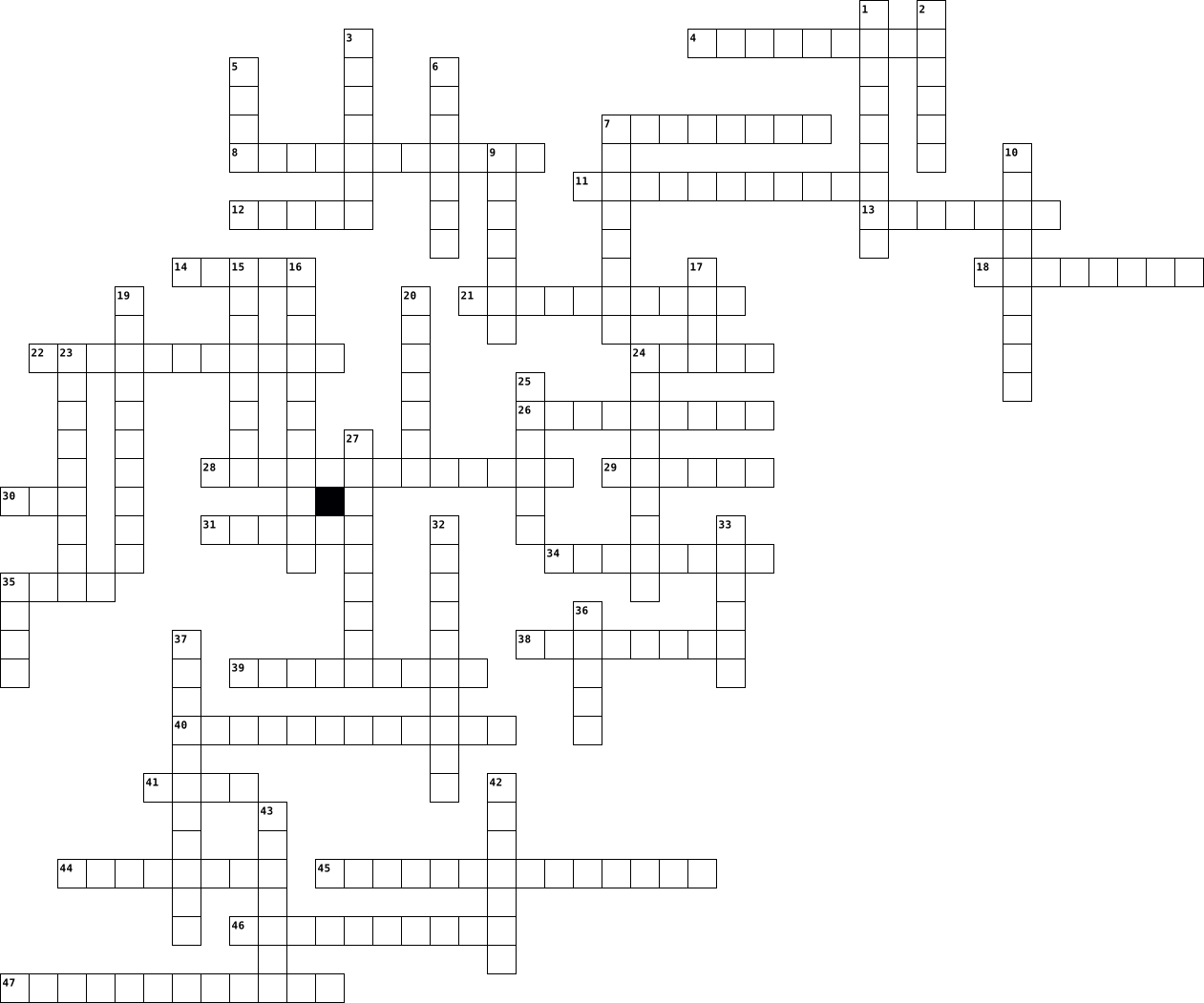
Across
- a type of property that does not change when mass of the sample changes.
- it is made up of two or more different types of atoms.
- liquid turns into gas due to increase of temperature
- the quantity that has both a number and a unit
- has definite shape and definite volume
- it is made up of only one type of atom
- the size of an object from side to side
- a mixture of a solute and a solvent
- separating the liquid from solid by using filter paper
- separating a solid from a liquid by pouring it out carefully
- a metric unit of length equal to 100 centimeters
- branch of chemistry in which the rest of the elements are included
- a type of mixture that does not have a uniform composition
- how tall something is
- no definite shape, no definite value
- a substance that is dissolved in a solution.
- type of property for describing and observing matter
- width x length
- the liquid that passes through the filter paper
- a method of separating grains from stalks
- it separates the solution from a liquid and collects the solvent
- a standard unit of length to measure distance. equals to 5,280 feet
- branch of chemistry in which it combines both chemistry and physics
- a way of separating ingredients of a mixture
- one hundredth of a meter
- branch of chemistry in which it talks about the chemistry of life
Down
- a metric unit of length used to measure distances
- how long something is
- a cloud-looking mixture containing small, undissolved particles that do not settle
- a substance in which all the particles are the same
- breaking down the components of both solid
- type of property that you observe when it undergoes in a chemical reaction.
- branch of chemistry in which the main element is carbon
- a method of separating mixture by blowing air or wind
- a measurement of how far it is through space
- a type of mixture that does have a uniform composition. it is also called a "solution"
- a unit of length which equals to 12 inches
- branch of chemistry that talks about analysis; gathering information
- to find out the size of a matter
- a type of property that changes when the mass of the sample changes.
- it uses a magnet to separate a mixture
- has definite volume; no definite shape
- neutral group of compounds;
- a combination of a liquid and a solid
- anything that has mass and take up space
- the smallest unit of matter
- a mixture of two or more metals
- the simplest way of separating mixture
- two or more types of matter that are physically combined
- the liquid substance that does the dissolving in a solution.
50 Clues: width x length • how long something is • how tall something is • one hundredth of a meter • neutral group of compounds; • the smallest unit of matter • a mixture of two or more metals • to find out the size of a matter • a mixture of a solute and a solvent • no definite shape, no definite value • a combination of a liquid and a solid • has definite shape and definite volume • ...
General Chemistry 2020-05-14
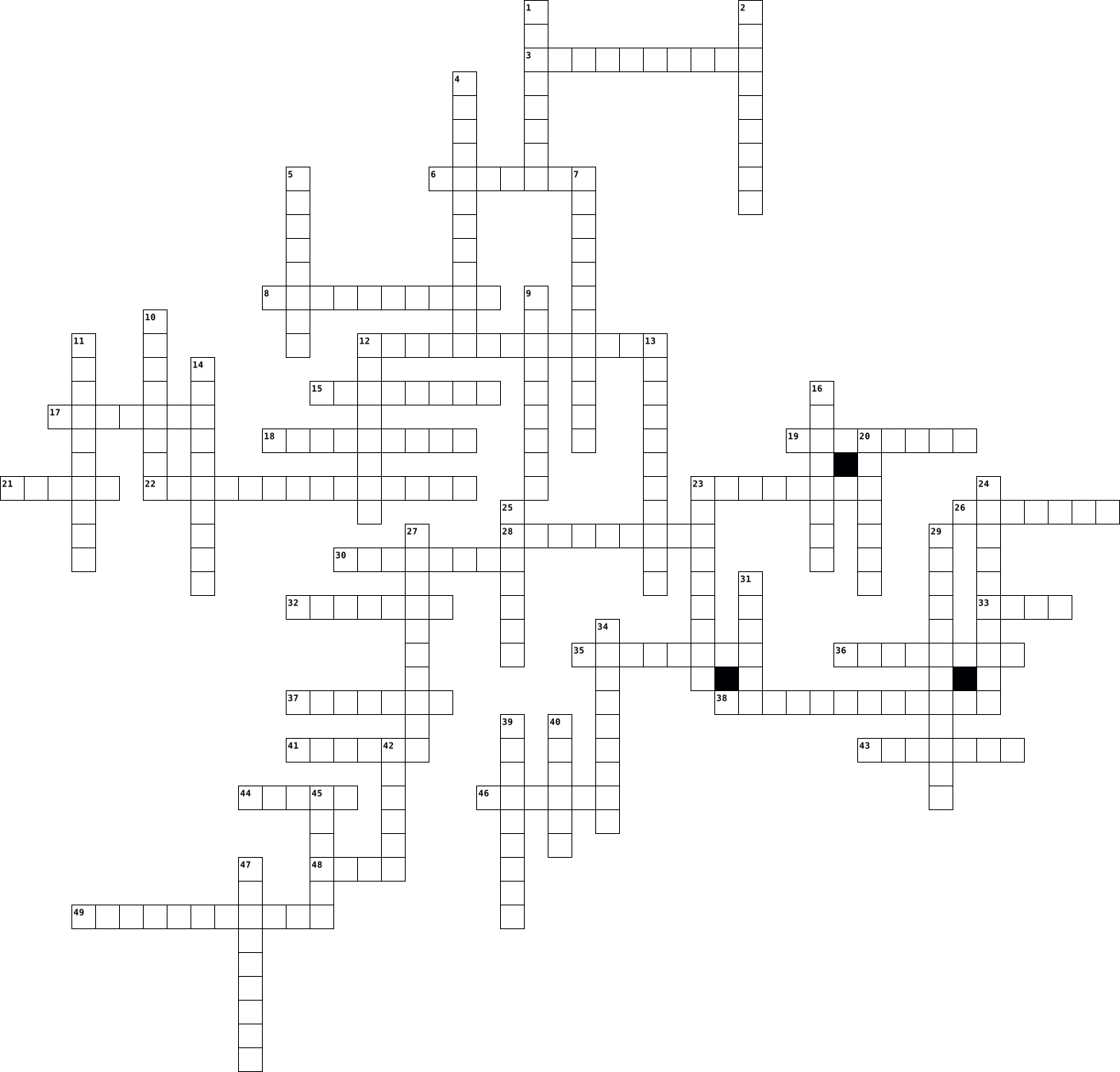
Across
- process in which a gas changes directly to a solid without going through the liquid state
- the study of the chemistry of life
- something that was forced to be mixed
- any material that is not a mixture
- Any characteristic that can be determined without changing the substance’s chemical identity.
- is a chemical substance that cant be divided or changed into other chemical substances by any ordinary chemical means
- process used to separate solids from liquids or gases using a strainer
- is a negatively charged subatomic particle
- (state of matter) characterized by particles arranged such that their shape and volume are relatively stable.
- process through which a substance changes from a liquid to a solid
- Any characteristic that can be determined only by changing a substance’s molecular structure.
- to pass through a sieve so as to separate the coarse from the fine particles
- Any characteristic of matter that does not depend on the amount of the substance present.
- chemical element with the symbol Cl
- chemical element with the symbol Si
- is the smallest object that retains the properties of an element
- combination of two or more substances
- is the power to attract
- a neutral subatomic particle found in the atomic nucleus
- the conversion of liquid to gas
- are good conductors of heat
- when heat is applied to solid
- a homogenous mixture of two or more element
- is a subatomic particle found in the nucleus of every atom
- chemical element with the symbol Au
- when a solid is converted directly into gas
Down
- chemical element with the symbol H
- poor thermal conductors
- does not have a definite composition and is non uniform
- A substance made up of two or more elements that are joined together in a fixed ratio.
- occurs when a gas loses energy
- of matter) consisting of particles that have neither a defined volume nor defined shape.
- are ordorless, colorless, monotonic gases.
- the study of the chemistry of matter
- the study of chemistry in physics
- process by which water changes from a liquid to a gas or vapor.
- Also known as semi-metals .have mostly non-metallic properties.
- is a particle made up of two or more atoms that are chemically bonded together
- the substance that is dissolved or scattered
- is the study of matter and the chemical reactions between substances.
- process used to separate solids from liquids or gases using a filter medium that allows the fluid to pass through but not the solid
- a method in which two or more components of different sizes are separated from a mixture on the basis of the difference in their sizes.
- has definite composition, and specific properties.
- the study of chemical processes that occur inside of living organisms
- consists of highly charged particles with extremely high kinetic energy.
- is the method in which heavier components of the mixture are separated from the lighter substances with the help of wind
- the study of inorganic compounds
- is anything that has mass and takes up space.
- (state of matter) has a definite volume, it does not have a definite shape.
- chemical element with the symbol O
- Any characteristic of matter that depends on the amount of matter being measured.
51 Clues: poor thermal conductors • is the power to attract • are good conductors of heat • when heat is applied to solid • occurs when a gas loses energy • the conversion of liquid to gas • the study of inorganic compounds • the study of chemistry in physics • chemical element with the symbol H • the study of the chemistry of life • any material that is not a mixture • ...
General Chemistry 2020-05-14
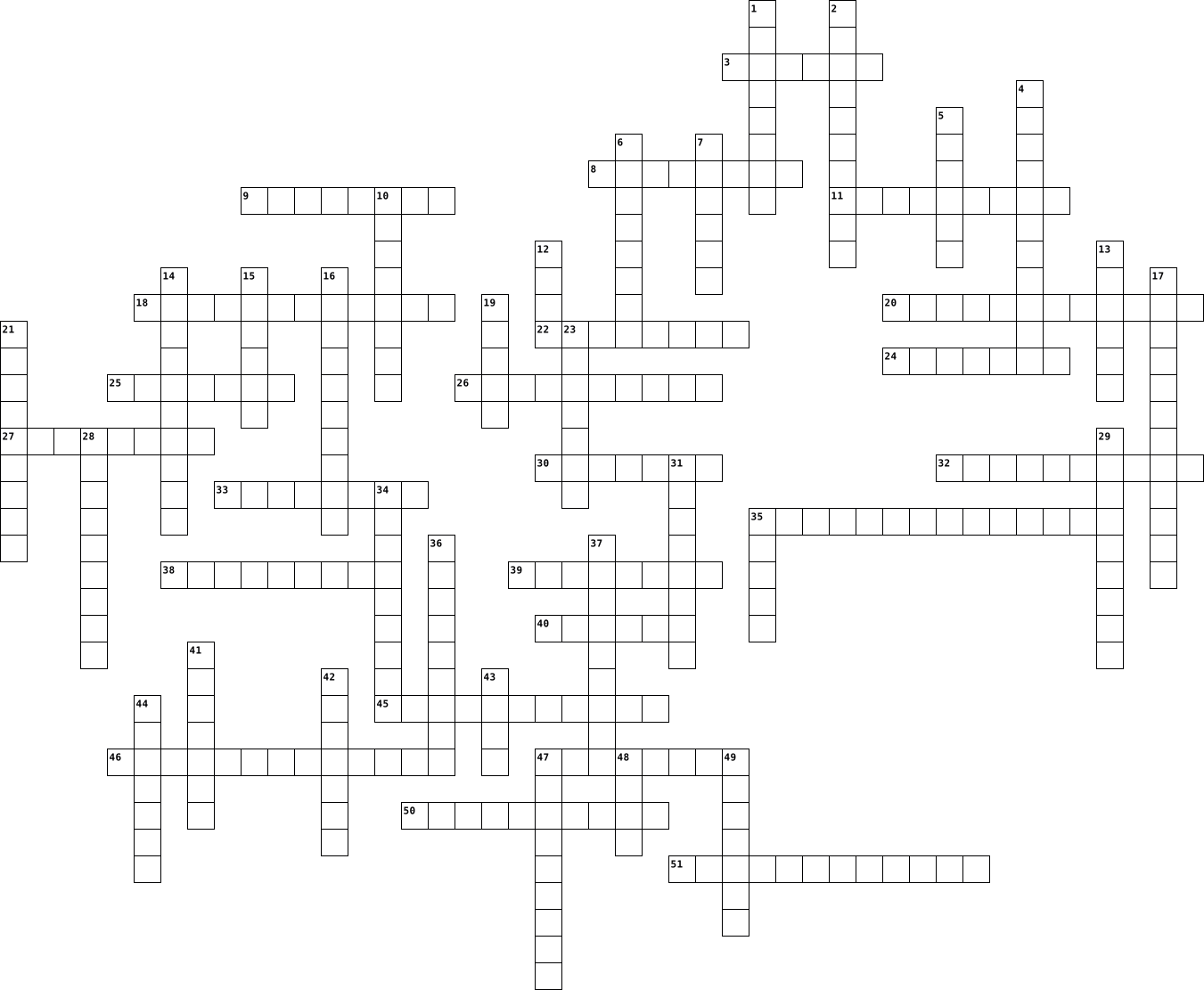
Across
- are good conductors of heat
- the study of chemistry in physics
- Any characteristic that can be determined without changing the substance’s chemical identity.
- the study of inorganic compounds
- does not have a definite composition and is non uniform
- the conversion of liquid to gas
- is a particle made up of two or more atoms that are chemically bonded together
- when heat is applied to solid
- chemical element with the symbol Si
- has definite composition, and specific properties.
- is a negatively charged subatomic particle
- a method in which two or more components of different sizes are separated from a mixture on the basis of the difference in their sizes.
- the study of the chemistry of matter
- chemical element with the symbol H
- process through which a substance changes from a liquid to a solid
- Any characteristic of matter that does not depend on the amount of the substance present.
- combination of two or more substances
- consists of highly charged particles with extremely high kinetic energy.
- process by which water changes from a liquid to a gas or vapor.
- any material that is not a mixture
- is the power to attract
- something that was forced to be mixed
- the study of chemical processes that occur inside of living organisms
Down
- Any characteristic that can be determined only by changing a substance’s molecular structure.
- process used to separate solids from liquids or gases using a filter medium that allows the fluid to pass through but not the solid
- when a solid is converted directly into gas
- chemical element with the symbol O
- chemical element with the symbol Cl
- (state of matter) has a definite volume, it does not have a definite shape.
- A substance made up of two or more elements that are joined together in a fixed ratio.
- is the smallest object that retains the properties of an element
- is anything that has mass and takes up space.
- Also known as semi-metals .have mostly non-metallic properties.
- is a subatomic particle found in the nucleus of every atom
- process in which a gas changes directly to a solid without going through the liquid state
- occurs when a gas loses energy
- a homogenous mixture of two or more element
- poor thermal conductors
- the study of the chemistry of life
- is the study of matter and the chemical reactions between substances.
- is the method in which heavier components of the mixture are separated from the lighter substances with the help of wind
- are ordorless, colorless, monotonic gases.
- Any characteristic of matter that depends on the amount of matter being measured.
- (state of matter) characterized by particles arranged such that their shape and volume are relatively stable.
- of matter) consisting of particles that have neither a defined volume nor defined shape.
- process used to separate solids from liquids or gases using a strainer
- is a chemical substance that cant be divided or changed into other chemical substances by any ordinary chemical means
- to pass through a sieve so as to separate the coarse from the fine particles
- chemical element with the symbol Au
- a neutral subatomic particle found in the atomic nucleus
- the surname of the chemist who developed periodic table
- chemical element with the symbol Ne
- the substance that is dissolved or scattered
53 Clues: poor thermal conductors • is the power to attract • are good conductors of heat • when heat is applied to solid • occurs when a gas loses energy • the conversion of liquid to gas • the study of inorganic compounds • the study of chemistry in physics • chemical element with the symbol O • the study of the chemistry of life • chemical element with the symbol H • ...
General Chemistry 2020-05-21
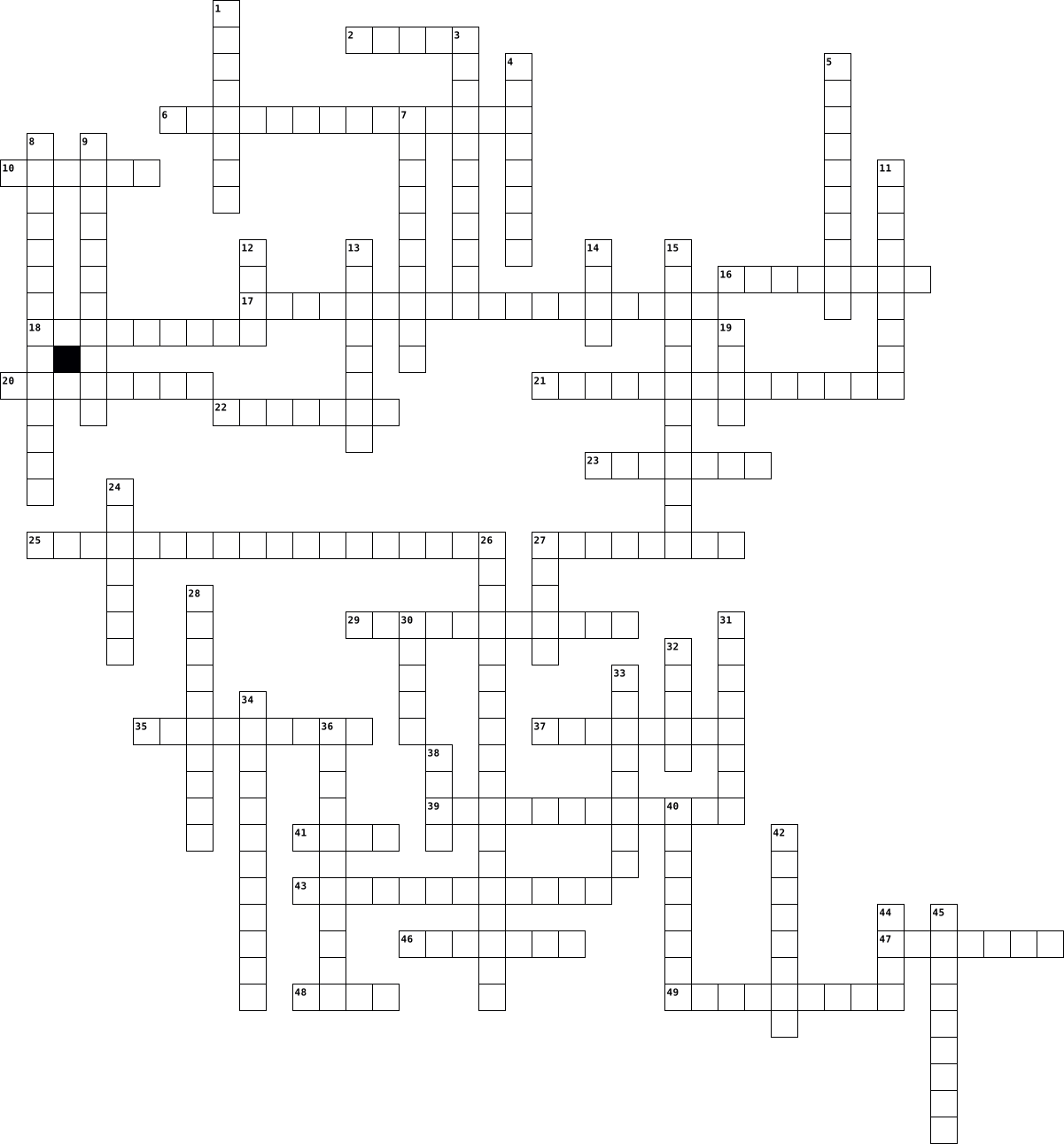
Across
- Not definite in shape and volume
- Another method of separating complex mixtures
- The amount of space occupied in the object
- Formed when element react to each other
- The process of separating elemental metals from other particles in the mixture
- Does not depend on the size or amount of the sample
- A unit that have the symbol kg
- Occurs when a substance is converted to a new substance
- Solid to liquid
- simplest form of matter
- Digits in any measurement that are known with certainty
- Composed of two or more substances
- Also called a solution
- whether the substance can be easily decomposed or not
- consist of a dispersed phase
- Gas to liquid
- A prefix that have a scientific notation of 10^6
- Liquid to gas
- Substance which remains in the strainer
- A colloidal system of particles dispersed in gas
- A prefix that have a scientific notation of 10^12
- Are well mixed and behave like a single substance
Down
- Determined when a certain quantitative value is relatively close to the “true” value
- Consist of coarse particles which are visible to the naked eyes
- Change Occurs when the internal make up of the matter stays the same
- Whether it will break into charged particles when in solution with water or not
- Whether it reacts with acids, bases, and oxygen
- Whether the substance undergoes combustion or not
- A process of changing solid to gas without passing through liquid state
- Those that can be affected by the size and amount of samples
- A quantity that have the symbol s
- Liquid to solid
- A gas disbursed in a liquid or solid
- The number of protons in its nucleus
- A prefix that have a scientific notation of 10^3
- The ratio of the mass of an object to the volume it occupies
- The term used in counting the number of significant figures
- A unit which has the symbol m
- A process of separating the components of a suspension
- A prefix that have a scientific notation of 10^(-3)
- Is a colloid made up of two liquids
- Definite in shape and volume
- Liquid that passes through the strainer
- A process of separating a homogeneous mixture
- A quantity that have the symbol K
- A prefix that have a scientific notation of 10^(-12)
- Are atoms with the same atomic number but different mass numbers
- Whether the substance can damage an organism or not
- The quantity of matter in the object
- Is the consistency of the result
50 Clues: Gas to liquid • Liquid to gas • Liquid to solid • Solid to liquid • Also called a solution • simplest form of matter • Definite in shape and volume • consist of a dispersed phase • A unit which has the symbol m • A unit that have the symbol kg • Not definite in shape and volume • Is the consistency of the result • A quantity that have the symbol s • A quantity that have the symbol K • ...
General Chemistry 2020-05-21
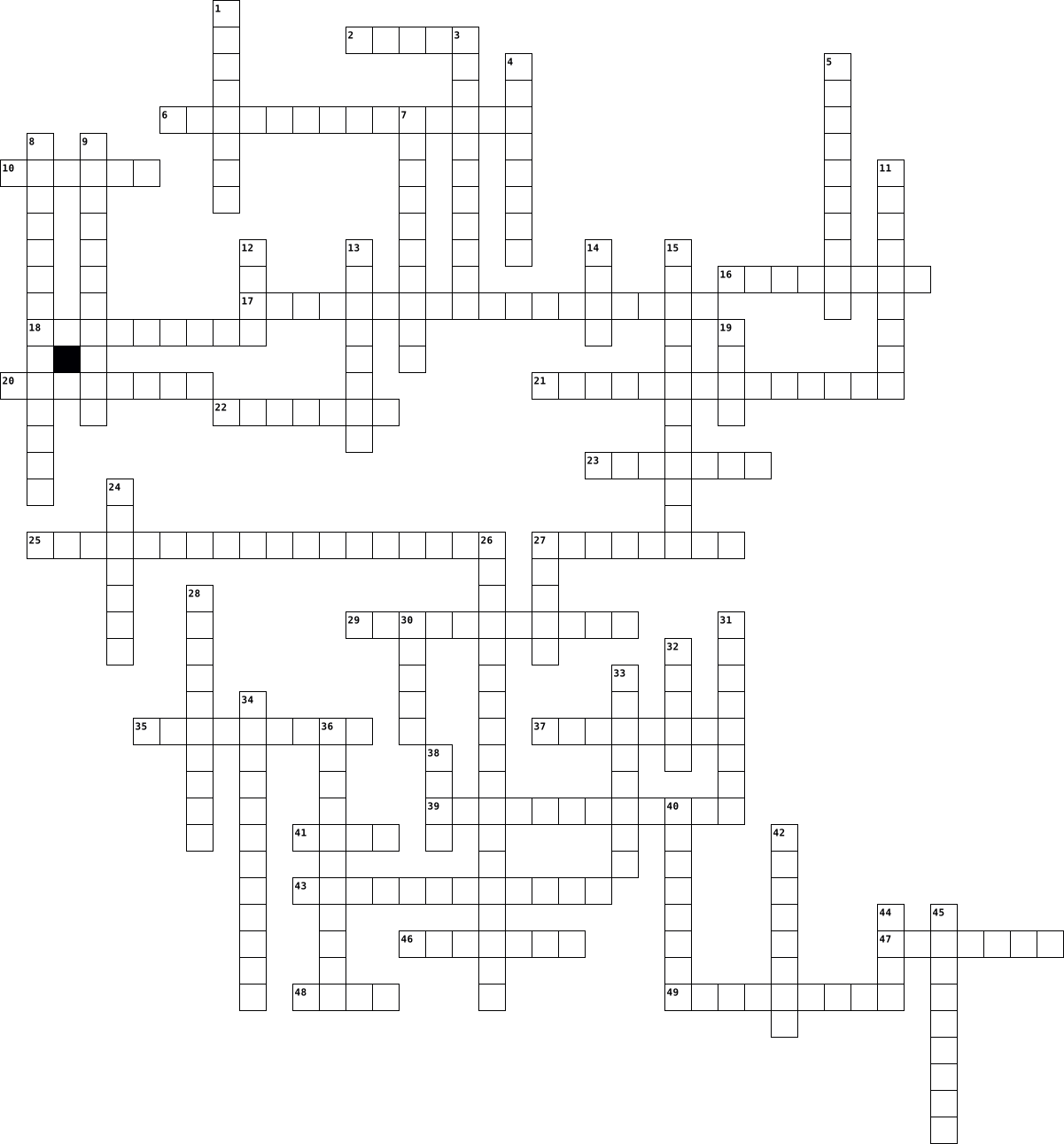
Across
- Not definite in shape and volume
- Another method of separating complex mixtures
- The amount of space occupied in the object
- Formed when element react to each other
- The process of separating elemental metals from other particles in the mixture
- Does not depend on the size or amount of the sample
- A unit that have the symbol kg
- Occurs when a substance is converted to a new substance
- Solid to liquid
- simplest form of matter
- Digits in any measurement that are known with certainty
- Composed of two or more substances
- Also called a solution
- whether the substance can be easily decomposed or not
- consist of a dispersed phase
- Gas to liquid
- A prefix that have a scientific notation of 10^6
- Liquid to gas
- Substance which remains in the strainer
- A colloidal system of particles dispersed in gas
- A prefix that have a scientific notation of 10^12
- Are well mixed and behave like a single substance
Down
- Determined when a certain quantitative value is relatively close to the “true” value
- Consist of coarse particles which are visible to the naked eyes
- Change Occurs when the internal make up of the matter stays the same
- Whether it will break into charged particles when in solution with water or not
- Whether it reacts with acids, bases, and oxygen
- Whether the substance undergoes combustion or not
- A process of changing solid to gas without passing through liquid state
- Those that can be affected by the size and amount of samples
- A quantity that have the symbol s
- Liquid to solid
- A gas disbursed in a liquid or solid
- The number of protons in its nucleus
- A prefix that have a scientific notation of 10^3
- The ratio of the mass of an object to the volume it occupies
- The term used in counting the number of significant figures
- A unit which has the symbol m
- A process of separating the components of a suspension
- A prefix that have a scientific notation of 10^(-3)
- Is a colloid made up of two liquids
- Definite in shape and volume
- Liquid that passes through the strainer
- A process of separating a homogeneous mixture
- A quantity that have the symbol K
- A prefix that have a scientific notation of 10^(-12)
- Are atoms with the same atomic number but different mass numbers
- Whether the substance can damage an organism or not
- The quantity of matter in the object
- Is the consistency of the result
50 Clues: Gas to liquid • Liquid to gas • Liquid to solid • Solid to liquid • Also called a solution • simplest form of matter • Definite in shape and volume • consist of a dispersed phase • A unit which has the symbol m • A unit that have the symbol kg • Not definite in shape and volume • Is the consistency of the result • A quantity that have the symbol s • A quantity that have the symbol K • ...
Chemistry Words 2020-06-10

Across
- stable isotope of hydrogen with a mass approximately twice that of the usual isotope.
- the chemical element with the symbol H and atomic number 1.
- chemical element of atomic number 6.
- Fission:is a process in nuclear physics in which the nucleus of an atom splits into two or more smaller nuclei as fission products,
- particular place or point.
- :a subatomic particle of about the same mass as a proton but without an electric charge,
- chemical element of atomic number 2
- :Payload is the carrying capacity of an aircraft or launch vehicle,
- as a source of nuclear energy.
- emission of energy as electromagnetic waves or as moving subatomic particles.
- to change, fail, or give way; not stable.
- hydride:DescriptionThe helium hydride ion or hydroxide helium ion or helium is a cation with the chemical formula HeH⁺.
- close to; almost.
Down
- stable subatomic particle with a charge of negative electricity
- measure of the amount of matter contained in or constituting a physical body.
- strength and vitality required for sustained physical or mental activity.
- imparting or exchanging of information or news..
- radioactive isotope of hydrogen with a mass approximately
- photon is a type of elementary particle
- series of events that are regularly repeated in the same order.
- colorless, odorless reactive gas
- separate and distinct.
- change which is a result or consequence of an action or other cause.
- container, typically made of glass or plastic
- wind:the continuous flow of charged particles from the sun which permeates the solar system.
25 Clues: close to; almost. • separate and distinct. • particular place or point. • as a source of nuclear energy. • colorless, odorless reactive gas • chemical element of atomic number 2 • chemical element of atomic number 6. • photon is a type of elementary particle • to change, fail, or give way; not stable. • container, typically made of glass or plastic • ...
Chemistry final 2020-06-10

Across
- stable isotope of hydrogen with a mass approximately twice that of the usual isotope.
- the chemical element with the symbol H and atomic number 1.
- chemical element of atomic number 6.
- Fission:is a process in nuclear physics in which the nucleus of an atom splits into two or more smaller nuclei as fission products,
- particular place or point.
- :a subatomic particle of about the same mass as a proton but without an electric charge,
- chemical element of atomic number 2
- :Payload is the carrying capacity of an aircraft or launch vehicle,
- as a source of nuclear energy.
- emission of energy as electromagnetic waves or as moving subatomic particles.
- to change, fail, or give way; not stable.
- hydride:DescriptionThe helium hydride ion or hydroxide helium ion or helium is a cation with the chemical formula HeH⁺.
- close to; almost.
Down
- stable subatomic particle with a charge of negative electricity
- measure of the amount of matter contained in or constituting a physical body.
- strength and vitality required for sustained physical or mental activity.
- imparting or exchanging of information or news..
- radioactive isotope of hydrogen with a mass approximately
- photon is a type of elementary particle
- series of events that are regularly repeated in the same order.
- colorless, odorless reactive gas
- separate and distinct.
- change which is a result or consequence of an action or other cause.
- container, typically made of glass or plastic
- wind:the continuous flow of charged particles from the sun which permeates the solar system.
25 Clues: close to; almost. • separate and distinct. • particular place or point. • as a source of nuclear energy. • colorless, odorless reactive gas • chemical element of atomic number 2 • chemical element of atomic number 6. • photon is a type of elementary particle • to change, fail, or give way; not stable. • container, typically made of glass or plastic • ...
chemistry project 2020-06-11

Across
- a mutual relationship or connection between two or more things.
- relating to the nucleus of an atom.
- a change or difference in condition, amount, or level, typically with certain limits.
- the speed of something in a given direction.
- consistently good in quality or performance; able to be trusted.
- a series of events that are regularly repeated in the same order.
- a supposition or proposed explanation made on the basis of limited evidence
- make an exact copy of; reproduce.
- occurring,found, or done often; prevalent.
- an amount of space between two things.
- Deviation a quantity calculated to indicate the extent.
- the action of dividing or splitting something into two or more parts.
- the degree of compactness of a substance.
Down
- Dioxide a colorless, odorless gas prod used by burning carbon and organic compounds and by respiration.
- the end or finish of an event or process.
- the fundamental unit of length in the metric system, equal to 100 centimetres.
- the process or result of joining two or more things together to form a single entity.
- Bang the repaid expansion of matter form a state of extremely high density and temperature that according to current cosmological theories marked the origin of the universe.
- the effect of one factor depends on the level of an other
- as great high, or intense as possible or permitted.
- a supposition on the basis of limited evidence as a starting point for further investigation.
- acting or done in the same way over time.
- a tool or implement now or originally made of iron.
- a joining or merging of different parts or qualities in which the component elements are individually distinct.
- the distance between successive crests of a wave, especially points in a sound wave or electromagnetic wave.
25 Clues: make an exact copy of; reproduce. • relating to the nucleus of an atom. • an amount of space between two things. • the end or finish of an event or process. • acting or done in the same way over time. • the degree of compactness of a substance. • occurring,found, or done often; prevalent. • the speed of something in a given direction. • ...