
economics Crossword Puzzles
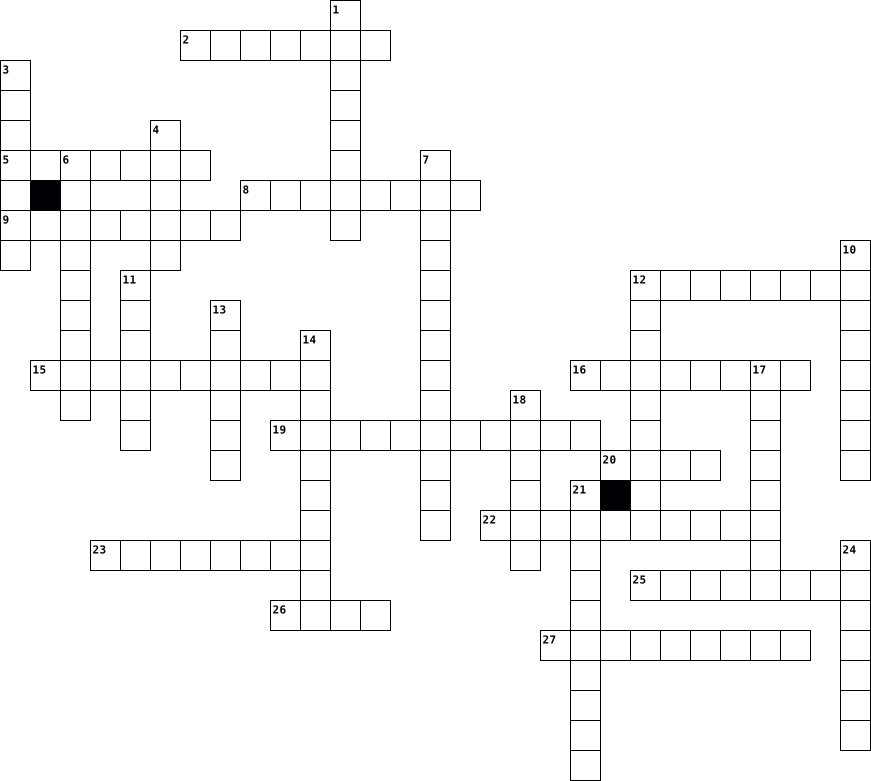
Spanish Pg. 40-41 Crossword Puzzle 2020-10-05

Across
- Semester
- Course
- Library
- Economics
- Geography
- Computer Science
- Cafeteria
- Class
- School
- Trimester;Quarter
- Accounting
- Music
- Quiz
Down
- Laboratory
- Spanish
- Physics
- House;Home
- Art
- Homework
- Stadium
- Classmate
- Bookstore
- University;college
- Biology
- Sciences
25 Clues: Art • Quiz • Class • Music • Course • School • Library • Spanish • Physics • Stadium • Biology • Semester • Homework • Sciences • Economics • Geography • Cafeteria • Classmate • Bookstore • Laboratory • House;Home • Accounting • Computer Science • Trimester;Quarter • University;college
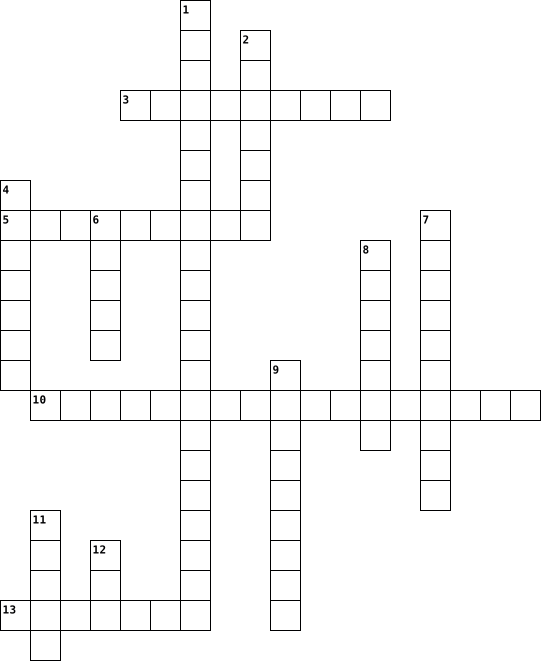
newspaper 2021-06-08

Across
- Career
- Hour Week
- Cabinet
- Economics
- Wind
- In The Brotherhood
- Fraud
- Abrantes
Down
- Sproule
- Theft
- Who Care
- Coverers
- Labor Agreements
- to Work
- Label
15 Clues: Wind • Theft • Label • Fraud • Career • Sproule • Cabinet • to Work • Who Care • Coverers • Abrantes • Hour Week • Economics • Labor Agreements • In The Brotherhood
GERMAN!!!! 2026-06-04

Across
- Computer studies
- Business Studies
- Drama
- After school studies
- Chemistry
- Design
- French
- maths
- Art
- English
- Ancient History
Down
- Food Technology
- Science
- Economics
- Geography
15 Clues: Art • Drama • maths • Design • French • Science • English • Economics • Geography • Chemistry • Food Technology • Ancient History • Computer studies • Business Studies • After school studies
GERMAN!!!! 2026-06-04

Across
- Computer studies
- Business Studies
- Drama
- After school studies
- Chemistry
- Design
- French
- maths
- Art
- English
- Ancient History
Down
- Food Technology
- Science
- Economics
- Geography
15 Clues: Art • Drama • maths • Design • French • Science • English • Economics • Geography • Chemistry • Food Technology • Ancient History • Computer studies • Business Studies • After school studies
IMS 2024-03-22

Across
- [Computer Science] A structured set of data held in a computer, especially one that is accessible in various ways.
- [Chemistry] A chemical reaction that takes place between an oxidizing substance and a reducing substance.
- [Economics] The part of economics concerned with single factors and the effects of individual decisions.
- [Biology] The process by which green plants and some other organisms use sunlight to synthesize nutrients from carbon dioxide and water.
- [Physics] The phenomenon of the interaction of electric currents or fields and magnetic fields.
- [Math] A method used to compute the rate of change of a function f(x) with respect to its input x.
- [Physics] A closed loop that electrons can travel in.
Down
- [Math] Writing a number or another mathematical object as a product of several factors.
- [Math] The longest side of a right-angled triangle, opposite the right angle.
- [Computer Science] A process or set of rules to be followed in calculations or other problem-solving operations, especially by a computer.
- [Economics] A general increase in prices and fall in the purchasing value of money.
- [Computer Science] The state of being protected against the criminal or unauthorized use of electronic data, or the measures taken to achieve this.
- [Biology] A self-replicating material that is present in nearly all living organisms as the main constituent of chromosomes.
- [Physics] A quantity that has both magnitude and direction.
- [Chemistry] A standard scientific unit for measuring large quantities of very small entities such as atoms, molecules, or other specified particles.
- [Chemistry] The state in which both the reactants and products are present in concentrations which have no further tendency to change with time.
- [Economics] The total value of goods produced and services provided in a country during one year.
- [Biology] The smallest structural and functional unit of an organism.
- The School, that we are studying in.
19 Clues: The School, that we are studying in. • [Physics] A closed loop that electrons can travel in. • [Physics] A quantity that has both magnitude and direction. • [Biology] The smallest structural and functional unit of an organism. • [Math] The longest side of a right-angled triangle, opposite the right angle. • ...
Crash Course Economy 1 and 2 - Vocabulary 2025-06-25

Across
- Central bank actions that manage the money supply and interest rates.
- A way a society organizes the production, distribution, and consumption of goods and services.
- Branch of economics focusing on the economy as a whole—output, inflation, growth.
- The condition of limited resources and unlimited wants.
- An economy in which decisions are made by individuals and businesses based on supply and demand.
- Government use of spending and taxes to influence the economy.
- The value of the next-best alternative when a decision is made.
- External motivators that influence decision-making and behavior.
- An economic system where the government makes all production and distribution decisions.
Down
- Branch of economics focusing on individual consumers, workers, and firms.
- The situation where human wants exceed available resources.
- A system combining aspects of market and command economies.
- The study of how people make choices to satisfy unlimited wants with limited resources.
- An economy based on customs, traditions, and beliefs where roles are typically inherited.
- The study of the overall economy, including inflation, growth, and unemployment.
15 Clues: The condition of limited resources and unlimited wants. • The situation where human wants exceed available resources. • A system combining aspects of market and command economies. • Government use of spending and taxes to influence the economy. • The value of the next-best alternative when a decision is made. • ...
Subject and Sport ( Môn học và thể thao 2021-10-10

Across
- Economics
- Foreign languages
- Chemistry
- Biology
- Engineer
- Geography
- Psychology
Down
- Sociology
- Physical Education
- Literature
- Fine Arts
- History
- Math
- Physics
14 Clues: Math • History • Physics • Biology • Engineer • Sociology • Economics • Fine Arts • Chemistry • Geography • Literature • Psychology • Foreign languages • Physical Education
Chapter 1 2023-01-12

Across
- UsefulItem
- Tool
- FinalUse
- Requirement
- Study of
- Not necessary
- Useful
- Worth
- Notenough
Down
- FewerThan3Years
- RegularBasis
- MonetaryValue
- Prices
- TangibleItems
- Work
15 Clues: Tool • Work • Worth • Prices • Useful • FinalUse • Study of • Notenough • UsefulItem • Requirement • RegularBasis • MonetaryValue • TangibleItems • Not necessary • FewerThan3Years
Les matières 2022-11-07

Across
- Music class
- subject
- Science
- Drama class
- Home Economics
- Art
- Math
- PE
Down
- French
- Social Studies
- Wood work class
- Language Arts
- schedule
- computers
- hour
- what day
16 Clues: PE • Art • hour • Math • French • subject • Science • schedule • what day • computers • Music class • Drama class • Language Arts • Social Studies • Home Economics • Wood work class
school timetable 2026-02-13

Across
- terveystieto
- liikunta
- terveystieto
- maantieto
- fysiikka
- matematiikka
- kemia
- englannin+kieli
- saksan+kieli
- ruotsin+kieli
Down
- opinto-ohjaus
- kuvataide
- biologia
- uskonto
- käsityö
- ranskan+kieli
- historia
- espanjan+kieli
18 Clues: kemia • uskonto • käsityö • biologia • liikunta • fysiikka • historia • kuvataide • maantieto • terveystieto • terveystieto • matematiikka • saksan+kieli • opinto-ohjaus • ranskan+kieli • ruotsin+kieli • espanjan+kieli • englannin+kieli
Subjects 2019-06-16

Across
- ลูกเสือ
- ภาษาอังกฤษ
- ภาษาไทย
- ศิลปะ
- economics การงานอาชีพ
- พลศึกษา
- ดนตรี
Down
- คณิตศาสตร์
- คอมพิวเตอร์
- วิทยาศาสตร์
- เนตรนารี
- ประวัติศาสตร์
- สังคมศึกษา
13 Clues: ศิลปะ • ดนตรี • ลูกเสือ • ภาษาไทย • พลศึกษา • เนตรนารี • คณิตศาสตร์ • ภาษาอังกฤษ • สังคมศึกษา • คอมพิวเตอร์ • วิทยาศาสตร์ • ประวัติศาสตร์ • economics การงานอาชีพ
ekonomiska_2 2013-08-12

Across
- मन्दी/घटाव
- राजकोषीय घाटा
- महंगाई
- मुद्रा नीति
- समाजवादी
- लगान/भाड़ा
- निर्यात
Down
- भूमंडलीकरण
- वित्त
- कराधान/कर लगाना
- अर्थशास्त्र
- उदारीकरण
- अवमूल्यन
- साम्यवादी
- मुद्रा
15 Clues: वित्त • महंगाई • मुद्रा • निर्यात • उदारीकरण • अवमूल्यन • समाजवादी • साम्यवादी • भूमंडलीकरण • मन्दी/घटाव • लगान/भाड़ा • अर्थशास्त्र • मुद्रा नीति • राजकोषीय घाटा • कराधान/कर लगाना
kiểm tra 2 2024-09-22

Across
- luật
- Kiến thức
- Lý thuyết
- Sức mạnh
- dữ liệu
- Điều khiển
- văn học
- khoa học
- TV
- văn học
Down
- khả năng
- mạng
- Hiểu biết
- đồ ăn
- kinh tế
- phần mềm
- vấn đề
- tình yêu
- tự nhiên
- chim
20 Clues: TV • luật • mạng • chim • đồ ăn • vấn đề • kinh tế • dữ liệu • văn học • văn học • khả năng • phần mềm • Sức mạnh • tình yêu • khoa học • tự nhiên • Hiểu biết • Kiến thức • Lý thuyết • Điều khiển
LA SCUOLA 2020-02-23

Across
- HIGHSCHOOL
- SUBJECT
- MATHS
- EXCERCISE
- SCHOOL YEAR
- ECONOMICS
- LITERATURE
- PEN
- TEXTBOOK
- ESSAY
- DRAWING
- MEDICINE
- DESK
- MUSIC
Down
- MISTAKE
- NOTEBOOK
- INFORMATIK
- BALLPOINTPEN
- PENCIL
- ENGINEERING
- KINDERGARTEN
- CALCULATOR
- LAW
- LATIN
- NURSERYSCHOOL
- STUDY
- PHYSICS
- GEOGRAPHY
- EXAMPLE
29 Clues: LAW • PEN • DESK • MATHS • LATIN • STUDY • ESSAY • MUSIC • PENCIL • MISTAKE • SUBJECT • PHYSICS • EXAMPLE • DRAWING • NOTEBOOK • TEXTBOOK • MEDICINE • EXCERCISE • ECONOMICS • GEOGRAPHY • HIGHSCHOOL • INFORMATIK • CALCULATOR • LITERATURE • ENGINEERING • SCHOOL YEAR • BALLPOINTPEN • KINDERGARTEN • NURSERYSCHOOL
cap 2023-11-06

Across
- towing
- forever used
- makes
- 38hrs
- subject
- i want
- alternative
- when needed
- earth
Down
- relying on others
- less than 38
- mananger
- no pay
- working
- uses
- food
- cfy
- sprtscar
- old income
- survival
- tools
- unlimited need and want
22 Clues: cfy • uses • food • makes • 38hrs • tools • earth • towing • no pay • i want • working • subject • mananger • sprtscar • survival • old income • alternative • when needed • less than 38 • forever used • relying on others • unlimited need and want
Four greats 2023-11-26

Across
- närproducerat
- närma sig
- förbli
- publicera
- regering
- följa
- annars
- överleva
- hemkunskap
- erbjuda
- motståndare
- bakverk
Down
- citat
- slag
- kraft
- författare
- fantastiskt nog
- intressant nog
- utbildning
- jordnära
- sväva
- svår
- bästläljare
- skapelse
- årtionde
- sticka
26 Clues: slag • svår • citat • kraft • sväva • följa • förbli • annars • sticka • erbjuda • bakverk • jordnära • regering • skapelse • årtionde • överleva • närma sig • publicera • författare • utbildning • hemkunskap • bästläljare • motståndare • närproducerat • intressant nog • fantastiskt nog
vocabularry 2023-09-20

Across
- Pengetahuan
- Cantik
- Kemampuan
- Dunia
- Keluarga
- Bodoh
- Benda
- Orang-orang
- Pengertian
- Kekuasaan
- Pemain
- Film
- Kesehatan
- Pendek
Down
- Keamanan
- Lembut
- Jelek
- Masyarakat
- Kecil
- Cerita
- Seni
- Industri
- Besar
- Masalah
- Ekonomi
- Alam
- Tinggi
- Pintar
28 Clues: Seni • Alam • Film • Jelek • Dunia • Kecil • Bodoh • Besar • Benda • Lembut • Cantik • Cerita • Tinggi • Pemain • Pendek • Pintar • Masalah • Ekonomi • Keamanan • Keluarga • Industri • Kemampuan • Kekuasaan • Kesehatan • Masyarakat • Pengertian • Pengetahuan • Orang-orang
Vocabulario 2023-09-20

Across
- Biology
- To have breakfast
- Bookstore
- To the left of
- Where to
- Economics
- Next to; beside
- Business administration
- Chemistry
- Computer science
Down
- Wastebasket
- To arrive
- History
- To the right of
- matemáticas Mathematics
- Psychology
- English
- Physics
- To have dinner
- Library
- Because
21 Clues: Biology • History • English • Physics • Library • Because • Where to • To arrive • Bookstore • Economics • Chemistry • Psychology • Wastebasket • To the left of • To have dinner • To the right of • Next to; beside • Computer science • To have breakfast • matemáticas Mathematics • Business administration
Las clases / School Classes 2026-02-27

Across
- English
- band
- journalism
- biology
- music
- art
- literature
- chorus
- science
- economics
- algebra
- coding
- geography
- Spanish
Down
- school subjects
- american football
- history
- psychology
- math
- physics
- chemistry
- geometry
- French
- soccer
- trigonometry
- health
- government
- basketball
28 Clues: art • math • band • music • French • soccer • chorus • health • coding • history • English • physics • biology • science • algebra • Spanish • geometry • chemistry • economics • geography • psychology • journalism • literature • government • basketball • trigonometry • school subjects • american football
School subjects 2021-02-11

Across
- fysiikka
- saksa
- kuvataide
- ympäristöoppi
- espanja
- suomi
- uskonto
- _____studies = yhteiskuntaoppi
- historia
- home _____ = kotitalous
- liikunta
- _____ education = terveystieto
- elämänkatsomustieto
- maantiede
Down
- ruotsi
- venäjä
- englanti
- biologia
- käsityö
- musiikki
- pupil _____ = oppilaanohjaus
- kemia
- ranska
- _____ tongue and literature = äidinkieli ja kirjallisuus
- matematiikka
25 Clues: saksa • suomi • kemia • ruotsi • venäjä • ranska • käsityö • espanja • uskonto • fysiikka • englanti • biologia • musiikki • historia • liikunta • kuvataide • maantiede • matematiikka • ympäristöoppi • elämänkatsomustieto • home _____ = kotitalous • pupil _____ = oppilaanohjaus • _____studies = yhteiskuntaoppi • _____ education = terveystieto • _____ tongue and literature = äidinkieli ja kirjallisuus
ch. 3 vocab repaso 2021-03-10
Across
- spanish
- algebra
- science
- economics
- government
- library
- gymnasium
- computer sciences
- art
- literature
- sports
- history
- choir
- fisica physical education
Down
- government
- places
- drama
- geography
- soccer field
- cheerleader
- english
- geometry
- soccer
- basketball
- italian
- bible
- journalism
- chapel
28 Clues: art • drama • bible • choir • places • soccer • sports • chapel • spanish • algebra • science • english • library • italian • history • geometry • geography • economics • gymnasium • government • government • basketball • journalism • literature • cheerleader • soccer field • computer sciences • fisica physical education
Unit 2 Vocab 2021-11-10

Across
- a month
- today
- a class
- next (m)
- easy
- to look at
- to be cold
- to take a test
- above all
- i love
Down
- business administration
- sunday
- to have
- economics
- biology
- to prepare
- to like better
- tuesday
- i hate
- to study
20 Clues: easy • today • sunday • i hate • i love • a month • to have • biology • a class • tuesday • next (m) • to study • economics • above all • to prepare • to look at • to be cold • to like better • to take a test • business administration
Study 2013-07-23

Across
- การบัญชี
- คณิตศาสตร์
- สถาปัตยกรรมศาสตร์
- การบิน
- ภาษา
- กฎหมาย
- ประวัติศาสตร์
- การโฆษณา
- ปรัชญา
- อิเลคทรอนิกส์
- ทางด้านเศรษฐกิจ
- ศาสนา
- วิชาการหนังสือพิมพ์
- วิทยาศาสตร์
Down
- นักเขียนโปรแกรมคอมพิวเตอร์
- กีฬา
- การจัดภูมิทัศน์
- ฟิสิกส์
- วิศวกรรม
- การละคร
- ภาษาอังกฤษ
- ศิลป
- เศรษฐศาสตร์
- ชีววิทยา
- ทันตแพทยศาสตร์
- จิตวิทยา
- จิตเวช
- แพทยศาสตร์
28 Clues: กีฬา • ภาษา • ศิลป • ศาสนา • การบิน • กฎหมาย • ปรัชญา • จิตเวช • ฟิสิกส์ • การละคร • การบัญชี • วิศวกรรม • ชีววิทยา • การโฆษณา • จิตวิทยา • คณิตศาสตร์ • ภาษาอังกฤษ • แพทยศาสตร์ • เศรษฐศาสตร์ • วิทยาศาสตร์ • ประวัติศาสตร์ • อิเลคทรอนิกส์ • ทันตแพทยศาสตร์ • การจัดภูมิทัศน์ • ทางด้านเศรษฐกิจ • สถาปัตยกรรมศาสตร์ • วิชาการหนังสือพิมพ์ • นักเขียนโปรแกรมคอมพิวเตอร์
Spanish HW crossword 2020-10-06

Across
- sciences
- geography
- spanish
- accounting
- schedule
- quiz
- biology
- laboratorio
- computerscience
- music
- cafeteria
- semester
Down
- course
- trimester;quarter
- house;home
- class
- classmate
- art
- physics
- economics
- university;college
- schoool
- library
- exam
- homework
- bookstore
- stadium
27 Clues: art • quiz • exam • class • music • course • physics • spanish • schoool • library • stadium • biology • sciences • schedule • homework • semester • classmate • economics • geography • bookstore • cafeteria • house;home • accounting • laboratorio • computerscience • trimester;quarter • university;college
Spanish Vocab 2020-10-06

Across
- computer science
- school
- geography
- trimester
- art
- cafeteria
- bookstore
- economics
- music
- course
- labortary
- physics
- semester
- schedule
- class
Down
- university
- sciences
- library
- house
- de clase classmate
- staduim
- homework
- quiz
- spanish
- accounting
- biology
- test/exam
27 Clues: art • quiz • house • music • class • school • course • library • staduim • spanish • biology • physics • sciences • homework • semester • schedule • geography • trimester • cafeteria • bookstore • economics • test/exam • labortary • university • accounting • computer science • de clase classmate
Spanish 1 School Courses 2020-11-24

Across
- Home Economics
- German
- Physics
- Algebra
- Calculus
- English
- Sciences
- Computer Science
- Math
- French
- Music
- Other subjects
- History
- other subjects
Down
- Physical Education
- Chemistry
- Biology
- Geography
- School courses
- Social Sciences
- Geometry
- Latin
- Arithmetic
- Spanish
- Art
- Languages
26 Clues: Art • Math • Latin • Music • German • French • Biology • Physics • Algebra • English • Spanish • History • Calculus • Geometry • Sciences • Chemistry • Geography • Languages • Arithmetic • Home Economics • School courses • Other subjects • other subjects • Social Sciences • Computer Science • Physical Education
Cources/Days of The Week 2021-10-06

Across
- phychology
- geography
- computer science
- economics
- literature
- chemistry
- thursday
- music
- wednesday
- art
- saturday
- english
- physics
- history
- sociology
- tuesday
Down
- spanish
- mathmatic
- journalism
- accounting
- extranjeros foreign languages
- Monday
- archeolgy
- friday
- science
- humanities
- sunday
27 Clues: art • music • Monday • friday • sunday • spanish • science • english • physics • history • tuesday • thursday • saturday • mathmatic • geography • economics • chemistry • archeolgy • wednesday • sociology • phychology • journalism • accounting • literature • humanities • computer science • extranjeros foreign languages
German 2 schule vocab 2013-02-04

Across
- bad grades
- computer class
- grades
- hanout
- ambitious
- read
- wood working
- art
- french
- economics
- notes
- hard
- good
- lessons
Down
- light
- history
- anyway
- physical science
- agriculture
- band
- brought with
- home lessons(homework)
- geography
- lazy
- simple
25 Clues: art • band • read • hard • good • lazy • light • notes • anyway • grades • hanout • french • simple • history • lessons • ambitious • economics • geography • bad grades • agriculture • brought with • wood working • computer class • physical science • home lessons(homework)
En La Clase 2023-09-20

Across
- Wastebasket
- History
- Economics
- English
- BookStore
- Computer Science
- To the left of
- Next to; Besides
- To have breakfast
Down
- Library
- Why?
- Which ones
- Physics
- To the right of
- Biology
- Mathematics
- Psychology
- To have dinner
- Chemistry
- Where to?
- Because
- Which?
22 Clues: Why? • Which? • Library • Physics • History • Biology • English • Because • Economics • BookStore • Chemistry • Where to? • Which ones • Psychology • Wastebasket • Mathematics • To have dinner • To the left of • To the right of • Computer Science • Next to; Besides • To have breakfast
German Unit 3? 2024-03-29

Across
- Physics
- Chemistry
- Notebook
- Geography
- Break
- History
- To Cost
- Biology
- Computer Science
- Social Studies
- Math
- Schedule
Down
- Economics
- Scissors
- Pencil Case
- Art
- Politics
- Binder
- Ruler
- To Need
- School Supplies
- Calculator
- Colored Pencil
- Ethics
- To Buy
25 Clues: Art • Math • Ruler • Break • Binder • Ethics • To Buy • Physics • To Need • History • To Cost • Biology • Scissors • Politics • Notebook • Schedule • Economics • Chemistry • Geography • Calculator • Pencil Case • Colored Pencil • Social Studies • School Supplies • Computer Science
School and education -sanaristikko (lk. s. 60-61) 2026-02-05

Across
- hyväksytty; päästä läpi
- ruler
- pencil case
- käytävä
- harjoitus, tehtävä
- report
- oppitunti, luokka
- maantieto
- luokkatoveri
- exercise book
- black board
Down
- pulpetti
- jälki-istunto
- morning assembly
- physical education
- timetable, schedule
- notebook
- school counsellor
- laskin
- home economics
- sanakirja
21 Clues: ruler • laskin • report • käytävä • pulpetti • notebook • maantieto • sanakirja • pencil case • black board • luokkatoveri • jälki-istunto • exercise book • home economics • morning assembly • school counsellor • oppitunti, luokka • physical education • harjoitus, tehtävä • timetable, schedule • hyväksytty; päästä läpi
Economy 2024-05-17

Across
- ottaa lainaksi
- antaa lainaksi
- velka
- asuntolaina
- lama
- taloustiede
- arvonlisävero
- sijoittaa
- käsiraha
- vararikko
- kirjanpitäjä
- osakkeet
Down
- toimitusjohtaja
- luotto
- rahayksikkö
- kilpailu
- säästäväinen
- käsiraha
- kysyntä
- tarjonta
- tappio
- interest kasvaa korkoa
- vero
- tulos
- alijäämä
- ylijäämä
- omaisuus
- kuluttaja
28 Clues: lama • vero • velka • tulos • luotto • tappio • kysyntä • kilpailu • käsiraha • tarjonta • käsiraha • alijäämä • ylijäämä • omaisuus • osakkeet • sijoittaa • vararikko • kuluttaja • rahayksikkö • asuntolaina • taloustiede • säästäväinen • kirjanpitäjä • arvonlisävero • ottaa lainaksi • antaa lainaksi • toimitusjohtaja • interest kasvaa korkoa
Le Cours 2024-10-08

Across
- geography
- philosophy
- studies
- foreign languages
- history
- physics
- art
- class
- humanities
- biology
- business administration
- chemistry
- homework
Down
- economics
- diploma/degree
- psychology
- physical education
- gymnasium
- computer science
- political science
- school
- mathematics
- scholarship, grant
- grade
- cafeteria
25 Clues: art • class • grade • school • studies • history • physics • biology • homework • economics • geography • gymnasium • cafeteria • chemistry • philosophy • psychology • humanities • mathematics • diploma/degree • computer science • political science • foreign languages • physical education • scholarship, grant • business administration
April 14th 2024-03-12

Across
- NAJDJFJ
- BSJDJDJ
- Large marsupial
- Flying mammal
- Has a trunk
- Likes to chase mice
- hdjfjfjf
- orkrjrjz
- hdjdjdj
- jdjfjfj
Down
- jdjdjfjfj
- Man's best friend
- JDJFJFJ
- GSHDH
- Leigh’s
- jdjfjfjfj
- jfjfjf
- jdjfjfj
18 Clues: GSHDH • jfjfjf • NAJDJFJ • JDJFJFJ • BSJDJDJ • Leigh’s • hdjdjdj • jdjfjfj • jdjfjfj • hdjfjfjf • orkrjrjz • jdjdjfjfj • jdjfjfjfj • Has a trunk • Flying mammal • Large marsupial • Man's best friend • Likes to chase mice
School subjects 2020-04-06
Across
- economia
- chimica
- scienze motorie
- storia
Down
- informatica
- biologia
- scienze
- matematica
- letteratura
- fisica
- geografia
- musica
- arte
13 Clues: arte • fisica • musica • storia • scienze • chimica • biologia • economia • geografia • matematica • informatica • letteratura • scienze motorie
SUBJECT 2020-04-15

Across
- letteratura
- educazione fisica
- fisica
- matematica
- geografia
- chimica
Down
- informatica
- musica
- inglese
- arte
- economia
- storia
- scienze
13 Clues: arte • musica • storia • fisica • inglese • scienze • chimica • economia • geografia • matematica • informatica • letteratura • educazione fisica
QUIZ- ROUND 1 2025-01-21

Across
- WHAT IS THE OPPOSITE OF DEMAND IN ECONOMICS?
- WHAT IS THE BRANCH OF ECONOMICS THAT STUDIES INDIVIDUAL MARKETS?
- A PLACE WHERE GOODS AND SERVICES ARE SLOD?
- WHAT IS THE PRICE AT WHICE A PRODUCT IS SOLD IN THE MARKET?
Down
- THE TOTAL VALUE OF ALL GOODS AND SERVICES PRODUCED WITHIN A COUNTRY IN A GIVEN PERIOD?
- WHO IS THE FATHER OF ECONOMICS?
- THE MONEY LEFT AFTER ALL EXPENSES ARE PAID, IN BUSINESS?
- WHAT IS THE FINANCIAL INSTITUTION WHERE PEOPLE KEEP THEIR MONEY?
- THE GENERAL RISE IN PRICE OVER TIME, REDUCING PURCHASING POWER?
- WHAT IS THE SYSTEM OF TRADE WITHOUT MONEY CALLED?
10 Clues: WHO IS THE FATHER OF ECONOMICS? • A PLACE WHERE GOODS AND SERVICES ARE SLOD? • WHAT IS THE OPPOSITE OF DEMAND IN ECONOMICS? • WHAT IS THE SYSTEM OF TRADE WITHOUT MONEY CALLED? • THE MONEY LEFT AFTER ALL EXPENSES ARE PAID, IN BUSINESS? • WHAT IS THE PRICE AT WHICE A PRODUCT IS SOLD IN THE MARKET? • THE GENERAL RISE IN PRICE OVER TIME, REDUCING PURCHASING POWER? • ...
Financial Literacy 2023-05-10

Across
- Sebastian's marriage failsafe
- the price you pay to borrow money
- small, specific parts of economics, i.e. individual consumers
- pre-tax income
- depreciation in value
Down
- disclosure document that describes a financial security for potential buyers
- made after taxes
- something that gives capital gains, appreciation
- the "big picture" of economics, i.e. national income
- a plan for managing money
- collect more than you spend
- 85% of jobs in the US are...
12 Clues: pre-tax income • made after taxes • depreciation in value • a plan for managing money • collect more than you spend • 85% of jobs in the US are... • Sebastian's marriage failsafe • the price you pay to borrow money • something that gives capital gains, appreciation • the "big picture" of economics, i.e. national income • ...
Jobs and places of work Crossword 2015-05-12

Across
- завод
- работа, профессия
- официантка
- экономика
- школа
- управляющий, администратор
- магазин
- улица
- юрист
- университет
- врач
- медсестра
Down
- пенсионер, на пенсии
- офис
- ресторан
- рабочий
- полицесйкий
- продавец
- женщина-полицейский
- больница
- учитель
- управляющий, менеджер
- водитель
- официант
- студент
25 Clues: офис • врач • завод • школа • улица • юрист • рабочий • учитель • магазин • студент • ресторан • продавец • больница • водитель • официант • экономика • медсестра • официантка • полицесйкий • университет • работа, профессия • женщина-полицейский • пенсионер, на пенсии • управляющий, менеджер • управляющий, администратор
Chapter 2 2023-09-20

Across
- bookstore
- physics
- which ones?
- buisness administration
- which
- computer science
- biology
- to the right of
- to have dinner
- to arrive
- next to;besides
Down
- chemistry
- history
- wastebasket
- mathematics
- library
- because
- economics
- psychology
- to have breakfast
- where to?
- why?
- english
23 Clues: why? • which • history • physics • library • because • english • biology • chemistry • bookstore • economics • where to? • to arrive • psychology • wastebasket • mathematics • which ones? • to have dinner • to the right of • next to;besides • computer science • to have breakfast • buisness administration
Spanish 2023-09-21

Across
- cuales
- ¿adonde?
- ¿por que?
- desayunar
- la administracionde empresas
- ingles
- biblioteca
- al lado de
- libreria
- quimica
Down
- psicologia
- a la derecha de
- papelera
- computacion
- fisica
- matematicas
- porque
- economia
- cual
- cenar
- llegar
- a la izquierda de
- historia
- biologia
24 Clues: cual • cenar • cuales • fisica • porque • llegar • ingles • quimica • papelera • ¿adonde? • economia • historia • libreria • biologia • ¿por que? • desayunar • psicologia • biblioteca • al lado de • computacion • matematicas • a la derecha de • a la izquierda de • la administracionde empresas
Unit 2 Vocab 2021-11-10

Across
- to study
- to like better
- tuesday
- economics
- to prepare
- today
- to take a test
- to be cold
- above all
Down
- business administration
- easy
- sunday
- biology
- next (m)
- to have
- i hate
- a month
- i love
- to look at
- a class
20 Clues: easy • today • sunday • i hate • i love • biology • to have • tuesday • a month • a class • to study • next (m) • economics • above all • to prepare • to be cold • to look at • to like better • to take a test • business administration
Classes In Spanish 2025-11-28

Across
- English
- Mathematics
- Chemistry
- The schedule
- Tech Theater
- The lunch
- Economics
- French
- The class
- The period
- Government
- The homework
Down
- Orchestra
- Yearbook
- Ethnic Studies
- Chorus
- Computer Science
- Digital Photography
- Ceramics
- Cooking
- Health
- Band
- Leadership
- Dance
- Spanish
25 Clues: Band • Dance • Chorus • Health • French • English • Cooking • Spanish • Yearbook • Ceramics • Orchestra • Chemistry • The lunch • Economics • The class • Leadership • The period • Government • Mathematics • The schedule • Tech Theater • The homework • Ethnic Studies • Computer Science • Digital Photography
Subject integration 2026-06-06

Across
- or pull acting on an object. (Physics) — 5
- composition in verse. (English) — 4
- material in living organisms. (Biology) — 3
- for Information Technology. (IT) — 2
- Clues
- levy on income or goods. (Economics) — 3
- particle of an element. (Chemistry) — 4
- of exchange. (Economics) — 5
- unit of life. (Biology) — 4
- period that has already happened. (History) — 4
- microorganism. (Biology) — 5
Down
- needed for growth and repair of the body. (Biology) — 5 (PROTEIN shortened intersection variant may be adapted)
- and selling activity. (Commerce/Management) — 5
- used in place of a noun. (English Grammar) — 7
- Clues
- written for a computer. (IT) — 4
- body of a state. (Political Science/Hindi) — 5
17 Clues: Clues • Clues • unit of life. (Biology) — 4 • of exchange. (Economics) — 5 • microorganism. (Biology) — 5 • written for a computer. (IT) — 4 • composition in verse. (English) — 4 • for Information Technology. (IT) — 2 • particle of an element. (Chemistry) — 4 • levy on income or goods. (Economics) — 3 • or pull acting on an object. (Physics) — 5 • ...
Economics Review 2024-03-12

Across
- The basic problem of Economics
- Another name for a Free Market
- Things of worth
- Person who brings the factors of production together
- An economy with a blend of the economic systems
- Items that are needed to survive
- The study of scarce resources
- something that is given up
Down
- Things of worth
- Used to either punish or reward behavior
- a person who owns stock
- A government in which the government owns all property
- Author of Communist Manifesto
- Adam Smith said that competition acted like this
- An economy based on what was done in the past
- This type of market when Stock prices are rising
- Work done for other people for a fee
17 Clues: Things of worth • Things of worth • a person who owns stock • something that is given up • Author of Communist Manifesto • The study of scarce resources • The basic problem of Economics • Another name for a Free Market • Items that are needed to survive • Work done for other people for a fee • Used to either punish or reward behavior • An economy based on what was done in the past • ...
Chapter 6 - Intro to Economics 2023-10-25

Across
- Amount of work a person can do in a specific amount of time, usually an hour.
- Science that examines how goods and services are produced, sold, and used.
- Person who starts a business.
- Work performed by people in businesses.
- Transportation systems and utilities necessary in a modern economy.
- When something is given up in order to gain something else.
- When demand is higher than the available resources.
- of production: Economic resources a nation uses to make goods and supply services for its population.
- goods Products businesses use to produce other goods.
- Tools and machinery used to produce goods or provide services.
Down
- Branch of economics that studies human behavior and choices that relate to the economic decisions of individuals and businesses.
- decision-making: Process of choosing an option after evaluating the available information and weighing the costs and benefits of the alternatives.
- cost Value of the next-best option that was not selected.
- Willingness and ability to start a new business.
- Branch of economics that studies human behavior and choices that relate to the entire economy of a nation.
- Use of science to invent useful things or to solve problems.
16 Clues: Person who starts a business. • Work performed by people in businesses. • Willingness and ability to start a new business. • When demand is higher than the available resources. • goods Products businesses use to produce other goods. • cost Value of the next-best option that was not selected. • When something is given up in order to gain something else. • ...
Subject integration 2026-06-06

Across
- or pull acting on an object. (Physics) — 5
- composition in verse. (English) — 4
- material in living organisms. (Biology) — 3
- for Information Technology. (IT) — 2
- Clues
- levy on income or goods. (Economics) — 3
- particle of an element. (Chemistry) — 4
- of exchange. (Economics) — 5
- unit of life. (Biology) — 4
- period that has already happened. (History) — 4
- microorganism. (Biology) — 5
Down
- needed for growth and repair of the body. (Biology) — 5 (PROTEIN shortened intersection variant may be adapted)
- and selling activity. (Commerce/Management) — 5
- used in place of a noun. (English Grammar) — 7
- Clues
- written for a computer. (IT) — 4
- body of a state. (Political Science/Hindi) — 5
17 Clues: Clues • Clues • unit of life. (Biology) — 4 • of exchange. (Economics) — 5 • microorganism. (Biology) — 5 • written for a computer. (IT) — 4 • composition in verse. (English) — 4 • for Information Technology. (IT) — 2 • particle of an element. (Chemistry) — 4 • levy on income or goods. (Economics) — 3 • or pull acting on an object. (Physics) — 5 • ...
Zimpfer Economic Basics 2022-01-11

Across
- skills, training, knowledge of a person used to generate profit
- actions that someone is paid to do for another
- human-made goods used to produce more goods
- unlimited wants but limited resources
- contradiction between the high value of a nonessential item and the low value of an essential item
- person who combines the 3 FOP to generate profit
- a tangible economic product that is transferable
- the study of how people deal with scarcity
- the ability of a good or service to be useful
- example of the FOP land
Down
- human made objects that are used to make profit
- the economic problem
- father of economics
- basic for survival
- human resources
- natural resources
- the materials from which all goods are made
- not essential for survival
- motivation of an entrepreneur
19 Clues: human resources • natural resources • basic for survival • father of economics • the economic problem • example of the FOP land • not essential for survival • motivation of an entrepreneur • unlimited wants but limited resources • the study of how people deal with scarcity • human-made goods used to produce more goods • the materials from which all goods are made • ...
Economics Words 2018-05-13

Across
- Bank A place that issues currency and regulates the supply of credit.
- Policy Government policy for dealing with the budget.
- I _______ you to get me this now.
- America fell into an event called a what in the 1930s.
- Trade Being able to swap items without government interference.
- Growth of something to a worldwide scale.
- Being thankful for the meaning of something.
- Many studios are coming here to make movies because of the large tax _______ offered by the state.
- There was a rising worldwide _________ of consumer goods.
- The opposite of debit.
Down
- market A market in which more people want to sell than want to buy.
- Examples of this are programs that help support the well-being of children.
- Articles of commerce.
- Things are different and varied.
- Capability to perform or produce.
- The state of needing to owe a lot of something.
- A decrease in price or value.
- They earn a good ______ as consultants.
- Having little to no money or possessions is called?
- Gain The amount by which the selling price of an asset exceeds the purchase price is called?
20 Clues: Articles of commerce. • The opposite of debit. • A decrease in price or value. • Things are different and varied. • Capability to perform or produce. • I _______ you to get me this now. • They earn a good ______ as consultants. • Growth of something to a worldwide scale. • Being thankful for the meaning of something. • The state of needing to owe a lot of something. • ...
Economics Vocabulary 2020-09-11

Across
- A condition where different economic firms seek to obtain a limited good by varying the elements of market.
- An increase in the overall level of prices for goods.
- A natural resource that is irreplaceable and when it’s used up it cannot be replaced.
- Items that satisfy human wants and provide utility.
- An individual who creates their own business despite the risks they may face.
- benefit, The maximum amount a consumer will pay for an additional good or service. It generally decreases as consumption increases.
- The item is considered a necessity so when prices change the demand will still be high or the same.
- Things that you need to function and live in the world.
- Floor, The minimum price imposed by the government or agency, for a particular product or service.
- cost, The benefits you could have received by performing an alternative action to the one you chose to do.
- A set of external motivators that explain people’s choices.
- Refers to how much quantity of a product or service is desired by buyers.
- Actions used to satisfy your wants and needs.
Down
- The branch of knowledge concerned with the production, consumption, and transfer of wealth.
- A recognized medium of exchange for transactional purposes in the economy.
- The activity of setting up a business and taking financial risks in the hope for profit.
- What consumers desire and it is distinguished from needs.
- of production, They are labor, capital, entrepreneur, and natural resources.
- Refers to the degree to which consumers or producers change their demand or the amount supplied in response to price changes.
- cost, The change in total production cost that comes from making or producing one additional unit.
- It can be used or over and over again.
- The state in which market supply and demand balance each other.
- A side effect of an action that affects a third party other than the buyer or seller.
- The tension between infinite wants and finite resources.
- The total amount of a specific good or service that is available to the consumer.
- Ceiling, A legal maximum price that one pays for some good or service. Governments impose price ceilings in order to keep the price of necessary goods or services affordable.
26 Clues: It can be used or over and over again. • Actions used to satisfy your wants and needs. • Items that satisfy human wants and provide utility. • An increase in the overall level of prices for goods. • Things that you need to function and live in the world. • The tension between infinite wants and finite resources. • ...
Economics Full 2022-03-02

Across
- work done for a company by people living in another country
- government money that tend to shift supply curves to the right
- a straight line that slopes upward from left to right
- To economists, this means satisfaction
- the choice given up to do something else
- means there is less of a good than people would like to have
- the amount of money needed to produce one additional unit is called this
- households, businesses and governments make up this “movement” of money and resources
- the only factor that can change quantity demanded or quantity supplied
- in this type of economic system the government owns and controls the resources
- price is increased to help suppliers eliminate this
- the total amount of money that a business receives from sale of its product
- a straight line that slopes downward from left to right
- customs, skills and cultural beliefs are passed on from one generation to the next in this economy
- goods that people cannot be prevented from using
- how a country answers the three economic questions determines this…their ______?
- this motivates entrepreneurs
Down
- means the world is moving toward one global economy
- this type of demand is usually associated with necessities
- this is an example of a nonexcluable public good (in your notes)
- some supply curves go in this direction
- “short” name for a graph that shows all of the production possibilities for two products
- amount of money that a business pays to produce a product
- households sell this to businesses
- type of good that people can be prevented from using
- the physical and mental talents of people
- the type of economic system where resources are owned and controlled by private individuals
- when one person’s or company’s actions affect another person or company
- this is really measuring the consumer response to price changes
- goods that can be felt or touched
- person who receives the benefits of a good without paying for it
- economists believe that people respond to these, which encourage them to do something
32 Clues: this motivates entrepreneurs • goods that can be felt or touched • households sell this to businesses • To economists, this means satisfaction • some supply curves go in this direction • the choice given up to do something else • the physical and mental talents of people • goods that people cannot be prevented from using • ...
Economics Vocabulary 2022-04-11

Across
- The reduction of industrial activity or capacity in a region or economy.
- An individual that has an idea and intends to execute on that idea, usually to disrupt the current market with a new product or service.
- A name for a market which is dominated by a few sellers, and therefore has less competition.
- The process of putting a decision or plan into effect; execution.
- An amalgamation or joining of two or more firms into an existing firm or to form a new firm.
- Reduction of the general level of prices in an economy.
- A general increase in prices and fall in the purchasing value of money.
- A system or policy of economic self-sufficiency aimed at removing the need for imports.
- A contract by which property is conveyed to a person for a specified period, usually for rent.
- An efficiency or ease with which an asset or security can be converted into ready cash without affecting its market price.
Down
- A condition or state in which economic forces are balanced.
- A period of temporary economic decline during which trade and industrial activity are reduced, generally identified by a fall in GDP.
- The legal procedure for satisfying claims against a mortgagor in default who has not redeemed the mortgage: satisfaction may be obtained from the proceeds of a forced sale of the property.
- The reduction in value of a fixed asset due to use, obsolescence.
- An increase in the supply of money and credit designed to cause such an increase.
- An economic system (or part of a system) is ripe to be transformed into something else or heading towards decline.
- An official ban on trade or other commercial activity with a particular country.
- The process of items shrinking in size or quantity, or even sometimes reformulating or reducing quality, while their prices remain the same or increase.
- The theory that inflation is caused by an excess quantity of money in an economy.
- Based or operating abroad in places where the tax system is more advantageous than that of the home country.
- Exchange (goods or services) for other goods or services without using money.
- The yearly income earned from an investment. It’s often expressed as a percentage.
22 Clues: Reduction of the general level of prices in an economy. • A condition or state in which economic forces are balanced. • The reduction in value of a fixed asset due to use, obsolescence. • The process of putting a decision or plan into effect; execution. • A general increase in prices and fall in the purchasing value of money. • ...
AP Economics 2013-12-18

Across
- An economic system combining private and public enterprise
- All the income produced by a particular source
- Cost that do change
- The opportunity costs
- Two goods usually purchased together
- Minimum price that can be charged
- States that price and quantity supplied have a direct relationship
- Revenue
- Desire and willingness to purchase a good or service
- Amount buyer pays
- A curve depicting all maximum output possibilities for two or more goods given a set of inputs
- The amount above the actual price of a commodity a purchaser would pay in order not to go without the commodity
- Quantity is insensitive to a change in price
- Quantity is sensitive to a change in price
- A state in which opposing forces or influences are balanced
- A per unit tax on producers
- As you produce more of any good
- Shows how sensitive quantity is to a change in price
- The difference between the amount the producer is willing to supply goods for and the actual amount received by him when he makes the trade
- Out of pocket costs of decision making
- Additional
- Statements based on opinions
- Wealth used in the process of production
- States that price and quantity demanded have an inverse relationship
- A method of production where a business or area focuses on the production of a limited scope of products or services
- Any skills or knowledge gained by a worker
- The resources or factors of production used in the production of a firm's output
- Created for direct consumption
- Any goods for which demand increases when income increases
- A good that decreases in demand when consumer income rises
Down
- two goods that can replace one another
- The price that exists when a market is clear of shortage and surplus
- A situation in which the costs of doing a thing do not change over time
- Unlimited wants with limited resources
- All human exertion in the production of wealth and services
- As you add an additional unit your utility will increase at a decreasing rate
- The amount of a product that would be offered for sale at all prices that could happen in the market
- What you give up to get something else
- An economy that relies chiefly on market forces to allocate goods and resources and to determine prices
- An economy in which production, investment, prices, and incomes are determined centrally by a government.
- Costs that don't change
- Statements based on facts
- Everything physical which is not the result of human effort
- Satisfication
- Maximum price that can be charged
- Created for indirect consumption
- The process of discovering new ways of combining resources
- To distribute
- Amount seller pays to produce a good
49 Clues: Revenue • Additional • Satisfication • To distribute • Amount buyer pays • Cost that do change • The opportunity costs • Costs that don't change • Statements based on facts • A per unit tax on producers • Statements based on opinions • Created for direct consumption • As you produce more of any good • Created for indirect consumption • Minimum price that can be charged • ...
Health Economics 2013-01-09

Across
- The amount of money an individual is prepared to pay for insurance which is their expected loss if uninsured
- Is a problem of excess use of health care. It arises when it is possible to alter the probability of illness or the size of the payout required by the insurance provider, it may be reduced by co-insurance, deductibles and no-claims bonuses
- Occurs when it is not possible to make someone better off without making someone else worse off
- Can lead to physician-induced demand.
- Summarises the relationship between the inputs to and outputs from a firm’s productive process
- Measures the responsiveness of changes in one variable, for example the quantity demanded, to changes in another variable, for example price
- Arise in health care because of uncertainty and imperfect knowledge
- Can be addressed via the introduction of health insurance
- Involves constructing an inventory of all costs and benefits of an alternative, whatever they are and whoever incurs them; this forms a balance sheet in which they are weighed against each other.
- Is fairness in the distribution and finance of health and health care between people
- Is a graphical representation of a production function, showing all the combinations of inputs that will produce a particular output
- Intervene in the market for health care because markets fail to achieve Pareto efficiency and because markets can be inequitable
Down
- Reflects their degree of risk aversion
- Is a source of insurance market failure and arises because of the asymmetry of information between individuals who wish to buy insurance and the insurance provider
- Measures how substitutable the factors of production are
- Are non-rival, non-excludable goods that are jointly consumed by everyone
- Is the change in output resulting from a change in the quantity of the input used, other things held constant
- Is a form of economic evaluation in which health benefi ts are usually measured in terms of quality adjusted life years (QALYs)
- Is simply defined as the allocation of scarce resources that maximises the achievement of aims
- May be retrospective or prospective
- Are spillover effects (positive or negative) incurred in the consumption or production of goods and services in the market
21 Clues: May be retrospective or prospective • Can lead to physician-induced demand. • Reflects their degree of risk aversion • Measures how substitutable the factors of production are • Can be addressed via the introduction of health insurance • Arise in health care because of uncertainty and imperfect knowledge • ...
Economics Crossword 2013-04-30

Across
- person or institution to whom money is owed
- property or other security used to guarantee repayment of a loan
- properties, possessions, and claims of others
- amount banks set aside according to law as a protection for depositors
- bars of precious metal
- condensed statement showing all assets and liabilities at a given point in time
- funds available whenever the depositor wish them
- money that has an alternative use as a commodity
- stock certificates representing ownership of the bank
- laws regulating the maximum interest rate on passbook savings
Down
- money by government decree
- bank that can lend to other banks in times of need
- excess of assets over liabilities that is a measure of the value of a business
- debts and obligations to others
- interest-earning deposits that cannot be withdrawn by check
- ability to be converted into cash in a very short period of time
- substance that functions as a medium of exchange, and a measure and store of value
- metallic forms of money
- form of currency made by the Narragansett indians out of white conch and black mussel shells
- paper money issued by government through an act of law
20 Clues: bars of precious metal • metallic forms of money • money by government decree • debts and obligations to others • person or institution to whom money is owed • properties, possessions, and claims of others • funds available whenever the depositor wish them • money that has an alternative use as a commodity • bank that can lend to other banks in times of need • ...
Economics #4 2015-05-11

Across
- - Discount rate is a central bank regulation employed by most, but not all, of the world's central banks, that sets the minimum fraction of customer deposits and notes that each commercial bank must hold as reserves
- - how central bank manage the money supply to guide healthy economic growth.
- - A tax imposed on imported goods and services
- - The interest rate charged to commercial banks and other depository institutions for loans received from the Federal Reserve Bank's discount window
- - The highest point between the end of an economic expansion and the start of a contraction in a business cycle
- - The ability of a firm or individual to produce goods and/or services at a lower opportunity cost than other firms or individuals
- - is a low turning point or a local minimum of a business cycle
- or businesses of a country.
- market operation - A central bank uses them as the primary means of implementing monetary policy.
- committee - The branch of the Federal Reserve Board that determines the direction of monetary policy.
- - A benefit given by the government to groups or individuals usually in the form of a cash payment or tax reduction.
- - A function of international trade whereby goods produced in one country are shipped to another country for future sale or trade
Down
- - are the goods and services that are bought by residents,
- - The ability of a country, individual, company or region to produce a good or service at a lower cost per unit than the cost at which any other entity produces that good or service.
- - A central bank policy designed to curb inflation by increasing the reserves of commercial banks (and consequently reducing the money supply, through open market operations).
- - is the total value of the goods and services produced in a country, plus the value of imported goods less the value of exports.
- - a cycle or series of cycles of economic expansion and contraction.
- - is commonly defined as an extreme recession that lasts two or more years.
- - The last price at which a security or commodity traded
- - Bank which is part of the Federal Reserve System; or more generally, a bank that is part of a central clearing.
- - is a slowdown or a massive contraction in economic activities.
- of governors - The governing body of the Federal Reserve System, which is responsible for U.S. monetary policy.
- rate -- the interest rate" at which depository institutions actively trade balances held at the Federal Reserve.
- - the action of becoming larger or more extensive
- - A policy by which a central monetary authority, such as the Federal Reserve System, seeks to make money plentiful and available at low interest rates
- federal reserve system - is the central banking system of the United States
- - A government order that restricts commerce or exchange with a specified country.
27 Clues: or businesses of a country. • - A tax imposed on imported goods and services • - the action of becoming larger or more extensive • - The last price at which a security or commodity traded • - are the goods and services that are bought by residents, • - is a low turning point or a local minimum of a business cycle • ...
Economics crossword 2014-09-17

Across
- all good and services that have a price are limited
- the price of gold in two cities will not differ more than the cost of shipping the stuff from one place to another.
- the organising and risk-taking factor of production
- the excess of actual earnings that a producer makes from a given quantity of output above the amount the producer would be prepared to accept for that output
- principle holds that freely available money hardly sits unclaimed for long.
- is the empirical study of what is happening in the world, uses facts and statistics.
- is a measure of welfare and well-being, it is measured in terms of education, health and public services, rathen than in only monetary terms.
- the action of deciding how to allocate limited financial resources
- focuses on markets collectively, taking a great view concerning inflation, growth, unemployment in a country
Down
- the assumption that other factors of demand remain the same
- relates to what is happening in the world and attemps to sketch out how the economy can be improved, words as "should, ought to, shall, if-will" are used.
- the human factor of production, which includes the physical and mental contribution of the labour force
- products or services in joined demand.
- when a market is in equlibrium it is said to be in...
- is the quantity of a good or service that consumers are willing and able to purchase at a given price
- equilibrium means a state of equality between supply and demand
- is the willingness and ability of producers to produce a quantity of a good or service at a given price
- Is what you give up in order to have something else.(the best alternative forgone when an economic decision is made)
- focuses on markets in isolation, deals with smaller agents
- the extra satisfaction or utility gained by consumers from paying a price that is lower than the one they were prepared to pay.
20 Clues: products or services in joined demand. • all good and services that have a price are limited • the organising and risk-taking factor of production • when a market is in equlibrium it is said to be in... • focuses on markets in isolation, deals with smaller agents • the assumption that other factors of demand remain the same • ...
Economics Crossword 2016-03-04

Across
- are things that are necessary for survival.
- are desires that can be satisfied by consuming a goal or a service.
- is a maker of goods or provider of services.
- cost is the value of something that is given up to get something else that is wanted.
- is the additional satisfaction from using one more unit of a product.
- are objects, such as goods, clothing, and furniture, that can be bought.
- is all of the resources made and used by people to produce goods and services.
- means to make decisions according to the best combination of costs and benefits.
- are work that one person does for another.
- the study of how individual and societies satisfy their unlimited wants with limited resources.
Down
- is a person who buys or uses goods or services.
- analysis is an approach that weighs the benefits of an action against its costs.
- is the additional cost of using one more unit of a product.
- is the alternative people give up when they make choices.
- involves the vision, skills, and risk-taking needed to create and run businesses.
- are methods used to encourage people to take certain actions.
- of production are the resources needed to produce goods and services.
- refers to all natural resources used to produce goods and services.
- is all of the human effort used to produce goods and services.
- is the benefit or satisfaction received from using a food or service.
- exists when there are not enough resources to satisfy human wants.
21 Clues: are work that one person does for another. • are things that are necessary for survival. • is a maker of goods or provider of services. • is a person who buys or uses goods or services. • is the alternative people give up when they make choices. • is the additional cost of using one more unit of a product. • ...
Economics Crossword 2016-05-11

Across
- the state of being useful, profitable, or beneficial
- Modern capitalism owes its roots to Adam Smith and his Wealth of Nations, which many consider the single most important economic work in history.
- a political theory derived from Karl Marx, advocating class war and leading to a society in which all property is publicly owned and each person works and is paid according to their abilities and needs.
- a general increase in prices and fall in the purchasing value of money
- the amount by which the cost of a country's imports exceeds the value of its exports
- the theory or practice of shielding a country's domestic industries from foreign competition by taxing imports
- the ability of an individual or group to carry out a particular economic activity more efficiently than another individual or group
- international trade left to its natural course without tariffs, quotas, or other restrictions
- an increase in the value of one currency in terms of another
- an amount of something left over when requirements have been met
- a measure of average income per person in a country.
- the ability of an individual or group to carry out a particular economic activity (such as making a specific product) more efficiently than another activity
- an economic and political system in which a country's trade and industry are controlled by private owners for profit, rather than by the state
- a situation when the price charged is more than or less than the equilibrium price determined by market forces of demand and supply
- the pointed top of a mountain
- well-known for his numerous contributions in the field of economics and political philosophy.
- an author and economist who is well-known for his stance that national governments should attempt to smooth out the effects of expansion and contraction in the business cycle by using fiscal and monetary policy
- a thing that rouses activity or energy in someone or something
- used by the government of a country to achieve macroeconomic objectives like inflation, consumption, growth and liquidity
- the lowest wage permitted by law or by a special agreement
- Series of statistical figures, such as the consumer price index or the gross domestic product, used by economists to predict future economic activity
- an account that is used to set aside funds to be used in an emergency
- a situation in which income exceeds expenditures
Down
- For an individual, it represents the properties owned, less any debt the person has. For a company, net worth is the value of the company.
- a sum of money granted by the government or a public body to assist an industry or business so that the price of a commodity or service may remain low or competitive
- a state of limited competition, in which a market is shared by a small number of producers or sellers
- the system by which the value of a currency was defined in terms of gold, for which the currency could be exchanged
- the use of government spending and taxation to influence the economy
- a state or situation in which something needed cannot be obtained in sufficient amounts.
- the action of becoming larger or more extensive
- the amount to which a person has a right
- is an agreement among the United States, Canada and Mexico designed to remove tariff barriers between the three countries
- a situation when the price charged is more than or less than the equilibrium price determined by market forces of demand and supply
- an index of the variation in prices paid by typical consumers for retail goods and other items
- a policy or attitude of letting things take their own course
- the central bank of the United States. It was created by the Congress to provide the nation with a safer, more flexible, and more stable monetary and financial system
- the state of being scarce or in short supply
- an individual retirement account allowing a person to set aside after-tax income up to a specified amount each year
- American economist and statistician best known for his strong belief in free-market capitalism.
- a political and economic theory of social organization that advocates that the means of production, distribution, and exchange should be owned or regulated by the community as a whole.
- the total value of goods produced and services provided in a country during one year
- an examination of the additional benefits of an activity compared to the additional costs of that activity
- the state or quality of producing something
- is the only global international organization dealing with the rules of trade between nations
- an economic system in which private business operates in competition and largely free of state control.
- the condition in which virtually all who are able and willing to work are employed
- a long, narrow open container for animals to eat or drink out of
- a period of temporary economic decline during which trade and industrial activity are reduced
- the exclusive possession or control of the supply or trade in a commodity or service.
- a formal authorization or proposition
50 Clues: the pointed top of a mountain • a formal authorization or proposition • the amount to which a person has a right • the state or quality of producing something • the state of being scarce or in short supply • the action of becoming larger or more extensive • a situation in which income exceeds expenditures • the state of being useful, profitable, or beneficial • ...
Economics Crossword 2016-05-11

Across
- an amount of something left over when requirements have been met
- American economist and statistician best known for his strong belief in free-market capitalism.
- a long, narrow open container for animals to eat or drink out of
- the theory or practice of shielding a country's domestic industries from foreign competition by taxing imports
- an account that is used to set aside funds to be used in an emergency
- the system by which the value of a currency was defined in terms of gold, for which the currency could be exchanged
- an economic and political system in which a country's trade and industry are controlled by private owners for profit, rather than by the state
- the total value of goods produced and services provided in a country during one year
- an examination of the additional benefits of an activity compared to the additional costs of that activity
- used by the government of a country to achieve macroeconomic objectives like inflation, consumption, growth and liquidity
- an author and economist who is well-known for his stance that national governments should attempt to smooth out the effects of expansion and contraction in the business cycle by using fiscal and monetary policy
- an increase in the value of one currency in terms of another
- a period of temporary economic decline during which trade and industrial activity are reduced
- the ability of an individual or group to carry out a particular economic activity more efficiently than another individual or group
- an individual retirement account allowing a person to set aside after-tax income up to a specified amount each year
- the state or quality of producing something
- a formal authorization or proposition
- For an individual, it represents the properties owned, less any debt the person has. For a company, net worth is the value of the company.
- a thing that rouses activity or energy in someone or something
- a measure of average income per person in a country.
- a state or situation in which something needed cannot be obtained in sufficient amounts.
- international trade left to its natural course without tariffs, quotas, or other restrictions
- the action of becoming larger or more extensive
Down
- the lowest wage permitted by law or by a special agreement
- an economic system in which private business operates in competition and largely free of state control.
- a general increase in prices and fall in the purchasing value of money
- an index of the variation in prices paid by typical consumers for retail goods and other items
- the state of being useful, profitable, or beneficial
- a situation in which income exceeds expenditures
- Modern capitalism owes its roots to Adam Smith and his Wealth of Nations, which many consider the single most important economic work in history.
- the use of government spending and taxation to influence the economy
- a political and economic theory of social organization that advocates that the means of production, distribution, and exchange should be owned or regulated by the community as a whole.
- the exclusive possession or control of the supply or trade in a commodity or service.
- the state of being scarce or in short supply
- a policy or attitude of letting things take their own course
- the central bank of the United States. It was created by the Congress to provide the nation with a safer, more flexible, and more stable monetary and financial system
- the ability of an individual or group to carry out a particular economic activity (such as making a specific product) more efficiently than another activity
- the condition in which virtually all who are able and willing to work are employed
- a state of limited competition, in which a market is shared by a small number of producers or sellers
- a political theory derived from Karl Marx, advocating class war and leading to a society in which all property is publicly owned and each person works and is paid according to their abilities and needs.
- Series of statistical figures, such as the consumer price index or the gross domestic product, used by economists to predict future economic activity
- the amount by which the cost of a country's imports exceeds the value of its exports
- the pointed top of a mountain
- well-known for his numerous contributions in the field of economics and political philosophy.
- the amount to which a person has a right
- is the only global international organization dealing with the rules of trade between nations
- a situation when the price charged is more than or less than the equilibrium price determined by market forces of demand and supply
- a situation when the price charged is more than or less than the equilibrium price determined by market forces of demand and supply
- a sum of money granted by the government or a public body to assist an industry or business so that the price of a commodity or service may remain low or competitive
- is an agreement among the United States, Canada and Mexico designed to remove tariff barriers between the three countries
50 Clues: the pointed top of a mountain • a formal authorization or proposition • the amount to which a person has a right • the state or quality of producing something • the state of being scarce or in short supply • the action of becoming larger or more extensive • a situation in which income exceeds expenditures • the state of being useful, profitable, or beneficial • ...
Economics & Business 2016-04-16

Across
- Valuable things to pay some goods or service
- Goods and services sold to other countries
- To announce in some public medium to induce people to buy
- One who makes goods using the factors of production
- All human resources-workers
- Sole legal right to sell good, service or artistic work
- Consumer's desire and willingness to pay a price for a good
- The coordination of the activities of a business
- Revenue of a company minus the expenses
- A share of a company held by an individual or group
Down
- Goods and services brought into a country from other countries
- A place to save money
- Where buyers and sellers interact
- The income generated from sale of goods or services
- Holds one or more shares in a company
- Systematic process of financial information
- Amount of an item produced for sale
- Machinery, equipment and money for production
- One who buys and/or uses goods or services
- Created as a result of a process
20 Clues: A place to save money • All human resources-workers • Created as a result of a process • Where buyers and sellers interact • Amount of an item produced for sale • Holds one or more shares in a company • Revenue of a company minus the expenses • Goods and services sold to other countries • One who buys and/or uses goods or services • ...
Economics Review 2023-03-03

Across
- When there is only a certain number of a supply
- the proportion of a loan that is charged as interest to the borrower, typically expressed as an annual percentage of the loan outstanding.
- A person, company, or country that makes, grows, or supplies goods or commodities for sale
- A situation in which quantity demanded is greater than quantity supplied
- The amount of goods available
- A curve showing the different combinations of two goods or services that can be produced in a full-employment, full-production economy where the available supplies of resources and technology are fixed.
- unemployment that occurs when people take time to find a job
- A limit placed on the quantities of a product that can be imported
- A business in which two or more persons combine their assets and skills
- the additional benefit to a consumer from consuming one more unit of a good or service
- Land, labor, and capital; the three groups of resources that are used to make all goods and services
- unemployment that results because the number of jobs available in some labor markets is insufficient to provide a job for everyone who wants one
Down
- the most desirable alternative given up as the result of a decision
- A person who purchases goods and services for personal use
- A tax on imported goods
- A business owned by stockholders who share in its profits but are not personally responsible for its debts
- the desire to own something and the ability to pay for it
- A business owned by one person
- unemployment that occurs as a result of harvest schedules or vacations, or when industries slow or shut down for a season
- safety
- the cost of producing one more unit of a good
- A situation in which quantity supplied is greater than quantity demanded
- a state in which opposing forces or influences are balanced.
- an official ban on trade or other commercial activity with a particular country.
- money for investment
25 Clues: safety • money for investment • A tax on imported goods • The amount of goods available • A business owned by one person • the cost of producing one more unit of a good • When there is only a certain number of a supply • the desire to own something and the ability to pay for it • A person who purchases goods and services for personal use • ...
Economics Review 2023-03-02

Across
- Legally established maximum price
- Price of the next best option
- Not enough goods to meet demand
- Land, capital, labor, entrepreneurship
- Positive effect of a choice
- Time period after the economy reaches recovery where the real GDP is continuing to grow
- Small change
- Not having enough resources
- Individuals who take risk to find profit and create jobs
- Only a few sellers of a product
Down
- Central Bank of the United States
- Similar to market price
- Point in business cycle where the economy returns to normal peak
- Only one seller of a product dominating the market
- Interest the FED charges on loans to financial institutions
- Changes in the money supply in order to affect the availability and cost of the credit or interest rates
- Limited amount of money available to spend
- People of the workforce
- Owners personal assets can be seized to pay business debts
- Point where the real GDP stops going up
- additional amount of effort, expense, or time needed from making a choice
- Too many goods to sell
- Total amount of money in circulation
- Legally established minimum price
- Point where the real GDP starts going down
25 Clues: Small change • Too many goods to sell • Similar to market price • People of the workforce • Positive effect of a choice • Not having enough resources • Price of the next best option • Not enough goods to meet demand • Only a few sellers of a product • Central Bank of the United States • Legally established maximum price • Legally established minimum price • ...
Economics Vocabulary 2022-09-26

Across
- how economists describe the way that consumers respond to price changes
- says that when a good's price is lower, consumers will buy more of it
- consumers demand fewer of those when their income increases
- a maximum price, set by the government, that can be legally charged for a good or service
- the desire to own something and the means to pay for it
- term of two goods that are bought and used together
- a government payment that supports a business or market
- literally means, "all other things held constant"
- graph that demonstrates how the demand for a commodity or service varies with changes in its price
- takes place when consumers can no longer afford to but the same combination of goods, and cut back purchases
- factors that can lead to shifting of demand up or down
Down
- takes place when a consumer reacts to a rise in the price of one good by consuming less of that good and more of another good
- lists that quality of a good that a person will purchase at various prices in a market
- a cost that does not change no matter how much of a good is produced
- demand that is relatively unresponsive to price changes
- term for goods that are used in place of one another
- consumers demand more of these when their income increases
- factors that are able to change
- demand that is very responsive to price changes- both increases and decreases
- the statistical characteristics of populations
- shows that quantities demanded by consumers at various prices in a market
21 Clues: factors that are able to change • the statistical characteristics of populations • literally means, "all other things held constant" • term of two goods that are bought and used together • term for goods that are used in place of one another • factors that can lead to shifting of demand up or down • demand that is relatively unresponsive to price changes • ...
Economics Crossword 2022-12-02

Across
- He is one who wants to get maximum satisfaction out of his given income
- The standard unit of measurement used by A. Marshall to measure utility
- It shows different combinations of 2 goods offering the same levels of satisfaction
- It refers to the attainable combinations of a set of 2 goods
- It refers to the way in which a consumer spends their income
- Effect of change in price of a related on the demand for a commodity
- It is the problem related to the allocation of resources to different uses
- One who gathers capital and organizes factors of production
- These are goods for which increases as income of the buyers rise
Down
- It refers to a situation wherein a consumer gets maximum satisfaction
- It studies the problem of efficient use of resources
- It is a graphic representation of a demand schedule
- It refers to the value of a factor in its next best alternative use
- The satisfaction derived from the consumption of a commodity
- It is the transformation of input into output
- The desire to buy a commodity backed with sufficient purchasing power
- These are goods for which decreases as income of the buyers rise
- A situation where there is not enough resources
- It is the study of man in the ordinary business of life
- it is a scientific inquiry into a problem using statistical tools
20 Clues: It is the transformation of input into output • A situation where there is not enough resources • It is a graphic representation of a demand schedule • It studies the problem of efficient use of resources • It is the study of man in the ordinary business of life • One who gathers capital and organizes factors of production • ...
Economics System 2023-01-12

Across
- an economic policy that is designed to maximize the exports and minimize the imports for an economy. It promotes imperialism, colonialism, tariffs and subsidies on traded goods to achieve that goal.
- a type of economic system involving the public, cooperative, or social ownership of the means of production in the framework of a market economy
- the policy of protecting domestic industries against foreign competition through tariffs, import quotas and subsidies, or other restrictions placed on the imports of foreign competitors.
- a very high and typically accelerating inflation. It quickly erodes the real value of the local currency, as the prices of all goods increase
- corrupt politicians enrich themselves secretly outside the rule of law, through kickbacks, bribes, and special favors from lobbyists and corporations, or they simply direct state funds to themselves and their associates.
- the demand for a good or service is greater than the availability of the good or service.
- a spending plan based on income and expenses.
- the rate of increase in prices over a given period of time.
- the result of human innovation and technological progress.
- an economic and political system in which a country's trade and industry are controlled by private owners for profit.
- foster global monetary cooperation, secure financial stability, facilitate international trade, promote high employment and sustainable economic growth, and reduce poverty around the world.
- the founder of monetarism, his work and theories influenced economic policies in the United States and abroad.
Down
- reduce poverty by lending money to the governments of its poorer members to improve their economies and to improve the standard of living of their people.
- the reduction or elimination of government power in a particular industry, usually enacted to create more competition within the industry.
- the law of supply and demand, rather than a central government, regulates production, labor, and the marketplace.
- a place where buyers and sellers can meet to facilitate the exchange or transaction of goods and services.
- anything that is generally accepted to have value as a medium of exchange so that it can be traded for goods and service
- refer to market-oriented reform policies such as "eliminating price controls, deregulating capital markets, lowering trade barriers" and reducing, especially through privatization and austerity, state influence in the economy.
- a political and economic system in which property and the means of production are owned in common, typically controlled by the state or government.
- where the price and allocation of resources, goods and services is determined by the government rather than autonomous agents as it is in a free market economy.
20 Clues: a spending plan based on income and expenses. • the result of human innovation and technological progress. • the rate of increase in prices over a given period of time. • the demand for a good or service is greater than the availability of the good or service. • ...
Economics Crossword 2023-02-12

Across
- consumers will buy more of a good when its price is lower and less when its price is higher
- a cost that does not change, no matter how much of a good is produced
- a factor that can change
- a graph of the quantity supplied of a good at various prices
- goods that are used in place of one another
- government intervention in a market that affects the production of a good
- a tax on the production or sale of a good
- describes demand that is very sensitive to a change in price
- the statistical characteristics of populations and population segments, especially when used to identify consumer markets
- a Latin phrase that means "all other things held constant"
- the cost of operating a facility, such as a factory or a store
- the sum of fixed costs plus variable costs
- the amount of goods available
- a table that lists the quantity of a good all consumers in a market will buy at various prices
- two goods that are bought and used together
Down
- the amount that a supplier is willing and able to supply at a specific price
- the cost of producing one more unit of a good
- graphic representation of a demand schedule
- when consumers react to an increase in a good's price by consuming less of that good and more of a substitute good
- the total cost divided by the quantity produced
- a table that lists the quantity of a good a person will buy at various prices in a market
- a chart that lists how much of a good all suppliers will offer at various prices
- the change in consumption that results when a price increase causes real income to decline
- a good that consumers demand less of when their incomes increase
- a good that consumers demand more when their incomes increase
- a government payment that supports a business or market
- a chart that lists how much of a good a supplier will offer at various prices
- describes demand that is not very sensitive to price changes
- the desire to own something and the ability to pay for it
- producers offer more of a good as its price increases and less as its price falls
30 Clues: a factor that can change • the amount of goods available • a tax on the production or sale of a good • the sum of fixed costs plus variable costs • graphic representation of a demand schedule • goods that are used in place of one another • two goods that are bought and used together • the cost of producing one more unit of a good • ...
Economics Crossword 2023-02-14

Across
- the total amount of money a company receives by selling goods or services
- the cost of operating a facility, such as a factory or a store
- a measure of how consumers respond to price changes
- A chart that lists how much of a good all suppliers will offer at various prices
- a measure of the way quantity supplied reacts to a change in price
- describes demand that is very sensitive to a change in price
- government intervention in a market that affects the production of a good
- a government payment that supports a business or market
- A factor that can change
- the additional income from selling one more unit of a good
- a good that consumers demand less of when their incomes increase
- the sum of fixed costs plus variable costs
- when consumers react to an increase a goods prices by consuming less of that good
- describes demand whose elasticity is exactly equal to 1
- describes demand that is not very sensitive to price changes
- a good that consumers demand more of when their incomes increase
- The amount that a supplier is willing and able to supply at a specific price
- a tax on the production or sale of a good
- the desire to own something and the ability to pay for it
- the total cost divided by the quantity produced
- a cost that does not change, no matter how much of a good is produced
Down
- consumers will buy more of a good when its price is lower and less when the price is higher
- producers offer more of a good as its price increases and less as its price falls
- a cost that rises or falls depending on the quantity produced
- graphic representation of a demand schedule
- a level of production in which the marginal product of labor increases as the number of workers increases
- two goods that are bought and used together
- the amount of goods available
- a table that lists the quantity of a good all consumers in a market will buy
- a level of production at which the marginal product of labor decreases as the number of workers increases
- A chart that lists how much of a good a supplier will offer at various prices
- the cost of producing one more unit of a good
- goods that are used in place of one another
- a table that lists the quantity of a good a person will buy at various prices
- A graph of a quantity supplied of a good by all suppliers at various prices
- the change in output from hiring one additional unit of labor
- A graph of the quantity supplied of a good at various prices
- the change in consumption that results when a price increase causes real income to decline
- the statistical characteristics of populations and population segments
39 Clues: A factor that can change • the amount of goods available • a tax on the production or sale of a good • the sum of fixed costs plus variable costs • graphic representation of a demand schedule • two goods that are bought and used together • goods that are used in place of one another • the cost of producing one more unit of a good • ...
fundamental economics 2023-02-03

Across
- risk-taking individual in search of profits
- market where the factors of production are bought and sold
- to come together
- sum of people’s skills, abilities, health,
- value of a nonessential item and the low value of an essential item
- and transferable to others
- people with all their efforts, abilities and skills
- and transferable from one person to another
- market where goods and services are bought and sold
- tangible economic product that is useful, relatively
- work or labor performed for someone
- tools, equipment, and factories used in the production of goods and services
- ability or capacity of a good or service to be useful and give satisfaction to someone
- meeting place or mechanism that allows buyers and
- increase in a nation’s total output of goods and services over time
- natural resources or other “gifts of nature” not created by human effort
Down
- a good that wears out or lasts for fewer than three years when used regularly
- productive resources that make up the four categories of land, capital, labor, and entrepreneurs
- basic requirement for survival, including food, clothing, and shelter
- and motivation
- apparent contradiction between the high
- a good that lasts for at least three years when used regularly
- fundamental economic problem of meeting people’s virtually unlimited wants with scarce resources
- measure of the amount of output produced with a given amount of productive factors
- dollar value of all final goods, services, and structures produced within a country’s borders during a one-year period
- good intended for final use by consumers rather than businesses
- something we would like to have but is not necessary for survival
- work or labor performed for someone
- social science dealing with how people satisfy seemingly unlimited and competing wants with the careful use of scarce resources
- sum of tangible economic goods that are scarce,
30 Clues: and motivation • to come together • and transferable to others • work or labor performed for someone • work or labor performed for someone • apparent contradiction between the high • sum of people’s skills, abilities, health, • risk-taking individual in search of profits • and transferable from one person to another • sum of tangible economic goods that are scarce, • ...
Economics Vocabulary 2017-03-21

Across
- a person who owns the business and is personally responsible for its debts
- an agreement to charge one price for the same goods
- type of monopoly that exists as a result of the high fixed costs or startup costs of operating a business in a specific industry
- government license that gives the holder exclusive rights to a process, design or new invention for a designated period of time
- a company's financial debt or obligations that arise during the course of its business operations
- something you own
- describes a market structure where competition is at its greatest possible level
- payment to a worker in addition to salary or wages
- an agreement to divide the market, set prices, or limit productions
Down
- uses the surplus revenues to further achieve its purpose rather than distributing it to the shareholders as profit
- portion of corporate profits paid out to stock holders
- small number of firms has the large majority of market share
- formal organization of producers that agree to coordinate prices and production
- laws that designate separate areas for residency & business
- share of earnings given as a payment
- formal contract to repay borrowed money
- a store, restaurant, or other business operating under such a license
- marketable item produced to satisfy wants or needs
- make a product stand out with unique values
- type of security that signifies ownership in a corporation and represents a claim on part of the corporation's assets and earnings
20 Clues: something you own • share of earnings given as a payment • formal contract to repay borrowed money • make a product stand out with unique values • marketable item produced to satisfy wants or needs • payment to a worker in addition to salary or wages • an agreement to charge one price for the same goods • portion of corporate profits paid out to stock holders • ...
Economics Vocabulary 2017-03-21

Across
- small number of firms has the large majority of market share
- formal contract to repay borrowed money
- an agreement to charge one price for the same goods
- laws that designate separate areas for residency & business
- type of monopoly that exists as a result of the high fixed costs or startup costs of operating a business in a specific industry
- formal organization of producers that agree to coordinate prices and production
- describes a market structure where competition is at its greatest possible level
- a person who owns the business and is personally responsible for its debts
- make a product stand out with unique values
- payment to a worker in addition to salary or wages
- something you own
- an agreement to divide the market, set prices, or limit productions
Down
- marketable item produced to satisfy wants or needs
- a store, restaurant, or other business operating under such a license
- uses the surplus revenues to further achieve its purpose rather than distributing it to the shareholders as profit
- type of security that signifies ownership in a corporation and represents a claim on part of the corporation's assets and earnings
- a company's financial debt or obligations that arise during the course of its business operations
- government license that gives the holder exclusive rights to a process, design or new invention for a designated period of time
- share of earnings given as a payment
- portion of corporate profits paid out to stock holders
20 Clues: something you own • share of earnings given as a payment • formal contract to repay borrowed money • make a product stand out with unique values • marketable item produced to satisfy wants or needs • payment to a worker in addition to salary or wages • an agreement to charge one price for the same goods • portion of corporate profits paid out to stock holders • ...
economics 3 2017-03-21

Across
- secret or illegal
- association high prices
- A customer and company or a supplier and company.
- are corporations that elect to pass corporate income, losses, deductions, and credit through to their shareholders for federal tax purposes.
- as such consists of one or more general partners and one or more limited partners.
- government corporation is the sole provider of a particular good
- is an arrangement by which partners conducting a business jointly
- valuable thing, person, or quality.
Down
- raw material that can be bought or sold
- an authorization granted by a government or company
- extra benefit supplementing an employee's salary
- the maintaining of prices
- refers to any corporation that, under United States federal income tax law,
- Two companies that are in direct competition and share the same product lines and markets.
- capital raised by a business
- divide a municipality into residential, commercial,industrial
- who has limited liability cannot participate in management.
- a sum of money paid regularly
- an agreement with legal force
- a sum of money paid to a patentee for the use of a patent
20 Clues: secret or illegal • association high prices • the maintaining of prices • capital raised by a business • a sum of money paid regularly • an agreement with legal force • valuable thing, person, or quality. • raw material that can be bought or sold • extra benefit supplementing an employee's salary • A customer and company or a supplier and company. • ...
Economics Glossary 2020-04-28

Across
- National Company A company that operates in many countries with independent headquarters in each.(McDonalds)
- Payment for use of land
- The study of how people use scarce resources to satisfy needs and wants
- All resources provided by nature
- Payment earned by entrepreneurs
- Money paid at a particular rate for the money lent
- An economy where people produce only enough goods and services for their own family
- Goods and services bought from overseas
- Goods and services which we desire but don’t need
- All human effort, both physical and intellectual
- Where actions by one party have impacts on another, particularly economically.
- A system where factors of production are owned by the government
- Ability to combine all resources to make something (plan, recipe, system etc)
- Institution which handles money for households and firms
- Payment per hour for labour
- Situation where demand is greater than supply
- Organisations that make goods and services
- Goods and services sold overseas
- That part of earnings not spent
- Reward for the use of resources
- Organization with authority to make decisions for the population
Down
- An organization that sells goods
- Used to pay for goods and services
- market Place where goods and services are bought and sold (Coles, Seek.com, Fremantle markets) Same as Market
- Basic units used to make goods and services
- Action of only doing one part of the process
- Financial assistance given to people by the Government
- A system where all factors of production, distribution and consumption of goods and services are controlled by the government
- Place where goods and services are bought and sold.
- Physical items used by consumer and services for a profit
- A system which allows private ownership of the factors of production
- Cost The cost of the next-best alternative opportunity
- Payment per year for labour
- chain Complex group of firms in many countries each producing a component of a final product.
- Equipment used to make goods and services
- market Place where factors of production are bought and sold.
- Income flows which are added to the Circular Flow of Income model (investment, govt. spending, exports)
- Income flows that are removed from the Circular Flow model. (savings, tax, imports)
- Basic necessities for life
- Compulsory government levy
- Actions done for consumers by producers
- of production Raw materials used to make goods and services (land, labour, capital & enterprise)
- Purchase of new capital
- National Company A company which operates in several countries with its headquarters in the parent country. (Apple)
- Final users of goods and services to satisfy their needs and wants
45 Clues: Payment for use of land • Purchase of new capital • Basic necessities for life • Compulsory government levy • Payment per year for labour • Payment per hour for labour • Payment earned by entrepreneurs • That part of earnings not spent • Reward for the use of resources • An organization that sells goods • All resources provided by nature • Goods and services sold overseas • ...
Economics Glossary 2020-04-28

Across
- An organization that sells goods
- Where actions by one party have impacts on another, particularly economically.
- The study of how people use scarce resources to satisfy needs and wants
- Final users of goods and services to satisfy their needs and wants
- Basic units used to make goods and services
- Reward for the use of resources
- A system which allows private ownership of the factors of production
- Physical items used by consumer and services for a profit
- Situation where demand is greater than supply
- Equipment used to make goods and services
- Institution which handles money for households and firms
- Ability to combine all resources to make something (plan, recipe, system etc)
- chain Complex group of firms in many countries each producing a component of a final product.
- Organisations that make goods and services
- Payment earned by entrepreneurs
- Money paid at a particular rate for the money lent
- Compulsory government levy
- Goods and services which we desire but don’t need
- Income flows which are added to the Circular Flow of Income model (investment, govt. spending, exports)
- Goods and services sold overseas
- Income flows that are removed from the Circular Flow model. (savings, tax, imports)
- National Company A company which operates in several countries with its headquarters in the parent country. (Apple)
Down
- Goods and services bought from overseas
- Basic necessities for life
- of production Raw materials used to make goods and services (land, labour, capital & enterprise)
- All human effort, both physical and intellectual
- That part of earnings not spent
- Organization with authority to make decisions for the population
- National Company A company that operates in many countries with independent headquarters in each.(McDonalds)
- An economy where people produce only enough goods and services for their own family
- Cost The cost of the next-best alternative opportunity
- Financial assistance given to people by the Government
- Action of only doing one part of the process
- market Place where factors of production are bought and sold.
- Payment per hour for labour
- All resources provided by nature
- Place where goods and services are bought and sold.
- A system where factors of production are owned by the government
- market Place where goods and services are bought and sold (Coles, Seek.com, Fremantle markets) Same as Market
- Payment per year for labour
- Payment for use of land
- A system where all factors of production, distribution and consumption of goods and services are controlled by the government
- Purchase of new capital
- Actions done for consumers by producers
- Used to pay for goods and services
45 Clues: Payment for use of land • Purchase of new capital • Basic necessities for life • Compulsory government levy • Payment per hour for labour • Payment per year for labour • That part of earnings not spent • Reward for the use of resources • Payment earned by entrepreneurs • An organization that sells goods • All resources provided by nature • Goods and services sold overseas • ...
Economics Glossary 2020-04-28

Across
- An organization that sells goods
- Where actions by one party have impacts on another, particularly economically.
- The study of how people use scarce resources to satisfy needs and wants
- Final users of goods and services to satisfy their needs and wants
- Basic units used to make goods and services
- Reward for the use of resources
- A system which allows private ownership of the factors of production
- Physical items used by consumer and services for a profit
- Situation where demand is greater than supply
- Equipment used to make goods and services
- Institution which handles money for households and firms
- Ability to combine all resources to make something (plan, recipe, system etc)
- chain Complex group of firms in many countries each producing a component of a final product.
- Organisations that make goods and services
- Payment earned by entrepreneurs
- Money paid at a particular rate for the money lent
- Compulsory government levy
- Goods and services which we desire but don’t need
- Income flows which are added to the Circular Flow of Income model (investment, govt. spending, exports)
- Goods and services sold overseas
- Income flows that are removed from the Circular Flow model. (savings, tax, imports)
- National Company A company which operates in several countries with its headquarters in the parent country. (Apple)
Down
- Goods and services bought from overseas
- Basic necessities for life
- of production Raw materials used to make goods and services (land, labour, capital & enterprise)
- All human effort, both physical and intellectual
- That part of earnings not spent
- Organization with authority to make decisions for the population
- National Company A company that operates in many countries with independent headquarters in each.(McDonalds)
- An economy where people produce only enough goods and services for their own family
- Cost The cost of the next-best alternative opportunity
- Financial assistance given to people by the Government
- Action of only doing one part of the process
- market Place where factors of production are bought and sold.
- Payment per hour for labour
- All resources provided by nature
- Place where goods and services are bought and sold.
- A system where factors of production are owned by the government
- market Place where goods and services are bought and sold (Coles, Seek.com, Fremantle markets) Same as Market
- Payment per year for labour
- Payment for use of land
- A system where all factors of production, distribution and consumption of goods and services are controlled by the government
- Purchase of new capital
- Actions done for consumers by producers
- Used to pay for goods and services
45 Clues: Payment for use of land • Purchase of new capital • Basic necessities for life • Compulsory government levy • Payment per hour for labour • Payment per year for labour • That part of earnings not spent • Reward for the use of resources • Payment earned by entrepreneurs • An organization that sells goods • All resources provided by nature • Goods and services sold overseas • ...
Economics Crossword 2020-04-28

Across
- An organization that sells goods
- Actions done for consumers by producers
- Financial assistance given to people by the Government
- Organization with authority to make decisions for the population
- Place where goods and services are bought and sold.
- All resources provided by nature
- Situation where demand is greater than supply
- Action of only doing one part of the process
- Physical items used by consumer and services for a profit
- A system which allows private ownership of the factors of production
- A company that operates in many countries with independent headquarters in each.(McDonalds)
- Raw materials used to make goods and services (land, labour, capital & enterprise)
- Ability to combine all resources to make something (plan, recipe, system etc)
- Basic necessities for life
- Payment per hour for labour
- A system where all factors of production, distribution and consumption of goods and services are controlled by the government
- Place where goods and services are bought and sold (Coles, Seek.com, Fremantle markets) Same as Market
- An economy where people produce only enough goods and services for their own family
- Equipment used to make goods and services
- Complex group of firms in many countries each producing a component of a final product.
- Payment for use of land
Down
- Income flows which are added to the Circular Flow of Income model (investment, govt. spending, exports)
- Where actions by one party have impacts on another, particularly economically.
- Organisations that make goods and services
- Used to pay for goods and services
- Payment per year for labour
- That part of earnings not spent
- Institution which handles money for households and firms
- The cost of the next-best alternative opportunity
- Place where factors of production are bought and sold.
- All human effort, both physical and intellectual
- Final users of goods and services to satisfy their needs and wants
- Reward for the use of resources
- Goods and services sold overseas
- A system where factors of production are owned by the government
- Goods and services which we desire but don’t need
- A company which operates in several countries with its headquarters in the parent country. (Apple)
- Money paid at a particular rate for the money lent
- Basic units used to make goods and services
- Payment earned by entrepreneurs
- The study of how people use scarce resources to satisfy needs and wants
- Compulsory government levy
- Goods and services bought from overseas
- Income flows that are removed from the Circular Flow model. (savings, tax, imports)
- Purchase of new capital
45 Clues: Purchase of new capital • Payment for use of land • Compulsory government levy • Basic necessities for life • Payment per year for labour • Payment per hour for labour • That part of earnings not spent • Reward for the use of resources • Payment earned by entrepreneurs • An organization that sells goods • All resources provided by nature • Goods and services sold overseas • ...
Economics Crossword 2020-04-26

Across
- Supports liberalism and socialism
- an act of rivalry for supremacy
- the process of replacing water in the body
- a company or industry that is not owned by the government
- an activity involving physical exertion and skill
- a person or organization that uses a commodity or service
- relative worth, merit, or importance
- the sugars, starches, and fibers found in fruits, grains, vegetables, and more
- the state of being granted with the rights, privileges, and duties of a citizen.
- a tax on receipts from sales
Down
- an economy in which there are elements of both public and private enterprise.
- a fruit flavored drink very popular among many athletes that supplies the body with electrolytes and carbohydrates
- Supports conservatism
- the nonpayment of taxes
- exclusive control of a commodity or service
- to ask for with proper authority; claim as a right
- a person who creates economic value
- a financial gain, the difference between spent and gained money
- insufficiency or shortness of supply
- a liquid or gel that contains ions and can be decomposed by electrolysis
20 Clues: Supports conservatism • the nonpayment of taxes • a tax on receipts from sales • an act of rivalry for supremacy • Supports liberalism and socialism • a person who creates economic value • relative worth, merit, or importance • insufficiency or shortness of supply • the process of replacing water in the body • exclusive control of a commodity or service • ...
Economics verbiage 2020-10-09

Across
- money a person saves for retirement
- a fundamental economic concept that describes the total amount of a specific good or service that is available to consumers
- items you purchase
- tools, machinery, etc. made by man to produced goods and services
- the something you choose when you make a choice
- natural resources from the earth used to produce goods and services
- a service or other asset used to produce goods and services that meet human needs and wants.
- the workers used to produce goods and services
- what a person must have to survive
- economic term that means limited
- system in which economic decisions are made the same way they were in the past
- finding "best available" values of some objective function given a defined domain
- an item used in conjunction with another good
- system in which the GOVERNMENT makes most of the economic decisions
- economist who supported CAPITALISM in book Wealth of Nations
- to increase to the greatest possible amount or degree
- scientific inventions that increase productivity
Down
- a person's unlimited desires
- rich country
- when a person or business produces only one kind of product and then the products are exchanged
- a task you pay someone to do for you
- an economic principle referring to a consumer's desire to purchase goods and services and willingness to pay a price for a specific good or service
- what you sacrifice or give up when you make a choice
- the things necessary to make a good or service
- someone who risks time and money to start a business
- a social science concerned with the production, distribution, and consumption of goods and services
- poor country
- system in which the CONSUMERS and PRODUCERS (buyers & sellers) make most of the economic decisions
- when people in an economy trade goods & services
- a branch of economics that studies how an overall economy—the market systems that operate on a large scale—behaves.
30 Clues: rich country • poor country • items you purchase • a person's unlimited desires • economic term that means limited • what a person must have to survive • money a person saves for retirement • a task you pay someone to do for you • an item used in conjunction with another good • the things necessary to make a good or service • the workers used to produce goods and services • ...
Economics 19 2020-12-22

Across
- the way households and firms interact to decide the allocation of resources
- those who undertake economic activities and make economic decisions
- the institutions, organizations and mechanisms that influence economic behavior and determine how resources are allocated
- the additional of individual components to arrive at a total amount
- a product that can be used in place of another
- firms owned by shareholders and individuals
- an economic system where consumers determine what is produced, resources are allocated by the price mechanism and land and capital are privately owned
- products whose demand decreases when income increases and increases when income falls
- a product that is used together with another product
- an economic system where the government makes the crucial decisions, land and capital are state-owned and resources are allocated by directives
Down
- an economic system in which both the private and public sectors play an important role
- a situation where demand and supply are not equal at the current price
- the study of the behaviour and decisions of households and firms, the performance of individual markets
- the study of the whole economy
- products whose demand increases when income increases and decreases when income falls
- an arrangement which brings buyers into contact with sellers
- the willingness and ability to sell a product
- a situation where demand and supply are equal at the current price
- the total supply of a product
- the willingness and ability to buy a product
- the total demand for a product
21 Clues: the total supply of a product • the study of the whole economy • the total demand for a product • firms owned by shareholders and individuals • the willingness and ability to buy a product • the willingness and ability to sell a product • a product that can be used in place of another • a product that is used together with another product • ...
Economics Final 2021-06-08

Across
- a positive balance after expenditures are subtracted from revenues (2 words with a -)
- Something tangible that satisfies out wants or needs
- The study of how human beings choose to use their scarce resources to satisfy their unlimited wants
- abbreviated form of the Federal Reserve System
- an excess of expenditures over revenues (2 words with a -)
- banks belonging to the federal Reserve System
- a collection of stocks or bonds rather than an individual stock or bond (2 words with a -)
- Most people have a job; unemployment is below 4% (2 words with a -)
- ____ funds are funds that invest in specific sectors of the economy
- Something intangible that satisfies out wants or needs
- What we sacrifice when we decide to make what we decide to make or do (2 words with a -)
- both high inflation and recession happen at the same time
- The amount of a good or service that a consumer is willing and able to consume at different prices
Down
- bank that can lend money to other banks in need (2 words with a -)
- A list of quantities supplied at specific prices (2 words with a -)
- Consist of Land, Labor, Capital, and Entrepreneurship
- A list of prices and quantities demanded (2 words with a -)
- ____ equity funds are funds that primarily purchase stock in U.S. based companies
- economy producing fewer goods and services than before
- ____ Funds are funds that primarily purchase stock in companies anywhere around the world
- A graphic representation of a demand schedule (2 words with a -)
- ____ Funds are funds that purchase stock in companies in s specific area of the world
- The quantity of a good or service that producers are willing and able to produce at specific prices
- How rapidly the prices are going up
- abbreviated form of Gross Domestic Product
25 Clues: How rapidly the prices are going up • abbreviated form of Gross Domestic Product • banks belonging to the federal Reserve System • abbreviated form of the Federal Reserve System • Something tangible that satisfies out wants or needs • Consist of Land, Labor, Capital, and Entrepreneurship • economy producing fewer goods and services than before • ...
Economics Crossword 2021-06-08

Across
- What is the study of the behavior and decision making of the individuals and businesses
- Rules set in place in order to trade
- When a change in price decreases the amount demanded
- Who is allowed to decrease the money supply?
- What is the study of the behavior and decision making of an economy as a whole?
- When you borrow money from someone or a bank
- An estimate amount of income set for a certain period of time
- Something that you would like to have but isn’t a necessity
- The amount of products offered for sale at all prices
- When actions are used by the FED to increase or decrease the money supply in order to fight recession or inflation
- Something where money is owed too
- An increase of a economy with selling goods and services
- Total demand
- The amount you make after taxes and general expenses are taken out
Down
- The inflation rate
- When congress increases or decreases the aggregate demand to help fight recession or inflation
- A decrease in a economy with selling good and services
- What states that more will be offered for sale at higher prices rather than lower prices
- The desired ability to purchase a product
- When a change in price increases the amount demanded
- To work for only $7.25 an hour
- What is the idea that there are limited amount of resources to fit all the limited wants and needs
- What is both inflation and a recession
- What is the added up amount of good and services that is used to calculate a single country
- Something that is required for survival
25 Clues: Total demand • The inflation rate • To work for only $7.25 an hour • Something where money is owed too • Rules set in place in order to trade • What is both inflation and a recession • Something that is required for survival • The desired ability to purchase a product • Who is allowed to decrease the money supply? • When you borrow money from someone or a bank • ...
Economics Concepts 2021-06-30

Across
- able to last for a long time
- resources that are available in the environment that are used to make goods or services
- trading one good or service for another without using money
- physical things that you can buy
- how rare or common something is
- the currency used to exchange for goods or services
- using media to increase the demand for goods and services
- things you pay other people to do for you
- relying on others to provide goods and services so that you can make your own goods and services
- the thing you give up to buy the thing you really want
- the decisions that consumers make about which goods or services to spend their money on
- Sending goods to another country from your country
Down
- tools, equipment and buildings that are used to make goods or services
- the skills and labour that are used to make goods or services
- a person who pays for a good or service
- able to be easily identified
- How much of something consumers want
- Using money to pay for goods and services
- able to be transported easily
- a person who creates a good or provides a service
- able to be divided into smaller amounts
- How much of something is available
- putting money into a bank and not spending it
- Bringing goods into your country from another place
- the money earned from working
- swapping one thing for another
26 Clues: able to last for a long time • able to be easily identified • able to be transported easily • the money earned from working • swapping one thing for another • how rare or common something is • physical things that you can buy • How much of something is available • How much of something consumers want • a person who pays for a good or service • ...
Economics Vocabulary 2021-08-24

Across
- When people depend on one another- often goes along with specialization
- When a good or service is in short supply. (Having a limited amount of something)
- The stop of all trade between two countries. This is usually done for political reasons (war with a country, not agreeing with their government, not supporting terrorism)
- Total percentage of people in a population who can read and write
- Tax on goods imported or exported
- Someone who makes/produces a good
- High GDP, high literacy rate, high investment in the four productive resources
- Taking a risk to start his/her own business
- When you make a choice between two or more things, what you DON'T choose would be this
- Changing from one type of currency to another in order to purchase goods across the world market
- Factories, machinery, roads, buildings
- Human Capital, Capital, Natural Resources, Entrepreneurship
- Something you have
- Any kind of work performed for others
- The economy of aborigines, they produce only what they need to survive and produce things that same way they did in the past
- Having a limited amount of something
- Low GDP, low literacy rate, low investment or no investment in the four productive resources
- A person who purchases goods and services for personal use
Down
- When you or a company is a professional at a certain task. Then everyone comes together to produce something
- If the supply is high, the demand is low. If the supply is low the demand is high
- Government-imposed restrictions on international trade (Goods being imported/exported)
- Total amount of all goods and services produced in a country in a year
- What to produce, how to produce, for whom to produce
- A nation's form of money
- Any kind of merchandise you can purchase
- An economy where both the government and consumers decide what to produce, how to produce, and for whom to produce
- An economy where consumers answer the basic questions and prices are set by supply and demand
- Something you want
- An economy where the government owns everything and decides what to produce, how to produce, and for whom to produce
- Education, healthcare, training of workers
- A limit on the amount of foreign goods that can be imported. This protects domestic goods (goods made in the home country)
- Resources that come from nature
- The degree of wealth and material comfort. Housing, food, health care, educational opportunities, and income available to the people in a country
- To trade NOT using money---Ex: I will trade 2 goats for 3 chickens. Often done in traditional economies
34 Clues: Something you want • Something you have • A nation's form of money • Resources that come from nature • Tax on goods imported or exported • Someone who makes/produces a good • Having a limited amount of something • Any kind of work performed for others • Factories, machinery, roads, buildings • Any kind of merchandise you can purchase • Education, healthcare, training of workers • ...
Economics vocabulary 2021-10-19

Across
- AMOUNT LEFT OVER AFTER EXPENSES
- THINGS YOU CAN TOUCH
- RESOURCES THAT ARE FROM THE EARTH
- - MONEY COMING IN
- PERSON WHO BUYS
- RESOURCES THAT PRODUCE GOODS
- COST OF THE NEXT BEST ALTERNATIVE
- TOOLS THAT ARE USED IN PRODUCTION
- WOULD LIKE TO HAVE
- QUANTITY FOR SALES
- WORK OR ACTIVITY PEOPLE PERFORM
- QUANTITY PEOPLE ARE WILLING TO BUY
Down
- MAKE GOODS
- UNLIMITED WANTS WITH LIMITED RESOURCES
- STUDIES THE ECONOMY
- BECOMING AN EXPERT
- PEOPLE START THEIR OWN BUSINESS
- MUST HAVE
- COST OF DOING BUSINESS
- CAN REPLENISH THEMSELVES
20 Clues: MUST HAVE • MAKE GOODS • PERSON WHO BUYS • - MONEY COMING IN • BECOMING AN EXPERT • WOULD LIKE TO HAVE • QUANTITY FOR SALES • STUDIES THE ECONOMY • THINGS YOU CAN TOUCH • COST OF DOING BUSINESS • CAN REPLENISH THEMSELVES • RESOURCES THAT PRODUCE GOODS • AMOUNT LEFT OVER AFTER EXPENSES • PEOPLE START THEIR OWN BUSINESS • WORK OR ACTIVITY PEOPLE PERFORM • RESOURCES THAT ARE FROM THE EARTH • ...
Macro economics 2022-05-06

Across
- the amount the seller has to sell at a particular price
- people or businesses offering goods for sale
- the money left over after all expenses are paid
- the government’s right to take private property for public use as long as they pay a fair price to the owner
- the name of Adam Smith’s idea of a free market economy
- the money received in payment for goods or services (rent, wages, interest, or profit)
- a person who buys goods and services
- the right to make decisions for an individual’s business or property
- an economic system where property and business are owned by the government. The government makes choices about producing and pricing. The consumers have no choice.
- what consumers are willing to buy at a given price
- when different businesses compete for consumers’ money such as Walmart v. Target or Microsoft v. Apple.
- the things that people sell
Down
- the way people earn and spend money
- the founder of a business. Someone who assumes the risk of organizing resources to produce goods and services. Someone who sees an opportunity to make money and takes it.
- the person who makes the goods
- an activity that someone is paid to perform
- Scottish economist who came up with the idea of capitalism. He is known as the father of modern economics, wrote the Wealth of Nations, and influenced the Founding Fathers of the United States.
- the government’s job is to protect property rights.
- individuals own businesses and property rather than the government
- an economic system where businesses and property are privately owned. The price and amount of goods traded aer based on supply and demand and has little government regulation.
20 Clues: the things that people sell • the person who makes the goods • the way people earn and spend money • a person who buys goods and services • an activity that someone is paid to perform • people or businesses offering goods for sale • the money left over after all expenses are paid • what consumers are willing to buy at a given price • ...
Economics crossword 2022-06-01

Across
- the amount of people who want something
- prices rising more than 4%
- products that are sold to be used together
- when i buy US goods and services
- the nations national bank
- goods and services that we consume for a price
- increasing the money supply
- higher taxation on lower incomes
- High unemployment and shrinking GDP
Down
- decreasing the money supply
- higher taxation on higher incomes
- when those in other countries buy from the US
- measure of joblessness
- same rate of taxation
- scale to measure the inflation rate
- representation of a demand schedule
- Shrinking GDP and Increase of prices more than 4%
- list of prices and quantities that are demanded
- leaving your job for a better one
- the increase or decrease of the money supply
- proposed revenue and expenditures for the coming year
- competing product that may be used in place of another product
22 Clues: same rate of taxation • measure of joblessness • the nations national bank • prices rising more than 4% • decreasing the money supply • increasing the money supply • when i buy US goods and services • higher taxation on lower incomes • higher taxation on higher incomes • leaving your job for a better one • scale to measure the inflation rate • representation of a demand schedule • ...
Business Economics 2022-10-31

Across
- Coal is an example of __ factors of production
- Type of economy that uses elements of all three
- level of income
- How much something is worth
- Created as a result of process
- of money
- A person who employ workers to producer goods
- The type of money that circulates in different
- Macroeconomics deals with
- Consumer's desire and willingness to pay a price
- Putting money aside to spend on a later date
- Valuable things to pay some goods or service
- The money used to start a business
- A picture or a symbol representing a business
Down
- Action of buying and selling goods and services
- services
- Knowledge about the production, consumption,
- People who buy your product
- Where buyers and sellers interact
- Goods and services sold to other countries
- The study of individual
- The sudden rise in price
- necessary for survival
- good
- Amount of money required to pay for a good or
- The situation that exists when there are not enough resources to meet human wants
- A luxury item
- Reward paid for unskilled labour
- The money paid to the government depending on
- Input factor classified as skilled, semiskilled and unskilled
30 Clues: good • services • of money • A luxury item • level of income • necessary for survival • The study of individual • The sudden rise in price • Macroeconomics deals with • People who buy your product • How much something is worth • Created as a result of process • Reward paid for unskilled labour • Where buyers and sellers interact • The money used to start a business • ...
Business Economics 2022-10-31

Across
- Coal is an example of __ factors of production
- Type of economy that uses elements of all three
- level of income
- How much something is worth
- Created as a result of process
- of money
- A person who employ workers to producer goods
- The type of money that circulates in different
- Macroeconomics deals with
- Consumer's desire and willingness to pay a price
- Putting money aside to spend on a later date
- Valuable things to pay some goods or service
- The money used to start a business
- A picture or a symbol representing a business
Down
- Action of buying and selling goods and services
- services
- Knowledge about the production, consumption,
- People who buy your product
- Where buyers and sellers interact
- Goods and services sold to other countries
- The study of individual
- The sudden rise in price
- necessary for survival
- good
- Amount of money required to pay for a good or
- The situation that exists when there are not enough resources to meet human wants
- A luxury item
- Reward paid for unskilled labour
- The money paid to the government depending on
- Input factor classified as skilled, semiskilled and unskilled
30 Clues: good • services • of money • A luxury item • level of income • necessary for survival • The study of individual • The sudden rise in price • Macroeconomics deals with • People who buy your product • How much something is worth • Created as a result of process • Reward paid for unskilled labour • Where buyers and sellers interact • The money used to start a business • ...
Business Economics 2022-10-31

Across
- Coal is an example of __ factors of production
- Type of economy that uses elements of all three
- level of income
- How much something is worth
- Created as a result of process
- of money
- A person who employ workers to producer goods
- The type of money that circulates in different
- Macroeconomics deals with
- Consumer's desire and willingness to pay a price
- Putting money aside to spend on a later date
- Valuable things to pay some goods or service
- The money used to start a business
- A picture or a symbol representing a business
Down
- Action of buying and selling goods and services
- services
- Knowledge about the production, consumption,
- People who buy your product
- Where buyers and sellers interact
- Goods and services sold to other countries
- The study of individual
- The sudden rise in price
- necessary for survival
- good
- Amount of money required to pay for a good or
- The situation that exists when there are not enough resources to meet human wants
- A luxury item
- Reward paid for unskilled labour
- The money paid to the government depending on
- Input factor classified as skilled, semiskilled and unskilled
30 Clues: good • services • of money • A luxury item • level of income • necessary for survival • The study of individual • The sudden rise in price • Macroeconomics deals with • People who buy your product • How much something is worth • Created as a result of process • Reward paid for unskilled labour • Where buyers and sellers interact • The money used to start a business • ...
Business Economics 2022-10-31

Across
- Coal is an example of __ factors of production
- Type of economy that uses elements of all three
- level of income
- How much something is worth
- Created as a result of process
- of money
- A person who employ workers to producer goods
- The type of money that circulates in different
- Macroeconomics deals with
- Consumer's desire and willingness to pay a price
- Putting money aside to spend on a later date
- Valuable things to pay some goods or service
- The money used to start a business
- A picture or a symbol representing a business
Down
- Action of buying and selling goods and services
- services
- Knowledge about the production, consumption,
- People who buy your product
- Where buyers and sellers interact
- Goods and services sold to other countries
- The study of individual
- The sudden rise in price
- necessary for survival
- good
- Amount of money required to pay for a good or
- The situation that exists when there are not enough resources to meet human wants
- A luxury item
- Reward paid for unskilled labour
- The money paid to the government depending on
- Input factor classified as skilled, semiskilled and unskilled
30 Clues: good • services • of money • A luxury item • level of income • necessary for survival • The study of individual • The sudden rise in price • Macroeconomics deals with • People who buy your product • How much something is worth • Created as a result of process • Reward paid for unskilled labour • Where buyers and sellers interact • The money used to start a business • ...
Business Economics 2022-10-31

Across
- Coal is an example of __ factors of production
- Type of economy that uses elements of all three
- level of income
- How much something is worth
- Created as a result of process
- of money
- A person who employ workers to producer goods
- The type of money that circulates in different
- Macroeconomics deals with
- Consumer's desire and willingness to pay a price
- Putting money aside to spend on a later date
- Valuable things to pay some goods or service
- The money used to start a business
- A picture or a symbol representing a business
Down
- Action of buying and selling goods and services
- services
- Knowledge about the production, consumption,
- People who buy your product
- Where buyers and sellers interact
- Goods and services sold to other countries
- The study of individual
- The sudden rise in price
- necessary for survival
- good
- Amount of money required to pay for a good or
- The situation that exists when there are not enough resources to meet human wants
- A luxury item
- Reward paid for unskilled labour
- The money paid to the government depending on
- Input factor classified as skilled, semiskilled and unskilled
30 Clues: good • services • of money • A luxury item • level of income • necessary for survival • The study of individual • The sudden rise in price • Macroeconomics deals with • People who buy your product • How much something is worth • Created as a result of process • Reward paid for unskilled labour • Where buyers and sellers interact • The money used to start a business • ...
Business Economics 2022-10-31
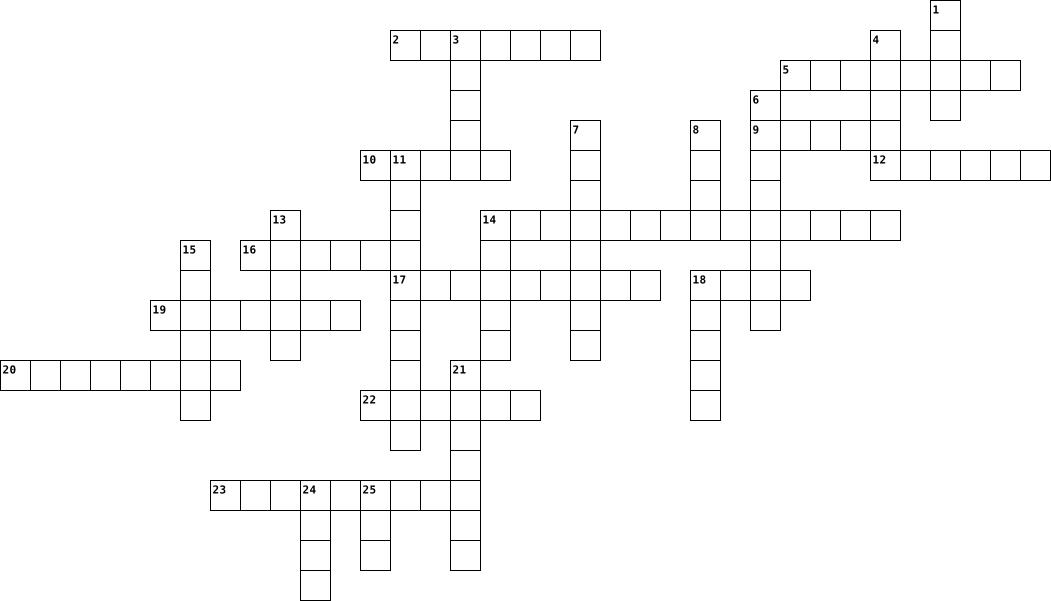
Across
- The money used to start a business
- The type of money that circulates in different countries
- Type of economy that uses elements of all three economies
- Reward paid for unskilled labour
- Goods and services sold to other countries
- The study of individual
- Input factor classified as skilled, semiskilled and unskilled
- Knowledge about the production, consumption, transfer of money
- A good or service that is required for survival
- Created as a result of process
- People who buy your product
- Consumer's desire and willingness to pay a price for good
- The sudden rise in price
Down
- A luxury item
- Amount of money required to pay for a good or service
- Action of buying and selling goods and services
- A person who employ workers to producer goods and services
- The situation that exists when there are not enough resources to meet human wants
- A picture or a symbol representing a business
- Macroeconomics deals with
- How much something is worth
- Valuable things to pay some goods or service
- Where buyers and sellers interact
- Things that are necessary for survival
- Putting money aside to spend on a later date
- Coal is an example of __ factors of production
- The money paid to the government depending on your level of income
27 Clues: A luxury item • The study of individual • The sudden rise in price • Macroeconomics deals with • How much something is worth • People who buy your product • Created as a result of process • Reward paid for unskilled labour • Where buyers and sellers interact • The money used to start a business • Things that are necessary for survival • Goods and services sold to other countries • ...
Business Economics 2022-10-31

Across
- The money used to start a business
- The type of money that circulates in different countries
- Type of economy that uses elements of all three economies
- Reward paid for unskilled labour
- Goods and services sold to other countries
- The study of individual
- Input factor classified as skilled, semiskilled and unskilled
- Knowledge about the production, consumption, transfer of money
- A good or service that is required for survival
- Created as a result of process
- People who buy your product
- Consumer's desire and willingness to pay a price for good
- The sudden rise in price
Down
- A luxury item
- Amount of money required to pay for a good or service
- Action of buying and selling goods and services
- A person who employ workers to producer goods and services
- The situation that exists when there are not enough resources to meet human wants
- A picture or a symbol representing a business
- Macroeconomics deals with
- How much something is worth
- Valuable things to pay some goods or service
- Where buyers and sellers interact
- Things that are necessary for survival
- Putting money aside to spend on a later date
- Coal is an example of __ factors of production
- The money paid to the government depending on your level of income
27 Clues: A luxury item • The study of individual • The sudden rise in price • Macroeconomics deals with • How much something is worth • People who buy your product • Created as a result of process • Reward paid for unskilled labour • Where buyers and sellers interact • The money used to start a business • Things that are necessary for survival • Goods and services sold to other countries • ...
Economics Terms 2022-11-01

Across
- the money you actually get to take home and spend after deductions
- IRS requires employers to report wage and salary information for employees on this form
- one of the official documents (most common one) that US taxpayers use to file their annual income tax
- a document that is provided with each paycheck and that shows the amount of money that the employee earned and the amount that was removed for deductions
- collects income taxes for the Federal Government
- higher rates of tax on higher levels of income
- cash amounts taken out of the emoployee's gress wages that include taxes and contributions
- income received from taxes by a government
- verifies identity and employment authorization of individuals hired for employment in the US
- a federal payroll tax that is deducted from each paycheck for medicare and social security
Down
- if you are an independent contractor or self-employed, the work you do may be the same as an employee, but will recieve an earnings statement on this form
- money an individual or business receives, usually in exchange for providing a good service or through investing capital
- an illegal activity in which a person or entity deliberately avoids paying a true tax liability
- the time period, generally between Jan 1 and April 15 of each year, when individual taxpayers prepare financial statements and reports for the previous year and submit their tax returns
- IRS tax form that is filled out by employees to indicate their tax situation to their employer
- the money you earn before any deduction
- provides for national programs such as national defense, veterans and foreign affairs, social programs, law enforcement, and interest on the national debt
- the amount per hour people are paid
- the amount per year people are paid
- a required payment to a local, state, or national(federal) government
20 Clues: the amount per hour people are paid • the amount per year people are paid • the money you earn before any deduction • income received from taxes by a government • higher rates of tax on higher levels of income • collects income taxes for the Federal Government • the money you actually get to take home and spend after deductions • ...
Economics Vocab 2022-10-27

Across
- helath maintenance organization
- go for sickness or injury
- comes out of your check to provide coverage
- incase of terminal illness proceeds are paid
- date which insurance policy becomes eligible to pay for claims
- set for period and does not build cash value
- person named in life insurance policy who gets proceeds
- application with preexisting poor health or fat
- set fee payed by policy holder for medical expenses
- covers medical expenses bodily injury or death.
Down
- period to sign up for insurance
- amount of money you give to beneficiary
- basic type of permanent life insurance
- package that allows employees to pick their own benefit
- give free money to the needy
- policy issued to one that is expired
- insurance policy without a deductible
- how ling you live
- someone who buys or sells something on their behalf
- amount policy holder must pay within period before insurance pays for coverage
20 Clues: how ling you live • go for sickness or injury • give free money to the needy • period to sign up for insurance • helath maintenance organization • policy issued to one that is expired • insurance policy without a deductible • basic type of permanent life insurance • amount of money you give to beneficiary • comes out of your check to provide coverage • ...
Economics Terms 2022-10-20

Across
- a set of actions to control a nation's overall money supply and achieve economic growth
- the amount a lender charges a borrower and is a percentage of the principal
- occurs when securities are on the rise
- a condition or state in which economic forces are balanced
- a period of increased commercial activity within either a business, market, industry, or economy as a whole
- the value or benefit given up by engaging in that activity, relative to engaging in an alternative activity
- when a company or business grows so large that the costs per unit increase.
- the average tax rate, or amount of tax paid as a percentage of income, decreases as income increases
- the use of government spending and taxation to influence the economy
Down
- monetary measure of the market value of all the final goods and services produced and sold in a specific time period by countries.
- the cost advantages that enterprises obtain due to their scale of operation
- a good that is both non-excludable and non-rivalrous
- commodities that the public sector provides free or cheaply because the government wishes to encourage their consumption.
- a principle of economics that captures the consumer's desire to buy the product or service
- the rate of increase in prices over a given period of time
- occurs when securities fall for a sustained period of time
- a tax where the. average tax rate, or the total amount of. tax paid as a percentage of income, increases as the taxpayer's income. increases.
- when a supplier sets a fixed price for a good or service for a certain time period
- a significant decline in economic activity spread across the market
- the total amount of a given product or service a supplier offers to consumers at a given period and a given price level.
20 Clues: occurs when securities are on the rise • a good that is both non-excludable and non-rivalrous • the rate of increase in prices over a given period of time • occurs when securities fall for a sustained period of time • a condition or state in which economic forces are balanced • a significant decline in economic activity spread across the market • ...
ECONOMICS TERMS 2022-09-08

Across
- the funds collected from taxes on income and profits
- a person who receives and lives on a pension
- money entering the circular flow
- money leaving the circular flow
- the number of people unemployed expressed as a percentage of the labour force
- the currency of Australia
- when people are in-between jobs
- the total amount of a given product or service a supplier offers to consumers at a given period and a given price and level.
- quantity of consumers who are willing and able to buy products at various prices during a given period of time.
- the monetary values of goods and services that producers and consumers purchase
- an estimate of income in a set period of time
- the demand for a good or service is greater than the availability of the good or service.
- a percentage of income is levied by the government
- abbreviation for gross domestic product
- a sustained period of weak or negative growth in real GDP (output) that is accompanied by significant rise in the Unemployment rate
- a spendable income after receiving gov welfare and paying personal income tax.
Down
- a graphical representation of the distribution of income or wealth.
- a strategy in attempting to settle an issue
- discouraged job seekers who are no longer actively seeking for work
- total amount of income generated by the sales of goods and services.
- an unemployment caused by automation and technology
- FOREIGN made goods and services purchased by Australian households, businesses, governments or other organisations
- a sector where people spend money on products not produced in Australia, so money flows out (import) or money flows in (export)
- C+I+G1+G2+X-M = GDP
- consists of those aged over 15 years who are actively employed & those who are unemployed but are actively seeking paid employment.
- consumer confidence increasing, disposable income increasing, interest rates decreasing are all factors of..
- instead of spending income, consumers put it into their own savings and store it
- money received for work or through investments
- AUSTRALIAN made goods and services purchased by foreign households, businesses, governments, and other organisations
29 Clues: C+I+G1+G2+X-M = GDP • the currency of Australia • money leaving the circular flow • when people are in-between jobs • money entering the circular flow • abbreviation for gross domestic product • a strategy in attempting to settle an issue • a person who receives and lives on a pension • an estimate of income in a set period of time • ...
Economics Crossword 2022-09-09

Across
- income remaining after deduction of taxes
- transfer of goods and services from one person or entity to another
- More than what is needed (more supplies than demand)
- Jobs replaced by machinery
- efficiency of production of goods or services
- and services
- The people who work in for a business
- Loss of other alternatives for the best option
- Being unemployed longer than a year
- A person who purchases goods and services for certain uses
- As profits go up, your payback will increase
- studies of production, distribution, and consumption of goods and services.
- an organization that provides something needed such as a product
- An amount the lender charges a borrower and is a percentage of the principle = the amount loaned
- the amount paid or charged for something
- Having a job over the age of 15
- an item used that is generally accepted as payment for
- converting one currency to another
- any resource owned or controlled by a business or an economic entity
- People bouncing between jobs
- Increase in Income received after interest rate goes down
- replacing a product for a similar product e.g sprit instead of fanta
- Term used to designate the situation of those who are able to find employment only for shorter than normal periods
Down
- temporary economic decline
- amount paid to employees wages
- lack Of AD
- Limited resources irrespective to our unlimited wants
- Few competitors selling product who are generally price makers
- Unique seller of the one product, the price maker
- paying others to handle products
- Receiving goods from overseas
- fairness in economics
- When people are optimistic and pessimistic about their future spending
- monetary measure of the market value of all the final goods and services
- Not Having a Job
- Amount of money that a government requires people to pay according to their income
- Amount of people in a certain place
- Changes in climate that affect supplies
- quantity of a good that consumers are willing to purchase at various prices during a given period of time and place.
- Sending Goods overseas to buyers
- Importation of materials to be used for the product
- anything that has utility and adds value to your life
42 Clues: lack Of AD • and services • Not Having a Job • fairness in economics • temporary economic decline • Jobs replaced by machinery • People bouncing between jobs • Receiving goods from overseas • amount paid to employees wages • Having a job over the age of 15 • paying others to handle products • Sending Goods overseas to buyers • converting one currency to another • ...
ECONOMICS CROSSWORD 2022-11-18

Across
- minimum price set by the government
- producers should produce less, buyers should buy more
- quantity supplied is less than quantity demanded
- quantity supplied is greater than quantity demanded
- The M in GROOM
- First O in GROOM
- Second O in GROOM
- Price goes Up quantity demanded goes down (vise versa)
- ideal price for sellers and buyers
- R in GROOM
Down
- interaction of buyers and sellers
- G in GROOM
- I in Bride
- producers should produce more, buyers should buy less
- B in BRIDE
- a certain quantity of a good or service
- maximum price set by the government
- D in Bride
- R in BRIDE
- consumer's desire and willingness to buy a product or service
- E in Bride
21 Clues: G in GROOM • I in Bride • B in BRIDE • D in Bride • R in BRIDE • E in Bride • R in GROOM • The M in GROOM • First O in GROOM • Second O in GROOM • interaction of buyers and sellers • ideal price for sellers and buyers • minimum price set by the government • maximum price set by the government • a certain quantity of a good or service • quantity supplied is less than quantity demanded • ...
Economics Vocabulary 2022-11-28

Across
- Type of resource made up of people
- Having too much supply
- The people Factor of Production
- How much of something is available
- Affects prices based on the number of stores selling the same product
- People who buy and use goods
- Limited resources, not having enough supply
- Digging for Minerals
- What you give up when making a choice
- The amount people want
- Something someone does for you (can’t touch)
- A good or tool used to make another good or service
- Can’t live without it
- Factor of Production found in Nature
- People who manufacture or make goods
Down
- Making goods often in a factory
- Shipping OUT of goods
- Depend on one another for certain things
- Importing and Exporting goods through a port
- A desire, can live without it
- Type of resource found in nature
- Something you consume or use (can touch)
- Shipping IN goods
- Another word for farming
- Factor of Production that makes the decisions and creates the idea
25 Clues: Shipping IN goods • Digging for Minerals • Shipping OUT of goods • Can’t live without it • Having too much supply • The amount people want • Another word for farming • People who buy and use goods • A desire, can live without it • Making goods often in a factory • The people Factor of Production • Type of resource found in nature • How much of something is available • ...