
energy Crossword Puzzles
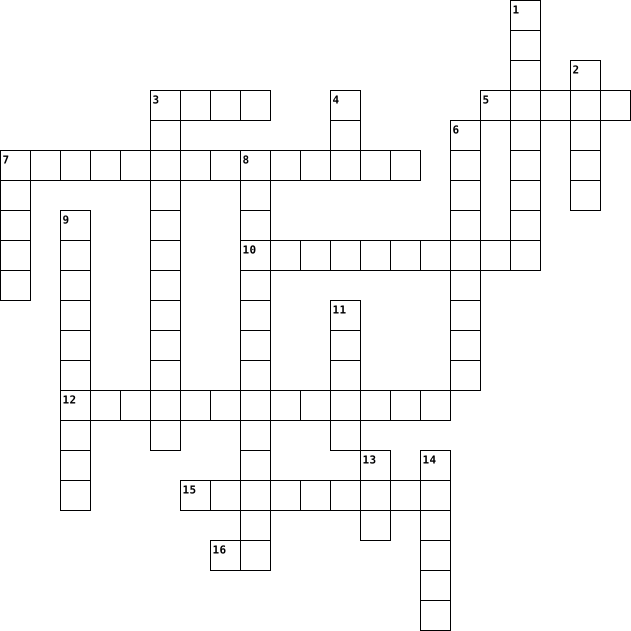
Wind Energy 2024-09-11

Across
- THE PART OF THE TURBINE THAT ROTATES IN THE WIND
- THE MOVEMENT OF AIR THAT CAUSES WIND IS DRIVEN BY THIS STAR
- WIND ENERGY COMES FROM THIS NATURAL SOURCE
- WIND TURBINES HELP TO REDUCE OUR NEED FOR THESE POLLUTING FUELS
- A GROUP OF WIND TURBINES IN ONE PLACE
- THE COUNTRY WITH THE MOST WIND TURBINES
Down
- WIND TURBINES ARE OFTEN FOUND IN THIS KIND OF AREA WHERE WIND IS STRONG
- THE ENERGY FROM WIND IS TURNED INTO THIS
- WIND TURBINES CAN BE NOISY, CREATING THAT TYPE OF POLLUTION
- WIND ENERGY IS A THAT TYPE OF RESOURCE
- WIND ENERGY IS AN EXAMPLE OF THIS KIND OF ENERGY, WHICH IS CLEAN AND SAFE
- THE DIRECTION THE BLADES FACE IS CONTROLLED BY THIS SYSTEM
12 Clues: A GROUP OF WIND TURBINES IN ONE PLACE • WIND ENERGY IS A THAT TYPE OF RESOURCE • THE COUNTRY WITH THE MOST WIND TURBINES • THE ENERGY FROM WIND IS TURNED INTO THIS • WIND ENERGY COMES FROM THIS NATURAL SOURCE • THE PART OF THE TURBINE THAT ROTATES IN THE WIND • THE DIRECTION THE BLADES FACE IS CONTROLLED BY THIS SYSTEM • ...
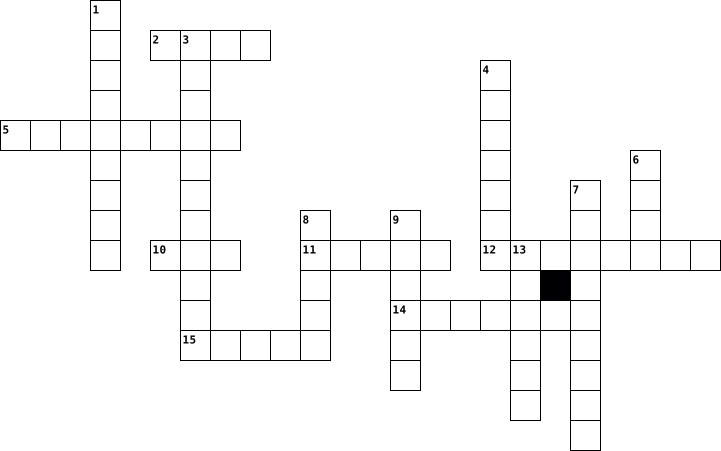
Thermal Energy 2024-11-07

Across
- the changing a solid to a liquid due to adding heat energy
- the transfer of thermal energy by the circulation or movement of a liquid or gas
- Energy that is transferred between objects due to a temperature difference
- energy which a body possesses by virtue of being in motion
- device used to measure temperature
Down
- The transfer of energy by the movement of electromagnetic waves or subatomic particles
- The study of the relationships between thermal energy, heat, and work
- transfer of thermal energy by direct contact
- the measure of the average kinetic energy
- material that transfers heat easily
- adding heat to a liquid to turn to a gas
- the energy contained within a system that is responsible for its temperature
12 Clues: device used to measure temperature • material that transfers heat easily • adding heat to a liquid to turn to a gas • the measure of the average kinetic energy • transfer of thermal energy by direct contact • the changing a solid to a liquid due to adding heat energy • energy which a body possesses by virtue of being in motion • ...
Energy Transfer 2024-10-25

Across
- A measure of how hot or cold something is,which reflects the average kinetic energy off its particles
- The energy that is transferred from one object to another due to a temperature difference
- Referring to objects or phenomena that can be seen and measured without the use of a microscope; visible to the naked eye.
- The process of heat transfer through direct contact between materials, where energy moves from warmer areas to cooler areas
- Waves of energy that travel through space that the speed of light, including visible light, radio waves and infrared radiation
- A rapid back-and-forth movement of particles in a substance which can create sound or heat
- A type of Electromagnetic ration with wave lengths longer than visible light;it is often felt as heat
Down
- The mean energy of motion of particles in a substance; it increases as temperature increases
- An instrument used to measure temperature, often containing a liquid that expands or contracts based on heat
- The transfer of heat from one location to another by the movement of fluids.
- A substance that can flow;includes liquids and gasses,which take the shape off their container
- The transfer of energy through electromagnetic waves, which can occur in a vacuum without needing a medium
12 Clues: The transfer of heat from one location to another by the movement of fluids. • The energy that is transferred from one object to another due to a temperature difference • A rapid back-and-forth movement of particles in a substance which can create sound or heat • The mean energy of motion of particles in a substance; it increases as temperature increases • ...
Energy Transfer 2024-10-25

Across
- A rapid back-and-forth movement of particles in a substance, which can create sound or heat.
- The process of heat transfer through direct contact.
- The transfer of heat from one location to the next by movement of fluids.
- An instrument used to measure temperature, often containing a liquid that expands or contracts based on heat.
- A substance that can flow; includes liquids and gasses, which take the shape of their container
- The transfer of energy through electromagnetic waves, which can occur in a vacuum (empty space) without needing a medium.
- A measure of how hot or cold something is, which reflects the average kinetic energy of its particles.
Down
- Referring to objects or phenomena that can be seen and measured without the use of a microscope, visible to the naked eye.
- Waves of energy that travel through space at the speed of light, including visible light, radio waves, and infrared radiation.
- The mean energy of motion of the particles in a substance; it increases as temperature increases.
- The energy that is transferred from one object to another due to a temperature difference.
- radiation A type of electromagnetic radiation with wavelengths longer than visible light; it is often felt as heat.
12 Clues: The process of heat transfer through direct contact. • The transfer of heat from one location to the next by movement of fluids. • The energy that is transferred from one object to another due to a temperature difference. • A rapid back-and-forth movement of particles in a substance, which can create sound or heat. • ...
Light Energy 2025-10-27

Across
- A triangle shaped piece of glass that bends light.
- The best science teacher in the world
- The best middle school in Orange County
- A spectrum that contains the total range of radiant energy.
- An object that allows most all light to pass through.
- A type of lens that is thicker at the center
Down
- An object that allows some light to pass through.
- A type of lens that is thinner at the center
- Part of the EM spectrum that has a longer wavelength and a slower frequency than visible light. Heat is considered this type of energy.
- All the electromagnetic waves that people can see.
- This part of the spectrum is sometimes referred to as UV
- An object that does not allow light to pass through.
12 Clues: The best science teacher in the world • The best middle school in Orange County • A type of lens that is thinner at the center • A type of lens that is thicker at the center • An object that allows some light to pass through. • A triangle shaped piece of glass that bends light. • All the electromagnetic waves that people can see. • ...
Energy Vocabulary 2025-09-08

Across
- When energy moves from one place to another or changes from one form to another
- Data that is analyzed and interpreted to support or dismiss a claim
- Potential Energy, The potential energy a massive object has due to its position on the surface of Earth.
- Statement or mathematical equation that describes a pattern observed in the natural world
- Energy Energy, held by an object because of its position relative to other objects or other factors. Kinetic Energy, The form of energy that it possesses due to its motion.
- A scientific explanation that explains a wide range of phenomena and is supported by a great deal of evidence
Down
- of Energy, The total energy of an isolated system remains constant; it is said to be conserved over time.
- The process of collecting data through the senses or measurement tools
- Energy, The sum of potential energy and kinetic energy.
- A proposed, testable explanation for something that happens in nature
- The ability to do work
- Unit of energy. It is equal to the amount of work done when a force of one newton displaces a mass through a distance of one meter in the direction of that force
12 Clues: The ability to do work • Energy, The sum of potential energy and kinetic energy. • Data that is analyzed and interpreted to support or dismiss a claim • A proposed, testable explanation for something that happens in nature • The process of collecting data through the senses or measurement tools • ...
Thermal Energy 2025-09-12

Across
- a group of atoms joined together in a particular way
- the total kinetic energy of all the molecules that make up a sample
- the moment when two objects hit each other
- a set of interacting parts forming a complex whole
- a number that summarizes a set of data and that can be computed by adding all the numbers in a list and then dividing by the number of numbers in the list
- to reach a conclusion using evidence and reasoning
Down
- when something stays mostly the same over time
- the energy that an object has because it is moving
- to move from one object to another or one place to another
- a measure of how hot or cold something is
- a balanced state in which a system is stable, such as when two or more samples are at the same temperature
- when something becomes different over time
12 Clues: a measure of how hot or cold something is • the moment when two objects hit each other • when something becomes different over time • when something stays mostly the same over time • the energy that an object has because it is moving • a set of interacting parts forming a complex whole • to reach a conclusion using evidence and reasoning • ...
energy resources 2025-12-11

Across
- energy in food and battery
- from trees, which grow
- fermented from plant material, which grows
- methane produced from things which grow
- energy from bulbs and torches
- energy in a moving body
Down
- from animals that eat food, which grows
- from wood that is partially burned in a limited air supply
- formed from forests for 300 million years ago
- energy in stretched materials
- make produce heat
- energy for burning material
12 Clues: make produce heat • from trees, which grow • energy in a moving body • energy in food and battery • energy for burning material • energy in stretched materials • energy from bulbs and torches • from animals that eat food, which grows • methane produced from things which grow • fermented from plant material, which grows • formed from forests for 300 million years ago • ...
Energy Transfer 2026-03-25

Across
- Energy stored in food or batteries
- A device that changes energy from one form to another
- Energy of movement
- Energy that makes things warm
- Energy moving from one place to another
Down
- Energy that travels in waves you can hear
- Movements you can feel from sound waves
- The only form of energy we can see
- A device that turns sunlight into electricity
- Energy that flows through wires
- Stores energy and powers devices
- The ability to do work
12 Clues: Energy of movement • The ability to do work • Energy that makes things warm • Energy that flows through wires • Stores energy and powers devices • Energy stored in food or batteries • The only form of energy we can see • Movements you can feel from sound waves • Energy moving from one place to another • Energy that travels in waves you can hear • ...
Energy Crossword 2026-06-05

Across
- hair and blankets are a type of this because they keep us warm
- ____ energy is a method of generating energy from natural sources and can be regenerated easily
- the type of energy that is used to power your home
- a type of bat or a way that energy drains when electronics are turned off
- ___, which comes from oil, can be used to power cars
Down
- brown and black rocks that are used as fuel
- energy from the sun
- Oil is an example of this type of energy
- a way to store energy
- to save energy and use less of it to help save the environment
- a tool used to take the temperature of something, you might use it when you are sick
- the ability to do work, such as running
12 Clues: energy from the sun • a way to store energy • the ability to do work, such as running • Oil is an example of this type of energy • brown and black rocks that are used as fuel • the type of energy that is used to power your home • ___, which comes from oil, can be used to power cars • hair and blankets are a type of this because they keep us warm • ...
Thermal Energy & Heat 2022-02-26

Across
- Transfer of thermal energy by particles moving through a fluid.
- An element that is a good conductor of heat and electricity.
- State of matter that has a fixed volume but not a fixed shape.
- SI scale for measuring temperature in which the freezing point of water is 273 K and the boiling point of water is 373 K.
- Material that is a poor conductor of thermal energy.
- Flow of particles in a fluid that occurs because of differences in temperature and density.
- Energy that is transferred from one object or substance to another because of a difference in temperature between them.
- The ability to do work.
- The measure of the average kinetic energy of the particles in matter; a physical property of matter.
- Transfer of thermal energy between particles of matter that are touching.
Down
- The amount of heat necessary to raise one mass unit of that substance by one temperature unit.
- Material that is a good conductor of thermal energy.
- The total energy of a substance due to the movement or vibrations of particles.
- Process in which a liquid changes to a solid.
- The simplest form of matter that has a unique set of properties.
- The transfer of thermal energy by waves that can travel through air or even through empty space.
- Substance that can flow and take the shape of its container; either liquid or gas.
- Energy that an object has due to its motion.
- State of matter that has neither a fixed volume nor a fixed shape.
19 Clues: The ability to do work. • Energy that an object has due to its motion. • Process in which a liquid changes to a solid. • Material that is a good conductor of thermal energy. • Material that is a poor conductor of thermal energy. • An element that is a good conductor of heat and electricity. • State of matter that has a fixed volume but not a fixed shape. • ...
yes 2023-01-17

Across
- idk
- wires
- computers
- theories of quantum mechanics
- motherboards
- mechanical parts
- utilities
- xrays
- planes
- trains
- hydroelectric energy
- Engineer zinc
- designs
Down
- railways
- idk
- lasers
- computers
- software
- medicine
- machines
- bananas
- healthier food
- nuclear energy
- telescope
- formula for kinetic energy
- prices
26 Clues: idk • idk • wires • xrays • lasers • planes • prices • trains • bananas • designs • railways • software • medicine • machines • computers • computers • telescope • utilities • motherboards • Engineer zinc • healthier food • nuclear energy • mechanical parts • hydroelectric energy • formula for kinetic energy • theories of quantum mechanics
Force, Power, Energy 2025-12-17

Across
- In physics, power is the amount of energy transferred or converted per unit time
- energy associated with the gravitational field, which is released when the objects fall towards each other
- a push or pull that causes an object with mass to accelerate (change its velocity) or deform, measured in Newtons (N), and is a vector quantity (has both magnitude and direction)
- the property that must be transferred to an object in order to perform work on, or to heat, the object.
- the total internal kinetic energy of a substance's atoms and molecules due to their random motion
- the kinetic energy that travels as mechanical waves through a medium (solid, liquid, or gas) due to vibrations, originating from a source like a vibrating object
- energy transferred by electromagnetic waves (like light, radio, X-rays) or gravitational waves
Down
- The sum of an object's kinetic energy (energy of motion) and its potential energy (stored energy of position)
- Energy in motion. If an object has velocity, it has kinetic energy
- the potential energy stored within the chemical bonds of atoms and molecules, which gets released or absorbed during chemical reactions, transforming into heat, light, or motion (kinetic energy)
- a unit measuring the rate at which work is done (power)
- the energy from moving electric charges (current) or stored due to their position (potential)
- the immense power stored in the atom's nucleus, released via fission (splitting heavy atoms like uranium) or fusion (combining light nuclei like hydrogen)
- the energy transferred when a force causes an object to move (displace) in the direction of that force, calculated as Force × Distance
- the energy stored in an elastic object when it's stretched, compressed, or twisted, allowing it to return to its original shape
15 Clues: a unit measuring the rate at which work is done (power) • Energy in motion. If an object has velocity, it has kinetic energy • In physics, power is the amount of energy transferred or converted per unit time • the energy from moving electric charges (current) or stored due to their position (potential) • ...
Katey Rens 2017-09-13

Across
- lower-energy molecule that can be converted into ATP by the addition of a phosphate group
- absorb energy from sunlight and produce sugars through the process of photosynthesis
- Cycle produces molecules that carry energy to the second part of cellular respiration
- Acid product of fermentation in many types of cells including human muscle cells.
- found in both animal and plant cells, produce ATP through cellular respiration
- process that captures energy from sunlight to make sugars that store chemical energy
- splits glucose into two three-carbon molecules and makes two molecules of ATP
Down
- process that does not need oxygen to take place
- stacks of coin-shaped, membrane enclosed compartments
- anaerobic process by which ATP is produced by glycolysis
- molecule that transfers energy from the breakdown of food molecules to cell processes.
- Respiration releases chemical energy from sugars and other carbon-based molecules to make ATP when oxygen is present
- process by which some organisms use chemical energy instead of light energy to make energy-storing carbon-based molecules
- molecule in chloroplasts that absorbs some of the energy in visible light
- process meaning that it needs oxygen to take place
- Cycle light-dependent reactions include a series of chemical reactions
16 Clues: process that does not need oxygen to take place • process meaning that it needs oxygen to take place • stacks of coin-shaped, membrane enclosed compartments • anaerobic process by which ATP is produced by glycolysis • Cycle light-dependent reactions include a series of chemical reactions • molecule in chloroplasts that absorbs some of the energy in visible light • ...
Energy Crossword Puzzle 2023-01-26

Across
- Energy stored in the bonds of chemical compounds
- to the energy contained within a system that is responsible for its temperature
- a coherent, typically large body of matter with no definiteshape
- relating to movement toward a center of gravity.
- comes from vibrations moving through something
- a principle stating that energy cannot be created or destroyed, but can be altered from one form to another.
- a kind of kinetic energy with the ability to make types of light visible to human eyes
- the property that is transferred
- The form of matter that takes up a definite amount of space.
- the energy that is possessed by an object due to its motion or due to its position
- energy that is transferred from one body to another as the result of a difference in temperature.
Down
- the energy held by an object because of its position relative to other objects
- energy is released during nuclear fission or fusion
- able to resume its normal shape spontaneously after contraction, dilatation, or distortion.
- energy related to forces on electrically-charged particles and the movement of those particles
- energy which a body possesses by virtue of being in motion.
16 Clues: the property that is transferred • comes from vibrations moving through something • Energy stored in the bonds of chemical compounds • relating to movement toward a center of gravity. • energy is released during nuclear fission or fusion • energy which a body possesses by virtue of being in motion. • The form of matter that takes up a definite amount of space. • ...
Energy Crisis of the 70's 2024-05-11

Across
- Petroleum Reserve established
- Lines at gas stations due to shortages
- Power, another alternative energy source
- Energy sources explored as a result of the crisis
- Combination of high inflation and economic stagnation
- Carter, US president during the crisis
- Seen as a potential substitute for oil
Down
- Fuels, alternative sources promoted by the government
- Organization of Petroleum Exporting Countries
- Revolution that contributed to the second oil shock
- Embargo imposed by OPEC in 1973
- Controls on oil and gas
- Power, one of the alternative energy sources promoted
- Rationing implemented during the crisis
- Policy and Conservation Act passed in 1975
- Driven by rising energy costs
- Of Energy, created in response to the crisis
- East, region where many OPEC countries are located
- Conservation measures encouraged by the government
- Five mile per hour, national speed limit set to conserve fuel
20 Clues: Controls on oil and gas • Petroleum Reserve established • Driven by rising energy costs • Embargo imposed by OPEC in 1973 • Lines at gas stations due to shortages • Carter, US president during the crisis • Seen as a potential substitute for oil • Rationing implemented during the crisis • Power, another alternative energy source • Policy and Conservation Act passed in 1975 • ...
different types of energy 2017-05-05

Across
- energy energy through substances in longitudinal waves.
- energy used to move charged particles through a wire from a power plant to our homes and businesses.
- energy energy an object possesses because of its position in a gravitational field.
- Energy energy which a body possesses by virtue of being in motion
- energy energy that can be streched and compressed at the same time
Down
- energy energy derived from the movement of water.
- energy the energy released during nuclear fission or fusion, especially when used to generate electricity.
- energy energy stored in the bonds of chemical compounds (atoms and molecules)
- energy The energy of motion is called kinetic energy.
- energy it comes from the sun and it is how nature moves energy at an extremely rapid rate
- energy object or a system having a temperature that can be measured
- energy electrical energy obtained from harnessing the wind with windmills or wind turbines.
12 Clues: energy energy derived from the movement of water. • energy The energy of motion is called kinetic energy. • energy energy through substances in longitudinal waves. • Energy energy which a body possesses by virtue of being in motion • energy energy that can be streched and compressed at the same time • ...
Heat 2014-04-30

Across
- change of a substance from one state of matter to another
- transfer of energy by electromagnetic waves, such as visible light and infrared waves
- transfer of thermal energy from one substance to another through direct contact
- the transfer of thermal energy by the movement of a liquid or a gas
- made of 2 different metals stacked in a thin strip
- physical forms in which a substance can exist
Down
- energy transferred between objects that are at different temperatures
- substance that don't not conduct thermal energy very well
- machine that transforms heat into mechanical energy, or work
- substances that conduct thermal energy very well
- lowest temperature on Kelvin scale
- increase of volume of a substance because of an increase of volume
- material that reduces the transfer of thermal energy
- total kinetic energy of the particles that make up a substance
- measure of the average kinetic energy of particles in an object
15 Clues: lowest temperature on Kelvin scale • physical forms in which a substance can exist • substances that conduct thermal energy very well • made of 2 different metals stacked in a thin strip • material that reduces the transfer of thermal energy • change of a substance from one state of matter to another • substance that don't not conduct thermal energy very well • ...
Energy Use and Conservation 2014-01-13

Across
- thermal energy that is captured from the earths interior
- and effect that is due to a process that traps outgoing infrared radiation in the Earths atmosphere
- Energy that uses the regular movements of incoming and out going ocean tides
- this energy uses moving or falling water
- Energy form resources that can be replenished over time
- This involves pumping fluid into the ground under high pressure to cause layers of shale deep underground to fracture
- a chemical energy in non-fossil fuel organic materials
- Natural gas that has been trapped in crystals of frozen water
- the process of splitting an atom into two or more parts
Down
- this energy uses the suns rays
- a long term change in Earths climate
- A resource that provides energy to bring about movement or change
- Energy that uses non-replaceable resources
- this energy uses moving air
- Material that exhibits radioactivity
15 Clues: this energy uses moving air • this energy uses the suns rays • a long term change in Earths climate • Material that exhibits radioactivity • this energy uses moving or falling water • Energy that uses non-replaceable resources • a chemical energy in non-fossil fuel organic materials • Energy form resources that can be replenished over time • ...
Unit 7 Lesson 3 and 4 Vocabulary Review 2025-04-22

Across
- any material that attracts iron or iron made objects
- determine if an object is magnetic via alignment or random assortment
- a device that turns electrical devices on and off
- a temporary magnet created by being placed a strong magnetic
- a force that pushes or pulls magnet due to spinning electrons
- negatively charged subatomic particle
- uses energy, converting electrical energy into other forms of energy
- electrical charges have more than one path that they can follow
Down
- The area surrounding a magnet where the forces are exerted
- a material that can be turned into a magnet; a permanent magnet
- The north and south poles of the magnet with opposing charges
- voltage = current x resistance
- a source of energy that converts chemical energy into electrical energy
- all parts of the circuit are connected in a row that form one path
- source converts one type of energy into electrical energy
- a complete, closed path which electric charges can flow.
- an iron core wrapped with electrical wire
17 Clues: voltage = current x resistance • negatively charged subatomic particle • an iron core wrapped with electrical wire • a device that turns electrical devices on and off • any material that attracts iron or iron made objects • a complete, closed path which electric charges can flow. • source converts one type of energy into electrical energy • ...
Energy and Types of energy 2023-01-30

Across
- Energy that we can hear
- Energy due to motion of an object
- Energy from flow of electric charge
- Energy of wind is used in wind mills
- Energy stored in an object height or energy of place or position
- Energy that we can see
Down
- energy is renewable source of energy
- Energy of water in dams is used for generation of electricity
- Energy is electromagnetic energy that travels in transverse waves
- Energy is vibration or movement of particle or heat energy
- Solar energy can be called as __ energy
- Energy stored in bonds of atoms and molecules
12 Clues: Energy that we can see • Energy that we can hear • Energy due to motion of an object • Energy from flow of electric charge • energy is renewable source of energy • Energy of wind is used in wind mills • Solar energy can be called as __ energy • Energy stored in bonds of atoms and molecules • Energy is vibration or movement of particle or heat energy • ...
Chapter 16 Thermal Energy and Matter 2022-01-05

Across
- a measure of how hot or old an object is compared to a reference point
- the transfer of thermal energy from one object to another due to temperature difference
- a temperature of 0 Kelvins
- thermal energy discharged without being used
- instrument used to measure thermal energy released or absorbed during a chemical reaction
- the amount of heat needed to raise the temperature of one gram of a material by one degree Celsius
- the transfer of thermal with no overall transfer of matter
- the total potential and kinetic energy of all the particles in an object
Down
- a material that conducts thermal energy well
- any device that converts thermal energy into work
- the transfer of energy by waves moving in space
- a material that conducts thermal energy poorly
- the increase in a volume of material when its temperature increases
- the study of conversions between thermal energy an other forms of energy
- the transfer of thermal energy when particles of a fluid move from one place to another
15 Clues: a temperature of 0 Kelvins • a material that conducts thermal energy well • thermal energy discharged without being used • a material that conducts thermal energy poorly • the transfer of energy by waves moving in space • any device that converts thermal energy into work • the transfer of thermal with no overall transfer of matter • ...
P3.2 Heating 2023-03-20

Across
- the state of matter in which particles are close together but can move around.
- the state of matter with the highest internal energy
- transfer of thermal energy by movement of particles in a fluid
- the type of energy related to how far apart the particles are
- the type of energy related to how fast particles are moving
- energy = mass x specific heat _____________ x temperature change
- transfer of thermal energy by vibration of particles
- is measured in kilograms (kg)
- the state of matter with the lowest internal energy
Down
- specific heat capacity is the amount of energy in takes to increase the temperature of 1 kg of a substance by 1 degree __________.
- the amount of matter in a particular volume
- a data point that does not fit the pattern
- a measure of the average kinetic energy of the particles in a system
- the total amount of kinetic and potential energy of all the particles in a system
- the total kinetic energy of all the particles in a system
15 Clues: is measured in kilograms (kg) • a data point that does not fit the pattern • the amount of matter in a particular volume • the state of matter with the lowest internal energy • the state of matter with the highest internal energy • transfer of thermal energy by vibration of particles • the total kinetic energy of all the particles in a system • ...
Physics Crossword Puzzle 2024-12-16

Across
- The ability to do work
- A unit of measurement for power
- Energy can neither be created or destroyed
- Energy that is possessed by an object due to its motion or position
- The mutual attraction of all things with mass
- Energy that is stored in an object when it's not in motion
Down
- A property of a physical system that can be expressed with a numerical value
- Form of energy that an object has when it's in motion
- Unit used to measure work or energy
- The amount of energy that is transferred between objects
- A force that resists the sliding or rolling of one surface against another
- Form of potential energy that is stored in chemical bonds
- Form of kinetic energy associated with random particle motion
- Energy that is transferred to or from an object via a force along a displacement
- Form of energy stored as a result of applying force to deform an elastic object
15 Clues: The ability to do work • A unit of measurement for power • Unit used to measure work or energy • Energy can neither be created or destroyed • The mutual attraction of all things with mass • Form of energy that an object has when it's in motion • The amount of energy that is transferred between objects • Form of potential energy that is stored in chemical bonds • ...
Energy in Ecosystems 2026-04-05

Across
- one of Earth’s greatest sources of energy (thermal, light, solar energy)
- overlapping food chains. EX: grass – deer – wolves as well as grass – rabbits – foxes
- an animal that gets energy from eating plants
- a gas given off by humans but absorbed and needed by plants
- an organism that uses sunlight to make its own food for energy. EX: flower
- living things including plants, animals, and you!
- the living and nonliving things in one area
Down
- an organism that gets energy from eating dead organisms, non-living material, or waste. EX: worm
- an animal that gets energy from killing and eating other animals
- how energy is transferred
- organisms that depend on each other for food. EX: grass – deer – wolves
- a process in which green plants use sunlight to make their own food, absorbing solar energy and carbon dioxide and producing sugars and oxygen
- the ability to do work
- an organism that gets its energy from eating other organisms. EX: bird
- an animal that gets energy from eating animals and plants
15 Clues: the ability to do work • how energy is transferred • the living and nonliving things in one area • an animal that gets energy from eating plants • living things including plants, animals, and you! • an animal that gets energy from eating animals and plants • a gas given off by humans but absorbed and needed by plants • ...
renewable resources 2025-03-22

Across
- Cell, an electrical chemical device that converts fuel, such as hydrogen, into an electrical current
- Solar Energy, Energy captured from sunlight with intermediate technologies
- Impoundment, Storage of water in a reservior behind a dam
- The application of an electric current to water molecules to split them into hydrogen and oxygen
- Energy, Energy generated from kinetic energy of moving air
- Electricity generated by water
- efficiency, Percentage of the total energy input that does useful work and is not converted into low-quality, usually useless heat in an energy conversion system or process.
- Alcohol made by converting starches and sugars from plant material into alcohol and CO2
- Grid, Efficient self regulating electricity distribution network that accepts any source of electricity and distributes it effectively to end users
- Energy, Energy that comes from the movement of water driven by the pull of the moon
Down
- accumulation of sediments on the bottom of a reservior
- of the River, Hydroelectivity generation in which water is retained behind a low dam or no dam
- predominant form of energy used by people in the less-developed countries (10% of world)
- source Heat Pump, A technology that transfers heat from the ground to a building
- not practical to transport long distance so it's mostly used locally
- Turbine, Turbine powered by wind
- A diesel substitute produced by extracting and chemically altering oil from plants
- Energy, Heat energy that comes from the natural radioactive decay of elements deep within earth
- Solar Cell, A system of capturing energy from sunlight and converting it directly into electricity
- conservation, Reducing or eliminating the unnecessary waste of energy.
20 Clues: Electricity generated by water • Turbine, Turbine powered by wind • accumulation of sediments on the bottom of a reservior • Impoundment, Storage of water in a reservior behind a dam • Energy, Energy generated from kinetic energy of moving air • not practical to transport long distance so it's mostly used locally • ...
Energy and Change 2026-06-18

Across
- - An electric circuit with only one path for the electric current to flow.
- - An electrical device that converts electrical energy into sound energy.
- - A device used to change the voltage of an electric current, either increasing or decreasing it.
- - The continuous flow of electric charge through a loop or circuit.
- - A material that does not allow electricity to flow through it easily, like rubber.
- - A material that allows electricity to flow through it easily, like copper.
- - An electric circuit with multiple paths for the electric current to flow.
- - A single unit that stores chemical energy and converts it into electrical energy.
- - The electrical force or "pressure" that pushes an electric current through a circuit.
- - A safety measure that connects an electrical circuit to the Earth to prevent shocks or fires.
Down
- - An energy source that can be naturally replenished in a short amount of time, like solar or wind.
- - A machine with blades that is spun by moving fluid, water, or wind to generate electricity.
- - A material's opposition to the flow of electric current, slowing it down.
- - A combination of two or more cells connected together to provide electrical energy.
- - An energy source that exists in limited amounts and can be completely used up, like coal or oil.
- - The measurement of electrical power, showing how much energy an appliance uses per second.
- - Any device in a circuit that consumes electrical energy, such as a lightbulb or a buzzer.
- - An electrical device that converts electrical energy into mechanical energy or movement.
18 Clues: - The continuous flow of electric charge through a loop or circuit. • - An electrical device that converts electrical energy into sound energy. • - An electric circuit with only one path for the electric current to flow. • - A material's opposition to the flow of electric current, slowing it down. • ...
climate change 2024-06-18

Across
- Melt - Thawing of ice caps and glaciers (7 letters)
- - Liquid fossil fuel (3 letters)
- - Organic material used for energy (7 letters)
- Energy - Electricity supplied through a network (10 letters)
- - Sharing a ride with others (10 letters)
- - Traveling on foot (7 letters)
- - Energy from flowing water (10 letters)
- Tax - Levy on carbon emissions (9 letters)
- Star - Label for energy-efficient products (10 letters)
Down
- - Release of gases into the atmosphere (9 letters)
- - Reducing the severity of climate change (10 letters)
- Energy - Power generated by air movement (10 letters)
- - Adjusting to new conditions (10 letters)
- - Chemical formula for carbon dioxide (3 letters)
- - Black, combustible rock used for energy (4 letters)
- - Potent greenhouse gas, CH4 (7 letters)
- Waste - Lifestyle that minimizes waste (9 letters)
17 Clues: - Traveling on foot (7 letters) • - Liquid fossil fuel (3 letters) • - Potent greenhouse gas, CH4 (7 letters) • - Energy from flowing water (10 letters) • - Sharing a ride with others (10 letters) • - Adjusting to new conditions (10 letters) • Tax - Levy on carbon emissions (9 letters) • - Organic material used for energy (7 letters) • ...
Puzzle 2024-10-31

Across
- Energy related to heat transfer in a reaction
- Substance that undergoes change in a chemical reaction
- Reaction that releases energy into its surroundings
- Organelle in plant cells where photosynthesis takes place
- Reaction that absorbs energy from its surroundings
- Law of Conservation of _______ ____ _______
- Molecule used by cells to store and transfer energy
Down
- Gas taken in by plants during photosynthesis
- Process by which cells produce energy from glucose
- Liquid required for photosynthesis and many biological processes
- Sugar produced by plants during photosynthesis
- Organelle responsible for energy production in cells
- Process by which plants make food using sunlight
- The result of a chemical reaction
- Process that changes substances into different substances
- Gas released by plants during photosynthesis
- Form of energy used by plants to perform photosynthesis
17 Clues: The result of a chemical reaction • Law of Conservation of _______ ____ _______ • Gas taken in by plants during photosynthesis • Gas released by plants during photosynthesis • Energy related to heat transfer in a reaction • Sugar produced by plants during photosynthesis • Process by which plants make food using sunlight • ...
Unit 2 Review 2021-01-25

Across
- heat usually transferred through liquids
- radiant light and heat from the Sun
- the rate at which the position changes
- heat energy transferred through touch
- heat transferred through the air
- the pent up energy in an object before it begins to move
- the push and pull of an object
- caused by moving electric charges
- the energy an object has while in motion
Down
- the rate at which an object covers distance
- energy that is possessed by an object due to its motion or due to its position
- headphones and speakers use this type of energy
- an increase in the rate or speed of something
- energy used in power plants
- transfer, energy using radiation convection and conduction
- force, opposite in direction and equal in size
16 Clues: energy used in power plants • the push and pull of an object • heat transferred through the air • caused by moving electric charges • radiant light and heat from the Sun • heat energy transferred through touch • the rate at which the position changes • heat usually transferred through liquids • the energy an object has while in motion • ...
enzyme 2021-10-21

Across
- when the substrates are in the enzyme
- the end result from the enzyme
- example of an endergonic
- enzymes end in these
- breaking bonds /releases energy
- x coordinate
- example of an exergonic
Down
- the enzyme cycle
- enzymes are a type of
- building bonds / requires energy
- energy required to transform substrate into a product
- y coordinate
- releases energy
- what is going into the enzyme
- uses energy
15 Clues: uses energy • y coordinate • x coordinate • releases energy • the enzyme cycle • enzymes end in these • enzymes are a type of • example of an exergonic • example of an endergonic • what is going into the enzyme • the end result from the enzyme • breaking bonds /releases energy • building bonds / requires energy • when the substrates are in the enzyme • ...
Conservation of Energy 2024-12-13

Across
- Application of force
- If an object had __, it has kinetic energy
- Power an engine produces
- KE+PE
- Work is only done if force is ____
Down
- Measurement of force
- Energy in use
- Any action to alter motion
- Pull towards Earth
- Unit of energy
- Stored energy
- Unit for power
- The ability to do work
- Pull from a rope or string
- Amount of energy transferred over time
15 Clues: KE+PE • Energy in use • Stored energy • Unit of energy • Unit for power • Pull towards Earth • Measurement of force • Application of force • The ability to do work • Power an engine produces • Any action to alter motion • Pull from a rope or string • Work is only done if force is ____ • Amount of energy transferred over time • If an object had __, it has kinetic energy
luis`s amazing energy puzzle 2017-04-24

Across
- movement of energy through substances in waves
- fuels coal and oil that are burned to produce energy
- uses water currents to push turbines to create energy
- oil burned to produv=ce energy
- uses gasses to heat
- radiant electromagnetic light energy that travels in waves of light
- it has the energy to move but it's staying still
- it uses the sum to make power
Down
- it uses uranium to generate steam to push for turbines to produce energy
- it uses wind currents to move it so it generates energy
- heat transfer through materials
- energy being used for motion
- energy made from not living/recently living organisms
- transfer 2 words movement of heat
14 Clues: uses gasses to heat • energy being used for motion • it uses the sum to make power • oil burned to produv=ce energy • heat transfer through materials • transfer 2 words movement of heat • movement of energy through substances in waves • it has the energy to move but it's staying still • fuels coal and oil that are burned to produce energy • ...
Energy Vocabulary Crossword AP 13.5 2021-03-29

Across
- to change
- to become different
- a type of energy that makes things hot
- where something is in space
- the process of an object changing position
- a type of energy you can see with your eyes
- the ability to cause change
- how fast an object is moving
Down
- how far apart objects are
- form of energy that powers lights in modern homes
- of motion the energy an object has while it is moving
- anything that helps prove or disprove an idea
- of energy different types of energy, such as sound, heat, or light
- energy energy that has the potential to cause change at a later time
- a type of energy you can hear with your ears
- transfer when energy moves from one object to another or from one place to another
16 Clues: to change • to become different • how far apart objects are • where something is in space • the ability to cause change • how fast an object is moving • a type of energy that makes things hot • the process of an object changing position • a type of energy you can see with your eyes • a type of energy you can hear with your ears • anything that helps prove or disprove an idea • ...
Energy, Forces and Simple Machines 2014-07-03
Across
- This is done whenever an object is moved or is forced to change shape
- The simple machine used to increase or decrease effort
- Machines that have a single or no moving parts
- Simple machines provide us with a __________ advantage, to make our work simpler
- A simple machine that does not move to accomplish its task
- Simple machines can change the _________ of force
- decreasing the effort required, simple machines ________ the distance over which it is applied
Down
- Stored energy possessed by an object
- A simple machine used to cut through things
- Simple machine found in a door knob
- Where most of the energy on Earth originates from
- When we conserve energy and use it wisely, it is known as being energy _________
- Converts rotational motion to linear motion
- Energy stored within a substance such as fuel or food that may be released when the substance is burnt or digested
- Energy that causes particles to move
- Unit of meaurement for energy
- There are ____ kinds of simple machines
- The ability to make change happen, different forms include heat light and sound
18 Clues: Unit of meaurement for energy • Simple machine found in a door knob • Stored energy possessed by an object • Energy that causes particles to move • There are ____ kinds of simple machines • A simple machine used to cut through things • Converts rotational motion to linear motion • Machines that have a single or no moving parts • ...
Specific Heat and Phase Changes 2023-10-18

Across
- Thermal energy is a fancy way of saying ____.
- The state of matter that is usually densest.
- Water heats and cools ____ compared to most other substances.
- Water has a ____ specific heat.
- Color that is best at absorbing heat.
- The state of matter that is easiest to drink.
- If 334J/g of energy is ADDED to ice, it will ___.
- The state of matter that we cannot see.
- If 2260J/g of energy is ADDED to water, it will ___.
- If 2260J/g of energy is TAKEN FROM water vapor, it will ___.
- There are 3 states, or ____ of matter.
Down
- The GREATEST amount of energy is ABSORBED when water goes through this phase change.
- A measurement of heat energy.
- Causes temperature changes (2 words no space!).
- Substances with a low specific heat change temperature (quickly or slowly?).
- The GREATEST amount of energy is RELEASED when water goes through this phase change.
- Forms when water vapor condenses into tiny water droplets high in the sky.
- If 334J/g of energy is TAKEN FROM water, it will ___.
18 Clues: A measurement of heat energy. • Water has a ____ specific heat. • Color that is best at absorbing heat. • There are 3 states, or ____ of matter. • The state of matter that we cannot see. • The state of matter that is usually densest. • Thermal energy is a fancy way of saying ____. • The state of matter that is easiest to drink. • ...
Cellular respiration 2025-03-29

Across
- The energy carriers drop off their high energy electrons here.
- Helpers that assist enzymes in their functions
- The storage form of glucose in animals
- The sum of all chemical reactions in a living organism
- Reactant required to make water in the last stage of cellular respiration
- The process of ATP generation linked to the movement of protons across a membrane
- An energy carrier, but not a usable form of energy in the cell.
- The end product of glycolysis
Down
- The powerhouse of the cell where ATP is produced
- A series of reactions in the mitochondria that generate energy carriers; the roundabout of cellular energy.
- A product of cellular respiration; the unwanted guest that leaves after the energy party.
- An anaerobic process that produces energy without oxygen
- Biological catalysts that speed up reactions
- The only stage of cellular respiration that can occur outside the mitochondria.
- The starting molecule in glycolysis.
- Like cash for cellular transactions!
- The reactant that enzymes act on
- An enzyme in the inner mitochondrial membrane that produces ATP.
18 Clues: The end product of glycolysis • The reactant that enzymes act on • The starting molecule in glycolysis. • Like cash for cellular transactions! • The storage form of glucose in animals • Biological catalysts that speed up reactions • Helpers that assist enzymes in their functions • The powerhouse of the cell where ATP is produced • ...
Mod 1 Vocab 2020-03-08

Across
- Chain/Shows the energy ( visual) transformations in a situation, (source is where it comes from, a receiver is where it goes
- to do work or cause a change
- Energy/Energy an object has because of its position, shape, or condition; stored energy
- 2 nuclei join together to make a larger atom
- Energy/Energy stored in the nucleus of the atom
- Energy/Energy stored in the nucleus of the atom
Down
- Energy/Energy of motion; active energy
- Transformation/Energy can change from one form to another
- Energy/Energy that travels I electromagnetic waves
- Energy/Energy of moving objects; a sound is a form of mechanical energy
- the nucleus of a heavy atom is split apart
- Energy/The energy of vibrating molecules, (heat)
- Energy/Energy stored in the bonds of chemical compounds that gest released during a reaction
- of Conservation of Energy/Energy cannot be created or destroyed, it can only change form
14 Clues: to do work or cause a change • Energy/Energy of motion; active energy • the nucleus of a heavy atom is split apart • 2 nuclei join together to make a larger atom • Energy/Energy stored in the nucleus of the atom • Energy/Energy stored in the nucleus of the atom • Energy/The energy of vibrating molecules, (heat) • Energy/Energy that travels I electromagnetic waves • ...
Types of energy 2013-05-30

Across
- you see this in science labs
- energy is measured in what?
- keeps you warm at night
- you can a bomb from this
- the power lines create
- batteries are _________ energy
- this energy can not work without air
- if you jump what type of energy is happening
- when your on your bike you create what?
- sound needs this to travel
Down
- it helps you see at night
- cause particles to vibrate
- you need the sun for this
- this type of energy moves
- a bow and arrow has ___________ energy
15 Clues: the power lines create • keeps you warm at night • you can a bomb from this • it helps you see at night • you need the sun for this • this type of energy moves • cause particles to vibrate • sound needs this to travel • energy is measured in what? • you see this in science labs • batteries are _________ energy • this energy can not work without air • ...
Lillian Donahue Crossword Puzzle 2024-10-30

Across
- The power to do work
- When an object reaches the same temperature
- Measure of hot or cold
- When heat is passed through direct contact
- Carries energy through electromagnetic field
- Type of heat energy
- Heat moves from hot to cold
Down
- Closely packed together
- Doesn't allow heat to pass through it easily
- Amount of heat added to raise 1g of mass
- Energy transfer in heat waves
- Built up energy
- Metals, items that let heat pass through it easily
- Fast energy
- Energy particles made of matter
15 Clues: Fast energy • Built up energy • Type of heat energy • The power to do work • Measure of hot or cold • Closely packed together • Heat moves from hot to cold • Energy transfer in heat waves • Energy particles made of matter • Amount of heat added to raise 1g of mass • When heat is passed through direct contact • When an object reaches the same temperature • ...
Biology Vocabs 2025-10-15

Across
- A organism place that describes themselves
- liquid to Gas
- Necessity in life that is required
- Runoff Rain forming stream and lakes
- liquid to gas from plants
- page Water moving thorugh surface to underground
- producers First producers energy rich compounds
- pyramid Energy transferred typically only to percent of energy
Down
- Energy rich carbohydrates capture light's energy
- Process chemical energy produce carbohydrates
- Self making product
- small water particles to large molecules
- Material decaying bits of plants and animals
- Organism obtains food by feeding of the living consumer
- Relies on other organism
15 Clues: liquid to Gas • Self making product • Relies on other organism • liquid to gas from plants • Necessity in life that is required • Runoff Rain forming stream and lakes • small water particles to large molecules • A organism place that describes themselves • Material decaying bits of plants and animals • Process chemical energy produce carbohydrates • ...
Physics I Word Search 2025-12-11

Across
- Cannot be created nor destroyed
- Speed with a specific direction
- Energy of movement
- Energy of heat
- Energy at rest
- The position of an object
- The energy used as an apple is falling down a tree
Down
- The force applied over a distance
- Newton's 1st Law of Motion
- Energy that keeps you still/stable
- The rate work is done or energy transfers
- Having only magnitude, not direction
- The rate of change of velocity
- The force that keeps you from slipping when you walk
- The amount of matter in an object
15 Clues: Energy of heat • Energy at rest • Energy of movement • The position of an object • Newton's 1st Law of Motion • The rate of change of velocity • Cannot be created nor destroyed • Speed with a specific direction • The force applied over a distance • The amount of matter in an object • Energy that keeps you still/stable • Having only magnitude, not direction • ...
Science P.7 2023-03-24

Across
- Energy /Stored energy
- /heat by currents within the fluid or gas
- Energy /Energy of movement
- /A force that opposes motion between two surfaces/objects in contact
- /Represents the average kinetic energy of the particles that make up a material.
- /The ability of something to cause a change in itself or its surroundings
- of conservation of energy /Energy can not be created or destroyed, it can only change forms and also can transfer.
Down
- energy /The sum of an object's potential and kinetic energy
- /Heat transfers at direct contact with 1 or more objects.
- /A transfer of energy by electromagnetic waves
- /The movement of the thermal energy from warm to cold
- energy Is the sum of the kinetic energy and potential energy of the particles that make up a material.
- /Push or a pull
- equilibrium /When a molecule in a system is the same temp means all the molecules are moving at the same speed.
14 Clues: /Push or a pull • Energy /Stored energy • Energy /Energy of movement • /heat by currents within the fluid or gas • /A transfer of energy by electromagnetic waves • /The movement of the thermal energy from warm to cold • /Heat transfers at direct contact with 1 or more objects. • energy /The sum of an object's potential and kinetic energy • ...
Science P.7 2023-03-24

Across
- Energy /Stored energy
- /heat by currents within the fluid or gas
- Energy /Energy of movement
- /A force that opposes motion between two surfaces/objects in contact
- /Represents the average kinetic energy of the particles that make up a material.
- /The ability of something to cause a change in itself or its surroundings
- of conservation of energy /Energy can not be created or destroyed, it can only change forms and also can transfer.
Down
- energy /The sum of an object's potential and kinetic energy
- /Heat transfers at direct contact with 1 or more objects.
- /A transfer of energy by electromagnetic waves
- /The movement of the thermal energy from warm to cold
- energy Is the sum of the kinetic energy and potential energy of the particles that make up a material.
- /Push or a pull
- equilibrium /When a molecule in a system is the same temp means all the molecules are moving at the same speed.
14 Clues: /Push or a pull • Energy /Stored energy • Energy /Energy of movement • /heat by currents within the fluid or gas • /A transfer of energy by electromagnetic waves • /The movement of the thermal energy from warm to cold • /Heat transfers at direct contact with 1 or more objects. • energy /The sum of an object's potential and kinetic energy • ...
IGCSE Foodchains webs and pyramids 2025-02-27

Across
- Describes the "feeding" behaviour of plants
- ______ parts are not transfered to the next trophic level
- Reduced in intensive farming systems to lower the energy losses
- Eats dead material
- The total quantity or weight of organisms in a given area
- Diagram to show the energy at each trophic level
- The predator at the top of a foodweb
Down
- Eats only plants
- Source of energy that supports all life
- Eats both plants and animals
- Form in which energy is lost in a foodchain
- Formed by several interconnecting foodchains
- Herbivores are ______ consumers
- Approximately, the percentage of energy lost between levels in a foodchain
- Foodchains show the flow of ______ within an ecosystem
- Animals in a foodweb can occupy more than one ______ level.
- Way in which energy is lost from a foodchain
17 Clues: Eats only plants • Eats dead material • Eats both plants and animals • Herbivores are ______ consumers • The predator at the top of a foodweb • Source of energy that supports all life • Describes the "feeding" behaviour of plants • Form in which energy is lost in a foodchain • Formed by several interconnecting foodchains • Way in which energy is lost from a foodchain • ...
Heat and Electricity Production Crossword. 2026-06-02

Across
- The transfer of heat through physical touch
- Are Fossil Fuels the cheapest or most expensive form of energy
- This includes Hydro-electricity!
- Another way to make energy (It's a rock!)
- Contributes to climate Change
- Hydroelectricity creates lots of greenhouse gases
- The Transfer of heat you feel off the sun or a fire
- When well managed, a renewable energy source will not run out
Down
- Is being clean and renewable a advantage or disadvantages
- Takes Millions of years to form
- The transfer of heat a Hairdryer makes
- The cleanest burning fossil fuel.
- Makes energy and uses wind!
- Canada uses it more than Solar energy
- The measure of kinetic energy of molecules in a substance
- The amount of thermal energy transferred between objects
- _____ Panel, used to make electricity
17 Clues: Makes energy and uses wind! • Contributes to climate Change • Takes Millions of years to form • This includes Hydro-electricity! • The cleanest burning fossil fuel. • Canada uses it more than Solar energy • _____ Panel, used to make electricity • The transfer of heat a Hairdryer makes • Another way to make energy (It's a rock!) • The transfer of heat through physical touch • ...
physics 2016-05-20

Across
- unit of energy
- unit of force
- an object's resistance to change its motion
- when an object gets further from the ground, it's potential energy __________
- smallest particle of a substance that can exist by itself or be combined
- For an object to gain energy, ______ must be done on the object
- energy/energy of motion
- can't be destroyed or made
Down
- push or pull on an object
- energy energy of position
- the force of gravity on an object
- when an object falls, its potential energy_________
- speed in any direction
- 9.81 m/s2
- fall when the pull of gravity on an object is unhindered
15 Clues: 9.81 m/s2 • unit of force • unit of energy • speed in any direction • energy/energy of motion • push or pull on an object • energy energy of position • can't be destroyed or made • the force of gravity on an object • an object's resistance to change its motion • when an object falls, its potential energy_________ • fall when the pull of gravity on an object is unhindered • ...
physics crossword 2016-05-23

Across
- fall when the pull of gravity on an object is unhindered
- speed in any direction
- can't be destroyed or made
- 9.81 m/s2
- when an object gets further from the ground, it's potential energy __________
- unit of energy
- an object's resistance to change its motion
Down
- unit of force
- push or pull on an object
- energy energy of motion
- the force of gravity on an object
- energy energy of position
- when an object falls, its potential energy_________
- For an object to gain energy, ______ must be done on the object
- smallest particle of a substance that can exist by itself or be combined
15 Clues: 9.81 m/s2 • unit of force • unit of energy • speed in any direction • energy energy of motion • push or pull on an object • energy energy of position • can't be destroyed or made • the force of gravity on an object • an object's resistance to change its motion • when an object falls, its potential energy_________ • fall when the pull of gravity on an object is unhindered • ...
6AB Review (science) 2024-02-28
Across
- What kind of energy is produced by candles?
- What type of energy does a computer use?
- Can energy be transformed?
- Triangles with angles less than 90 degrees.
- total amount of energy stays the same
- Two scales to measure earthquakes Mercalli and ____.
- A light bulbs transformed from electric to _____.
Down
- Triangles with two equal sides.
- Triangles with all sides are equal.
- What type of energy is used when playing soccer?
- How many properties of energy are there?
- Energy cannot be created nor _____.
- San Andreas is a type of ____.
- Energy can be what in computers?
- Triangles with angles greater than 90 degrees.
15 Clues: Can energy be transformed? • San Andreas is a type of ____. • Triangles with two equal sides. • Energy can be what in computers? • Triangles with all sides are equal. • Energy cannot be created nor _____. • total amount of energy stays the same • What type of energy does a computer use? • How many properties of energy are there? • What kind of energy is produced by candles? • ...
Science crossword 2021-09-01

Across
- Material which permits electrons to flow freely or transfers heat more easily that other substances
- Heat transfer through direct contact
- Energy released when a nucleus splits or combines
- Heat transfer through space
- Heat transfer in liquids and gases by means of rising and falling.
- Energy associated with movement
- The ability to do work
- Energy involved in the internal motion of particles of matter
Down
- Substance the blocks thermal energy
- Lowest possible temperature
- Process by which a substance becomes a new and different substance
- Measure of the motion of molecules
- Anything that has mass and volume
- Energy of shape or position, stored energy
- Energy of motion
15 Clues: Energy of motion • The ability to do work • Lowest possible temperature • Heat transfer through space • Energy associated with movement • Anything that has mass and volume • Measure of the motion of molecules • Substance the blocks thermal energy • Heat transfer through direct contact • Energy of shape or position, stored energy • ...
RW5lcmd5 2023-03-31

Across
- thermal energy
- possible energy
- atom movement
- when something can move energy through itself well
- heat measurement
- using energy
- hot air going above cold air
- when something cant move energy through itself well
- the energetic part of the conduction
Down
- heat energy
- when something gets smaller
- something bumping air particles : domino effect
- when something gets bigger
- atoms bumping other atoms : domino effect
14 Clues: heat energy • using energy • atom movement • thermal energy • possible energy • heat measurement • when something gets bigger • when something gets smaller • hot air going above cold air • the energetic part of the conduction • atoms bumping other atoms : domino effect • something bumping air particles : domino effect • when something can move energy through itself well • ...
Science Crossword Puzzle Hwk 2024-10-30

Across
- something that cooks food
- Heat goes up and cold goes down
- burning your finger
- Something that keeps us awake
- equilibrium equal
- something that energy cannot go through fast
Down
- The heat or cold in something
- Heat waves
- energy energy that is stored
- Something that traps heat
- packed up
- energy energy that moves
- heat
- moving energy
- heat capacity The amount of heat needed
15 Clues: heat • packed up • Heat waves • moving energy • equilibrium equal • burning your finger • energy energy that moves • something that cooks food • Something that traps heat • energy energy that is stored • The heat or cold in something • Something that keeps us awake • Heat goes up and cold goes down • heat capacity The amount of heat needed • something that energy cannot go through fast
physics project 2025-12-12

Across
- what physics is a part of
- the force keeping us down
- a unit of measurement
- energy cannot be created or _____
- the potential energy something has
- the class we're in
- kinetic and potential energy
- a unit of mass
Down
- the stuff needed to do stuff
- the energy of something in motion
- something speeding up
- speed
- causes loss of speed
- heat energy
- a unit of force
15 Clues: speed • heat energy • a unit of mass • a unit of force • the class we're in • causes loss of speed • something speeding up • a unit of measurement • what physics is a part of • the force keeping us down • the stuff needed to do stuff • kinetic and potential energy • the energy of something in motion • energy cannot be created or _____ • the potential energy something has
Energy from the Food 2022-12-09

Across
- disease associated to lack of protein in diet
- build up muscles
- monomer of fats
- monomer of carbohydrates
- store energy
- monomer of proteins
- main source of energy
- equals to 1000 calories
- main components of cell membrane
Down
- breaking down of food particles/molecules
- nutritive components of food
- proteins that speed up chemical reactions
- energy from the food
- unit of energy
- ranking of foods based on the amount of sugar
- measuring energy from the food
- process of food making in plants
17 Clues: store energy • unit of energy • monomer of fats • build up muscles • monomer of proteins • energy from the food • main source of energy • equals to 1000 calories • monomer of carbohydrates • nutritive components of food • measuring energy from the food • process of food making in plants • main components of cell membrane • breaking down of food particles/molecules • ...
C.1 Energy Sources 2023-01-27

Across
- energy energy produced per unit mass
- ____ source is replenished at a rate faster than it is used
- ____ fuels type of non-renewable energy source
- fossil fuels are derived from ____ solar radiation
- ____ of energy: tells us that energy cannot be created or destroyed
- fuels have a higher density and specific energy than fossil fuels
Down
- energy something has ______ when there is no way to make the energy more spread out than it already is
- source resources that have been converted or stored
- a substance than can release energy by changing its chemical or nuclear structure
- ___-Gyorgyi said "Discovery consists of seeing what everybody has seen and thinking what nobody has thought"
- second law of _____ states that heat always moves from hotter objects to colder objects
- energy conversions are never 100% ______
- where most of our energy is derived from
- the ability to do work
- density energy produced per unit volume
15 Clues: the ability to do work • energy energy produced per unit mass • energy conversions are never 100% ______ • where most of our energy is derived from • density energy produced per unit volume • ____ fuels type of non-renewable energy source • fossil fuels are derived from ____ solar radiation • source resources that have been converted or stored • ...
Chapter 4 2022-12-08

Across
- is the ratio of output work to input work
- energy is energy that is stored due to the interactions between objects
- is force applied through a distance
- is the sum of the kinetic energy and potential energy of the objects in a system
- is a device that changes the force or increases the motion from work
- is the ability to cause change
- is the ratio of the output force to input force
Down
- is a machine that does work with only one movement of the machine
- is a combination of two or more simple machine
- potential energy is energy that is stored by compressing or stretching an object
- is the rate at which energy is converted
- is anything around which you can imagine a boundary
- potential energy is energy that is due to chemical bonds
- energy is energy due to motion
14 Clues: energy is energy due to motion • is the ability to cause change • is force applied through a distance • is the rate at which energy is converted • is the ratio of output work to input work • is a combination of two or more simple machine • is the ratio of the output force to input force • is anything around which you can imagine a boundary • ...
Physics Crossword 2024-01-29

Across
- ... work, adds energy to a system
- energy built up and stored because of the condition of some object
- the unit of force
- the momentum of an object at rest
- ... of momentum the initial amount of momentum will always be the same as the final amount
- ... energy,stored energy
- how much mass is in motion
Down
- J=deltaTF
- ... work, subtracts energy from a system
- rate in which work is done
- ... energy, energy can neither be created nor destroyed
- related to a change in momentum
- ... energy an object has because of its motion
- units of power
- P=mv
- Fout/Fin
16 Clues: P=mv • Fout/Fin • J=deltaTF • units of power • the unit of force • ... energy,stored energy • rate in which work is done • how much mass is in motion • related to a change in momentum • ... work, adds energy to a system • the momentum of an object at rest • ... work, subtracts energy from a system • ... energy an object has because of its motion • ...
Potential and Kinetic Energy 2025-04-02

Across
- What happens to potential energy as an object falls?
- The process of energy changing forms
- M is a variable for __.
- The h in the PE formula
- PE is ___ energy
- Energy of motion
- The formula for gravitational potential energy
Down
- 9.8m/s2 is acceleration due to gravity on __
- PE is based on the object's ___.
- The unit of energy
- The relationship between kinetic and potential energy
- Stored energy based on position
- KE increases when you move ____.
- Any object that is ____ has KE.
14 Clues: PE is ___ energy • Energy of motion • The unit of energy • M is a variable for __. • The h in the PE formula • Stored energy based on position • Any object that is ____ has KE. • PE is based on the object's ___. • KE increases when you move ____. • The process of energy changing forms • 9.8m/s2 is acceleration due to gravity on __ • The formula for gravitational potential energy • ...
Energy, Power and Mechanics crossword puzzle 2018-05-01

Across
- Strength or energy used for physical action or movement
- Energy from wind
- Renewable energy source from plants and animal materials
- Energy transfer that occurs when an object is being moved
- Electricity that is produced by water.
- The ratio of force produced by a machine to the force that was put into it.
Down
- Energy that comes from the sun
- A simple machine that uses a bar
- The branch of physics that is concerned with the properties of gases
- A form of hydro power
- Energy that is stored in the Earth
- A wheel with teeth that work together to make a machine work faster
- Energy released from nuclear fusion
13 Clues: Energy from wind • A form of hydro power • Energy that comes from the sun • A simple machine that uses a bar • Energy that is stored in the Earth • Energy released from nuclear fusion • Electricity that is produced by water. • Strength or energy used for physical action or movement • Renewable energy source from plants and animal materials • ...
Abby 2022-12-12

Across
- A force exerted by magnets.
- The mass of an atom.
- A push or a pull.
- Energy of motion.
- The movement of the same energy.
- Basic building block of matter.
- Energy carried by sound waves.
- The conversion of energy from one form to another.
Down
- A force that opposes motion.
- An interaction between two objects that physically come into contact With each other.
- Energy that is stored.
- The stuff that makes up all the materials.
- The ability to do work.
13 Clues: A push or a pull. • Energy of motion. • The mass of an atom. • Energy that is stored. • The ability to do work. • A force exerted by magnets. • A force that opposes motion. • Energy carried by sound waves. • Basic building block of matter. • The movement of the same energy. • The stuff that makes up all the materials. • The conversion of energy from one form to another. • ...
Force and motion 2025-10-14

Across
- a change in position over time
- energy, the energy of motion
- an object's tendency to resist change
- interaction between two or more objects that exert pressure on each other
- position and speed of an object
- the SI unit of measure in force
- change in velocity
- the ability to cause change in energy
- the product of an object's mass and velocity
- to apply force or pressure on something
Down
- opposes motion between two surfaces in contact
- space between two items
- the forces of attraction between things
- push or pull of an object
- distance divided by time
- energy, energy of position
- amount of matter in an object (size)
- force, combination of all forces acting on an object
18 Clues: change in velocity • space between two items • distance divided by time • push or pull of an object • energy, energy of position • energy, the energy of motion • a change in position over time • position and speed of an object • the SI unit of measure in force • amount of matter in an object (size) • an object's tendency to resist change • the ability to cause change in energy • ...
Unit 6 Lesson 1-3 2012-10-29

Across
- The transfer of energy by electromagnetic waves
- States that energy cannot be created or destroyed
- A measure of the average inetic energy of all the particles in an object
- The transfer of energy as heat from one substance to another
- The total kinetic energy of all particles in a substance
- One of these is equal to the ammount of energy needed to raise the temperature of 1g of water by 1c
- Takes place when energy changes from one form to another
- A material that transfers heat very well
Down
- The energy transfered from an object at a higher temperature to an object at a lower temperature
- A material that is a poor conductor of heat
- States that all of the particles that make up matter are constantly in motion
- The transfer of energy as heat by the movement of a liquid or gas
- An instrument used to measure temperature
- Equally spaced units between two points
- The ratio of usefull output energy to input energy
15 Clues: Equally spaced units between two points • A material that transfers heat very well • An instrument used to measure temperature • A material that is a poor conductor of heat • The transfer of energy by electromagnetic waves • States that energy cannot be created or destroyed • The ratio of usefull output energy to input energy • ...
Earth's Energy Cycle 2025-02-21

Across
- a community of living organisms (biotic factors) interacting with each other and their non-living physical environment (abiotic factors) within a specific area, where all elements are interconnected through nutrient cycles and energy flows
- radiant energy emitted by the sun
- energy stored in the bonds between atoms and molecules
- the form of energy that travels as electromagnetic waves
- the energy possessed by a body by virtue of its position relative to others
- an organism that cannot produce its own food and must obtain energy by eating other organisms, like plants or animals, essentially taking in energy from another source within the ecosystem
- power derived from the utilization of physical or chemical resources
- result of the movement of tiny particles
- a linear sequence of organisms where energy is transferred from one organism to another through consumption
- an organism, like bacteria or fungi, that breaks down dead organic matter from plants and animals, releasing nutrients back into the environment so they can be used by producers (plants) to create new energy
Down
- energy which a body possesses by virtue of being in motion
- the movement of energy from one place or object to anothe
- the emission of energy as electromagnetic waves or as moving subatomic particles
- the induced or spontaneous change of one element into another by a nuclear process
- an organism, like a plant or algae, that can create its own food (organic molecules) using energy from sunlight (photosynthesis) or chemical compounds (chemosynthesis)
- the process by which heat or electricity is directly transmitted through a substance when there is a difference of temperature or of electrical potential between adjoining regions
- the movement caused within a fluid by the tendency of hotter and therefore less dense material to rise, and colder, denser material to sink under the influence of gravity, which consequently results in transfer of hea
17 Clues: radiant energy emitted by the sun • result of the movement of tiny particles • energy stored in the bonds between atoms and molecules • the form of energy that travels as electromagnetic waves • the movement of energy from one place or object to anothe • energy which a body possesses by virtue of being in motion • ...
shcs energy department 2025-09-16

Across
- Team member that has been working on new water/t.v. presentations
- Hosting today's meeting
- Name of the plan implemented due to limited funding
- Document that must list everyone in household
- Energy Supervisor
- Spanish speaking Energy Coordinator with long hair and glasses
- Common income provided by the government for older adults
Down
- Website we use for processing apps
- We are the (?) department
- Sits to the left of Monica in the office
- Newest Energy Coordinator
- Sits behind Carolyn
- Vietnamese coordinator that likes to bake treats
- Our energy director
- What is our golden ticket?
- Outreach/Water Supervisor
- Go to Energy Coordinator for Chinese translation
17 Clues: Energy Supervisor • Sits behind Carolyn • Our energy director • Hosting today's meeting • We are the (?) department • Newest Energy Coordinator • Outreach/Water Supervisor • What is our golden ticket? • Website we use for processing apps • Sits to the left of Monica in the office • Document that must list everyone in household • Vietnamese coordinator that likes to bake treats • ...
Physics Unit 3 Vocab 2026-02-23

Across
- Measure of the amount of work done in a time interval
- Conservation of __________: the total momentum of a system stays the same unless an external force acts on it.
- Type of collision where Momentum is conserved but Kinetic Energy is Lost. One object turns into mulitple objects.
- Energy of Motion (1 word)
- Type of potential energy where The energy stored in an object as a result of height
- Product of the force on an object and time over which the force acts
- Abbreviated: Energy can neither be created or destroyed
Down
- Type of collision where Momentum is conserved, but Kinetic Energy is lost. The Objects stick together.
- Product of the mass of an object and its velocity
- Type of Energy an object has due to its location
- Theorem where The net mechanical work done on an object is equal to the object's change in Kinetic Energy
- Transfer of Energy
- Conservation of ___________: The net mechanical energy in a system remains the same
- Type of collision where Momentum and Kinetic Energy are Conserved
- Type of collision where Momentum is conserved but Kinetic Energy is Lost
15 Clues: Transfer of Energy • Energy of Motion (1 word) • Type of Energy an object has due to its location • Product of the mass of an object and its velocity • Measure of the amount of work done in a time interval • Abbreviated: Energy can neither be created or destroyed • Type of collision where Momentum and Kinetic Energy are Conserved • ...
P2 Topic 4 2013-02-06

Across
- A device to protect the head during car collisions.
- A resistive force in the opposite direction to movement.
- A quantity with both size and direction.
- A quantity with just size.
- The distance a vehicle travels during the drivers reaction time.
- Any physical process where energy is used.
- The concept of nothing being lost.
- The unit of power, 1 Joule per second.
- The ability to do work.
- An area of a car designed to crush and absorb energy during a collision.
Down
- The distance a vehicle travels with the brakes applied.
- Energy gained by lifting an object.
- Movement Energy.
- Mass x Velocity.
- The total distance needed to bring a vehicle to a halt.
- The unit of energy
- How quickly energy is used.
17 Clues: Movement Energy. • Mass x Velocity. • The unit of energy • The ability to do work. • A quantity with just size. • How quickly energy is used. • The concept of nothing being lost. • Energy gained by lifting an object. • The unit of power, 1 Joule per second. • A quantity with both size and direction. • Any physical process where energy is used. • ...
RW5lcmd5 2023-03-31

Across
- thermal energy
- possible energy
- atom movement
- when something can move energy through itself well
- heat measurement
- using energy
- hot air going above cold air
- when something cant move energy through itself well
- the energetic part of the conduction
Down
- heat energy
- when something gets smaller
- something bumping air particles : domino effect
- when something gets bigger
- atoms bumping other atoms : domino effect
14 Clues: heat energy • using energy • atom movement • thermal energy • possible energy • heat measurement • when something gets bigger • when something gets smaller • hot air going above cold air • the energetic part of the conduction • atoms bumping other atoms : domino effect • something bumping air particles : domino effect • when something can move energy through itself well • ...
Chapter 10 Vocabulary 2016-03-14

Across
- a machine that uses heat to do work
- a measure of the average kinetic energy of the particles of an object.
- the conversion of a substance from one physical form to the next.
- the excessive heating of a body of water
- the transfer of thermal energy by the movement of liquid or gas.
- the transfer of thermal energy through matter or space as electromagnetic waves, such as visible light or infrared waves
- a substance that conducts thermal energy really well.
Down
- a substance that reduces the transfer of thermal energy
- the total energy of particles that make up an object
- the amount of energy needed to change the temperature of 1kg of a substance 1C
- the transfer of energy between objects at different temperatures.
- the transfer of thermal energy from one substance to another through direct contact.
- the lowest possible temperature 0K, -273C
- the increase in volume of a substance due to an increase in temperature.
- the physical forms in which a substance can exist
- a substance that does not conduct thermal energy very well.
16 Clues: a machine that uses heat to do work • the excessive heating of a body of water • the lowest possible temperature 0K, -273C • the physical forms in which a substance can exist • the total energy of particles that make up an object • a substance that conducts thermal energy really well. • a substance that reduces the transfer of thermal energy • ...
Chapter 10 Vocabulary 2016-03-14

Across
- the physical forms in which a substance can exist
- a substance that does not conduct thermal energy very well.
- the transfer of energy between objects at different temperatures.
- the excessive heating of a body of water
- the increase in volume of a substance due to an increase in temperature.
- a substance that conducts thermal energy really well.
- a machine that uses heat to do work
- the transfer of thermal energy through matter or space as electromagnetic waves, such as visible light or infrared waves
Down
- the lowest possible temperature 0K, -273C
- the conversion of a substance from one physical form to the next.
- the amount of energy needed to change the temperature of 1kg of a substance 1C
- a substance that reduces the transfer of thermal energy
- a measure of the average kinetic energy of the particles of an object.
- the total energy of particles that make up an object
- the transfer of thermal energy from one substance to another through direct contact.
- the transfer of thermal energy by the movement of liquid or gas.
16 Clues: a machine that uses heat to do work • the excessive heating of a body of water • the lowest possible temperature 0K, -273C • the physical forms in which a substance can exist • the total energy of particles that make up an object • a substance that conducts thermal energy really well. • a substance that reduces the transfer of thermal energy • ...
Unit 2.2 Vocabulary 2022-09-27

Across
- Energy cannot be created and it cannot be destroyed. It can only change from one form to another.
- The stored energy in an object
- Formed when two or more atoms are combined
- how high or low a sound is
- Energy that is stored in an object when its shape is changed because it is pulled, stretched, or compressed
- Energy that is stored in an object that is high up
- energy an object has when it is in motion
Down
- The transfer of energy from a warm object to a cooler one
- Describes how loud or quiet a sound is
- A type of energy that can be detected by the eye; travels in a straight line and is part of the electromagnetic spectrum
- Energy stored in the chemical bonds in a molecule
- Deposit of fuel that was once ancient plants and animals
- Smallest unit of matter; the basic building block of matter
- called electricity)
- Energy that is caused by the flow of electric charges
- Type of energy that travels in waves through matter
16 Clues: called electricity) • how high or low a sound is • The stored energy in an object • Describes how loud or quiet a sound is • energy an object has when it is in motion • Formed when two or more atoms are combined • Energy stored in the chemical bonds in a molecule • Energy that is stored in an object that is high up • Type of energy that travels in waves through matter • ...
Gracie 6 2022-10-17

Across
- fats,oils,and waxes stored
- process of making glucose from CO2 water,and sunlight
- energy stored in bonds
- energy is used for molecules to leave the cell
- chain of sugar molecules used for energy
- builds and repair tissue
- energy is required for movement
- spreading out
Down
- releases energy using o2
- chemical that releases energy without using o2
- sugar energy from food
- energy is used for molecules to leave the cell
- no energy required for movement
- DNA and RNA stores information for all cellular functions
- water molecules spread out
15 Clues: spreading out • sugar energy from food • energy stored in bonds • releases energy using o2 • builds and repair tissue • fats,oils,and waxes stored • water molecules spread out • no energy required for movement • energy is required for movement • chain of sugar molecules used for energy • chemical that releases energy without using o2 • ...
Chapter 6 Puzzle 2012-01-30

Across
- How many directions is force measured in?
- Energy forms combined.
- Cannot be created or destroyed.
- Energy measurement per second is measured in _______.
- Device that multiplies forces or manipulates them in some way.
- 1/2 Mass X Speed^2.
- Energy is measured in _________.
- Energy waiting to go into motion.
Down
- Work done / Energy used.
- Weight X Height.
- Energy in motion.
- The law of ____________ of Energy says it cannot be created or destroyed.
- Force X Distance.
- Work done / Time interval.
14 Clues: Weight X Height. • Energy in motion. • Force X Distance. • 1/2 Mass X Speed^2. • Energy forms combined. • Work done / Energy used. • Work done / Time interval. • Cannot be created or destroyed. • Energy is measured in _________. • Energy waiting to go into motion. • How many directions is force measured in? • Energy measurement per second is measured in _______. • ...
energy crossword puzzle 2026-03-10

Across
- The sun gives off a --- to heat up the earth.
- Microwave or a tanning bed.
- This is another way of thinking of energy one example of this is if you eat food and then you will get energy.
- The work you do in place with something pushing or pulling down on you, it changes from earth to the moon.
- If you pull a rubber band up you do not lot go what is this called.
- The last way to have energy it can be dangerous but it is worth using.
- How we count energy it starts with a j.
- Light, tv, computer, all these things need this to work.
- A radiation of something to help you see your bones.
Down
- This is you saving the work for something else.
- One of the ways to think of energy, it can also be a job.
- This happens with a storm or with thunder.
- This is something you can make or can be a natural disaster.
- Heat or it can give you heat.
- The thing that lets you work.
- A type of energy something that is not moving has.
- A type of energy of something that is moving has.
- The thing you say when you are looking at a wall thinking how --- is this so I can jump off it.
- This is how energy is described to you.
19 Clues: Microwave or a tanning bed. • Heat or it can give you heat. • The thing that lets you work. • This is how energy is described to you. • How we count energy it starts with a j. • This happens with a storm or with thunder. • The sun gives off a --- to heat up the earth. • This is you saving the work for something else. • A type of energy of something that is moving has. • ...
honors thermodynamics 2023-04-12

Across
- this thermodynamic process has a system return to the same conditions under which it started
- a measure of the randomness or disorder of a system
- this process has no energy being transferred to or from the system as heat
- the measure of how well an engine operates
- this type of engine does work to transfer energy from a high temperature substance to a lower temperature substance
- the transfer of thermal energy through movement of gasses or liquids in a cycle around an object
- this process takes place at a constant volume so that no work is done on or by the system
- this process takes place at a constant temperature
- the combination of conditions and influences outside of a system that affect the systems behavior
- a substance that transfer thermal energy slowly
Down
- the transfer of thermal energy through direct contact
- a measure of the average kinetic energy of the particles in a substance
- the energy transferred between objects because of a difference in their temperatures
- this type of energy of a substance is associated with its atomic motion
- a substance that transfers thermal energy rapidly
- a set of particles or interacting components considered to be a distinct physical entity for the purpose of study
- this law of thermodynamics is a statement of energy conservation
- this is a thermal state in which 2 objects in contact with each other have identical temperatures
- this law of thermodynamics states that no cyclic process that converts heat entirely into work
19 Clues: the measure of how well an engine operates • a substance that transfer thermal energy slowly • a substance that transfers thermal energy rapidly • this process takes place at a constant temperature • a measure of the randomness or disorder of a system • the transfer of thermal energy through direct contact • ...
U2 Photosynthesis & cellular respiration 2023-09-21

Across
- first step in releasing the energy of glucose, in which a molecule of glucose is broken into two molecules of pyruvic acid
- the transport of dissolved substances into cells.
- energy-carrying biological molecule, which, when broken down, drives cellular activities
- organelle found in cells of plants and some other organisms that captures the energy from sunlight and converts it into chemical energy
- the main organ of photosynthesis and transpiration in higher plants
- process that does not require oxygen
- process that requires oxygen
Down
- process by which plants and some other organisms use light energy to convert water and carbon dioxide into oxygen and high-energy carbohydrates such as sugars and starches
- process that releases energy from food in the presence of oxygen
- organelle that is the site of ATP (energy) production
- pairs of cells that surround stomata and control their opening and closing.
- the form of sugar that circulates in the blood and provides the major source of energy for body tissues.
- an organism that makes its own food
- a substance or molecule that participates in a chemical reaction
- an organ in vascular plants that anchors the plant and enables it to absorb water and minerals from the soil.
- the small openings on the undersides of most leaves through which oxygen and carbon dioxide can move
- green pigmnet in plants the absorbs light energy used to carry out photosynthesis
- Produced in muscle cells under anaerobic conditions so that glycolysis can continue.
- a substance that forms in a chemical reaction
19 Clues: process that requires oxygen • an organism that makes its own food • process that does not require oxygen • a substance that forms in a chemical reaction • the transport of dissolved substances into cells. • organelle that is the site of ATP (energy) production • process that releases energy from food in the presence of oxygen • ...
Maria.Bailon Energy Puzzle 2017-04-26

Across
- Energy Stored In Bonds
- Waves Like Light
- Place To Another
- Place Or Energy
- Stored Energy
- Energy In The Nucleus
Down
- Motion Energy
- Energy Only Heat
- Earths Main Source
- Movement Of Electrons
- Its Not Reusable
- Makes Plants Grow
- Substances In Waves
- Power Warms The Planet
14 Clues: Motion Energy • Stored Energy • Place Or Energy • Waves Like Light • Its Not Reusable • Place To Another • Makes Plants Grow • Earths Main Source • Substances In Waves • Energy Only Heat • Movement Of Electrons • Energy Stored In Bonds • Energy In The Nucleus • Power Warms The Planet
Types of Energy and Energy transformations 2017-05-08

Across
- unit in which energy is measured
- if energy is transferred from one object to another we call it"..."
- energy source from the sun
- energy can neither be transformed nor destroyed but can be changed from one form to another
- the energy that a drawn bow and arrow contains
- energy that is transferred into the surroundings and spreads out so much that it is very difficult to do anything useful with it
- refers to the energy that an object has because of its movement
- when working out the amount of output energy compared to input energy is called"..."
Down
- when you switch a light bulb on, electrical energy is transferred into"..."
- the energy that a battery contains
- when energy changes from one energy type to another.it is"..."into another energy type
- can be defined as an objects ability to do work
12 Clues: energy source from the sun • unit in which energy is measured • the energy that a battery contains • the energy that a drawn bow and arrow contains • can be defined as an objects ability to do work • refers to the energy that an object has because of its movement • if energy is transferred from one object to another we call it"..." • ...
Energy Flow and Living Organisms DMS 2023-01-26

Across
- multiple food chains overlapping
- eats meat and plants
- another word for consumer
- what percentage of energy is passed on
- an organism that makes its own food
- gets energy by breaking down dead organisms
- another word for producer
Down
- gets energy by feeding on other organisms
- the number of different species in an area
- a job or role of an organism
- a once living organism
- eats only meat
- shows the amount of energy that moves from one feeding level to another
- eats only plants
- a single path of energy flow
- a community of organisms and their abiotic environment
- shows the flow of energy
17 Clues: eats only meat • eats only plants • eats meat and plants • a once living organism • shows the flow of energy • another word for consumer • another word for producer • a job or role of an organism • a single path of energy flow • multiple food chains overlapping • an organism that makes its own food • what percentage of energy is passed on • gets energy by feeding on other organisms • ...
Gleicy Yam's Puzzle 2016-12-07

Across
- Oxygen is present
- No oxygen
- Chemical energy/inorganic substances
- Process that generates most energy to the cell
- Acid Muscle cells deal with pyruvate
- Stores and supplies energy to the cell
- Green pigment present in chloroplast
- reactions of aerobic metabolism of carbs
Down
- Sunlight energy from the sun converted into energy by an autotroph
- Relies on autotrophs for its nutritional requirements
- Converted into ATP with addition of phosphate group
- Organelle where respiration processes occur
- Glucose molecule turns into Pyruvic Acid
- Reaction in chloroplast during photosynthesis
- Makes its own food/energy from inorganic substances
- Grain-like membrane (Pancakes)
- Organelle in plant cell where photosynthesis occurs
17 Clues: No oxygen • Oxygen is present • Grain-like membrane (Pancakes) • Chemical energy/inorganic substances • Acid Muscle cells deal with pyruvate • Green pigment present in chloroplast • Stores and supplies energy to the cell • Glucose molecule turns into Pyruvic Acid • reactions of aerobic metabolism of carbs • Organelle where respiration processes occur • ...
Exploring Energy Landscapes: Saudi Arabia vs. Latvia 2025-01-27

Across
- Latvia aims to position itself as a leader in this.
- A global issue influencing Latvia's energy decisions.
- Saudi Arabia's reliance on fossil fuels is tied to this.
- One of the main fossil fuels contributing to Saudi Arabia's energy mix.
- Latvia is reducing this through renewable energy investment.
- A key goal for both Saudi Arabia and Latvia's future energy strategies.
Down
- Dominant energy source in Latvia's electricity generation.
- Saudi Arabia's ambitious plan to diversify its energy mix.
- Country where 77% of electricity generation came from renewable sources in 2023.
- Another renewable energy source contributing to Latvia's electricity generation.
- A significant contributor to Saudi Arabia's energy production.
- Latvia aims to achieve this by 2050.
- Dominant energy source in Saudi Arabia's electricity generation.
- One of the key renewable energy sources in Latvia.
- Country where 99% of electricity generation relies on fossil fuels in 2023.
15 Clues: Latvia aims to achieve this by 2050. • One of the key renewable energy sources in Latvia. • Latvia aims to position itself as a leader in this. • A global issue influencing Latvia's energy decisions. • Saudi Arabia's reliance on fossil fuels is tied to this. • Dominant energy source in Latvia's electricity generation. • ...
The Cosmic Perspective: Energy, Motion, and Gravity (Chapter 4) Crossword Puzzle 2013-09-29

Across
- Collective kinetic energy of the many individual particles moving randomly within a substance
- When velocity changes
- Mass x velocity
- Acceleration of a falling object
- Average kinetic energy of the particles
- Paths that bring an object close to another object just once
- Force that a scale measures when you stand on it
- How far something will go in a certain amount of time
Down
- The sum of kinetic and gravitational potential energies
- The type of momentum that we use to describe objects turning in circles or going around curves
- Energy carried by light
- Speed and direction
- Amount of matter in your body
- Stored energy
- Energy of motion
- Falling without any resistance to slow you down
- Orbits in which an object goes around another object over and over again
- Overall force
- Standard unit of energy
19 Clues: Stored energy • Overall force • Mass x velocity • Energy of motion • Speed and direction • When velocity changes • Energy carried by light • Standard unit of energy • Amount of matter in your body • Acceleration of a falling object • Average kinetic energy of the particles • Falling without any resistance to slow you down • Force that a scale measures when you stand on it • ...
Thermochemistry Vocab 2023-04-28

Across
- chemical reaction in which heat is absorbed
- heat absorbed when a liquid vaporizes
- movement of atoms
- heat transferred by movement of heated liquid
- heat required to melt or freeze a substance
- scale for measuring temperature where zero degrees Celsius is freezing
- energy content in food
- the study of energy changes that occur during chemical reactions
- heat energy
Down
- energy due to its motion
- measurement of heat changes
- heat transferred by waves or particles
- materials that react with each other in a chemical reaction
- energy required to raise temperature of one gram by one degree Celsius
- chemical reaction in which heat is given off
- heat transferred by touching
- unit of work or energy
- substance formed at the end of a chemical reaction
- base unit of thermodynamic temperature measurement
19 Clues: heat energy • movement of atoms • unit of work or energy • energy content in food • energy due to its motion • measurement of heat changes • heat transferred by touching • heat absorbed when a liquid vaporizes • heat transferred by waves or particles • chemical reaction in which heat is absorbed • heat required to melt or freeze a substance • ...
Ch. 3 Science Vocabulary 2021-01-13

Across
- how loud or soft a sound is
- a noncontact force that pulls objects towards one another
- to take in something (light)
- the location of an object
- the energy that motion or position gives an object
- the kinetic and potential energies of particles in matter
- a noncontact force that pulls, or attracts, metal objects with iron
- energy of motion
Down
- a machine that can change the direction or amount of force needed to move an object
- stored energy
- to bounce off an object
- to bend (light)
- a push or a pull
- energy we can hear
- the use of force to move an object across a distance
- the ability to do work or cause change
- the change in the position of an object
- energy we can see
- how high or low a sound is
19 Clues: stored energy • to bend (light) • a push or a pull • energy of motion • energy we can see • energy we can hear • to bounce off an object • the location of an object • how high or low a sound is • how loud or soft a sound is • to take in something (light) • the ability to do work or cause change • the change in the position of an object • ...
Energy Crossword Puzzle from Pages 362-373 2022-04-07

Across
- The kinetic energy of its particles
- A form of potential energy that depends on the kind of atoms and their arrangement
- Energy that results from the position or motion of charged particles
- The energy of motion
- The ability to cause a change
- Kinetic energy caused by the vibration of particles in the air
Down
- The sum of an object's kinetic and potential energy
- Energy transmitted through space in the form of waves
- Kinetic energy increases as the ________ of an object increases
- The energy due to position
- The nucleus of an atom is the source of this energy
- Potential energy increases as the ______ of an object increases
- The law of _________ of energy
13 Clues: The energy of motion • The energy due to position • The ability to cause a change • The law of _________ of energy • The kinetic energy of its particles • The sum of an object's kinetic and potential energy • The nucleus of an atom is the source of this energy • Energy transmitted through space in the form of waves • ...
Vocabulary One (many of these are more than one word) 2024-08-13

Across
- a material that slows the transfer of electricity or thermal energy
- a material that allows the transfer of electricity or thermal energy
- form of potential energy that is stored as chemical bonds between atoms
- energy transferred by vibrations
- energy an object has because of its position, elasticity, or chemical energy
- the kinetic and potential energy of an object
- the energy of stretched or compressed objects
Down
- the energy of electric charges
- potential energy that depends on the height and weight of an object
- the heat created by the particles in an object
- the movement of energy from one object to another
- energy that an object has due to its motion
- energy traveling as electromagnetic waves
13 Clues: the energy of electric charges • energy transferred by vibrations • energy traveling as electromagnetic waves • energy that an object has due to its motion • the kinetic and potential energy of an object • the energy of stretched or compressed objects • the heat created by the particles in an object • the movement of energy from one object to another • ...
Vocabulary One 2025-01-21

Across
- the energy of electric charges
- energy transferred by vibrations
- energy that an object has due to its motion
- energy traveling as electromagnetic waves
- the movement of energy from one object to another
- a material that allows the transfer of electricity or thermal energy
- the energy of stretched or compressed objects
Down
- potential energy that depends on the height and weight of an object
- form of potential energy that is stored as chemical bonds between atoms
- a material that slows the transfer of electricity or thermal energy
- energy an object has because of its position, elasticity, or chemical energy
- the kinetic and potential energy of an object
- the heat created by the particles in an object
13 Clues: the energy of electric charges • energy transferred by vibrations • energy traveling as electromagnetic waves • energy that an object has due to its motion • the kinetic and potential energy of an object • the energy of stretched or compressed objects • the heat created by the particles in an object • the movement of energy from one object to another • ...
Chapter 15 Thermodynamics 2025-11-13

Across
- a material through which thermal energy does not move easily
- the flow of thermal energy as fluids move
- the energy required to raise the temperature of 1g of the substance 1°C
- flow of thermal energy between cold and warm objects
- energy can not be created or destroyed but only transferred between objects or transformed into different forms of energy
- movement of thermal energy from an area of higher temperature to one of lower temperature
- the measure of the hotness or coldness of a substance and is proportional to the average kinetic energy of the particles within an object
- a material through which thermal energy moves easily
- the study of thermal energy and heat and how they relate to work and other forms of energy
Down
- any property that changes in a predictable way with changes in its temperature
- absolute zero (Temperature) can never be achieved
- process of energy transfer in the form of electromagnetic waves
- energy can flow from a colder object to a warmer object only if something does work.
- the sum of the kinetic energy of all of its particles
14 Clues: the flow of thermal energy as fluids move • absolute zero (Temperature) can never be achieved • flow of thermal energy between cold and warm objects • a material through which thermal energy moves easily • the sum of the kinetic energy of all of its particles • a material through which thermal energy does not move easily • ...
Noah's Crossword 2026-05-04

Across
- The most used energy source that is non renewable and bad for the environment
- A source of energy that relies on wind,fans, and turbines
- A source of energy that is from the earth that is non renewable and when burned bad for the atmosphere and used mostly for fuel
- A thing that is bad for the environment that is usually caused by high energy consumption, littering, or oil spills
- A process of harnessing light atoms to make for solar panels and silicon junctions
- A type of energy from electrons and friction
Down
- A source of energy that is nonrenewable and made by burning fossils
- A a type of energy that is from light
- A type of energy from taking the heat of the earth and turning it into energy
- A thing that cannot be created or destroyed it is always happening
- A type of energy that gives off, or produces heat
- A light atom that interacts with solar energy and panels
- A source of energy that relies on mechanical energy and the flow of water
- A giant gas ball that gives us the most energy on earth and is the start of all chains in life
14 Clues: A a type of energy that is from light • A type of energy from electrons and friction • A type of energy that gives off, or produces heat • A light atom that interacts with solar energy and panels • A source of energy that relies on wind,fans, and turbines • A thing that cannot be created or destroyed it is always happening • ...
CRC 2025-10-27

Across
- not close together/not heavy
- ALL moving energy
- do not allow heat transfer
- required in radiation
- gets bigger
- required in convection
- equilibrium
- allows energy to go through
- Measures in Fahrenheit and Celsius
- less kinetic energy
Down
- closer together/heavier
- occurs in space
- metal in thermometers
- hot or cold
- occurs in solids
- occurs in liquids and gasses
- required in conduction
- more kinetic energy
- gets smaller
19 Clues: hot or cold • gets bigger • equilibrium • gets smaller • occurs in space • occurs in solids • ALL moving energy • more kinetic energy • less kinetic energy • metal in thermometers • required in radiation • required in convection • required in conduction • closer together/heavier • do not allow heat transfer • allows energy to go through • not close together/not heavy • occurs in liquids and gasses • ...
Energy Sources 2021-03-11

Across
- This liquid is stored behind a dam to produce hydroelectricity
- This object in space is what causes the tides on earth
- This fossil fuel is a dark sticky liquid
- This source of energy comes from the movement of air
- This spins, giving us movement energy
- This type of energy source never runs out
- This big ball of gas is where solar energy comes from
Down
- This gas, produced when we burn fossil fuels, is one of the main causes of climate change
- Attached to the turbine, producing electrical energy
- This is the proper name for movement energy
- The name of the big windfarm just south of Glasgow (you might need to google this)
- Fuel used in a nuclear reactor
12 Clues: Fuel used in a nuclear reactor • This spins, giving us movement energy • This fossil fuel is a dark sticky liquid • This type of energy source never runs out • This is the proper name for movement energy • Attached to the turbine, producing electrical energy • This source of energy comes from the movement of air • This big ball of gas is where solar energy comes from • ...
Energy storage 2021-03-08

Across
- an insulator
- Subatomic particle with a negative charge
- The first type of capacitor ever built
- a device that stores energy in the form of an electrostatic field
- these capacitors have a polarity
- area of negative charge in a battery
- area of positive charges in a battery
- Unit of charge
Down
- a device that stores energy chemically and creates a flow of electrons
- these capacitors are used in high frequency applications
- unit of capacitance
- Older name for capacitor
12 Clues: an insulator • Unit of charge • unit of capacitance • Older name for capacitor • these capacitors have a polarity • area of negative charge in a battery • area of positive charges in a battery • The first type of capacitor ever built • Subatomic particle with a negative charge • these capacitors are used in high frequency applications • ...
Energy Lectures 2021-03-19

Across
- mining
- energy
- fuel
- Sources
- fuel
- Mine
- together
Down
- top removal
- drainage
- mining
- apart
- Fuels
- Sources
- black
- water
15 Clues: fuel • fuel • Mine • apart • Fuels • black • water • mining • mining • energy • Sources • Sources • drainage • together • top removal
Solar Energy 2021-01-19

Across
- solar Energy is the _______ and most abundant
- cells solar panels are a combination of mutiple
- solar Energy can be used for () food
- when can solar power not be created?
- an advantage of solar power is that is a()source
- type of energy
- solar energy is dependant on the () of the country
- a solar panel has to be put on the () of the building
Down
- source
- solar energy is converted by green plants into() energy?
- solar power reduces() bills
- a solar panel has to be facing the ()
- solar energy can be used to make potable ()
13 Clues: source • type of energy • solar power reduces() bills • solar Energy can be used for () food • when can solar power not be created? • a solar panel has to be facing the () • solar energy can be used to make potable () • solar Energy is the _______ and most abundant • cells solar panels are a combination of mutiple • an advantage of solar power is that is a()source • ...
Energy Flow 2020-06-01

Across
- green plants and other organisms that make their own food
- shows how energy moves from organism to organism
- all individuals of one species in a certain area
- 1 carbon and 2 oxygen, needed for photosynthesis
- organisms that eat plants and/or other animals
- multiple species in a certain area
- only form of energy we can see directly
Down
- process in plants where sunlight, water, and carbon dioxide are used to make food for the plant
- small organisms that break down and consume dead organisms
- provides nutrition for growth and life
- includes all organisms and the interactions with their environment
- shows how food chains are related
12 Clues: shows how food chains are related • multiple species in a certain area • provides nutrition for growth and life • only form of energy we can see directly • organisms that eat plants and/or other animals • shows how energy moves from organism to organism • all individuals of one species in a certain area • 1 carbon and 2 oxygen, needed for photosynthesis • ...
Energy 'Melts' 2020-11-04

Across
- What is needed to do work or cause change.
- A flashlight produces ___ energy.
- Light energy allows us to ___.
- The largest form of energy in the universe.
- A bike is an example of ____ energy.
- These go on top of your house and use the sun for energy. Solar ____.
- Rubbing your hands together creates ___ energy.
Down
- Also known as stored energy.
- Plants use sunlight for photosynthesis and use ___ energy to make food.
- plastic is a good ___ of electrical energy.
- When an object is in motion or moving, it is ___ energy.
- Glass is a good ___ of thermal energy.
12 Clues: Also known as stored energy. • Light energy allows us to ___. • A flashlight produces ___ energy. • A bike is an example of ____ energy. • Glass is a good ___ of thermal energy. • What is needed to do work or cause change. • plastic is a good ___ of electrical energy. • The largest form of energy in the universe. • Rubbing your hands together creates ___ energy. • ...
Energy Works 2021-10-14

Across
- moves back and forth quickly
- the ability to do work (to make things move or change)
- when energy changes, or converts, into a different type
- when energy moves from place to place or from one object to another
- energy an object has to do work
- energy you can see
Down
- motion energy
- stored energy
- energy of the charged particles (electrons) in atoms
- energy stored in matter
- the main source of light energy on Earth
- the energy of moving atoms
12 Clues: motion energy • stored energy • energy you can see • energy stored in matter • the energy of moving atoms • moves back and forth quickly • energy an object has to do work • the main source of light energy on Earth • energy of the charged particles (electrons) in atoms • the ability to do work (to make things move or change) • ...
Energy crossword 2021-08-30

Across
- Electrons
- Potential energy is stored in bonds of atoms in the compound
- Potential energy is stored in the particles in the nucleus
- Eyes can detect
- Motion of particles or waves through space
Down
- Stored
- Motion
- Total mount of particles
- Sum of Potential and Kinetic energy
- Having the ability to change,move, or work an object
- vibrations
- Law of conversion
12 Clues: Stored • Motion • Electrons • vibrations • Eyes can detect • Law of conversion • Total mount of particles • Sum of Potential and Kinetic energy • Motion of particles or waves through space • Having the ability to change,move, or work an object • Potential energy is stored in the particles in the nucleus • Potential energy is stored in bonds of atoms in the compound
Solar energy 2021-12-08

Across
- Chemical symbol: Si
- It is used to bear mechanical loads or electricity and telecommunications signals
- Conversion of light into eletricity
- a person with advanced knowledge of one or more sciences
- an electrical generating station
- Power source
- electrical device consisting of a large array of connected solar cells
Down
- device that converts motive power into electical power
- the main fuel for electricity
- a conductor made with semiconducting material
- large scale photovoltaic system
- A unit of power equal to one billion wats
12 Clues: Power source • Chemical symbol: Si • the main fuel for electricity • large scale photovoltaic system • an electrical generating station • Conversion of light into eletricity • A unit of power equal to one billion wats • a conductor made with semiconducting material • device that converts motive power into electical power • ...
Thermal Energy 2021-11-05

Across
- a group of atoms joined together in a particular way
- a number that summarizes a set of data and that can be computed by adding all the numbers in a list and then dividing by the number of numbers in the list
- the moment when two objects hit each other
- a measure of how hot or cold something is
- a balanced state in which a system is stable, such as when two or more samples are at the same
Down
- when something becomes different over time
- to reach a conclusion using evidence and reasoning
- to move from one object to another or one place to another
- a set of interacting parts forming a complex whole
- when something stays mostly the same over time
- the ability to make things move or change
- the type of energy that an object has because it is moving
12 Clues: a measure of how hot or cold something is • the ability to make things move or change • when something becomes different over time • the moment when two objects hit each other • when something stays mostly the same over time • to reach a conclusion using evidence and reasoning • a set of interacting parts forming a complex whole • ...
Energy Sources 2022-01-08

Across
- A naturally occurring hydrocarbon gas mixture consisting of methane.
- A use of nuclear reactions to produce electricity.
- The use of wind turbines
- A plant or animal material used as fuel to produce electricity or heat.
- A natural fuel such as coal or gas.
Down
- A source of energy that is not depleted by use such as water, wind, or solar power.
- A liquid mixture of hydrocarbons that is present in certain rock.
- A natural resource that can't be readily replaced by natural means at a pace quick enough with consumption.
- Energy Electric power generated from geothermal energy.
- A black or brownish sedimentary rock.
- The use of falling or fast running water to produce electricity.
- generate electricity.
12 Clues: generate electricity. • The use of wind turbines • A natural fuel such as coal or gas. • A black or brownish sedimentary rock. • A use of nuclear reactions to produce electricity. • Energy Electric power generated from geothermal energy. • The use of falling or fast running water to produce electricity. • ...
Previous Page 100 of 100