
energy Crossword Puzzles
Fire (part 1) Vocabulary 2026-04-28

Across
- liquid to solid
- transfers from high temperature to low temperature substances
- breaking a solid into smaller pieces increases its ______________.
- speeds up a reaction by lowering the activation energy
- solid to liquid
- energy needed for to start a reaction
- liquid to gas
- absorbs energy
- During phase changes, the temperature is __________.
- speed
Down
- releases energy
- difference between the PE of the products and the PE of reactants
- solid to gas
- gas to liquid
- ___________ curve: shows the changes in temperature of a susbstance while taking heat away
- measure of the average kinetic energy of a sample
- ___________ curve: shows the changes in temperature of a substance while adding heat
- energy of movement, measured by temperature
- gas to solid
- stored energy, changes during phase changes
20 Clues: speed • solid to gas • gas to solid • gas to liquid • liquid to gas • absorbs energy • liquid to solid • releases energy • solid to liquid • energy needed for to start a reaction • energy of movement, measured by temperature • stored energy, changes during phase changes • measure of the average kinetic energy of a sample • During phase changes, the temperature is __________. • ...
AMM Puzzle 2022-05-09

Across
- can be sold
- piece of wood burned
- a flammable hydrocarbon oil
- Energy derived from burning organic materials
- Farm area with windmills
- layers or dirt
- fuel that is burning
- gas
- only eats plants
- Amount that can be extracted
- Energy energy from the sun
- energy energy sun
- Sedimentary rock
Down
- Uses hot magma
- conservation method
- Energy atomic fission energy
- Nonrenewable energy
- natural coal burn slow
- Electricity produced by waterpower
- knot a joint of pine wood used for fuel
- resources from which metals are obtained
- eats only eat
- topsoil washed or blown away
- Liquid fossil fuel
24 Clues: gas • can be sold • eats only eat • Uses hot magma • layers or dirt • only eats plants • Sedimentary rock • Liquid fossil fuel • conservation method • Nonrenewable energy • piece of wood burned • fuel that is burning • energy energy sun • natural coal burn slow • Farm area with windmills • Energy energy from the sun • a flammable hydrocarbon oil • Energy atomic fission energy • ...
300 2025-11-15

Across
- Number of waves per second
- Path of moving electron
- Uncertainty principle scientist
- Distance between wave crests
- Light released by excited atom
- Energy level around nucleus
- Higher energy electron state
- Proposed atomic theory
- Rate of wave travel
- Lowest energy state
- Scientist behind quantum theory
- Range of light frequencies emitted
- Discrete energy packet
- Discovered the electron
Down
- Proposed model of atom structure
- Height of a wave
- Explained photoelectric effect
- Discovered atomic nucleus
- Representation of atomic structure
- Particle of light energy
- Created periodic table
- Arrangement of electrons
- Developed wave equation
- Division of electron energy levels
- Researched radioactivity
25 Clues: Height of a wave • Rate of wave travel • Lowest energy state • Proposed atomic theory • Created periodic table • Discrete energy packet • Path of moving electron • Developed wave equation • Discovered the electron • Particle of light energy • Arrangement of electrons • Researched radioactivity • Discovered atomic nucleus • Number of waves per second • Energy level around nucleus • ...
Energy and the Enviroment 2016-04-05

Across
- The unit of energy or work in the MKS system of units, equal to the work done by a force of one Newton-meter.
- A device that converts light into electricity.
- A resource that can be replaced when needed.
- A measure of power equal to one joule of work per second.
- The use of flowing water from waterfalls and dams to produce electricity.
- The first and simplest element on the periodic table. It is one of the most common elements in the galaxy.
- Energy visible to the eye.
- The power of the atom
- Plant materials and animal waste used especially as a source of fuel
- Energy The energy that a piece of matter has because of its position or nature or because of the arrangement of parts.
- Energy can be neither created nor destroyed. There is a fixed amount of energy present in different forms that can be converted from one form to another, but energy does not go away.
- The phenomenon whereby the earth's atmosphere traps solar radiation, caused by the presence in the atmosphere of gases such as carbon dioxide, water vapor, and methane that allow incoming sunlight to pass through but absorb heat radiated back from the earth's surface.
- Any source of energy that is limited and cannot be replaced when it is used, such as oil, coal, and natural gas.
- Energy stored in the earth in the form of heat.
- External surroundings.
- The energy possessed by a body as a result of its motion.
- The rate at which work is performed or energy is expended.
- The process of controlling resources; for example, limiting soil erosion, reducing sediment in waterways, conserving water, and improving water quality
- The ability to do work; types include heat, light, sound, chemical, nuclear, mechanical, electrical.
- Change Any significant change in measures of climate, such as temperature, precipitation, or wind, lasting for an extended period of a decade or longer
- A propeller driven by the wind and connected to a generator. The wind makes it turn the generator, which produces electricity.
- Energy Energy associated with the flow of electrons.
Down
- A natural fuel such as coal or gas formed in the geological past from the remains of living organisms.
- Oil.
- Refers to the use of resources in ways that prevent their being depleted or permanently damaged.
- A unit measure of work.
- An energy source that will never run out.
- A collection of wind turbines used to create electricity
- A recource that cannot be replaced once used
- Energy produced by mechanical devices, such as gears, pulleys, levers, or internal combustion engines.
- The heat equal to 1/180 of the heat required to raise the temperature of one pound of water from 32 degrees Fahrenheit to 212 degrees Fahrenheit at a constant pressure of one atmosphere
- A system by which electrical power is delivered throughout a region.
- Energy derived from wind by means of windmills or wind turbines.
- Energy in transit.
- Energy The potential energy locked within a system and released during a chemical reaction
- Energy from the sun.
- The ratio of the useful energy delivered by a dynamic system to the energy supplied to it.
- The flow of electrical power or charge.
- A result of a force moving an object a certain distance
- Gas usually found within the vicinity of petroleum reserves.
40 Clues: Oil. • Energy in transit. • Energy from the sun. • The power of the atom • External surroundings. • A unit measure of work. • Energy visible to the eye. • The flow of electrical power or charge. • An energy source that will never run out. • A resource that can be replaced when needed. • A recource that cannot be replaced once used • A device that converts light into electricity. • ...
Metabolism Crossword 2022-09-27

Across
- Potential energy available for release in a chemical reaction
- Reaction where energy is released from ATP when a terminal phosphate bond is broken
- A reactant that binds with an enzyme's active site
- The initial energy needed to start a chemical reaction; often supplied as heat
- The area on an enzyme where a substrate binds
- Inhibitors that bind to the active site of an enzyme; compete with the substrate
- Inhibitors that bind to other parts of an enzyme (not the active site); causes the enzyme to change shape; makes the active site of the enzyme less effective
- Energy that matter possesses because of its location/structure
- A chemical agent that speeds up a reaction without being consumed by it
Down
- Extracts energy stored in sugars and other fuels
- Organic cofactors
- Capacity to cause change; exists in various forms, some of which can perform work; can be converted from one form to another
- Kinetic energy associated with the random movement of atoms and molecules
- Reactions that absorb free energy from its surroundings and are nonspontaneous
- Energy associated with random movement
- Reactions that proceed with the net release of free energy and are spontanous
- Energy that can do work when temperature and pressure are uniform (like in living cells)
- Totality of an organism's chemical reactions; transforms matter and energy; subject to the laws of thermodynamics
- Nonprotein enzyme helpers; ex ions, metals
19 Clues: Organic cofactors • Energy associated with random movement • Nonprotein enzyme helpers; ex ions, metals • The area on an enzyme where a substrate binds • Extracts energy stored in sugars and other fuels • A reactant that binds with an enzyme's active site • Potential energy available for release in a chemical reaction • ...
Year 8 Science Mini Crossword 2025-11-22

Across
- Energy from food
- Opposes motion and creates heat
- Energy from powerpoints
- Energy that travels in waves and helps us see
- Energy associated with heat
- Torches change electrical energy into this
Down
- Energy from the sun
- potential Energy in a stretched spring
- Energy in atoms
- Energy of movement
- energy lost as heat
- Unit of energy
- potential Stored energy in objects high up
- Energy devided by time
- Energy stored in food/batteries
15 Clues: Unit of energy • Energy in atoms • Energy from food • Energy of movement • Energy from the sun • energy lost as heat • Energy devided by time • Energy from powerpoints • Energy associated with heat • Opposes motion and creates heat • Energy stored in food/batteries • potential Energy in a stretched spring • potential Stored energy in objects high up • ...
ch 6 2022-06-20

Across
- reaction and pathways where complex molecules break down into simpler ones.
- study of energy and energy transfer involving physical matter
- chemical reactions that require energy input
- all the chemical reactions that take place inside cells
- chemical reactions that release energy
- free energy is usable energy or energy available to do work
- the energy of motion
- reactions & pathways that require an energy input to synthesize complex from simpler ones.
- adenosine triphosphate.
Down
- potential energy that is released when that bond was broken
- stored energy has potential to do work
- study of energy flowing through living systems
- energy is used to drive another reaction.
- randomness or disorder within a system
14 Clues: the energy of motion • adenosine triphosphate. • stored energy has potential to do work • chemical reactions that release energy • randomness or disorder within a system • energy is used to drive another reaction. • chemical reactions that require energy input • study of energy flowing through living systems • all the chemical reactions that take place inside cells • ...
Energy at Work By: Julia Grant 2013-12-09

Across
- _______ can neither be created nor destroyed.
- I am negative.
- What blows your hair?
- If your battery is not _____, you are out of luck.
- I am the study of matter and energy.
- To harness my energy, use a hydroelectic dam.
- It builds evrything.
- Energy waiting to be used.
- I am positive.
- I am moving energy.
- This kind of energy comes from a star.
Down
- I am neutral.
- I am caused by friction.
- I slow you down.
- What lets you see?
- What powers your home?
- What pulls you down?
- Ouch! Hot!
- A type of electricity that stands still.
- Measure me with grams.
20 Clues: Ouch! Hot! • I am neutral. • I am negative. • I am positive. • I slow you down. • What lets you see? • I am moving energy. • What pulls you down? • It builds evrything. • What blows your hair? • What powers your home? • Measure me with grams. • I am caused by friction. • Energy waiting to be used. • I am the study of matter and energy. • This kind of energy comes from a star. • ...
Biology Words 2025-08-29

Across
- stores materials
- The study of life
- semipermeable
- Makes proteins
- Energy storage
- store genetic information
- Powerhouse of the cell
- breaks down macromolecules
- a chemical process where small molecules combine to form long chains
Down
- energy required
- a small molecule that can bind to other molecules
- modifies, sorts, packages proteins
- Source of energy
- no energy required
- movement of water from high and low to the hypertonic side
- Cellular structure and hormones
- converts light energy from the sun into energy
- structural layer in plants, fungi's (not all cells)
- Holds all the DNA
- Basic unit of life
20 Clues: semipermeable • Makes proteins • Energy storage • energy required • stores materials • Source of energy • The study of life • Holds all the DNA • no energy required • Basic unit of life • Powerhouse of the cell • store genetic information • breaks down macromolecules • Cellular structure and hormones • modifies, sorts, packages proteins • converts light energy from the sun into energy • ...
Renewable and Nonrenewable Energy 2023-01-13

Across
- this type of energy uses the remains of dead animals and plants from a long time ago to create energy.
- This energy is found in pockets of the earth.
- the ability to do work
- this energy is formed from dead animals and plants from prehistoric times.
- the planet that we live on.
- a type of energy that uses natural resources to create energy.
- Fuel that is made from things that were once alive.
- This type of energy is caused by flowing water that creates electricity.
Down
- This energy uses sunlight and heat from the sun to create energy.
- this is O2 that is not polluted.
- This energy uses wind to turn a windmill or a turbine to create energy.
- this energy produces electricity
- energy from uranium
- Energy that uses magma to heat water underground at its boiling point.
- this energy is fuel for transportation
15 Clues: energy from uranium • the ability to do work • the planet that we live on. • this is O2 that is not polluted. • this energy produces electricity • this energy is fuel for transportation • This energy is found in pockets of the earth. • Fuel that is made from things that were once alive. • a type of energy that uses natural resources to create energy. • ...
current electricity 2024-04-15

Across
- Organic energy source.
- Energy flow rate.
- Back and forth electrons.
- Closed loop for electrons.
- Device that consumes energy.
- Energy conversion ratio.
- Portable power pack.
- Power in motion.
- Use once, discard.
- Rechargeable battery.
- Steady electron flow.
Down
- Finite energy source.
- Electricity billing unit.
- Sun-powered converter.
- Sustainable energy.
- Controls electron flow.
- Flow of electrons.
17 Clues: Power in motion. • Energy flow rate. • Flow of electrons. • Use once, discard. • Sustainable energy. • Portable power pack. • Finite energy source. • Rechargeable battery. • Steady electron flow. • Organic energy source. • Sun-powered converter. • Controls electron flow. • Energy conversion ratio. • Electricity billing unit. • Back and forth electrons. • Closed loop for electrons. • ...
Unit 8: Energy Vocabulary 2026-03-23

Across
- The energy of a moving object
- Energy that speeds up the particles of matter and is measured with a thermometer
- An electromagnetic wave that exists in many forms, one of which allows us to see
- Potential energy that depends on the height of an object
- Energy cannot be created or destroyed
- stored energy
- Movement of energy from one place or object to another
- Any form of energy in which matter is moving
- A change from one form of energy to another
Down
- The potential energy stored in the nucleus of an atom
- Energy stored in the bonds between atoms and molecules; breaking the bonds releases the energy
- Energy where the vibration of particles travels through solids, liquids, and gases.
- Electrons flowing through a circuit or through the air
- The coldest temperature, 0 Kelvin, that can be reached. It is the hypothetical temperature at which all molecule motion stops.
- Energy stored in an object as it is stretched or compressed
- the energy an object has when it is falling
16 Clues: stored energy • The energy of a moving object • Energy cannot be created or destroyed • the energy an object has when it is falling • A change from one form of energy to another • Any form of energy in which matter is moving • The potential energy stored in the nucleus of an atom • Electrons flowing through a circuit or through the air • ...
PS & R Vocabulary 2026-01-09

Across
- Plants make food
- Needed to live
- Stored plant food
- Let out
- Gas released in photosynthesis
- Needed for photosynthesis
- Makes its own food
- Keep for later
- Energy from the sun
- Where respiration happens
- Cannot make food
Down
- Change energy
- go down
- go up
- Where photosynthesis happens
- Gas used in respiration
- Plant food
- Living things release energy
- Smallest living unit
- Energy molecule in cells
20 Clues: go up • go down • Let out • Plant food • Change energy • Needed to live • Keep for later • Plants make food • Cannot make food • Stored plant food • Makes its own food • Energy from the sun • Smallest living unit • Gas used in respiration • Energy molecule in cells • Needed for photosynthesis • Where respiration happens • Where photosynthesis happens • Living things release energy • ...
Gaven 6th AHHHHHHHHHHHHHHHHHHHAAHHHHHHHHHAHAAAHHHHHHHHHHHHHHHh 2021-10-14

Across
- releases energy without using o2
- chemical that captures light
- used to make tissue
- energy stored in bonds
- chain of sugar molecules used for energy
- movement without using energy
- spreading out
- process of making glucose from co2 water and sunlight
Down
- release energy using o2
- energy is used for molecules to go into the cell
- movement using energy
- dna or rna stores info for all cellular functions
- sugar energy form food
- water molecules spread out
- fat oil and water storage
- energy use for molecules to leave of the cell
16 Clues: spreading out • used to make tissue • movement using energy • energy stored in bonds • sugar energy form food • release energy using o2 • fat oil and water storage • water molecules spread out • chemical that captures light • movement without using energy • releases energy without using o2 • chain of sugar molecules used for energy • energy use for molecules to leave of the cell • ...
Courtney 1st 2021-10-14

Across
- stores info
- chemical that captures sunlight
- water molecules spread out
- energy is required for movement
- process of making glucose from c02,water,and sunlight
- spreading out
- energy is used for molecules to go into the cell
- no energy required for movement
Down
- releases energy using 02
- releases energy without using 02
- energy stored in bonds
- builds and repairs tissue
- energy is used for molecules to leave the cell
- fats,oils,and waxes
- provide the cell with energy
- sugar energy from food
16 Clues: stores info • spreading out • fats,oils,and waxes • energy stored in bonds • sugar energy from food • releases energy using 02 • builds and repairs tissue • water molecules spread out • provide the cell with energy • chemical that captures sunlight • energy is required for movement • no energy required for movement • releases energy without using 02 • ...
Adeline 6 2023-10-13

Across
- No energy required
- Chemicals that capture sunlight
- water molecules spread out
- Builds and repairs tissue
- energy is you for molecules to go into the cell.
- Energy is required for movement
- fats oils and waxes.
- Releases energy using o2
Down
- chain of sugar molecules use for energy.
- Spreading out
- DNA and RNA stores information for all cellular functions
- Sugar energy from food
- Process of making glucose from making co2
- energy is used for molecules to leave the cell
- Releases energy without using c02
- Energy stored in bonds
16 Clues: Spreading out • No energy required • fats oils and waxes. • Sugar energy from food • Energy stored in bonds • Releases energy using o2 • Builds and repairs tissue • water molecules spread out • Chemicals that capture sunlight • Energy is required for movement • Releases energy without using c02 • chain of sugar molecules use for energy. • Process of making glucose from making co2 • ...
science crossword 2026-01-23

Across
- energy that powers electrical cars
- a force that pulls things down
- something that attracts metal objects
- energy can not be created or destroyed
- light energy
- two things rub together
- anything that takes up space
Down
- the total amount of energy a object has
- stored energy
- moment energy
- the ability to cause change
- the buildup of electric charges
- energy you can hear
- heat energy
- a push or pull interaction between objects that can change an object's velocity
- a space with no matter
16 Clues: heat energy • light energy • stored energy • moment energy • energy you can hear • a space with no matter • two things rub together • the ability to cause change • anything that takes up space • a force that pulls things down • the buildup of electric charges • energy that powers electrical cars • something that attracts metal objects • energy can not be created or destroyed • ...
6th Grade Unit 3 Vocab 2025-12-23

Across
- A brick has more of this than a sponge of the same size
- A skateboard rolling down the sidewalk, ____ energy
- A toaster turning electrical energy into heat
- What makes a fan spin or lets you lift a backpack
- A stretched bow storing energy before releasing an arrow, ____ energy
- A book on a shelf before it falls, ____ energy
- Warm hands melting an ice cube
- Gasoline powering a car after it’s burned in the engine, ____ energy
Down
- Water high behind a dam before it falls through turbines, ____ energy
- A car traveling 60 miles per hour, ____ energy
- A drone flying north at 5 m/s
- A pendulum’s energy changing forms but not disappearing, ____ of energy
- Pushing a door to open it
- Lifting a backpack upstairs uses energy over a distance
- A wind‑up toy moving after you twist the spring
- Your phone battery making the screen and apps run, ____ energy
16 Clues: Pushing a door to open it • A drone flying north at 5 m/s • Warm hands melting an ice cube • A toaster turning electrical energy into heat • A car traveling 60 miles per hour, ____ energy • A book on a shelf before it falls, ____ energy • A wind‑up toy moving after you twist the spring • What makes a fan spin or lets you lift a backpack • ...
Work/Energy Vocab 2024-02-22

Across
- the strength and vitality required for sustained physical or mental activity.
- physical energy resulting from electromagnetic radiation
- range of wavelengths or frequencies over which electromagnetic radiation extends.
- energy stored in the bonds of chemical compounds
- energy that happens due to an object's motion
- stored energy that depends upon the relative position of various parts of a system.
- the work done by a simple machine, compound machine, or any type of engine model.
- measure of energy transfer that occurs when an object is moved over a distance by an external force
- energy stored in objects when they are under temporary strain
Down
- energy that a object possesses while in motion
- energy that comes from fission or fusion
- Si unit of work or energy
- energy related to forces on electrically charged particles and the movement of those particles
- product of the mass of a particle and its velocity.
- how good something is
- that the total energy of an isolated system remains constant
- force that attracts physical bodies that have mass to the center of earth.
- study of the loss of Earth's biological diversity and the ways this loss can be prevented.
- the principle by which the total value of a physical quantity or parameter remains constant in a system which is not subject to external influence.
19 Clues: how good something is • Si unit of work or energy • energy that comes from fission or fusion • energy that happens due to an object's motion • energy that a object possesses while in motion • energy stored in the bonds of chemical compounds • product of the mass of a particle and its velocity. • physical energy resulting from electromagnetic radiation • ...
Energy and Forces Revision Crossword 2026-06-05

Across
- Relating to the size, scale or numerical amount of a vector quantity
- The law of __________ of energy states that it “cannot be created or destroyed, only transferred”
- An energy pathway which involves the flow of charge.
- An energy pathway in which particles transfer energy by contact with one another.
- The equation for efficiency = ________ energy output ÷ total energy input
- The quantity which describes how much useful energy is transferred from the amount of energy input
- Newton’s _______ Law states that “the magnitude of the acceleration is directly proportional to the force acting upon an object”
- Newton’s _______ Law states that “As object A places a force on object B, object B places and equal and opposite force (or reaction) on object A”
- Word describing an object which is not moving or at rest
- Newton’s ________ law states that “An object will not change its motion unless acted on by an unbalanced force”
- Work done is the process of transferring ________.
- When one energy store increases, another store ____________.
- The quantity that measures how much energy is needed to heat 1kg of substance by 1 degree is called ________ heat capacity
- The units of energy are
- The overall efficiency of a device or system must be less than ____.
Down
- A Force has both magnitude and __________.
- If an object is moving at constant speed, we can say the forces acting on it are ___________.
- Word describing an increase in speed
- If an object begins to change its speed, the forces acting upon are _________.
- Word describing an reduction in speed
- The name of a force when a solid surface pushes back as part of a force pair.
- An energy pathway which involves the application of a force.
- The name of a force which acts to hold up a floating object on water
- An energy ________ is when energy is transferred from one store to another.
- A force can change the _______ of an object, for example by stretching, twisting or squeezing
- The quantity that measures how much energy is needed to change the state of 1kg of a substance is called specific _________ heat.
- An unbalanced force can change the _______ of a moving object, e.g accelerating or decelerating
- When one energy store decreases, another store ____________.
- An energy pathway in which waves transfer energy
- The name of a force which acts on a moving object in a gas or a liquid and slows the object down
- The equation for work done = __________ x distance.
- The unit of measurement for work done
32 Clues: The units of energy are • Word describing an increase in speed • Word describing an reduction in speed • The unit of measurement for work done • A Force has both magnitude and __________. • An energy pathway in which waves transfer energy • Work done is the process of transferring ________. • The equation for work done = __________ x distance. • ...
4th grade - Topic 1 Vocabulary Energy and Motion 2022-10-13

Across
- distance an object travels in a particular amount of time
- point of energy
- that allows electric current to flow through it
- one object bumps into another
- changed from one kind to another
- that travels as a wave
- not allow electric current to flow through it
Down
- form of energy we can see
- in an object at rest
- moves from one object to another
- of thermal energy
- form of energy that can be heard
- device to control the flow of electricity
- way an object is moving
- ability to do work or to cause change
- current/flow of charged particles in the same direction
- of a moving object
17 Clues: point of energy • of thermal energy • of a moving object • in an object at rest • that travels as a wave • way an object is moving • form of energy we can see • one object bumps into another • moves from one object to another • form of energy that can be heard • changed from one kind to another • ability to do work or to cause change • device to control the flow of electricity • ...
12 2025-11-24

Across
- Number of waves per second
- Path of moving electron
- Uncertainty principle scientist
- Distance between wave crests
- Light released by excited atom
- Energy level around nucleus
- Higher energy electron state
- Proposed atomic theory
- Rate of wave travel
- Lowest energy state
- Scientist behind quantum theory
- Range of light frequencies emitted
- Discrete energy packet
- Discovered the electron
Down
- Proposed model of atom structure
- Height of a wave
- Explained photoelectric effect
- Discovered atomic nucleus
- Representation of atomic structure
- Particle of light energy
- Created periodic table
- Arrangement of electrons
- Developed wave equation
- Division of electron energy levels
- Researched radioactivity
25 Clues: Height of a wave • Rate of wave travel • Lowest energy state • Proposed atomic theory • Created periodic table • Discrete energy packet • Path of moving electron • Developed wave equation • Discovered the electron • Particle of light energy • Arrangement of electrons • Researched radioactivity • Discovered atomic nucleus • Number of waves per second • Energy level around nucleus • ...
Final Review 2024-04-27

Across
- of energy Energy cannot be created nor destroyed.
- A force acting for a period of time.
- Equalibrium When two objects touching have the same temperature.
- The unit for work and energy.
- potential energy The energy stored in a distorted elastic material.
- energy the sum of potential and kinetic energy.
- A measure of how fast work is done.
- energy The energy of motion.
Down
- The unit for power.
- when a force is applied to an object and the object moves.
- Potential Energy The energy based on an objects height above a surface.
- system A system with no form of friction.
- Energy stored energy.
- The product of mass and velocity.
- The energy that is transferred between objects.
15 Clues: The unit for power. • Energy stored energy. • energy The energy of motion. • The unit for work and energy. • The product of mass and velocity. • A measure of how fast work is done. • A force acting for a period of time. • system A system with no form of friction. • energy the sum of potential and kinetic energy. • The energy that is transferred between objects. • ...
Ecology Review 2025-05-28

Across
- The base of a food web, typically plants
- Only _____% of energy is passed up to the next step in a food chain
- Breaks down dead matter (AKA decomposers)
- Eats plants and animals
- ______ levels are steps in a food chain
- This process uses sunlight to make glucose
- ______ consumers just eat plants
- Capture energy from the sun
- At every step of a food chain, energy is lost as _____
- Food _______ contains many food chains, showing interactions
Down
- Gain energy by consuming other organisms
- Only eats plants
- _____ consumers eat animals that eat plants
- Energy ______ model the amount of energy at each level of a food chain
- Arrows in a food chain show the direction that _____ moves.
- Only eats meat
- Food _______ shows how energy moves in an ecosystem
- A measure (unit) of energy
18 Clues: Only eats meat • Only eats plants • Eats plants and animals • A measure (unit) of energy • Capture energy from the sun • ______ consumers just eat plants • ______ levels are steps in a food chain • Gain energy by consuming other organisms • The base of a food web, typically plants • Breaks down dead matter (AKA decomposers) • This process uses sunlight to make glucose • ...
8th Grade Elevate Science Topic 5: Energy 2022-12-30

Across
- kinetic or potential energy associated with the motion or position of an object
- the state in which one object's distance from another is changing
- the ability to do work or cause change
- the energy of stretched or compressed objects
- a push or pull exerted on an object
- the potential energy stored in the nucleus of an atom
- the energy of electric charges
- the rule that energy cannot be created or destroyed
Down
- potential energy that depends on the height of an object
- the energy an object has because of its position; also the internal stored energy of an object, such as the energy stored in chemical bonds
- energy that an object has due to its motion
- a form of potential energy that is stored in chemical bonds between atoms
- the energy transferred through space by electromagnetic waves
- the rate at which one form of energy is transformed into another
- the total kinetic and potential energy of all the particles of an object
- force exerted on an object that causes it to move
16 Clues: the energy of electric charges • a push or pull exerted on an object • the ability to do work or cause change • energy that an object has due to its motion • the energy of stretched or compressed objects • force exerted on an object that causes it to move • the rule that energy cannot be created or destroyed • the potential energy stored in the nucleus of an atom • ...
Science Crossword 2025-12-17

Across
- The standard unit of measurement for energy and work.
- The ability to do work or cause change.
- The process of combining small nuclei to release energy (occurs in the sun).
- Energy caused by the movement of electrons through a conductor.
- Stored energy based on an object's position or condition.
- The sum of potential and kinetic energy in a system.
- Internal energy caused by the vibration of atoms and molecules (heat).
Down
- The transfer of energy that occurs when a force moves an object over a distance.
- Potential energy related to an object's height above the ground.
- Energy produced by vibrations traveling through a medium as longitudinal waves.
- The process of splitting a heavy nucleus into smaller parts to release energy.
- Energy stored in the nucleus of an atom.
- The unit of measurement for power, equal to one joule per second.
- Electromagnetic energy that travels in transverse waves, such as light.
- Energy stored in the bonds of chemical compounds like food or batteries.
- The energy of an object in motion.
16 Clues: The energy of an object in motion. • The ability to do work or cause change. • Energy stored in the nucleus of an atom. • The sum of potential and kinetic energy in a system. • The standard unit of measurement for energy and work. • Stored energy based on an object's position or condition. • Energy caused by the movement of electrons through a conductor. • ...
hunter is skinny 2025-03-18

Across
- pulling on a rubber band
- McQueen
- nuclear
- the energy of motion
- the energy for pe
- blue + red = purple
- electrician
- something to make money
- the ifle tower
- stored energy that an object possesses due to its position or state, and it has the potential to be converted into kinetic energy energy of motion
Down
- energy to power a bike
- law
- bomb
- dragon breath
- bones
- 9.8 x pe
- fly wheel
- heat
18 Clues: law • bomb • heat • bones • McQueen • nuclear • 9.8 x pe • fly wheel • electrician • dragon breath • the ifle tower • the energy for pe • blue + red = purple • the energy of motion • energy to power a bike • something to make money • pulling on a rubber band • ...
Taylynne 1st 2021-10-14

Across
- DNA and RNA stores information
- energy used for molecules to leave cell
- chemical that captures sunlight
- releases energy without using o2
- builds and repairs tissue
- water molecules spread out
- spreading out
Down
- energy required for movement
- energy used for molecules to get into the cell
- process of making glucose from co2 water and sunlight
- chain of sugar molecules used for energy
- releases energy using o2
- sugar energy from food
- energy stored in bonds
- facts,oils,and waxes stores
- no energy required for movement
16 Clues: spreading out • sugar energy from food • energy stored in bonds • releases energy using o2 • builds and repairs tissue • water molecules spread out • facts,oils,and waxes stores • energy required for movement • DNA and RNA stores information • chemical that captures sunlight • no energy required for movement • releases energy without using o2 • energy used for molecules to leave cell • ...
science crossword 2022-10-14

Across
- an extremly tiny piece of matter
- matter that always stays it's shape
- power or strength of something
- the process by which heat electricity
- matter that contains its shape that it is in
- energy contained of its tempature
- a substance that doesn't allow heat or sound
- a group of interacting elements that act by following the same routine
- anything that takes up space and can be weighed
- teleology
Down
- high tempature
- energy that travels
- stored energy
- energy transfer
- the study of everything
- heat transfers that only hapens in liquid or gas
- energy of motion
- conversion of energy into another
- a degree of an intensity of heat
- a liquid substance that you put in cars or whatever that needs it
20 Clues: teleology • stored energy • high tempature • energy transfer • energy of motion • energy that travels • the study of everything • power or strength of something • an extremly tiny piece of matter • a degree of an intensity of heat • conversion of energy into another • energy contained of its tempature • matter that always stays it's shape • the process by which heat electricity • ...
Energy Crossword Puzzle 2022-01-13

Across
- The low part of a wave
- The bouncing of light off a surface
- The distance between crests
- How high or low a sound is
- The bending of light around edges of objects
- Stored energy
- Material that allows most light through it
- The ability to cause change in matter
- The amount of times something occurs
- Energy of heat
Down
- A measurement of the loudness of sounds
- Material that allows some light through it
- The high part of a wave
- The bending of light between object's surfaces
- The energy of motion
- Material that doesn't allow light through it
- The energy of the Sun
- A disturbance that carries energy through matter
- Energy produced by nuclear reactions
- The distance from the crest to the trough
20 Clues: Stored energy • Energy of heat • The energy of motion • The energy of the Sun • The low part of a wave • The high part of a wave • How high or low a sound is • The distance between crests • The bouncing of light off a surface • Energy produced by nuclear reactions • The amount of times something occurs • The ability to cause change in matter • A measurement of the loudness of sounds • ...
Steven Mangrum 2014-02-25

Across
- Force x Distance
- mass is always given in this unit
- Potential energy associated with the gravitational field
- kinetic plus gravitational energy gives you your _____ amount of energy
- potential of a chemical substance to undergo a transformation through a chemical reaction or to transform other chemical substances
- use of exothermic nuclear processes to generate useful heat and electricity
- potential mechanical energy stored in the configuration of a material or physical system as work is performed to distort its volume or shape
Down
- the part of the total potential energy and kinetic energy of an object or sample of matter that results in the system temperature
- atom or molecule describes the minimum amount of energy required to remove an electron from the atom or molecule in the gaseous state
- work/time
- force(cos angle)distance
- form of energy associated with the vibration or disturbance of matter
- energy newly derived from electrical potential energy
- M x G x H
- work of magnetic force on re-alignment of the vector of the magnetic dipole moment
- joules per second
- unit of work
- energy of electromagnetic waves
18 Clues: work/time • M x G x H • unit of work • Force x Distance • joules per second • force(cos angle)distance • energy of electromagnetic waves • mass is always given in this unit • energy newly derived from electrical potential energy • Potential energy associated with the gravitational field • form of energy associated with the vibration or disturbance of matter • ...
ESS8.4.1 Intro to Energy Sources 2025-02-06

Across
- A large artificial lake used to store water for hydropower and other uses.
- A type of energy created by the movement of ocean waves.
- Energy produced by moving air turning turbines.
- The ability to do work or cause change.
- Energy from the sun.
- A type of power generated by moving water turning turbines in a dam.
- A fossil fuel found underground, often used for heating and electricity.
- To restore or refill a resource.
Down
- Another name for oil, used to make gasoline and plastics.
- A type of energy that takes millions of years to form and cannot be replaced quickly.
- Nonrenewable energy sources formed from ancient plants and animals.
- A type of energy that can be naturally replaced in a short time.
- A liquid fossil fuel used for energy and fuel production.
- Energy created by splitting atoms in a power plant.
- Electricity produced using the movement of water.
- Heat energy from inside the Earth.
- A supply of something that can be used when needed.
- A black rock burned for energy, formed from ancient plants.
18 Clues: Energy from the sun. • To restore or refill a resource. • Heat energy from inside the Earth. • The ability to do work or cause change. • Energy produced by moving air turning turbines. • Electricity produced using the movement of water. • Energy created by splitting atoms in a power plant. • A supply of something that can be used when needed. • ...
Stigallb Energy Crossword 2018-02-26

Across
- Large pieces of land (or farms) that collect energy
- Heat from nuclear power plants turn water into this
- A factory that makes crude oil into fuel
- Resources that cannot be replenished in a short amount of time
- When alcohol is added to gasoline
- What energy source uses water?
- What coal is mainly used for
- 1% of coal in America is used for this
- Fuels that contain stored chemical energy can be released by this
- Ewnergy rich substances formed from the remains of organisms
- A substance that provides energy
- What energy source uses the sun?
- The most used energy source in America
- What energy source uses magma?
- What energy source uses wood or plants?
- Chemical compounds that contain carbon and hydrogen atoms
Down
- This is what wind and water spin to generate electricity
- Resources that can be replenished in a relatively short period of time
- Nuclear fusion is dangerous because it could cause this
- A way to collect solar energy
- The process when a nucleus splits apart from an atom to generate energy
- Compounds that are made from oil
- What oil is mainly used for
- A change from one energy to another
- This is the process of splitting O2 from Hydrogen
- 8% of oil in America is used for this
- Another word for oil
- 26% of oil in America is used for this
- What helps fuel rods if they get too hot
- Hydrogen is a great energy source because it doesn’t produce this
30 Clues: Another word for oil • What oil is mainly used for • What coal is mainly used for • A way to collect solar energy • What energy source uses water? • What energy source uses magma? • Compounds that are made from oil • A substance that provides energy • What energy source uses the sun? • When alcohol is added to gasoline • A change from one energy to another • ...
Science 8 Ch.3 L.1,2 Ch.4 L.1,2 2021-12-13

Across
- the sum of potential energy and kinetic energy in a system of objects
- the conversion of energy from one form to another
- energy carried by sound waves
- the perception of how high or low sound seems
- a form of kinetic energy that an electric current carries
- material through which light does not pass through
- states that energy can be transformed but cannot be created or destroyed
- the ability to cause a change
- a wave in which particles move in the same directions as the wave
- the sum of kinetic energy and potential energy of particles that make up an object
- stored in and released from the nucleus of an atom
Down
- stored in and released from the bonds between atoms
- a narrow beam of light that travels in a straight line
- transferred by waves moving through the ground
- allows most light to pass through but forms a blurry image
- the transfer of energy that occurs when a force makes an object move in the direction of the force
- stored energy that depends on the interaction of objects, particles, or atoms
- a longitudinal wave that can travel only through the medium
- reflected sound wave
- object that has energy because it is in motion
- to change form or structure
- allows almost all light to pass through and forms a clear image
- carried by electromagnetic waves
- a wave in which particles move perpendicular to the direction of its source
- space that contains no matter
- source of something that emits light
26 Clues: reflected sound wave • to change form or structure • energy carried by sound waves • the ability to cause a change • space that contains no matter • carried by electromagnetic waves • source of something that emits light • the perception of how high or low sound seems • transferred by waves moving through the ground • object that has energy because it is in motion • ...
Electricity 2026-04-21

Across
- A material (usually metal) that allows electricity to flow easily.
- A device that opens or closes a circuit, controlling the flow of electricity.
- Energy Heat energy produced when electricity flows through materials with resistance.
- Tiny negatively charged particles that move to create an electric current.
- A device used to measure the amount of current flowing in a circuit.
- A power source that uses chemical reactions to produce an electric current.
- The rate at which electrical energy is used or changed into another form (measured in watts).
- Circuit A circuit that has multiple paths for electricity to flow.
- Energy Stored energy in a battery that is released as electrical energy.
Down
- A closed loop or complete pathway that allows electrical energy to flow.
- A component that slows down or opposes the flow of electrical current.
- A metal that is an excellent conductor, commonly used in electrical wiring.
- The energy or “push” that moves charged particles through a circuit.
- The flow of charged particles (electrons) past a point in a circuit each second.
- A material that blocks the flow of electricity and helps keep people safe.
- The ability to do work; it can be transferred or transformed but not created or destroyed.
- Circuit A circuit where components are connected in a single path, one after another.
- A material used as an insulator to safely cover wires.
- Energy The energy of motion, such as when electricity powers a fan or motor.
- A device (like a light bulb or motor) that uses electrical energy to do work.
20 Clues: A material used as an insulator to safely cover wires. • A material (usually metal) that allows electricity to flow easily. • Circuit A circuit that has multiple paths for electricity to flow. • The energy or “push” that moves charged particles through a circuit. • A device used to measure the amount of current flowing in a circuit. • ...
Chapters 15-17 Review 2026-04-12

Across
- the study of energy changes in reactions
- law adding enthalpy steps together
- equilibrium constant for dissolving solids
- process that increases disorder
- unstable intermediate in a reaction
- heat that changes phase but not temperature
- energy content of a system at constant pressure
- point where no net reaction occurs
- energy transferred due to temperature difference
- reaction that releases heat
- theory requiring proper orientation and energy
- temperature scale used in thermodynamics
- equilibrium constant for solubility
- slowest step in a mechanism
- equation combining ΔH and ΔS
- minimum energy needed for a reaction
- measure of energy dispersal
- average kinetic energy of particles
- energy of motion
- reaction that proceeds without outside energy
- catalyst found in living organisms
- expression relating rate to concentration
Down
- reaction that absorbs heat
- enthalpy change of a reaction
- energy available to do work
- shift caused by adding heat to an endothermic reaction
- heat that changes temperature but not phase
- energy needed to melt one mole of a solid
- device used to measure enthalpy changes
- substance that speeds up a reaction
- energy needed to vaporize one mole of a liquid
- energy stored in chemical bonds
- system shift caused by applied stress
- reaction pathway diagram peak
- ratio of products to reactants at equilibrium
- quantity predicting spontaneity
- state where forward and reverse rates are equal
- substance formed and consumed in a mechanism
- heat needed to raise 1 g of a substance by 1°C
- reaction rate increases with this factor
40 Clues: energy of motion • reaction that absorbs heat • energy available to do work • reaction that releases heat • slowest step in a mechanism • measure of energy dispersal • equation combining ΔH and ΔS • enthalpy change of a reaction • reaction pathway diagram peak • energy stored in chemical bonds • process that increases disorder • quantity predicting spontaneity • ...
Physics Crossword 2024-12-12

Across
- the energy that produces waves that our ears pick up on
- Unit for energy
- The ability to do work
- The power an engine produces
- the energy that produces heat
- potential energy associated with gravity
- Kinetic Energy + Potential Energy
Down
- the energy produced by the nucleus of an atom
- energy transferred in unit of time
- when objects are temporarily compressed, stretched, or deformed
- the energy that is possessed by an object due to its motion or due to its position
- Unit for power
- the energy made by moving electrons
- Energy transferred to and from an object via the application of force along a displacement
- energy in motion
15 Clues: Unit for power • Unit for energy • energy in motion • The ability to do work • The power an engine produces • the energy that produces heat • Kinetic Energy + Potential Energy • energy transferred in unit of time • the energy made by moving electrons • potential energy associated with gravity • the energy produced by the nucleus of an atom • ...
6 - Structure of Atom 2023-06-15

Across
- Cupric chloride produces a ______ color flame.
- a group of wave lengths of frequencies.
- magnetic quantum number signifies ____ of orbital.
- The distribution of electrons in shells, sub-shells and orbital in an atom is known as
- strontium chloride produces a _______ color flame.
- energy _________ when electron jumps from lower energy state to higher energy state.
- An orbital can hold only two electrons and they must have opposite spins according to.
- Sommerfeld introduces ____________ orbits.
- shape of s orbital
- Sodium vapours produce _________ light in street lamps.
Down
- Visible light is an ______ wave.
- energy _________ when electron jumps from higher energy state to lower energy state.
- same energy orbitals are known as.
- Bohr's model is applicable to only _______ Atom.
- Principal quantum number signifies the size and energy of the
- orbitals of lowest energy is to be filled first according to.
- The region of space around the nucleus where the probability of finding the electron is maximum.
- angular - momentum quantum number signifies the shape of
- __in atomic spectra identifies unknown atom.
19 Clues: shape of s orbital • Visible light is an ______ wave. • same energy orbitals are known as. • a group of wave lengths of frequencies. • Sommerfeld introduces ____________ orbits. • __in atomic spectra identifies unknown atom. • Cupric chloride produces a ______ color flame. • Bohr's model is applicable to only _______ Atom. • ...
Renewable Energy Sources 2025-06-30

Across
- Measure of how well energy is used
- Energy from the sun
- Solar _______ collect energy from the sun
- Energy from the Earth's heat
- A color often used to describe eco-friendly choices
- Renewable energy helps stop global ______
Down
- Energy from moving air
- Type of energy that can be replenished
- Coal, oil, and gas are all types of ______ fuels.
- Energy from flowing water
- Environmental impact measure
- New energy technology
- Renewable energy is key to a better ______
- Mixed energy sources
- This green water plant can be used as biofuel
15 Clues: Energy from the sun • Mixed energy sources • New energy technology • Energy from moving air • Energy from flowing water • Environmental impact measure • Energy from the Earth's heat • Measure of how well energy is used • Type of energy that can be replenished • Solar _______ collect energy from the sun • Renewable energy helps stop global ______ • ...
RJ Crossword 2020-12-01

Across
- material from metal
- what energy is in moving water
- what is my favorite drink
- energy stored away
- uses heat energy from the ground
- energy moves to your ears
- my favorite animal
- what is my favorite subject
Down
- my favorite sport
- energy can move a sail boat
- my favorite color
- energy is the only energy stored in matter
- is coal nonrenewable or renewable
- energy energy can change though partials
- energy comes from the sun
15 Clues: my favorite sport • my favorite color • energy stored away • my favorite animal • material from metal • what is my favorite drink • energy moves to your ears • energy comes from the sun • energy can move a sail boat • what is my favorite subject • what energy is in moving water • uses heat energy from the ground • is coal nonrenewable or renewable • ...
Physics Vocab: Energy 2017-03-03

Across
- Energy Energy that comes from heat
- Energy that is released through the fusion or fission of atoms
- A form of energy associated with the movement of atoms and molecules in any material
- Energy Energy an object possesses because of its position in a gravitational field
- The energy that is stored in chemical bonds
- Energy that comes from a source and travels through some material or through space.
- The stored energy of an object
- Energy that a body possesses by virtue of being in motion.
Down
- Energy can neither be created nor destroyed; rather, it transforms from one form to another.
- Energy Energy stored as a result of applying a force to deform an elastic object.
- The process by which heat or electricity is directly transmitted through a substance
- Energy created by a vibration through a medium
- A form of energy that can be reflected or emitted from objects through electrical or magnetic waves traveling through space.
- Heat transfer in a gas or liquid by the circulation of currents from one region to another.
- The degree or intensity of heat present in a substance or object
- Energy that is produced by moving electrons
16 Clues: The stored energy of an object • Energy Energy that comes from heat • Energy that is produced by moving electrons • The energy that is stored in chemical bonds • Energy created by a vibration through a medium • Energy that a body possesses by virtue of being in motion. • Energy that is released through the fusion or fission of atoms • ...
Heat & Sound Energy Transfer 2024-01-16

Across
- Where molecules are compressed due to the transfer of energy.
- Wave How sound transfers by pushing molecules together
- How compressed molecules are
- Energy The energy of motion
- measurement of the speed of of molecular movement
- allows energy to easily transfer
- How tightly molecules are packed
Down
- How loud a sound sounds to us.
- Where molecules are spread out due to the transferring of energy
- Energy the total amount of kinetic and potential energy in a system
- anything made up of molecules that transfers energy
- prevents easy transfer of energy
- The balance between two forces, they become equal.
- The size of a wavelength.
- Energy Heat energy carried by the movement of molecules
- How high or low a sound sounds to us.
16 Clues: The size of a wavelength. • Energy The energy of motion • How compressed molecules are • How loud a sound sounds to us. • prevents easy transfer of energy • allows energy to easily transfer • How tightly molecules are packed • How high or low a sound sounds to us. • measurement of the speed of of molecular movement • The balance between two forces, they become equal. • ...
energy crossword puzzle 2023-02-10

Across
- when the potential energy is dispersed.
- light bulbs produce this type of energy
- it can go back to its normal shape after being changed
- a scientific form of measure meant.
- energy that can be found in nuclear power plants
- what powers a light bulb.
Down
- when you walk this energy acurs.
- the capacity to move an object (of a given mass) by the application of force.
- when the possible kinetic energy of an object grows.
- a measure meant of speed.
- when we talk this energy is created.
- changing one form of energy into another
- the force of garvity
- a form of energy all living things have.
- energy that comes from a fire.
- energy form fire.
16 Clues: energy form fire. • the force of garvity • a measure meant of speed. • what powers a light bulb. • energy that comes from a fire. • when you walk this energy acurs. • a scientific form of measure meant. • when we talk this energy is created. • when the potential energy is dispersed. • light bulbs produce this type of energy • changing one form of energy into another • ...
Conservation of energy 2026-04-13

Across
- conversion from grams to kilograms is ....by 1000.
- energy that increases the temperature of an object.
- the unit of energy.
- energy that moves through the air as a longitudinal wave.
- law of energy that states energy cannot be created or destroyed but only transferred into another form.
- potential energy stored in a spring.
- the unit of height
- potential energy possessed by an object due to its position above the ground
Down
- contact surface between two surfaces.
- energy that is not useful.
- energy stored between bonds and molecules.
- amount of matter contained in a object.
- energy stored in a battery.
- the rate of change of distance.
- swinging mass piece.
- energy radiated by luminous objects.
16 Clues: the unit of height • the unit of energy. • swinging mass piece. • energy that is not useful. • energy stored in a battery. • the rate of change of distance. • potential energy stored in a spring. • energy radiated by luminous objects. • contact surface between two surfaces. • amount of matter contained in a object. • energy stored between bonds and molecules. • ...
Unit 2 - ENERGY 2018-11-10

Across
- is the emission or transmission of energy in the form of waves or particles through space or through a material medium.
- is the sum of potential energy and kinetic energy. it is the energy associated with the motion and position of an object.
- is the energy stored in the chemical bonds of a substance.
- is a form of energy related with the vibration of matter.
- is energy derived from electric potential energy or kinetic energy.
- is the transfer of internal energy into or out of an object by the physical movement of a surrounding fluid that transfers the internal energy along with it's mass.
Down
- is the potential mechanical energy stored in the configuration of a material or physical system as work is performed to distort it's volume or shape.
- is the potential energy a body with mass has in relation to another massive object due to the gravity.
- energy that a body possesses by virtue of being in motion.
- the energy released during nuclear fission or fusion, especially when used to generate electricity.
- is the potential of a chemical substance to undergo a transformation through a chemical reaction to transform other chemical substances.
- is the energy of electromagnetic and gravitational radiation.
- is the energy possessed by an object because of it's position relative to other objects, stresses within itself, it's electric charge, or other factors.
- energy that comes from a substance whose molecules and atoms are vibrating faster due to a rise in temperature.
- the SI unit of work or energy, equal to the work done by force of one newton when it's point of application moves one meter in the direction of action of the force, equivalent to one 3600th of a watt-hour.
- is the transfer of heat by microscopic collisions of particles and movement of electrons within a body.
- is the ability to do work.
17 Clues: is the ability to do work. • is a form of energy related with the vibration of matter. • energy that a body possesses by virtue of being in motion. • is the energy stored in the chemical bonds of a substance. • is the energy of electromagnetic and gravitational radiation. • is energy derived from electric potential energy or kinetic energy. • ...
Gaven 6th AHHHHHHHHHHHHHHHHHHHAAHHHHHHHHHAHAAAHHHHHHHHHHHHHHHh 2021-10-14

Across
- releases energy without using o2
- chemical that captures light
- used to make tissue
- energy stored in bonds
- chain of sugar molecules used for energy
- movement without using energy
- spreading out
- process of making glucose from co2 water and sunlight
Down
- release energy using o2
- energy is used for molecules to go into the cell
- movement using energy
- dna or rna stores info for all cellular functions
- sugar energy form food
- water molecules spread out
- fat oil and water storage
- energy use for molecules to leave of the cell
16 Clues: spreading out • used to make tissue • movement using energy • energy stored in bonds • sugar energy form food • release energy using o2 • fat oil and water storage • water molecules spread out • chemical that captures light • movement without using energy • releases energy without using o2 • chain of sugar molecules used for energy • energy use for molecules to leave of the cell • ...
Remy, P6 2021-10-14

Across
- releases energy using oxygen
- process of making glucose from CO2, water, and sunlight
- chain of sugar molecules used for energy
- fats, oils, and waxes: stores
- DNA and RNA
- energy required for movement
- Spreading out
- releases energy without using Oxygen
Down
- builds and repairs tissue
- chemical that captures sunlight
- water molecules spread out
- energy is used for molecules to get into the cell
- sugar energy from food
- energy is used for molecules to leave the cell
- energy stored in bonds
- no energy required for movement
16 Clues: DNA and RNA • Spreading out • sugar energy from food • energy stored in bonds • builds and repairs tissue • water molecules spread out • releases energy using oxygen • energy required for movement • fats, oils, and waxes: stores • chemical that captures sunlight • no energy required for movement • releases energy without using Oxygen • chain of sugar molecules used for energy • ...
Scarlett7 2023-10-13

Across
- fats, oils, and waxes
- process of making glucose from CO2, water,and sunlight
- energy stored in bonds
- releases energy using Oz
- builds and repairs tissue
- no energy required for movement
Down
- chemical that captures sunlight
- water molecules spread out
- energy is required for movement
- energy used for molecules to go into the cell
- DNA and RNA stores information for all cellular functions
- releases energy without using Oz
- chain of sugar molecules used for energy
- sugar energy from food
- energy used for molecules to leave the cell
- spreading out
16 Clues: spreading out • fats, oils, and waxes • energy stored in bonds • sugar energy from food • releases energy using Oz • builds and repairs tissue • water molecules spread out • chemical that captures sunlight • energy is required for movement • no energy required for movement • releases energy without using Oz • chain of sugar molecules used for energy • ...
Jackson7 2023-10-13

Across
- energy stored in bonds
- releases energy without 02
- energy is used for molecules to go into the cell
- chemical that captures sunlight
- water molecules spread out
- builds and repairs tissue
- fats,oils and waxes stores
- no energy used for movement
- sugar energy from food
Down
- energy used for movement
- releases energy using 02
- acid stores blueprints
- process of of making glucose from co2,water and sunlight
- energy is used for molecules to leave the cell
- spreading out
- chain of sugar molecules used for energy
16 Clues: spreading out • energy stored in bonds • acid stores blueprints • sugar energy from food • energy used for movement • releases energy using 02 • builds and repairs tissue • releases energy without 02 • water molecules spread out • fats,oils and waxes stores • no energy used for movement • chemical that captures sunlight • chain of sugar molecules used for energy • ...
Cellular Respiration 2022-03-10

Across
- power house of the cell
- involved lipids
- stores energy
- support organelles
- absence of oxygen
- light energy to chemical energy
- combine oxygen to molecules
- provide structure in the body
- assembling cells ribosomes
Down
- controls cell
- prepares proteins for tasks
- break down sugar molecules
- essential in photosynthesis
- involves green plants
- protein in the cell
- makes proteins
- change food into energy
- requires oxygen for life
- carries electrons
- function & behavior of cells
- source of energy
21 Clues: controls cell • stores energy • makes proteins • involved lipids • source of energy • absence of oxygen • carries electrons • support organelles • protein in the cell • involves green plants • power house of the cell • change food into energy • requires oxygen for life • break down sugar molecules • assembling cells ribosomes • prepares proteins for tasks • essential in photosynthesis • ...
Appitizer 2024-01-03

Across
- Charges your phone
- Energy in the earht crust
- The sun produces this
- Ruber band that tisted
- Energymade with organic energy
- Has to do with batterys
- Created when movement happens
- Water power
- Tires drving on the road
- Energy thats stored
- The energy of sound waves
- The sun
Down
- Energy that being used
- Water from the tap
- A generator
- Speakers play this
- Keeps you warm
- Hamering with a nail
- Produced by the sun
- Saling boats use this
20 Clues: The sun • A generator • Water power • Keeps you warm • Charges your phone • Water from the tap • Speakers play this • Produced by the sun • Energy thats stored • Hamering with a nail • The sun produces this • Saling boats use this • Energy that being used • Ruber band that tisted • Has to do with batterys • Tires drving on the road • Energy in the earht crust • The energy of sound waves • ...
In the Heat of the Moment - Chapter 12 2016-02-03

Across
- the amount of energy that must be added to a material to raise the temperature of a unit mass by one temperature unit
- the temperature at which a substance changes from the liquid state to the gaseous state
- the amount of thermal energy needed to vaporize 1 kg of a particular liquid
- states that natural processes go in a direction that maintains or increases the total entropy of the universe
- the energy that is transferred between two objects when they come in contact with each other
- the state in which the rate of energy flow between two objects is equal and the objects are at the same temperature
- the amount of thermal energy needed to melt 1 kg of a particular substance
- a measure of the disorder in a system
- a strategy used to produce electric power from sunlight by using mirrors, a collector, engine, and electric generator
- the transfer of kinetic energy when particles collide
Down
- the study of heat transformations into other forms of energy
- states that the change in the thermal energy of an object is equal to the heat added to the object minus the work done by the object
- a refrigerator that can be run in two directions
- the transfer of energy by electromagnetic waves
- states that in an isolated, closed system, the thermal energy of object A plus the thermal energy of object B is constant
- a device that is able to continuously convert thermal energy to mechanical energy
- the temperature at which a substance changes from a solid to a liquid
- an insulated device providing an isolated, closed system in which to measure thermal energy transfer
- a device which uses a change in physical properties such as volume or color to measure temperature
- the motion of fluid in a liquid or gas caused by temperature differences
20 Clues: a measure of the disorder in a system • the transfer of energy by electromagnetic waves • a refrigerator that can be run in two directions • the transfer of kinetic energy when particles collide • the study of heat transformations into other forms of energy • the temperature at which a substance changes from a solid to a liquid • ...
In the Heat of the Moment - Chapter 12 2016-02-03

Across
- the amount of thermal energy needed to vaporize 1 kg of a particular liquid
- the temperature at which a substance changes from the liquid state to the gaseous state
- states that the change in the thermal energy of an object is equal to the heat added to the object minus the work done by the object
- the state in which the rate of energy flow between two objects is equal and the objects are at the same temperature
- the transfer of kinetic energy when particles collide
- the motion of fluid in a liquid or gas caused by temperature differences
- a strategy used to produce electric power from sunlight by using mirrors, a collector, engine, and electric generator
- the amount of energy that must be added to a material to raise the temperature of a unit mass by one temperature unit
- a device which uses a change in physical properties such as volume or color to measure temperature
- a device that is able to continuously convert thermal energy to mechanical energy
Down
- states that natural processes go in a direction that maintains or increases the total entropy of the universe
- states that in an isolated, closed system, the thermal energy of object A plus the thermal energy of object B is constant
- the study of heat transformations into other forms of energy
- the amount of thermal energy needed to melt 1 kg of a particular substance
- the transfer of energy by electromagnetic waves
- the temperature at which a substance changes from a solid to a liquid
- a measure of the disorder in a system
- a refrigerator that can be run in two directions
- an insulated device providing an isolated, closed system in which to measure thermal energy transfer
- the energy that is transferred between two objects when they come in contact with each other
20 Clues: a measure of the disorder in a system • the transfer of energy by electromagnetic waves • a refrigerator that can be run in two directions • the transfer of kinetic energy when particles collide • the study of heat transformations into other forms of energy • the temperature at which a substance changes from a solid to a liquid • ...
Unit C: Heat and Temperature 2014-06-12

Across
- A change in state from liquid to solid
- Materials that slow or prevent conduction
- Decrease in volume – particles slow down, decreasing the space between them.
- A change in state from gas to solid
- The release of waste heat into the atmosphere
- Energy The total kinetic energy of an object or substance.
- As liquids evaporate they remove energy from the surface they are on leaving it to feel cool
- Energy stored below the earth’s surface
- A change in state from liquid to gas
- A type of heating that uses mechanical devices to distribute heat stored from solar energy.
- Materials that can be poured and flow from place to place, fluids take the shape of their container
- A pointer, light, or other mechanism that uses the signal in some way.
- Stored energy released when a substance is burned
- An object or substance that can transfer energy to other objects.
- The amount of thermal energy that warms or cools 1g of a substance 1oC
- Anything that can provide energy in a useful form
- Energy the energy in a moving object or moving parts of an object
- Gases generally produced by burning fossil fuels, that prevent heat from leaving the atmosphere
- Useable products found in nature that can be replaced at a sustainable rate
- The transfer of energy without the movement of matter
- The use of waste heat to generate electricity, heat buildings, or do other useful work.
Down
- A change in state from gas to liquid
- Chemical energy stored in plants and other organism that have been preserved
- device used to measure temperature
- the transfer of thermal energy though the direct collision of particles
- Radiant energy that is produced by the sun
- A material that is affected by the change in a feature of the environment
- The ability to do work or cause change (chemical or physical)
- The most common measurement of temperature; water at sea level freezes at 0o and boils at 100o
- Useable products found in nature that have a limited supply
- The amount of thermal energy that warms or cools an object or substance by 1oC.
- Liquids that evaporate easily at low temperatures
- Thermal energy transferred from one object or substance to another because of a temperature difference.
- A change in state from solid to gas
- Energy that is transferred through radiation
- A scientific measurement of temperature, 0oK is the temperature at which all particles are frozen
- The energy of moving air
- devices that absorb the heat from solar radiation and store it to be transfer the heat around the building.
- The movement of a warmed fluid upward and falling as it cools
- The use of the materials in a structure to pass on the energy absorbed by the sun
- the movement of a fluid from place to place carrying its thermal energy with it
- The average kinetic energy of an object or substance
- Increase in volume – particles speed up, increasing the space between them
- A series of equally divided units marked and numbered for use in measurement
- A change in state from solid to liquid
45 Clues: The energy of moving air • device used to measure temperature • A change in state from gas to solid • A change in state from solid to gas • A change in state from gas to liquid • A change in state from liquid to gas • A change in state from liquid to solid • A change in state from solid to liquid • Energy stored below the earth’s surface • ...
Unit 7 2015-12-16

Across
- Countries open to foreign investments and international markets
- Improvements made in Industrial technology
- Trade agreement including Canada, the United States and Mexico
- Extracts or harvests products from Earth
- Energy produced from the sun
- Provide services to individual customers
- Energy produced from splitting atoms
- Facilitate other businesses
- Energy produced from running water
- Labor, Land, and Capital
Down
- Organization dealing with rules of trade
- Costs established with the transportation networking
- Process of interaction between people, governments and companies
- Service Industries that cater to the general population
- Energy Energy produced from the wind
- Energy produced by combining atoms
- Security and Protection for citizens and businesses
- Domestic production of goods, discourage foreign ownership
- Costs resulting of characteristics of location
- Manufactures finished goods
20 Clues: Labor, Land, and Capital • Facilitate other businesses • Manufactures finished goods • Energy produced from the sun • Energy produced by combining atoms • Energy produced from running water • Energy Energy produced from the wind • Energy produced from splitting atoms • Organization dealing with rules of trade • Extracts or harvests products from Earth • ...
Bio CK12 2.22 Calvin Cycle 2025-11-30

Across
- organism that gets food by consuming other organisms
- the ability to do work
- simple sugar that all living things use to store and transport energy
- first stage of photosynthesis in which light energy from the sun is captured and changed into chemical energy that is stored in ATP and NADPH
- short-term energy carrier; temporarily stores energy during photosynthesis
- organic compound that supplies energy to the body, such as sugar and starch
- characteristic that an organism inherits that helps it survive and reproduce in a given environment
- an individual living thing
- sum of all the biochemical reactions in an organism
- an enzyme involved in carbon fixation that combines one molecule of CO2 with a 5-carbon sugar called ribulose biphosphate (RuBP); the most abundant enzyme on Earth
- substance that is present at the start of a chemical reaction
- tiny pore in the leaf of a plant that can open and close to control transpiration (release of water vapor) and gas exchange with the air
- organelle in the cells of plants and algae, that contains chlorophyll and is the site of photosynthesis
- organic molecules, such as glucose, that organisms use for chemical energy
Down
- green pigment in a chloroplast that absorbs light energy during the light reactions of photosynthesis
- series of electron-transport molecules that pass high-energy electrons from molecule to molecule and capture their energy
- process that occurs when one or more substances, called reactants, is changed into one or more new substances, called products
- a protein that acts as a biological catalyst, increasing the rate of a biochemical reaction
- carbon-containing molecules, such as carbohydrates, lipids, proteins, and nucleic acids that form the basis of life
- process in which cells use carbon dioxide, water, and light energy to make oxygen and glucose, an energy-storing sugar
- process in which an organism builds low-energy inorganic CO2 into high-energy organic molecules like glucose
- mixture of gases that surrounds a planet such as Earth
- a substance that increases the rate of a chemical reaction by lowering the activation energy without being used up in the reaction
- energy-carrying molecule that cells use to power their metabolic processes; provides the cell with an immediate usable form of energy
- organism that makes its own food
- multicellular, heterotrophic eukaryote with specialized cells that lack cell walls; member of the animal kingdom
- modified front legs, or forelimbs, that are adaptations for flight
27 Clues: the ability to do work • an individual living thing • organism that makes its own food • sum of all the biochemical reactions in an organism • organism that gets food by consuming other organisms • mixture of gases that surrounds a planet such as Earth • substance that is present at the start of a chemical reaction • ...
Jay's crossword puzzle 2026-01-23

Across
- energy that has movement
- cause change in a object
- stored energy in the magnetic field
- energy that take up space
- stored energy with bonds
- form of energy released by nuclears
- force the repulsion between objects with charge
- height of energy
- mechanical energy total amount of energy
Down
- field a region around a electrical charge
- power of energy and charge
- light energy
- heat energy
- energy that cause motion
- energy that is stored
- 2 forces of opposeits
16 Clues: light energy • heat energy • height of energy • energy that is stored • 2 forces of opposeits • energy that has movement • cause change in a object • stored energy with bonds • energy that cause motion • energy that take up space • power of energy and charge • stored energy in the magnetic field • form of energy released by nuclears • mechanical energy total amount of energy • ...
Science review crossword 2026-03-10

Across
- it comes in waves
- gravitational potential energy
- Pikachu fits it well
- energy stored in things like rubber
- A robot,perhaps
- a type of poisioning
- how tall you are
- what your parents do every day
Down
- a measurement of energy
- energy something has when its moving
- cavemen discovered it
- dont get struck by it!
- power plant. Or a bomb.
- can be dangerous,and you have them in a science lab
- energy an object stores
- what powers things
- temperature related energy
- you get one when you break a bone
18 Clues: A robot,perhaps • how tall you are • it comes in waves • what powers things • Pikachu fits it well • a type of poisioning • cavemen discovered it • dont get struck by it! • a measurement of energy • power plant. Or a bomb. • energy an object stores • temperature related energy • gravitational potential energy • what your parents do every day • you get one when you break a bone • ...
PS: Chapter 4.2 2024-04-11

Across
- units used when measuring work
- potential energy stored in a stretched spring or other elastic object
- force needed to do work with a machine
- amount of work done or energy provided in a specified period of time
- type of energy stored by way of an objects position, chemical makeup or elasticity
- device that makes work easier by changing the size and/or direction of a force
- kinetic energy of electrons
- resource that can be replaced over a short period of time
- potential energy stored in the chemical bonds that holds atoms together as molecules
- potential energy stored in an object that has been lifted to a height
- machine that changes the direction of a force
- type of energy contained in moving objects
- weight at the end of a string used to demonstrate potential and kinetic energy transfer
- measure of transferred energy when a force is applied that makes an object move
Down
- resistance force multiplied by distance
- measure of how much a machine increases force applied to it
- measure of the amount of useful work done by the machine compared to the amount of work done to make the machine operate
- energy that is the total potential and kinetic energy within an object
- units used to measure force
- effort force multiplied by distance
- energy from the sun in the form of light and heat
- unit of power
- force needed to do work without a machine
- ability to do work
- total of the kinetic energy of the atoms that make up an object
- force that resists motion
- transfers force to another place or increases the size of the force
- resource that cannot be replaced
- reduces the size of a force that must be applied to move an object over a distance
29 Clues: unit of power • ability to do work • force that resists motion • units used to measure force • kinetic energy of electrons • units used when measuring work • resource that cannot be replaced • effort force multiplied by distance • force needed to do work with a machine • resistance force multiplied by distance • force needed to do work without a machine • ...
Unit 2 Vocabulary 2024-10-30

Across
- Process that releases energy by breaking down glucose and other food molecules in the presence of oxygen
- Principal Pigment of plants and other photosynthetic organisms
- amount of energy needed to raise the temperature of 1 gram of water by 1 degree Celsius
- Electron carrier involved in glycolysis
- set of reactions in photosynthesis that do not require light; energy from ATP and NADPH is used to build high-energy compounds such as sugar; also called the Calvin cycle
- Cluster of proteins that span the thylakoid membrane and allow hydrogen ions(H+) to pass through
- process that requires oxygen
- Compound used by cells to store and release energy
- Saclike photosynthetic membranes found in chloroplasts
Down
- Light absorbing molecules used by plants to gather the sun’s energy
- Process used by plants and other autotrophs to capture light energy and use it to power chemical reactions that convert carbon dioxide and water into oxygen and energy-rich carbohydrates such as sugars and starches
- Series of electron carrier proteins that shuttle high-energy electrons during ATP-generating reactions
- set of reactions in photosynthesis that use energy from light to produce ATP and NADPH
- the light-independent reactions of photosynthesis in which energy from ATP and NADPH is used to build high-energy compounds such as sugar
- Cluster of Chlorophyll and proteins found in thylakoids
- First set of reactions in cellular respiration during which a molecule of glucose is broken into 2 molecules of pyruvic acid
- Fluid portion of the chloroplast; outside of the thylakoids
- Innermost compartment of the mitochondrion
- Process that does NOT require oxygen
- Second stage of cellular respiration in which pyruvic acid is broken down into carbon dioxide in a series of energy- extracting reactions
- (Nicotinamide adenine dinucleotide phosphate) carrier molecule that transfers high-energy electrons from chlorophyll to other molecules
21 Clues: process that requires oxygen • Process that does NOT require oxygen • Electron carrier involved in glycolysis • Innermost compartment of the mitochondrion • Compound used by cells to store and release energy • Saclike photosynthetic membranes found in chloroplasts • Cluster of Chlorophyll and proteins found in thylakoids • ...
Bio CK12 2.18 Glucose and ATP 2025-11-30

Across
- carbon-containing molecules, such as carbohydrates, lipids, proteins, and nucleic acids that form the basis of life
- short-term energy carrier; temporarily stores energy during photosynthesis
- fluid connective tissue that circulates throughout the body through blood vessels
- organic molecules, such as glucose, that organisms use for chemical energy
- the simplest form of matter that has a unique set of properties
- energy-carrying molecule that cells use to power their metabolic processes; provides the cell with an immediate usable form of energy
- a biochemical process in which cells break down glucose and oxygen to make carbon dioxide, water, and ATP for energy
- an individual living thing
- part of a biogeochemical cycle that holds an element or water for a long period of time; for example, the atmosphere is a reservoir for carbon dioxide
- green pigment in a chloroplast that absorbs light energy during the light reactions of photosynthesis
- double-stranded nucleic acid that stores genetic information; also known as deoxyribonucleic acid
- organic compound that supplies energy to the body, such as sugar and starch
- the ability to do work
Down
- simple sugar that all living things use to store and transport energy
- sharing of electrons between two atoms that holds the atoms together
- type of organism that uses light energy or chemical energy to make food for itself and other organisms
- organic compound made up of amino acids
- modified front legs, or forelimbs, that are adaptations for flight
- sweet, sugary liquid produced by the flowers of many angiosperms to attract animal pollinators
- aquatic, ectothermic vertebrate that is covered with scales and has gills to absorb oxygen from water
- basic unit of structure and function of living things
- an atom or group of bonded atoms that has a positive or negative charge
- process in which cells use carbon dioxide, water, and light energy to make oxygen and glucose, an energy-storing sugar.
23 Clues: the ability to do work • an individual living thing • organic compound made up of amino acids • basic unit of structure and function of living things • the simplest form of matter that has a unique set of properties • modified front legs, or forelimbs, that are adaptations for flight • sharing of electrons between two atoms that holds the atoms together • ...
Science Crossword 2020-12-15

Across
- The ability to dissolve in a substance.
- Bouncing of light
- closed path on which electricity flows
- The movement of charged molecules
- Energy of moving molecules
- Does not let energy through
- some light goes through
- energy that moves in waves
Down
- Physical states, magnetism, mass, conductor, insulator.
- no light goes through
- bending of light
- Anything that takes up space.
- all light goes through
- let's energy pass through
- The ability to sink or float.
- solid,liquid,gas.
- to move easily in one direction
- Energy of a moving object
- amount of matter in an object.
- energy made by vibrations
20 Clues: bending of light • Bouncing of light • solid,liquid,gas. • no light goes through • all light goes through • some light goes through • let's energy pass through • Energy of a moving object • energy made by vibrations • Energy of moving molecules • energy that moves in waves • Does not let energy through • Anything that takes up space. • The ability to sink or float. • ...
science 8 2024-10-23

Across
- not the same force being used 15
- action or movement.3
- wet 9
- a scientific procedure
- The amount of space matter takes up 12
- energy we can see 16
- energy moves through wires 17
- same amount of force used 14
- firm and stable in shape 10
- storm 5
- magnetism 6
Down
- the amount of mass per volume/Density 13
- The amount of matter in something 11
- energy we can hear 19
- force that opposes surfaces 7
- energy stored in chemical bonds 20
- energy of movement 21
- breath 1
- moving 4
- energy temperture 18
- soil 2
- Air 8
22 Clues: wet 9 • Air 8 • soil 2 • storm 5 • moving 4 • magnetism 6 • breath 1 • action or movement.3 • energy temperture 18 • energy we can see 16 • energy we can hear 19 • energy of movement 21 • a scientific procedure • firm and stable in shape 10 • same amount of force used 14 • force that opposes surfaces 7 • energy moves through wires 17 • not the same force being used 15 • ...
CH6 using Thermal Energy 2023-03-30

Across
- a device that converts electric energy into thermal energy
- a decrease in a material's volume when the temperature is decreased
- the transfer of thermal energy by the movement of particles from one part of a material to another
- the amount of thermal energy it takes to increase the temperature of 1 kg of a material by 1°C
- the transfer of thermal energy due to collisions between particles
- a device that uses electric energy to pump thermal energy from a cooler location to a warmer location
- the measure of the average kinetic energy of the particles in a material
Down
- an increase in a material's volume when the temperature is increased
- the movement of thermal energy from a region of higher temperature to a region of lower temperature
- a material through which thermal energy flows slowly
- a material through which thermal energy flows quickly
- the movement of fluids in a cycle because of convection
- a machine that converts thermal energy into mechanical energy
- a device that regulates the temperature of a system
- the sum of the kinetic energy and the potential energy of the particles that make up an object
- the transfer of thermal energy by electromagnetic waves
16 Clues: a device that regulates the temperature of a system • a material through which thermal energy flows slowly • a material through which thermal energy flows quickly • the movement of fluids in a cycle because of convection • the transfer of thermal energy by electromagnetic waves • a device that converts electric energy into thermal energy • ...
Science 7 - Heat and Temperature 2019-10-22

Across
- _________ is the single biggest energy use in homes.
- a form of heat transfer that requires particles to move in currents
- an energy source that produces no greenhouse gases but has other potentially deadly risks
- an energy source that requires the construction of dams
- coal requires an __________ transportation system
- hydroelectric energy can cause ___________ damage of areas flooded downstream
- shallow pans of ________ near radiator tops or near warm air vents, or a room humidifier, will help raise humidity levels.
- an energy source that uses living or recently living organic material
- letting ________ in by opening curtains, blinds and shades over windows facing the sun helps keep the warmth indoors
- wind energy requires expensive energy storage (ex. _________)
- an energy source that formed underground from dead organic matter
Down
- an energy sources that requires the use of convection currents in the atmosphere
- maintaining home ________ will produce personal comfort at a lower thermostat setting and save money
- a form of heat transfer that requires surfaces to be in contact
- layers of spongy material formed by dead trees and plants
- nuclear energy requires resolution of the _________ high level waste storage issue in most countries
- insulate hot heating air _______ and hot water pipes that provide heat to the rooms in your house
- a form of heat transfer that does not require particles to transfer energy
- _________ is the warming of our planet due to excess greenhouse gases in the atmosphere
- keeping your heating ________ at the lowest temperature comfortable for you will save on heating costs
- a was to significantly reduce the loss of heat to the outdoors
- an energy source is cannot be replaced in a normal lifespan
- we burn coal in order to produce __________.
- an energy source that can be actively obtained or passively
- storm ________ and doors are big energy and money savers
25 Clues: we burn coal in order to produce __________. • coal requires an __________ transportation system • _________ is the single biggest energy use in homes. • an energy source that requires the construction of dams • storm ________ and doors are big energy and money savers • layers of spongy material formed by dead trees and plants • ...
Heat and Heat Transfer 2014-05-22

Across
- describes the TOTAL KINETIC ENERGY (energy of movement/vibration) possessed by the molecules that make up the object
- ............... radiation = heat energy transferred by process of Radiation.
- is the movement of heat in the form of electromagnetic waves, which can travel through space. There is no direct contact with the heat source.
- The element of a kettle is located at the base and heat is ............ through the water by convection
- .............. zero = -273°C = no kinetic energy in molecules = no heat energy.
- is the transfer of heating a liquid or gas due to less dense, warmer particles rising and more dense, cooler particles falling.
- Temperature and heat are considered to be ............... in science.
- is a measure of the AVERAGE KINETIC ENERGY of the molecules in an object.
- A substance that allow heat to flow through it.
Down
- Gases are ......... conductors of heat.
- Objects with lower temperatures can in fact possess a greater amount of heat ...........
- The .......... the object the more heat it radiates.
- ........ temperature = each molecule has a lot of kinetic energy (moving lots, colliding lots, feels hot).
- A material that does not conduct heat.
- On a warm day a double story house is warmer up stairs because of convection ..............
- .......... such as Copper and Gold are good conductors of heat.
- Heat energy is transferred from objects with .............. heat energy to another object with less heat energy.
- is a method of heat transfer in which heat is passed by vibration of particles to particles nearby. Involves direct contact with the heat source.
- ............ energy is the energy of movement such as vibration.
- P........., air, foam, rubber and wood are good insulators.
- ........ temperature = each molecule has a small amount of kinetic energy (moving a less, colliding less, feels cold).
- .......... coloured objects are good absorbers of radiation.
22 Clues: A material that does not conduct heat. • Gases are ......... conductors of heat. • A substance that allow heat to flow through it. • The .......... the object the more heat it radiates. • P........., air, foam, rubber and wood are good insulators. • .......... coloured objects are good absorbers of radiation. • ...
Thermal Energy 2013-05-09

Across
- An indicator of the average kinetic energy of a substance
- Material that limits thermal energy transfer
- Its albedo is 50-90%
- The lowest portion of Earth's atmosphere, where weather occurs
- The transfer of thermal energy from a cooler substance because of temperature differences
- The degree to which a surface reflects light
Down
- Image captured using specialized cameras that detect infrared radiation
- All of the water, in all of its states, found in, or near earth
- The region of Earth's internal structure formed by the crust and the rigid outer layer of the mantle
- The layer of gases enveloping Earth
- The transfer of thermal energy by direct particle-to-particle contact
- The transfer of thermal energy through the movement of particles in fluids
- Energy that is transmitted in the form of particles or electromagnetic waves
- Has a specific heat capacity of 4186 J/(kg•°C)
14 Clues: Its albedo is 50-90% • The layer of gases enveloping Earth • Material that limits thermal energy transfer • The degree to which a surface reflects light • Has a specific heat capacity of 4186 J/(kg•°C) • An indicator of the average kinetic energy of a substance • The lowest portion of Earth's atmosphere, where weather occurs • ...
Energy Crossword 2015-04-21

Across
- a material such as coal that forms over millions of years from the remains of ancient plants and animals
- potential energy that depends on the height of an object
- the process of changing one form of energy to another
- kinetic or potential energy associated with the motion or position of an object
- energy that an object has due to its motion
- stored energy that results from the position or shape of an object
Down
- a rapid reaction between oxygen and fuel that results in fire; the proccess of burning fuel to produce thermal energy
- the energy of moving electrical charges
- the rule that energy cannot be created or destroyed
- the energy of stretched or compressed objects
- a form of energy that travels through space as waves
- the potential energy stored in the nucleus of an atom
- the total potential and kinetic energy of the particles in an object
- the ability to do work or cause change; the ability to move an object some distance
14 Clues: the energy of moving electrical charges • energy that an object has due to its motion • the energy of stretched or compressed objects • the rule that energy cannot be created or destroyed • a form of energy that travels through space as waves • the process of changing one form of energy to another • the potential energy stored in the nucleus of an atom • ...
Energy Crossword 2016-01-21

Across
- When a living thing gets bigger over time over time
- The process by which plants make food
- When a living thing makes a new one of itself, it…
- Go from one place to another
- Scientific name for the type of energy in food
- Scientific name for all living things
- Energy stored in plants and animals in the ground for millions of years
Down
- Adding heat energy to a solid causes this
- The source of food for all living things begins with...
- One source of food for humans
- Our main source of heat and light
- Water stored in this (#) is used to make this kind of energy
- A mad made lake (#)
- Another source if food for humans
14 Clues: A mad made lake (#) • Go from one place to another • One source of food for humans • Our main source of heat and light • Another source if food for humans • The process by which plants make food • Scientific name for all living things • Adding heat energy to a solid causes this • Scientific name for the type of energy in food • ...
Renewable Energy 2016-04-05

Across
- energy that is produced from this material
- solar energy converted into electricity
- Underground temperature
- chemical reaction that takes place in a fuel cell
- process that water molecules are broken down into oxygen & hydrogen gas
- using the kinetic energy of moving water to turn turbines & generate electricity
Down
- groups of wind turbines
- using technology to collect, move & store heat derived from the sun
- designing a building to collect, store, & distribute the suns energy naturally
- device that converts the winds kinetic energy, or energy of motion into electrical energy
- produces electricity
- technology that uses mirrors to focus sunlight in order to generate electricity
- liquid fuels from biomass sources
- using the movement of tidal water to generate electricity
14 Clues: produces electricity • groups of wind turbines • Underground temperature • liquid fuels from biomass sources • solar energy converted into electricity • energy that is produced from this material • chemical reaction that takes place in a fuel cell • using the movement of tidal water to generate electricity • ...
Energy quiz 2020-04-30

Across
- The type of energy that is produced by hot rocks underground.
- Produced when an object vibrates.
- Caused by the flow of air in earth's atmosphere.
- Sources that can’t be replenished.
- Sources that can be replenished.
- The type of energy that is stored when materials stretch or compress.
- The energy stored within bonds between molecules.
Down
- Energy stored in an object.
- The energy created when the nuclei of atoms are split or fused.
- This energy is produced by dams.
- Energy that comes from the sun.
- The type of fuel that is created by the remains of organisms that lived long ago.
- The energy an object has because of its motion.
- The result of the movement of tiny particles called atoms, molecules or ions in solids, liquids and
14 Clues: Energy stored in an object. • Energy that comes from the sun. • This energy is produced by dams. • Sources that can be replenished. • Produced when an object vibrates. • Sources that can’t be replenished. • The energy an object has because of its motion. • Caused by the flow of air in earth's atmosphere. • The energy stored within bonds between molecules. • ...
Thermal energy 2020-07-29

Across
- Metals have ___ electrons to conduct heat faster, making them good conductors.
- Shiny and white surfaces ___ heat best.
- Thermal transfer by conduction is through molecular ___.
- Convection is the transfer of heat via the ___ movement of fluid.
- A measure of the amount of internal energy in an object.
- Flow of thermal energy from a hotter to cooler region.
- When the temperatures of an object and its surroundings are the same, it has reached thermal ___.
- The EM wave we feel as heat is in the ___ range.
Down
- A higher surface temperature will result in a faster ___ of cooling.
- Radiation is transmitted by ___ waves.
- Dull, black surfaces ___ heat best.
- Radiation can travel in this media.
- ___ is reduced when the fluid is heated, so it rises.
- ___ surface areas absorb and emit more energy via radiation.
14 Clues: Dull, black surfaces ___ heat best. • Radiation can travel in this media. • Radiation is transmitted by ___ waves. • Shiny and white surfaces ___ heat best. • The EM wave we feel as heat is in the ___ range. • ___ is reduced when the fluid is heated, so it rises. • Flow of thermal energy from a hotter to cooler region. • ...
Thermal Energy 2017-03-28

Across
- Particles in an object
- Transfer of energy by electromagnetic waves
- The transfer of thermal energy in a fluid by the movement of warmer and cooler fluid from place to place
- The sum of the kinetic and potential energy of all the particles in an object
- It is impossible for heat to flow from a cool object to a warmer object unless work is done
- The transfer of thermal energy
- Thermal energy that flows from something at a higher temperature to something with lower temperature
Down
- The increase in thermal energy of a system equals the work done on the system plus the heat transferred to the system
- Fuel is burned inside the engine chambers or cylinders
- Thermal energy, heat, and work are related, and the study of the relationship among them
- The Amount of heat that is needed to raise the temperature of 1kg of some material by 1°C
- Absorbs radiant energy from the sun
- Device that converts heat into work
- Material in which heat flows slowly
14 Clues: Particles in an object • The transfer of thermal energy • Absorbs radiant energy from the sun • Device that converts heat into work • Material in which heat flows slowly • Transfer of energy by electromagnetic waves • Fuel is burned inside the engine chambers or cylinders • The sum of the kinetic and potential energy of all the particles in an object • ...
energy sources 2017-02-10

Across
- compact fluoreesent light bulb
- energy, styored energy that comes from postion
- gudide label, a yhellow and black paper that brekas down the energy efficanty of an appliance
- use 1000 watts.
- incaandesent light bulb
- a light with a power rateing of 1000 watts is turend on for one hour the energy used is 100watts
- adult energy,a survey you can take i your home to find out wich parts of your house uses most energy
Down
- t\able, table where elments are organized
- substance made up of atpoms witht the same identy
- postive charge
- energy, energy of motion
- the unit in when we buy electricty
- has everything to do with light
- expenctcy,the avagrage time in hours that a bulb has been tested and is expected to operate
14 Clues: postive charge • use 1000 watts. • incaandesent light bulb • energy, energy of motion • compact fluoreesent light bulb • has everything to do with light • the unit in when we buy electricty • t\able, table where elments are organized • energy, styored energy that comes from postion • substance made up of atpoms witht the same identy • ...
Glossary: Energy 2020-11-11

Across
- An alternative for fossil fuels
- This can be charged when it dies
- Natural resources that restore themselves
- Carbon ___ is the most harmful greenhouse gas
- ___ energy is generated by the ocean
- A big structure built to stop a river from flowing
Down
- Oil ___ drills and removes oil from the ground
- A renewable resource that forms slowly over time
- ___ rain is rain that's pH is lower than usual
- An artificial lake
- Power ___ is a place where energy is generated
- Wind power is generated here
- ___ energy is generated with ___ panels
- To cut down or to decrease
14 Clues: An artificial lake • To cut down or to decrease • Wind power is generated here • An alternative for fossil fuels • This can be charged when it dies • ___ energy is generated by the ocean • ___ energy is generated with ___ panels • Natural resources that restore themselves • Carbon ___ is the most harmful greenhouse gas • Oil ___ drills and removes oil from the ground • ...
Environmental Energy 2021-03-19

Across
- nonrenewable energy
- fine sediment from AMD
- acid mine drainage
- cheap energy
- energy that will be able to renew
- renewable energy
- when heavy metals make the area unlivable
- energy that can be used as it is
- damaging water from mines
Down
- energy that needs to be processed
- is energy that we will run out off
- sells oil to mainly the USA
- the energy that can be used as it is
- removes material from mountaintops
- removes material from the underground
15 Clues: cheap energy • renewable energy • acid mine drainage • nonrenewable energy • fine sediment from AMD • damaging water from mines • sells oil to mainly the USA • energy that can be used as it is • energy that needs to be processed • energy that will be able to renew • is energy that we will run out off • removes material from mountaintops • the energy that can be used as it is • ...
Energy Crossword 2021-03-19

Across
- Energy transformed state
- Type of energy that is created by sunrays
- Derived from sources that will run-out or will not be replenished
- The ability to do work
- 5th largest oil producer of South America
- Located above oil deposits extracted using pipelines
- Energy forms that can be used directly as they appear in nature
Down
- Wood and other biomasses, biofuels
- Wind,solar,hydroelectric,geothermal (examples)
- Remains of ancient organisms that with time and pressure convert to other things
- Sulfur dioxide and nitrogen dioxide are released through fossil fuels, spreading acidic solutions all around
- Step before coal is created
- Energy source that can be easily replenished
- Something that gets energy from water
- Solid, combustible mineral made from carbon formed after millions of years of compression
15 Clues: The ability to do work • Energy transformed state • Step before coal is created • Wood and other biomasses, biofuels • Something that gets energy from water • Type of energy that is created by sunrays • 5th largest oil producer of South America • Energy source that can be easily replenished • Wind,solar,hydroelectric,geothermal (examples) • ...
Energy Crossword 2021-03-20

Across
- Type of potentially renewable energy
- Energy source that Ecuador is largely dependant on
- Type of energy that is transformed in state
- 2018 most used energy country in all the world
- Type of power that is second most used in Ecuador
- Country in South America that can be self-sustained through its energy
- Type of nuclear reaction that happens when unstable atoms are bombarded with neutrons
- Type of energy source that can be replenished
- Type of energy within the nucleus of the atom
Down
- Type of nuclear reaction that happens when small nuclei of two elements collide and fuse in presence of high temperature
- Type of nondepletable energy related with the sun
- Country that is the 5th largest producer in South America
- Type of fossil fuel that remains of ancient organisms that with time and pressure are converted into oil
- Type of energy that is derived from sources that will run out or will not be replenished in our lifetimes
- Type of secondary energy
15 Clues: Type of secondary energy • Type of potentially renewable energy • Type of energy that is transformed in state • Type of energy source that can be replenished • Type of energy within the nucleus of the atom • 2018 most used energy country in all the world • Type of nondepletable energy related with the sun • Type of power that is second most used in Ecuador • ...
Energy Changes 2021-07-19

Across
- Minimum energy for a reaction to happen
- Example of an exothermic reaction in fuels
- Example of an endothermic reaction
- an endothermic change of state
- Reaction where a temperature rise is seen
- Substances made in a reaction
- Substances that are used in a reaction
- Overall energy change of an exothermic reaction
Down
- Example of an exothermic reaction
- Overall energy change of an endothermic reaction
- an endothermic process in plants
- an exothermic change of state
- Reaction where a temperature drop is seen
- Graph showing the energy of a reaction
14 Clues: an exothermic change of state • Substances made in a reaction • an endothermic change of state • an endothermic process in plants • Example of an exothermic reaction • Example of an endothermic reaction • Graph showing the energy of a reaction • Substances that are used in a reaction • Minimum energy for a reaction to happen • Reaction where a temperature rise is seen • ...
ENERGY VOCABULARY 2023-09-15

Across
- - Organic material used for energy production.
- - Energy generated from flowing water.
- - Describes energy sources that can be replenished.
- - Efficient use of energy to reduce waste.
- - Converts the kinetic energy of the wind into electricity.
- - The ability to do work or produce change.
- - Heat from the Earth's core used for power generation.
Down
- - Energy derived from sources other than fossil fuels.
- Technology - Technology that supports environmentally friendly practices.
- - Harnesses sunlight to generate electricity.
- - Meeting present needs without compromising the future.
- - Concerned with the protection of natural resources.
- Energy - Energy that can be sustained over the long term.
- - A clean-burning gas used in fuel cells.
14 Clues: - Energy generated from flowing water. • - A clean-burning gas used in fuel cells. • - Efficient use of energy to reduce waste. • - The ability to do work or produce change. • - Harnesses sunlight to generate electricity. • - Organic material used for energy production. • - Describes energy sources that can be replenished. • ...
Electrical Energy 2023-09-12
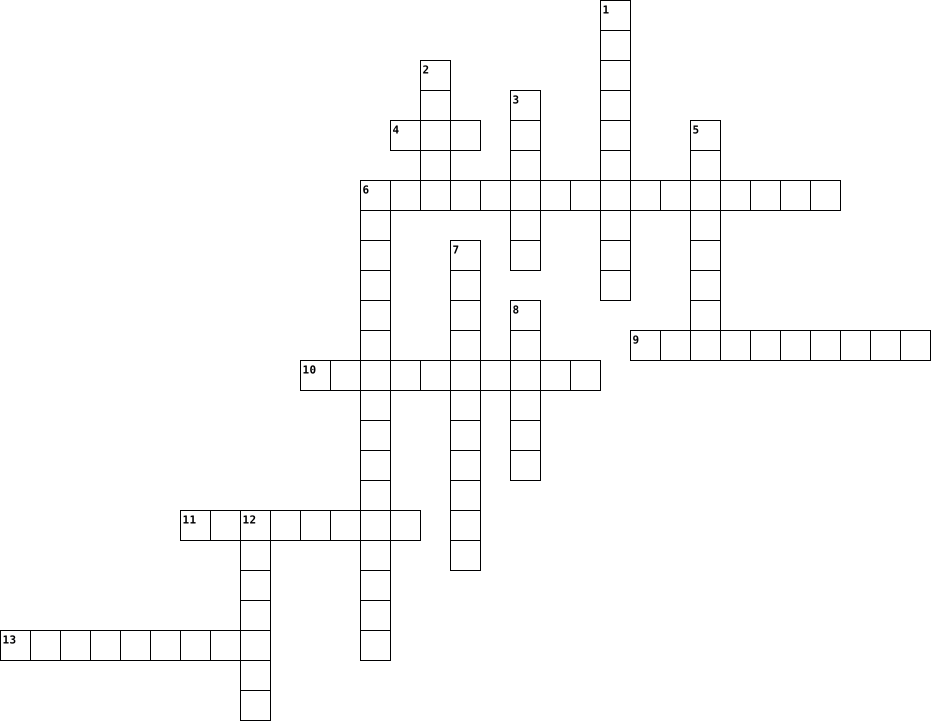
Across
- (a system) My function is to move air.
- The form of energy that is transferred through wire.
- To put multiple pieces of information together to understand something.
- Who am I? I study different things and help solve problems.
- A person who uses science knowledge to solve a problem.
- What is the problem in Ergstown?
Down
- I collect energy from the sun.
- (part of a system) My function is to help a bike stop.
- The ability to make things move or change
- What something can do.
- A machine that converts electrical energy to another form of energy.
- What are we learning about in science?
- A group of parts that work together.
- (a system) My function is to help people see.
14 Clues: What something can do. • I collect energy from the sun. • What is the problem in Ergstown? • A group of parts that work together. • (a system) My function is to move air. • What are we learning about in science? • The ability to make things move or change • (a system) My function is to help people see. • The form of energy that is transferred through wire. • ...
Energy Crossword 2023-09-13

Across
- powers your phone
- what you change in an experiment, "cause"
- also called heat energy
- "law of ____ of energy"
- "stored" energy
- energy of movement
Down
- what you measure in an experiment, "effect"
- what happens in a boiling pot
- technically doesn't exist
- energy stored in food and batteries
- "Don't touch that, it's hot!"
- the microwave uses this kind of energy
- potential energy in bent or stretched objects
- how the sun heats the earth
14 Clues: "stored" energy • powers your phone • energy of movement • also called heat energy • "law of ____ of energy" • technically doesn't exist • how the sun heats the earth • what happens in a boiling pot • "Don't touch that, it's hot!" • energy stored in food and batteries • the microwave uses this kind of energy • what you change in an experiment, "cause" • ...
Nuclear Energy 2023-11-30

Across
- When an atom comes together with another atom
- positively charged particle
- the number of protons in the nucleus
- most dangerous radiation
- power house of a cell
- one thing that triggers another
- same number of protons but different neutrons
Down
- not positive nor negative
- When an atom separates
- proton that shoots out of nucleus
- total protons and neutrons in nucleus
- emitting radiation
- the time it takes for half of a product to split
- 2 protons 2 protons together
14 Clues: emitting radiation • power house of a cell • When an atom separates • most dangerous radiation • not positive nor negative • positively charged particle • 2 protons 2 protons together • one thing that triggers another • proton that shoots out of nucleus • the number of protons in the nucleus • total protons and neutrons in nucleus • When an atom comes together with another atom • ...
Electrical Energy 2023-11-12
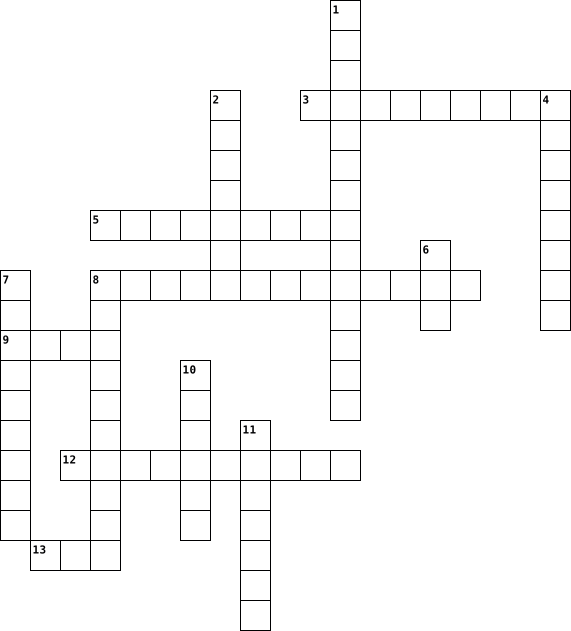
Across
- A material that slows or stops the flow of energy.
- A material that allows energy to flow easily.
- What is an electric circuit that produces a magnetic field called?
- A lamp changes electrical energy to light and thermal energy.
- What are common electrical devices that have resistors which we use everyday?
- During an energy transfer, _____ of the energy is transferred in different amounts to different forms.
Down
- When one form of energy turns into another form of energy. This is called energy ____________.
- A path through which electric currents can flow.
- A material that resists the flow of electricity and transforms that energy into light, sound, heat, or motion.
- Are magnetism and electricity related?
- Chemical energy can be turned into electrical energy through _______.
- This energy is reliant on charged particles.
- A device that can open or close the path in a circuit.
- The flow of electricity through a conductor called an electrical __________.
14 Clues: Are magnetism and electricity related? • This energy is reliant on charged particles. • A material that allows energy to flow easily. • A path through which electric currents can flow. • A material that slows or stops the flow of energy. • A device that can open or close the path in a circuit. • A lamp changes electrical energy to light and thermal energy. • ...
Energy Sources 2024-08-19

Across
- to produce movements of water
- Radiant Energy emmited from the sun
- energy that is stored
- Released from the nucleus , the core of atoms
- The chemical energy that animals derive from food
- energy stored in an object due to height
Down
- body possesses by virtue of being in motion
- energy stored as a result to applying force
- the flow of electrical power of change
- Energy stored in the bonds of chemical
- that is possessed by an object
- The result when the sound makes something vibrate
- Energy contained that's responsible for temp
- Energy Transferred by electromagnetic radiation
14 Clues: energy that is stored • to produce movements of water • that is possessed by an object • Radiant Energy emmited from the sun • the flow of electrical power of change • Energy stored in the bonds of chemical • energy stored in an object due to height • body possesses by virtue of being in motion • energy stored as a result to applying force • ...
Energy crossword 2023-06-05

Across
- shoots webs
- he has a heart problem
- evil robot
- was frozen by red skull
- hunts infinity stones
- he is a god
- leader of the avengers
Down
- Wakanda forever
- can cast spells
- he is green
- evil god
- she can shrink
- made by ultron
- he can shrink
14 Clues: evil god • evil robot • shoots webs • he is green • he is a god • he can shrink • she can shrink • made by ultron • Wakanda forever • can cast spells • hunts infinity stones • he has a heart problem • leader of the avengers • was frozen by red skull
Thermal Energy 2021-09-30

Across
- no shape or volume
- an example of this is electrical energy becoming light energy
- transfer of heat through direct contact
- transfer of heat from electromagnetic waves
- material that does not allow heat to pass through easily
- particles moving slower and closer together
- transfer of heat through the movement of liquid and gas
- definite volume but no shape
Down
- energy can not be created or destroyed
- particles moving faster and further apart
- material that allows heat to pass through easily
- total of all the kinetic and potential energy of the particles in an object
- transfer of energy from warmer to cooler object
- definite shape and definite volume
14 Clues: no shape or volume • definite volume but no shape • definite shape and definite volume • energy can not be created or destroyed • transfer of heat through direct contact • particles moving faster and further apart • transfer of heat from electromagnetic waves • particles moving slower and closer together • transfer of energy from warmer to cooler object • ...
Energy Conversions 2022-04-13

Across
- energy of vibrating materials or air molecules.
- energy that results from the movement of charged particles.
- the ability to cause changes, exert forces or do work.
- stored energy that is due to an object’s position.
- energy stored in the bonds that hold atoms together.
- a gradual rise in Earth’s average temperature.
Down
- energy of motion. The faster an object move.
- a fuel formed deep in Earth’s crust from the remains of plants and animals.
- electrical current produced by water flowing through a turbine.
- a natural resource that cannot be replaced reasonably soon.
- energy that comes from the movement of tiny particles. As an object heats up its particles move faster
- energy released by changes to the nuclei of atoms.
- a natural resource that can be replaced in a reasonable amount of time.
- a form of electromagnetic radiation that is visible to the eye.
14 Clues: energy of motion. The faster an object move. • a gradual rise in Earth’s average temperature. • energy of vibrating materials or air molecules. • energy released by changes to the nuclei of atoms. • stored energy that is due to an object’s position. • energy stored in the bonds that hold atoms together. • the ability to cause changes, exert forces or do work. • ...
Energy Conversions 2022-04-13

Across
- energy released by changes to the nuclei of atoms.
- energy stored in the bonds that hold atoms together.
- energy that results from the movement of charged particles.
- a form of electromagnetic radiation that is visible to the eye.
- a natural resource that can be replaced in a reasonable amount of time.
- a fuel formed deep in Earth’s crust from the remains of plants and animals.
- electrical current produced by water flowing through a turbine.
Down
- stored energy that is due to an object’s position.
- a natural resource that cannot be replaced reasonably soon.
- energy that comes from the movement of tiny particles. As an object heats up its particles move faster.
- the ability to cause changes, exert forces or do work.
- energy of motion.
- a gradual rise in Earth’s average temperature.
- energy of vibrating materials or air molecules.
14 Clues: energy of motion. • a gradual rise in Earth’s average temperature. • energy of vibrating materials or air molecules. • stored energy that is due to an object’s position. • energy released by changes to the nuclei of atoms. • energy stored in the bonds that hold atoms together. • the ability to cause changes, exert forces or do work. • ...
Energy Island 2025-01-08

Across
- – Power that makes lights and machines work.
- – The world around us, like nature, air, and water.
- – A group of people who live or work in the same place.
- – Plant or animal waste used to make energy.
- – Power that makes things work, like electricity or heat.
- – A big machine that makes electricity from wind.
- – Energy that can be used again and again, like wind or sunlight.
Down
- – A person who guides or helps others.
- – A big task or plan to do something.
- – A big change.
- – Something hard to do or solve.
- – A piece of land with water all around it.
- – Energy that comes from the sun.
- – Moving air that can be used to make energy.
14 Clues: – A big change. • – Something hard to do or solve. • – Energy that comes from the sun. • – A big task or plan to do something. • – A person who guides or helps others. • – A piece of land with water all around it. • – Power that makes lights and machines work. • – Plant or animal waste used to make energy. • – Moving air that can be used to make energy. • ...
energy vocabulary 2024-12-10

Across
- the energy can use again
- The ability to do work.
- Heat energy from the Earth.
- life
- Where something comes from
- moving air
- The energy of movement.
- wate
- Making movement
Down
- the energy can"t use again
- Stored energy that has not been used yet.
- sun
- Spinning blades to produce.
- The most common type of energy - created from other forms of energy
14 Clues: sun • life • wate • moving air • Making movement • The ability to do work. • The energy of movement. • the energy can use again • the energy can"t use again • Where something comes from • Heat energy from the Earth. • Spinning blades to produce. • Stored energy that has not been used yet. • The most common type of energy - created from other forms of energy
Energy vocabulary 2024-12-10

Across
- spinning blades to produce energy
- water
- energy that can be used more than once
- heat energy from the earth
- sun
- Energy that is being stored
- the ability to do work
- making movement
- energy In motion
Down
- energy in use until its gone
- where something comes from
- moving air
- life
- most common source of energy
14 Clues: sun • life • water • moving air • making movement • energy In motion • the ability to do work • where something comes from • heat energy from the earth • Energy that is being stored • energy in use until its gone • most common source of energy • spinning blades to produce energy • energy that can be used more than once
Energy Vocabulary 2024-12-10

Across
- making movement
- sun
- water
- something that spins to create electricity
- energy that is being stored
- heat from the earth
- moving air
- the ability to do work
- the most common type of energy
Down
- energy that can only be used once
- energy of movement
- life
- energy that can be used more than once
- where something comes from
14 Clues: sun • life • water • moving air • making movement • energy of movement • heat from the earth • the ability to do work • where something comes from • energy that is being stored • the most common type of energy • energy that can only be used once • energy that can be used more than once • something that spins to create electricity
Understanding Energy 2025-02-17

Across
- form of energy that causes electrons to flow
- energy of motion
- form of energy in matter associated with movement of particles
- The law of of energy states that energy is neither created nor destroyed
- stored energy
- form of energy released from the nucleus of an atom
Down
- amount of work done in a given amount of time
- form of energy a battery stores
- the unit used to measure power
- As an object falls, it's kinetic energy
- form of energy in moving objects
- form of energy received from the sun
- matching for changing mechanical energy to electrical energy
- Work is measured in metric units called
14 Clues: stored energy • energy of motion • the unit used to measure power • form of energy a battery stores • form of energy in moving objects • form of energy received from the sun • As an object falls, it's kinetic energy • Work is measured in metric units called • form of energy that causes electrons to flow • amount of work done in a given amount of time • ...
Energy Vocabulary 2024-12-10

Across
- Force exerted on an object that causes it to move
- the ability to do work
- energy energy due to motion
- energy stored energy that results from the position or shape of an object
- energy The total kinetic and potential energy of all the particles of an object.
- A push or pull exerted on an object
- of Conservation of Energy the law that states that energy cannot be created or destroyed but can be changed from one form to another
- energy The energy of electric charges
Down
- the rate at which work is done
- energy Kinetic or potential energy associated with the motion or position of an object
- energy The potential energy stored in the nucleus of an atom.
- radiation The energy transferred through space by electromagnetic waves.
- energy A form of potential energy that is stored in chemical bonds between atoms.
- An object's change in position relative to a reference point.
14 Clues: the ability to do work • energy energy due to motion • the rate at which work is done • A push or pull exerted on an object • energy The energy of electric charges • Force exerted on an object that causes it to move • energy The potential energy stored in the nucleus of an atom. • An object's change in position relative to a reference point. • ...
energy vocab 2023-10-30

Across
- Resources that can be replenished or have limitless in supply
- Natural resources that are limited in supply
- Renewable energy generated from heat within the earth.
Down
- Also known as Hydropower or hydroelectric power. It is a clean, renewable energy resource that generates electricity from moving water using
- Energy cannot be created nor destroyed only transformed
- Renewable energy that comes from organic material of plants and animals.
- A clean, renewable energy resource that is harvested from the sun's energy using solar panels
- Energy released from a nuclear reaction involving Uranium atoms
- Fossil fuel that is obtained from the ground used primarily to heat homes and in propane tanks
- a liquid fossil fuel that is obtained from the ground and transported easily
- The ability to do work
- A fossil fuel that is obtained from mining and is burned to generate electricity
- Warming of the Earth caused by humans primarily the release of Greenhouse Gases
- A clean, renewable energy resource that is generated from wind using a wind turbine.
14 Clues: The ability to do work • Natural resources that are limited in supply • Renewable energy generated from heat within the earth. • Energy cannot be created nor destroyed only transformed • Resources that can be replenished or have limitless in supply • Energy released from a nuclear reaction involving Uranium atoms • ...
Energy vocab 2023-10-31

Across
- A fossil fuel that is obtained from mining
- Energy cannot be created nor destroyed only transformed
- Renewable energy that comes from organic material of plants and animals.
- Natural resources that are limited in supply
- renewable energy resource that is generated from wind using a wind turbine.
Down
- Energy released from a nuclear reaction involving Uranium atoms
- renewable energy resource that is harvested from the sun's energy using solar panels
- renewable energy resource that generates electricity from moving water using energy
- Fossil fuel that is obtained from the ground
- Renewable energy generated from heat within the earth.
- Warming of the Earth caused by humans and greenhouse gases
- Resources that can be replenished or have limitless supply.
- The ability to do work
- A liquid fossil that is obtained from the ground
14 Clues: The ability to do work • A fossil fuel that is obtained from mining • Fossil fuel that is obtained from the ground • Natural resources that are limited in supply • A liquid fossil that is obtained from the ground • Renewable energy generated from heat within the earth. • Energy cannot be created nor destroyed only transformed • ...
Nuclear Energy 2023-11-01

Across
- Number The number of protons in an element
- Clumped with neutrons in the middle of an atom and is positively charged
- A subatomic atom that is neither positive nor negative
- When a large atom splits into half and releases 2 or 3 neutrons
- A type of radioactivity that is strong enough to penetrate skin, but gets stopped by Aluminum
- The mass of a specific element
- The amount of time for half of an element to go through radioactive decay
Down
- A change in number of neutrons
- A radioactive decay that is the weakest of the 3 and cannot even penetrate skin
- The ability of an atom to emit mass and energy
- The control center of a cell
- Reaction When one an action takes place and affects what is around it and it continues what it did
- When the nuclei of two atoms combine and make a heavier nucleus
- Another type of radioactive decay that is the strongest and can only be stopped by lead
14 Clues: The control center of a cell • A change in number of neutrons • The mass of a specific element • Number The number of protons in an element • The ability of an atom to emit mass and energy • A subatomic atom that is neither positive nor negative • When a large atom splits into half and releases 2 or 3 neutrons • ...
Nuclear Energy 2023-11-01

Across
- two or more of the same element that have the same number of protons, but different number of neutrons
- Gets stopped by lead
- Dividing of Nucleus
- Cant go through human skin
- A series of events caused by the one before
- Positive Charge of 1
- Neutral Charge of 0
Down
- Center of an atom
- The amount of protons in an atom
- Gets stopped by aluminum
- the ability of an atom to release mass and energy
- Neutrons plus protons
- Nucleus of 2 atoms combine
- the time required for any specified property to decrease by half
14 Clues: Center of an atom • Dividing of Nucleus • Neutral Charge of 0 • Gets stopped by lead • Positive Charge of 1 • Neutrons plus protons • Gets stopped by aluminum • Nucleus of 2 atoms combine • Cant go through human skin • The amount of protons in an atom • A series of events caused by the one before • the ability of an atom to release mass and energy • ...
Nuclear Energy 2023-11-01

Across
- Can be stopped by a thick layer of lead
- One Reaction leads to another
- each of two or more forms of the same element that contain equal numbers of protons but different numbers of neutrons in their nuclei
- Can be stopped by a thin layer of Aluminum metal.
- Unable to Control and is not used to Nuclear powerplants now but will be used in the near future.
- used in Nuclear Power plants and contribute to nuclear waste
- can be stopped by skin
- positively charged
Down
- The Emission of ionizing radiation or particles caused by the consent Disintegration of atomic nuclei
- control center of the cell
- the proton number
- the time it takes for half of the amount of that element to decay.
- The total number of protons and neutrons in a Nucleus.
- A subatomic particle that is negatively charged
14 Clues: the proton number • positively charged • can be stopped by skin • control center of the cell • One Reaction leads to another • Can be stopped by a thick layer of lead • A subatomic particle that is negatively charged • Can be stopped by a thin layer of Aluminum metal. • The total number of protons and neutrons in a Nucleus. • ...